

Some links on this page are affiliate links (for example Amazon). If you buy through them I may earn a small commission, at no extra cost to you. How this works.
When you shop for luxury vinyl plank (LVP), you will see numbers like 12 mil and 20 mil on almost every box. That number is the thickness of the wear layer, the clear protective film on top of the printed design. It is one of the most useful specs for comparing floors, but it is not the only one, and paying for a thicker wear layer does not always make sense.
This guide explains what the wear layer does, where 12 mil is plenty, where 20 mil earns its cost, and what else to check on the spec sheet.
What a “mil” is
A mil is a thousandth of an inch (about 0.0254 mm). So:
- 12 mil is about 0.3 mm of clear wear layer.
- 20 mil is about 0.5 mm.
That is the protective layer only. The total plank thickness, often 4 to 8 mm or more, includes the printed design layer, the core and sometimes an attached underlayment.
What the wear layer does
The wear layer protects the printed wood or stone image from scratches, scuffs and fading. Once it wears through in a high-traffic spot, the design underneath starts to look worn and cannot be refinished like hardwood. A thicker wear layer simply takes longer to wear through.
Most wear layers also have a surface coating (often a urethane or ceramic-bead finish) that improves scratch and stain resistance. That coating matters as much as thickness for everyday scuffs.
12 mil vs 20 mil at a glance
| 12 mil | 20 mil | |
|---|---|---|
| Typical use | Residential, moderate to busy households | Busy households, large dogs, light commercial |
| Scratch and scuff resistance | Good | Better, especially over many years |
| Cost | Lower | Usually noticeably higher per square foot |
| Warranty | Often a residential warranty | Often a longer residential warranty plus a light-commercial one |
| Best rooms | Bedrooms, living rooms, home offices | Kitchens, entryways, mudrooms, rentals |
Warranties vary by brand, so always read the actual warranty rather than relying on the wear-layer number alone.
When 12 mil is enough
- Bedrooms, guest rooms and home offices.
- Living rooms in households without large pets.
- Homes where you are likely to replace or update the flooring within ten years or so.
- Budget renovations where saving per square foot lets you do more rooms.
A good 12 mil floor with a quality surface coating and a sturdy core will look fine for years in most homes.
When 20 mil is worth paying for
- Kitchens and entryways, where grit is tracked in daily.
- Homes with large dogs, whose claws and running are hard on any floor.
- Rental properties, where floors take heavy use and replacement is a cost.
- Light commercial spaces such as small offices or shops.
- Long-term homes, where you want the floor to last as long as possible.
If you are doing one continuous floor across a kitchen and living area, it usually makes sense to buy the more durable product for the whole space so it matches.
Other specs that matter as much
The wear layer is only part of the picture. Compare these too:
- Core type. Rigid-core products (SPC, stone-polymer; and WPC, wood-polymer) are more dent-resistant and forgiving over minor subfloor imperfections than flexible glue-down vinyl. SPC tends to be harder and more dent-resistant; WPC tends to feel softer and warmer underfoot.
- Total thickness. Thicker planks feel more solid, but the core material matters more than the number.
- Attached underlayment. Can improve comfort and sound. Check whether additional underlayment is allowed; adding the wrong one can void the warranty.
- Locking system. A well-designed click-lock is easier to install and stays tight.
- Waterproof claims. Most rigid-core LVP is waterproof at the plank level, but water can still get under the floor at edges and seams. Kitchens and bathrooms still need care at perimeters.
Installation and care tips
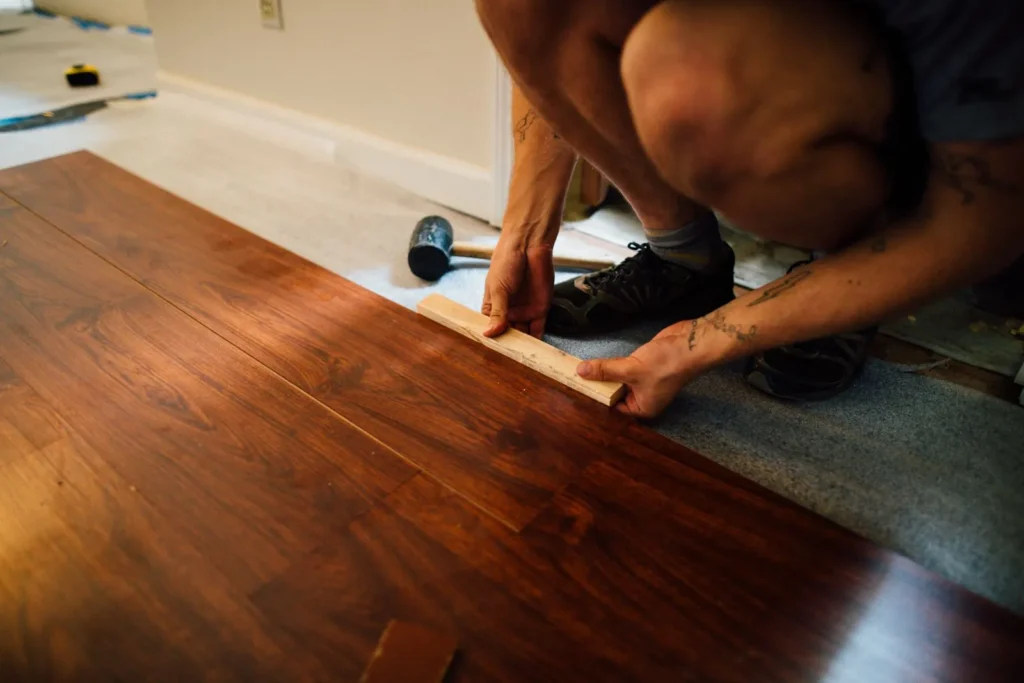
- Acclimate the planks in the room for the time the manufacturer specifies.
- Make sure the subfloor is clean, dry and flat within the manufacturer’s tolerance. Bumps and dips cause gaps and squeaks.
- Leave an expansion gap at walls, hidden by baseboard or quarter-round.
- Use felt pads under furniture and a mat inside exterior doors.
- Clean with a damp mop and a cleaner approved for vinyl. Avoid steam mops unless the manufacturer allows them.
How it looks in real kitchens
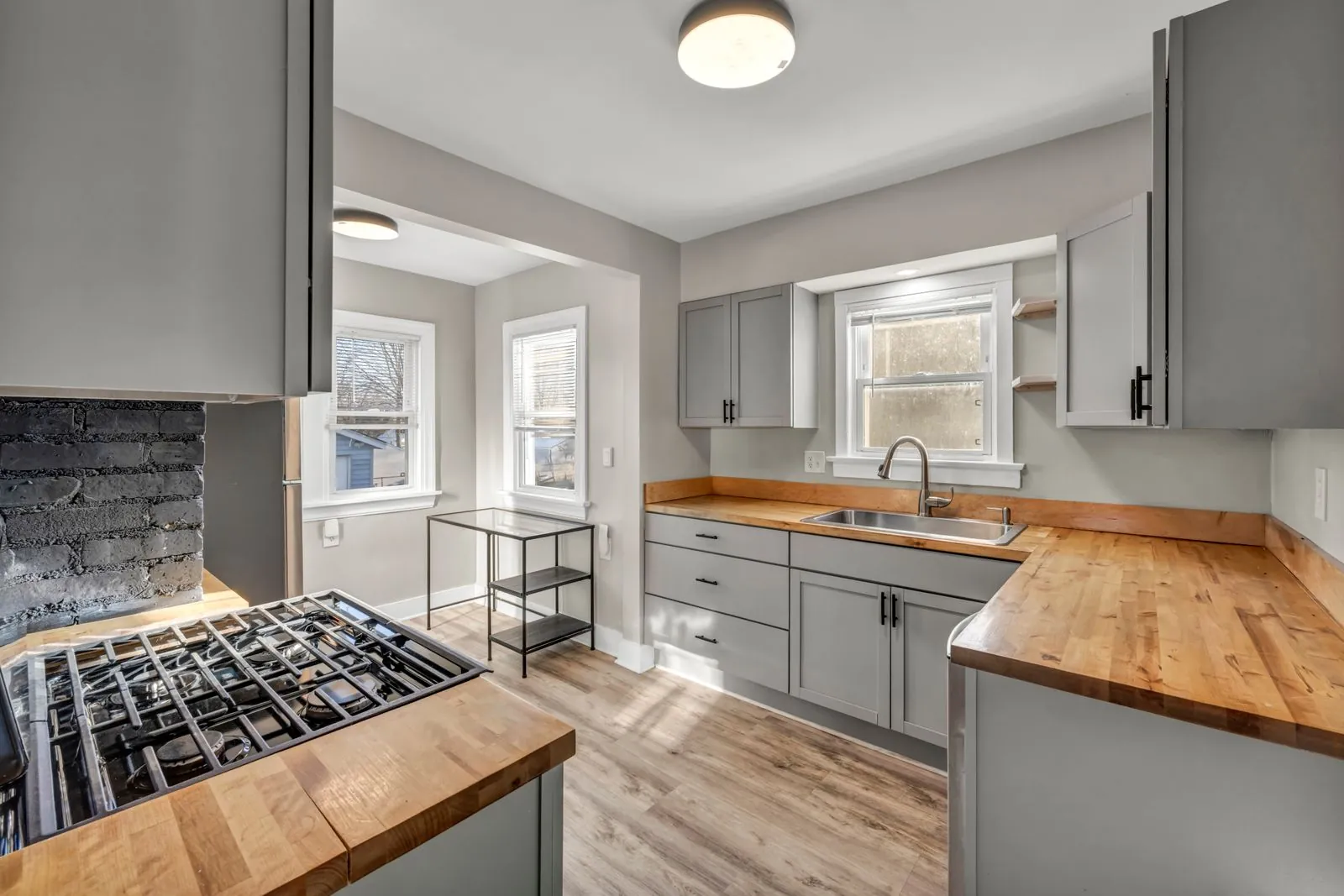
For design ideas, our luxury vinyl kitchen flooring ideas show how different plank colors and widths look in finished kitchens, and our wood to tile transition ideas help if LVP meets tile in your layout. If you are still deciding between materials, our guide on painting over floor tiles covers a budget alternative for a quick refresh.
Real costs to compare
When you compare quotes, look beyond the price per square foot of planks:
- Underlayment if the plank does not have it attached, or if your subfloor needs a moisture barrier.
- Subfloor preparation such as leveling compound or sanding high spots. This is the most common surprise cost.
- Trims and transitions at doorways, stairs and where vinyl meets tile or carpet.
- Removing and disposing of the old floor.
- Moving appliances and trimming doors if the floor height changes.
- Waste allowance, usually around 5 to 10 percent extra planks for cuts and future repairs.
Once these are included, the difference between 12 mil and 20 mil often becomes a smaller share of the total project cost.
How to read a spec sheet in two minutes
- Wear layer: 12 mil, 20 mil or other.
- Total thickness and core type: SPC, WPC or flexible.
- Attached pad: yes or no, and what material.
- Installation method: click-lock floating, glue-down or loose-lay.
- Room limits: whether it is approved for bathrooms, basements or sunrooms with strong sun.
- Warranty terms: what is covered, what voids it, and whether commercial use is included.
Frequently asked questions
Is 20 mil vinyl good for pets?
The thicker wear layer resists scratches and wear better, which helps with pets. Claws can still mark any floor, so trim nails and use mats.
Does wear layer affect how the floor feels underfoot?
Not much. Comfort depends more on the core, total thickness and underlayment than on the wear layer.
Is 20 mil twice as durable as 12 mil?
Not exactly. It has a thicker protective layer, but durability also depends on the surface coating and the core. Compare whole products, not just one number.
Can pets scratch 20 mil vinyl?
Any floor can be scratched. A thicker wear layer resists wearing through for longer, and keeping nails trimmed helps a lot.
Is 6 or 8 mil ever enough?
Thin wear layers can work in very low-traffic rooms such as a closet or a guest room, but most people are happier with at least 12 mil in main living areas.