


I’ve seen how fresh siding choices combined with black trim can lift the entire front view of a house by sharpening the edges around windows and doors.
The right contrast seems to tie in the roof overhangs and porch posts without any major construction.
I often wonder why more people do not start with the trim color when planning exterior updates.
Small details like this add up to a home that feels looked after from the street.
Trying one of these siding directions might be the next step for anyone tired of a faded exterior.
Use Black Trim To Refresh Dated Siding
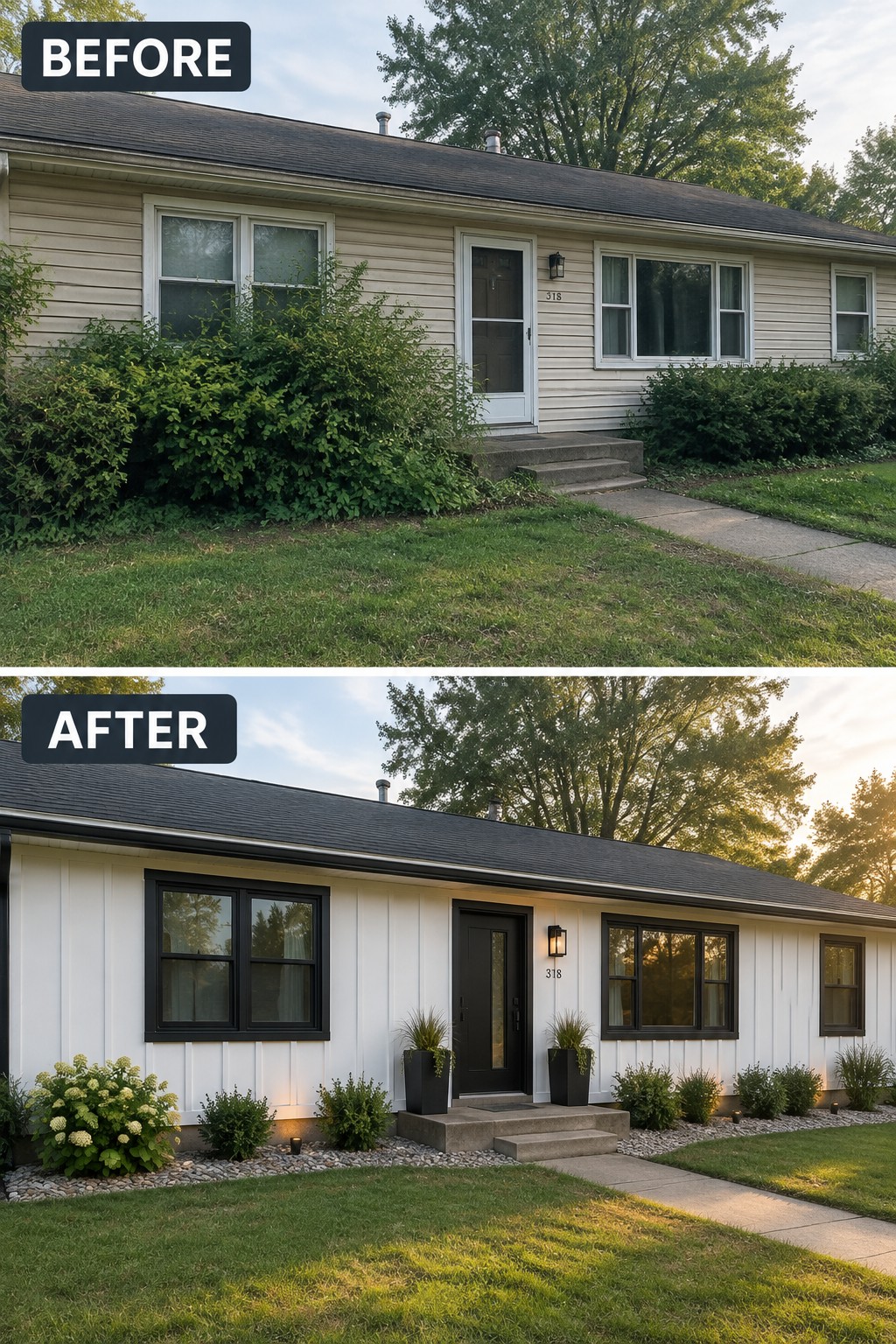
Painting the siding white and switching to black window and door trim gives an older exterior a much cleaner outline. The change turns a flat beige look into something sharper without needing major structural work.
This idea suits simple ranch homes or any house where the siding feels dated but the shape is still good. Keep the trim color consistent across windows and the front door, then add a couple of dark planters near the steps so the new trim does not feel like the only update.
Use Black Trim To Give Your Exterior More Definition
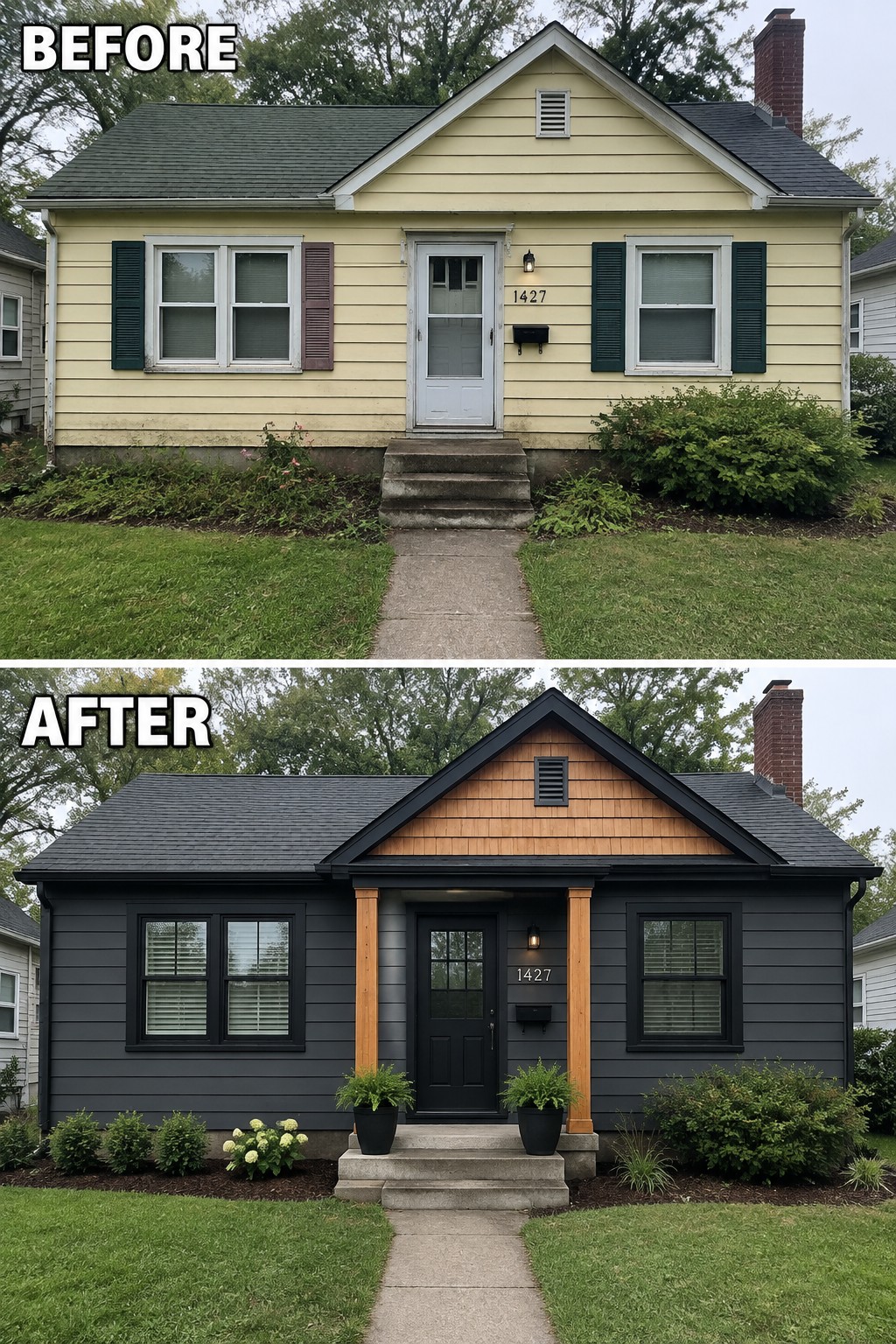
A simple color change with black trim can make an older house feel much more put together. The light yellow siding and mismatched shutters made the front look flat and dated, but switching to dark gray siding with black trim around the windows and door created strong contrast that highlights the shape of the house.
This idea works especially well on smaller homes where you want to add presence without adding new features. Paint the main body a dark shade first, then use black on the trim and a natural wood tone on the gable and posts for balance. It keeps the update realistic and helps the entry feel more intentional.
Update A Dated Exterior With Dark Siding And Black Trim
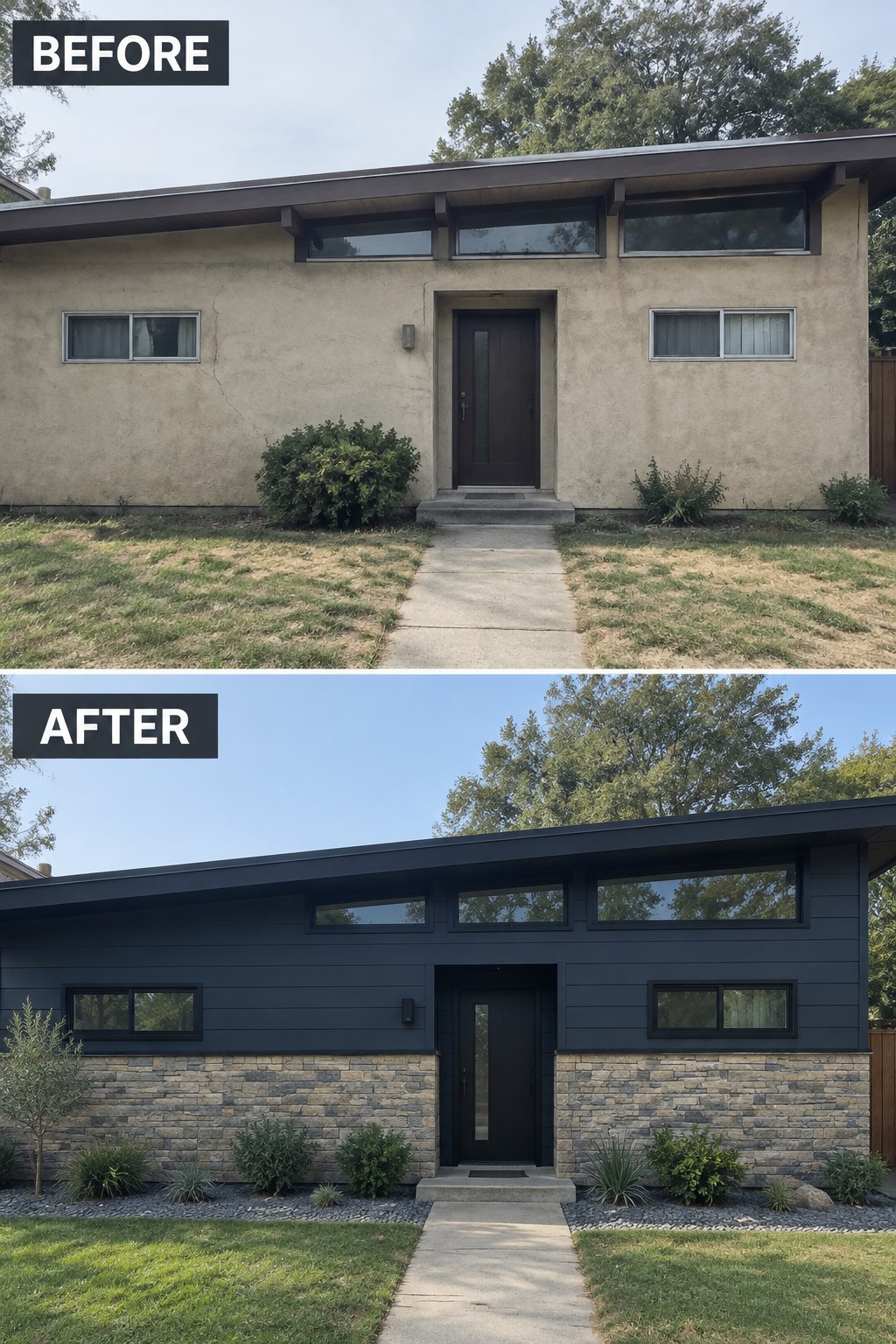
Switching to dark siding paired with black trim gives an older house a cleaner, more current look. The light beige walls and brown accents in the before photo made the front feel flat and dated. Once the siding changed to a deep charcoal tone and the trim went black, the windows and door gained more presence without any major structural work.
This idea suits ranch homes or mid-century houses with simple horizontal lines. Test the dark color on a small wall section first, since it can shift depending on the light. Adding a stone base helps break up the dark mass and keeps the update from feeling too heavy.
Add Black Trim To Refresh Dated Siding
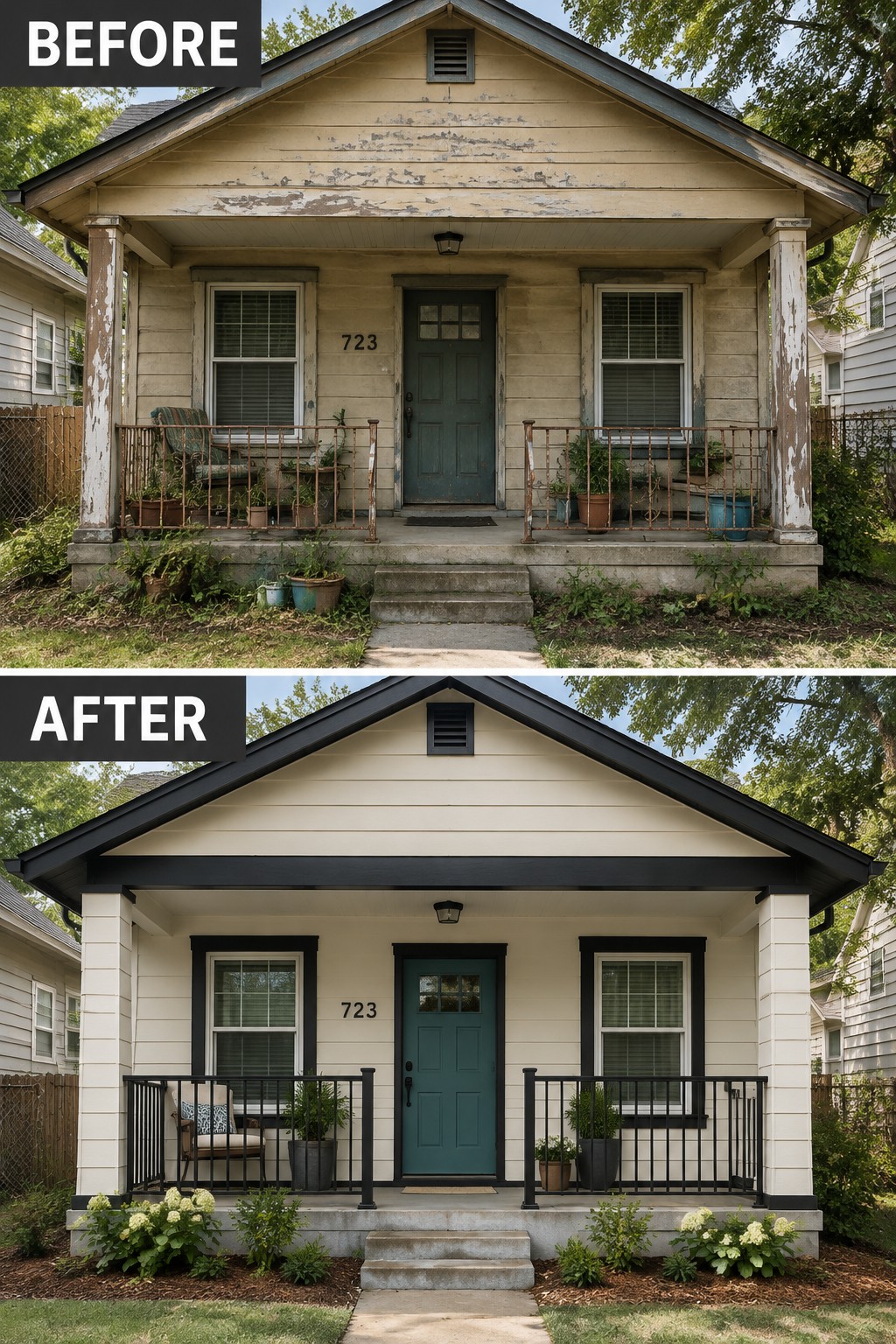
One straightforward way to update older siding is to add black trim around the windows, porch, and roof edges. The before shows faded paint and rusty railings that made the front look tired. Switching to clean white siding with bold black trim gives the house clearer lines and a fresher feel without changing the whole color scheme.
This idea works best on smaller homes where you want contrast but not a full repaint. Paint the window frames, porch columns, and railings black first. Keep the main siding light so the trim stands out. Make sure the black is dark enough to create real definition instead of blending in.
Update Dated Siding With Black Trim
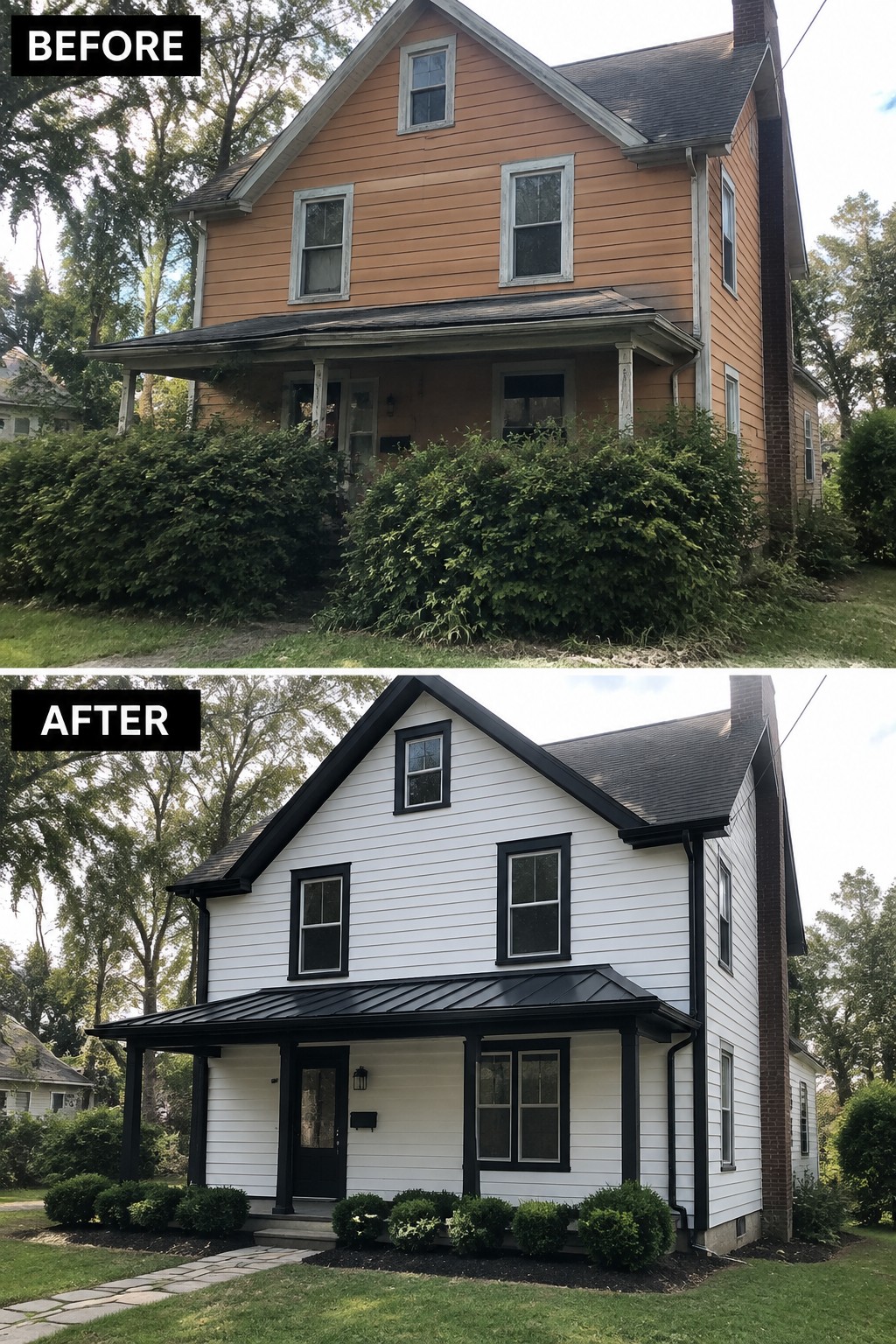
Many older homes carry siding colors that have aged poorly or no longer suit the style of the house. Switching from the faded orange tone to a clean white while wrapping the windows, roof edges, and porch posts in black trim gives the facade a sharper, more defined look without changing the structure itself.
This works especially well on two-story homes with gables and front porches. Start by identifying the main trim lines and painting them a strong contrasting color, then pick a siding shade that reflects more light. Keep foundation plantings low and simple so the new trim details remain visible from the street.
Use Black Trim To Modernize Dated Siding
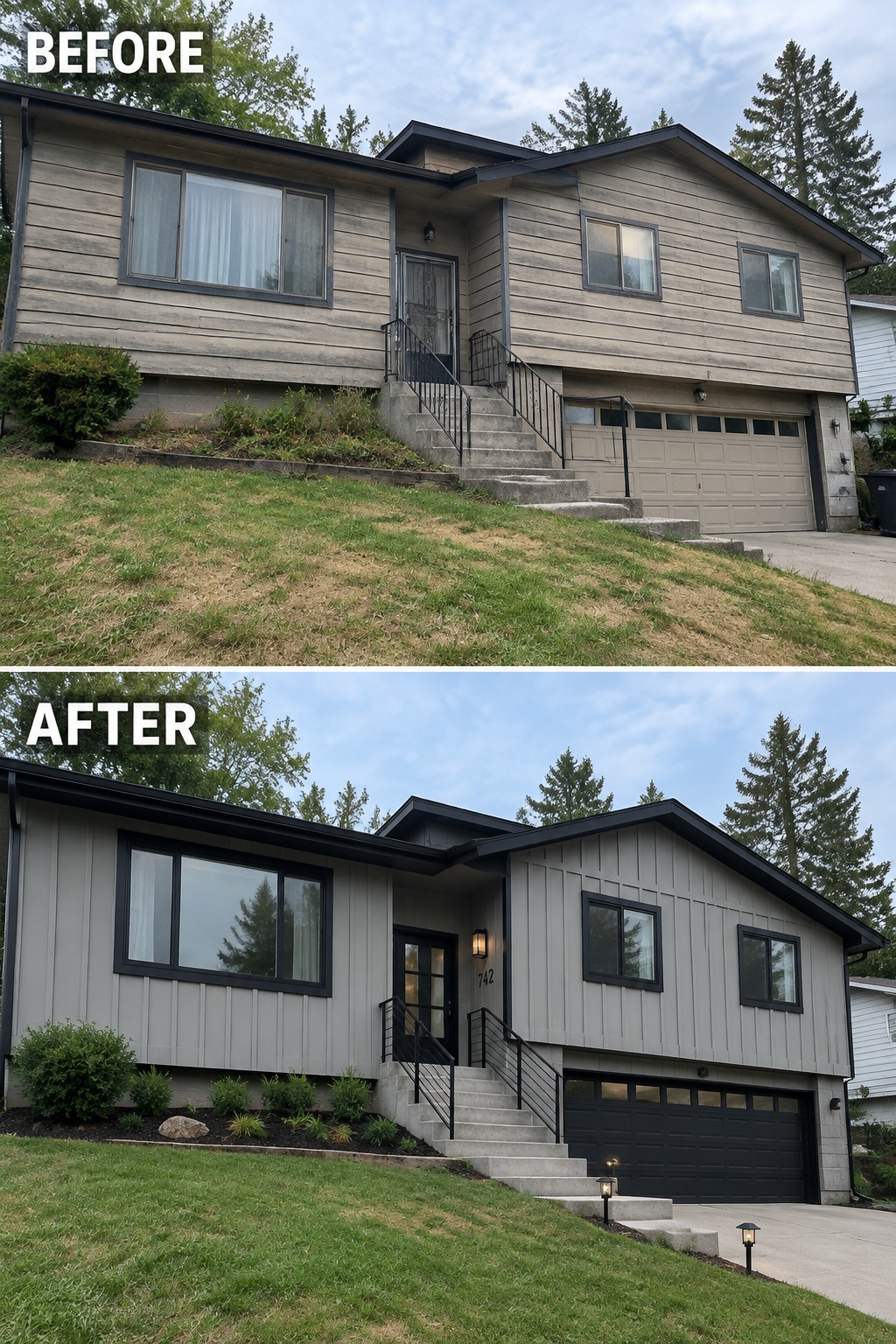
Switching the window frames, front door, and garage door to black trim gives the whole house a cleaner outline. The siding stays in the same color family but suddenly reads as more current because the black creates stronger contrast and pulls the different sections together.
This idea suits homes with large areas of horizontal siding that feel flat or dated. Paint the trim first and live with it for a bit before deciding if the siding needs an update too. It keeps the project manageable and works especially well on split-levels where the garage sits lower than the main entry.
Use Black Trim To Anchor A Dark Siding Color
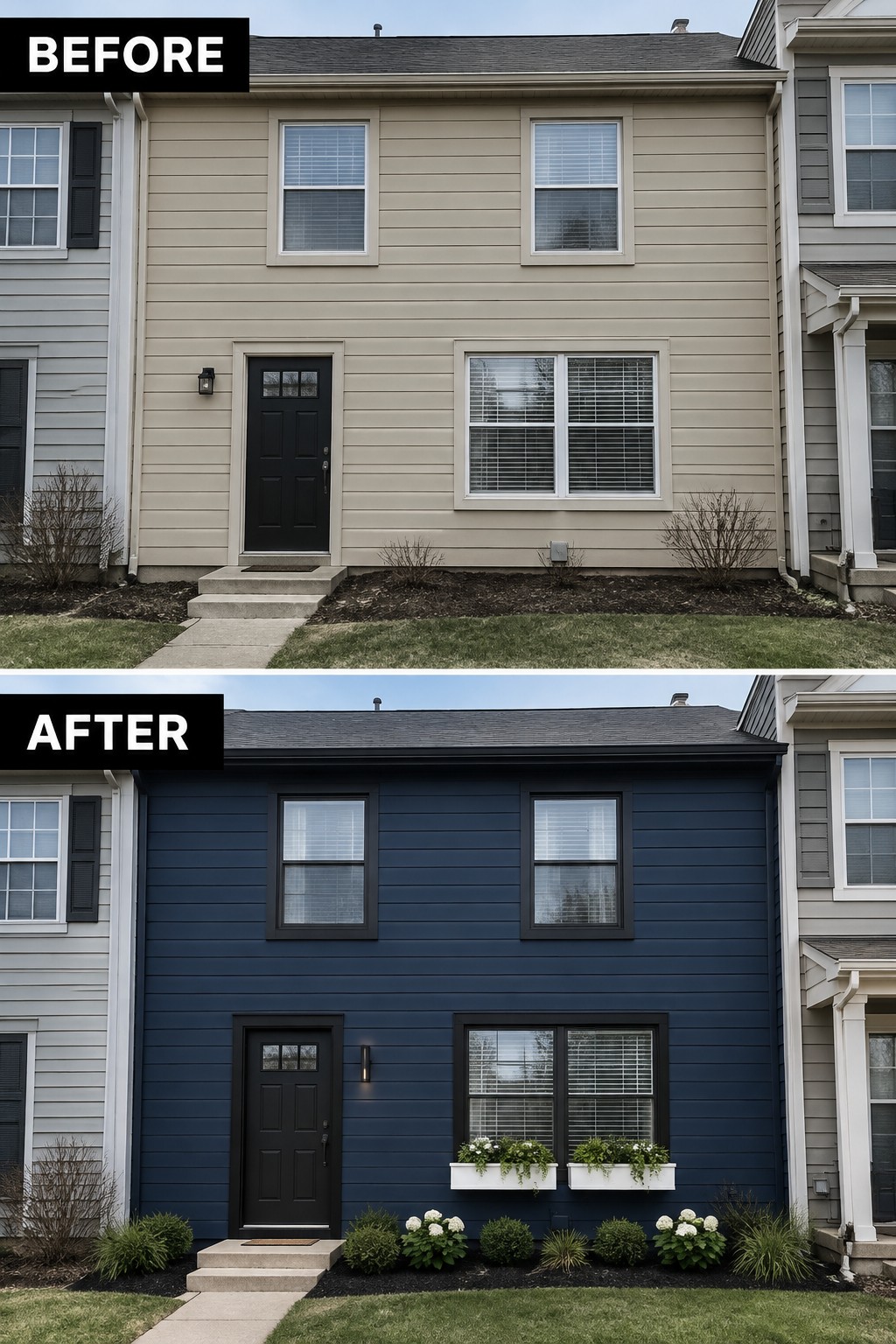
A light beige house can start to feel flat and dated over time. Switching the siding to a deep navy while keeping the trim and door black gives the whole front a stronger shape and makes the windows stand out more clearly. The added window boxes help tie the lower level to the ground without needing a full redesign.
This approach works well on simple two-story homes that already have decent window placement. Pick a siding color dark enough to create contrast with the black trim, then keep any new planting low and simple so the color change stays the main focus.
Refresh A Dated Exterior With New Siding And Black Trim
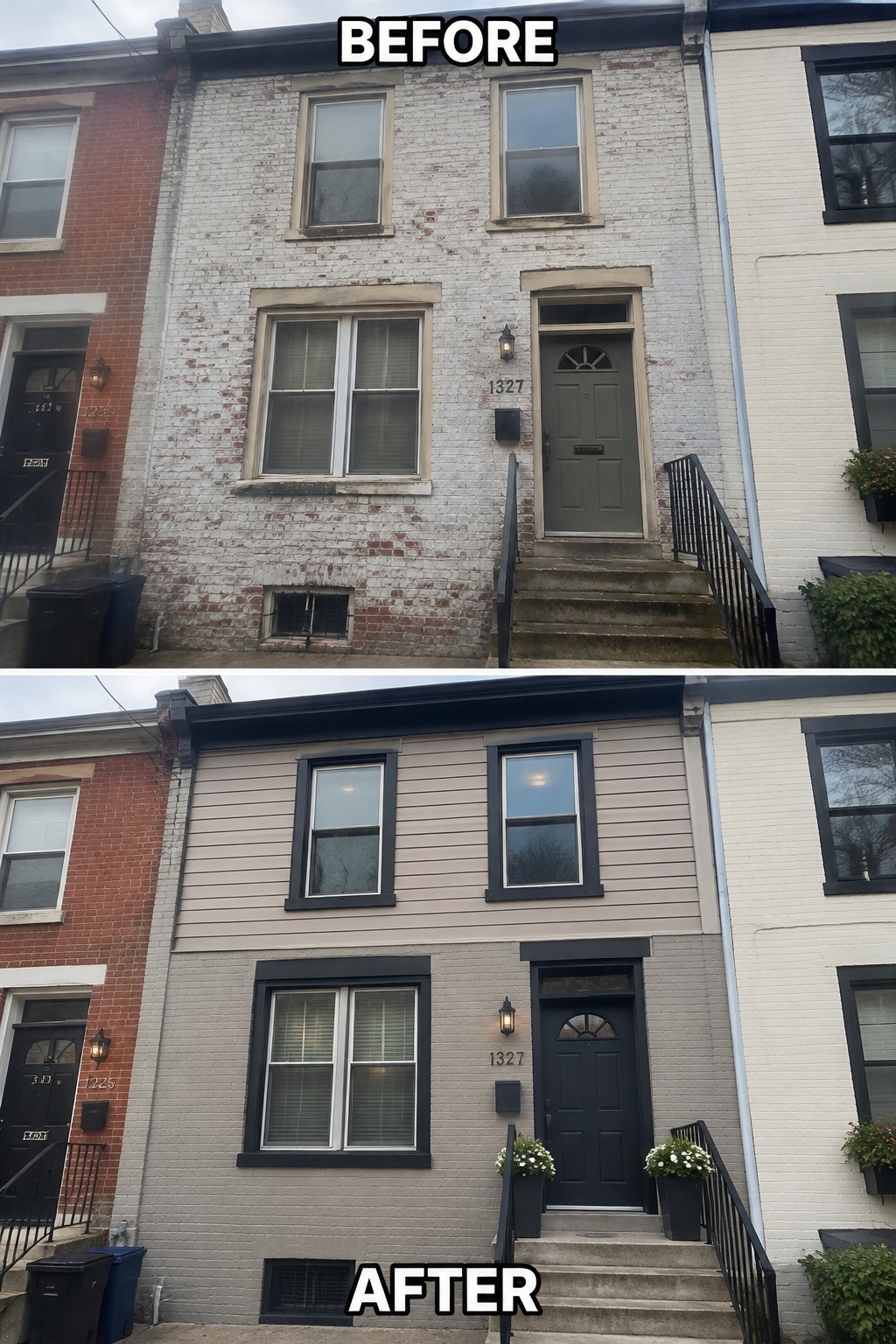
Many older row homes end up with brick that has been painted over and over until the surface looks tired. New siding gives the house a clean, even look, and black trim around the windows and door adds definition that the old painted brick could not provide.
This idea works especially well on narrow homes where the goal is to update the front without a full renovation. Choose one strong trim color and repeat it on the windows, door frame, and any small accents so the changes feel intentional rather than scattered.
Add Black Trim To Refresh Wood Siding
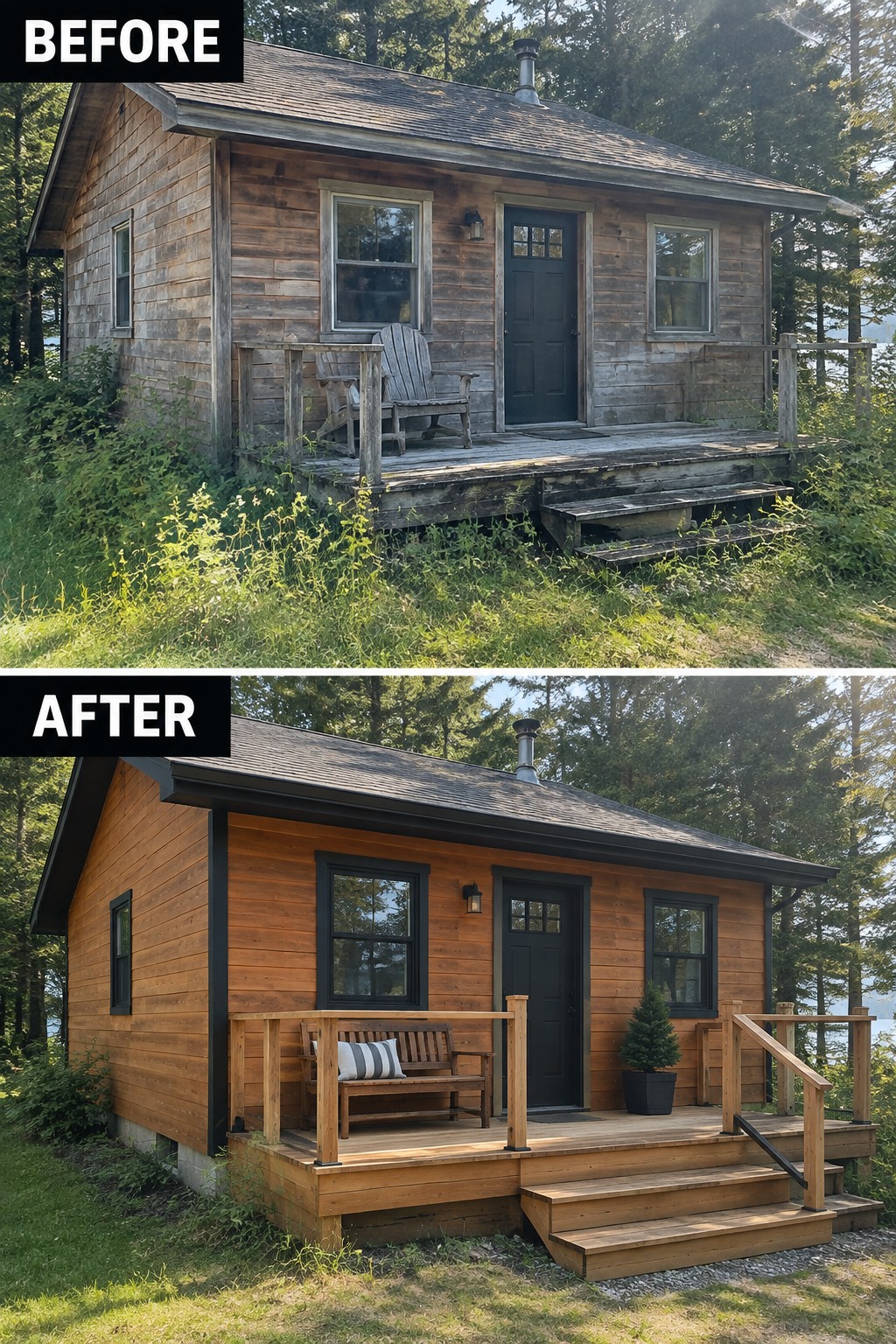
The cabin looked faded and worn until black trim was added around the windows, door, and roofline. That single change, paired with a fresh stain on the siding, pulled the whole exterior together and gave it a cleaner, more finished appearance.
This idea works especially well on smaller homes or cabins with wood siding. Start with the trim color if you want to test the look before committing to a full re-stain, and keep the black consistent on the main accents so the contrast feels intentional rather than scattered.
Refresh Weathered Siding With White Paint And Black Trim
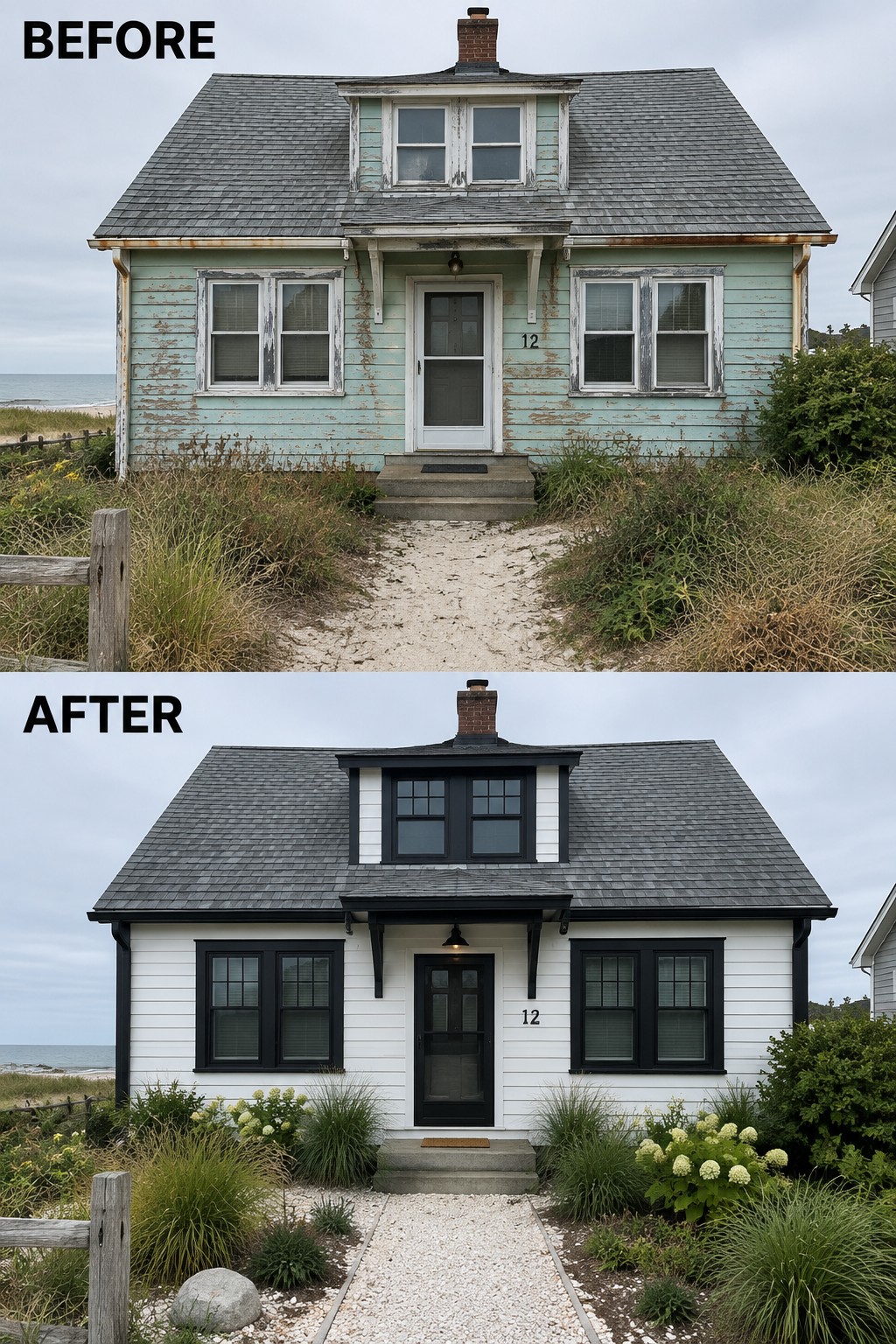
The original siding had faded badly and the trim had almost disappeared into the background. A full coat of white paint plus black on the windows, door, and roof edges gave the house a much cleaner shape and made the small details stand out again.
This works best on older cottages or beach houses where the siding is still sound but the color has taken a beating. Keep the trim simple, make sure the siding is properly prepped first, and test the black in both sun and shade so it does not feel too heavy once the job is done.
Update A Plain Exterior With Black Siding And Trim
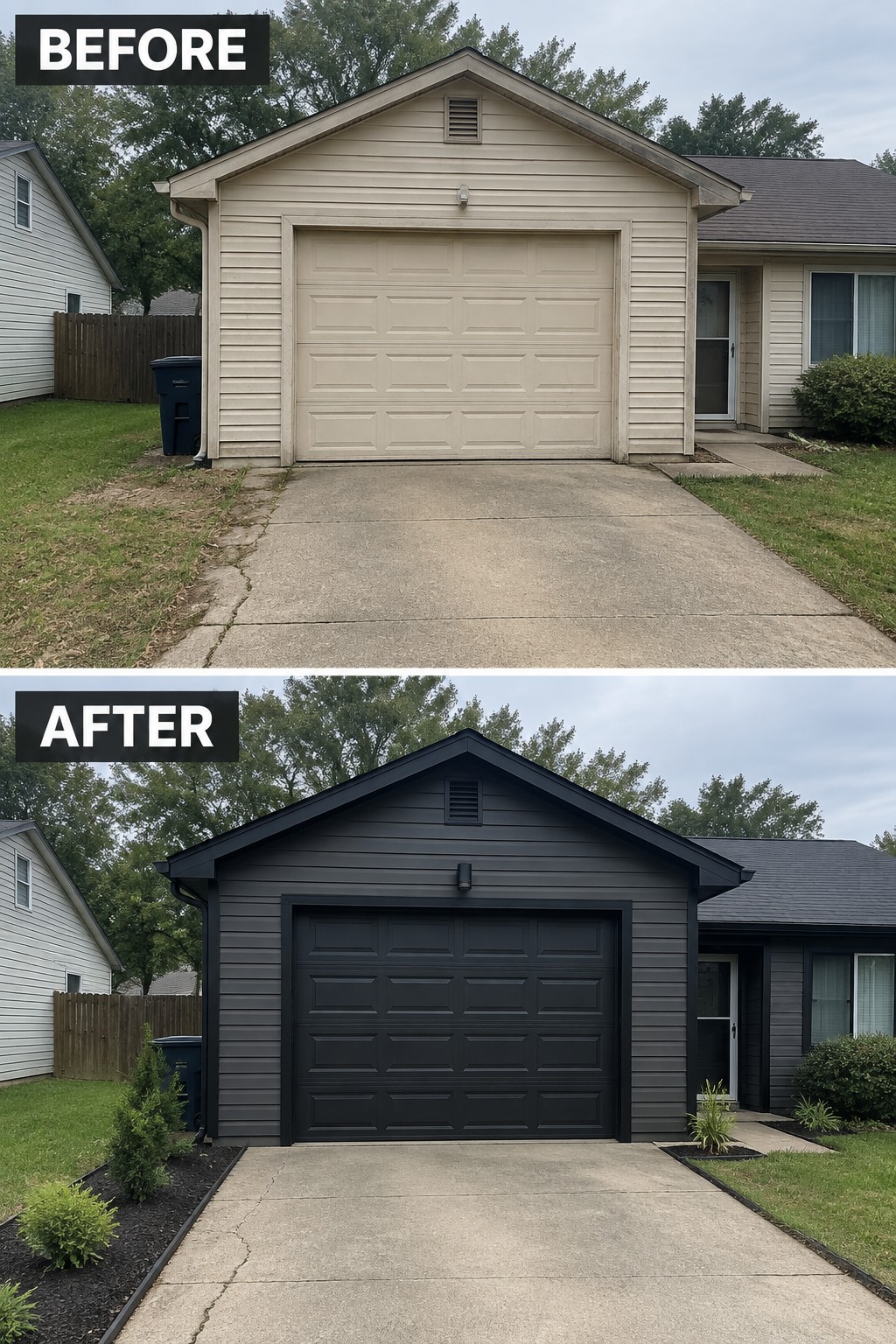
A light beige house exterior often looks flat because nothing stands out. Switching the siding, trim, and garage door to black creates strong contrast that gives the whole front a cleaner, more defined shape without adding any new structures.
This idea works best on simple one-story homes where the garage takes up a lot of the facade. Match the siding color to the trim and door so the change feels intentional, and keep the landscaping simple so the dark color can carry the update.
Add Black Trim To Define Plain Siding
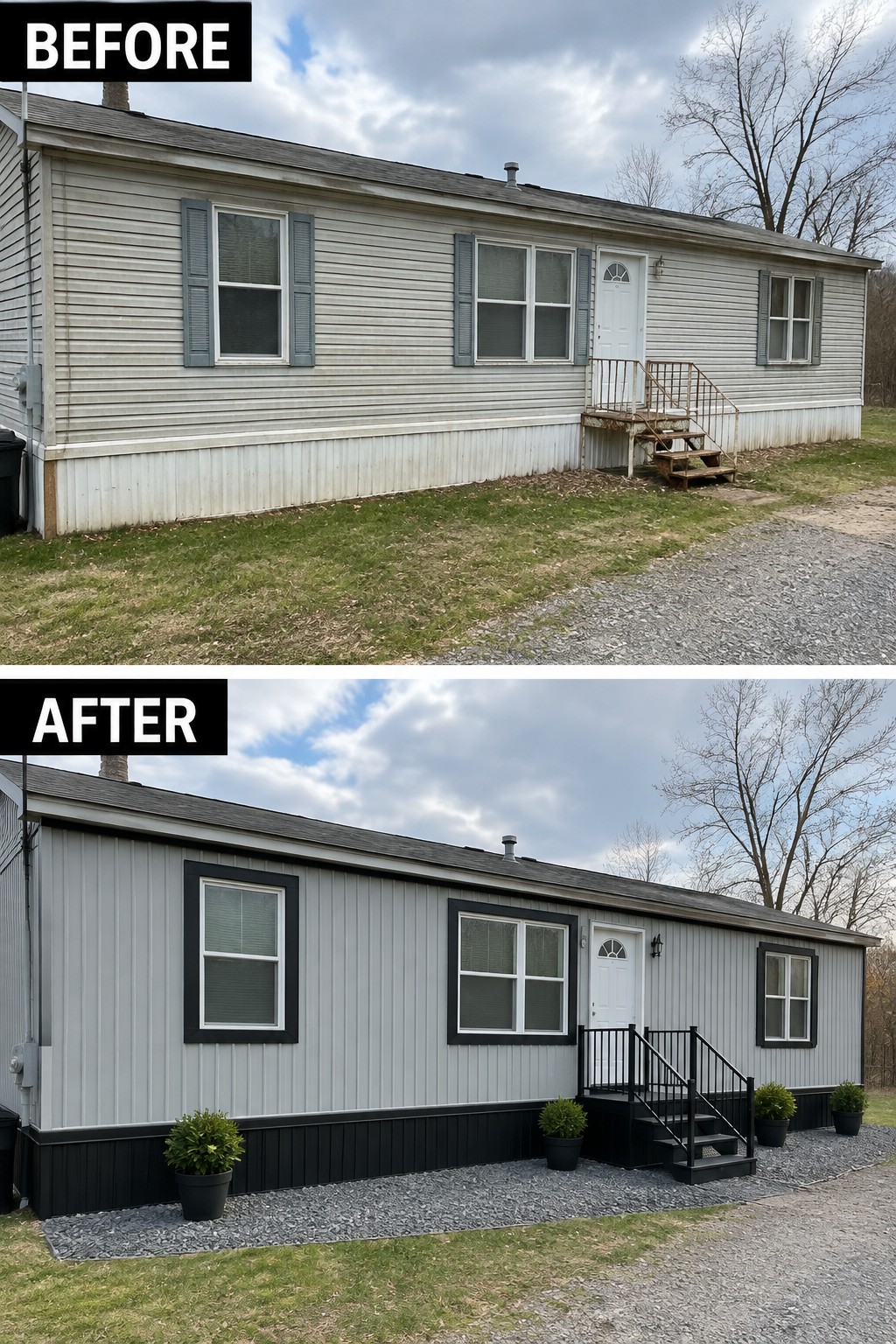
Many homes with long runs of siding end up looking flat because nothing breaks up the surface. Black trim around the windows and along the base gives the eye clear stopping points, so the house reads as more structured without changing the siding color itself.
This works especially well on manufactured homes or simple one-story houses where the siding can feel endless. Focus on the windows first, then carry the same trim color down to the foundation line. Keep the rest of the updates simple so the trim stays the main move.
Update A Ranch Exterior With Dark Siding And Black Trim
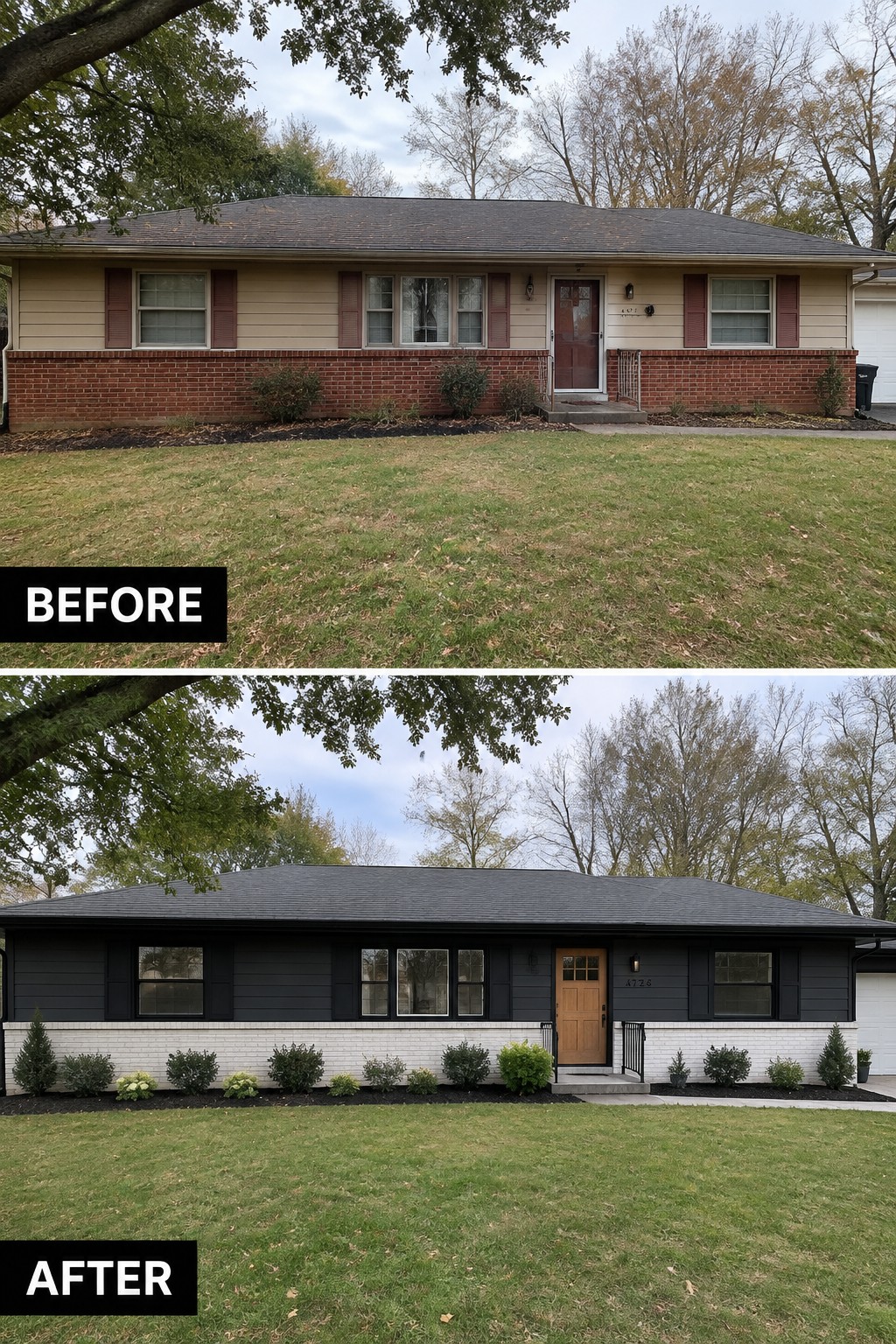
Switching a house to dark siding with black trim gives it a cleaner, more current look without major construction. The beige siding and brown shutters on the original house made the whole facade feel flat. Dark gray siding paired with black window trim and a white brick base creates strong contrast that makes the windows and entry stand out.
This approach works well on simple ranch homes where the shape is straightforward. Choose a dark siding color that still shows some texture so it does not read as a flat wall of black. Keep the foundation or lower band light to avoid a heavy look, and use the same black on the shutters and trim for a pulled-together result.
Paint The Trim Black To Refresh The Entry
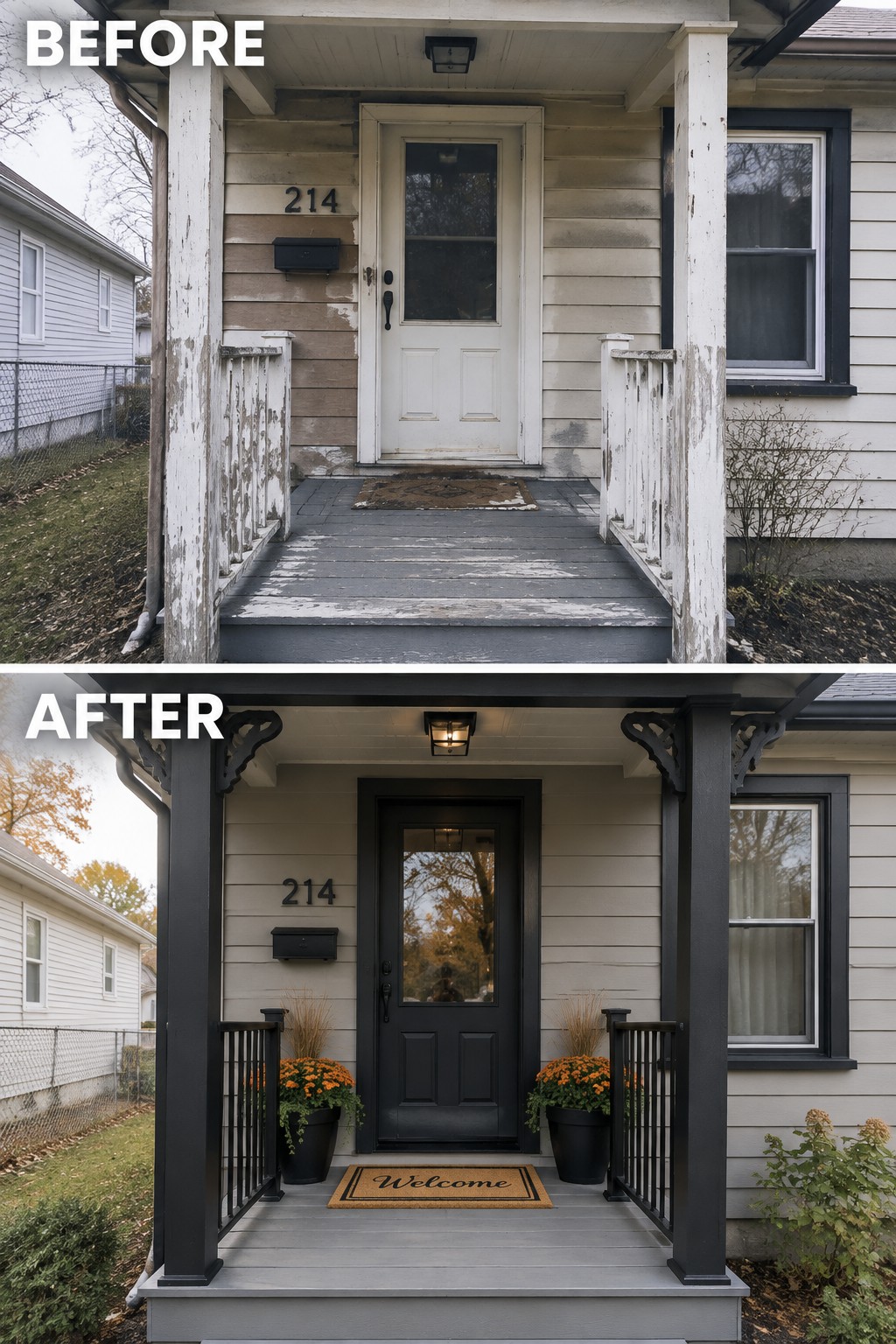
Painting the trim and front door black can pull together an older porch that has started to look worn. The before photo shows faded, peeling white wood and a plain door that made the whole entry feel tired. Once the posts, brackets, and door were painted black, the same small porch suddenly looked much more finished and connected to the house.
This approach works well on older homes where the siding is still sound but the trim needs attention. Keep the rest of the siding light so the black stands out, then add just a couple of planters and a simple mat. The key is to paint first, before adding any extra decor, so the new color has room to do the work.
Add Black Trim And Shutters For Clear Definition
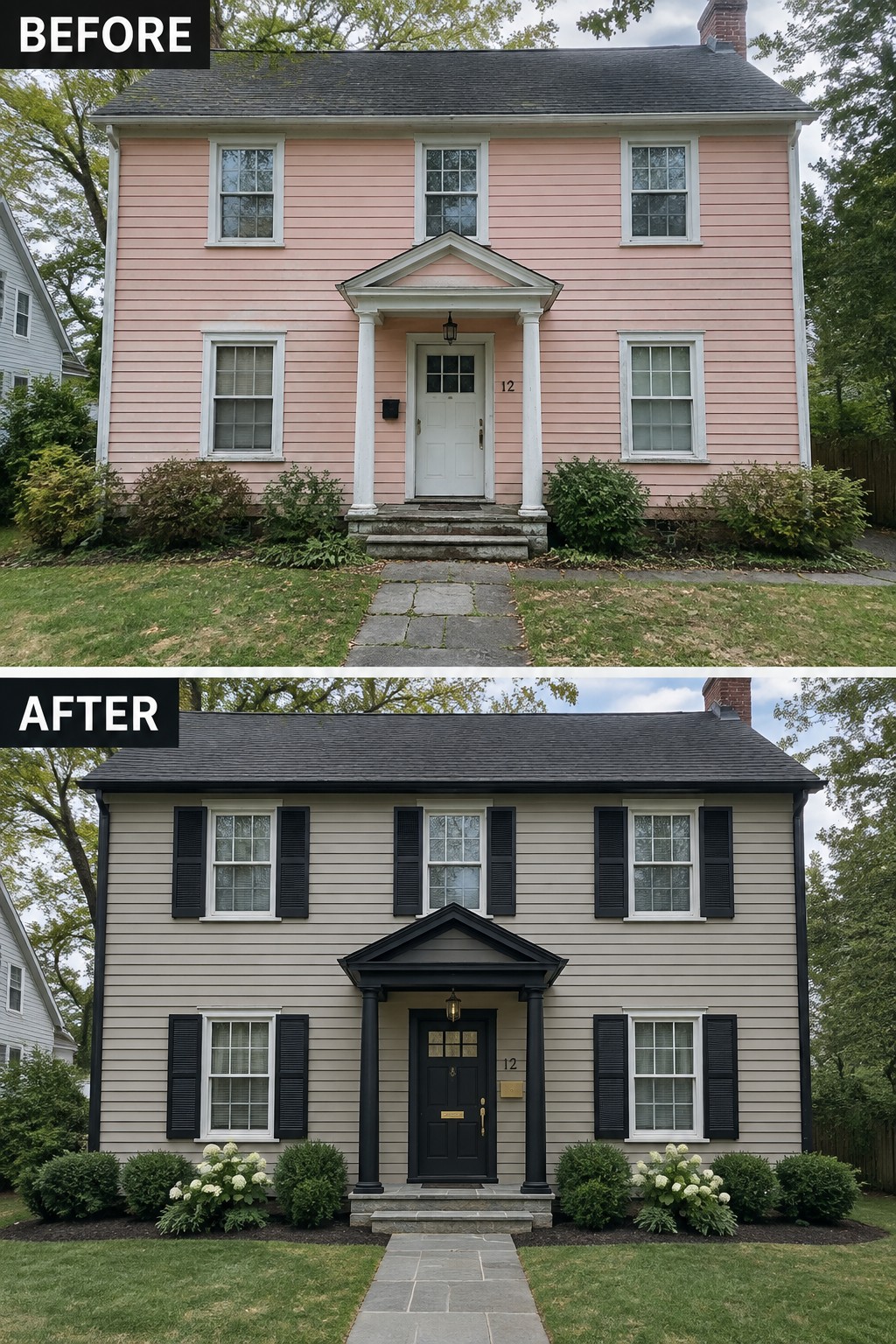
Switching the siding color and adding black trim, shutters, and a black portico gives the house much stronger lines. The dark accents frame the windows and entry so the facade reads as more balanced instead of flat.
This idea works well on two-story homes that already have a simple shape. Choose a trim color that contrasts with the siding, then add shutters only where they improve the window proportions. Keep new planting low so the trim stays the main feature.
Use Black Trim To Frame New Siding
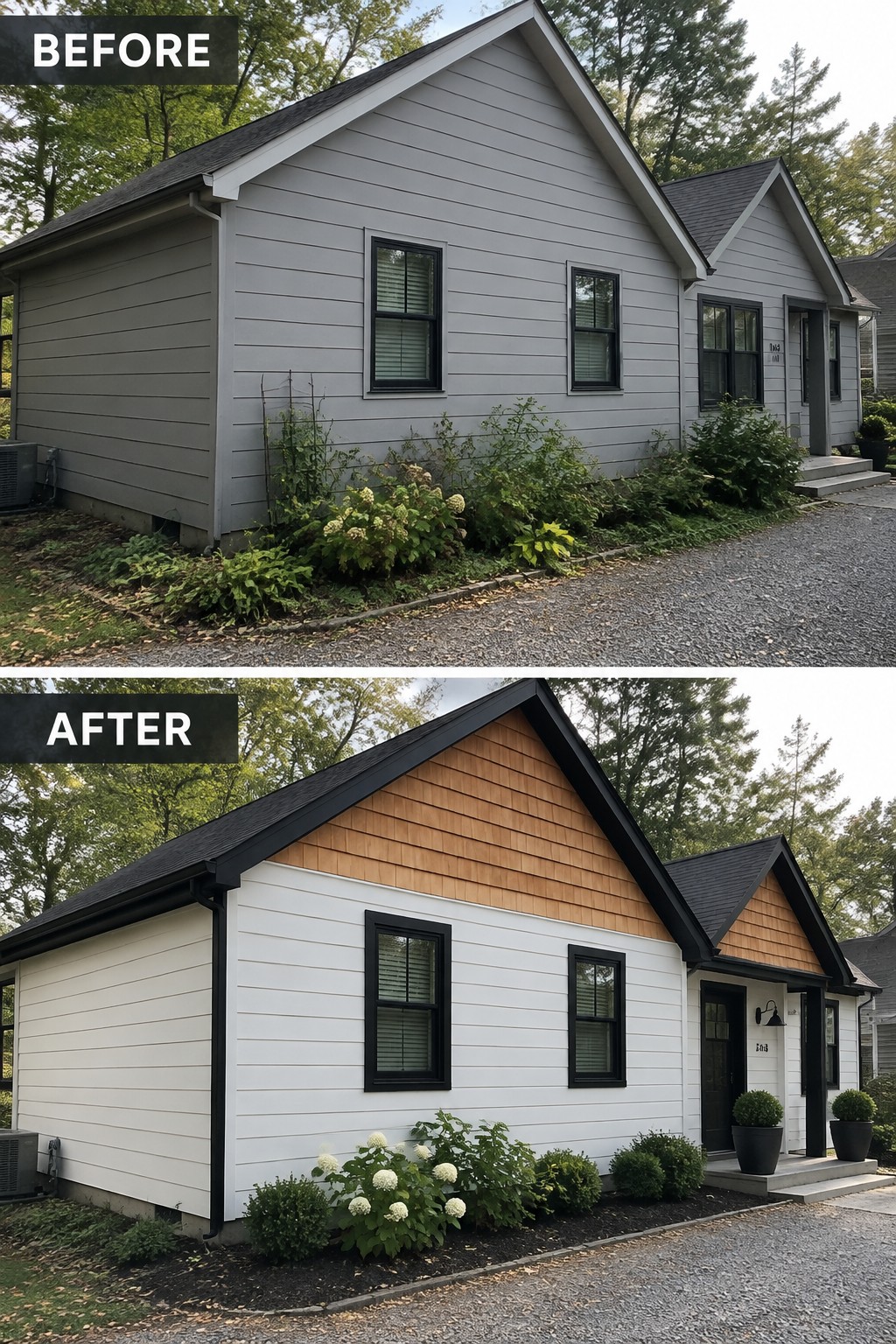
Many homes with flat, one-color siding end up looking unfinished because nothing breaks up the surface. Adding black trim around the roofline, windows, and gables gives the eye clear places to stop, so the new white siding and wood accents on the peaks read as intentional rather than random.
This approach works best on houses that already have gables or multiple roof planes. Keep the trim color consistent and limit the siding mix to two materials so the black lines stay the main feature. Start with the trim details before deciding on a full color change.
Add Black Trim To Update Light Siding
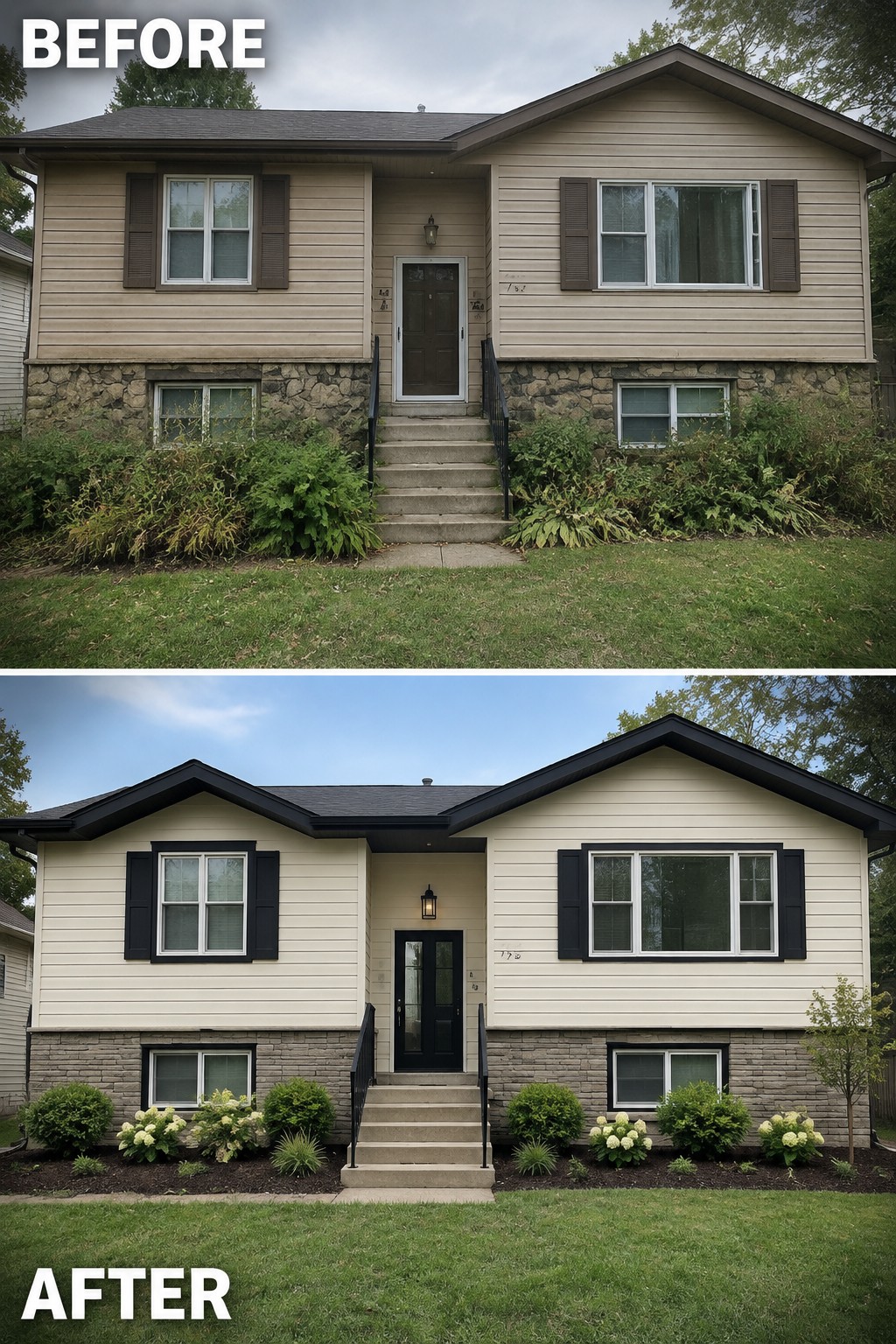
Switching the trim, shutters, and front door to black gives this beige house a much cleaner and more current look. The brown accents in the before photo made everything blend together and feel dated. Black creates stronger contrast against the siding and stone base, which instantly makes the windows and entry stand out without changing the siding color itself.
This approach works well on split-level or two-story homes with simple siding where you want a quick refresh rather than a full repaint. Keep the siding light and use black on the trim, shutters, and door so the change stays focused. It also helps if you clean up the planting beds at the same time, since the sharper lines of the trim look better once the yard has some structure too.
Use Black Trim To Refresh White Siding
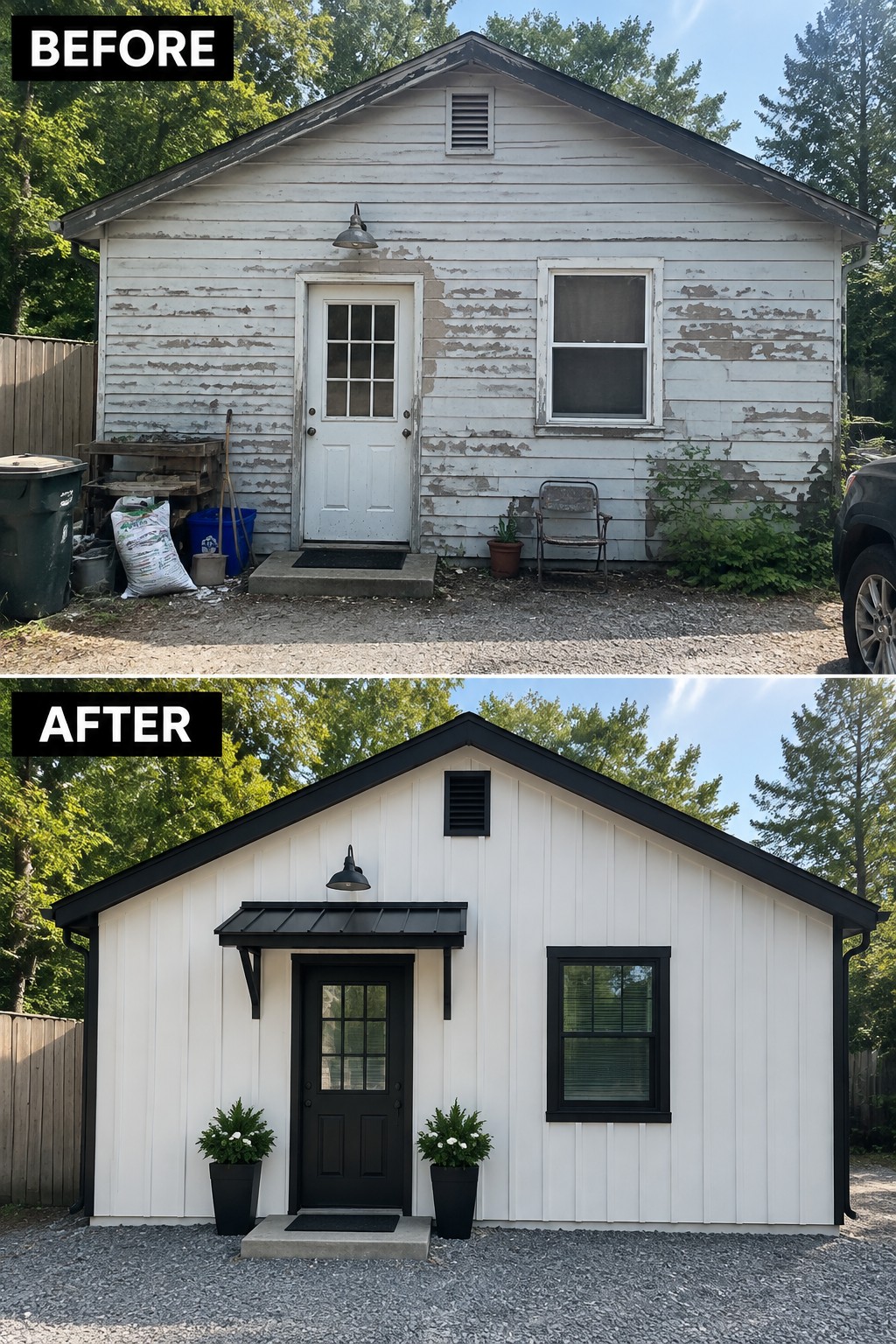
Adding black trim is one of the easiest ways to give older siding a cleaner, more finished look without repainting the whole house. The before shows faded white siding and a plain door that disappeared into the wall. After the update, the black trim around the roof, windows, and door creates strong lines that make the white siding feel brighter and more intentional.
This idea works best on small homes or cottages where you want contrast without going too dark on the main color. Match the trim color on the door and any new accents like a small entry overhang. Keep the ground around the house simple so the trim can do the work.
Use One Paint Color And Black Trim To Refresh Mixed Siding
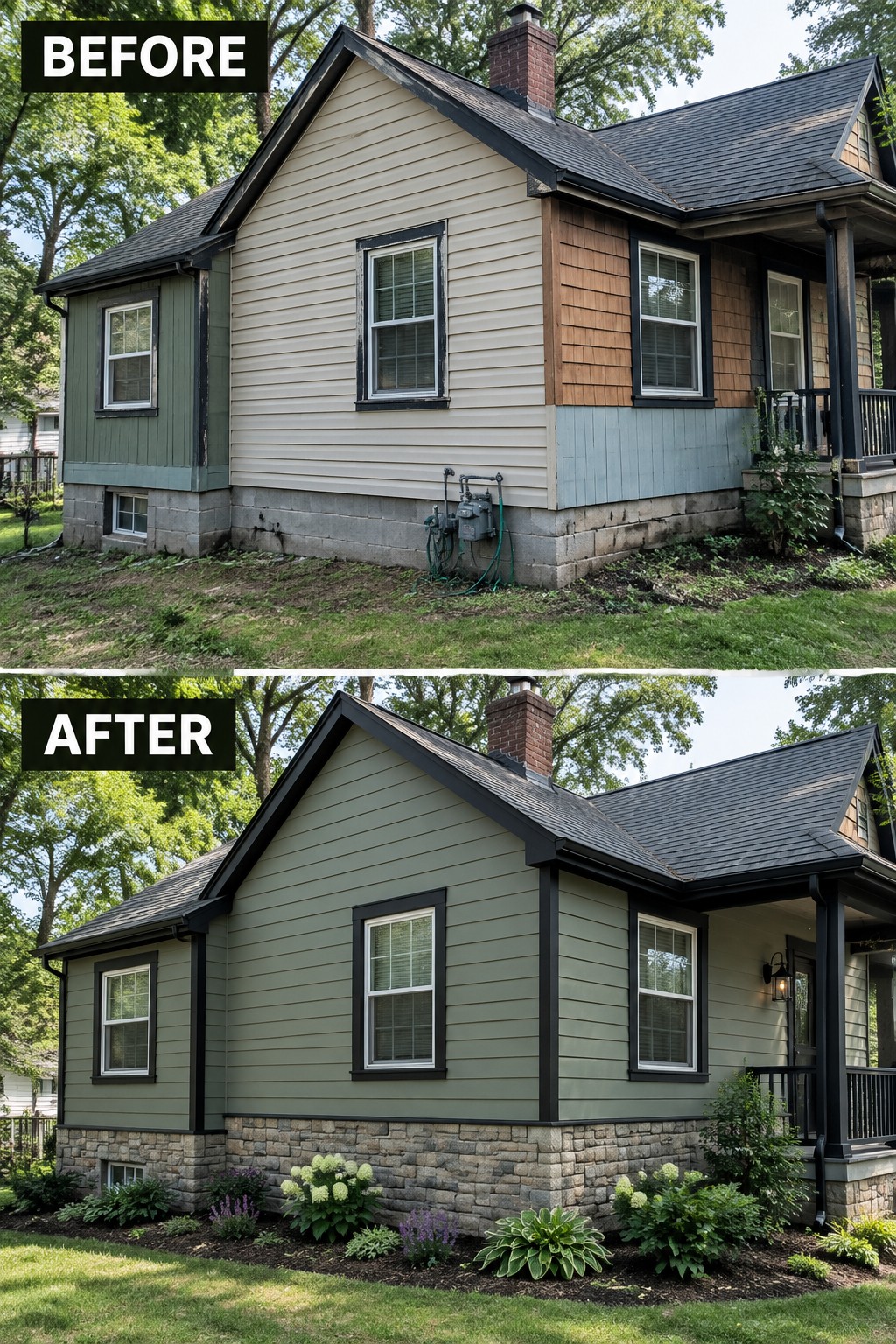
Painting the whole house one color instantly fixes the patchwork look that comes from years of mismatched siding repairs. In this case the before photo shows several different shades plus exposed utilities, while the after shows a single sage green across all surfaces and crisp black trim around every window and corner. The change makes the house read as one clean shape instead of a collection of pieces.
This approach works especially well on older homes where siding has been replaced in sections over time. Pick a color that sits comfortably with your roof and foundation, then carry black trim around windows, doors, and eaves so the eye has a clear stopping point. Keep the foundation simple, either painted to match or covered in a single material like stone, and you avoid the scattered look without needing a full siding replacement.
Add Vertical Wood Accents To Break Up A Flat Exterior
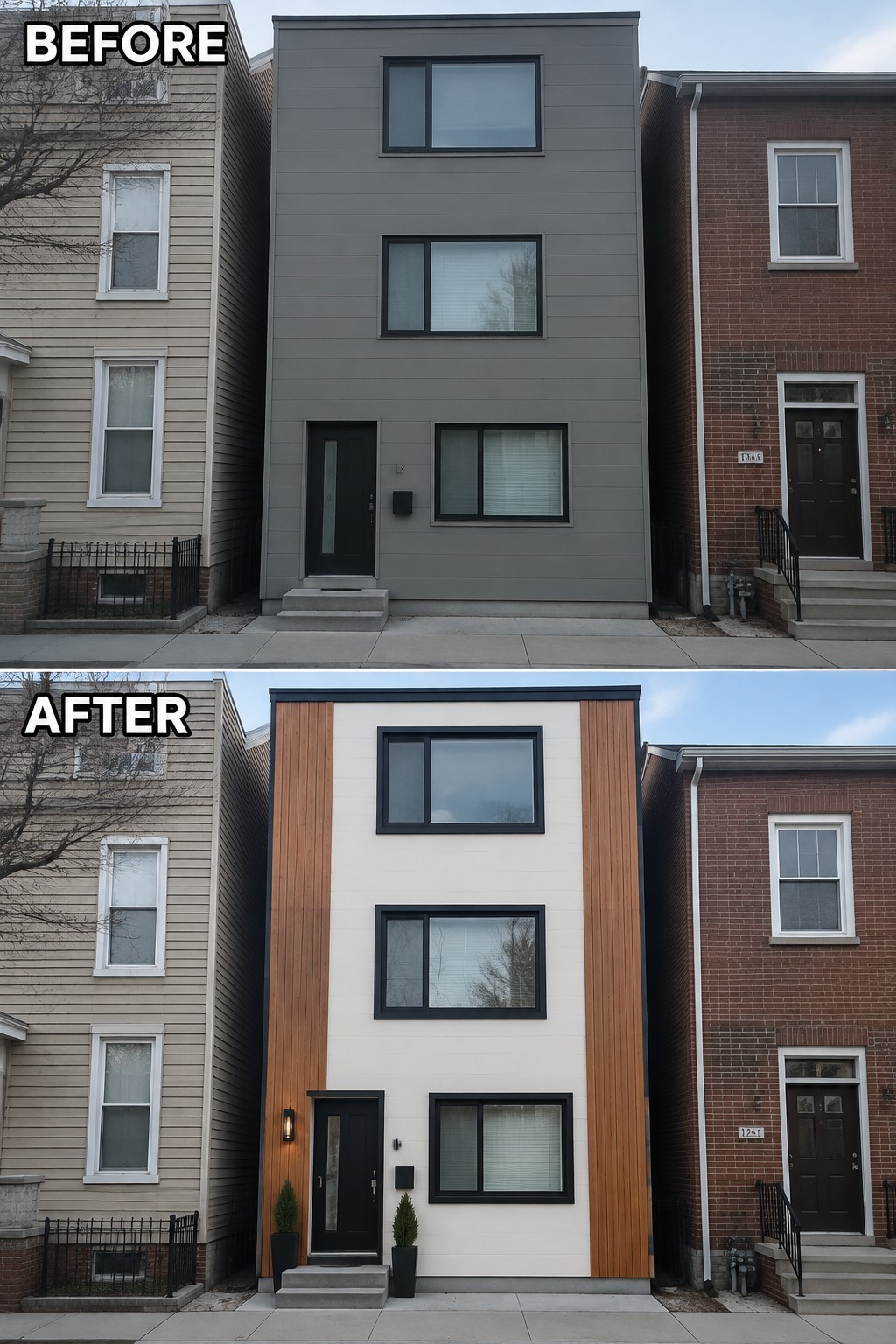
A plain gray siding house can start to feel flat and forgettable, especially when it sits between other homes with more detail. Switching the main siding to a lighter color and adding tall vertical wood panels on the sides gives the facade some height and texture without needing a full rebuild. The black trim around the windows and door ties everything together and makes the whole front look more finished.
This approach works well on narrow row houses or homes with simple rectangular shapes. Keep the wood panels narrow and repeat the same dark trim color on the windows and door so the look stays consistent. Start with the siding and trim first, then add a couple of planters by the door if you want a bit more warmth.
Unify Split Siding Colors With Black Exterior Trim
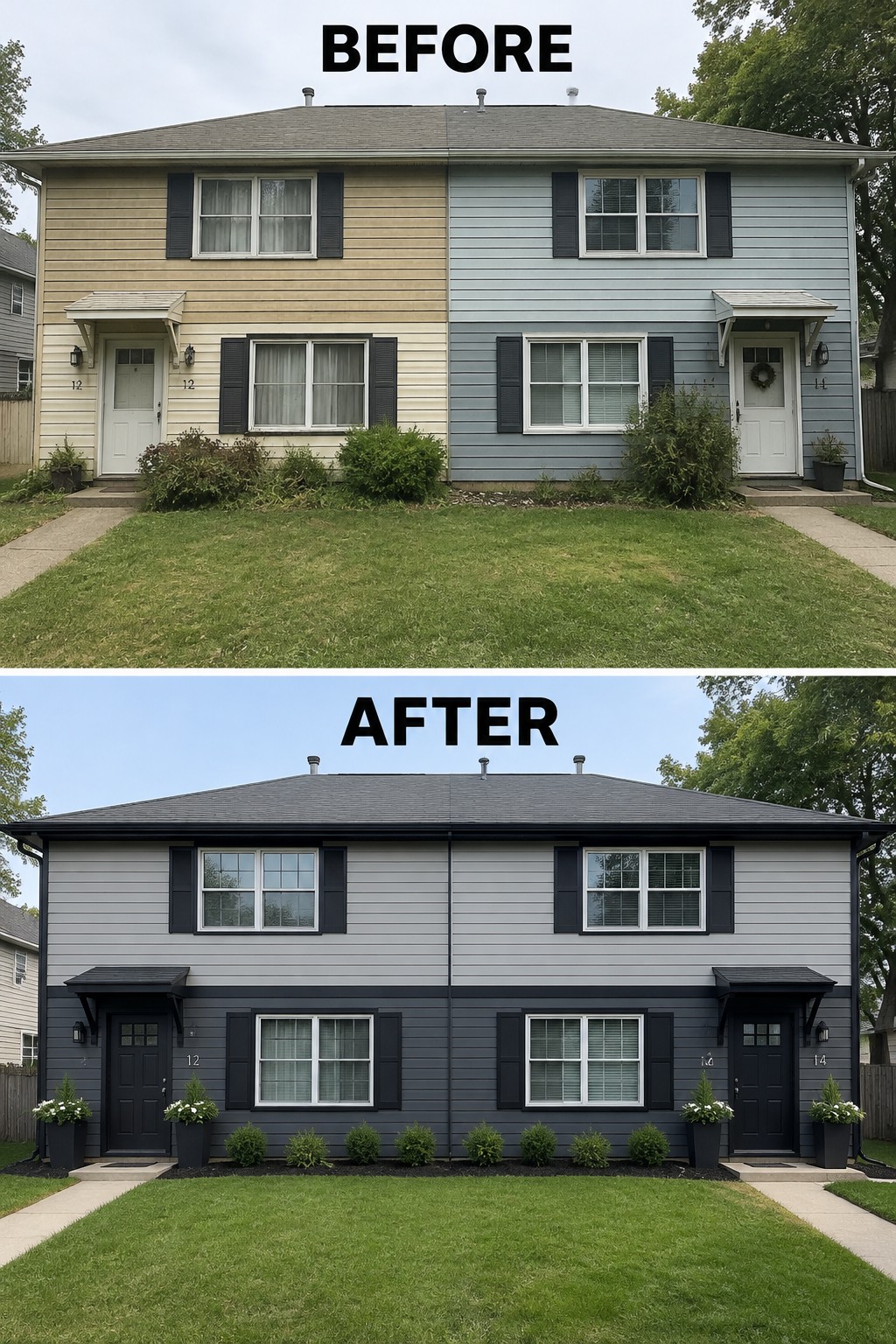
The before photo shows a house split down the middle by two different siding colors, which made the front feel choppy and unfinished. Painting the entire exterior one gray tone and switching the trim, shutters, and doors to black created a single, connected look that feels much more intentional.
This approach works best on homes with two siding sections or later additions. Pick one color for the main siding, then use black on the trim and doors to tie everything together. It keeps the update simple while still making a clear difference in how the house reads from the street.
Use Black Trim To Unify Different House Colors
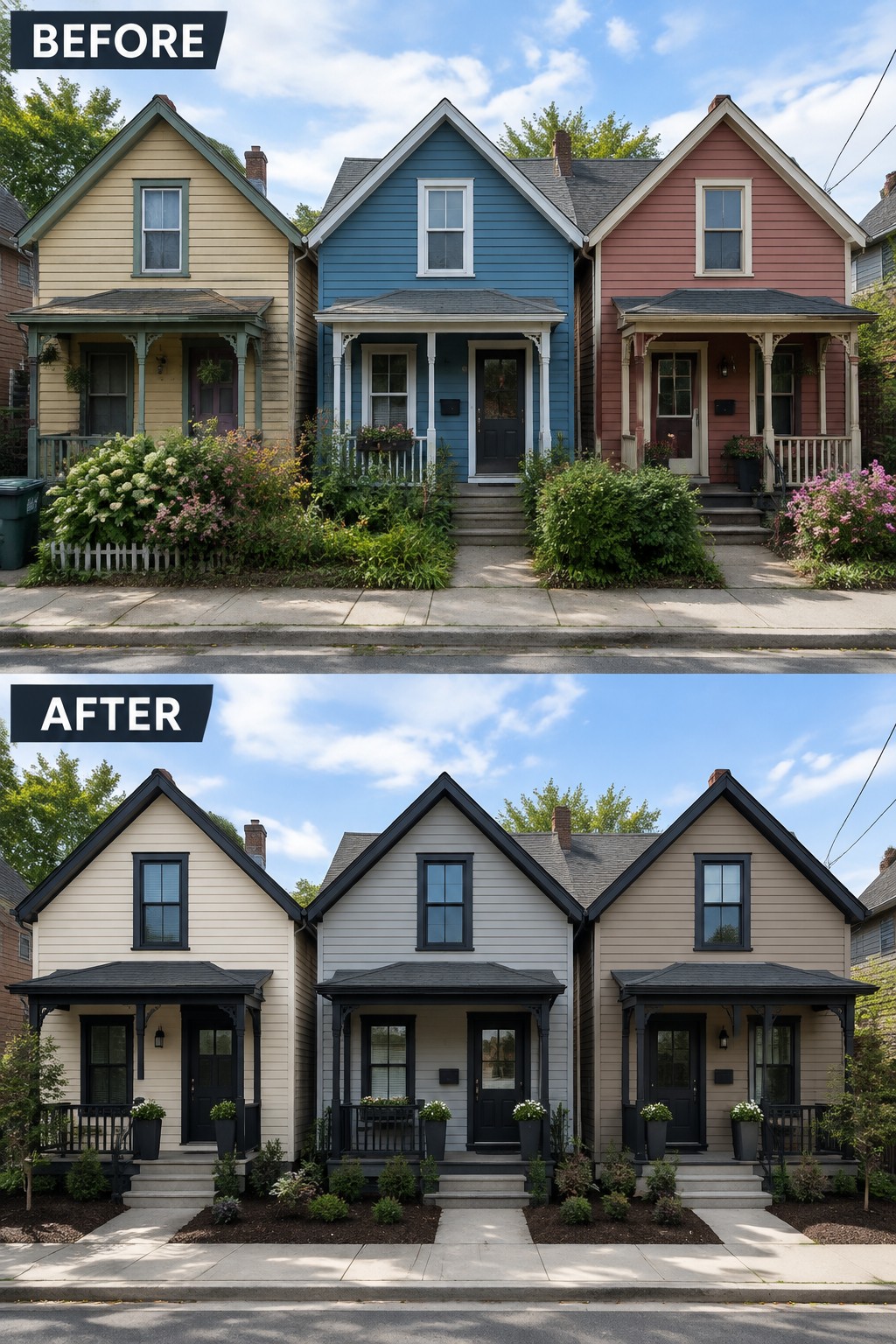
Painting the trim black across all three homes brought them together in a way the original mismatched colors never did. The before photo shows three houses with their own siding shades and trim details that made the row feel scattered. Once the trim, porch posts, and window frames were painted the same deep black, the whole block looked more intentional and pulled together without needing to repaint every wall.
This approach works well on older neighborhoods where homes sit close together. Start with the trim and porch details first since those changes show up fast and cost less than a full siding job. Stick to one dark trim color so the different siding shades still feel connected rather than competing.
Frequently Asked Questions
Q: Can black trim work with wood siding in these before and after projects?
A: Wood siding takes on a richer tone when you add black trim around it. The contrast makes the grain stand out more after the update. Pick a warm stain first so the trim does not overpower the natural texture.
Q: What happens if the siding color is already pretty dark?
A: Dark siding with black trim creates a sleek modern vibe in several of the examples. But you need to add white accents elsewhere to keep it from feeling flat.
Q: Do these changes need a full siding replacement or just trim work?
A: Many ideas start with just swapping the trim color. This keeps costs down while still delivering that bold shift you see in the photos. Test a small section first to see how it transforms the existing siding.