

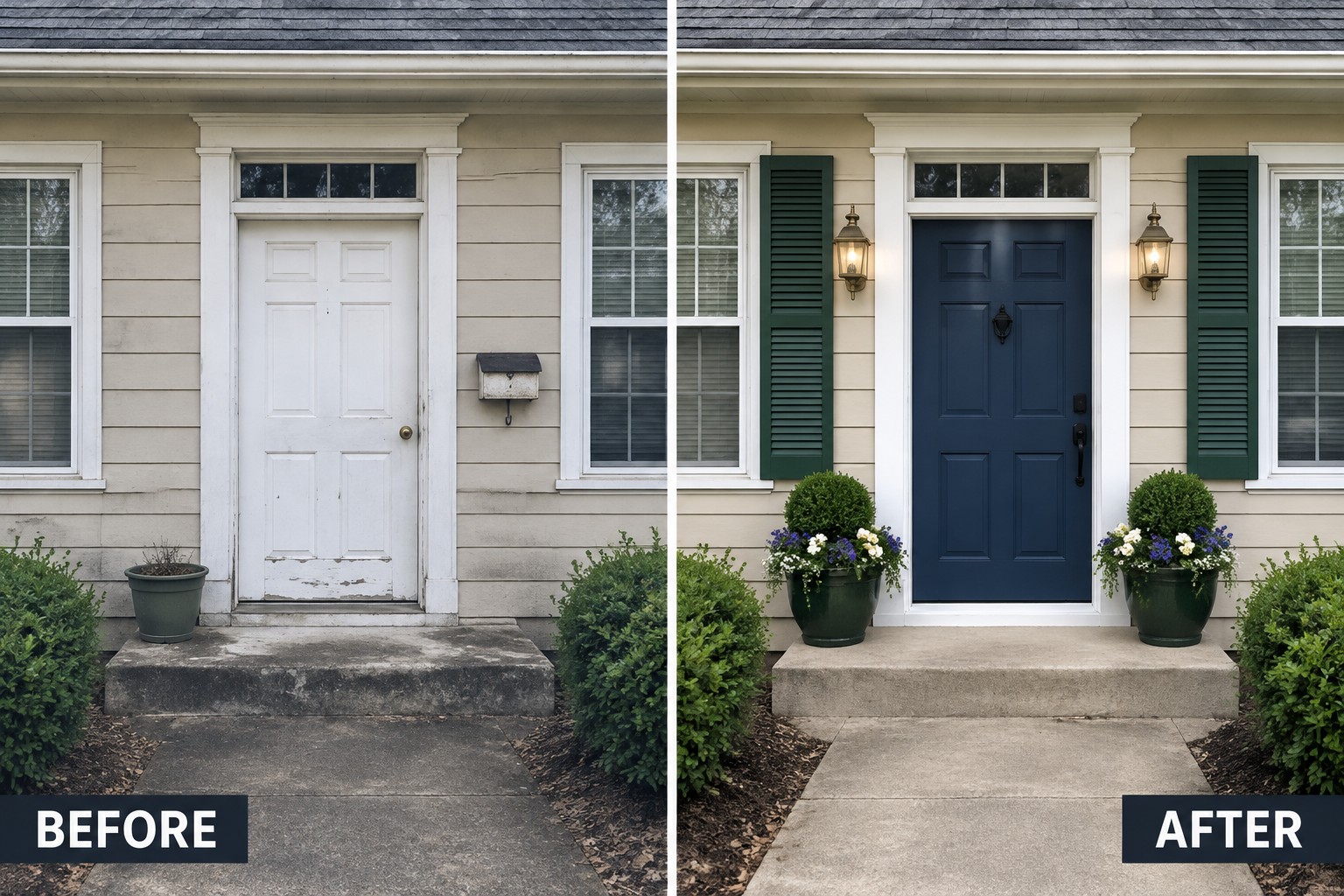
The color of a front door often decides the first impression a house gives to anyone walking up.
Switching to a deep green or navy can pull the whole facade together even when the siding stays the same.
I always check how the paint looks on a sample board first because outdoor light changes everything.
Some doors end up looking more solid and cared for once the new shade settles in.
That kind of update tends to make the rest of the exterior feel less neglected over time.
Update The Front Door Color To Improve Curb Appeal
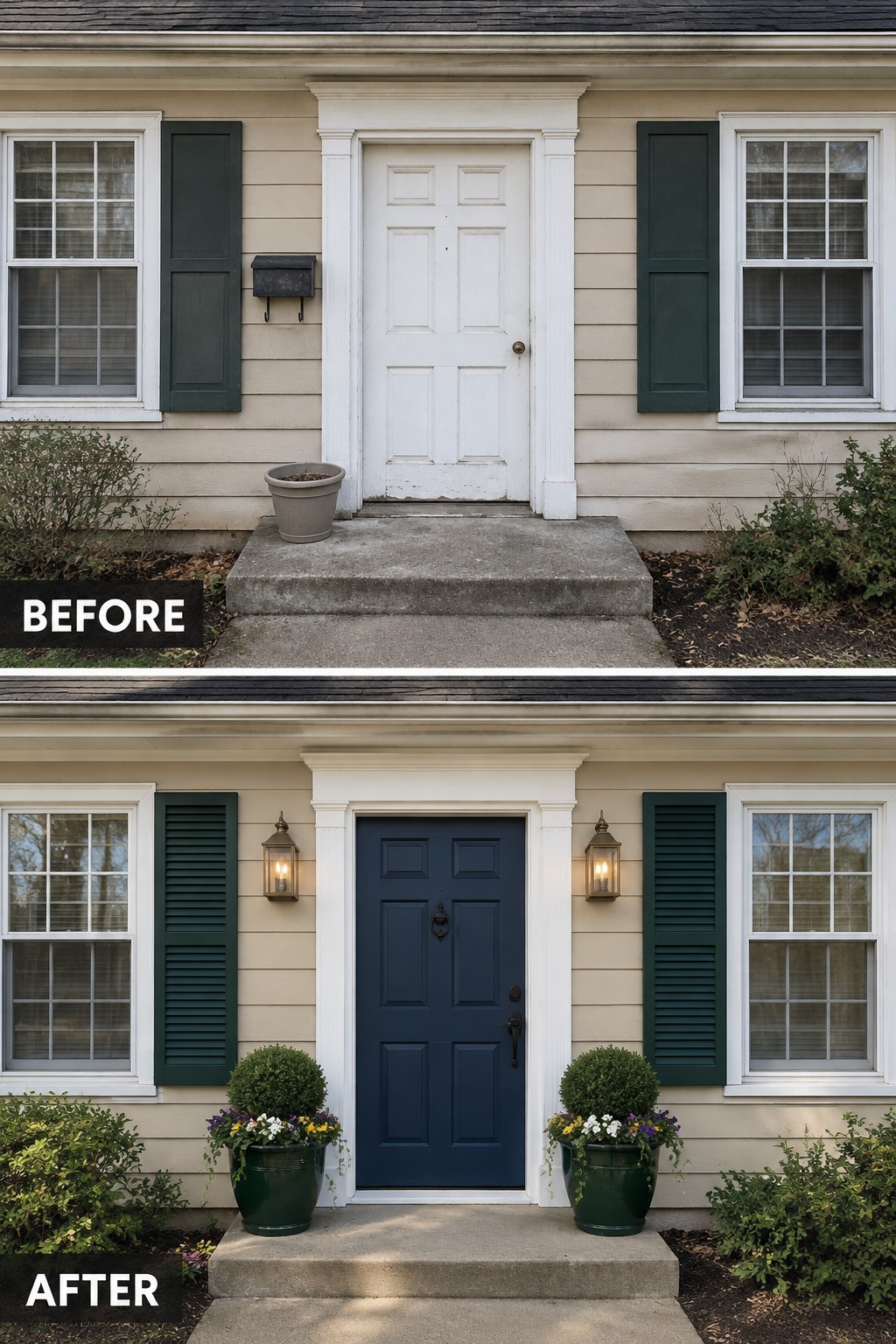
A deep navy front door gives a plain house exterior more presence without any major construction. The change from white to navy creates a clear focal point, and the addition of a pair of planters plus simple lights on either side helps the entry feel more finished.
This idea suits homes with straightforward siding and basic trim where you want quick impact. Pick a color that stands out from your siding, then keep the supporting pieces simple so the door stays the main feature.
Paint The Front Door Deep Green To Refresh The Exterior
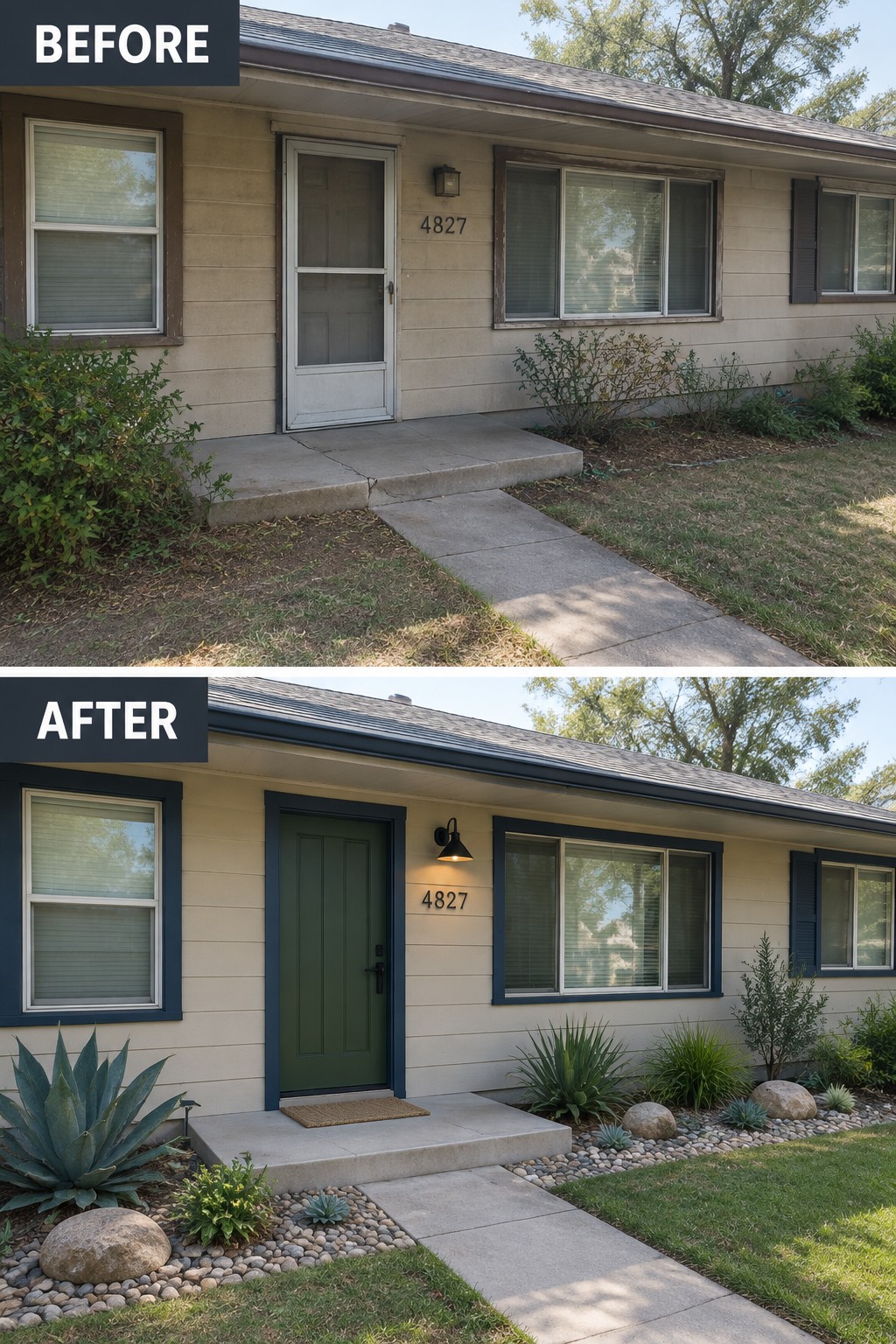
A plain white door on beige siding often blends into the background and makes the entry feel forgettable. Switching the door and window trim to deep green gives the house a clear focal point and makes the whole facade look more finished without repainting every wall.
This approach works best on simple one-story homes where the entry needs more presence. Choose a green with enough depth to stand out against your siding color, and test a sample on the actual door so you can see how it reads in morning and afternoon light.
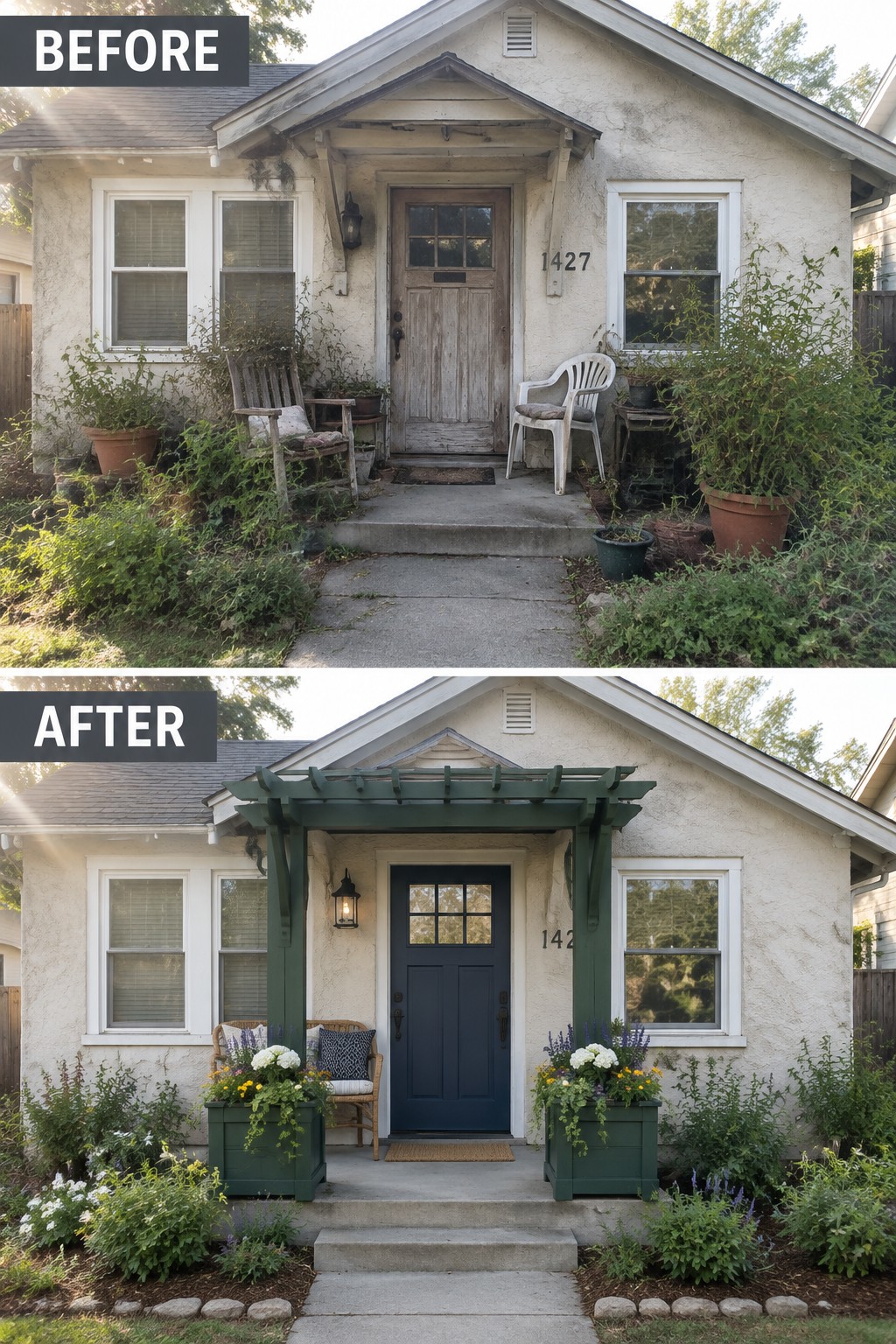
A faded wooden door can make the whole front of a house feel tired. Painting it a deep navy gives the entry a clear focal point without any major construction. In this case the door color change, along with the new green pergola and matching planters, instantly made the house look cared for and pulled together.
This approach works especially well on simple stucco or wood homes where the entry sits front and center. Start by cleaning up the planting beds and removing anything broken or overgrown. Then choose a door color that contrasts with the house and repeat one accent color, like the green used here, on trim or planters so the changes feel intentional rather than scattered.
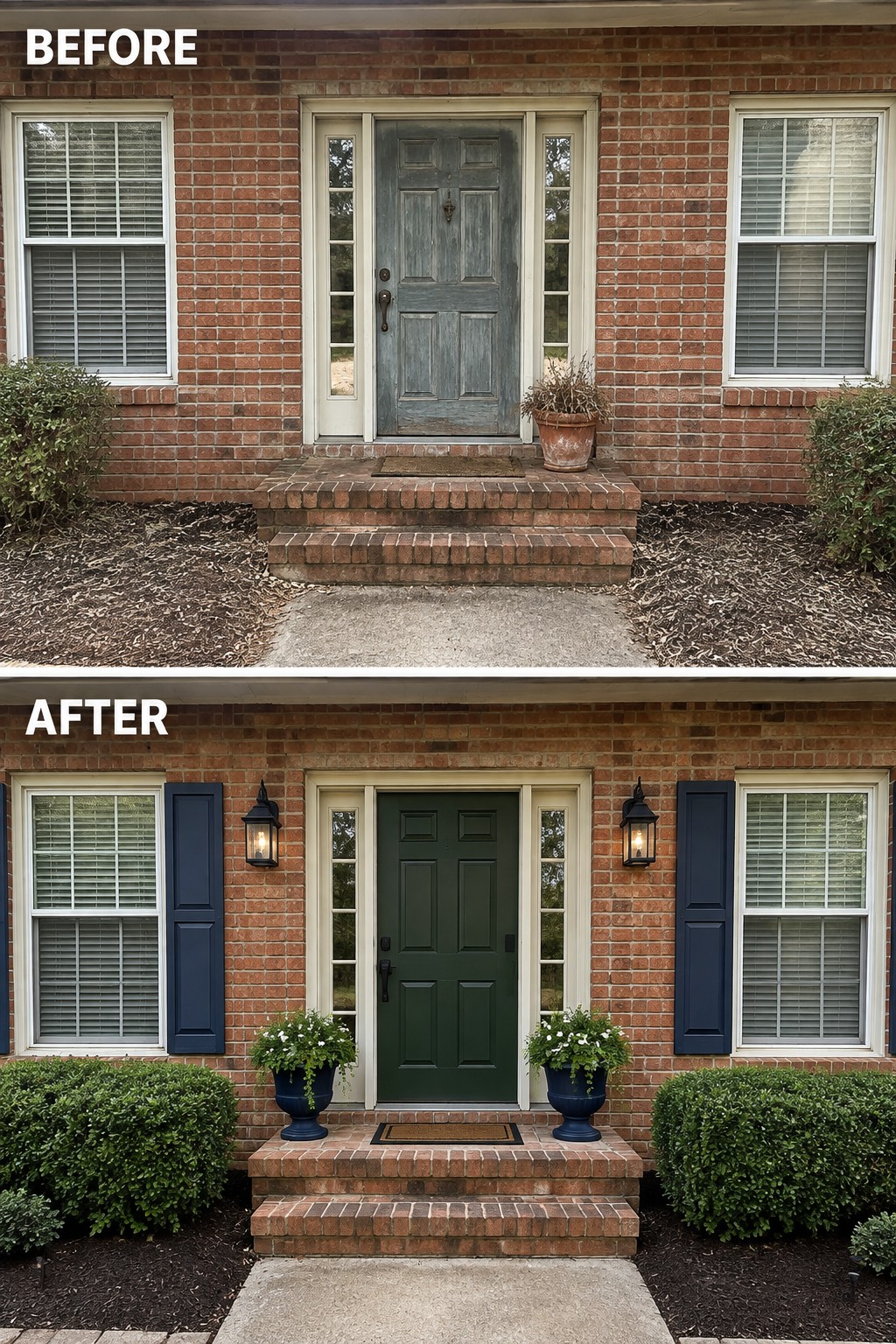
A faded front door often makes the whole house look older than it is. Switching to a deep green door and adding navy shutters on the windows gives the entry a clear focal point and makes the brick feel more intentional.
This approach suits brick homes that need a simple refresh rather than a full repaint. Start with the door color, then add shutters in a matching navy to frame the windows and keep the changes balanced.
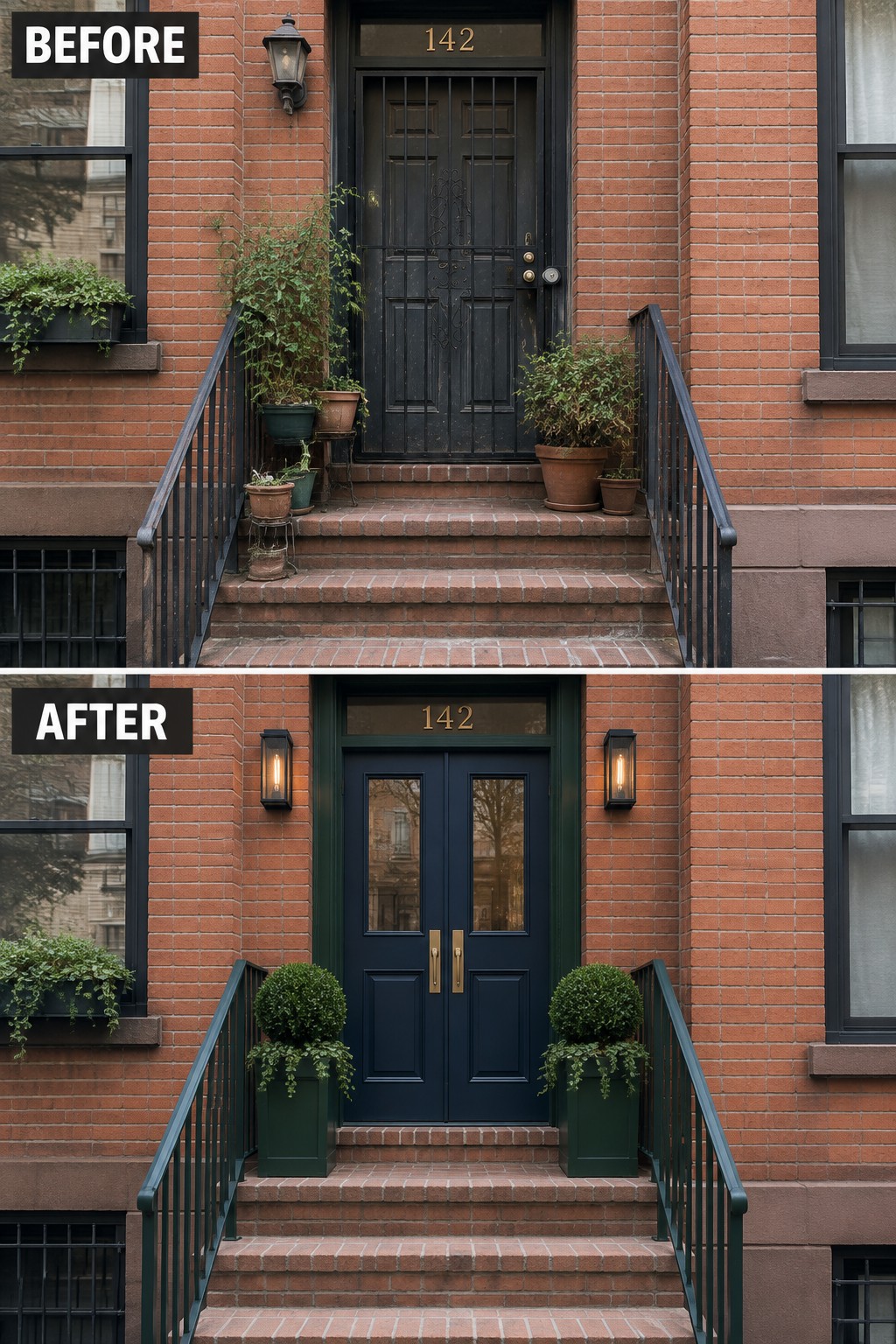
A dark, plain door can make an entry feel heavy and dated, especially on a brick building. Changing it to a deep navy and adding matching green trim around the frame gives the whole front a cleaner, more current look. The scattered pots and old hardware in the before version made the steps feel busy, while the after keeps just two matching planters that sit neatly beside the stairs.
This idea works best on older homes where the door is the main focal point. Pick one strong color for the door and repeat it in the planters or railings so the entry reads as intentional rather than collected over time. Limit the number of accessories and make sure the new color contrasts enough with the brick to stand out from the street.
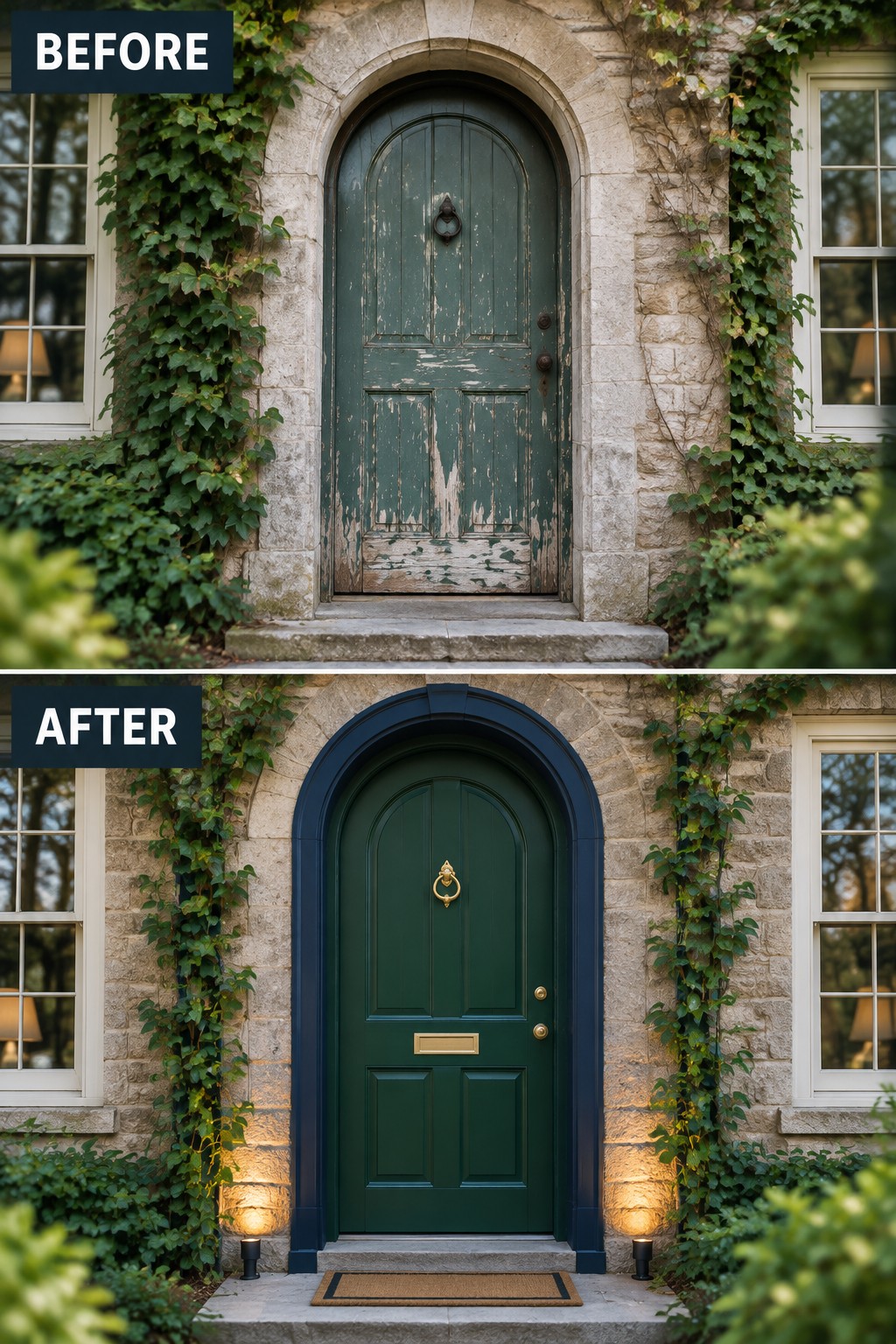
An old front door with peeling paint makes the whole entry look tired. Painting the door a deep green and adding navy trim around the arch gives it a clean, finished look that stands out against the stone.
This works especially well on traditional homes where the entry needs a stronger focal point. Start with good surface prep and use exterior-grade paint so the color lasts. The navy trim helps define the shape of the doorway without adding extra pieces.
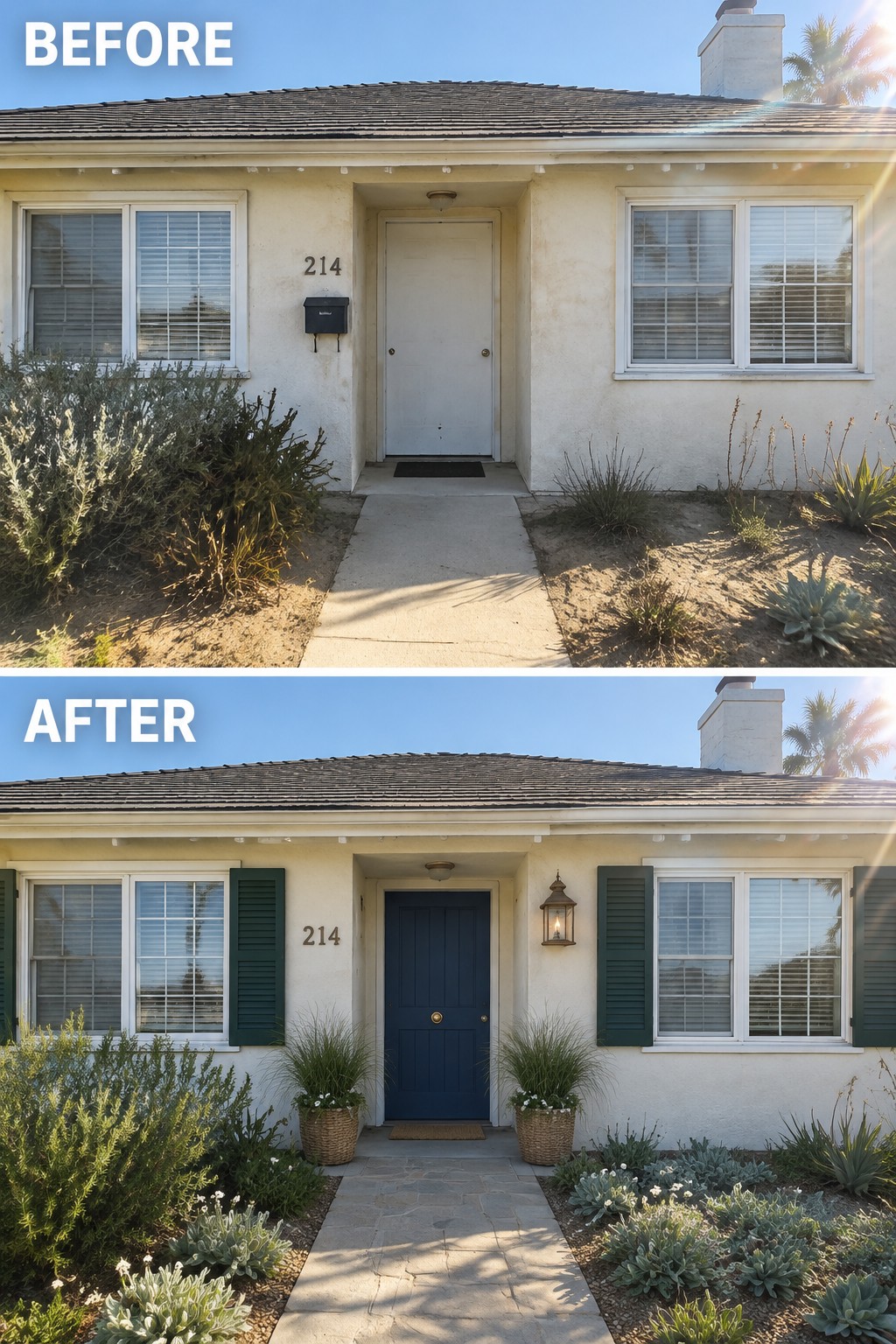
A navy front door can give a plain house exterior more presence without needing bigger changes. Here the door was painted a deep blue and dark green shutters were added to the windows. Those two updates make the entry feel more defined and pull the facade together.
This works best on homes with light walls where the door can act as the main accent. Start with the door color first if the rest of the exterior feels flat. Keep the shade bold enough to read clearly from the street and match any new shutters or trim to the same tone.
Highlight A Green Front Door With A Dark Porch Ceiling
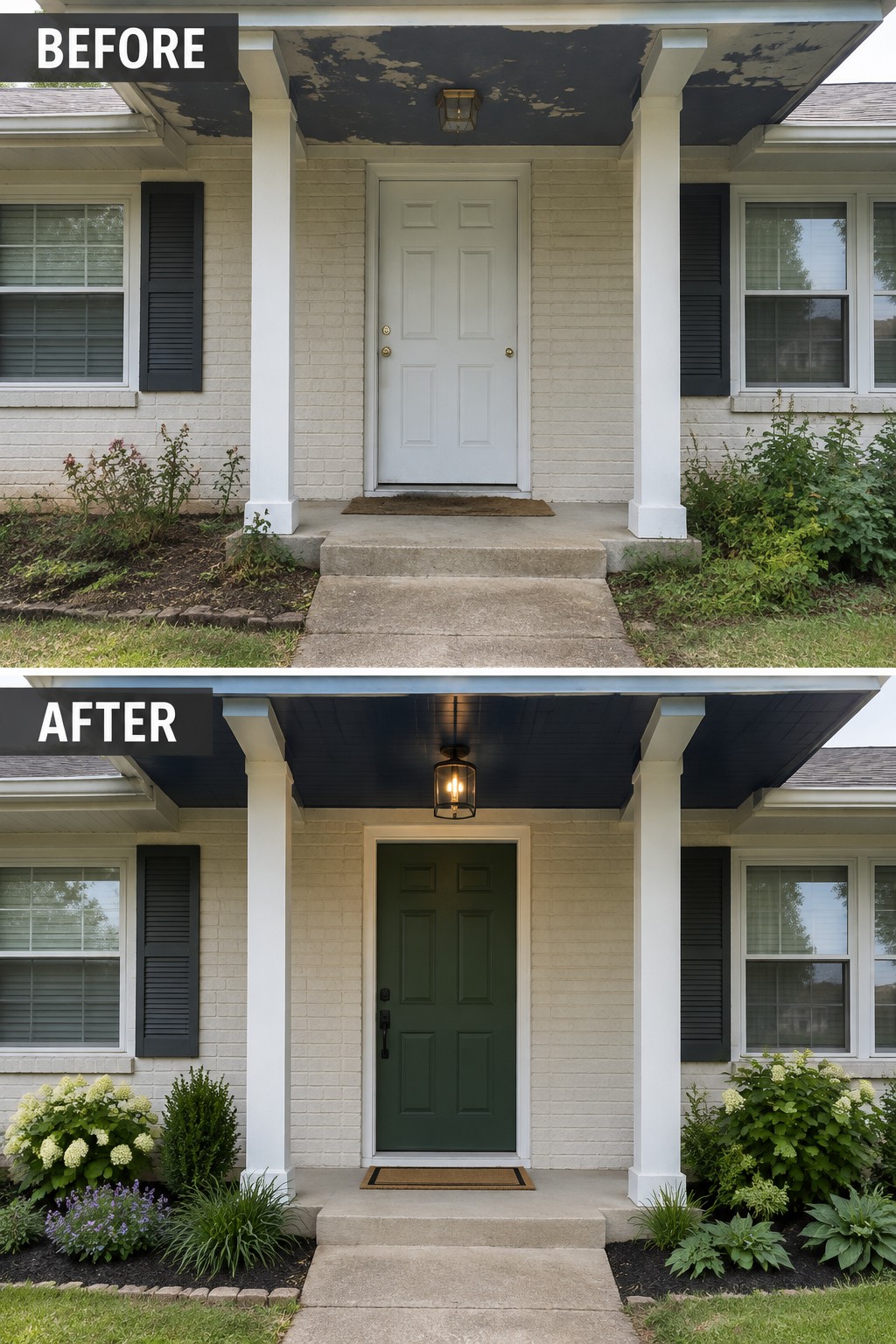
A plain white door can make an entry feel flat, especially against light brick. Switching it to a deep green gives the porch a clearer focal point and helps the whole front of the house feel more finished. The dark ceiling color supports this by framing the door and making the green stand out without extra trim work.
This approach works best on homes with simple siding or brick where you want quick impact without a full repaint. Keep surrounding trim light so the door color reads cleanly, and test the green in both sun and shade before committing. A dark porch ceiling is an easy addition if yours shows wear, but the door alone often carries the update.
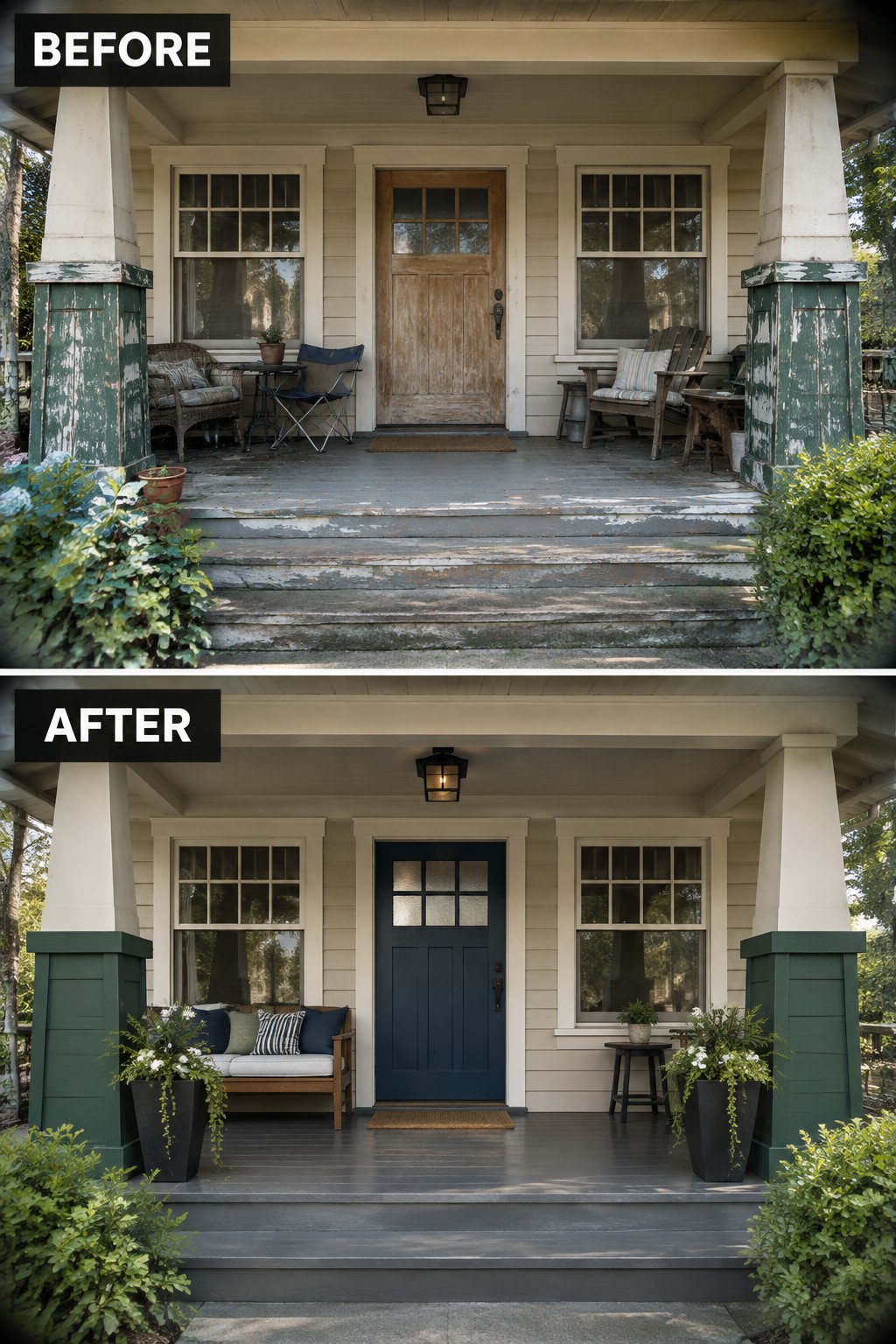
A faded wooden door and peeling paint on the columns made the porch look worn and unfinished. Switching the door to a deep navy and giving the columns a solid coat of green pulled everything together and made the entry feel much more intentional.
This approach works best on older homes that already have decent structure but need a quick update. Pick a navy that contrasts with your siding, then keep the rest of the porch simple with a couple of planters and a clean doormat so the door stays the main focus.
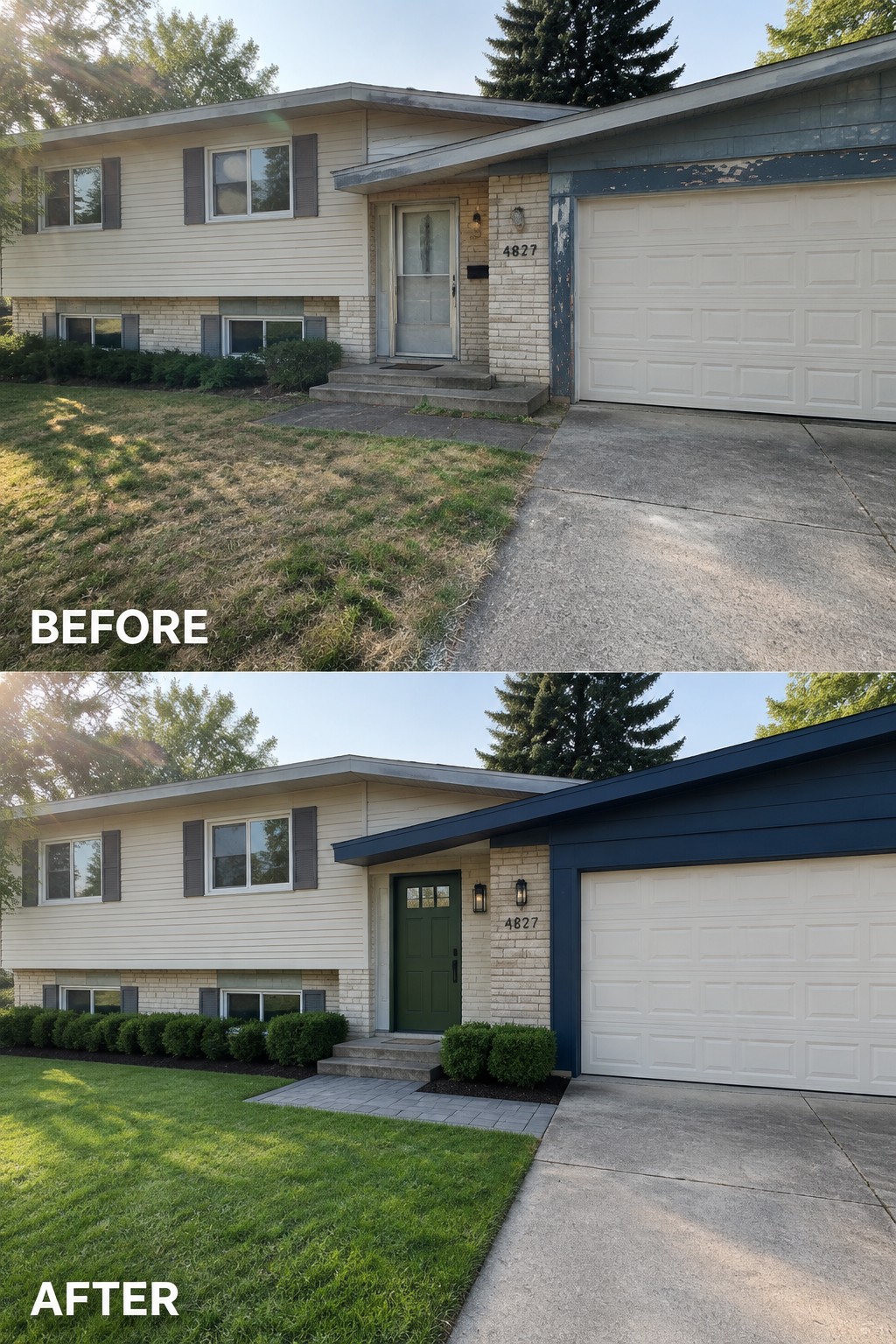
Painting the trim around the garage and entry a deep navy while changing the front door to a solid green gives the whole house a cleaner, more finished look. The light siding stays the same, so the color change carries most of the impact without needing new siding or big construction.
This idea works best on simple ranch-style homes where the garage sits close to the entry. Start with the trim and door only, and make sure the two colors contrast enough to stand out from the siding. It keeps the project small while still lifting curb appeal in a noticeable way.
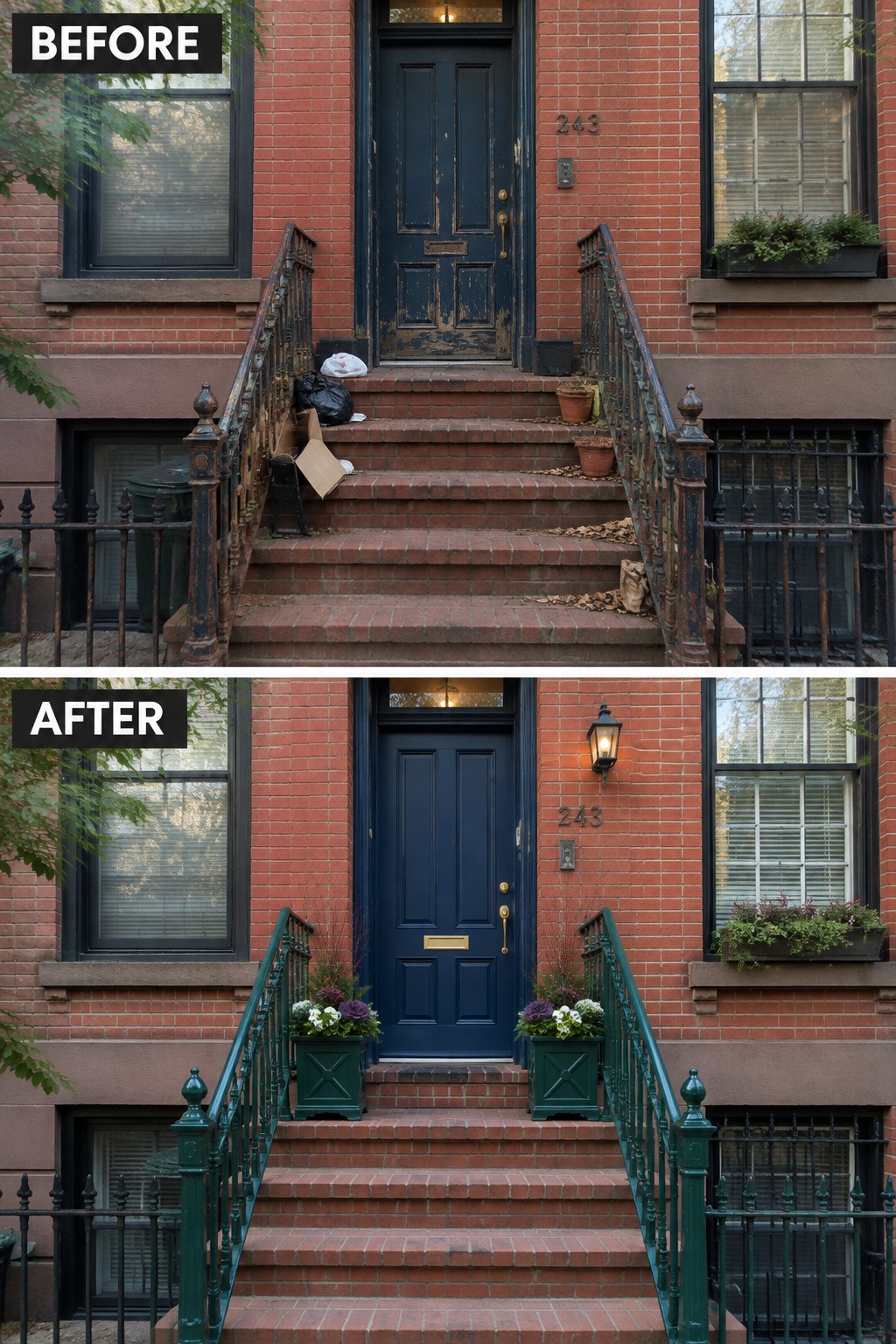
Painting the front door a deep navy instantly changes how the whole entry feels. In the before photo the door looked tired and the railings were chipped and dark. Once both the door and railings were painted, the steps looked cleaner and the house felt more put together without any major construction.
This idea works well on brick homes where you want color but do not want to repaint the whole facade. Start by clearing the stairs and fixing the railings, then pick a good exterior paint for the door. Adding two matching planters on the steps helps tie everything together and keeps the look simple.
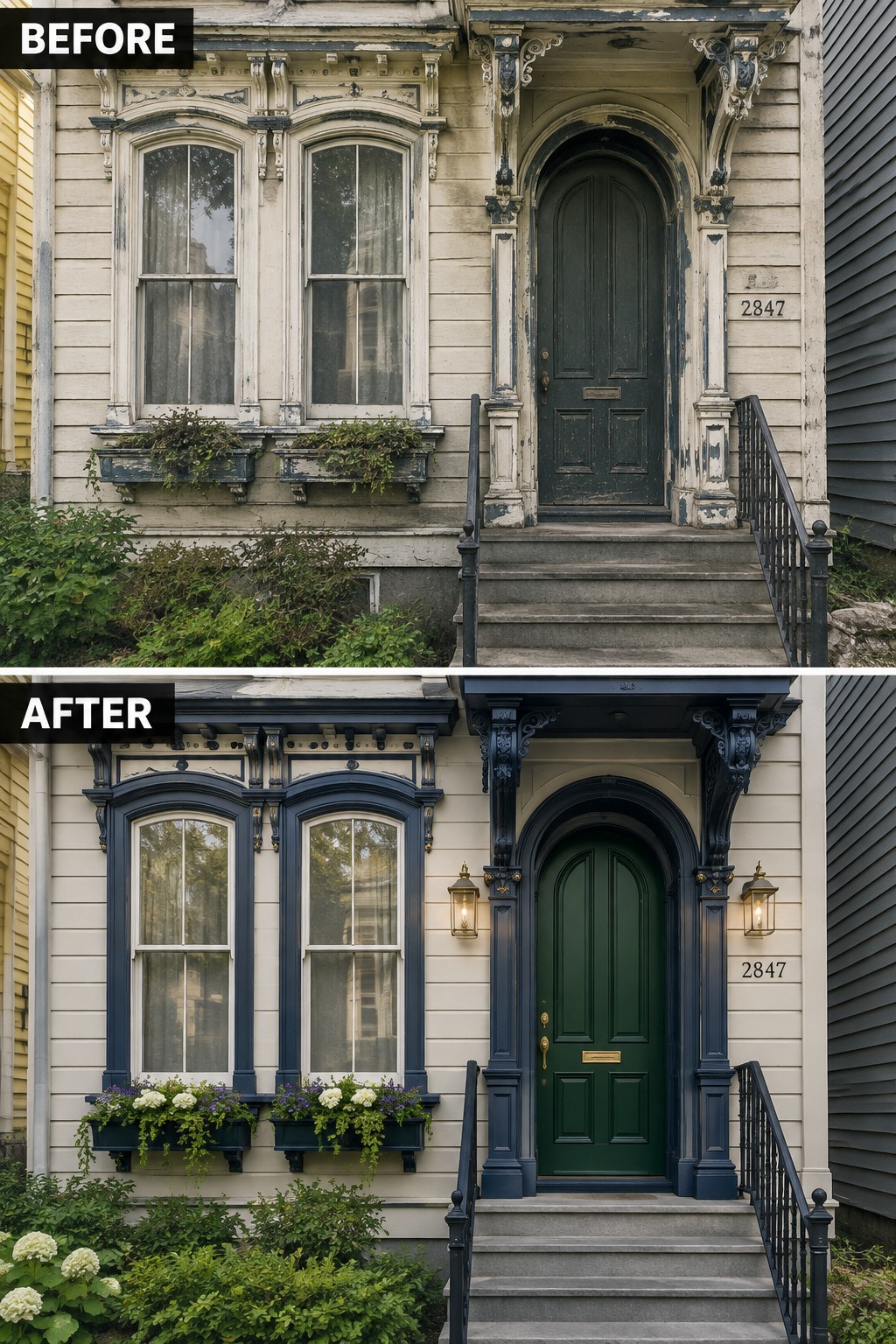
The biggest shift comes from painting the trim navy and switching the door to a deep green. The old peeling finish and faded color made the entrance look tired. A few coats of bold paint on the door and trim details pulls everything together and gives the front a much cleaner appearance.
This approach works especially well on older homes that already have interesting trim and an arched doorway. Focus on prepping the wood properly before painting, and test the two colors against your siding first. It is a straightforward way to refresh curb appeal without touching the whole house.
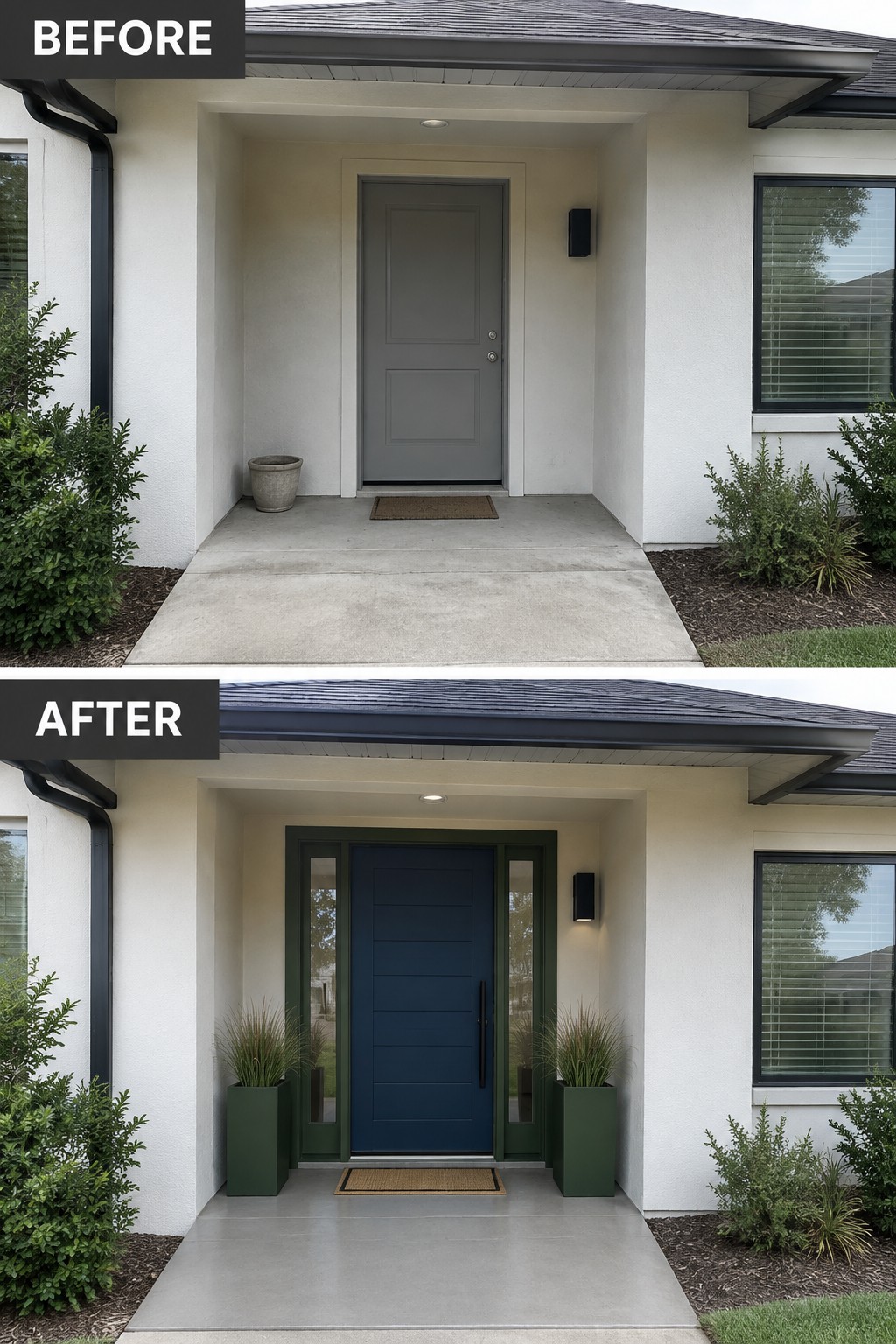
A gray door on a plain facade tends to blend into the background and leaves the entry feeling unfinished. Painting the door a deep navy and adding green trim on the sidelights creates a strong focal point that makes the whole front feel more intentional. The matching planters on either side also help define the space without adding clutter.
This idea works best on houses with simple architecture where the door can carry the update. Choose a navy that contrasts with your siding, then repeat the green on the trim or planters so the colors feel connected. Start with the door color first, since that single change often shifts the whole look more than adding decor.
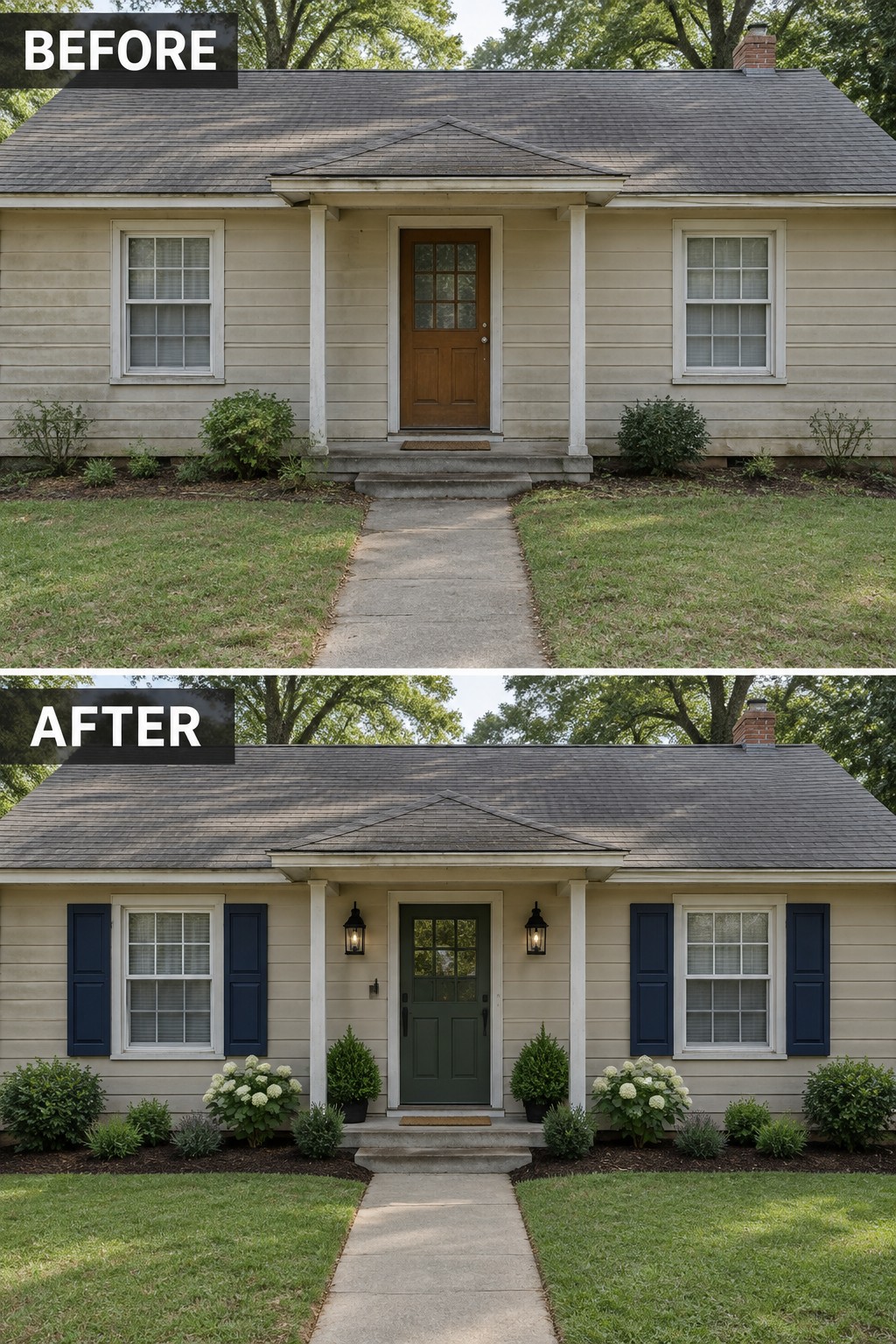
A plain beige house with a brown door often looks flat and dated. Switching the door to deep green and adding navy shutters on the windows gives the whole front a clear focal point without any major construction. The color change alone makes the entry feel intentional and pulled together.
This approach works best on simple one-story homes where the siding is neutral. Keep the rest of the trim white so the green and navy stand out, and add a couple of matching planters near the steps if you want a bit more structure. Start with good paint made for exterior doors and shutters so the color lasts through weather changes.
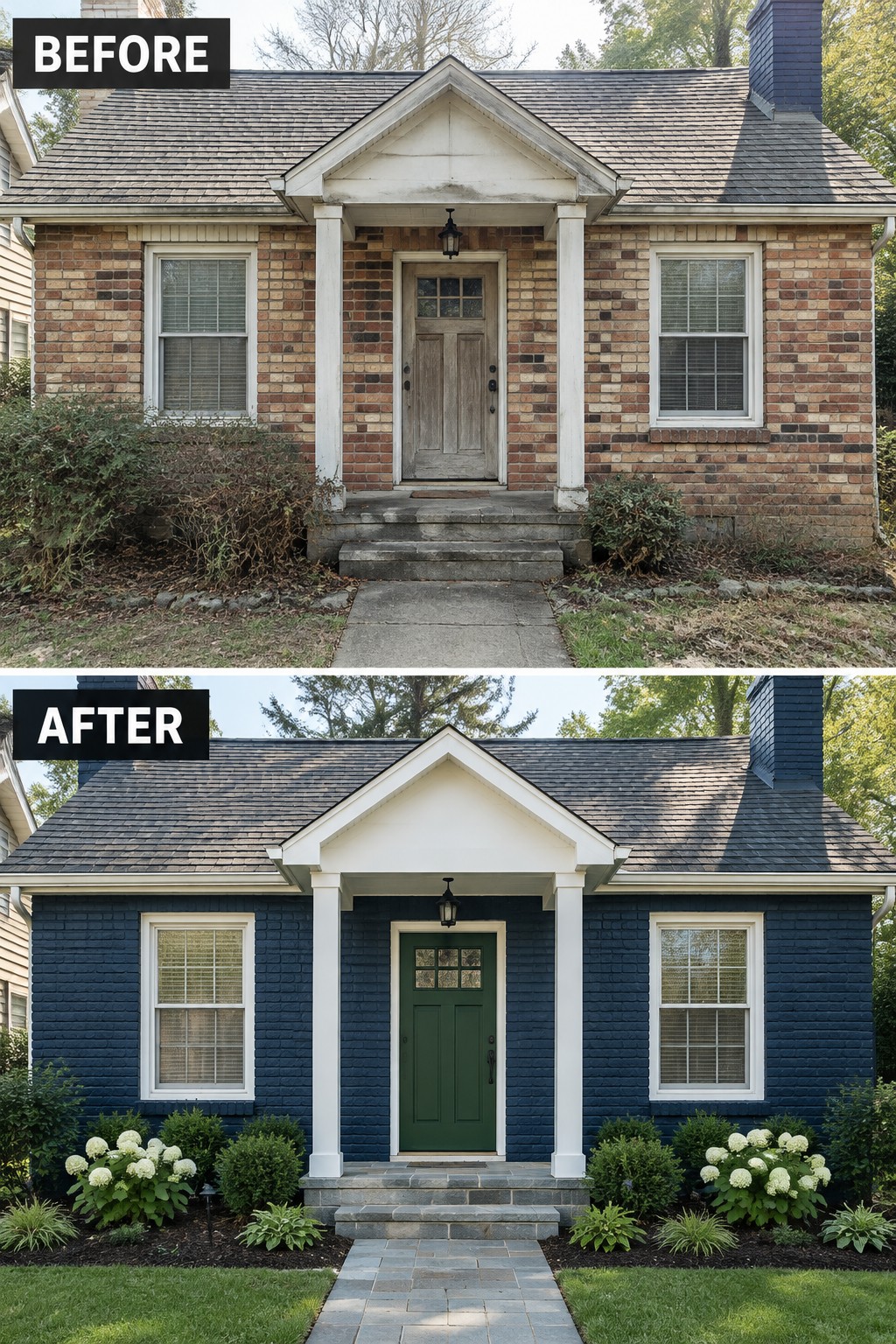
Painting the brick a solid navy color and switching the front door to deep green gives this house a much cleaner and updated look. The old multi-tone brick and weathered door made the entry feel tired, while the new colors create a simple contrast that draws attention to the door without adding extra trim or details.
This approach works well on smaller brick homes where the facade feels flat or dated. Keep the trim white to maintain a crisp edge, and focus on one strong door color rather than matching everything. It is an affordable way to improve curb appeal before taking on larger projects like new siding or windows.
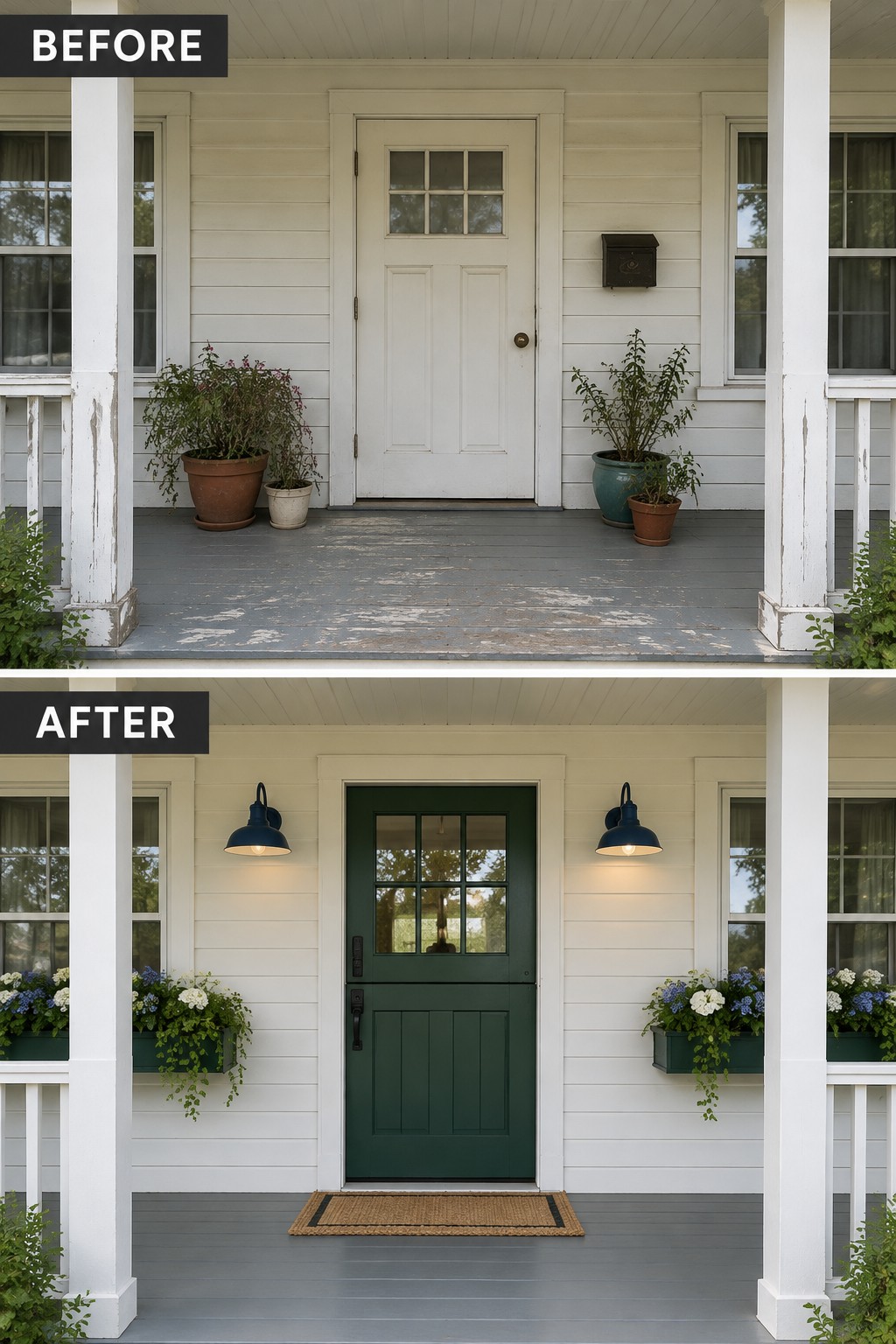
A deep green door can give a plain house front the focus it needs without any major construction. The white door blended into the siding and left the porch feeling unfinished, but switching to a strong green shade makes the entry read as intentional right away. Adding a pair of navy sconces on either side reinforces that same color story and brings usable light to the step.
This idea suits older homes with simple siding and a centered door. Keep the surrounding trim and porch floor neutral so the door stays the star, and choose exterior-rated paint that can handle weather. Two matching lights and a simple doormat are usually enough to finish the look.
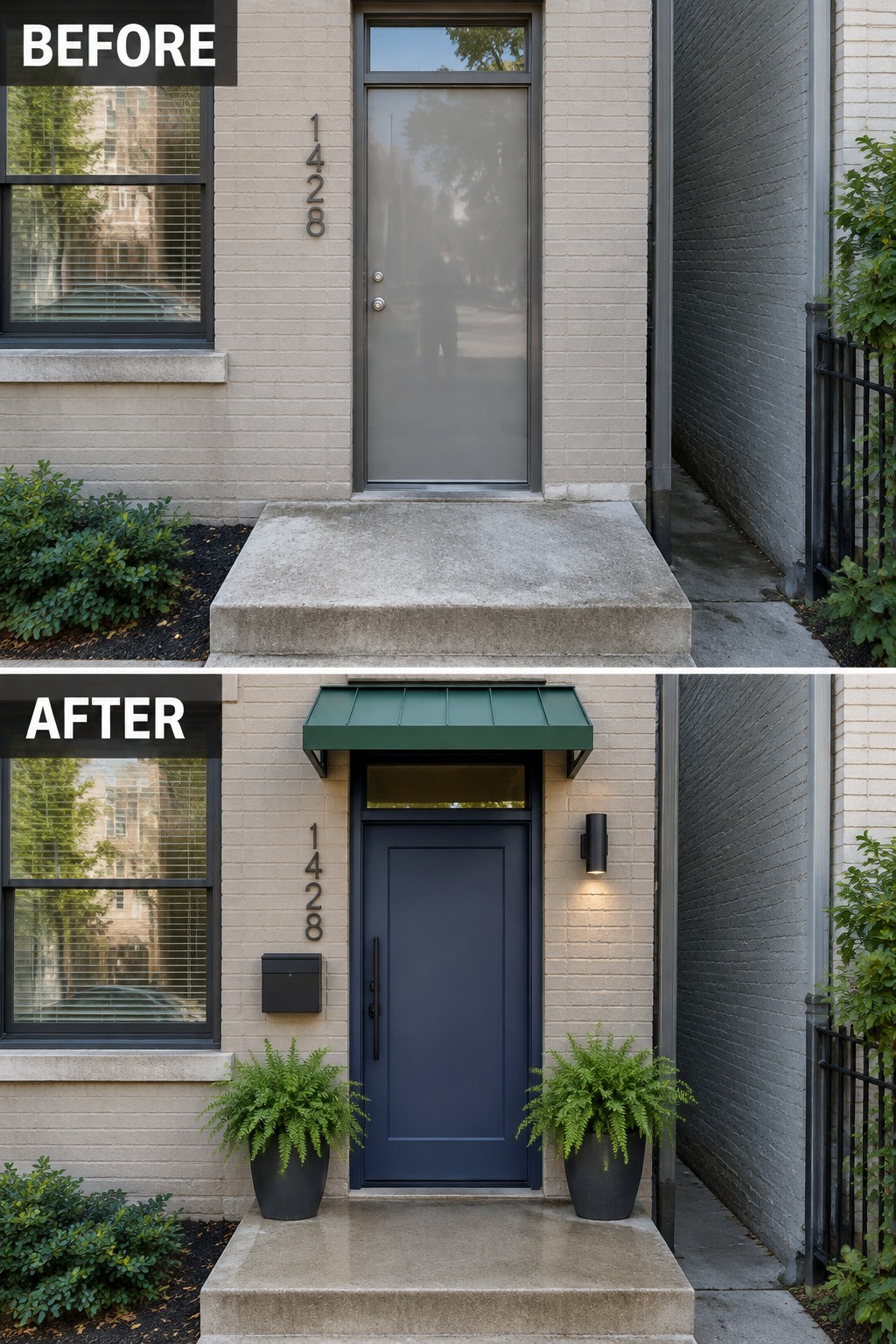
A simple front door can make the whole house feel flat. In this case the before photo shows a basic frosted door and bare concrete steps with little to draw the eye. Painting the door a deep navy and adding a green metal awning above it instantly gives the entry a clear focal point and makes the house feel more welcoming without any major construction.
This approach works well on brick homes with straightforward entries. Keep the rest of the facade simple and let the door color and one or two flanking planters do the work. A wall sconce adds a bit of light at night, and the ferns in dark pots soften the steps without crowding the walkway. Start with the door paint if you want the biggest change for the least effort.
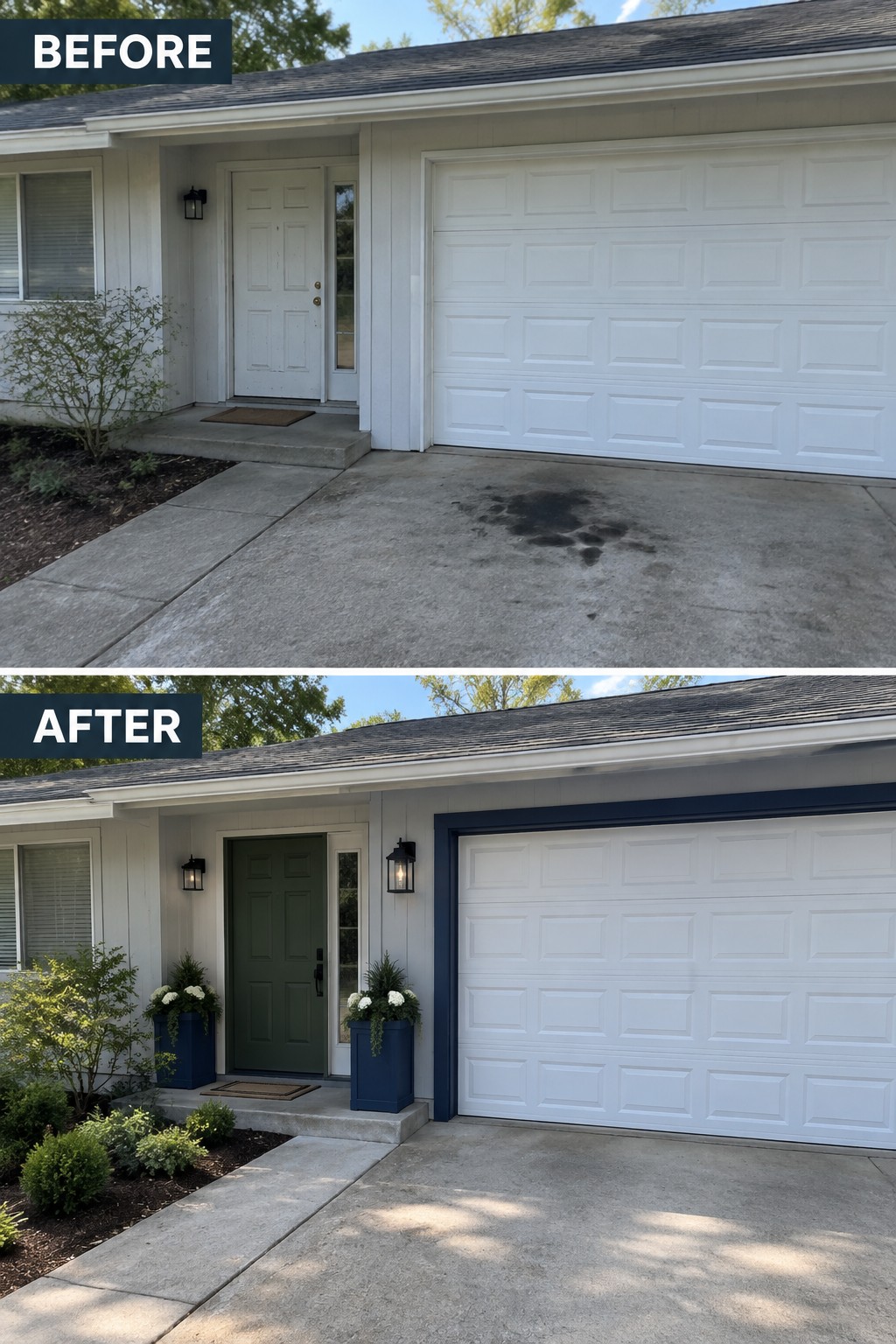
Painting the front door a deep green and adding navy trim around the garage gives this house a much stronger presence. The change turns a flat white entry into something that stands out without any major construction.
This approach works well on simple ranch homes where the facade lacks detail. Choose colors that contrast with the siding, keep the rest of the exterior clean, and add matching planters by the door to tie everything together.
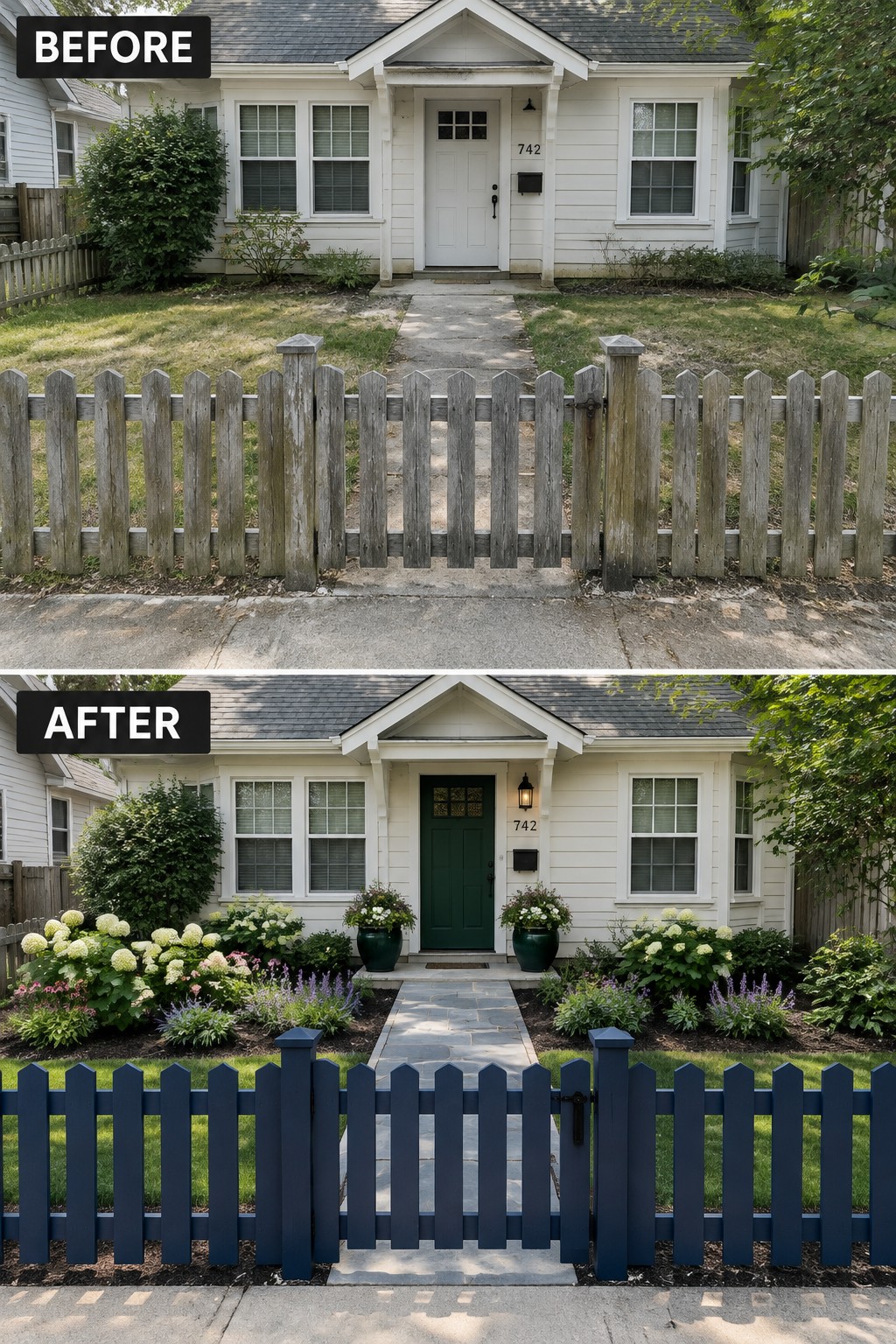
A white door on a light house tends to disappear. Switching it to deep green makes the entry stand out right away, and painting the fence navy gives the whole front a clean frame instead of a faded wood border. Those two color changes do most of the work here.
This approach suits older homes with simple siding where you want more presence without changing windows or trim. Test the green on the actual door and the navy on a fence section first, since both colors shift a lot in sunlight. Keep the rest of the palette light so the bold pieces stay the focus.
Frequently Asked Questions
Q: Which color works better if my door faces the sun all day?
A: Navy holds up better without fading quickly. Deep green can look richer but might need a UV-protectant topcoat. Pick based on how much direct light hits it.
Q: Should I paint the trim the same color as the door?
A: Keep the trim white or a lighter neutral instead. This frames the bold color and makes the door stand out.
Q: How often will I need to repaint with these dark shades?
A: Every four to six years usually. Clean the surface yearly to avoid buildup. Touch up chips right away to prevent rust or rot underneath.