

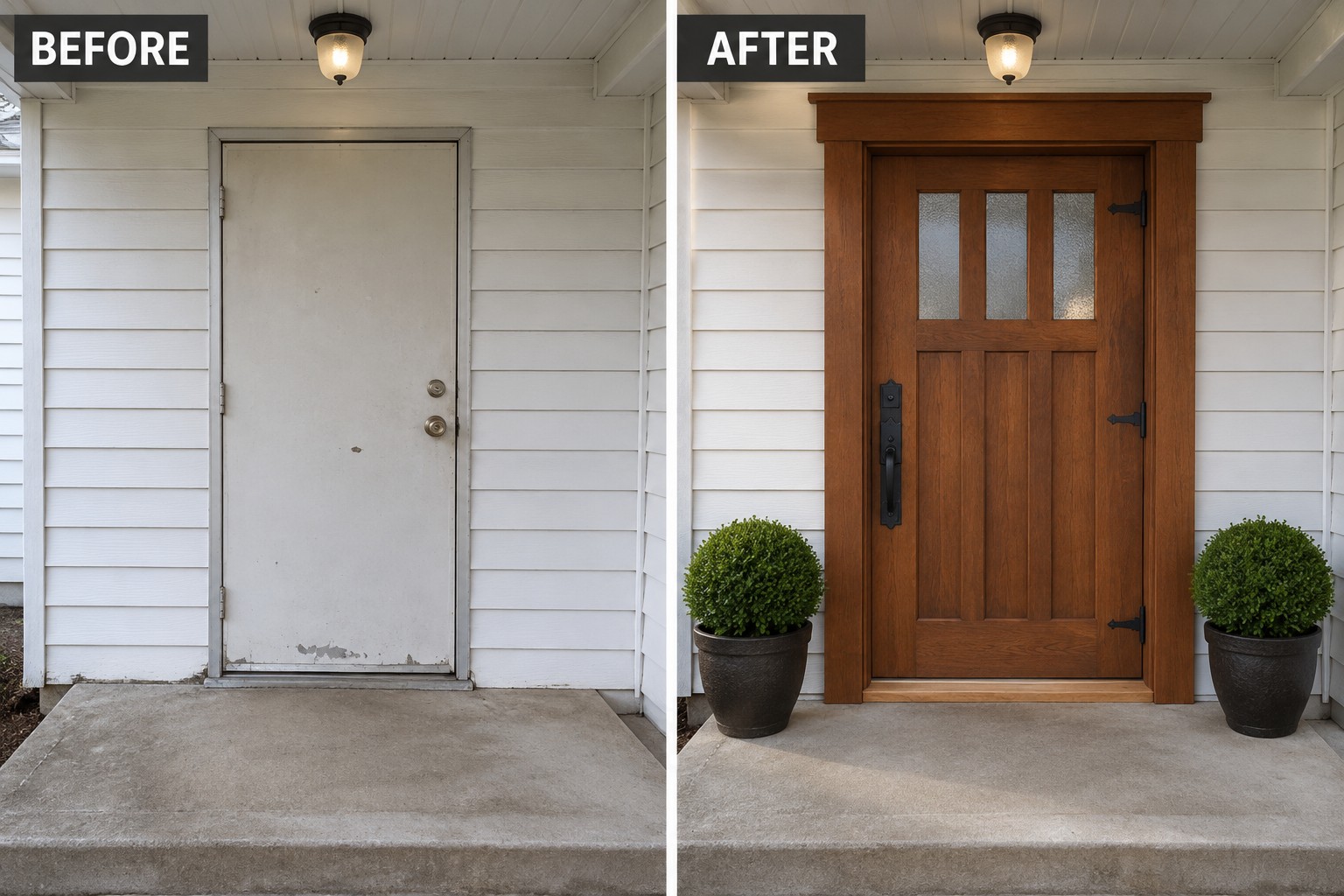
I have always noticed that the front entry sets the tone for how a house feels from the street.
When the door looks tired or mismatched with the rest of the siding, the whole facade can seem a bit neglected even if the rest of the home is in good shape.
Adding wood accents seems like a practical way to bring some warmth without committing to a bigger project.
A few of these approaches feel worth trying on my own place.
It is satisfying to see how small swaps around the door can make the exterior feel more pulled together overall.
Update Your Entry With A Wood Door And Matching Trim
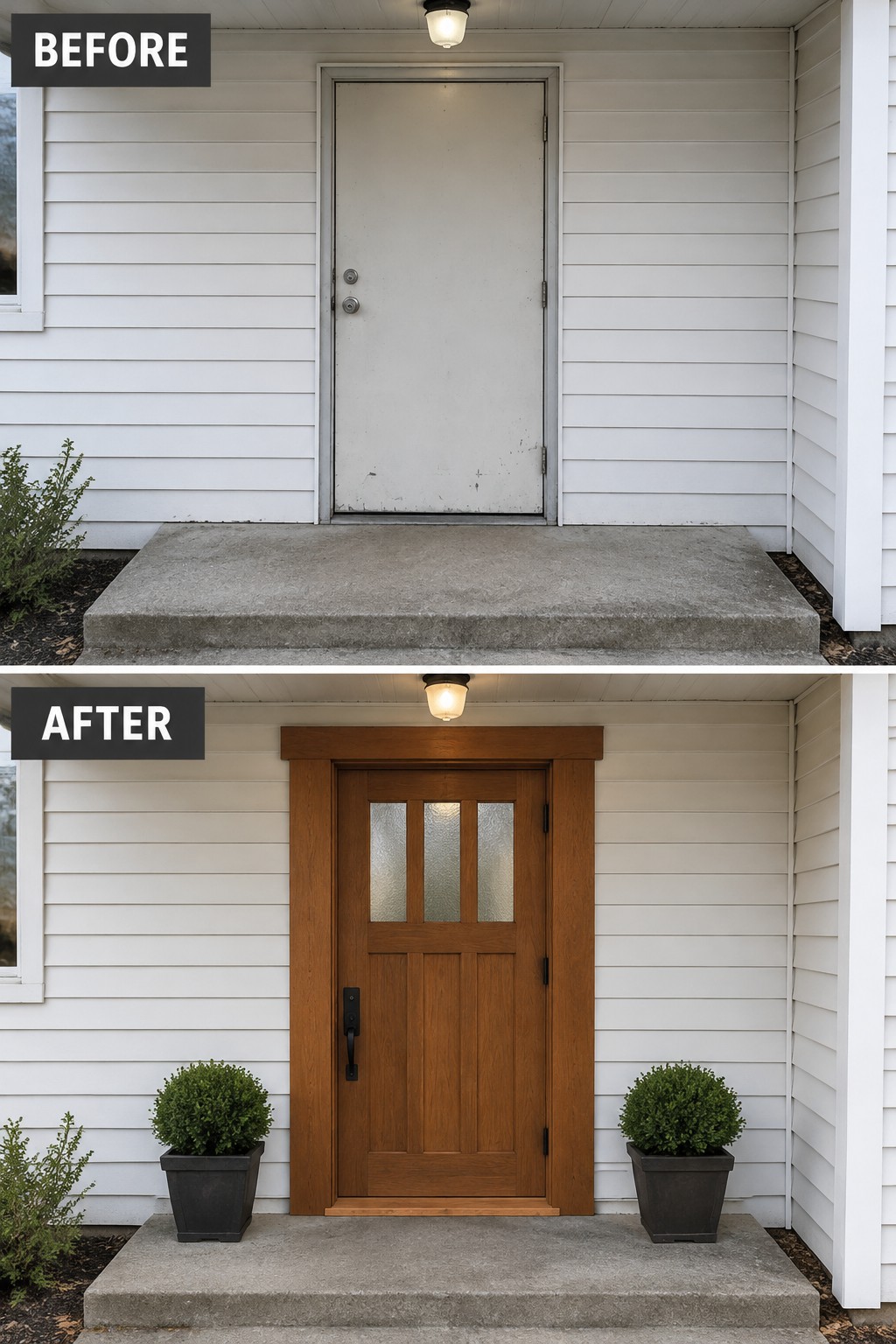
A plain white door on a bare concrete step can make the whole front of a house feel flat. Swapping it for a wood Craftsman door with simple trim and adding two matching planters on either side gives the entry a clear focal point without a lot of extra work.
This approach works well on homes that already have some wood detail or a neutral color scheme. Keep the planters low and the same color so they frame the door instead of competing with it. If your stoop is small, stick to one main change like the door and trim first, then add the planters once the door is in place.
Refresh A Dated Porch With Wood Accents
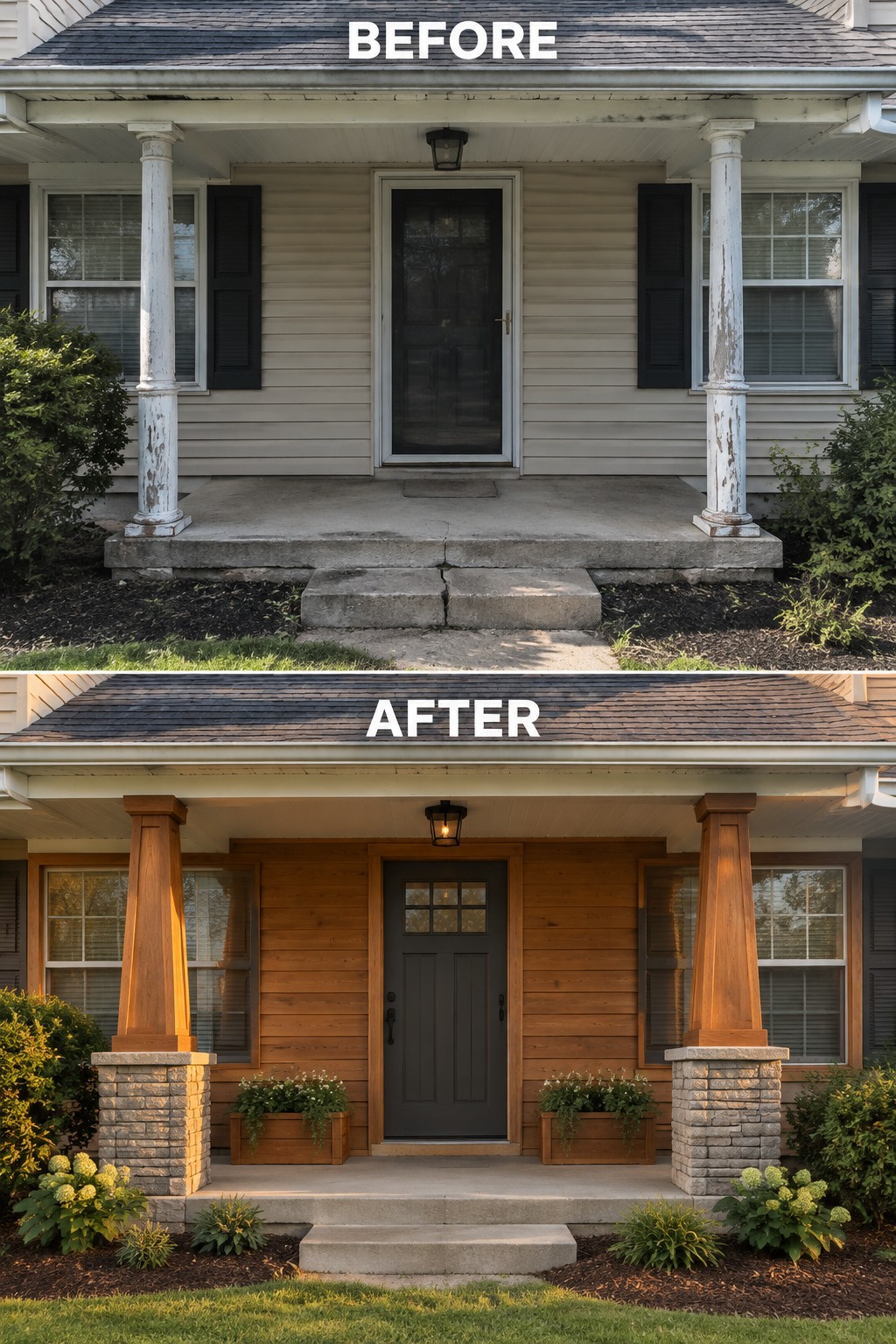
The main shift here comes from replacing the peeling columns and plain siding with wood siding and heavier wood columns set on stone bases. That single material change gives the entry more weight and a clearer Craftsman style while keeping the existing porch shape.
This idea works best on homes that already have a front porch but need a warmer, more finished look. Focus first on the columns and siding, then add a darker door and a couple of low planters so the update stays simple and realistic for most budgets.
Refresh A Plain Front Door With Wood Accents
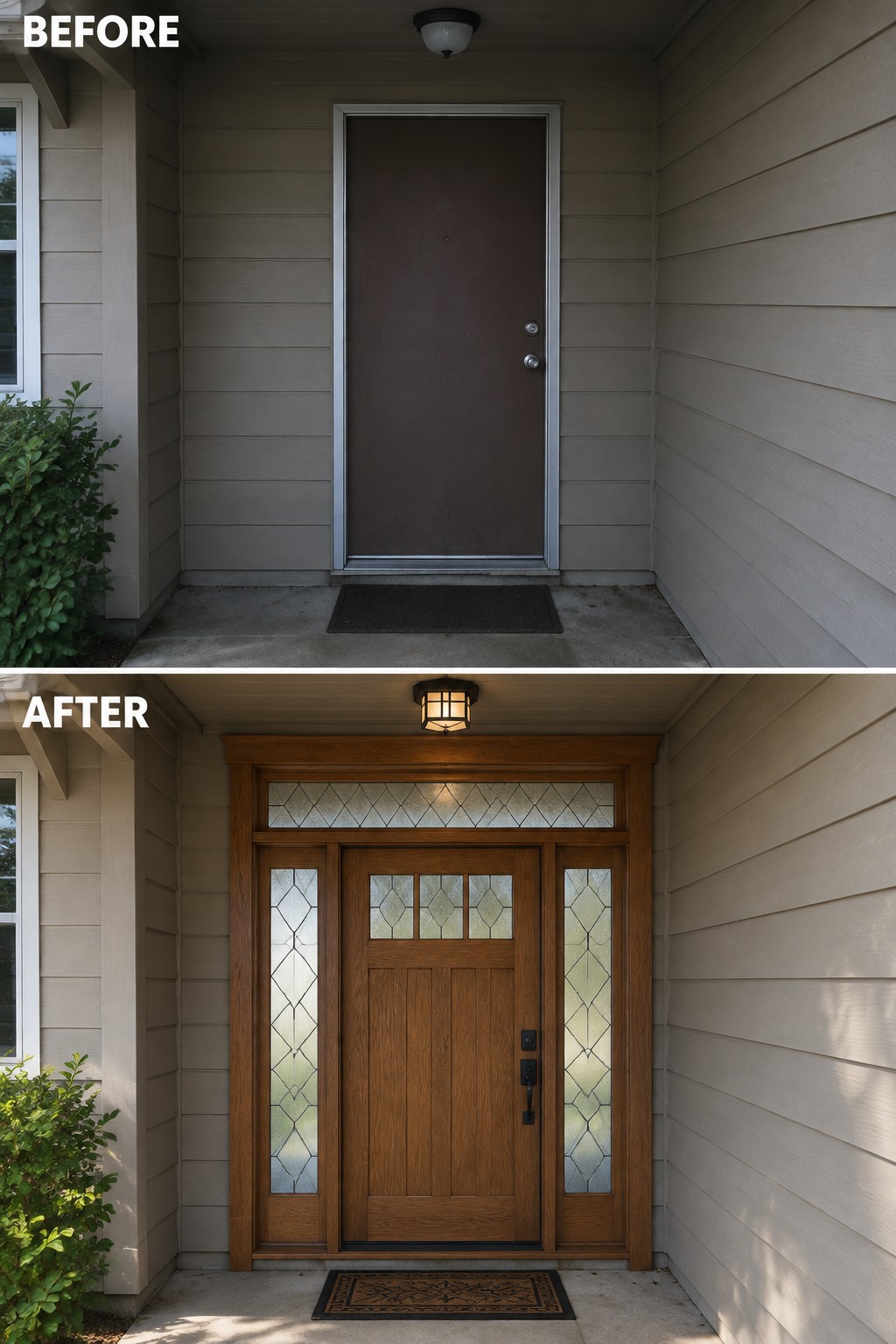
A basic front door often makes the whole entry feel unfinished. Replacing it with a wood door that includes sidelights and a transom window adds structure and warmth without needing a full remodel.
This idea works best on homes with simple siding where the door can become the main focal point. Keep the wood tone consistent with any trim you already have, and add a simple light fixture above the door so the entry feels complete at night.
Add A Wooden Overhang To Define The Front Entry
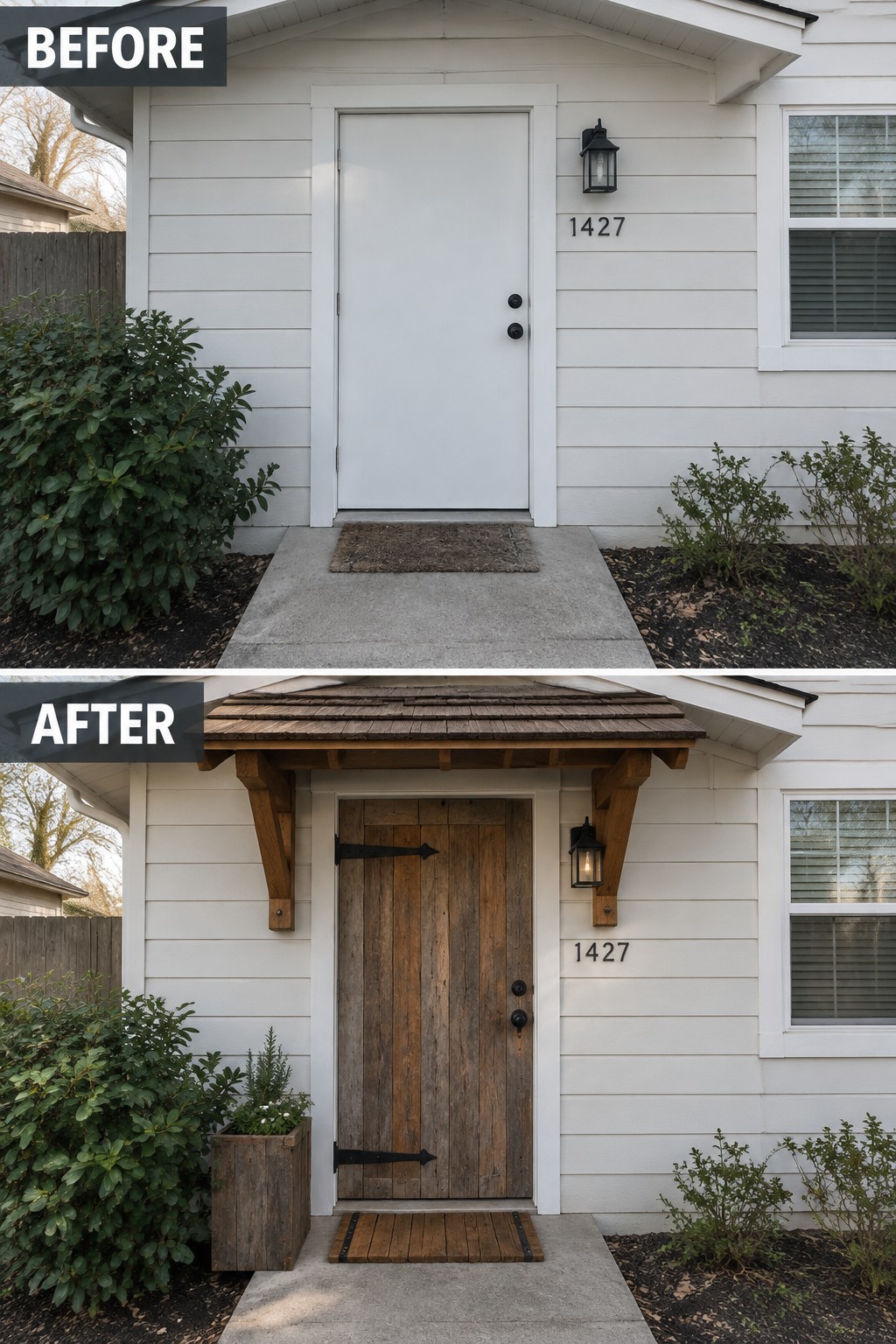
A plain front door can feel unfinished when it sits flat against the siding with no cover or detail. Adding a small wooden overhang with brackets gives the entry a clear structure and some weather protection at the same time. The change from a basic concrete step to a covered doorway makes the whole front feel more intentional.
This idea works well on simple homes where you want to add character without a full renovation. Keep the overhang modest so it fits the scale of the door and house. Use the same wood tone on a new door or accents like a planter box to tie everything together.
Add Wood Trim To Give A Plain Entry More Character
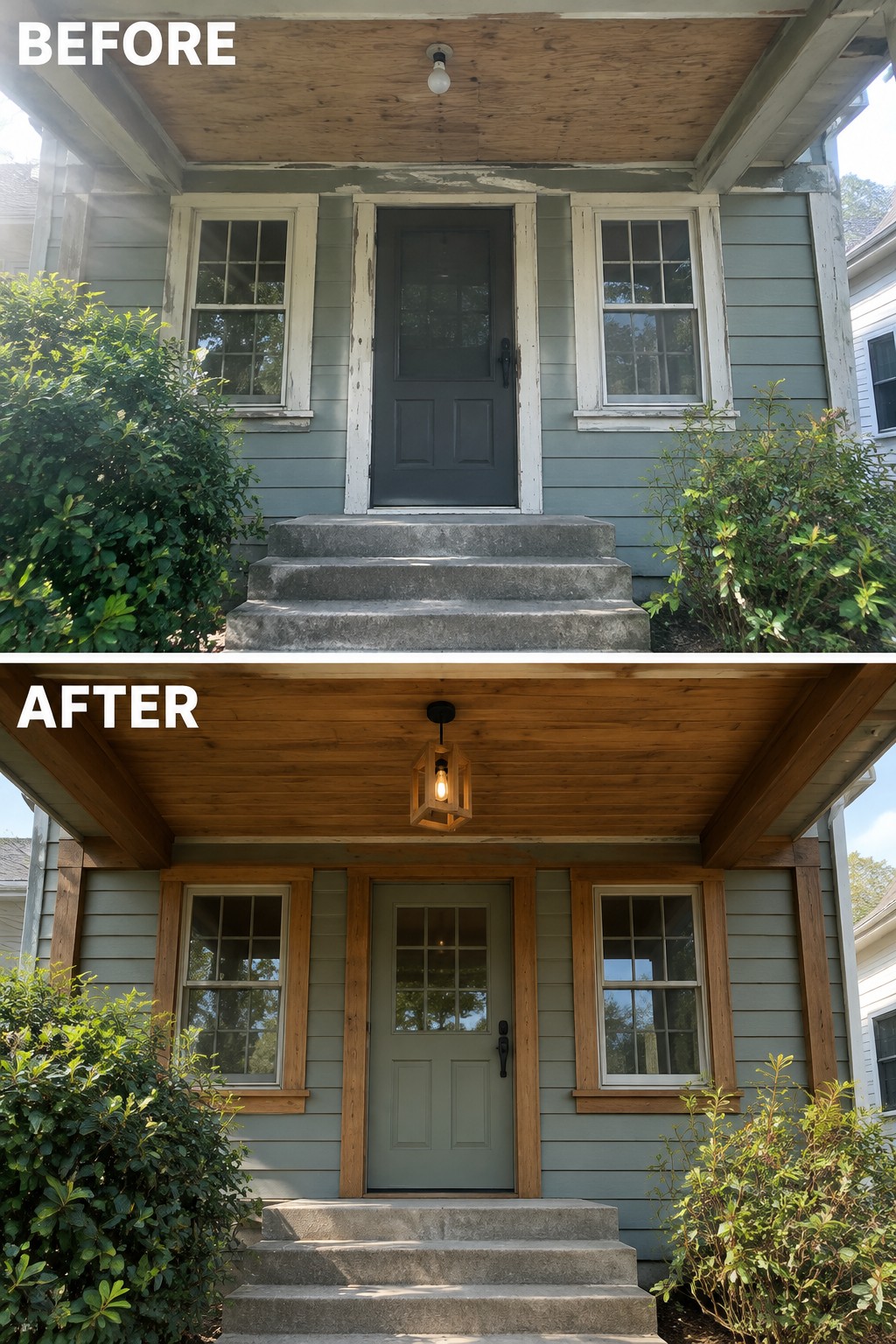
Many front entries look unfinished because the ceiling stays exposed and the trim stays basic. Switching to wood planks overhead and wrapping the door and windows in matching wood trim pulls the whole area together without major construction.
This idea suits older homes or Craftsman-style houses where you want warmth and structure. Start with the ceiling since it covers the most space, then add the trim around openings so the wood feels intentional rather than scattered.
Add A Bench To Give Your Front Entry A Purpose
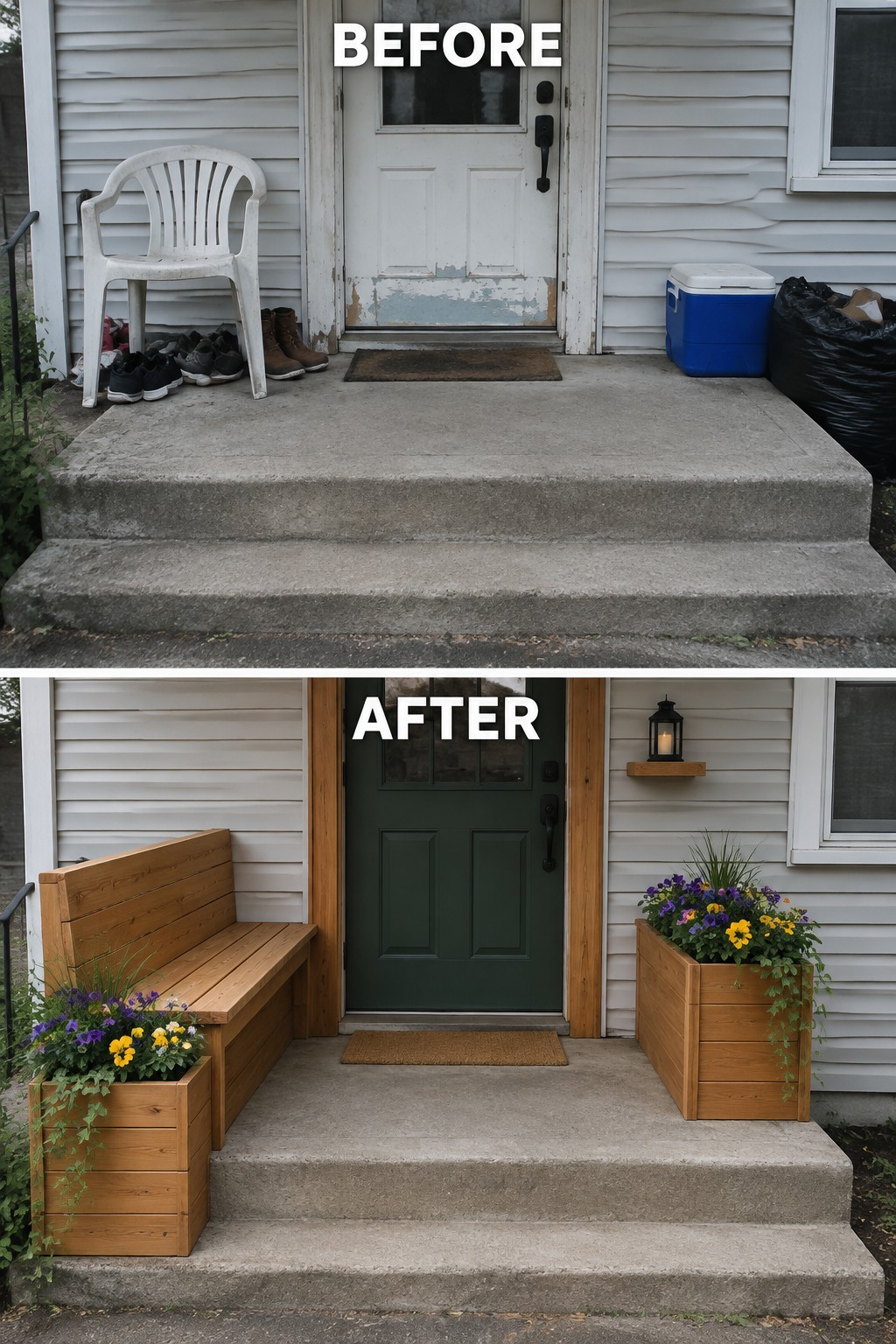
A bare concrete entry often ends up as a catch-all for shoes, coolers, and whatever else gets left by the door. Swapping that clutter for a simple wooden bench with built-in planters gives the space a clear reason to exist and makes the whole front feel more intentional.
This works best on smaller porches where you need seating without crowding the steps. Use the same wood tone for the bench and planters so they read as one piece, and keep the planting low enough that it does not block the door. It suits older homes that already have wood trim or siding and need just one strong element to pull the entry together.
Swap Metal Railings For Wood To Refresh Your Entry
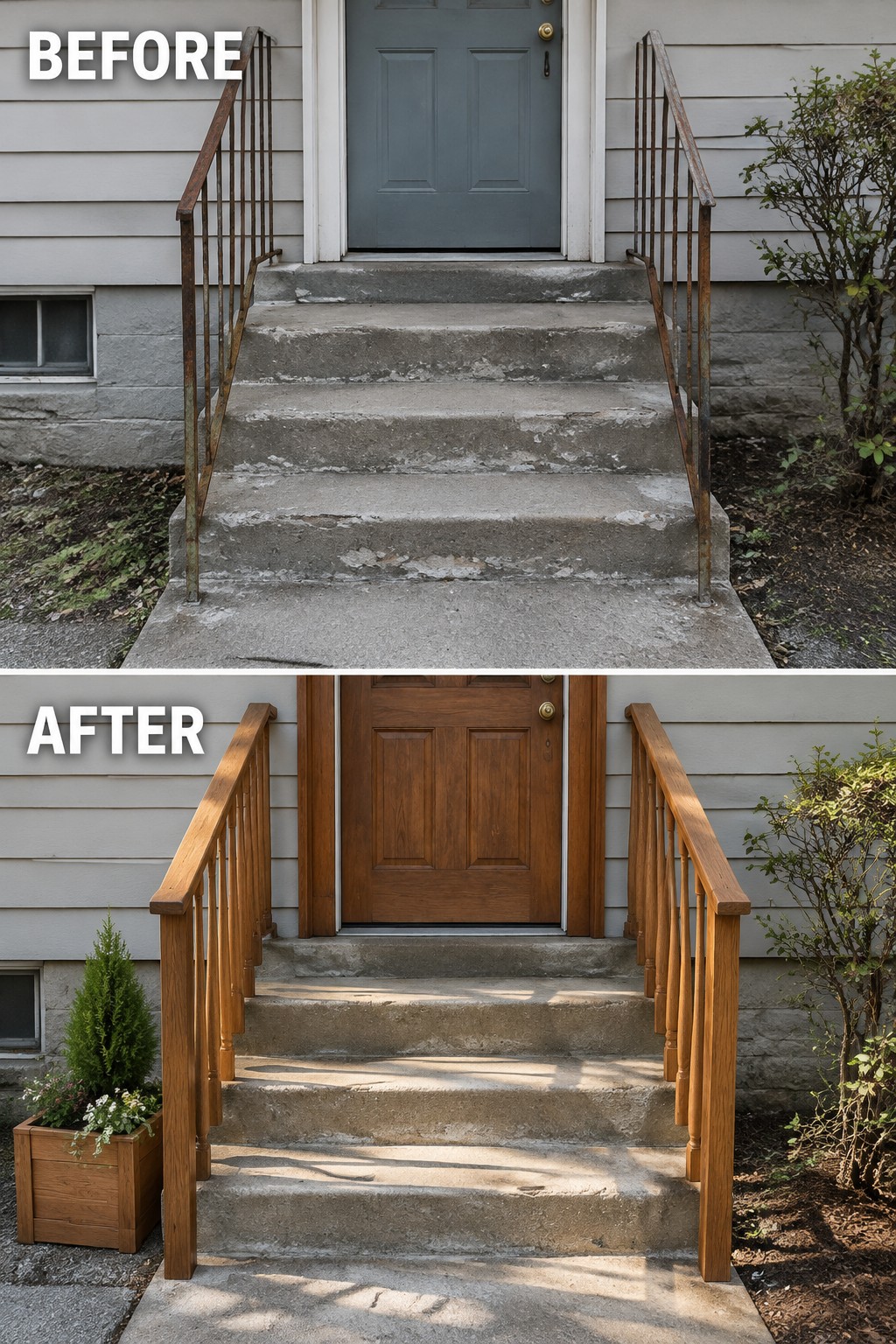
Many older homes have concrete steps with basic metal railings that start to look tired after a few years. Switching to wood railings and a wood door instantly makes the entrance feel more finished and connected to the house. The change also softens the look of the concrete without needing to replace the steps themselves.
This works well on Craftsman-style homes or any house where you want simple wood details to stand out. Start with the railings if your budget is limited, since they make the biggest visual difference. Make sure the wood is sealed for outdoor use and keep the design straightforward so it ages well.
Add Wood Accents To Refresh A Plain Exterior
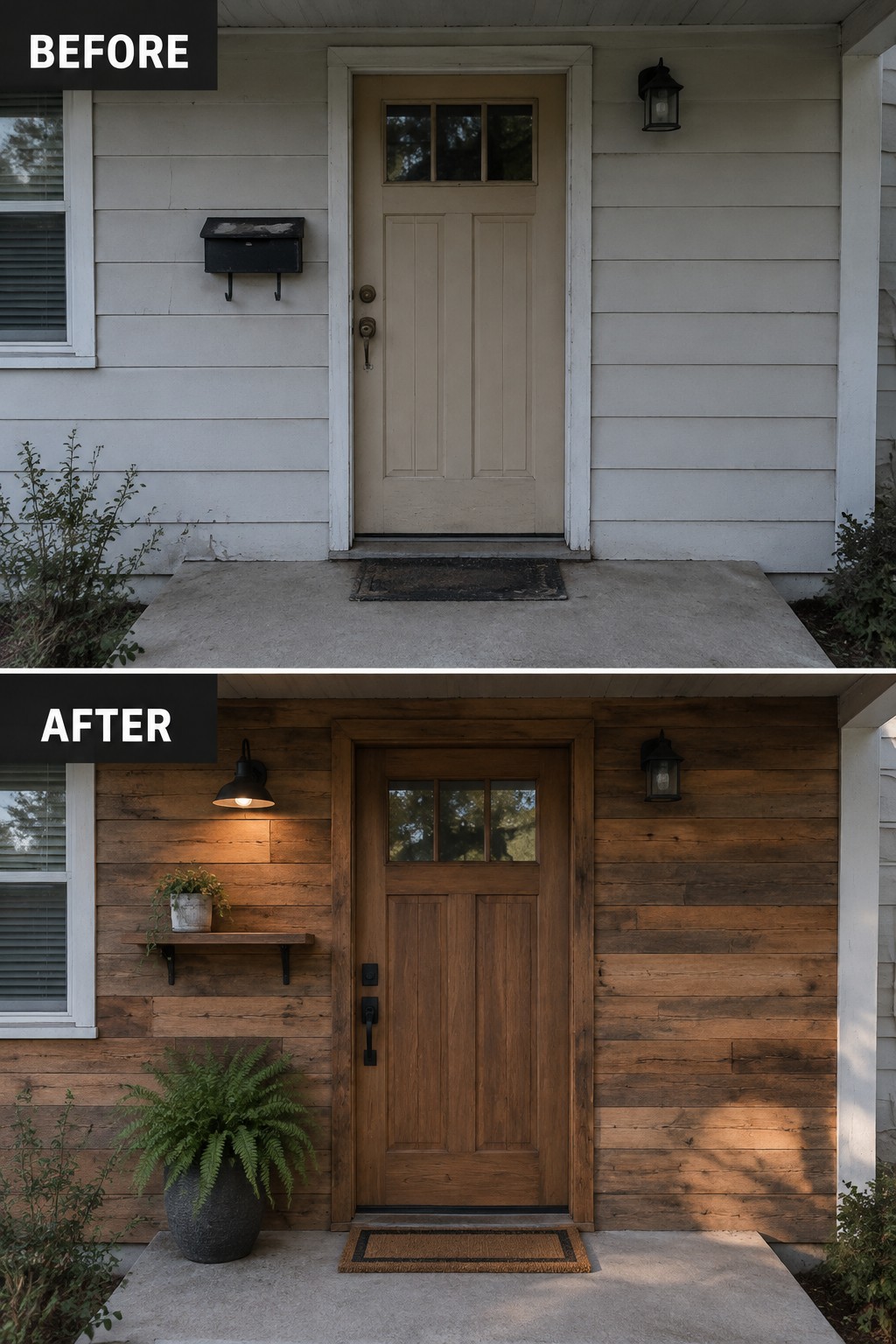
A plain painted exterior can start to feel flat after a while. Adding wood siding around the front door and switching to a stained wood door gives the entry more weight and warmth without needing to redo the whole house.
This approach works best on smaller facades where you want to create a clear focal point. Keep the wood tones consistent, add simple lighting on either side of the door, and use a couple of potted plants to soften the base. It suits homes that already lean toward craftsman or traditional styles and need just enough texture to feel finished.
Update A Plain Front Door With Wood Accents
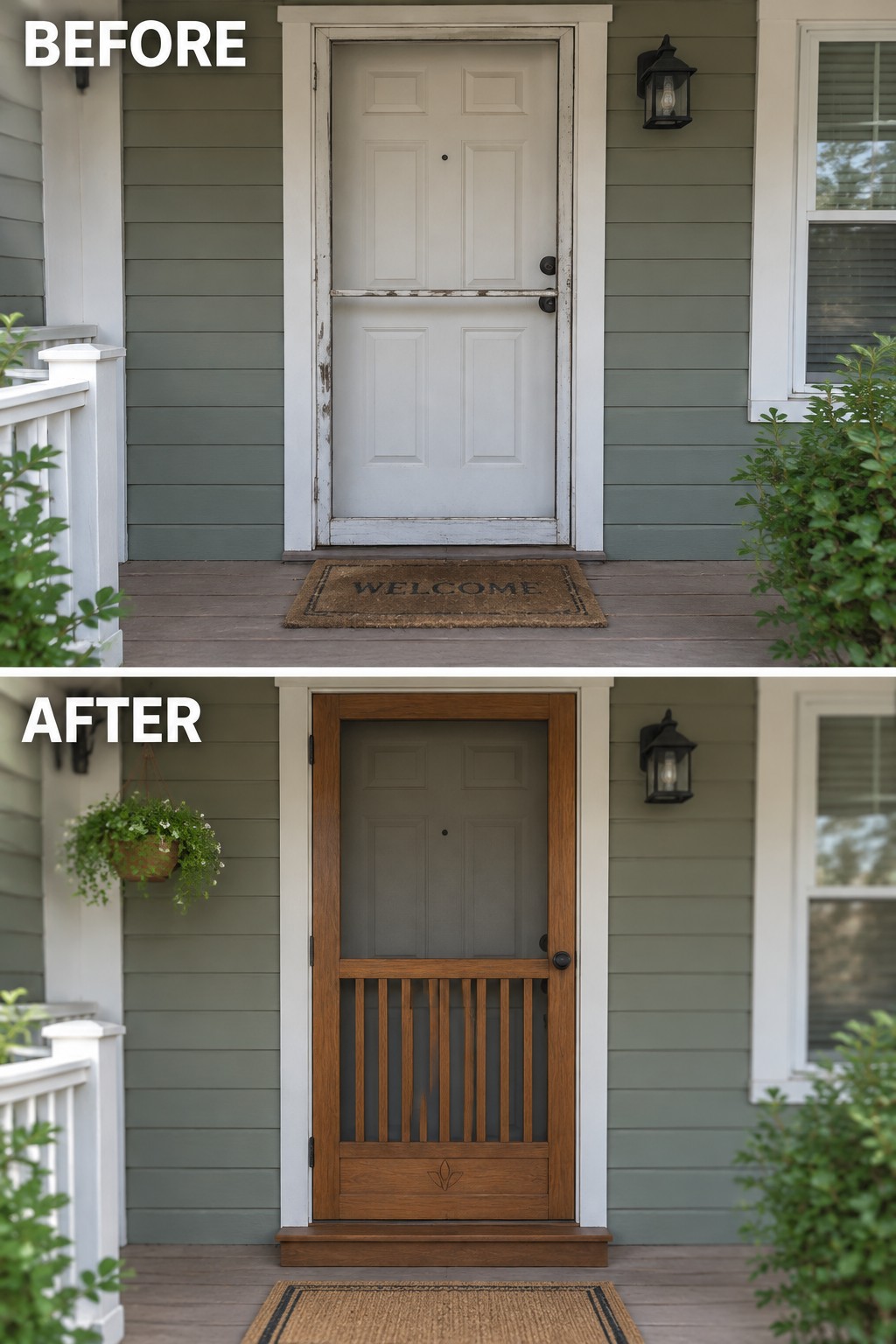
A basic white door can make the whole front of a house feel flat and tired. Switching to a wood door with a glass upper panel and vertical slats adds structure and warmth that fits right in with Craftsman style.
This change works best on houses with simple siding where you want one strong focal point at the entry. Keep the rest of the porch light, add one hanging plant if the space allows, and make sure the new door color echoes any existing wood trim on the house.
Replace Cracked Concrete Steps With Wood To Refresh The Entry
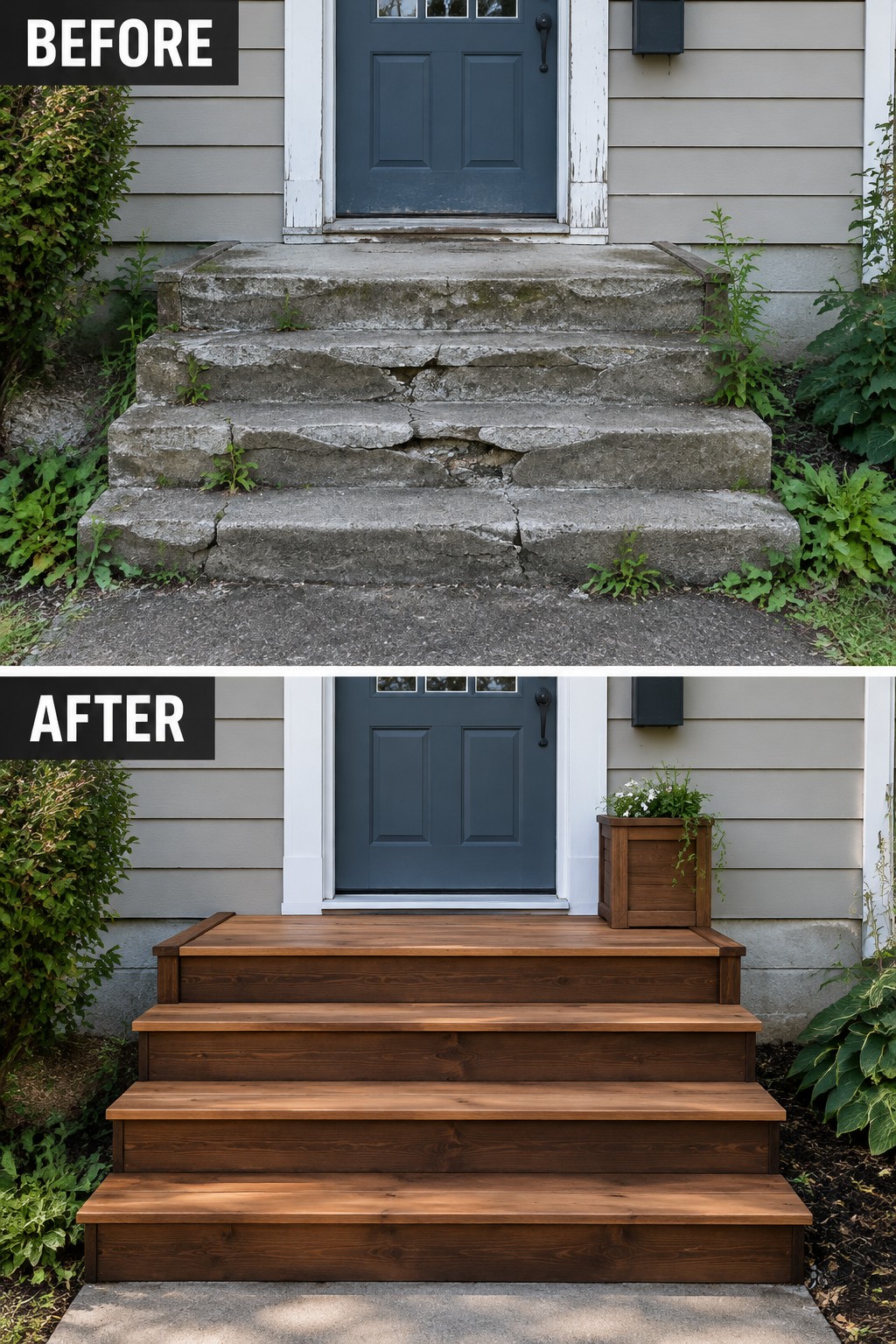
The old steps had deep cracks and a flat gray look that made the whole front feel neglected. New wood steps bring warmth and a clear horizontal line that connects better with the door and siding.
This idea works on homes that already have wood trim or a Craftsman style. Focus first on solid construction and weather protection, then add one or two simple accents like a planter so the entry stays easy to use.
Add A Wooden Pergola Over The Front Door
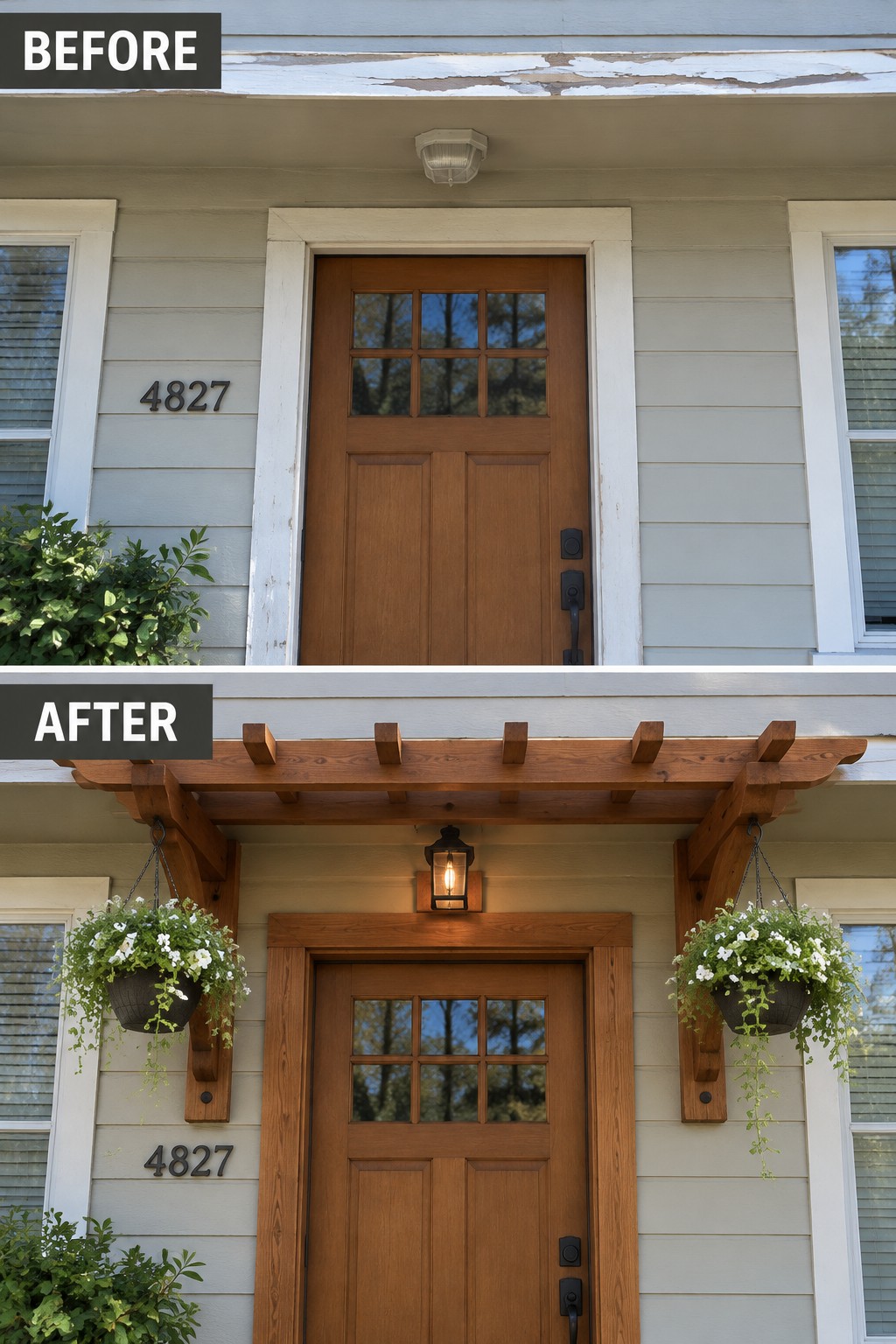
A plain entry can feel flat even when the door itself looks fine. Here the before shows a simple door with basic trim and a small light. The after adds a wood pergola that creates a clear frame, adds shadow, and gives the whole front a more finished look.
This works best on homes that already use wood accents, since the new structure ties into the existing trim. Keep the pergola modest in size so it does not overwhelm the door, and hang one planter on each side rather than filling the space with too many extras. The goal is to give the entry a purpose without crowding the walkway.
Add Wood Shutters And A Window Box
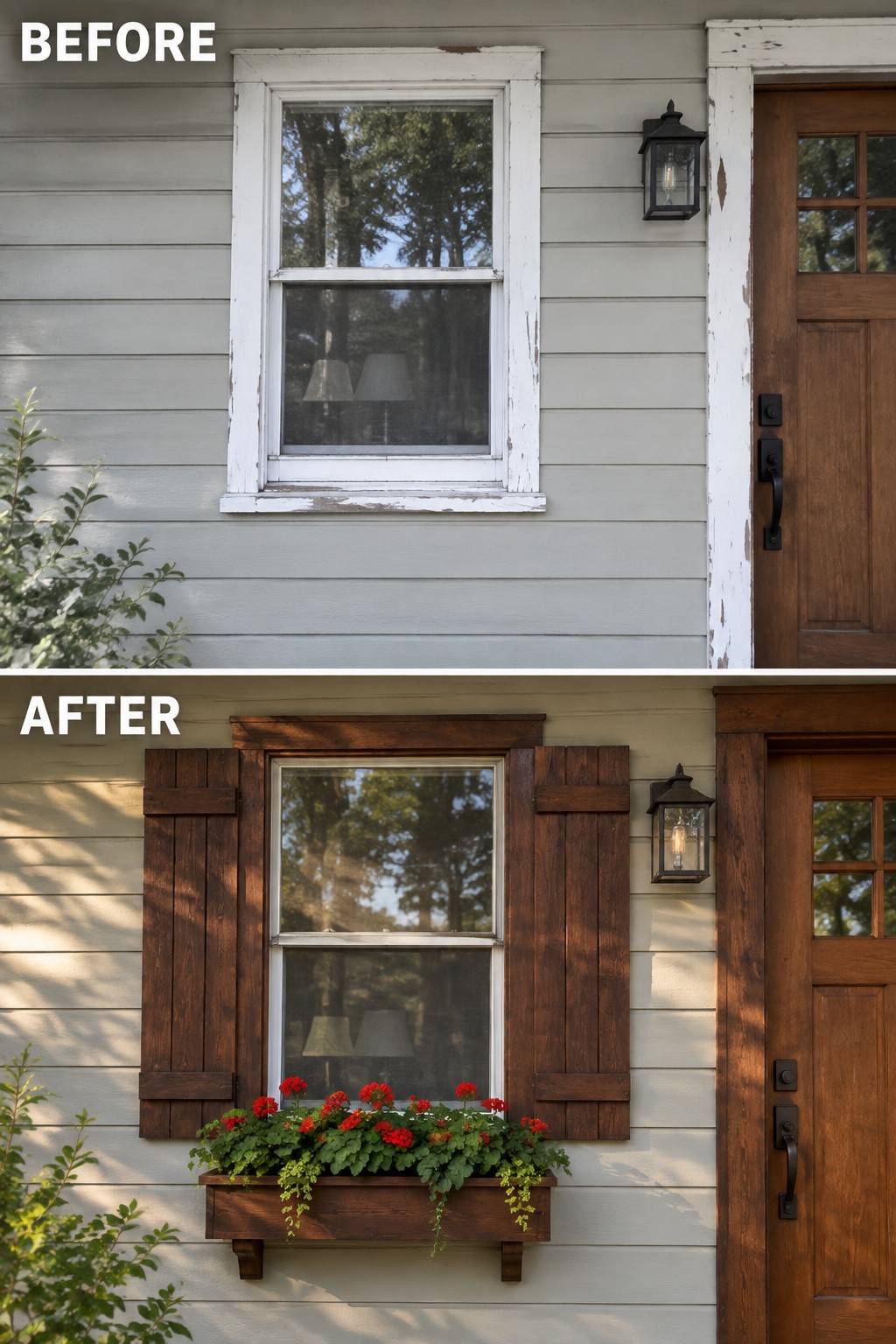
Adding wood shutters and a simple window box gives a plain window the same weight as the front door. The dark stain ties the two together and makes the whole entry feel more finished without any major construction.
This approach works best on homes with Craftsman or similar trim details. Match the shutter color and material to your door, then keep the plants low and full so they do not block the window. Start with the shutters and box before adding more layers.
Add Wood Trim Around The Front Door
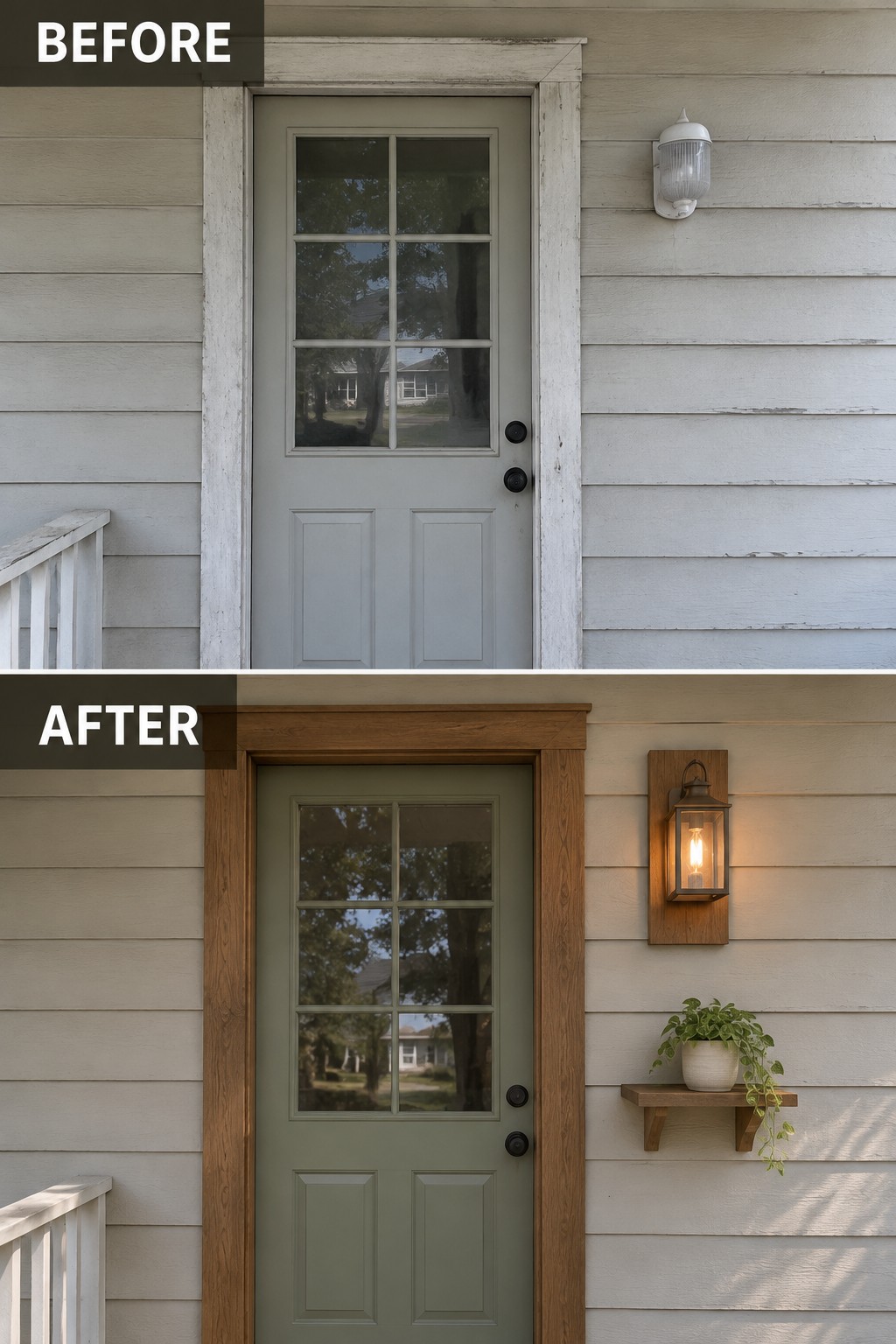
Replacing the old white trim with wood framing gives the entry more weight and ties it to the house instead of letting it float against the siding. The simple swap makes the door feel intentional and helps the whole facade look more finished without any major construction.
This idea suits homes with horizontal siding where the door needs a stronger outline. Match the wood tone to other exterior details if you have them, and keep the door color calm so the trim does the work. Seal the wood well if your climate is wet.
Add Wood Accents To Refresh The Front Entry
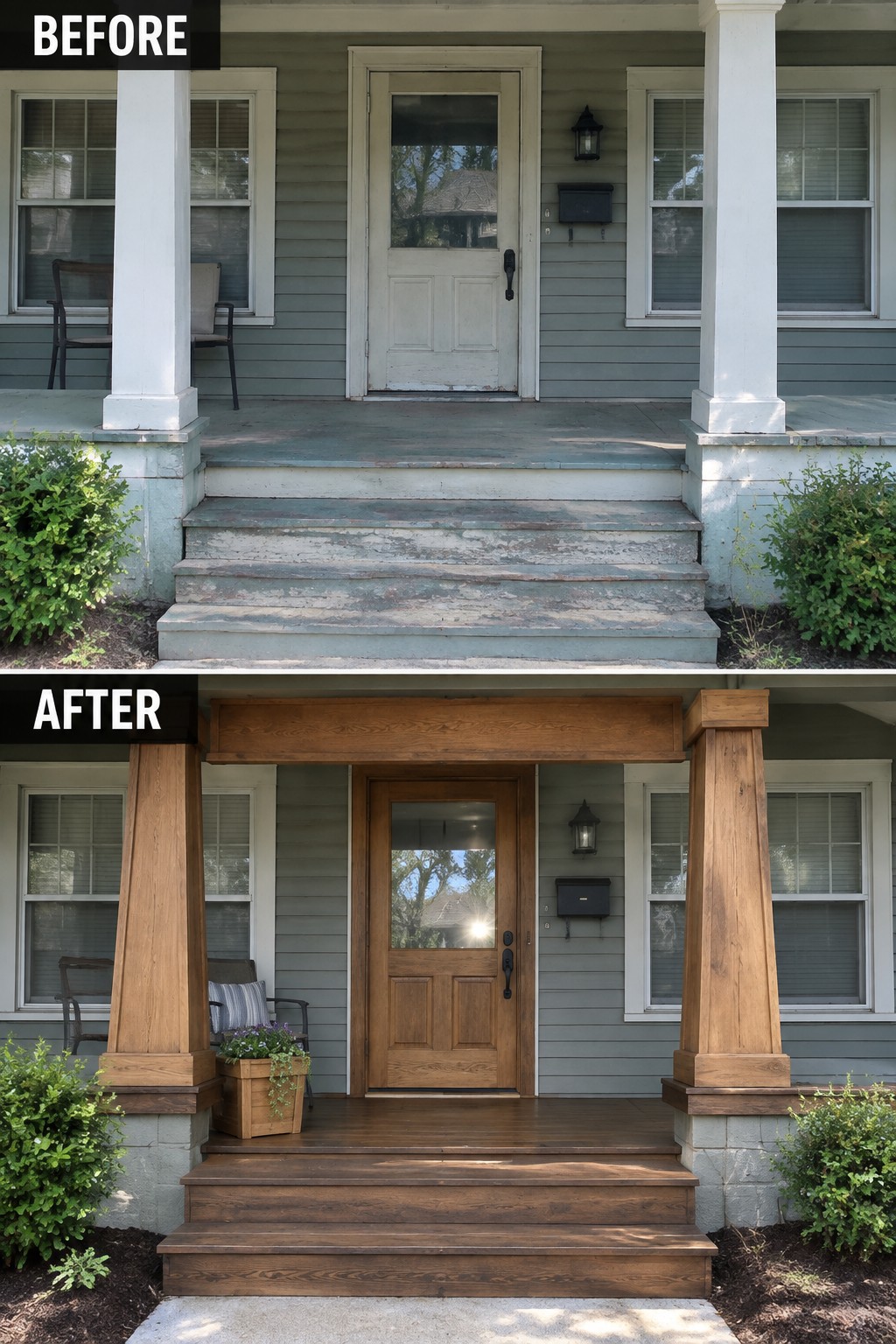
One simple way to update an older front porch is to replace painted columns and a tired door with wood versions that match the steps and flooring. The change gives the entry a warmer look and helps the whole front of the house feel more pulled together without needing new siding or major construction.
This idea works especially well on Craftsman-style homes or any house that already has some wood trim. Focus first on the columns and door since those make the biggest difference, then add a matching stain on the porch floor if your budget allows. Keep the rest of the planting and lighting simple so the wood stays the main feature.
Replace A Plain Front Door With Wood To Add Warmth
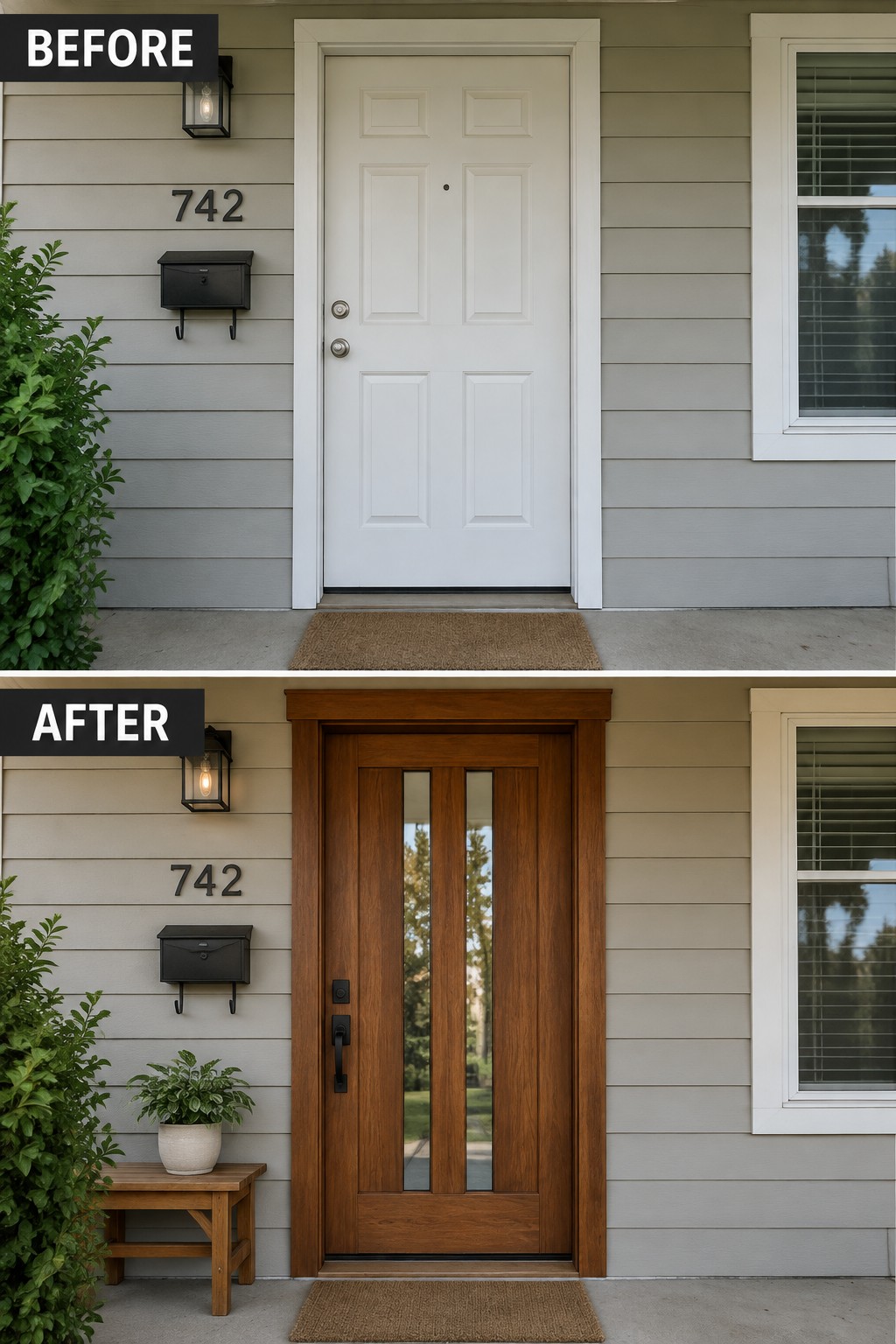
A flat white door often makes the front of a house feel plain and a little cold. Switching to a wood door with vertical glass panels changes the whole look because the wood adds color, texture, and a more solid presence against the siding.
This works well on Craftsman homes or any exterior that needs a stronger entry point. Choose a door style that matches the house trim and keep nearby additions simple, like one small bench or plant, so the door remains the main feature.
Add Wood Accents To Update A Tired Front Entry
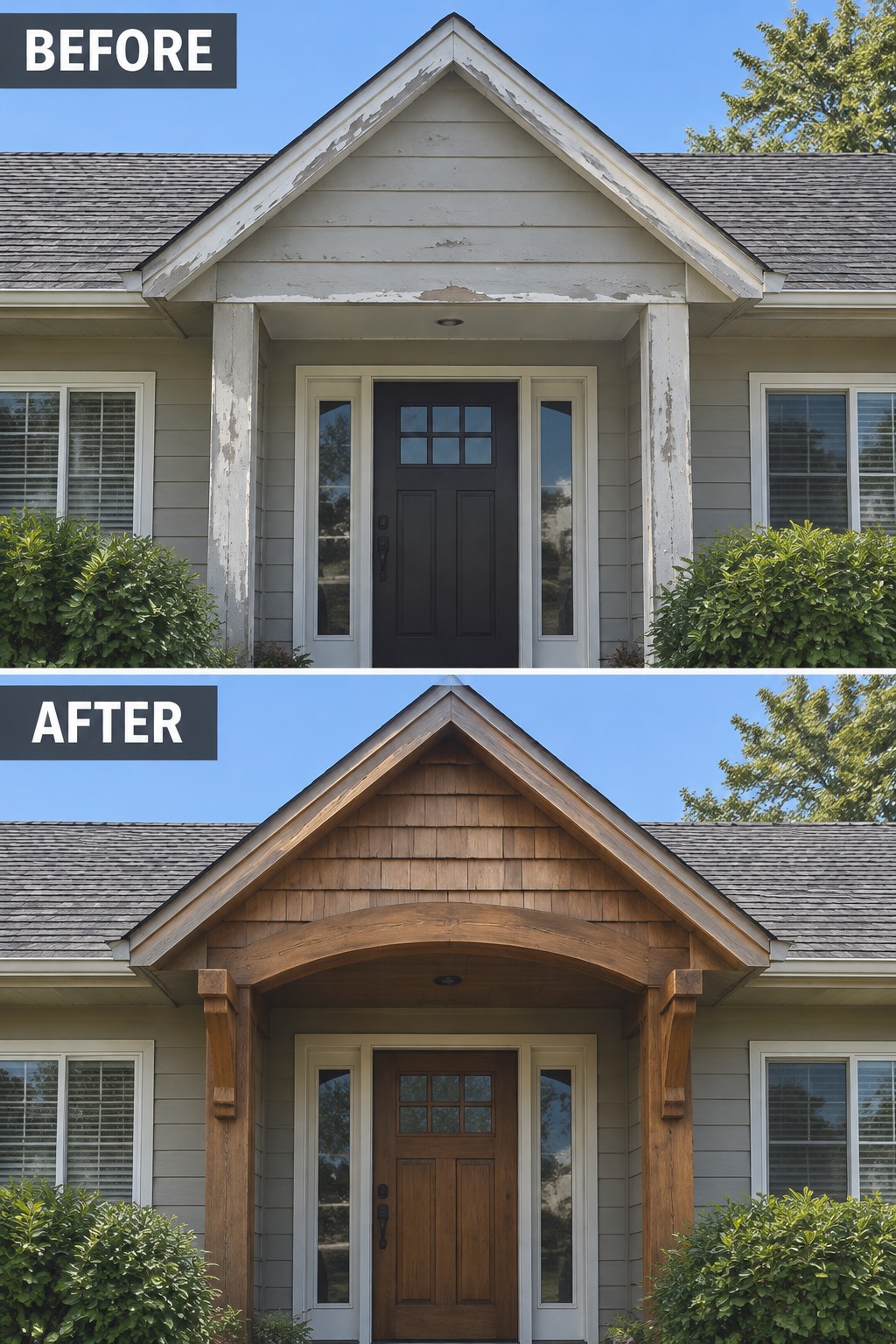
Many older homes have front entries that look worn after years of weather exposure. The simple switch from peeling paint on the gable and columns to wood shingles and timber framing gives the whole entrance a sturdier, more finished look. Changing the door to a wood version also helps tie everything together without needing a full repaint of the house.
This approach works well on homes that already have a gable over the door. Start with the gable and the two support posts if your budget is limited. Keep the rest of the siding and trim as they are until you are ready for more work. The wood adds warmth and structure that paint alone rarely achieves.
Add Wood Accents To A Plain Front Door
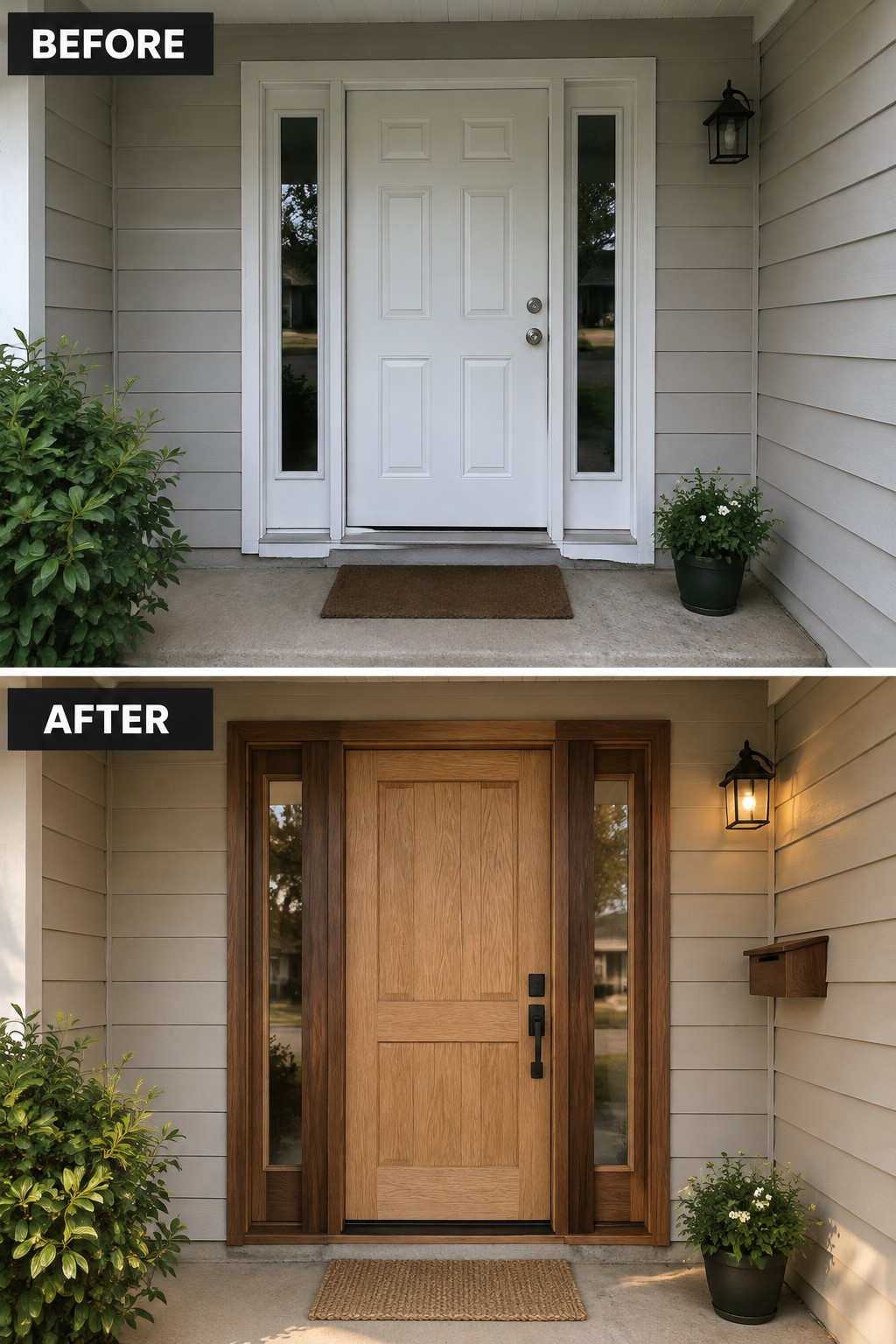
A basic white door often disappears against light siding and leaves the entry feeling flat. Switching to wood framing around the door and sidelights adds weight and warmth, turning the same opening into the clear focal point of the facade.
This works best on homes with simple trim where you want more character without changing the whole exterior. Keep the wood tone consistent, update the hardware to match, and let the surrounding plants stay modest so the new framing stays the main feature.
Update A Concrete Porch With Wood Decking
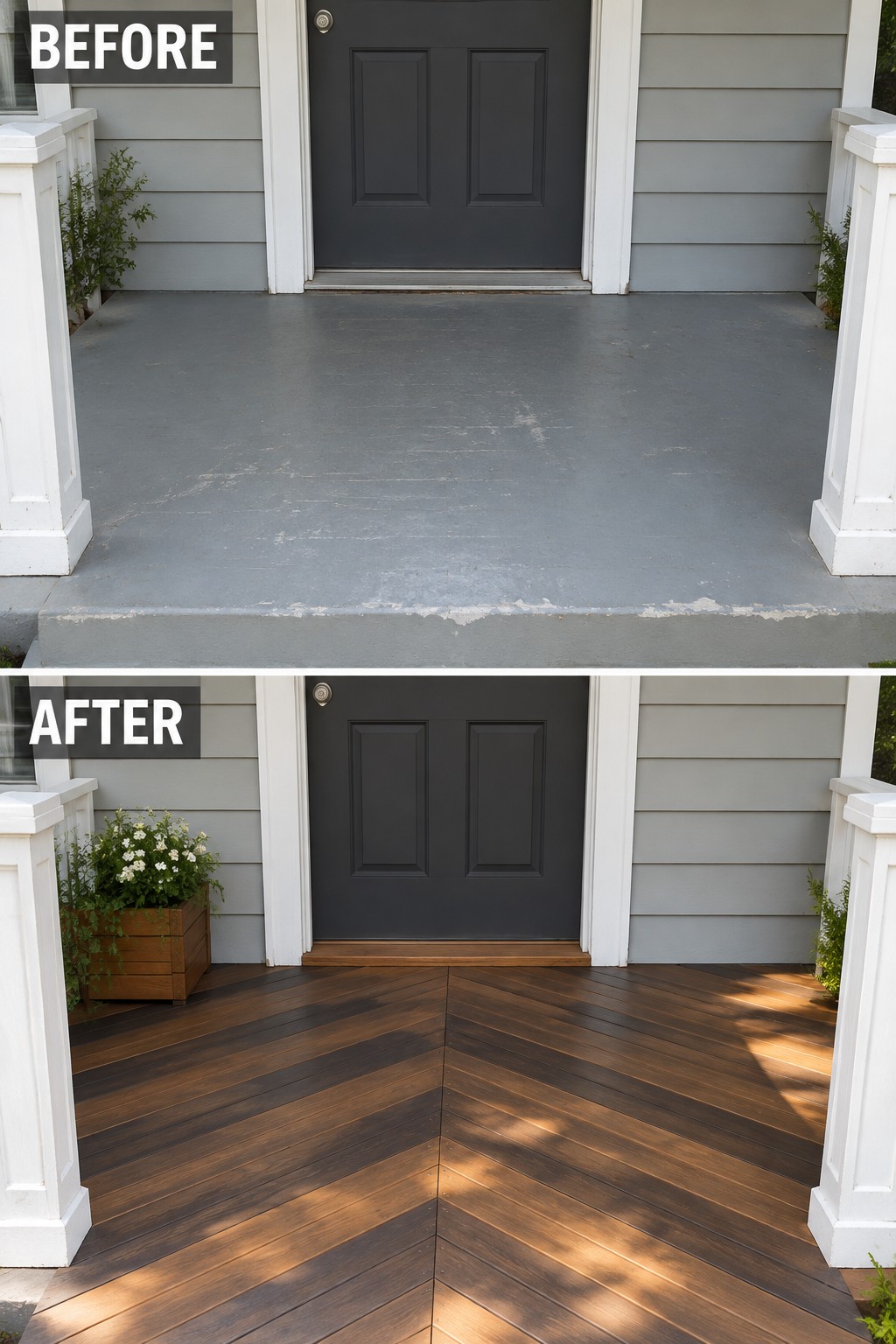
A plain concrete porch often looks flat and unfinished next to the front door. Switching the surface to wood decking adds warmth and texture that makes the entry feel more complete and welcoming right away.
This idea works best on smaller porches where you want one strong material change instead of lots of new pieces. Match the wood tone to your door or trim, and make sure the decking can handle weather and foot traffic before you start.
Add Wood Accents To Give A Front Porch Purpose
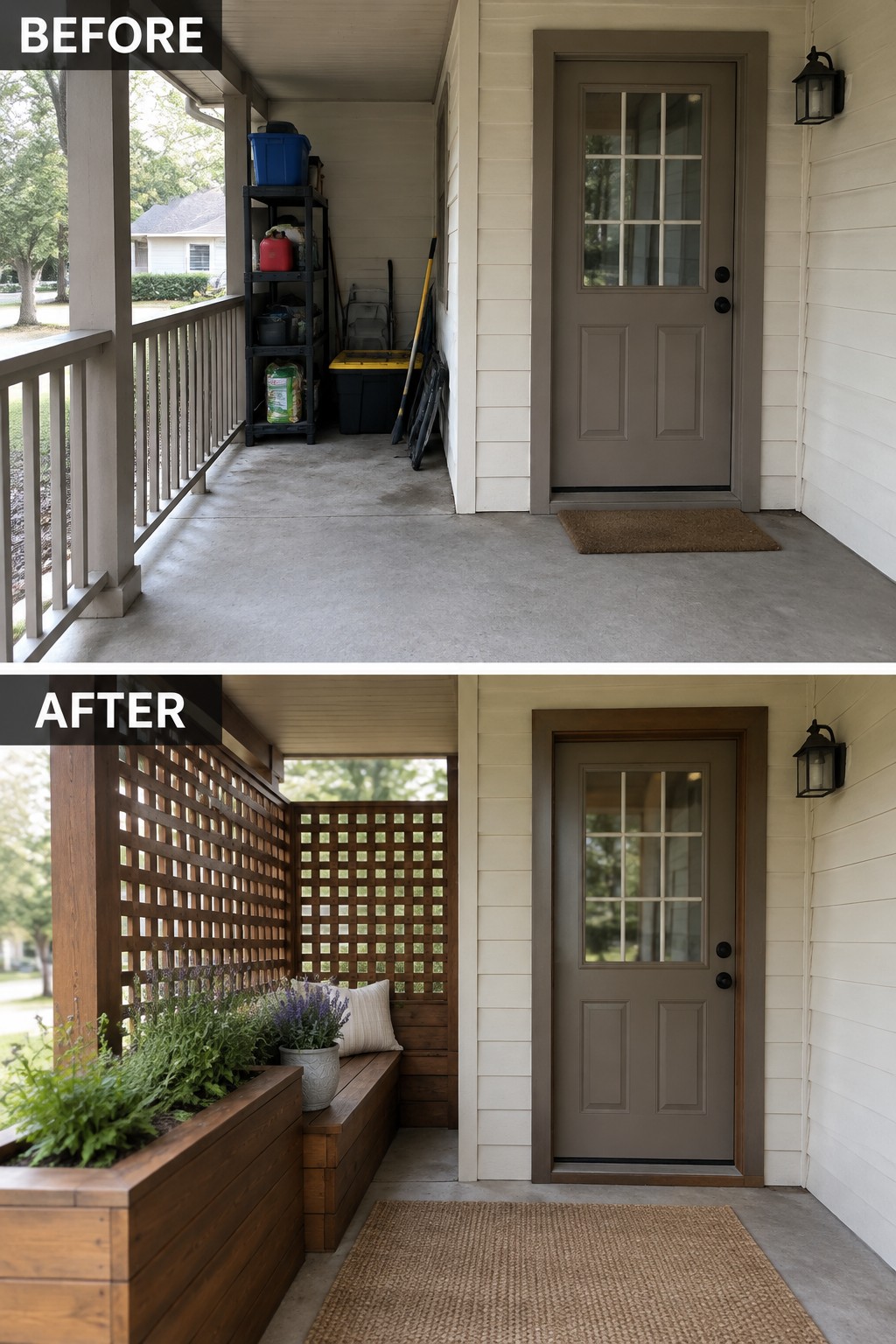
A cluttered porch quickly becomes a catch-all for tools and bins, which leaves the front door feeling more like a back entrance. Clearing that space and adding a wood lattice screen with a built-in bench turns the same area into a small seating spot. The wood trim around the door and the lattice together give the entry a finished Craftsman look without any major construction.
This idea works best on narrow or side porches where you want a bit of privacy but still need room to walk through. Use weather-treated wood for the screen and bench, keep the planting low, and stick to one or two simple cushions. The goal is to create one clear use for the space rather than trying to fit too many features at once.
Frame A Plain Front Door With Wood Trim And Planters
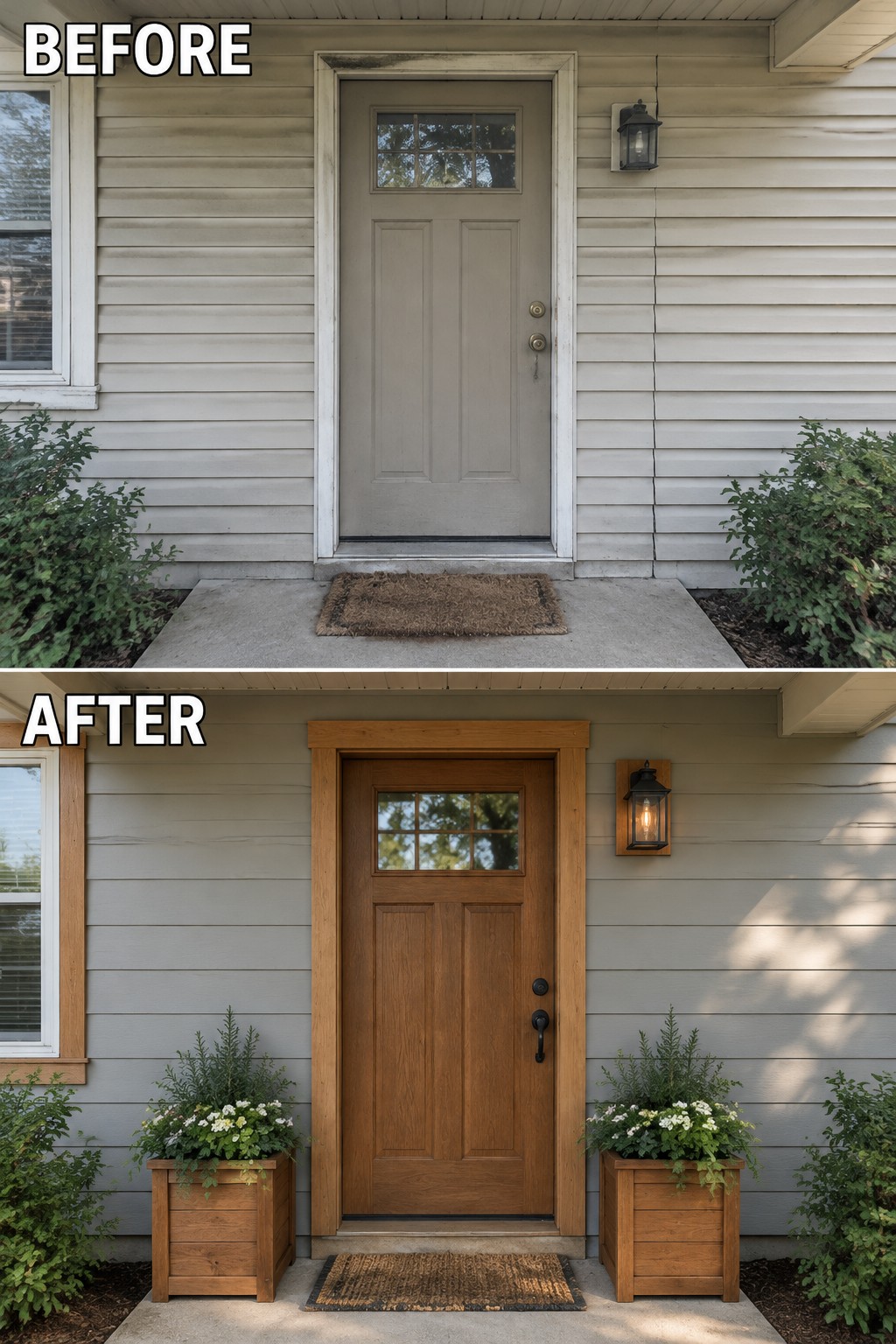
Adding wood trim around a front door gives it a stronger presence and ties the entry to the rest of the house. The before version showed a basic door sitting in a flat white frame with no real definition on either side. The after version brings in a full wood surround that matches the new door, which instantly makes the whole entrance feel more intentional and put together.
This idea works well on homes with simple siding where the door needs extra weight. Use matching wood planters on each side of the step and keep the planting low so the trim stays visible. It is an easy way to add structure without changing the whole facade.
Upgrade A Single Front Door To Double Doors For More Presence
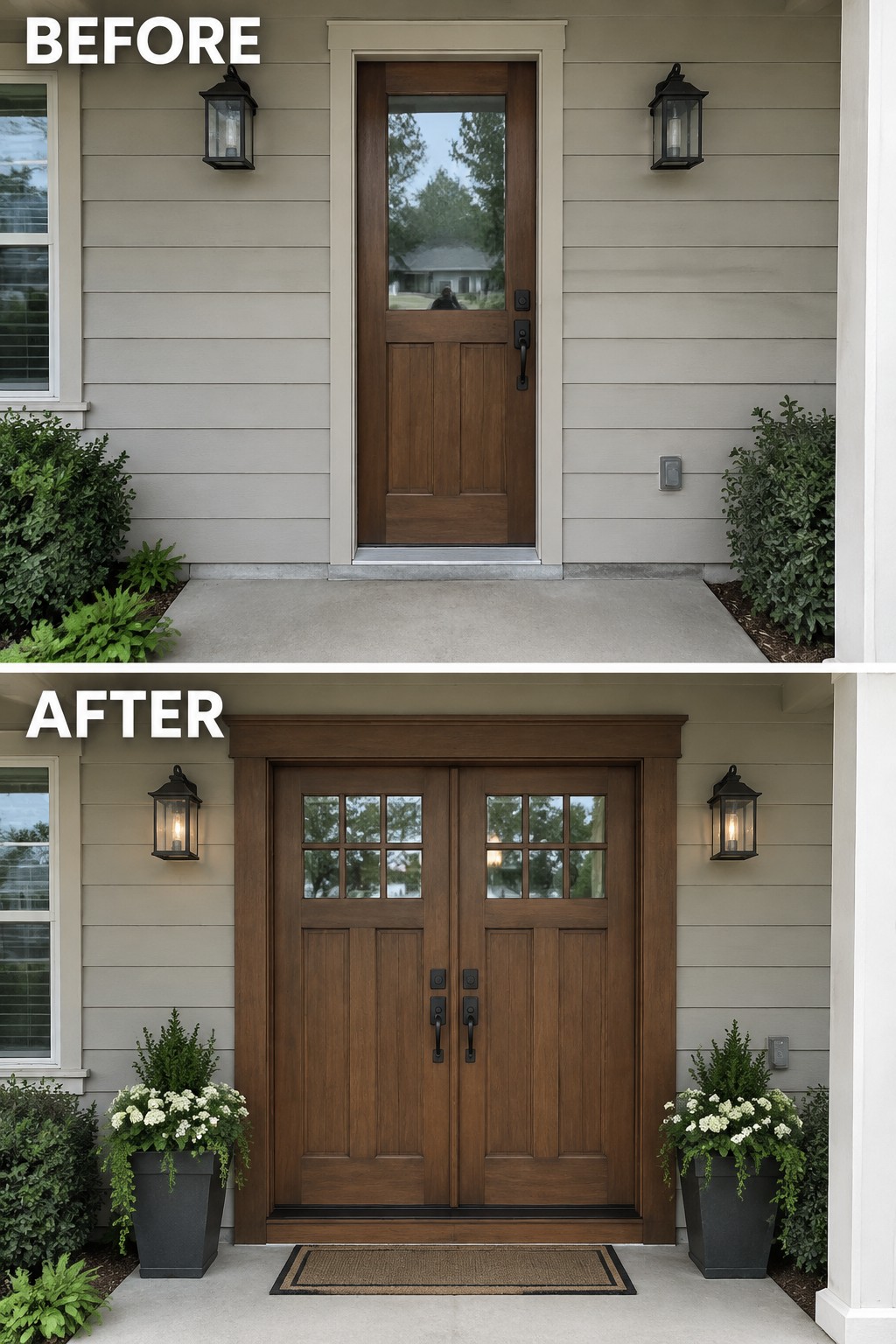
Many homes start with a single front door that feels a bit narrow and lost on the facade. Switching to a double door setup immediately changes the scale. The wider opening, thicker trim, and added planters on either side create a clearer focal point and make the entry feel more intentional.
This approach works best on homes where the doorway has enough width to handle the change without crowding the siding. Keep the rest of the facade simple so the doors and flanking planters stay the main feature. A doormat helps define the step without adding clutter.
Add Wood Shingles And Brackets To The Gable
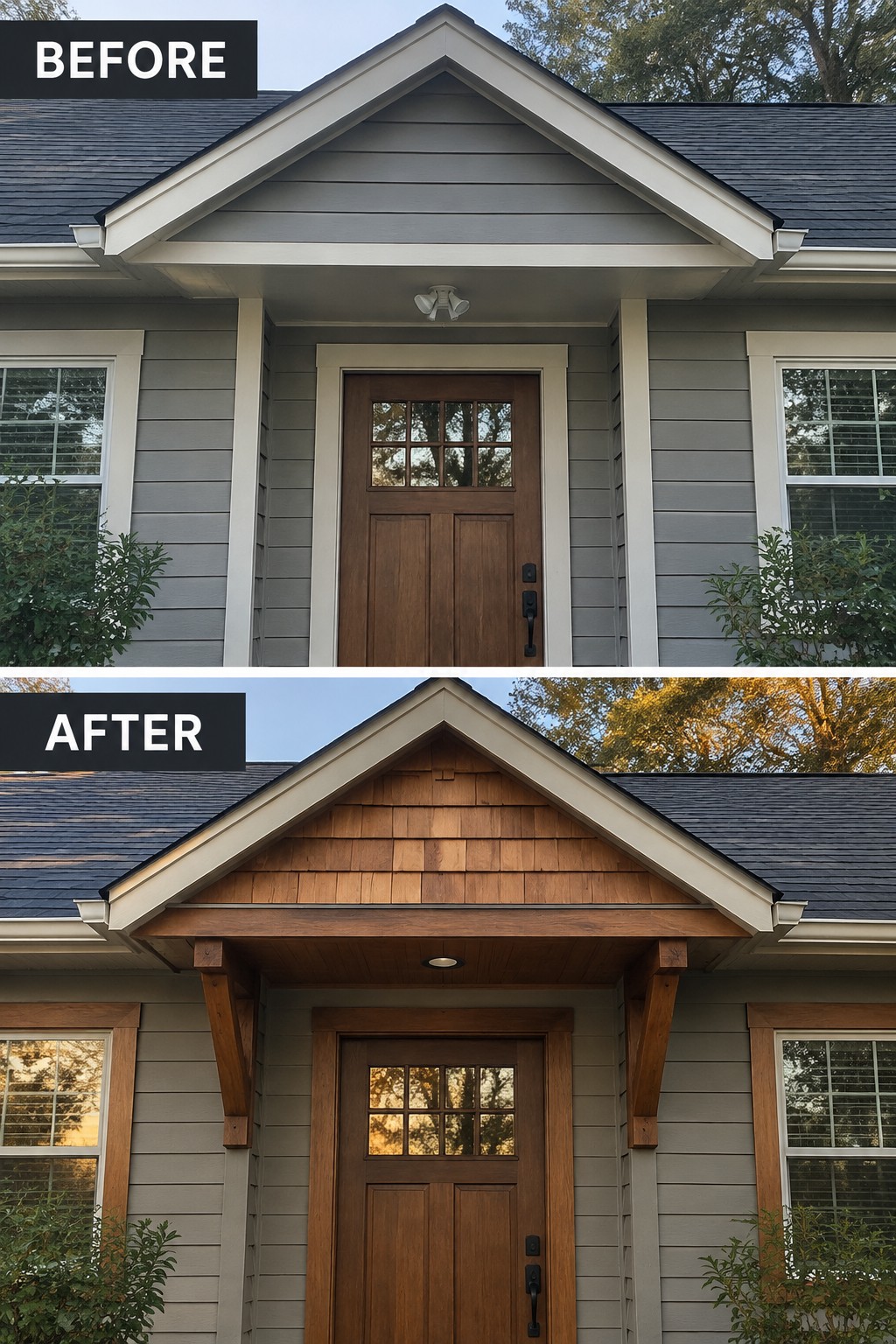
Adding wood shingles and brackets to the gable gives a plain entry more weight and character. The before shows a basic painted gable that blends into the siding, while the after uses cedar shingles and exposed wood supports to create a clear Craftsman statement that matches the door.
This idea works well on homes with simple gable roofs that need a stronger focal point. Keep the wood tone consistent with the door and trim, and consider the scale of the brackets so they do not overwhelm a smaller entry.
Update Your Front Entry With Wood Accents
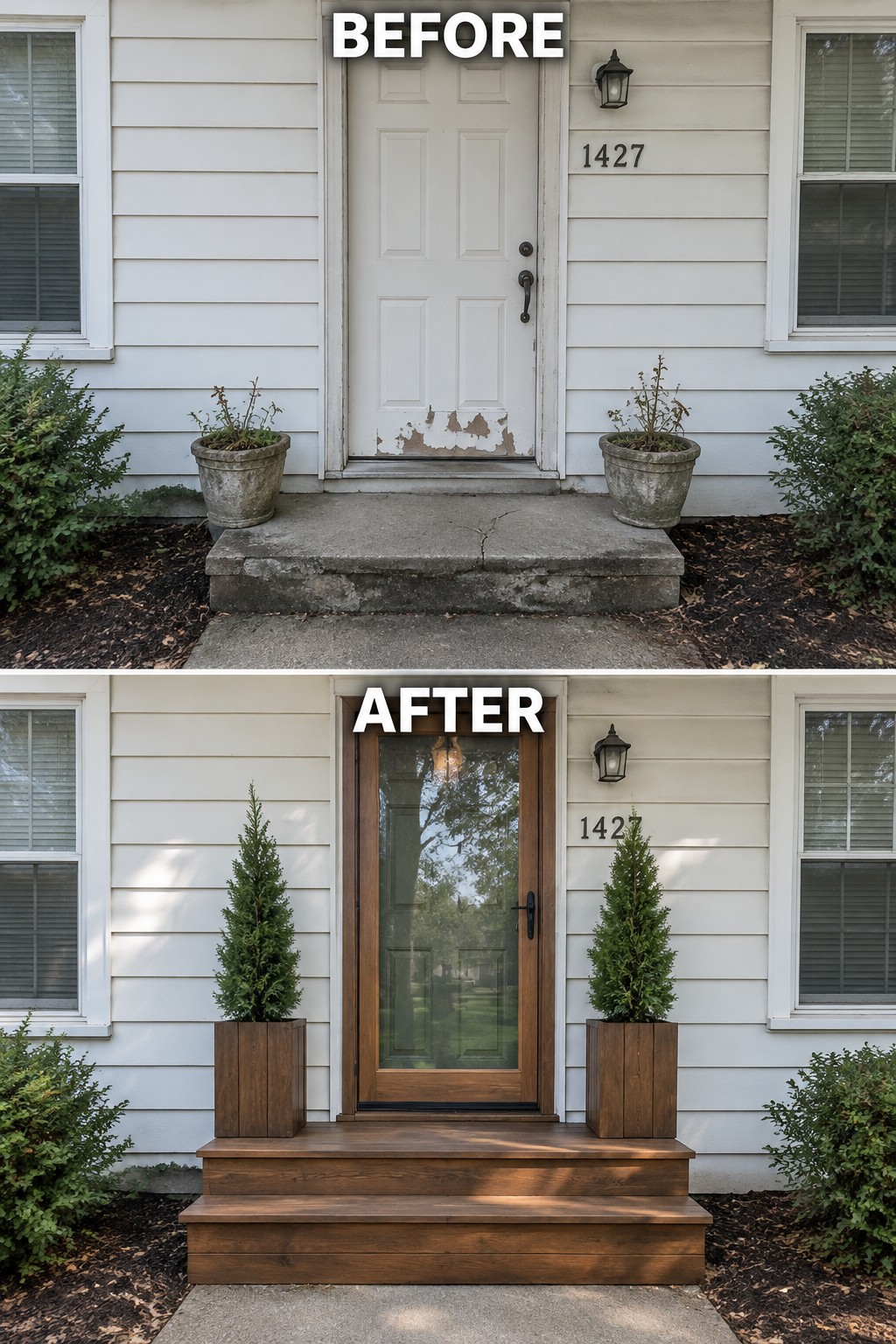
A tired front door and cracked concrete steps can make the whole house feel a little neglected. Swapping in a wood door with glass panels, adding wood steps, and placing matching wood planters on either side gives the entry a cleaner, warmer look without a full renovation. The change is simple but noticeable from the street.
This approach works well on homes with light siding where the wood tones can stand out. Start with the door and steps if your budget is limited, then add planters in the same finish so everything feels connected. Keep the planting simple so the wood remains the main feature.
Add Wood Accents To Porch Columns
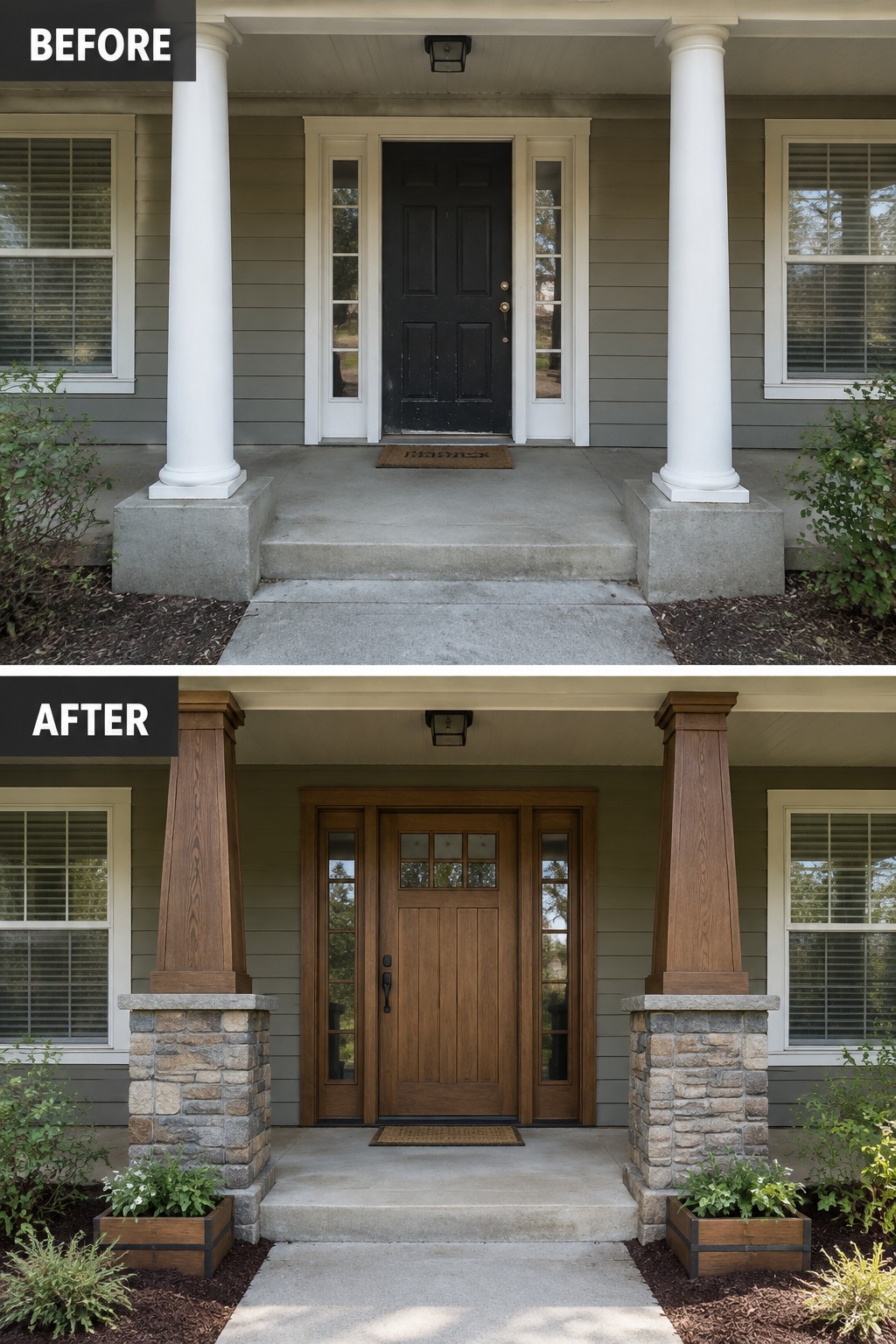
Wrapping the columns in wood and pairing them with a matching wood door gives the entry a much stronger presence. The stone bases help tie everything together and keep the wood from feeling like it floats above the concrete.
This approach suits homes that already have some Craftsman or traditional details. Start with the columns if your budget is limited, since that single change shifts the whole look more than most people expect.
Frequently Asked Questions
Q: How do I pick wood that holds up outside my front door?
A: Go for cedar or redwood since they resist rot naturally. Seal it every couple years to keep the color rich.
Q: What kind of hardware looks right with wood on a Craftsman door?
A: Stick to matte black pulls and hinges. They highlight the wood grain without competing for attention.
Q: How can I add wood accents if my current door is metal?
A: Attach thin wood panels with construction adhesive and screws. Paint the metal edges to match so everything flows.