

Some links on this page are affiliate links (for example Amazon). If you buy through them I may earn a small commission, at no extra cost to you. How this works.
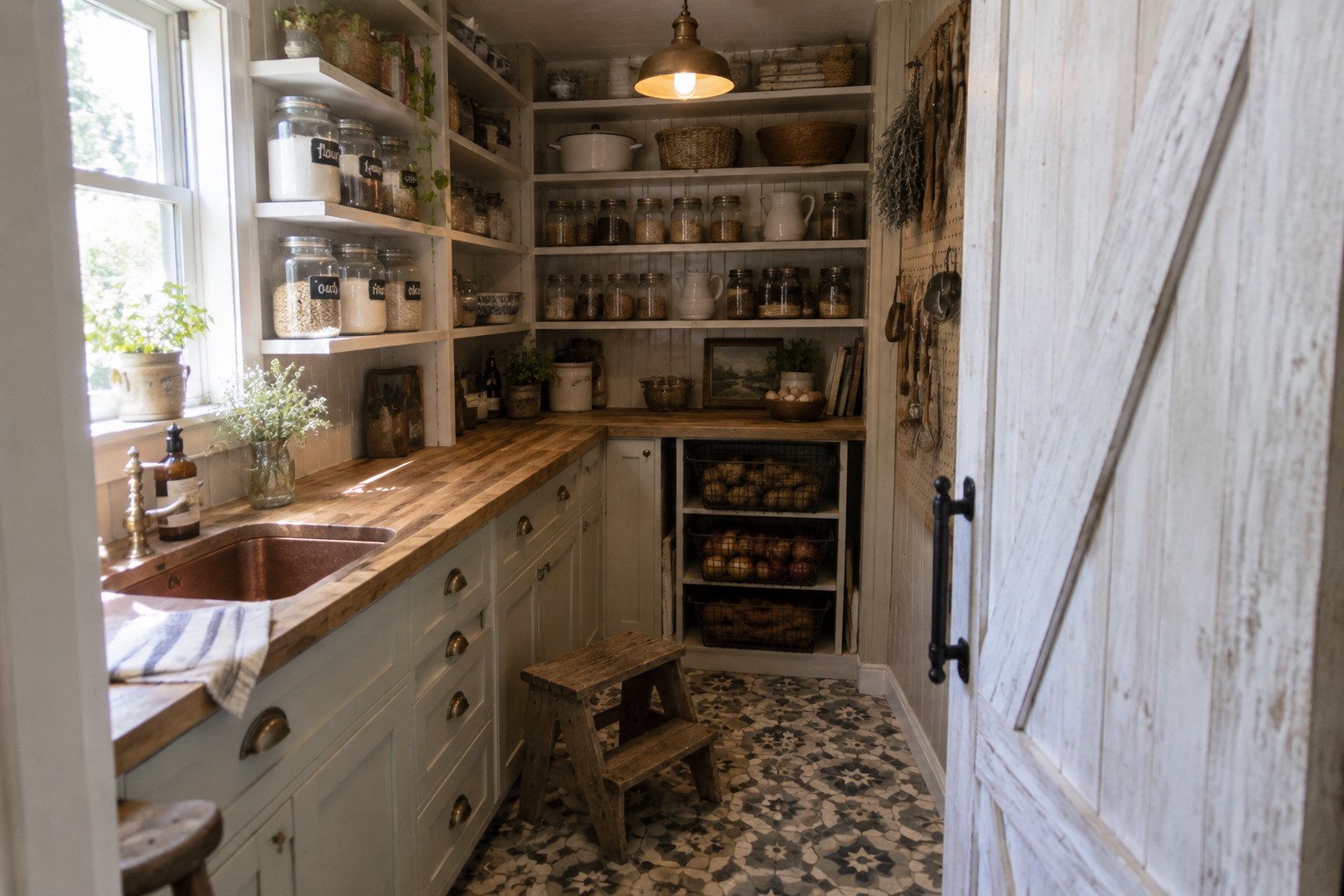
A corner pantry can make a kitchen feel more organized, but only when the shelves and entry work with the way people actually move through the room.
I find that the first thing you notice is whether everyday ingredients are easy to reach or hidden behind deep, awkward corners.
Walk-in layouts can add useful storage without taking over the kitchen, though the door swing, lighting, and shelf depth all affect how practical they feel.
Some designs make better use of a tight footprint, while others leave room for small appliances and bulk groceries.
I’d pay close attention to the details that could work in your own kitchen before settling on a plan.
Make the Most of a Narrow Pantry
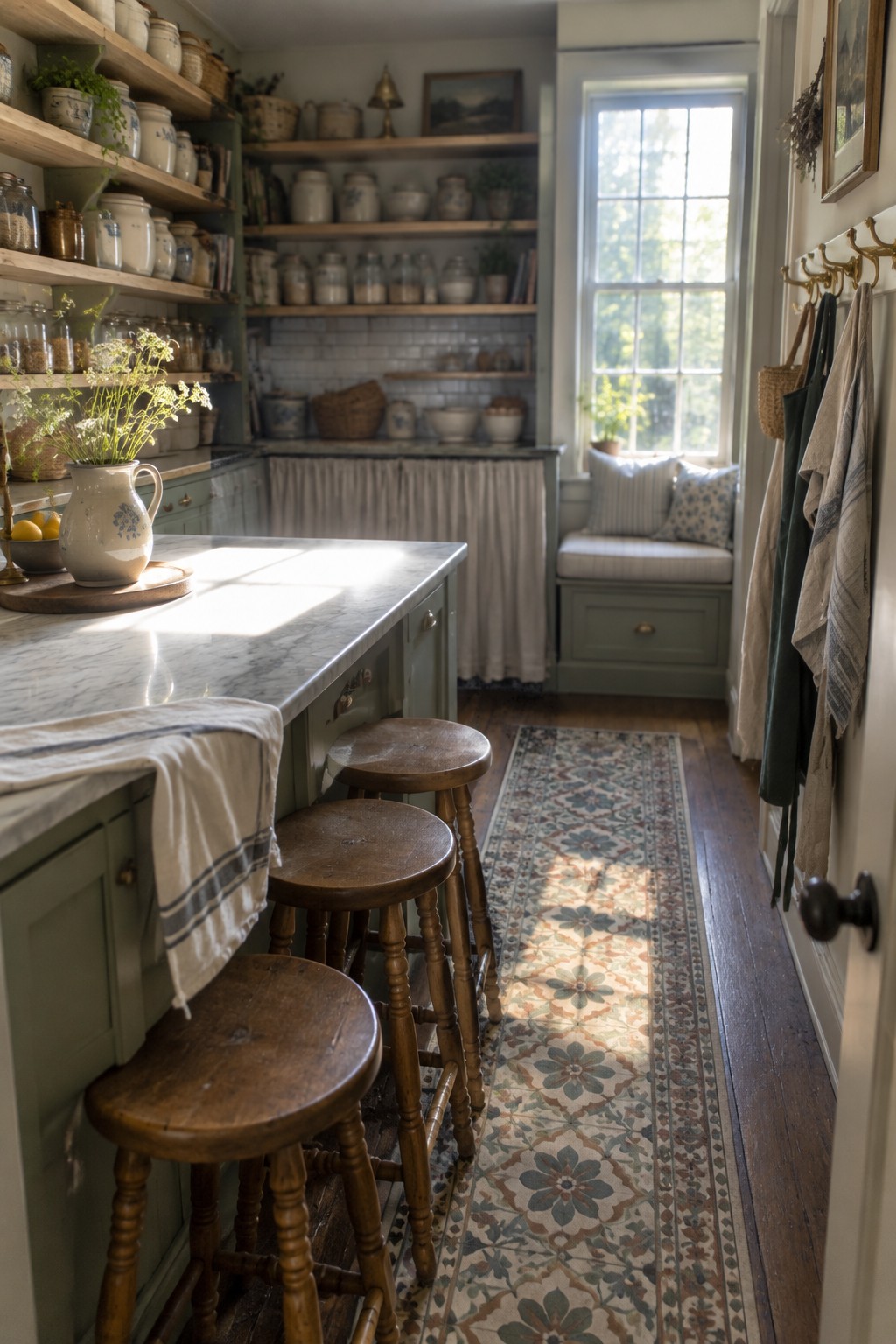
A narrow pantry works best when storage runs up the walls instead of spreading across the floor. Open shelves keep everyday jars and dishes easy to reach, while a clear aisle makes the space comfortable to use.
In a corner pantry, use shelves on two walls and keep the deepest storage for items you don’t need every day. Leave enough room to turn and reach the shelves without bumping into things.
Make Every Inch of a Walk-In Pantry Useful
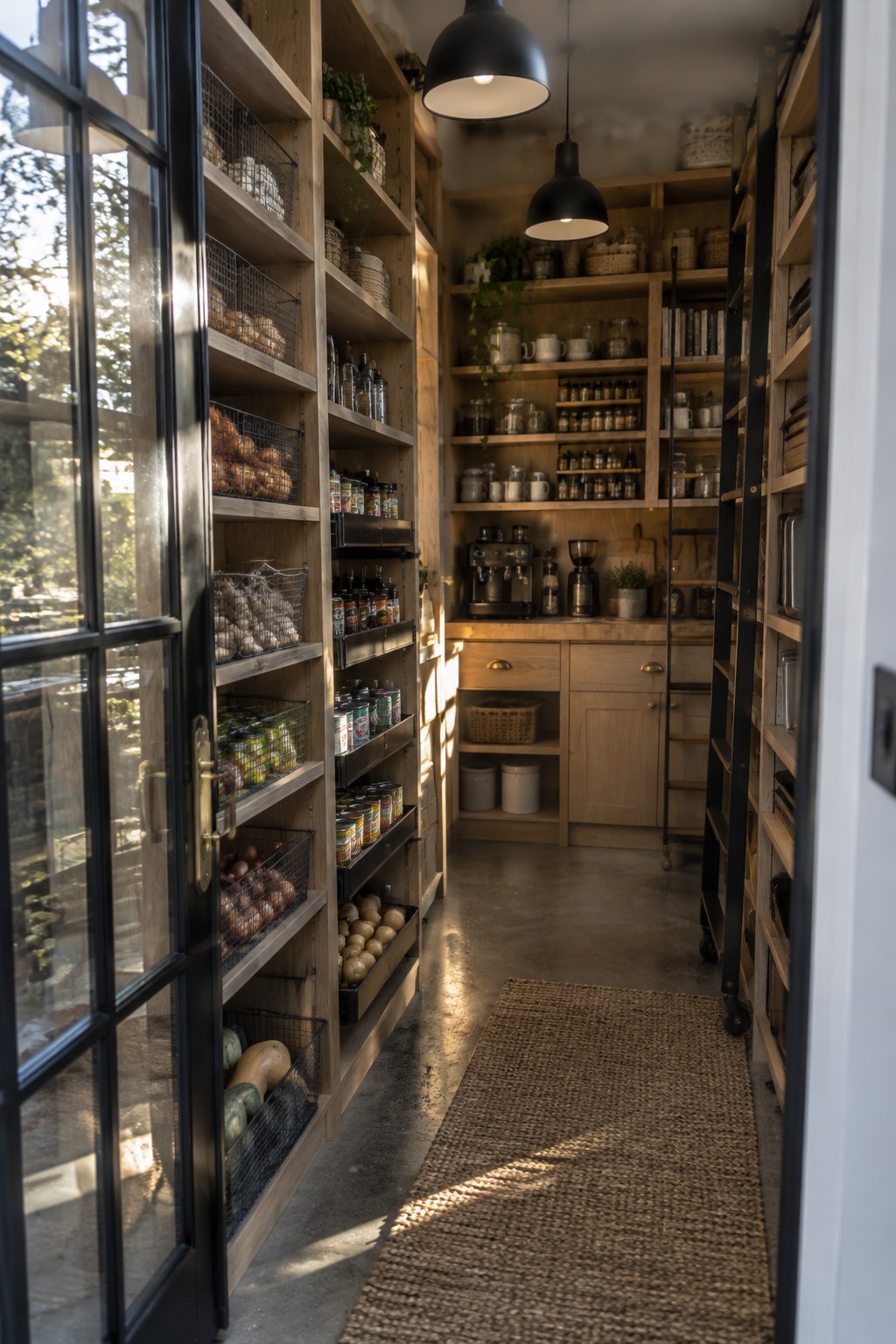
A narrow walk-in pantry can hold a surprising amount when storage runs along the walls. Deep wooden shelves keep everyday groceries within reach, while baskets make it easier to group loose items and use awkward lower spaces.
For a similar setup, keep frequently used foods at eye level and save higher shelves for less-used supplies. A clear center aisle matters, so avoid making the shelving too deep for the room.
Use Deep Drawers For Pantry Storage
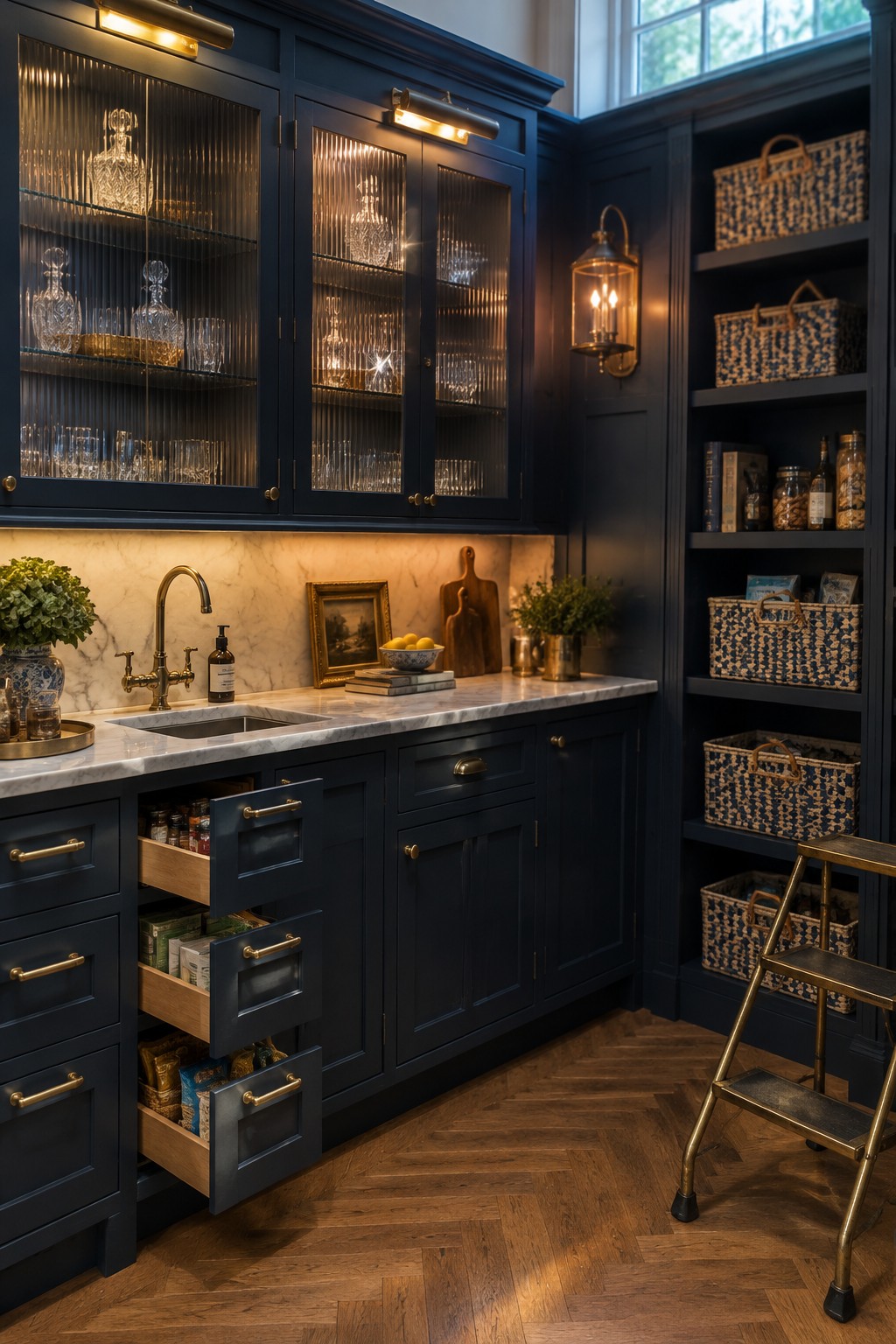
Deep pull-out drawers make pantry staples easy to reach, especially in a corner cabinet where items can otherwise get lost at the back. The open drawers here show how separate levels can hold different kinds of food.
This setup works well in a walk-in pantry or a kitchen pantry cabinet. Use sturdy drawer slides and group similar items together so each drawer stays easy to use.
Add Pull-Out Drawers For Easy Access
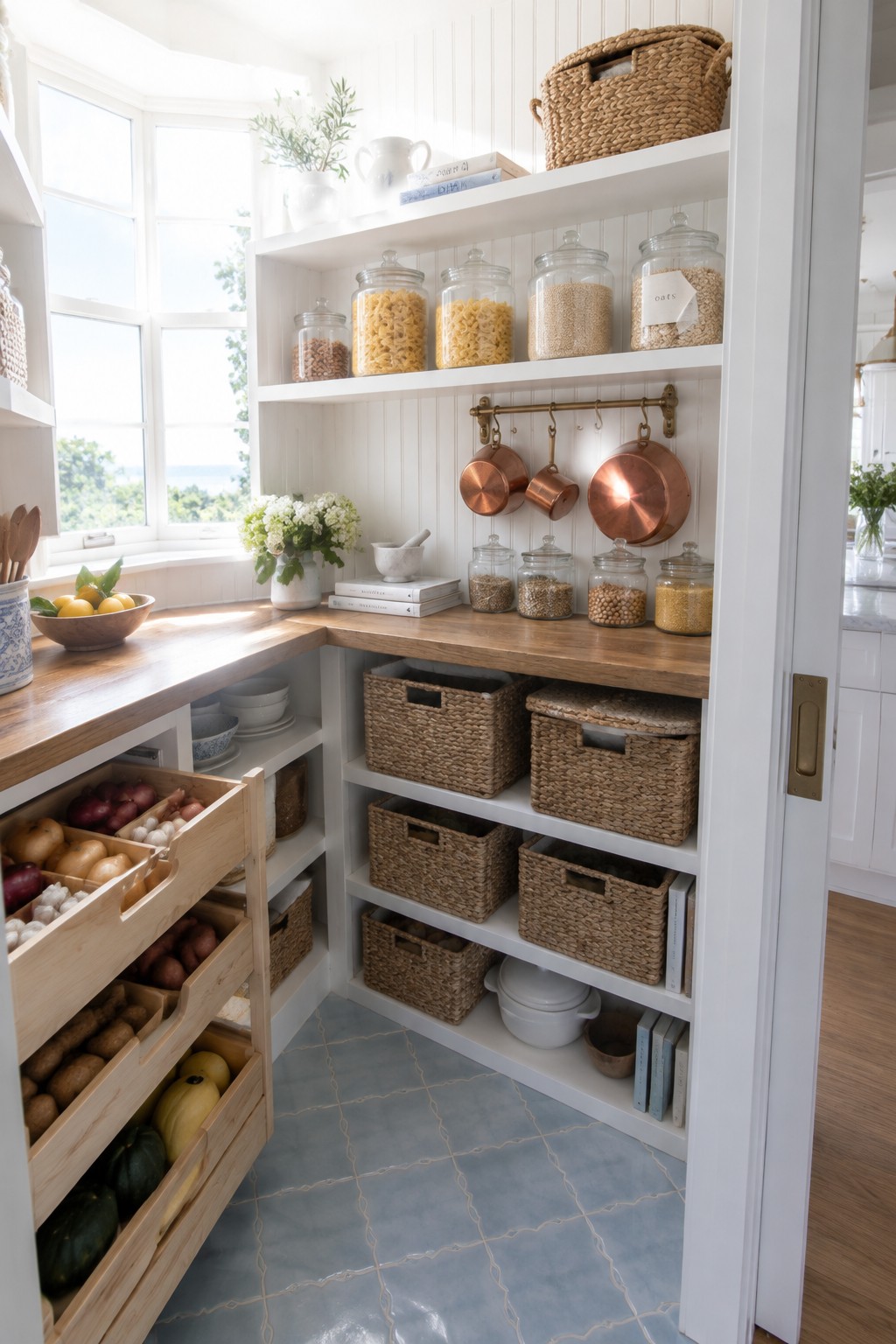
Pull-out drawers make a corner pantry easier to use because you can see and reach stored food without digging around at the back. Deep wooden drawers are especially handy for produce, which can be sorted by type and kept separate from dry goods.
This setup works well in a walk-in pantry with enough floor space for drawers to slide out fully. Use sturdy dividers to keep smaller items from shifting, and avoid packing the drawers so tightly that air cannot circulate around fruits and vegetables.
Use Pull-Out Shelves for Easy Pantry Access
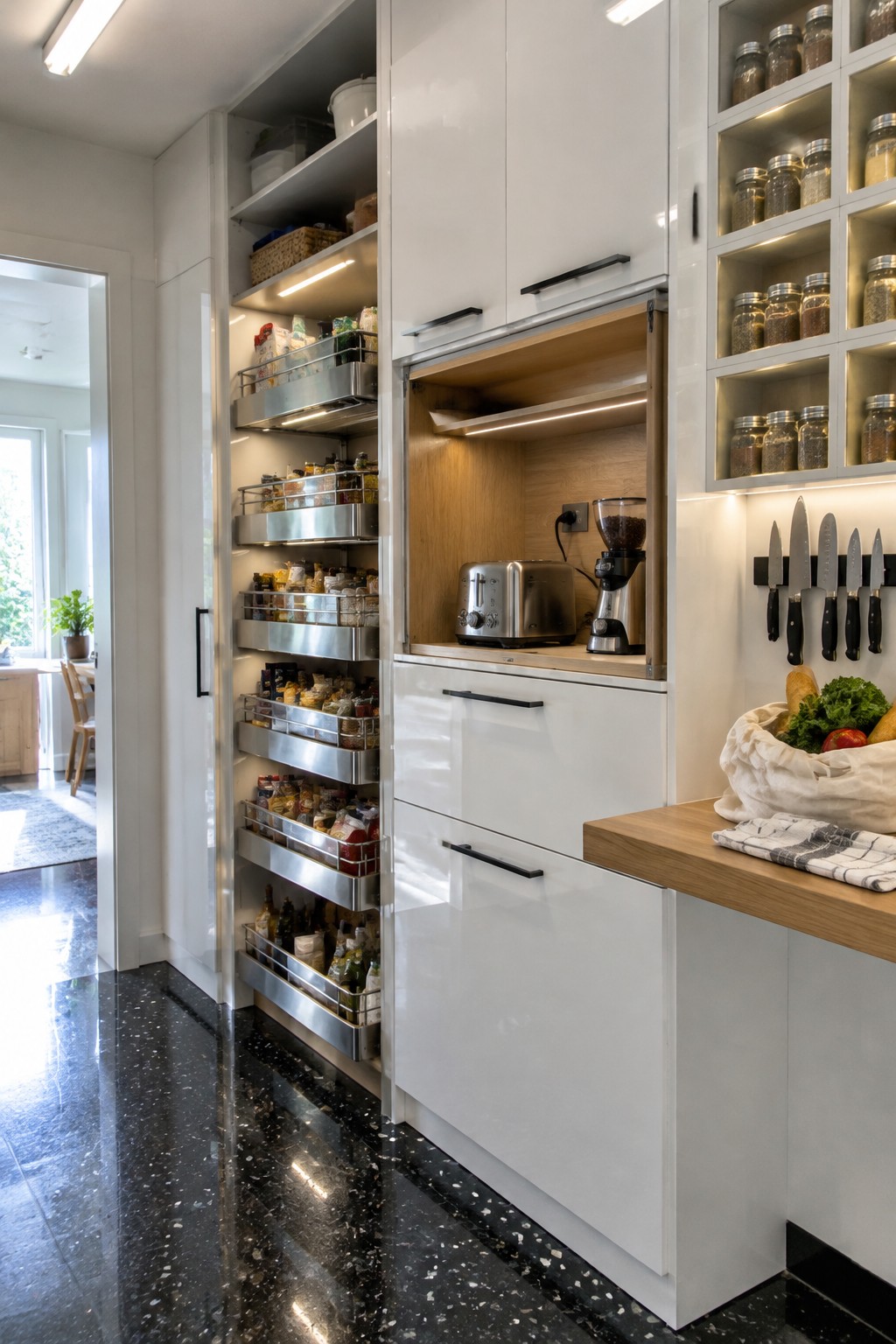
Pull-out shelves make deep pantry storage easier to use because supplies stay visible and within reach. Narrow slide-out units are especially handy in a corner pantry, where fixed shelves can leave items tucked out of sight.
Use shelves with sturdy rails and leave enough clearance for them to open fully. Group everyday ingredients together, and keep heavier jars on lower shelves.
Use a Narrow Pantry Island for Extra Storage
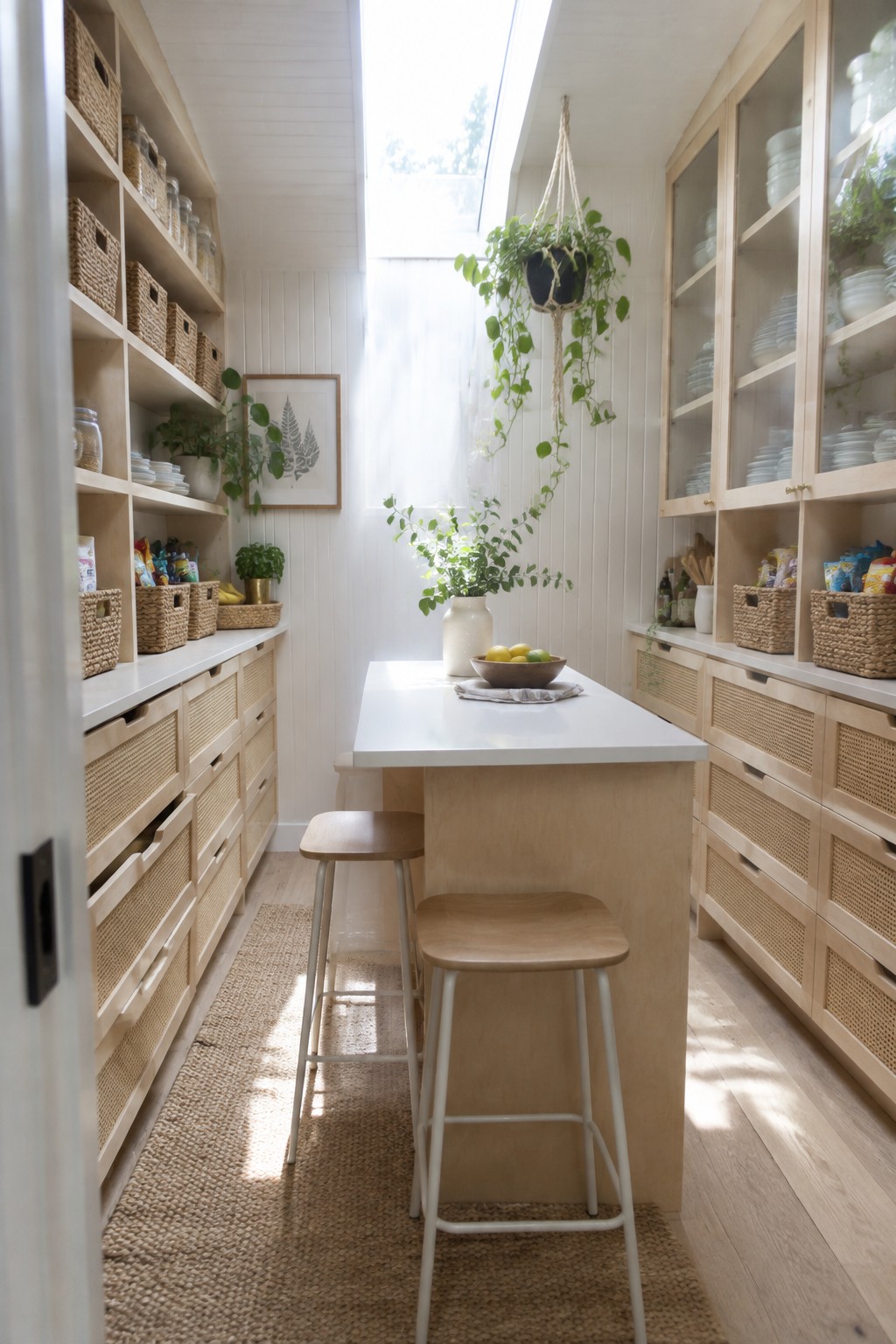
A slim island can make a walk-in pantry more useful by adding a work surface without taking over the room. It also gives you a handy spot to sort groceries or set down a bowl while keeping storage along the walls.
This layout works best in a pantry with enough clearance to walk around the island comfortably. Keep the island narrow, and use the surrounding cabinets and drawers for the bulk of your storage.
Add Wraparound Shelves to a Corner Pantry
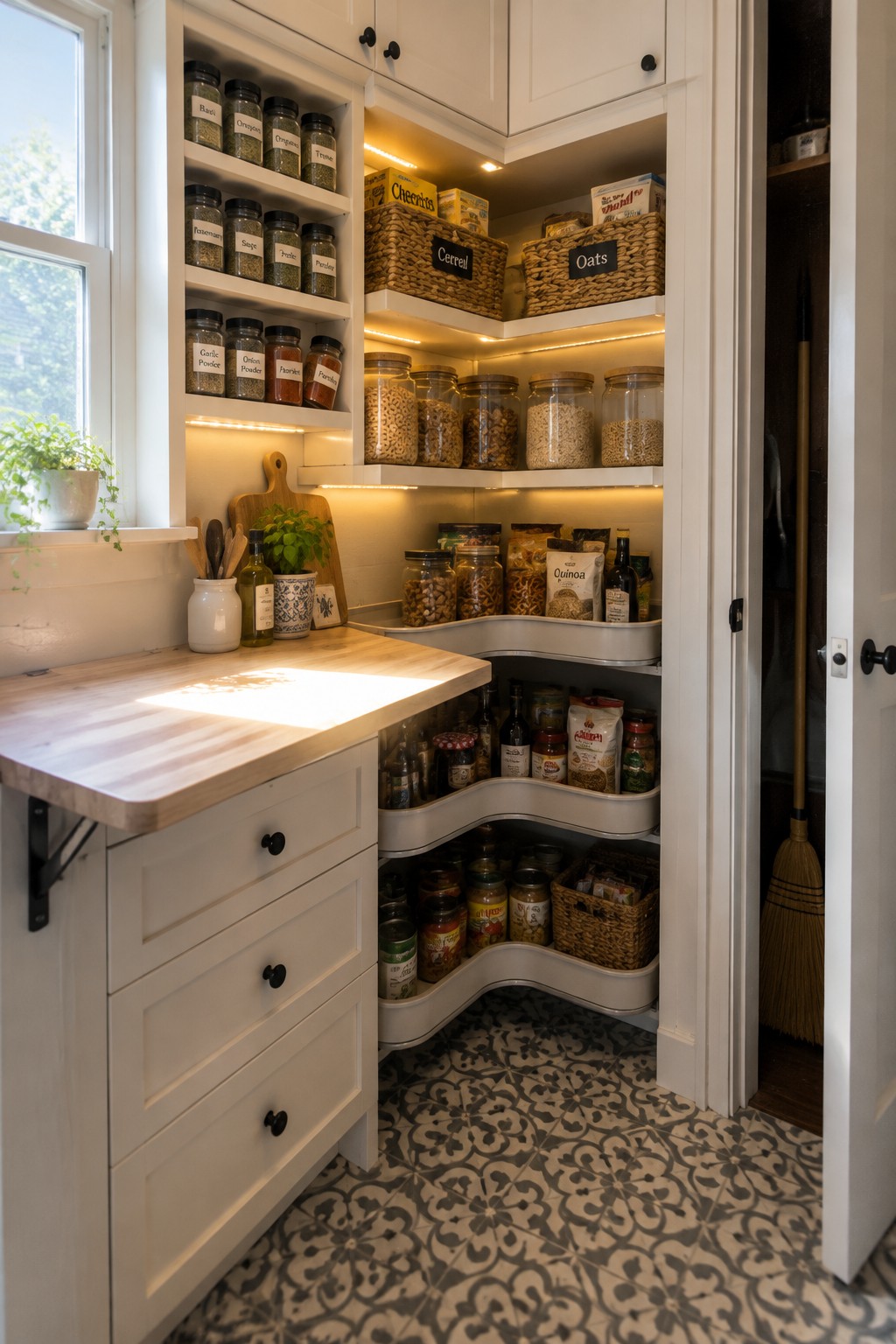
Wraparound shelves make an awkward corner useful by giving pantry goods a place along more than one wall. Here, curved shelf edges keep jars and cans accessible while making the most of the compact footprint.
This setup works well in a walk-in pantry where a straight shelf would leave space unused. Keep everyday items near the front, and avoid storing frequently used goods too far into the corner.
Turn a Small Corner Into a Baking Pantry
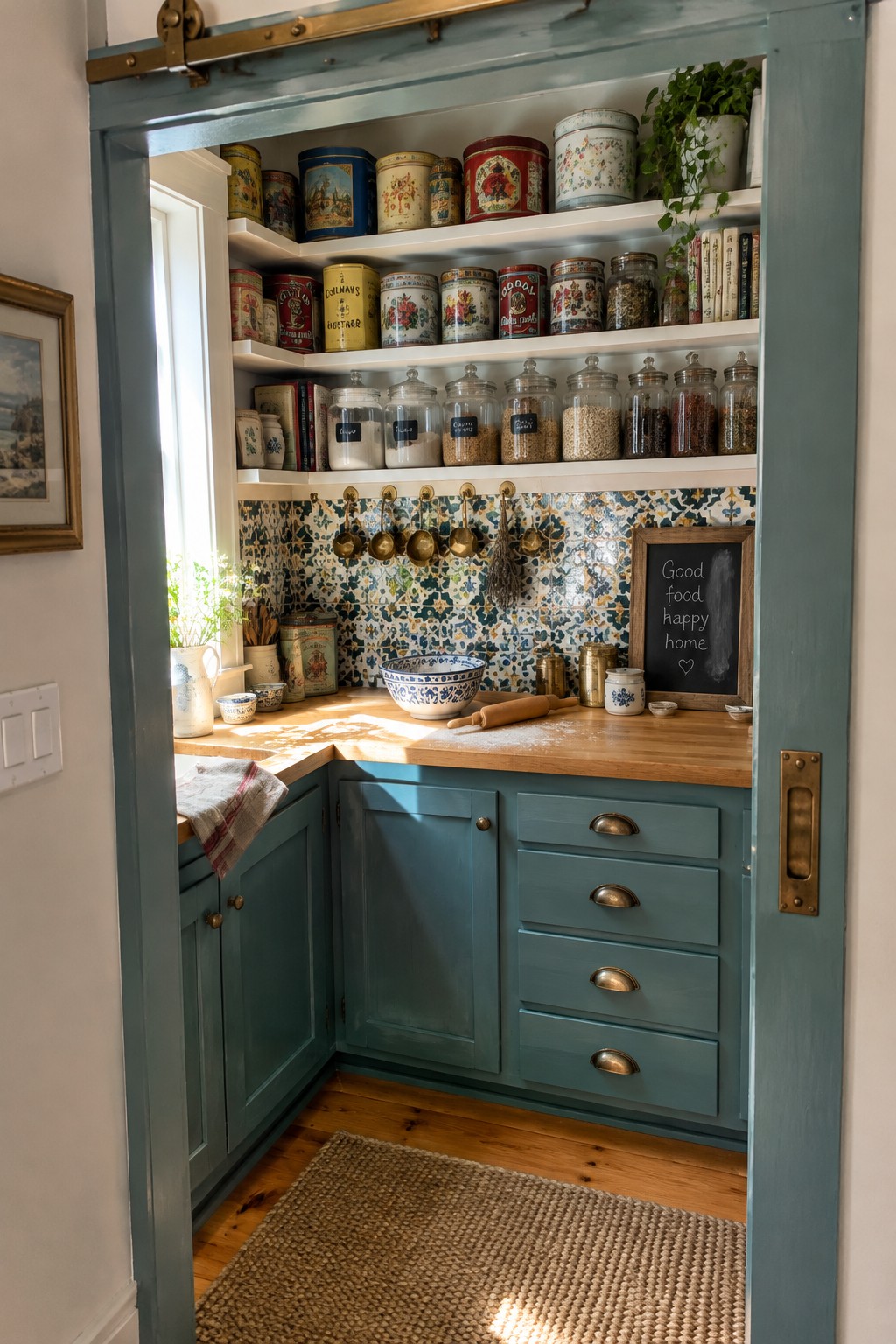
A corner pantry can do more than hold canned goods. A short stretch of counter gives you a handy place to mix or roll dough, while shelves above keep ingredients close by. It makes a compact storage nook useful for everyday prep, too.
If you have room, leave a clear section of countertop beneath the shelves and keep baking staples within easy reach. This setup works especially well in a small kitchen, but avoid crowding the work surface with items you rarely use.
Use Clear Bins To Keep Pantry Shelves Organized
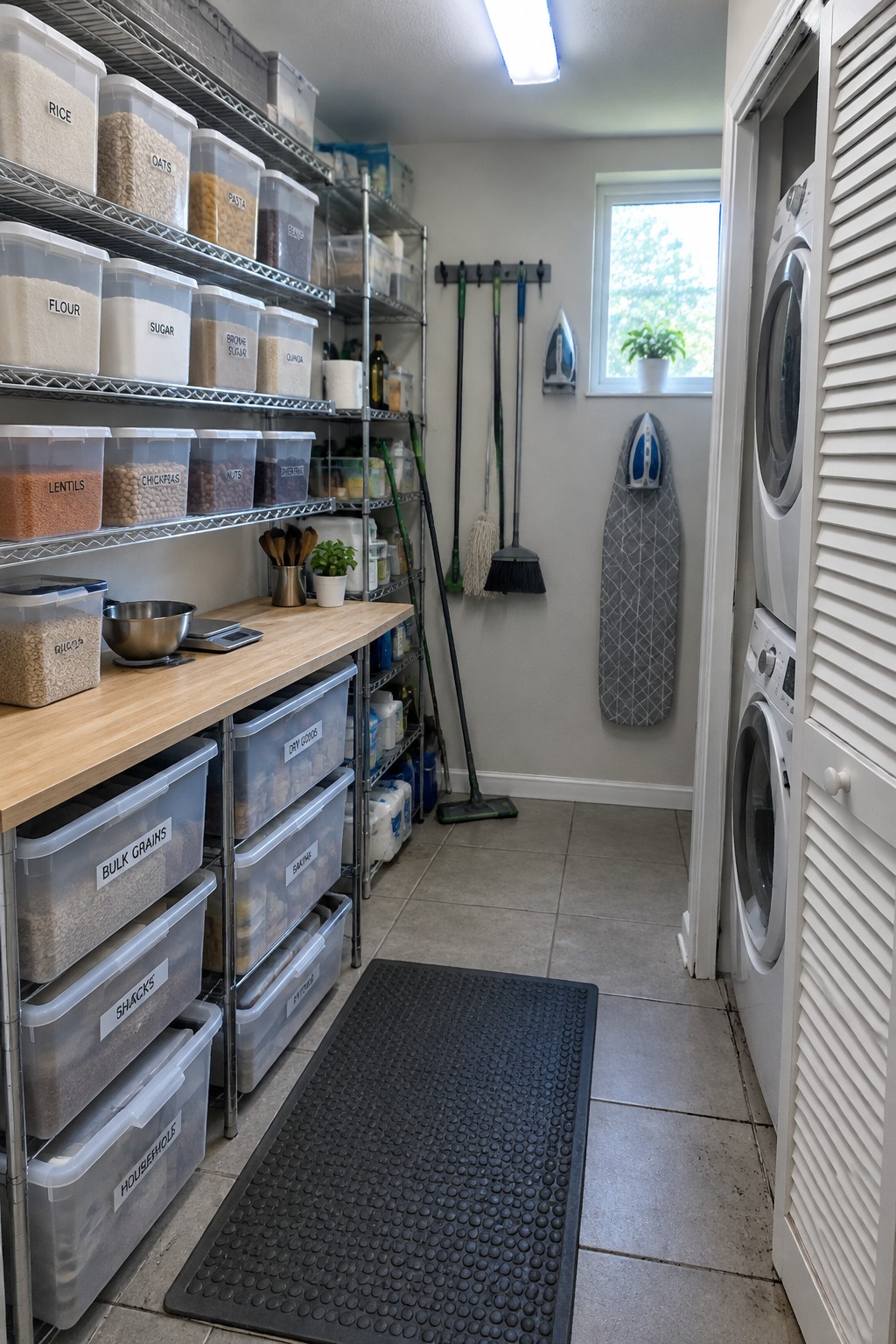
Clear storage bins make it easier to see what you have and keep food grouped by type. Matching containers on open shelves also help a busy pantry stay orderly without needing complicated cabinetry.
Use labeled, stackable bins for dry goods such as grains, beans, and baking supplies. Leave a little room to pull them off the shelf, especially in a narrow pantry where access can be tight.
Use Recessed Shelves to Save Floor Space
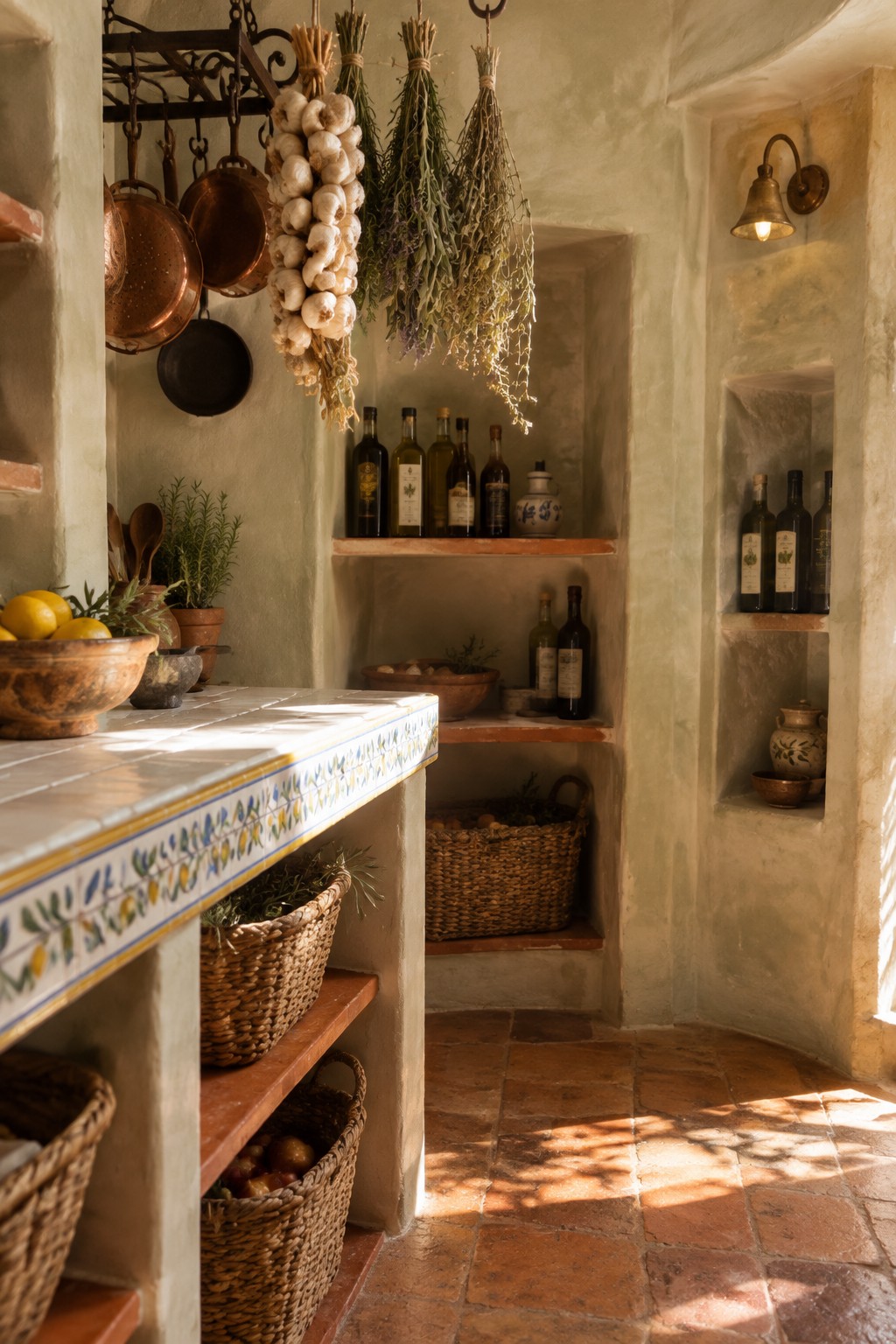
A walk-in corner pantry can store a surprising amount without taking up more room. Recessed shelves make use of wall space, leaving the center clear and making it easier to move around.
This approach works well in a small pantry, especially in an older home with thick walls or alcoves. Use the shelves for bottles and jars, and keep heavier supplies on lower shelves where they are easy to reach.
Combine Open Shelves With Closed Storage
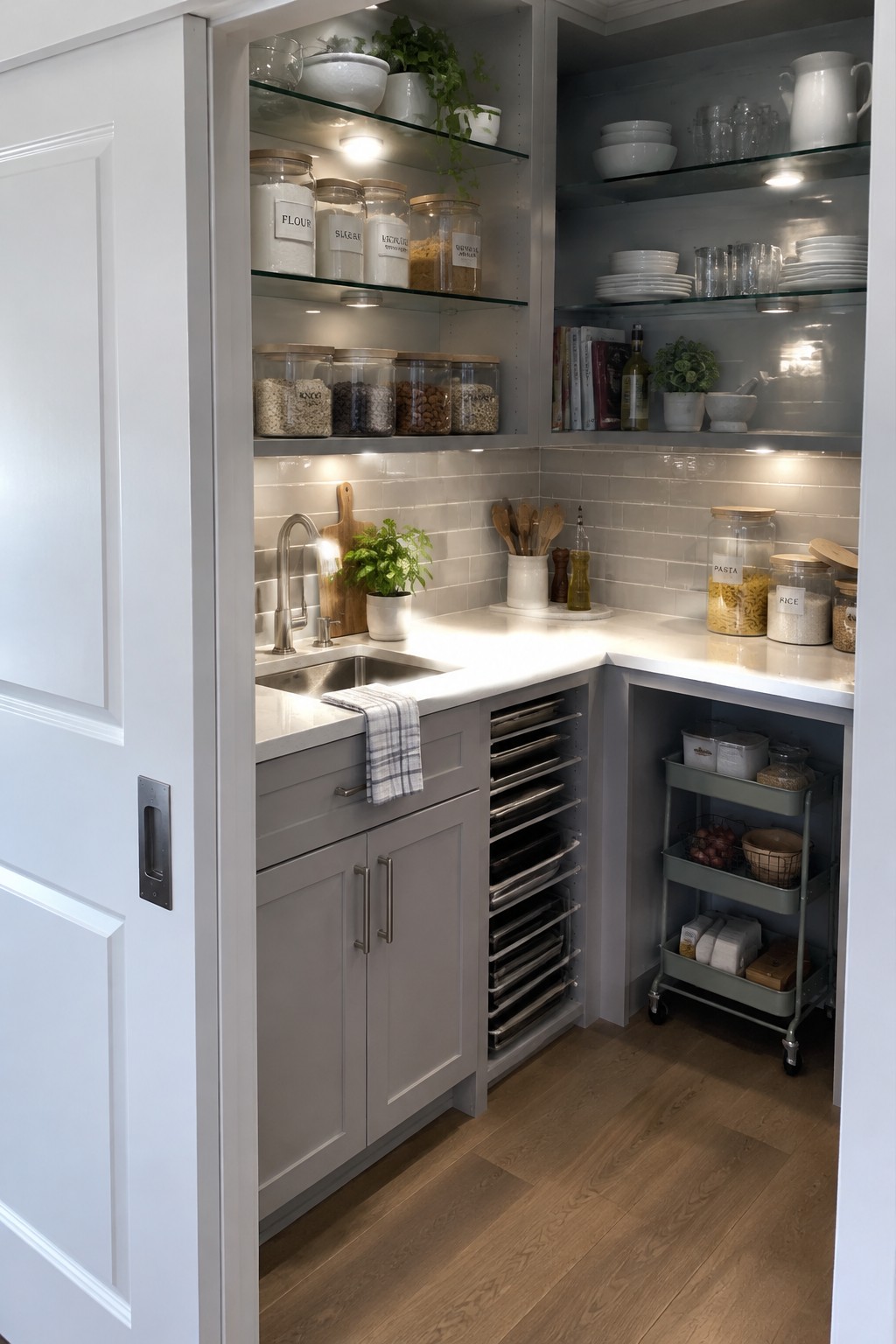
A corner pantry can hold a lot without feeling like one deep, hard-to-reach cupboard. Open shelves keep everyday dishes and dry goods easy to see, while lower cabinets hide less-used items and help the space stay tidy.
This setup works well in a walk-in pantry where two walls meet at a counter. Keep frequently used jars near the front of the shelves, and leave enough clear counter space for unpacking groceries or setting down a mixing bowl.
Use a Walk-In Pantry for Everyday Storage
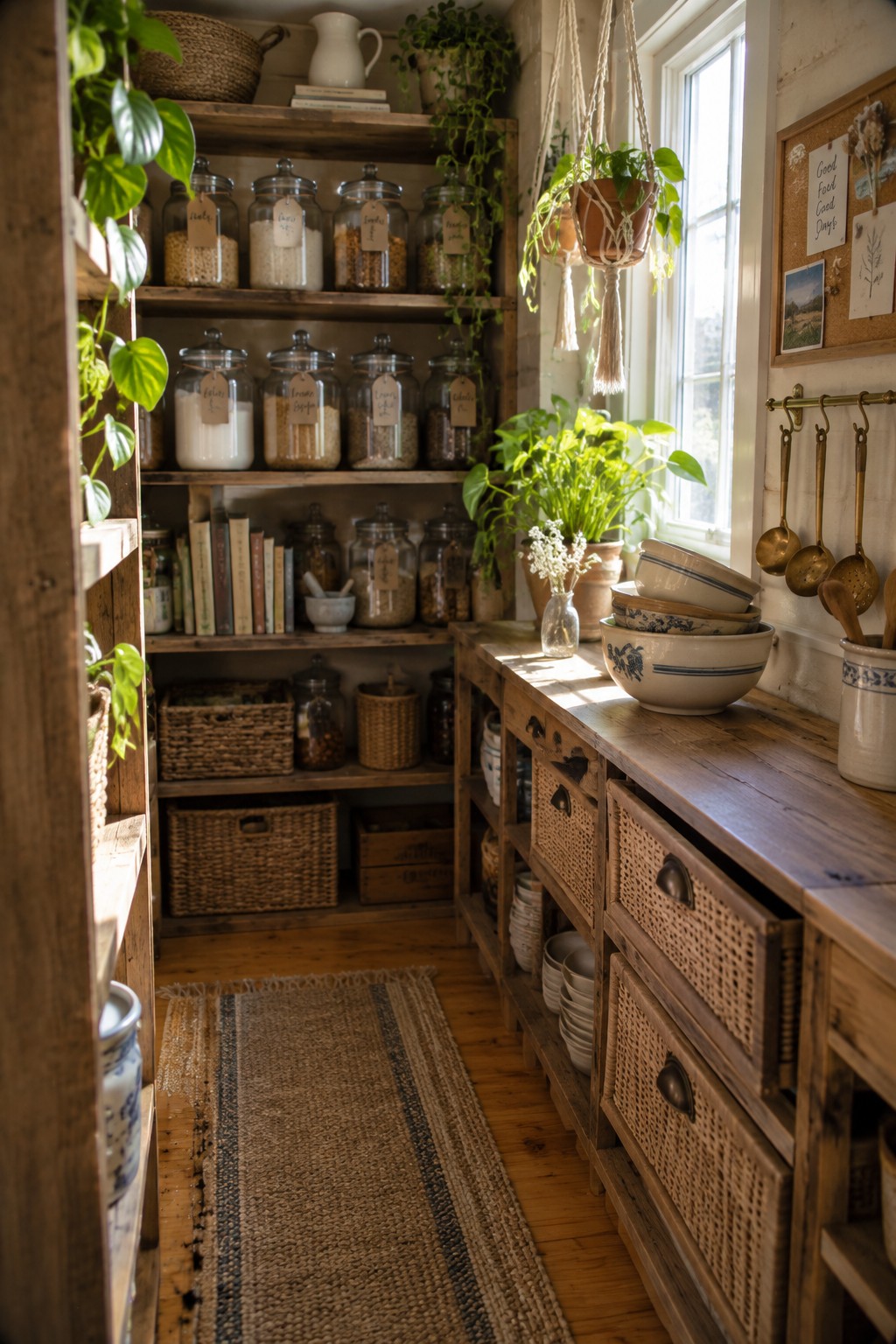
A walk-in pantry can hold more than packaged food. Open shelves keep jars and staples easy to see, while lower cabinets and baskets give less-used items a place of their own. This mix makes the storage practical without needing a large room.
For a similar setup, use sturdy shelves along the walls and keep frequently used ingredients within reach. Baskets can corral small items, but avoid packing shelves too tightly or jars become harder to find.
Store Pantry Staples in Clear, Labeled Containers
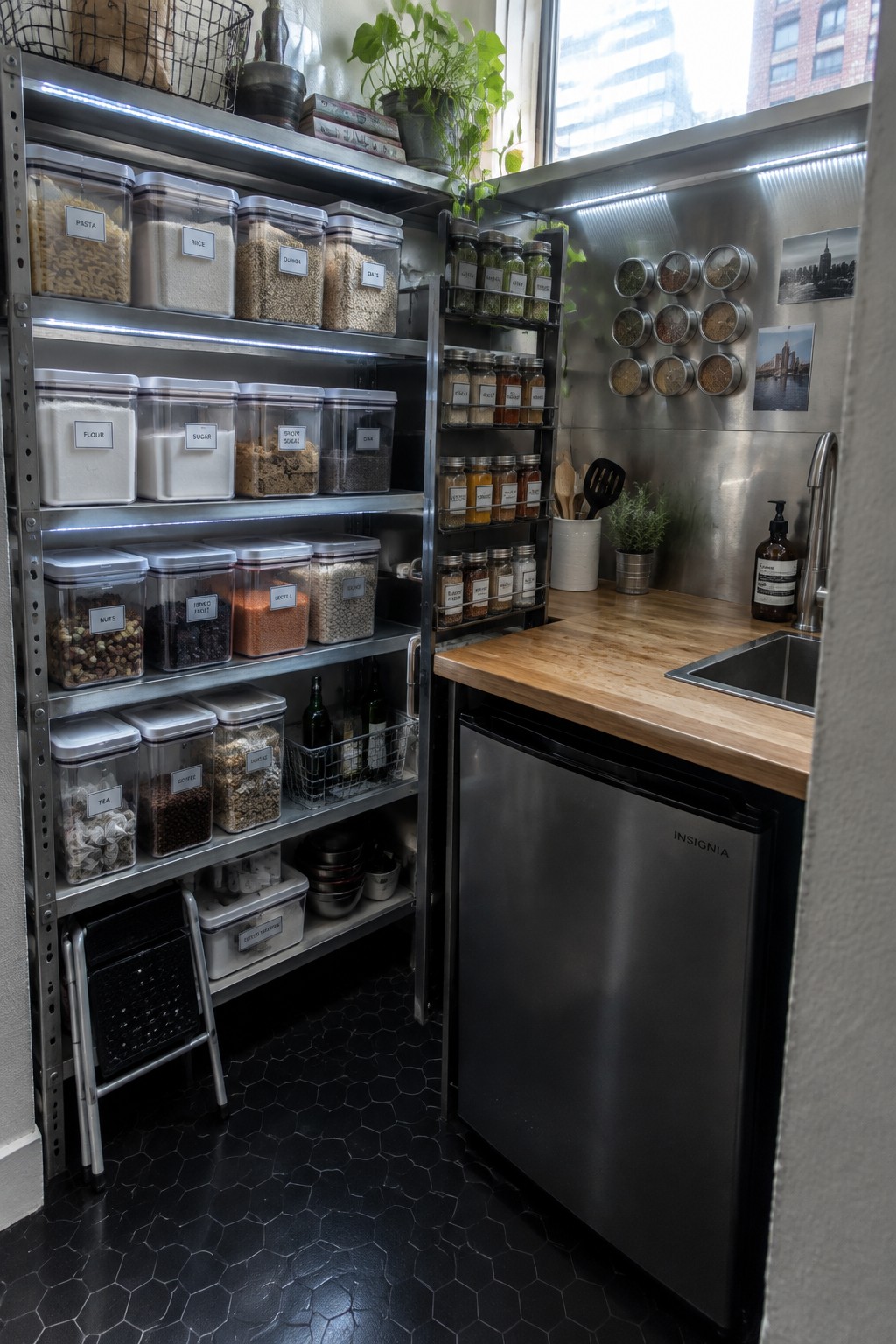
Clear containers make a pantry easier to use because you can see how much of each staple is left without opening every bin. Matching containers also help keep a narrow storage area tidy, even when shelves hold a lot.
Use a few larger bins for everyday basics like flour and rice, then smaller jars for spices or seeds. Choose containers that fit the shelf depth, and label them clearly so everything is easy to find and put back.
Use L-Shaped Counters for a Walk-In Pantry
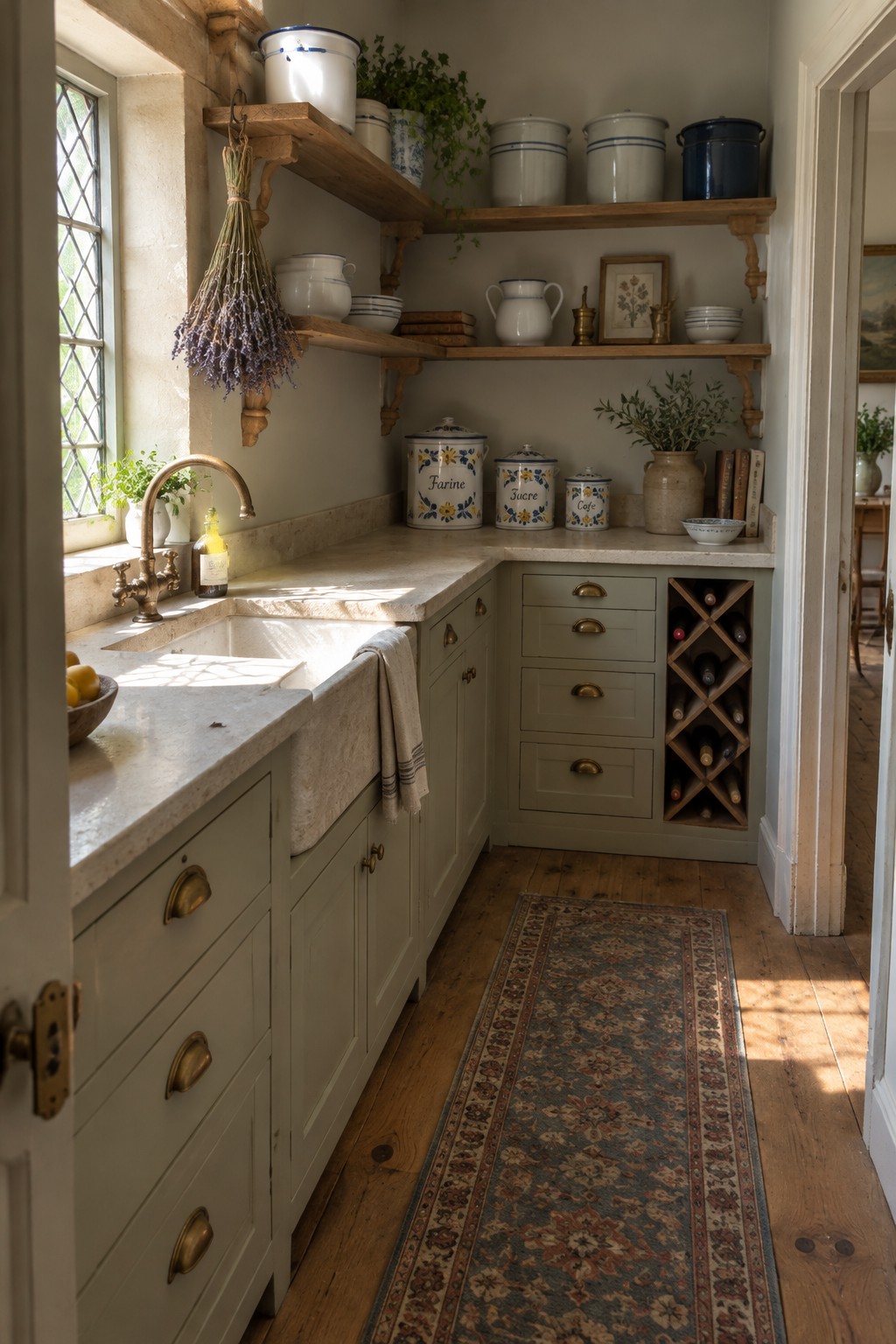
An L-shaped counter makes a walk-in pantry useful for more than storing food. It gives you a clear work surface while keeping storage along two walls, so the middle of the room stays open and easy to move through.
This layout suits a small pantry tucked beside a kitchen, especially when you can add drawers below the counter and shelves above it. Keep the shelves within reach for everyday items, and leave enough counter space to set down groceries or prepare something simple.
Use Labeled Jars to Organize Pantry Staples
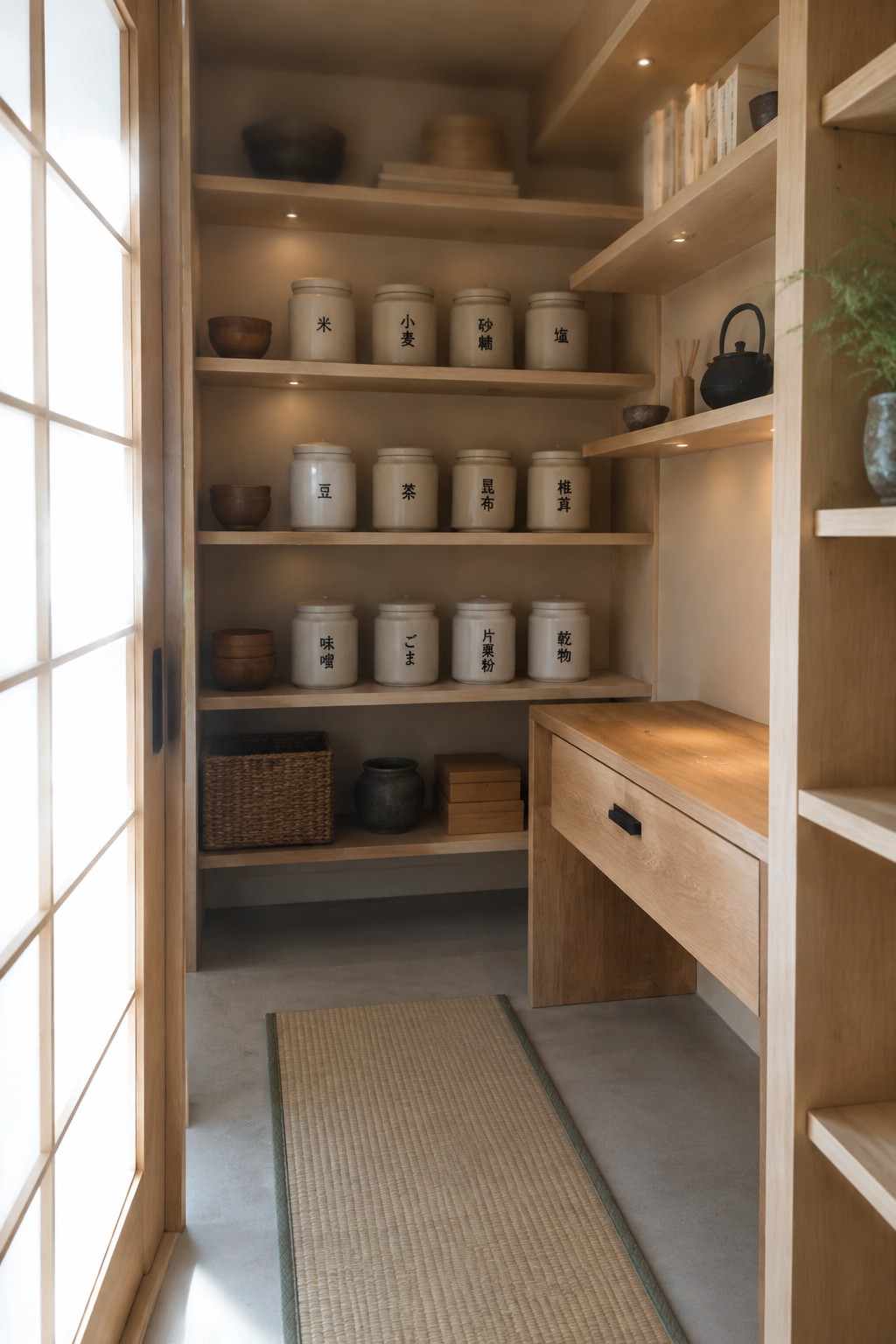
Matching containers with clear labels make everyday ingredients easy to find and give pantry shelves a tidy, consistent look. In a walk-in corner pantry, rows of jars can help keep small staples organized without taking up much room.
Use labels that are easy to read, and group similar ingredients together so restocking stays simple. This works well for frequently used dry goods, but keep the containers within reach and choose sizes that fit the shelf depth.
Set Up a Corner Pantry for Baking
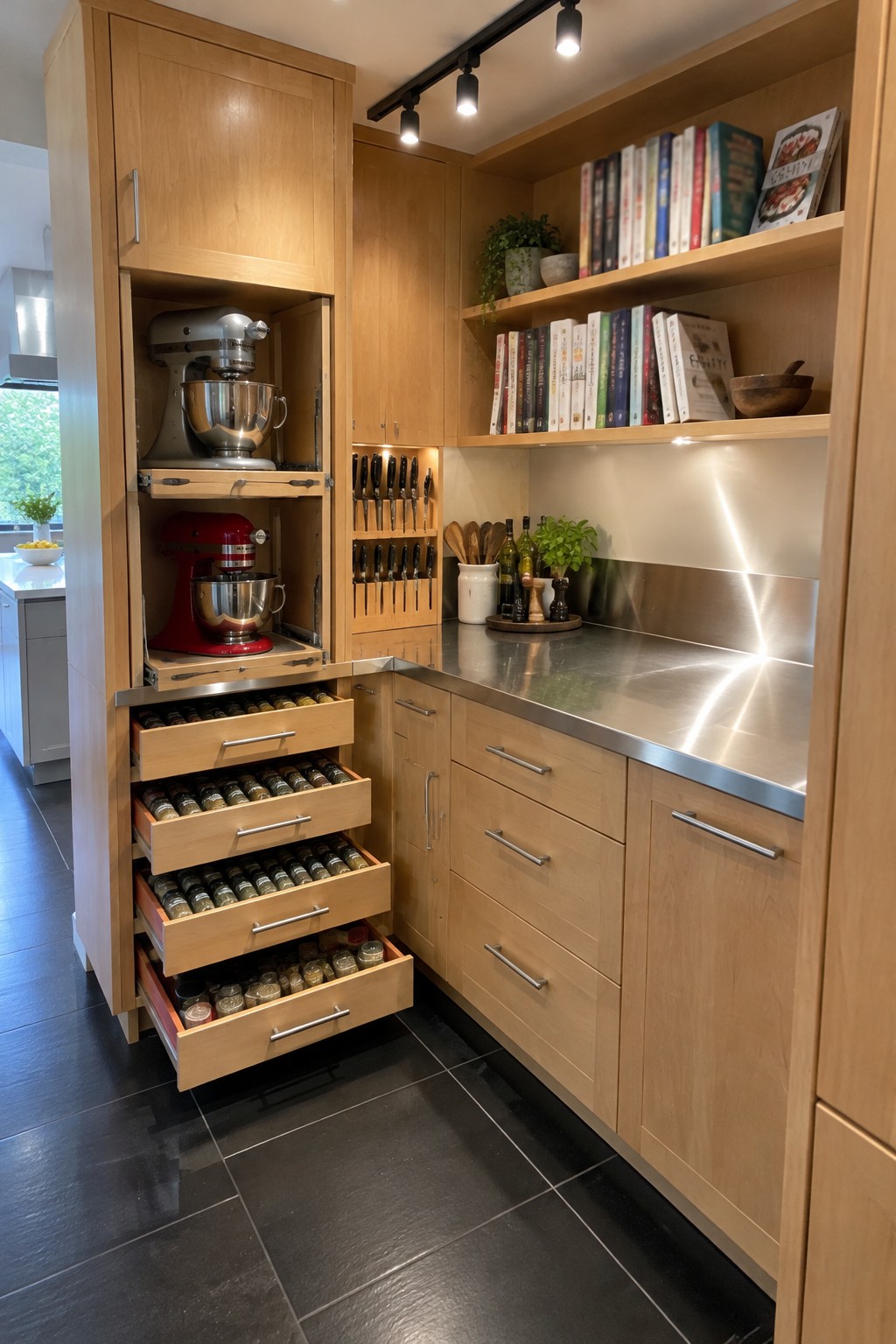
A baking pantry works best when tools and ingredients are easy to reach in one place. Built-in mixer shelves keep bulky appliances off the counter, while pull-out spice drawers make small jars easier to see and grab.
This setup suits a kitchen with an unused corner near the work area. Keep the shelves sturdy enough for heavy mixers, and leave enough room to lift each appliance out comfortably.
Frequently Asked Questions
Q: How much room do I need for a walk-in style corner pantry?
A: You can make a compact corner work if you can step inside and reach the shelves without turning sideways. Before building, mark out the footprint with tape and check that the door and nearby cabinets still open comfortably.
Q: What should I put on the shelves so the pantry stays easy to use?
A: Keep everyday foods at eye level and heavier items on lower shelves. Use the harder-to-reach corners for backup supplies or things you only use now and then.
Q: Are deep corner shelves a good idea?
A: They hold a lot, but items can disappear behind each other. Shallower shelves or pull-out baskets make it easier to see what you have and grab it.
Q: How can I make a small pantry feel less cramped?
A: Add good lighting and choose open shelves where possible. A light-colored finish can also make the corner feel brighter, while a door that swings out of the way keeps the entrance clear.