

Some links on this page are affiliate links (for example Amazon). If you buy through them I may earn a small commission, at no extra cost to you. How this works.
Many homes with colonial styling start to look a bit neglected once the front door paint fades and the trim begins to show wear.
I often find that addressing those entry details first makes the whole facade appear more intentional even if the rest of the house stays the same.
Picking new shutter colors or simple hardware updates can pull the look together without requiring a larger project.
Those changes add up quickly in practice.
Trying a couple of the color or material ideas on my own trim showed me which ones hold up well in real weather while still keeping the original character.
Paint Your Front Door A Deep Color
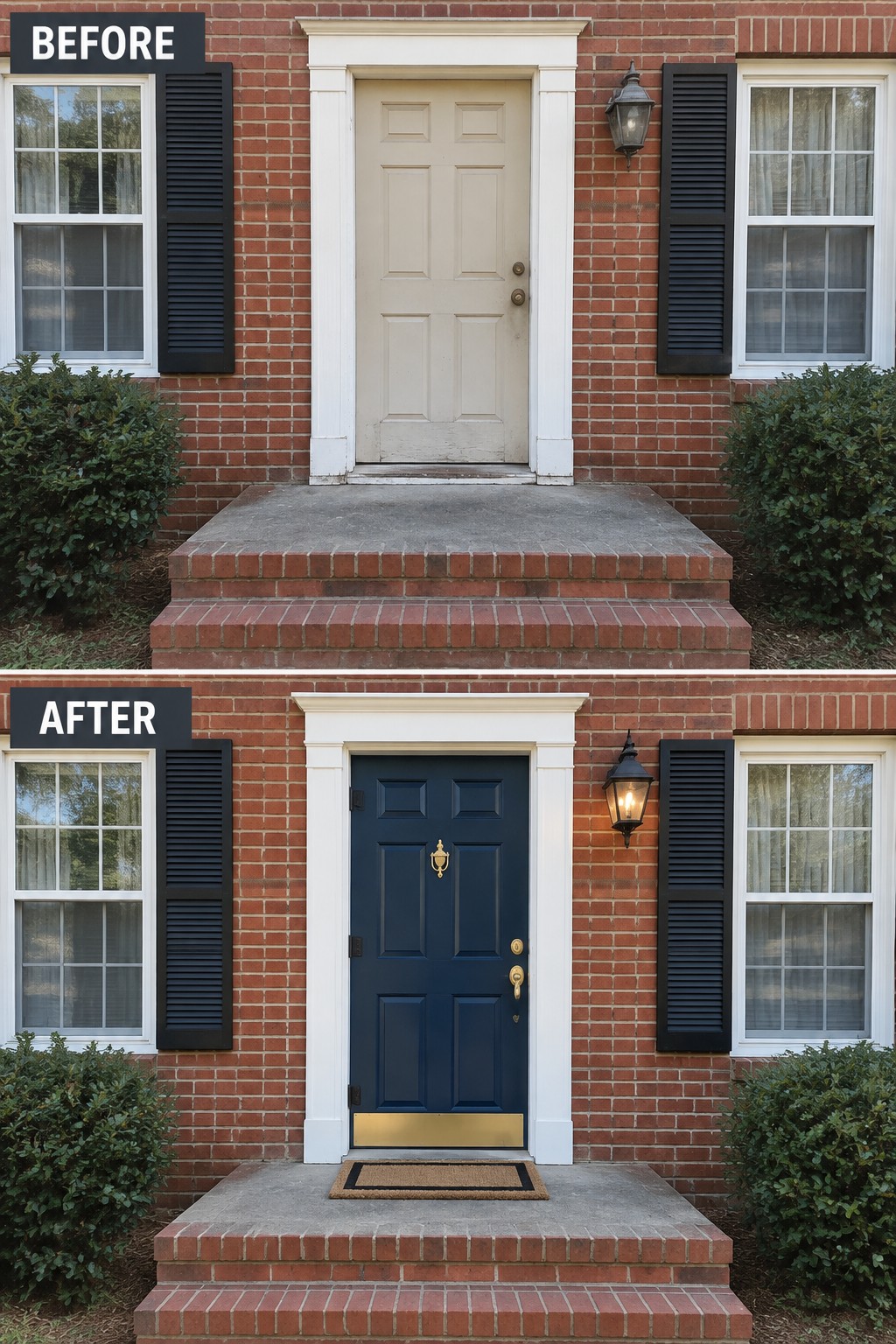
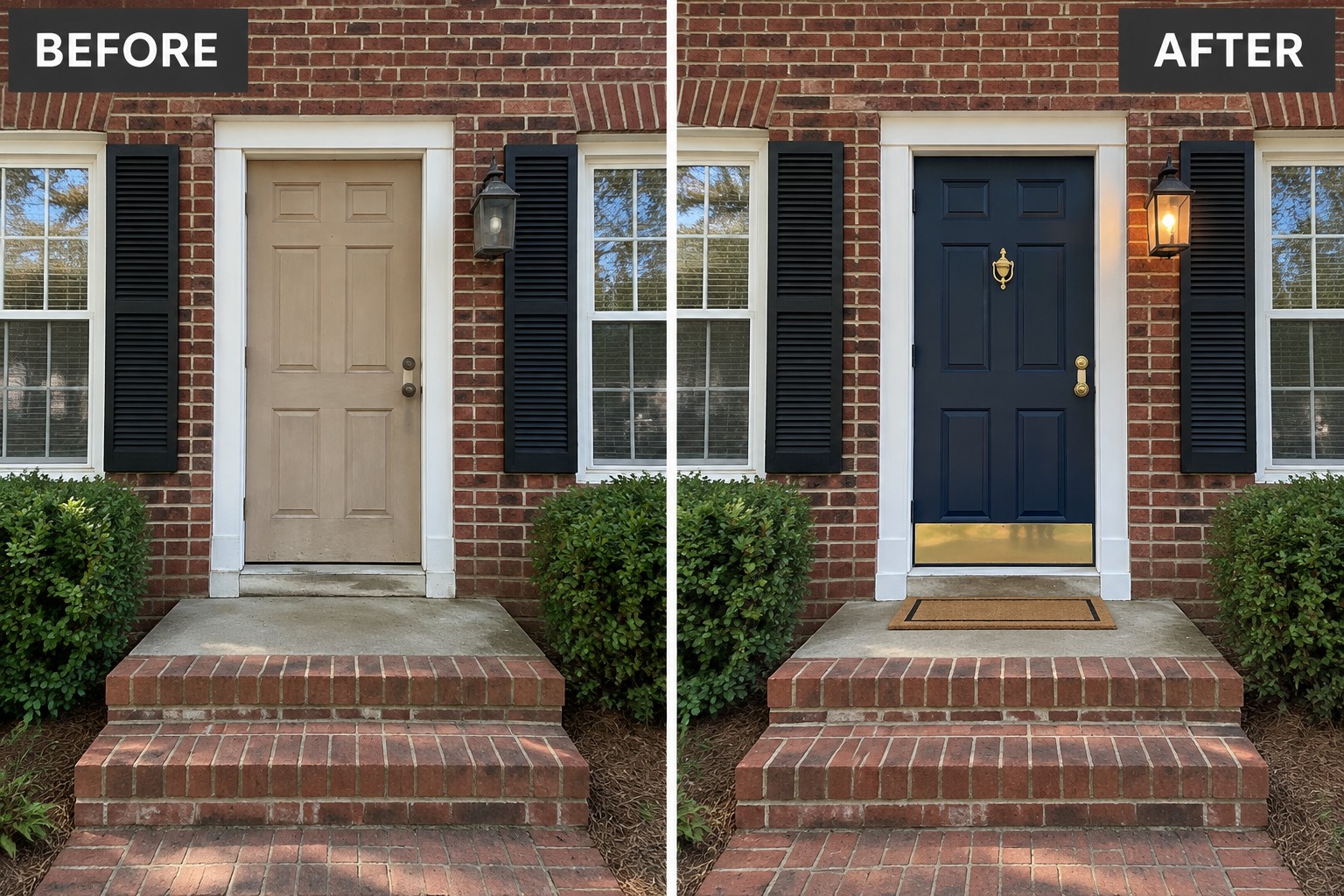
Many colonial homes have front doors that fade into the brick instead of standing out. Painting the door a dark navy color gives the entry a clear focal point and makes the whole facade feel more finished without any major construction.
This approach works best on homes where the door sits in a simple white surround. Prep the surface well, use exterior-grade paint, and add matching hardware so the new color reads as intentional rather than just a quick coat.
Add Shutters To Finish A Plain Colonial Exterior
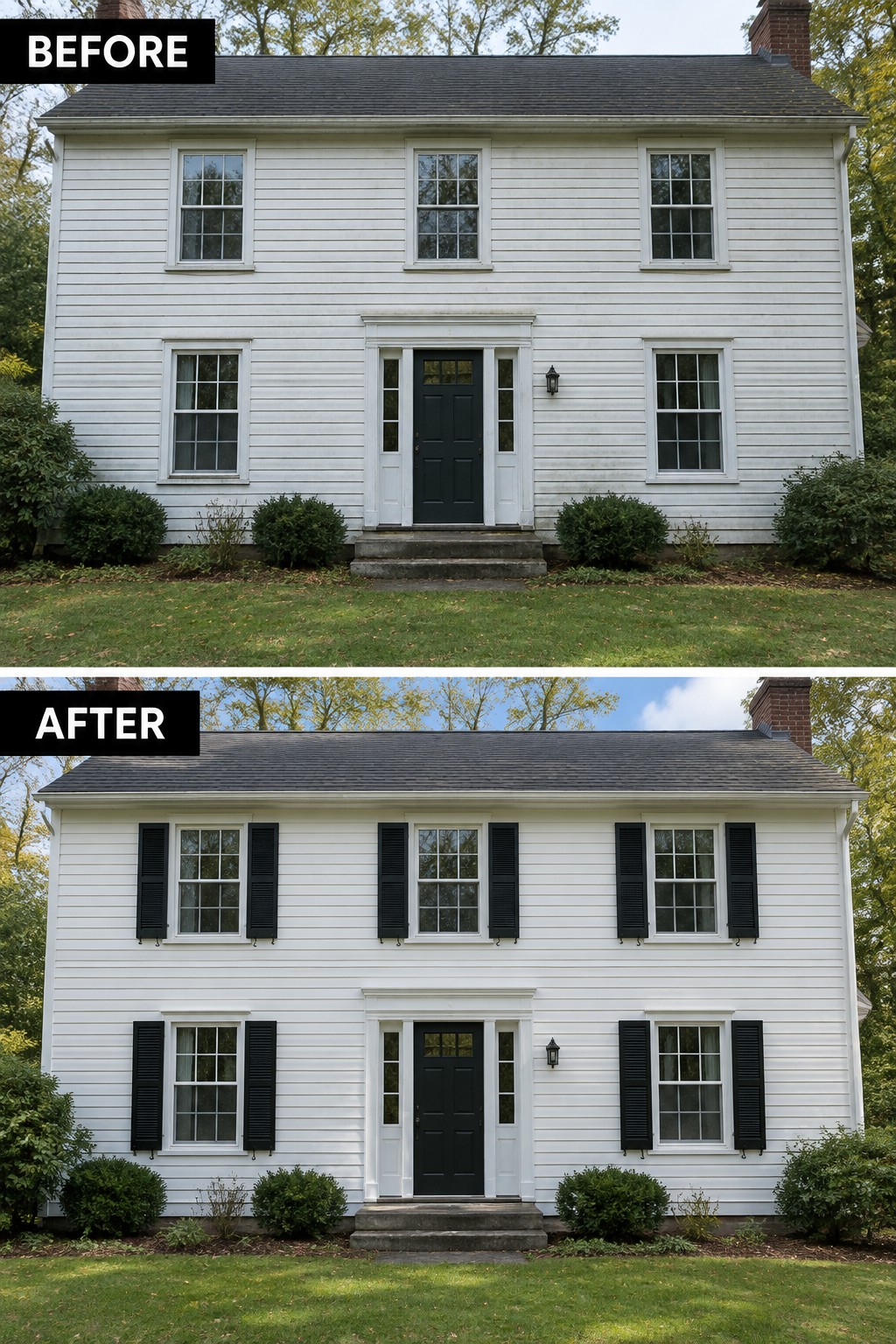
Many colonial homes look incomplete when the windows have no shutters at all. Adding a full set of black shutters across both floors gives the front a balanced, finished look and strengthens the traditional style without changing the siding or door color.
This approach works best on houses with simple white or light siding and a dark front door. Choose shutters that match the window size, keep the color contrast strong, and install them evenly so the facade feels intentional rather than bare. It is one of the more affordable exterior updates that still makes a noticeable difference.
Add A Pediment To Frame The Front Door
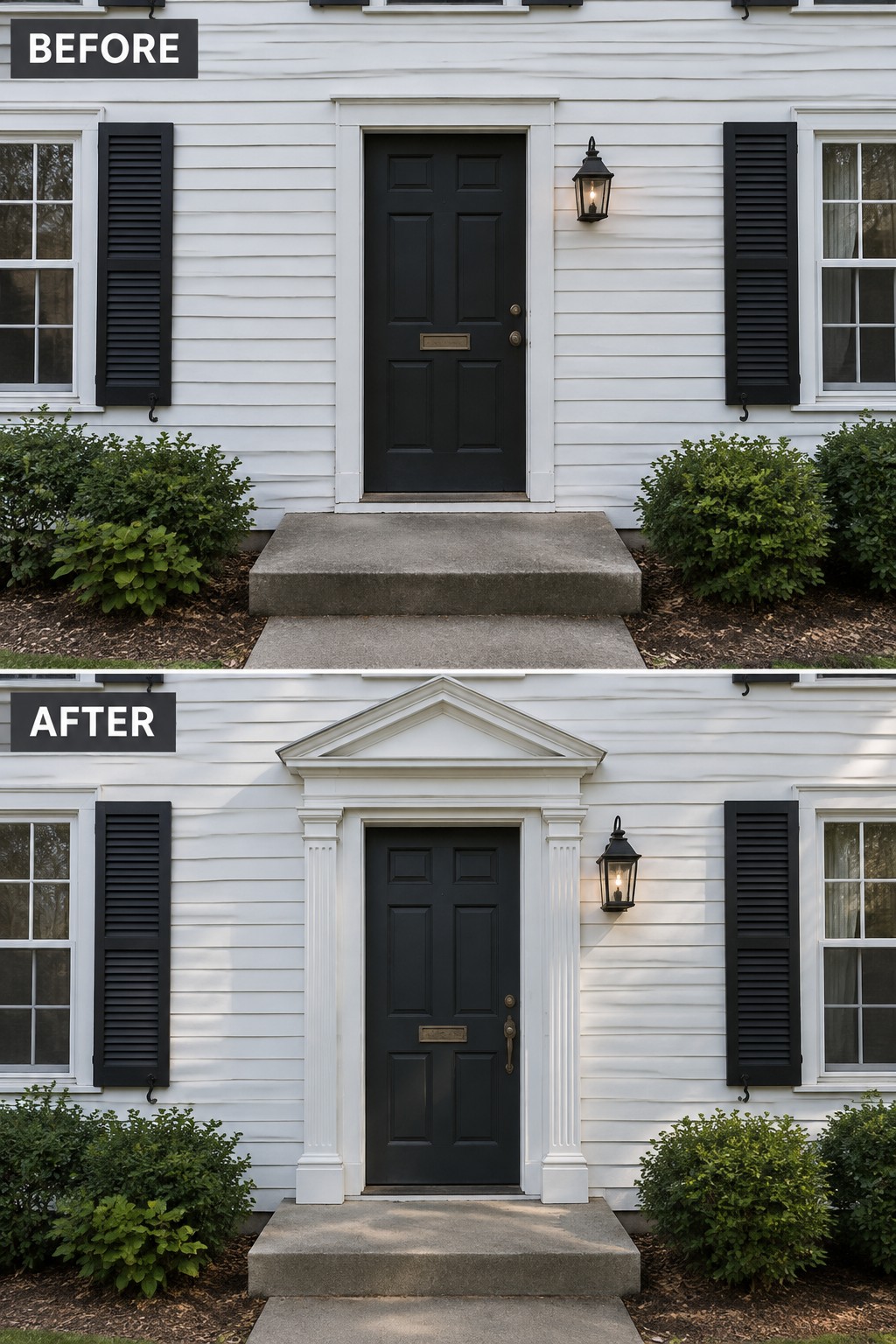
Adding a pediment and pilasters around the front door gives the entry a finished colonial look without changing the door itself. In the before photo the door sits flat against the siding with only a basic surround, while the after shows how the added trim creates depth and draws the eye straight to the entrance.
This works especially well on simple colonial homes where the facade feels a little plain. You can buy or build a modest pediment kit, paint it to match the existing trim, and install it in a weekend. Keep the scale modest so it does not overwhelm the door or the second story windows.
Paint The Trim To Brighten The Front Entry
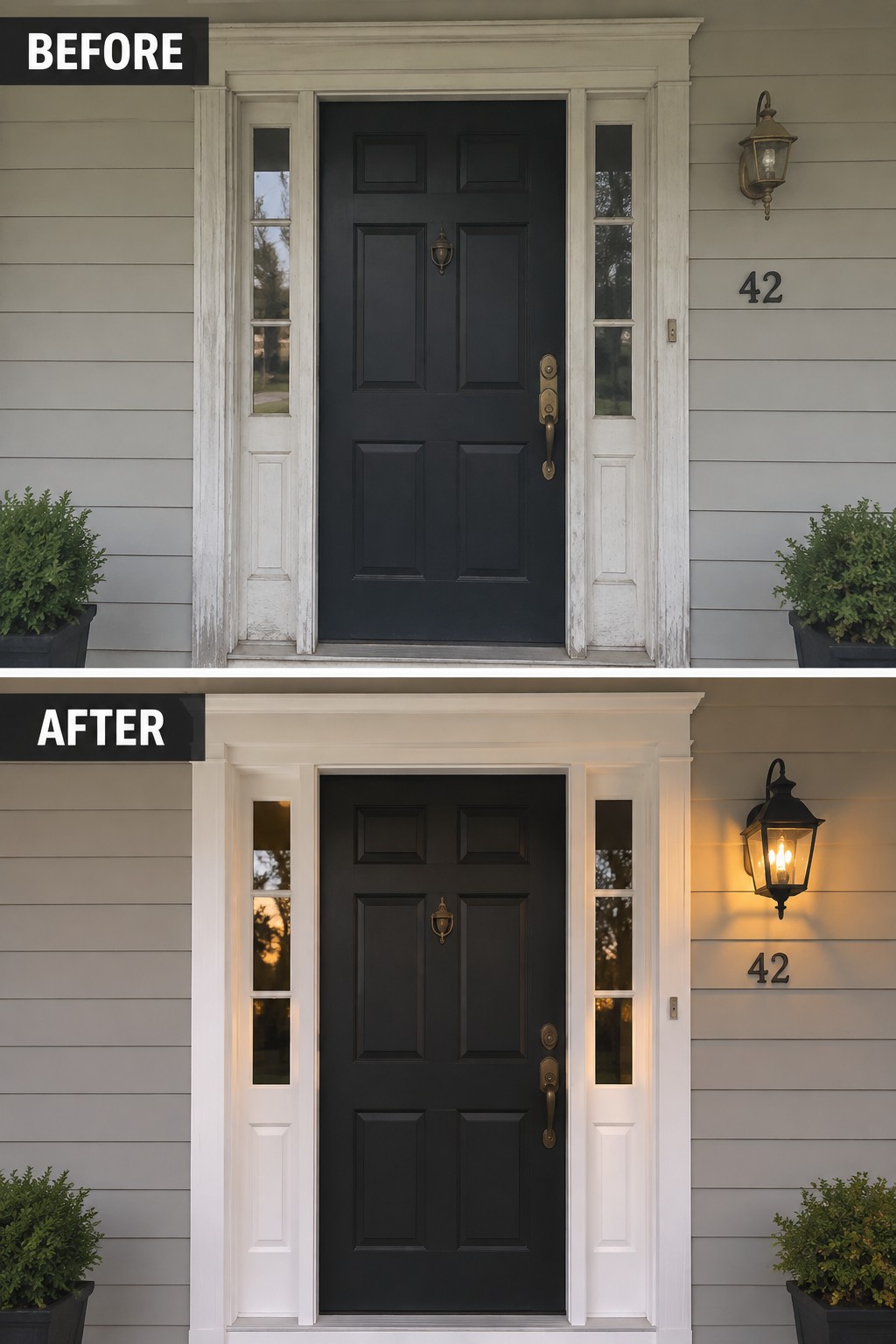
Many homes with dark doors end up looking a little flat because the trim has aged and lost its contrast. A fresh coat of white paint on the trim cleans up the edges, makes the black door stand out, and gives the whole entry a sharper, more finished appearance without changing the door itself.
This approach works especially well on colonial-style homes where the trim already has some detail. Start with solid surface prep and use exterior-grade paint so it lasts. A simple lantern that actually gets turned on at night adds to the effect, but the trim color is what carries the update.
Refresh Faded Shutters And Add Window Boxes
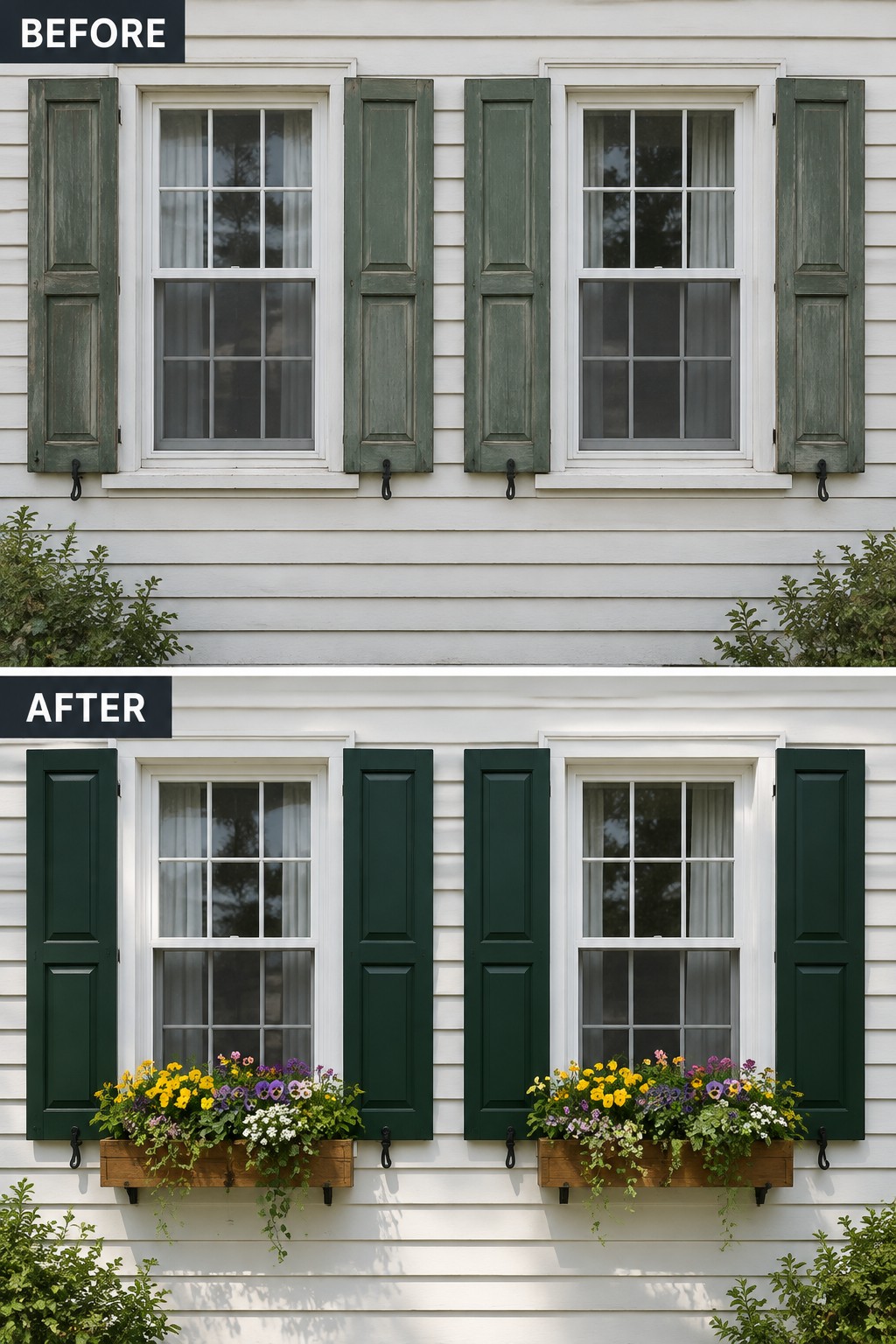
Many colonial homes end up with shutters that look tired after years of sun and rain. A fresh coat of deeper paint plus simple window boxes underneath the windows can make the whole front feel more finished and cared for.
This works especially well on homes with evenly spaced windows where you want to add color without changing the structure. Match the boxes to your trim color, use sturdy brackets, and pick plants that match the light conditions on that side of the house.
Update Front Door Hardware For A Quick Refresh
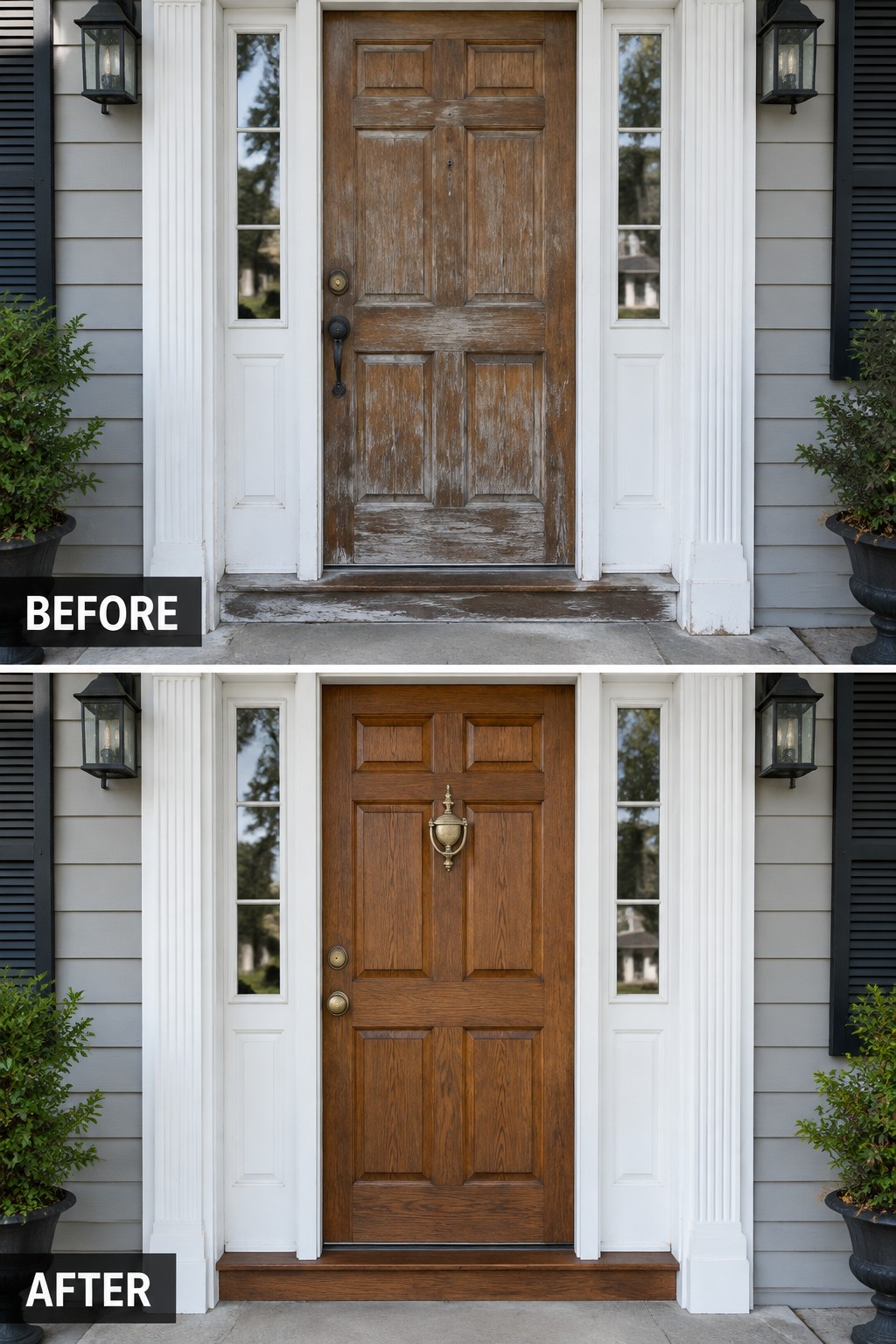
A tired front door often drags down the whole entry even when the rest of the house looks fine. In this case the door had worn finish and old hardware that made the entry feel neglected. Swapping to new brass handles and a centered knocker, plus a clean wood finish, instantly lifts the look without touching the siding or shutters.
This works especially well on Colonial homes where the door is the main focal point. Keep the change simple by matching the new hardware finish to any existing porch lights or numbers. Start with a thorough cleaning and a fresh coat of stain or paint before adding hardware so the update lasts and stays affordable.
Add A Portico To Frame The Front Door
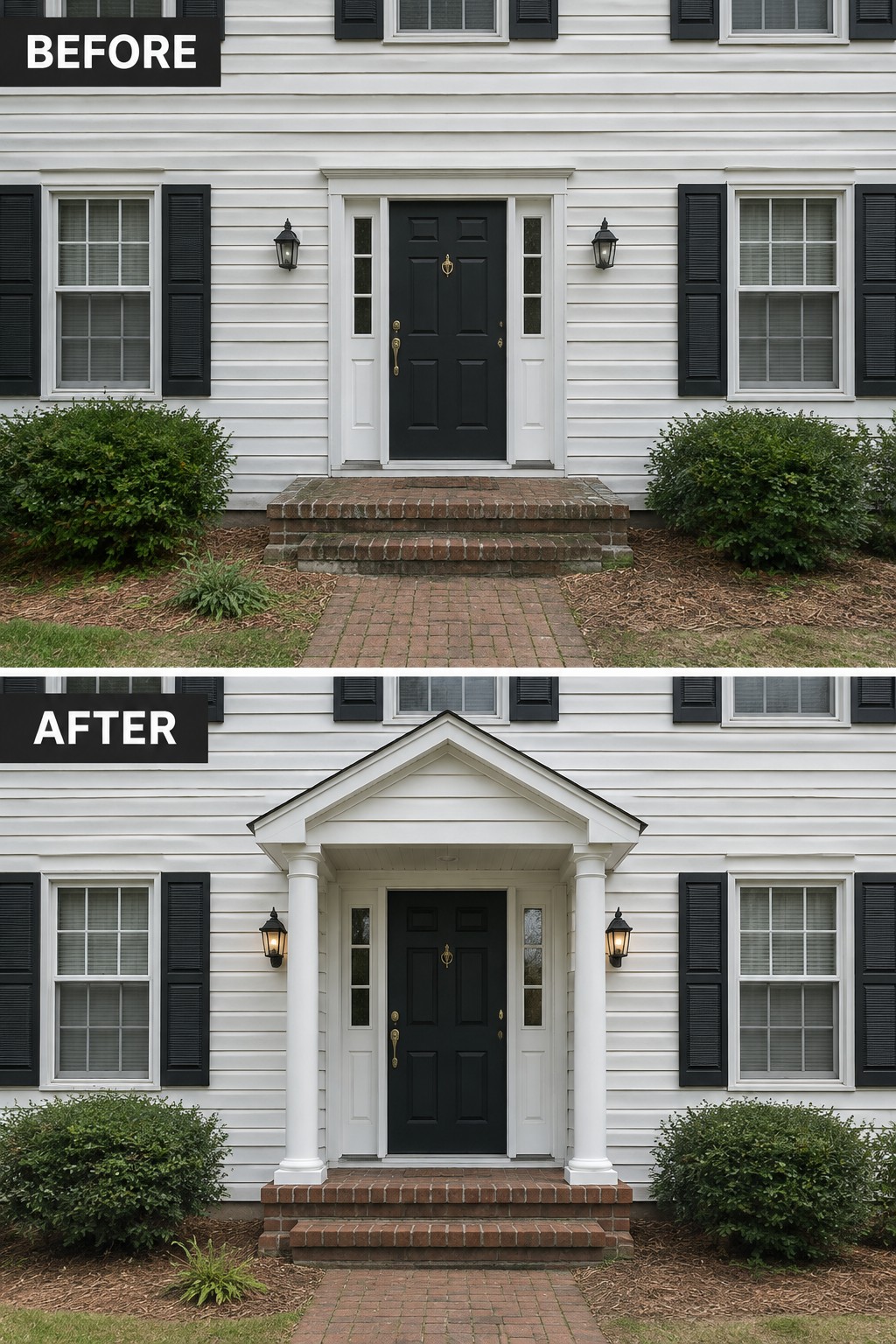
One of the easiest ways to give a plain colonial facade more presence is to add a small portico over the front door. The before image shows a door that sits flat against the siding with only steps leading up to it. The after adds two columns and a gabled roof that creates a clear entry and gives the whole front a finished look.
This change works well on homes where the door feels exposed or lost in the wall. You can keep it affordable by using stock columns and matching the roof pitch to the rest of the house. It suits colonial and traditional styles and gives you a natural spot for lighting without adding clutter to the walkway.
Paint The Brick And Match The Shutters And Door
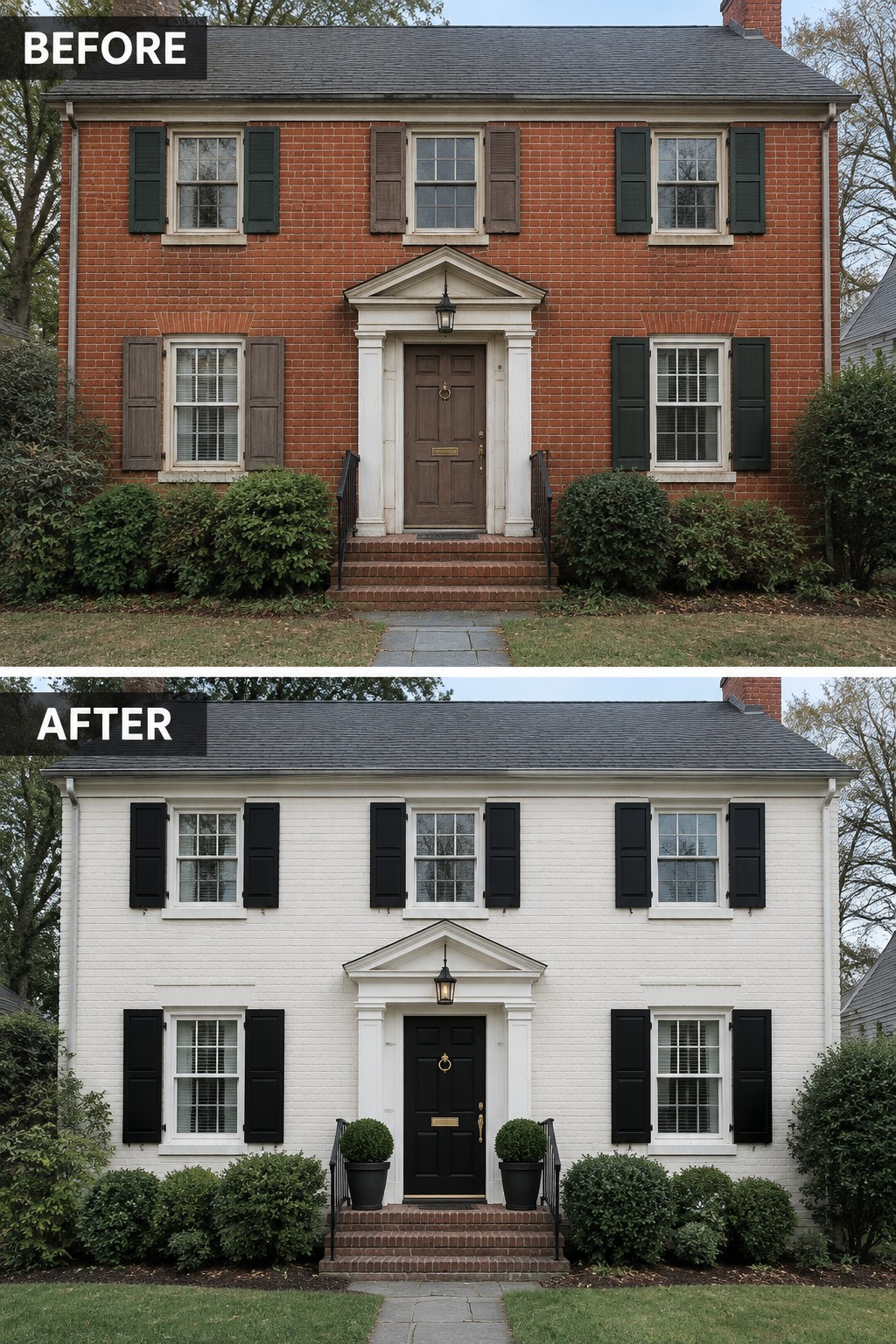
One of the simplest ways to refresh an older colonial is to paint the brick and bring the shutters and front door to one color. The red brick became white while all the shutters and the door shifted to black, which made the front look cleaner and more consistent without any major construction.
This works well on homes where the shutters have faded at different times and no longer match. Start with the paint and hardware before adding planters or other extras, and pick a trim color that gives the house a clear frame rather than trying to match every original detail.
Switch Your Shutters To A Darker Color
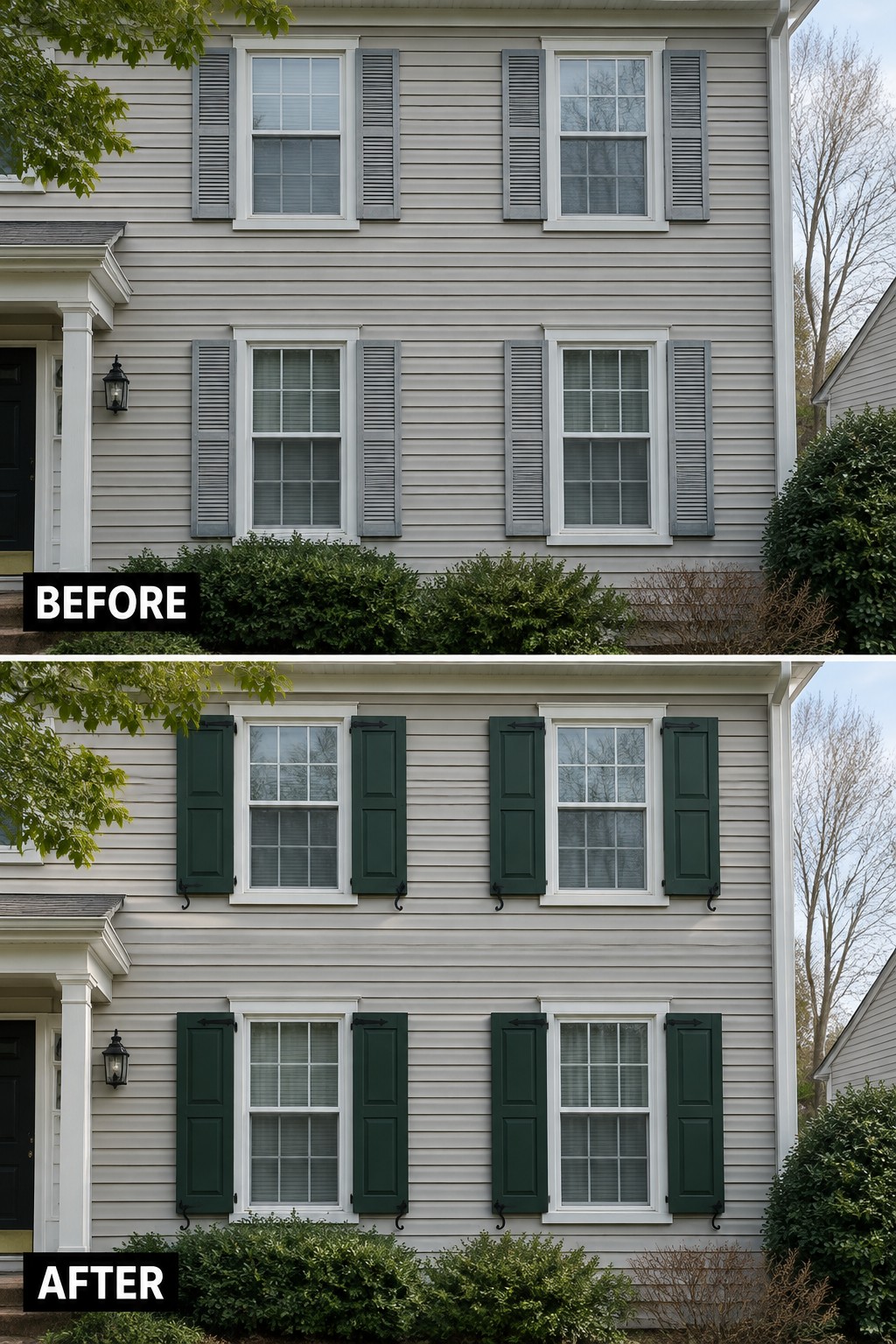
Many houses lose definition when the shutters match the siding too closely. Changing them to a deep green gives the windows clear borders and makes the front feel more put together without any structural work.
This approach suits colonial homes with light siding. Pick an exterior-grade paint in a color that stands out from the house, and test a sample on one shutter first to check how it reads from the street.
Add A Pediment Above The Front Door
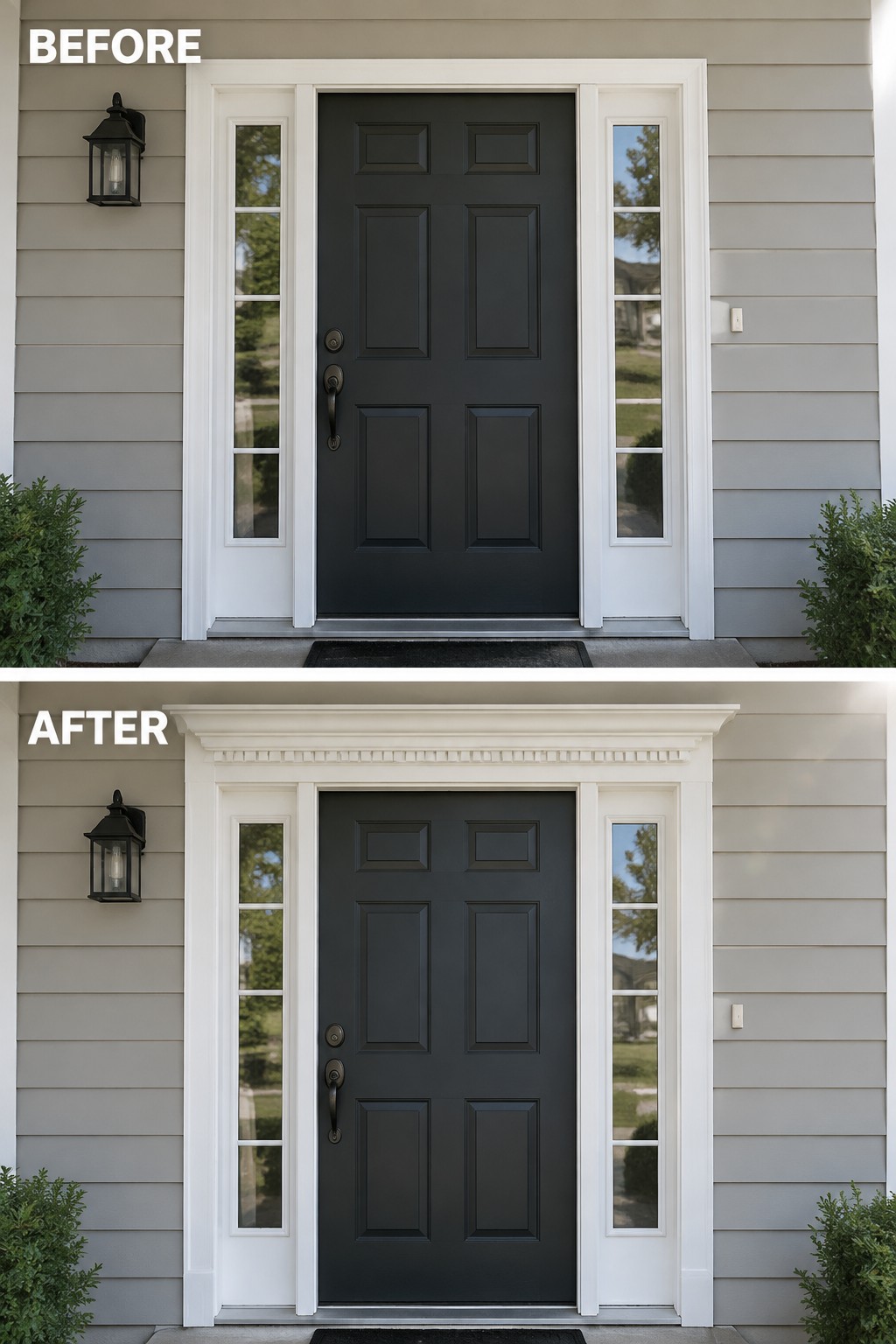
Adding a simple pediment or crown detail above the front door gives the whole entry a more finished colonial look. In the before photo the door sits under a flat header that feels incomplete. Once the trim is added, the door gains height and presence without changing the door itself or the siding.
This works especially well on homes that already have white trim and a dark door. Keep the new molding in the same white as the existing frame so it reads as part of the original architecture. The change is inexpensive compared with replacing the door or painting the whole house, yet it makes the entry feel more substantial from the street.
Coordinate Shutter Colors Across The Whole Facade
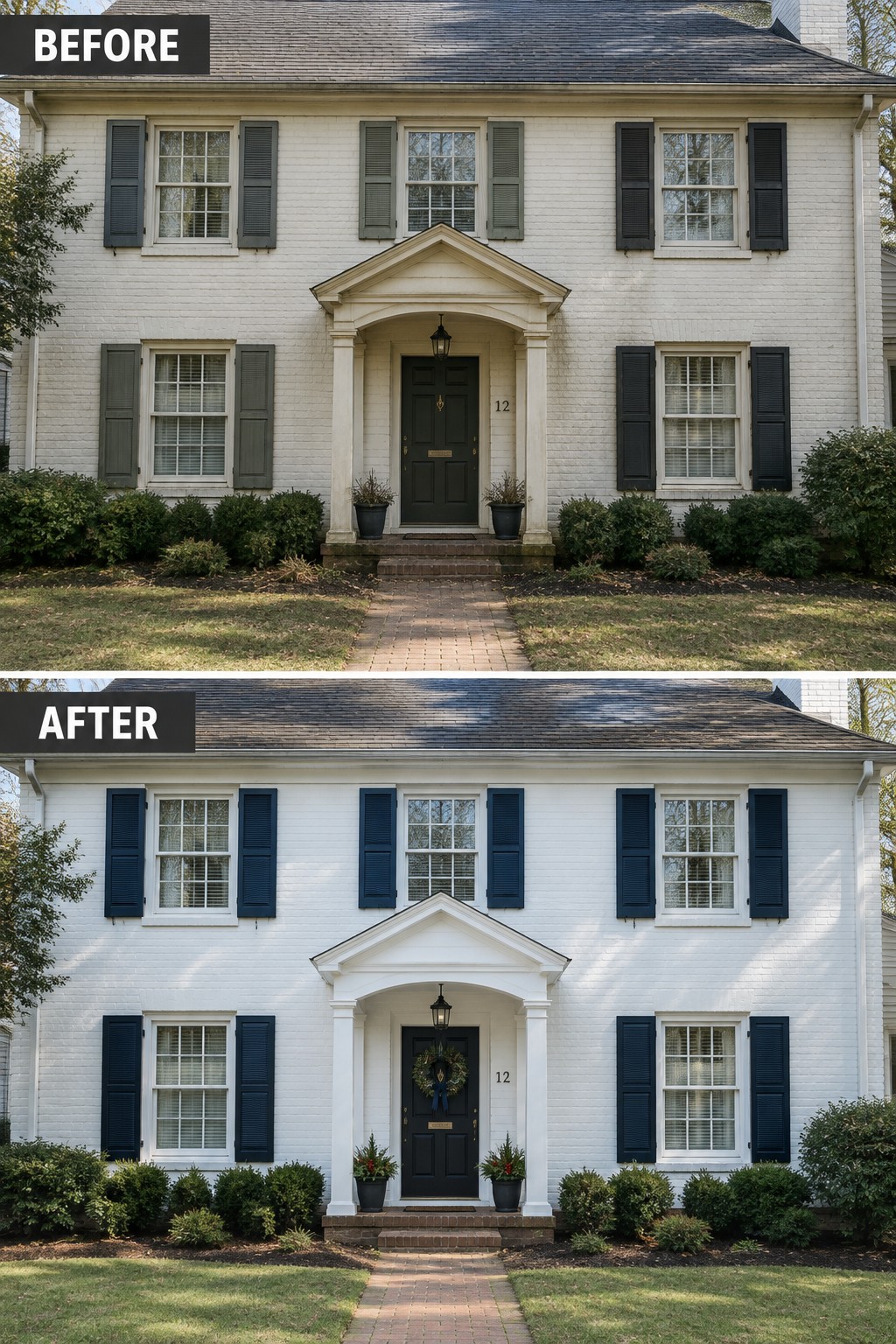
Many older homes end up with shutters in two or three different colors over time, which makes the front look scattered even when the paint is still good. In this case the fix was simple. All the shutters were painted the same deep navy so the windows read as a single group instead of a collection of separate pieces.
This approach works especially well on colonial houses where the windows are evenly spaced. Choose one color that sits comfortably with your door and trim, then paint every shutter the same shade. It is one of the least expensive exterior updates you can make, and it instantly makes the whole house look more intentional without touching the siding or roof.
Add Hardware To Shutters
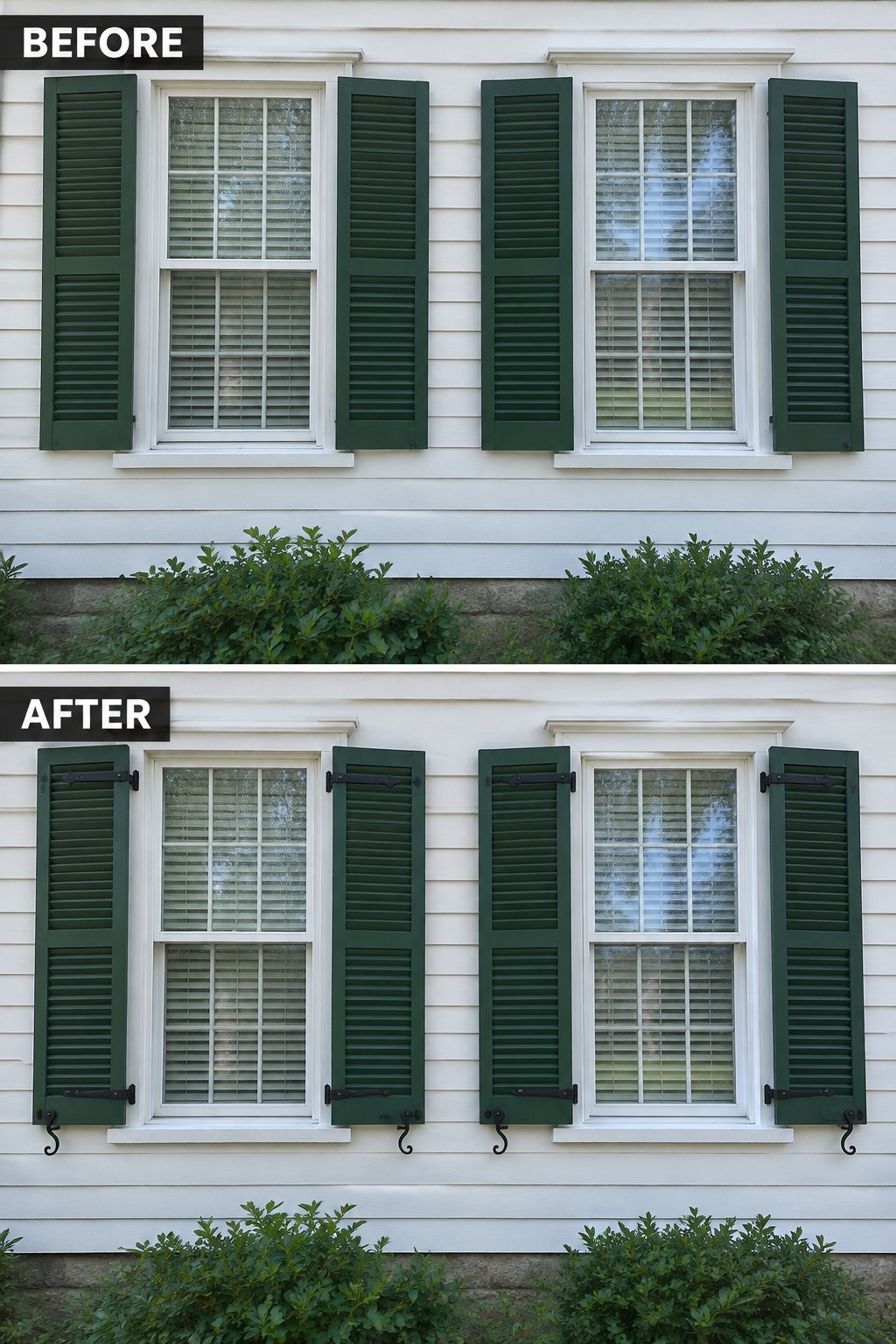
Many colonial homes have shutters that sit flat against the siding with no visible hardware. Adding black hinges and holdbacks makes the shutters look like they actually work, which gives the whole window a more finished appearance.
This update suits homes with simple wood or vinyl shutters that already have decent paint. The hardware is cheap, easy to install on your own, and works best when you space the pieces evenly and match the black finish to other exterior details like the front door or porch light.
Paint Your Front Door A Bold Color
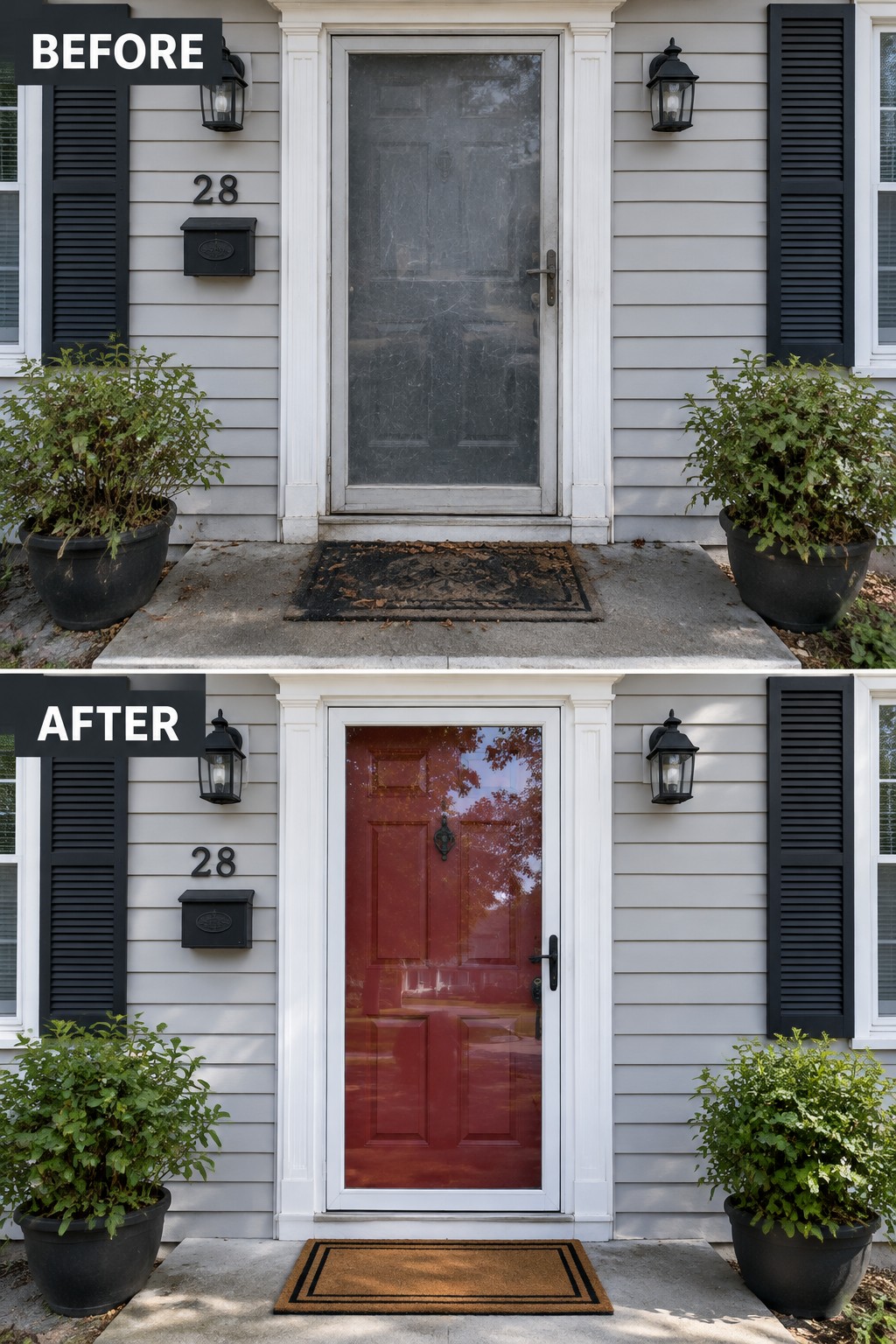
One simple way to refresh a colonial entry is to replace an old screen door with a solid one and paint it a strong color. Here the tired screen door came down and a deep red door went up, which instantly made the light siding and black shutters look more intentional.
This works especially well on homes where the trim and shutters are already a dark neutral. Pick a color that contrasts with your siding, make sure the door surface is smooth before painting, and keep the hardware simple so the color does the work. It is an easy update that improves curb appeal without needing to repaint the whole house.
Paint The Front Door A Bold Color
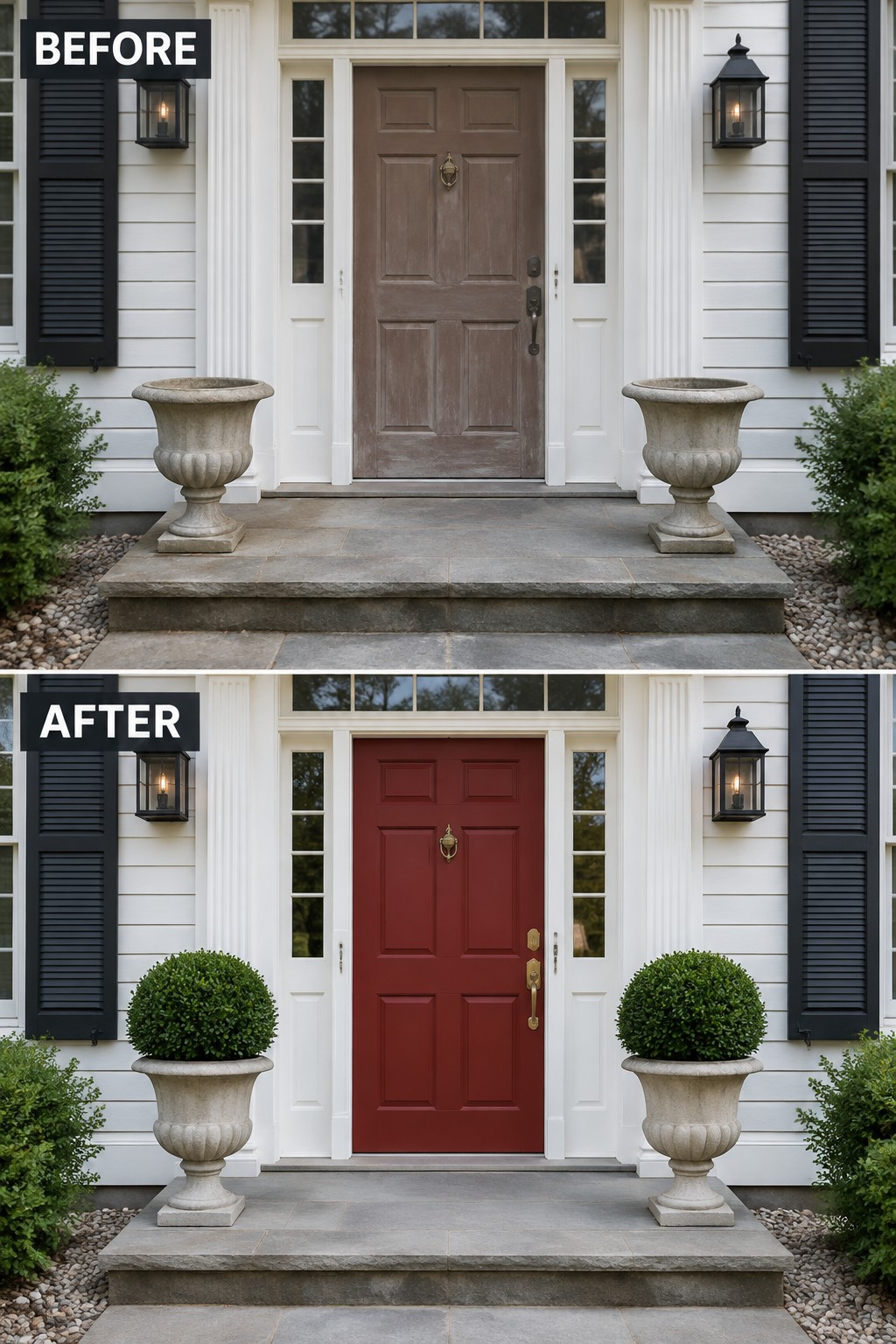
A brown door on a white house often fades into the background instead of welcoming people in. Switching it to a strong red makes the entry feel intentional and gives the whole facade a clearer center point. The change is simple but shifts how the house reads from the street.
This idea suits colonial homes or any style with a centered door and matching side lights. Start with a color that contrasts the siding and shutters, then add full shrubs to the urns already in place. Keep the rest of the trim and hardware as is so the update stays affordable and easy to reverse later.
Refresh Window Trim For A Cleaner Colonial Look
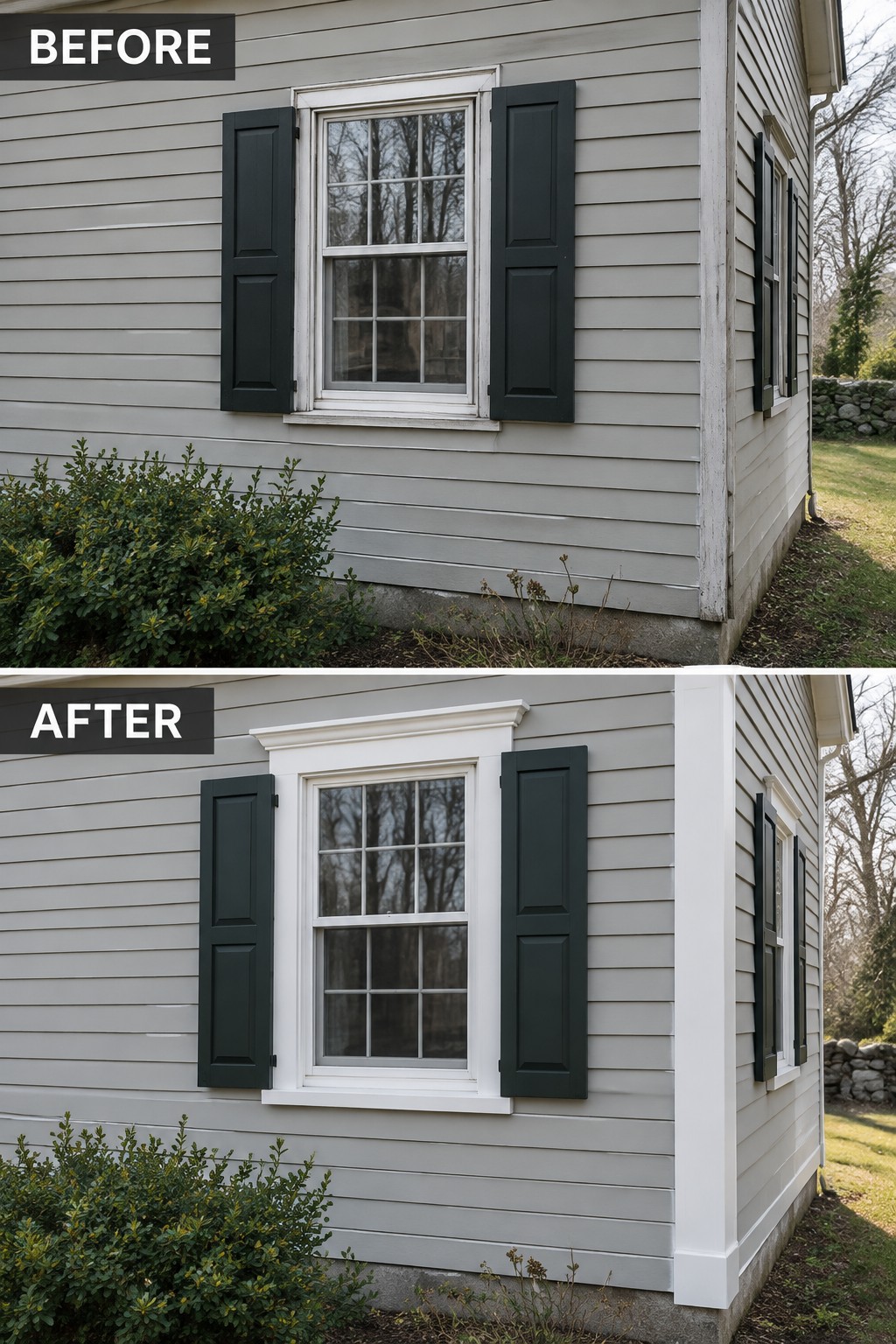
Adding white trim around the windows gives this exterior a much more finished appearance. The before photo shows a basic opening with no real surround, while the after shows a simple white frame that makes the dark shutters stand out and ties the whole side of the house together.
This update works especially well on colonial-style homes with plain siding. Focus on the windows that face the street first, use basic lumber or pre-made trim, and keep the profile modest so it does not overwhelm the scale of the house.
Add Matching Lanterns Beside The Front Door
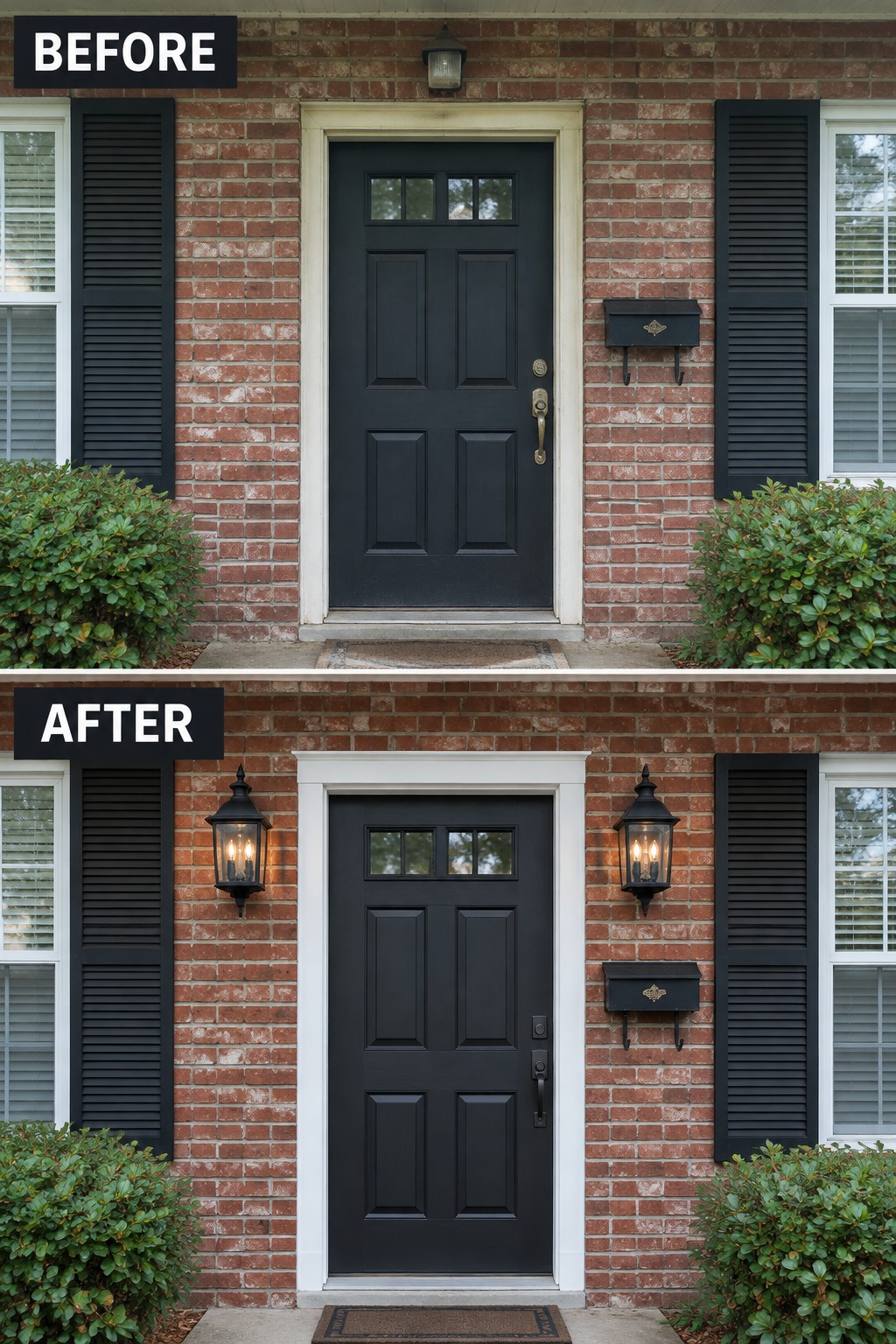
One easy way to improve a plain front entry is to add a pair of matching lanterns on either side of the door. The before photo shows the door standing alone with only an overhead light. In the after photo the two black lanterns create better balance and give the entry a more finished look once they are lit.
This idea works well on brick colonial homes where the trim is already painted white. Pick lanterns that match the door hardware in finish and keep the size in scale with the door. It is a low cost change that adds both function and symmetry without any major work.
Add Columns To Frame A Plain Front Door
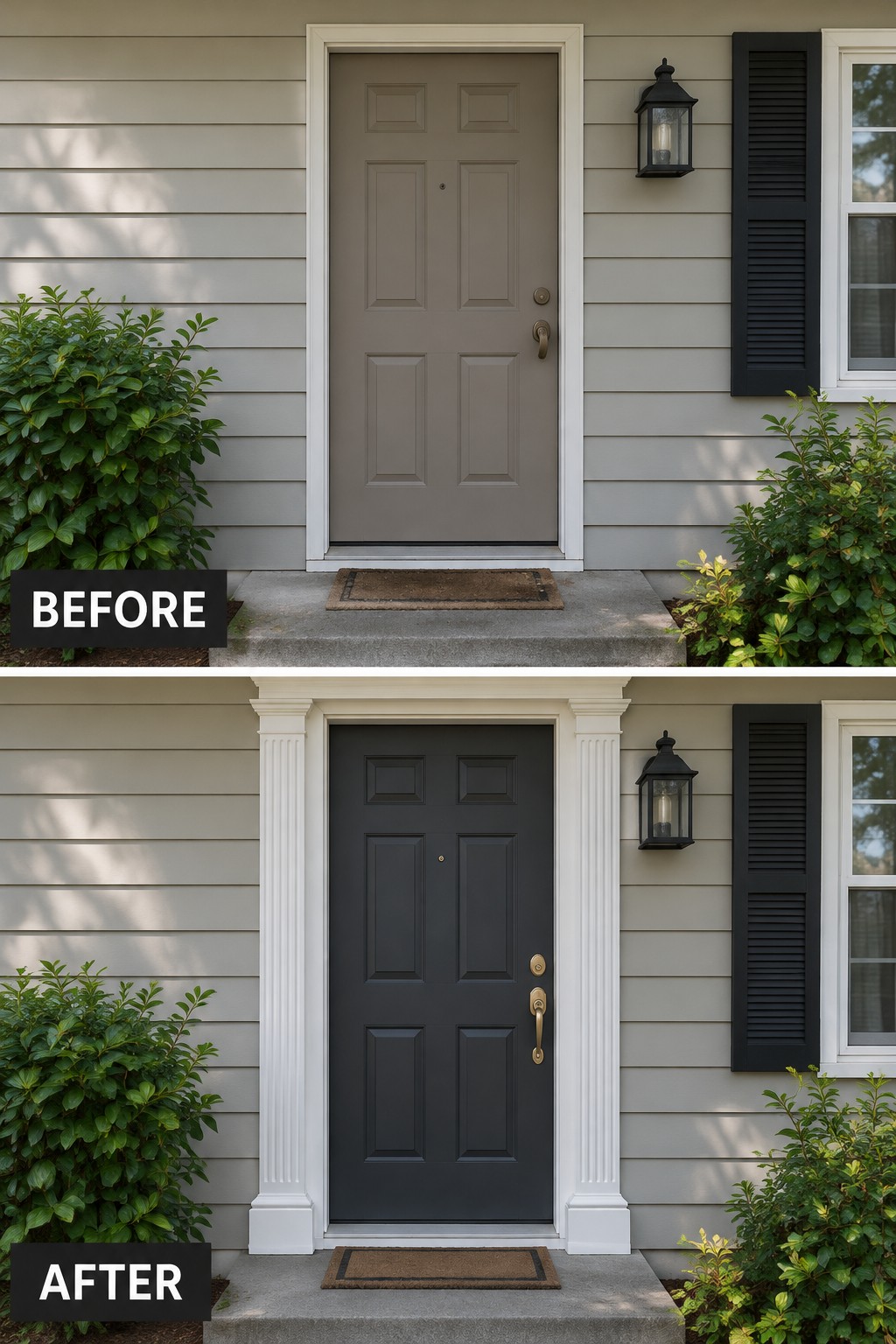
A basic door often disappears against the house siding. Adding white columns on each side and switching the door to a deeper color gives the entry clear shape and makes the whole front feel more finished.
This approach works well on colonial homes that already have shutters and simple trim. The columns do not need to be structural. Prefabricated versions attach directly over the existing casing and create the look without major construction.
Add Shutters To Define The Windows
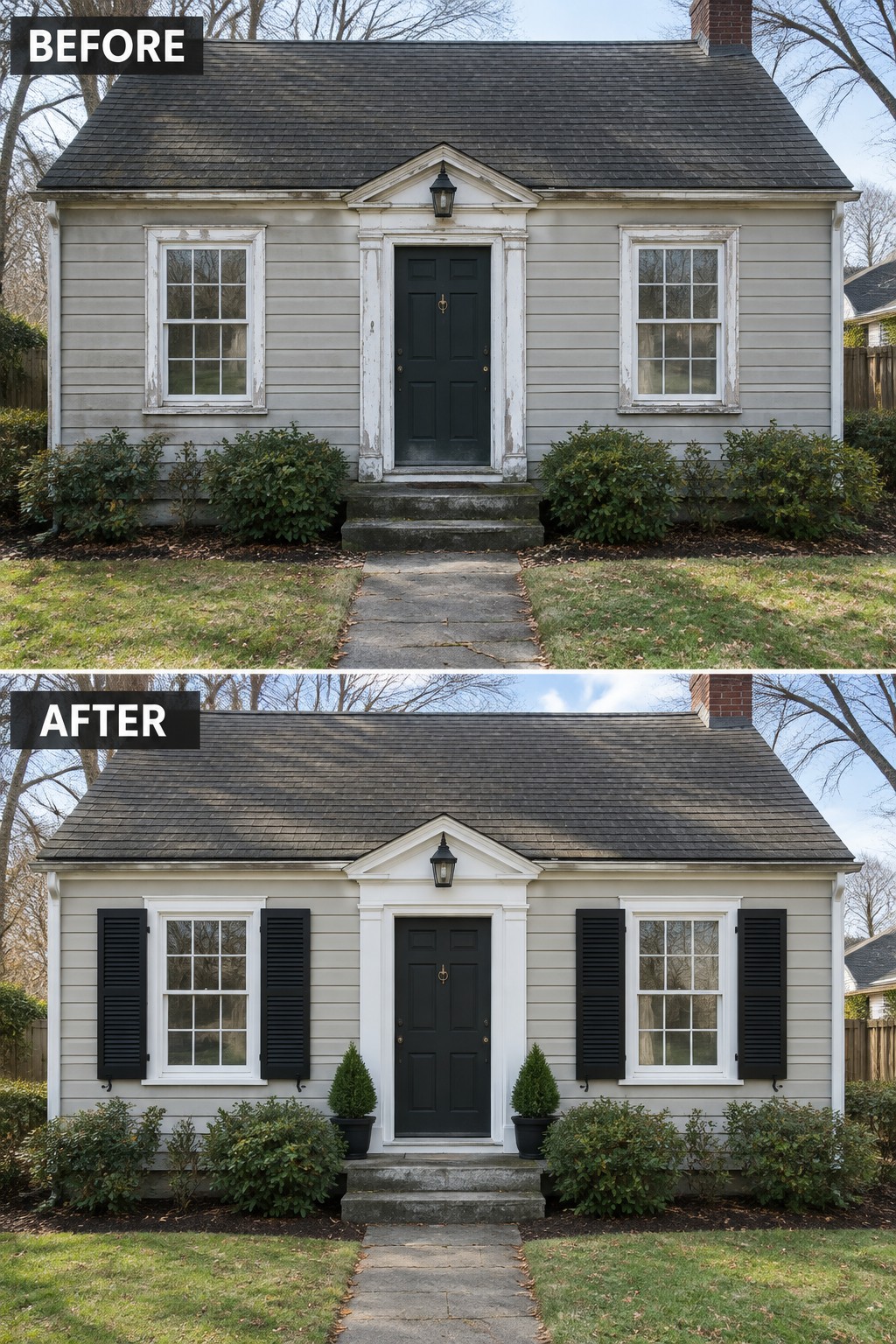
Many colonial homes lose their shape when the windows sit bare against the siding. Adding shutters on both sides gives the openings a finished frame and helps the trim and door stand out more clearly. The change turns a flat front into something that reads as intentional rather than unfinished.
This update suits smaller houses that need curb appeal without a full repaint. Match the shutter height to the window and pick a dark color that contrasts with the siding. Keep the rest of the trim white so the new shutters become the main accent.
Refresh The Trim Around Your Front Door
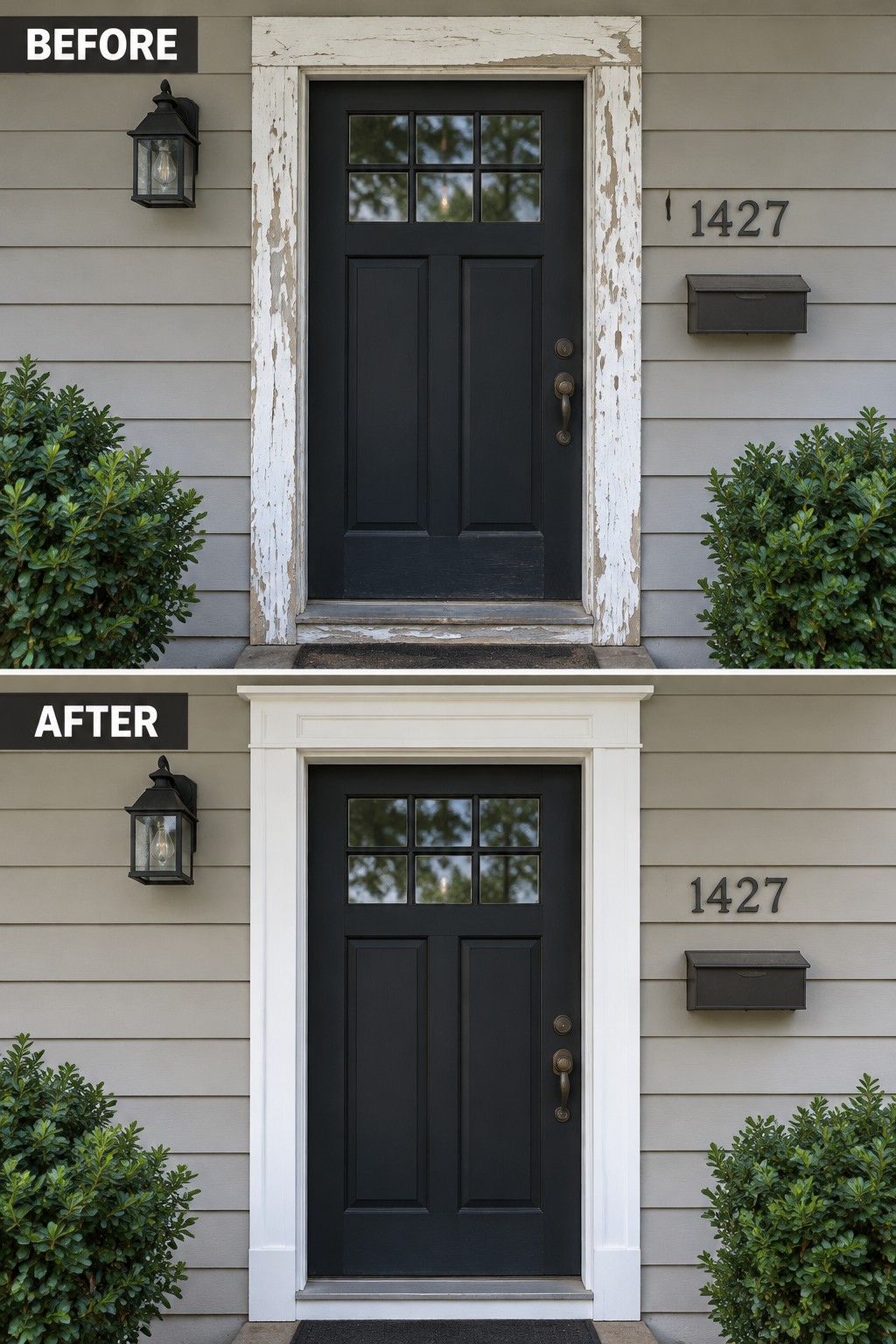
Many colonial homes end up with door trim that has taken a beating from weather and time. The peeling finish around this black door made the entry look neglected even though the door itself was still in good shape. Replacing the surround with clean, solid trim and adding a simple header gives the whole front a sharper, more finished look.
This update works best when the door color stays the same and the focus stays on the frame. It suits homes with existing colonial details and can be done with basic carpentry and exterior paint. Start with solid surface prep and choose a paint made for trim so the new look lasts longer than the old one did.
Choose Dark Shutters To Refresh A White Colonial Exterior
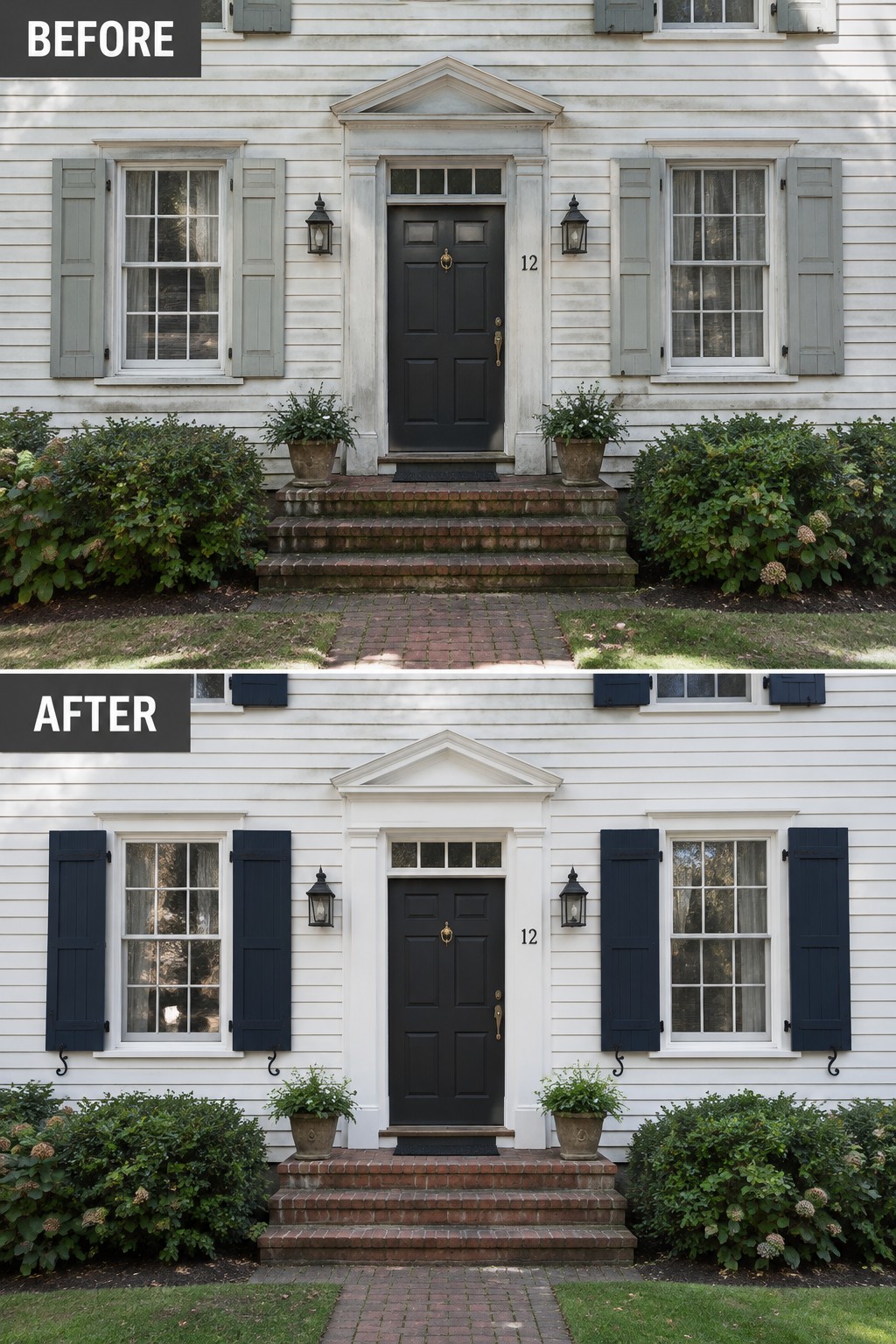
Swapping light shutters for a dark color makes the front of the house feel more pulled together. In the before photo the gray shutters blended into the weathered siding, while the after shows how navy shutters create clear lines around the windows and help the black door stand out without any other big changes.
This works well on simple colonial homes where the siding is already white or off-white. Keep the trim crisp and match the shutter hardware to the door for a clean look. Start by testing the new shutter color on one window first so you can see how it reads from the street before committing to the whole house.
Frequently Asked Questions
Q: How do I choose the right colors for my colonial door and shutters? A: Go with classic shades like black or deep red for the door. Match the shutters to the trim in a lighter tone. Test small samples on the house first to see how the light hits them.
Q: My shutters have some damage. Should I just paint over it? A: Fix any cracks or loose parts before painting. A quick repair keeps the colonial look clean and stops bigger problems later.
Q: Can I update the trim without hiring help? A: Yes start by measuring and cutting new pieces to match the old style. Prime and paint them before nailing into place for a smooth finish.
Q: How do I protect these updates from rain and sun? A: Seal all painted surfaces with a clear exterior coat. This step adds years to the fresh look without much extra work.