

I have always noticed how the right siding choice can shift the entire feel of a house from the street.
Board and batten details seem to add that layer of texture that makes farmhouses look more complete without needing a huge rebuild.
One thing I think about is how fresh paint and new siding patterns can make an older exterior feel less neglected.
Small updates like this often give me ideas for what might work on my own place.
It is satisfying to see homes gain presence just through these kinds of changes.
Refresh A Dated Exterior With Board And Batten Siding
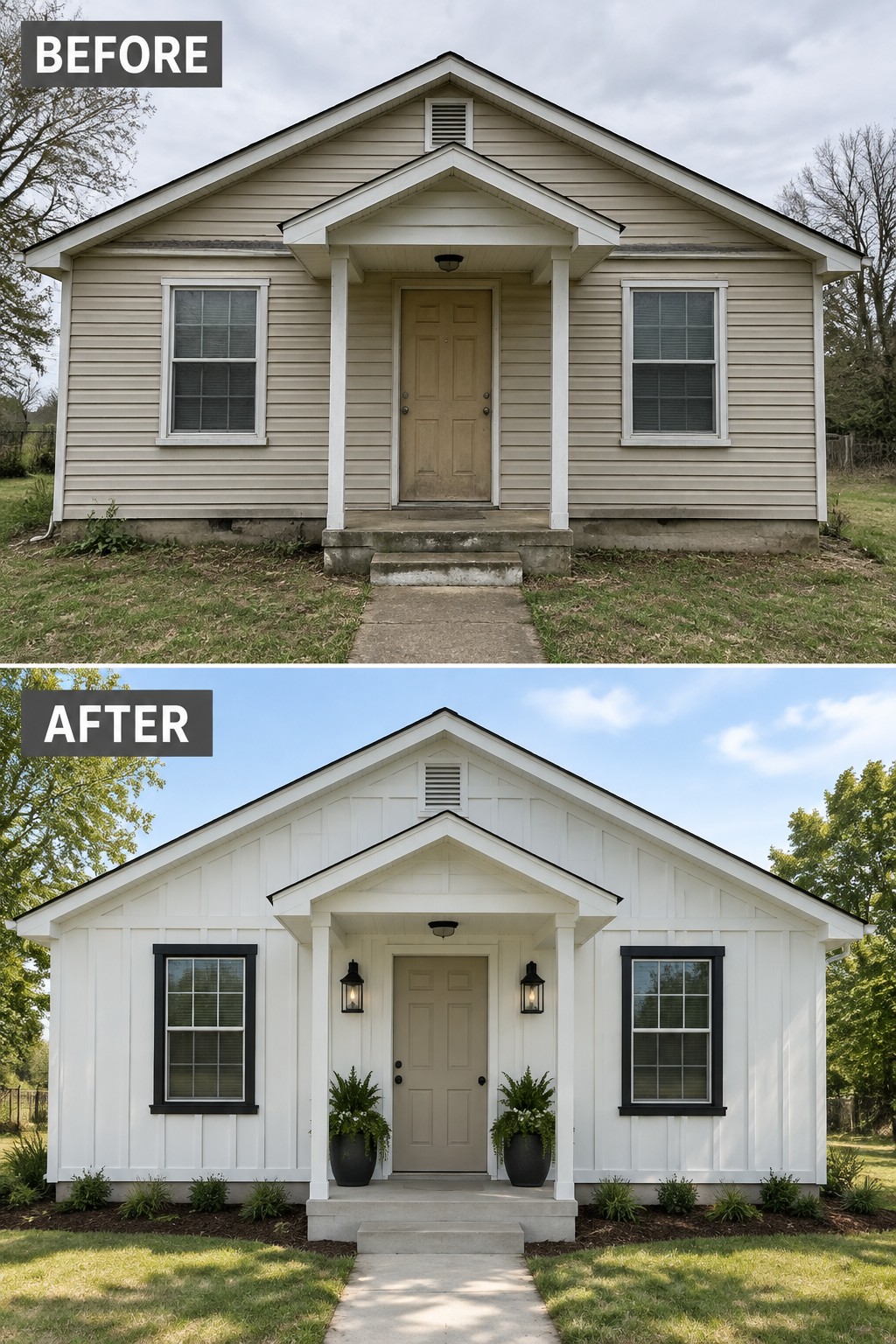
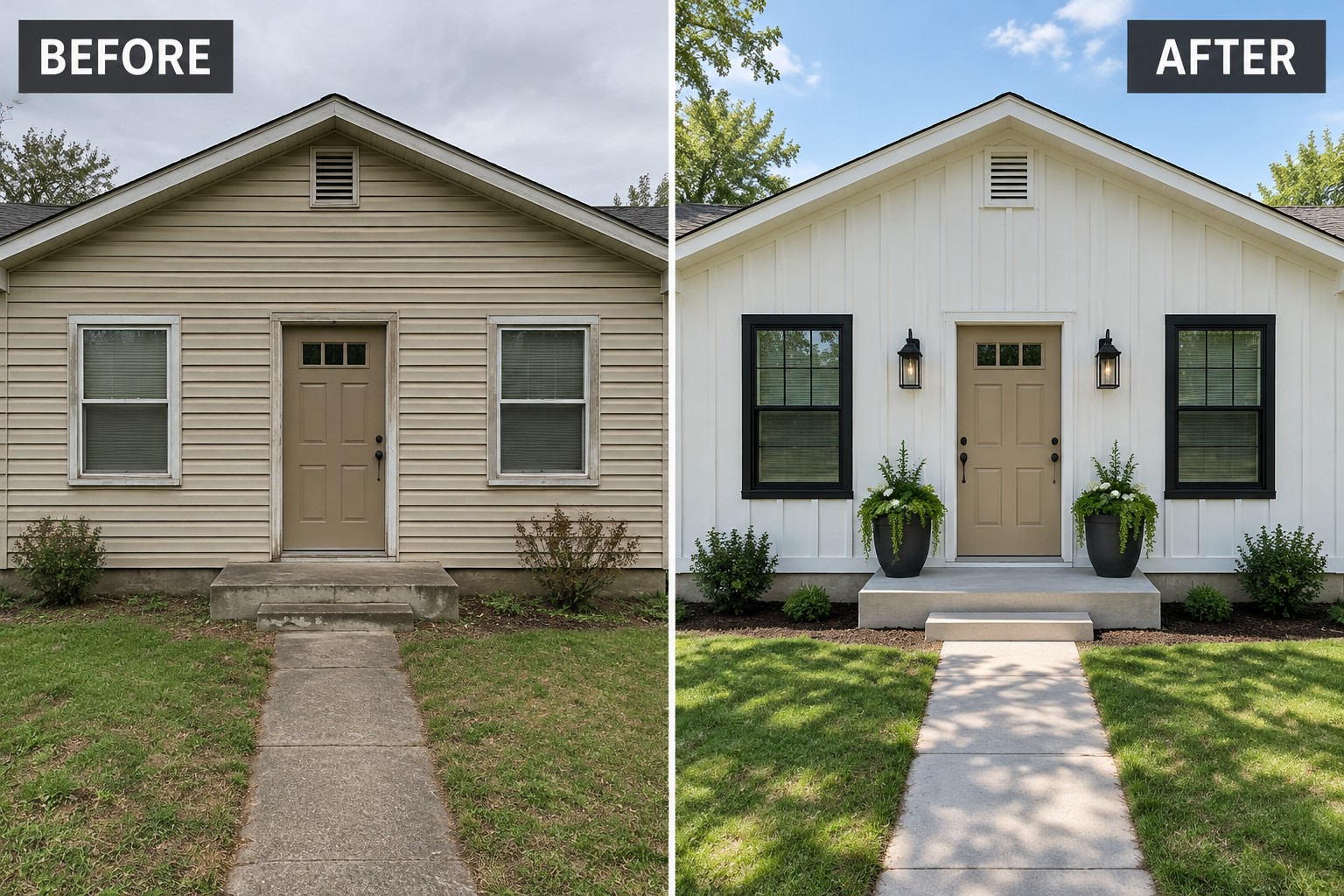
Many homes with plain horizontal siding start to look flat and dated after a while. Switching to board and batten adds vertical lines that make the facade feel taller and more structured. Here the beige siding was replaced with crisp white vertical boards and the windows were framed in black to create contrast.
This update works especially well on smaller homes that already have a simple gable roof and centered entry. Do the siding change first, then add a couple of planters and updated lights near the door. It suits houses where you want a clean farmhouse look without changing the whole roofline or floor plan.
Revitalize A Two-Story Home With Vertical Board And Batten Siding
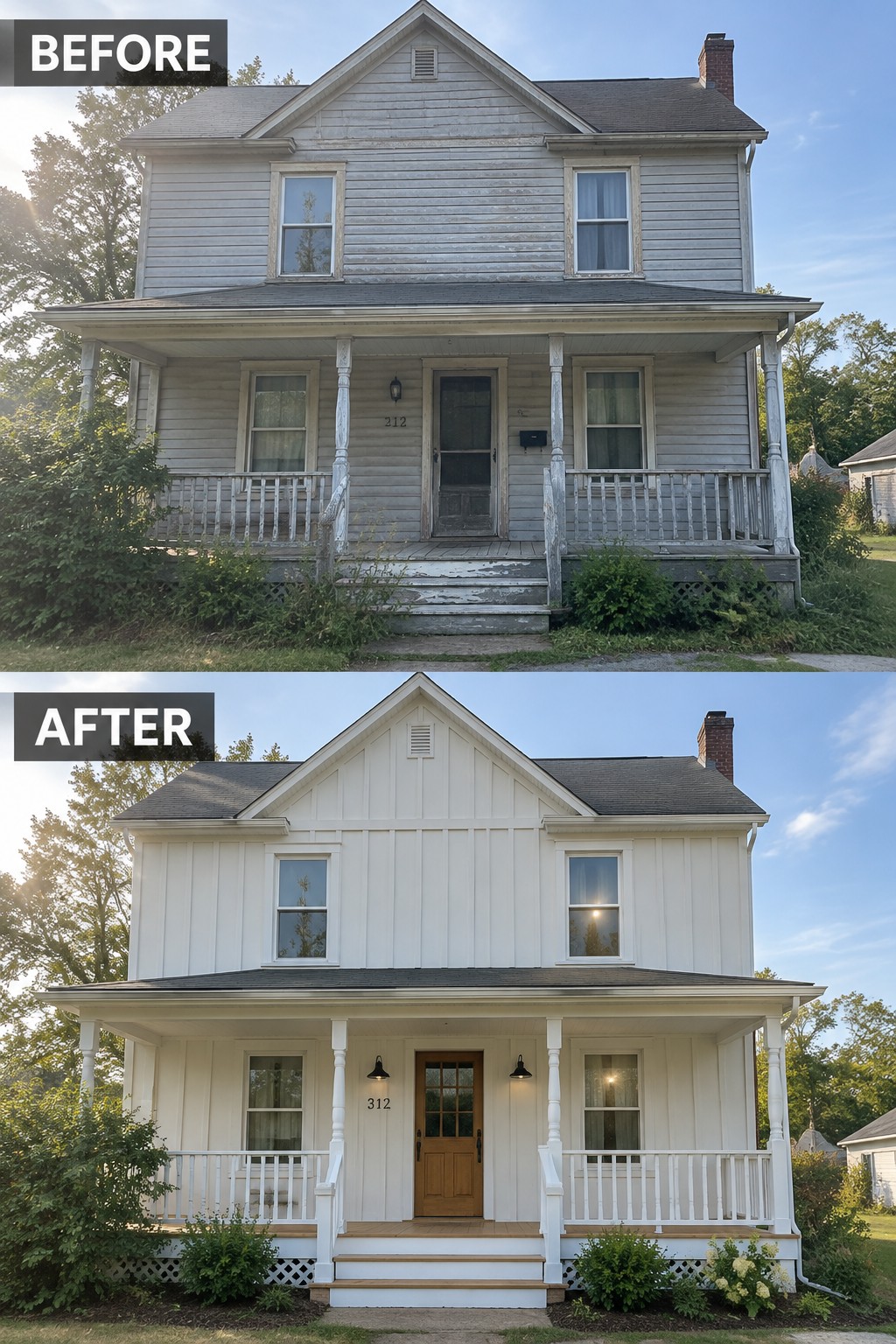
Many older homes end up with faded or peeling siding that makes the whole place look tired. Switching to board and batten gives the facade a fresh texture and a cleaner farmhouse shape while keeping the original structure intact.
This change works especially well on two-story homes where the vertical lines help the proportions feel taller. Focus on the siding first, then match the trim, porch railings, and front door so the updates feel connected rather than scattered.
Add Board And Batten Siding To Give A Home More Character
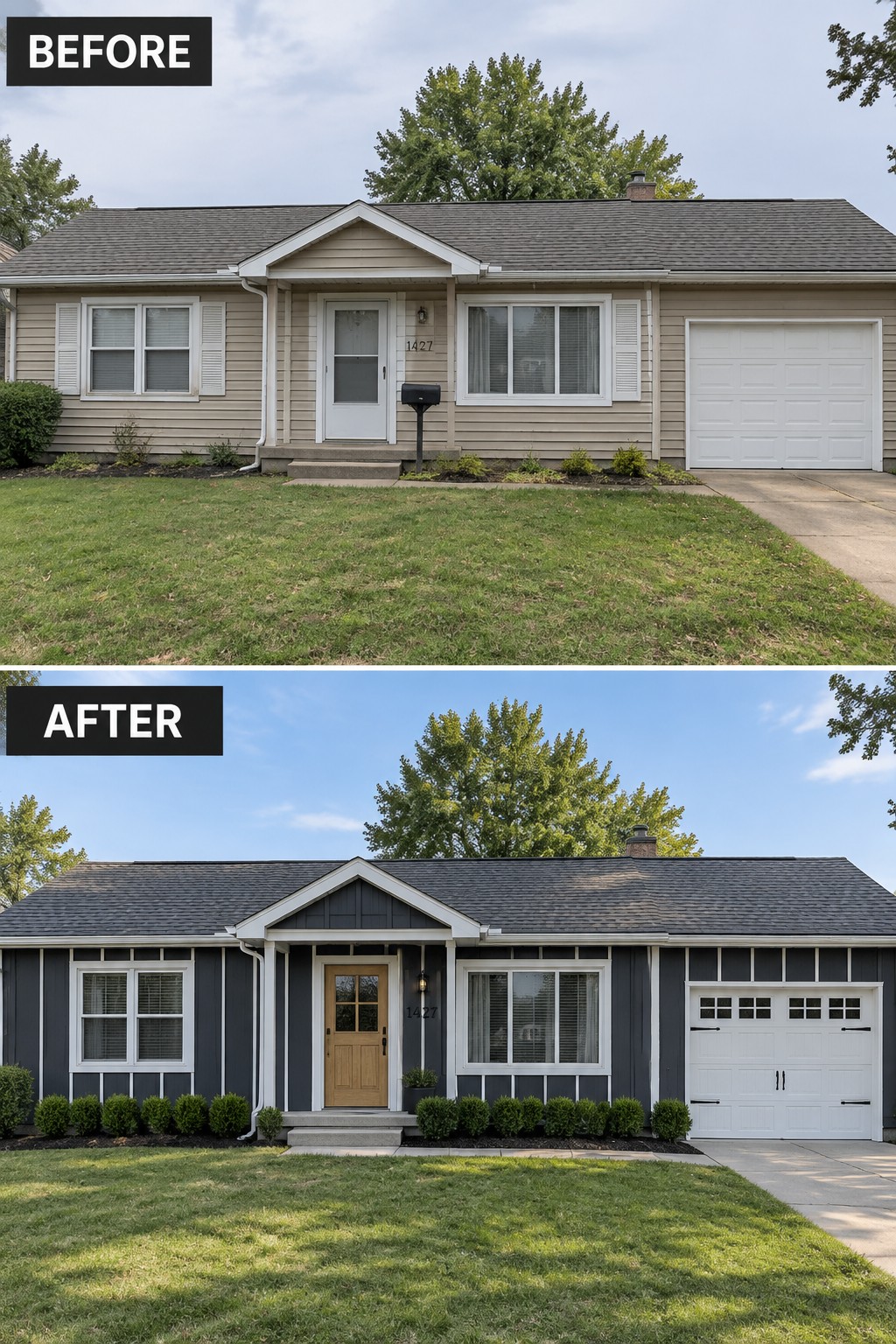
Switching from plain horizontal siding to vertical board and batten makes the whole front feel more structured. The darker color helps the white trim stand out, and the new door brings a bit of warmth that was missing before.
This approach works best on ranch homes that need a simple way to add interest without changing the roofline or windows. Keep the trim bright and consider updating the front door at the same time so the siding change feels finished rather than just painted on.
Brighten An Upper Gable With White Board And Batten Siding
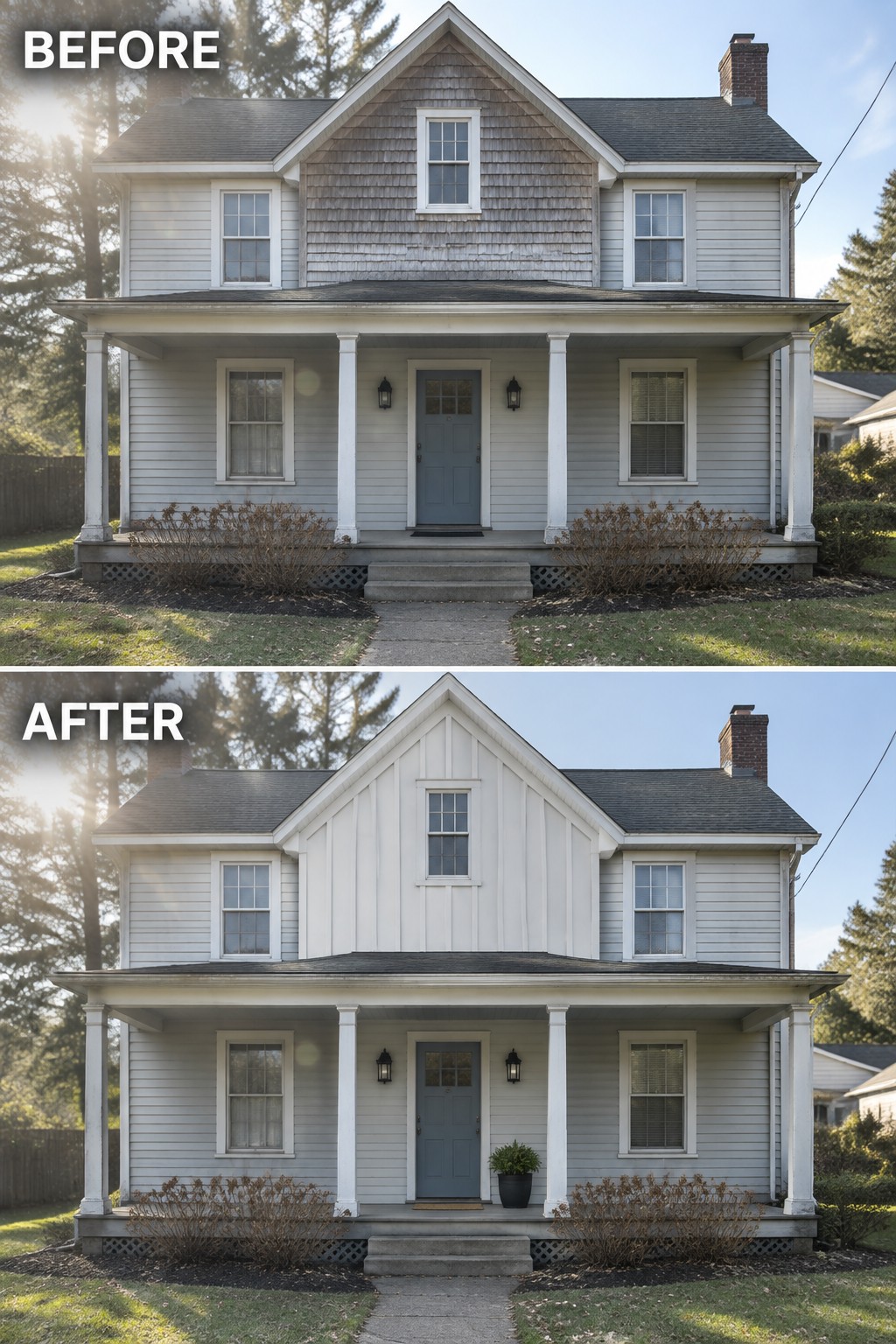
Many older homes end up with a tired upper story that makes the whole house feel flat. Adding white board and batten to the gable area gives the facade a cleaner line and more shape while the rest of the siding stays simple.
This idea suits two-story homes that already have decent trim and windows. Start with the most visible gable, keep the color consistent with your existing trim, and stop there if the rest of the house still feels balanced.
Add Stone At The Base To Update Board And Batten Siding
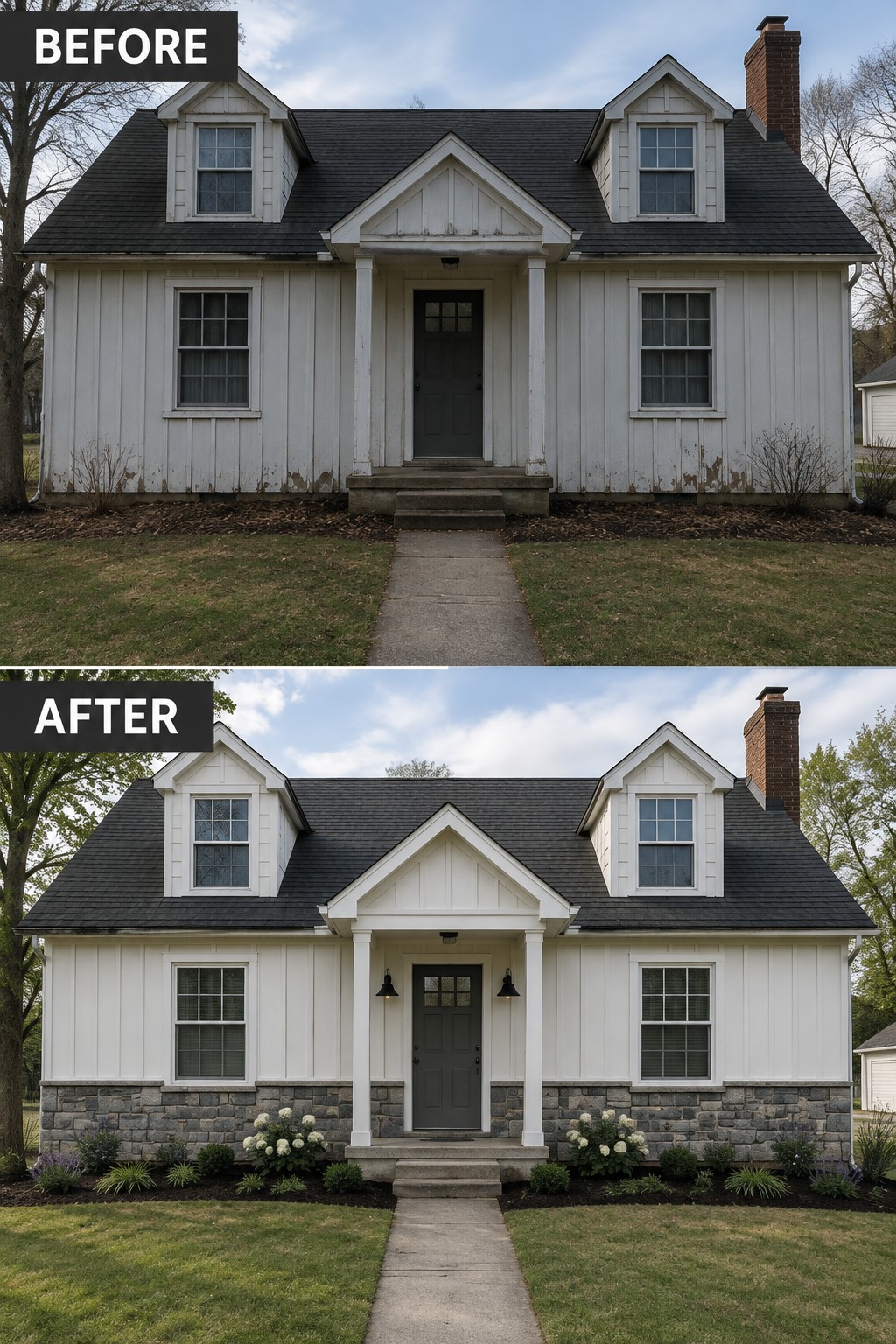
Adding a stone base gives board and batten siding more weight and presence. The before photo shows a plain white exterior with peeling paint along the bottom and little to break up the long walls. In the after photo the lower portion switches to stone, which instantly makes the house feel more finished and tied to the ground.
This works best on farmhouses where the siding runs all the way down without a visual break. Start with the stone base first, then add simple lighting beside the door and a few shrubs in front. Keep the stone color neutral so it blends with the white siding rather than competing with it.
Combine Vertical Siding And Wood Accents For A Farmhouse Refresh
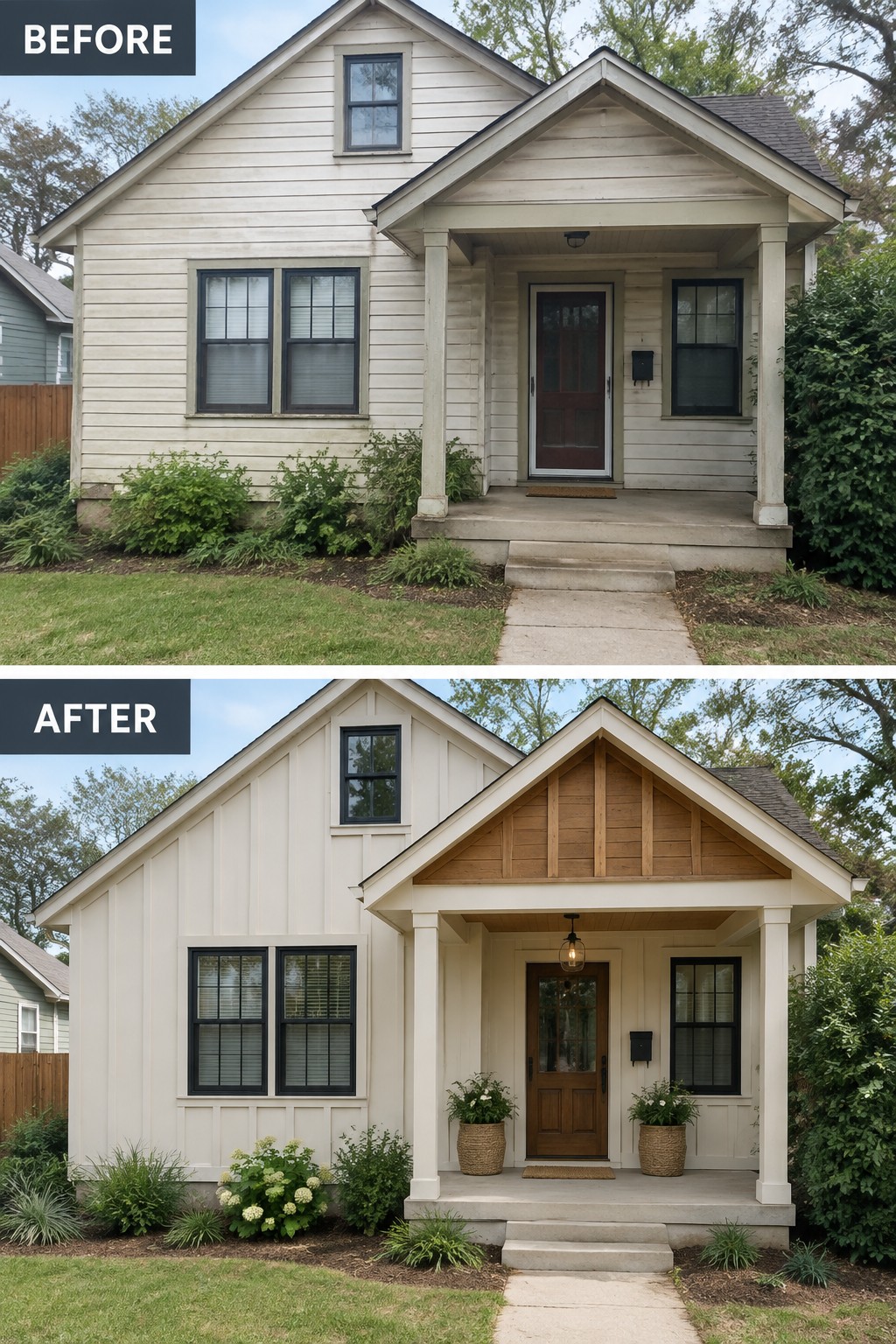
The house had basic horizontal siding that felt flat and dated. Switching to vertical board and batten gave the walls more texture and made the whole front look sharper without changing the shape of the house.
This idea works well on older homes that already have a simple gable and porch. Start with the siding change, then add wood accents in the gable and a couple of planters by the door to finish the update.
Add Board And Batten Siding To A Plain Garage Gable
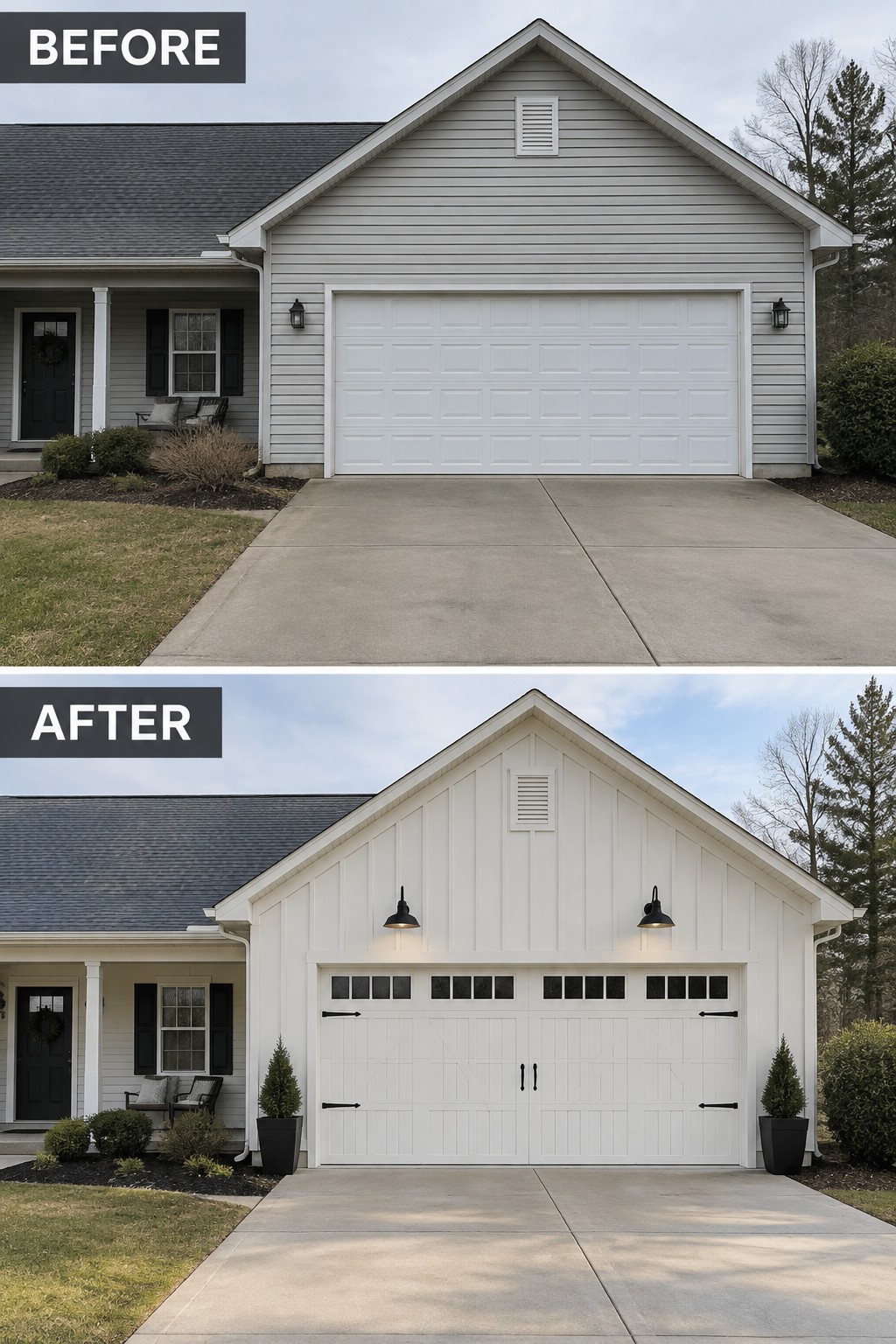
Many houses have wide gables over the garage that end up looking flat when covered in the same siding as the rest of the house. Switching that section to vertical board and batten adds clear lines and texture without changing the whole exterior.
This idea suits ranch and farmhouse homes where the gable is a big visual area. Keep the rest of the siding simple and let the vertical pattern do the work. It is an easy place to start if you want more character but are not ready for a full repaint or roof change.
Modernize A Gray Farmhouse Exterior With Dark Window Trim
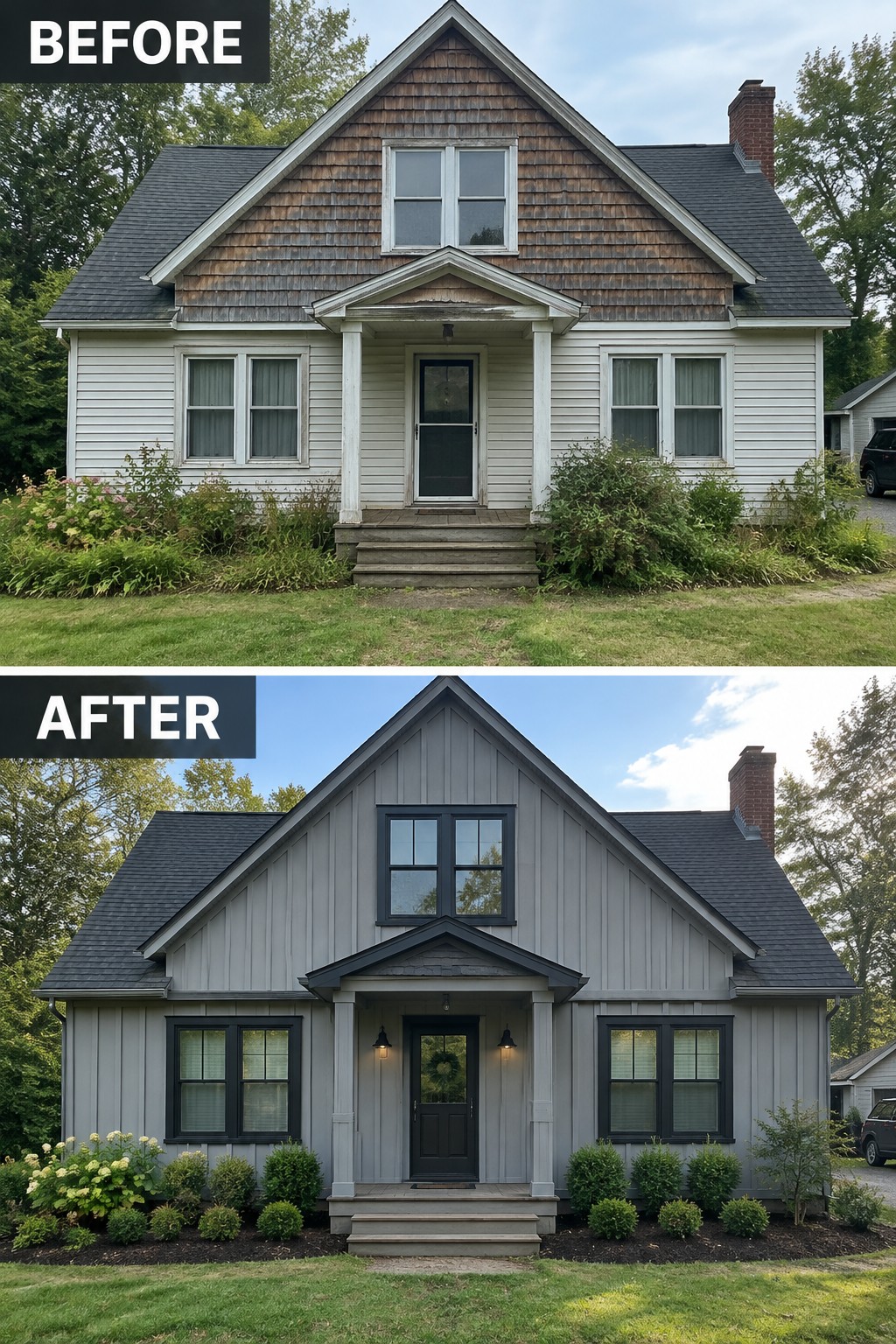
Many older homes end up with siding that looks flat and dated after years of weathering. Switching to board and batten in a soft gray shade gives the facade more texture and a cleaner farmhouse shape while keeping the original rooflines and porch structure.
This works best on homes that already have a simple gable and entry. Pick one main color for the siding, then use black or dark trim on the windows and door to add contrast. Start with the siding change before adding planters or lighting so the update feels planned rather than busy.
Create Bold Contrast With Dark Board And Batten Siding
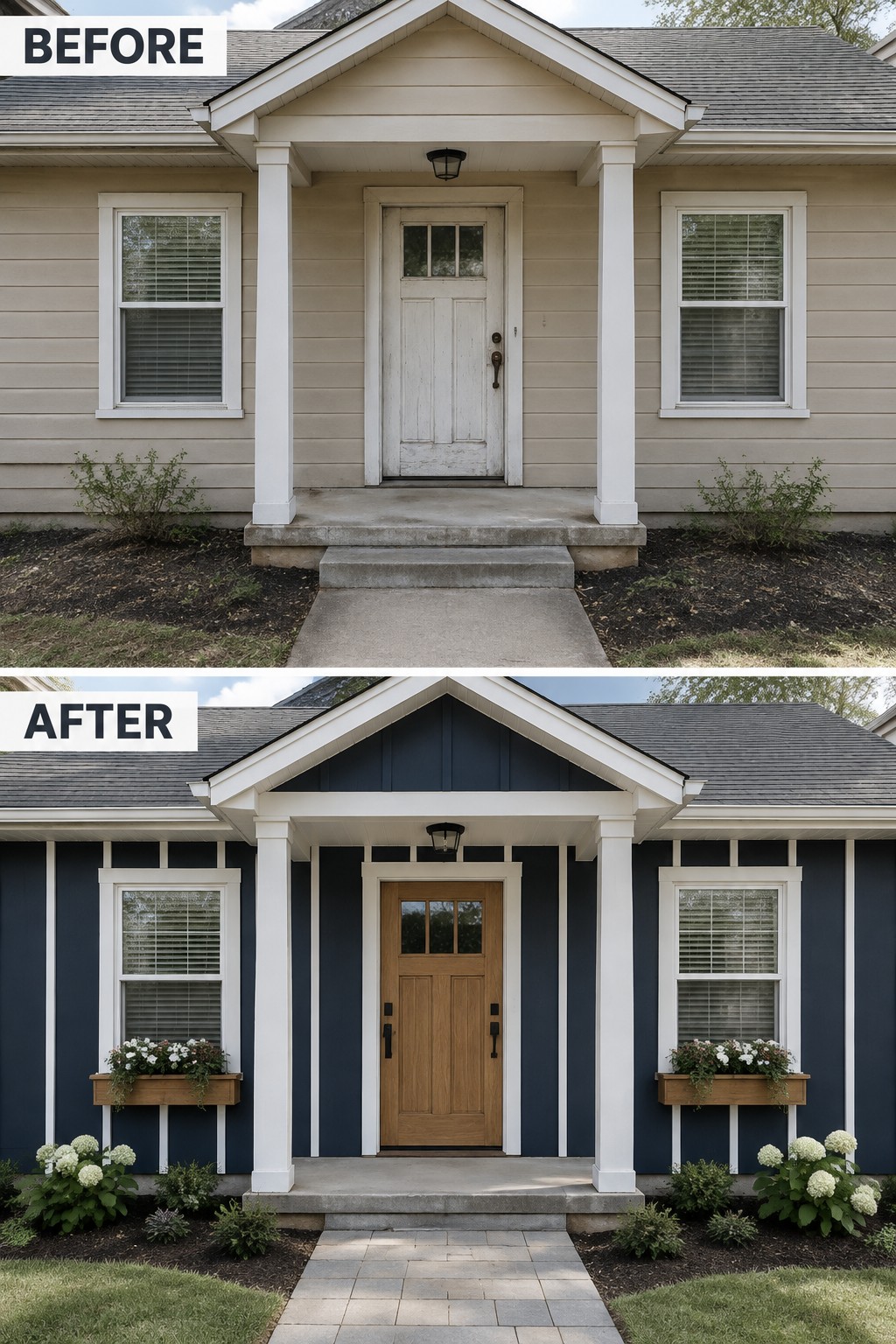
A change in siding style and color can give a simple house front much more presence. The light horizontal siding and faded door in the before photo look flat, while the dark vertical board and batten with white trim in the after photo creates stronger lines and makes the entry feel more defined.
This idea works best on homes that already have a porch or columns, since the vertical boards add height without extra construction. Pick a deep color that contrasts with the trim, then add small details like window boxes once the siding is up. It suits farmhouses or older homes that need a quick update before larger work begins.
Update A Farmhouse Exterior With Board And Batten Siding
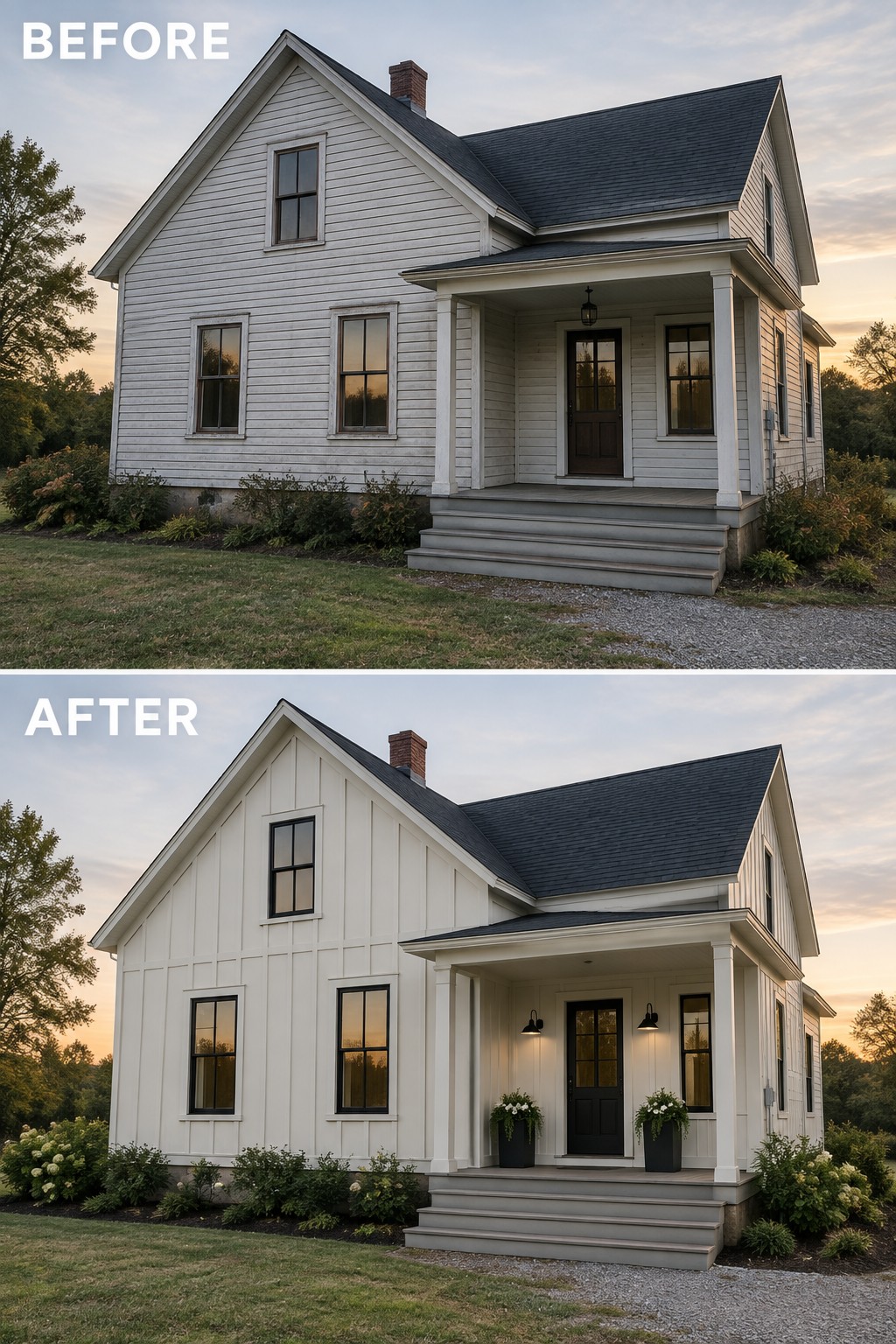
Switching to board and batten siding gives an older house a cleaner shape and stronger lines. The vertical panels replace the flat horizontal siding and make the whole front feel more structured. Adding a darker door and a pair of planters on the steps then pulls the eye to the entry without extra clutter.
This idea suits farmhouses that already have a simple porch but need more presence from the road. Start with the siding change on the main walls, then pick one dark accent for the door and keep the planters modest so they do not block movement up the steps. The same approach works on many older homes where the goal is a fresh look without changing the roof or windows.
Coordinate Vertical Siding With A Painted Brick Foundation
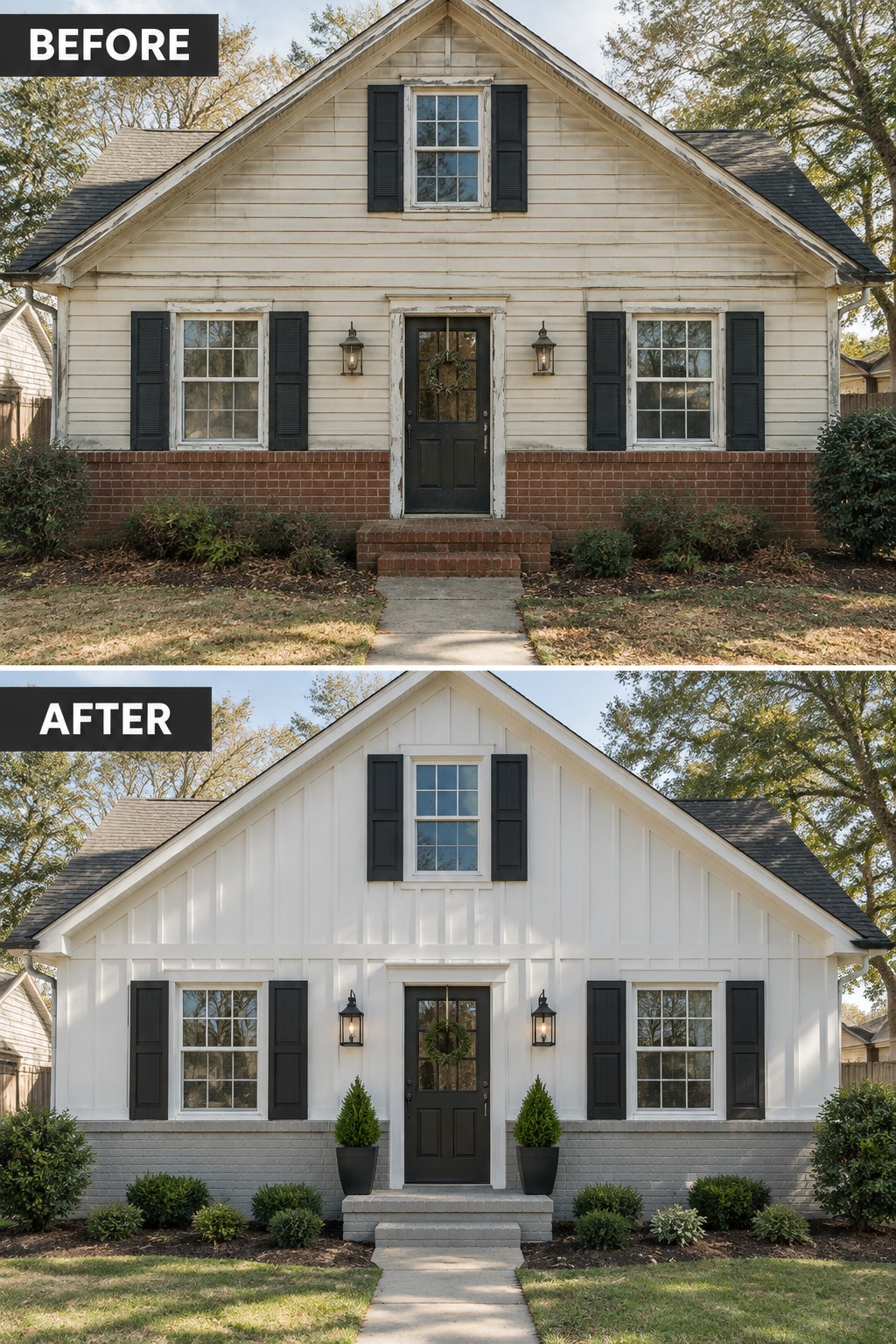
The biggest shift in this project is replacing the old horizontal siding with vertical board and batten. The new pattern adds texture and makes the whole front feel taller and cleaner, especially once the brick base is painted to match.
This idea works best on simple gable homes that already have decent proportions. Start with the siding change, then update the shutters and door color so everything reads as one fresh surface. It is a straightforward way to give an older house a current farmhouse feel without changing the roofline or windows.
Give A Bare Porch A Clear Purpose
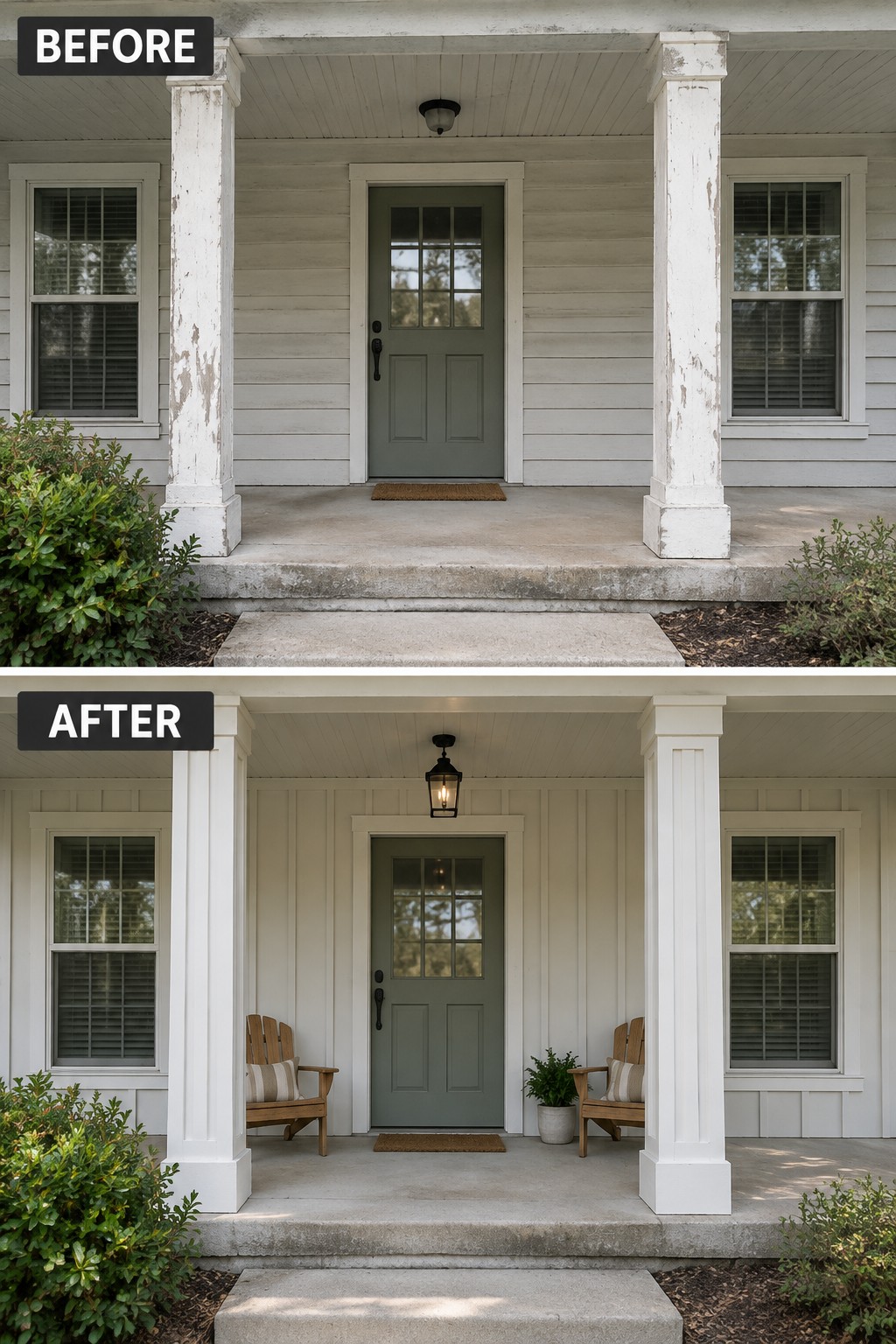
A plain front porch often feels like wasted space until you give it a reason to exist. In this case the before photo shows an empty concrete area with no seating or focal point. The after version adds two simple chairs and a hanging light, which instantly turns the spot into a defined entry rather than just a walkway.
This approach works best on farmhouse exteriors where the porch already has good bones but lacks purpose. Start by checking the columns and trim for needed paint, then add a pair of weather-resistant chairs and one overhead light. Keep the scale modest so the seating does not block the door or walkway. The goal is to create a small pause point that feels intentional without crowding the space.
Add A Dark Base To Break Up A Plain Exterior
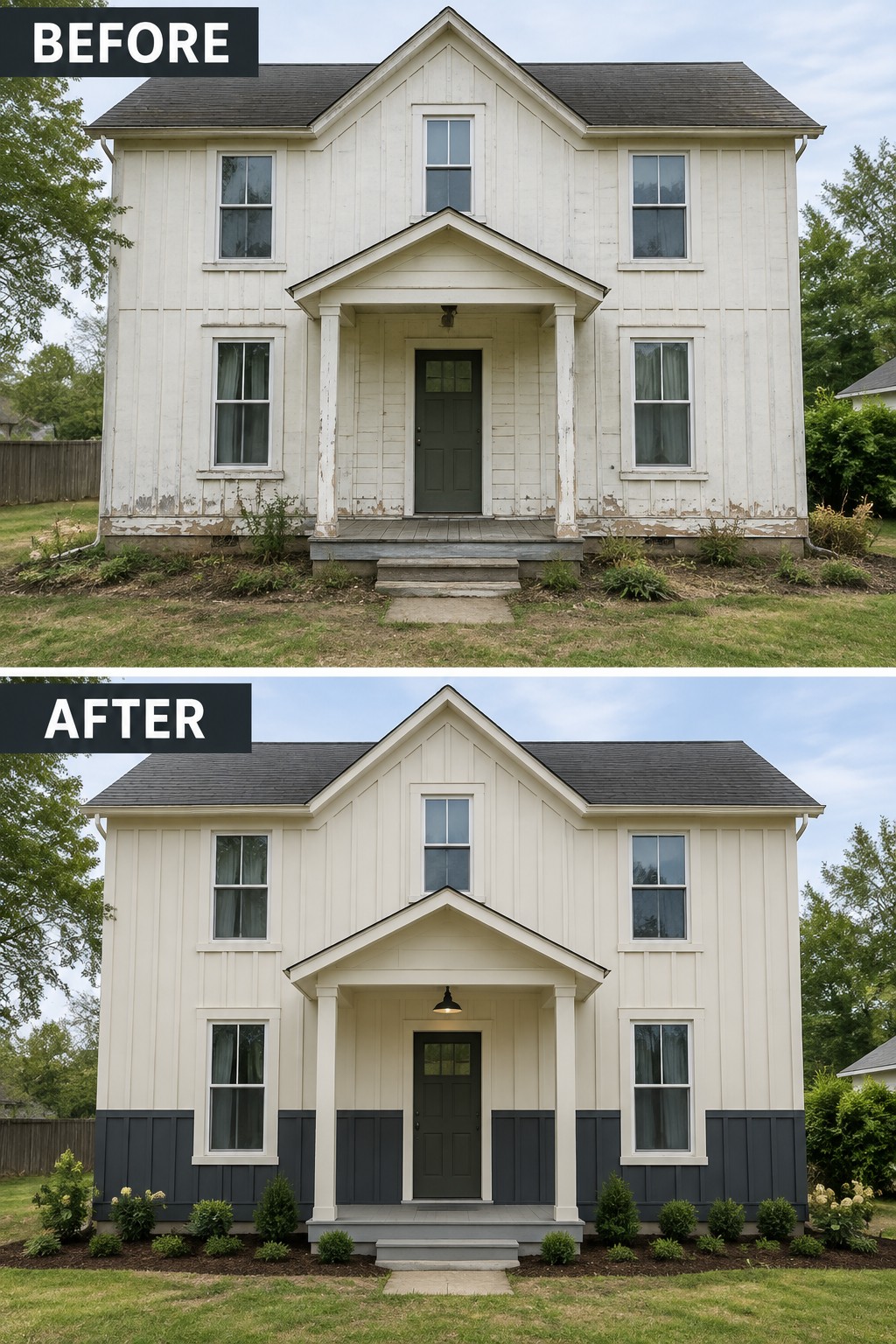
A tall, flat-sided house can start to feel a little plain over time. Adding a darker lower section of board and batten siding gives the whole front a clearer shape and makes the house feel more grounded without any major construction.
This approach works especially well on simple farmhouses that already have vertical siding. Keep the top half light, paint the bottom a deep charcoal or navy, and stop the darker color at the same height across the front so the line stays clean. The rest of the updates, like fresh mulch and a few low shrubs, just support the main change instead of competing with it.
Brighten A Farmhouse With White Siding And Black Window Awnings
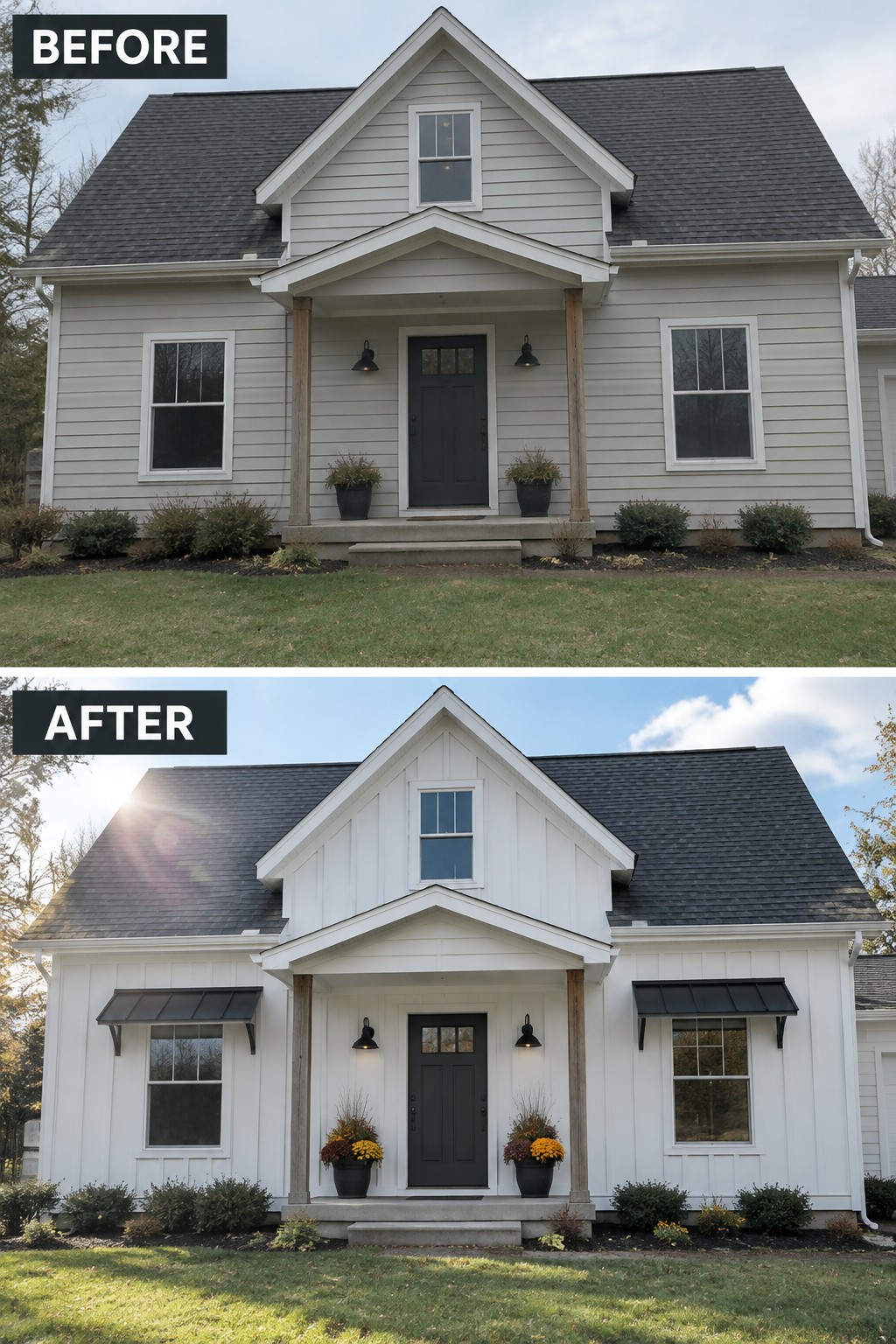
Many homes start with flat horizontal siding that makes the whole front feel dated. Switching to white board and batten adds vertical lines that make the house look taller and brighter while the black awnings give the windows a finished edge.
This approach works best on simple farmhouses or ranches where you want a noticeable change without a full rebuild. Keep the trim and accents in one dark color so the white siding stays the main focus and the entry feels more welcoming.
Give A Ranch Exterior A Farmhouse Look With Vertical Siding
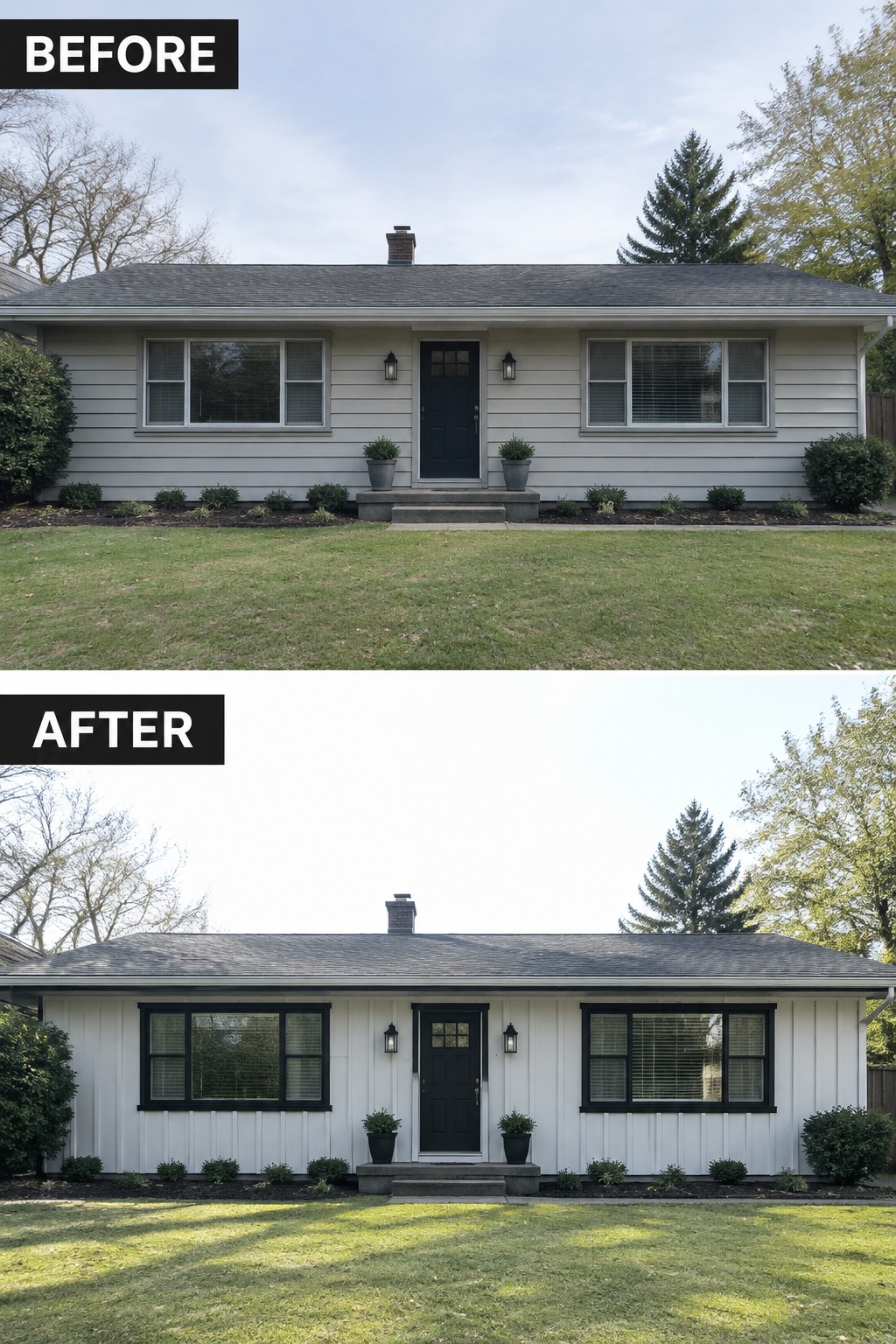
Switching from horizontal siding to vertical board and batten gives the house more structure and a clear farmhouse feel. The black window frames also help the openings stand out instead of blending into the wall.
This idea works especially well on ranch homes where the long front wall can look flat. If a full siding change feels like too much, painting the existing siding white and adding black trim around the windows and door can create a similar effect with less work.
Transform Faded Green Siding Into A Crisp White Farmhouse Exterior
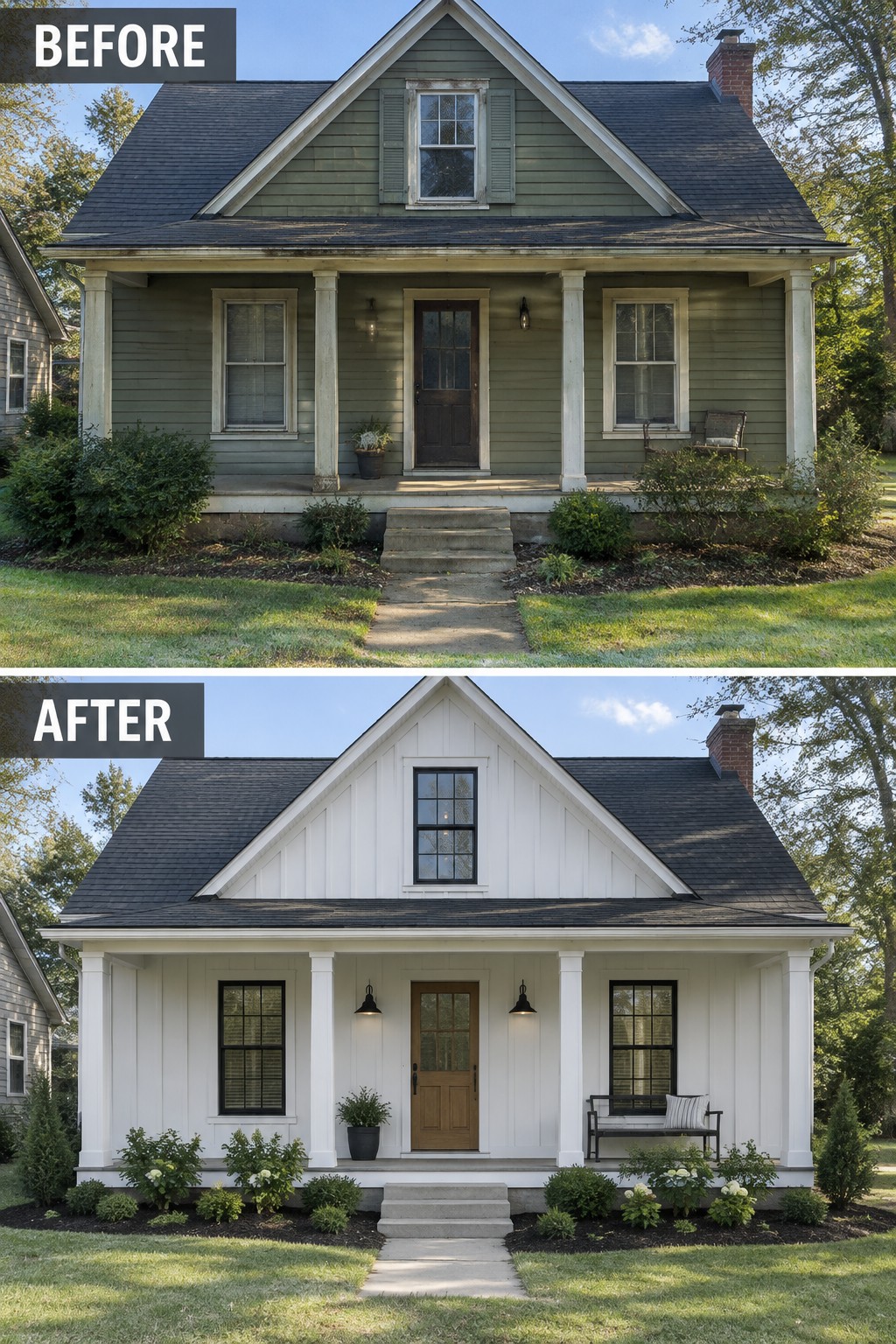
Switching to board and batten siding gives an older house a cleaner, taller look without changing the basic shape. The before photo shows faded horizontal siding and a heavy green tone that makes the front feel flat. The after version uses white vertical boards with battens, a lighter door, and simple black window frames to open everything up.
This approach works best on farmhouses or older homes where the structure is still sound but the finish feels tired. Start with the siding pattern and color first, then update the trim and door to match. Keep the changes simple so the new lines stay the main feature instead of adding too many extras at once.
Add Board And Batten To The Gable For More Character
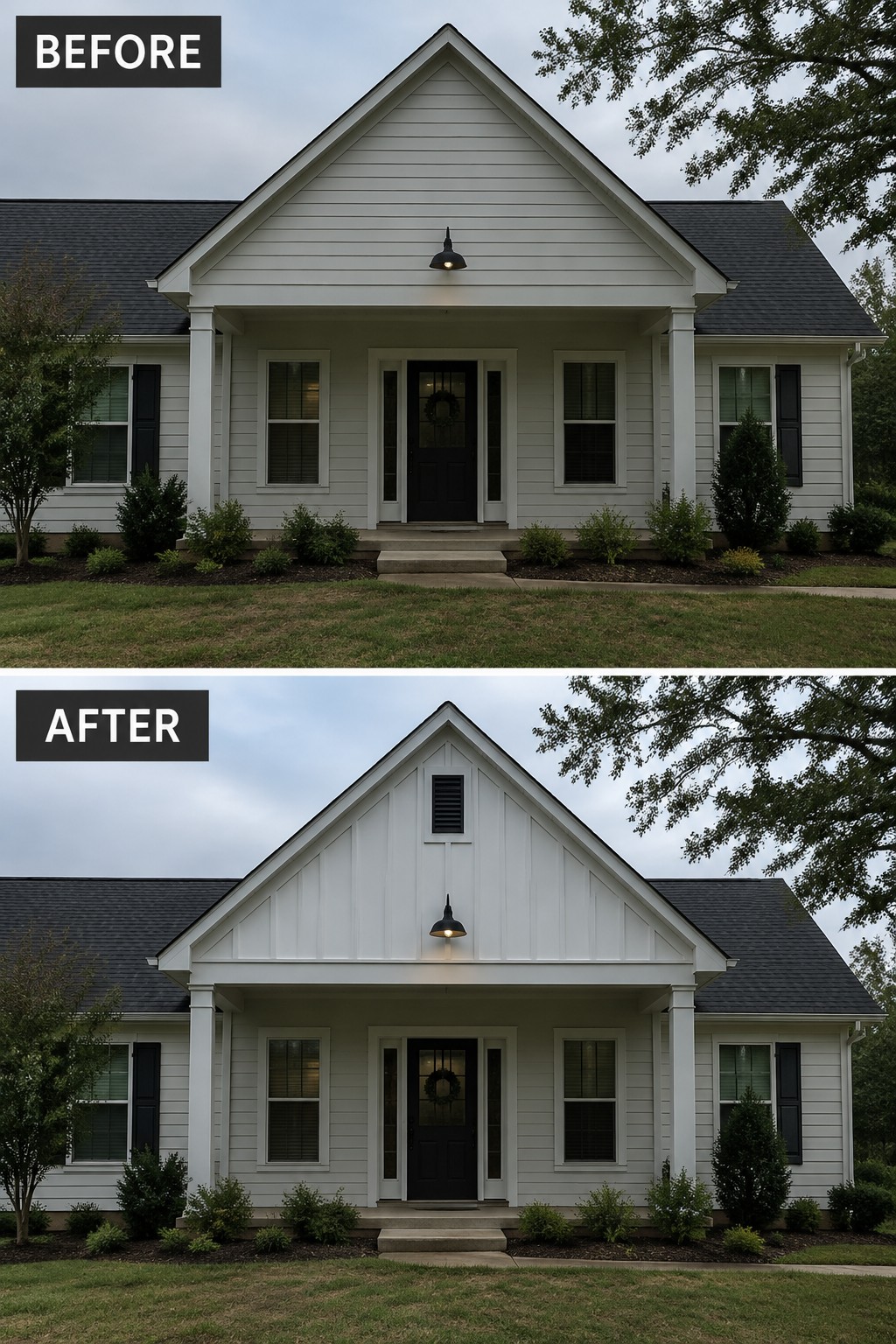
Switching the front gable from plain horizontal siding to vertical board and batten gives the whole house a stronger farmhouse shape. The vertical lines break up the large wall, add texture, and make the entry feel more intentional without any other big changes.
This idea works best on homes that already have a simple roofline and white paint. Try it on the gable first if you want to test the look before doing more of the house. Keep the trim and door color the same so the new pattern stands out on its own.
Enhance A One-Story Farmhouse With Vertical Siding And Low Plantings
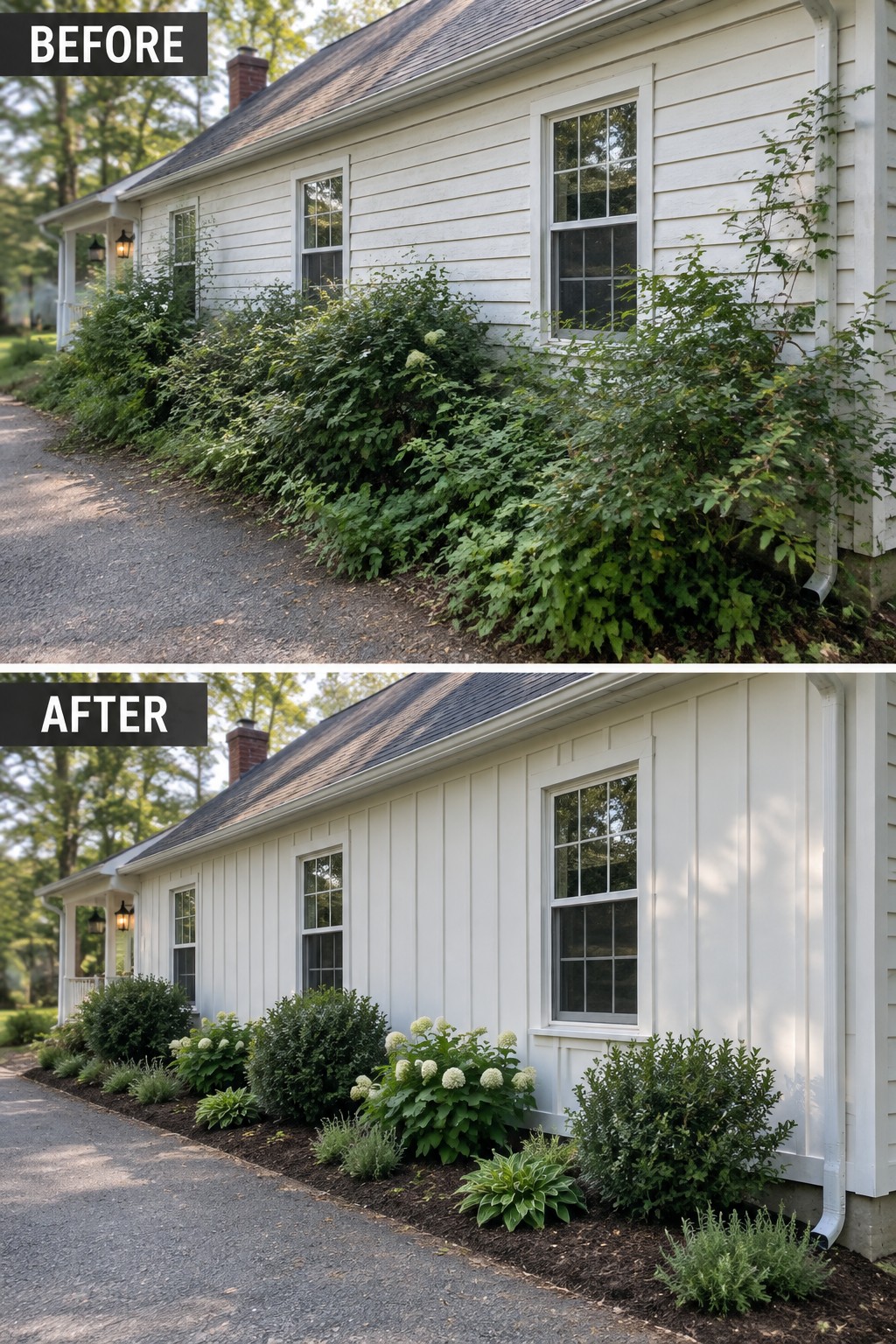
Switching from horizontal siding to board and batten gives the house a taller, cleaner look that feels more like a true farmhouse. The vertical lines add subtle texture, and the change stands out even more once the foundation plantings are trimmed back and kept lower.
This idea works best on simple one-story homes where the siding itself can become the main feature. Keep new beds narrow and use low plants so the pattern stays visible from the street.
Unify A Two-Story Home With Matching Siding And Porch Details
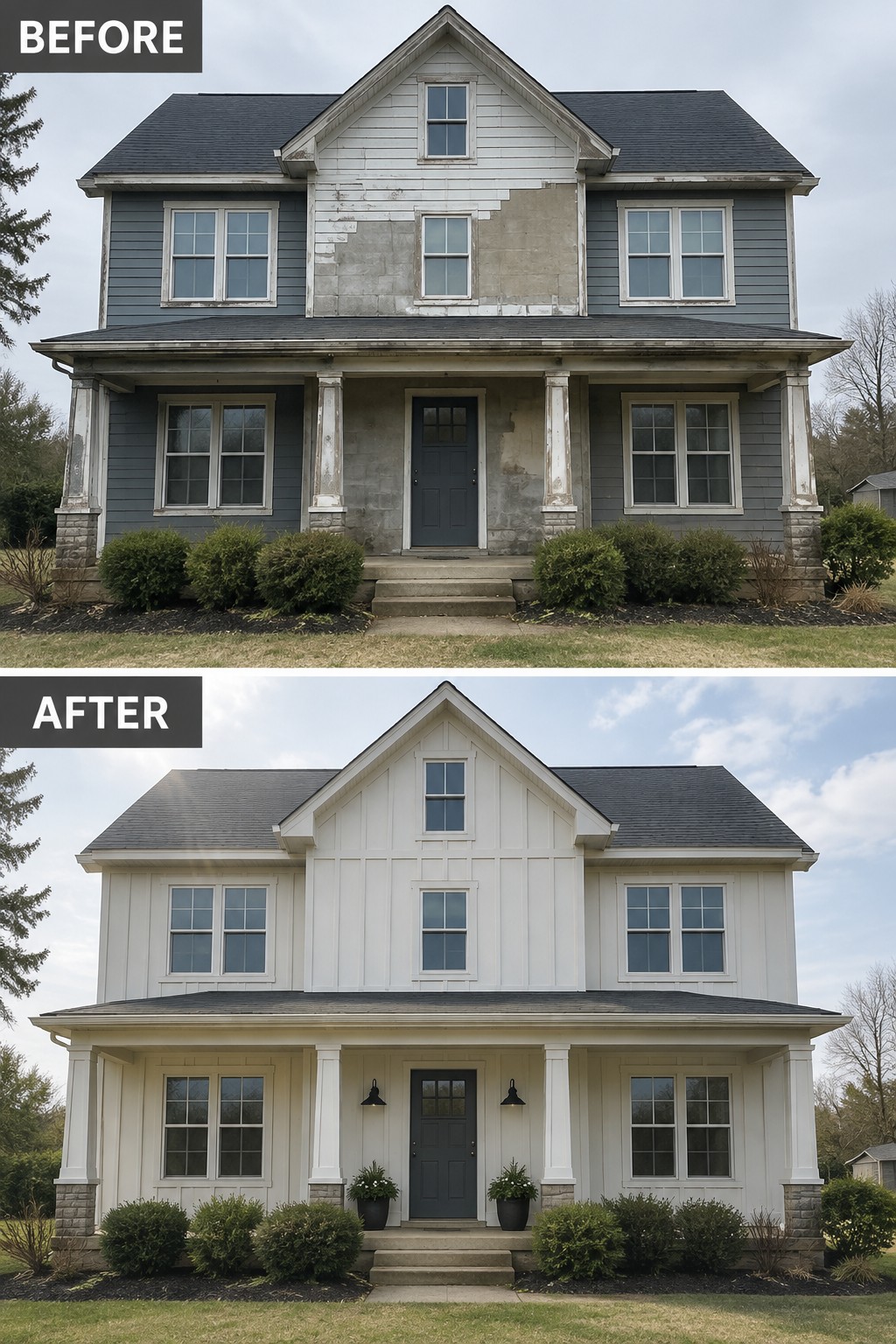
Many older homes develop peeling paint and mismatched patches on the exterior over the years. Switching to board and batten siding creates one clean surface that pulls the whole facade together and gives it a simple farmhouse feel.
This idea works best on two-story homes where the upper and lower levels need to connect. Start with the siding change, then add matching trim and porch updates so the front feels finished without needing a full rebuild.
Refresh A Farmhouse Entry With Light Siding And Natural Wood Accents
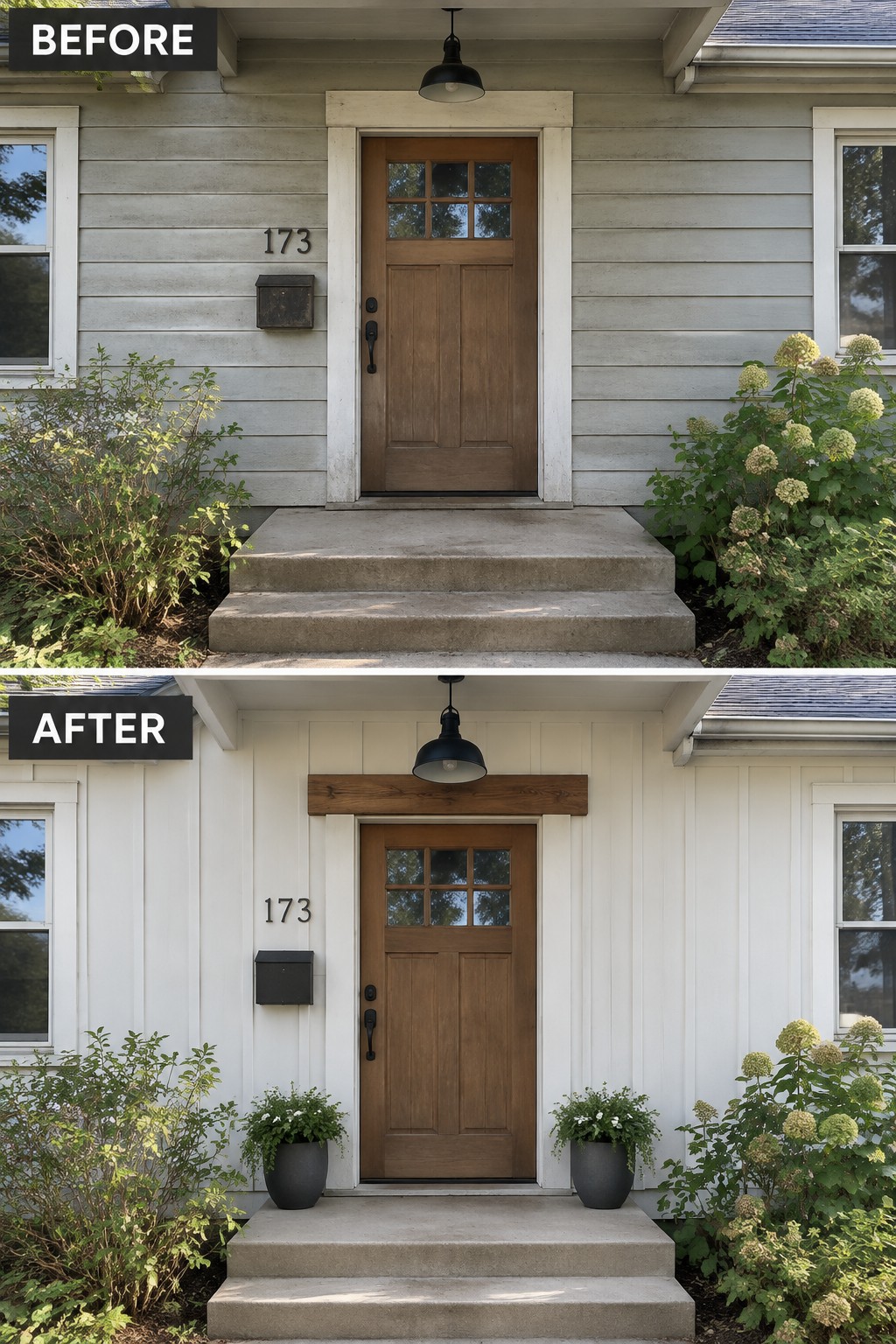
Many homes with plain horizontal siding end up looking flat and dated around the entry. Changing to board and batten adds vertical lines that give the front more shape and make the door area feel more pulled together.
This approach works well on simple farmhouses or older homes where the siding is the main surface you see from the street. Paint it a light color to brighten the whole look, then keep the trim and door in wood tones so the new pattern stands out without extra decoration.
Refresh The Exterior With A New Paint Color
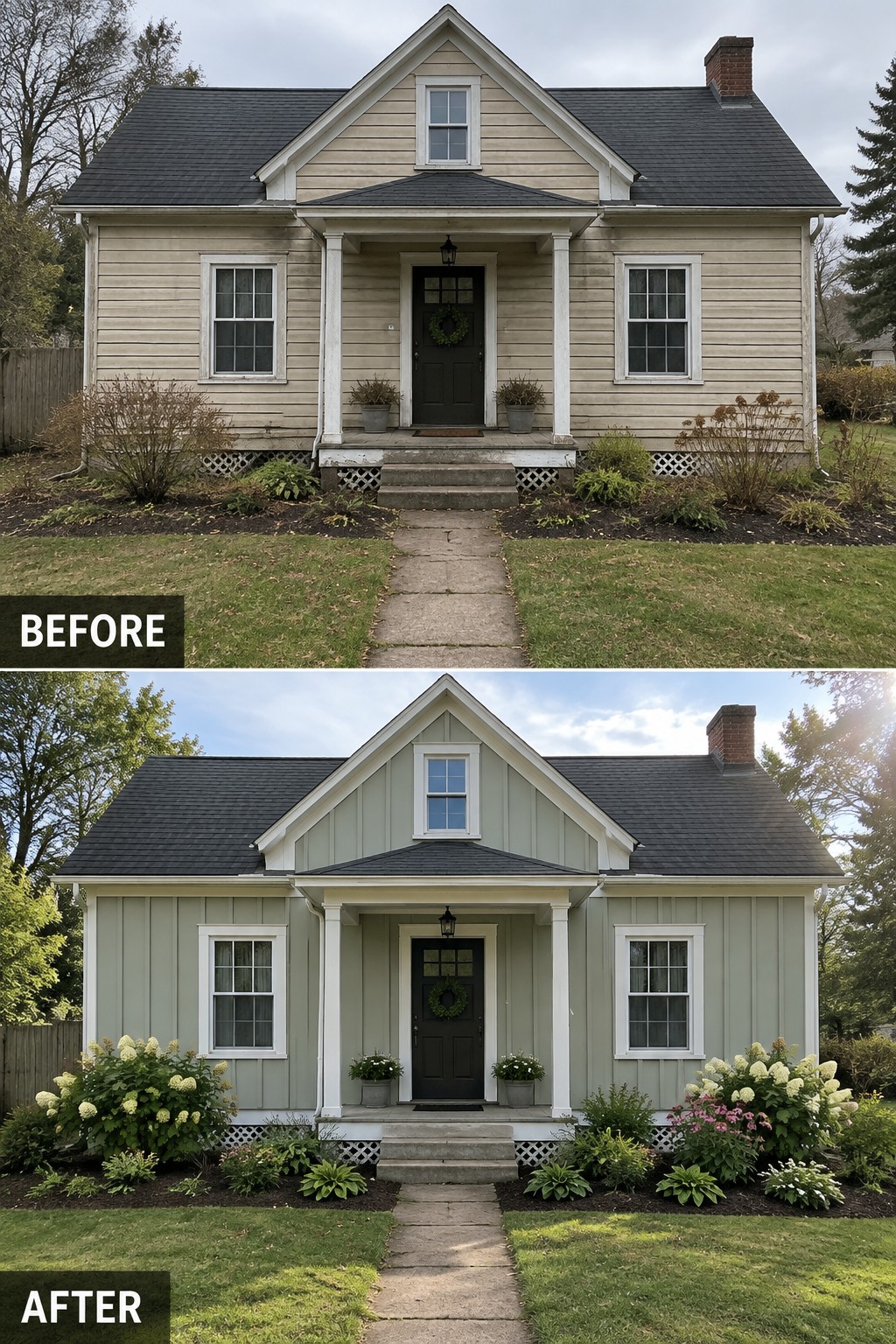
Painting the siding a new color can make an older house feel updated and welcoming without any big construction work. The tired beige tone made the home look faded and flat, while the soft green brings a cleaner, calmer look that ties the whole front together.
This idea works best on houses with solid structure but dated coloring. Choose a shade that complements the roof and trim, test a few samples on the wall first, and keep the landscaping simple so the new color stays the main focus.
Restore A Weathered Cottage Exterior With White Vertical Siding
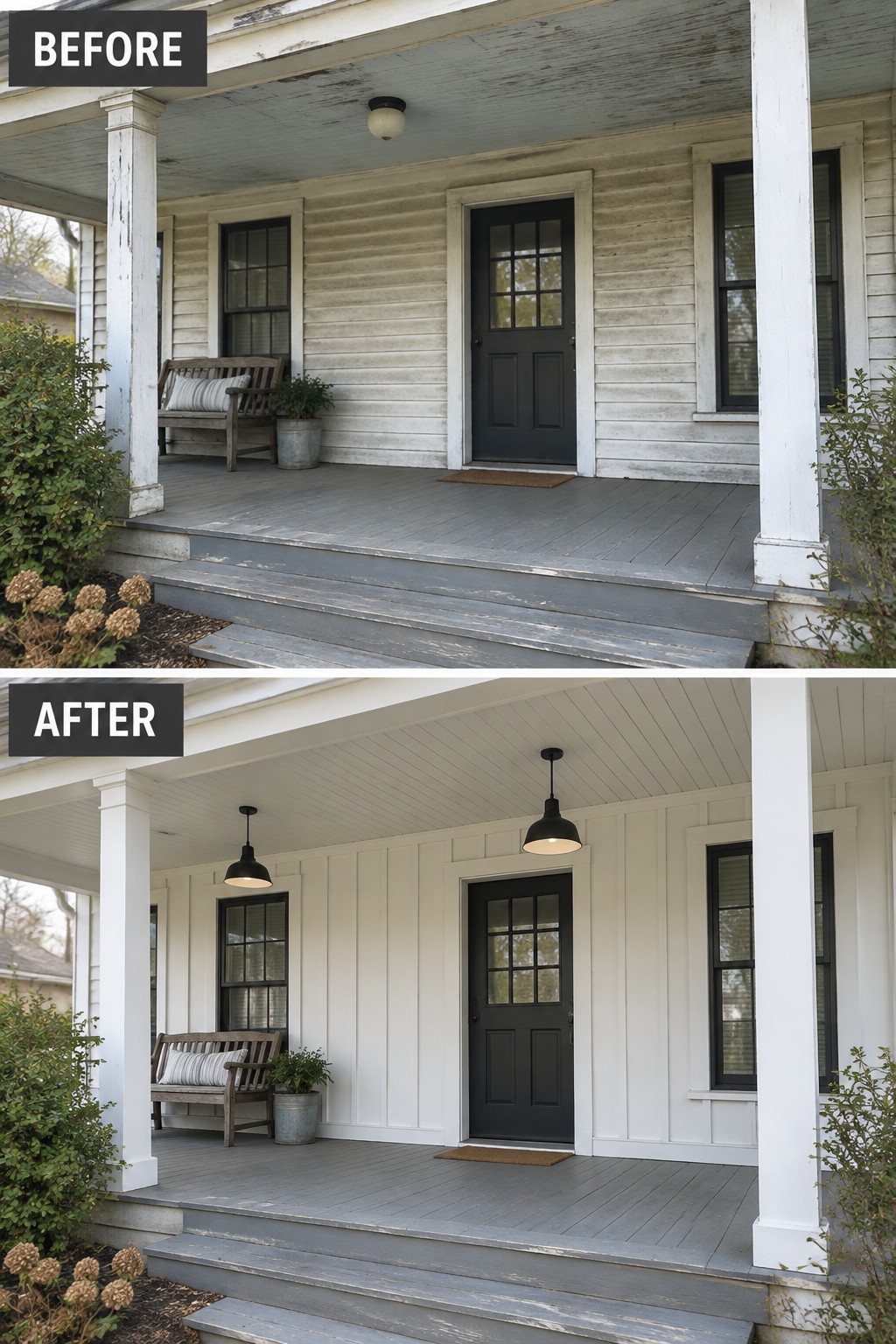
The biggest shift here comes from swapping the old horizontal siding for clean vertical board and batten, then painting everything white. The porch instantly looks brighter and more put together, and the simple black lights add just enough detail without overcomplicating the space.
This approach works well on older farmhouses or cottages where the siding has seen better days. Start with the siding and paint first, then add one or two lights near the door so the entry feels welcoming at night. It keeps the focus on the architecture instead of layers of decor.
Add Farmhouse Character To A Two-Story Home With Window Boxes
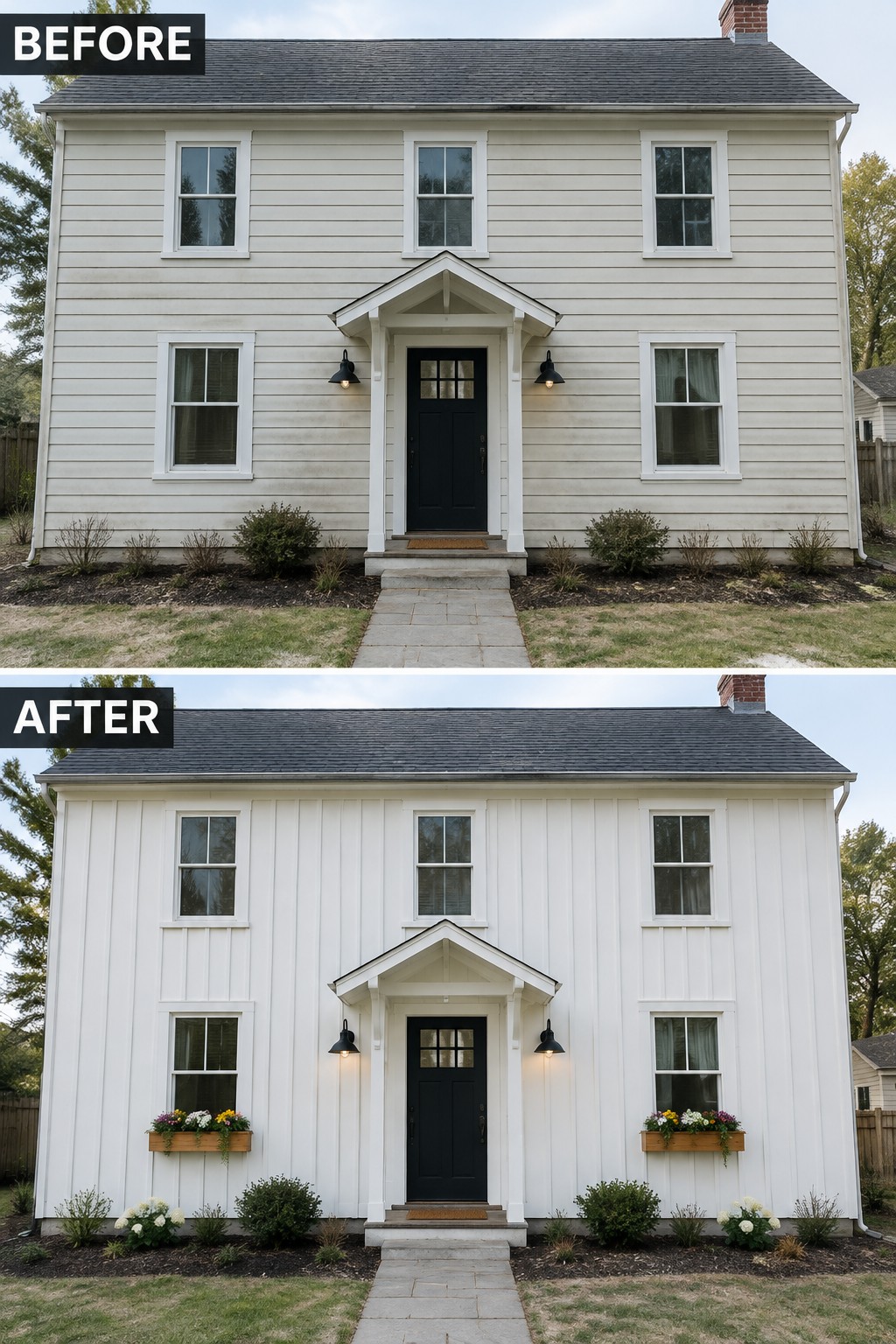
Switching from horizontal siding to vertical board and batten gives this house a cleaner, more defined look. The vertical lines make the windows feel more balanced and pull the whole front together without changing the roofline or trim.
This approach works best on simple two-story homes where the goal is to add farmhouse character on a budget. Focus on the main facade first, then add a couple of window boxes if the lower windows sit at a good height. Keep the rest of the details simple so the siding remains the main update.
Replace Peeling Farmhouse Siding With A Fresh White Finish
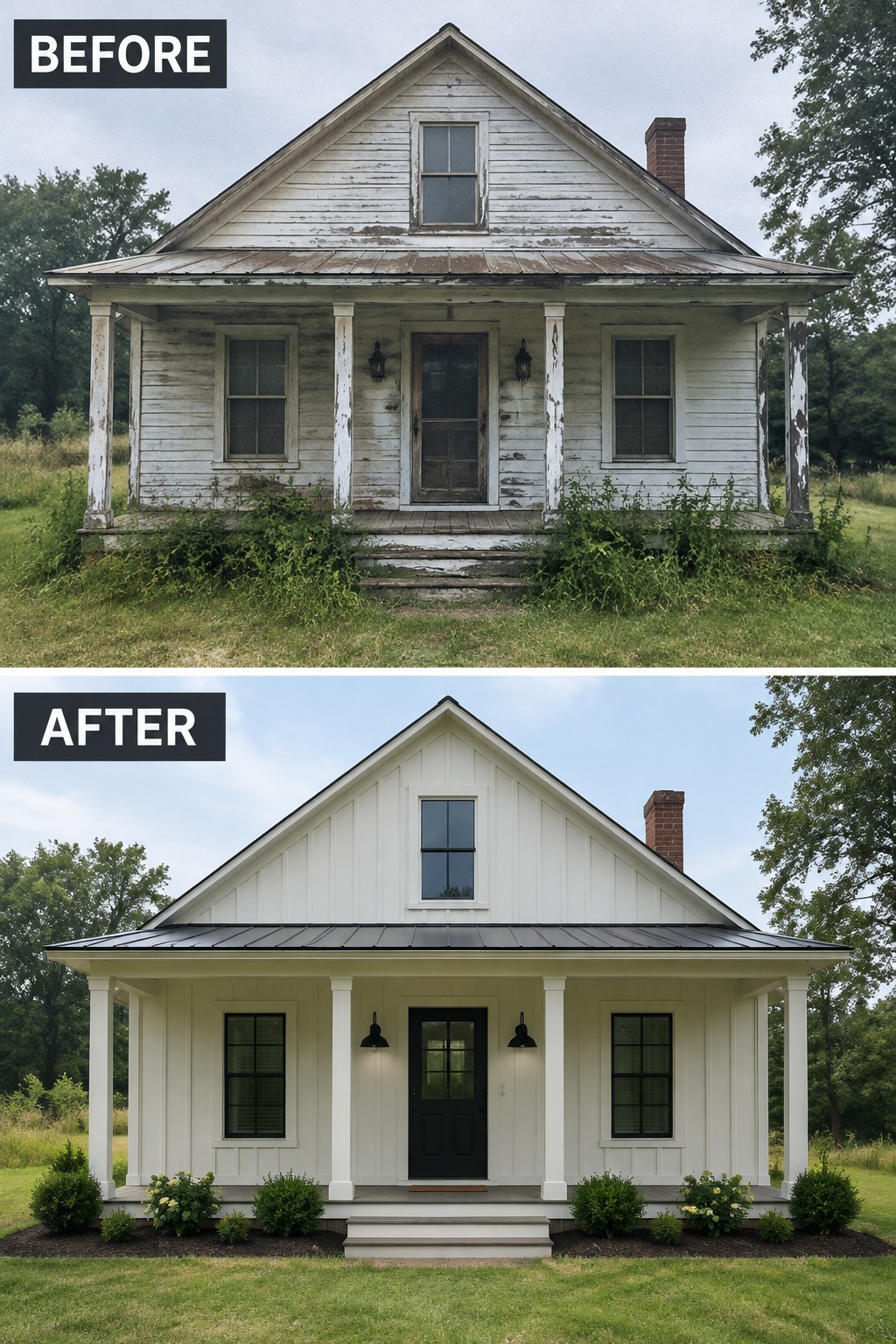
The biggest shift in this project comes from replacing the peeling, uneven siding with clean board and batten. The new vertical lines and fresh white paint give the house a tighter, more current look while still keeping its simple farmhouse shape.
This idea works best on older homes where the original siding has started to fail but the structure is still sound. Start with the siding update, then add a dark door and a few low shrubs along the foundation. The rest of the yard can stay simple since the main walls now carry the update.
Frequently Asked Questions
Q: Can I install board and batten over existing siding?
A: You can if the old surface stays flat and solid. This keeps the project simpler while creating the vertical lines shown in many examples. Attach the new boards straight to avoid any waves.
Q: How do I pick board widths that suit my house size?
A: Match the board width to your wall scale. Wider ones suit bigger homes while narrow ones fit smaller walls better.
Q: Does board and batten need special care in winter?
A: Treat the wood to resist moisture before painting. Check the seals around edges each spring. This prevents cracks from freeze and thaw cycles.
Q: What if my budget is tight for a full redo?
A: Focus on the front facade only. That gives the biggest impact from the ideas without covering every side. You still get the farmhouse update where it counts most.