

I often notice how colonial homes gain a quiet sense of order when the windows and doors line up evenly across the front.
That balance tends to draw the eye naturally and makes the whole facade feel more settled on the lot.
It is one detail worth considering in any exterior update.
Small shifts like adjusting shutter placement or centering an entry can lift the look without touching the structure itself.
I would probably start by checking alignments on my own house before trying anything else outside.
Refresh A Colonial Exterior With Paint And Shutters
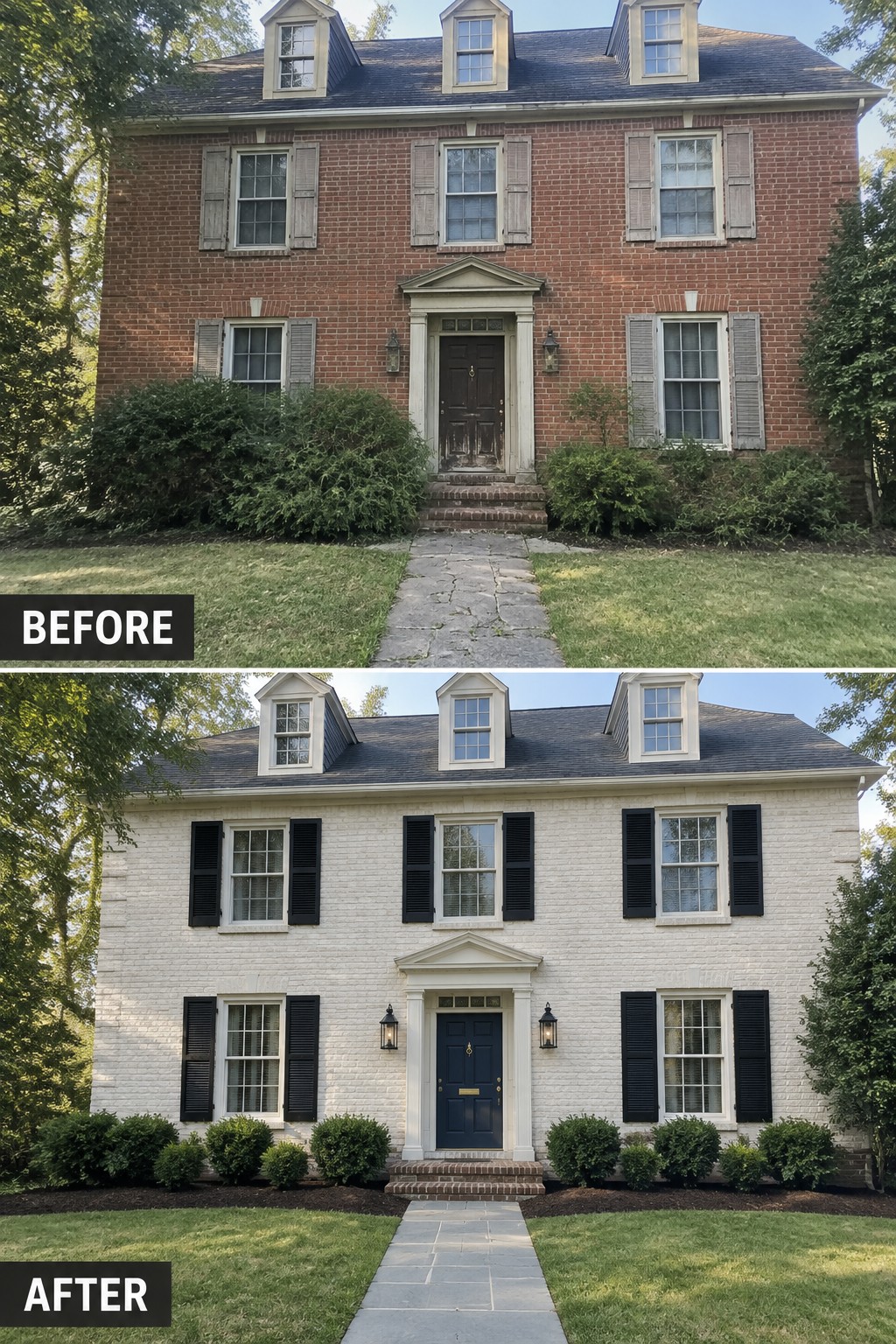
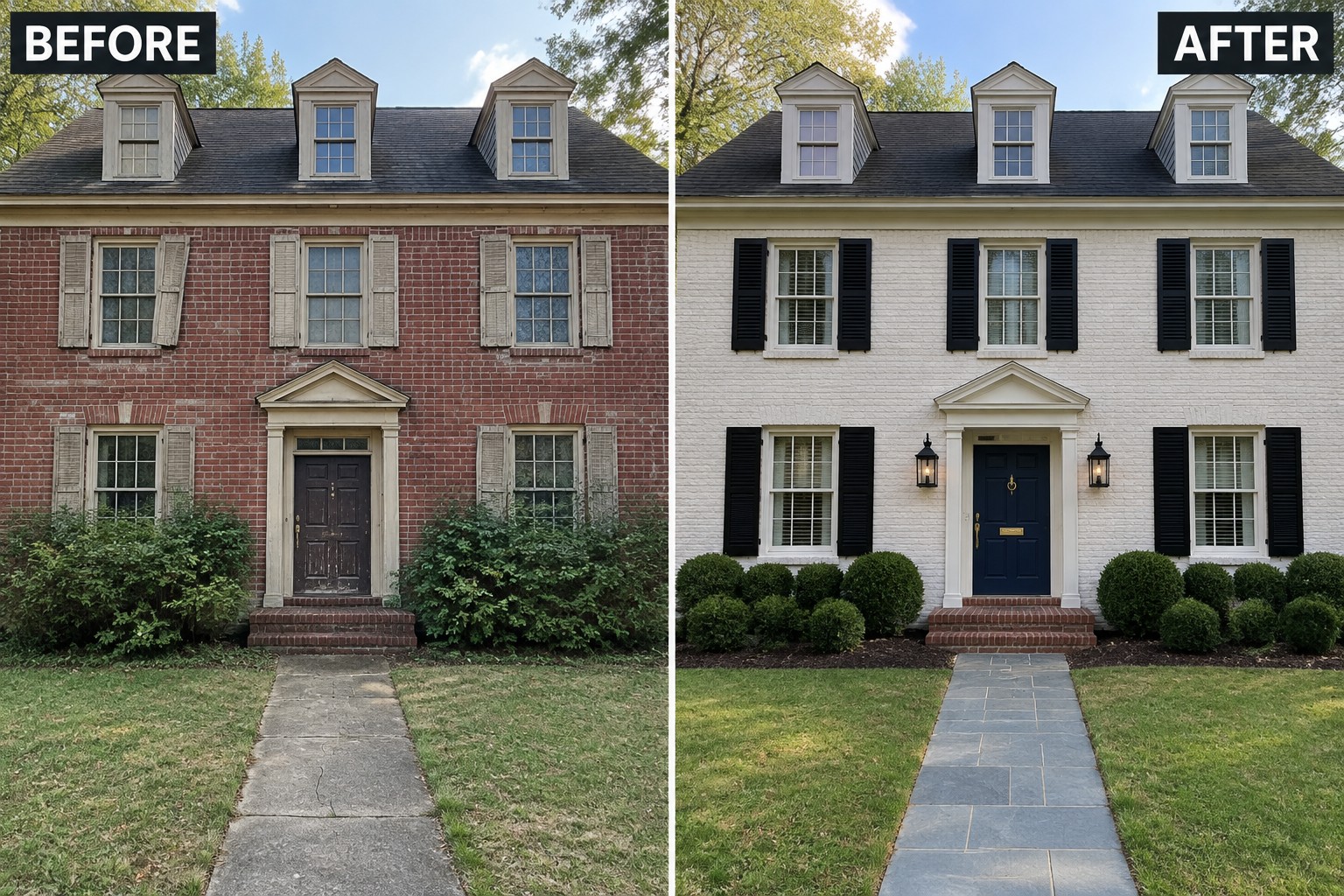
Many brick colonials start to look tired when the shutters fade at different rates and the trim no longer matches the brick. Painting the entire facade white and installing matching black shutters creates a cleaner, more unified appearance that highlights the symmetrical window layout instead of fighting it. Changing the front door color at the same time helps the entry feel intentional rather than leftover from an earlier color scheme.
This update suits homes that already have good proportions and just need the finishes refreshed. Choose masonry paint made for brick, measure the windows carefully for new shutters, and keep the landscaping simple so the new color scheme stays the focus. The result reads as updated rather than brand new, which works especially well on older neighborhoods where full renovations can feel out of place.
Add A Portico To Frame A Colonial Entry
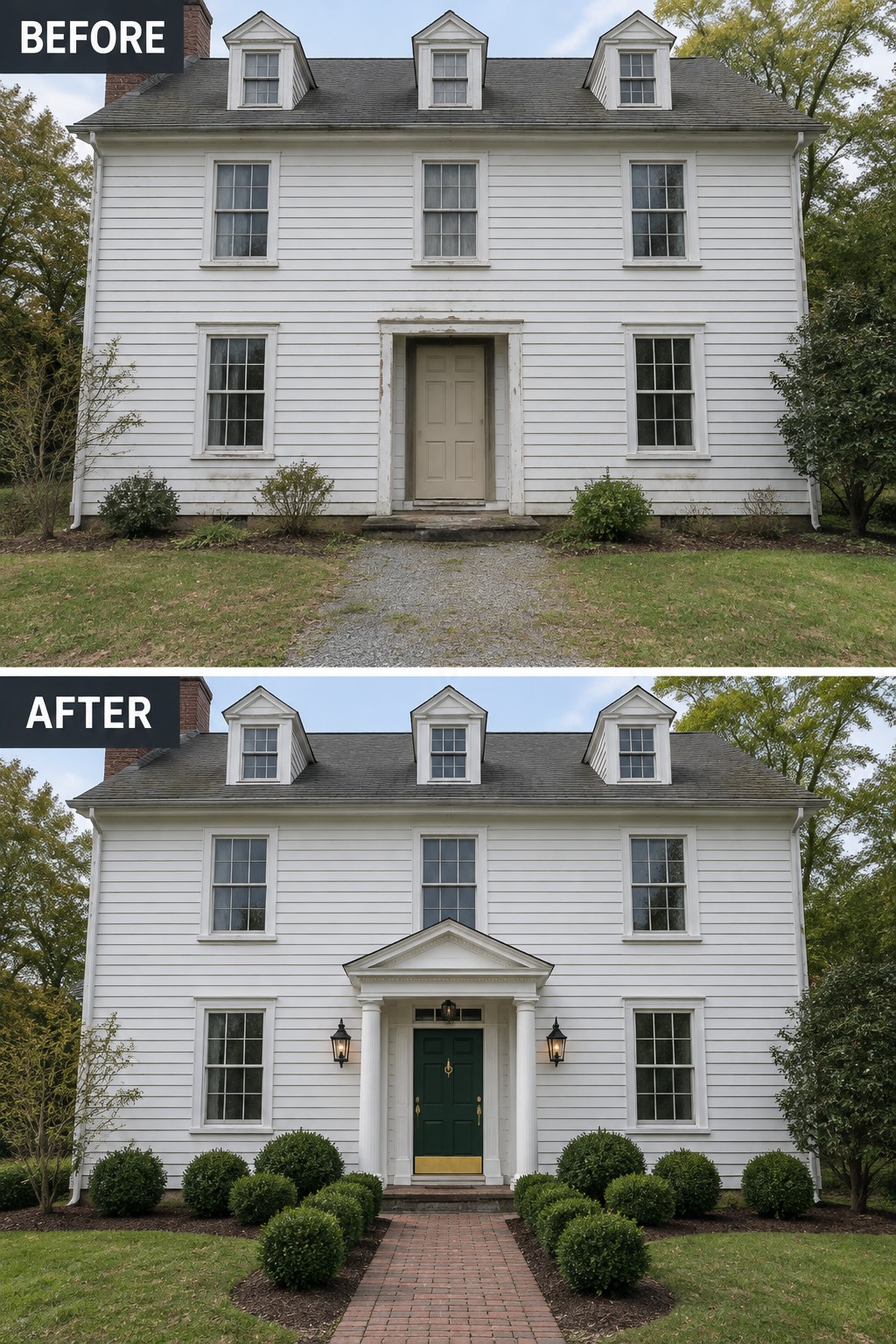
A plain colonial facade can start to feel flat when the entry has no real definition. Adding a simple portico with columns gives the center of the house a clear focal point and makes the whole front feel more balanced. The green door and brick path in the after photo show how a few structural changes pull the eye straight to the middle where it belongs.
This approach works best on homes that already have good window symmetry. Keep the portico modest in scale so it does not overwhelm the roofline, and use low, rounded shrubs on either side to reinforce the balance without blocking the windows. The same idea can be applied to many colonial-style houses where the entry just needs a little architectural weight to feel finished.
Refresh A Colonial Exterior With One Paint Color And Matching Shutters
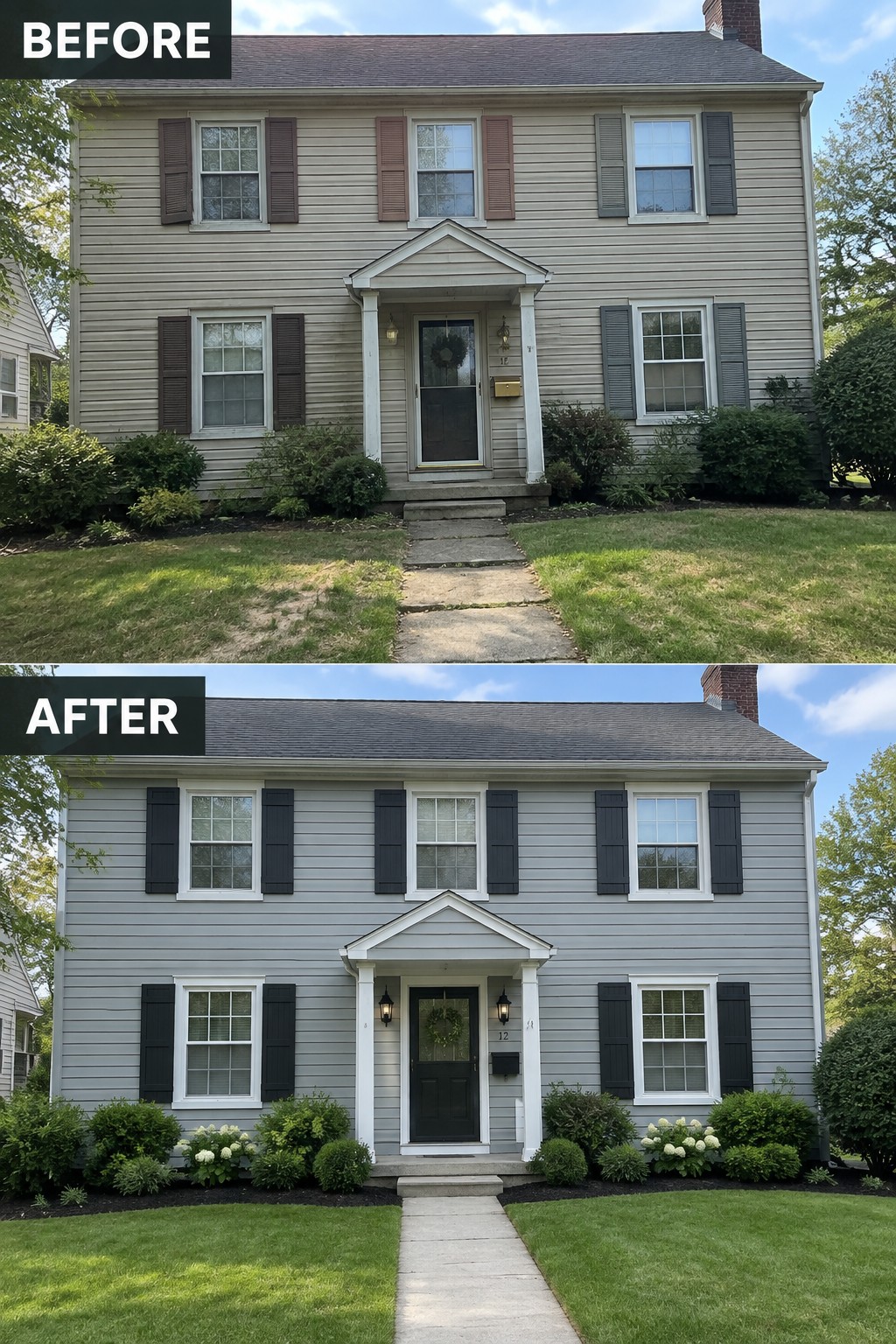
A simple exterior paint update can make a big difference on a colonial house. The before photo shows a beige facade with mismatched shutters in brown and gray tones that break up the symmetry. After the change, one soft gray covers the whole house and all the shutters match in black, which pulls the windows and door into a cleaner, more balanced arrangement.
This approach works well on homes that already have good window placement but need visual unity. Pick a paint color that sits comfortably with the roof and any brick details, then commit to one shutter color on every window. Keep the trim and door color simple so the symmetry stays the focus rather than competing details.
Strengthen A Plain Entry With Simple Additions
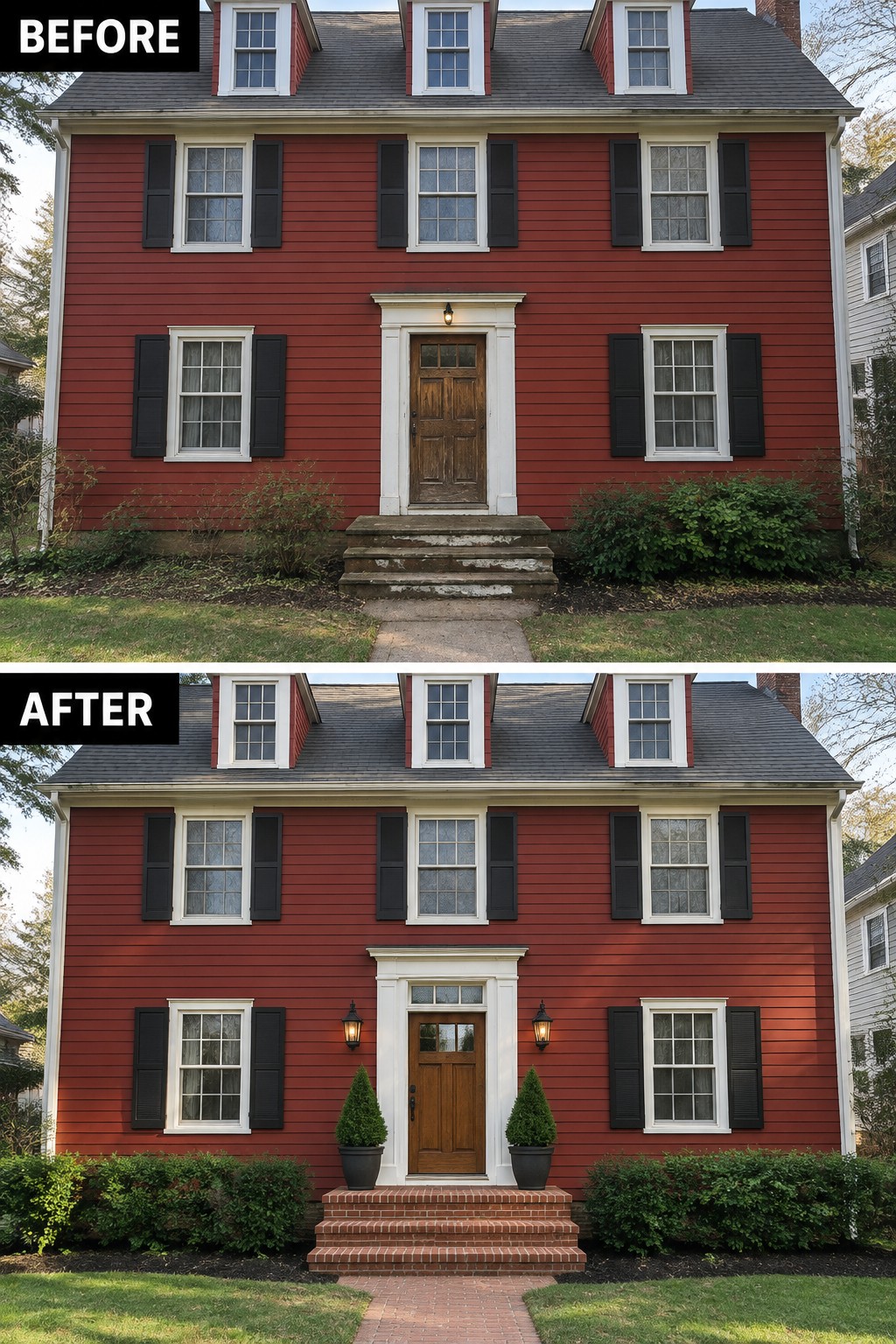
Many colonial homes already have good bones, but the front entry can still feel flat when the steps are worn and there is nothing to mark the door. Replacing tired concrete steps with brick and adding a pair of lanterns plus matching planters on either side gives the door the weight it needs without changing the whole facade.
This approach works well on symmetrical houses where the center door should be the clear focal point. Keep the planters low and evergreen so they stay neat year round, and choose lighting that matches the scale of the door rather than trying to make a statement. The rest of the yard can stay simple once the entry itself feels intentional.
Refresh A Colonial Exterior With Darker Shutters And Door
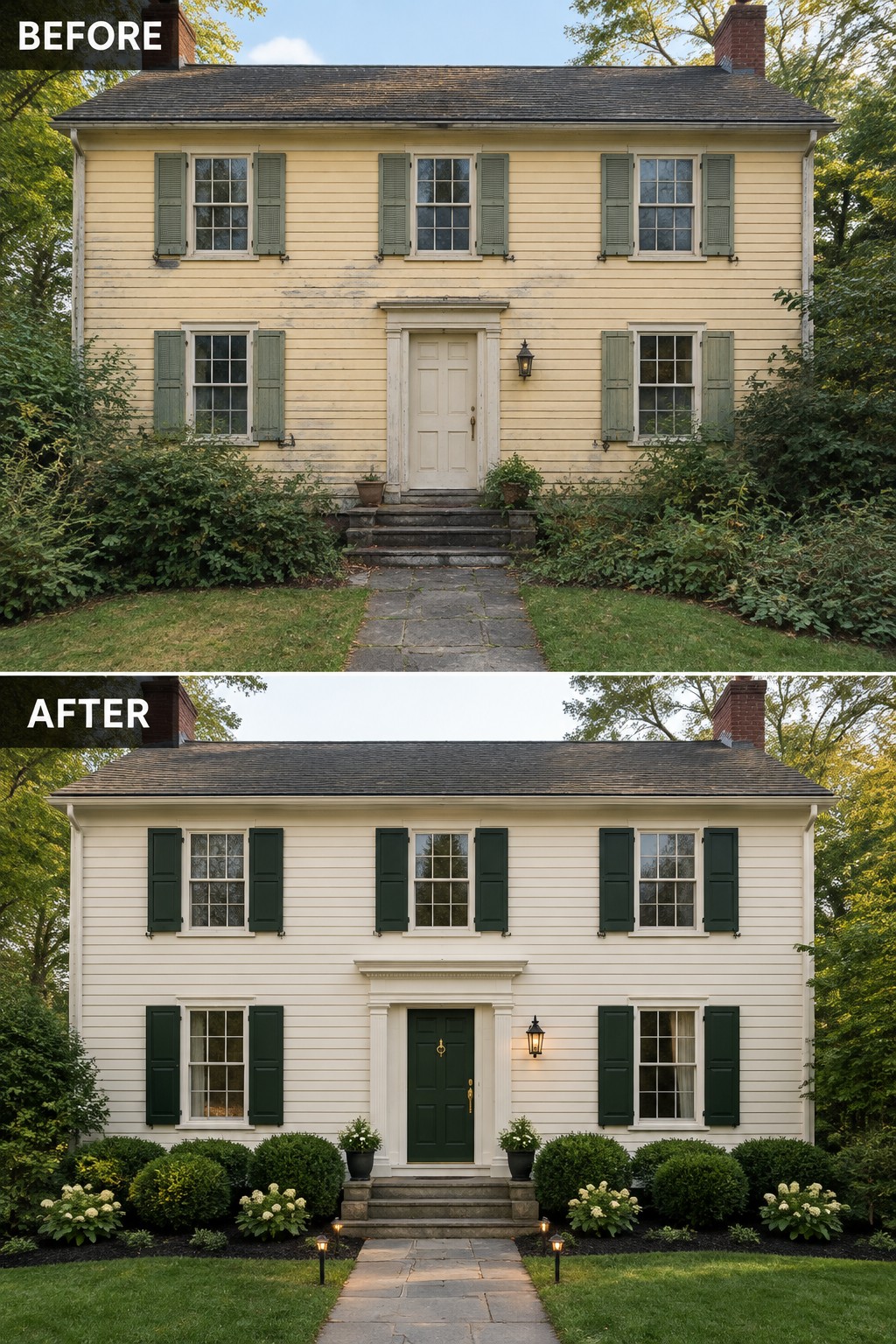
A simple color change on the shutters and front door can make the symmetrical layout of a colonial house feel much more intentional. In this case the lighter green shutters and off-white door were replaced with a deep green that matches across both, which helps the centered door and evenly spaced windows stand out instead of blending into the siding. The planting was also tidied into low, rounded beds so nothing blocks the balanced window arrangement.
This approach works well on older homes where the architecture already has good proportions. Keep the siding light, pick one strong color for the trim and door, and hold the landscaping to simple shapes that stay below the windows. The goal is to let the symmetry do the work rather than adding extra decoration.
Paint The Front Door A Bold Color To Lift Curb Appeal
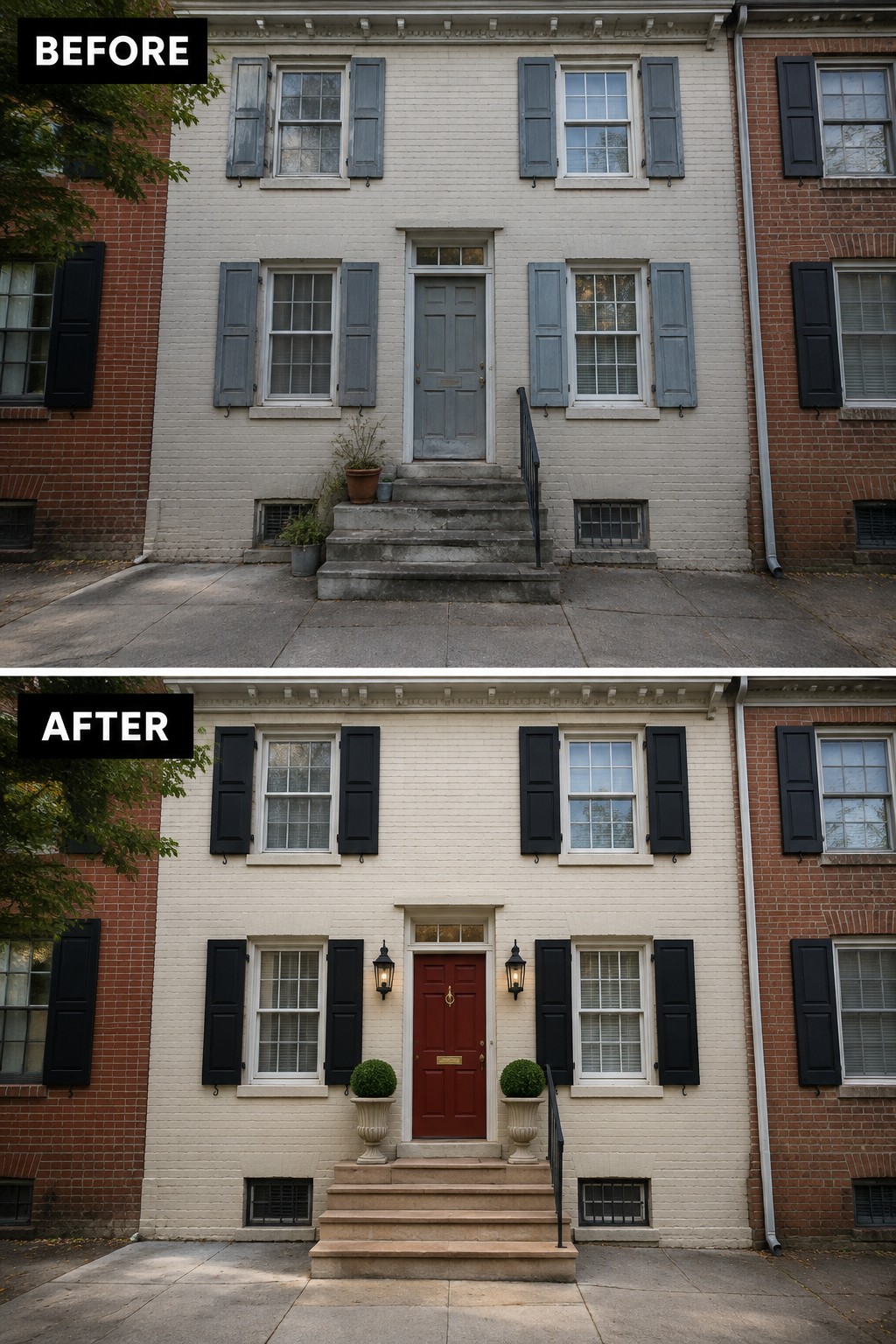
A simple color change on the front door can shift how the whole house feels from the street. In this case the gray door was replaced with a deep red that stands out against the white brick and black shutters. The matching black shutters on every window also help the facade look more pulled together instead of scattered.
This approach works well on colonial style homes where the door sits right in the center. Choose a color that contrasts with your brick or siding but still feels appropriate for the neighborhood. Add a pair of planters or lanterns on either side of the steps if you want the entry to feel more balanced without spending much.
Match Shutters And Door Color For A Cleaner Colonial Look
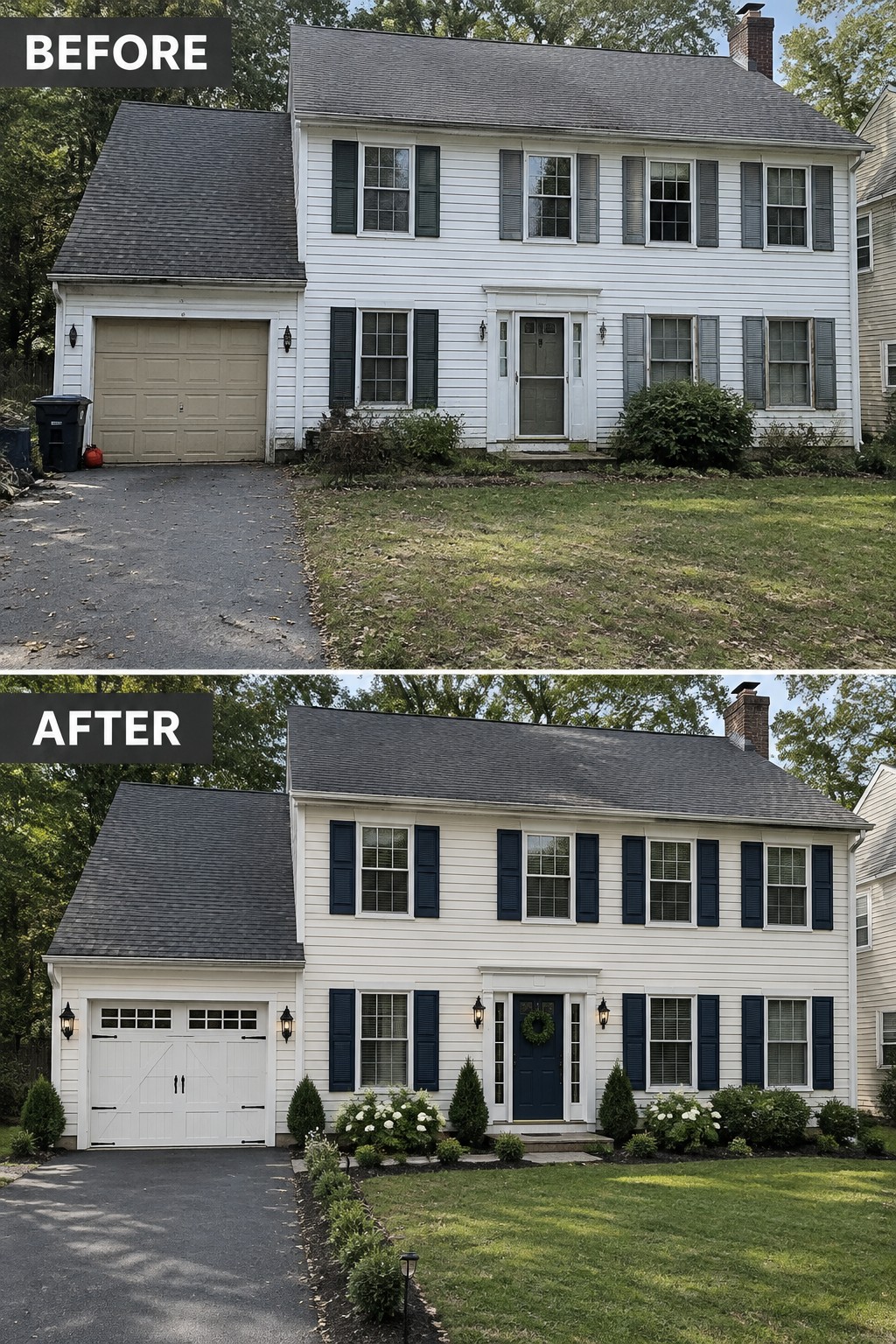
Many older colonials end up with shutters in several different shades over time, which makes the front feel a bit scattered. Painting all the shutters the same deep blue, switching the front door to a matching dark tone, and changing the garage door to white pulls the whole facade together and makes the symmetrical window layout stand out more clearly.
This approach works well on any colonial that already has balanced windows and a centered door. Start with the shutters and door first, since those two changes do most of the work, then check whether the garage door needs to shift too so it does not fight the new color scheme.
Refresh An Older Porch With Paint And New Railings
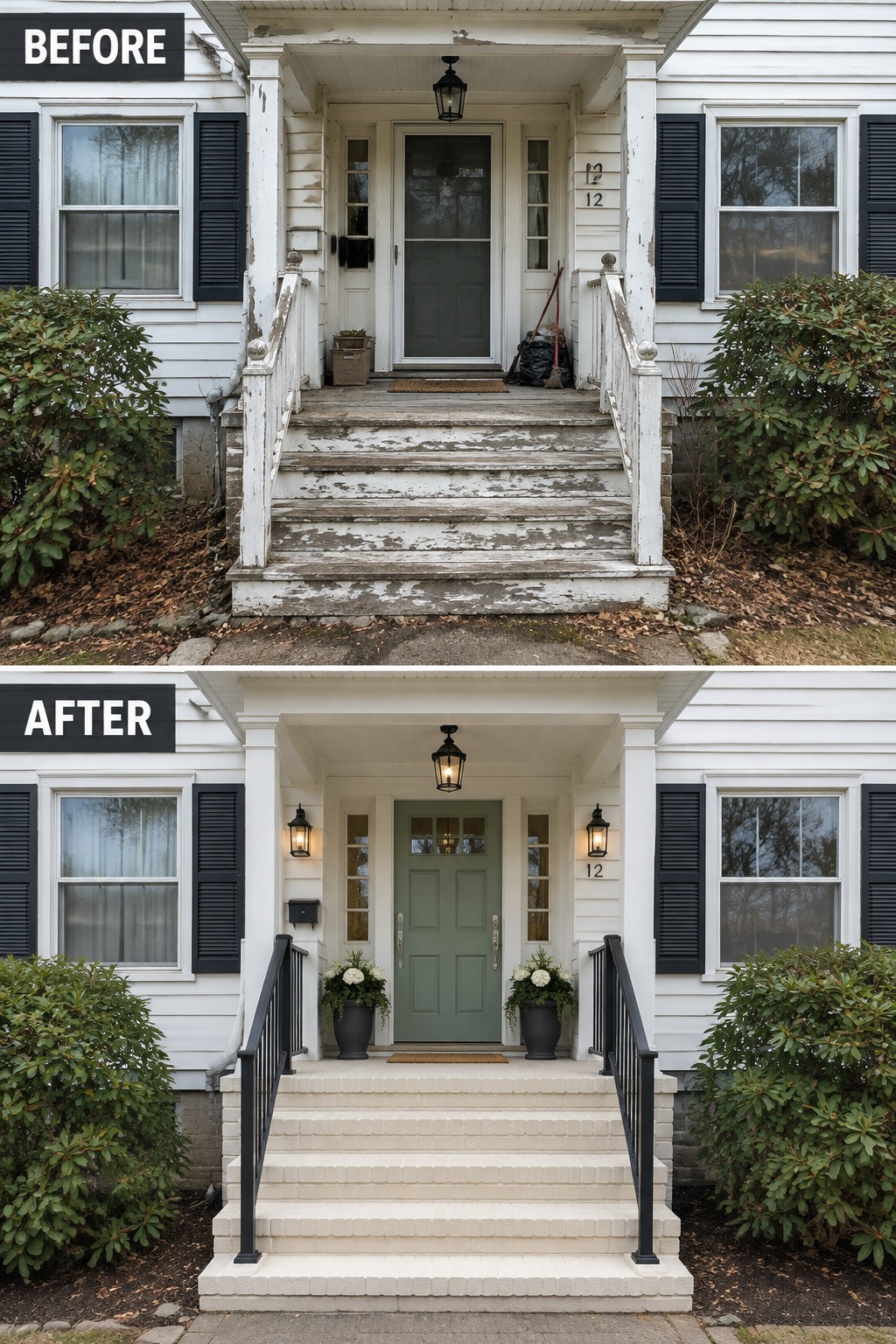
The biggest change here is how a fresh coat of paint and new railings turned worn, peeling steps into a clean, welcoming entry. The old white railings looked tired and the stairs showed years of wear. Once everything was painted and the railings were swapped for simple black ones, the whole front suddenly felt put together and much more in keeping with the rest of the house.
This approach works well on colonial homes where the entry sits right in the middle of a symmetrical facade. Start with a thorough cleaning and a solid paint job on the stairs and trim before you add anything else. New railings in a contrasting color give the porch structure without needing a full rebuild. Keep any added planters or lighting modest so they frame the door instead of crowding it.
Add Lighting To Highlight A Colonial Entry
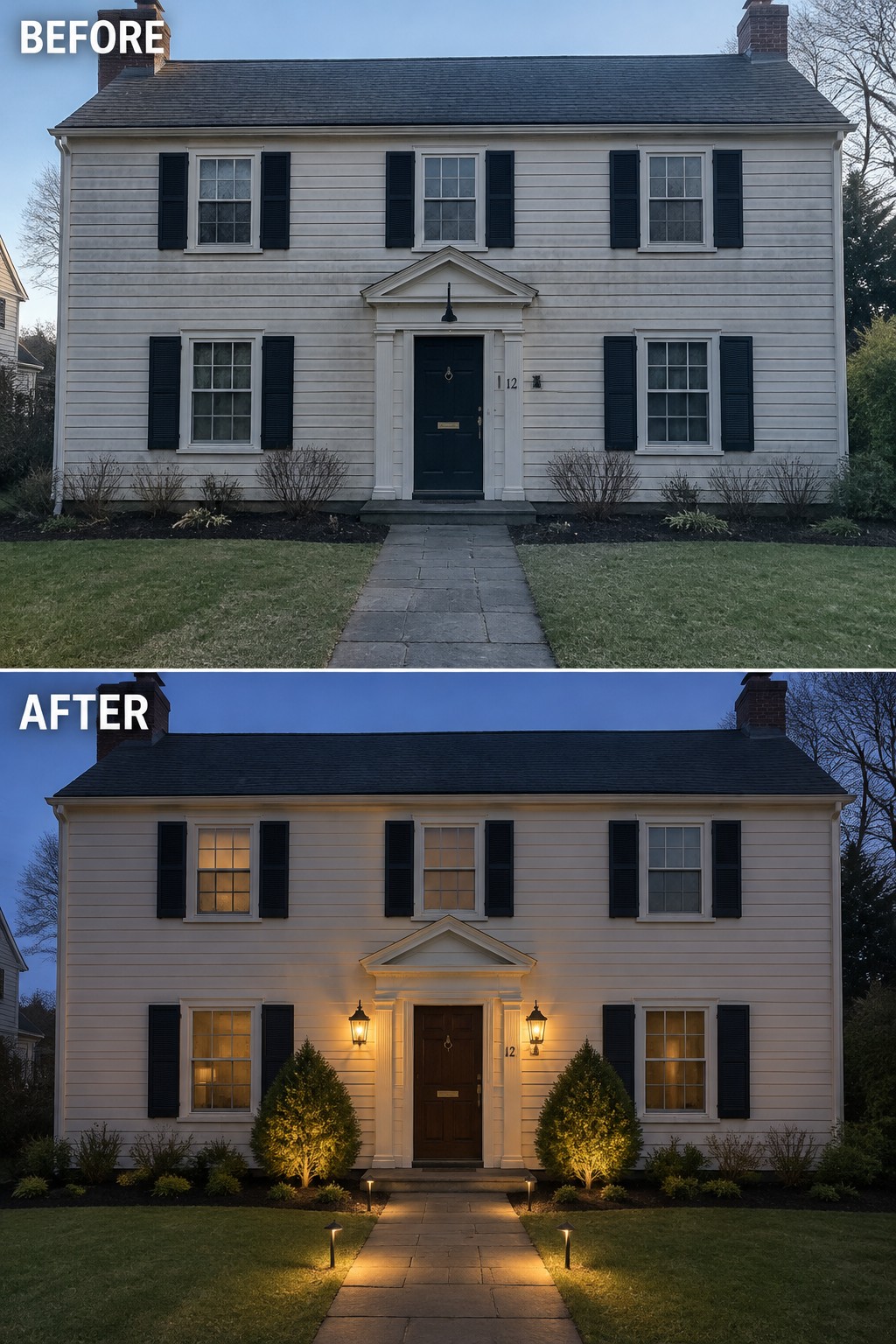
Adding a few targeted lights can turn a plain colonial facade into one that feels welcoming after dark. The before version shows the house sitting in shadow with the dark door and shutters blending into the background. In the after version, warm sconces beside the door, path lights, and uplights on the shrubs give the symmetrical layout clear definition without changing the architecture itself.
This idea works well on homes that already have balanced windows and a centered door. Place lights at the same height on both sides of the entry and keep the bulbs in a consistent warm tone. Avoid over-lighting the whole yard. Focus on the door and one or two plants so the effect stays simple and easy to maintain.
Refresh A Colonial House With White Paint And Black Shutters
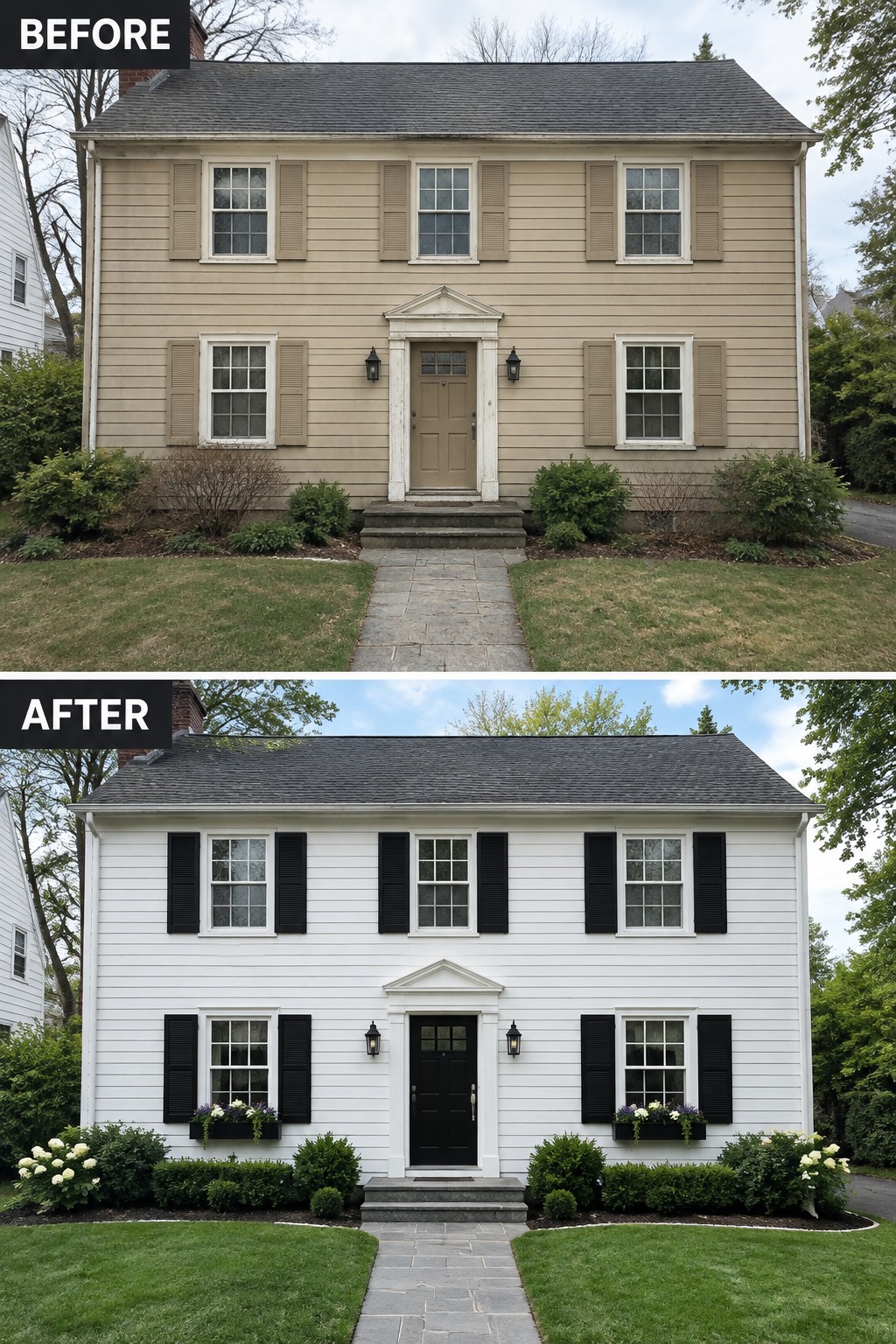
A simple color change can make the symmetrical layout of a colonial house stand out more clearly. In this case, switching the siding from a faded beige to bright white and updating the shutters and door to solid black gives the whole front a cleaner, more balanced look without any structural changes.
This approach works especially well on older colonials that already have evenly spaced windows and a centered door. Start with the paint and trim details before considering larger updates, and test dark shutter colors against your siding to keep the contrast strong but not overpowering.
Add Trim And Structure To A Plain Colonial Entry
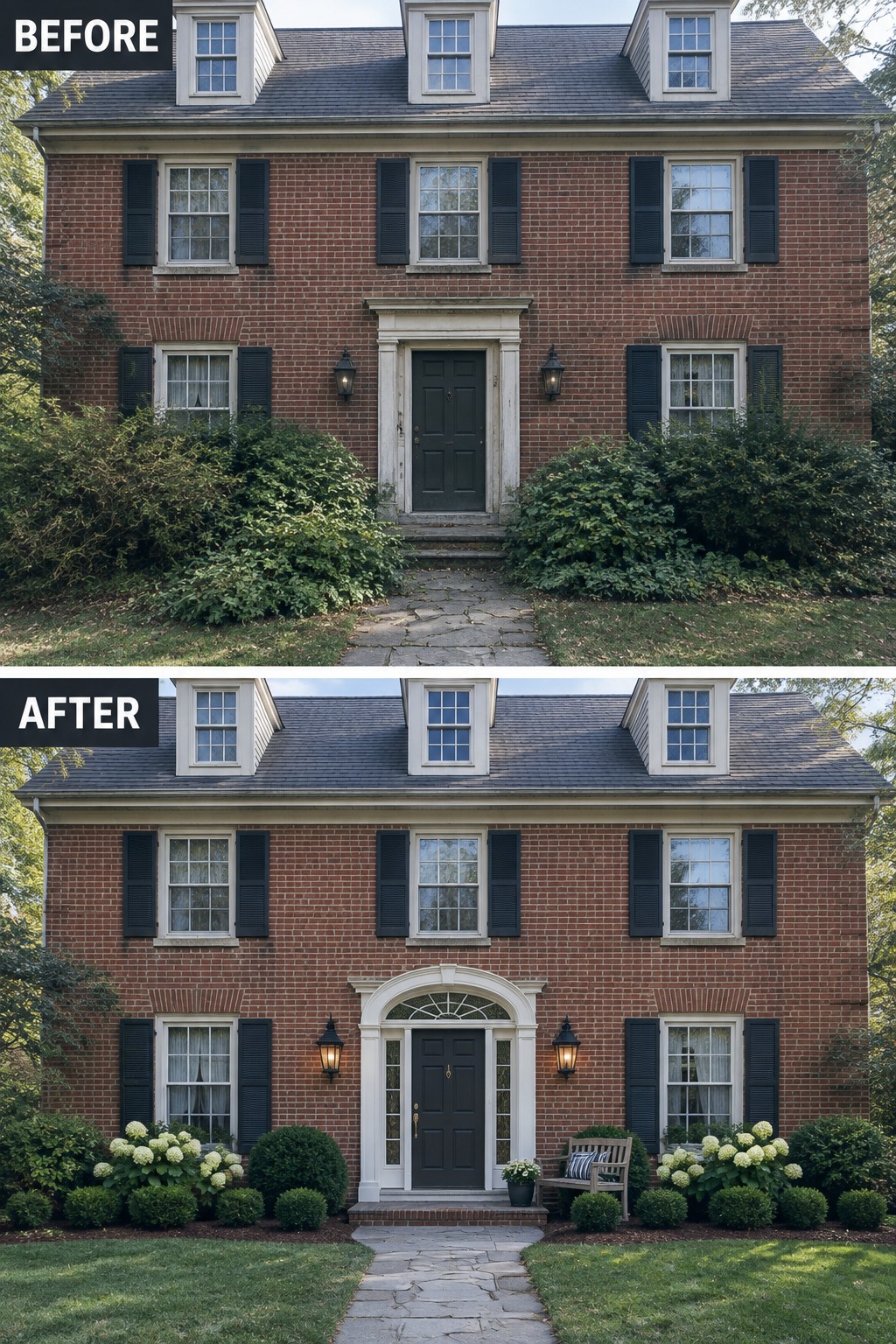
Adding a clear architectural frame around the front door and cleaning up the foundation planting can make a big difference on a brick colonial. The before version had heavy shrubs hiding the base of the house and a door that sat flat against the brick. The after version brings the door forward with a simple arched surround and replaces the wild growth with low, rounded beds that keep the windows and brickwork visible.
This idea suits homes that already have good symmetry but need one stronger focal point at the entry. Start with the door surround if your budget allows, then edit the planting so nothing blocks the lower windows or climbs too high. Use one or two repeating plants in the new beds and keep a clear path to the steps. The result feels finished without requiring a full repaint or major renovation.
Replace Concrete Steps With Brick For A Stronger Entry
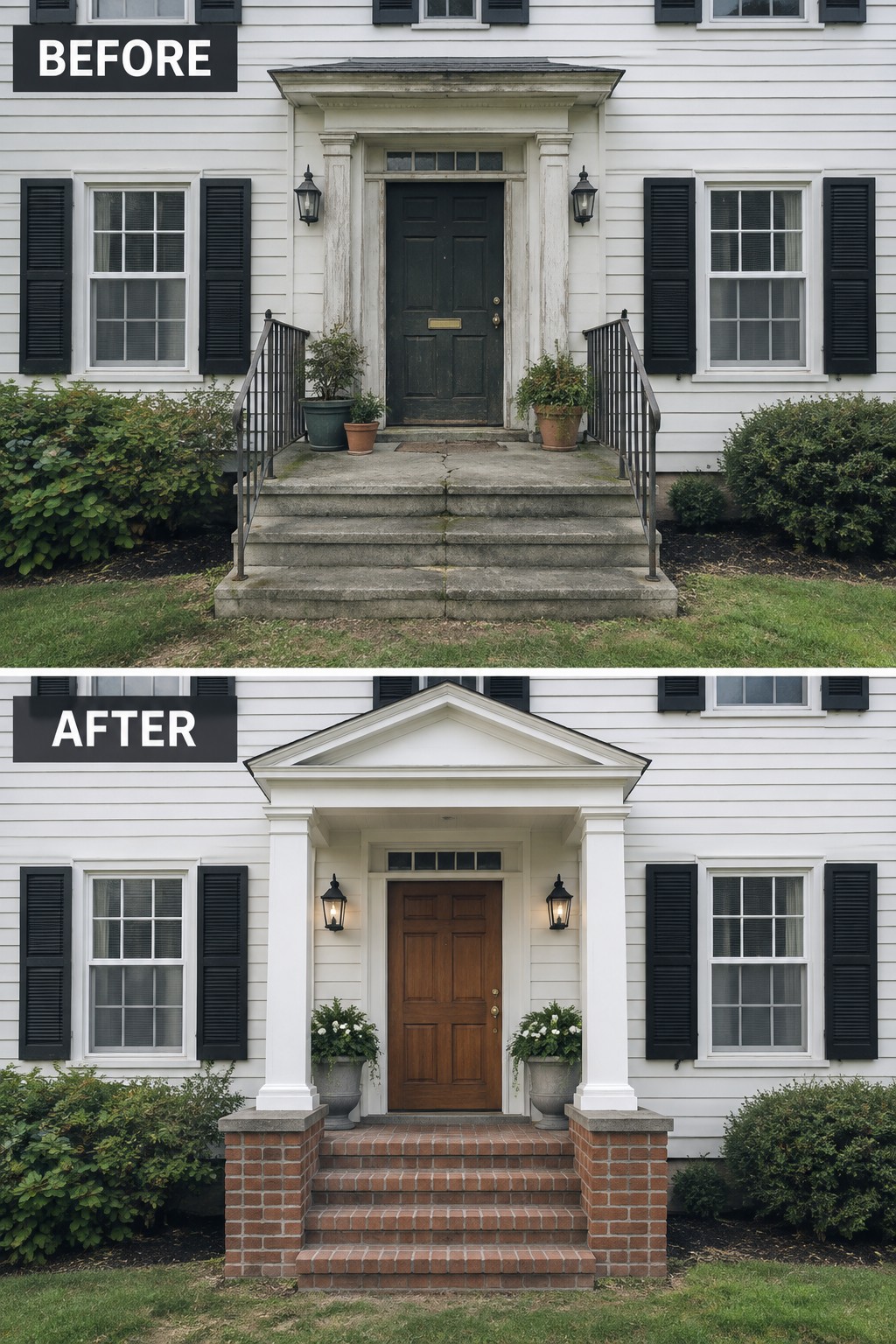
The original concrete steps had cracked over time and sat flat against the house without much presence. Switching them out for brick steps with brick piers on both sides gave the door a solid base that feels more connected to the rest of the facade. The change also helped the entry look more balanced with the windows on either side.
This approach works well on colonial homes where the door sits in the center. Brick holds up better than concrete in most climates and adds a bit of warmth that plain gray steps usually lack. If your steps are still sound, you can often build over them rather than starting from scratch.
Add Shutters To Strengthen Symmetrical Windows
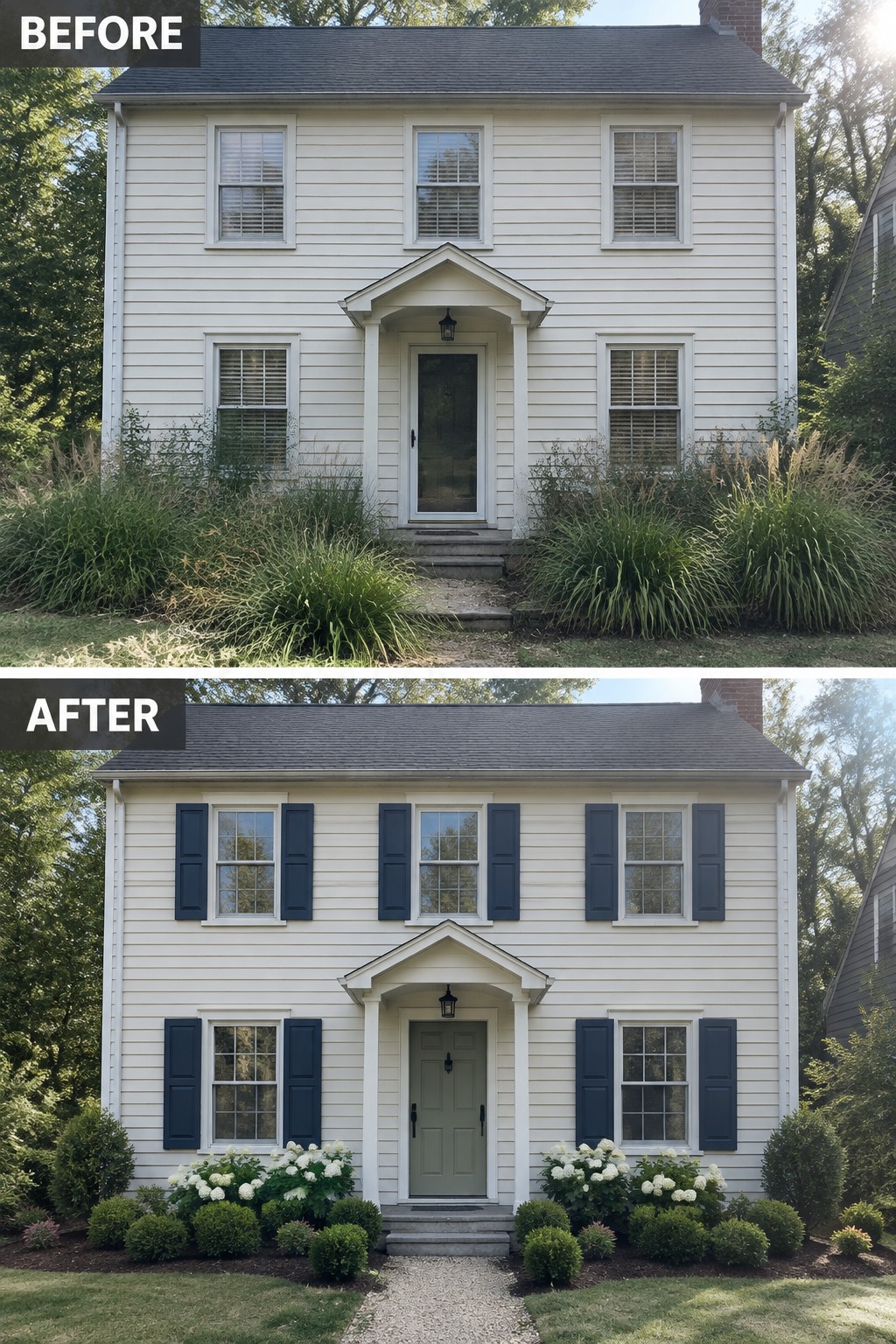
Adding shutters is one of the simplest ways to make a colonial house look more finished and balanced. In this case the before photo shows plain windows that feel a bit flat against the siding. Once dark shutters were added to every window the whole front gained clear rhythm and the central door became the natural focal point without any major construction.
This idea works especially well on homes that already have evenly spaced windows. Paint the shutters a color that contrasts with the siding but still feels traditional, and keep the rest of the facade simple so the pattern stays easy to read. Start with the windows that sit directly beside the door, then match the rest to them.
Add Shutters And A New Door Color To Refresh A Colonial Exterior
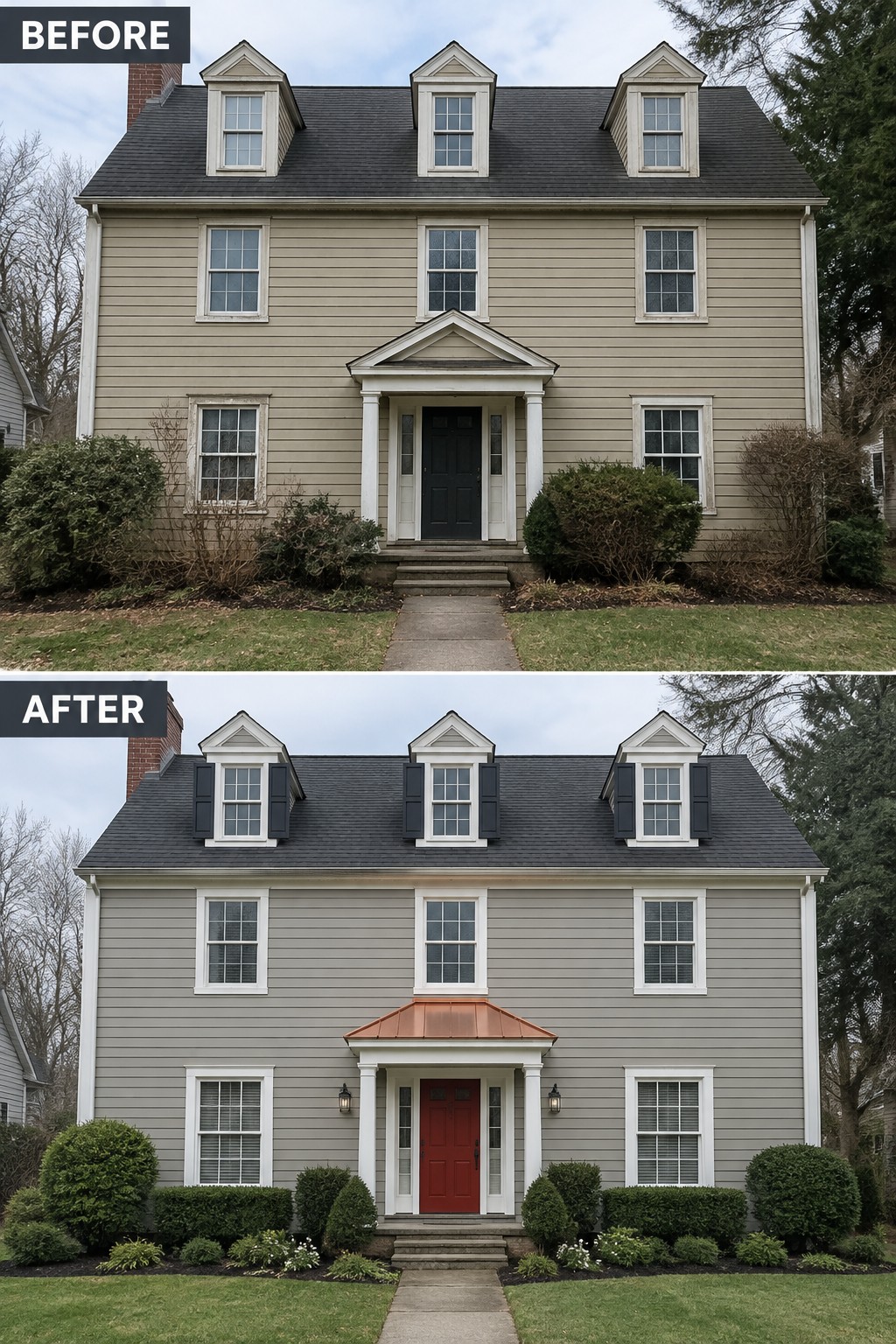
Many colonial homes already have strong symmetry, but the details can still feel unfinished. Adding black shutters to the dormers and changing the front door to a deep red gave this house more presence without any major construction.
This kind of update works especially well on houses with evenly spaced windows and a centered entry. Focus first on the upper windows if you want quick impact, then pick a door color that contrasts with the siding. Keep the rest of the trim simple so the new elements stand out.
Give A Bare Porch A Clear Purpose
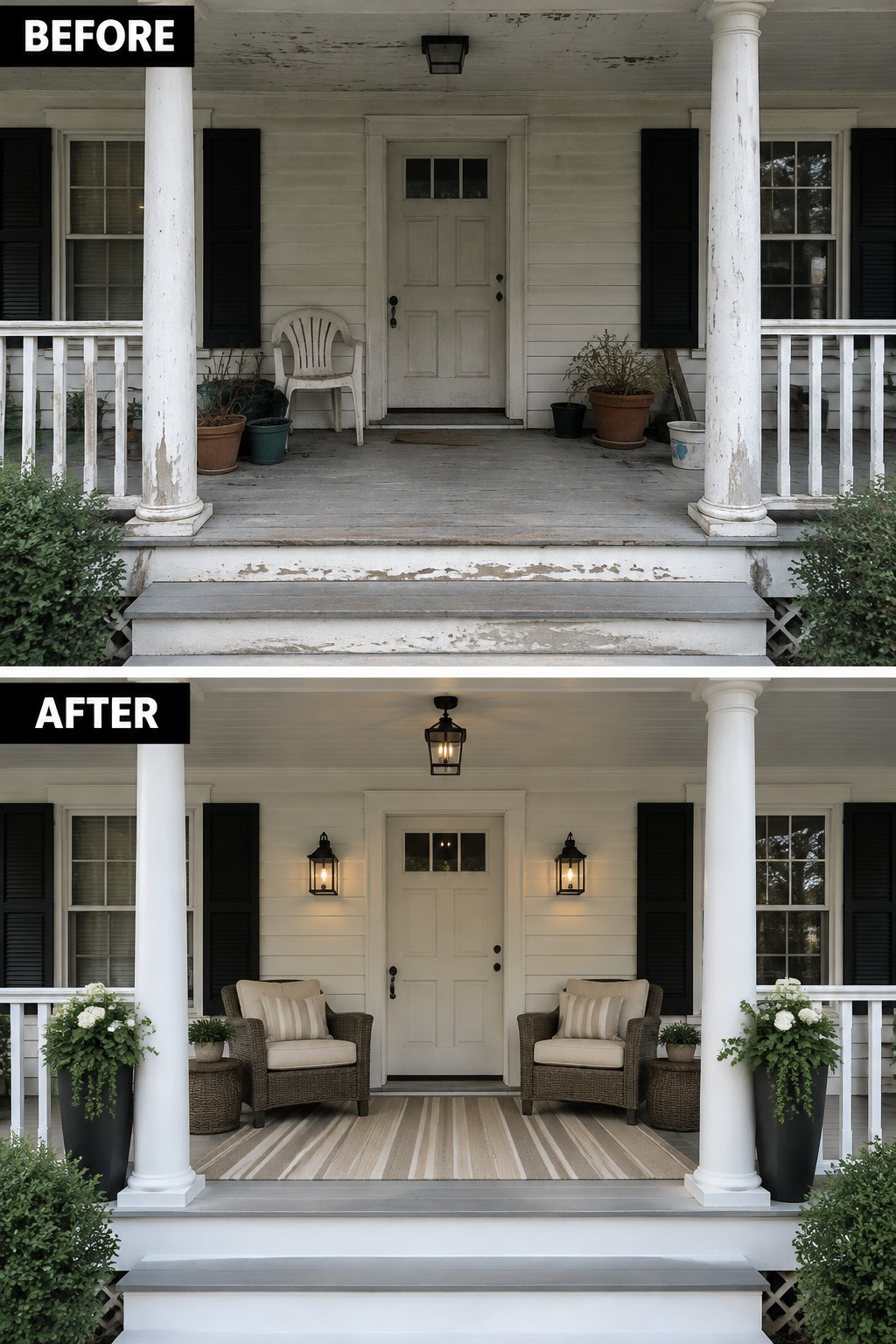
A porch that sits empty often ends up looking like leftover space rather than part of the house. Adding two matching chairs, a striped rug, and a pair of planters on either side of the steps gives the area a simple job to do. It now reads as an entry spot instead of just a walkway.
This idea suits colonial homes where the front is meant to feel balanced. Keep the furniture to a small scale so it does not crowd the door, and choose pieces made for outdoor use. Start with the rug to mark the seating zone, then add the chairs and planters so everything lines up with the door and windows.
Choose A Wood Tone Door To Warm Up Brick
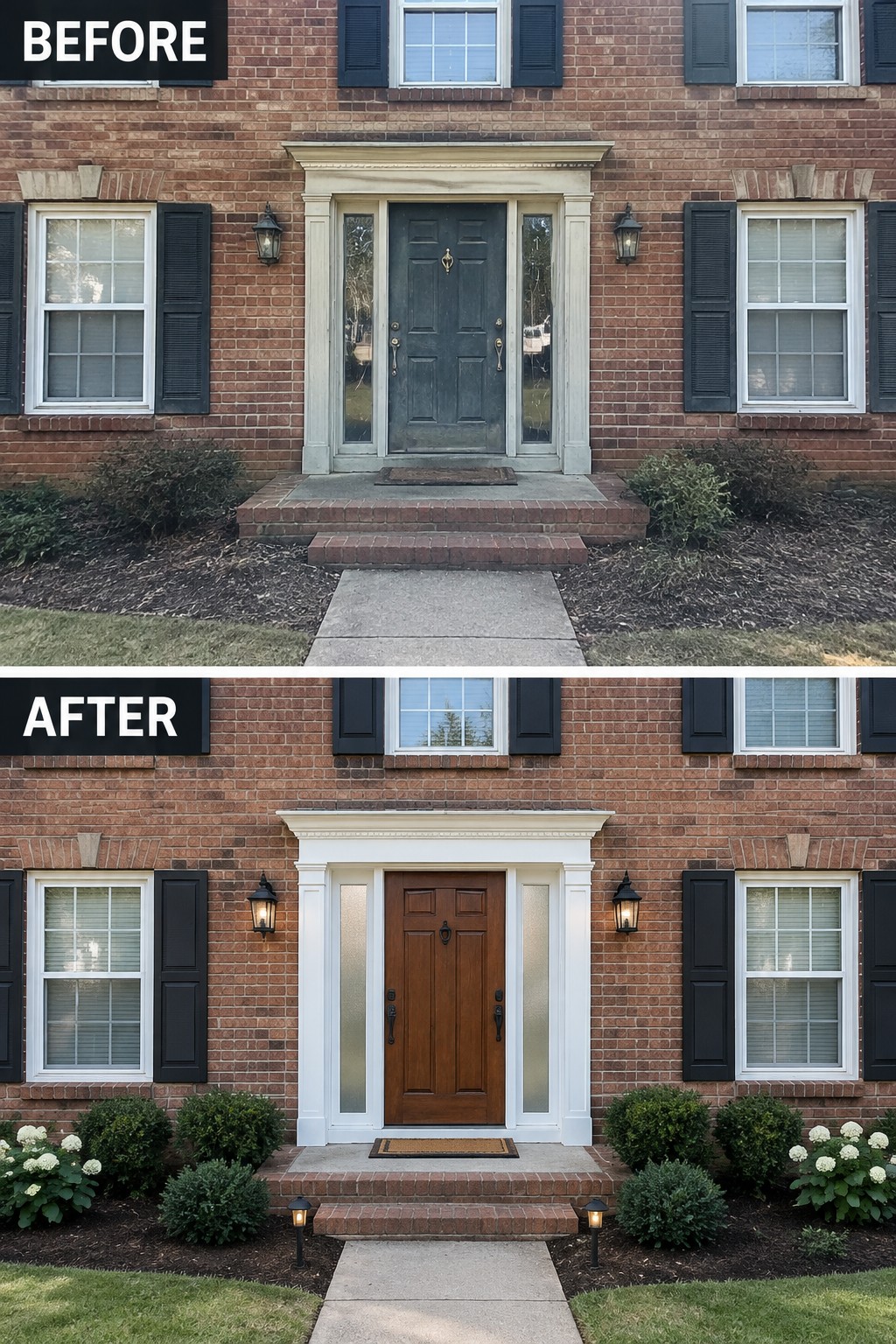
Many brick colonials end up looking flat when the front door is painted a dark or cool color. Switching to a wood tone door adds natural warmth that works with the brick instead of fighting it. The change also makes the whole entry feel more settled and connected to the rest of the house.
This idea suits symmetrical colonial facades especially well because the door sits right in the center. Keep the trim white, match the new door hardware to the existing lights, and add a few low shrubs on either side so the entry feels framed without crowding the walkway.
Clean Up Overgrown Shrubs Before Adding Entry Details
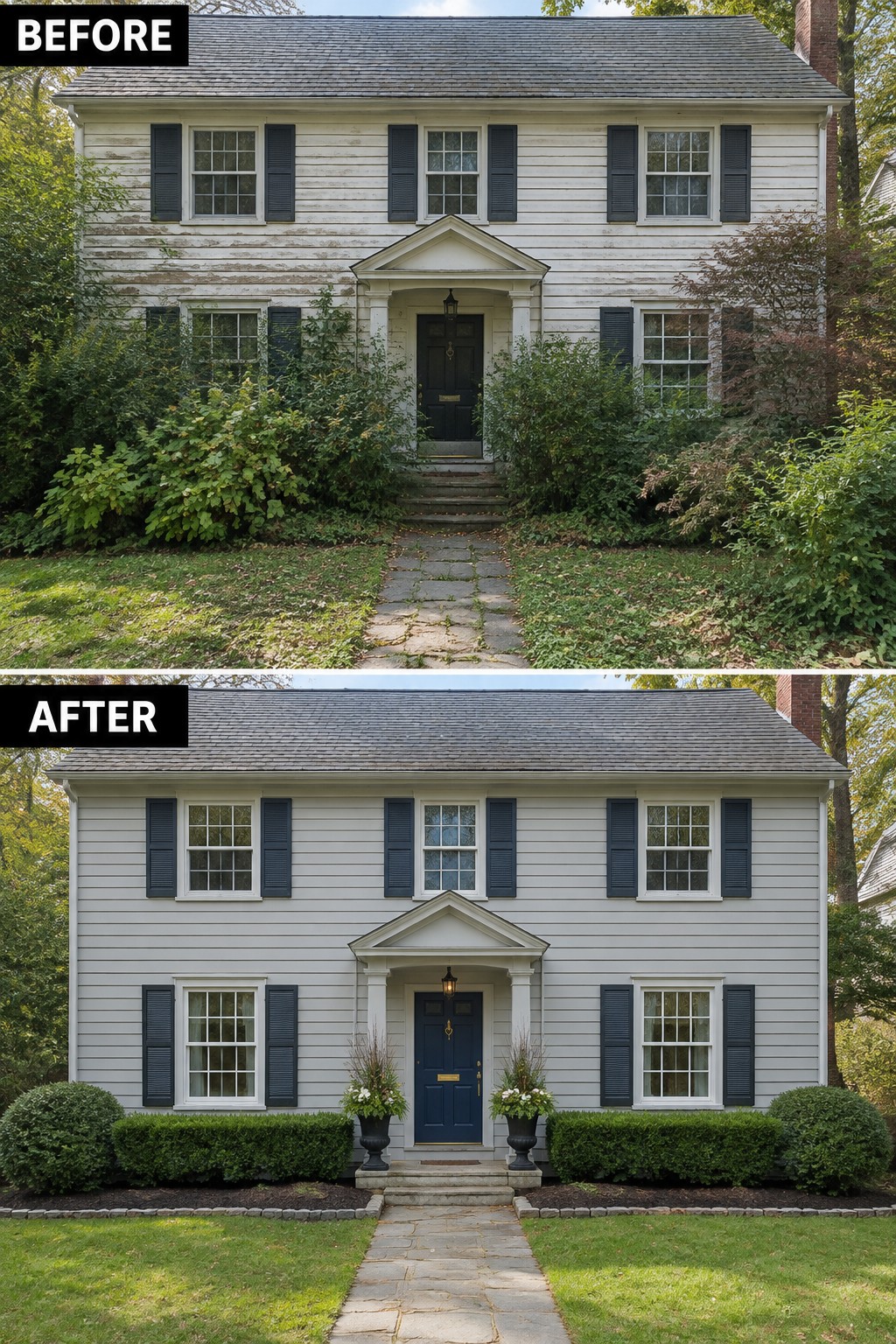
The before photo shows how dense, untrimmed bushes can hide the front of a house and make even a symmetrical colonial feel closed off. Once the heavy growth was cleared and replaced with low, shaped hedges along the foundation plus a couple of potted plants at the steps, the centered door and evenly spaced windows became the clear focus.
This approach works well on older homes where the architecture is already balanced. Start by removing or heavily pruning anything that blocks windows or crowds the walkway, then add simple, low plantings that stay below the first-floor windows. Keep the new beds narrow so the lawn still feels open and the path remains easy to walk.
Add Matching Garden Beds To Frame The Entry
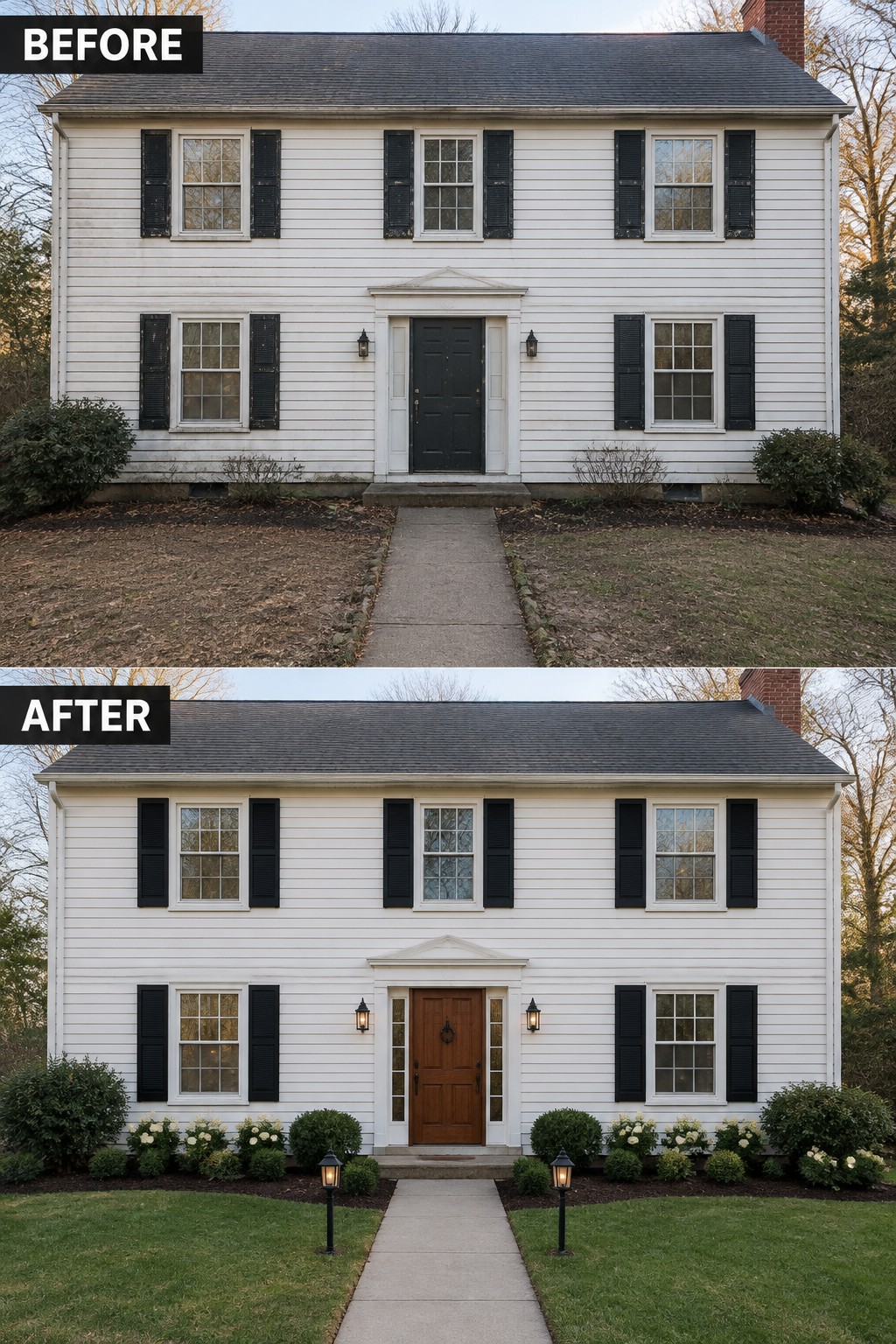
This colonial house gained a much cleaner look once the patchy dirt and sparse bushes were replaced with a full lawn and matching beds on both sides of the walk. The beds echo the symmetry of the windows and door, and the new wood-tone door adds a warmer focal point without any major construction.
The same idea works well on other older homes where the architecture already has strong lines. Start by clearing the front strip, then plant low shrubs and flowers in balanced groups so the house remains the main feature. Keep the beds narrow enough to leave plenty of lawn and walkway space.
Add Shutters To Strengthen Symmetrical Window Arrangements
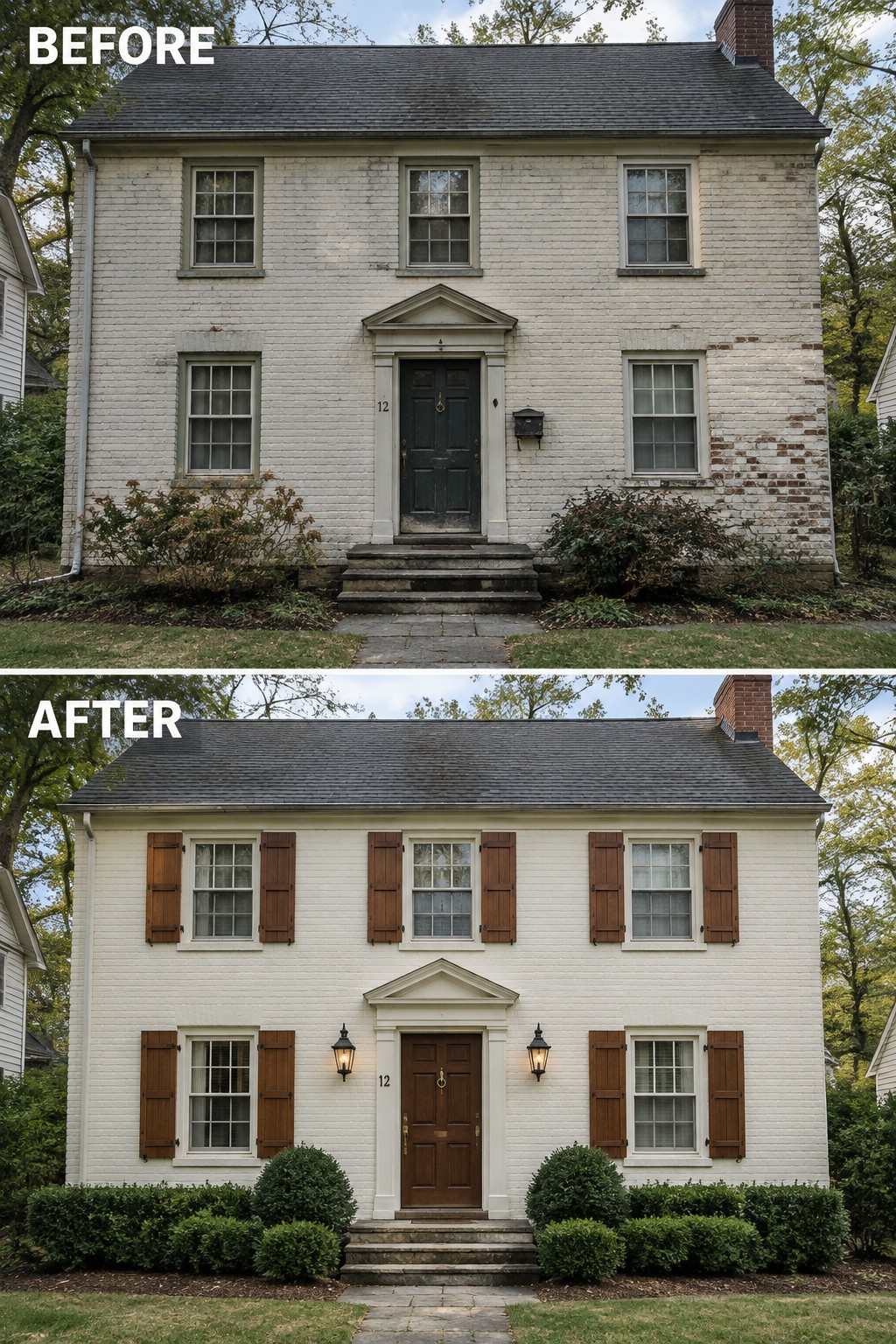
Many colonial homes already have a centered door and evenly spaced windows. The main difference here is the addition of matching brown shutters on every window, which makes the balanced layout much more obvious. The before version left the windows plain, so the front felt a little unfinished even though the basic structure was solid.
This approach works best on brick colonials where the windows need extra definition. Match the shutter size and color across both floors, and keep the trim around the door simple so the symmetry stays the main feature. It is an easy update that improves curb appeal without changing the architecture.
Refresh The Exterior Paint And Door Color On A Colonial Home
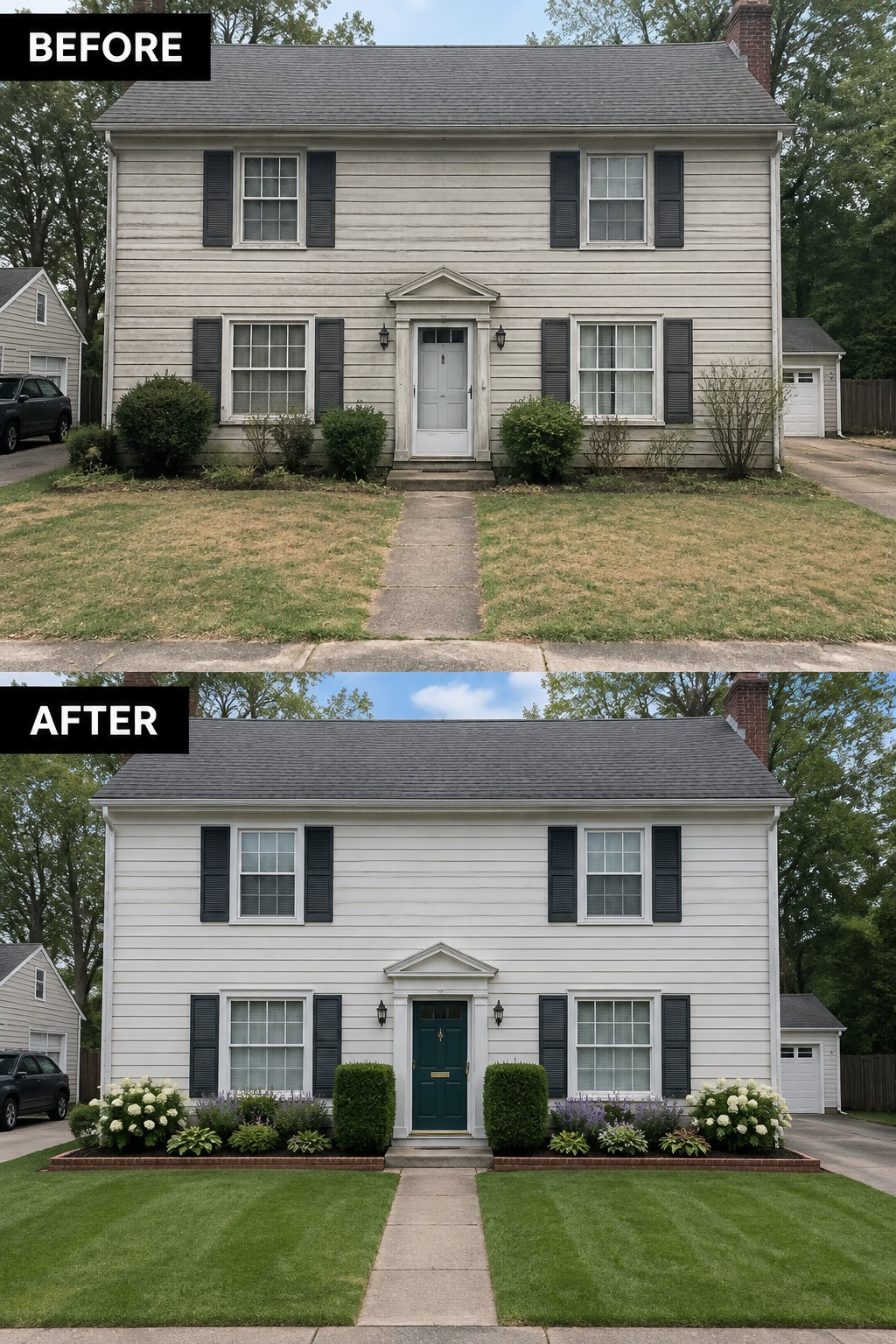
The beige siding and light door made the house look flat even though the windows stayed balanced. Switching to white paint and a deep green door gave the front a cleaner shape and helped the centered doorway stand out more clearly.
This approach suits older colonials that already have good window placement. Pick a bright white for the siding, then test a few door colors in person since they can shift with the light. Keep new planting low and simple so it frames the entry without crowding the walk.
Replace The Concrete Walk With Brick To Frame The Entry
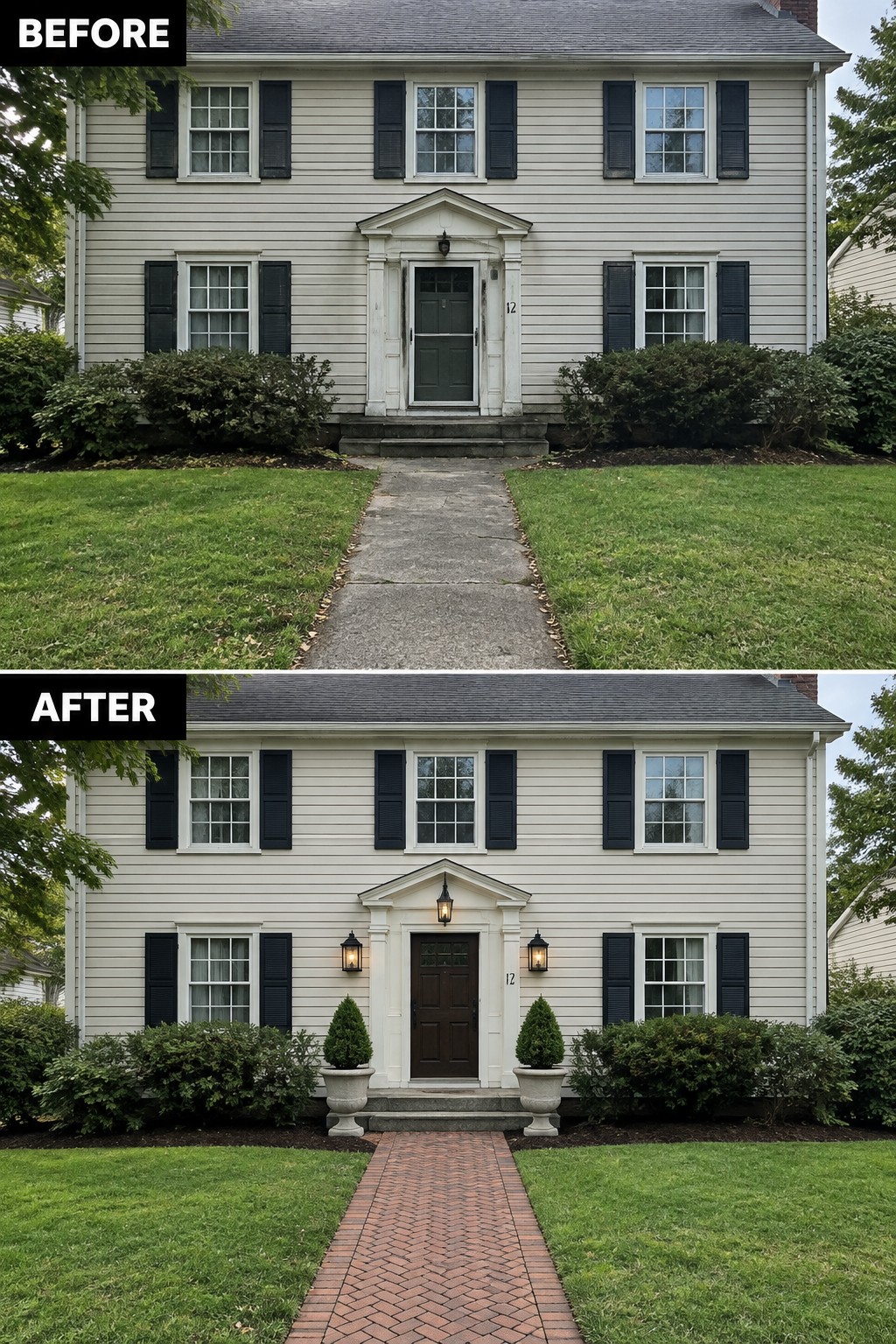
A straight concrete path often feels flat and temporary in front of a colonial house. Switching it to a brick herringbone pattern gives the walkway weight and direction so the eye travels straight to the door. Adding a pair of matching urns with small evergreens on either side of the steps reinforces the symmetry already present in the windows and shutters.
This approach works especially well on houses that already have balanced facades. The new path and planters do most of the work without requiring paint changes or major construction. Keep the plantings simple and repeat the same container style on both sides so the entry stays orderly rather than busy.
Change The Shutter Color To Strengthen A Colonial Facade
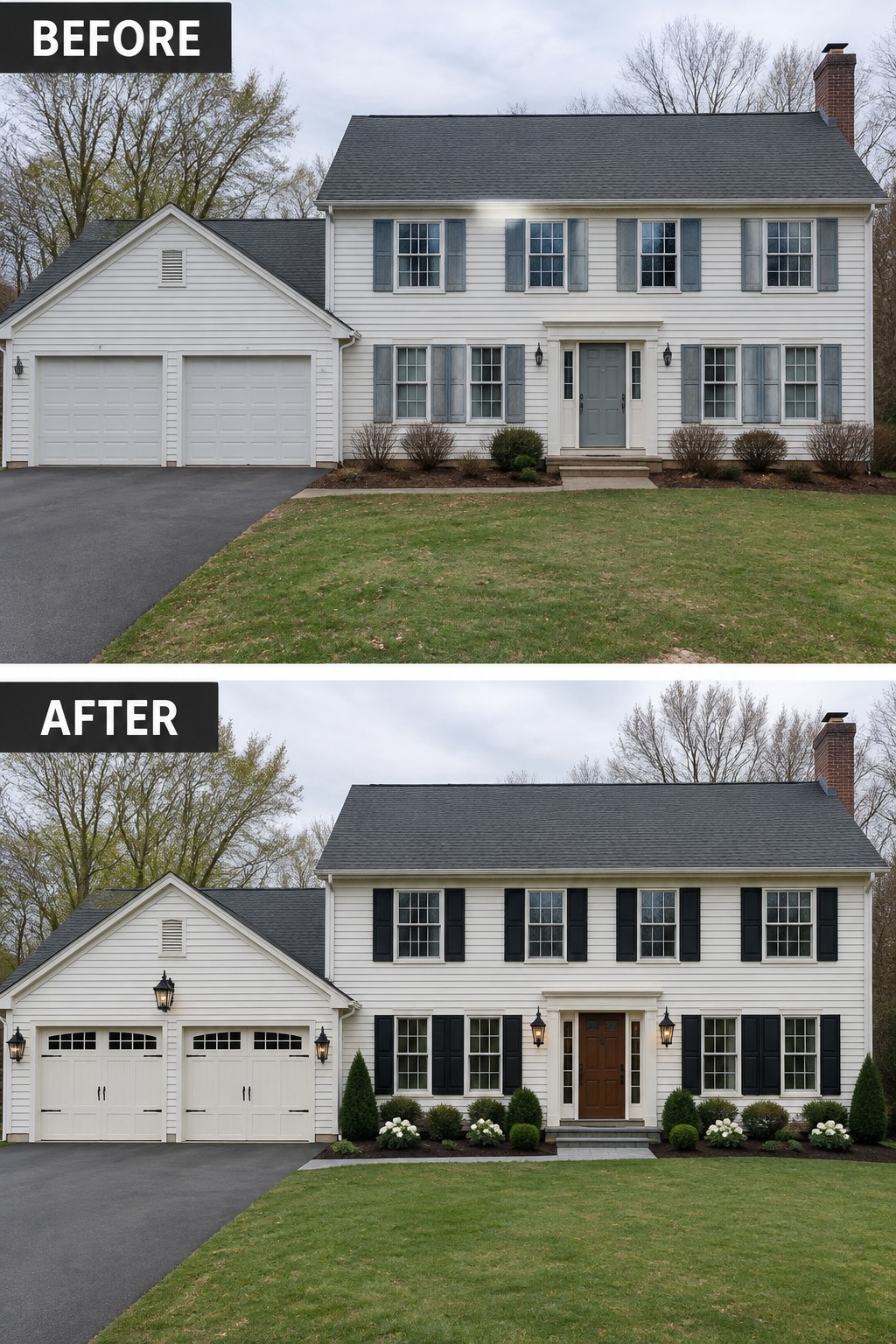
Swapping light shutters for black ones gives this house a much clearer shape. The dark frames make the windows stand out against the white siding and create a stronger rhythm across the front. The new brown door and added exterior lights also help tie everything together without any major construction.
This approach works especially well on colonial homes that already have good window placement. Start by picking one dark color for the shutters and repeat it on the front door if it fits the style. Add a couple of wall lights near the entry so the change shows up at night too. Keep the rest of the house simple so the contrast does the work.
Add Shutters To Strengthen Symmetrical Window Arrangements
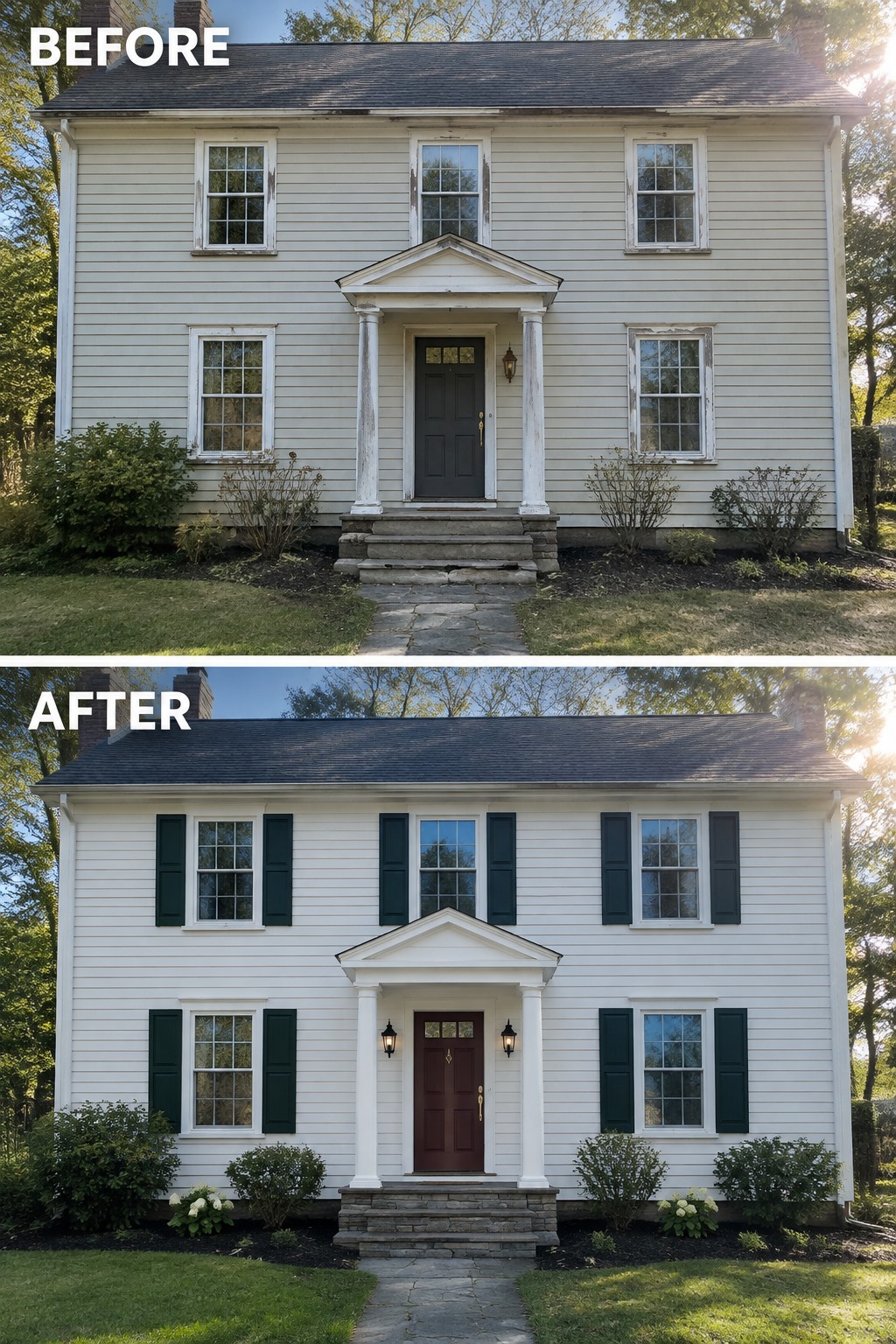
The before photo shows a colonial house where the windows sit evenly but feel flat against the siding. Adding dark green shutters to every window in the after version gives each opening a clear frame. This small change makes the balanced layout of the facade much more obvious without any structural work.
This idea suits colonial homes that already have a centered door and evenly spaced windows. Match the shutter color to other trim or the front door so the whole front feels coordinated. Start with the windows that need the most definition and keep the shutters sized to the glass so they look like they belong there.
Update The Front Entry With Stronger Trim And Lighting
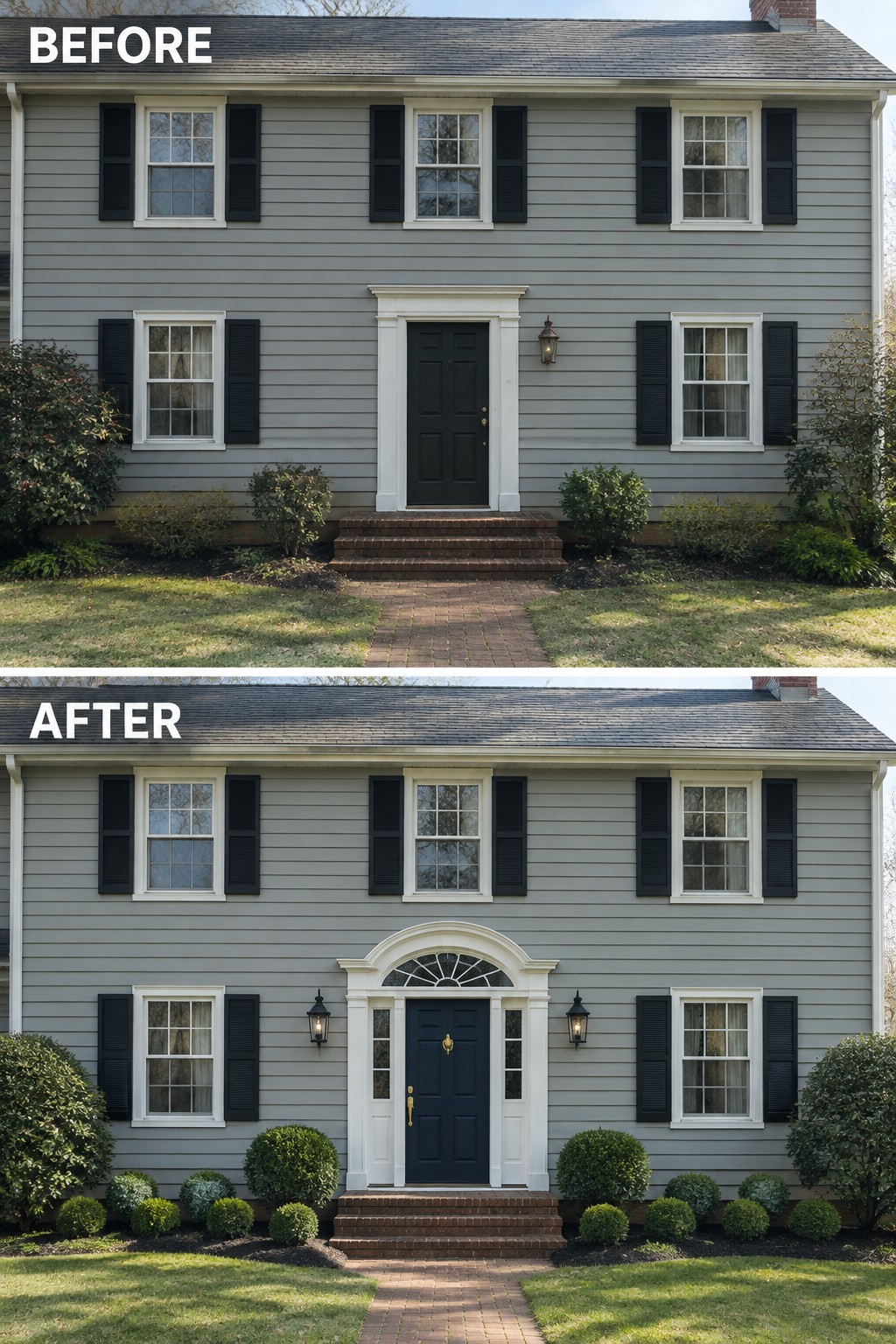
Many colonial homes have a perfectly fine front door that still feels a little lost on the facade. Here the entry changed from a flat rectangular surround to one with an arched pediment and sidelights, plus a pair of lanterns on either side. That one adjustment gives the door real presence and makes the whole front feel more balanced.
This approach works best on symmetrical houses where the door already sits in the center. If your entry looks flat, start with the trim and lighting rather than repainting the whole house. Keep the scale modest so the new details match the size of the door and windows instead of overpowering them.
Add Shutters To Strengthen A Colonial Home’s Symmetry
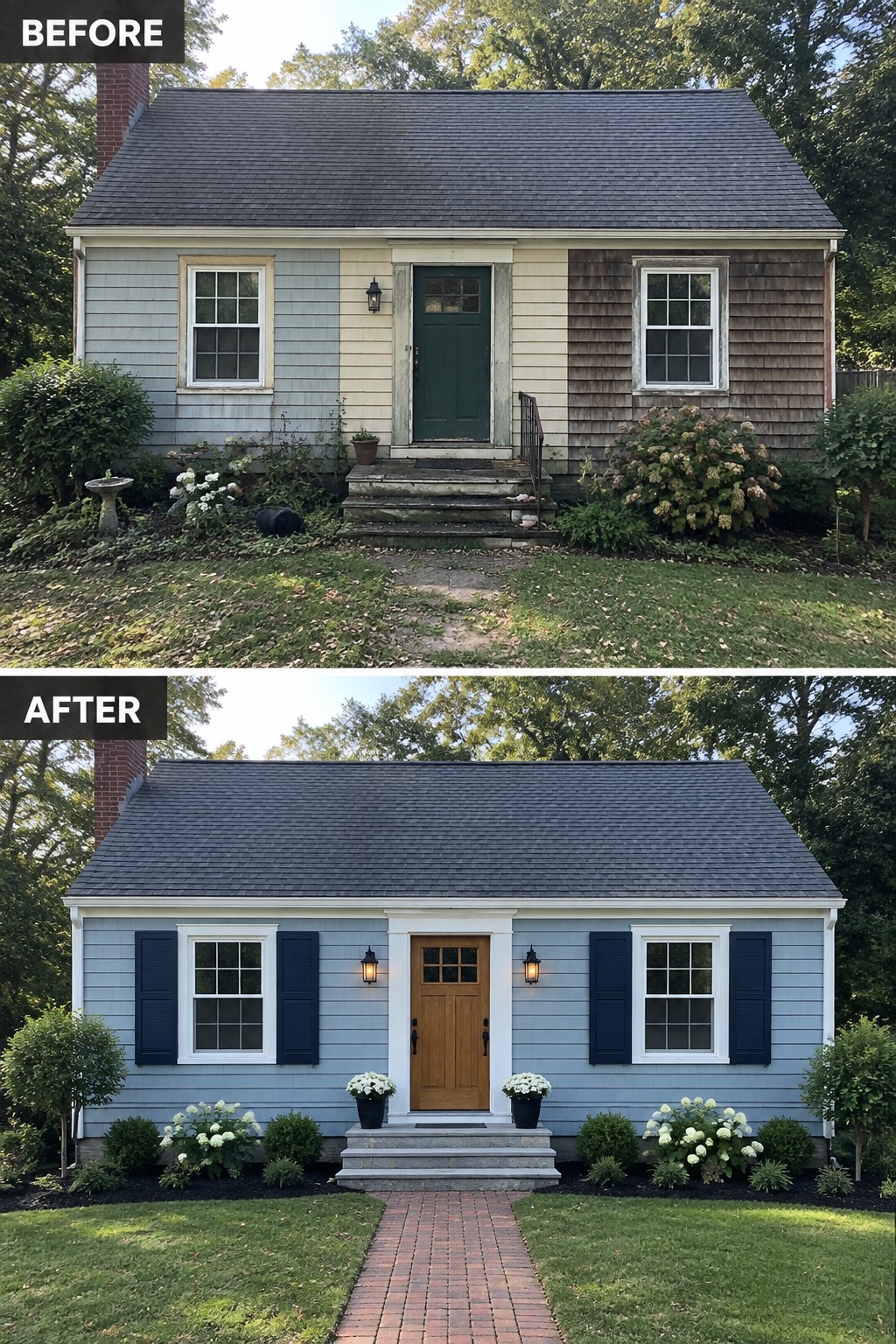
The before photo shows a house with uneven siding colors and bare windows that made the front feel a bit scattered. In the after, dark shutters were added to every window, the door was changed to a warmer wood tone, and the trim was painted white. These changes make the existing window and door placement look much more balanced and intentional.
This idea works best on colonial houses that already have a centered door and evenly spaced windows. Choose a shutter color that contrasts with the siding but stays within a classic range, and keep the trim crisp so the symmetry stays clear. It is a straightforward update that improves curb appeal without major construction.
Frequently Asked Questions
Q: What if my house already has an off-center garage that throws off the whole front? A: Treat the garage as a separate wing and add matching shutters or window boxes on either side of the main house. This draws attention back to the centered door and windows without fighting the layout.
Q: How do I pick shutters so they do not make one side look heavier than the other? A: Choose the same size and style for every window that gets them. Skip shutters on any small accent windows near the edges to keep the balance even.
Q: Can landscaping help if the windows sit at slightly different heights? A: Line up low hedges or flower beds straight across the base of the house. The straight line at the bottom makes the upper arrangement feel more even from the street.