

I’ve always thought that the right trim color can bring out the lines of a Federal Colonial house in a way that makes the whole exterior feel more intentional.
Choosing a bold contrast draws attention to details like cornices and shutters while keeping the update simple and paint based.
Small choices like this often improve curb appeal more than expected.
When I look at homes with this kind of trim work I wonder which pairings would suit my own neighborhood best.
A few of these examples show how the approach adapts to different siding tones without needing a complete repaint.
Use Contrasting Trim To Update A Colonial Exterior
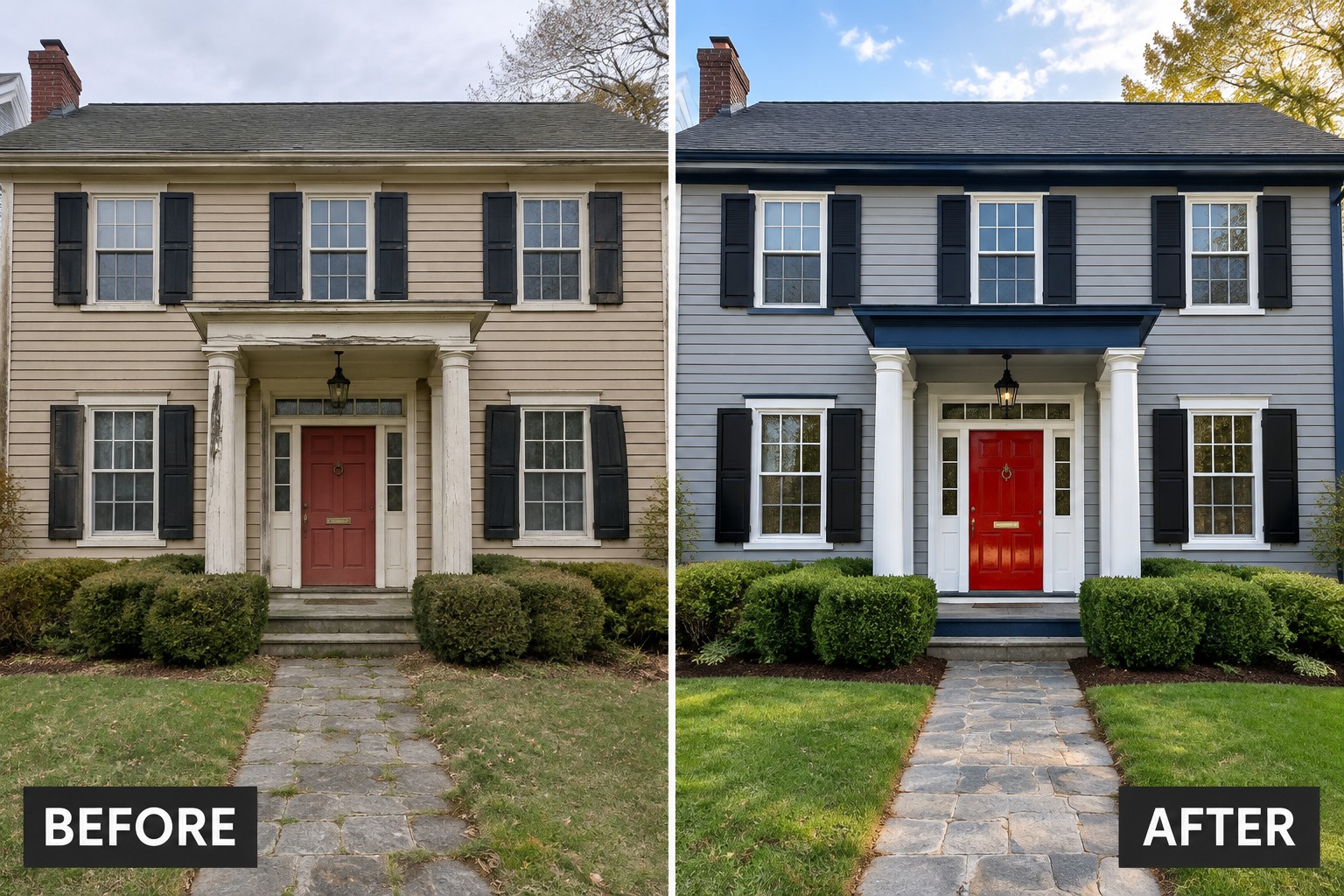
The before photo shows a house with faded beige siding and white trim that looks tired and flat. In the after photo the siding shifts to a soft gray while the porch structure and door surround get painted a strong blue. That one color change makes the entry stand out and gives the whole front a clearer shape.
This idea works best on homes that already have columns and a defined porch. Choose one trim color that contrasts with the siding and apply it to the main architectural lines around the door and porch ceiling. Keep shutters and columns lighter so the new color does not overwhelm the facade.
Paint The Trim Dark On A Red Brick Colonial

A red brick house often looks flat when the trim is the same faded white as the window frames and door surround. Switching the trim to a deep charcoal or black color gives the whole facade more weight and makes the brick read as intentional rather than just old. The front door can then take a slightly different shade, such as the deep green used here, without competing.
This approach works best on simple Federal or Georgian colonials where the trim lines are already strong. Start with the cornice, window casings, and entry surround, then match the shutters. Keep the changes to paint only if the underlying wood is sound. The result is a clearer, more finished look that still respects the age of the house.
Use Black Window Frames And Dark Entry Trim To Define A Colonial Exterior
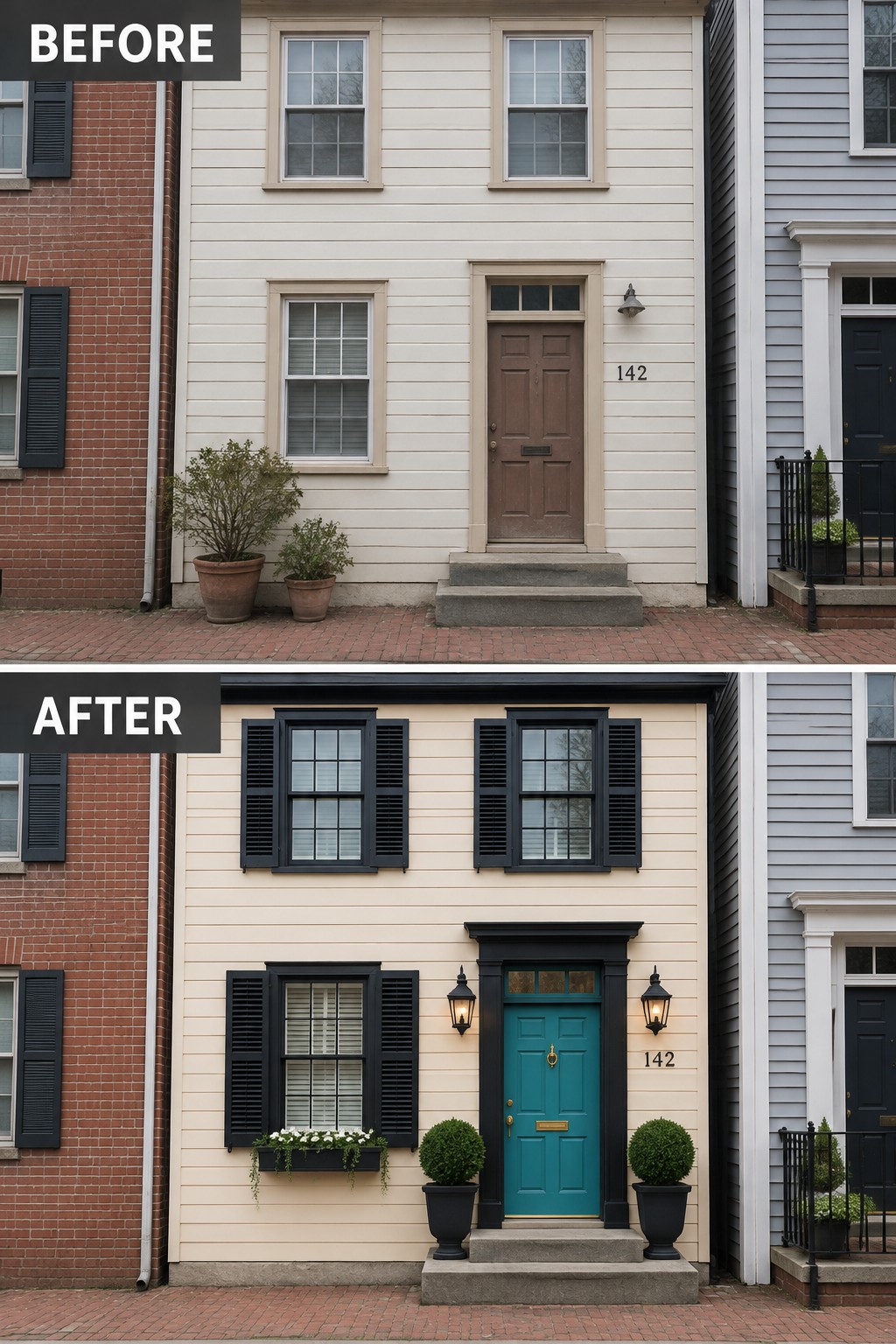
A flat facade often comes from siding and trim sitting in the same tone. Switching the shutters and window frames to black, then wrapping the door in a dark surround, creates clear lines that make the house feel more finished and intentional.
This works well on Federal Colonials because the windows are already balanced. Pick a trim color that is at least three shades darker than the siding, then use a brighter door color inside that frame. Start with just the windows and entry if you want to test the look before committing to more changes.
Add Black Shutters And White Trim To Define A Colonial Exterior
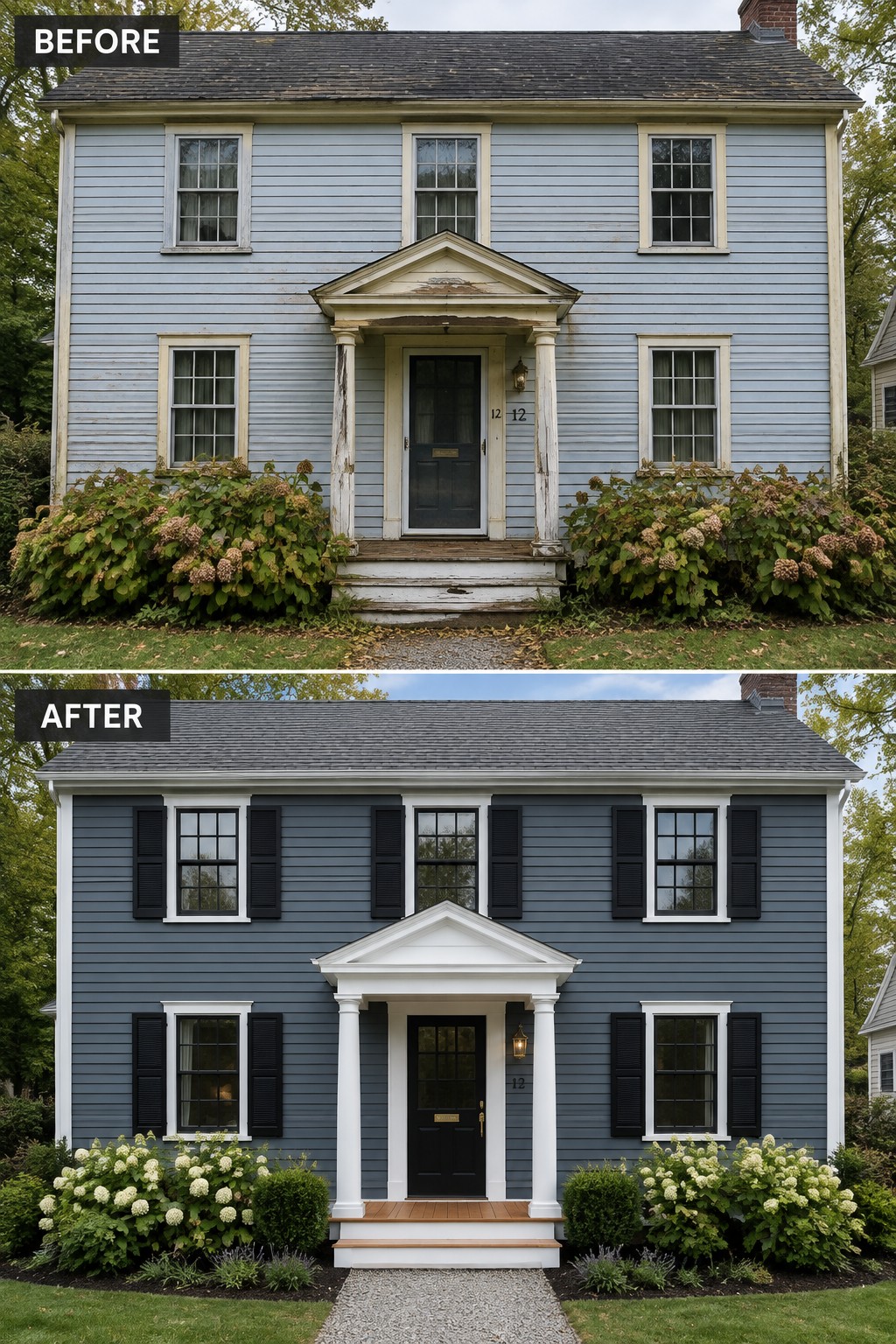
Many colonial homes start to look flat when the trim fades and the windows have nothing to frame them. Here the before shows a pale blue house with peeling columns and bare windows. The after uses a darker siding color, black shutters, and fresh white trim to give the facade clear lines and better balance.
This idea suits federal colonials especially well because the style already has strong window shapes. Pick one dark shutter color that stands out against the siding, then keep the trim bright so the contrast stays sharp. It is an affordable step that works on its own or before any larger exterior work.
Use Deep Green Trim And A Black Door To Define A Colonial Exterior

The house in the before photo has everything the same color, so the windows, door surround, and columns disappear into the siding. Switching the trim to a deep green and painting the door black gives the facade clear lines and makes the entry the main focus without changing the structure.
This approach suits Federal Colonial homes that already have good proportions. Choose one dark color for the trim, shutters, and door, then keep the siding light so the contrast does the work. It is an easy first step before considering larger changes like new siding or windows.
Use Dark Trim To Give A Light Colonial More Definition
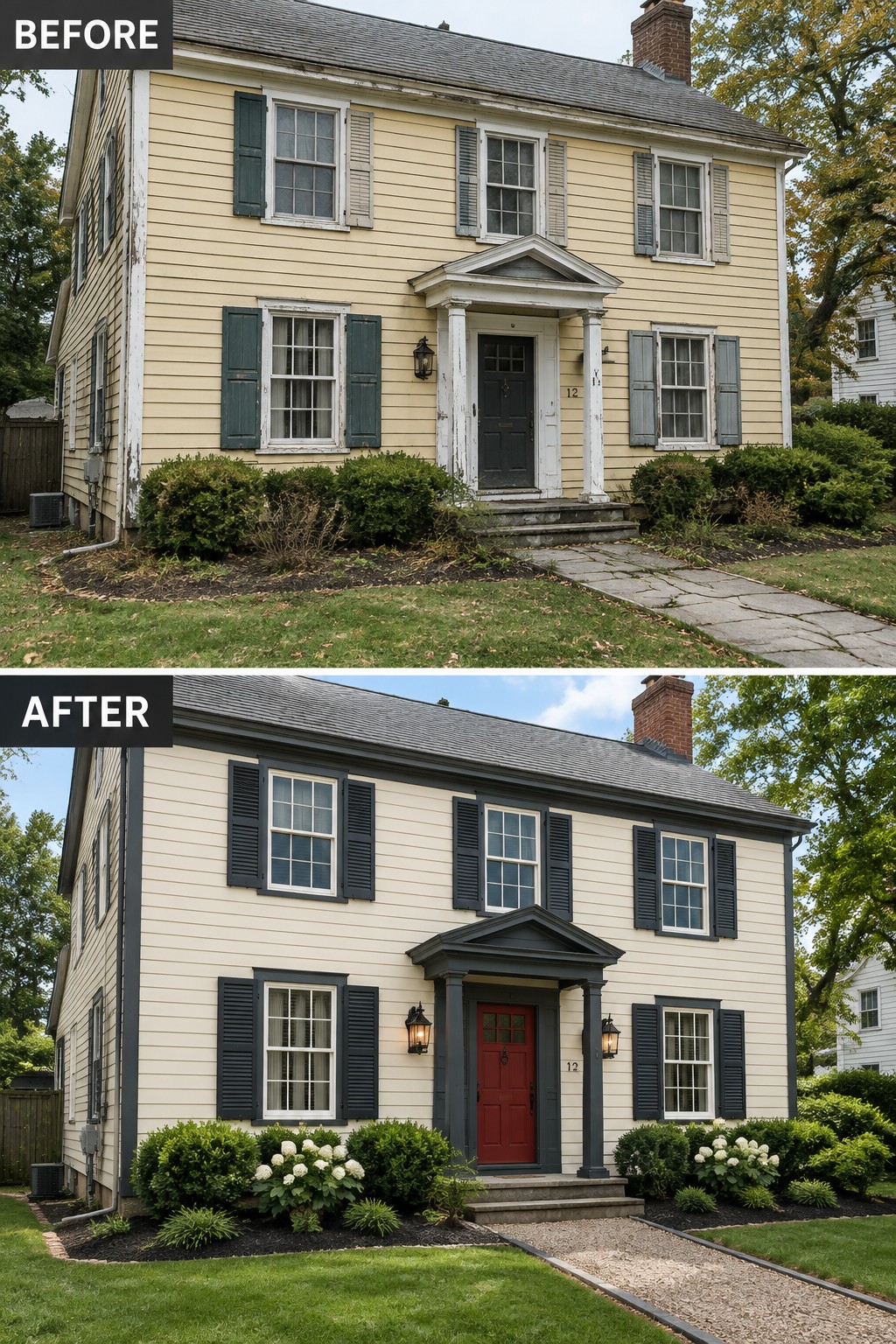
Painting the trim, shutters, and entry a single dark color against light siding makes the whole house feel more pulled together. In this case, the mismatched and faded shutters gave way to consistent dark gray ones, while the white portico and trim were painted to match, and the front door was changed to a strong red. The result is a cleaner silhouette that highlights the Federal details without any major structural work.
This approach works especially well on older colonials that already have plenty of windows and trim lines. Pick one dark paint color for all the trim and shutters first, then add one accent color on the door. It keeps the project simple and lets the architecture do the talking instead of competing colors.
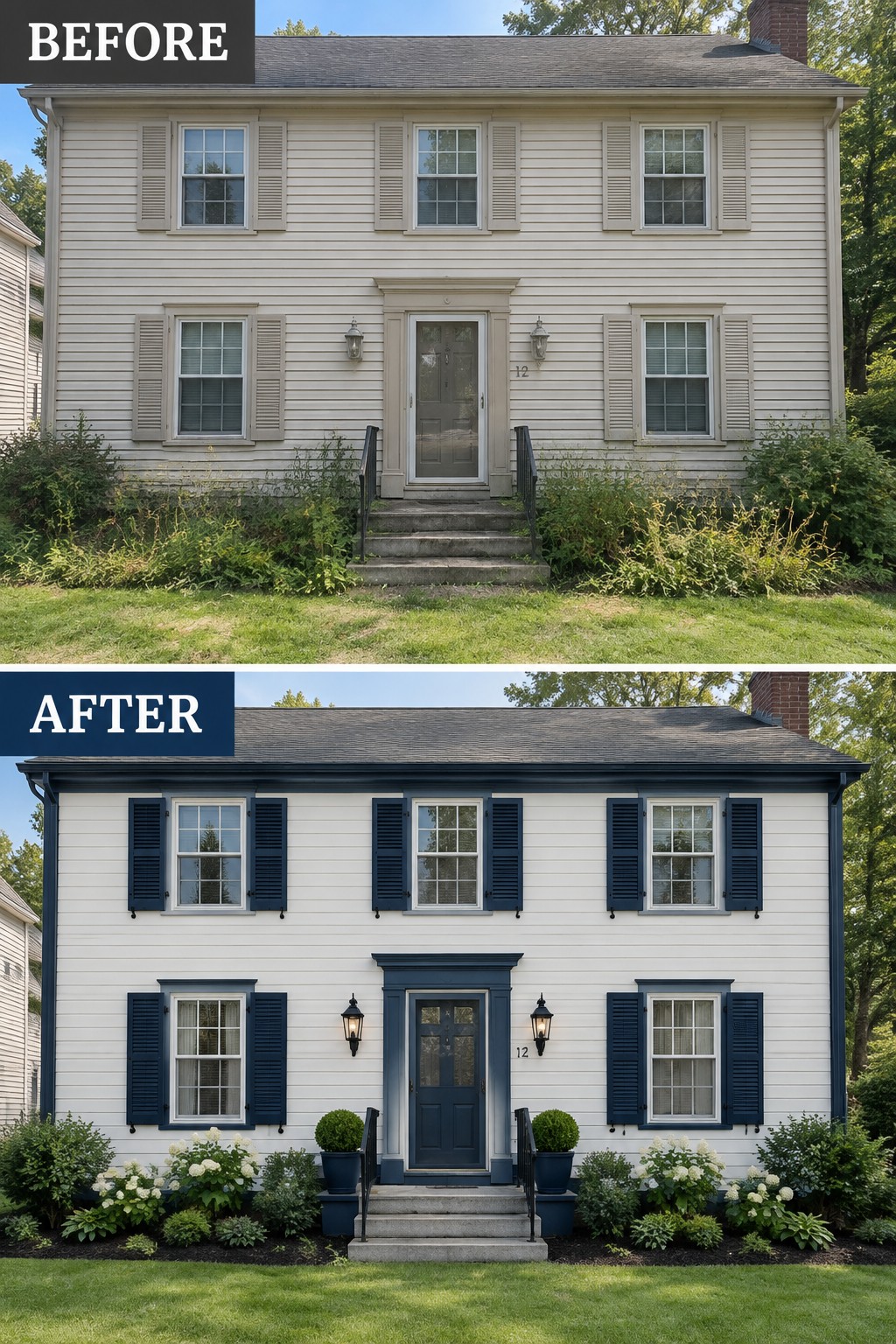
Many colonial homes lose their shape when the siding and trim sit in the same color range. Switching the house to crisp white and painting the shutters, window trim, and door a deep navy creates clear lines that make the symmetry stand out.
This approach suits federal colonials especially well because the style already has strong window and door details. Choose one dark color and carry it across every trim element so the eye reads the house as a single, finished composition rather than a collection of separate parts.
Use Contrasting Trim To Refresh A Colonial Exterior
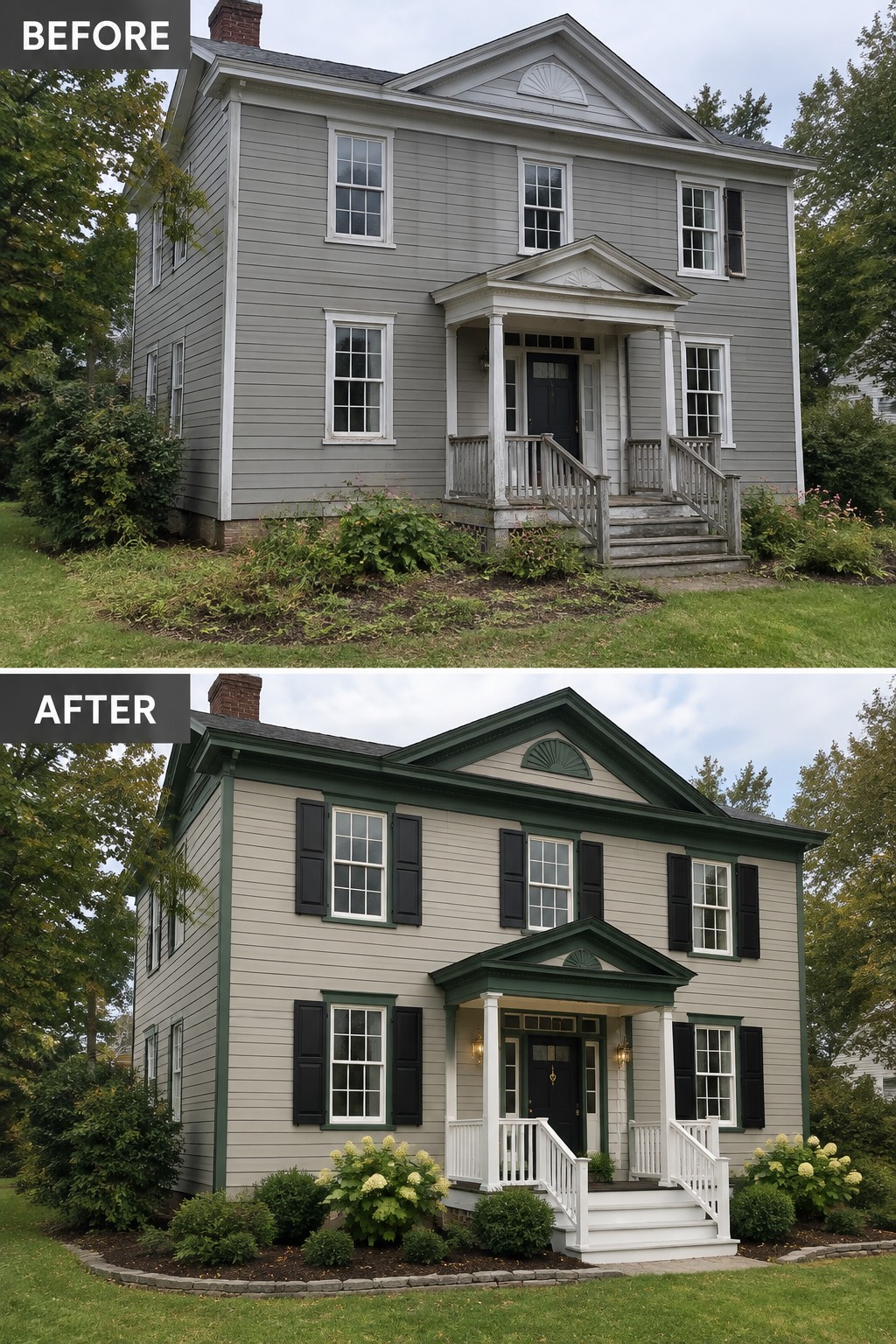
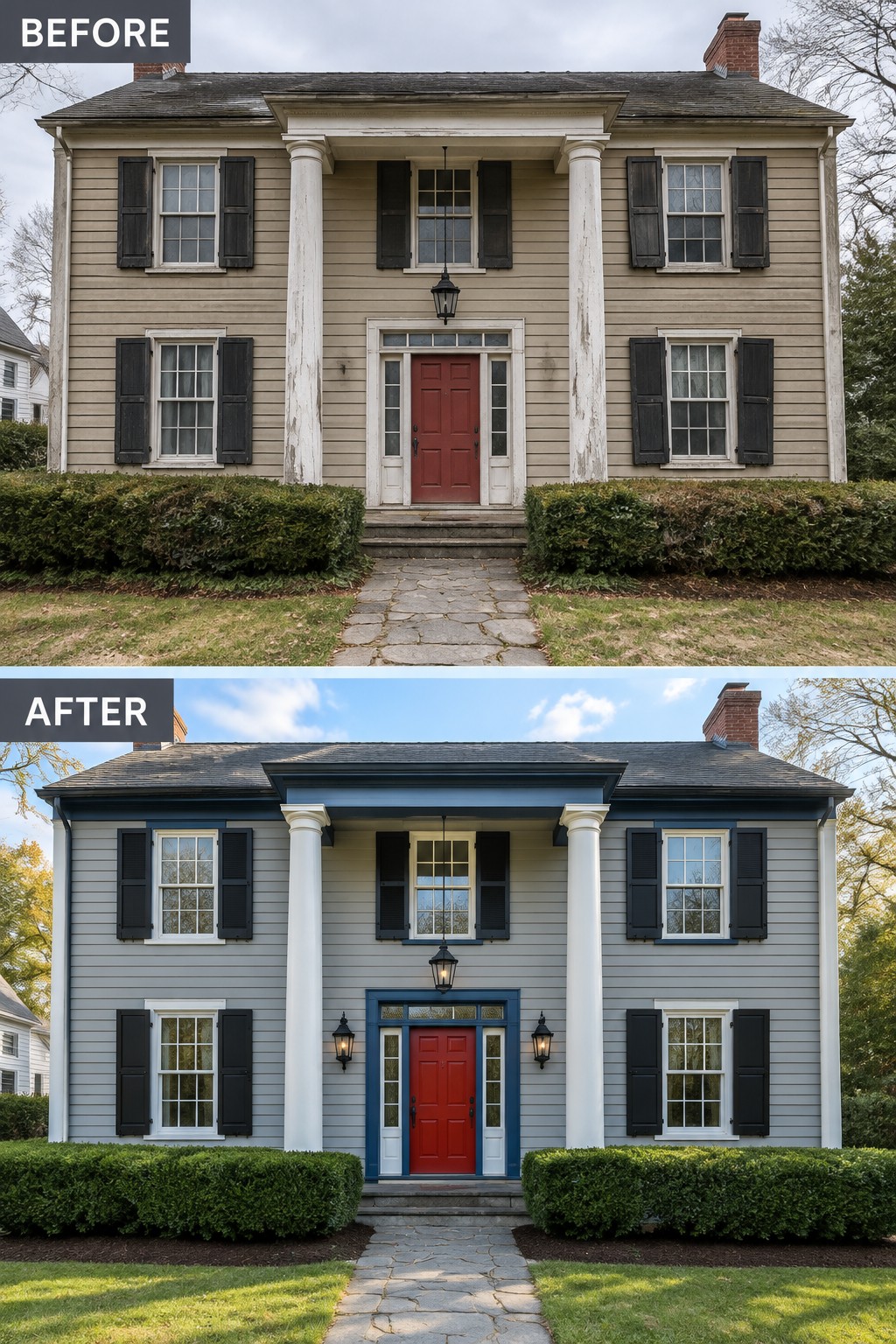
Painting the trim and shutters a darker color against lighter siding gives a Federal Colonial home clearer shape and presence. The before photo shows the house with white trim that blended into the gray siding, while the after shows deep green trim and black shutters that pull the windows and porch forward.
This works well on older homes that already have good architectural lines. Pick one strong color for all the trim and shutters so the contrast feels intentional rather than busy, and test the shade against both the siding and roof before committing to the full job.
Add Contrasting Trim To Define A Plain Colonial
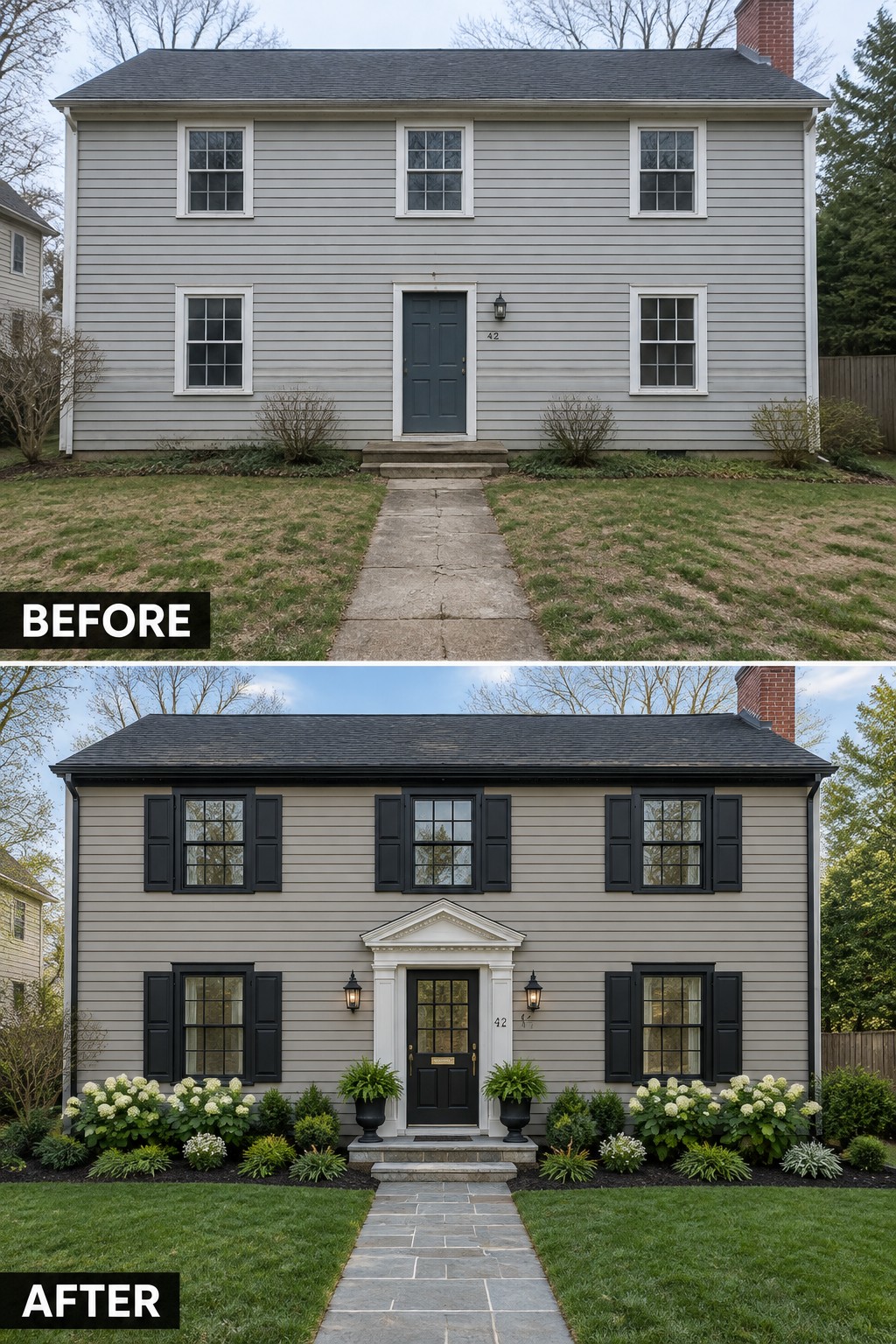
A house with uniform siding often looks flat because nothing breaks up the surface. Here the black shutters and matching trim create strong lines around the windows and give the facade clear shape without any structural changes.
This works best on simple two-story colonials where the proportions are already good. Choose one dark color for the shutters and trim, keep the siding light, and stop there. The contrast alone makes the house look more finished and intentional.
Refresh A Colonial Exterior With Bold Red Shutters And Roof Trim
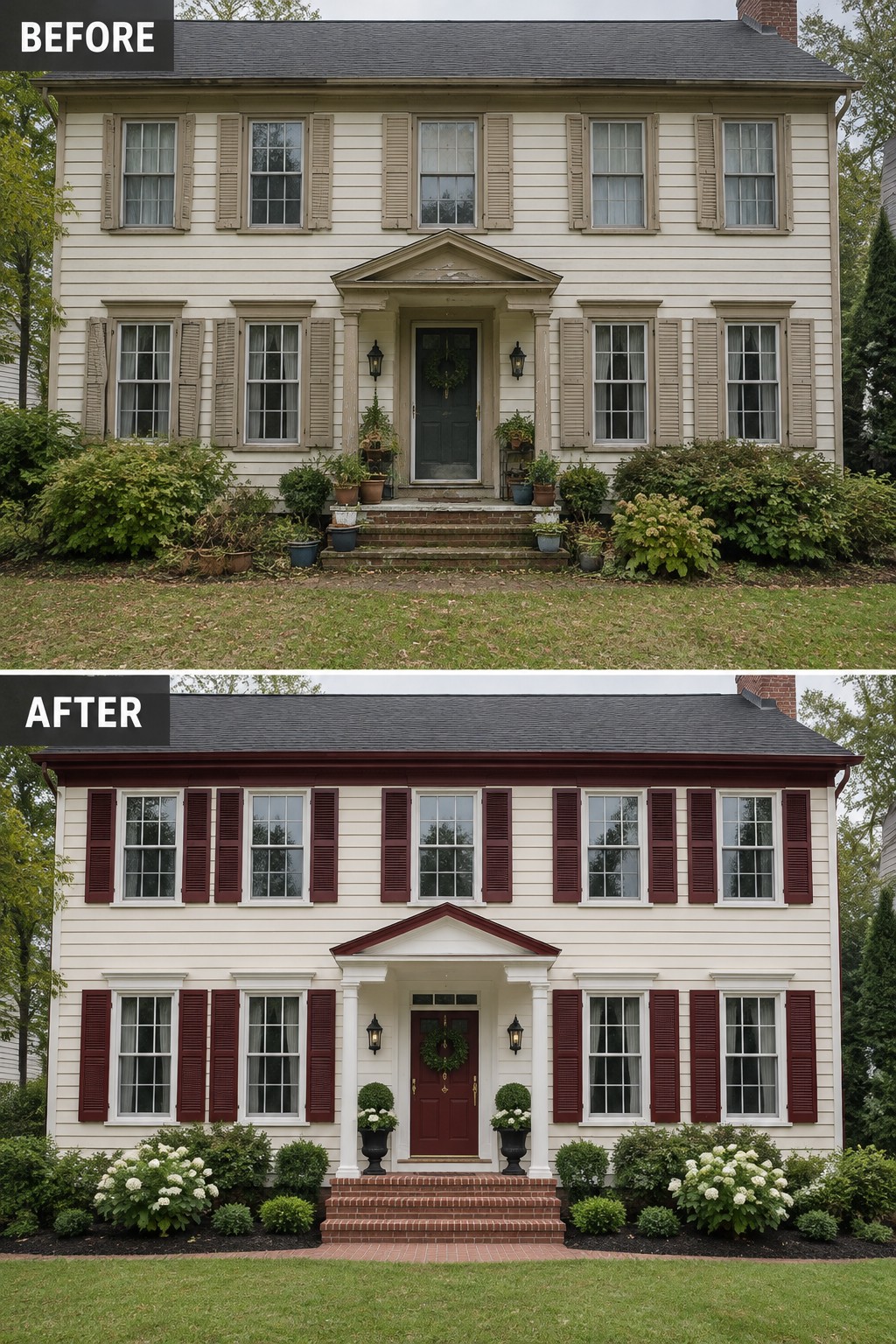
Painting the shutters, door, and roof trim a deep red against white siding gives the house clearer shape and more presence. The earlier version used similar muted tones throughout, so the windows and entry blended in. Switching to one strong color on all the trim makes the classic details stand out right away.
This idea suits older colonials that already have good trim and window proportions. Keep the color consistent across shutters, door, and roof edges so the change feels deliberate. It works best when the landscaping stays simple and does not fight for attention.
Add Contrasting Trim To Define A White Colonial
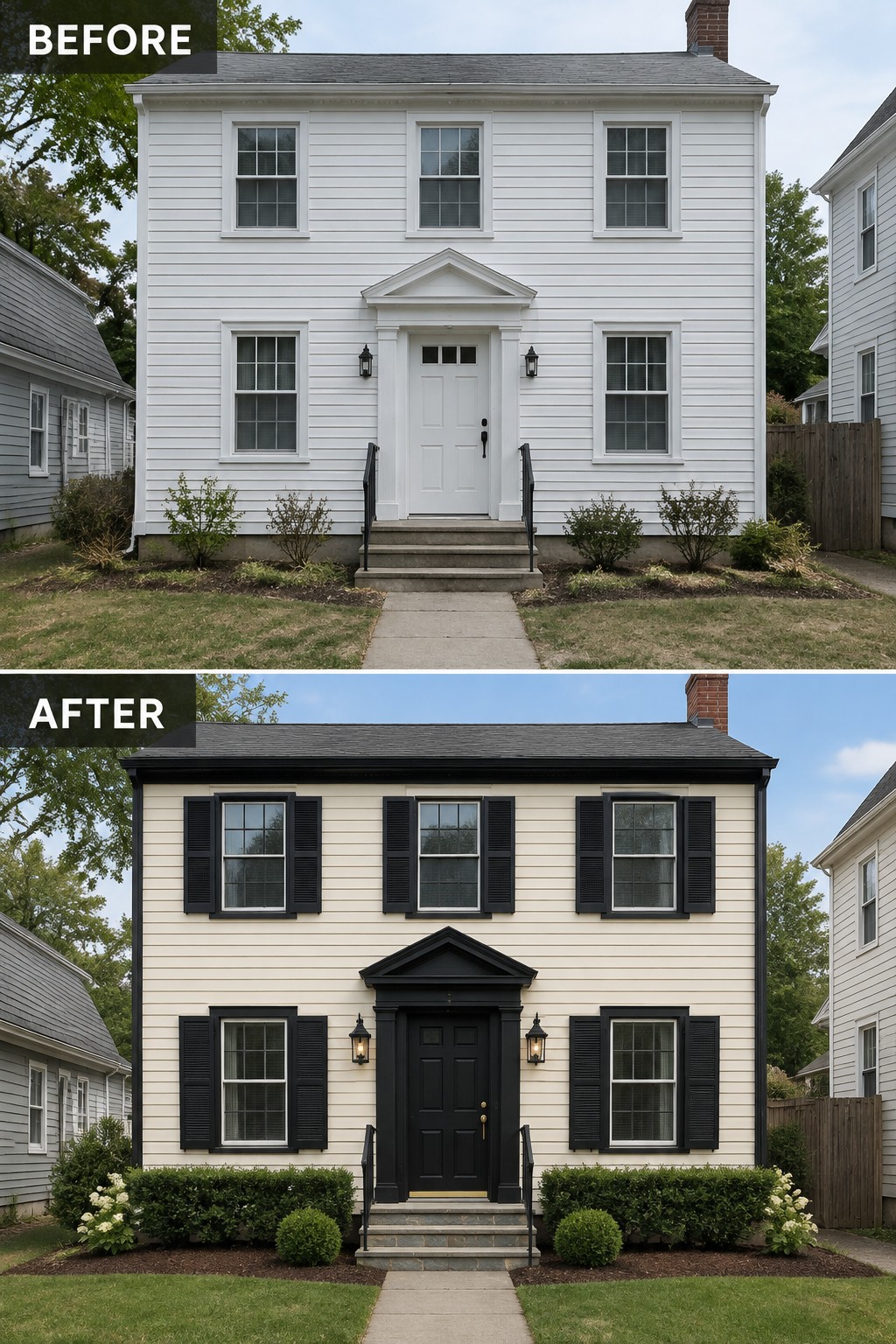
A plain white exterior often looks unfinished because nothing breaks up the surfaces. Adding black shutters, window trim, and a matching front door gave this house clear lines and a stronger presence without changing the siding color.
This idea suits older colonials that still have good bones. Choose one dark color for all the trim and shutters, then repeat it on the door so the contrast feels deliberate rather than scattered. Keep the rest of the house light so the trim does the work.
Use Dark Trim To Refresh A Brick Colonial
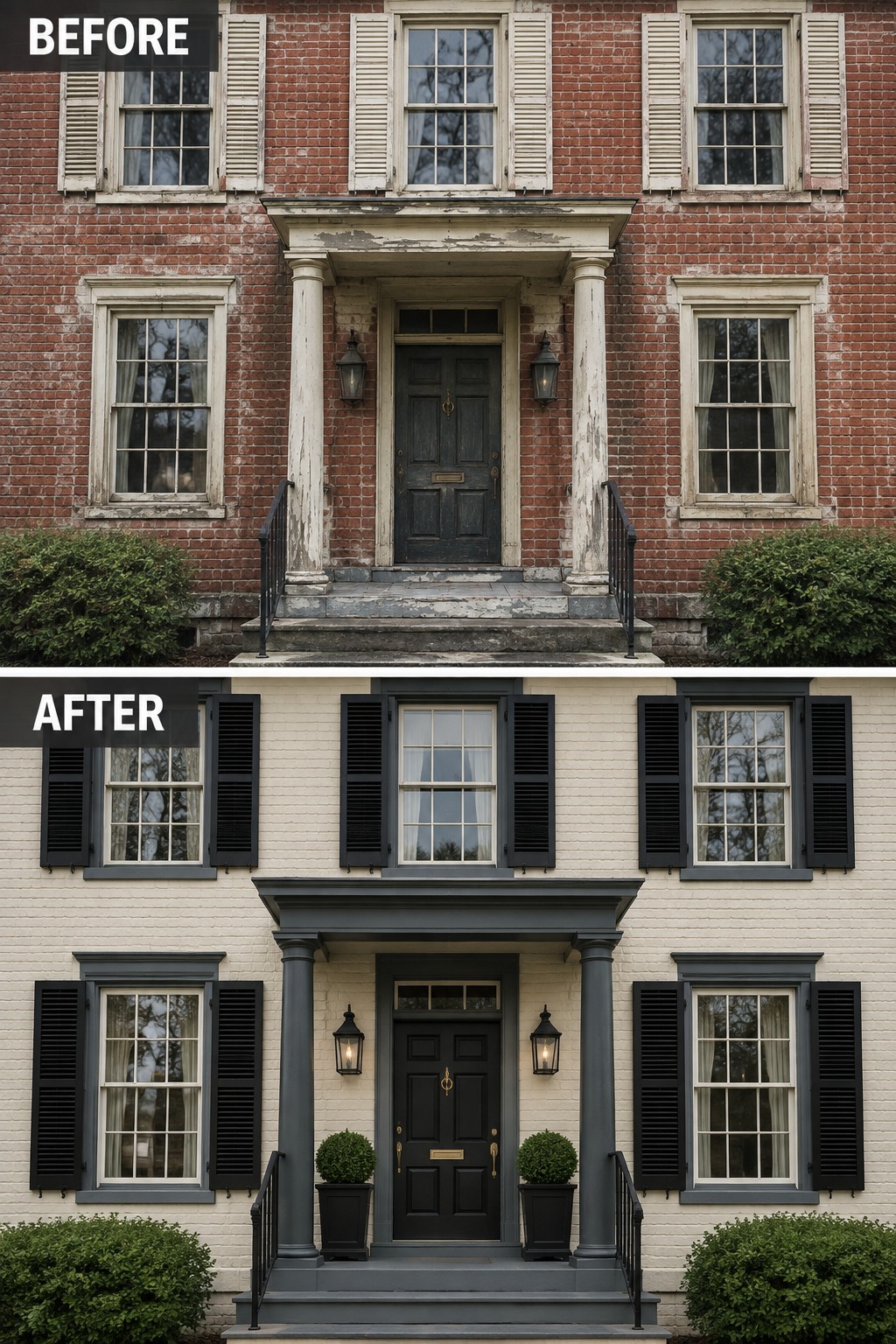
Many brick Colonials start to look worn when the trim peels and the shutters fade into the background. Painting the house body a clean white and switching the shutters, columns, and trim to a deep charcoal creates strong contrast that makes the windows and entry stand out again.
This works well on Federal Colonial homes because the dark trim respects the original proportions while giving the facade a crisper look. Test the trim color on a small section first, since brick can warm up or cool down the paint depending on the light.
Use Contrasting Trim To Highlight The Architecture
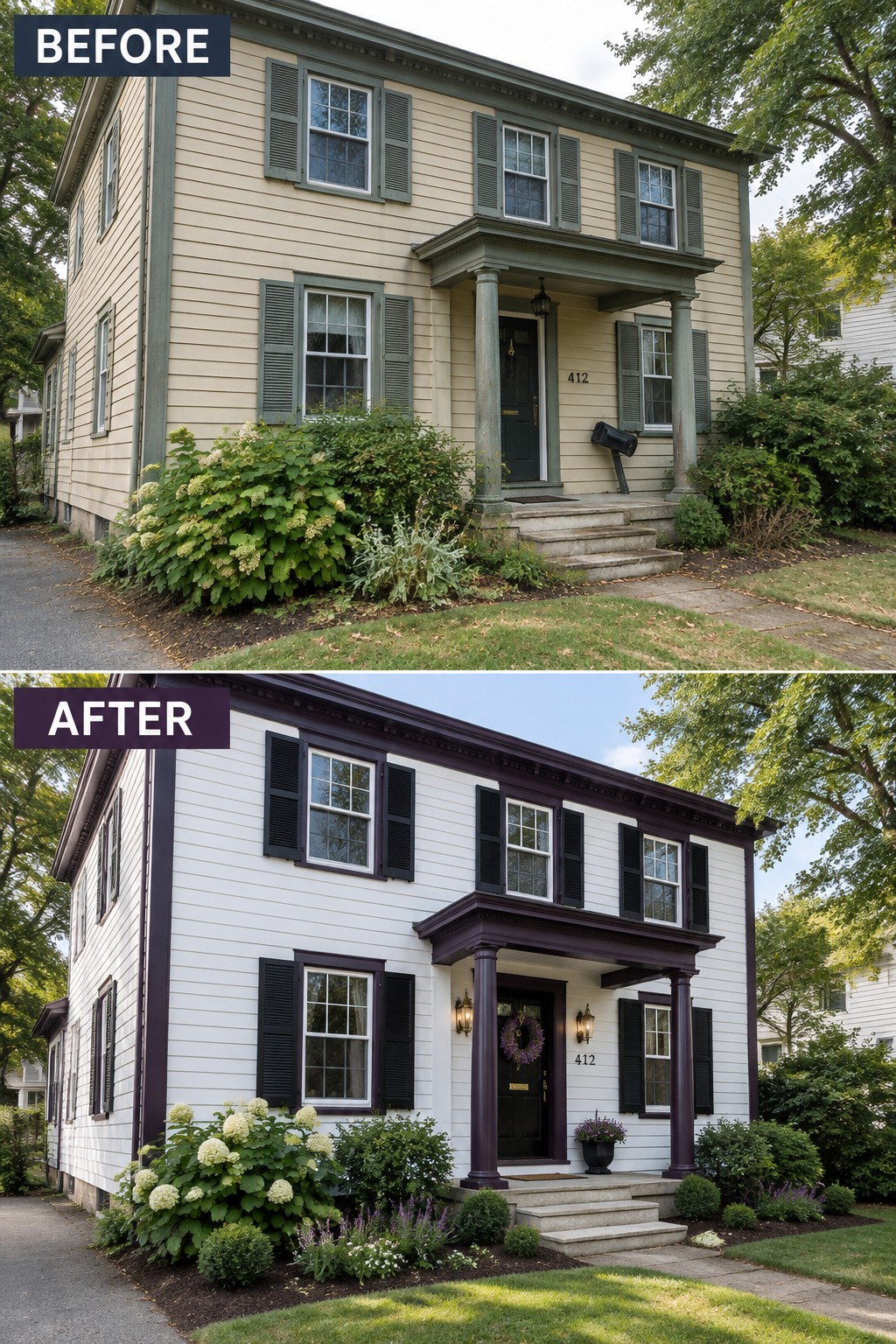
A simple color change on the trim can make a big difference on a Federal Colonial house. In this case the siding went from a soft beige to crisp white while the trim shifted to a deep purple. That single switch pulls the eye to the columns, windows, and doorway and gives the whole front a cleaner, more defined look without any structural work.
This approach works well on older homes that already have strong architectural lines. Keep the siding light and let the trim carry the contrast. Test the trim color on a small section first, since dark shades can look very different in full sun than they do on a paint chip.
Highlight Colonial Windows And Columns With Dark Contrasting Trim
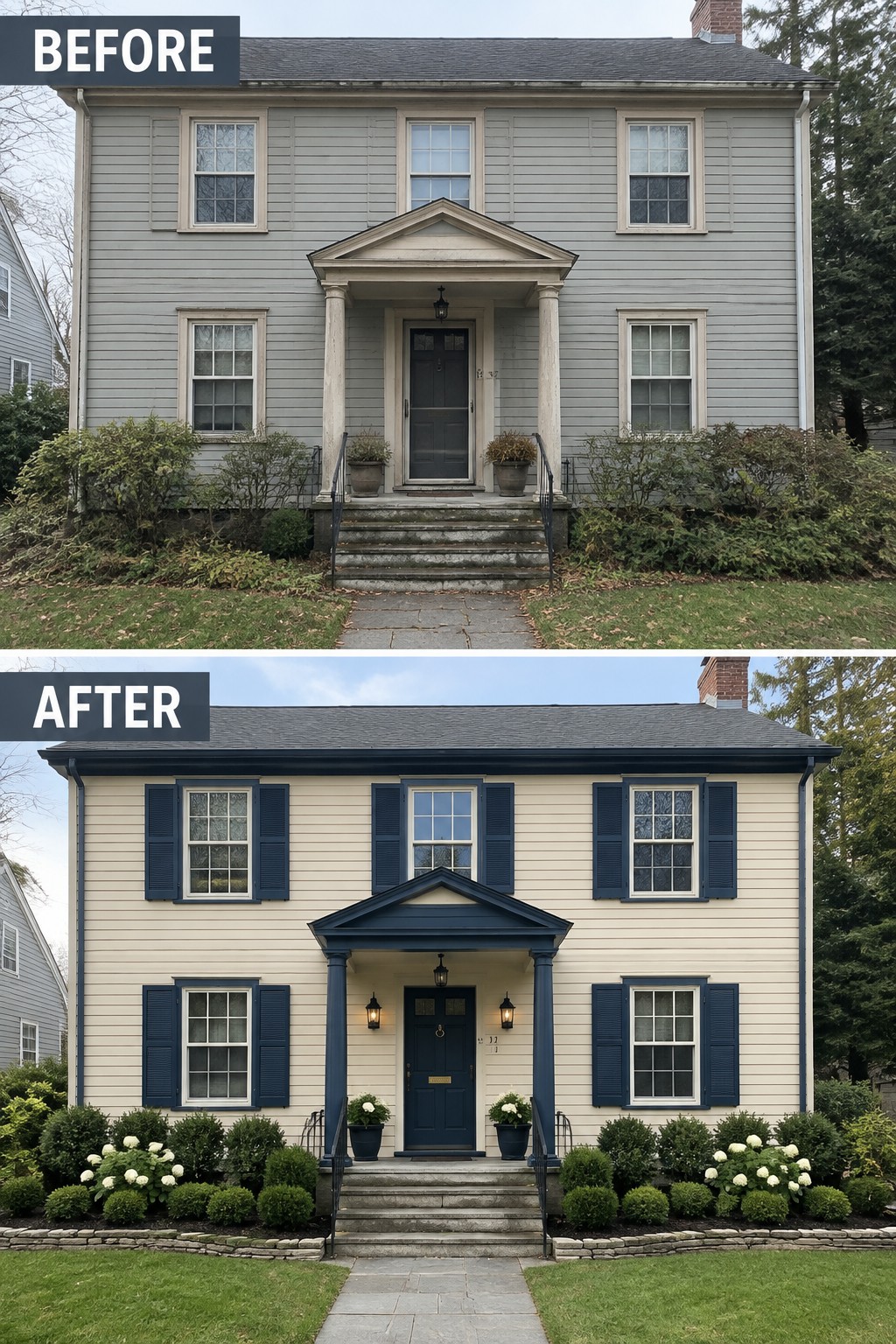
Many Federal colonials lose their shape when the trim matches the siding color. Switching to a dark contrasting shade on the shutters, columns, and door makes the windows and entry stand out without changing the whole structure.
This works best on symmetrical houses where the trim already has good lines. Choose a color that picks up the roof or chimney, test it on one window first, and keep the body color light so the contrast stays clean.
Sharpen A Faded Colonial With Black Trim And A Red Front Door
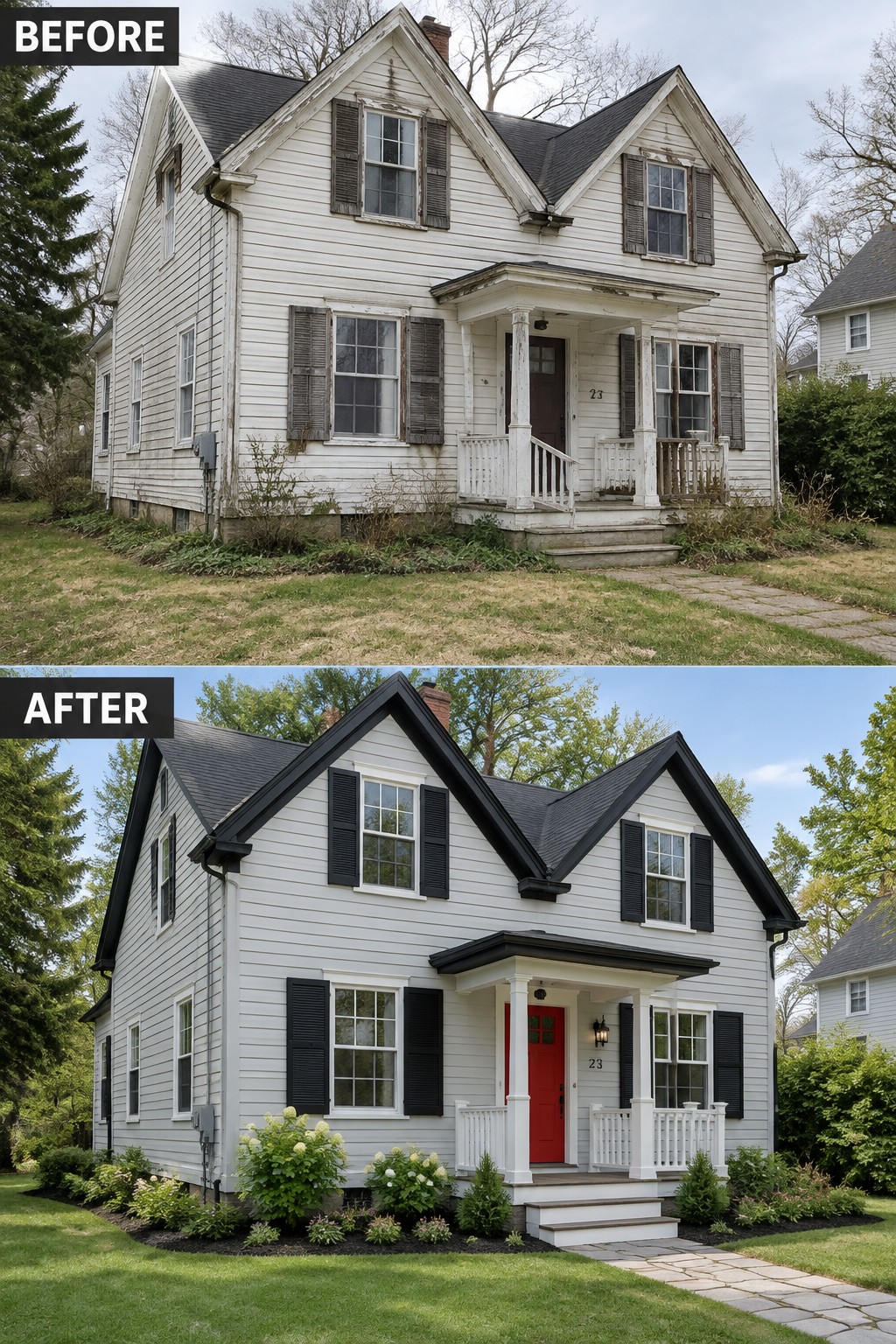
Many older homes lose their shape once the paint starts to peel and the trim blends into the siding. Switching the trim to a deep black against a light gray body gives the whole house clearer lines and a more finished look. The red door adds one more strong contrast point that draws attention to the entry without needing major structural changes.
This approach works well on Federal Colonial or similar two-story homes where the rooflines and window frames already have good shape. Start with a thorough cleaning and any necessary repairs, then test the dark trim color on a small section first. Keep the rest of the palette simple so the contrast stays the focus rather than competing with too many other colors.
Pair White Siding With Deep Green Trim On A Federal Colonial
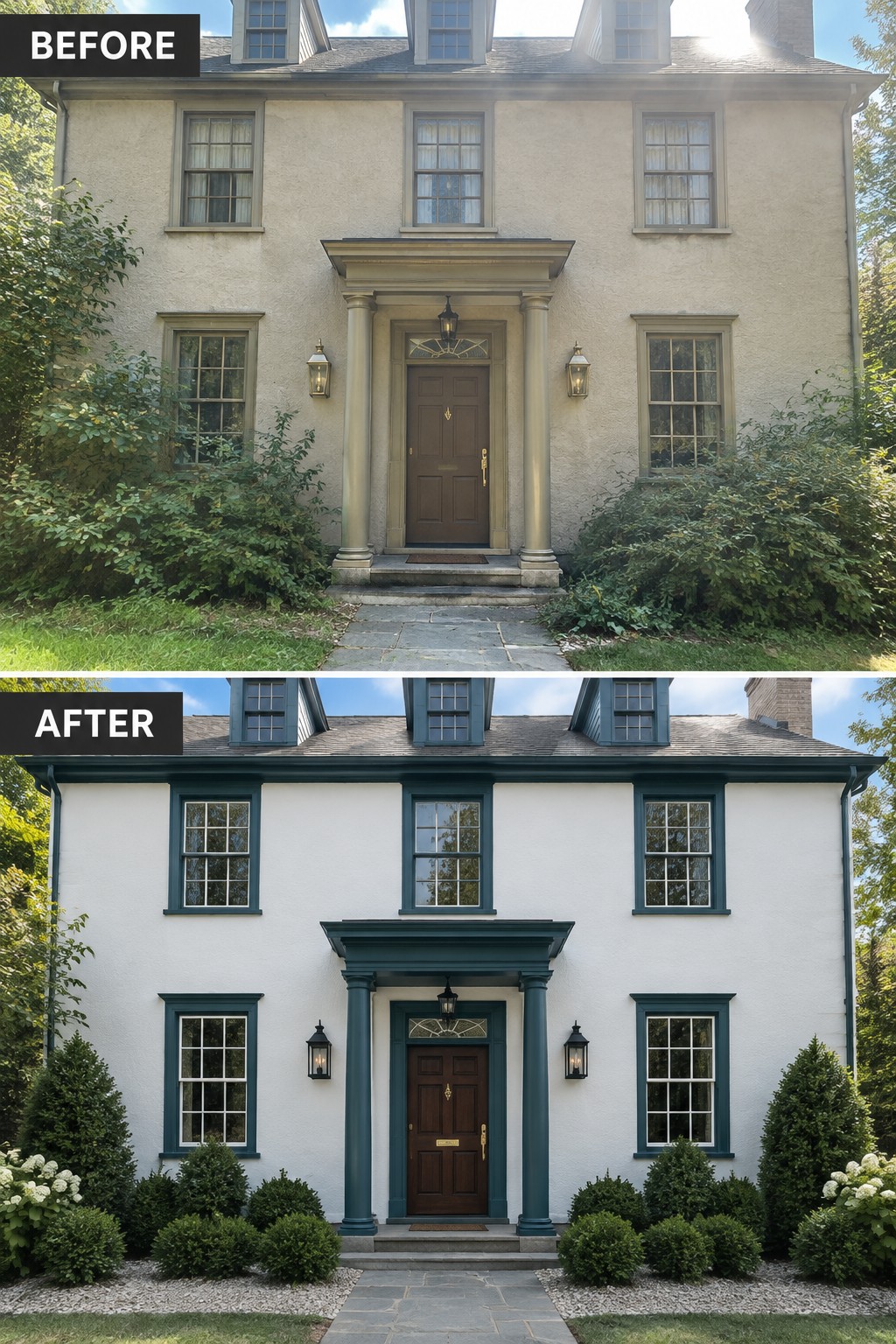
The main shift in this makeover is the switch from a flat beige body to crisp white walls paired with deep green trim on every window, the entry columns, and the roofline. That contrast pulls the eye to the architecture instead of letting the facade blend into the background.
This idea suits symmetrical colonial homes that already have good proportions. Choose a trim color dark enough to stand out clearly, then apply it to all the trim details at once so nothing feels half finished. A warm wood door keeps the look balanced and prevents the dark trim from feeling too stark.
Refresh Faded Green Siding With White Paint And Dark Trim
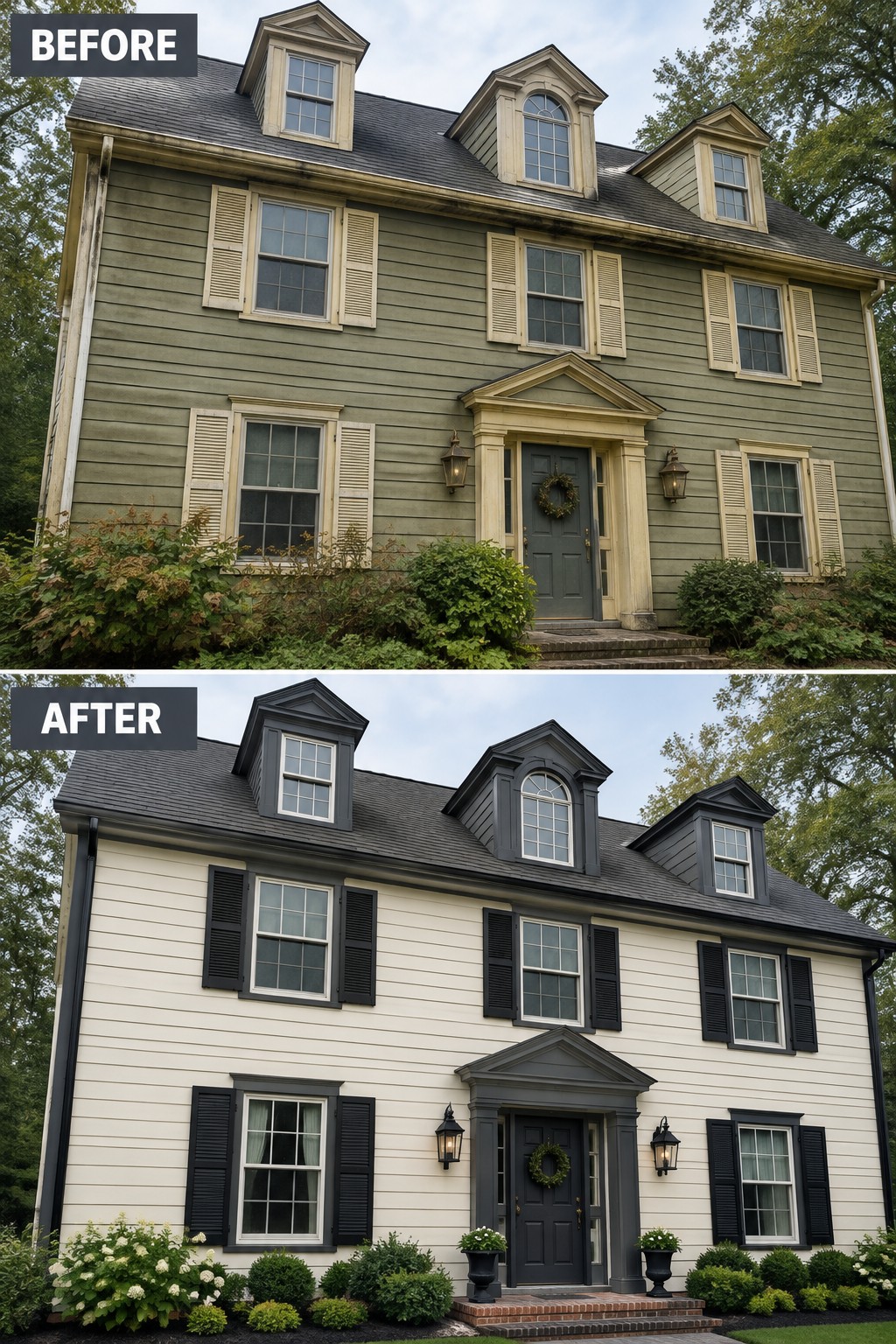
Painting the siding a clean white and switching to dark trim and shutters gives this house a sharper, more defined look. The before version had a faded green that blended into the surroundings, while the after version uses the contrast to make the windows, door, and roofline stand out without any major structural changes.
This approach works especially well on older colonials that still have their original window shapes and entry details. Start by picking one light siding color and one dark trim color, then apply the dark shade to shutters, window frames, and the front door. Keep the rest of the updates simple so the trim contrast stays the main feature.
Add Dark Contrasting Trim To A Light-Colored House

Painting the siding one solid color and adding dark trim and shutters gives this house a much cleaner, more defined look. The before photo shows how the split paint colors made the facade feel busy and dated, while the after version uses a single light shade with deep blue accents on the shutters, porch columns, and window frames to create contrast without overcomplicating the design.
This approach works well on older homes that already have good proportions but need a simple refresh. Stick to one main trim color that stands out against the siding, keep the number of accent pieces limited, and make sure the front door color ties in with the trim so the whole front stays balanced.
Add Black Shutters And Contrasting Trim To A Colonial Exterior

Many colonial homes end up looking flat because the siding and trim all sit at the same color. In this case the before photo shows a plain taupe house with white window frames and a simple door surround. The after version switches the siding to a warm off-white and adds black shutters plus black trim around the door and pediment. That single contrast choice instantly gives the facade more structure without any major construction.
This approach works especially well on Federal and colonial styles that already have strong window grids and a centered entry. Start by picking one dark color for the shutters and door surround, then match the siding to a lighter neutral so the trim stands out. Keep the rest of the exterior simple so the new contrast stays the main feature.
Use Contrasting Trim To Refresh A Federal Colonial
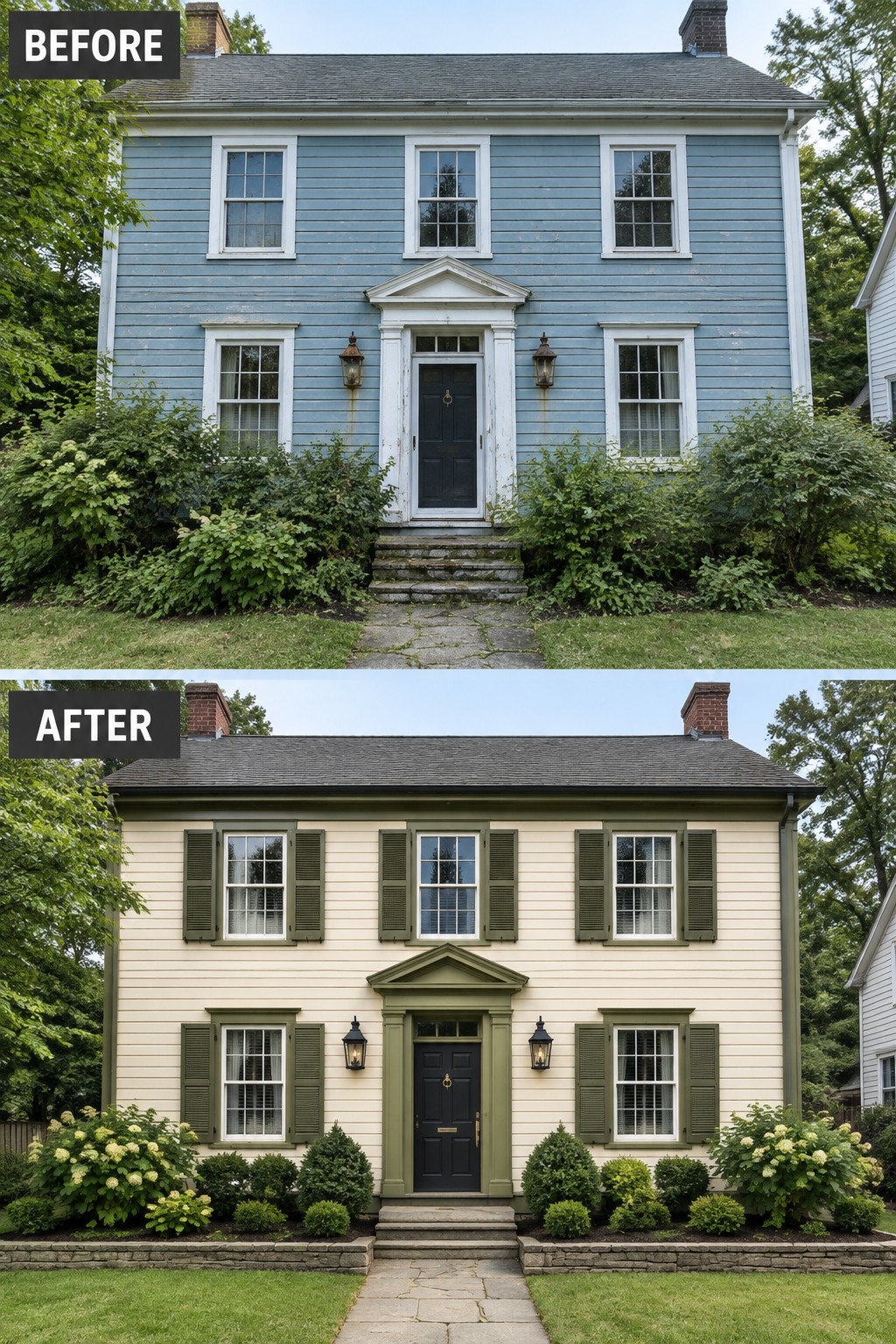
Many older homes like this one lose their shape when the siding and trim blend together too closely. Switching to a lighter main color with a deeper trim shade immediately gives the windows, door surround, and corners more weight, so the classic symmetry stands out instead of fading into the background.
This works especially well on symmetrical facades where the architecture is already strong but needs emphasis. Pick one trim color and repeat it on the shutters, door frame, and any small details rather than scattering several shades. The result feels finished without requiring major construction.
Transform A Red Colonial With Gray Siding And Black Trim
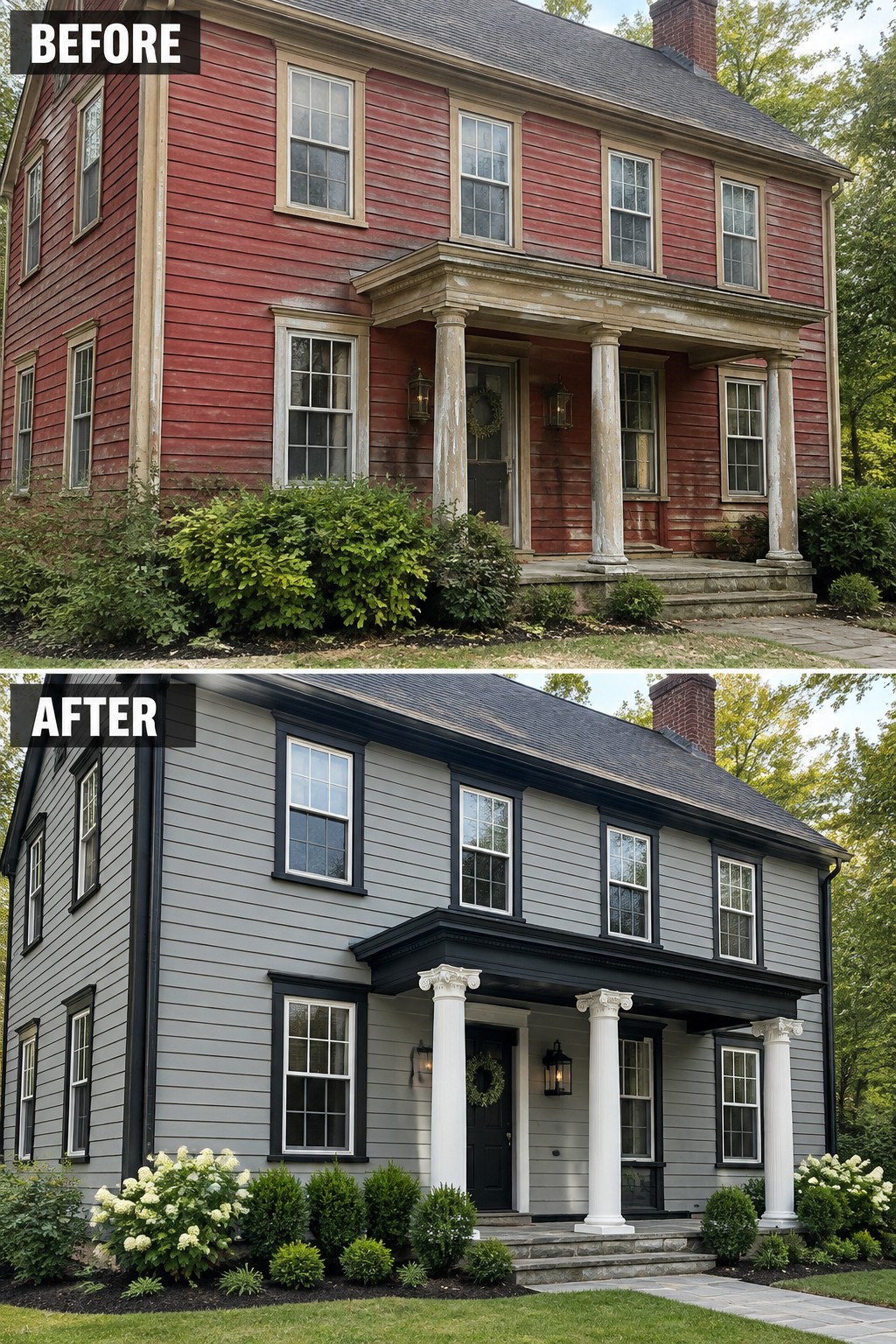
The red house looked worn because the trim had faded and blended into the siding. Painting the body a soft gray, then adding black trim around the windows and roofline, plus fresh white columns on the porch, gave the facade clear lines and a stronger presence.
This works best on older colonials that already have good proportions. Pick one dark trim color and keep the columns or entry details lighter so the contrast stands out. It is a straightforward update that improves curb appeal before any larger work on the house.
Use Dark Contrasting Trim To Refresh A Colonial Exterior
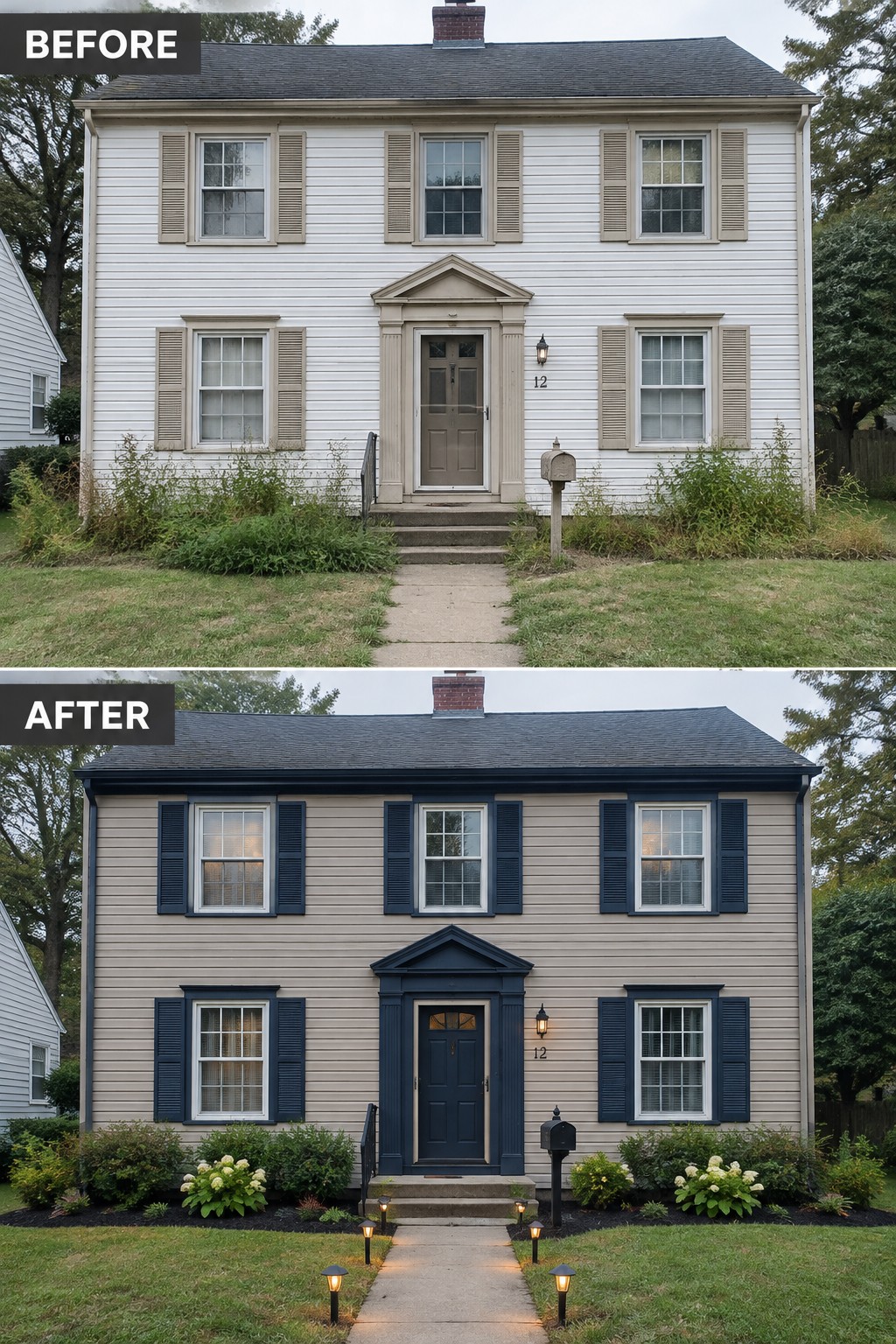
Many older colonials can start to feel flat when everything blends together in light tones. Switching the trim, shutters, and door to a deep navy creates clear definition around the windows and entry, which makes the whole facade feel more structured without changing the siding color.
This approach works especially well on symmetrical Federal styles where the trim lines are already strong. Keep the siding a soft neutral so the dark trim stands out, and test the paint on a few boards first since the same color can shift depending on the light.
Update A Colonial Exterior With Dark Siding And White Trim
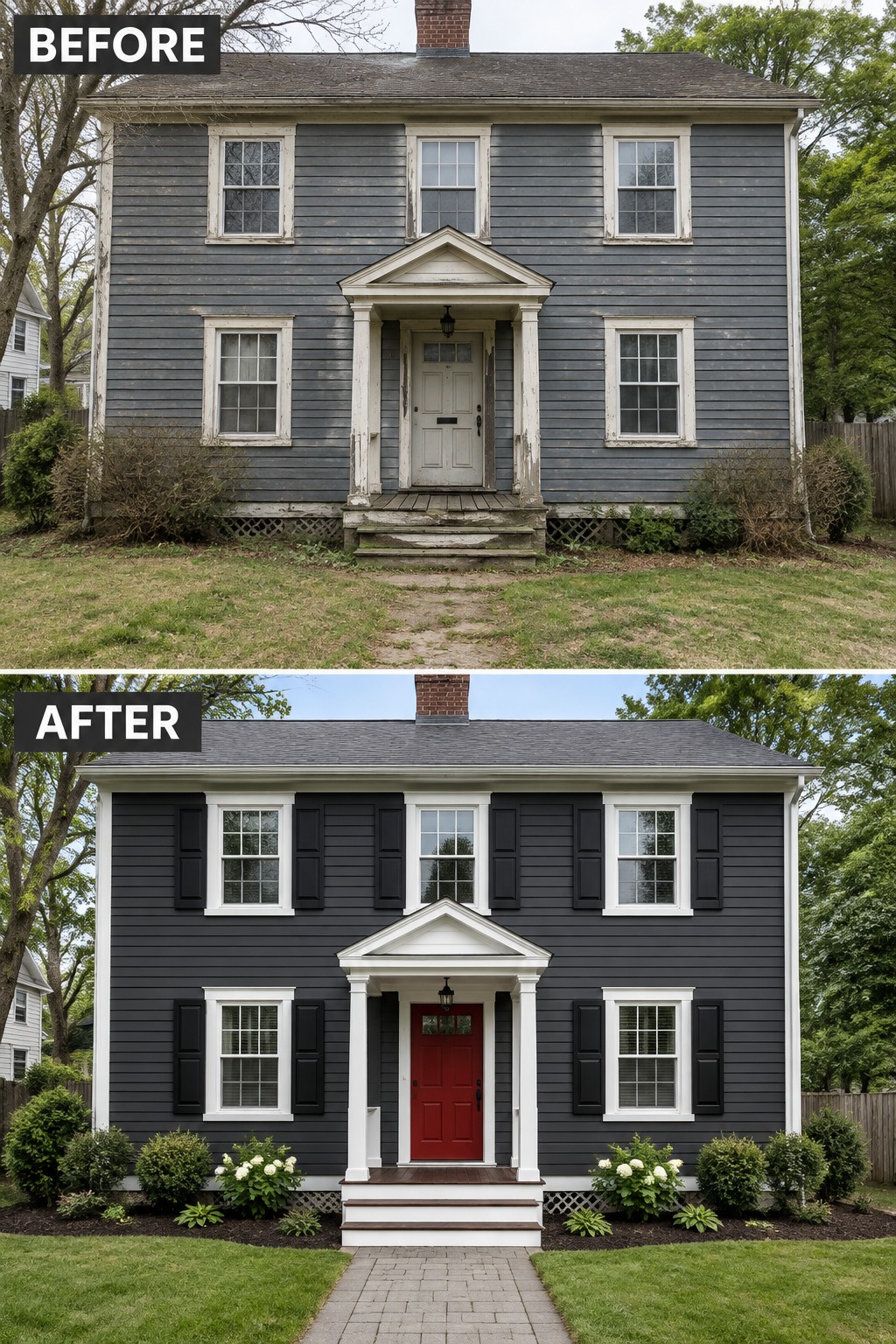
Switching the house to a deep charcoal color with fresh white trim gives the whole facade more structure and presence. The red door stands out cleanly against the dark siding, and the added black shutters help the windows feel more balanced.
This idea suits older colonials that already have good trim details worth emphasizing. Pick one dark paint color for the siding, keep the trim bright white, and use a bold door color to finish the look without extra construction.
Paint The Trim Black To Sharpen A Colonial Exterior

The before photo shows a brick house that has lost its shape over time. Painting the whole exterior white and switching every window and door frame to solid black gives the house clear lines again. The dark trim makes the windows feel deeper and the front door stand out without any other major construction.
This idea suits older colonial homes that still have their original window layout. Keep the color change simple, match the new trim to the front door, and clean up the planting beds at the same time so the contrast can show. It works best when you want the house to feel updated but not completely changed.
Frequently Asked Questions
Q: Which trim shade should I try first on a gray Federal Colonial?
A: Start with a crisp white or deep navy. It gives instant contrast without fighting the gray. See how it looks from the street before committing to all sides.
Q: Do I have to repaint the whole exterior or just the trim?
A: Just the trim makes the biggest change. You save time and money that way. And the siding stays protected under its current coat.
Q: What if the bold colors look too much once the job is done?
A: Live with it for a season. You can always tone it down later with a softer shade. Most people end up loving the extra punch.
Q: Should the porch posts get the same trim color?
A: Yes paint them to match the window trim. This ties the whole front together nicely.