

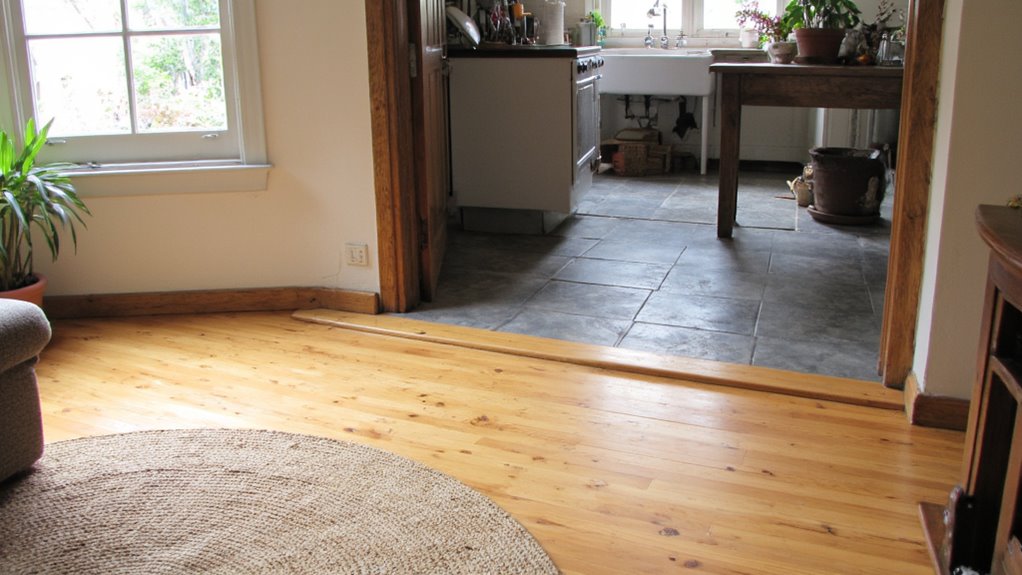
Are you looking to add a touch of seamless style to your home?
Transitioning between wood and tile floors can truly transform your space.
With the right choices, you can create a harmonious flow that feels just right.
I’ve gathered some brilliant ideas to inspire your next flooring project.
Let’s explore how you can achieve that perfect transition for your home.
The Importance of Wood to Tile Floor Transitions
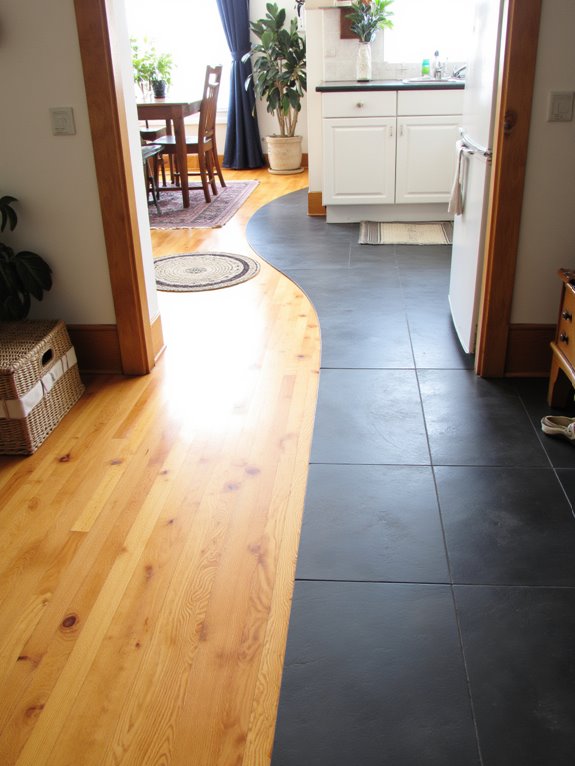
When I think about home design, I realize that shifts between different flooring types, like wood to tile, play an essential role in both aesthetics and functionality.
These changes guide the eye and create a sense of flow throughout spaces. Plus, they help define areas while ensuring durability and ease of maintenance.
A well-executed change can truly elevate your home’s overall look.
Choosing the Right Transition Material
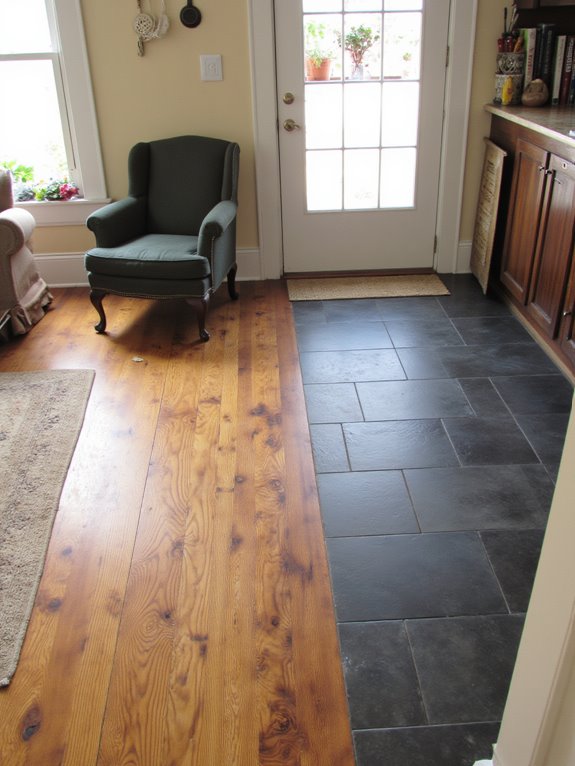
Although selecting the right changeover material might seem straightforward, it’s essential to reflect on both aesthetics and functionality.
I recommend considering options like wood, metal, or vinyl. Each material offers unique benefits, such as durability and visual appeal.
Think about your home’s style and the level of foot traffic in the area. The right choice can enhance the overall flow and cohesion of your space.
Using Thresholds to Define Spaces
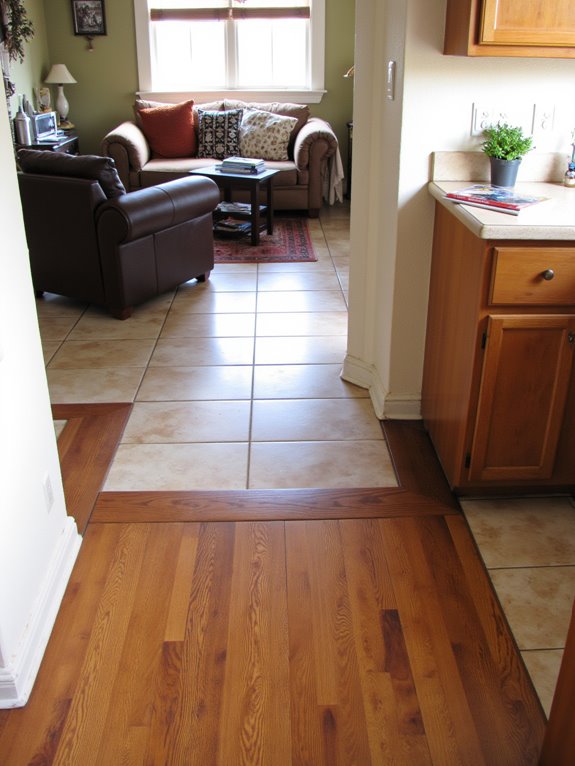
After you’ve chosen the right material for your flooring alteration, think about how thresholds can help define different spaces in your home.
I love using thresholds not just as a functional shift but as a design element. They can highlight the change from a cozy living area to a sleek kitchen, adding character and visual interest to each space while maintaining flow.
How to Match Wood and Tile Colors for Harmony
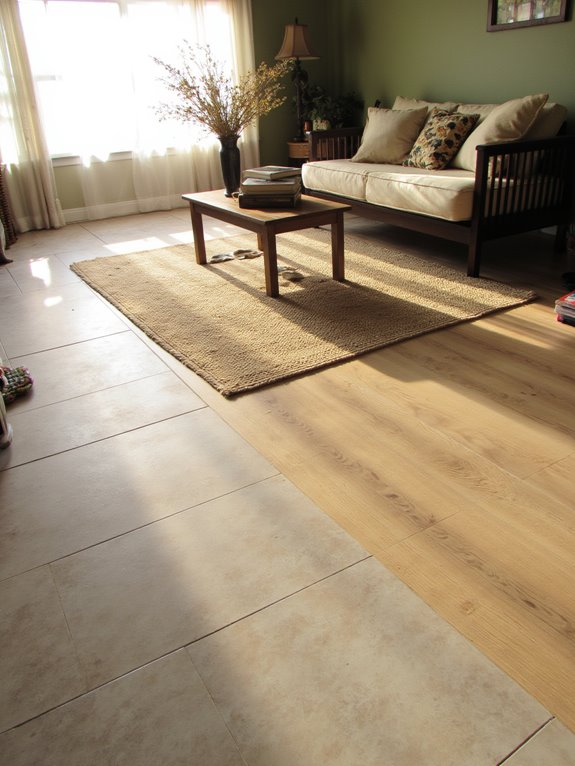
To create a harmonious shift between wood and tile, I recommend focusing on complementary colors that enhance both materials.
I often choose warmer wood tones paired with earthy tile shades for a cozy feel. Alternatively, cooler woods and crisp white or gray tiles can add a modern touch.
Creative Trim Ideas for Seamless Transitions
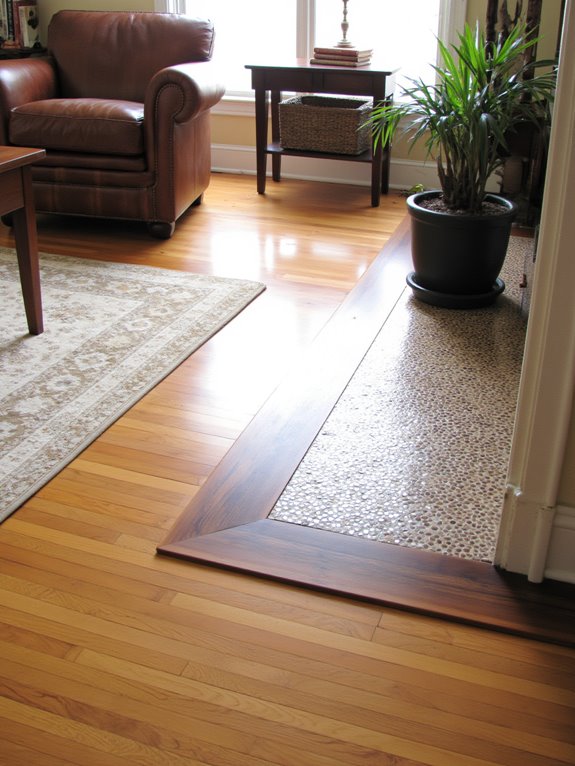
When I think about creating seamless changes between wood and tile floors, using creative trim ideas often makes all the difference.
I love experimenting with various materials, like mixing wood and metal trims or using a painted wood trim that complements both surfaces.
Sometimes, a thick, contrasting trim can create a striking visual element, while a minimalist design can enhance a clean, modern look.
Why a Flush Transition Might Be Right for You?
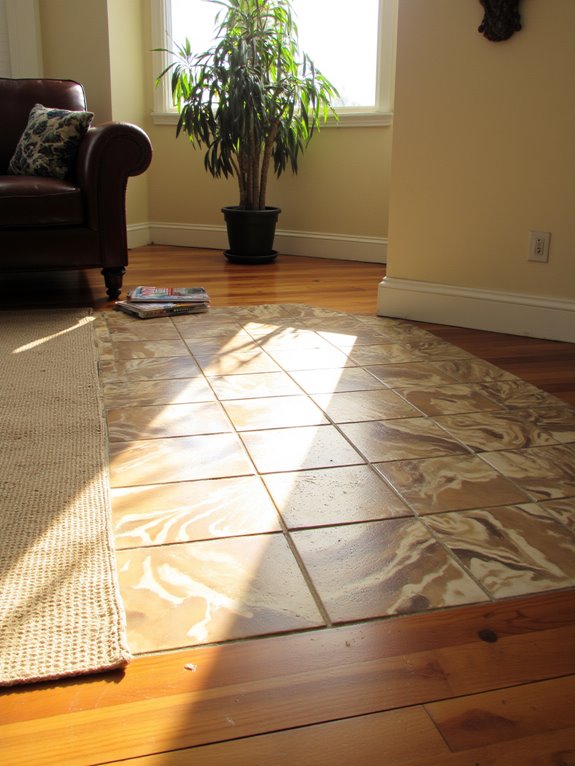
Creating a seamless look between wood and tile can be enhanced by considering a flush crossover.
I love how flush changes eliminate height differences, making spaces feel larger and more cohesive. They’re also easier to clean since there are no gaps for dirt to gather.
If you want a modern, streamlined aesthetic, a flush crossover might be just what you need.
Leverage Grout Lines for Seamless Transitions
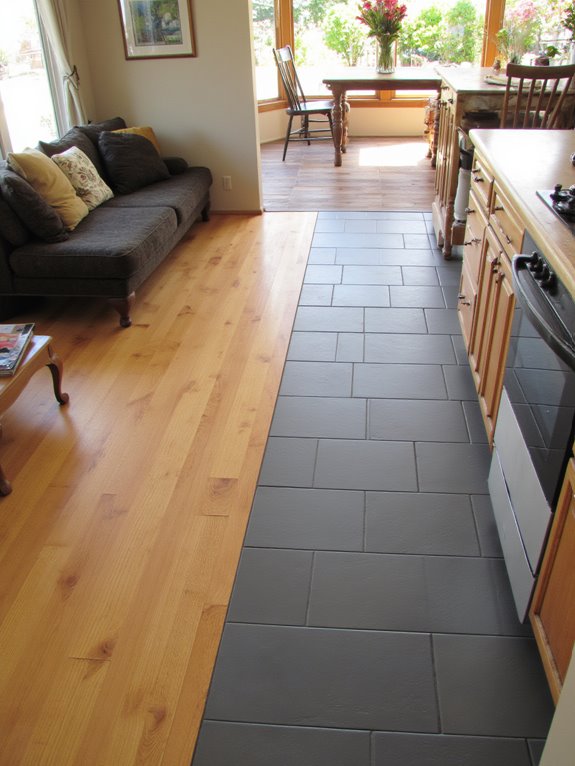
While a flush shift can provide a polished look, leveraging grout lines offers a unique way to blend wood and tile seamlessly.
By aligning the junction with the grout lines, you create a visual connection that guides the eye.
I’ve found this method not only enhances the overall design but also adds texture, making the junction feel intentional and cohesive.
Patterns That Enhance Wood to Tile Transitions
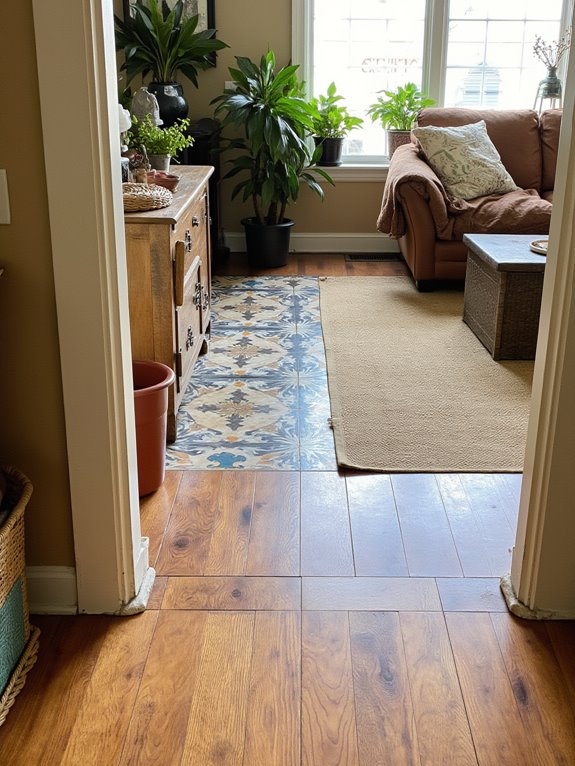
As I explore patterns that enhance wood to tile changes, I find that geometric designs can add a striking visual appeal.
Using bold shapes like chevrons or herringbones creates a dynamic contrast between the two materials. Additionally, alternating colors or sizes can draw the eye and define spaces.
These patterns not only elevate the change but also tie the whole room together beautifully.
Incorporating Decorative Borders for Added Flair
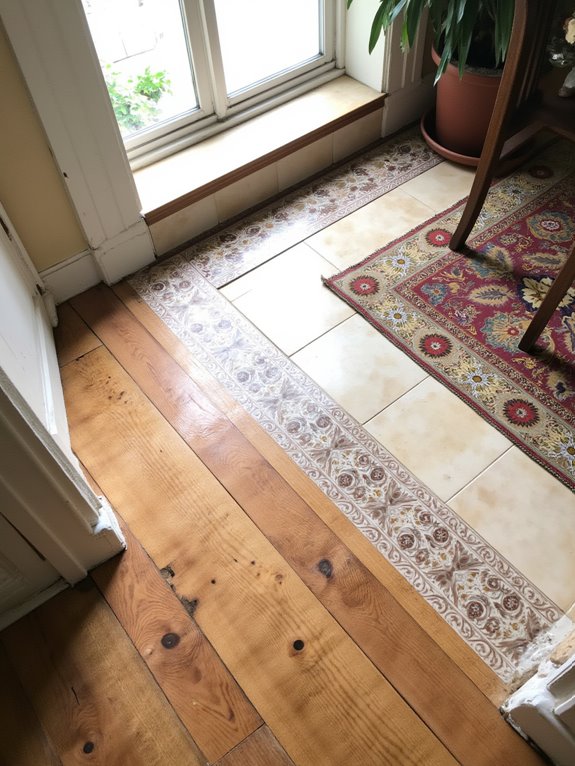
Geometric patterns can certainly enhance wood to tile changes, but adding decorative borders takes the design a step further.
I love how borders can create a distinct separation while adding elegance. Think about using contrasting colors or unique materials that complement your floors.
A well-chosen border not only frames the shift beautifully but also elevates the overall aesthetic of your space.
How to Choose Baseboards for Your Floor Transitions
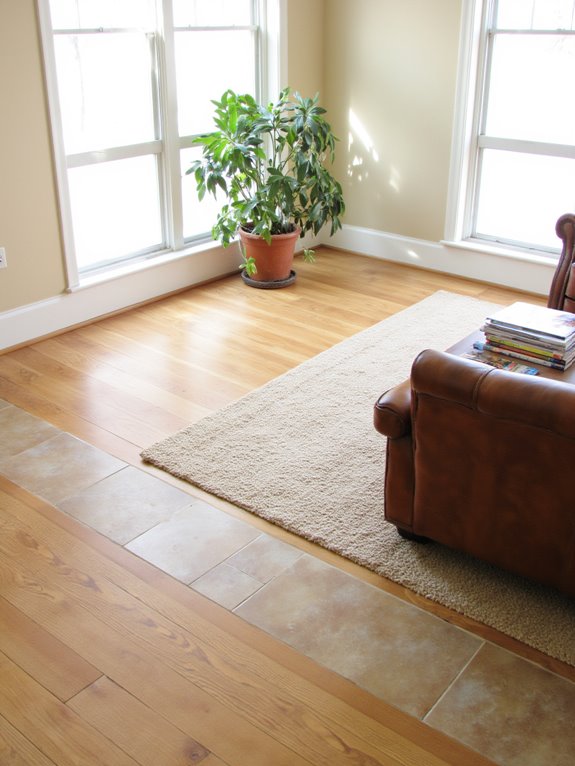
Selecting the right baseboards for your floor changes can greatly impact the overall look of your space.
I recommend considering the height and style that complements both the wood and tile. For a seamless shift, matching the baseboard color to your dominant flooring works well.
Don’t forget about material durability, especially in high-traffic areas, to make sure they withstand wear over time.
Blending Different Wood Finishes With Tile
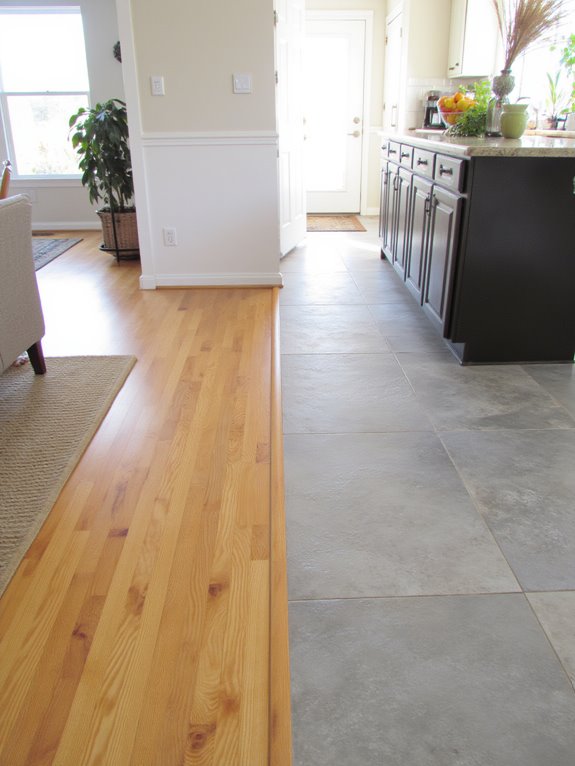
When it comes to blending different wood finishes with tile, finding harmony between the materials can truly elevate your space.
I’ve found that choosing wood tones that complement your tile color helps create a seamless shift.
Selecting wood tones that harmonize with your tile color fosters a smooth transition and enhances the overall aesthetic.
For instance, pairing warm oak with beige tiles can enhance warmth, while cooler gray woods work beautifully with slate.
It’s all about balance and cohesion for a stunning effect.
Choosing the Right Area Rugs for Your Wood to Tile Transition
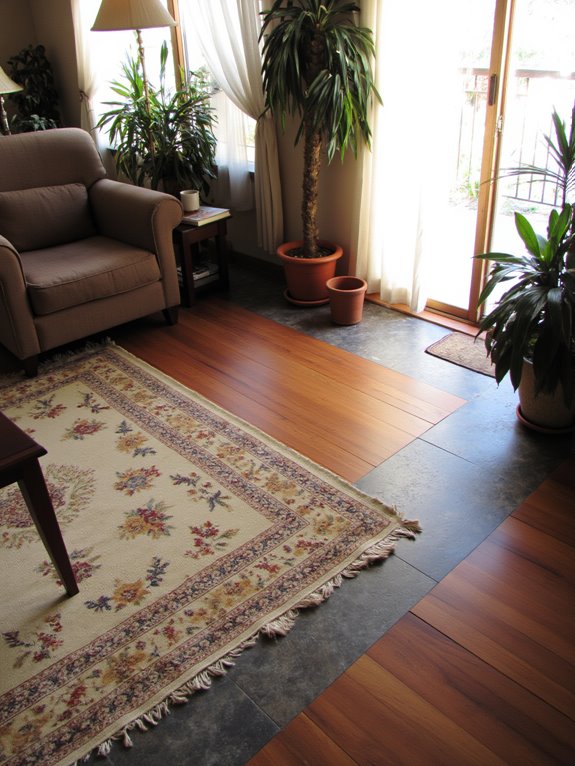
How do you choose the perfect area rug to bridge the gap between wood and tile floors?
I recommend reflecting on color, texture, and size.
Look for rugs that complement both materials, tying the spaces together. A soft, plush rug can add warmth to a tile area, while a patterned option can bring visual interest.
Don’t forget to take into account durability for high-traffic areas!
Transitioning in Open Floor Plans: Best Practices
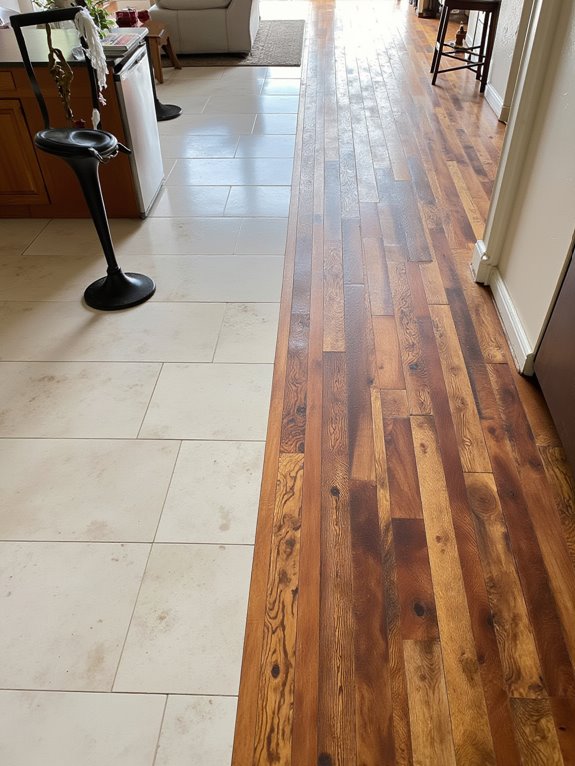
Bringing together different flooring types in an open floor plan can enhance the overall flow of your space.
I recommend keeping a consistent color palette between the wood and tile to create harmony.
Also, consider using wider threshold strips for a smoother look.
Finally, aligning the flooring direction can guide the eye and maintain an inviting atmosphere throughout your home.
Selecting the Best Transition Style for Your Home
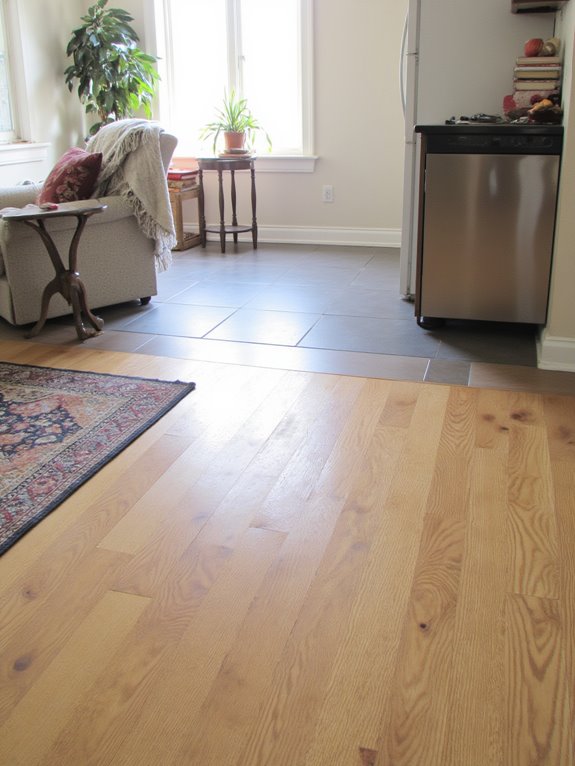
Which change style best suits your home?
I find that the right shift can enhance the overall aesthetic.
Consider your home’s existing style—modern, traditional, or rustic.
Evaluate your space’s character—whether it’s modern, traditional, or rustic, every detail matters in your design journey.
For a seamless flow, a flush shift works wonders, while a threshold adds definition.
Think about colors and materials that complement both wood and tile.
Ultimately, it’s about creating a cohesive look you love.
DIY Wood to Tile Transition: Step-by-Step Guide
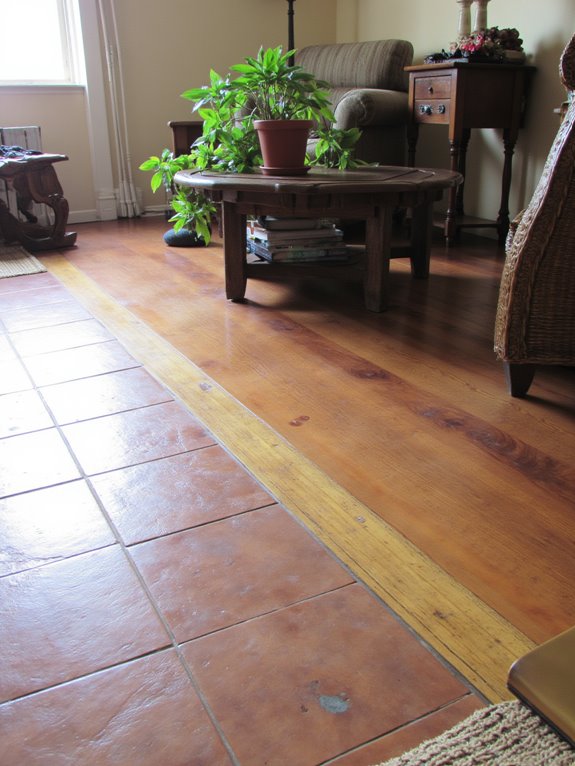
As I commenced my DIY wood to tile conversion project, I quickly realized that careful planning makes all the difference.
First, I measured the area and gathered my materials. Next, I installed the tile, ensuring it’s level.
After that, I cut the wood planks to fit snugly against the tile. Finally, I added a transition strip for a polished finish.
It’s rewarding to see the seamless result!
When to Consider Hiring a Professional for Floor Transitions?
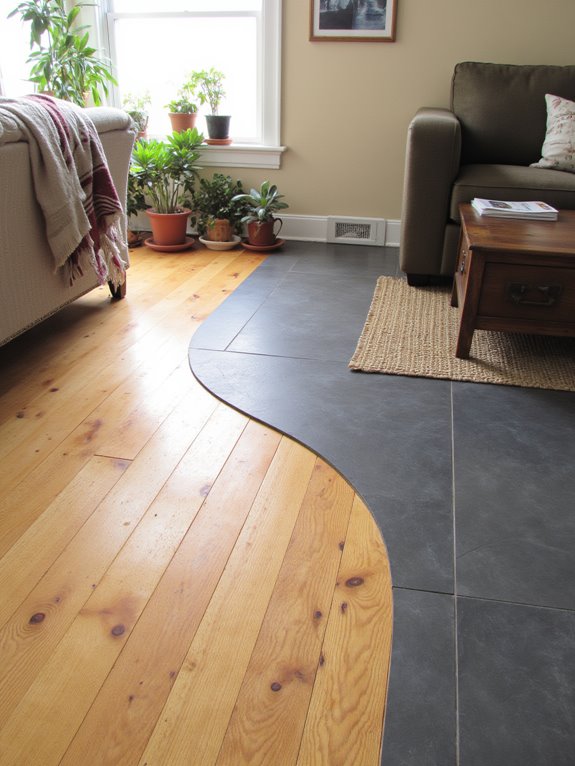
While I enjoyed tackling the DIY wood to tile conversion, I know not everyone feels confident taking on such projects.
If you’re unsure about your skills, have complex layouts, or lack the right tools, it might be time to hire a professional.
They can guarantee a seamless change, saving you time and potential frustration, while achieving a polished finish you’ll love.
Maintaining Your Wood and Tile Transition
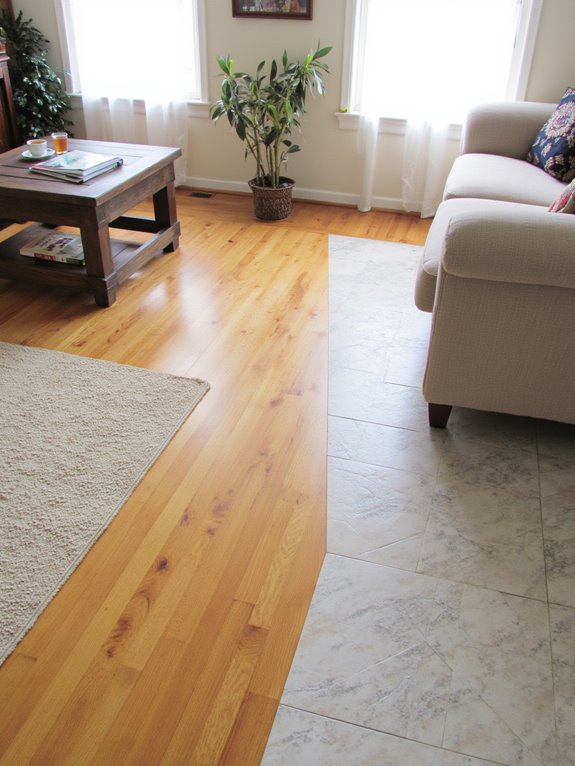
To keep your wood and tile junction looking great over time, it’s essential to adopt a regular maintenance routine.
I recommend sweeping or vacuuming the area weekly to prevent dirt buildup. For spills, wipe them up immediately to avoid stains.
Occasionally, I use a damp cloth with a gentle cleaner to refresh the surfaces. This simple care keeps my connection smooth and attractive!
Budget-Friendly Transition Ideas
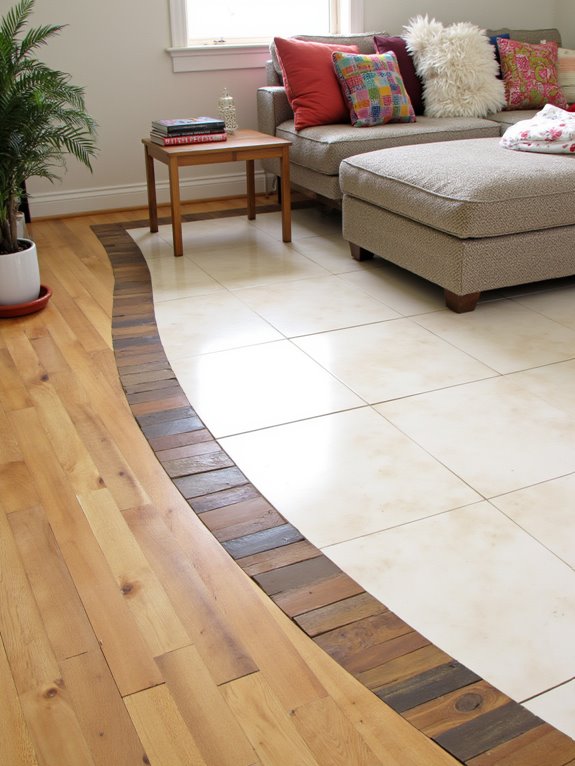
Keeping the wood and tile junction in top shape can sometimes lead to thoughts about the overall look and feel of your space, especially when considering budget-friendly updates.
I’ve found that using paintable threshold strips or adding a decorative rug can enhance the area without breaking the bank.
Even simple caulking can create a polished finish, making the threshold look intentional and stylish.
Solutions for Uneven Floors
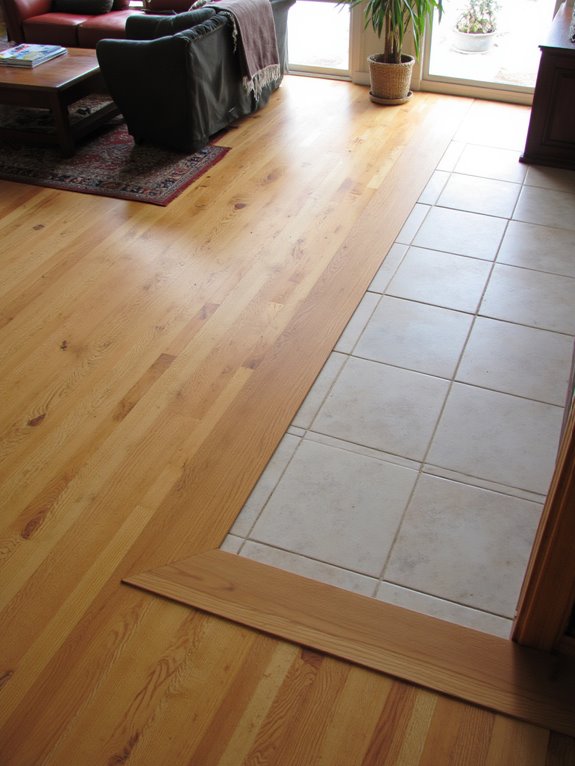
When you’re dealing with uneven floors, addressing the shift between wood and tile can feel intimidating.
Navigating the transition between wood and tile on uneven floors can be challenging, but it doesn’t have to be daunting.
I’ve found that using a thick transition strip can help bridge the gap effectively.
Another solution is to level the subfloor before installation, which provides a smooth surface for both materials.
Don’t forget to take into account flexible caulk to accommodate slight movements.
It really makes a difference!