

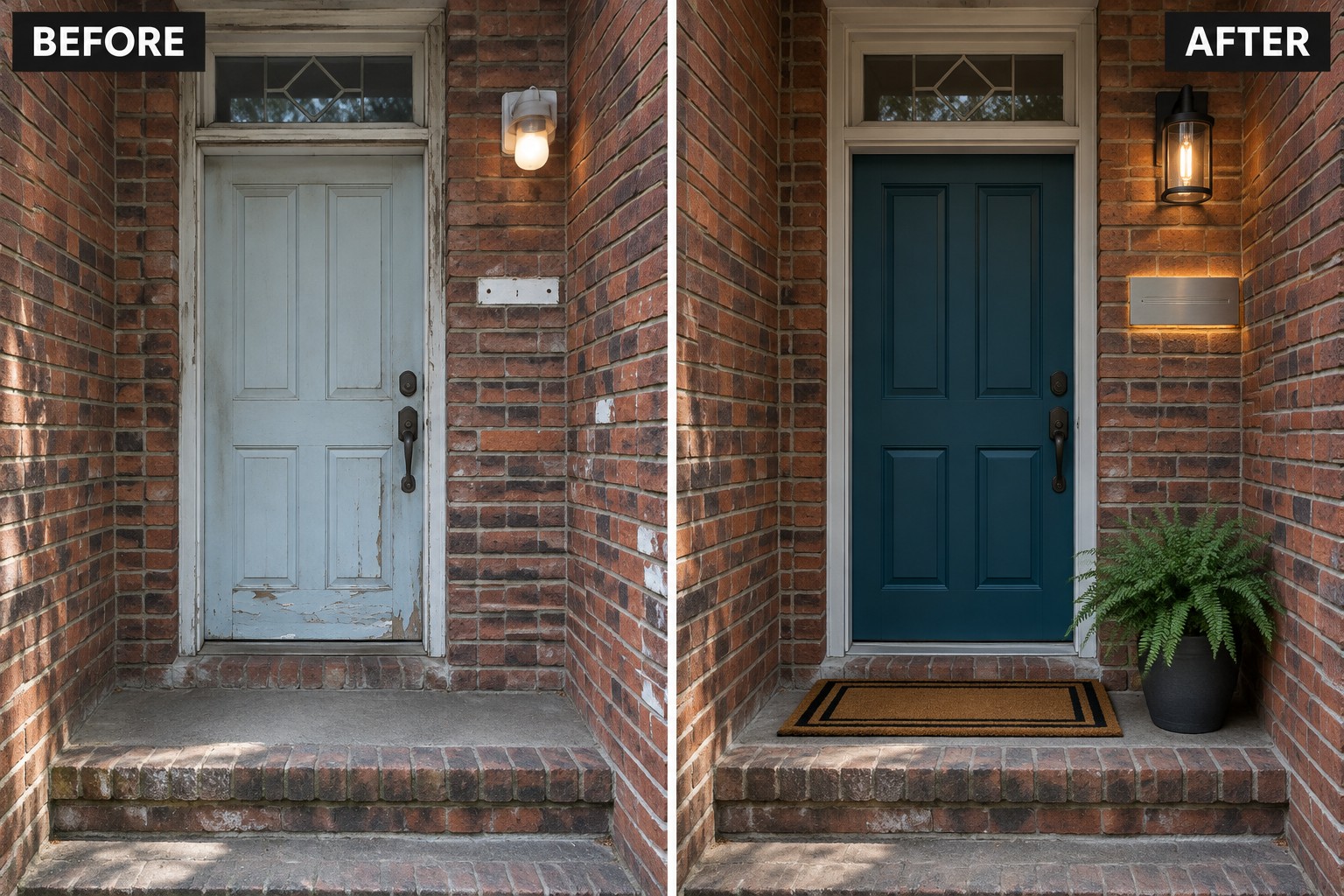
I have always noticed that the area right around the front door tends to look a bit neglected compared to the rest of the house.
Swapping in new house numbers and updating the entry lights can pull that part of the facade together in a way that feels more complete.
It is satisfying to come home and see that the entry now stands out in a quiet way.
Some of these changes are the kind I would test first because they focus on the details that shape how the outside reads from the street.
Paying attention to how the porch looks in the evening has made me think more about what actually gets used every day rather than just what looks finished in daylight.
Refresh Your Entry With New Lighting And House Numbers
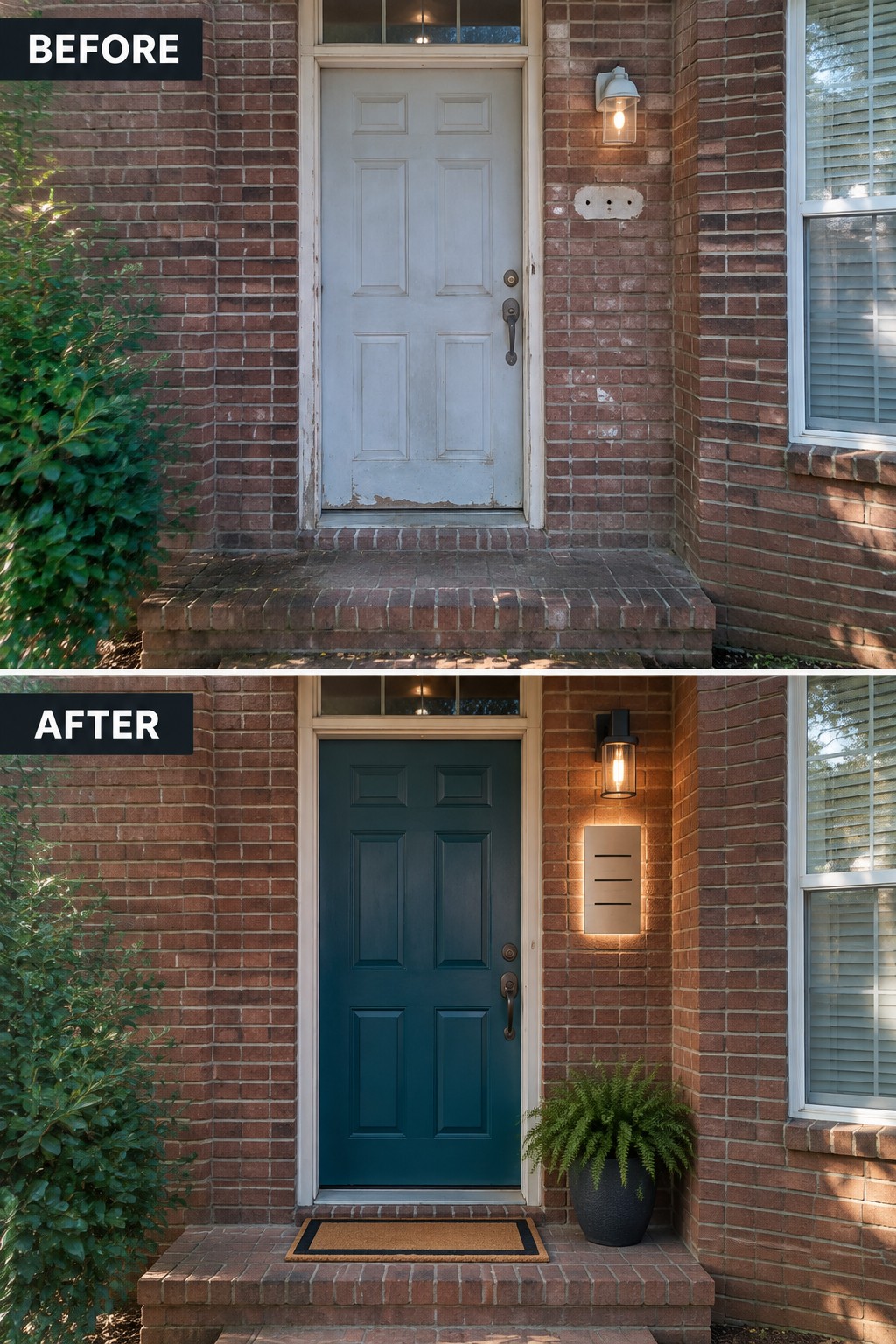
Many front entries lose impact over time because the lighting feels dated and the house numbers are either missing or hard to read. Replacing the old fixture with a modern one and adding a simple backlit plaque for the numbers makes the whole area feel more intentional and easier to find at night.
This update works well on brick homes where the light can stand out against the texture of the wall. Choose a fixture that directs light toward the numbers, keep any extra pieces like a mat or plant to a minimum, and make sure the numbers are large enough to see from the street.
Turn An Empty Porch Into A Seating Area
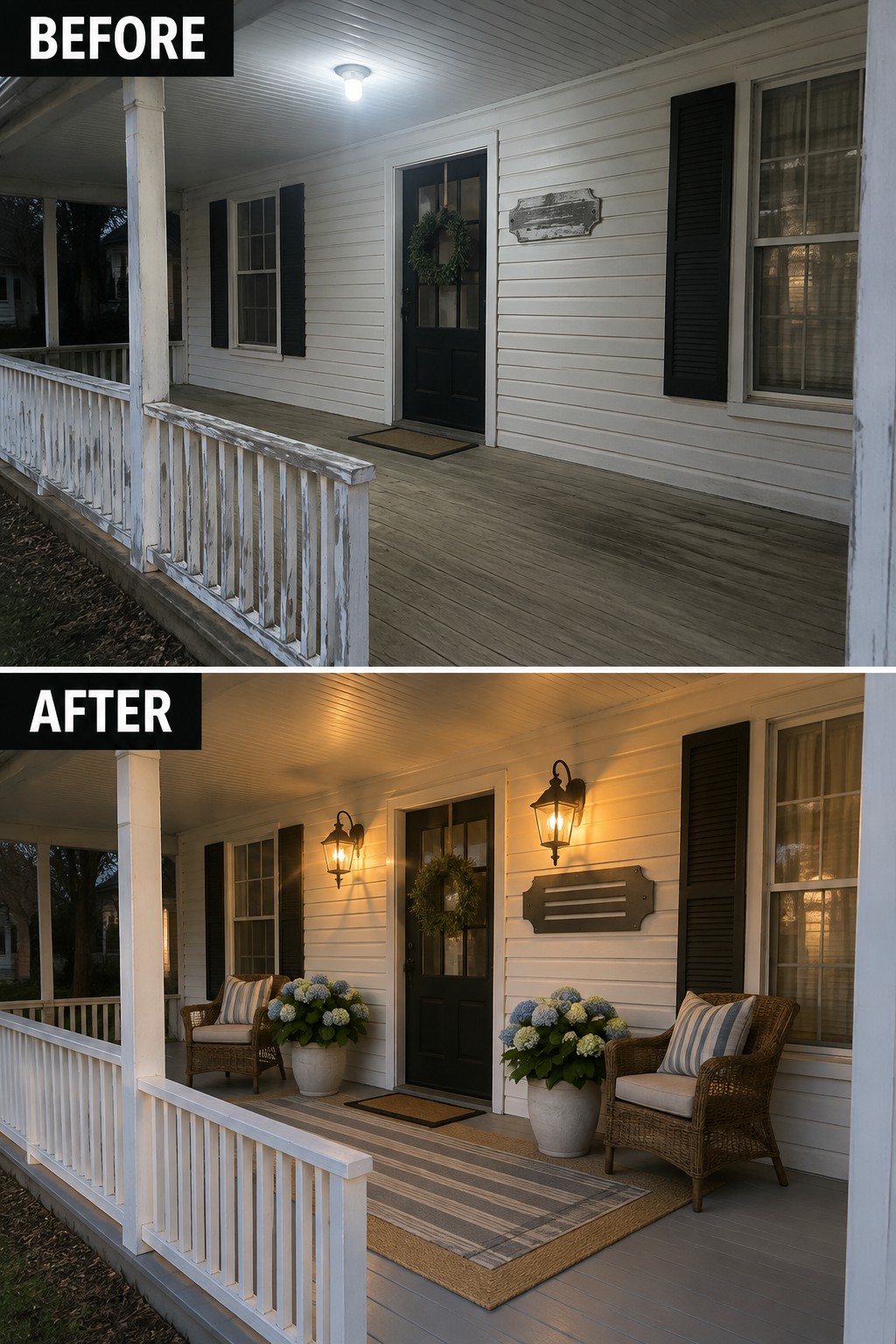
The before photo shows a plain front porch with little purpose beyond basic access. In the after, two simple chairs, a striped rug, and a pair of wall sconces turn the same space into a spot where someone might actually sit. The lighting makes the porch feel used at night, while the rug and chairs give it a clear function without crowding the walkway.
This idea works well on any front porch that gets at least a little evening use. Start with one or two weather-safe chairs and a durable outdoor rug to mark the seating zone, then add a pair of wall lights near the door. Keep the scale modest so the porch still feels open and the path to the door stays clear.
Add Entry Lighting To Make Concrete Steps Safer
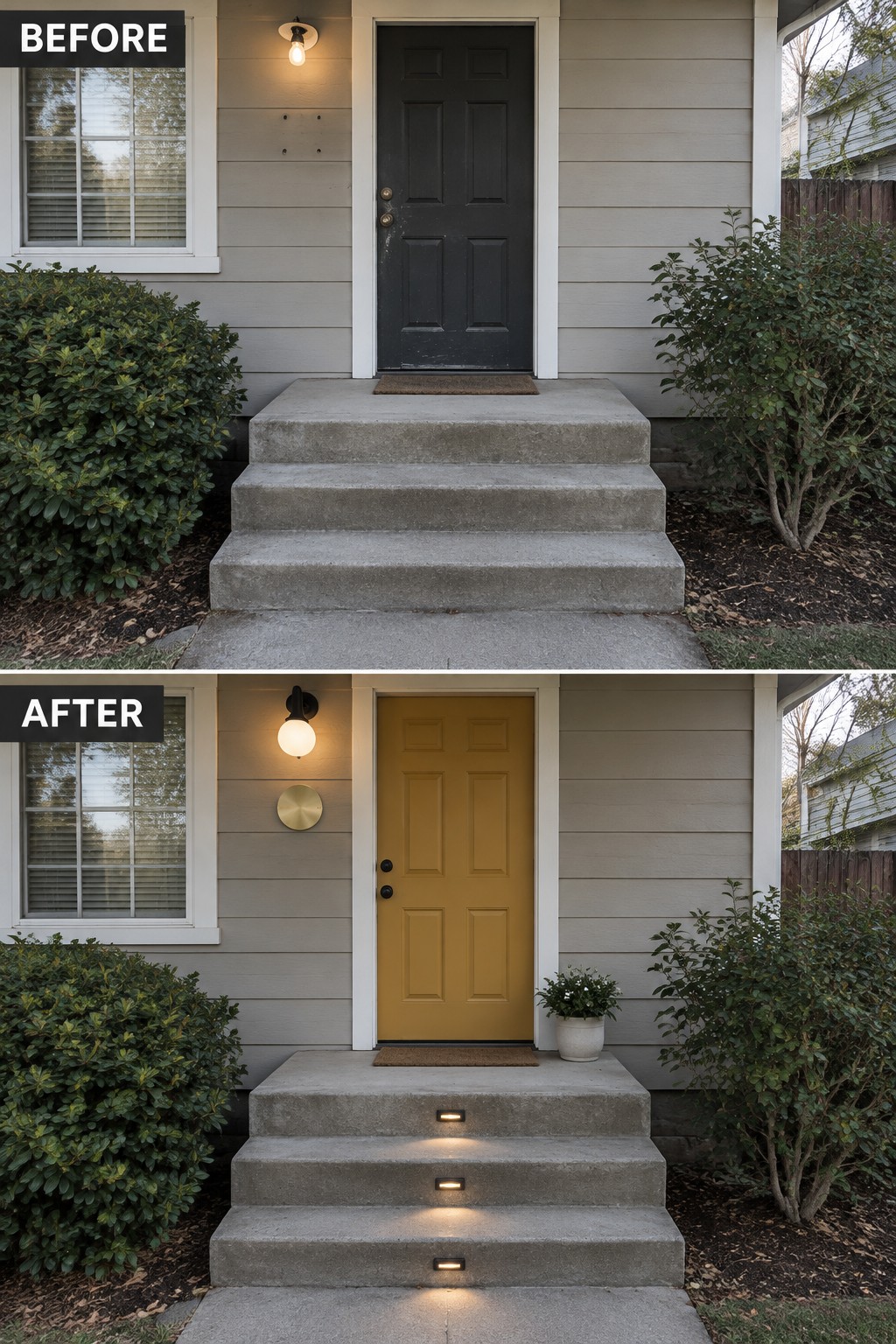
A plain set of concrete steps can feel flat and hard to navigate once the sun goes down. In this case, adding small lights built into the risers and swapping the door color made the entry easier to see and more welcoming without any major construction.
This approach works best on homes with wide, exposed steps where people come and go after dark. Pick simple LED step lights that sit flush with the concrete, then choose a door color that stands out from your siding so the whole entrance feels brighter even before the lights come on.
Add Entry Lighting To Brighten A Plain Front Door
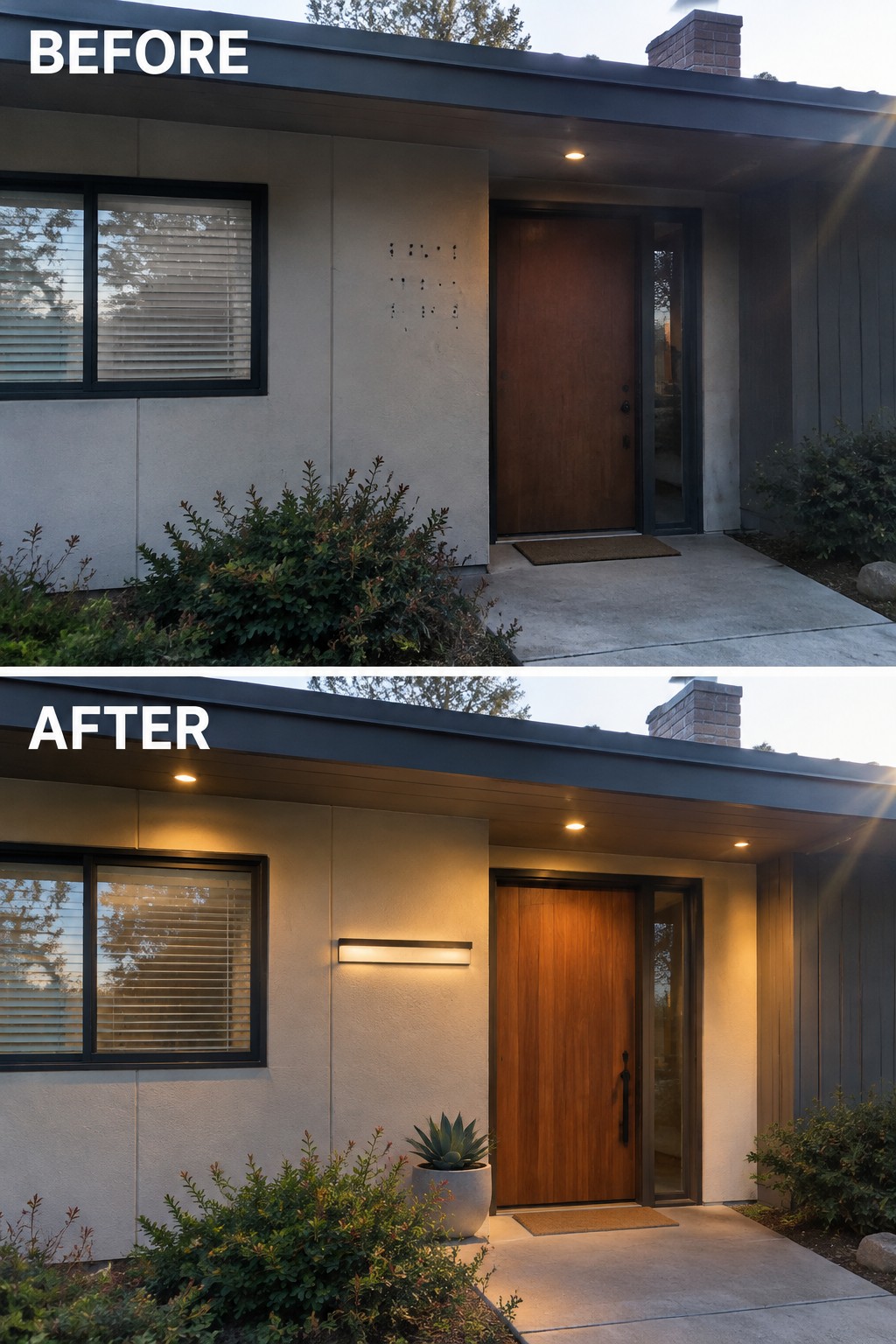
One simple way to update a front entry is by adding a few well-placed lights. The before photo shows a basic setup with just one small fixture above the door. The after version uses a wall sconce and several overhead lights to make the door area feel more open and easy to approach at night.
This idea works best on homes with clean lines where the entry feels flat during the day. Place one light beside the door and a couple under the eaves so the path stays visible. A single potted plant nearby helps tie the lights together without adding clutter.
Use Entry Lighting To Warm Up A Plain Porch
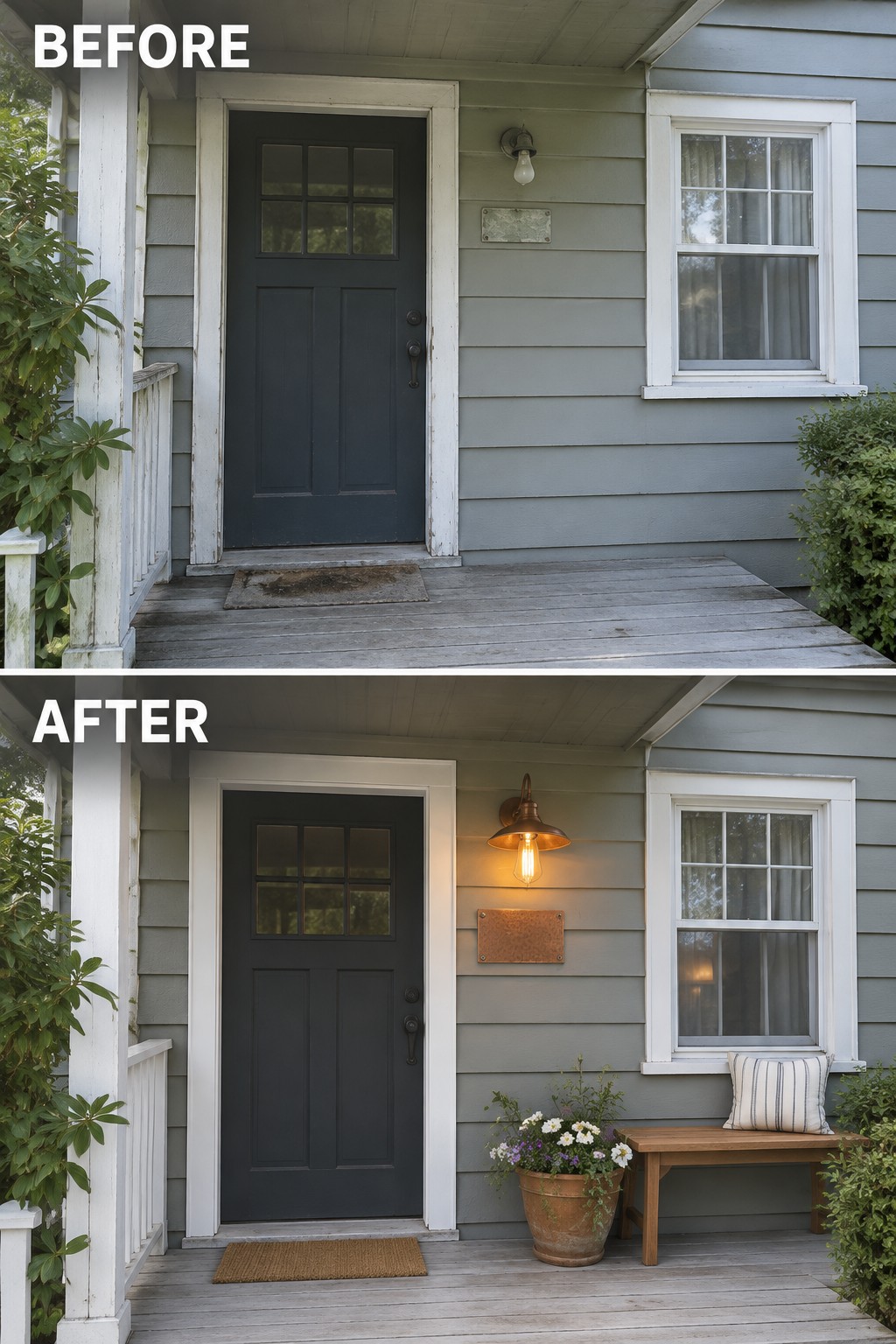
A small, basic porch light often leaves the entry looking flat, especially once the sun goes down. Replacing it with a fixture that gives off a warmer glow instantly makes the door and surrounding area feel more finished without any other big changes.
This approach works best on older homes where the original light feels too small or dated. Keep the rest of the styling minimal so the new light remains the main point of interest rather than competing with too many accessories.
Add Entry Lighting To Make A Plain Door Feel More Welcoming
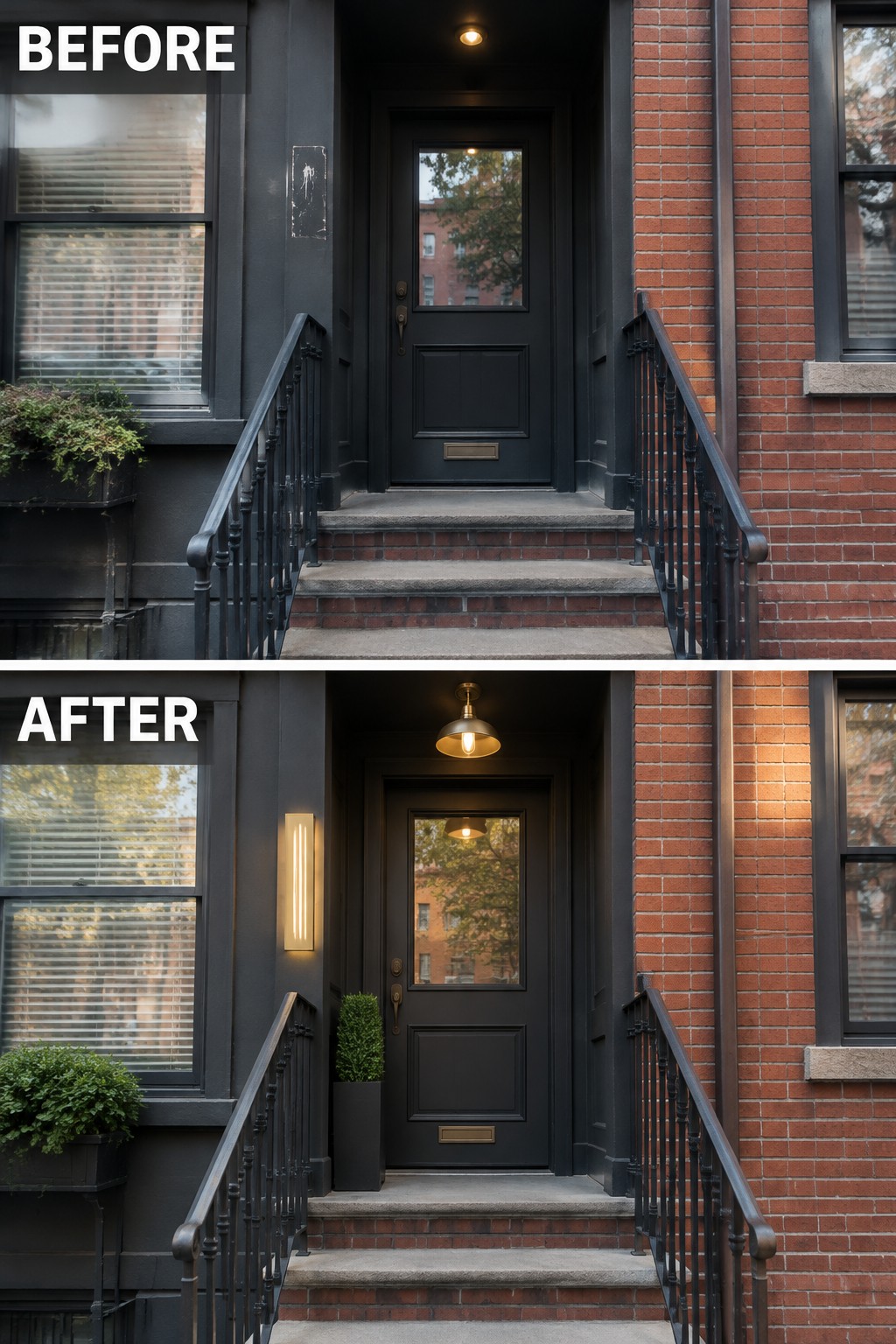
Many front doors look fine during the day but disappear at night. Adding a pendant light above the door and a vertical sconce on the side wall gives the entry a clear focal point and makes the steps safer to use after dark.
This works especially well on brick homes with simple stoops. Pick fixtures in a dark finish so they match the door instead of standing out. One overhead light is often enough to start, and you can add the side sconce later if you want more balanced light.
Add Entry Lighting To Highlight The Front Door
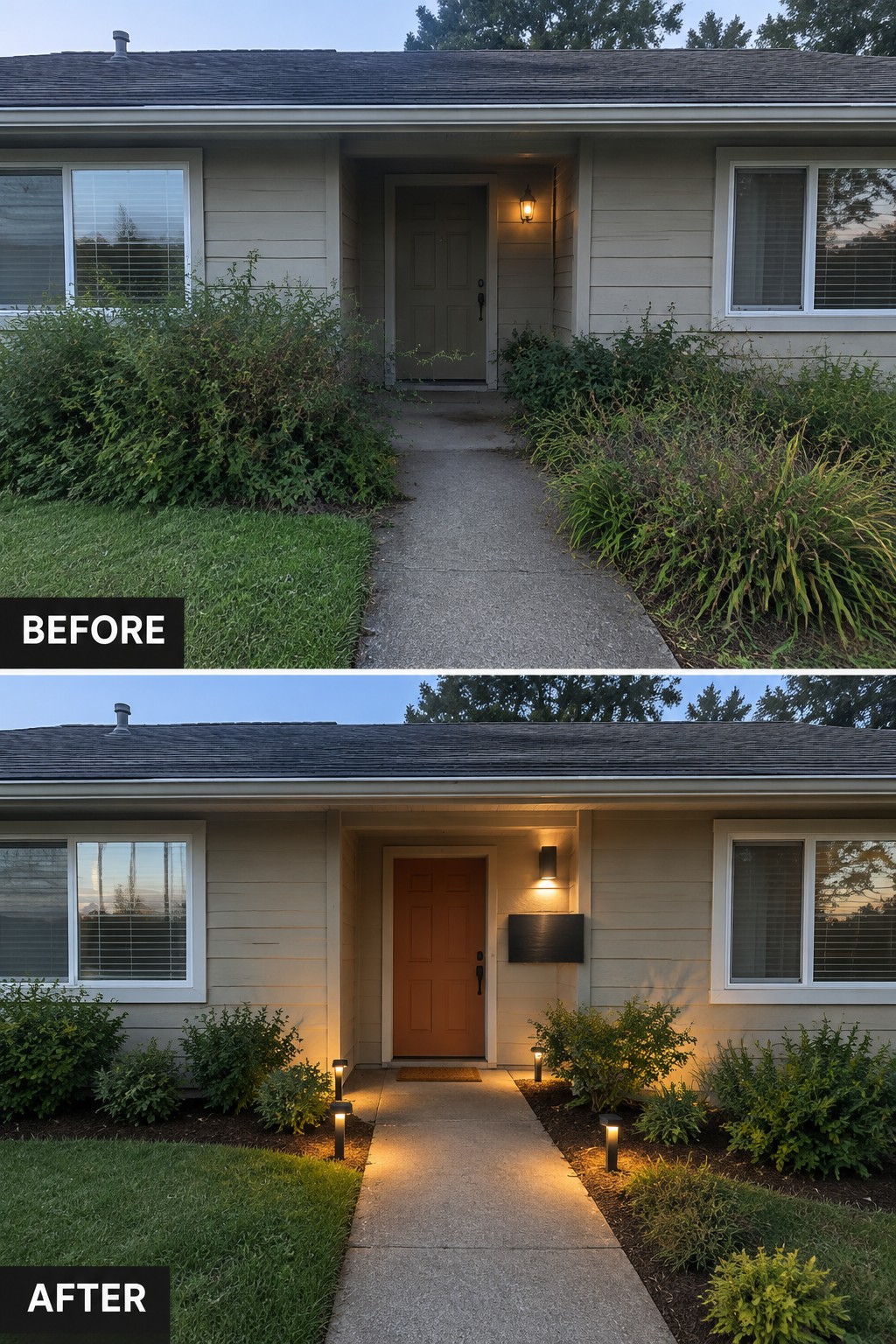
The main change here is swapping one small overhead light for a few low pathway lights plus a modern sconce beside the door. That small shift makes the whole entry feel intentional instead of forgotten. The new lights also work with the fresh door color and the simple plaque to give the house a clearer focal point at night.
This approach works well on any house where the front door sits a bit back from the street. Start with one or two lights along the walk, then add a single wall sconce if the budget allows. Keep the fixtures simple and dark so they disappear during the day and only show up when they are turned on.
Use Entry Lighting And New House Numbers For A Quick Update
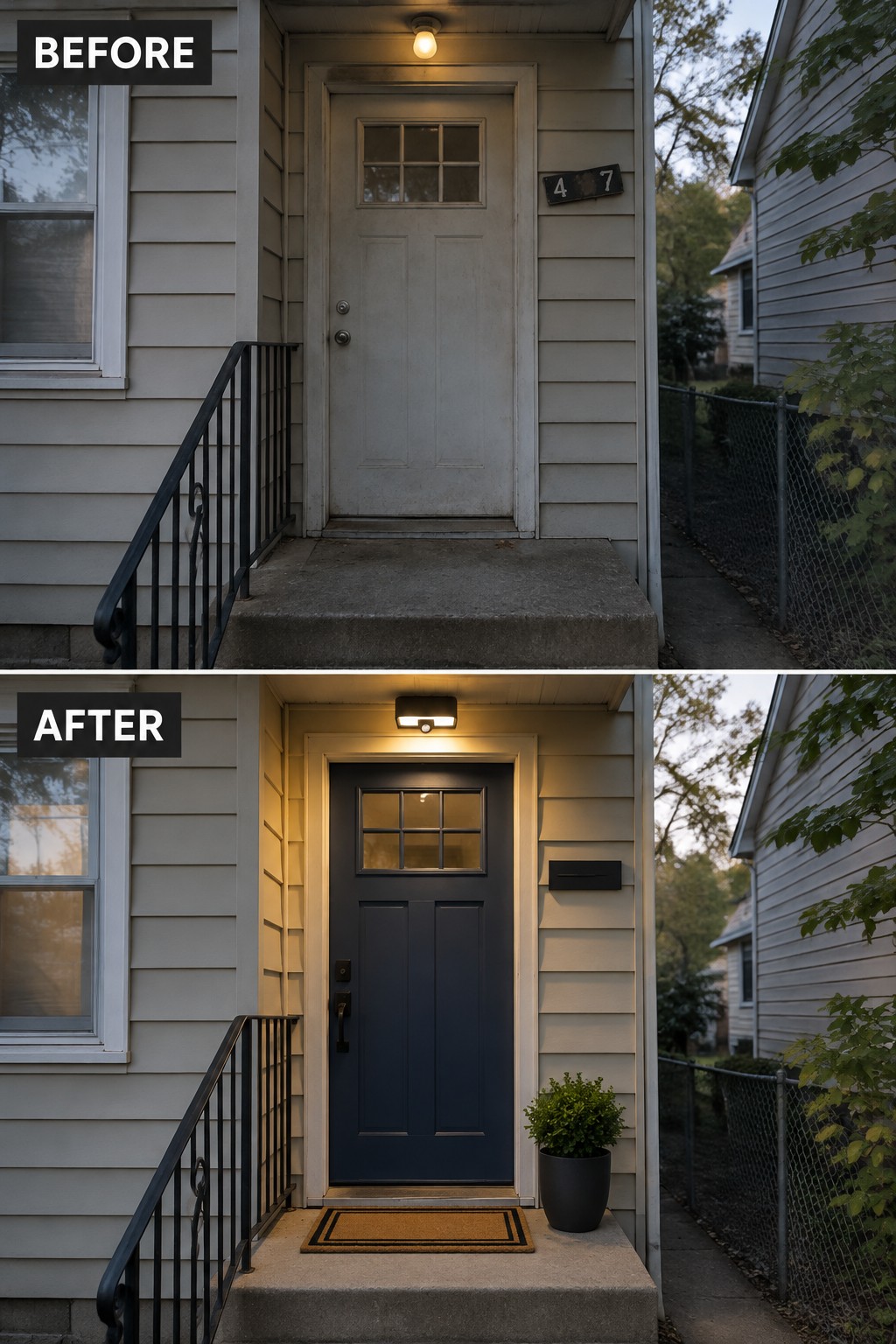
A tired front entry often comes down to two small details that get overlooked. The old porch light and faded house numbers made the door look flat and hard to find at night. Swapping in a modern fixture above the door and adding clean, visible numbers gives the whole entrance a sharper look without any major construction.
This approach works best on simple homes where the door and siding are still in good shape. Pick a light that throws a good amount of downward light for safety, and make sure the numbers are large enough to read from the street. Keep any extra pieces like a mat or one plant to a minimum so the lighting and numbers stay the main focus.
Add Entry Lighting To Update A Plain Front Entry
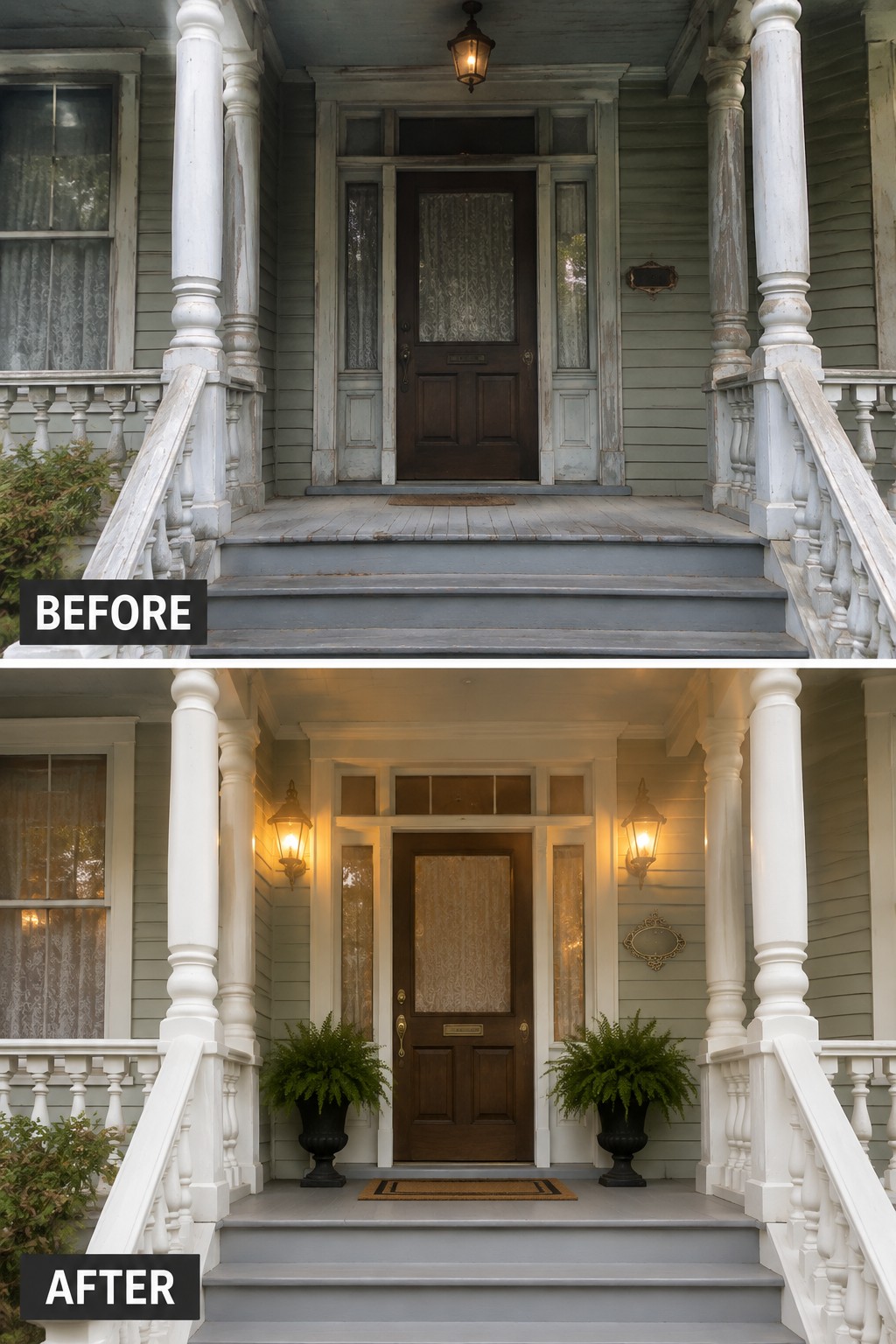
Adding a pair of wall sconces on either side of the door changed how this porch looks once the sun goes down. The before photo shows a fairly dark entry with no real light source near the door. The new lights create a warmer, more balanced look without any major construction.
This idea works especially well on older homes where the original lighting feels too small or too high. Keep the fixtures simple, match the height on both sides, and use warm bulbs so the light feels inviting instead of stark. It is one of the easier updates that still makes a noticeable difference from the street.
Add Outdoor Lighting To Warm Up A Plain Front Entry
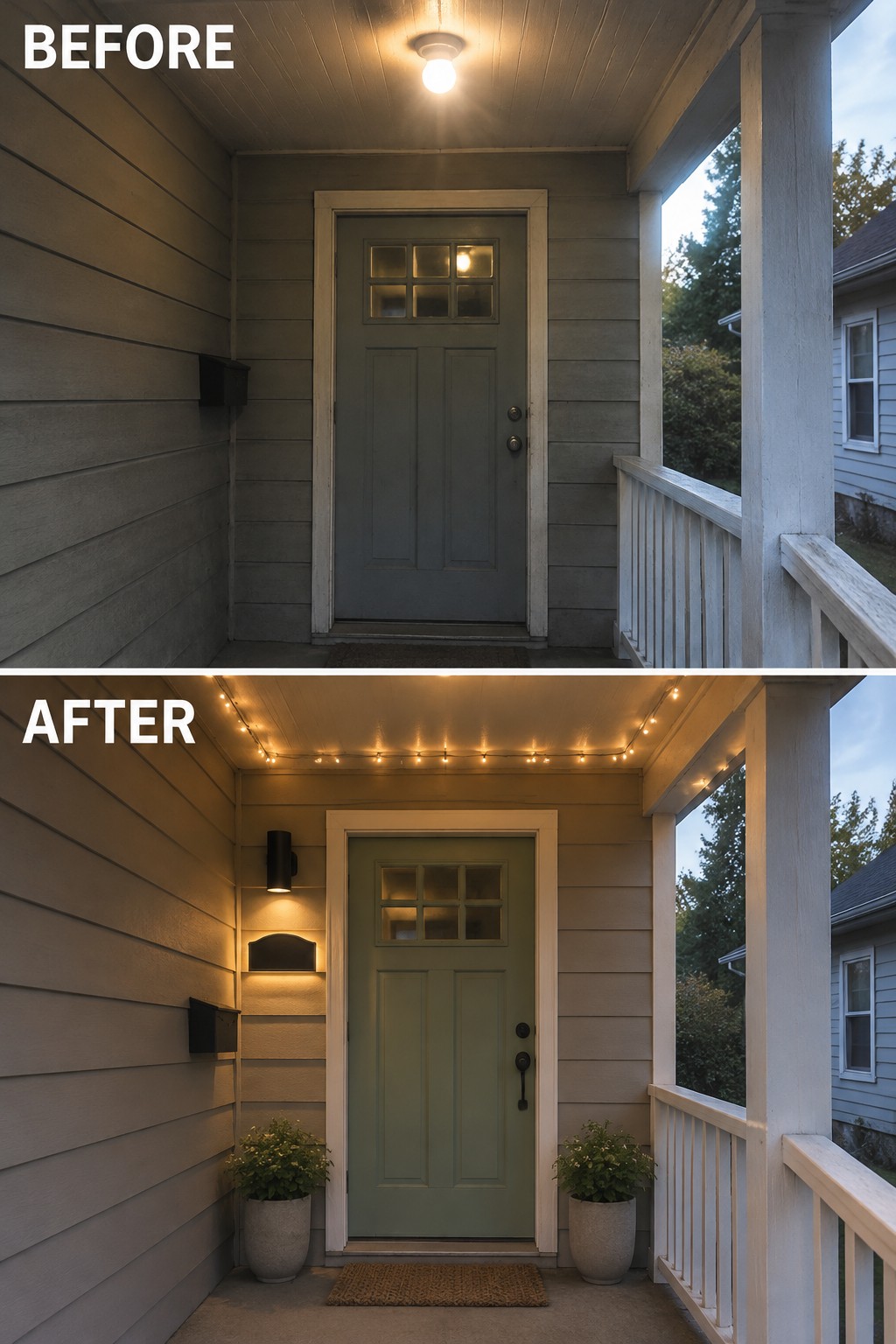
Many front entries feel unfinished because they rely on one overhead bulb that leaves the sides dark. Adding a string of lights along the ceiling edge and a wall sconce beside the door gives the space a softer, more even glow. The change makes the entry look intentional instead of forgotten.
This approach works well on covered porches where the lights stay protected. Run the string lights first, then add one wall fixture at eye level near the door. Keep any extra pieces like planters small so the walkway stays clear.
Paint The Front Door And Add Entry Lighting
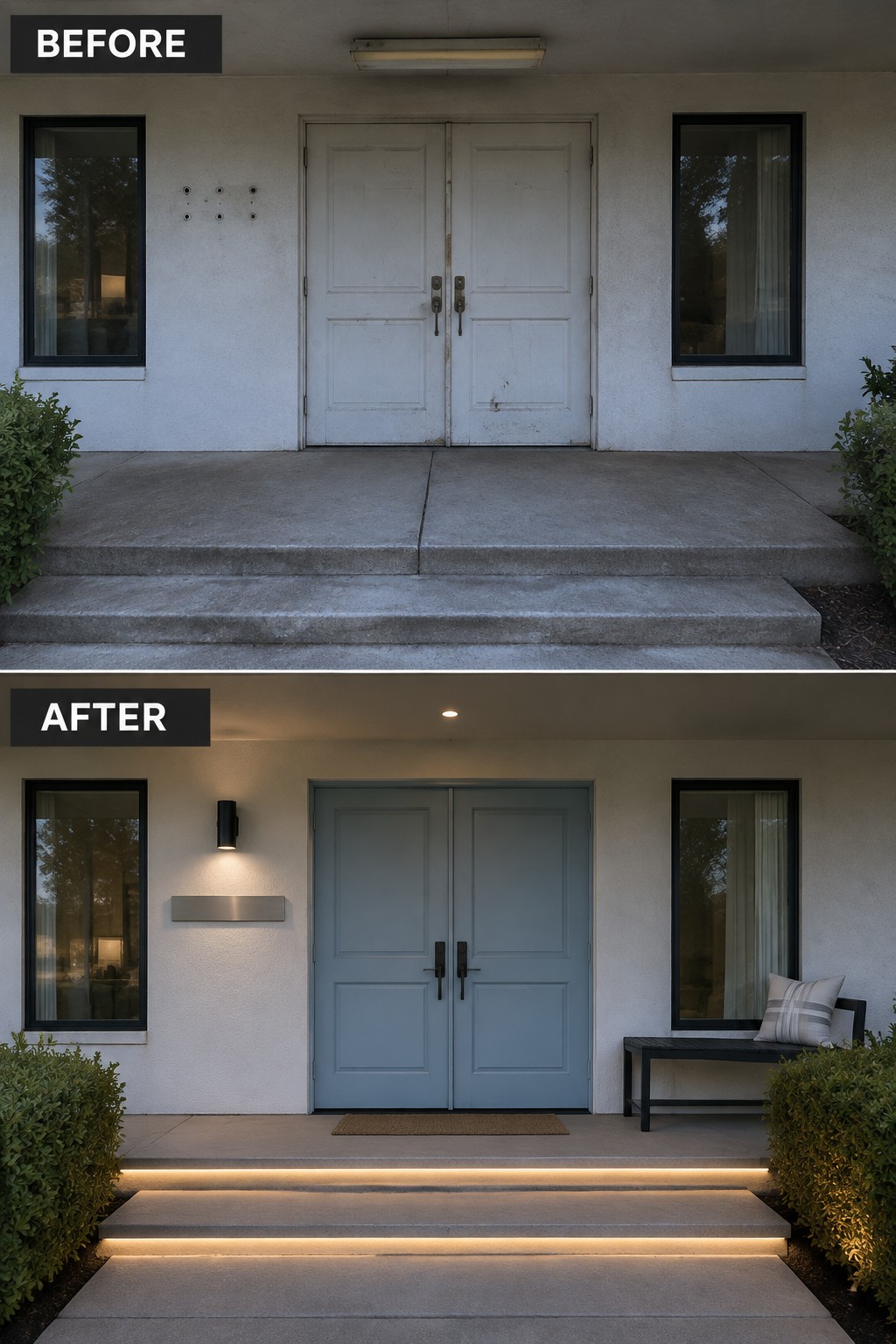
A plain entry often feels unfinished when the door matches the wall color and there is no light to mark the way in. Painting the doors a soft contrasting color and adding a wall sconce with low step lights makes the whole front look more complete and easier to use after dark.
This approach works on houses with simple concrete steps and double doors. Choose an exterior-grade paint and shielded fixtures that keep light focused on the path and door rather than shining into the house or neighbor’s yard.
Add Entry Lighting To Warm Up A Plain Front Porch
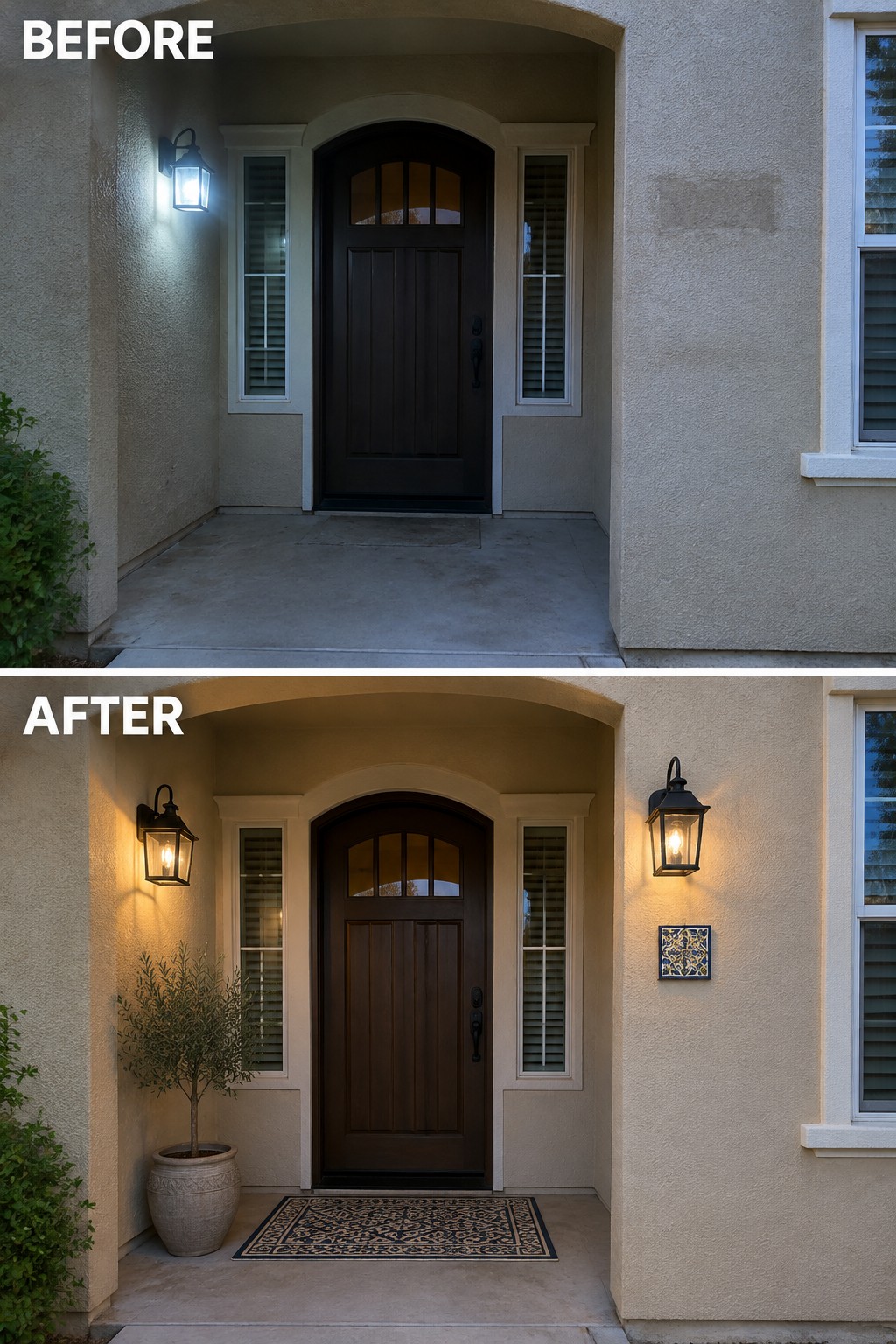
One of the quickest ways to improve a bare entry is to replace a single basic light with a pair of warmer fixtures. In this case, the old wall sconce gave way to two lanterns that cast a softer glow on both sides of the door, which immediately makes the space feel more balanced and used.
This approach suits homes with simple stucco or concrete entries where the architecture is already in place. Pick lights that match the door size, keep the number of added pieces small, and let the lighting do most of the work.
Update Your Front Entry With Lighting And A New Door Color
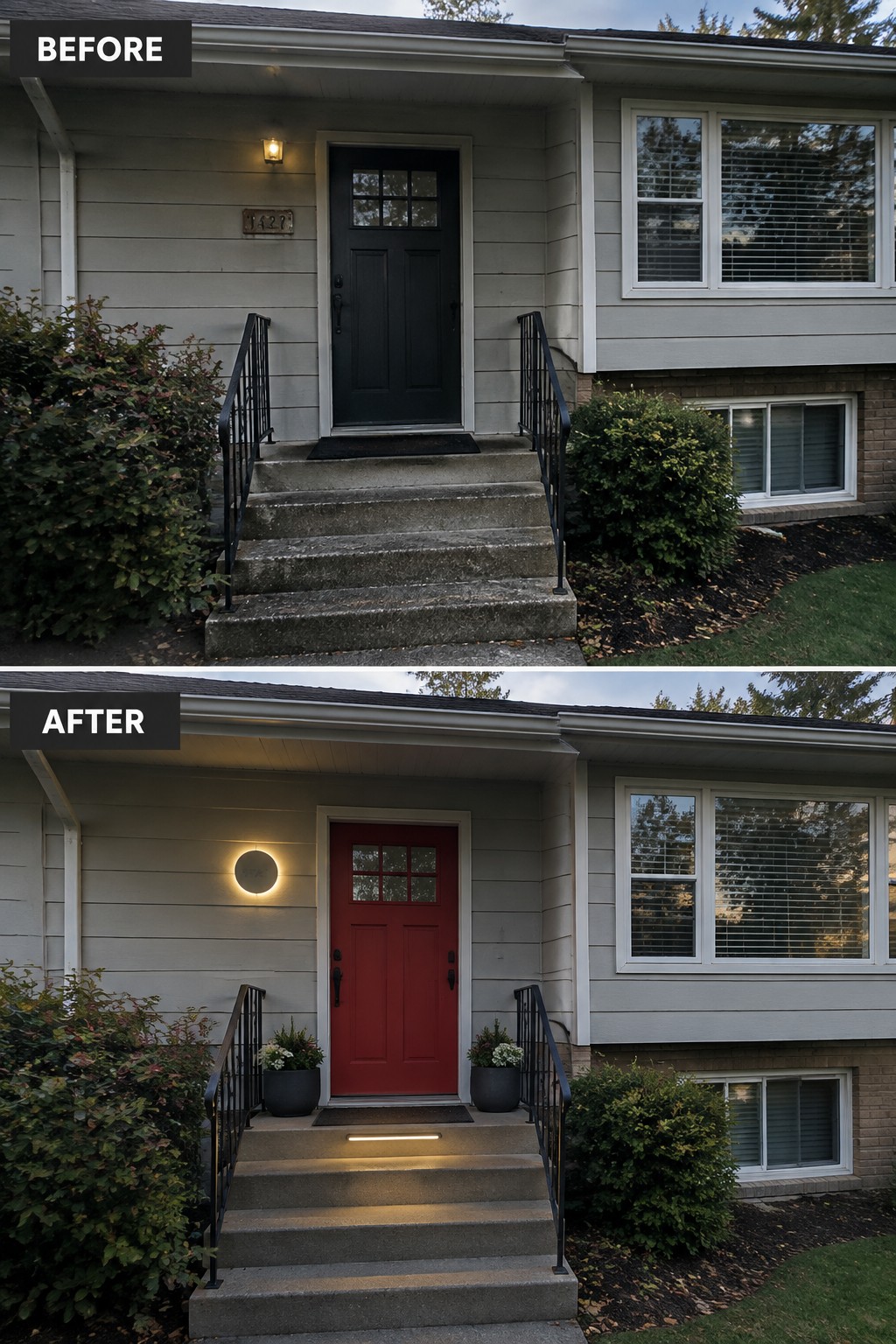
A plain front door often gets overlooked, but it is one of the easiest spots to improve curb appeal. Painting the door a brighter color and adding a wall sconce plus step lights makes the entry feel finished and easier to find at night.
This approach works best on simple house styles where the door sits close to the sidewalk. Keep the fixtures modest in size so they do not overwhelm the siding, and choose warm bulbs that match any existing porch light.
Add Entry Lighting To Warm Up A Bare Porch
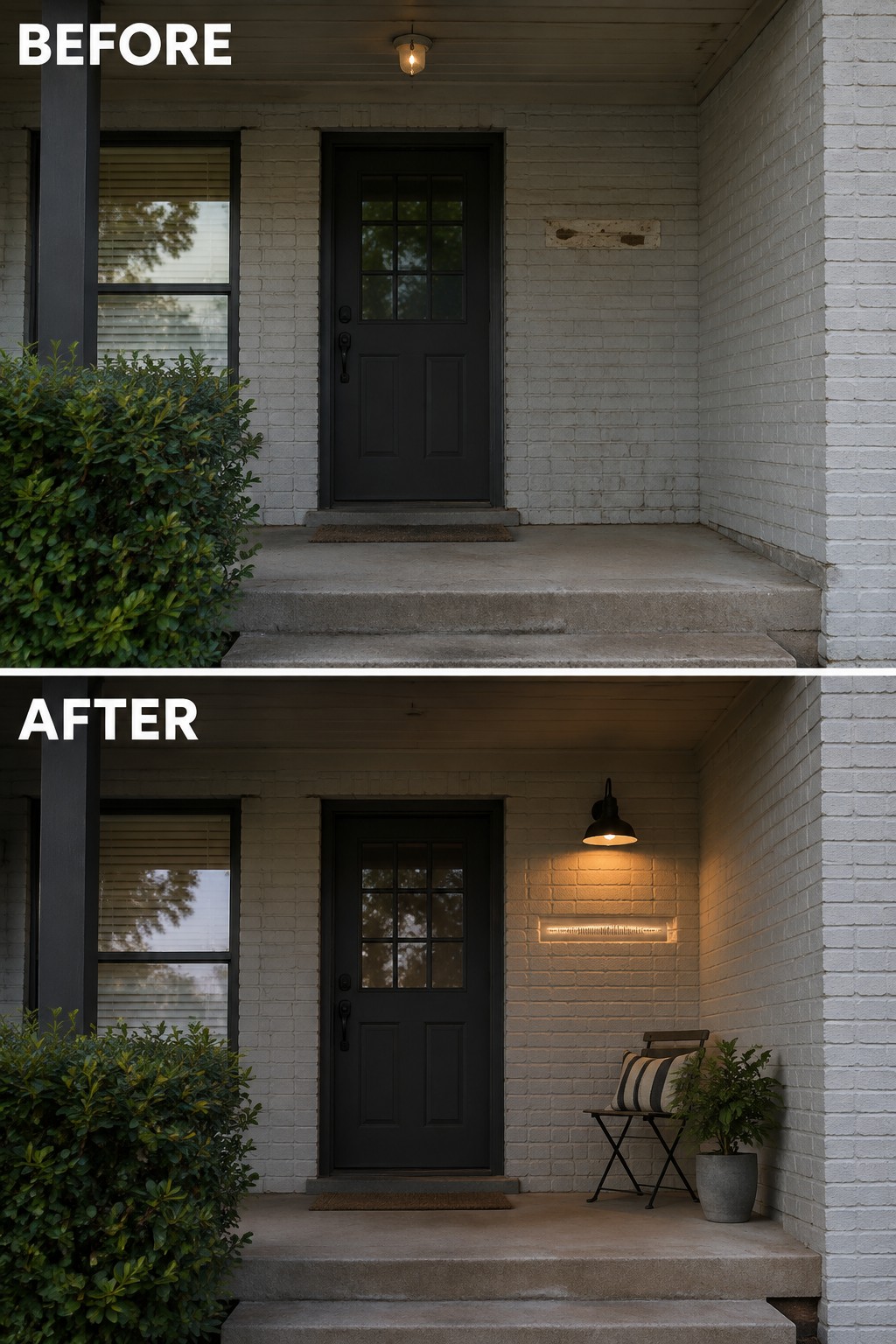
A plain front porch often feels flat when the only light comes from one overhead fixture. Adding a wall sconce and a slim horizontal light next to the door gives the brick surface depth and makes the entry feel used instead of empty.
This works best on small porches where you want to keep movement easy. Mount one or two fixtures at a comfortable height, then add just one chair or plant so the space reads as intentional without crowding the steps.
Refresh A Plain Entry With New Lighting
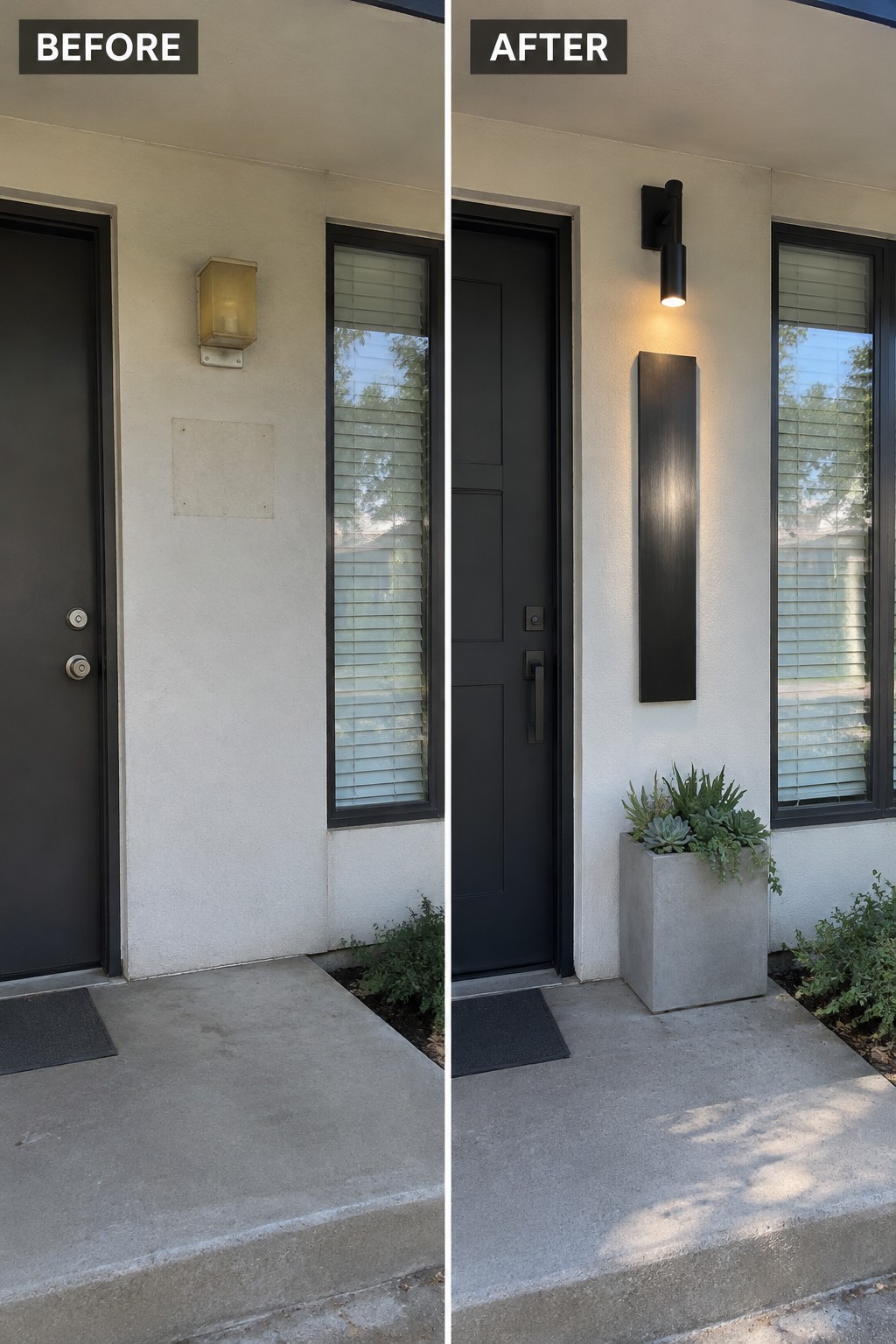
The old wall sconce sat alone on a blank stretch of wall and did little to welcome anyone at the door. Swapping it for a taller modern fixture and placing one concrete planter beside the door gave the entry a finished look that feels intentional rather than empty.
This update suits homes with simple stucco or siding where the front door needs a quick lift on a budget. Focus first on the light since it improves safety and curb appeal after dark, then choose a planter that sits at a comfortable height and echoes the door color. Keep the surrounding wall clear so the new pieces can do the work.
Add Entry Lighting To Make Your Porch More Welcoming
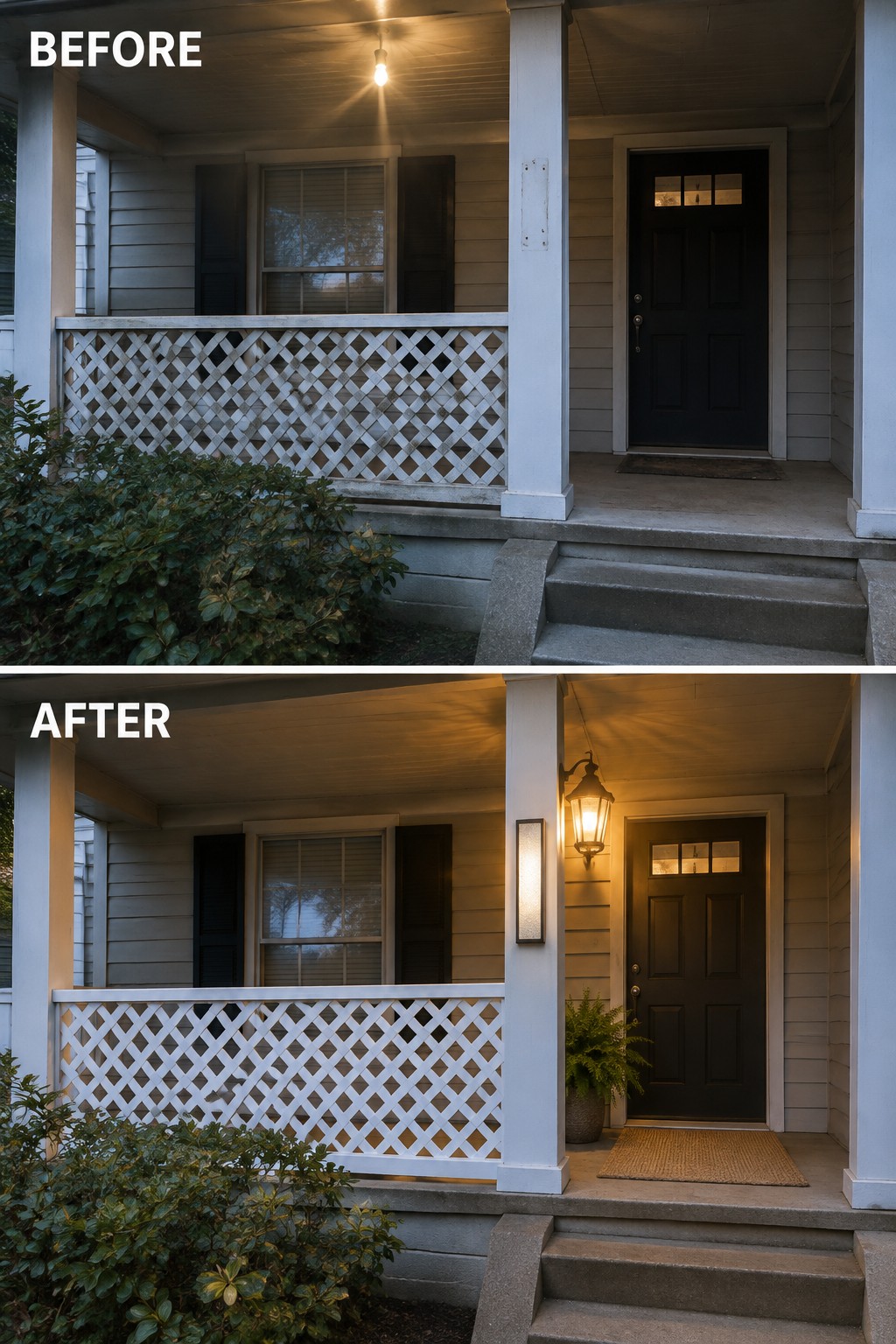
The before photo shows a porch lit by one bare overhead bulb that leaves the door area dark and flat. Adding a hanging lantern and a vertical sconce beside the door creates softer, layered light that makes the entry feel finished and easier to use at night.
This works on many older homes where the original lighting is basic and harsh. Place one fixture at eye level next to the door and keep other changes small, such as a simple mat or one potted plant. The goal is useful light in the right spots rather than filling the whole porch with fixtures.
Add String Lights To Warm Up A Plain Entry
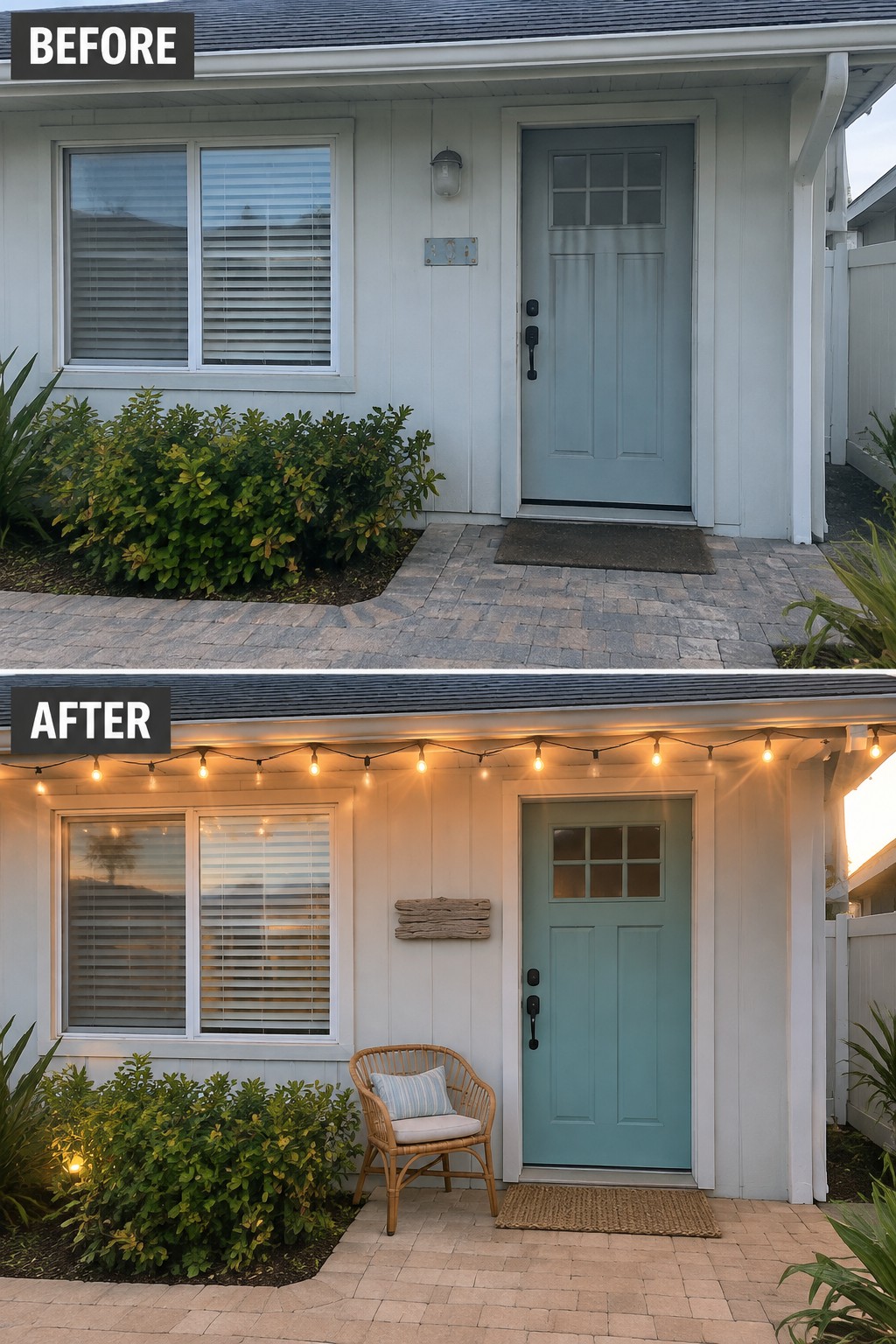
String lights can turn a basic front entry into something that feels lived in after dark. In the before photo the porch looked flat and uninviting once the sun went down. The after photo shows how a simple strand of lights across the overhang adds a soft glow that makes the door and seating area feel more welcoming without any big construction.
This idea works well on small porches where you want light but do not need a full fixture. Hang the lights along the eaves or rafters, keep the strand on a timer, and add one or two weather-safe pieces like a chair or mat so the space feels used. It suits homes with plain siding or small entries where you want a quick evening upgrade that stays within a modest budget.
Add Entry Lighting To Refresh A Plain Front Porch
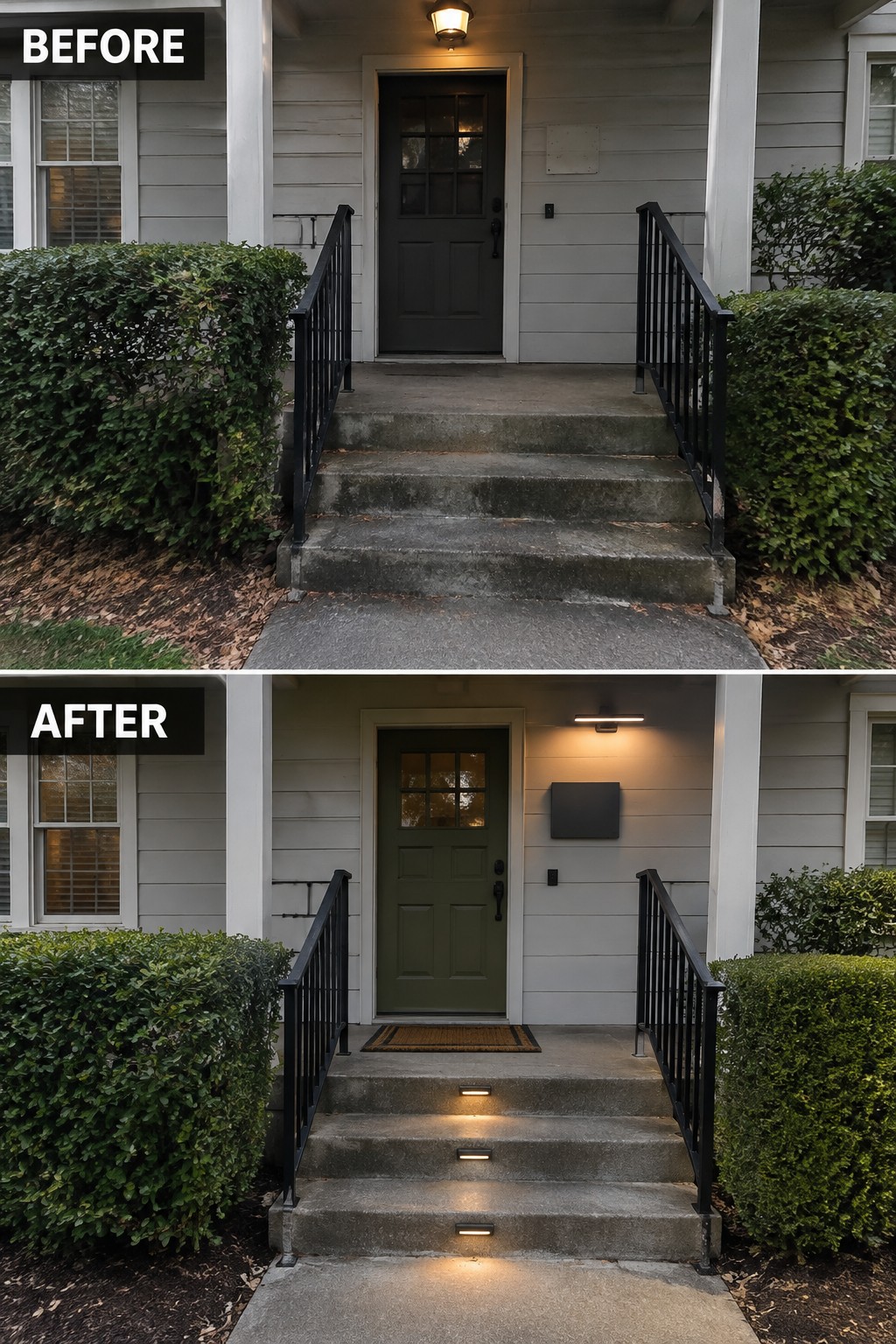
The before photo shows a basic set of concrete steps with one overhead light that left the area feeling dim and uninviting. In the after photo, a simple wall sconce and a few low step lights make the same entry feel much more usable at night while the green door adds a bit of color without a big renovation.
This approach works well on homes where the porch is mostly functional rather than decorative. Start with one or two well-placed lights that actually hit the steps and door instead of trying to fill the whole area. Keep the fixtures simple so they do not compete with the house style, and test the brightness before you mount anything permanent.
Frequently Asked Questions
Q: Where should the new house numbers go relative to the entry light? A: Place the numbers directly below or beside the light fixture. This way the light hits them evenly at night without extra setup. Keep the whole arrangement centered above or next to the door for easy viewing.
Q: Is it hard to install these updates myself? A: Most numbers screw in with basic tools and many lights come with simple mounts. You can finish both in an afternoon. Skip any that need major drilling if you want to stay on budget.
Q: Do I need to replace both at once? A: You can start with the numbers alone. Add the light later when you find a good deal.