

Many colonial revival homes lose their charm when the porch gets simplified or covered over the years.
I find that bringing back traditional details like brackets and posts helps the whole front feel balanced again.
Small fixes to the facade rarely call for tearing things down.
Instead they work with what is already there to improve curb appeal in a steady way.
Testing one or two of these porch elements on a similar house seems like a practical next step.
Refresh An Older Porch With Paint And A Bold Door Color

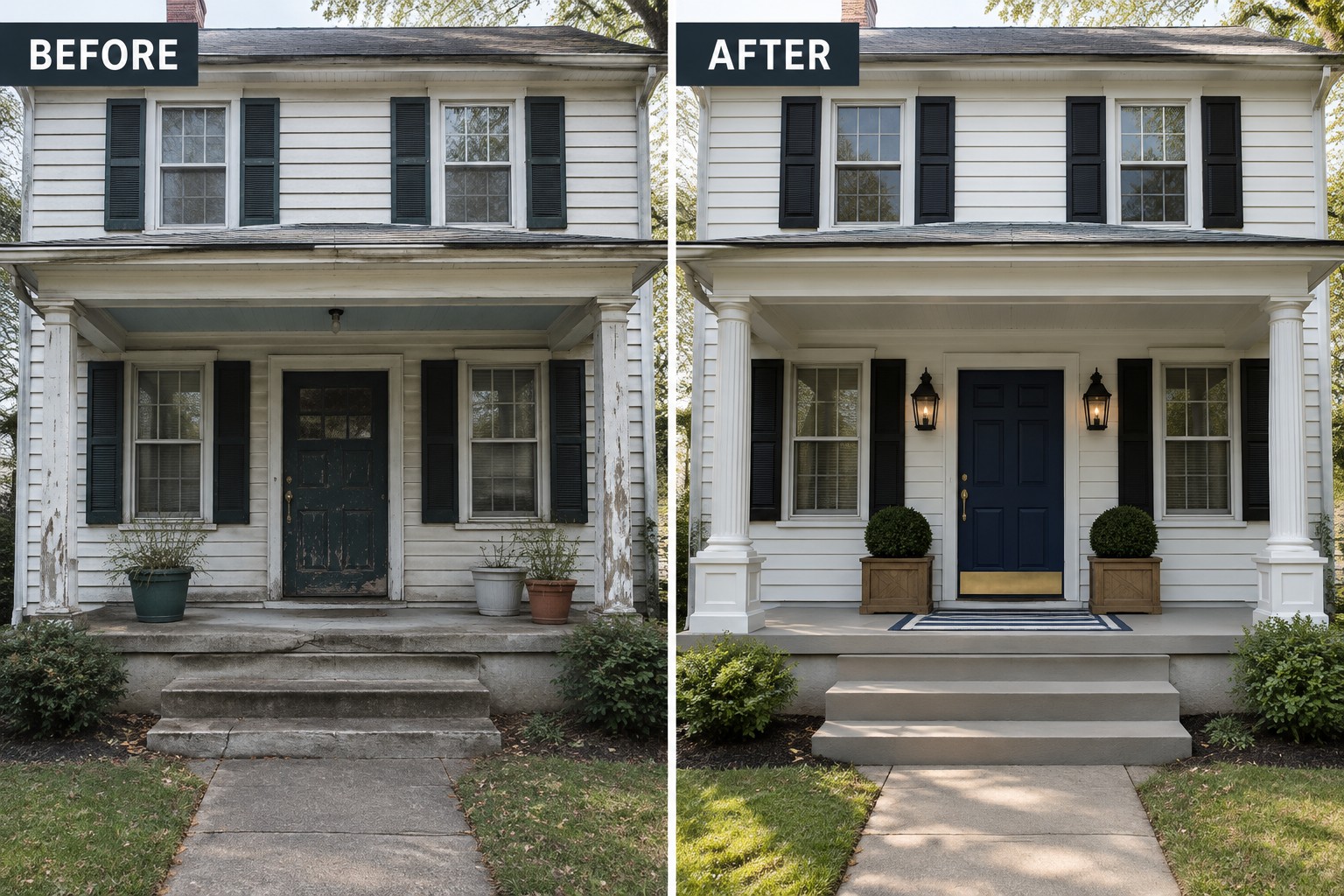
Many older homes have porches that slowly lose their shape. Peeling paint on the columns and a faded door make the entry feel neglected even when the rest of the house is sound. A focused refresh can change that without touching the structure.
Clean the existing trim first, then paint the columns and details white to sharpen the look. Choose a deep navy or similar strong color for the door so it becomes the clear center of the facade. Add a pair of simple sconces and matching planters on either side. This works especially well on colonial revival homes where the porch already has good bones but needs definition.
Paint A Brick Colonial And Add A Traditional Porch

Painting the brick a light color and replacing the small metal porch with a proper pediment and columns makes the whole front feel more balanced and welcoming. The dark green shutters now match across both floors, and the wood door adds warmth that the old white one lacked. These two changes alone shift the house from looking flat and dated to something that feels more like a classic colonial.
This approach works well on simple brick colonials where the structure is sound but the details feel thin. Start with paint if you want the biggest visual shift without major construction. Keep the new porch in scale with the house and choose a door color that stands out without clashing with the trim.
Replace A Plain Metal Railing With Traditional Woodwork
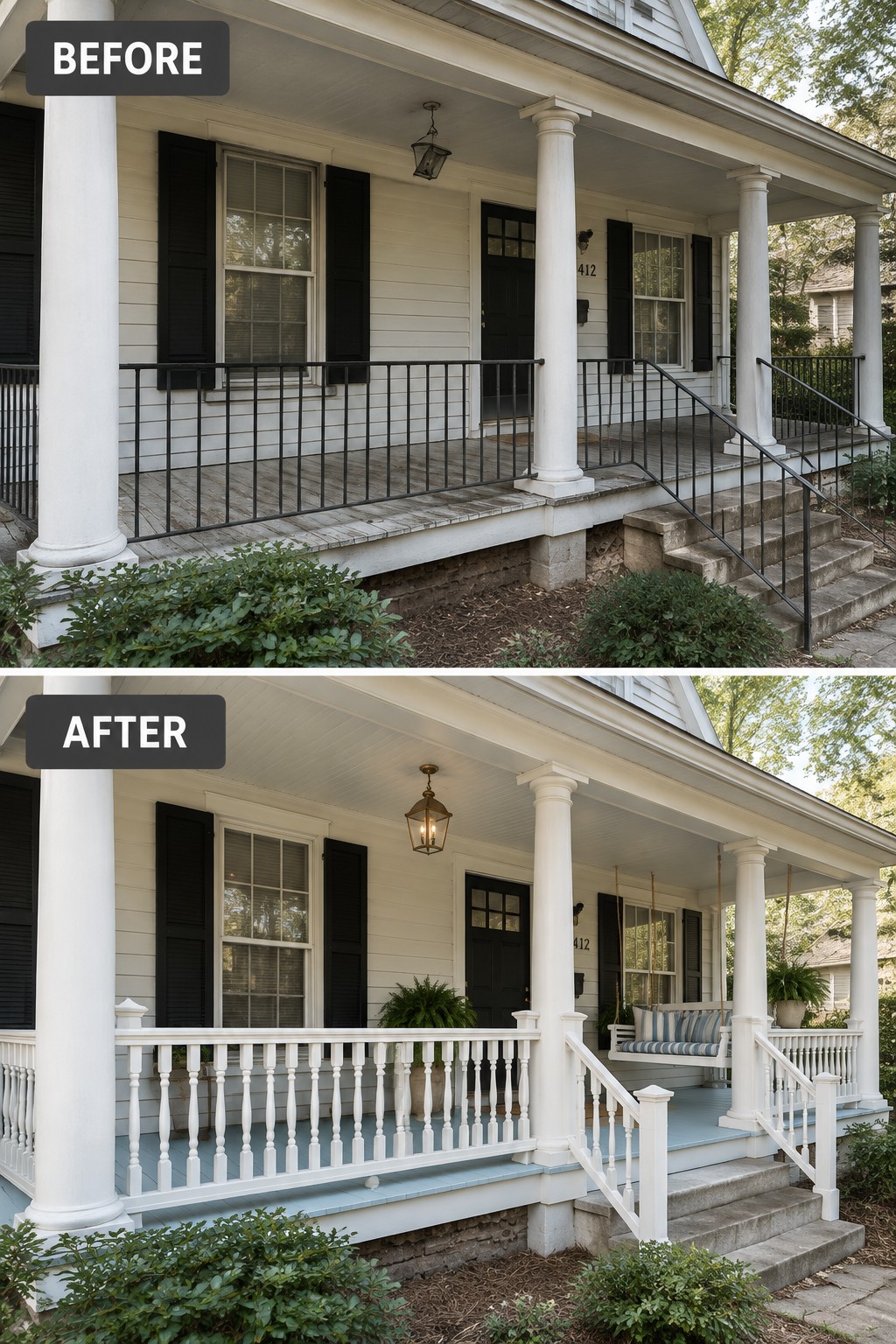
The most useful change here is swapping the black metal railing for a white wooden one with turned balusters. That one update gives the porch a clearer traditional look that matches the rest of the house and makes the entry feel more complete instead of temporary.
This idea works well on older homes that lost their original porch details over time. Keep the new railing simple, match the white trim already on the house, and add just one or two pieces like a swing so the space stays usable rather than crowded.
Add A Pediment And Trim To Frame The Front Door
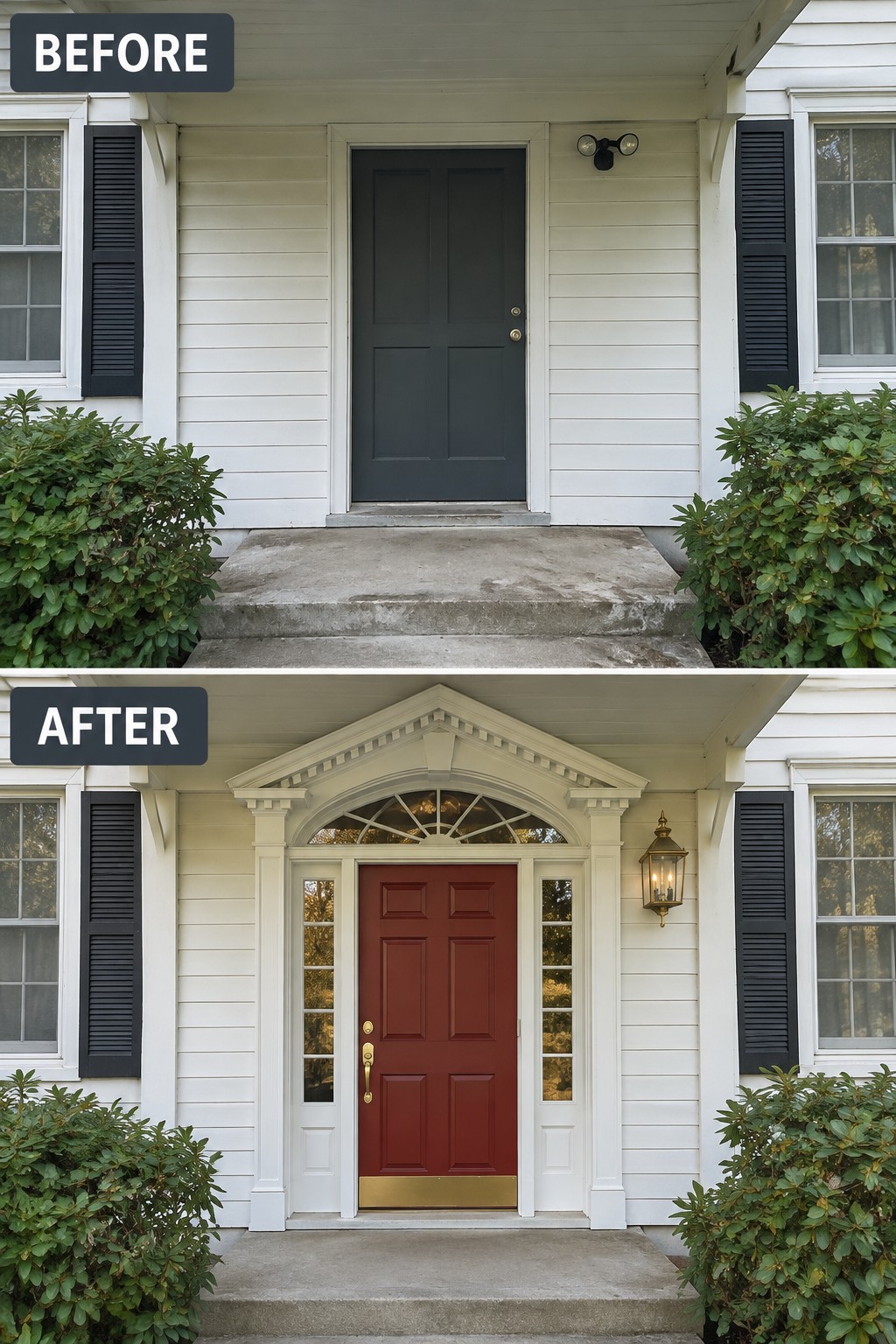
Adding a simple pediment and trim around the entry gives the whole front a stronger presence. The before photo shows a flat gray door sitting plain against the siding with nothing to draw the eye. Once the white surround, columns, and sidelights go in, the door becomes the clear focal point and the house reads as more finished and traditional.
This idea suits colonial revival homes that already have decent proportions but lack definition at the main door. Start with the structure before you worry about paint color or landscaping. Keep the surround scaled to the door so it does not overwhelm the facade, and choose a door color that stands out without clashing with the existing siding and shutters.
Turn A Bare Porch Into A Seating Area
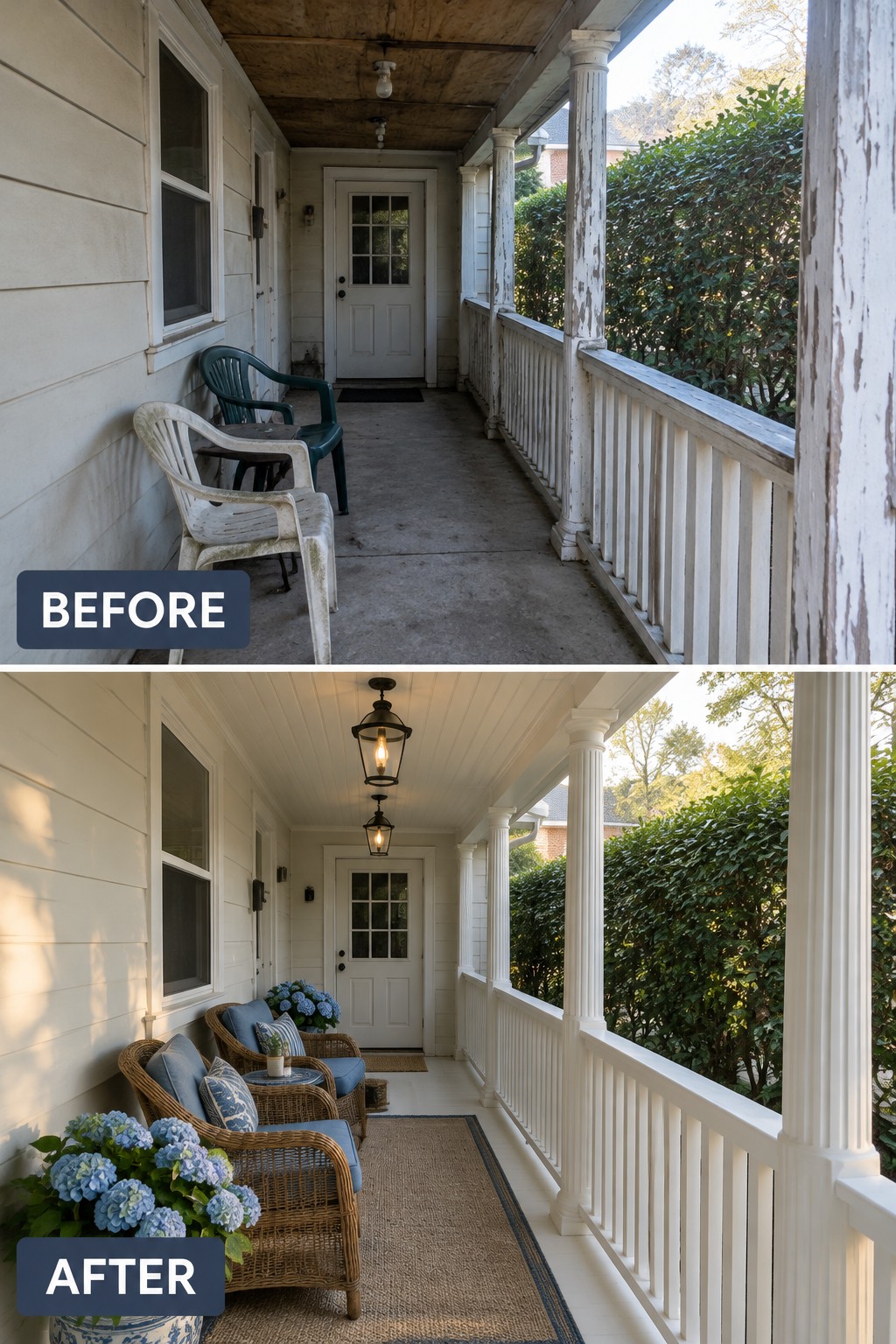
A porch often stays empty when there is no clear plan for how to use it. Adding a small seating group, a rug to define the floor, and a few planters makes the space feel like an outdoor room instead of leftover concrete.
This approach works well on any covered porch that gets decent light. Keep the furniture simple and weather ready, leave enough open floor for walking through, and start with just enough pieces to make sitting comfortable.
Refresh The Porch With Fresh Paint And A New Front Door

The peeling paint on the columns made the whole entrance feel run down. A full coat of white paint on the columns plus a switch to a dark front door cleaned up the look right away and gave the house a sharper, more finished appearance.
This kind of update suits older colonial style homes where the porch and entry are the main focal point. Start with the biggest surfaces that show wear, then add a pair of simple lanterns by the door to complete the change without adding clutter.
Refresh Curb Appeal With Updated Shutters And Plantings
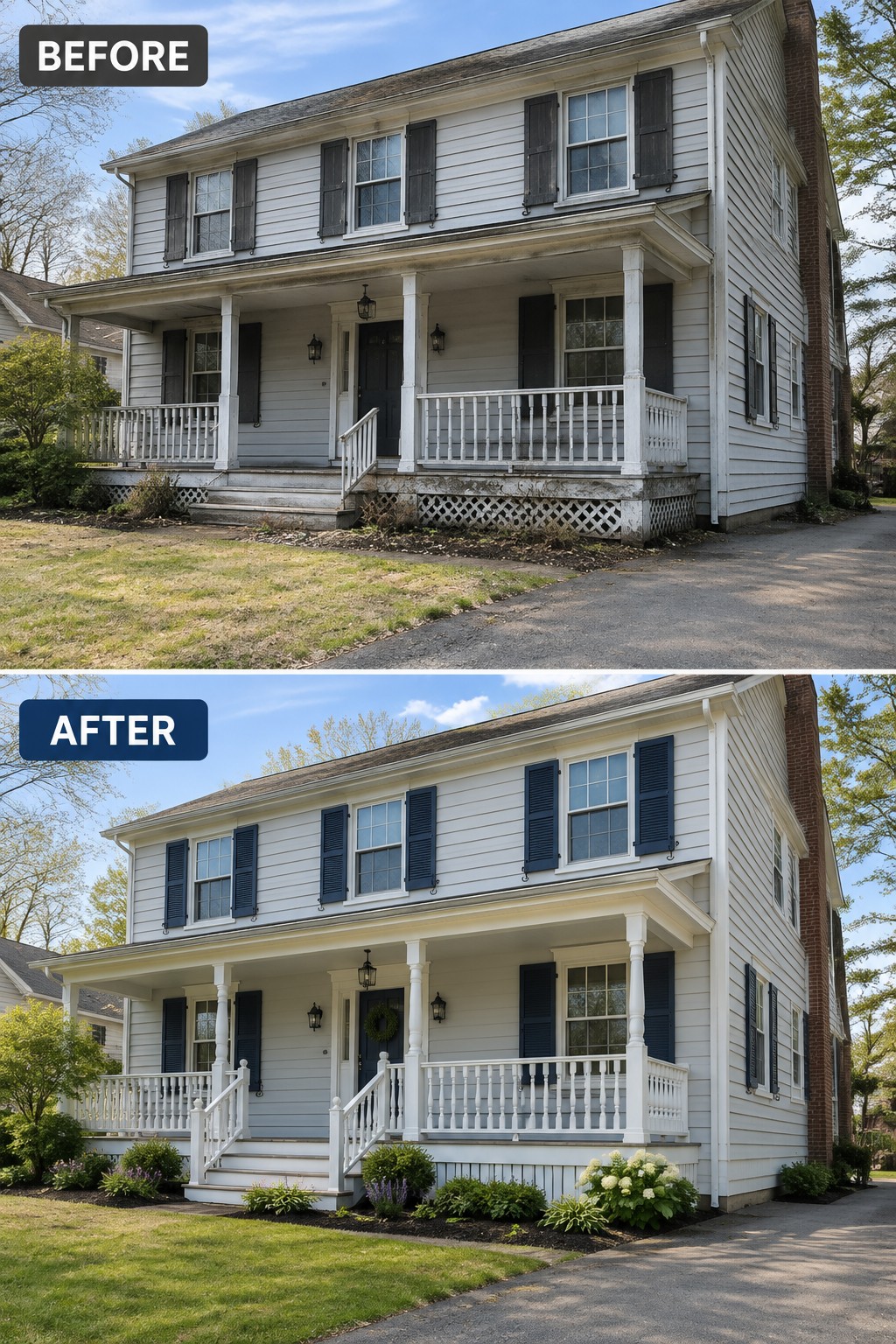
Changing the shutter color from dark gray to a deeper navy blue and adding structured garden beds along the foundation made the whole front of this house feel more finished. The new plantings also softened the base of the porch and gave the entry a clearer sense of order without any major construction.
This approach works well on older Colonials where the bones are solid but the details have faded. Start by picking one strong color for the shutters and trim, then keep the planting simple with a mix of evergreen shrubs and seasonal flowers in defined beds. Focus on the areas right around the porch first so the entry feels intentional before you expand to the rest of the yard.
Paint The Front Door A Bold Color To Refresh The Entry
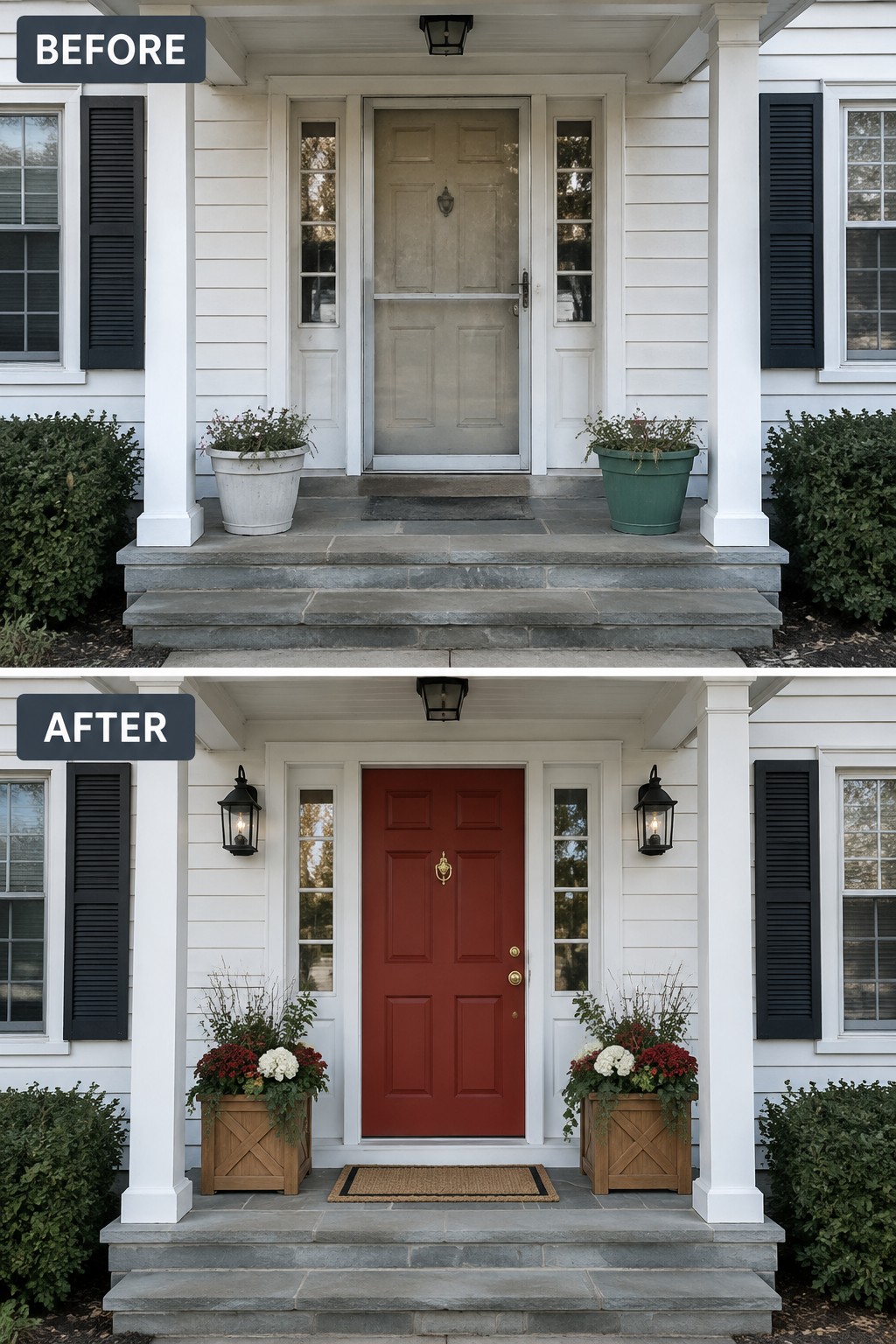
A plain front door can make the whole entry feel flat, even when the rest of the house is in good shape. In this case the change started with painting the door a strong red, then adding a pair of matching wooden planters and a pair of simple lanterns on the posts. Those few moves pulled the porch together and made the entrance feel intentional instead of leftover.
This idea works well on colonial revival homes or any house with a clear center door. Pick one color for the door that contrasts with the siding, then repeat one material or finish in the planters so everything feels related. Keep the rest of the porch simple so the door stays the main point.
Frame The Front Door With Paint And Matching Planters

A plain porch entry often feels unfinished because the door sits flat against the siding with nothing to draw the eye or mark the spot. In this case, a light blue ceiling and crisp white trim around the door create a simple frame that makes the black door stand out. Two matching urn planters placed on either side add weight and balance without crowding the small space.
This approach works well on older homes where the porch is modest in size. Start with one color on the ceiling and another on the trim, then add a pair of planters in a similar tone or material. Keep the rest of the porch clear so the door remains the clear focal point.
Give A Bare Porch More Structure With Columns
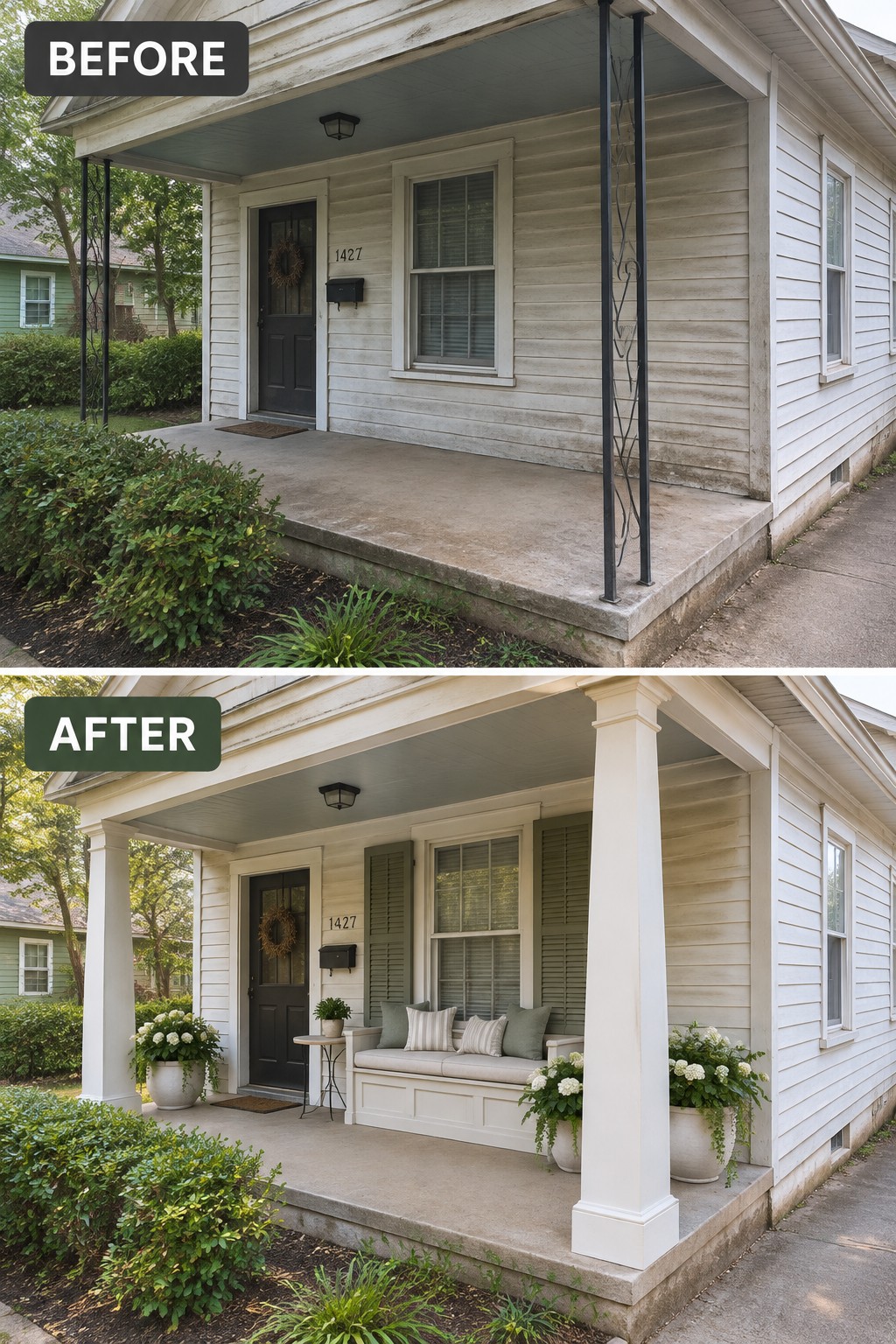
Replacing thin metal posts with solid white columns instantly changes how the whole front reads. The added shutters on the windows and the simple built-in bench give the porch a clear purpose instead of just functioning as a slab in front of the door. These changes make the entry feel grounded and connected to the house rather than tacked on.
This approach works especially well on older homes that lost their original porch details over time. Focus first on the vertical supports and window trim before adding furniture or planters. Keep the seating low and the planting simple so the new structure stays the main feature.
Refresh A Colonial Entry By Painting The Brick And Adding Lights

Painting the brick a light color made the whole front feel brighter and more current. The added wood gable detail, black lanterns, and matching planters on either side of the door gave the entry a clearer shape and a bit more presence without any major construction.
This approach works well on colonial-style homes where the original brick has started to look flat or dated. Keep the changes simple by choosing one main color for the facade, then use matching lights and planters to create balance. The key is to stop once the entry feels pulled together instead of adding too many extras.
Add A Defined Path To Organize The Front Entry
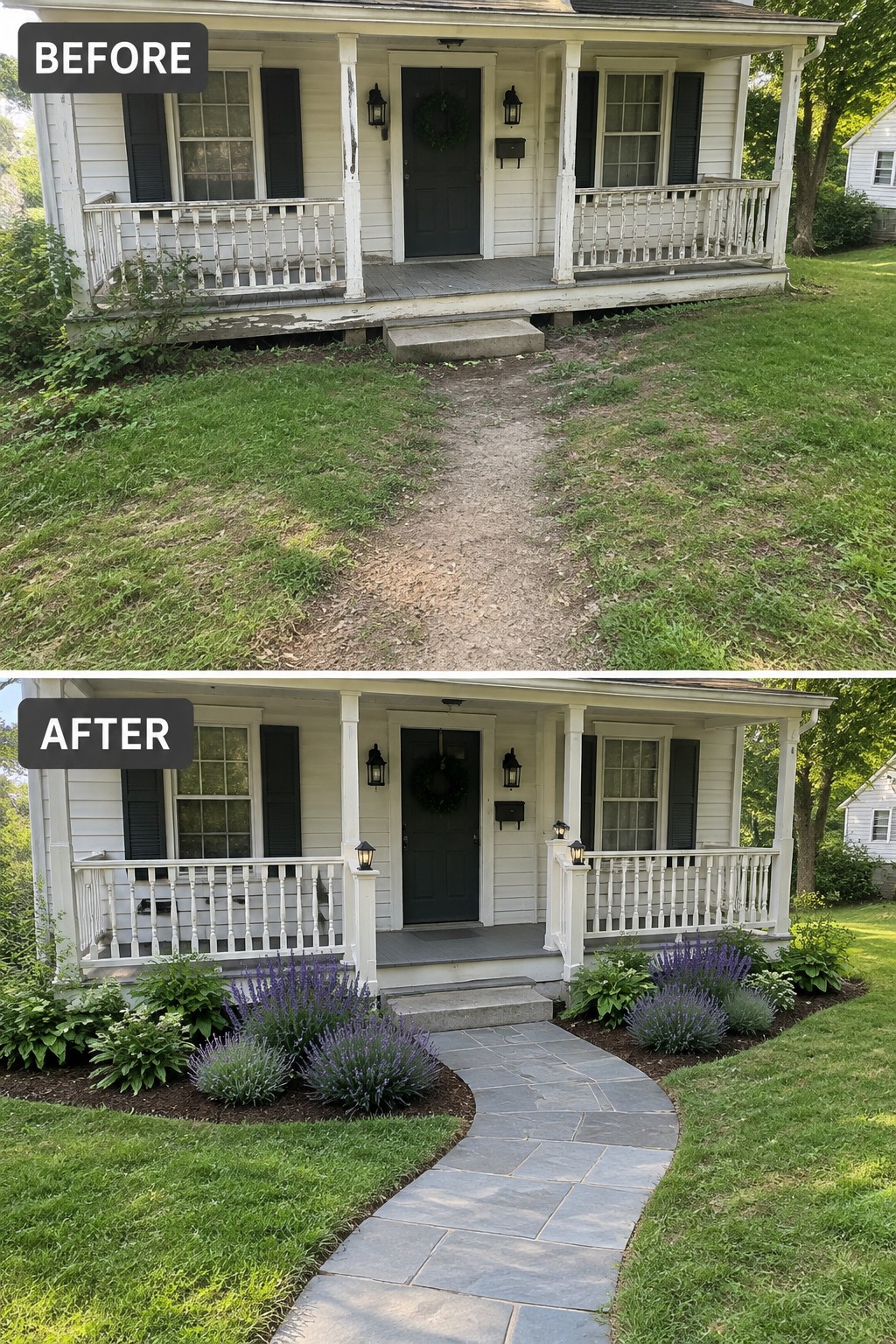
A dirt track leading straight to the steps makes any house feel a little unfinished. Replacing it with a curved stone walkway and adding planted borders on both sides gives the eye a clear route and makes the whole front feel settled. The change is simple, but it does most of the work.
This approach works especially well on older homes with traditional porches. Keep the path width comfortable for two people, let the curve soften the approach, and choose low shrubs and perennials that stay neat without constant trimming. Start with the hardscaping, then fill in the beds.
Match Shutters To Refresh A Colonial Facade
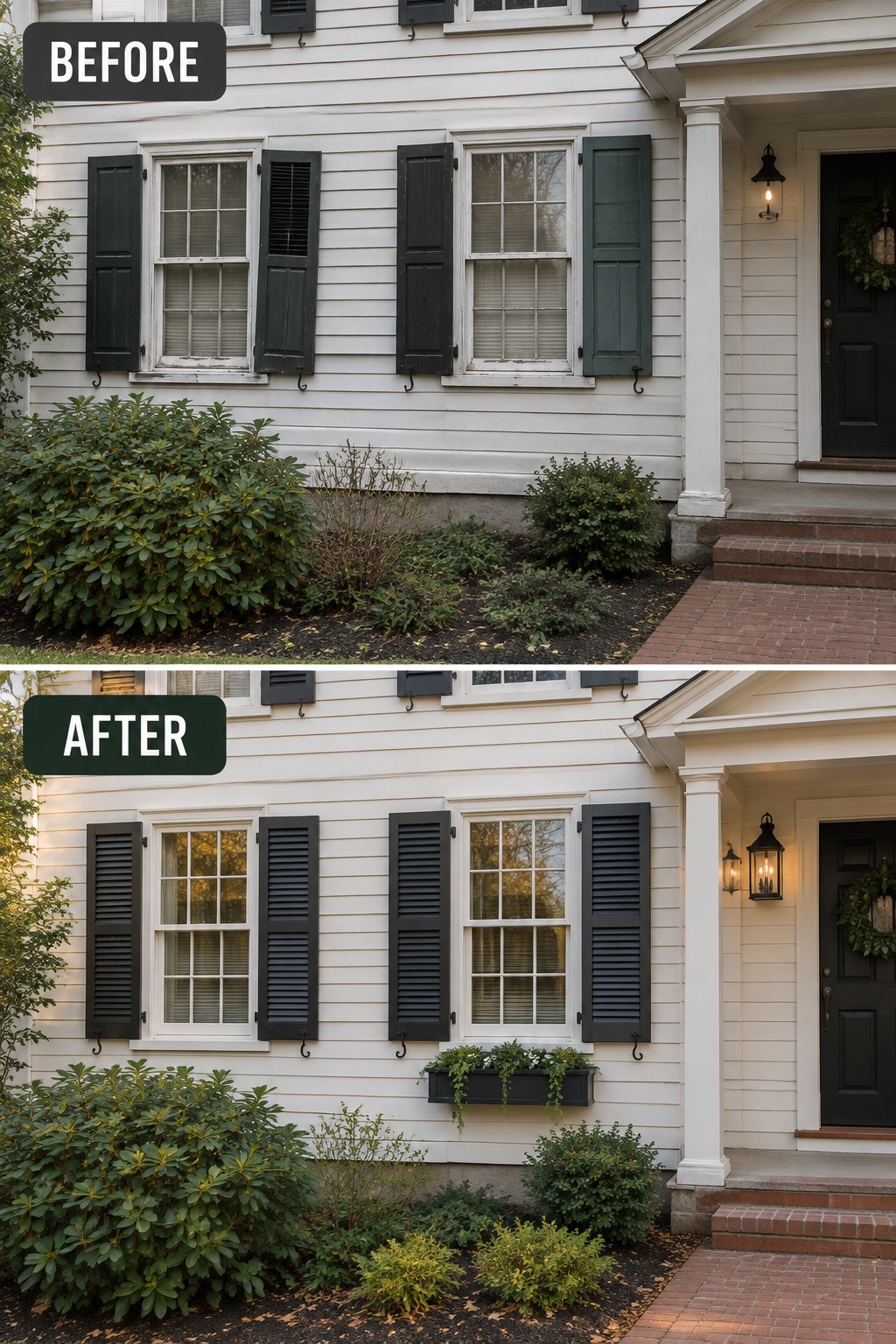
The main change here is swapping out the mismatched and peeling shutters for a single dark style across all the windows. That one decision pulls the whole front together and makes the traditional colonial details read more clearly. Adding a simple window box under the center window gives the eye something extra to land on without overcomplicating the look.
This approach works well on homes that already have good bones but need the windows to feel intentional. Pick one shutter color that ties into your door or trim, keep the style consistent, and stop there. The rest of the updates, like cleaning up the beds, will look better once the windows are no longer fighting each other.
Add Trim Details To Update A Front Porch

The porch looked fairly plain before, with a simple roof edge and basic lighting. Adding a row of decorative trim along the eaves and hanging a lantern gave the whole entry a more finished look without changing the structure.
This works especially well on older homes that already have some traditional lines. Focus on the roof edge first, then pick one light fixture that fits the style. Keep planters low and simple so the trim stays the main feature.
Turn An Empty Porch Into A Seating Area
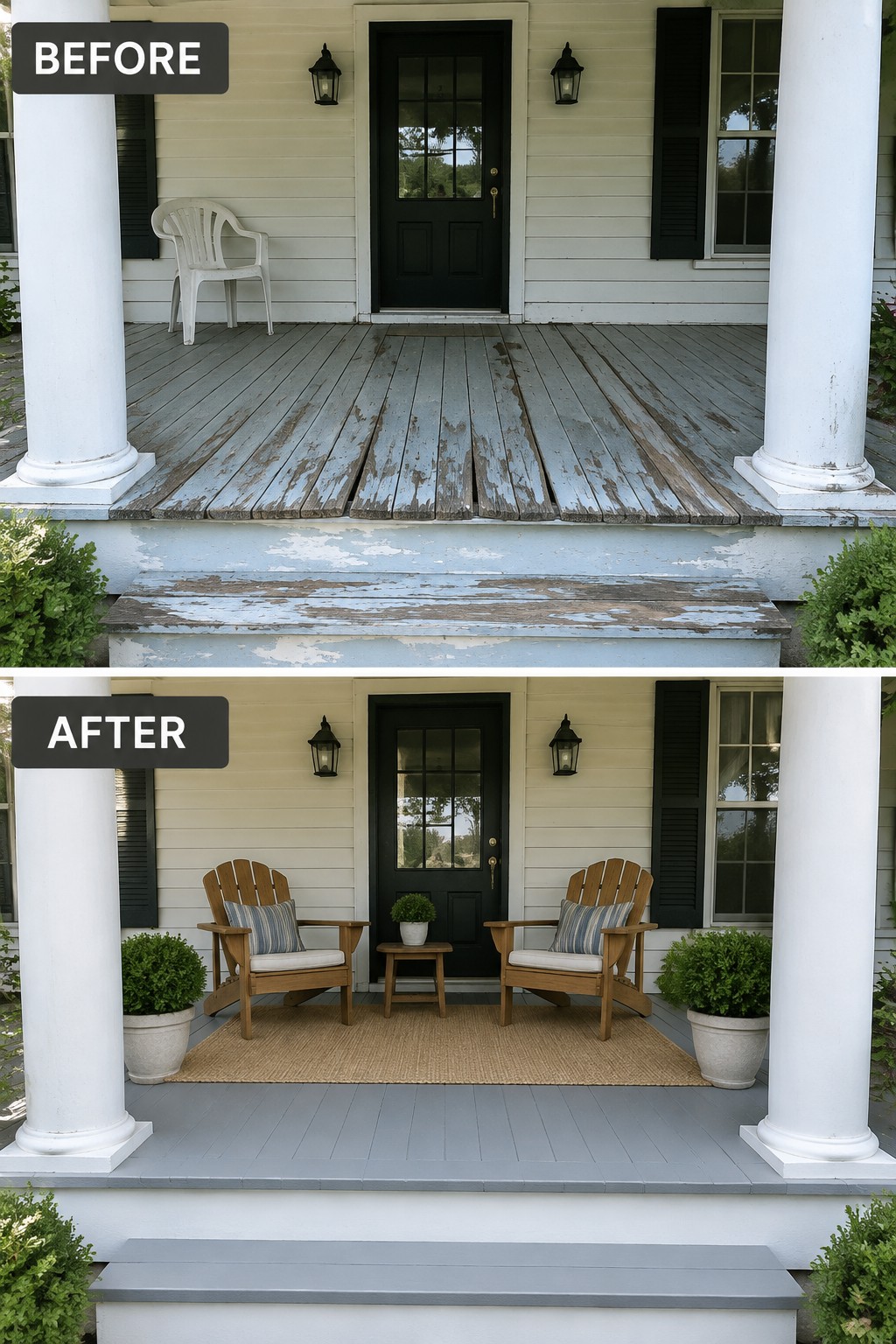
A worn porch with peeling paint and little furniture feels more like a leftover space than part of the house. Adding two simple chairs, a small table, and a rug turns the same area into a spot where people actually want to sit. The rug helps define the seating zone while the painted floor gives the whole porch a cleaner, more finished look.
This approach works well on older homes where the porch is still structurally sound but looks tired. Start by cleaning or repainting the floorboards, then choose weatherproof seating that fits the scale of the space. Keep the arrangement simple so there is still room to walk through, and add a couple of planters only after the main seating is in place.
Update The Front Steps For Better Curb Appeal
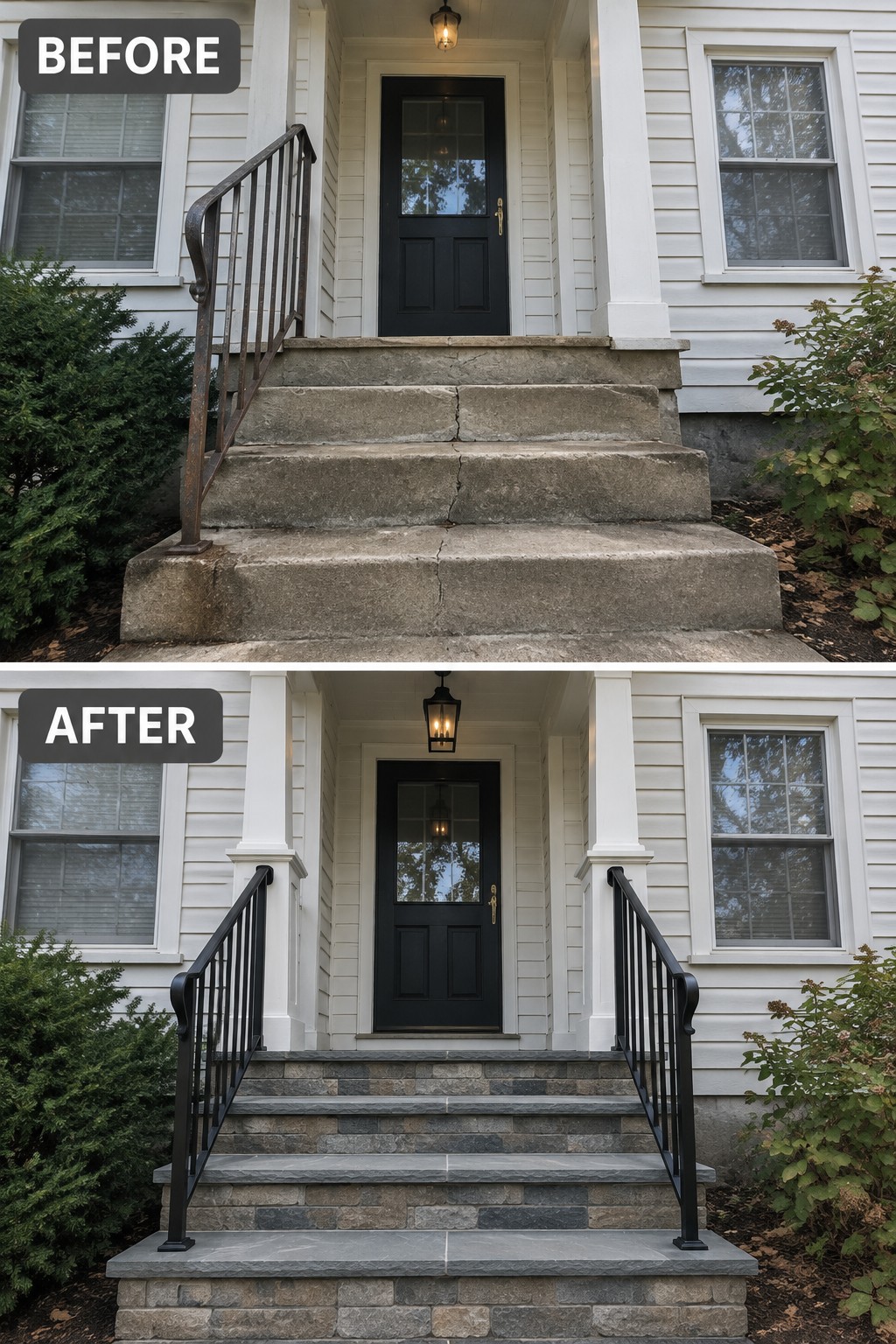
The old concrete steps had cracked over time and the single rusty railing made the entrance feel neglected. Replacing them with stone steps and new black railings on both sides instantly makes the front look more finished and stable.
This approach works well on colonial homes where the entry sits front and center. Focus on the steps first if they are damaged, then choose railings that match the door or trim color so the change feels intentional without needing a bigger renovation.
Refresh A Colonial Exterior With Paint And Shutters

A plain brick colonial can start to feel flat when the windows lack definition and the entry looks undersized. Painting the brick, adding dark shutters, and giving the porch a stronger pediment and columns makes the whole front feel pulled together without changing the basic shape of the house.
This approach works best on colonial revival homes that already have good proportions but need clearer details. Pick one main color for the body, a second for the lower section or accents, and let the shutters and trim do the rest. Keep the changes simple so the traditional lines stay the focus.
Open An Enclosed Porch With Traditional Details
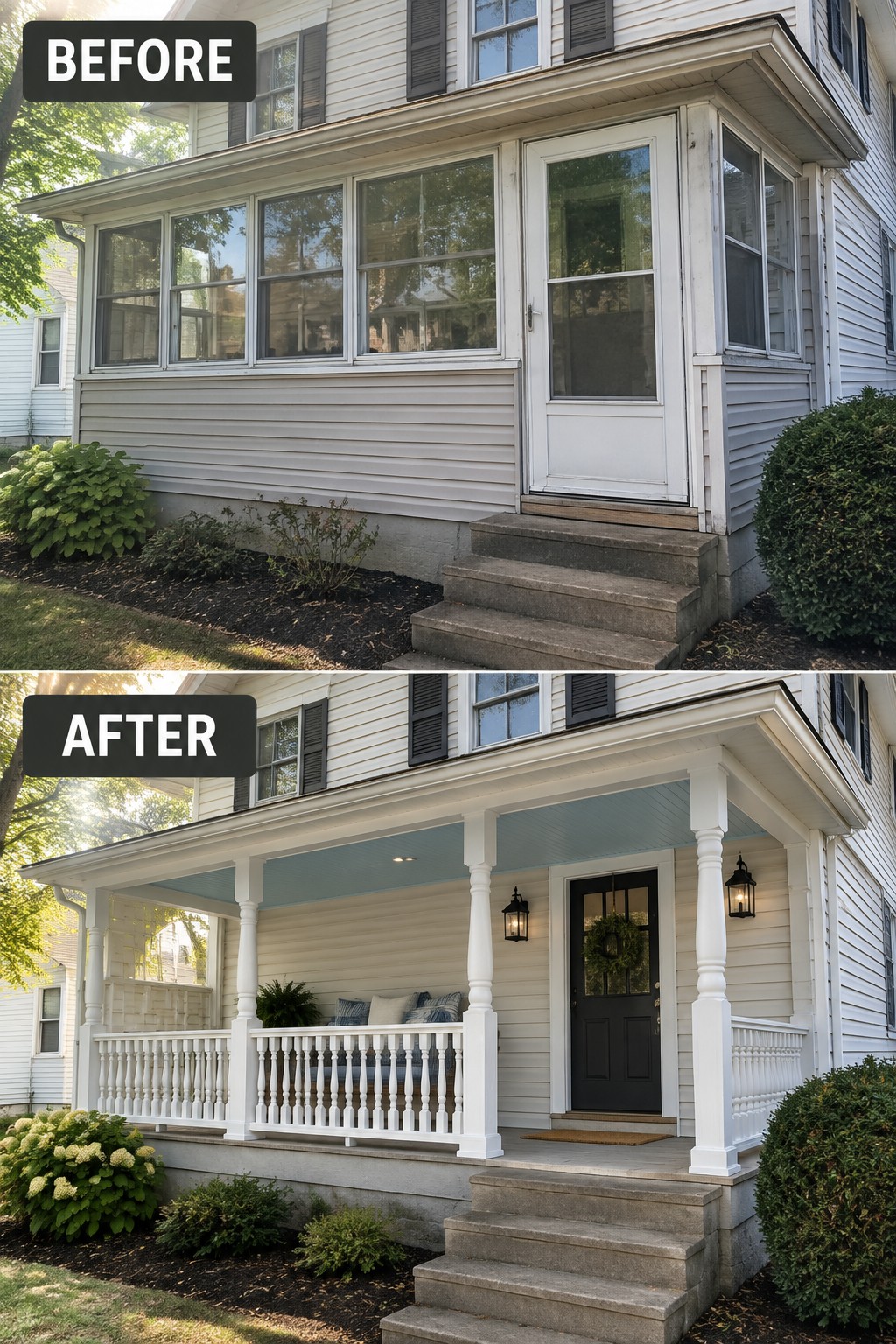
Many older homes have a front porch that was closed in at some point, which can make the entry feel heavy and dated. Opening it back up and adding simple white columns and railings gives the house a lighter, more traditional look while also creating usable outdoor space right at the front door.
This approach works best on Colonial Revival homes where an open porch fits the original style. Check the existing structure first to see what can be removed without major work, then choose columns and railings that match the house proportions rather than trying to add too many extras at once.
Update The Entry With A New Door Color And Planters

A simple door color change and a pair of matching planters can make a front porch feel intentional instead of forgotten. The brown door blended into the brick and the ivy had taken over the foundation, so the entry looked heavy and closed off. Once the door was painted a deep green and the planters were set in place, the whole front gained a clear center point.
This idea suits brick colonials that already have good bones but need one or two finishing touches. Choose a door color that contrasts with both the brick and the shutters, then keep the planters roughly the same height as the bottom of the columns so they frame the steps without blocking the path. Start with a thorough cleanup of any overgrowth before adding the new pieces.
Refresh A Tired Porch With Fresh Paint And New Lights

A porch starts to look neglected when the railings turn gray and the old lights no longer work well. Painting the railings white and replacing the fixtures with simple black lanterns immediately makes the entry feel brighter and more cared for. The rest of the house stays the same, so the improvement comes mostly from cleaning up and coordinating the trim and lighting.
This works especially well on older homes where the porch is a main feature. Focus on the railings first, choose lights that match the door hardware, and keep any added plants in simple pots so they do not crowd the steps. The goal is to make the porch look intentional without adding too many new pieces.
Use Matching Planters To Refresh A Tired Porch
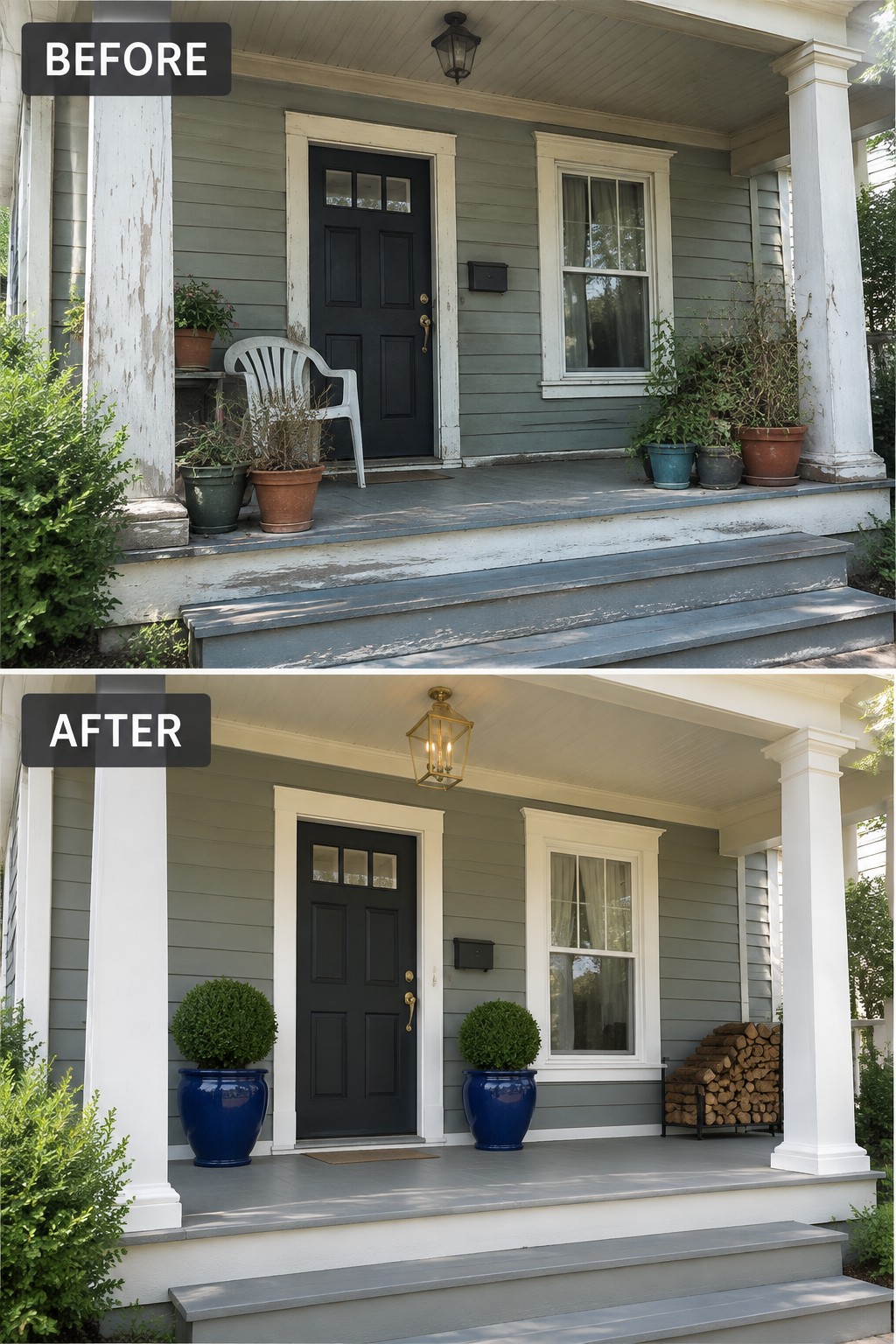
A front porch can start to look messy when it fills up with mismatched pots and leftover furniture. Swapping the random collection for two matching blue planters on either side of the door gave the entry a much cleaner, more balanced feel right away.
This idea works especially well on older homes where the trim and siding are already in decent shape. Keep the number of items low, stick to one or two colors for the containers, and leave enough open floor space so the door remains the main point of interest.
Clean Up Overgrown Plantings And Update The Front Door

The before photo shows how heavy bushes can hide the steps and make the entry feel closed in. In the after, the low hedges sit neatly along the foundation and the brown door with its new lantern gives the whole porch a clearer, more open look.
This approach works especially well on older homes with simple porches. Trim or replace foundation plants that block windows or steps first, then choose a door color that stands out from the siding. One overhead light is usually enough to finish the update without adding clutter.
Frequently Asked Questions
Q: How wide should the steps be on a traditional colonial porch?
A: Make the steps at least as wide as your door plus a couple feet on each side. This gives room to stand and chat without blocking the way. People always feel more welcome when the entry feels open.
Q: Should I use wood or composite for the porch floor?
A: Go with wood if you like the authentic feel and can keep up with it. Composite holds up better in wet climates but needs careful color matching to the rest of the house.
Q: What about adding ceiling fans out there?
A: They work great for summer evenings. Just pick styles with simple blades that do not distract from the trim details.
Q: How do I keep the white paint from yellowing over time?
A: Choose a good quality exterior paint with UV protection. Clean the surfaces once a year with mild soap to avoid buildup that causes discoloration.