

The entrance to a house gets a lot of attention from the street so it shows wear faster than most other spots.
Colonial trim brings back some of the balance that a simple flat door can lose over the years.
I like to see how the proportions sit with the existing siding before picking a final design.
A few coats of paint and new trim pieces can shift the feel without touching the rest of the facade.
Trying one idea at a time keeps the project from feeling overwhelming.
Frame The Front Door With Classic Trim
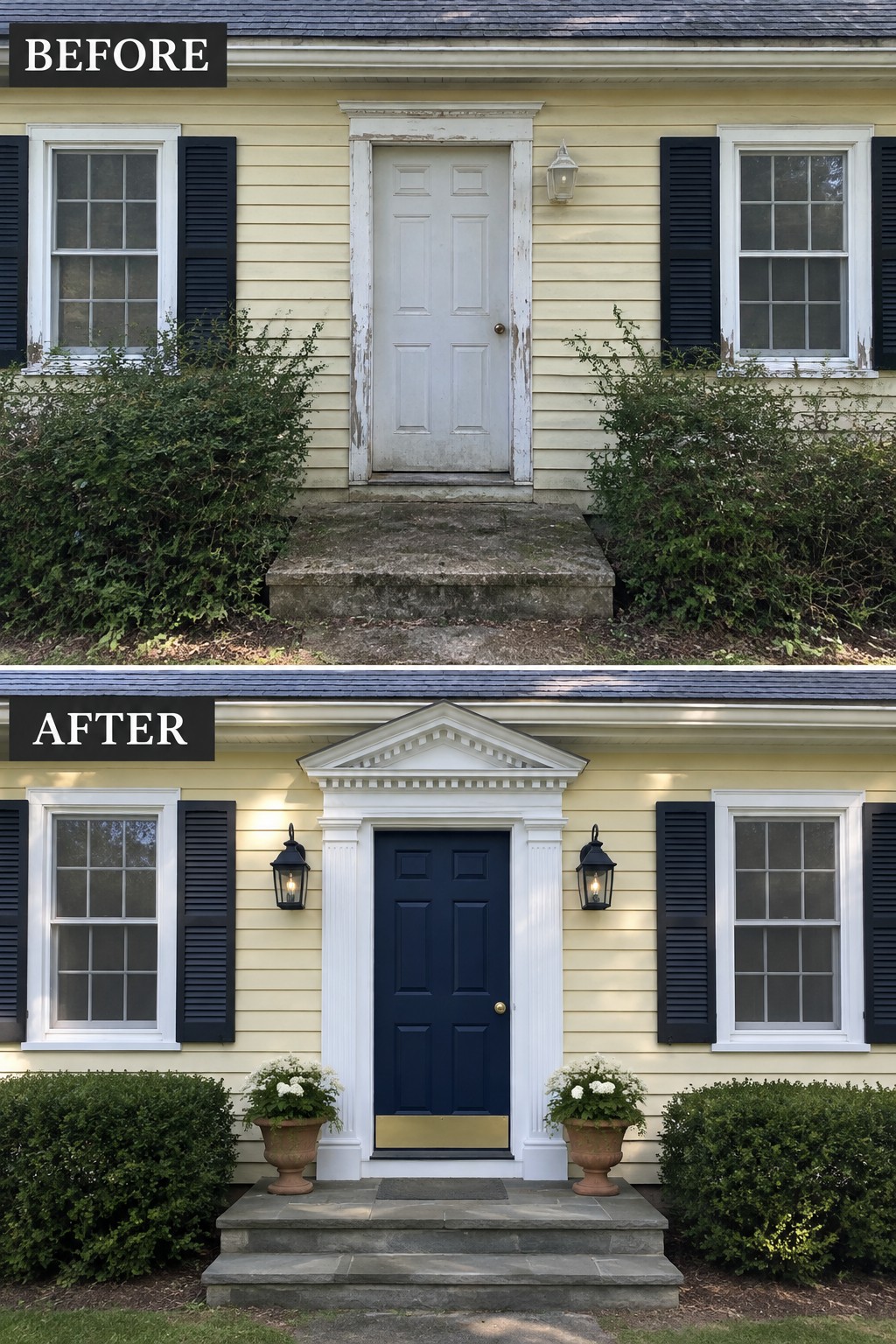
A plain door on a colonial house often disappears against the siding. Adding a pediment and columns creates a clear focal point and gives the entry the weight it needs. The shift from a bare opening to a framed surround changes how the whole facade reads.
This idea suits homes that already have traditional lines but lack detail at the door. Keep the planting low and simple so the trim stays visible, and pick a door color that stands out without clashing with the existing paint. Start here before you consider larger changes like new siding or windows.
Add Traditional Columns And A Fanlight To Frame The Entry
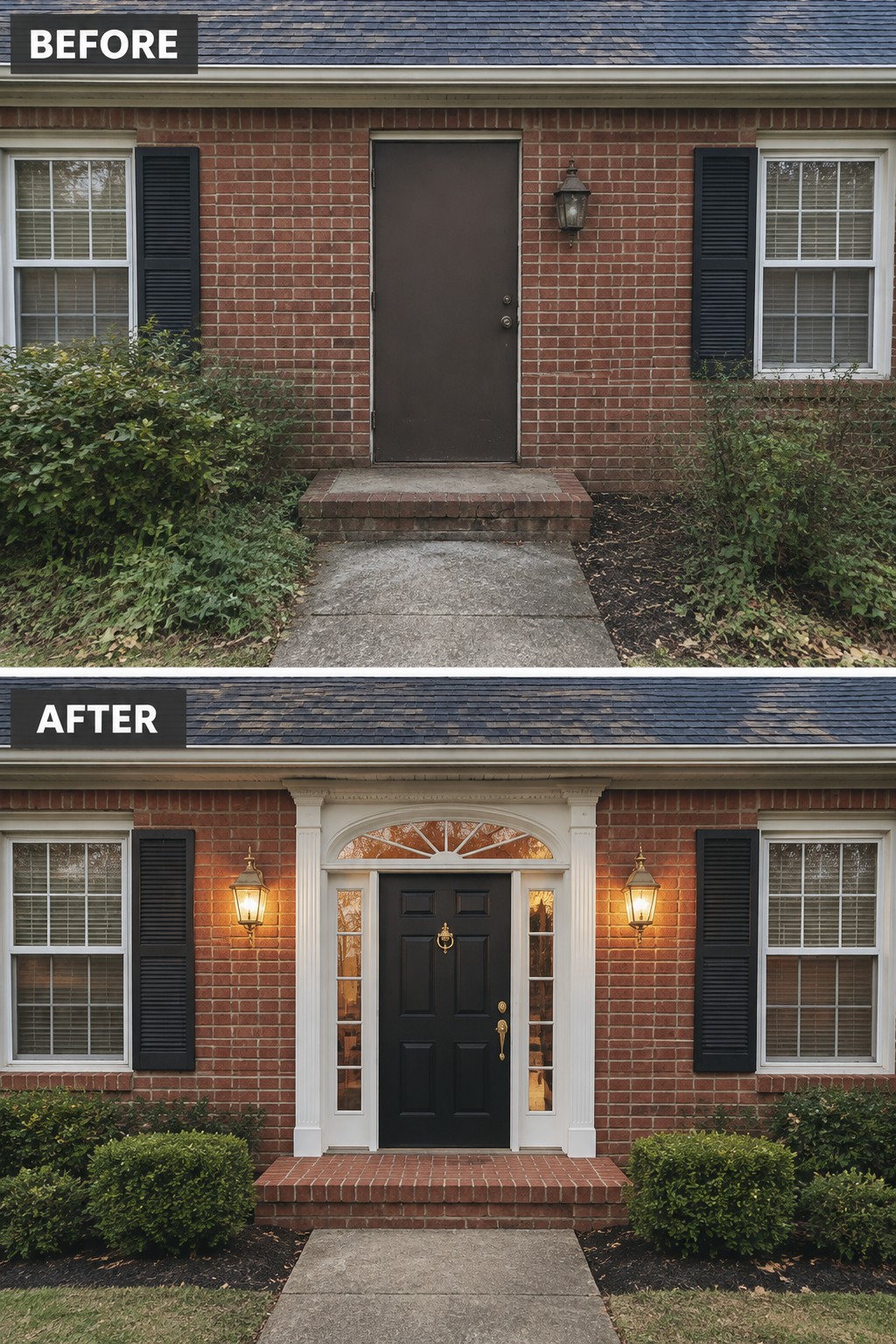
Many colonial homes have a plain door opening that sits flat against the brick. Adding white columns and a simple pediment with a fanlight gives the entry a clear frame and makes the door the main feature instead of just another part of the wall.
This change works best on brick or simple facades where the goal is to add presence without a full renovation. Keep the new trim painted white or a light color that contrasts with the brick, and match the door color to the shutters so everything feels pulled together. Start here if you want one update that shifts how the whole front looks.
Add A Pediment To Give The Entry More Presence
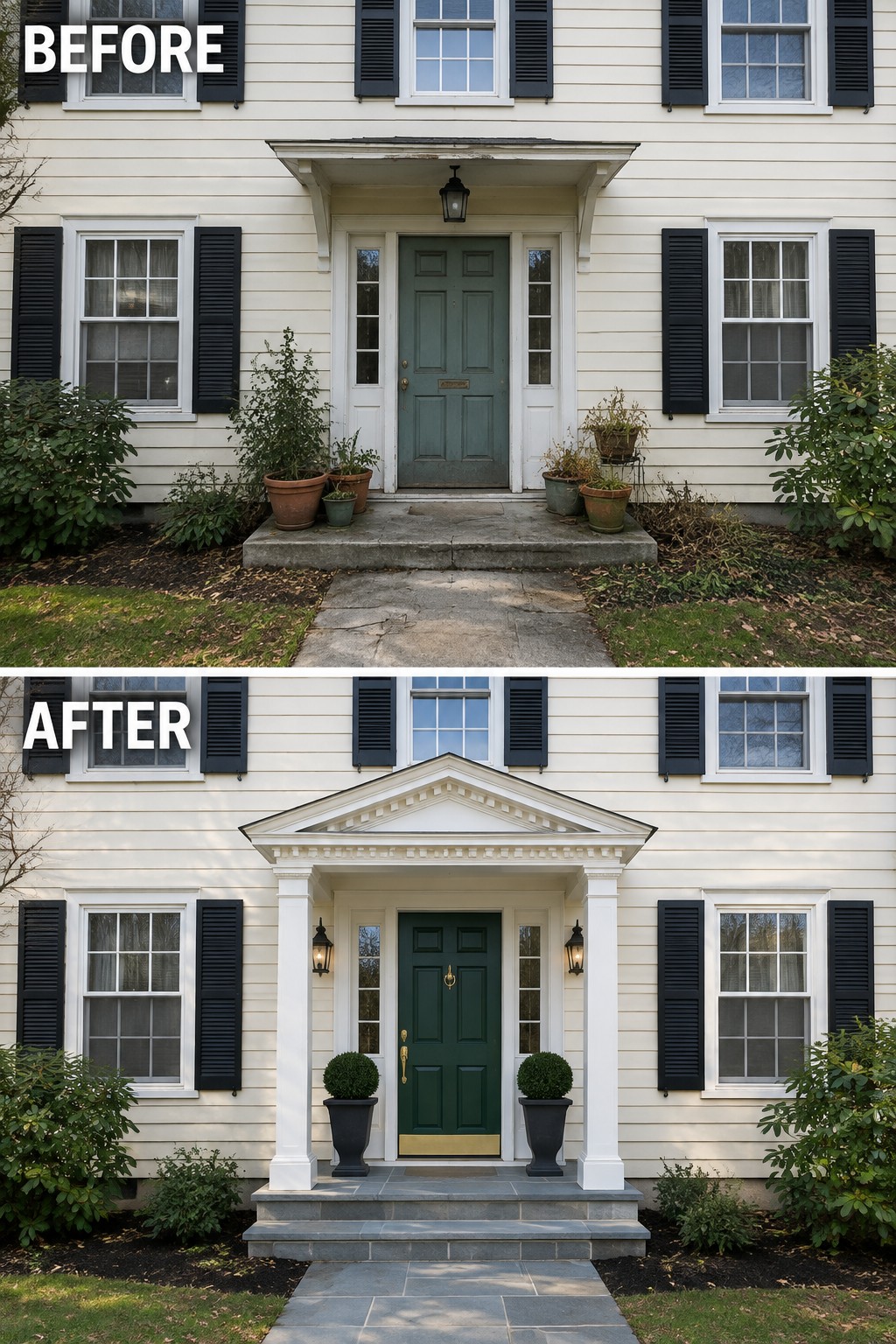
The before photo shows a basic overhang that sat flat against the house and did little to highlight the door. Adding a proper pediment with supporting columns creates a clear focal point and gives the whole facade a more finished colonial look. The change also includes new stone steps and a pair of matching planters, which help the entry feel grounded and balanced.
This approach works best on homes that already have traditional siding and window details. Measure the width of your door and the space above it before choosing the pediment size so the proportions stay right. Start with the trim work first, then add lighting and planters once the structure is in place.
Paint The Brick And Frame The Door With Traditional Trim
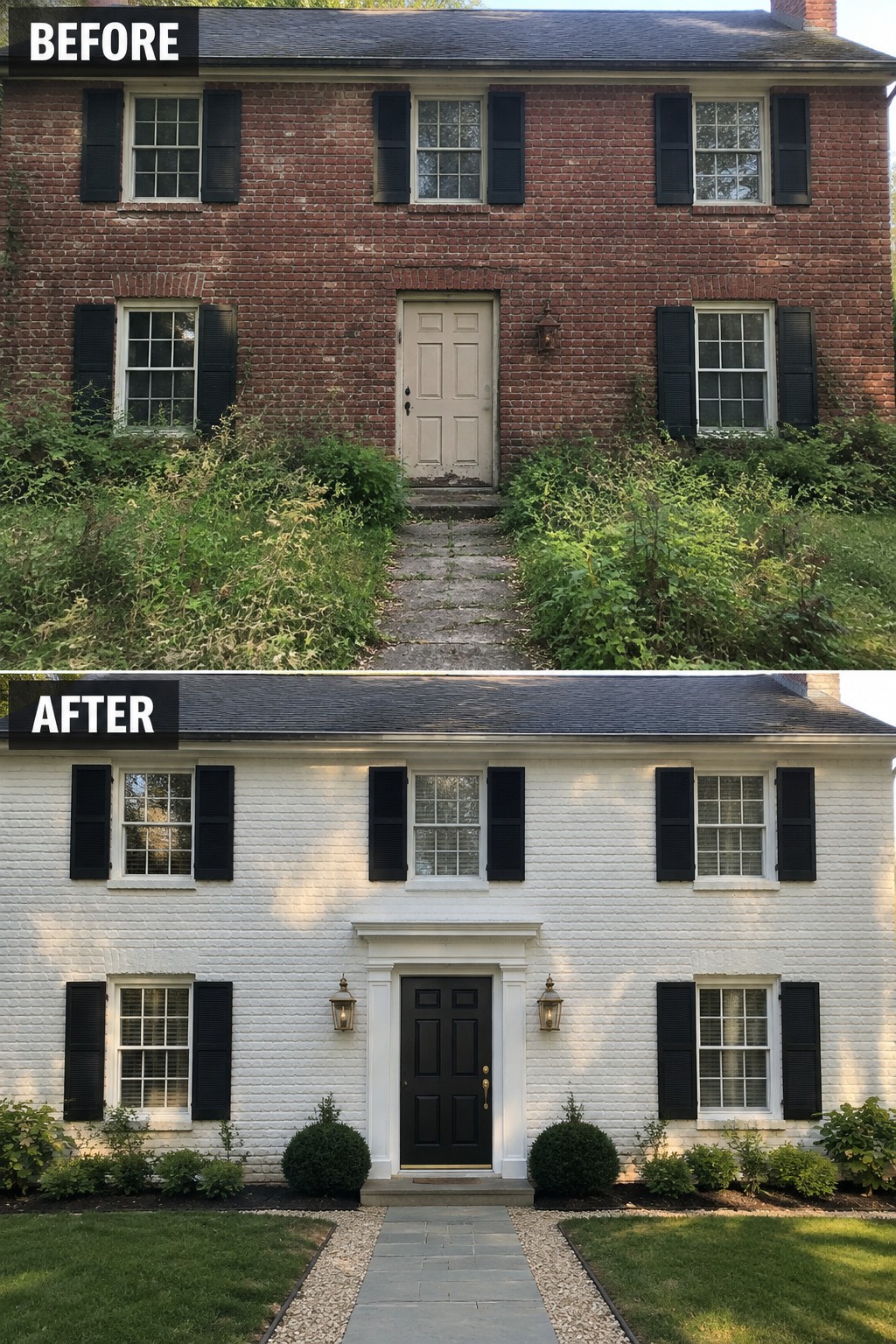
Painting the brick white makes the whole front of the house feel lighter and more current. The new black door with a simple white surround then becomes the clear focal point instead of getting lost against the darker brick.
This works especially well on older colonials where the brick has started to look tired. Keep the trim details modest, choose a door color that contrasts, and add a pair of small lanterns so the entry reads as intentional rather than just a new coat of paint.
Coordinate Shutters And Door Color For A Classic Colonial Look
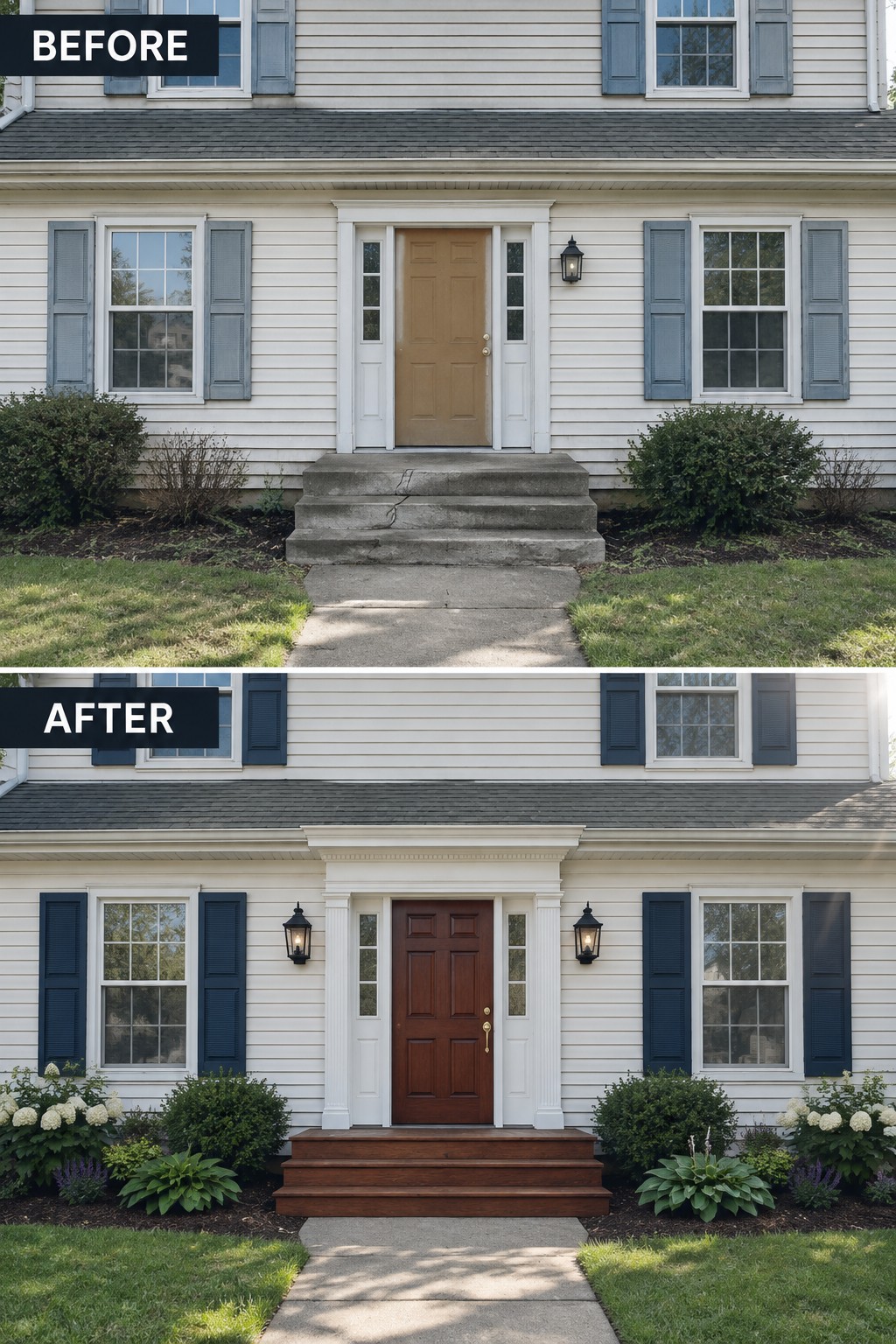
One simple way to refresh a colonial exterior is to paint the shutters and front door in colors that work together. The before photo shows mismatched light shutters and a plain tan door that made the entry feel flat. Switching both to deeper tones with the same traditional trim gave the whole facade a more finished look without changing the structure.
This idea works best on homes that already have good bones and just need better color balance. Pick one dark shade for the shutters first, then choose a door color that either matches or sits close to it. Keep the trim white so the contrast stays sharp and the entry stays true to colonial style.
Create A Focal Point With A Black Door And Pediment
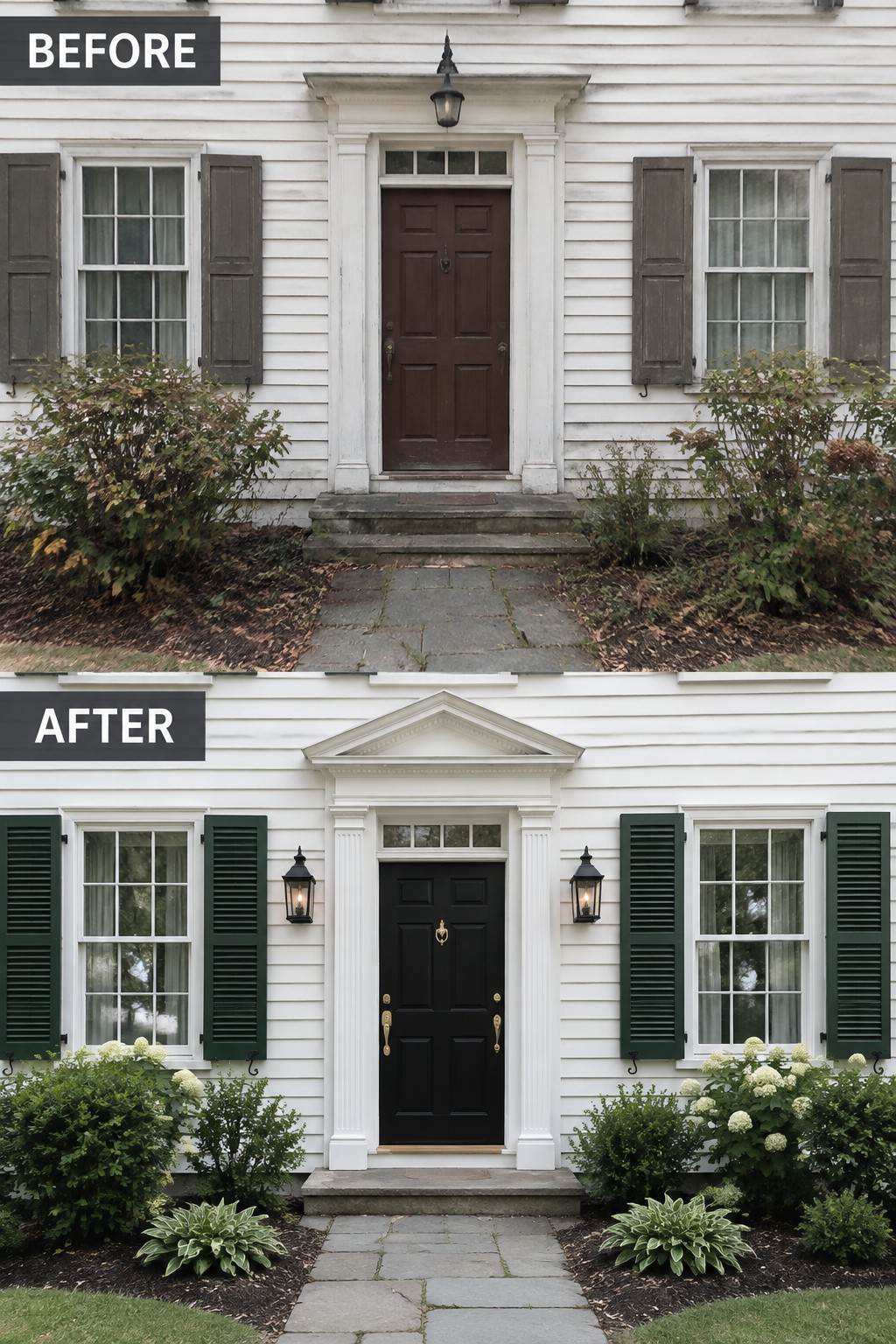
A simple door and flat surround can leave the front of a house looking unfinished. Changing the door color to black and adding a proper pediment with columns gives the entry a clear center point and makes the whole facade feel more complete.
This idea works best on colonial or traditional homes where the basic shape is already there but the details are missing. Pick a door color that stands out from the siding, then add or restore the trim above and around the door before you add anything else to the yard.
Install A Pediment And Pilasters For A More Formal Entry
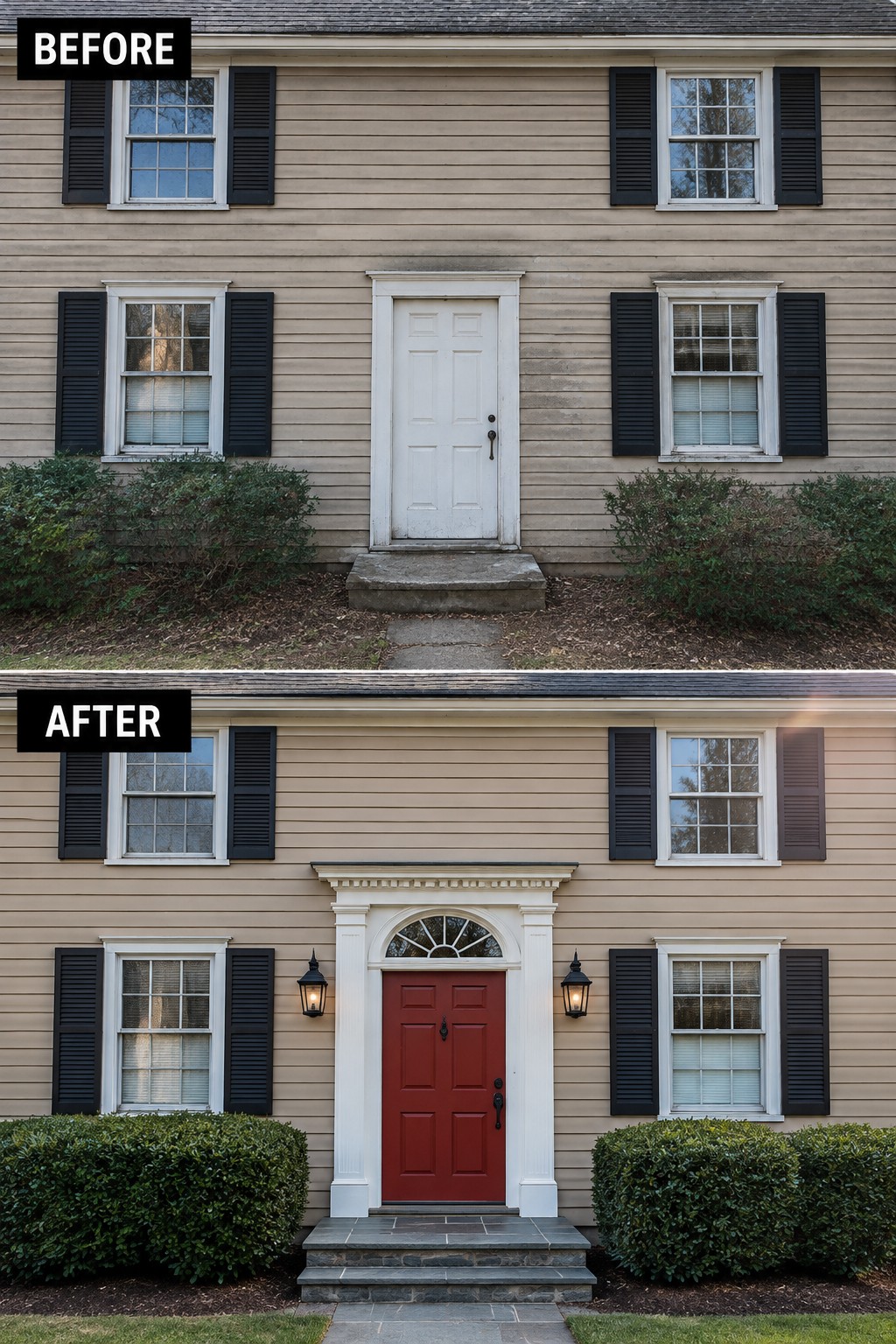
One simple way to refresh a colonial entry is to give the front door a proper frame. The before photo shows a plain white door sitting flat on the siding with no real detail, while the after adds a full pediment, pilasters, and a fanlight that instantly makes the whole facade feel more finished and intentional.
This approach works especially well on older homes that already have some trim elsewhere but need the entry pulled together. Match the new trim profile to your existing window casings, choose a door color that contrasts with the siding, and keep the surrounding planting neat so the architecture stays the focus.
Add Sidelights And Columns To Define A Brick Colonial Entrance
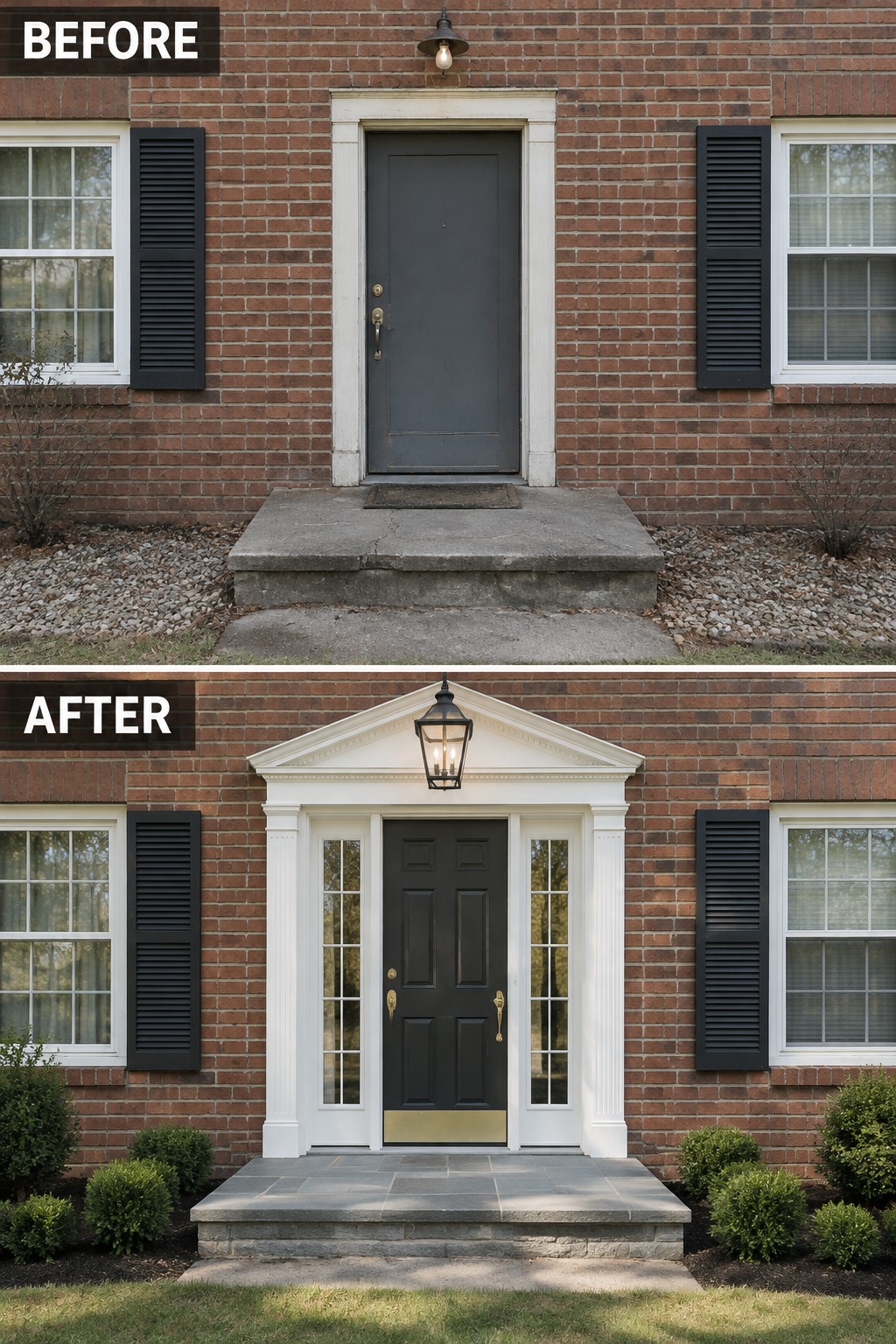
A plain front door on a brick colonial can look flat even when the rest of the house is in good shape. Adding a pediment, columns, and sidelights gives the entry real structure and makes the whole facade feel more finished. The change from a simple concrete step and basic door surround to a proper classical frame does most of the work.
This approach works best on colonial or traditional homes where the entry should feel like the main feature. Keep the trim painted white to stand out against the brick, and match the door hardware and lantern style to the new details so everything reads as one update rather than separate pieces. Start with the door surround before adding more changes to the yard or windows.
Refresh The Entry With A New Front Door Color
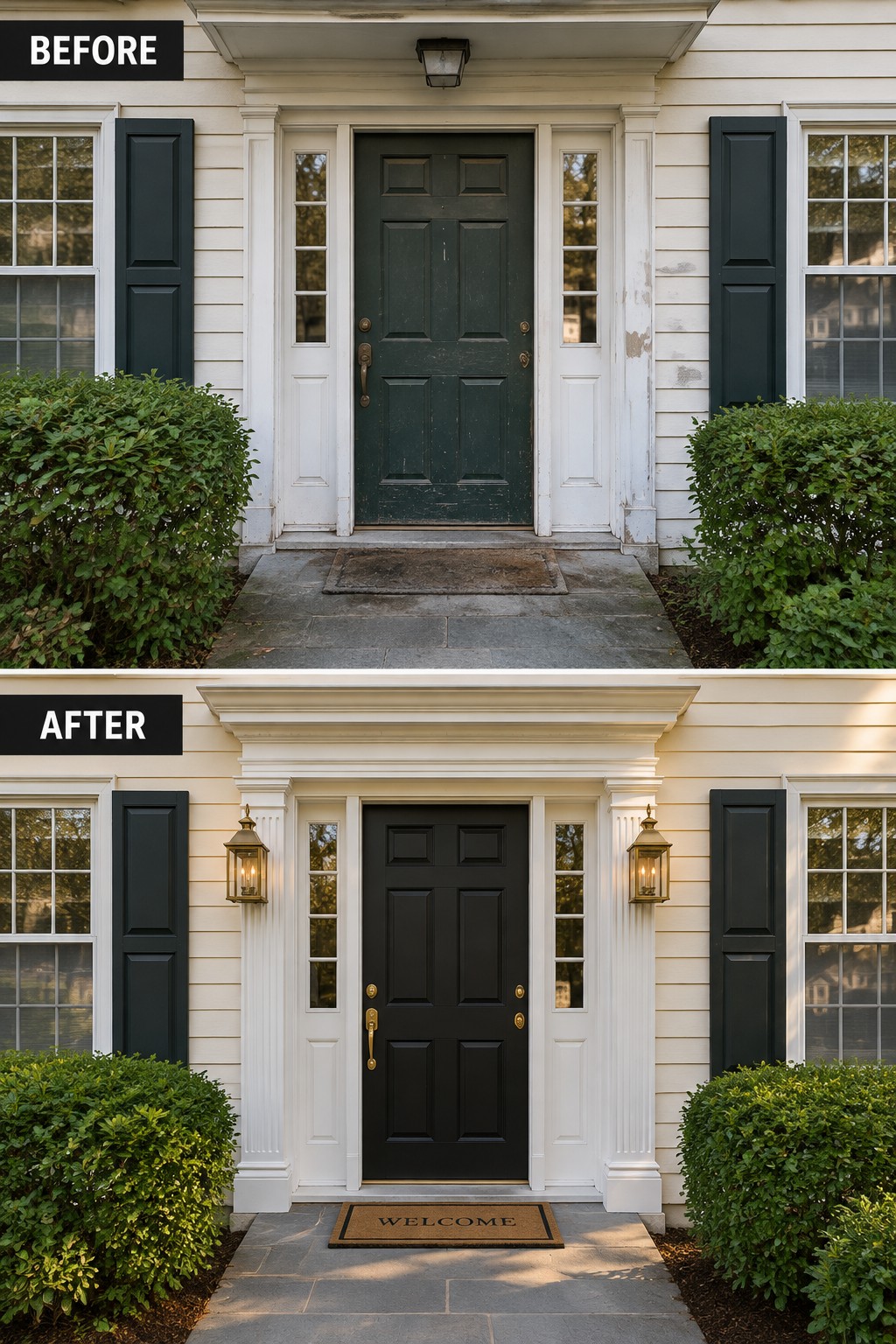
Many colonial homes end up with a front door that looks tired after years of wear. A simple color change to a solid dark shade, paired with fresh hardware, makes the whole entrance feel sharper and more put together.
This approach works best when the trim stays white and the shutters stay dark. Adding a pair of lanterns on the columns and a welcome mat finishes the update without adding clutter. The key is keeping the door as the clear focal point so the change reads as intentional rather than busy.
Add A Portico To Give The Entry More Presence
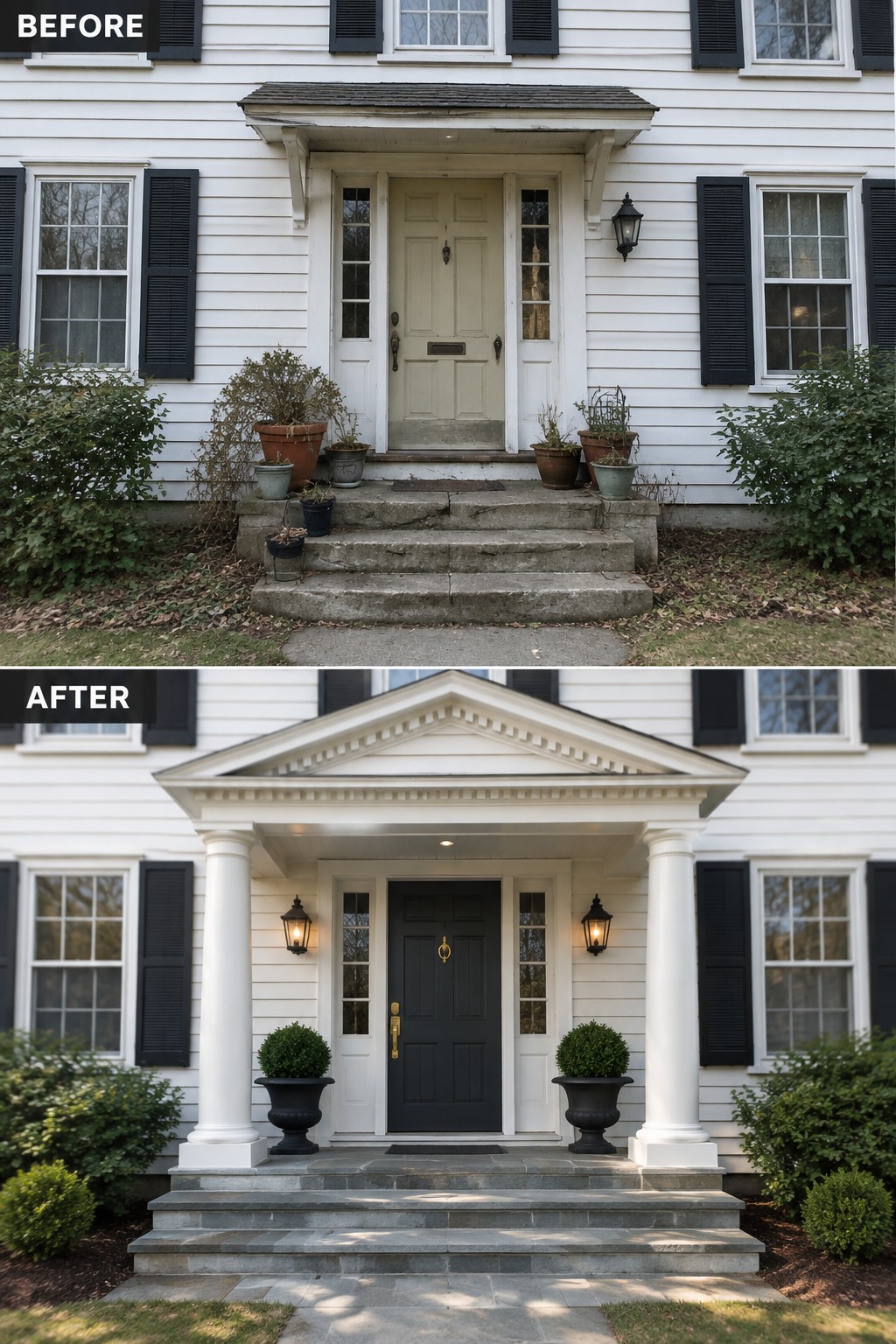
Many older colonials have a small overhang above the door that leaves the entrance feeling flat. Adding a full portico with columns and a pediment changes the scale right away and gives the house the traditional weight it needs. The dark door color and matching lanterns help the new structure read as the main feature instead of just another detail on the facade.
This approach works best on homes that already have a centered door and simple siding. Keep the columns and trim in scale with the rest of the house so the addition looks built in rather than added on. Start with the structure itself before worrying about planters or lighting.
Refresh A Colonial Exterior With Paint And Door Color
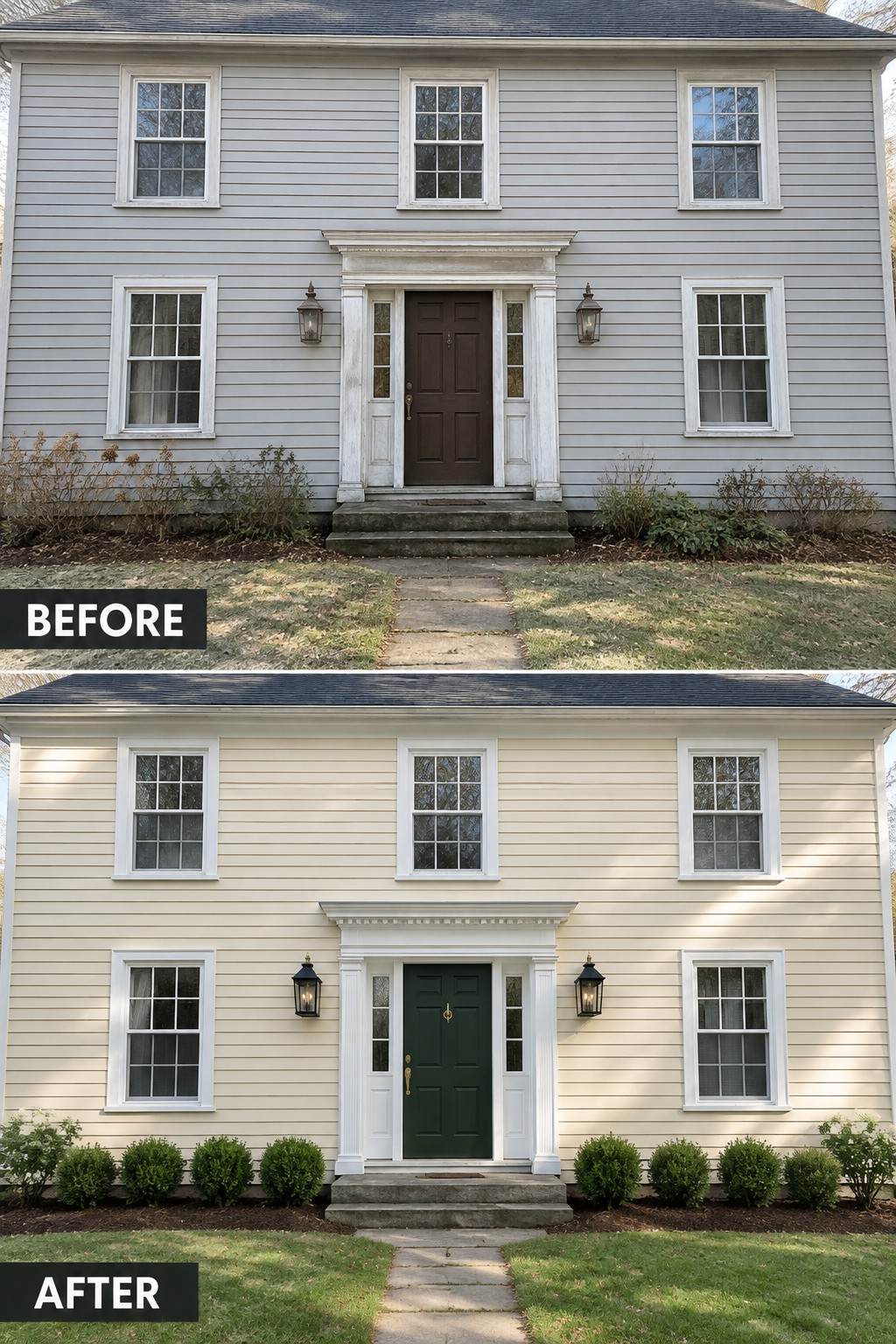
A simple color change can make a big difference on an older colonial home. The gray siding and brown door felt flat and dated, while the cream paint and deep green door bring warmth and make the entry stand out without any major construction.
This approach works well on traditional homes where the trim and door details are already in place. Start by testing a few paint colors on the siding first, then pick a door color that contrasts but still feels classic. Keep the landscaping simple so the new colors stay the focus.
Transform A Plain Entrance With An Arched Pediment Original: Add Traditional Trim To A Plain Front Door
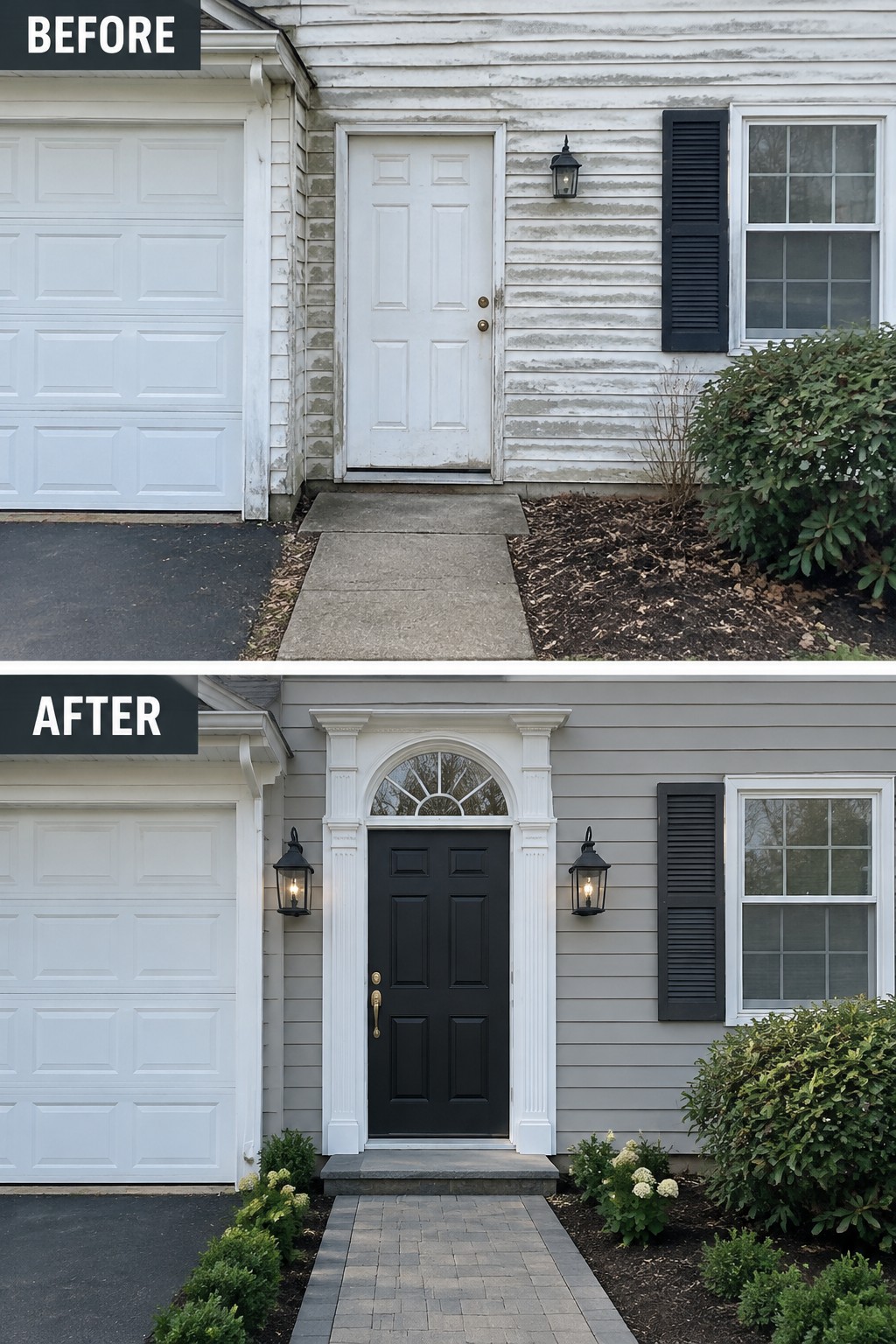
The before photo shows a basic white door sitting flat against the siding with almost no frame around it. Adding a full classical surround with columns and an arched pediment gives the entry real presence. The black door color helps the new trim stand out clearly.
This approach works best on colonial homes that already have some traditional lines in the roof or windows. Start with the door and trim before tackling bigger projects like siding or landscaping. Keep the trim details simple so they match the scale of the house rather than overpowering it.
Paint The Front Door A Deep Color With Matching Lanterns
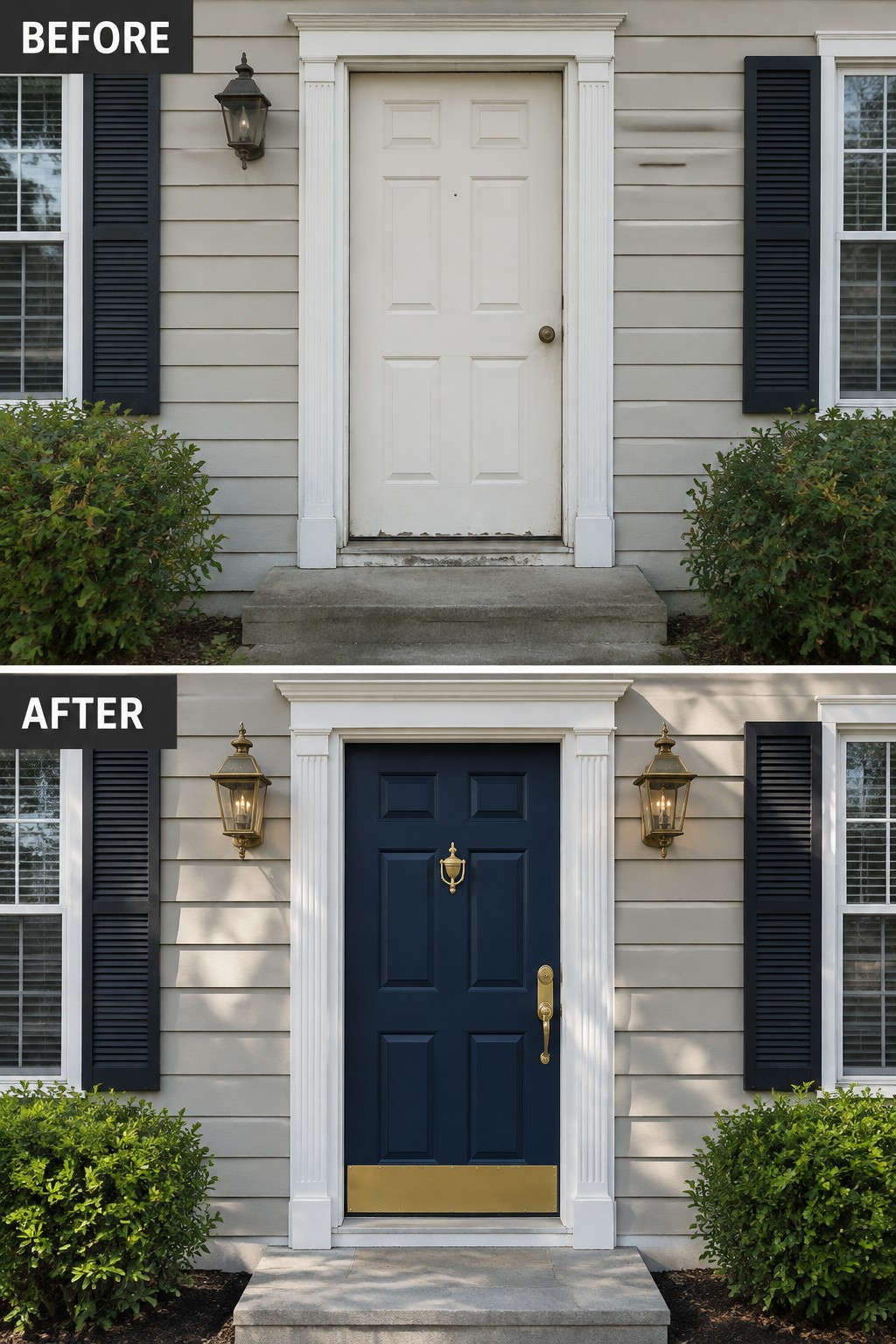
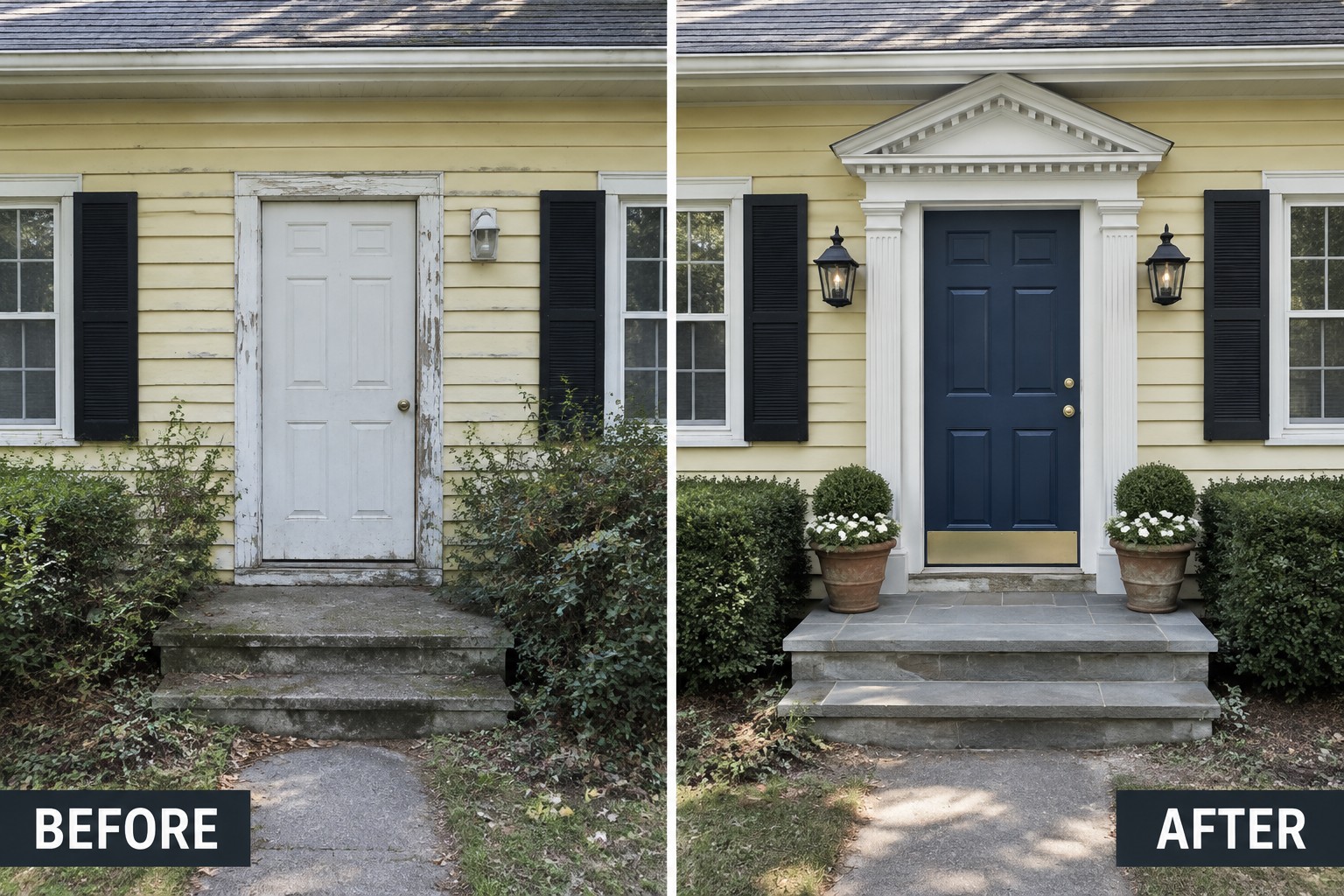
A white door on light siding tends to disappear, especially when the trim and hardware stay basic. Switching to a deep navy door with brass details gives the whole entry a clear focal point. The new lanterns on either side add balanced light and a traditional touch that works with the existing shutters and columns.
This approach suits colonial homes that already have good trim and just need one strong change. Start with the door color and hardware before adding more. Keep the sconces simple and the same finish as the new handle so the updates feel intentional rather than busy.
Choose A Dark Door Color For A Colonial Entry
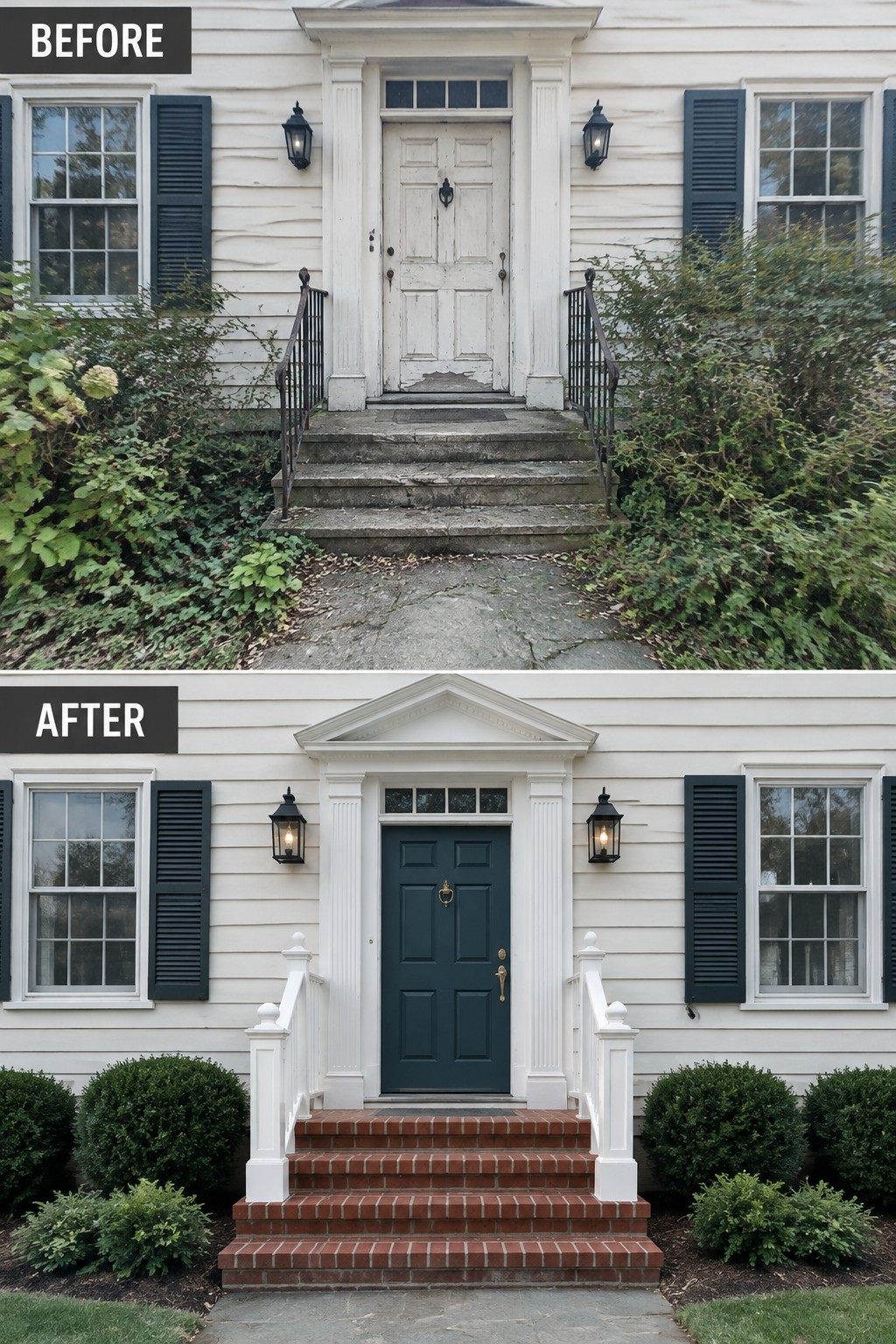
A dark door color gives a colonial facade more weight and presence. Here the original white door was swapped for deep green, and the worn concrete steps were rebuilt in brick with simple white railings. Those two changes alone make the entry feel finished and traditional.
This idea suits homes with white siding and basic trim. Keep the color contrast strong but still classic, and make sure any new steps or railings match the scale of the house. Trim nearby plants so the door stays the clear focal point.
Upgrade The Brick Entry With White Pilasters And Decorative Sidelights
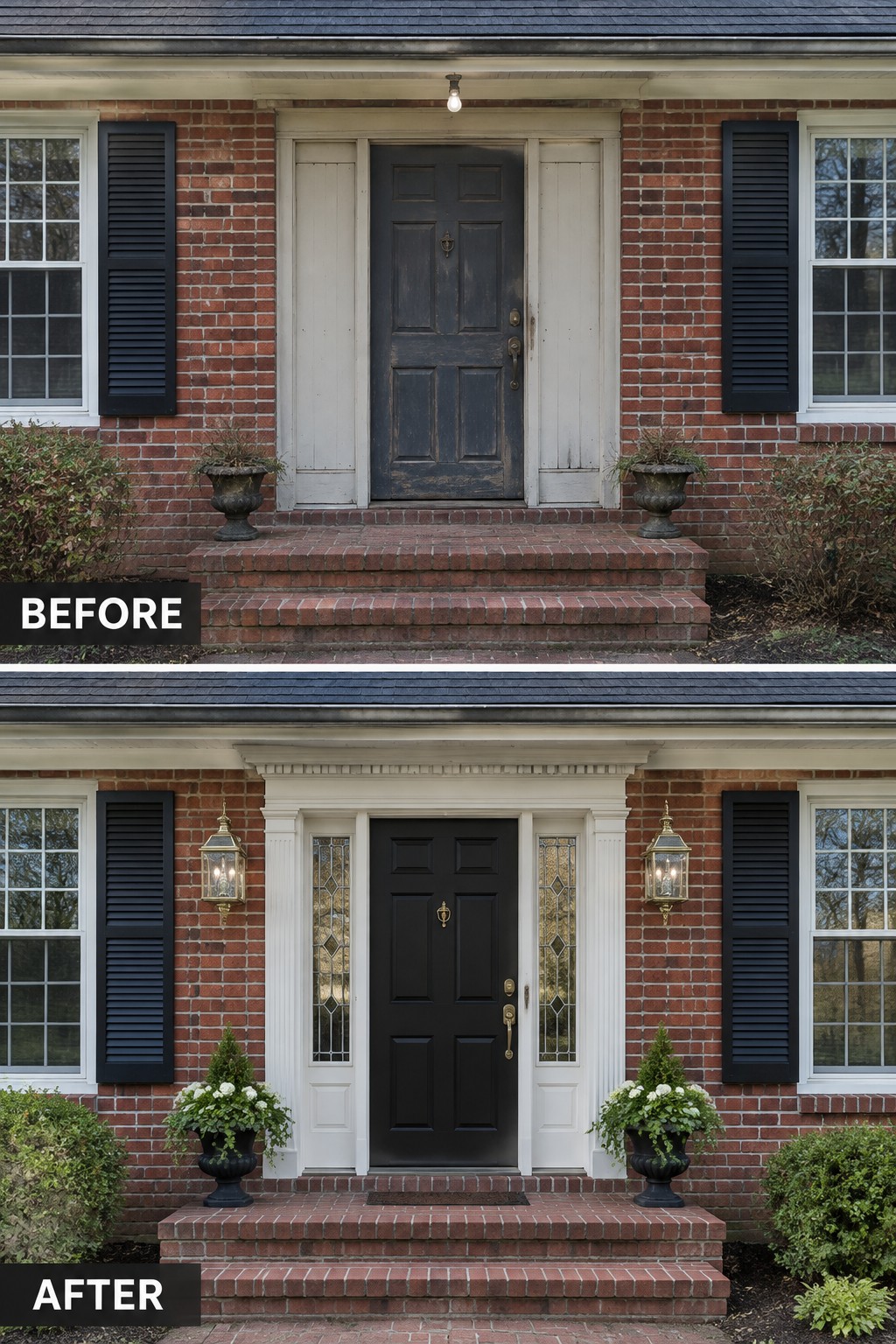
A simple front door can look flat when the trim around it is basic or missing. In this case the change came from adding white pilasters and decorative sidelights on both sides of the door, plus swapping the old hardware and light fixtures for ones with more presence. The black door now reads as a clear focal point instead of blending into the brick.
This approach works especially well on Colonial style homes where the entry needs a bit more weight. Start with the door color and trim details before adding planters or new lighting, and keep the scale of the lanterns and hardware in proportion to the door itself so the whole composition stays balanced.
Define The Doorway With White Pilasters And A Simple Pediment
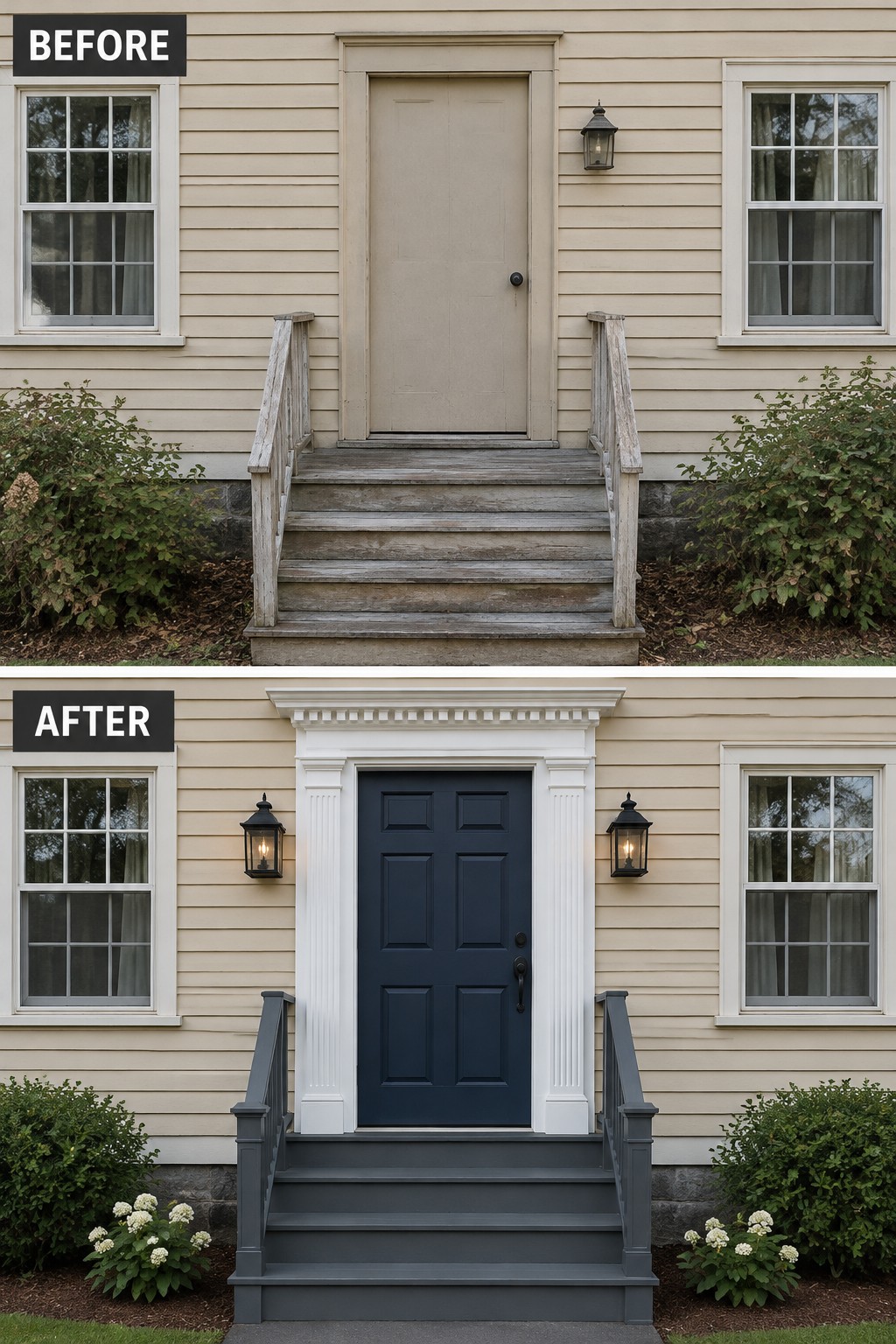
Many Colonial homes have doorways that sit flat against the siding with little presence. Adding a surround of pilasters and a simple pediment gives the entry real definition and makes the door feel like the main feature rather than an afterthought.
This works best on homes that already have some trim detail around the windows. Keep the new trim white to match existing elements, then paint the door a deep color that contrasts with the siding. The change is mostly cosmetic but shifts how the whole front reads from the street.
Paint The Front Door A Warmer Color
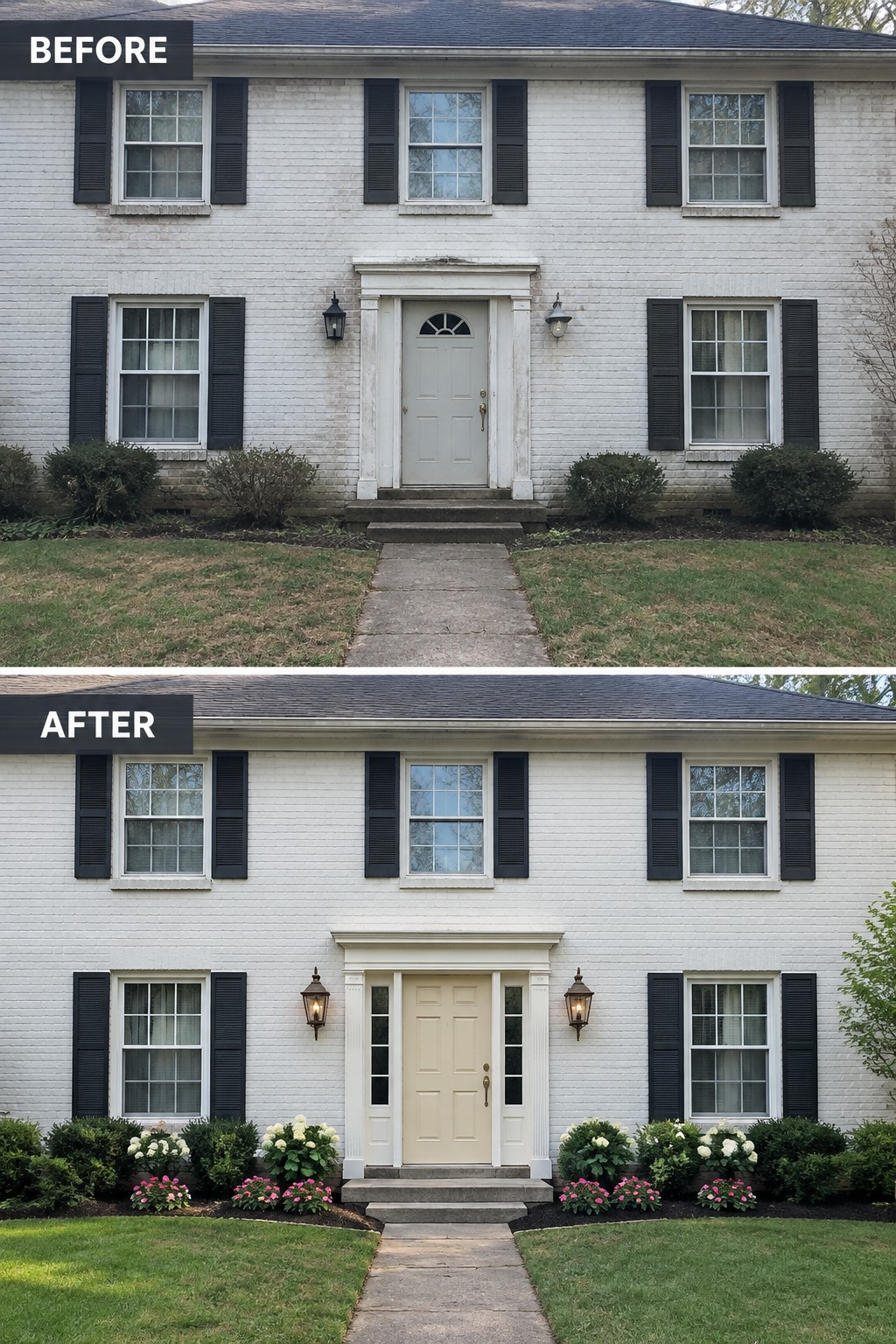
Many colonial homes end up with a front door that feels a little flat against the white brick and black shutters. Switching to a soft warm beige gives the entry more presence without fighting the traditional trim around it. The change also pairs well with the added flower beds that pull the eye toward the door instead of letting the shrubs sit flat against the foundation.
This idea works best on homes where the door sits in a simple surround and the rest of the exterior is already fairly neutral. Keep the new color in the same family as your siding or brick so it does not fight the house. Add a couple of low flower beds on either side and you get the same lift without needing bigger changes to the trim or shutters.
Paint The Front Door A Dark Color
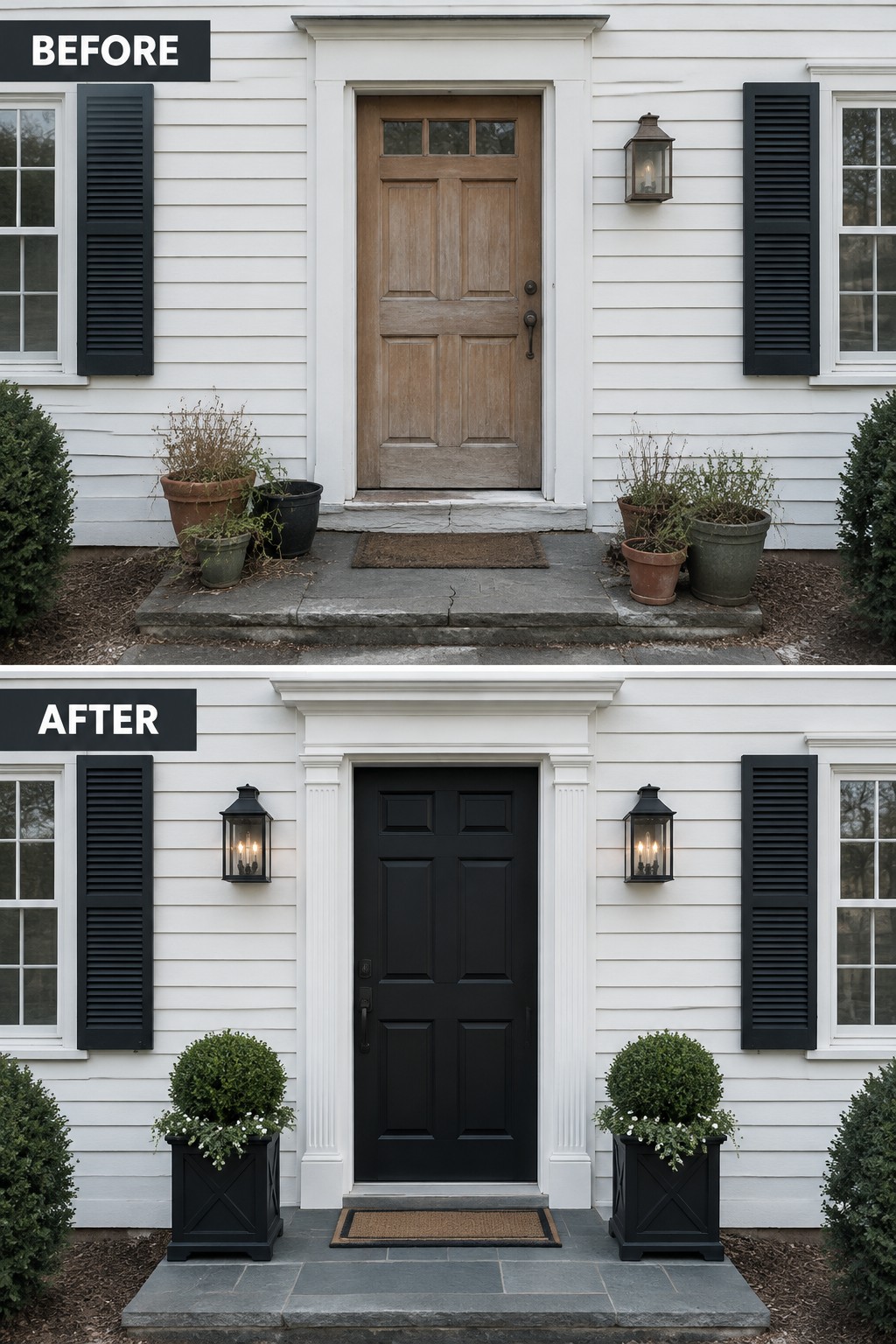
Painting the front door a deep black shade gives the whole entry a stronger focal point. The natural wood door in the before photo blended into the white siding and felt a bit lost, while the new black door stands out clearly against the trim and shutters. Matching black planters on either side also help pull the look together instead of the scattered pots that were there before.
This works especially well on colonial homes with white siding and simple trim. Keep the rest of the entry fairly clean so the door color can do the work, and choose planters that match the door or hardware for a more finished result.
Add Traditional Trim To Update A Plain Front Door
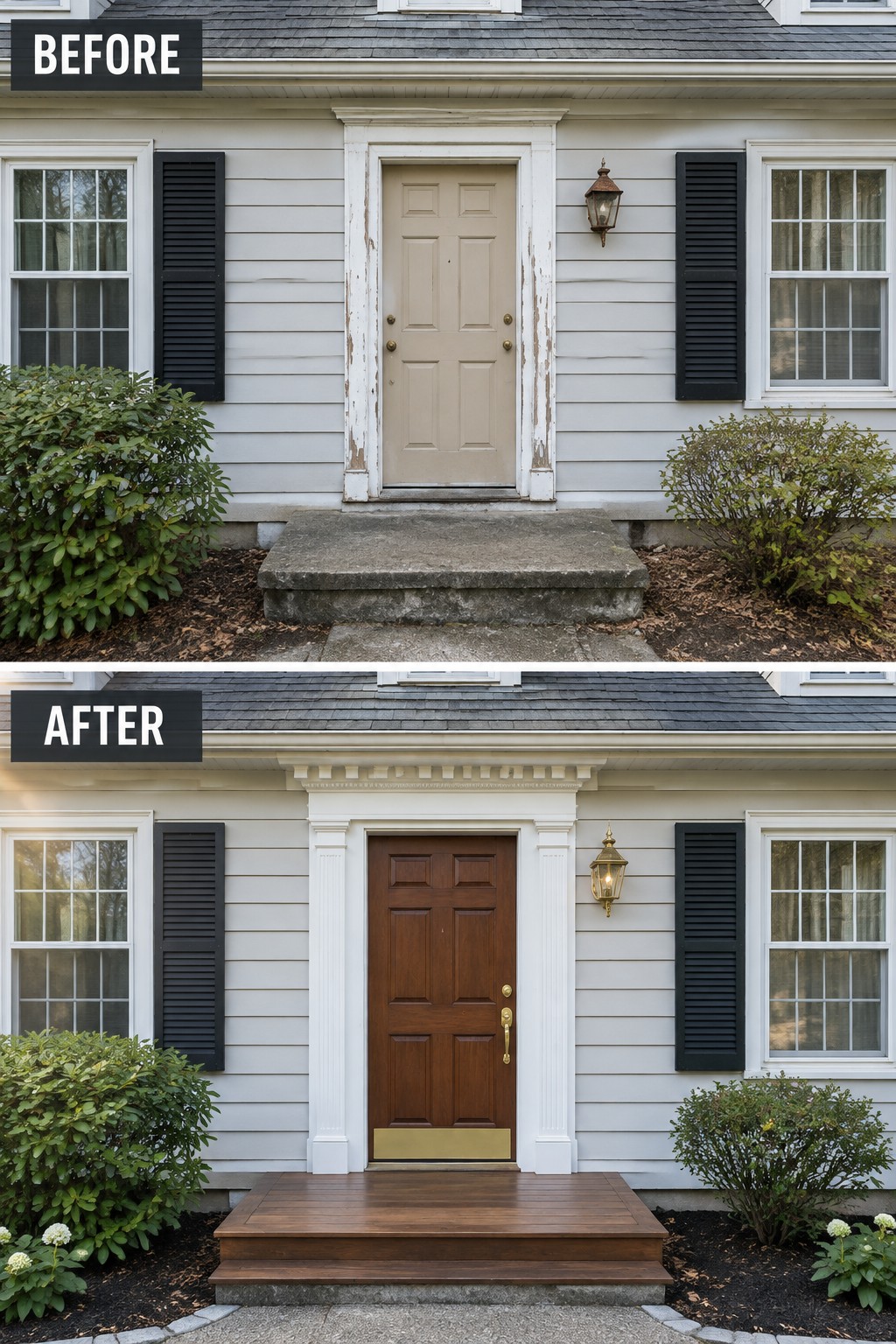
A faded front door with peeling paint can make the whole entrance feel tired. Adding proper trim and a new door gives the entry real structure and presence. The fluted columns and deeper door frame turn a flat opening into something that actually stands out on the house.
This idea suits colonial homes where the door sits in a fairly plain facade. Focus on the trim scale first so it matches the door size, then choose a door that can handle the weather. Keep the rest of the siding and shutters as they are until you see how the new entry settles in.
Add White Columns And A Bold Header To A Stone Entry
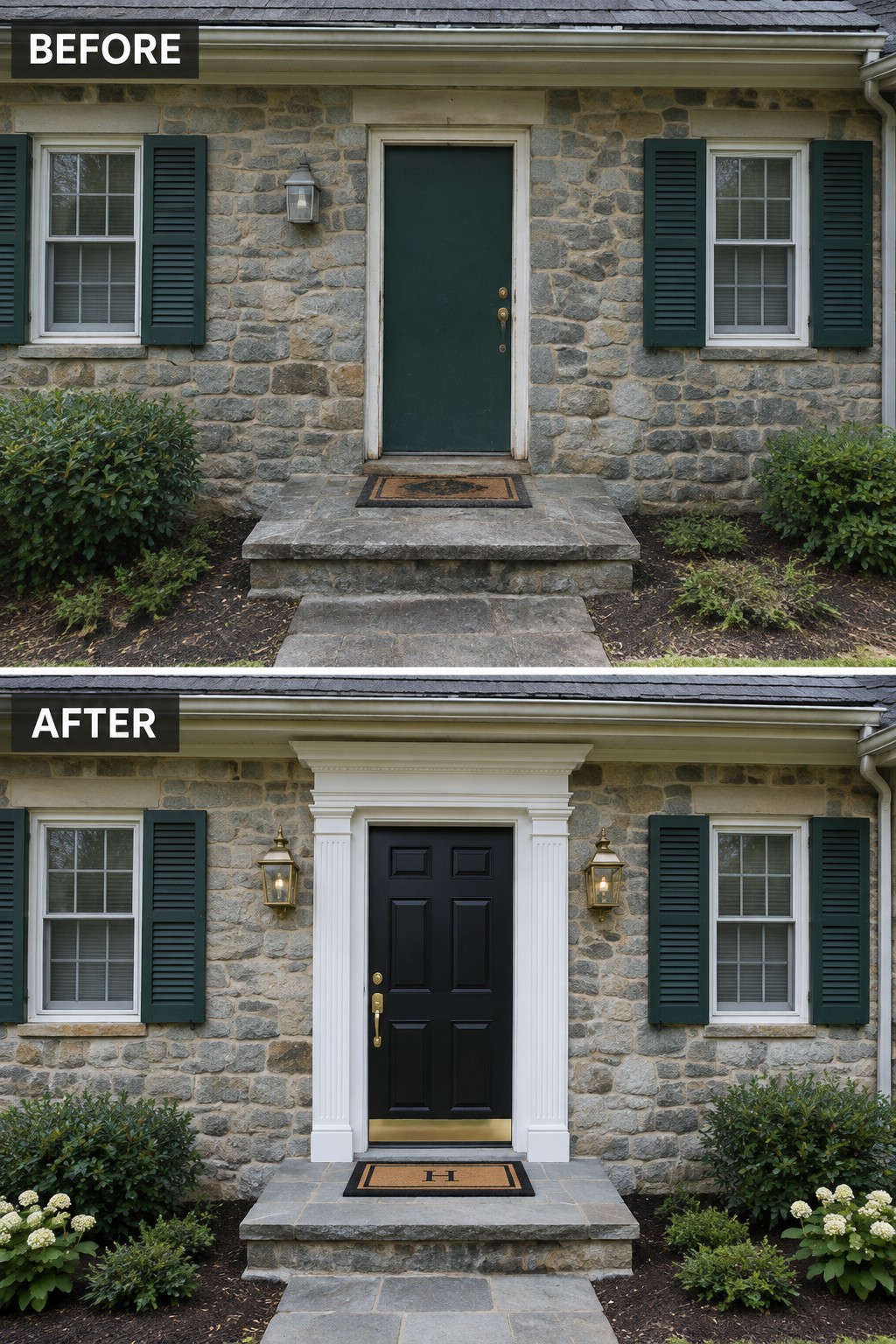
Adding white columns and a stronger header around the front door gives the whole entry more weight and presence. The before version had a simple surround that blended into the stone wall, while the after shows how the new trim creates a clear focal point without overwhelming the facade.
This idea suits colonial and traditional homes where the door needs a bit more definition. Use a dark door color against the white trim for contrast, and keep the columns in scale with the opening so the result still feels balanced rather than oversized.
Create A Defined Entry With A Pediment And White Trim
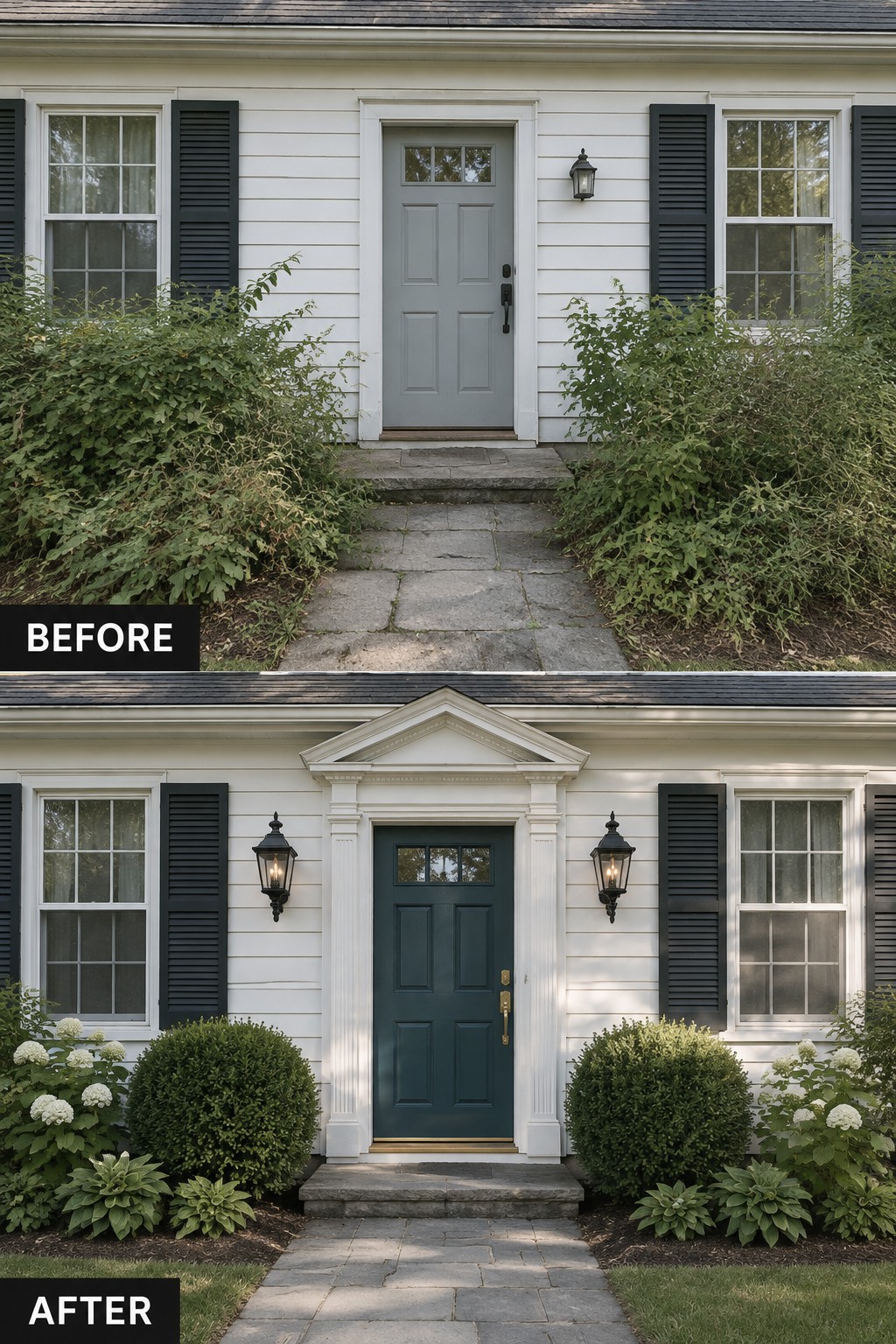
A plain front door often disappears against the rest of the house. Adding a pediment and columns creates a clear entry point and gives the whole facade more structure without major construction.
This approach works best on colonial and traditional homes where the goal is to strengthen the existing style rather than change it. Paint the new trim white to match the siding, choose a deeper door color for contrast, and keep the surrounding planting low so the trim stays visible.
Frame The Front Door With Classic Columns And Trim
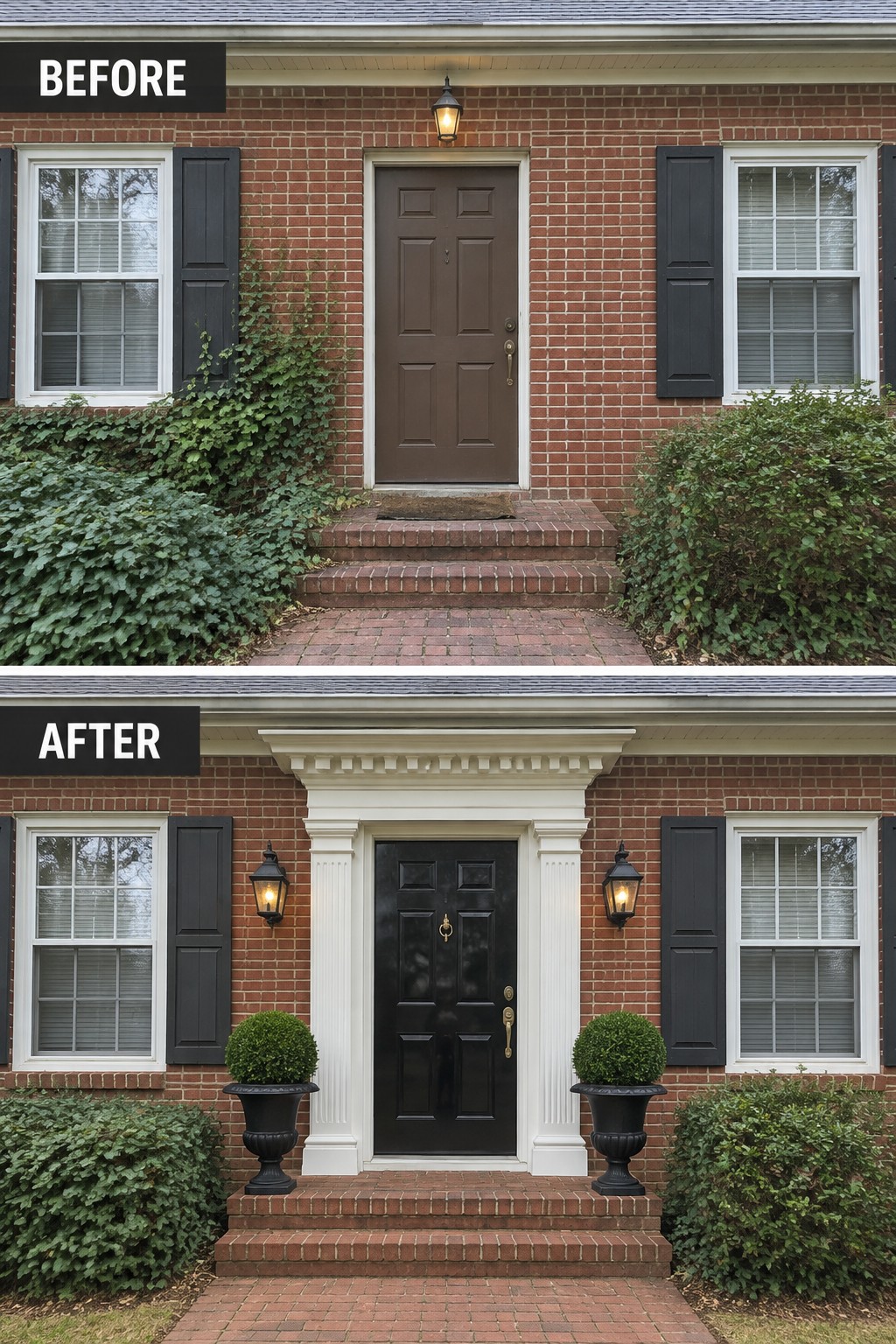
Many brick colonials have a perfectly fine front door that still feels a little lost against the wall. Adding white columns and a pediment gives the entry a clear frame and makes the whole facade feel more finished without touching the rest of the house.
This idea works especially well when your home already has black shutters or other traditional details. Match the column style to the period of the house, keep the new planters simple and symmetrical, and let the trim do the main work.
Frequently Asked Questions
Q: What paint holds up best on a colonial door when you add new trim around it? A: Pick a good quality exterior acrylic latex that flexes a bit with temperature swings. Sand the door smooth first and roll on two thin coats so the finish stays even along the edges where the trim meets the door.
Q: How wide should the trim be if my door frame already sits close to the siding? A: Keep the trim between three and four inches so it frames the door without crowding the space. Cut the pieces to land just inside the existing frame line and nail them flush.
Q: Can I swap the old hardware without messing up the traditional trim look? A: Yes, choose matte black or oil rubbed bronze pulls and hinges that sit flat against the door. Install them after the trim is up so the screw holes line up cleanly with the new wood.