

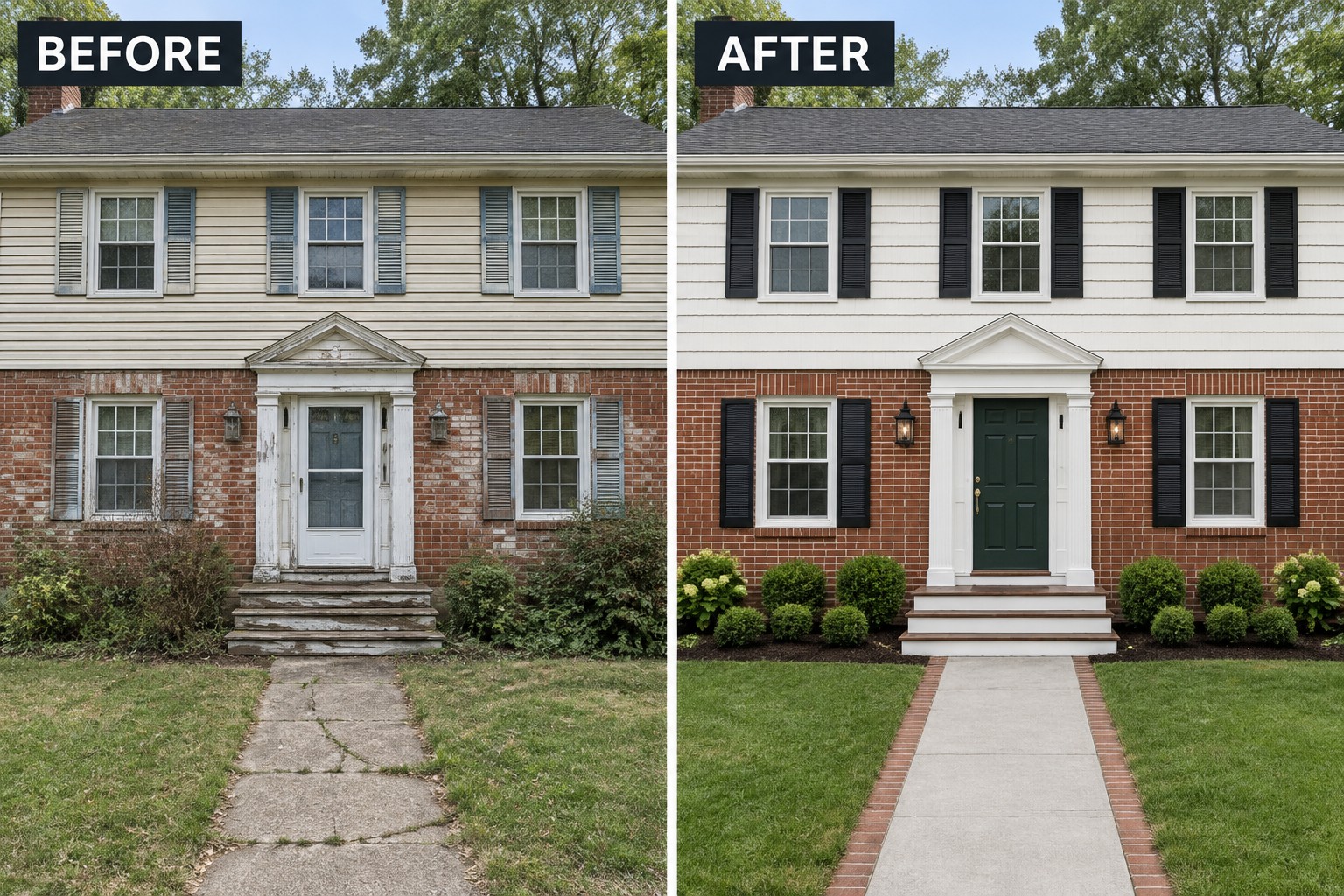
I have always noticed how dated brick paired with mixed siding tends to make a colonial house look a bit tired from the street.
Updating those surfaces with thoughtful paint choices or new siding sections often helps the whole facade feel more pulled together without a complete rebuild.
Curb appeal improves faster than most people expect.
I like seeing how small entry updates and trim adjustments can tie everything in without losing the original character of the home.
A few of the approaches here strike me as worth testing if I were tackling my own exterior updates.
Match Shutters To Unify Mixed Brick And Siding

Many older colonials end up with mismatched shutters because the brick and siding were added at different times. In this case the gray shutters on the before photo made the two materials feel separate. Switching everything to black shutters gives the whole front a single visual thread without changing the brick or repainting the siding.
This approach works best on two-story homes where the upper and lower windows need to feel connected. Keep the trim white and the door color simple so the shutters do the work. Start by picking one dark shade that looks good against both the brick and the siding, then replace the old shutters in one go rather than mixing styles.
Coordinate Shutters And Door Color On A Mixed Siding Colonial

Many older colonials with brick and siding start to look dated when the shutters and trim no longer work together. Switching to a consistent dark color for the shutters and front door brings the whole front together and gives the house a cleaner, more current appearance without major construction.
This idea works best on homes that still have solid structure but need a simple visual update. Pick one dark shade that contrasts with the siding and brick, then use it across the shutters and door. Keep the rest of the changes minimal so the update stays affordable and easy to maintain.
Update Brick Exteriors With Paint And A New Door Color
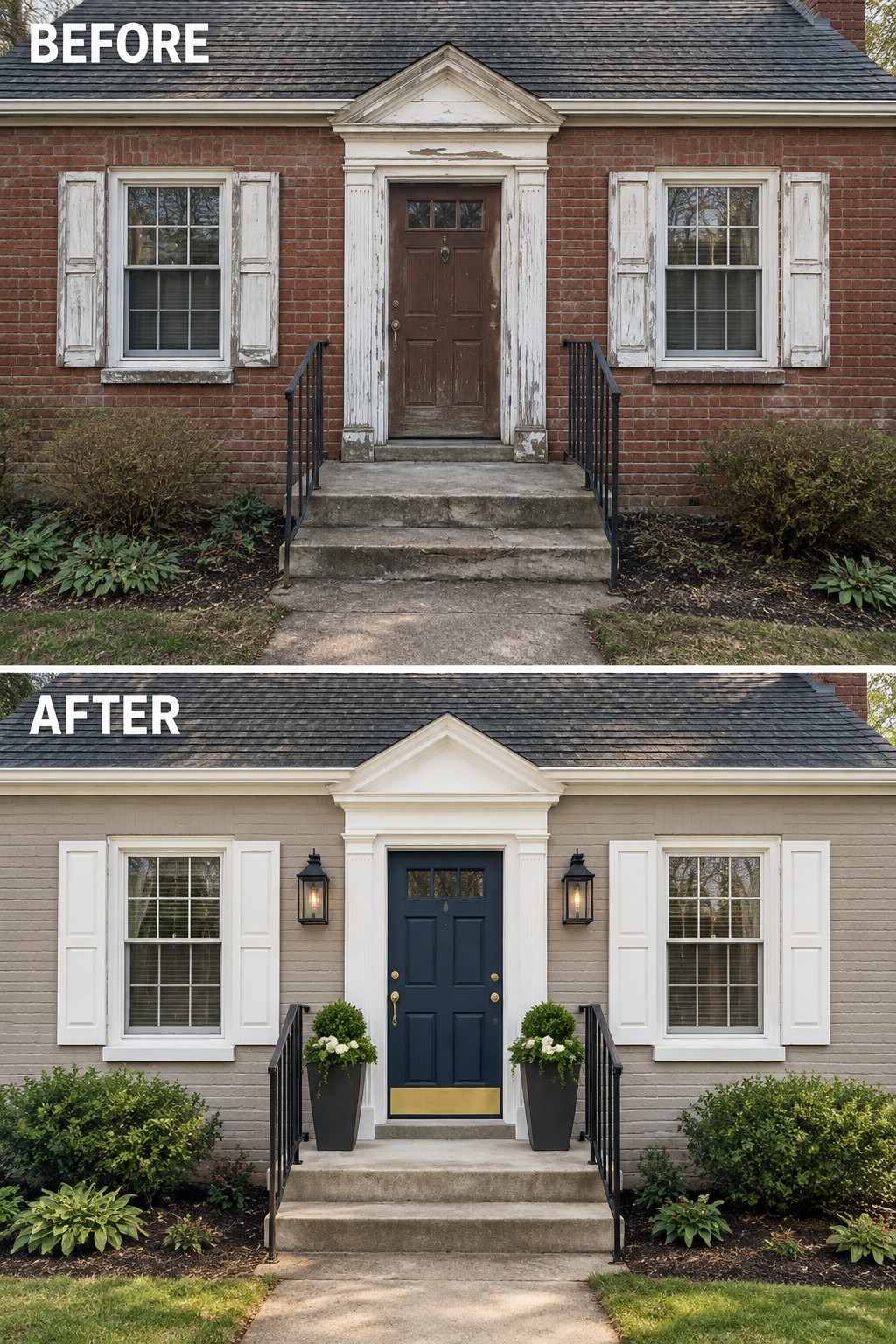
Many brick colonials from earlier decades end up looking heavy and closed off once the original brick darkens and the trim starts to peel. Painting the brick a lighter gray tone and changing the front door to a deep navy gives the whole house a cleaner, brighter face while still keeping the classic trim details. The shift in color alone makes the entry feel more open and approachable.
This works best on homes where the brick is sound but the overall tone feels dated. Test the paint on a small patch first, pick a door color that contrasts without fighting the new siding, and keep any added planters or lights simple so the focus stays on the color change.
Refresh A Colonial Exterior By Painting The Siding White

Many older colonials end up with mismatched siding colors that make the whole house feel dated. Switching the beige sections to white while keeping the brick creates a cleaner contrast and makes the windows and shutters stand out more. The black shutters replace the old muted ones and give the facade a sharper, more defined look without any major structural changes.
This approach works well on homes that already have a mix of materials and just need the non-brick areas lightened. Start with the siding color first, then pick shutters that create clear contrast against both the new paint and the brick. Keep the rest of the updates simple so the color change stays the main focus.
Unify Mixed Siding With One Consistent Color
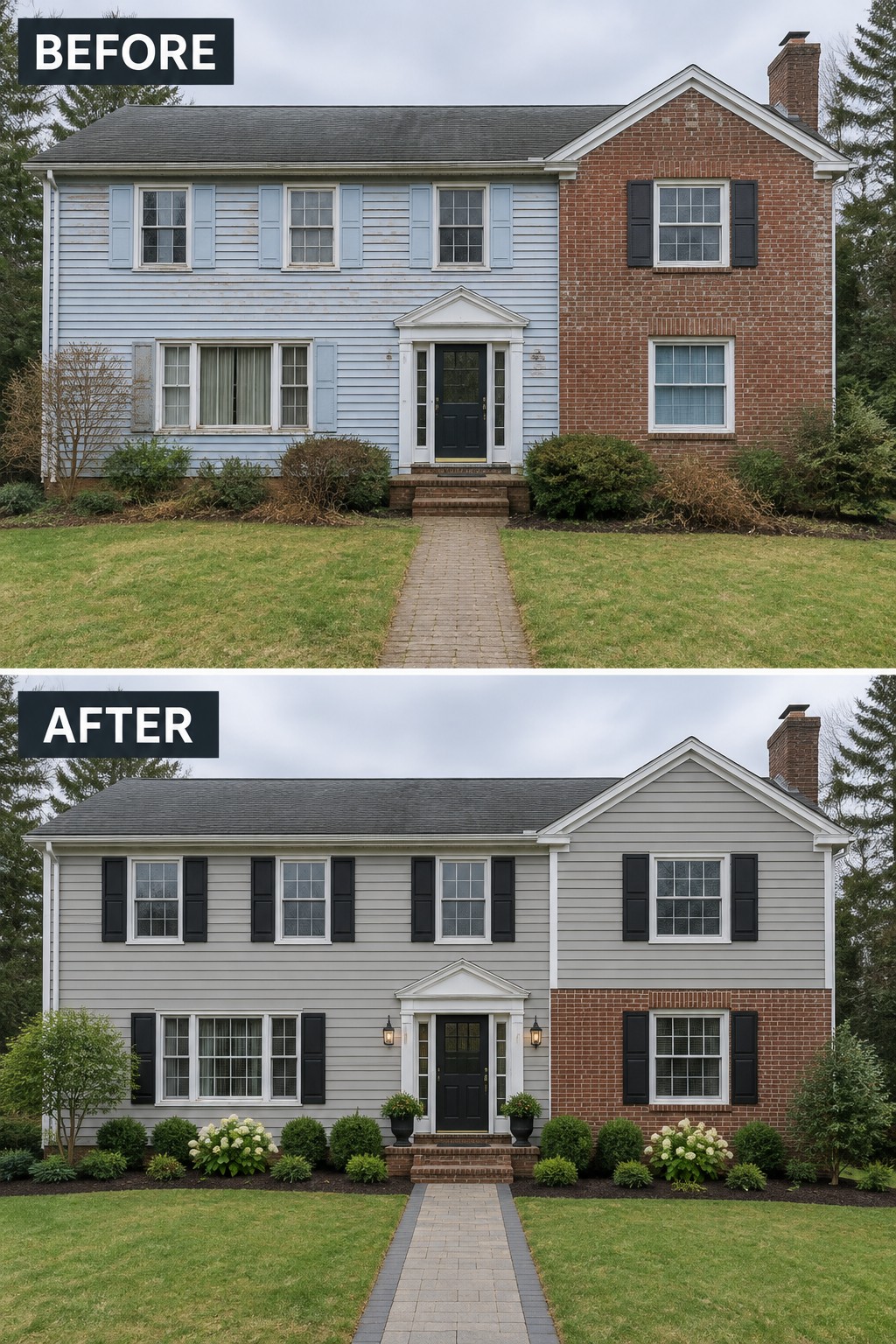
A house with two different siding materials often ends up looking split down the middle. Here the before photo shows light blue siding next to brick that never quite matched. Switching the main walls to one gray siding color and adding black shutters on every window made the whole front read as one clean shape instead of two competing halves.
This approach works best on colonials that have grown over time or had different sections added later. Choose a siding color that sits well with any brick you plan to keep, then carry the same shutter and trim color across the entire facade. Do the siding and shutter update first so later landscaping has something solid to sit against.
Paint Brick To Refresh A Dated Colonial Exterior

Painting the brick is one of the simplest ways to update an older colonial without major construction. The before photo shows a tired red brick facade with peeling trim and dark shutters that made the house feel heavy. In the after photo, a light paint color on the brick plus softer gray shutters pulls everything together and gives the whole front a cleaner, lighter look.
This approach works well on colonials where the brick has aged poorly or the original color no longer fits the neighborhood. Focus first on proper surface prep and choose a paint made for masonry. Keep the roof, windows, and trim colors in mind so the new shade feels connected rather than like a single change.
Give A Bare Porch A Clear Purpose

Many older homes have porches that end up as catch-all spots or sit mostly empty. Adding a pair of rocking chairs, a rug, and a few planters gives the space a simple job as a welcoming entry instead of just a pass-through.
This idea works best on homes with a clear front porch structure already in place. Clean the railings and steps first, then keep the furniture light so there is still room to walk through. The same approach can help any colonial or traditional brick house that needs the entry to feel used rather than forgotten.
Update Faded Siding With A Warmer Color

Many older colonials end up with wood shingles that have turned dull and gray over time. A simple color change on the siding can pull the whole house together and make the brick base look intentional instead of mismatched. In this case, switching to a warm brown stain gave the shingles a richer tone that now reads as intentional rather than neglected.
This approach works especially well on homes where the siding still has good texture but just needs a fresh finish. Pick a color that sits between the brick and the trim so nothing feels like it was added later. Staining instead of painting often lets the wood grain show through, which keeps the look classic rather than plastic.
Update Trim Color To Refresh A Colonial Exterior

Many colonial homes with brick and siding start to look dated once the white trim fades and the entry feels flat. Switching the shutters, window frames, columns, and door to a dark color gives the whole facade more weight and makes the brick read as intentional rather than leftover. The change also helps the front door stand out without needing new construction.
This approach works especially well on two-story colonials where the upper and lower siding already differ. Keep the siding light, then use the darker trim to tie the brick base and roofline together. Add simple lanterns beside the door if the entry still feels bare. The goal is contrast and cleaner lines rather than adding more decoration.
Clean Up Overgrown Bushes Before Adding New Features
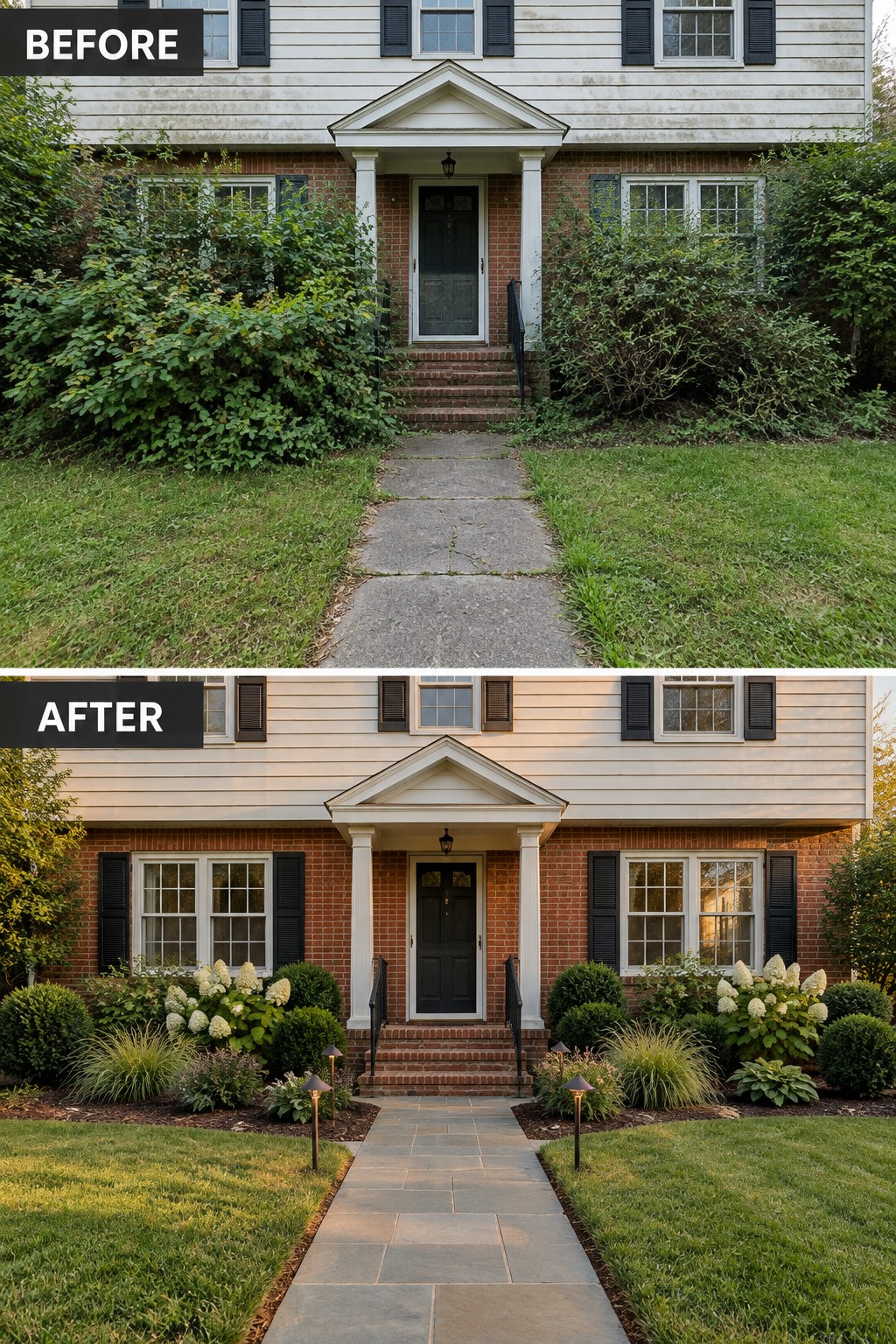
The biggest change here came from removing the messy, overgrown shrubs that hid the house and replacing them with a few simple, defined beds. Once the plants were cut back and the cracked concrete path was swapped for stone pavers, the whole front started to look intentional instead of neglected. The new beds give the entry a clear shape without adding a lot of extra plants.
This approach works well on older colonials where the brick and siding are still in good shape but the landscaping has gotten away from you. Start by clearing what is there before you buy new plants or hardscaping. Keep the beds modest in size so they frame the walkway and door without crowding the front of the house.
Replace A Plain Garage Door To Refresh Curb Appeal

A basic garage door can make the whole front of a house feel flat. In this case, swapping the old white panel door for a pair of carriage-style doors in a softer gray tone gave the facade more structure and made the entry area feel more connected to the rest of the house. The new doors also added a few small windows that break up the large surface.
This approach works well on colonial homes where the garage sits right at the front. Pick a door style that echoes the trim or shutter color rather than trying to match the siding exactly. Keep the rest of the updates simple, like adding one light fixture beside the door, so the change stays focused and easy to maintain.
Add Pediment Trim Above Windows To Refresh Brick Exteriors

Adding pediment trim over the windows gives this brick house a stronger colonial look without changing the structure. The before version had flat white frames that felt plain and a bit tired. The after version uses simple triangular tops to create more rhythm and interest across the front.
This idea works best on homes with a traditional shape that just need a bit more detail. Measure your existing trim first and pick pediments that sit comfortably above each window. Fresh paint on the trim helps the new details stand out, and the whole update stays fairly straightforward compared with larger exterior changes.
Clean Up Foundation Plantings To Frame The House

Many colonial homes end up with uneven shrubs and patchy beds along the base that make the whole front feel a little neglected. Replacing scattered plants with a few low, rounded shrubs set in clean mulch beds gives the brick foundation a tidy frame and helps the siding and entry look more intentional.
This works best on homes where the architecture is already solid but the landscaping has grown out of scale. Stick to one or two shrub varieties, keep everything below the windows, and space the plants evenly so the eye moves smoothly across the front rather than stopping at random clumps.
Balance The Entry With Matching Lights And A Planter
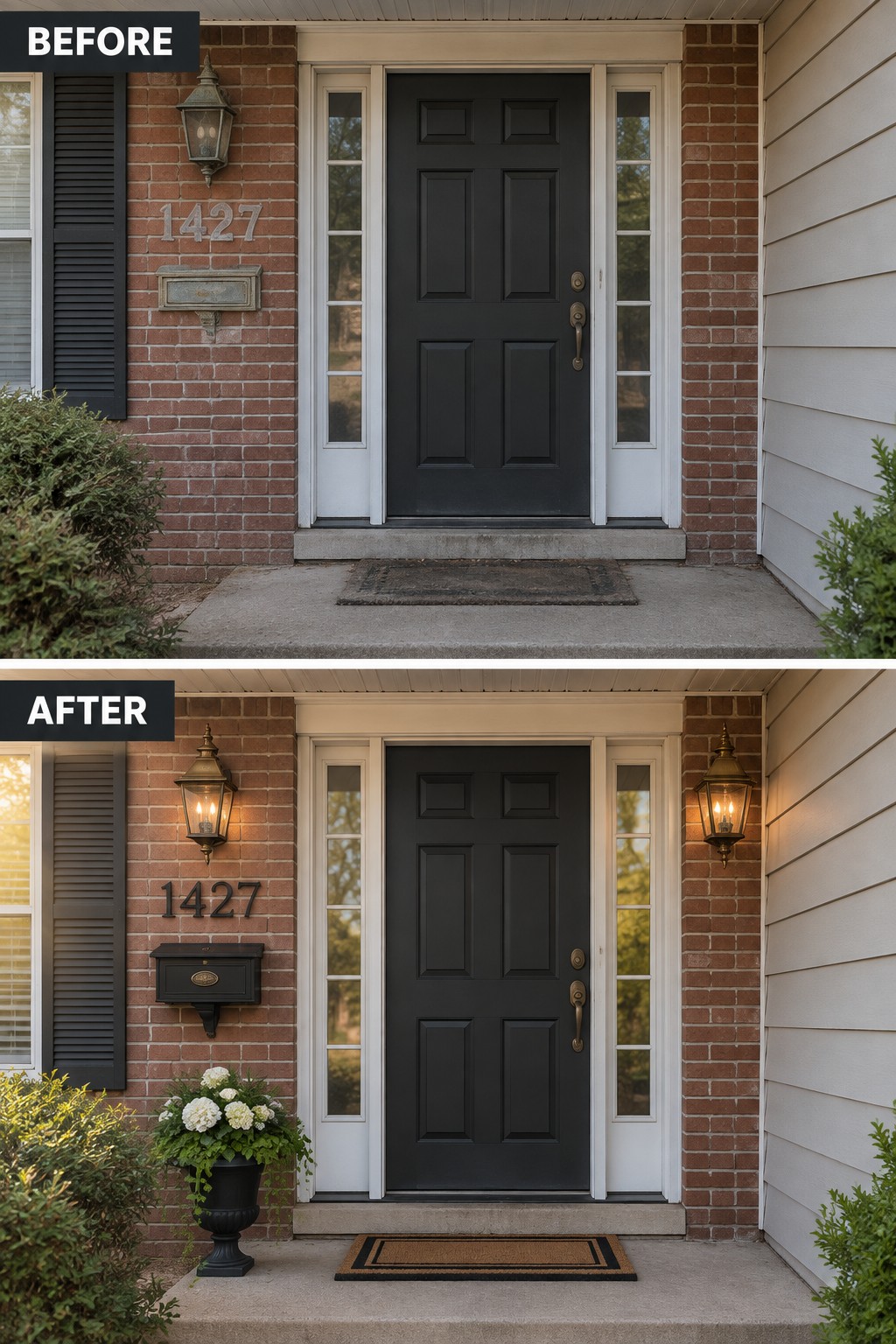
The before photo shows a single light and an empty step beside the door. The after version adds a second lantern on the opposite side and sets a large planter with flowers at the base. That one change creates a clearer sense of balance and makes the entrance feel more complete.
This approach works well on brick colonials where the door and trim are already solid. Match the lights in style and finish, keep the planter size in scale with the step, and choose one main color so the new pieces do not fight the brick. Start with the lights if your wiring allows it, then add the planter last.
Define The Front Beds To Frame The House

The biggest shift here comes from replacing the tall, wild bushes with lower, layered planting that follows the house lines. Once the overgrowth was pulled back, the brick and siding could actually be seen, and the entry felt more open. A simple mulch border and a few repeated shrubs keep the look tidy without needing a full redesign.
This approach works well on colonial homes where the foundation sits low and the front is mostly lawn. Start by cutting back anything that blocks windows or the door, then build two or three rows of plants in different heights. Keep the middle layer mostly evergreen so the beds still look full in winter.
Refresh Worn Porch Steps With Paint
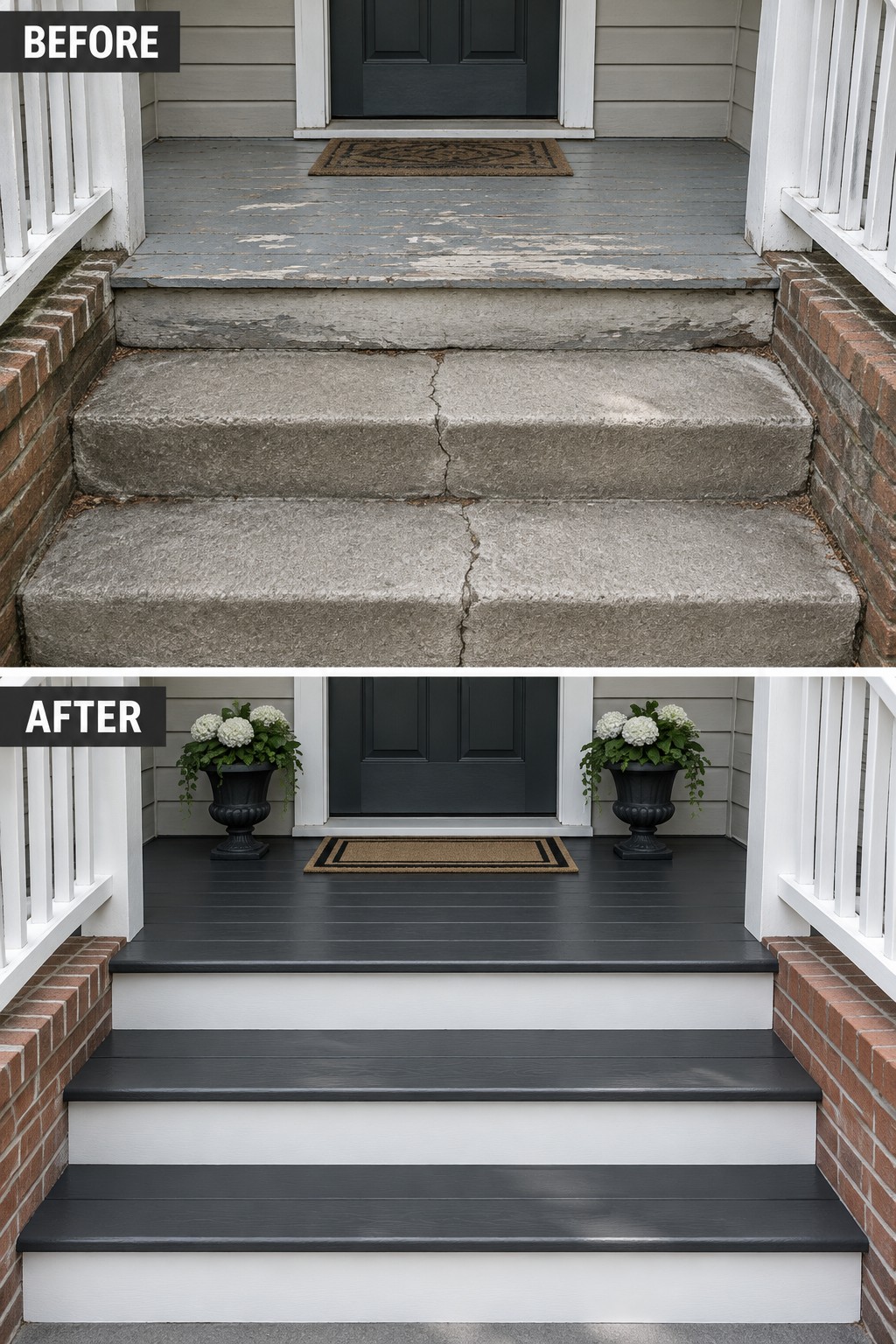
The top photo shows a porch floor and steps with peeling paint and visible cracks that made the entry look tired. Painting the treads dark and the risers white, then adding matching planters on either side of the door, gave the front a clean and settled appearance without changing the structure.
This idea suits older colonial homes where the brick and siding are still sound but the woodwork has aged. Start with a thorough cleaning and any needed repairs, then choose exterior paint that can handle foot traffic. Keep added pieces like planters modest so the updated steps remain the main focus.
Add Shutters To Bring Classic Detail To A Colonial Facade

Many older colonial homes end up looking flat when the windows have no trim or shutters. In this case the before photo shows a simple brick front with plain white frames that made the house feel unfinished. Adding black shutters to every window and placing flower boxes underneath gave the facade the structure and rhythm it was missing.
This approach works well on brick colonials that already have good proportions but lack visual interest. Focus on the windows first since they are the most visible part of the front. Match the shutter color to the door or roof for a pulled-together look, and keep the boxes simple so they do not compete with the shutters. The change stays practical because it improves curb appeal without requiring major construction.
Add Retaining Walls To Shape A Sloped Front Yard

A steep, uneven slope in front of the house often makes the entry feel unfinished and hard to maintain. Adding low retaining walls creates flat planting areas on either side of the stairs, turns the slope into usable space, and gives the whole front a cleaner, more settled look.
This approach works especially well on older brick colonials where the grade drops away from the door. Match the wall material to the existing brick if you can, keep the beds fairly narrow so they do not crowd the walkway, and plant a mix of low shrubs and seasonal flowers so the beds stay interesting without a lot of upkeep.
Refresh A Colonial Exterior With Lighter Paint And A Bold Door

Many older colonials end up looking flat because the siding color sits too close to the brick and the front door blends into the background. Switching the siding to a soft cream and painting the door a deep navy gives the facade a cleaner, brighter look without changing the structure. Adding a pair of lit lanterns above the door and swapping in fuller planters at the steps makes the entry feel more intentional.
This kind of update suits homes with mixed brick and siding that have grown dated. Start with the paint and door color since those changes do the most work, then add simple lighting so the improvements show up at night. Keep the new color a few shades lighter than the original and make sure the door contrasts with both the siding and brick so the whole front reads as one updated composition.
Add Trim And Planters To Strengthen A Plain Entry
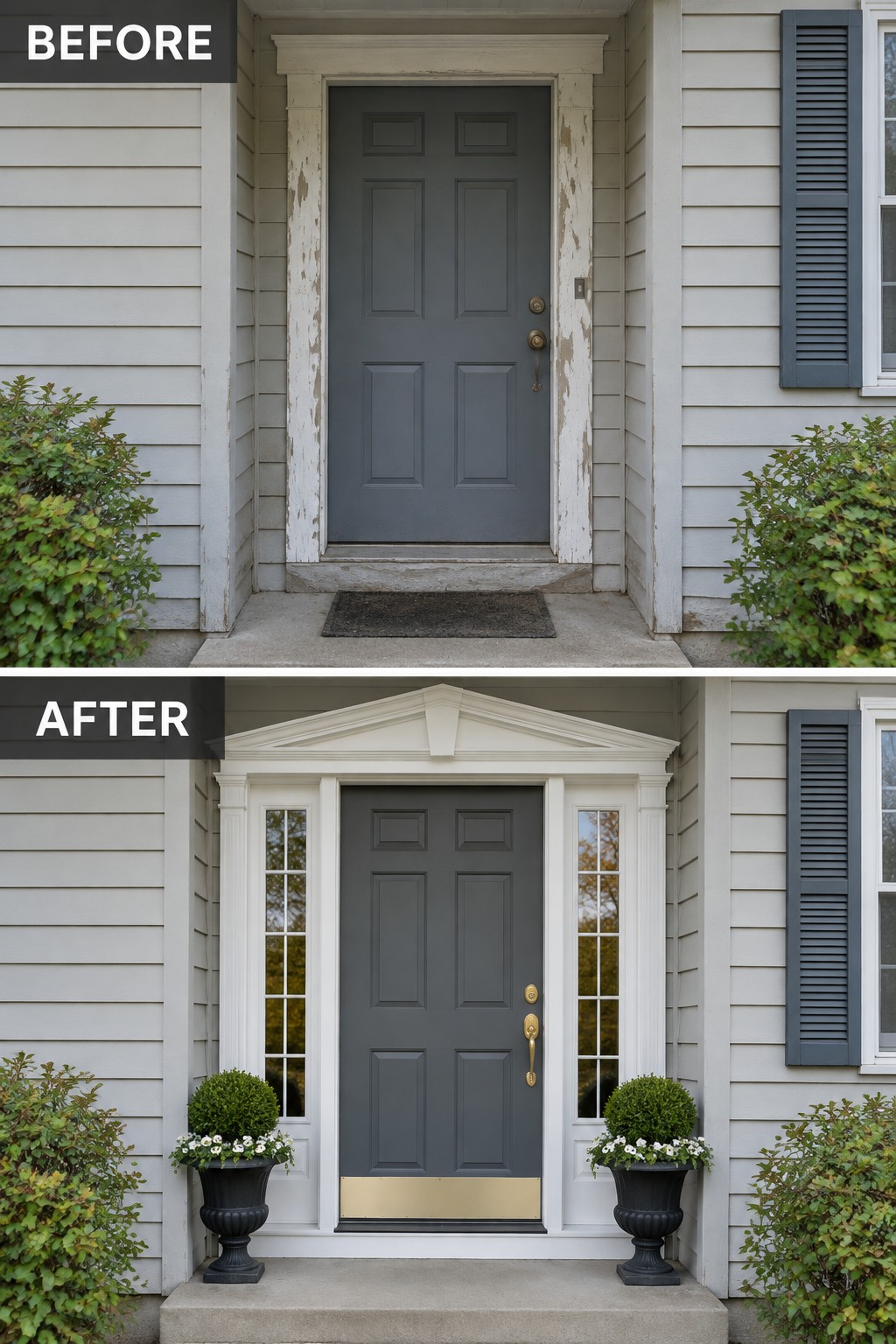
A simple gray door on a colonial home can look a bit lost when the trim around it is peeling or missing any real detail. Adding white columns, a pediment, and sidelights creates a clear frame that makes the door the main feature instead of just another part of the siding.
This works well on homes with light siding where the entry needs more weight. Keep the planters low and match their color to the new hardware so the whole update feels balanced rather than busy.
Unify Mixed Siding With One Dark Color

Many older Colonials end up with leftover siding colors from previous updates, and the top photo shows exactly how that can make the whole house feel scattered. Painting the upper level one consistent dark gray pulls the facade together, lets the white brick base stand out cleanly, and gives the black shutters and trim a clear role.
This approach works especially well on two-story homes with a brick or stone lower level. Start by picking a dark siding color that contrasts with the existing brick rather than matching it, then carry that same color across all upper sections. Keep the trim and front door light so the entry stays visible. It is a simple change that often makes the biggest difference before any other exterior work begins.
Frequently Asked Questions
Q: What if my brick looks solid but just feels tired next to the mixed siding? A: Clean the brick first with a gentle wash to bring back its natural color. Then choose siding in a warm neutral that picks up on the brick tones. This keeps the colonial shape front and center without a full tear-out.
Q: How do I fix siding that does not match across different walls? A: Pull off the worst sections and replace them with one consistent material like fiber cement. Add simple colonial trim around windows and corners to pull the sides together. Stick to two colors at most so the house reads as one whole.
Q: Do the windows need work when the siding changes? A: Swap in double-hung windows with thin muntins if the current ones look flat. They line up with the colonial style and make the new siding look intentional. Skip this step only if your windows already have that classic grid pattern.