

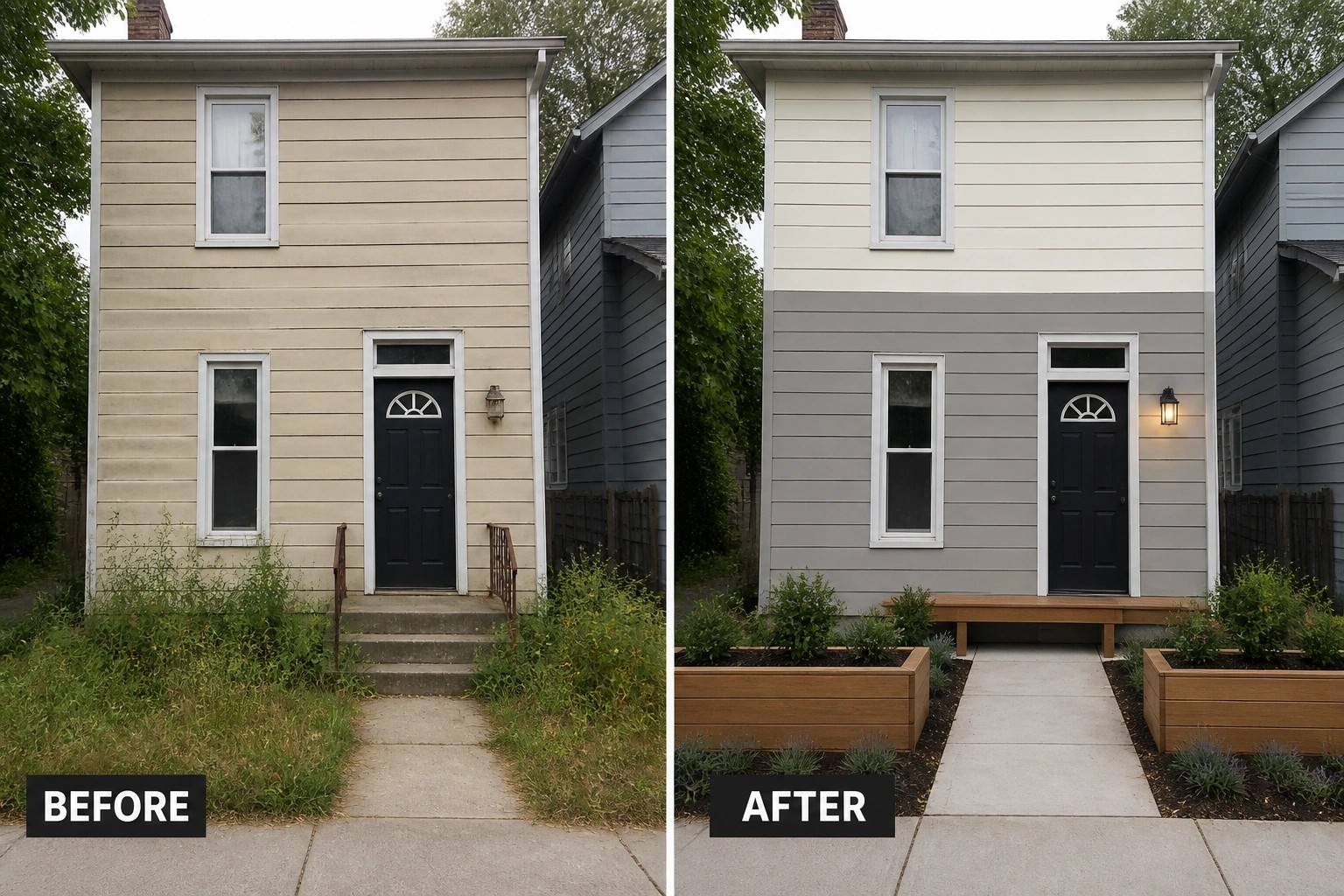
Narrow facades can feel cramped and unloved, but thoughtful exterior choices like paint, trim, and porch details can make a small house read as wider and more cared for.
I usually start by adjusting paint contrast and clarifying the entry’s focal points because sightlines and scale matter more than adding fussy ornament.
Small adjustments add up.
Changing siding direction, refining window trim, repositioning a walkway, or adding deliberate porch lighting can all help a narrow front seem broader without a full renovation.
I like to save a few of these ideas to try on my own place since seeing modest edits in person is quietly satisfying and helps you decide which choices to keep or tweak.
Make The Entry The Width Focal Point
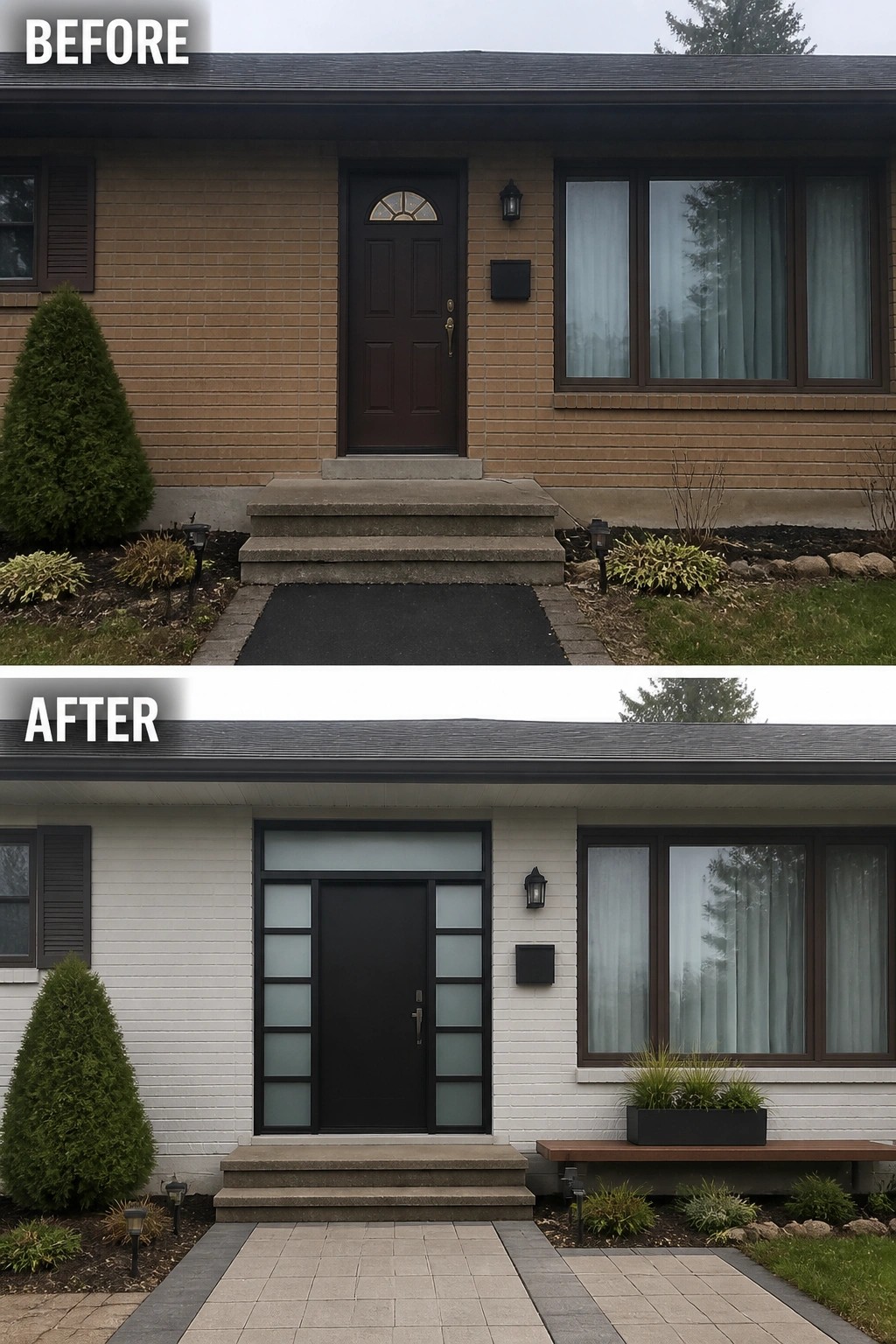
Brighten the wall around your front door and frame the opening in a strong contrasting color to make a narrow facade read wider. In this example the brick was painted a light neutral and the original door was replaced with a taller matte-black door flanked by frosted sidelights, which visually widens the entrance and gives the whole front a clearer centerline.
This approach works well on single-story or narrow-front homes: start by lightening the surrounding wall so it recedes, then choose a bold door color and slim sidelights or a transom to expand the perceived opening. Keep details simple, repeat the dark trim in one or two other accents like the mailbox or lighting, and widen the approach with pavers or a simple path to reinforce the broader entry feel.
Use A Horizontal Canopy To Make A Narrow Facade Feel Wider
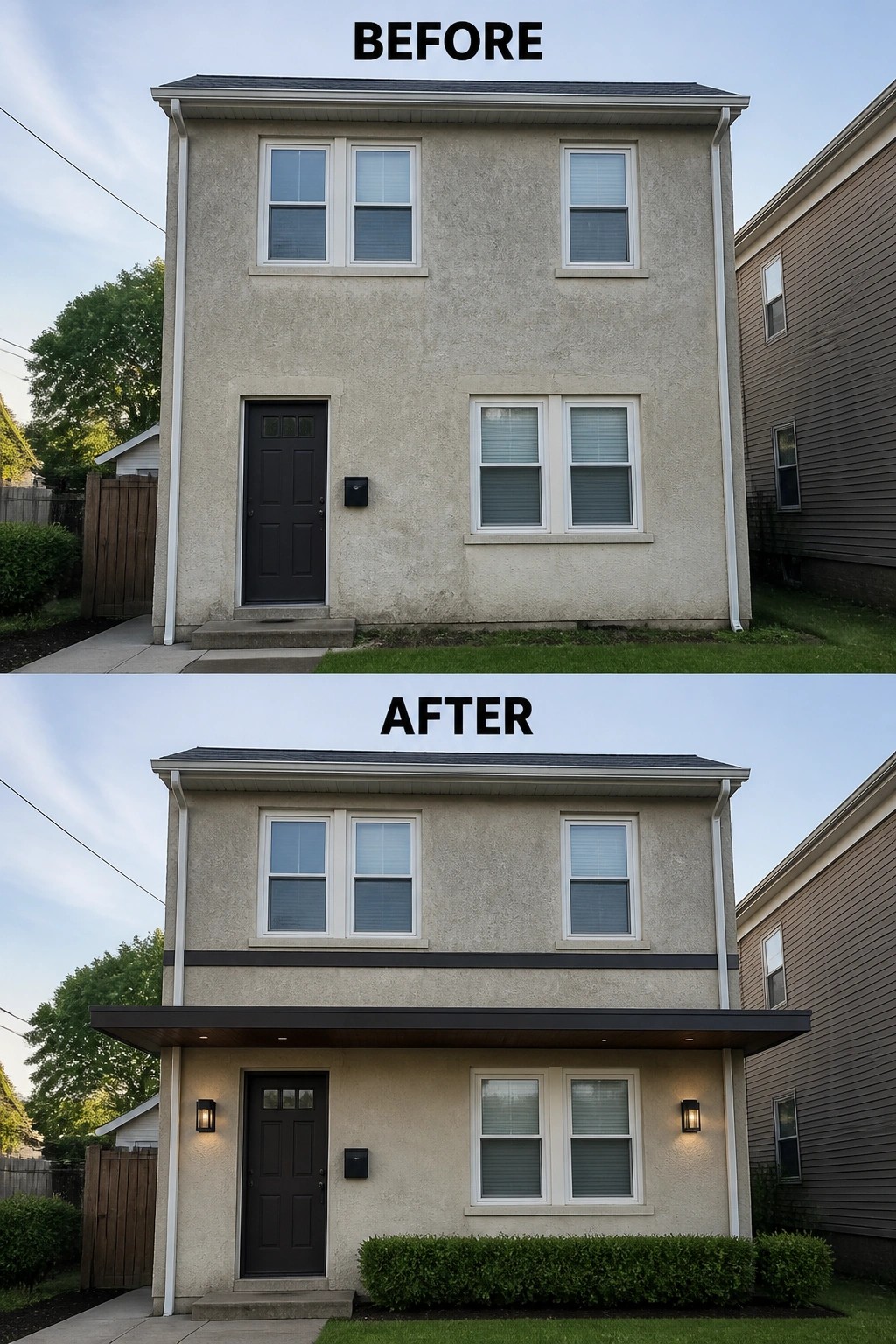
A simple horizontal canopy or extended porch roof creates an instant visual horizon that breaks up a tall, narrow front and makes the house read wider. In this example a dark, flat overhang and matching trim band were added above the entry, with new wall lights and a low hedge to anchor the base—those few horizontal elements change the facade’s proportions without a full remodel.
To try this yourself, pick a canopy depth that stays in scale with your door and windows and repeat a strong horizontal material or color so the eye moves sideways instead of up. Add modest lighting under the canopy and keep planting low so the new line stays visible; this approach works especially well on two-story narrow houses where you want to create curb appeal without expanding the footprint.
Give A Bare Porch A Clear Purpose
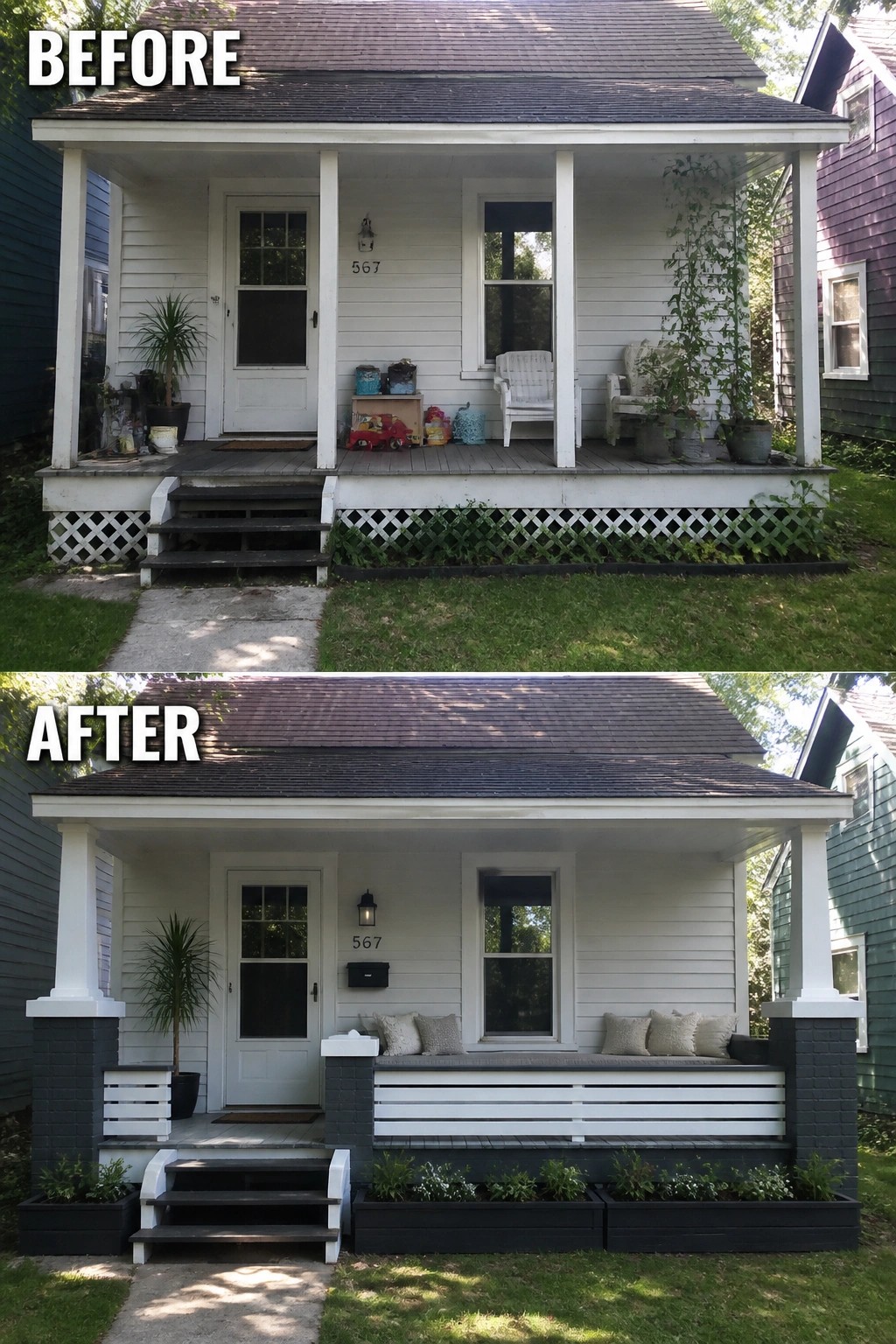
Turning an underused porch into a single, usable zone is one of the easiest ways to make a narrow facade feel wider. In this example a cluttered, undefined entry was simplified with a low, horizontal bench with cushions and matching planter boxes, and the porch bases were painted a darker color to anchor the composition. Those small, coordinated changes make the porch read as one long surface instead of a bunch of separate bits.
To copy this, start by clearing and cleaning the porch, then pick one main piece that spans the width—a bench, built-in seat, or long planter—and repeat one or two materials or colors so the eye reads across. Keep furniture low and slim so the door and path stay accessible, use weatherproof fabrics, and place shallow planters in front to reinforce the horizontal line without blocking traffic.
Use Pavers And Low Walls To Define The Entry
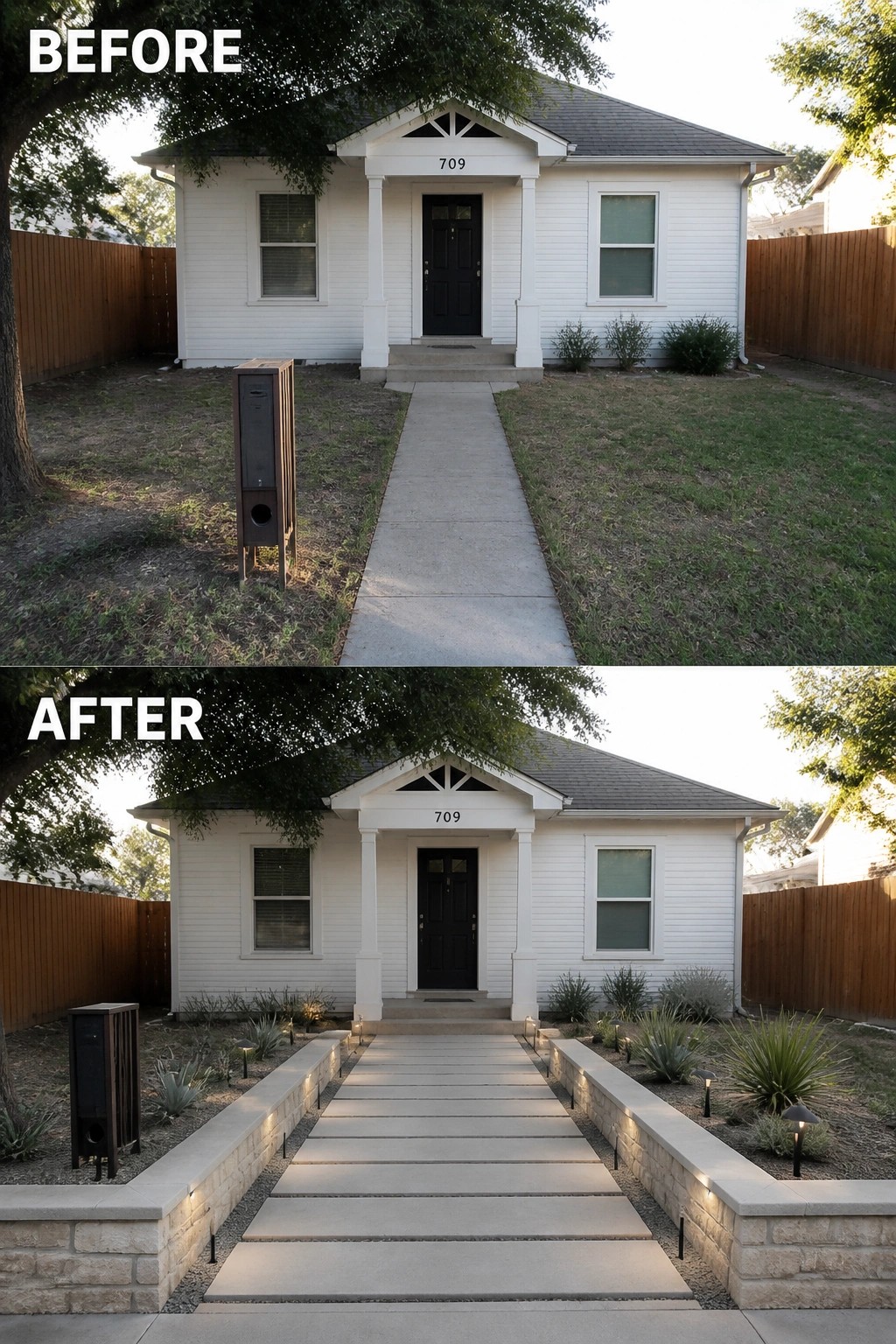
A clean, wide paved path flanked by low stone walls gives a narrow facade instant structure and makes the whole front feel wider. Swapping a thin concrete strip and patchy lawn for spaced slab pavers, gravel joints, low planting beds, and subtle path lights creates strong horizontal edges that visually broaden the approach to the door.
This works best on small, narrow yards where you want a clear route and a tidy look. Keep the walls low so they frame rather than block the house, choose materials that match or complement the facade, and use low, architectural plants and recessed lighting to keep sightlines open while adding depth and polish.
Use Low, Horizontal Details To Visually Widen The Facade
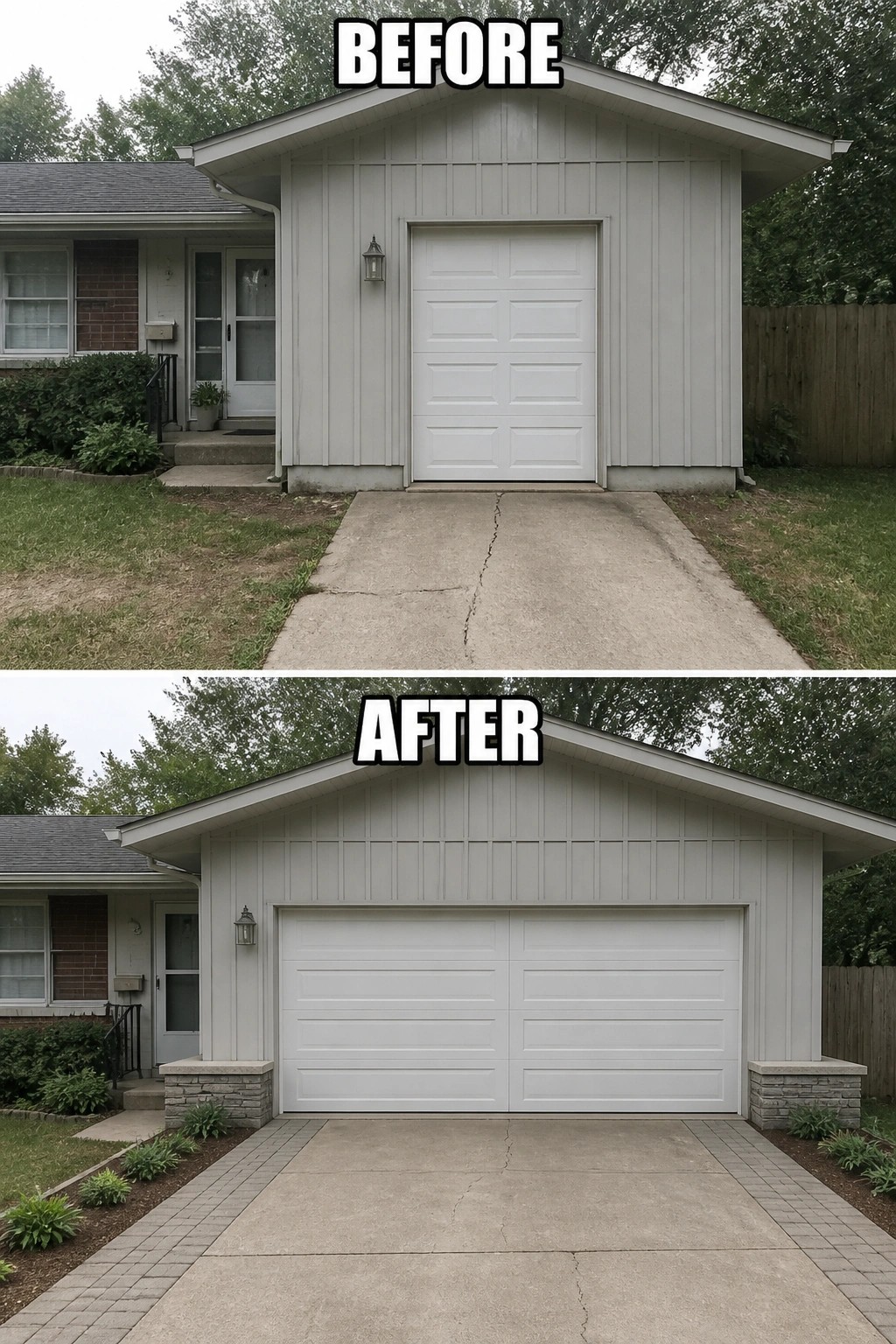
Stretching the eye across the lowest parts of a house is an easy way to make a narrow frontage read as broader. In this example a wider, flush-style garage door and a pair of low stone planters with paver edging create a continuous horizontal band at ground level, which immediately spreads the composition without adding height or clutter.
To try this, pick one or two ground-level moves: a wider or simpler-panel garage door, a paved border along the driveway, or low masonry planters at the edges. Keep those elements low and in the same material family as the house, use short ornamental plants so sightlines stay open, and avoid tall vertical features that pull the eye up instead of across. Simple, effective.
Open A Narrow Facade With Low Horizontal Elements
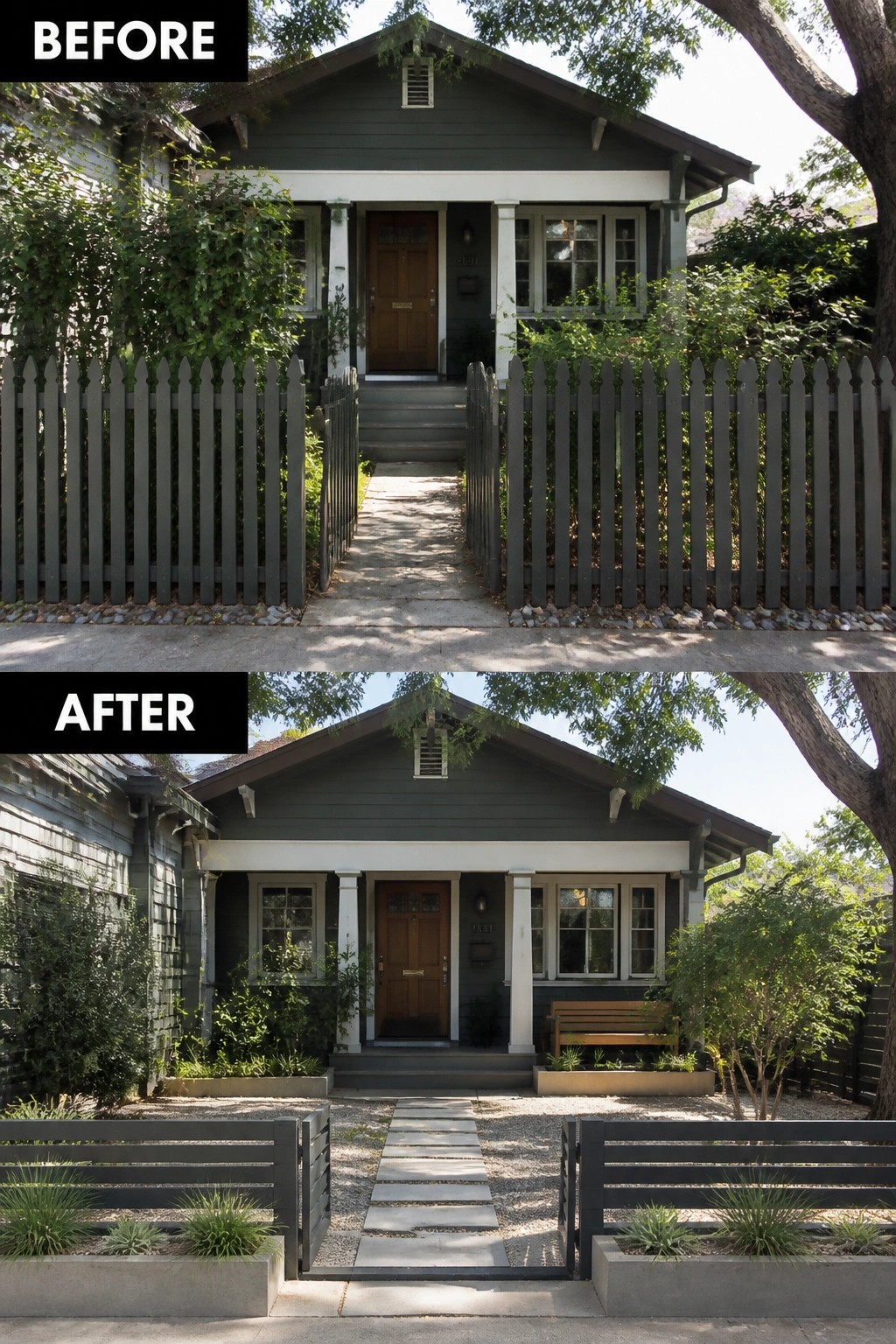
Swapping a tall, close-in picket fence and overgrown shrubs for low, horizontal fencing and a defined path instantly makes a narrow front feel wider. The lowered sightlines and repeated horizontal lines (slatted fence, stepping stones, and low planters) stretch the visual plane so the porch reads as part of the yard instead of boxed in.
To try this at home, keep the foreground elements low and linear: a short horizontal-slat fence, raised planters at knee height, and a straight row of pavers set in gravel will guide the eye inward and create a sense of breadth. Use slightly taller planting at the sides for privacy while keeping the center open, match materials so it feels cohesive, and scale everything to the house so the space still feels comfortable, not exposed.
Make A Narrow Facade Feel Wider With A Horizontal Canopy
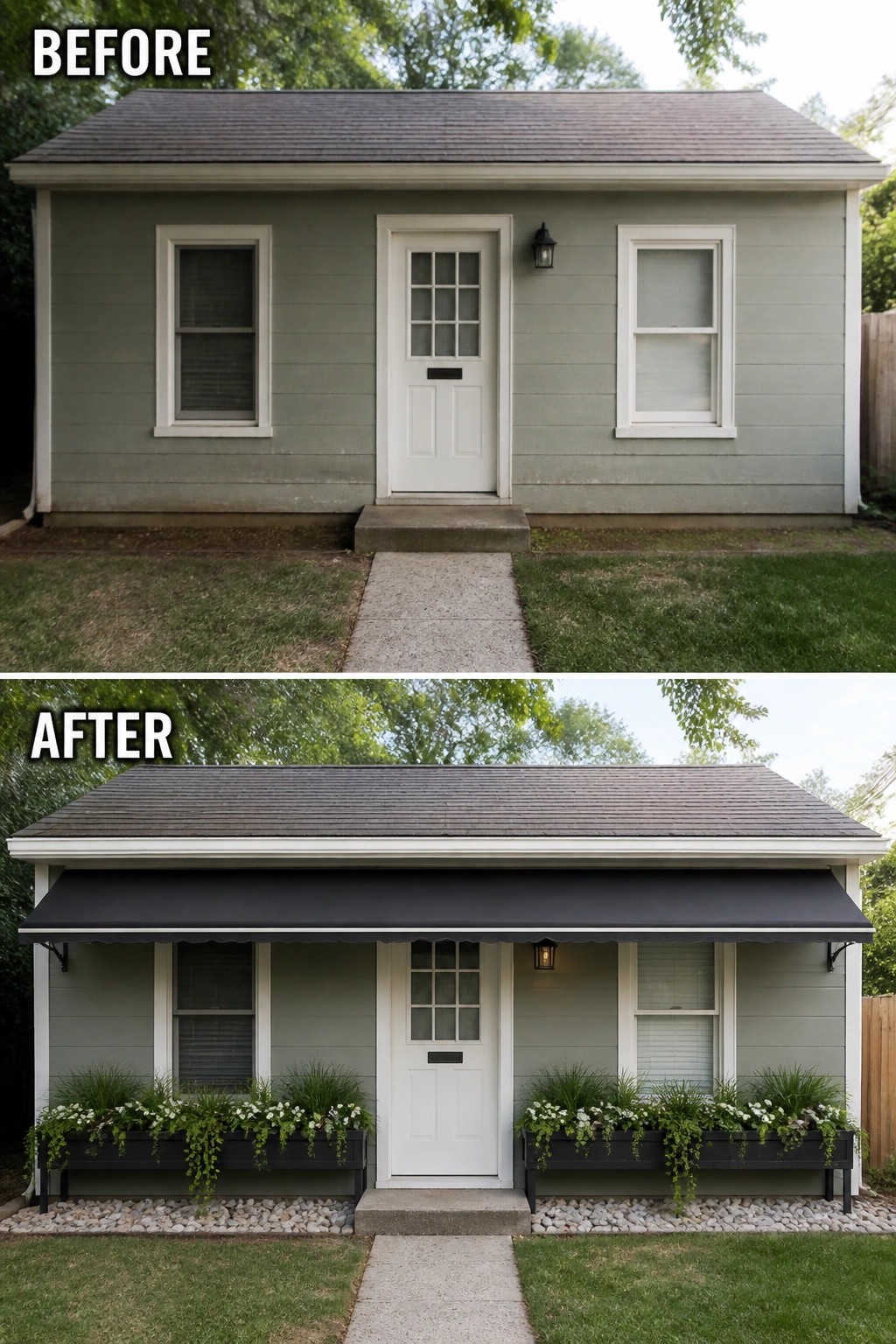
A simple, continuous horizontal element across the front really tricks the eye into seeing a wider house. In this makeover a full-width awning above the door and windows (paired with low, long planter boxes) replaces a plain, boxy facade and gives the narrow front a single, unbroken line that reads broader and more intentional.
To copy the idea, choose an awning that spans the facade but stays shallow so it does not overpower the elevation. Anchor it with long planter boxes or window boxes under the openings, use low or trailing plants, and repeat one trim color to keep the look unified. This works best on small, single-story fronts or cottages—just keep the walkway clear and scale the elements to the house height.
Use A Low Planter Bed To Make A Narrow Facade Feel Wider
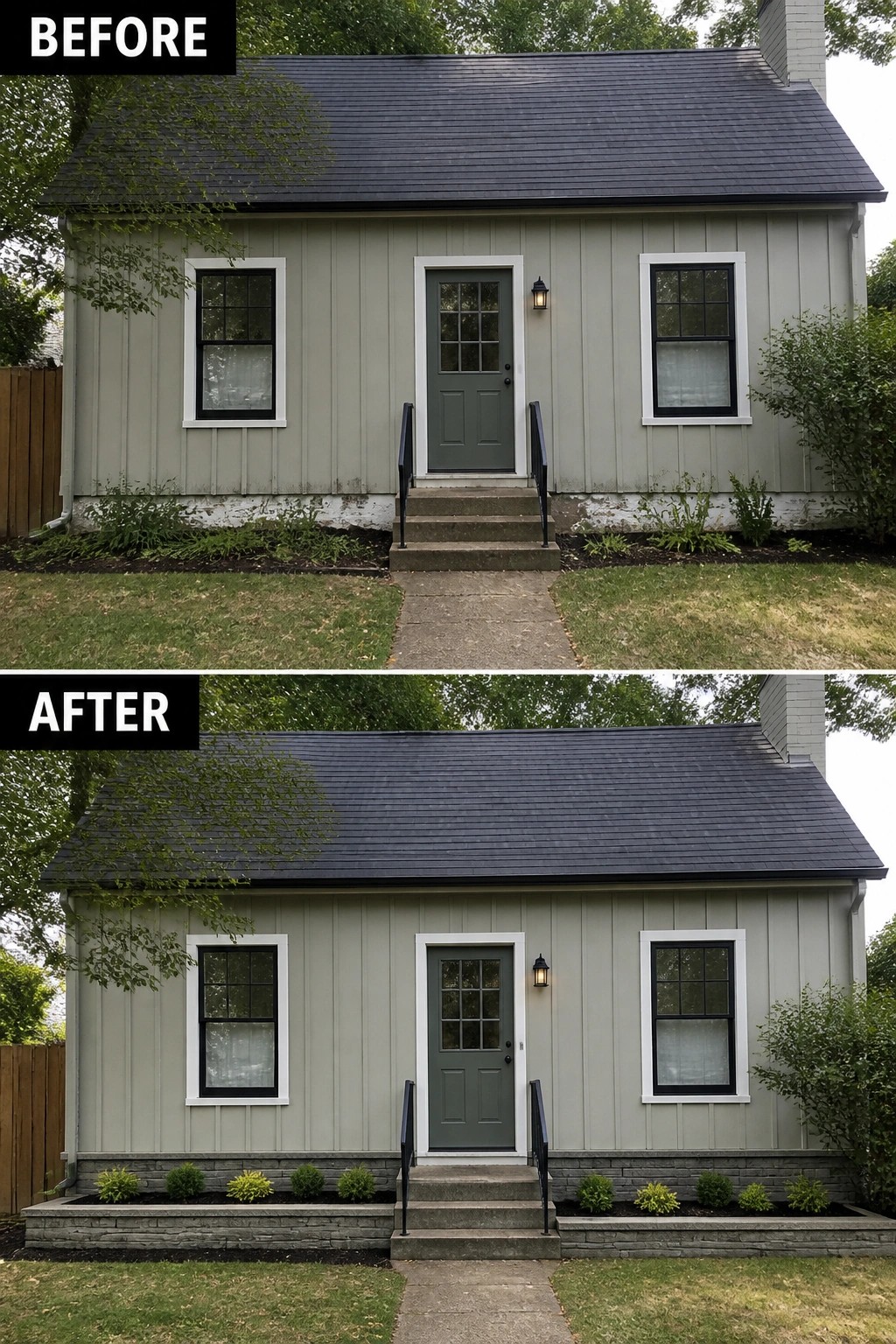
A continuous, low planter along the foundation gives a narrow front wall something horizontal to read across, which instantly broadens the house visually. In this example the messy foundation edge is replaced with a knee-high stone planter and a row of small, repeating shrubs, which both tidy the base and make the facade feel longer without blocking windows.
To copy it at home, run a shallow raised bed or low wall across the front rather than island plantings. Keep plant heights low (about knee to waist height), repeat one or two species for rhythm, and choose a material and color for the wall that complements the siding so the line reads as a single element. Leave the entry path clear and use mulch or simple groundcover for a clean, low-maintenance finish.
Add A Shallow Canopy And Linear Lighting To Read Wider
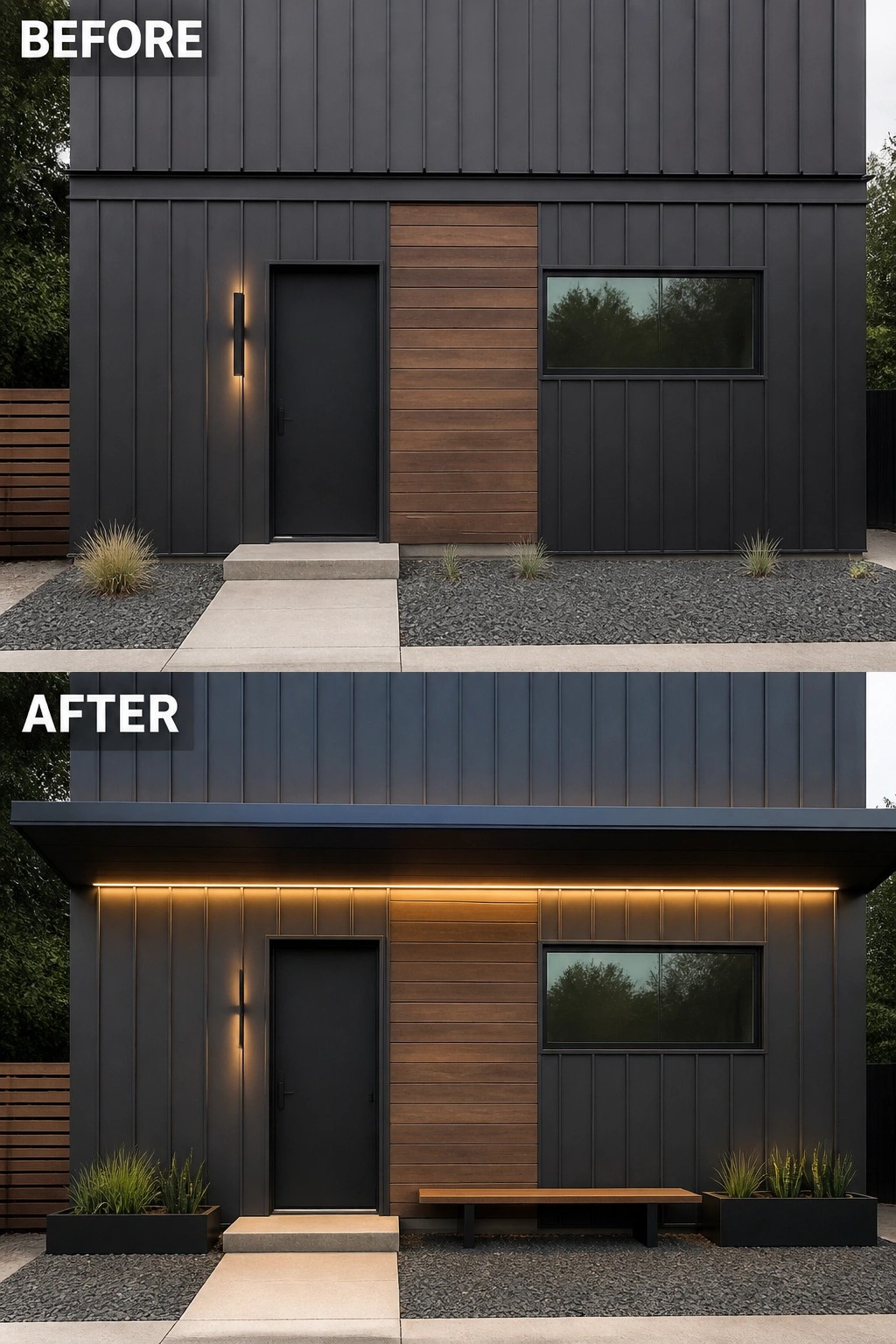
A simple horizontal element across the top of a narrow facade makes the whole front read wider, and the quickest way to do that is with a shallow canopy or cap that projects just a bit and hides a strip of linear lighting. In the example here the flat wall gets a slim overhang with warm LED running the length of the house, which pulls the eye sideways and gives the facade a clear, horizontal edge; a low bench and matching planters add scale so the new line feels intentional rather than tacked on.
To copy this, keep the canopy shallow — roughly 18 to 24 inches is often enough on a narrow house — and install an integrated linear light under it rather than dozens of small fixtures. Use a continuous warm light (around 2700–3000K) so the glow reads as one long band. Add one low piece of seating or a pair of planters to show human scale and leave enough path space so circulation feels natural. It’s a small update with a big visual payoff.
Use Horizontal Bands To Make A Narrow Facade Feel Wider
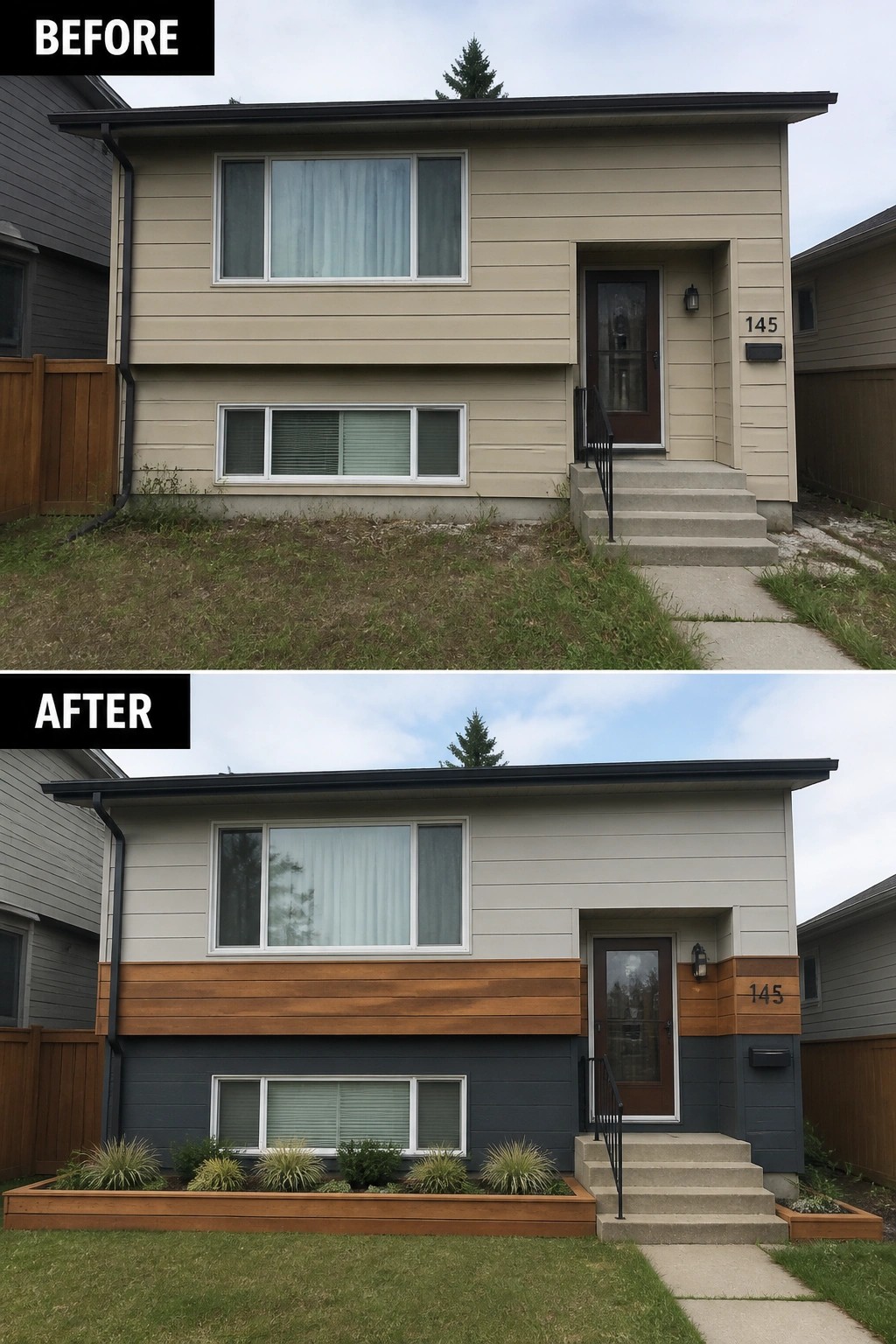
A single horizontal band—whether a strip of warm wood cladding or a contrasting painted band—breaks up a tall, narrow wall and encourages the eye to travel sideways instead of up and down. In this example a mid-level wood band and a darker painted base create a clear horizontal line and a low planter box anchors the front, so the house reads wider without changing the footprint.
To try it yourself, pick one strong horizontal element at roughly eye level (between the main and lower windows works well) and repeat that material or color at the entry to unify the look. Pair a darker base with a lighter upper wall for contrast, add a shallow planter or low trim to ground the design, and use durable exterior finishes so the band stays crisp. Works best on narrow, split-level, or small frontages where a simple visual trick gives the impression of more width.
Use Horizontal Trim And Low Planters To Make A Narrow Facade Feel Wider
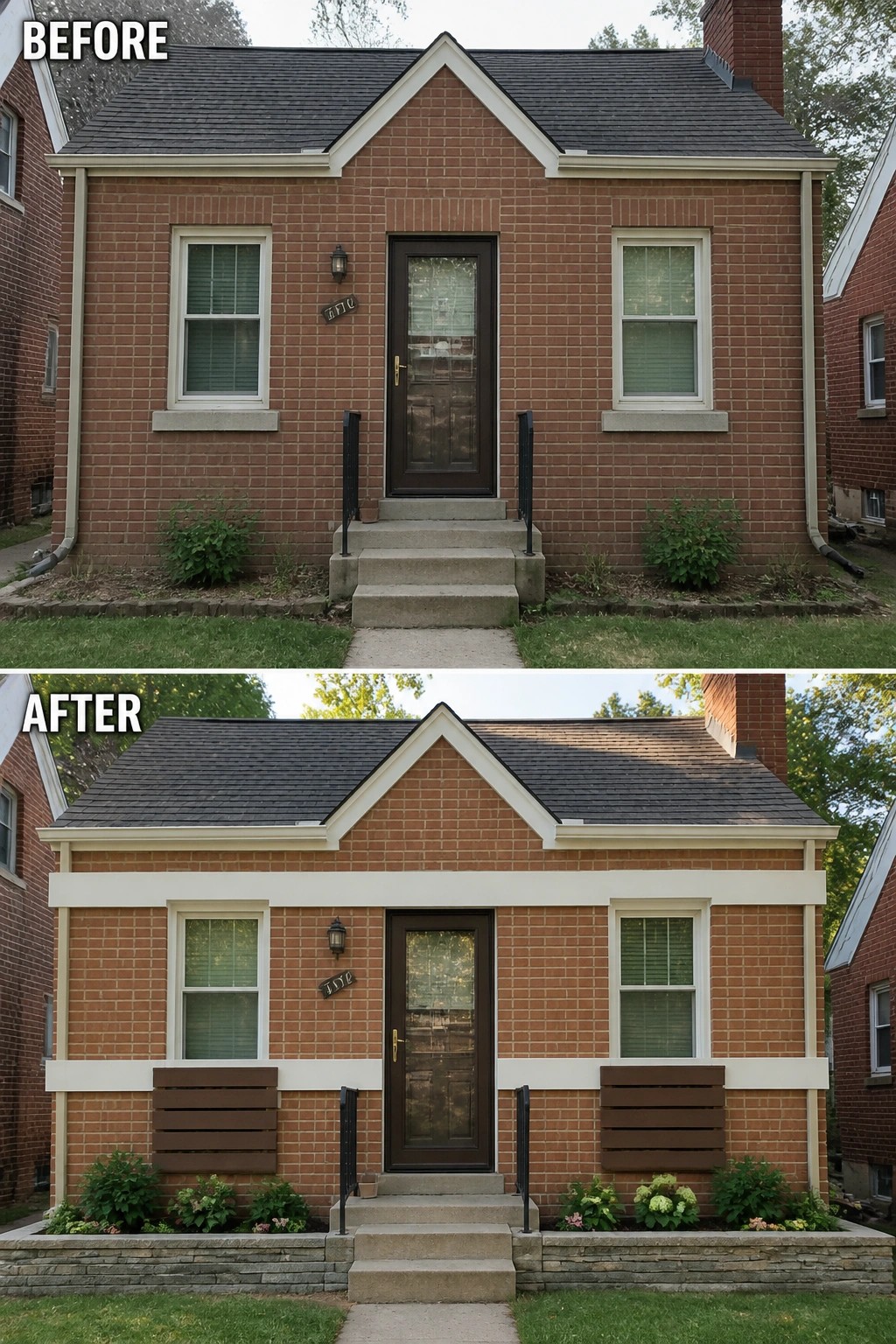
A simple pair of horizontal trim bands and a low, continuous planter can change how a narrow front reads. The added trim creates a strong eye line across the brick, while the low stone planter and matching wood boxes anchor the base and extend the visual width without crowding the entry. Together those two moves make the facade look broader and more intentional.
To try this at home, add one or two horizontal trim elements at sensible heights — near the top of the windows and just above the foundation — and keep them a light contrasting color so they read from the street. Combine that with a low raised bed or long window boxes filled with plants that stay below the sill height (hydrangeas, hostas, low boxwoods) so you keep the horizontal effect. This suits small brick or cottage-style fronts best; avoid tall shrubs that break the line and keep materials and colors simple for the biggest impact.
Frequently Asked Questions
Q: Will painting horizontal stripes actually make my narrow facade look wider?
A: Yes—horizontal lines draw the eye left and right, which helps a narrow front feel broader. Keep the stripes subtle and proportionate to your house height so they don’t look busy, and use two close tones rather than high-contrast bands.
Q: What landscaping tricks help widen the look without taking up much space?
A: Plant low, layered greenery along the edges and avoid tall, narrow shrubs right in front of the entrance; that keeps sightlines open and pushes focus outward. A shallow, low planter or groundcover that runs horizontally across the front works wonders on a tight budget.
Q: Can I use mirrors or reflective surfaces on the outside?
A: Small, weatherproof reflective accents can bounce light and add depth, but avoid large mirrors that cause glare or look out of place. Polished metal house numbers, glossy trim, or a reflective porch light do the job without creating maintenance headaches.
Q: What’s the cheapest change that makes the biggest difference?
A: A fresh paint job plus a contrasting front door color immediately improves perceived width and curb appeal. Add simple lighting or a narrow trim line and you’ll notice the whole facade reads wider without spending much.