

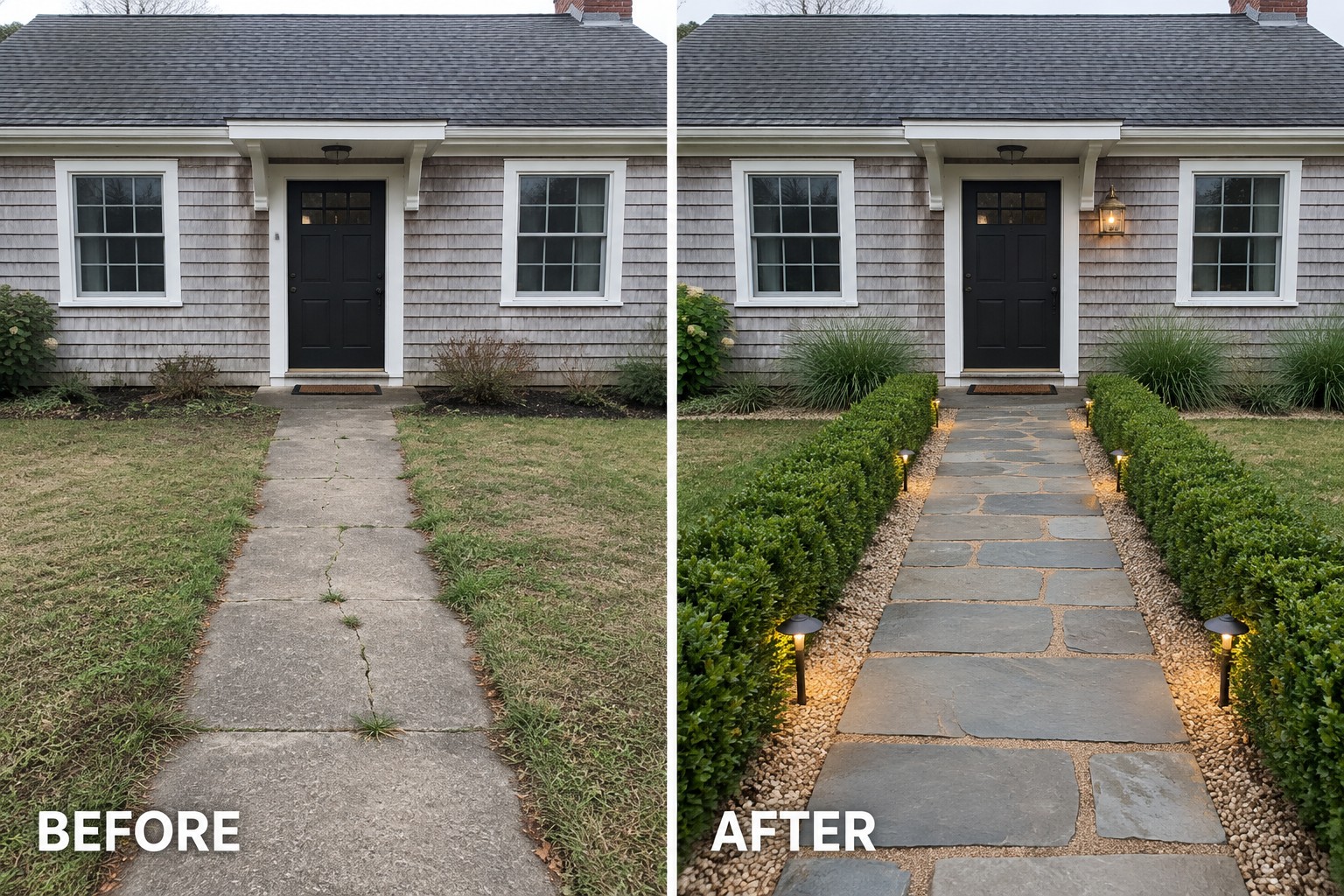
I’ve always noticed that the walkway in front of a Cape Cod home often decides whether the entrance feels welcoming or just functional.
When the path sits uneven or blends into the lawn, the whole front can come across as a bit overlooked even if the siding and trim look fine.
Small walkway changes can shift how the whole front looks.
I tend to try basic path adjustments first because they usually improve the flow without touching the main structure of the house.
Ideas that focus on materials and edging tend to hold up better over time and make daily comings and goings feel more intentional.
Replace A Cracked Walkway With Stone Pavers
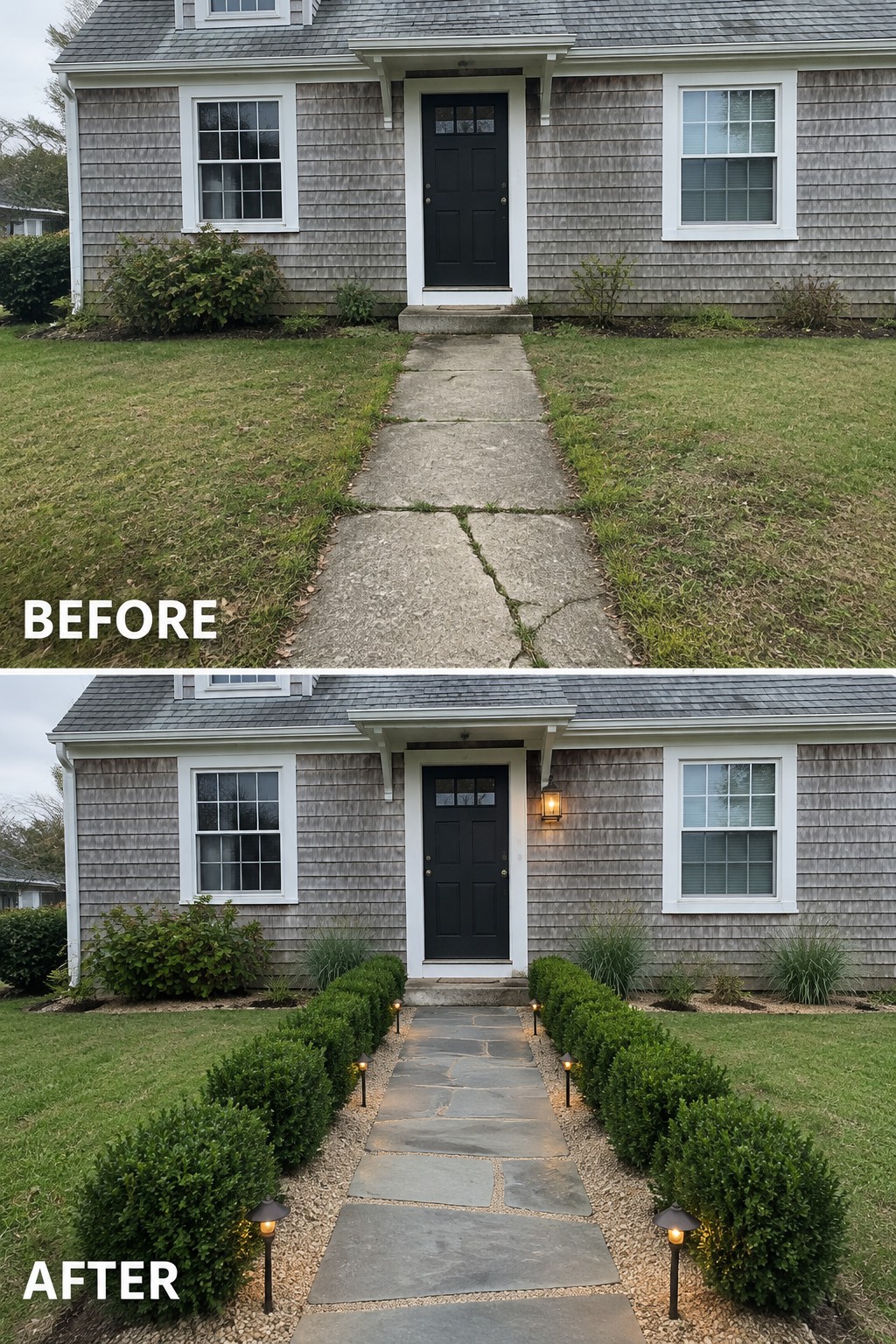
A cracked concrete path makes the front of a house feel unfinished even when the rest of the exterior is in good shape. Switching to stone pavers with gravel borders and low shrubs on both sides turns the same route into something that feels planned and welcoming without any major construction.
This idea works best on smaller lots where the walkway is the main view from the street. Keep the new path the same width as the old one so it still fits the scale of the house, and use the same stone tone as the foundation or steps for a quiet match. Add a few low lights along the edges if the path gets used after dark.
Define A Front Walkway With Brick And Gravel Borders

An overgrown brick path often makes the whole front of a house feel neglected. Clearing the weeds and relaying the bricks in a tight herringbone pattern instantly gives the walkway purpose and direction. Adding white gravel along both edges keeps the planting beds neat and stops grass or mulch from spilling onto the path.
This approach works well on older Cape Cod homes where the original walkway has settled or become uneven. Start by removing all the overgrowth, then decide on a simple repeating pattern that matches the scale of the house. Gravel borders and low plantings like lavender finish the look without crowding the walk itself.
Define A Front Walkway With Edging And Stepping Stones
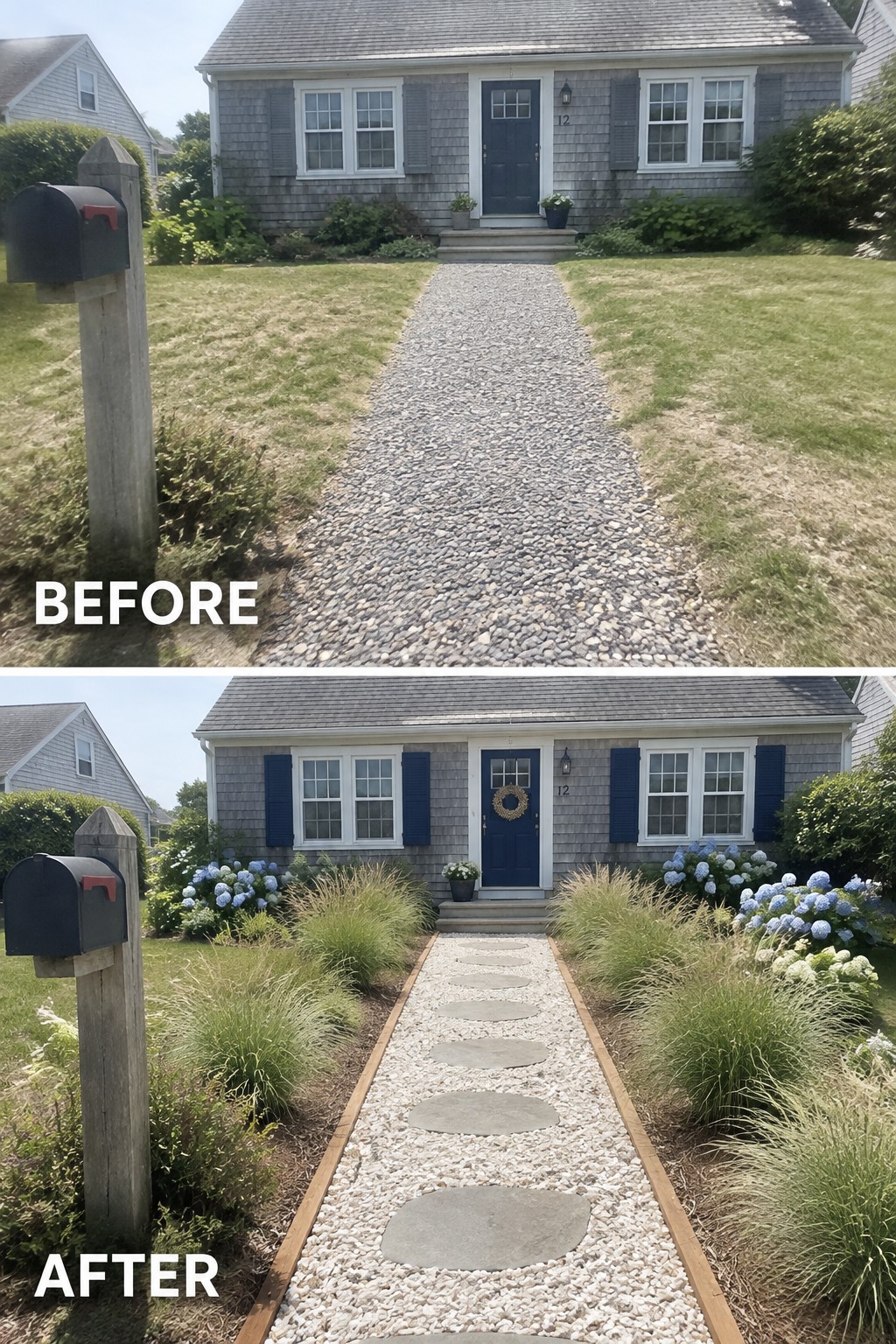
A loose gravel path can start to feel shapeless over time, especially when the lawn grows right up to the edges. Adding wooden edging along both sides and setting stepping stones down the center turns the same path into a clear route that separates the walkway from the grass and planting beds.
This works especially well on smaller front yards where you want the entry to feel intentional but not overly formal. Lay the edging first to hold the gravel in place, then space the stones so they sit level and leave enough room to walk comfortably. The result keeps the casual Cape Cod look while making the path easier to mow around and maintain.
Replace Concrete With Flagstone For A Clearer Entry
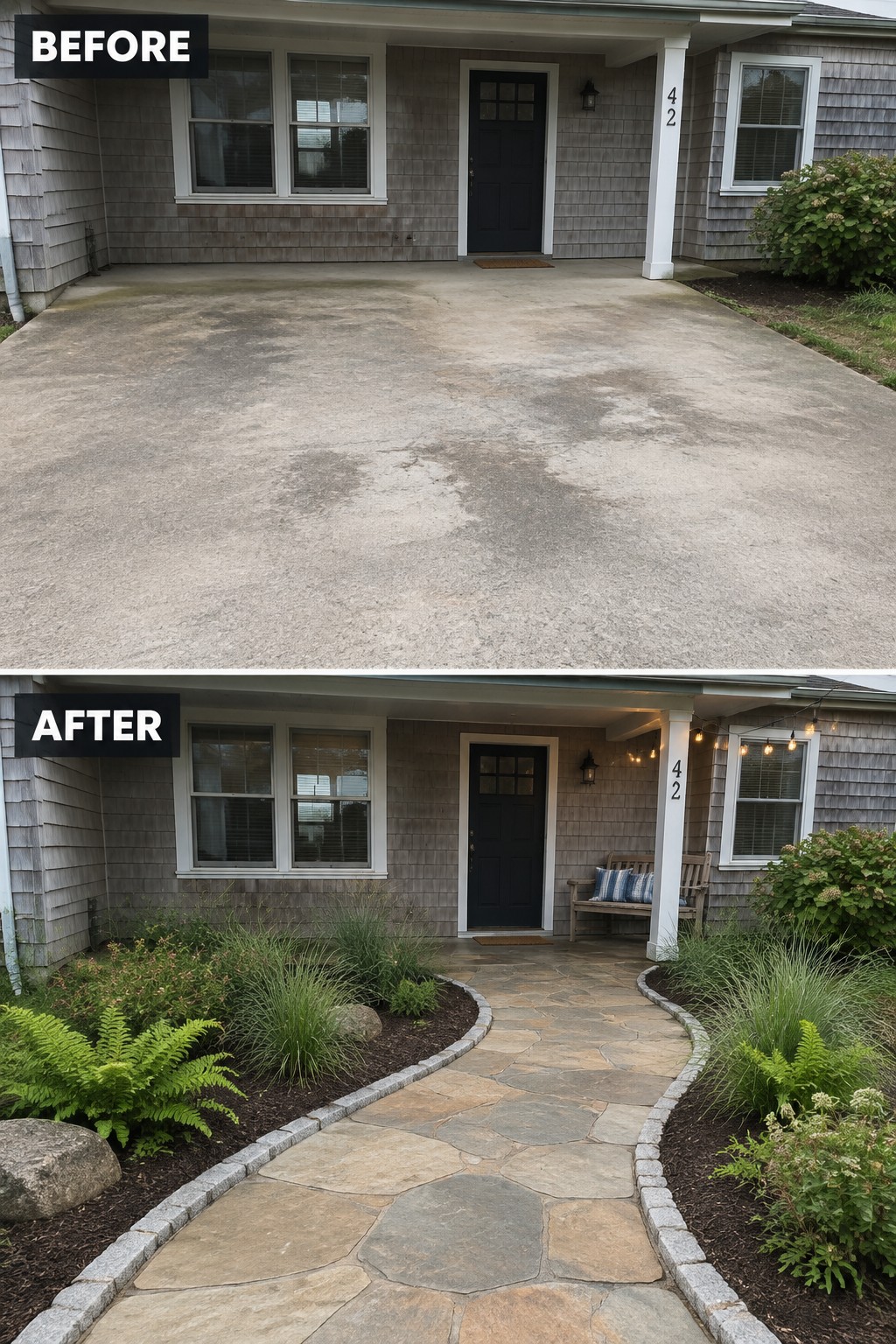
A plain concrete slab often makes the front of a house feel unfinished. Switching to a flagstone path gives the walkway shape and direction while softening the approach with a gentle curve. The new surface also separates the entry from the surrounding lawn and plantings so the whole front feels more organized.
This approach works especially well on Cape Cod homes where the siding and trim already have texture. Keep the path width comfortable for two people and use a low border of stone or brick to hold the mulch in place. Start with the layout and edging before adding plants so the walkway stays the main feature rather than getting crowded later.
Add A Brick Walkway To Define The Front Entry
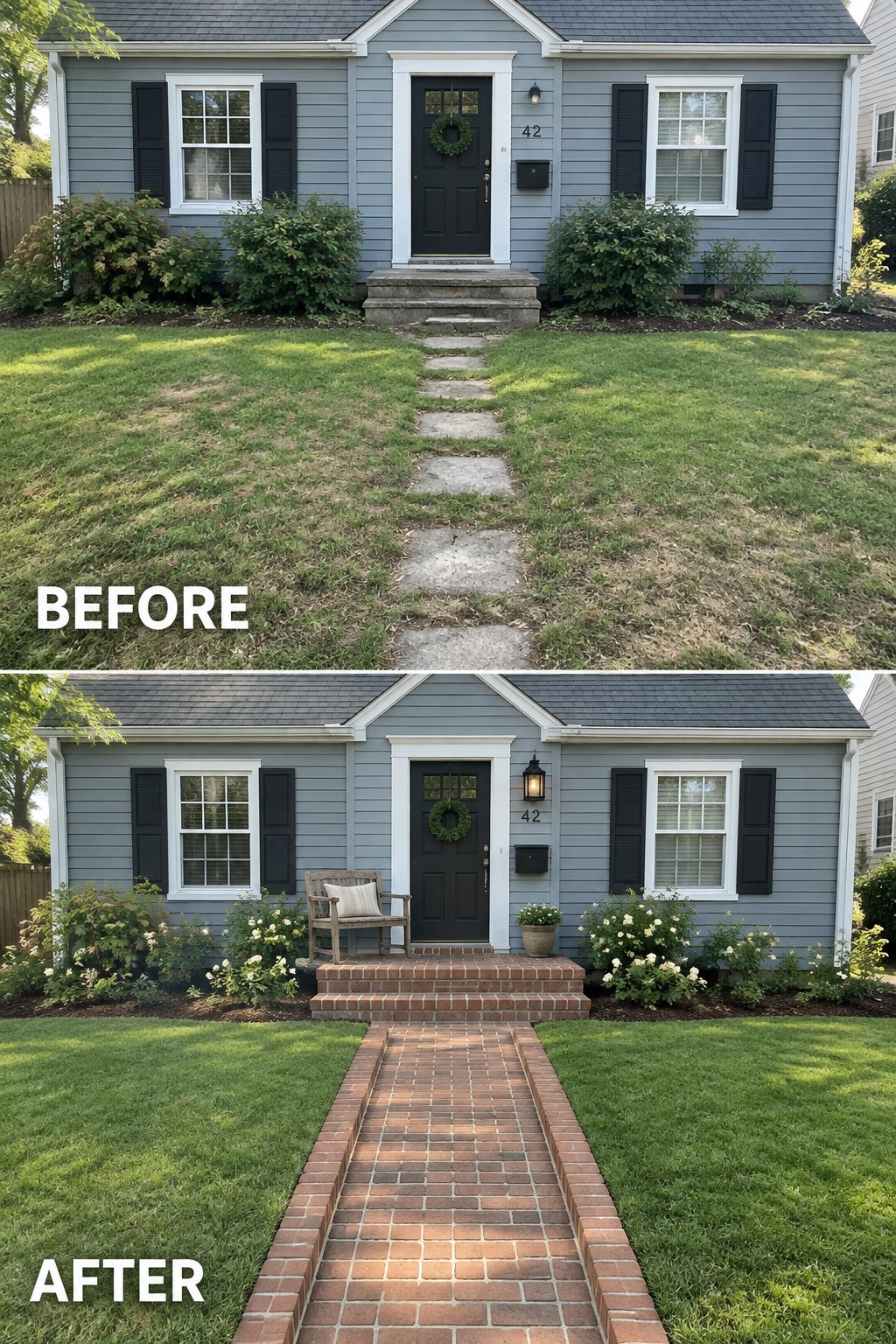
A basic stone path across a sloped lawn often leaves the approach to a Cape Cod home feeling unfinished. Switching to a wide brick walkway with matching steps gives the entry a clear line and makes the whole front feel more put together. The new path also creates clean edges that make it easier to keep the grass neat on either side.
This idea works well on homes where the front door sits a bit above street level. Keep the walkway at least four feet wide so two people can walk side by side, and choose a brick or paver that matches the house trim or roof color. Start with the path itself before adding plants, since the hardscape does most of the visual work.
Paint The Front Door To Anchor The Entry

A painted front door gives the whole house a clearer sense of arrival. The before image shows a plain brown door that blended into the siding, while the after shows how a deep red door immediately pulls the eye forward. Adding a few lights along the walkway and on the house helps the entry feel finished once the sun goes down.
This idea works best on Cape Cod homes or any traditional exterior where the front door sits front and center. Choose a color that contrasts with the siding but still feels appropriate to the style, then keep the lighting simple and low to the ground so it guides people without creating glare. Start with the door and add lights only where they actually help people walk or find the entrance.
Add A Wooden Walkway To A Narrow Side Yard
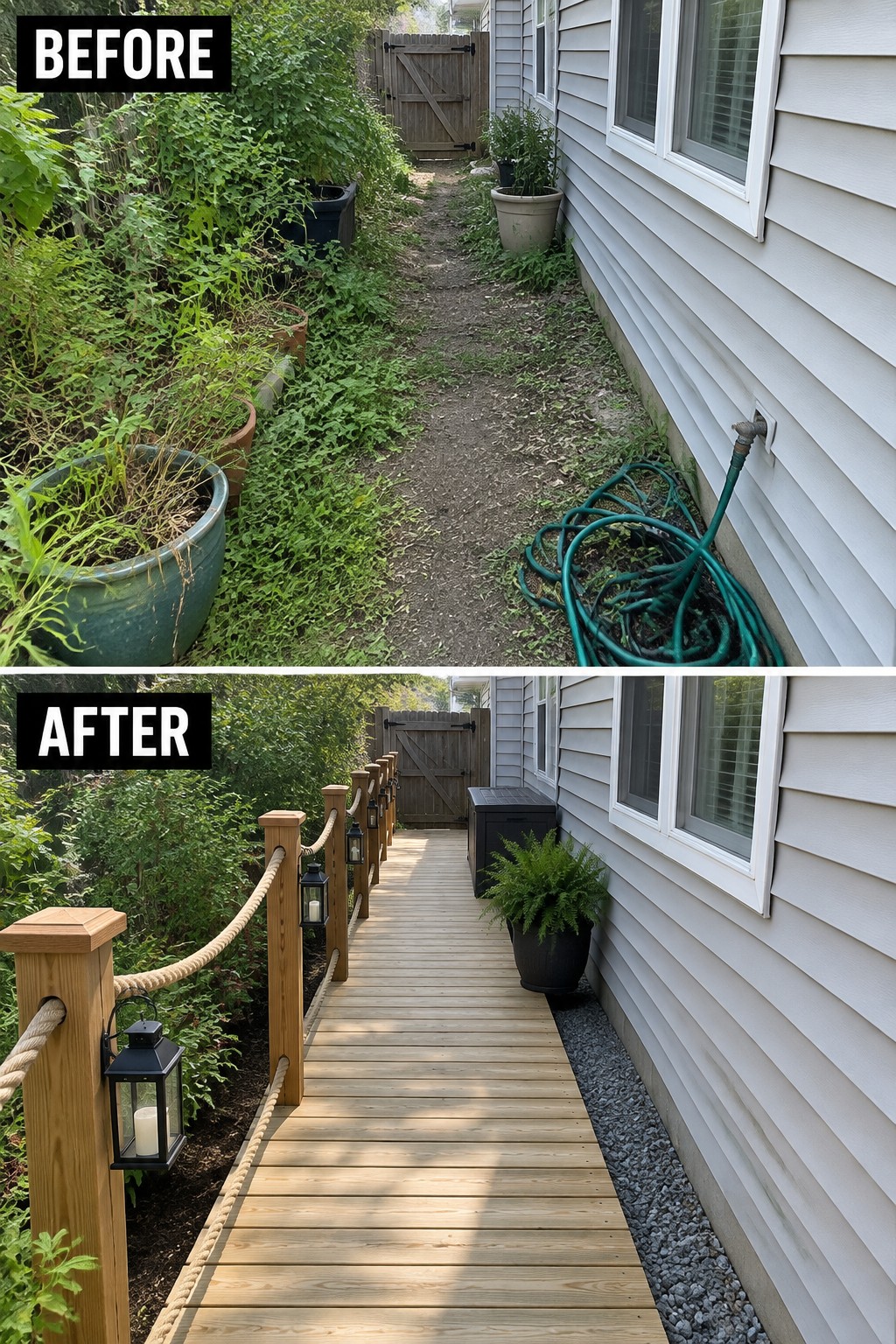
A dirt path next to the house often turns into a muddy mess after rain and quickly gets lost under weeds. Switching to a raised wooden walkway solves that by giving the space a solid surface and a clear edge that separates the house wall from the planting area.
This idea fits homes with tight side yards where a full patio would not work. Use cedar or pressure-treated deck boards for the walking surface and simple rope between posts for the railing. The result stays practical for foot traffic while keeping the garden visible and easy to reach for maintenance.
Define The Entry Path With Pavers And Edging
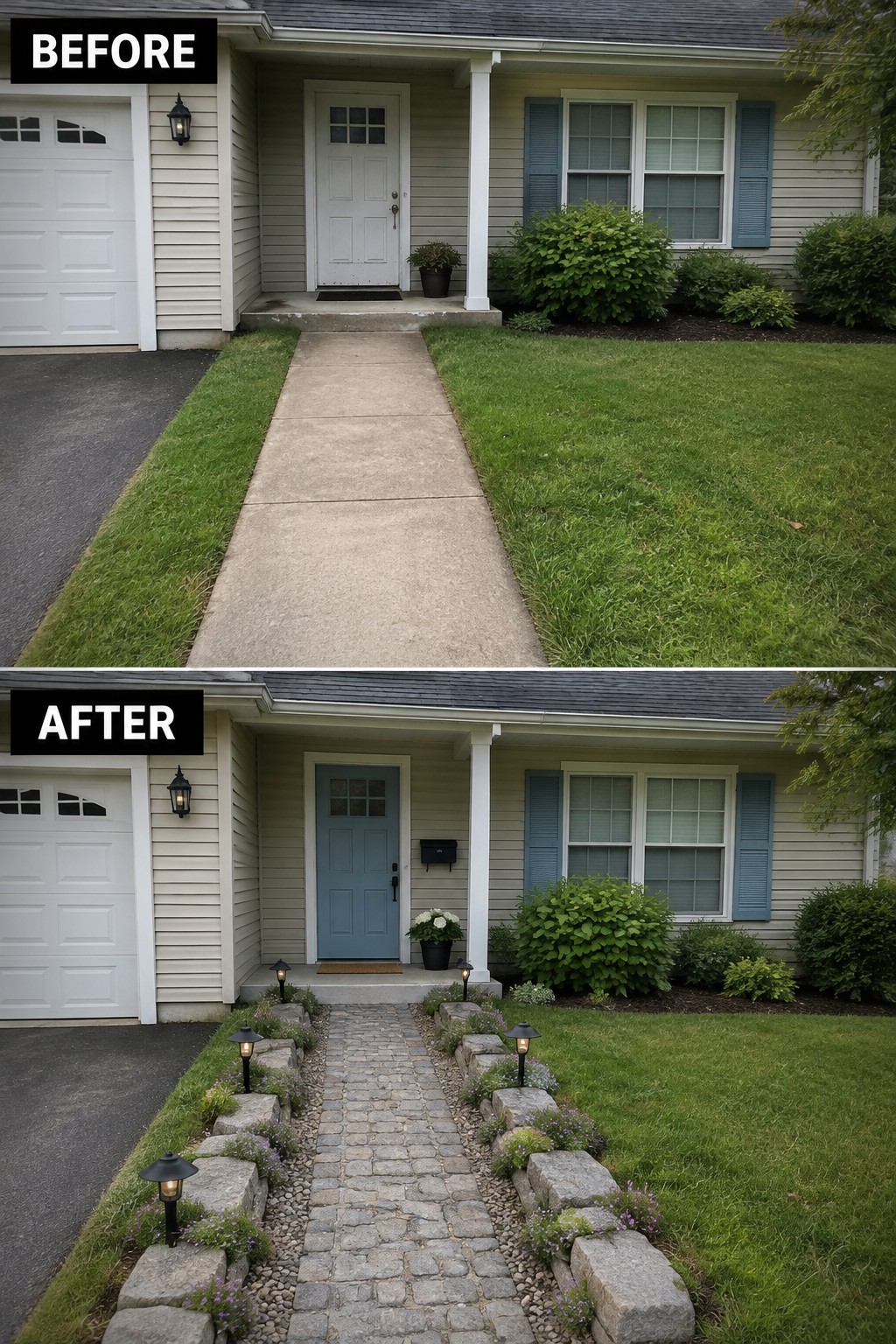
A plain concrete walkway often makes the front of a house feel unfinished. Replacing it with pavers and adding stone borders on both sides gives the path a clear shape and makes the whole entry feel more put together. The lights along the edges also help at night and keep people from stepping off into the grass.
This approach works well on Cape Cod homes where the front is fairly simple. Start with the path itself before adding plants or fixtures, since a defined walkway sets the scale for everything else. Keep the borders low so they do not crowd the walking space, and choose pavers that match the roof or trim color for a quieter look.
Replace Irregular Stone Paths With A Clean Concrete Walkway
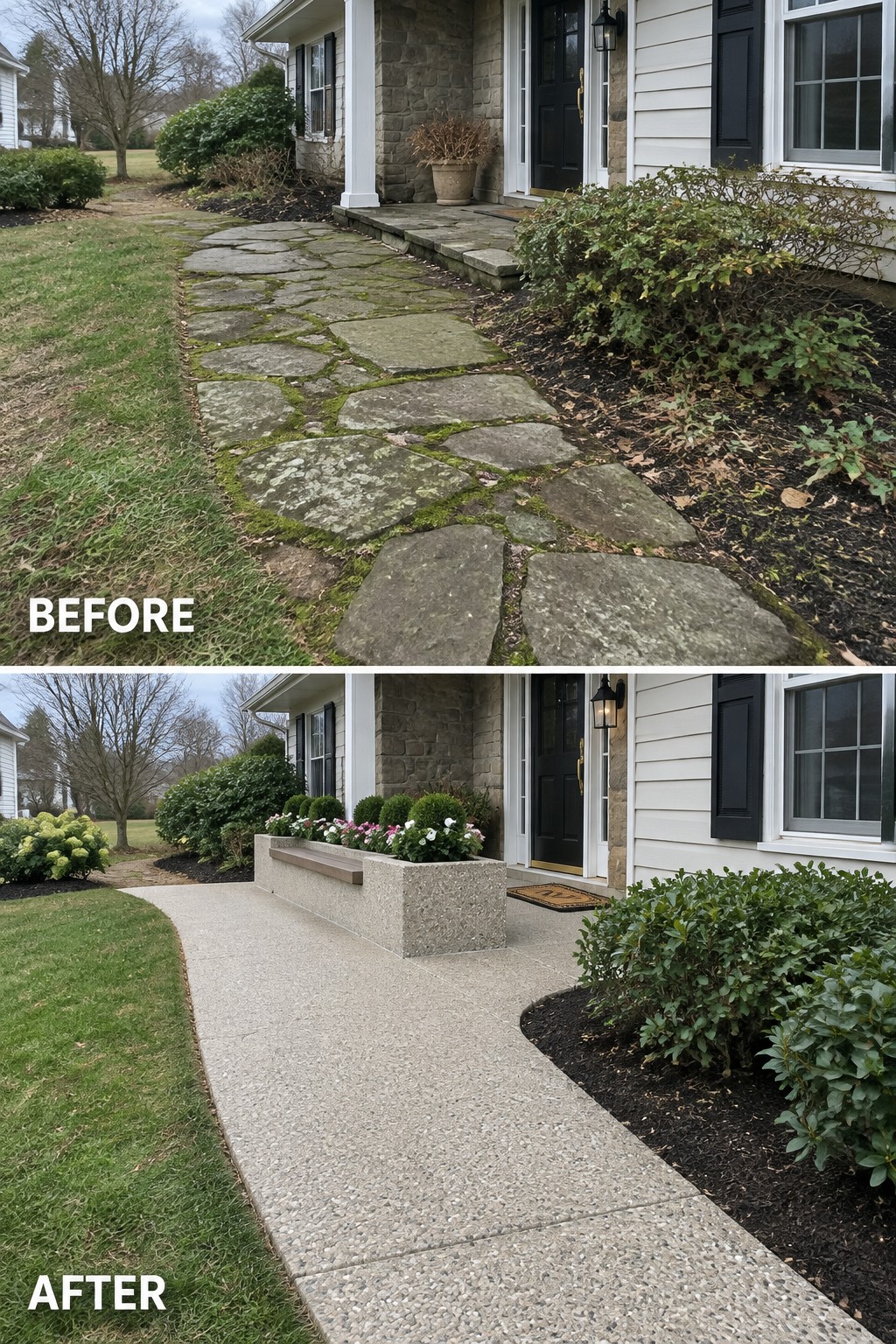
An uneven stone path can make the front entry feel difficult to navigate and a bit neglected over time. Switching to a solid concrete walkway straightens the approach, removes tripping hazards from shifting pavers, and gives the house a much simpler, more direct line to the door.
This works well on Cape Cod homes where the goal is practical access without a lot of extra features. Keep the new path wide enough for two people to walk side by side, and add just one or two planted containers along the edge if you want a bit of color. The key is to finish the hard surface first before worrying about surrounding beds.
Replace A Muddy Path With A Paved Walkway
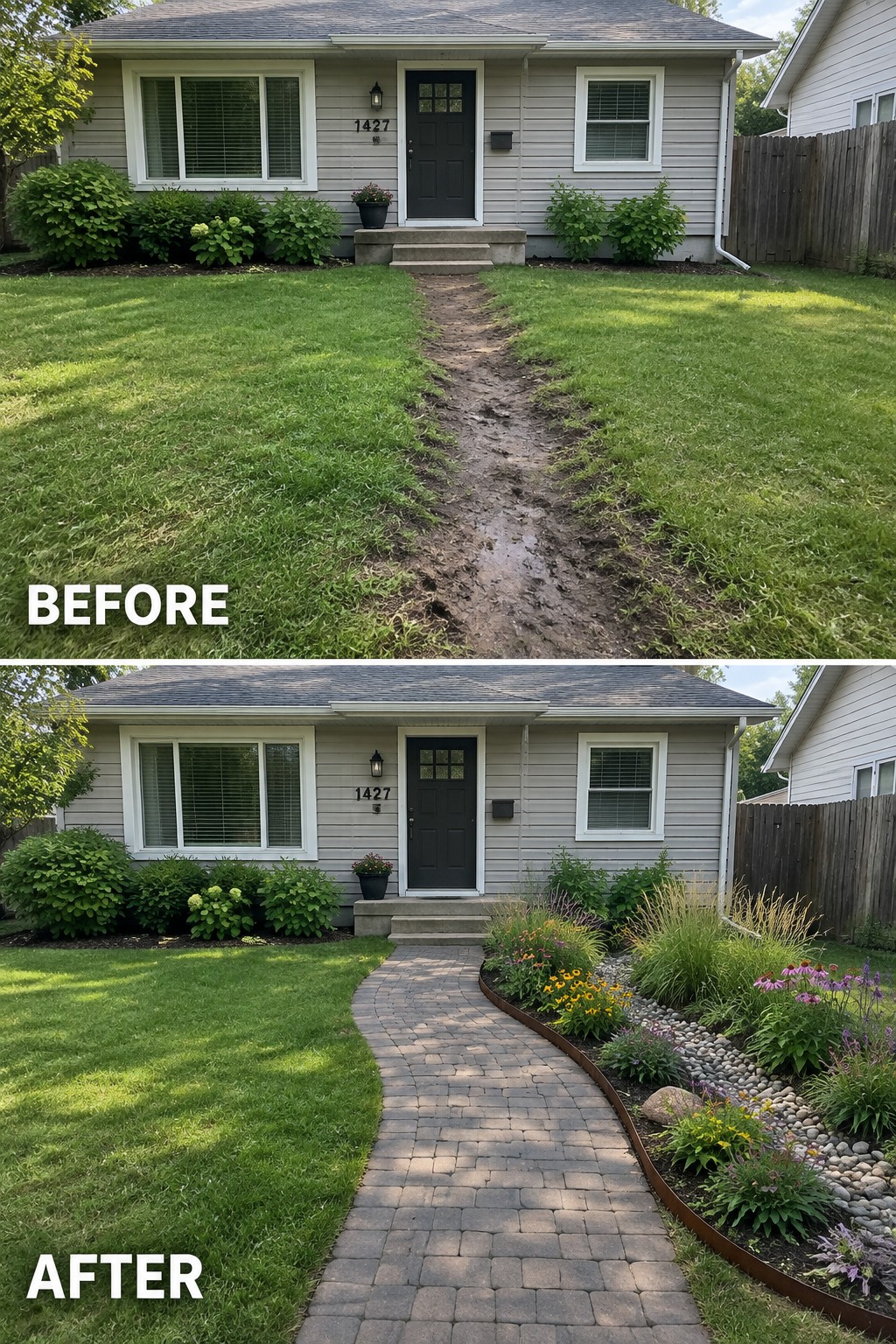
A worn dirt path through the lawn is one of the quickest ways a front yard starts to look neglected. Laying down a curved paver walkway gives the entry a clear route, stops further lawn damage, and makes the whole front feel more finished without any major construction.
This idea works especially well on smaller Cape Cod lots where the front yard is mostly lawn. Keep the curve gentle so the path feels natural, and leave room for a narrow planting strip on one side if you want to soften the edge. Focus on durable pavers that match the house color and make sure the walkway sits level so water drains away from the foundation.
Update Front Steps With Brick And Stone
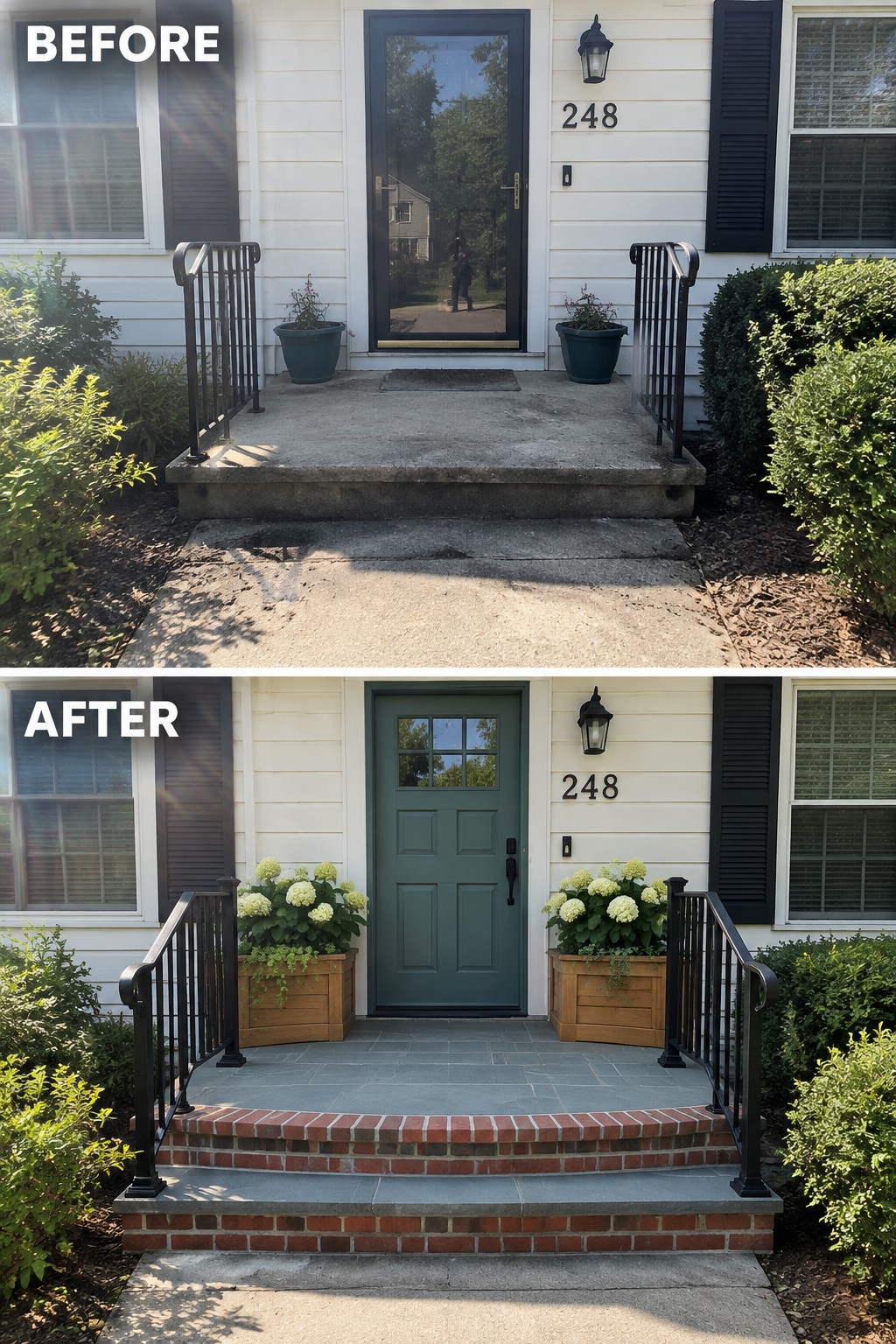
Plain concrete steps often make a front entry feel unfinished, especially on Cape Cod homes where the walkway is a main part of the curb appeal. Switching to brick risers with stone treads gives the stairs better definition and a more solid presence that leads the eye straight to the door.
This approach works best when the original steps are still sound but lack character. Keep the same railings if they fit the style, add matching planters on either side, and choose brick that echoes any existing foundation details. It keeps the project focused on the walkway itself rather than turning into a larger renovation.
Add Structure To A Basic Front Walkway
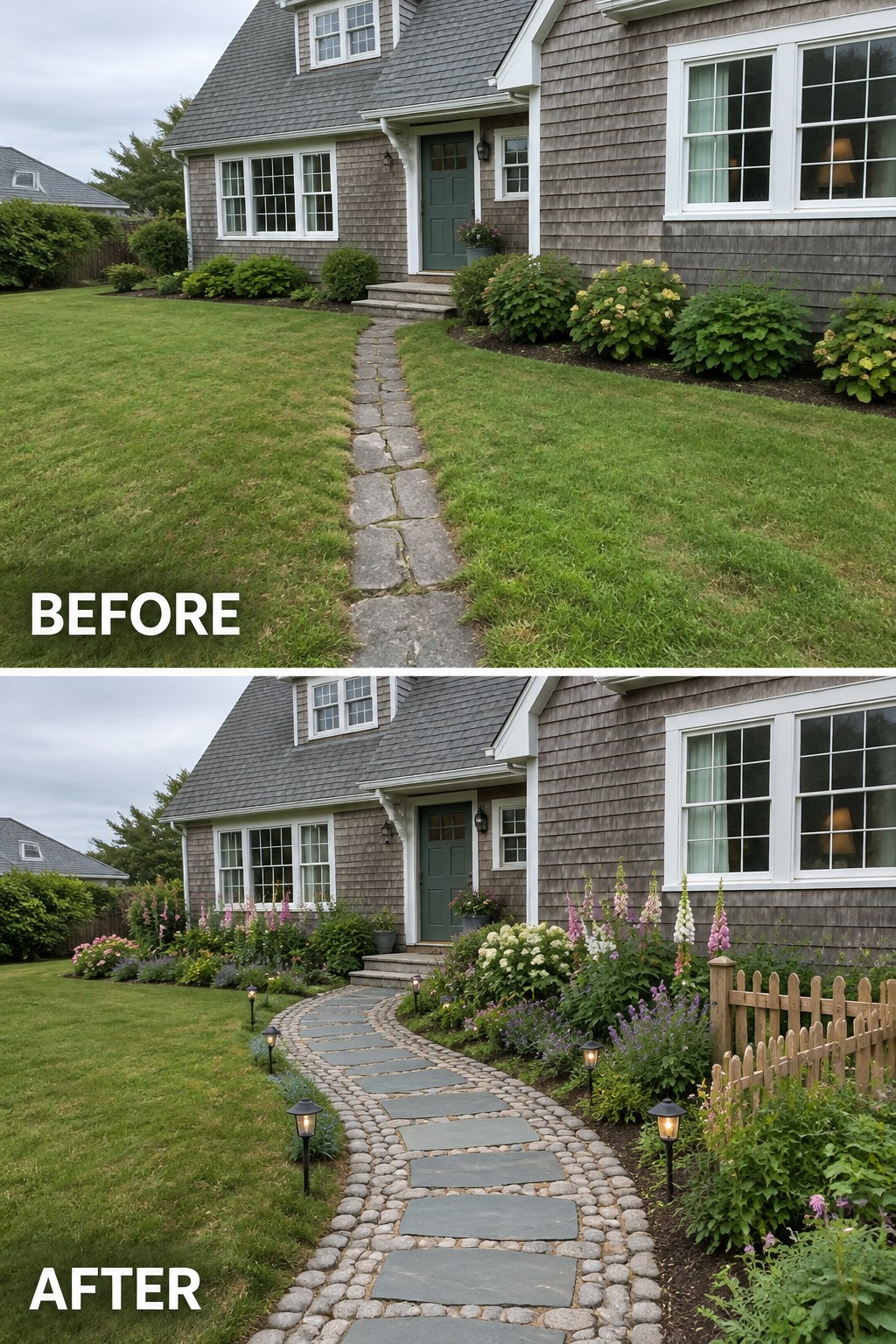
A simple stone path can feel lost in a large lawn until you give it clear edges and lighting. The before photo shows a narrow path cutting straight through the grass with nothing to frame it. The after version uses wider pavers set in a gentle curve, a cobblestone border, and small lights along both sides to make the route feel intentional and easy to follow at night.
This idea suits Cape Cod homes that already have a decent lawn but need the front approach to look more finished. Lay the main pavers first so the path has real width, then add a low border material and a few lights spaced evenly. Keep new plantings along the edges rather than in the middle so the walkway stays open and functional.
Replace A Cracked Walkway With Pavers
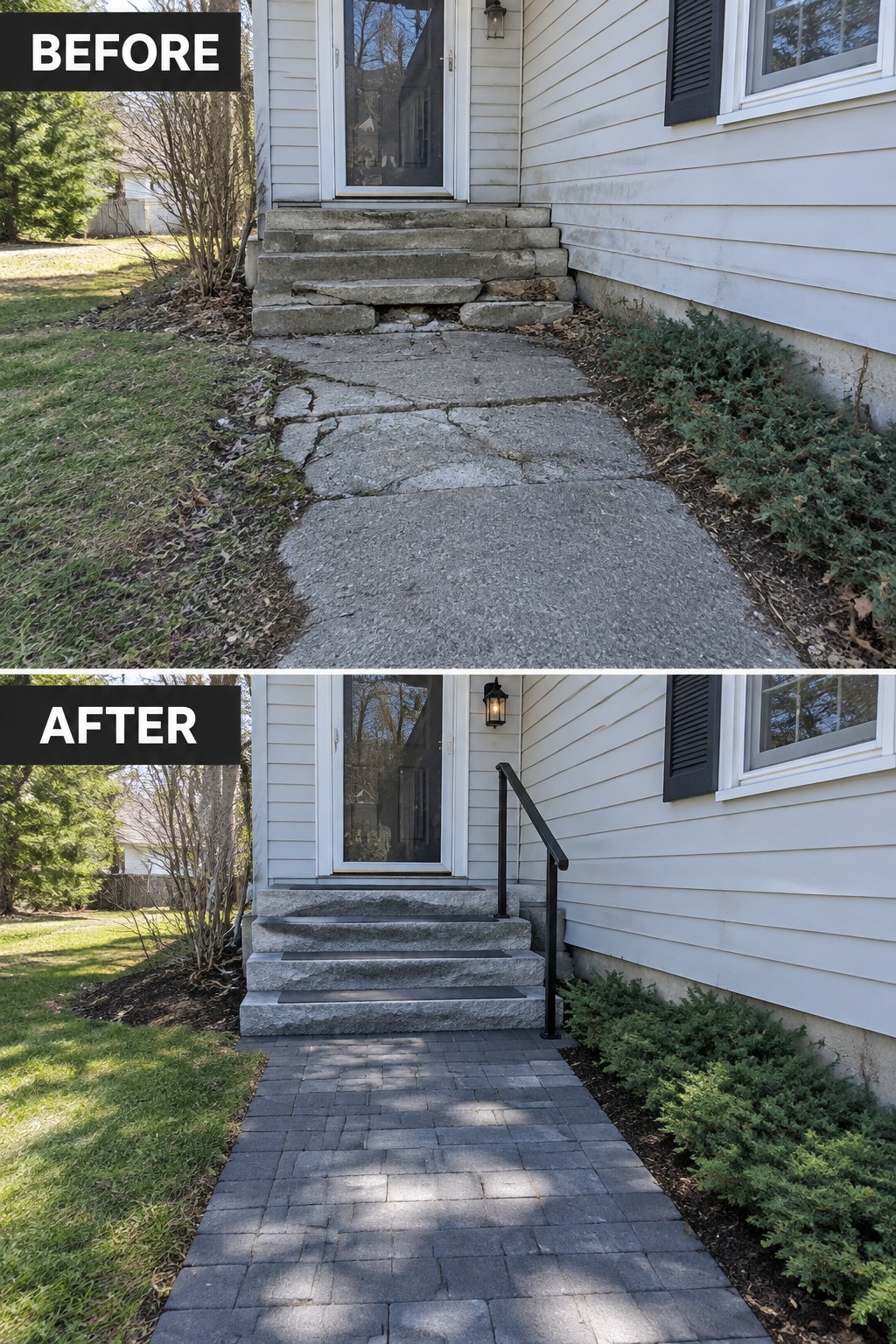
A cracked and uneven concrete path makes the whole front of the house look tired. Switching to pavers gives the walkway a clean, even surface that feels more finished and easier to walk on. The new steps and simple black rail also help the entry look steadier and more put together without any major construction.
This idea works well on Cape Cod homes where the front path is one of the first things people notice. Start with the walkway itself before adding plants or lighting, since a solid base makes everything else look better. Keep the paver color simple so it matches the siding and does not fight with the rest of the yard.
Replace Concrete With Pavers To Define The Front Walk
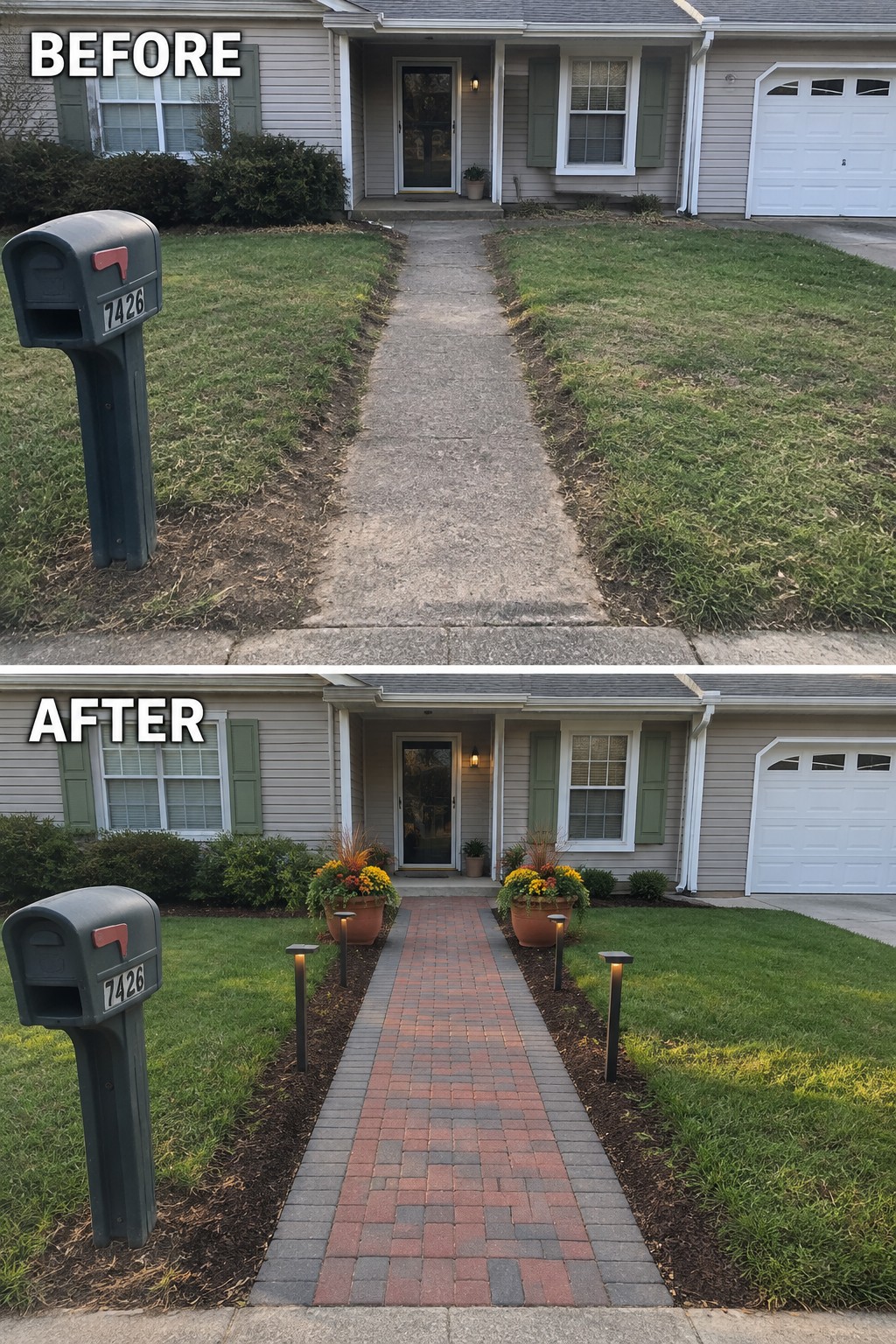
A plain concrete path often makes the front of a house feel unfinished. Switching to brick pavers with a stone edge gives the walkway clear shape and turns a basic route into something that feels planned.
This idea works best on smaller front yards where the path is the main feature. Keep the new surface simple, add a narrow garden border on each side, and place a few low lights along the edges so the walk stays easy to follow at night.
Add Structure To An Overgrown Front Path
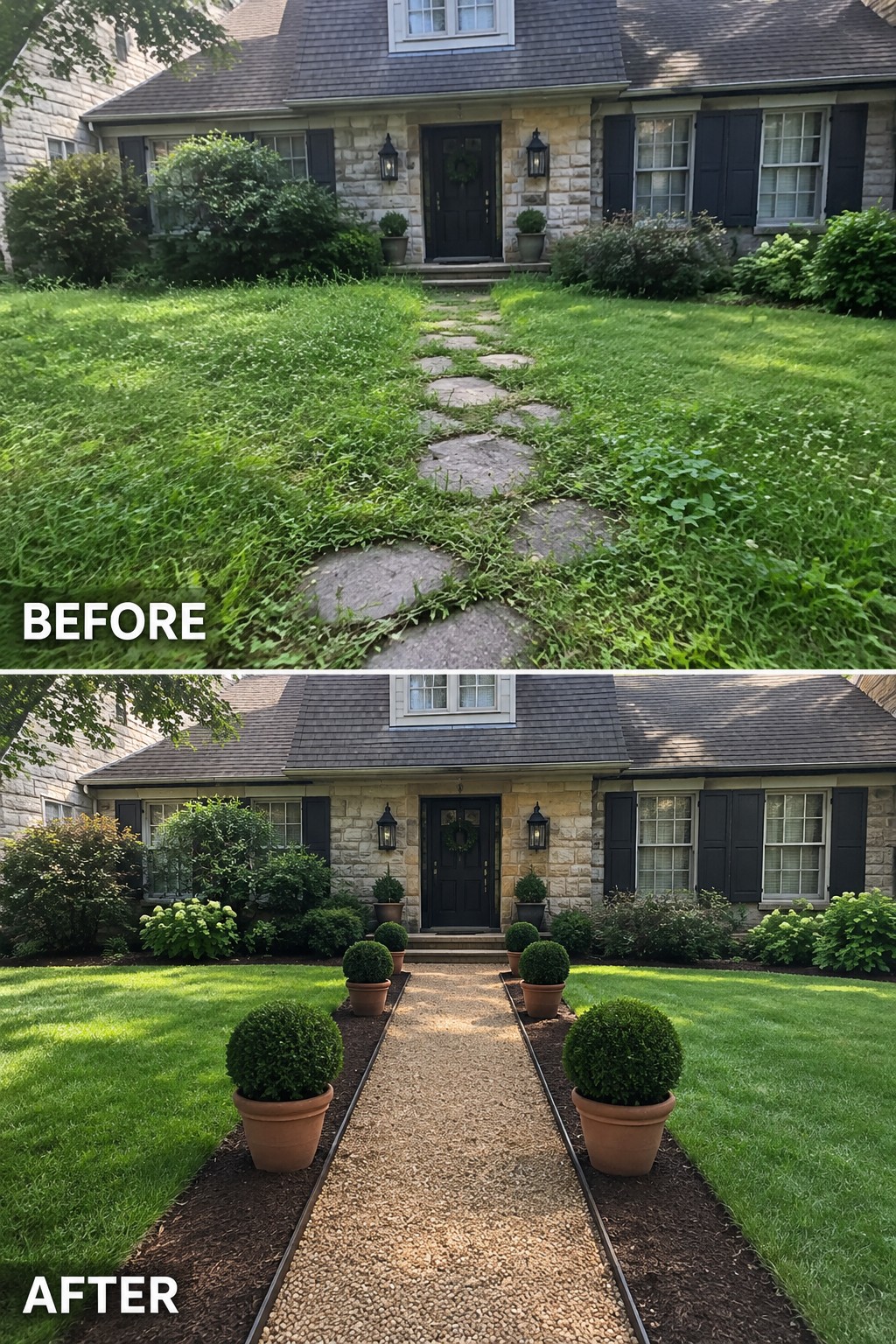
An overgrown stone path quickly starts to disappear when grass and weeds take over the edges. In this case the fix was straightforward. The old path was cleared and replaced with a gravel walkway edged in metal, while the lawn was cut back and bordered with mulch beds and potted shrubs. The result feels intentional instead of neglected.
This approach works well on Cape Cod homes where the front walk is a main feature. Start by defining the edges first, then choose a simple filler like gravel that stays neat with minimal upkeep. Keep the planting simple and repeated so the path remains the clear focus rather than competing with too many different plants.
Add Path Lights To Brighten A Side Walkway
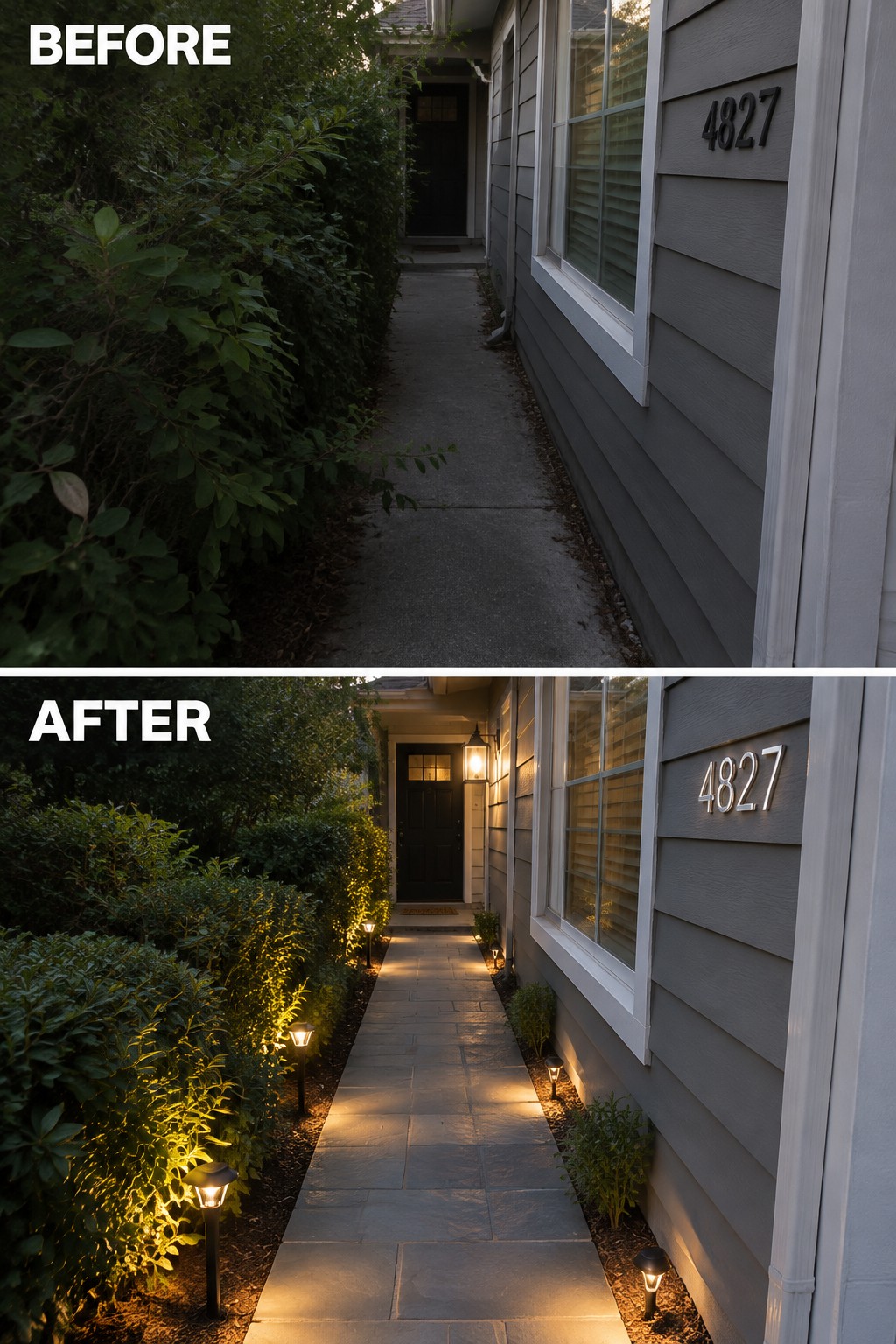
A narrow side entry can feel dark and uninviting at night, especially when the path is just plain concrete with heavy planting on one side. Adding low landscape lights along the edges turns the same walkway into a clear, usable route that feels much safer and more welcoming without any major construction.
This approach works well on Cape Cod homes where the front door sits off to the side and the main goal is simple curb appeal rather than a full overhaul. Start with cleanup and a few well-placed lights spaced evenly along the path, then consider swapping in pavers later if the budget allows. Keep the fixtures low and warm so they light the ground without glare.
Replace A Plain Concrete Walkway With Gravel And Edging
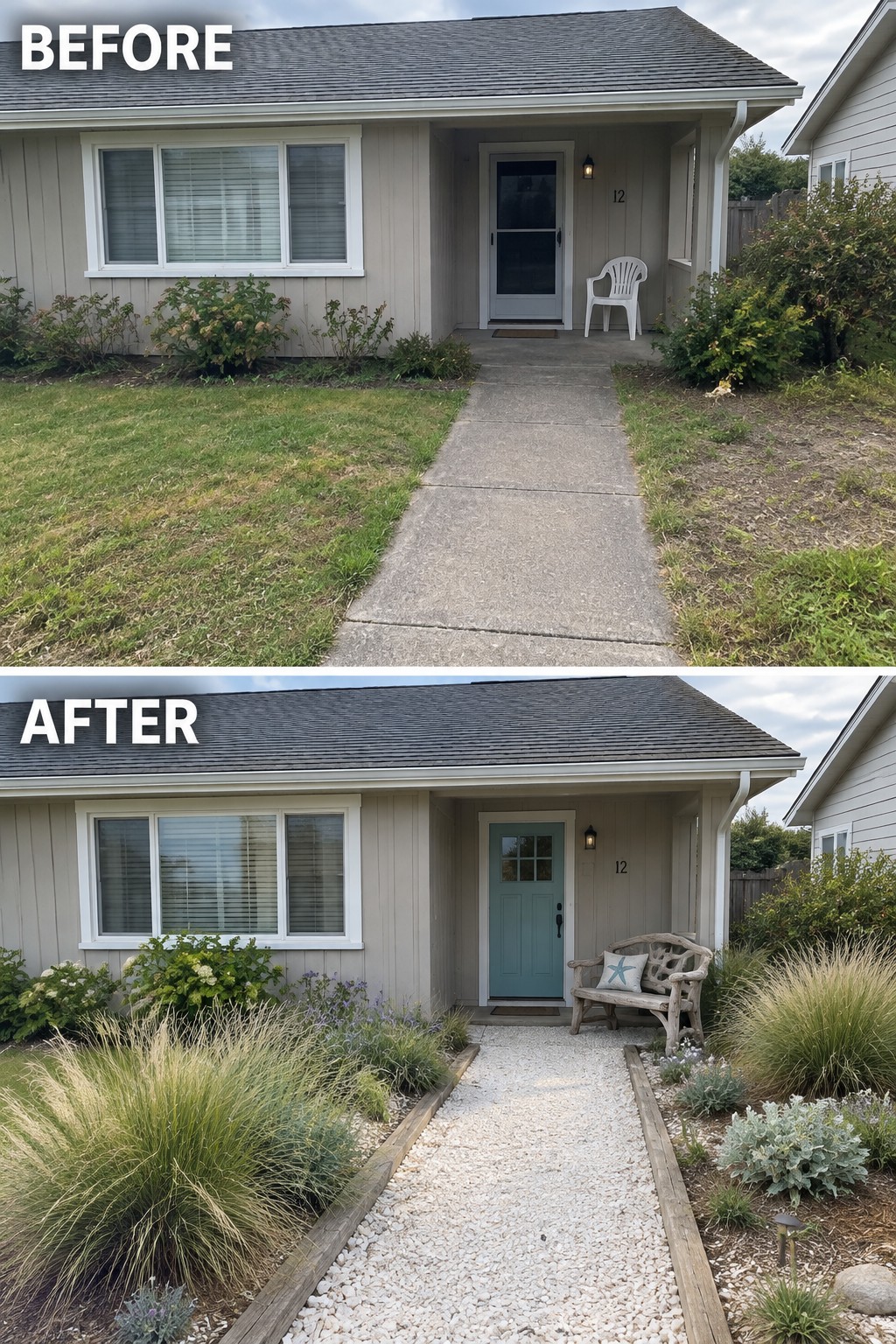
A basic concrete path can make the front of a house feel unfinished even when the rest of the yard is tidy. Switching to gravel with wood borders gives the walkway clear shape and separates it from the surrounding grass and planting beds. The result feels more deliberate and easier to maintain over time.
This approach works best on smaller front yards or Cape Cod style homes where you want to improve the entry without tearing up the whole yard. Keep the gravel light in color so it stands out against the house, and use simple edging that matches your siding or trim. Add a few clumps of tall grass or low shrubs along the sides to soften the edges without crowding the path.
Install Pavers To Give A Front Walkway More Structure
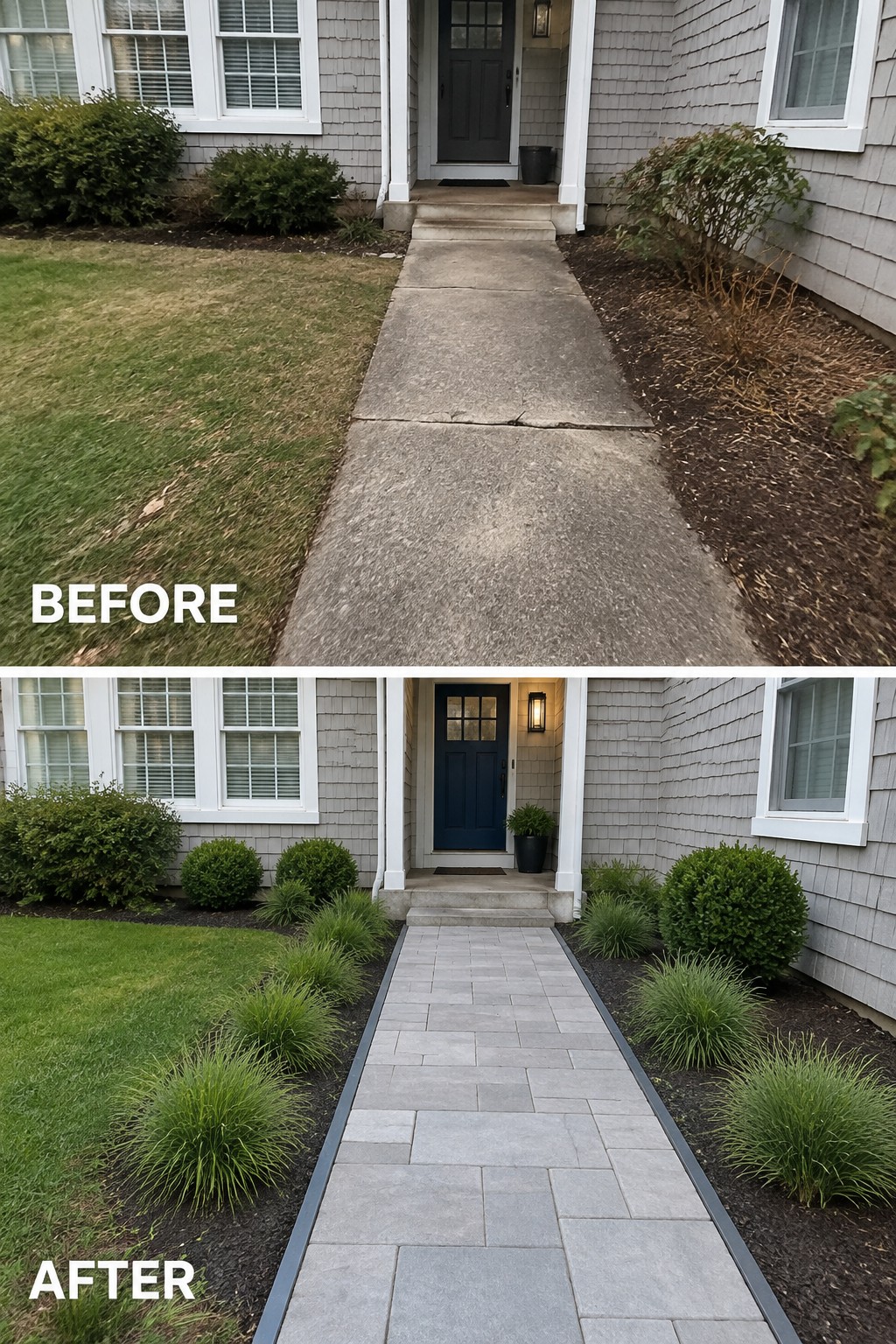
Swapping a wide, cracked concrete path for pavers adds clear shape to the approach. The new walkway sits between neat borders of grass and shrubs, so the eye travels straight to the door instead of wandering across an open slab.
This works especially well on Cape Cod homes where the front feels a bit flat. Measure the existing path first, pick pavers in a soft gray that matches the siding, and use simple metal edging to hold the beds. Keep the planting low and repeat the same few plants on both sides so the walkway stays the main feature without extra clutter.
Use Pavers To Improve A Plain Concrete Walkway
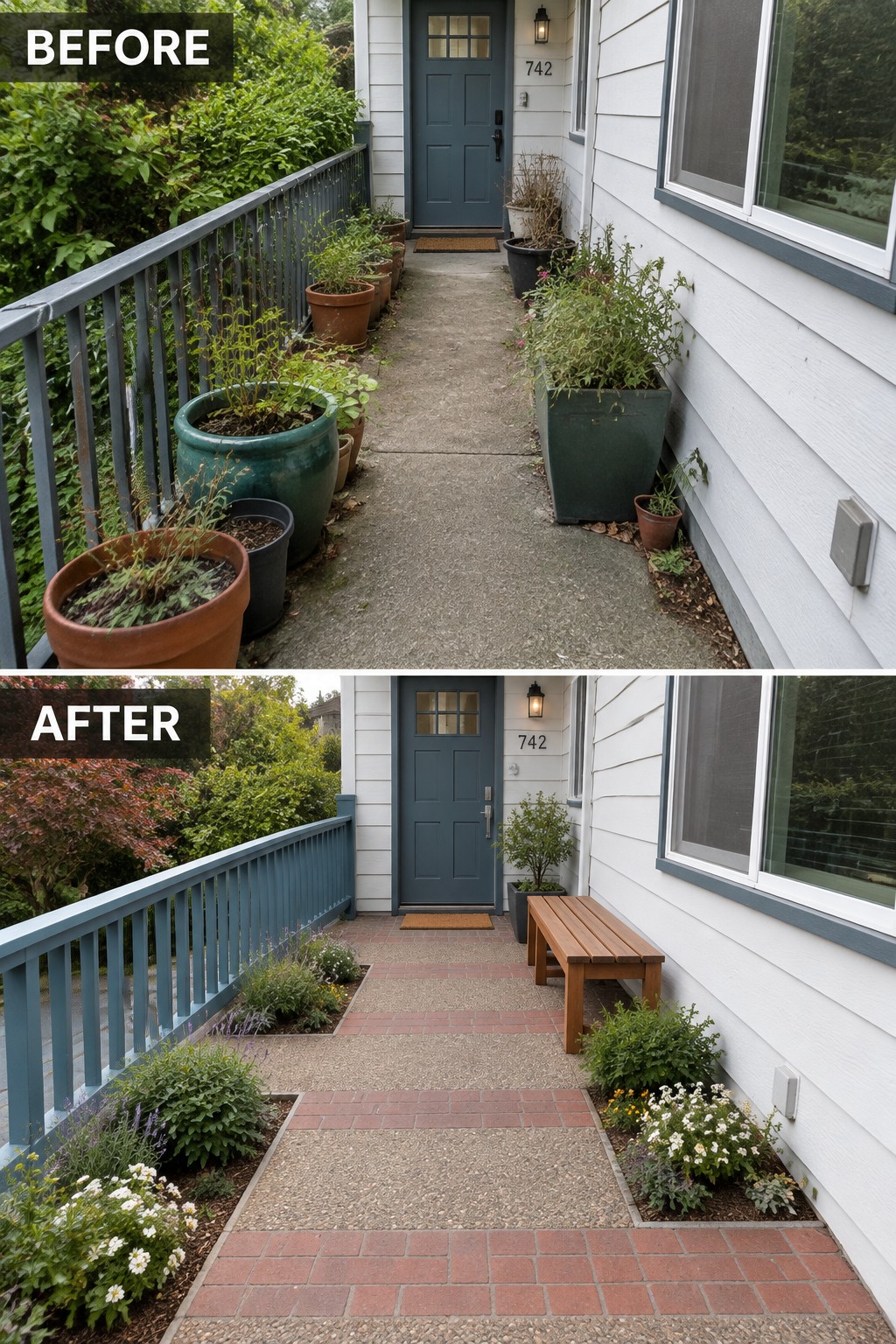
A plain concrete path can feel unfinished, especially when plants are scattered in random pots along the sides. Switching to a mix of brick pavers and gravel gives the walkway clear edges and a more finished look that guides visitors straight to the door. The side areas also shift from loose pots to simple planted beds, which keeps the space open while still adding some greenery.
This approach works well on older homes where the original walkway has aged but the rest of the exterior is still sound. Start with the path itself before adding too many plants or accessories. Keep the beds narrow enough that they do not crowd the walking area, and choose pavers that match the color of your house trim or door for a quieter update.
Replace Old Entry Stairs With New Decking And Lighting
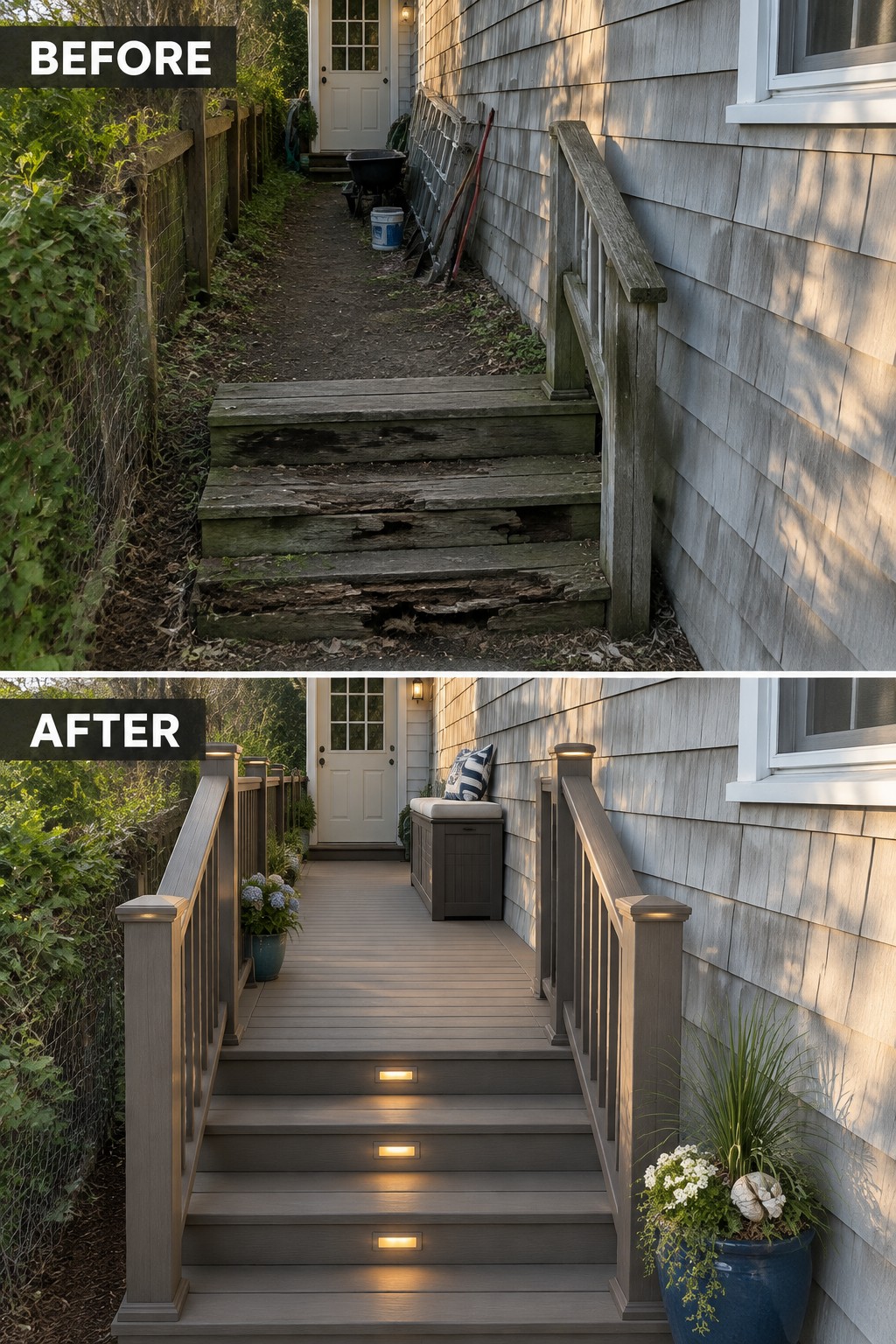
The original stairs had clearly reached the end of their life, with broken boards and a general sense of neglect. New gray decking, updated railings, and small lights set into the steps turned the entry into something that feels steady and easy to use after dark.
This approach suits Cape Cod homes where the front stairs take daily wear from weather and foot traffic. Focus first on replacing the treads and adding railings that meet current codes, then add step lights so the path stays visible without extra poles or wires cluttering the walkway.
Border The Front Walkway With Garden Beds

A winding path that drifts off to one side can make even a tidy house feel a little aimless. Straightening the walk and adding matching beds on both sides gives the entry a clear line and makes the door feel like the natural destination.
This approach suits Cape Cod homes especially well because the style is simple and the rooflines are already strong. Keep the beds narrow enough that they do not crowd the walk, and choose a mix of low evergreens and seasonal color so the beds look intentional even in winter.
Replace A Plain Concrete Walkway With Stone Pavers
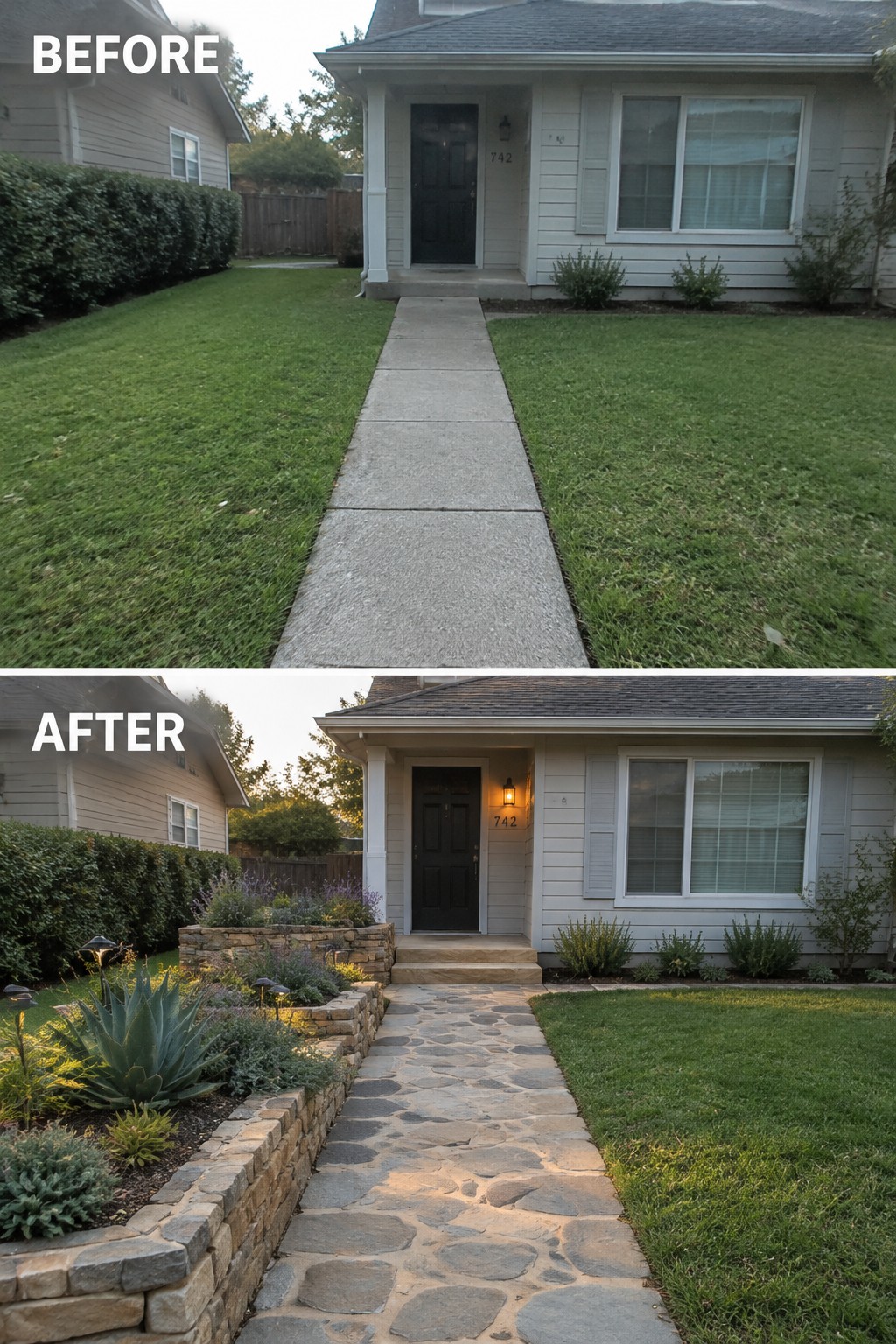
A straight concrete path can make the front of a house feel flat and unfinished. Switching to stone pavers gives the walkway more weight and direction, so it feels like a real part of the yard instead of just a strip of gray running through the grass.
This idea works especially well on Cape Cod homes where the goal is simple structure rather than heavy decoration. Keep the path a consistent width, let it curve slightly if the lot allows, and add low stone borders on either side so the planting has something to hold onto. Once the pavers are in, the rest of the front yard is easier to shape around them.
Define A Narrow Side Yard With Stepping Stones
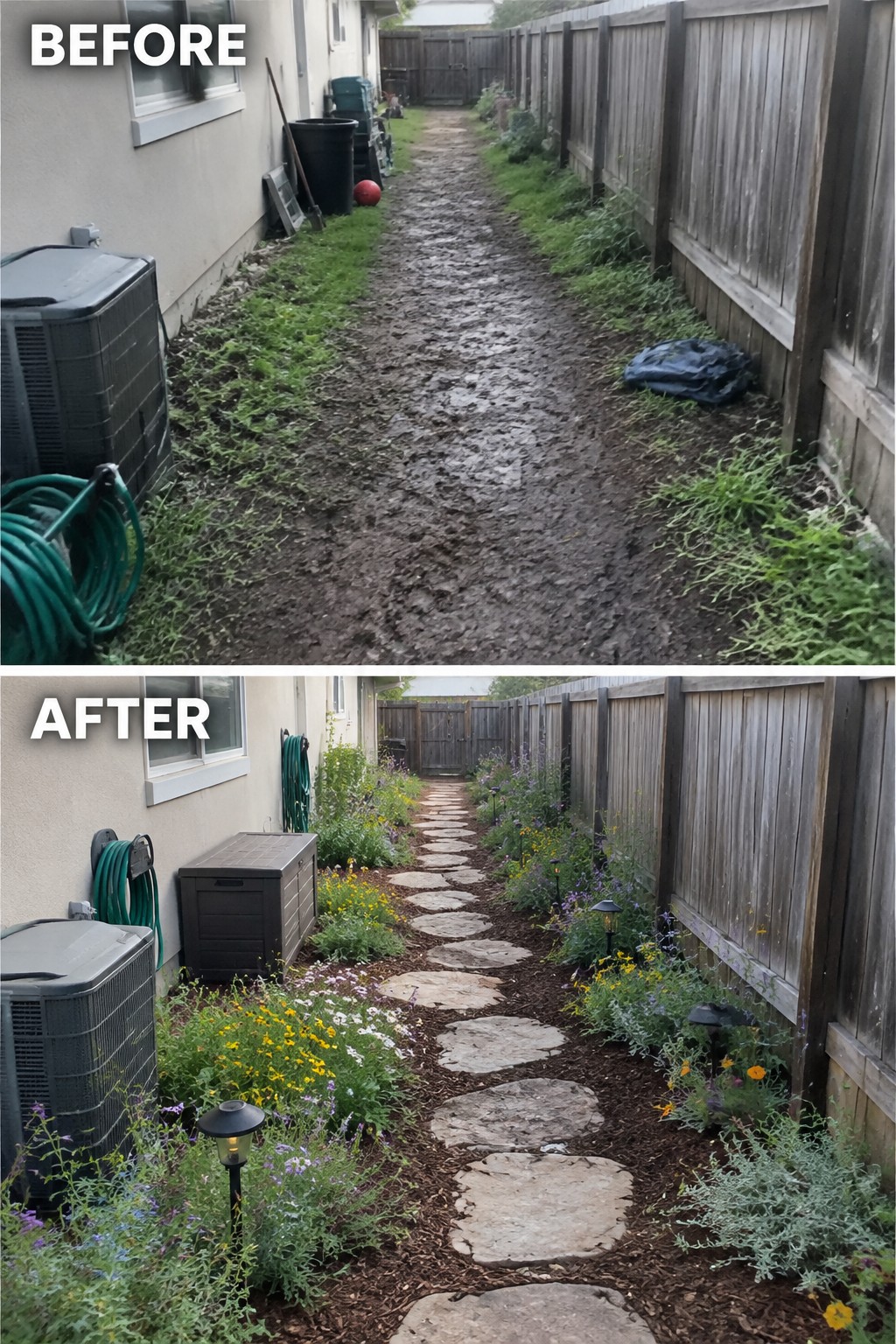
A muddy path that turns slick after rain makes a side yard feel more like an afterthought than a usable space. Laying down stepping stones gives the walkway a clear shape while the mulched beds on either side keep plants in bounds and reduce the mess that comes with bare soil.
This idea suits long, narrow areas between houses and fences where you still need foot traffic. Lay the path first so the planting beds have a natural edge to follow, then choose low-maintenance perennials that can handle shade or sun without constant upkeep.
Define A Front Walkway With Low Hedges
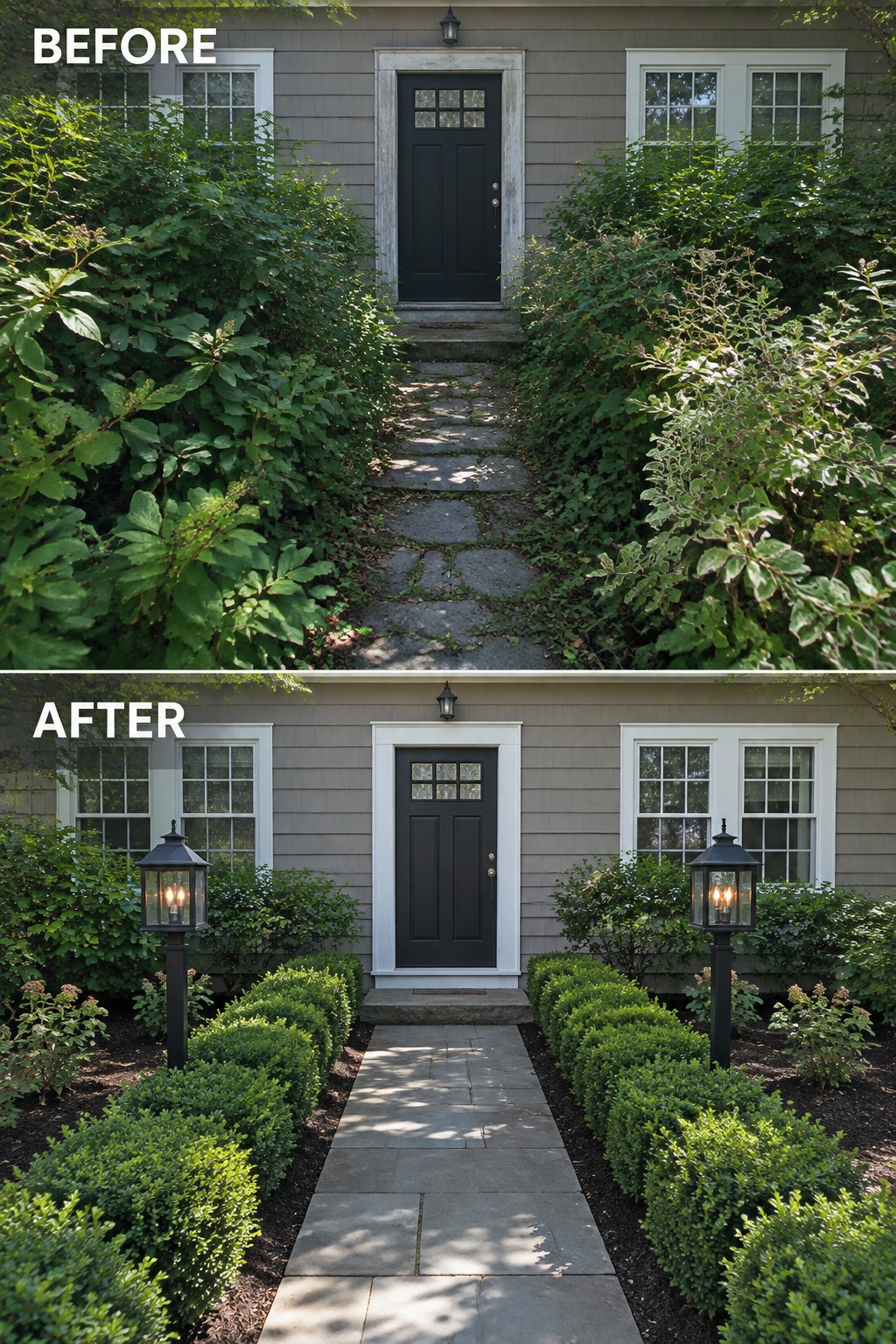
The biggest change here is how the path feels once the wild overgrowth is cleared and replaced with low, neatly trimmed hedges. The walkway suddenly looks wider and more intentional because the planting now follows a clean line instead of spilling onto the stones.
This approach works especially well on traditional homes where you want the entry to feel welcoming without adding a lot of visual noise. Keep the hedges low enough that they guide people forward but still leave the front door as the main focal point. Start with a thorough cleanup of whatever is growing too close to the path, then choose one type of evergreen shrub and repeat it on both sides for a simple, balanced look.
Curve A Straight Gravel Path Into A Welcoming Stone Walkway
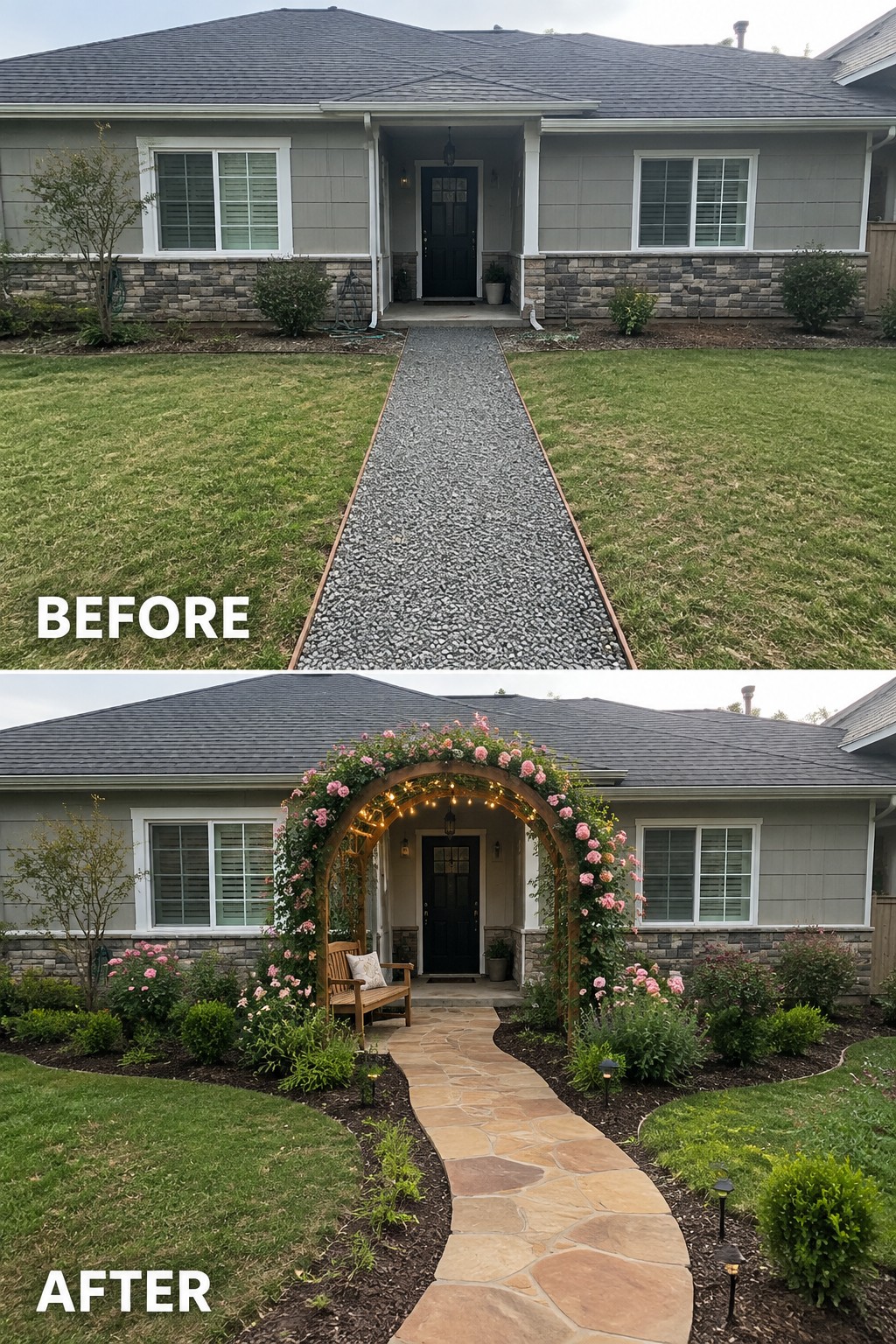
A straight gravel path gets you to the door, but it rarely feels like part of the house. Replacing it with a gently curved stone walkway and adding a simple arbor creates a clear sense of arrival and makes the front of the house feel more connected to the yard.
This approach suits Cape Cod homes especially well because the curve softens the approach while the arbor gives the entry a focal point. Start by laying out the new path shape with a hose before committing to materials, and keep the curve modest so the walkway still feels practical for daily use.
Frequently Asked Questions
Q: How do I keep the walkway from looking plain next to my shingled house? A: Add a border of low plants or crushed shells on the sides. This pulls in that coastal Cape Cod feel right away. Stick to simple curves instead of straight lines.
Q: Will gravel wash away during heavy rains? A: Mix in a stabilizing grid under the gravel. It keeps everything in place even after storms. Rake it smooth once or twice a year to refresh the look.
Q: Should the walkway connect straight to the driveway or curve around? A: Curve it gently toward the front door. This creates more interest and matches the relaxed style of Cape Cod homes. Straight lines can feel too formal here.