

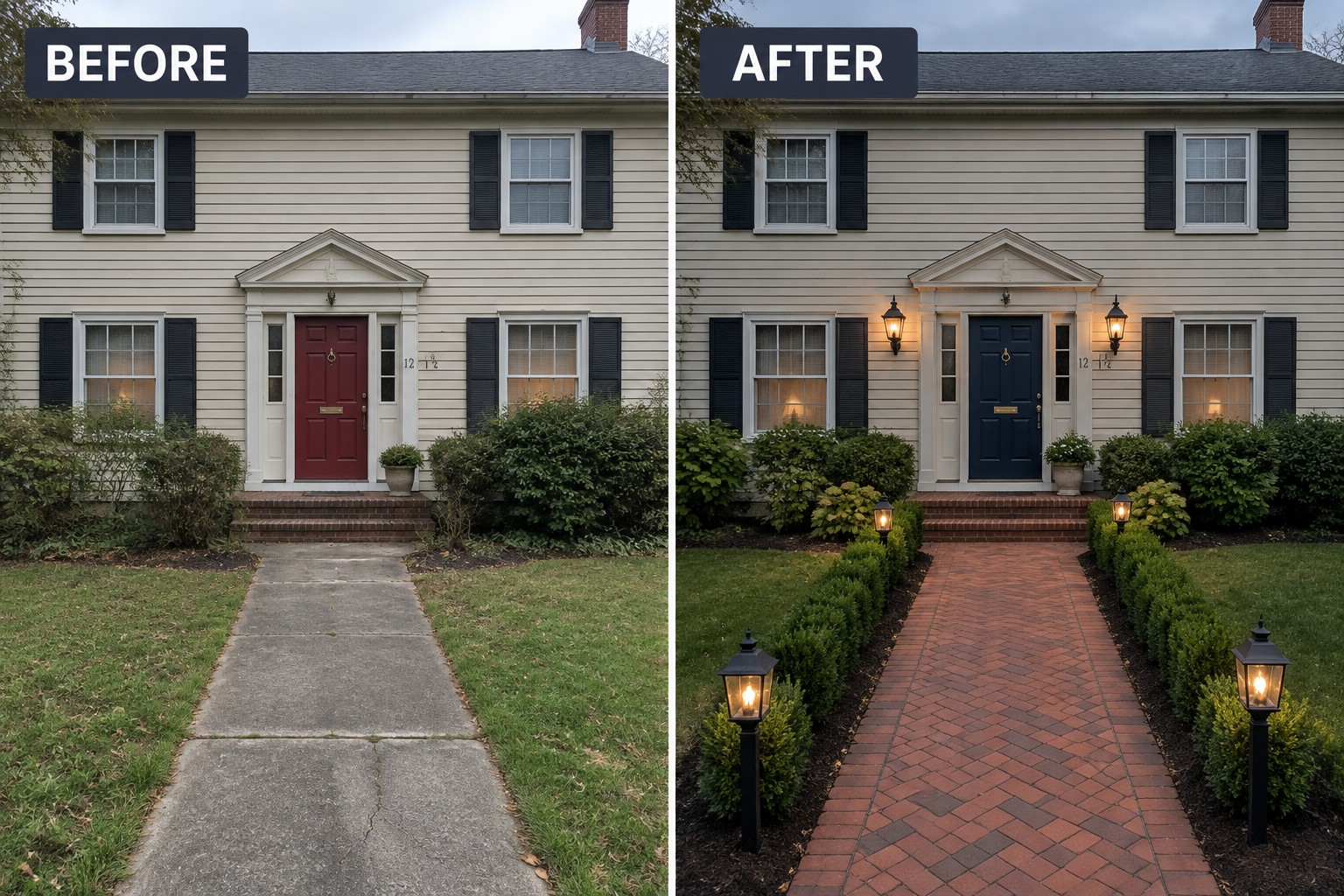
I often notice that the front approach of a house can feel scattered until the path and lighting start to work together.
Lanterns placed along a clear walkway give the entrance a steadier look that suits colonial homes without needing bigger changes to the siding or roofline.
One thing I have found is that simple structure outside makes the whole property seem more looked after even when the rest of the yard stays fairly basic.
It feels good to walk up to a door that no longer blends into the background.
I would test the walkway layout first on my own place before deciding where the lanterns should go.
Frame The Entry With A Brick Walkway And Lanterns
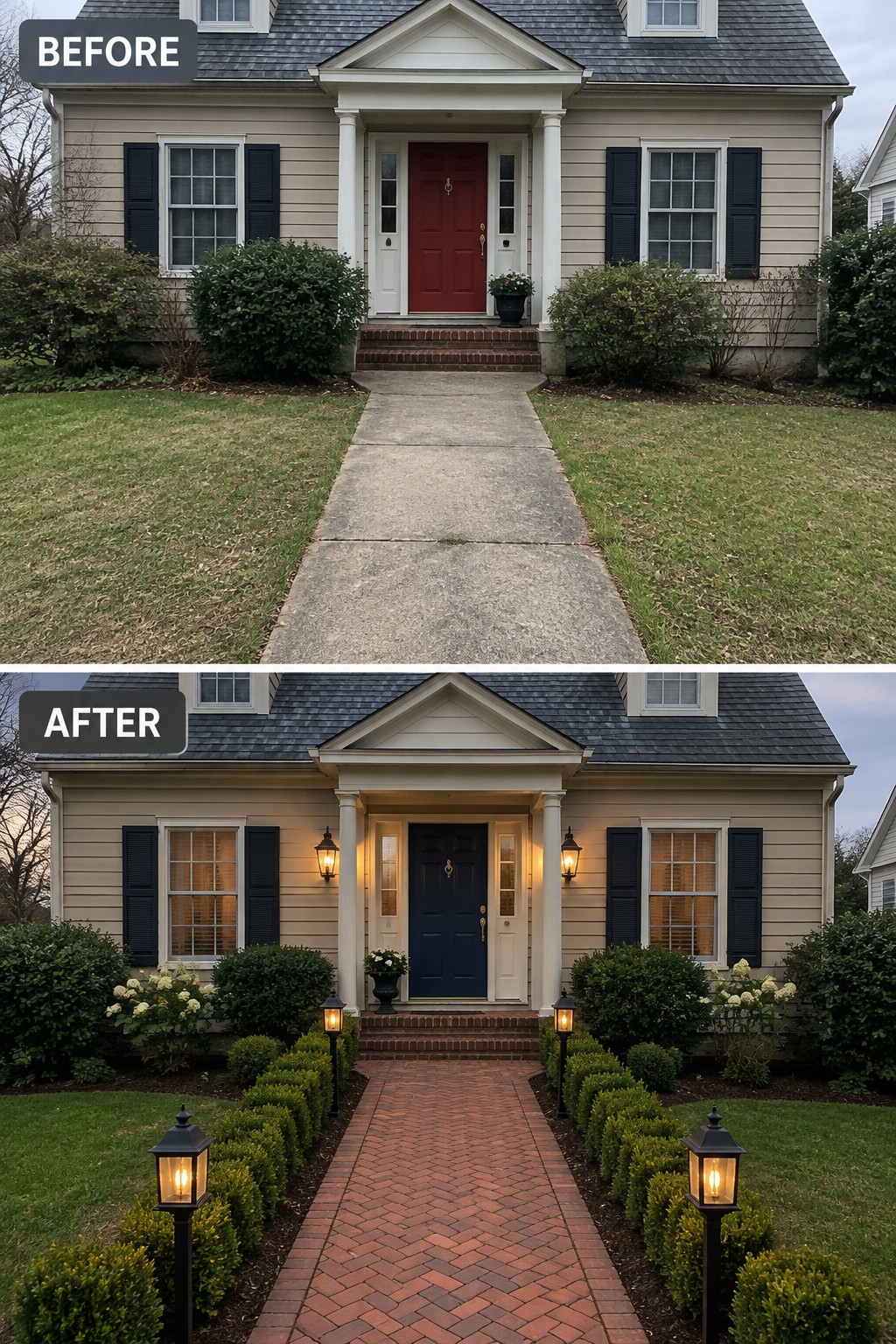
A plain concrete path can make even a nice house feel unfinished. Switching to a brick walkway gives the front approach a clear shape, and the lanterns on either side turn the walk into something that feels planned instead of just functional.
This idea works best on homes with simple colonial lines where you want the entry to stand out without adding a lot of new features. Replace the main walkway first, then add a few lanterns spaced evenly so the light actually helps people see where they are going.
Add Lanterns And A Defined Walkway To The Front Entry
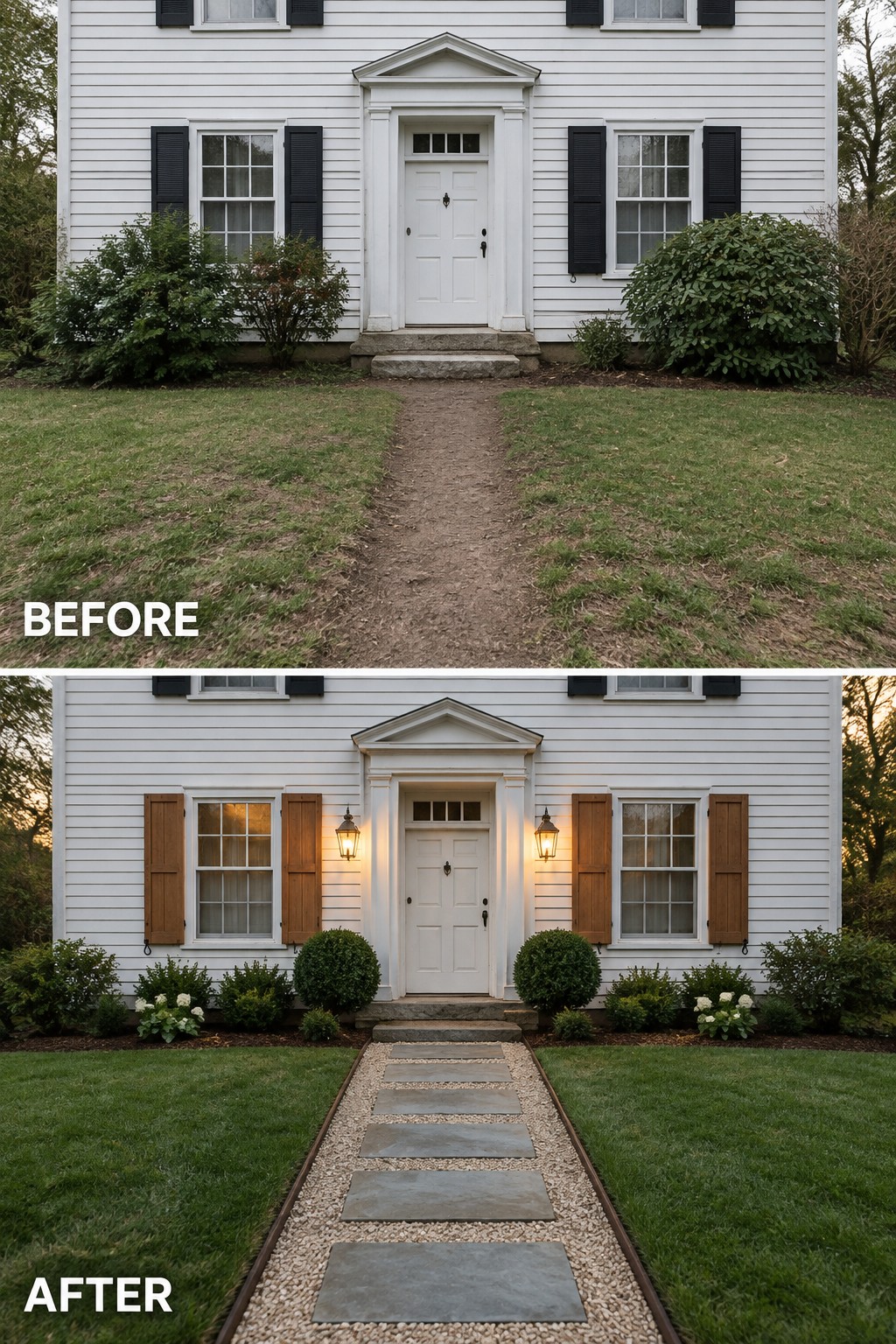
The dirt path in the before photo gave the house a slightly unfinished look. Replacing it with a gravel border and centered stone pavers created a clear, stable route to the door, while the two lanterns on either side of the entrance added light and balance.
This approach suits colonial homes that already have a centered door and simple trim. Start with the path since it does the most visual work, then add lanterns that match the size of your door hardware. Keep any planting low so the lights remain visible and the walkway stays easy to follow at night.
Add Lanterns And A Brick Walkway To Frame The Entry
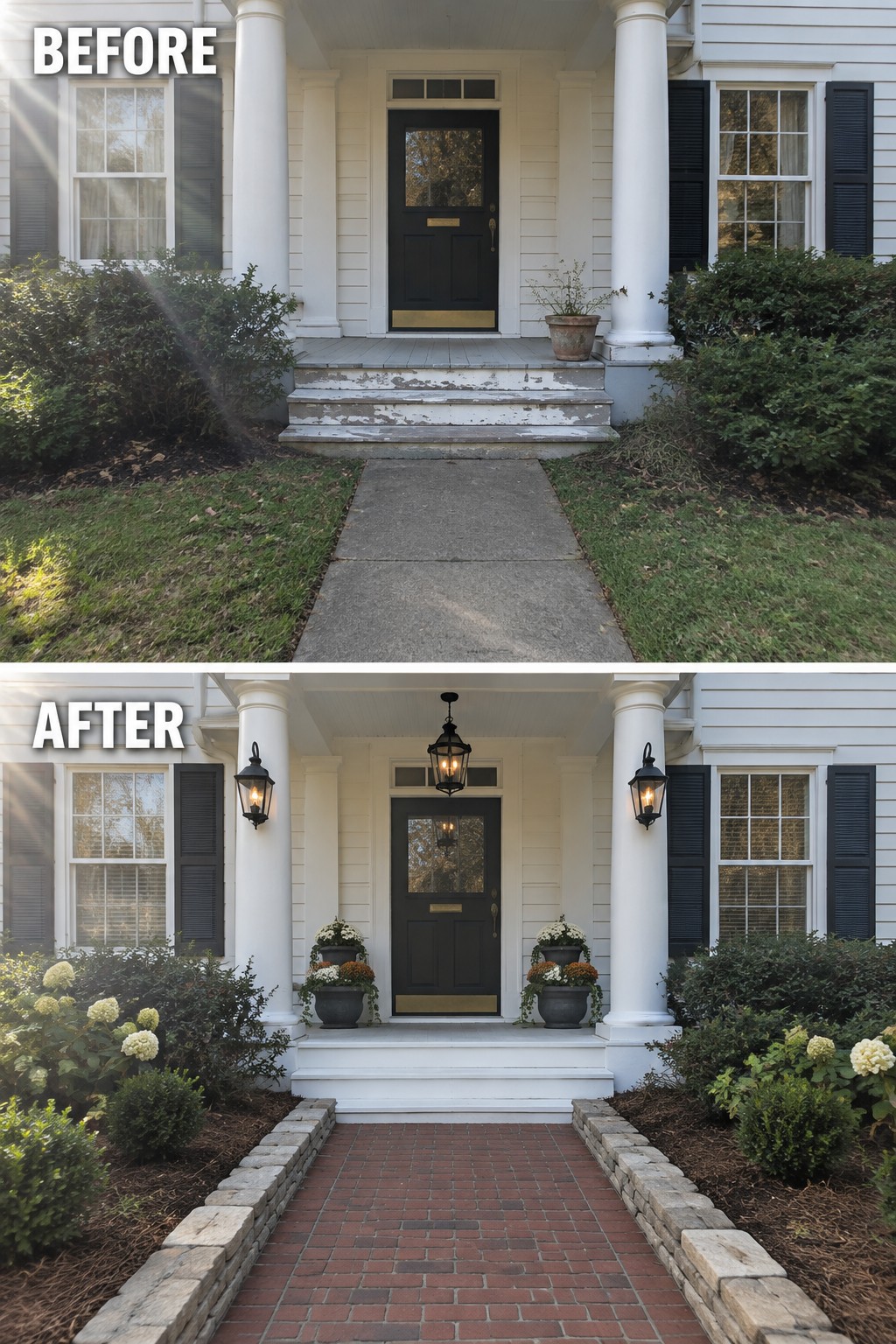
A simple path replacement and a pair of lanterns can change how the whole front of a house feels. The old concrete walkway was flat and forgettable, and the porch steps had no clear markers at night. Once the brick path was laid with stone borders and lanterns were hung on the columns, the entry suddenly had direction and presence.
This approach works best on homes that already have a centered door and columns. Keep the lanterns simple in shape and hang them at the same height on each side so the light feels balanced. The path should be wide enough for two people to walk side by side, and the edging should follow straight lines rather than curves if the house itself is symmetrical.
Define The Front Walkway With Gravel And Lanterns
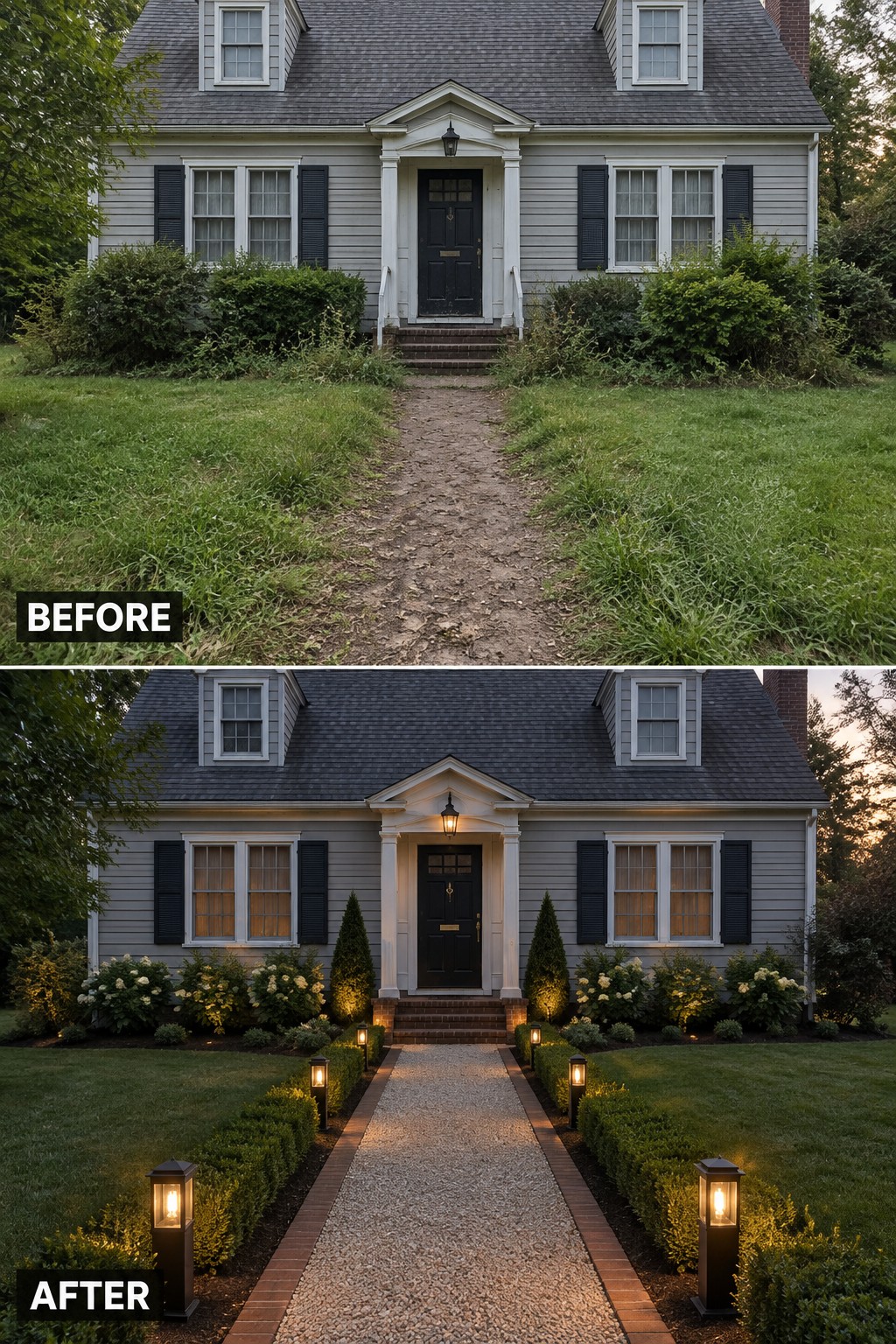
A dirt path leading to the door often makes the whole front of a house feel unfinished. Replacing it with a gravel walkway edged in brick gives the entry a clear shape and makes the house look more put together right away. Adding low lanterns along both sides turns the path into something useful at night and adds a simple layer of light that works with colonial style without trying too hard.
This approach works well on older homes where the front feels a little plain or the lawn runs right up to the steps. Keep the path width comfortable for two people walking side by side and place the lanterns at even intervals so the light stays even. Start with the hardscaping and lighting first, then add the planting along the edges.
Add Brick Pillars With Lanterns To Frame The Entry Walk
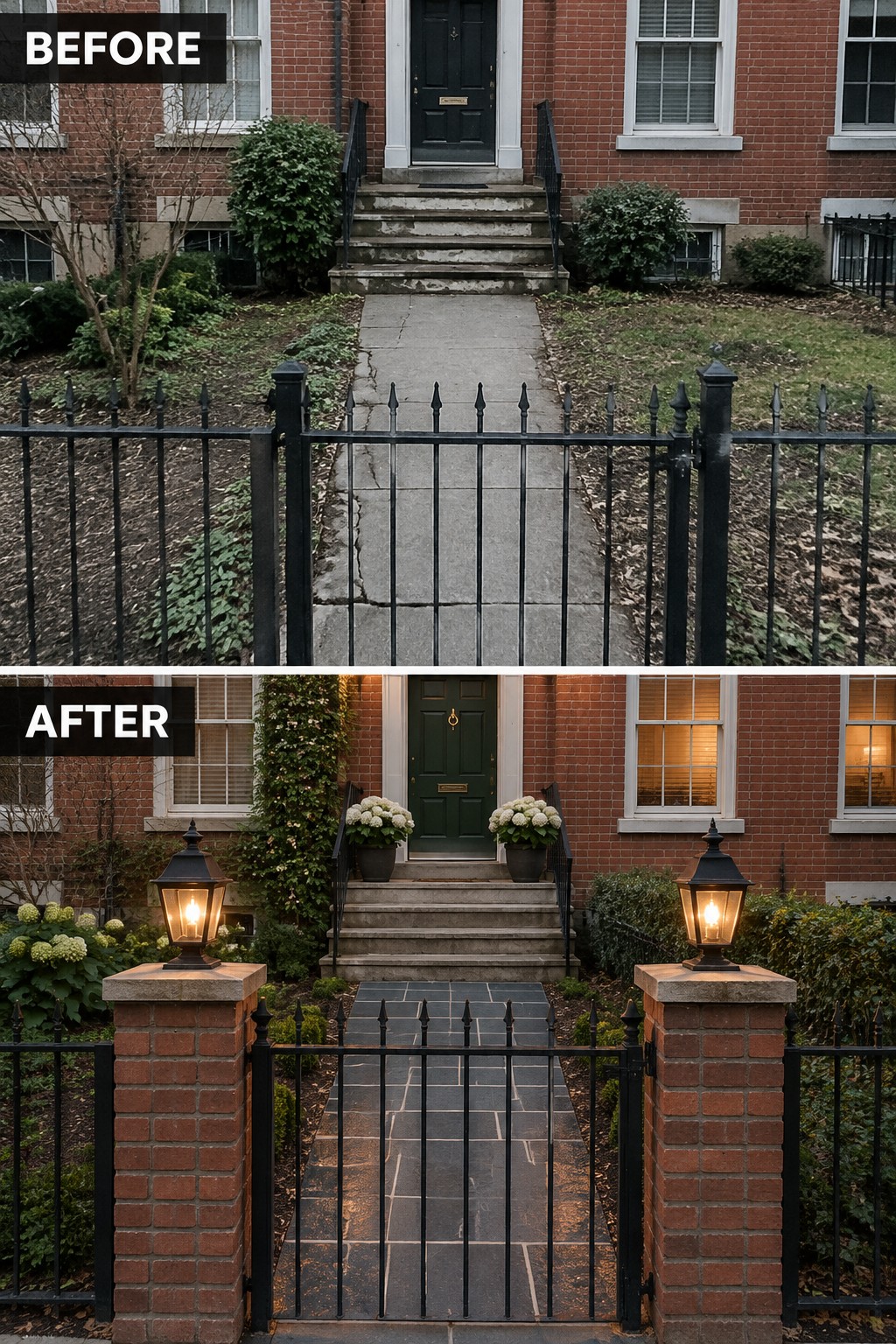
The main change here is the addition of brick pillars topped with lanterns at the front gate. This simple move turns a plain cracked walkway into a clear, welcoming path that leads straight to the door. The lanterns add light and structure without crowding the space, and the darker pavers give the walk a finished look that matches the colonial style of the house.
This idea works well on homes where the entry feels a little lost in the landscape. Start by defining the walkway with pavers or stone, then add low pillars on either side of the gate or path opening. Keep the lanterns simple and choose a warm bulb so the light feels inviting at night. The rest of the yard can stay fairly simple as long as the path and lighting stay consistent.
Frame The Entry With Lanterns And A Structured Walkway
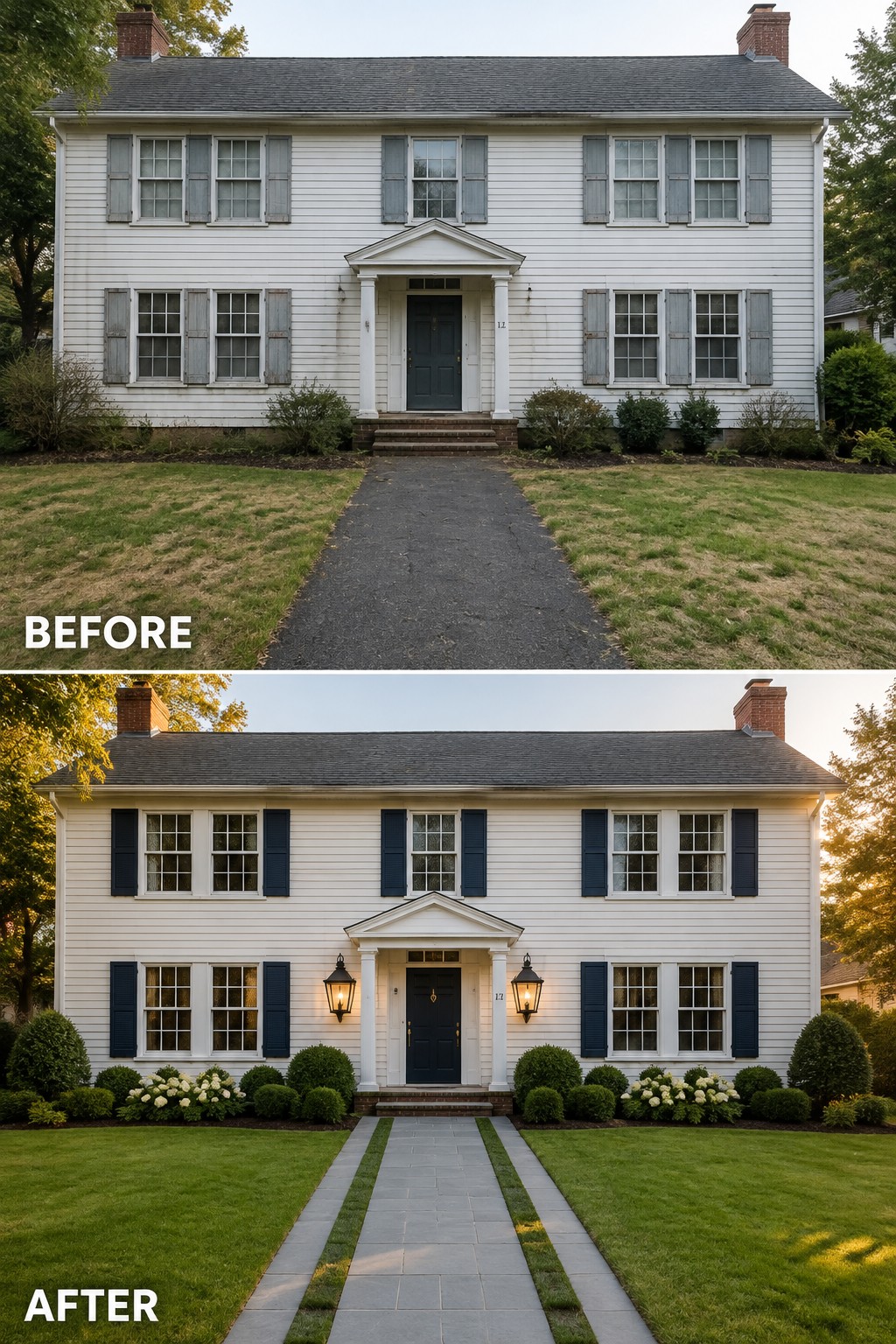
A cracked asphalt path makes the front of a house feel unfinished even when the building itself is solid. Replacing it with a stone walkway that has narrow grass borders creates a clear line of approach, and adding a pair of lanterns beside the door gives the entrance a simple focal point without needing a lot of extra pieces.
This approach suits colonial homes that already have a symmetrical shape. Start with the path so the route feels deliberate, then pick lanterns that sit at a comfortable height and scale with your door rather than trying to fill the whole yard with lighting at once.
Add A Curved Walkway And Lanterns To Frame The Entry
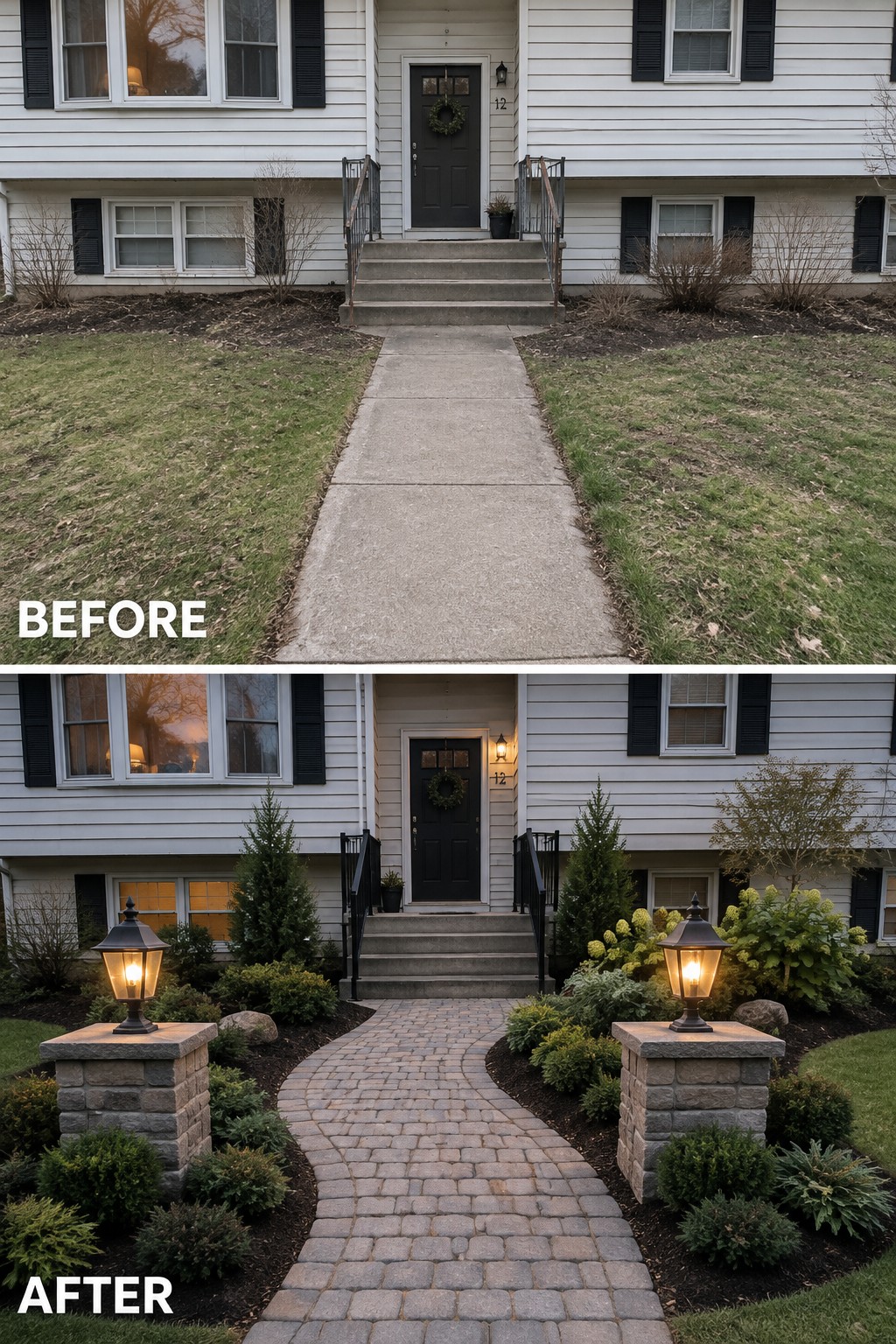
A straight concrete path makes the front approach feel flat and forgettable. Replacing it with a gently curved paver walkway and placing lantern-topped stone pillars at the start gives the entry a clear sense of arrival and makes the house feel more settled on the lot.
This works especially well on colonial homes where the facade is already simple. Keep the curve modest so the path still leads directly to the steps, and choose lanterns that match the scale of the pillars rather than overpowering them. The same layout works on smaller lots as long as the beds along the edges stay narrow and the walkway stays wide enough for two people to pass.
Line A Front Path With Lanterns And Gravel
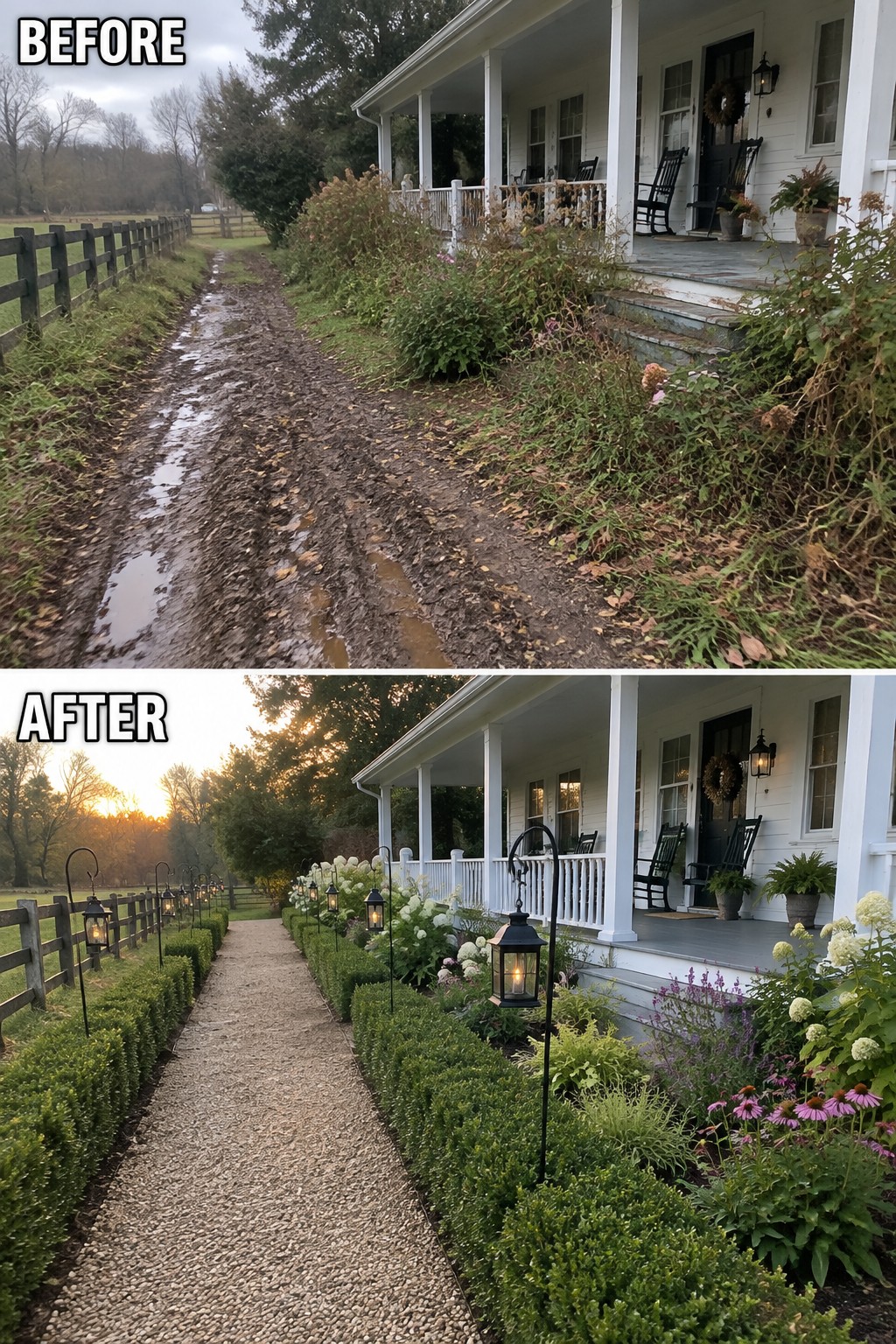
A muddy, rutted path makes the whole front of a house feel unfinished. Switching to gravel and adding lanterns along both sides turned the approach into a clear, usable walkway that actually leads visitors to the door.
This works well on colonial homes with longer entries or side approaches. Grade the path first, add a solid base, then lay gravel so it stays in place. Space the lanterns evenly and keep the planting low and simple along the edges so the path remains the main feature instead of getting lost in overgrowth.
Define The Front Walkway With Edged Beds And Path Lights
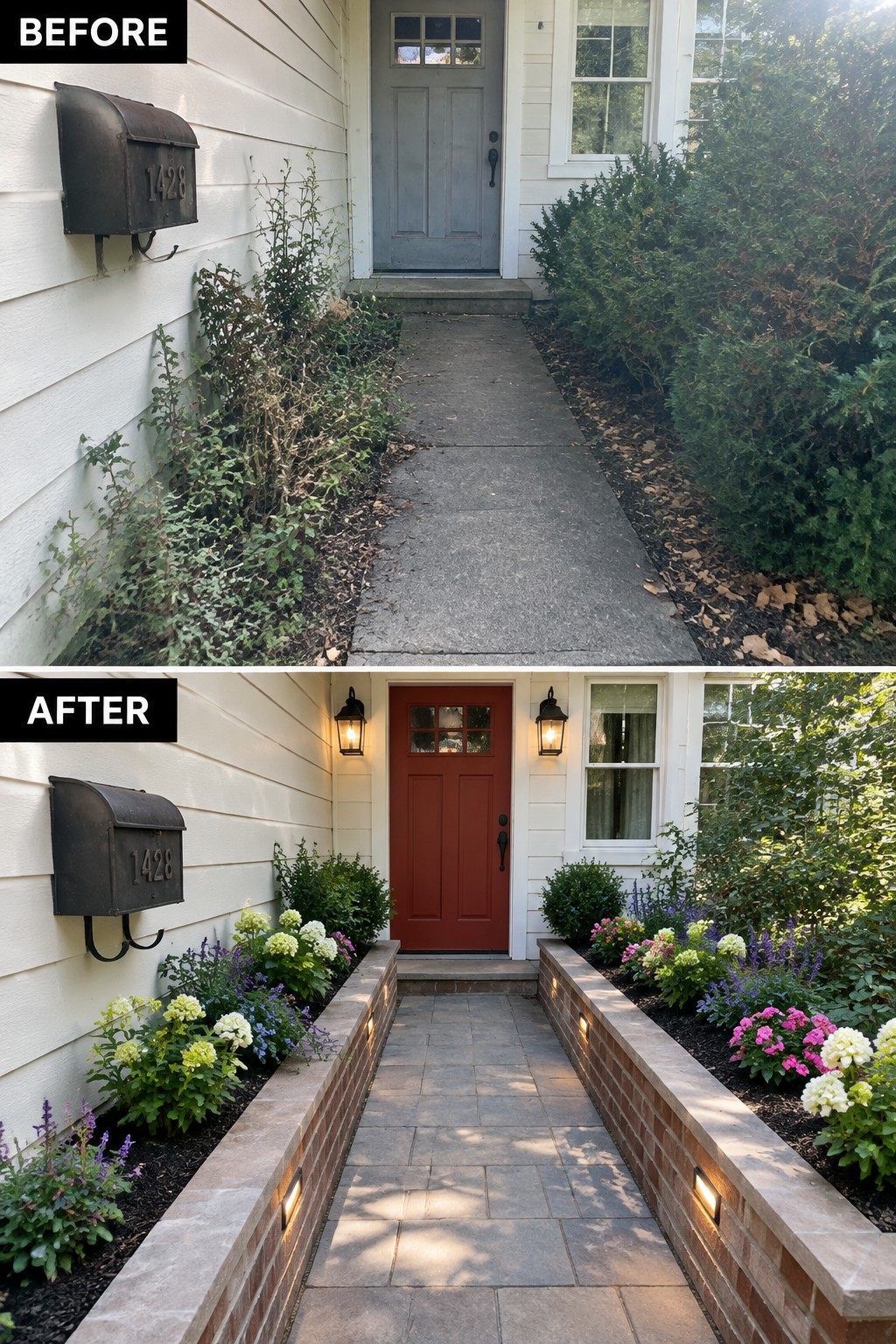
A plain concrete path next to an overgrown strip of plants often feels unfinished, even if the house itself is in good shape. Adding low brick borders on both sides turns the walkway into a clear feature, while small inset lights keep it usable at night and give the whole front a more settled look. The red door and simple lanterns help tie it together without needing a full renovation.
This approach works well on colonial homes where the entry is straight and fairly narrow. Start by cleaning up the edges and installing the borders before you add plants or lights. Keep the beds narrow enough that they do not crowd the path, and choose lights that sit low so they do not glare into the windows.
Use A Structured Walkway And Lanterns For Stronger Curb Appeal
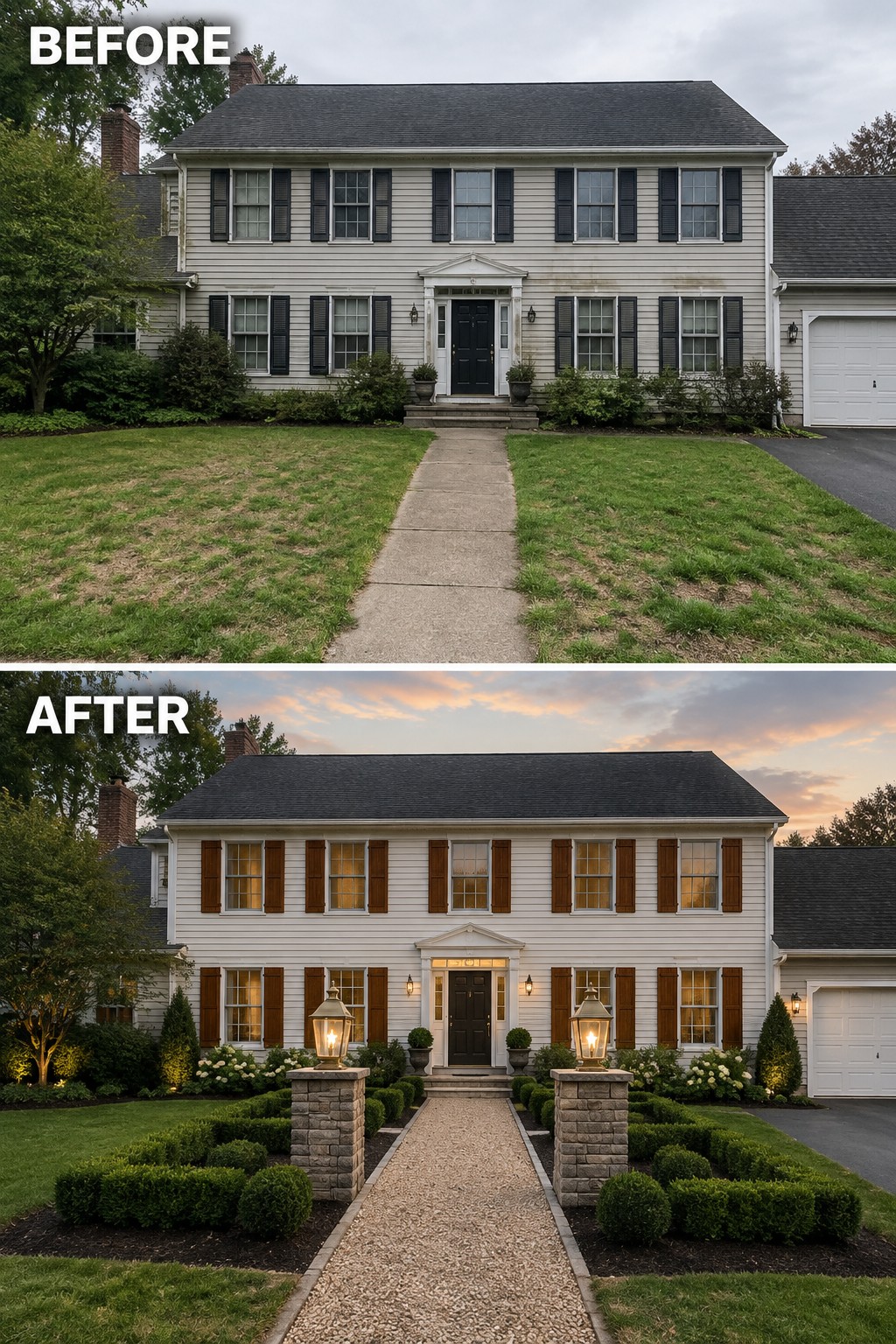
A plain concrete path and open lawn can make a house front feel unfinished. Switching to a gravel walkway with low boxwood borders and adding lanterns on stone pillars gives the entry a clear shape and makes the house feel more welcoming at dusk.
This idea works best on colonial homes where the facade is already balanced. Keep the path width generous enough for two people, place the lanterns at a height that lights the way without glare, and repeat the same stone or gravel material along the beds so the whole front stays tied together.
Add A Lantern And Structured Walkway To Refresh The Entry
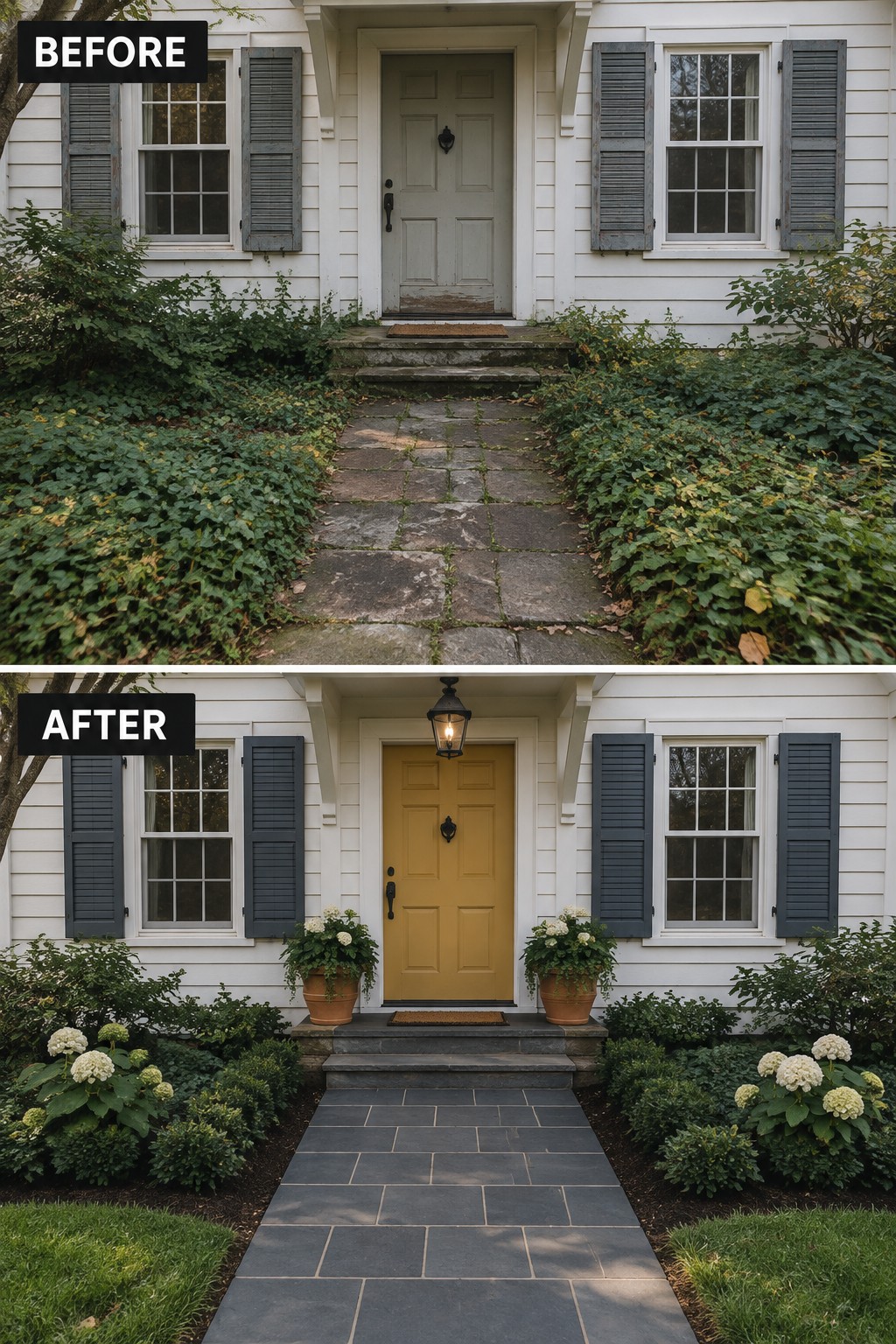
A hanging lantern and a clean stone path give a colonial front door a clear sense of arrival. The old uneven walkway was replaced with neat slate pavers, and a simple black lantern now sits above the door to mark the entrance after dark.
This works best on homes where the front path runs straight from the street. Keep the walkway wide enough for two people to pass, match the lantern finish to your door hardware, and let the pavers run all the way to the steps so the eye follows a single line.
Use Lanterns And A Structured Walkway To Frame The Entry
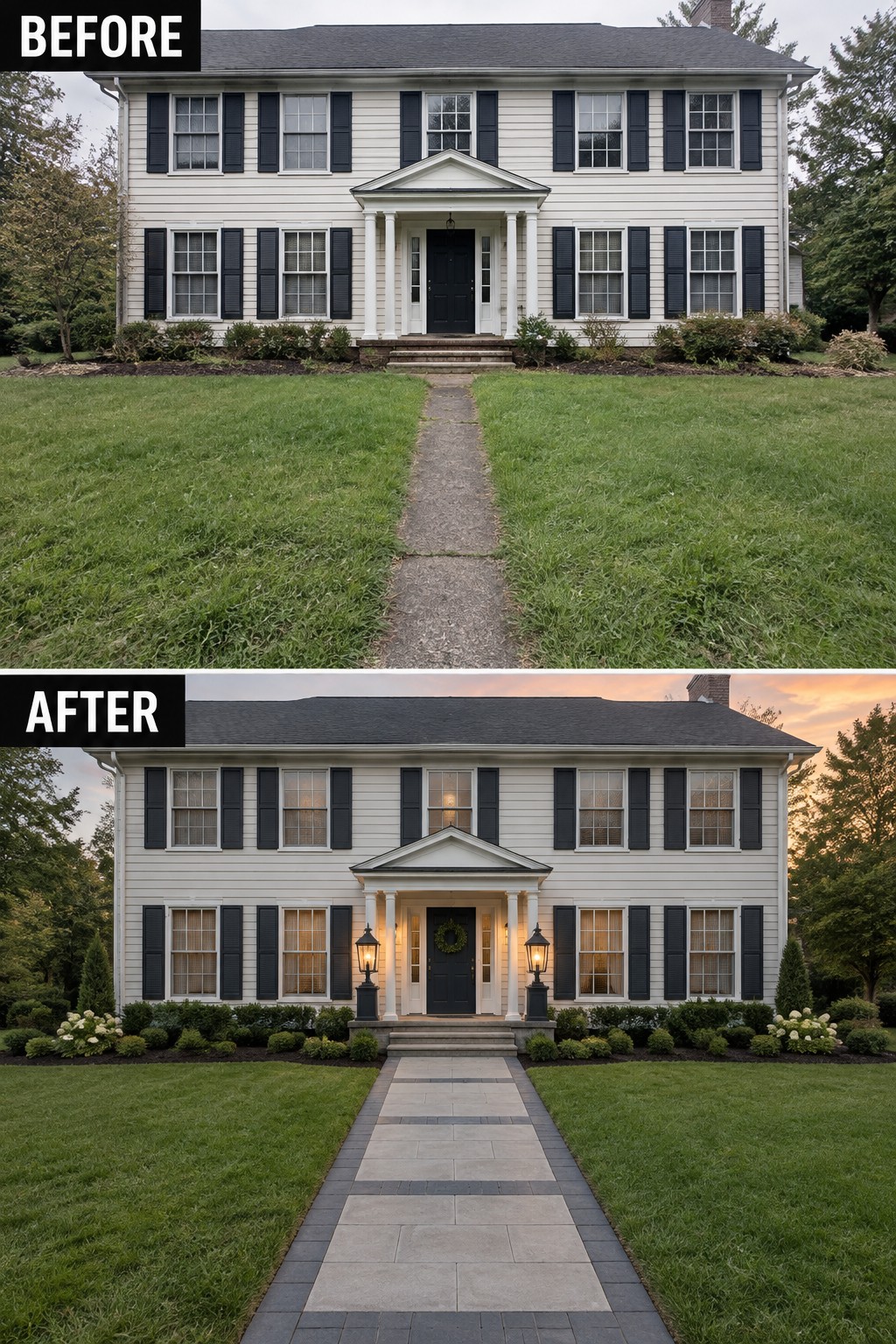
A gravel path leading to the front door often feels unfinished on a colonial house. Switching it to a wide paved walkway with dark edging gives the entry a clear line and makes the whole facade look more put together. Adding a pair of lanterns on either side of the door reinforces that focus without needing much else.
This approach works well on older homes where the architecture already has strong lines. Keep the walkway simple and centered, then place the lanterns at a practical height so they light the steps at night. The rest of the yard can stay fairly plain as long as the path and entry lights stay consistent.
Define The Front Walkway With Gravel And Planting
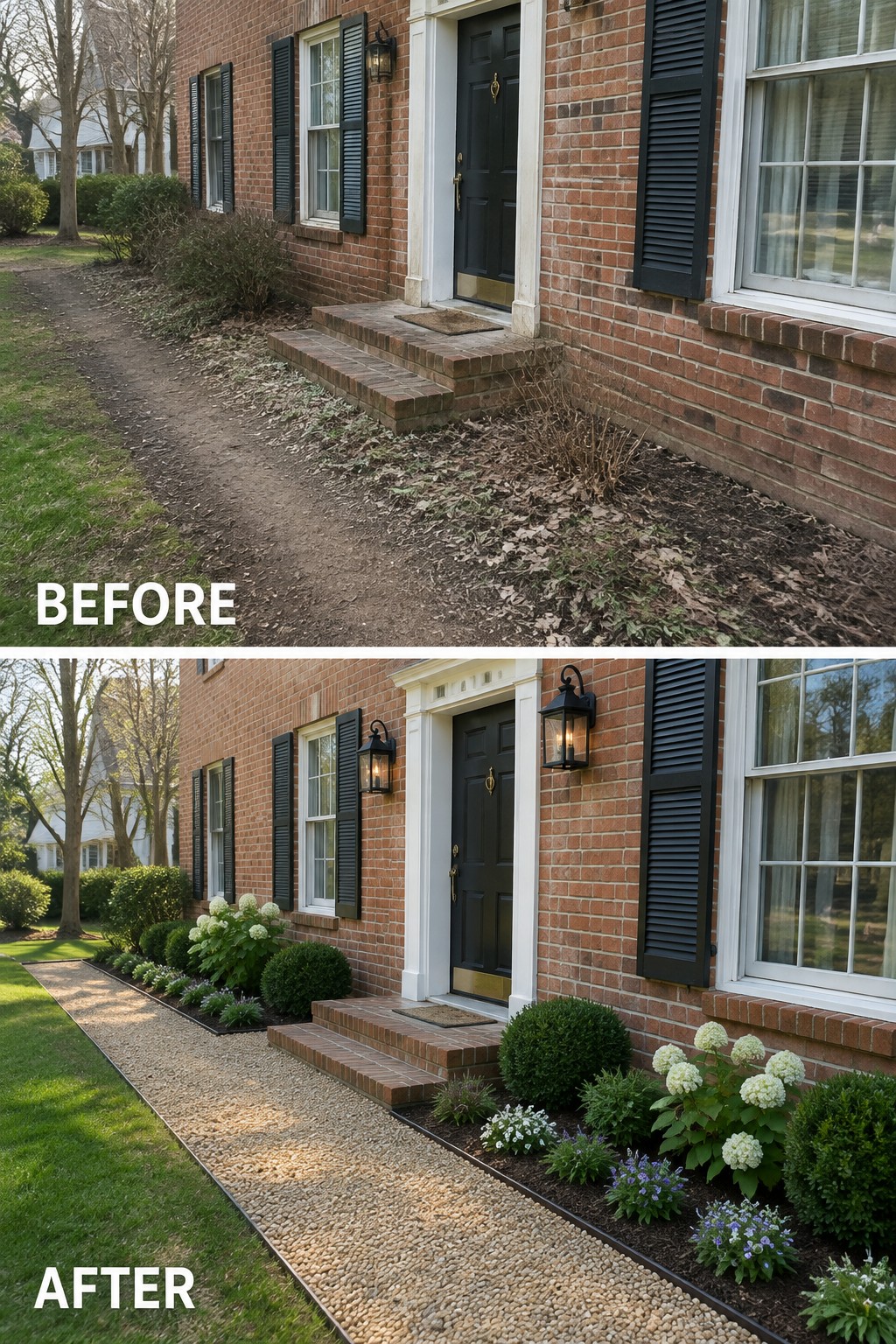
A messy dirt path leading to the door makes the whole front of a house feel unfinished. Replacing it with a clean gravel walkway edged in black metal gives the entry a clear shape and makes the house look more cared for right away. Adding low garden beds on both sides and a pair of wall lanterns completes the look without any major construction.
This approach works especially well on colonial homes where the brick and shutters already give a traditional frame. Keep the beds fairly narrow so the path still feels open, and choose plants that stay neat rather than sprawling. The gravel also helps with drainage and keeps mud off shoes during wet months.
Add Structure With A Stone Walkway And Lanterns
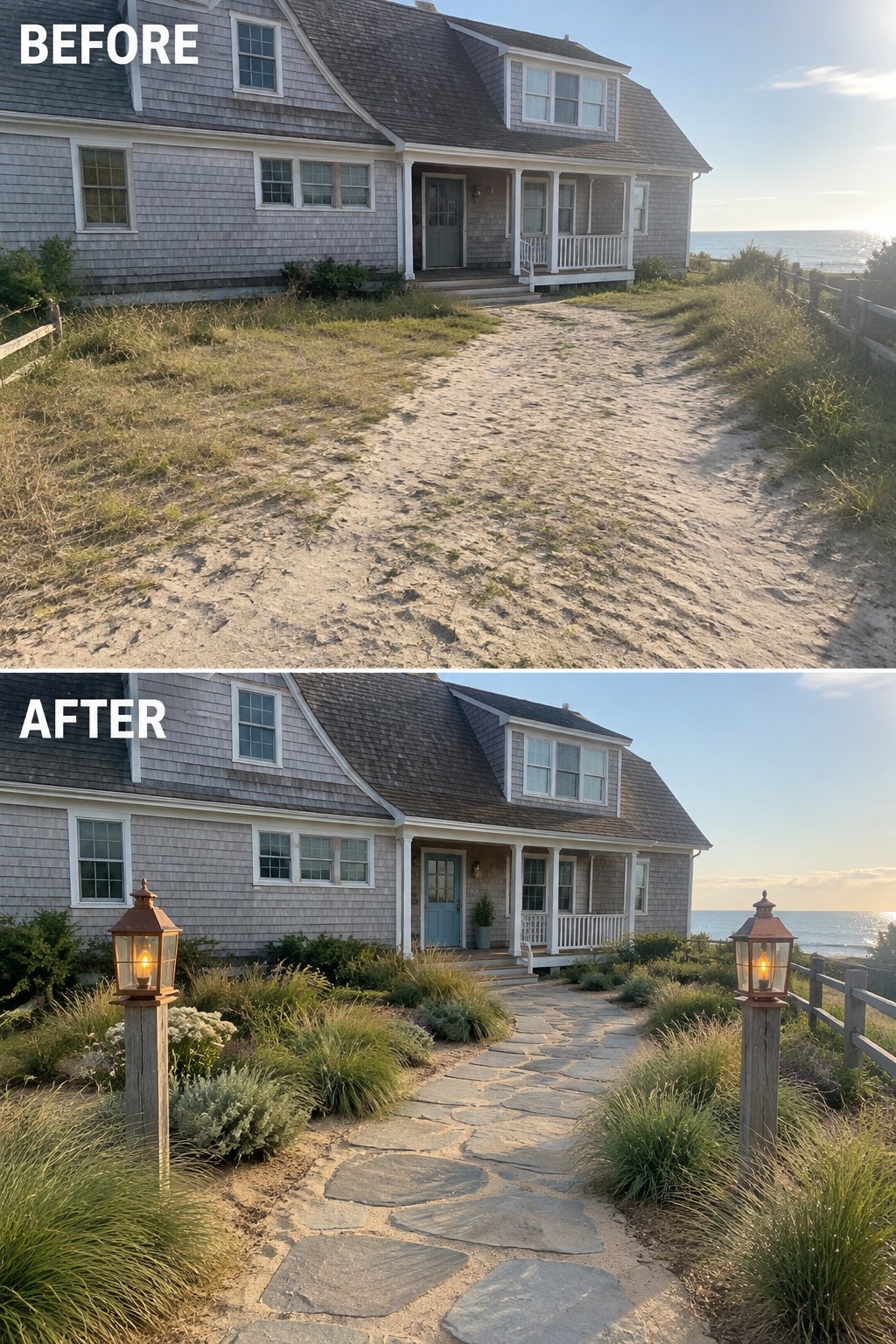
A sandy, undefined path makes any front entry feel unfinished. Replacing it with a clear stone walkway gives the house a proper approach and instantly improves how the whole property reads from the street. The lanterns on simple posts add light and rhythm without cluttering the view.
This idea works well on colonial homes where the front door sits a bit back from the road. Start by clearing the old surface, then lay pavers in a slightly curved line that leads straight to the steps. Keep the planting low and simple on both sides so the path stays the main feature.
Add Lanterns And A Structured Walkway To Frame The Entry
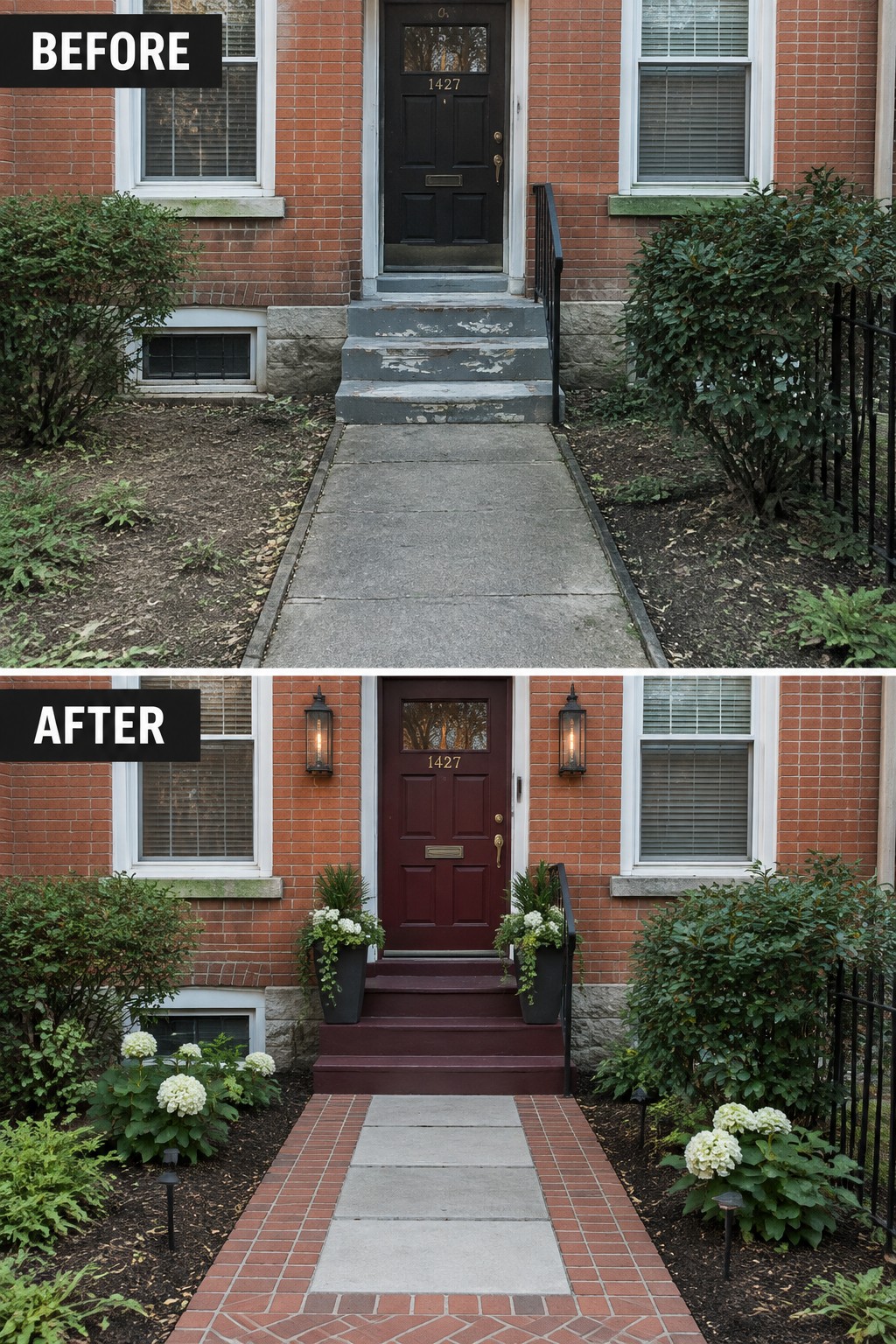
A simple concrete path and plain door can leave a colonial entry looking unfinished. Adding a brick border along the walkway creates clean lines that match the house and guide visitors straight to the door. Placing matching lanterns on either side of the entrance adds balance and gives the facade a more finished look without any major construction.
This idea works best on homes with straightforward brick or siding where the goal is to highlight the front door. Keep the paver border narrow so the path still feels open, and choose lanterns in a scale that fits the door rather than overwhelming it. The same approach can refresh other traditional homes where the entry feels a bit lost in the facade.
Add Lanterns On Stone Pillars To Frame The Entry
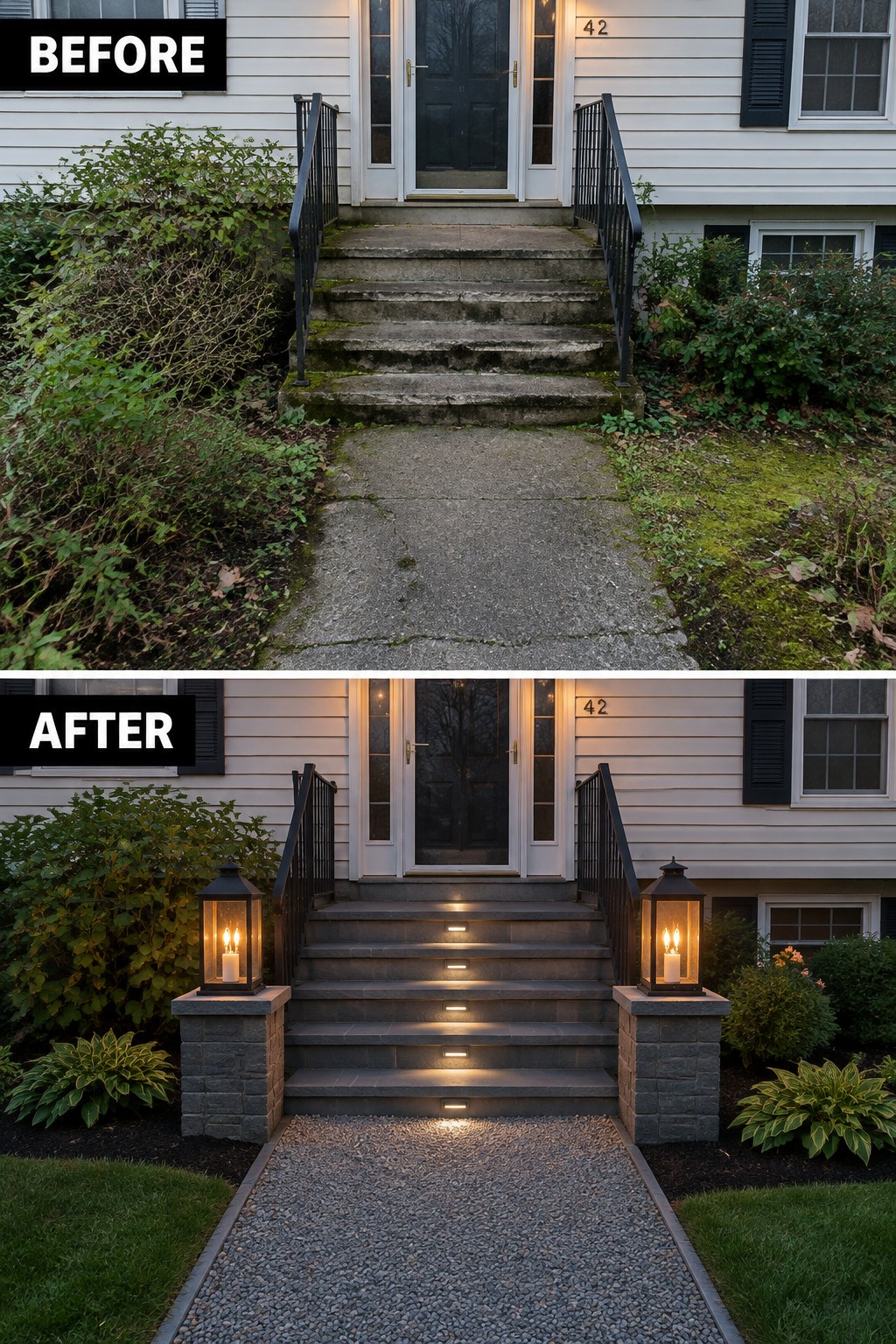
The biggest shift here comes from replacing the messy shrubs and plain concrete path with a pair of stone pillars that hold lanterns right at the base of the stairs. Those lanterns, plus the new gravel walkway and the small lights built into the steps, give the entrance a clear shape and make it feel much more intentional at night.
This approach works well on colonial homes where the front door sits a few steps up from the street. Start by clearing any overgrown plants that crowd the walk, then set simple stone or masonry bases on either side of the stairs. Choose lanterns that match the scale of your door and keep the path material consistent with the rest of the yard so the whole front feels pulled together without needing a full renovation.
Structure The Front Walkway With Pavers And Lanterns
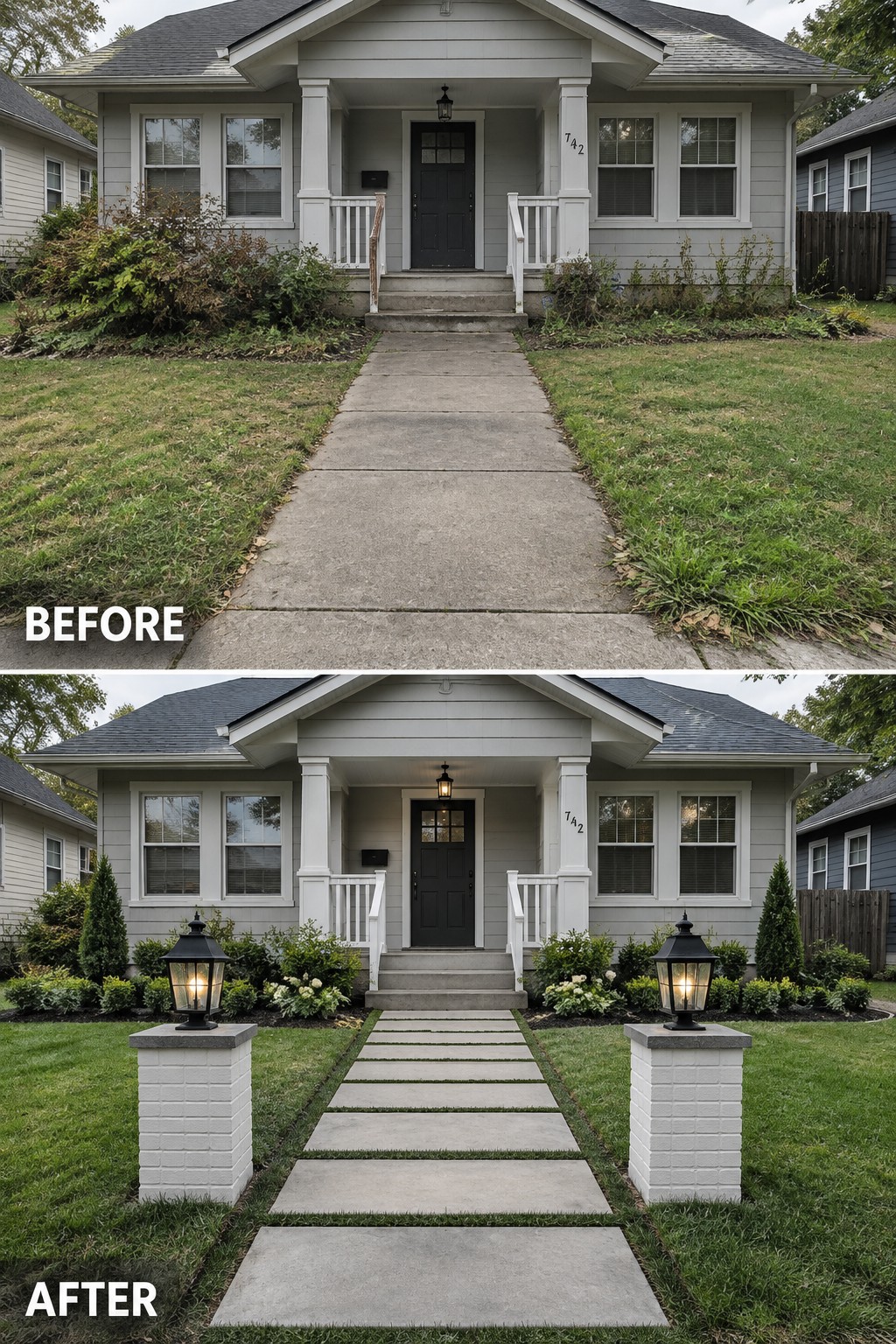
The solid concrete path in the before photo made the front yard feel flat and unfinished. Breaking it into separate pavers with grass between them, then adding two low brick pillars with lanterns at the start, gives the entry a clear shape and draws attention to the door without any major construction.
This idea works best on homes that already have a straight, usable path and just need better definition. Keep the pavers simple, match the pillars to the house trim or foundation, and use one style of lantern on both sides so the look stays balanced. It is an easy change to copy on a colonial house where you want curb appeal without adding too many new plants or features.
Add Lanterns To Frame A Colonial Walkway
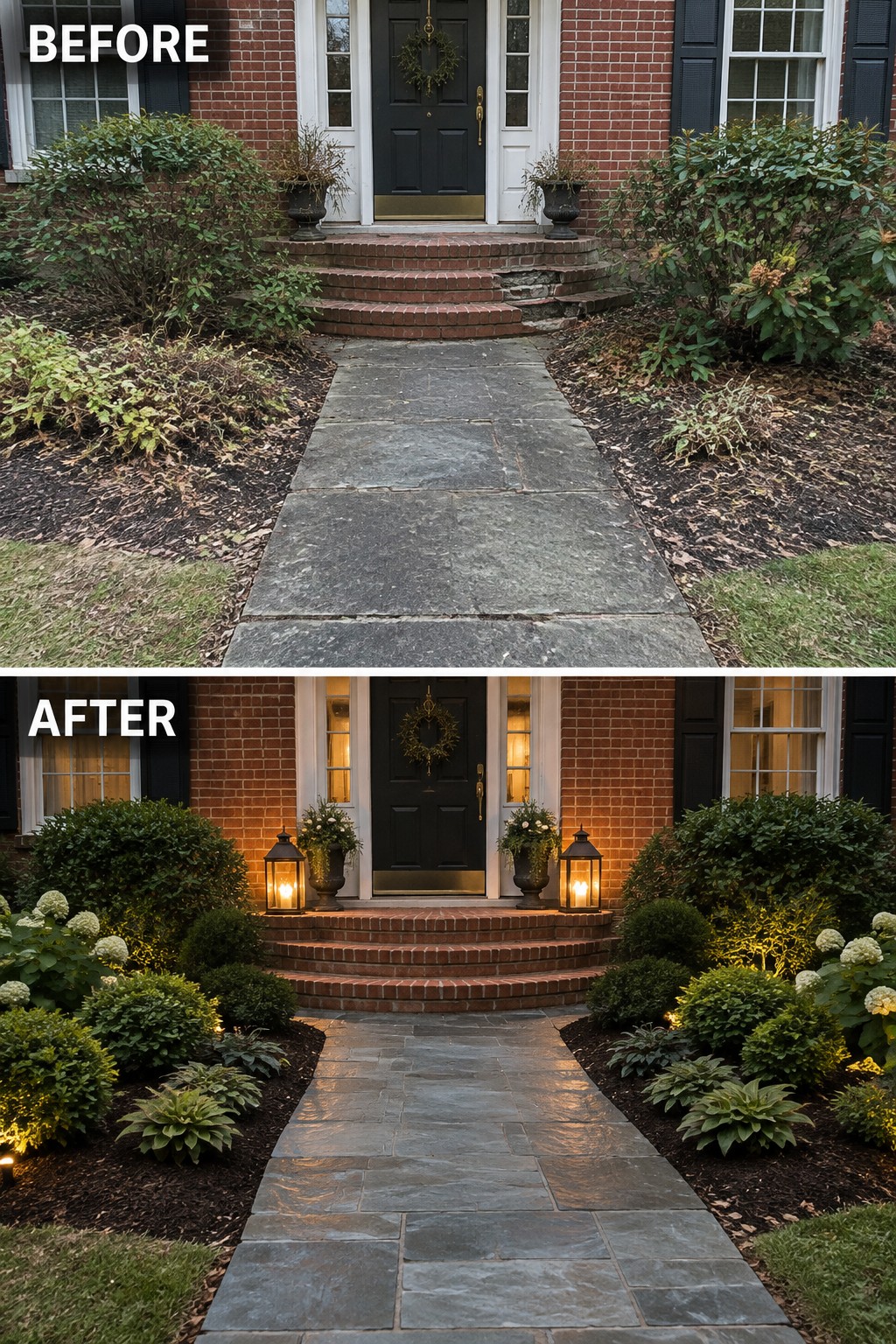
One easy way to improve curb appeal on a colonial home is to add lanterns along the front walkway and bring structure to the planting beds. The before view shows an open path with loose shrubs, while the after view uses a pair of lanterns at the steps and neatly edged beds to make the entrance feel intentional and easier to follow at night.
This approach suits brick colonials with a straight walkway. Start by clearing overgrown plants, then place lanterns at key points like the base of the steps so the light leads visitors forward. Keep new plantings low and rounded so they define the path without crowding it.
Define the Front Path With Gravel and Lanterns
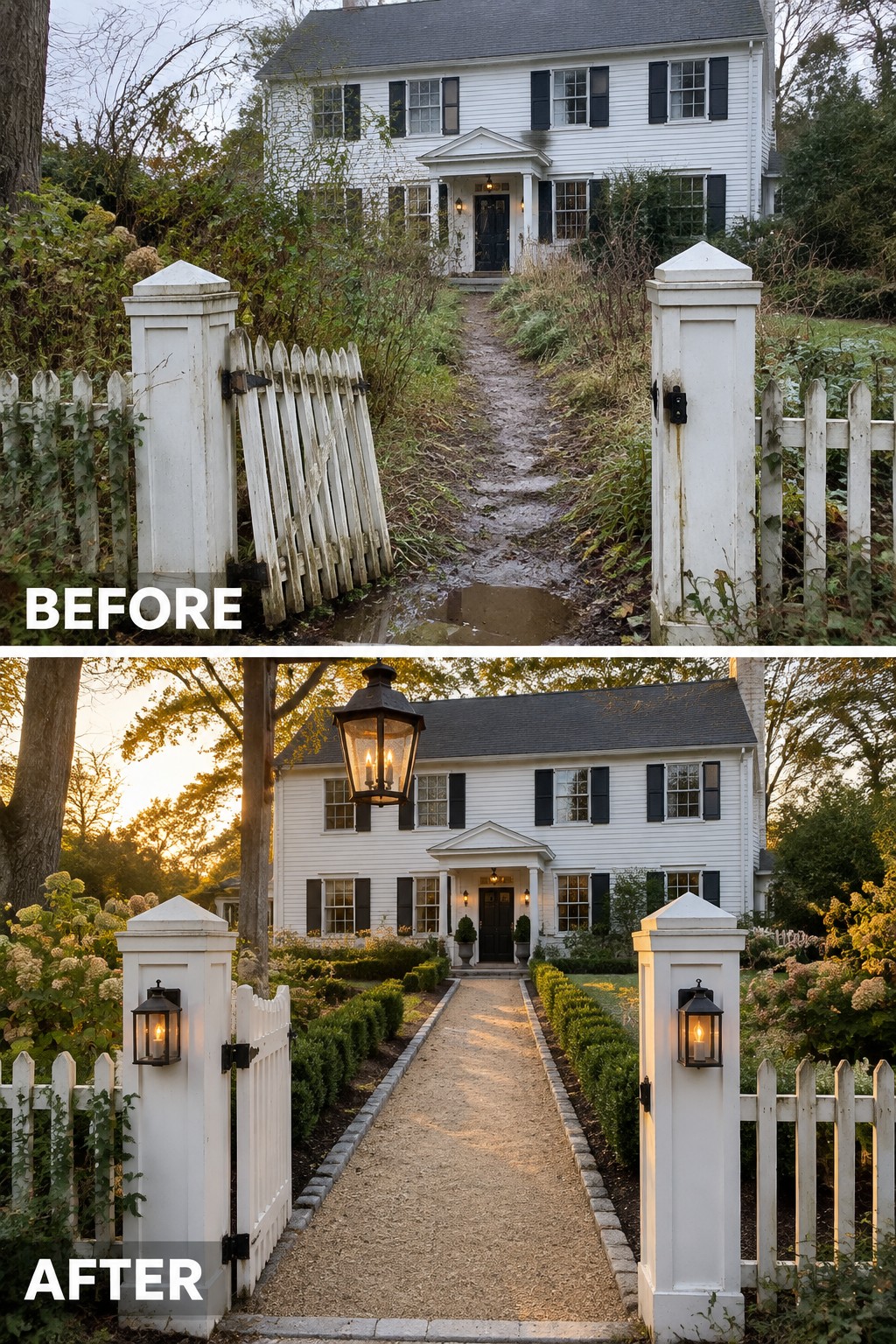
A clear gravel walkway changes how the whole front of a house feels. In the before photo the path was just a muddy track with an open gate, which made the entry feel unfinished. Adding a bordered gravel path, low hedges on both sides, and lanterns on the posts gives the entrance a simple structure that leads the eye straight to the door.
This idea works well on colonial homes where the architecture is already straightforward. Start by clearing the old path and laying down a firm base before you add gravel. Keep the lanterns modest in size so they match the scale of the fence posts rather than overpower them. The same approach can tidy up any older home where the entry feels a little lost in the landscape.
Add Lanterns And Path Lights To Define The Entry
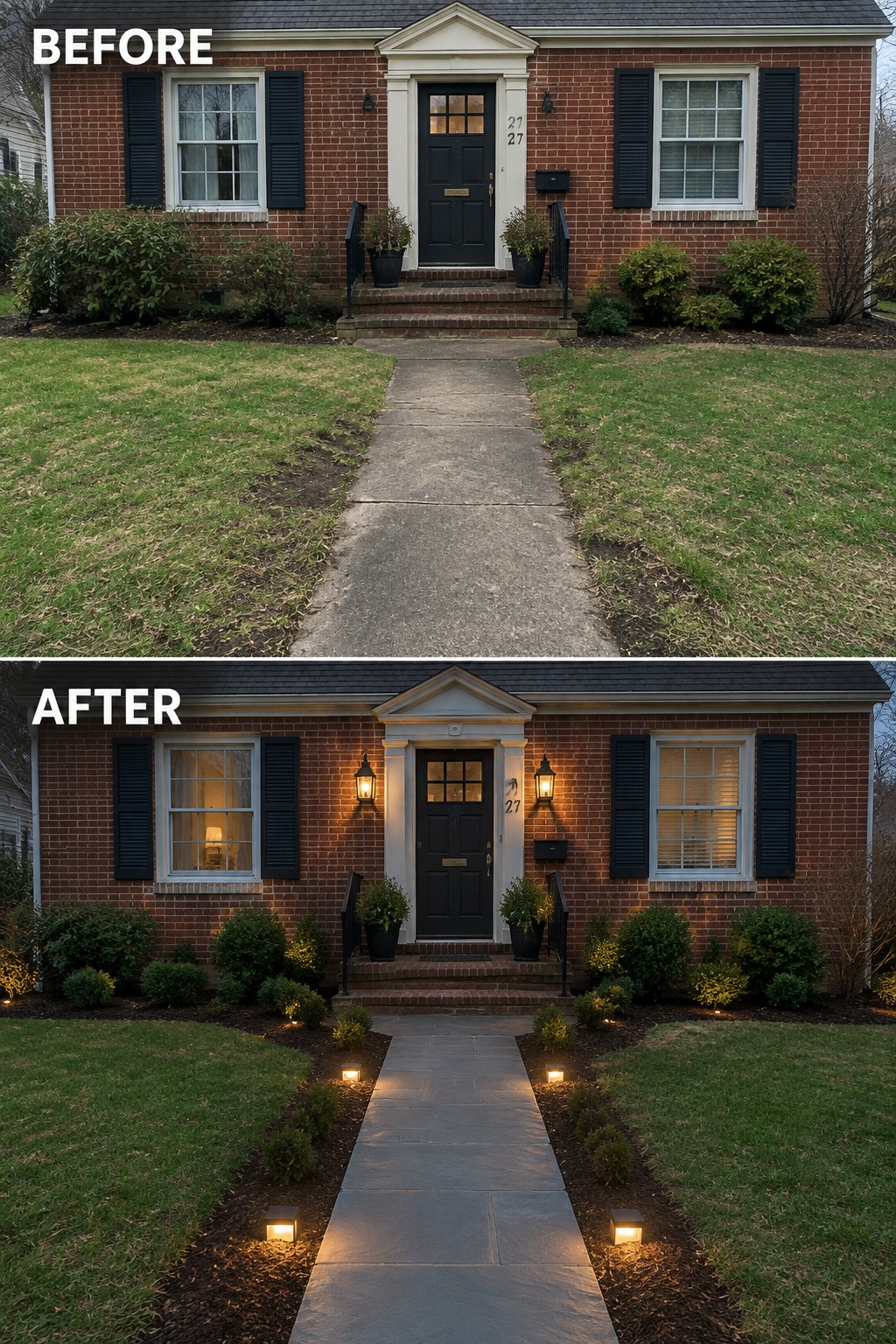
Adding lanterns and path lighting gives a colonial home a clearer, more welcoming front entry without changing the structure itself. The before photo shows a plain concrete walkway with no lights at all, while the after version uses a stone path edged with low lights and two wall lanterns beside the door. The lights make the house feel occupied and easy to approach after dark.
This idea works best on homes with a centered door and a straight path to the street. Pick lanterns that match the scale of your shutters and door, then space the path lights evenly so they mark the edges without cluttering the lawn. It is a low-cost change that improves both safety and first impressions.
Frame The Entry With Lantern Posts And A Brick Walk
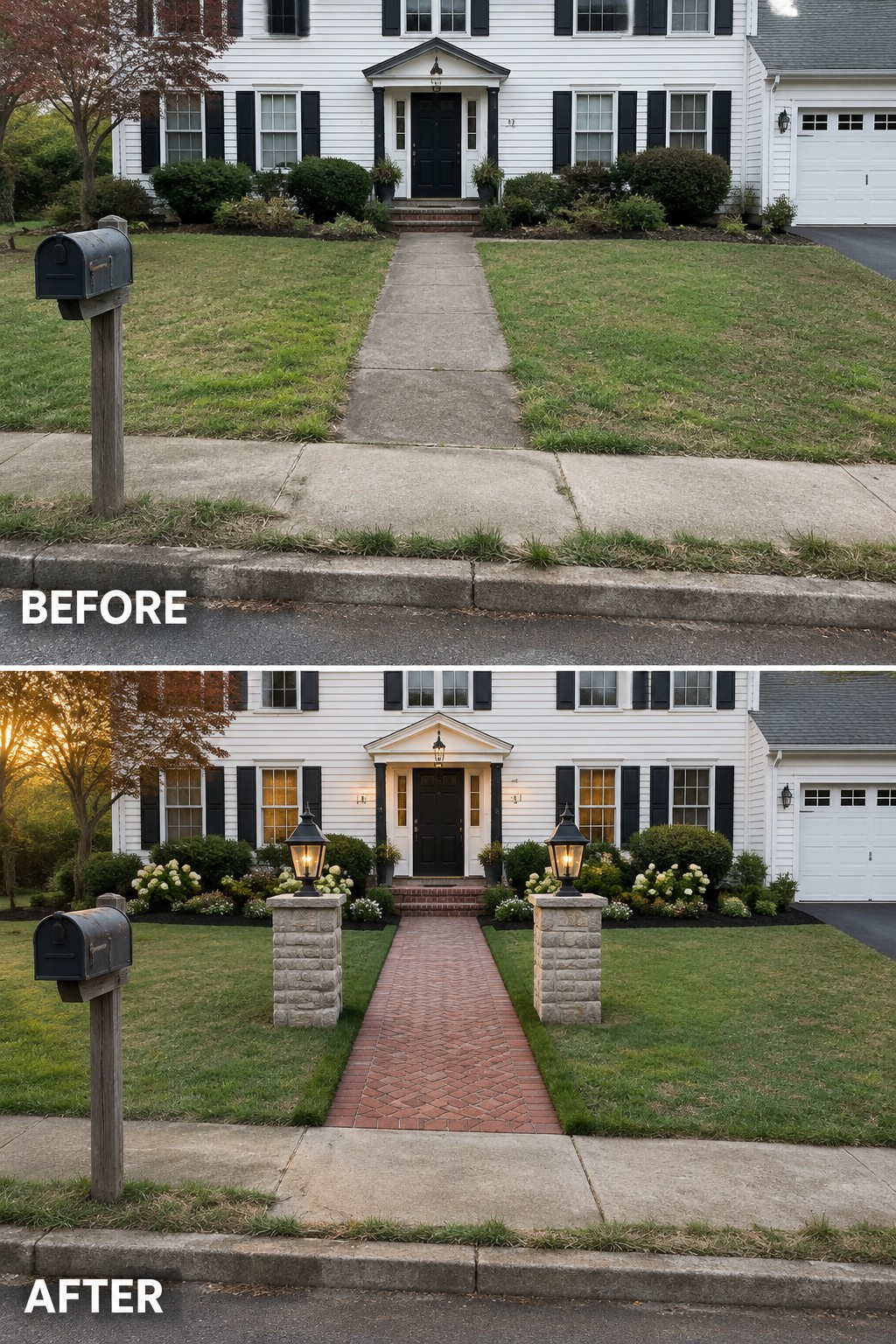
A plain concrete walkway often makes the front of a house feel unfinished. Switching to a brick path with a simple herringbone pattern gives the approach more weight, while the stone pillars and lit lanterns on either side create a clear frame that leads the eye straight to the door.
This idea works well on colonial homes where the architecture already has some symmetry. Keep the path width generous enough for two people to walk side by side, and choose lanterns that match the scale of the house rather than trying to add too many lights at once.
Define A Side Path With Stone Pavers And Lanterns
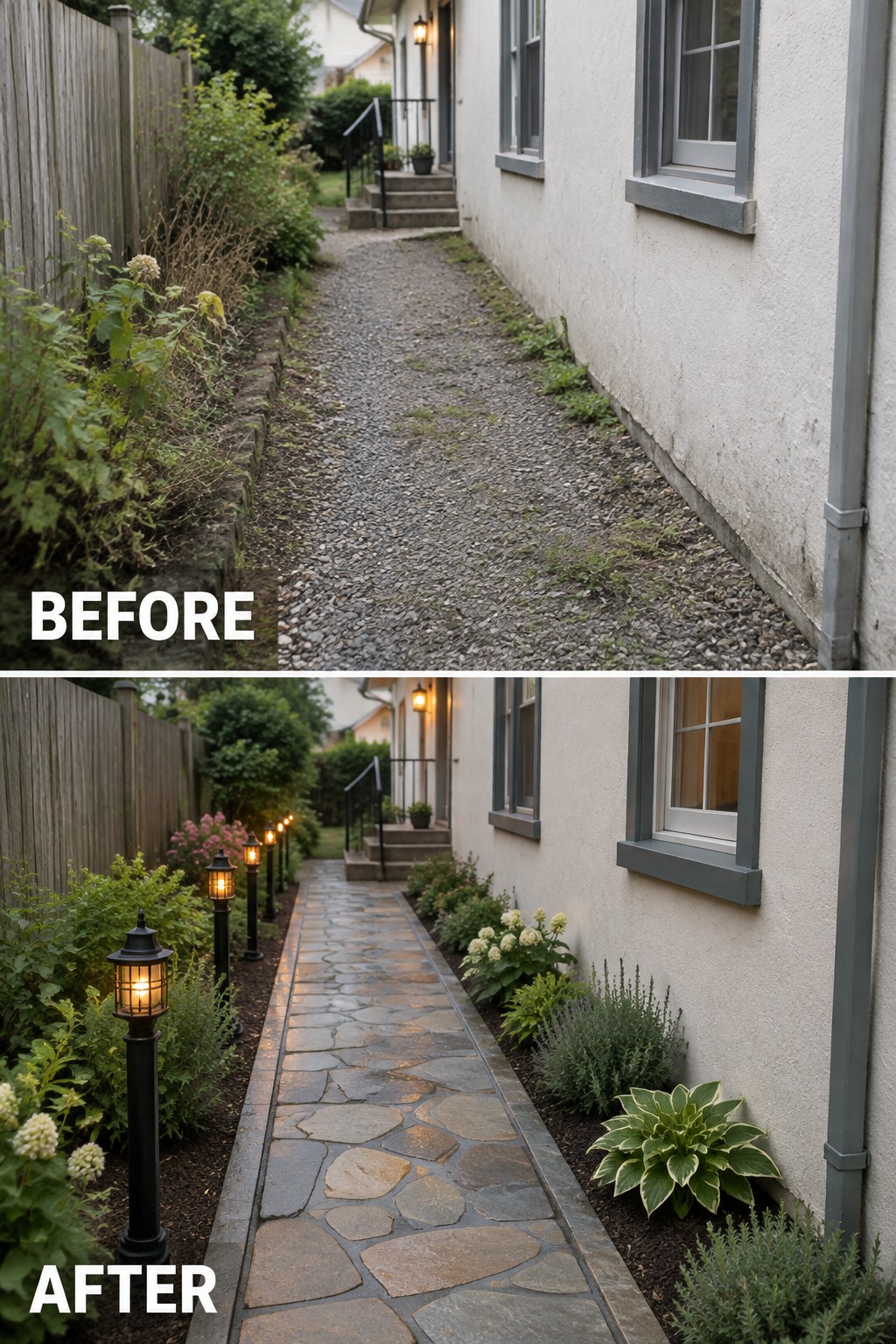
A loose gravel path next to the house often looks unfinished and hard to maintain. Replacing it with stone pavers creates a clear, solid route while a line of lanterns gives the walkway purpose and evening light.
This idea suits older homes with narrow side yards. Keep the path width practical for walking, space the lanterns evenly so they guide rather than decorate, and plant low along the edges to hold the look together without blocking movement.
Add Lanterns Along The Walkway For Evening Curb Appeal
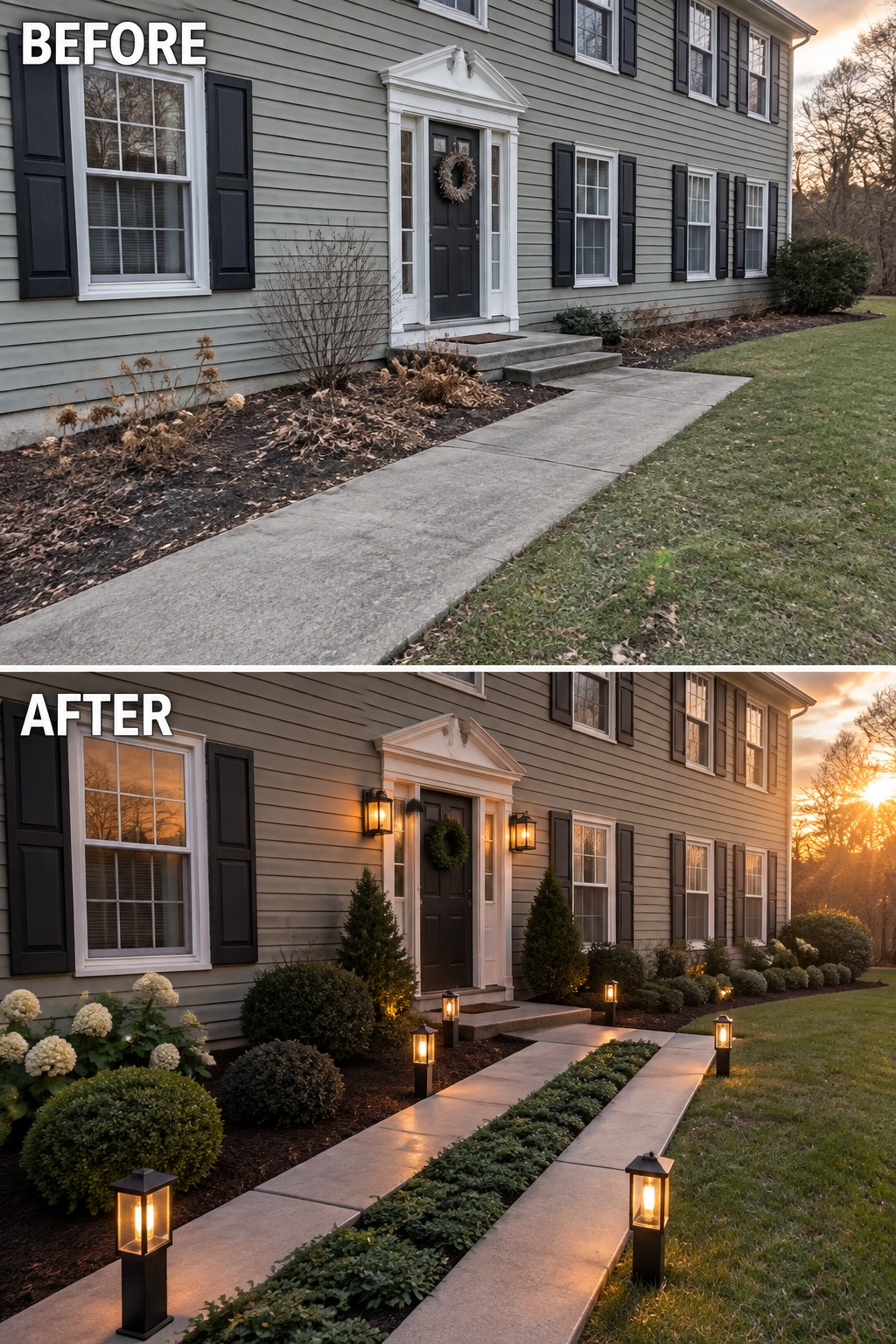
One simple way to improve a front approach is to add low lanterns along the walkway and keep the planting beds neat and defined. In the before photo the beds looked sparse and the path felt plain. After the change, the lanterns create a clear line at night while the low shrubs and flowers give the beds a finished edge that leads straight to the door.
This idea works well on colonial homes where the architecture is already straightforward. Start by cleaning up the beds and laying down fresh mulch, then place lanterns at even intervals so they light the path without crowding it. Keep the planting low so the lights stay visible and the walkway still feels open.
Add Lanterns And A Structured Walkway To Refresh The Entry
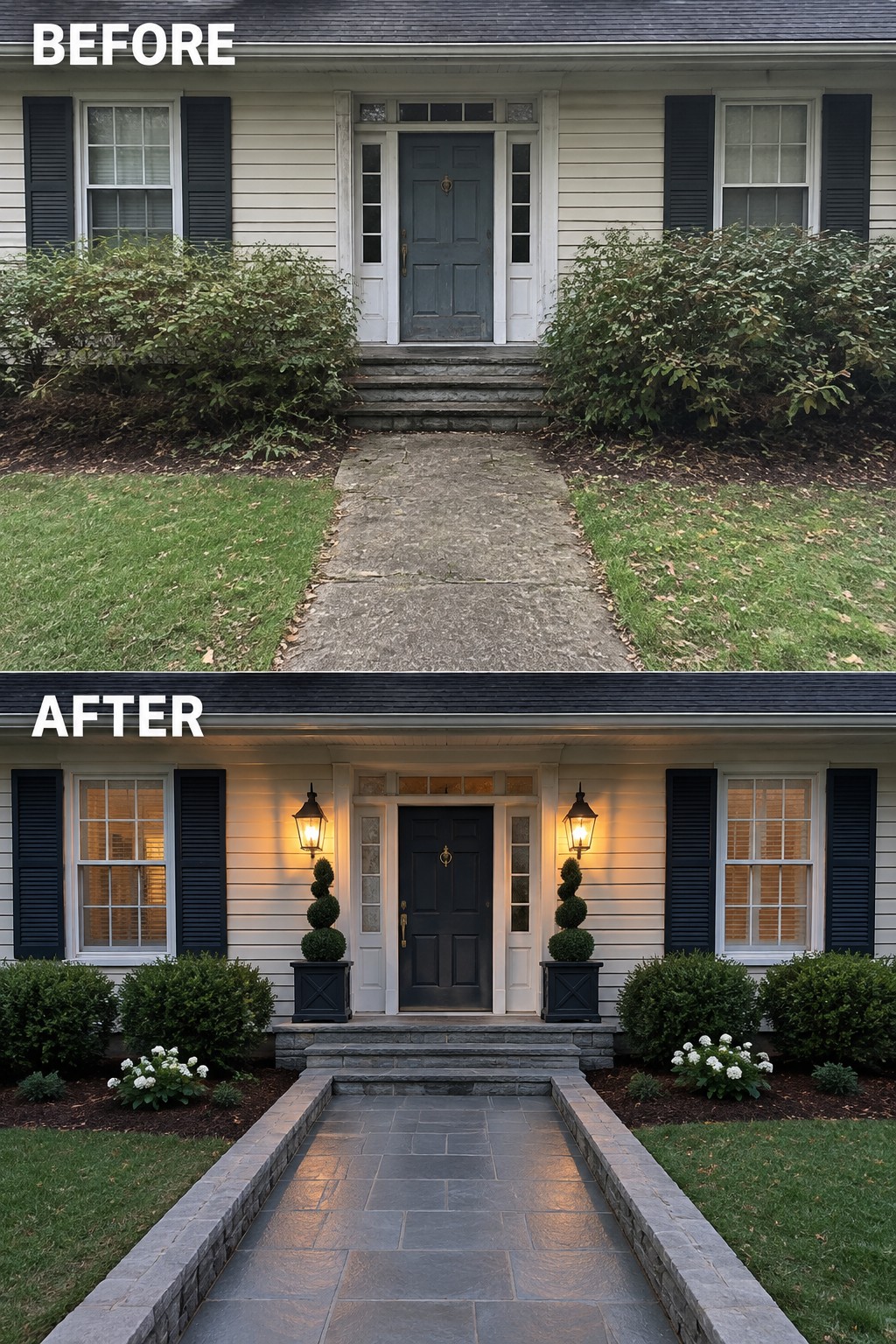
A pair of lanterns placed beside the front door and a stone walkway with clear borders can make a plain colonial entry feel much more finished. The before photo shows an overgrown path and no lighting at the door, while the after shows how the added lanterns and defined walkway create a direct line to the entrance and give the house a more cared-for look at night.
This idea suits colonial homes that already have a centered door and some symmetry. Choose lanterns in a scale that matches the door height, keep the walkway edges straight, and use simple planting on either side so the path stays the main feature. It improves both daytime curb appeal and evening safety without needing a full renovation.
Define The Front Entry With A Paver Path And Lanterns
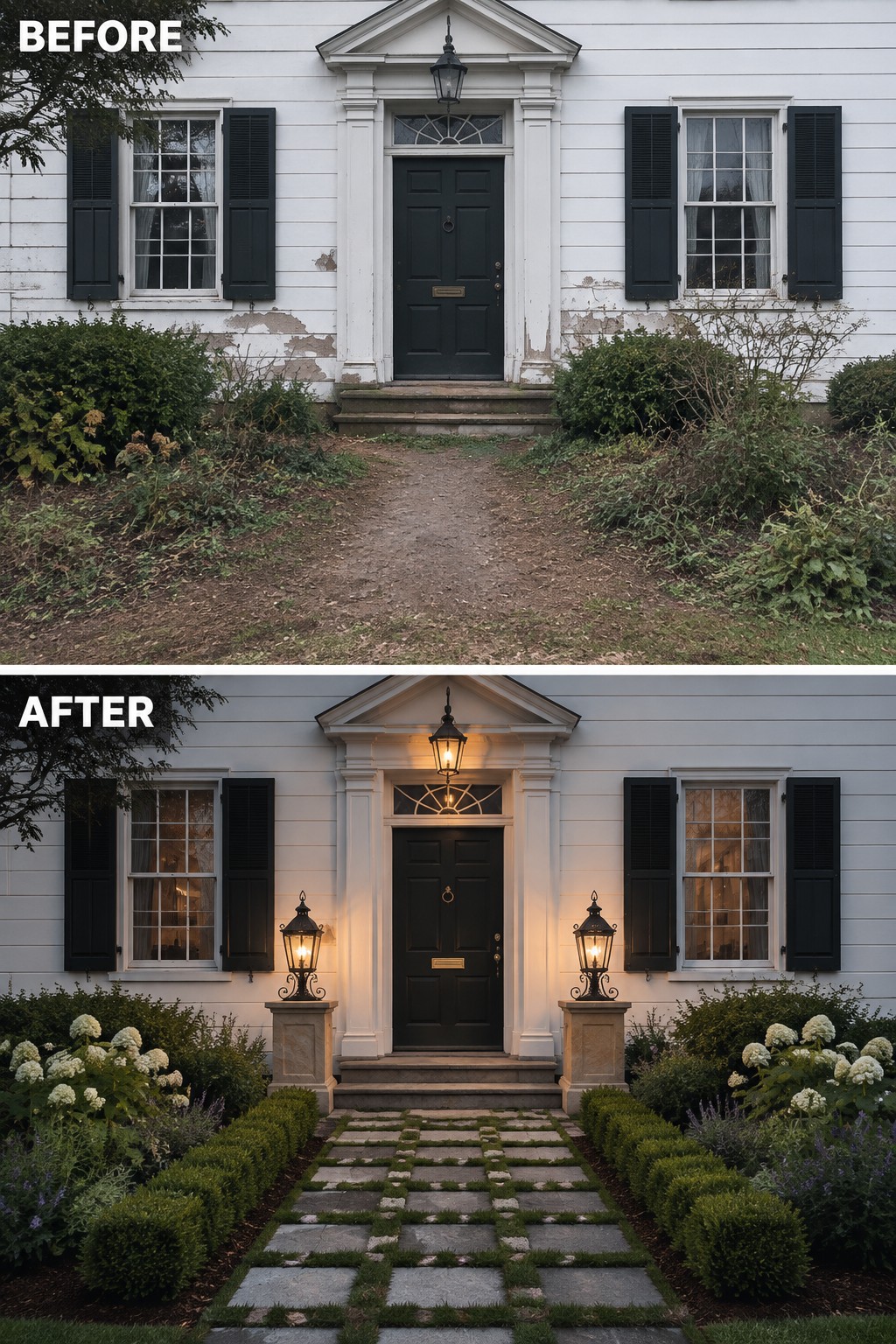
The biggest shift in this makeover comes from replacing an uneven dirt path with a clean grid of stone pavers that leads straight to the door. Two lanterns placed on low pillars help mark the entrance and add usable light after dark.
This idea suits colonial homes that already have a centered door and simple facade. Lay the walkway first so the rest of the planting has a clear shape to follow. Keep the beds narrow along the sides so the path stays the main feature instead of getting crowded.
Frequently Asked Questions
Q: How far apart should the lanterns go along a structured walkway? A: Place them every eight to ten feet. This way the light pools gently along the path and guides visitors without any harsh glare.
Q: Do solar lanterns cut it for a colonial setup or do they need wiring? A: Solar lanterns work fine if you pick ones with good battery life. They avoid the hassle of wiring and still give that warm colonial glow after dark.
Q: What border material keeps a walkway looking sharp without constant fixes? A: Stone or brick edges hold the shape through seasons and foot traffic. They frame the path cleanly and match the house style with little extra work.