

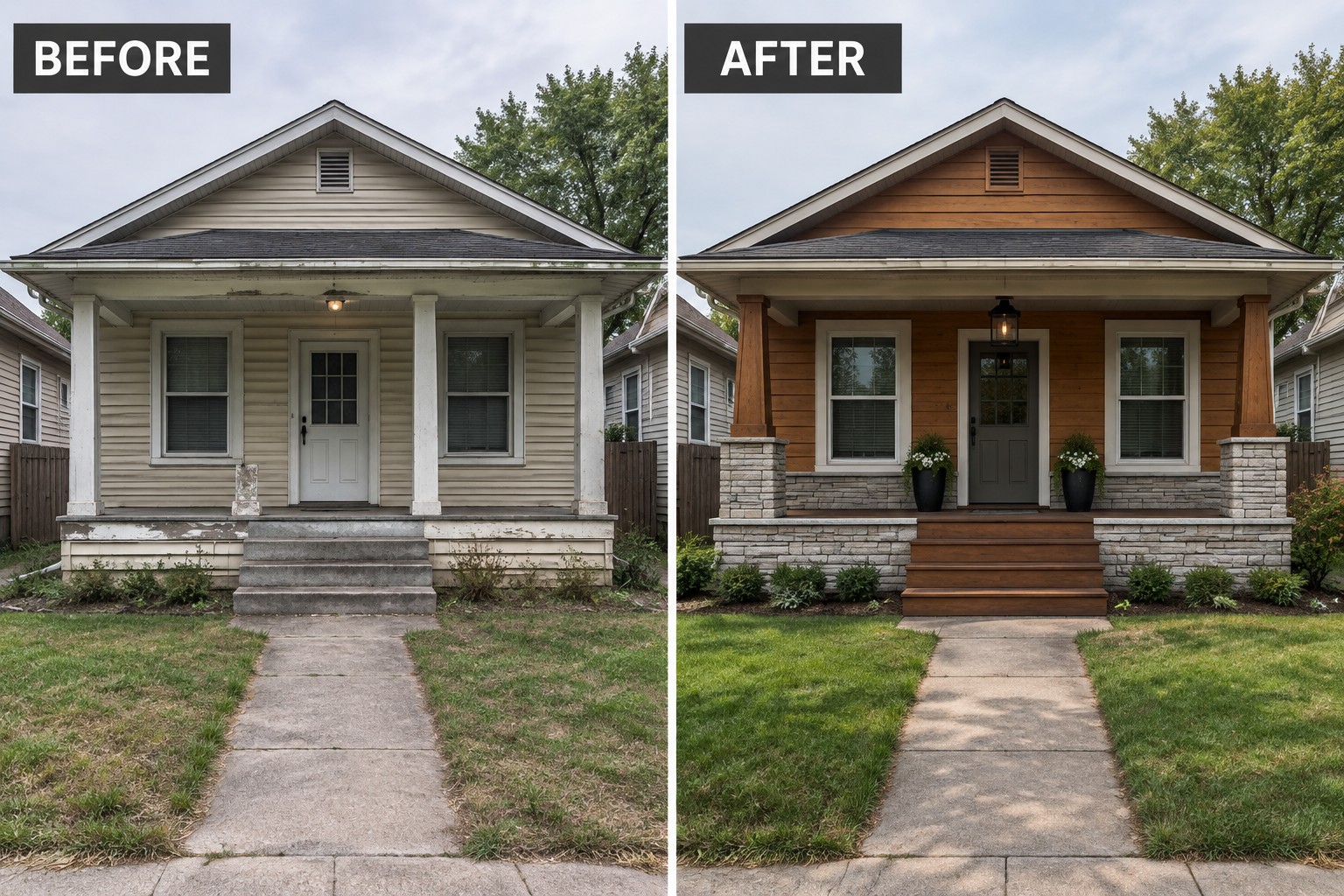
I have always noticed that changing the siding on a house can shift how the whole property reads from the street even when nothing else moves.
Stone and wood accents tend to give flat surfaces more weight and help tie the roofline down to the foundation in a way that feels settled.
Some homes simply need that added texture to stop looking temporary.
I keep wondering which wood tone would hold up best against the weather on my own place before I commit to a full section.
It helps to see real examples that show how these materials work together on different house shapes so the ideas can be tested in smaller spots first.
Refresh Dated Siding With Stone And Wood Accents
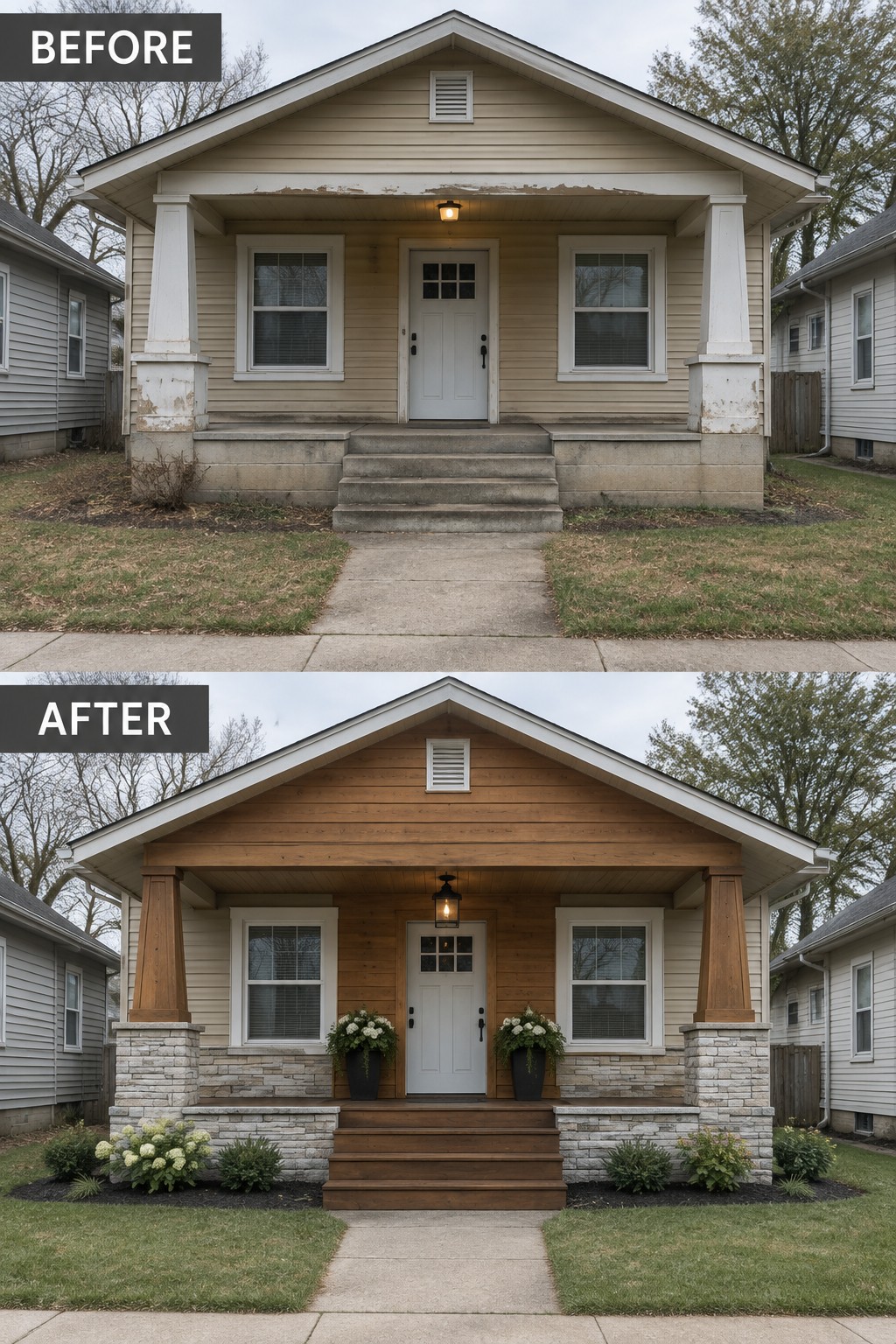
Many older homes have siding that still works but looks flat and worn after years of weather. Adding wood accents to the gable and porch ceiling, then wrapping the columns and lower walls in stone, gives the facade more depth and structure without replacing every board. The change turns a simple beige house into one that feels more solid and welcoming from the street.
This approach works well on modest homes where a full siding job would cost too much. Focus the new materials around the entry and porch first, keep the color palette simple, and make sure the stone and wood finishes can handle your local weather. The rest of the siding can stay as long as it is clean and in good shape.
Add Stone Veneer And Wood Trim To A Plain Single-Story Home
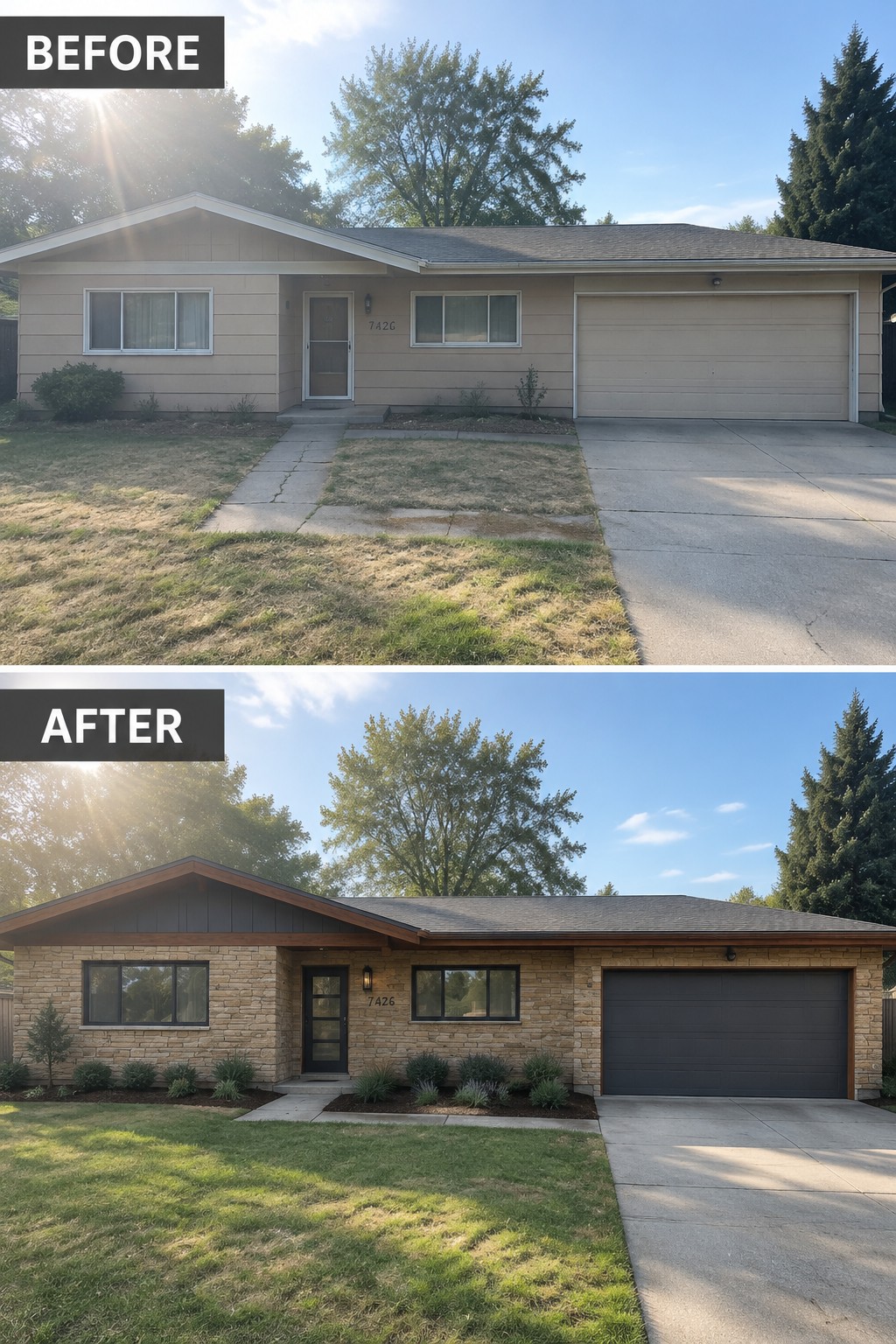
Many houses from a certain period end up with wide, flat siding that makes the front look unfinished. Adding stone veneer across the main facade and wood trim along the gable gives the house more depth and a sturdier feel.
This idea works well on single-story homes where the siding runs unbroken from one end to the other. Keep the stone low and centered around the door and garage, then repeat the wood tone on any new trim or door frame so the updates read as one change rather than several small ones.
Highlight The Gable And Porch Columns With Contrasting Materials
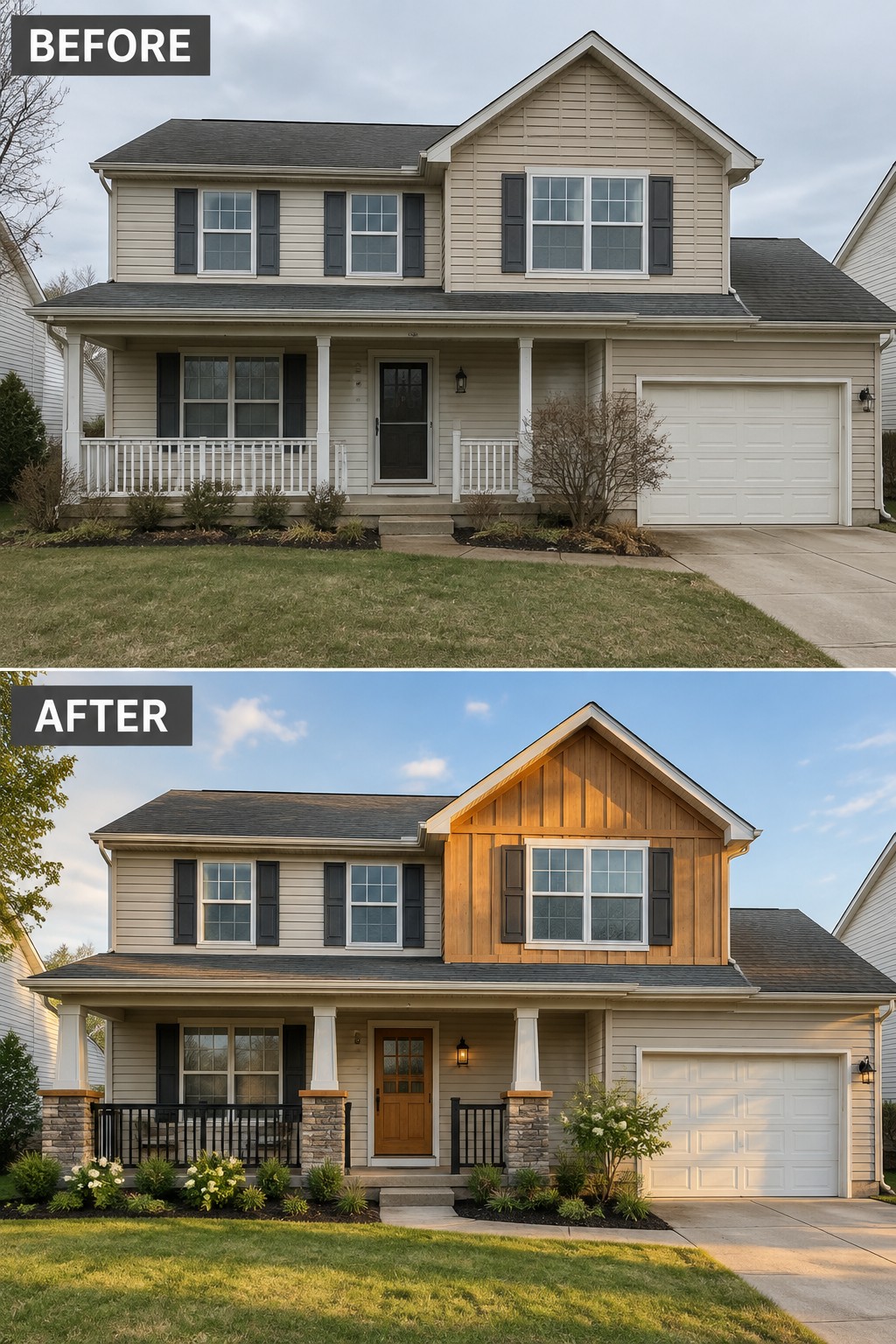
Many houses with basic siding end up looking flat because everything sits on the same plane. Adding wood to the front gable and stone to the porch columns breaks up the surface and gives the entry more weight without a full siding replacement.
This idea works best on two-story homes where the porch and upper peak are the main visible spots from the street. Keep the rest of the siding as is, match the new materials to your roof color, and limit the accents to one or two areas so the change stays simple and affordable.
Update Weathered Siding With A New Color And Stone Base
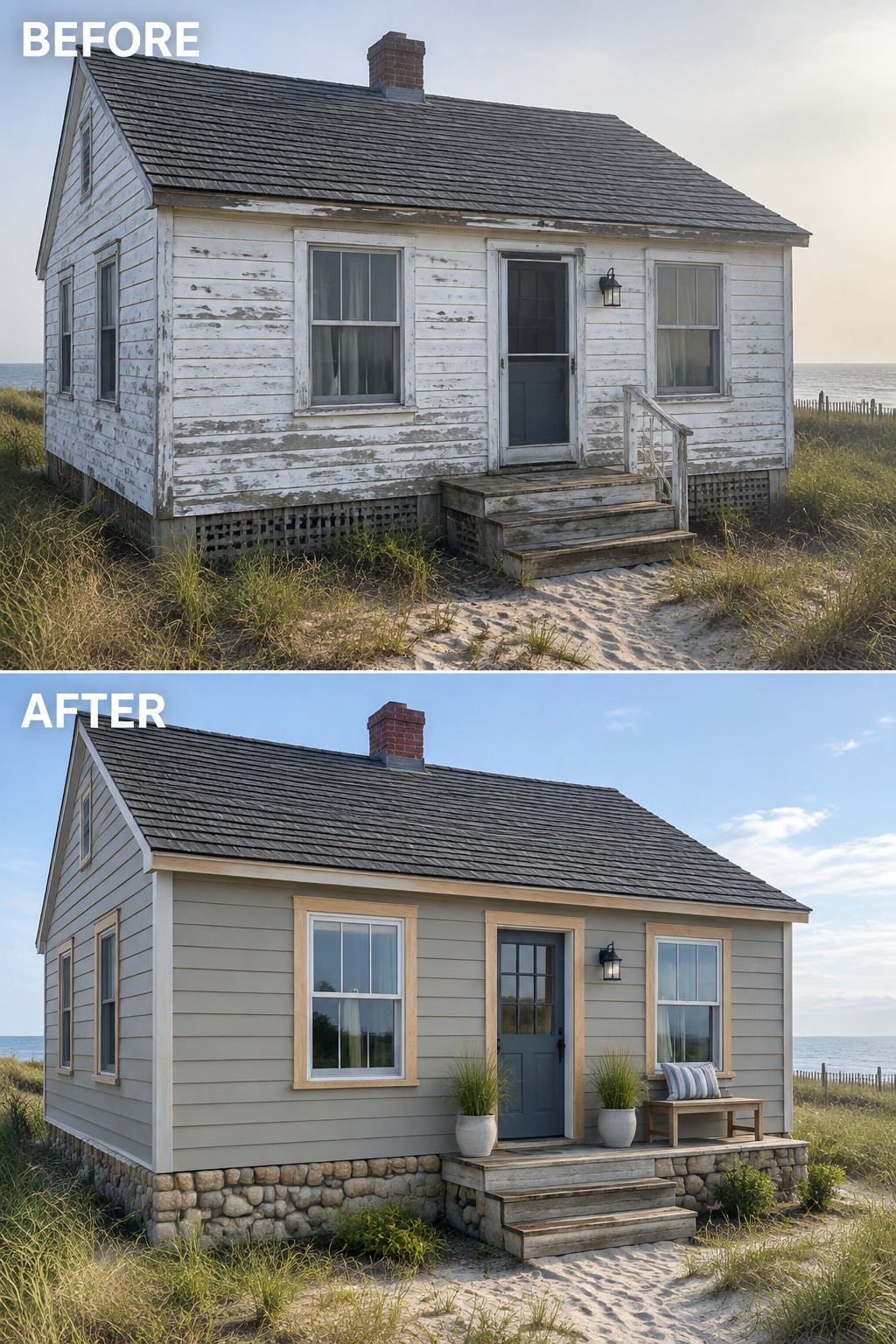
Changing the siding color and adding a stone base can make an older home feel more solid without a full rebuild. The peeling white paint and worn wood gave way to a soft gray finish with lighter trim, while the foundation switched to stacked stone. These two shifts alone make the house look better cared for and more connected to the ground.
This idea suits small cottages or homes near the water where salt air takes a toll on paint. Focus on the siding and base first, then add a bench or a couple of planters near the door. Keep the trim simple so the new color reads clean rather than busy.
Combine Warm Wood Cladding With A Stacked Stone Foundation
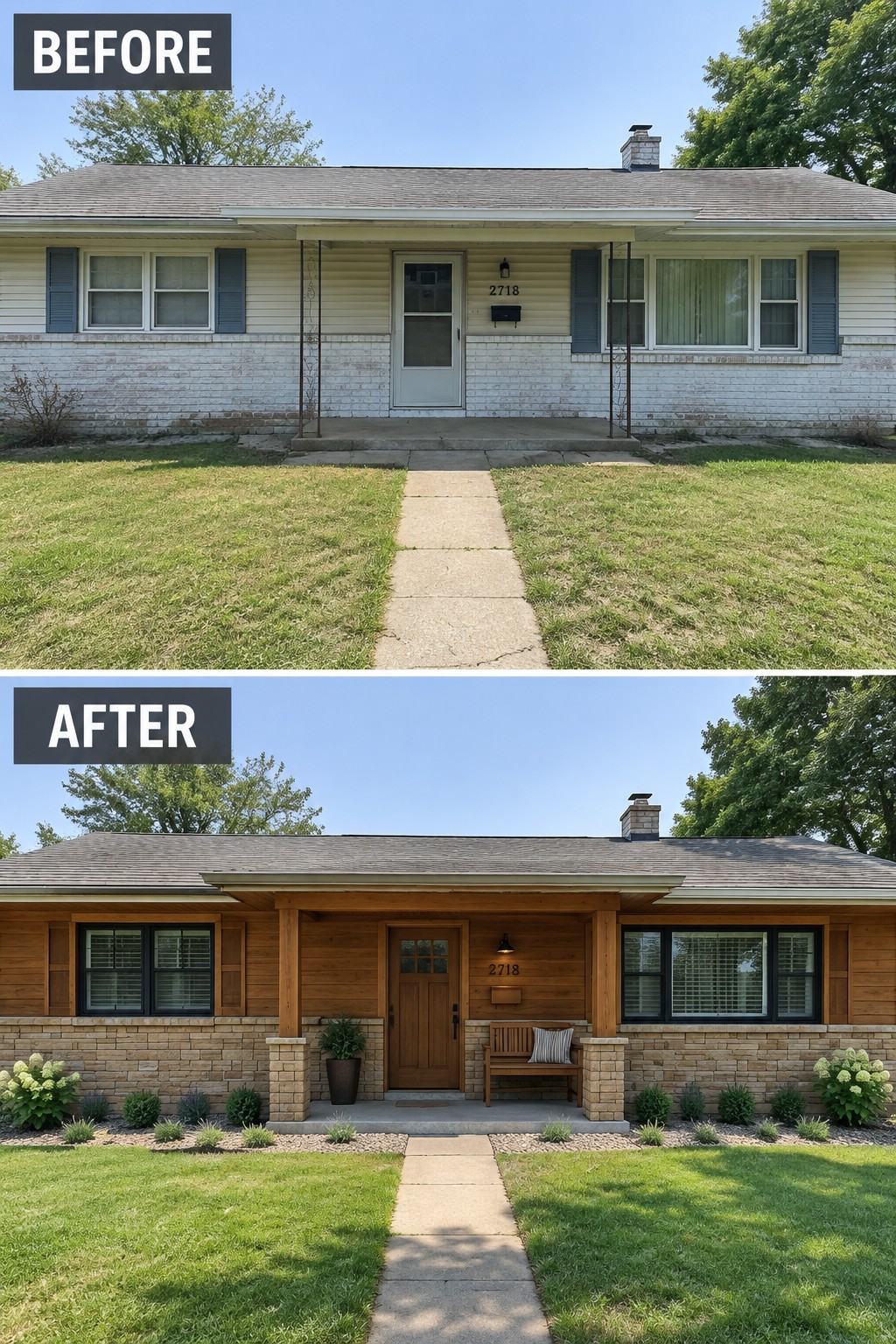
Many older homes have flat siding that makes the front look plain after a while. Replacing sections with wood and adding a stone base gives the house more texture and makes the entry feel more solid. The change from basic beige siding and white brick to warm wood and stacked stone shifts the whole look without changing the roofline or windows.
This idea works best on single-story homes where the front wall is the main view from the street. Keep the wood tone simple and let the stone stop at the porch columns so it does not overwhelm the house. Add just one small bench and a couple of planters near the door to finish the space.
Frame The Entry With Stone And Wood Accents
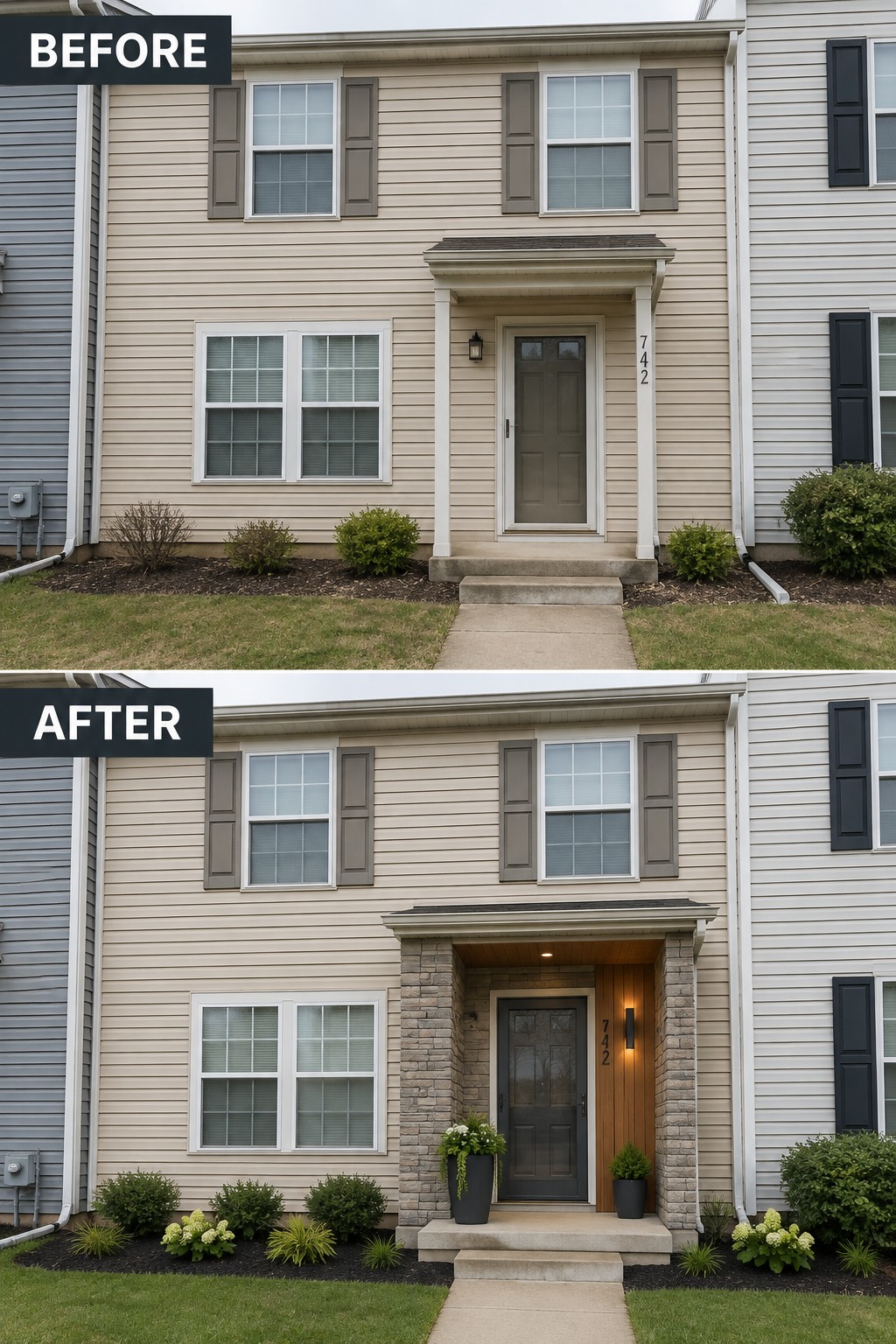
A plain entry often makes the whole front of a house feel unfinished. Adding stone columns and a wood accent panel around the door gives the facade more structure and presence while keeping the rest of the siding intact.
This idea works best on homes with simple siding where the entry needs more weight. Keep the materials in a similar color range to the existing house so the change feels like an upgrade rather than a full overhaul, and let the new accents do the main work.
Upgrade A Garage-Focused Facade With Wood Doors And Stonework
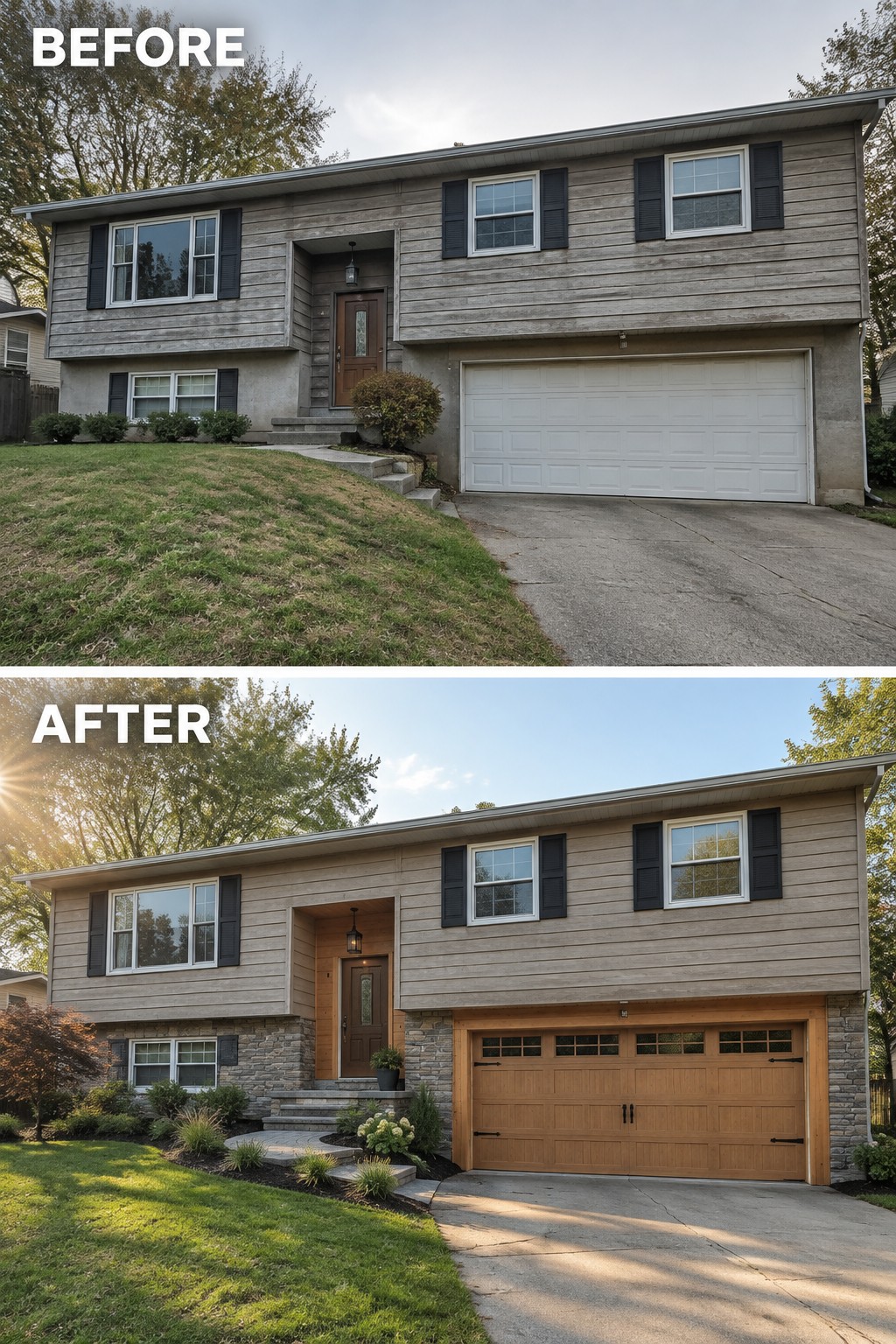
Many homes with horizontal siding end up looking flat once the original materials age. Changing the garage door to wood and adding stone around the entry and lower walls gives the front a clearer structure and a warmer look without a full siding replacement.
This idea works best on houses where the garage takes up a large part of the facade. Focus on the door and entry first, then add stone only in a few key spots so it feels like a natural extension rather than extra decoration. Keep the siding color and trim simple so the new materials do the main work.
Restore Worn Siding With Crisp White Paint And Defined Accents
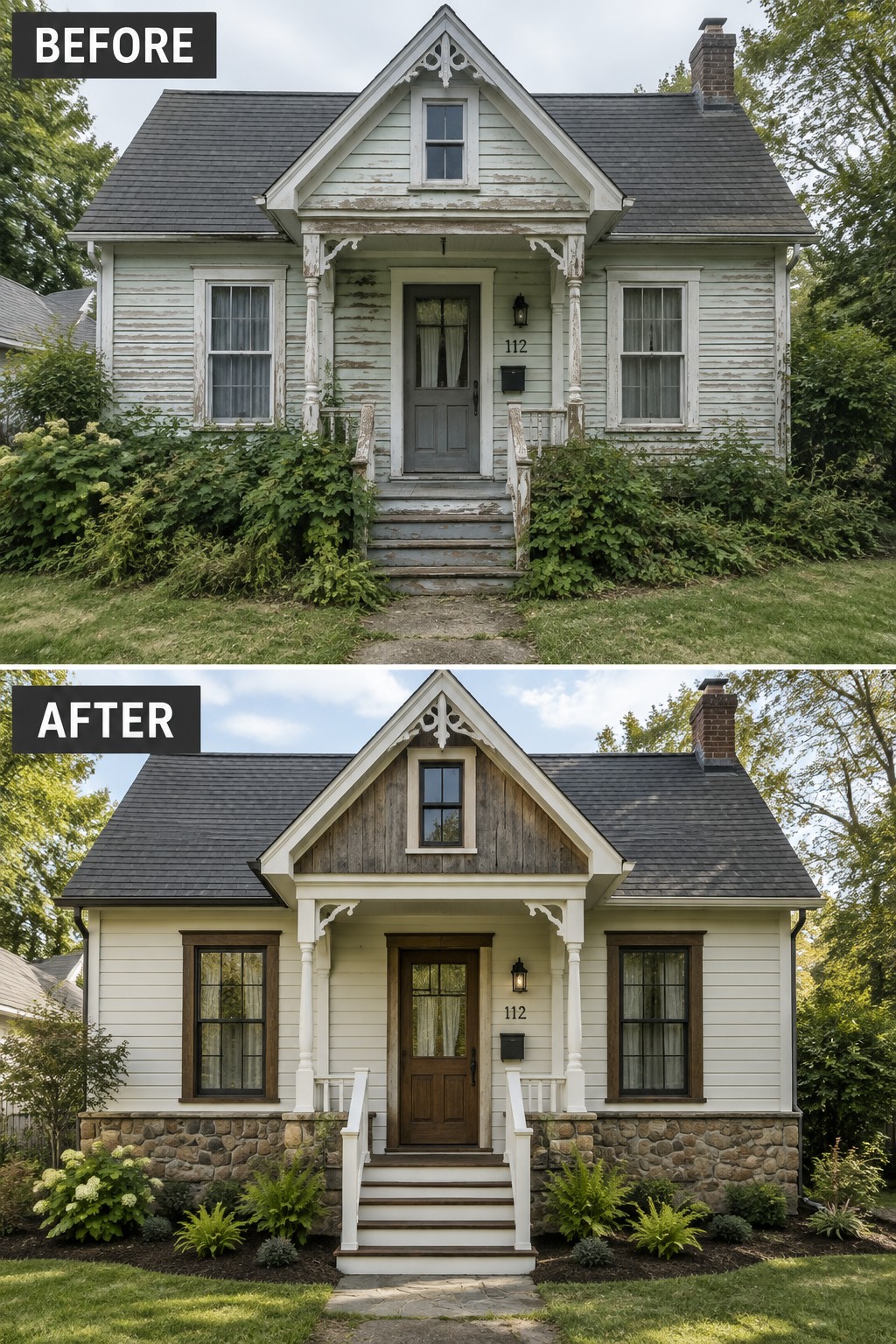
Many older homes end up with siding that looks tired and worn. A fresh coat of paint combined with a stone foundation and wood accents on the gable and windows can give the whole exterior a cleaner, more finished look without major construction. The shift from peeling paint and hidden details to crisp white siding and defined accents shows how these materials add structure and interest.
This idea suits smaller homes where you want to improve curb appeal on a budget. Start with the base and any prominent gables rather than trying to cover the entire house. Keep the color simple so the stone and wood stand out, and make sure the new materials match the scale of the house so the result feels balanced.
Add Wood Porch Details And A Low Stone Foundation Veneer
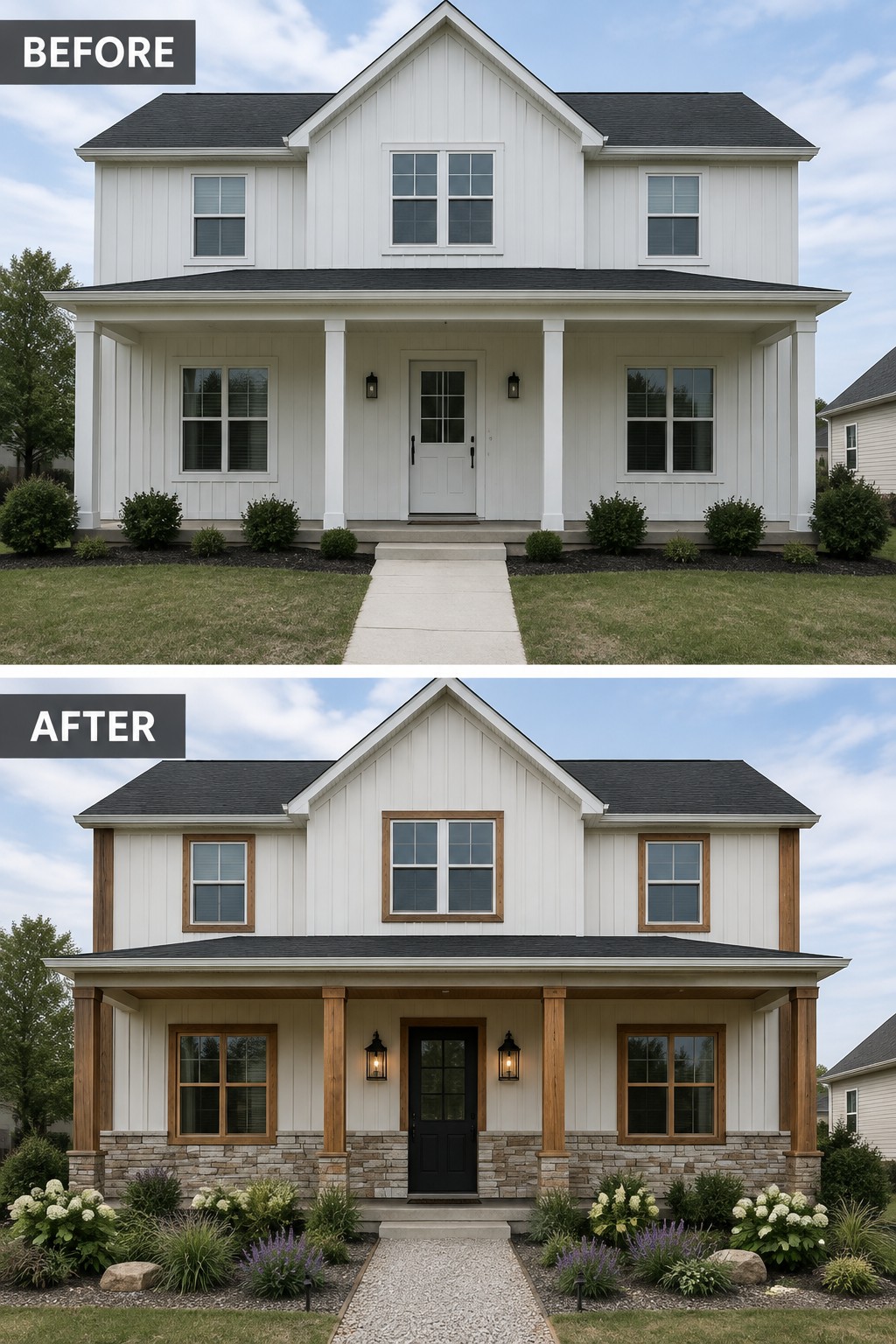
A simple way to update a plain house is to add wood trim and a stone base without replacing the whole siding. The white exterior gained wood cladding on the porch columns and a low stone veneer along the foundation, which added depth and made the front feel more finished.
This idea suits homes with basic siding that still need more character. Start with the porch and lower walls, match the wood tone to your roof or trim, and keep the rest of the house simple so the new materials do the work.
Refresh Log Siding With Darker Stain And Stone Accents
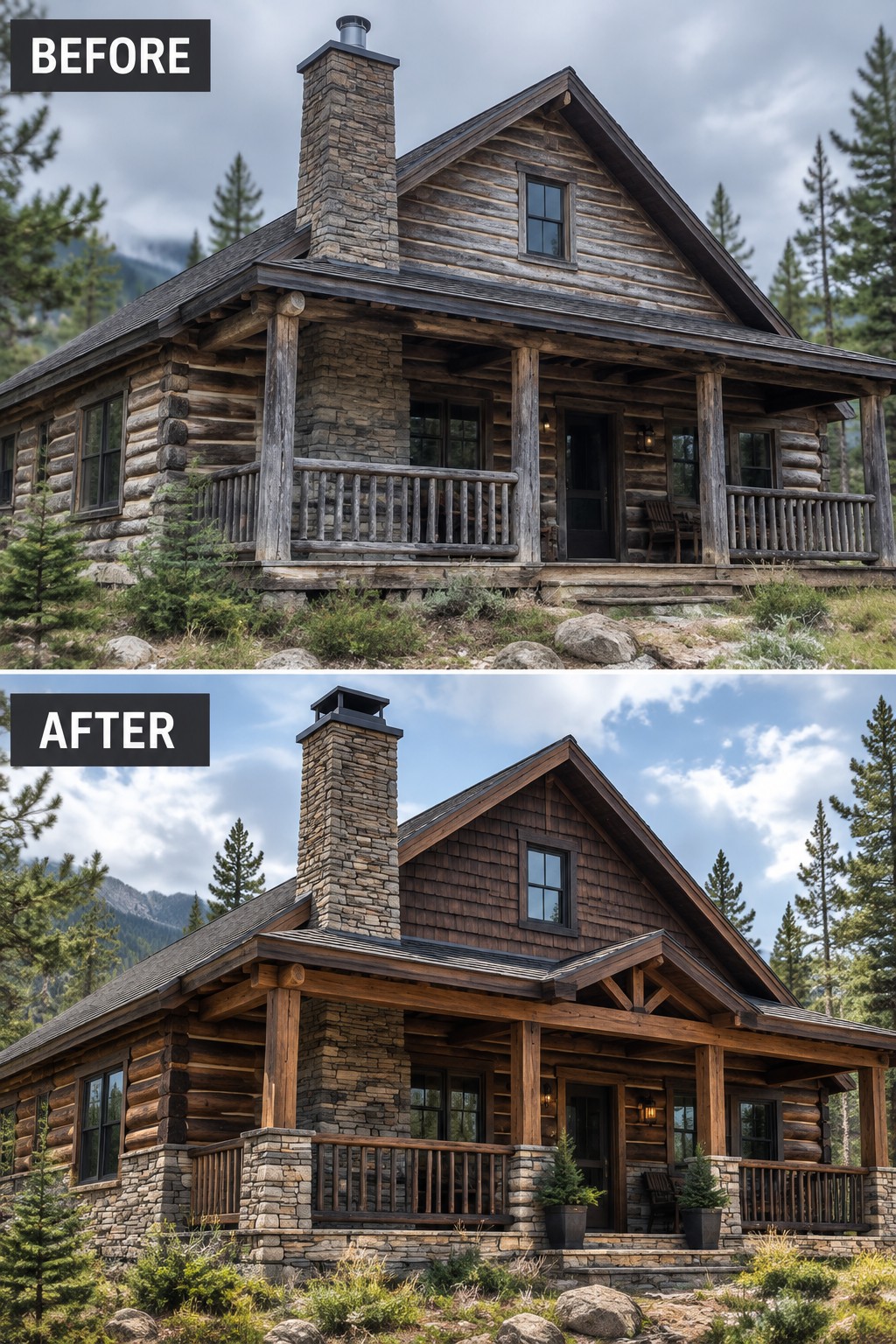
Many older log homes end up with faded, gray wood that makes the whole exterior feel tired. A simple change to a darker stain brings the logs back to life and gives the house more depth. Adding stone bases to the porch posts and updating the chimney with a modern cap ties everything together without needing a full rebuild.
This approach works well on cabins or rustic homes where the wood is still solid but the color has gone flat. Start with a thorough cleaning and a quality exterior stain in a warm brown tone. Then add stone veneer to the lower porch supports and any key columns. The result feels more finished while keeping the natural character of the logs.
Warm Up Existing Siding With Stonework And New Wood Steps
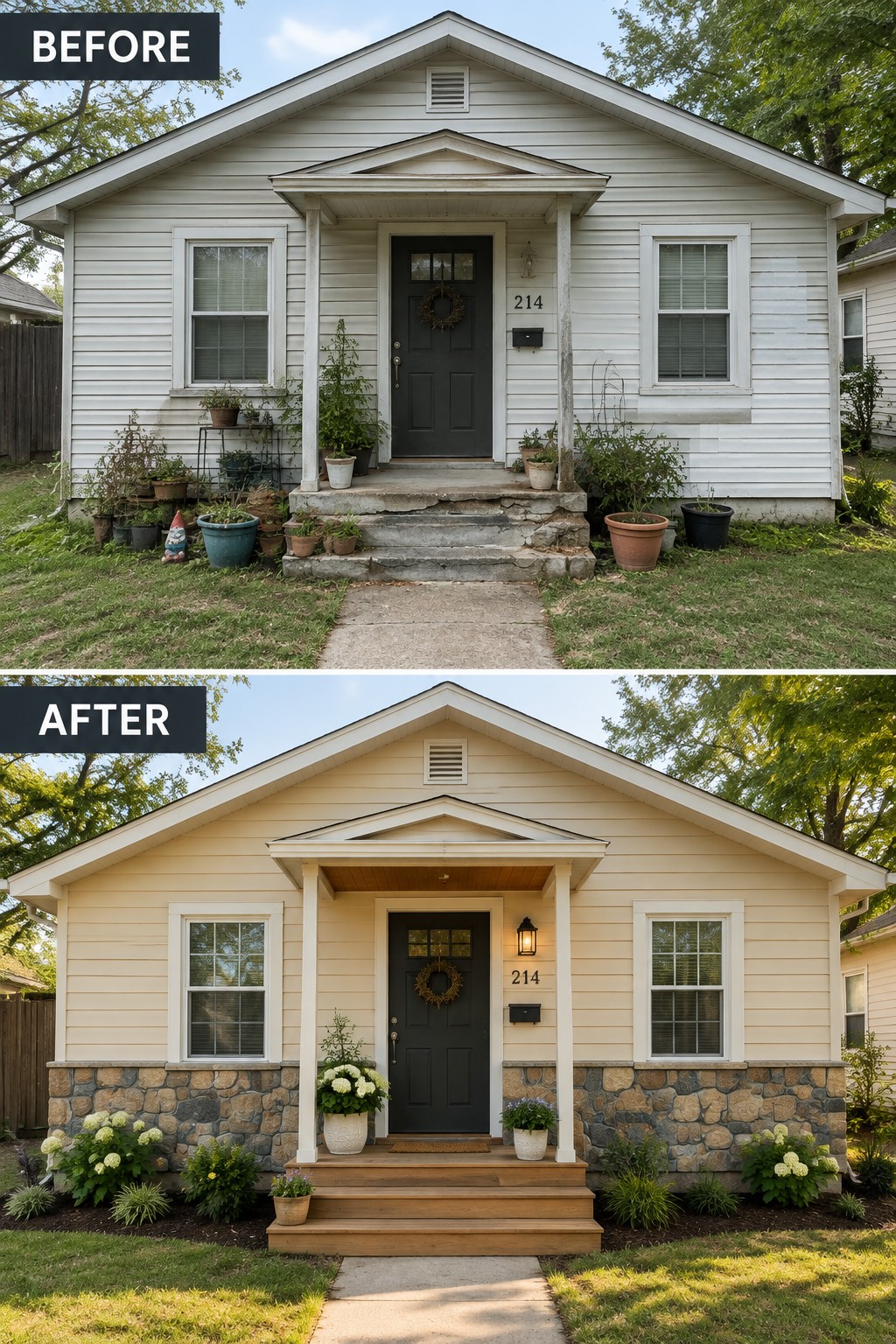
A simple way to refresh an older home exterior is to layer stone and wood accents over the existing siding. The transformation shows how stone along the foundation and new wood steps and porch flooring add texture and warmth while a softer paint color pulls the whole look together.
This approach works best on homes where the siding is still in good shape but feels flat. Focus on the base of the house and the entry first, and keep the accents in proportion to the windows and door so they feel like part of the original structure rather than tacked on.
Add Stone Columns And Wood Accents To Strengthen A Plain Entry
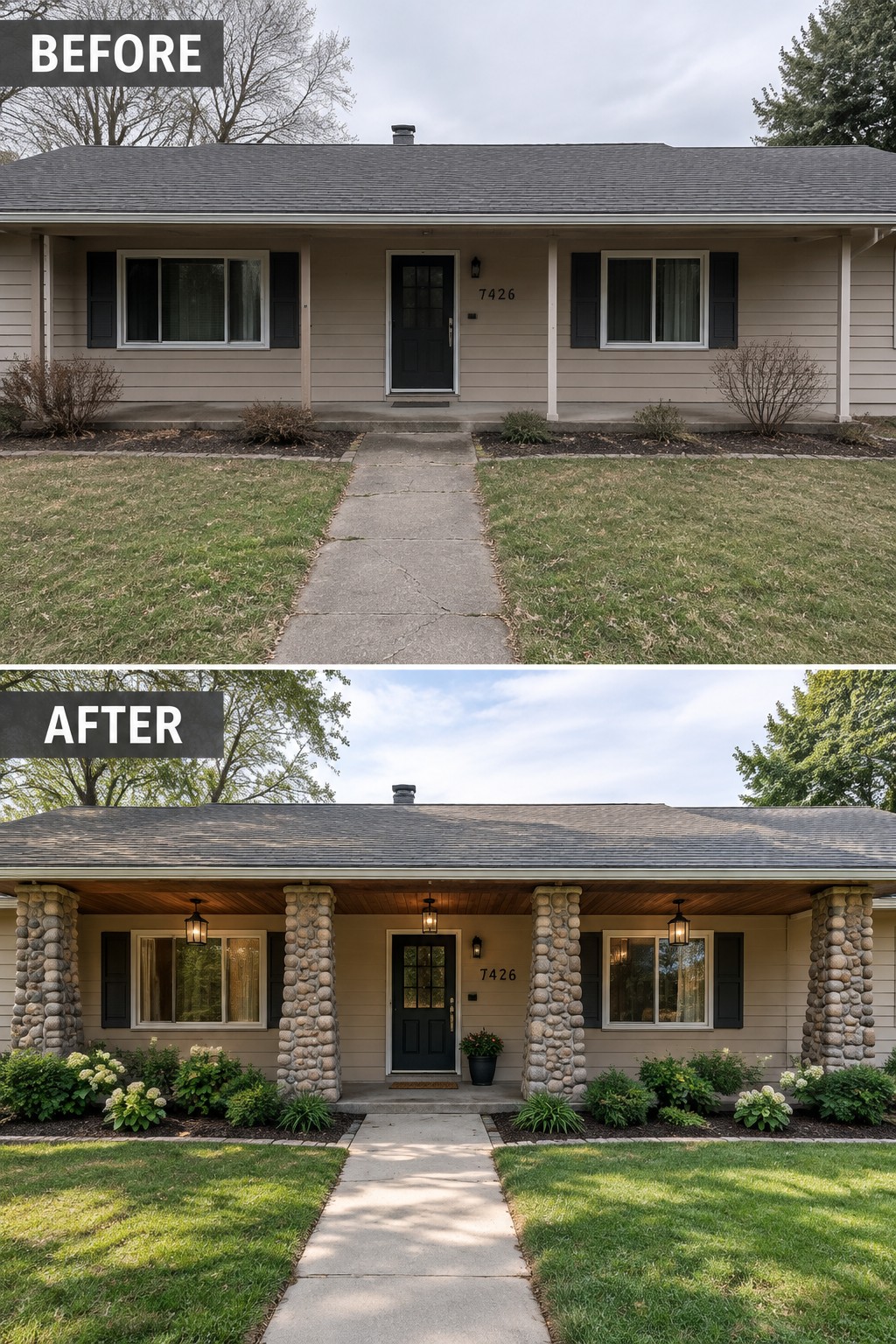
A flat facade with basic siding often feels unfinished because there is nothing to break up the wall or mark the entrance. Adding stone columns and a wood ceiling overhang gives the house real depth and turns the doorway into a clear focal point. The change is simple in concept but makes the whole front feel more finished and grounded.
This approach works best on ranch-style homes or any house with a wide, low profile. Start by extending the roofline just enough to create cover, then use stone that matches the scale of the house rather than trying to make it grand. Keep the rest of the siding and trim colors the same so the new materials stand out without fighting the original look.
Add Wood Accents And Stone To Refresh A Plain Exterior
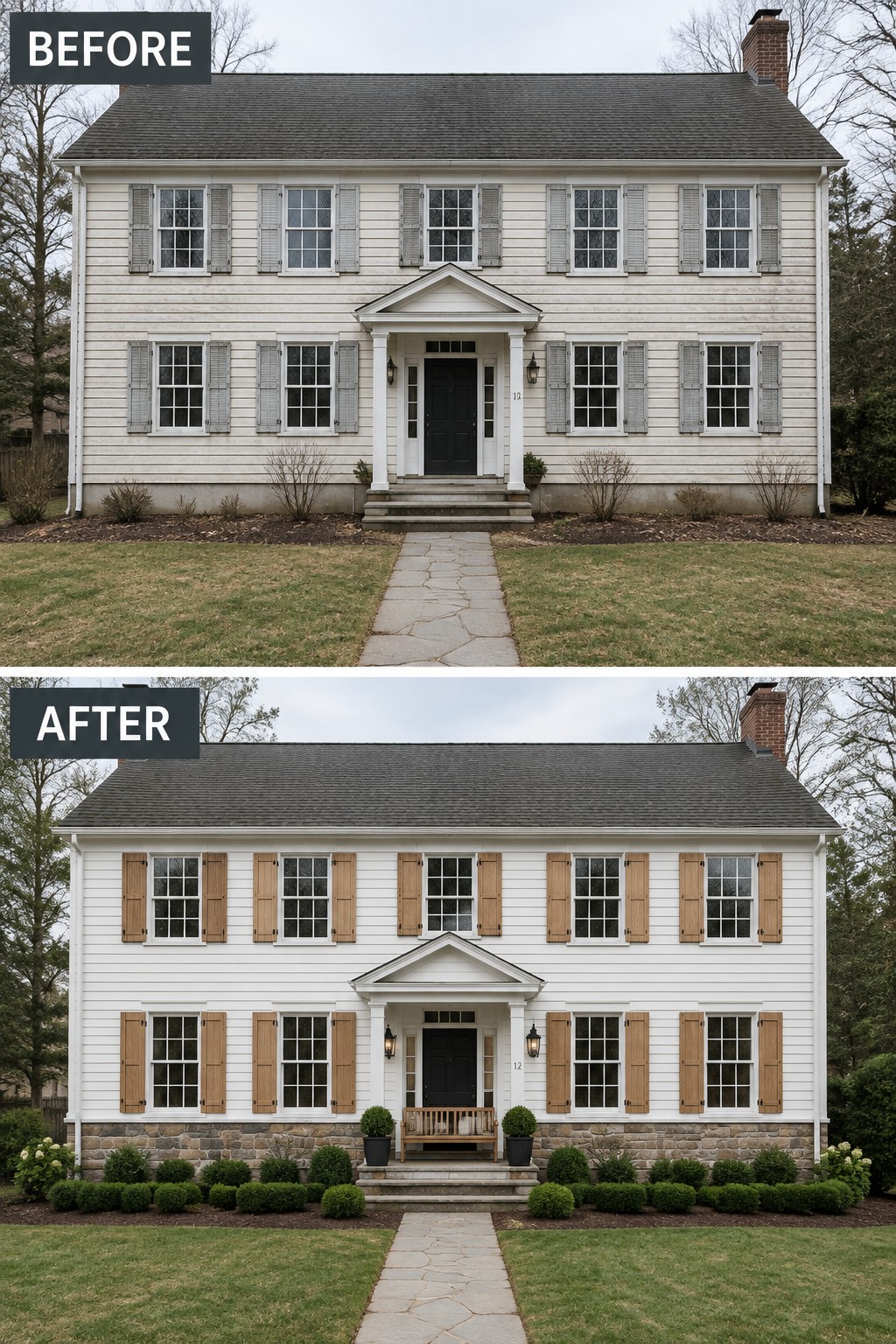
Many houses from earlier eras end up looking flat because the trim and foundation feel disconnected from the siding. In this case the gray shutters blended into the paint and the concrete base sat bare. Switching to wood shutters and wrapping the foundation in stone gave the whole front a clearer structure without touching the roof or windows.
This approach works best on homes that already have decent siding but need weight at the bottom and warmth on the windows. Start with the shutters and foundation first. Those two changes usually make the biggest difference in how solid the house reads from the street. Keep the new materials simple so they do not fight the existing paint color.
Update Tired Siding With Dark Wood And Stone Accents
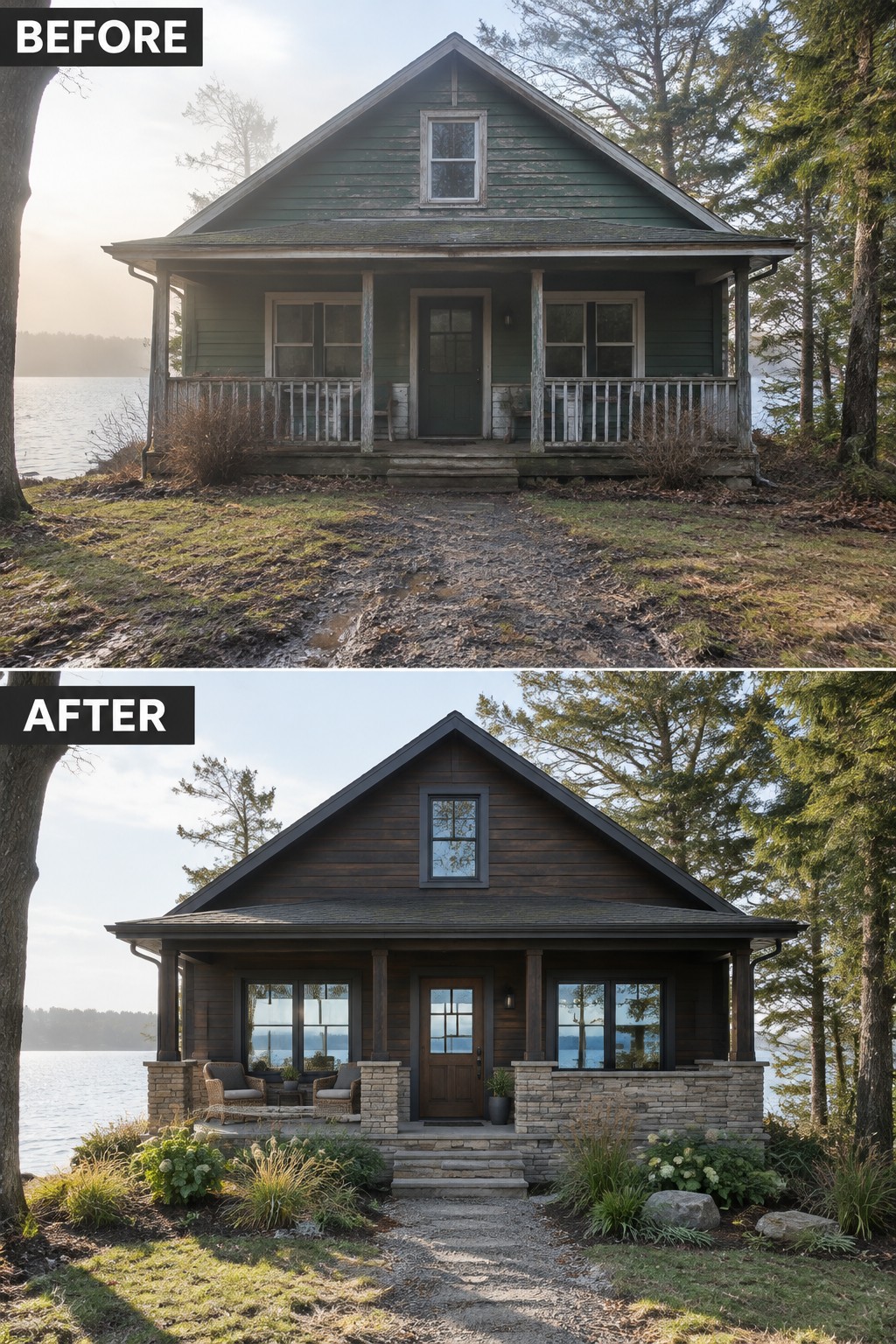
The house had old green paint that was peeling and a porch that looked tired and uneven. Switching to dark wood siding and adding stone bases under the porch posts gave the front a cleaner, more solid appearance while keeping the same basic shape.
This kind of change works best on smaller homes or cottages where the siding has faded but the structure is still sound. Pick one main material shift for the walls and use stone or a similar accent only at key spots like columns or the base of the porch so the update feels balanced instead of busy.
Define The Windows And Doorway With Vertical Wood Slats
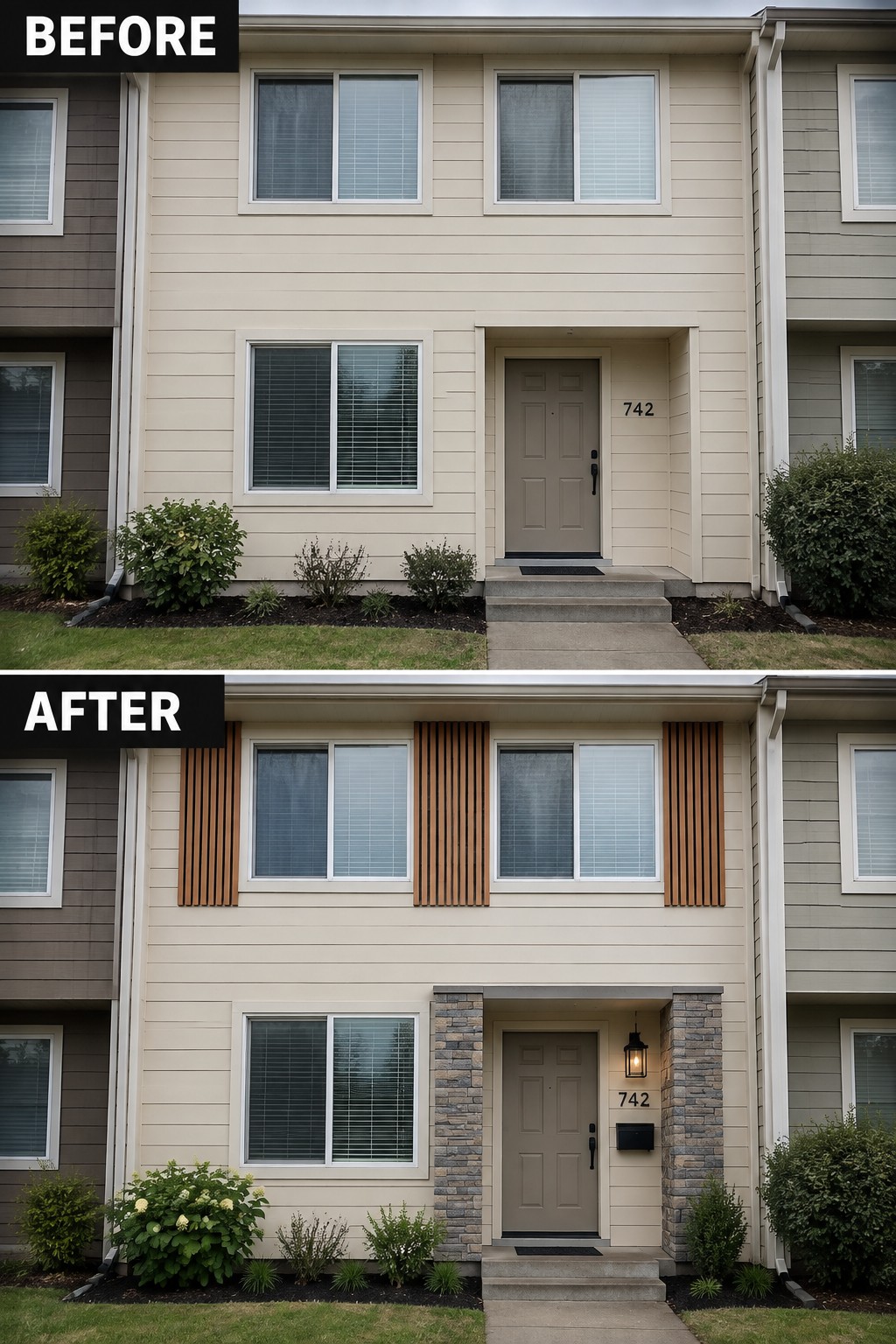
A flat stretch of siding often makes a house look plain because nothing breaks up the surface. Placing vertical wood slats beside the windows and wrapping stone around the entry gives the facade clear lines and draws attention to the front door without changing the whole exterior.
This idea works best on simple townhomes or similar homes where the siding color stays the same. Pick one or two spots for the new materials, keep the accents in scale with the windows and door, and make sure the rest of the wall stays uncluttered so the changes read as intentional rather than busy.
Add A Covered Entry Porch With Wood And Stone
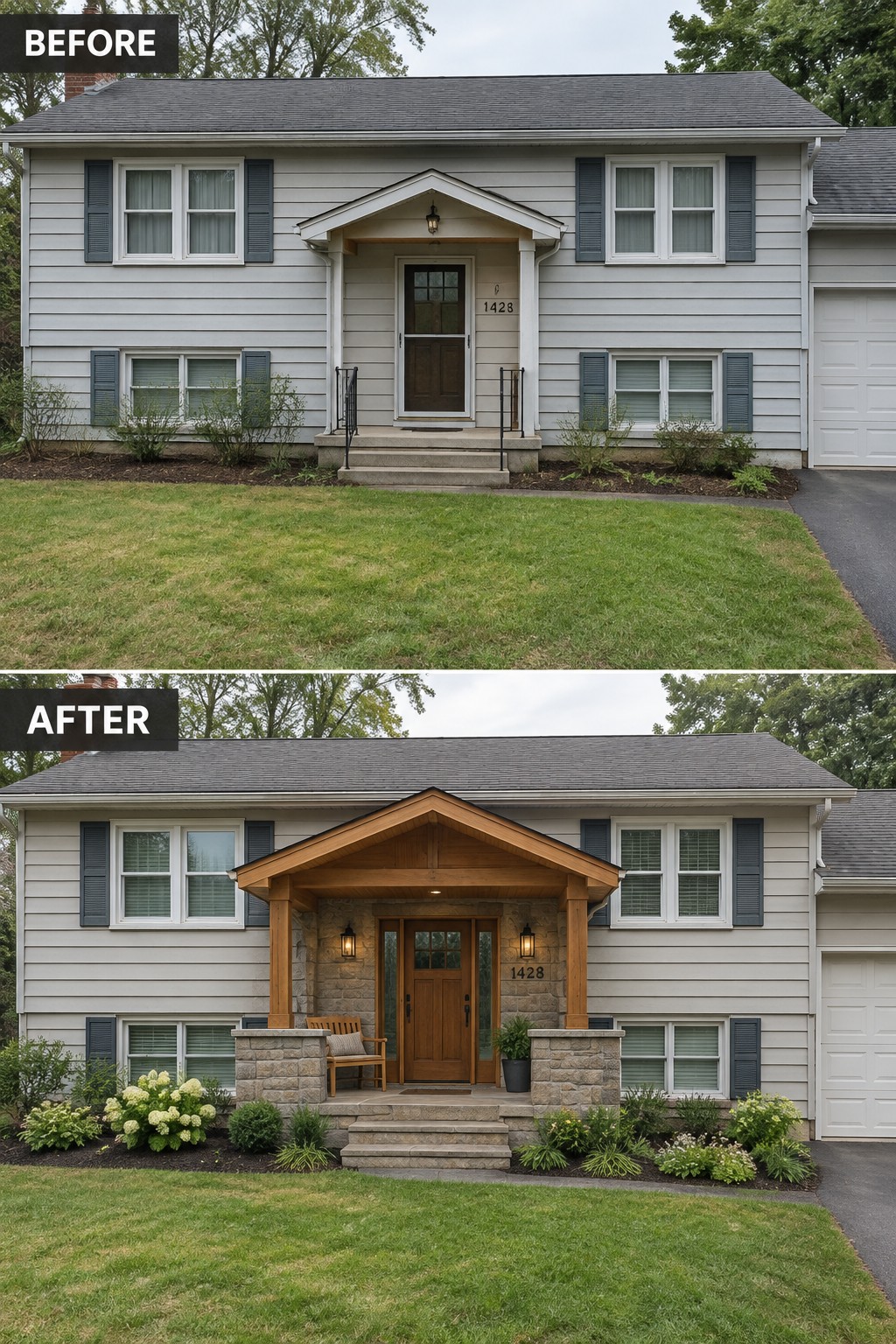
A small overhang over the door often leaves the front of a house looking flat. Replacing it with a larger wooden gable supported by stone pillars gives the entry real weight and makes the whole facade feel more finished. The change turns a basic doorway into a clear focal point without touching the rest of the siding.
This idea works best on houses that already have decent siding but need something to break up a plain wall. Keep the new structure in scale with the roof and choose stone and wood tones that sit comfortably with your existing trim. Start with the structure itself before adding benches or pots so the proportions stay right.
Add Stone And Wood Accents To A Plain Exterior
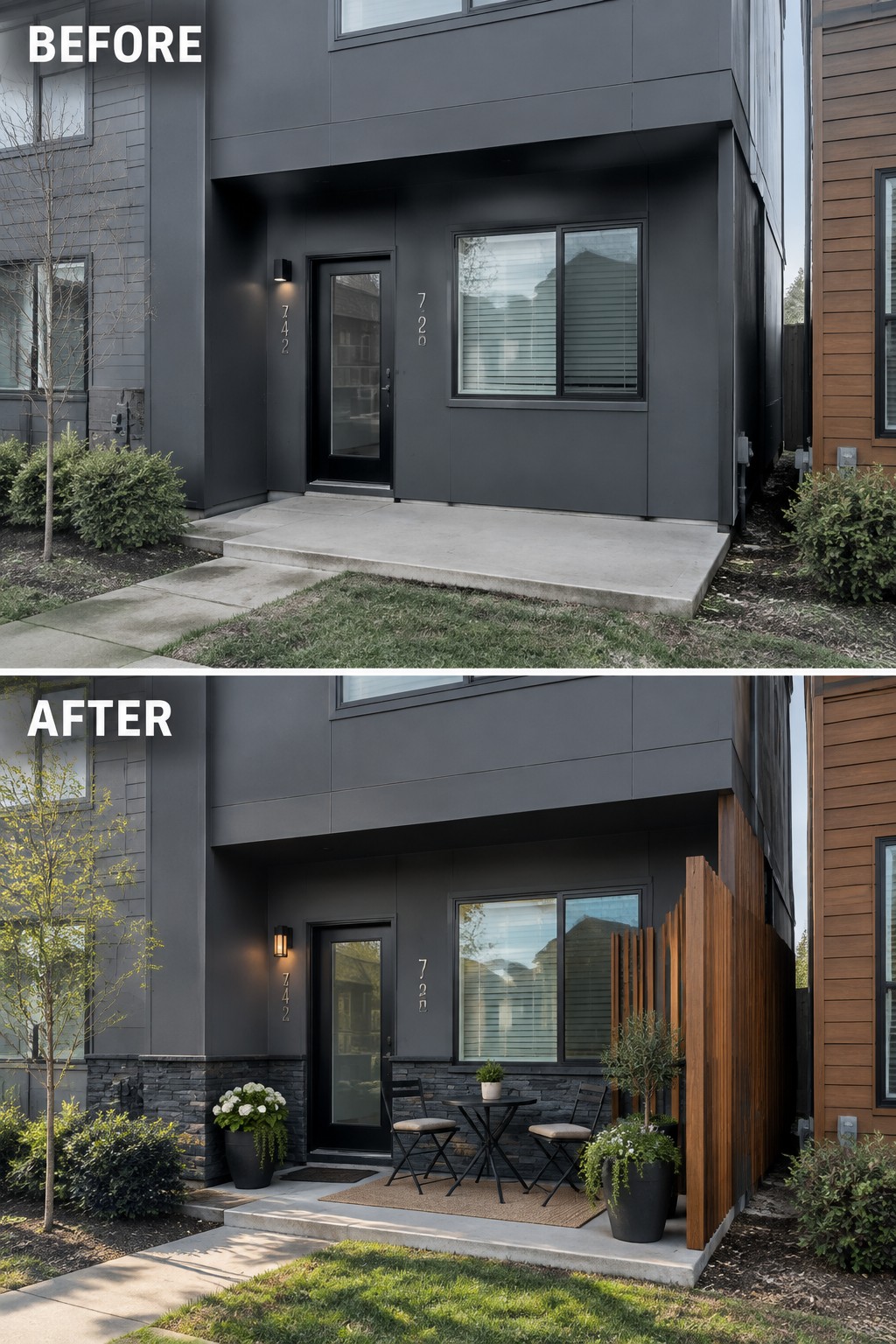
A dark, flat-sided house can feel stark when the entry has nothing but concrete and siding. Adding a low stone base and a wood screen on one side gives the facade some texture and breaks up the solid color without a full repaint or rebuild.
This idea works best on modern homes where the siding runs long and plain. Pick one wall section near the door, keep the accents low and simple, and let the materials do the work. The seating and pots are secondary. The real change comes from the stone and wood creating a clearer entry zone.
Update A Dated Exterior With Stone And Wood Accents
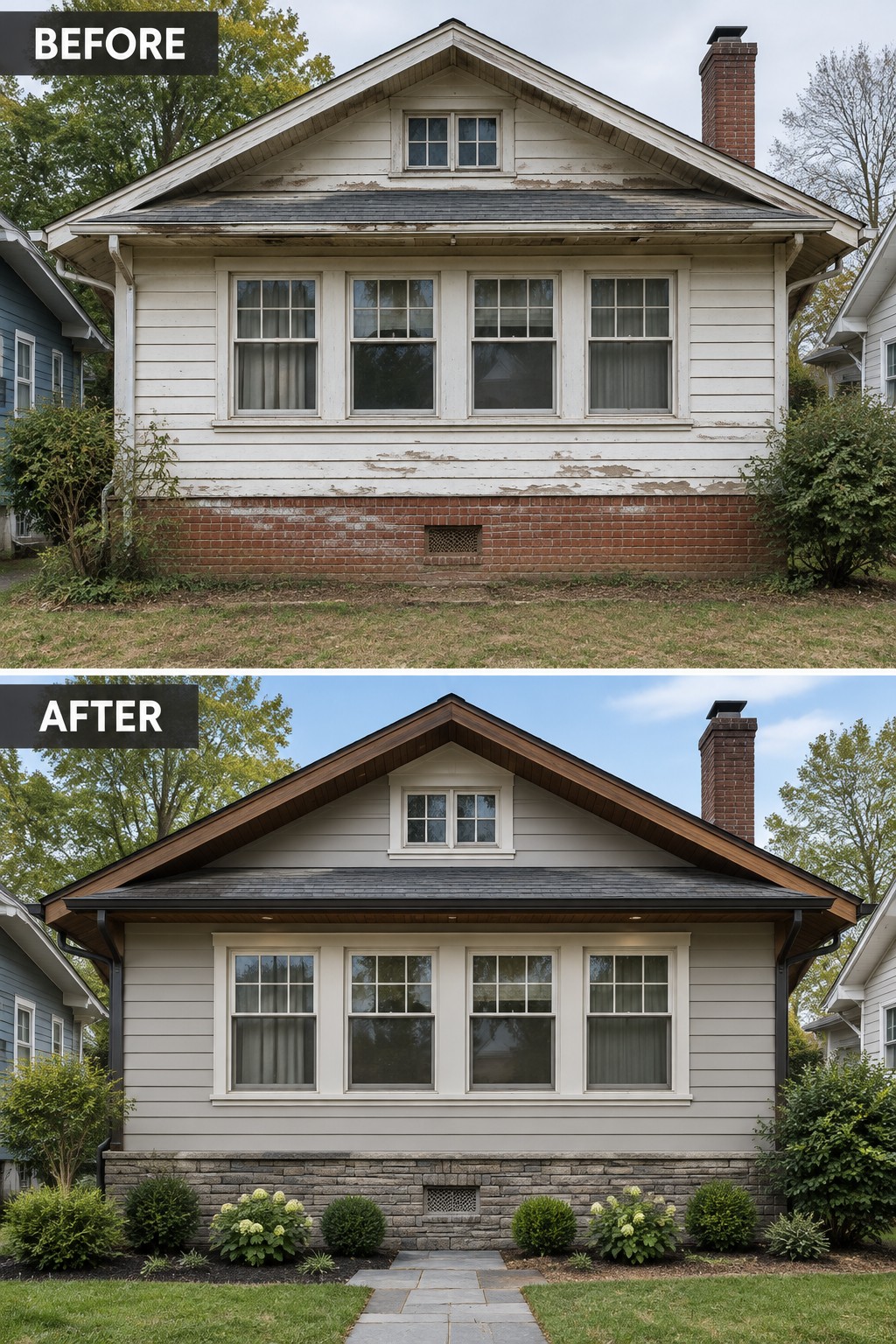
The main change here is swapping a worn painted brick foundation and tired siding for a stone base and fresh siding, then adding wood accents along the roofline and eaves. Those two materials give the front a cleaner, more finished look without changing the house shape or window layout. The result feels more solid and current while still keeping the original scale.
This approach works well on older homes where the siding is failing but the structure is sound. Start with the foundation and roof edges first, then pick a siding color that sits nicely between the stone and wood tones. Keep the accents in proportion so they strengthen the facade instead of competing with it.
Break Up Plain Siding With Wood And Stone Accents
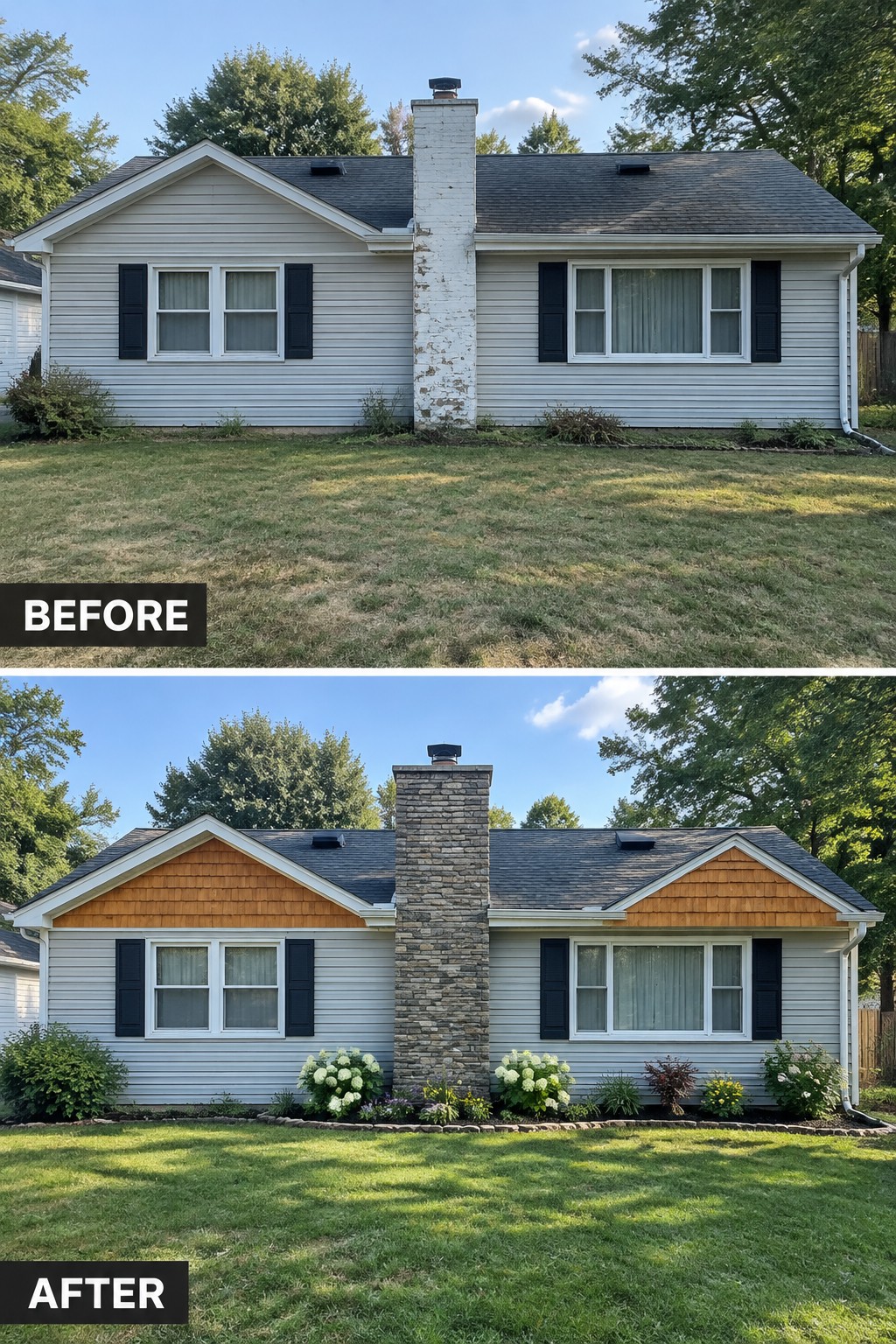
The before photo shows a very flat exterior where everything blended together. Adding wood shakes to the gable peaks and wrapping the chimney in stone gave the house clear focal points and broke up the long stretch of siding.
This works especially well on ranch homes or any simple shape that needs more character. Keep the accents limited to the roof peaks and one strong vertical element like a chimney, then let the rest of the siding stay quiet so the new materials stand out.
Create Architectural Contrast With Vertical Wood And Stone Entry Details
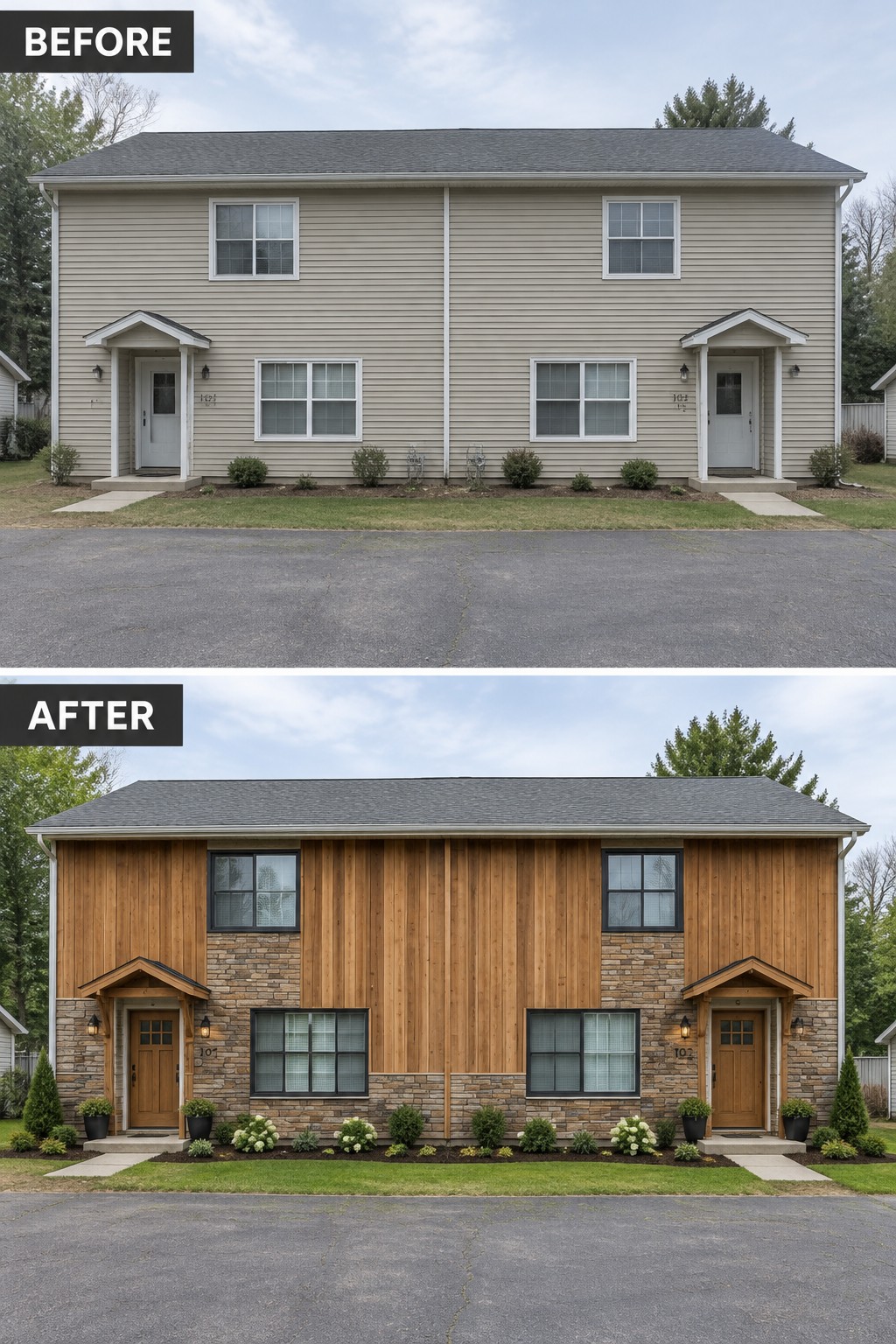
Many homes with basic siding end up looking flat because the surface has no variation. Switching out sections for vertical wood and adding stone at the base and around the entries breaks up the wall and gives the whole front more depth.
This works best on larger wall areas where you can keep the new materials in clear blocks instead of spreading them thin. Match the wood tone and stone color to your roof and trim so the changes feel connected rather than added on later.
Highlight The Front Door With Stone Columns And A Wood Canopy
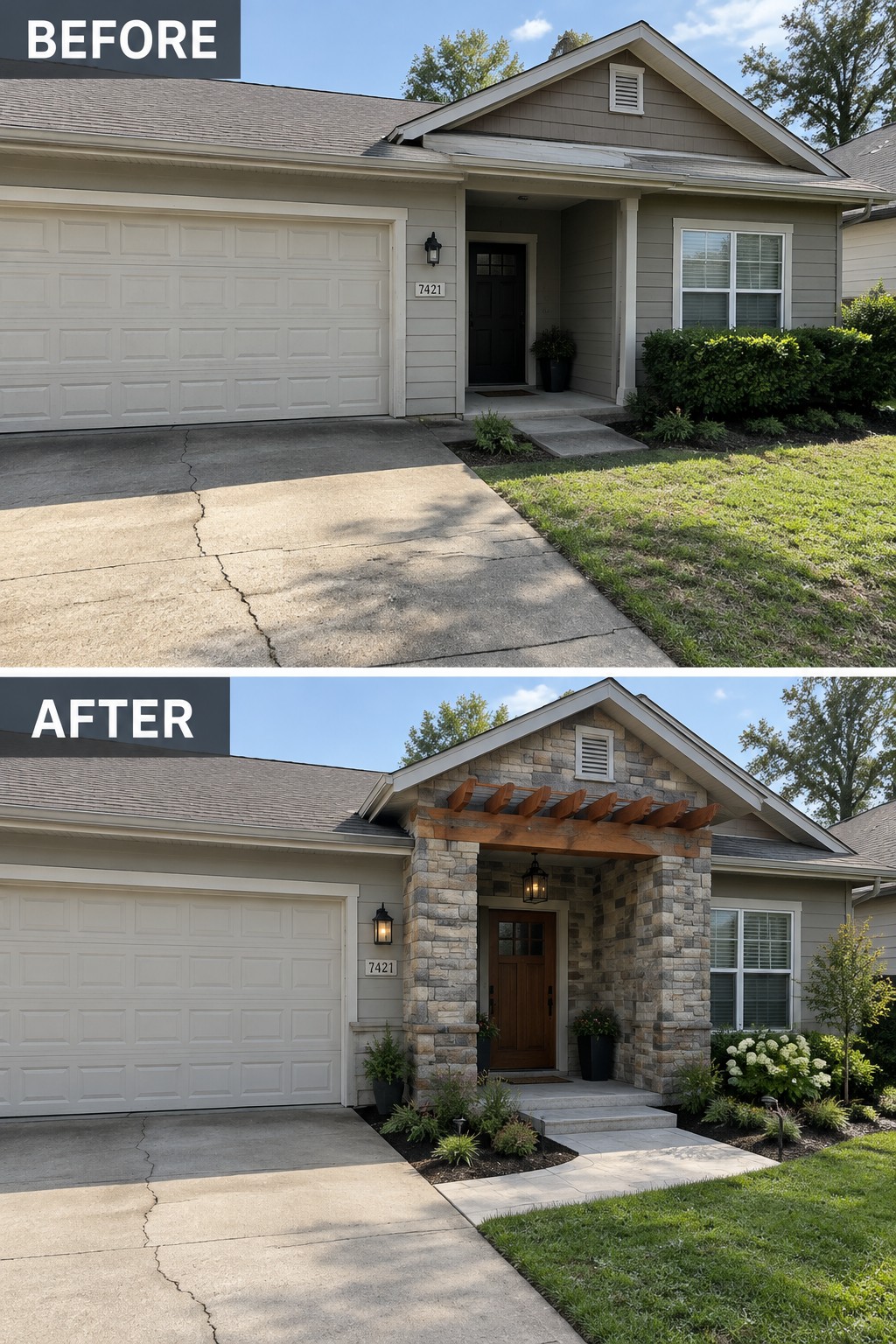
Many homes with wide garages end up with a plain front that feels flat. Adding stone around the entry columns and a simple wood structure overhead gives the house a clear focal point and breaks up the large wall of siding.
This works best on houses where the garage takes up most of the facade. Keep changes close to the door so the entry stands out, and choose materials that match the roof and trim colors already on the house. The rest of the siding can stay the same.
Add Window Boxes To Warm Up A Plain Exterior
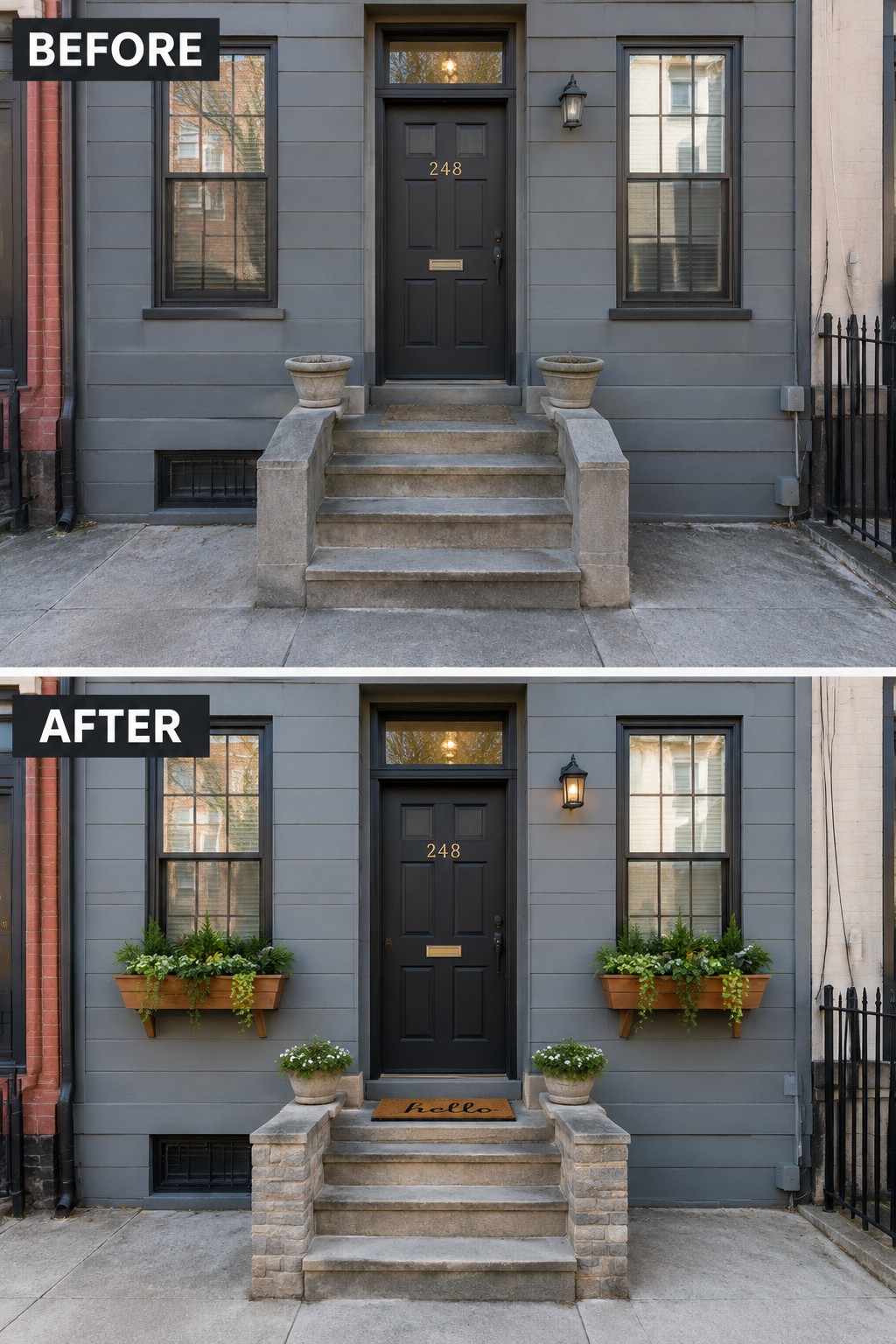
A plain house front often looks flat because the walls have no break or color. In this case the fix was simple. Adding wooden window boxes under the side windows and a pair of potted plants at the base of the steps gave the gray siding something to frame and softened the whole entry.
This approach works best on houses with at least one pair of windows near the door. Keep the boxes the same width as the windows, use a wood tone that matches the trim, and choose plants that spill over the edge. The goal is a quick layer of green that reads from the street without crowding the walkway or blocking light.
Enhance A Manufactured Home With Entry Woodwork And Stone Veneer
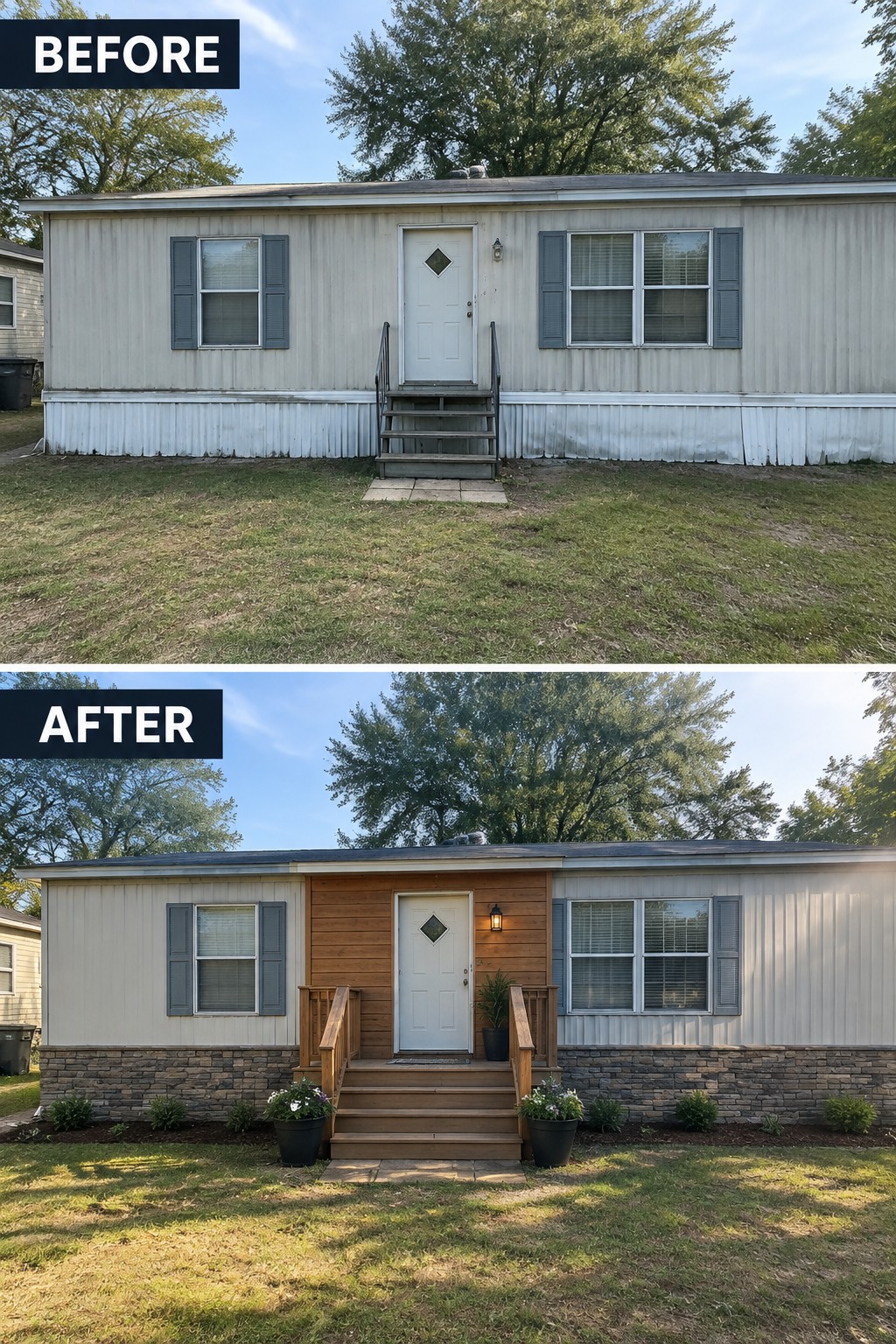
A simple house can look much more finished when you add wood and stone around the entry instead of repainting the whole exterior. Here the beige siding stayed the same, but the front door area gained a wood accent panel and the foundation received a stone veneer, which gave the house a clearer focal point and better scale.
This idea works especially well on manufactured homes or smaller houses where a full siding change would be costly. Keep the new materials limited to the entry and base so the update feels intentional rather than busy, and choose finishes that can handle weather without much upkeep.
Add Stone Accents To Update Plain Siding
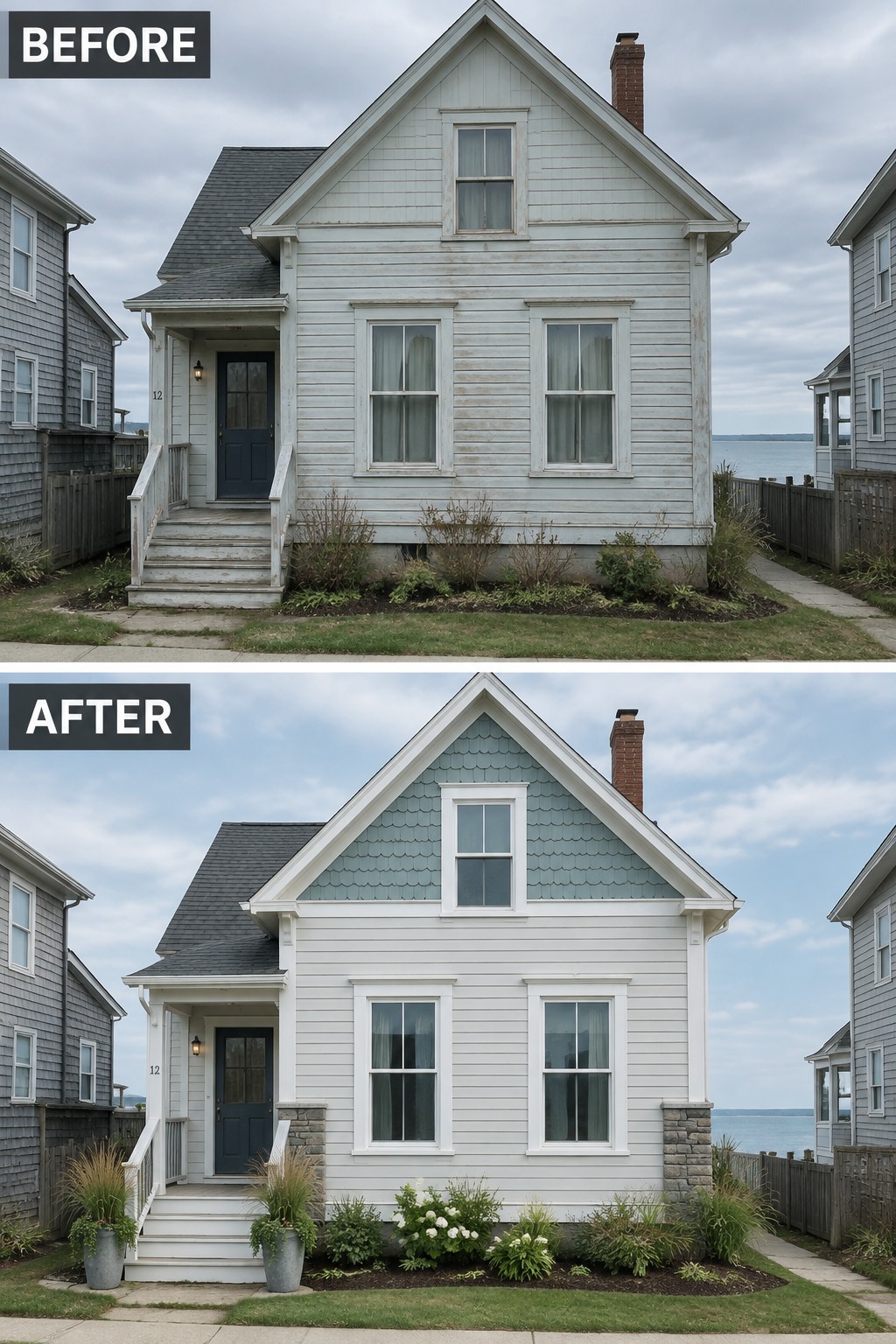
The house went from a flat white exterior to something with more weight by adding stone at the base of the porch and corners. The upper gable also got a soft blue-green shingle treatment, which breaks up the large wall and gives the front a clearer shape.
This kind of update suits older homes that still have good structure but look tired. Keep the stone limited to the lower portion so it anchors the house without overwhelming it, and pair the change with basic planting so the new materials stand out.
Break Up A Wide Ranch-Style Facade With Wood Siding And Stone Bases
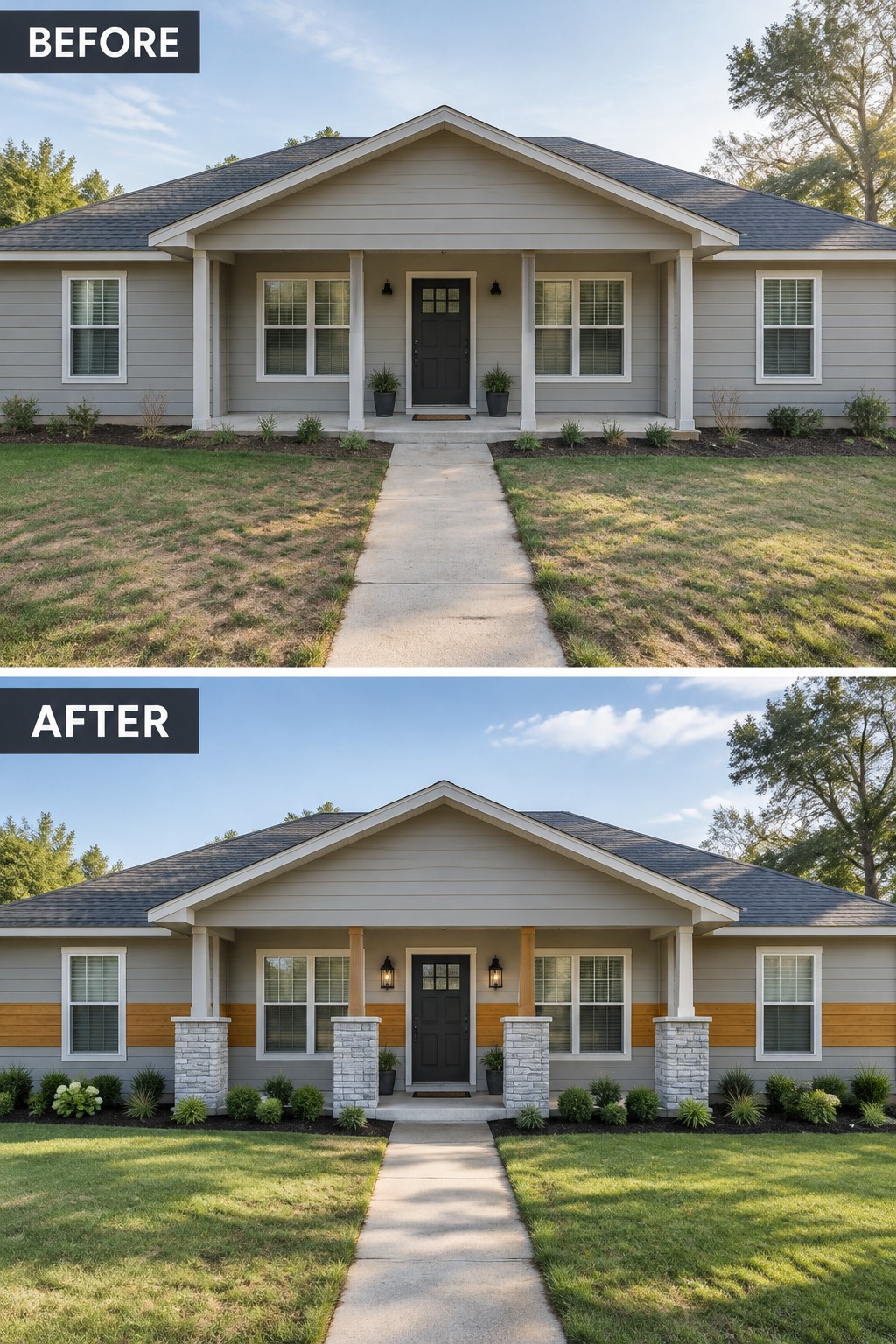
Many houses have simple siding that looks flat from the street. Adding stone bases to the porch columns and a band of wood siding across the front gives the house more texture and breaks up the long wall without changing the main color.
This idea suits single-story homes with wide fronts where the siding runs uninterrupted. Start with the entry area first, keep the accents to one or two materials, and make sure the new elements match the scale of the existing columns and windows.
Frequently Asked Questions
Q: Can I add stone and wood accents to just one side of my house without it looking off balance? A: Focus the accents on the front or entry wall to create a focal point. Match the tones closely to your main siding so the change feels natural. Many projects pull this off by keeping the accents to a single story height.
Q: How often does wood need sealing when used next to stone on siding? A: Seal the wood every two years with a clear exterior product. Stone itself needs almost no extra work beyond occasional rinsing. This schedule keeps the wood from fading while the stone stays stable.
Q: What if my house has vinyl siding already and I want to swap in these accents? A: Cut back the vinyl in small sections first and install the new materials on solid sheathing. Start with wood trim around doors to test the fit. Stone panels can then go in above or below without major wall changes.