

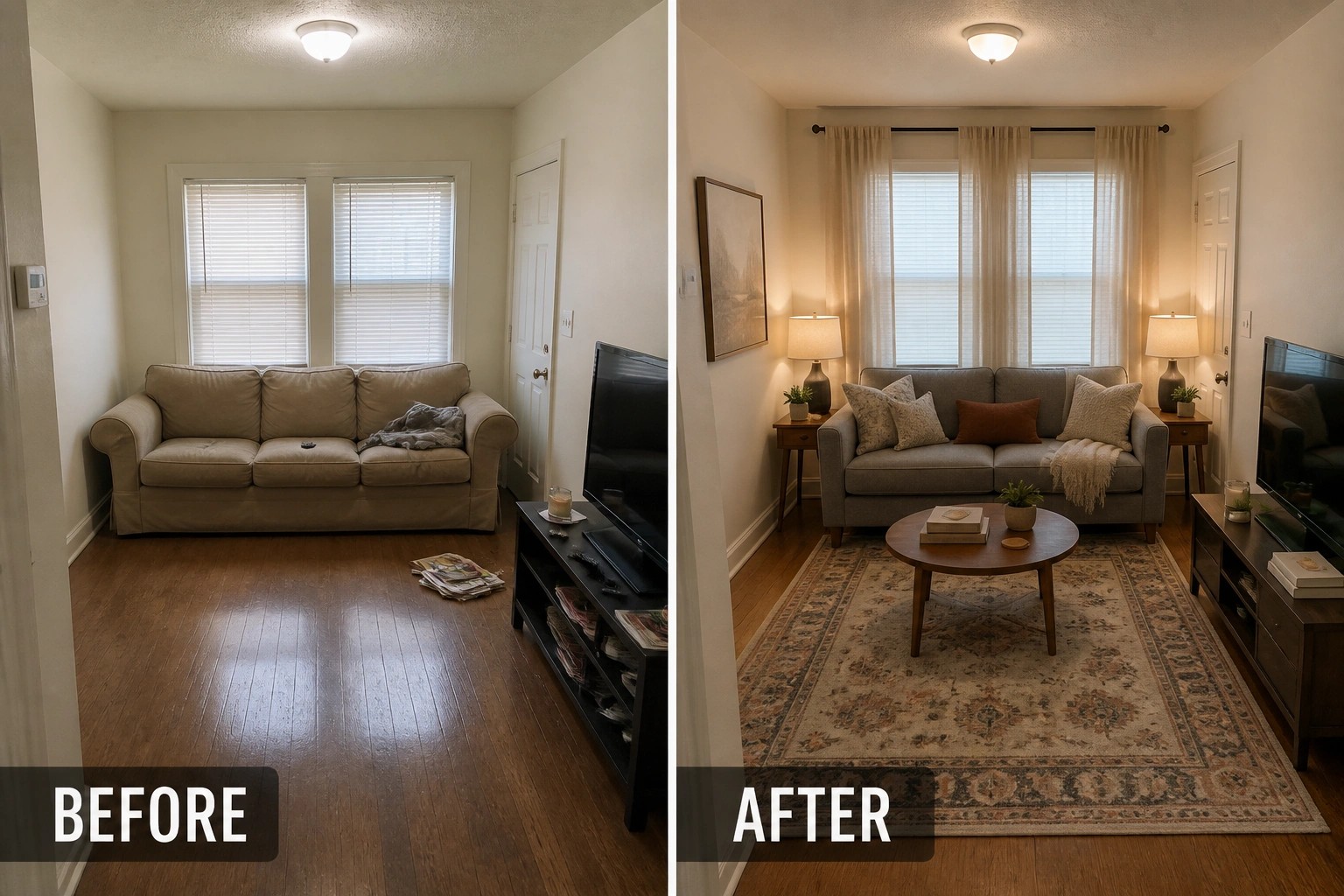
I know how a room, an entry, a porch, or a yard can feel stuck, plain, dark, overstuffed, or oddly arranged, and how practical tweaks can help it feel cared for again.
I often try simple edits first, moving furniture for better flow, improving lighting, putting on a fresh coat of paint, swapping hardware, or rethinking plant placement because those steps tell me whether a space needs more.
Small changes matter.
What makes a space read as finished is usually a clearer layout, a consistent palette, and attention to small details like trim, thresholds, and tidy storage so the result works instead of looking fussy.
I’m suggesting ideas you can save and test in your own home, adapting them until a corner that felt forgotten or awkward actually serves you better.
Refresh Kitchen Cabinets With Paint And New Hardware
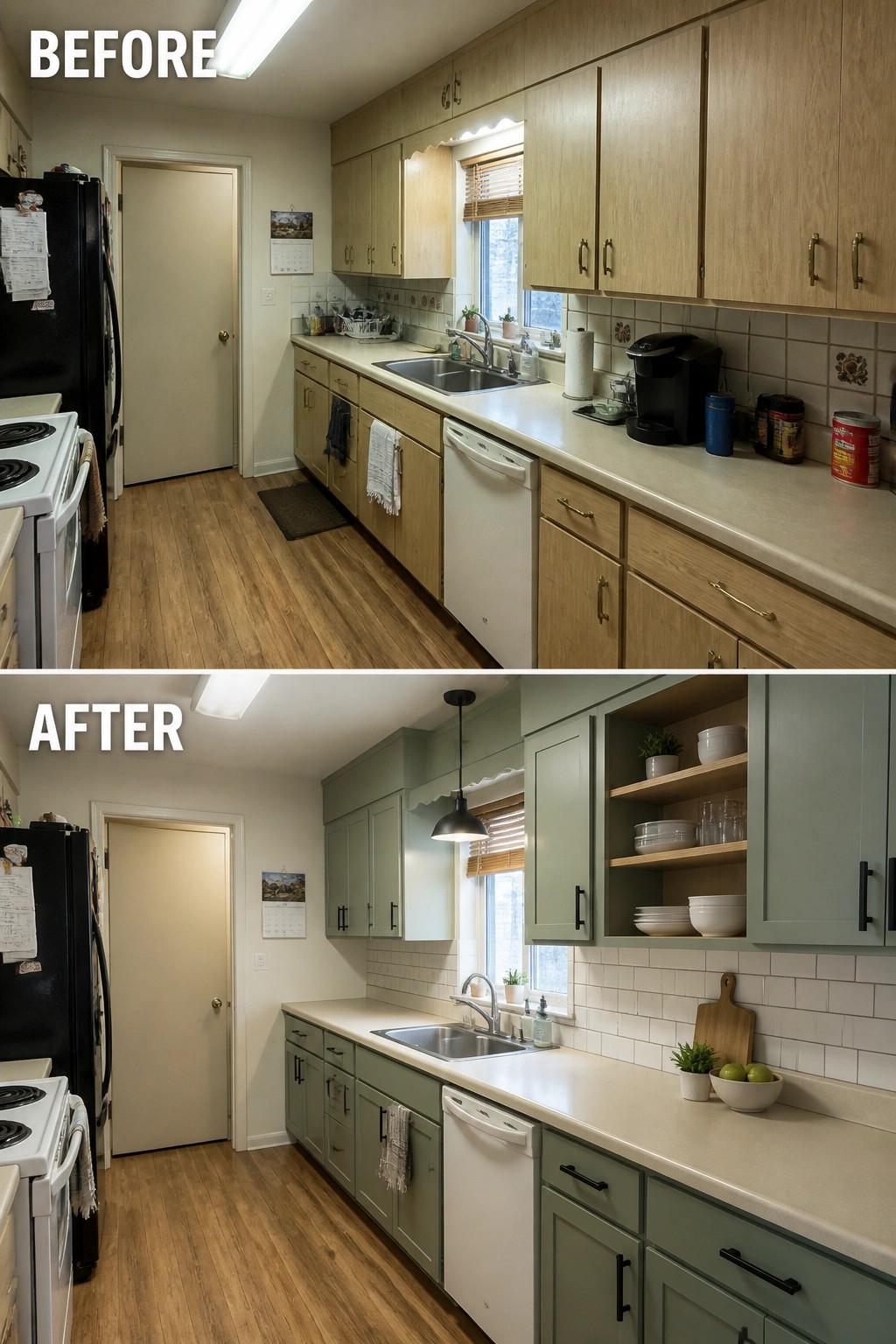
Painting your cabinets and switching the pulls is one of the simplest ways to change the whole feel of a kitchen without tearing anything out. In the photo the dated wood cabinetry becomes a soft green and the old brass handles are replaced with darker, slimmer pulls, which immediately reads as more modern and organized. You don’t need a full remodel to get that refreshed look.
This works especially well in small galley kitchens where budget and space are tight. Start by cleaning and lightly sanding the doors, use a good primer and a durable cabinet paint, and measure existing holes before buying new hardware so installation is quick. Pick a contrast finish for the handles and test a paint sample on a door or drawer to make sure the color reads well in your light. It’s a relatively low-cost update that keeps everything practical while giving the room a new personality.
Refresh A Small Bathroom By Updating The Vanity And Fixtures
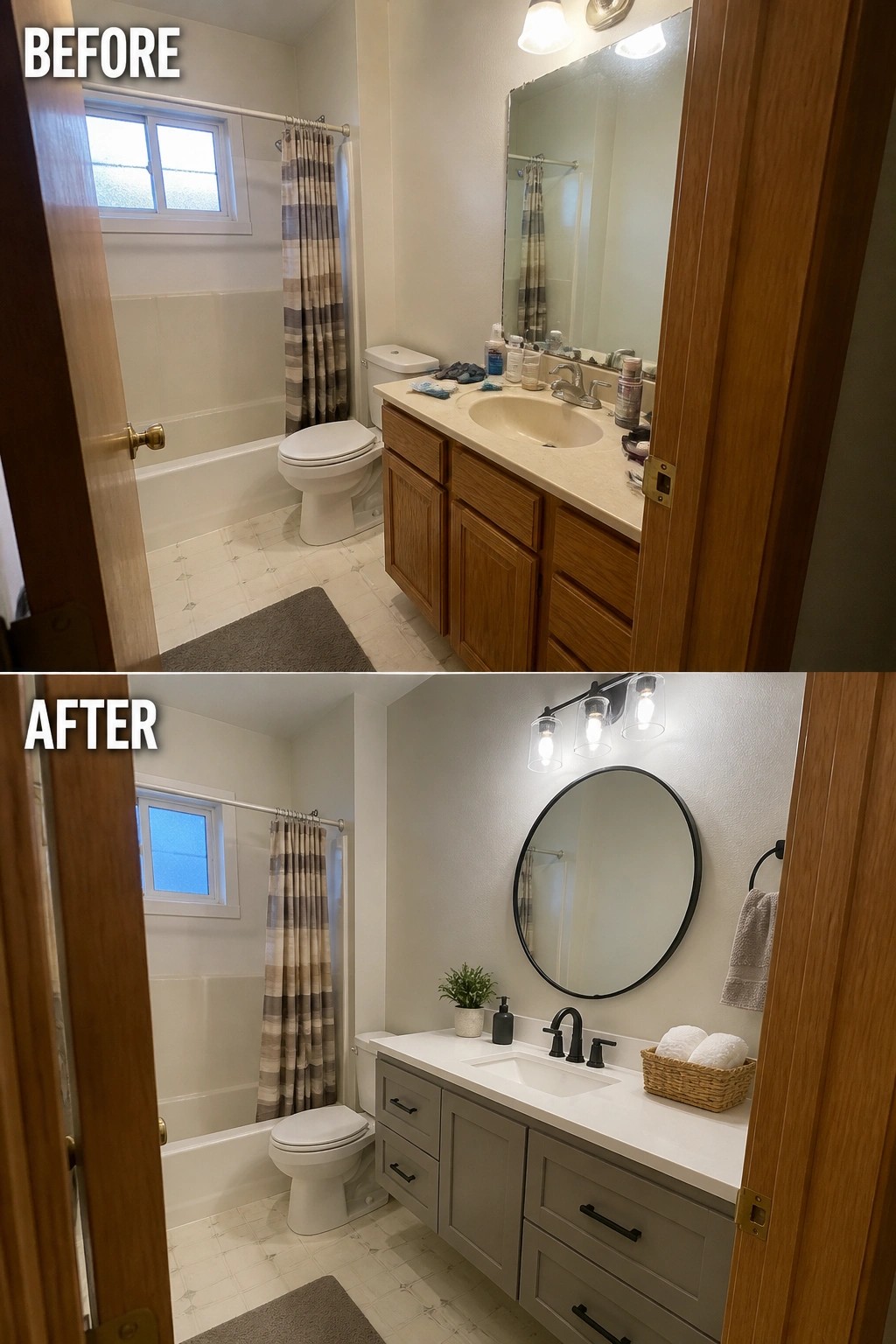
Swapping an old built-in vanity for a new, slimmer unit and matching fixtures is one of the easiest ways to modernize a bathroom without knocking down walls. In the photo the dated oak cabinet and integrated sink were replaced with a floating gray vanity, a clean white countertop, a round mirror, and matte black faucet and hardware — a few focused changes that make the room look newer and less cluttered.
You can copy this idea one step at a time: start by choosing a vanity that fits your existing plumbing to avoid extra work, pick a countertop with an integrated sink for easy cleaning, and update the mirror and light to match the new finish. This approach works well in small bathrooms where saving visual floor space and unifying finishes makes the room feel larger and more put together.
Give A Bare Entry A Clear Purpose
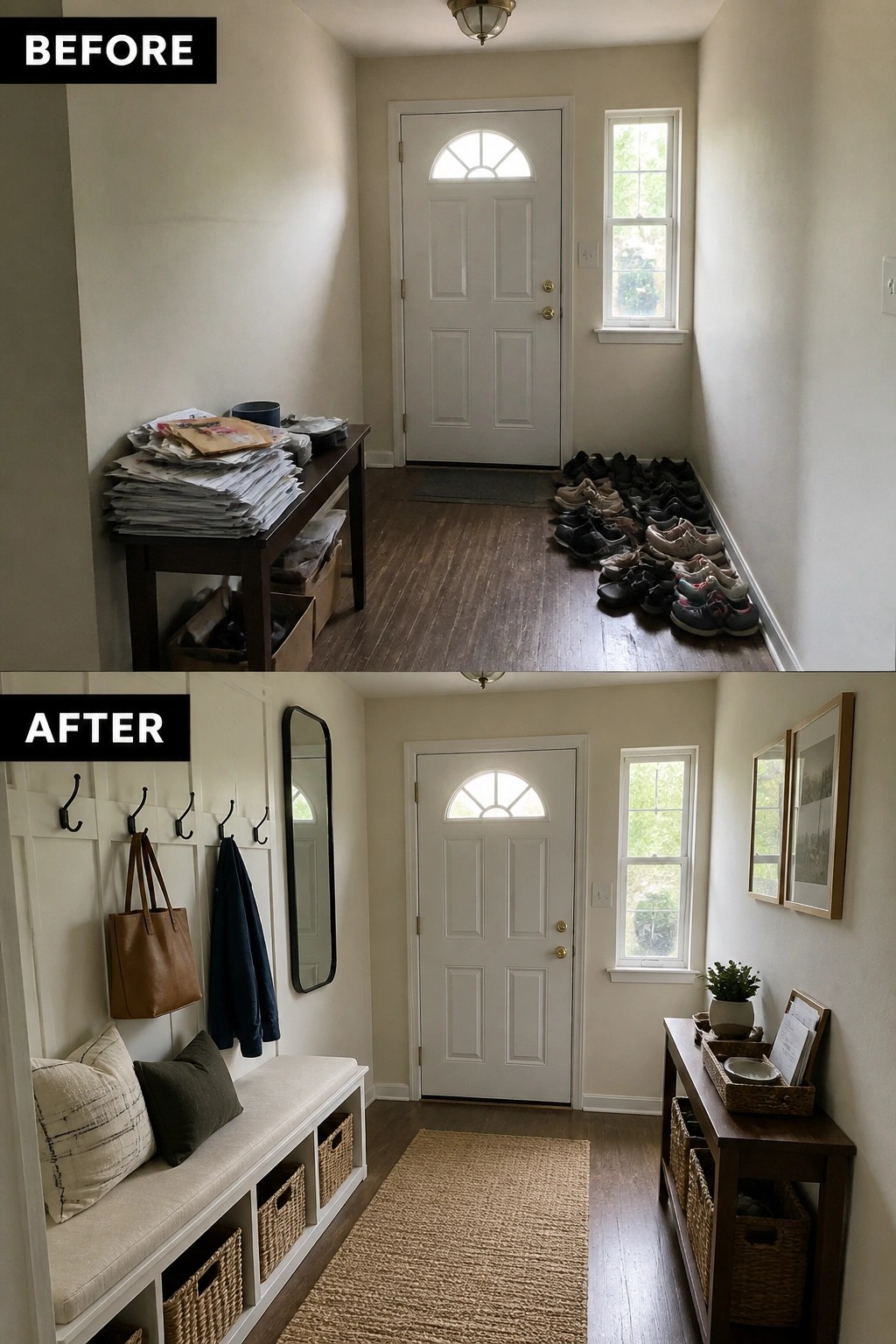
A narrow entryway can feel pointless until you give it one clear function. Replacing a pile of shoes and a lone table with a slim bench that has cubbies, a row of hooks, and a runner instantly makes the space useful for getting in and out of the house. The change keeps everyday clutter contained and creates a neat landing spot for bags, coats, and quick shoe storage.
To copy this, choose a bench scaled to the width of your hall and add baskets or bins for loose items. Install hooks at an easy-reach height and hang a narrow mirror to make the area feel larger and help with last-minute checks. Use a durable runner to define the zone and leave at least 30 inches of clear walking space so the entry doesn’t feel crowded. Small, practical pieces go a long way in tight spaces.
Add Built-In Storage To Maximize A Small Closet
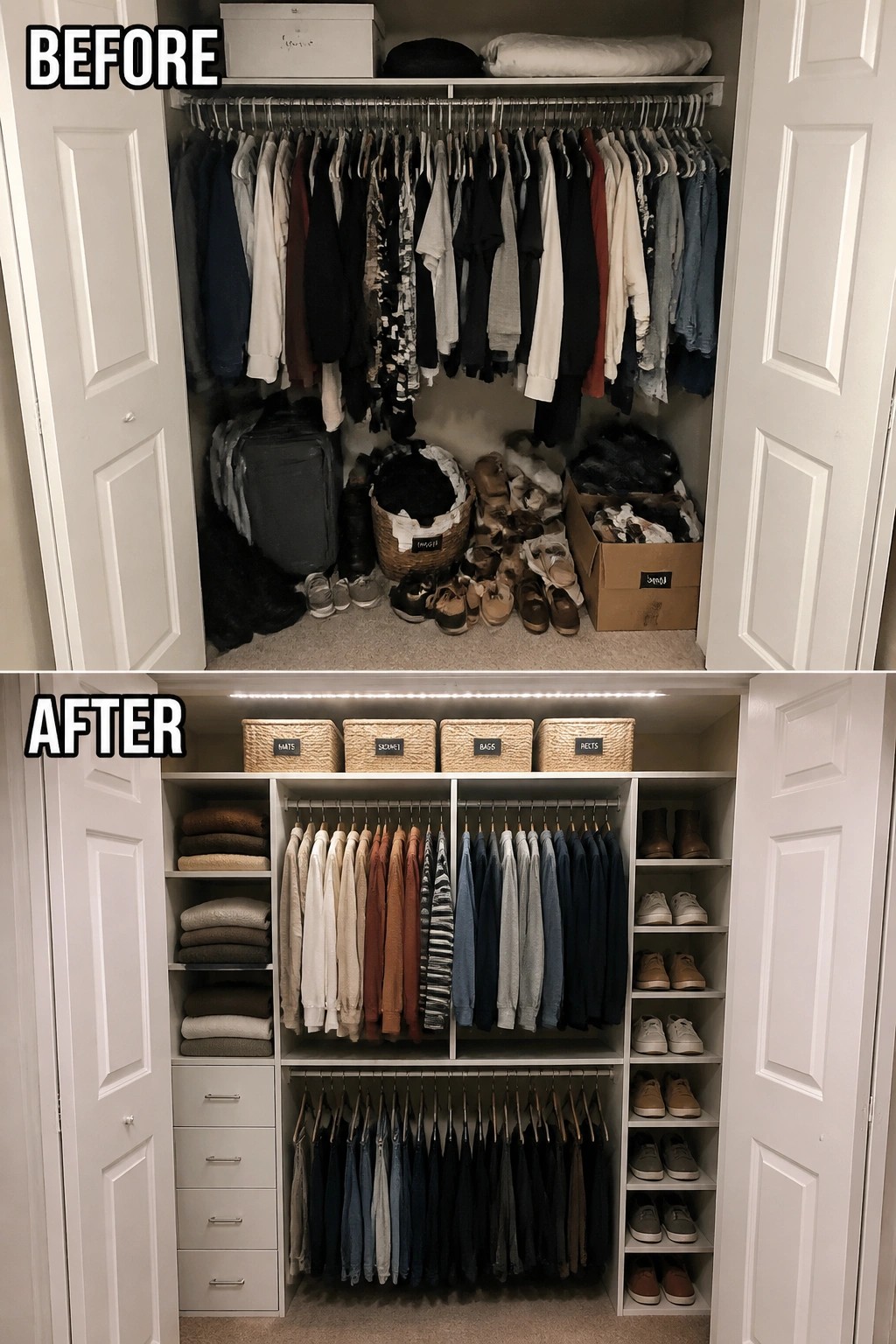
Turning a cramped single-rod closet into an organized, built-in-feeling space is one of the easiest small makeovers you can do. Adding a second hanging rod and a stack of shelves or drawers creates clear zones for tops, pants, and shoes, which keeps the floor clear and makes everything easier to find. The result looks tidy and functions like a custom closet without a major renovation.
Start by measuring your height and width, then pick a modular closet system or simple shelving units that fit the space (no demo required). Use one row of hangers for shorter items and a lower rod for pants, add narrow shelves or cubbies for shoes, and stash small items in baskets or drawers. Match slim hangers and add a battery LED strip for quick visibility. This approach works well in small bedrooms and rentals — just avoid overcrowding the rods so the space stays usable.
Make A Small Room Into A Simple Home Office
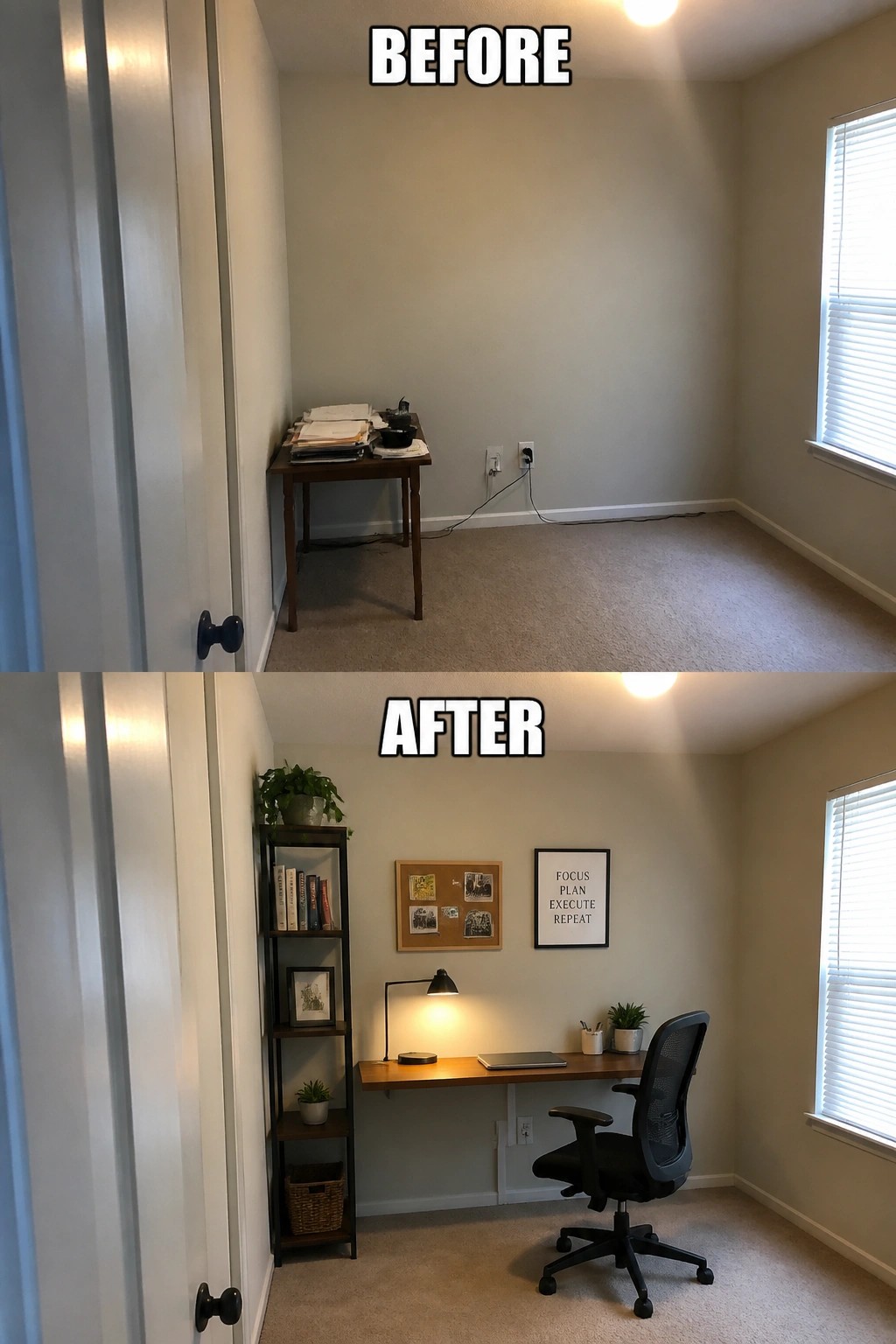
If a spare bedroom just sits empty, creating a pared-back home office is an easy way to get use from the space. Replace a lone side table with a slim desk against the wall, add a tall shelving unit and a task lamp, and you instantly have a dedicated work zone without moving walls or rewiring. This keeps the footprint small while giving you a clear place to sit, store papers, and focus.
Pick furniture that fits the room’s scale: a floating or narrow desk and vertical storage keep the floor open and circulation easy. Tuck cables behind the desk, use a single light for task work, and limit accessories to one or two plants and a pinboard or framed print so the space stays calm and useful for day-to-day work. Keep it simple.
Update A Fireplace Wall With Paint And A Simple Mantel
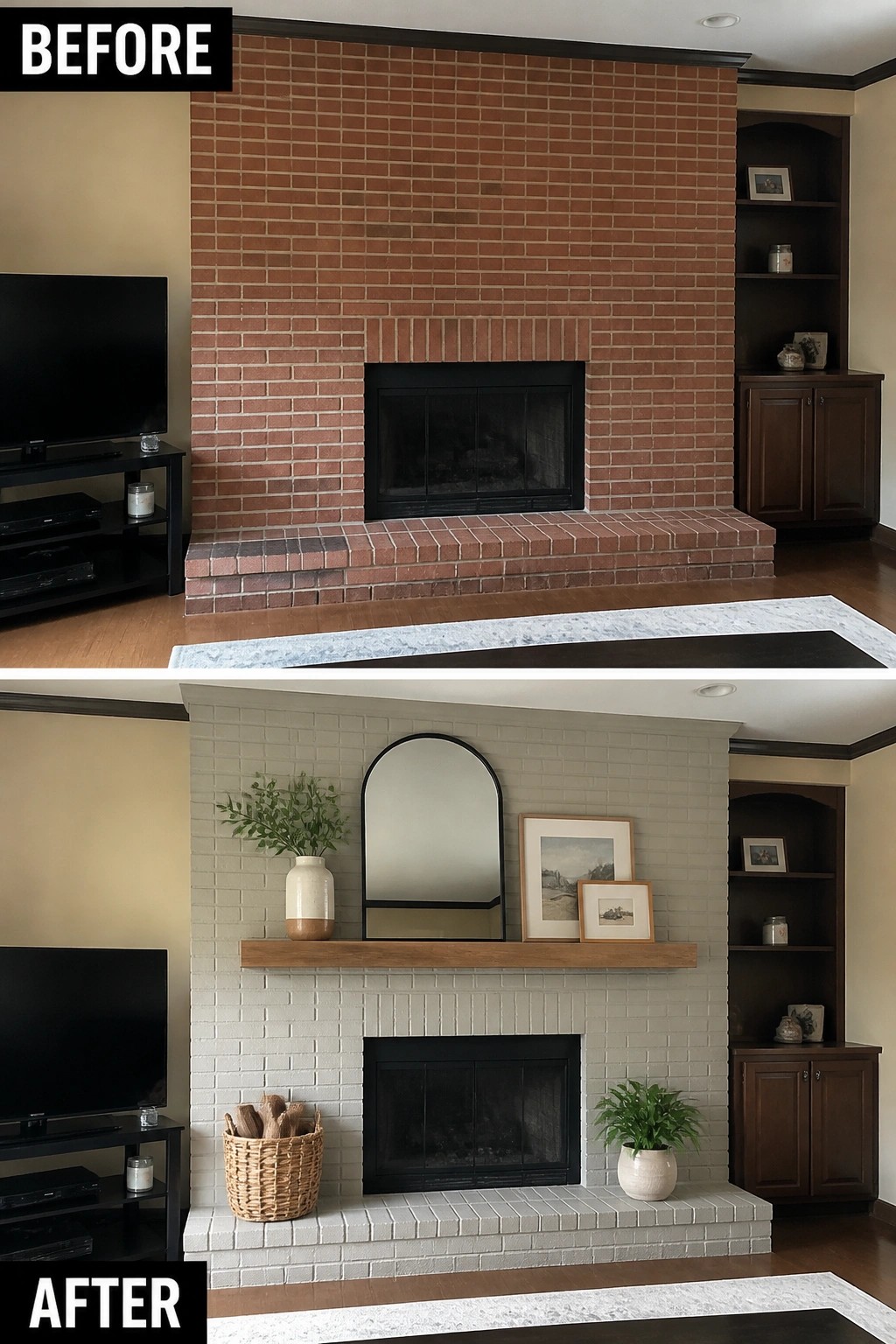
A heavy red-brick fireplace can be modernized without structural work by painting the brick a lighter neutral and adding a single, well-proportioned mantel. In this example the red bricks were painted a soft gray and a floating wood mantel was installed, which immediately brightens the focal wall and gives you a place to style art and plants.
To copy this, start by cleaning the brick and using a masonry primer before painting with a durable latex meant for masonry. Keep the firebox dark with heat-resistant paint for contrast, and pick a mantel that matches the room scale—an uncomplicated floating shelf in stained wood is inexpensive and effective. Style sparingly so the wall reads as one cohesive feature; this approach works great in older living rooms that need a fresher, lighter focal point.
Add A Window Seat With Built-In Storage
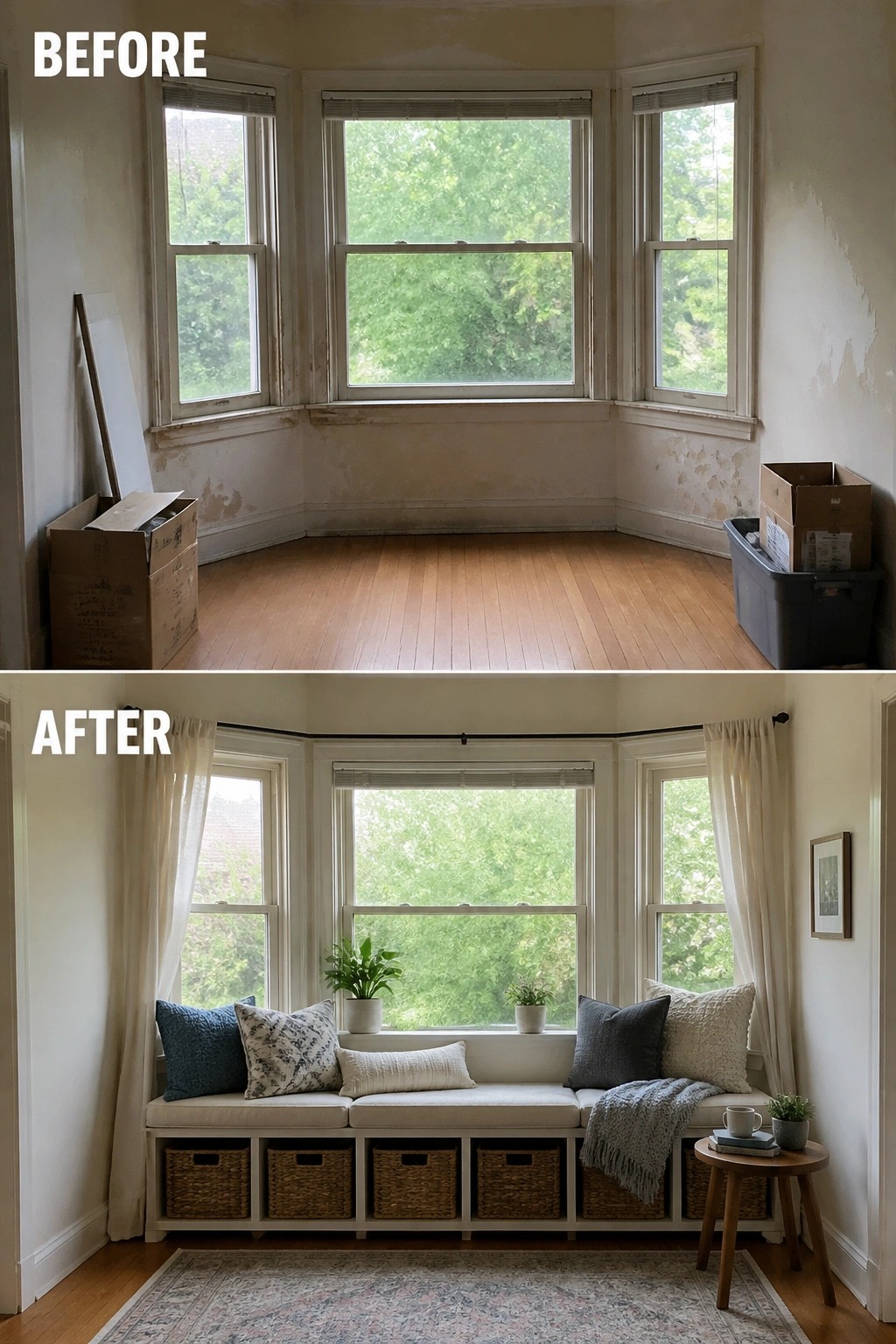
An empty bay window becomes useful and inviting when you add a low bench with cushions and under-seat baskets. In the before photo the alcove was bare; in the after it’s a simple seat that doubles as storage, framed by light curtains and a few plants. That single change gives the room purpose without ripping anything out.
Measure the nook so the bench stays proportional and leaves a clear path. A ready-made bench or an inexpensive bookcase turned on its side works well for the base, topped with a foam cushion and textured pillows. Use baskets or boxes below for shoes, blankets, or kids’ toys, and hang airy curtains to make the window read as a cozy corner. It fits small living rooms, rentals, or entryways where you want extra seating and smart storage.
Refresh A Small Bathroom With New Fixtures And Textiles
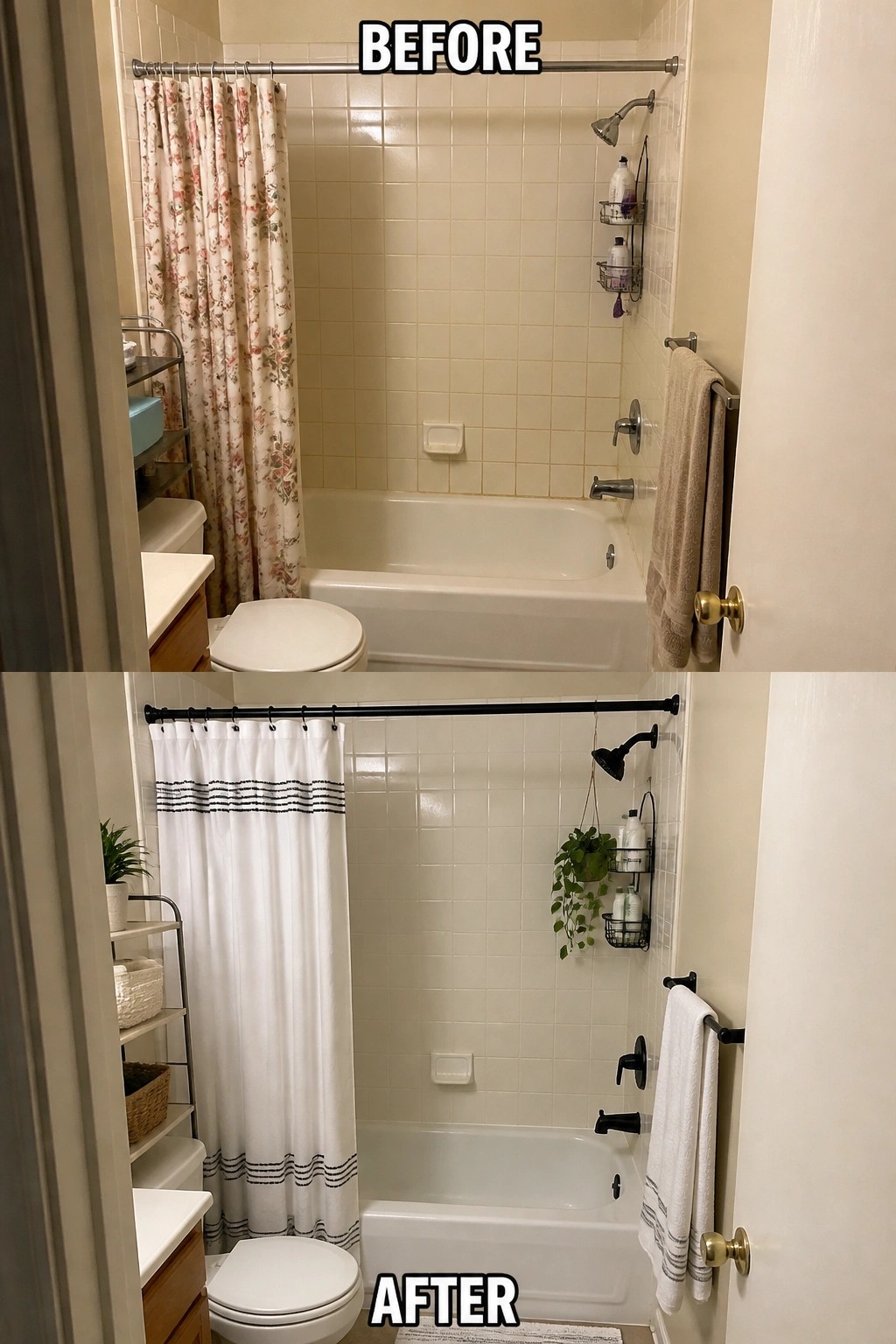
Updating a few key finishes and fabrics is one of the easiest ways to modernize a small bath without any plumbing or tile work. Swapping dated chrome hardware for a single, modern finish like matte black and trading a busy floral curtain for a crisp, light one immediately tidies the look and gives the room a more cohesive, intentional feel.
Start with the things you touch every day: a new shower curtain, towels, and one matching fixture finish for the showerhead, faucet, and towel bar. Keep accessories minimal so the eye rests, add a small plant or woven basket for texture, and choose pieces that fit the scale of your tub area. This approach works well in older bathrooms where you want a fresh look quickly and affordably.
Make A Small Pantry Work With Matching Containers And Labels
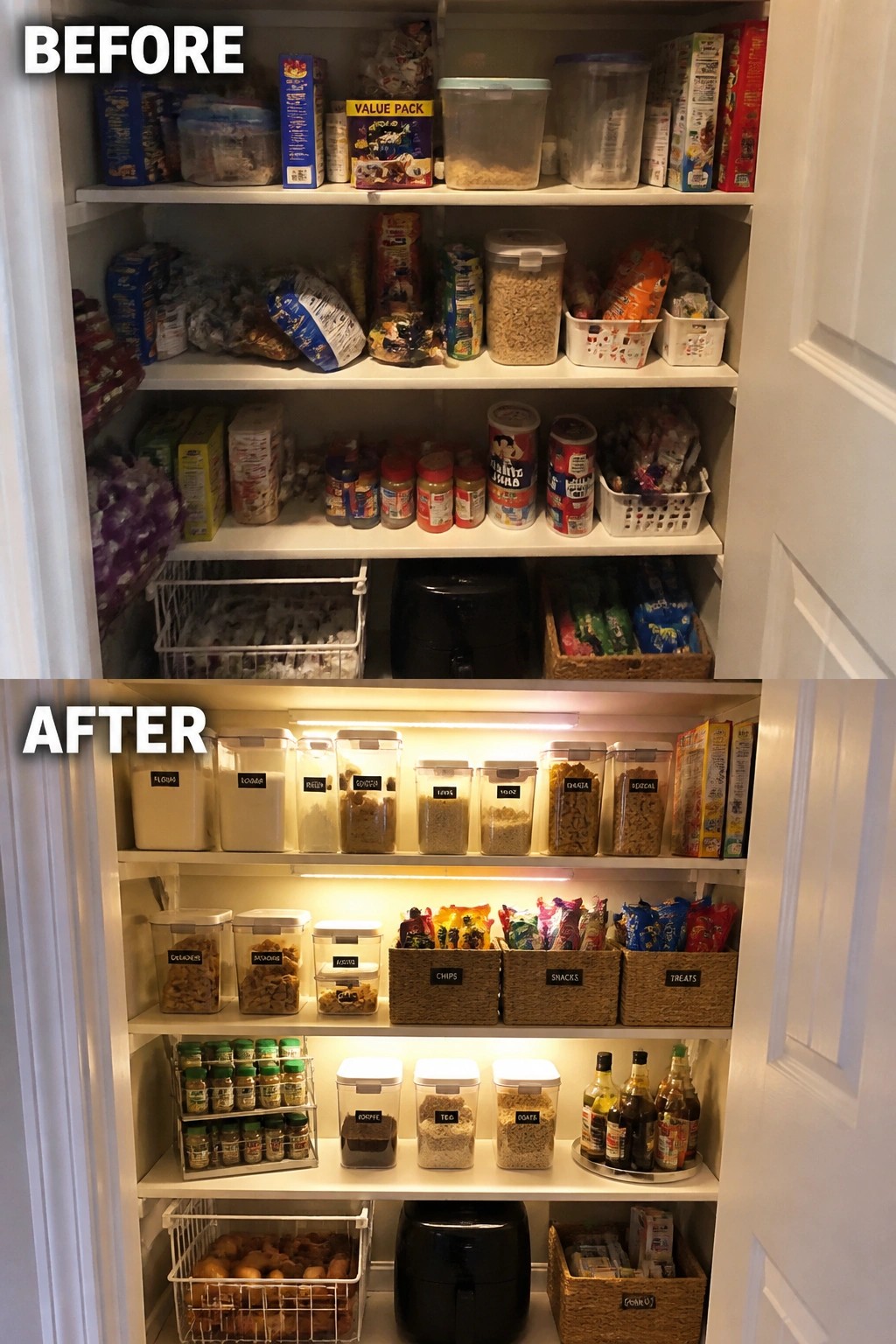
One simple fix for a messy pantry is swapping mismatched packages for a set of clear, stackable containers and a few baskets. In the before-and-after shown here, cluttered shelves are replaced by uniform containers and labeled baskets (and a strip light) so you can spot supplies quickly and keep similar items together.
To copy this idea, empty the shelves, sort like items, then choose two or three container sizes that fit your depth — tall for cereal and pasta, medium for grains, small for baking bits. Label fronts or lids, put everyday items at eye level, and corral loose packets in baskets; add a stick-on LED if the space is dim. It works well in small kitchens and rentals—just measure shelves first and start with containers for what you use most.
Add A Runner To Make A Staircase Feel Finished
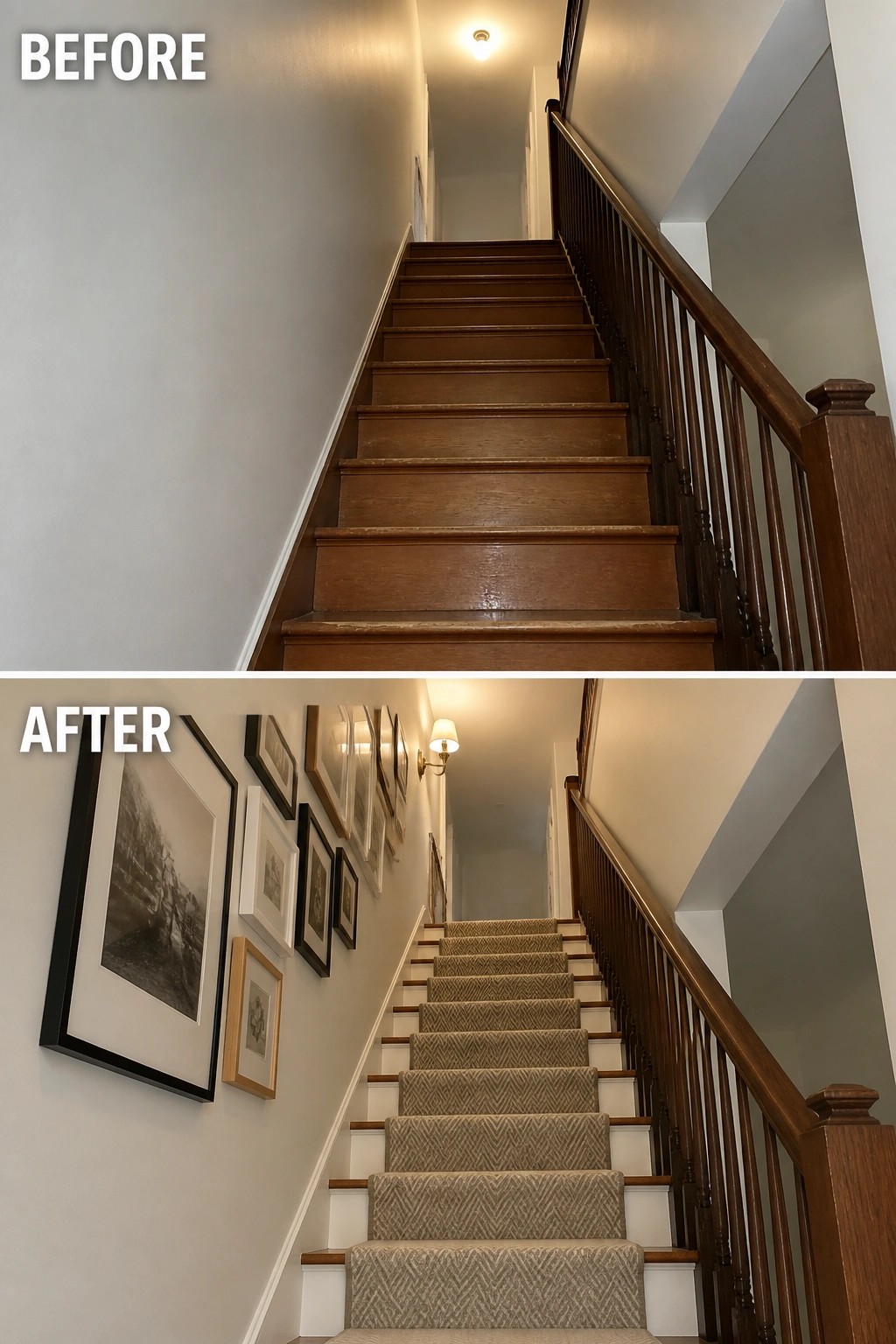
A stair runner is an easy, high-impact fix for a plain wooden staircase. Laying a narrow patterned runner down the center (and adding a simple wall light or a few frames) gives the whole stair a finished look while cutting noise and protecting the treads from wear.
Measure the usable tread width and pick a durable low-pile or flat-weave rug so it stays safe underfoot. Leave a couple of inches of wood visible at each side, use a non-slip underlay or professional installation, and choose a pattern that works with the rest of your home—this is a small change that suits older houses and rentals alike.
Use Two-Tone Paint And Wallpaper To Style A Tiny Powder Room
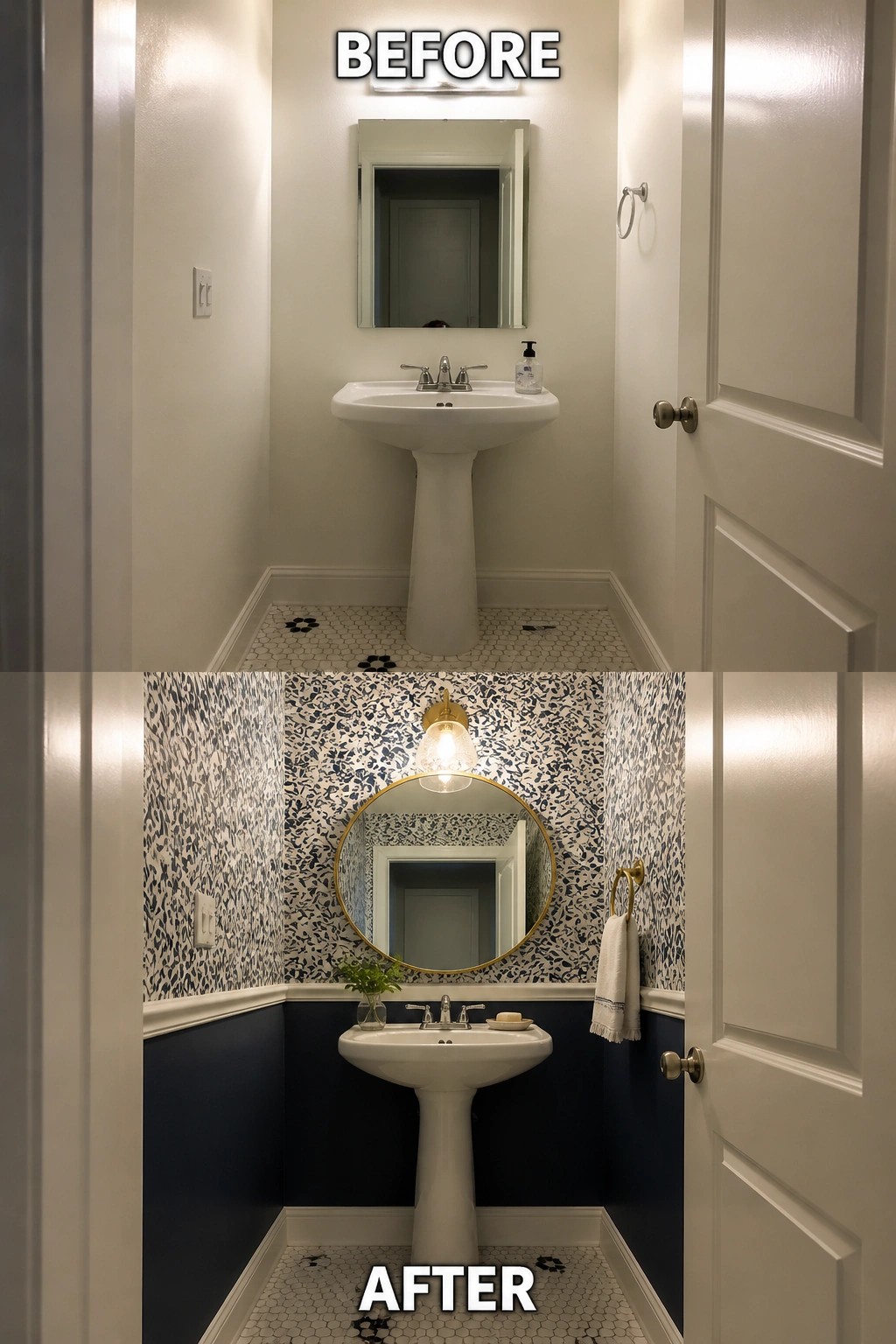
A small powder room can feel finished without changing the layout by pairing a bold lower paint color with a patterned wallpaper above and a simple round mirror. In the before photo the space was all plain white; the after shows how a dark lower half and a small-scale print above (plus a single framed mirror and new light) give the room clear character without clutter.
Try this where ceilings are low and the footprint is tight. Paint the bottom half in a durable, darker color to hide scuffs and tape off a crisp rail line before applying wallpaper above. Pick a small-repeat pattern so it does not overwhelm the room, keep hardware and accessories minimal, and use a mirror and a single light to make the scheme read as intentional rather than busy.
Use Slim Open Shelving To Clear Bathroom Counters
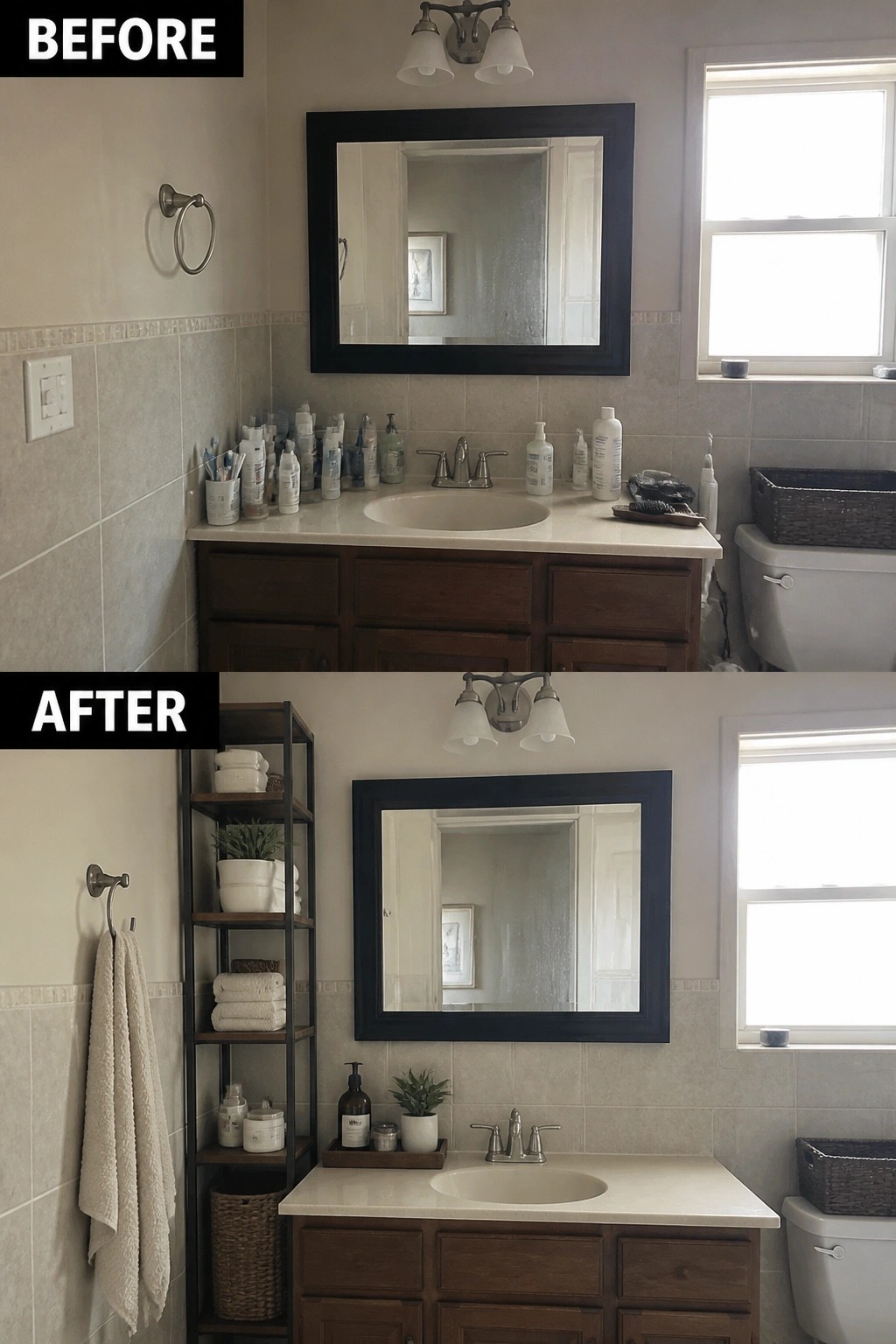
A narrow open shelving unit can make a small bathroom look finished without any construction. Instead of bottles spread across the sink, grouping products on a tall shelf and a small tray keeps the countertop visible and gives the room a cleaner, intentional feel.
Pick a slim unit that fits beside your vanity (narrow is key). Store everyday items on middle shelves, hide extras in baskets below, and add one or two small decorative pieces like a plant or a nice soap dispenser so it still feels styled. Keep most of the counter clear and only keep frequently used items out for quick access.
Frequently Asked Questions
Q: What’s the quickest update that makes the biggest difference in a small space?
A: A fresh coat of paint in a light, warm shade and swapping old hardware on cabinets or doors usually makes the most visible change. Add a few brighter bulbs and a statement rug or throw to tie the look together without much time or money.
Q: How can I make a tiny room feel larger without removing walls?
A: Keep color on walls and large furniture light and consistent, then add one or two taller pieces to draw the eye up. Use mirrors to bounce light, choose low-profile furniture that doesn’t block sightlines, and clear clutter so the space breathes.
Q: I rent — what makeover tricks are truly temporary but effective?
A: Try peel-and-stick wallpaper, temporary backsplash tiles, and removable shelf systems that use tension or adhesive hooks. Swap out soft furnishings and lighting fixtures you can take when you move, and use rugs to define zones without altering floors.
Q: How do I choose a color scheme that works with the furniture I already own?
A: Pick a neutral base color for walls, then pull one or two accent colors directly from a rug, pillow, or artwork you like. Test paint samples on the wall in different light and commit to a small palette so the room feels intentional and calm.