

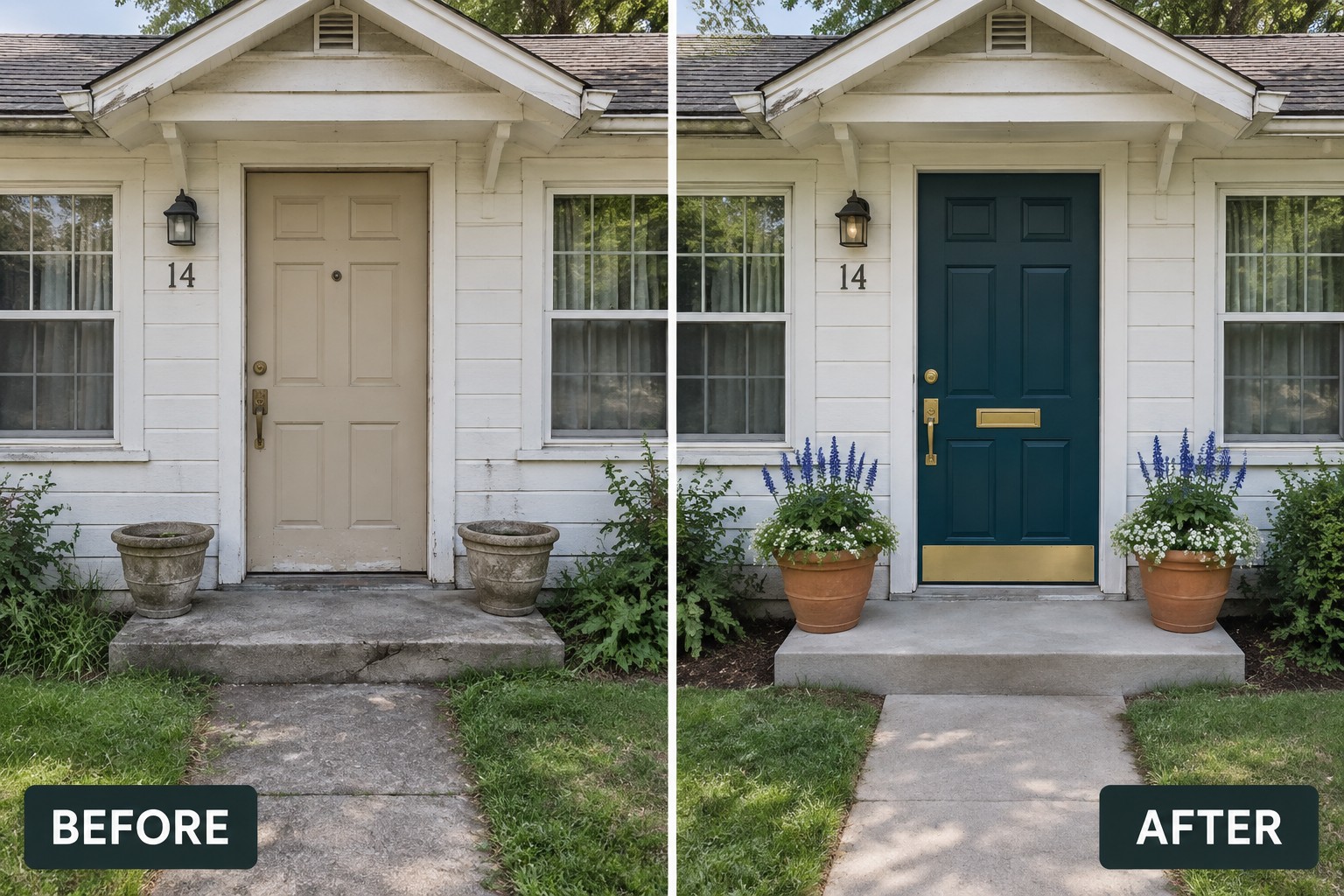
I have always found that the front door does a lot of the work in defining how a cottage home greets the street.
Small changes like paint, hardware, or trim details often shift the whole look without touching the rest of the facade.
It feels more intentional that way.
I tend to test paint samples right on the door first because it shows whether the update will sit well with the siding and roof.
These kinds of entry tweaks reward a bit of planning since they tie the exterior together more than any single big addition would.
Give Your Front Door A Fresh Coat Of Paint
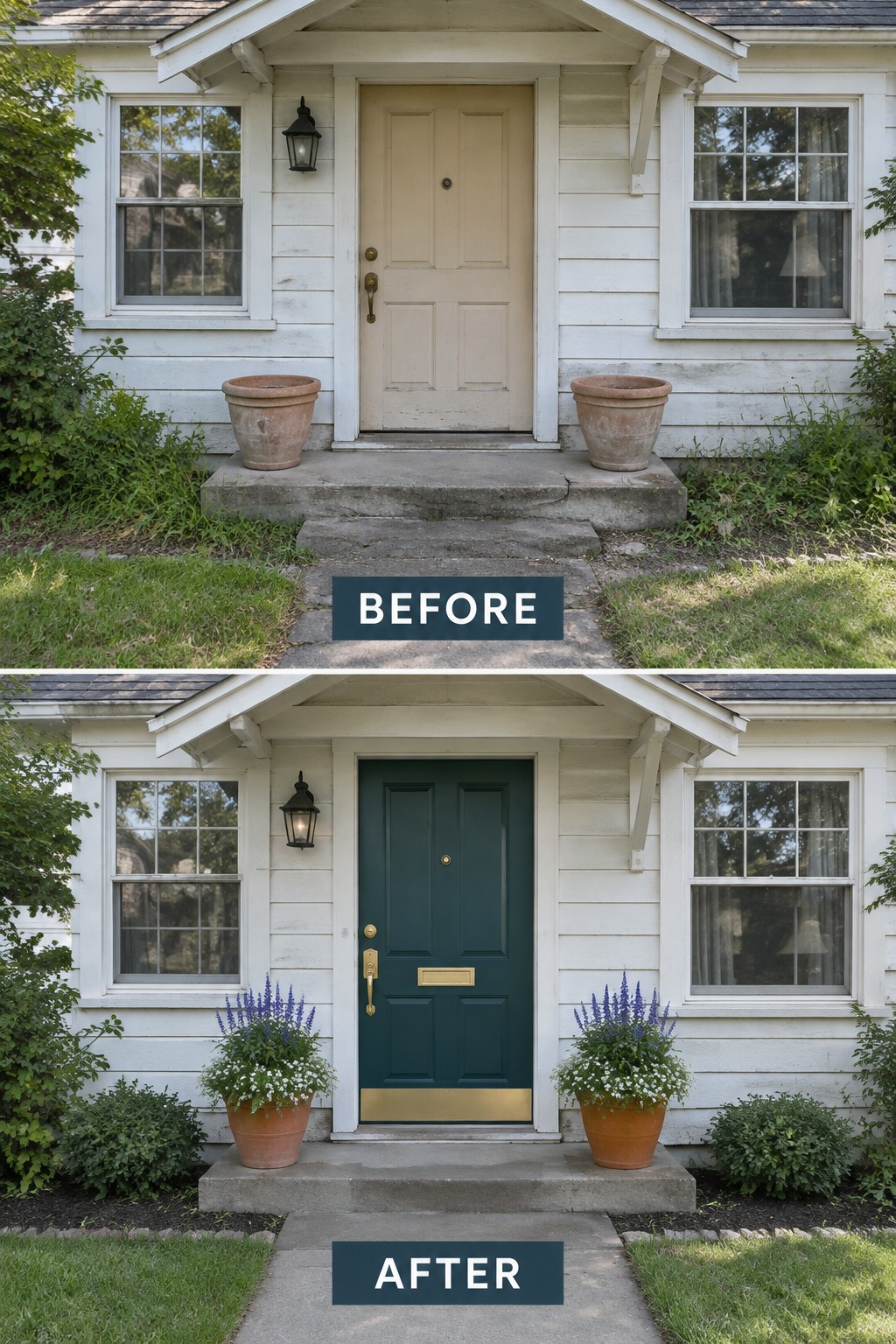
A plain front door often gets overlooked, but changing its color can shift the whole feel of the entry. Here the light beige door was swapped for a deep green, which made the doorway stand out against the white siding. The simple addition of planted pots on either side helped tie the steps into the rest of the front.
This works especially well on cottage-style homes where the door is the main architectural feature. Pick a color with enough contrast to the siding, and keep any new hardware modest so it does not compete. Two matching pots placed at the base of the steps are usually enough to make the entrance feel complete.
Replace An Outdated Front Door
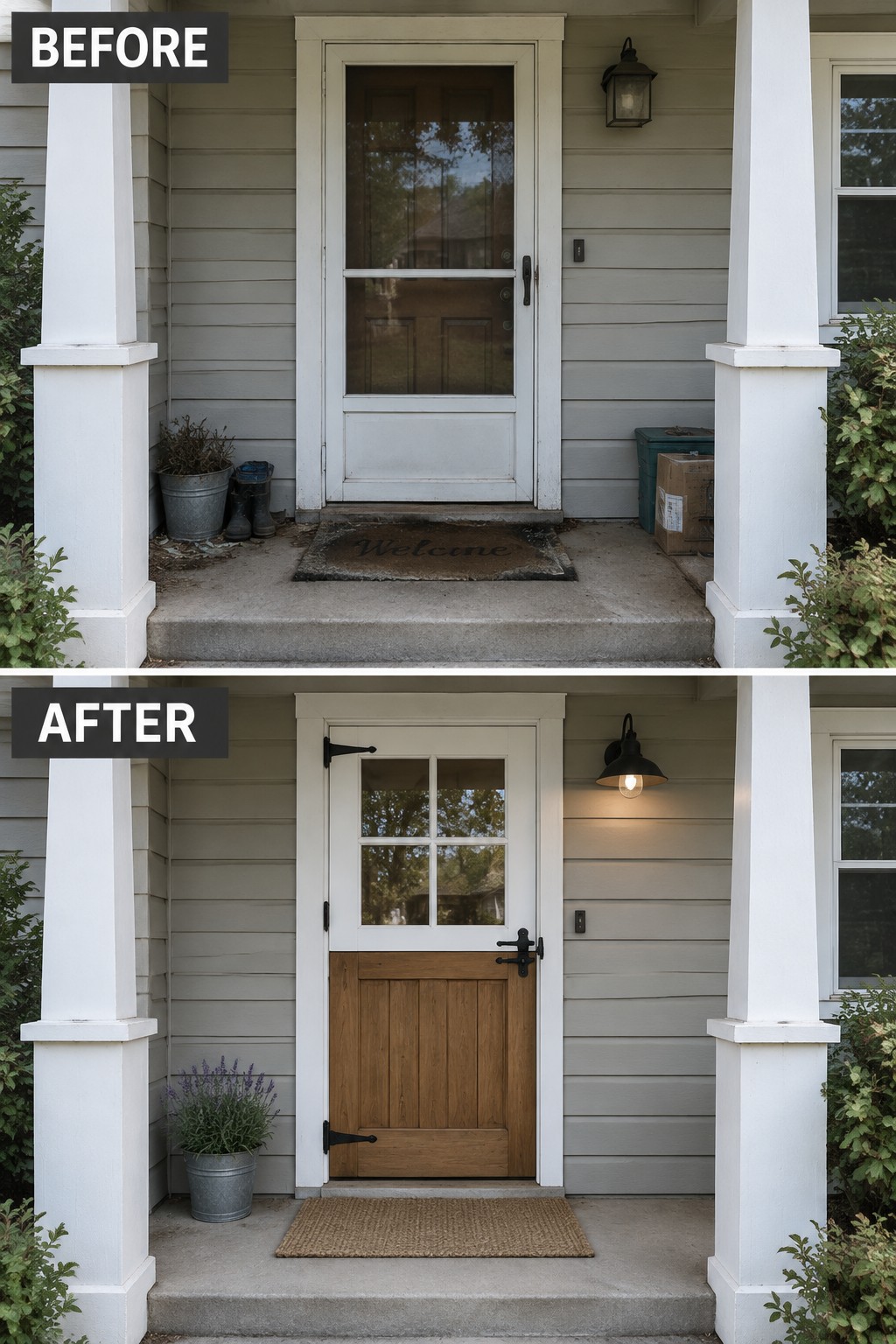
Many cottage homes still have old storm doors and plain entries that make the whole front look tired. Swapping the door for one with a solid wood lower half and divided glass on top instantly changes how the house reads. Adding black hardware and a simple wall sconce finishes the update without extra fuss.
This approach works well on homes where the existing door feels too modern or too plain for the style. Start by measuring the opening carefully and choose a door that matches the scale of the house. Keep the surrounding trim and siding as they are so the new door becomes the clear focal point.
Swap A Plain Front Door For A Wood One With An Arch

A basic painted door often makes the whole front of a cottage look flat and a little tired. Replacing it with a wood door that has an arched top and divided glass panels changes how the entry feels right away. The shift from plain concrete steps to stone also helps the door sit better against the house.
This works best on homes with simple siding where the door can stand out as the main feature. Keep the rest of the trim light so the wood reads clearly, and choose glass that lets in daylight without giving up privacy. Start with the door size and shape before adding new hardware or lighting.
Add Shutters To Frame The Windows
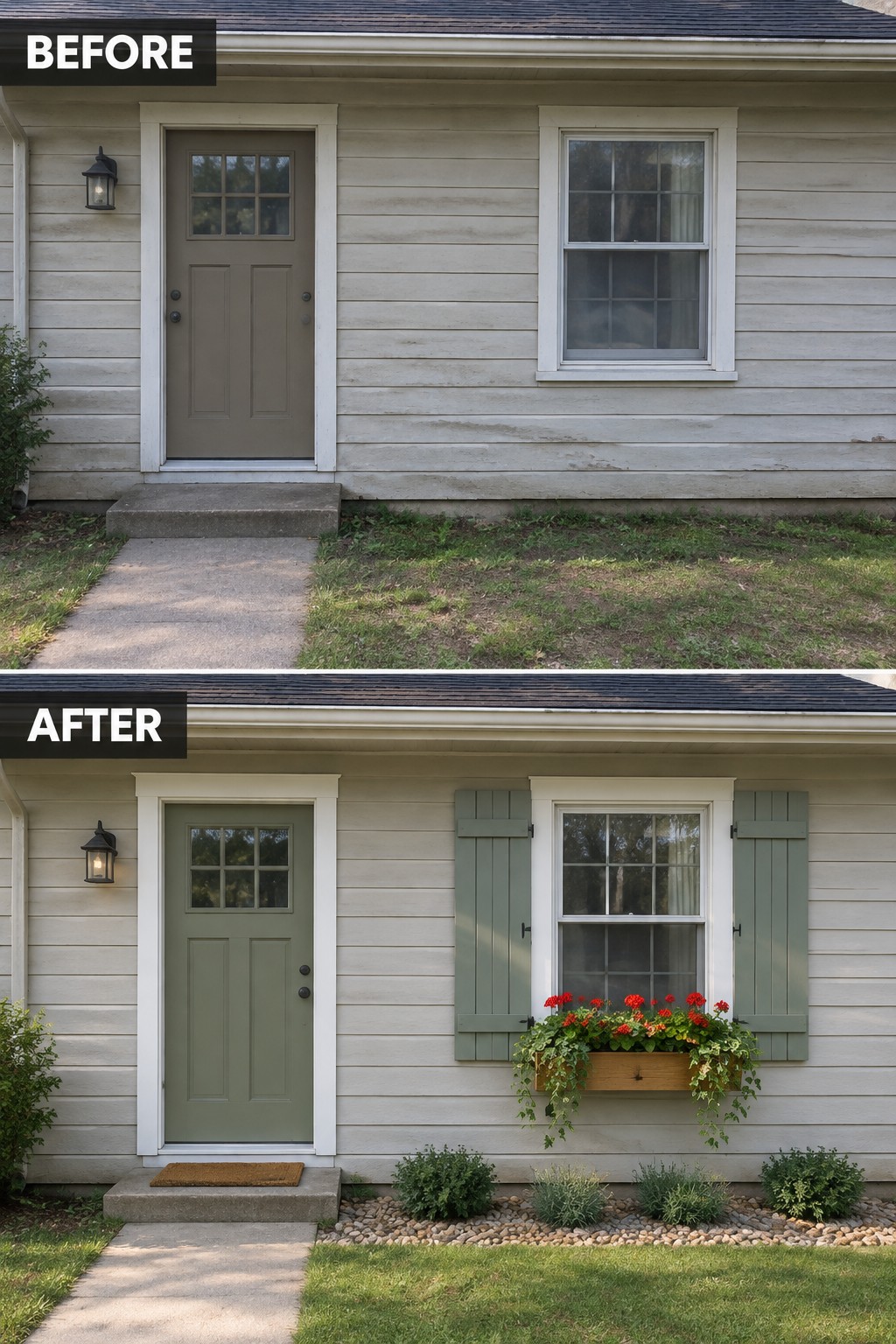
One of the simplest ways to make a plain front look more finished is to add shutters on either side of the windows. In this case the before photo shows a bare window sitting next to the door with nothing to tie the two together. Once the shutters went up in a soft green that matches the new door color, the whole entry suddenly feels balanced and intentional.
This works especially well on cottage-style homes where the windows need a little weight. Keep the shutters the same width as the window panes so they look like they could actually close. A single window box underneath completes the look without adding much extra work.
Add Wall Lights To Frame The Front Door
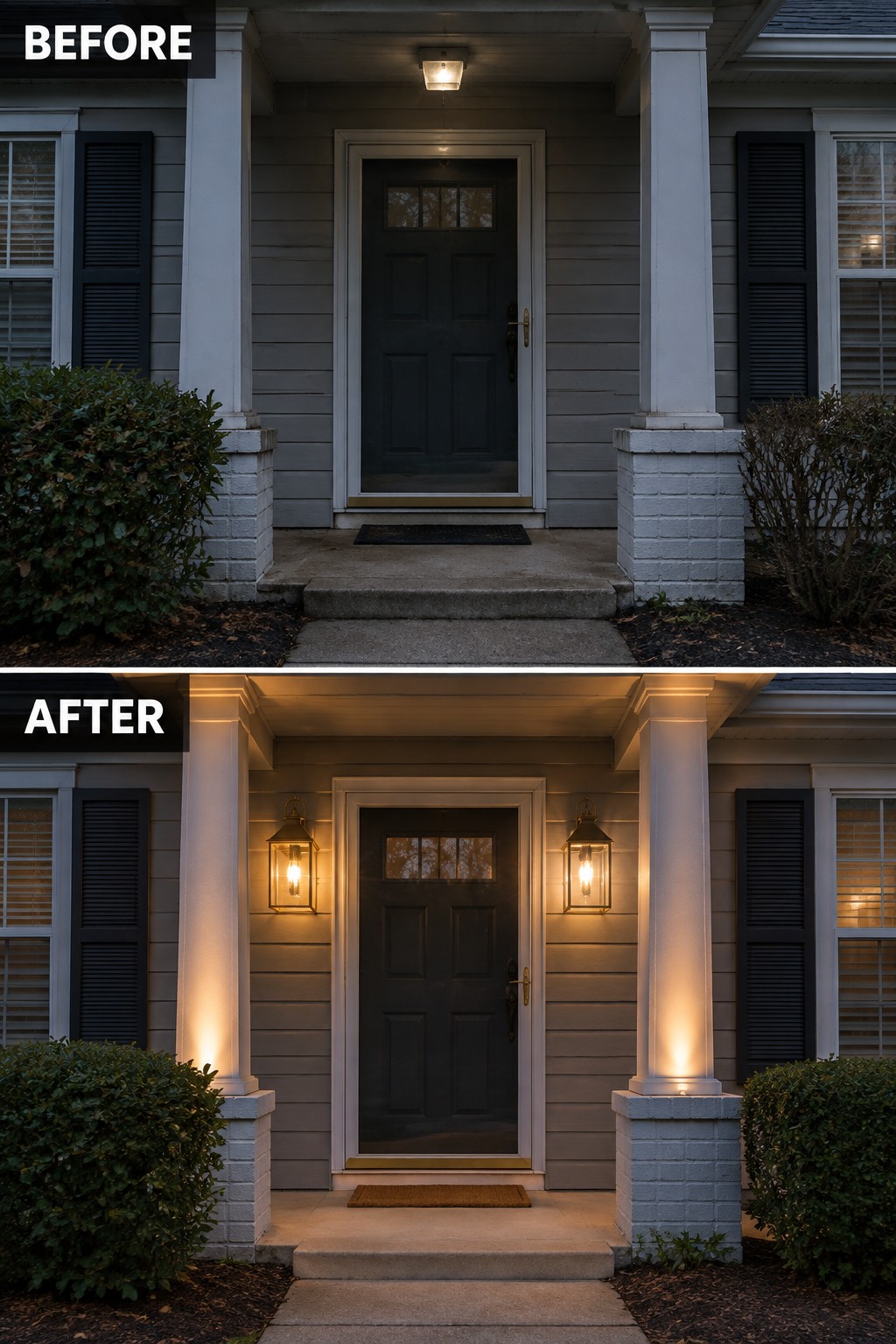
One of the easiest ways to improve a plain front entry is to add a pair of wall lights beside the door. The before photo shows how a single overhead fixture left the door and columns looking flat after dark. Adding lanterns on both sides creates balance and draws attention to the entrance without any major construction.
This works especially well on cottage style homes where the front door already has some character. Mount the lights at a comfortable height so they light the door and the immediate step area, and keep the fixtures simple so they do not compete with the existing trim. Start with the lighting first, then see if the space needs anything else.
Add Patterned Tile To Concrete Steps
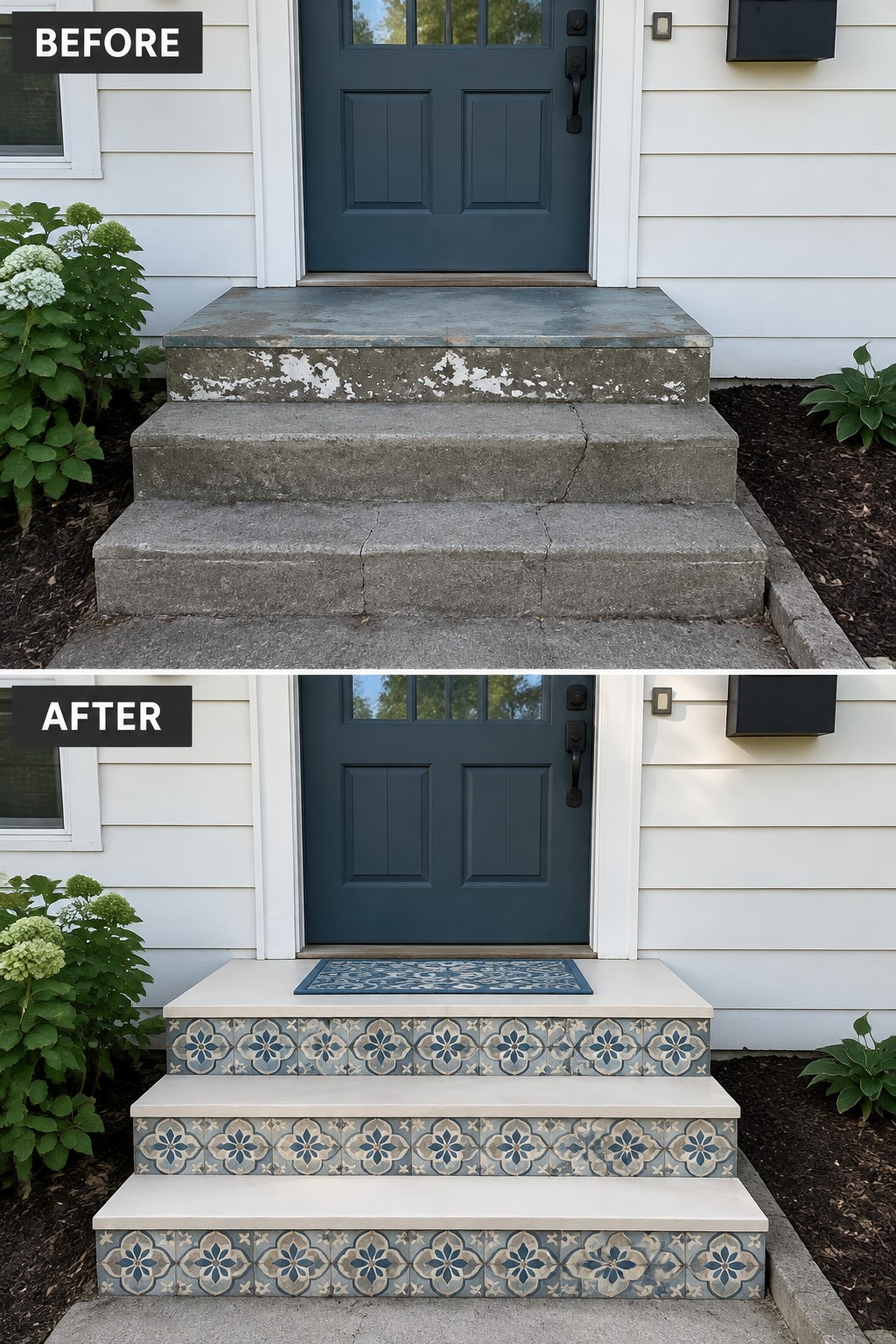
Concrete steps tend to show wear quickly, especially on older homes where the surface cracks and fades. Here the tired gray steps were given a clean light overlay and a row of patterned tile across each riser, which instantly lifts the whole entry.
This works best on cottage homes where you want a little character without a big construction project. Keep the tile colors close to your door or trim, and test the surface for good traction before calling it done.
Add Stone To Porch Columns For More Presence

Replacing plain wooden posts with stone columns gives the front entry a sturdier, more finished look. The before photo shows a light porch that feels a bit thin next to the rest of the house. Once the columns are clad in stone, the door area gains weight and the whole facade feels more balanced.
This update works especially well on cottage homes that already have a simple shape. Focus on the columns first if your porch looks too delicate, then keep the planting low and the path clear so the new material stays the main feature. It is a modest change that still reads as intentional.
Paint The Brick And Update The Front Door
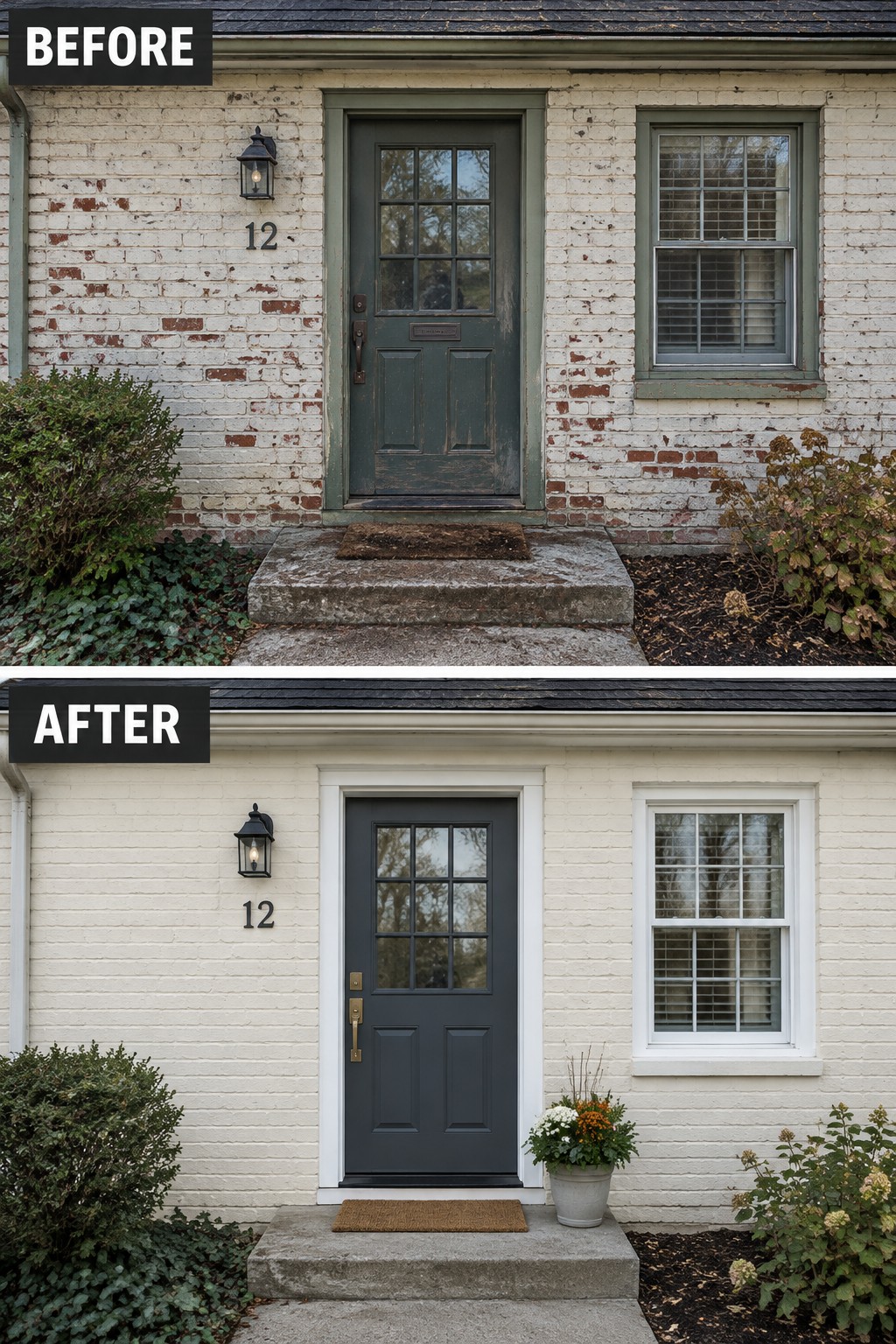
Painting tired brick a clean white and switching the front door to a darker gray gives this cottage a brighter, more pulled-together entry. The old whitewash was flaking and the green door had lost its finish, so the simple color change makes the whole facade feel fresh without any structural work.
This idea suits smaller cottage homes where the front door is the main focal point. Clean and prime the brick first, then choose a door color that stands out against the new paint. A single planter near the step is enough to finish the look.
Add Sidelights And A Transom To Your Front Door
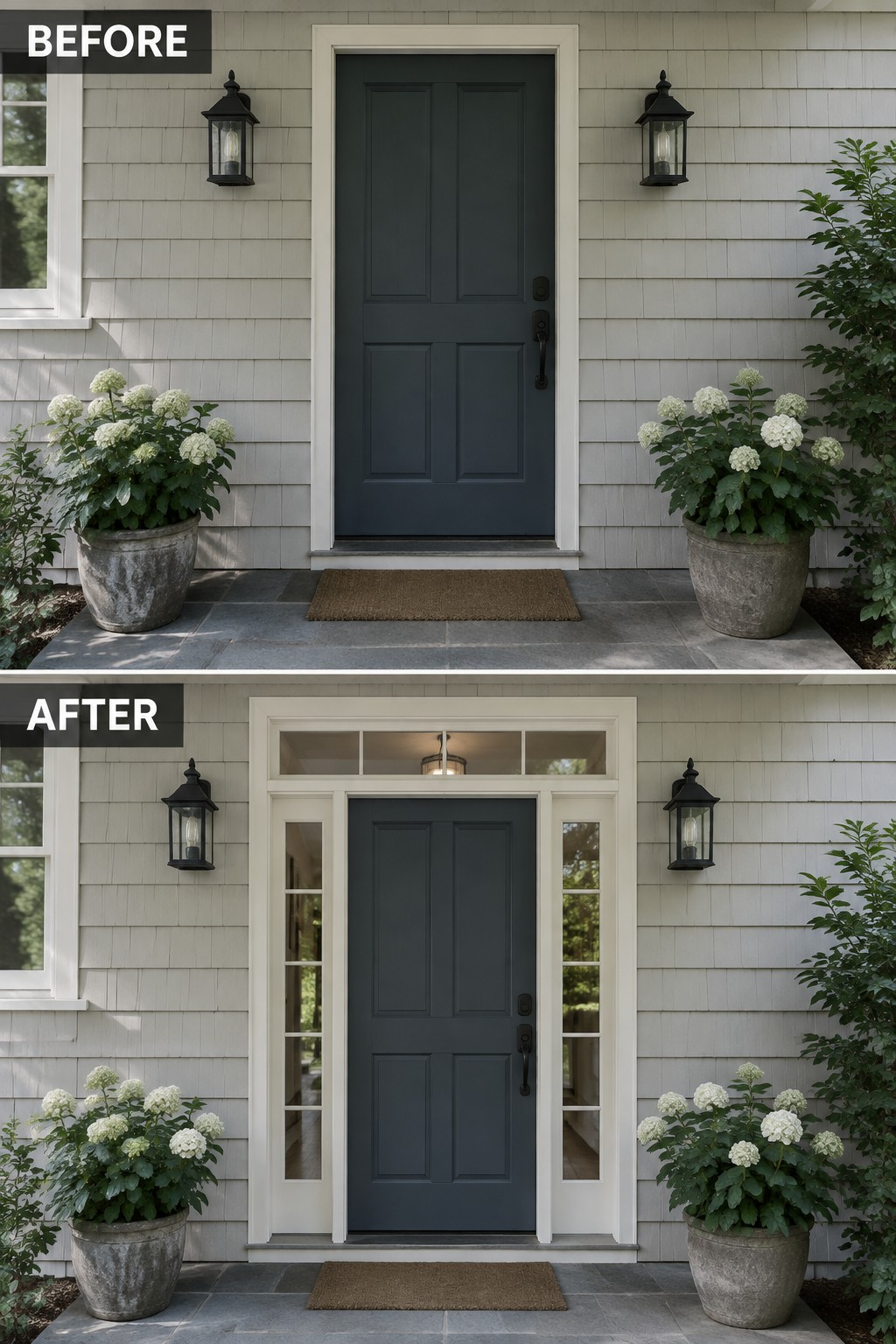
Adding sidelights and a transom gives a front door more presence without a full renovation. The before photo shows a solid door sitting in a simple frame with little around it. After the update the white trim and glass panels on either side let light through and make the entry feel wider and more balanced.
This works best on cottage homes where the door needs a bit more structure to match the rest of the facade. Start by measuring your existing opening and choosing narrow sidelights that fit the scale of your house. Keep the trim color simple so it reads as part of the original architecture rather than an add-on.
Refresh A Plain Cottage Exterior With Paint And Trim
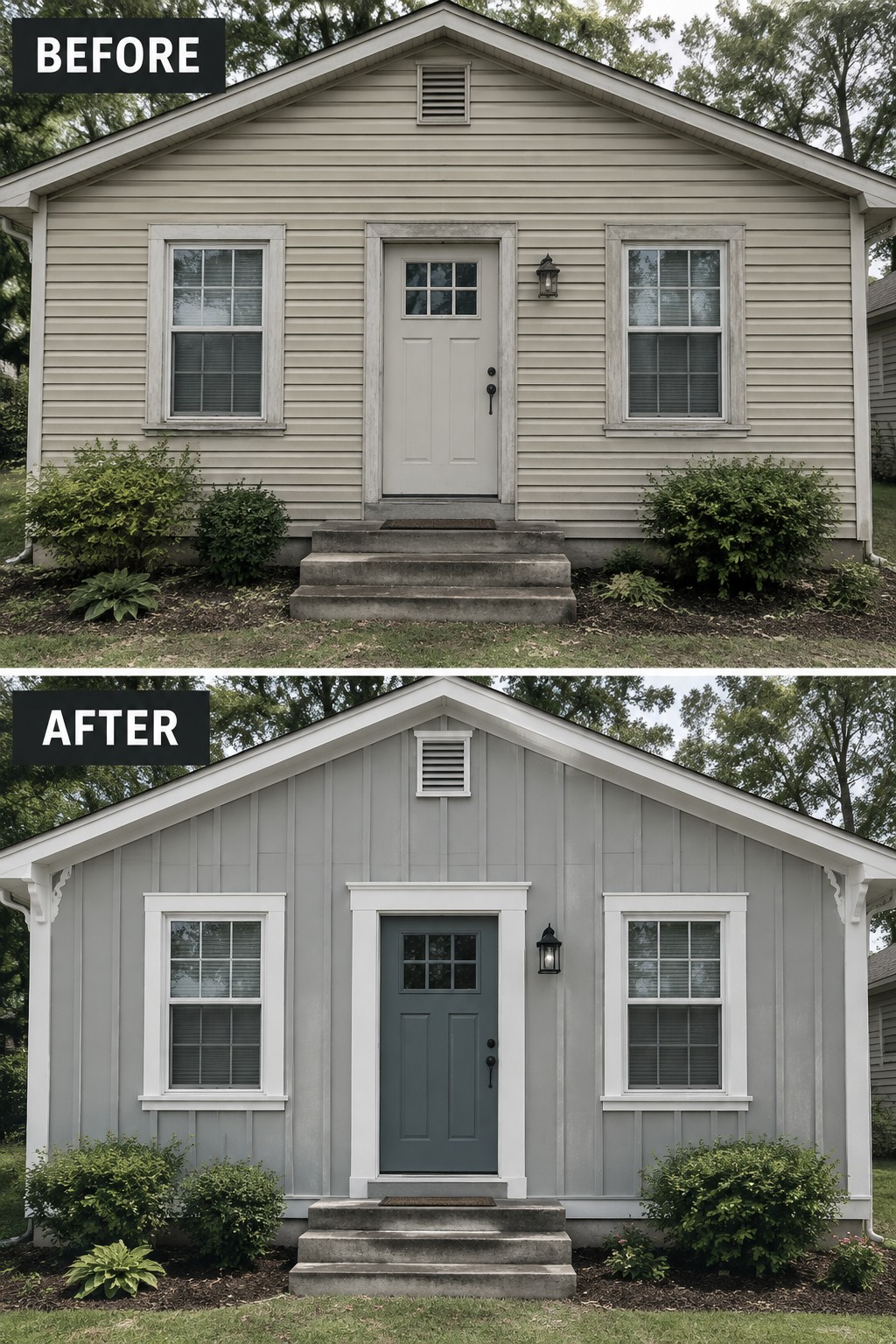
Painting the siding a soft gray and adding crisp white trim around the windows and door makes the whole front feel more finished. The darker door color also helps the entry stand out instead of blending into the siding. These changes give the house a clearer shape and more presence without any structural work.
This approach works well on simple cottages where the original trim is minimal. Focus first on the windows and front door, since those get the most attention. Choose a siding color that sits between warm and cool so it still feels welcoming, and keep the trim bright enough to create contrast.
Define The Front Entry With Garden Beds And Planters
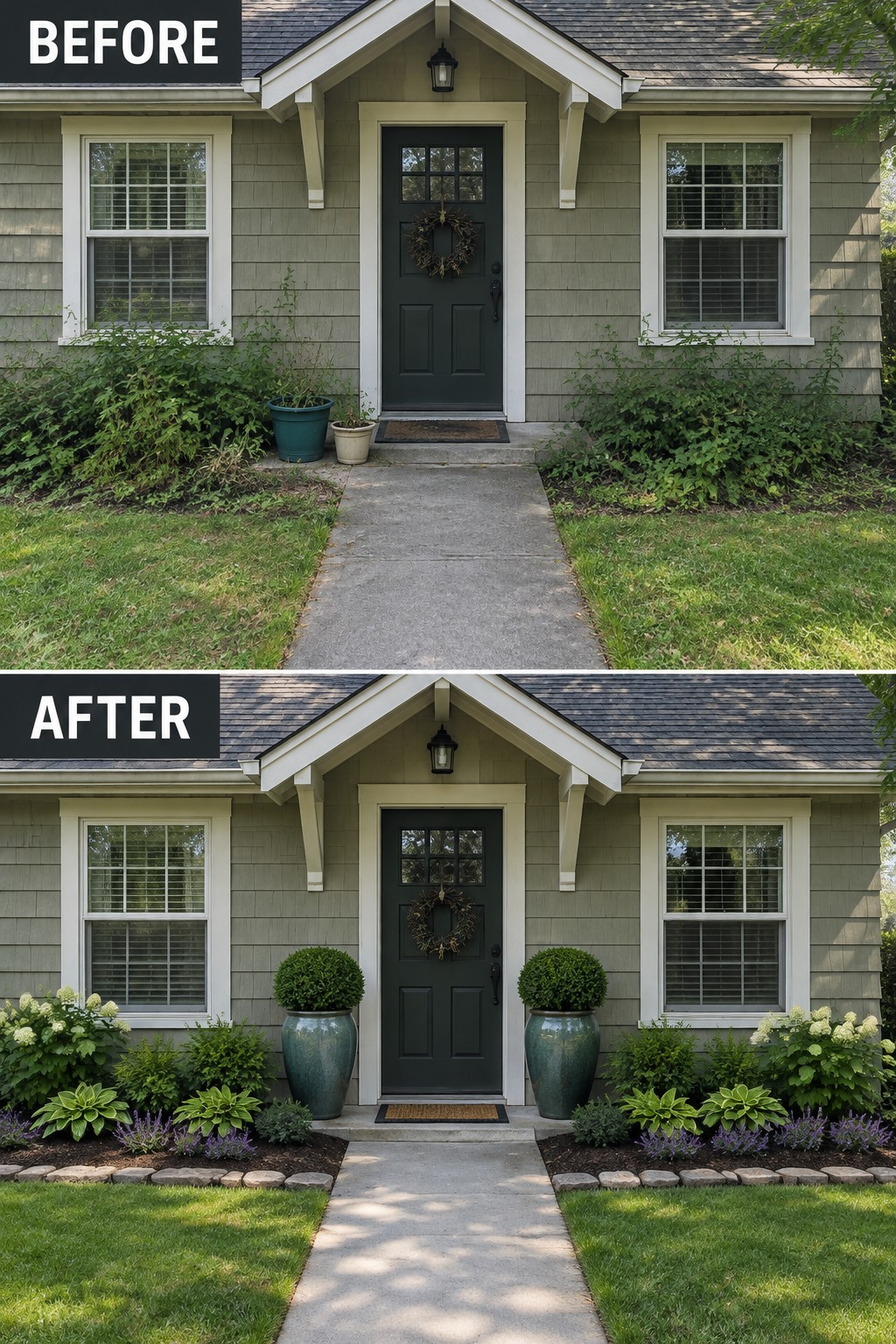
The before photo shows the entry lost in a tangle of shrubs growing right up against the house. In the after, low stone edging creates two clear beds, and a pair of large pots sits on either side of the door. The change makes the entrance feel intentional instead of crowded.
This works especially well on cottage-style homes where the front door is the main focal point. Clear the overgrowth first, then keep the beds fairly narrow so they do not crowd the path. Matching pots on each side help the whole area feel balanced without requiring a lot of new plants.
Update Front Door Hardware For Cottage Style
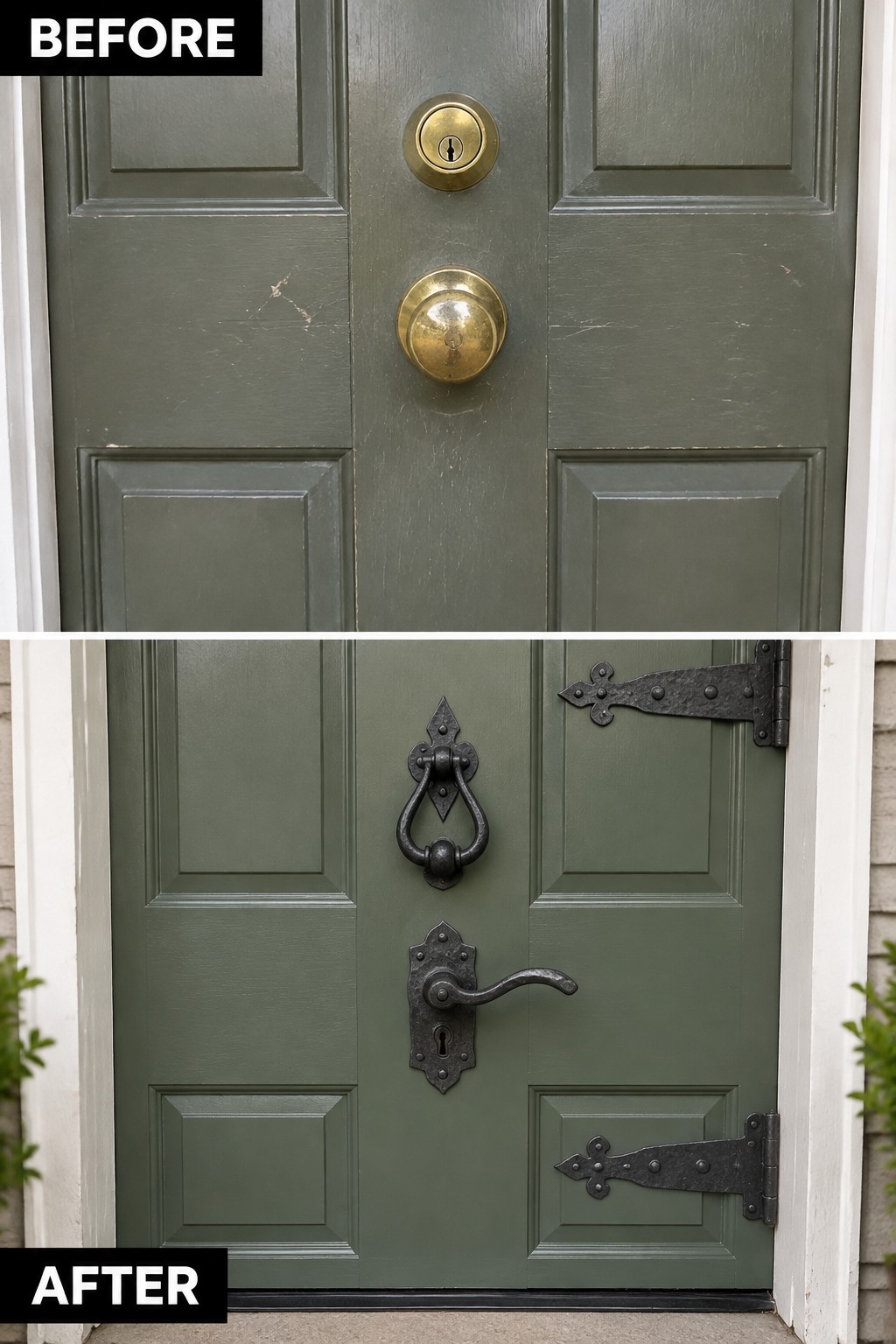
Many cottage homes start with basic brass hardware on the front door that feels too plain for the rest of the house. Swapping it for darker, more decorative iron pieces like a knocker and lever handle gives the entry a finished look without any major construction.
This change works best when the new hardware echoes other black or dark details already on the house, such as hinges or light fixtures. Keep the scale appropriate for the door size and choose pieces that can handle weather so the update lasts.
Add An Arbor To Frame The Front Door
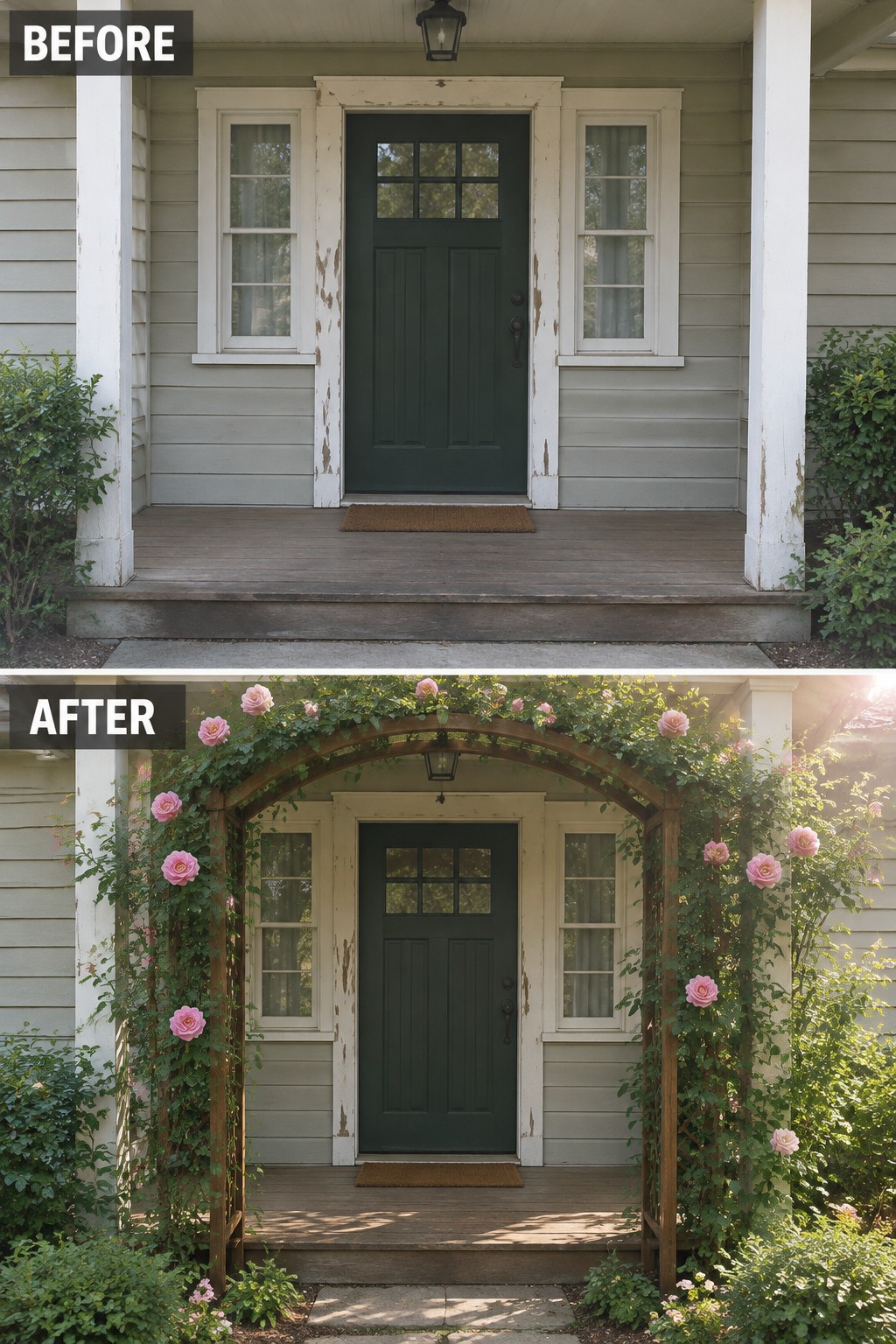
Adding a wooden arbor over the entry gives the door a clear sense of purpose and scale. In the before photo the door sat flat against the siding with nothing to draw the eye or soften the lines. The arbor changes that by creating height and a place for climbing roses to grow, so the entry feels more settled and welcoming.
This idea suits cottage homes that already have some age and character but need a little structure at the front. Choose a simple wood frame that matches the scale of your door, then plant a vigorous climber that can handle sun or shade as needed. Keep the rest of the planting low so the arbor stays the main feature rather than competing with too many other elements.
Lighten The Front Door To Brighten The Entry
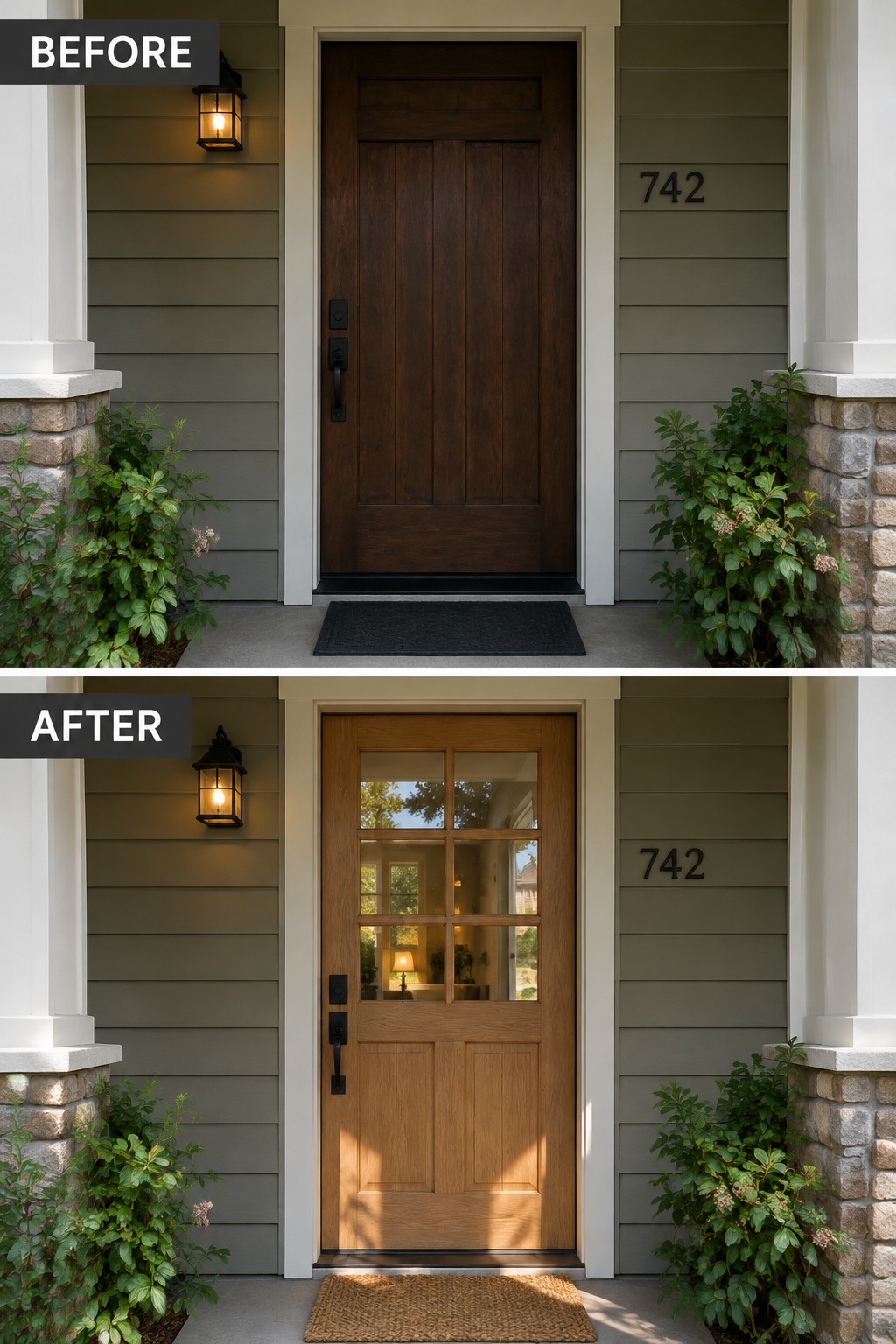
A dark solid door often makes an entry feel heavier than it needs to be. Replacing it with a lighter wood door that has glass panels lets more light through and gives the front of the house a more open, friendly feel without any major construction.
This works best on cottage-style homes where the goal is simple warmth rather than a big statement. Match the new door finish to any wood tones already on the house, keep the hardware simple, and add just a woven mat to complete the update.
Add A Small Overhang To Frame The Front Door
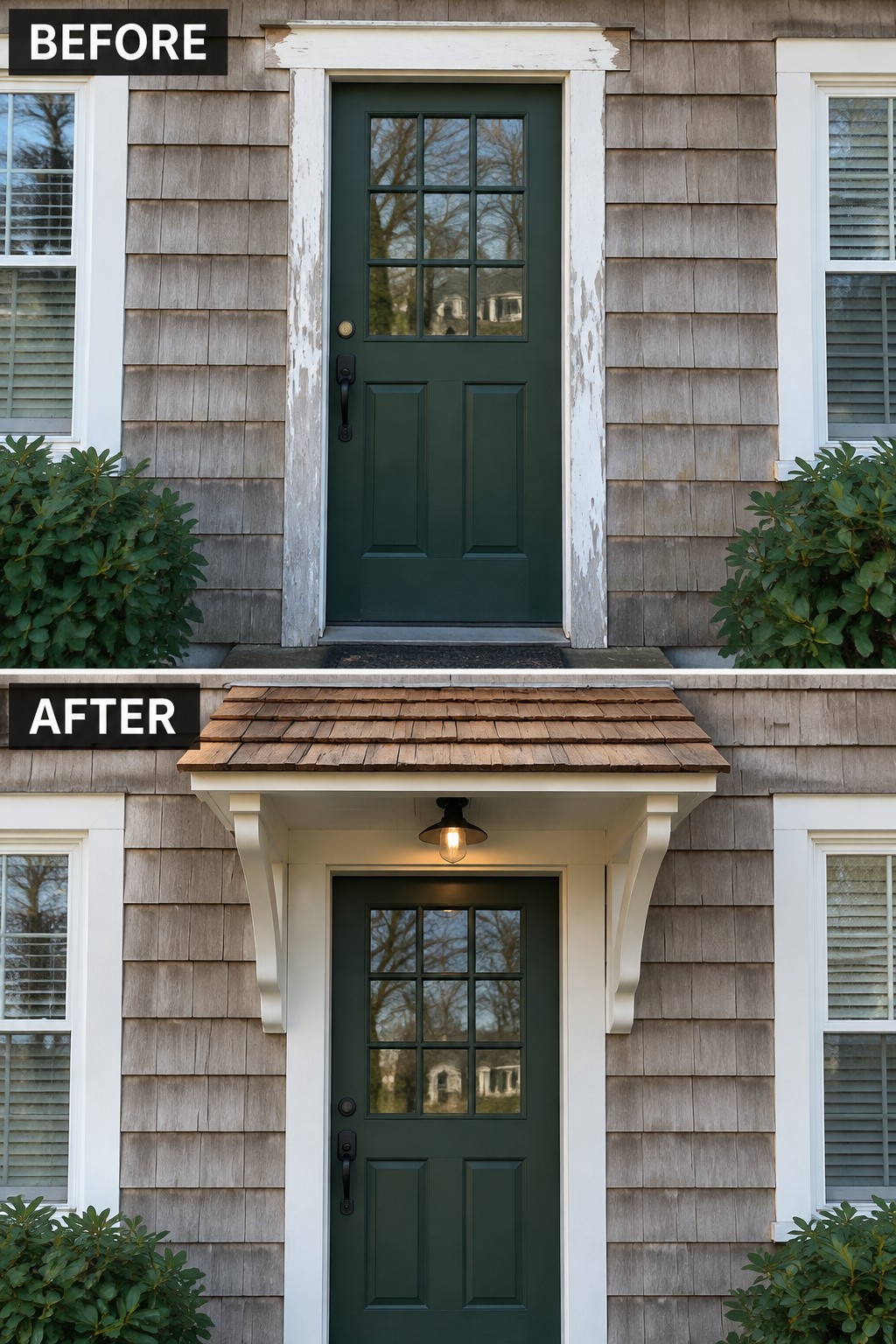
A flat front door with no cover often looks unfinished on a cottage house. Adding a modest overhang gives the entry real shelter and a clearer sense of arrival. Here the door gained a wood-shingled roof with simple brackets and a light mounted right above it.
This change suits homes where you want to improve curb appeal without building a full porch. Match the overhang material to the main roof so it feels like part of the original house. Keep the depth shallow and the brackets straightforward so the scale stays right for the door.
Give Your Porch A Clear Purpose
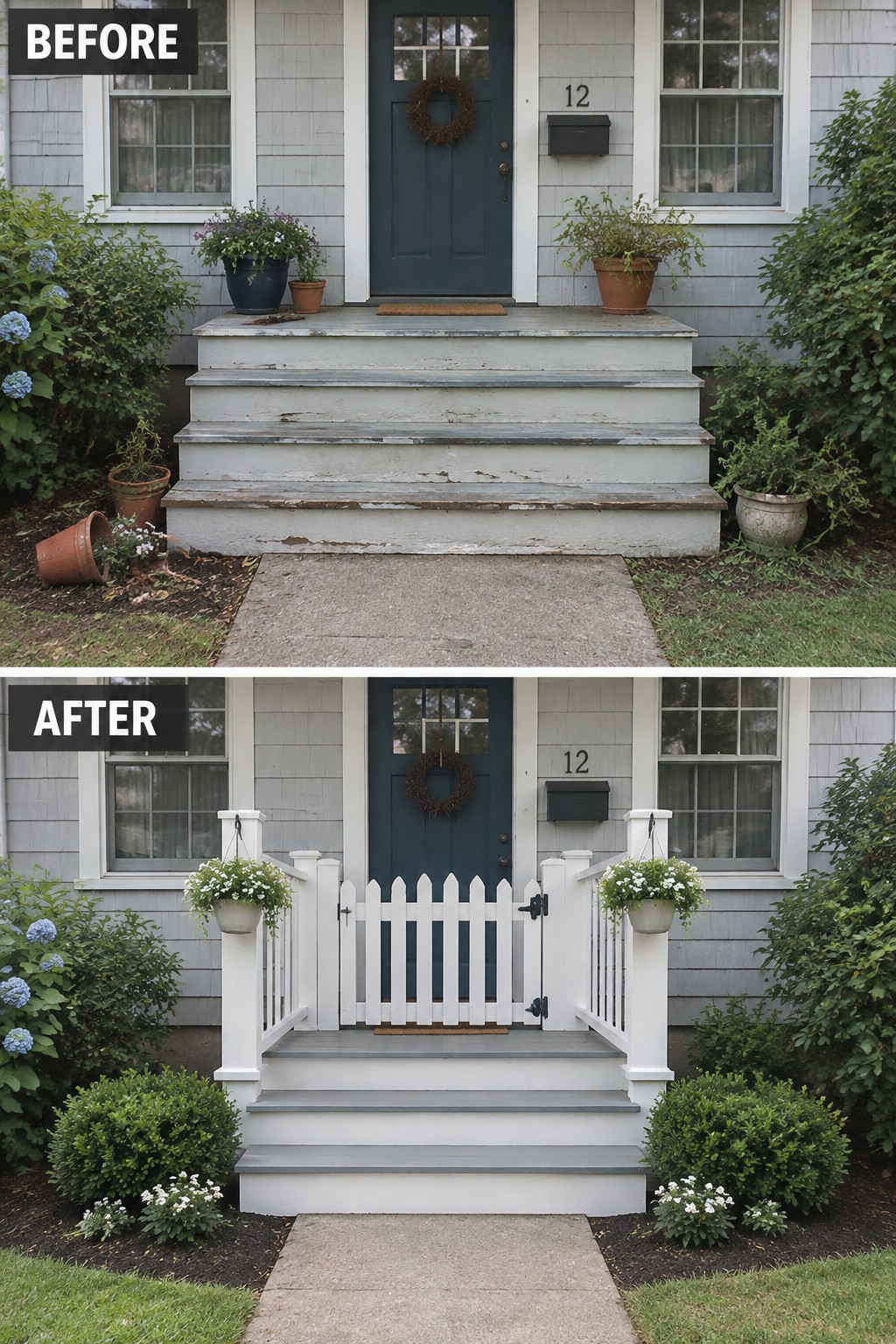
Many front porches feel unfinished because they have no real boundary between the steps and the surrounding garden. The worn paint and scattered pots made the entrance look neglected rather than welcoming. Adding a white picket gate and matching railings gave the space a clear frame and turned the stairs into an intentional entry.
This works well on cottage homes where a simple gate fits the style without looking formal. Paint the new wood to match your trim, and keep the planting low on either side so the gate stays visible. The goal is to create a threshold, not to block the view.
Give A Bare Porch A Clear Purpose
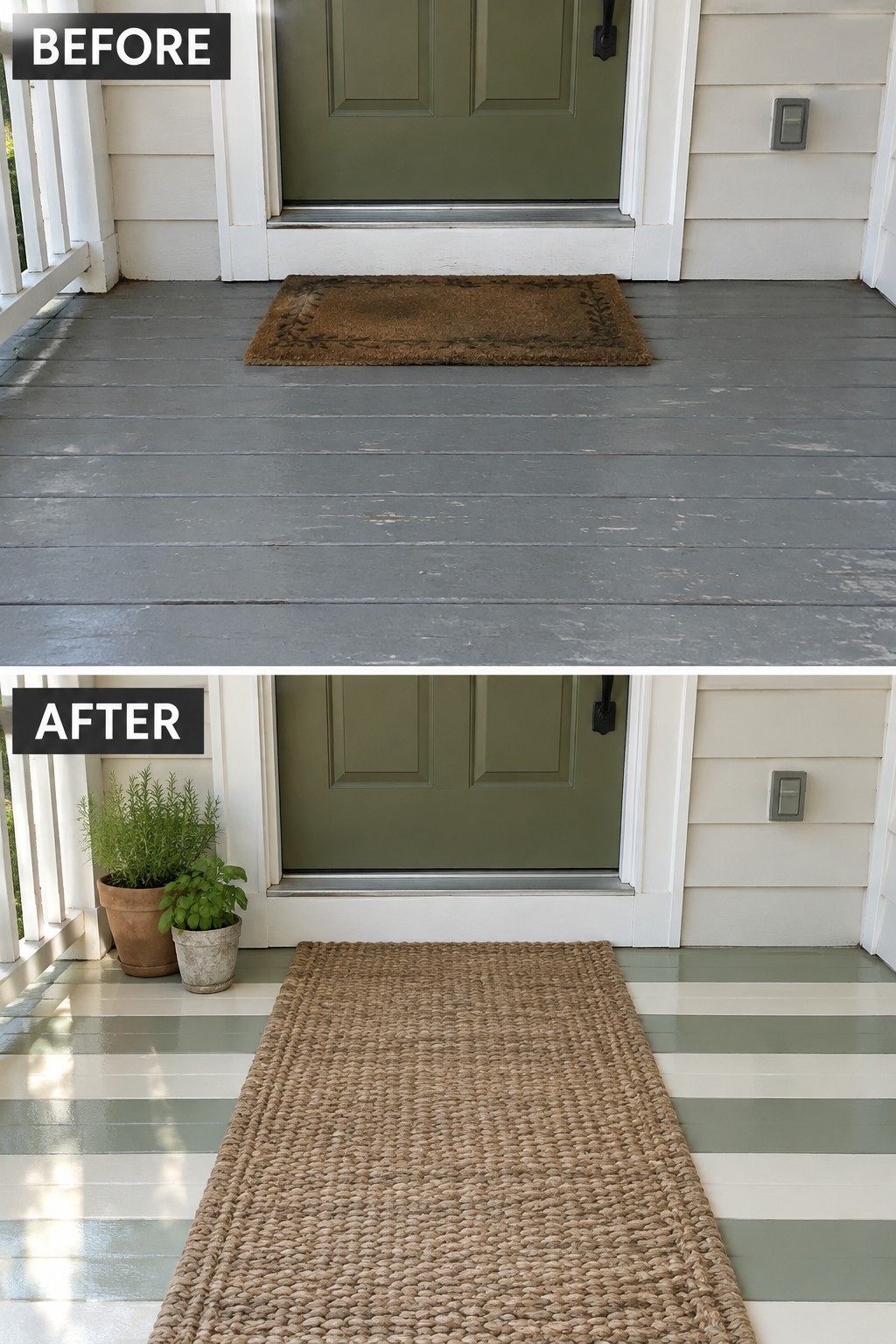
A small doormat on a plain porch floor does very little to make an entry feel intentional. In this case, painting the boards in soft stripes and laying down a long woven runner gave the space a real sense of arrival. The larger rug now connects the door to the seating area and makes the porch feel like part of the house rather than just a landing spot.
This approach works well on cottage porches that get regular use. Start with a good cleaning and a coat of porch paint if the boards need refreshing, then choose a durable outdoor rug that is long enough to create a clear path. Keep any planters simple and to one side so the walkway stays open.
Define The Front Path With Gravel Borders
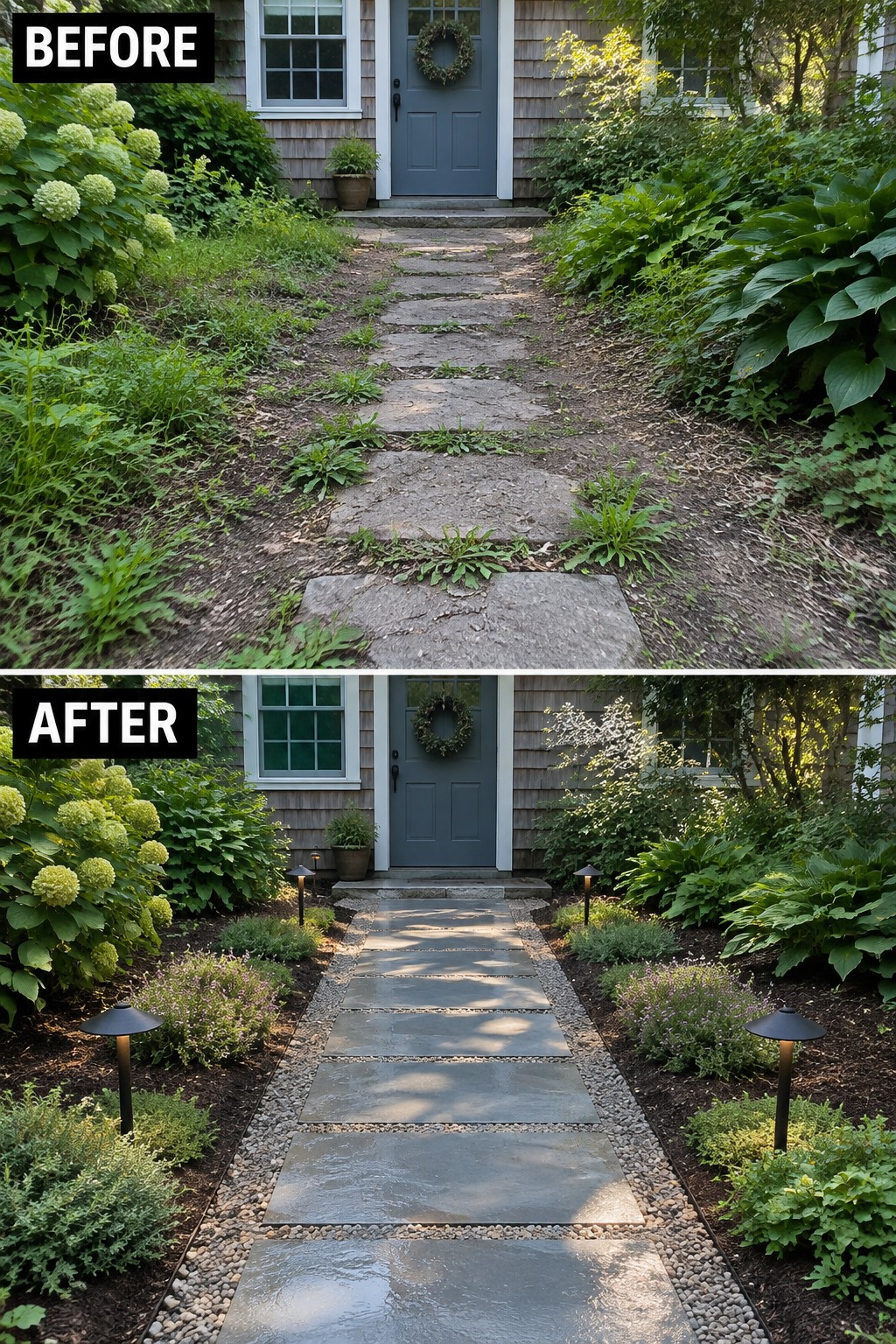
The main change here is turning a weedy, uneven stone path into a clean walkway with straight edges and gravel on both sides. That simple border makes the whole front entry feel planned instead of neglected, and the low lights add just enough guidance at night without looking fussy.
This idea works well on cottage homes where the front door sits a bit back from the street. Start by lifting the old path if it is too broken, then lay new stones or pavers and fill the sides with gravel or small river rock. Keep the lights low and spaced evenly so they mark the route without cluttering the planting beds on either side.
Choose A Stronger Color For The Front Door

A faded front door can make the whole entry feel tired, even when the rest of the house is sound. In this case, switching to a deeper blue gave the door more presence and helped it stand out against the siding. The planting was also tidied into clear beds, which kept the focus on the door instead of letting the greenery compete with it.
This approach works well on cottage homes where the entry is simple and you want one element to carry the look. Start with the door color first, then clean up the beds so the new shade has room to read from the street. Keep the planting low near the path so it frames the door without blocking it.
Frequently Asked Questions
Q: How do I choose a door color that suits my cottage without going overboard? A: Start by matching the hue to your siding or trim for a pulled-together feel. Grab a few sample pots and paint patches right on the door to see how they shift in morning and afternoon light. Stick with one you still like after a week.
Q: Can I swap the hardware myself if the door is older? A: Unscrew the old knob and deadbolt first then fill any mismatched holes with wood putty before drilling new ones. Matte black or aged brass pulls give that cottage touch without much cost. Work slowly so the new pieces line up straight.
Q: What quick step keeps the update looking good year after year? A: Wipe the door down every few months and touch up chips as soon as you spot them. A fresh coat of exterior sealer each spring blocks moisture before it creeps in.