

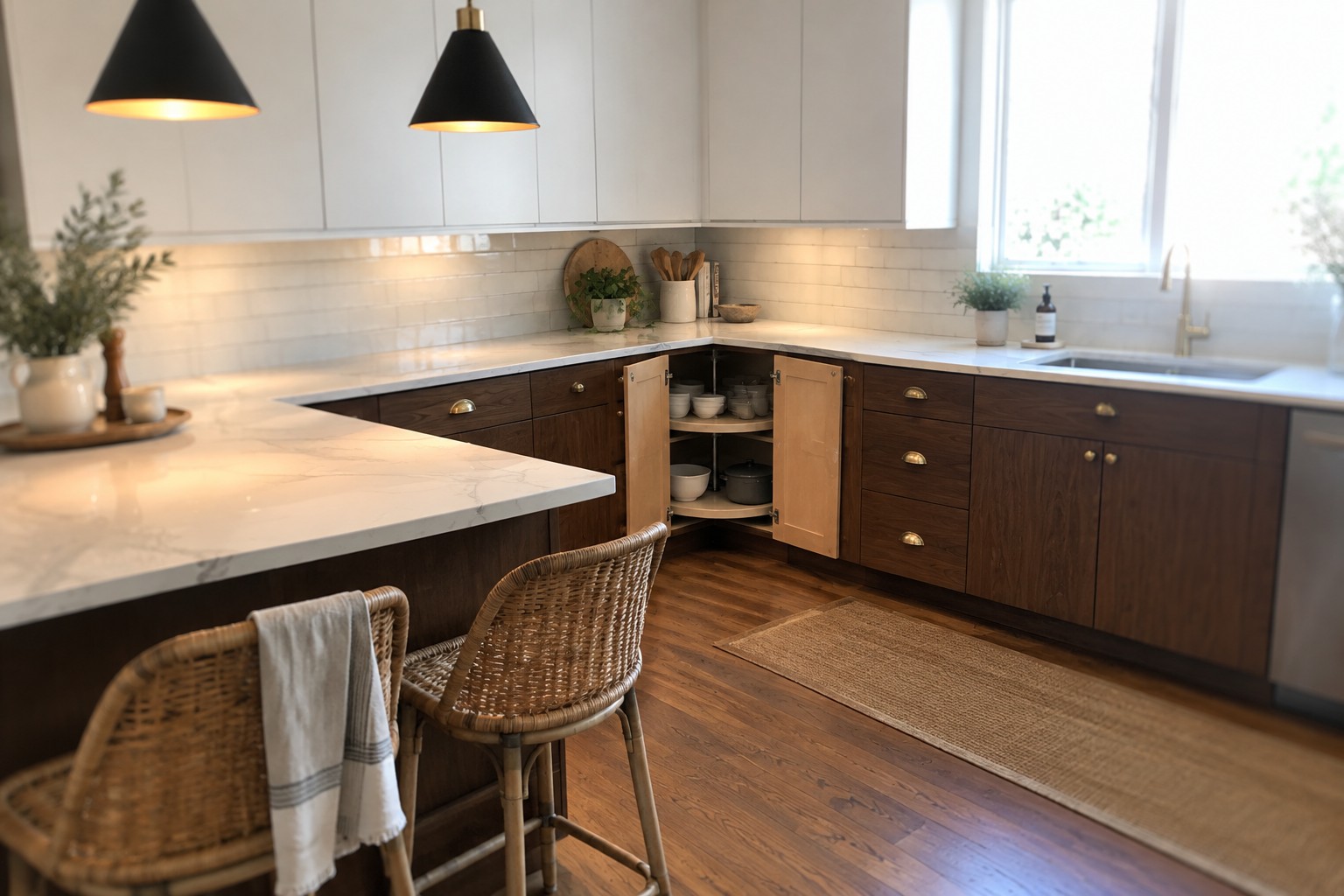
Corner cabinets can make a kitchen feel awkward when doors collide, counters stop short, or a useful corner becomes hard to reach.
I find that the best solutions start with how people actually move through the room, then make the tricky end space work without crowding nearby drawers or walkways.
Some layouts use angled cabinets to soften a tight turn, while others add open shelves or a small landing spot for everyday items.
The details matter, too, because door swing, storage depth, and the view from the next room can change how the whole kitchen feels.
I’d save the ideas that suit your cabinet layout and test the measurements before settling on a design.
Make Better Use of an End Corner Cabinet

An end corner cabinet can turn an awkward kitchen corner into useful storage. A cabinet that opens from the angled end gives you a clear view of shelves, instead of making you reach blindly into a deep corner.
Use it for pantry jars, bowls, or other items you reach for often. Adjustable shelves help fit different sizes, and doors that open wide make the contents easier to access. Check the nearby cabinet and island clearances so the doors do not get in the way.
Use Full-Height Cabinets To Make A Narrow Kitchen Work
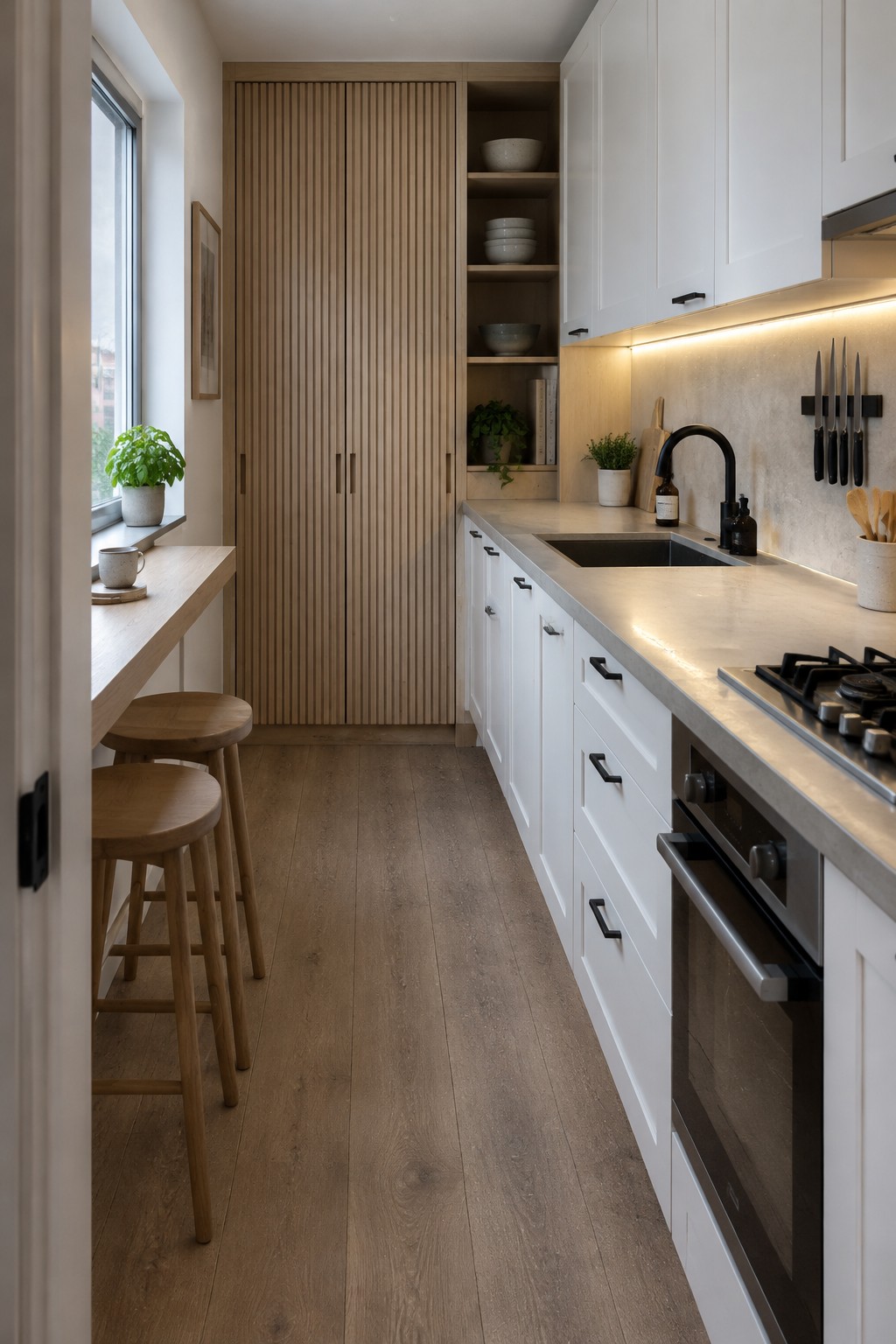
Tall cabinets can make a narrow kitchen more useful by keeping storage in one compact area and leaving the counter free for daily tasks. In this kitchen, the slatted wood cabinet reaches nearly to the ceiling and gives pantry items a dedicated place.
This approach works well in galley kitchens where floor and counter space are limited. A shallow open shelf beside the tall cabinet can keep a few everyday items handy, but leave enough clearance for doors and drawers to open comfortably.
Use a Rounded Cabinet End to Ease a Tight Layout

A rounded end cabinet can make a kitchen island easier to move around, especially where a straight corner would jut into a walkway. It also gives you useful counter space without a sharp edge sticking out.
This idea suits kitchens where the island sits close to the cabinets or sink run. Keep the curve modest and check that there is still enough room to open doors and pass through comfortably.
Use A Tall Cabinet For Hidden Coffee Storage

A tall cabinet can turn an awkward corner or narrow stretch of kitchen into a handy coffee station. The equipment stays tucked away when it is not in use, while shelves inside keep everyday supplies close at hand.
Look for a cabinet with enough depth for your machine and room for cups or jars above it. A pull-out shelf can make serving easier, and good ventilation is worth considering if the cabinet will stay closed while the machine is running.
Add Open Shelves Above an End Corner Cabinet

Open shelves make the wall above an end corner cabinet useful without adding another bulky cabinet. They keep everyday storage within reach and give an awkward corner a clear purpose.
Use a few shelves for dishes or small baskets, and keep the items you reach for most at an easy height. This works especially well where upper cabinets would make a narrow kitchen feel crowded.
Add a Narrow Pull-Out Pantry Beside the Cabinets

A slim pull-out pantry can make use of a narrow gap that might otherwise go unused. It keeps dry goods close to the counter, while the closed cabinet front helps the kitchen stay tidy.
This approach works well in a compact kitchen or wherever a full-size pantry will not fit. Check that the shelves are easy to reach and that the pull-out clears nearby counters and doors.
Use Curved Drawers At The End Of A Cabinet Run

A rounded cabinet end can make an awkward kitchen corner easier to use. These curved drawers open toward the room, giving you handy storage without leaving a sharp cabinet edge in a narrow walkway.
This approach works well at the end of a counter where a standard square cabinet might jut into the path. Keep the drawers sized for items you reach for often, and check that they can open without blocking nearby appliances.
Add Open Shelves Beside a Narrow Cabinet Run

Open shelves can make use of an awkward stretch of wall without adding another bulky cabinet. Here, wooden shelves sit above the counter at the end of the kitchen, keeping everyday jars and cookbooks close at hand.
This approach works well in a narrow kitchen where a full-depth corner cabinet would crowd the walkway. Keep the shelves shallow and store only a few useful items there so the counter below stays easy to use.
Use a Lit Display Cabinet to Make a Kitchen Corner Useful

A tall glass-front cabinet can turn an awkward kitchen end corner into useful storage and a place to display a few favorite pieces. Interior lighting makes the shelves easy to see, while the doors keep items protected from kitchen dust and splashes.
This works best where there is enough room for a full-height cabinet beside the main work area. Use adjustable shelves for items of different heights, and avoid filling every shelf so the display stays easy to browse.
Add Open Shelves Above an End Corner Cabinet

Open shelves can make an awkward end corner more useful without adding another bulky cabinet. They keep everyday dishes and pantry jars close at hand, while the corner counter below still has room for prep.
Use sturdy shelves that fit the wall and leave enough space between them for the items you reach for most. In a small kitchen, a few well-organized shelves are easier to use than a deep corner cabinet where things can get lost.
Use Tall Cabinets To Keep Kitchen Storage Tidy

A full-height cabinet run can make a kitchen feel more organized by keeping everyday supplies in one compact area. Narrow open shelves built into the end of the cabinetry make jars easy to reach without taking up much counter space.
This setup can work well in a kitchen with a long cabinet wall or an awkward corner nearby. Keep the shelves shallow enough to see what is stored there, and leave heavier or less-used items behind closed doors.
Keep the Corner Cabinet Run Clear
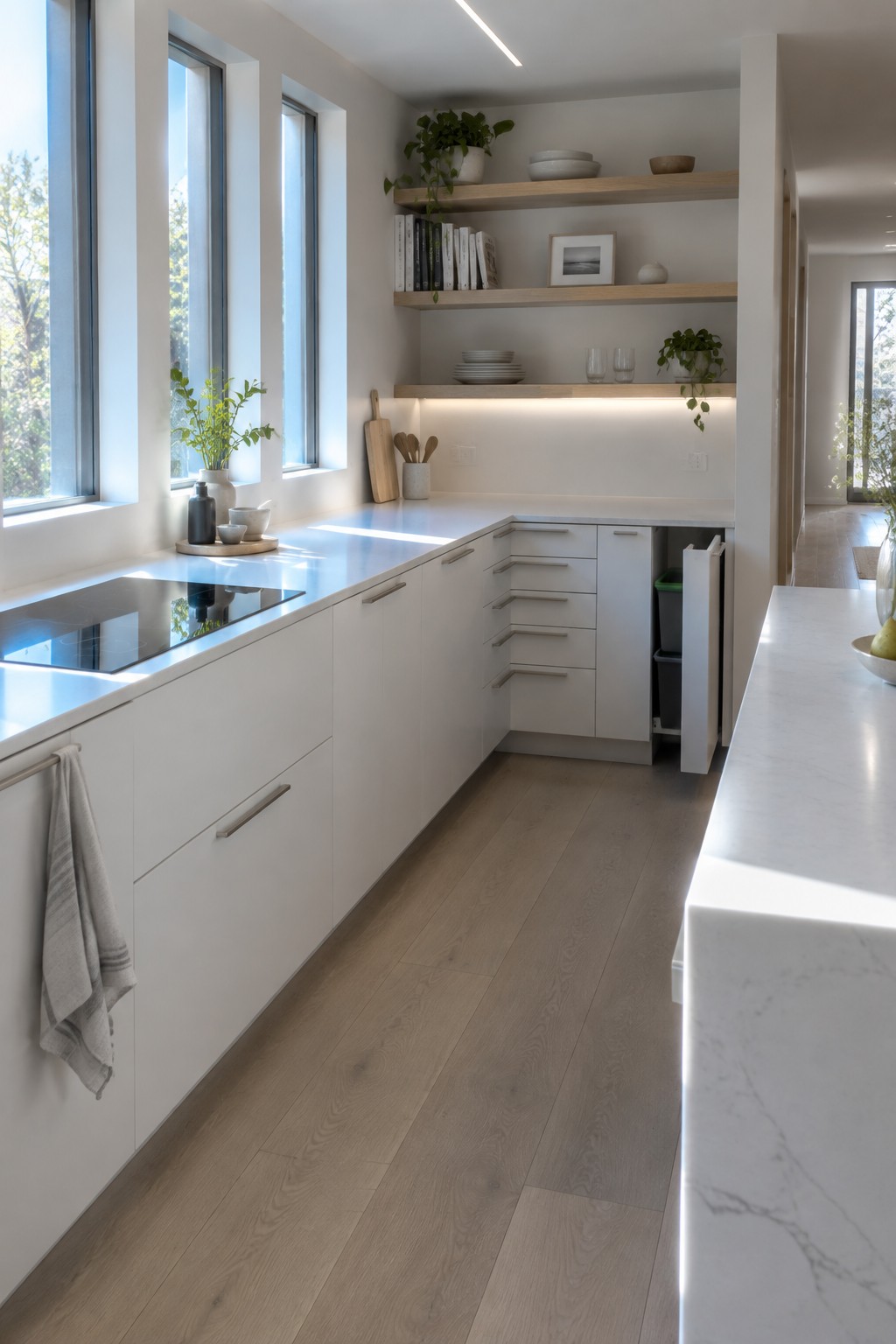
An open corner at the end of a cabinet run can make a narrow kitchen feel easier to move through. Here, the cabinets turn along the back wall, while the open floor beside them keeps the route through the kitchen unobstructed.
For a similar layout, keep the corner storage simple and avoid adding a deep cabinet where it would pinch the walkway. This works best when the main work area stays within easy reach and there’s enough room to pass comfortably.
Use a Narrow Pantry to Make a Kitchen Corner Useful

A slim pull-out pantry can make a tricky end corner useful without taking up much floor space. It keeps jars and small pantry items close to the cooking area, while the narrow footprint fits beside a cabinet run.
This kind of storage works well in kitchens where a full-size cupboard would block the walkway. Measure carefully before adding one, and check that the shelves can slide out without catching on nearby doors.
Use a Corner Cabinet With Rotating Shelves

A corner cabinet can be hard to use when pots and pantry goods get pushed out of reach. Rotating shelves make better use of that awkward space, bringing stored items around to the opening instead of leaving them tucked in the back.
This setup works well where two cabinet runs meet, especially in a kitchen with plenty of cookware to store. Check that the shelves can turn freely and that the cabinet opening is wide enough for the items you plan to keep there.
Use a Built-In Bench To Make a Kitchen Corner Useful
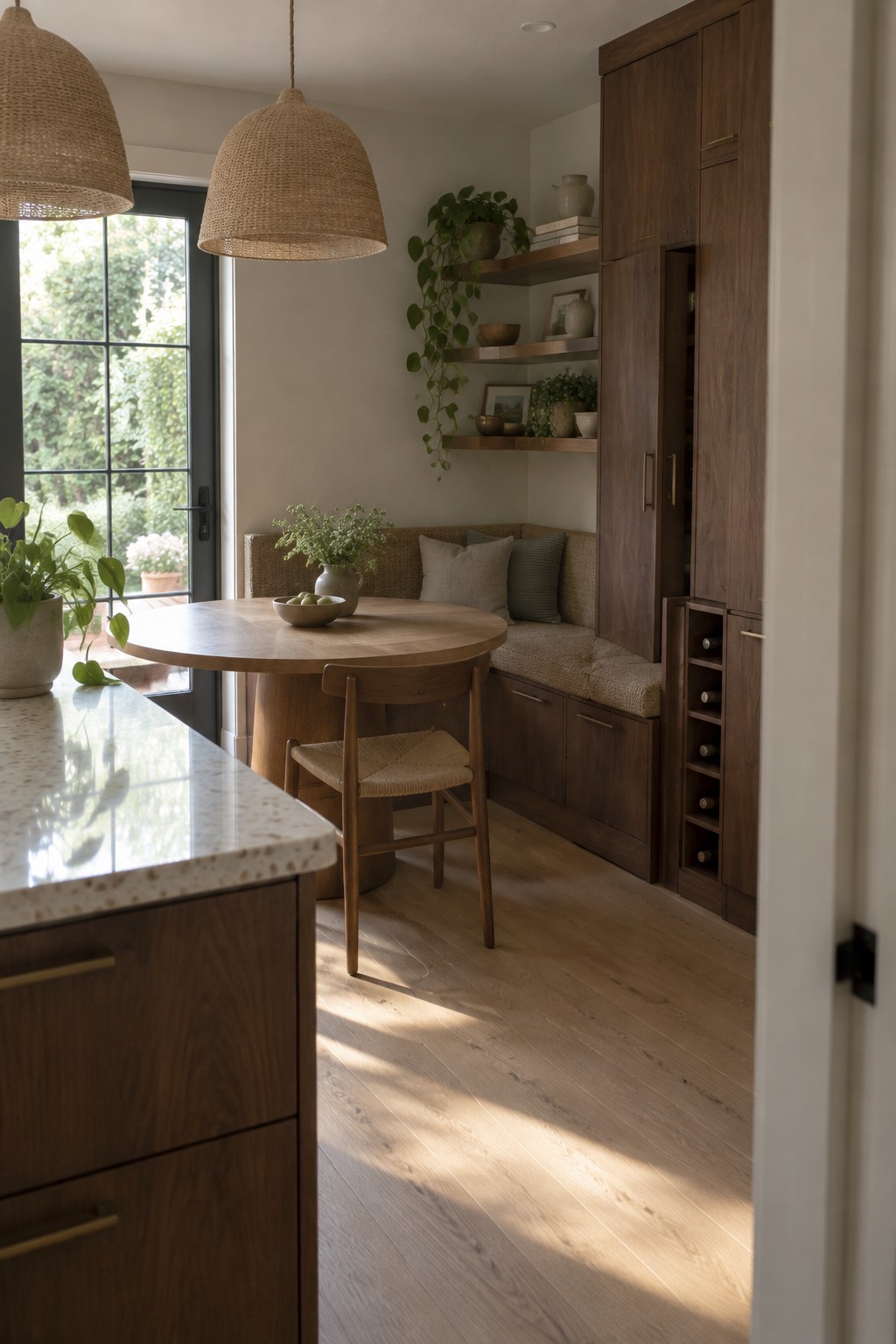
A built-in bench can turn an awkward kitchen corner into a comfortable spot for meals, while making good use of space that might otherwise go unused. Here, the bench fits beside the tall cabinets and sits around a small table.
This setup works well in kitchens where there is room for a compact dining nook but not a full table and chair arrangement. Measure carefully so the bench leaves enough clearance for cabinet doors and everyday movement.
Use the End Cabinet for Hidden Tool Storage

A narrow cabinet at the end of a kitchen run can make an awkward corner useful without taking up counter space. A tall, shallow compartment like this keeps long items close at hand but out of sight.
This works well beside a range or at the end of an island, especially in a compact kitchen. Check that the opening is wide enough for the tools you plan to store, and leave room for the door to swing clear.
Use a Pull-Out Cabinet for Wine Storage
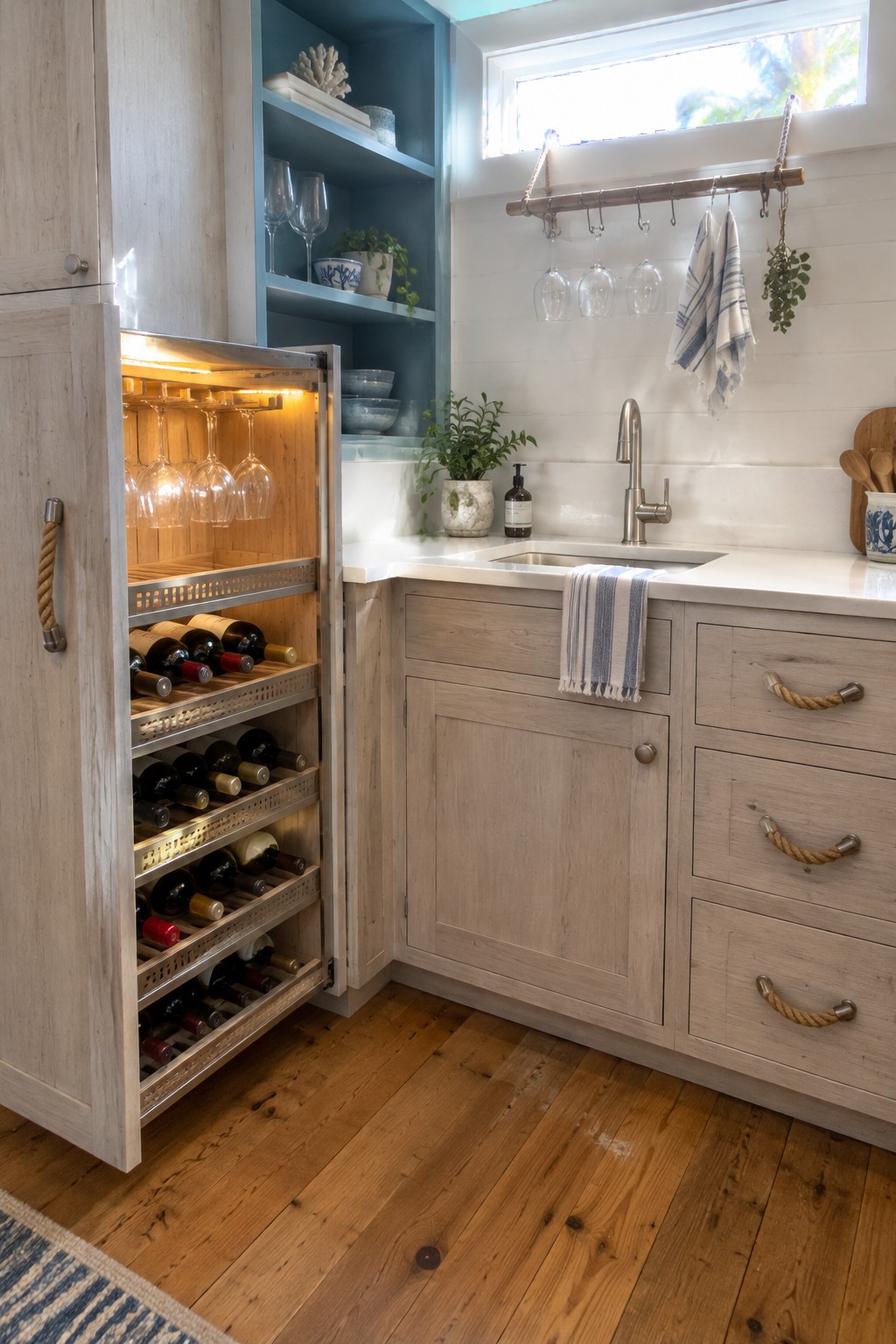
A pull-out cabinet can make a narrow end corner useful without taking up extra counter space. Here, tiered metal racks keep wine bottles organized, while a small light makes it easier to see what is stored inside.
This kind of storage works well beside a sink or at the end of a cabinet run, especially where a wide cupboard door would be awkward. Check the cabinet’s depth and make sure the pull-out clears nearby drawers before choosing the rack.
Add a Pull-Out Work Surface to a Cabinet End
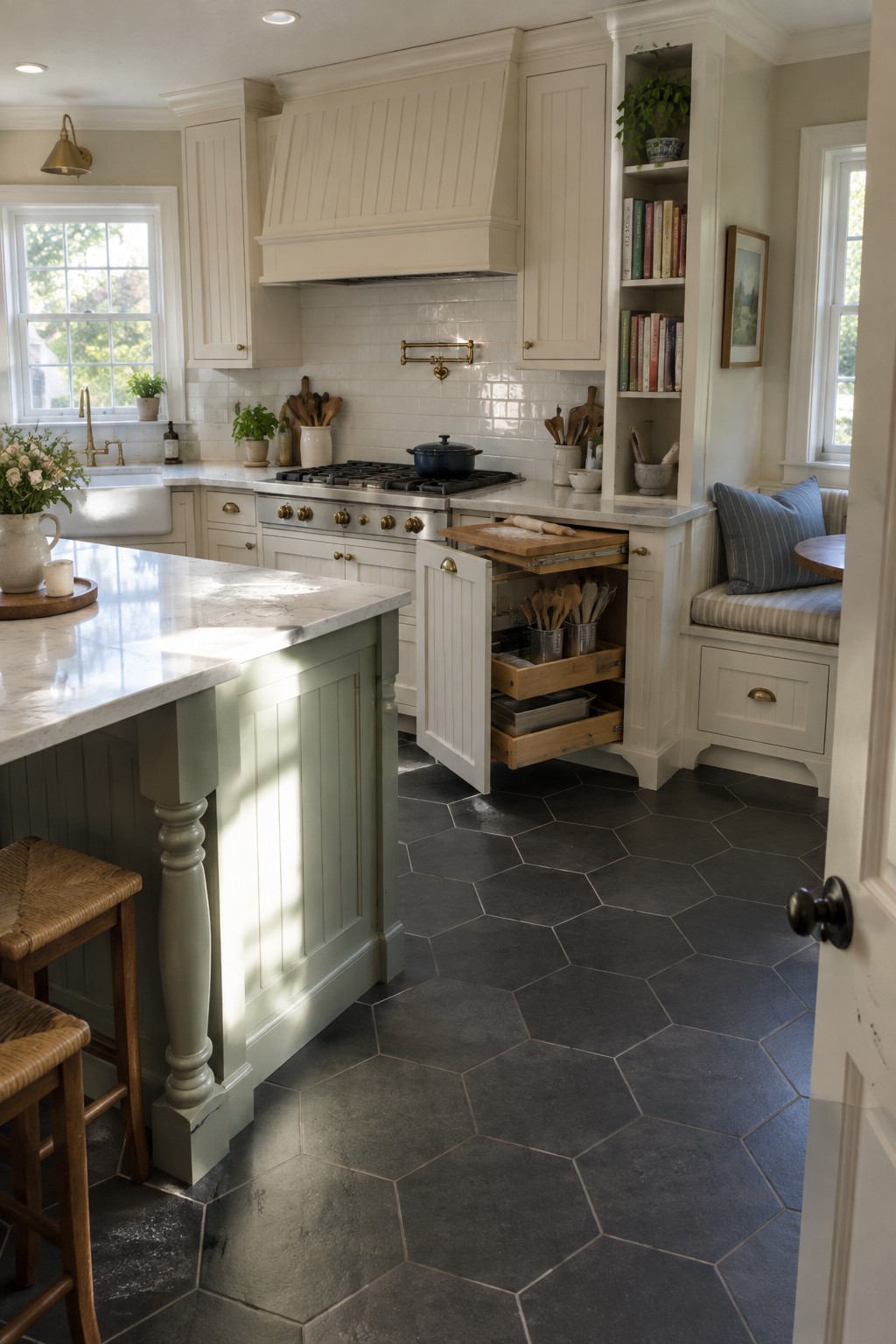
A pull-out surface can turn an awkward cabinet end into useful extra prep space. Here, a wooden board slides out beside the range, giving you a handy spot to set ingredients without taking up counter space all the time.
This works well in a busy kitchen where the main counters are already in use. Keep the board sturdy and easy to wipe down, and make sure there is enough room for it to extend without blocking a walkway.
Use a Rounded Cabinet End to Ease a Tight Layout

A rounded end cabinet can make a kitchen walkway feel less cramped than a sharp corner. It also gives an awkward end to a cabinet run a more finished shape without taking away useful storage.
This idea works well where a kitchen counter meets a narrow passage or seating area. Keep the curve modest, and check that the cabinet doors and drawers still open comfortably.
Use a Tall Corner Cabinet for Pantry Storage

A tall cabinet at the end of a kitchen run can turn an awkward corner into useful pantry space. Here, the open door reveals shelves and baskets that keep jars and supplies tucked away, while the cabinet still fits neatly beside the work area.
This idea suits kitchens short on storage, especially when there is room for a full-height cabinet but not a walk-in pantry. Use adjustable shelves or pull-out baskets so items at the back stay easy to reach, and check that the door can open without blocking the main path.
Add a Narrow Spice Pantry at the Cabinet End

A slim pull-out pantry can turn the end of a cabinet run into useful storage instead of leaving it as dead space. Keeping jars on shallow shelves makes spices easy to see and reach without taking up much room.
This kind of cabinet works well beside a range or at the end of an island, especially in a kitchen where every bit of storage counts. Check that the door and shelves can open fully without blocking a walkway.
Build Coffee Storage Into a Tall Cabinet

A tall built-in cabinet can keep coffee gear close at hand without taking up valuable counter space. Here, the espresso machine sits inside its own cabinet niche, with a small drawer below for supplies.
This setup works well at the end of a cabinet run or in a kitchen corner that is awkward to use for prep. Check that the niche has enough room for the machine and a nearby outlet, and make sure the door can open without blocking the work area.
Use Drawer Storage To Keep Corner Cabinets Handy
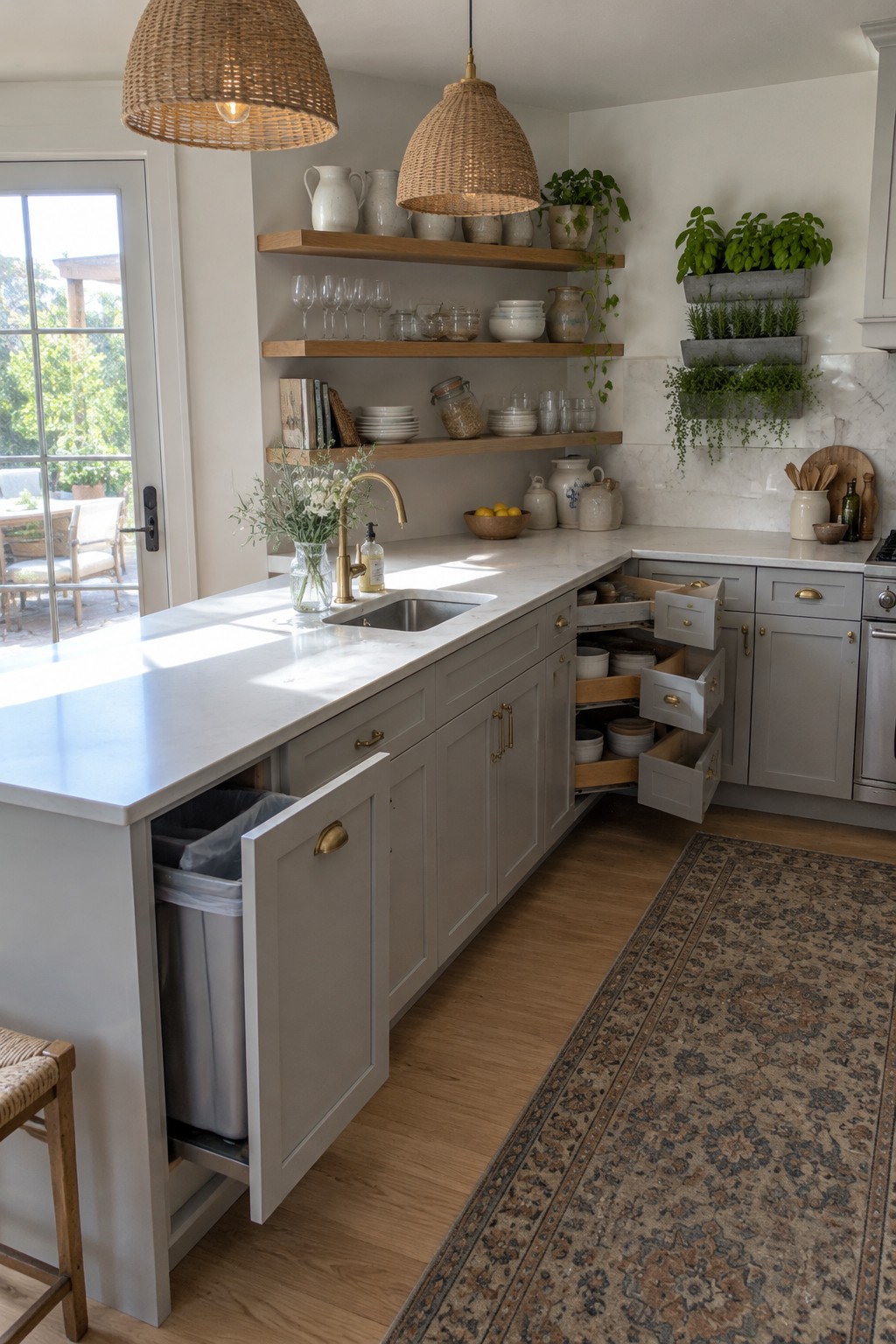
Deep drawers near an end corner make everyday dishes easier to reach than items stored at the back of a cabinet. The open drawers here show how dishes can stay organized while remaining close to the work surface.
This setup works well where two cabinet runs meet and there’s room to pull drawers fully open. Check that they won’t block a nearby appliance or walkway, and use dividers to keep dishes from shifting.
Frequently Asked Questions
Q: How do I know whether an end-corner cabinet will fit beside my existing cabinets?
A: Measure the wall space, cabinet depth, and door swing before choosing a style. Leave enough room for nearby drawers and appliances to open without bumping into the corner cabinet.
Q: Are end-corner cabinets useful in a small kitchen?
A: Yes, especially when they turn an awkward gap into storage for items you use often. Keep the contents easy to reach, since a deep cabinet can become a hiding place for things you forget you own.
Q: What should I store in an end-corner cabinet?
A: Choose items that match the cabinet’s shape and how easy it is to reach. Trays, cutting boards, and serving pieces often work well in narrow spaces, while daily dishes are better in a cabinet with a wide opening.
Q: Can I add an end-corner cabinet without replacing all my cabinets?
A: Often, yes. Match the cabinet’s height, depth, and finish as closely as you can, and check how it will attach to the wall and neighboring cabinets. If the fit is unusual, a cabinetmaker can help adapt the piece without a full kitchen remodel.