

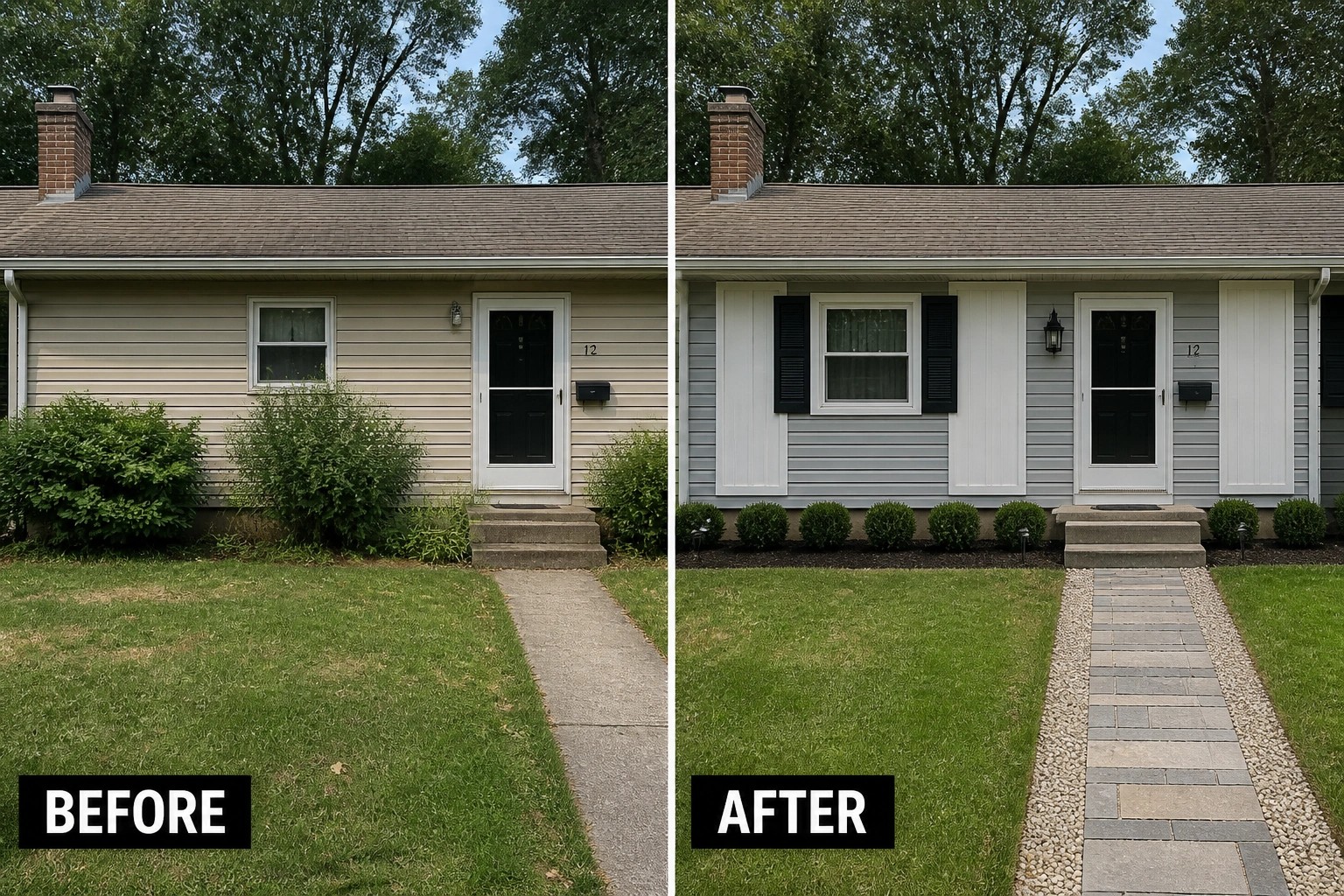
I have seen plenty of houses where the windows sit just off enough to make the whole front feel uneven no matter what color the siding is.
It often takes more than a fresh coat of paint to bring the facade back into balance.
I usually start by looking at how trim or plantings might redirect the eye without covering anything up.
Over the years I have found that working with the existing window spots rather than fighting them leads to changes that actually last.
Those small shifts tend to make the house read as more cared for from the street.
Add Shutters To Balance Awkward Window Placement
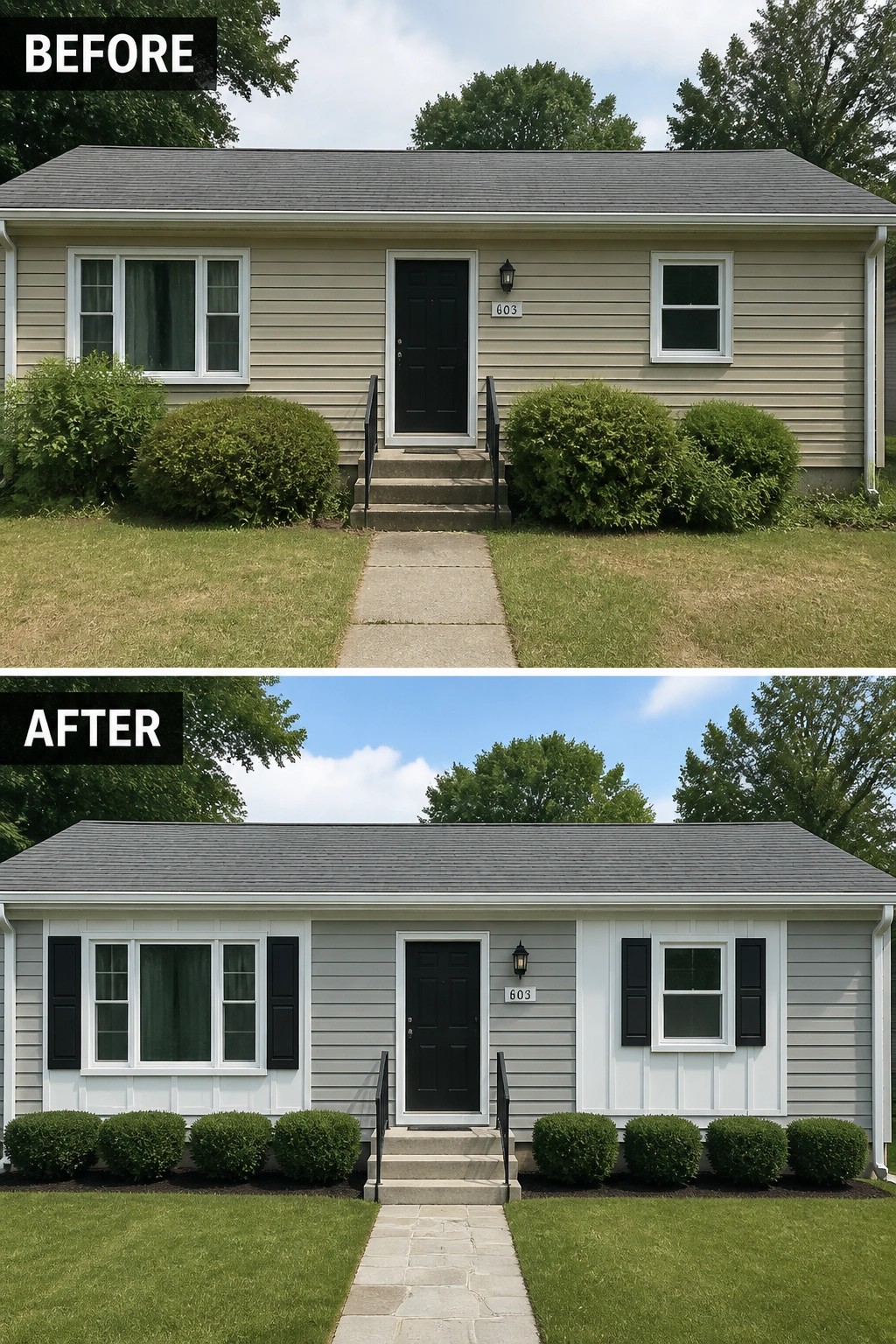
Many homes end up with windows that sit at different sizes or heights, which makes the front look uneven. Adding shutters to both the large and small windows creates a sense of order and helps the openings feel more intentional. A change in siding color plus white trim also pulled the whole facade together without any major construction.
This idea works best on simple one-story homes where the windows were placed for function rather than looks. Choose shutters that match the door color, keep the style simple, and focus on the windows that sit farthest from center first. It is an easy step to try before considering bigger changes like moving openings or adding new trim.
Add Wood Accents To Break Up A Flat Facade
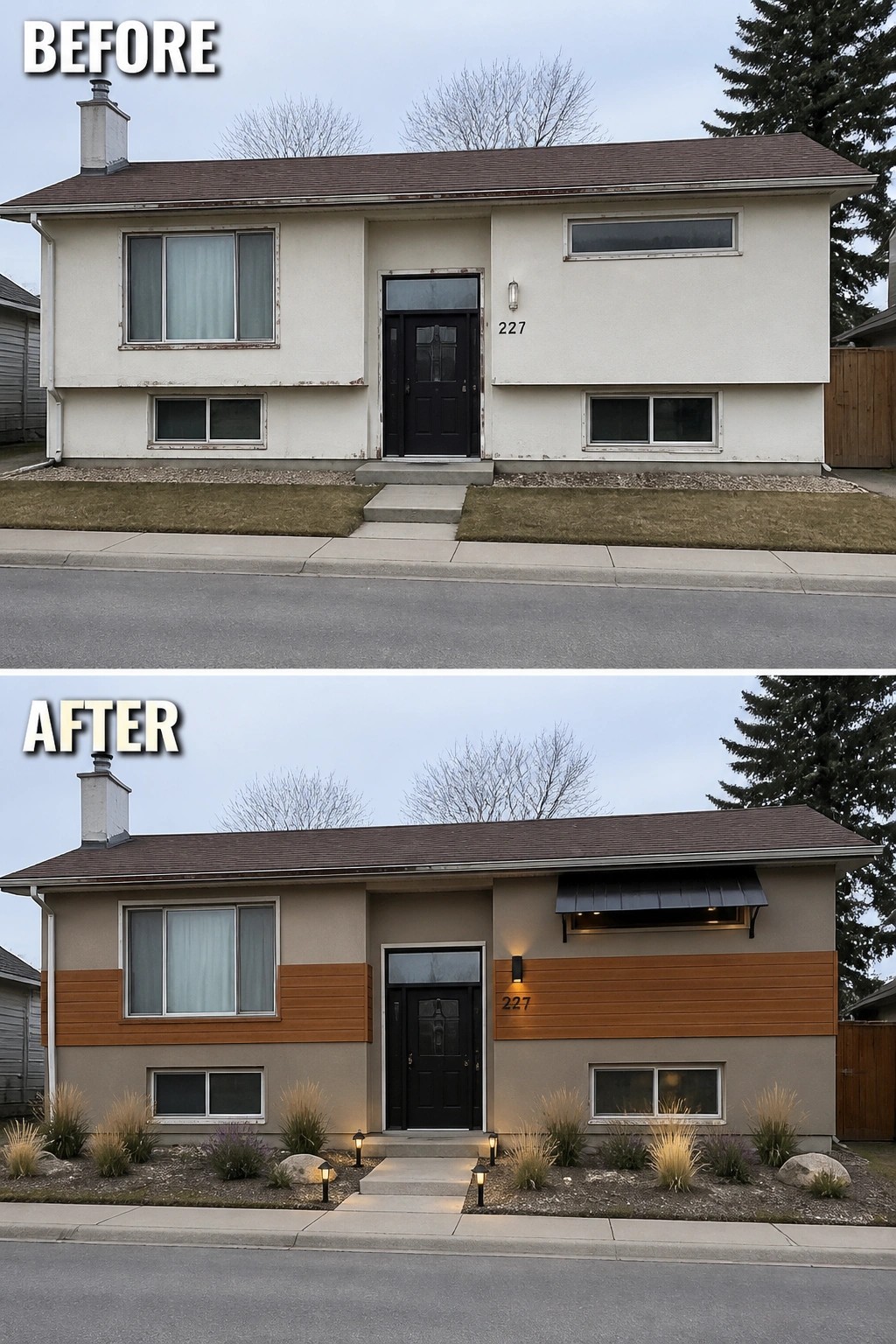
Many homes end up with a flat look because the windows sit at different heights and sizes with no real structure around them. Adding horizontal wood panels to key sections gives the eye something to follow and helps the windows feel more grouped instead of scattered.
This approach works well on simple one-story homes where you want to update the look without a full repaint or major construction. Keep the wood tone consistent and limit the panels to two or three areas so the facade stays balanced.
Add Shutters To Balance Awkward Window Placement
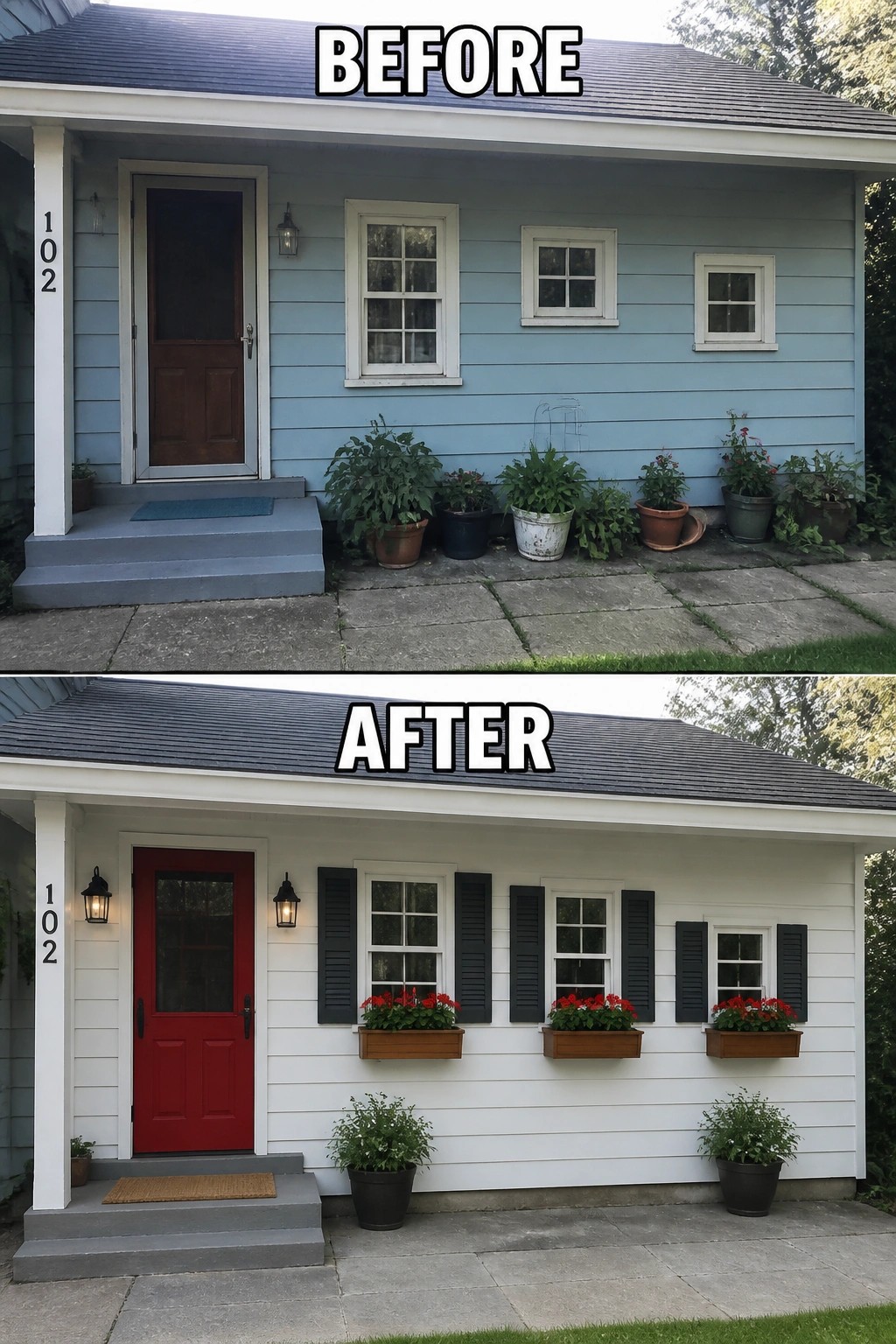
Painting the siding white and switching to a bright red door gave the house a cleaner look, but the real change came from adding black shutters around the windows. The shutters create a sense of order even though the windows sit at different heights and sizes. They pull the whole front together without needing to move anything structural.
This idea works well on older homes where windows were added over time. Try matching the shutter width to the window and keeping the color consistent so the eye sees the pattern first. Start with the largest windows if your budget is limited, and test the shutter color against your siding before committing.
Use A Wood Slat Screen To Mask Awkward Windows
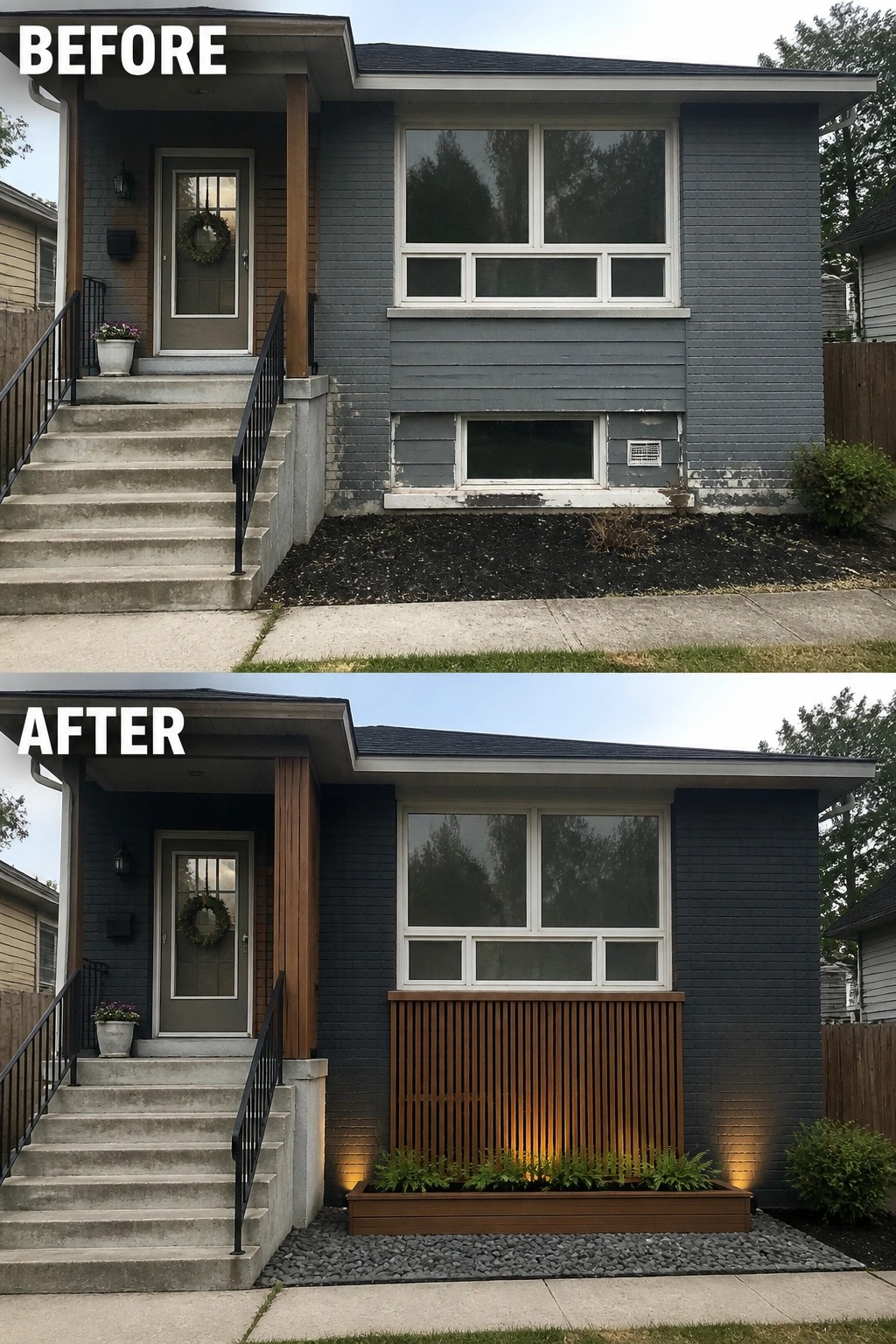
Many homes have a low window that sits too close to the ground and breaks up the look of the facade. Adding a vertical wood slat screen in front of it creates a clean visual break and makes the whole front feel more finished. The screen also gives you a spot to add lighting and a simple planter at the base.
This approach works well on houses with high foundations or basement windows that feel out of place. Keep the screen the same width as the window above it and choose a wood tone that matches other trim on the house. It is a straightforward change that improves the look without major construction.
Replace A Small Window To Fix Awkward Placement
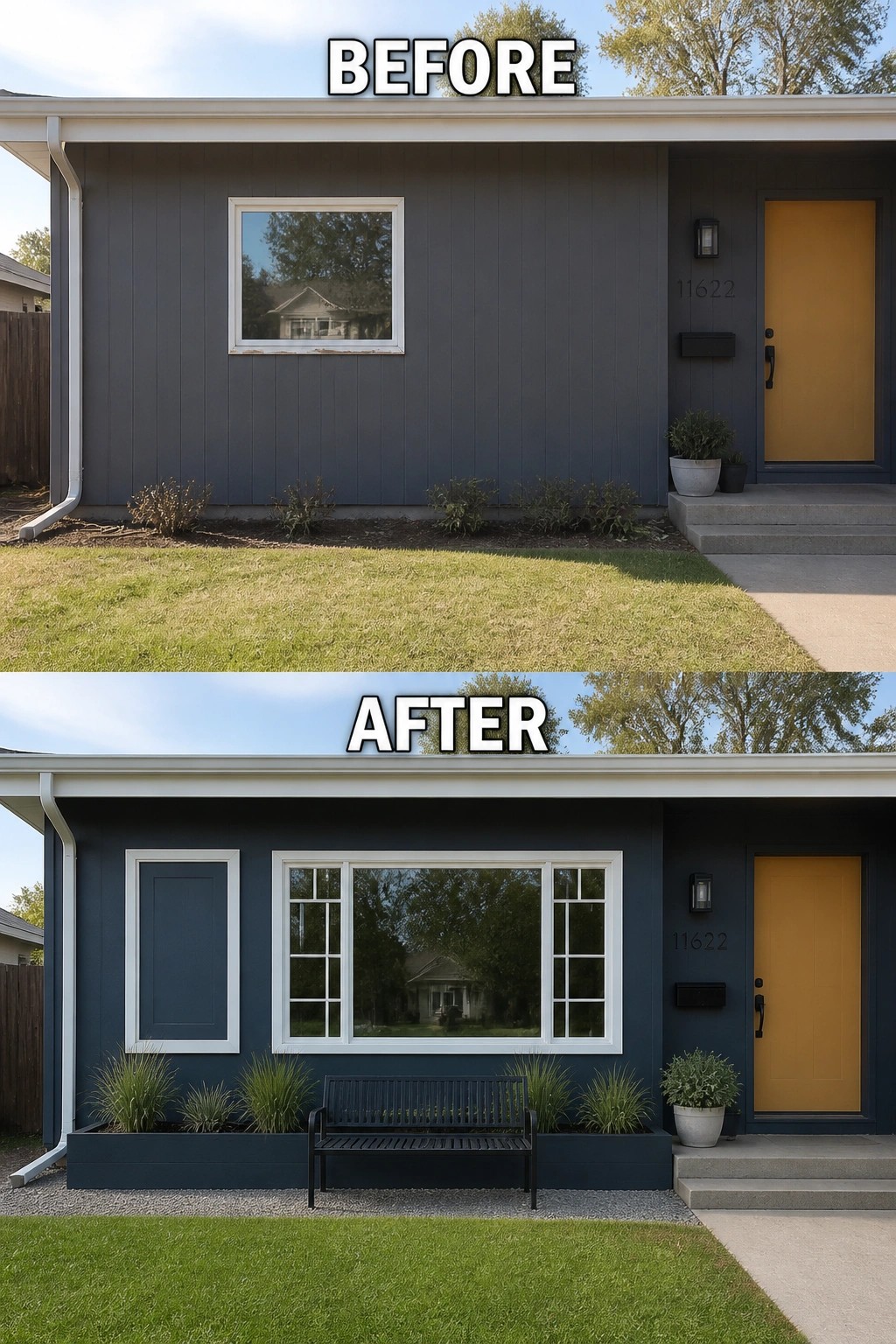
A small lone window can throw off the whole front of a house. In this case the fix was straightforward. The original window was swapped for a much larger one with divided panes, and a matching panel was added beside it. That single change gave the facade better proportions without any major construction.
This approach works best on simple one-story homes where the windows feel randomly placed. Keep the new window size realistic for the wall space, and use the same trim style as the rest of the house so it blends in. A long planter box along the base can help anchor the new window and keep the look grounded.
Add A Porch To Frame The Entry
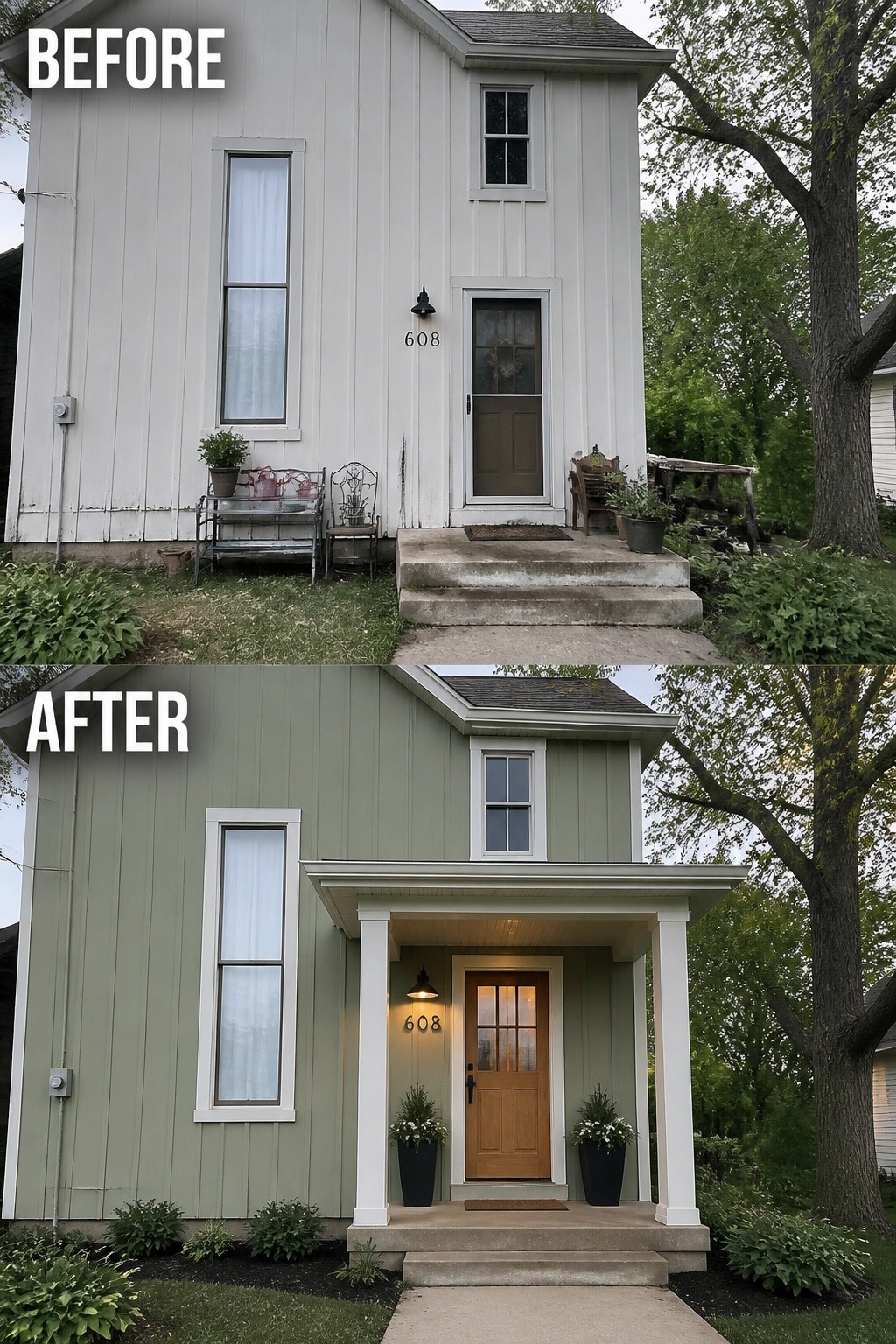
A plain set of concrete steps can leave a house looking unfinished, especially when the windows sit at different heights and widths. Adding a simple covered porch with columns pulls the door into the center of the view and gives the whole front a clearer shape. The new roofline also lines up with the upper window, so the odd spacing feels less noticeable.
This approach works well on older homes that never had a real entry structure. Keep the porch depth modest so it does not overwhelm a small lot, and match the column style to the age of the house. A light paint color on the new trim helps the addition stand out without fighting the siding.
Use Dark Siding Panels To Organize Window Placement
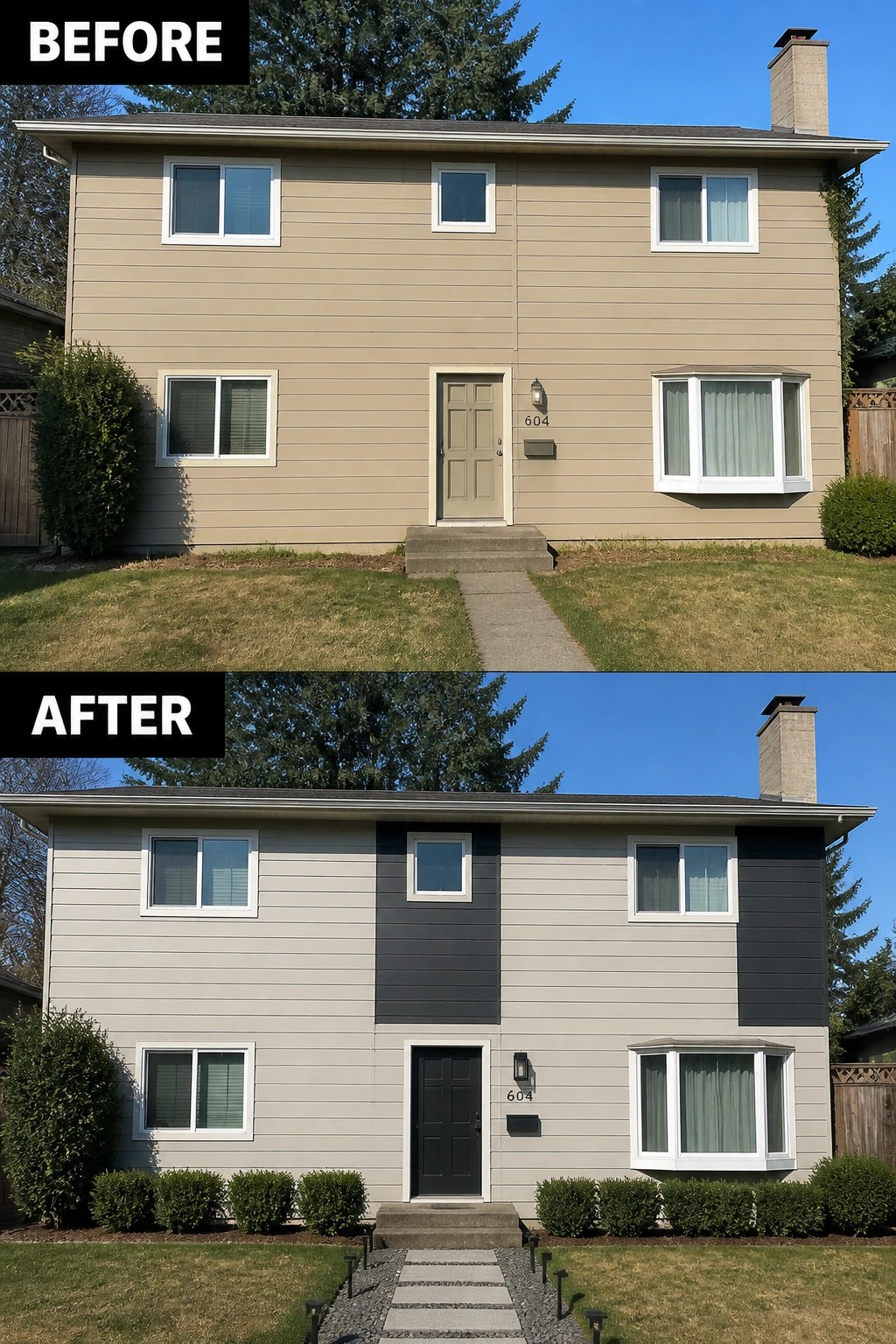
A plain beige exterior can make windows feel scattered and random. In this case the fix was simple. Dark vertical siding panels were added to create clear sections that line up with the windows and give the whole front a more balanced look. The black door added another strong point of contrast without needing major construction.
This approach works well on homes where windows sit at different heights or sizes. Start by picking one or two areas to darken, then match the door color to those panels. It keeps the project small while making the facade feel more planned and less flat.
Frame Awkward Windows With Trellises
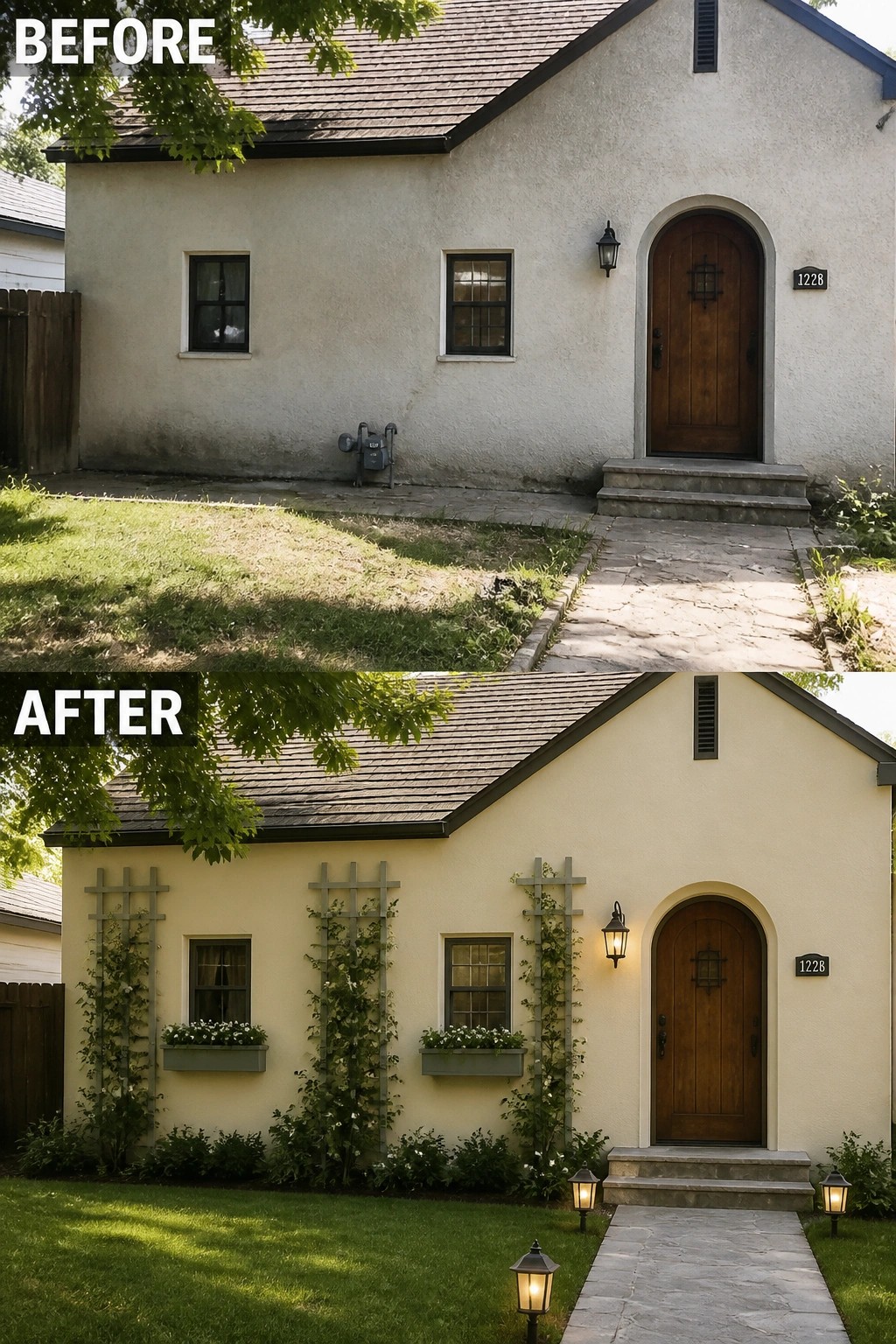
Many homes have windows that sit a little off center or feel too small for the wall. Adding a few simple trellises gives those windows a clear shape without major construction. In this case, the bare stucco wall was left untouched while the trellises and vines created vertical lines that pull the eye upward and make the two windows feel intentional.
This approach works well on stucco or siding homes where the windows do not line up with doors or rooflines. Keep the trellises narrow so they do not crowd the windows, and choose vines that stay manageable. Once the plants fill in, the windows look balanced and the whole front feels more finished.
Add A Gable To Frame An Awkward Window
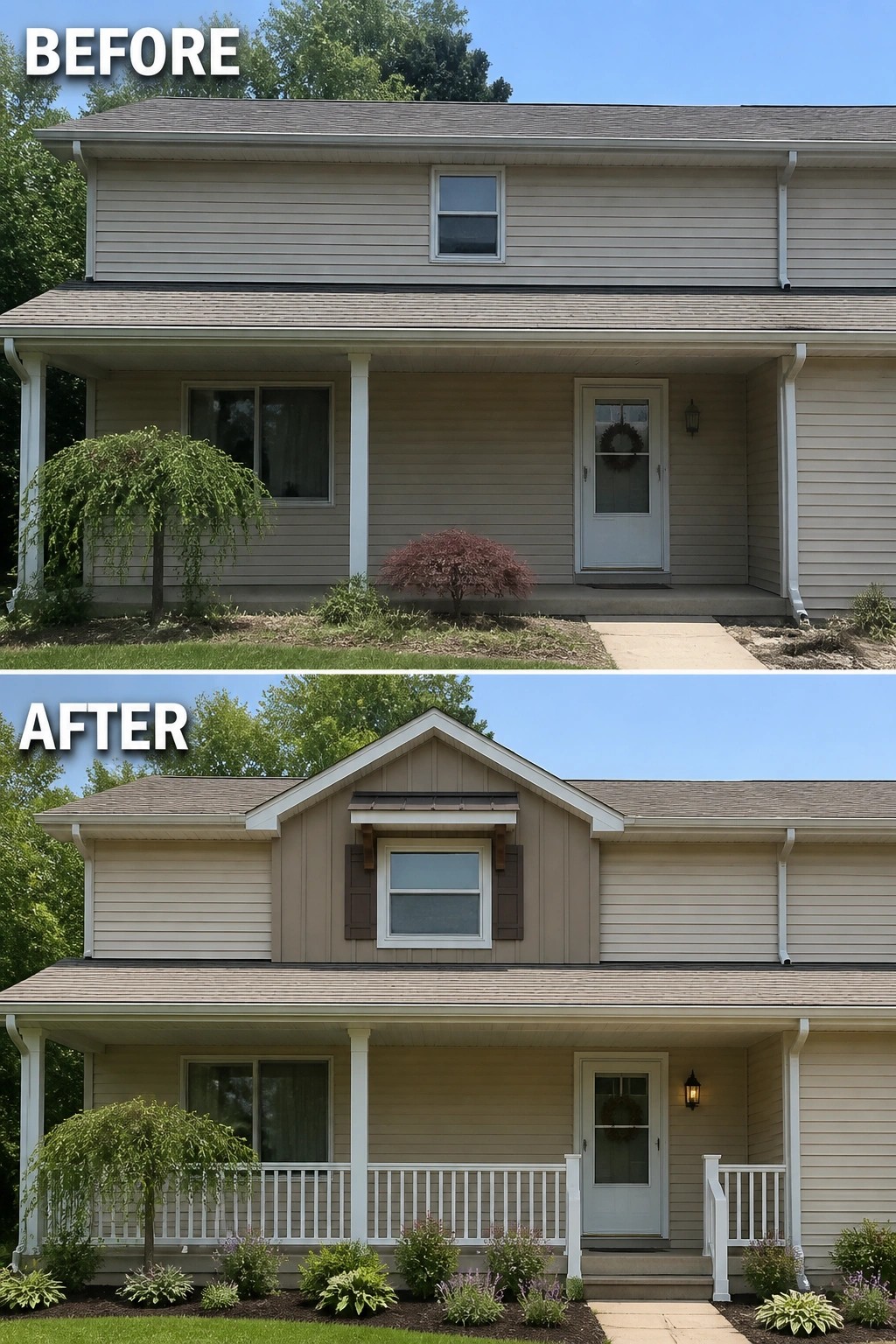
Many homes end up with a small upper window that sits alone and looks out of place on a flat wall. Adding a gable roof section with a dormer brings that window into the design and gives the whole front more shape without a full roof rebuild.
This idea suits simple two-story homes where the second-floor windows feel random. Match the new siding and trim to the rest of the house so the change reads as part of the original structure rather than an add-on.
Add Stone Cladding To Frame An Awkward Window
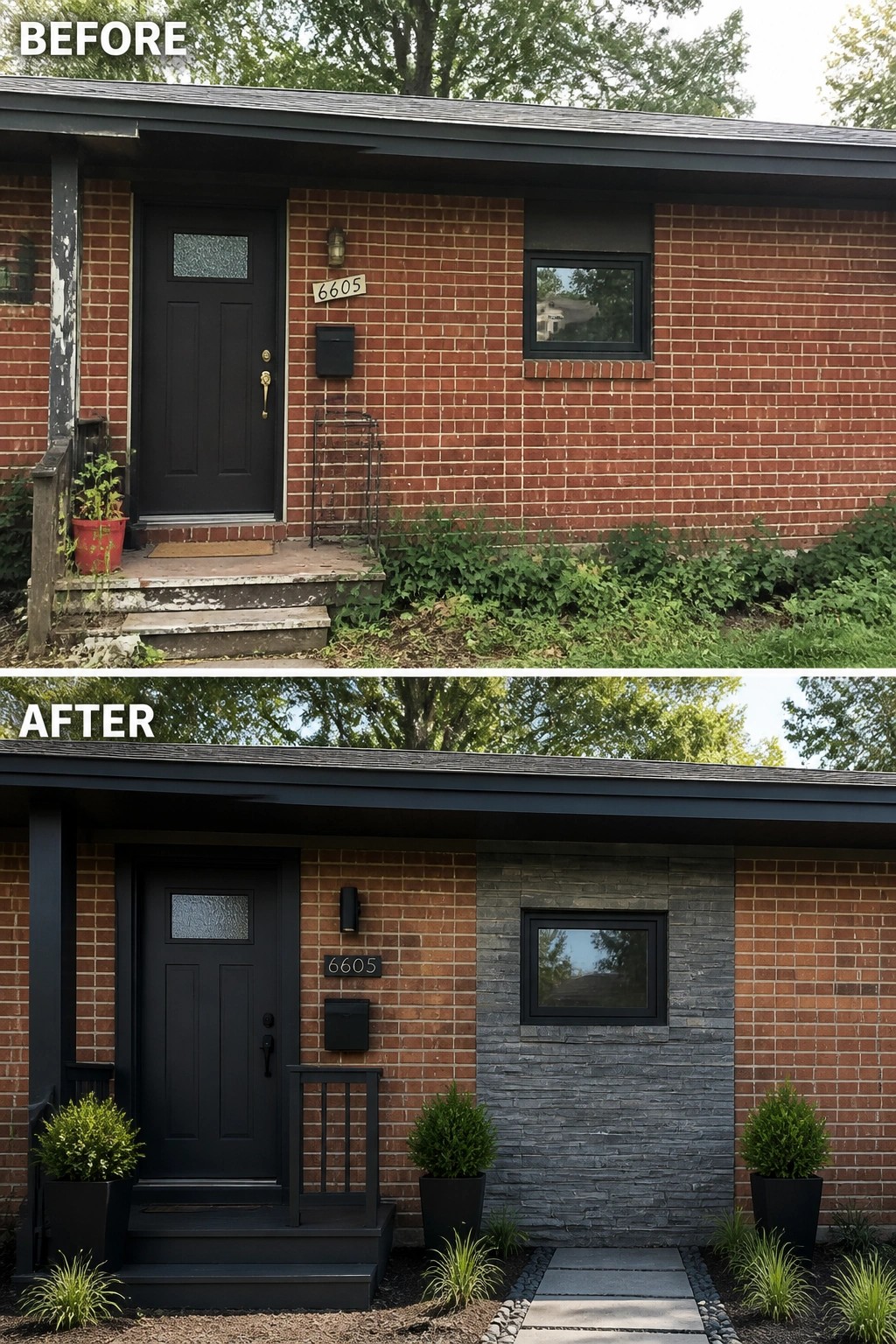
Many brick homes end up with a small window that feels stranded on a wide wall. Adding a narrow stone accent panel beside the door gives that window a clear reason to exist and breaks up the flat brick surface without changing the structure.
The same approach works on any home where one window sits too far from the entry or sits at an odd height. Keep the stone section modest in width, match the trim color to the door or gutters, and let the rest of the brick stay as is. This keeps the fix simple and reversible if you ever want to try something else later.
Add A Porch To Give Windows Better Structure
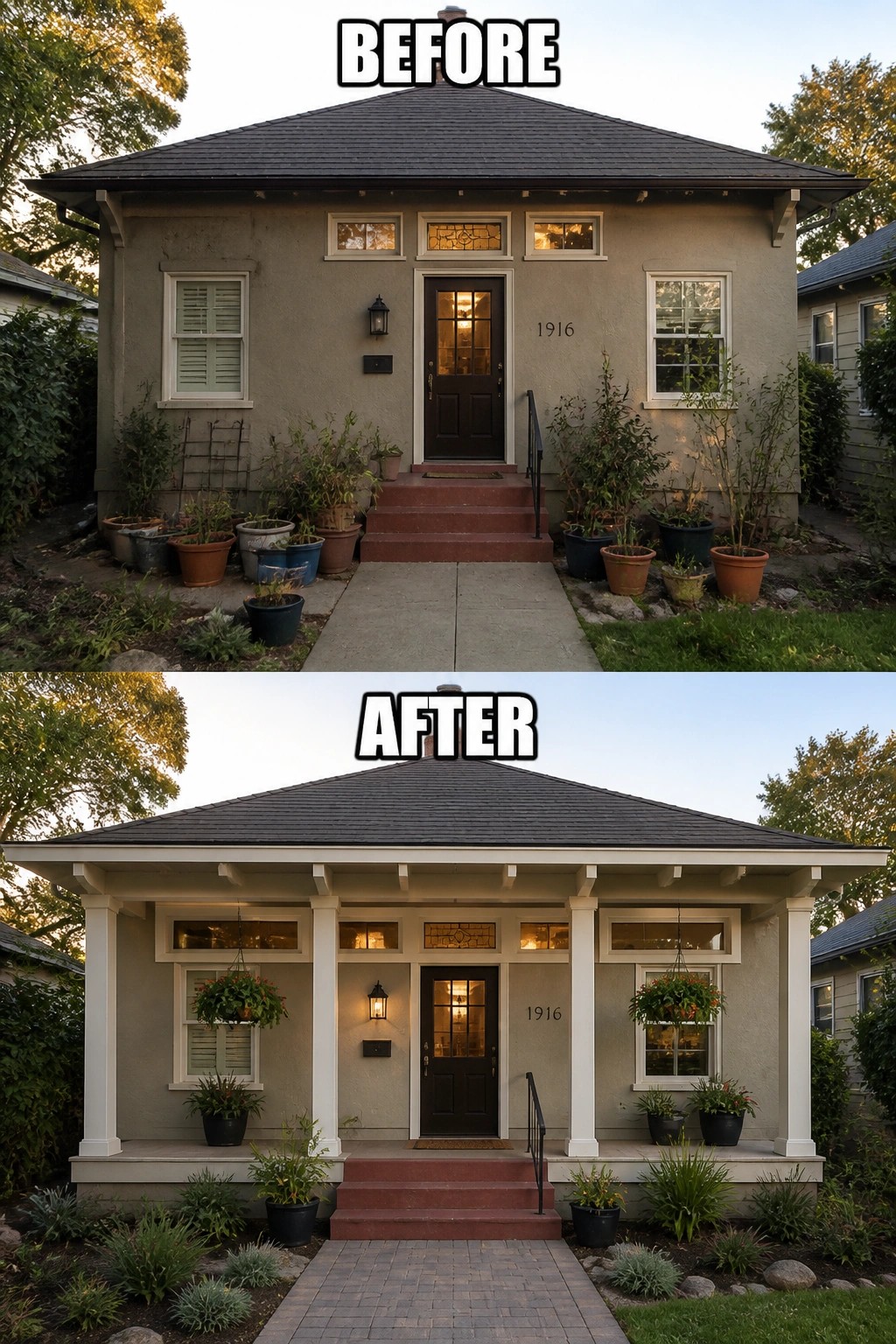
A simple porch addition can pull together a front that feels scattered. In this case, extending the roof and adding columns created a covered space that lines up the windows and gives the entry a clear center instead of leaving them floating on the wall.
This approach works well on older homes where windows sit at different heights or look too small for the facade. Keep the columns straightforward and match the roof pitch to the house so it feels like it belongs. Once the structure is in place, you can arrange plants along the new edge without the clutter that often happens when everything sits directly on the ground.
Frame An Awkward Window With A Decorative Grille
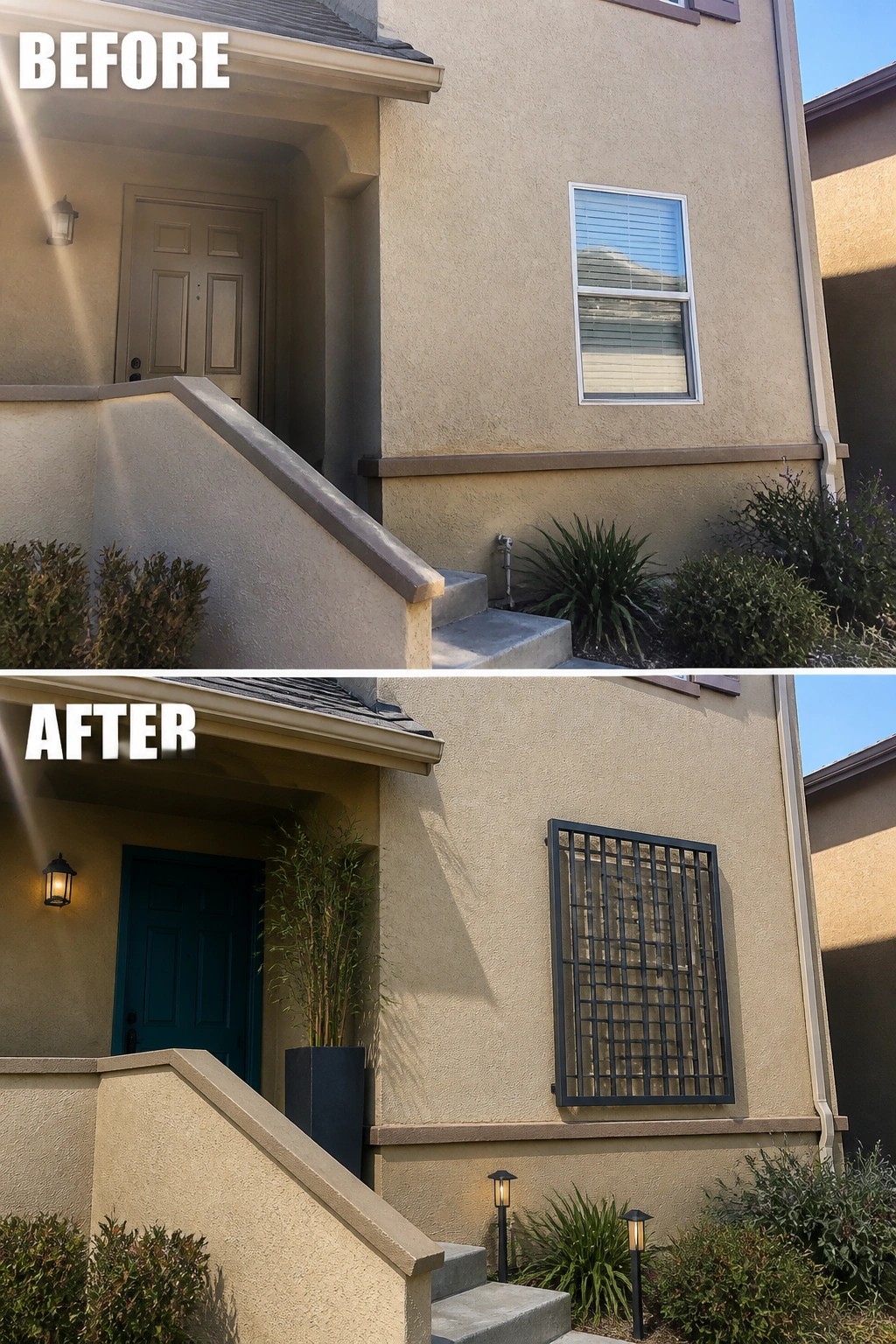
Many homes have a window that sits in an odd spot and never feels quite right. Adding a strong metal grille turns that window into a deliberate design choice instead of something you try to hide. In this case the plain opening gained a bold black grid that matches the new door color and gives the whole front a more finished look.
This approach works well on stucco or masonry homes where you cannot easily move a window. Keep the grille simple in pattern and match the color to another element like the door or trim so it feels intentional. Start with the grille and door color before adding smaller touches like a tall planter.
Add Shutters To Balance Awkward Windows
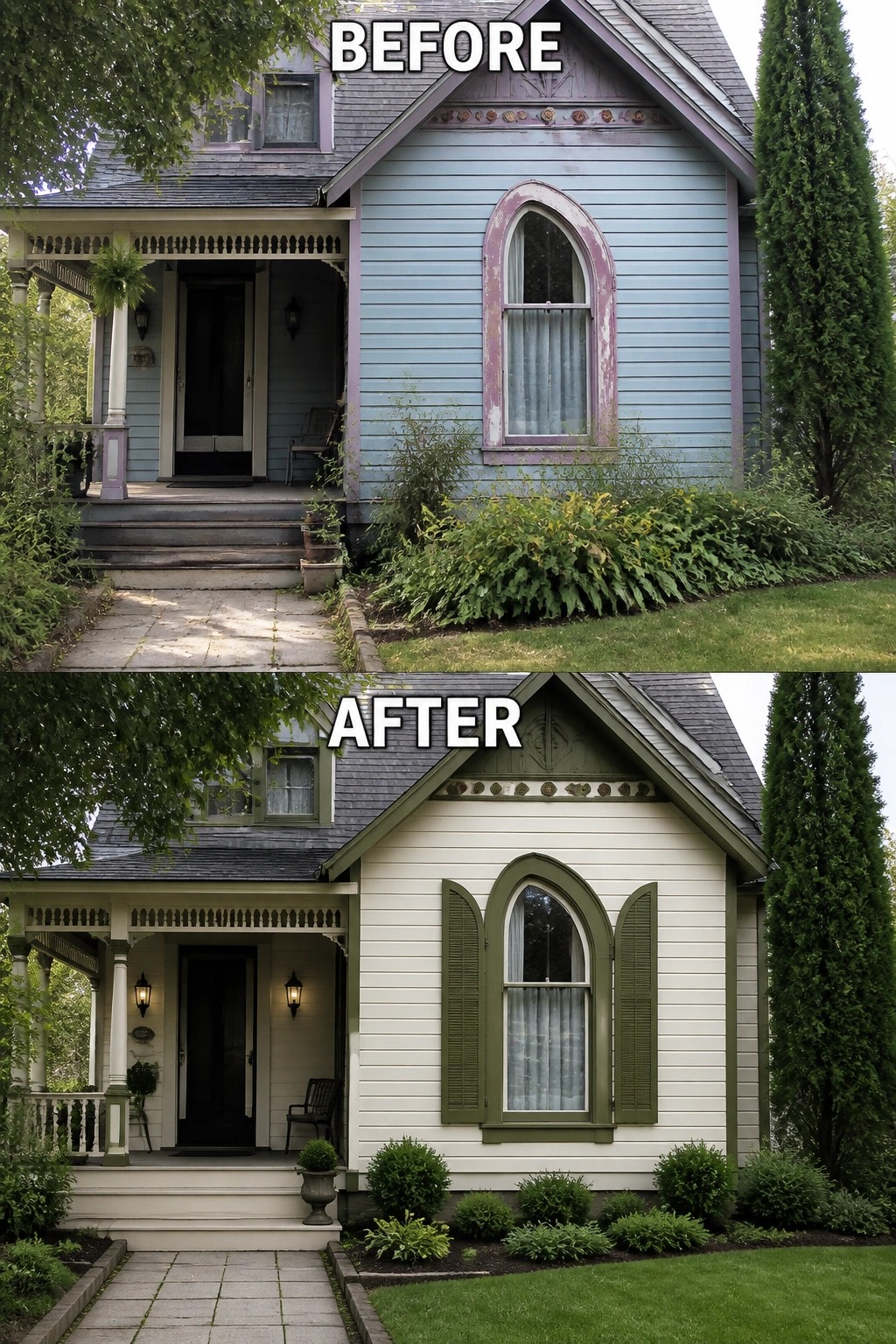
Many older homes end up with a window that feels slightly off because of its shape or placement. Adding shutters on both sides gives the window a clear frame and helps the whole front of the house look more intentional.
This fix works best on homes where the rest of the exterior is still in decent shape. Pick a trim color that contrasts with the siding, keep the shutters narrow enough to look realistic, and test the placement before you commit to drilling.
Frame A Tall Window With An Accent Panel
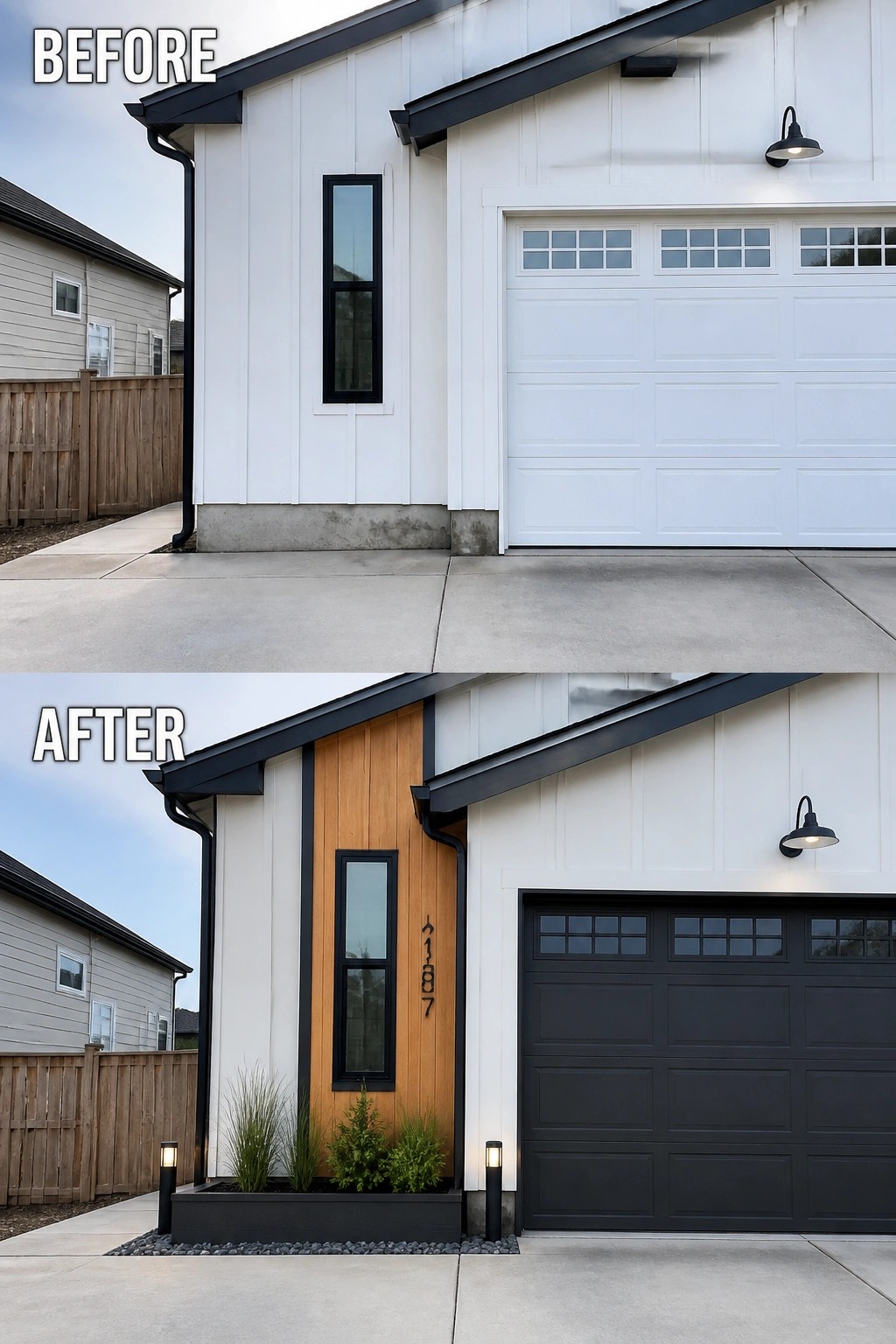
A plain white wall can make a tall narrow window look out of place. Adding a vertical wood panel around the window gives it a clear border and turns the awkward shape into a deliberate feature. The darker garage door also helps by balancing the white siding so the window no longer stands alone.
This approach works well on homes where one window sits higher or narrower than the rest. Choose wood or a similar material that matches your trim or roof color, and keep the panel width simple so it does not overpower the rest of the facade.
Balance A Plain Facade With Matching Shutters
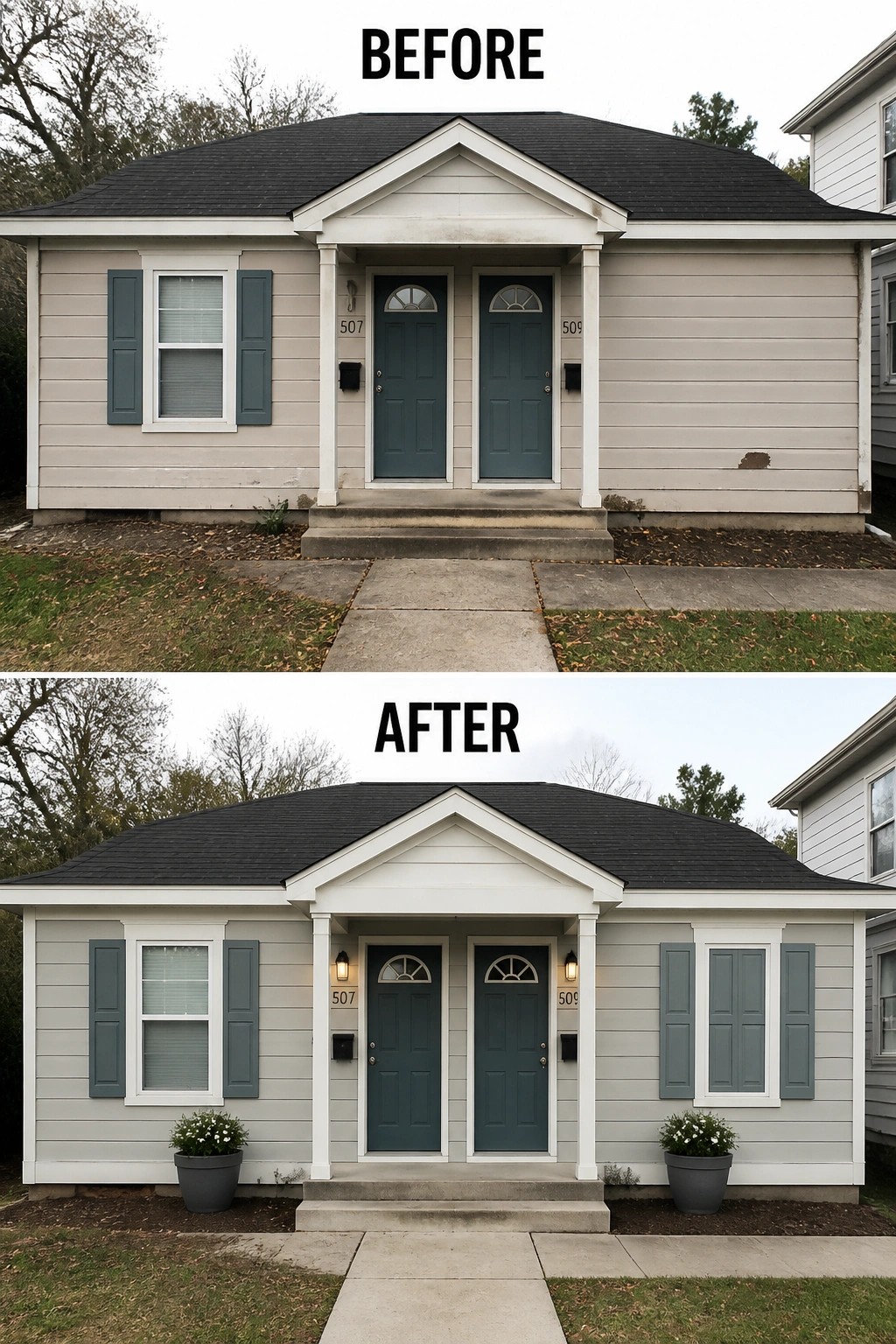
Many homes have windows placed at different distances from the entry, which can make the front look uneven. Adding matching shutters on both sides of the windows helps even things out and gives the house a more complete appearance without major construction.
This idea works especially well on smaller homes where the windows sit close to the front door. Match the shutter color to the trim or door so the change feels deliberate, and consider adding simple lights beside the entry to draw attention to the center of the house.
Build A Bench Beneath A Plain Window
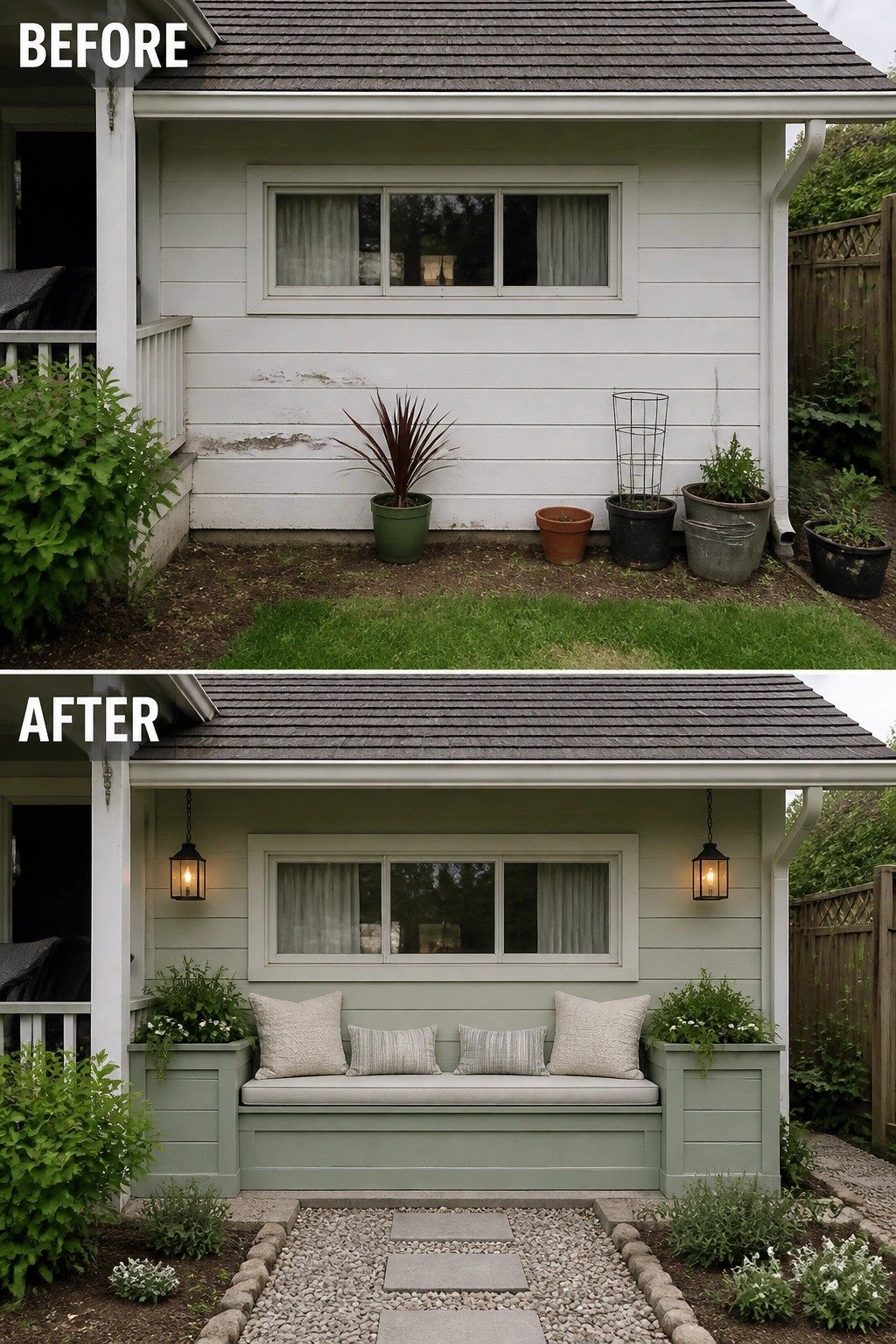
A built-in bench can give purpose to the empty space under a window that sits a little too high or feels out of place. The before photo shows random pots scattered along the wall with no real structure. In the after, a centered bench with cushions turns that same stretch into a place where someone can actually sit.
This works best on homes where the foundation or siding runs flat for several feet. Keep the bench height low so it does not block the window, and match the paint and trim to the house so it reads as part of the architecture rather than an add-on. The flanking planters help soften the edges without crowding the walkway.
Add Exterior Lighting To Highlight The Entry
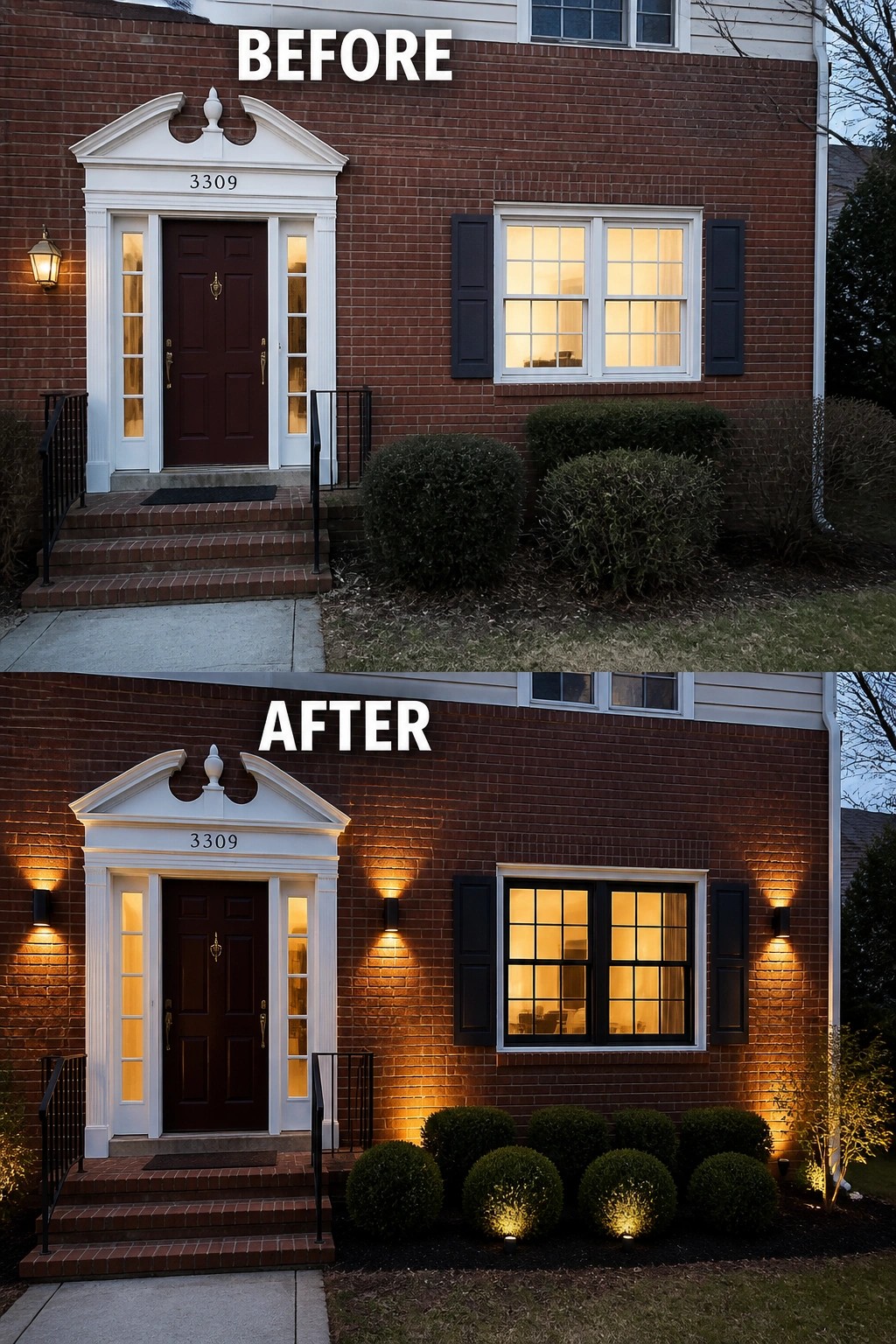
Many houses look flat after dark because the facade has no lighting at all. Adding a few wall sconces beside the door and window, along with a handful of low landscape lights, gives the front a clearer shape and makes the entry feel more intentional.
This works best on homes with simple brick or siding where the goal is to show off existing details rather than add new ones. Place the sconces at eye level on either side of the door and keep the ground lights low so they wash the planting beds without creating glare.
Enlarge Small Windows To Fix Awkward Placement
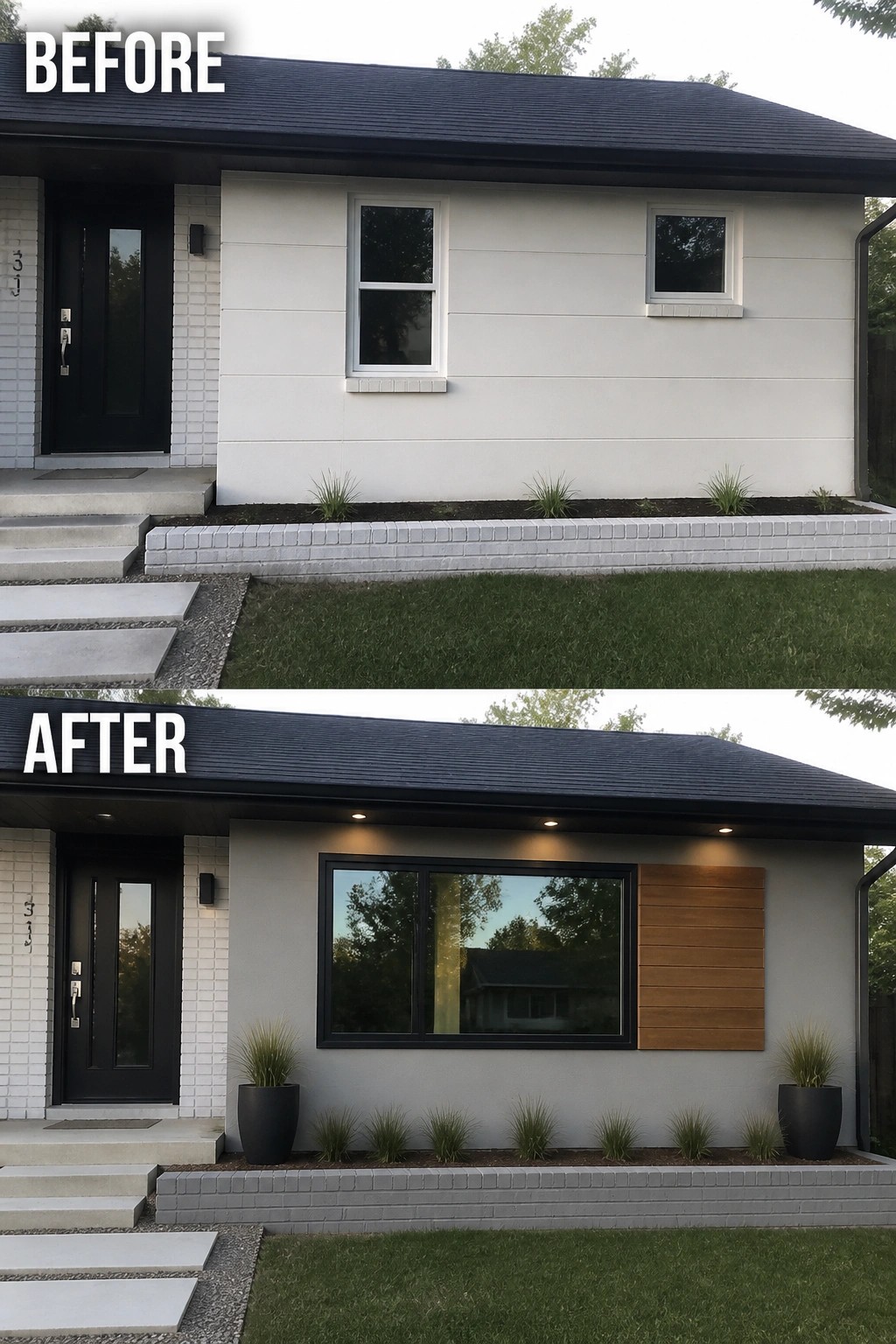
Many homes end up with windows that feel too small or slightly off center on a plain wall. In this case the before photo shows two modest windows that sit apart and do little for the facade. The after photo shows how a single larger window with a dark frame pulls the whole side together and gives the wall better proportion.
If your house has similar windows that look randomly placed, consider replacing one or two with a bigger unit that fits the scale of the wall. Pairing the new window with a simple accent material beside it can further balance the look without major construction. This approach works well on ranch or mid century homes where the original windows were kept small for cost.
Frame Windows With Shutters
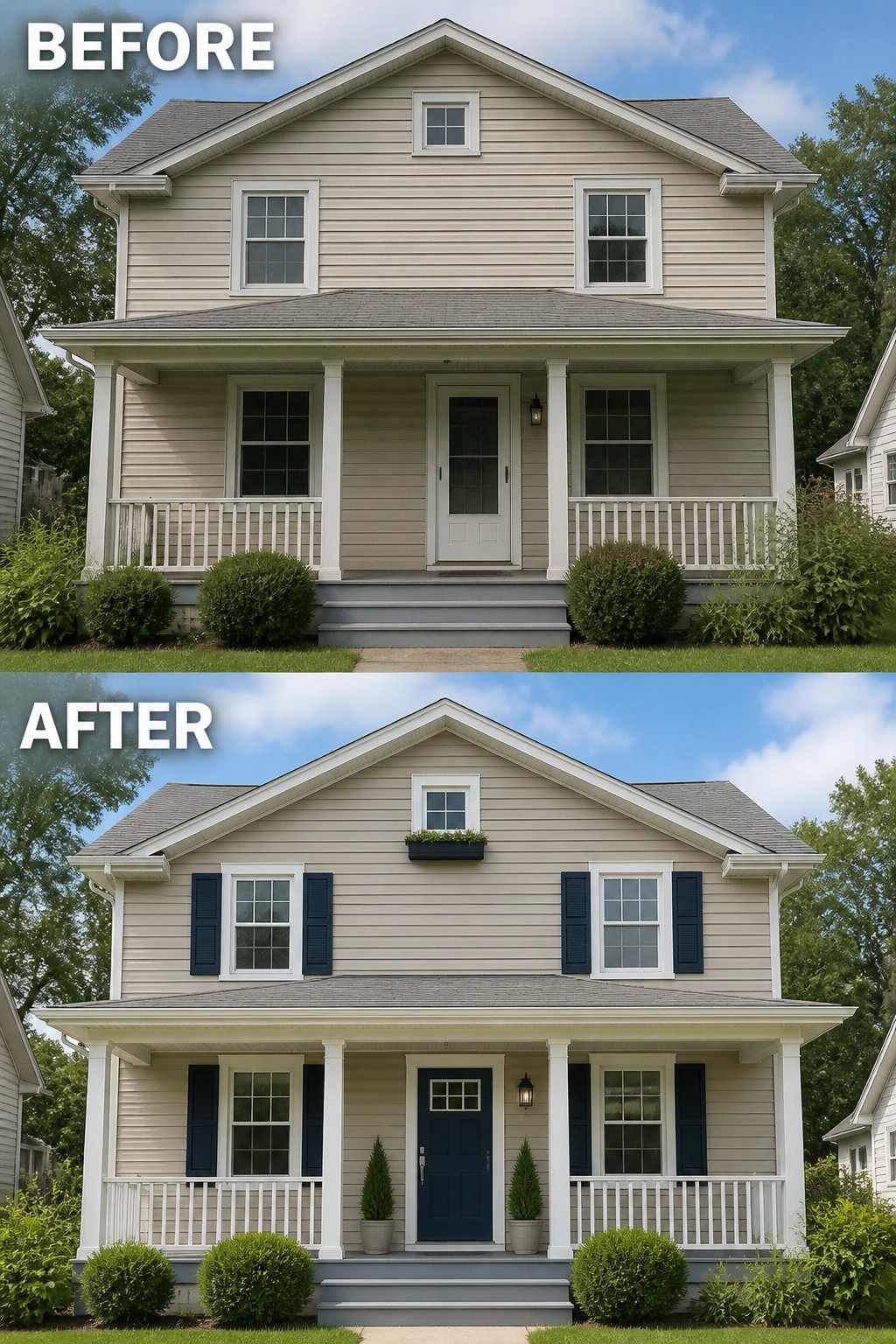
Adding shutters is a simple way to give a facade more structure when windows sit at different heights or feel scattered across the front. In the before photo the windows looked flat and disconnected. Once the dark shutters were added on the after side, each window gained clear edges and the whole house felt more balanced without any major construction.
This approach works well on two-story homes where the upper windows sit a bit awkwardly. Match the shutter color to the front door so the changes read as one update rather than several separate fixes. Keep the shutters the same width as the window panes so they look like they belong there instead of just decoration.
Add Stone To The Foundation For A More Grounded Look
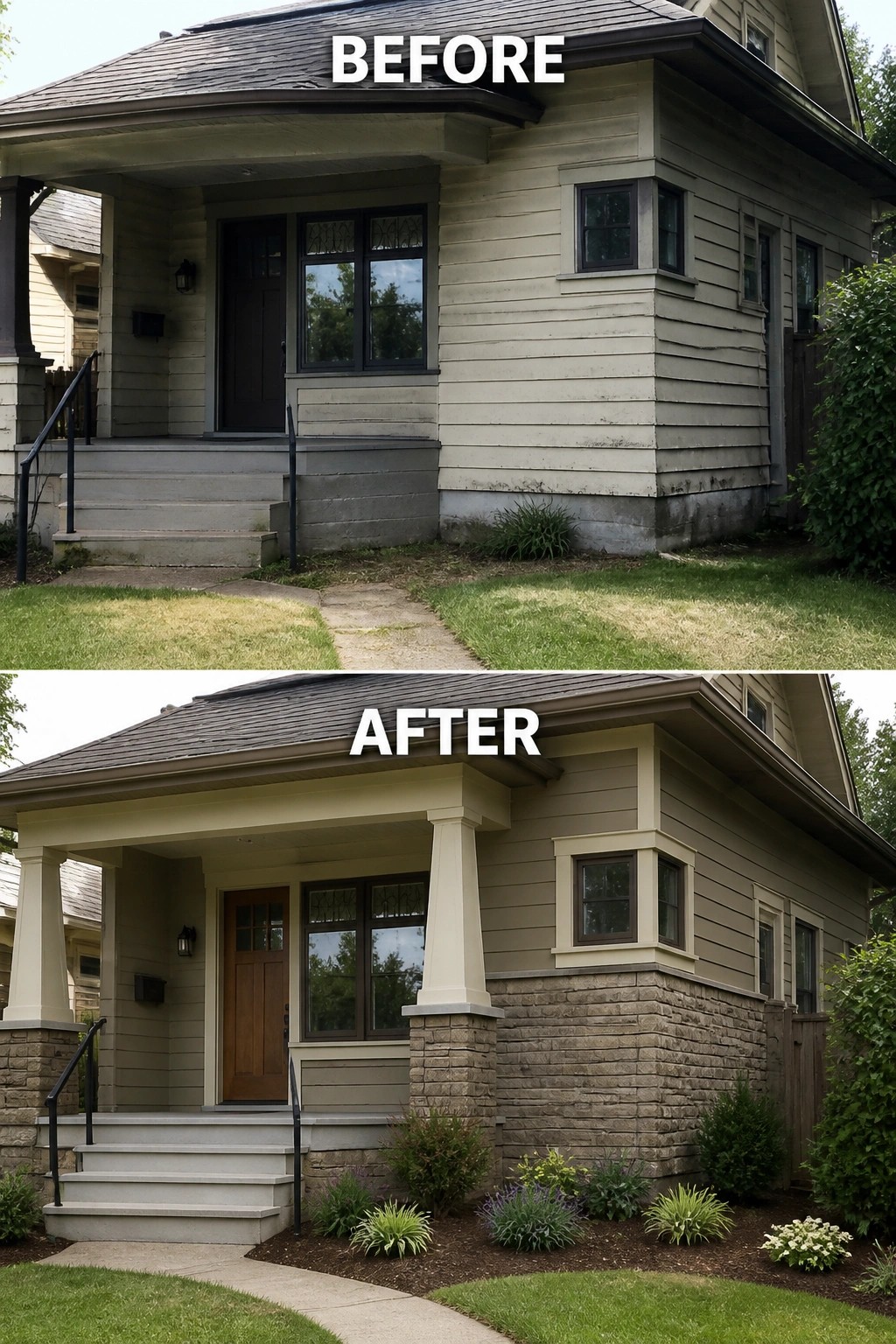
Many older homes have a painted concrete base that makes the whole front feel unfinished. Covering that area with stone gives the house a solid bottom edge and helps the entry feel more intentional.
This approach works well on houses where the windows sit at odd heights. The stone creates a clear break between the ground and the siding, so the eye has something steady to rest on instead of jumping around the facade. Keep the stone color close to the trim or roof so it ties the whole front together without needing major changes higher up.
Frame Awkward Windows With Vertical Panels
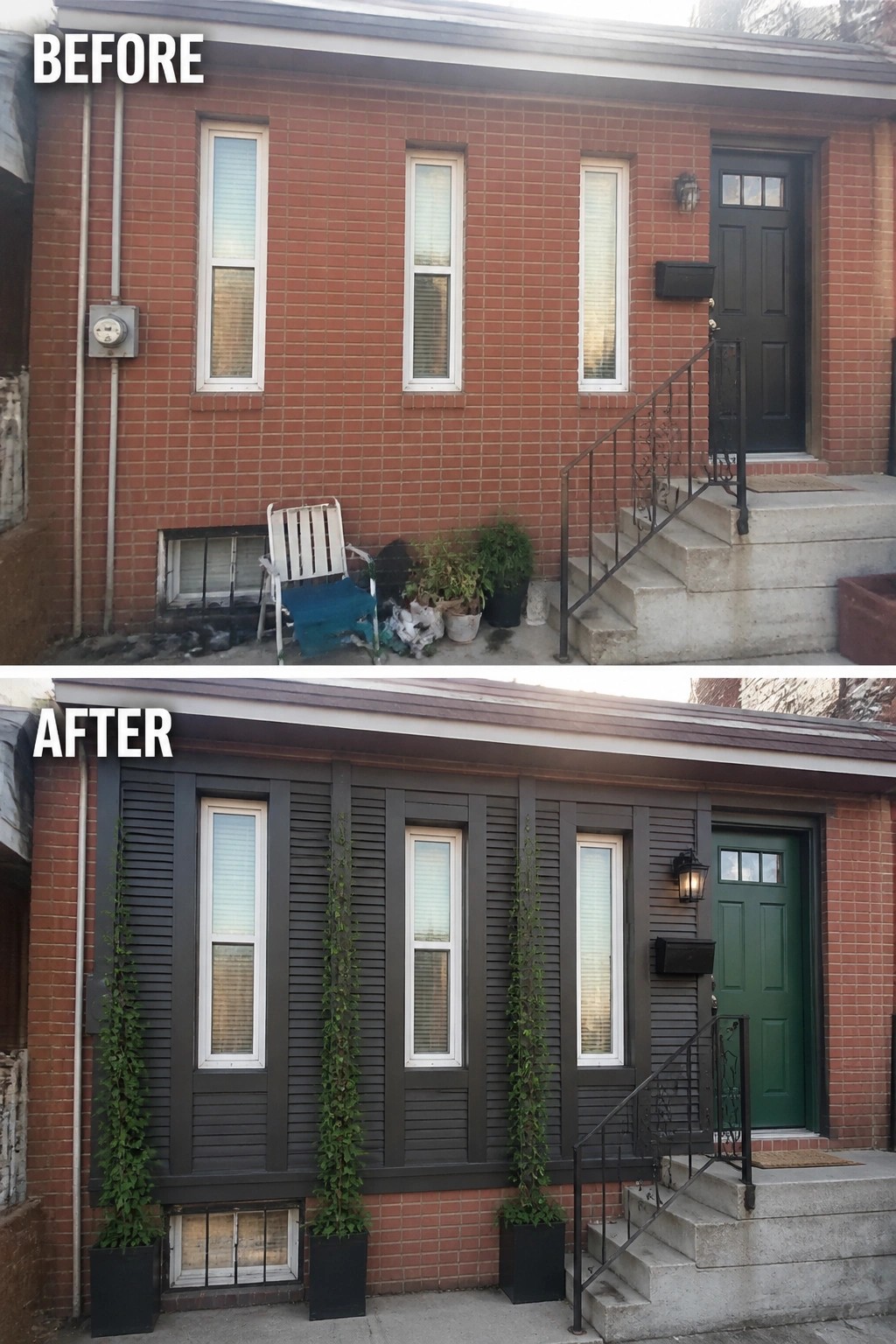
A flat brick wall can make windows look scattered and unplanned. Adding dark vertical panels around each window gives them a clear shape and pulls the whole front together. The change also lets you swap the door color and add simple planters without the facade still feeling messy.
This approach works well on brick homes where the windows sit at odd heights or widths. Keep the panels the same width as the window trim so the lines stay clean, and use matching planters at the base if you want to add height without crowding the walkway.
Frame An Awkward Window With An Awning
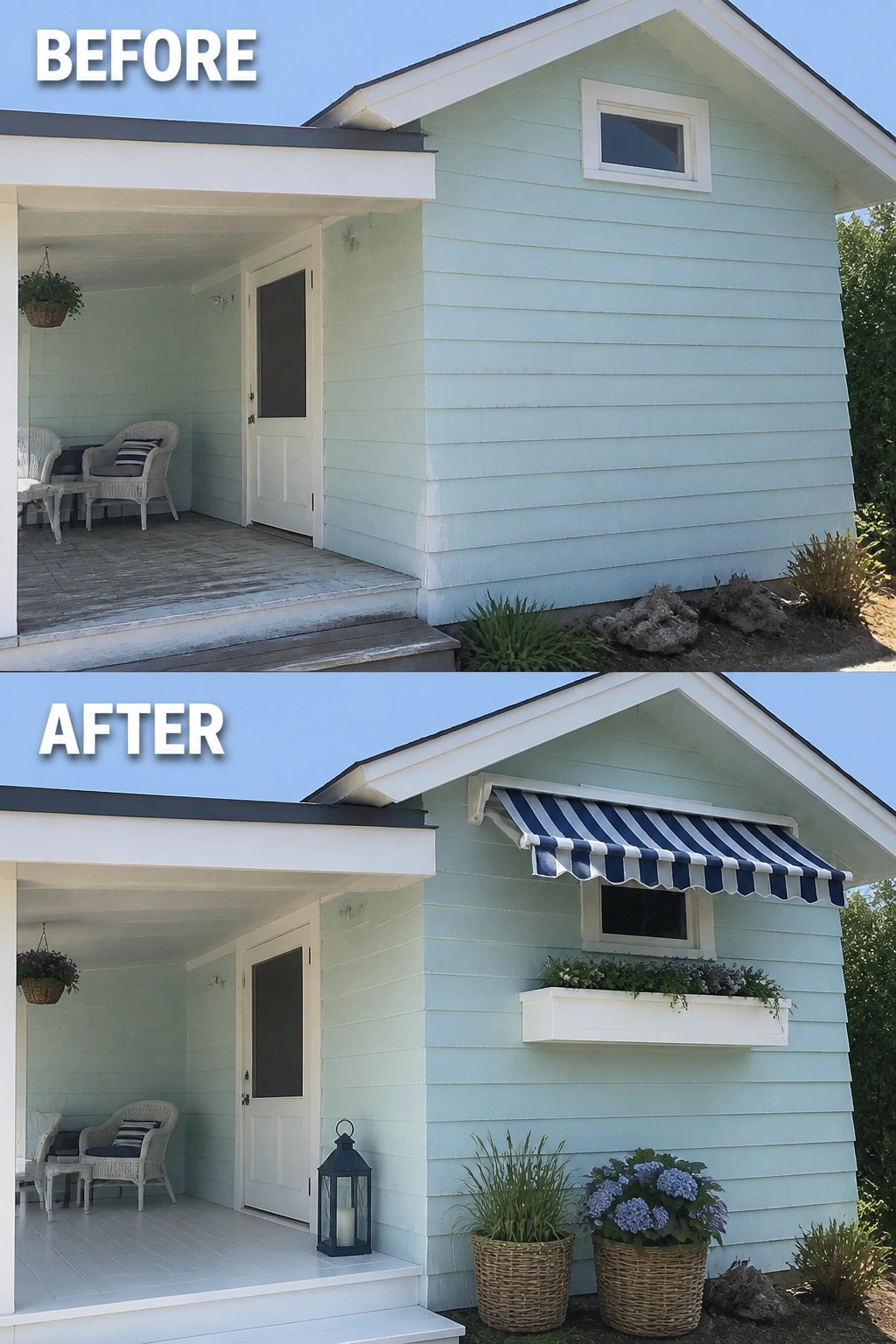
A small high window can make the side of a house feel unbalanced. Adding a striped awning and a simple window box below it gives the window a clear purpose and pulls the eye downward. The change turns a blank stretch of siding into a more finished part of the facade without any major construction.
This approach works well on homes where the window sits too high or feels out of scale with the rest of the wall. Keep the awning color simple so it does not compete with the house color, and choose plants that stay low enough to leave the window usable. The same idea can soften other awkward openings on a plain exterior.
Frame An Awkward Window With A Pergola
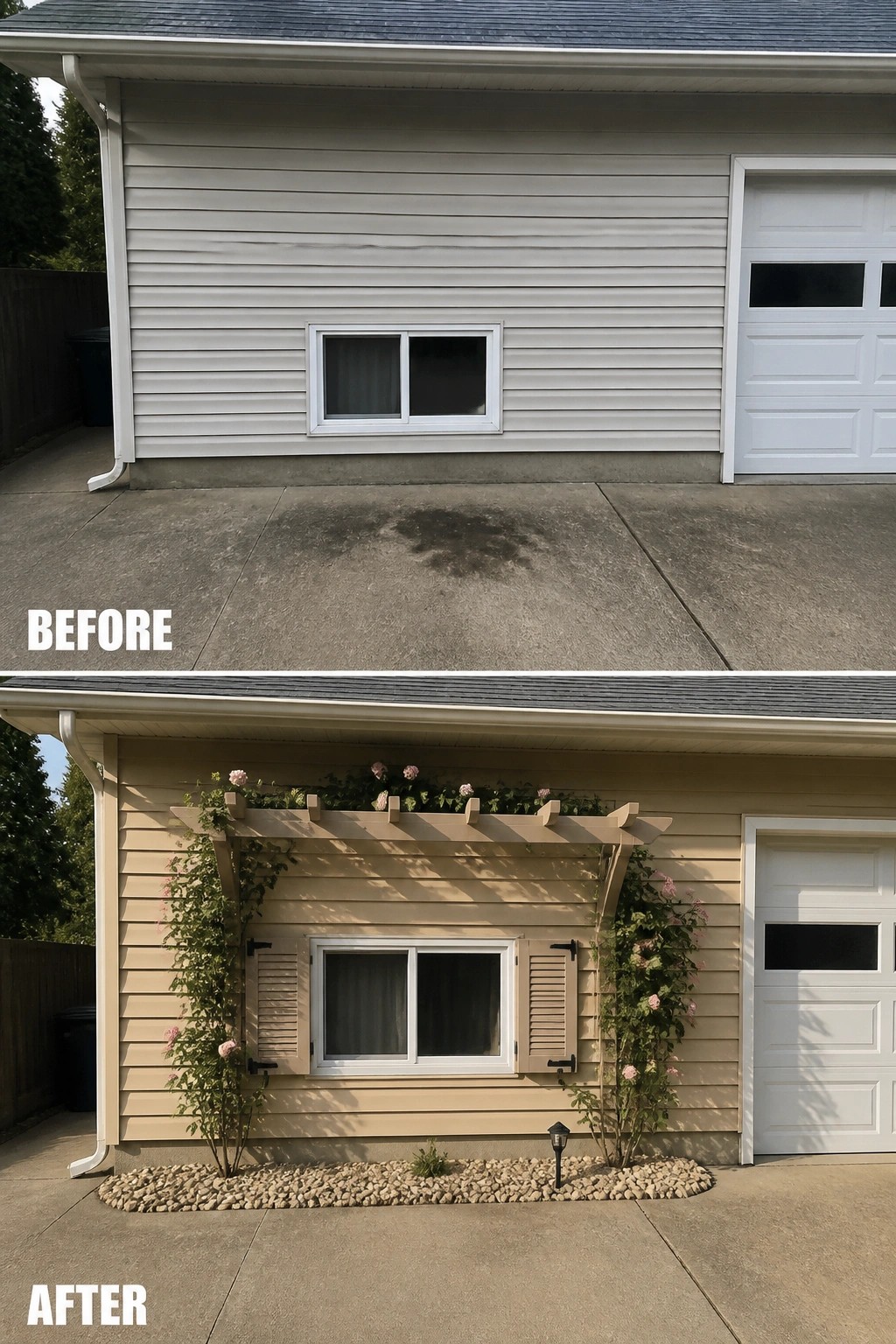
An awkward window often sits alone on a flat wall and makes that part of the house feel unfinished. A small pergola placed over the window, combined with shutters and a couple of climbing plants, gives the window a reason to be there and breaks up the plain siding without a major renovation.
This idea works best on homes where the window feels too small or poorly placed. Keep the structure light, use plants that suit your climate, and add a simple ground border so the whole area looks intentional rather than just decorated.
Frequently Asked Questions
Q: My front windows sit higher than the door frame. How do I make them feel balanced?
A: Add a horizontal band of siding or paint right below the windows. It creates a visual line that ties everything together at eye level. Then plant some tall shrubs underneath to soften the height.
Q: What works when windows bunch up in one corner of the wall?
A: Extend a pergola or awning across that section. The structure spreads attention outward and gives the corner more weight.
Q: Should I match new trim to my existing windows or try something different?
A: Go with a similar style but in a bolder color. This keeps things consistent while highlighting the fixes you made. But measure twice first so the new pieces sit flush.