

Some links on this page are affiliate links (for example Amazon). If you buy through them I may earn a small commission, at no extra cost to you. How this works.
I have noticed that the front door often sets the tone for how the rest of the house reads from the street. Natural wood finishes add a layer of texture that can refresh the facade without touching the siding or trim work around it. A solid door update does most of the work.
I would try a few of these finishes first on my own entry because they tend to make the whole approach feel more deliberate. Small choices like grain direction or stain depth end up carrying more weight than I first expected when the goal is simply to make the house look attended to.
Replace A Worn Front Door With Natural Wood
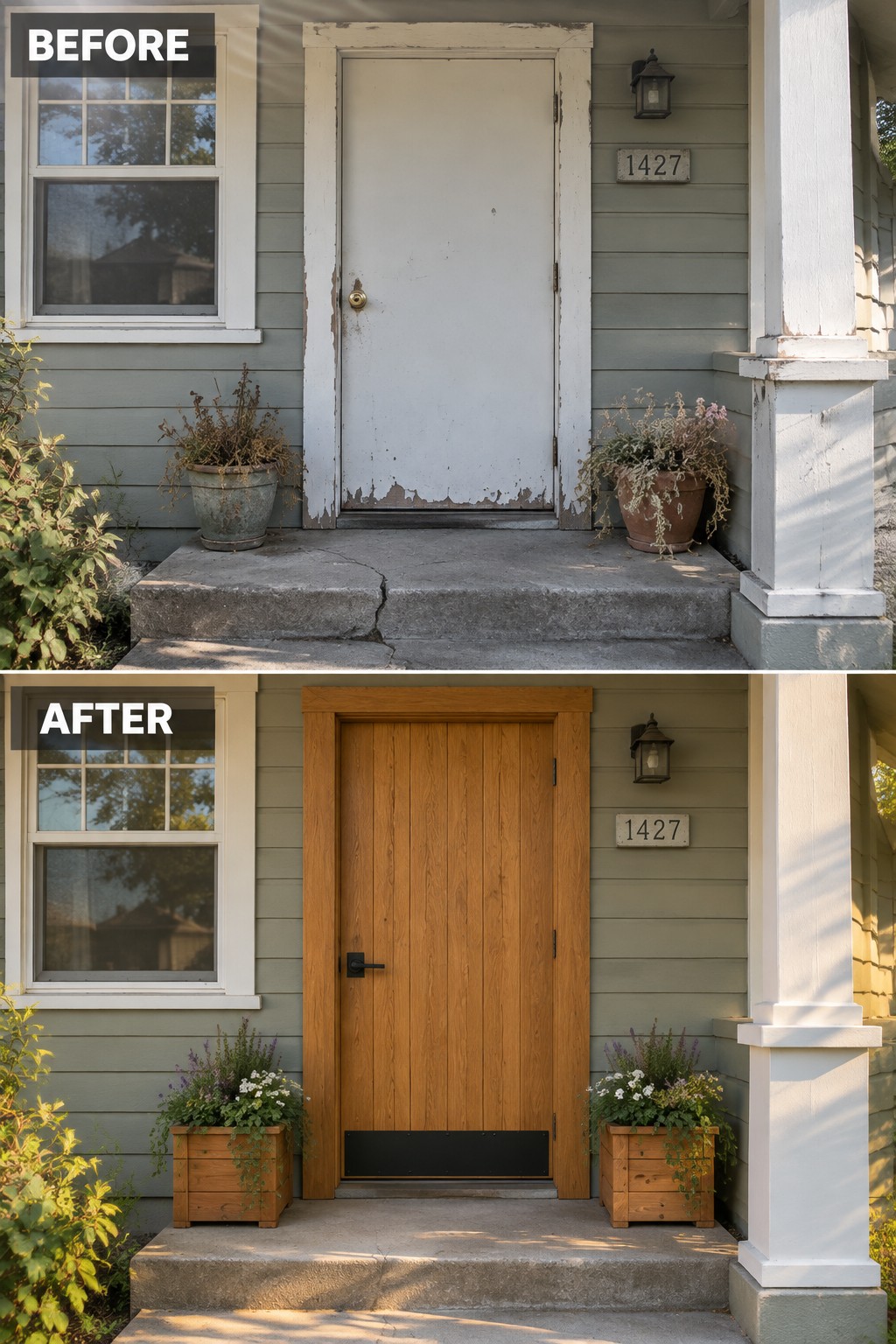
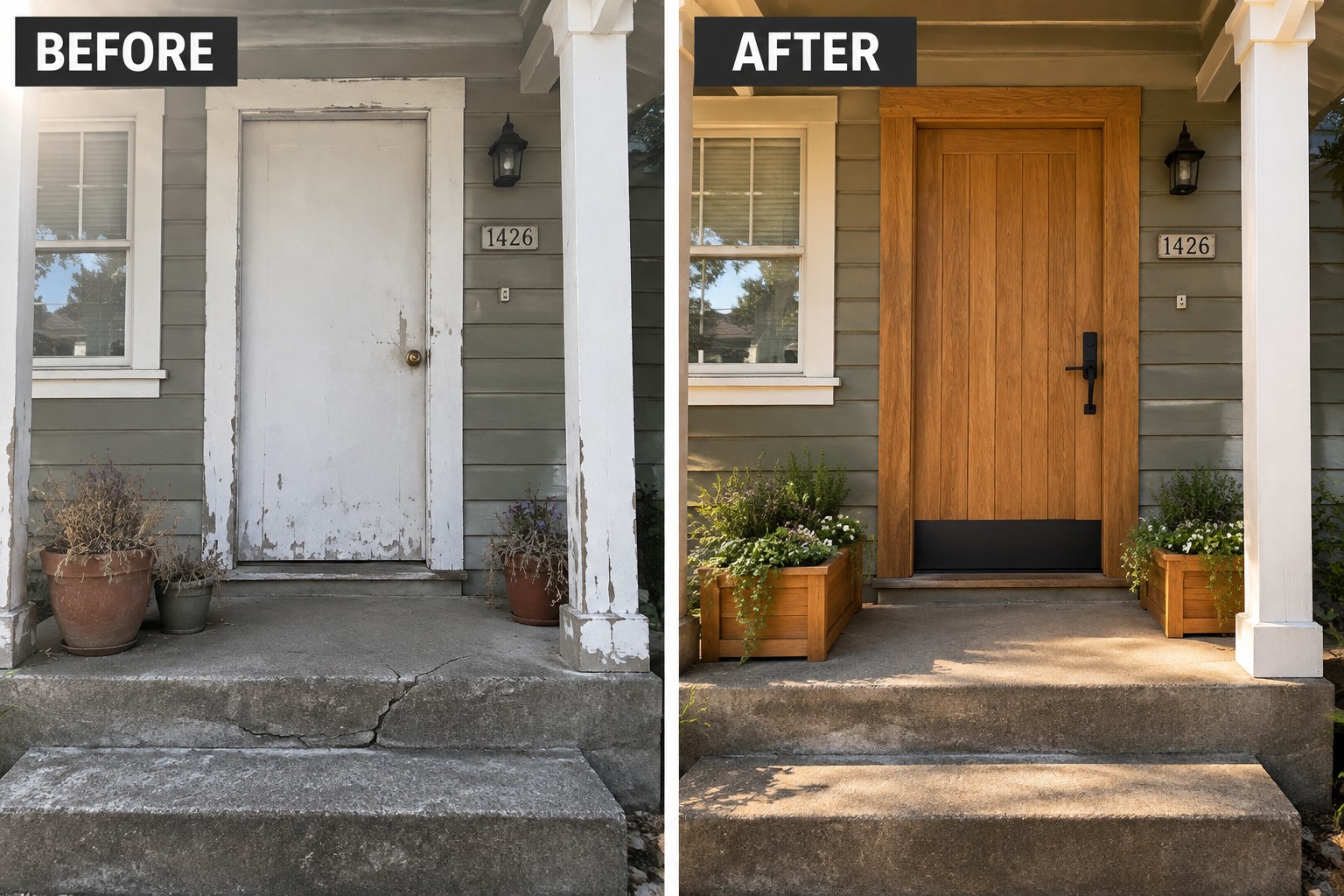
Many homes have an older painted door that has started to peel and look tired. Switching it out for a natural wood door gives the entry a warmer feel and makes the whole front of the house look more cared for. The wood grain adds texture that a flat painted surface cannot match.
This change works best on simpler houses where the door can become the main feature. Match the new door with wood planters on either side and keep the surrounding trim and siding light so the wood stands out. Start with the door itself before adding more details.
Replace An Old Front Door With Natural Wood And Glass
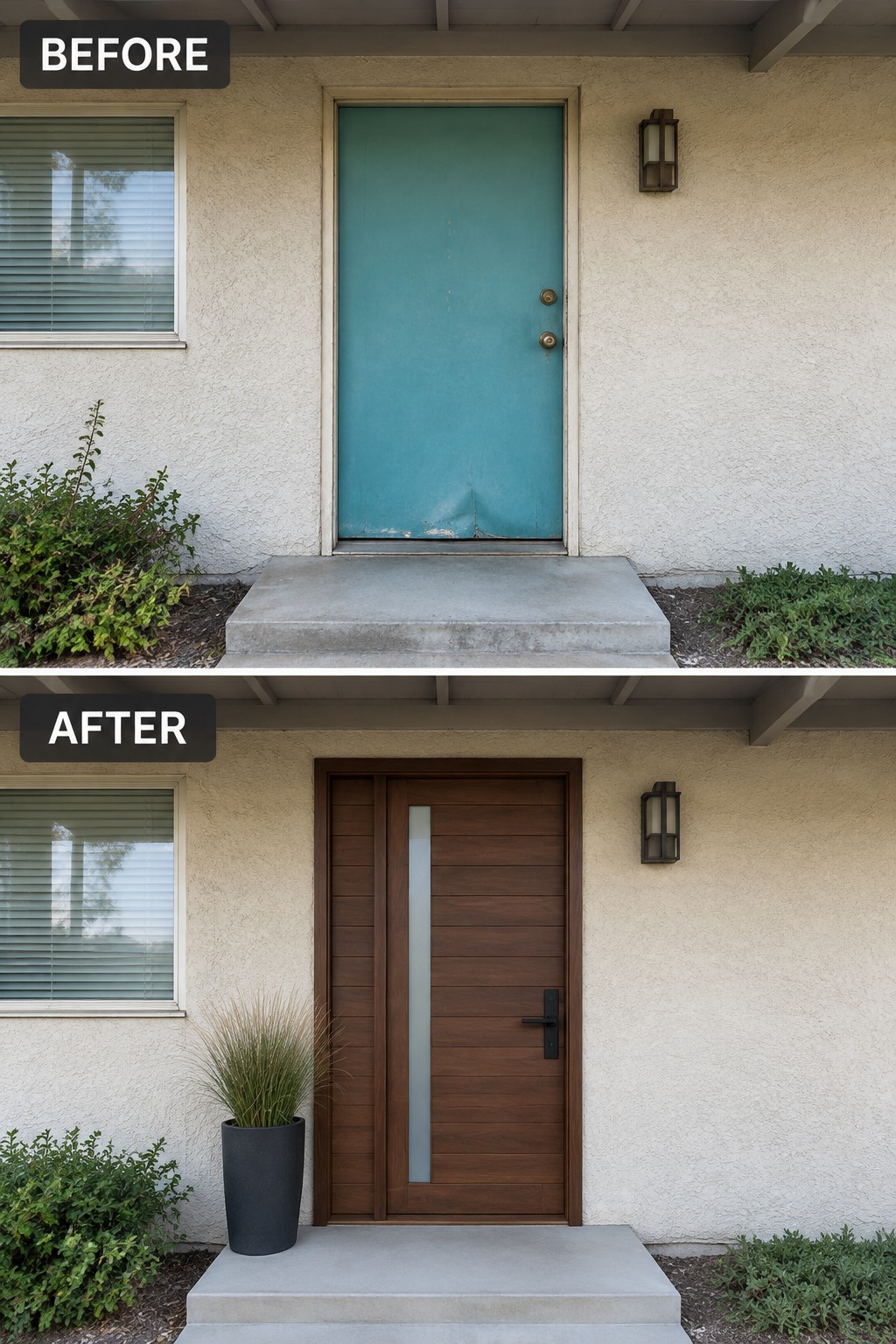
An old painted door often starts to look tired against the rest of the house, especially when the color no longer fits the siding or trim. Switching to a natural wood finish with a simple vertical glass panel gives the entry a cleaner, more current look without changing the whole facade.
This approach works best on homes with straightforward exteriors where the door can become the main focal point. Match the wood tone to nearby elements like window frames or roof overhangs, then keep any added planters or pots to one or two so the entry stays easy to navigate.
Replace A Faded Front Door With Natural Wood
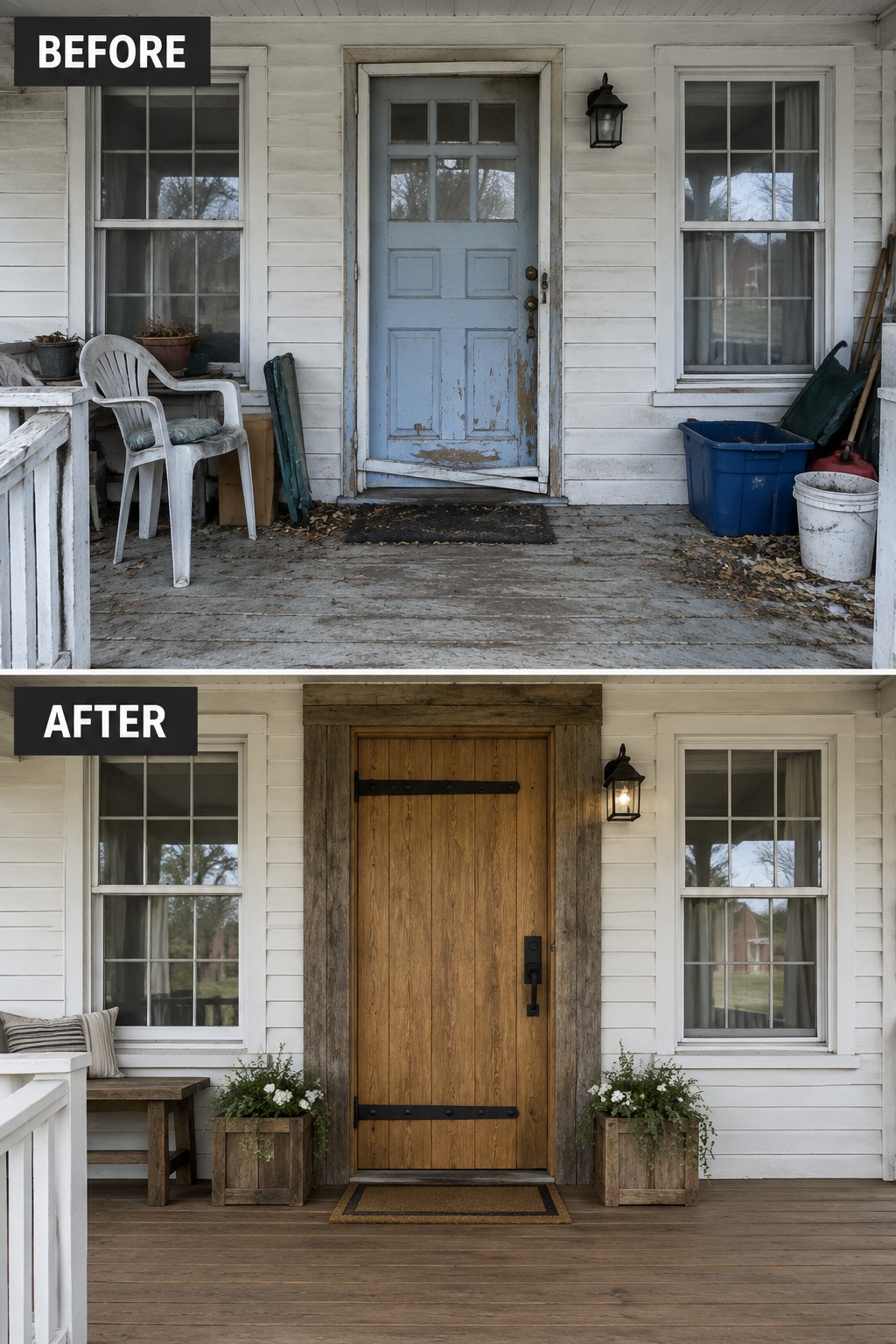
A painted door that has seen better days can drag down the whole front of a house. Switching it out for a solid wood door with simple black hardware instantly lifts the entry and gives the porch a cleaner, more grounded look. The warm tone of the wood also pairs better with the white siding than the old chipped blue ever did.
This change works especially well on older homes where the original door has started to peel or warp. Keep the rest of the porch simple so the door stays the main focus, and add just a couple of low planters if you want a bit more color near the steps.
Swap A Plain Front Door For Natural Wood
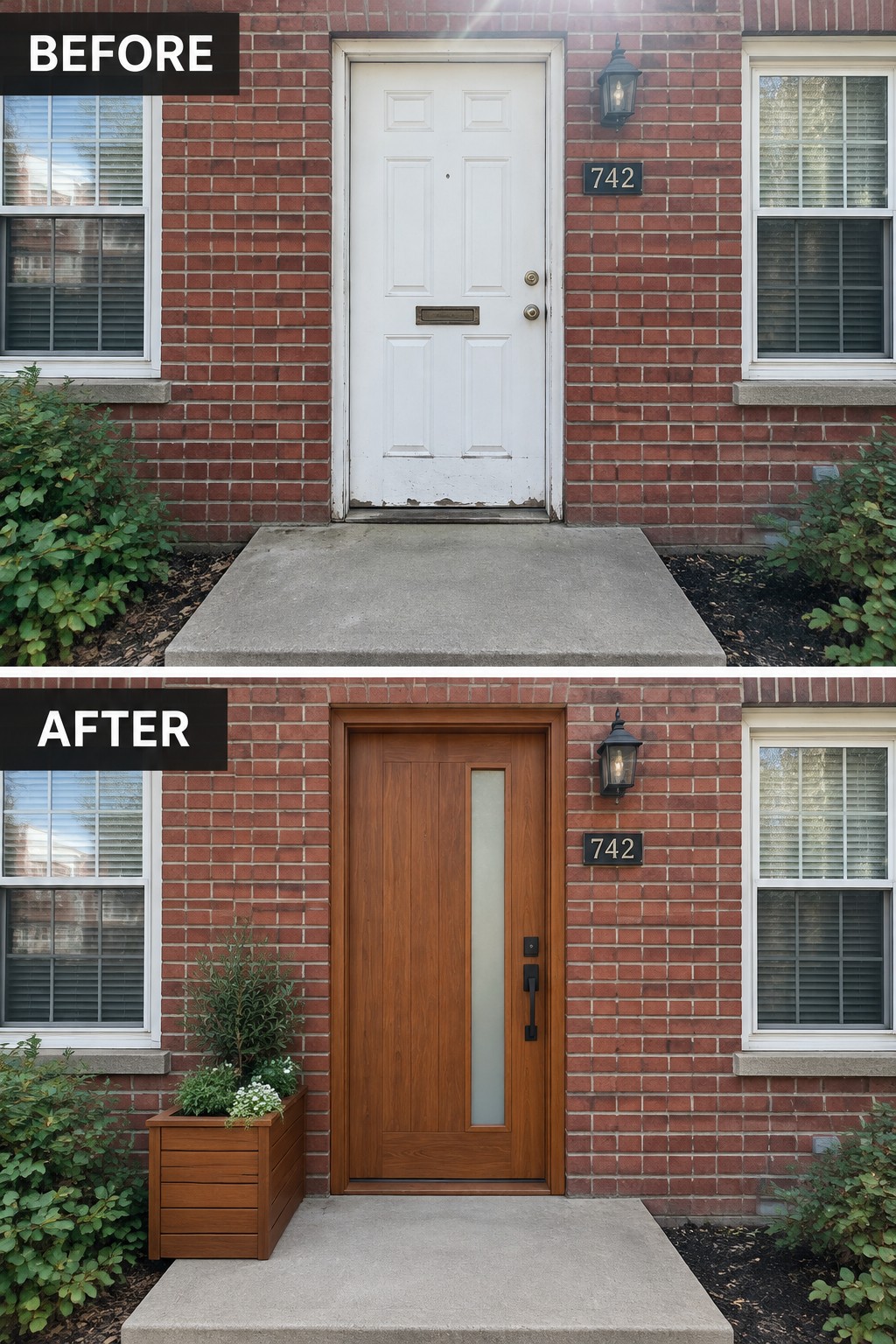
A simple door swap can change how the whole front of a house feels. The old white door looked tired and flat against the brick. The new wood door brings warmth and texture that works much better with the red brick, and the tall glass panel keeps the entry from feeling closed off.
This idea works especially well on brick homes that already have a solid structure. Keep the changes simple by choosing a wood tone that sits comfortably with the brick color, then add one or two planters to balance the space without crowding the step. The rest of the entry can stay as it is.
Swap The Painted Door For Natural Wood
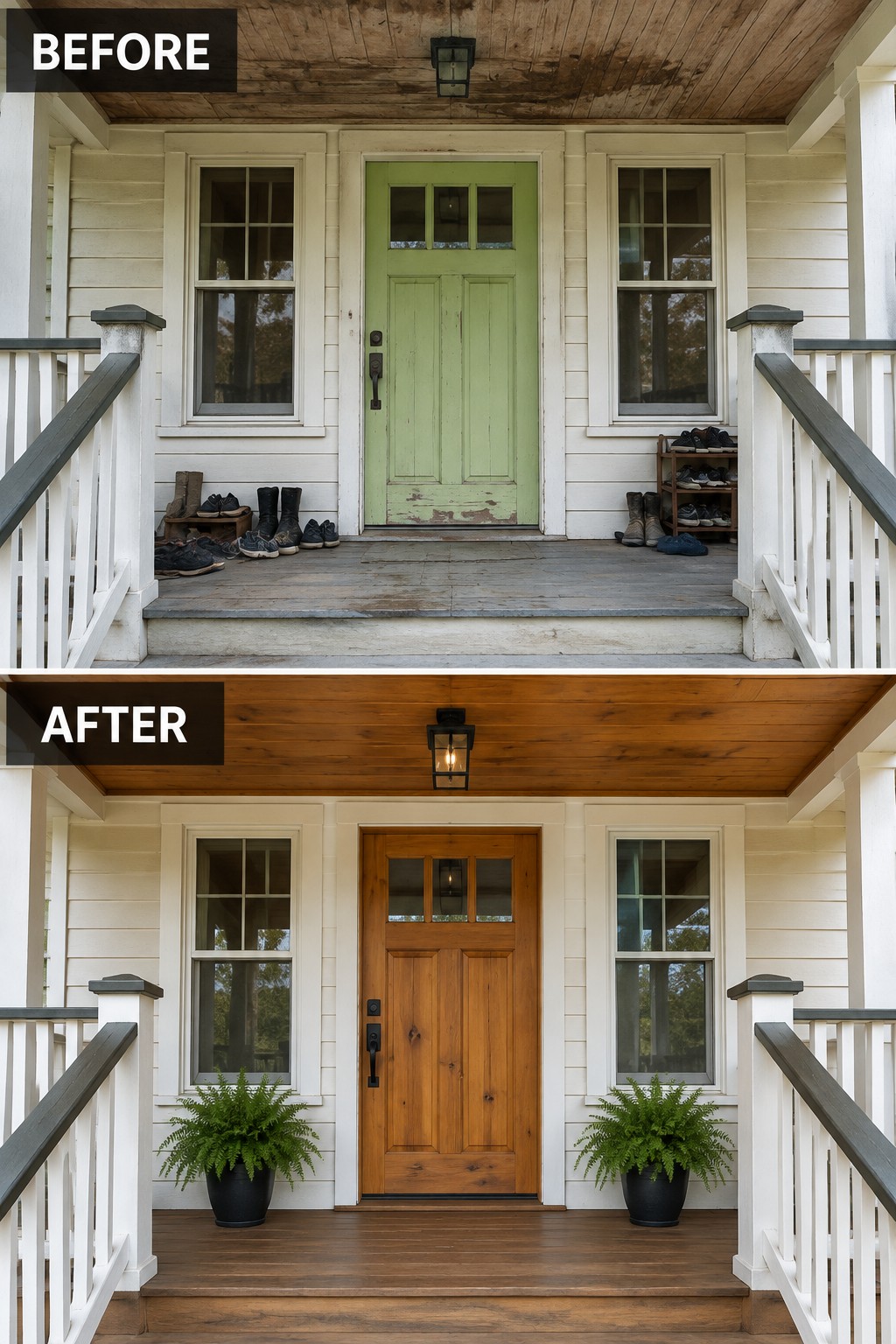
A faded painted door can make an entry feel tired even when the rest of the house is fine. Switching to a natural wood door gives the front a warmer, more finished look without needing a full porch rebuild.
This idea works best on homes with some overhang or cover so the wood holds up over time. Match the door finish to a stained porch floor if you can, and keep the surrounding trim simple so the wood stays the main focus.
Update The Front Entry With A Natural Wood Door
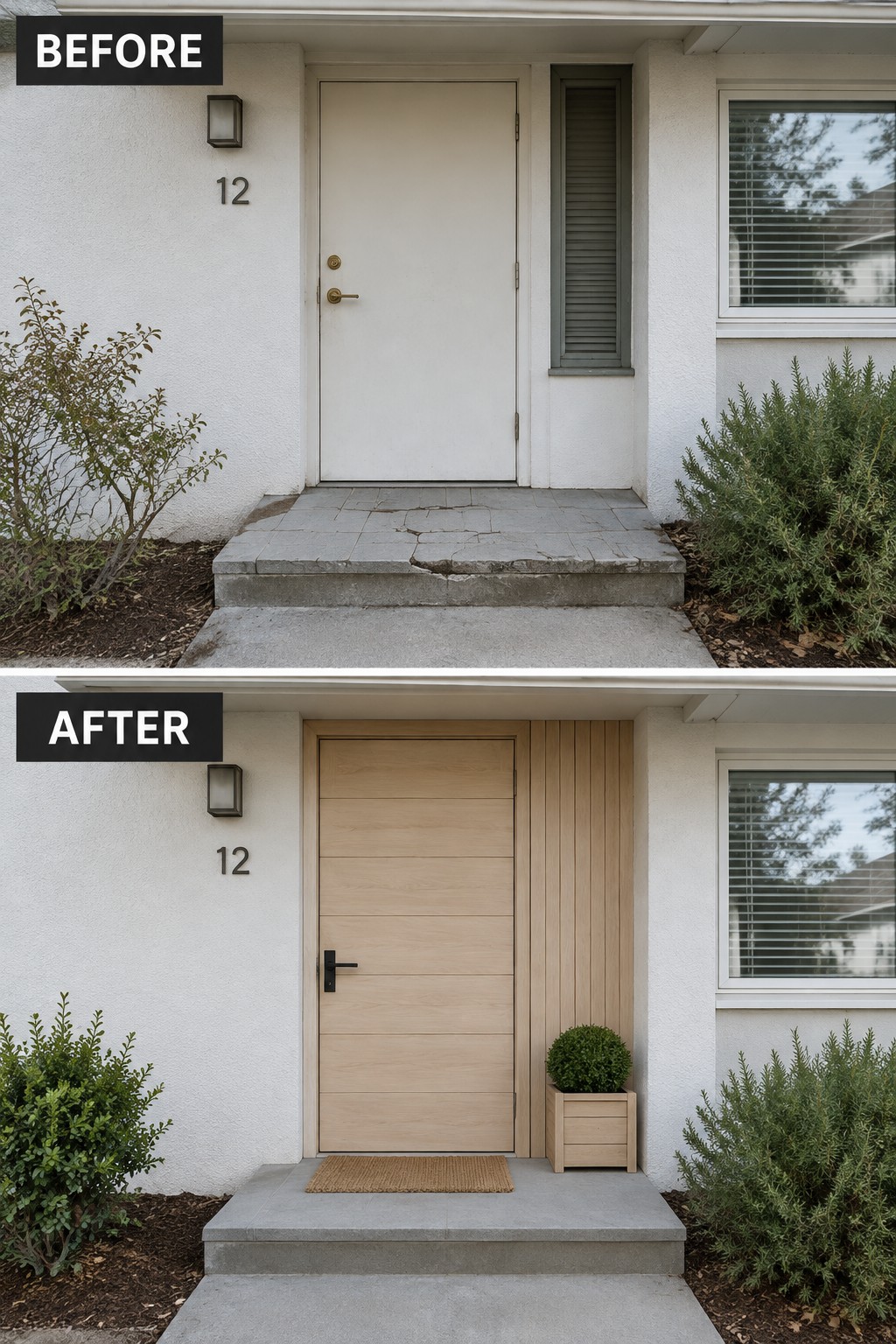
A plain white door and cracked steps can make the whole front of a house feel flat. Switching to a light wood door with simple horizontal lines and adding a matching wood panel beside it gives the entry a much warmer and more finished look. The small planter and doormat help tie everything together without adding clutter.
This approach works well on homes with simple stucco or painted exteriors where the door is the main focal point. Start with the door itself if you want a noticeable change without a full renovation, and choose a wood tone that holds up in your weather. Keep the surrounding planting simple so the wood stays the star.
Update The Front Door With A Natural Wood Finish
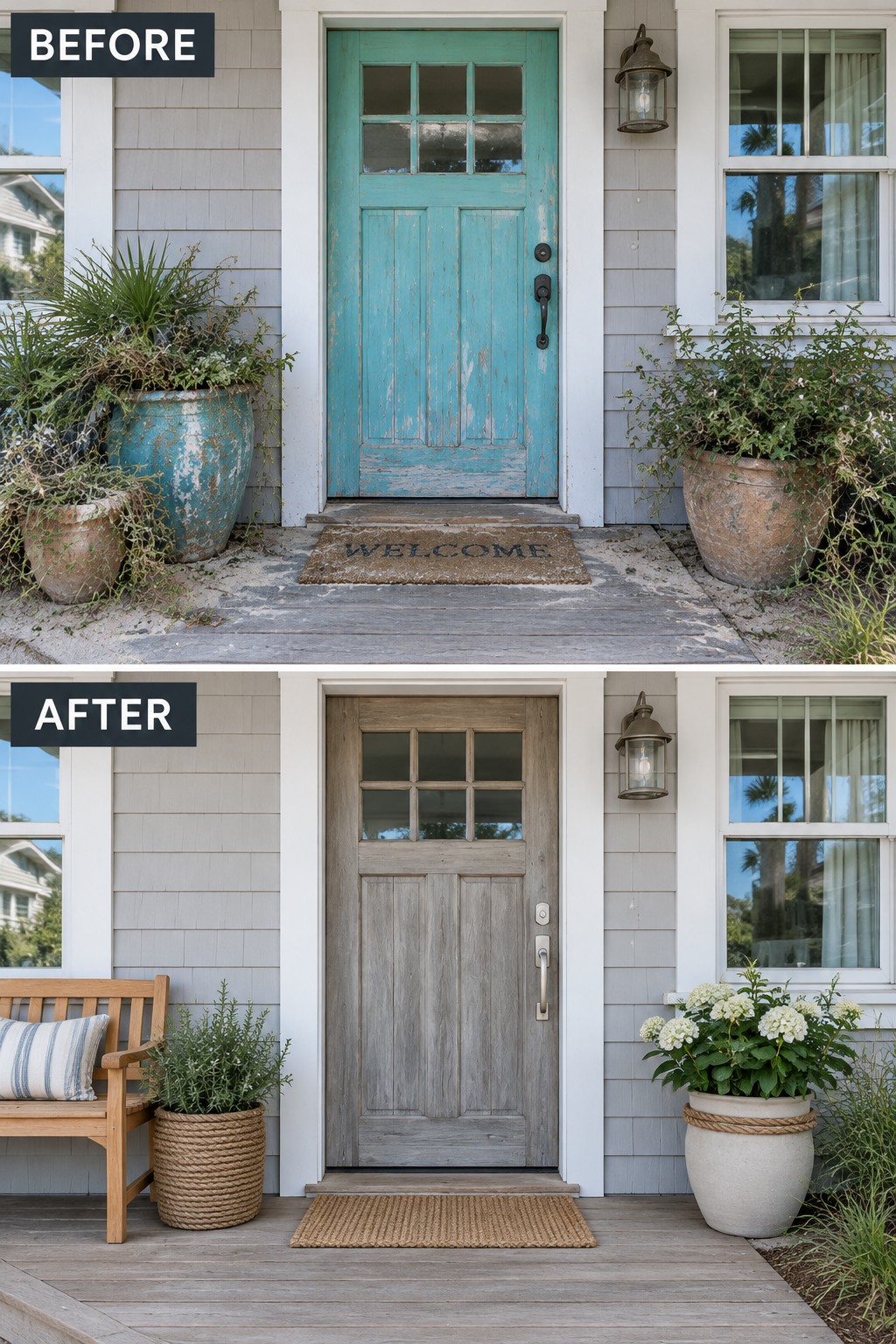
A painted front door can start to look dated once the color fades or chips. Switching to a natural wood finish gives the entry a quieter, more settled appearance that works with the siding and trim instead of competing with them. The change here shows how replacing the old turquoise door with wood softens the whole front of the house.
This idea suits homes with wood siding or neutral exteriors where you want the door to feel like part of the structure. Keep the area around the door fairly simple so the wood stays the main feature. A single new planter or bench is often enough once the door is done.
Refresh A Plain Front Entry With Natural Wood
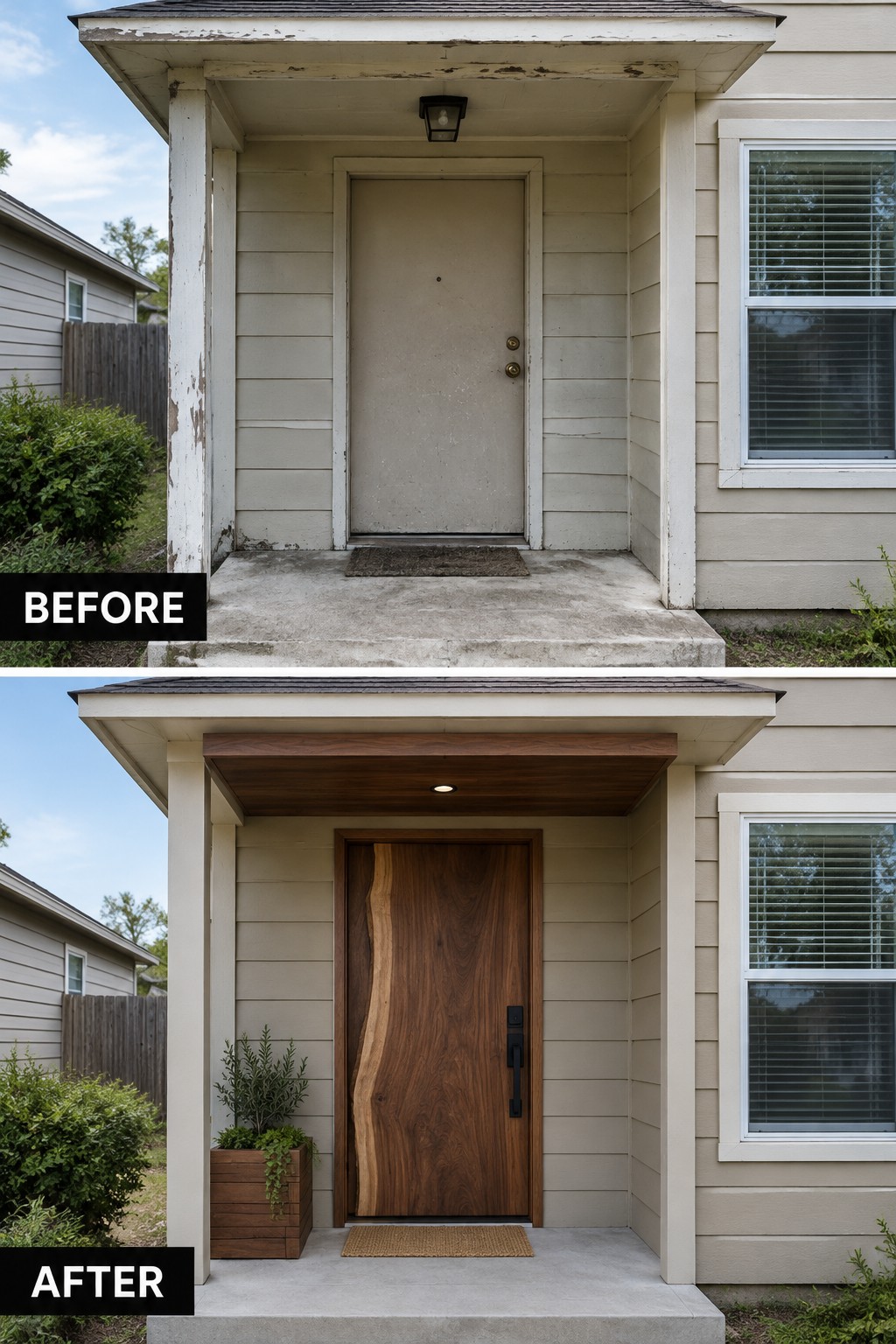
A basic beige door on a worn concrete stoop can make the whole front of a house feel flat. Switching to a solid wood door with visible grain and adding a matching wood overhang gives the entry a warmer, more finished look without changing the siding or layout. The new door and overhead detail pull the eye forward and make the space feel intentional.
This approach works well on simple homes where the door is the main focal point. Start with the door itself, then add one or two wood accents if the structure allows. Keep the rest of the entry clean so the wood stays the star.
Refresh A Weathered Front Door With Natural Wood
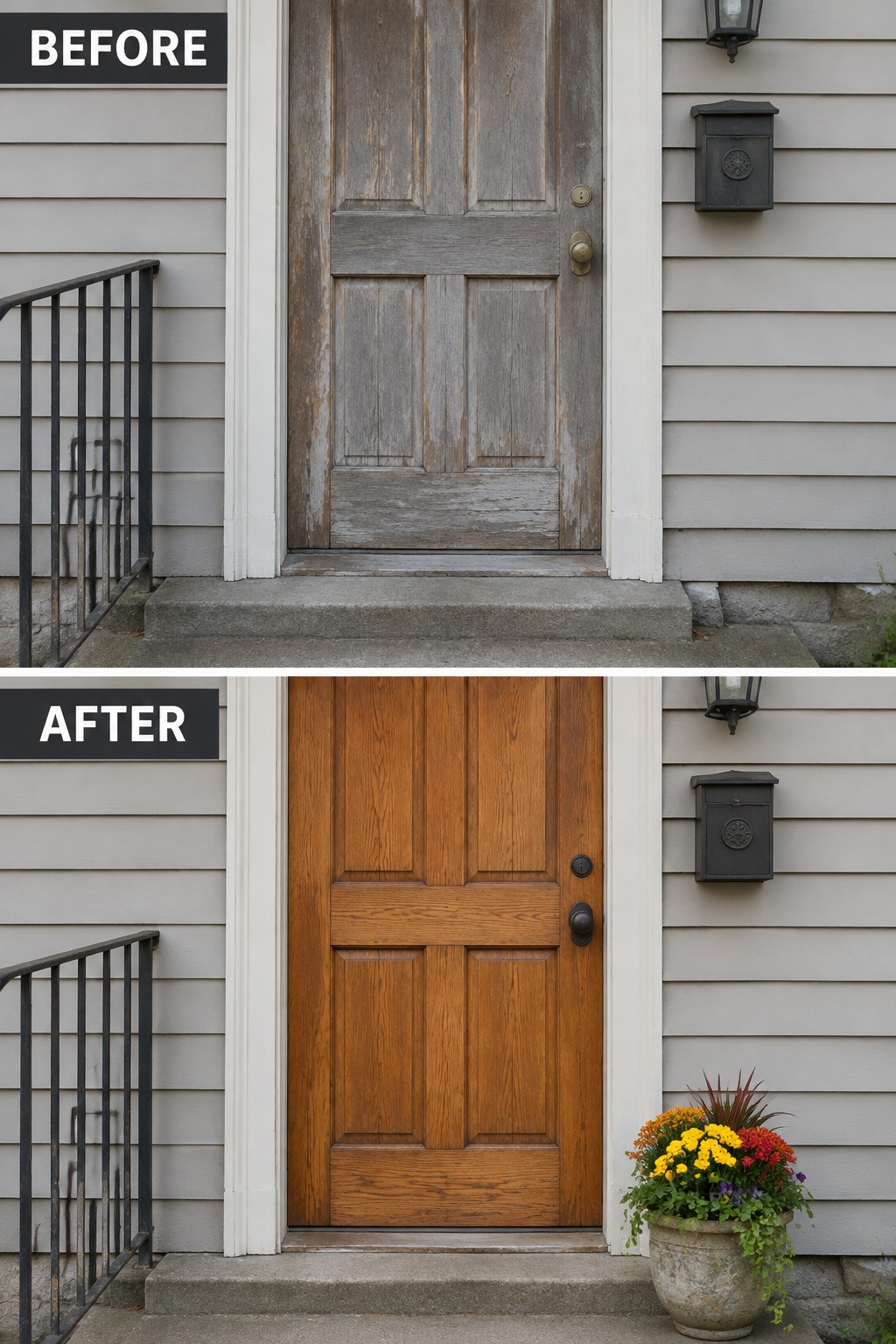
A tired front door often drags down the look of the whole house. Here the old gray finish gave way to a clear wood stain that shows the grain and brings some warmth to the entry without any other big changes.
This approach works best on houses with simple siding where the door can stand out as the main feature. Strip the old finish first, choose a stain that pairs with your siding color, and keep any added planters small so the door stays the focus.
Update Your Front Entry With A Natural Wood Door
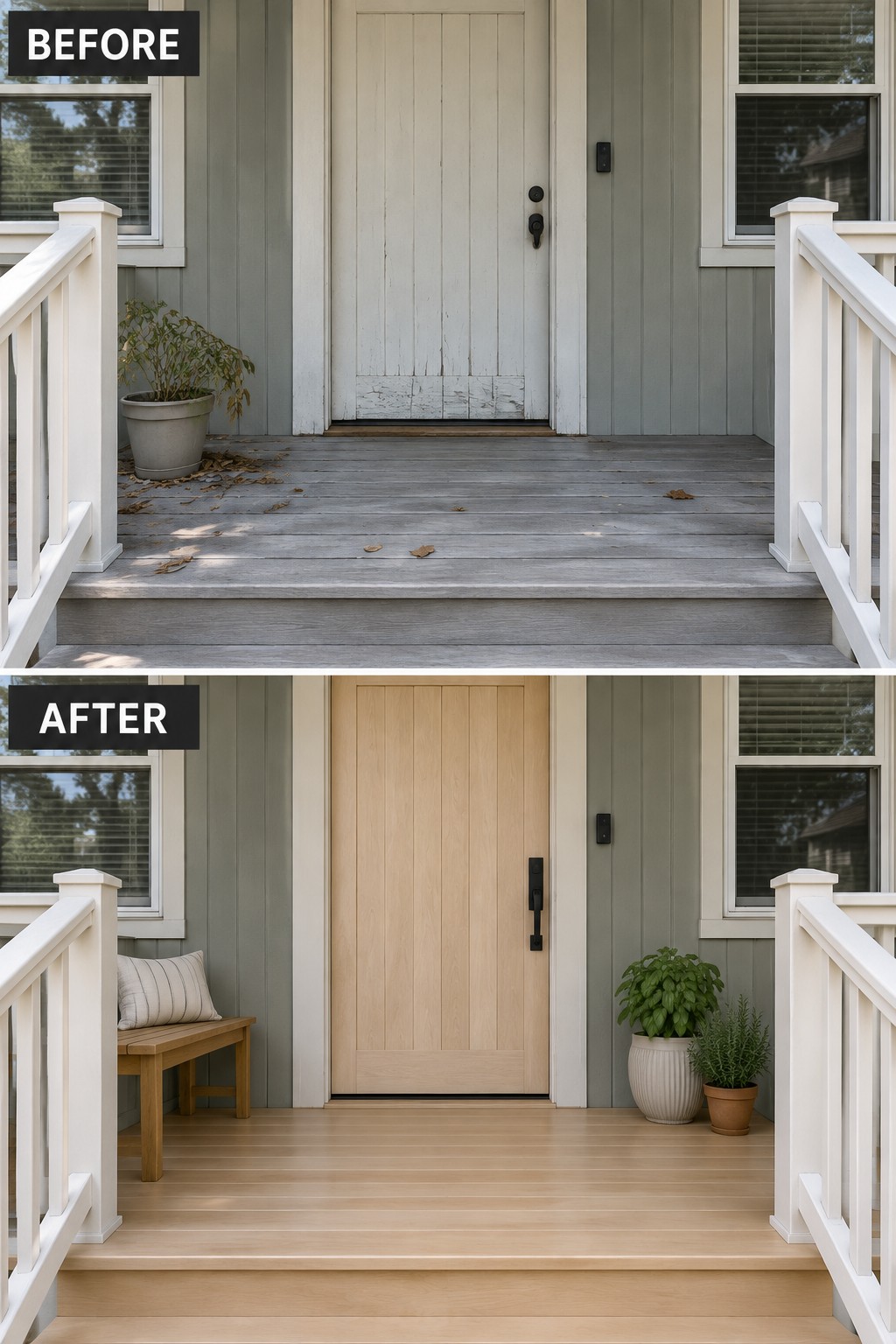
An old painted door that has seen better days can make the whole front of a house feel tired. Switching it out for a natural wood door and refreshing the porch floor to match gives the entry a cleaner, warmer look without needing a full renovation. The before photo shows how peeling paint and a faded deck drag everything down, while the after shows how one material change lifts the whole facade.
This idea works well on homes where the existing siding and trim are already in decent shape. Focus on picking a wood tone that sits comfortably with your house color, and make sure the new door hardware feels substantial. Keep the rest of the porch simple so the door stays the main feature rather than competing with too many accessories.
Update Your Front Door With Natural Wood
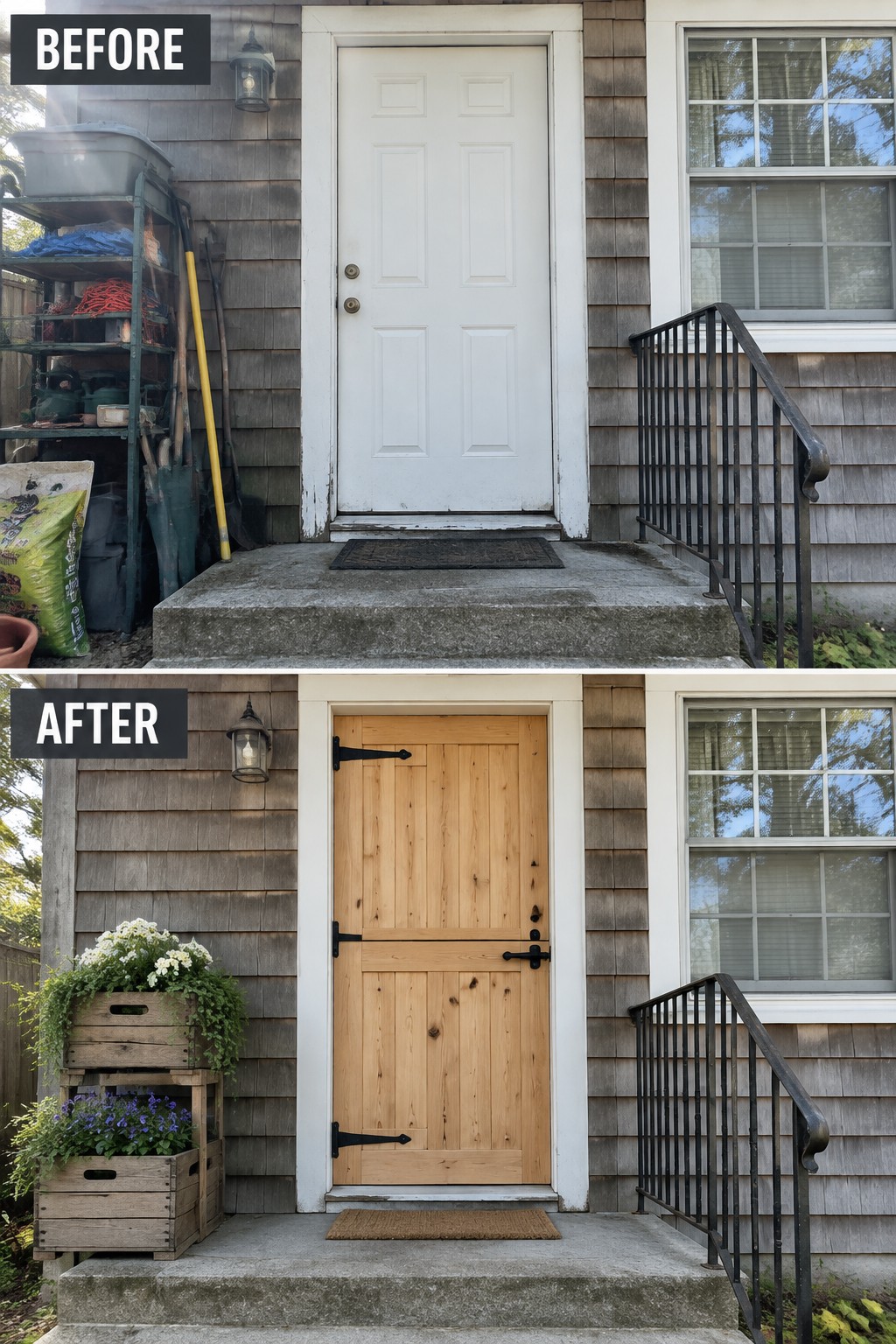
A painted front door often blends into the background after a few years. Swapping it for a natural wood door brings warmth and texture that paint alone cannot match. The change also lets the grain and knots become the main feature instead of competing with a bright white surface.
This approach works best on homes where the entry sits close to the street and can be seen clearly. Start with the door itself, then add just one or two simple planters on the side to soften the steps. Keep the rest of the area clear so the wood stays the focus instead of getting lost in clutter.
Replace A Tired Front Door With Natural Wood
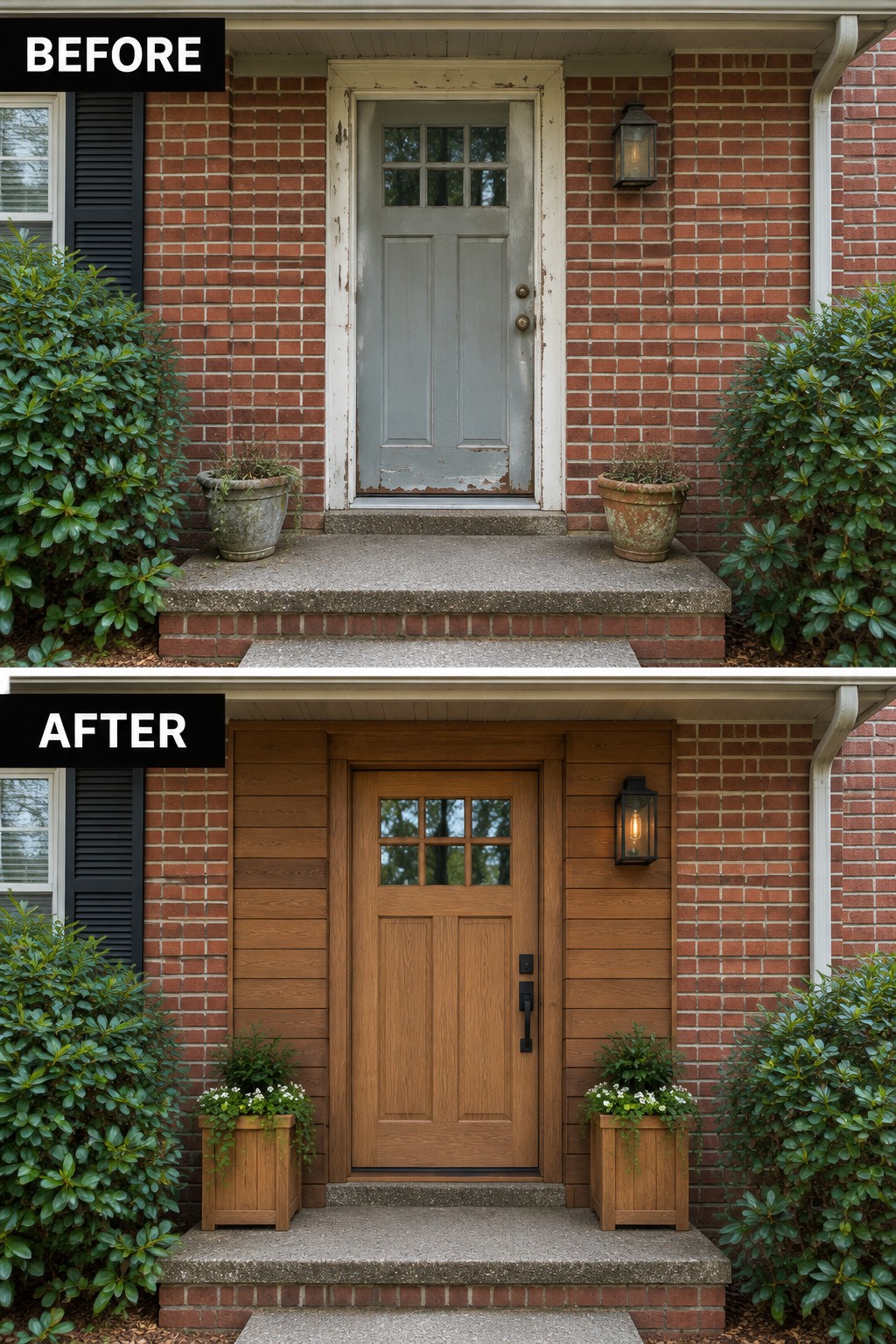
An old painted door often makes the whole entry look worn even when the rest of the house is solid. Here the faded gray door was swapped for a natural wood one that brings warmth to the brick and gives the front a cleaner, more finished look without any major construction.
This idea works best on homes where the brick and structure are still good but the entry feels dated. Keep the rest of the facade simple, add a pair of matching planters, and let the wood door carry the update.
Swap A Dated Metal Door For Natural Wood
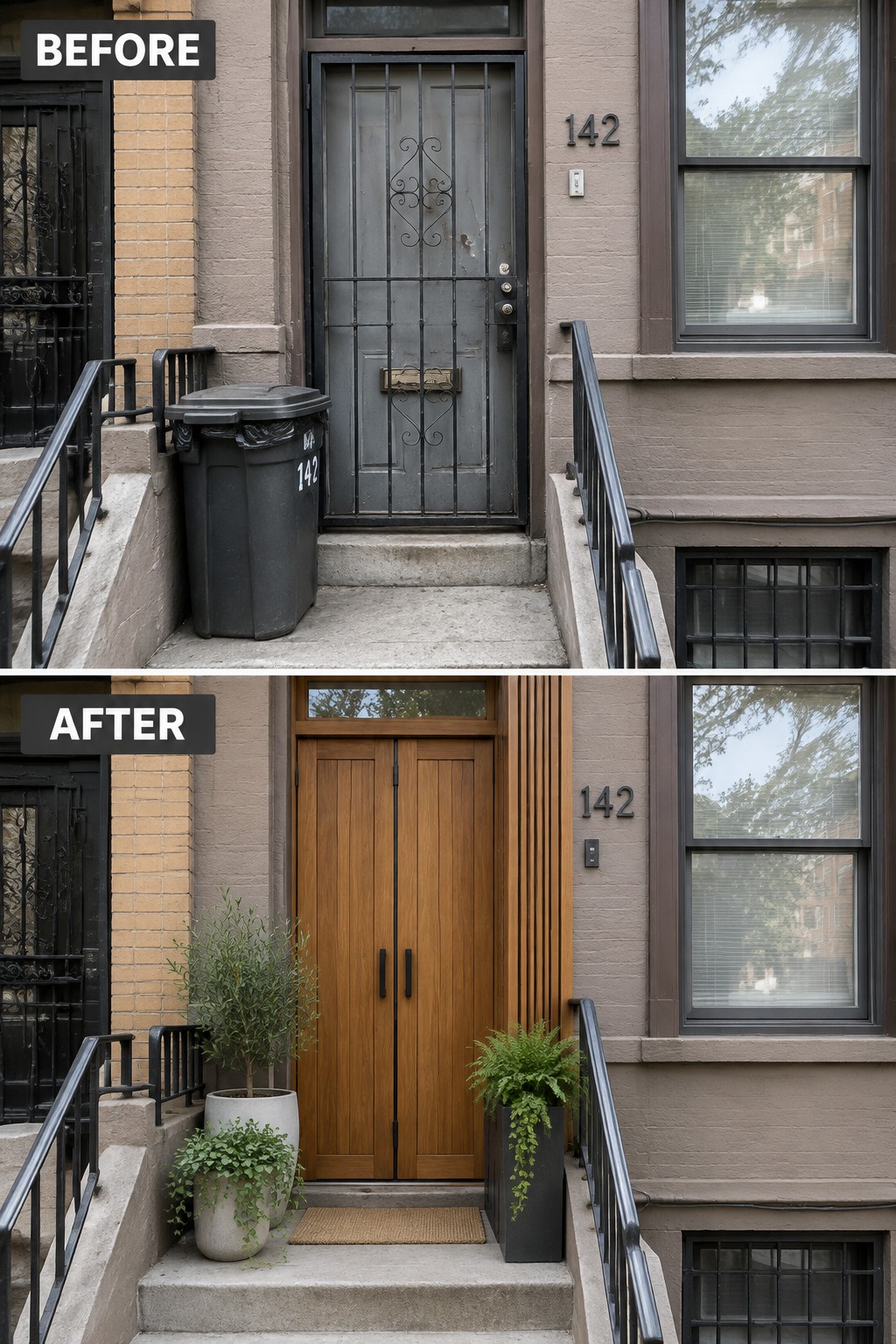
The old metal security door made the entry feel heavy and closed off. Replacing it with a pair of natural wood doors opened up the whole front of the house and brought a warmer tone that works better with the brick. Two simple planters on the steps were enough to soften the concrete without adding clutter.
This kind of change suits older row homes or small facades where the door is the main visible feature. Measure your opening first and pick a wood finish that sits well against your existing brick or siding. Keep any planting low and simple so the door remains the focus.
Refresh Your Entry With A Natural Wood Door
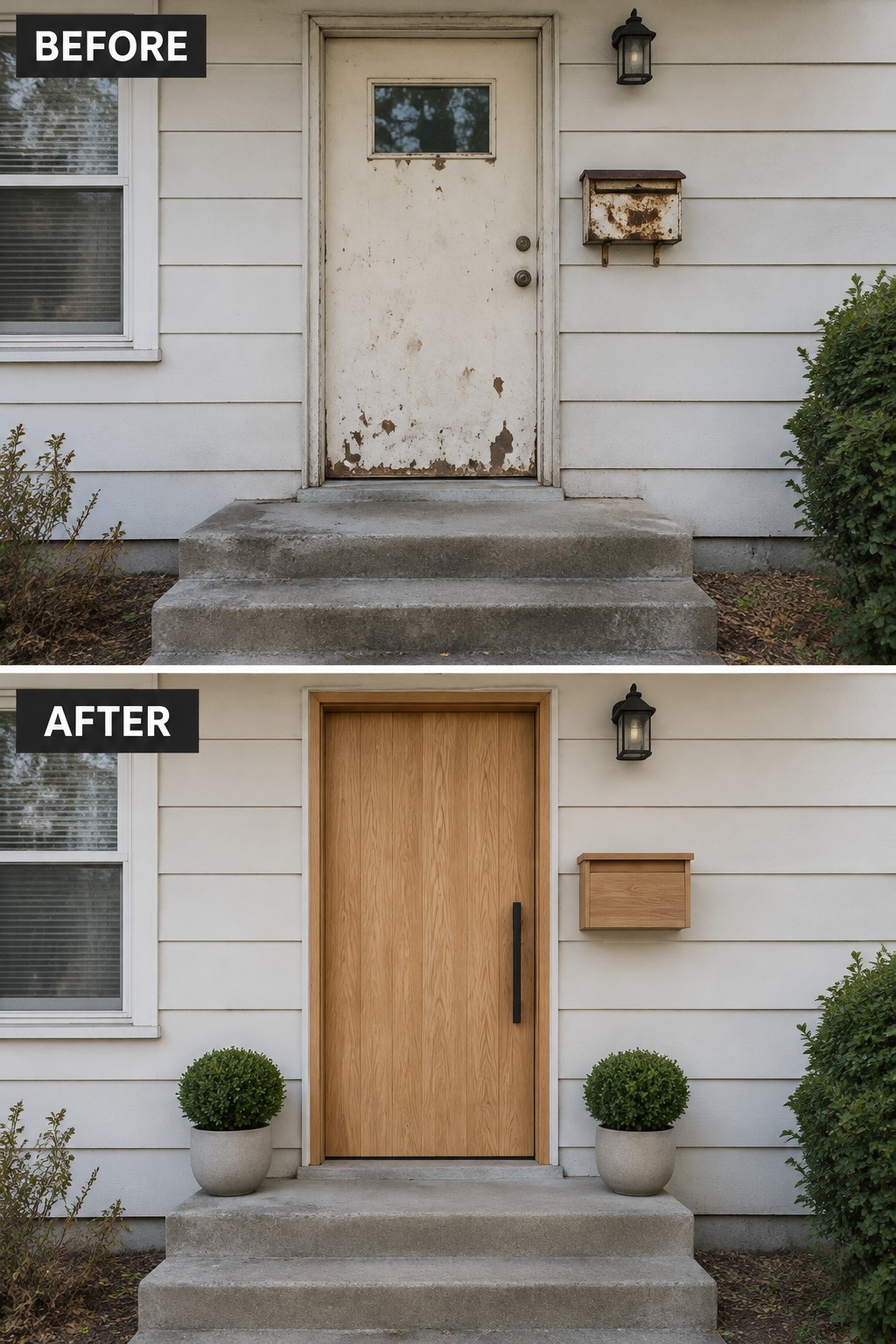
The old door had a worn painted finish that made the whole front look tired. Switching to a natural wood door with a simple dark handle gave the entry a warmer, more solid feel without any extra color or trim.
This idea suits houses with plain siding where the door can carry the update. Keep the surrounding elements minimal, match the mailbox and planters to the wood tone if you add them, and focus on getting the door size and hardware right so the change reads cleanly from the street.
Update The Front Door And Steps With Natural Wood Finishes
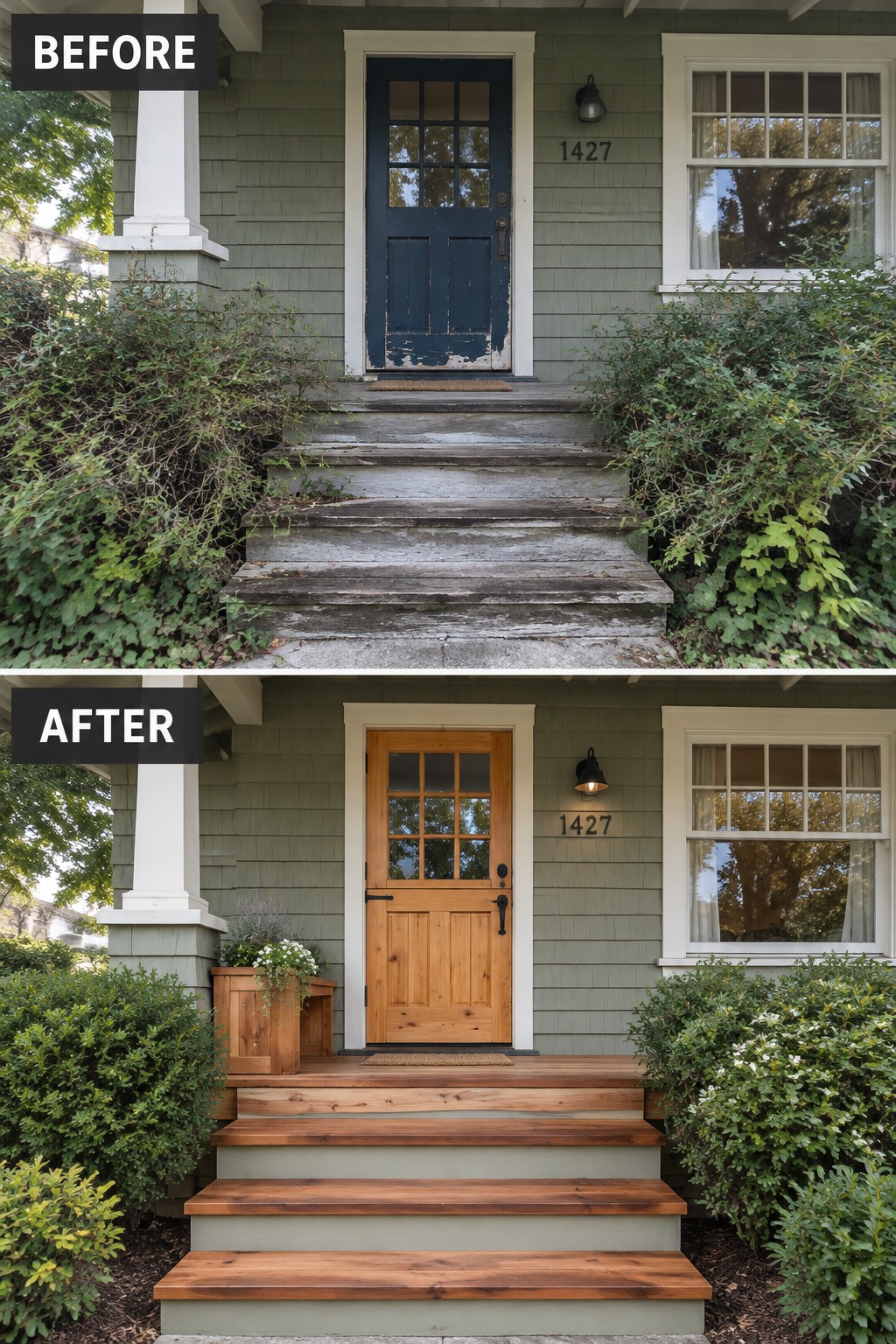
The old door had peeling paint and the steps looked tired and gray. Switching both to natural wood gave the whole front a warmer, simpler look that feels more at home with the siding.
This works best on houses that already have a fairly plain exterior. Choose a wood tone that sits well against your wall color, and keep the hardware simple so the wood itself does the work.
Frame Your Front Door With Matching Wood Planters
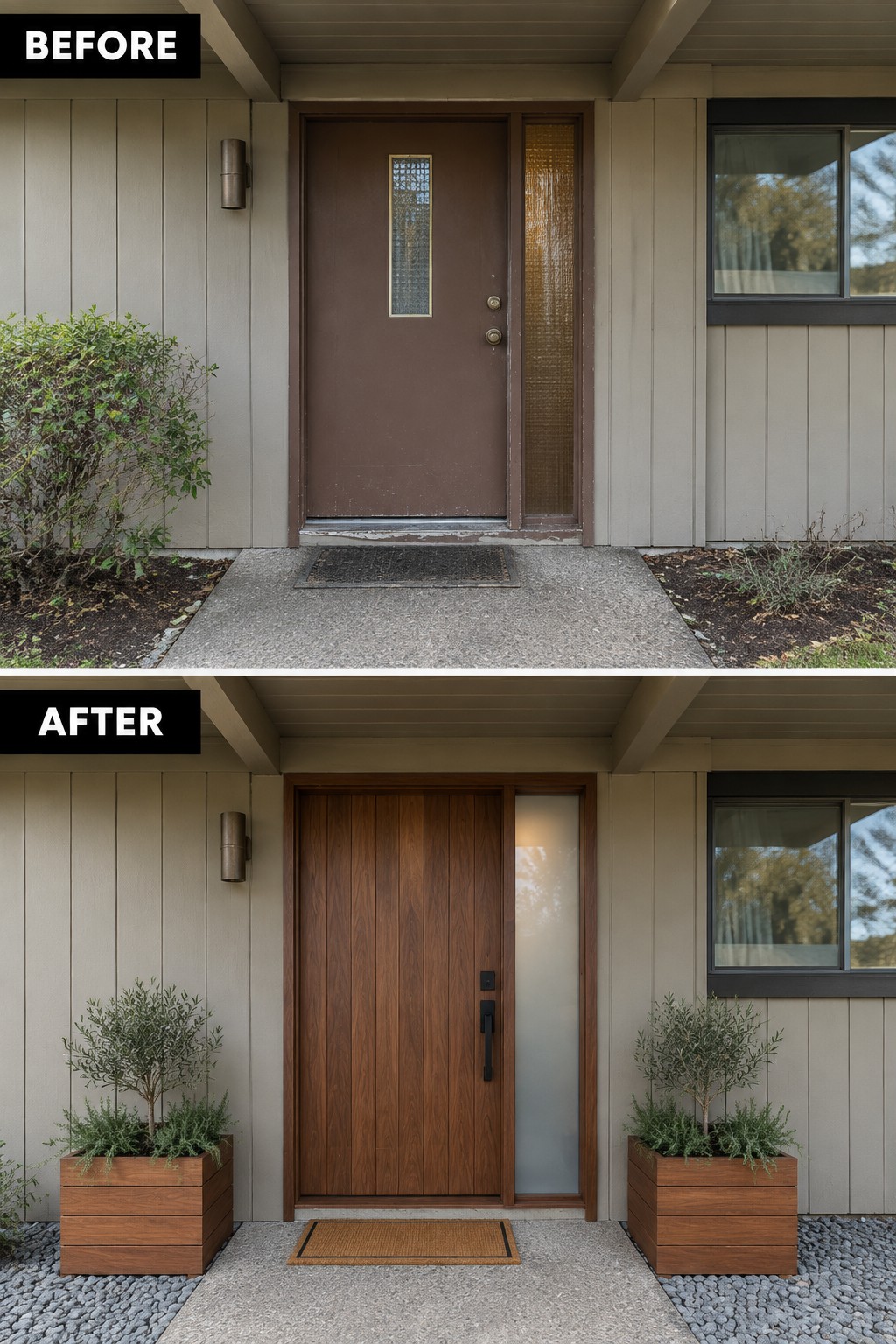
A plain front door and uneven planting can make an entry feel unfinished. Swapping the old solid door for a natural wood version and adding matching wood planters on both sides gives the whole facade a balanced, pulled-together look without any major construction.
This approach works especially well on simple house exteriors where the door is the main focal point. Keep the planters at a similar scale and repeat the wood tone so the eye reads the entry as one clear feature rather than scattered pieces.
Update A Plain Front Door With Natural Wood And Storage
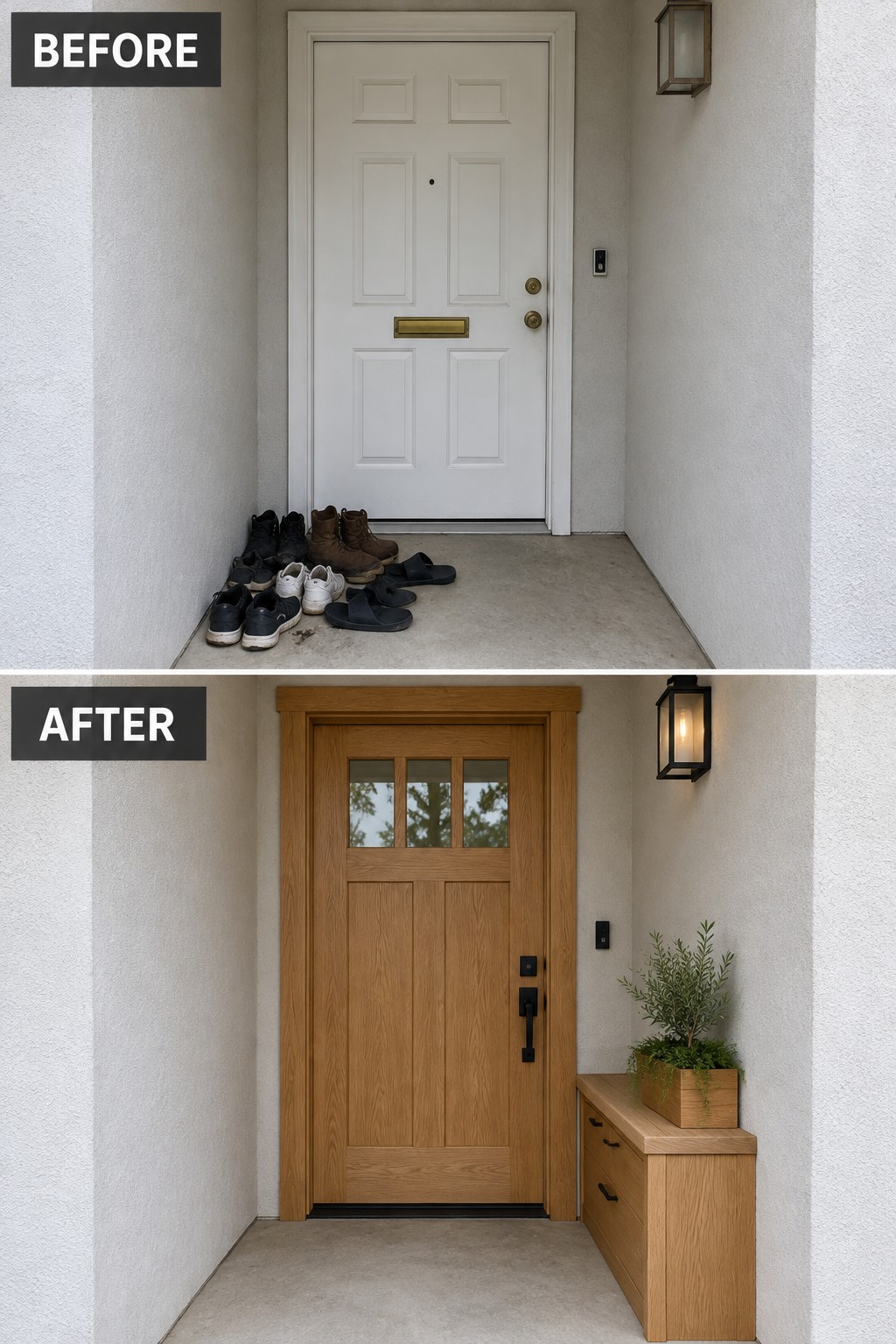
A basic white door with shoes scattered around the entry feels unfinished and a bit messy. Switching to a wood door and adding a simple bench with a planter gives the space a cleaner purpose and makes the whole front feel more put together.
This approach works well on homes with small or narrow entries where you need both style and function. Pick a wood tone that matches other exterior trim if you have it, and keep the bench low so it does not block the walkway. Focus first on the door change, then add one piece of storage to handle daily items like shoes or packages.
Update Your Front Door With Natural Wood Finishes
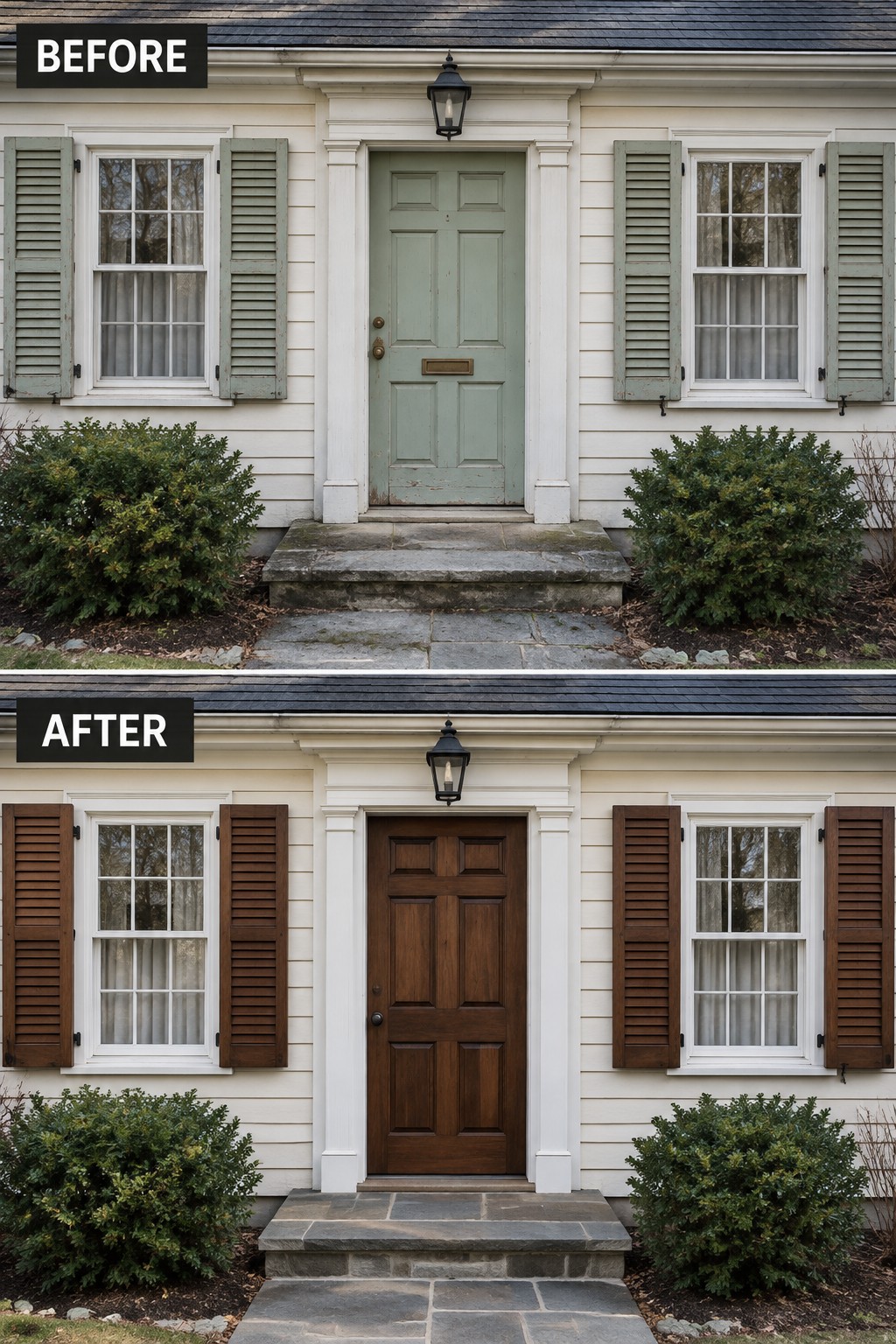
Many homes end up with front doors and shutters that have simply aged out. A natural wood finish brings back warmth and gives the whole entry a cleaner, more current look without needing a full repaint of the house.
This change works especially well on homes with white siding and stone steps. Pick a wood tone that sits comfortably with your roof color, and keep the hardware minimal so the finish itself does the work.
Add Wood Cladding To Warm Up A Plain Entry
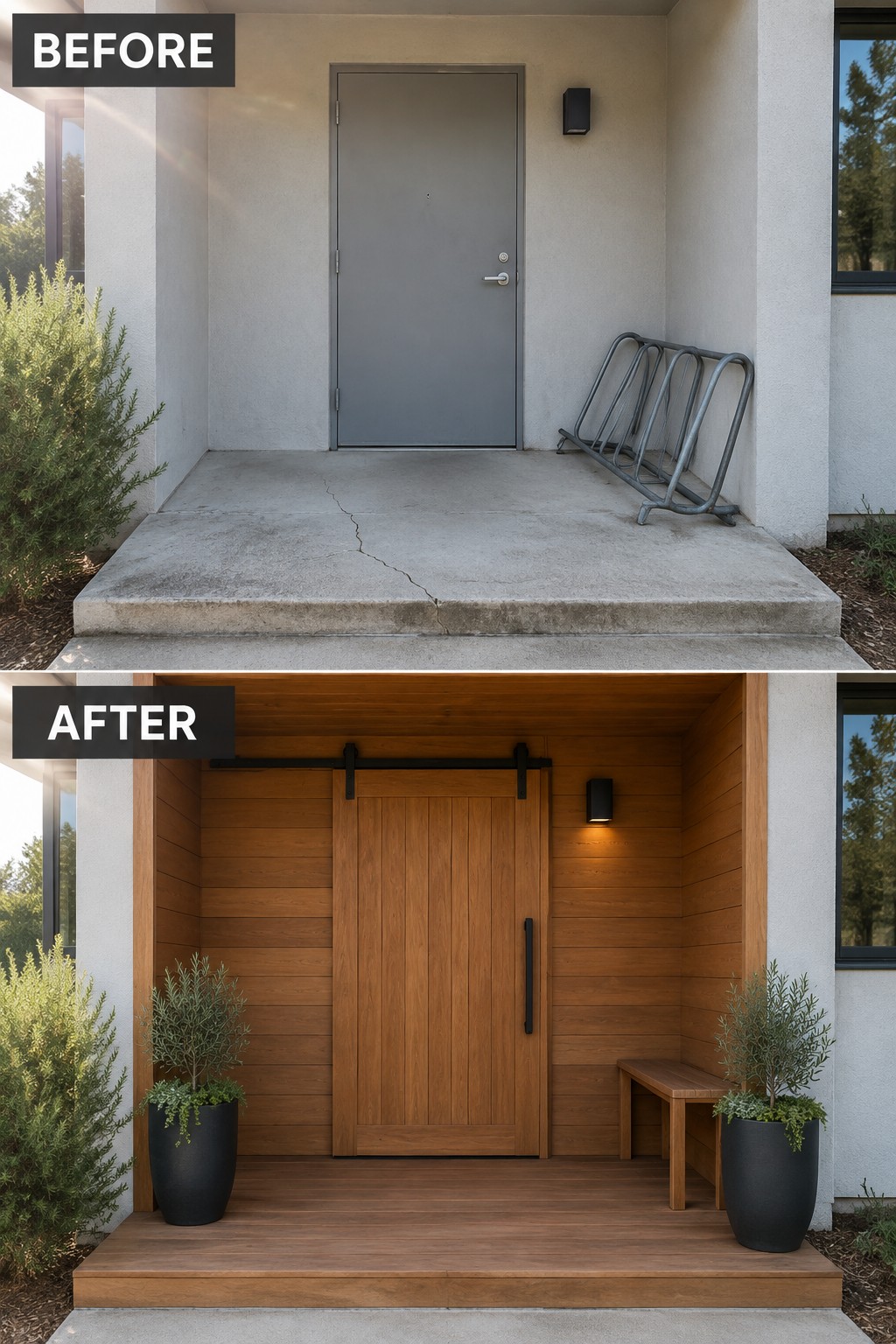
A flat gray door on bare concrete steps can feel cold and unfinished even when the rest of the house is fine. Adding horizontal wood siding on the walls and switching to a wood door with a simple sliding track changes the whole feel without touching the structure of the house.
This approach works best on homes with stucco or concrete exteriors that need a bit of texture near the door. Keep the wood tones consistent across the siding and door, then add two large planters on either side so the new wood does not feel stuck on.
Refresh The Front Entry With Wood Finishes
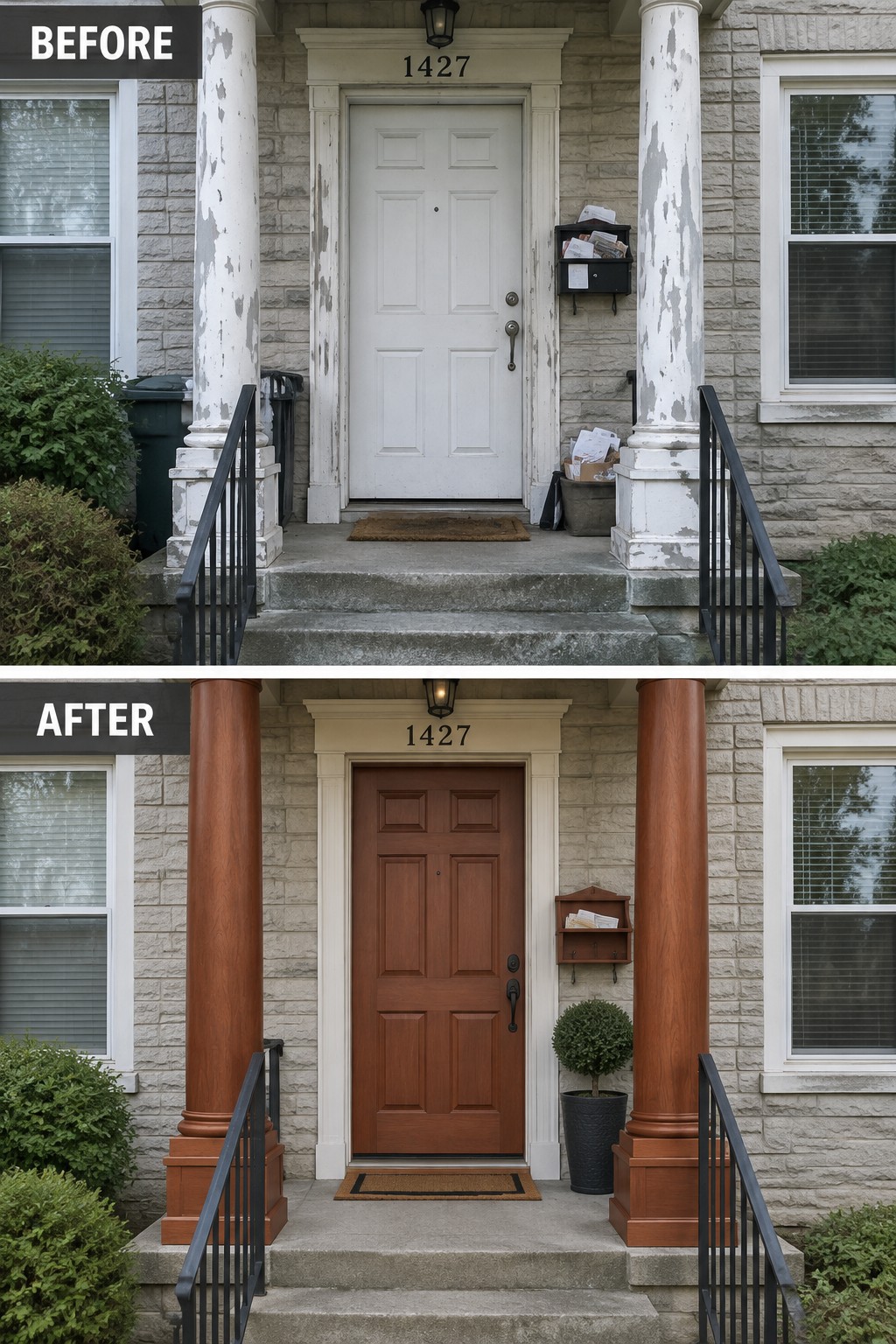
One of the most effective changes you can make to a tired house exterior is updating the front door and columns with natural wood tones. Here the white door was replaced with a deeper wood version and the peeling columns were refinished to match, which immediately makes the entrance look more solid and welcoming.
This idea works best on homes where the columns and door are the main visual anchors. Start with those two surfaces if your budget is limited, and pick a wood tone that sits comfortably against your siding or brick rather than trying to match it exactly. Keep the rest of the styling simple so the wood finishes stay the focus.
Replace A Plain Front Door With Vertical Wood Slats
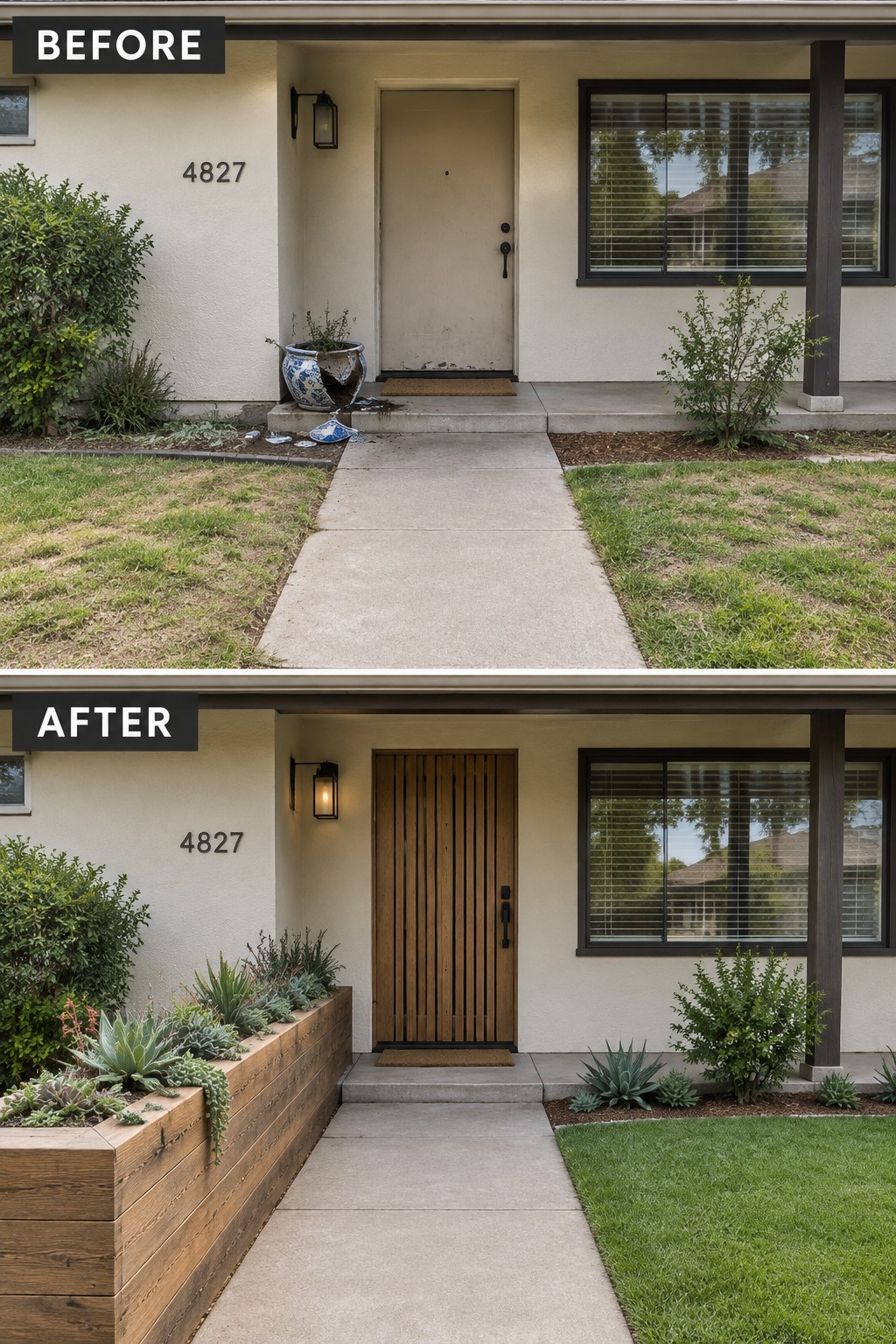
A basic front door often makes the whole entry feel flat and forgettable. Replacing it with a natural wood door that has vertical slats adds warmth and texture right where visitors look first. The change also pairs well with simple cleanup around the step, such as replacing a broken planter with a low wooden box filled with succulents.
This idea works best on homes with simple stucco or painted siding where the door can stand out without competing elements. Keep any added planting low and structured so the wood remains the main feature, and choose a finish that will hold up to sun and rain without much upkeep.
Update The Front Entry With A Natural Wood Door And Matching Planters
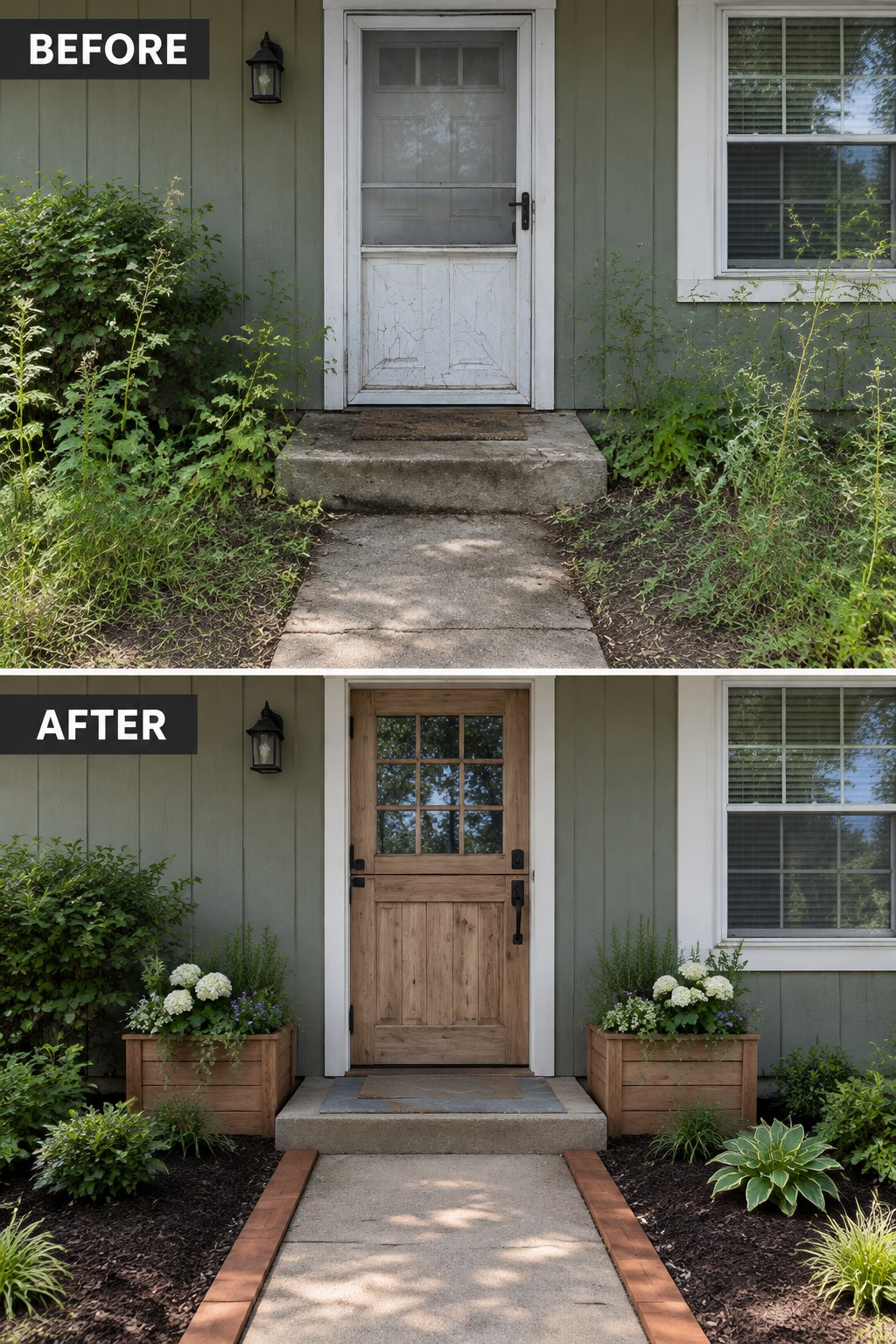
Replacing the old cracked door with a natural wood one instantly warms up the entrance and gives the whole front a more solid feel. Adding matching wood planters on both sides of the steps helps frame the door and creates a cleaner transition between the house and the walkway.
This idea works best on houses with simple siding where the door can become the main focal point. Keep the planters at a similar scale to the door, use the same wood tone throughout, and fill them with a mix of taller and trailing plants so the arrangement feels balanced rather than crowded.
Replace A Worn Front Door With Natural Wood Grain
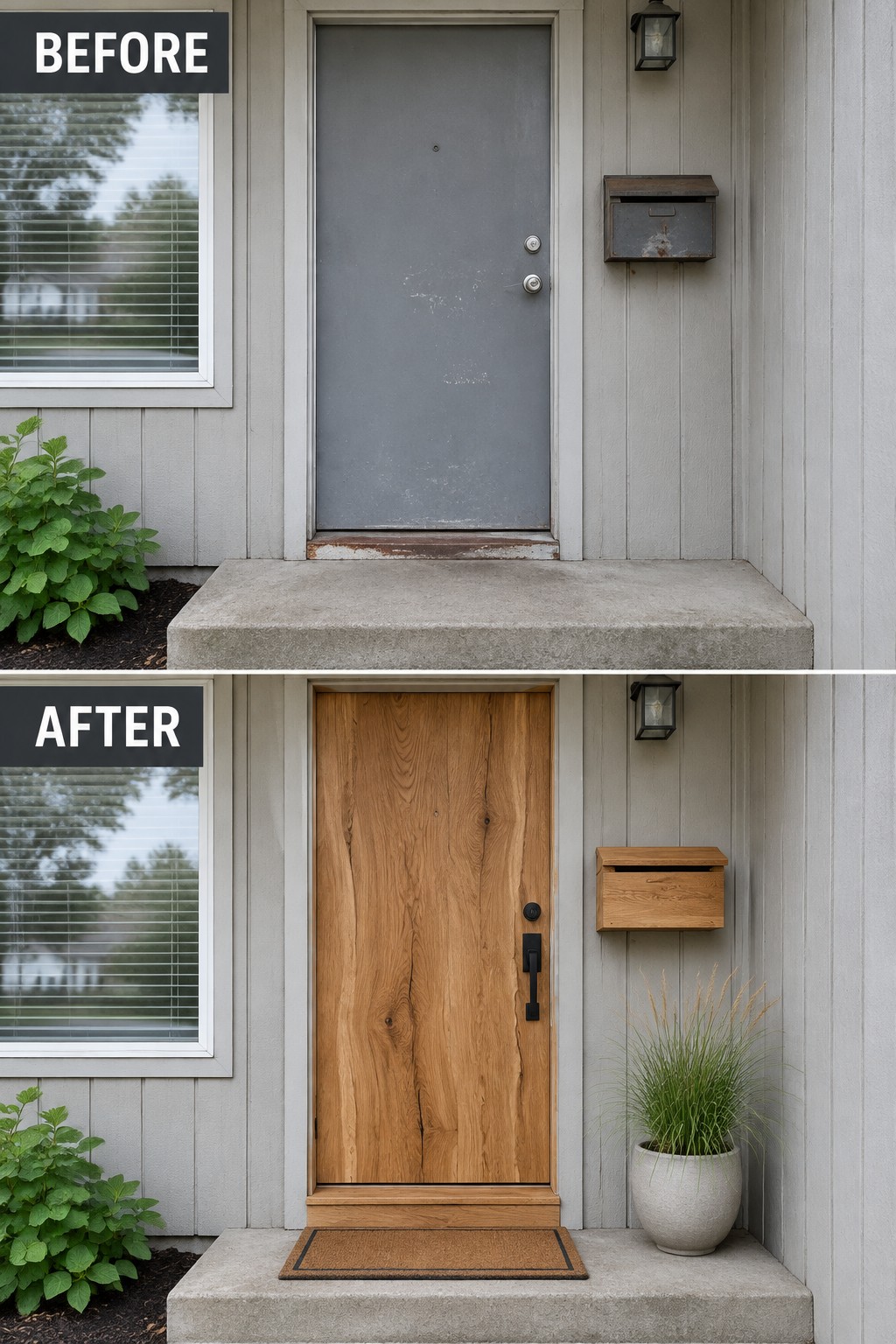
A front door in natural wood can make a plain entry feel much more welcoming. The old gray door had visible wear at the bottom and gave the house a flat look, while the new wood door adds texture and warmth that stands out against the siding.
This approach suits homes with simple exteriors and neutral colors. Pick a wood tone that works with your existing paint, update the hardware to match, and keep any added pieces like a mailbox or doormat in the same material family so the entry feels pulled together without extra clutter.
Refresh Weathered Wood With A Natural Stain
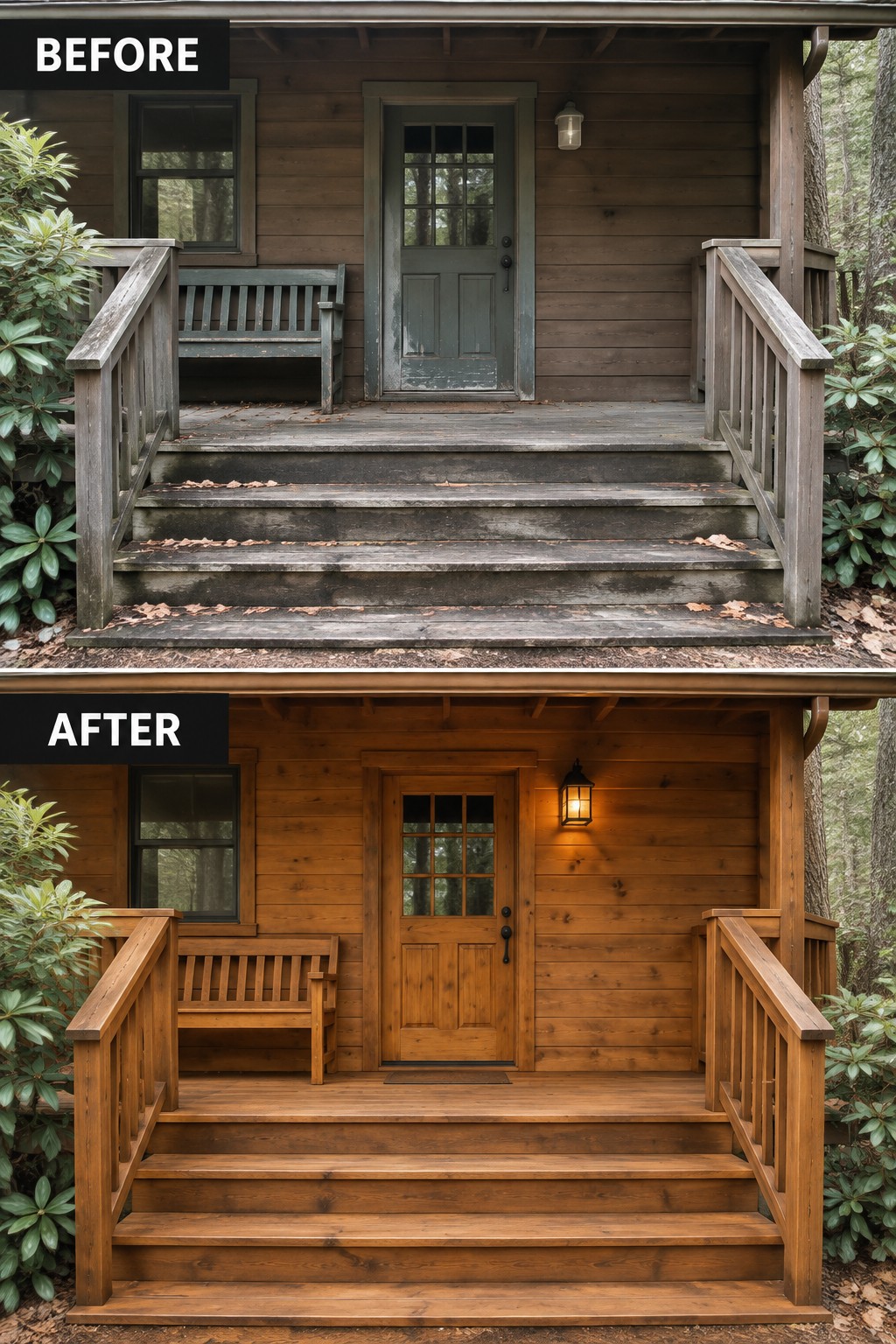
A faded front porch and door can make the whole house look tired. In this case the fix was straightforward. The old gray, peeling finish was replaced with a warm natural wood stain that brings the grain back to life and ties the door, railings, and steps together.
This approach works well on any wood porch or entry that still has solid structure. Start with a good cleaning and light sanding, then test the stain on a small section so the color matches the house. Keep the rest of the styling simple so the wood itself becomes the main feature.
Frequently Asked Questions
Q: How often should I check my door for wear? A: Look it over every few months especially after winter. Wipe down any spots that look dry and add a touch up coat right away.
Q: Can I use the same finish on the frame and trim? A: Yes as long as everything is the same wood type. Apply it the same way so the color matches from door to frame.
Q: What happens if I skip the primer? A: The finish might soak in unevenly and leave blotches. Always seal the wood first so the color goes on smooth and consistent.