

I have noticed that updating the siding on a house often brings the whole exterior into better balance without touching the structure itself.
Mixing vertical panels with horizontal accents gives the facade a steadier rhythm that holds up from the street.
One thing I keep in mind is how these lines can draw attention to entry points or window placements that used to get lost.
It looks more settled.
I usually sketch a couple of these layouts on the side of a photo before deciding which direction to test first.
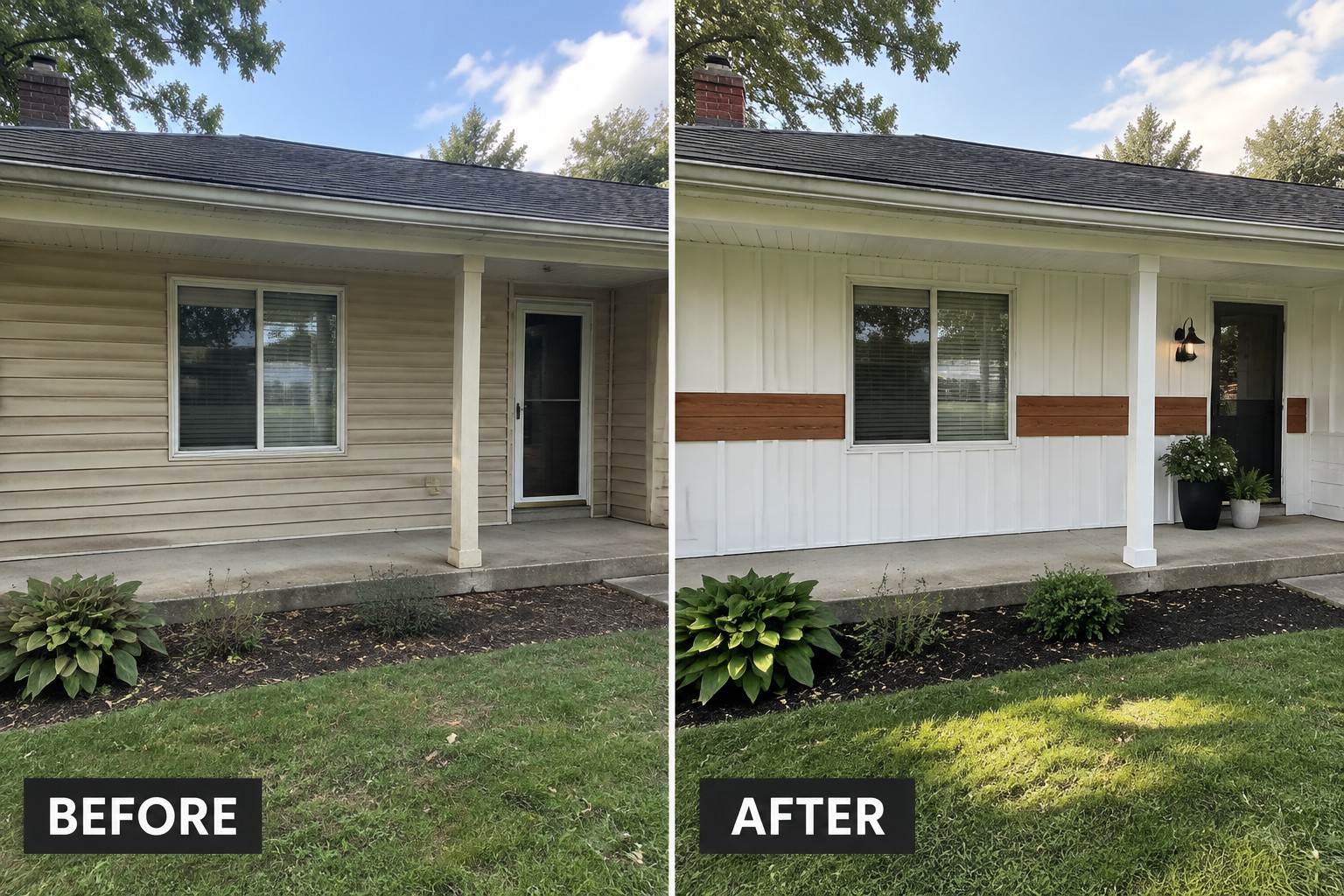
Add Horizontal Accents To Plain Siding

Many homes with vertical siding end up looking flat because there is nothing to break the lines. Adding a few horizontal wood bands across the facade gives the eye something to follow and makes the whole front feel more finished. In this case the change from plain beige to white siding with simple wood accents already shifts the house from dated to current without touching the structure.
This approach works well on ranch styles or any home where the siding runs long and uninterrupted. Keep the accents at the same height as window sills or the top of the door so they feel intentional rather than random. Use a wood tone that contrasts just enough with the siding color, and limit yourself to two or three bands so the look stays clean.
Refresh A Dated Exterior With Vertical Siding And Metal Accents

Many homes with older horizontal siding start to look flat after a while. Switching to vertical panels in a darker color and adding a slim horizontal metal band gives the facade cleaner lines and helps the upper and lower sections feel more connected.
This works especially well on split-level homes where the goal is a simple update rather than a full rebuild. Focus on the main front face first, match the metal tone to your windows or door hardware, and keep the rest of the trim straightforward so the new siding pattern stays the main feature.
Add Horizontal Accents To Refresh Vertical Siding
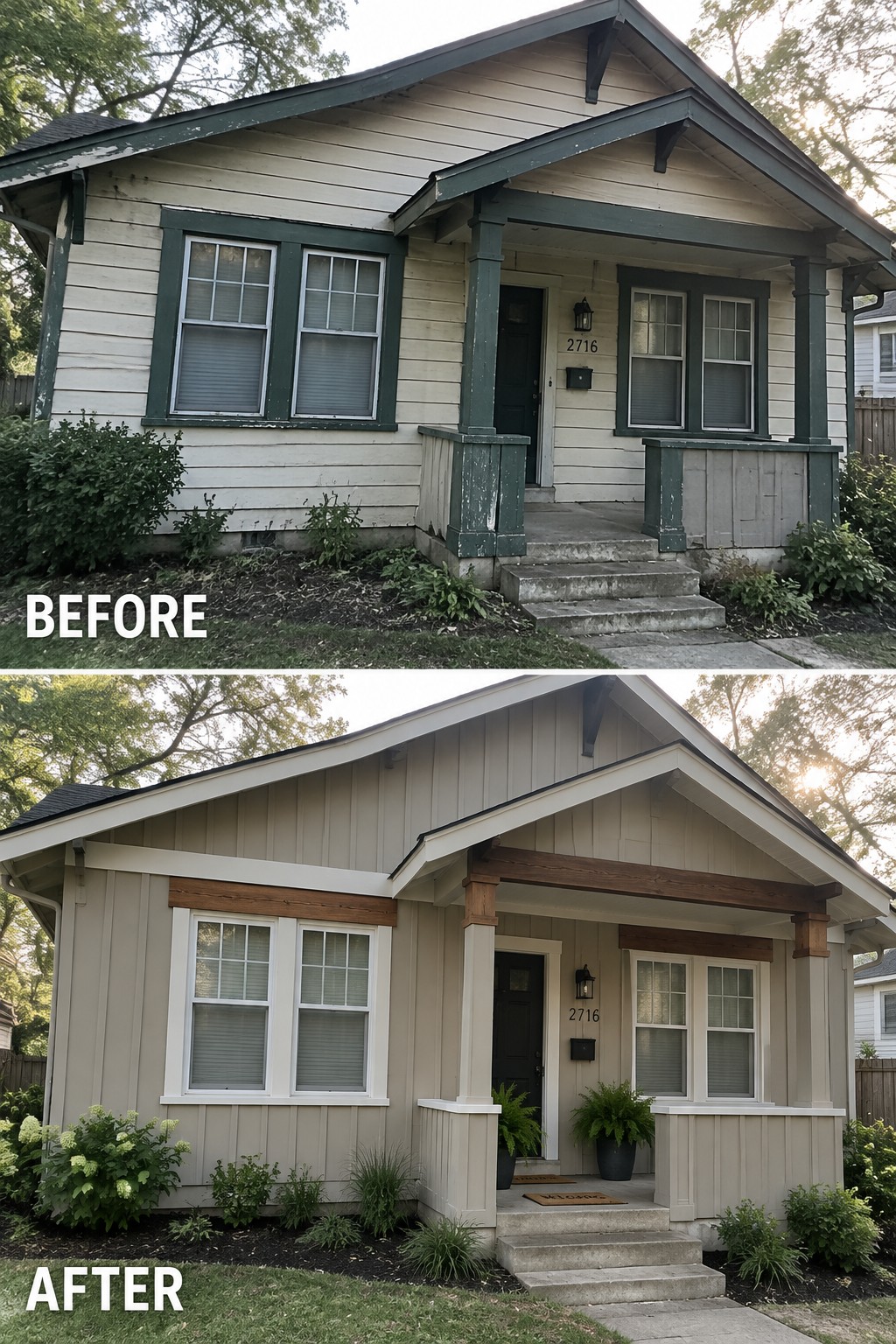
The house looked worn out with peeling paint and uneven trim. Once the siding was painted a single calm color and a few wood accents were added above the windows and porch, the whole front gained a clearer shape and felt more put together.
This idea works best on modest homes where you want to update the look without replacing the siding. Keep the accents simple, line them up with the windows or roofline, and use one or two wood tones that match the new trim so the change feels intentional rather than busy.
Refresh Weathered Siding With Paint And A Horizontal Accent
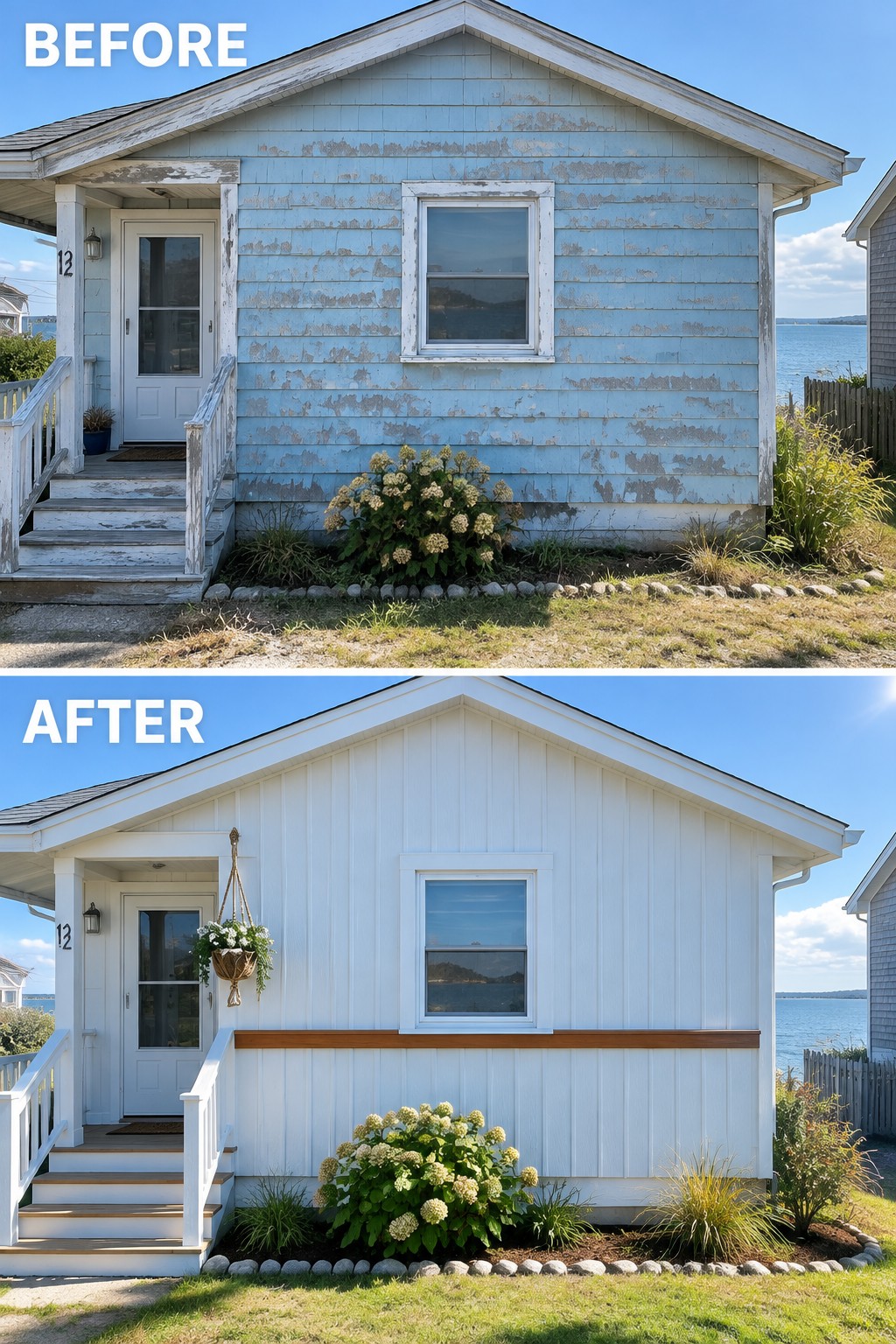
The old blue siding had seen better days, with peeling paint that made the whole front of the house look worn down. Switching to white paint and adding one clean horizontal wood band across the middle gave the facade a sharper, more finished shape while keeping the changes simple and affordable.
This works especially well on smaller homes or cottages where the siding runs tall and plain. Line the accent up with a window or door height so it feels natural, and keep the rest of the trim consistent so the eye reads the whole front as one tidy surface rather than a collection of separate parts.
Refresh The Exterior With Vertical Siding And A Horizontal Accent
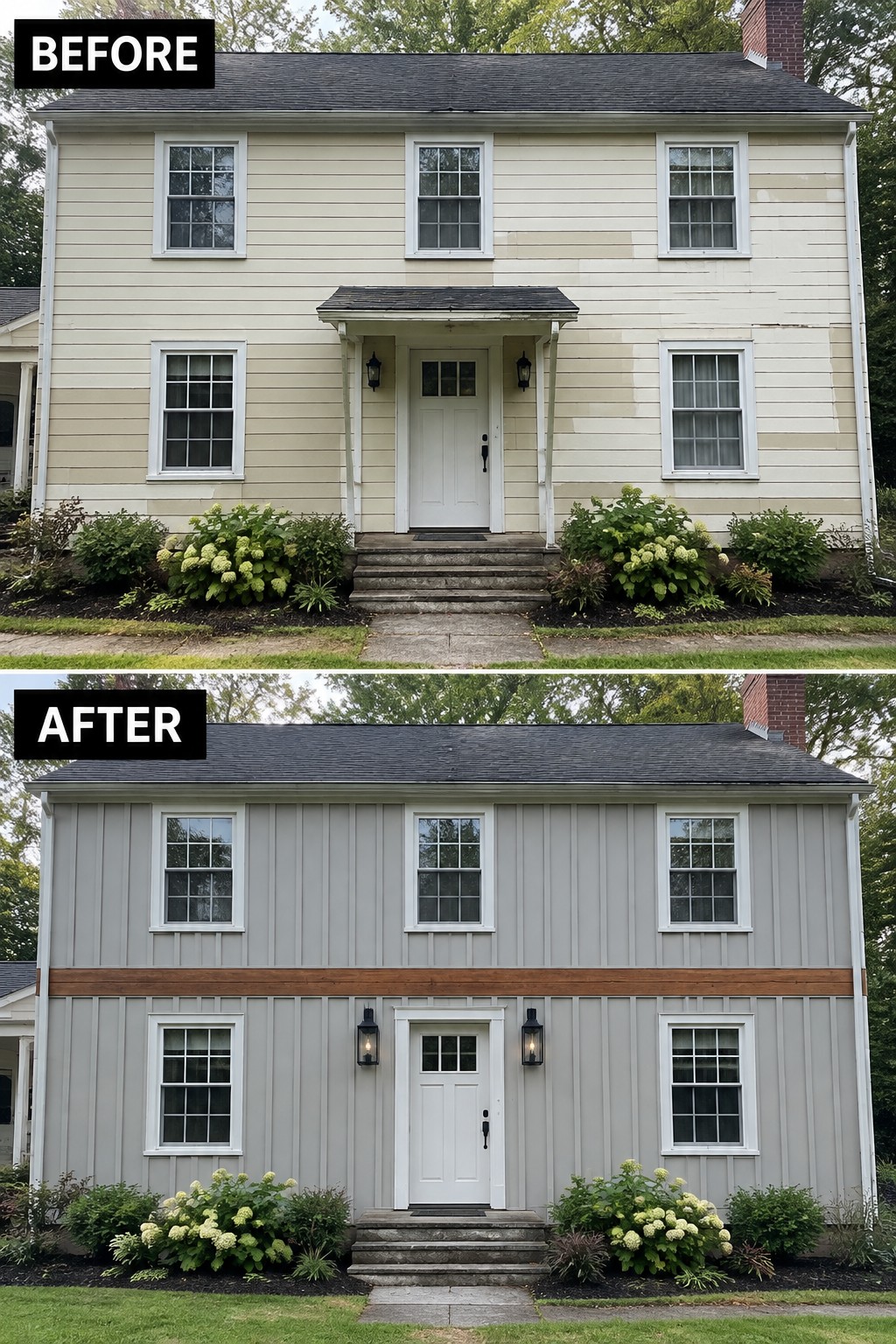
Many homes with older horizontal siding start to look flat after years of weathering. Switching to vertical panels adds height and a cleaner rhythm to the facade, while a single horizontal wood band breaks up the two stories and brings in a bit of warmth without extra clutter.
This works best on simple two-story homes where you want a noticeable update without changing the whole structure. Keep the color calm, match the band to existing trim or roof tones, and make sure the vertical lines run straight around windows and the entry so the whole front feels pulled together.
Add Horizontal Accents To Vertical Siding
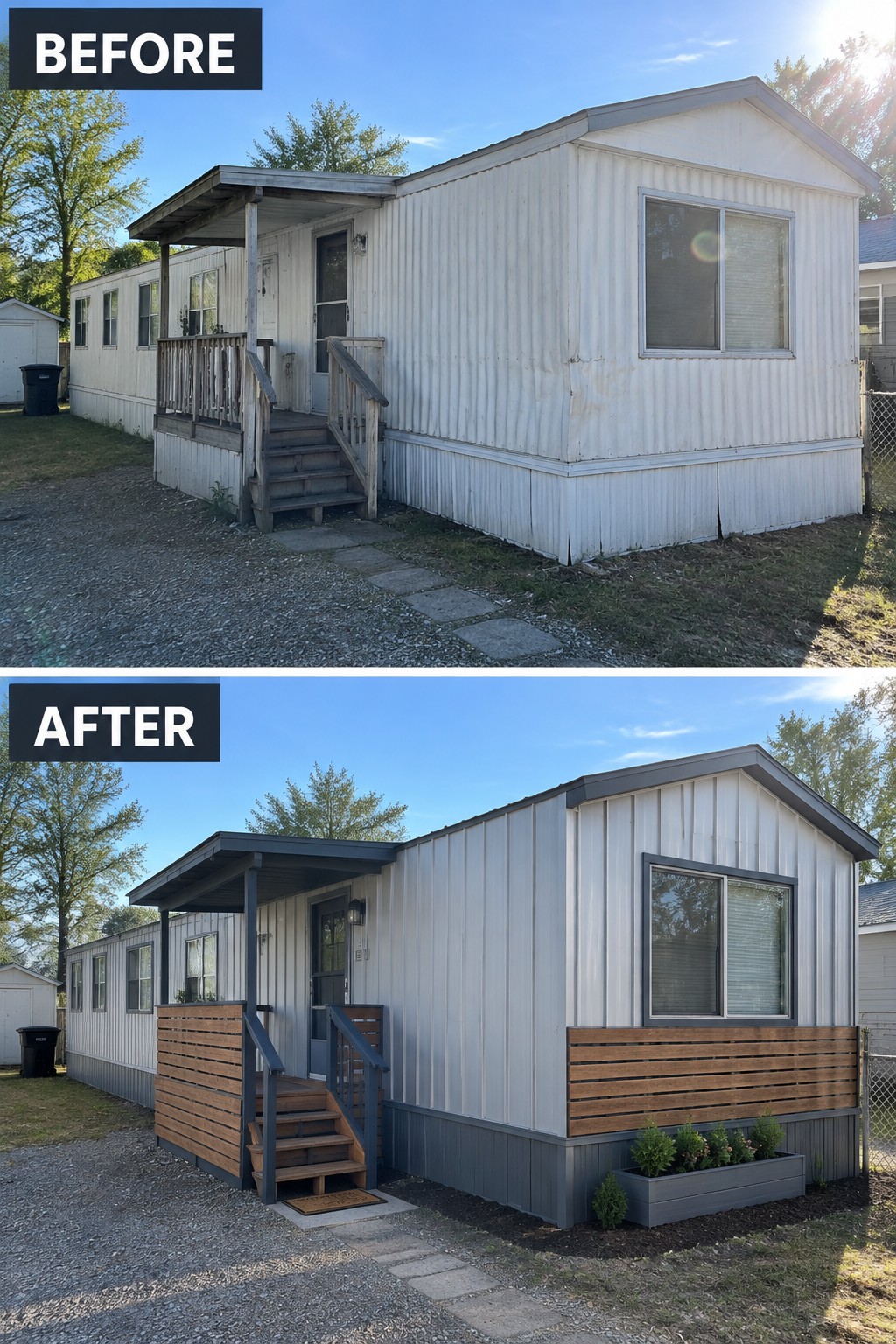
Mixing horizontal accents with vertical siding gives a plain exterior more structure and visual interest. The before photo shows a flat white vertical surface with little to break it up. After the update, the wood slats on the porch and lower band create clear lines that make the house feel more finished and balanced.
This idea works well on manufactured homes or any exterior that already has vertical panels. Pick one or two spots, such as a porch front or base trim, and add the horizontal pieces in a contrasting material or color. Keep the rest of the siding simple so the accents stand out without overwhelming the look.
Refresh Dated Siding With Vertical Panels And Stone
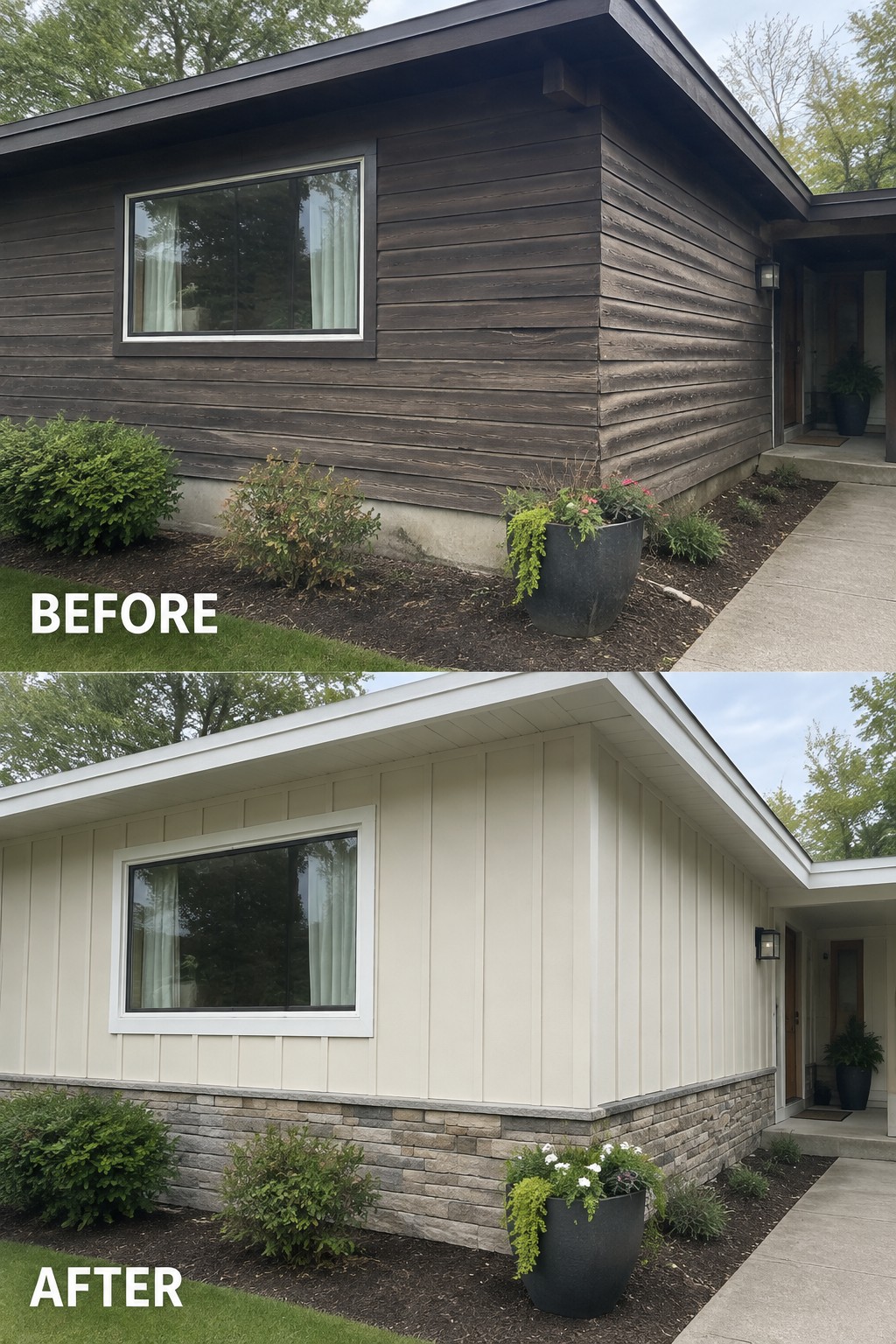
The dark horizontal siding on this house made the whole side feel heavy and closed in. Switching to light vertical panels with clean white trim and a stone base along the bottom made the exterior look brighter and more open without changing the roofline or windows.
This idea works best on simple one-story homes where the siding is the main surface you see. Start with the siding direction and color first, then add the stone only at the base so it grounds the look instead of competing with everything else. Keep the trim crisp and limit extra details so the change stays easy to maintain.
Refresh A Plain Exterior Using Vertical Siding And Horizontal Accents
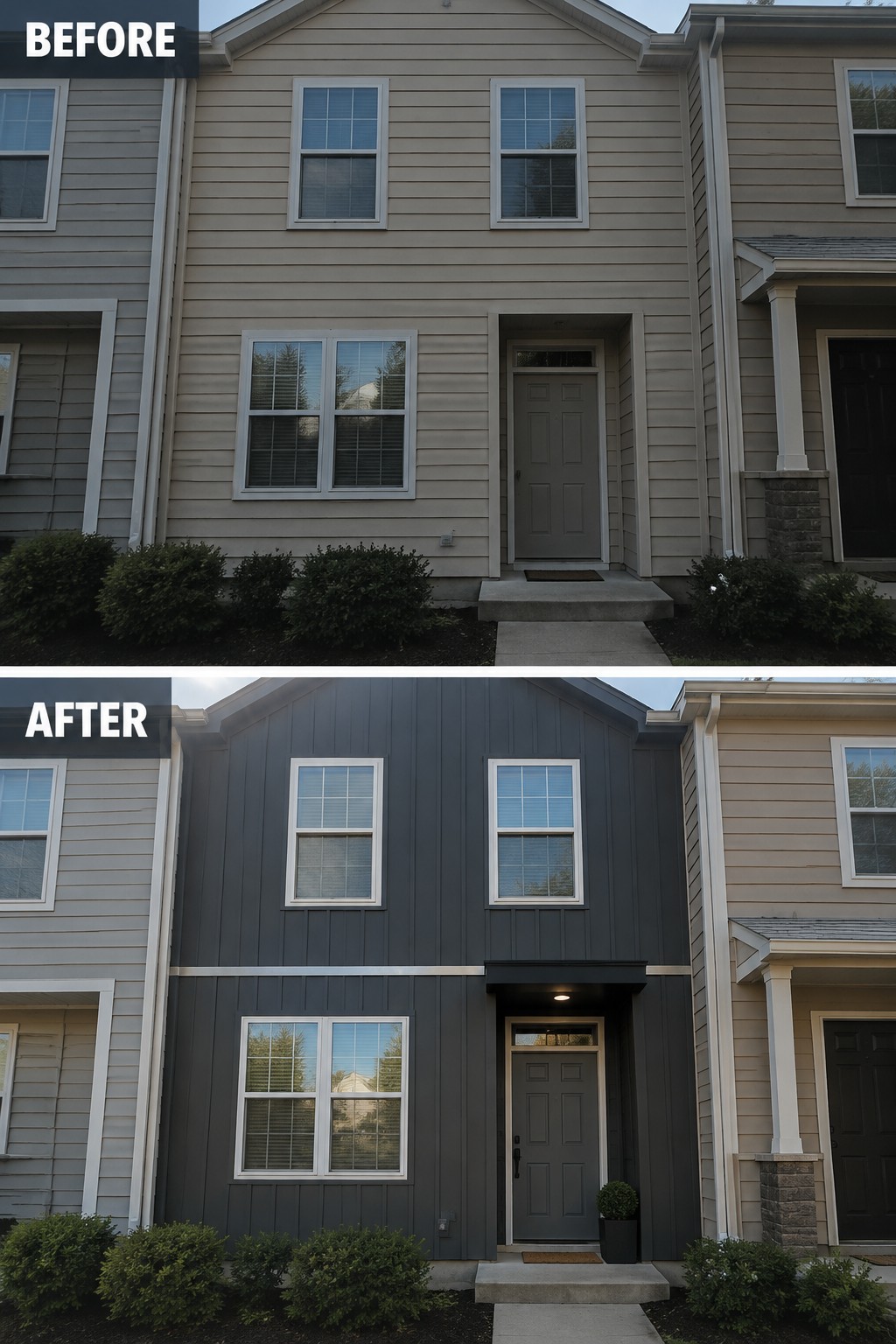
Many homes with all horizontal siding end up looking flat across the whole front. Changing the center section to dark vertical panels breaks up the wall, while a simple horizontal band and small overhang above the door give the entry a clearer shape.
This works especially well on attached houses or homes with wide, plain fronts. Choose one main area for the vertical treatment, keep the color contrast strong but not overwhelming, and add just enough trim or a modest canopy to finish the look without adding much cost.
Add Horizontal Accents To Vertical Siding

One of the easiest ways to give plain vertical siding more shape is to run a couple of horizontal accent bands across it. The house moved from a flat beige to a soft green with navy stripes that sit at window height. Those bands break up the tall look of the siding and make the front feel more put together without any new construction.
This idea works best on smaller homes that already have simple vertical siding. Pick one main color for the field and a darker shade for the accents so the lines read clearly. Keep the rest of the updates light, such as fresh trim paint and a pair of planters by the door, so the horizontal bands stay the main feature.
Add Horizontal Accents To Break Up Plain Siding

A wide garage wall covered in the same siding can look flat and heavy. Adding a band of horizontal wood panels above the door and along the side wall gives the surface some structure and breaks the long run of siding into clearer sections.
This approach suits houses where the garage dominates the front. Keep the accents to one or two spots, match the wood tone to other trim or landscaping, and leave the rest of the siding alone so the change reads as intentional rather than busy.
Refresh Weathered Siding With Vertical Panels And White Trim
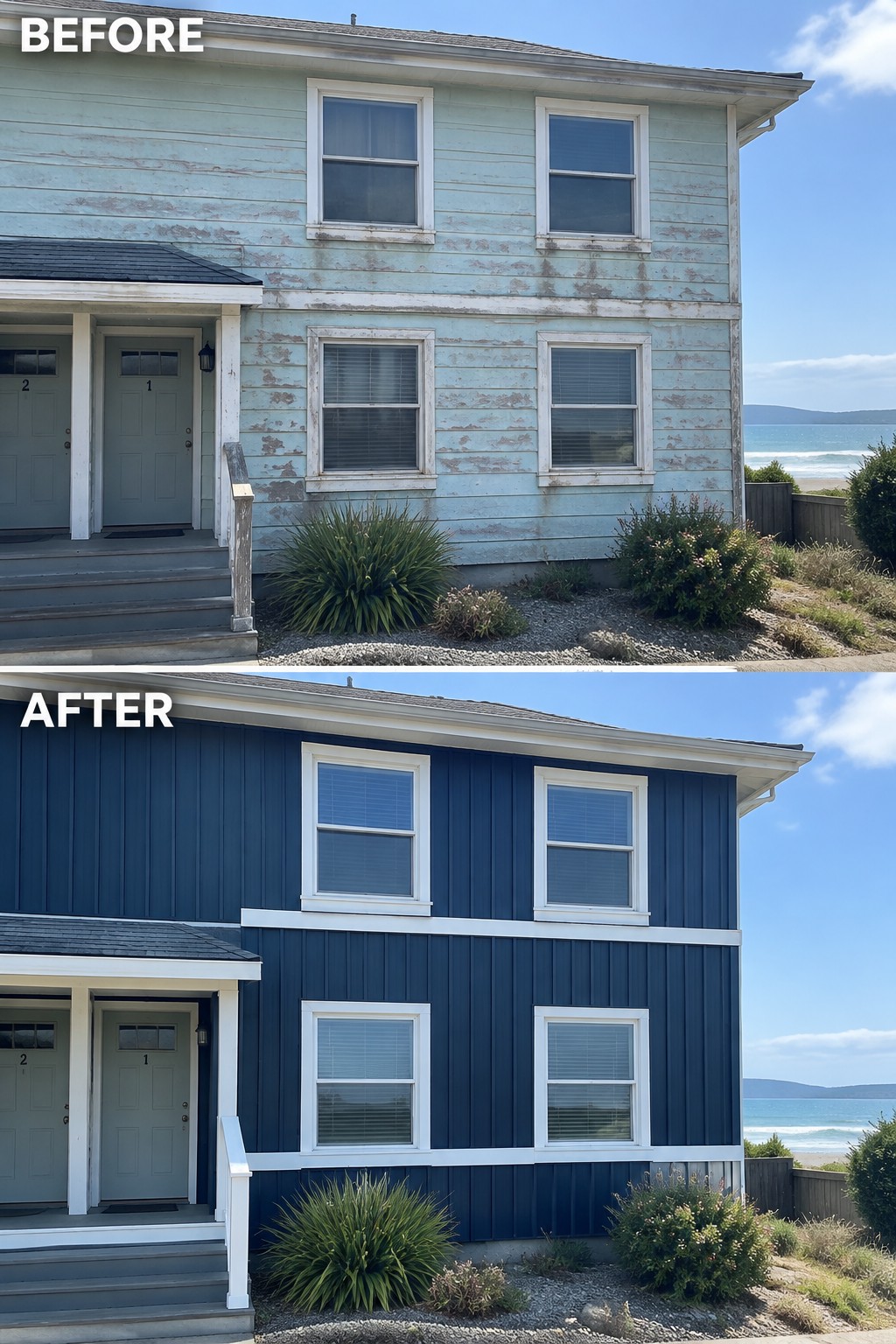
The main change here is swapping peeling horizontal siding for dark vertical panels broken up by a clean white horizontal band. That simple shift gives the whole front a sharper, more current look without changing the house structure or adding big features. The white line breaks up the height and makes the windows stand out more.
This approach works well on older two-story homes that still have good bones but tired paint. Focus first on prepping the surface so the new panels sit flat, then keep the accent color limited to one strong horizontal stripe. It is an easy way to get a noticeable update before spending on windows or landscaping.
Add A Horizontal Wood Accent Above The Door
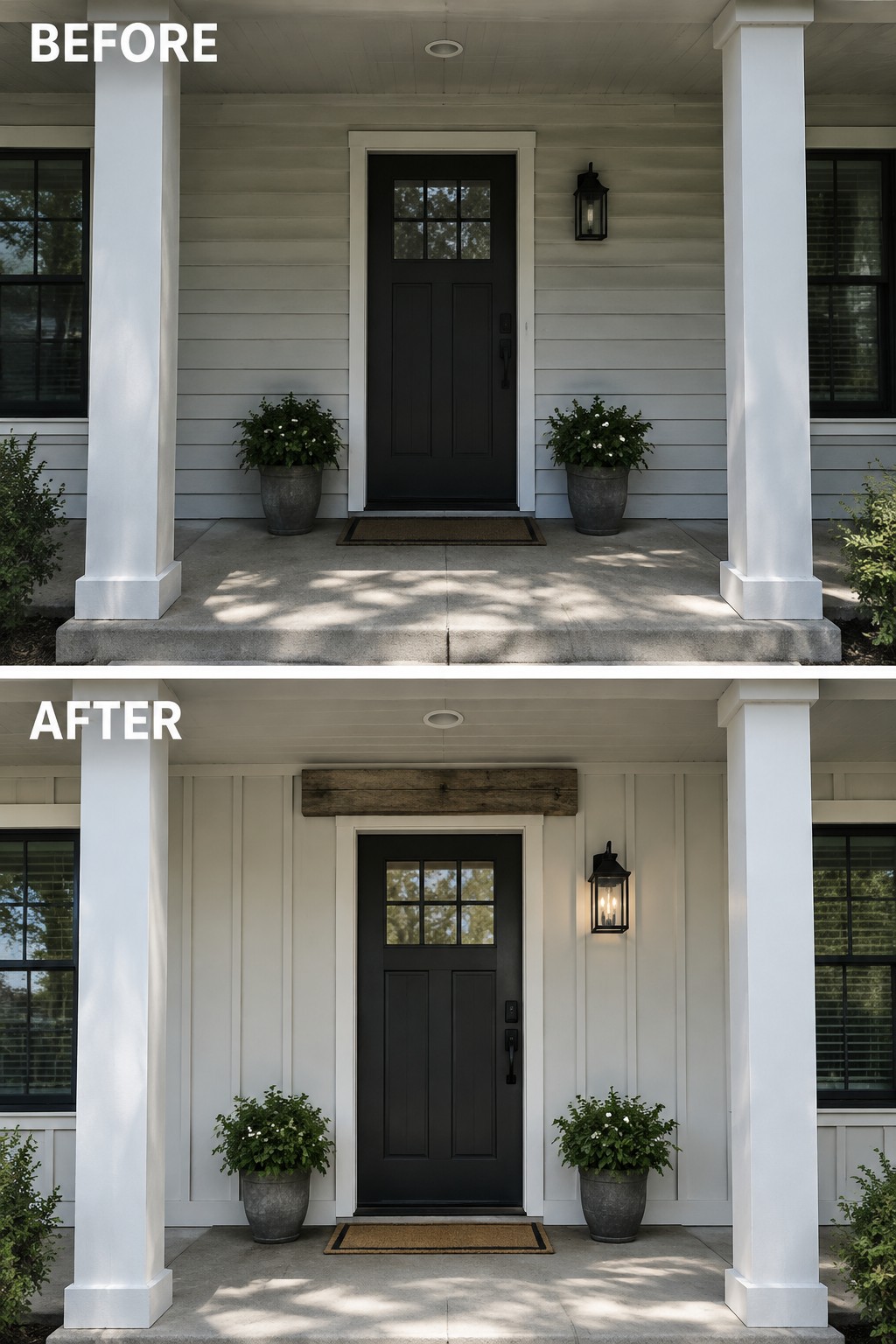
The before photo shows a clean but flat entry where the siding runs straight across above the door. Adding a simple wood beam gives the porch a clear focal point and breaks up the long horizontal surface without any major construction.
This works well on homes with straightforward siding where you want to add character on a budget. Keep the beam width and color simple so it feels like a natural extension of the trim rather than an afterthought, and check that the height lines up with any nearby windows or lighting.
Give Old Siding A Fresh Look With Dark Color And White Trim
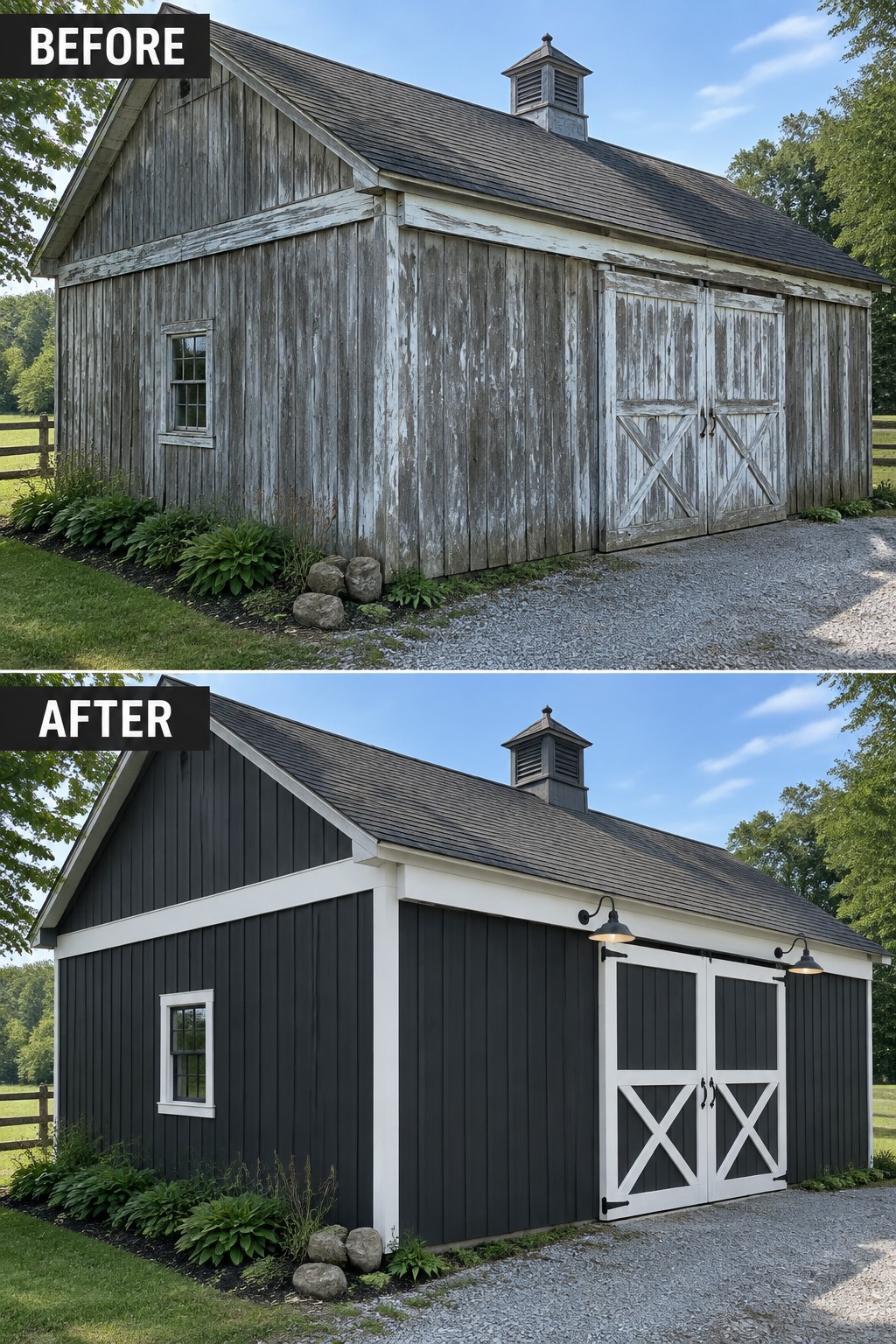
Switching an old exterior to dark vertical siding with clean white trim makes the whole structure look solid again. The faded, peeling boards disappear under the new color, and the white accents around the doors and corners give it a sharper outline without any major construction.
This approach works well on barns, sheds, or guest houses where the wood is still sound but the finish has worn away. Keep the trim simple and repeat the white on the doors or window frames so the contrast stays balanced. Add one or two exterior lights if the entry needs better function at night.
Add Horizontal Trim To Vertical Siding
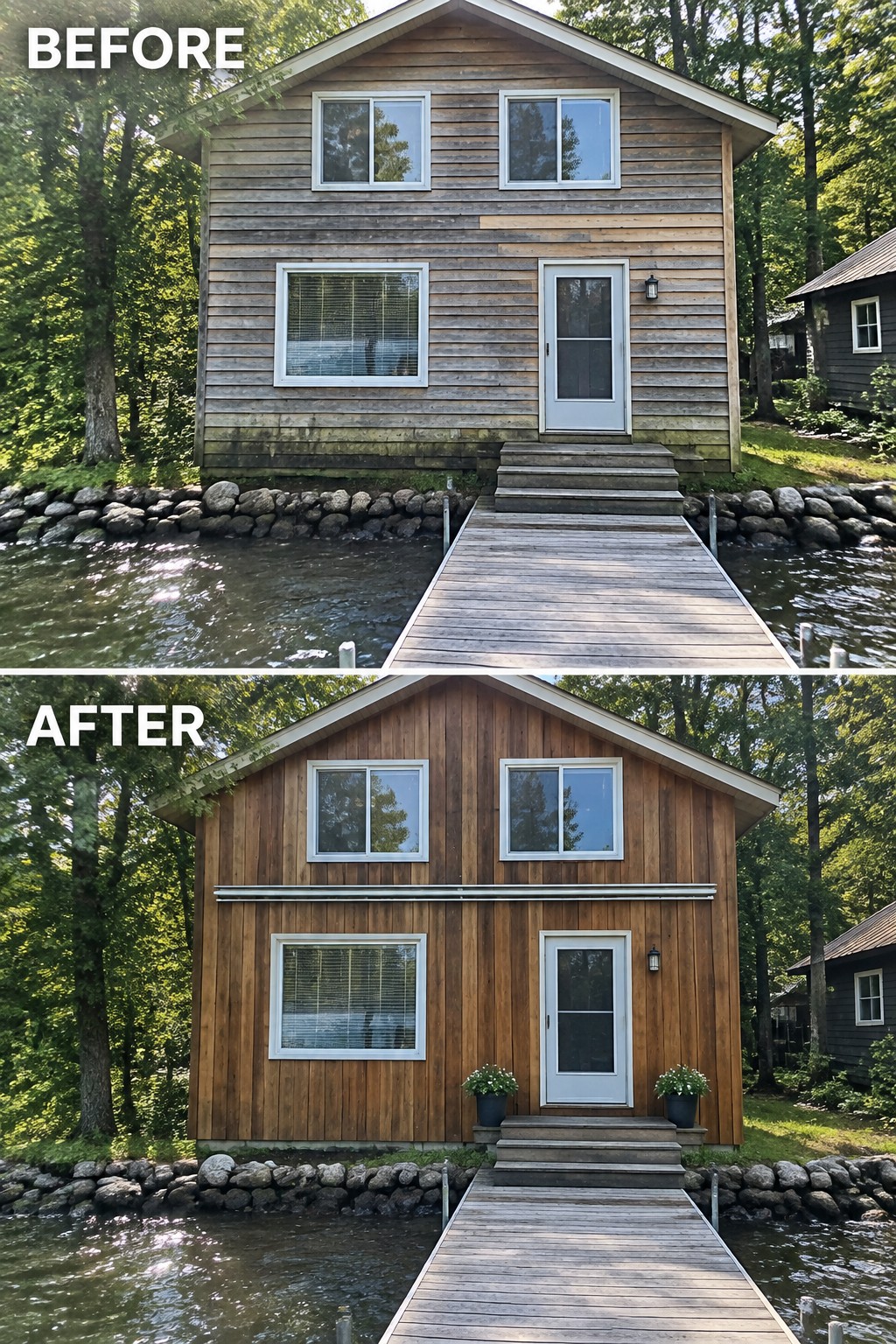
A simple change in siding color and the addition of one strong horizontal line can make a big difference on a house with vertical boards. The faded gray finish looked patchy and flat, while the new warm brown stain gives the walls more depth. That single trim band across the middle breaks up the tall surface and helps the windows and door sit better in the overall shape.
This approach works well on smaller waterfront homes or cabins where the siding is already vertical. Keep the trim line at a natural division between floors or at window height so it feels intentional rather than added on. Choose a stain that protects the wood instead of paint, and test the color on a small section first since sunlight and water reflection can shift how it reads.
Add Vertical Panels And Horizontal Accents To Refresh Plain Siding
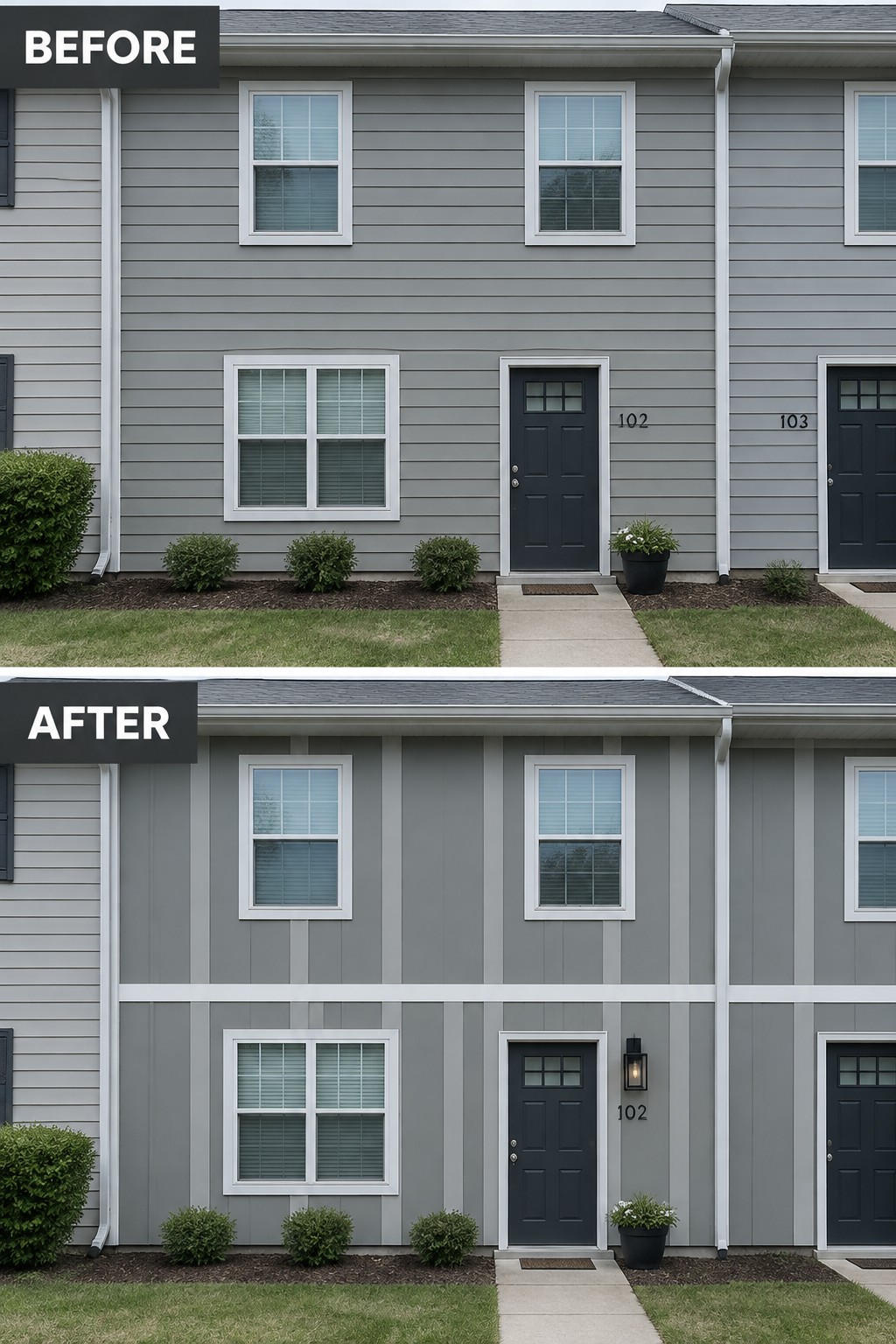
A flat wall of horizontal siding often looks unfinished on its own. Running vertical panels in a close but distinct shade and adding one clean horizontal trim line breaks the surface into clearer sections and gives the whole front more shape.
This works best on simple two-story homes or attached units where the siding runs long and unbroken. Match the vertical sections to window spacing so the new lines feel intentional, and keep the trim color light enough to stand out without fighting the main siding color.
Refresh The Exterior With Vertical Siding And Trim Accents
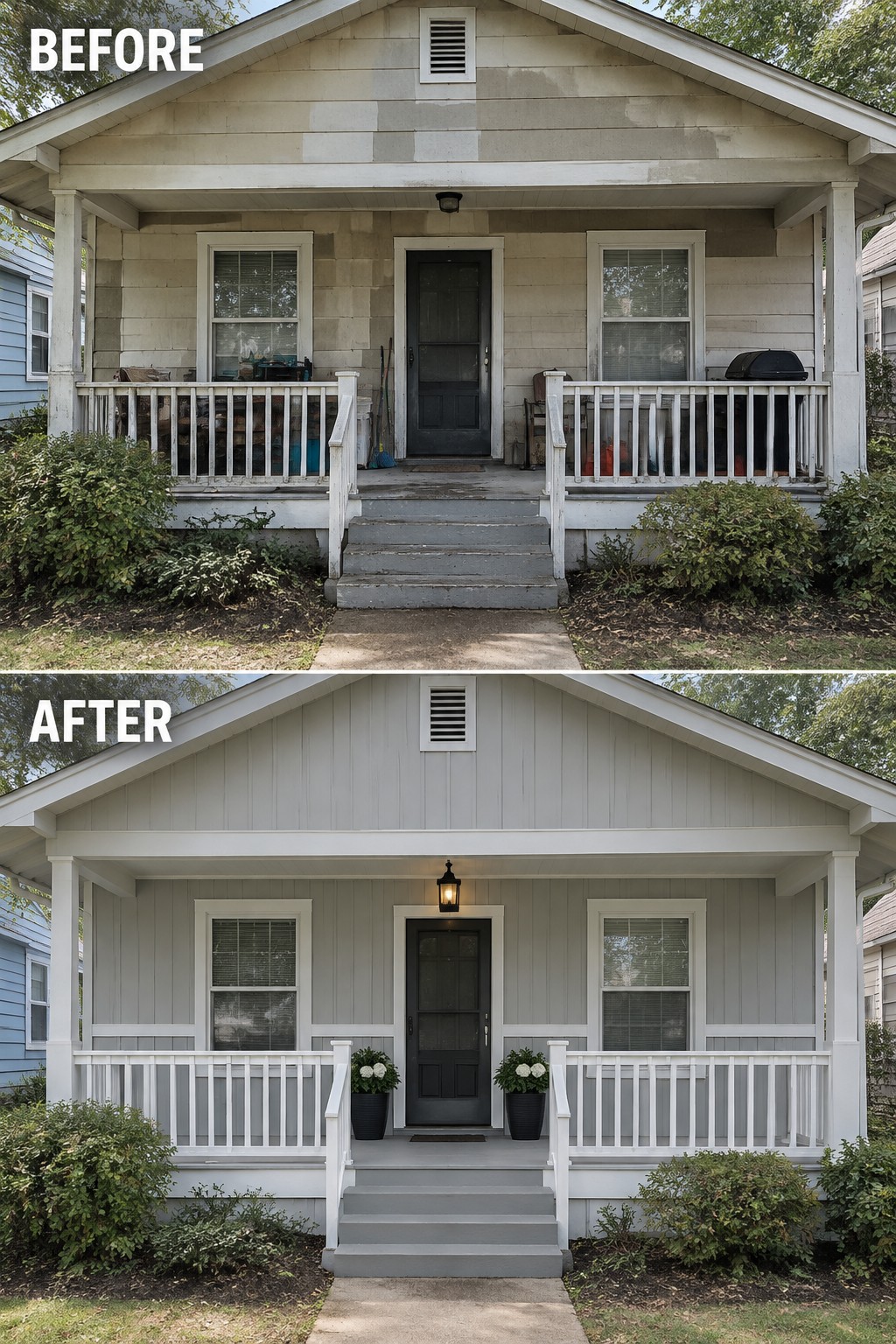
The main improvement here comes from swapping the old patchy siding for new vertical panels and adding clean horizontal trim around the windows and porch. This simple switch gives the whole front a much tidier, more finished look while keeping the original shape of the house intact.
This approach works well on smaller homes or those with basic porches. Choose one light color for the vertical boards and let the trim stand out in white or a soft contrast. A pair of planters by the door is enough to make the entry feel complete without adding clutter.
Update A Plain Exterior With Vertical Siding
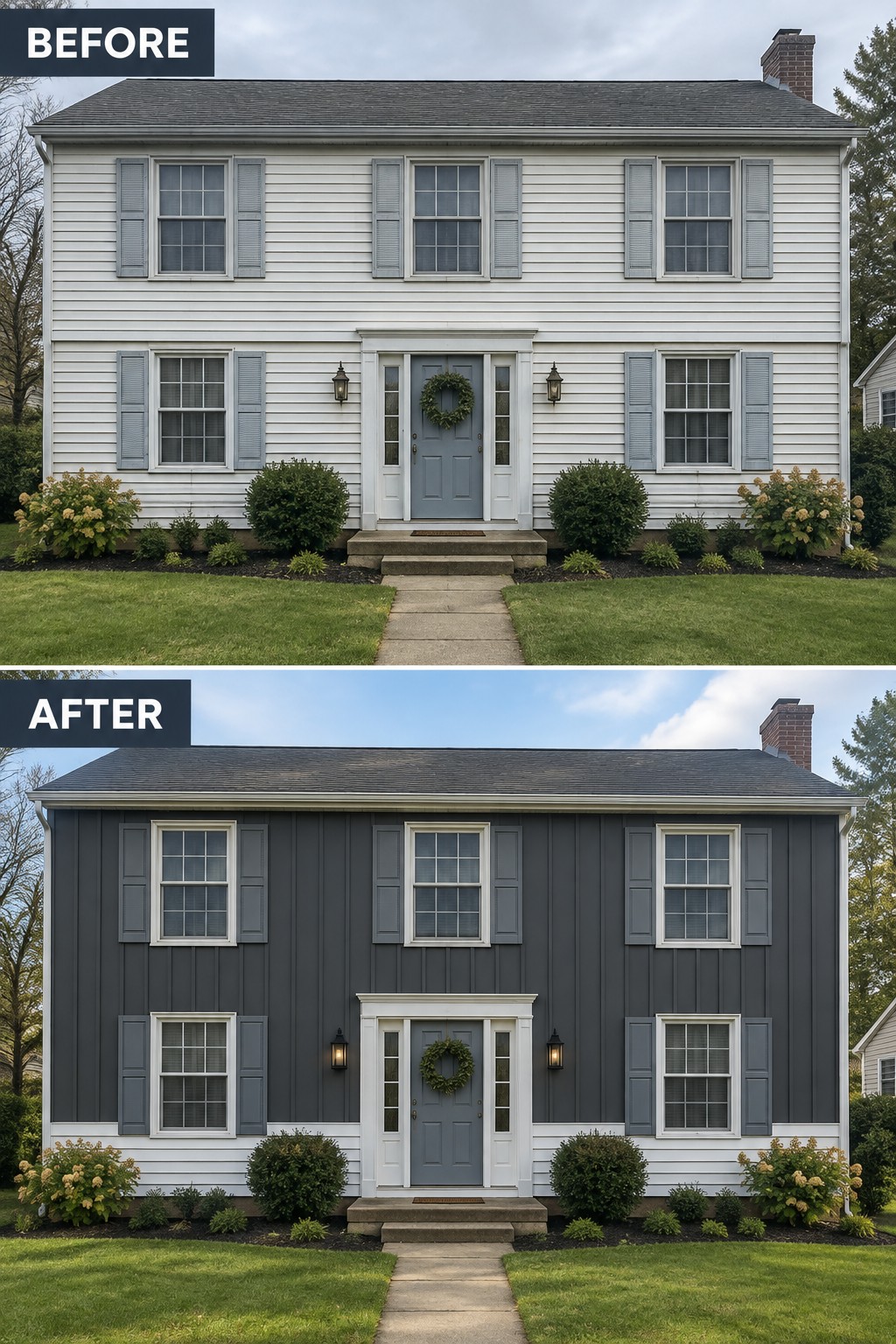
Many homes with basic horizontal siding end up looking flat and dated over time. Switching to vertical panels in a darker shade adds height and structure to the facade while the white trim and lower horizontal section keep the whole look balanced and clean.
This works especially well on simple two-story houses where you want more definition without a full renovation. Choose one strong color for the vertical siding, keep the trim and door light for contrast, and leave the bottom portion horizontal so the accents read clearly.
Refresh A Mixed Exterior With Vertical Siding
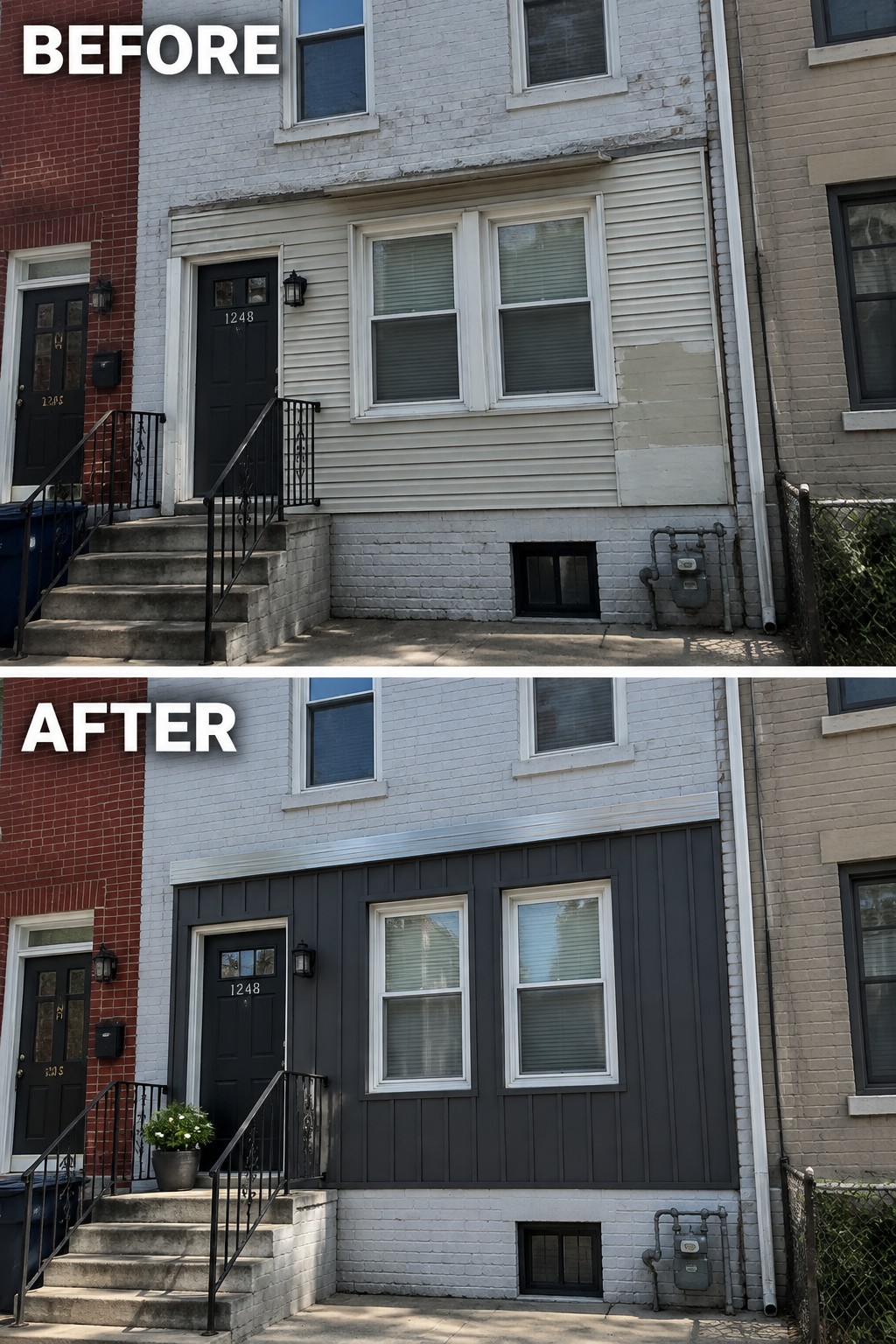
Many homes end up with awkward siding patches after years of repairs. Replacing the mismatched horizontal panels with clean vertical ones in a dark color gives the whole front a much more unified and current look.
This works especially well on narrow facades where the eye needs a strong vertical line. Keep the lower brick exposed as a simple base and let the new panels cover the main wall area. The same idea works on any home that has leftover or damaged siding sections that no longer match the rest of the structure.
Refresh A Plain Exterior With Vertical Siding And Wood Accents
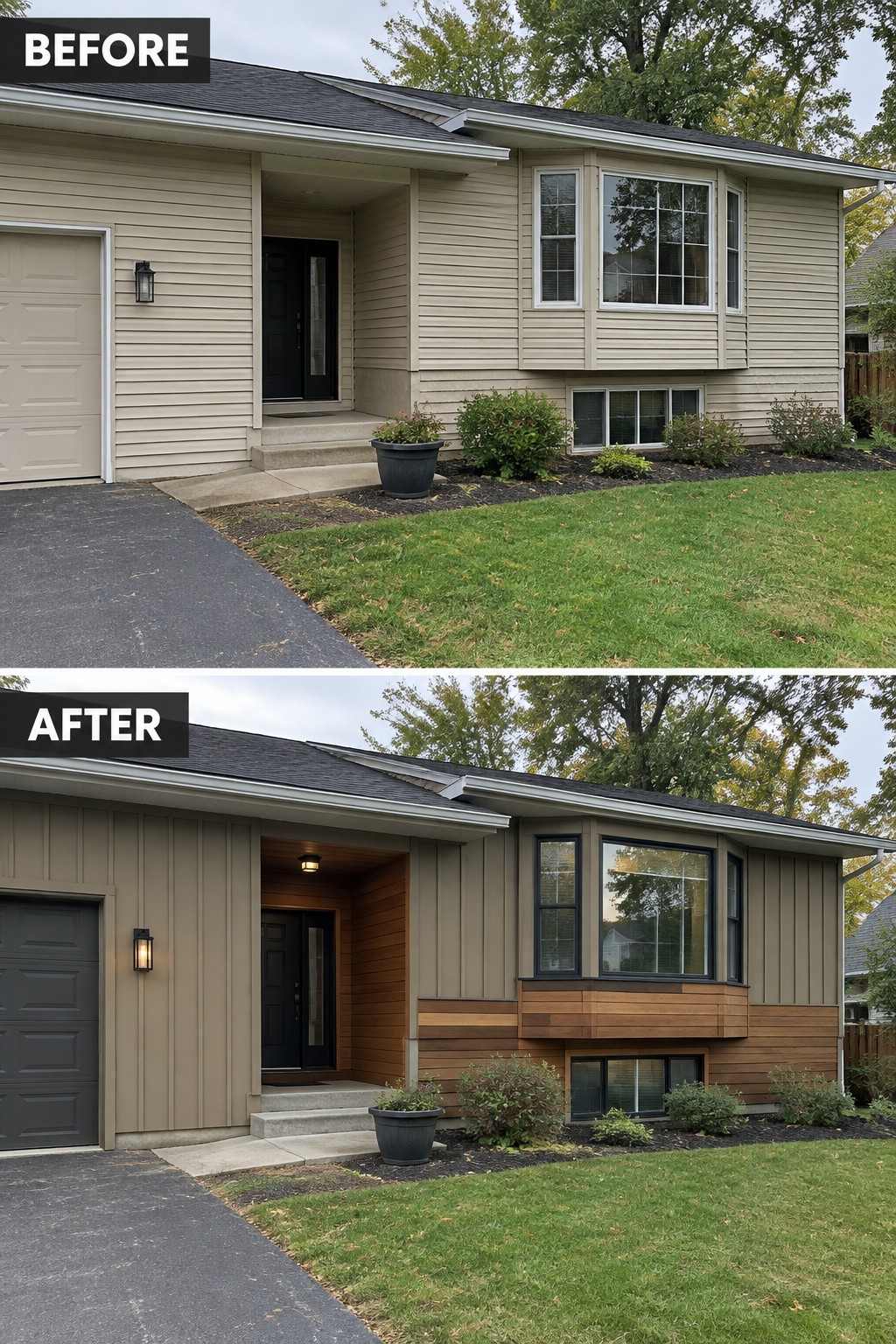
Many houses with all-horizontal siding end up looking flat, especially when the color is one solid tone. Switching sections to vertical panels and adding a band of horizontal wood below the windows breaks up the surface and gives the facade more shape.
This works best on simple ranch or split-level homes where the front is wide and plain. Keep the new materials in related tones so the change feels like an update rather than a complete overhaul, and place the strongest accents near the entry and main windows.
Frequently Asked Questions
Q: Is this something I can tackle on my own or do I need a crew?
A: Measure the walls first and order panels that match your existing structure. Install the vertical pieces across the main surfaces then add the horizontal accents around windows or the base. Most people finish a small facade in a couple of weekends with standard tools.
Q: Will the panels stand up to heavy rain without leaking?
A: Choose siding rated for wet climates and seal every joint where the horizontal accents meet the vertical runs. Run a quick check each spring for any gaps that open up. Proper flashing at the top edges keeps water from sneaking behind the boards.
Q: How do I pick colors that actually work together?
A: Start with a light vertical panel and test a darker horizontal accent on a small section first. Keep the accent color close to your trim or roof edge so the lines feel connected. Walk around the house at different times of day to see how the shades shift in the light.