

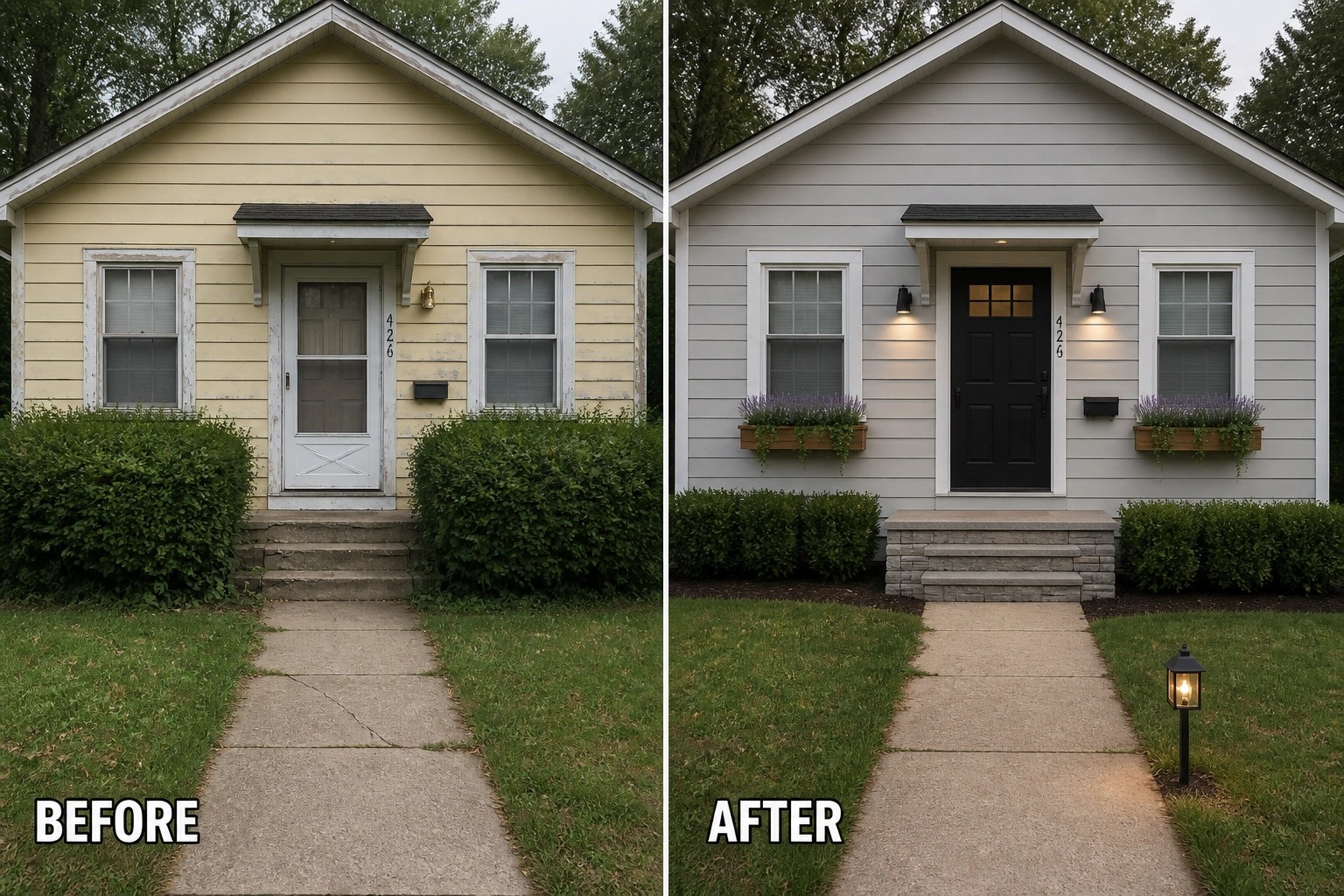
When a house sits on a street, small details like paint color, porch hardware, and the shape of the front planting can make it read as tidy or neglected.
I’ve learned that you don’t need a full renovation to sharpen curb appeal, and often a fresh entryway light, new house numbers, or a neatly trimmed planting bed can go a long way.
In my own neighborhood I tend to test paint and porch tweaks first because they change how the whole facade reads without a big budget.
Small shifts matter.
Consider borrowing a few ideas to adapt to your street, like swapping shutters, redefining a pathway, or adding a modest planting layer, and it’s quietly satisfying to see a house look more cared for after a weekend of focused work.
Give The Front Entry A Simple Style Upgrade
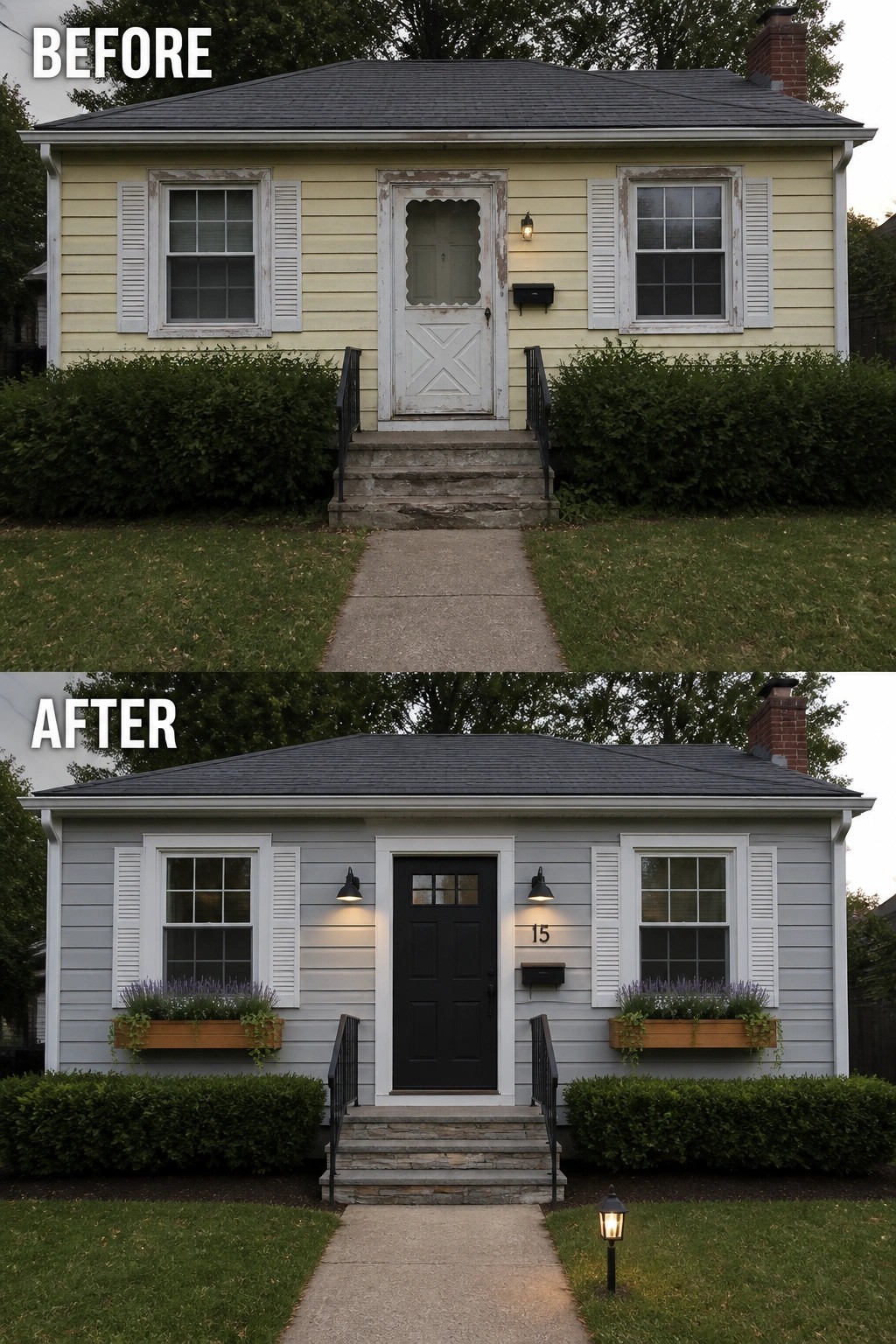
Treat the front door as the house’s one obvious styling move and build from there. Swapping a tired door and trim for a bold painted door, crisp white trim, a pair of matching wall lights, and planted window boxes turns a plain facade into a purposeful entry. It’s a relatively small effort that reads as intentional and makes the whole house look cared for.
If you try this, pick one contrasting door color and refresh the surrounding trim first so the rest reads as an accent. Add hardwired or rated outdoor sconces for even light, and choose low-maintenance window boxes or planters with seasonal color. Keep the scale simple and don’t block the walkway—small changes, easy upkeep, big curb appeal.
Give A Bare Porch A Clear Purpose
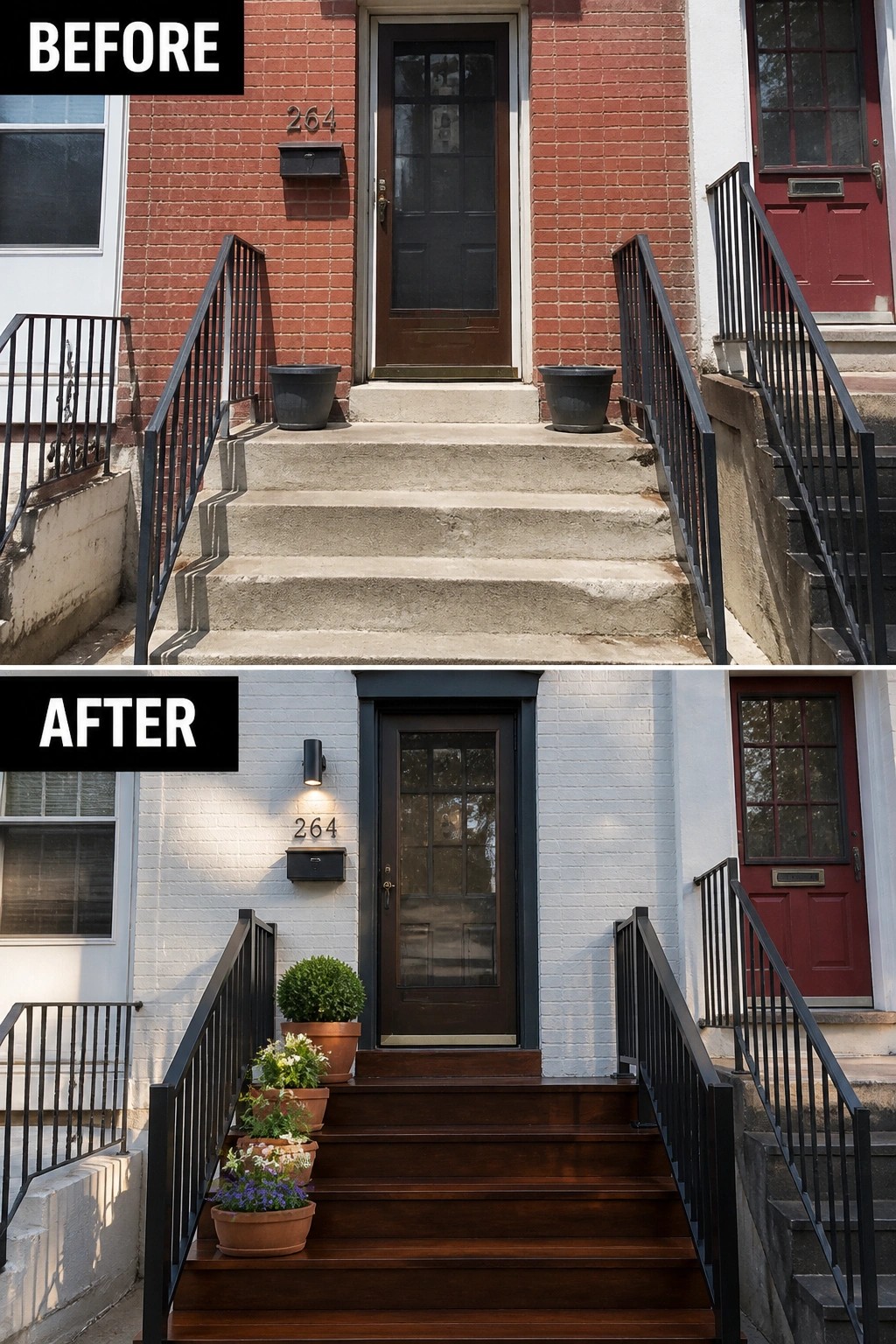
A tiny, unused stoop becomes useful when you pick one clear upgrade and build around it. In this case the owner replaced plain concrete with rich stained treads, added a vertical run of terracotta planters, and installed a small wall sconce and numbers—simple changes that turn an anonymous entry into a place that looks cared for and intentional.
You can copy the idea on almost any small front step: prioritize one structural change (new treads, a platform, or a painted landing), then add a compact focal element like stacked pots or a single bench. Choose durable pots and plants for low maintenance, keep the layout clear so the door still opens easily, and add a light near the house number so the entry reads as intentional day and night.
Use Pavers And Edging To Define Your Entry
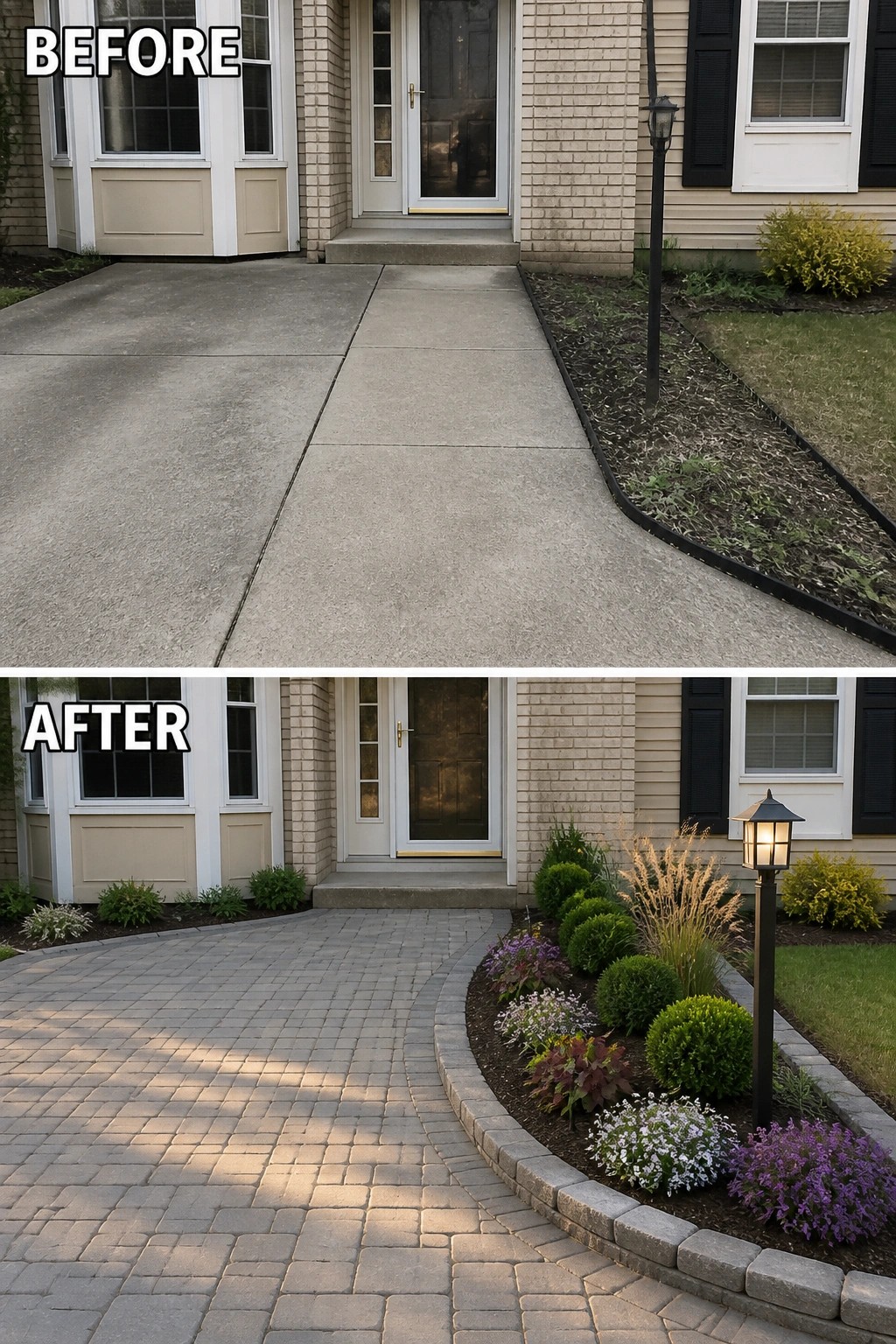
Swapping a plain concrete walk for a paved path and a low stone edge instantly gives the front of the house shape and purpose. In this example the dull slab becomes patterned pavers and a curved raised bed planted with small shrubs and grasses, which makes the approach feel intentional instead of leftover space.
Start by deciding how wide you need the path and where a curve will add interest without stealing usable lawn. Install a proper base and edge restraint so the pavers stay level, choose a paver color that complements your siding, and plant simple, repeatable shrubs and ornamental grasses for low maintenance. Add mulch and one or two well-placed lights along the edge for year-round neatness and safe nighttime access.
Turn An Empty Porch Into A Seating Area
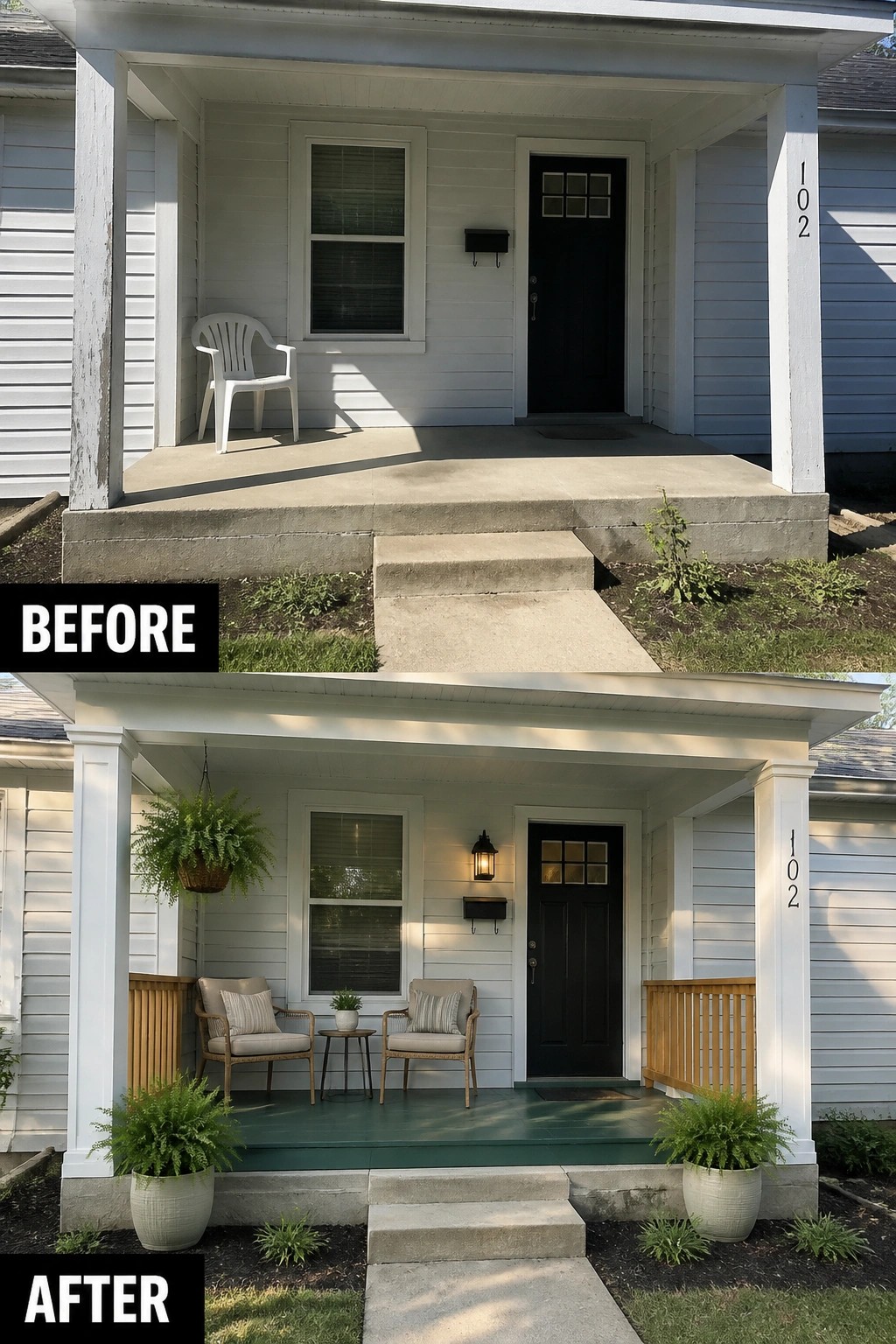
A bare entry porch can become useful and welcoming with just a few purposeful pieces: a pair of small chairs, a side table, and a couple of planters. Defining the spot for sitting gives the house a clear purpose at the curb and makes the front feel cared for without major construction.
Keep the scale tiny—choose narrow chairs and a slim table so the walkway still feels open. Use durable outdoor materials and repeat one color (for example the floor or cushions) to tie things together, and add a porch light or hanging plant where it won’t block movement. Start small and add only what you’ll use.
Add A Simple Awning And Entry Lighting
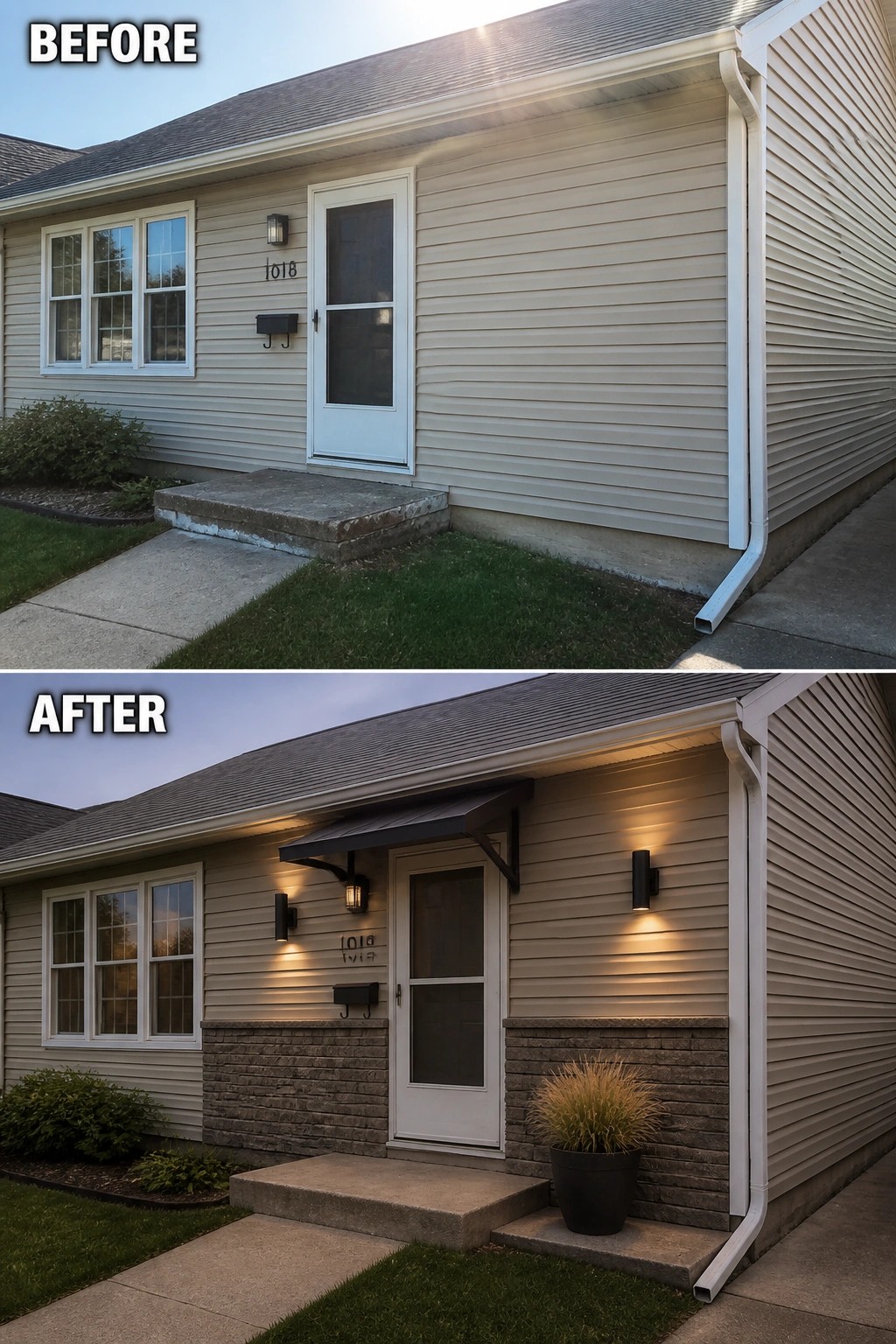
A tiny stoop becomes a proper front entry when you give it a clear purpose instead of leaving it as plain concrete. Framing the door with a small overhang and adding focused wall lights turns an afterthought into a usable, welcoming spot; a matching mailbox or a single planter finishes the look without cluttering the walkway.
To copy this, start with basic fixes—level the step and seal edges—then add one or two architectural elements that suit the house scale. A modest awning or shade above the door defines the entry, and wall-mounted sconces at eye level make the area feel intentional and safe. Keep materials simple and weatherproof, place one planter for seasonal color, and avoid oversized pieces that block movement.
Clear Overgrowth And Define Simple Garden Beds
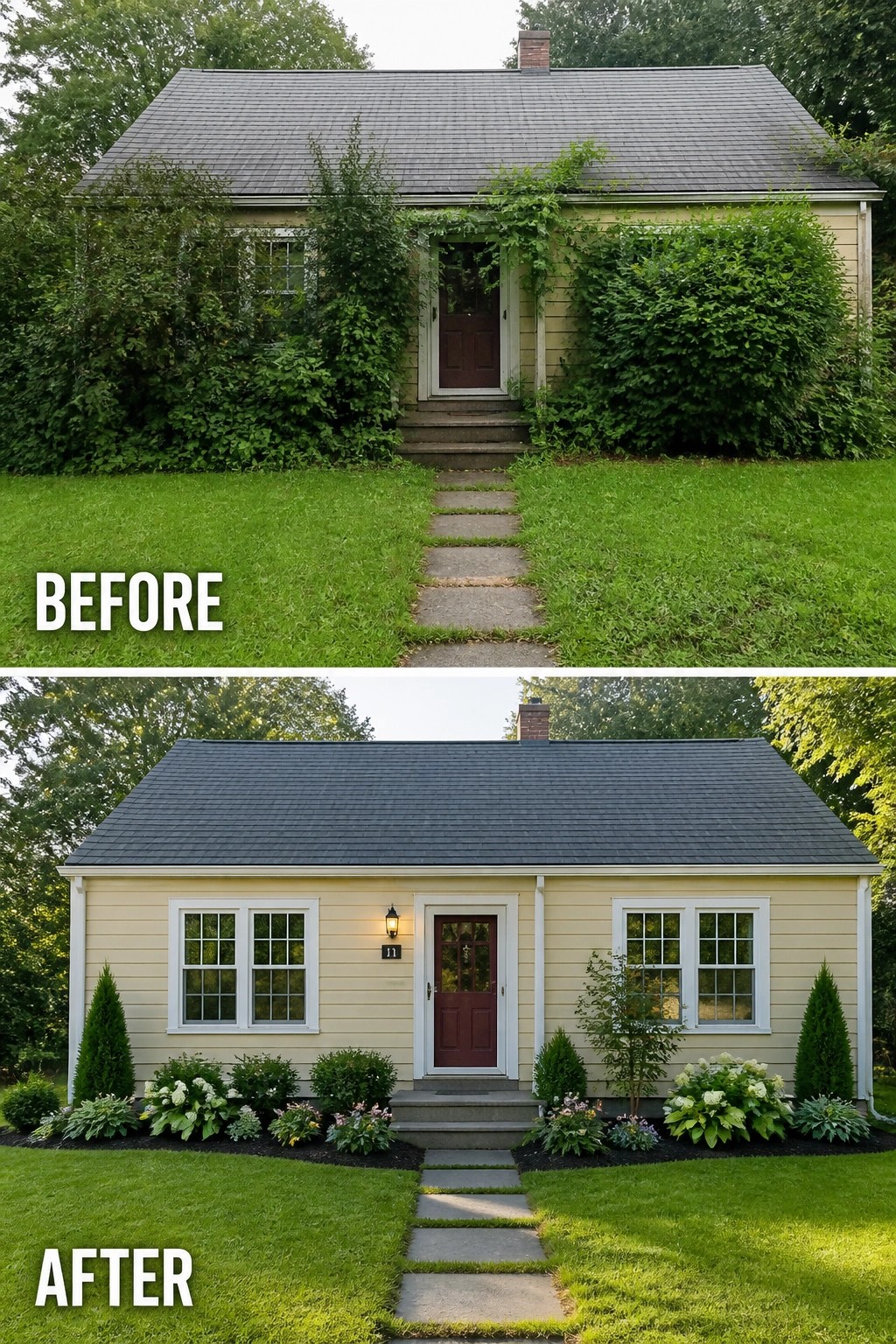
Start by pulling back the big, overgrown shrubs that hide a small house and give the entry some breathing room. Replacing that heavy green mass with low, clearly edged beds and a few properly scaled shrubs immediately reads as intentional — you’ll see the front door and walkway instead of a wall of foliage.
Do the work in three easy steps: remove or prune the largest plants, lay out a simple bed shape with a hose or string, then add edging, 2–3 inches of mulch, and a small palette of repeatable plants (a pair of narrow evergreens, a flowering perennial, and a low groundcover). Keep the beds low so the house details stay visible, leave the path clear, and add one light or house number near the door to finish the look.
Update Your Garage Door To Boost Curb Appeal
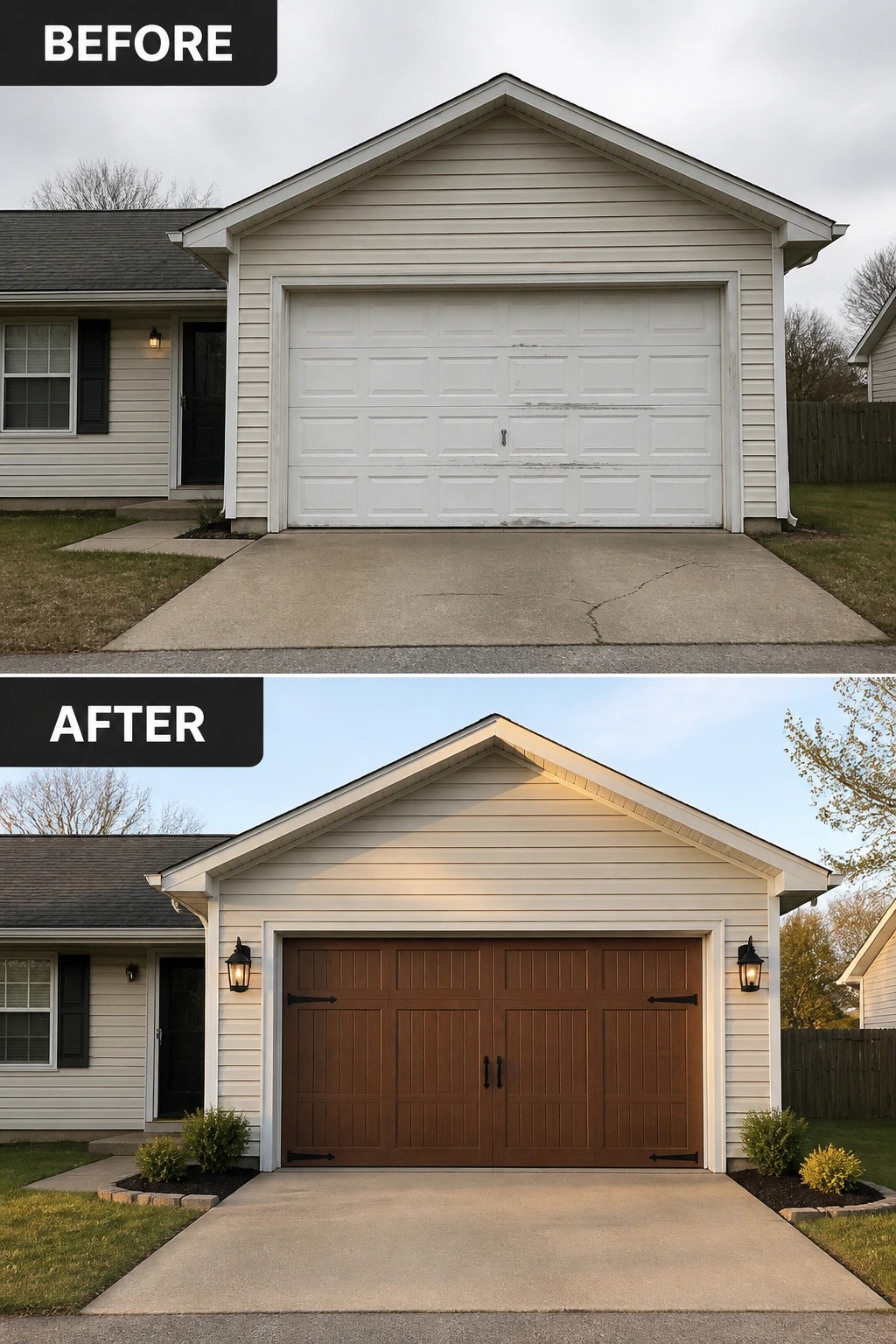
Swapping a plain, worn garage door for a styled carriage-style door instantly changes a house’s face without touching the roof or siding. In this example a new wood-look door, simple black hardware, and matching wall lanterns give the front a more finished, intentional look while a couple of small planted beds soften the concrete approach.
You can copy this on almost any modest home: pick a door style and color that complements existing trim, add scaled lighting on either side, and keep plantings low and tidy so the entry stays readable. If a full replacement is out of budget, consider a painted overlay, faux panel kits, or new hardware and lights to get much of the same effect for less.
Build A Small Covered Front Porch
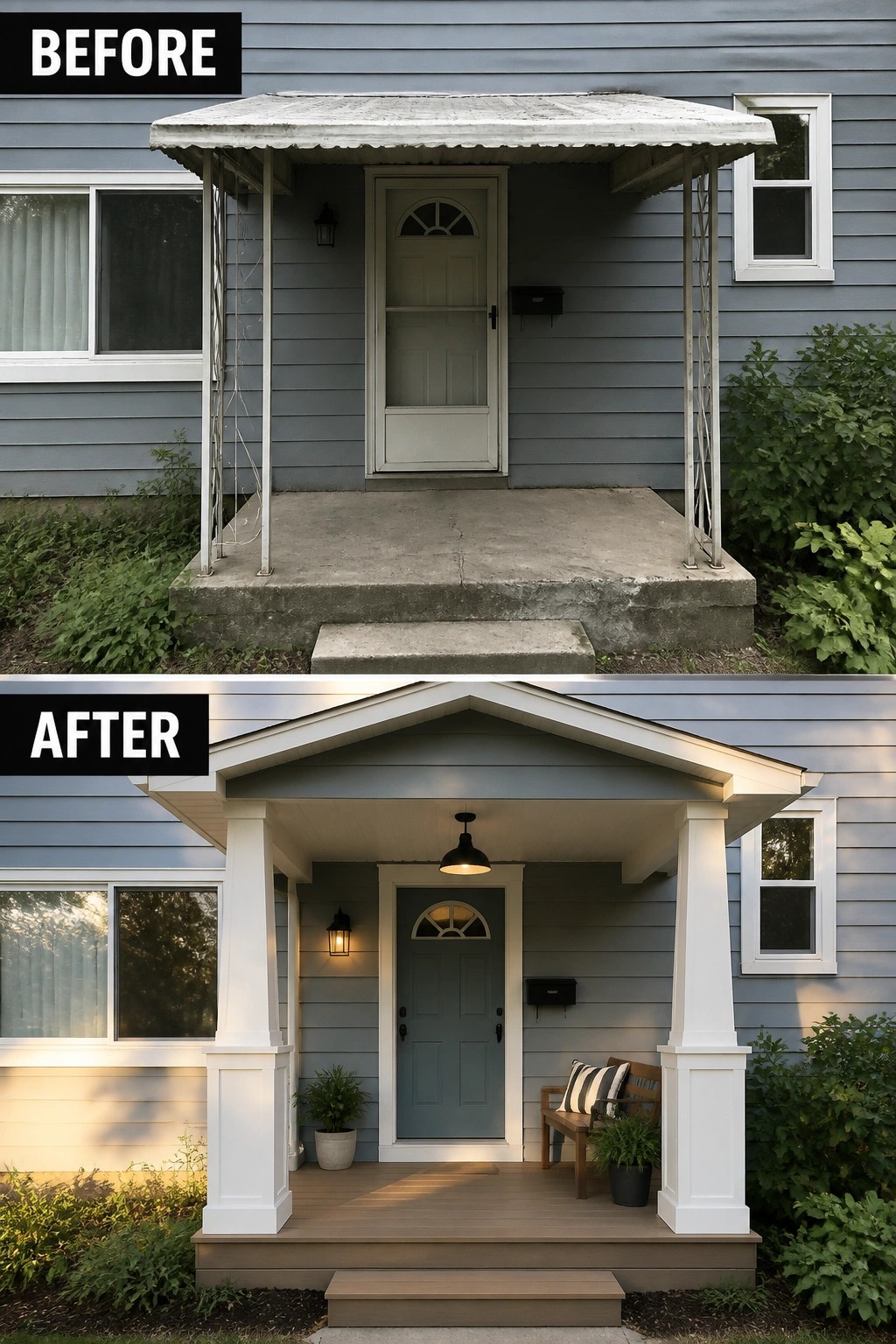
A missing-entry porch is an easy problem to solve: replace the odd little awning and bare concrete with a simple covered deck and a couple of purposeful features. In this example the old metal canopy and slab become a proper roof with columns and decking, plus a bench, potted plants, and a pendant light to make the space feel like an actual entry you can use.
Start with structure—add a modest roof or extend the porch so the space feels sheltered, then pick one focal element such as a painted door or a small bench. Keep furniture and planters scaled to the area
Brighten The Entry With A Bold Front Door
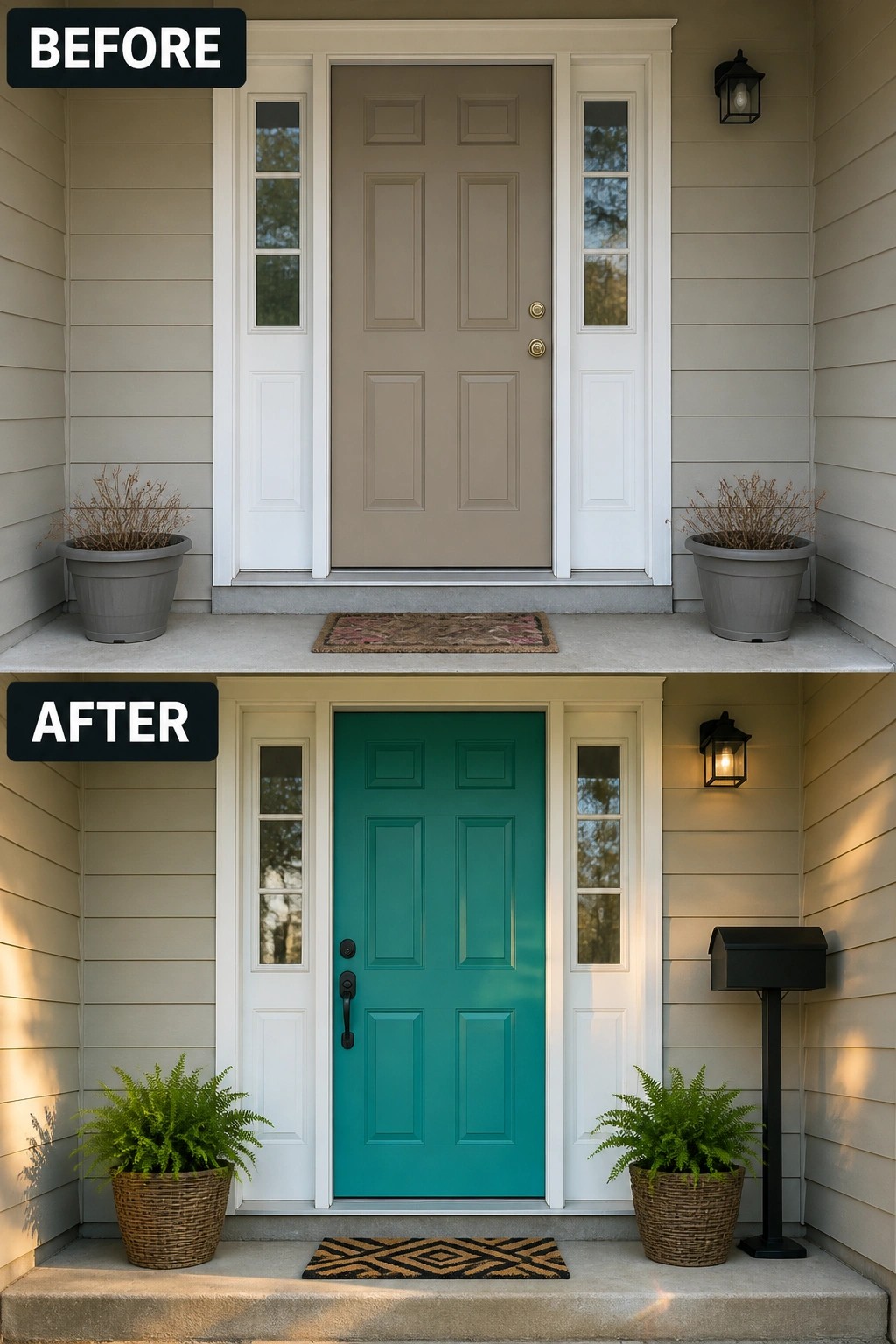
A bold front-door color and a couple of well-chosen planters can turn an anonymous stoop into an obvious entry. Swapping a neutral door for a vivid teal and placing potted ferns at the step makes the porch read as intentional rather than forgotten.
Use this on small porches where you don’t want to add furniture: pick one memorable door color, echo that tone or a dark metal in the hardware, and choose low-maintenance plants sized to the step. Keep the layout simple so the door stays the focal point and the walkup remains easy to use.
Use Repeated Shrubs And Window Boxes To Add Structure
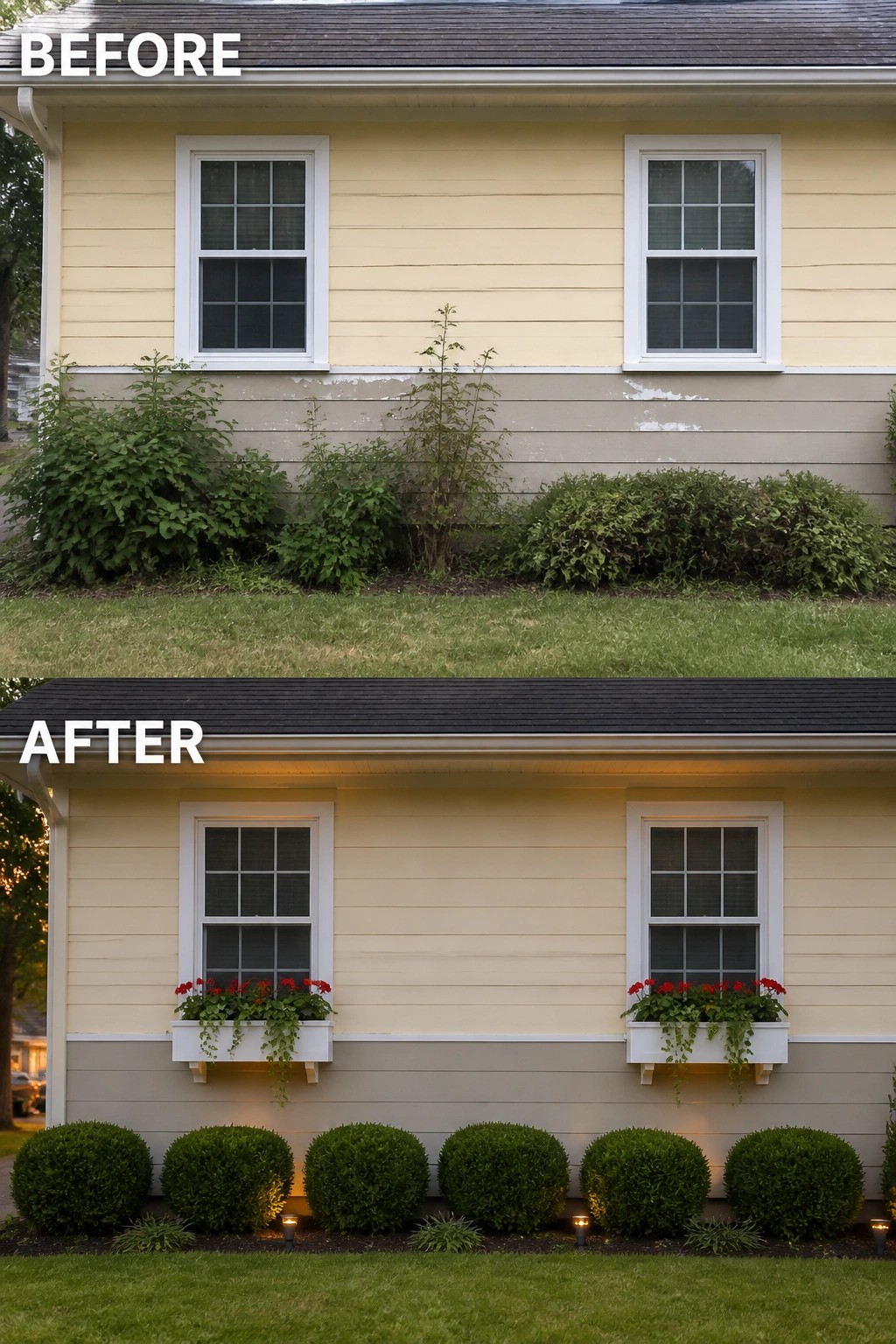
Swapping a hodgepodge of overgrown planting for a simple row of low, rounded shrubs and matching window boxes instantly tidies a small facade and gives the house a neat, intentional look. The idea is easy: repetition creates rhythm so the eye reads the front as a single, cared-for plane instead of a messy collection of plants.
Start by clearing the overgrowth, then choose one shrub variety that stays compact at mature size and plant it at regular intervals so each plant has room to round out. Keep the shrubs low enough to show the windows, add window boxes for seasonal color, and finish with a narrow mulch bed and a couple of low lights for evening curb appeal. This works especially well on small bungalows and cottages where scale matters and less really is more.
Turn An Empty Porch Into A Cozy Seating Nook
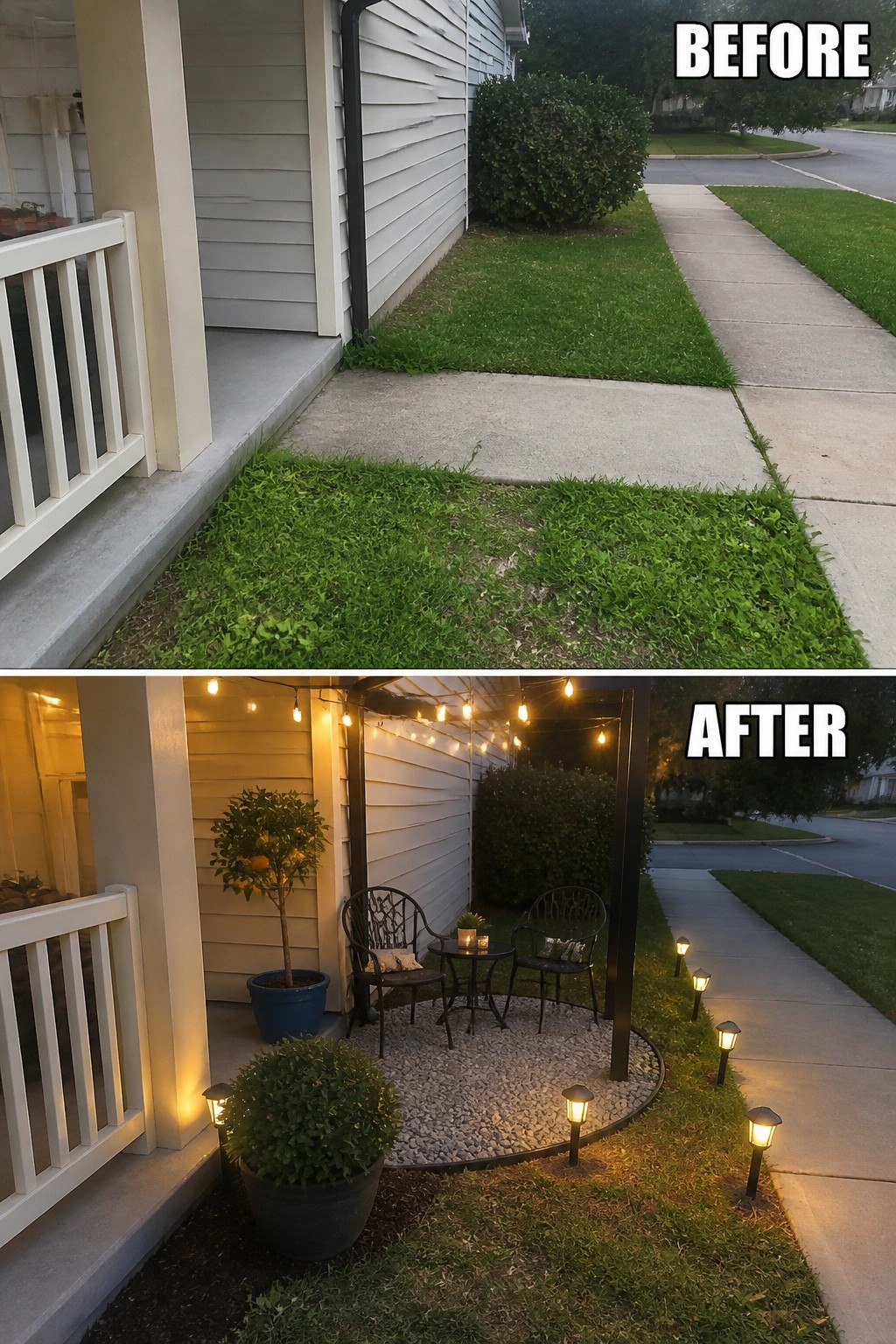
A small, undefined patch beside the front steps becomes useful simply by giving it a floor and a purpose. Swap a square of grass for a contained gravel pad, add a compact bistro set and a few pots, and hang string lights plus low path lanterns — suddenly the space reads as a seat-at-the-street porch instead of leftover lawn. Defining the area and adding soft lighting makes the change feel intentional and extends when you can use it.
Do this where a narrow walkway or tiny front lawn needs a focal point: edge the spot with plastic or metal trim, lay landscape fabric, put down a couple inches of crushed stone, and place furniture scaled to the size (no heavy construction needed). Use a couple of tall planters for height and solar stake lights to guide the path, and keep at least a clear walkway so the spot doesn’t block pedestrian flow.
Make The Front Entry More Welcoming
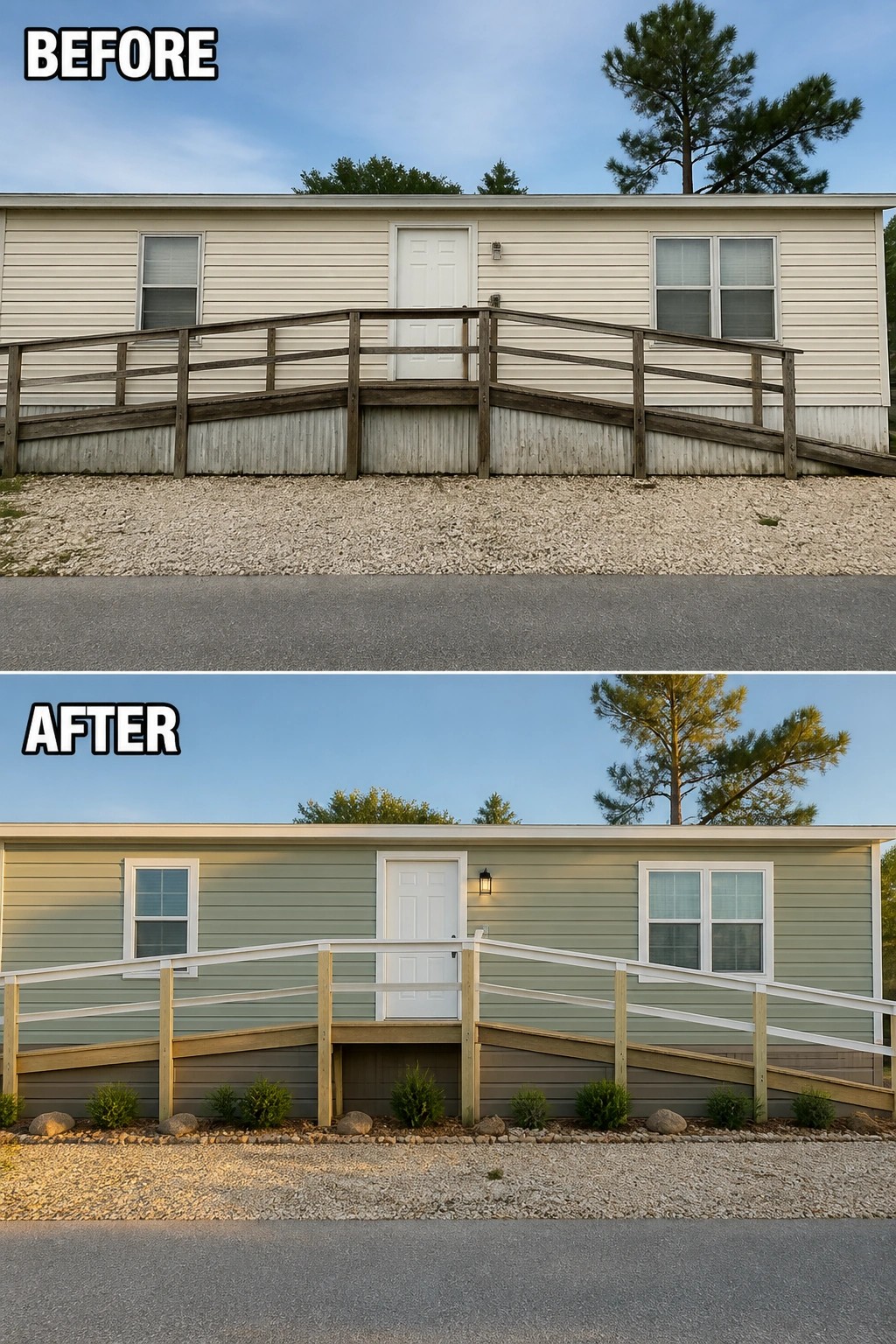
A small, focused update—fresh railing and a little planting—can change a bland facade into a cared-for entry. Swapping the worn ramp rails for new posts and a painted handrail and placing low shrubs along the base gives the house a neater, more intentional look without a big budget.
Start by fixing any rotten wood (a must) and then pick one clear contrast color for trim or the handrail to read from the street. Use compact, low-maintenance shrubs and a simple bed of rocks so the slope and path stay usable. Add one porch light for safety and evening curb appeal, and you’ve got a tidy upgrade that suits small homes and mobile units especially well.
Use A Low Front Fence To Define The Entry
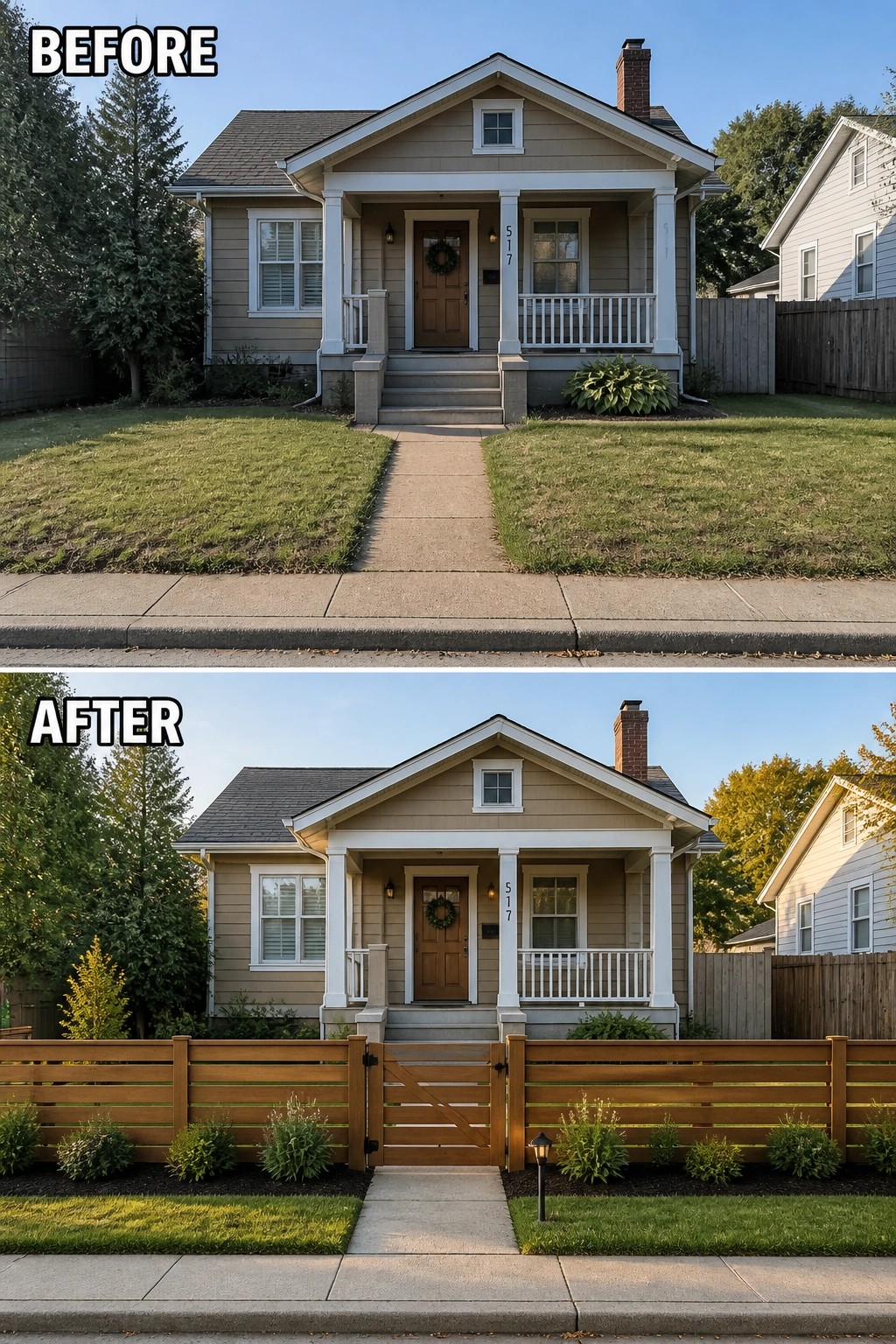
A short, horizontal wood fence and matching gate can instantly make a small house feel more intentional. Instead of an open strip of lawn, the fence frames the walkway and gives the porch a clear purpose while keeping the house visible from the street—a simple structure that reads as deliberate and finished.
To use this idea, choose a fence height that preserves sightlines (about 3 to 4 feet), align the gate with the sidewalk, and keep planting low and neat in front so the fence remains the focal point. Pick a durable finish, repeat a material or color from the porch for cohesion, and leave plenty of room for foot traffic and maintenance; small, well-placed shrubs and a path light complete the look without overcrowding the yard.
Refresh Worn Steps With Simple Entry Accentse
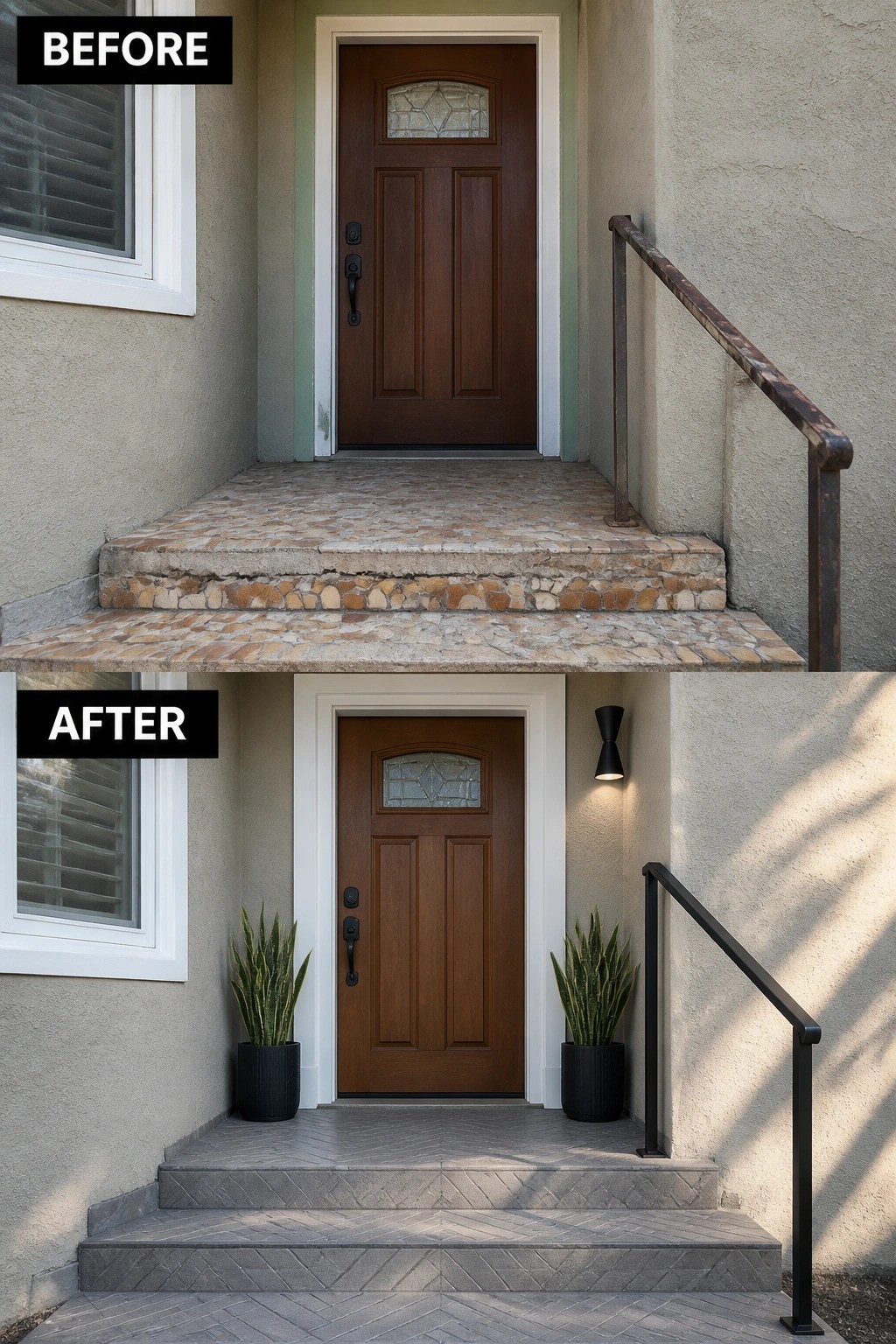
A tiny entry can feel anonymous until you define its purpose. Replacing tired, uneven steps with a single durable surface and adding a pair of matching planters and a focused wall sconce makes the door the focal point and gives the whole stoop a cared-for look. Simple material swaps and a couple of well‑placed accents turn a gap-to-the-street into a welcoming pause.
Start by fixing or redoing the step surface so it is safe and reads as one plane—slip-resistant tile or colored concrete works well. Keep finishes and colors limited so the doorway remains the star, then add a plant or two scaled to the space and one hardwired or weatherproof wall light for after-dark curb appeal. This approach suits narrow entries and rental homes because it’s mostly cosmetic, affordable, and easy to maintain.
Use Lighting To Make A Plain Facade Feel Welcoming
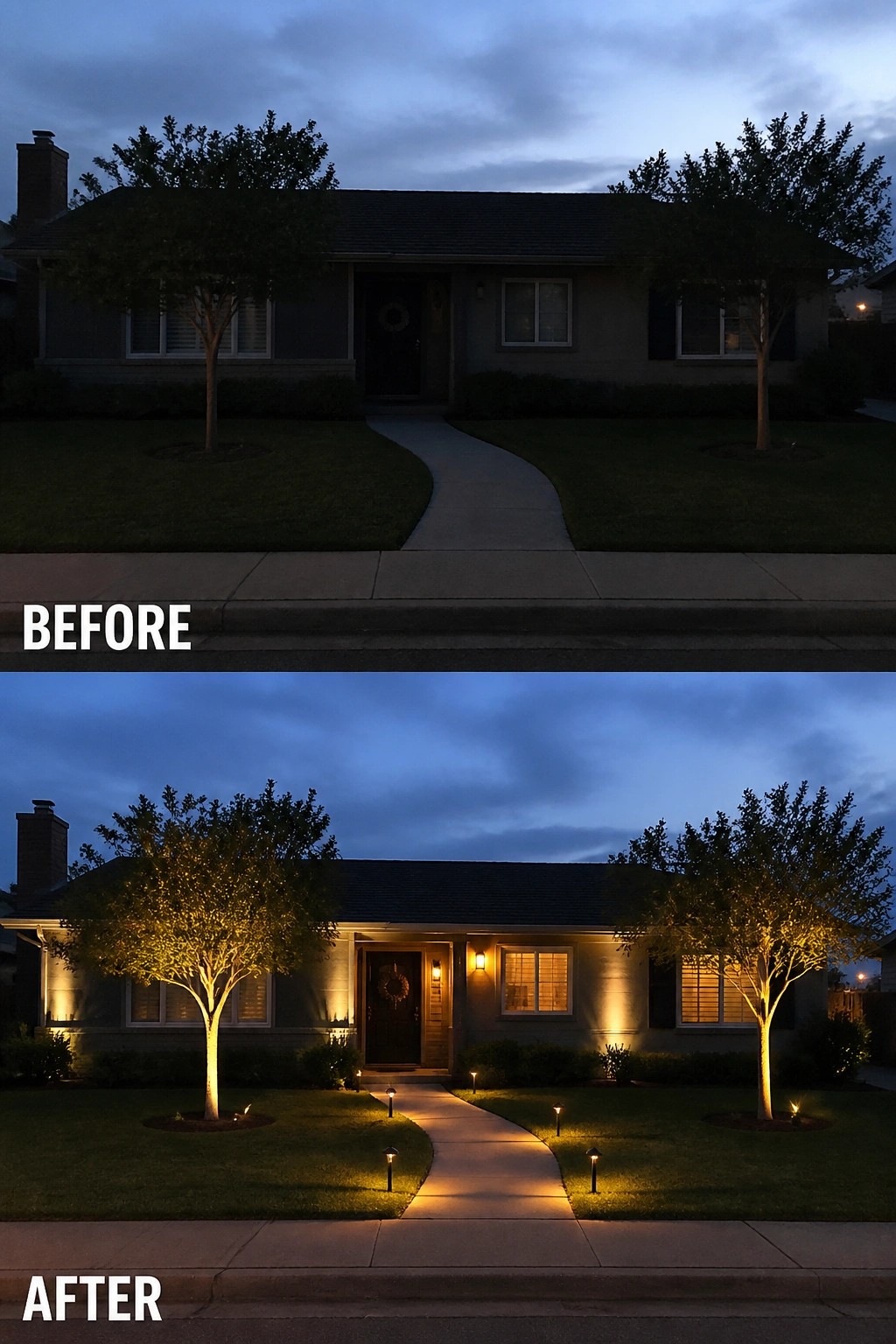
A few well-placed exterior lights can do more for curb appeal than a big renovation. In this makeover the owners kept the simple front lawn but added low path lights and uplights aimed at the two front trees and entry, which turns a dark, anonymous facade into a clear, welcoming approach and gives the house visual depth at night.
You can copy the idea without overhauling the yard: run a line of low-voltage or solar path lights to define the walk and add one or two uplights to highlight trees or the porch columns. Keep fixtures low-profile, choose warm LED bulbs (around 2700 to 3000 K), aim lights to avoid glare, and use a timer or photocell so the scene comes on automatically—small changes that make the house read as cared-for and inviting after dark.
Define The Front Walk With Simple Landscaping
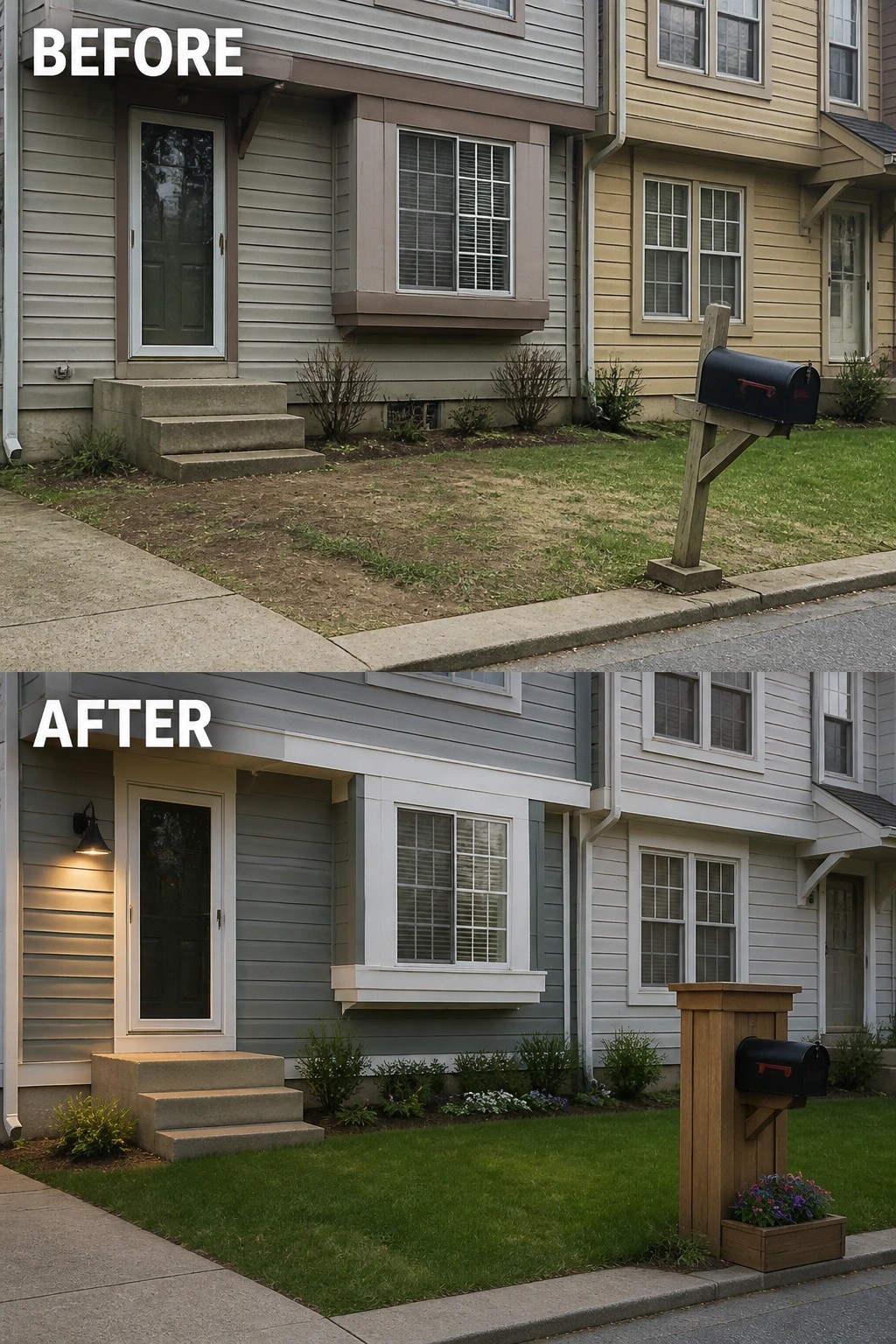
A small front strip doesn’t need a lot to feel finished — just a clear focal point and a bit of structure. In this example the plain patch was turned into a tidy lawn with narrow planting beds, a new porch sconce, and a sturdier wooden mailbox post, which together make the entry read as intentional instead of neglected.
Start by cleaning and defining one area around the door as your focal point (start small). Add a low, easy-care planting bed along the foundation, a light beside the door for evening curb appeal, and a single upgraded mailbox or post planter to anchor the sidewalk edge. This approach suits townhouses and small lots best; keep plant choices low and tidy so maintenance stays simple and the entry remains easy to use.
Refresh Gutters And Trim For Instant Curb Appeal
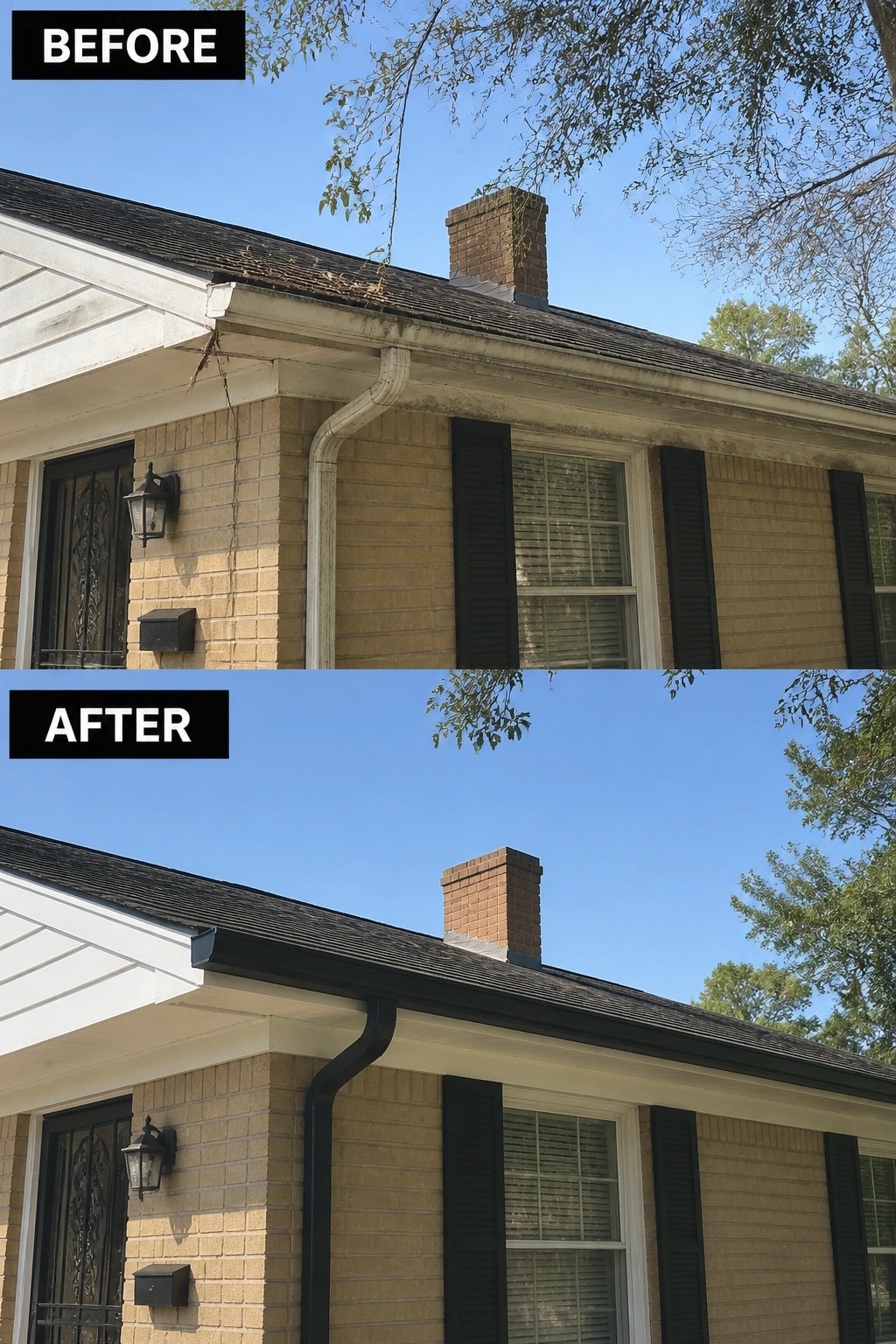
Replacing tired gutters and giving the trim a fresh coat is a quick way to make an old facade look cared for. In this example the worn, discolored gutter and trim were swapped out for a darker gutter and freshly painted white trim, which cleans up the roofline and ties the shutters and light fixture together without a big renovation.
To try this yourself, start with a good cleaning and any needed soffit or fascia repairs, then decide whether to paint or replace the gutters (aluminum with a baked-on finish lasts well). Pick one contrasting color for gutters or trim that echoes another element on the house, and keep hardware and downspouts neat and functional. It’s an easy win for modest budgets and classic brick or siding homes.
Create A Focal Point With A New Door And Awning
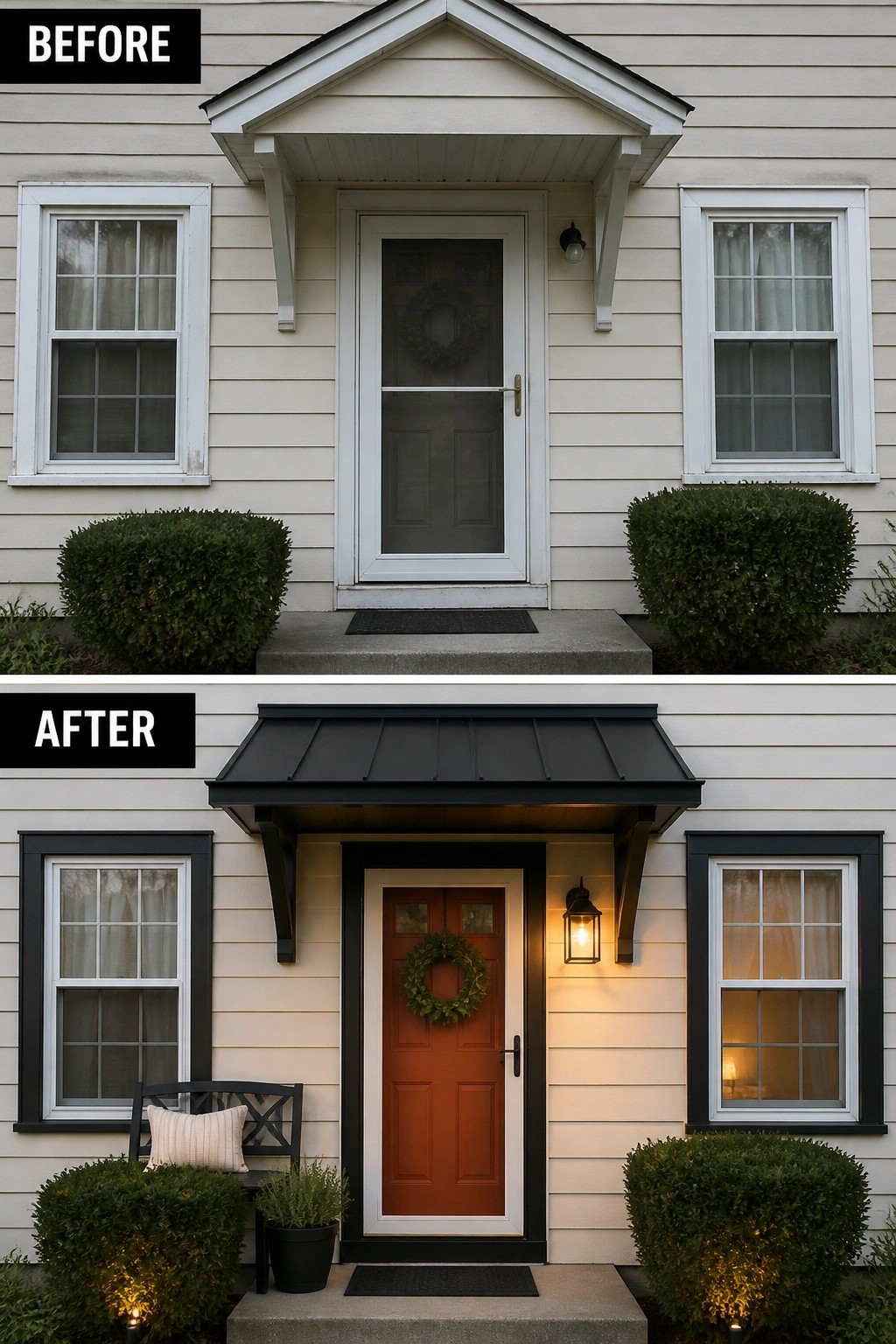
A simple way to lift curb appeal is to make the front entry feel intentional instead of leftover. In this example a plain storm door and neutral facade were replaced by a painted solid door and a defined overhead shelter plus a wall lantern, which immediately creates a focal point and shows visitors where to stop. One bold change can make the whole front feel put together.
To copy this, pick a single focal update first — a door color you love or a small metal or wood awning — then add one functional accessory like a sconce or a bench. Work with the scale of your stoop, choose weatherproof finishes, and keep circulation clear so the space looks styled but still practical.
Use Low Retaining Walls To Terrace A Sloped Yard
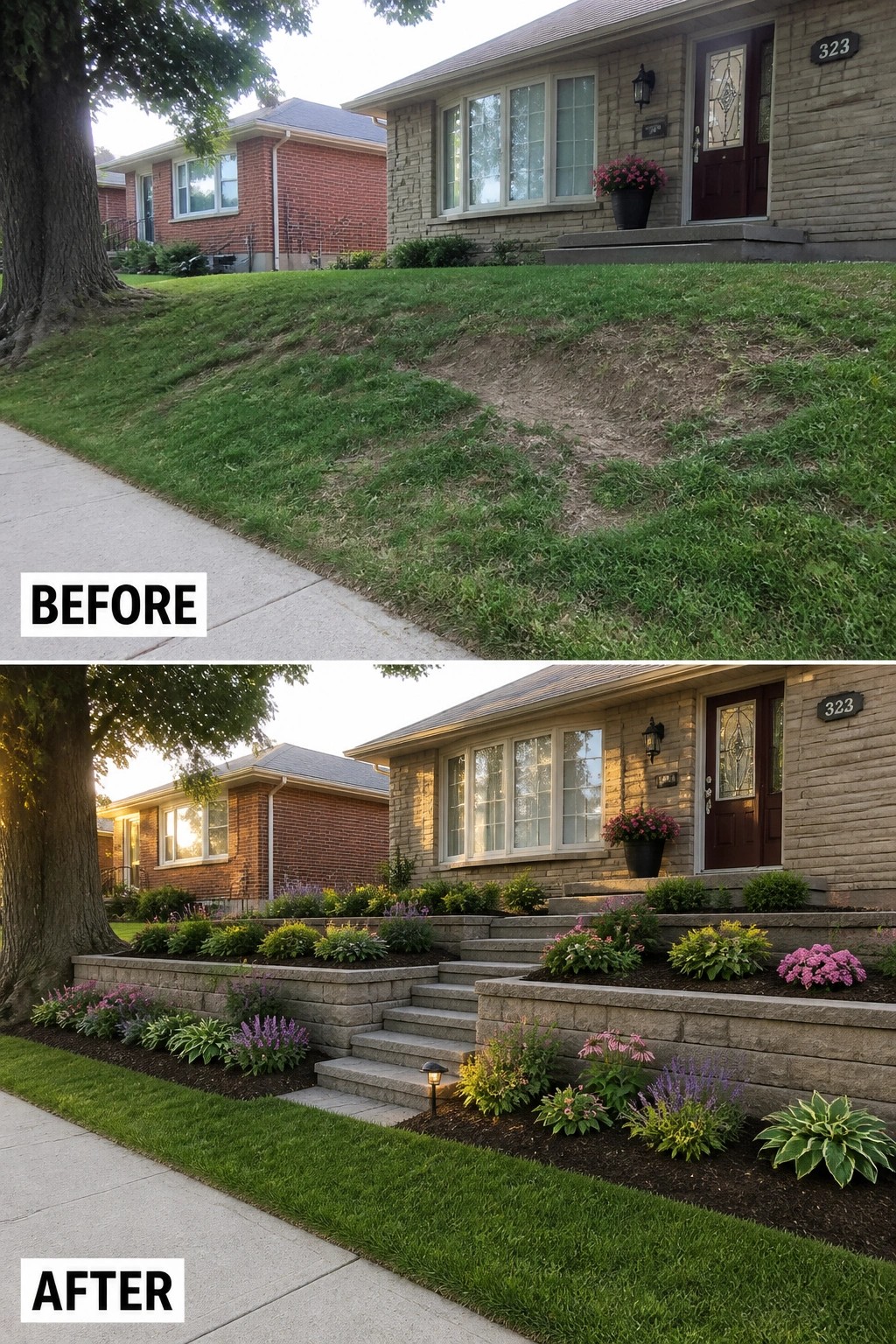
A few low stone retaining walls and a simple flight of steps can turn an eroded lawn into a neat, planted frontage that reads as intentional rather than neglected. In the example a bare slope and muddy paths become tiered beds and masonry steps, which both stabilize the hill and give clear places for shrubs and perennials.
This approach works especially well on small, street-facing slopes where you need structure more than a big remodel. Keep the walls low so they fit the house scale, plan for drainage and a compacted base, and choose easy-care plants that tuck into the edges (think hostas, small boxwoods, lavender). Finish with mulch and a couple of path lights so the beds stay tidy and the steps are safe.
Frequently Asked Questions
Q: What are the quickest, cheapest tweaks from the article that actually make a difference?
A: Paint the front door a fresh, confident color and swap out old hardware and the mailbox for cleaner styles. Tidy up beds, add a couple of potted plants, and update a porch light for instant polish. Those small moves read as intentional and lift the whole street-facing look.
Q: My house feels small—what paint strategy will make it look bigger from the street?
A: Choose a light, neutral color for the main body and keep trim a shade brighter or slightly darker for definition. Avoid busy contrasts that break up the facade, and use the same palette on shutters or the door so the eye travels smoothly. Lighter hues reflect more light and visually open the plane of the house.
Q: Which projects are safe to DIY, and when should I hire a pro?
A: You can tackle painting, planting, changing fixtures, and swapping hardware on your own with basic tools and time. Call a pro for anything involving roofs, structural changes, major electrical work, or complicated hardscaping. If a task affects safety or permits, get a licensed contractor.
Q: I have a tiny front yard—how do I choose plants that look neat and not overgrown?
A: Pick a small palette of two or three plant types and repeat them to create rhythm and calm. Favor low-growing evergreens or clipped shrubs for year-round shape, and leave clear sightlines to the front door and windows. Regular pruning keeps the space looking intentional, not wild.