


Corner cabinets can make a kitchen feel awkward when doors collide or small appliances end up scattered across the counters.
I find that an appliance garage works best when it fits the way a household actually cooks, with enough room to use everyday tools and a door that does not interrupt the main work area.
The finish matters too, since a cabinet that blends with the surrounding kitchen can keep the corner from feeling bulky, while a contrasting detail can give it a clear purpose.
Some designs also make better use of deep or hard-to-reach spaces by adding pullouts, shelves, or accessible outlets.
I’d save the ideas that solve a real counter or storage problem and adapt their details to the room’s layout.
Hide Small Appliances in a Corner Cabinet

An appliance garage can keep everyday kitchen tools close at hand without leaving them on the counter. In this corner, a wood cabinet has a roll-up door that hides a coffee machine when it is not in use.
This setup works well where counter space is limited and a small appliance gets used often. Measure the machine with its door open, and make sure the cabinet has enough clearance and a nearby outlet before building one in.
Use a Corner Cabinet as an Appliance Garage
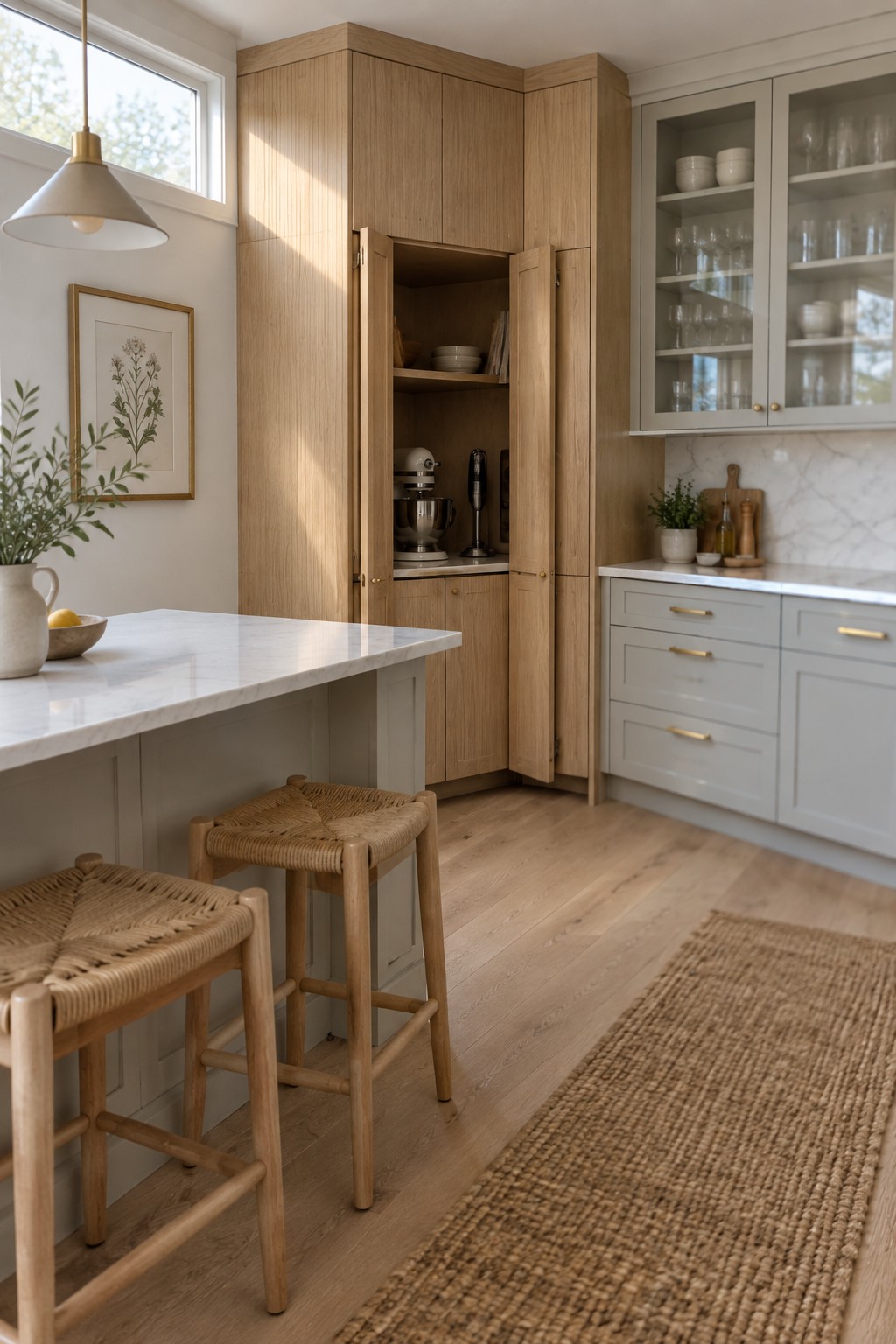
A tall corner cabinet can hide small appliances while keeping them close to the work area. The doors open to a dedicated counter space, so a mixer or blender can stay plugged in without taking up room on the main countertop.
This setup works well when a kitchen has an awkward corner that is hard to use otherwise. Plan for enough depth and outlets inside, and make sure the doors can open fully while you use the appliances.
Keep Small Appliances Tucked Away

A built-in appliance garage keeps everyday tools close without leaving them on the counter. Here, the toaster sits in an open wood-lined cabinet beside the microwave, making the tall cabinet useful for more than pantry storage.
This setup works well near a prep area where you use small appliances often. Leave enough room to open the doors and use the appliance safely, and include an outlet inside the cabinet if it will stay plugged in.
Use an Appliance Garage to Keep Counters Clear

An appliance garage gives everyday equipment a place to live without leaving it out on the counter. In this kitchen, the mixer sits inside a tall wooden cabinet, ready to use but out of sight when the door is closed.
This setup works well in a corner, where a full-height cabinet can make use of space that might otherwise be awkward. Check that the garage has enough depth for your appliance and an outlet inside, so you can use it without moving everything around.
Add an Appliance Garage to a Tall Cabinet
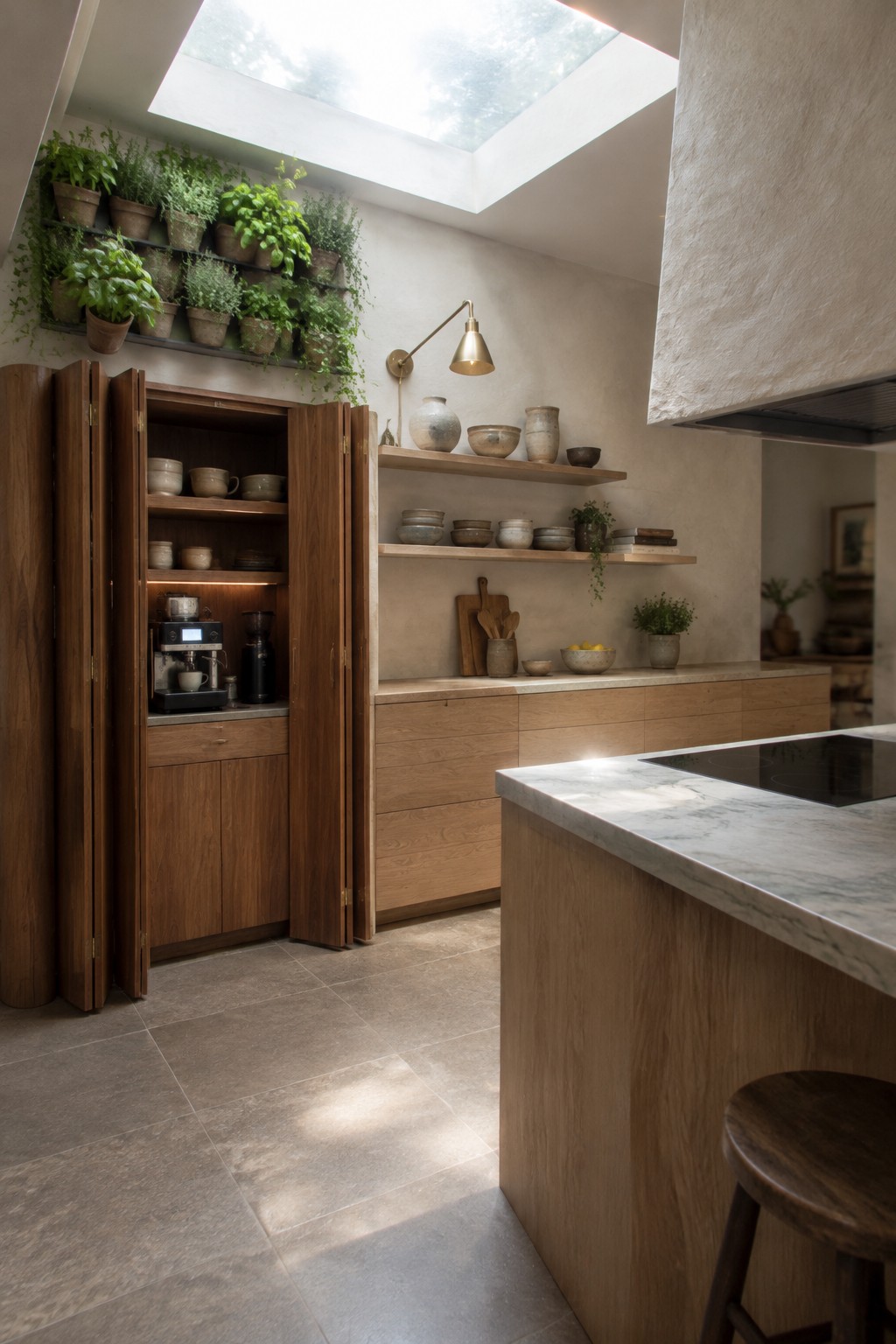
An appliance garage keeps everyday equipment close at hand without leaving it out on the counter. Here, a tall wood cabinet opens to reveal a coffee maker and grinder, with a work surface inside for using them.
This setup can work well in a kitchen corner or along a less-used wall, especially when you have room for a deeper cabinet. Make sure the doors open fully and leave enough clearance to use the appliances safely.
Make Small Appliances Easy to Put Away

A corner cabinet can keep everyday appliances close at hand without leaving them out on the counter. Here, a lift-up door hides a blender and food processor while leaving the work surface clear.
This setup works well in a kitchen where counter space is limited but appliances get regular use. Make sure the cabinet has enough depth and a convenient outlet, and leave room to lift appliances out safely.
Use a Retractable Door to Hide Countertop Appliances

An appliance garage built into a corner cabinet keeps a kettle and toaster handy without leaving them out on the counter. A retractable slatted door is useful here because it opens without needing extra swing space.
This setup works well near a prep area or sink, where small appliances are used often. Leave enough room inside for plugs and ventilation, and make sure the door can close without catching cords.
Keep Coffee Gear Behind Cabinet Doors
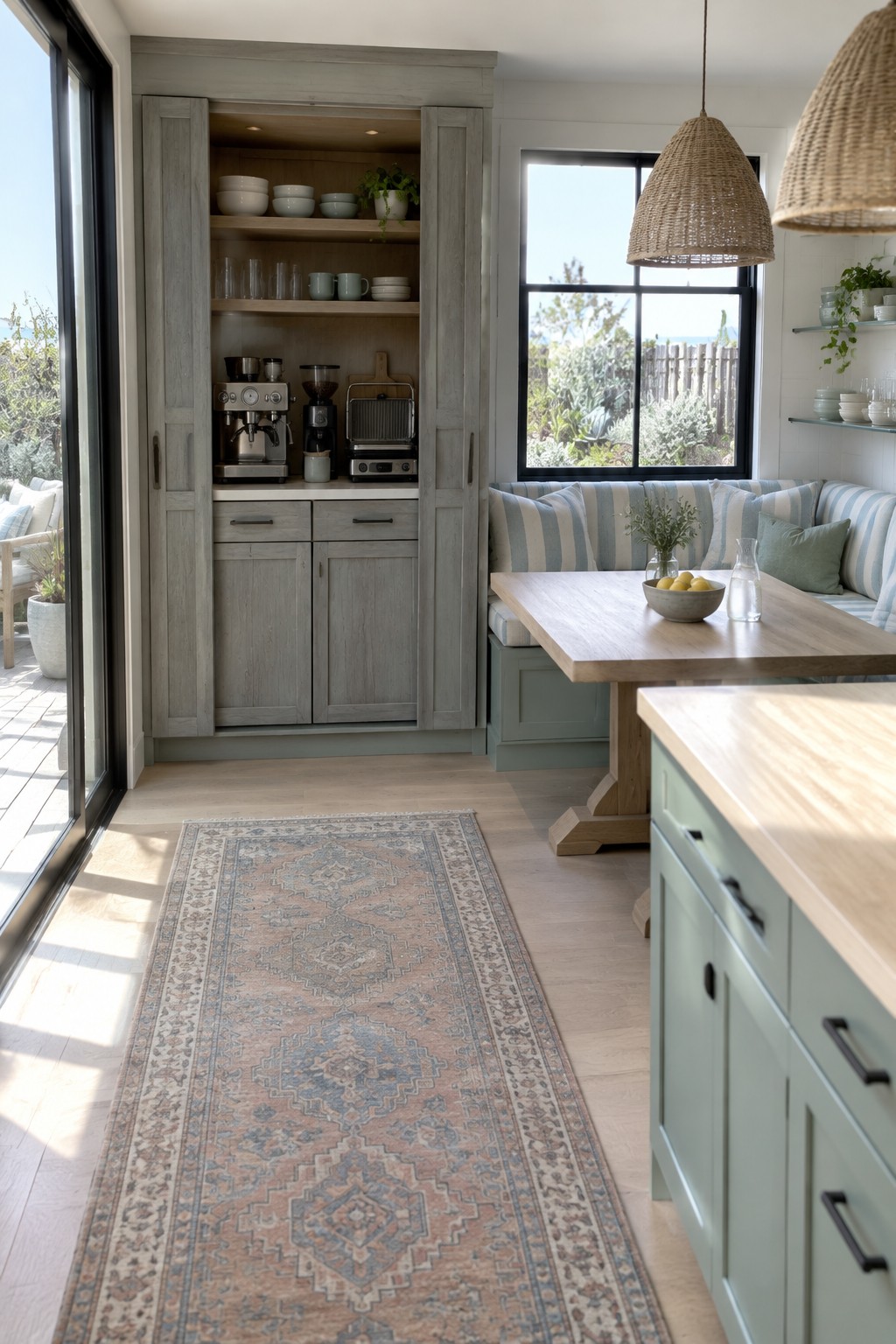
A built-in cabinet can give small appliances a dedicated spot without leaving them on the counter. Here, the coffee maker and grinder sit on a shelf inside the cabinet, ready to use but out of sight when the doors are closed.
This setup works well near a breakfast nook or in a kitchen corner where counter space is limited. Make sure the shelf is deep enough for the appliances, and plan for a nearby outlet so you can use them without moving everything around.
Add an Appliance Garage to a Corner Counter

An appliance garage can keep everyday gadgets close at hand without leaving them out on the counter. In a corner kitchen, this kind of tucked-away storage makes use of a spot that can otherwise be awkward to reach.
A cabinet with doors that open wide gives you room to store a toaster or mixer and use it right on the counter. Keep the outlet easy to reach, and leave enough clearance for the appliance to work safely.
Use a Corner Cabinet for Everyday Appliances

A corner cabinet can give countertop appliances a place to live without making them hard to reach. Here, the open cabinet holds a blender and stand mixer on curved shelves, keeping them close to the work surface but out of sight when the door is closed.
This setup works well in kitchens where counter space is limited and small appliances get used often. Check that the shelves can support their weight and leave enough room to lift each appliance out comfortably.
Build an Appliance Garage Into a Cabinet Wall

A built-in appliance garage keeps everyday equipment handy without leaving it on the counter. Here, the coffee machine sits in an open wood-lined cabinet, with shelves above for mugs and supplies.
This setup works well in a kitchen with a run of tall cabinets, especially near the spot where you make coffee or prepare breakfast. Leave enough room for the appliance to sit and be used comfortably, and plan an outlet inside the cabinet.
Use Open Shelves for Kitchen Storage

Open shelving at the end of a kitchen island can make everyday items easy to reach without taking up more counter space. Here, the shelves hold books and records, but the same idea works for cookbooks, serving bowls, or small appliances you use often.
Keep the shelves shallow enough that items do not stick out into the walkway, and avoid packing them too tightly. This kind of storage suits an island with a finished side, especially when closed cabinets already handle the less tidy kitchen essentials.
Use a Lift-Up Door to Hide Everyday Appliances
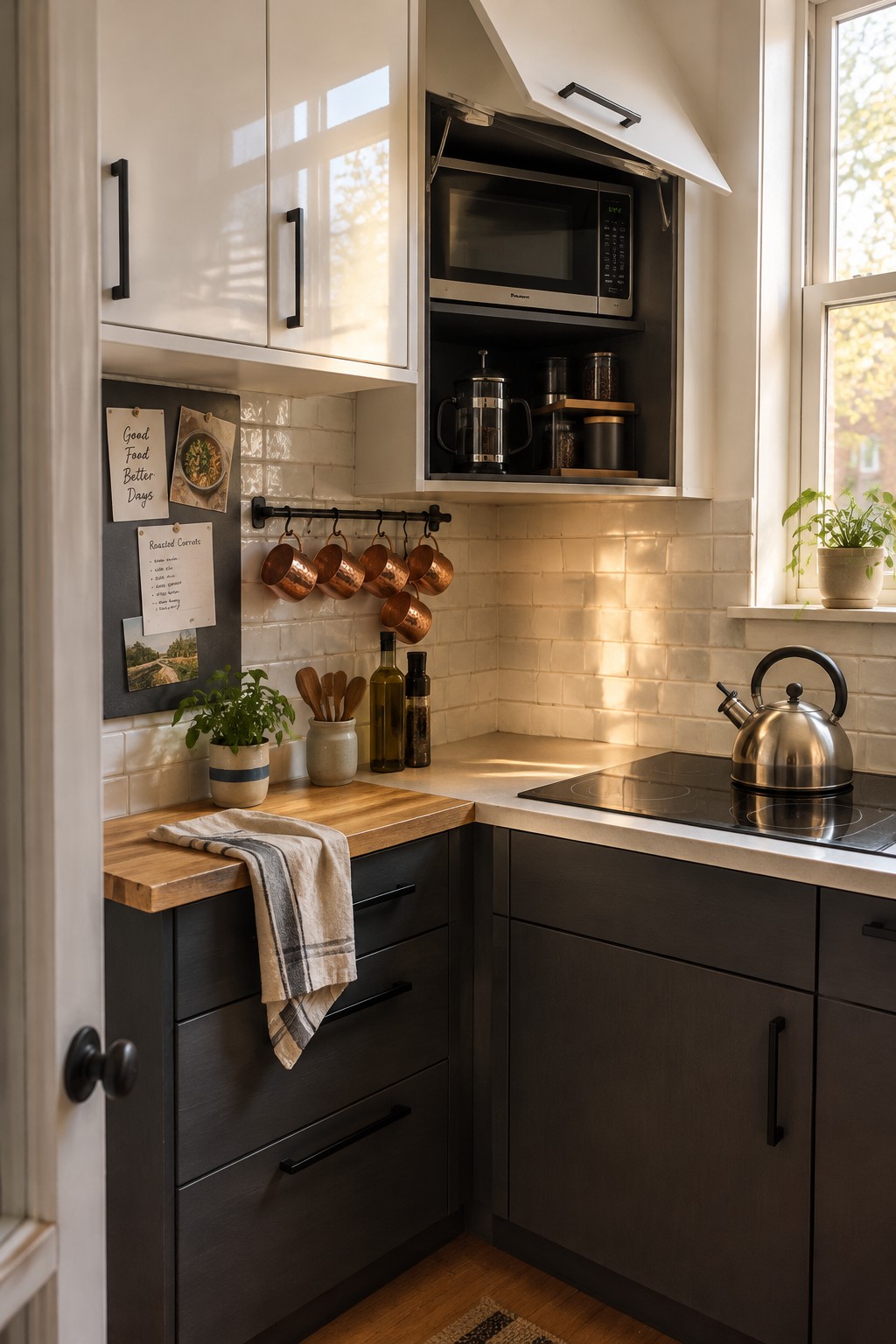
A corner cabinet can hold small appliances close to the counter while keeping them out of sight when they are not in use. The lift-up door makes the contents easy to reach, and the dark interior helps the microwave and coffee gear sit neatly inside.
This setup works well where two counters meet and there is enough cabinet depth for appliances and a little room to use them safely. Check that the door stays open securely, and leave space for heat and ventilation around anything that runs.
Keep Counter Appliances Behind Cabinet Doors

A corner cabinet can serve as a small appliance garage, keeping everyday machines off the counter when they are not in use. Here, the cabinet doors open wide to reveal a shelf for a toaster and a lower pull-out shelf for a kettle and blender.
This setup works well near a prep area, especially in a compact kitchen where counter space is limited. Check that the shelves are deep enough for your appliances and that there is room to use them safely when the doors are open.
Use a Corner Cabinet to Hide Coffee Equipment
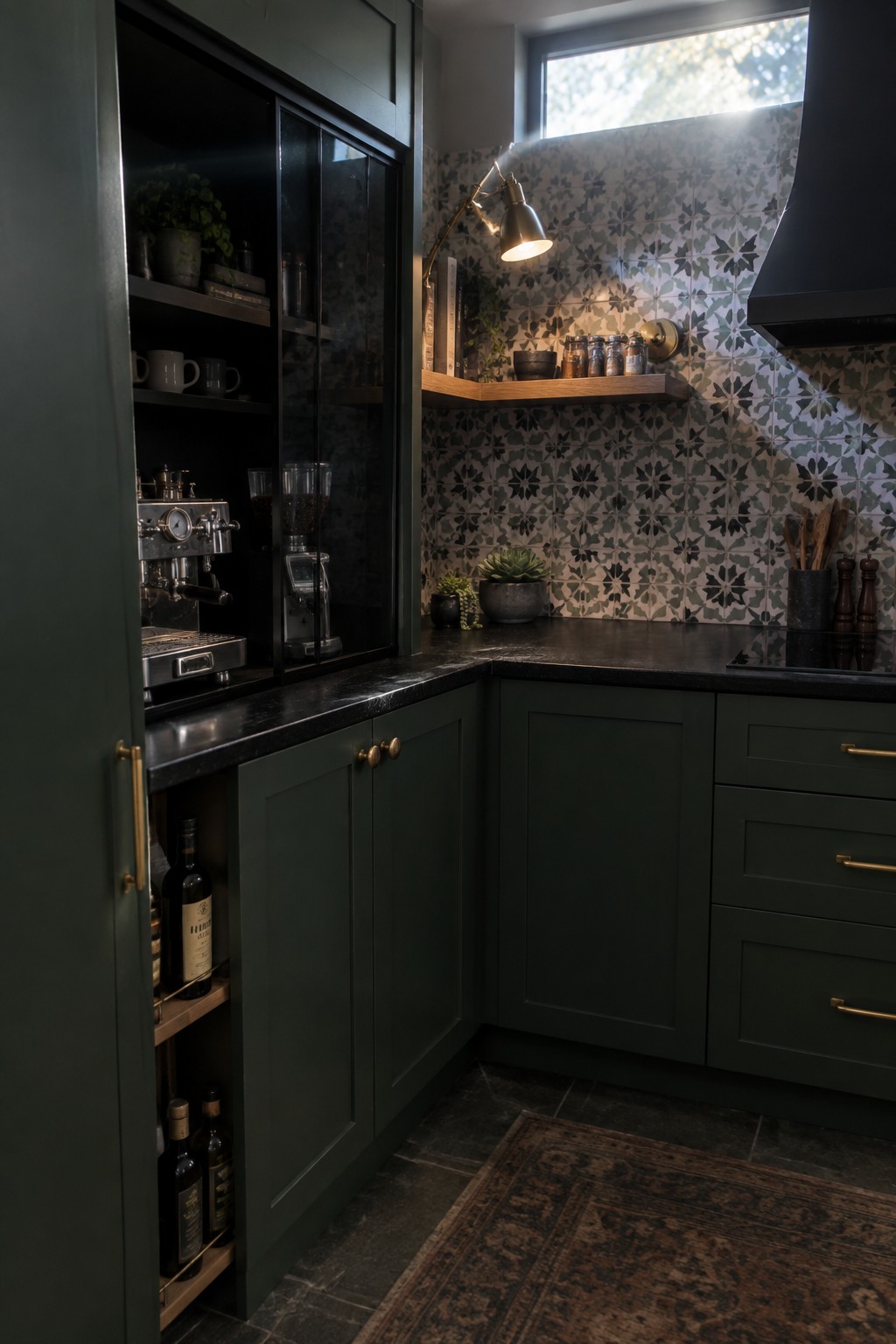
An appliance garage can keep a coffee setup handy without leaving it on the counter. Here, the espresso machine and grinder sit inside a dark, glass-fronted cabinet, so they’re easy to reach but less noticeable when not in use.
For a similar setup, plan the cabinet around the height and depth of your appliances, and leave room to open doors and work comfortably. A corner location can make good use of space that might otherwise be awkward, but check that nearby outlets are easy to reach.
Keep Countertop Appliances Behind Cabinet Doors

A corner cabinet can serve as a handy appliance garage, keeping everyday machines close to the work area but out of sight when they are not in use. The open cabinet here has room for a blender and food processor, so the counter stays clear.
This setup works well in kitchens where small appliances get used often. Add outlets inside the cabinet and leave enough room for each machine to sit ready to use. Make sure the doors open fully and do not block the counter while you work.
Use a Corner Cabinet for Everyday Appliances

A corner cabinet can keep small appliances close at hand without leaving them on the counter. This setup has a recessed space for a stand mixer and toaster, so they stay easy to reach but out of sight when the cabinet is closed.
Leave enough room to lift appliances out comfortably, and check that the cabinet has a nearby outlet if you plan to use them inside. This approach works well in an L-shaped kitchen where a corner would otherwise be awkward to use.
Make a Corner Cabinet Work as a Coffee Station

A corner cabinet can hold the small appliances you use every day without leaving them on the main counter. Here, a pull-out shelf brings the coffee grinder and kettle forward when needed, then slides them back out of the way.
This setup works well when you have enough cabinet depth and an outlet inside or nearby. Check that the shelf can carry the appliance weight and that the kettle has room to pour safely when it is pulled out.
Use a Narrow Corner Cabinet for Pantry Storage
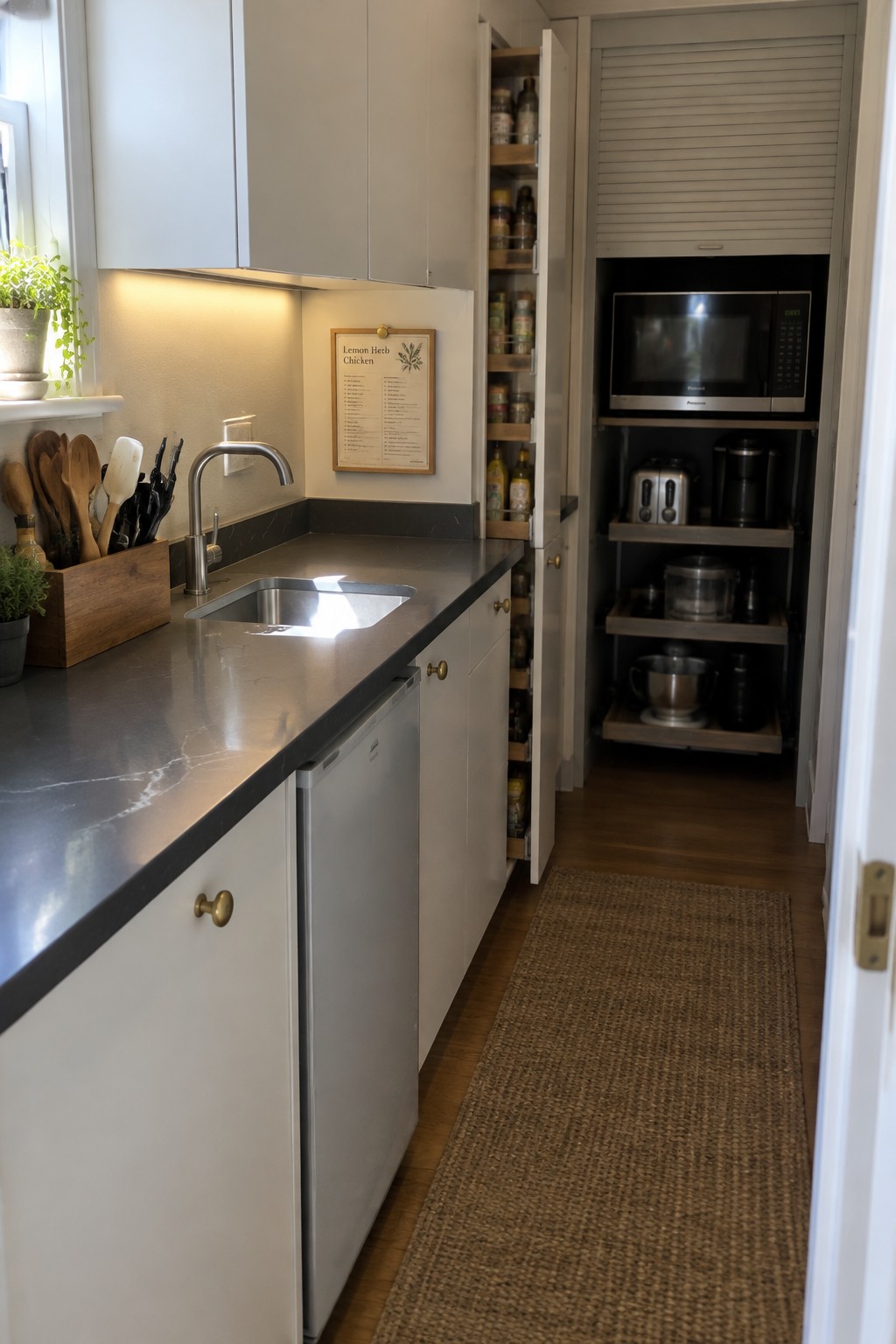
A slim pull-out cabinet can make a narrow kitchen corner useful without taking up much counter space. This one keeps jars and bottles easy to reach while leaving the main work surface clear.
This setup works well beside a counter or tall appliance cabinet, especially in a galley kitchen where storage is tight. Check that the shelves are easy to access and sized for the items you keep there.
Use a Corner Cabinet for Built-In Appliance Storage

A corner cabinet can do more than hold dishes. A recessed counter area inside the cabinetry keeps everyday appliances close at hand without leaving them out on the main work surface. The built-in look also suits a kitchen with traditional wood cabinets.
If you are planning one, check that the opening has enough room for the appliances you use most, such as a toaster or stand mixer. Add accessible outlets and leave space around appliances that need ventilation.
Use a Tall Corner Cabinet for Appliance Storage

A tall corner cabinet can hide small appliances while keeping them close to the kitchen work area. Open shelves inside make it easier to store items you use often, so the counter stays clear without sending everyday gear to a faraway cupboard.
This setup suits kitchens with an awkward corner or limited counter space. Leave enough room for the appliance doors to open comfortably, and keep heavier items on shelves you can reach without stretching.
Keep the Appliance Garage Out of Sight
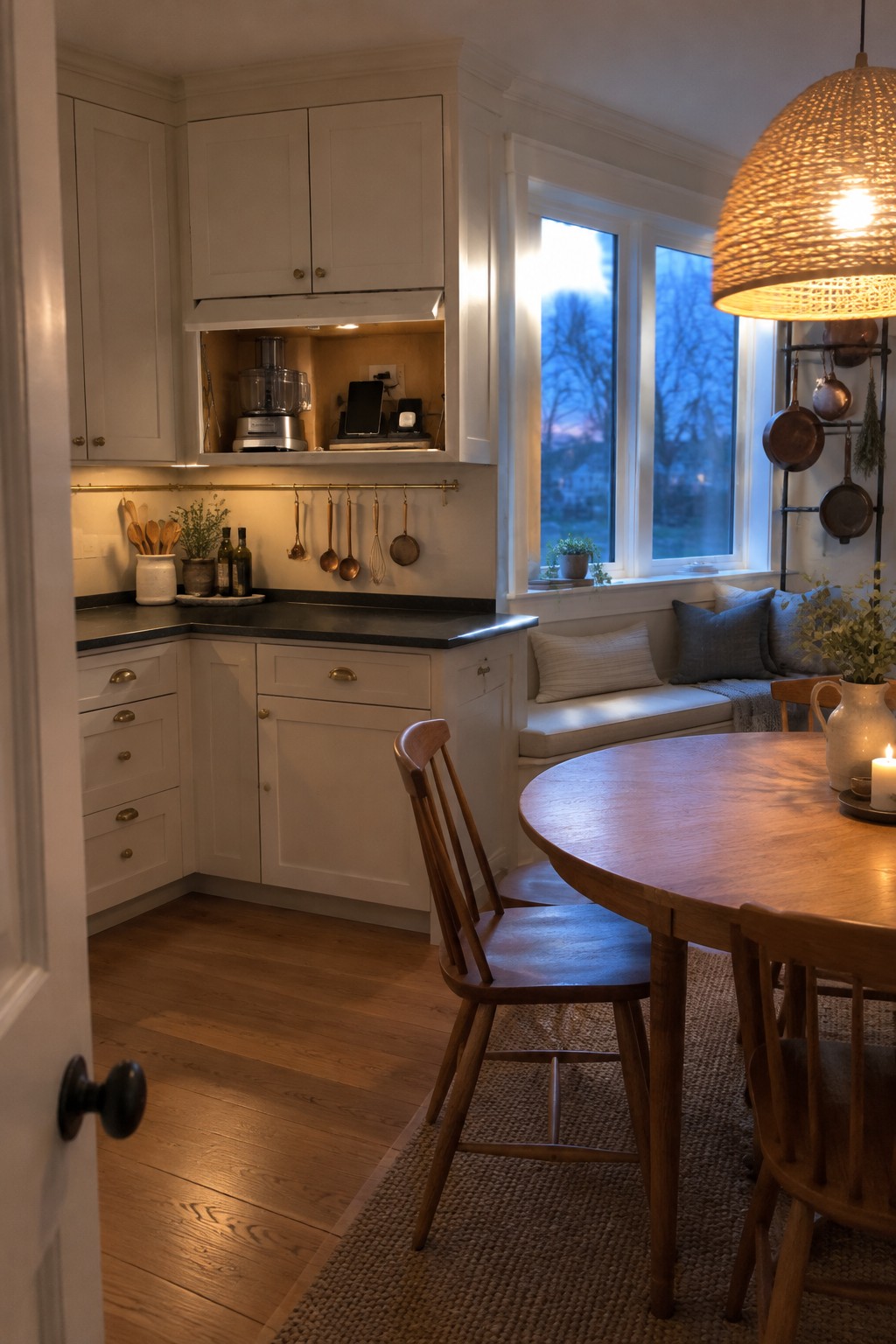
An appliance garage can make a small kitchen feel less cluttered by giving everyday machines a dedicated home. Here, the counter appliances sit in a recessed space behind cabinet doors, leaving the main work surface clear.
This approach works well in a corner or beside a main prep area, especially when outlets are included inside the cabinet. Check that the opening is wide enough for the appliances you use most, and leave room to pull them forward safely.
Store Compost Supplies in a Corner Cabinet
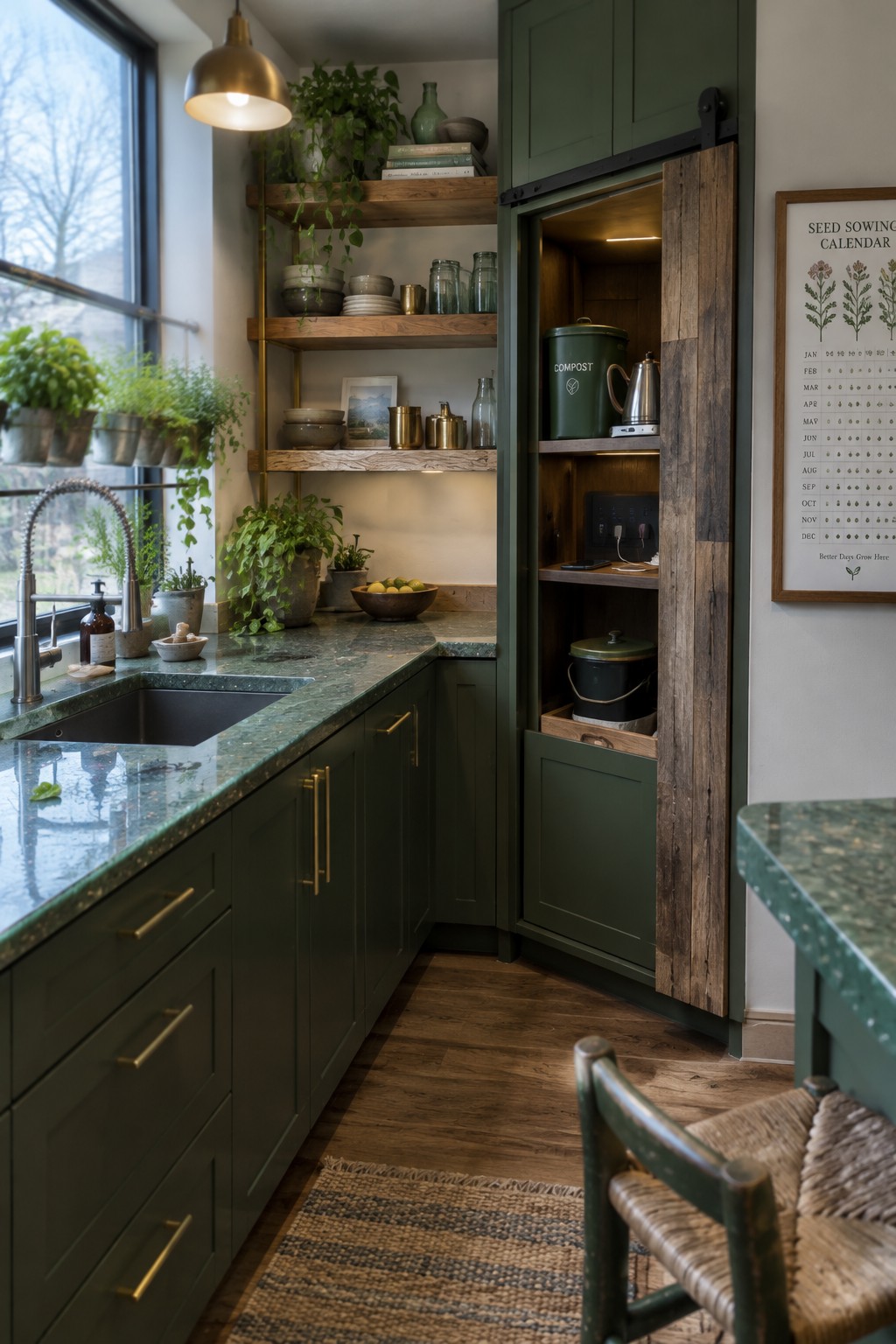
An appliance garage can do more than hide a toaster or coffee maker. A tall corner cabinet can also keep compost supplies tucked out of sight while leaving everyday counter space free. This one uses a sliding wood door, so the contents stay easy to reach.
Use adjustable shelves to fit bins, small appliances, or other kitchen items, and keep heavier containers on the lowest shelf. This approach works well in a compact kitchen, but leave enough room for the door to slide without blocking a walkway.
Frequently Asked Questions
Q: What should I store in an appliance garage?
A: Keep the appliances you use often, like a coffee maker, toaster, or blender, within easy reach. Check that each one fits with its lid open and has enough room for cords and ventilation.
Q: Can I use an appliance garage in a corner cabinet?
A: Yes, but make sure you can reach everything inside without stretching around a fixed shelf or door. A pull-out shelf or a door that folds back can make a deep corner much easier to use.
Q: Do appliance garages need an outlet inside?
A: An outlet inside the cabinet can save you from moving appliances to use them, but it needs to be installed safely and meet local electrical rules. If you add one, plan for cord access and ventilation so the cabinet doesn’t become cramped or stuffy.
Q: How do I keep an appliance garage from looking cluttered?
A: Leave a little breathing room around each appliance and tuck cords away with clips. If the cabinet is packed tight, you’ll end up pulling everything out just to use one thing.