

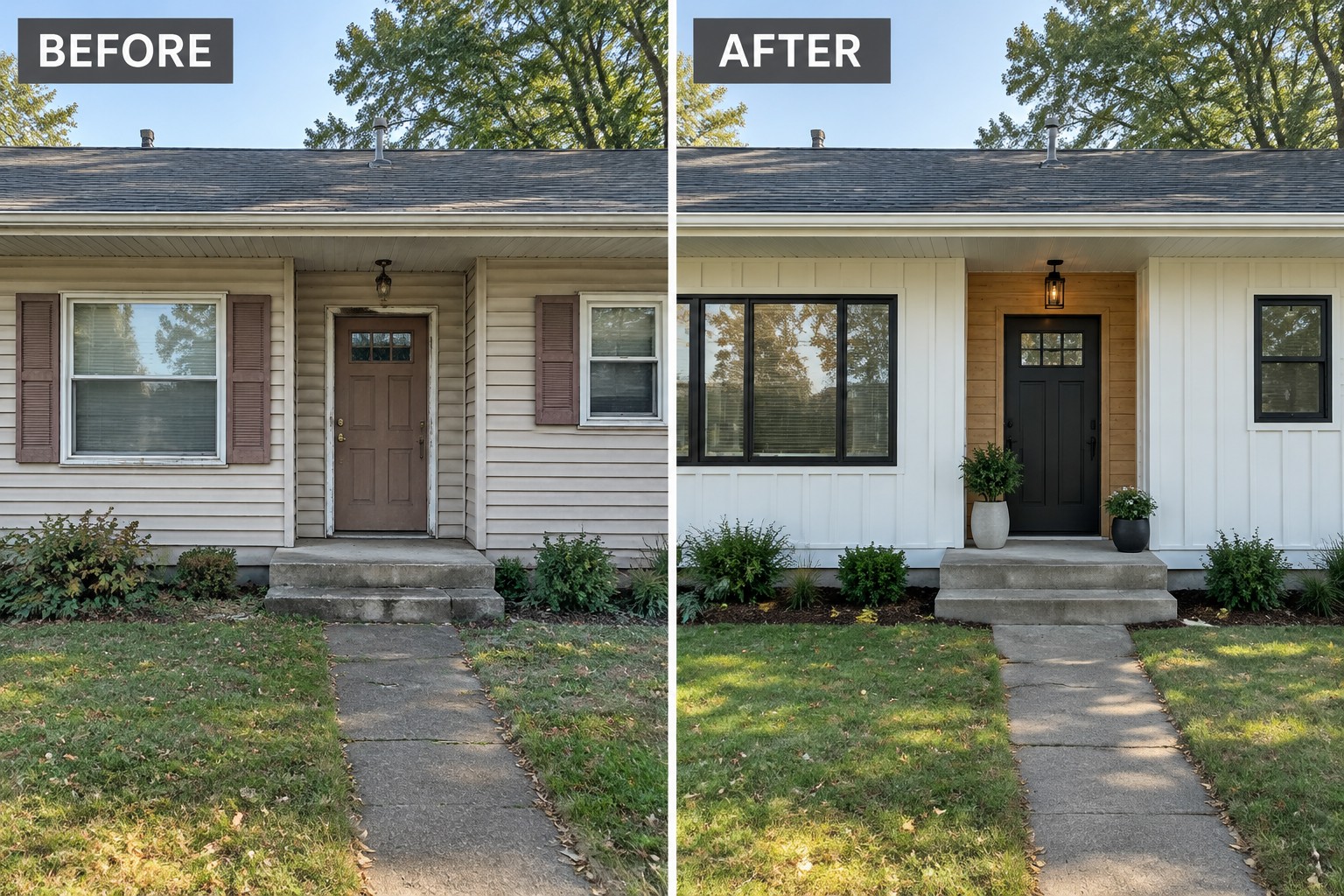
I have noticed how beige and tan siding tends to flatten the look of a house from the street, especially when the material starts to show its age.
Choosing a modern siding option can bring out rooflines and window placements that were always there but never stood out.
A few material swaps often make the entry feel more connected to the rest of the facade without touching the structure itself.
Small samples on the wall help more than photos ever do.
I like to check how the new color sits next to the existing roof and trim before deciding on the final direction.
Paint Beige Siding White To Brighten The Front
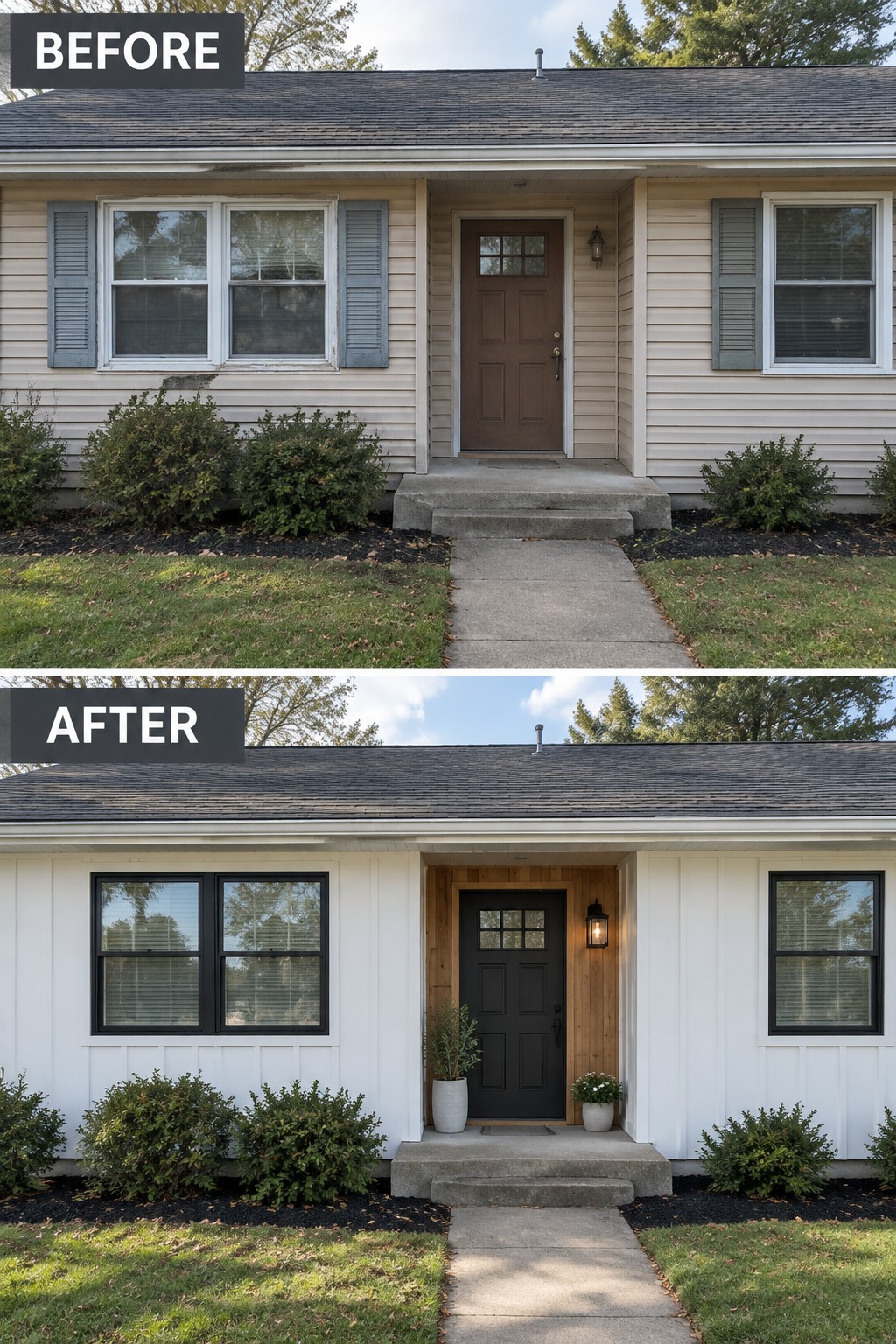
Many older homes end up with that flat beige siding that makes the whole place feel dated and dull. Switching to white siding lifts the look right away and gives the house a cleaner, more current feel without any major structural changes.
This approach works well on simple one-story homes with basic trim. Choose a durable exterior paint, paint the window frames black for contrast, and swap the front door to a darker color. A couple of planters by the steps help tie the new look together without adding clutter.
Update Dated Beige Siding With Dark Color And Stone Base
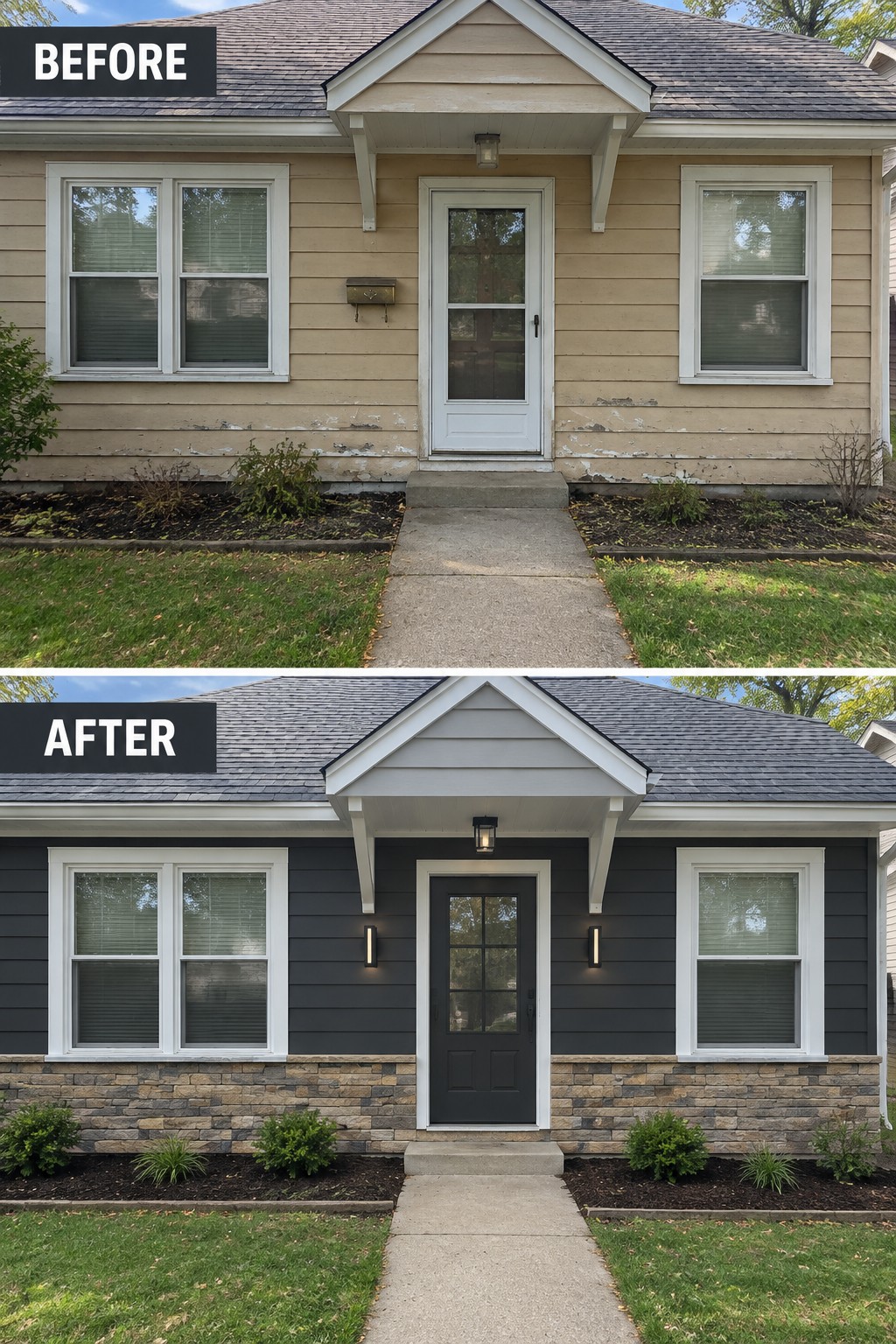
Switching from faded beige siding to a deep charcoal gray instantly gives the house more weight and presence. Adding a stone base at the bottom also helps the foundation feel like part of the design instead of something left unfinished.
This works well on single-story homes where the siding takes up most of the front. Keep the trim light and add a couple of simple wall lights near the door so the entry reads as intentional rather than an afterthought.
Refresh Dated Beige Siding With A Lighter Neutral Paint
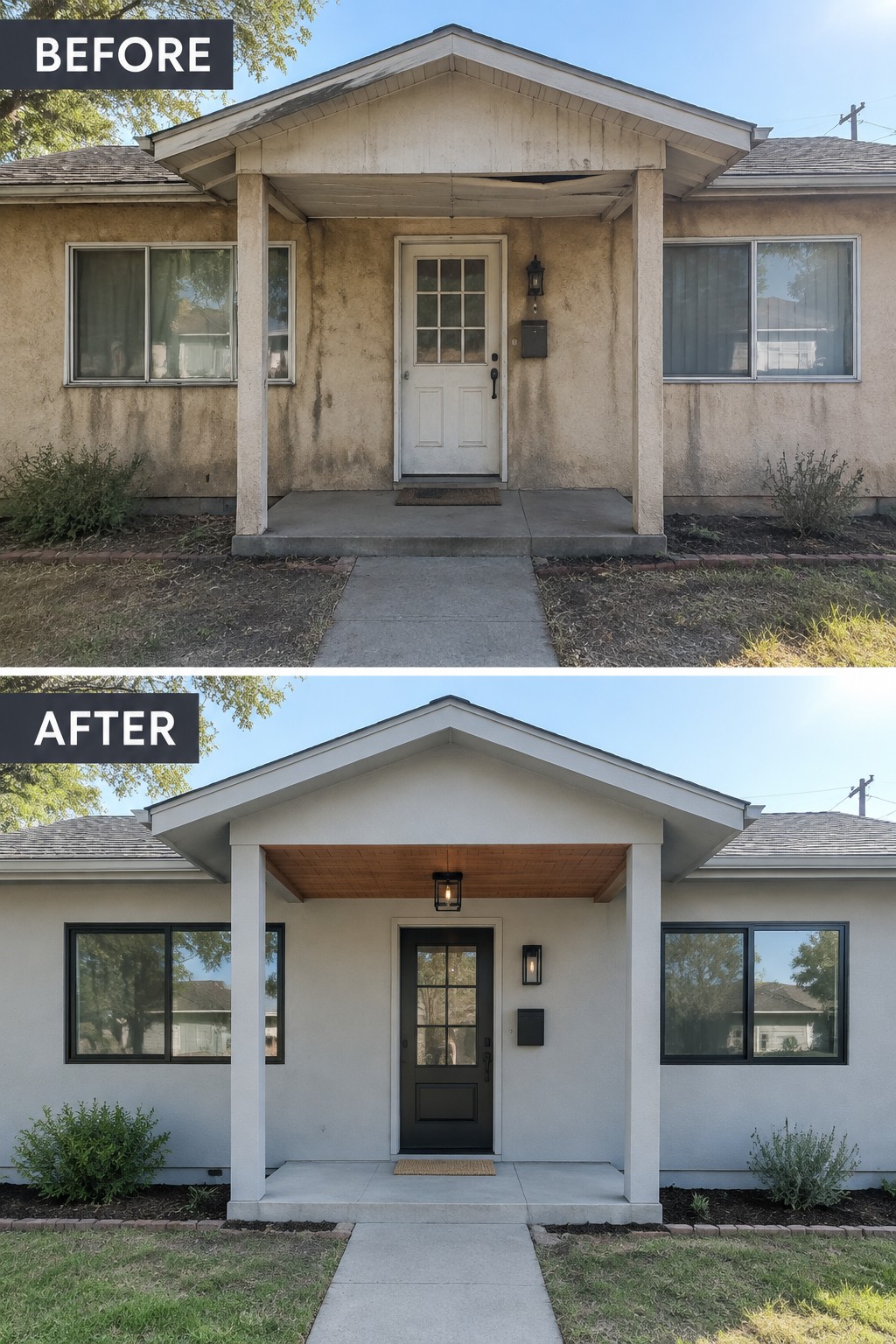
Painting the siding a soft gray instantly lifts the whole front of the house. The change moves the exterior away from the tired beige tone and pairs it with a black door and black window frames that give the facade more definition. This simple color shift makes the entry feel more current without any structural work.
The same approach works well on stucco homes that still have solid bones but look flat from the street. Start with the siding color first, then bring in dark trim or a new door to add contrast. Keep the rest of the updates minimal so the paint job stays the main focus.
Paint Dated Beige Siding A Dark Color For Stronger Curb Appeal
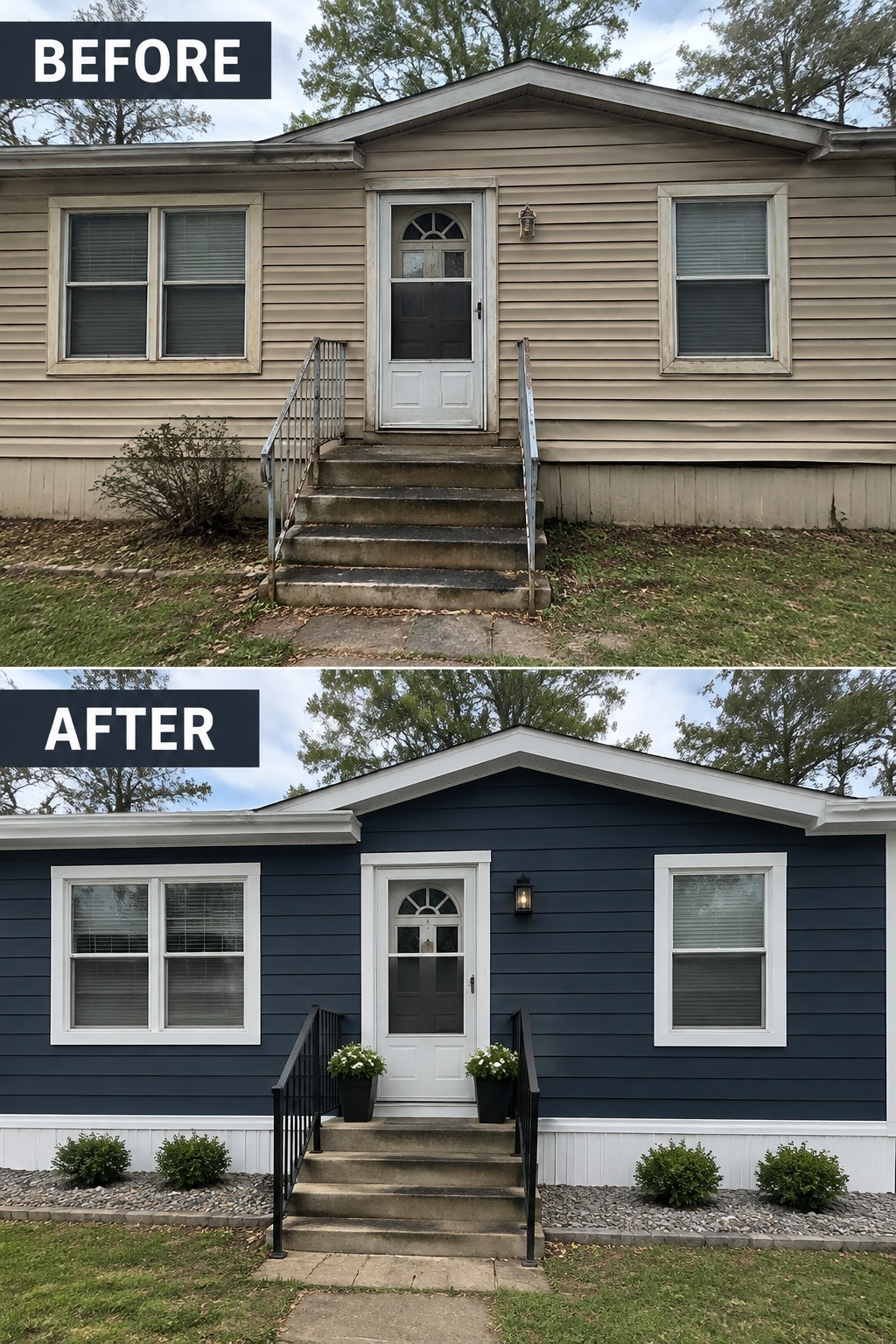
A dark navy siding color can make a simple beige house feel much more current. The light tan siding on this home blended into the background and made the whole front look flat. Switching to a deep blue created contrast with the white trim and door, so the entry stands out right away.
This approach works best on single-story homes with straightforward lines. Focus on thorough surface prep and a good exterior paint, then add black railings and a couple of planters to finish the update without extra cost. The result feels intentional even if the rest of the yard stays simple.
Refresh Dated Beige Siding With A Darker Color And Porch Updates
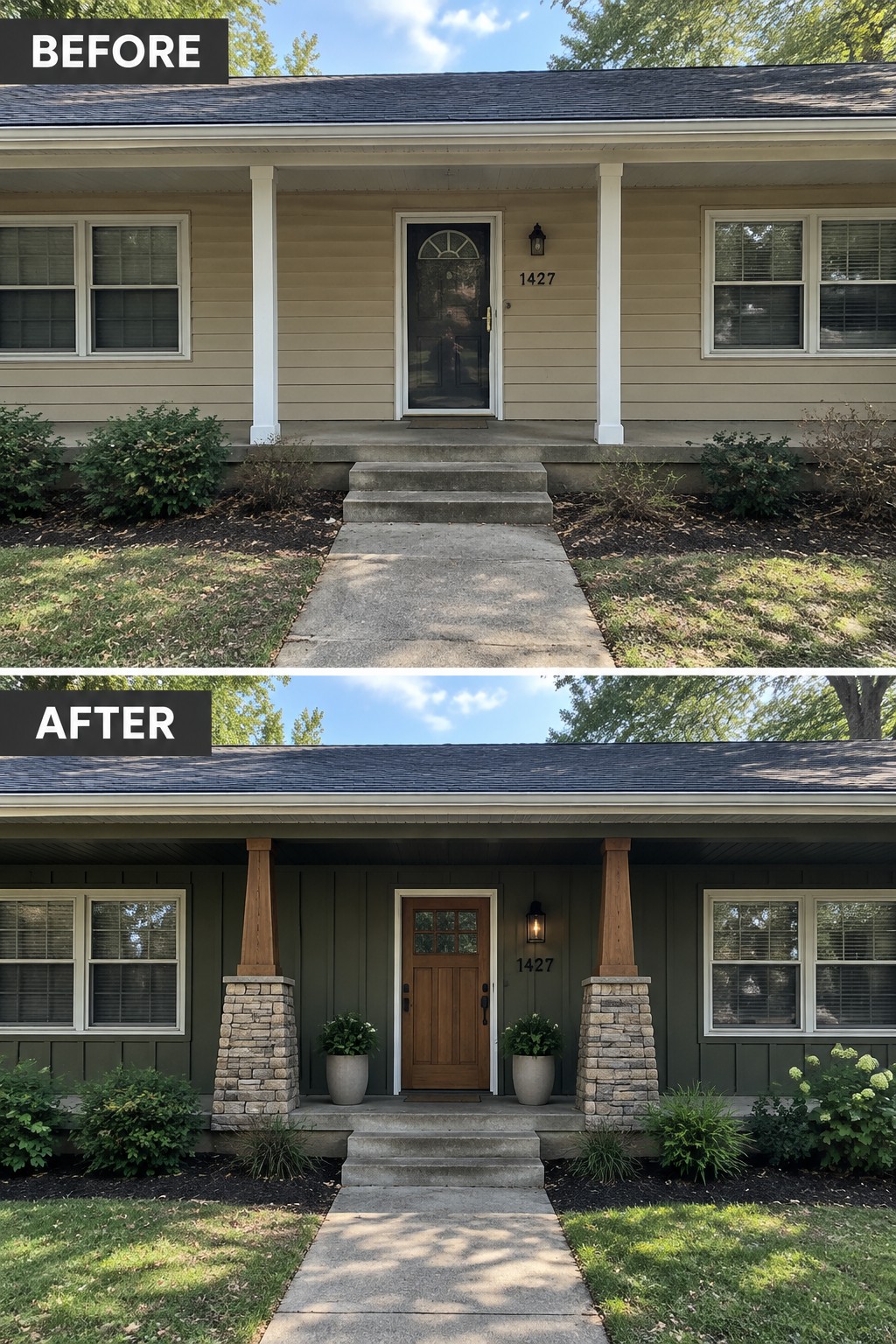
Many beige houses look flat because the siding color blends into the trim and the porch feels unfinished. Switching to a deeper green siding gives the whole facade more weight, while wrapping the columns in stone and adding wood caps makes the entry look more solid and intentional. The new door color helps tie it together without needing a full rebuild.
This approach works well on ranch-style homes or simple one-story houses where the porch is the main feature. Start by picking a siding color that contrasts with the roof, then update the columns and door so the changes read as one project rather than scattered fixes. Keep the planting simple at first so the color and structure do the main work.
Add A Wood Accent To Modernize A Beige Entry
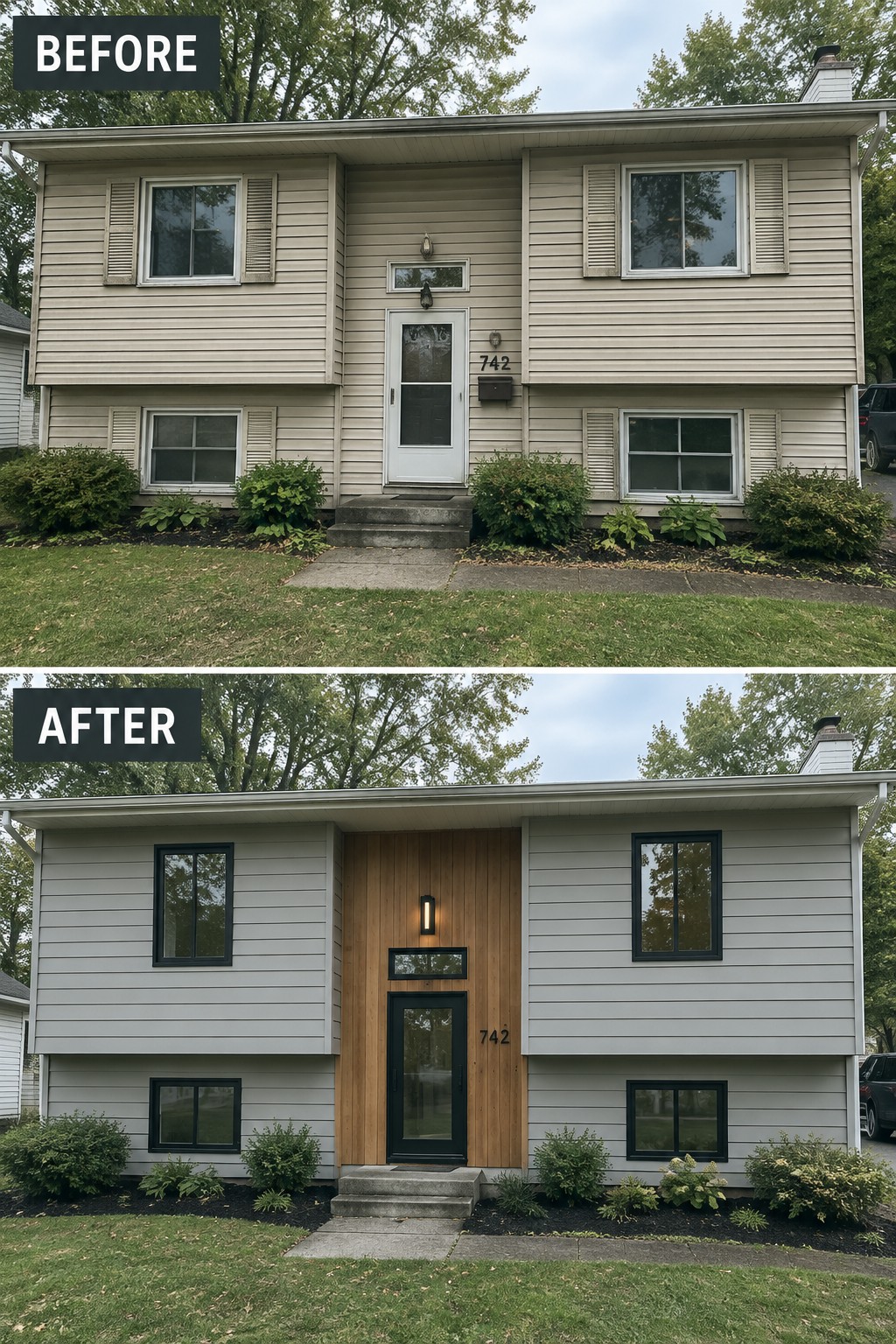
Many beige houses from past decades have flat siding that makes the front door blend into the rest of the facade. Adding a vertical wood panel around the entry creates a clear focal point and breaks up the wide stretch of siding without needing to repaint the entire house.
This idea works best on homes with a centered or slightly recessed door where the wood can run floor to roofline. Keep the rest of the siding simple and use dark window frames to match the new door. The change stays affordable and reversible if you want to try a different look later.
Refresh A Dated Beige Brick House With Dark Exterior Paint
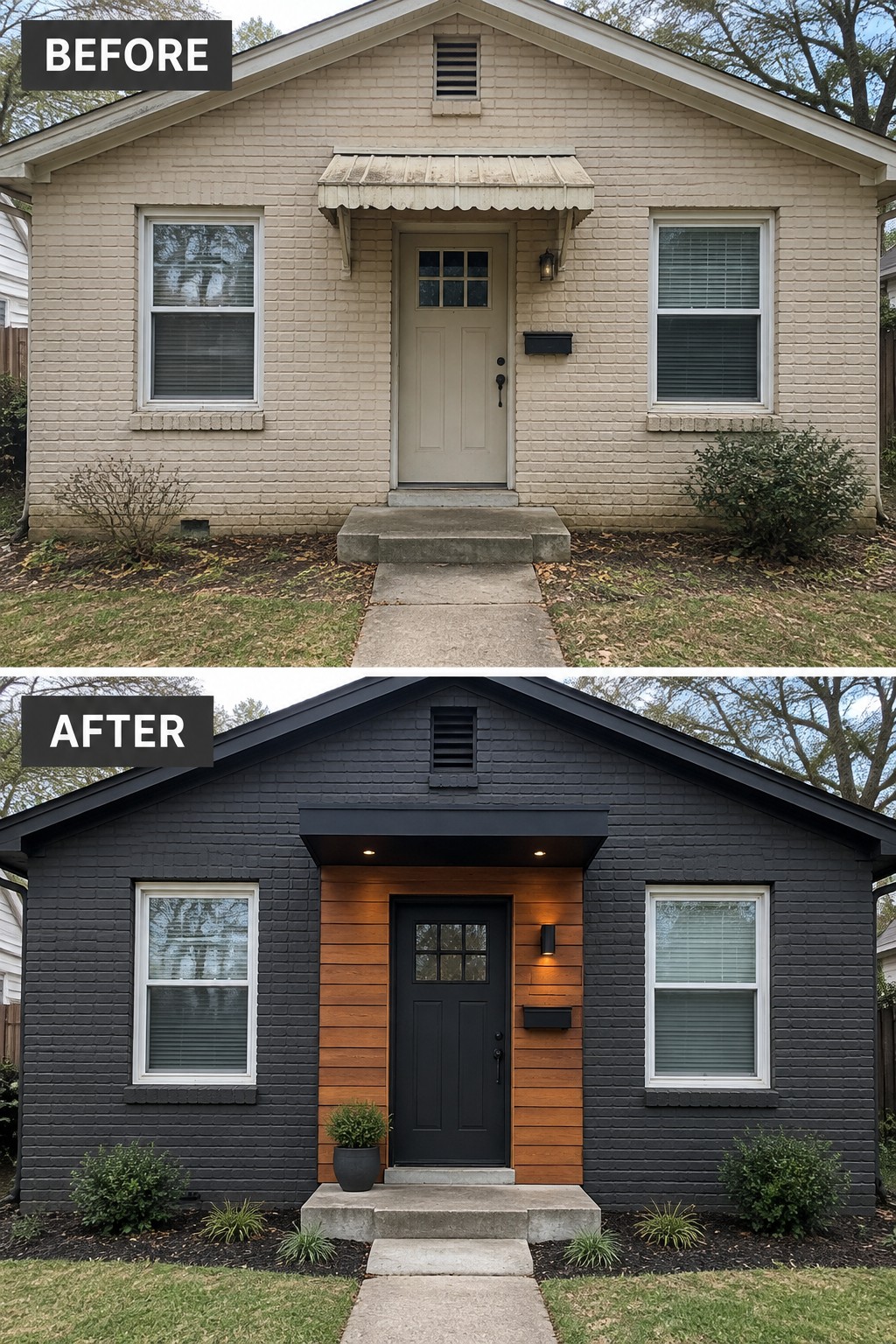
Painting the outside of a beige brick house can shift its entire look without major construction. The before photo shows a flat, dated facade with an old metal awning and light siding. In the after, dark paint covers the brick, the awning is gone, and the entry gains wood accents and a black door that stand out more clearly.
This approach works well on simple one-story homes where the brick feels tired but still sound. Choose a deep color that suits your roof and trim, then add one warm material like wood near the door so the house does not feel too flat. Keep the rest of the updates minimal so the paint does the main work.
Pick A Dark Front Door To Update Beige Siding
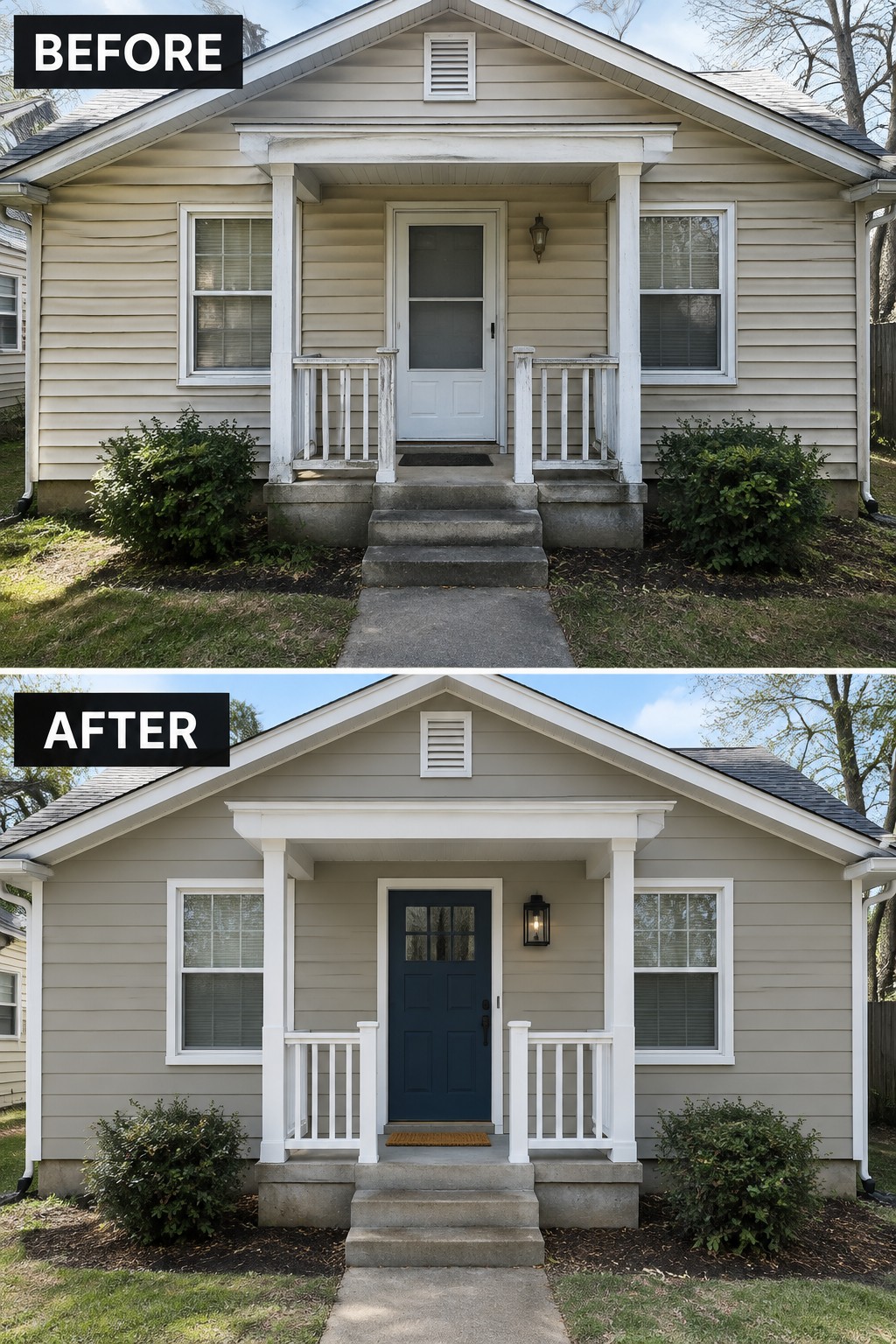
Many beige houses end up looking flat because the siding, trim, and door all sit at the same light tone. Changing just the front door to a deep navy color gives the entry a clear focal point and makes the house feel more current without repainting the entire exterior.
This idea works best on simple one-story homes where the porch is small and the siding is plain. Choose a door color that contrasts with both the siding and the white trim, then keep everything else minimal so the door stays the main feature.
Update Beige Siding With A Cooler Gray And Wood Trim
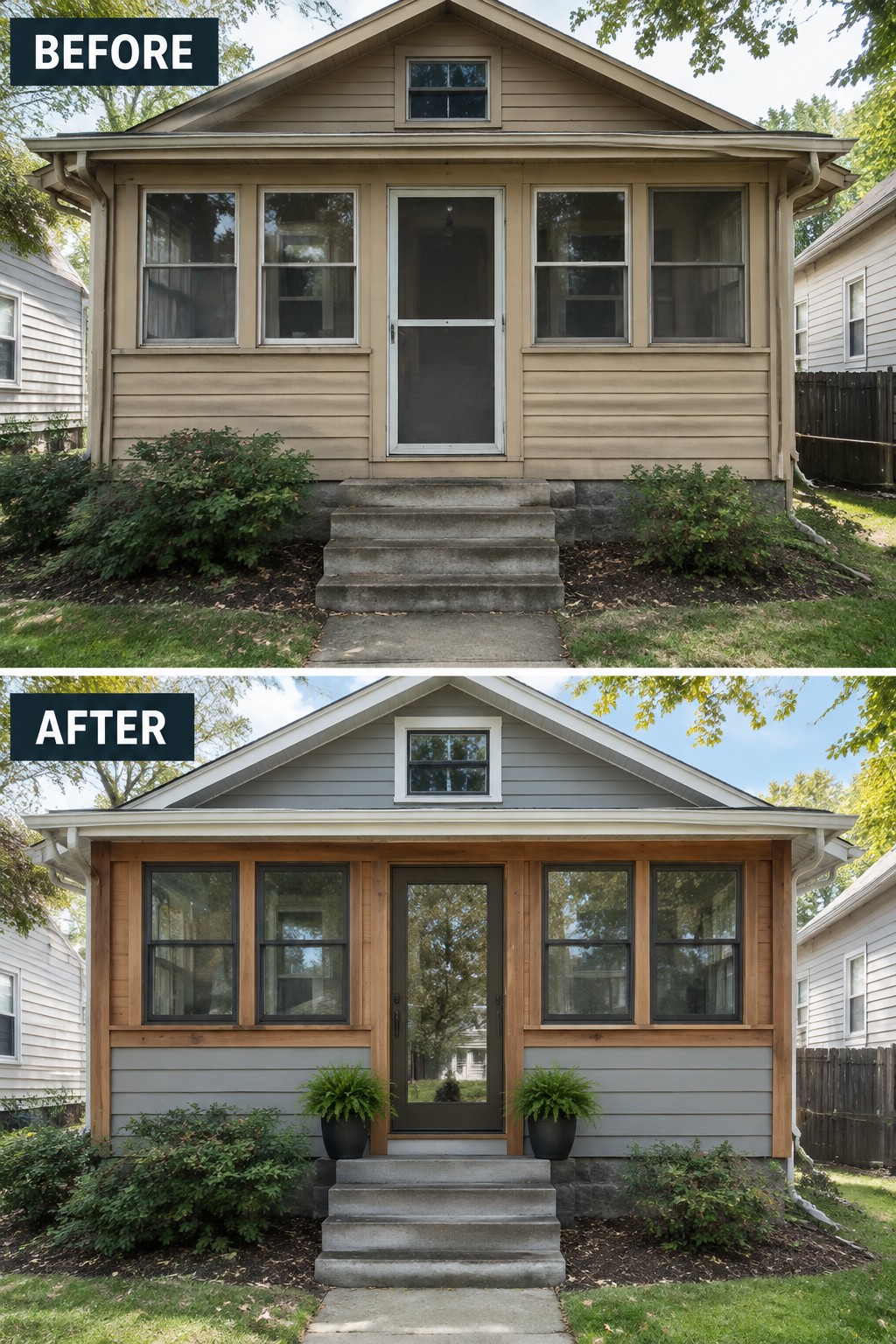
A dated beige exterior often looks flat because the color blends into the trim and roof. Switching to a soft gray siding and wrapping the windows and porch in wood gives the house a sharper outline and makes the entry feel more intentional.
This idea works best on smaller homes where siding covers most of the visible surface. Choose a gray that sits between the roof and foundation tones, then use the wood only on the front face so the change stays focused and affordable.
Paint Dated Beige Siding A Fresh Color
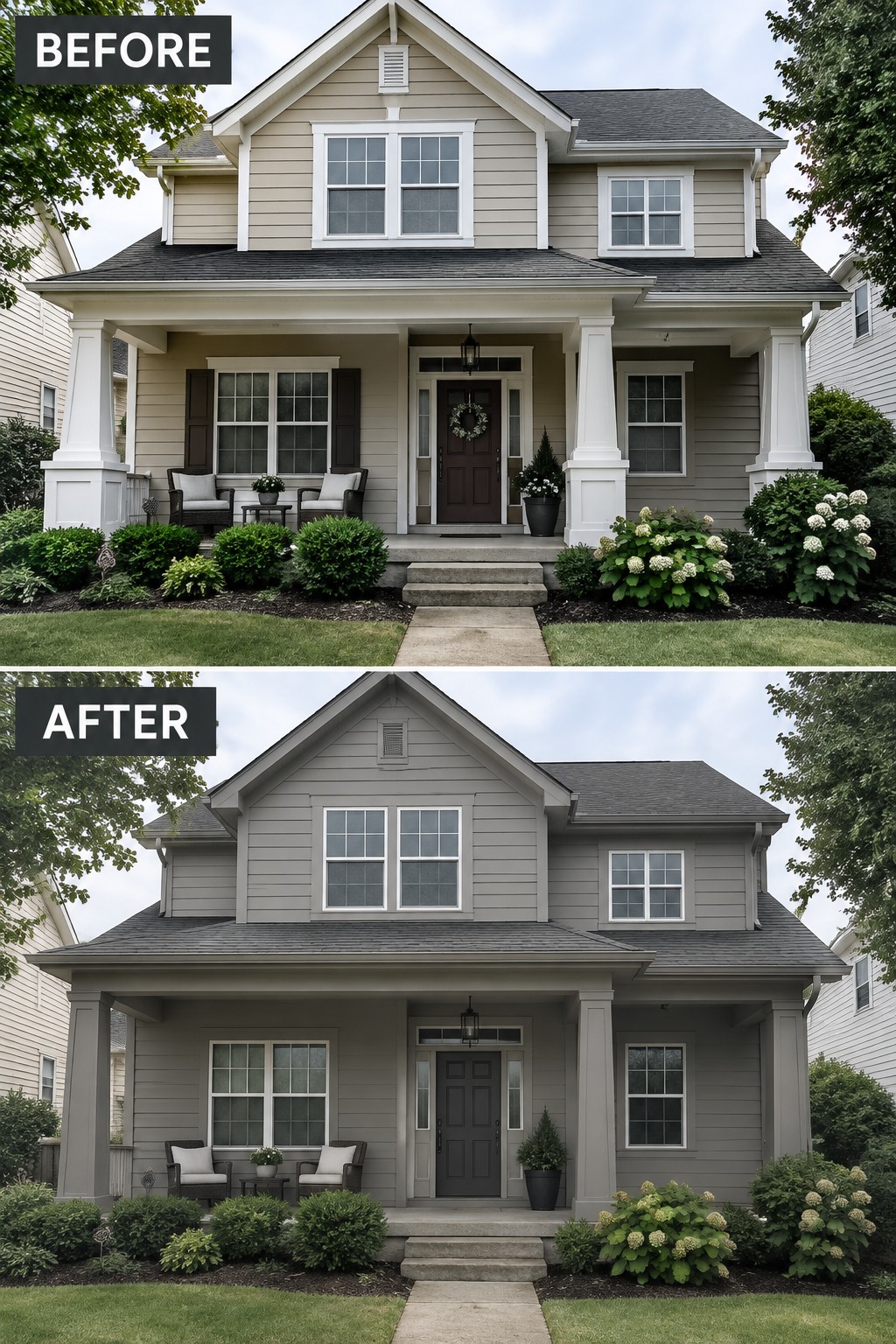
A simple color change on the siding can pull an older house together fast. In this case the beige had started to look flat and tired next to the white trim and dark roof. Switching to a soft gray gave the whole front a cleaner, more current shape without any structural work.
This approach works well on houses that already have decent proportions and just need the surfaces refreshed. Pick a color that sits between your roof and trim tones so nothing fights. Start with the siding first, then decide if the door needs to shift too. It keeps the project manageable and shows results right away.
Update Dated Beige Siding With A Dark Modern Color
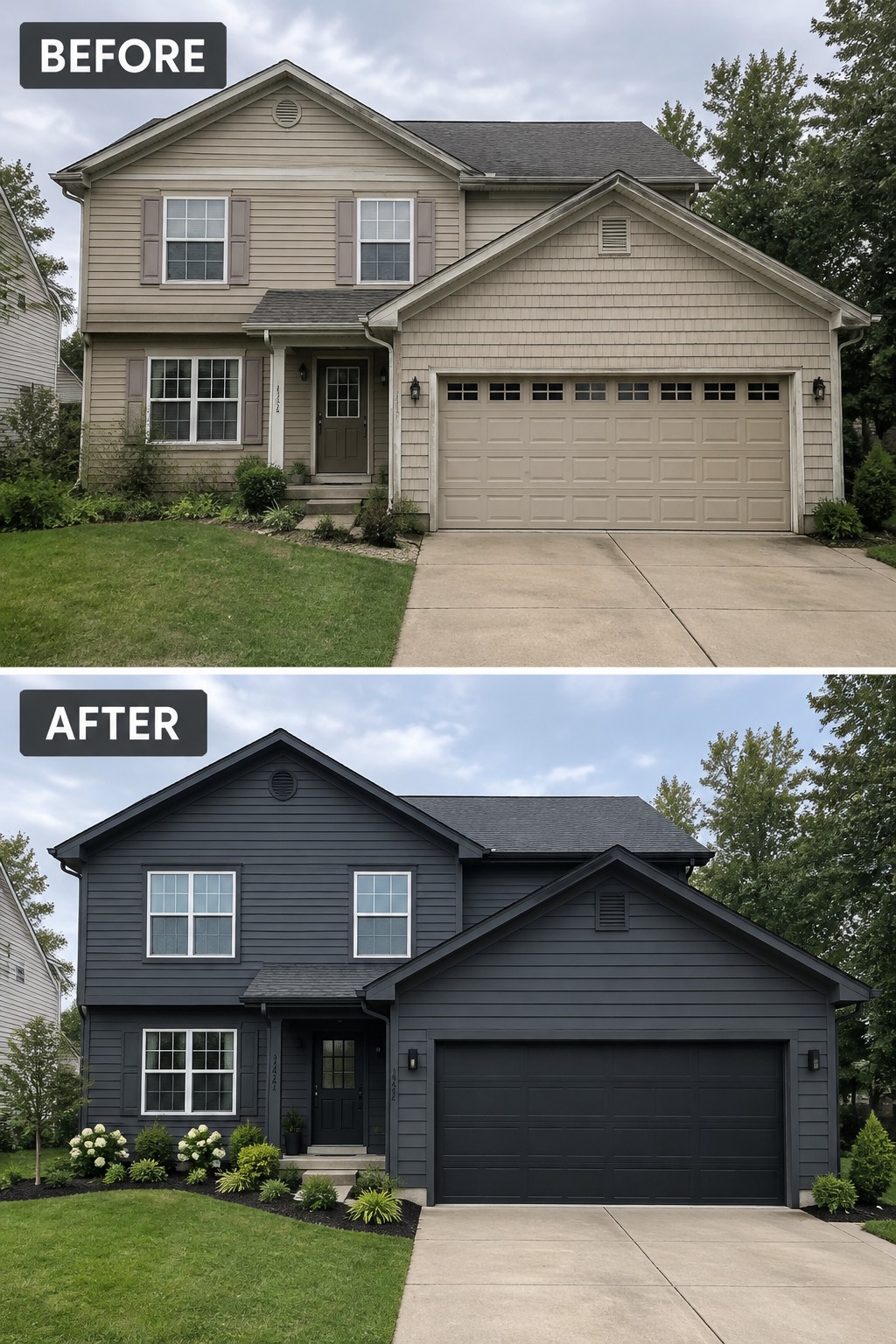
Many beige houses from past decades end up looking flat once the color fades. Switching to a deep charcoal or near-black siding gives the facade a cleaner shape and stronger presence without needing major structural changes. The garage door blends in better too when it matches the new color.
This approach works best on homes with simple rooflines and attached garages. Start with the siding color first, then adjust shutters or the front door if needed. It suits neighborhoods where tan exteriors now stand out as older, and it keeps the focus on the house rather than added trim or decorations.
Update Beige Siding With Dark Color And Stone Base
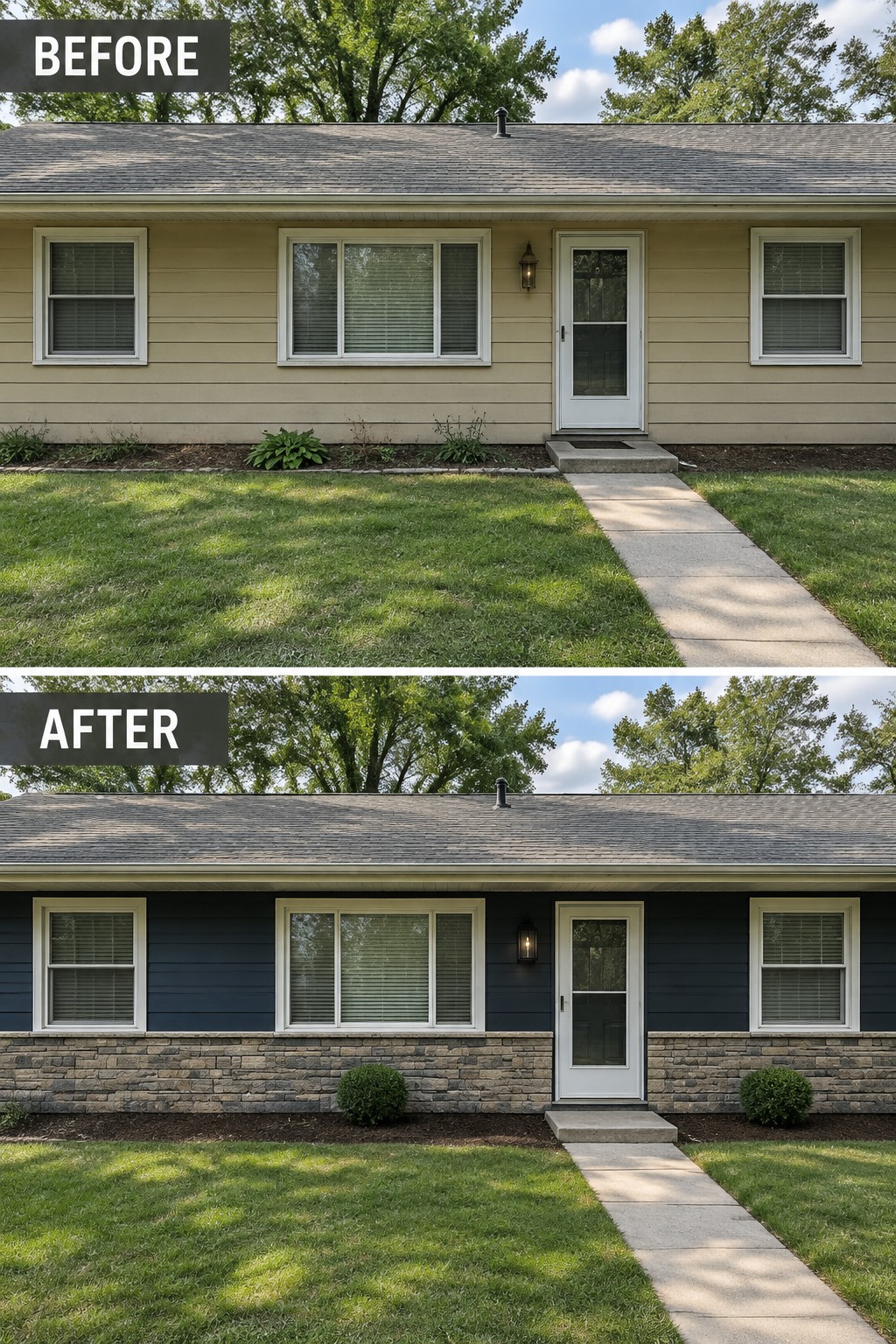
Beige siding often makes a house look flat and older than it is. Switching to a dark navy shade gives the walls more weight, and adding a low stone base breaks up the long horizontal lines so the house feels more finished and solid.
This works best on ranch homes or single-story houses where the siding is the main surface. Choose a color that still suits the neighborhood, and keep the stone band low and simple rather than trying to cover too much of the foundation.
Refresh Dated Beige Siding With A Simple Color Change
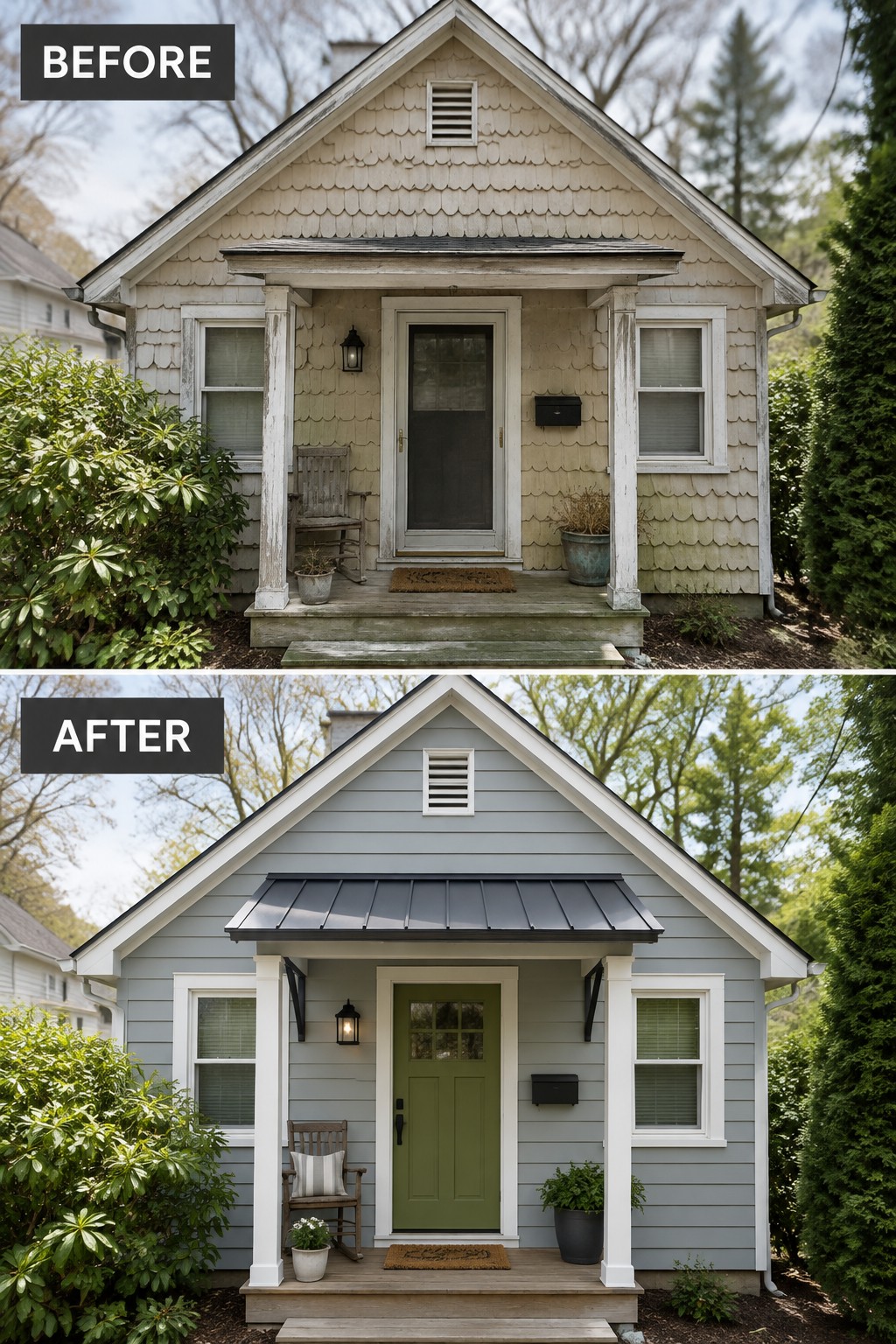
Many beige houses from past decades end up looking flat and tired once the paint fades. A new siding color in soft gray, paired with fresh white trim and a dark metal roof over the porch, gives the whole front a cleaner and more current feel. The green door adds just enough contrast to make the entry stand out without extra decoration.
This approach suits smaller homes where siding covers most of the visible exterior. Focus on one main color shift first, then add a simple accent like the roof or door so the change stays easy to manage. It keeps the house looking updated while still fitting the original shape and scale.
Refresh Dated Beige Siding With A Lighter Color
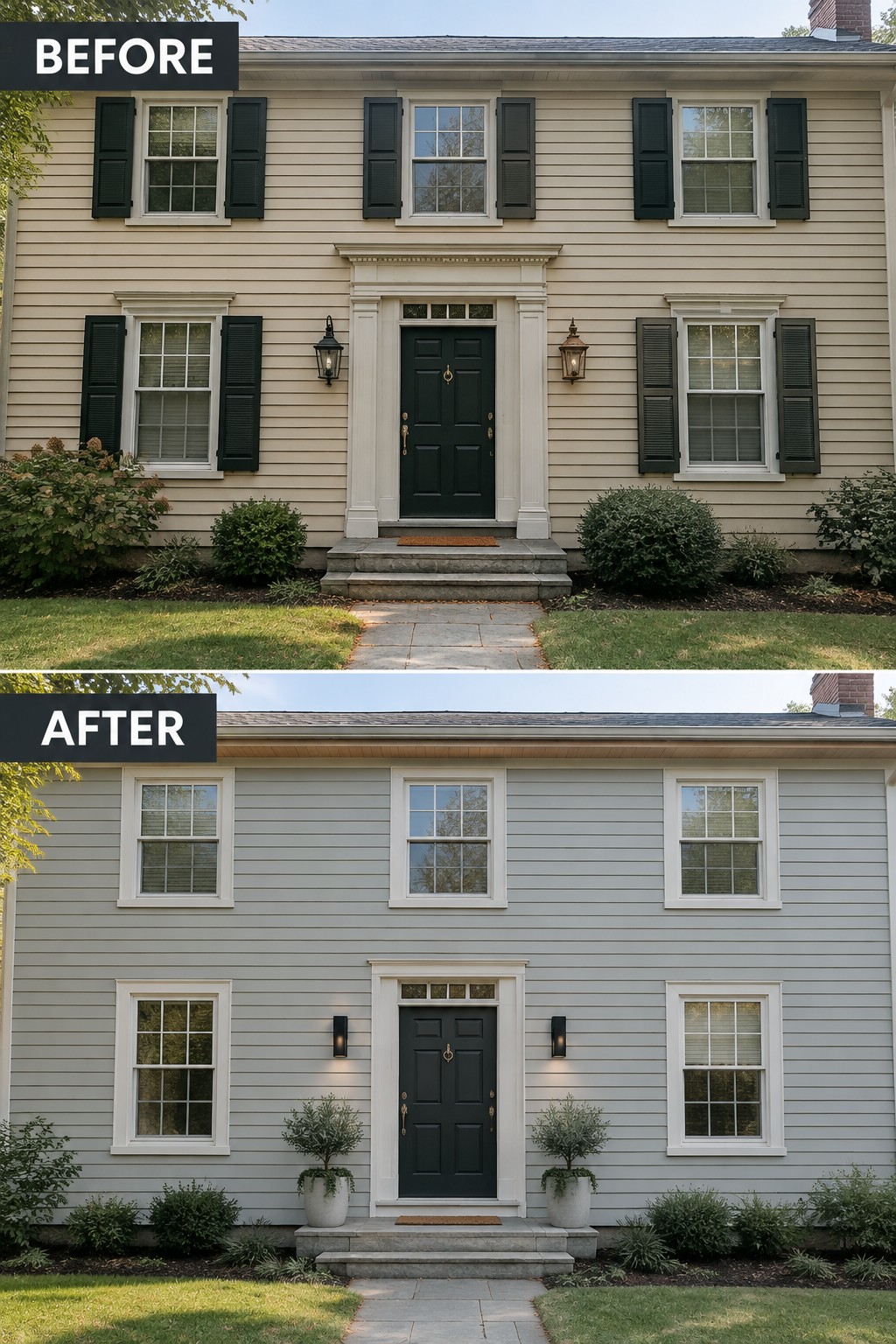
Many beige houses from past decades end up looking flat because the dark shutters cover too many windows and the whole surface feels heavy. Switching to a soft gray siding and taking away most of the shutters lets the windows breathe and makes the house look wider and brighter. The dark front door stays as the main focal point, and the new wall lights replace the older hanging fixtures for a cleaner line.
This works best on simple two-story homes where you want to update the look without changing the roofline or trim style. Pick a siding color that still feels neutral but reflects more light, then test how many shutters you really need before reinstalling all of them. A pair of matching planters by the steps can finish the entry without adding more visual noise.
Replace Dated Porch Railings With Horizontal Slats
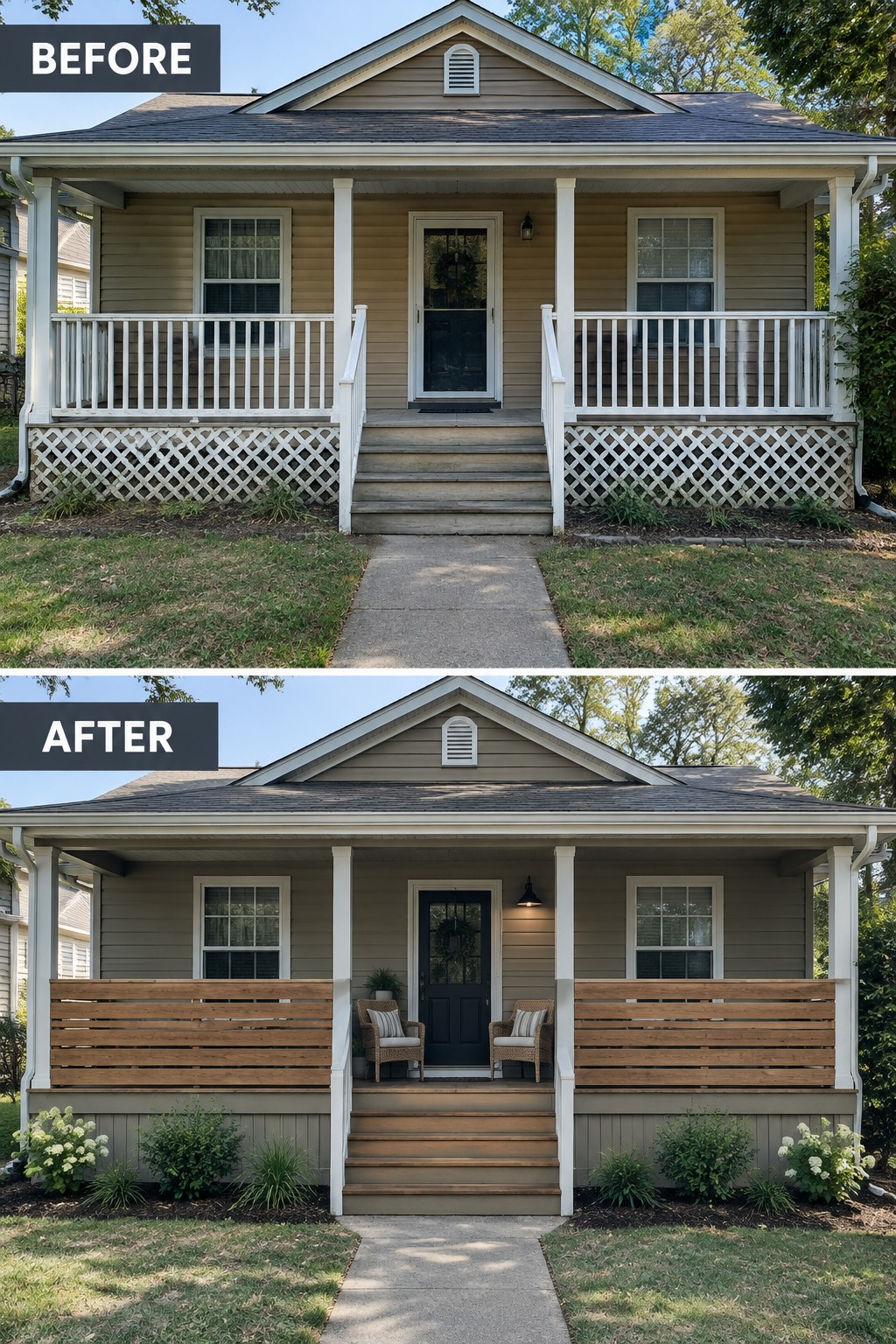
Swapping the old white balusters for clean horizontal wood slats gives the whole front a sharper, more current look. The darker door and simple lighting complete the change without any major construction.
This update suits beige or tan houses that still have solid structure but feel stuck in an earlier style. Keep the new railing low enough to preserve the porch view, and match the wood tone to any other trim so the change feels intentional rather than added on.
Refresh Dated Beige Siding With A Softer Color
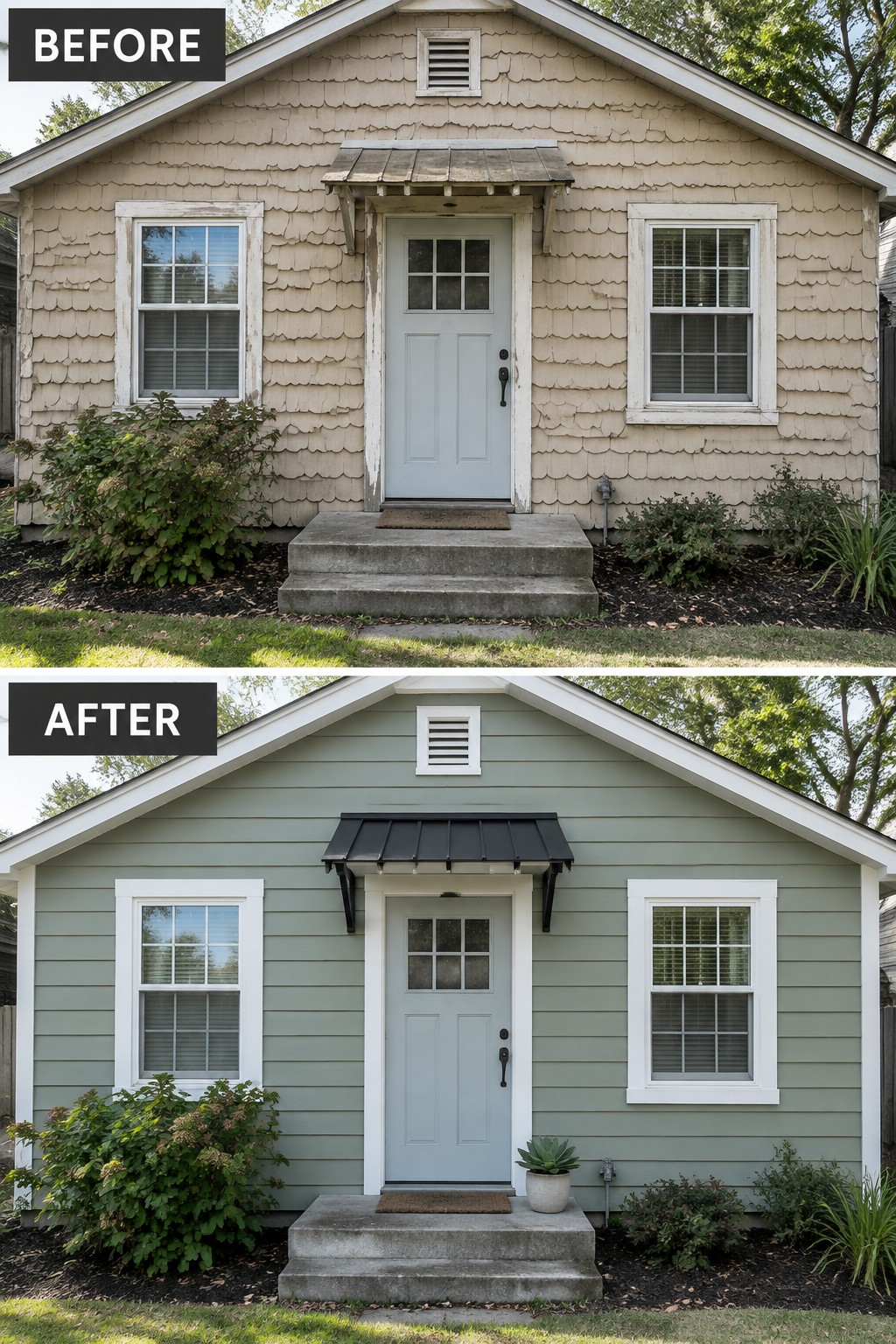
Many beige houses from past decades end up looking flat and dated because the color blends into the background. Switching the siding to a muted green immediately gives the house more presence while keeping the exterior calm and simple.
This idea works best on straightforward homes where the roof and trim stay the same. Focus first on the main siding color, then update small elements like the entry cover if the budget allows. The change stays practical and reversible if you ever want to try another shade later.
Add Contrast With Dark Siding On The Center Section
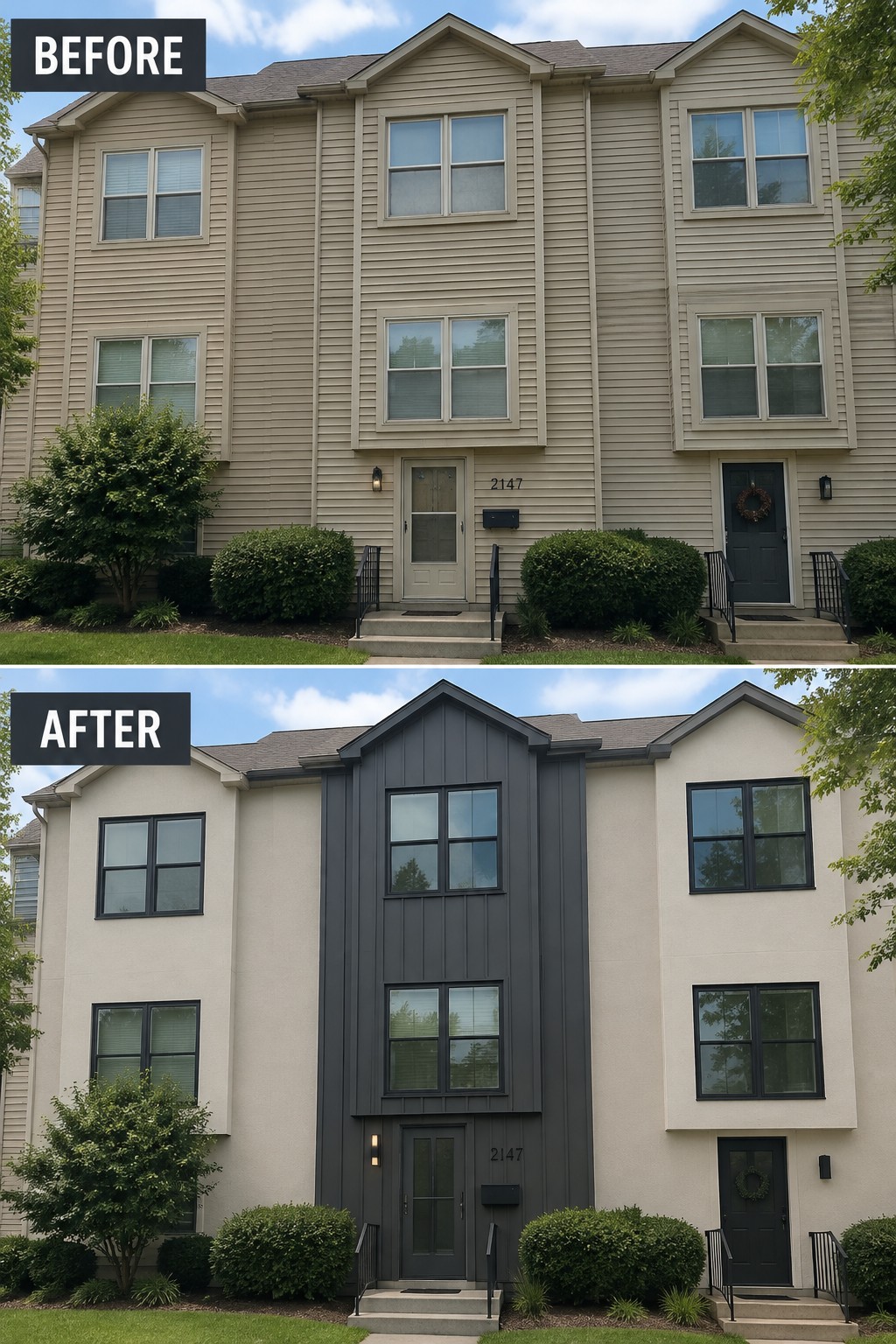
Many beige houses end up looking flat because the siding runs the same color across the whole front. Switching just the center section to dark gray vertical siding gives the facade a clear focal point and makes the entry feel more intentional. The black window frames help tie it together without needing to repaint every surface.
This approach works well on attached homes or any house where the middle gable or entry bay stands out architecturally. Keep the side sections lighter so the dark area reads as a deliberate choice rather than an all-over color change. Start with the siding or paint on that one section and match the trim and door color to it before adding anything else.
Update Faded Beige Siding With Fresh Paint And Trim
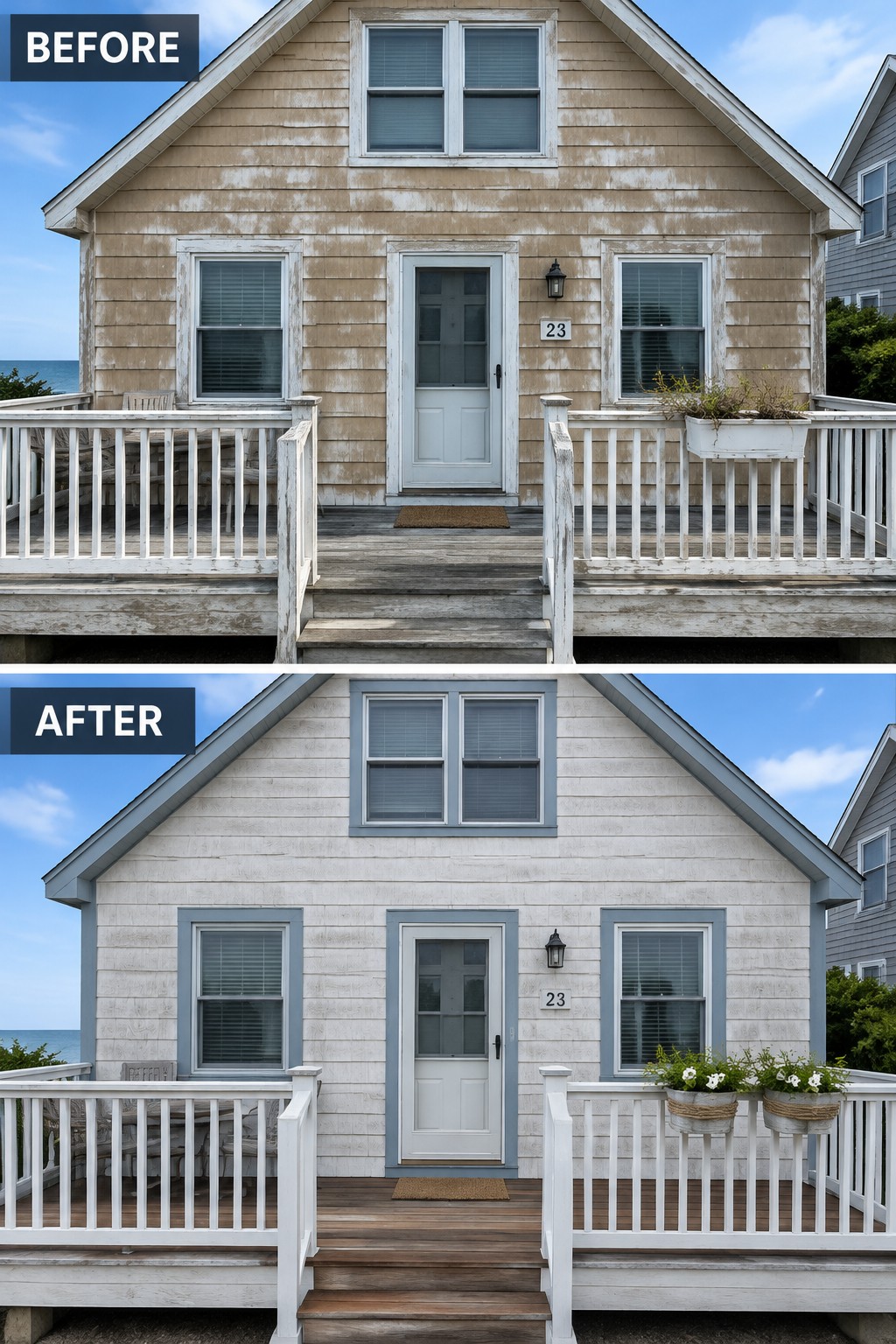
Many older homes carry a tired beige or tan siding that has faded and peeled over time. A straightforward repaint can shift the whole look. Here the siding moved to a clean light shade while the trim around the windows, door, and roofline picked up a soft blue-gray. That single color choice made the house feel brighter and more current without changing the structure.
This works best on straightforward homes where the lines are simple and the budget is limited. Start with a good surface cleaning and repair so the new paint holds up. Then choose a siding color that reflects light and a trim tone that adds quiet contrast. The result stays practical and gives the front a refreshed appearance that still fits the neighborhood.
Update Faded Beige Siding With A Dark Modern Color
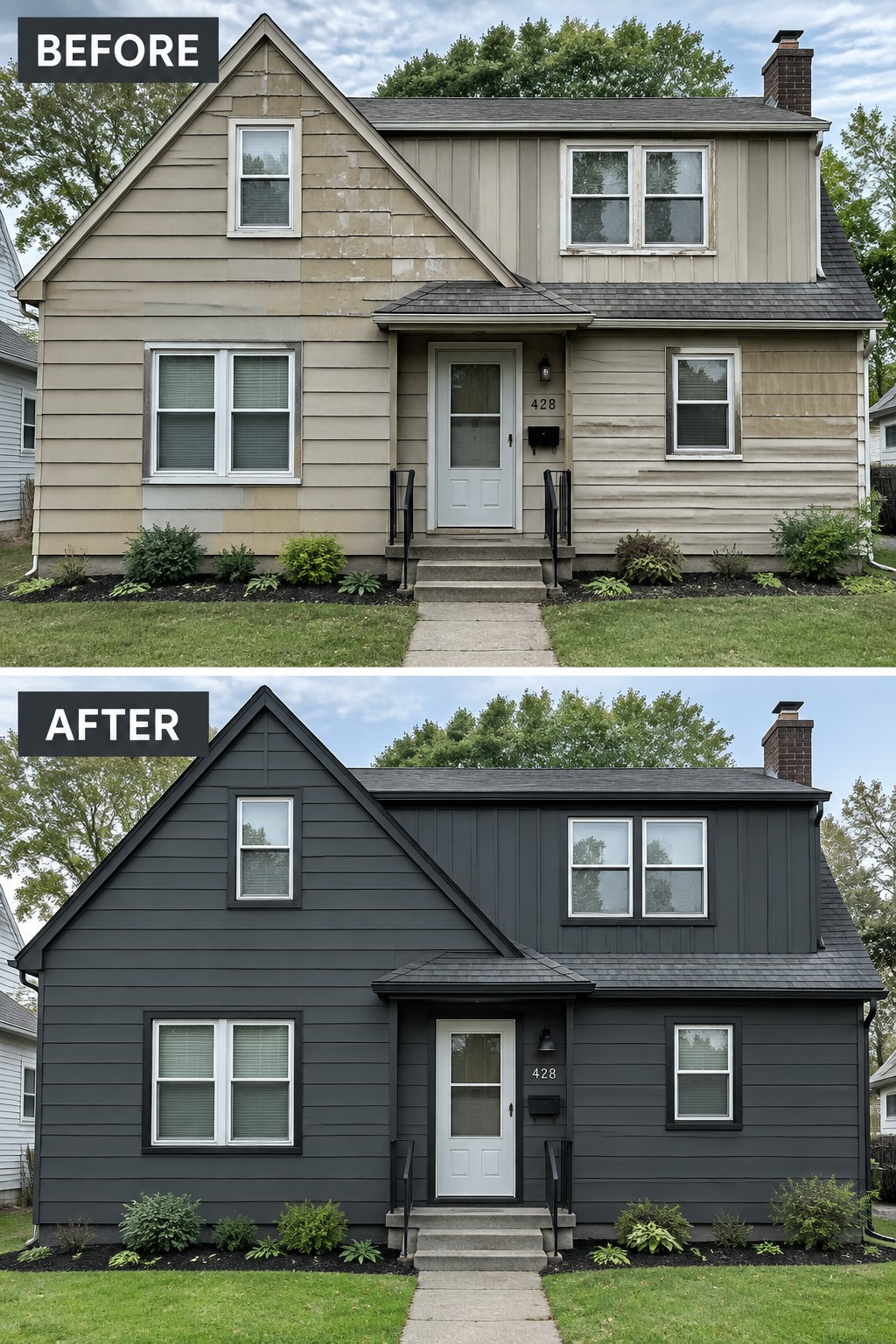
Many beige houses end up looking tired once the siding starts to fade and show wear. A dark gray finish pulls the whole exterior together and gives it a sharper, more current appearance. The black trim around the windows also stands out better once the main color is no longer light and patchy.
This works best on straightforward two-story homes where the siding is the main dated element. Choose a color that sits well with the roof and any brick details, and keep the rest of the updates simple so the new siding stays the focus.
Add Stone Bases To Porch Columns
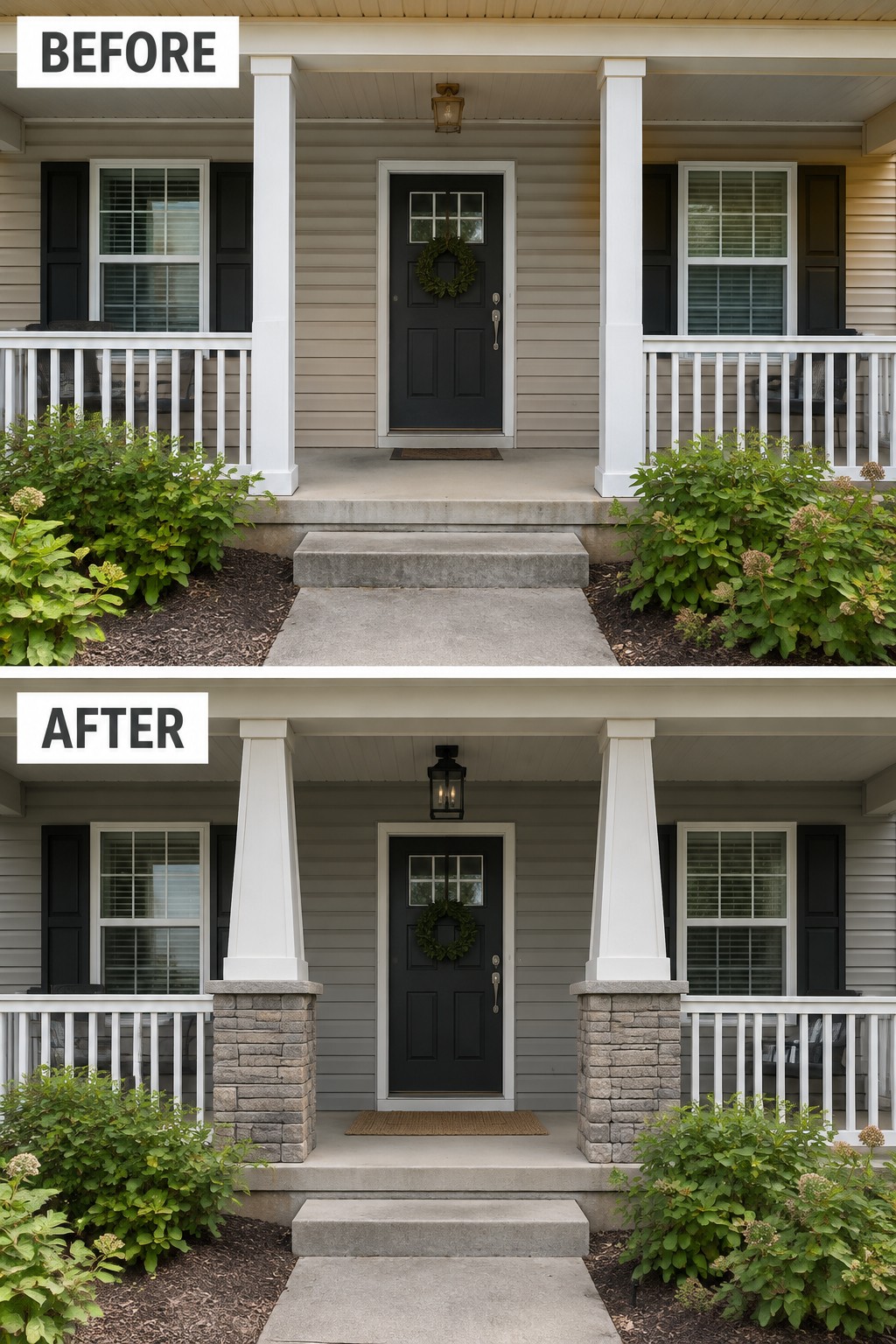
Many beige houses end up with porch columns that look too thin for the scale of the front. Adding a stone base to the bottom of each column gives them weight and makes the whole entry feel more solid without changing the siding or roofline.
This approach works best on homes that already have a concrete porch and steps. Keep the stone height consistent across all columns and match it to the height of any existing railings. It pairs well with a dark door and a simple overhead light, and it gives you a clear place to stop if you want to tackle the rest of the exterior later.
Refresh Dated Beige Siding With Dark Color And Black Trim
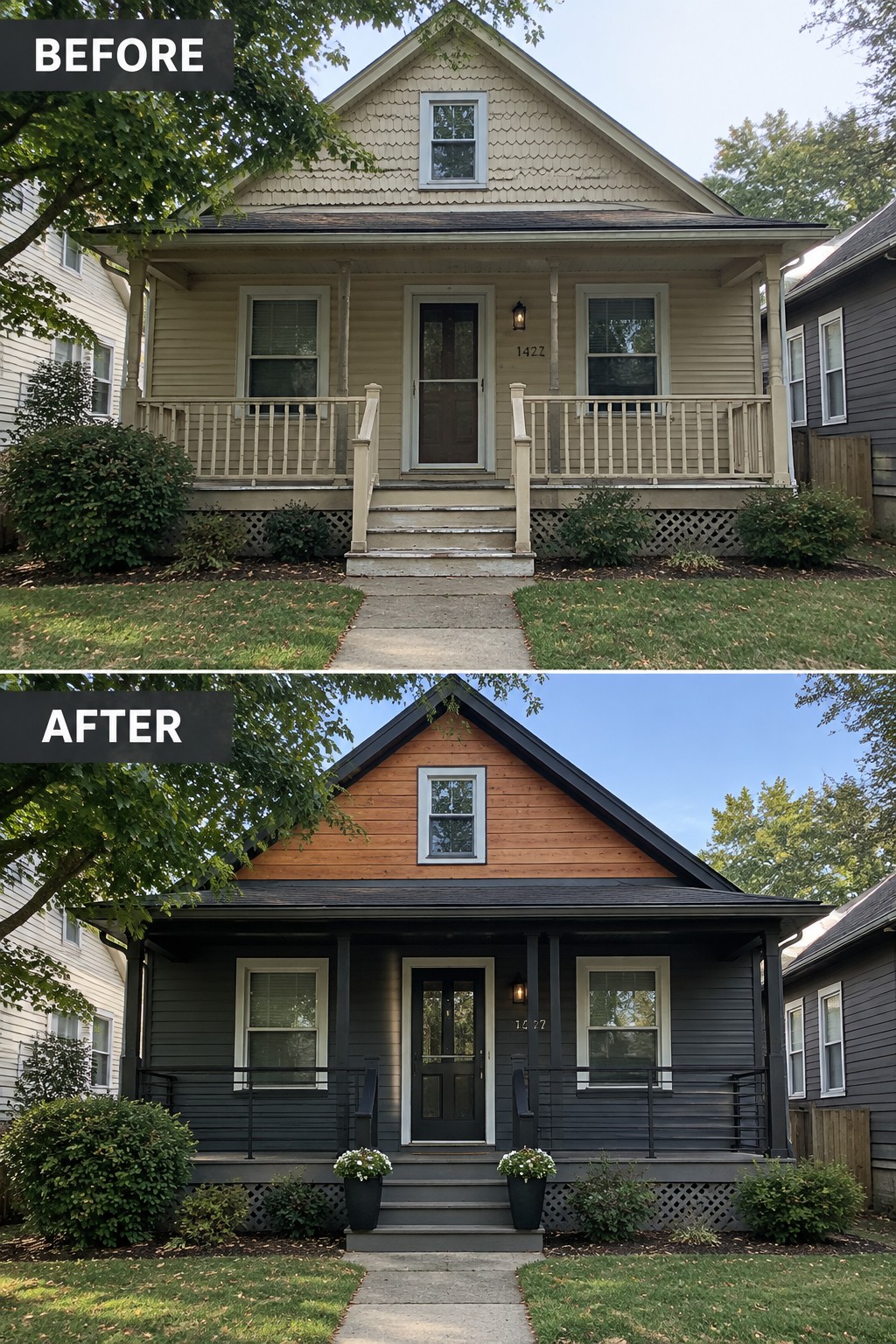
A simple color change on the siding can make a beige house feel current again. The before version shows the typical tan siding and light porch details that often read flat and dated. Switching to dark gray siding with black trim and a warm wood accent on the gable gives the house more weight and definition without any major structural work.
This approach works well on smaller homes where the siding covers most of the visible exterior. Start with the main body color and trim first, then add one accent tone if the gable or entry needs extra interest. Keep the porch railings simple so the new siding color stays the focus.
Update Beige Siding With A New Color And Dark Trim
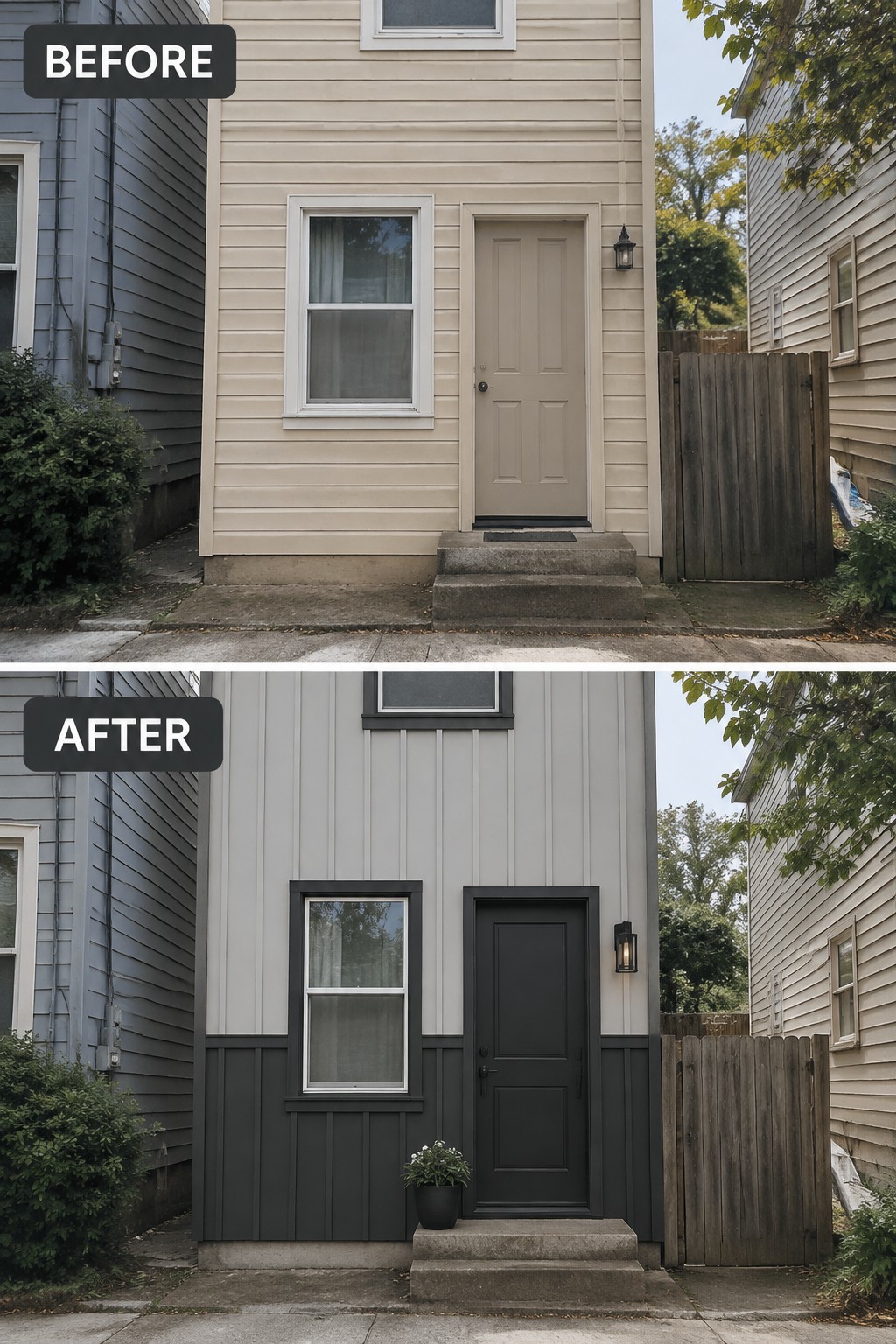
A simple color change can make a plain beige house look much more current. In this case the old horizontal siding was swapped for gray vertical panels, the trim was painted dark, and the front door was changed to black. Those two moves create contrast where there was none before and make the entry feel more defined.
This approach works well on smaller homes or any house where you want to refresh the look without a full renovation. Stick to two or three colors at most so the result stays clean. Test the new siding color and trim on a small section first, and make sure the door color still reads clearly from the street.
Refresh Beige Siding With A Simple White Paint Update
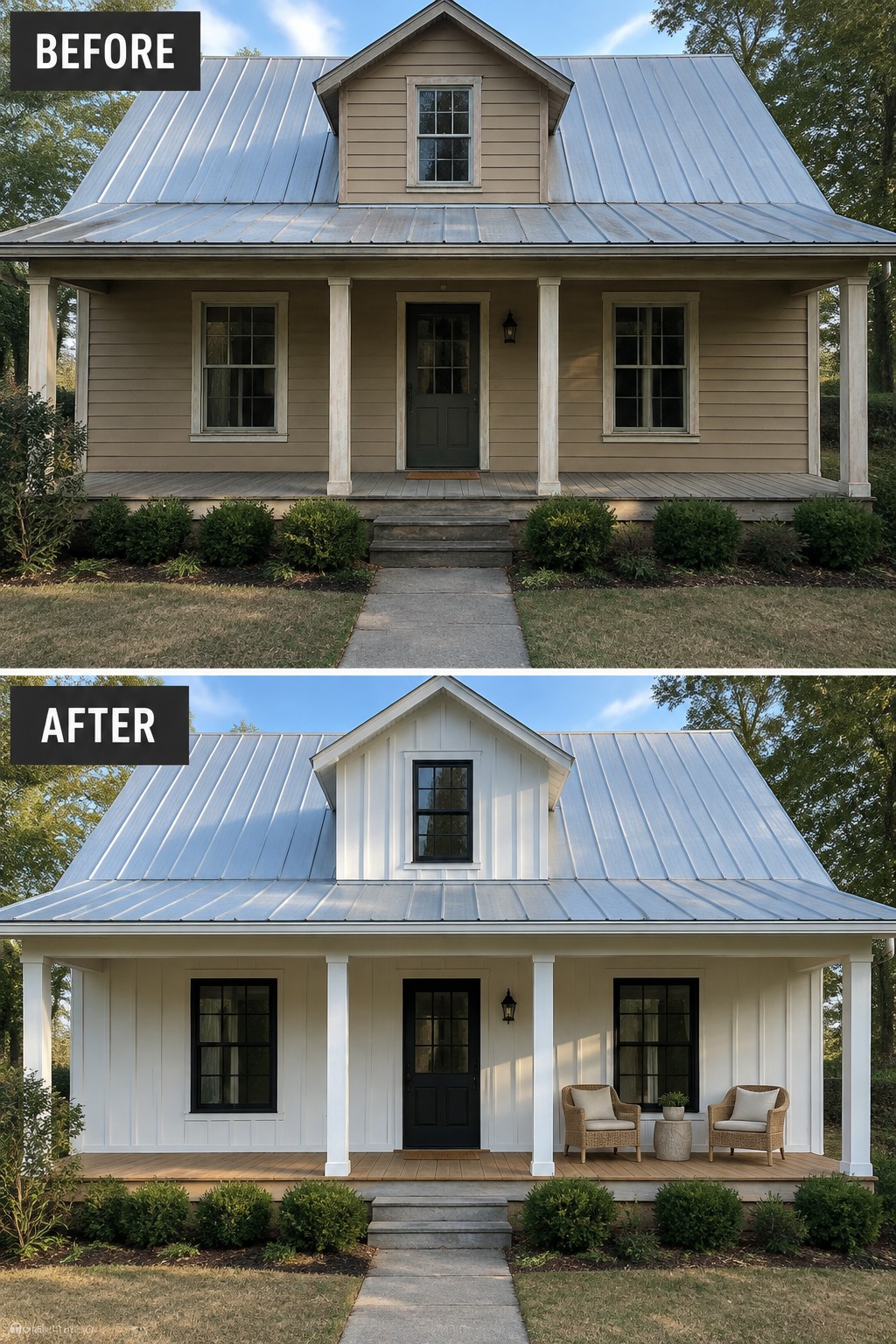
A fresh coat of white paint on the siding makes the biggest difference here. The original tan color felt flat and dated, while the new white brightens the whole facade and pairs cleanly with the metal roof and black window frames. Adding two chairs and a small table on the porch also helps the entry feel more finished without much extra work.
This approach works well on ranch-style or cottage homes where the siding is still in good shape but the color has aged. Start with the paint and trim first, then add just enough porch seating to make the front feel used. Keep the furniture simple and weatherproof so it does not compete with the cleaner lines of the house.
Frequently Asked Questions
Q: How do I pick a siding color that fits my tan house without clashing?
A: Go for cool grays or soft whites that contrast the beige. These make the lines pop and give that modern edge. Paint a test patch on the wall to check it in different lights.
Q: What if I only want to change the front of the house?
A: Start there. Focus on the areas people see most and match the sides later if needed. It still gives a huge lift to the look.
Q: Will modern siding hold up better than what I have now?
A: Often yes. Newer options resist fading and cracking better than old beige panels. You get fewer repairs down the road.