

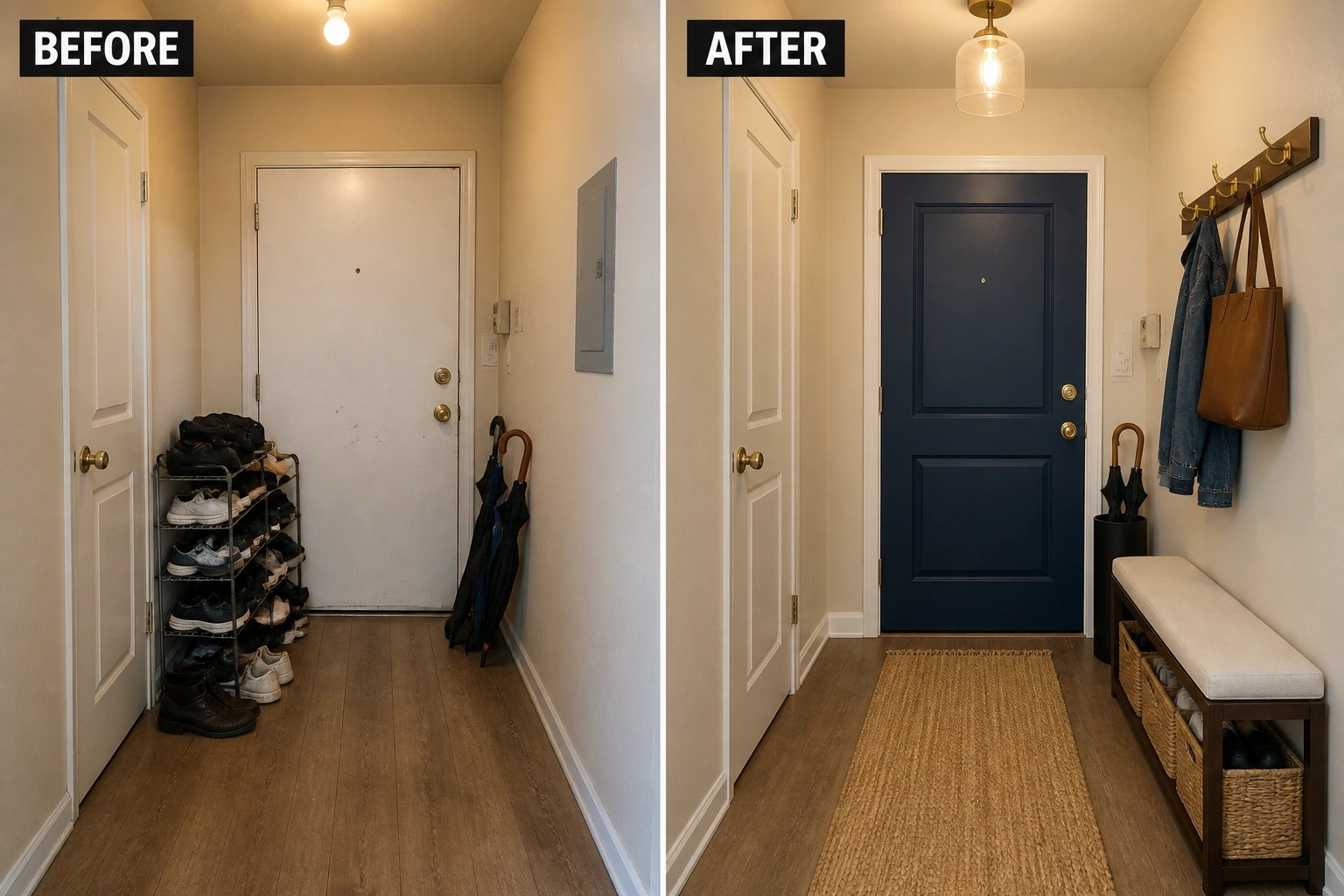
Tight front door areas can feel awkward and neglected, and I often notice that a fresh coat of paint, a smarter doormat, or a planted container can make the whole facade look more intentional without a full renovation.
Little fixes like replacing worn lighting, adding a slim bench for shoes, or repositioning a potted shrub to frame the door bring structure and function to a space that otherwise reads as an afterthought.
Small changes go a long way.
I like to test ideas that prioritize layout and durability first, for example switching to weatherproof hardware or defining a clear path with a runner rug, because those choices make later styling feel less fussy.
Many are simple enough to save to a project list, adapt to different door widths, or try in stages so you can see what actually improves curb appeal without committing to a big expense.
Give A Tiny Entry A Clear Purpose
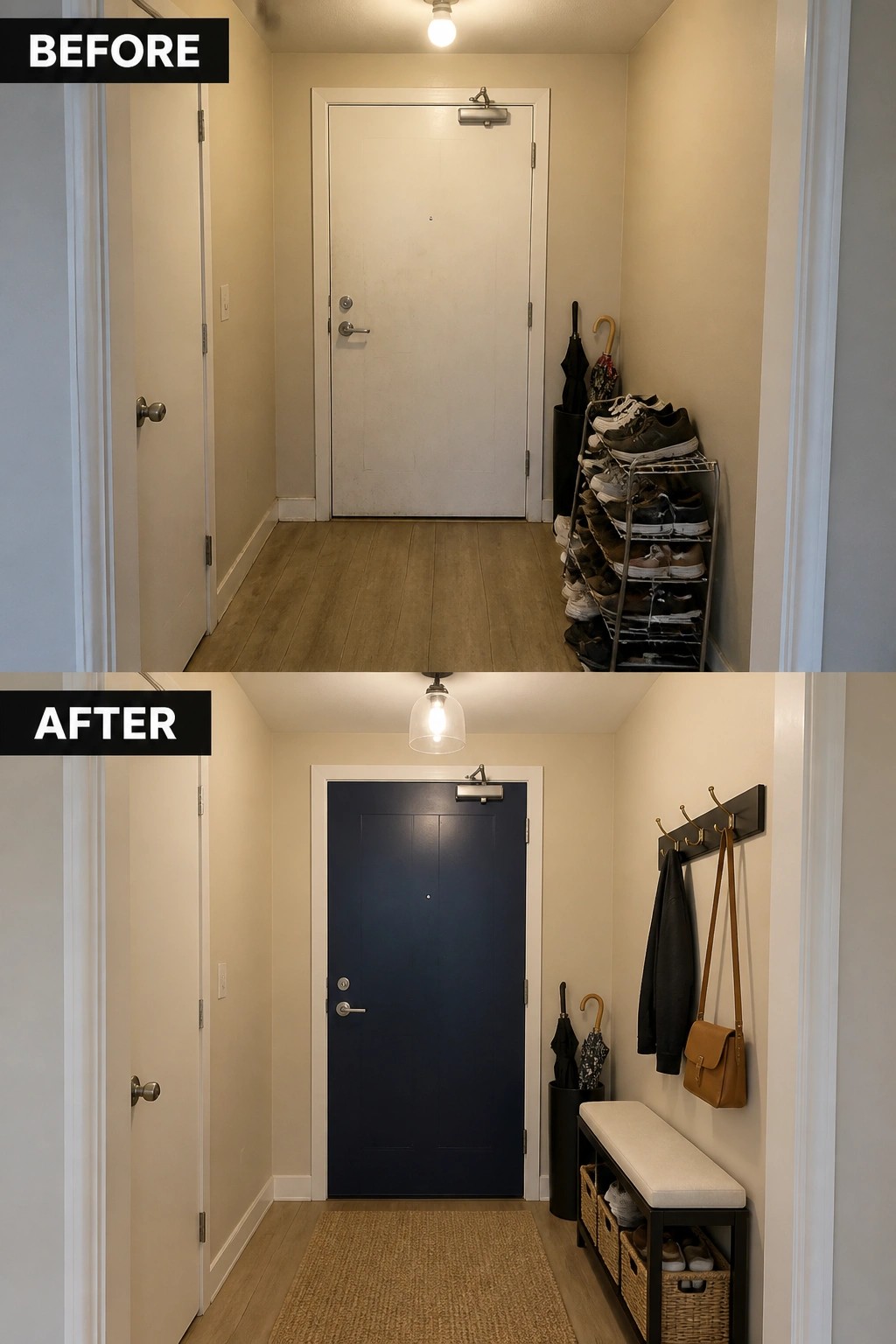
A narrow entry can feel finished with one clear idea: add a slim bench with storage and a simple wall hook rail. In this update a small cushioned bench with woven baskets plus a row of hooks creates a tidy place to sit, stash shoes, and hang bags without blocking the doorway, while a darker door color helps the area read as an intentional zone.
Choose narrow furniture that matches the width of the hall and keep circulation in mind — leave room to open the door and step past. Use baskets or cubbies under the bench for shoes, mount hooks at a convenient height, and add a runner or small rug to define the approach; small changes, practical scale, and consistent accents make a tight entry feel purposeful. Small scale is key.
Add A Built-In Bench And Slim Storage To A Tiny Entry
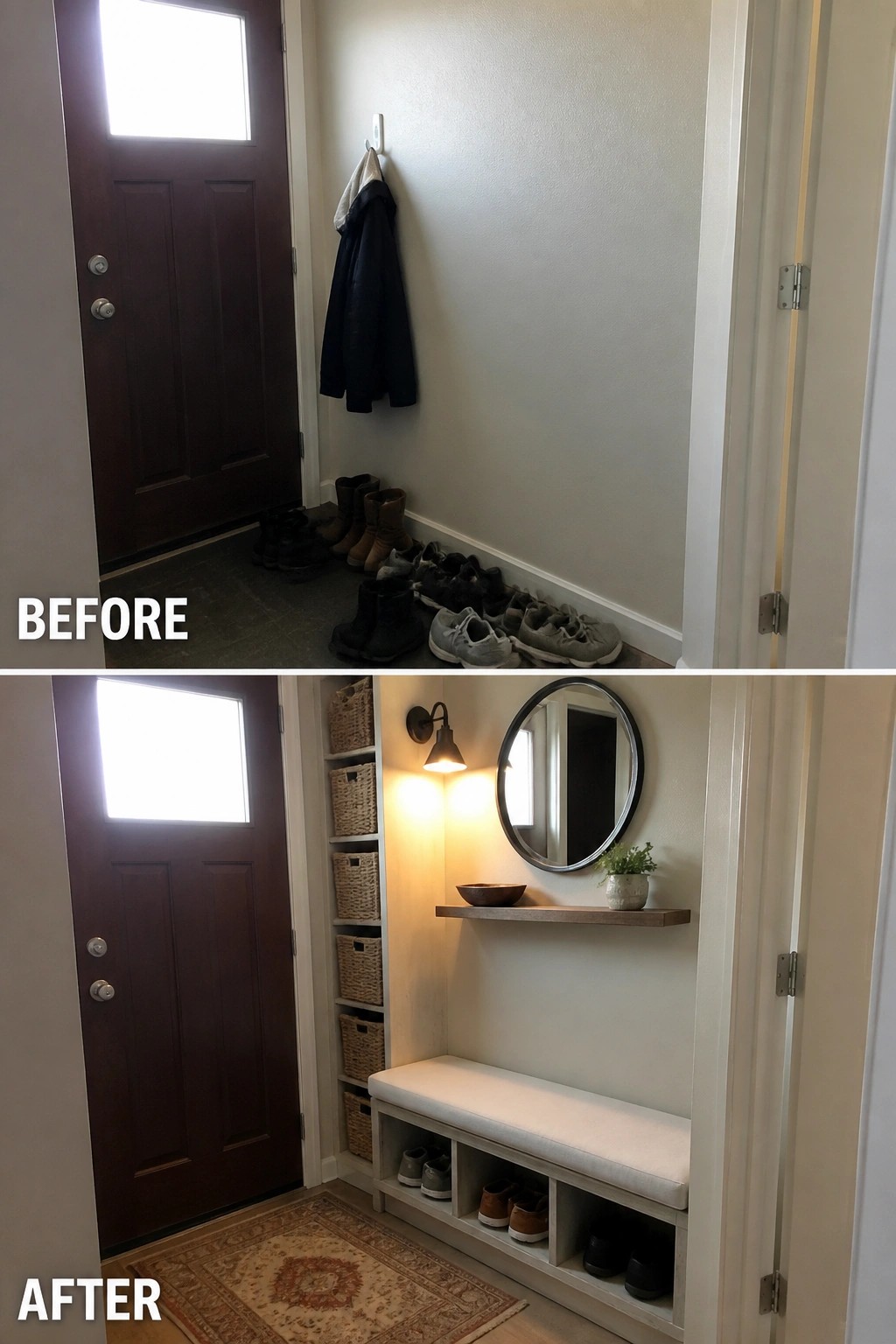
A narrow bench with cubby storage turns a useless strip of wall into a practical entry zone. Instead of shoes piled on the floor, a shallow bench with open cubbies and a slim column of baskets gives each item a home and creates a place to sit while you put shoes on.
This works best in tight foyers where floor space is limited. Keep the bench shallow so the door clears, use baskets or bins in the vertical shelving to hide clutter, and top the bench with a thin cushion for comfort. Add a small shelf or mirror above for keys and a quick check before you leave, and pick lighting that fits the scale so the area feels finished but not crowded.
Give A Narrow Entry A Clear Purpose
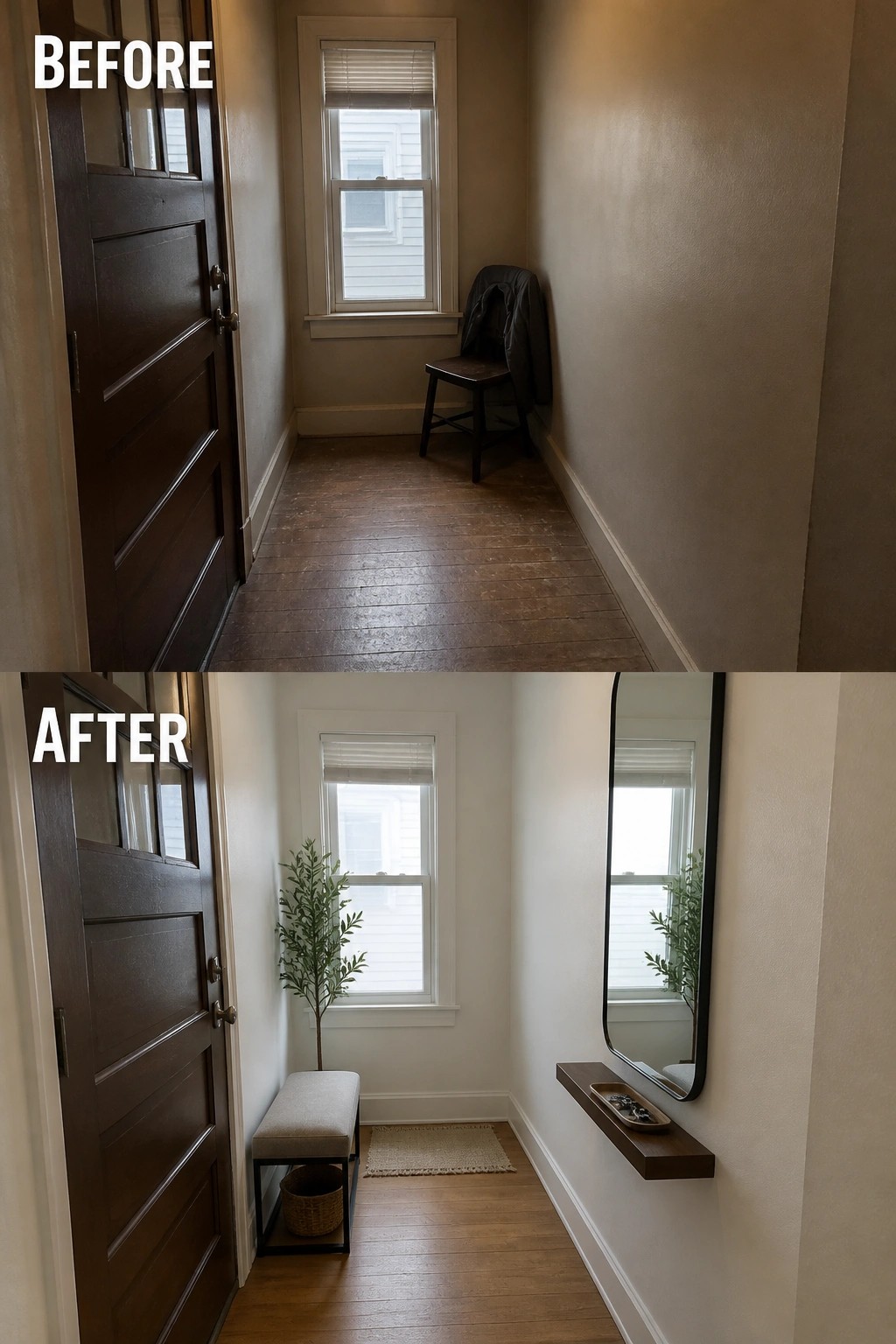
A skinny foyer doesn’t need big changes to feel finished. Place a slim bench and hang a tall mirror to create a landing where people can sit and check their appearance; the mirror also opens the sightline and makes the narrow space feel less cramped.
Use pieces made to scale—a narrow bench with a basket underneath, a shallow floating shelf for keys, and a small runner to define the zone—while keeping the door swing and a clear path in mind. This approach works well in older homes or tight city entries: pick durable fabrics and simple shapes so the area looks intentional without feeling crowded.
Use Patterned Flooring To Define A Tight Entry
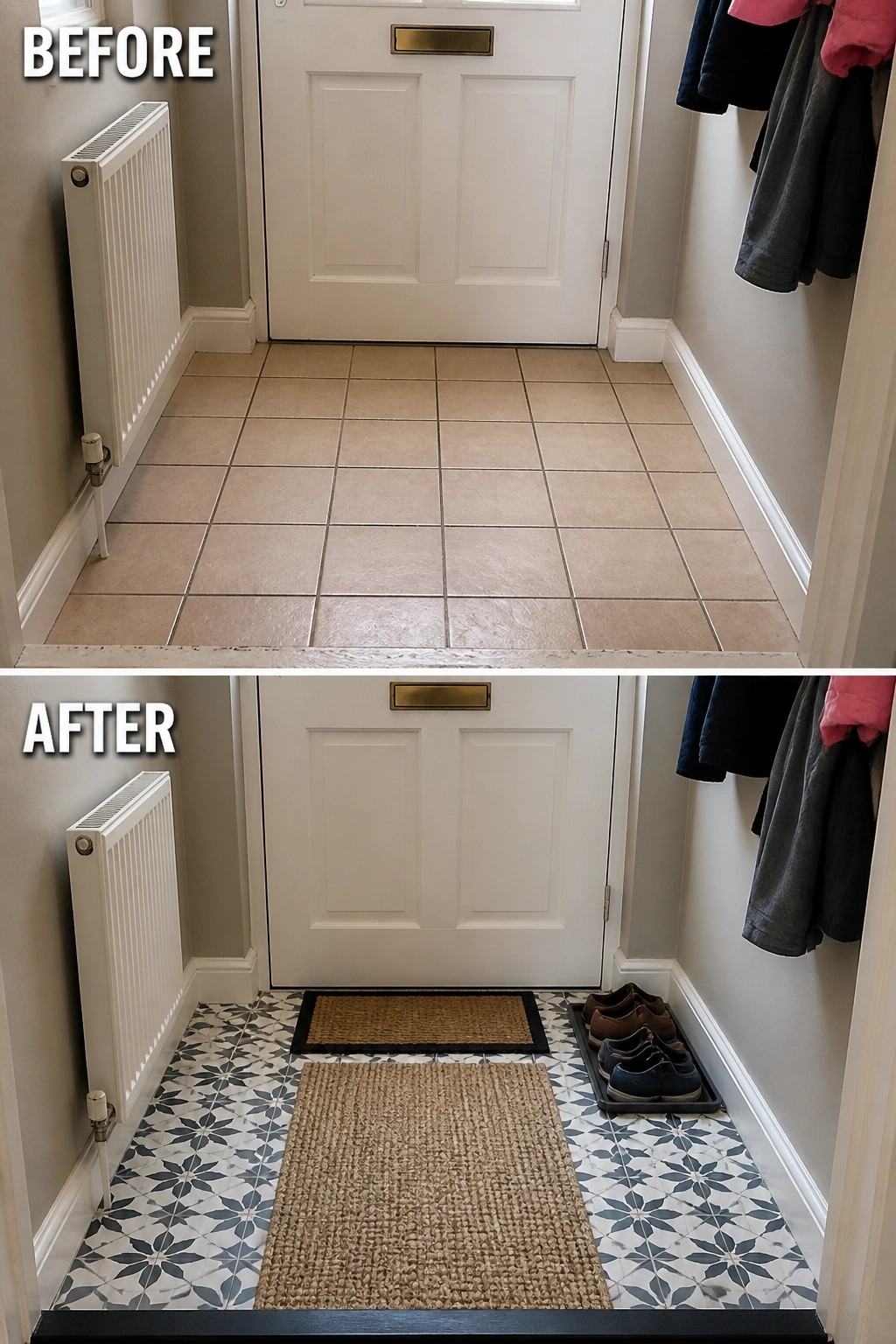
Swapping a plain floor for a patterned one is a quick way to give a small entry some real personality without changing the layout. Here the boring beige tiles were replaced with a repeating blue-and-white pattern and the homeowner kept it practical with a slim coir runner and a compact shoe tray right by the door.
For a similar update in your home consider peel-and-stick or tile decals if you want a budget-friendly, temporary option, or choose encaustic-look tiles for something permanent. Pick a pattern that reads at doorway distance, leave a clear path for shoes and the door swing, and protect the pattern with a narrow rug or tray where people step in (especially in wet weather).
Use Wainscoting To Make A Small Entry Feel Finished
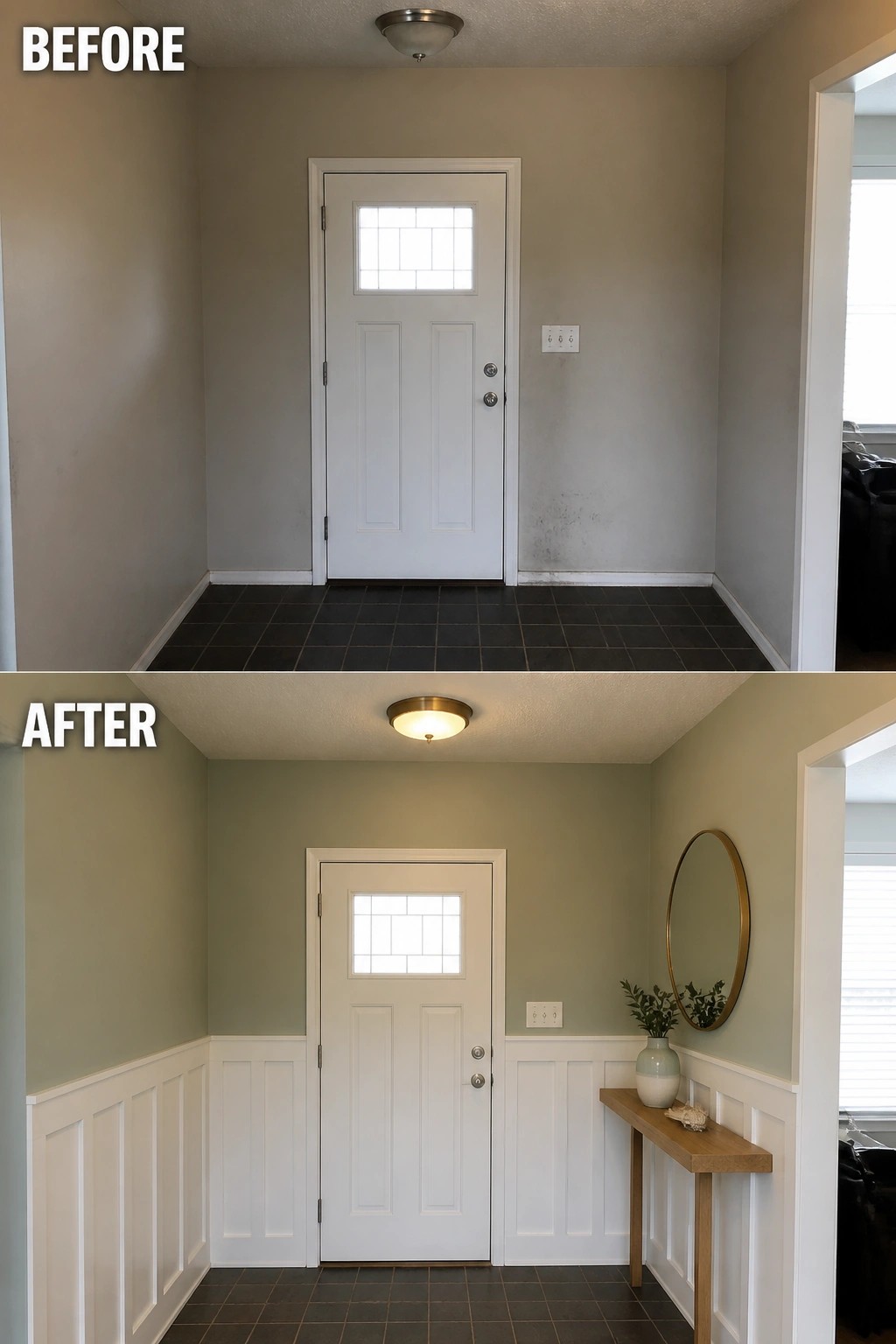
A narrow foyer can look styled without taking up floor space by adding simple wainscoting and a slim console. The low trim visually lowers the wall proportion and gives the eye a clear, neat line to follow, while a narrow table and round mirror provide function and a focal point without blocking the path.
Do it where you have limited square footage: install board-and-batten or flat panels about waist-high (roughly 32–42 inches), paint the trim bright white, and pick a soft neutral for the upper wall so the space still feels open. Keep furniture slim, use a mirror to bounce light, choose durable paint for the lower section where scuffs happen, and resist overcrowding — one small table and one decorative object are usually enough.
Define A Tight Entry With Layered Lighting And A Slim Bench
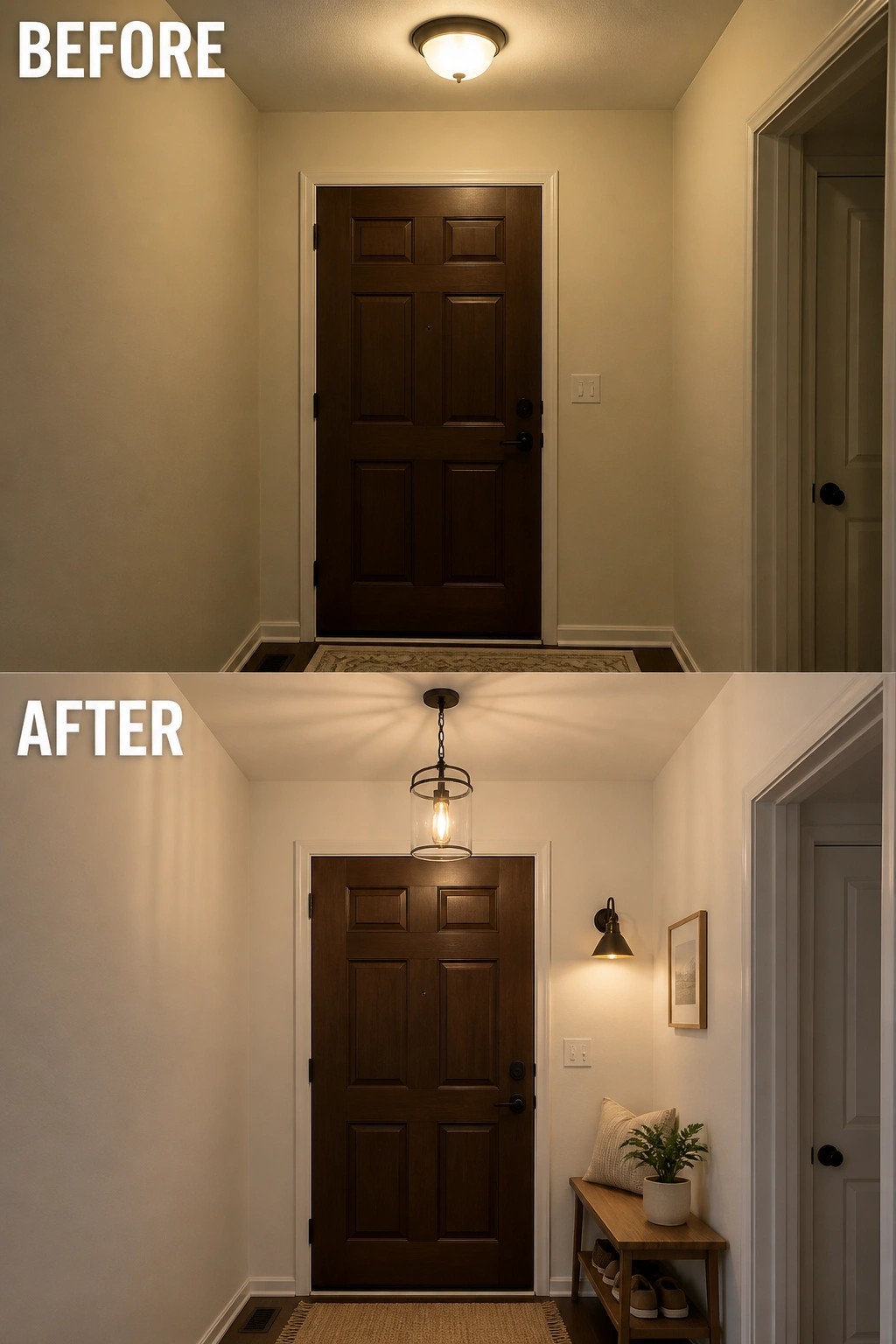
An empty, tight entry becomes useful when you give it a single clear function: a landing spot for shoes, keys, and a quick seat. Swapping the basic flush light for a small pendant and adding a slim bench, rug, and a wall sconce instantly defines the space and makes it feel deliberate without crowding it.
To copy this, choose narrow-scale pieces that leave room for the door to open and for traffic—think a 10–14 inch deep bench with a lower shelf and a runner or small rug to catch dirt. Layer a compact overhead fixture with a wall light for task lighting, repeat one finish from the door or hardware to tie things together, and avoid too many accessories so the entry stays functional and easy to maintain.
Give A Bare Entry A Clear Purpose
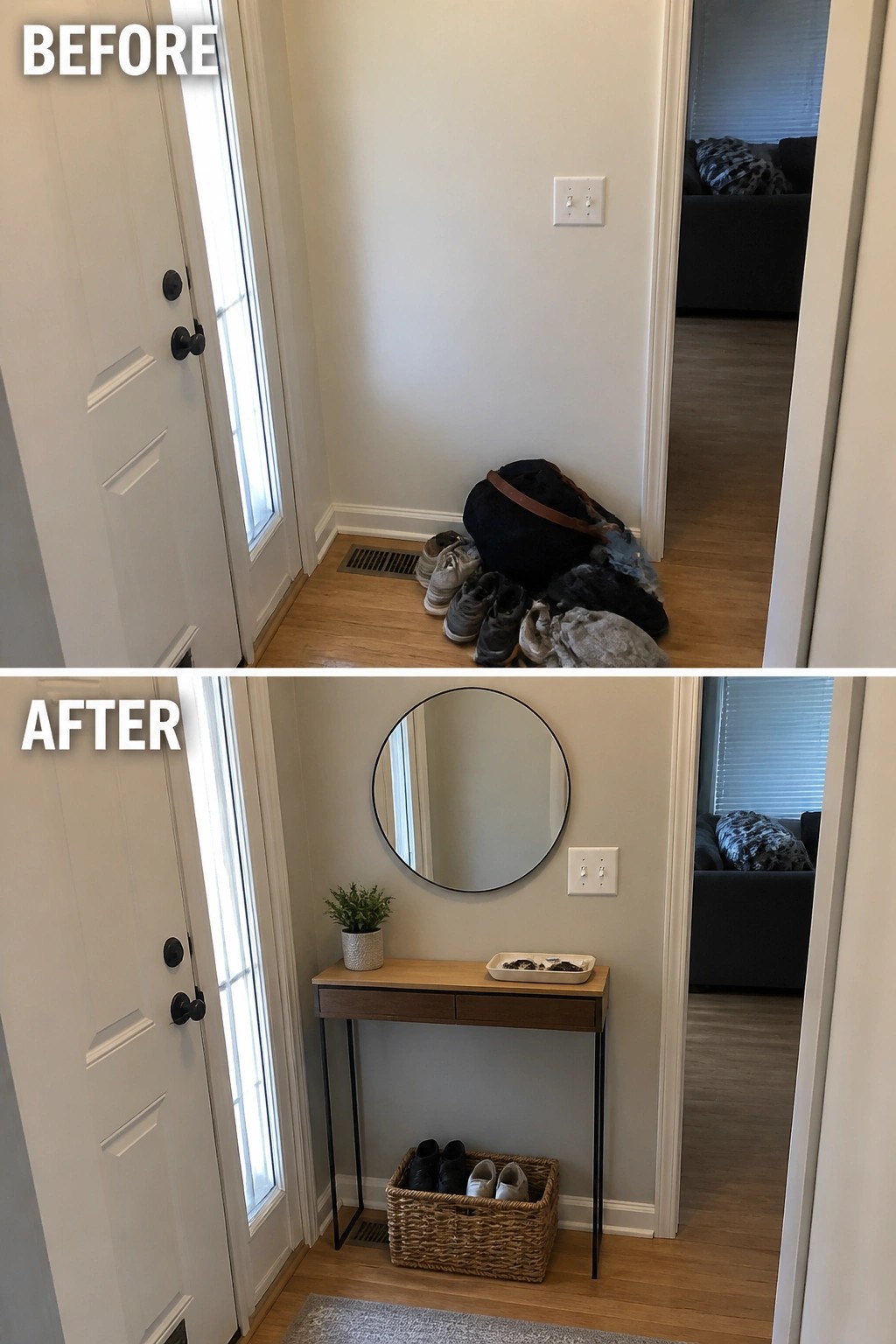
A narrow entryway doesn’t need big furniture to feel finished. Place a slim console and a round mirror to create a purposeful landing — the table gives you a surface for keys and a small plant, while the mirror makes the tight space feel larger. Swapping a messy pile of shoes for a woven basket keeps things neat and makes the area usable the moment you walk in.
Use this idea in tight foyers, older homes, or apartment entries where floor space is limited. Pick a shallow console with thin legs so the door can still open and tuck a basket or low tray underneath for shoes and mail. Keep accessories minimal (a tray for keys, one plant) and leave a clear path so the setup helps, not hinders.
Use A Bench And Wall Storage For Small Entries
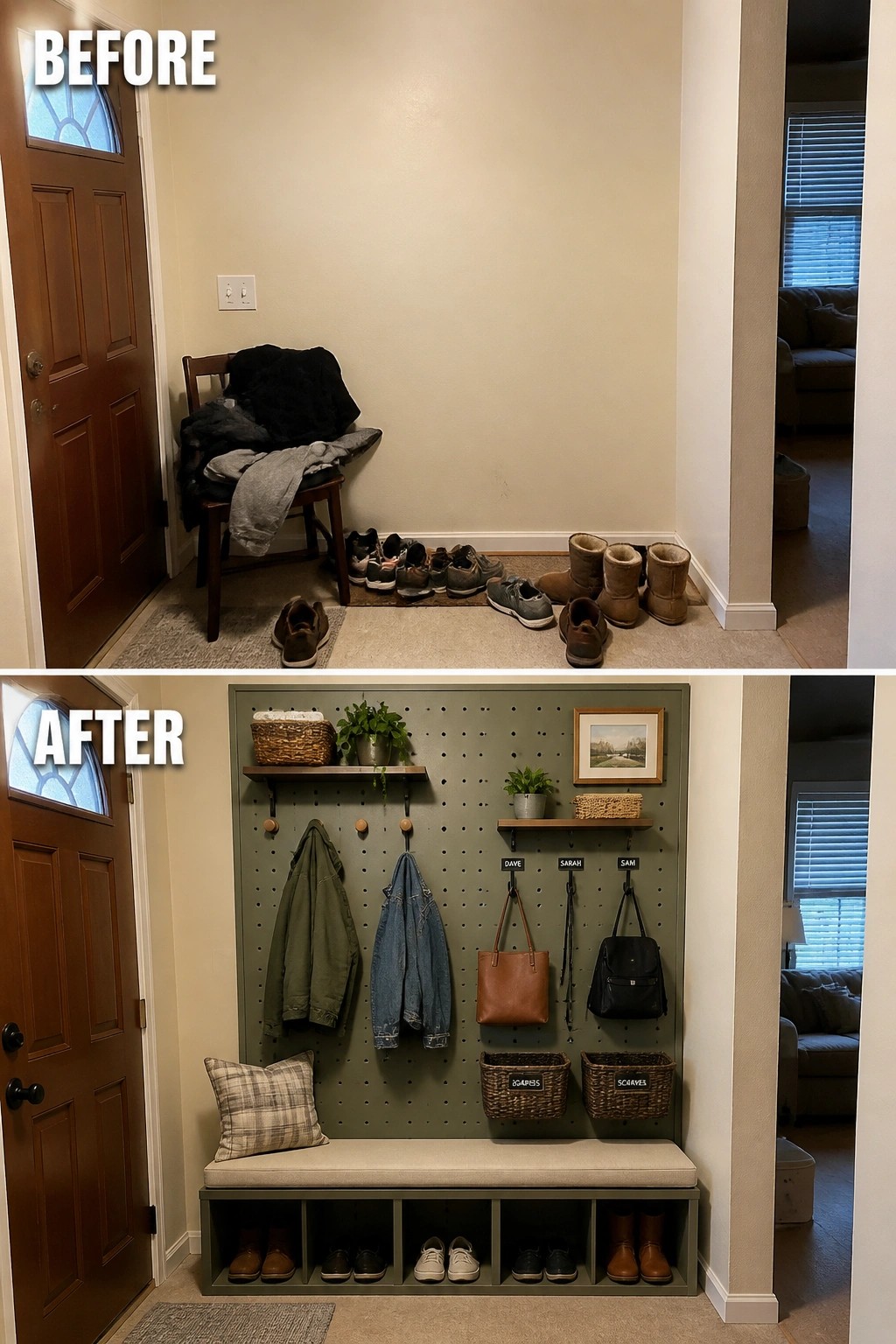
A narrow entry can feel useful instead of cluttered when you give it one clear purpose. Swapping a stray chair and pile of shoes for a painted pegboard wall and a slim bench with cubbies turns the spot into a single landing for coats, bags, and footwear. The pegboard keeps hooks and shelves movable while the bench adds seating and hidden shoe storage.
To recreate this, size the bench to the walkway so it never blocks the door, and mount a perforated panel or pegboard that reaches the bench top for a built-in feel.
Add Slim Shoe Storage To A Tight Entry
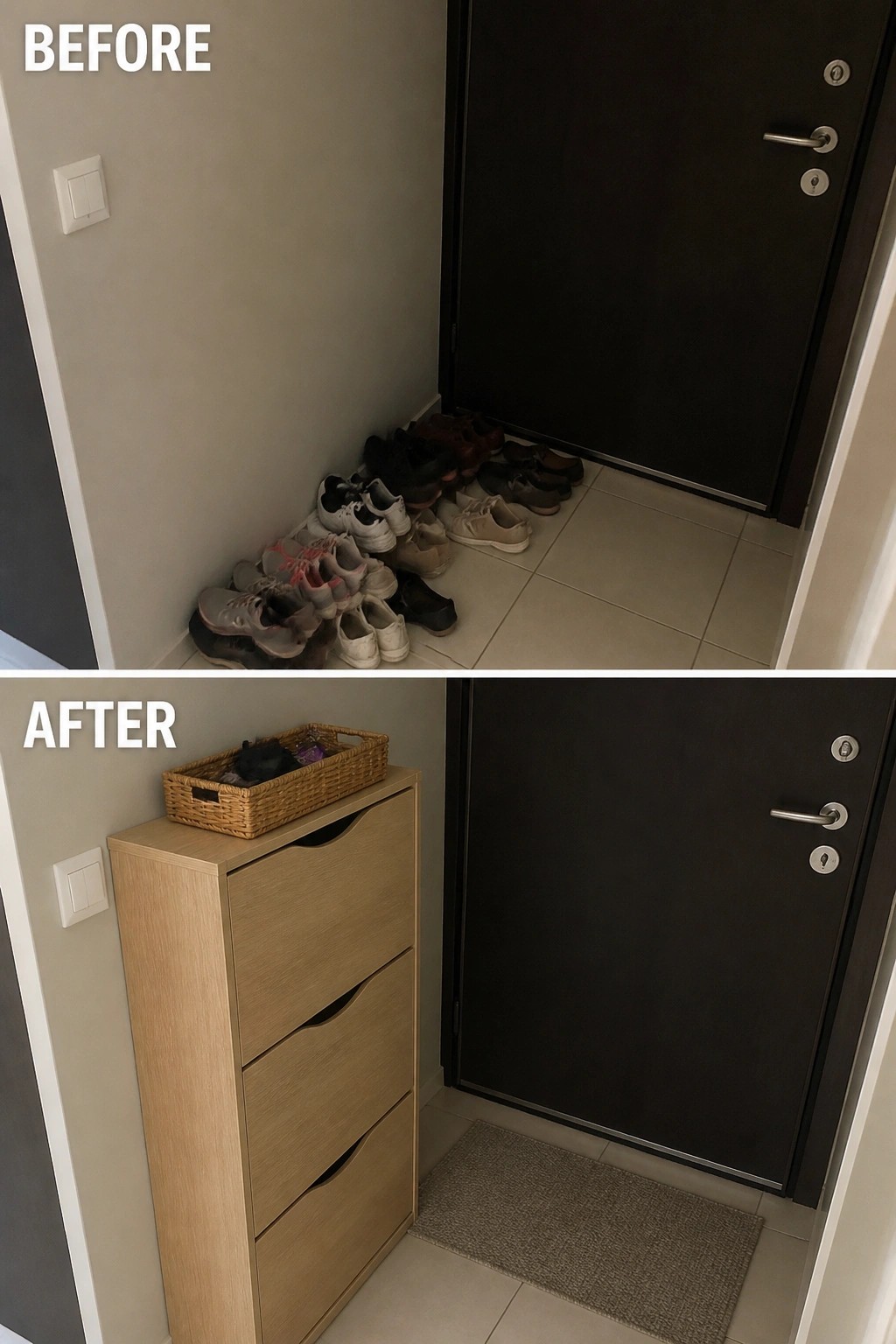
If your front door area is crowded with shoes, a narrow shoe cabinet clears the floor and instantly makes the space usable. In this before-and-after the scattered pairs were swapped for a slim three-drawer cabinet, a small mat, and a catchall basket on top, which keeps shoes out of sight but still easy to grab on the way out.
Measure the width and depth before you buy so the unit does not block the door swing, and choose a shallow or wall-mounted style for very tight spots. Limit what you store to daily pairs so drawers stay neat, use the top for keys and small items, and pick a light finish to keep the small entry feeling open.
Make A Plain Entry Feel Purposeful
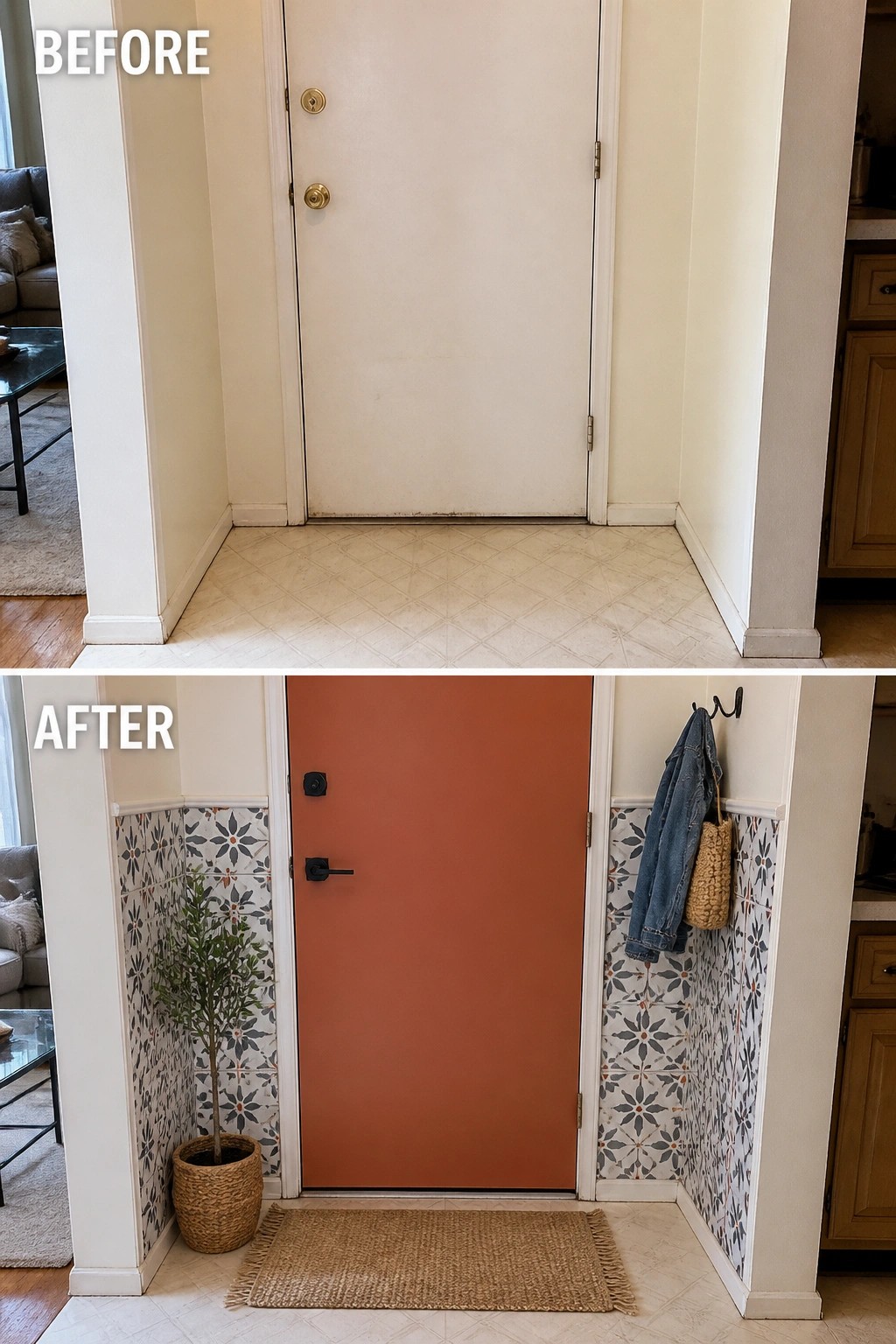
A bold front-door color plus a simple lower-wall treatment is an easy way to give a tiny entry some instant personality. Painting the door a warm, saturated hue creates a clear focal point, and adding patterned wainscoting or tile on the bottom half of the wall makes the space read as intentional rather than leftover hallway.
To copy this, pick one standout door color and limit the pattern to the lower wall so the small area does not feel busy. Use durable or peel-and-stick materials for the wainscot (easy to remove if you rent), keep the top wall a light neutral, and leave room for the door to open—then finish with a low-profile mat and a couple of hooks for function.
Make The Space Under Stairs A Functional Entry Nook
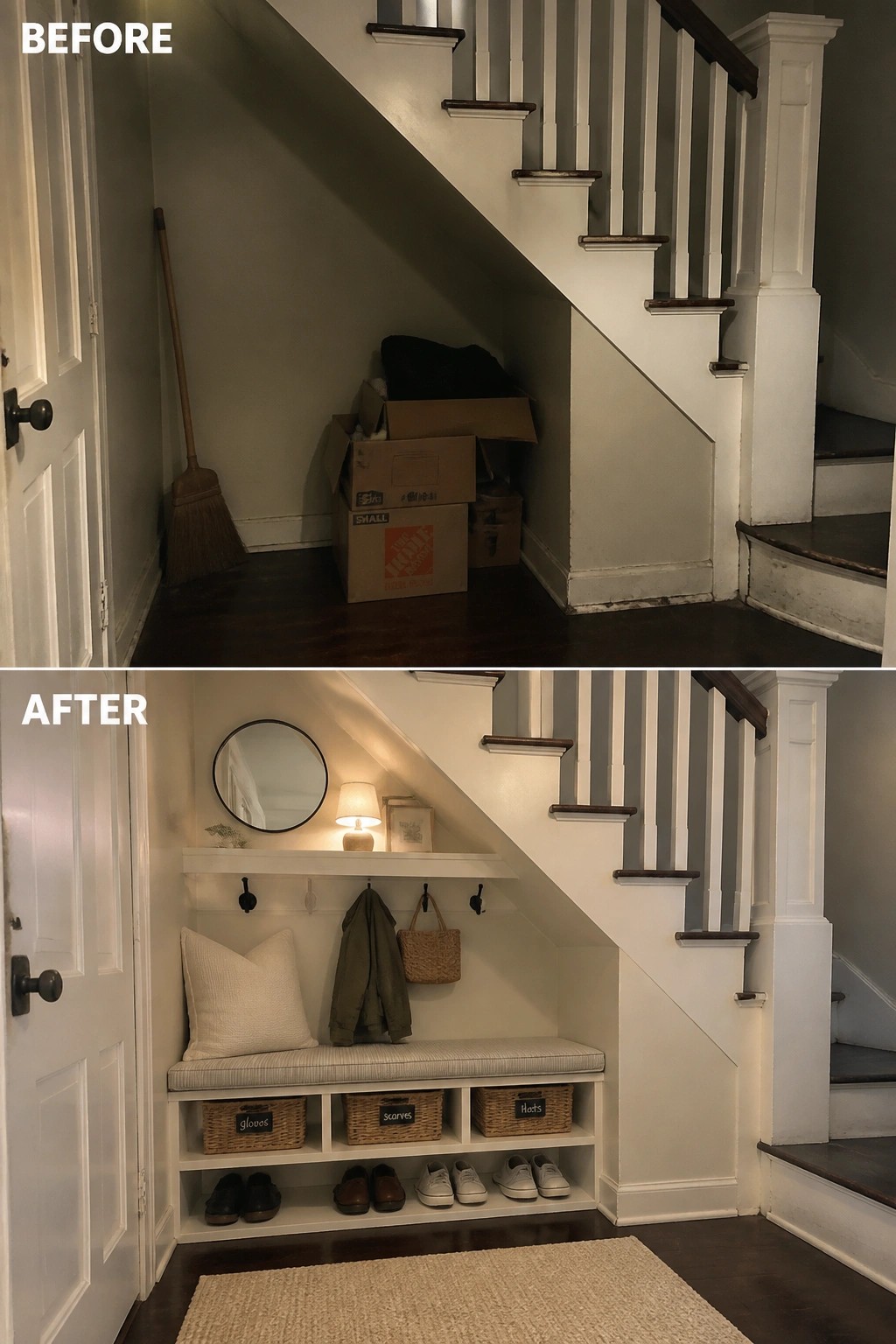
Turning that awkward under‑stair gap into a small built‑in bench gives a tiny entry real purpose. Swap the junk and boxes for a cushioned seat, a row of hooks, and low cubbies or baskets for shoes and winter gear — it creates a tidy spot to sit, stash, and grab what you need on the way out while keeping the walk of traffic clear.
Measure the depth before you start and keep everything shallow so the bench and storage don’t crowd the doorway. Add a mirror or a small lamp on a shallow shelf to brighten the area, and use baskets to hide smaller items (labels help). This idea works best in narrow entries or older homes with limited floor space — practical, neat, and easy to copy.
Use A Runner To Brighten And Define Narrow Stairs
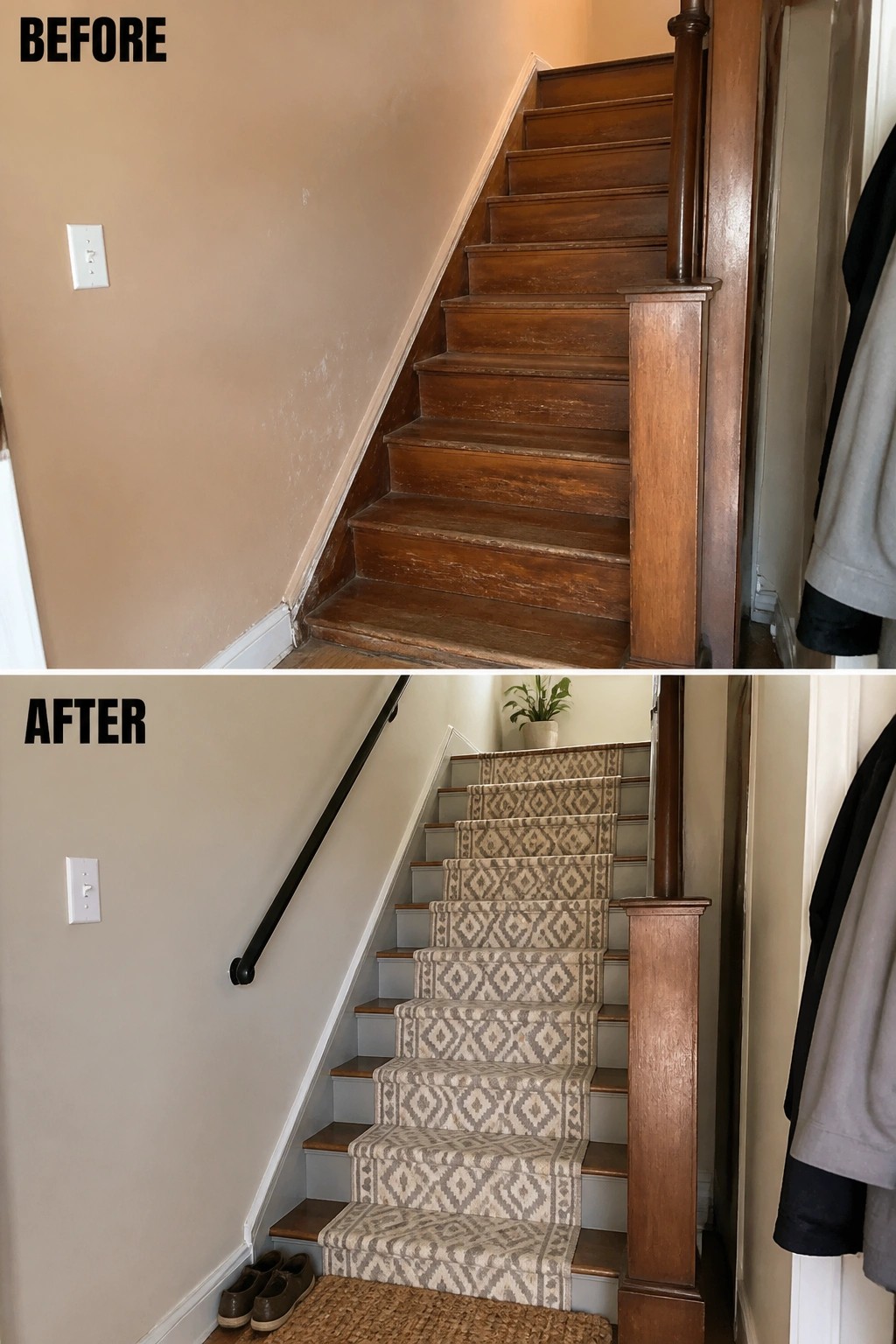
A patterned runner plus painted risers is an easy way to rescue a worn, cramped stairway and make it feel intentional. Replacing bare, scuffed treads with a low-profile runner hides wear, introduces pattern, and the light-painted risers immediately lift the whole stair visually without major work.
To copy this, pick a narrow-scale pattern and a low-pile carpet made for stairs so it lays flat and wears well. Paint the risers a pale neutral to boost contrast and keep a strip of the tread or nosing in the original wood tone to tie into existing trim. Secure the runner properly and choose a slip-resistant installation so it’s both practical and pretty.
Hide Entry Clutter With A Sliding Barn Door
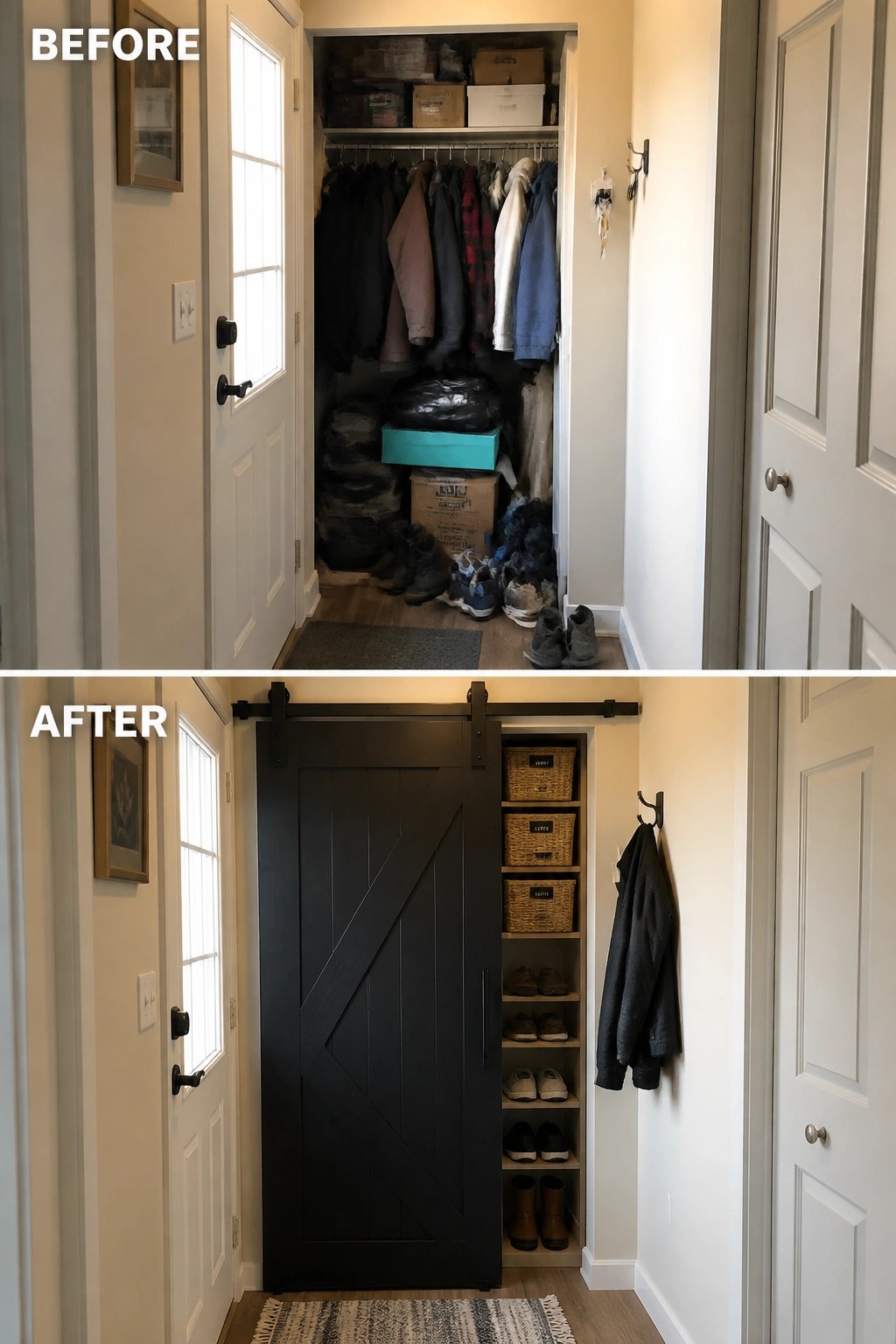
Tuck an open coat closet out of sight and the whole entry instantly reads cleaner. In this example a dark sliding barn door now conceals a crowded closet while a narrow column of shelves and baskets on the side organizes shoes and small items, so the entry looks tidy and purposeful instead of cluttered.
This works best in narrow foyers where a swinging door would steal space. Choose a wall-mounted sliding track so the door clears the opening, add shallow cubbies or pull-out shelves to use vertical space, and keep a few labeled baskets for mittens, keys, and dog leashes. Leave a single hook outside for the coat you wear most—practical and uncluttered.
Make A Plain Entryway Feel Finished
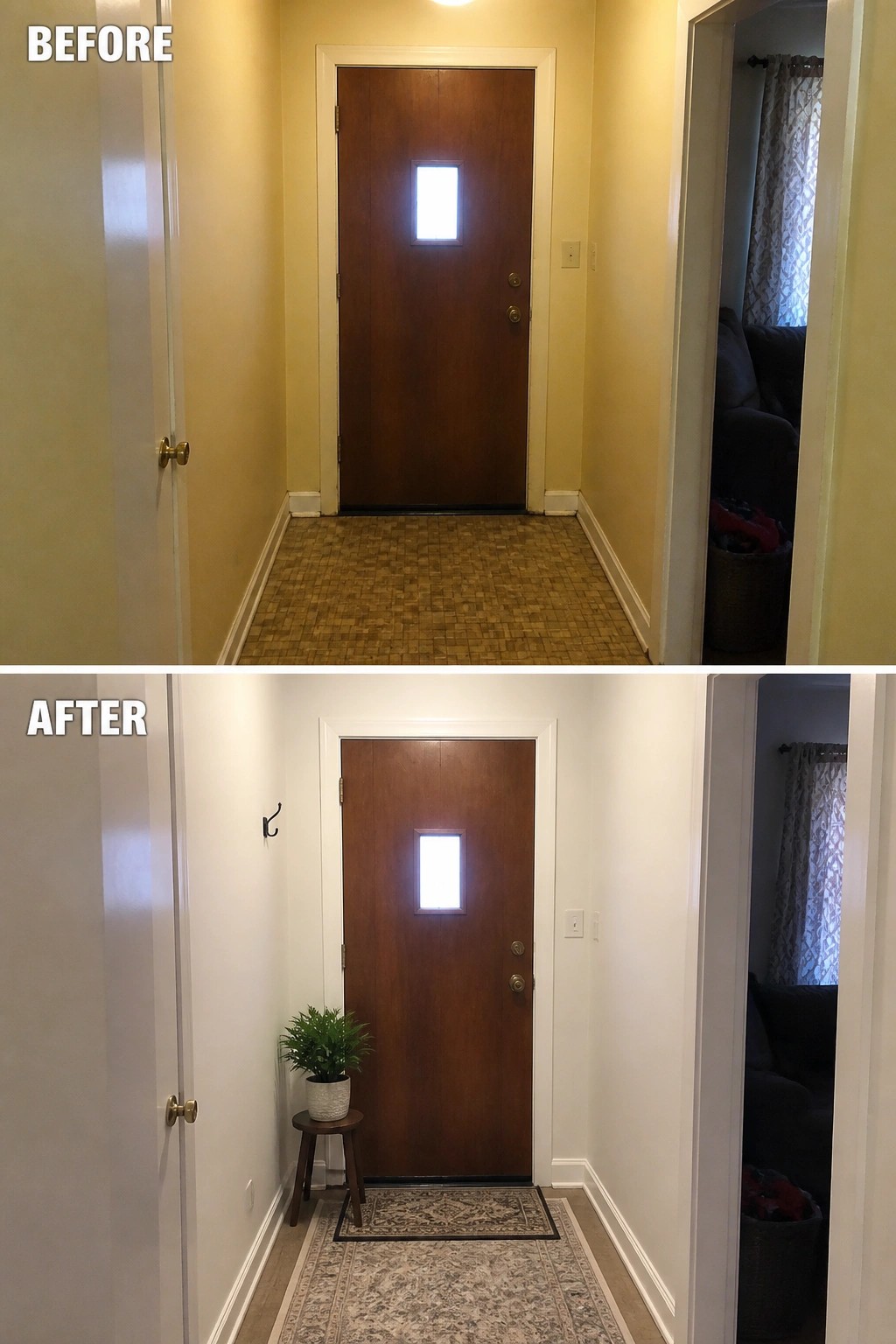
A narrow entry can go from overlooked to useful with a few small edits: fresh, light paint and crisp trim to open the space, a slim runner to define the path, and one or two modest accessories to give the doorway purpose. In this example the hallway is refreshed with white walls, a narrow rug, a single stool with a plant, and a wall hook that together make the entry feel intentional without crowding it.
To recreate this, start with paint and trim so the area reads brighter and cleaner. Pick a runner that leaves clear walking space, and add one low surface (stool or slim table) plus a single hook for keys or jackets—scale is the priority in tight halls. Use durable, easy-care materials and resist adding too many items so the entry stays practical and easy to pass through.
Make A Tiny Entryway Functional With Paint And Storage
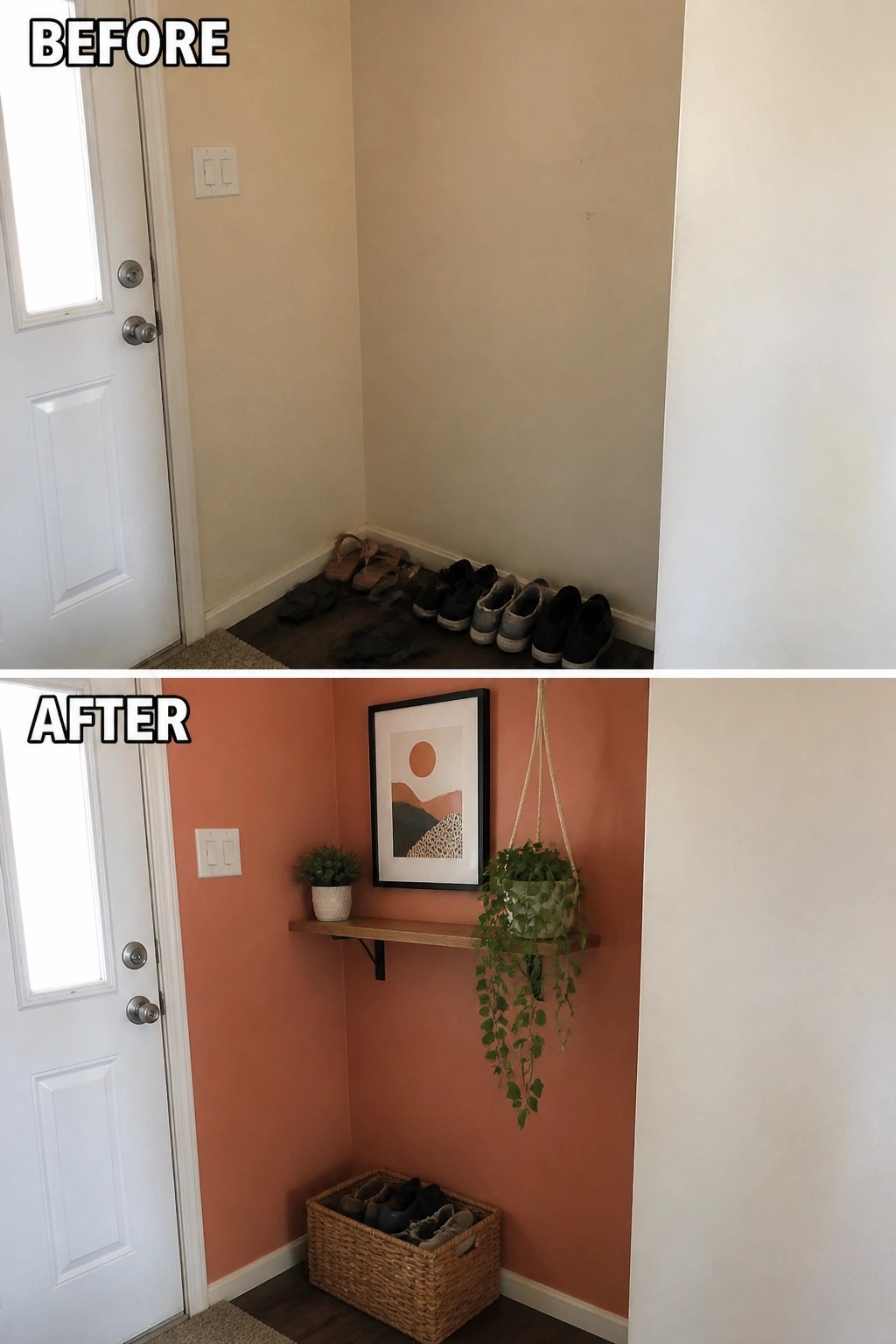
A plain corner can feel useful with just a splash of color and a few small storage pieces. Paint the entry nook one accent color, add a narrow shelf for keys or a plant, and use a woven basket on the floor to keep shoes tucked away — the change gives the space a clear purpose without crowding it.
This approach works especially well in apartments or tight entries where floor space is precious. Pick a slim shelf so people can still move by the door, choose a durable basket for daily shoes, and hang a single artwork or plant to make the wall feel intentional. Start by clearing the clutter, then paint and install your shelf — simple, cheap, and easy to undo later.
Turn An Awkward Radiator Nook Into A Functional Entry Bench
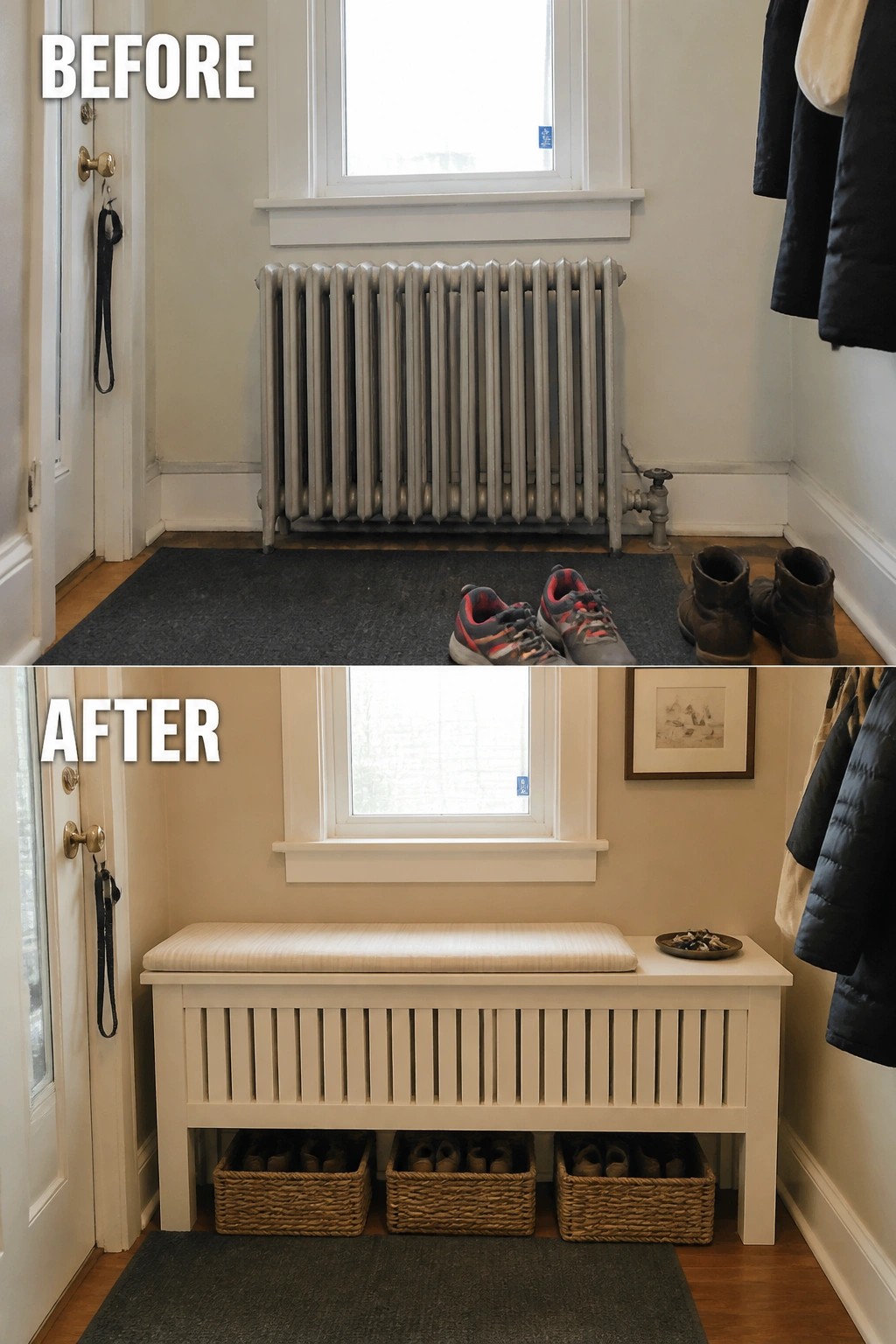
An exposed radiator can eat up the best spot for a front-door landing. Replacing it with a slim bench that doubles as a radiator cover and seat makes that tight area useful without major construction—the photo shows a metal radiator swapped for a white slatted bench topped with a cushion and woven baskets tucked underneath. The result is a practical landing for sitting, slipping on shoes, and corralling clutter.
To copy this, pick a bench sized to the radiator recess and keep the front slatted or vented so heat can still flow (leave a little clearance at the back). Use a removable cushion for easy cleaning and shallow baskets for shoes or gloves so the entry stays tidy and walkable. This works best in narrow entries of older homes where you want storage and a place to sit without losing floor space.
Make A Narrow Entry Functional With A Bench And Hooks
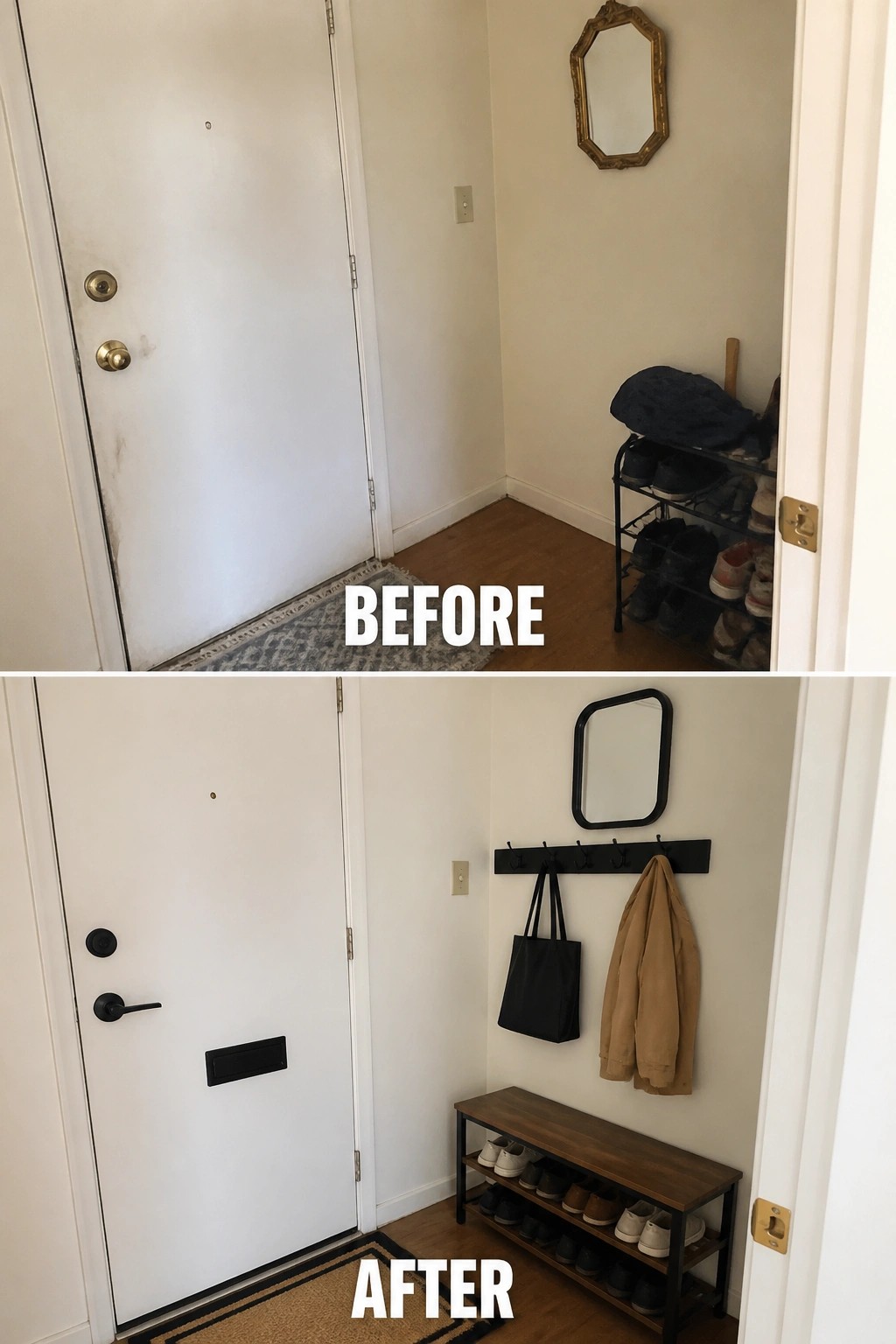
A tiny entry doesn’t need a lot of furniture to feel finished. Swapping a tall, cluttered shoe rack for a low bench with built-in shoe shelves and hanging a simple hook rail plus a small mirror immediately gives the space a clear purpose: sit, stash shoes, and grab a coat. Small but effective.
To copy it, pick a slim bench that leaves the door clearance and provides at least one shelf for shoes. Mount a row of hooks at a reachable height and add a compact mirror above so the wall works double duty. Stick to two or three finishes so the setup reads tidy, and keep daily items to a minimum so the entry stays usable.
Give A Bare Entry Wall A Clear Purpose
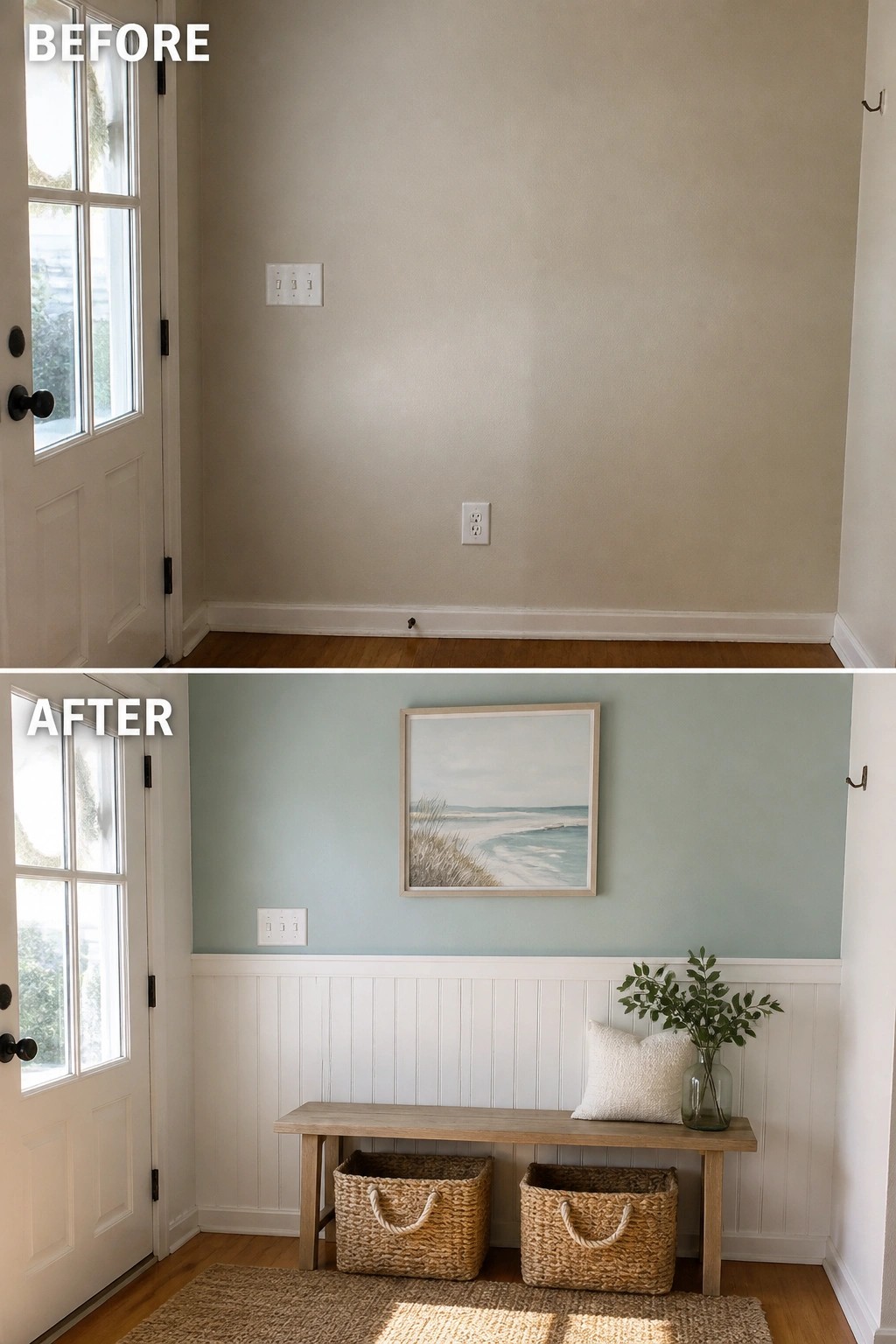
A narrow entry can feel wasted when it’s just a blank wall. Install a low band of beadboard or simple trim, paint the upper wall a soft color, and add a slim bench with baskets underneath. That combination creates an instant landing spot for shoes and bags while keeping the wall protected from scuffs and easy to clean.
When you’re planning this, keep scale in mind: pick a bench no deeper than 12 to 14 inches so the door still clears and traffic flows. Choose white or a durable finish for the lower trim so marks are less obvious, repeat one color from the bench or baskets to tie the look together, and limit accessories so the area stays functional and tidy.
Create A Welcoming Entry With A Slim Bench And Wall Mirror
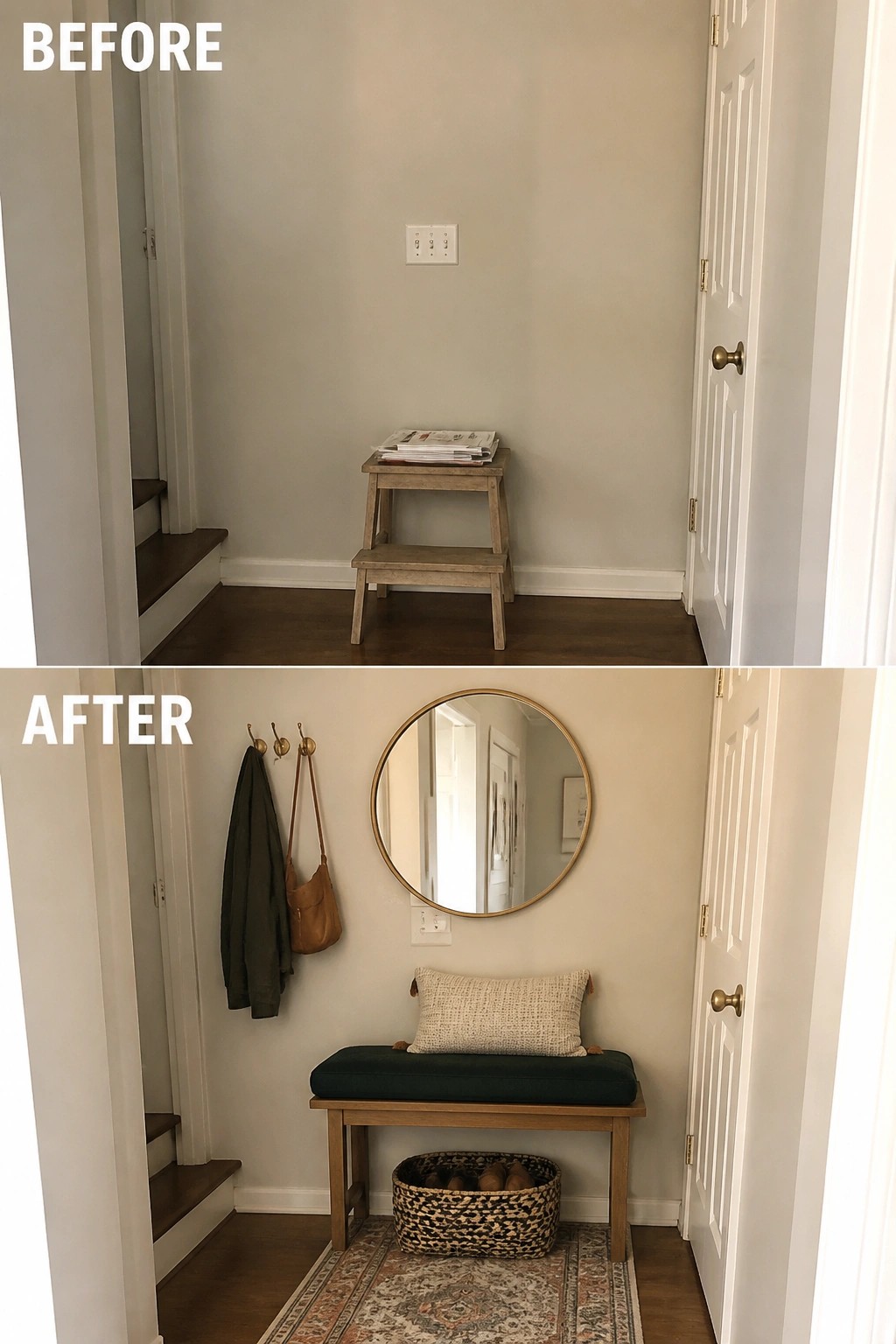
A tight, empty entry can feel wasted, but a narrow bench, a round wall mirror, and a couple of hooks turn that blank spot into somewhere people actually use. The bench provides a quick place to sit and stash shoes, the mirror opens the wall visually, and hooks keep jackets and bags off the floor — simple additions that make the whole area functional without crowding it.
Keep scale in mind: pick a slim bench with open space underneath for a basket or shoe storage and mount a mirror that fits the wall without overpowering the door. Add one or two hooks at shoulder height for everyday items, and use a small runner or rug to define the zone; leave enough clearance for the door and stairs so the entry stays easy to move through.
Organize A Tight Entry With Vertical Wall Storage
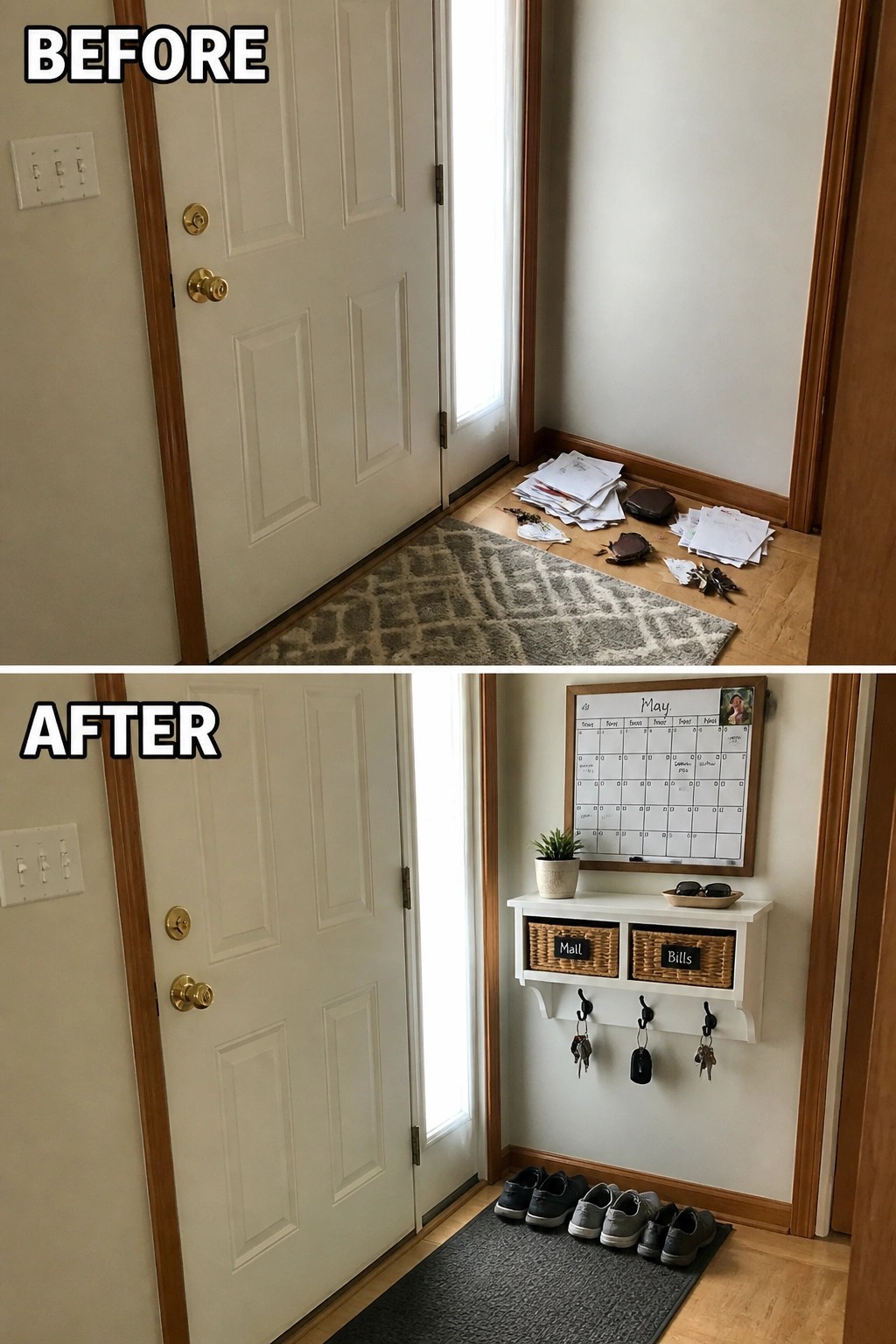
Instead of letting mail and keys pile up on the floor, use a slim wall shelf with a couple of labeled baskets and hooks to create a compact landing zone. The vertical storage takes almost no floor space, gives you a dedicated place for mail and everyday items, and leaves room for a small shoe mat so entry traffic stays tidy.
This works best in narrow foyers or tight front-door areas where a full console table would feel crowded. Choose a shallow shelf with baskets that slide in and out, mount hooks at a reachable height, and add a small mat for shoes (keep it small). Start by clearing out what you do not need, then add only the pieces that help you grab keys and go.
Give A Small Entry A Built-In Bench
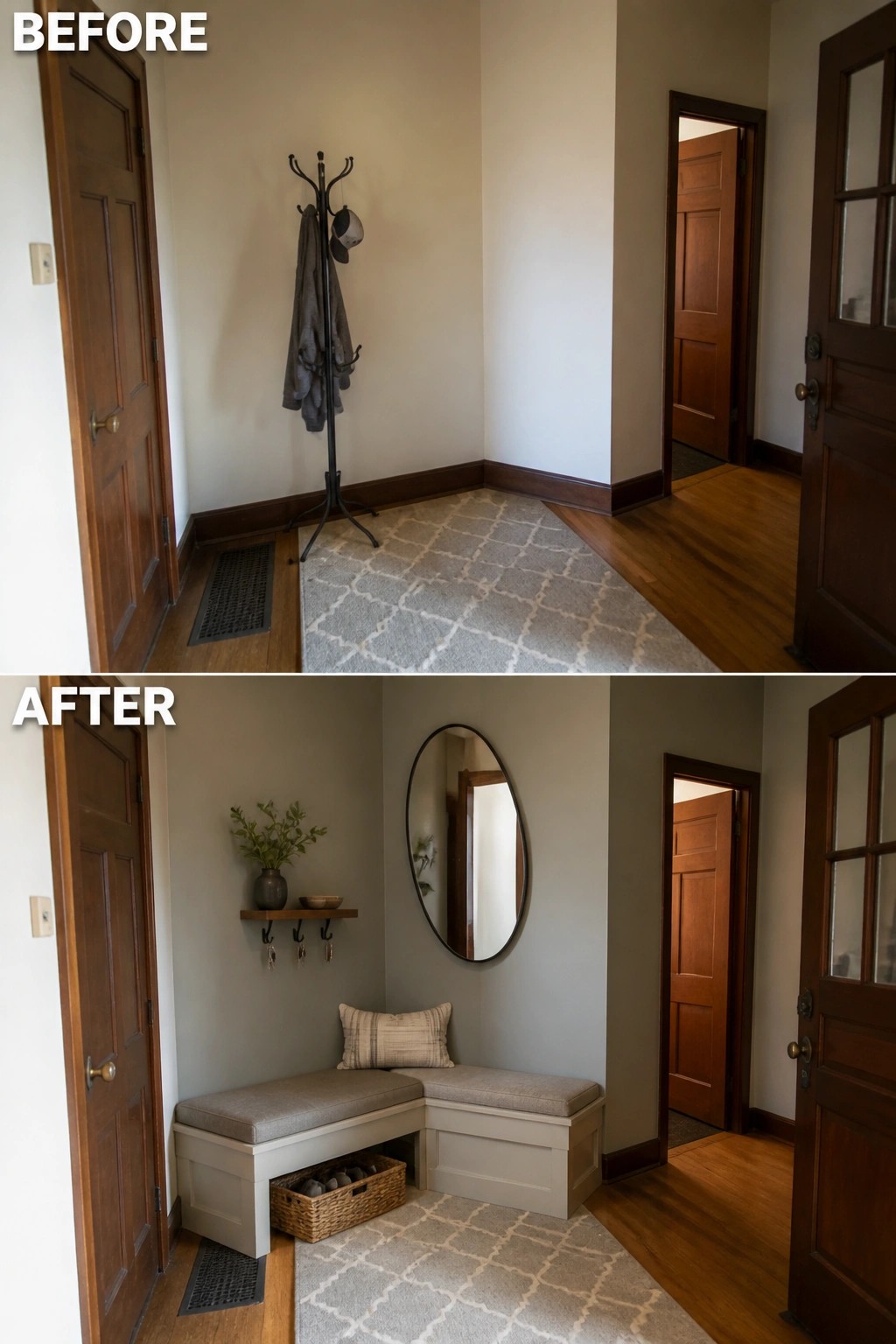
Turning an awkward, empty corner into a built-in bench instantly makes a tiny entry feel useful instead of wasted. Replace a freestanding coat rack with a shallow seating unit that has a cushioned top, under-bench baskets or cubbies, and a small shelf with hooks — one visible change that adds both a place to sit and everyday storage.
This idea works especially well in older homes and narrow foyers where you need to keep the walkway clear. Keep the bench depth modest so doors still swing, use a durable cushion and removable baskets for shoes, and hang a round mirror above to reflect light and make the corner read larger.
Give A Small Entry A Clear Purpose
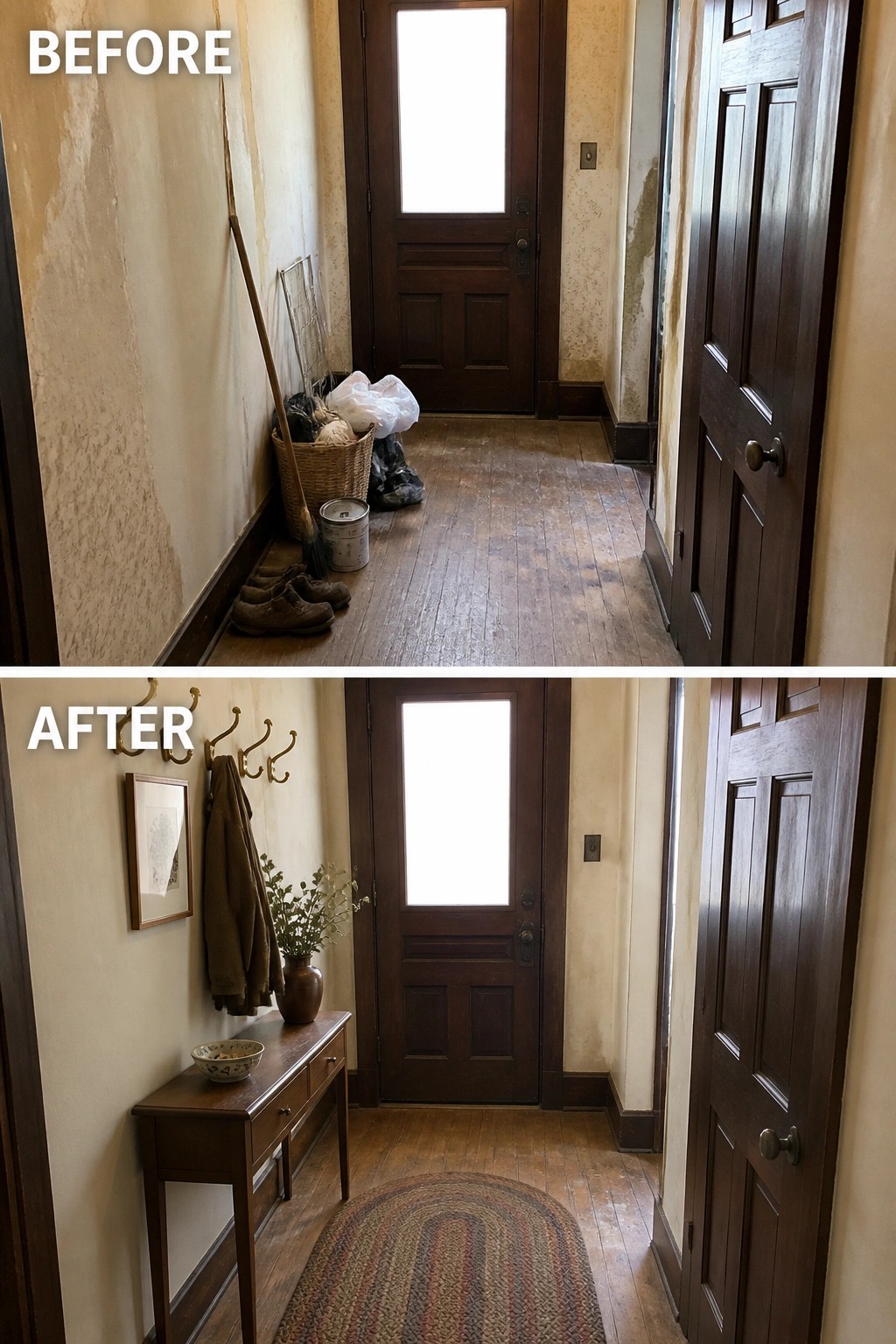
A narrow entry that collects coats and shoes feels messy and wasted. Clearing out the piles and adding just a slim console, a row of wall hooks, and a runner immediately defines the space and makes it functional. The change is simple but effective: a place to drop keys, hang a jacket, and a single vase to finish the look keeps the area from sliding back into clutter.
Keep it simple. Pick a console no deeper than about 12 inches so the path stays open, mount hooks at a comfortable height, and use a runner to anchor the zone visually. Limit what you display to one or two decorative pieces and a small dish for everyday items so the entry stays useful for coming and going, especially in older homes or tight layouts.
Light Narrow Stairs To Make A Small Entry Safer
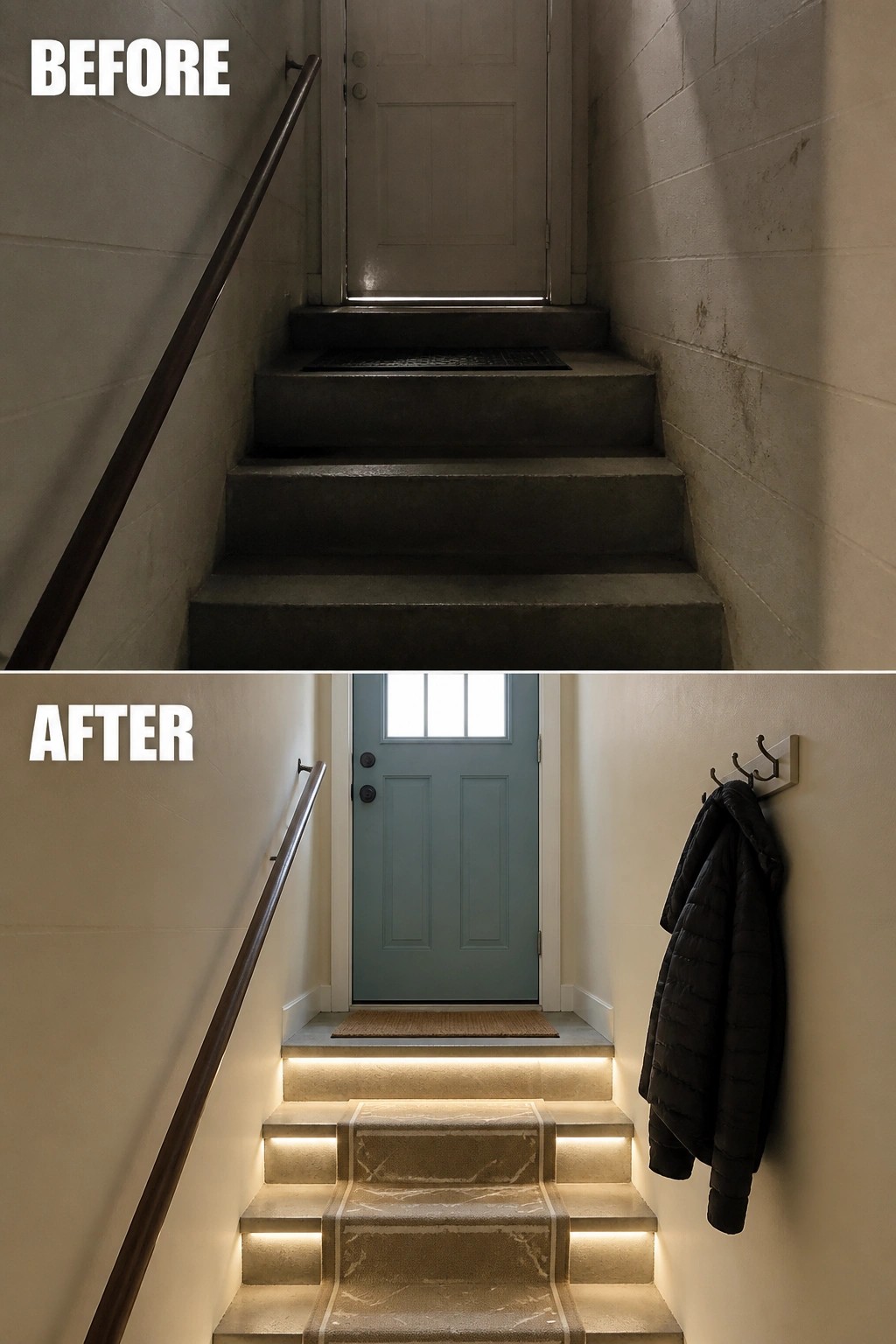
A dark, compact entry can feel tight and hard to use. Adding low-profile strip lights to the stair risers and a slim runner immediately makes each tread visible and the whole approach feel more intentional — the photo shows plain concrete steps turned readable and welcoming with under-step lighting and a simple rug.
For a similar result, choose warm white LED strips mounted under the nosing or on the riser so the light hits the tread without causing glare, and add a narrow, non-slip runner for traction. Use a motion sensor or switch, keep fixtures low-profile so you do not lose headroom, and touch up paint or trim to complete the tidy, safer look; this works well in basements, narrow halls, and small front entries.
Frequently Asked Questions
Q: How can I make a tiny entryway feel bigger?
A: Use light paint and a mirror to bounce light and open the space visually (try light-reflecting finishes). Choose slim, vertical furniture like a narrow console or floating shelf and keep the floor clear so sight lines run through the room. A single statement piece, like a tidy bench, can make the area feel styled without crowding it.
Q: What are the smartest low-cost updates for a polished look?
A: Fresh paint, new door hardware, and a stylish doormat change the whole vibe for very little money. Swap an old lamp or add a simple runner to add texture and warmth. Small touches add up fast and make the entry feel intentional.
Q: How do I add storage without making the space feel cluttered?
A: Go vertical with hooks, a slim wall-mounted shelf, or a tall narrow cabinet to keep things off the floor. Use baskets tucked under a bench for shoes and mail, and limit the items on display to two or three essentials. That keeps the entry tidy and usable.
Q: What lighting should I pick for a tight front door area?
A: Pick a compact fixture that gives even, warm light—flush mounts or small pendants work well in low ceilings. Add a wall sconce or lamp if the space feels shadowy, and use bulbs that render color naturally so your decor reads true. Bright, welcoming light makes even a tiny entry feel inviting.