


I have always noticed how a colonial from the nineties can start to look flat once the beige siding and trim have sat there for years without any adjustment.
The right paint shift on the siding combined with cleaner lines around the windows and entry can pull the whole front together in a way that feels more current.
I usually test a couple of trim colors right on the house first so I can see how they sit against the siding in real light before going any further.
Porch posts and door details often need only minor reshaping to match the rest of the changes once the main surfaces are updated.
Those steps tend to make the house look cared for again.
Unify Shutters And Trim For A Cleaner Colonial Look
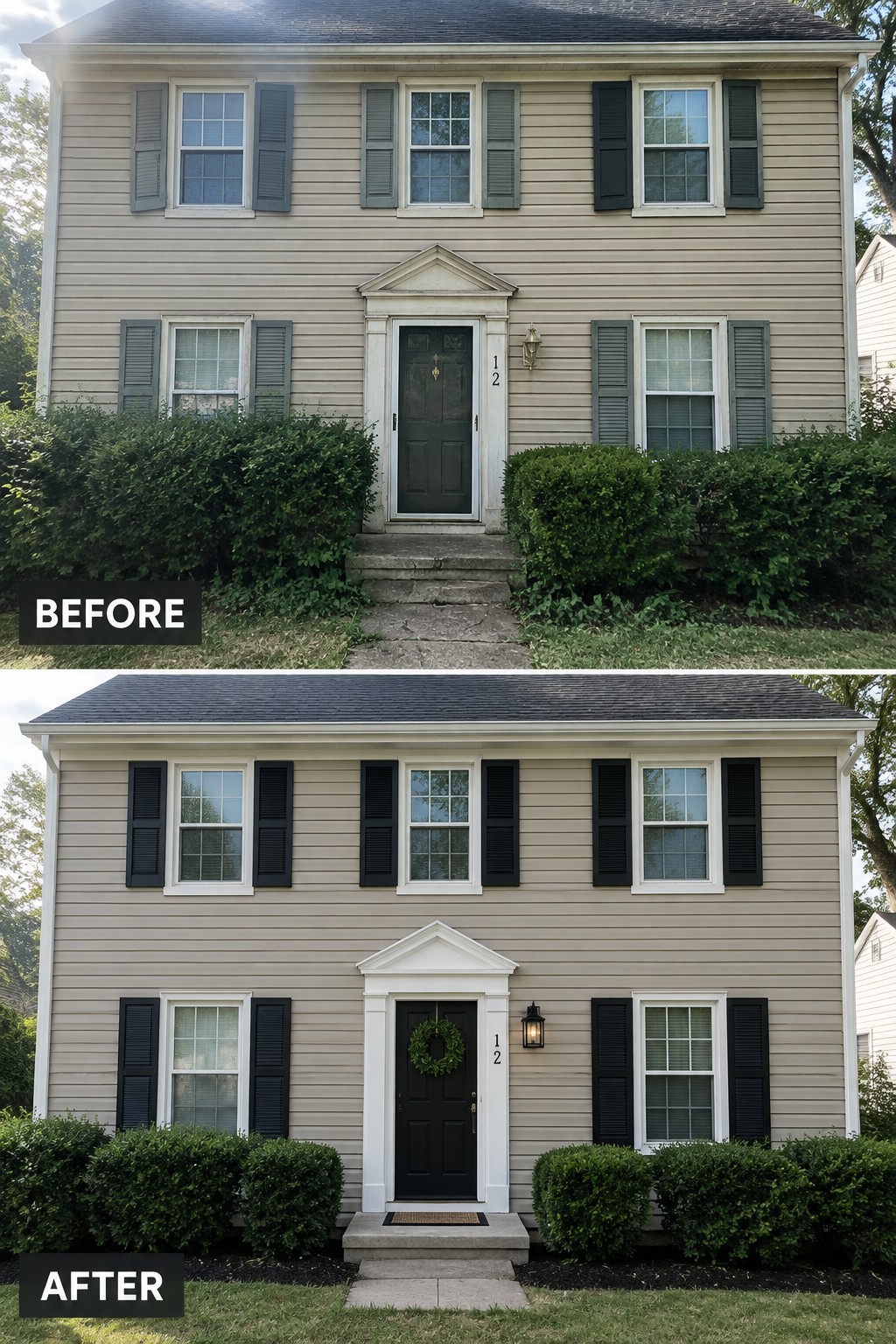
Many beige colonials from the 90s end up looking uneven when shutters vary in color and the front planting grows out of scale. Painting all the shutters one consistent dark shade and trimming the bushes to match brings the facade back into balance without changing the siding.
This idea suits homes where the structure is still solid but the details have drifted. Start with the shutters and window trim, then define the beds with mulch so the entry feels intentional rather than overgrown.
Refresh The Front Entry With Paint And Planters
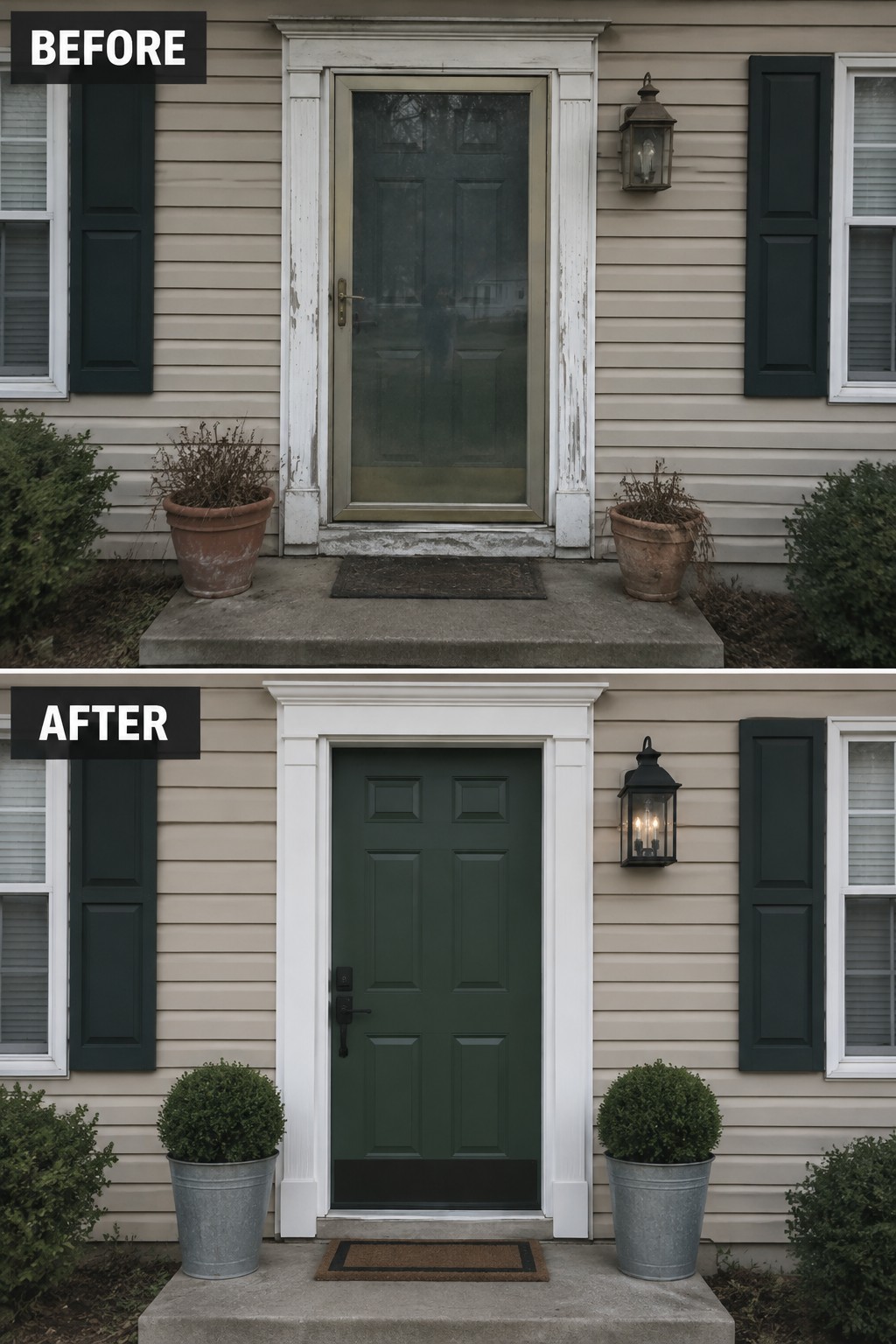
Painting the trim and swapping the old storm door for a solid color makes the whole entry feel sharper and more welcoming. The before photo shows peeling white trim and tired pots that drag the look down. In the after, the clean white trim against the beige siding and the deep green door create a simple but clear focal point.
This approach works well on 90s colonials because it updates the architecture without major construction. Use it when the siding is still in good shape but the trim and door have faded. Match the planters to the new hardware so the entry feels pulled together instead of scattered.
Paint Shutters Dark To Update A Plain Colonial Exterior
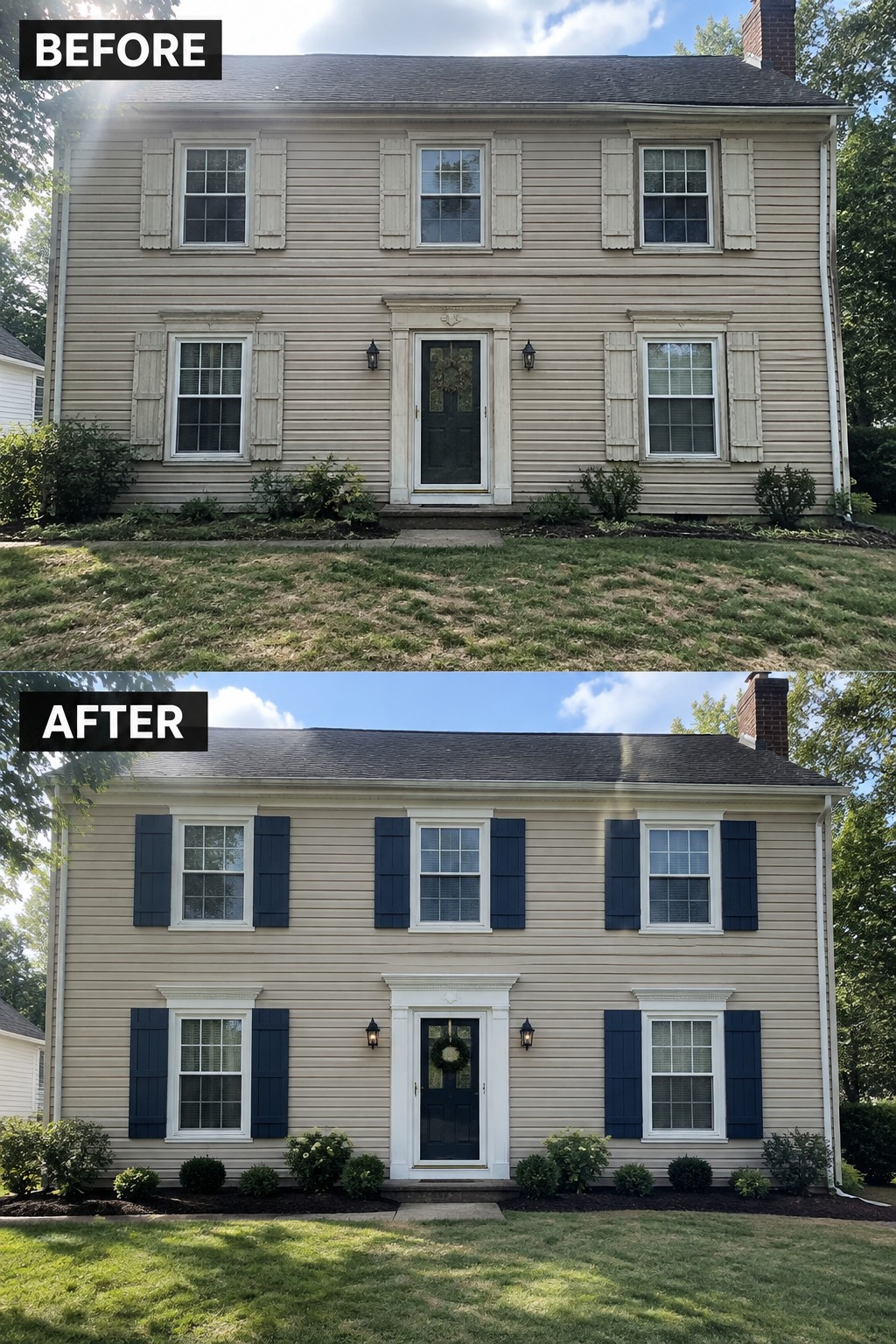
Many 90s colonials with beige siding look flat because everything blends together. Painting the shutters a deep navy gives the windows clear shape and makes the whole front feel more finished. The white door trim and fresh mulch along the beds also help separate the house from the grass without any major construction.
This works best on simple two-story homes where a full repaint feels like too much. Pick a shutter color several shades darker than your siding, keep the entry trim bright, and clean up the beds first before adding plants. The change stays practical and still shows up clearly from the street.
Update The Front Steps And Railings For Better Curb Appeal
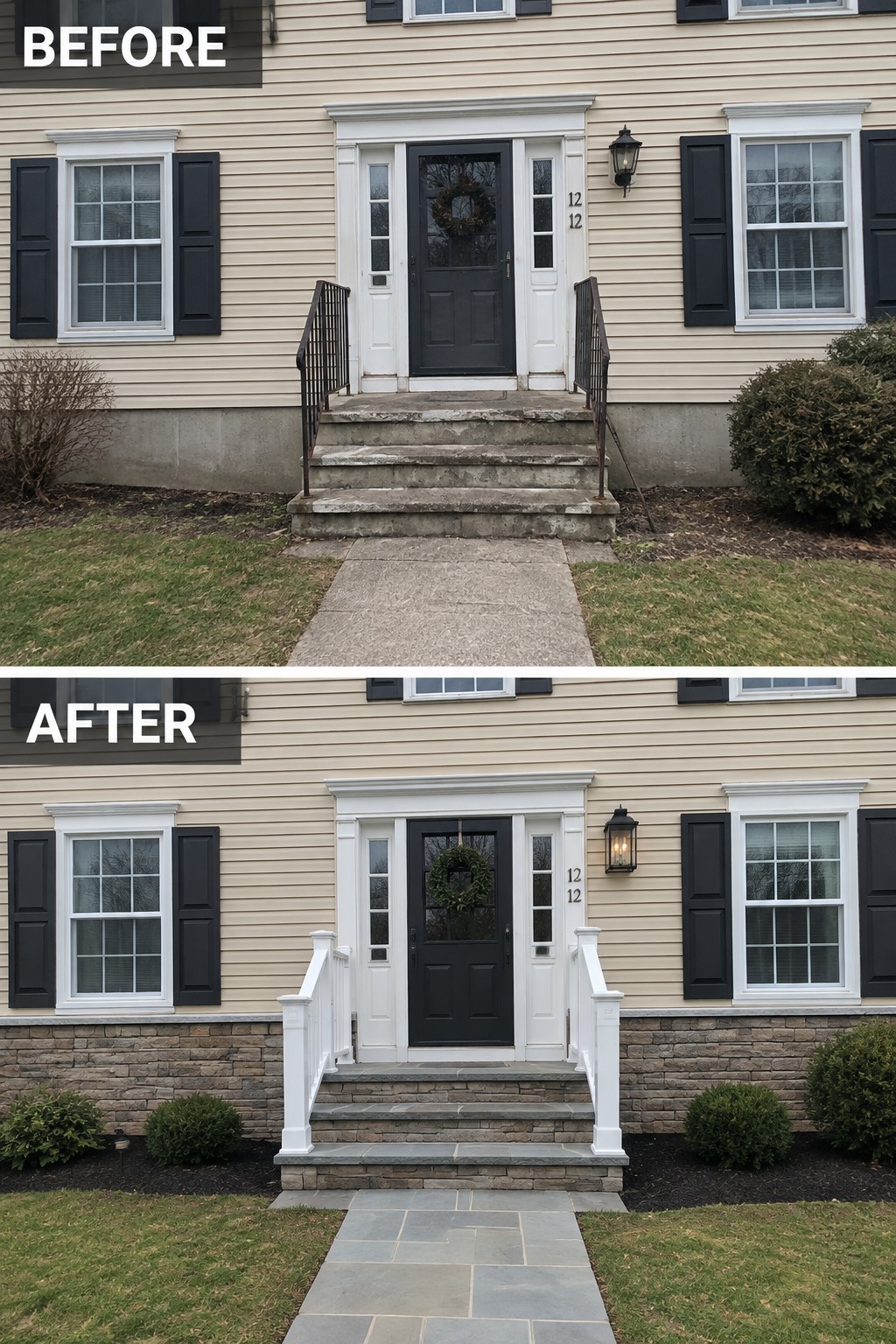
Many 90s colonials end up with basic concrete steps and dark metal railings that make the entry feel unfinished next to the beige siding. Replacing the steps with stone and switching to white railings gives the front a cleaner line and makes the door area feel more intentional.
This approach works well if you want a noticeable change without repainting the whole house. Start with the steps and railings first, since they sit right in the middle of the facade and connect the house to the walkway. Keep the new materials simple so they still suit the original colonial shape.
Paint The Porch Trim And Add Railings For A Cleaner Entry
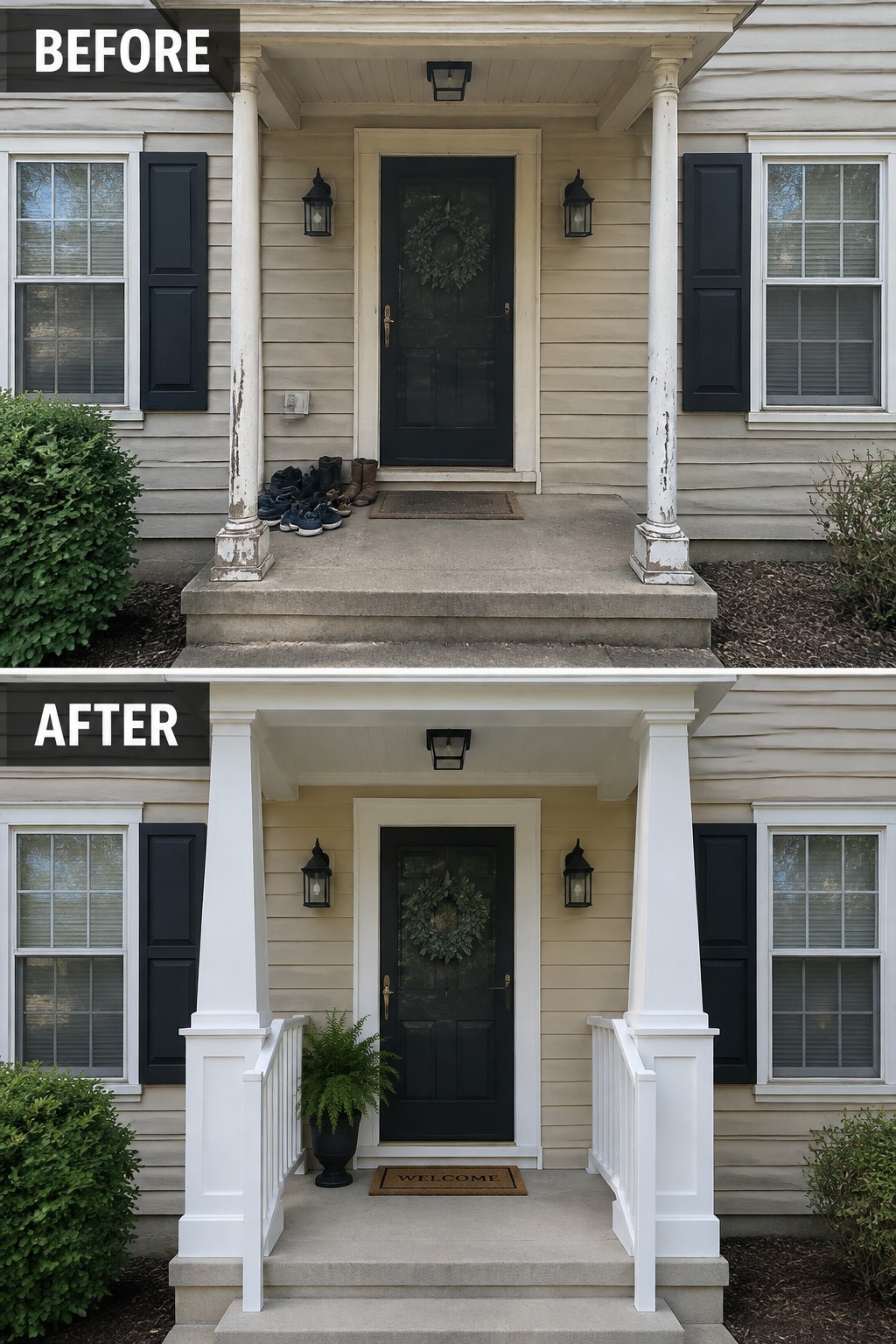
The before photo shows a front porch with peeling paint on the columns and no clear boundaries, which made the entry feel unfinished. Painting the trim and columns white plus adding matching railings gives the porch structure and makes the whole front look more intentional. The simple addition of a potted fern and a welcome mat further helps tie the space together without much extra cost.
This approach works well on 90s colonial homes with beige siding because it updates the trim without changing the siding color. Focus first on scraping and painting the existing columns and beams, then add railings if the porch feels too open. Keep the plantings and accessories minimal so the painted trim remains the main update.
Give A Cluttered Porch A Clear Purpose
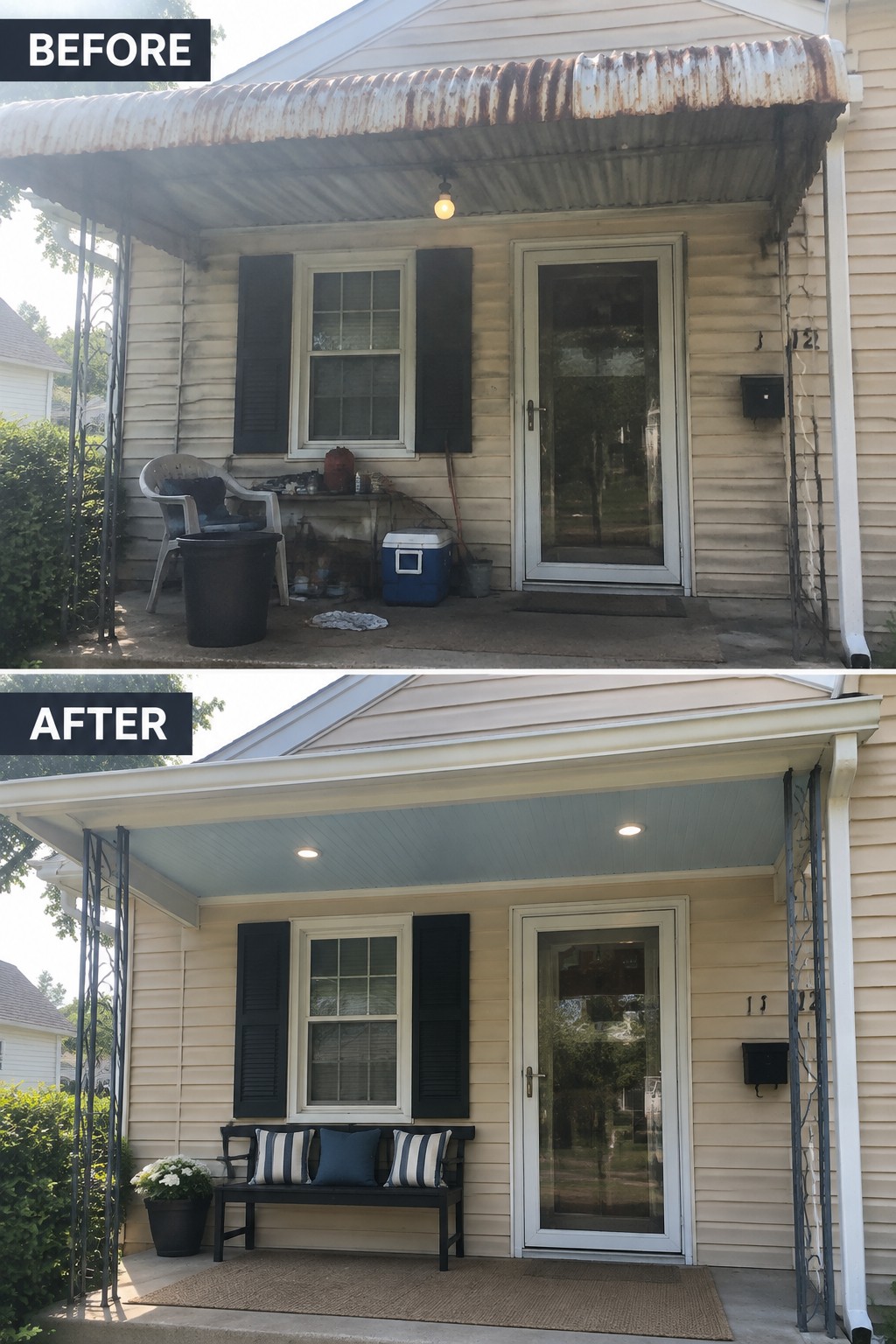
Many 90s colonials end up with front porches that collect random items instead of serving as an entry. Removing the clutter and adding one bench with a few cushions makes the space feel intentional and much more welcoming.
This idea works best when you keep the changes simple. Choose a bench that fits the scale of the porch, add a rug to mark the seating area, and keep the rest of the surface clear so people can actually walk through.
Update The Garage Door And Trim To Refresh The Front
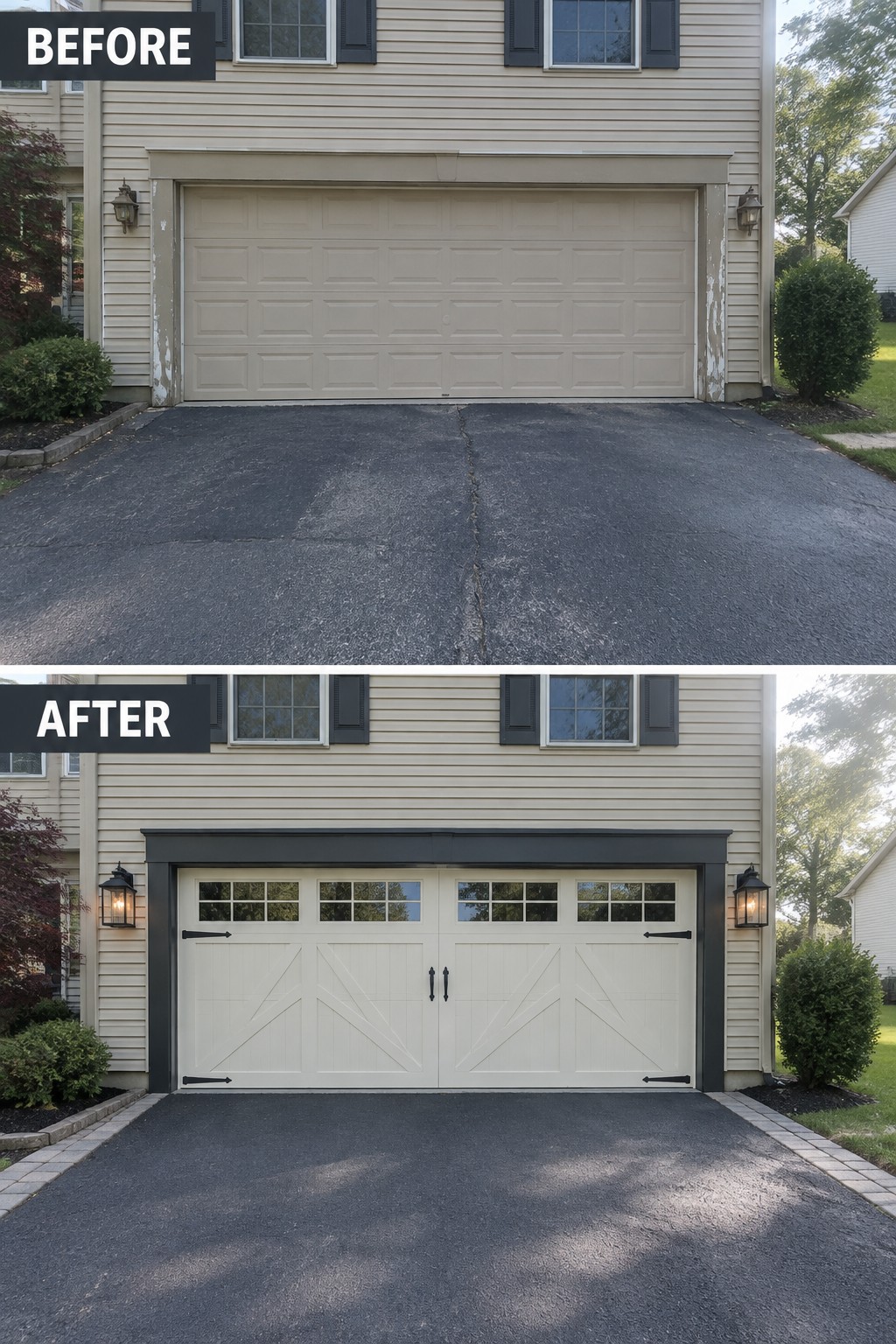
A flat garage door often dominates the front of a 90s colonial and makes the whole facade feel dated. Switching to carriage-style doors with windows and hardware, then wrapping the opening in dark trim, breaks up the large blank wall and gives the house a clearer entry point.
This approach works best on homes where the garage takes up most of the front elevation. Match the new trim color to existing shutters or light fixtures, and keep the door color light if the siding is beige. It is a single change that improves curb appeal without requiring new siding or major landscaping.
Update Shutters And Add Window Boxes For Better Curb Appeal
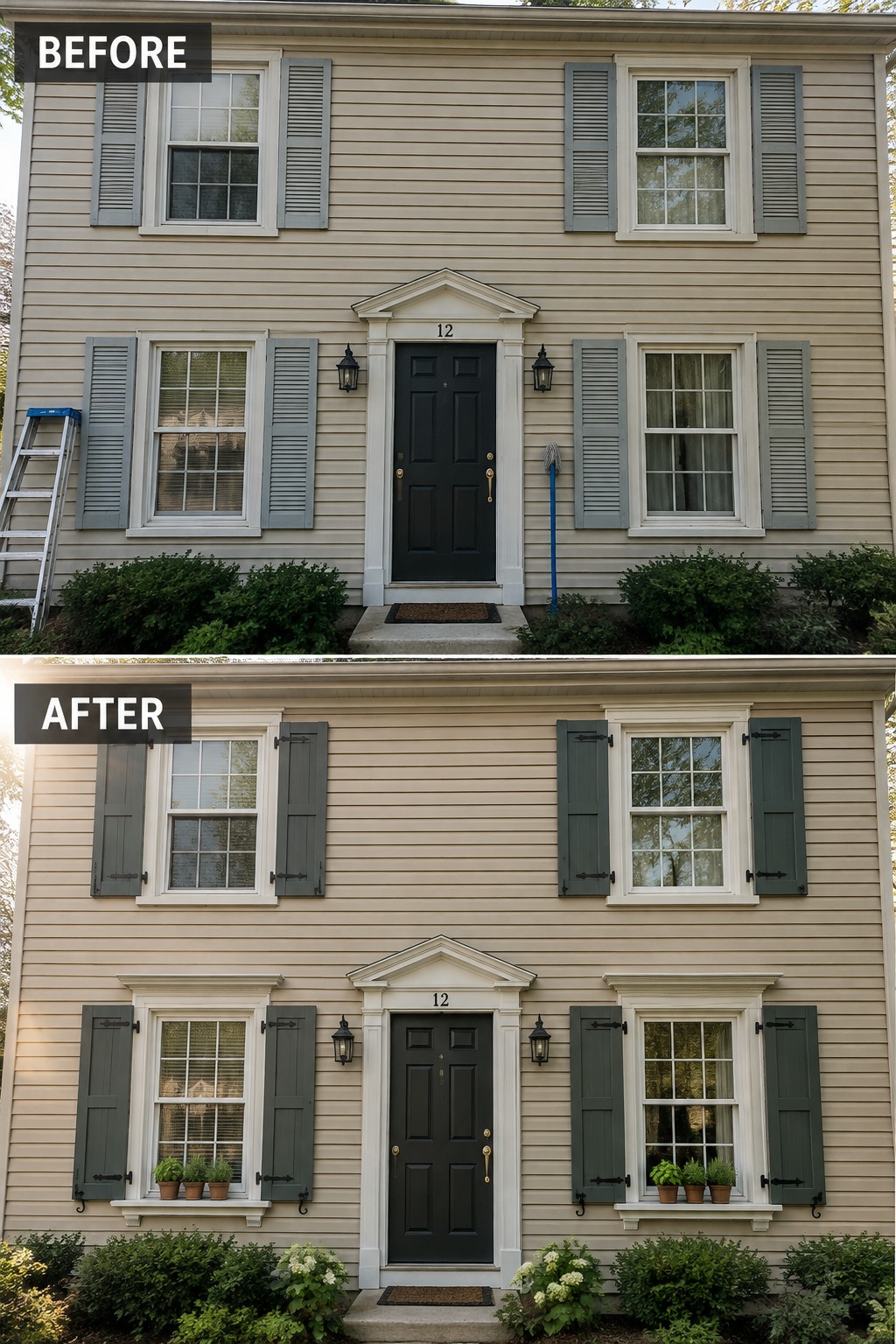
Many 90s colonials with beige siding look unfinished because the shutters feel too light and the windows sit bare. Painting the shutters a deeper green and adding narrow window boxes below the lower windows gives the front a more pulled-together look without changing the siding or trim.
This works best on homes that already have decent proportions. Pick a shutter color that contrasts with the beige but still feels calm, keep the boxes simple and shallow, and fill them with small plants that suit your climate. It is a straightforward change that makes the entry feel more intentional.
Refresh Dated Beige Siding With A New Exterior Color
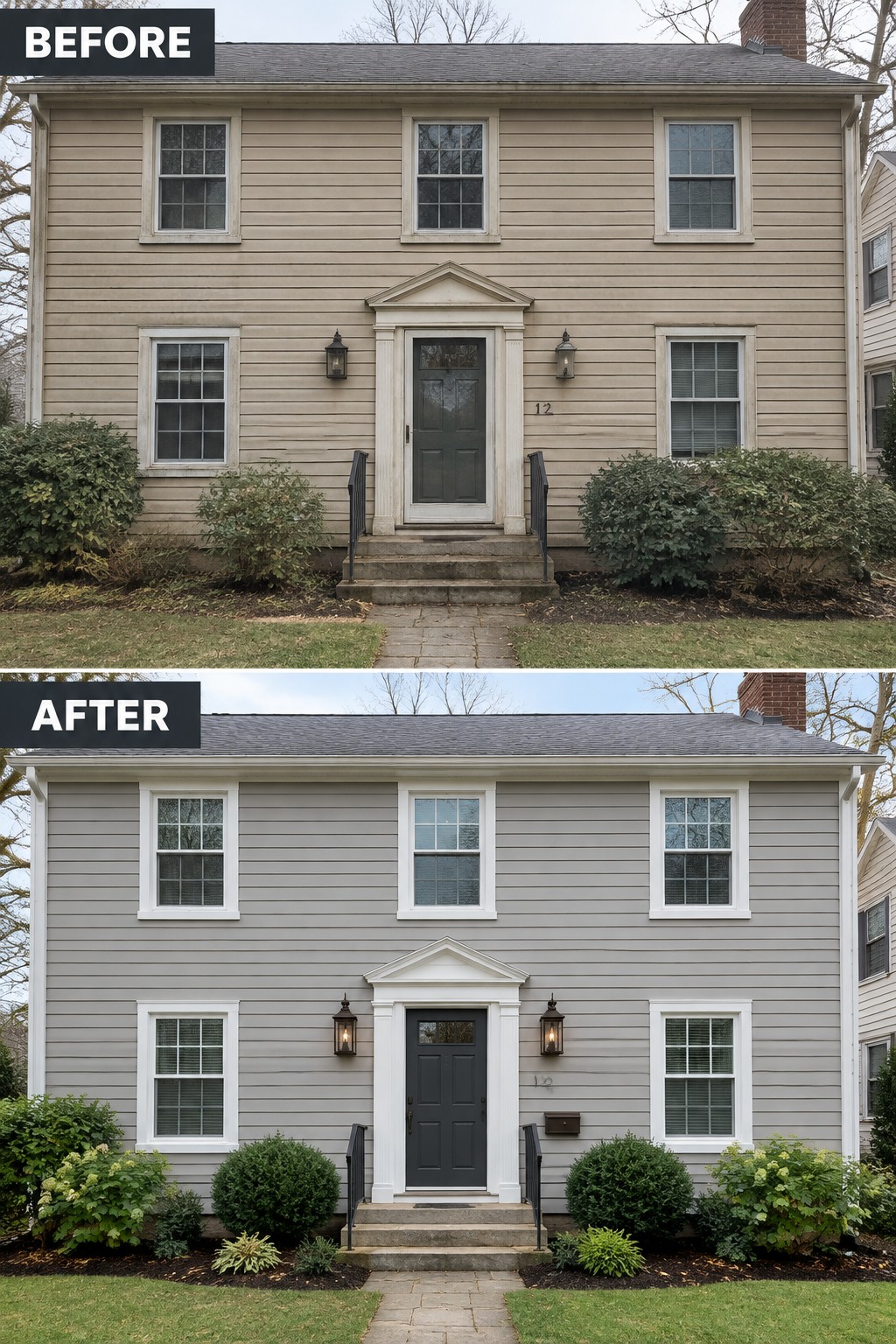
Many 90s colonials end up with that flat beige siding that makes the whole front look tired and washed out. A simple color change to a soft gray gives the house more weight and presence without any major structural work. The white trim stays but reads cleaner against the new shade, and the darker door helps the entry feel more grounded.
This approach suits homes that already have decent proportions and just need a fresher face. Test the new color on a large section first, since siding can shift a lot in different light, and keep the roof and any brick elements in mind so the palette stays cohesive.
Refresh Outdated Trim On Beige Siding
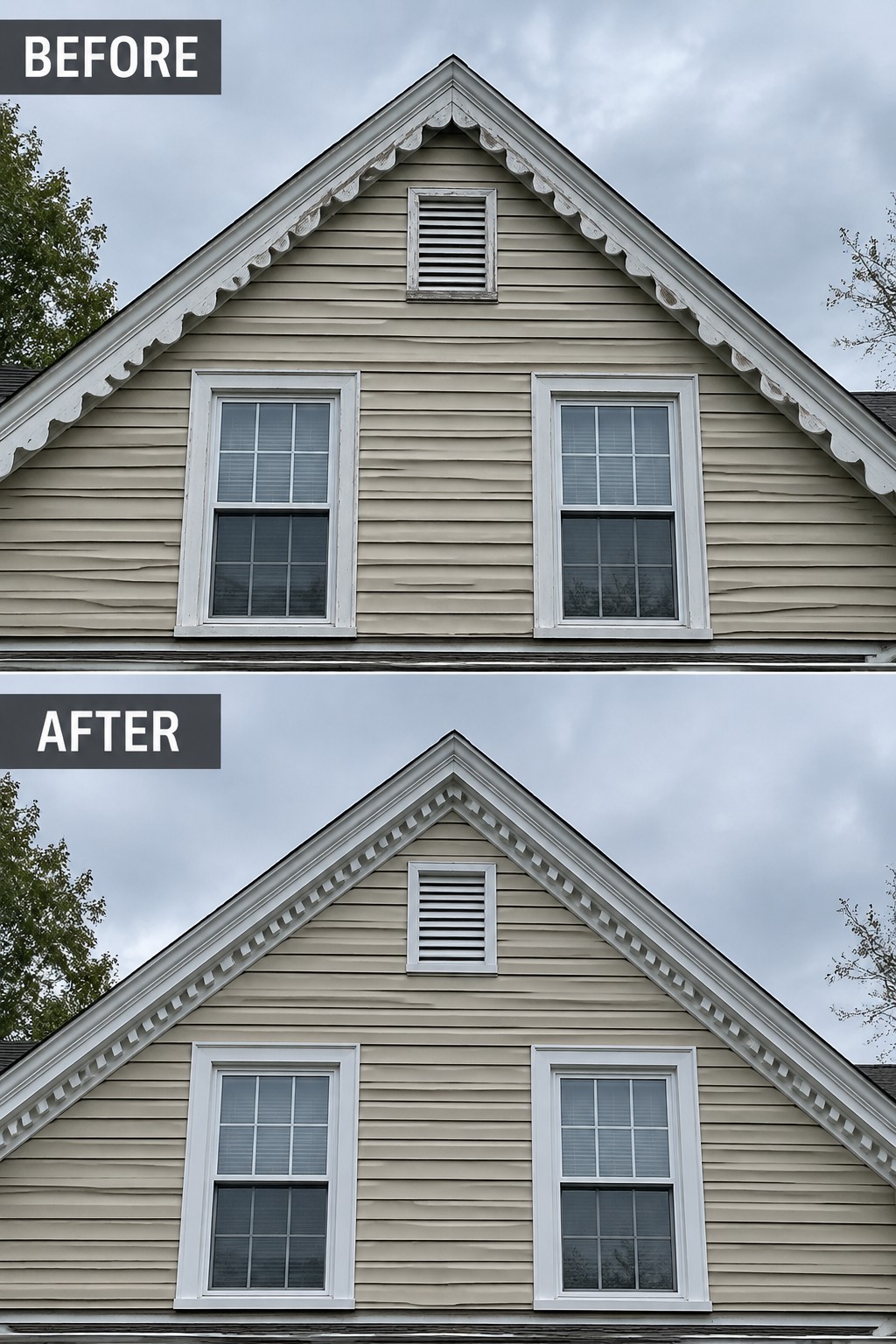
Many 90s colonials end up with beige siding that still holds up but trim that has gone soft around the edges. In this case the scalloped gable detail and window casings were the main offenders, and simply replacing or refinishing that trim brought the whole front back into line.
The approach works best when the siding itself is in decent shape and you want to avoid a full repaint. Start with the most visible trim pieces, match the existing white, and keep the profile simple so it still reads as colonial rather than trying to add new ornament.
Frame The House With Structured Garden Beds
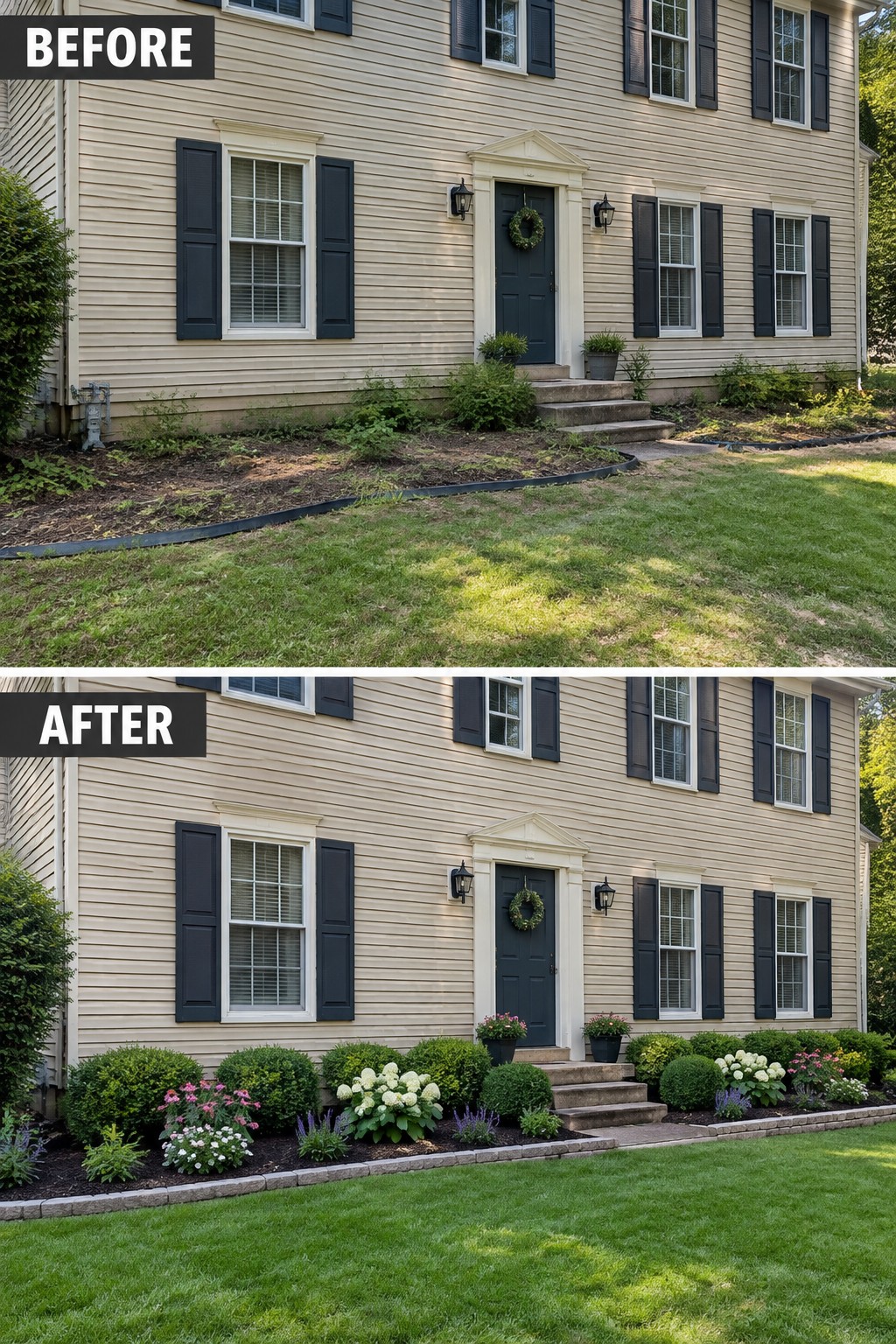
The main change here is the shift from bare, uneven ground along the foundation to clean, layered beds edged with stone. This gives the beige colonial a much more finished look without touching the siding or shutters. The plants stay low enough not to hide the windows while still adding color and shape right where the eye lands first.
This approach works well on 90s colonials with wide stretches of siding because it breaks up the flat wall plane and ties the house to the lawn. Start by cleaning the beds and adding a simple border, then fill with a mix of evergreen shrubs, midsize plants, and a few seasonal flowers. Keep the layers shallow so the front door and windows stay visible.
Refresh Beige Siding With Clean White Trim
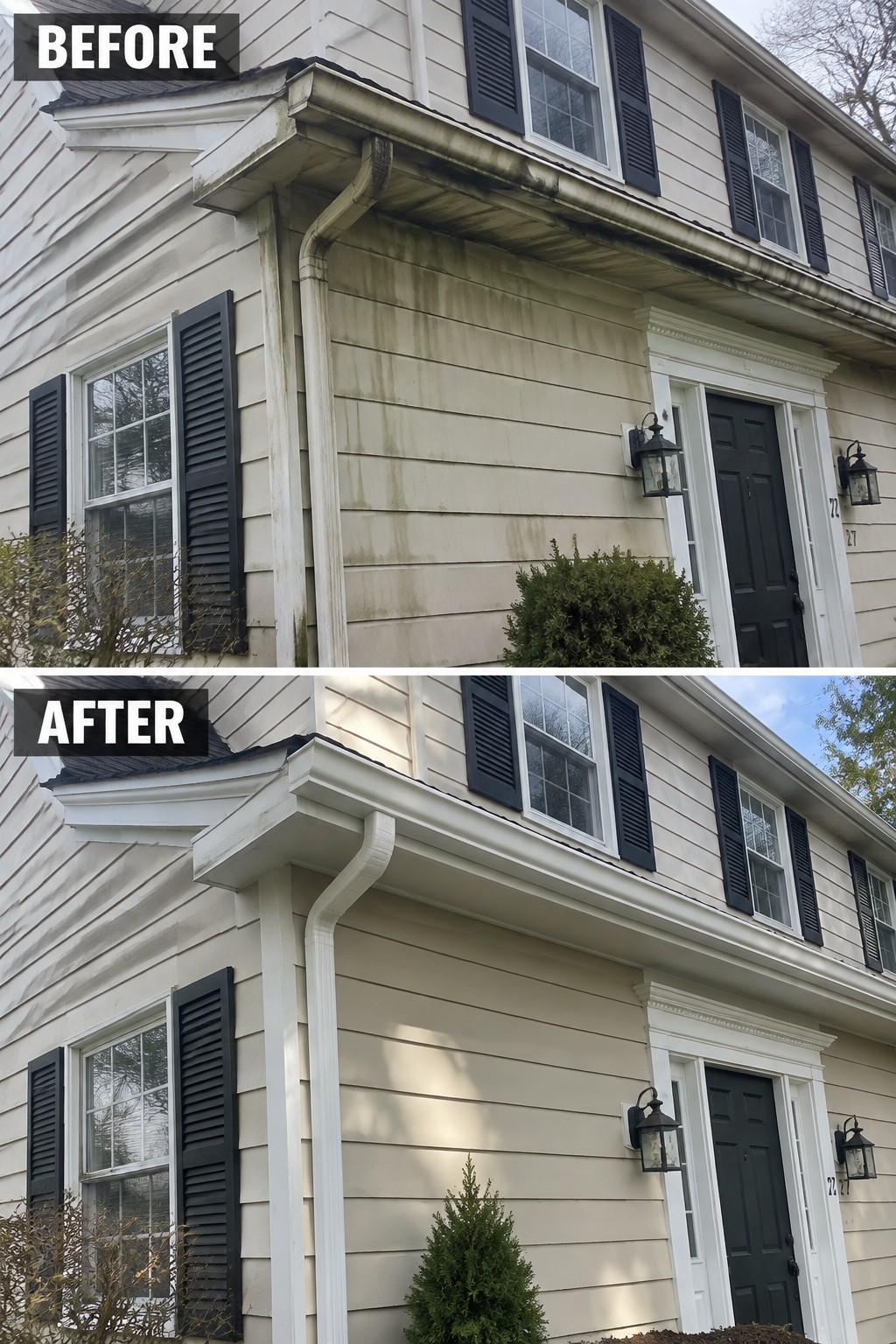
Many 90s colonials with beige siding start to look worn once the trim and gutters collect dirt and mildew. Here the biggest shift came from painting the trim and gutter a bright white and giving the siding a thorough cleaning, which made the whole front feel lighter and more put together.
This works especially well on houses that still have their original trim details. Power wash first, then paint the trim around the roof edge, windows, and door in a clean white. It keeps the project manageable and lets the siding stay as is while still giving the exterior a clear update.
Add Planters And A Mat To Warm Up A Plain Entry
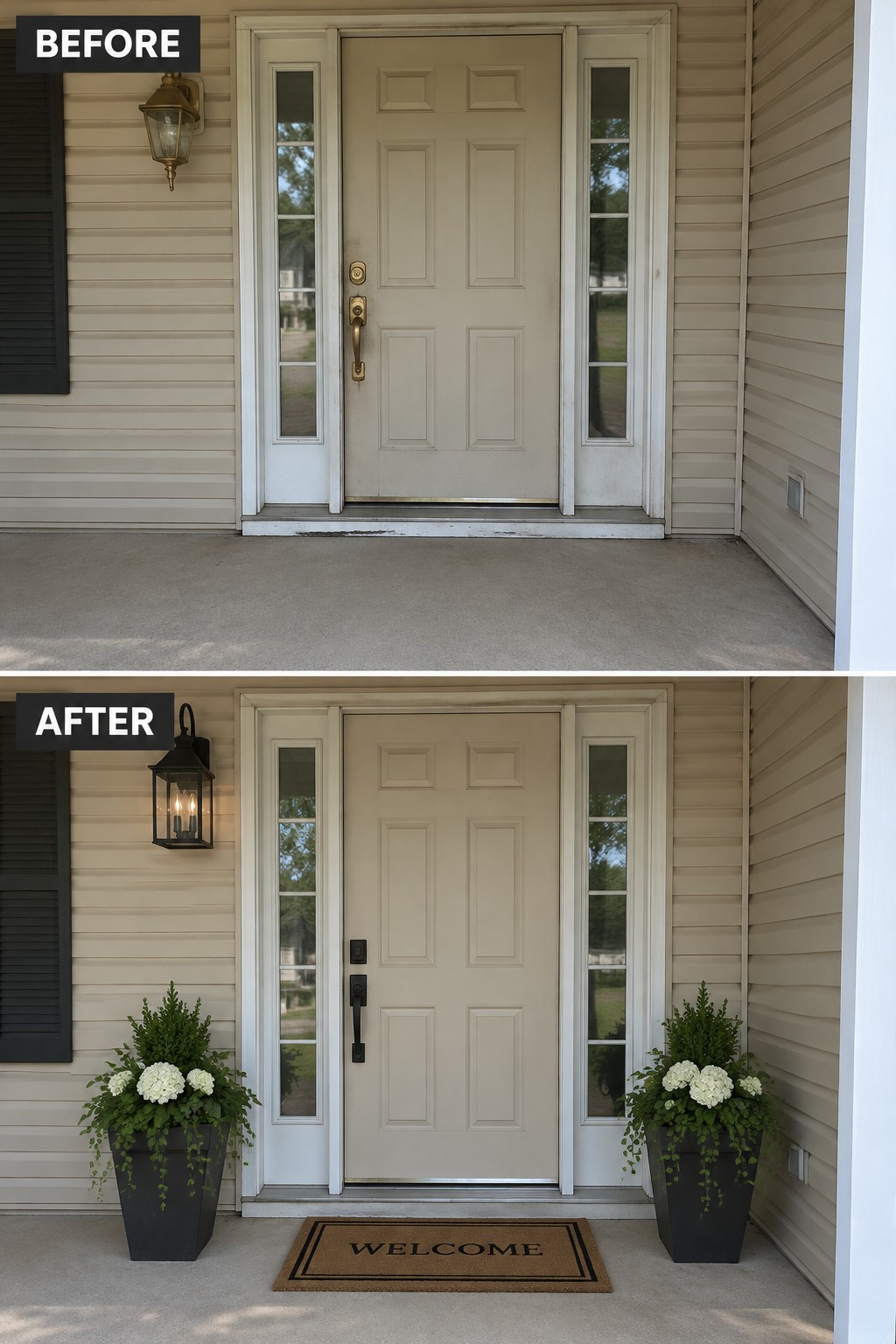
A plain front door on beige siding often looks unfinished on its own. Placing two large planters on either side of the door and adding a simple welcome mat gives the entry a defined spot that feels intentional rather than leftover space.
This idea works best on houses where the door sits centered and the siding is fairly neutral. Use planters that match the scale of the door so they do not look too small, and stick with one or two plant colors to keep the look tidy. The same approach can work on any colonial or traditional home where you want a quick improvement without repainting or replacing the siding.
Add Window Boxes To Freshen Up Beige Siding
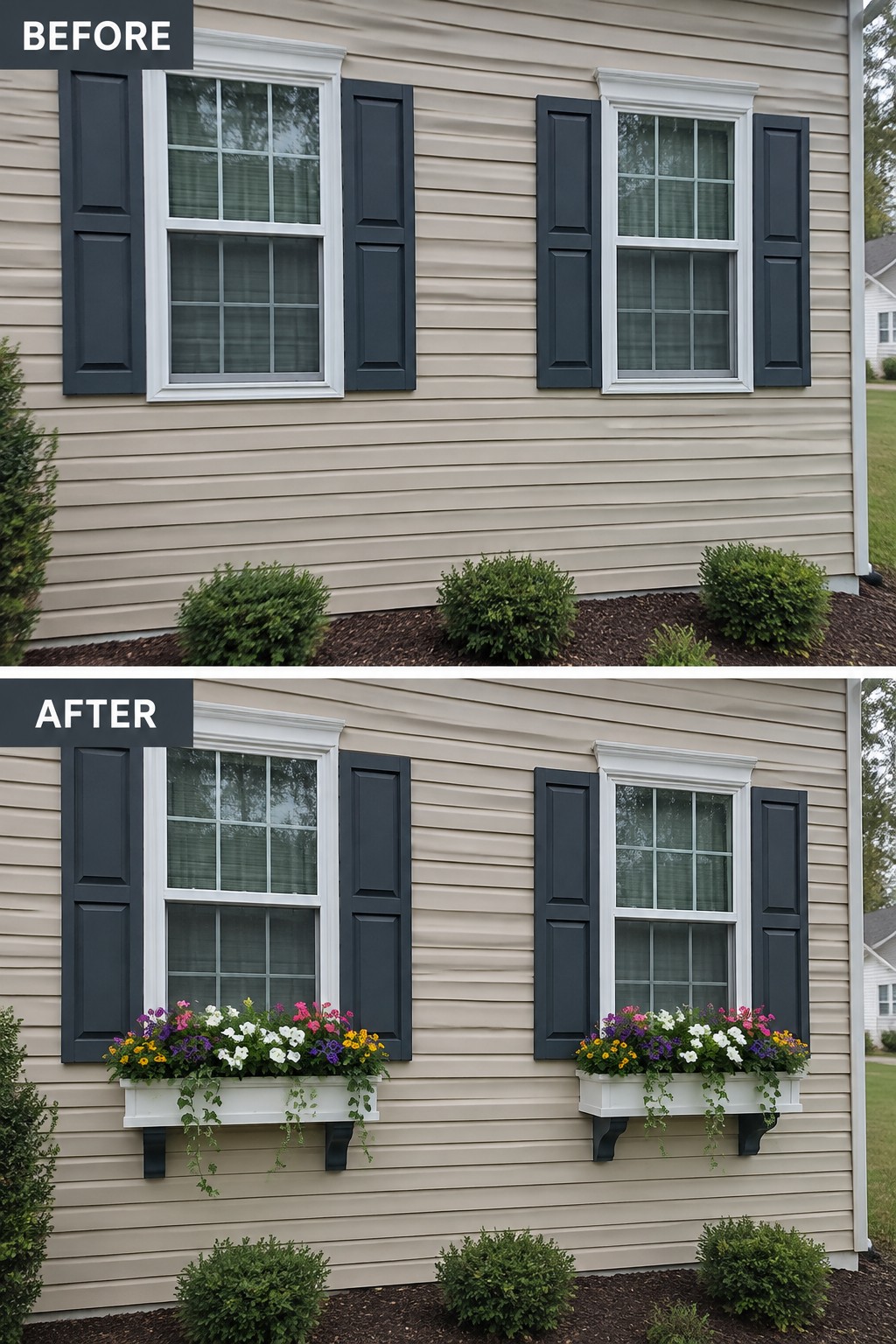
Adding window boxes is one of the simplest ways to give a plain beige colonial more personality. The white boxes sit right under the windows and line up with the existing trim, which breaks up the flat wall and adds a bit of color right where the eye lands.
This approach works well on 90s homes where the siding is still sound but the front feels a little empty. Match the box color to your trim, use sturdy brackets, and pick flowers that handle your local weather. Keep the planting simple so the boxes stay easy to maintain.
Refresh A Plain Front Entry With New Trim And Door Color
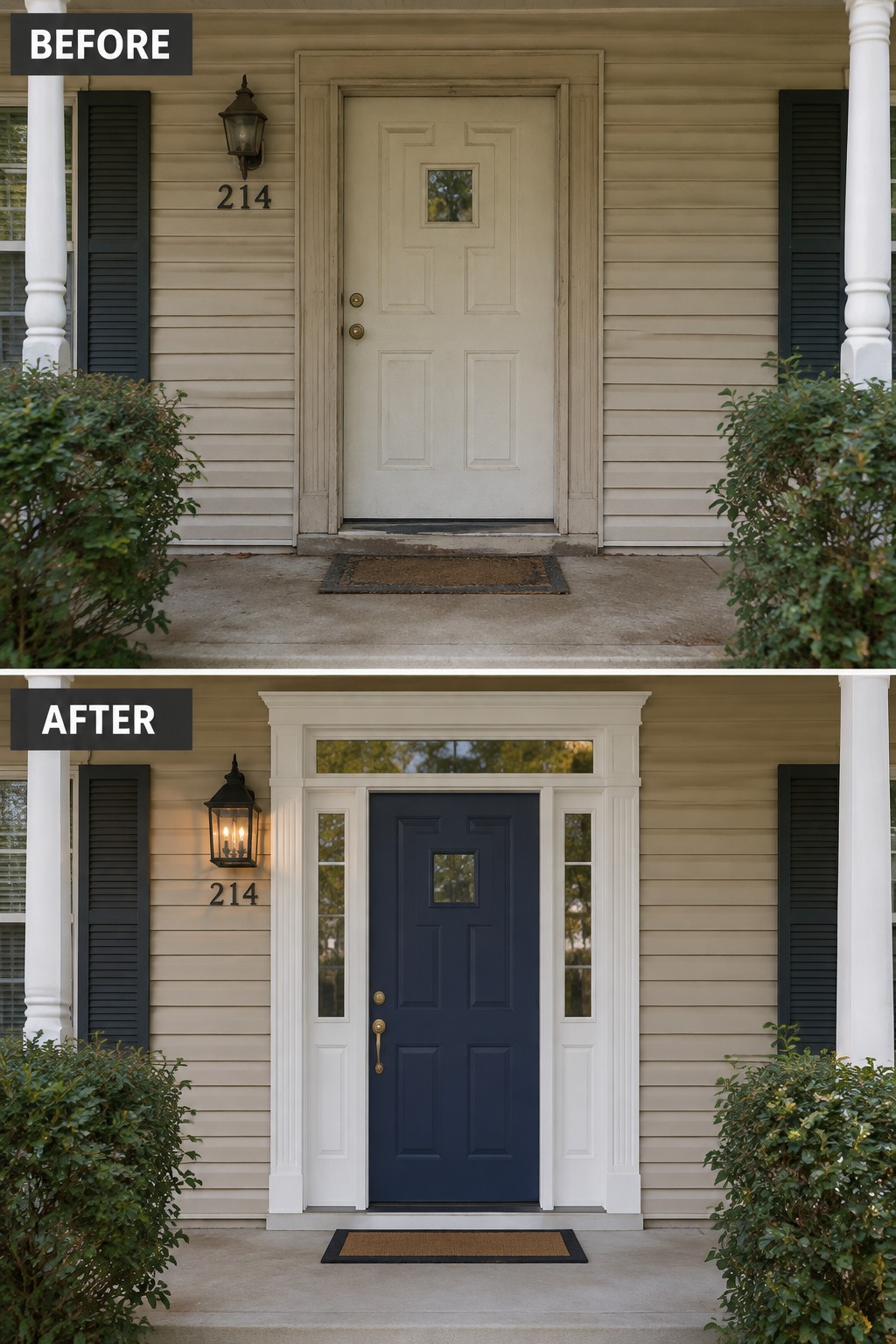
Adding trim around the door and switching to a darker color makes the entry feel more finished against beige siding. The before version had a flat beige door that blended into the wall, while the after version uses white casing and sidelights to create clear structure and a stronger focal point.
This approach works well on 90s colonials or similar homes where the original trim feels thin or missing. Pick a door color that contrasts with your siding, then add simple white trim boards to frame the opening. It is one of the more practical updates because it improves the look without changing the whole facade.
Update Beige Siding With A Fresh Color
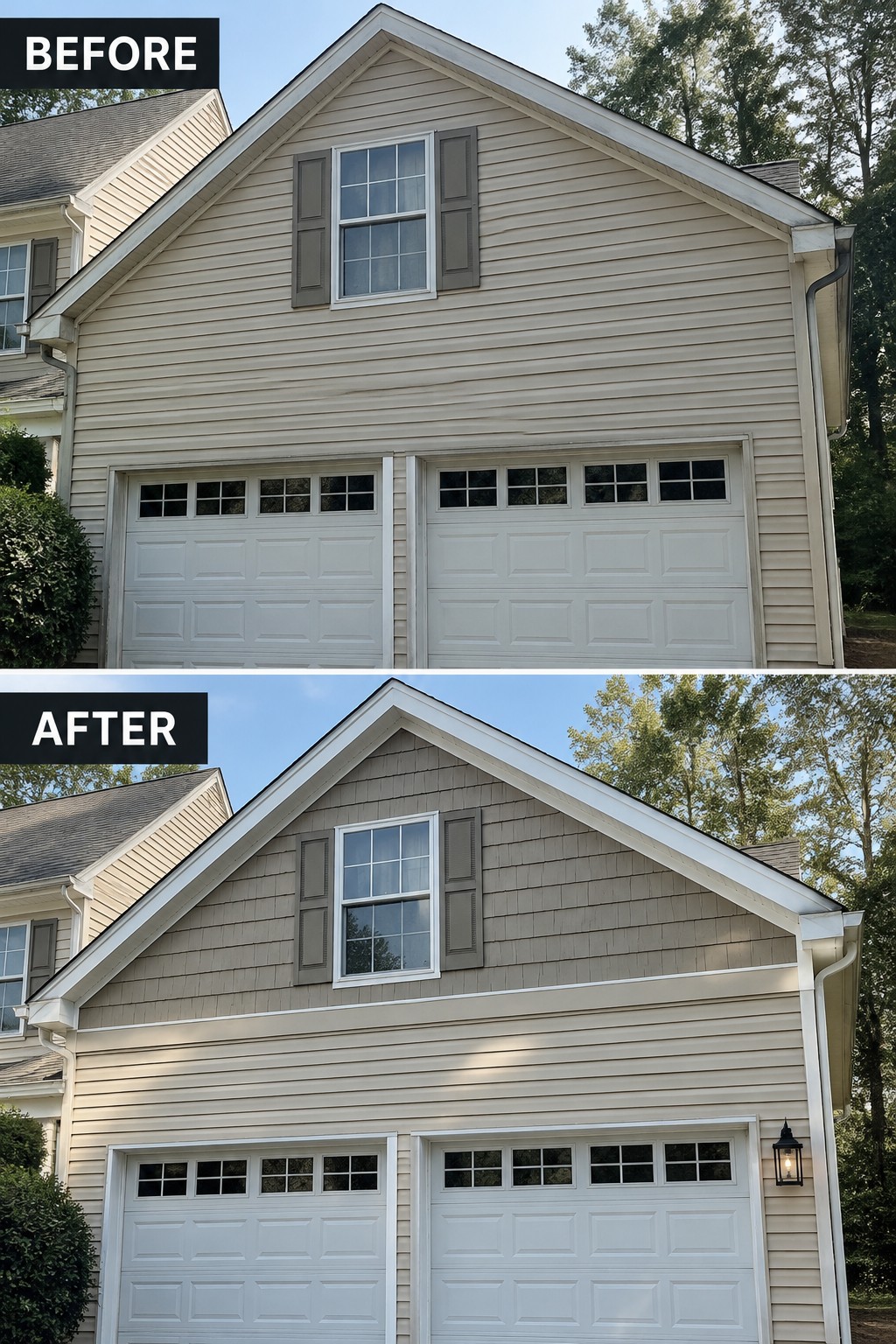
Many 90s colonials end up with flat beige siding that makes the whole front feel tired. Switching to a muted gray gives the house more depth and helps the white trim stand out. The change here also includes a simple lantern added near the garage, which brings a bit of warmth at night.
This kind of update works well on homes where the structure is still solid but the color feels dated. Test a few samples on the wall first, since siding color can shift a lot depending on the light. Keep the rest of the trim and shutters the same at the start so the new shade gets a fair chance to settle in.
Refresh Dated Steps With Paint And New Railings
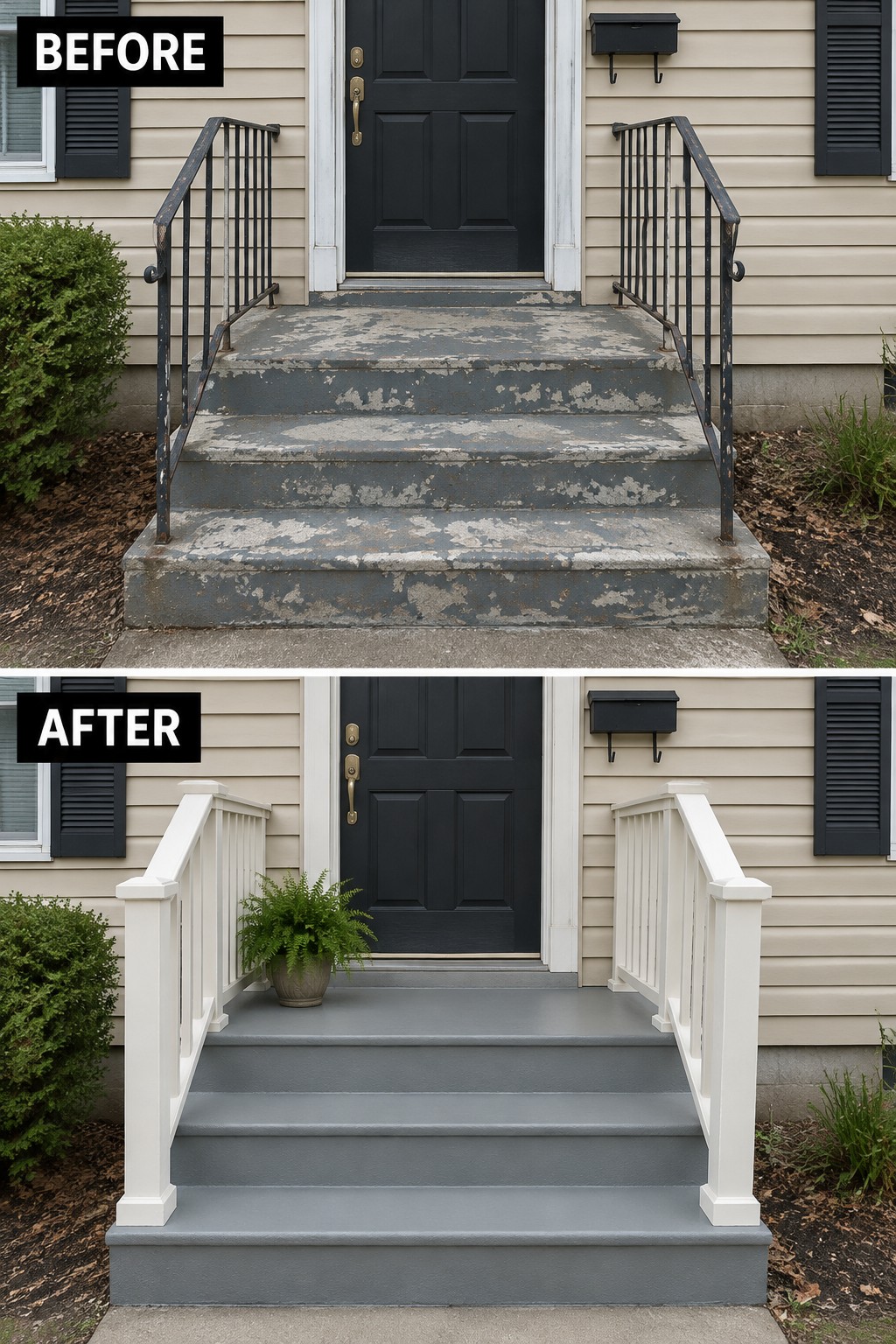
The biggest change here comes from swapping the old rusty metal railings for simple white wooden ones and painting the worn concrete steps a solid gray. That single switch removes the tired look and gives the entry a much cleaner line that works with the beige siding instead of fighting it. The new railings also feel more in keeping with a colonial style without adding a lot of extra detail.
This approach works well on 90s colonials where the original railings have started to rust and the steps show years of wear. Start by checking if your local codes allow wood railings, then pick a good exterior paint made for concrete so it holds up to foot traffic. Keep the rest of the entry simple, like one potted plant near the door, so the steps stay the main focus.
Create A Defined Path To The Front Door
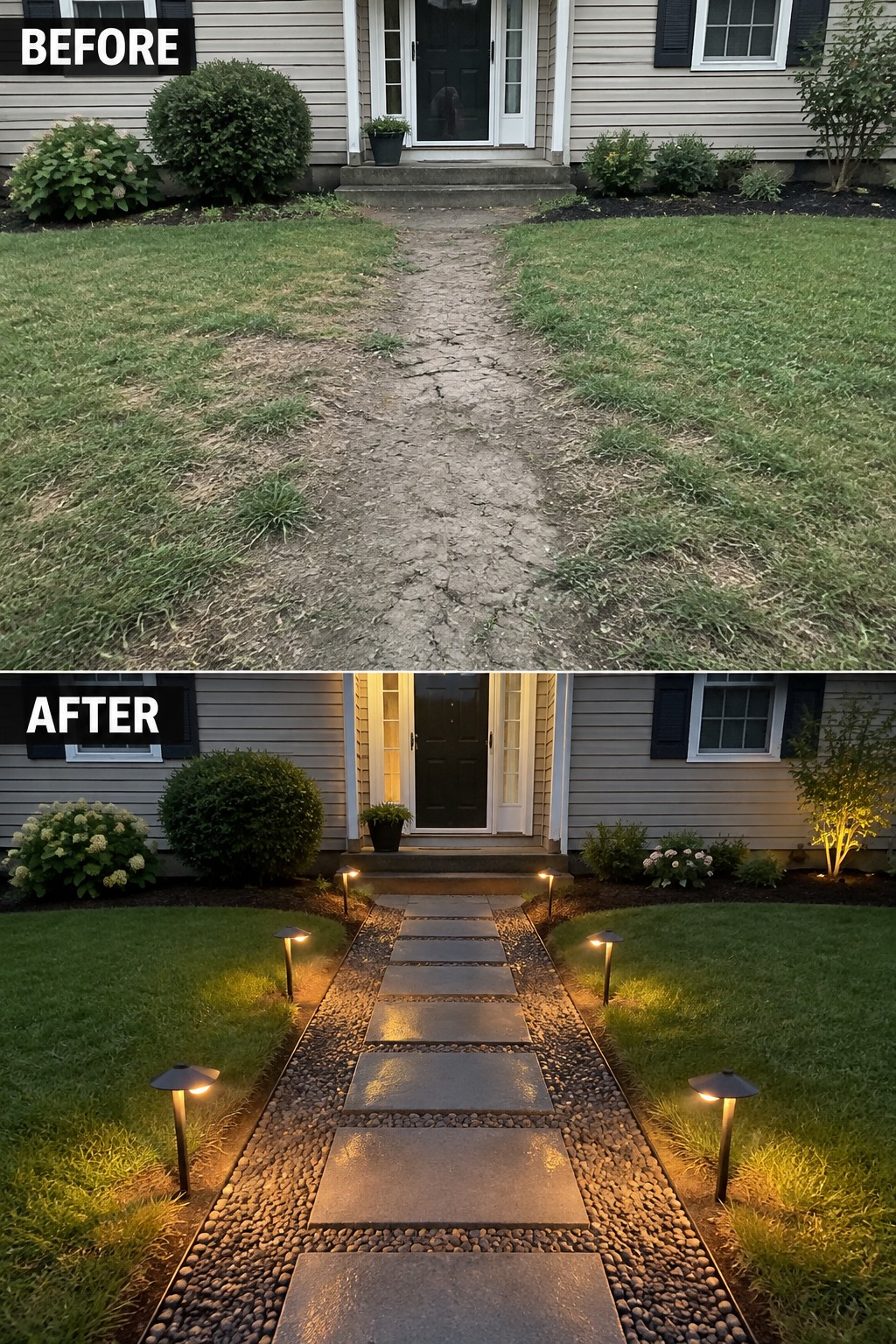
A cracked dirt path makes the front of a house feel unfinished and hard to navigate. Switching to a row of stone pavers set in gravel gives the walkway a clear shape and makes the entrance feel more direct. Low pathway lights along the edges add visibility at night without needing complicated wiring.
This approach works well on homes where the lawn runs straight to the door and there is no existing sidewalk. Start with the path itself before adding extra plants or decor, since a solid walkway sets the scale for everything else. Keep the gravel border narrow so mowing stays simple and the lights remain easy to reach for seasonal adjustments.
Add Layered Trim To Refresh A Colonial Entry
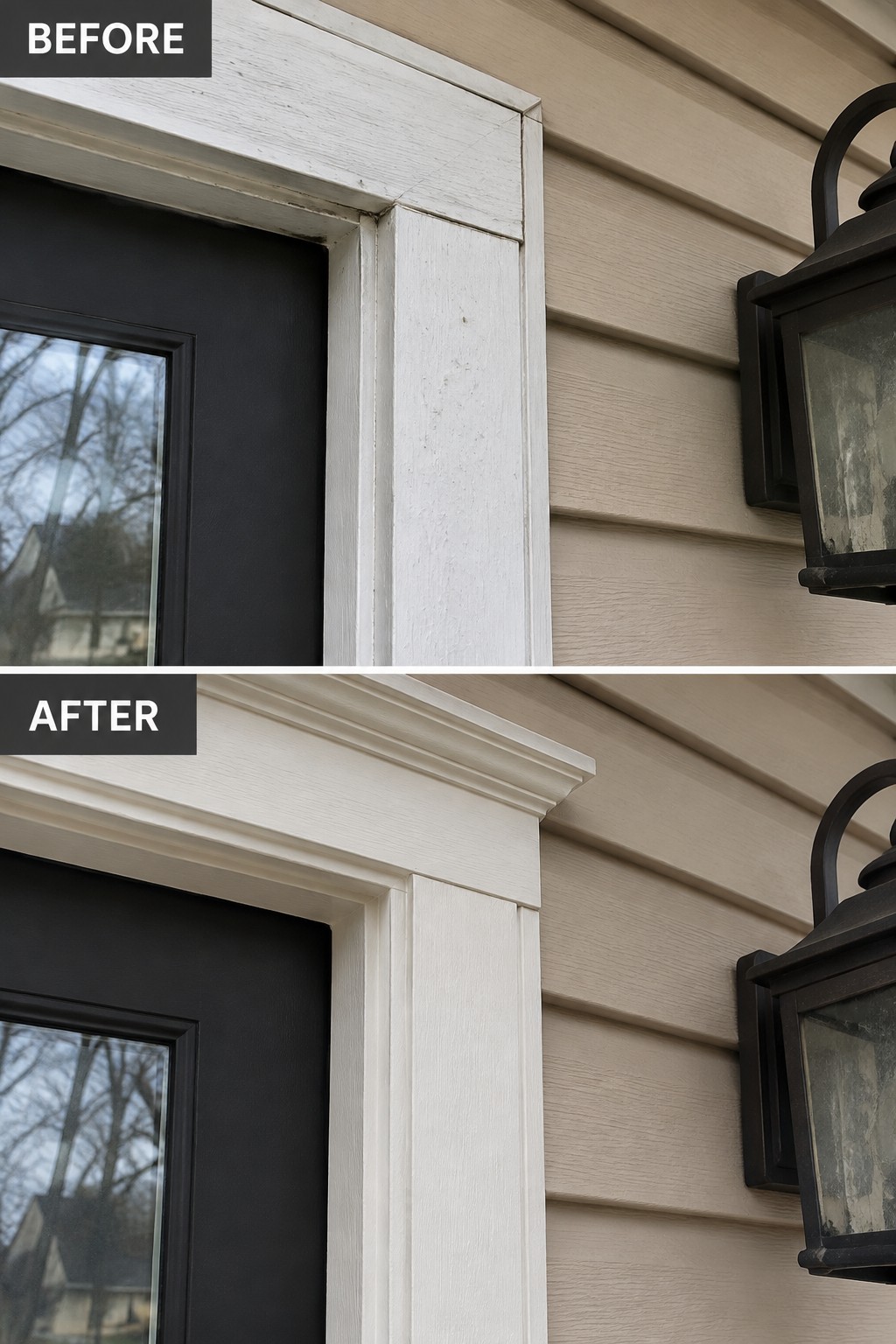
Many 90s colonials have flat, basic trim that leaves the front door looking a little thin against the beige siding. Replacing it with built-up molding and a simple crown at the top gives the entry more weight and makes the whole facade feel more finished.
This works best on homes where the siding is staying put. Keep the new trim profile in scale with the windows and roof details already on the house, and paint it the same crisp white so it reads as an intentional upgrade rather than an add-on.
Give A Cluttered Porch A Clear Purpose
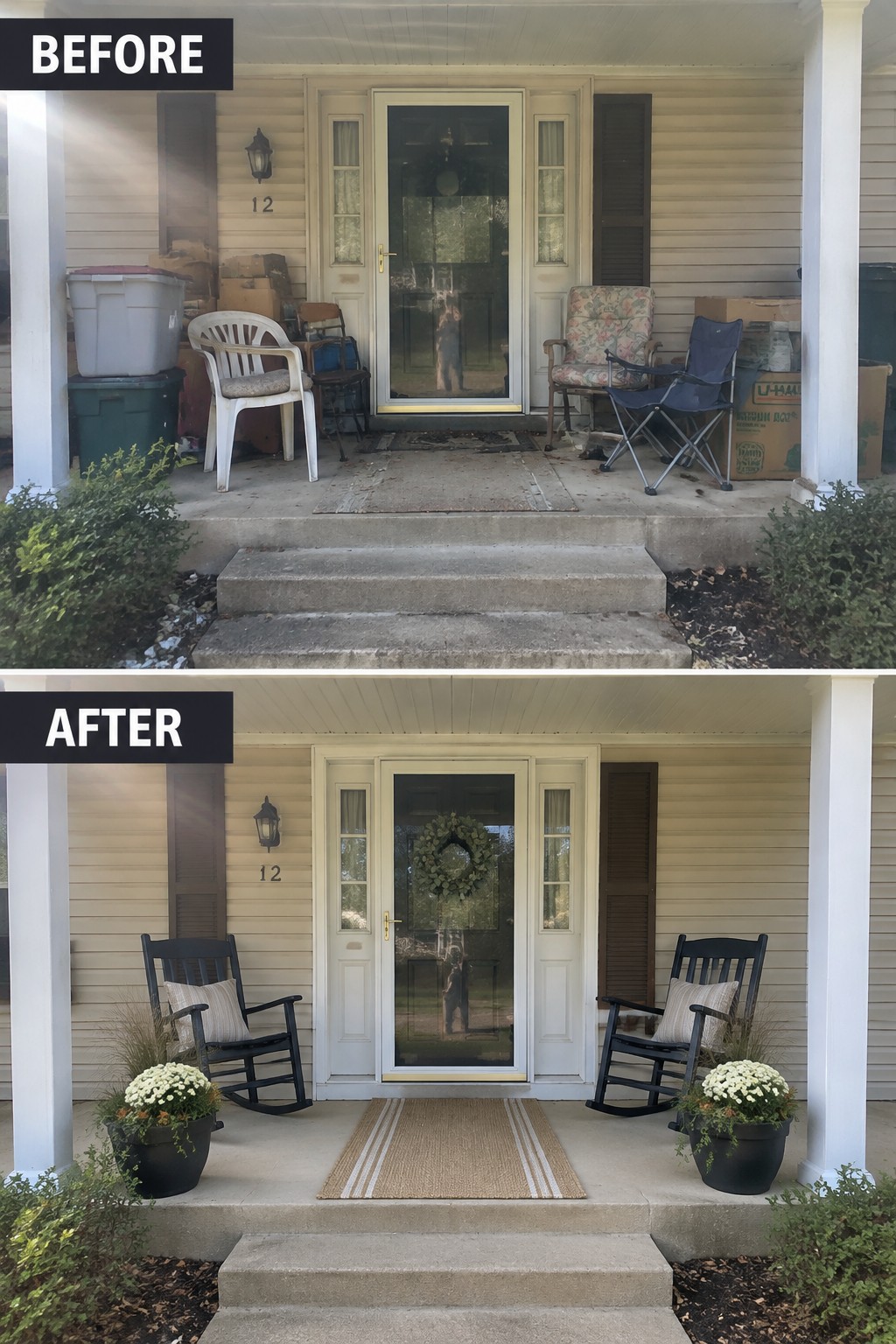
The main improvement came from removing the storage bins, boxes, and random chairs that crowded the porch. With the space cleared, two matching black rockers and a pair of large planters created balance on either side of the door.
This idea works well on colonial homes with beige siding where the entry feels more like a storage spot than a welcome area. Start by taking everything off the porch that does not belong there, then add two identical chairs and repeat the same planter style on both sides. Keep the center path open so people can reach the door without stepping around furniture.
Paint The Trim To Freshen Up Beige Siding
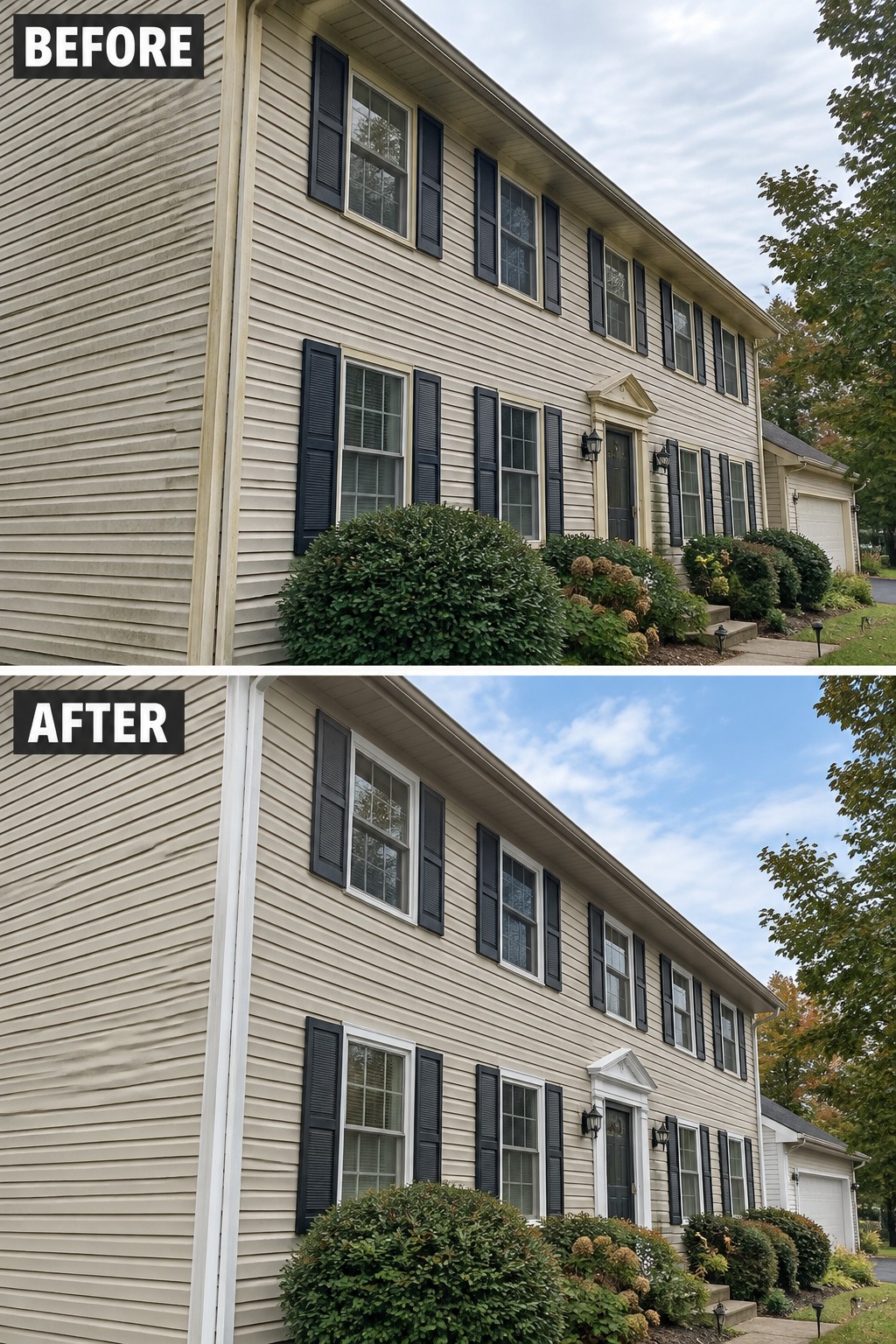
Many 90s colonials end up with beige siding that feels flat because the trim blends in too closely. In this case the before photo shows yellowish trim around the windows and door that makes the whole facade look dated. Painting that trim white creates instant contrast, makes the dark shutters stand out, and gives the entry a cleaner frame without touching the siding itself.
This approach works well on any colonial with simple rectangular windows and a centered door. Start by checking whether your existing trim needs scraping or just a good cleaning, then choose a bright white exterior paint that holds up to weather. The change stays modest in cost but shifts how the whole front reads from the street.
Add Defined Garden Beds And A Stone Path To The Front Walk
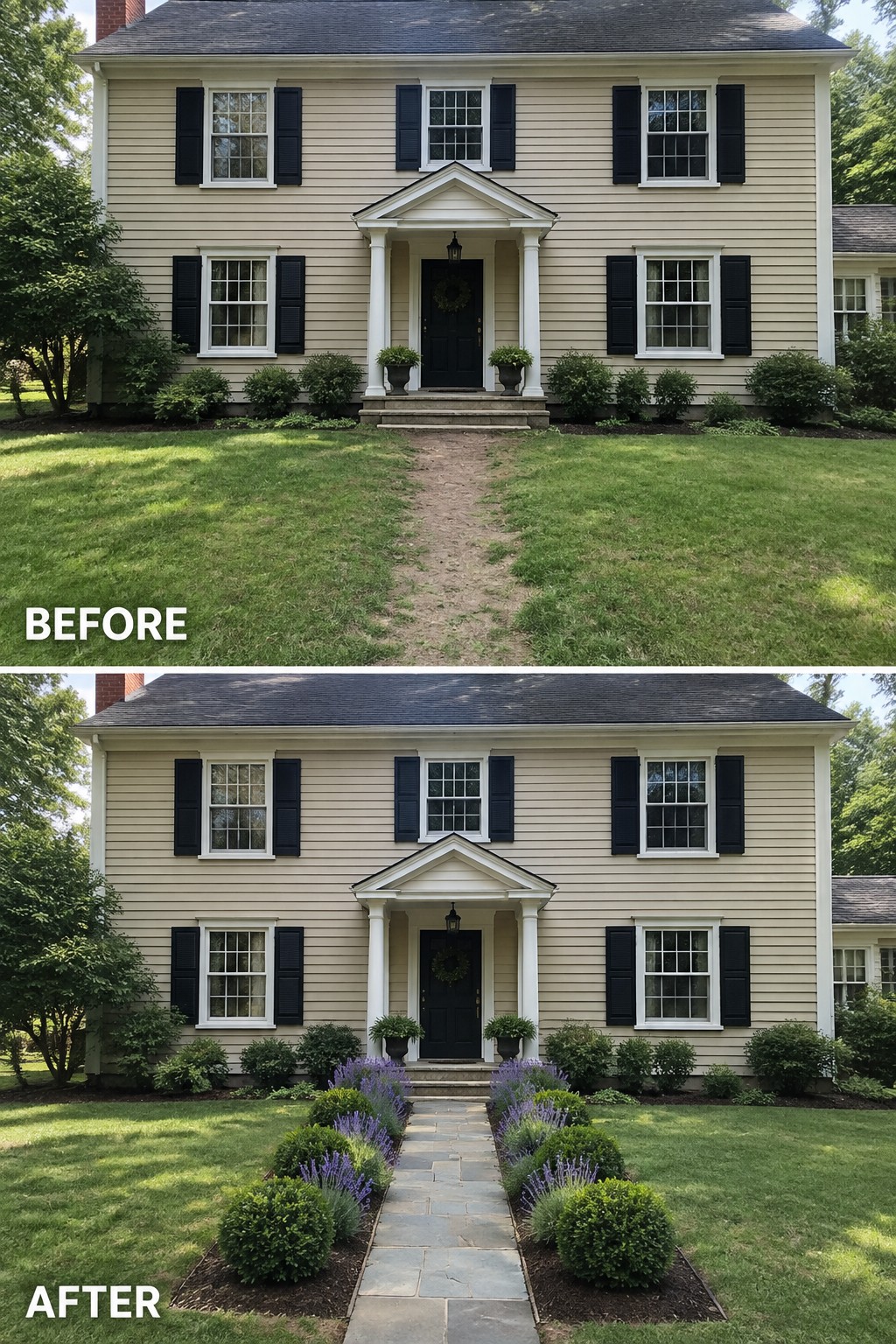
A dirt path leading to the door makes the whole front feel unfinished, even when the house itself is in good shape. Switching to a stone walkway with planted borders on both sides gives the entry a clear route and makes the house feel more settled. The beds also keep the grass from creeping in and give you a place to add seasonal color without scattering plants across the lawn.
This approach works well on colonial homes where the architecture is simple and the goal is to add order rather than decoration. Start by laying out the path width so two people can walk side by side, then build the beds at a consistent depth on each side. Keep the planting low near the walk so it does not crowd the route, and repeat a few shrubs or perennials along the length for a tidy look that still feels natural.
Frequently Asked Questions
Q: How much trim should I replace if only some pieces look worn?
A: Focus on the worst spots first like the front door surround. Matching new pieces to old beige siding takes some care with paint. This keeps costs down without a full overhaul.
Q: Can I update the siding color without a full replacement?
A: Painting over the beige works if the surface is clean and prepped right. Choose a light neutral that still feels colonial. Test a small section to see how it holds up.
Q: What trim style fits best with a 90s colonial remodel?
A: Simple straight lines replace the fancy 90s details best. And keep the proportions similar so the house still looks balanced.