


When I walk past older Colonials in my neighborhood the foundation line often looks a bit bare and forgotten even when the rest of the house is in good shape.
I have noticed that swapping in a few hardy shrubs suited to the style keeps things tidy without constant trimming or watering.
Choosing paint or trim colors that echo the original period details can pull the whole front together in a way that feels intentional rather than patched.
It works better that way.
Over time those base layers of updates and plantings make the exterior feel steadier and more like it belongs to the property.
Add Low-Maintenance Foundation Plantings

Replacing the tall, messy shrubs with compact rounded evergreens gives the front of this brick colonial a much cleaner and more balanced look. The new plantings sit neatly below the windows and beside the steps, and the small lights tucked at the base keep the entry visible at night without adding work.
This idea suits colonial homes that already have strong lines from the brick and trim. Clear out whatever is overgrown first, then stick with a few varieties that stay small on their own. The result feels finished without constant pruning or seasonal fuss.
Use Low Boxwood Hedges For Cleaner Foundation Beds

The before photo shows the typical problem with older foundation plantings. The shrubs had grown tall and messy, hiding the lower part of the house and making the entry feel smaller. In the after photo, the beds were cleared and replanted with low, clipped boxwoods set in fresh mulch. The result is a much tidier base that lets the house and the front door stand out.
This approach works well on colonial homes because the straight lines of the hedges echo the symmetry of the windows and door. Start by removing anything that blocks the foundation or creeps too close to the siding. Then plant a simple row of boxwoods and keep them at a consistent height. The beds stay neat with very little work once the plants are established.
Define The Foundation With Low-Maintenance Plantings

The front walk here went from a cracked concrete slab flanked by wild, uneven shrubs to a clean stone path edged with compact evergreens, grasses, and low mounds of greenery. The main shift came from clearing the overgrowth first, then laying out simple beds that follow the walkway instead of fighting it.
This works especially well on colonial homes where the foundation can look heavy or messy. Keep the plantings low near the house, repeat a few easy varieties, and use mulch to hold the beds together. The result stays neat with minimal upkeep and makes the entry feel more intentional without adding high-maintenance flowers or complicated layouts.
Update Foundation Plantings For A Cleaner Colonial Look

Many colonial homes end up with foundation shrubs that grow too wide and lose their shape. Here the loose pink bushes were replaced with compact boxwoods and hydrangeas that stay in bounds and line up neatly under the windows. The change gives the front a settled, finished appearance without constant pruning.
This works best on symmetrical houses where the plantings need to respect the architecture rather than hide it. Clear out whatever is overgrown first, then pick plants that stay under the windowsill height. Dark shutters and a darker door help the new beds read as intentional instead of scattered.
Frame The Entry With Low-Maintenance Foundation Plantings

Many older homes end up with too many individual pots scattered around the steps, and they quickly start to look tired. Clearing those away and planting simple shrubs and grasses directly into the ground on both sides of the stairs gives the entrance a much cleaner shape while cutting down on daily watering and deadheading.
This approach works especially well on colonial homes where the front door is the main focal point. Choose a few varieties that stay compact, add a layer of mulch, and keep the largest accents limited to two matching containers placed right beside the door. The result stays neat with far less work than managing a collection of pots.
Add Low-Maintenance Plantings Along The Foundation
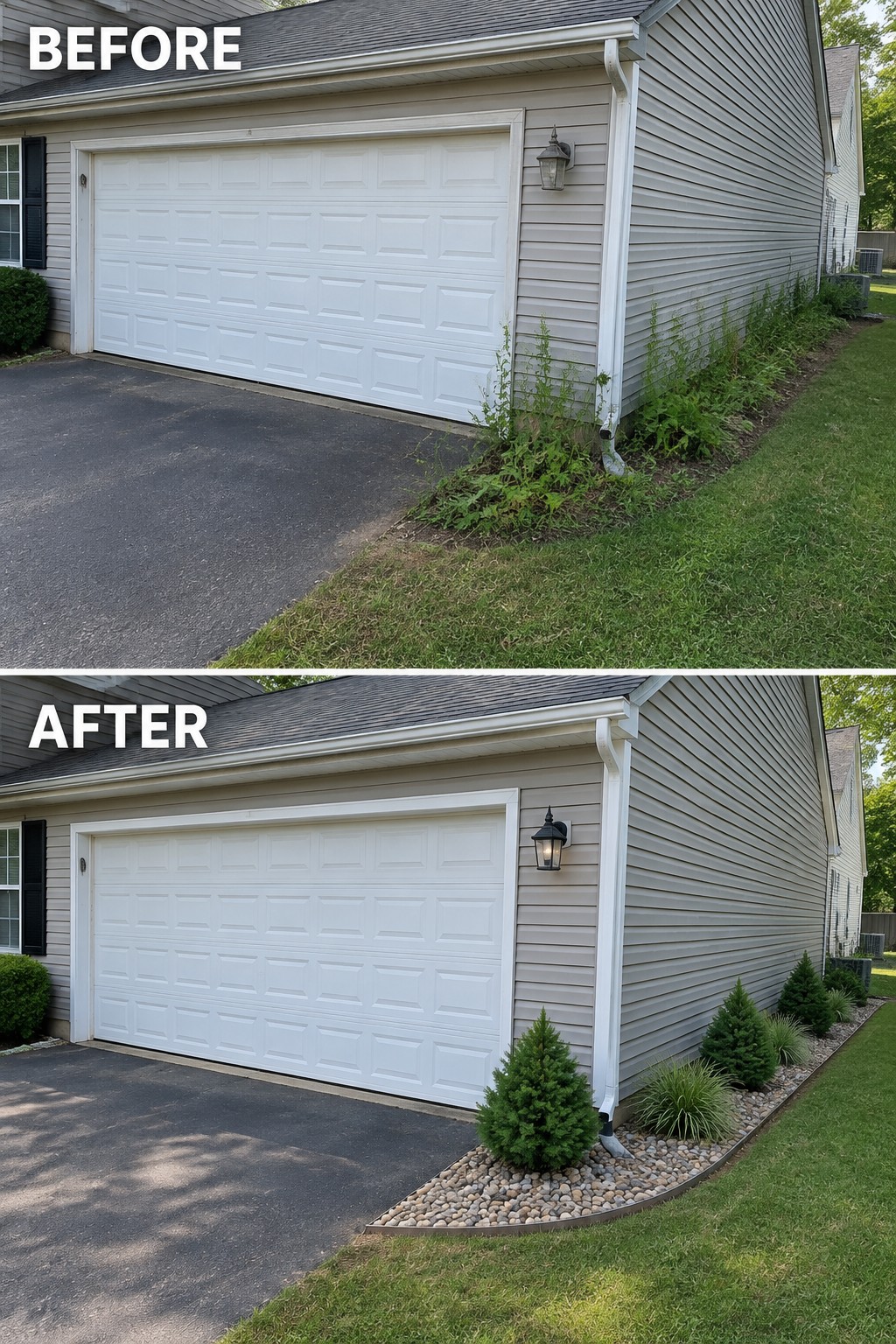
Clearing the weeds that had taken over the narrow strip next to the garage made an immediate difference. A simple border of small evergreens set in gravel now gives the foundation a clean edge instead of letting grass and brush crowd right up against the house.
This kind of update suits colonial homes with long, plain foundation lines. Pick compact shrubs that need little trimming, keep the bed narrow, and use gravel or mulch to hold the line. The result stays neat with minimal work once the initial cleanup is done.
Add Low-Maintenance Beds Along The Foundation

The before photo shows a classic problem with older homes. The shrubs had grown tall and wild, covering the lower windows and making the whole front look messy. In the after photo, the same area has a clean row of low boxwoods, a few flowering shrubs in the middle, and tall grasses on the sides. The change keeps the bay window visible and gives the house a much tidier base.
This approach works well on colonial homes because it respects the architecture without adding a lot of upkeep. Start by removing whatever is overgrown, then plant in simple rows that stay under the windows. Mulch the beds and repeat the same plants so the look stays consistent year after year. It is an easy first step before thinking about paint or shutters.
Use Low-Maintenance Shrubs Along the Foundation
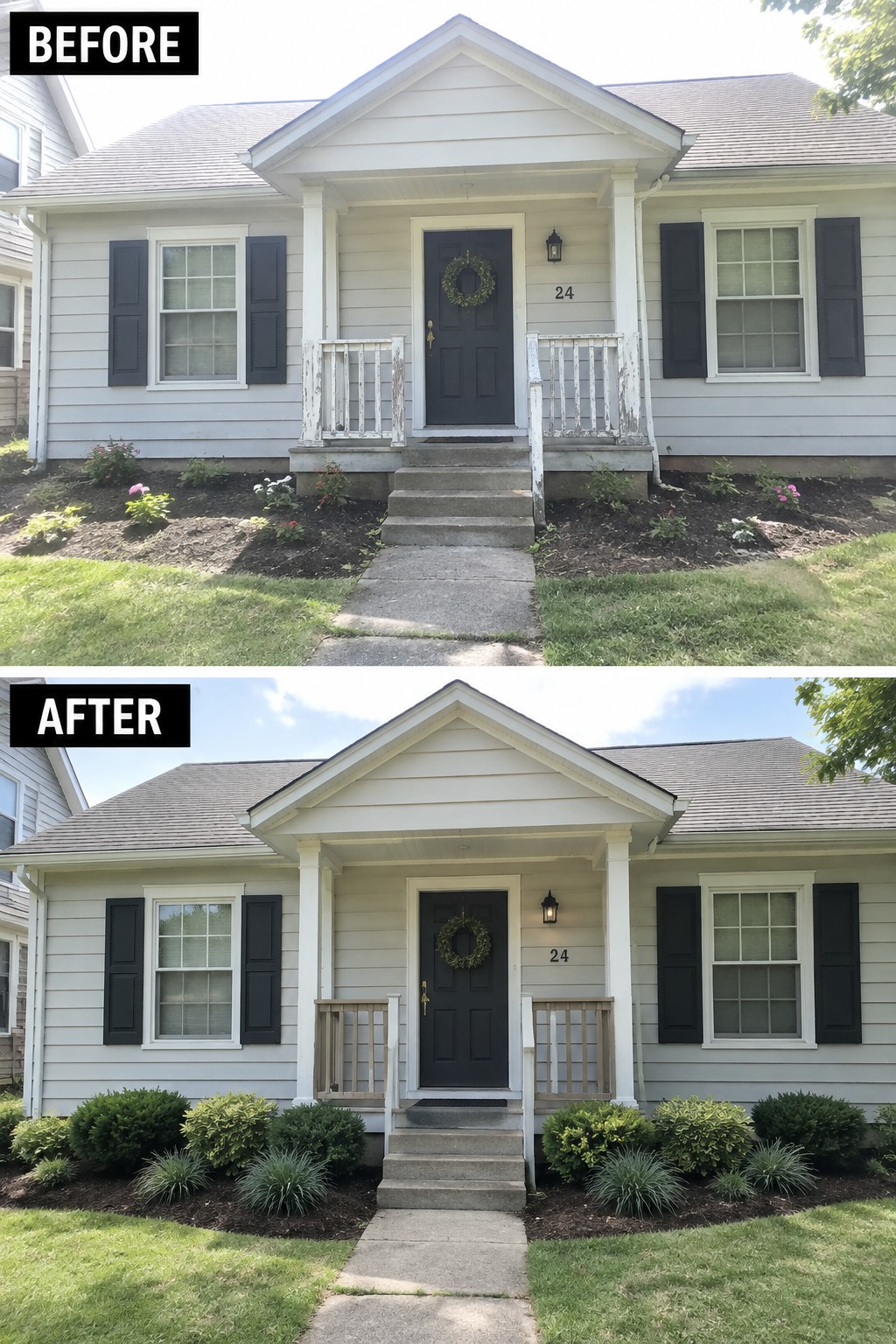
The main change here is swapping a messy mix of weeds and scattered flowers for a row of compact evergreen shrubs and grasses. This gives the front of the house a much tidier base without adding a lot of upkeep. The fresh paint on the railings helps too, but the planting does most of the work to make the entry feel pulled together.
This approach works well on Colonial homes where the foundation sits low and visible. Stick with a few varieties that stay under three feet, space them evenly, and add a fresh layer of mulch. It keeps the look simple, avoids blocking windows, and leaves room for a seasonal wreath or two without crowding the walkway.
Define The Foundation With Low-Maintenance Plantings
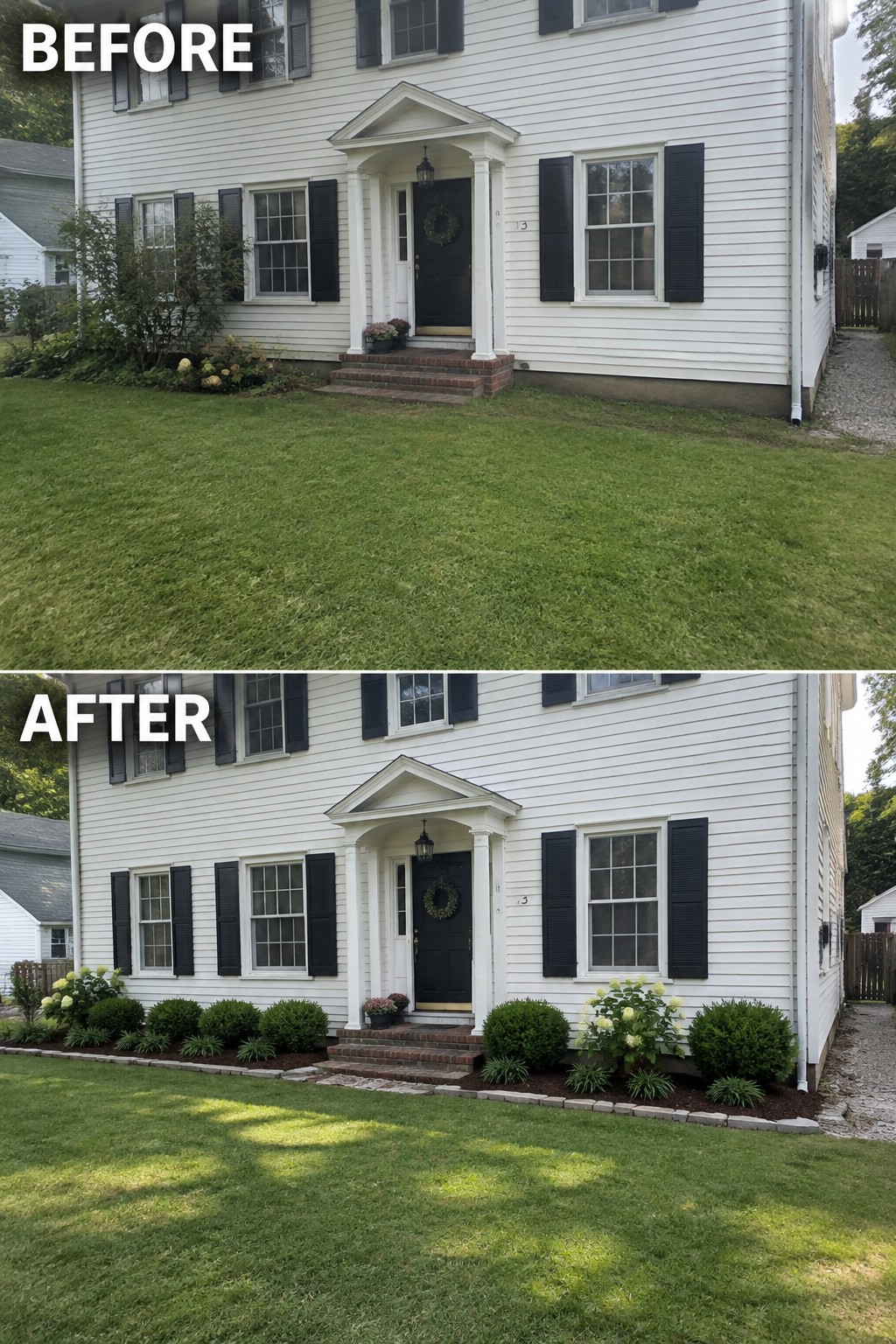
The main change here is how the open lawn was replaced with a clear border of mulched beds and rounded shrubs right along the house. This gives the front a finished look without adding a lot of new elements. The simple stone edging also helps keep the beds in place and separates the grass from the planting area.
This approach works well on colonial homes because it respects the clean lines of the architecture while keeping maintenance low. Start by clearing the grass back from the foundation, add a few feet of bed space, and fill it with a few types of shrubs that stay compact. The key is keeping the beds narrow enough that they do not crowd windows or walkways.
Add Low-Maintenance Foundation Plantings

The main change here is replacing thin, scattered shrubs with a row of compact, variegated evergreens that sit neatly along the foundation. This small shift makes the whole entry feel more finished and balanced without adding any high-maintenance flowers or constant trimming. The new light also helps, but the plantings do most of the work.
This approach works well on colonial homes where the front looks a bit flat. Keep the bed narrow, choose shrubs that stay under three feet, and space them evenly so the door stays the clear focal point. It is an easy update that stays looking tidy year after year.
Define The Foundation With Low-Maintenance Plantings

The front of this house looked bare and unfinished with just one thin bush and a strip of mulch. Adding a full row of compact shrubs, grasses, and rounded evergreens gave the foundation a clear edge and made the whole house feel more settled.
This works especially well on colonials where the siding sits close to the ground. Clear the bed first, then repeat two or three plant types in a simple pattern. Keep everything under three feet so windows stay clear and the walkway stays open.
Add A Retaining Wall To Structure Foundation Plantings
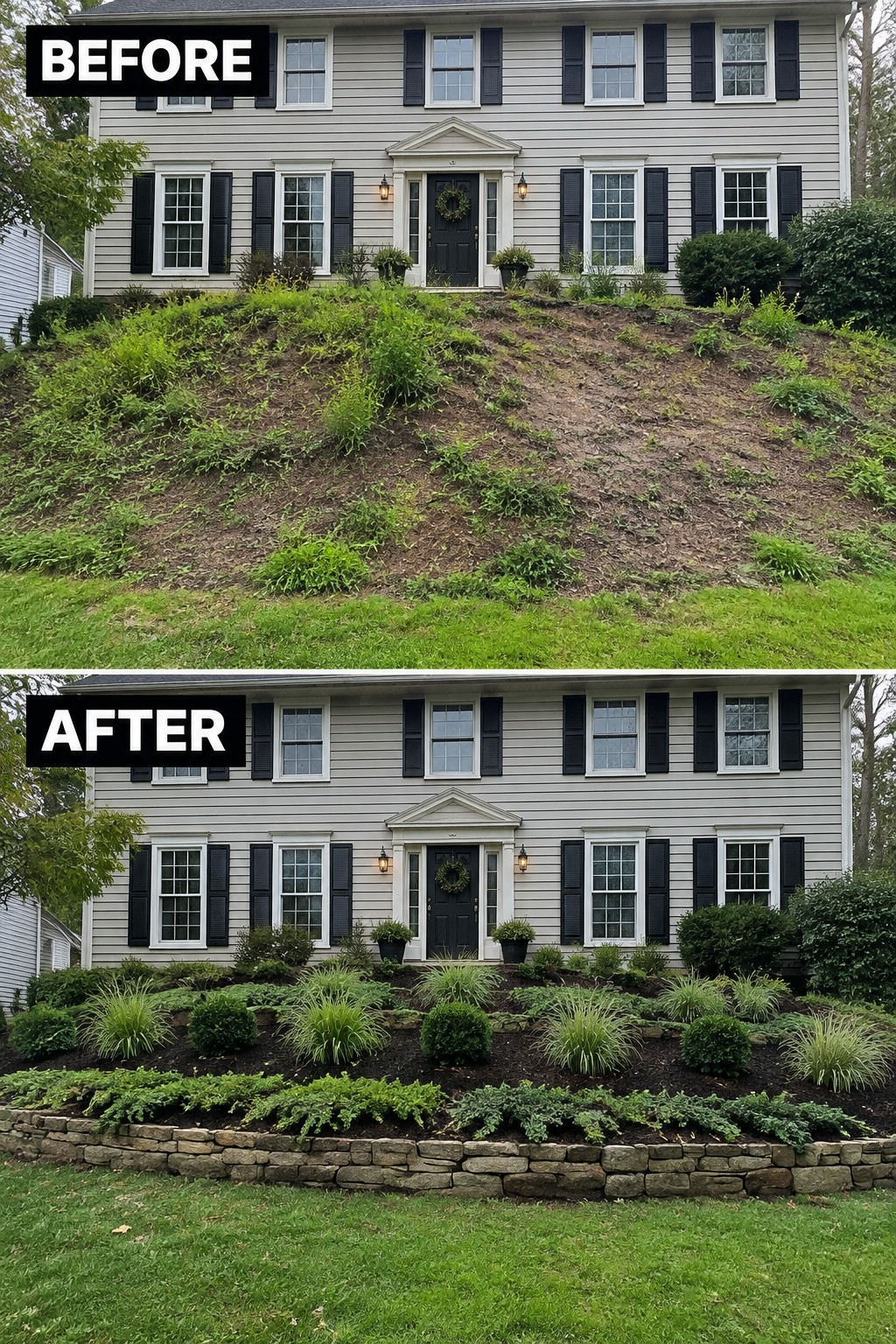
A steep, weedy slope in front of a house makes the whole exterior feel unfinished. Adding a low stone retaining wall turns that slope into flat, easy-to-plant beds that sit right against the foundation. The plants stay contained, the mulch stays in place, and the front of the house suddenly looks intentional instead of neglected.
This approach works especially well on colonial homes where the land drops away from the front door. Keep the plant list simple with a mix of low shrubs, ornamental grasses, and evergreen ground covers. The wall does most of the work, so the beds stay neat with only seasonal trimming and a yearly top-up of mulch.
Update The Front Door Color And Matching Planters

Painting the front door a deep navy gives the whole entry a clear focal point that the old light door never had. The change also ties the door to the existing black shutters so the facade feels more intentional. Swapping the mismatched planters for two identical dark containers with upright evergreens removes the scattered look and cuts down on seasonal replanting.
This works best on colonial homes where the entry sits front and center. Choose a door color that contrasts with your siding, then keep the planters the same size and finish. Stick with one or two types of low-maintenance evergreens so the planting stays neat year-round without constant work.
Replace Overgrown Foundation Plants With Compact Shrubs

The before photo shows tall, wild plants crowding the front of the house and hiding the windows and entry. In the after photo, those plants are gone and replaced with low, rounded shrubs that sit neatly along the foundation. The change makes the whole front look cleaner and lets the house architecture show through.
This approach works well on colonial homes where you want the siding and trim to stay visible. Start by clearing out whatever is overgrown, then pick shrubs that stay under three feet tall at maturity. Mulch the bed once the plants are in and you are done. It keeps maintenance low and gives the front a finished look without adding more work later.
Clean Up Foundation Beds Before Adding Plants

One of the simplest ways to improve a colonial exterior is to start with the foundation bed itself. In the before photo the area looked neglected with weeds, exposed soil, and random growth right against the house. After the change, the bed has been cleared, edged, and filled with a few reliable perennials set in fresh mulch. The result feels intentional without requiring constant work.
This approach works well on older homes where the lower siding or paint already shows wear. Focus on shade-tolerant plants that stay compact, such as hostas and ferns, and keep the bed no more than two to three feet deep so it stays easy to maintain. Mulch helps suppress weeds and gives the whole front a finished look even before anything blooms.
Add Window Boxes For A Simple Exterior Update

The before photo shows a fairly plain brick facade with uneven shrubs along the foundation. In the after, two window boxes filled with lavender sit under the windows and the foundation plantings have been replaced with rounded evergreen shrubs and neat grasses. The change gives the house a finished look without any major construction.
This works well on colonial homes where the windows sit at a comfortable height for boxes. Choose a box color that matches your trim, keep the plantings low so they do not block the brick, and pick hardy perennials that need little watering once established. The result is a quick, low-cost way to add color and structure that still feels practical for everyday maintenance.
Replace Overgrown Shrubs With Low-Maintenance Foundation Plantings
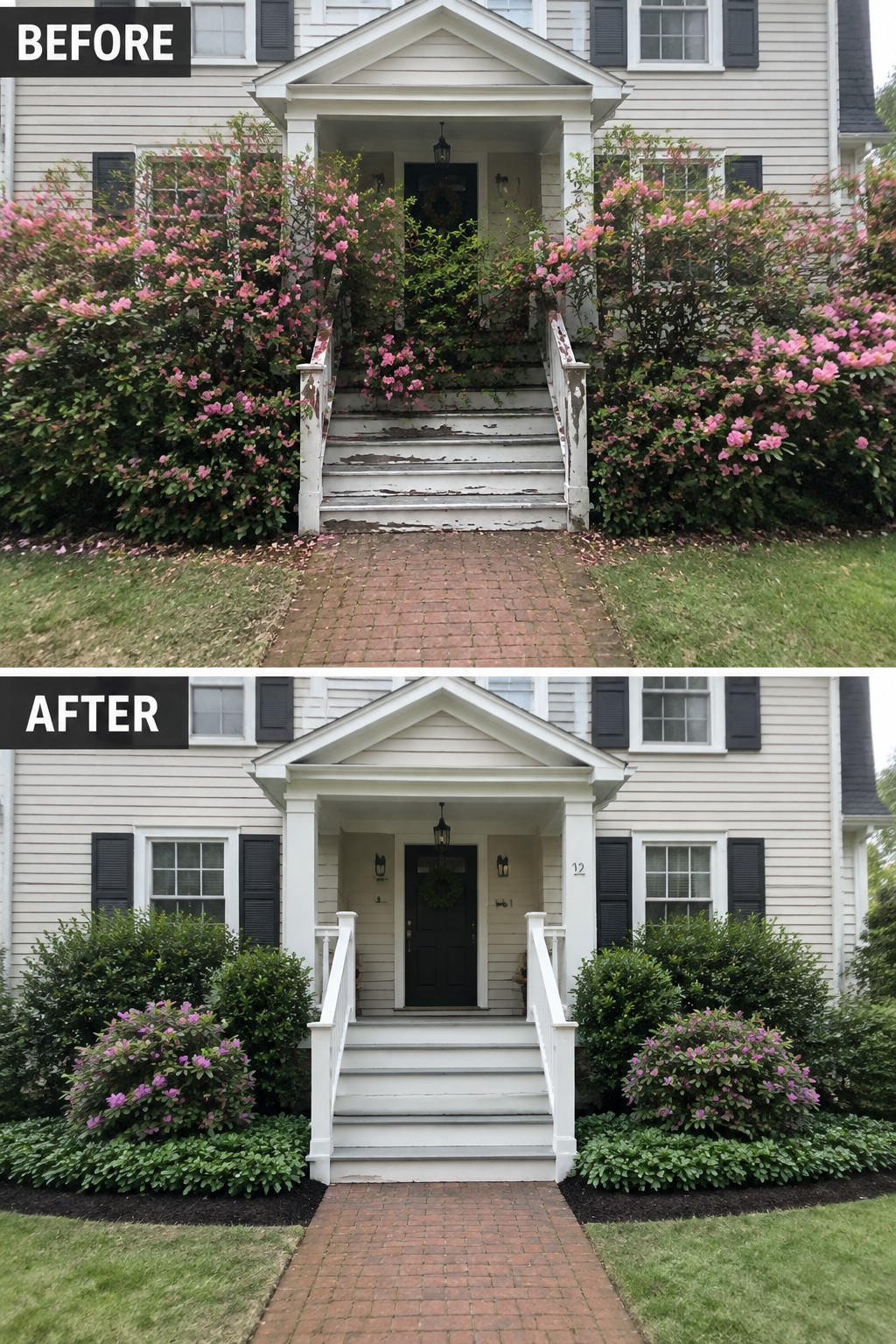
Overgrown foundation shrubs can quickly hide a house and make the entry feel cramped. In this case the tall flowering bushes were cut back and replaced with lower, more compact plantings that keep the colonial lines visible while adding a clean edge along the walkway.
This approach works well on older homes where the original proportions matter. Start by removing or heavily pruning anything that blocks windows or climbs the steps, then add a simple mulch border to keep the beds looking neat without constant weeding. The result is an exterior that feels cared for without requiring high maintenance.
Swap Overgrown Shrubs For Compact Foundation Plantings
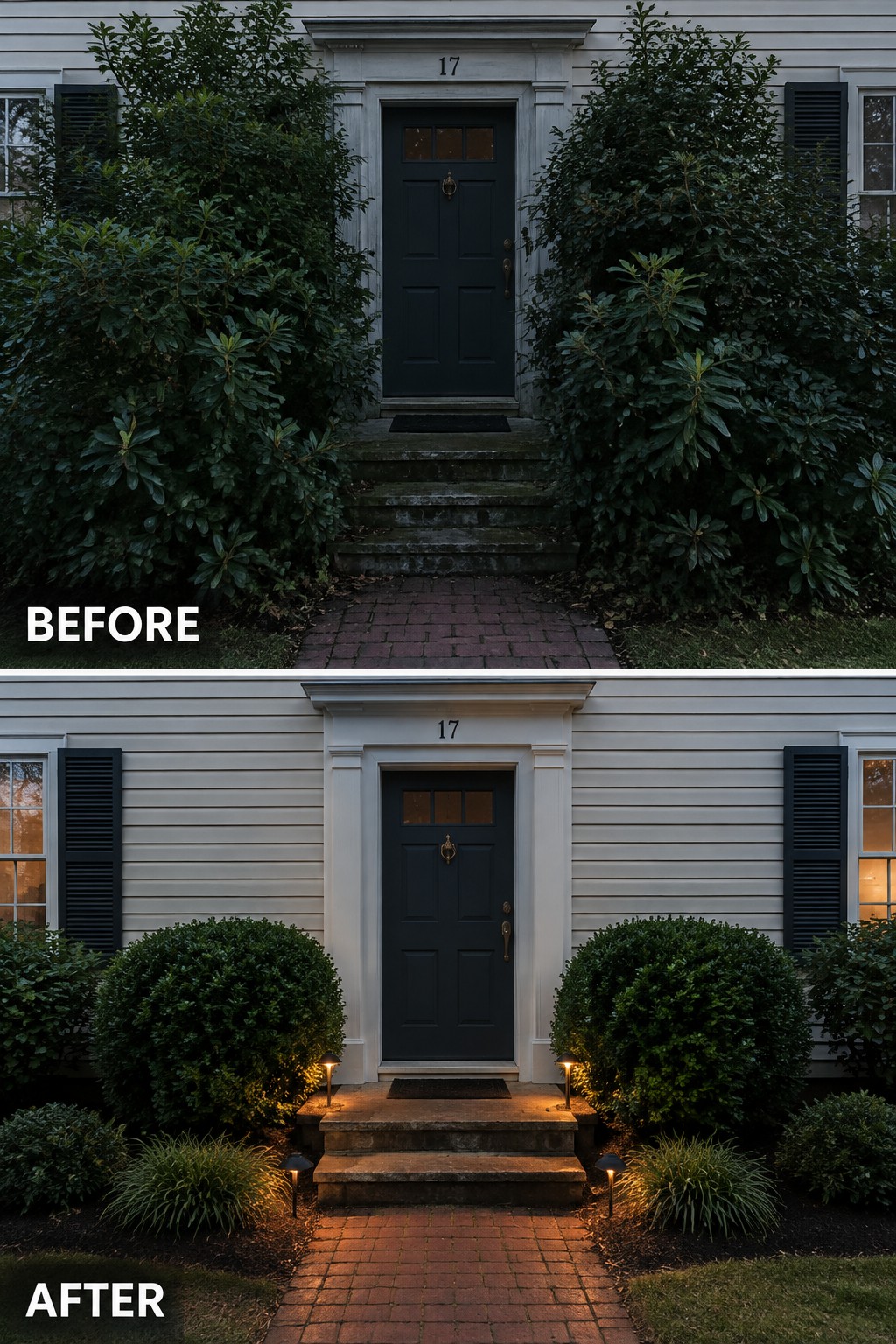
Older homes often end up with foundation shrubs that grow tall and uneven, crowding the entry and making the house feel darker. Here the change was simple. The tall shaggy bushes were replaced with rounded compact ones that sit lower and keep the door visible.
This works especially well on colonial homes where you want clean lines without weekly trimming. Choose slow-growing varieties that stay under three feet, then add a few low lights along the walk and steps. The result stays neat through the seasons and improves curb appeal without adding high maintenance.
Frequently Asked Questions
Q: What plants keep a neat colonial shape without needing much pruning each year? A: Pick slow-growing evergreens like certain yews or hollies that naturally stay compact. Space them evenly along the foundation so the lines look balanced from the start. Water them deeply the first season then let rainfall handle the rest.
Q: How can I freshen the siding and trim colors without losing the house’s old character? A: Stick with soft historical shades that echo the original palette and test samples on a small section first. Brush on one coat at a time so you see how light hits the surface before committing to the whole exterior. This keeps the updates feeling like they belong rather than like a new build.
Q: Do the beds need edging or can I let the plants grow right up to the lawn? A: Skip rigid edging and let the low shrubs form a soft border instead. Mulch lightly each spring to hold weeds down and keep the soil even. The look stays relaxed and colonial without extra borders to maintain.