

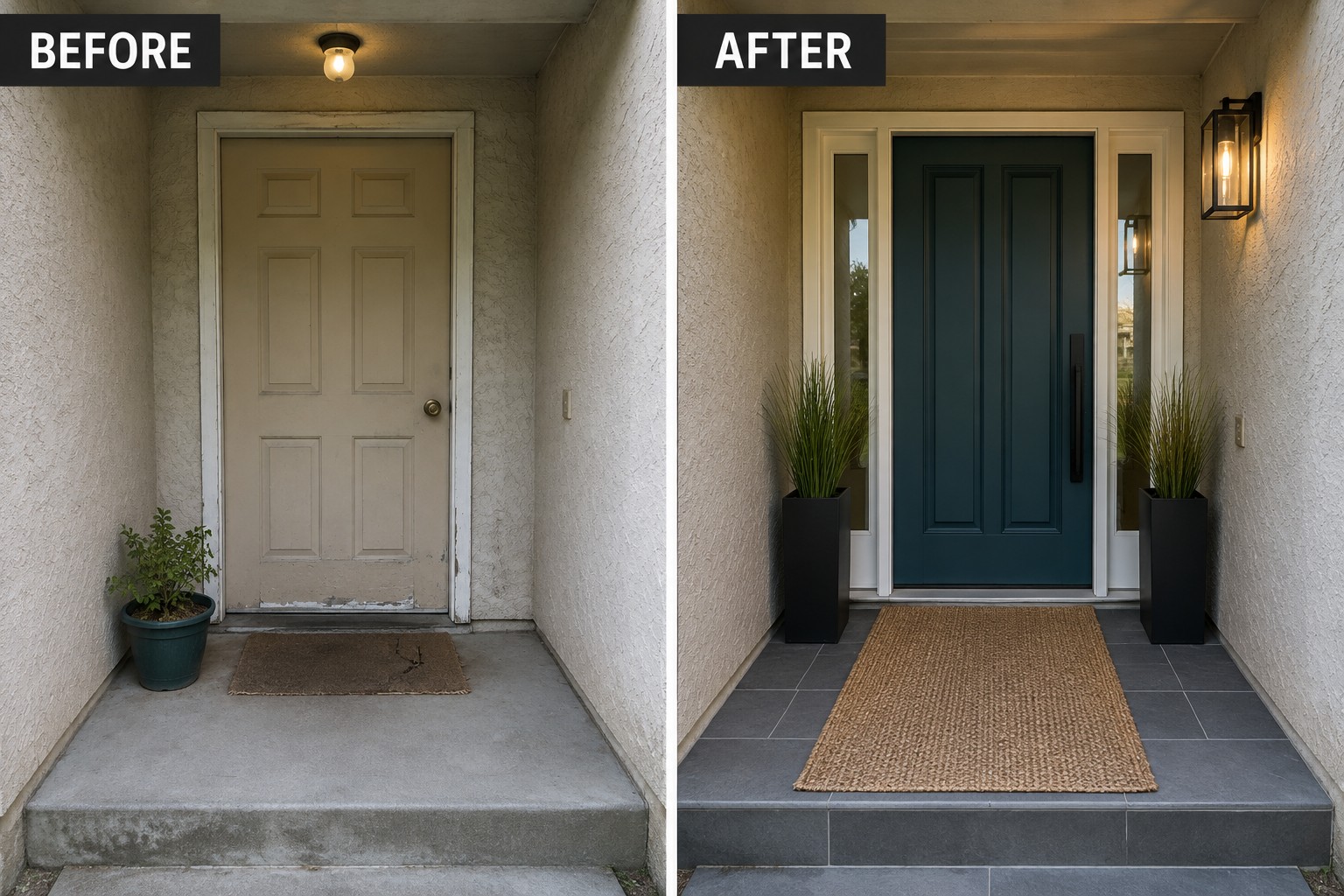
Narrow front entries can start to feel squeezed when the door and its immediate surroundings do not match the rest of the house.
I have found that updating the door color along with slim trim details often lifts the whole facade more than expected.
A narrow shelf or better scaled lighting helps the space work without crowding the walkway.
These changes tend to make coming home feel a little more settled each day.
A couple of the ideas here are ones I would test first if my own entry started to look too tight.
Define A Narrow Entry With Matching Planters
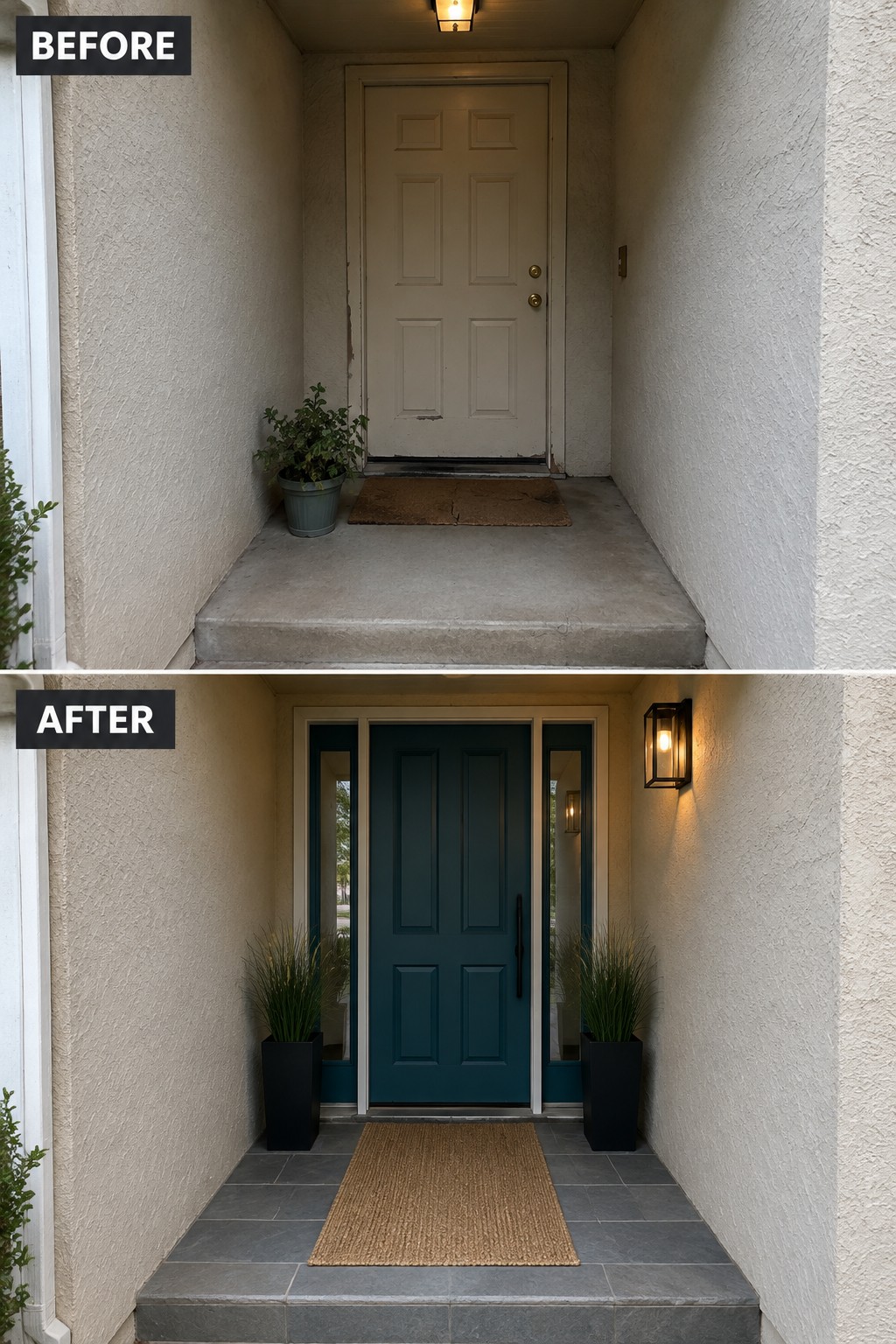
A narrow entry can feel like leftover space when it has nothing but bare concrete and a single mat. Adding matching planters on both sides of the door creates balance and gives the area a clear purpose without blocking the walkway. The simple rug between them further marks the spot as intentional rather than just a place to step.
This idea works best on small porches or recessed entries where you need to keep movement easy. Choose planters that sit at a similar height to your door handle and pick a rug that can take regular foot traffic. Keep the rest of the space open so the entry still feels usable.
Refresh A Brick Entry With A Dark Door And Built-In Greenery
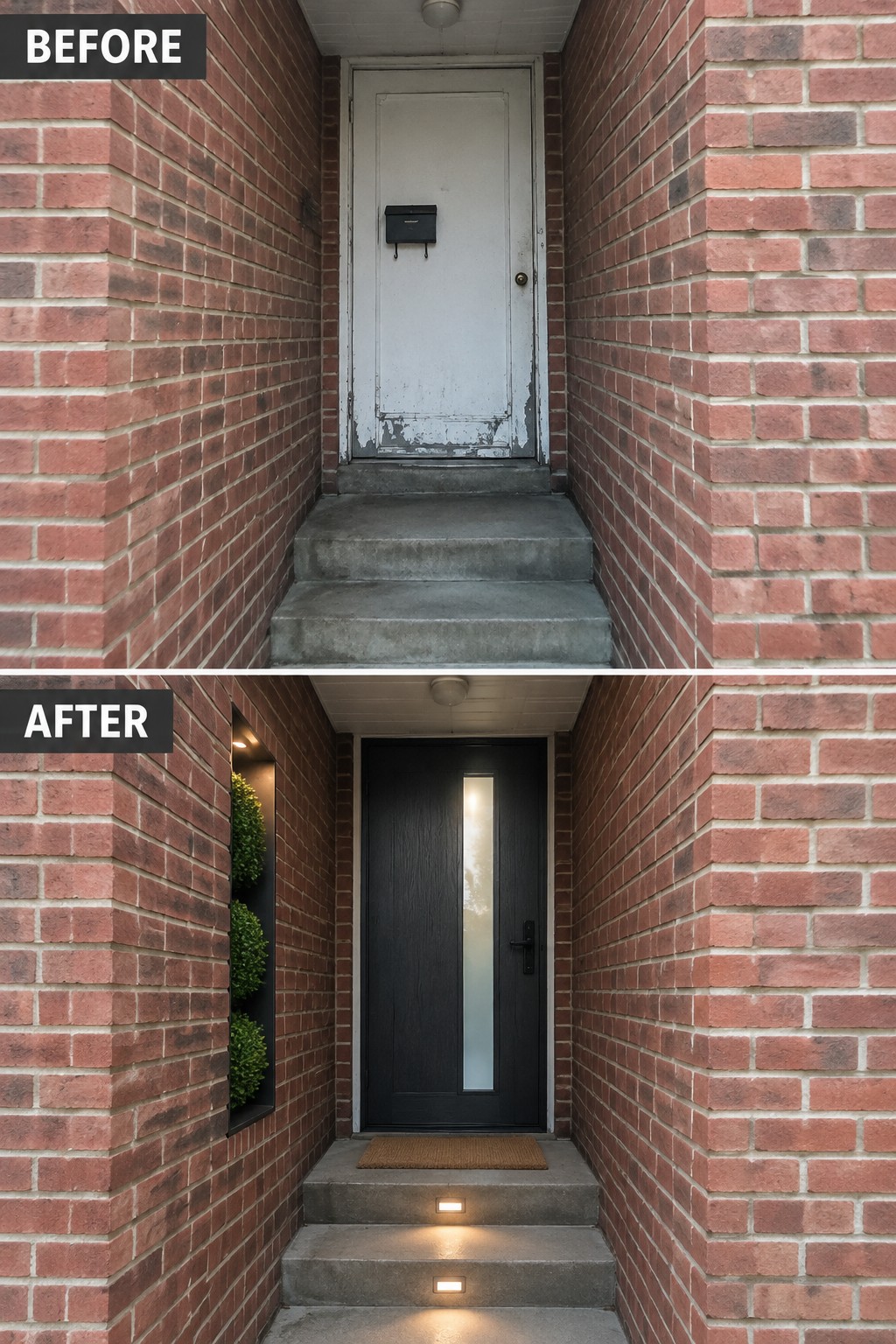
A narrow brick entry often feels flat when the door looks worn and the walls have no detail. Replacing the old door with a dark one that has a tall glass panel gives the space more weight, while the recessed niche with plants and built-in lights adds greenery without crowding the steps.
This works especially well on homes where the entry sits between solid walls and there is little room for side planters. Keep the focus on one vertical feature and simple lighting so the path stays clear and the changes feel practical rather than busy.
Add Built-In Storage To A Narrow Entryway
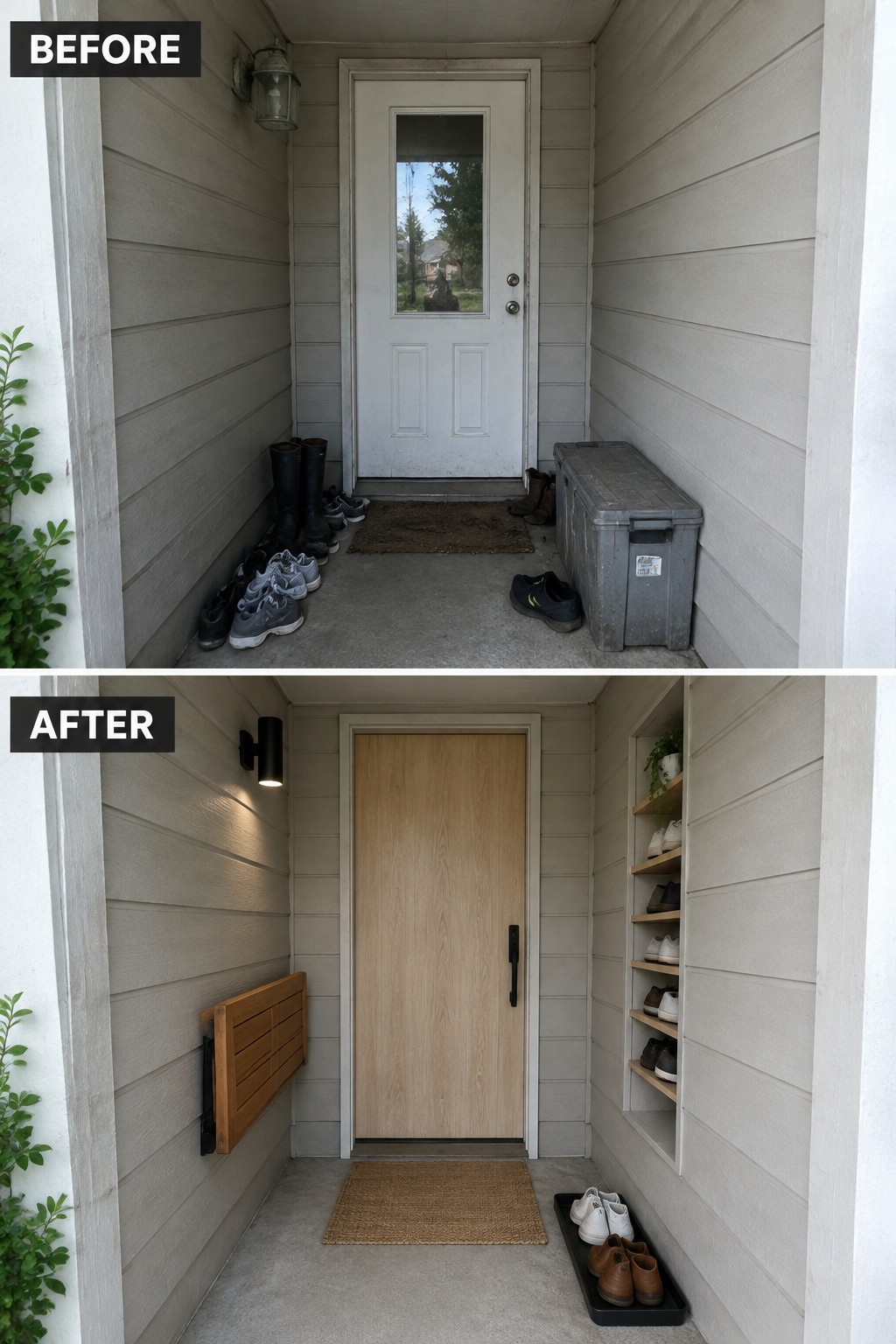
A narrow entryway quickly fills up with shoes and boots when there is nowhere to put them. The before photo shows the usual result, with pairs scattered along both walls and a bulky bin taking up floor space. The after version fixes this by adding tall open shelves on one side and a fold-down bench on the other, so everything stays off the walkway.
This idea works best in covered entries that are too small for freestanding furniture. The shelves use vertical space that would otherwise sit empty, and the bench folds flat when no one is sitting on it. Keep the shelves shallow so they do not crowd the door swing, and choose a bench that matches the width of your wall rather than trying to fill the whole area.
Update The Door And Add Planting Structure To A Narrow Entry
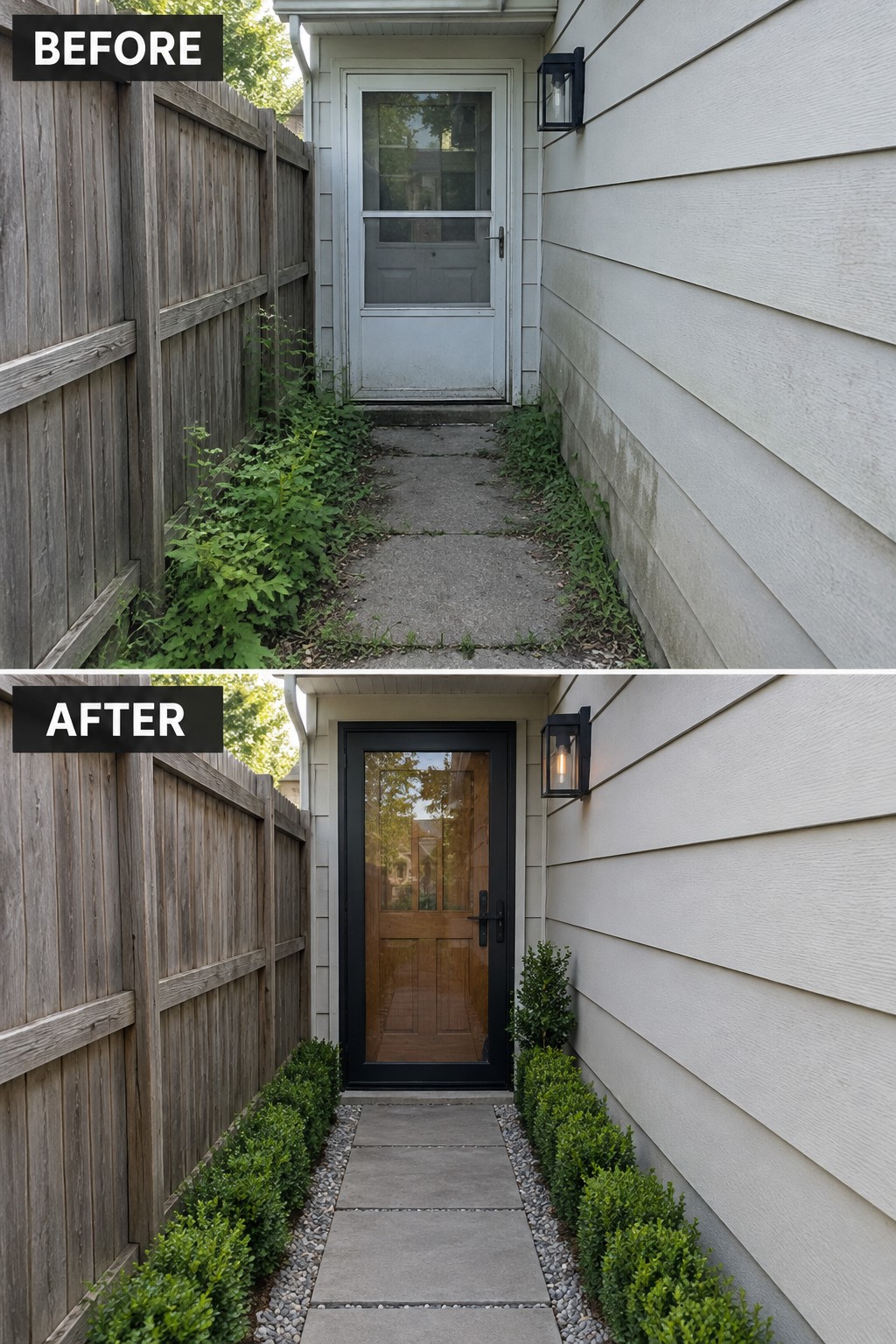
A narrow side entry often looks worse than it is because of one or two small problems. Here the old white door felt dated and the weeds along the path made the whole space seem neglected. Swapping in a darker door with a wood panel and adding low boxwoods in clean gravel beds gave the passage a much tidier shape without taking up any extra room.
This approach works well on any tight walkway that leads to a side or back door. Start with the door itself if it looks tired, then add a simple row of shrubs or ground cover to keep the edges neat. The key is keeping the plants low and the path clear so the space still feels open enough to walk through.
Update The Front Door Color And Railing For A Narrow Entry
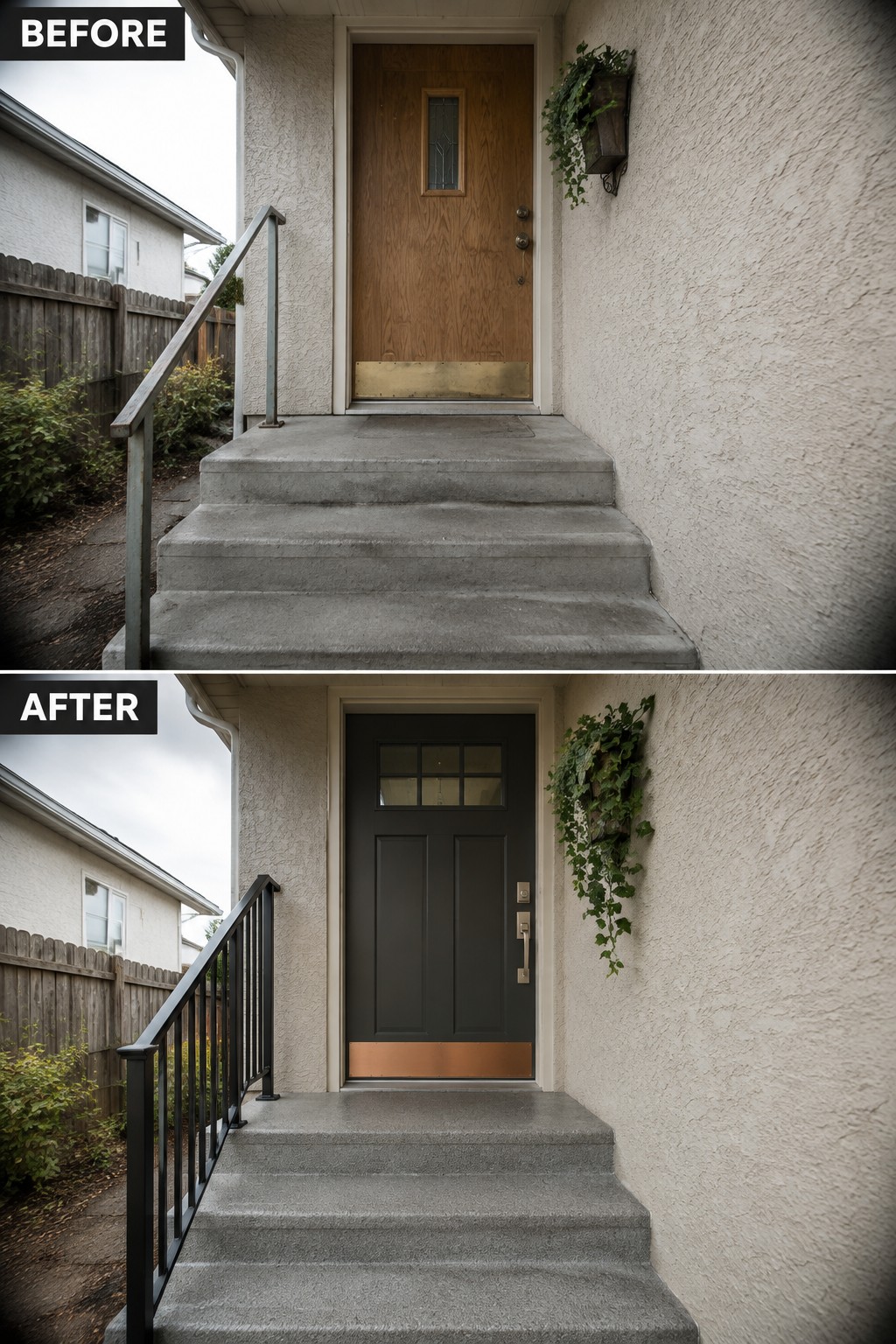
A dark front door gives a narrow entry more weight and presence without adding any physical bulk. Here the light wood door was swapped for a deep charcoal model with divided glass and a copper kickplate, while the old gray railing was replaced with a black one that sits lighter against the wall. The two changes together make the steps feel more intentional and the whole front look more finished.
This idea suits homes where space is tight and larger additions like planters would only crowd the walkway. Choose a door color that contrasts with the siding, keep the railing simple, and repeat one accent tone like the copper so the updates feel connected rather than scattered.
Define A Long Narrow Entry With A Rug And Two Planters
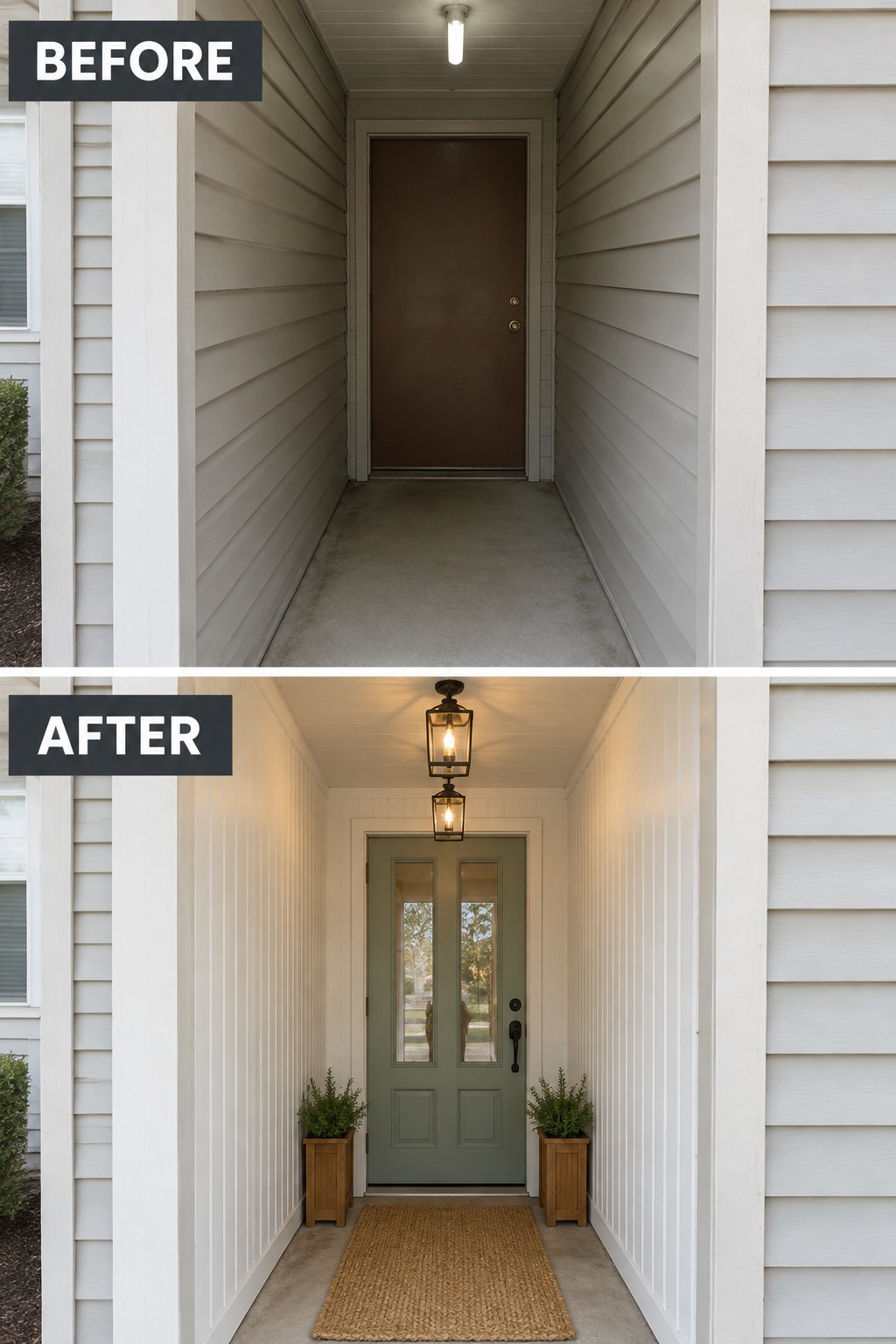
A narrow front entry can easily feel like nothing more than a walkway to the door. The before photo shows exactly that, with plain siding and a basic concrete path leading to an unremarkable door. The after version adds a centered rug and two matching planters placed right by the door. These two additions give the space a sense of purpose without crowding the tight area.
This approach suits homes where the entry is long and narrow because it keeps the path clear while still making the door feel like the main focus. Use a rug that fits the width of the walkway and planters that stay low and simple. The same idea works on many older homes where the front door sits at the end of a covered porch with little built-in character.
Turn A Blank Entry Wall Into A Small Seating Area
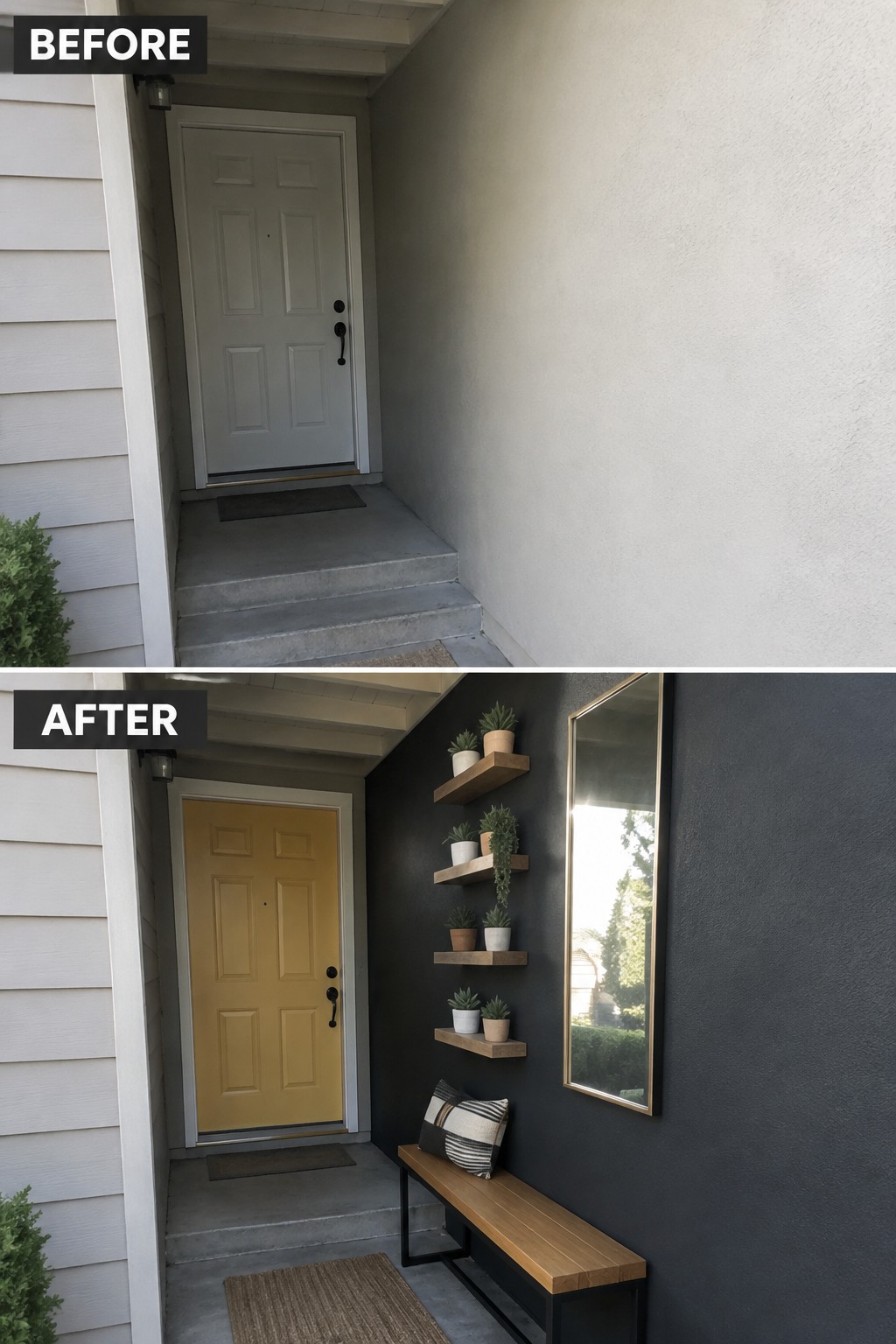
A narrow front entry often ends up as nothing more than a walkway because there is no clear reason to stop. Painting the door a brighter color and adding a bench against the side wall gives people a place to sit while putting on shoes or waiting. The dark paint on the wall makes the floating shelves stand out and keeps the space from feeling like leftover concrete.
This approach works best on entries that already have a small covered area and at least one solid wall. Keep the bench narrow so it does not block the path, and choose shelves that stay shallow enough for the space. A simple rug in front of the bench helps mark the spot without crowding the walkway.
Update The Front Door And Line The Path With Planting
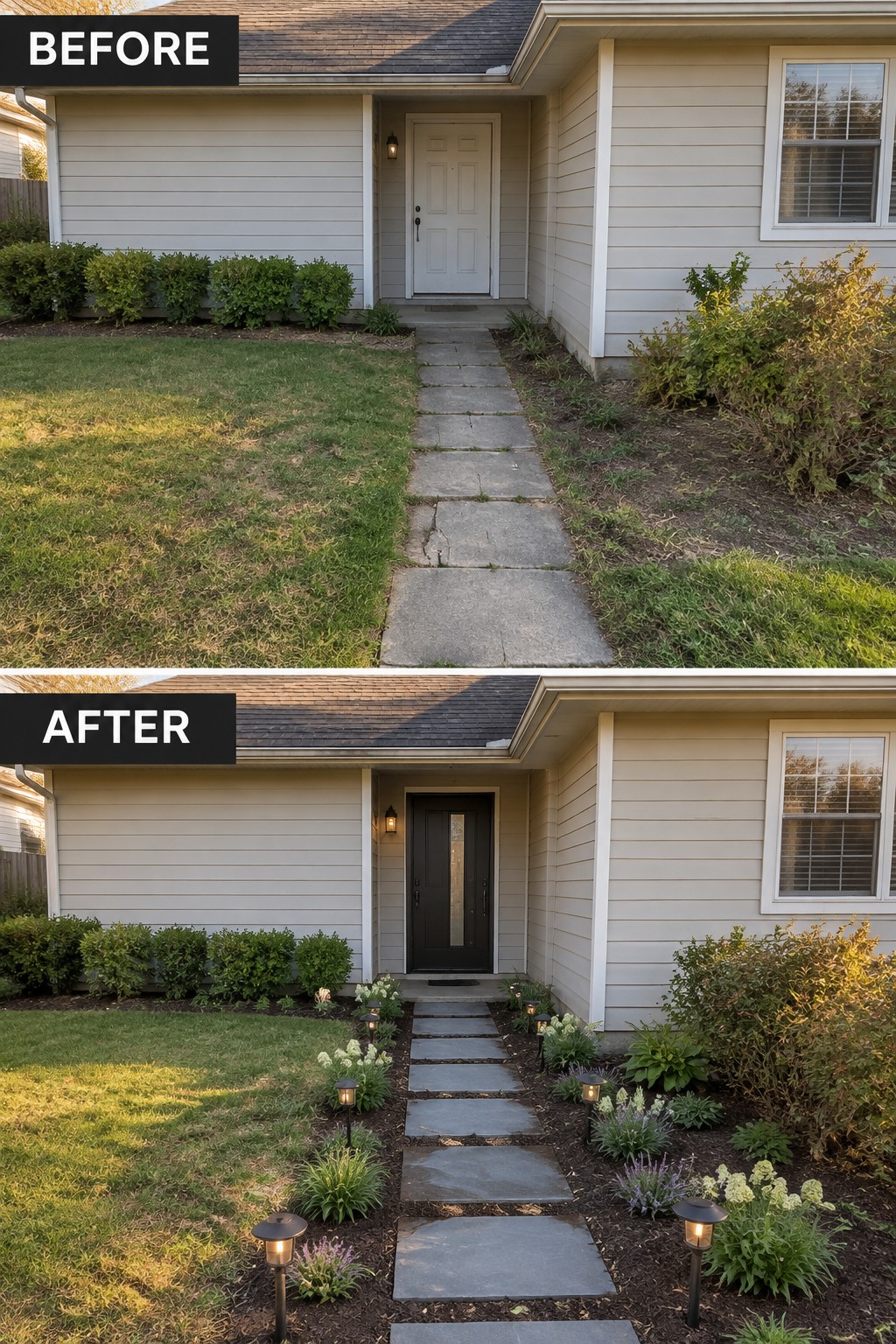
A dark front door makes the biggest difference in a narrow entry because it creates a clear focal point where a plain white door once blended into the siding. Adding low planting beds and a few path lights along the walkway then gives the space structure so it feels planned instead of just a strip of concrete cutting through grass.
This approach works well on small lots or houses with limited space between the street and the door. Start with the door color if you want one quick change, then add simple edging and a handful of solar lights to keep the beds from looking scattered. The same idea helps any narrow front walk feel less like an afterthought.
Give A Bare Front Entry A Clear Purpose
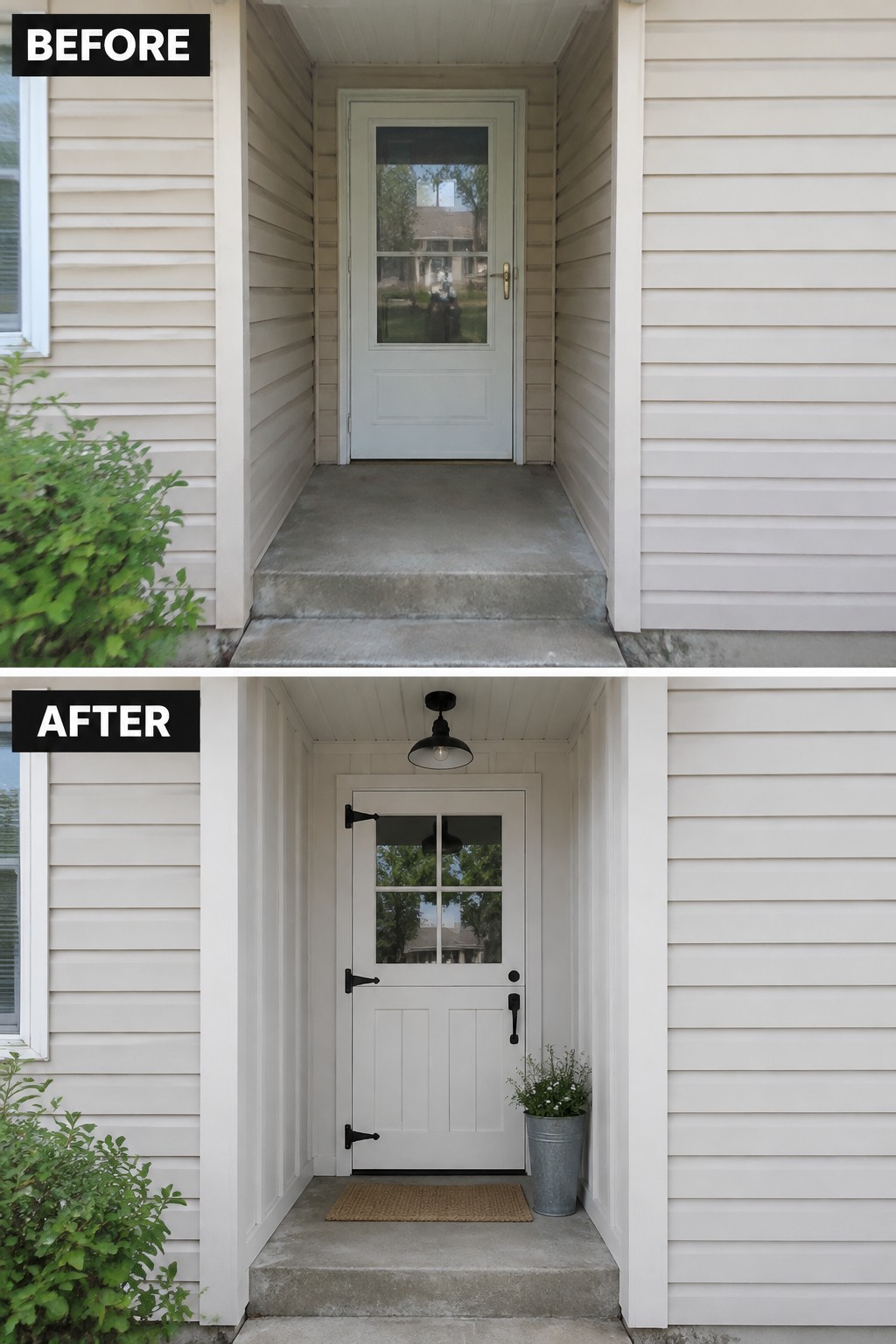
A narrow entry can feel unfinished when it has only a door and bare concrete. Adding one overhead light, fresh black hardware on the door, a simple doormat, and a single potted plant turns the space into a small but intentional spot that feels ready for visitors.
This idea works well on older homes where the front door sits in a tight covered alcove. Keep the additions small so the walkway stays open, and choose one main light fixture that matches the scale of the porch rather than trying to fill every corner.
Add Storage Furniture To Keep A Narrow Entry Organized
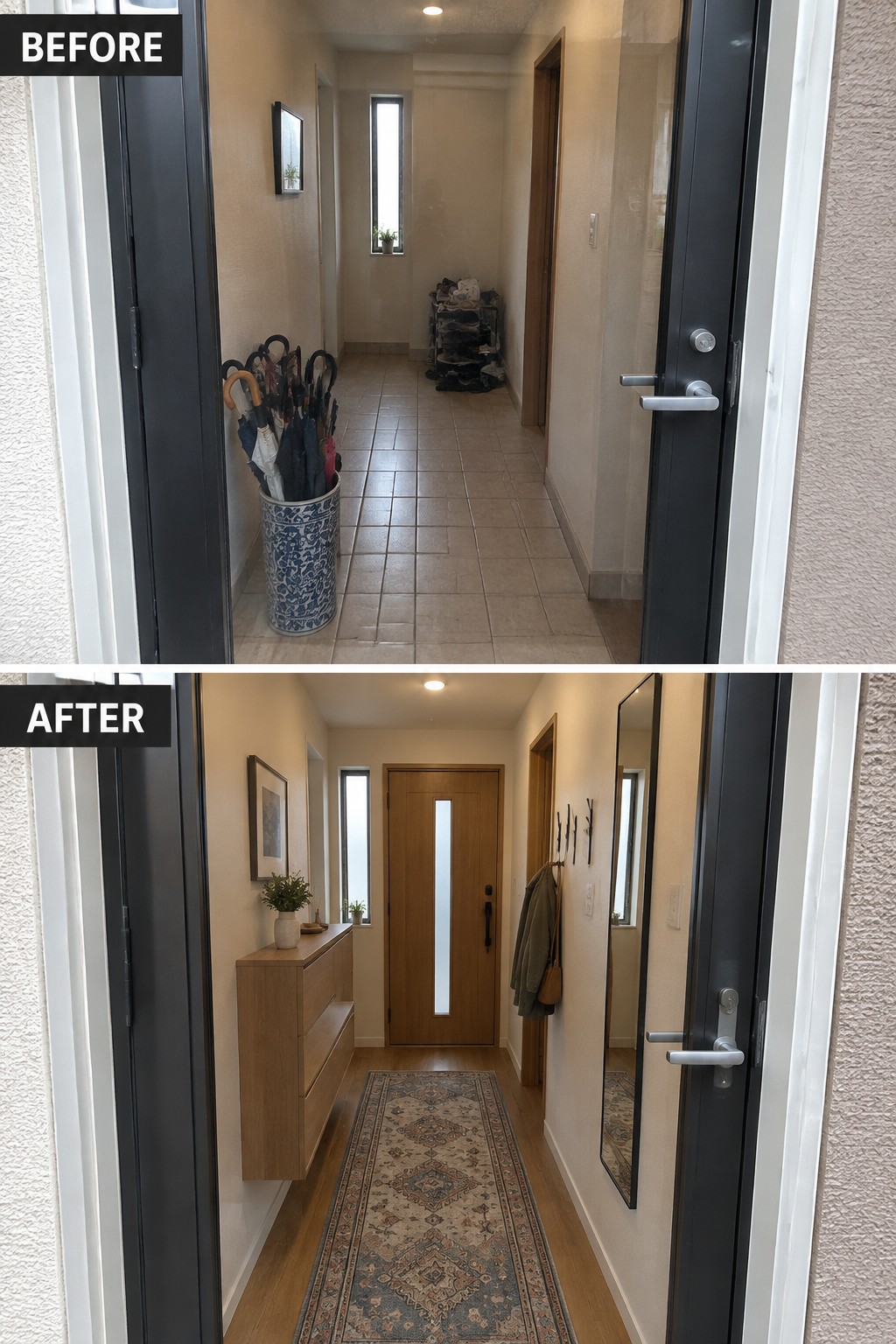
A narrow entry often ends up as a catch-all for umbrellas, shoes, and coats, which makes the space feel smaller and harder to move through. Replacing the clutter with a low console cabinet on one wall and a few wall hooks gives everything a designated spot while leaving the walkway clear.
This setup works best in homes where the front door opens straight into a hallway. Keep the cabinet shallow, add a runner to define the path, and limit hooks to what you actually use daily so the area stays functional rather than crowded.
Replace A Worn Screen Door With A Wood Door And Simple Planters
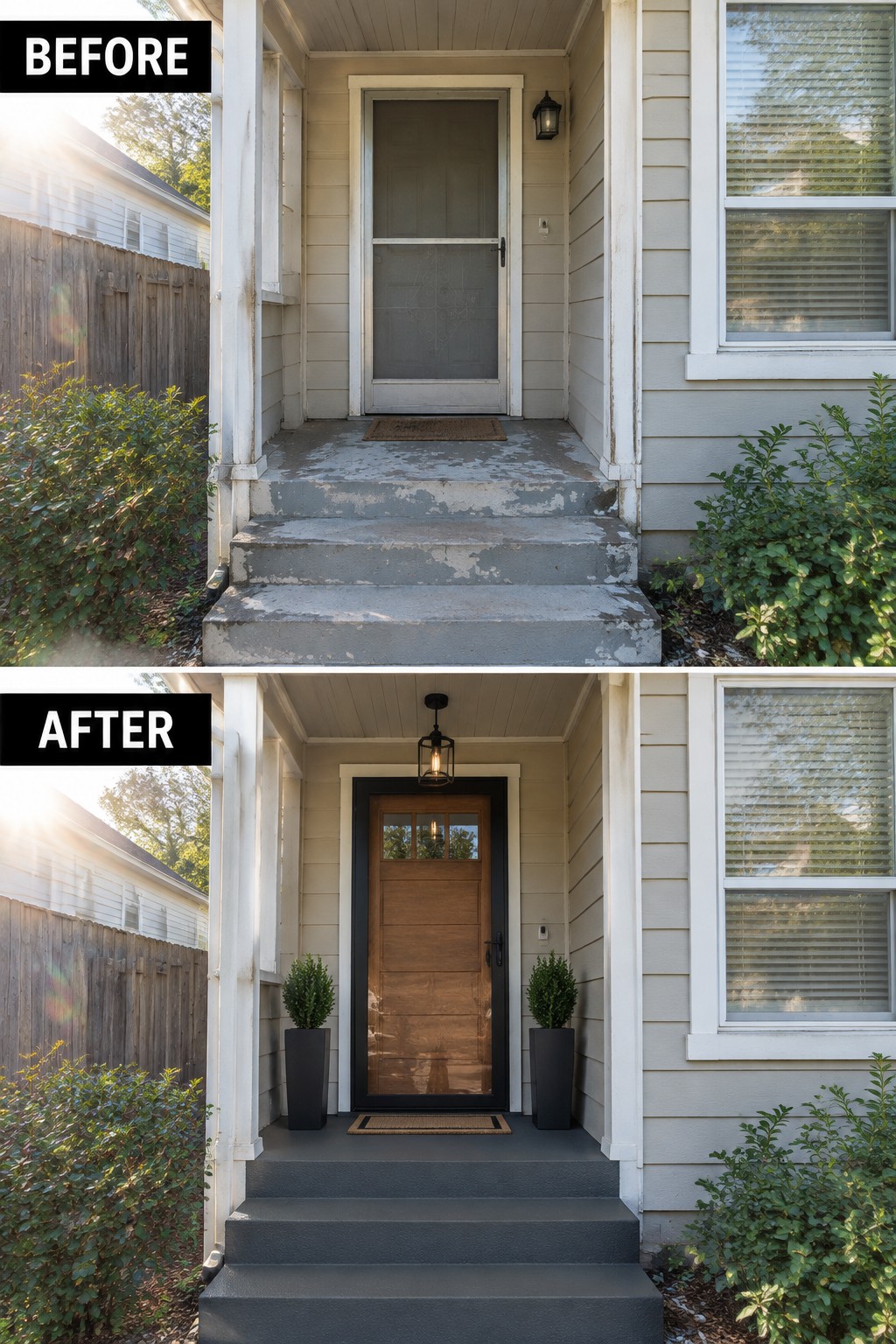
Many narrow entries start with a basic screen door and worn concrete steps that make the whole front feel tired. Swapping in a solid wood door with a clean black frame gives the house a clearer focal point and instantly makes the porch feel more finished.
This idea works best when you keep the rest of the space simple. Pick a door color and style that matches your siding, then add just two planters on the steps to frame the entrance without taking up much room. The same approach can help a small porch look more intentional even if you are not ready for a full exterior repaint.
Frame A Narrow Entry With Matching Planters
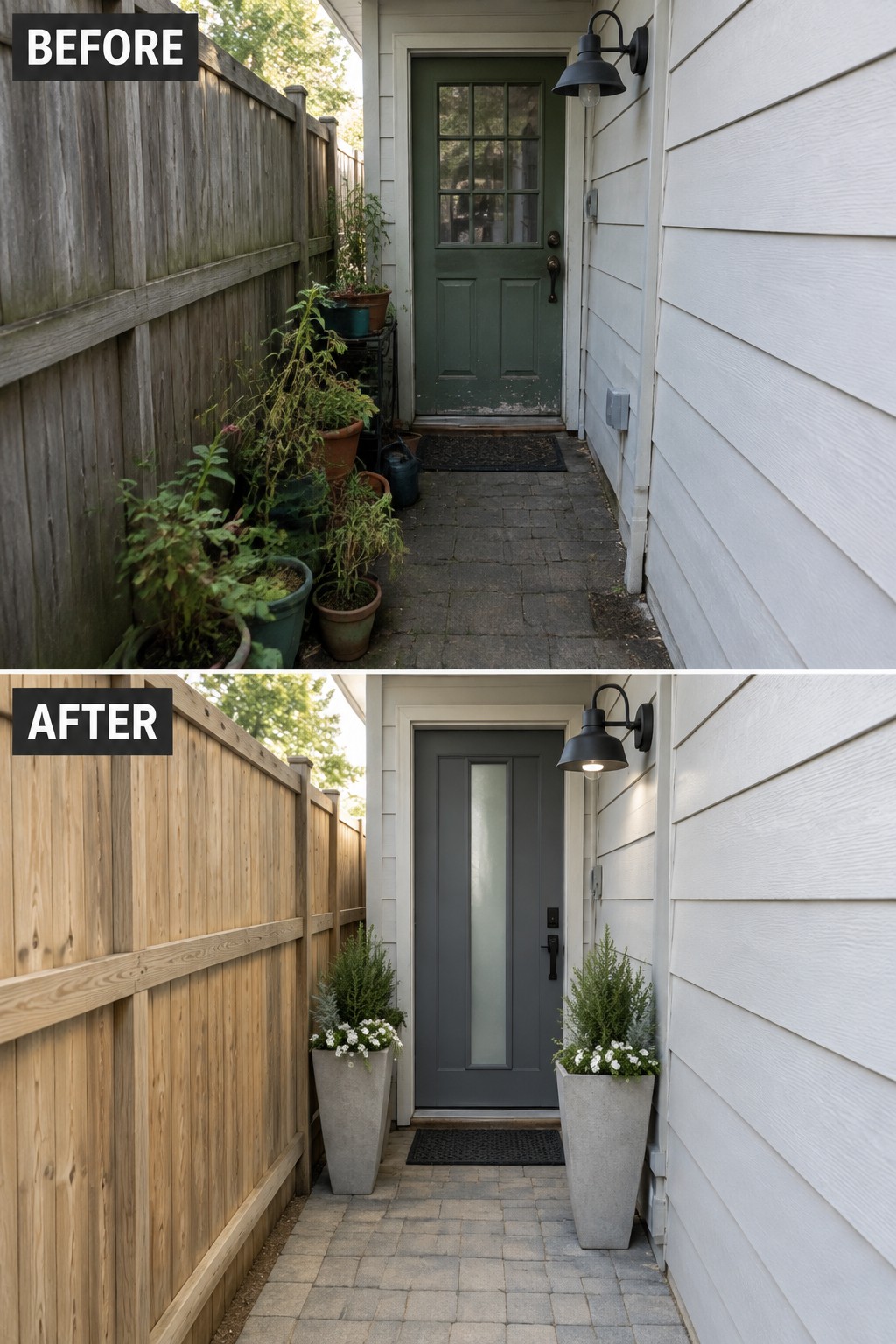
Narrow side entries often end up cluttered because there is not much room to work with. In this case the before photo shows a line of mismatched pots crowding the fence, which makes the walkway feel tighter and less cared for. Switching to two matching tall planters placed on either side of the door clears the path and gives the entry a simple, balanced look without blocking movement.
This approach works best on homes where the front door sits at the end of a tight passage. Keep the planters the same height and material so they feel like a pair instead of random accents. Choose plants that stay fairly compact so the walkway stays usable and the whole area still feels open.
Update The Front Door To Refresh A Narrow Entry
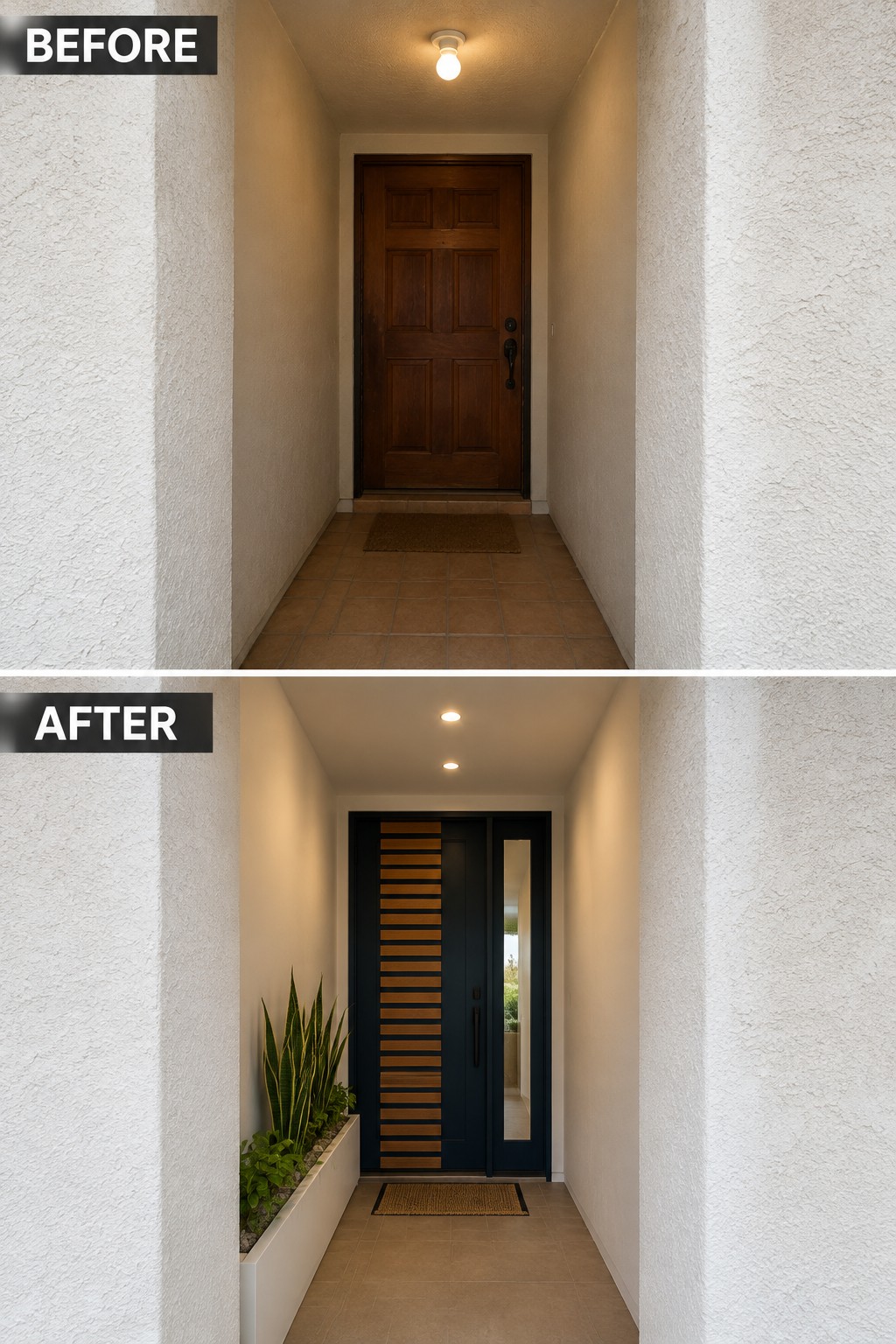
A plain wooden door at the end of a tight hallway can make the whole space feel closed off. Swapping it for a modern door with vertical wood slats and a narrow glass panel brings light deeper into the entry and gives the walls something to frame without adding bulk.
This approach works well on homes where the entry corridor is only a few feet wide. Keep changes minimal by adding one low planter along the side wall and switching to recessed ceiling lights so the floor stays clear for walking.
Balance A Weathered Wood Door With Coordinated Planters
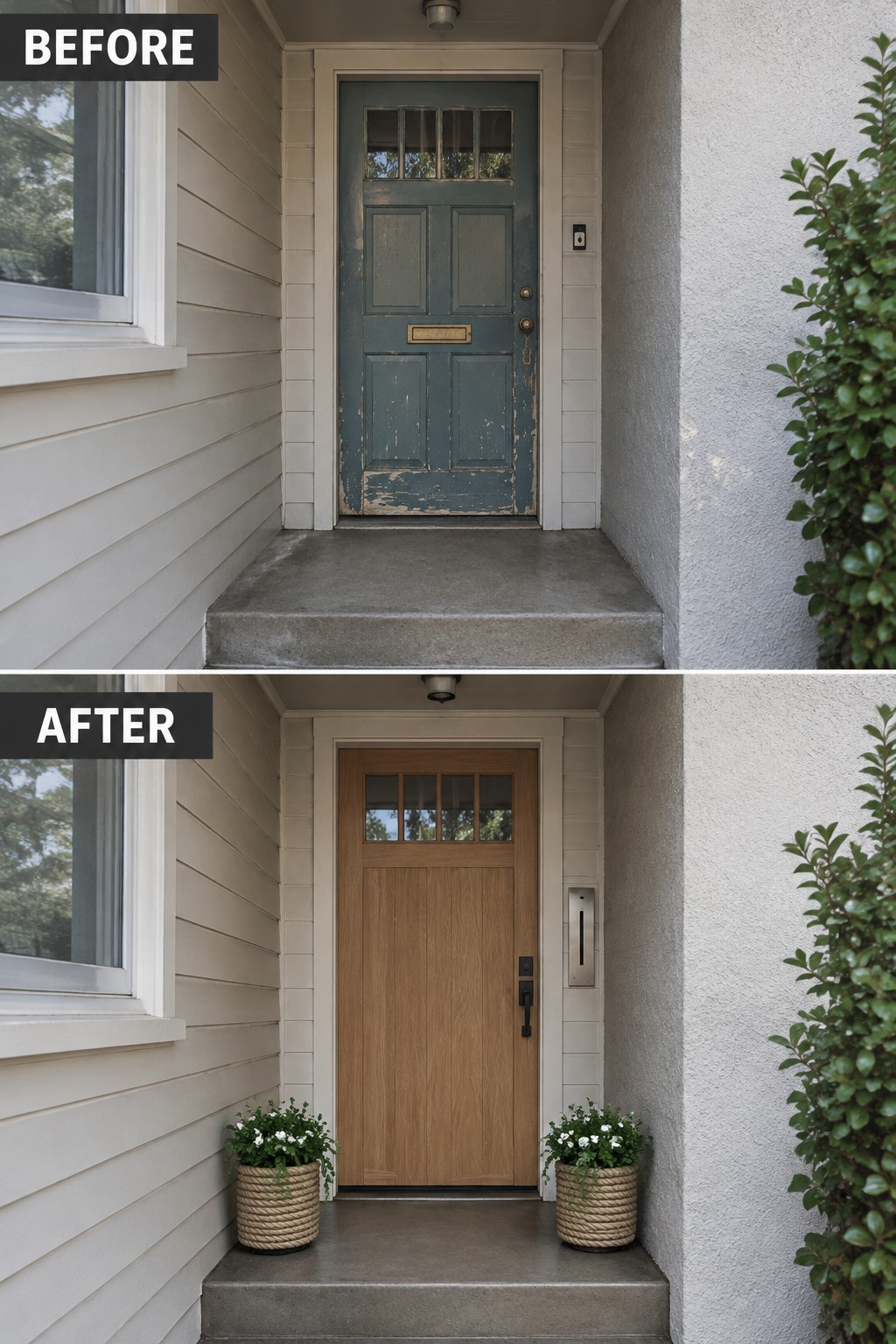
The old door showed its age with peeling paint and dated hardware that made the entry feel forgotten. Replacing it with a new wood door and adding two matching planters on either side gave the space a balanced, finished look without taking up extra room.
This idea works well on narrow porches where space is tight. Keep the planters the same size and style, and choose plants that stay compact so the walkway stays clear. The door update and simple symmetry do most of the work.
Update The Door And Add Vertical Details To A Narrow Entry
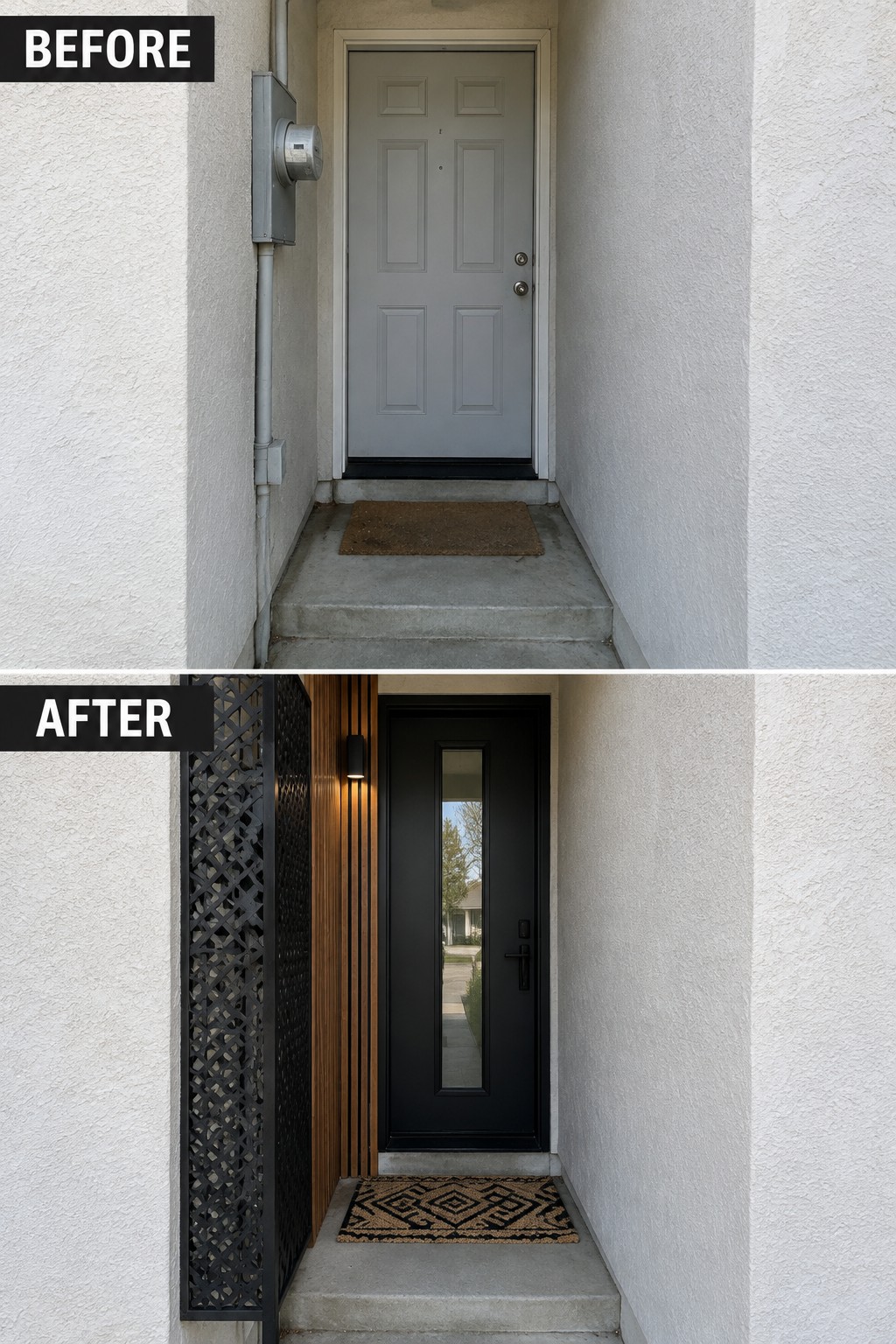
A narrow entry often feels flat when the door is plain and the side walls are empty. Changing to a darker door with a tall glass insert and adding vertical wood slats plus a decorative metal screen on one side gives the space more height and makes the whole area feel more finished.
This idea works best on homes with tight side entries or small recessed porches. Focus first on the door itself since the color and style shift does most of the work, then add one vertical screen or wood accent to hide utilities and create a bit of privacy without crowding the walkway.
Update The Front Door And Add Lighting In A Narrow Entry
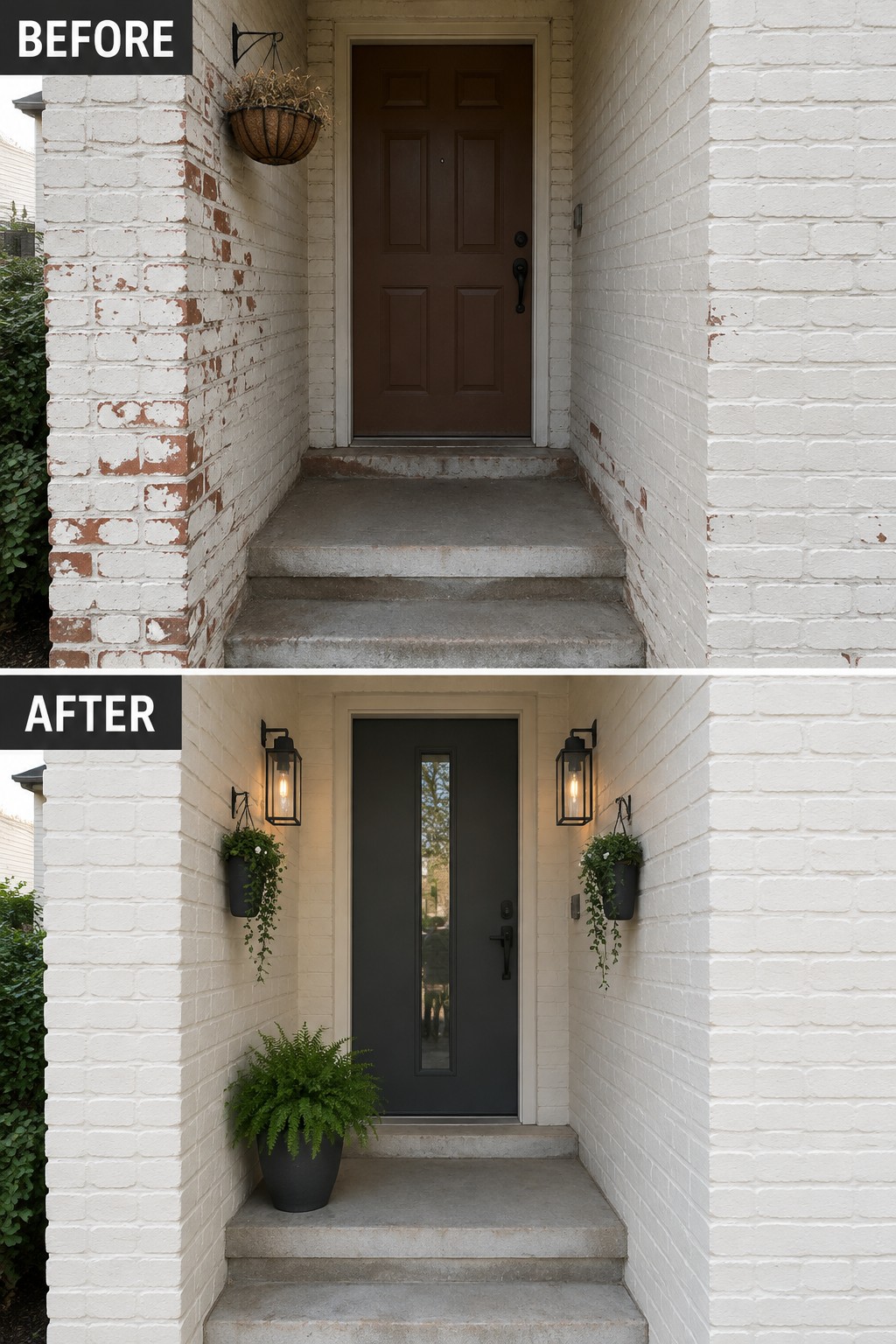
A dark door color paired with simple wall lanterns can make a narrow entry feel more balanced and welcoming. Here the old brown door was replaced with a charcoal model that has a tall narrow glass insert, and matching black lanterns were added on both sides. The hanging planters and the larger fern on the step keep the walkway clear while adding some life to the space.
This idea works best in tight entries where there is no room for furniture or big planters on the ground. Focus on vertical elements like wall lights and hanging plants, and keep the door hardware and light fixtures in the same finish. It is an easy update that improves curb appeal without major construction.
Replace A Heavy Security Gate With A Lighter Screen
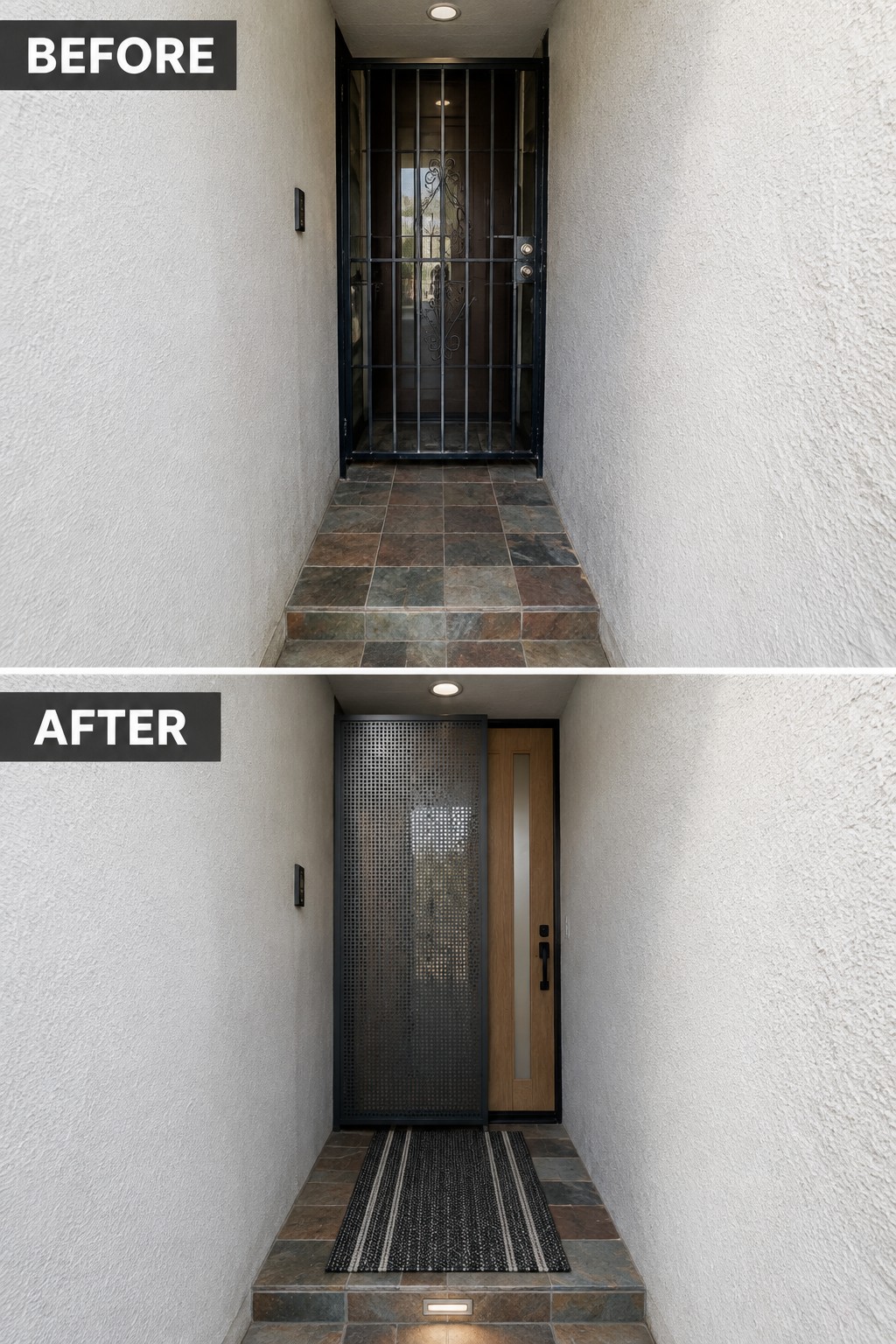
A bulky security gate can make a narrow entry feel closed off even when the door behind it is attractive. Swapping it for a perforated metal screen lets light through while keeping the same level of security. The change also gives the space a cleaner line that works better in a tight hallway.
This approach suits homes where the gate is required but the look feels dated. Keep the screen simple so it does not add visual weight. Pair it with one small rug and a single light source at floor level to finish the entry without crowding the walls.
Add Height To A Narrow Entry With A Dark Door And Ivy Trellis
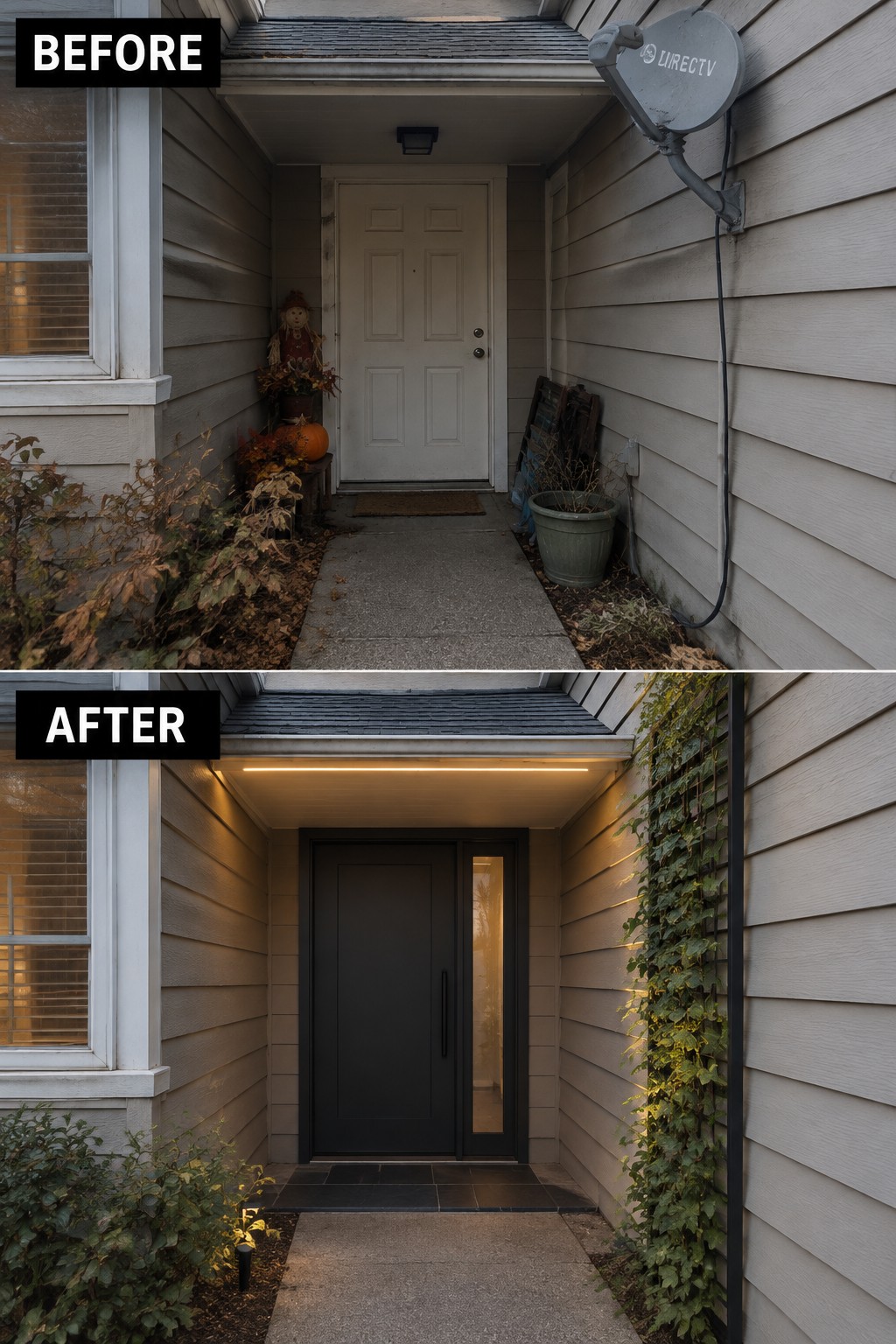
A simple door color change and a narrow vertical garden can make a tight front entry feel current instead of dated. The white door and scattered decorations in the before photo gave way to a solid dark door and a clean ivy-covered trellis that runs up the side wall. These two moves remove visual clutter and add height without eating into the walkway.
This approach works well on homes where the entry sits close to the street or between two windows. Keep the trellis slim so it does not block light or movement, and choose a door color that contrasts with the siding. The same idea scales to most single-story houses that need a quick exterior refresh before any larger work.
Refresh Worn Front Stairs With Stain And Step Lighting
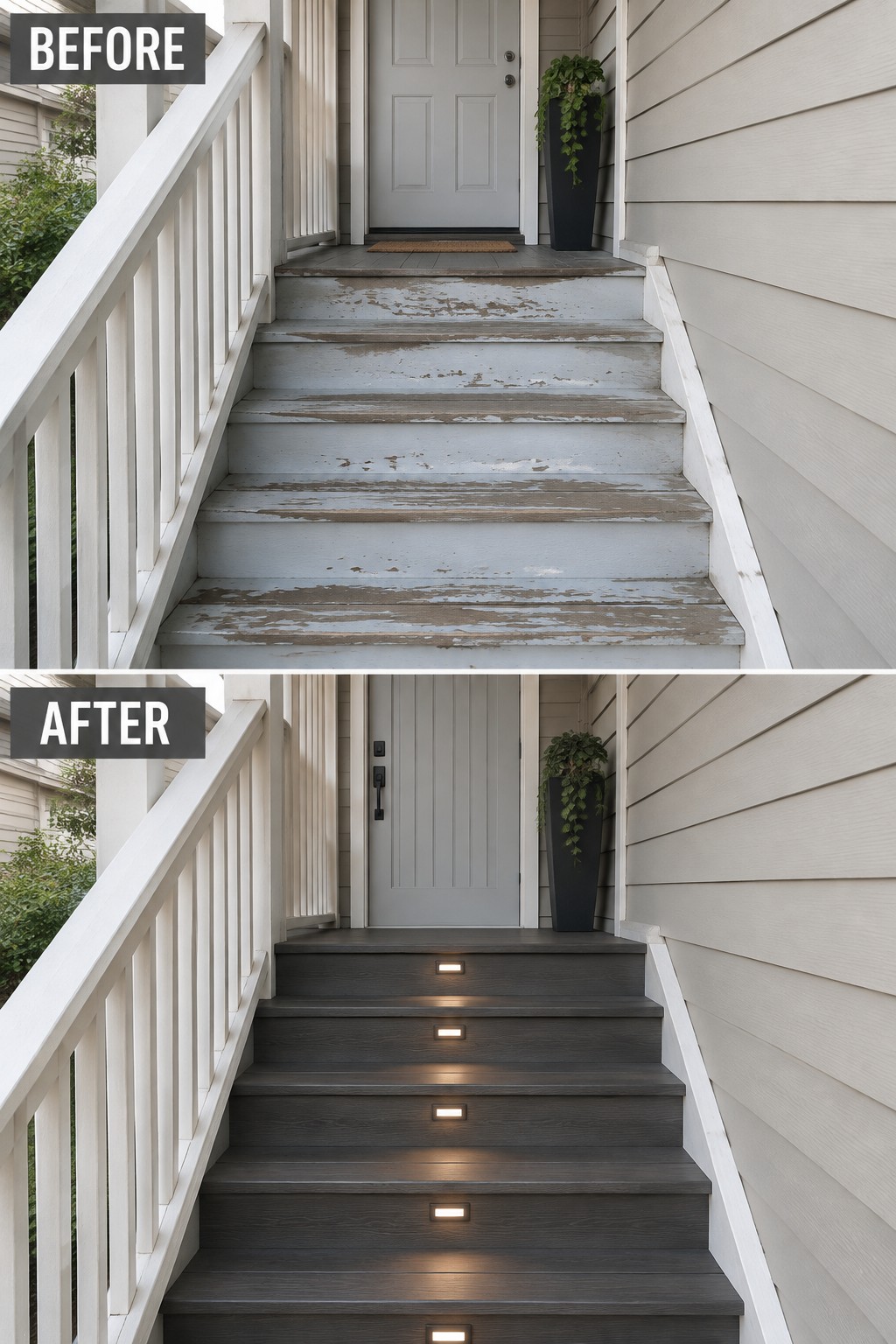
The original stairs had peeling paint and a faded look that made the narrow entry feel neglected. A dark stain plus small recessed lights on each tread gave the steps a cleaner finish and made them much easier to see after dark.
This approach works well on narrow entries because the lights stay tucked into the stairs instead of taking up rail space or needing extra fixtures. Match the new color to your door or siding, and pick fixtures rated for outdoor use so they hold up through the seasons.
Frame A Narrow Front Door With Tall Planters
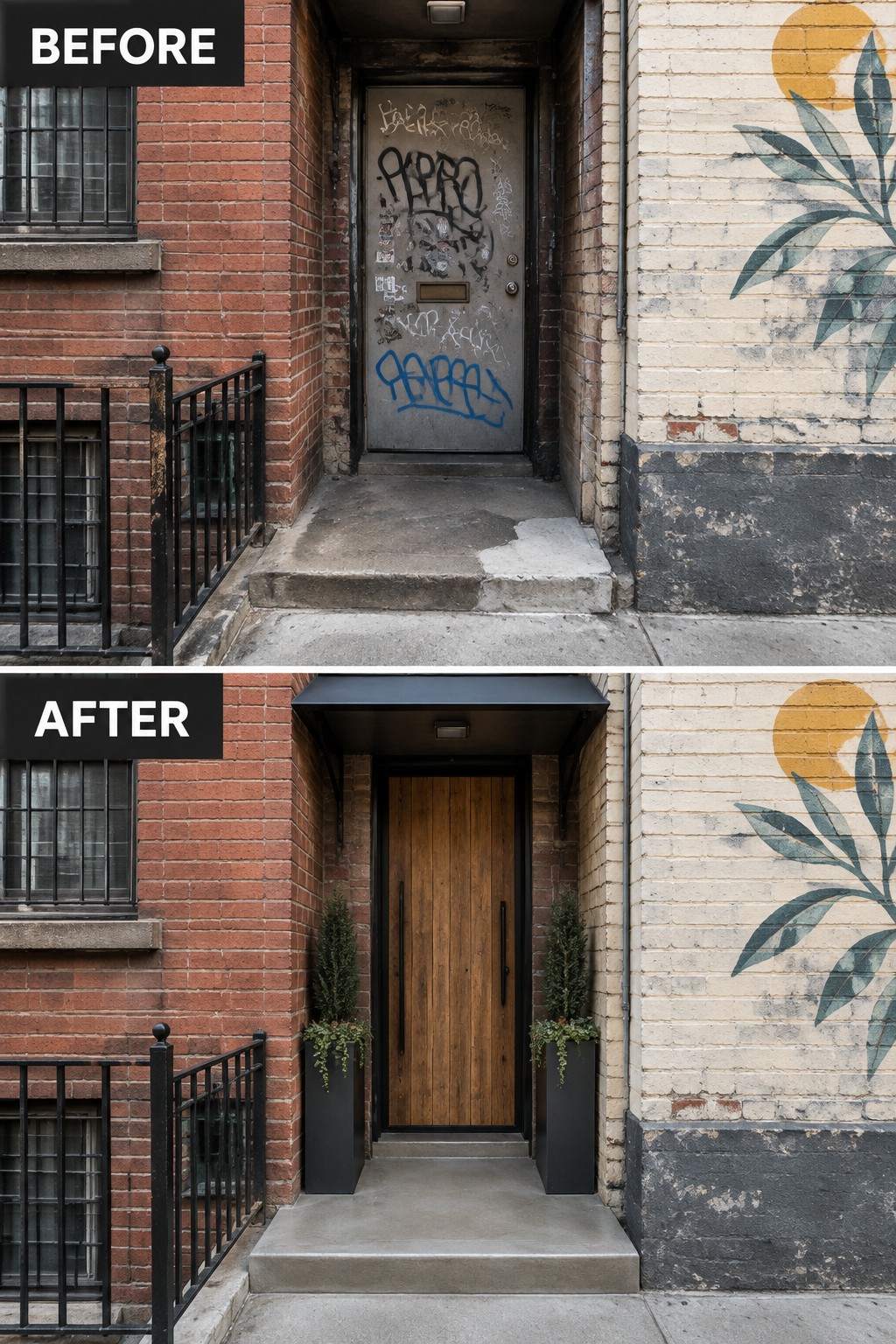
A neglected front door with heavy graffiti and worn concrete steps can make the whole house feel uninviting. In this case, the fix started with replacing the door itself, then adding a simple black awning and two tall planters on either side. The vertical planters give the narrow space clear structure without crowding the steps or walkway.
This approach works well on tight urban entries where there is little room for wider landscaping or large furniture. Keep the planters the same color as the door frame so the eye reads them as part of the architecture rather than separate objects. Choose evergreens that stay neat year-round and water them regularly so they do not become another maintenance problem.
Add Wall Lighting And A Bench To A Narrow Entry
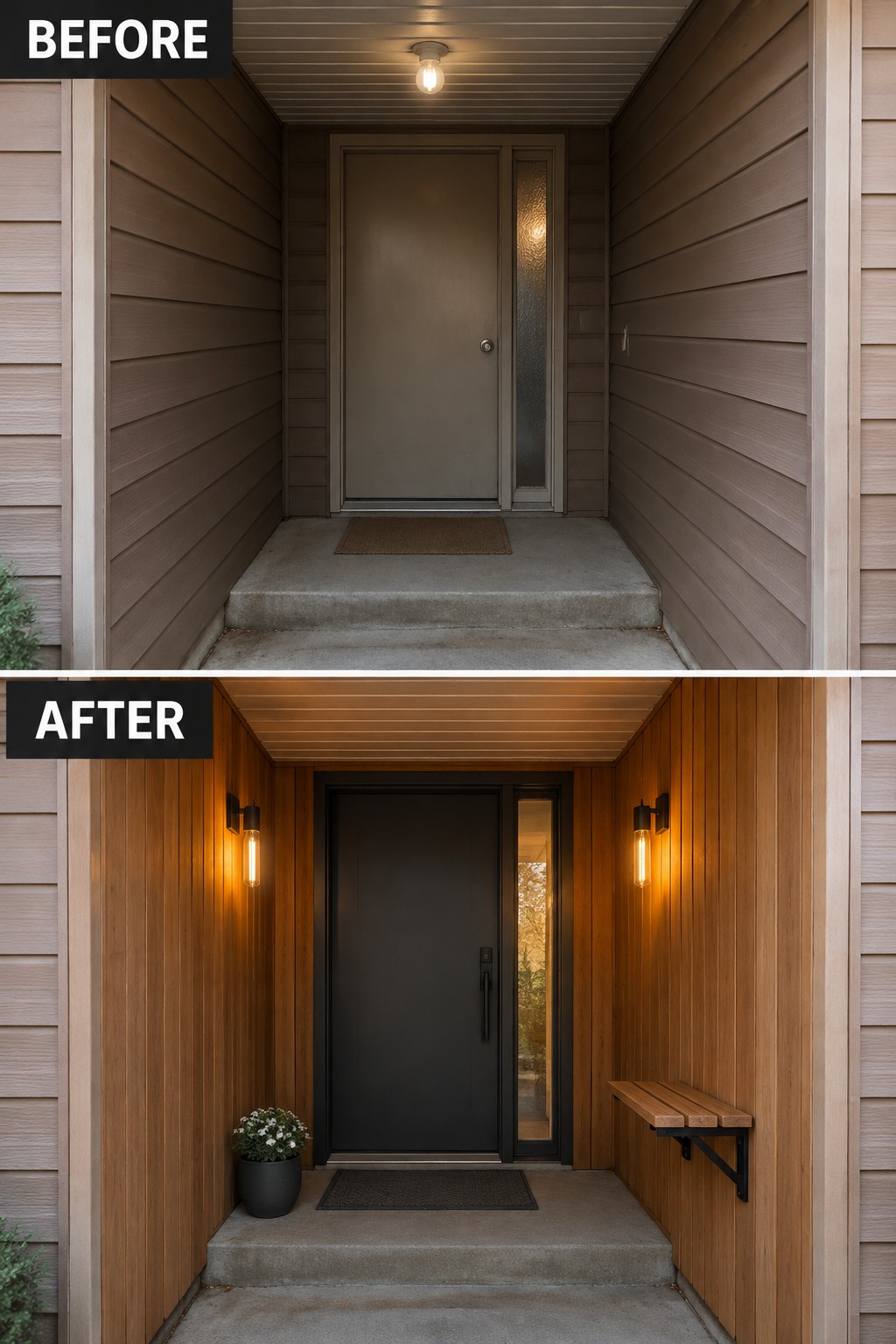
A narrow entry often feels dark and unfinished when it only has one overhead light. Adding a pair of wall sconces on the side walls and placing a small bench along one side makes the space feel more balanced and gives it a clear purpose without crowding the walkway.
This idea suits homes where the entry is tight on space. Focus on lighting first since it affects how welcoming the area feels at night, then add one simple seat that stays out of the main path. Keep the bench narrow and the fixtures modest so the entry still feels open.
Modernize A Narrow Entry With A Solid Wood Door And Black Frame
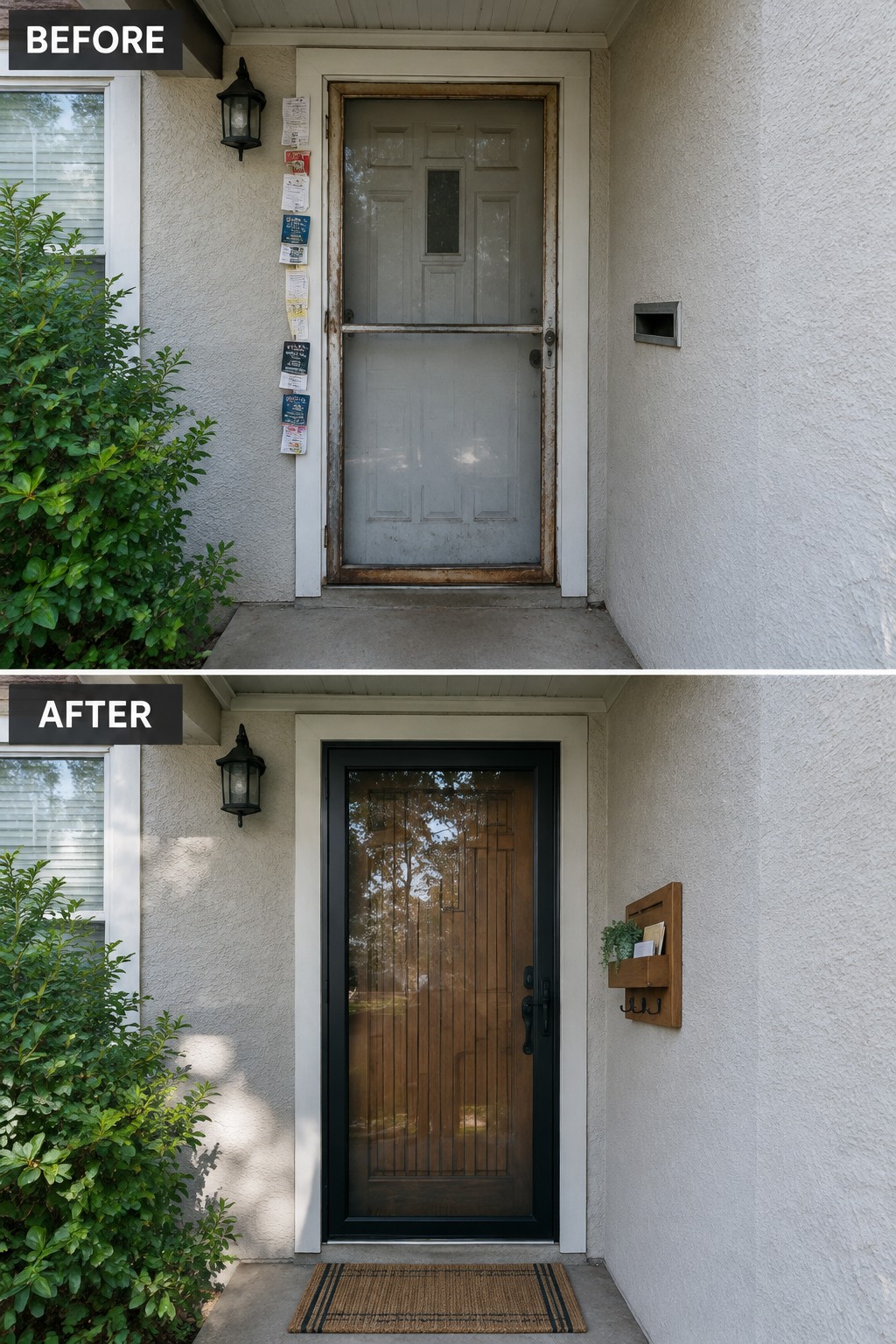
Swapping an old screen door for a solid wood one with a black frame makes the biggest difference here. The new door gives the entry a cleaner, more finished look while the old one had seen better days and made the space feel dated.
This approach suits narrow entryways because it keeps changes focused on the door itself instead of trying to add furniture or extra pieces. Pick a door style that matches your house, then add one small item like a mat or wall organizer if you want a bit more function.
Frequently Asked Questions
Q: How do I pick a door color that makes the space look wider?
A: Light colors bounce light around and create the illusion of more room. Test samples on the door at different times of day to see how they shift.
Q: What about adding a rug in such a tight spot?
A: Choose a narrow runner that fits the width exactly. It defines the area and protects the floor without tripping anyone.
Q: Is it worth updating the lighting fixture?
A: A small wall sconce frees up space compared to a hanging light. It brightens the entry and adds style without clutter.