

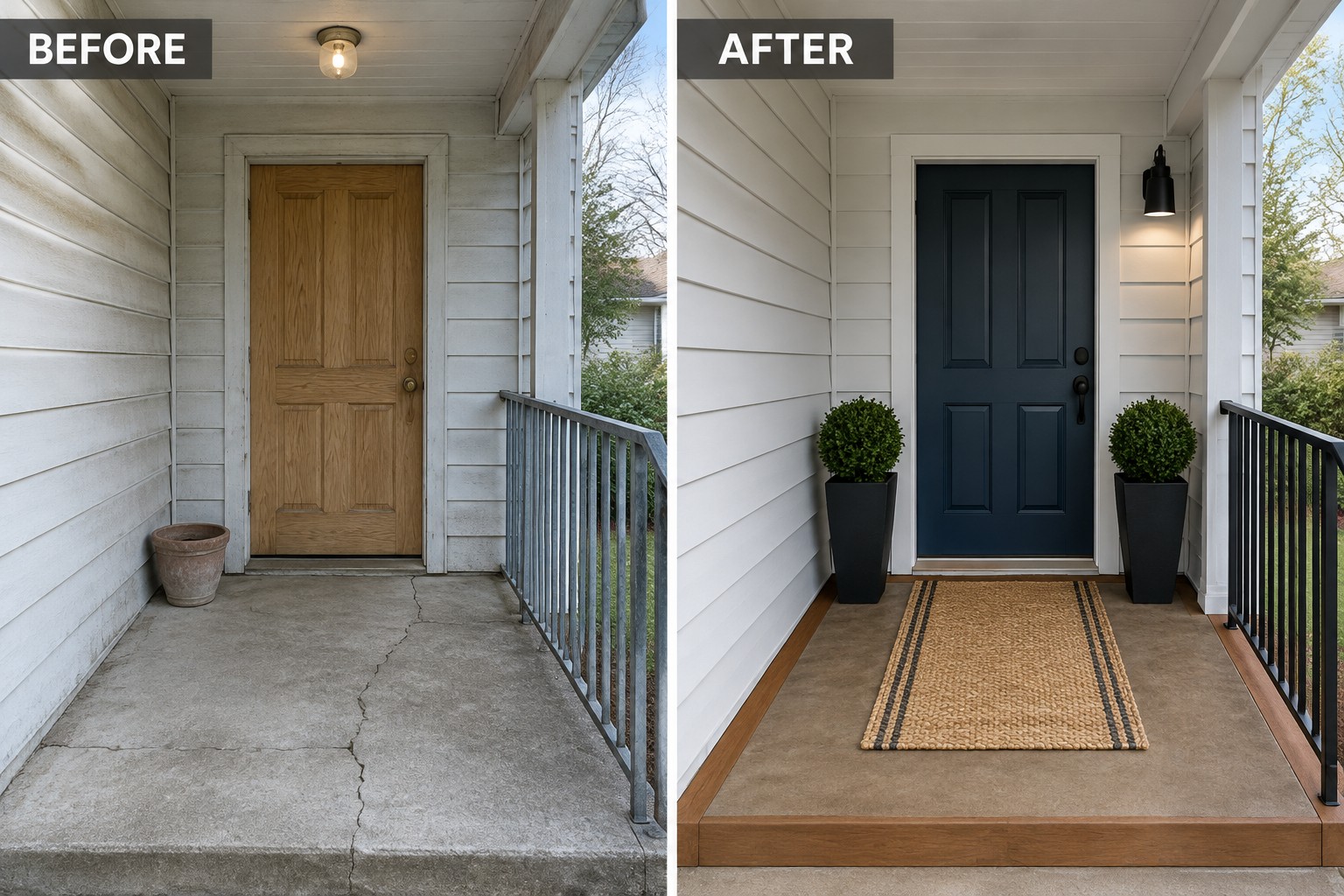
Narrow front porches often sit right at the edge of the house and still manage to feel like an afterthought when the landing is tight.
I have noticed that swapping in a narrower console or adjusting the lighting can pull the whole entry together without blocking the door swing.
A few of these setups have worked better than I expected once I tried them at my own place.
It helps to focus first on how people actually move through the space rather than adding more pieces just to fill it.
The right scale makes a real difference.
Turn A Bare Porch Into A Welcoming Entry
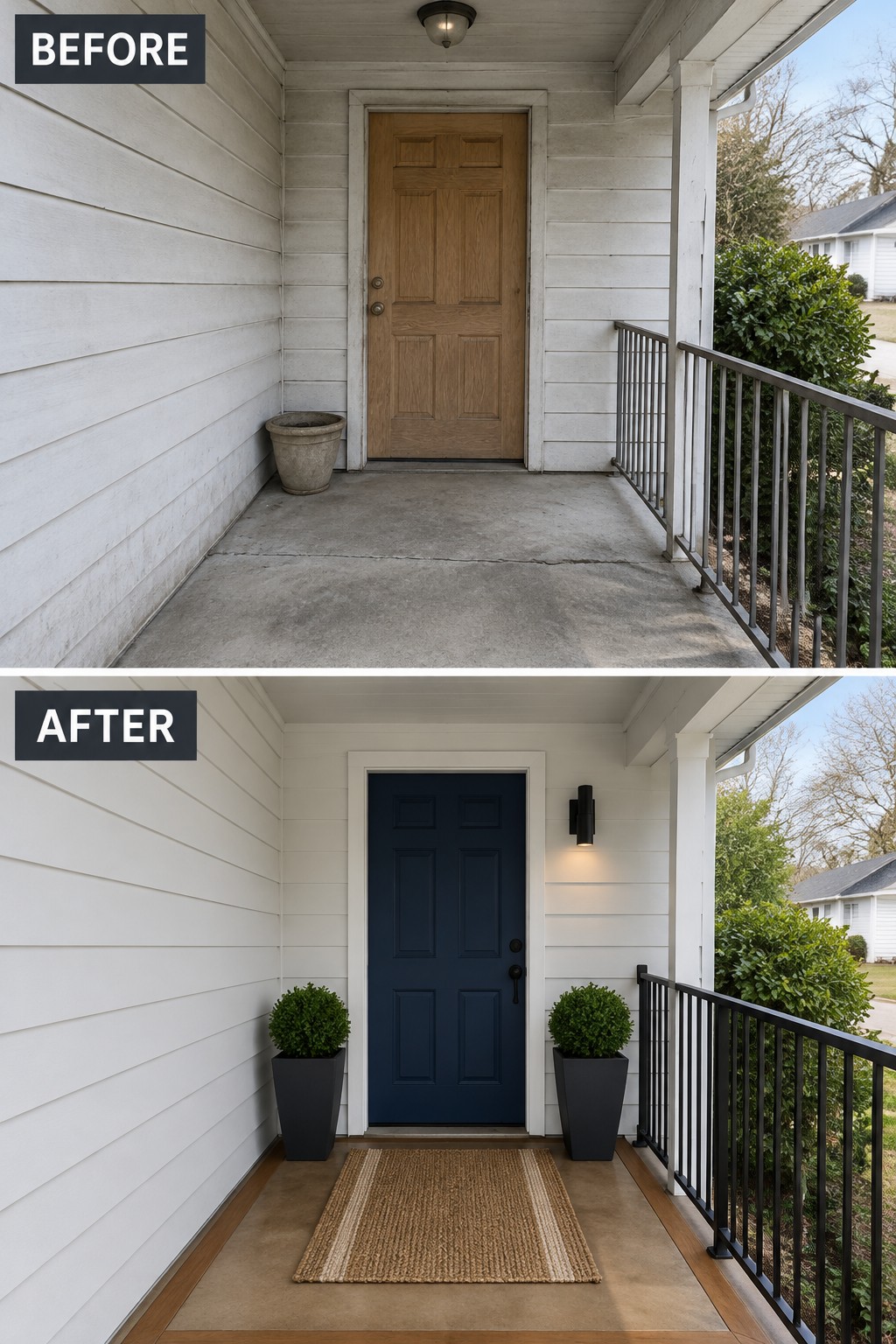
A plain concrete porch with nothing but a lone pot can feel unfinished and uninviting. The biggest shift here came from adding two matching planters, a simple rug, and a fresh coat of paint on the door. Those few pieces gave the space clear purpose without crowding the narrow landing.
This approach works well on compact front porches where you want to signal the entry without blocking movement. Keep the planters low and the rug centered in front of the door so the walkway stays open. Choose weatherproof pieces that match the scale of your space, and the whole area will feel more finished even on a small budget.
Add A Bench For Storage On A Narrow Porch

A cluttered entry with shoes and mail scattered on the concrete makes even a small porch feel cramped and unwelcoming. Swapping that mess for a simple bench with hidden storage underneath keeps daily items tucked away while giving people a place to sit and put on shoes. The bench also creates a clear spot for a rug, which helps define the landing without taking up extra room.
This approach works well on compact front porches where every inch counts. Keep the bench shallow so it does not block the door swing, and choose one with a lift-up seat or open cubbies underneath. A single neutral rug and a couple of weather-safe pillows are usually enough to finish the look without crowding the space.
Add Hanging Plants And Rail Boxes To Define A Narrow Porch
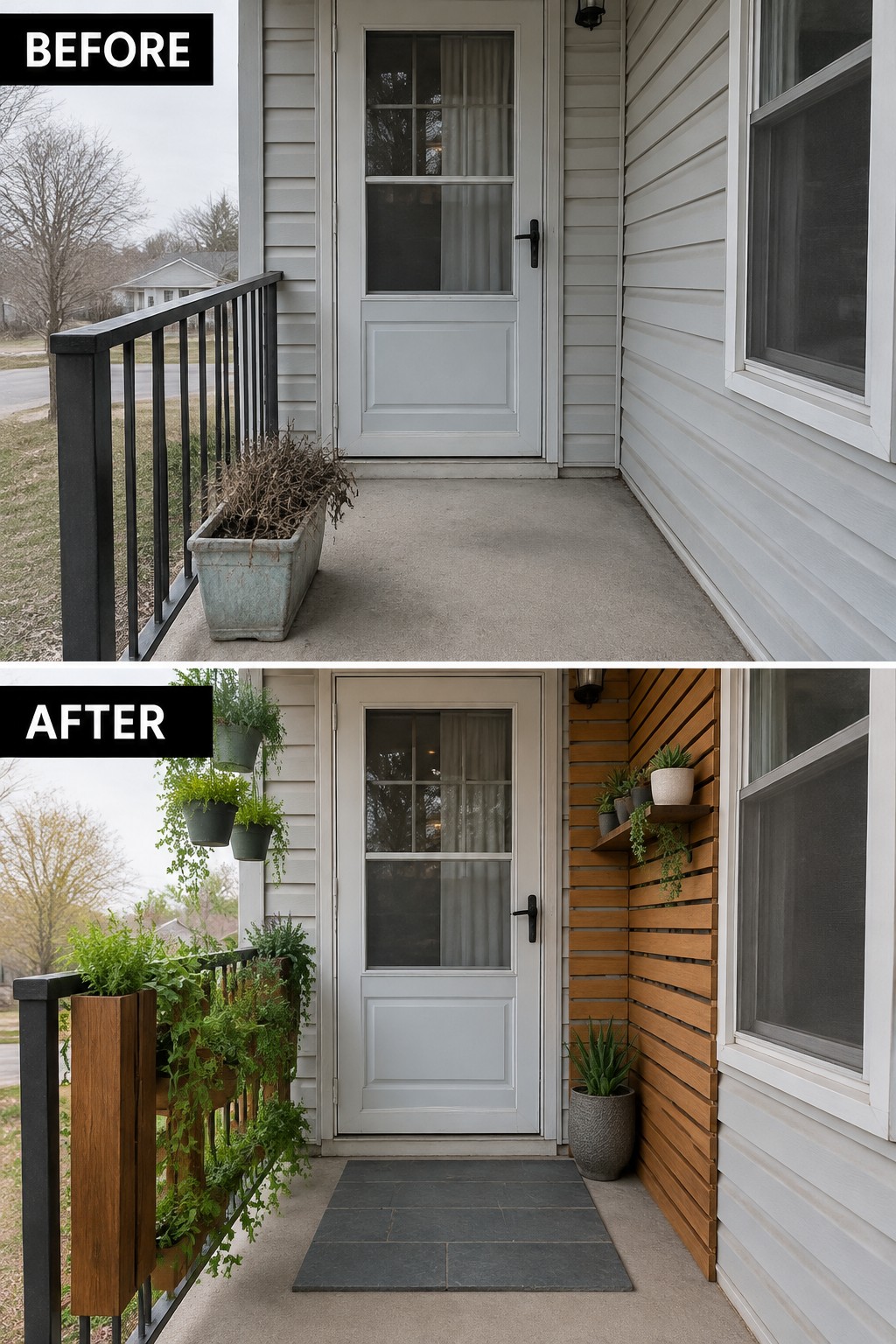
A plain concrete landing with one neglected planter feels unfinished and unwelcoming. Adding hanging plants, a wood rail box, and a simple doormat gives the space structure and makes it feel like an actual entry instead of leftover space.
This idea works well on narrow porches because it uses vertical space and one small rug to define the area without crowding the floor. Start with two or three plants at different heights and a mat that fits the width of your door. Keep the rest of the surfaces simple so the porch still feels open and easy to walk through.
Tile Narrow Porch Steps To Add Definition
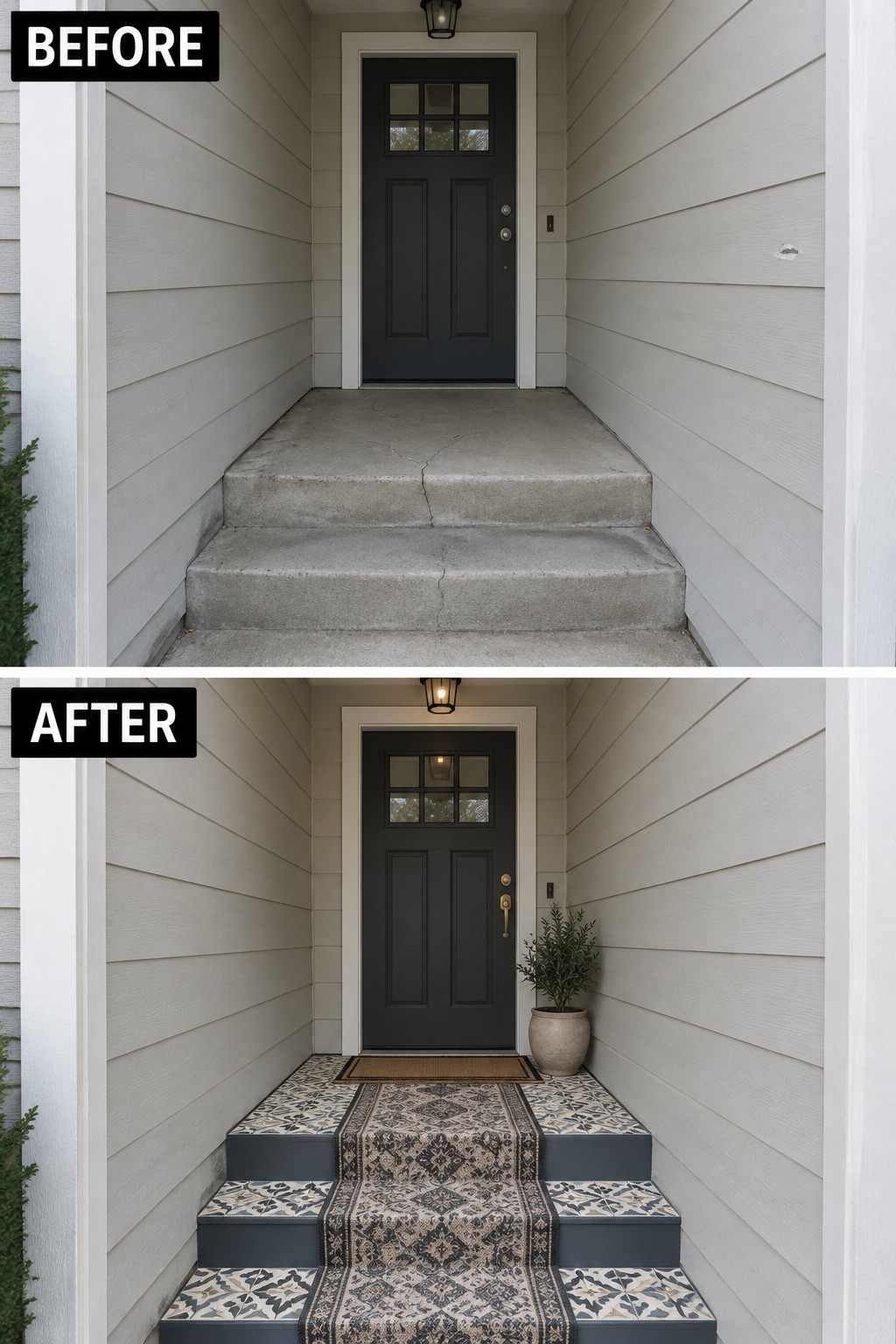
Bare concrete steps on a small landing often look unfinished and a bit harsh. Covering the treads and risers with patterned tile and laying a runner down the center gives the porch a clear path and makes the entry feel more complete without adding bulk.
This idea suits narrow front landings where furniture would get in the way. Pick durable outdoor tile, keep the pattern from getting too busy, and leave enough room on the sides for safe footing. The same approach can work on any compact set of steps that needs a quick refresh.
Add Seating To Make A Narrow Porch Usable
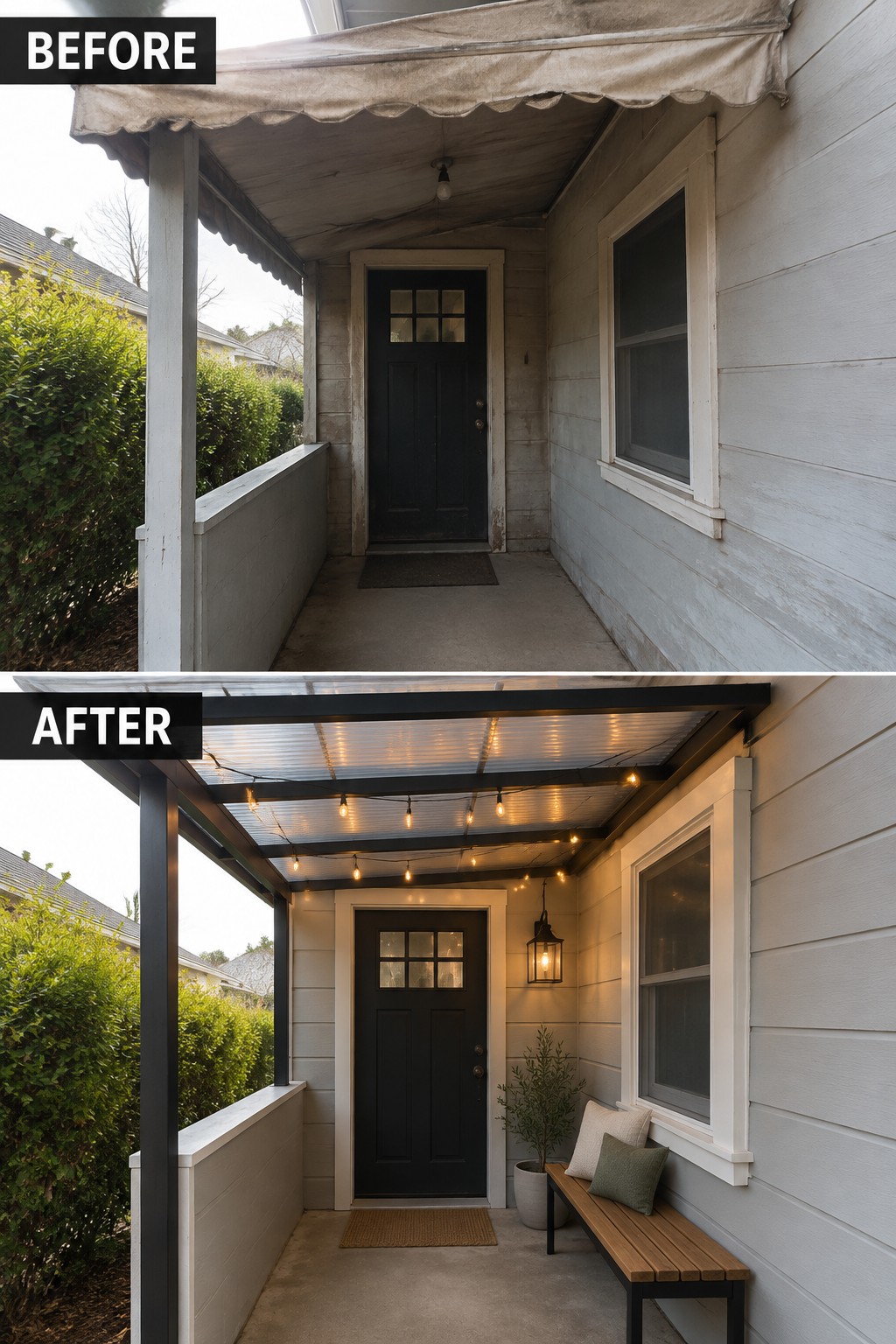
A bare porch with just a door and empty floor does not invite anyone to stop. Adding a simple bench with a couple of pillows and one potted plant gives the space a clear spot to sit. The overhead lights make the area feel ready for use in the evening without filling up the narrow landing.
This works well on compact front entries where room is limited. Keep the bench against one wall and choose pieces that can stay outside year round. Leave enough floor space open so people can still walk through easily.
Create A Practical Drop Zone On A Narrow Porch
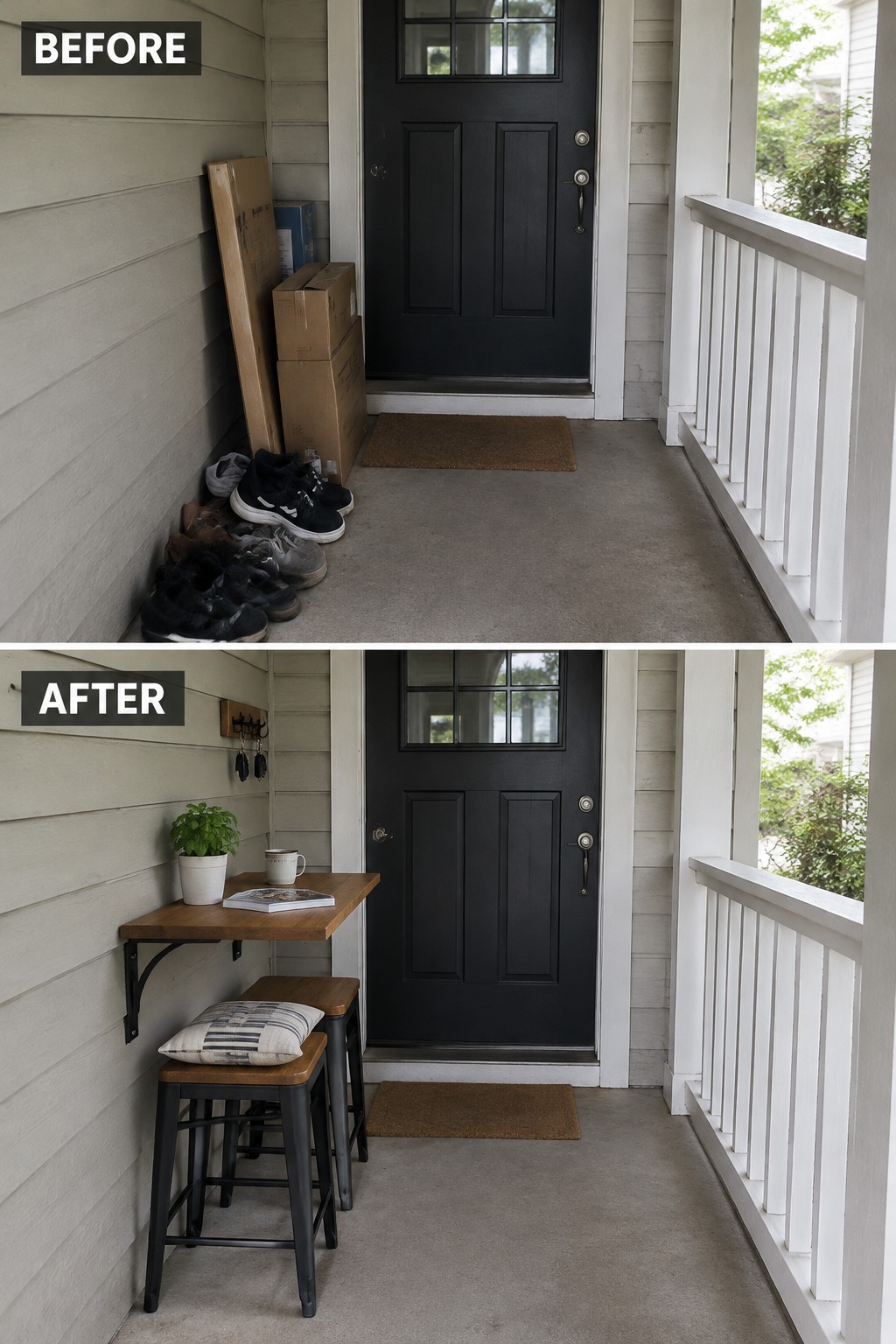
A narrow front porch can quickly turn into a dumping ground for shoes, boxes, and whatever gets left by the door. Clearing everything away and adding a wall-mounted table with two stools gave the space a clear spot to sit, drop keys, or set down packages without blocking the walkway.
This setup works best when floor space is tight. Mount the table on simple brackets so it can fold down only when needed, and choose stools that slide underneath to stay out of the way. It keeps the porch usable while still leaving room to walk through.
Define A Narrow Porch With Planters And A Runner

A narrow front porch often gets treated as just a walkway, which leaves it feeling unfinished. Here the old gray decking and plain railings made the space look tired and flat. Swapping in dark deck boards, adding planters along the railings, and placing a striped runner down the center gave the porch a simple path and a bit of structure.
This idea suits small landings because it works with the existing width instead of fighting it. Mount planters on the railings to free up floor space, and keep the runner narrow enough that people can still pass easily. Match the planter finish to your railings or door so the updates feel connected rather than scattered.
Add Layered Lighting To Make A Narrow Porch Feel Safer
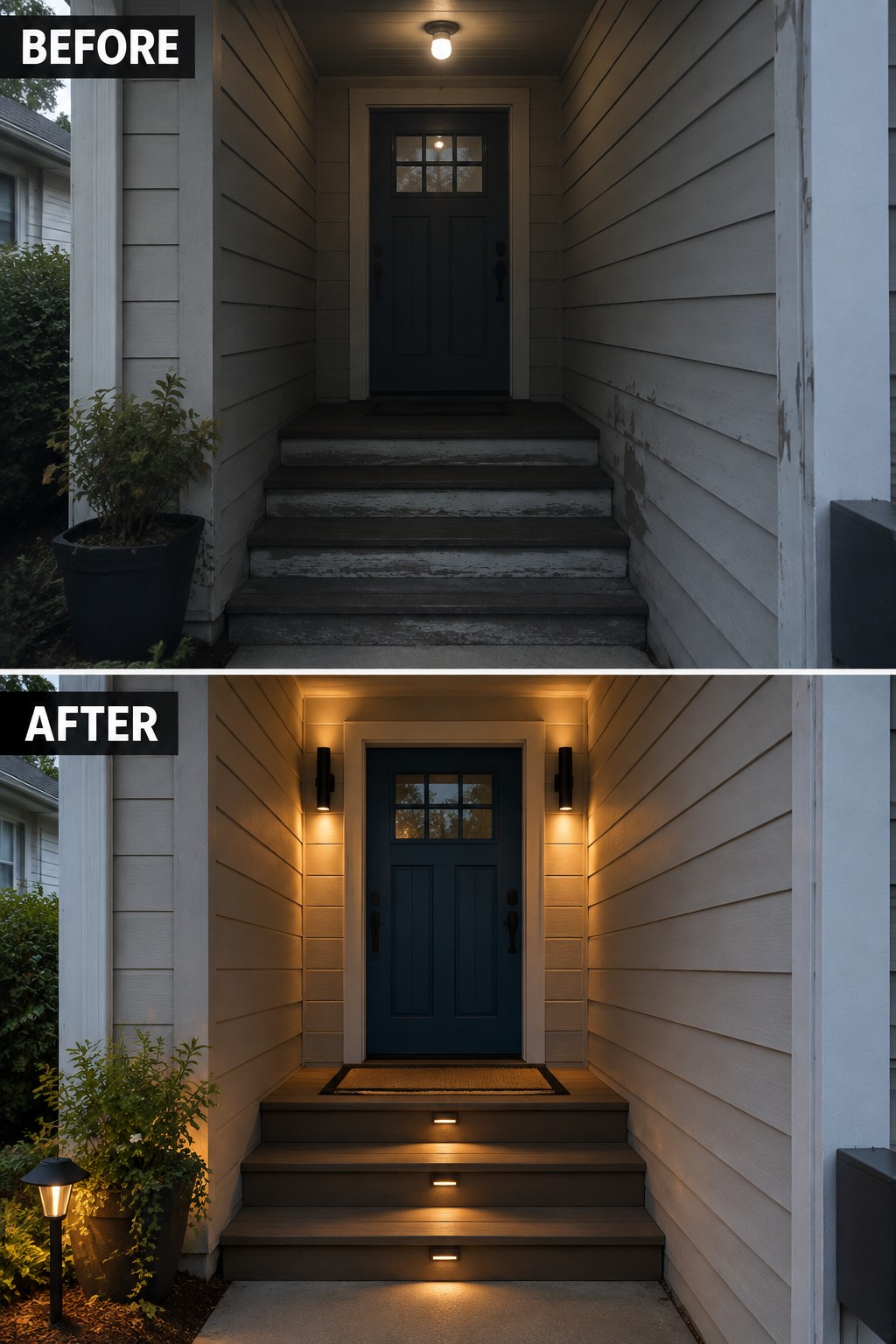
The before photo shows a basic porch that felt dark and a little neglected once the sun went down. The after version adds wall sconces on either side of the door plus small step lights built into the risers, which instantly makes the whole entry easier to use at night.
This approach works especially well on compact landings because it brightens the space without taking up any floor room. Focus lights on the steps and the door first, then add one low path light near the planting if you have a little extra ground space. Stick with simple, weatherproof fixtures so the look stays clean rather than cluttered.
Refresh A Narrow Entry With Double Doors And A Statement Planter

The before photo shows a single door that sits flat against the siding with no real sense of arrival. In the after, double doors in a muted green take over the center and a tall planter fills the empty spot beside the window. Those two moves turn the small landing into something that feels like an actual entry instead of just a door in a wall.
On a narrow porch, start with the door color and shape first. A deeper tone and wider opening give the space weight without crowding it. Then add one tall planter on the side that needs balance. Skip extra furniture or decor so people still have room to walk through.
Create A Cozy Loveseat Seating Area On A Narrow Porch
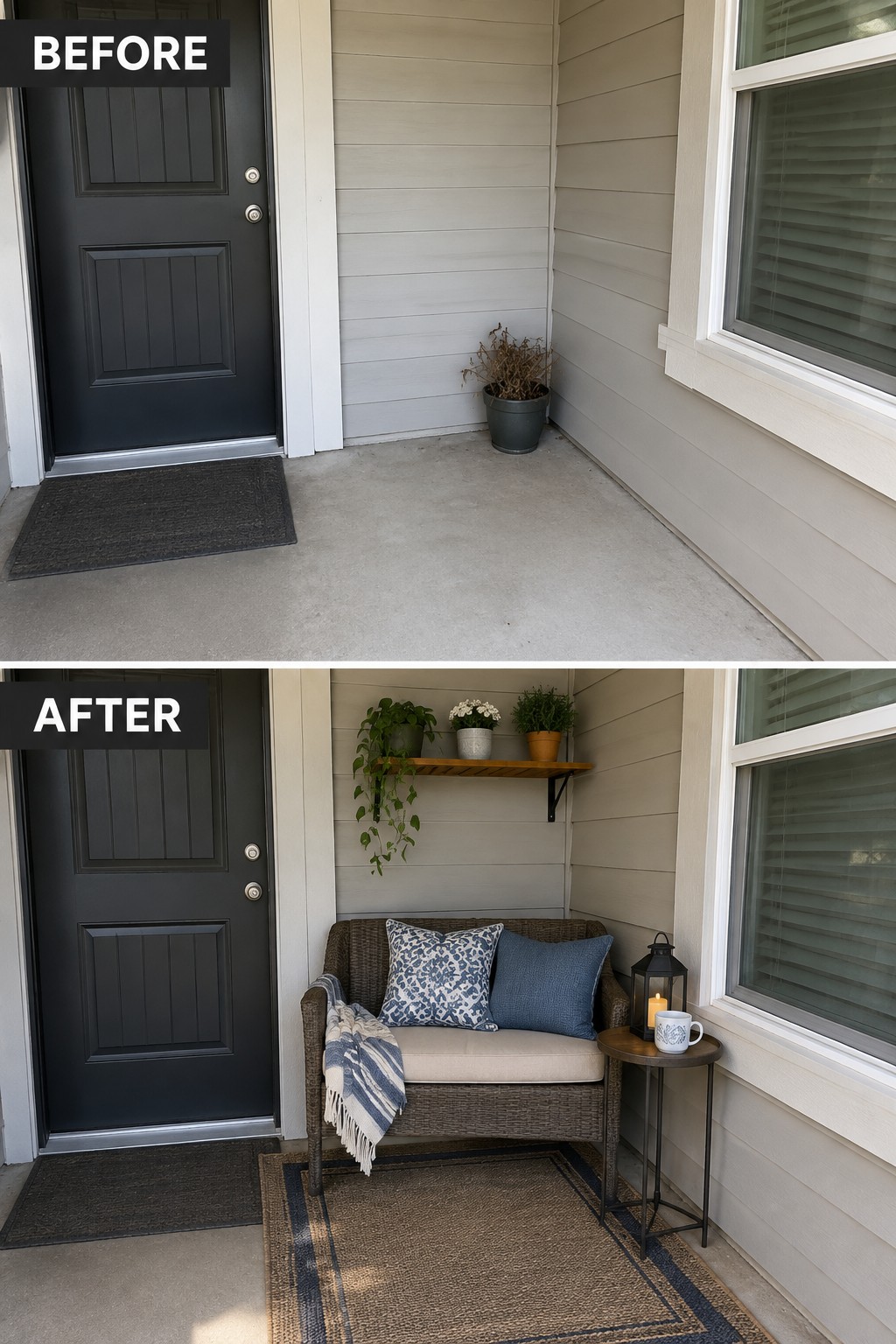
Many narrow porches end up staying empty because they look too small for furniture. A simple loveseat, one rug, and a few plants on a shelf can change that fast. The concrete goes from looking like leftover space to a spot that actually invites you to sit.
This idea works on most compact landings as long as you keep the scale small. Use one rug to mark the seating zone and stick with low pieces so the walkway stays open. Weatherproof furniture and a few sturdy plants are usually enough to make the porch feel finished without crowding it.
Add A Focal Wall And Slim Shelf To A Narrow Porch
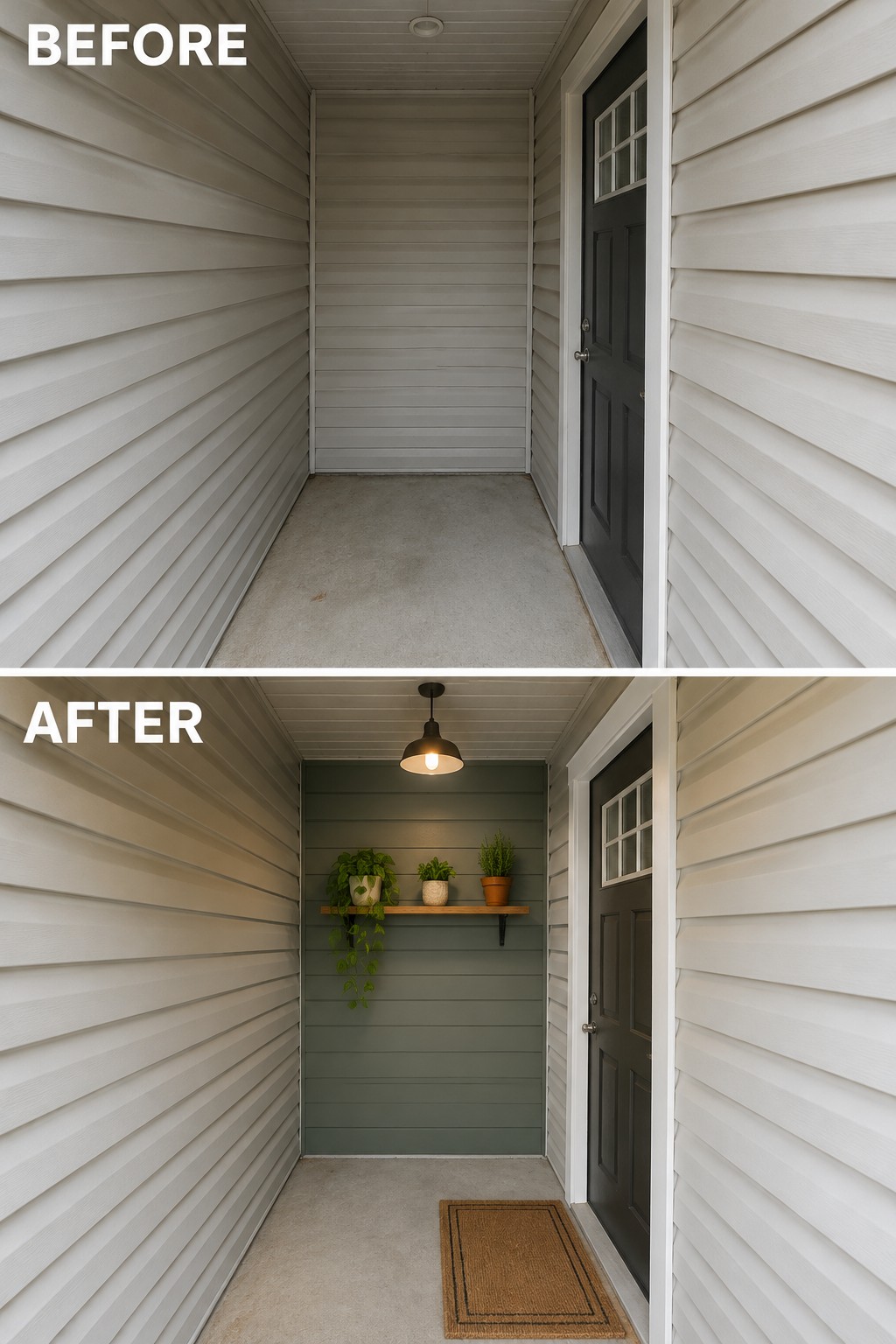
A narrow front porch can feel like leftover space when it has nothing on the walls or floor. Painting one wall a deeper color and adding a simple shelf creates a focal point that makes the whole area feel intentional. The light and doormat then tie the small zone together without blocking the path.
This idea suits compact landings where furniture would get in the way. Pick one wall for color and a single narrow shelf, then add only a few plants that can handle the weather. Keep the rest of the floor open so the space stays practical for coming and going.
Clear Overgrown Edges Before Adding Planters

When a narrow front entry gets taken over by weeds, the first step is simply removing what does not belong. Once the overgrowth is gone, the walkway feels wider and the house looks cared for. Adding a few large containers and a clean gravel strip then gives the space purpose without crowding the limited landing.
This approach works well on compact porches because it keeps the focus on the path and door rather than filling every inch. Start with the cleanup, choose pots that match the house colors, and keep the center clear for walking. The result is an entry that feels intentional instead of neglected.
Paint The Front Door To Refresh The Entry
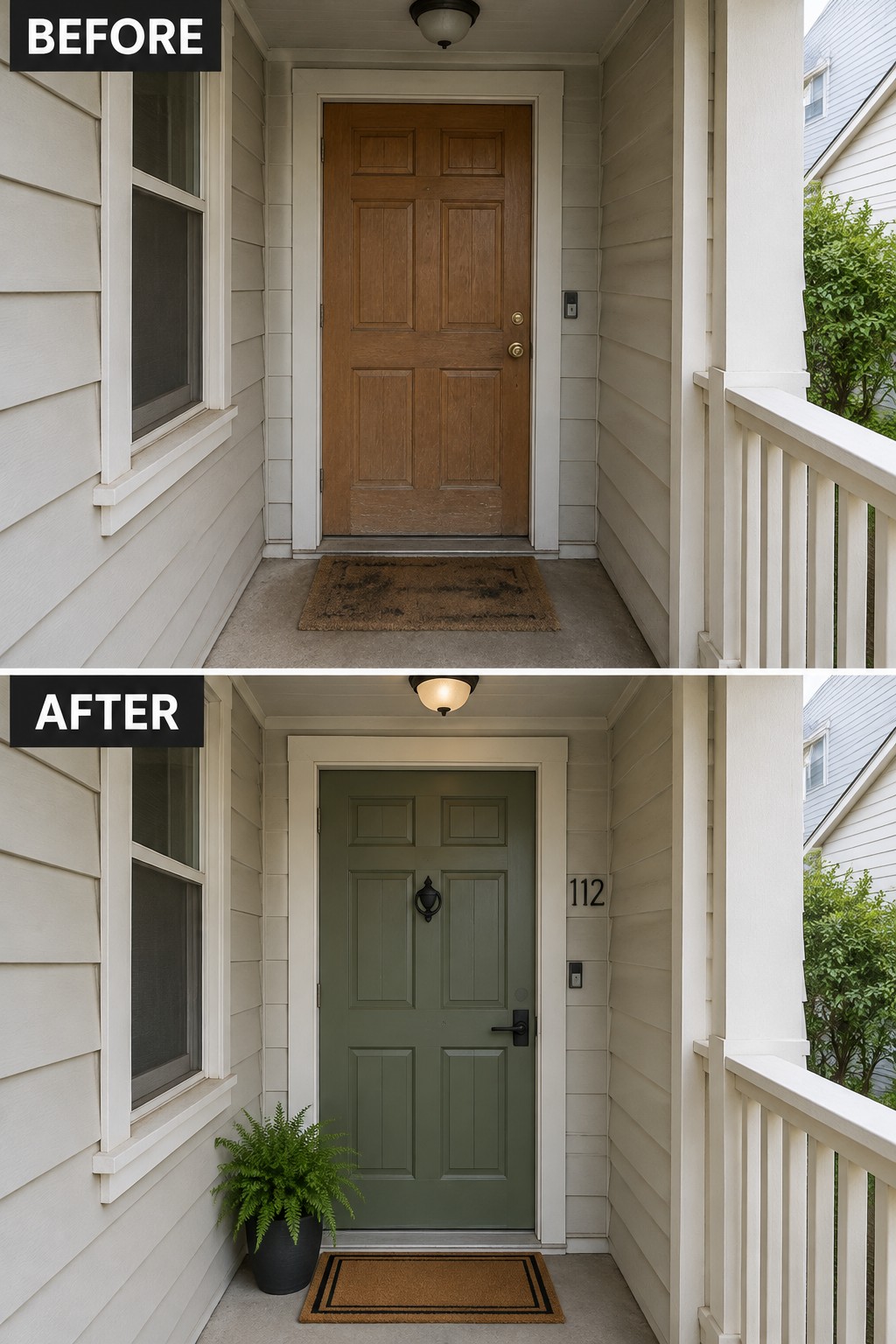
A plain wooden door can make even a small porch feel unfinished. Painting it a solid color gives the whole entry a clearer focal point and makes the house feel more cared for without any major construction.
This approach works especially well on narrow landings where there is not much room for extra furniture. Choose a color that contrasts with the siding, update the hardware at the same time, and add just one or two simple pieces like a plant or a better mat so the door stays the main feature.
Give A Bare Porch Some Structure
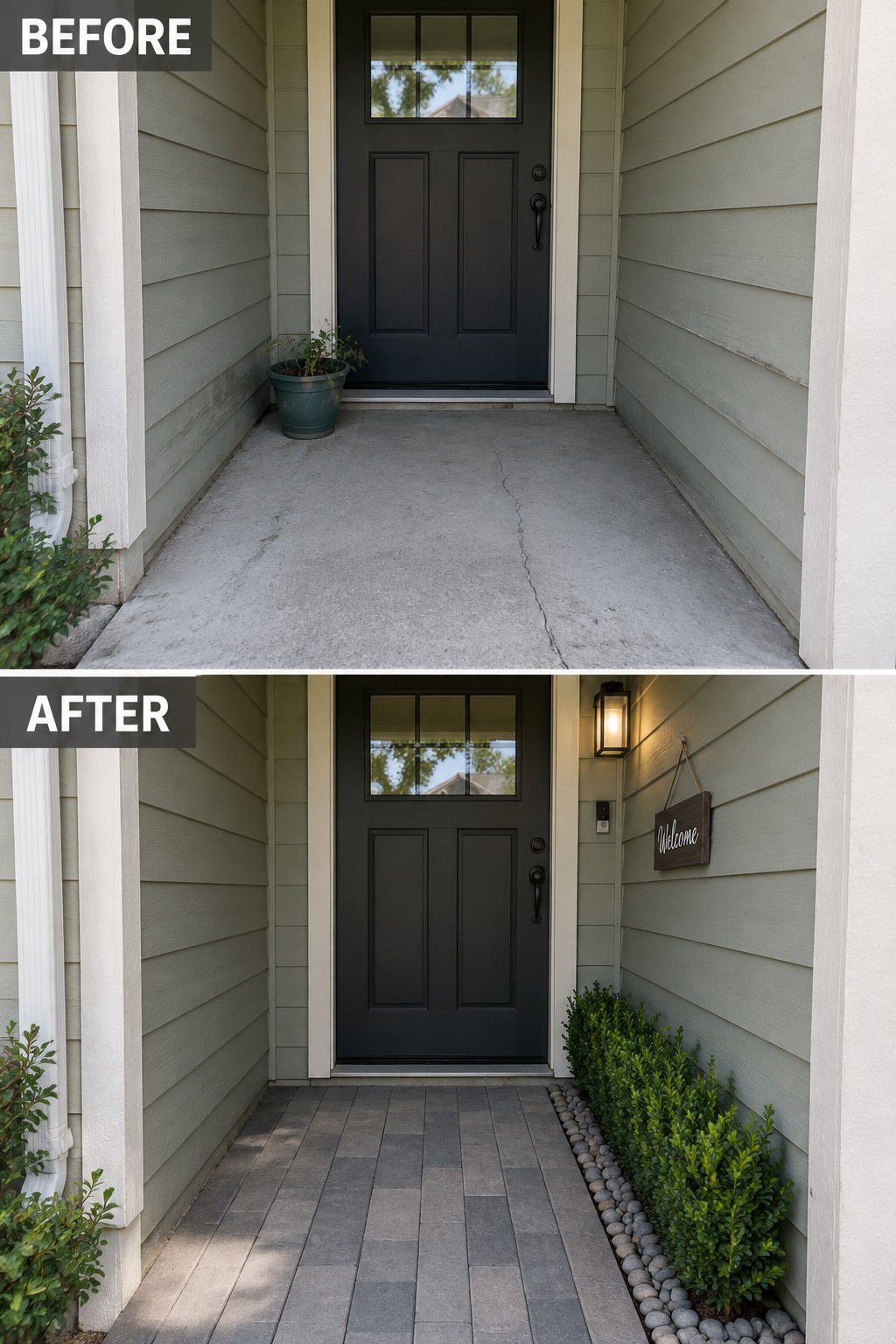
A cracked concrete slab makes any narrow porch feel unfinished and a little neglected. Switching to pavers creates a clear walking surface that looks intentional and helps water drain better. Adding a simple planted border along one side softens the walls without eating up floor space.
This approach works well on compact landings where you cannot add furniture. Keep the planting low and use one material for the border so the porch still feels open. Start with the paving and edging first, then add one light and a small sign if you want.
Create A Trellis Seating Nook On A Narrow Porch

A narrow porch often sits unused when it lacks a clear purpose. Adding a bench along the wall and training vines up a trellis turns the space into a spot where someone can actually sit without blocking the walkway.
String lights and a simple rug help mark the area as intentional. This idea works best on compact landings where floor space must stay open. Keep the bench shallow, let plants grow vertically, and add lighting only where people will sit.
Add Vertical Plants To A Narrow Front Porch

A narrow porch often ends up as just a strip of concrete with nowhere to put much of anything. The change here comes from adding a tall, narrow plant stand that holds several pots at different heights. That single piece turns the empty side area into a planted display without blocking the walkway.
This idea works best on small landings where floor space is tight. Choose a stand that fits against the house wall and repeat a few plant colors so the whole thing feels pulled together. Keep the largest pots on the ground and let the stand handle the rest.
Add Simple Trim To Update A Basic Front Porch

Many narrow porches start out plain because the original trim is minimal or worn. Adding a few decorative brackets to the columns and swapping in better lighting gives the whole entry more shape without changing the structure or widening the space. The before photo shows a flat, tired look with peeling paint and no real focal points. The after version uses those brackets and a pair of wall lanterns to frame the door and make the porch feel intentional.
This approach works well on compact landings where you cannot add furniture or expand the footprint. Focus on one or two architectural details that match the house style, then layer in weatherproof planters and a simple rug to finish the floor. Keep the scale modest so the trim does not overwhelm the columns or crowd the walkway.
Style A Narrow Porch With Wall-Mounted Details

A narrow front porch can feel unfinished when the only things present are a door and a doormat. Adding a pendant light, a small framed piece, and a wall-mounted mailbox gave this entry a clear sense of purpose while leaving the floor open for walking and the doormat.
This idea works best on compact landings where floor space is limited. Start with one overhead light to create evening visibility, then layer in flat wall items that do not stick out far. A single plant on a slim stand can add life without crowding the walkway.
Refresh A Narrow Porch Entry With Fresh Paint And Door Color

A new door color and a fresh coat of paint on the siding and trim can make a small front porch feel current instead of dated. The red door and worn surfaces in the before photo gave the entry a tired look. Switching to a dark door and a calmer gray palette on the house makes the whole space read as cleaner and more put together.
This works especially well on narrow landings where there is little room for extra furniture. Start with the door and trim, since those are the first things people see when they approach the house. Choose exterior paint that holds up to sun and rain, and keep the rest of the styling minimal so the porch still feels open.
Install A Porch Swing For Space-Saving Seating

An empty concrete porch often feels like dead space until you give it one clear purpose. A hanging swing takes up almost no floor area yet instantly makes the spot feel like a place to sit, while a simple rug underneath helps mark the zone without adding clutter.
This idea suits narrow front porches where every inch matters. Keep the swing scaled to the width, add just one small table and a few plants, and leave enough room to walk past comfortably. Start with the swing and rug before adding anything else.
Refresh A Narrow Entry With A Runner Rug And Fresh Paint
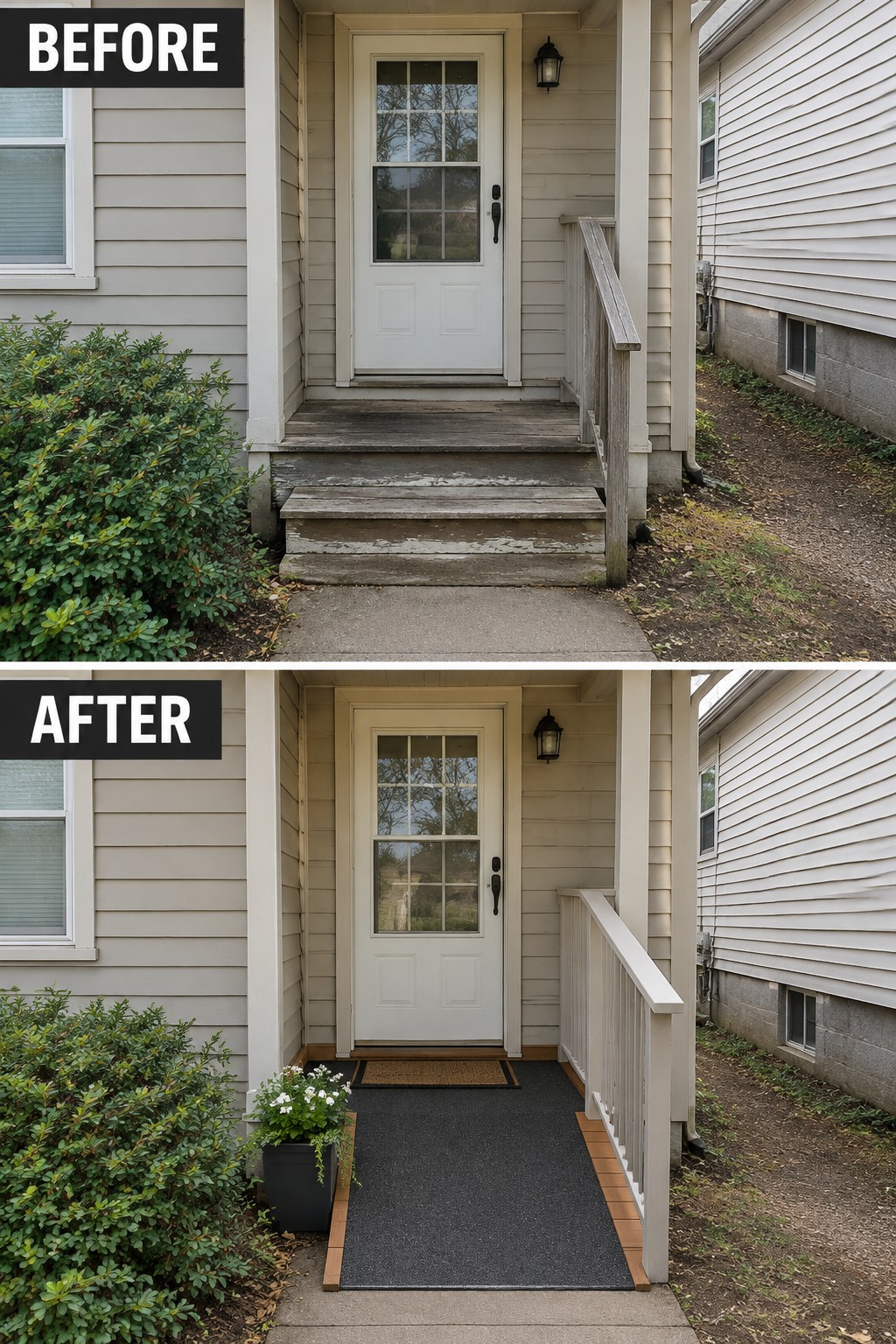
A worn set of steps and a tired railing can make even a small front landing feel neglected. Painting the railing white and laying down a dark runner rug instantly gives the space a cleaner line and draws the eye straight to the door. The change is simple but effective because it adds definition without crowding the narrow area.
This approach works well on compact landings where there is little room for furniture or large decor. Start with the railing if it needs attention, then choose a durable outdoor runner that fits the width of your steps. One potted plant near the base is usually enough to soften the look without blocking the path.
Add A Small Gable Roof Over The Door
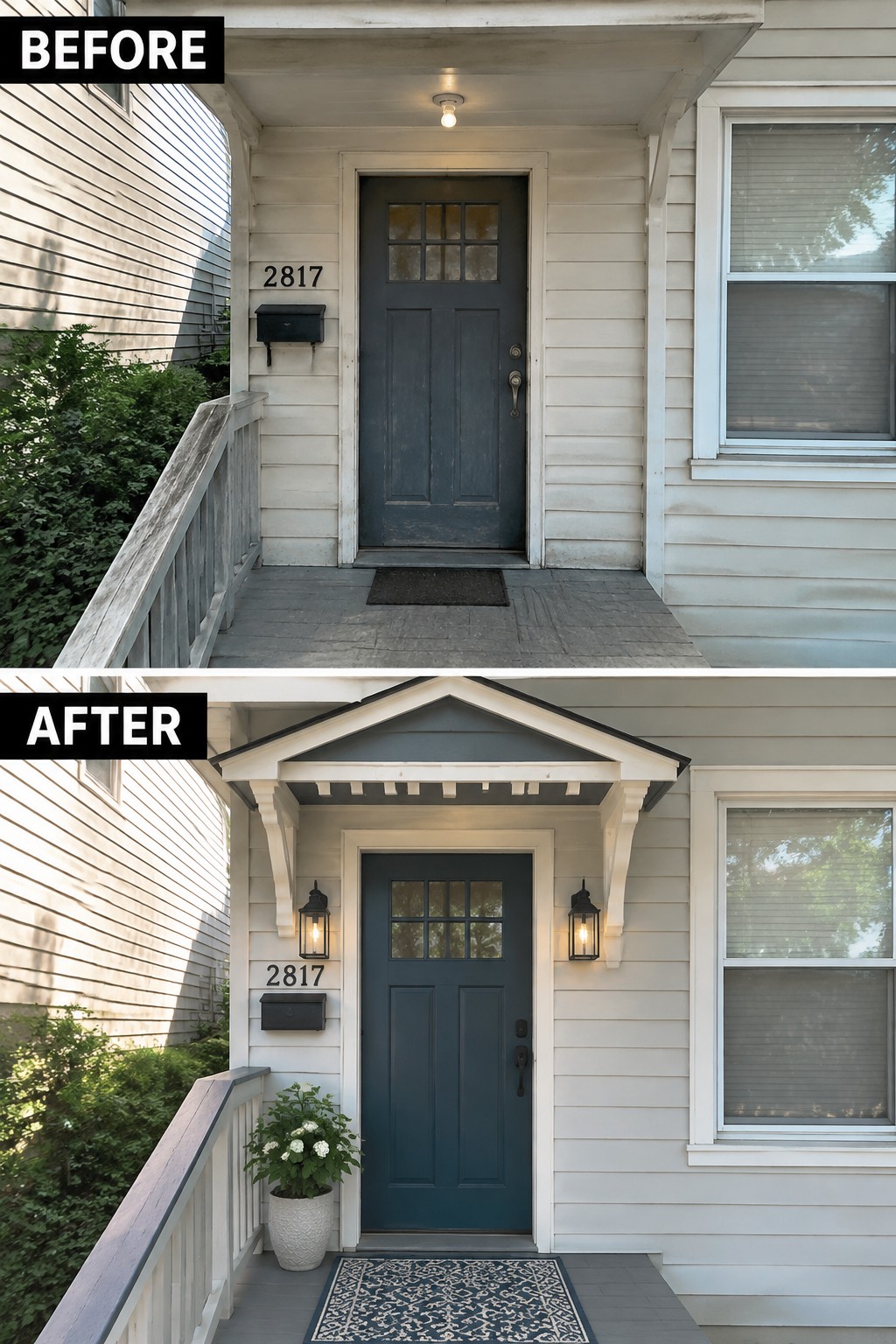
A flat entry can feel unfinished even when the door itself looks fine. Adding a modest gable overhang with simple brackets gave this doorway a clear roofline and a bit more shelter. The new lanterns on either side also help mark the entrance instead of leaving the wall bare.
This approach works well on homes with plain siding and no existing porch structure. Keep the roof small so it does not overwhelm the facade, and match the trim color to the house for a clean look. Once the basic shape is in place, a single planter and a doormat are usually enough to finish the space.
Frequently Asked Questions
Q: What kind of seating works best when the porch is only a few feet deep? A: Go for a wall-mounted bench that folds down only when you need it. This keeps the walkway open most of the time. A simple cushion on top turns it into a spot to relax.
Q: How can I add some color without taking up floor space? A: Paint the door a bright shade and hang a narrow wreath on it. String a few lights along the ceiling edge for evening glow. These touches brighten the area without clutter.
Q: Is it worth adding a rug to such a small area? A: A slim outdoor mat works well to define the space. It also protects the flooring from dirt. Wipe it down once a week to keep it fresh.