

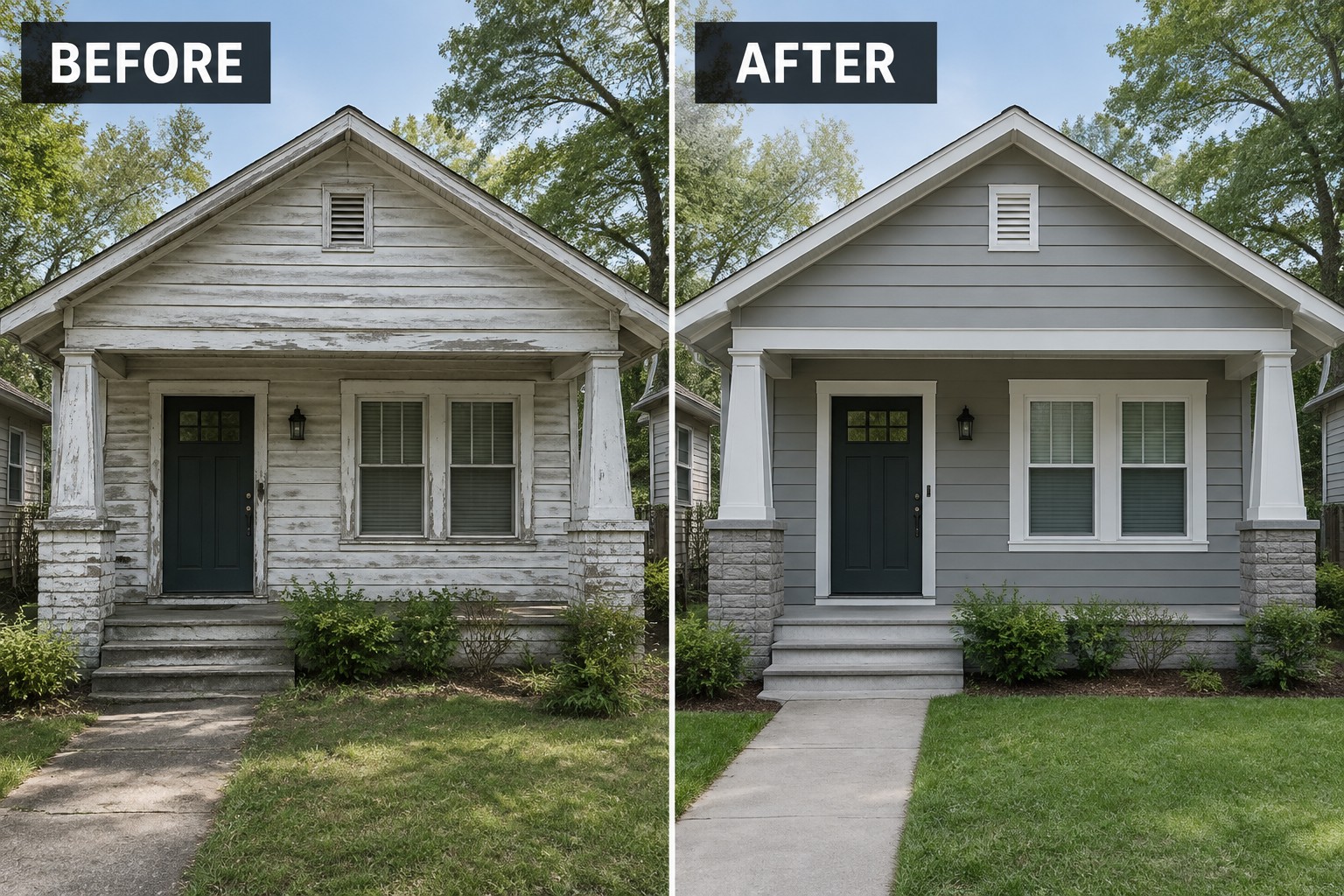
I have always noticed how the outside of a house sets the tone for the whole property, especially when the siding starts to look tired and worn.
Replacing it with something low maintenance can cut down on the constant upkeep that many homeowners dread.
My own experience showed me that choosing durable materials often makes the facade feel more solid without needing constant attention.
The difference shows up in daily life.
Some updates focus on color and texture that hold up well over the years, and I tend to save those that combine practical siding options with simple details around windows and doors because they seem to hold up in real homes.
Refresh Tired Siding With A Simple Color Change
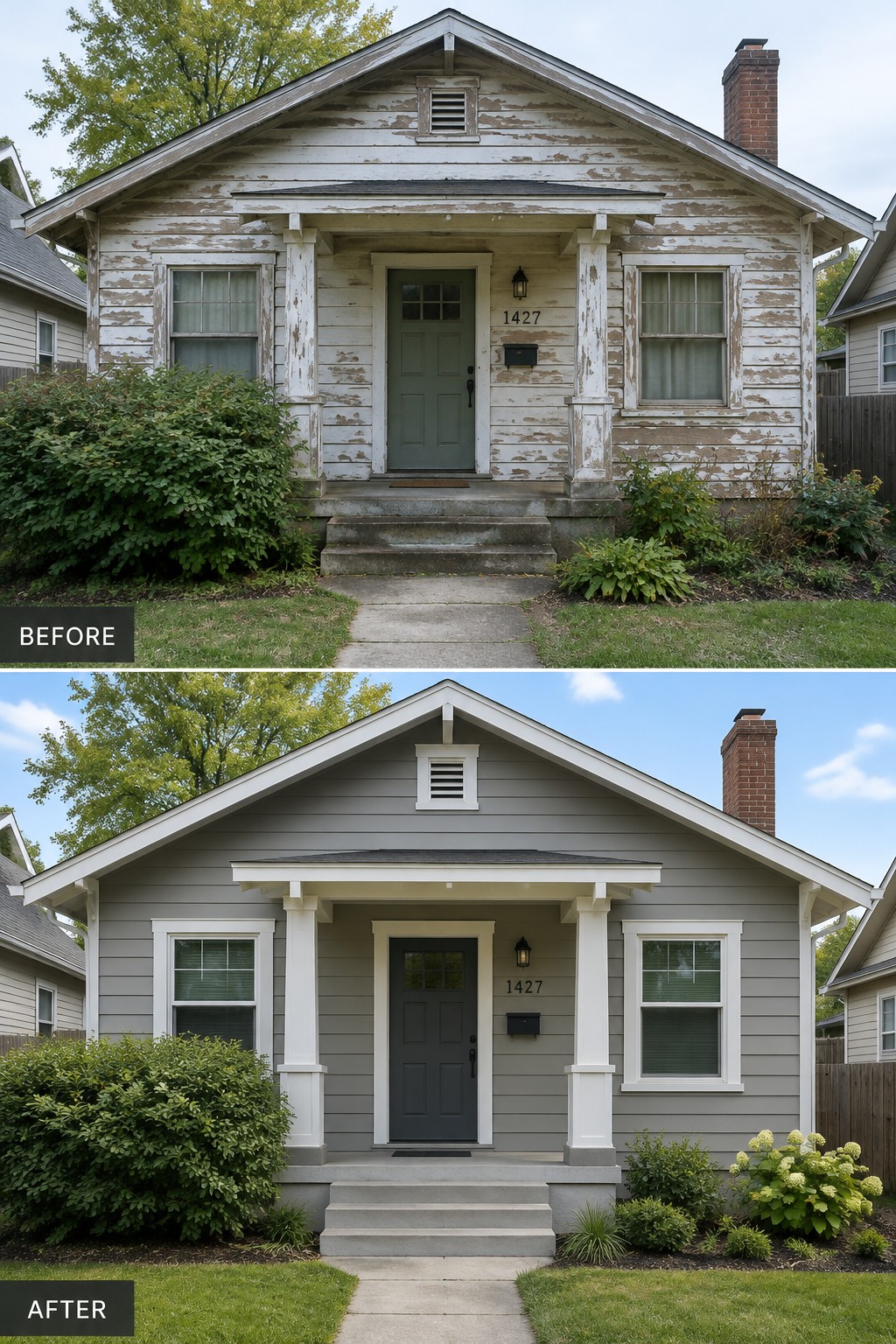
The before photo shows siding that had clearly seen better days, with large patches of peeling paint across the front. Switching to a solid gray finish gave the house a much cleaner and more current look while keeping the original structure intact.
This approach works especially well on older homes where the siding itself is still sound. Focus on a color that pairs with the existing roof and trim, and opt for a low-maintenance material like vinyl or fiber cement if you want to avoid repainting every few years.
Refresh Weathered Siding With Fresh Paint And Trim
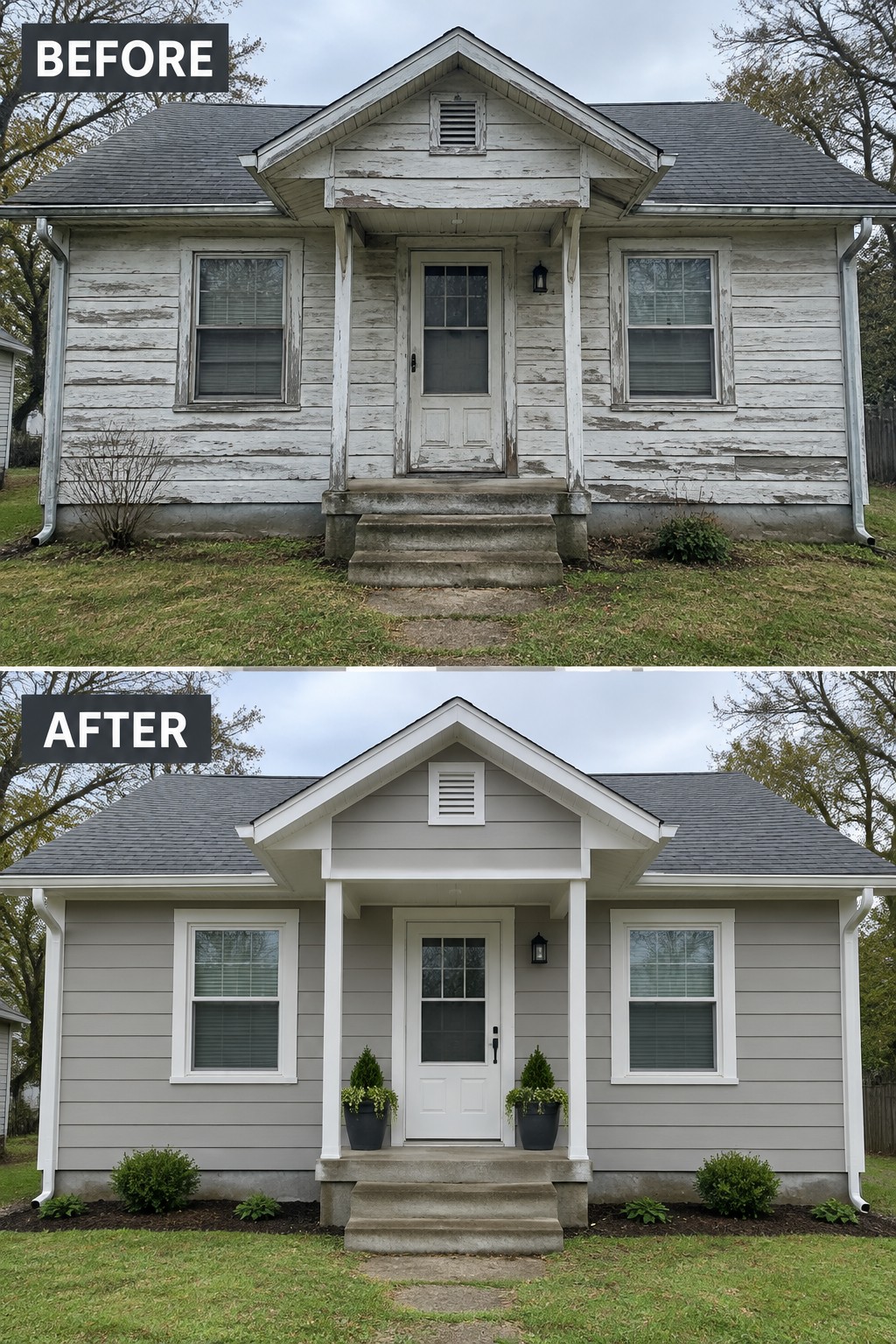
Many older homes end up with siding that has peeled and faded over time. A straightforward repaint changes the whole feel, turning a tired white surface into a solid gray that looks cared for and holds up better.
This idea suits houses where the structure is still sound but the finish has worn out. Pick a quality exterior paint in a color that hides dirt, keep the trim bright and simple, and add a couple of planters near the door to make the entry feel complete.
Update Weathered Shingles With Solid Color Siding
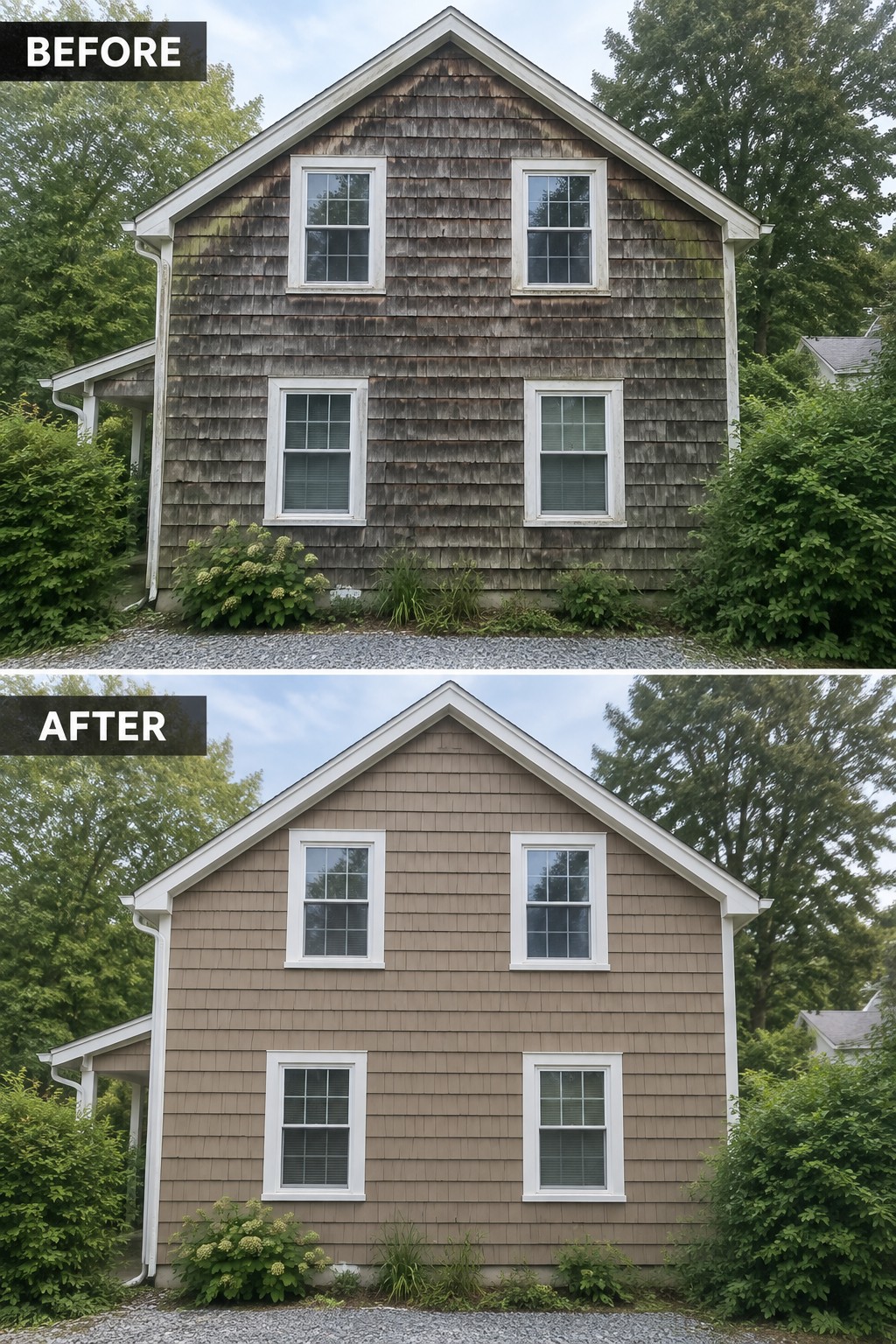
The old shingles had darkened and streaked over time, which made the whole front of the house look tired. A single solid color changed that fast and gave the siding a uniform surface that is much easier to keep looking decent.
This approach suits homes that still have usable shingle siding but need a simpler finish. Choose a mid-tone color that hides minor dirt and fading, and pair it with white trim so the windows stay crisp without extra work.
Balance Foundation Plantings For A Cleaner Entry
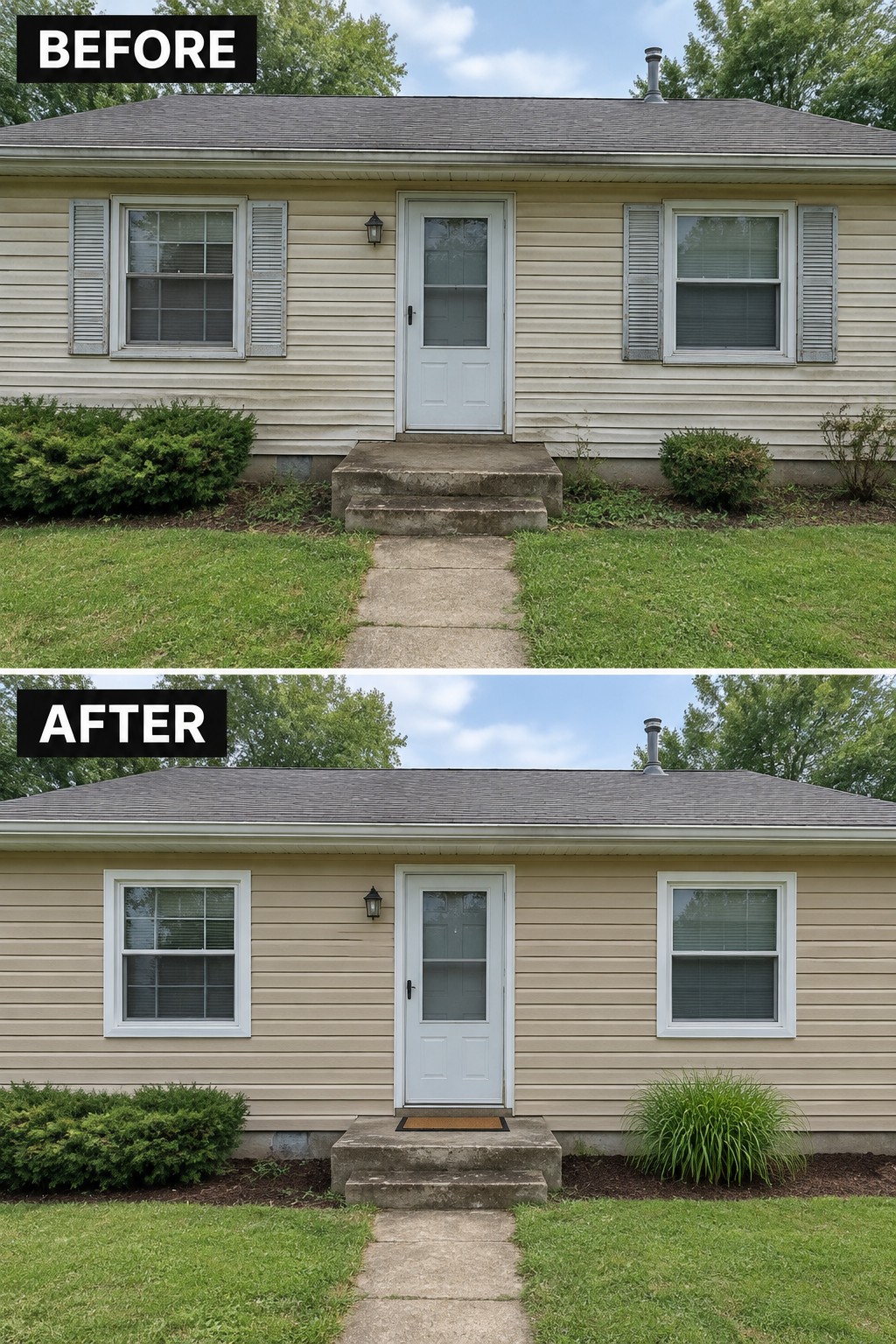
The before photo shows two mismatched shrubs crowding the steps, with one side looking sparse and the other overgrown. In the after photo, the right side was swapped for a clump of tall ornamental grass while the left side stayed low and neat. That single swap made the whole front look balanced and intentional without touching the siding or door.
This approach works best on houses where the plantings have grown uneven over time. Keep new plants under the window line so they frame the entry instead of hiding it, and choose varieties that need little trimming. A simple doormat finishes the look without adding clutter.
Update Old Siding With A New Color And Simple Landscaping
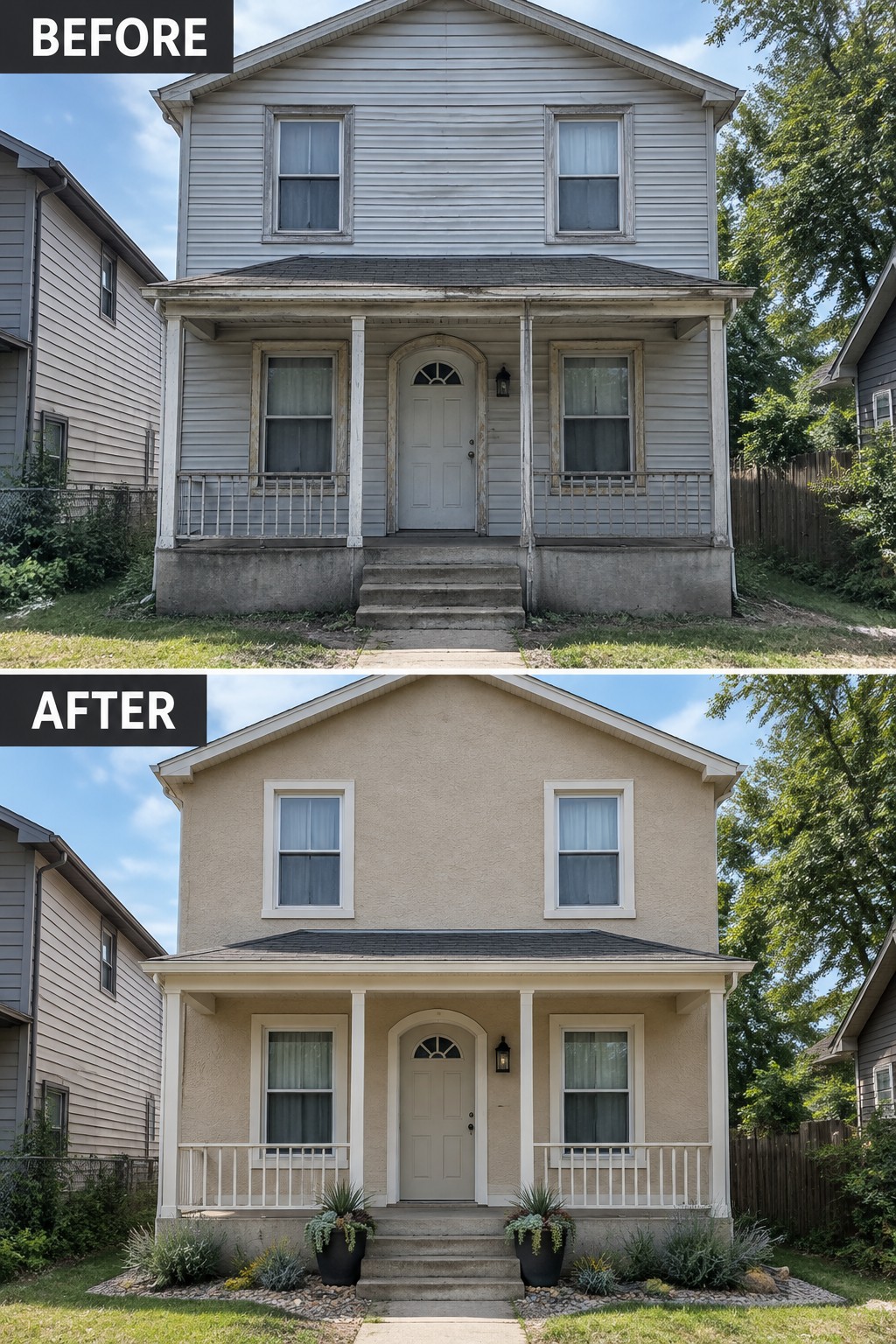
Many homes with older siding end up looking tired once the paint fades and the surface starts to show wear. Switching to a warmer neutral tone and fresh white trim makes the whole facade feel brighter and more put together, especially when paired with a few plants along the foundation to soften the base.
This kind of update works best on houses that already have a simple porch and roofline. Focus first on the siding color and trim, then add low-maintenance shrubs or planters near the steps so the front does not feel bare. It keeps the project realistic while still giving noticeable curb appeal.
Refresh Weathered Siding With Paint And A Simple Porch Roof
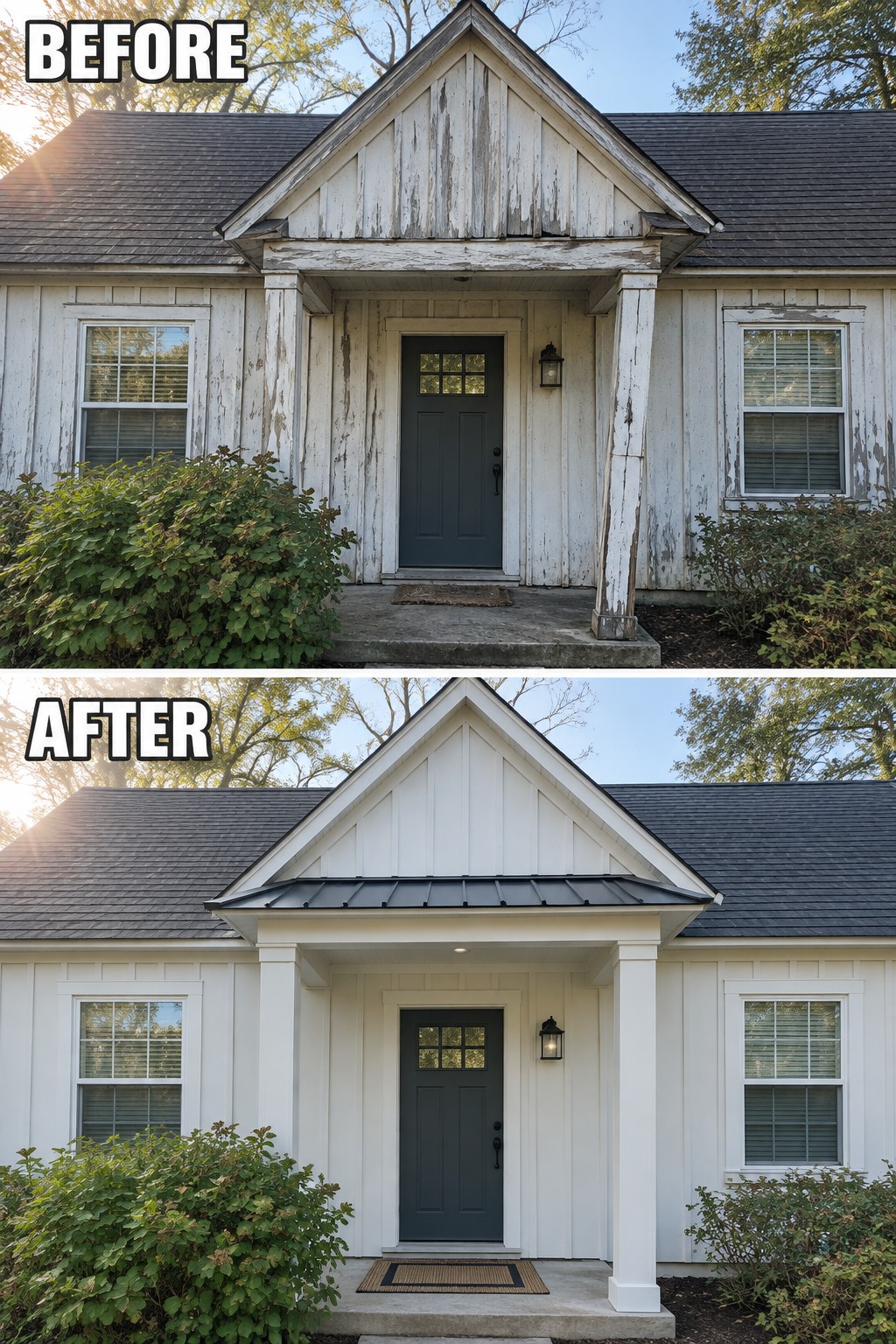
Painting faded or peeling siding is one of the quickest ways to make an older house look cared for again. In this case the tired white boards and worn gable got a clean white finish, while the small porch received a dark metal roof and fresh columns. Those two changes alone removed the neglected look and gave the entry a more solid, finished appearance without any major structural work.
This approach works well on homes with older wood siding that still has good bones. Focus first on proper surface prep and a quality exterior paint rated for your climate. Adding a metal roof accent over the door is a practical extra step that protects the entry from weather and adds a low-maintenance detail that lasts for years.
Update Painted Brick With New Siding And Stone
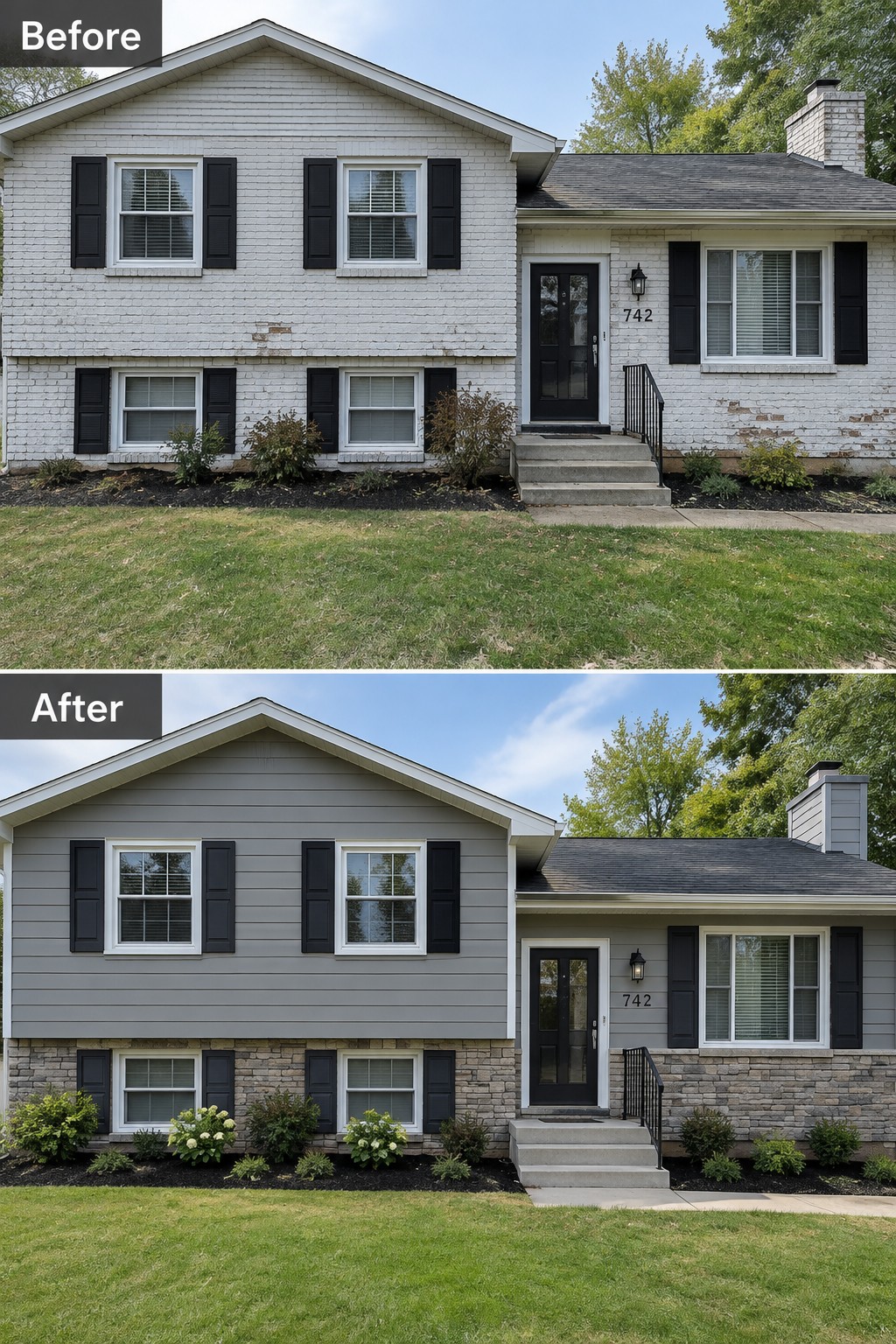
Many older homes end up with painted brick that starts to peel and look worn after years of weather exposure. Switching to horizontal siding with a stone base gives the house a cleaner surface that holds up better and needs far less touch-up work over time. The gray tone also softens the overall look while the stone adds texture at ground level without extra decoration.
This approach works well on homes where the brick is still sound but the paint has become a recurring problem. Focus on the lower portion of the house first if budget is tight, and keep the plantings simple so the new siding stays the main feature.
Unify A Dated Exterior With Siding And Stone
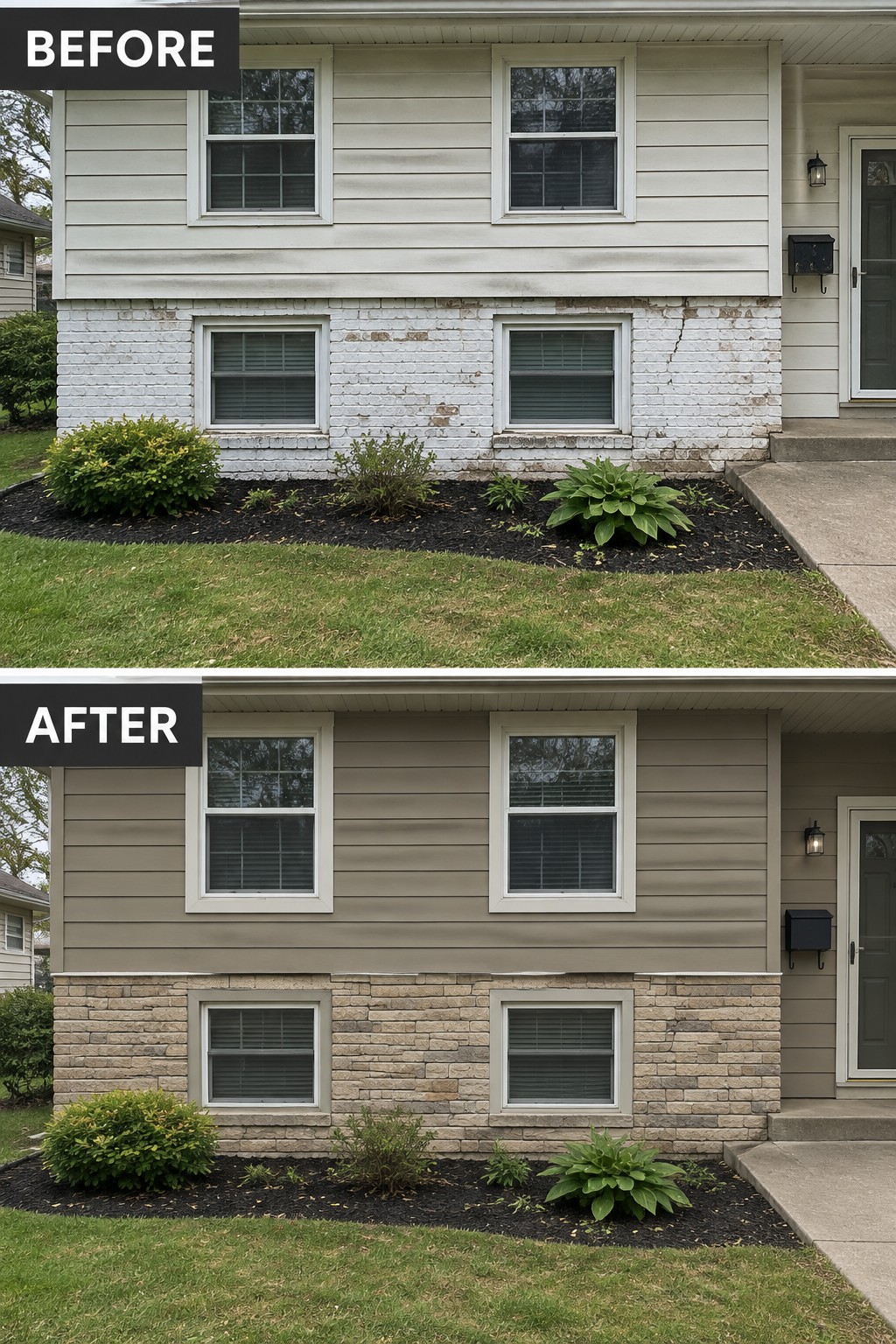
Older homes often end up with a two-tone problem when the brick base ages differently from the siding above it. Replacing the white brick with stone veneer and switching the siding to one consistent color removed the patchy look and gave the front a single, finished surface.
This works best on homes where the lower level shows damage or stands out too much from the rest of the house. Choose a siding color that sits close to the stone tone so the eye reads the whole facade as one piece, and stick with low-maintenance materials that handle weather without constant upkeep.
Replace Worn Cedar Shakes With Horizontal Siding
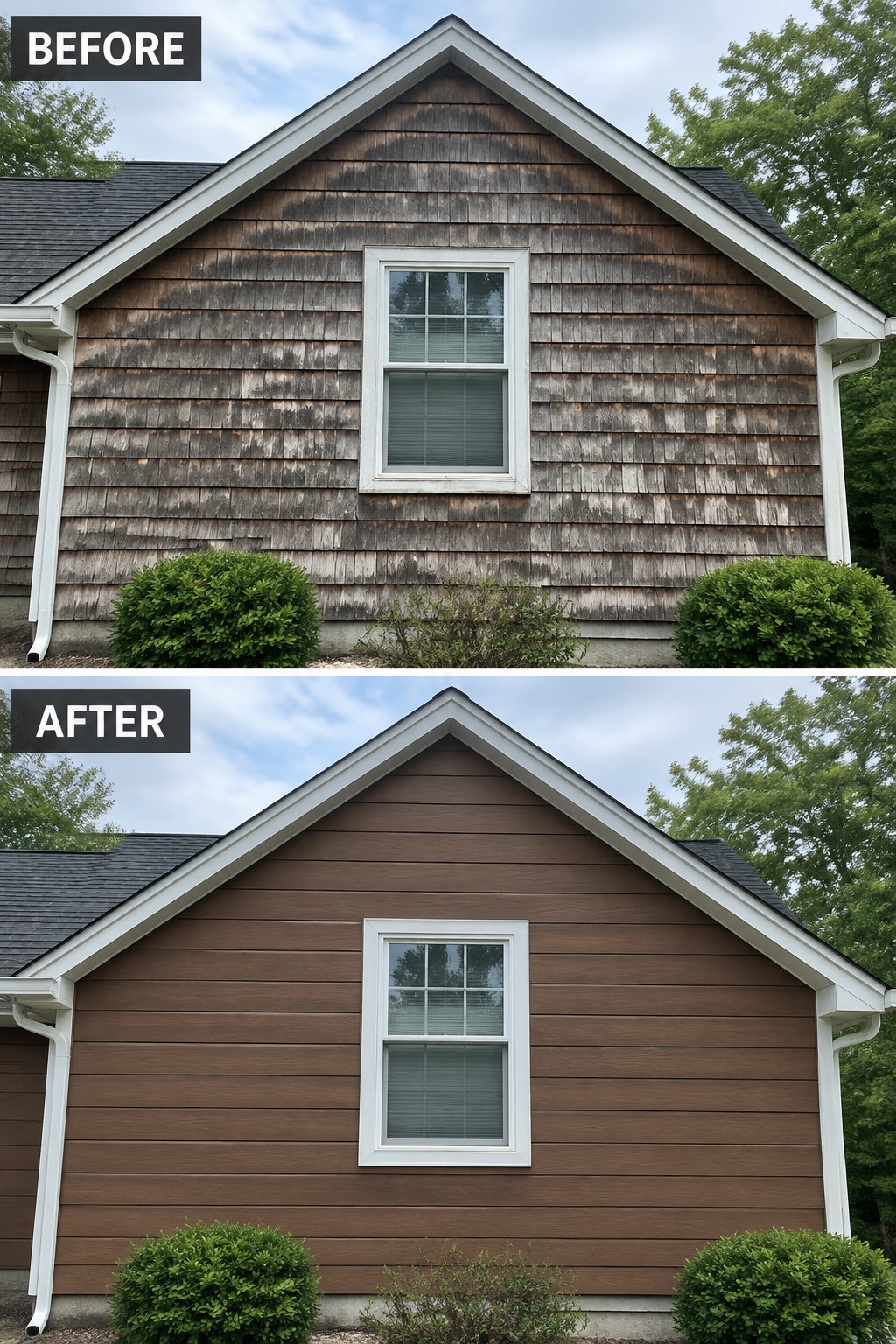
Many homes with older cedar shake siding end up with uneven fading and dark staining that never quite cleans up. Switching to horizontal panels creates a much cleaner, more consistent look across the whole facade while cutting down on the upkeep that shakes usually demand.
This change works especially well on gable sections or simpler house shapes where the new lines can refresh the appearance without a full remodel. Choose a mid-tone color that works with your roof and trim, and make sure the siding material is rated for your climate so it stays low-maintenance for years.
Update Dated Siding With A Uniform Neutral Color
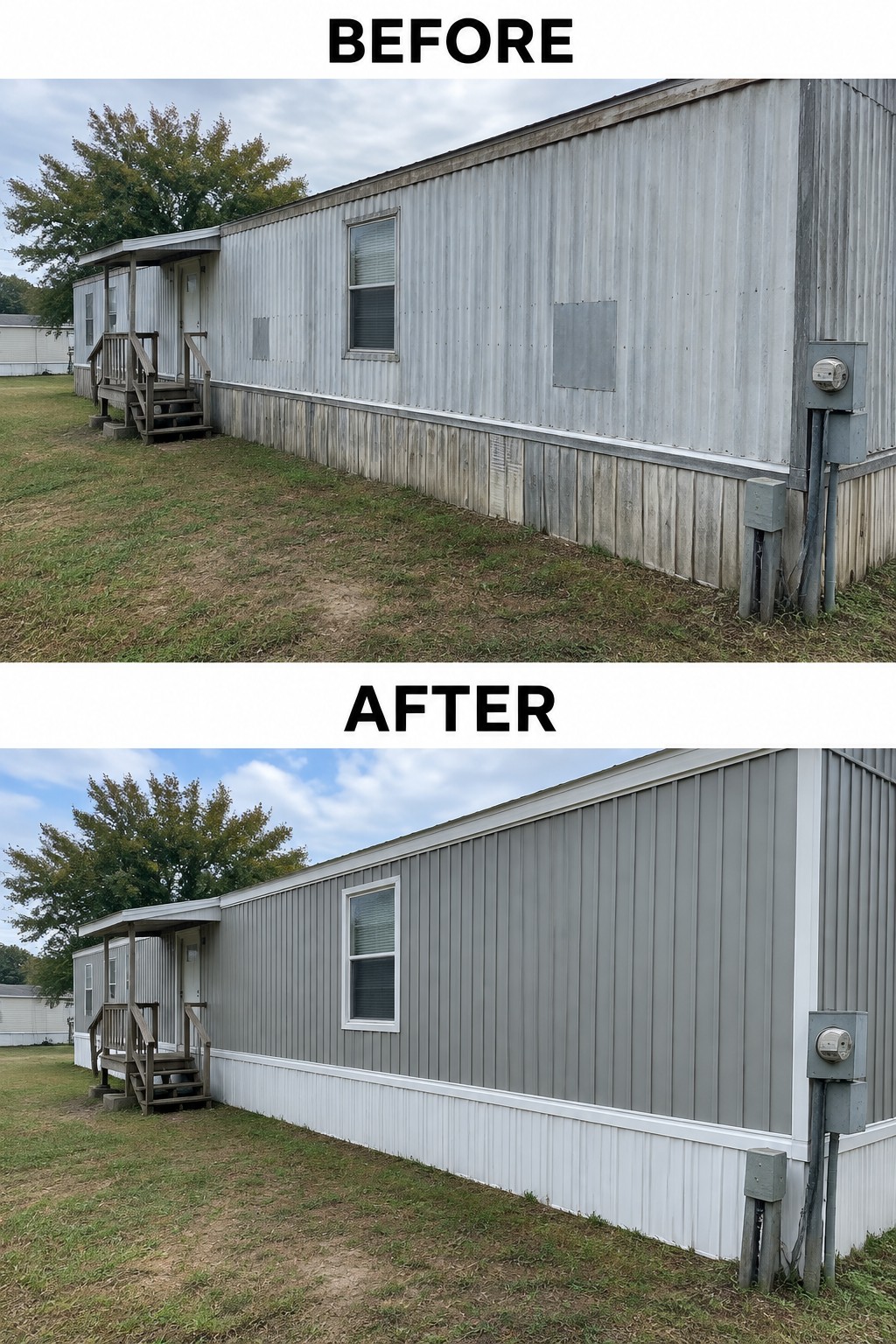
Older homes often end up with siding that has faded at different rates or been patched over the years. A single solid color across the whole surface pulls the exterior together and makes the house look more intentional without any major structural changes.
This works well on mobile homes or simple builds where low maintenance matters most. New panels in a soft gray with a clean white base trim hide old damage, reduce the need for frequent repainting, and give the whole place a fresher look that holds up longer in changing weather.
Refresh A Plain Exterior With Updated Siding Color
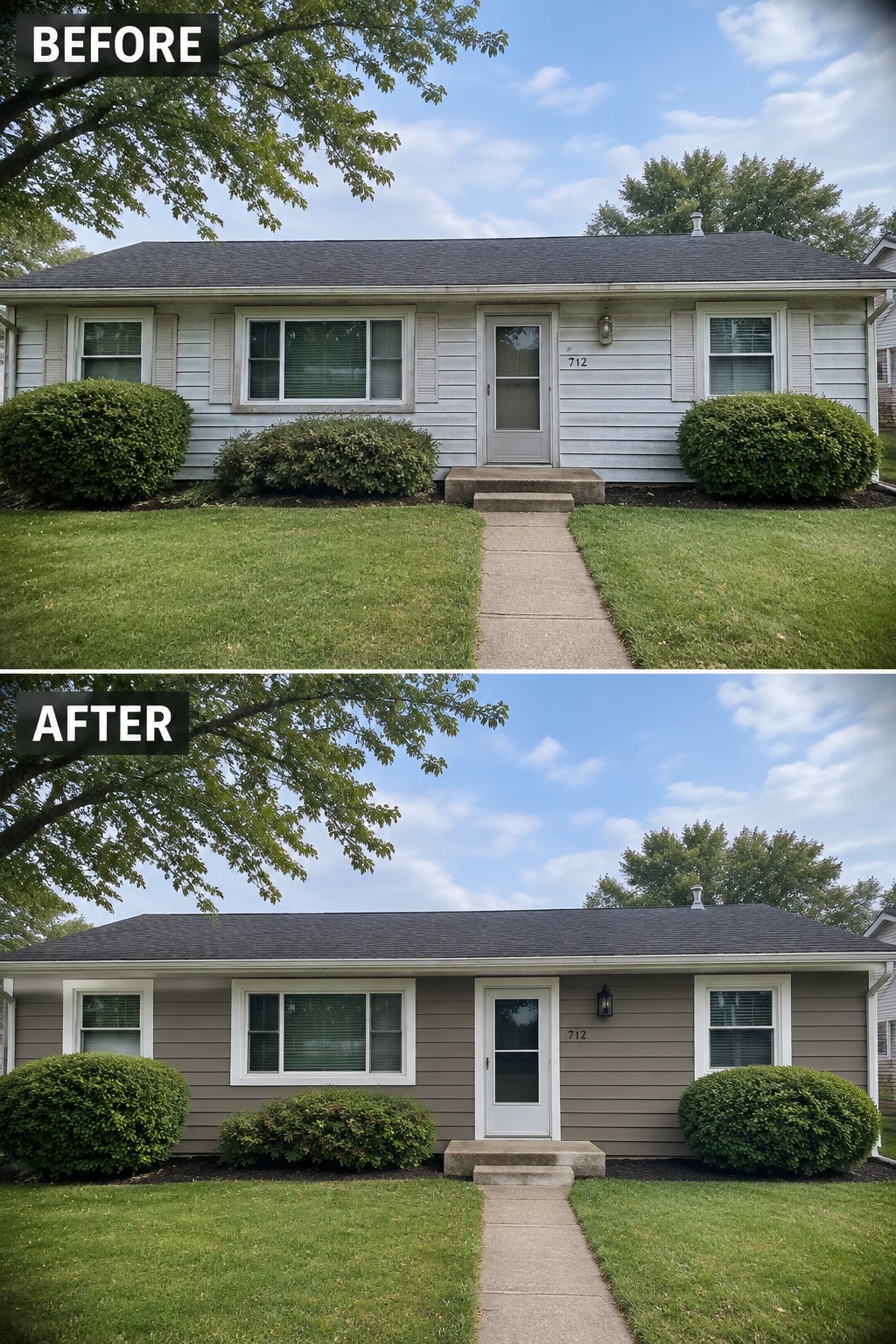
Switching from faded light siding to a deeper taupe shade gives the house a cleaner, more finished look. The white trim around the windows and door also helps the front feel more defined and pulled together.
This kind of update suits simple ranch homes that still have solid structure but dated color. Pick a siding tone that works with your roof and existing brick or stone, then decide if white trim is needed to sharpen the windows. Many owners start here because it improves curb appeal without touching the roof or foundation.
Wrap Damaged Porch Columns With Siding
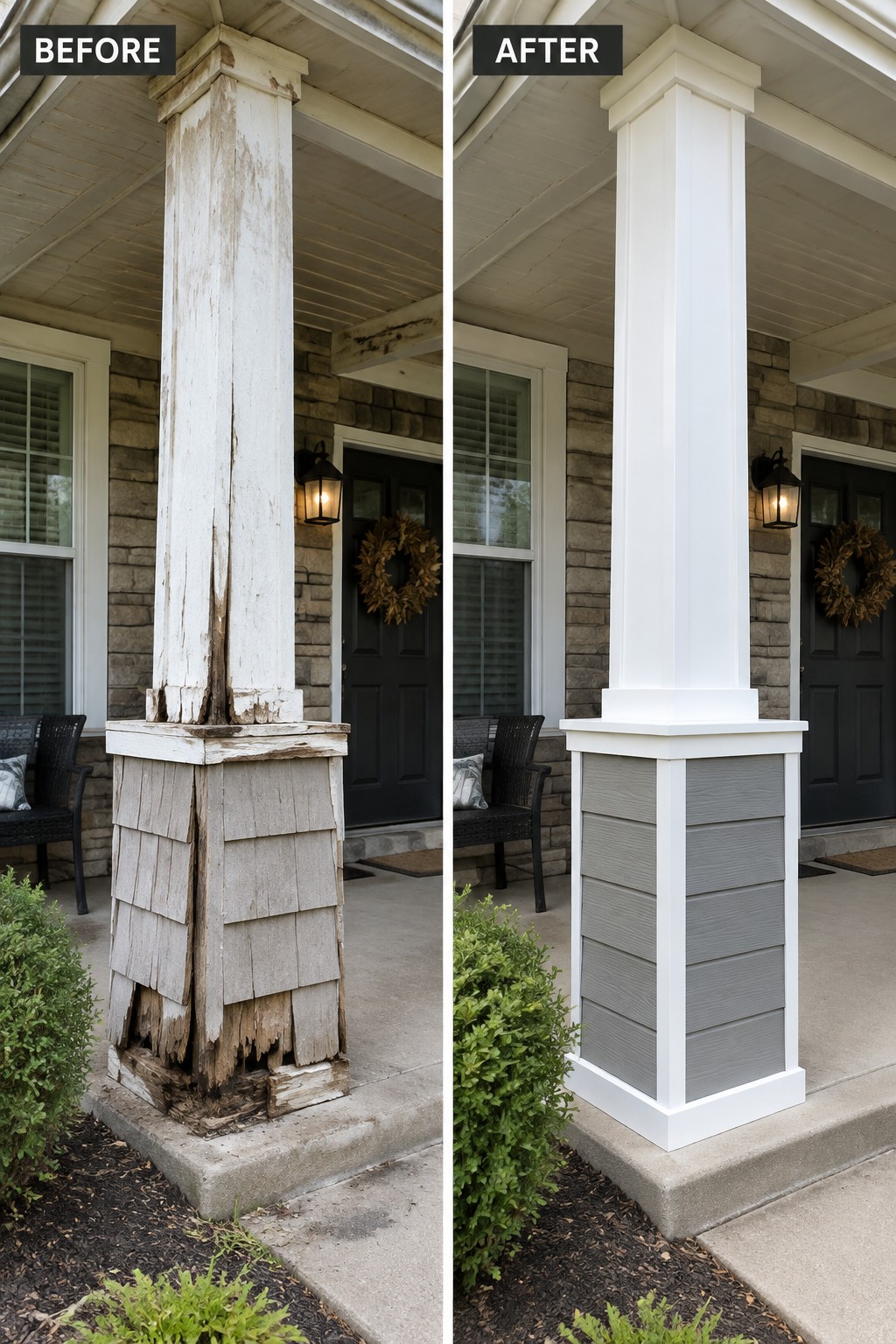
Old porch columns often show their age first through peeling paint and soft wood near the base. Covering the entire post and base with new siding panels and crisp trim gives the structure a fresh surface that resists moisture and needs far less upkeep over time.
This works best on homes where the frame underneath is still solid. Match the siding style to your existing exterior and keep the trim color simple so the update blends with the rest of the house rather than standing out as a separate project.
Refresh The Porch And Trim For Better Curb Appeal
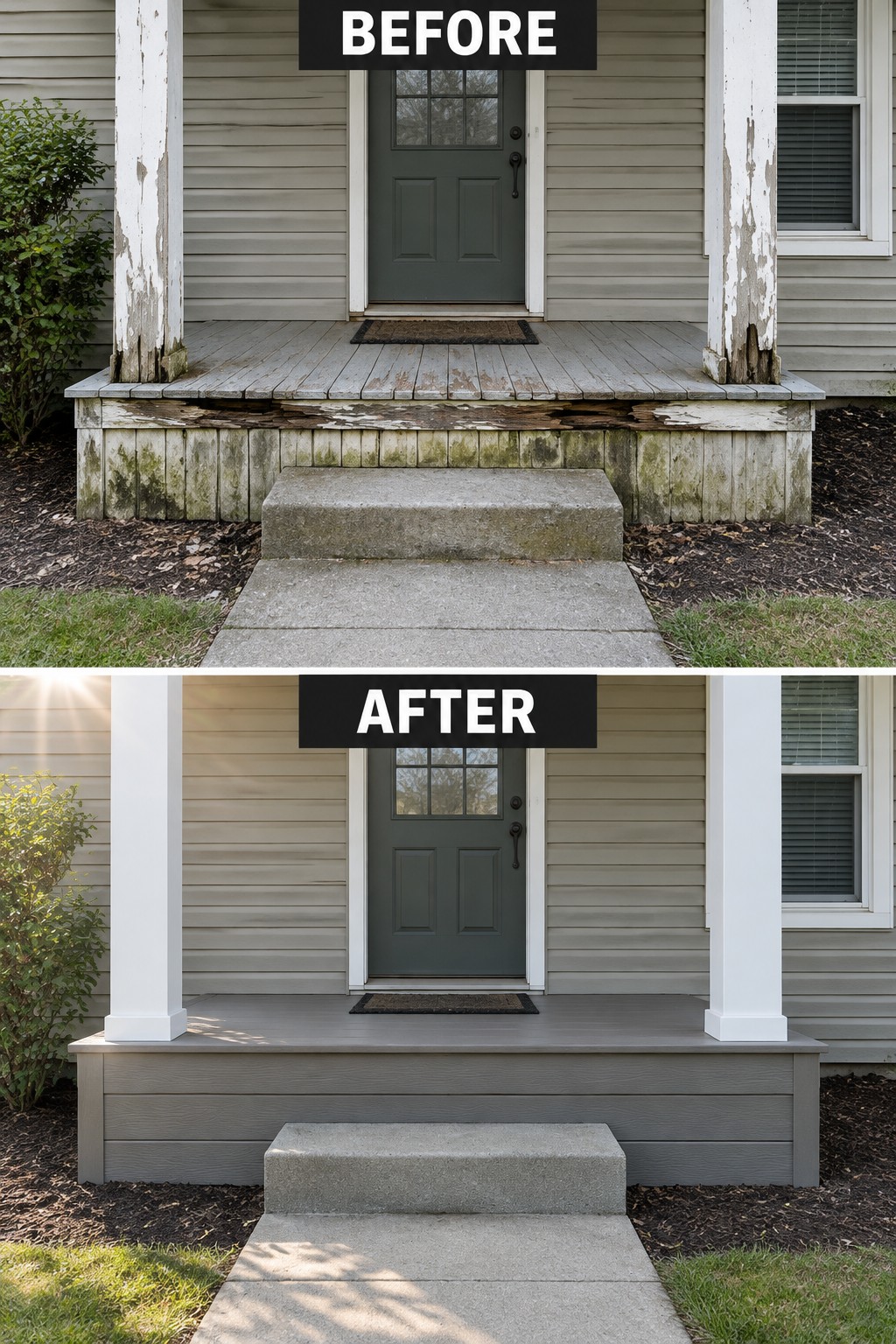
A tired front porch often drags down the whole look of a house. In this case the columns had peeling paint and the deck boards were cracked and faded. A new coat of white paint on the posts plus a solid new surface on the porch floor instantly makes the entry look cared for and much more welcoming.
This approach works well on homes where the siding itself is still sound but the trim and decking have taken a beating. Focus first on scraping, priming, and painting the visible woodwork. Then decide if the porch floor needs full replacement or just a durable coat of porch paint. The result is low maintenance and gives the house a cleaner face without touching the main siding.
Update Dated Siding With A Darker Two-Tone Scheme
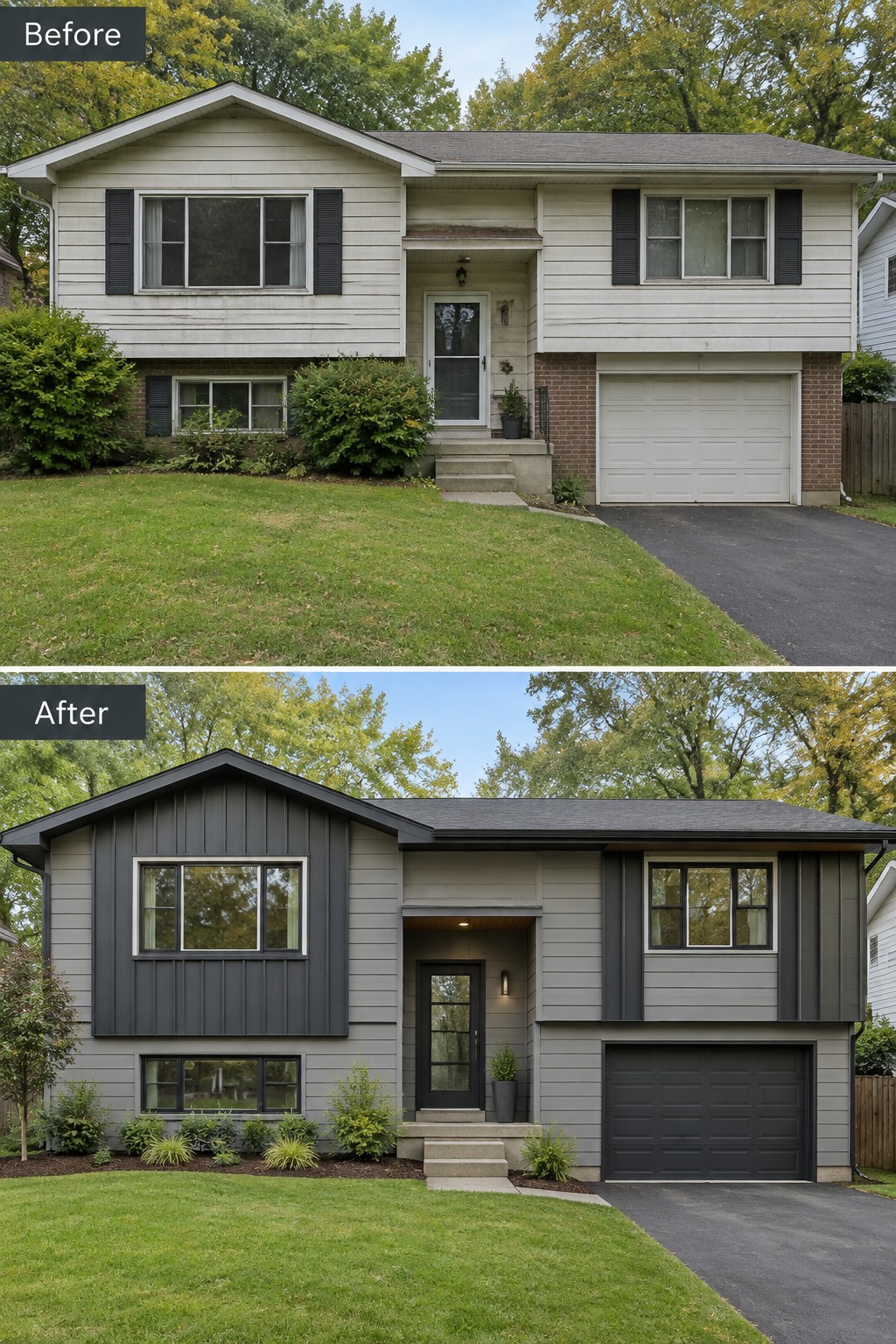
Many homes from past decades have light horizontal siding that shows wear quickly and feels flat. Switching to a darker palette with a mix of horizontal and vertical panels gives the house more shape without adding much daily upkeep. The garage door and trim get painted to match, which pulls everything together and makes the entry feel more intentional.
This approach works well on two-story homes where the upper level needs some separation from the lower section. Keep the plantings simple and low so the siding stays the main focus. Darker colors also hide minor scuffs better than light ones, which helps if you want the exterior to stay looking fresh for longer.
Frequently Asked Questions
Q: Do I need to fix any rot before putting up new siding? A: Yes, pull off the old layers and check the sheathing underneath first. Rot spreads fast once you seal it in, so replace any soft spots with fresh wood and add a moisture barrier. This step keeps the new siding from failing early.
Q: How often will I need to clean the new siding? A: Most low maintenance options just need a quick hose down twice a year. Skip harsh cleaners that can strip the finish. Focus on the shaded north side where mildew likes to grow.
Q: Can I mix two siding types on the same house? A: Stick to one main material and use the second only on a small accent wall or gable. The simpler the switch, the cleaner it looks from the street. Too many changes can make the house feel chopped up.