

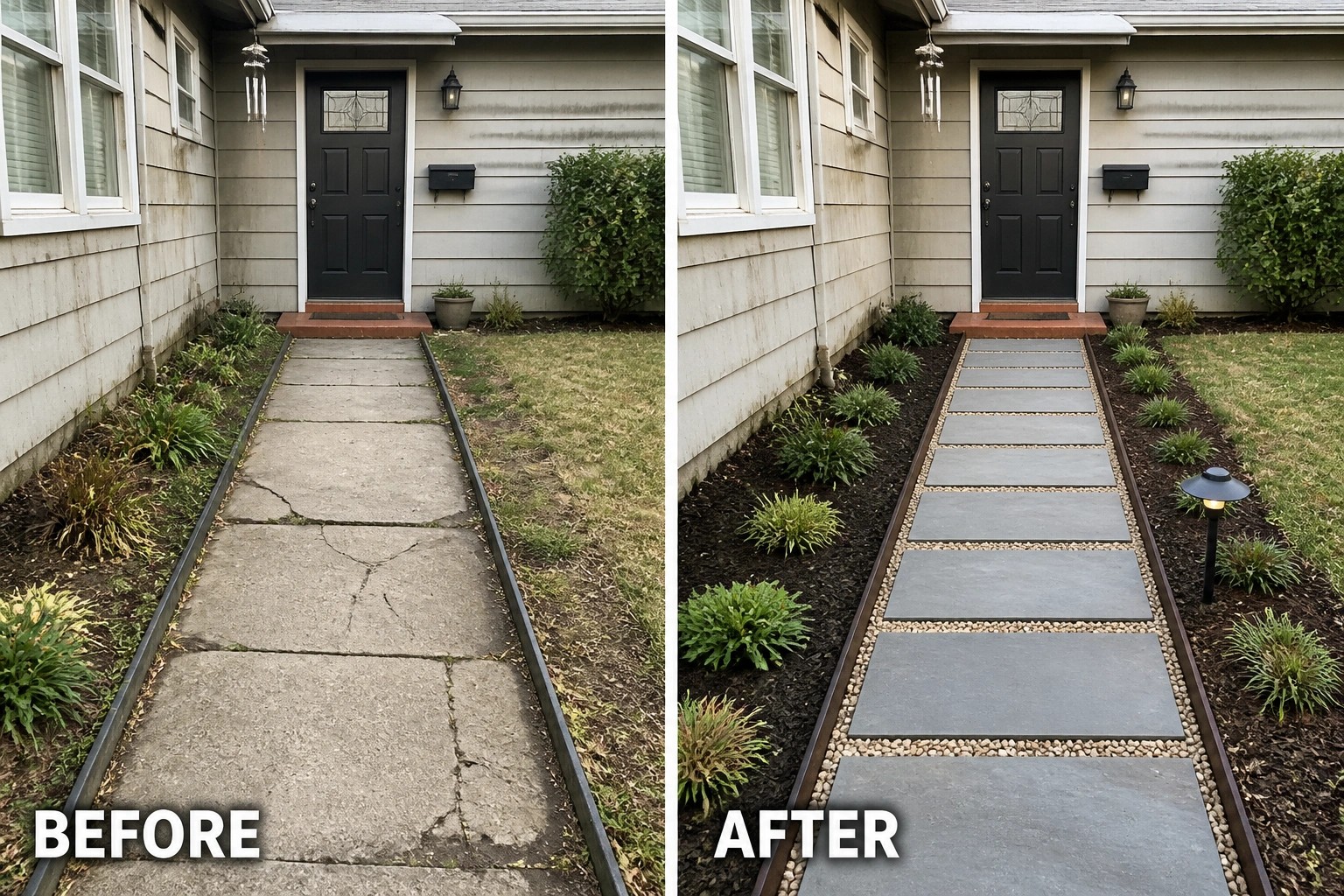
Curb appeal on a tight lot is less about big budgets and more about helping the front of the house read as intentional and cared for, even when space is limited.
When a porch feels pinched by a driveway or overgrown shrubs hide the entry, the whole place can look neglected despite tidy interiors.
I usually start with a clear path, a trimmed planting shape, and one small entry detail because structure and a focal point make small yards feel larger and more welcoming.
Small moves go a long way.
Some of these ideas are worth saving and testing on your own front step, and I find it quietly satisfying to see how a fresh trim color, a neat planting edge, or a better porch light can make the house look cared for.
Use Pavers To Define A Narrow Entry Path
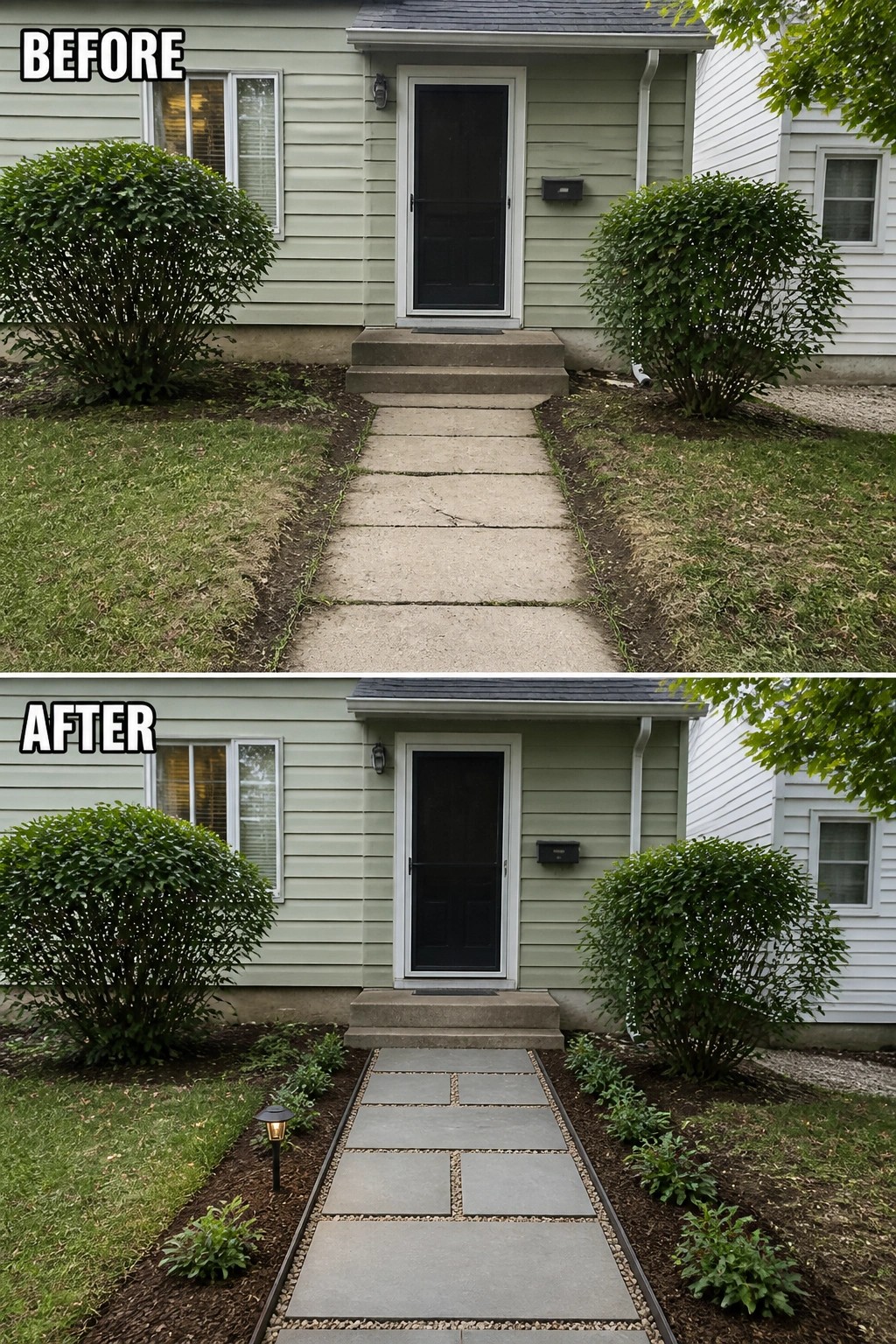
A crisp paver path and a narrow planted border can make a tiny front yard look deliberate instead of leftover. Here the old cracked concrete was replaced with large rectangular pavers set with gravel joints and tidy edging, which gives the entry a cleaner, more intentional look while keeping the scale right for a small lot.
This approach works best on tight drives and compact front yards where you need a clear route without losing yard space. Pick pavers sized for comfortable stepping, bed them on a stable base, run small gravel between joints to reduce weeds, and add low-growing border plants plus a couple of low lights for evening visibility. Keep the planting low and the edging simple so maintenance stays easy.
Make The Front Door The Main Feature
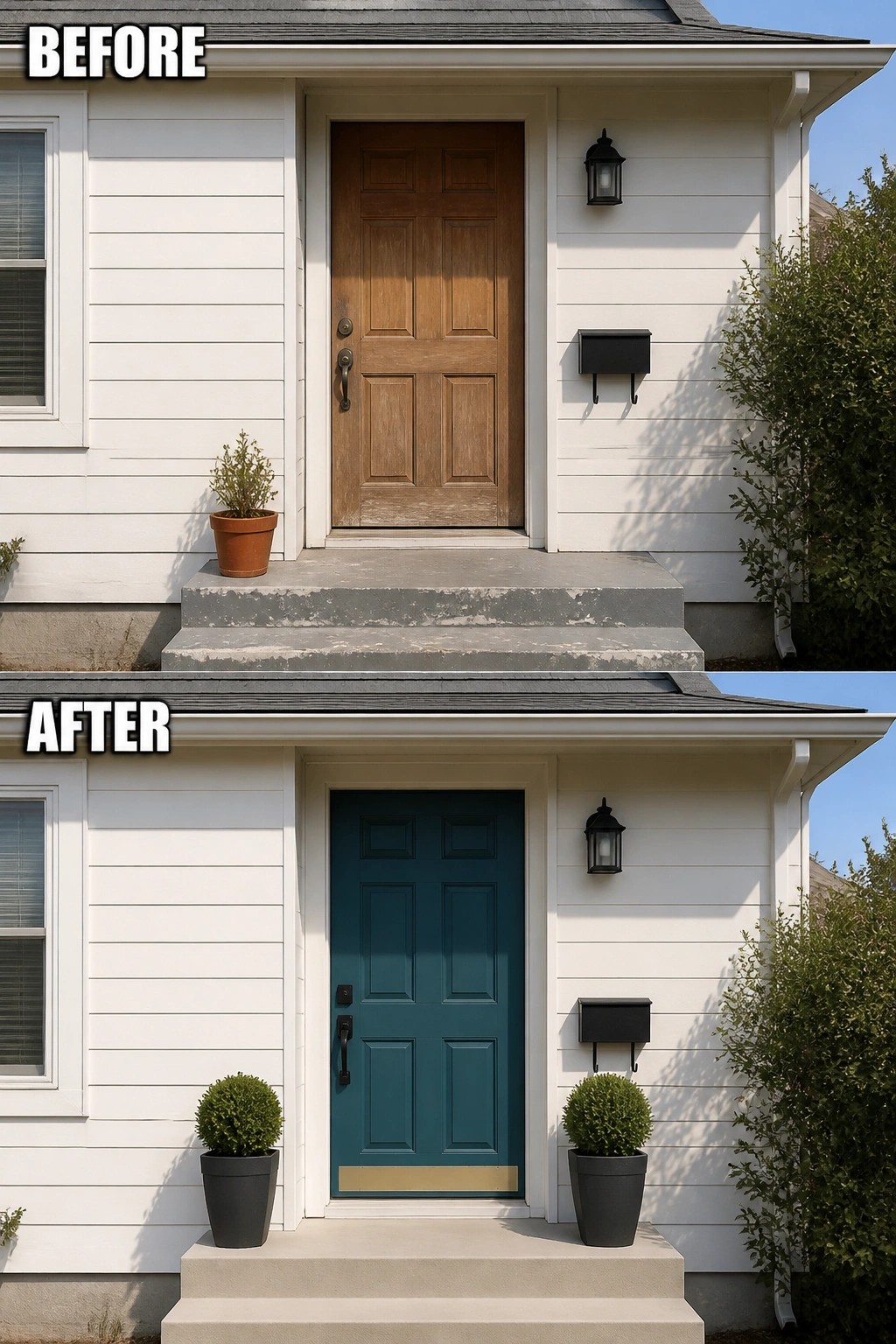
A small porch needs a single clear focal point, and repainting the door is the fastest way to get one. Swapping a tired wood finish for a strong, contrasting color and new hardware immediately gives the entry purpose, and adding a pair of simple potted plants creates balance without crowding the walk-up. You get a polished look without a big footprint.
This works best on tight lots where you can’t add a large porch or wider steps. Pick a durable exterior paint in a color that complements your siding, use scaled-down planters so the door remains the focus, and upgrade one or two small details like the handle or kick plate for a finished feel (evergreens are low-maintenance and look neat year-round). Small changes, done with restraint, make a narrow entry read as intentional instead of neglected.
Turn A Small Porch Into A Usable Seating Area
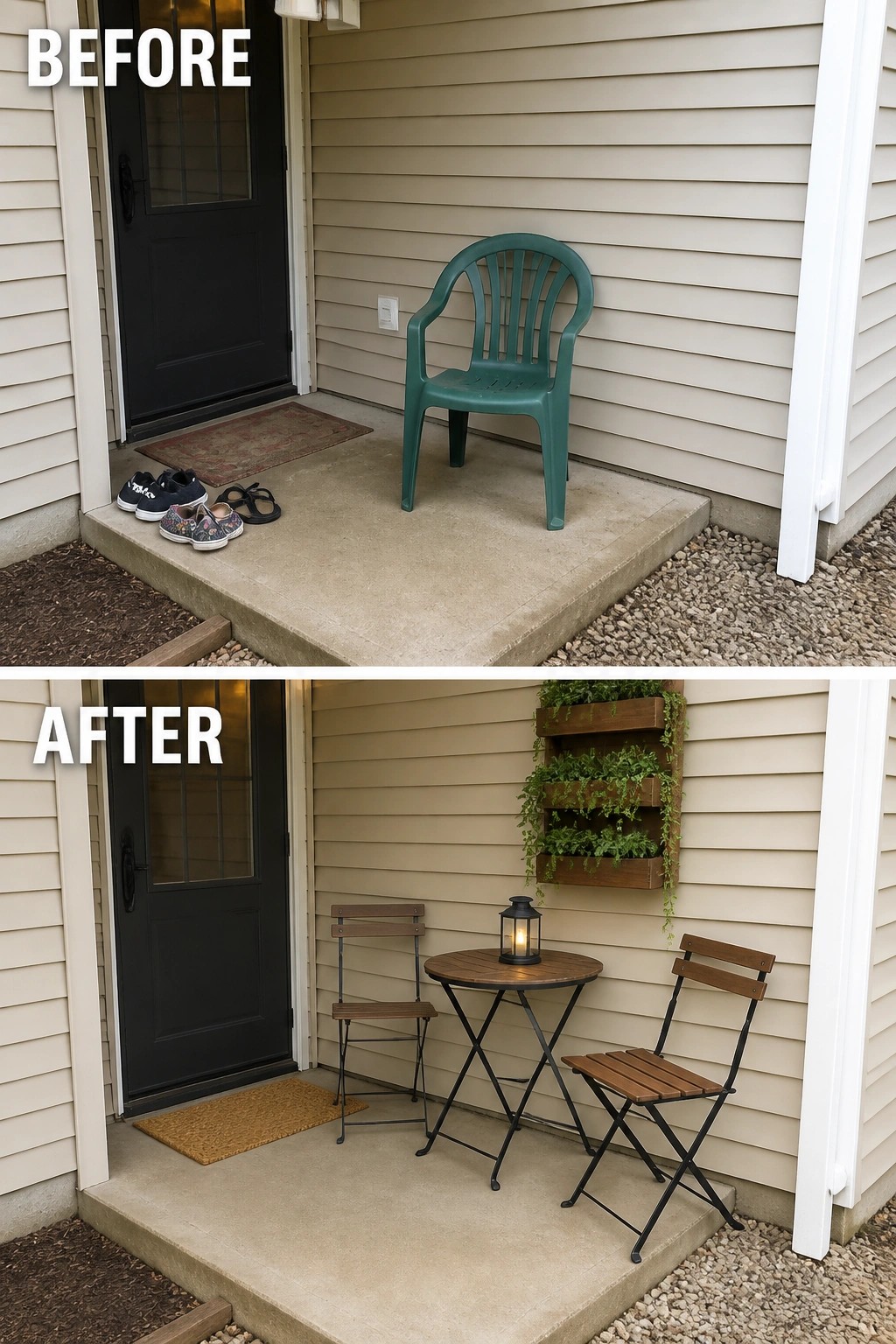
A tiny bistro set, a doormat, and a wall planter are all it takes to give a bare concrete porch a clear purpose. Swapping the lone plastic chair for a compact table and two slim chairs immediately makes the entry feel intentional and usable without changing the structure or footprint.
Choose furniture that folds or has a small profile so you can still open the door and move freely. Use vertical storage or planters on the wall to add greenery without taking floor space, and add one small rug or a lantern for light and texture so the spot feels ready for morning coffee or a quick sit-down. Keep it simple and weatherproof, and resist crowding the area—less is more on a tiny porch.
Add Shutters And A Window Box To Boost Curb Appeal
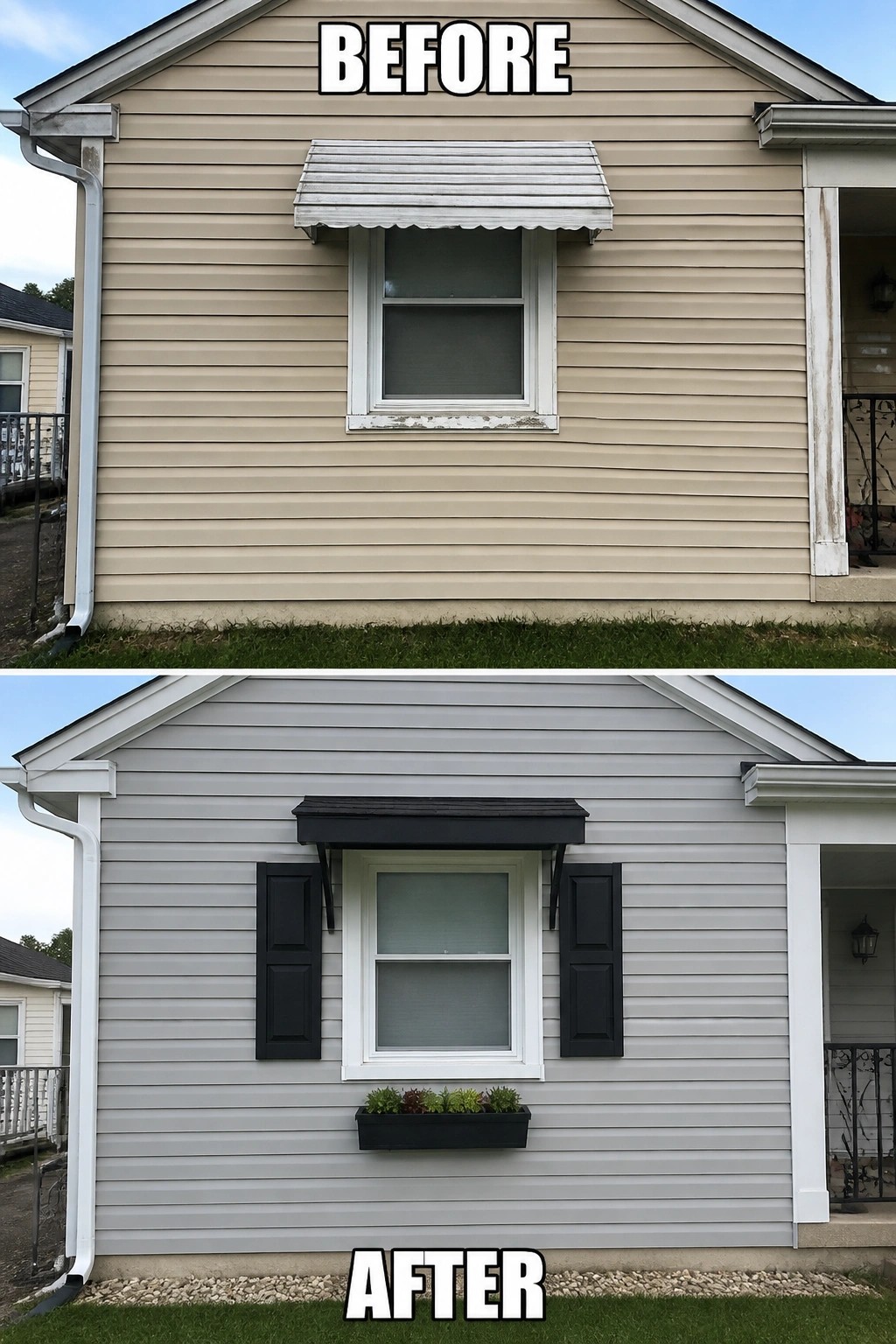
Small architectural details make a tiny front wall feel finished. In this case the homeowner centered attention on the window—adding a pair of shutters, a painted awning, and a simple window box—to give the facade scale and a clear focal point. Those few pieces change a bland exterior into something that reads as intentional rather than neglected.
Use this on narrow or tight lots where you have only a small amount of frontage to work with. Measure your window so shutters are proportional, pick a paint color that contrasts the siding but repeats elsewhere on the house, and choose a low-maintenance planter with shallow-rooted plants so it stays tidy. It does not take much to make a plain wall look cared for; start with one focal element and keep everything else simple.
Create A Defined Path Using Stepping Stones And Low Lights
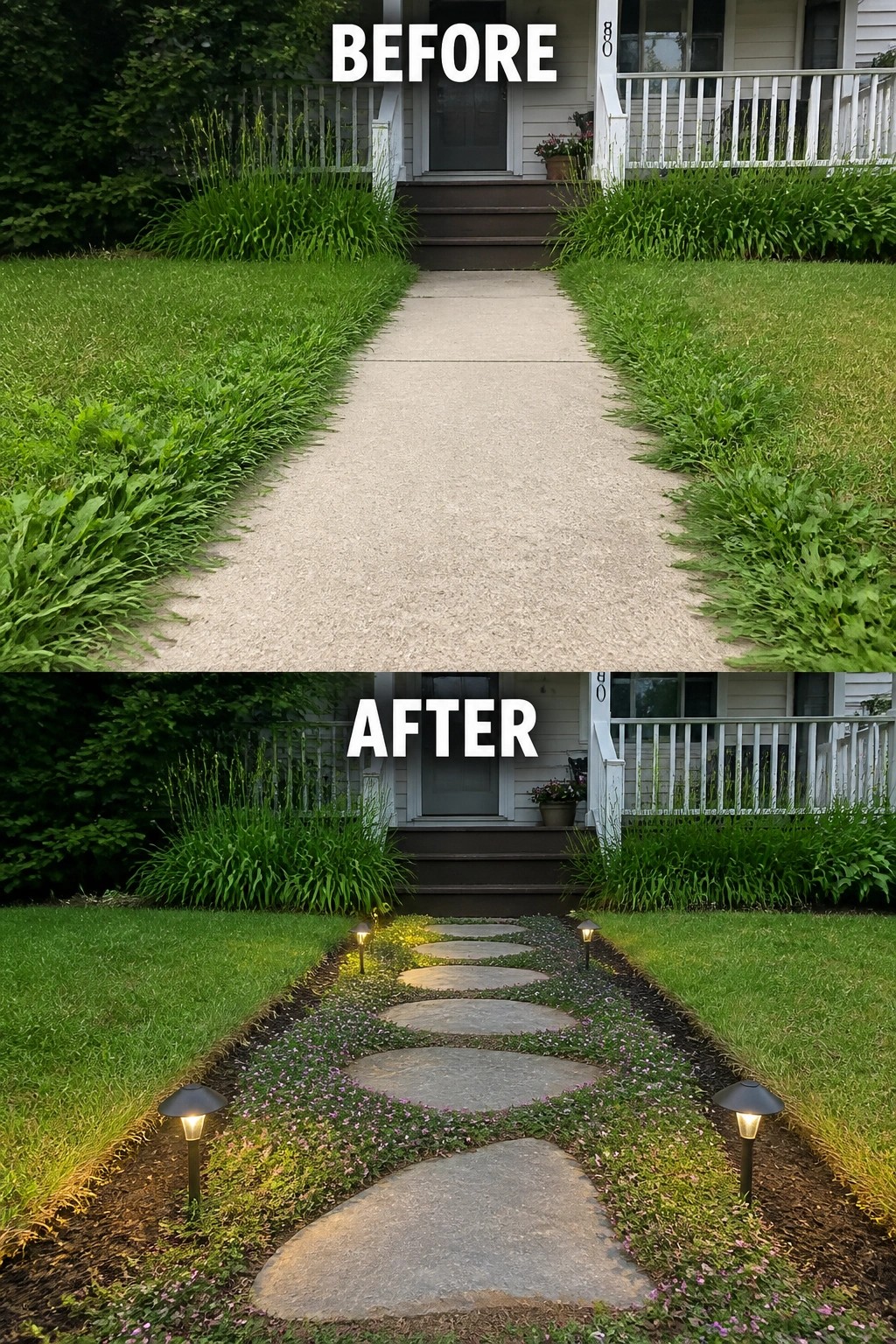
Swapping a plain concrete strip for a series of round stepping stones set into low groundcover, with a couple of small path lights along the edge, instantly gives a tight front yard a clearer purpose and cleaner look. The change is simple but effective: the stones break up the broad slab while the lights guide the eye and make the approach feel composed at night.
To copy this idea, start by removing the overgrown grass at the edge and laying level stones spaced for comfortable footing. Plant a low, spreading groundcover or mulch between and beside the stones so the line reads as a deliberate bed, not a tripping hazard, and use small solar or low-voltage lights placed where they illuminate footsteps rather than glare into windows. This works especially well on narrow lots where you need to define circulation without losing lawn space.
Use Raised Planters To Tidy A Narrow Side Strip
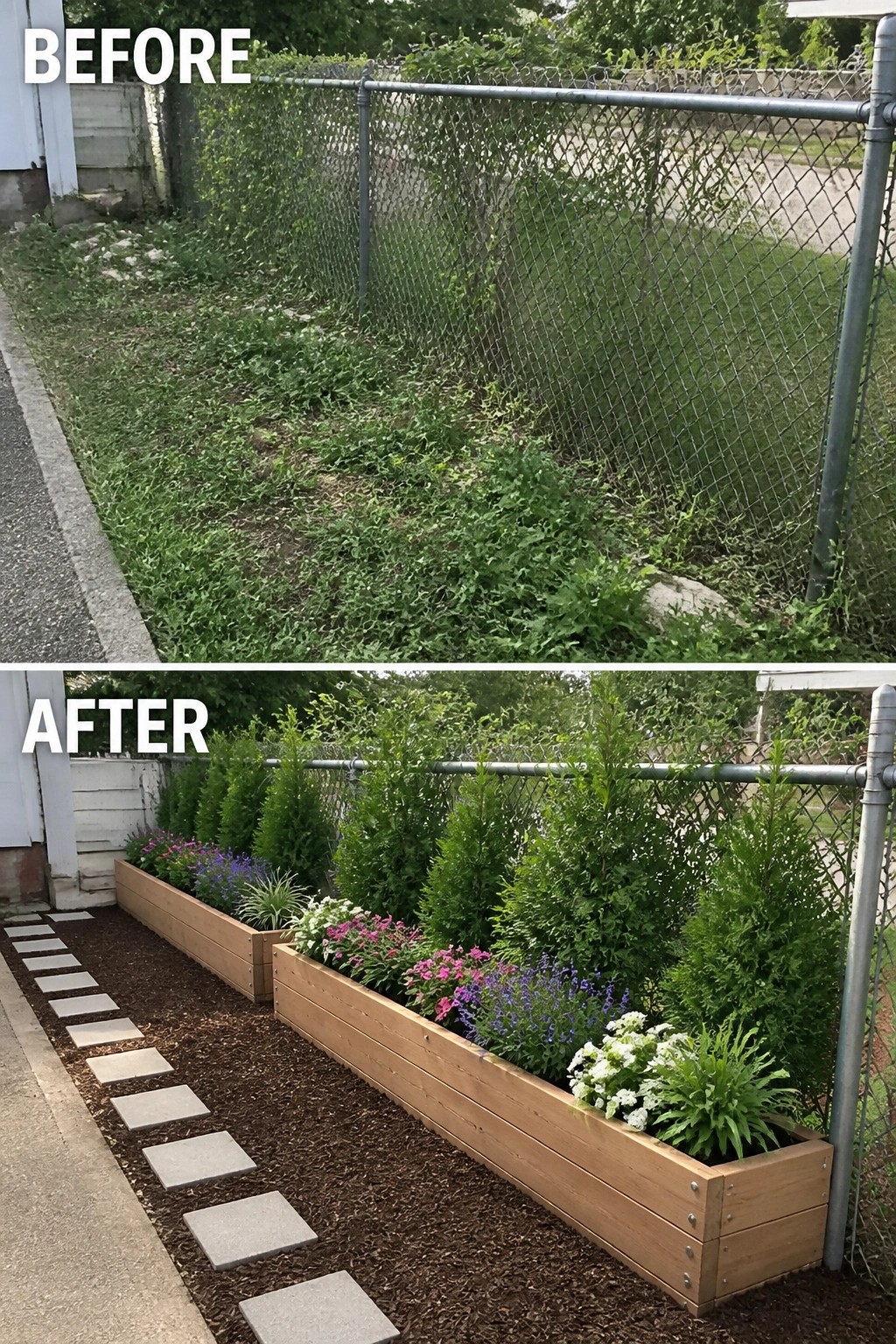
Turning an awkward, overgrown strip into a row of shallow raised planters instantly gives a tight lot purpose and polish. Swapping the messy grass for long wooden beds, low mulch, and a stepping-stone path cleans the edge, hides the chain-link, and gives you room for vertical plants that add privacy without taking up the whole yard.
This works best on narrow front or side yards where you need structure more than lawn. Build low cedar or rot-resistant beds about 12 to 18 inches deep, plant narrow evergreens or columnar shrubs for screening, and add a mix of lower perennials and annuals for color. Finish with mulch and a simple stepping-stone path to reduce mowing and keep the space low-maintenance and tidy.
Add Window Boxes And Fresh Trim To Boost Curb Appeal
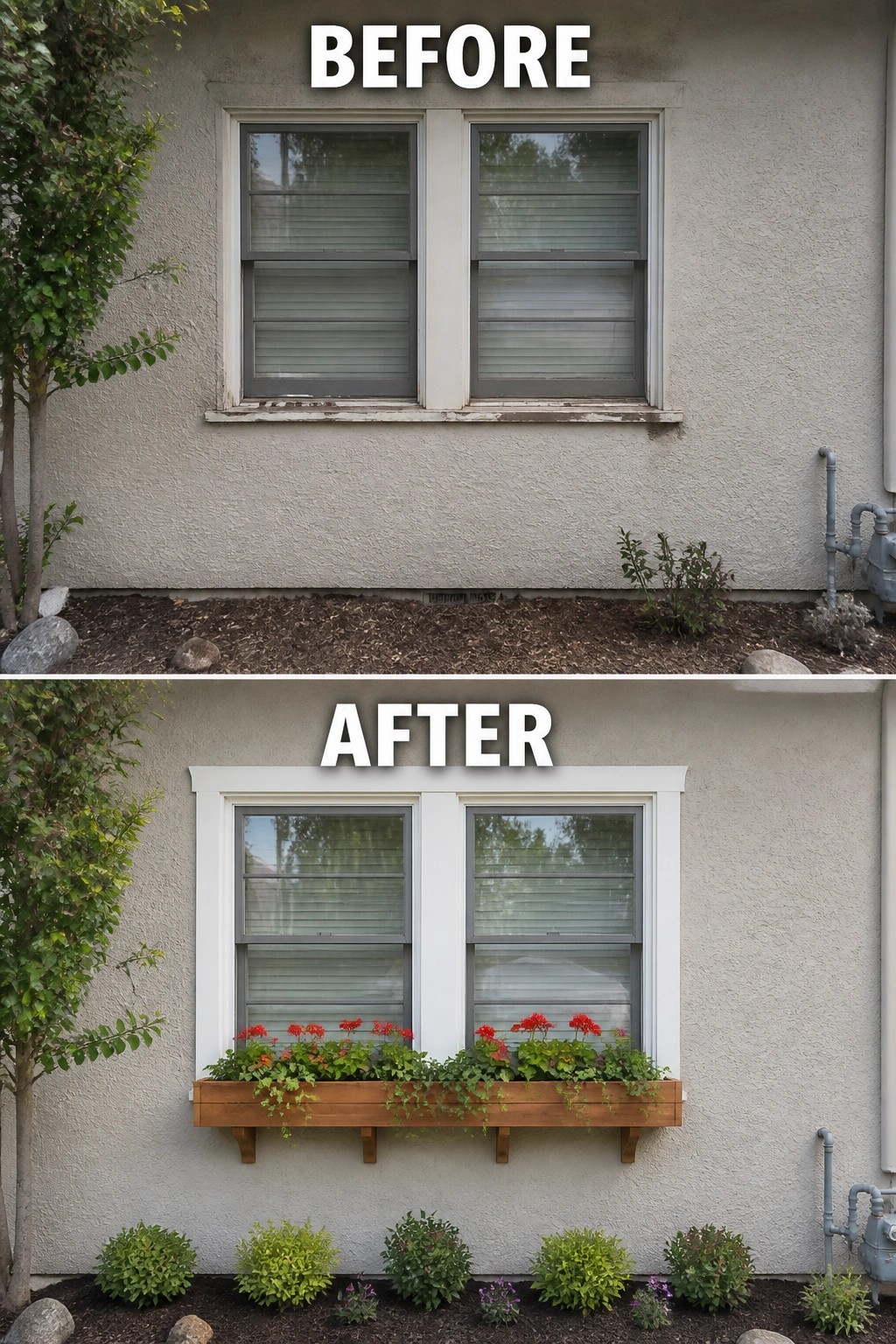
A small investment in trim and a planter can make a plain facade read as cared-for and intentional. In this example the worn sill is replaced by crisp painted trim and a simple wooden window box with bright annuals, creating a clear focal point and a bit of color without enlarging the footprint.
To copy this idea, choose a shallow box that fits the window width and mount it on sturdy brackets or into studs, and pick rot-resistant materials or a composite that needs little upkeep. Line the box for drainage, plant compact, trailing varieties so the blooms spill gently without hiding the window, and repeat the trim color elsewhere on the facade to tie the look together.
Turn A Patchy Lawn Into A Low-Water Rock Garden
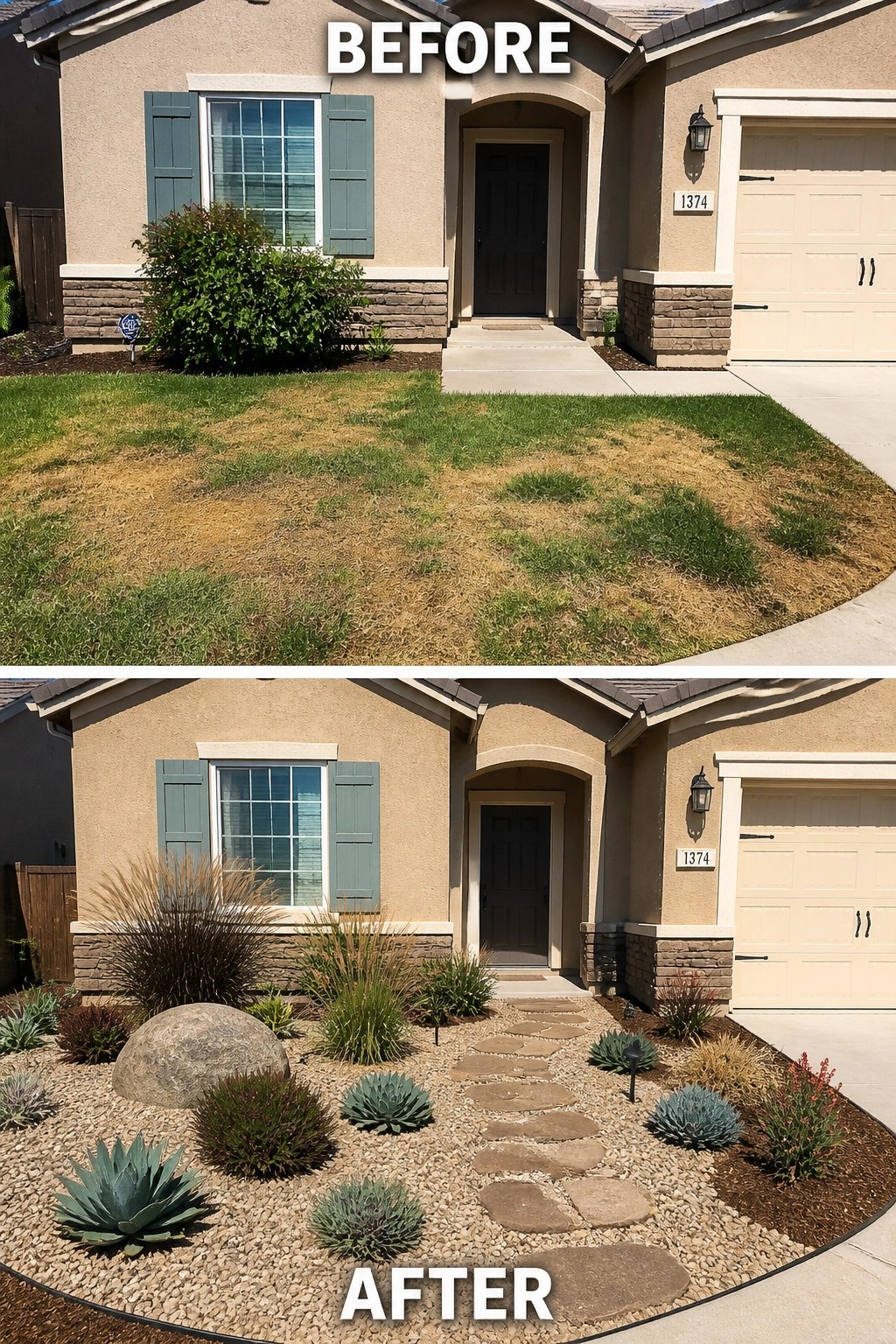
If your tiny front yard is mostly thin, brown grass, swap it for a simple gravel bed with a few sculptural succulents and a stepping-stone path. That one change instantly cleans up the space, gives it clear form, and cuts watering and mowing without feeling empty.
Outline the new bed with edging, lay landscape fabric, then plant two or three drought-tolerant species in grouped clumps for scale (think agave, ornamental grass, a small shrub). Add irregular pavers so people can reach the door without trampling plants, finish with about two inches of gravel and one or two larger accent rocks, and you’ve got a low-maintenance curb-friendly yard that fits tight lots.
Use A Planter And Planting Bed To Screen Outdoor Equipment
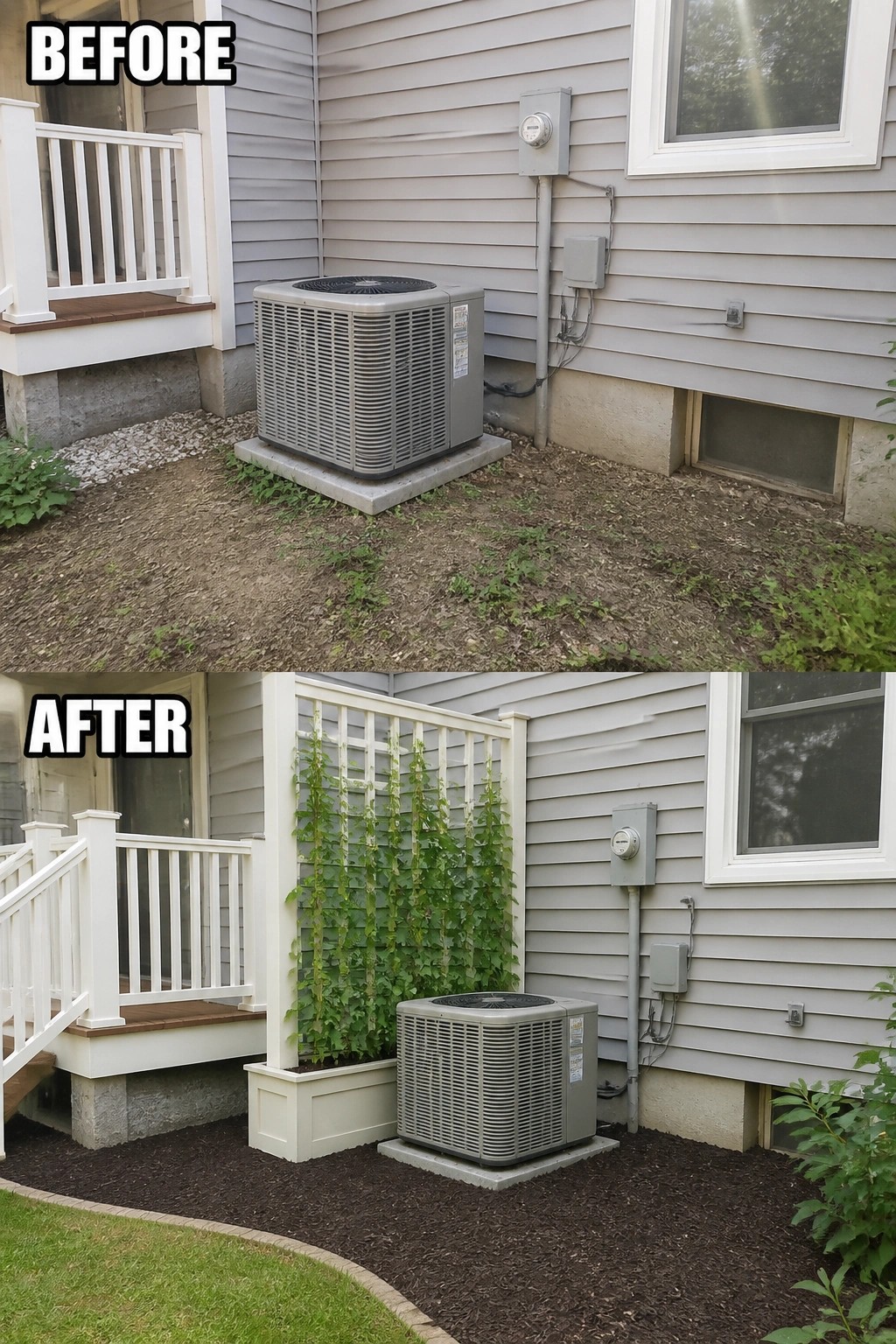
A narrow raised planter and a tidy mulch bed are an easy way to hide an awkward air-conditioning unit while giving a tight side yard a finished look. Replacing bare dirt with a low planter and a trellis of climbing vines softens the view, creates vertical interest on a small footprint, and makes the whole corner feel intentional instead of neglected.
This works well on narrow lots because it uses height instead of width. Keep a clear service access and follow the unit’s required clearances, choose a narrow, durable planter or built-in box, and pick low-maintenance climbers or evergreen shrubs that won’t overgrow the unit. Finish with a layer of mulch and a simple edge to stop grass from creeping in and to make the space look neat year-round.
Turn An Empty Porch Into A Styled Entry
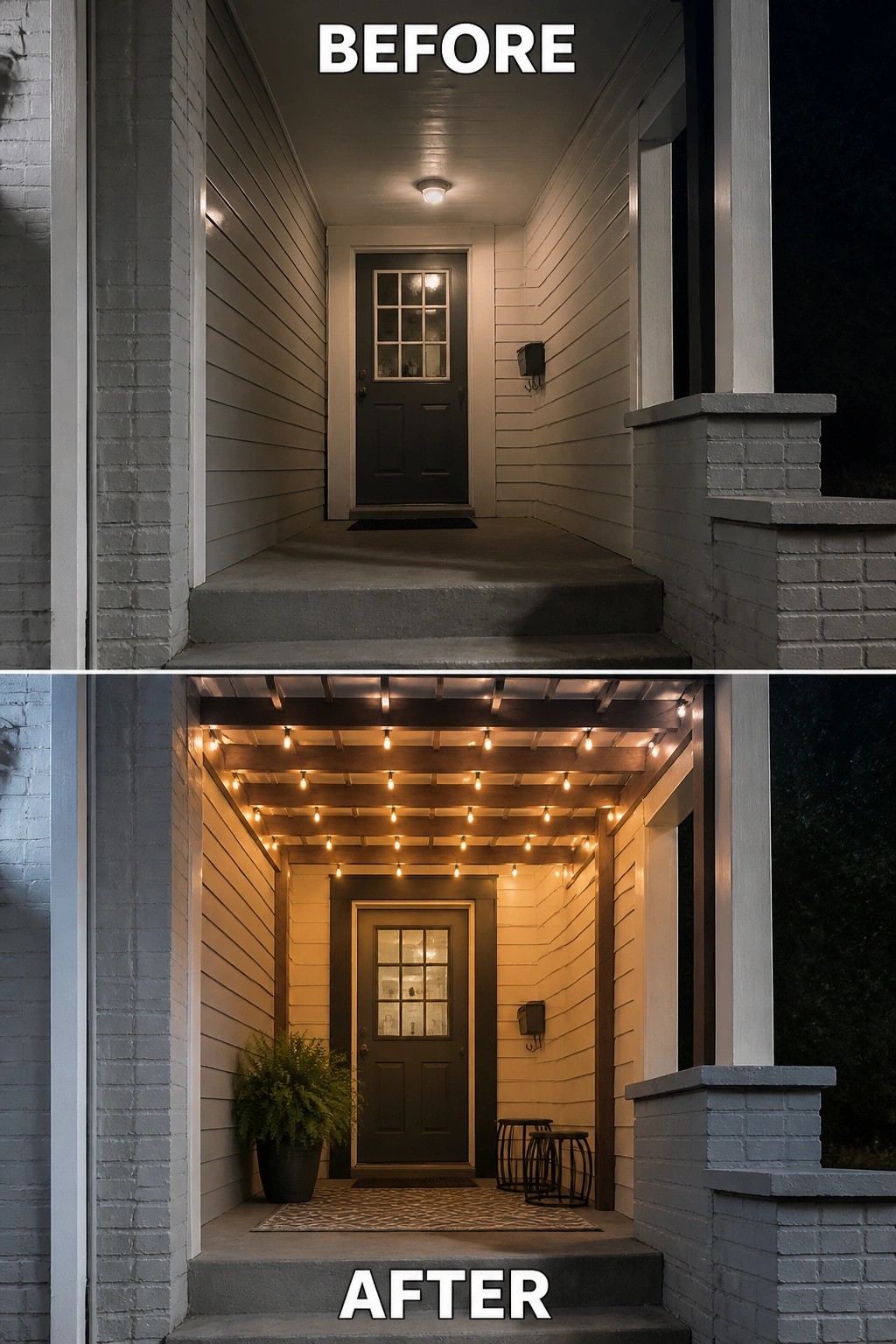
A narrow, unadorned porch can feel like wasted space. Add a couple of simple elements — overhead string lights and a low-profile rug plus a potted plant and a pair of compact stools — and the entry immediately reads as a place you use, not just a path to the door.
This works best on tight porches where full furniture won’t fit. Choose weatherproof, slim-scale pieces, hang lights on hooks or a tension cable so installation stays simple, leave a clear walkway by sizing the rug a step back from the door, and keep decor to one focal plant and one seating touch so the space feels purposeful without crowding it.
Create A Defined Planting Strip Along The Driveway
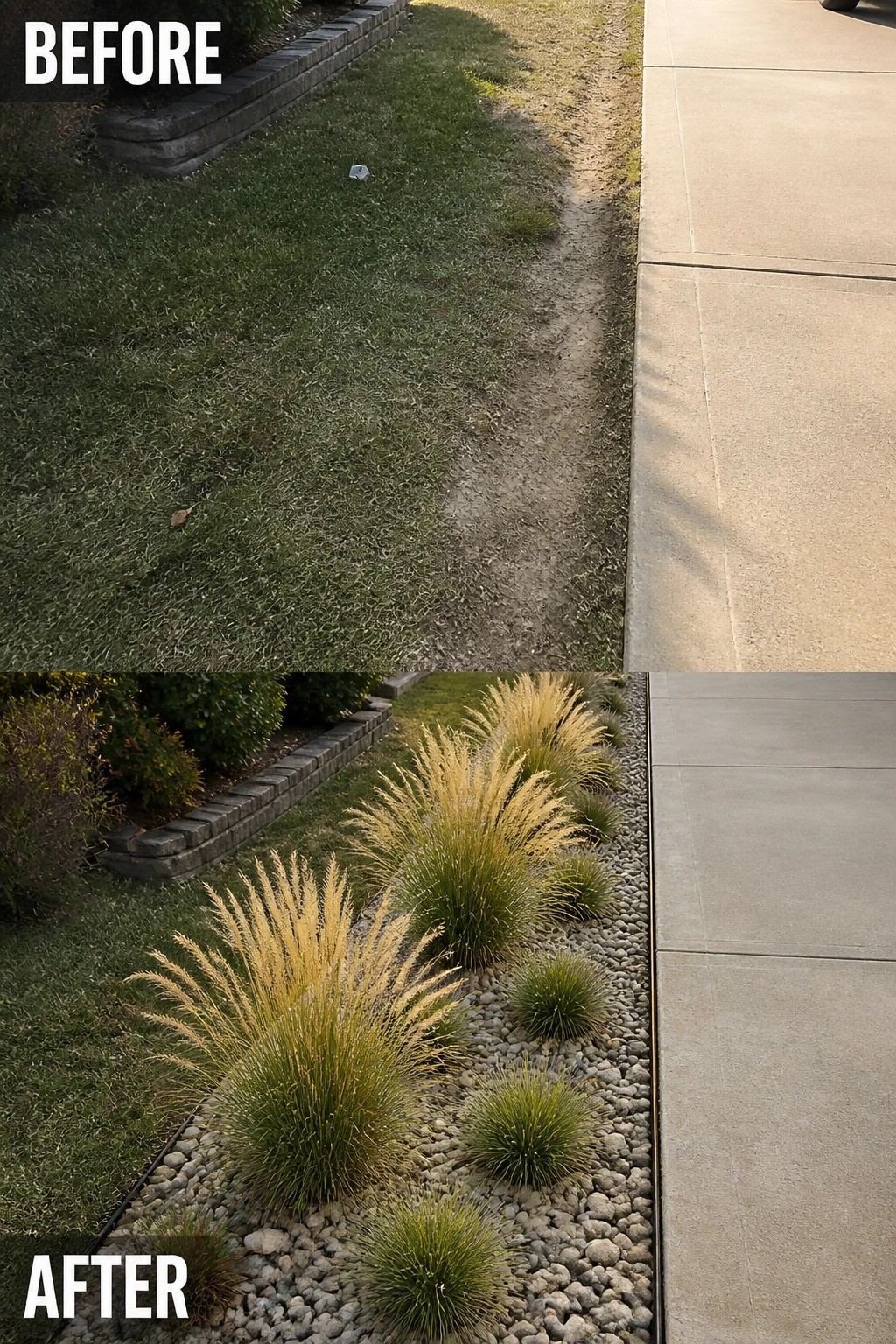
A tired, narrow rut of grass beside a driveway looks sloppy and invites more wear. Replacing that strip with a slim, edged planting bed filled with river rock and clumps of ornamental grass cleans the edge and gives instant curb appeal while staying low maintenance. In the photo a bare dirt path becomes a neat gravel bed planted with repeatable grass clumps, which reads tidy even on a tight lot.
To copy this, remove the damaged turf, install a crisp metal or plastic edge, and lay landscape fabric before topping with pea gravel or river rock. Group a few drought-tolerant grasses in odd numbers, keep plant sizes proportionate to the narrow space, and add a small drip line for easy watering. Simple and durable.
Refresh A Small Porch With Simple Finishing Touches
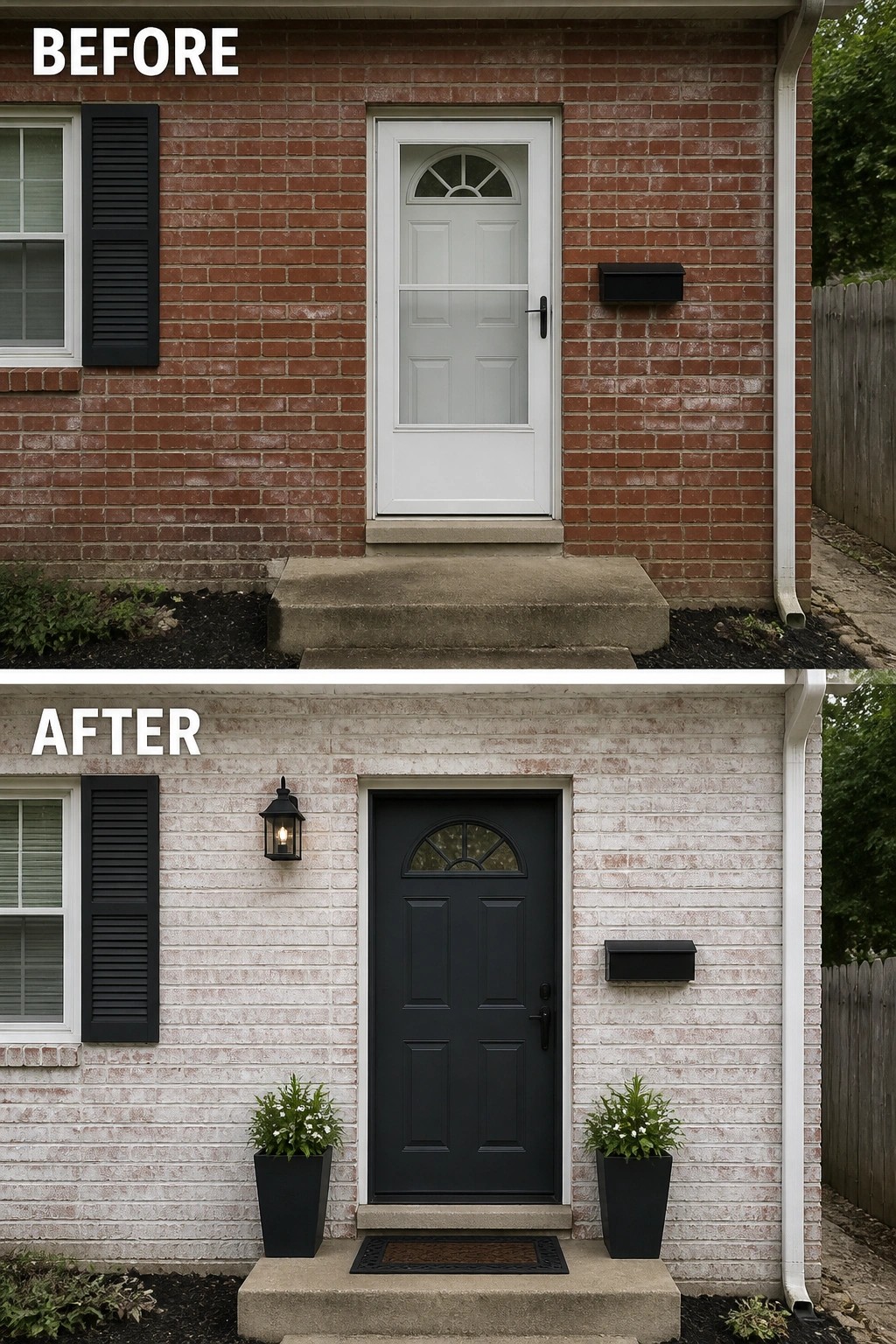
A tiny stoop doesn’t need a lot to feel intentional. Here, the big moves were simple: mute the brick with a light wash and pick a strong, dark front door as the focal point, then add a matching lantern and a pair of slim planters. That single focal change turns an anonymous entry into a clear, welcoming arrival without taking up more space.
Use one main update first—paint, door color, or new light—and build around it with just two planters and a doormat so the area stays easy to use. Keep pot sizes narrow for tight steps, choose weatherproof finishes and low-maintenance plants, and make sure the door still opens easily. This approach works well on small houses and tight lots because it creates curb appeal without clutter or expensive landscaping.
Add A Horizontal Privacy Fence And A Slim Planting Strip
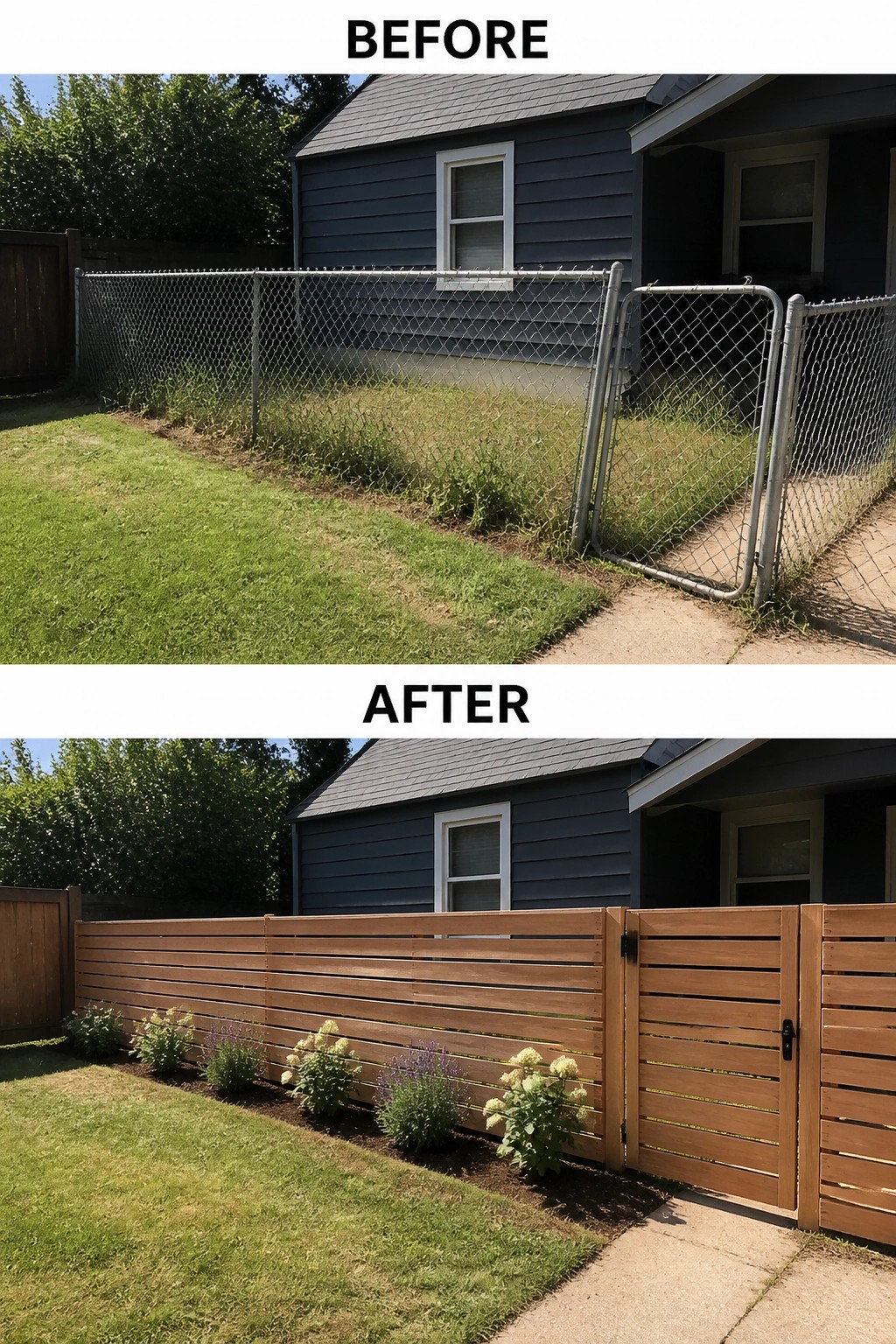
Replacing an old chain-link boundary with a low, horizontal wood fence instantly cleans up a narrow front yard and gives the house some privacy without feeling closed-off. In this example the simple wood slats hide the messy strip of overgrown grass and create a neat backdrop for a tidy row of shrubs and perennials, so the small lot reads as intentional rather than neglected.
This approach works well on tight lots where you need screening but still want light and sightlines. Keep the fence height modest, run a narrow planted bed along the base, and choose low-to-medium shrubs or long-blooming perennials so maintenance stays easy. Use mulch to define the bed, leave the gate and path clear, and pick a durable finish for the wood so it ages well. It’s a small upgrade that makes a front yard feel finished and cared-for.
Turn An Empty Porch Into A Welcoming Entry
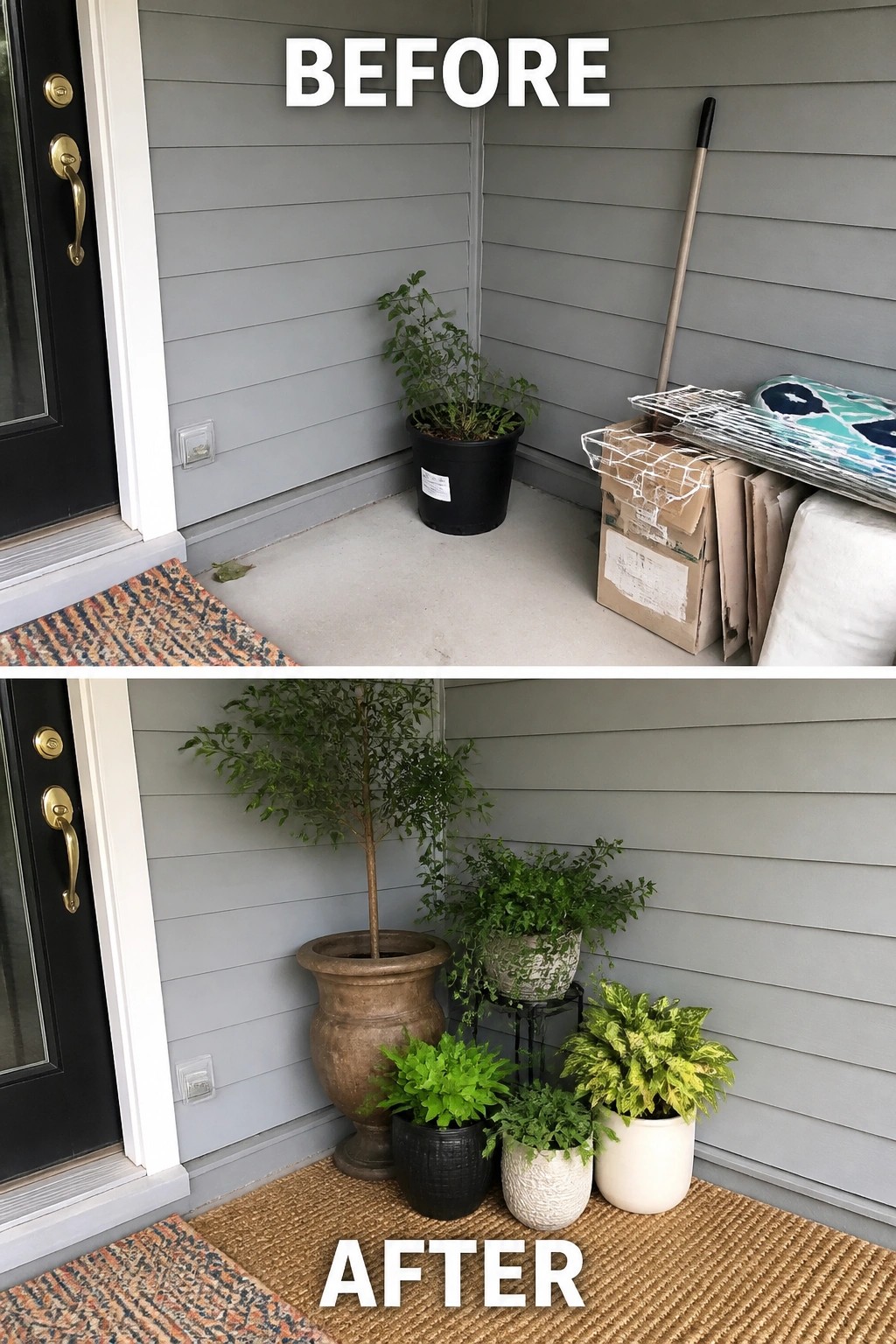
Give a tiny porch a clear purpose by treating it like a small room. Swap out boxes and a single plastic pot for a focal urn, a few smaller planters, and a simple woven rug to define the spot — suddenly it reads as an intentional entry instead of wasted space. That small cluster of greenery and texture makes the doorway feel finished without crowding the area.
To copy it, pick one tall piece for height, then add two or three lower pots with different textures and leaf shapes for contrast. Use an outdoor rug to anchor the group and keep a clear path to the door so the porch still functions. Choose weatherproof pots and shade-tolerant plants if your porch gets little sun, and don’t overfill the space; small, layered groupings work best on tight porches.
Create A Clean Planting Border With Shrubs And Gravel
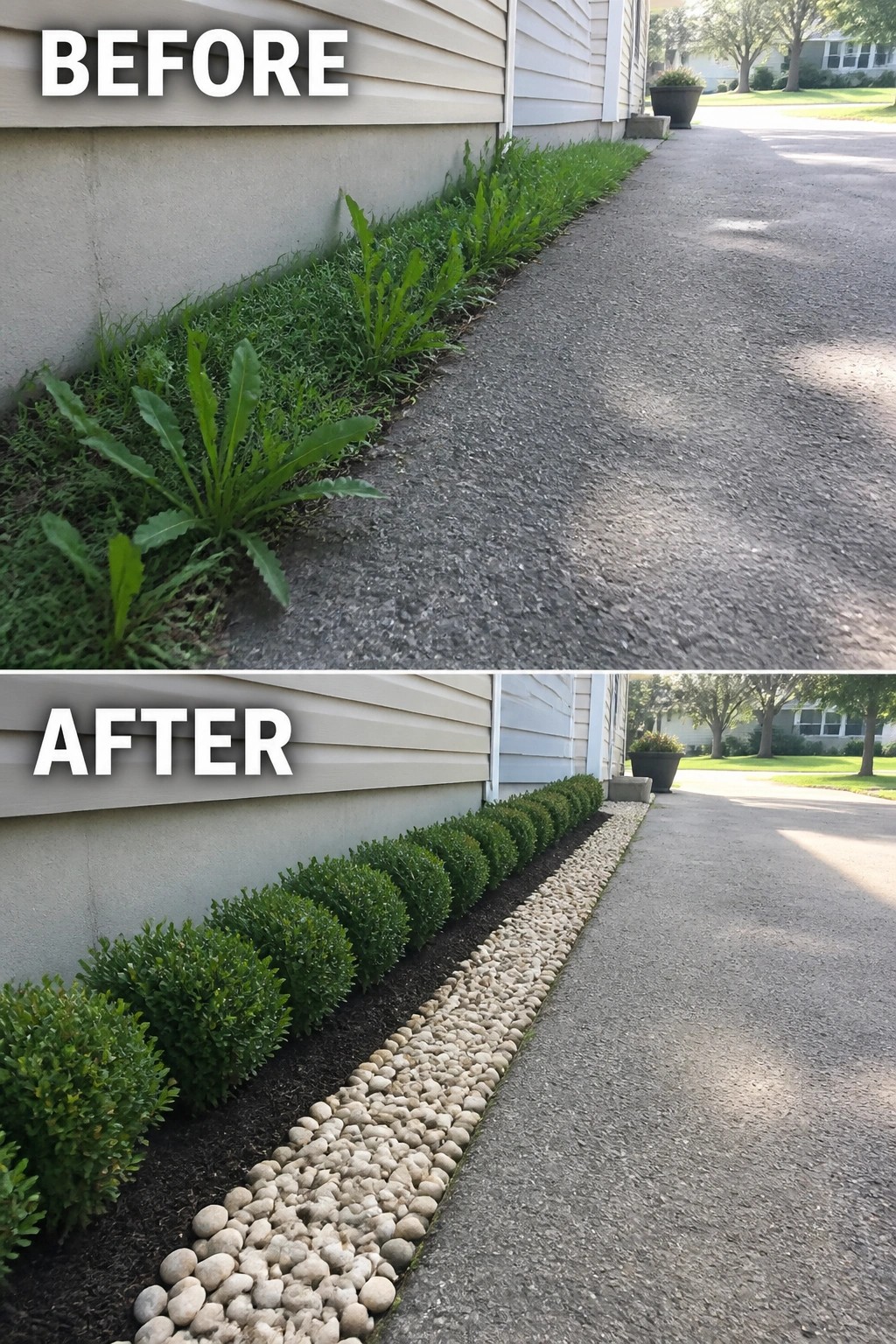
A narrow strip beside a driveway can go from weedy and neglected to neat and intentional by installing a defined planting bed and a gravel channel. Replacing the turf and weeds with a row of low, evenly spaced shrubs and a river-rock strip frames the edge, hides foundation gaps, and cuts down on weekly trimming. Simple, but effective.
Start by clearing the area and installing a modest edging to keep gravel from spilling onto the pavement. Plant small, slow-growing shrubs about 18 to 24 inches apart, lay landscape fabric if you want extra weed control, then top with washed river rock or pea gravel for drainage and low upkeep. This works especially well on tight lots and narrow front yards where you want tidy curb appeal without a big lawn to maintain.
Style A Small Porch With A Swing And Hanging Planter
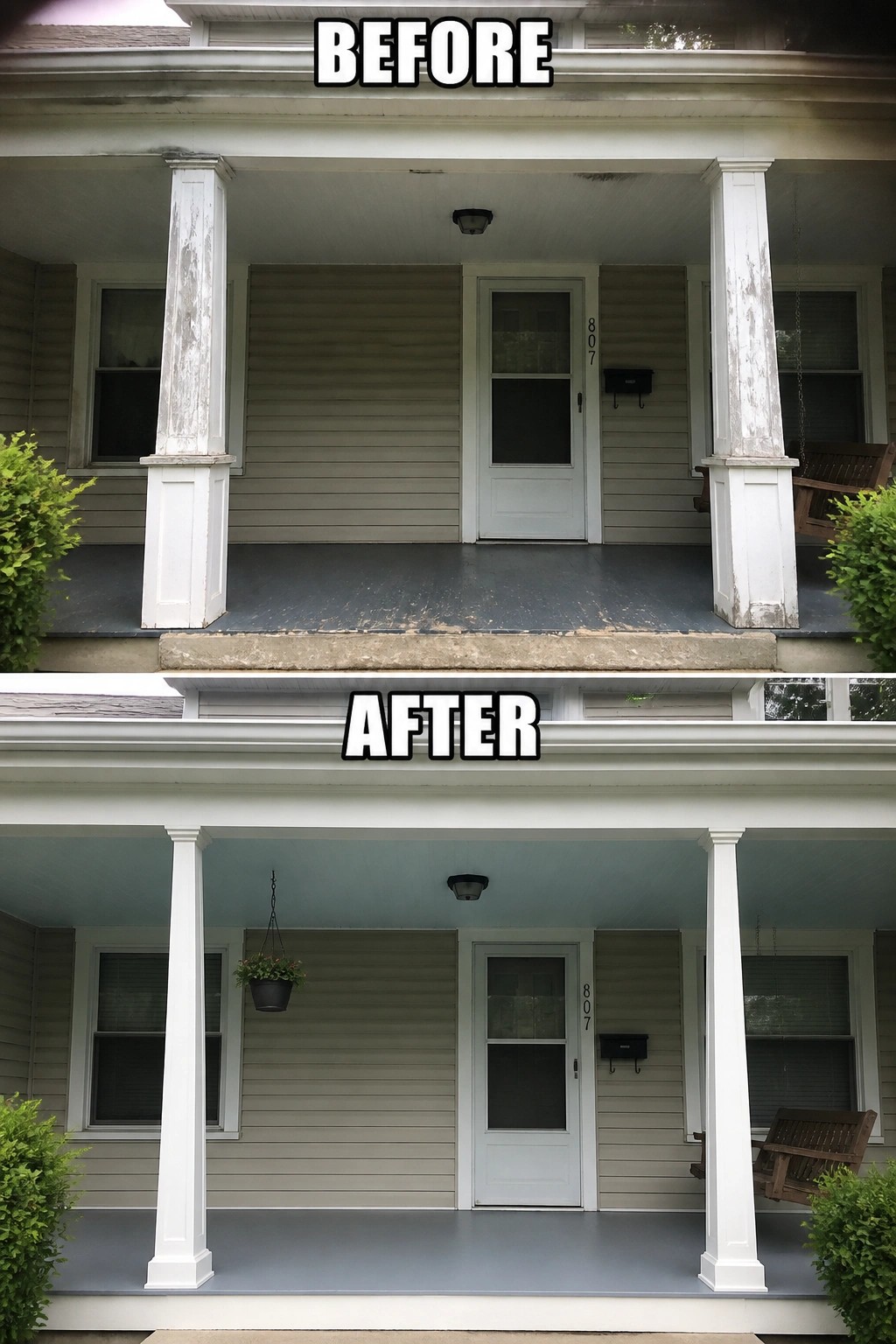
A narrow porch stops being an afterthought when you make its purpose obvious. In this example the worn columns and floor were repaired and repainted, and a single hanging planter plus a porch swing give the entry a clear, usable identity. Those small changes make the porch feel intentional without crowding a tight front yard.
Start with the basics: fix any rot, freshen trim and floor paint, and pick one or two modest accents that show how the space should be used. On a tight lot keep furniture slim, choose weatherproof materials, repeat a trim color to tie everything together, and leave a clear path to the door. Small maintenance plus one focal element is usually all you need to make a porch look cared for and useful.
Use Lighting To Make A Small Front Yard Feel Welcoming
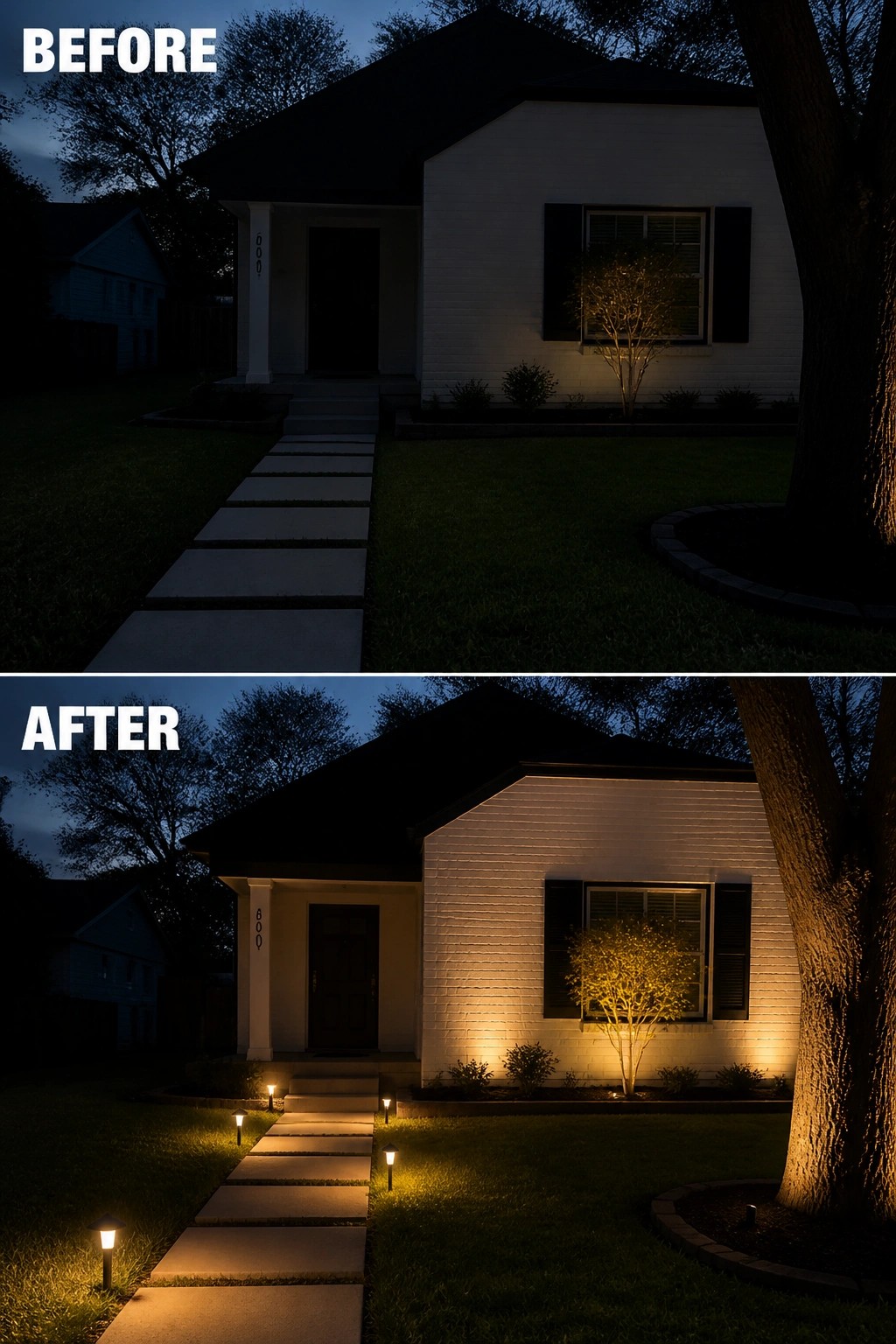
A few well-placed lights change how a narrow entry reads at night. Instead of cluttering the space, add low-stake path lights to define the walkway and one or two warm uplights to wash the facade and highlight a small tree or shrub—it makes the door obvious, improves safety, and gives a tidy, finished look without needing extra plants or hardscape.
This works best on tight lots where you can’t add width. Choose warm LED fixtures, space path lights about 4 to 6 feet apart, and angle uplights so they wash rather than glare into windows. Use dusk-to-dawn controls or a timer, and keep fixtures small and consistent so the lighting reads as one simple plan, not a scatter of bits.
Give A Bare Porch A Clear Purpose
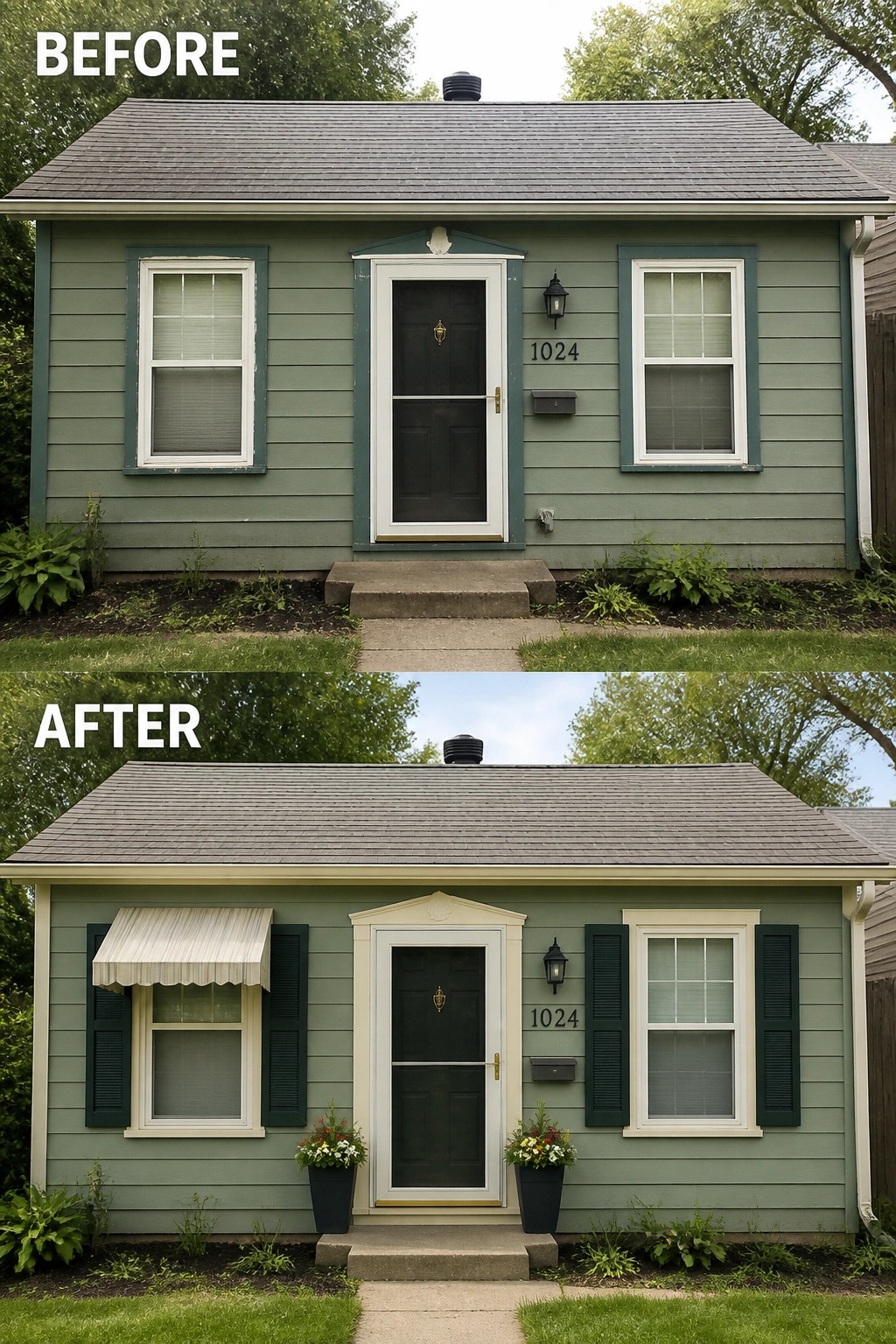
Small houses often feel bigger and friendlier when the front door becomes a deliberate focal point. In this example the plain entry was dressed up with a simple door surround and matching shutters plus two tall planters, which turns an anonymous facade into a purposeful front entrance without changing the house or footprint.
You can copy the idea in an afternoon: pick one or two framing moves (trim around the door, shutters, or a small awning) and add symmetrical planters or a single pair of pots for year-round structure. Keep everything to scale for a tiny porch, choose weatherproof finishes, and leave the step and path clear so the new styling actually guides visitors in.
Frequently Asked Questions
Q: What’s the quickest way to make a tiny front yard look bigger without doing major construction?
A: Use layered vertical elements and keep sight lines open. Tall, narrow plants and a single focal point draw the eye upward and outward, while low, simple borders keep the space airy. Stick to a limited color palette so it feels calm, not cluttered.
Q: What are a few low-maintenance plants that work well in tight spots?
A: Go for compact, drought-tolerant choices like dwarf boxwood for structure, ornamental grasses for texture, and succulents in containers for sunny patches. They need little pruning and handle confined roots, so you’ll spend less time on upkeep.
Q: How can I add privacy without making the yard feel closed in?
A: Use partial screens like lattice with climbing vines, tall narrow planters, or staggered plantings that filter views rather than block them. That keeps light and air flowing while giving you a sense of seclusion.
Q: Will small lighting changes actually improve night-time curb appeal?
A: Yes, simple uplighting on a focal plant or low path lights instantly make the space look finished and welcoming after dark. Choose warm-toned fixtures and avoid harsh brightness so the yard feels cozy, not like a parking lot.