

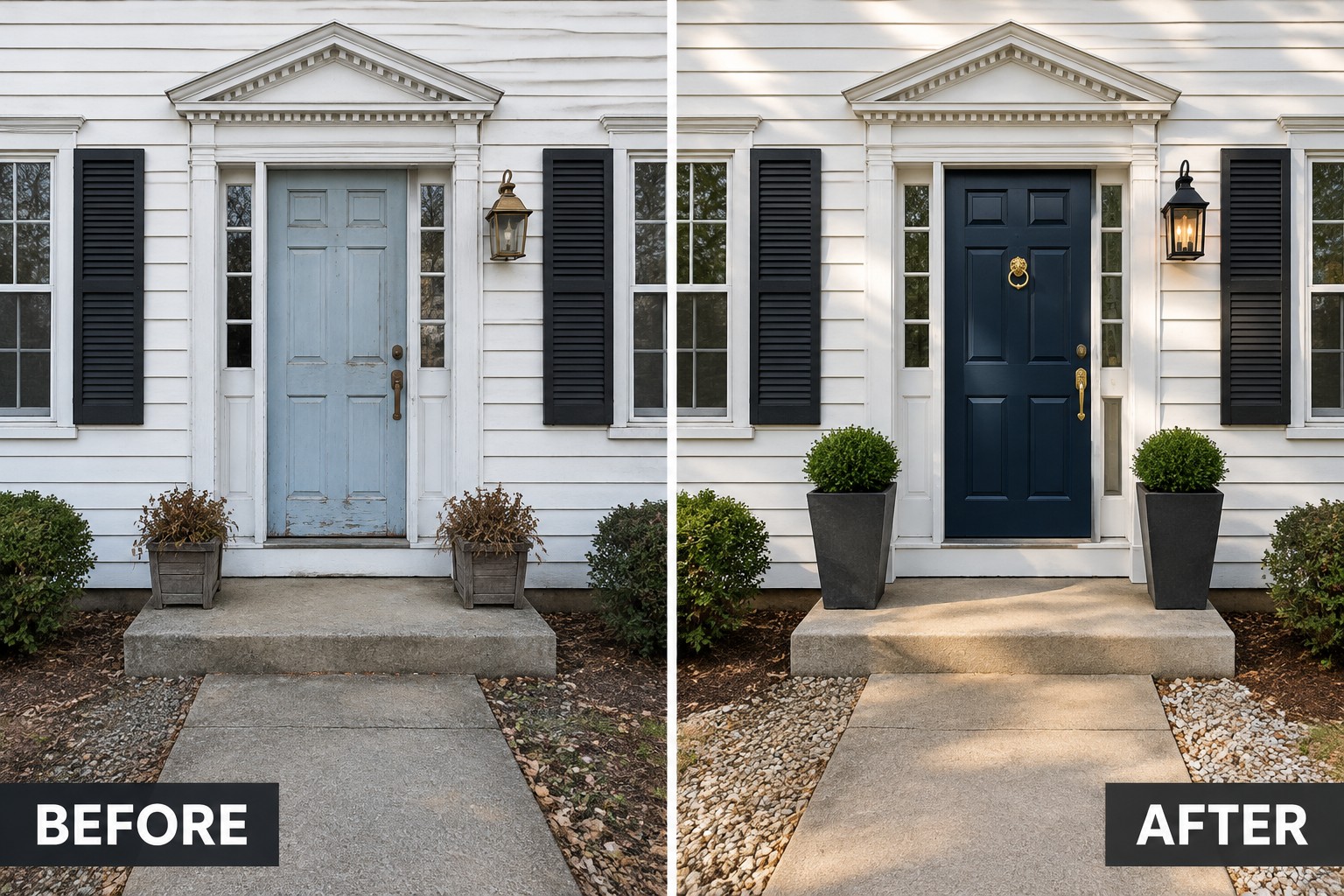
The outside of a colonial house can start to feel a little flat when the front door blends into everything around it.
Changing just the door color often pulls the whole entry together and makes the facade read as more complete from the street.
It works better than expected.
I like to walk up to the house after painting to check how it looks from the sidewalk because that view matters most.
A few of these color choices also hold up well once the seasons change and the light shifts.
Paint The Front Door A Bold Color To Refresh The Entry
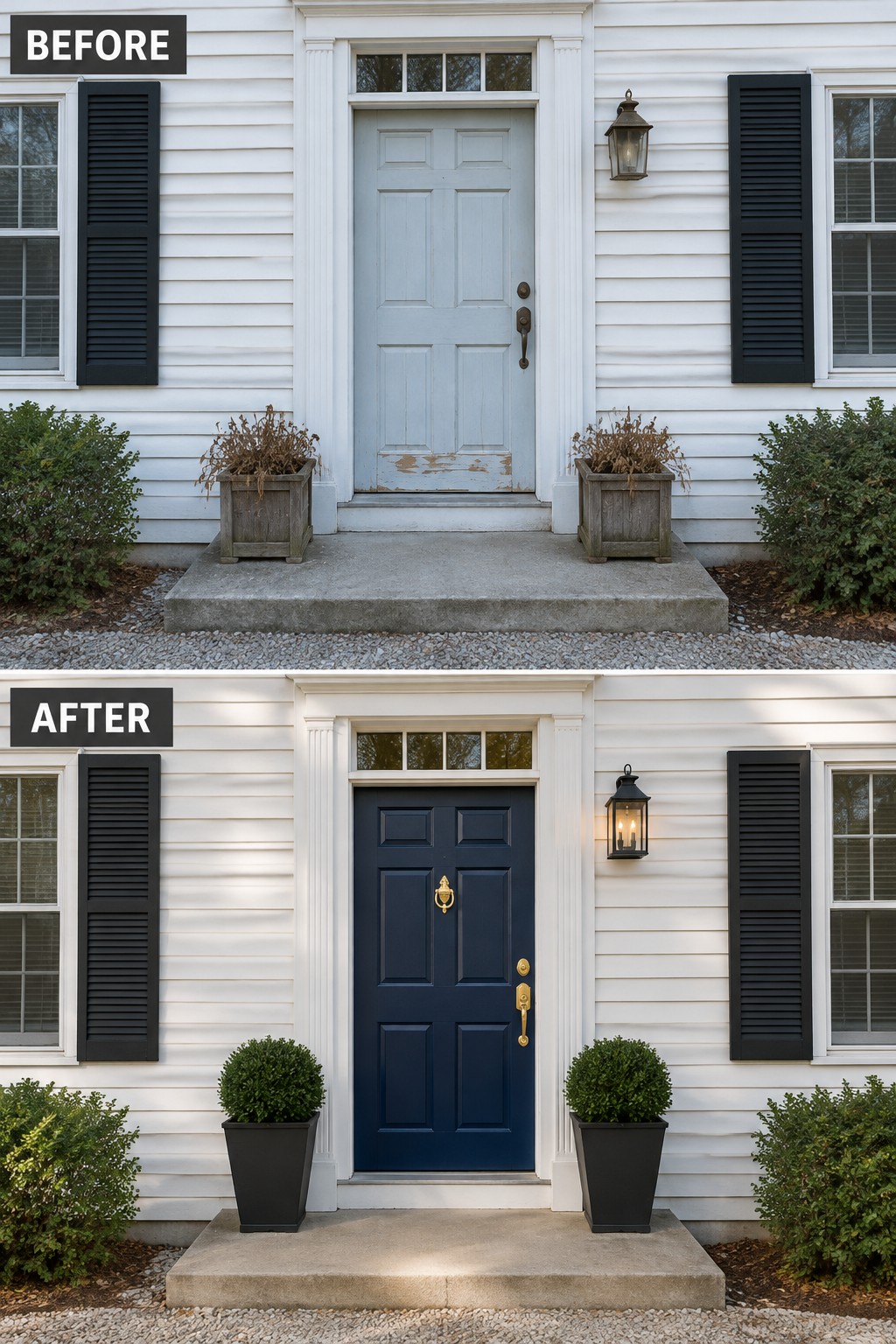
A faded front door often makes the whole house look older than it is. Switching to a deep navy with brass hardware gave this entry a clearer focal point and made the house feel more finished. The dark planters with fresh shrubs replaced the tired wooden boxes and helped the new door color stand out without extra decoration.
This idea works especially well on colonial homes where the door sits right in the middle of the facade. Choose a color that contrasts with the siding, then keep any other changes small. Start with the door and a matching pair of planters before adding more features.
Change A Colonial Front Door From Black To Red
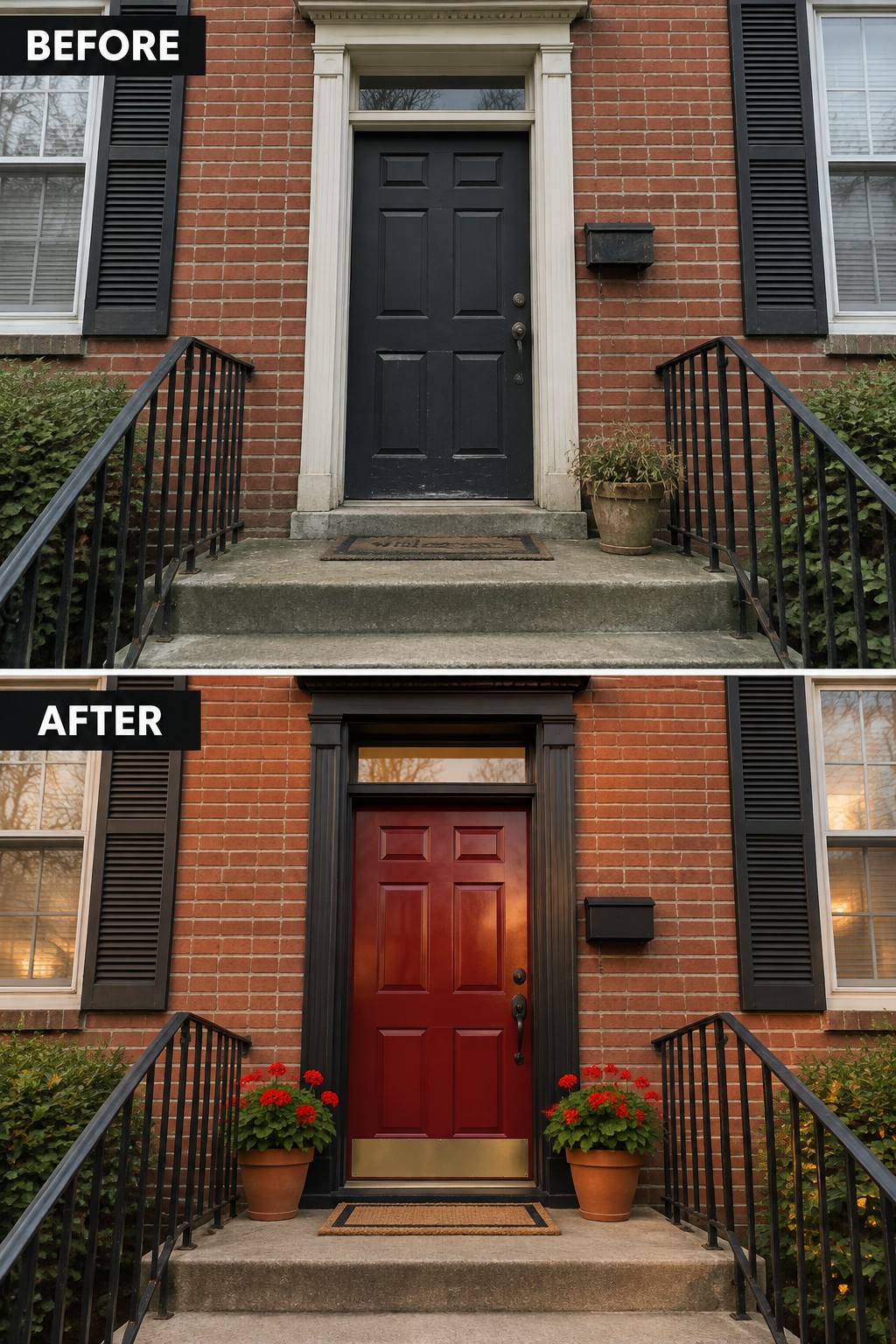
A front door color change often does more work than people expect on a colonial home. Here the door shifted from black to a strong red while the trim was painted dark to frame it cleanly. The steps now feel more balanced with two matching planters placed on either side.
This approach suits brick colonials especially well because the door becomes the clear focal point. Keep the rest of the exterior simple and let the new color carry the update. Two matching planters help the entry feel intentional without crowding the small landing.
Paint The Front Door Black
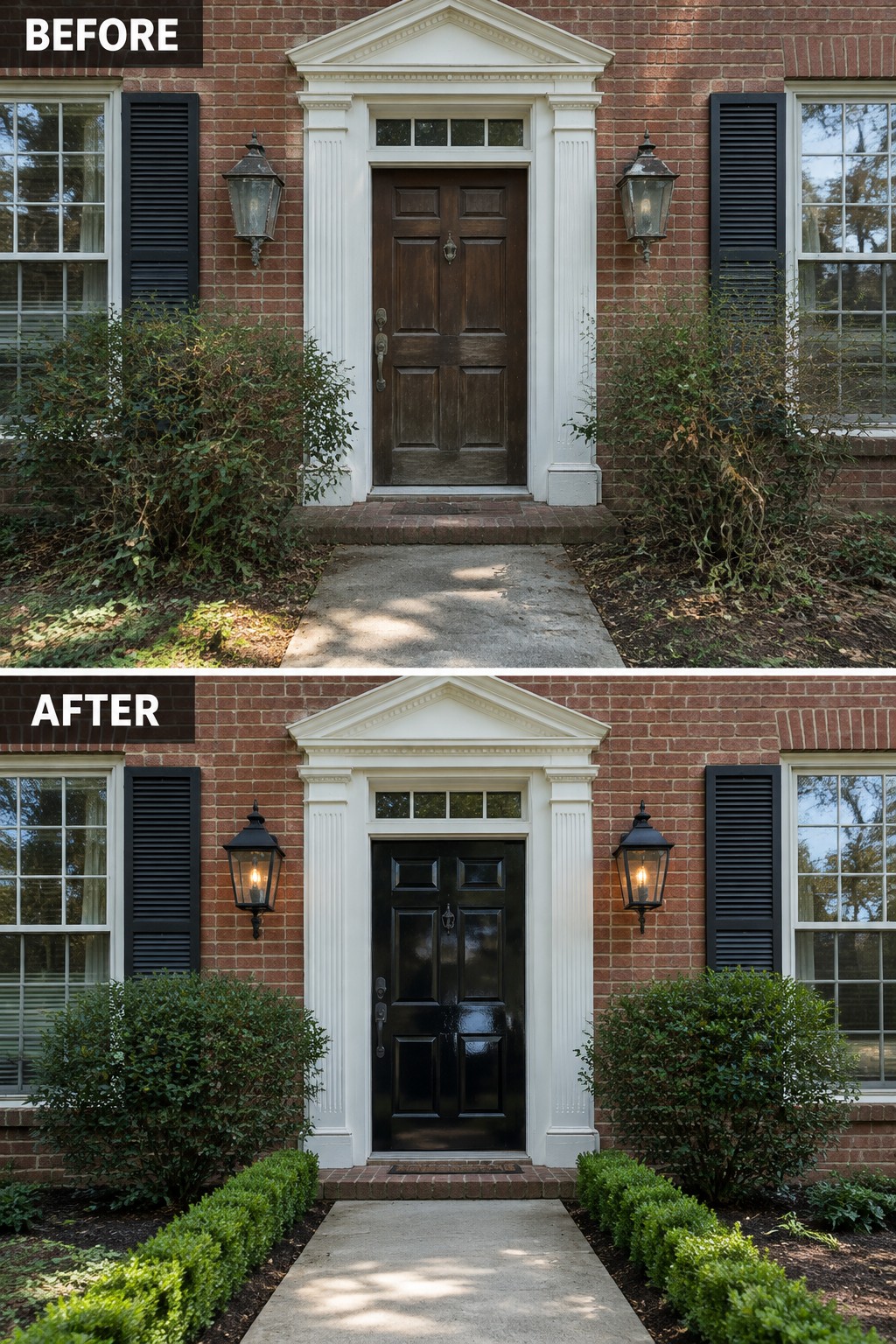
A dark front door color can shift the whole feel of a colonial entry. In this case the brown door was swapped for a glossy black that stands out against the red brick and white trim. The shrubs were also cut back and shaped so the doorway feels open instead of hidden.
This works best on brick colonials where the door already sits under a pediment and between windows. Use exterior paint with a satin or gloss finish and keep the surrounding trim bright. It is a low cost change that still reads as intentional once the planting is cleaned up around it.
Use Green Paint To Brighten A Plain Colonial Entry
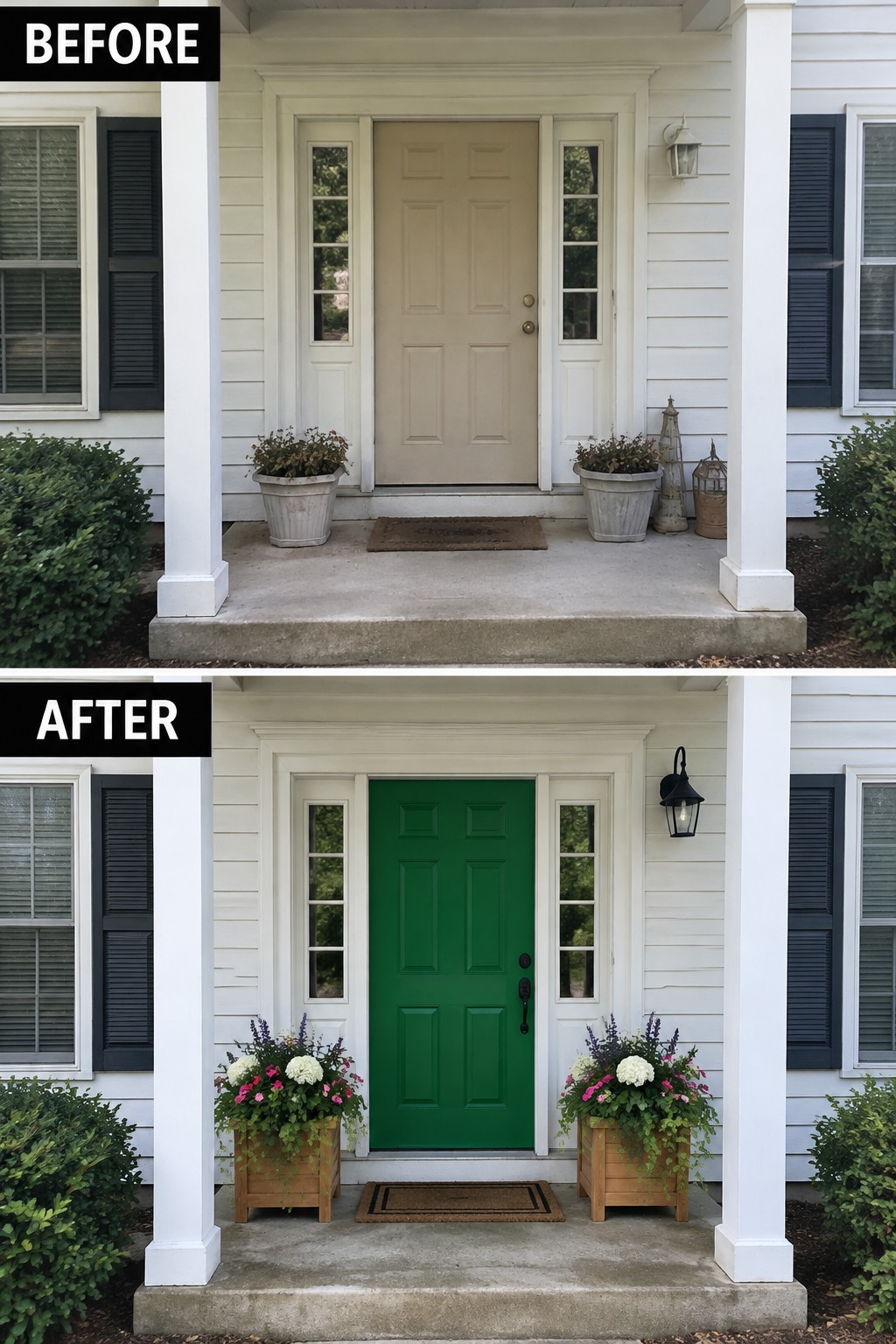
A plain beige door can make the whole front of a house feel flat. Switching it to a strong green gives the entry a clear focal point and makes the house read as more welcoming from the street.
This approach works best on homes with white trim and simple siding. Keep the rest of the porch uncluttered and use matching planters on either side so the new door color stays the main feature rather than competing with extra decor.
Paint The Front Door A Rich Color To Refresh The Entry
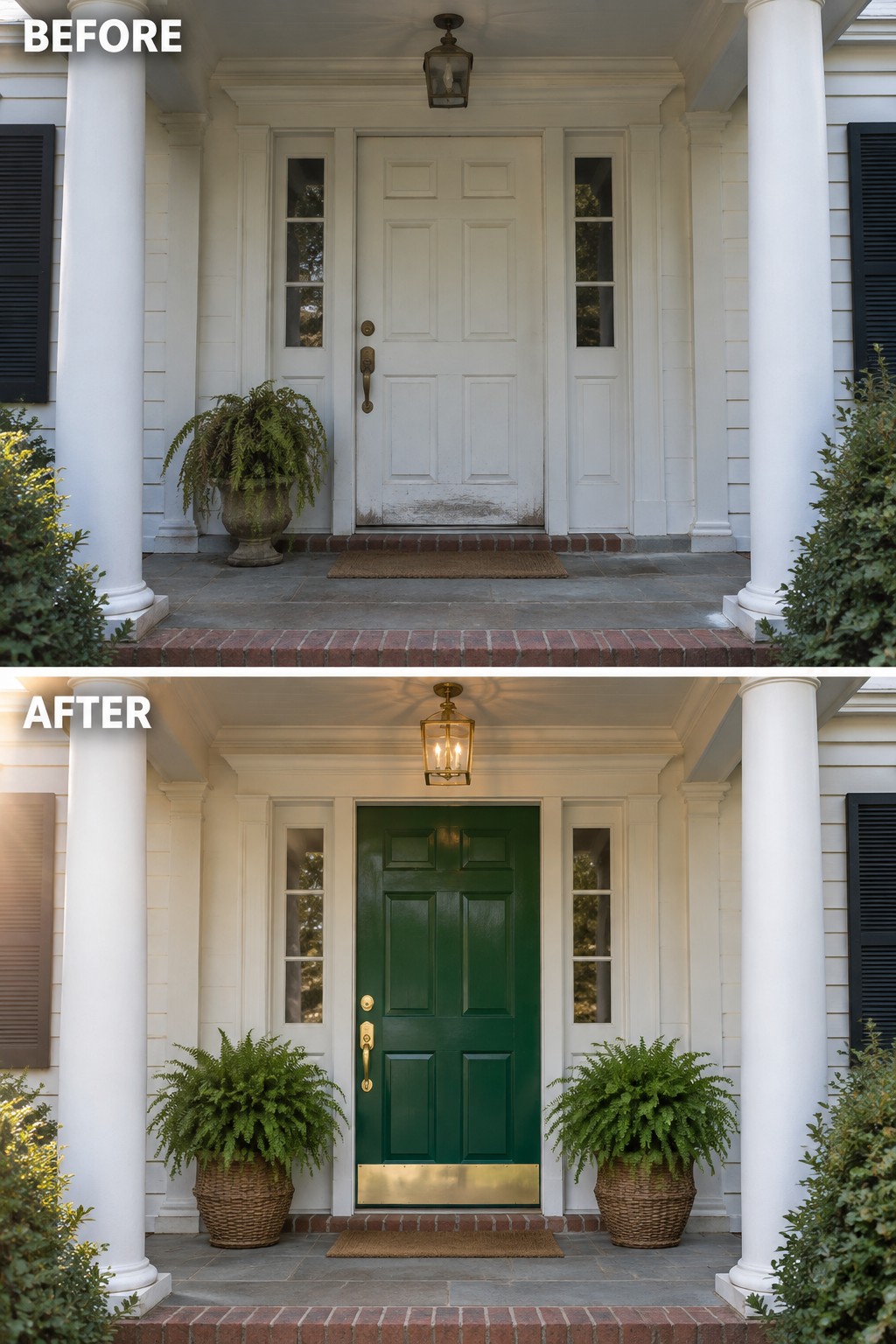
A deep green door instantly gives this colonial entry more presence. The color change from white does most of the work, and the simple addition of matching planters on both sides helps the new door feel intentional rather than like a single bold move.
This approach works well on homes with symmetrical porches. Pick a color that contrasts with the trim, keep the surrounding details minimal, and make sure any planters or lighting stay balanced so the door remains the clear focal point.
Bring A Brick Colonial Entry To Life With Yellow Paint

A faded gray door can make even a solid brick house feel a little flat. Switching it to a bright yellow instantly changes the mood and draws the eye straight to the entry. The two lanterns add evening light and balance, while the matching planters replace the tired pot with something that looks intentional.
This idea suits colonial homes where the door already sits in a clear frame. Choose a color that stands out against the brick but still feels classic. Keep the rest of the changes small so the door stays the main feature and the update stays easy to maintain.
Paint Shutters a Dark Color to Frame the Front Door
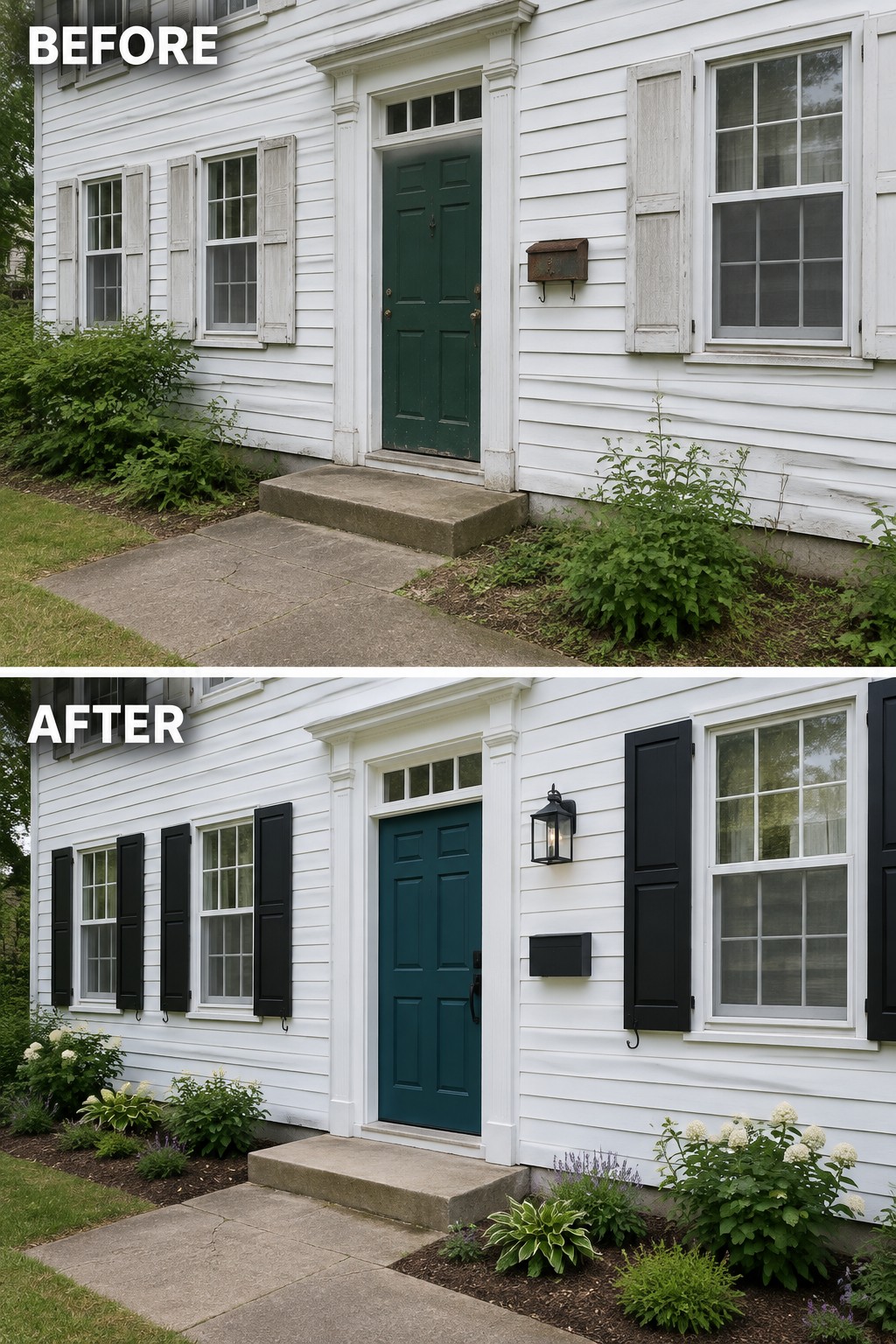
Many older homes have shutters that have faded or no longer suit the trim and door color. In this case, switching the shutters to a deep black gave the green door a clear focal point and made the whole front look sharper without any major construction.
This approach works well on colonial-style houses where the door already has a strong color. Keep the new shutter color consistent on all visible windows, update any visible hardware like the mailbox at the same time, and refresh the planting beds right in front so the eye moves cleanly from the path to the door.
Add Red To A White Colonial Doorway
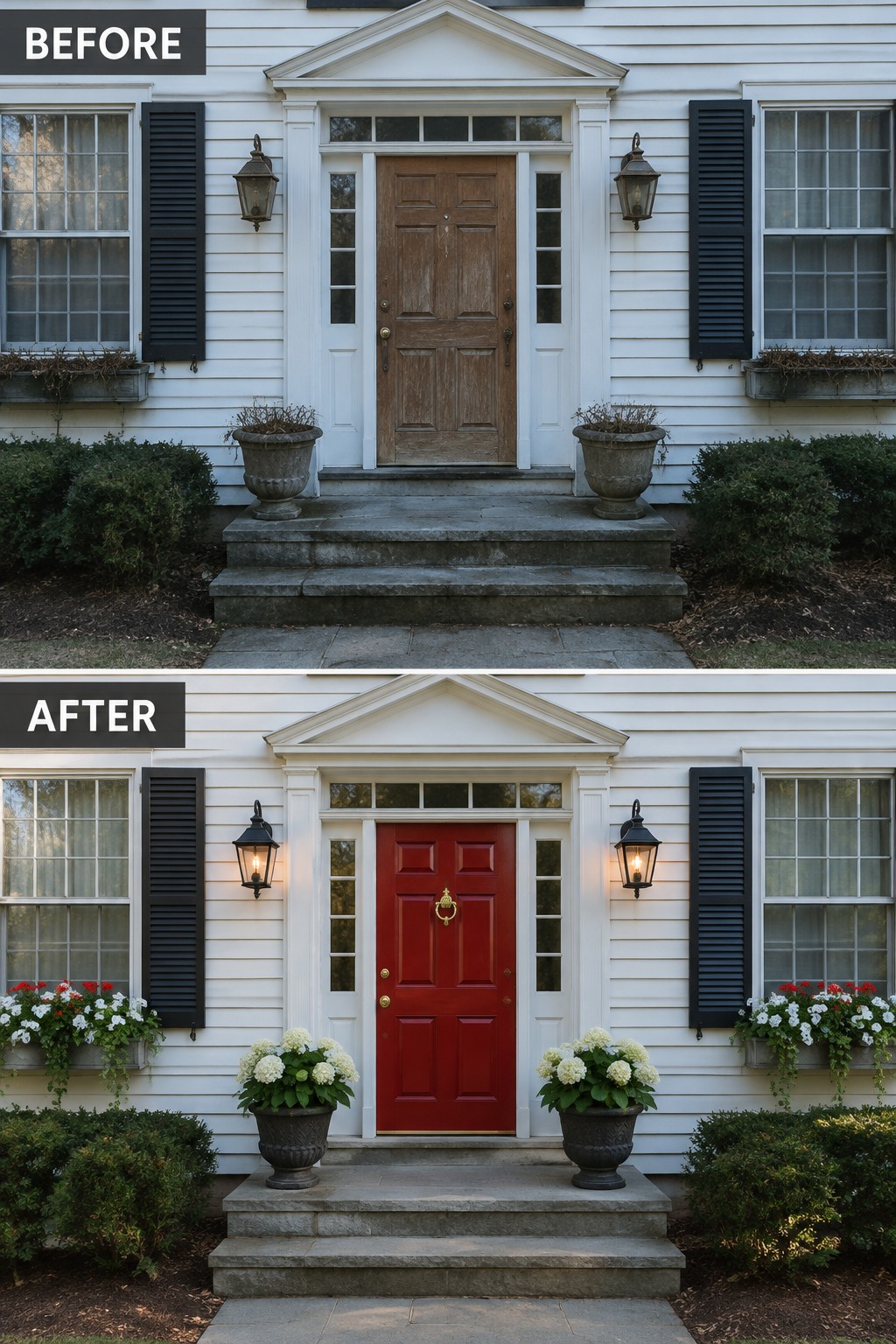
Many colonial homes look a bit flat when the front door blends into the siding. Changing the door to a strong color like red gives the whole entry a clear focal point. The lit lanterns and fresh flowers in the planters support that choice without competing with it.
This idea works best on homes with white siding and black shutters. Pick a door color that stands out from the trim, then add simple plants in the window boxes to match. Keep the rest of the facade quiet so the door stays the main feature.
Refresh White Siding With A Soft Green Front Door
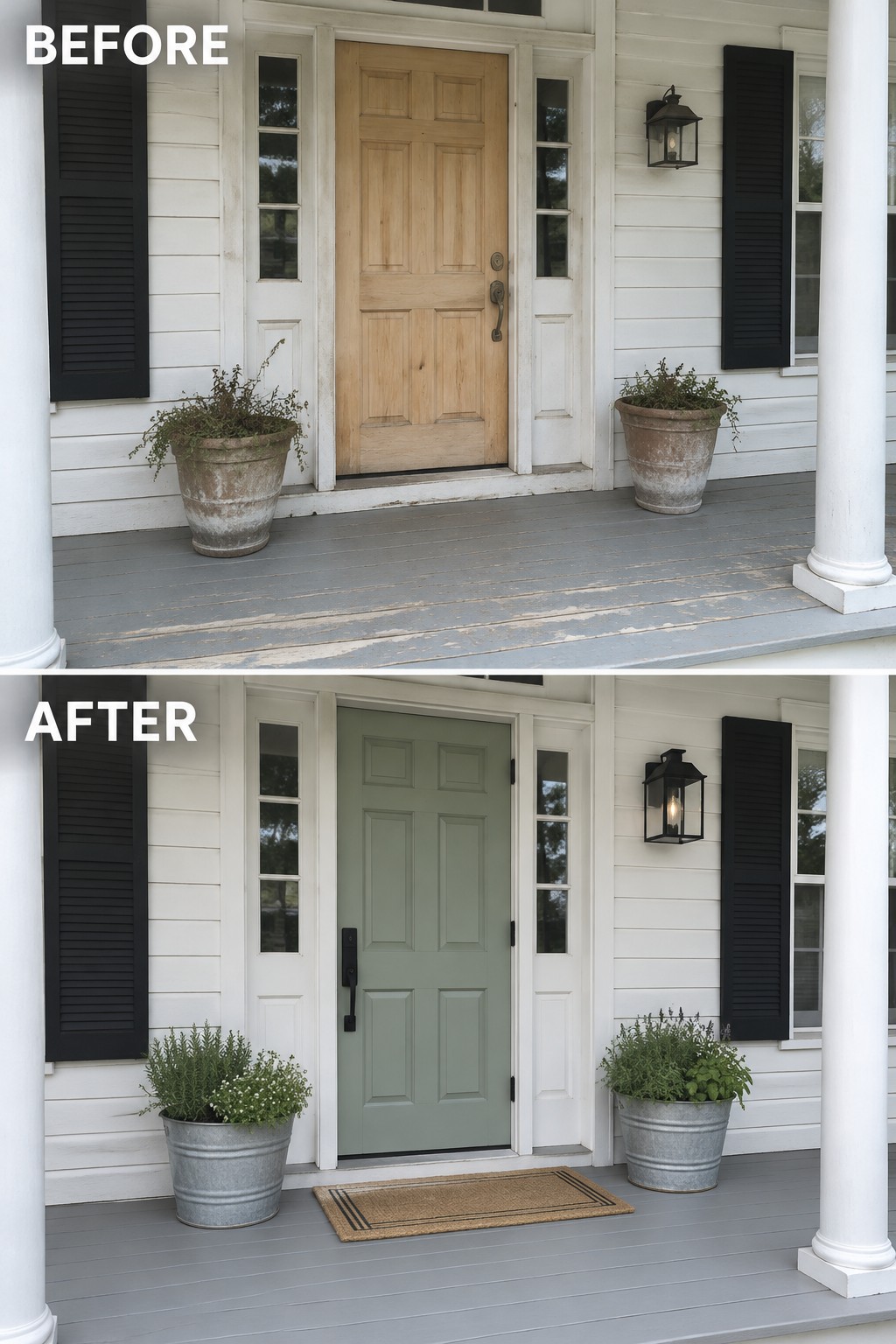
Painting the front door is one of the simplest ways to give a colonial entry more presence. In the before photo the natural wood door blended into the white siding and trim, while the after shows how a soft green makes the door stand out and feel intentional. The change also works with the black shutters and white siding without needing any other major updates.
This approach suits homes that already have a solid structure but need a quick lift. Choose a color that contrasts lightly with your siding and shutters, then use exterior-grade paint made for doors so it holds up to weather. Keep the rest of the entry simple with one or two planters and a doormat so the door stays the main focus.
Give A White Colonial Exterior A Deep Plum Door
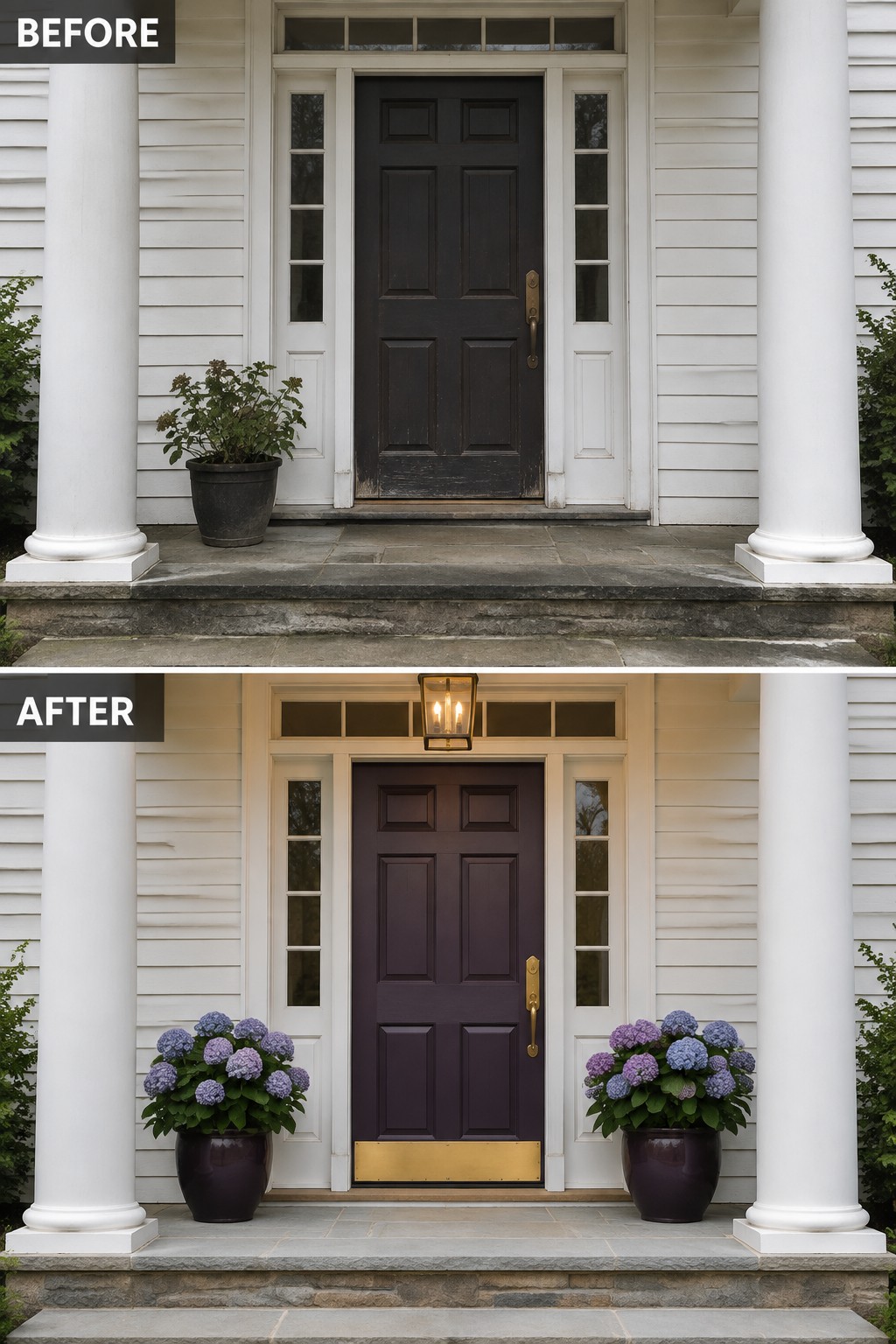
A deeper door color can shift the whole feel of a colonial exterior without any major work. Here the black door was replaced with a dark plum shade that stands out against the white siding. The addition of matching planters on both sides also helped the entry look more balanced than it did with just one pot on the left.
This idea works best on homes with simple trim and light siding where the door can act as the main focal point. Keep the color rich but not too bright, and use two identical planters so the porch feels intentional. It is a low-cost change that still reads as a deliberate refresh rather than just a new coat of paint.
Match Shutters To Your Front Door Color
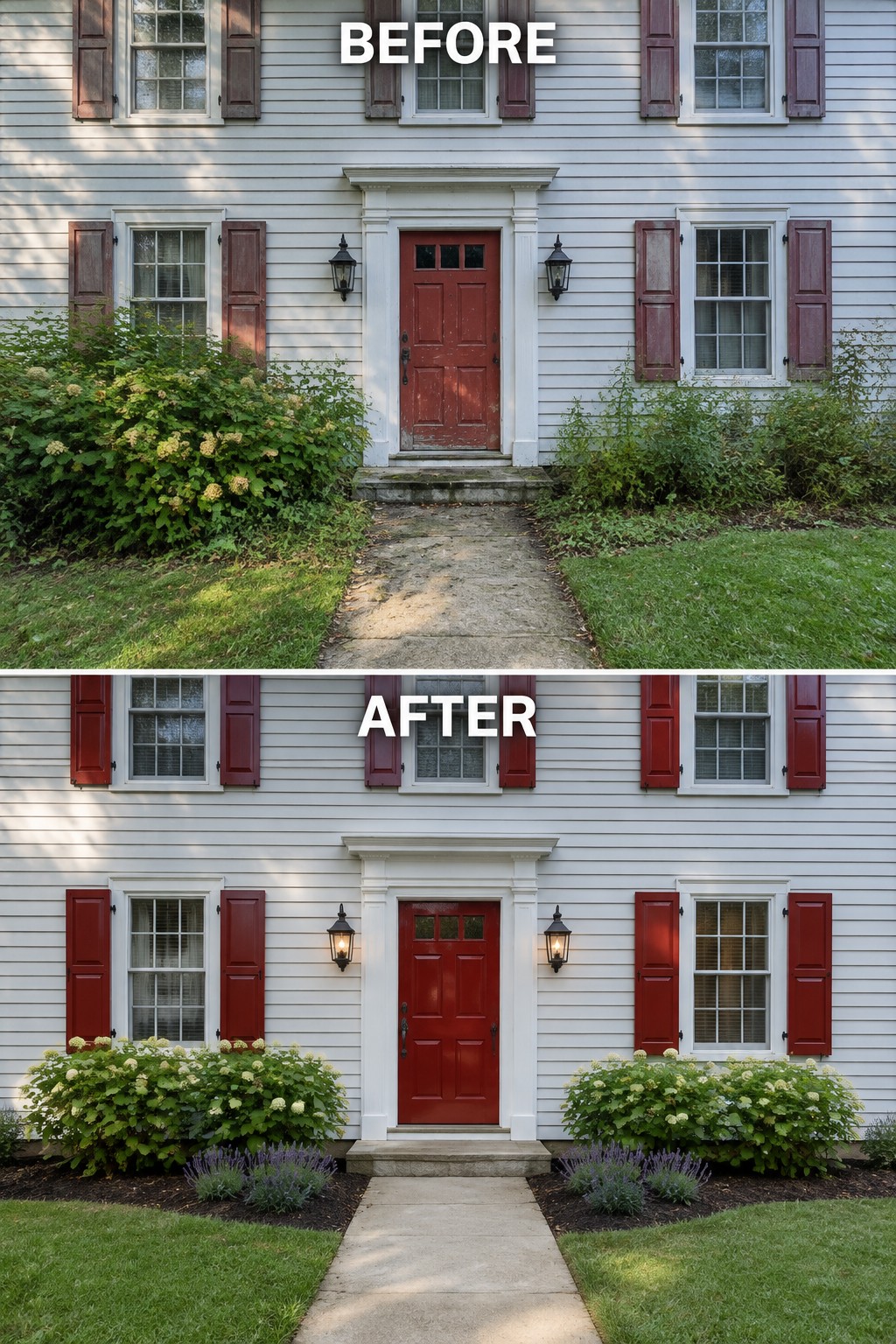
A red front door already gives this colonial house a clear focal point. The real shift came from painting all the shutters the same red so the whole facade feels pulled together instead of scattered. Once the color was consistent, the entry stopped looking patchy and started looking intentional.
This idea works best on homes that already have a strong door color but mismatched or faded shutters. Start by choosing one color for both the door and shutters, then keep the surrounding trim and siding neutral so the red stays the star. It is a low-cost change that reads as a bigger update because the eye now sees one clean statement instead of several competing ones.
Lighten A Brick Colonial With A Muted Green Doorr
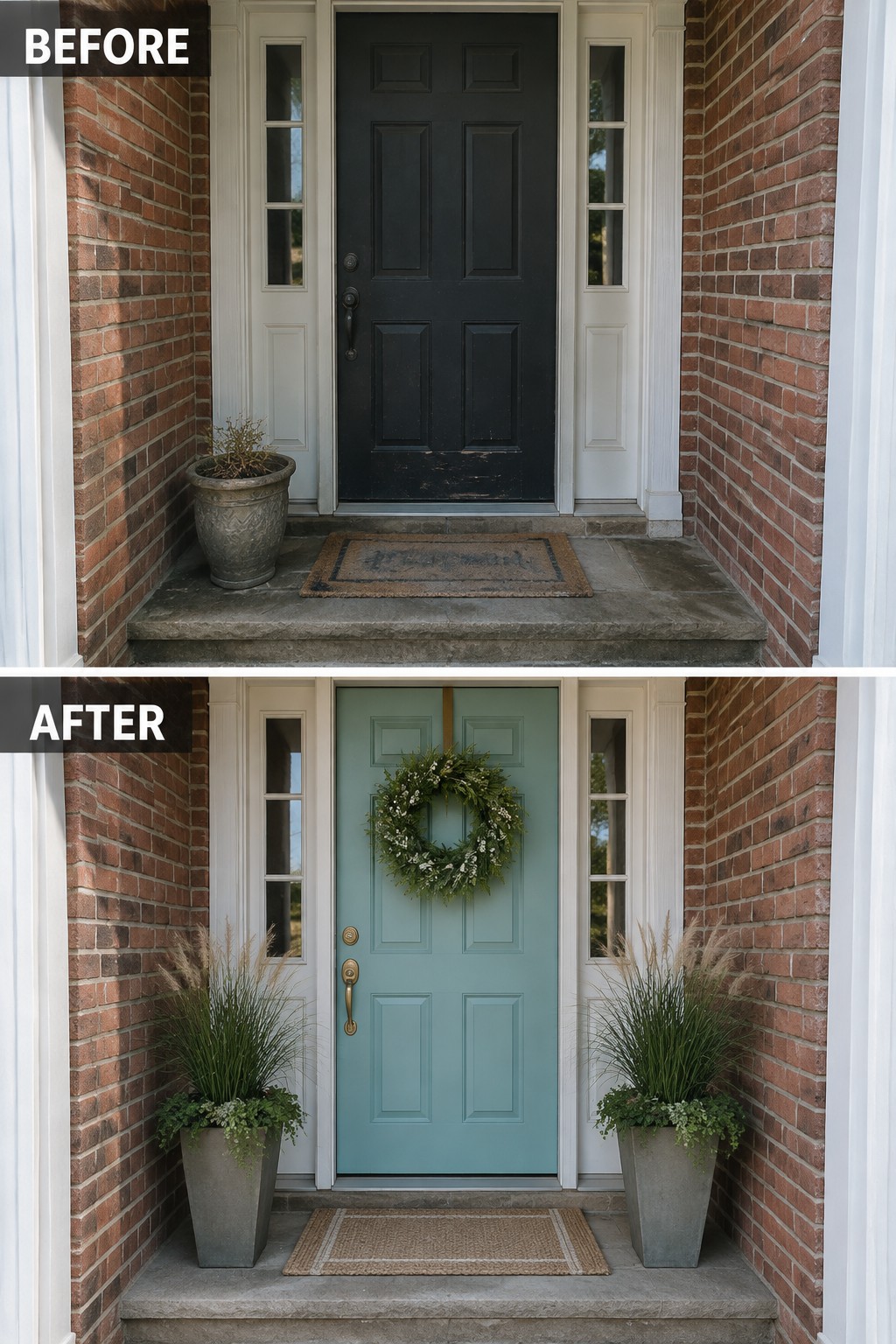
A front door color change can shift the whole feel of a colonial entry without major work. The dark door made the brick look heavier and a bit dated, while the soft green gives the facade a lighter, fresher look that still respects the style of the house.
This approach suits brick colonials that need a quick update. Pick a muted shade that contrasts with the brick and white trim, then add matching planters on each side so the door feels centered and welcoming rather than bare.
Make A Colonial Entry Stand Out With Warm Orange Paint
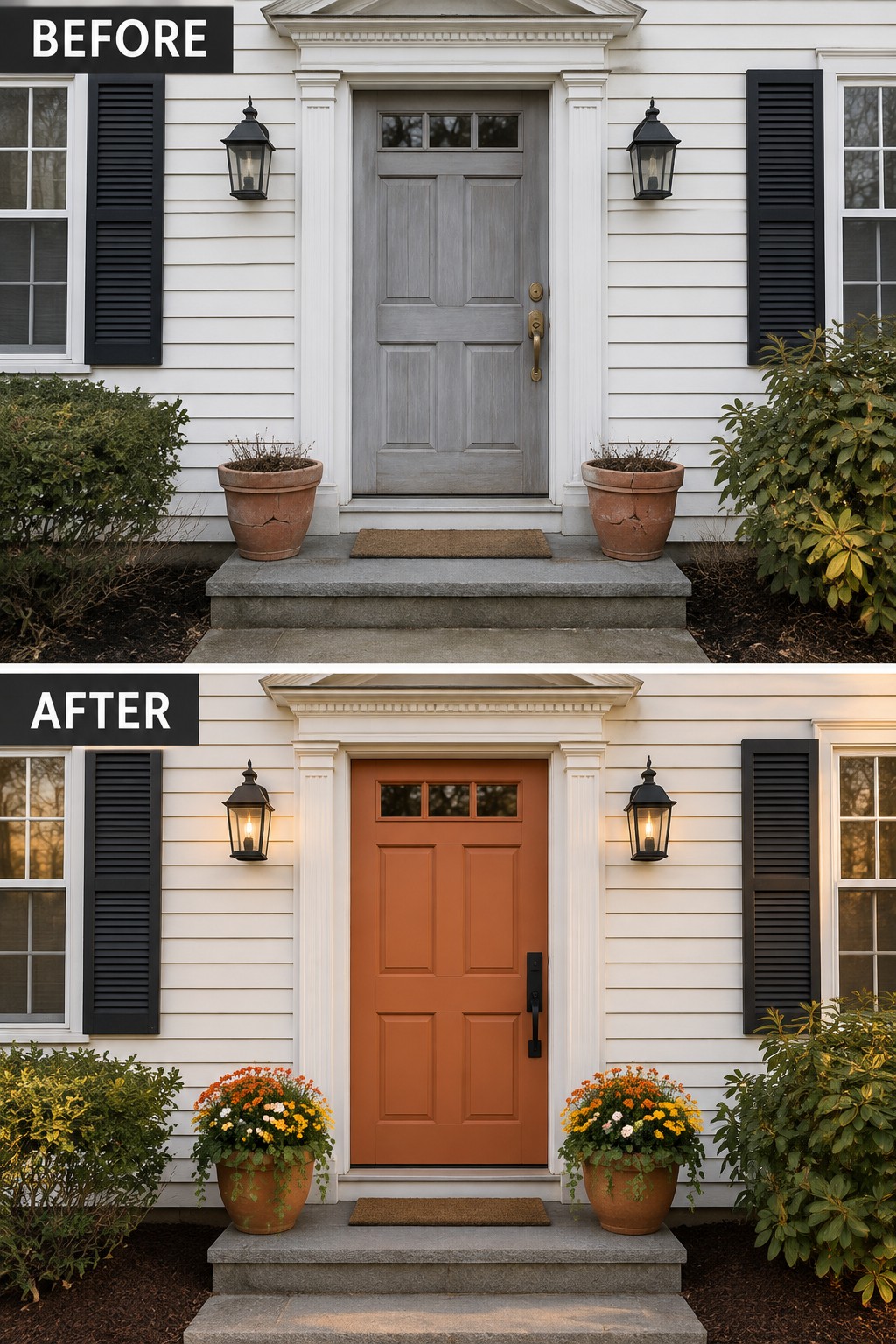
A front door color change can update the look of a colonial home without a big renovation. The gray door in the before photo felt flat against the white siding, while the new warm orange draws the eye and makes the entry feel more open. Swapping the old cracked pots for fresh flowering ones also helped tie the step area together.
This idea works best on houses where the door sits front and center with simple trim around it. Pick a color that contrasts with the siding but still suits the age and style of the home. Keep the rest of the updates small, like new planters or lighting, so the door stays the main point of interest.
Coordinate A Deep Gray Door With Colonial Shutters
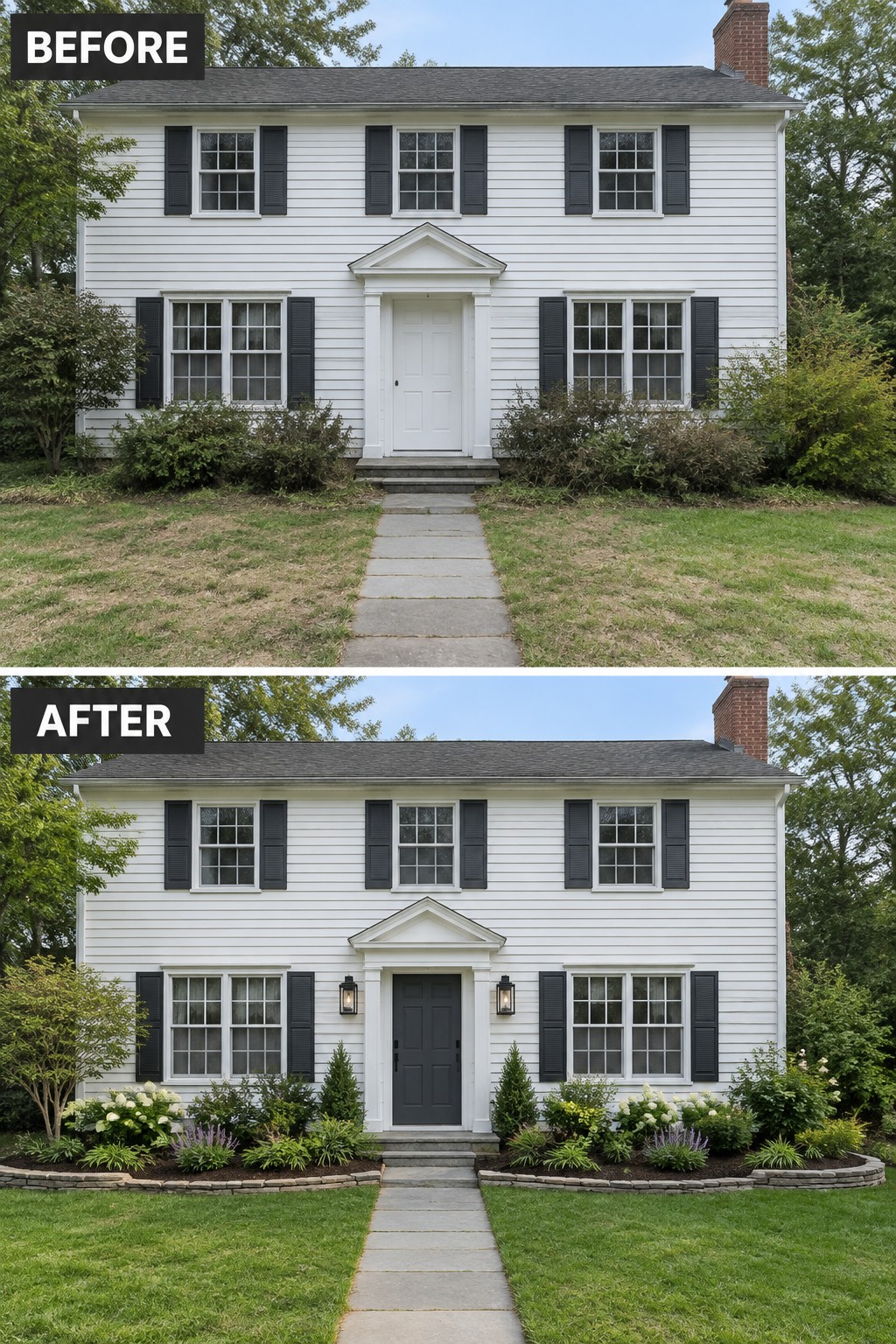
A dark front door color stands out nicely against white siding on a colonial house. Here the door changed from white to a deep gray that matches the shutters and gives the entry a clearer focal point.
This update works on many older colonials where the trim and lines are already in good shape. Pick a color that echoes the roof or existing shutters, then add a pair of simple lights beside the door to complete the change.
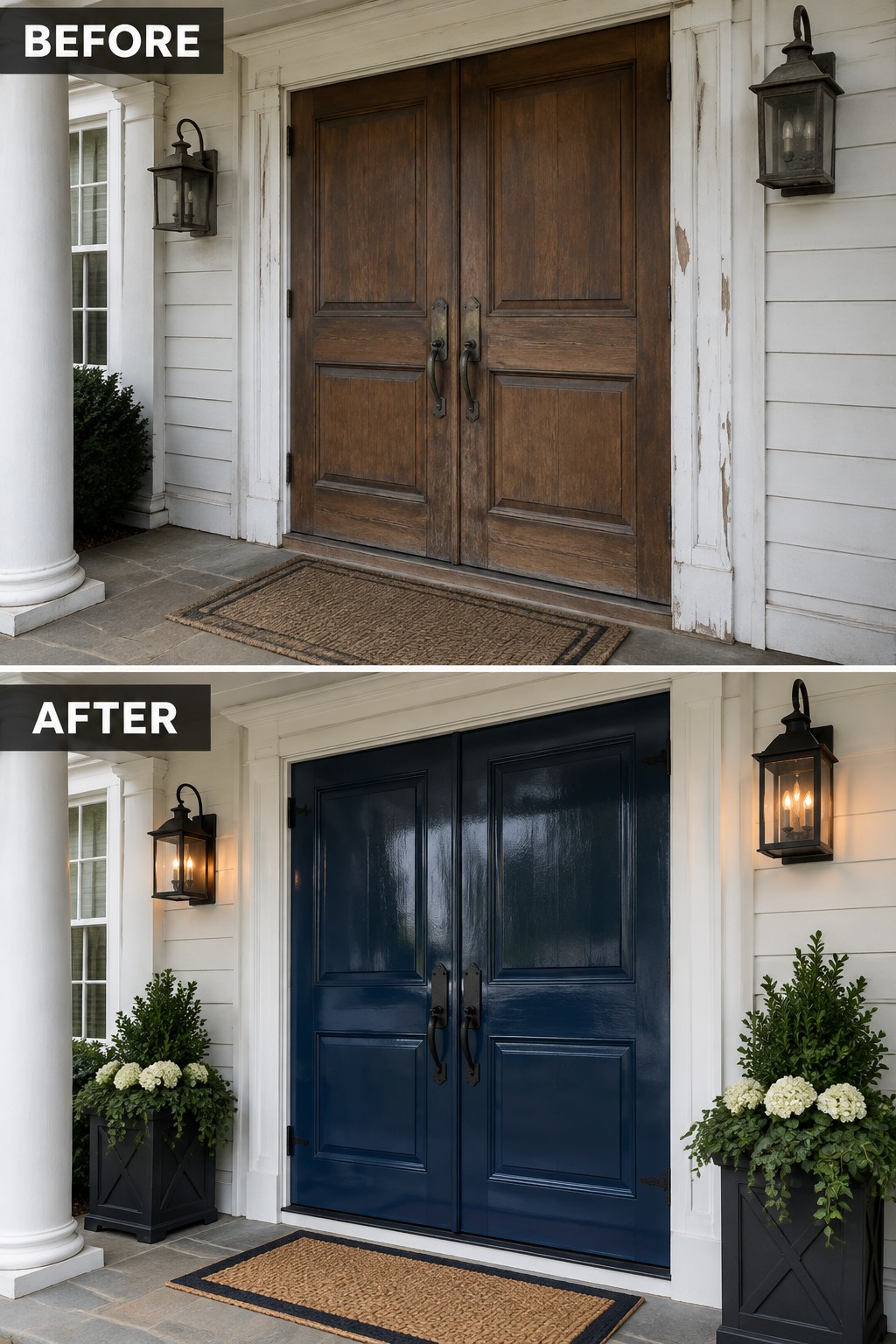
Painting the front door a deep navy blue gives a colonial exterior a fresh start without touching the rest of the house. The old brown doors blended into the woodwork and looked tired, while the new color creates a clear focal point that still feels traditional.
This change works best on homes with white or light siding and simple trim. Pick a color that stands out from the background, keep the hardware dark, and add matching planters on each side if the space allows. The result feels finished without needing a full renovation.
Add A Bright Teal Door To White Brick
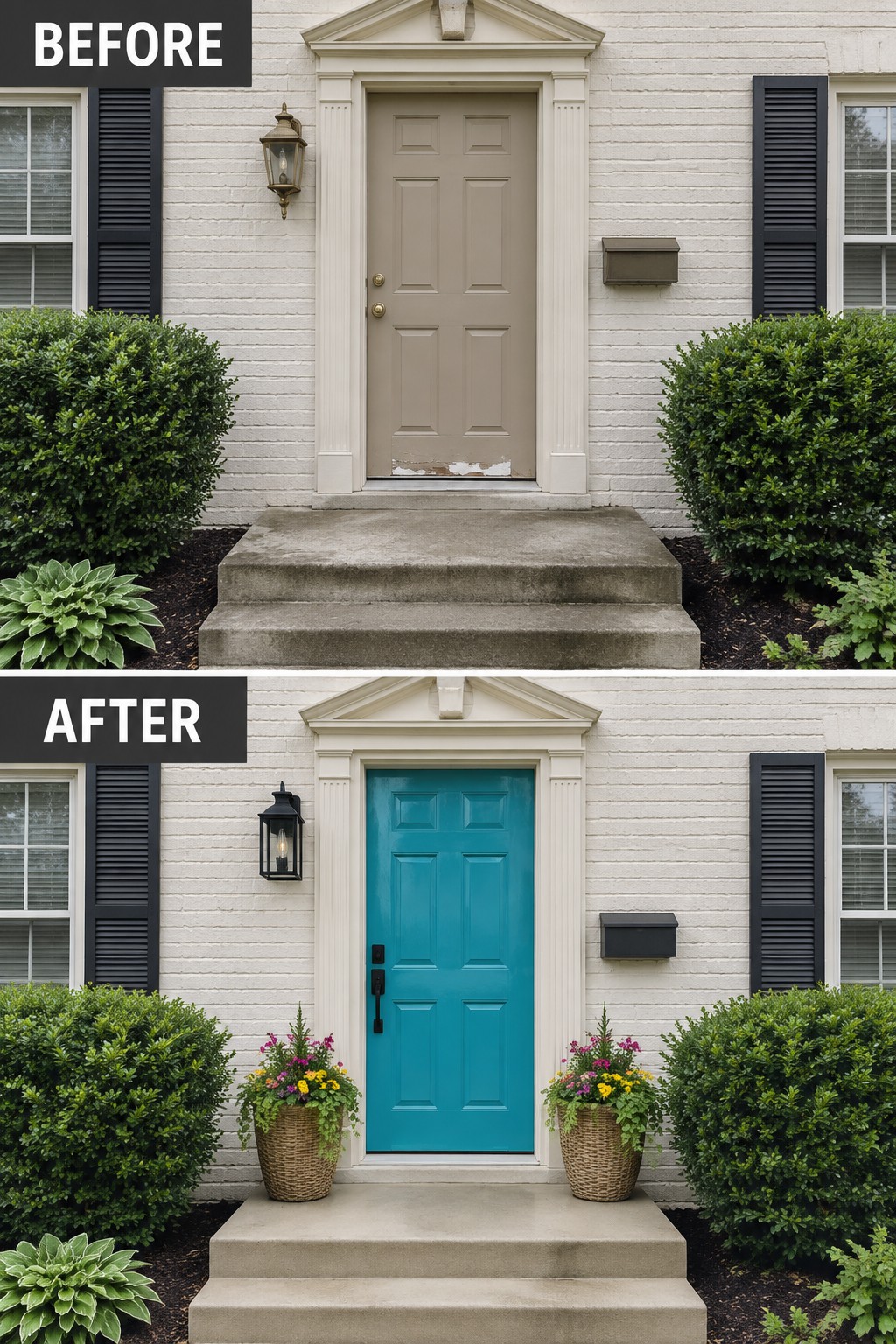
A new front door color can lift the whole look of a colonial exterior when the rest of the house is already in decent shape. Here the switch from a flat beige to a bright teal makes the doorway stand out against the white brick and gives the entry a clearer focal point.
This idea works best on homes with simple trim and clean lines. Pick a color that contrasts with the siding and shutters, then keep any added planters small so they do not crowd the steps.
Clean Up Foundation Shrubs to Frame the Front Door
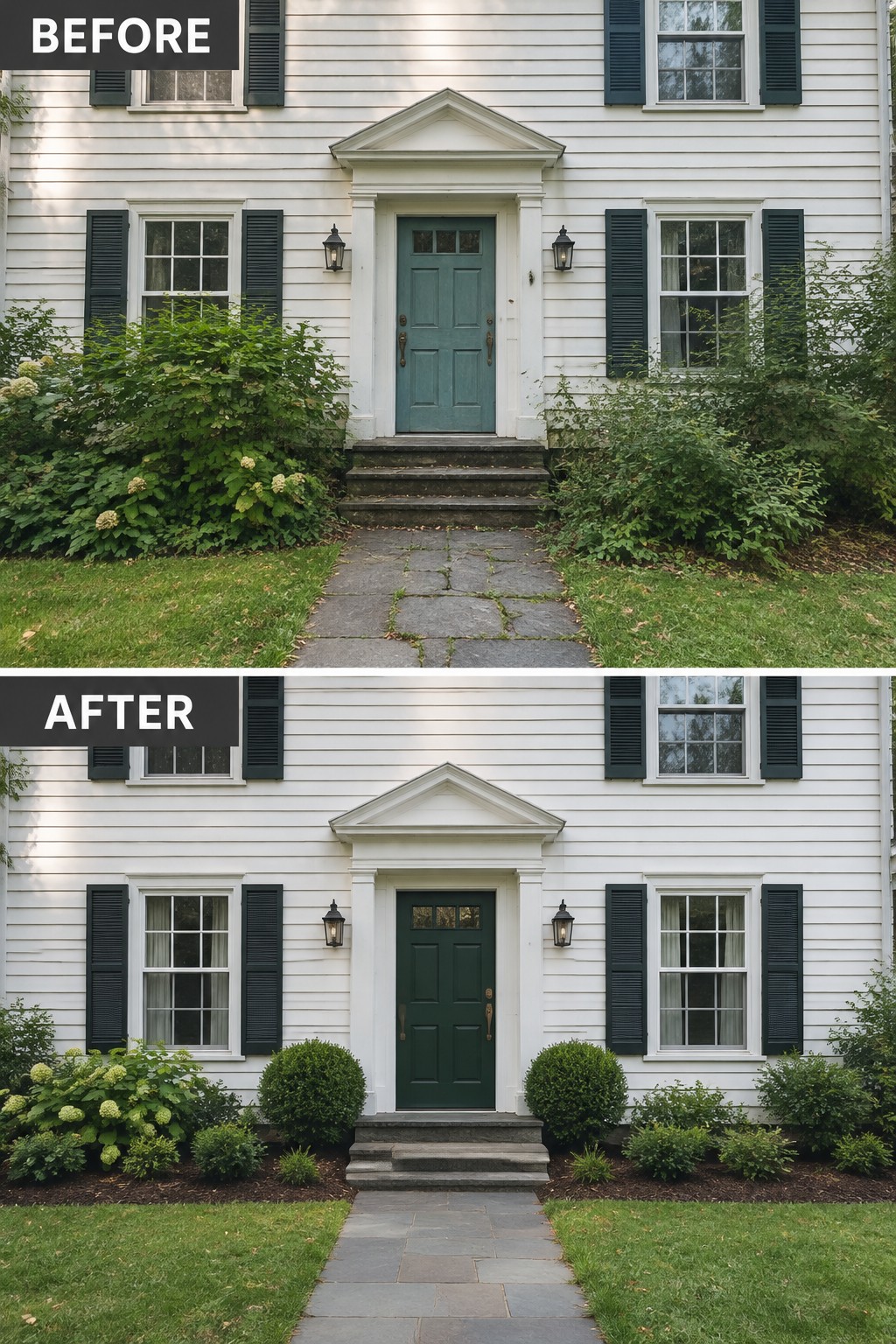
Overgrown shrubs can hide the front door and make even a classic colonial house feel closed in. In this case, the before photo shows tall, messy bushes crowding the windows and steps. The after shows those same areas cut back into low, rounded shapes with fresh mulch, so the green door and white trim stand out clearly.
This approach works well on colonial homes where the door is meant to be the focal point. Start by cutting back any plants that touch the house or block windows, then shape the remaining shrubs into simple mounds. Add a layer of mulch to keep the beds looking neat between waterings. The result is a more open entry without spending money on new hardscaping or major construction.
Give An Older Colonial Home A Coral Front Door
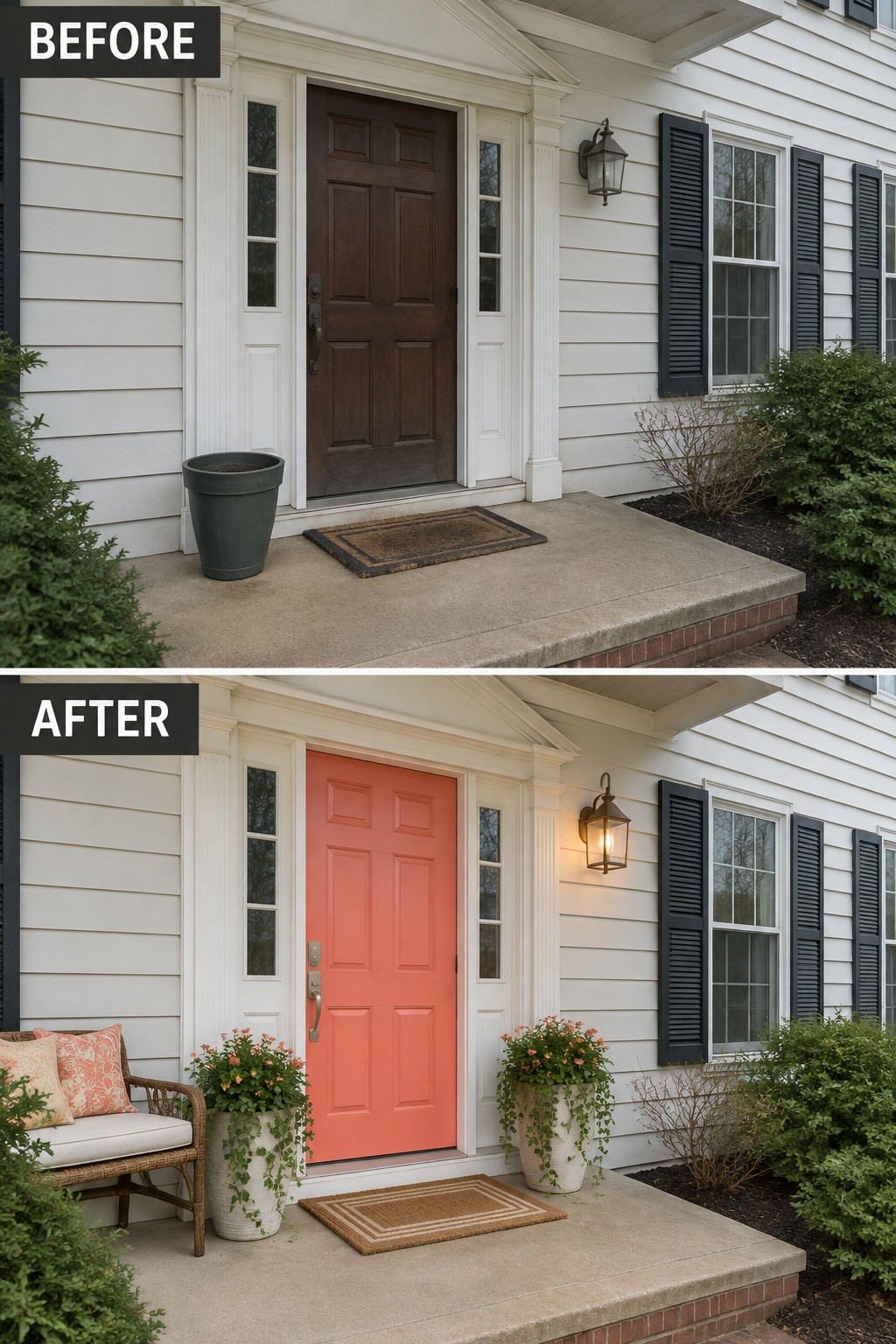
Changing the front door color gives an older colonial house an easy refresh without touching the rest of the exterior. The dark brown door in the before photo blended into the trim and siding, while the coral shade in the after photo creates a clear focal point that makes the entry feel more intentional.
This idea works best when the door already has good trim and panel details. Keep any added pieces minimal, like two planters and a simple bench, so the new color stays the main change rather than competing with extra decor.
Refresh White Siding With A Warm Yellow Door
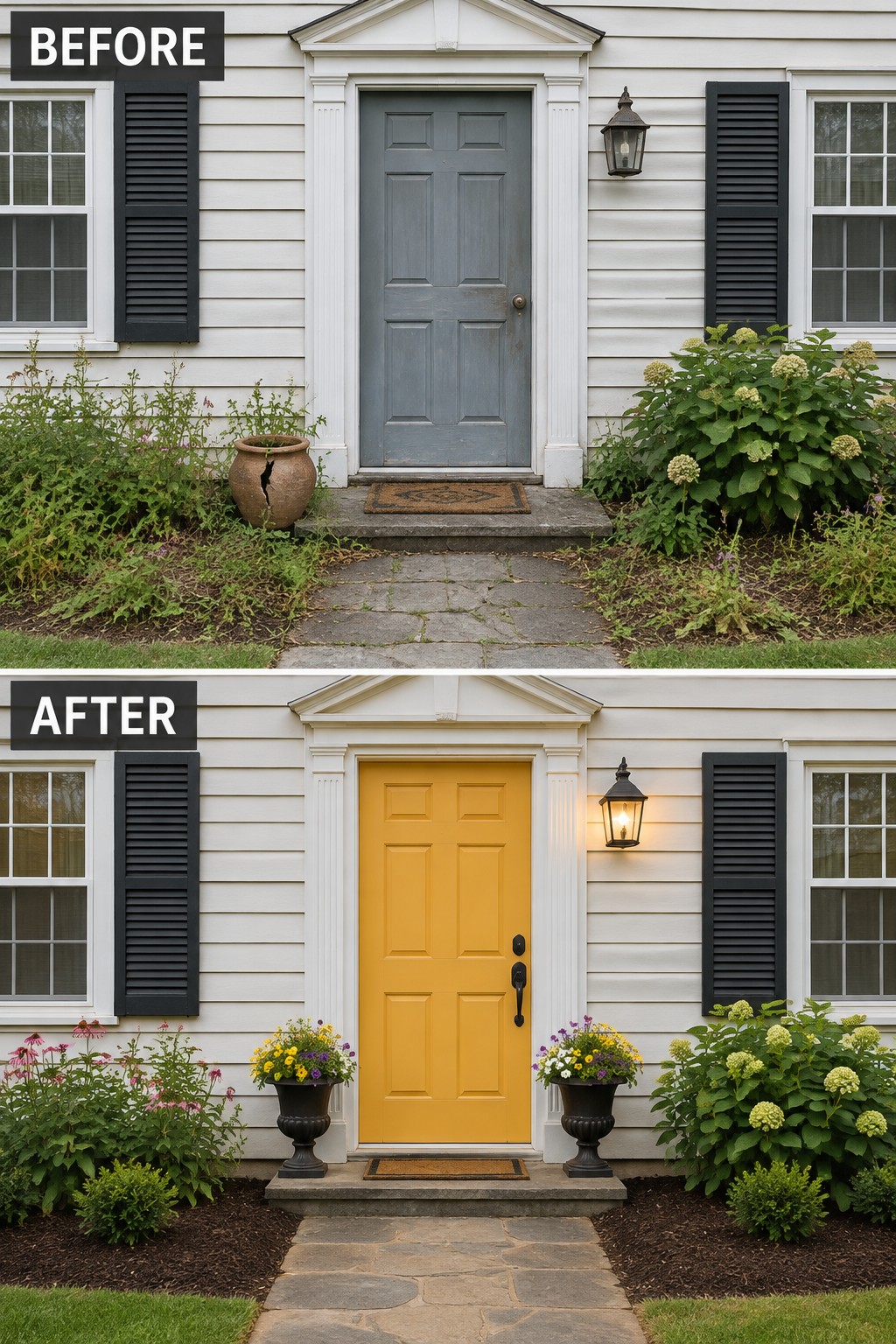
A front door color swap can shift how the whole house feels without touching anything else. Here the gray door gave way to a warm yellow that stands out against the white siding and black shutters, and the simple addition of two matching planters helped tie the entry together.
This works best on colonial homes where the door is the natural focal point. Pick a color that contrasts with your trim, keep the surrounding plants neat rather than overgrown, and make sure the hardware and light fixture still feel current. The rest of the facade can stay the same.
Create A Classic Colonial Look With A Black Front Door
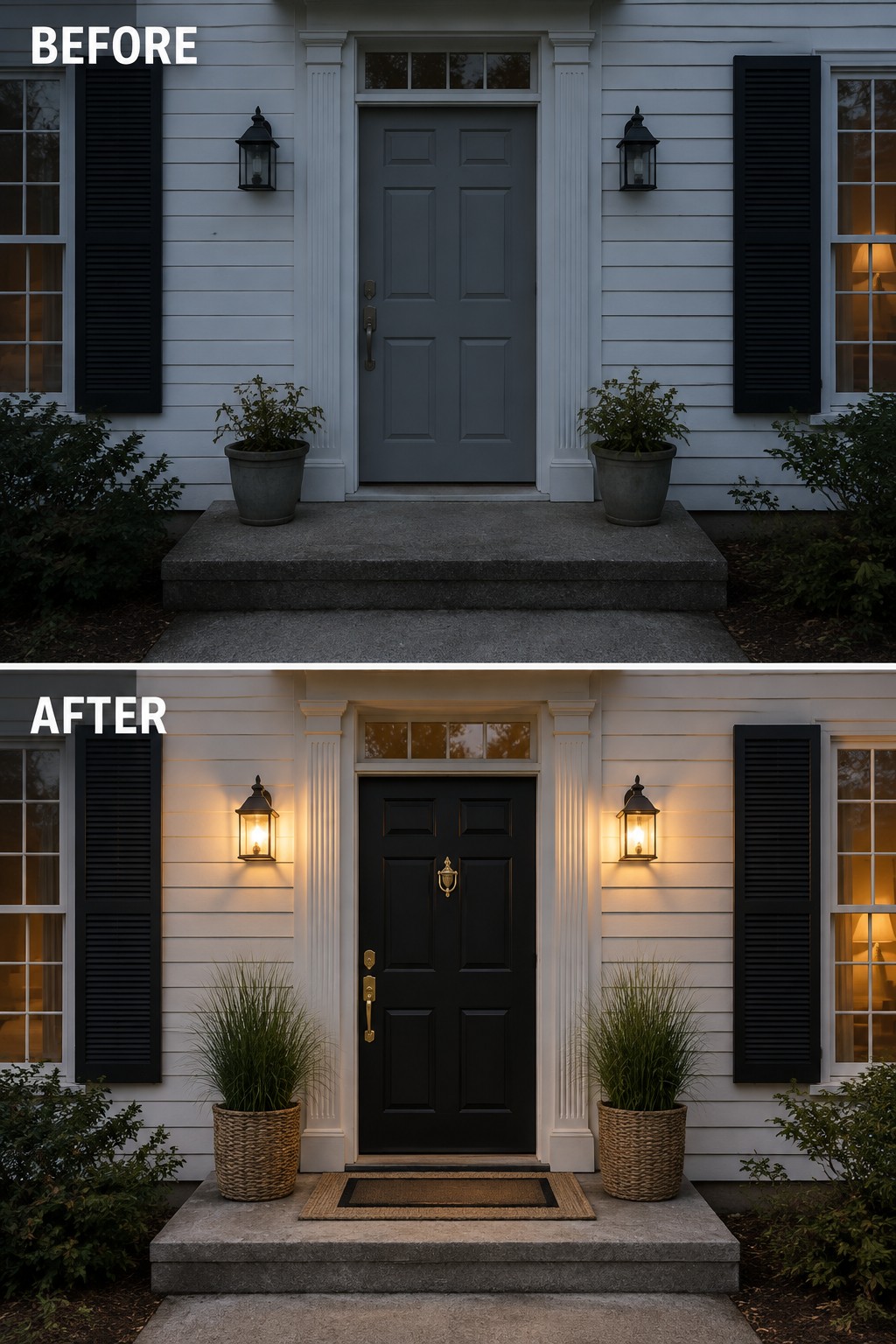
A gray door on a white colonial house tends to disappear, especially once the light fades. Changing it to black gives the facade a clear focal point and makes the whole front look more finished. The addition of lit lanterns on either side helps too, since they frame the door and make the entry feel intentional rather than just functional.
This works best on homes that already have dark shutters or trim, since the black door pulls those elements together. Use exterior paint rated for doors and take time to prep the surface so it lasts. Keep the rest of the styling simple, like the planters and doormat shown here, so the door stays the main change.
Turn A Muted Green Colonial Door Into A Bold Blue Focal Point
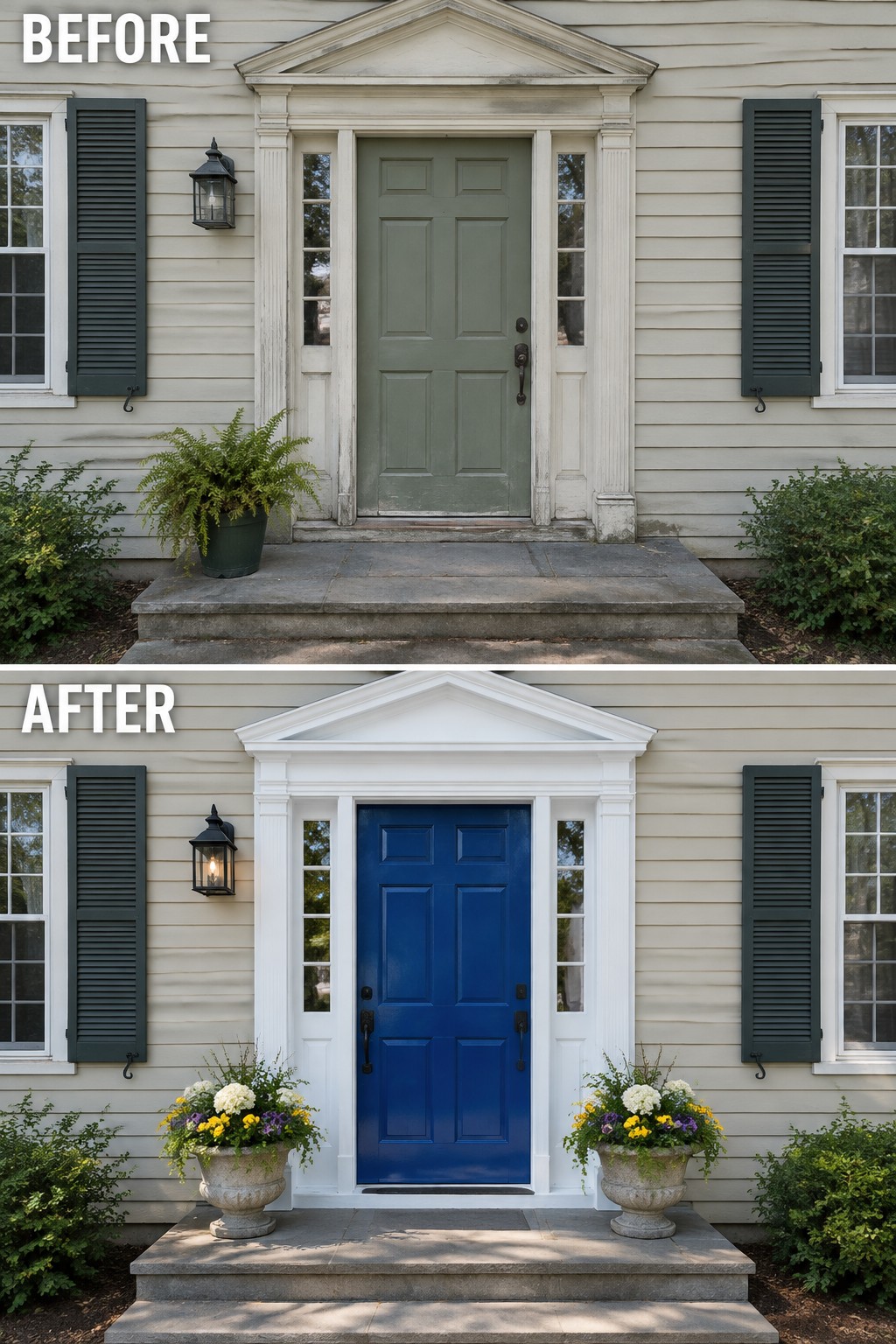
A front door color change can refresh the whole look of a colonial exterior without major construction. The before image shows a muted green door that blended into the trim, while the after shows a strong blue that makes the entry stand out and gives the facade more presence.
This idea works well on homes where the door is the main focal point from the street. Pick a color that contrasts with the siding, keep the trim clean, and add a pair of planters if the steps need a little balance.
Frequently Asked Questions
Q: What color should I choose if my colonial has gray siding? A: Go with a deep navy or forest green for the door. These shades pop against gray without feeling too bold. They echo traditional colonial looks too.
Q: Do I need to prime the door before painting? A: Yes, priming helps the new color stick better. Sand lightly first to remove old gloss. Then apply two thin coats of paint.
Q: Will changing just the door color make a big difference? A: It really does refresh the whole front. The door draws the eye right away in colonial homes.