

Plain front walls and narrow entries are a common curb appeal problem, and I’ve learned that small, thoughtful edits often do more than a big renovation to make a house read as cared for.
Too often these spots feel flat because of blank siding, skimpy trim, weak lighting, or a path that doesn’t guide you, so they look forgotten rather than intentional.
Adding simple elements like paint or contrasting trim, a better porch light, a planted edge, or repositioned house numbers helps correct scale and gives a clearer sense of arrival, and I usually try an inexpensive paint or light swap first to test an idea.
Small updates go a long way.
Most suggestions here are easy to save, test, or adapt so you can improve curb appeal one step at a time without a large project or big budget.
Make A Narrow Entry Feel Welcoming With A Painted Door
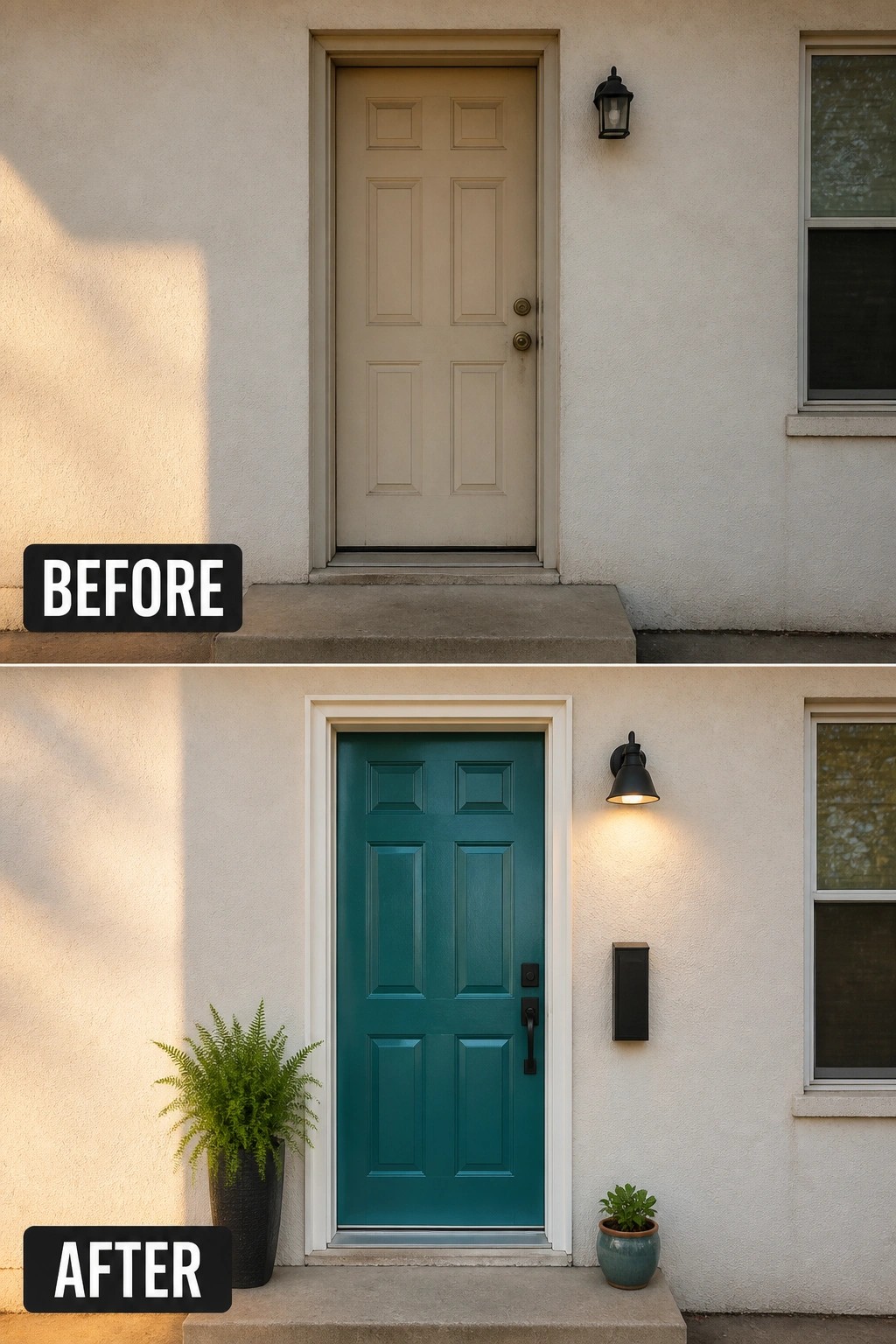
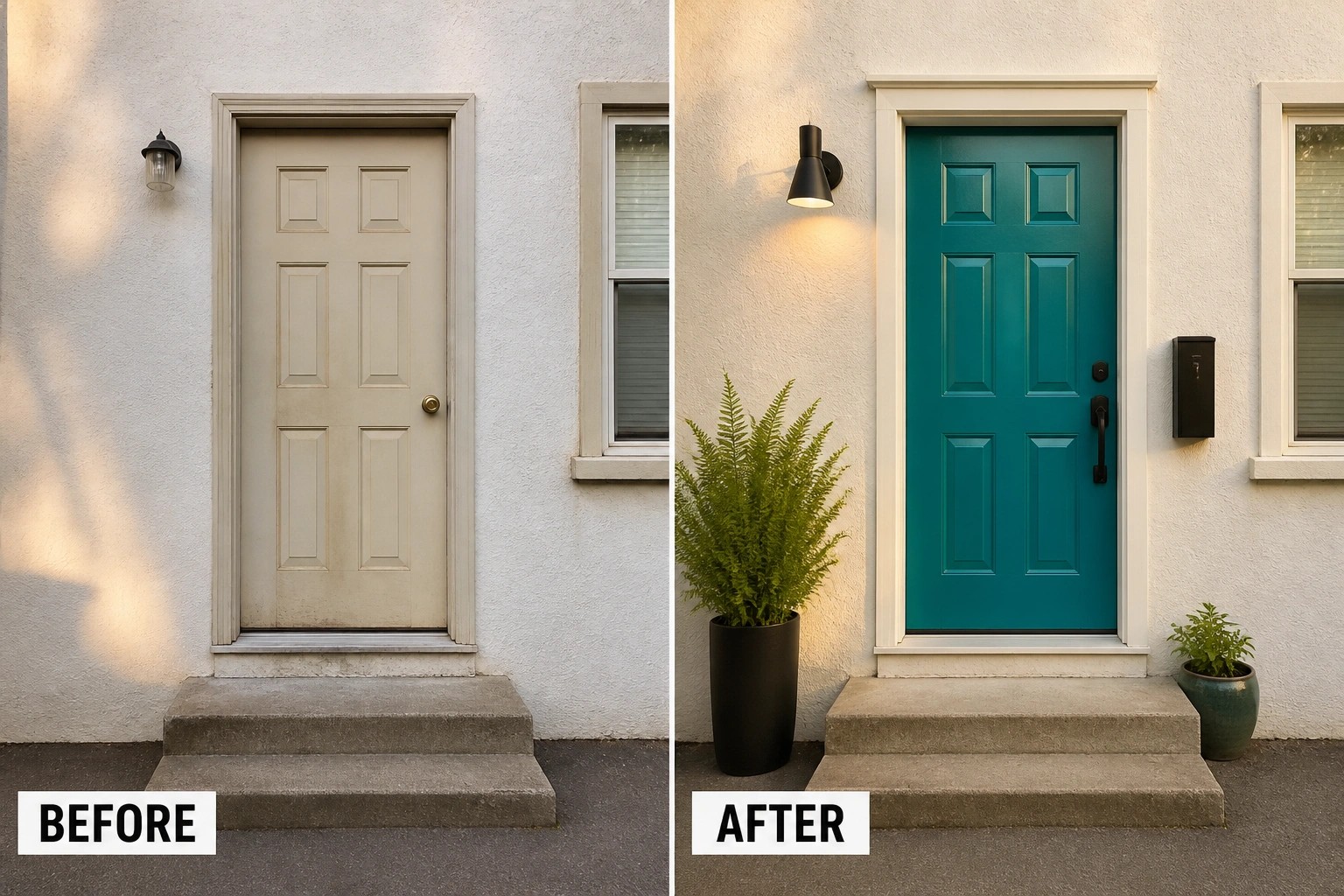
A fresh coat of paint on the front door gives a small, plain entry an immediate focal point. In this update the beige door becomes a rich teal and the change is paired with matte-black hardware, a simple wall light, and a couple of planters so the porch reads as intentional instead of forgotten.
To copy it, choose one strong door color that complements your siding and keep the hardware and light in a single finish for a tidy look (stick to two finishes total). Add one larger planter and a smaller pot to balance the step, pick plants suited to the light the spot gets, and leave enough clear space for the door to swing and for people to pass—this approach works well on modest facades and narrow stoops.
Break Up A Plain Facade With Simple Trim
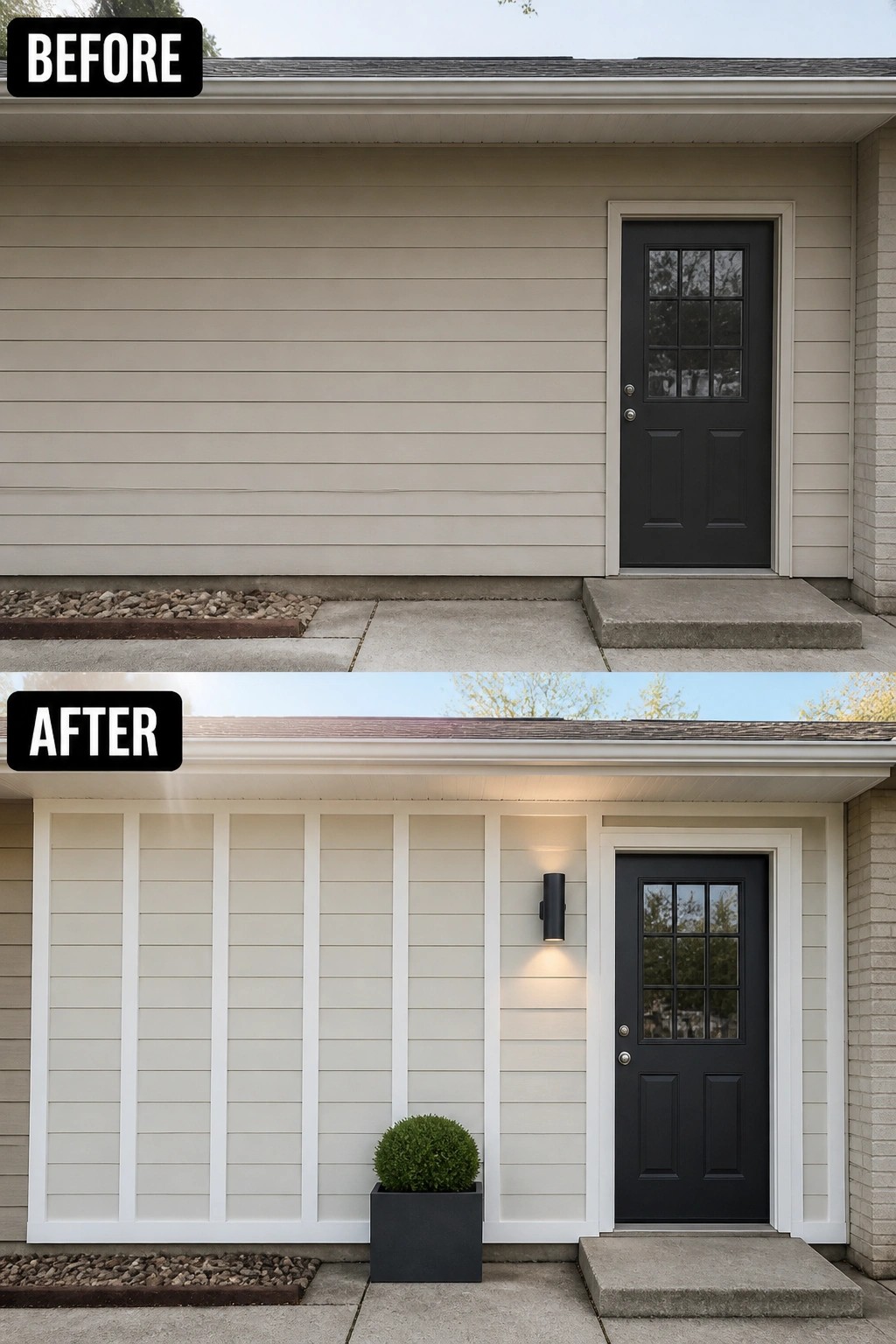
A wide, flat front wall can make a narrow entry feel bland and anonymous. Running a few evenly spaced vertical trim boards over the siding gives the facade instant rhythm and a purpose-built look, while a single wall sconce and one well-scaled planter focus attention on the door instead of the blank wall.
To copy this, start by cleaning the siding and laying out trim spacing that matches your wall height. Use rot-resistant boards or PVC (use PVC for low maintenance) and keep the trim color slightly lighter or brighter than the siding for contrast. Add one wall light at about eye level and a single compact planter on the step so the entry reads as intentional without blocking the path. This works especially well on small houses and narrow entries where a little architectural detail goes a long way.
Give A Bare Porch A Clear Purpose
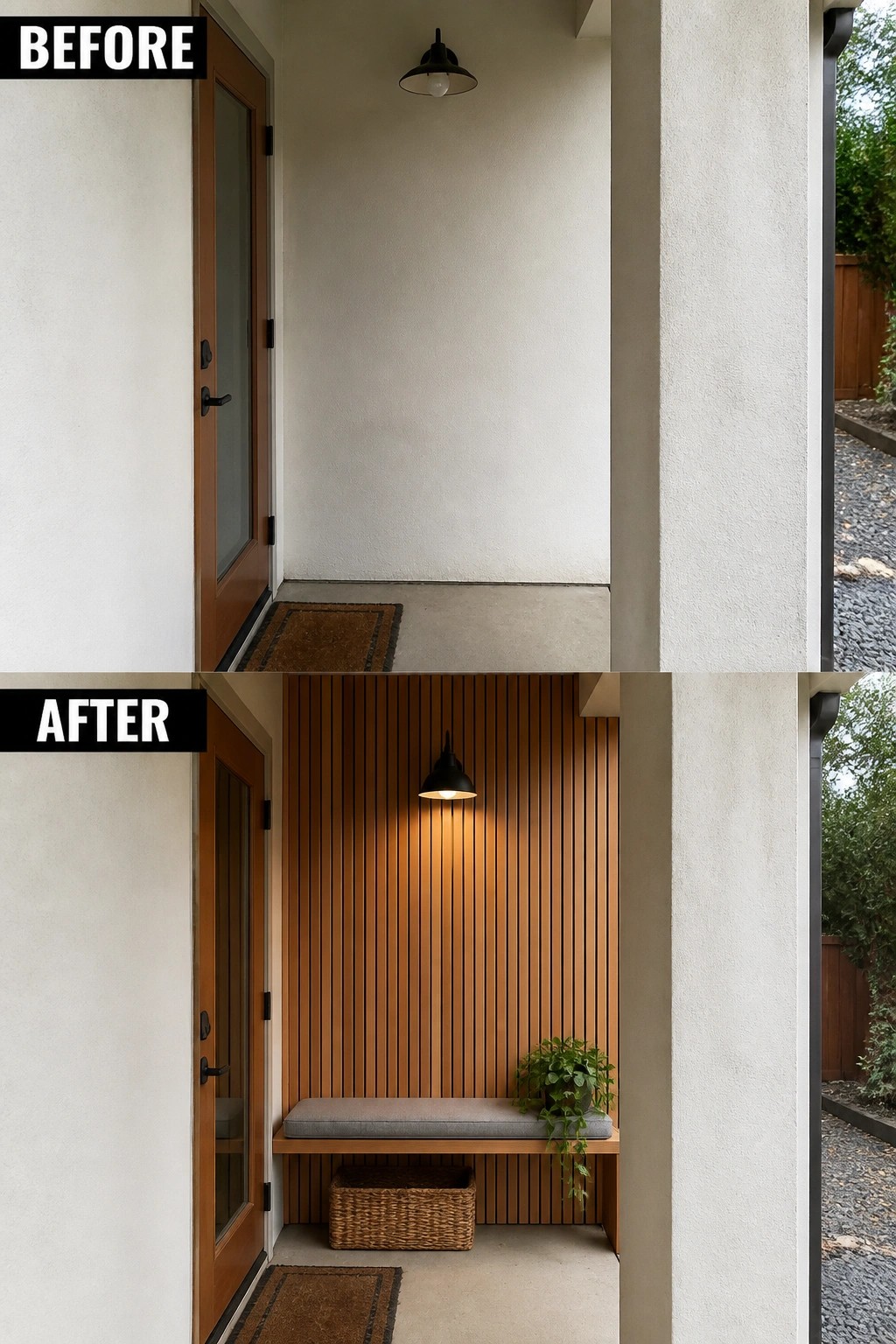
A narrow, undecorated entry can feel wasted even if it’s sheltered. Adding one clear focal function — in this case a slim bench against a warm slatted wood wall plus a single wall light — turns empty space into a useful spot for putting on shoes, setting down packages, or pausing for a moment before you step inside. The change works because it defines purpose without crowding the walkway.
To copy this, pick furniture that fits the width and leaves a clear path (think slim bench, not a bulky chair). Use a simple vertical accent like wood slats to add texture and make the space feel taller, add a low-maintenance cushion for comfort, and keep one overhead or wall light where people will actually sit. Add a basket or plant for small storage and personality, and be sure materials can handle porch conditions.
Make A Plain Entry Pop With Patterned Step Risers
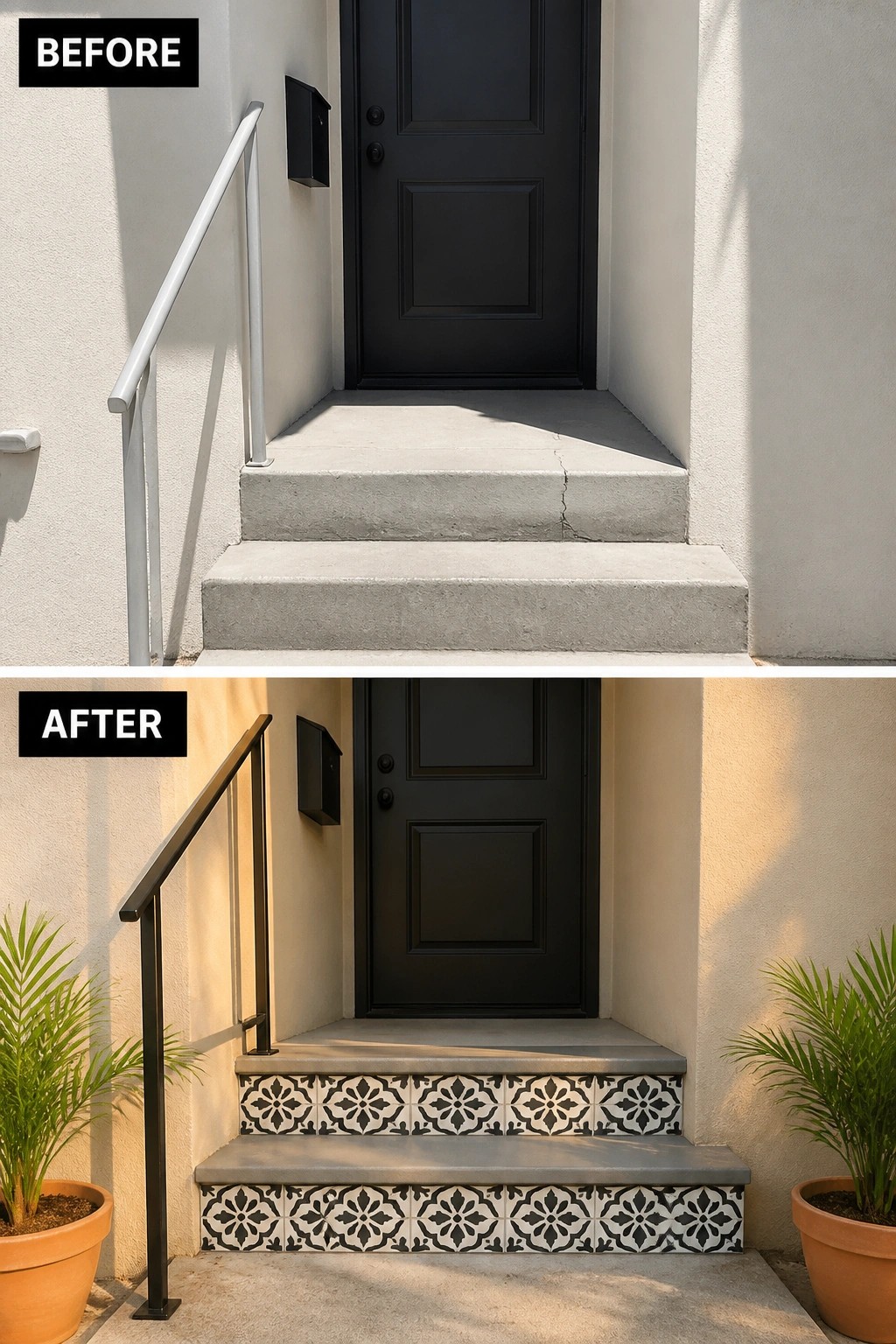
A narrow stoop can feel forgotten, but swapping out plain concrete risers for patterned outdoor tile immediately gives the entry a focal point and hides flaws like cracks. In the example here a simple black-and-white tile pattern plus a fresh black handrail and two terracotta planters turns a bland approach into a styled, welcoming threshold.
This works well on tight entries where you do not have room for big furniture—focus on one bold detail. Use frost-proof, slip-resistant tiles rated for outdoor use and set them on the risers rather than the treads so footing stays safe. Repeat one color from the tile in a rail or planter to keep the look cohesive, and keep the area clear so the design reads at a glance.
Make A Plain Entry Feel Welcoming
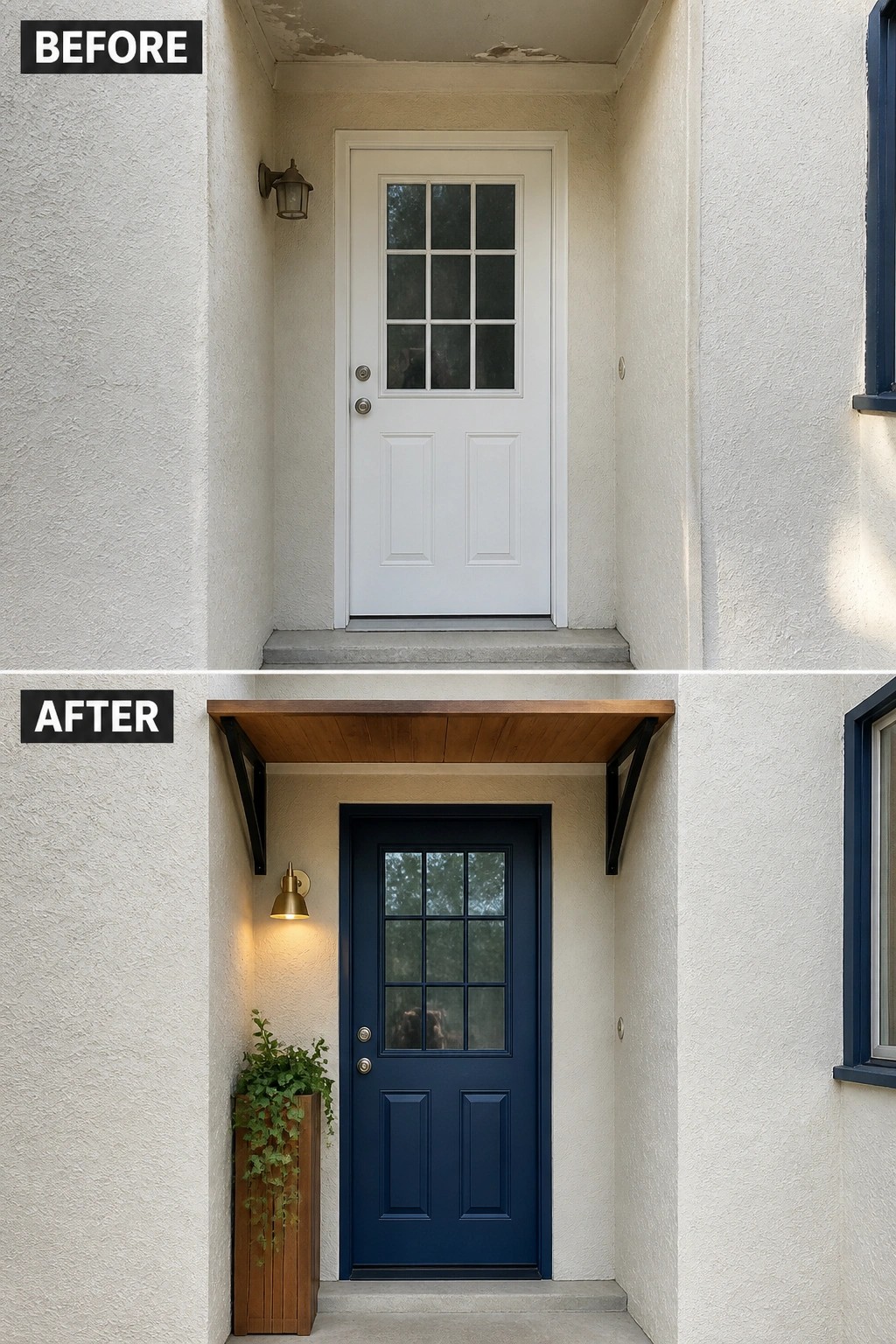
A narrow, plain porch becomes useful when you give it a single clear focal change. In this example the white door is painted a rich color and a simple wood awning is added above it—those two moves alone give the small alcove scale and purpose without crowding the space.
Use this idea where entries are tight or boxy: pick a front-door color that contrasts the wall and add a modest overhead element for visual weight and weather protection. Keep accessories minimal—a slim planter and a weatherproof wall light are enough—so you preserve circulation and avoid clutter while making the approach feel intentional.
Use Shutters And A Window Box To Lift A Plain Front Wall
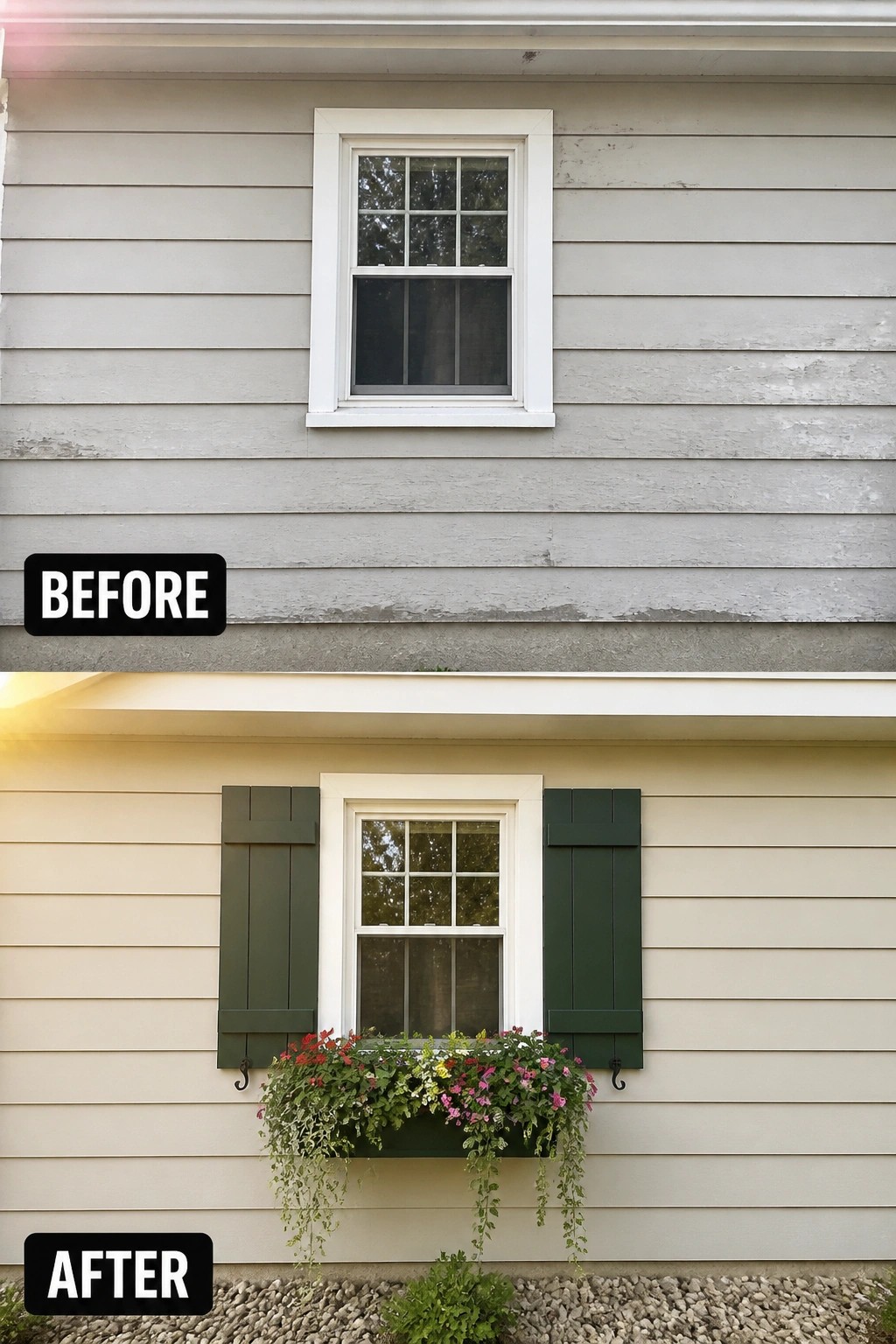
A pair of shutters and a window box give a blank facade an instant focal point and much-needed scale. In the example, a cleaned-up siding surface plus dark green shutters and a planted box turn a forgettable stretch of wall into a tidy, welcoming detail without a major renovation.
This works best on narrow walls or small windows where you want a single, clear focal point. Pick shutter proportions that match the window (board-and-batten works well for modest houses), mount the box so it sits just under the sill, and plant a mix of trailing and upright varieties for year-round interest. Keep the colors simple and maintain the plants seasonally so the feature stays crisp and intentional rather than overgrown.
Lighten The Door Surround With Tall Planters
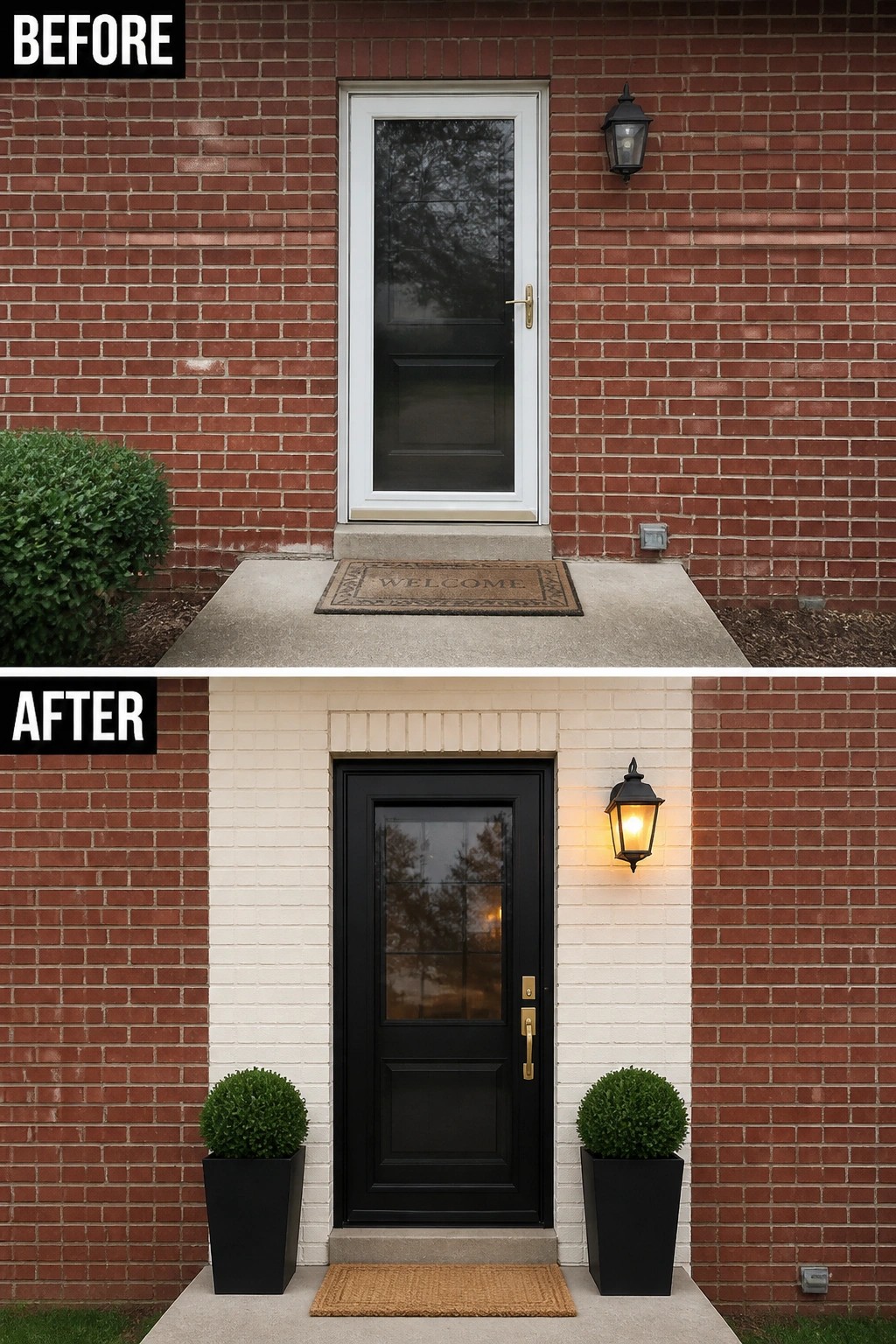
A narrow, plain entry gets purposeful by picking one focal change and repeating it. In this update the brick immediately around the door was lightened and the doorway was dressed with matching tall planters (and a proper wall lantern) to give the small stoop a clear, intentional look. Simple, but effective.
Use the idea where space is tight: paint only the door surround or trim so the work feels targeted, choose tall narrow planters to keep walkways clear, and pick a door color and hardware finish that you can repeat in the light or pots. Keep materials weatherproof, leave room to open the door, and avoid clutter so the small entry stays functional as well as styled.
Create A Cozy Seating Nook With A Slim Bench
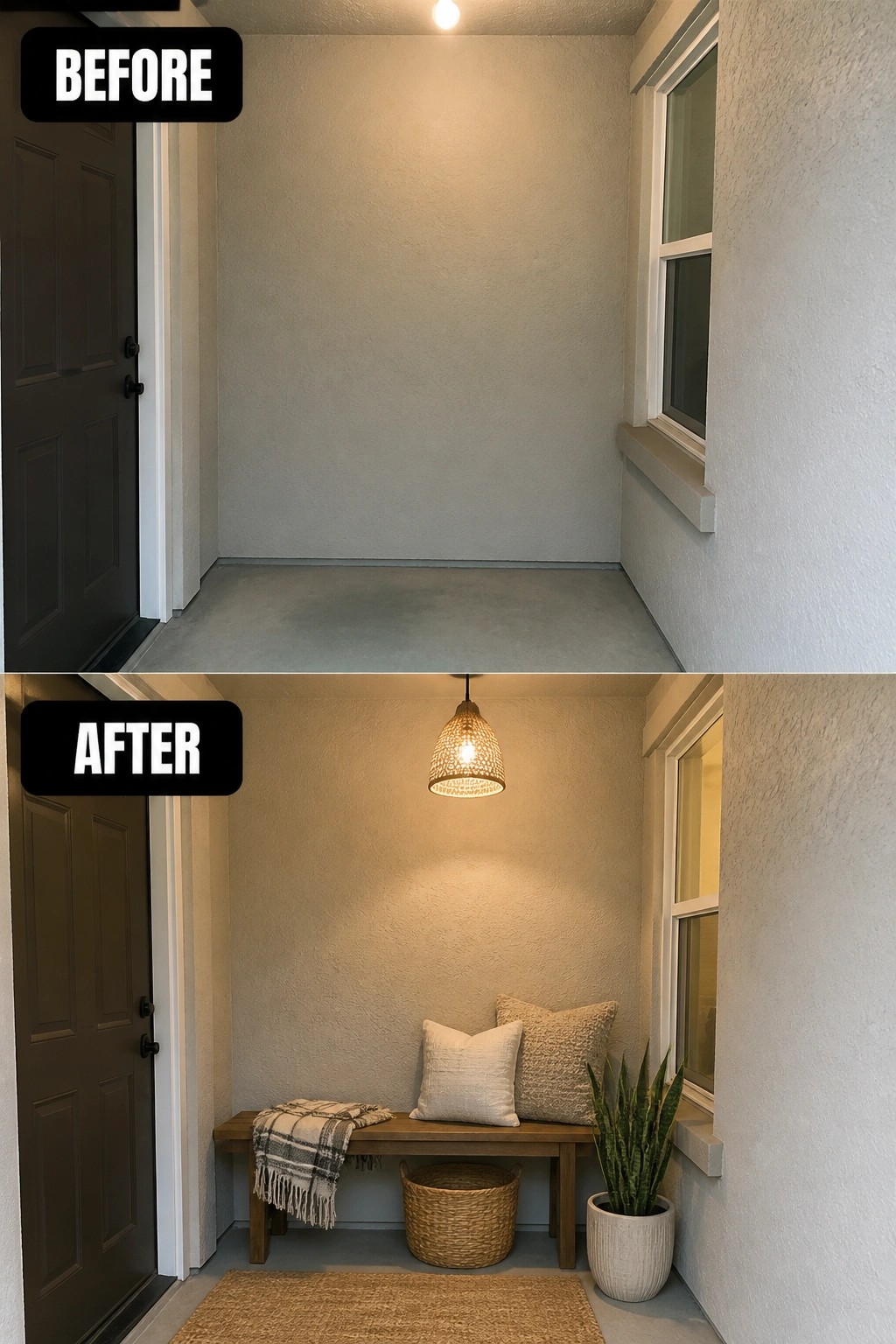
Turning a narrow, plain entry into a small seating nook is one of the easiest ways to make a porch useful. In this example a slim bench, a hanging light, and a simple rug immediately change the space from empty concrete to a place you might actually sit for a minute while putting on shoes or greeting guests. Just one or two well-chosen pieces go a long way.
To try this at home, pick a narrow bench that leaves room for the door to open and a low-profile rug to define the zone. Use outdoor-safe fabrics and a weather-rated pendant or a sealed lantern for real evening use, and anchor the corner with a single tall plant or a basket for storage so the space stays neat. It works best on covered porches where light and textiles can stay protected.
Upgrade A Plain Entry With A Stacked Stone Step
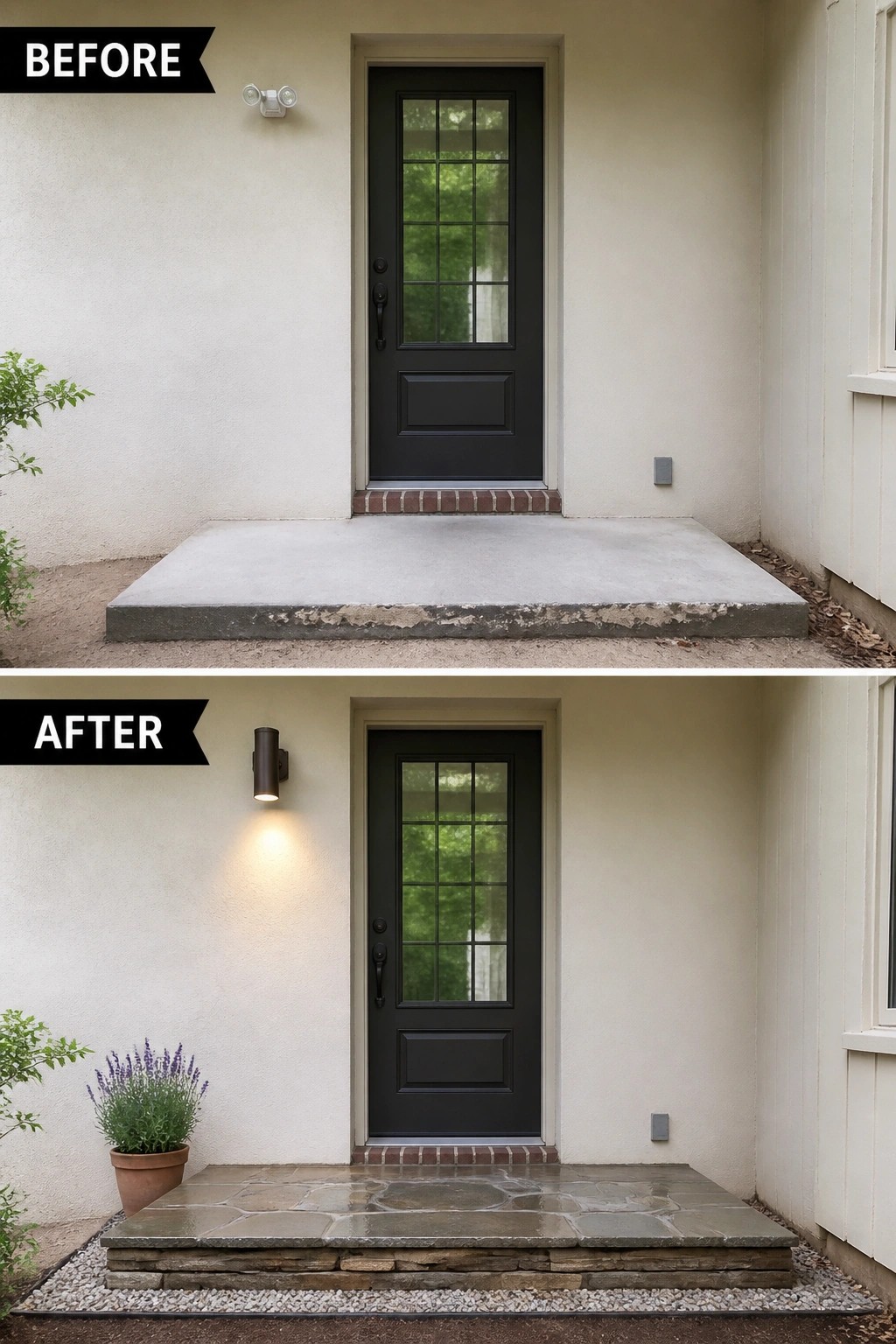
Swap a sad slab for a proper front step and a bit of styling to make an entry feel intentional. In this example a plain concrete landing is replaced with a low stacked-stone base topped with flagstone, and a simple wall sconce plus a potted plant define the door approach. That single change turns a leftover slab into a usable porch you can actually walk up to and appreciate.
To copy this, start by fixing the slab and height so the step meets code, then add a thin stacked-stone riser with a flagstone or paver top for a finished look. Keep accessories minimal—a weatherproof sconce that lights the step and one well-sized planter are enough. Pay attention to scale and slip resistance, leave clear room for the door swing, and use materials that match the house so the small change reads as intentional rather than crowded.
Add A Mirror And Shelf To A Narrow Entry
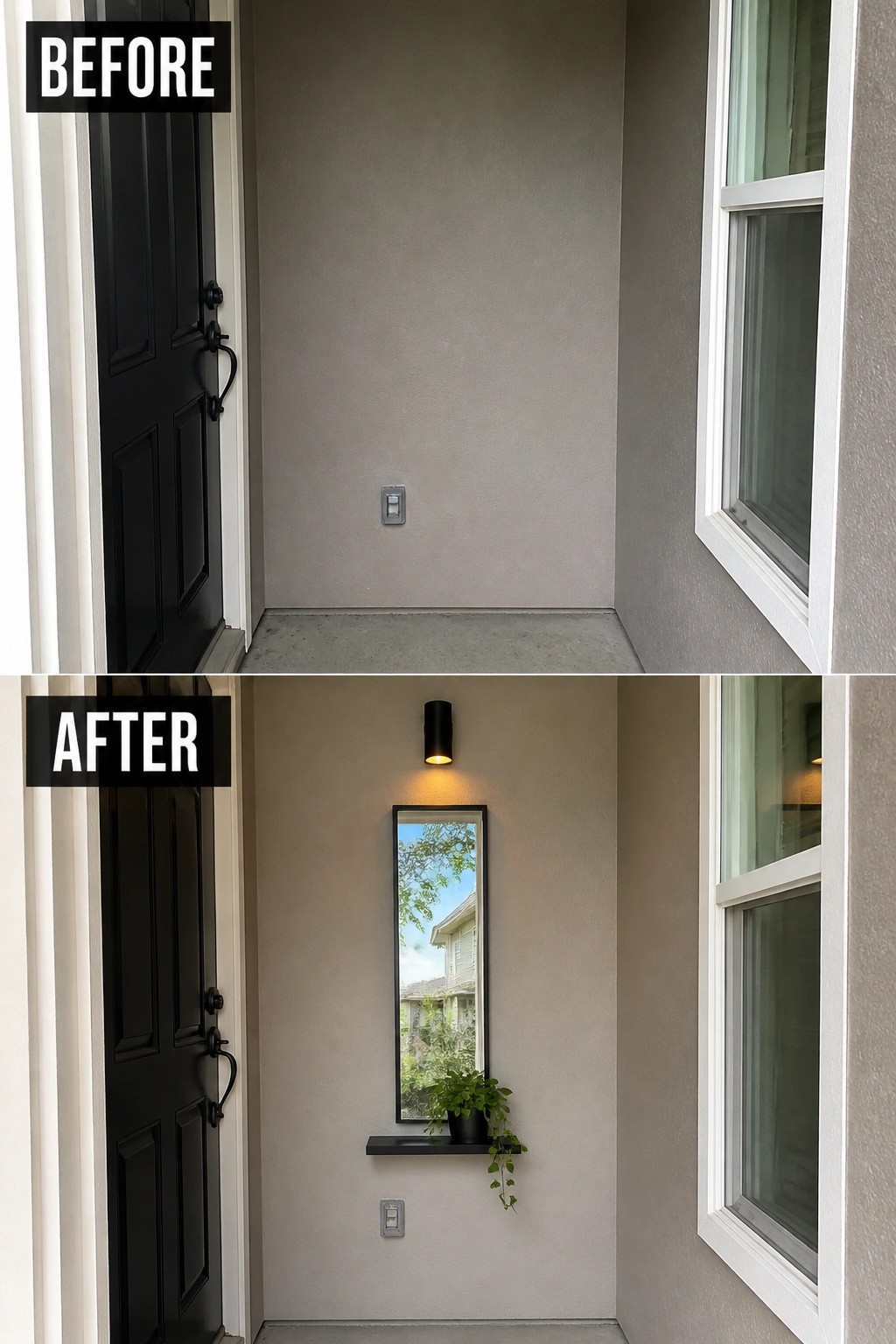
A single vertical focal point can turn a bland, narrow entry from wasted space into a purposeful nook. In this case a slim mirror plus a small shelf with a potted plant creates height, visual interest, and a tiny landing spot without crowding the walkway. The mirror reflects the outdoors and makes the porch feel less closed-in, while the shelf offers a practical place for keys or a decorative touch.
This trick works best on stoops or covered entries where floor space is tight. Choose pieces that match the scale of the opening, mount the mirror and shelf securely, and use outdoor-rated hardware and fixtures where needed (especially for lights nearby). Keep the styling minimal so the path stays clear and the entry reads as intentional rather than cluttered.
Turn A Blank Entry Wall Into A Simple Display
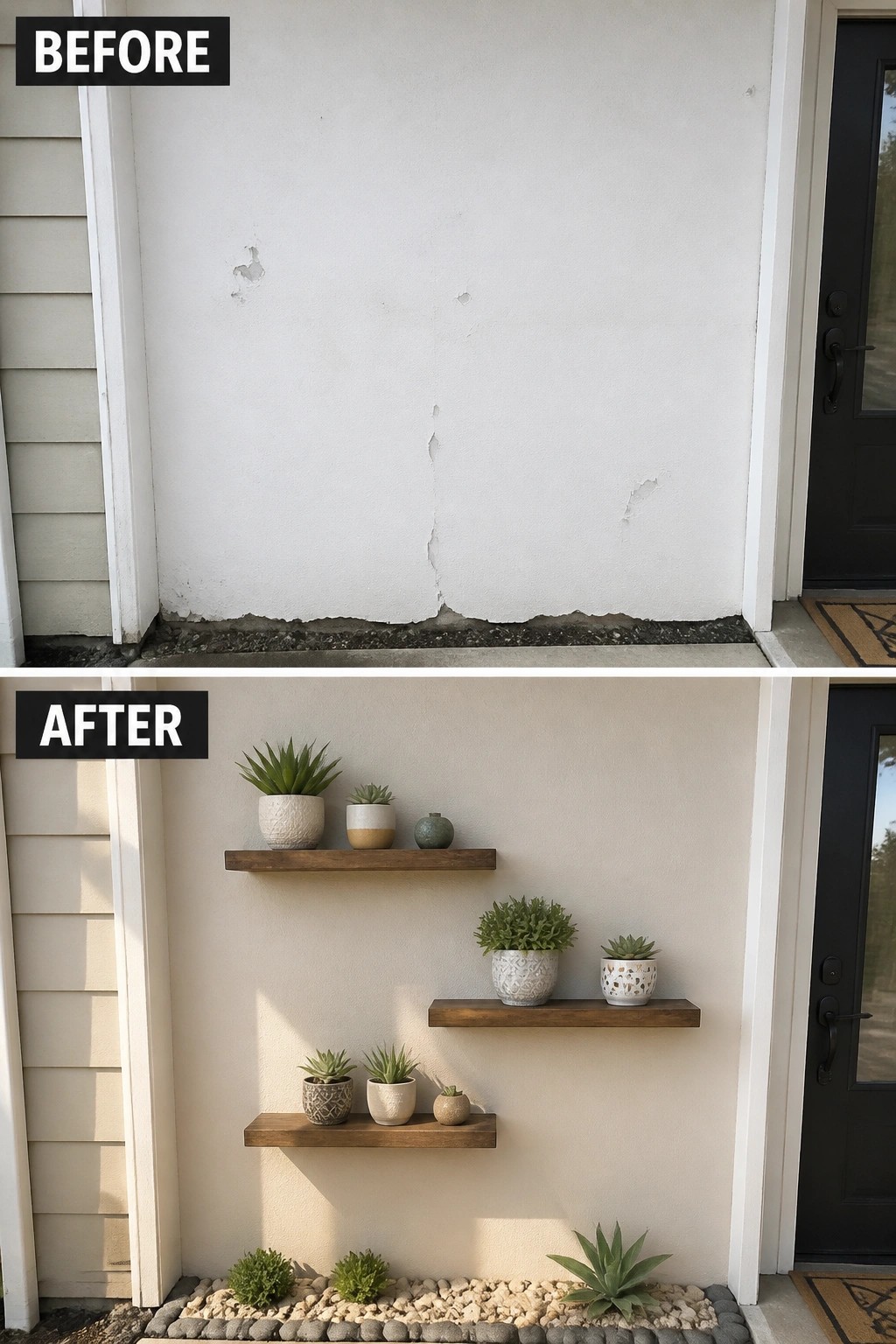
A plain, empty entry wall can feel unfinished and cold. Outfit it with a few shallow floating shelves and a narrow planted base to turn that dead space into a purposeful display — you get vertical interest without crowding a narrow entry. In the photo the damaged stucco was repaired and a trio of shelves plus a pebble bed and succulents immediately make the porch feel considered and welcoming.
Start by fixing and repainting the wall, then pick shelves sized to the width of your entry so they do not block the door. Use weatherproof materials and secure shelves into studs or with proper anchors, choose low-maintenance pots and plants, and keep the arrangement simple so it reads clearly from the path. Start small. A tidy rock or gravel strip at the bottom finishes the look and cuts down on upkeep.
Add Vertical Greenery And Lighting To A Blank Front Wall
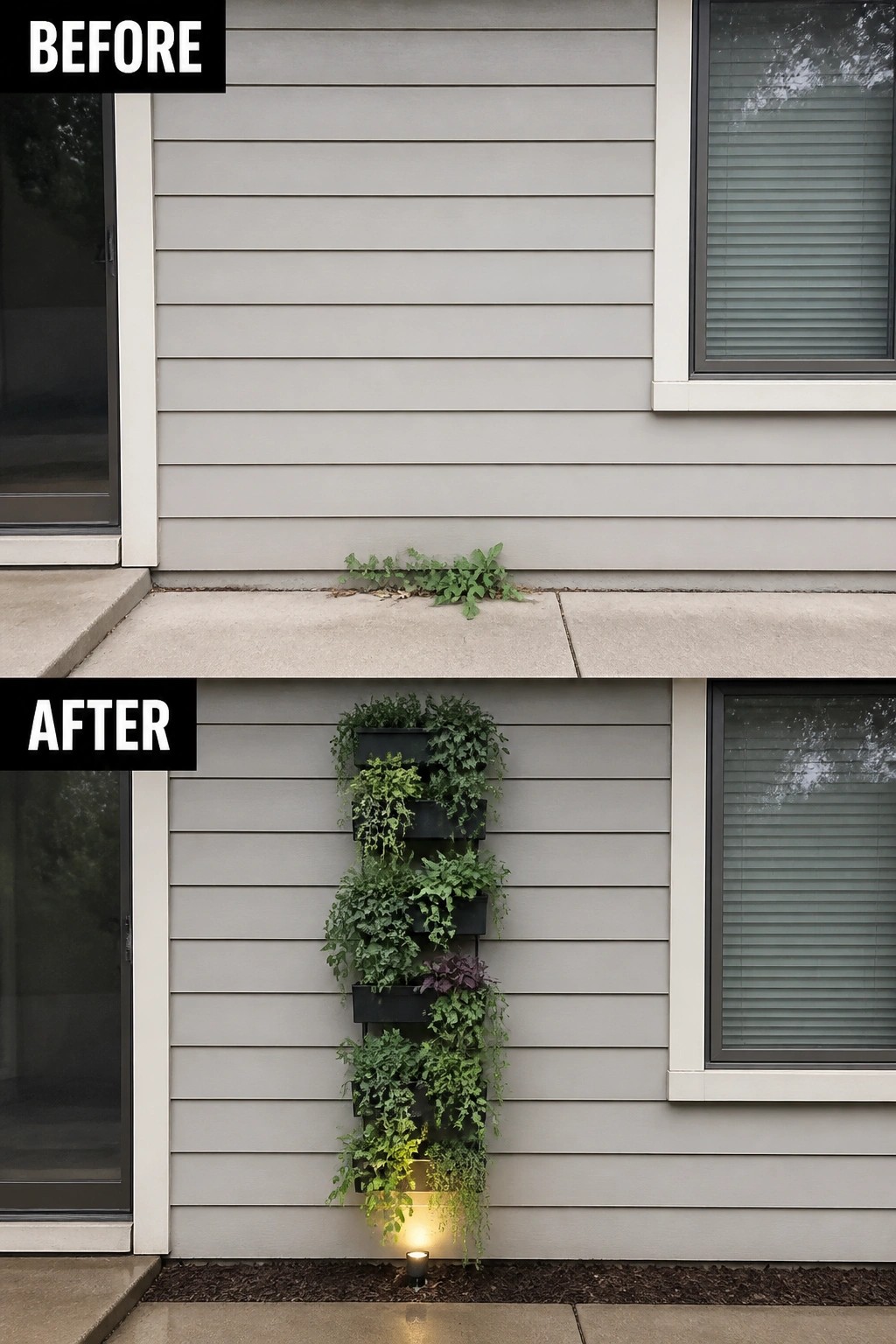
A narrow strip of wall can look forgotten, but a slim vertical planter instantly gives it purpose. In the after image a small weed patch is replaced by a column of stacked planters and a low spotlight, which raises the eye and turns the blank siding into a focused feature without taking up walkway space. The vertical planting creates texture and seasonal interest while the uplight makes it useful at night.
This works best on tight entries or long stretches of siding where footprint is limited. Choose a narrow, weatherproof planter system, mount it into studs or masonry anchors, and pick a mix of trailing and compact plants so things spill nicely without overwhelming the entry. Add a single ground or wall light with outdoor-rated fittings to highlight foliage after dark. Low effort, big payoff.
Brighten A Dark Entry With Layered Lighting And Planters
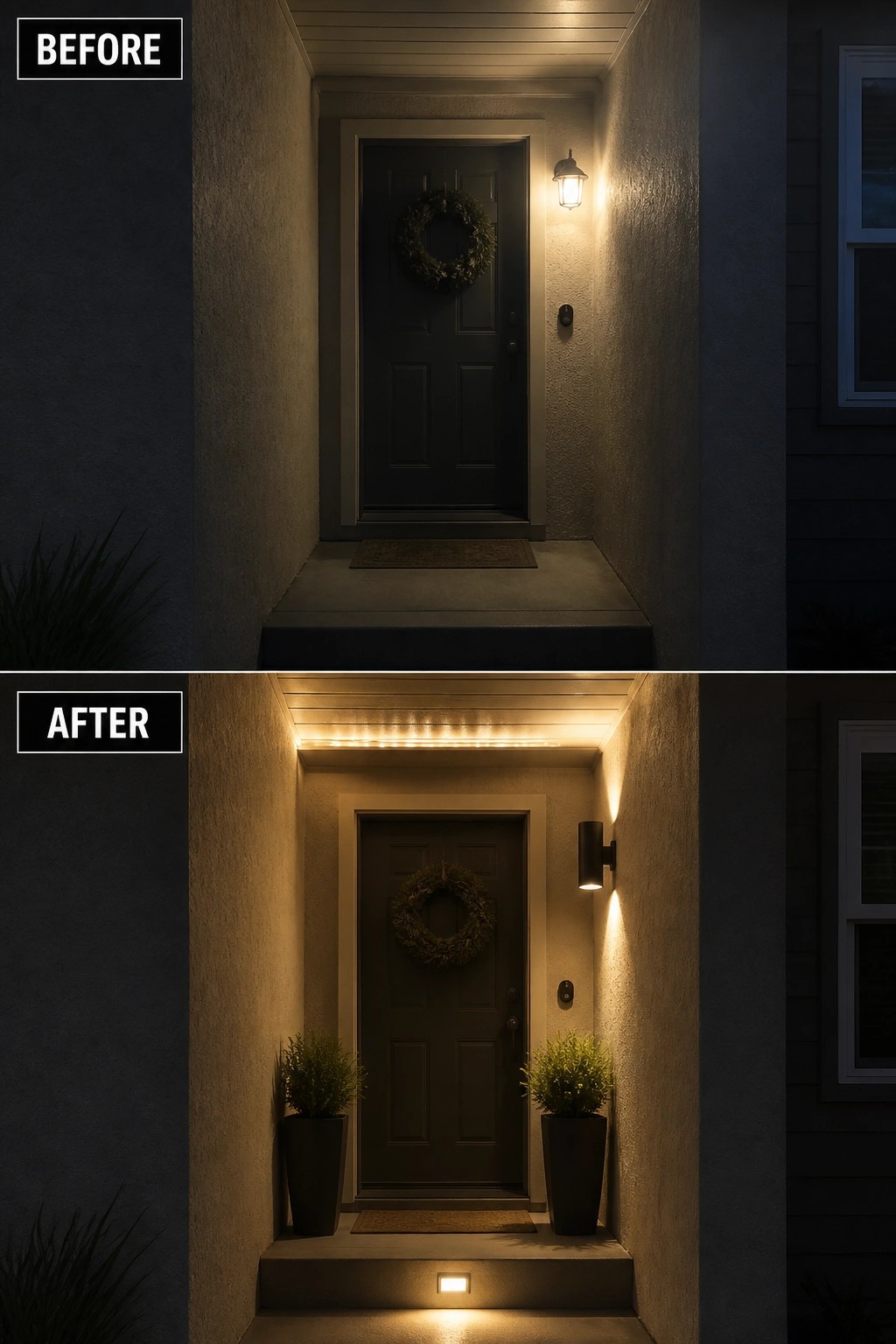
A narrow, plain entry can feel useful again by choosing one simple purpose and layering a couple of practical elements around it. In this case a compact wall sconce, an overhead row of lights and matching tall planters turn a dark recessed doorway into a clear, walkable porch with a focal point at the door.
Keep the plan simple: pick slim, weatherproof planters so you do not block the step, add a low step light for safety, and use an up-down wall fixture or warm LED strip overhead to make the space readable at night. This approach works best on small porches and covered entries where scale matters—one or two coordinated pieces, good placement, and durable materials go a long way.
Give A Narrow Entry Color And Character
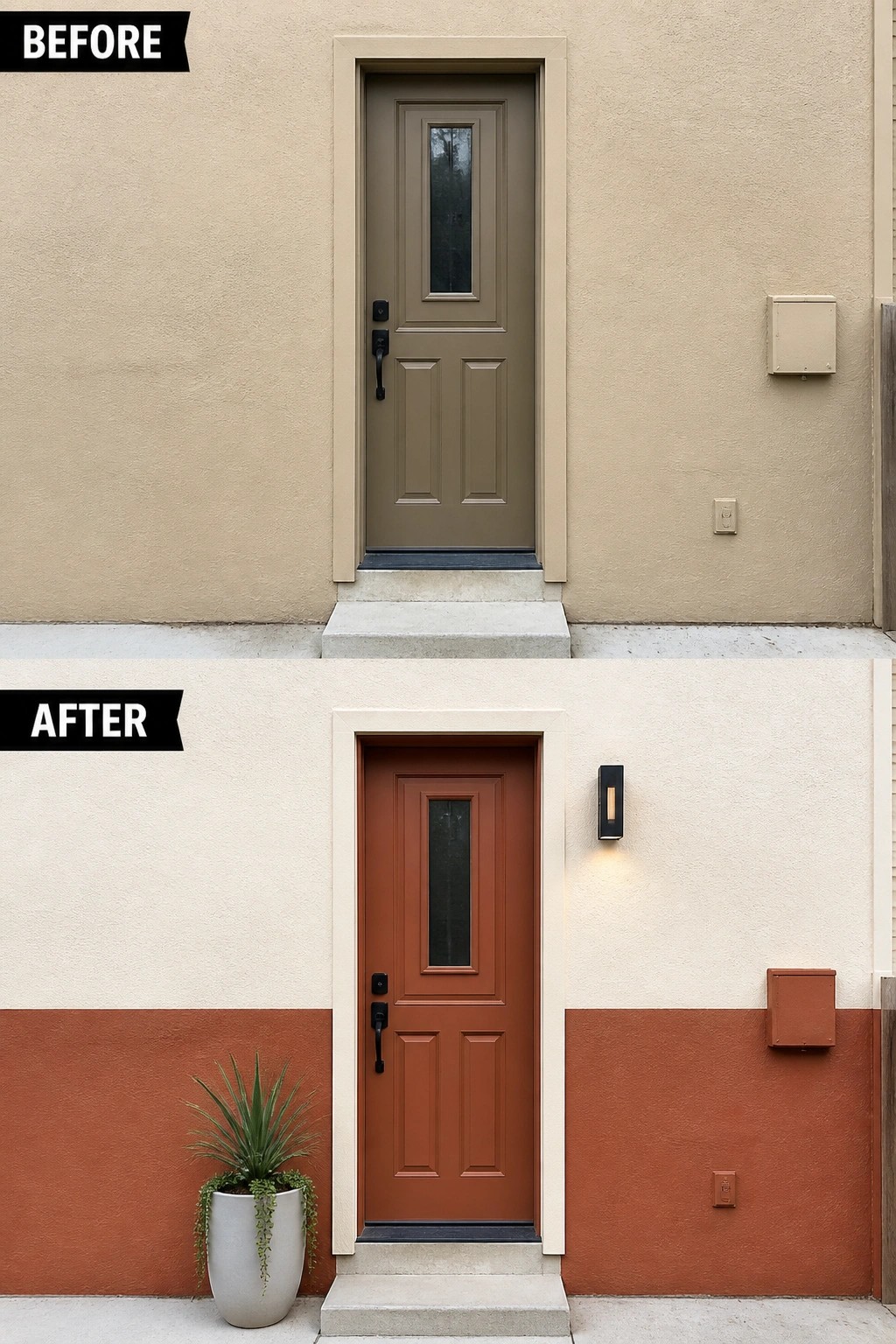
A plain, narrow front wall gets interest fast when you add a simple color band and repaint the door to match. In the after shot the lower third of the facade is painted a warm terracotta and the door takes the same tone, which instantly gives the small entry a clear focal point without adding clutter.
This works best on compact facades where you want a low-effort update. Pick one accent color and paint a horizontal band or the lower third of the wall to “anchor” the door, then repeat that color on one small element like the door, mailbox, or planter (not everything). Use a durable exterior finish for the door, test swatches in different light, and keep trim neutral so the single color reads purposeful rather than busy.
Add A Low Raised Planter To Frame A Narrow Entry
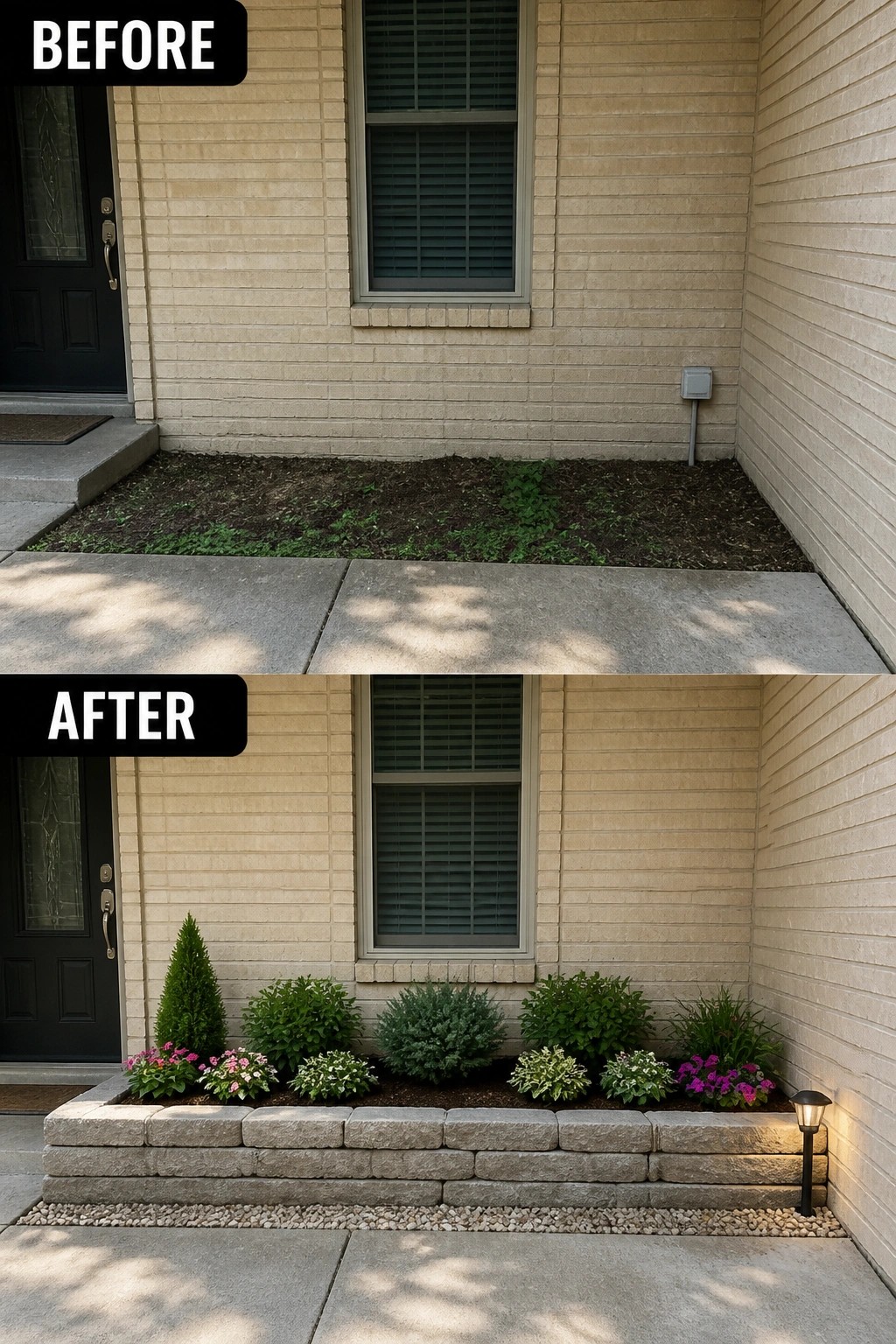
Turning a thin, bare strip into a low raised planter instantly defines the entry and gives a plain wall some purpose. In the photo a short stacked-stone wall, fresh soil, repeat shrubs and a few colorful perennials (plus a single path light) replace an empty bed, making the walkway feel intentional and finished rather than neglected.
This idea works best where you have only a few feet of planting space and need to keep sightlines open. Build the wall just high enough to lift plants into view but low enough to keep the window and door visible (two to three stone courses is usually enough). Use a simple palette—one shrub repeated, a couple of seasonal accents, mulch for a tidy look—and add a small low-voltage light for evening curb appeal. Start small. Check for underground utilities and plan spacing so plants won’t overcrowd the narrow bed as they mature.
Brighten A Narrow Entry With A Glass Panel Door
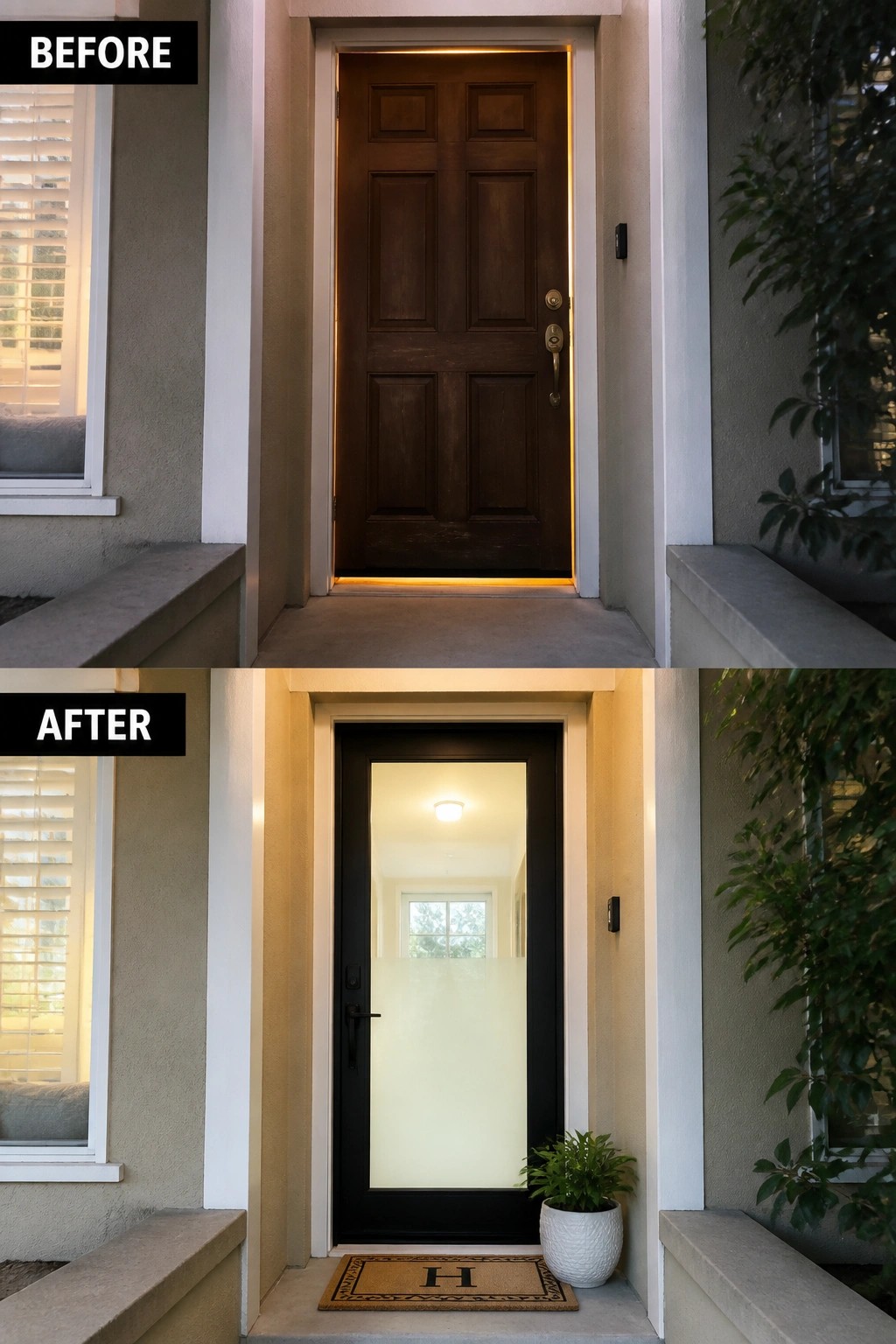
Swapping a heavy, opaque front door for a glass-panel door and adding a simple mat and potted plant instantly gives a narrow entry a purpose: it becomes a welcoming transition instead of just a wall. The glass brings light into the small vestibule and the doormat plus a single planter signal a human-scale landing where guests pause, which makes the whole facade feel more intentional without big construction.
Use this on narrow porches where you can’t add seating. Choose frosted or obscured glass for privacy and slim planters or a single pot so you keep clear room for the door swing. Pick a low-profile mat and weatherproof hardware that match the house color, and avoid cluttering the ledges—one or two well-chosen items do the job. Keep it simple.
Frame A Narrow Doorway With Tall Planters And Railing
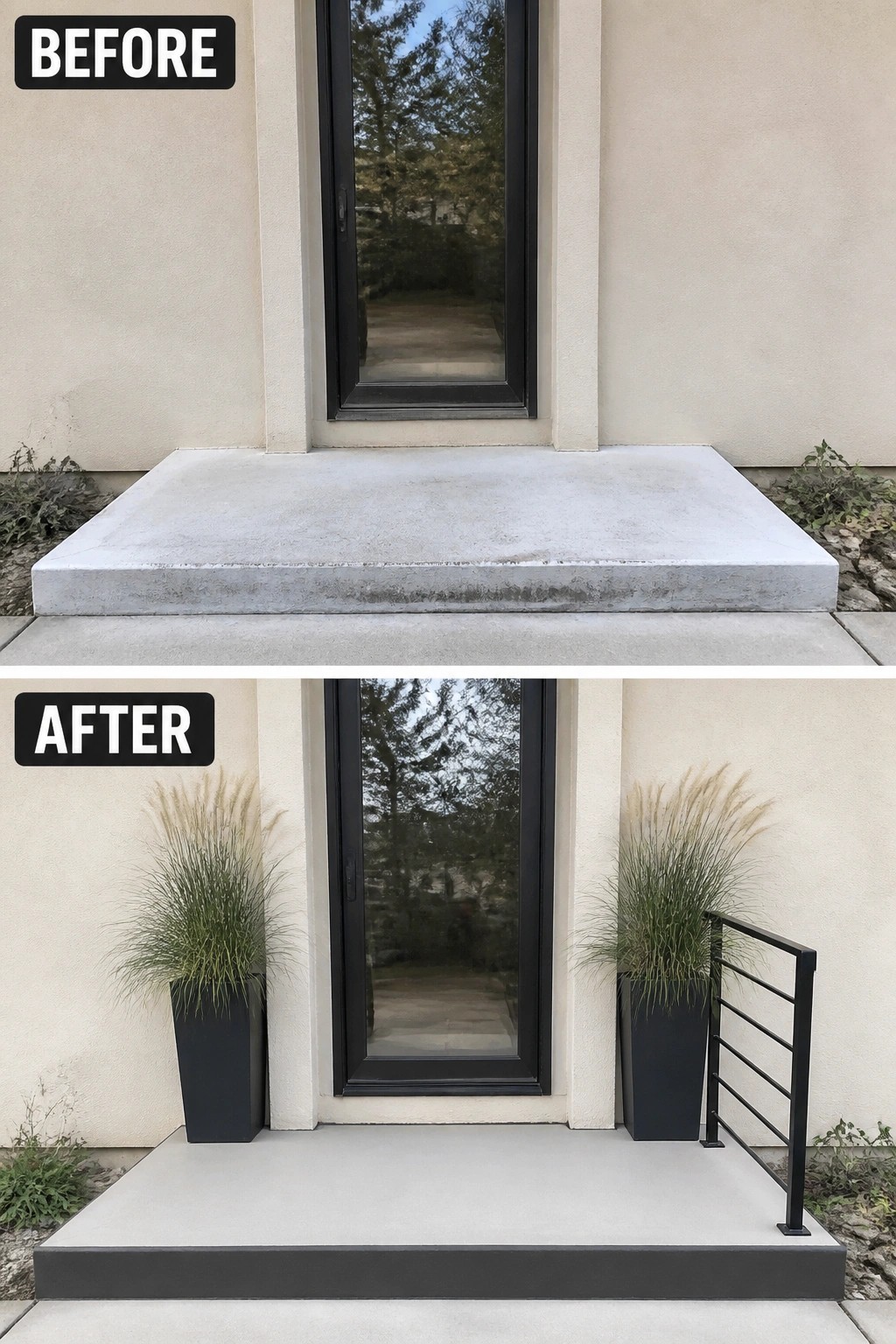
A narrow, plain entry can feel finished with just a few purposeful touches. Placing a pair of tall planters to flank the door and adding a simple, low-profile railing immediately defines the stoop, gives the doorway scale, and makes the front step feel intentional rather than leftover concrete.
Use slender, weatherproof planters and repeat one dark accent color to tie the door, trim, and railing together. Keep the layout minimal so people can still move freely—leave enough clearance for the door swing and pick non-slip finishes and hardy plants that need little fuss. Check local railing rules if you add one, and aim for a look that fits the house scale rather than fighting it.
Frequently Asked Questions
Q: I love the simple front wall look, but what paint color will keep the house from feeling flat?
A: Pick a light to medium neutral with a hint of warmth—think soft greige, warm white, or a pale taupe—and test a few large swatches on the wall. Paint the trim a slightly darker or lighter shade to give depth, and use the front door as your pop of personality so the façade stays interesting without feeling loud.
Q: My entry is really narrow. What’s one easy trick to make it feel wider?
A: Add a mirror or a reflective entry light opposite the entryway to bounce natural light and create the illusion of space. Pair that with slim vertical plants or a narrow runner to draw the eye up and out so the whole area reads as more open.
Q: I’m on a tight budget — what single update gives the most curb appeal?
A: Repaint the front door and swap the hardware for something simple and clean (new handle and house numbers go a long way). These two tweaks refresh the face of the house quickly and don’t require a major project or big spend. (A fresh welcome mat seals the deal.)
Q: How do I protect a narrow entry from bad weather without building a big porch?
A: Install a small overhang or a streamlined awning above the door and make sure the door sill is sealed and sloped for drainage. Use a moisture-resistant mat and durable finishes on trim so you avoid frequent repairs while keeping the entrance tidy.