

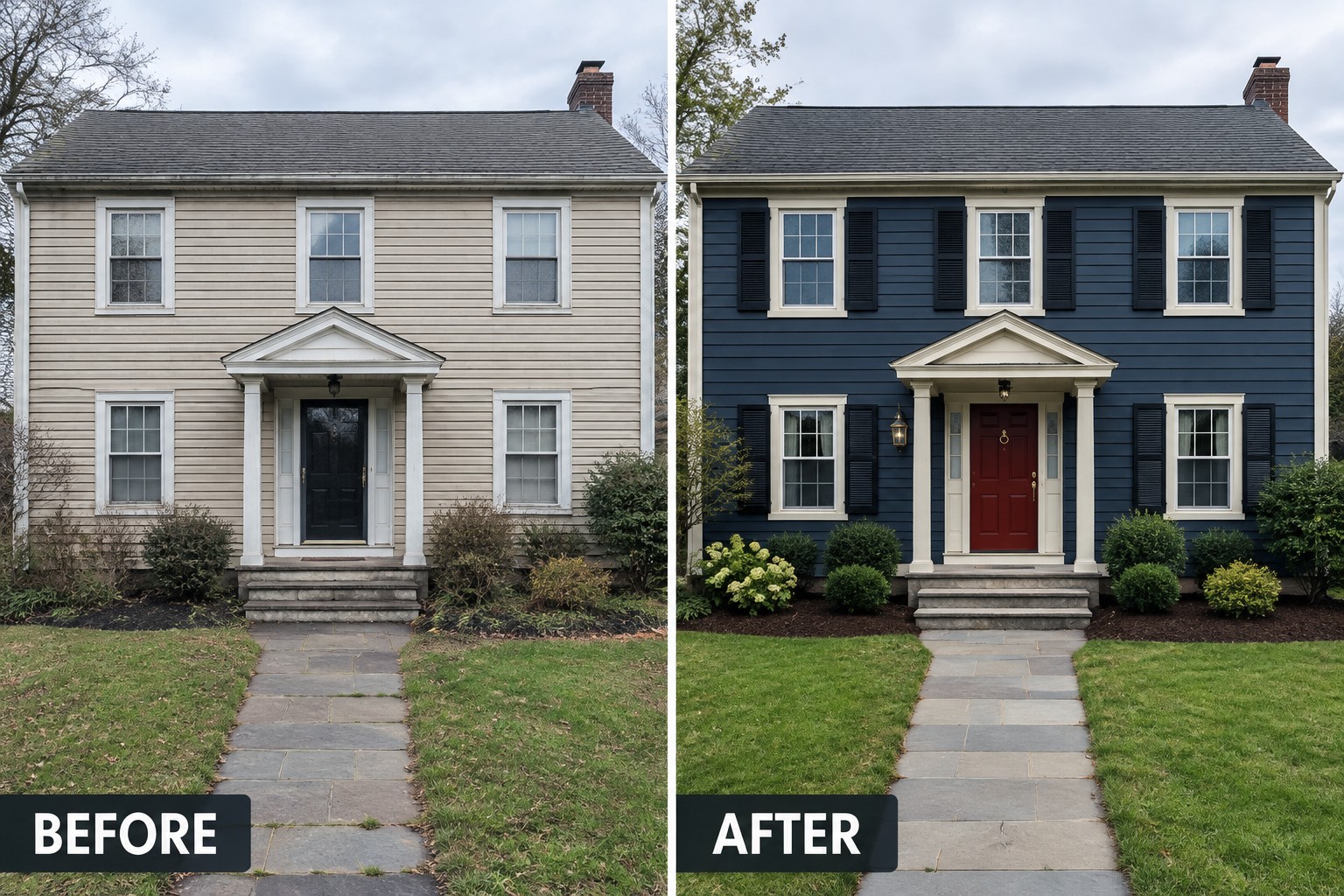
Many colonial houses end up with siding that has seen better days, and that can make the whole exterior feel a little neglected.
Switching to cream trim and keeping some traditional details often brings back a sense of order to the facade.
Small choices like that tend to matter more than people expect.
I keep coming back to how these updates let the house look like someone actually tends to it regularly.
Trying one or two of the accent ideas on a porch or entry might be a good place to start if the budget feels tight.
Update Colonial Siding With A Dark Color And Cream Trim
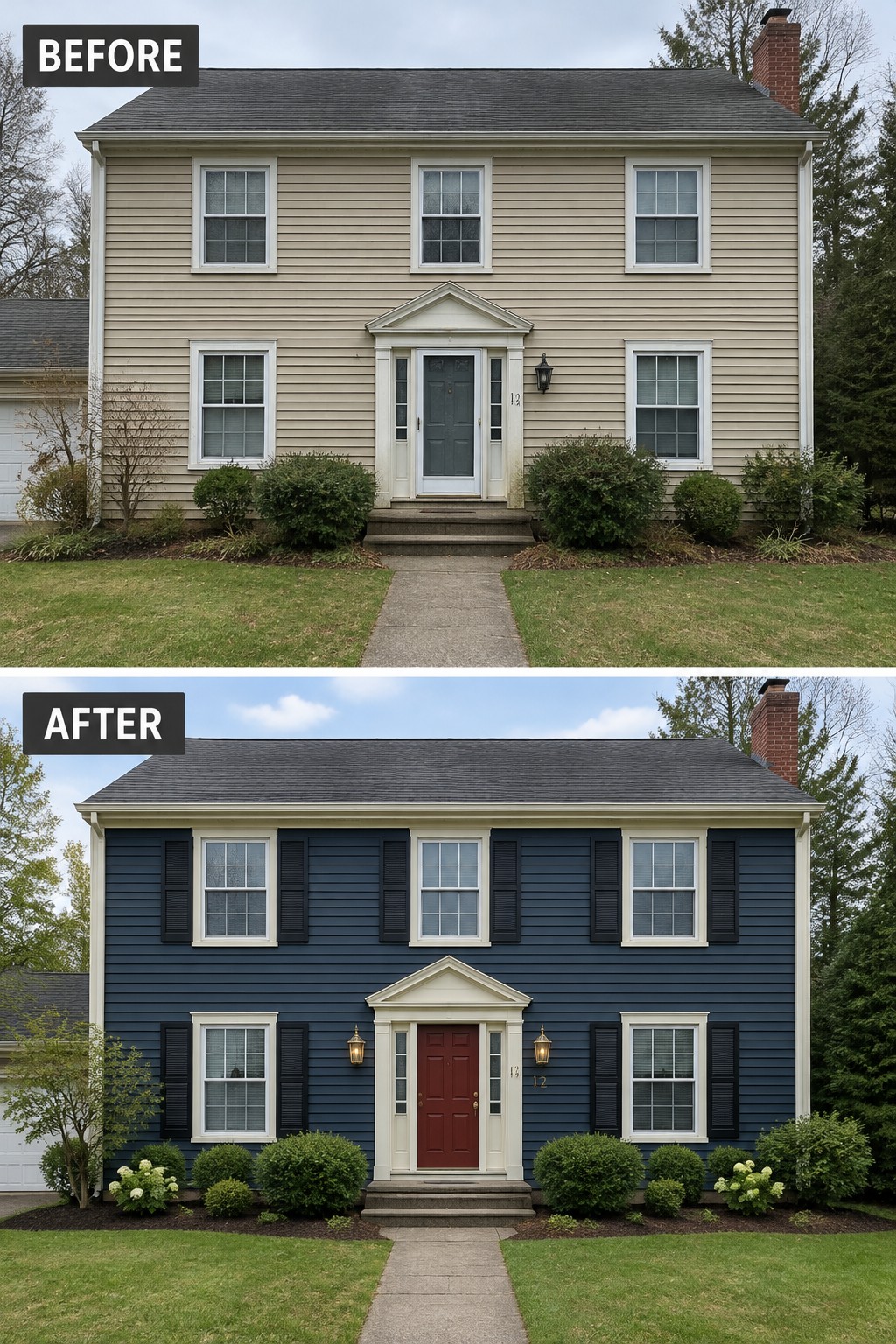
Switching the siding to a deep navy blue while keeping the trim in cream gives this house a stronger presence. The black shutters add clear lines around the windows, and the red door pulls the whole front together. What was once a flat beige surface now reads as a finished Colonial facade.
This approach works best on two-story homes that already have a centered entry and balanced windows. Pick a siding color that is several shades darker than the trim, then add shutters in a contrasting dark tone. Test the paint on a small section first so you can see how it looks in full sun before committing to the whole house.
Add Cream Trim And A Portico To Refresh Colonial Siding
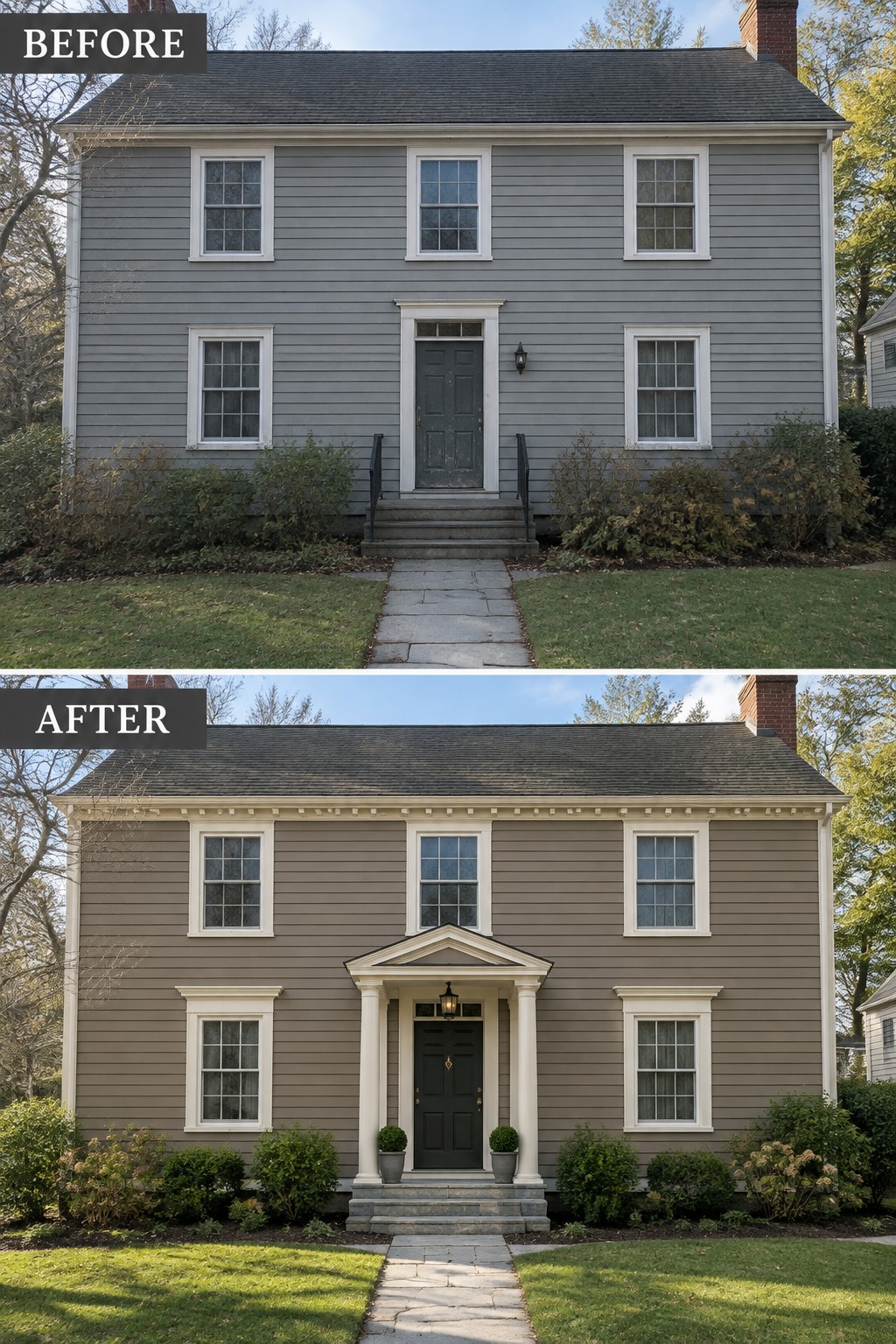
Many colonial homes start with simple siding and a flat entry that feels a little plain. Switching the siding to a warmer tone and adding cream trim around the windows gives the whole facade more depth. The biggest shift here is the new portico with white columns framing the door, which creates a clear focal point and makes the entrance feel intentional instead of tucked away.
This approach works well on colonial-style houses where the original trim has lost its definition over time. Keep the portico simple and proportional to the door so it does not overwhelm the second story. Once the trim color is set, the siding change becomes easier to choose because the cream acts as the anchor that ties everything together.
Add Shutters And Cream Trim To Strengthen A Colonial Look
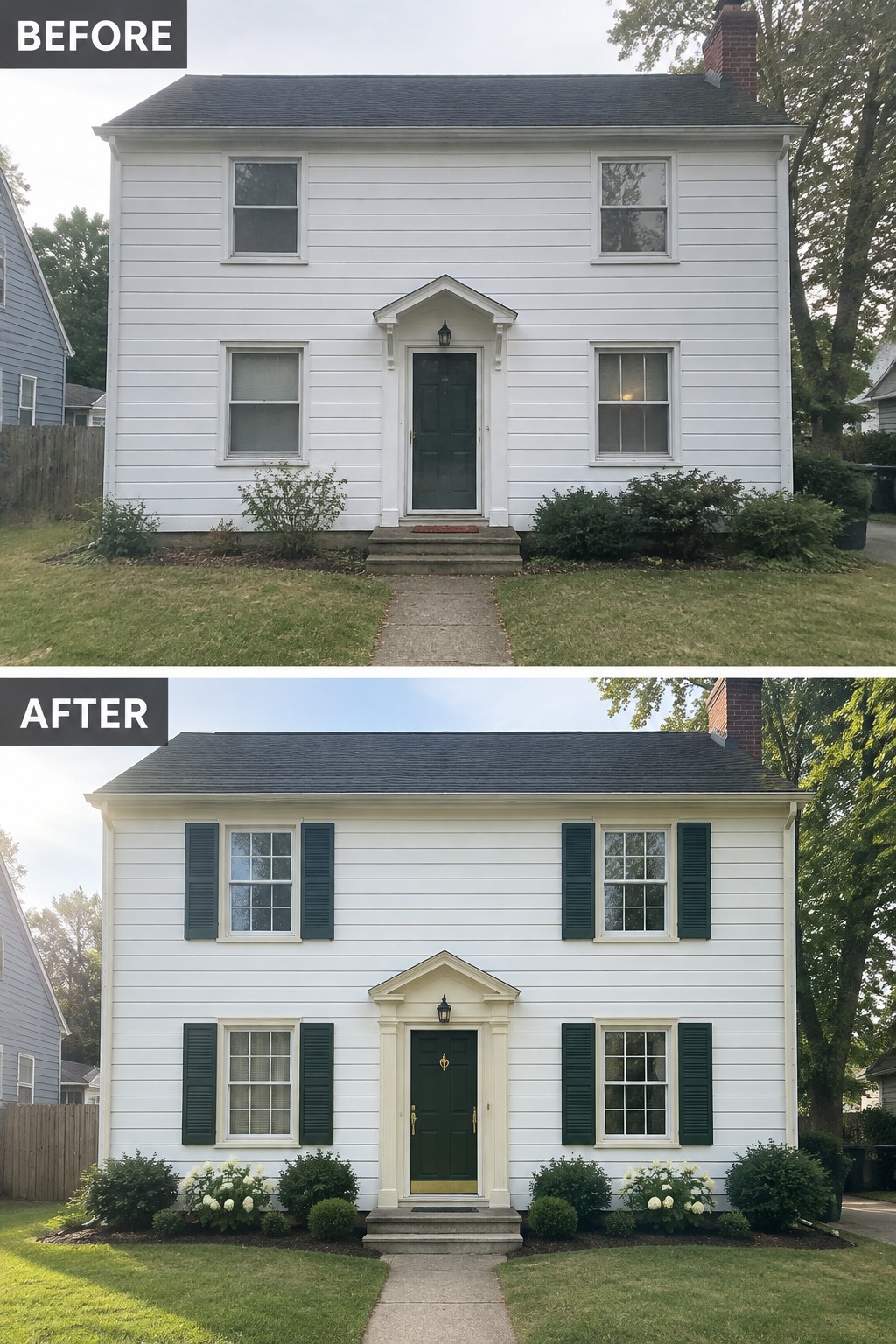
Many plain colonial houses end up looking flat because the windows have no trim or shutters to break up the siding. Switching the window and entry trim to cream while adding dark green shutters gives the front a clearer structure and pulls the whole facade together. The door hardware update helps too, but the trim and shutters do most of the work.
This idea suits two-story colonials with even window placement. Choose a trim color that contrasts just enough with the siding, then match the shutters to the door or a roof accent so the changes feel connected. It is an affordable step that improves curb appeal before any larger siding or roof work.
Add A Pediment To Strengthen A Plain Entry
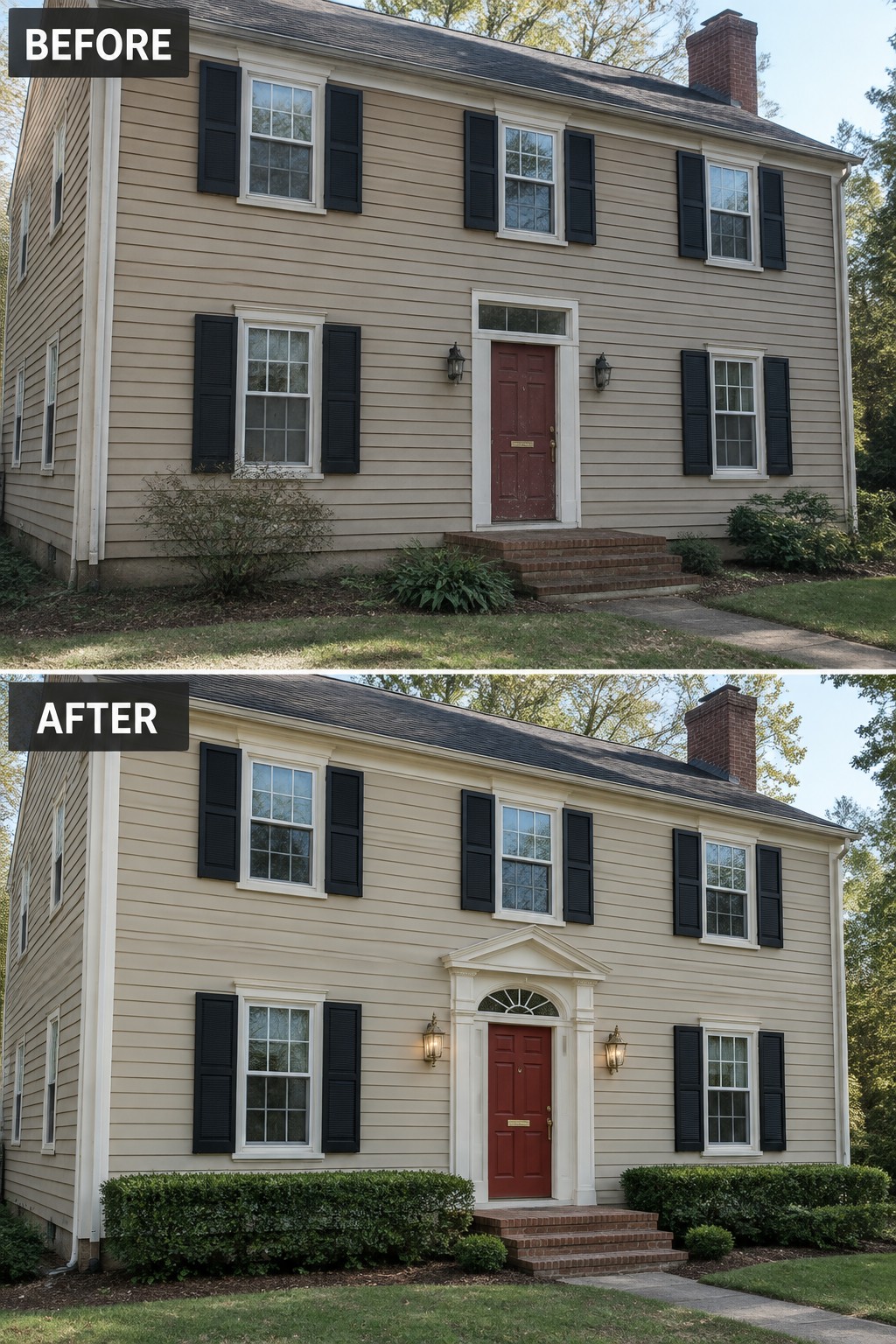
Many colonial homes end up with a front door that sits flat against the siding and never quite feels finished. Adding a pediment with simple columns on either side gives the entry real weight and brings the whole facade into better balance. The change is small in scale but shifts how the house reads from the street.
This approach works especially well on homes that already have cream trim and black shutters. Keep the pediment width in line with the door and steps, and match the trim color so it reads as part of the original architecture rather than an add-on. The same move can lift other flat entries without requiring new siding or major paint changes.
Update Colonial Siding With A Darker Color
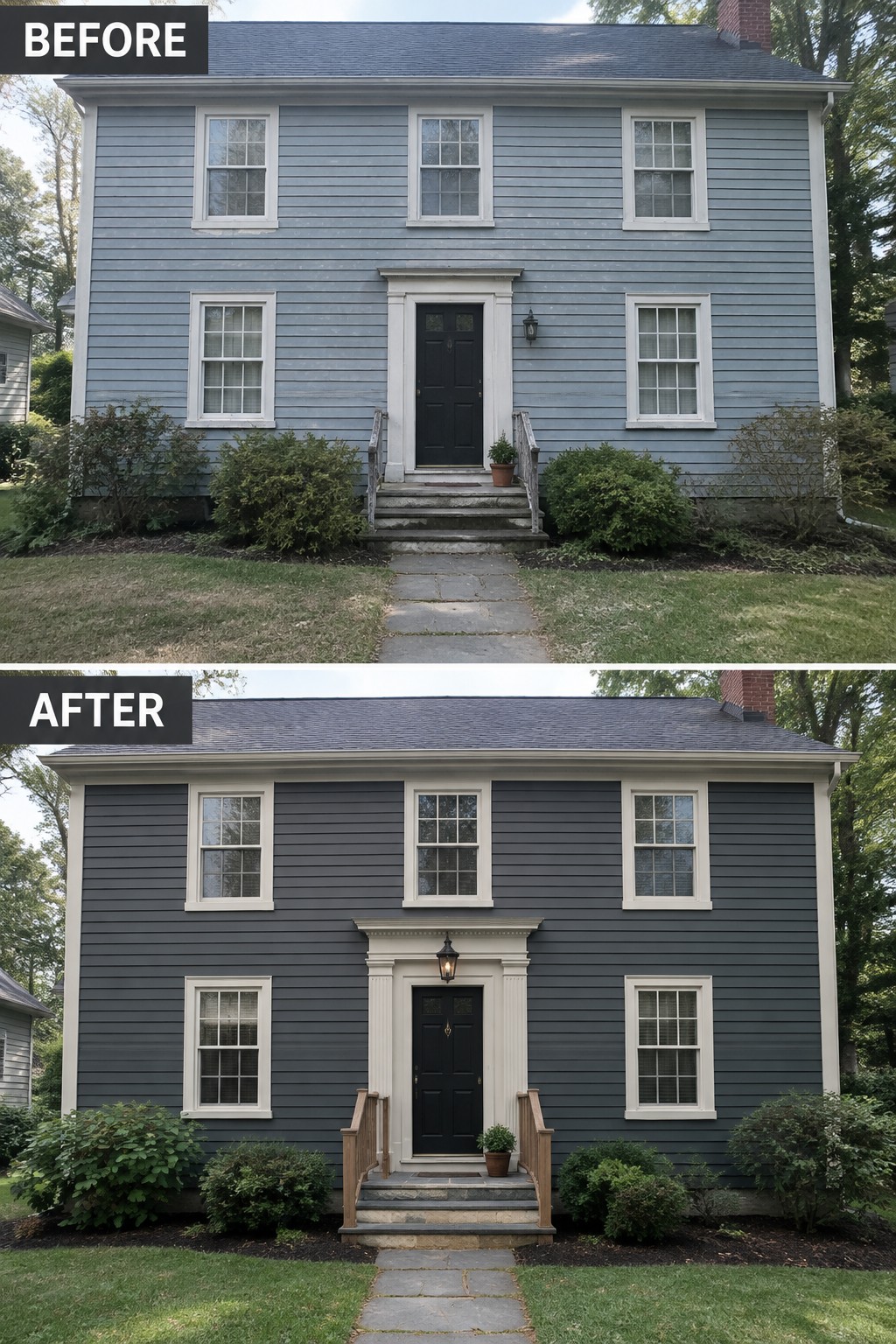
Many older colonials end up with light siding that starts to feel flat over time. Switching to a deeper gray gives the house more weight and presence without changing the shape or adding new details. The cream trim then stands out cleanly against the darker background and keeps the traditional look intact.
This approach works well on homes that already have good window proportions and a solid entry. Start by testing a few darker shades on a small section of siding before committing. Pairing the new color with simple cream trim around the windows and door usually gives the biggest improvement for the least amount of work.
Use Cream Trim To Update Colonial Siding
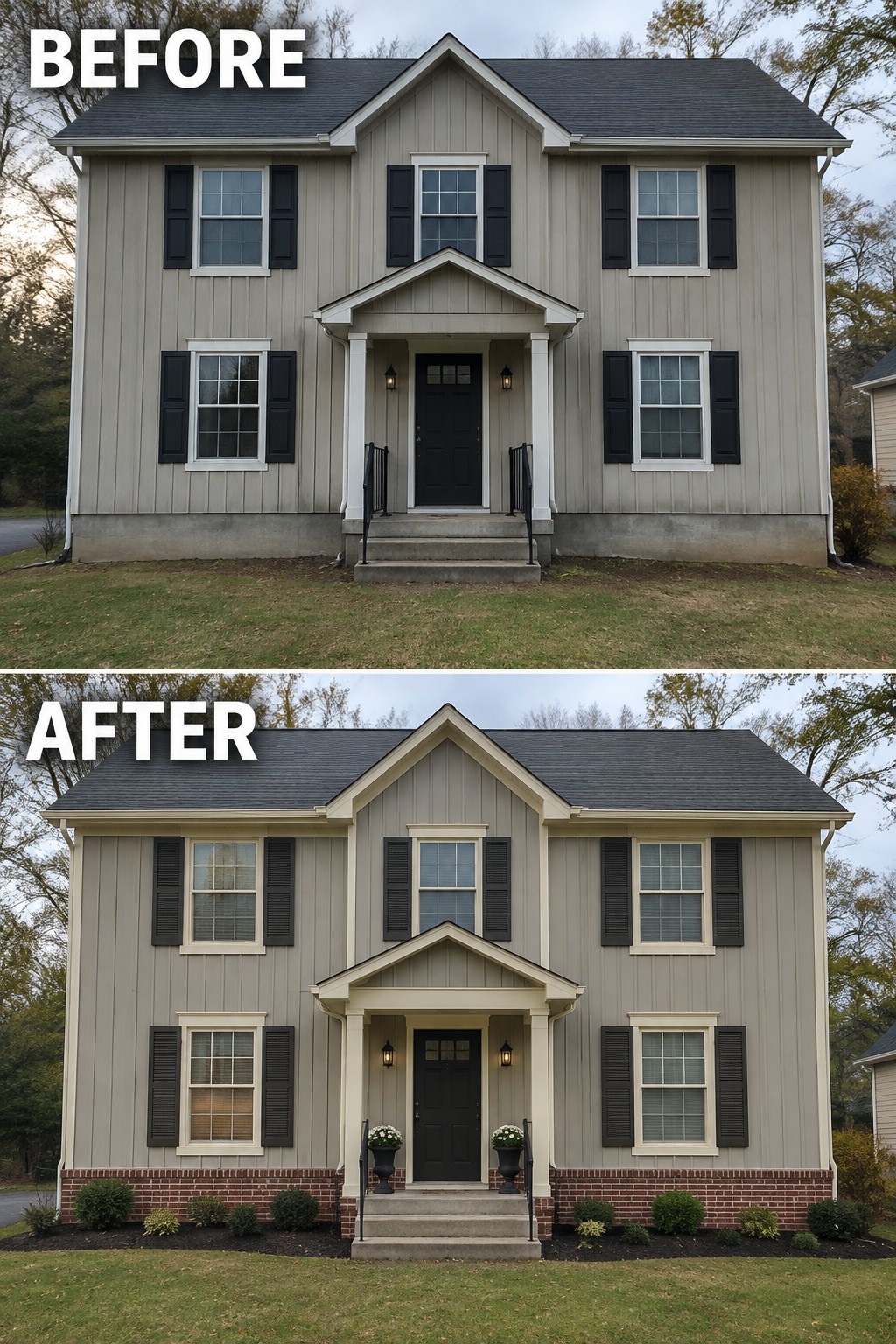
Switching the trim color makes a noticeable difference on this style of house. The before photo shows a flat white trim that feels a bit harsh against the siding, while the after version uses a warmer cream that softens the whole look and helps the dark shutters and door stand out without fighting them.
This approach works well on two-story colonials that already have good proportions. Paint the window casings, gable returns, and porch columns in the same cream, then add a simple brick base if the foundation looks bare. The change stays affordable and keeps the traditional feel without needing a full repaint.
Add Shutters And Entry Accents To Strengthen A Colonial Exterior
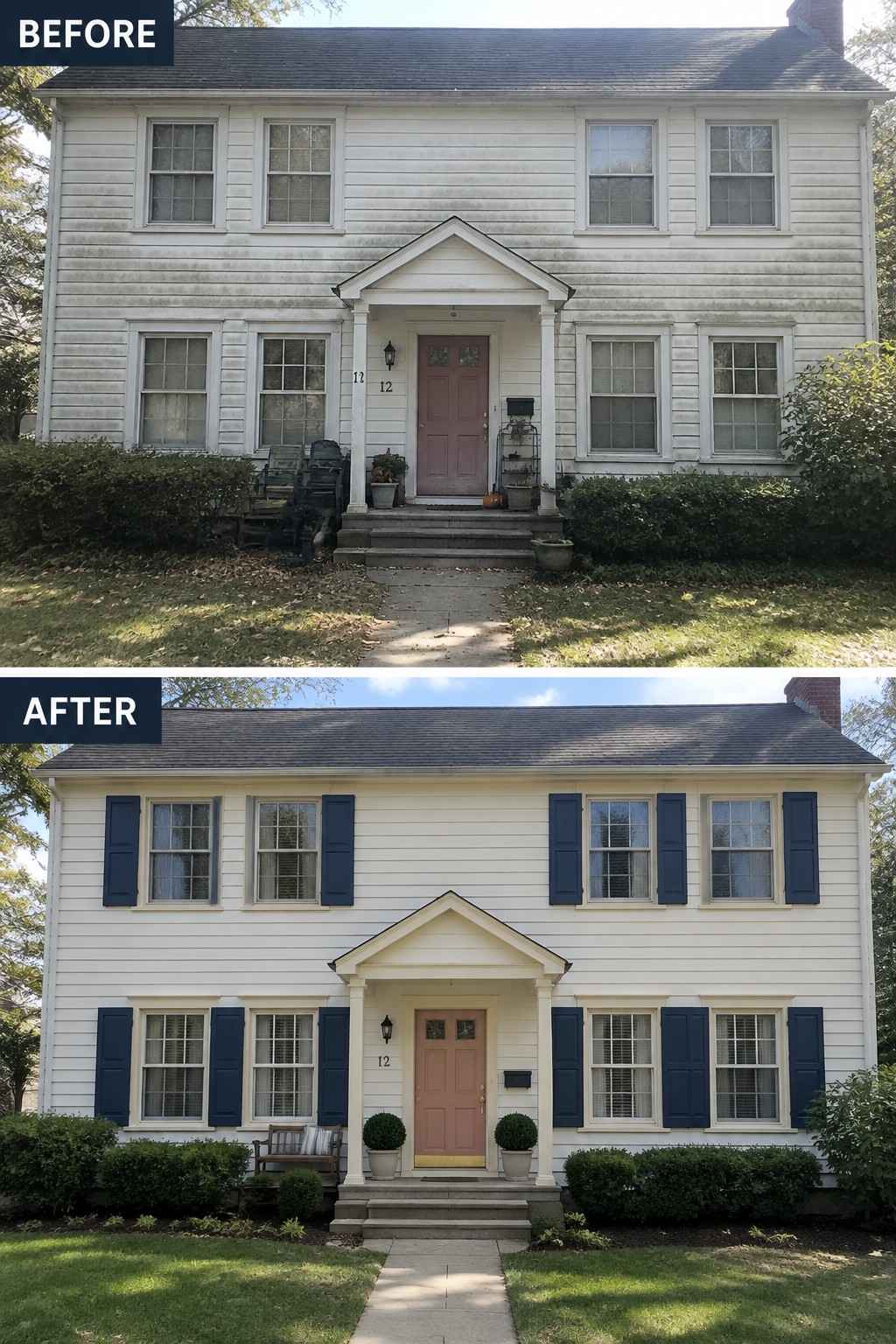
Adding dark shutters across the windows and updating the trim color around the entry gives this house a much more finished colonial look. The before photo shows a plain facade with no shutters and a somewhat cluttered front area, while the after version uses consistent shutter placement and simple planters to pull the whole front together.
This idea works best on homes where the siding is still sound but the exterior feels incomplete. Choose shutter sizes that fit the window proportions, keep the trim color light to contrast with the siding, and limit new elements to the entry so the changes stay focused and easy to maintain.
Give Plain Colonial Siding More Character With Shutters And Cream Trim
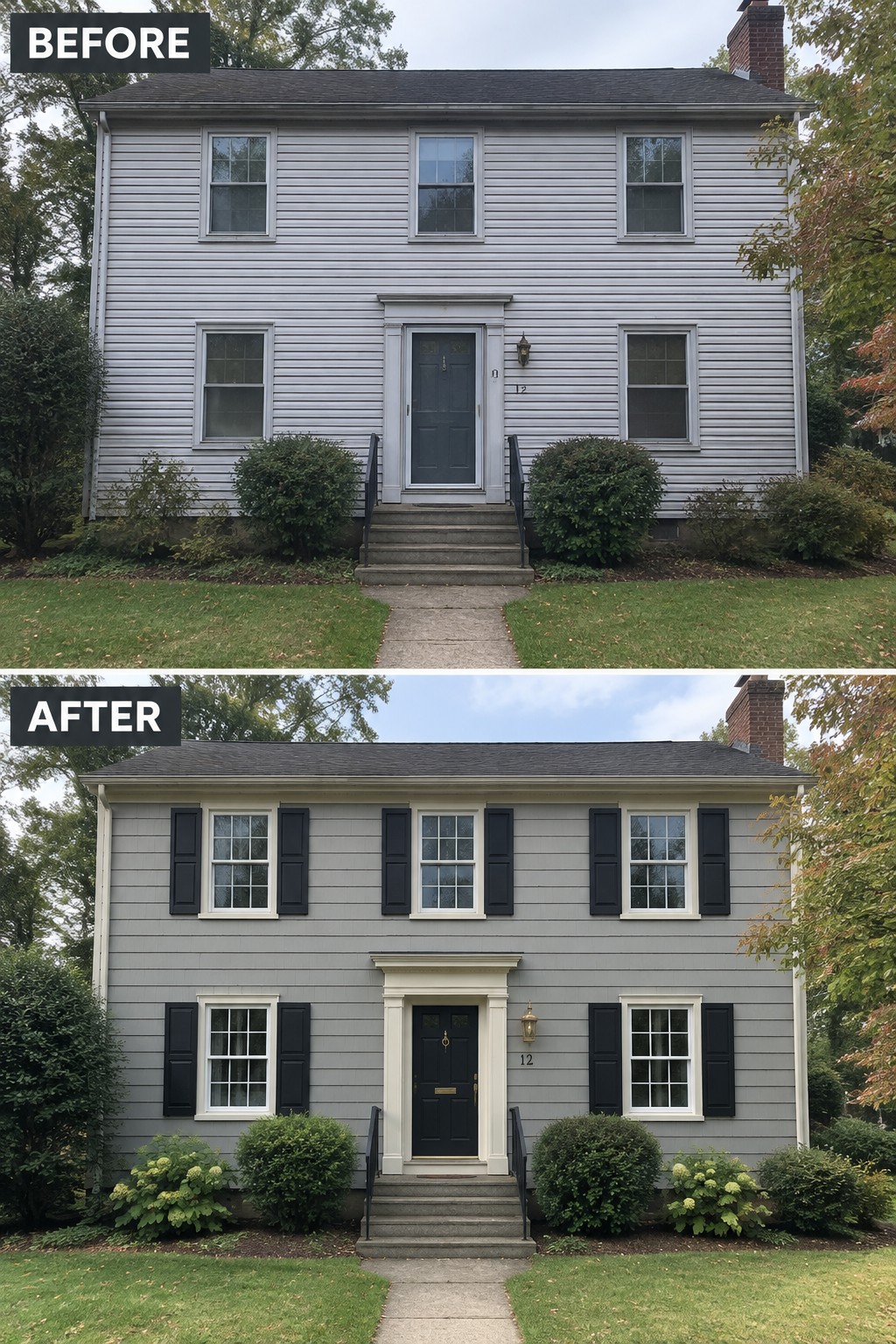
Adding shutters and cream trim is one of the most effective ways to update a simple colonial exterior. The before photo shows a flat gray house with little detail around the windows or entry. In the after, black shutters and cream trim around every opening create depth and bring out the traditional lines of the house.
This idea works best on homes with horizontal siding where the windows sit in a regular pattern. Start with the trim color and shutter placement before considering larger changes like new siding or roofing. Keep the cream consistent on the window frames, door surround, and any other trim so the whole facade feels pulled together.
Use Cream Trim To Refresh Colonial Siding
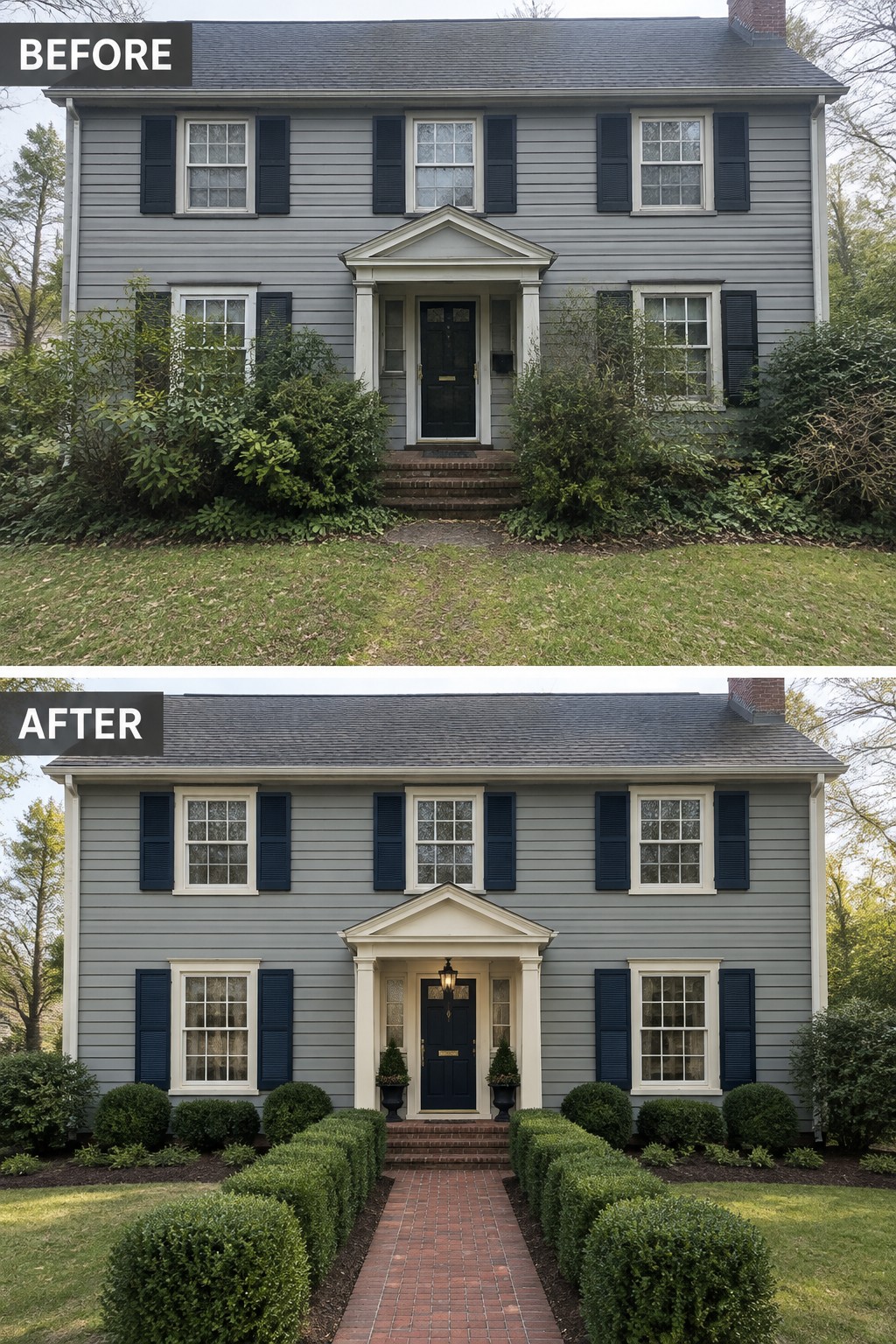
Painting the trim a soft cream color while keeping the siding gray gives a colonial home clearer lines and a more finished appearance. The change makes the windows and entry pop without needing a full repaint. In this case, the cream trim around the windows and door, paired with the dark shutters and door, replaces the heavier original look and works with the existing siding tone.
This idea suits older colonials that already have good proportions but lack definition. Focus first on the trim and front door color, then add low, structured shrubs along the foundation to match the traditional style. Keep the planting simple and symmetrical so it frames the house rather than covering it.
Add A Pediment To Strengthen A Plain Colonial Entry
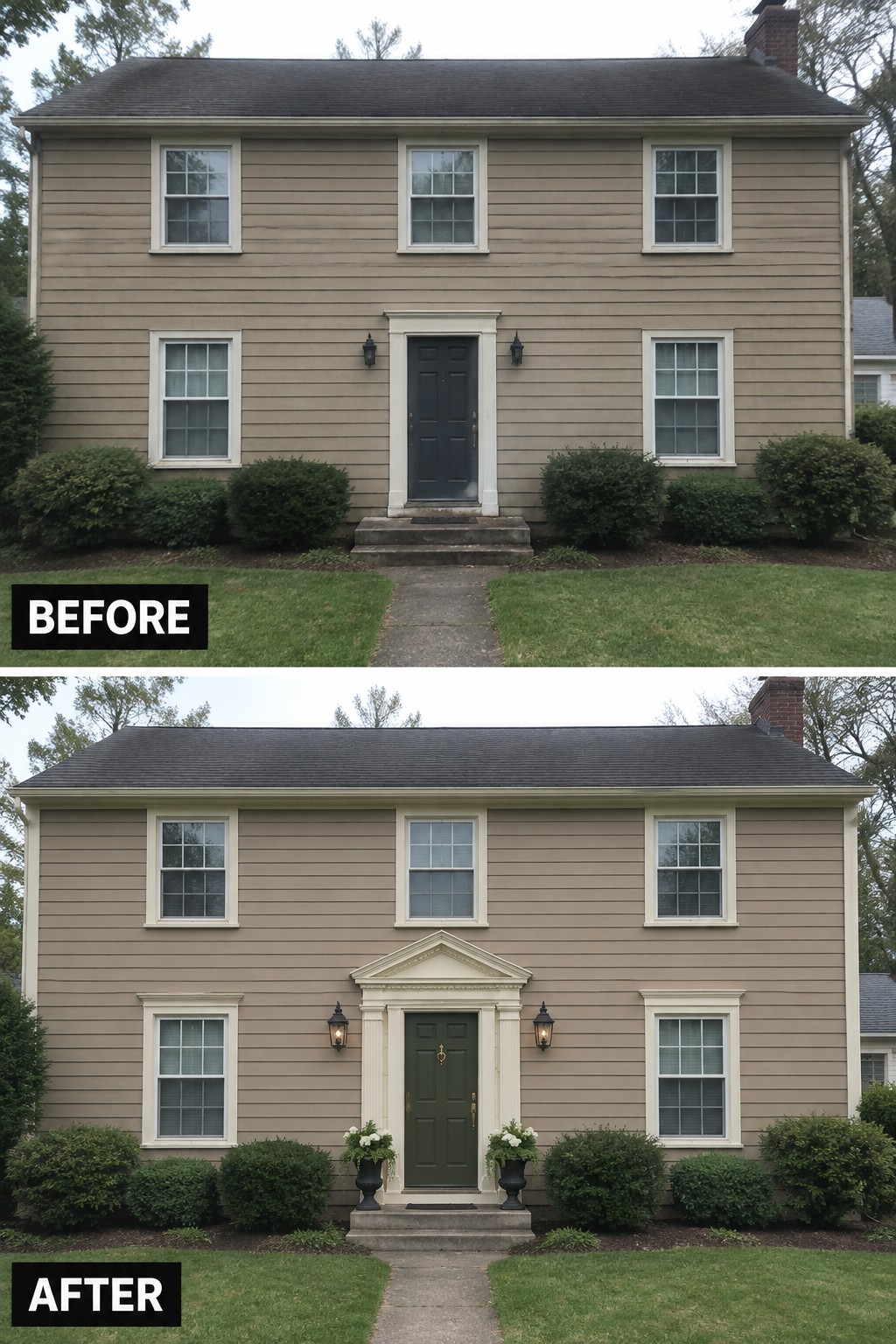
A pediment over the front door adds the kind of architectural weight that many colonial homes lack. The before shows a flat entry that sits quietly against the siding. Once the triangular detail, columns, and darker door are in place, the entrance feels like the main feature instead of an afterthought.
This approach suits colonial houses with simple siding and cream trim. Start with the door surround before adding planters or lighting, and keep the scale modest so it matches the size of the house. The goal is to give the entry presence without overpowering the rest of the facade.
Refresh Colonial Siding With Cream Trim And Shutters
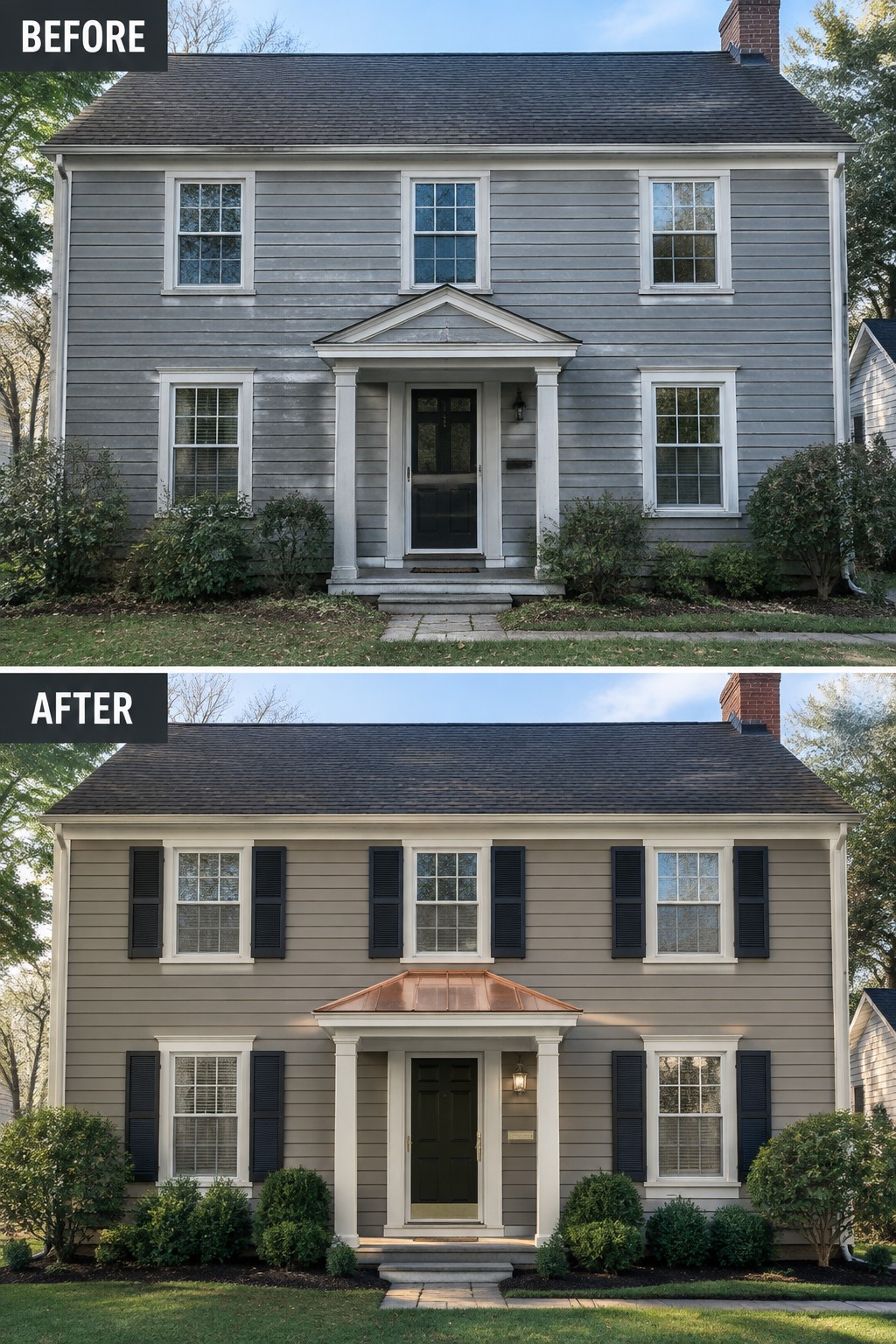
Switching the siding from a cool gray to a warmer taupe tone and adding cream trim completely changes how the house reads from the street. The black shutters then give each window a clear frame, which makes the facade feel more finished and balanced.
This idea works well on colonial homes that already have a simple shape and good proportions. Pick a siding color that sits between gray and beige, keep the trim light, and add shutters in a dark tone that matches the door. Start with the paint and trim before adding other details.
Update Colonial Siding With Cream Trim And A Bold Door
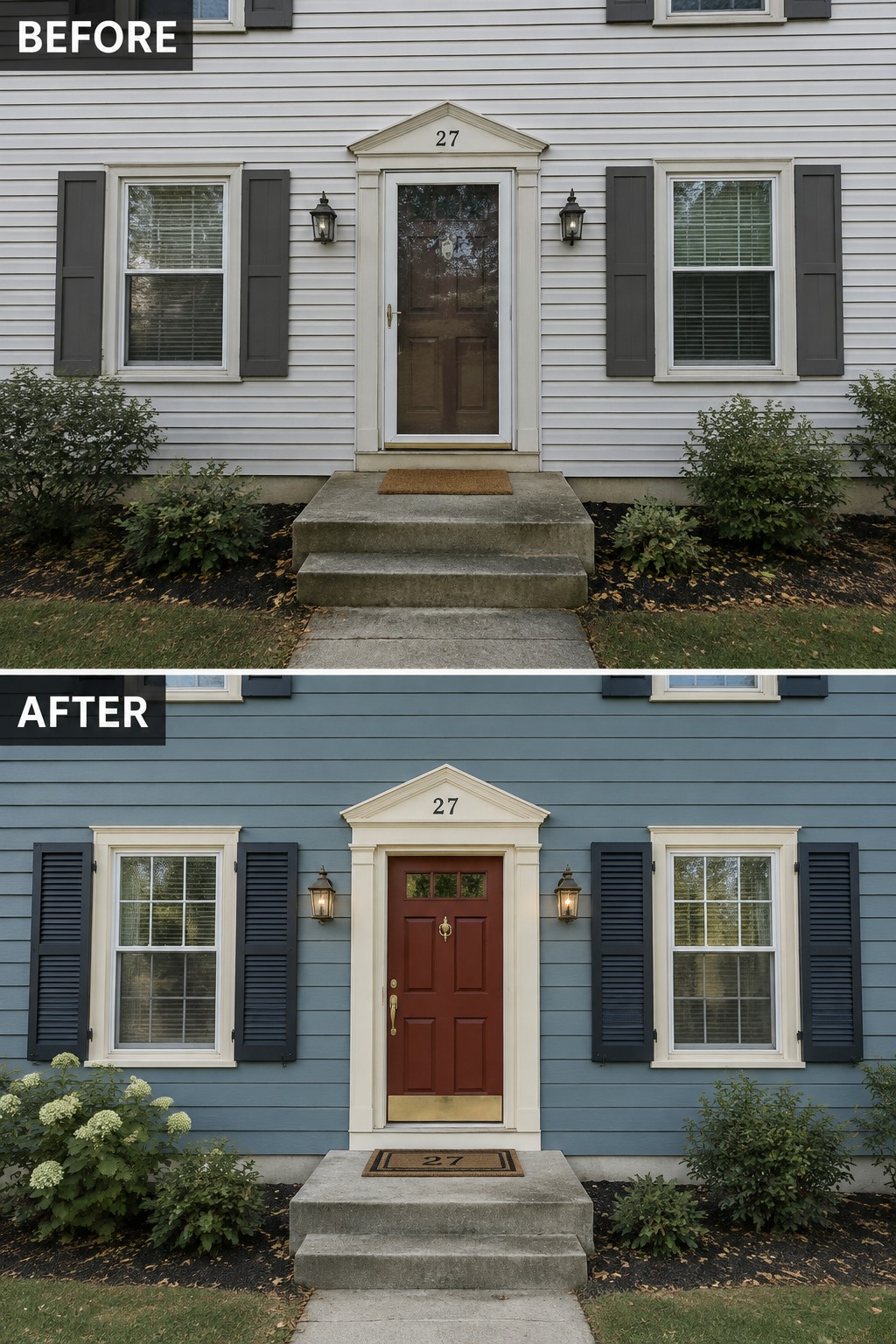
Many colonial homes look tired when the siding color no longer works with the trim and entry. Switching to a blue-gray siding and adding cream trim around the windows and door gave this house a cleaner, more finished appearance while keeping its traditional shape.
This idea suits older colonials that need a refresh without major construction. Pick a siding color that sits well against cream trim, then let the front door carry one stronger accent so the rest of the exterior stays simple.
Add Cream Trim To Update A Colonial Exterior
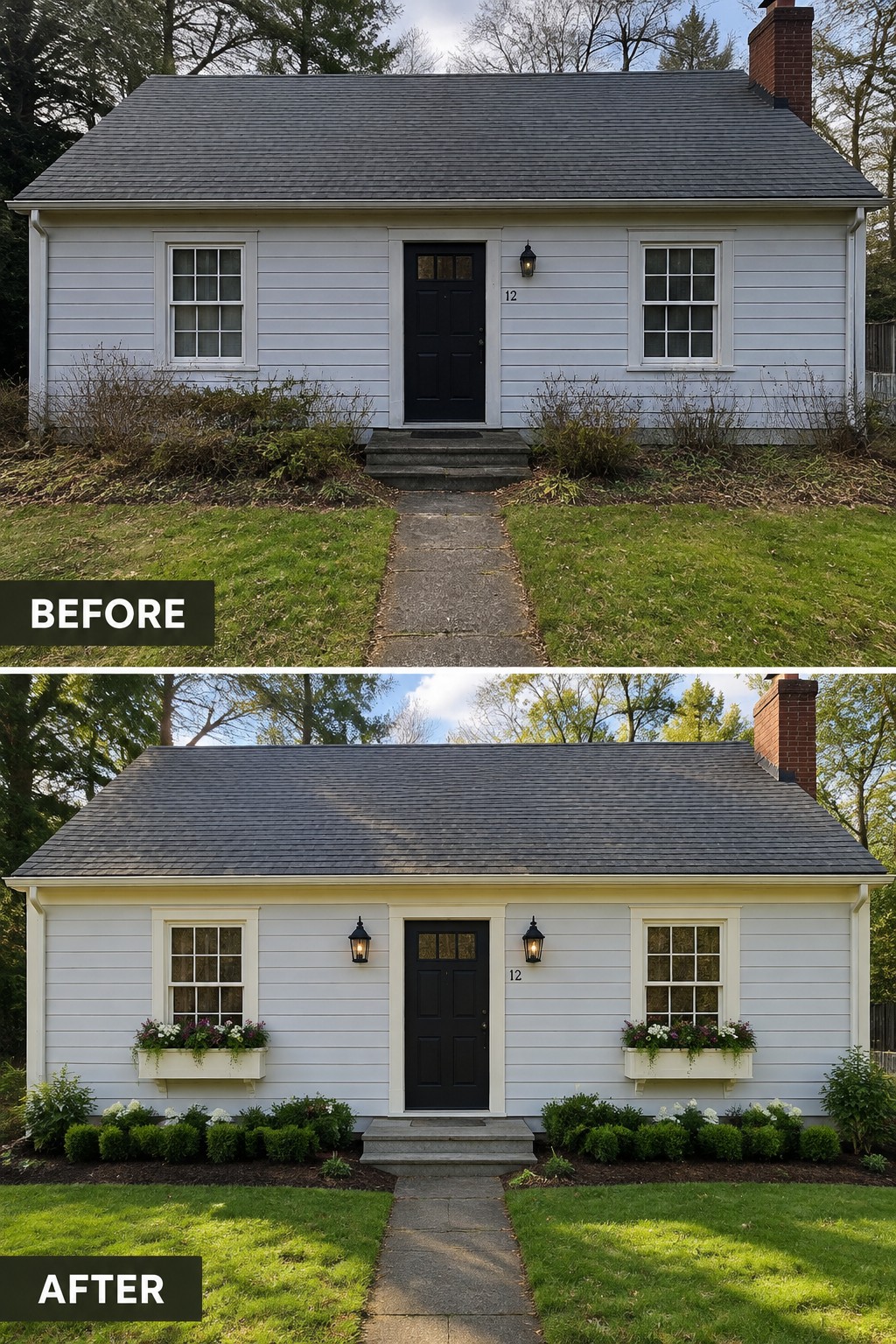
Many colonial homes with plain siding and black doors can look a little flat from the street. Adding cream trim around the windows and along the eaves gives the facade more definition and a softer traditional feel.
This works best on smaller colonials where the siding is the main surface you see. Pick a warm cream that contrasts gently with the white, then repeat the color on window boxes or simple planters. Keep new planting low so the trim stays the main change.
Add Shutters And Cream Trim To Refresh Colonial Siding
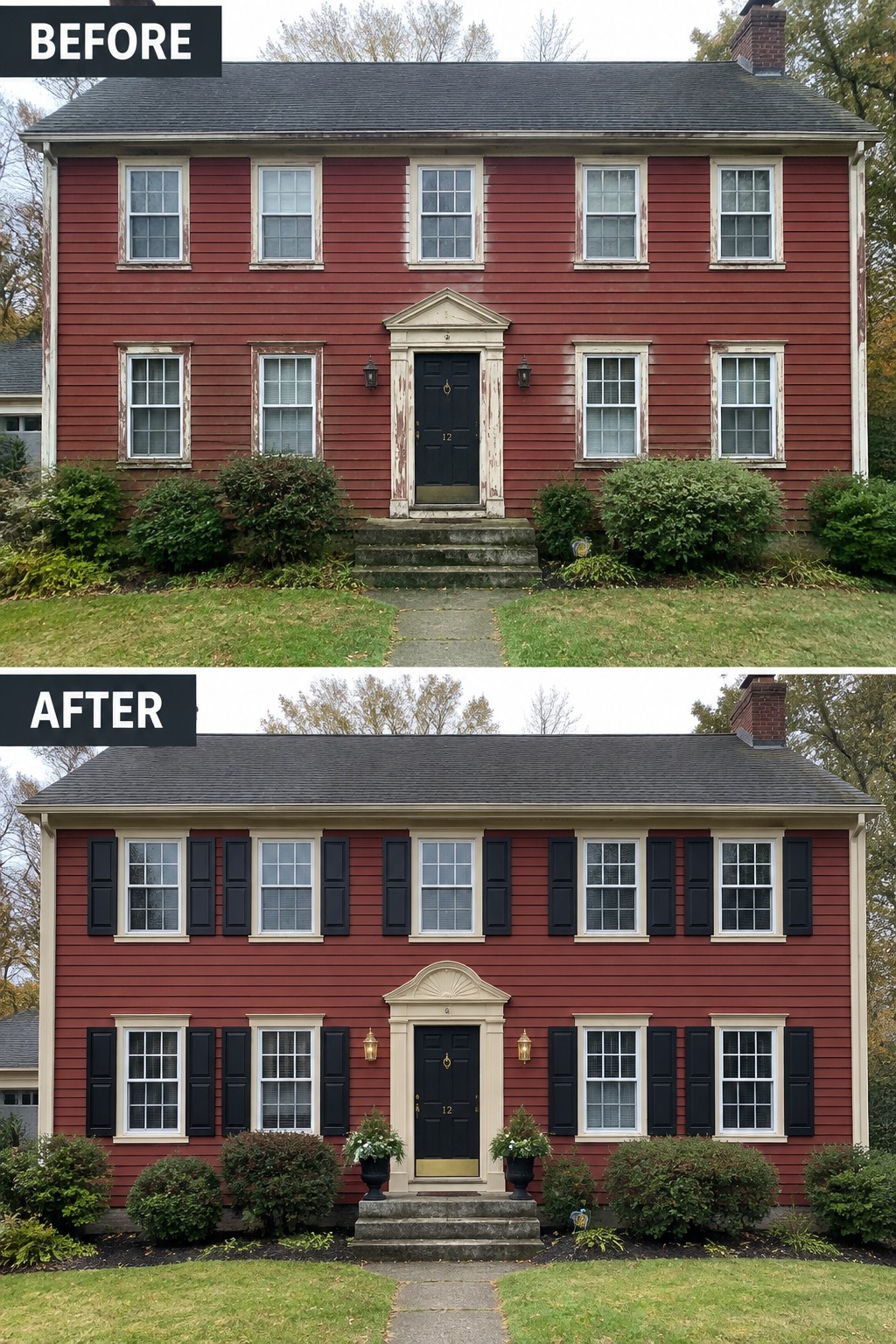
Adding shutters and switching the trim to a soft cream color is one of the simplest ways to give a colonial house a more finished look. The before photo shows bare windows and peeling trim that left the red siding feeling plain and incomplete. Once black shutters were added to every window and the trim was painted cream, the same house suddenly reads as more traditional and cared for.
This idea works especially well on colonials where the siding itself does not need replacing. Start with the windows and front door since those changes have the most impact. Keep the shutter color and trim consistent across the whole front so the house feels balanced rather than busy.
Add Cream Trim And Shutters To Define A Colonial Exterior
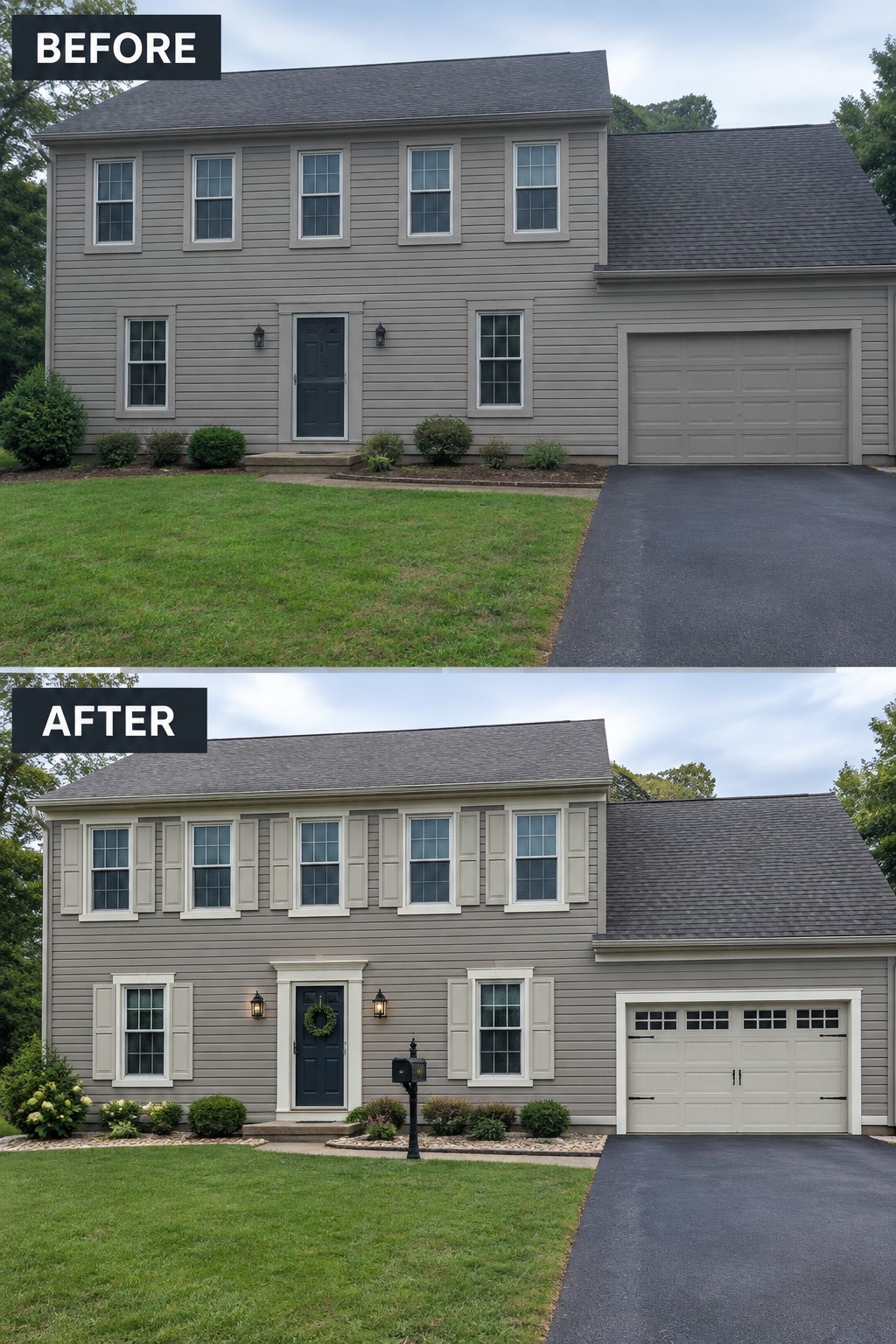
A plain colonial often looks flat when the siding runs without any breaks. Cream trim around the windows and doors, plus shutters on the main openings, adds clear lines and makes the house feel more finished. The garage door frame was updated in the same color, which helps the whole front read as one complete look instead of separate pieces.
This works best on two-story homes with simple siding and standard window placements. Choose a trim color that sits a step lighter than the siding, then add shutters only where they fit the window rhythm. The change stays practical because it builds on the existing structure rather than requiring new siding or major construction.
Refresh Colonial Porch Railings With Cream Paint And Simple Planters
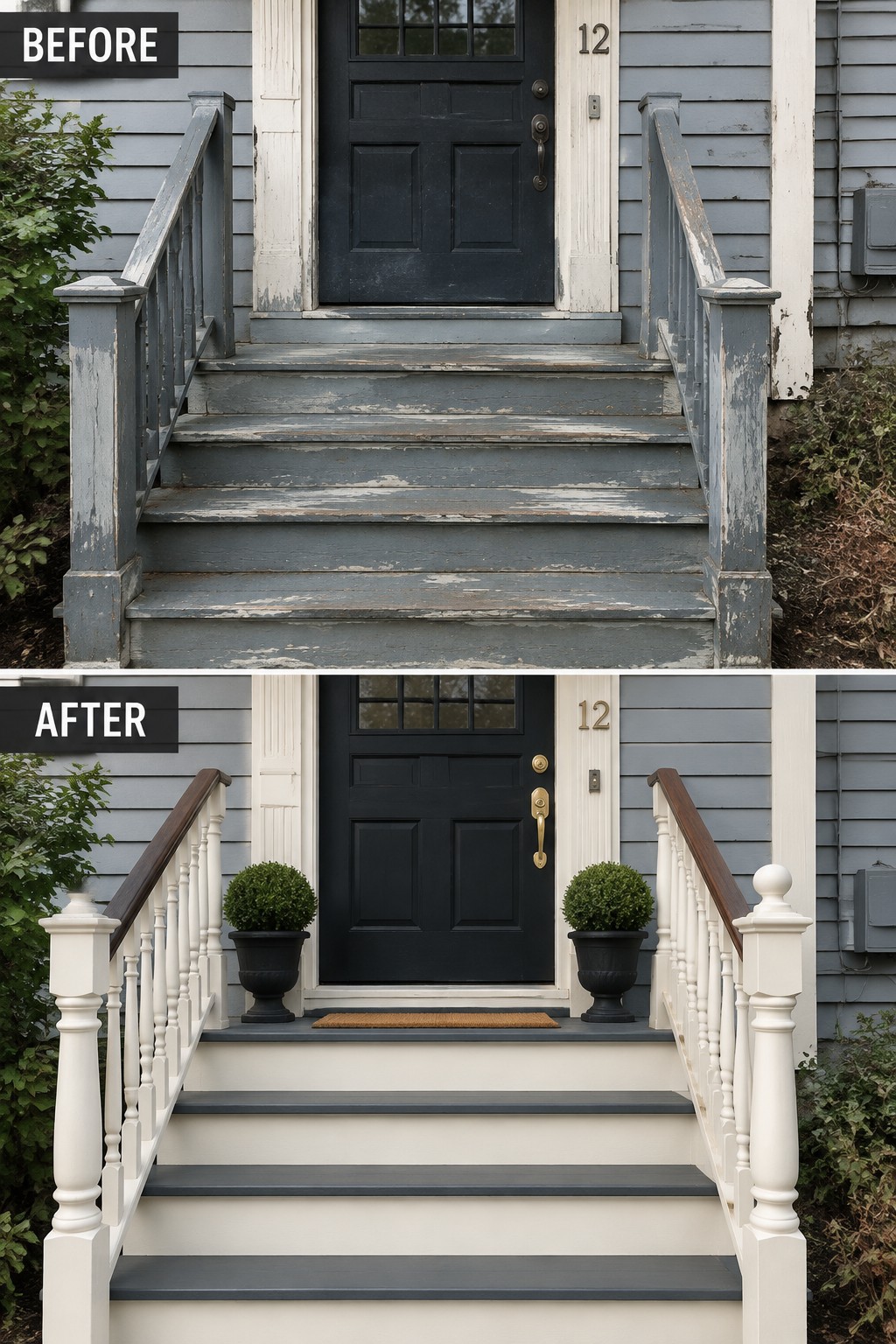
Painting the railings a clean cream color and switching the steps to a dark finish gives this entry a sharper, more finished look. The before photo shows worn gray paint that was chipping and dull, while the after uses the new railings plus two matching planters to frame the door and make the whole front feel more welcoming.
This idea suits colonial homes that already have traditional details but need the trim freshened up. Focus on the railings and posts first since they take up the most visual space, then add one pair of planters on the landing. Keep the planting simple so the architecture stays the main feature.
Add Shutters To Strengthen A Colonial Exterior
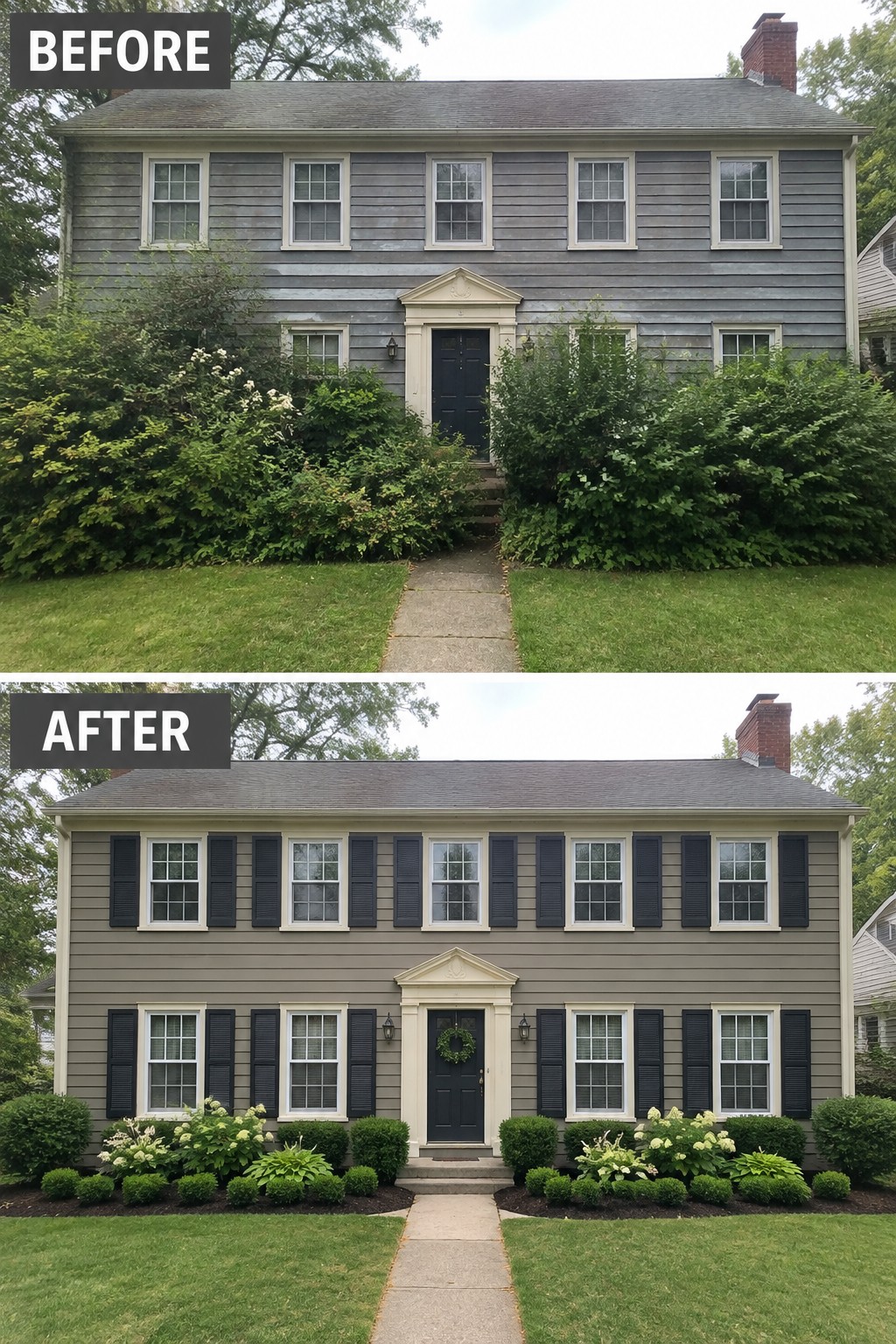
The before photo shows a house with plain windows and heavy shrubs that hid much of the front. Adding black shutters to every window and trimming the foundation planting into clear beds made the facade feel complete and more true to its colonial style.
This works best on homes that already have cream trim and a simple roofline. Measure your windows so the shutters sit right at the frame edges, then keep the new beds narrow enough that they frame the house instead of covering it. The same change looks good on many older colonials where the siding is sound but the windows need more presence.
Frame The Front Door With Traditional Trim
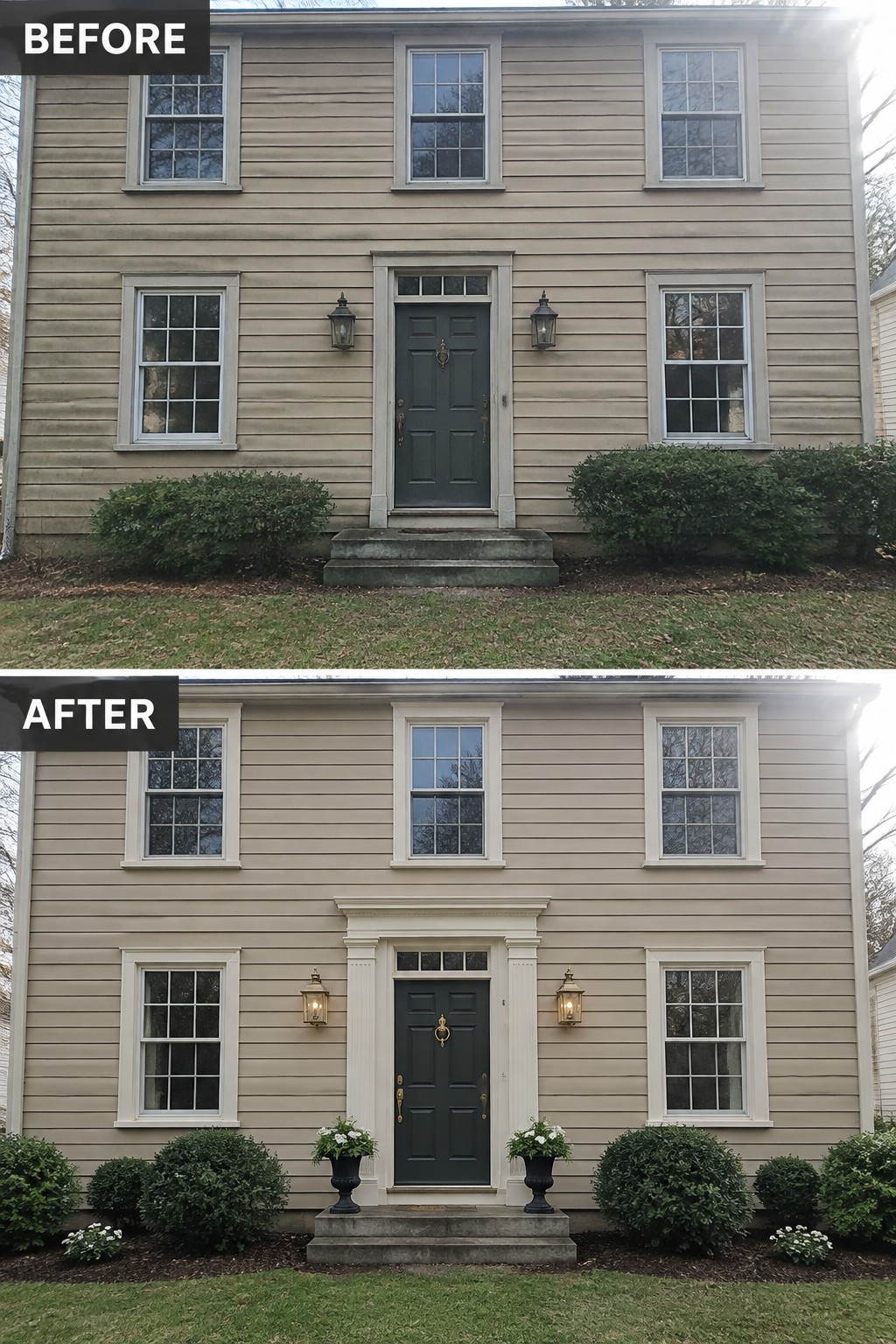
Many colonial homes have a centered door that disappears against the siding. Adding a white surround with pilasters and a simple pediment makes the entry the clear focal point and gives the whole facade more structure.
This works best on two-story houses where the door sits right in the middle. Use cream or off-white trim on the windows to match, then add a pair of planters at the base of the steps. The change stays modest but makes the house feel more finished and welcoming from the street.
Swap Dark Railings For White To Freshen The Porch
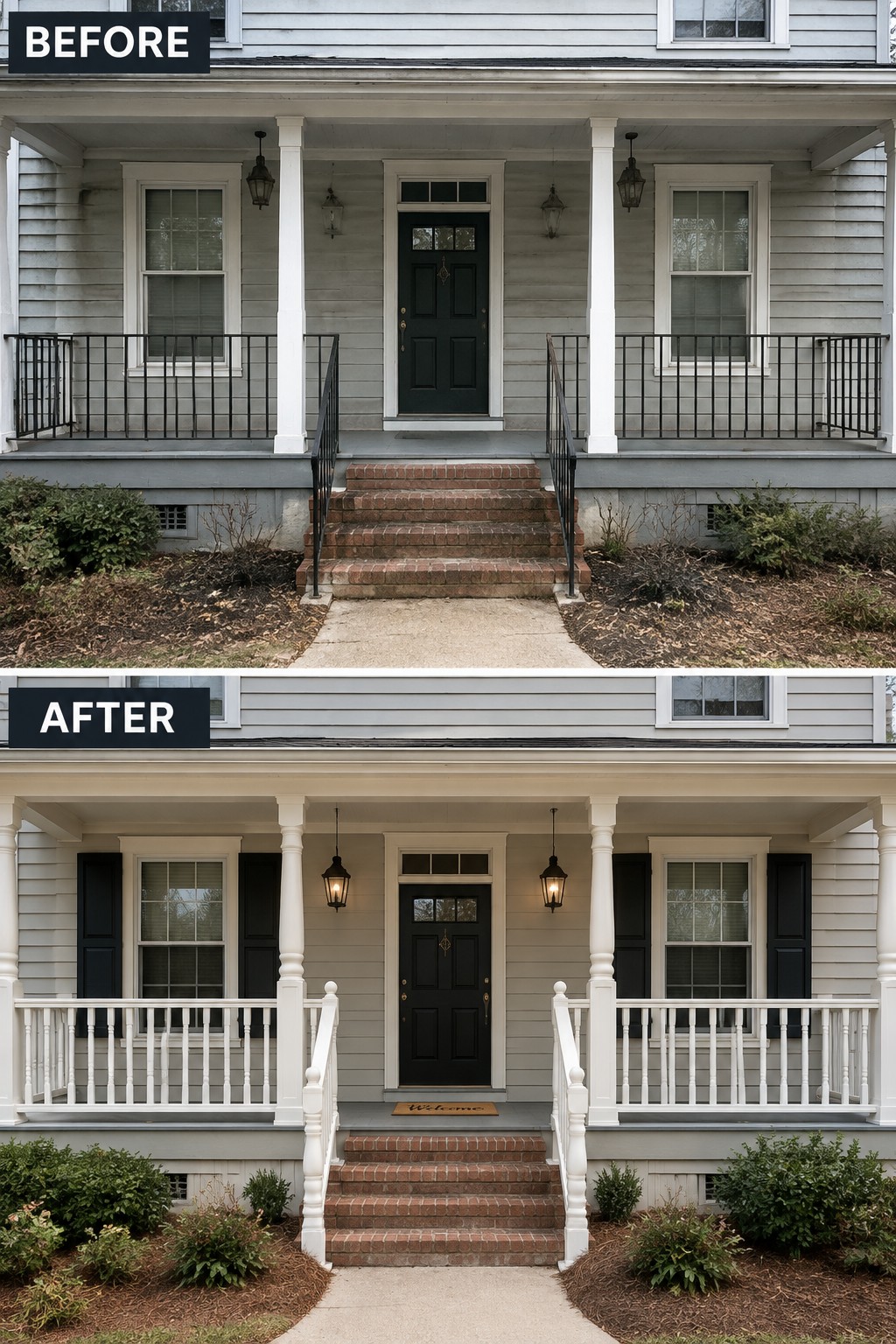
The biggest shift here comes from replacing the heavy black metal railings with simple white wood ones. That one change lightens the whole front of the house and gives it a cleaner, more traditional colonial feel. Adding matching black shutters on the windows and clearing up the beds with fresh plants helps tie everything together without overcomplicating the look.
This approach works well on older homes where the porch structure is still solid but the details feel dated. Start with the railings if your budget is tight, then add shutters or a few shrubs to soften the base. It keeps the update realistic and avoids turning the porch into something too fussy for everyday use.
Refresh Colonial Exteriors With Cream Trim And Classic Accents
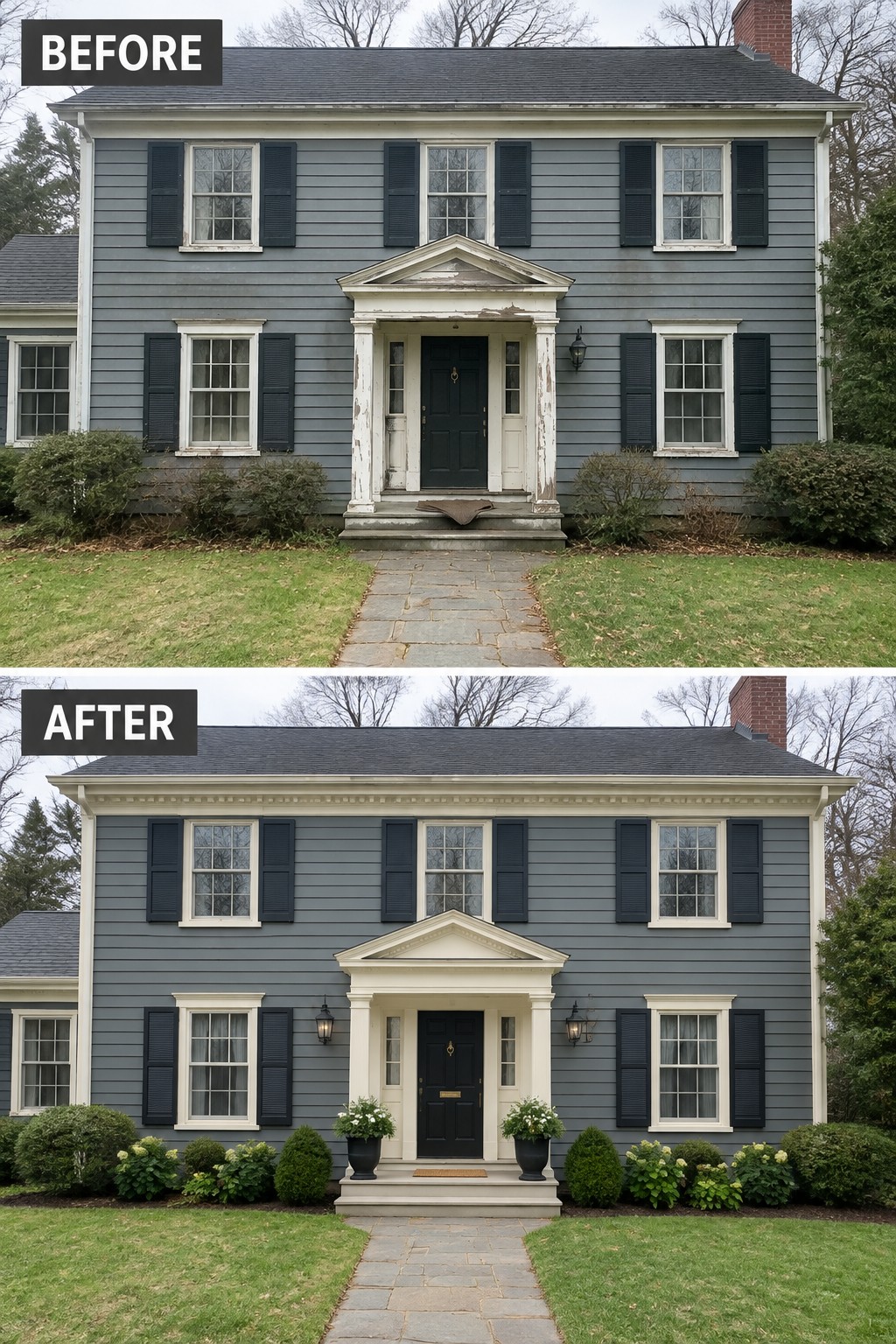
Switching from peeling white trim to a softer cream color gives the gray siding a cleaner, more finished look while keeping the colonial character intact. The black shutters and door add contrast, and a pair of planters at the steps make the entry feel more welcoming without any major construction.
This works best on homes where the siding is sound but the trim has aged. Start with the door surround and window frames, then repeat the cream on any decorative molding. Keep the planting simple so the trim stays the main focus.
Add Shutters And Cream Trim To Give A Colonial Home More Character
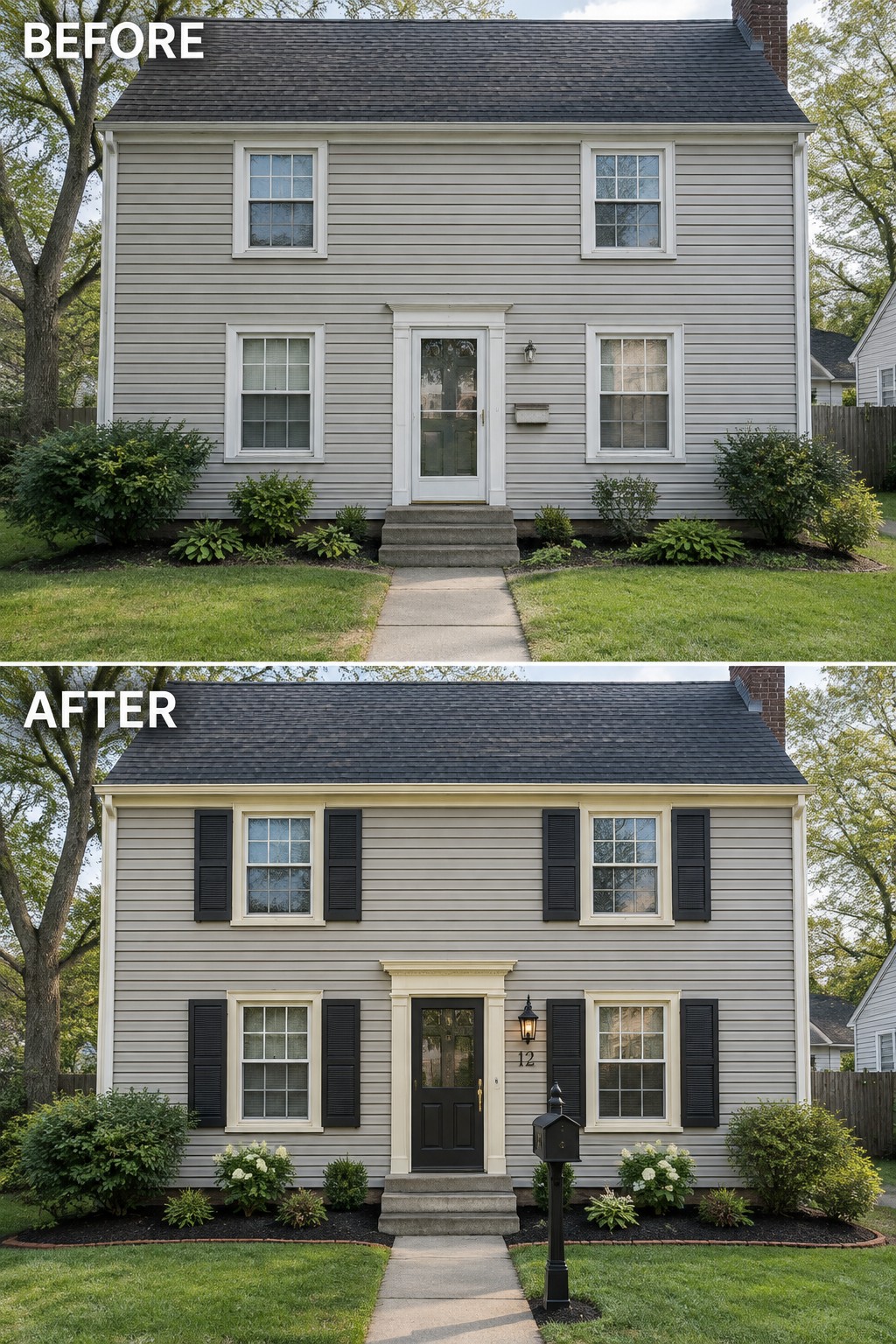
Many colonial houses start with plain siding and narrow white trim that leaves the front looking flat. Adding black shutters to every window and switching the trim to a warmer cream color brings definition to the facade and makes the windows feel more intentional. The darker door completes the shift and gives the entry a clearer focal point.
This idea suits two-story colonials with evenly placed windows. Choose shutters that match the roof or door color, and keep the cream trim wide enough to stand out against the siding. It is a simple update that works well before any larger exterior projects.
Add Shutters And Cream Trim To Strengthen A Colonial Look
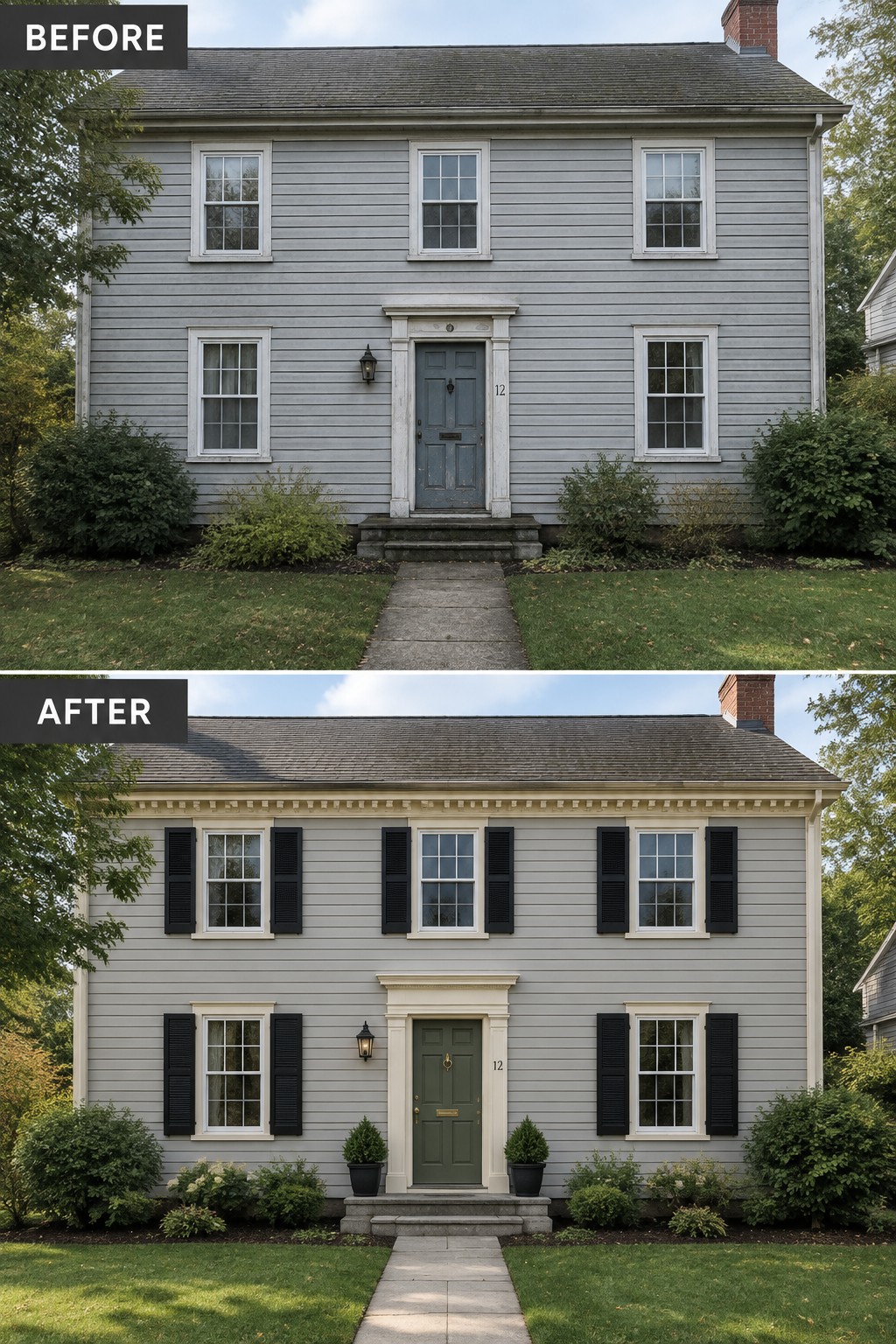
Many colonial homes start out looking flat because the windows have no shutters and the trim is either missing or painted the same color as the siding. Adding black shutters and a cream band along the eaves and around the door gives the facade clear lines and brings back the traditional proportions without touching the structure.
This approach works best on simple two-story houses where the siding is in decent shape but the details have faded. Keep the changes limited to shutters, a contrasting trim color, and one new door color so the house still reads as colonial rather than overdone.
Frequently Asked Questions
Q: How do I choose the right cream shade for trim on my colonial siding without it looking too stark? A: Hold paint samples against your siding in morning and afternoon light to see how they shift. Pick a cream with soft yellow or beige undertones that echoes any stone or brick details already on the house. This match keeps the transformation feeling natural rather than added on.
Q: Should I repaint my shutters when I add cream trim and traditional accents? A: Go with a deep green or black on the shutters so they stand out against the cream. That contrast highlights the colonial lines without needing new hardware or extra trim pieces. One coat often does the job if the old paint is sound.
Q: What happens if my siding has uneven texture after years of weathering? A: Clean and lightly sand the rough spots first so the cream trim lies flat. Then apply a primer made for older wood before the final coats. The accents will still read as crisp once everything dries even.