

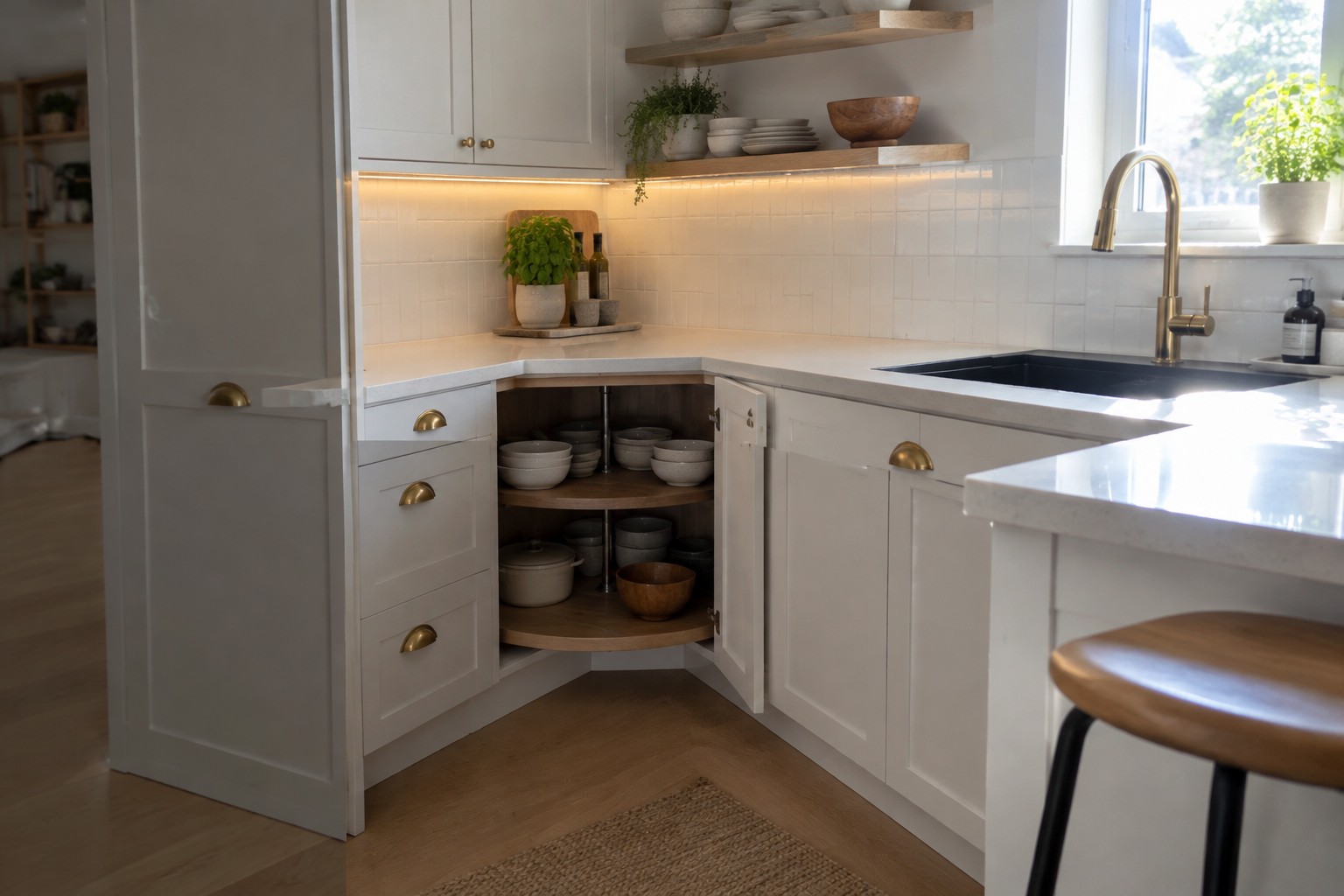
Corner cabinets can be awkward to reach, and in a small kitchen, wasted space is hard to ignore.
I find the best solutions make everyday items easier to access without crowding the counters or interrupting the flow of the room.
Some designs use pullouts or rotating shelves, while others add storage in ways that blend into the existing cabinetry.
The details that matter most are often simple, like whether a cabinet door clears nearby appliances and whether the back of the corner stays usable.
I’d save the ideas that fit your kitchen’s layout and test the measurements before settling on a design.
Use A Corner Cabinet To Make Awkward Space Useful

A corner cabinet with rotating shelves can make hard-to-reach kitchen storage much easier to use. It turns an awkward corner into a place for pots, bowls, and pantry containers without leaving items tucked out of sight.
This setup works well where two runs of cabinets meet, especially in a small kitchen where every cupboard counts. Choose shelves that suit what you plan to store, and leave enough clearance for the doors to open fully.
Use The Corner Cabinet for Everyday Storage
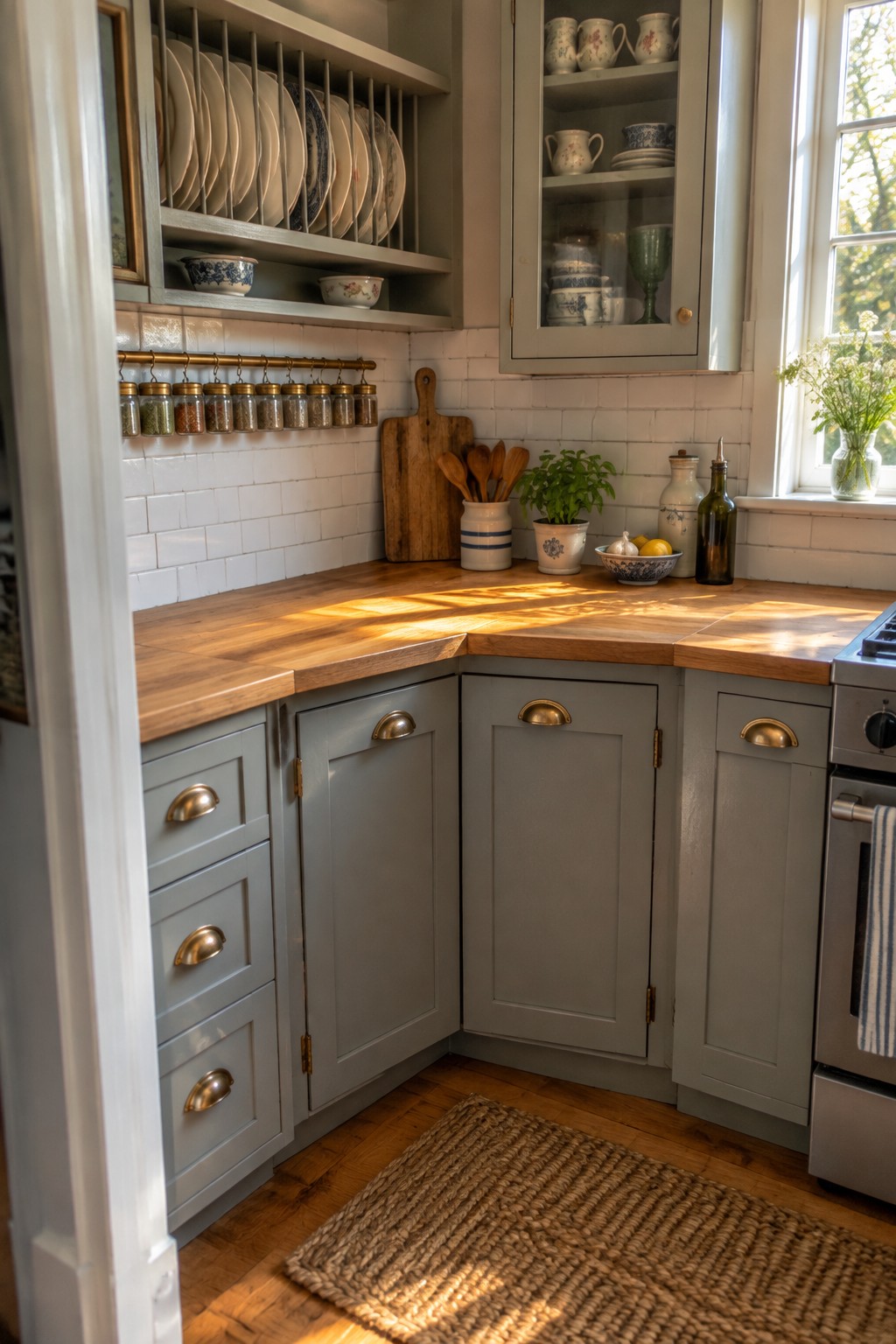
A corner cabinet can make an awkward kitchen turn useful without taking up more floor space. Open shelves keep plates easy to reach, while the counter below remains clear for simple prep work.
For a small kitchen, store everyday dishes in the cabinet and use dividers to keep them upright. Leave enough room to reach items comfortably, since shelves packed too tightly can be hard to use.
Make Corner Cabinets Easier to Reach

A corner cabinet can hold a lot, but deep shelves often leave pots and pans hard to reach. Pull-out shelves bring the contents forward, so you can use the full cabinet without rummaging in the back.
This setup works well in an L-shaped kitchen where two counters meet. Choose sturdy shelves that fit the cabinet opening, and leave enough clearance for the door to swing open fully.
Use Curved Cabinets to Make a Corner Work
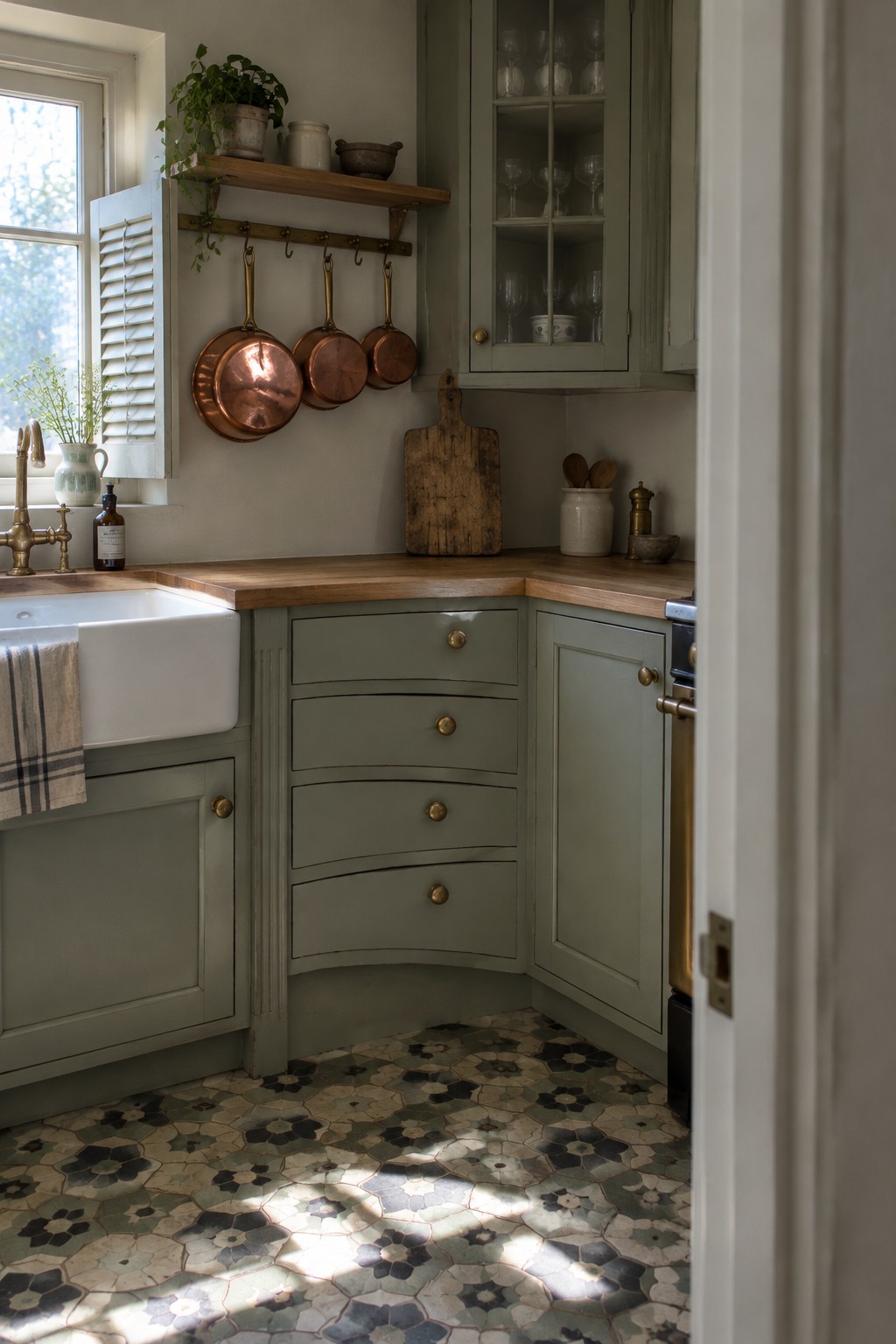
A curved cabinet run makes a kitchen corner easier to use without leaving an awkward, hard-to-reach space. The rounded drawer fronts also keep the cabinetry from feeling like a sharp turn in the room.
This approach works best when the corner has enough room for drawers that open freely. Keep the curves modest, and use the drawers for everyday items so the space stays practical.
Add A Built-In Coffee Nook At The Corner
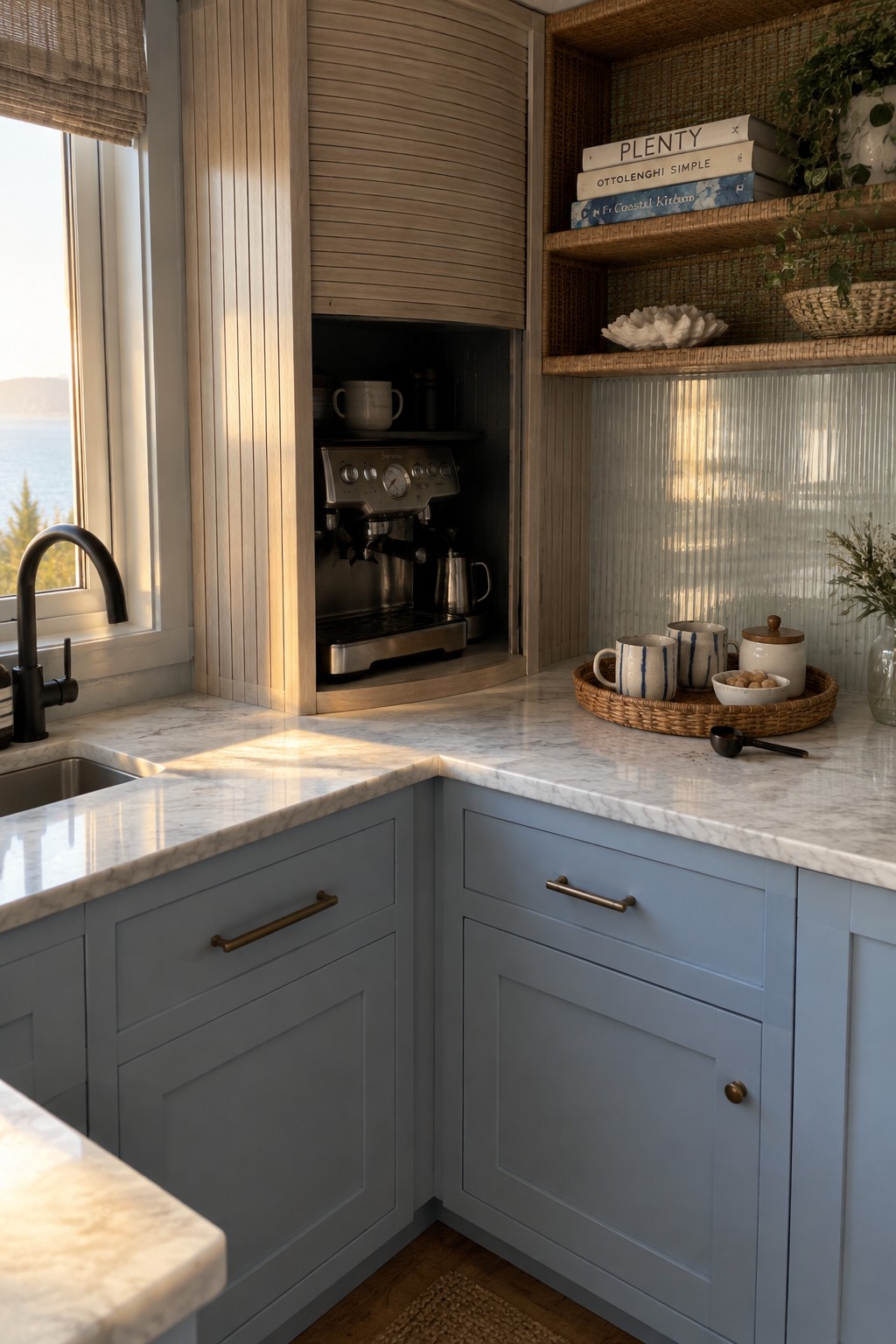
A corner cabinet can do more than hold dishes. Turning it into a small coffee nook makes use of a spot that might otherwise be awkward, while keeping the machine and mugs close to the counter.
This setup works well in a compact kitchen where counter space is limited. Leave enough room to open the cabinet and use the machine comfortably, and keep only everyday coffee supplies in the nook.
Add Open Shelves Above a Corner Counter

Open shelves make use of the wall above a corner counter without adding bulky upper cabinets. They keep dishes and pantry jars close at hand, and the shelves can continue around the corner to use space that might otherwise be overlooked.
This setup works well in small kitchens where closed cabinets would make the corner feel cramped. Use sturdy shelves for everyday items, and keep heavier pieces lower so they are easy to reach.
Use a Tall Pantry Cabinet for More Storage

A tall pantry cabinet can make good use of a kitchen corner that might otherwise be hard to organize. Full-height shelves and pull-out baskets keep dry goods and produce in one place without taking up extra floor space.
This setup works well in a small kitchen with enough wall height for a built-in unit. Put frequently used items on easy-to-reach shelves, and keep heavier or less-used goods lower down.
Make a Corner Sink Cabinet More Useful
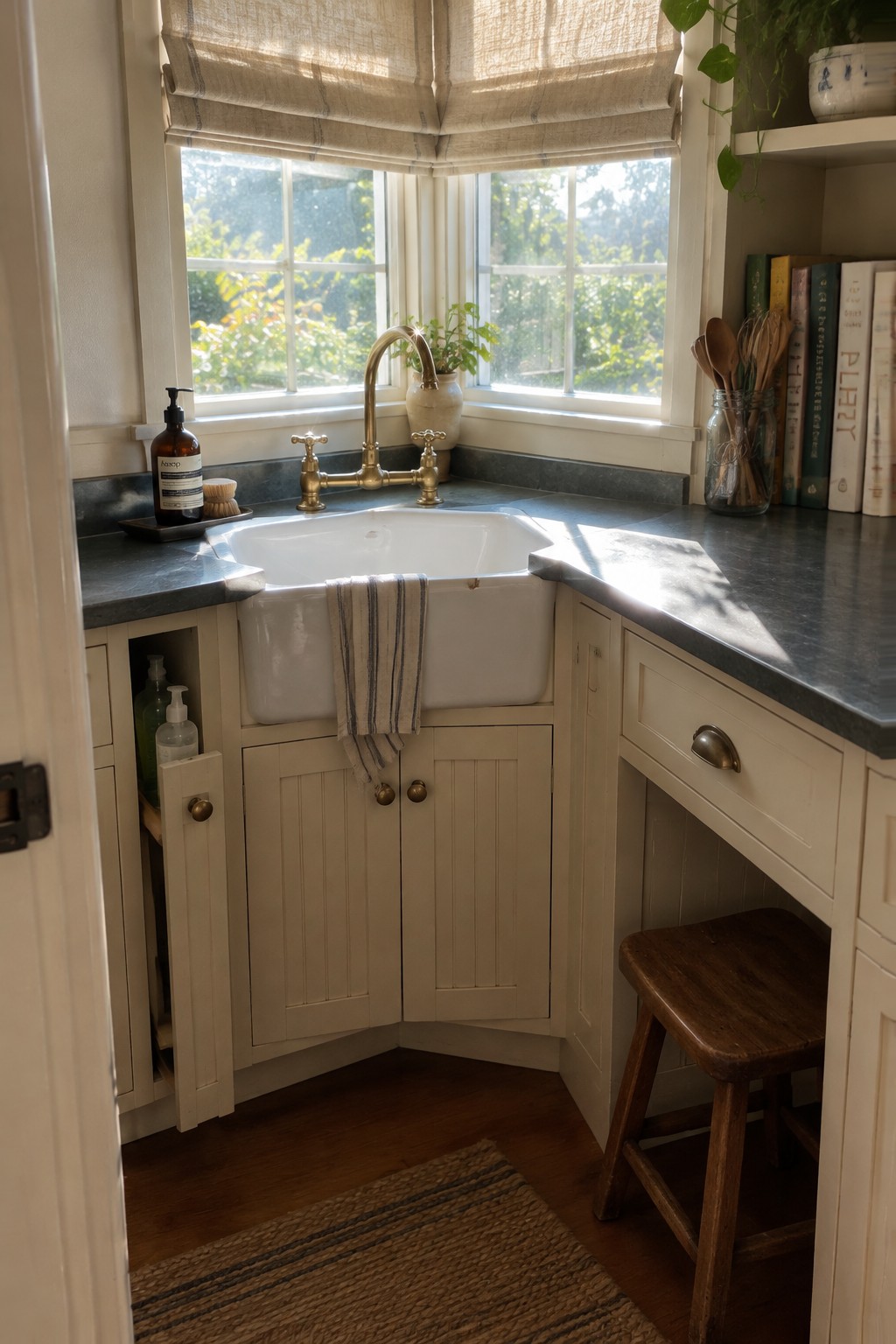
A corner sink can make good use of space that might otherwise be awkward, while keeping the main counter area open. The cabinet below can hold cleaning supplies, though it helps to leave enough room around the plumbing.
This setup works best in a small kitchen where two runs of counter meet at a corner. A narrow pull-out or small door can make items easier to reach without needing a large cabinet.
Add a Rolling Island for Flexible Prep Space
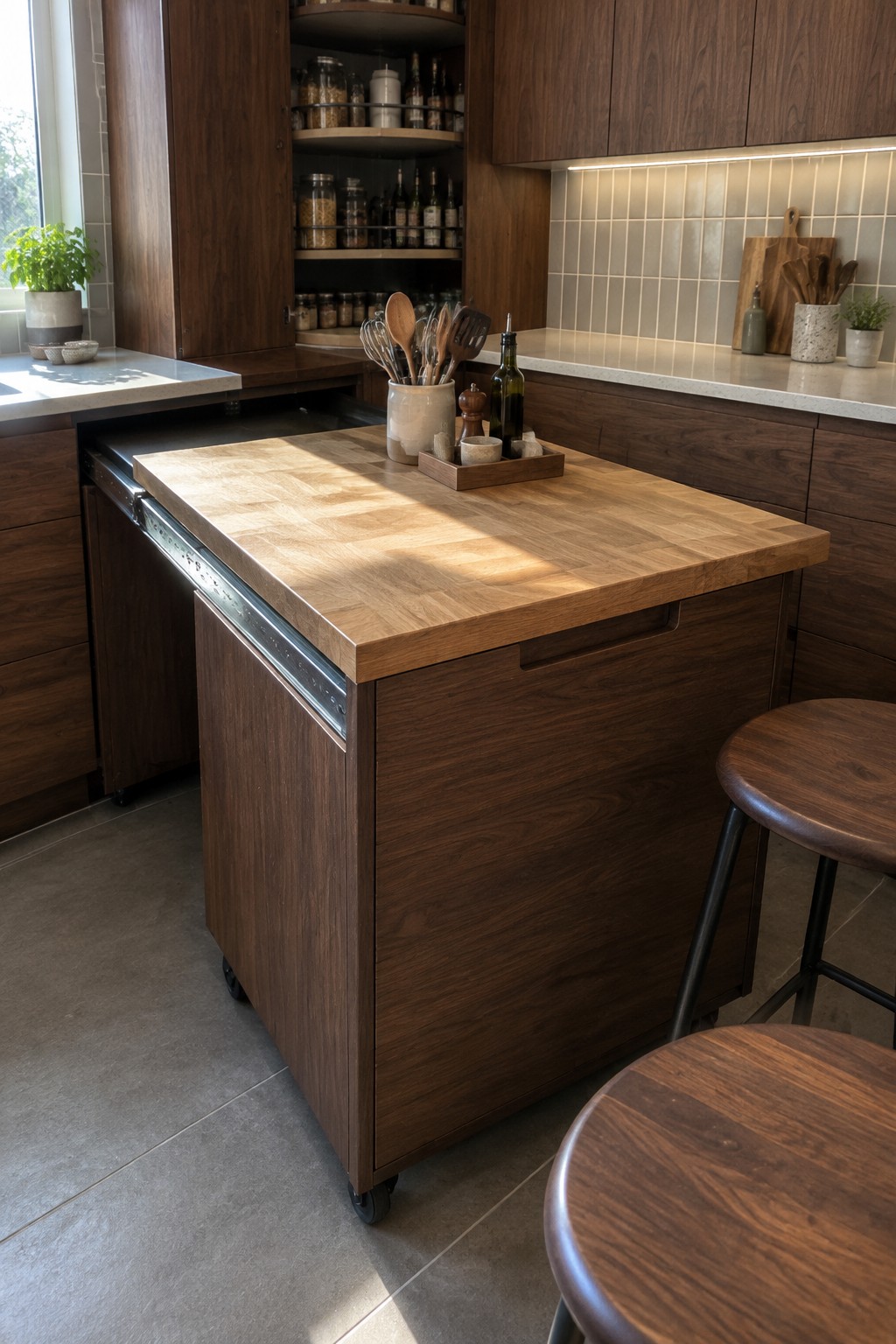
A compact rolling island can give a small kitchen extra room for chopping and mixing without taking up permanent floor space. The butcher-block top provides a sturdy work surface, and the island can move out of the way when you need more room to pass through.
Choose a size that leaves comfortable clearance around the island, especially near cabinets and drawers. Locking wheels help keep it steady while you work.
Fit A Narrow Cabinet Into The Corner

A narrow pull-out cabinet can make the space beside a corner counter useful for items that are awkward to store in regular drawers. Here, a slim vertical slot holds cutting boards without taking up much floor space.
This kind of storage works well where two runs of cabinets meet, especially in a small kitchen. Check the opening and cabinet depth before choosing an organizer so boards slide in and out easily.
Add a Corner Wine Rack
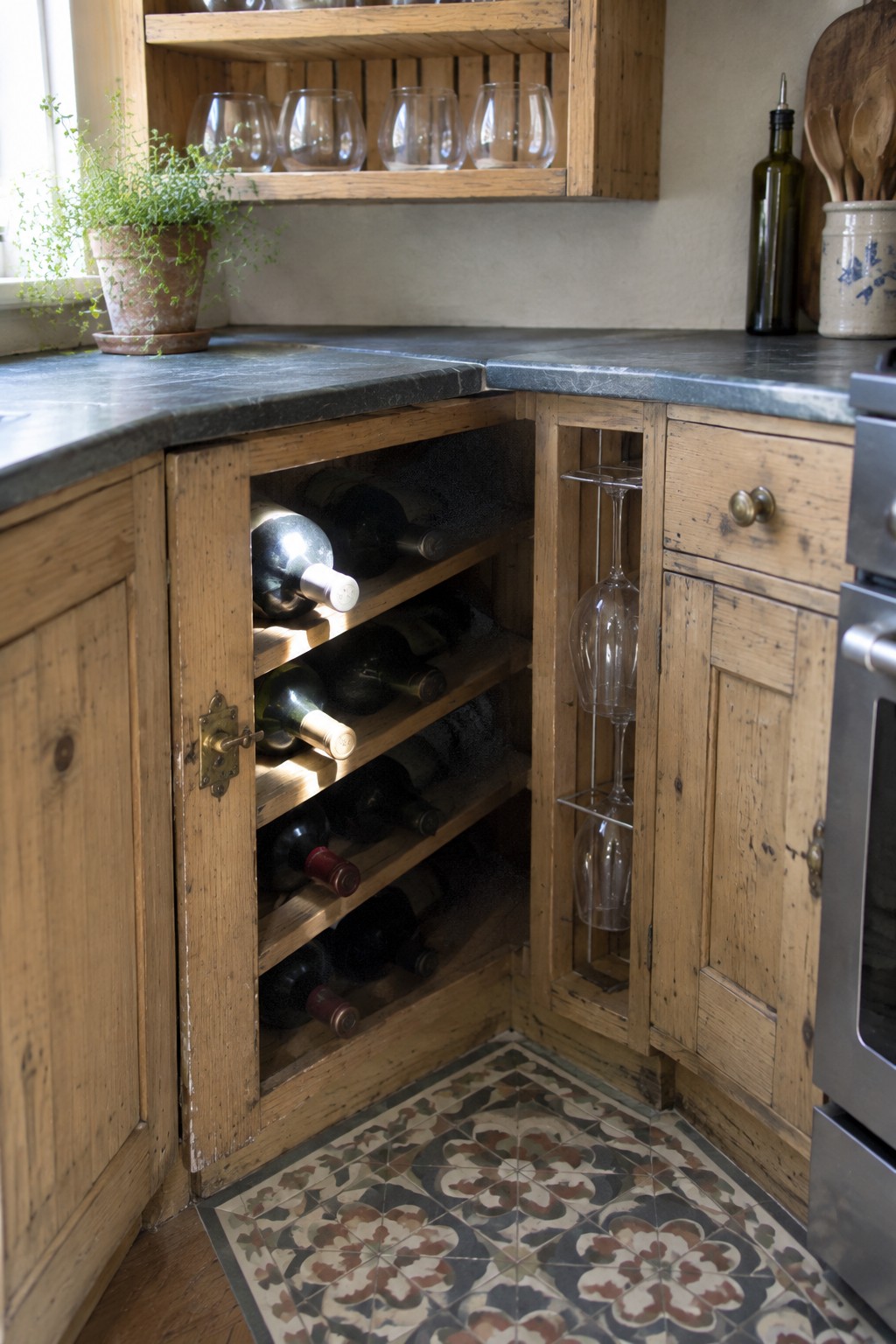
A corner cabinet can do more than hold pots and pans. Built-in angled shelves make good use of the space for storing wine bottles, keeping them tucked away without taking up a separate stretch of wall.
This approach works well in a kitchen where an ordinary cabinet would be awkward to reach or hard to organize. Set the rack low in the corner and leave enough room to slide bottles in and out easily.
Add Baking Sheet Drawers To A Corner Cabinet

Baking sheet drawers make good use of the narrow cabinet space that can be awkward to organize. Keeping pans in separate slots makes it easier to grab one without shifting a stack.
This setup works well beside a counter where you often prep or bake. Measure your pans before planning the drawer openings, and leave enough clearance so they slide out easily.
Use A Curved Counter To Make The Corner Easier To Use
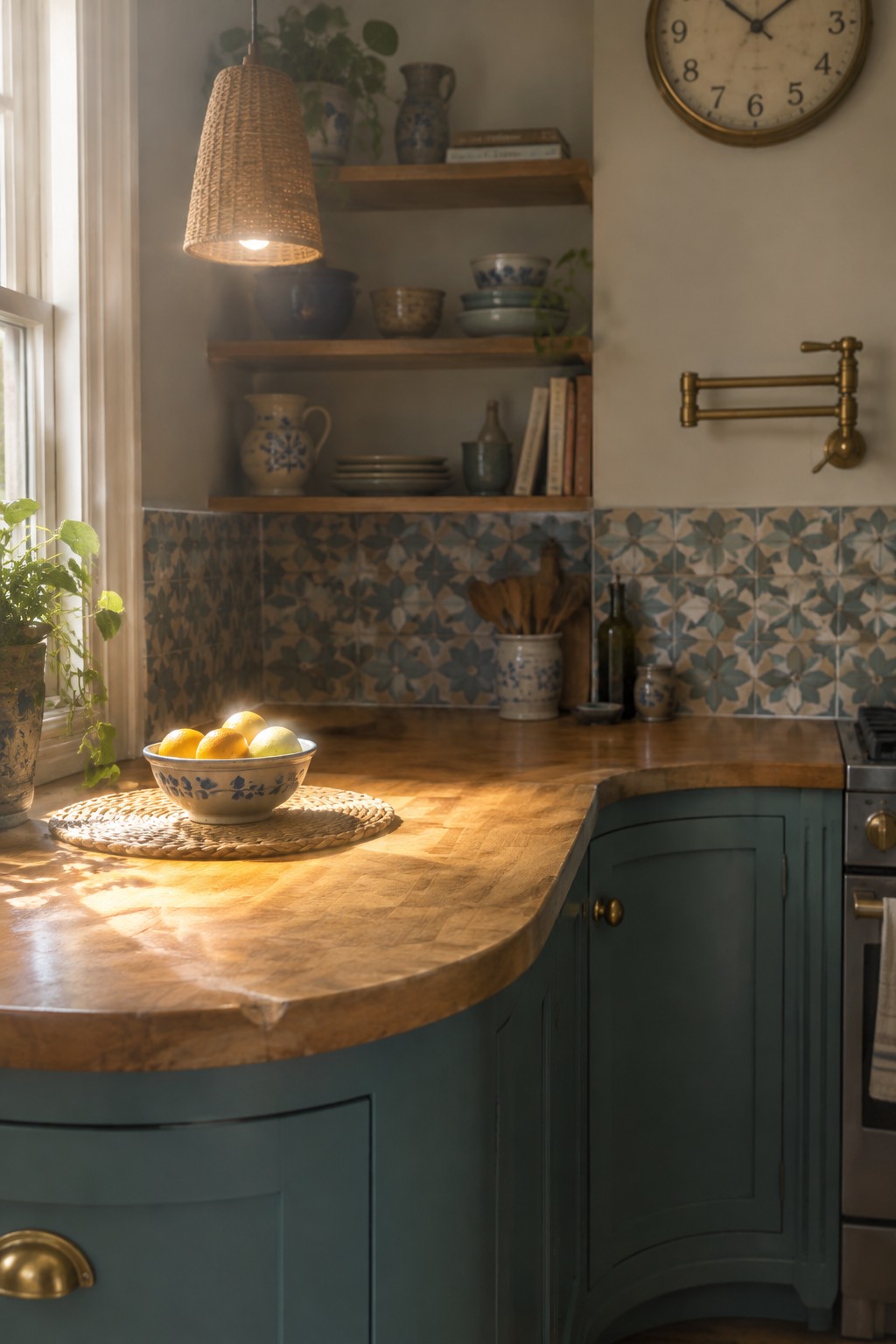
A rounded counter edge can make a small kitchen corner feel less cramped and give you a little more room to move around it. It also makes an awkward turn in the cabinetry feel like part of the layout rather than a leftover space.
This works especially well in a compact kitchen with a peninsula or wraparound counter. Keep the curve shallow enough to leave useful worktop space, and use the cabinet below for items you do not need to reach every day.
Add A Pull-Out Pantry To Use Narrow Kitchen Space
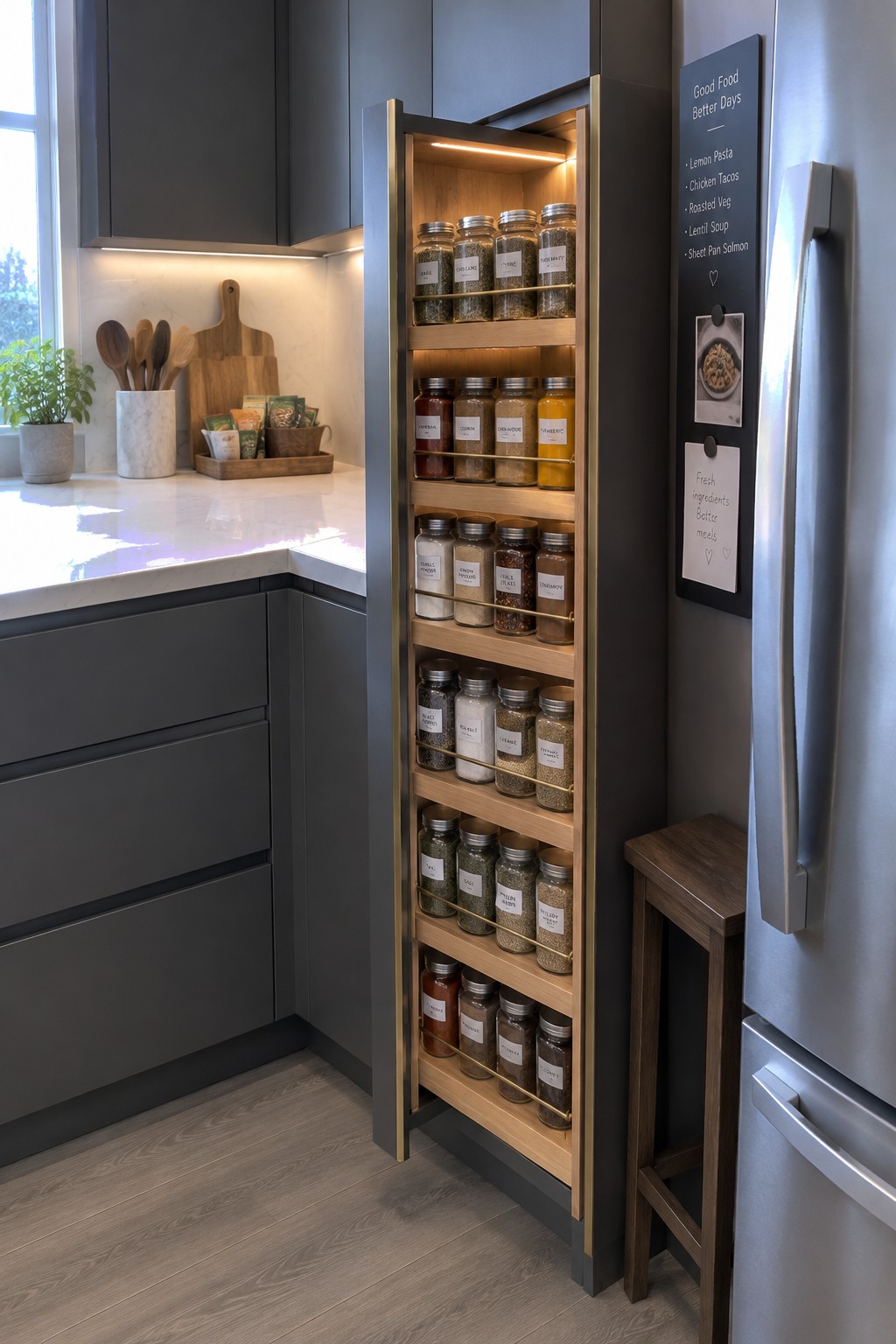
A tall pull-out pantry can turn a narrow gap beside the cabinets into useful storage. Its slim shelves keep jars easy to see, so you can make use of space that might otherwise go unused.
This setup works well in a small kitchen, especially near the counter where pantry items are handy while cooking. Keep the shelves shallow enough to reach everything, and group similar ingredients together.
Use Open Corner Shelves To Store Cookware
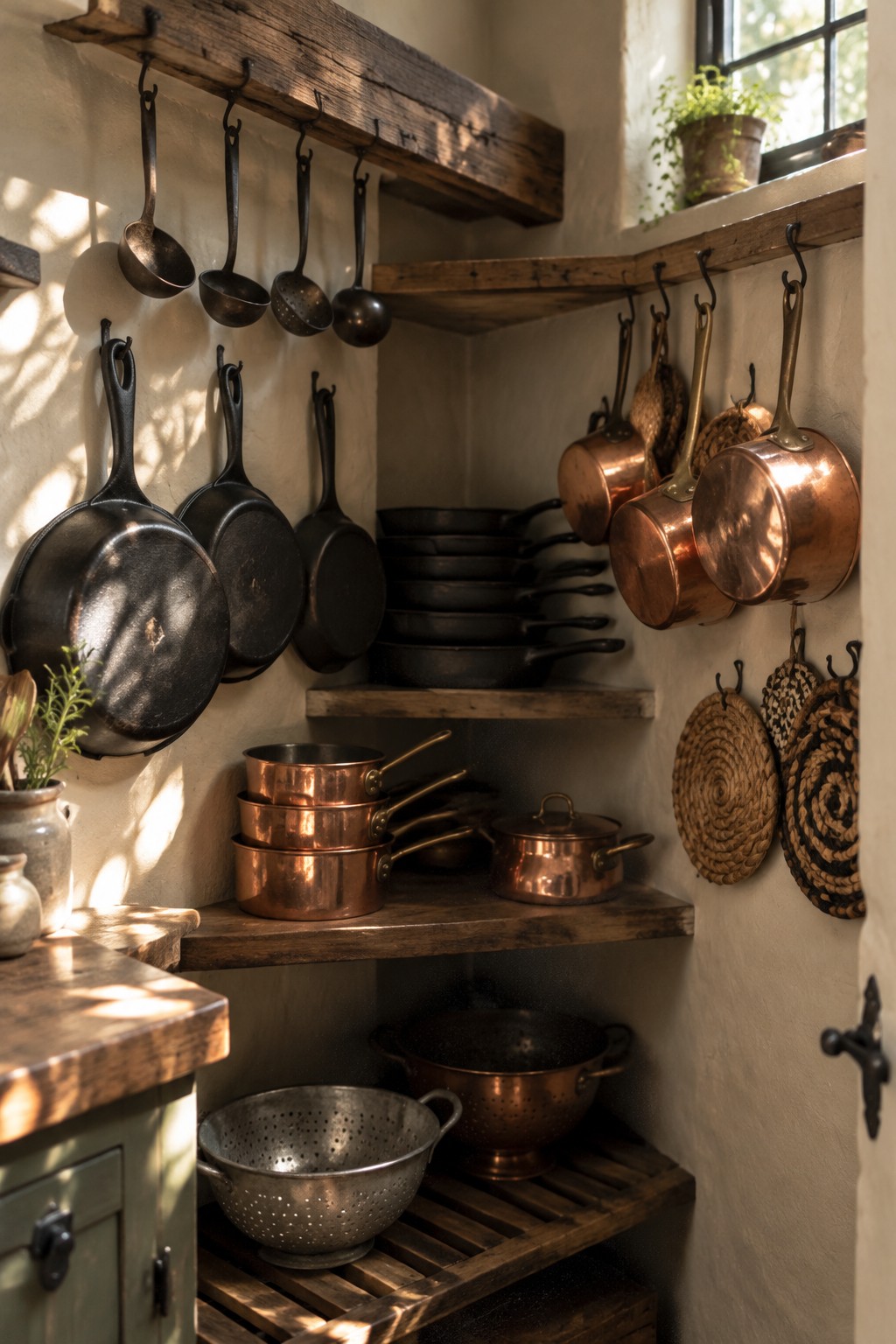
Open shelves can make a small kitchen corner useful without the bulk of another cabinet door. Here, sturdy wooden shelves hold stacked pans, while hooks keep frequently used cookware within easy reach.
This works best for items you use often and don’t mind leaving visible. Keep heavier pieces on lower shelves, and avoid crowding them so you can pull out what you need easily.
Add Vertical Dividers to a Corner Cabinet
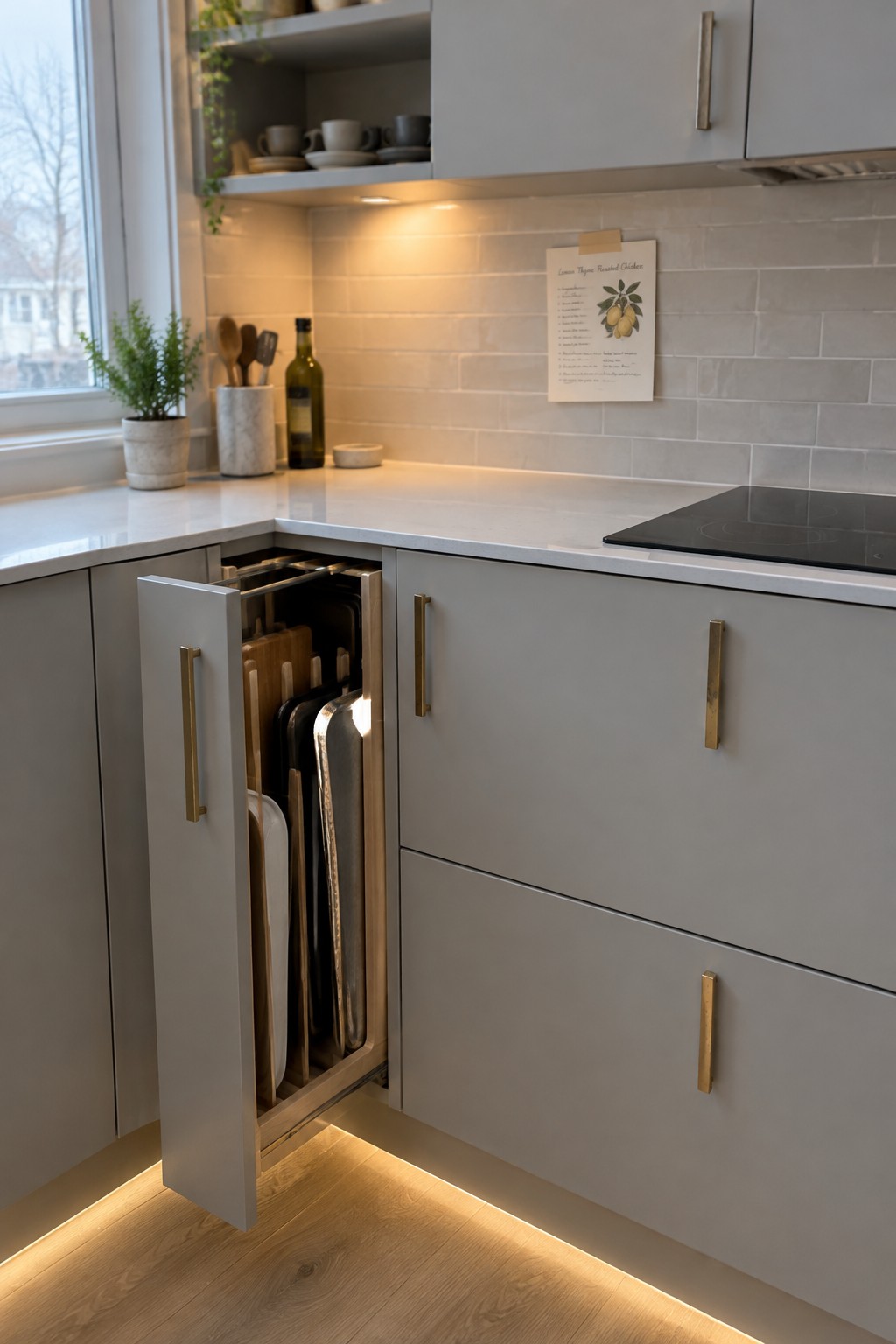
A narrow corner cabinet can be useful for storing baking sheets and cutting boards upright instead of stacking them in a deep pile. They’re easier to see and pull out, and the cabinet makes use of space that might otherwise be awkward to reach.
This setup works well beside a counter where you prep food. Add dividers sized for the items you use most, and leave enough room to slide them in and out without catching. Keep heavier boards in the lower slots.
Use Glass-Front Cabinets to Keep Storage Light
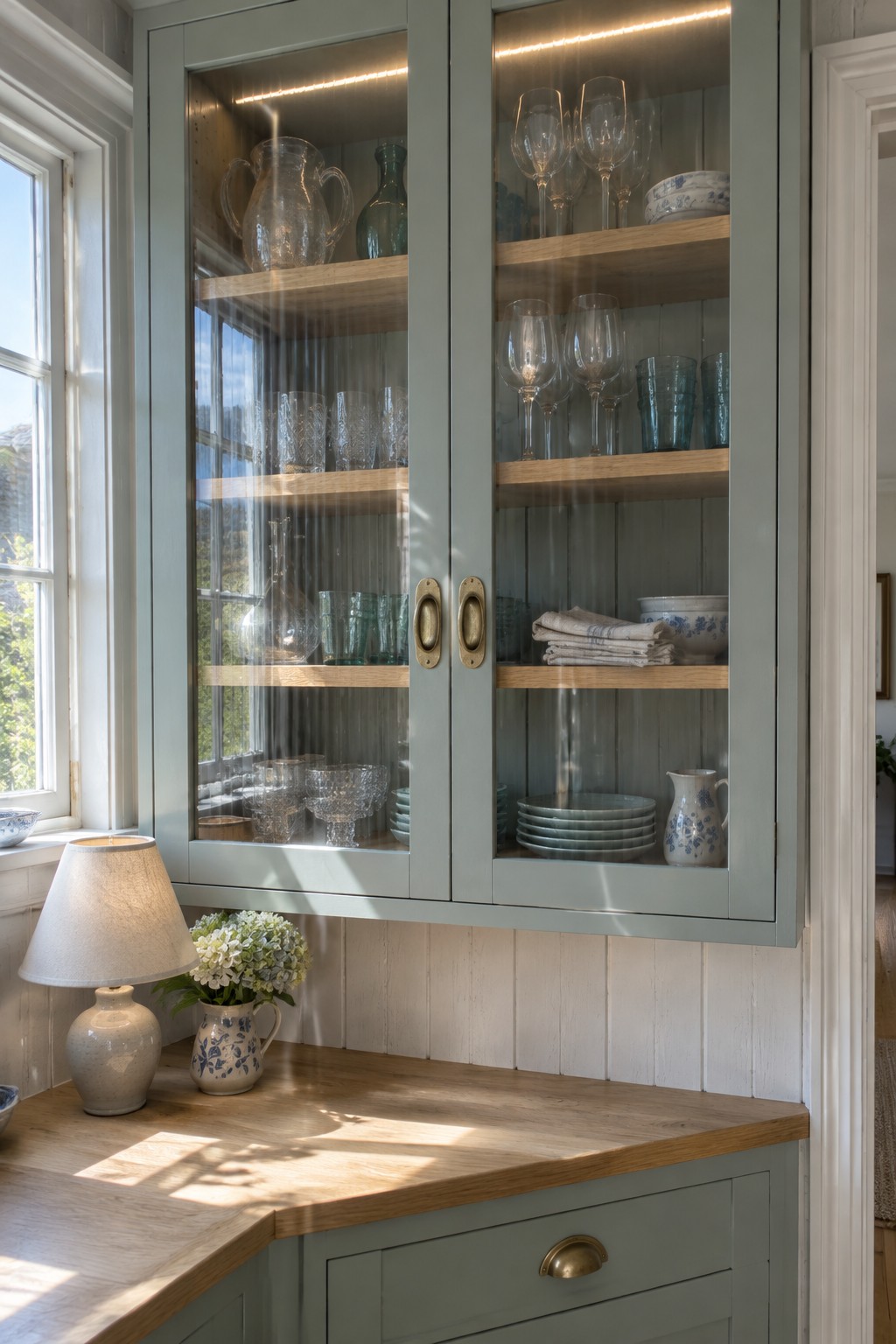
A glass-front corner cabinet can hold dishes without making the kitchen feel closed in. The shelves keep cups and serving pieces visible, while a muted cabinet color helps the storage blend into the room.
Use this style for items you reach for often, such as glasses or everyday plates. Keep the shelves fairly tidy, since everything inside stays in view, and choose sturdy shelves that suit the weight of your dishes.
Use Upper Corner Cabinets to Keep Counters Clear
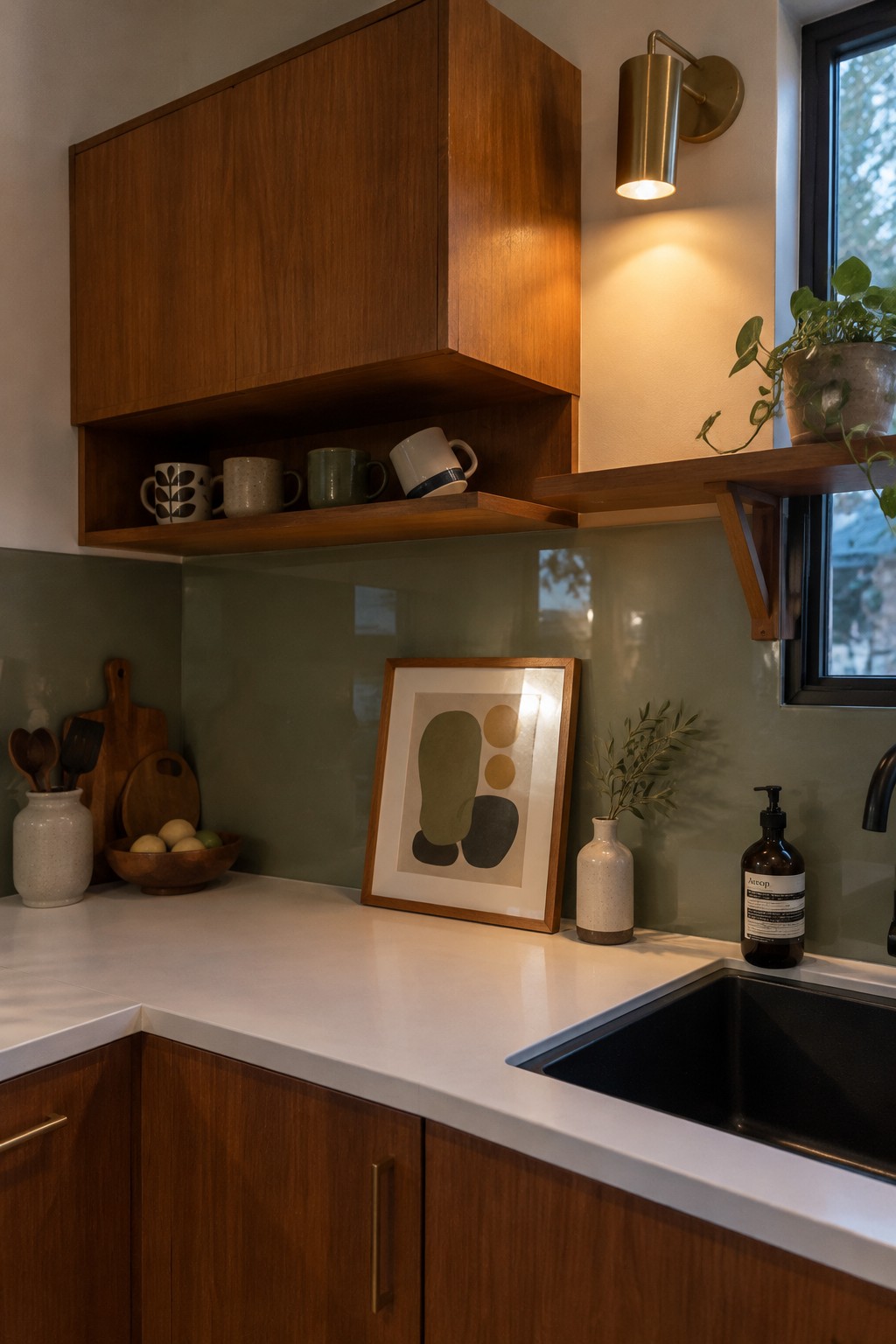
Upper cabinets that turn the corner make good use of space that can be awkward to furnish. A small open shelf below the closed cupboards keeps a few mugs handy without taking up valuable counter room.
This setup works well in compact kitchens where storage matters more than having a wide stretch of open shelving. Keep the shelf for items you use often, and use the cupboards above for things you do not need every day.
Use A Deep Drawer For Bulky Kitchen Items
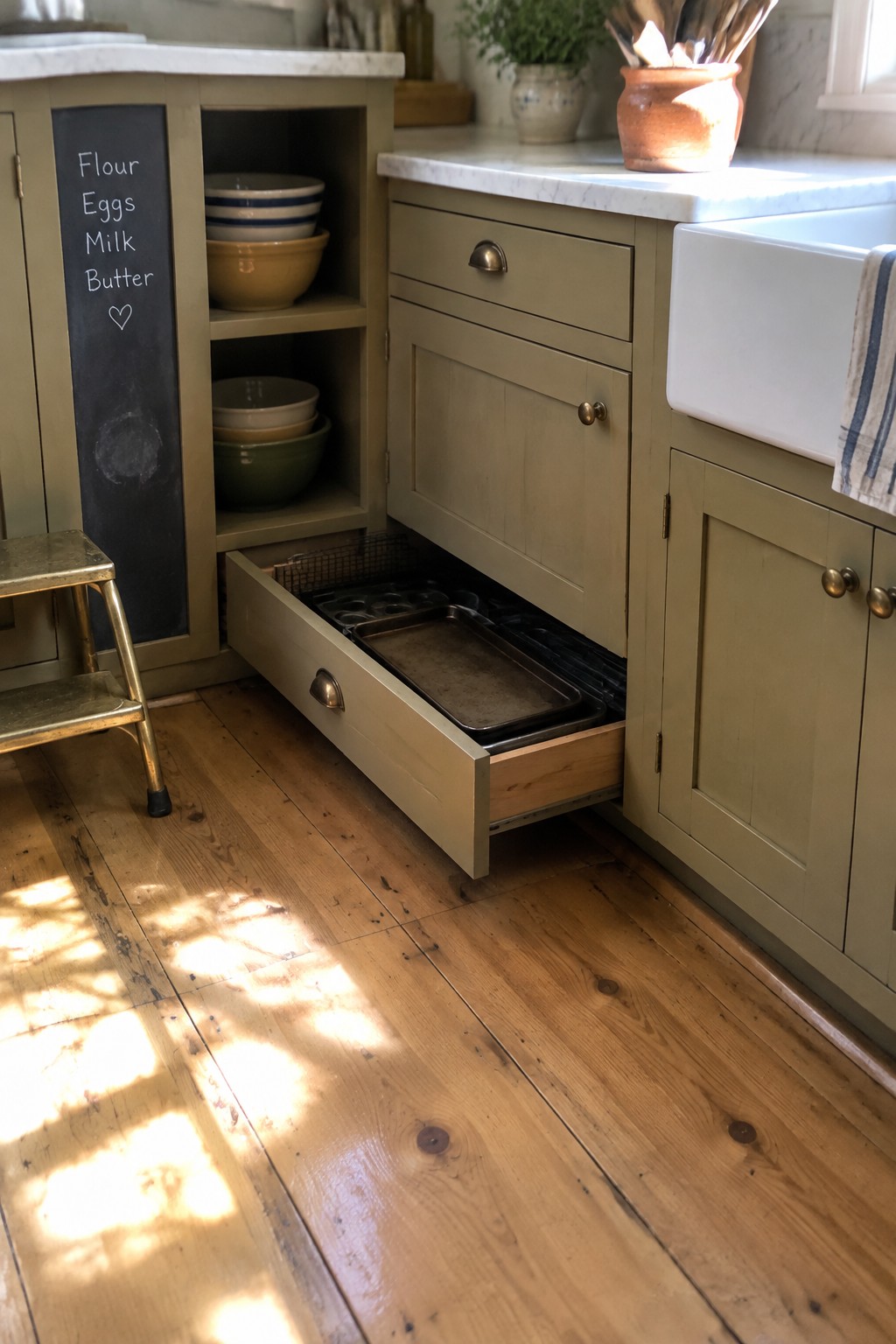
A deep drawer near the corner can make awkward lower-cabinet space easier to use. Instead of reaching into a dark cabinet, you can pull the contents out to see what is there. Here, the drawer holds baking sheets and pans.
This setup works well for cookware or other items that are hard to stack neatly. Check that the drawer can open fully without blocking a nearby walkway, and use dividers to keep trays from shifting around.
Use A Lift-Out Shelf For Heavy Appliances

A corner cabinet can hold a stand mixer without taking up valuable counter space. A sturdy pull-out shelf brings the appliance forward when you need it, so you do not have to lift it from a deep cabinet each time.
Choose a shelf rated for the mixer’s weight, and make sure it slides out far enough to use the appliance safely. This setup works especially well in a small kitchen where counter space is limited.
Add A Corner Banquette With Storage
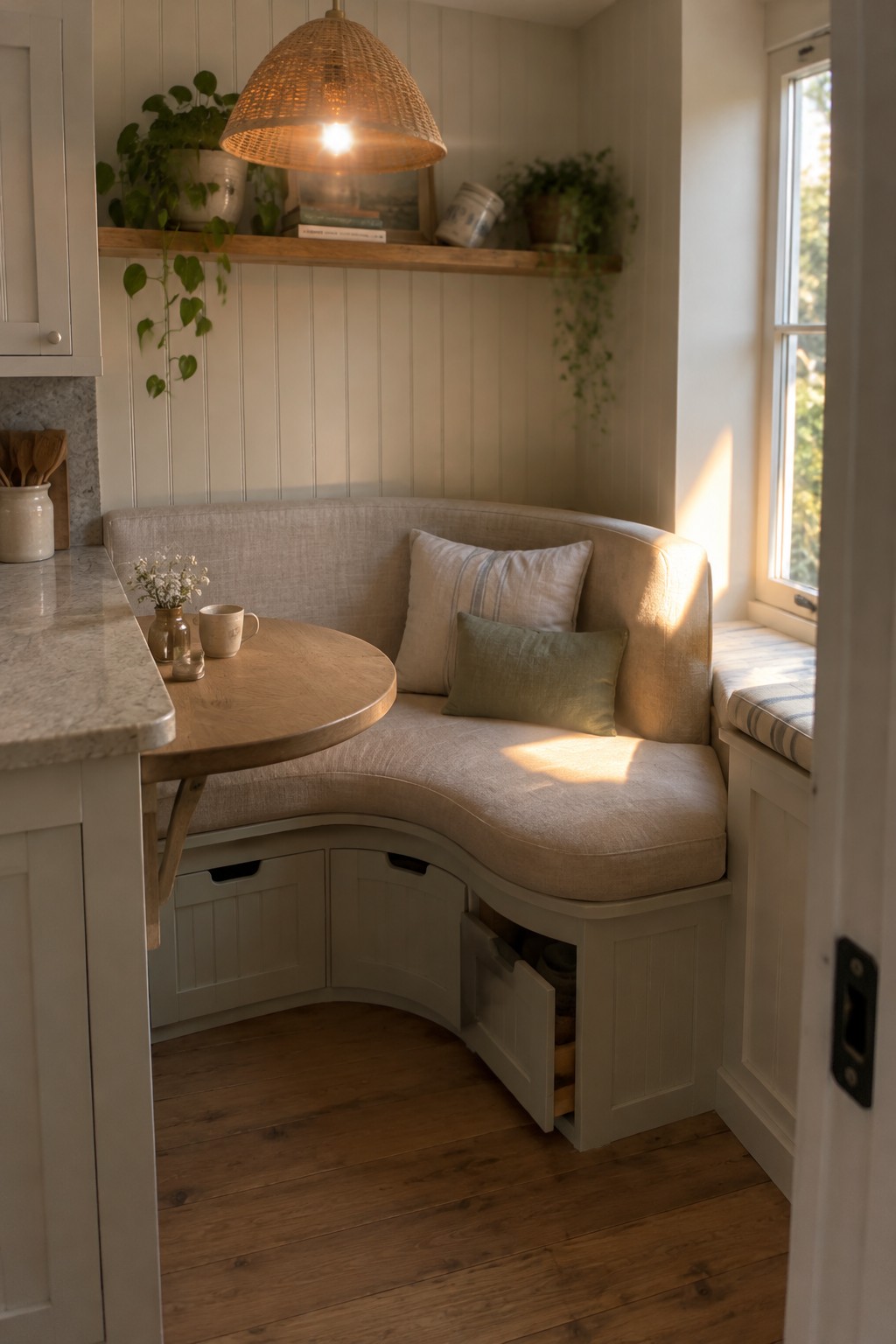
A built-in banquette can turn an awkward kitchen corner into a useful dining spot, while making room for storage below the seat. It works especially well when there isn’t enough space for a freestanding table and chairs.
Keep the seat fitted to the corner, and use drawers or lift-up compartments underneath for items you don’t need every day. A small round table is easier to move around than a square one, but leave enough clearance for people to sit down comfortably.
Use Corner Shelves To Keep Storage Within Reach
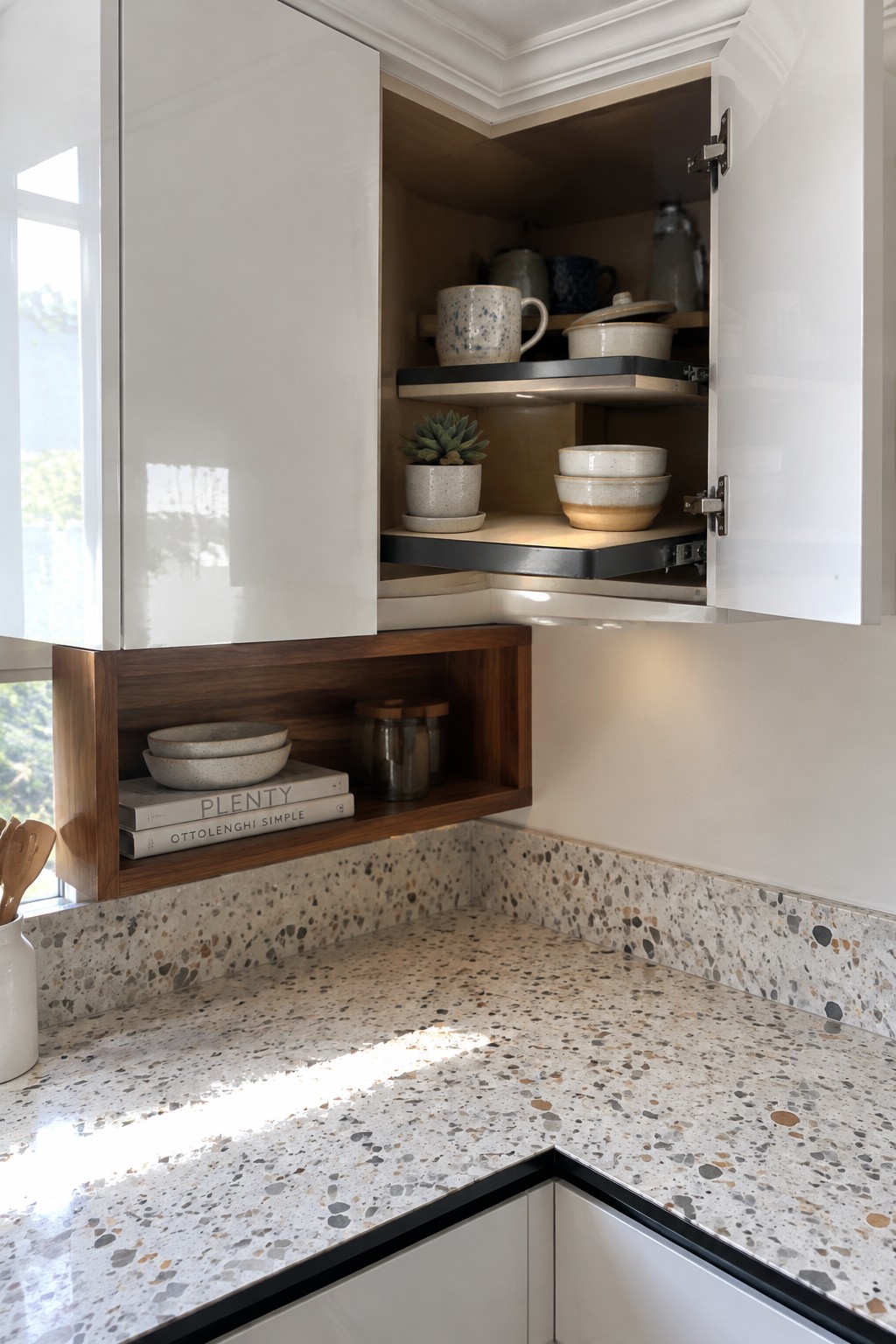
A corner cabinet can hold more than you might expect when its shelves make good use of the space. Open shelves inside a cabinet keep dishes easy to reach, while the doors still hide everyday clutter when needed.
Use this setup for bowls, mugs, or other items you reach for often. Check that the shelves extend far enough into the corner to be useful, and keep heavier dishes on the lower level.
Add Corner Baskets For Produce Storage
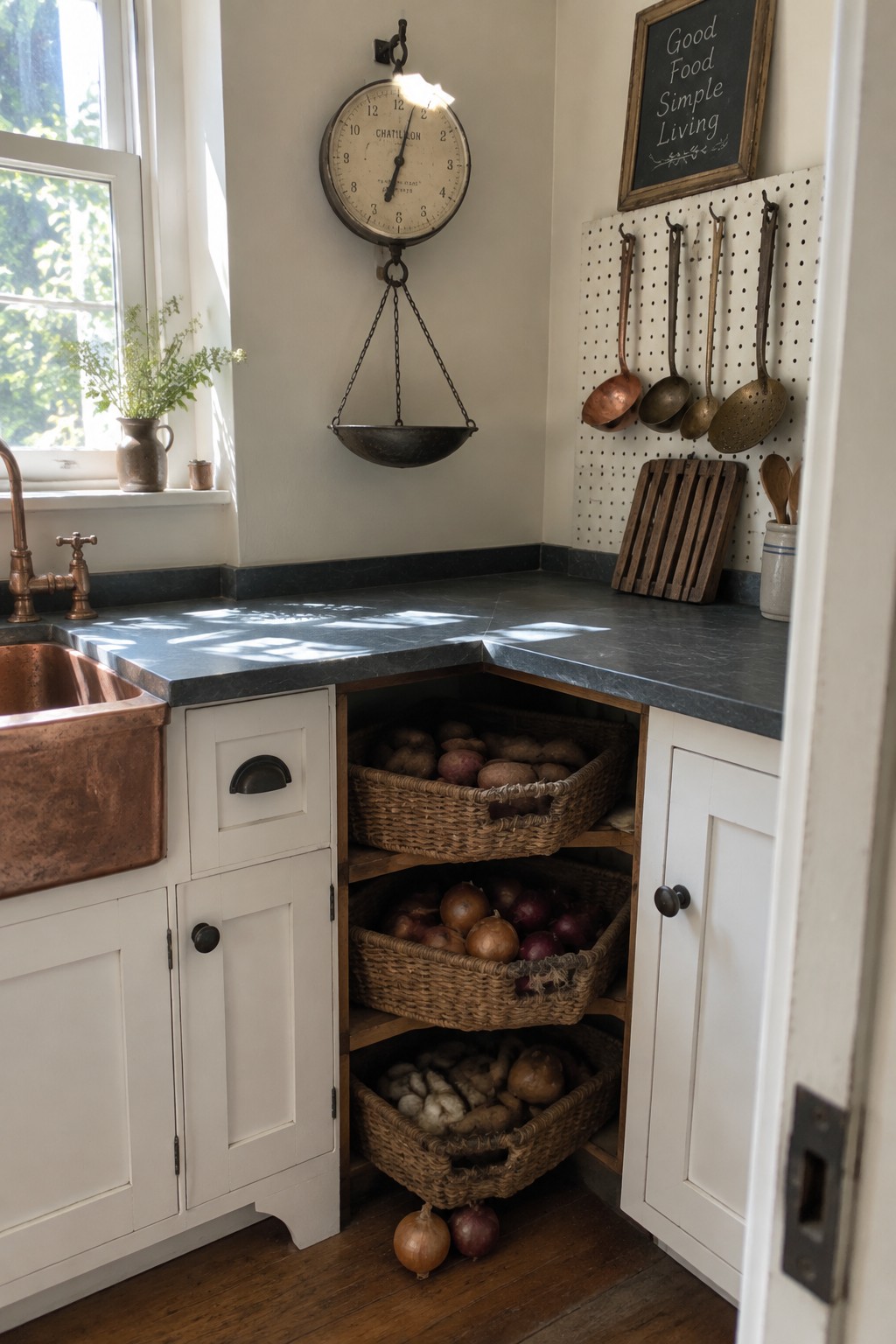
Open shelves in a kitchen corner can hold sturdy baskets for potatoes and onions, making use of space that might otherwise be awkward to reach. Keeping these foods in baskets also makes it easy to see what needs using.
Choose baskets that slide out without catching on the cabinet sides, and leave enough room for air to circulate around the produce. This approach works especially well in a small kitchen where a full pantry cabinet would take up too much space.
Make Corner Cabinet Storage Easier to Sort
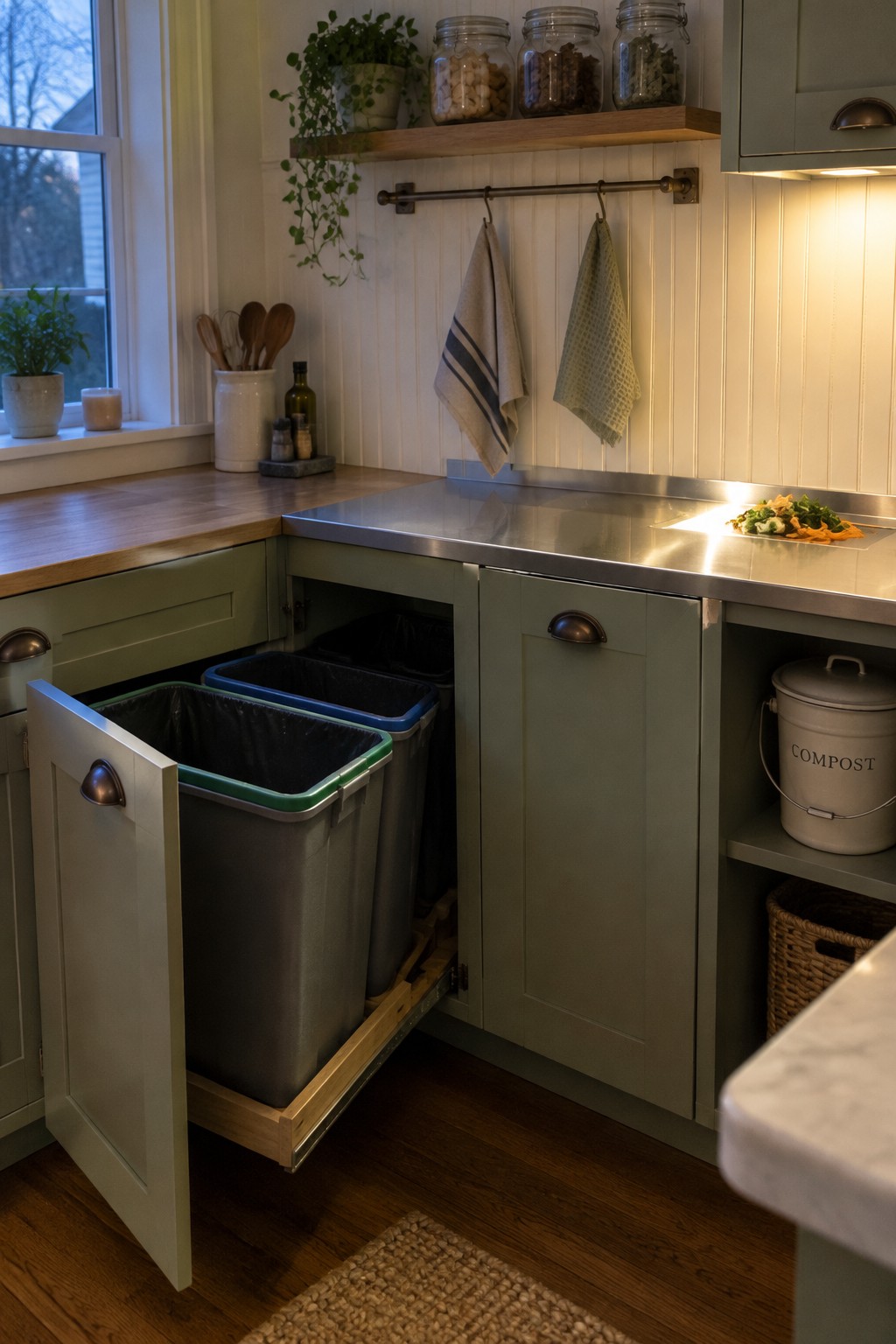
A corner cabinet can do more than hide bulky bins. A pull-out setup keeps recycling containers together and brings them into reach, instead of making you lean into a dark cupboard.
This works well in a small kitchen where floor space is limited. Measure the bins before choosing the cabinet hardware, and leave enough room for the doors and containers to clear each other.
Frequently Asked Questions
Q: What should I store in a corner cabinet that’s hard to reach?
A: Keep everyday dishes and cooking tools in the easiest-to-reach spots, and use the back for things you grab less often, like serving platters or seasonal bakeware. A turntable or pull-out shelf can make those items easier to get without emptying the cabinet.
Q: Are corner drawers worth the extra cost?
A: They can be, especially if you want to reach everything without leaning into a deep cabinet. Try one before committing, since the angled shape may not fit large pots or bulky appliances as neatly as a standard drawer.
Q: How can I make a tiny corner cabinet more useful without replacing it?
A: Add a simple shelf insert or turntable to separate items and keep the back from becoming a forgotten pile. Store only what fits comfortably, and move duplicates elsewhere.
Q: Should I put a sink or cooktop in a kitchen corner?
A: It can save counter space, but check that you still have room to work on both sides. A corner sink also needs a clear path to the dishwasher, while a cooktop needs enough landing space for hot pans.