

As someone who’s spent afternoons judging how brick color affects the whole street, I appreciate how a softer stained finish can calm a facade and lift curb appeal without ripping anything out.
When brick looks underwhelming it’s usually because the tone fights the trim, the mortar makes everything feel busy, or the surface reads too raw for the landscaping, and a thoughtful stain can address those specific problems in a few different ways.
A subtler tone can make the whole exterior feel more intentional.
I often start by testing a small, shaded section so I can see how the color shifts through the day and how it plays with paint, pavers, and planting.
A few of the approaches I recommend saving and trying let you tweak shade and sheen until the house feels cohesive and like something that will hold up over time.
Soften A Red Brick Facade With Neutral Brick Stain
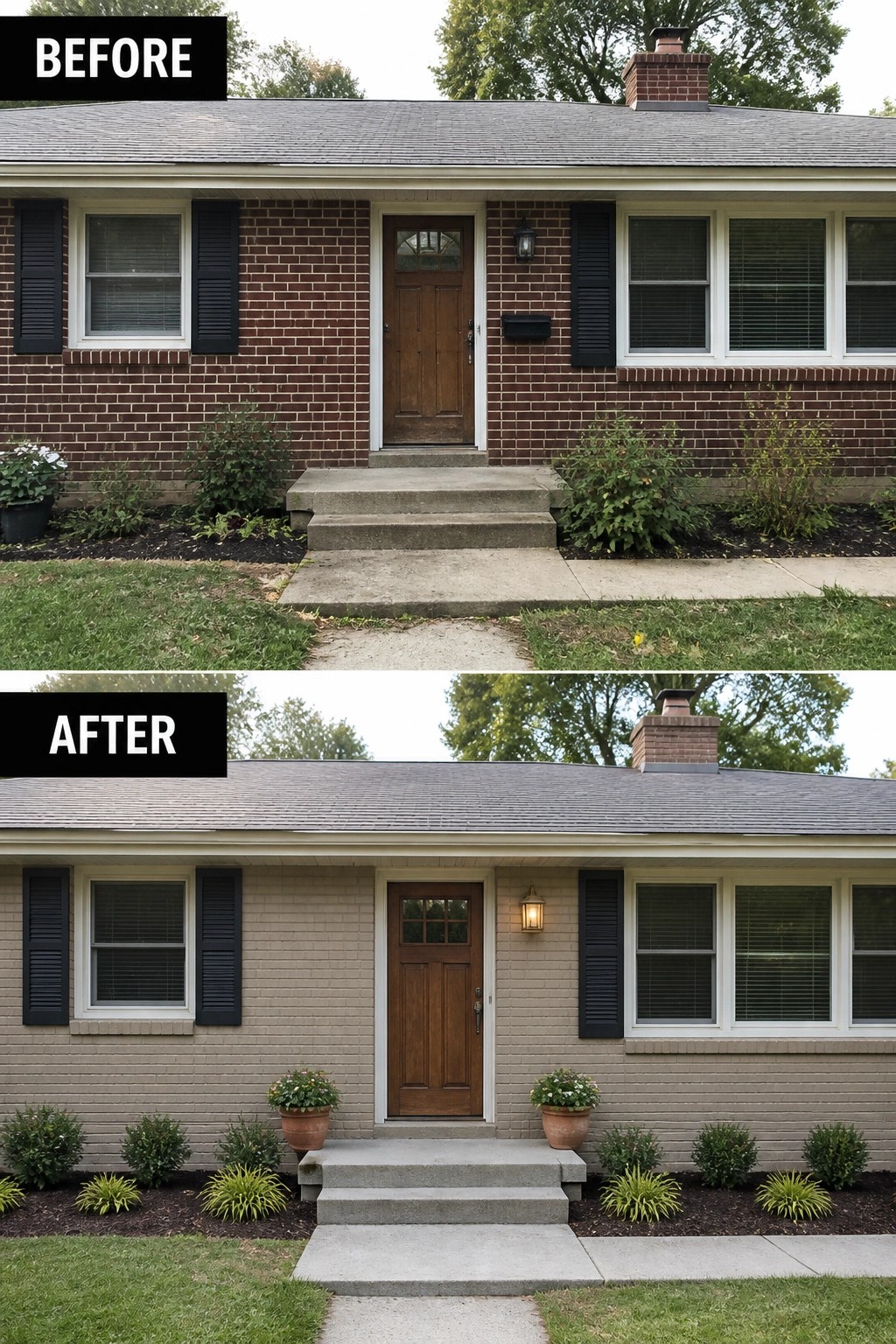
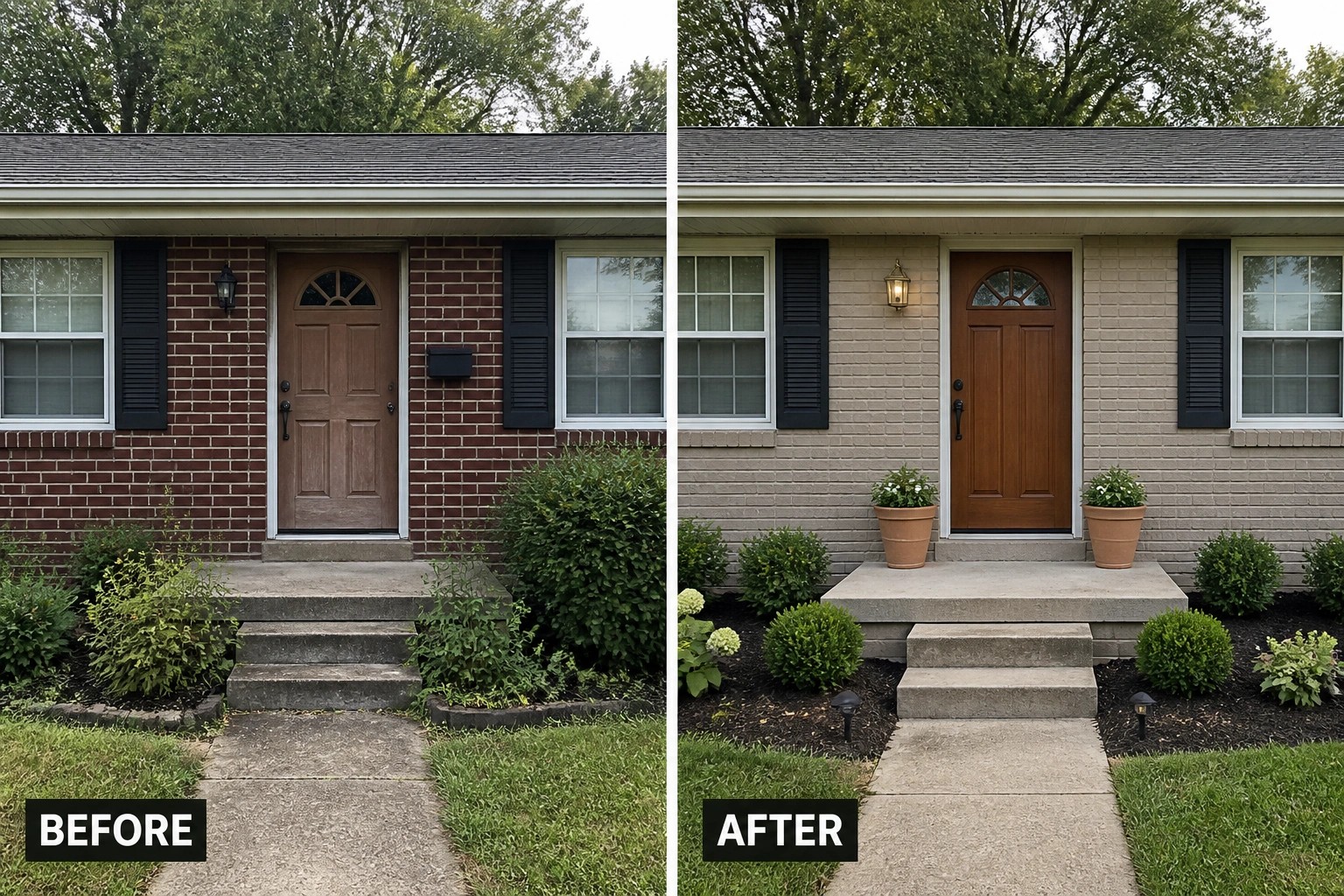
A quick way to modernize and mellow a dated red-brick front is to stain the brick a warm neutral and finish it with simple entry styling. In this example the deep red was restained to a beige tone and the doorway got a new light and matching planters, which makes the house read cleaner and more cohesive without rebuilding anything. The lighter brick brings the wood door and dark shutters into better balance and makes the whole facade feel calmer.
If you want to try this, start with a small test patch so you can see how the stain reacts with your mortar and brick. Choose a penetrating masonry stain rather than thick paint so texture and breathability remain, and pick a neutral that complements existing trim and door tones. Finish with minimal accents—a lantern, a pair of pots, fresh mulch, and low shrubs—to give the newly stained surface context and scale without overcrowding the entry.
Soften A Red-Brick Facade With Brick Stain
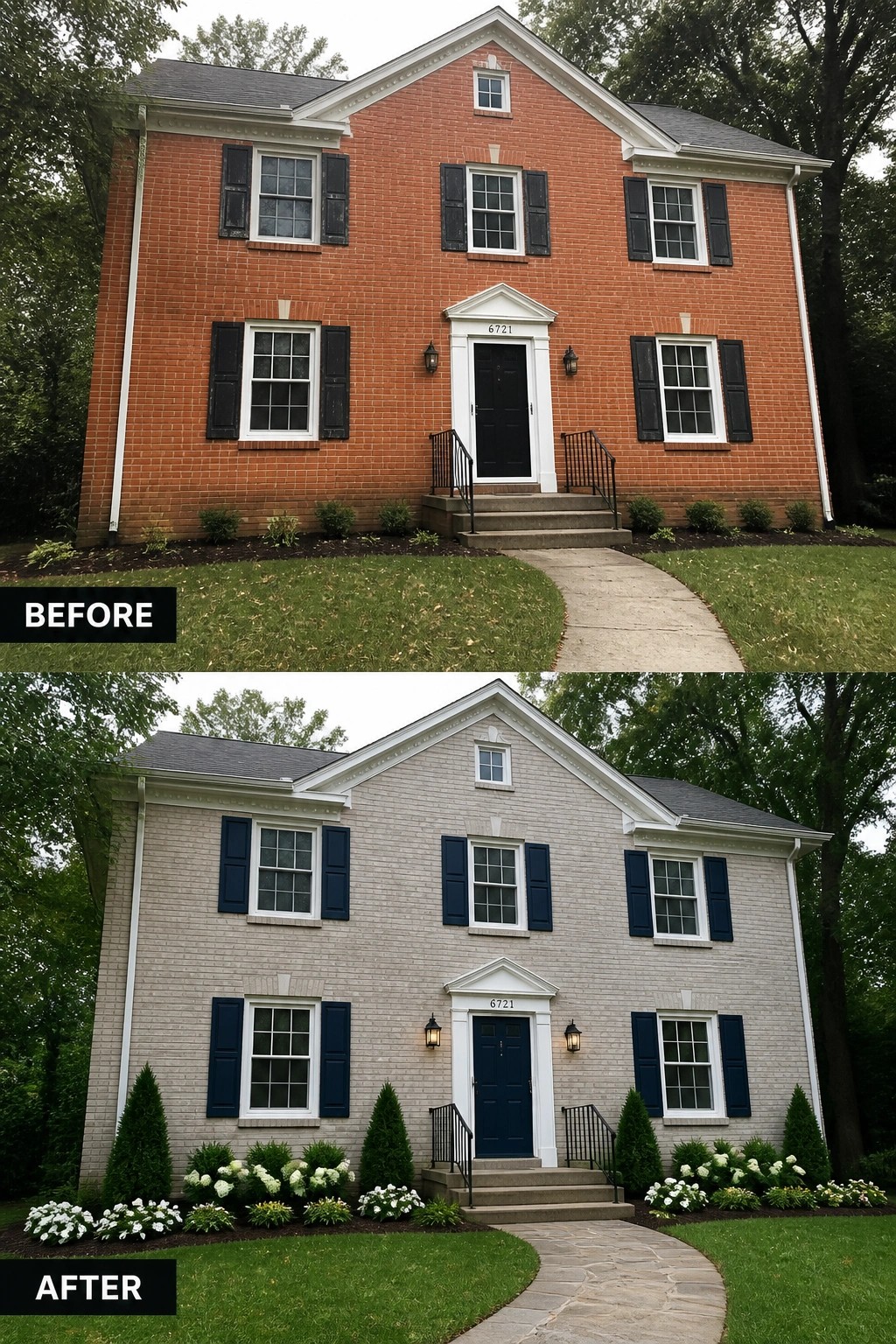
Staining old red brick a lighter, more neutral tone is an easy way to modernize a traditional facade without replacing masonry. The main idea here is simple: use a translucent or pigmented brick stain to mute the orange-red and create a calmer backdrop, then layer in contrasting shutters, a painted door, and clean planting to give the house a finished look.
Start with a test patch so you can see how the chosen stain works with your mortar and existing trim. Pick a stain that lets some texture show through rather than covering the brick
Use Brick Stain And Simple Styling To Refresh A Porch
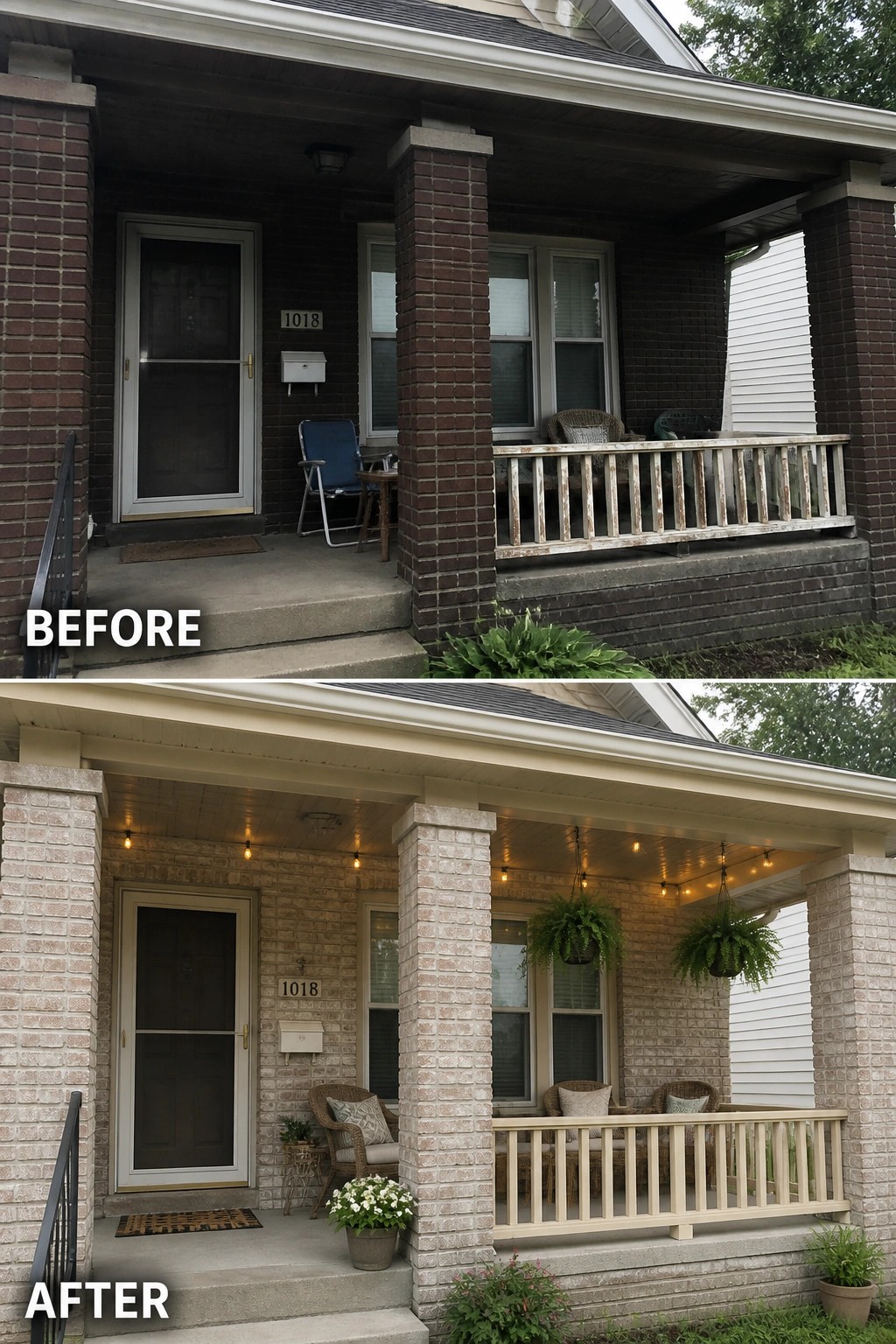
Lightening the brick with a soft stain and then adding a few purposeful touches can turn an overlooked porch into a clear, usable entry. In this example the dark bricks were toned down to a lighter, more neutral finish and the space was finished with a small seating group, hanging ferns, and string lights—just enough to define the porch as a place to sit and greet visitors.
Try this on a narrow or covered porch where you want more curb appeal without a full rebuild. Test the stain on a hidden patch first (start small) and pick a trim or railing color that complements the new brick tone. Keep furniture scaled to the porch depth, choose outdoor fabrics and weatherproof planters, and place lighting where people will actually sit so the space works both day and night.
Use Brick Stain And Simple Accents To Soften A Facade
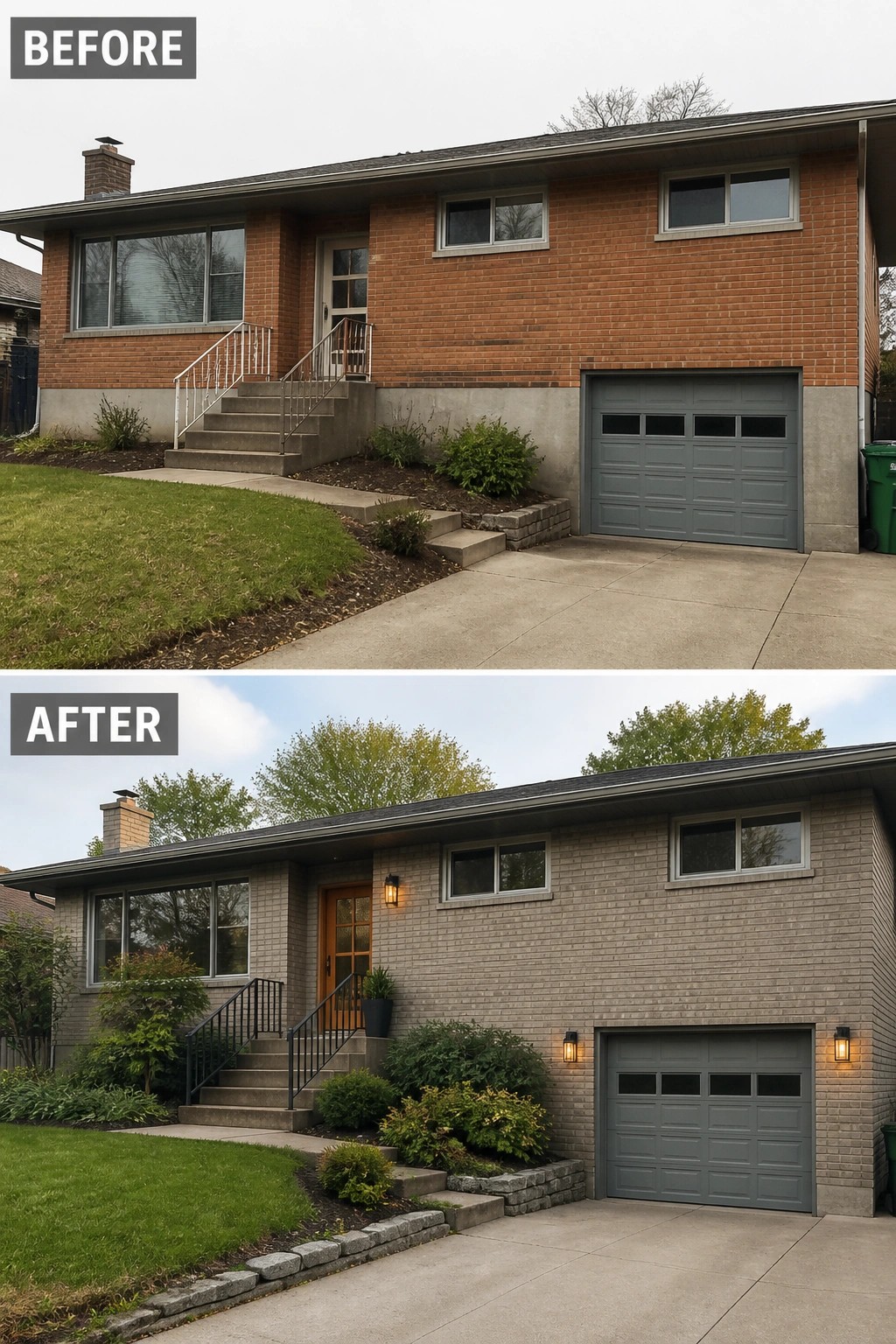
Staining the brick to a softer, neutral hue is an easy way to calm an older, orange-red exterior and make the whole house feel newer without a full re-clad. In this example the brick tone shifts to a muted gray, and the updated wood door and new lantern lights give the entry a quieter, more intentional look.
To copy this idea, start by power-washing and testing a small stain patch so you know how the color reads on your brick (try a hidden area first). Choose a masonry stain color that complements your roof and trim, and keep the rest of the updates simple—new hardware, a clean iron railing, and a few low-maintenance shrubs will complete the softened look without overwhelming the house.
Use Brick Stain To Soften A Red Facade
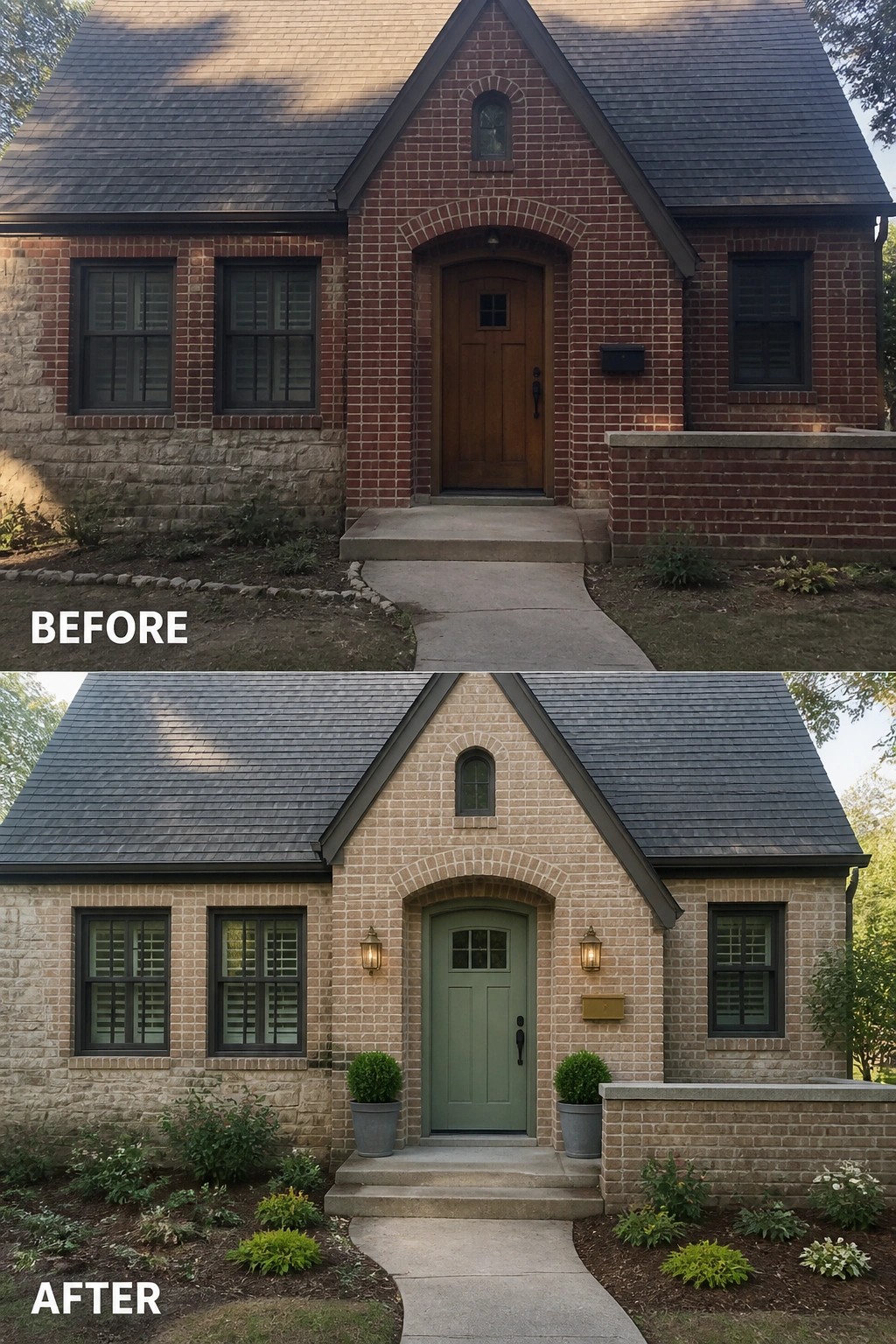
Staining dark red brick a lighter, more natural tone is a simple way to refresh an older home without rebuilding or full repainting. In this example the brick was lightened and the front door given a soft green hue to make the entry feel more cohesive and less heavy. The stain keeps the brick’s texture while changing its overall color, so the house reads calmer and more current.
Try a small test patch first to see how the chosen stain looks next to your mortar and roof. Pick a complementary door color and add a couple of planters or simple lights so the new brick color reads as an intentional palette, not just a color change. This approach works well on traditional brick homes where you want a softer look; check for moisture issues and consider a pro for large surfaces. (Test a patch first.)
Give A Bare Porch A Clear Purpose
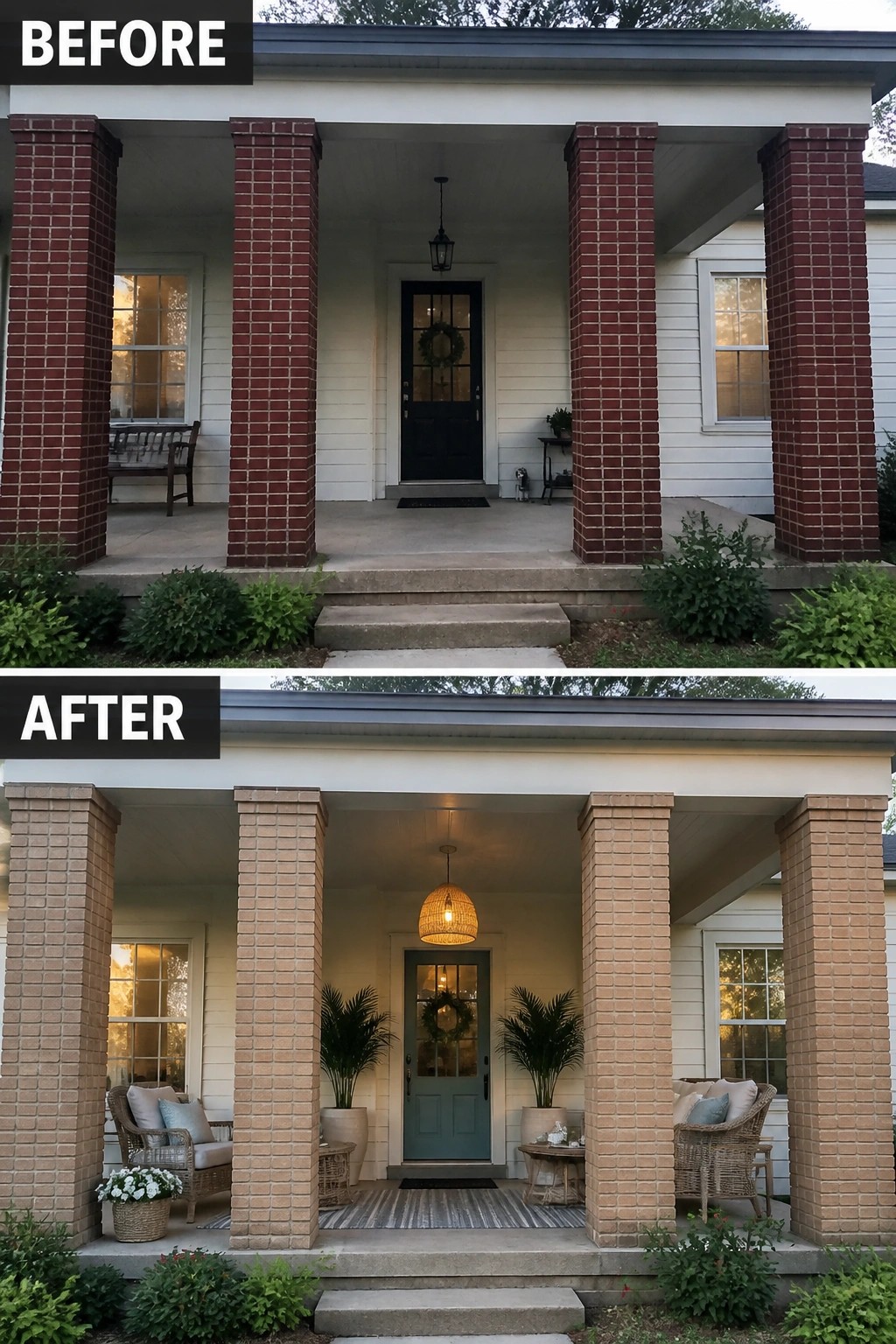
Staining the brick to a softer, more neutral tone is a simple way to calm a busy facade and set the stage for a usable porch. Pair that with one clear function — in this case a small seating area — and the space stops feeling like leftover stoop and starts feeling like an entry you actually want to sit on. A rug, a pair of chairs, matching planters, and a single pendant light are enough to define the zone without crowding it.
When doing this at home, start with a test patch of brick stain so you can see the colour on your specific masonry. Choose compact, weatherproof furniture and a low-profile rug so traffic can still flow across the steps. Aim for symmetry at the doorway (plants or chairs on either side
Soften Red Brick With A Neutral Brick Stain
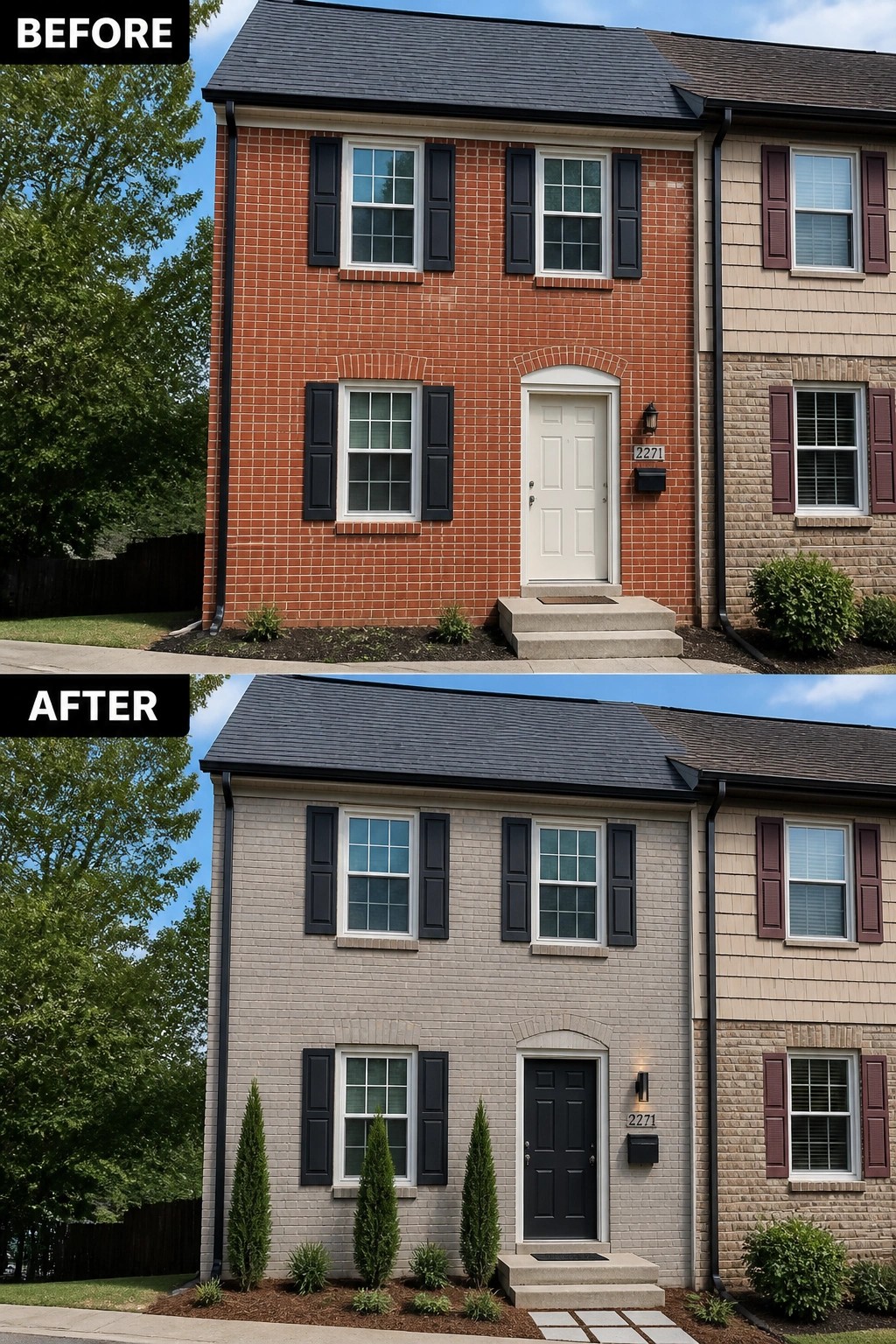
Staining bright red brick a soft neutral is an easy way to modernize a facade without rebuilding anything. By toning down the brick color you create a calmer backdrop that lets a dark front door, simple shutters, and neat plantings become the focal points instead of the brick itself. In the photo a warm red wall becomes a muted beige while a black door and new slender evergreens finish the look.
If you want the same result, start with a small patch test to see how the color reads on your mortar and in different light. Use a breathable masonry stain made for exterior brick and pick a tone close to your existing mortar so the finish still shows texture. Keep one or two contrasting details—door color, light, or shutters—to avoid a washed-out appearance, and add low-maintenance evergreen or columnar shrubs in a fresh mulch bed to anchor the entry. Do a patch test.
Make A Plain Facade More Welcoming
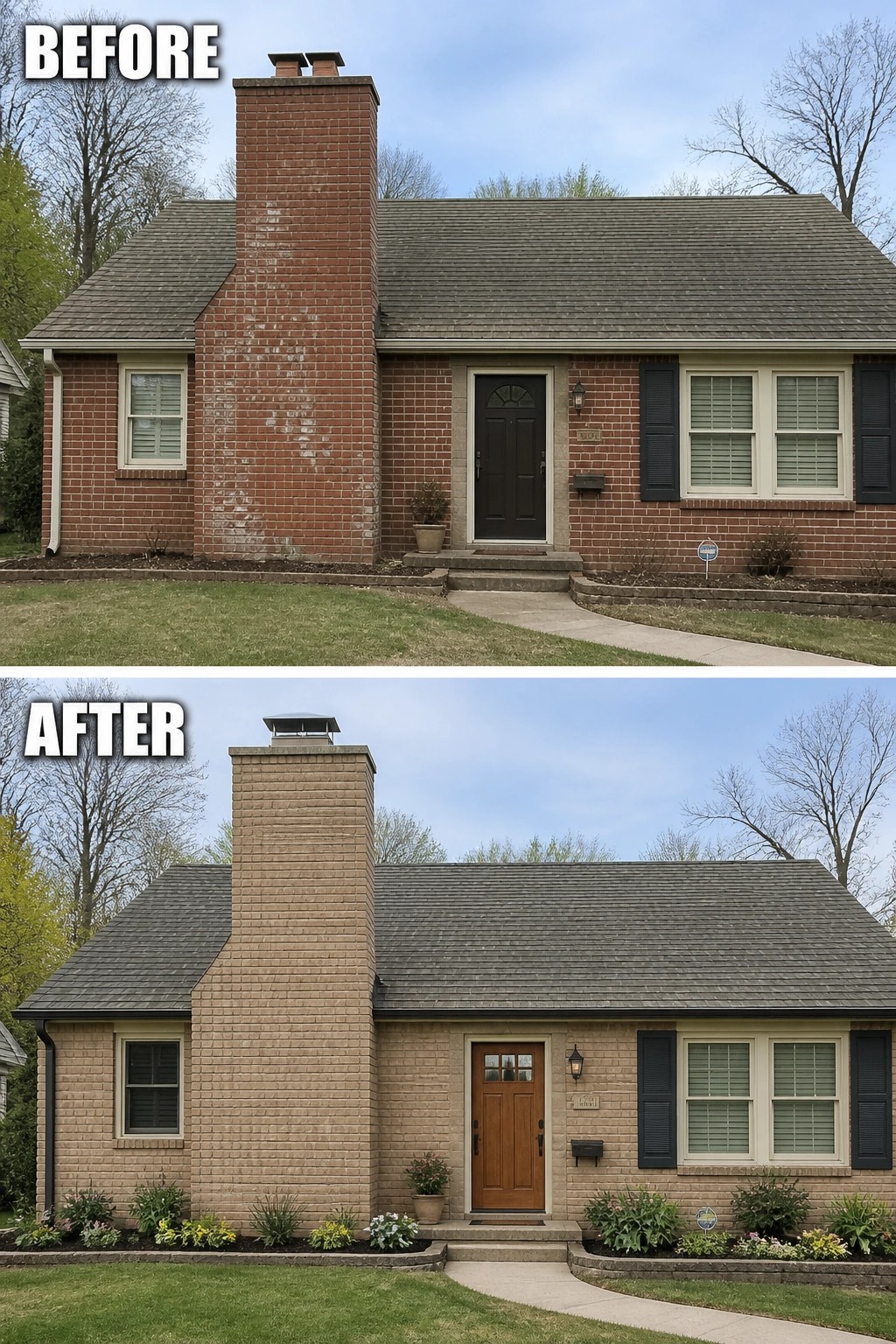
A simple way to boost curb appeal is to soften harsh red brick with a natural-toned brick stain and give the front entry a clear focal point. In this approach the brick was lightened to a tan hue and the owner installed a wood-toned door and a few planters, which helps the whole front feel calmer and more cohesive.
To try it yourself, start by testing several stain samples on different walls and viewing them at different times of day (sample a few swatches first
Use Brick Stain To Soften The Front Facade
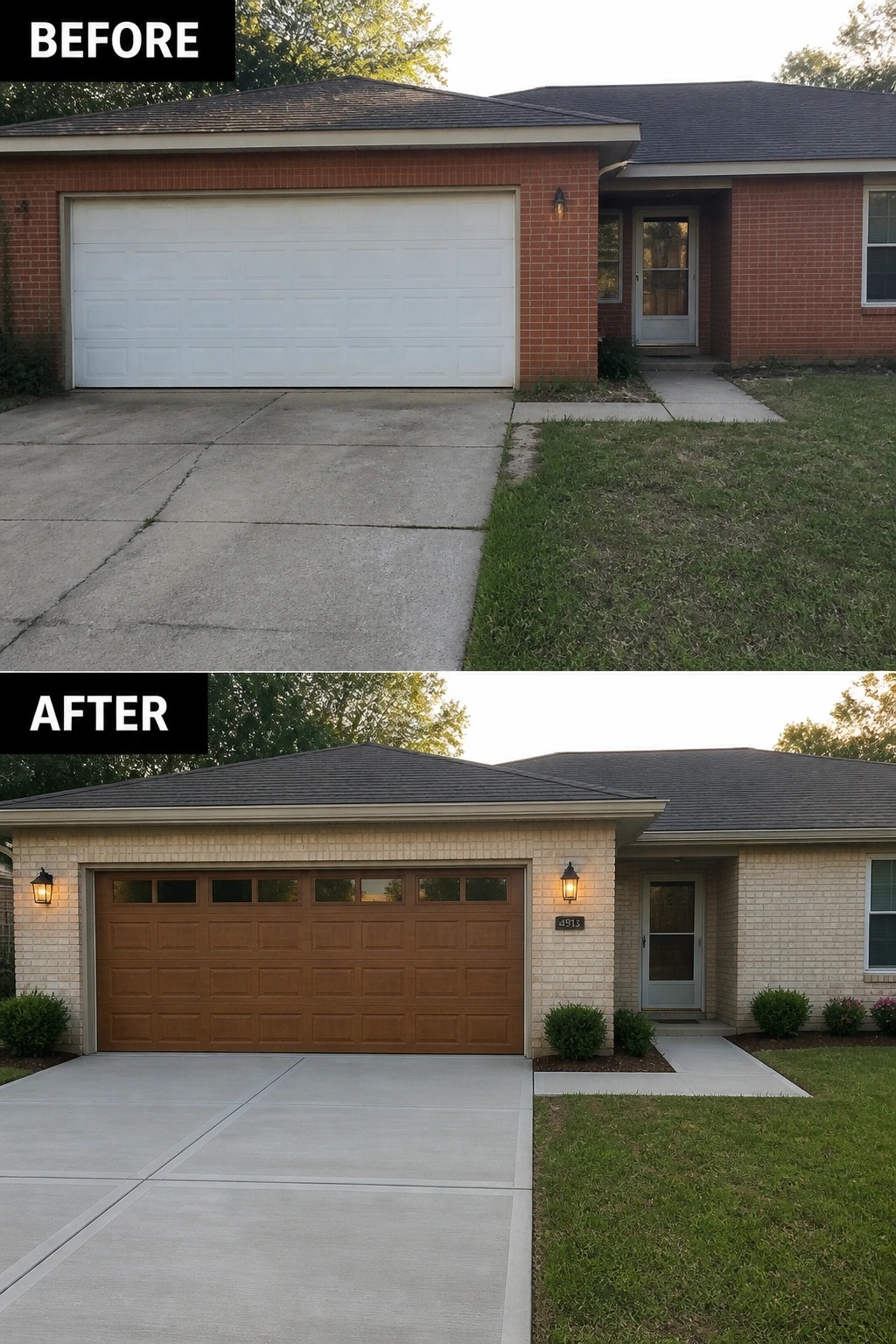
A coat of brick stain can change a heavy, dated exterior into something lighter and more approachable without a full rebuild. In this example the dark red brick was toned down with a pale stain and paired with a warm, wood-look garage door and simple lanterns, which together make the front feel brighter and more cohesive rather than harsh or plain.
To try this at home, start by power-washing and testing a small patch so you can see how the stain looks with your roof and trim. Pick a subtle, natural shade and repeat that tone in one other element, like the garage door or light fixtures, so the change reads as an intentional update. Add a couple of low shrubs and fresh edging to finish the look, and check mortar and moisture compatibility before you commit.
Refresh Brickwork With A Softer Stain
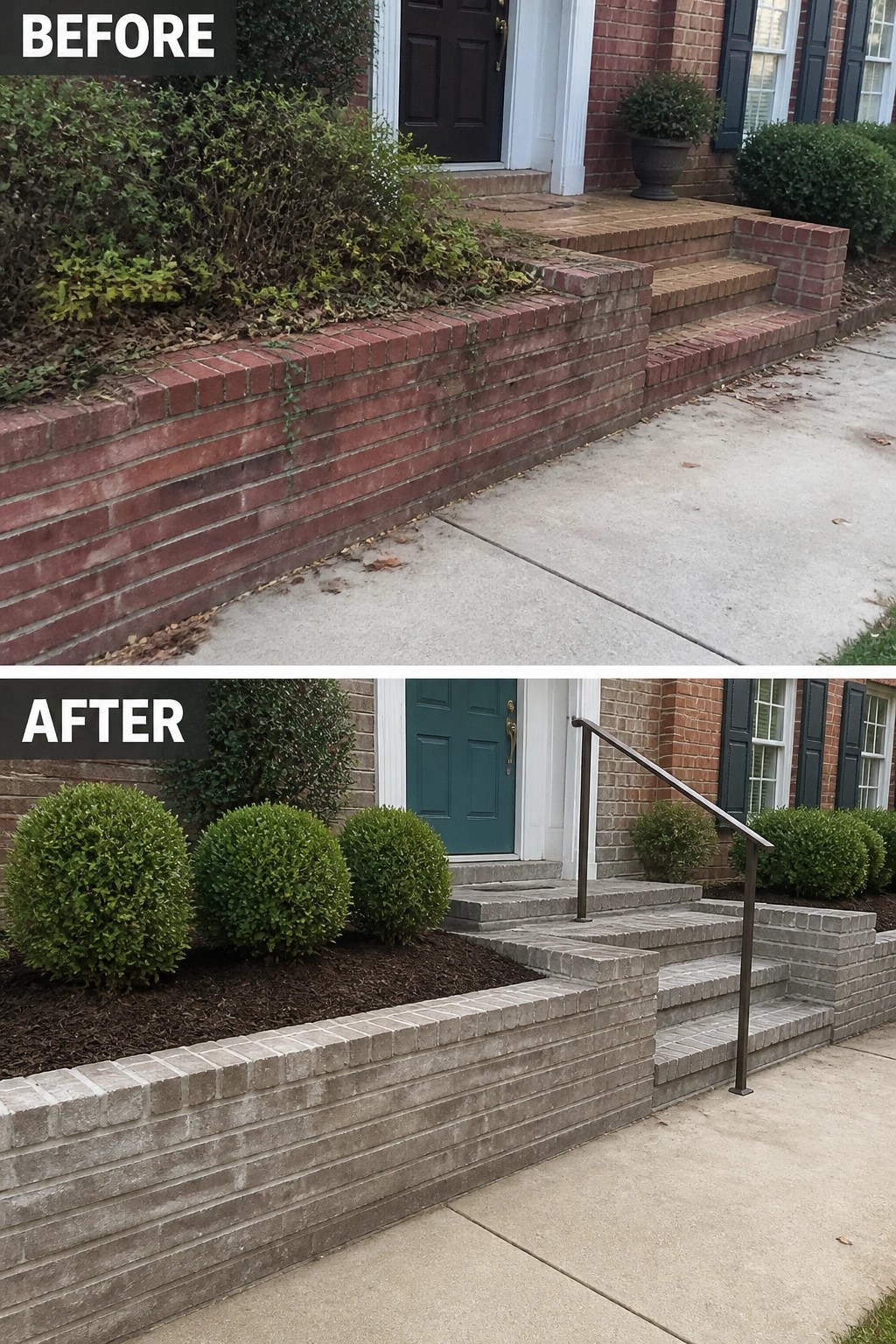
A light, washed stain on existing brick can instantly soften a bold red facade and make an entry feel more modern and cohesive. In this example the red brick is toned down to a muted gray, which refreshes the steps and pairs well with simple, clipped shrubs and a slim metal handrail.
If you want the same effect, test a small area first so you can see how color and mortar look on your particular brick. Choose a breathable masonry stain instead of opaque paint to preserve texture and joints, and keep surrounding planting tidy with mulch so the newly toned brick remains the focal point.
Lighten Brick With A Neutral Stain
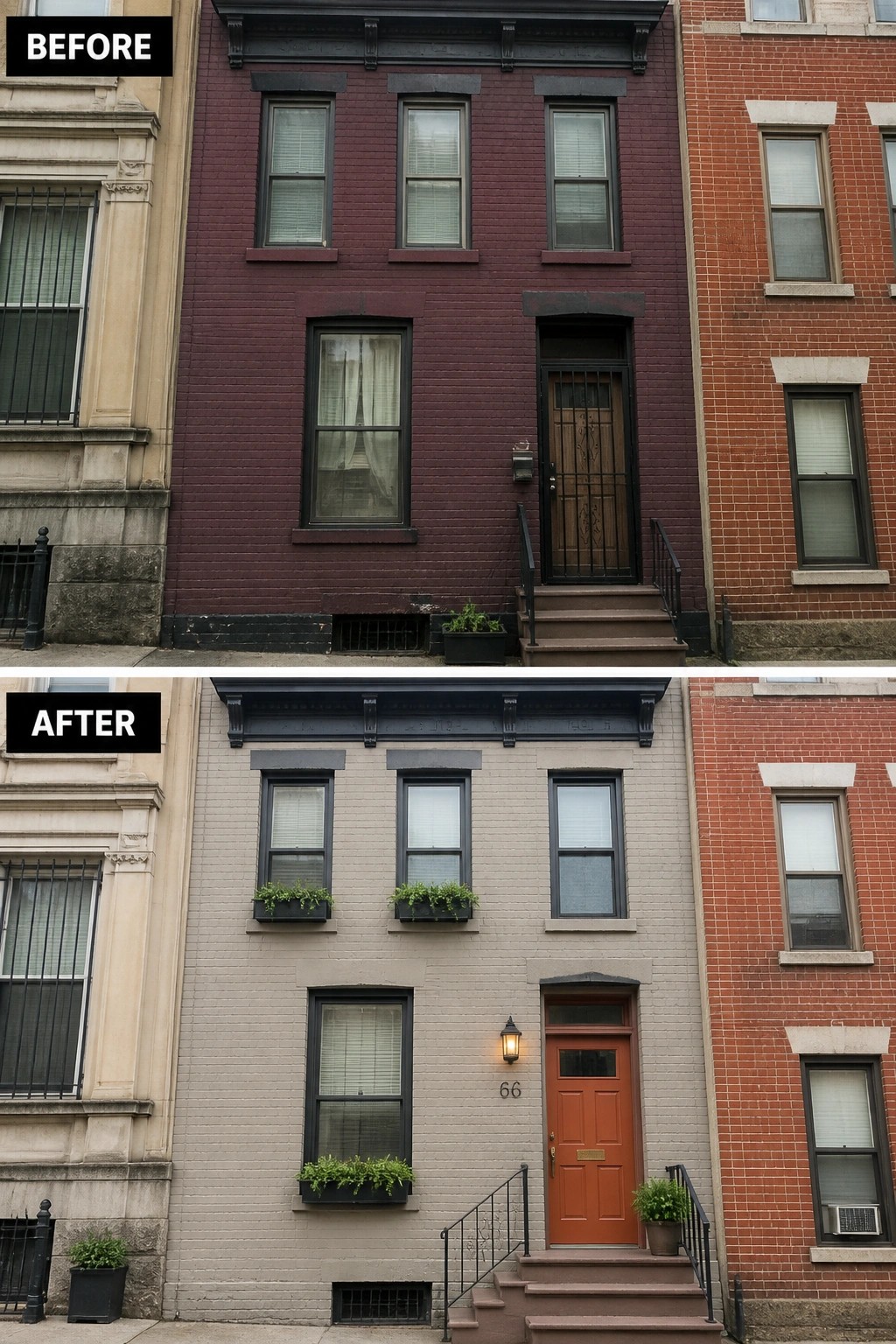
A coat of neutral brick stain is an easy way to refresh an older facade without tearing anything out. In this example the dark, maroon brick was lightened to a muted gray-beige, which immediately looks cleaner and more contemporary; a new front door and a few planters finish the look. The change reads subtle but noticeable, and it feels like a small lift rather than a full redo.
If you want to try this, start with a test patch so you can see how the brick soaks up color in real light. Use a masonry stain or silicate mineral
Turn An Empty Porch Into A Seating Area
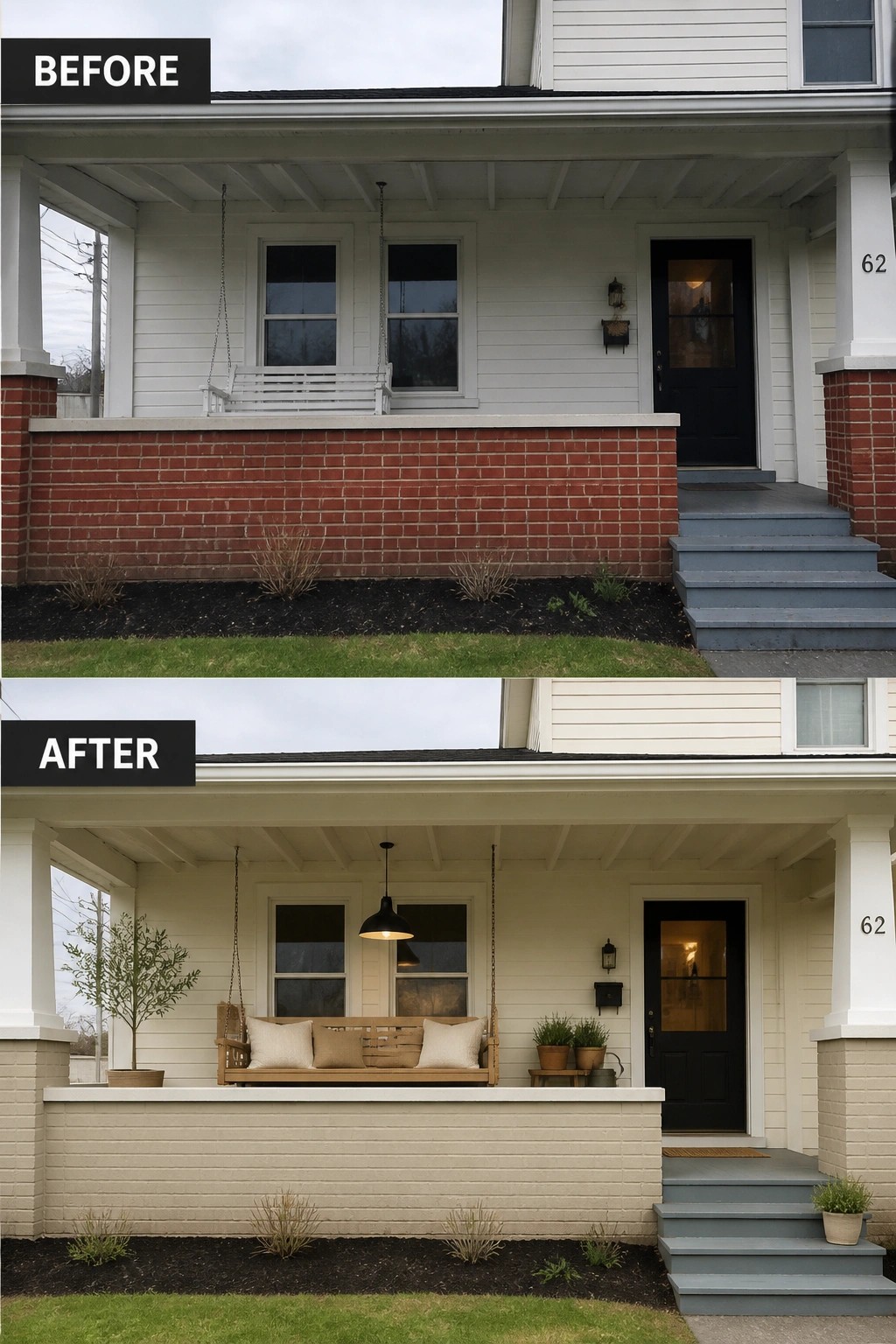
A porch becomes useful when it has a single clear purpose. Swap a bare ledge for a proper seating spot — here a wooden swing, two neutral cushions, a pendant light, and a couple of planters create a comfortable place to sit without crowding the entry. Staining the brick a softer neutral also helps the seating feel like part of the house instead of an afterthought.
To copy this, choose one main piece of furniture sized to leave a path to the door, pick outdoor fabrics that handle weather, and add lighting where people actually sit (a pendant or wall lantern works well). Consider lightening the porch base with a paint or stain to modernize the look and keep accessories simple so the space reads as intentional, not cluttered (leave room to pass).
Refresh Front Steps With A Soft Brick Stain
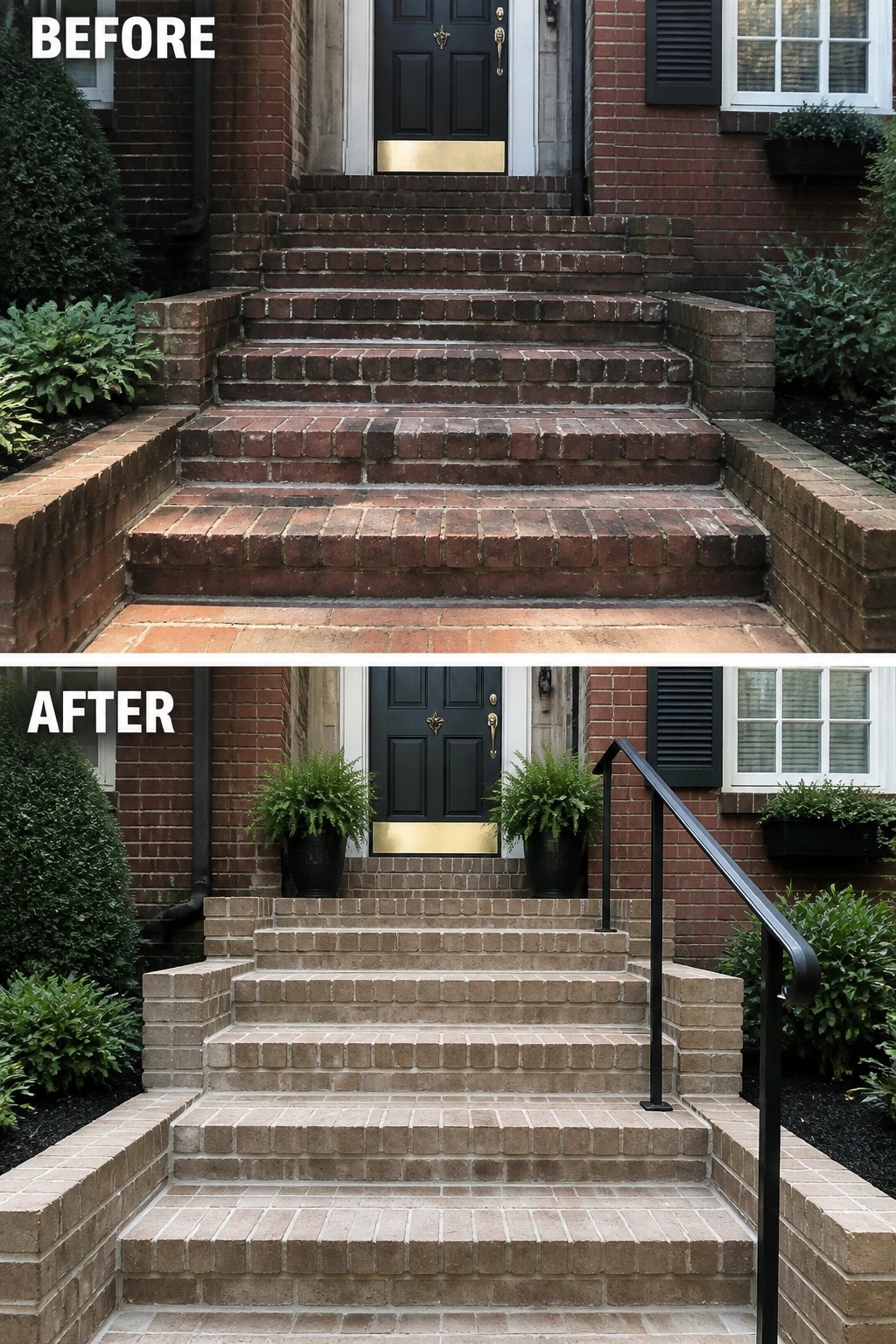
A light brick stain is an easy way to modernize an entry without ripping anything out. In the example here the worn, dark-red steps were unified into a softer, pale tone, then finished with a simple black handrail and matching planters to make the approach feel cared for and intentional. Staining masks uneven color and weathering while keeping the brick’s texture intact, so you get an updated look that still reads like authentic masonry.
If you try this at home start with a good cleaning and any small repairs (pressure wash and minor tuckpointing first). Test a small patch for color and slip resistance, then use a breathable masonry stain made for steps; hiring a pro can help get an even, durable finish. Finish the job with one or two practical accents — a handrail for safety and a pair of planters for scale — and you’ll have a softer, more welcoming entry without a full rebuild.
Restain Red Brick For A Softer, Modern Entry
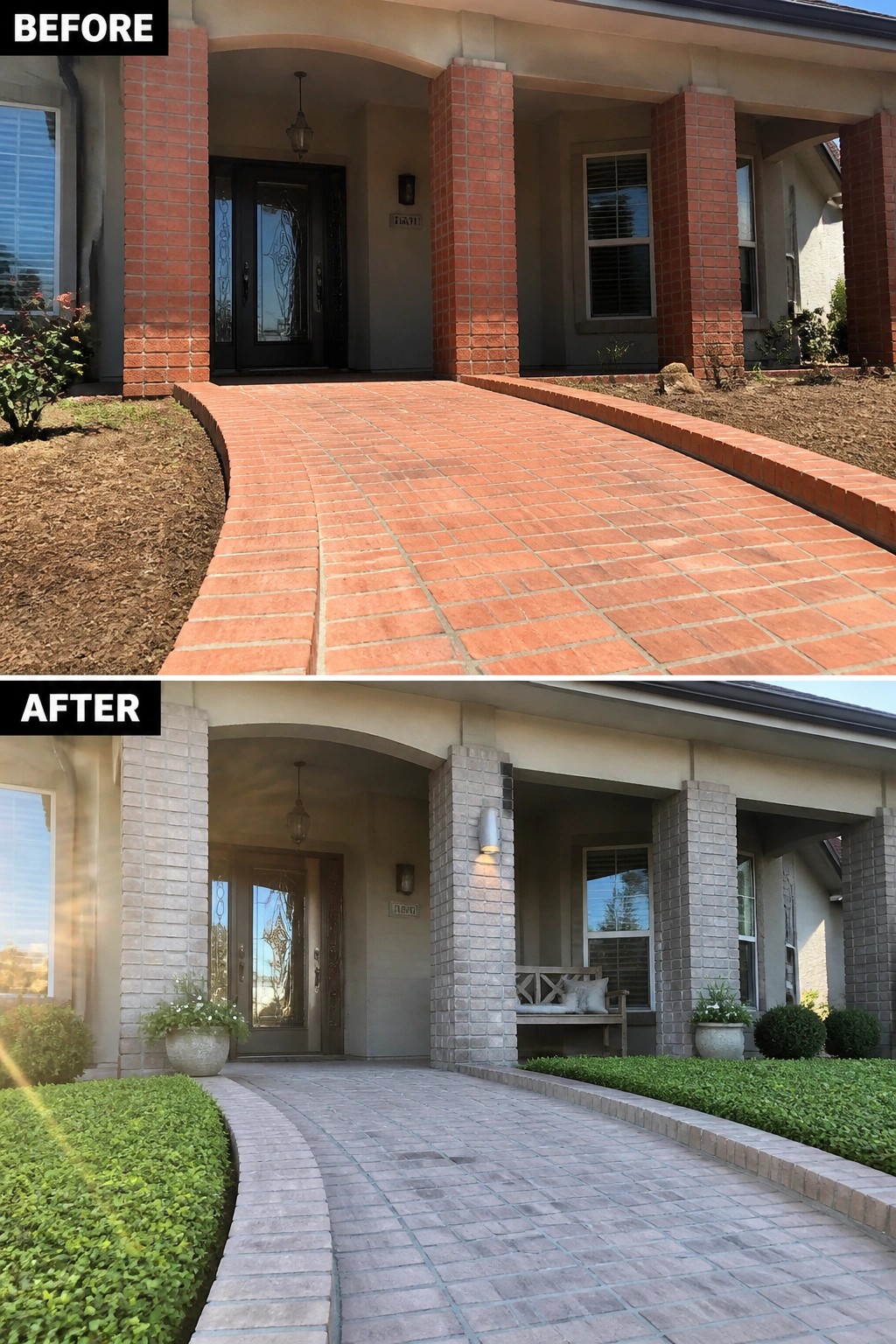
Restaining existing brick is one of the fastest ways to refresh a tired front entry without replacing hardscape. In this example the orange-red walkway and columns were toned down to a soft neutral, which instantly reads more current and pairs nicely with a simple bench and planters at the door.
To try this at home, start with a thorough cleaning and a small test patch so you can see the true color on your bricks. Pick a stain that complements your door and trim, seal for weather protection, and keep landscaping simple so the new brick tone stays the focal point — low hedges or matching pots are all you need.
Give A Bare Porch A Clear Purpose
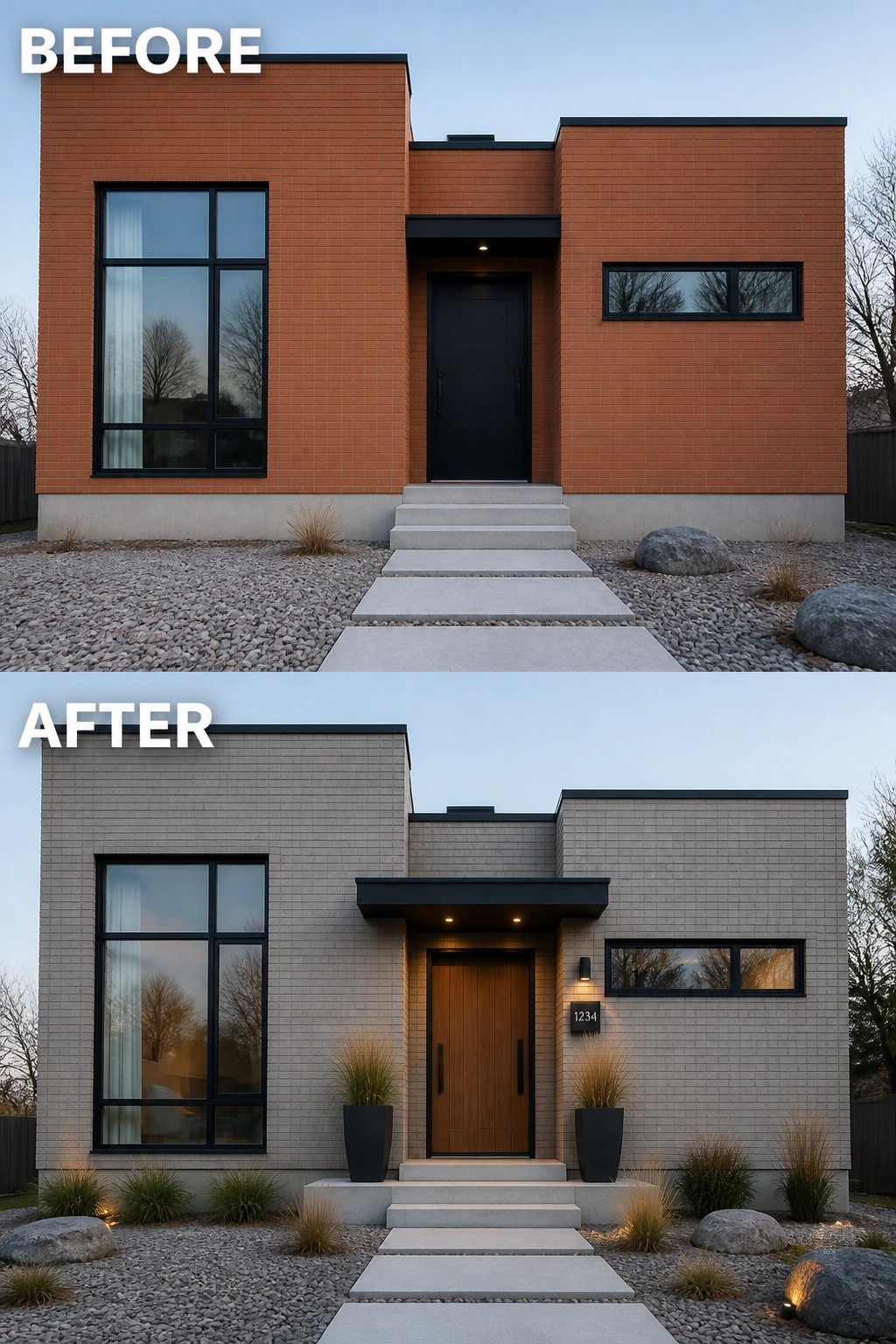
A soft brick stain and a simple door swap can turn an anonymous facade into a proper entry. In this example the bright orange brick is toned down and a wood door replaces the flat black opening, while a pair of planters and a wall light mark the approach so the front reads like an intentional doorway instead of just a wall.
To try this at home, start with small test patches of brick stain to find a shade that sits well with your roof and trim. Pick a door finish that contrasts the brick and feels welcoming, add one or two scaled planters for vertical interest, and install an eye-level sconce and clear house numbers so visitors know where to go. Small, practical changes make the entry feel finished without a full remodel.
Use Brick Stain To Soften Old Red Brick
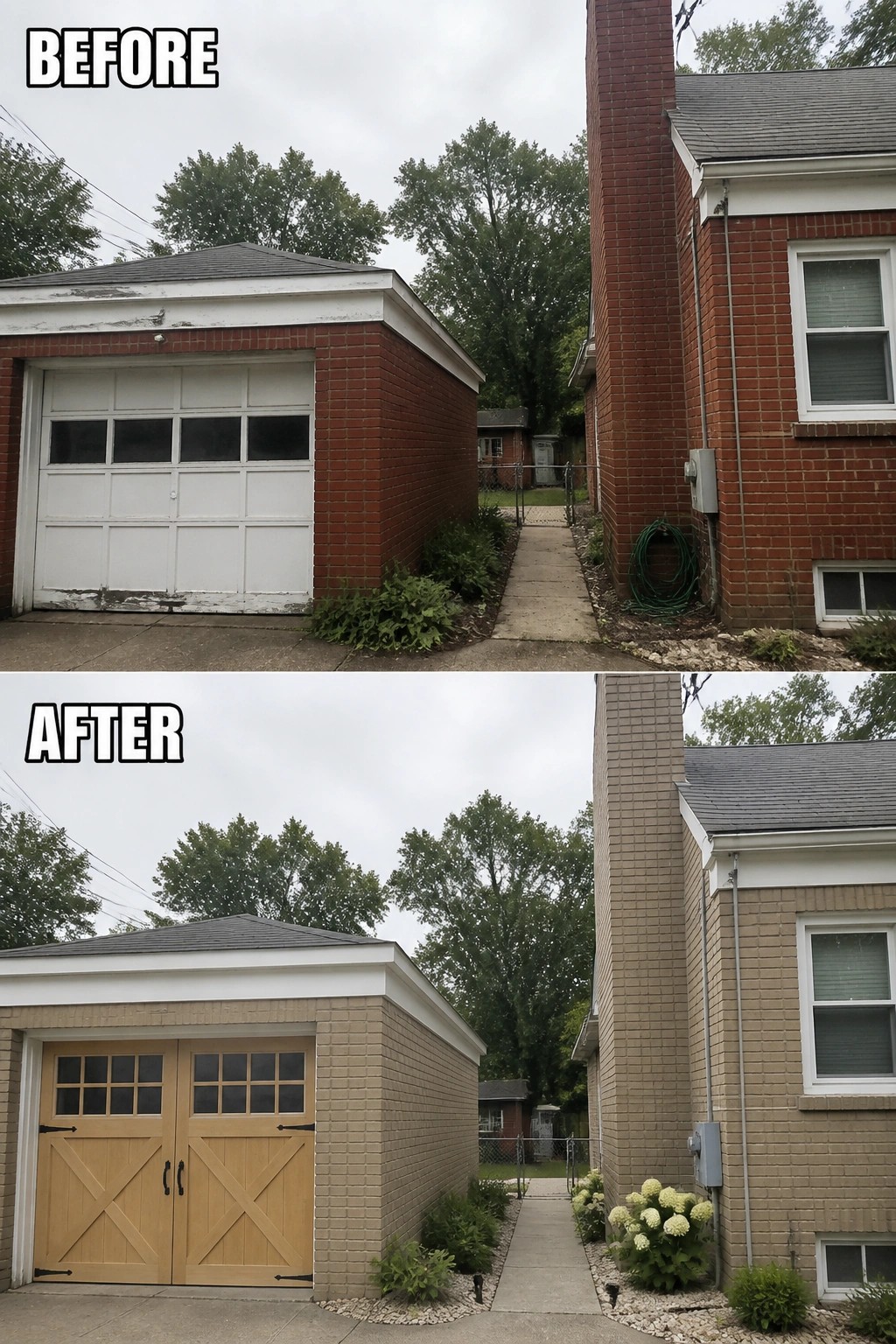
Staining original red brick to a lighter, more neutral tone is a simple way to change curb appeal without covering the masonry. In this example the brick was shifted to a warm beige and paired with a new carriage-style garage door, which refreshes the whole facade while keeping the brick’s texture and character.
If you want to try it, start with a small test patch to see how the color and mortar react (and how it looks next to your roof and trim). Choose a breathable masonry stain or hire a pro, and plan one or two coordinating swaps—like the garage door or exterior hardware—so the new brick tone feels intentional. This approach works especially well on older red-brick homes that need a softer, more contemporary look.
Use Brick Stain To Soften Your Front Porch
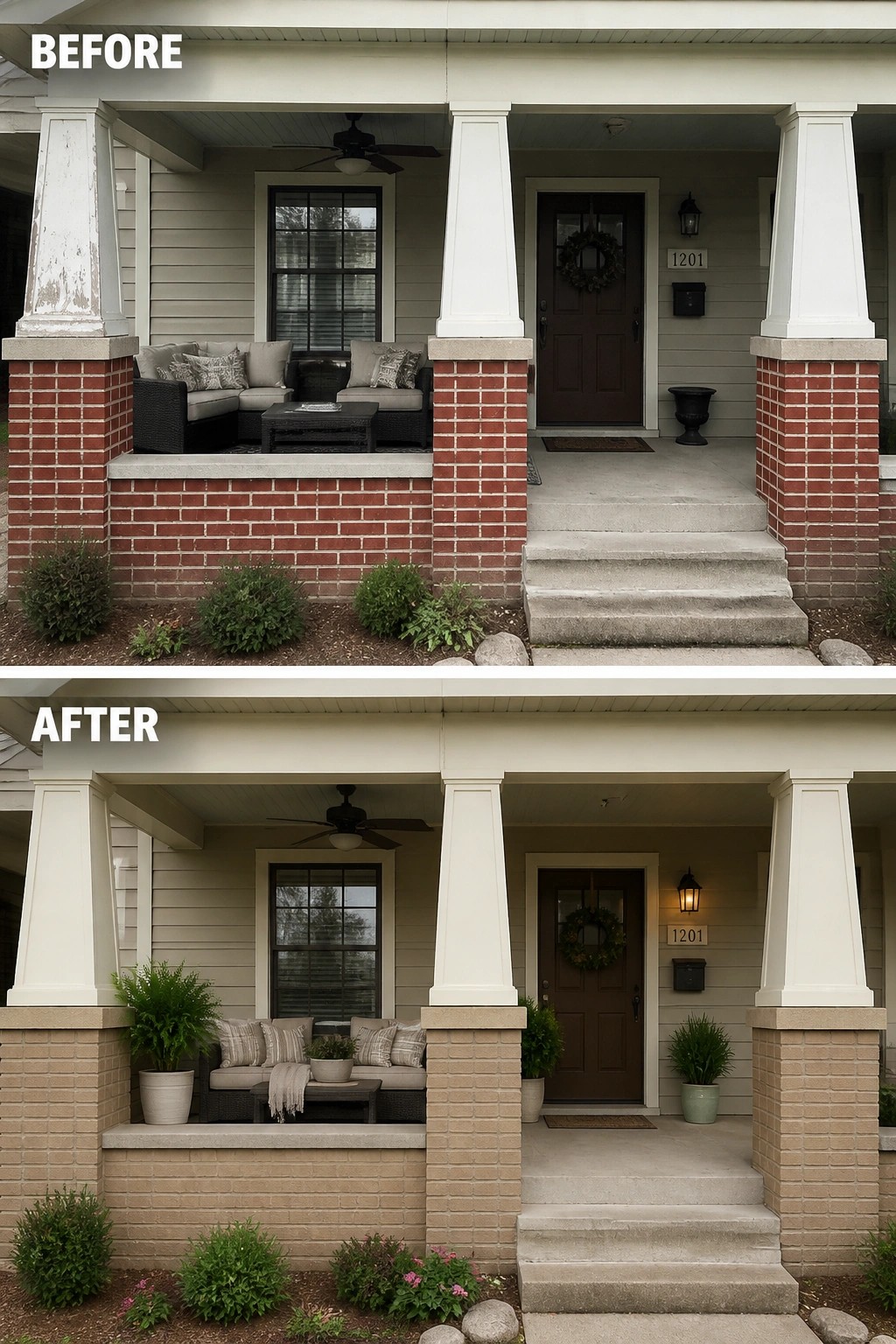
Muting bright red brick with a neutral stain is an easy way to make a porch read as part of the house instead of an afterthought. In this example the red brick was stained a warm beige, which immediately ties the knee wall and columns to the trim and lets a couple of potted plants and a simple seating area look deliberate instead of crowded.
If you want the same effect, start by testing stain colors on a hidden patch of brick so you can see how the tone works with your door and trim. Choose a color that complements existing paint, clean and prep the brick well, and seal the finish for weather resistance. Keep porch decor minimal and scaled to the space—two matching planters and one small seating group are enough to make the entry feel finished.
Update The Entry With A Softer Brick Stain
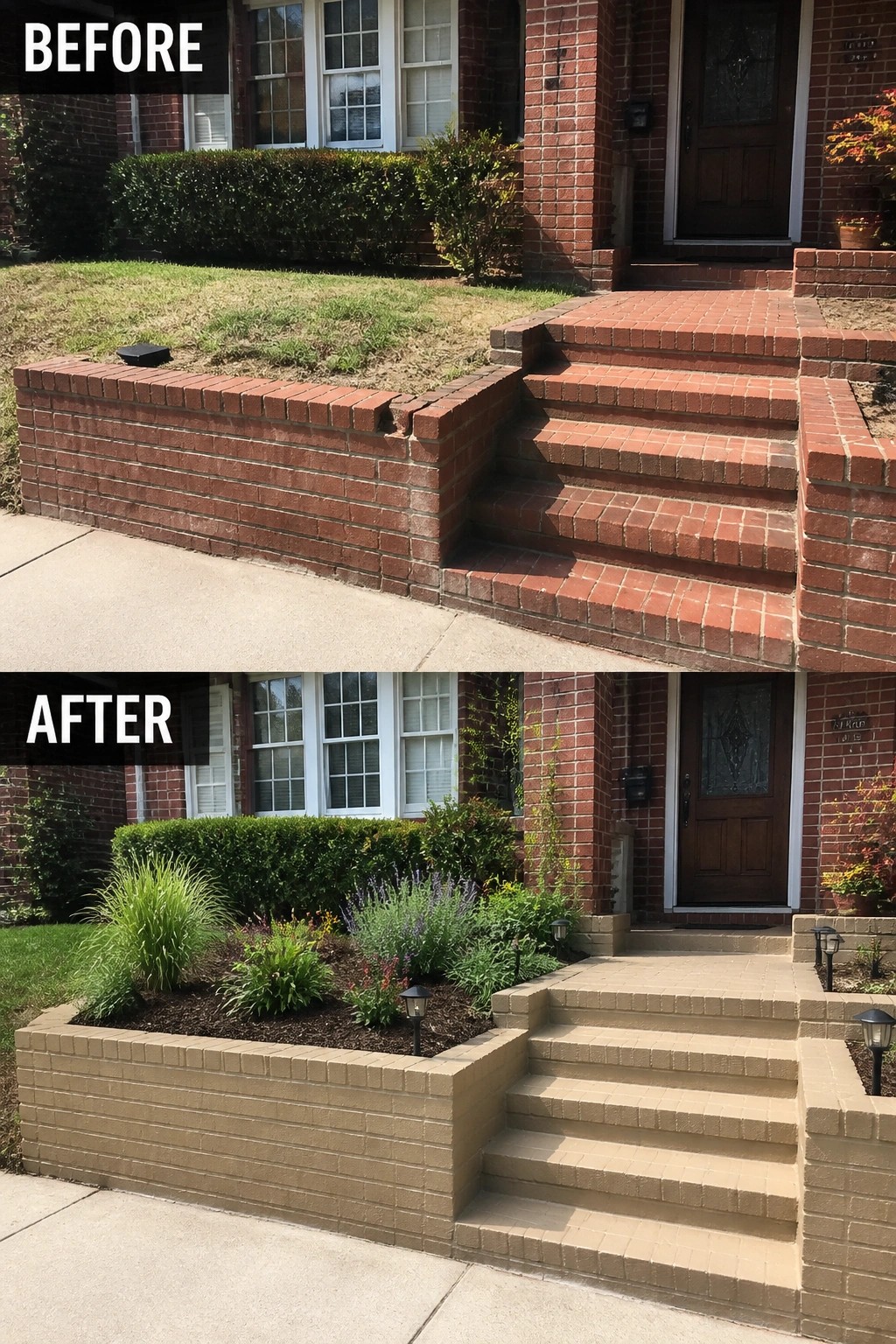
Staining tired red brick a warm, neutral tone can quickly calm a busy façade and make the whole entry feel more intentional. Here the homeowner stained the steps and low wall to a tan color, then planted a small bed and added low path lights to frame the entrance without rebuilding anything.
To try this at home, start with a hidden test patch so you can see the color on your brick and how it ages. Use a breathable masonry stain rather than a heavy paint so the brick texture remains visible, add a non‑slip additive on horizontal surfaces, and keep planting and lighting simple so the entry stays tidy and easy to maintain.
Use Brick Stain And Planters To Soften The Facade
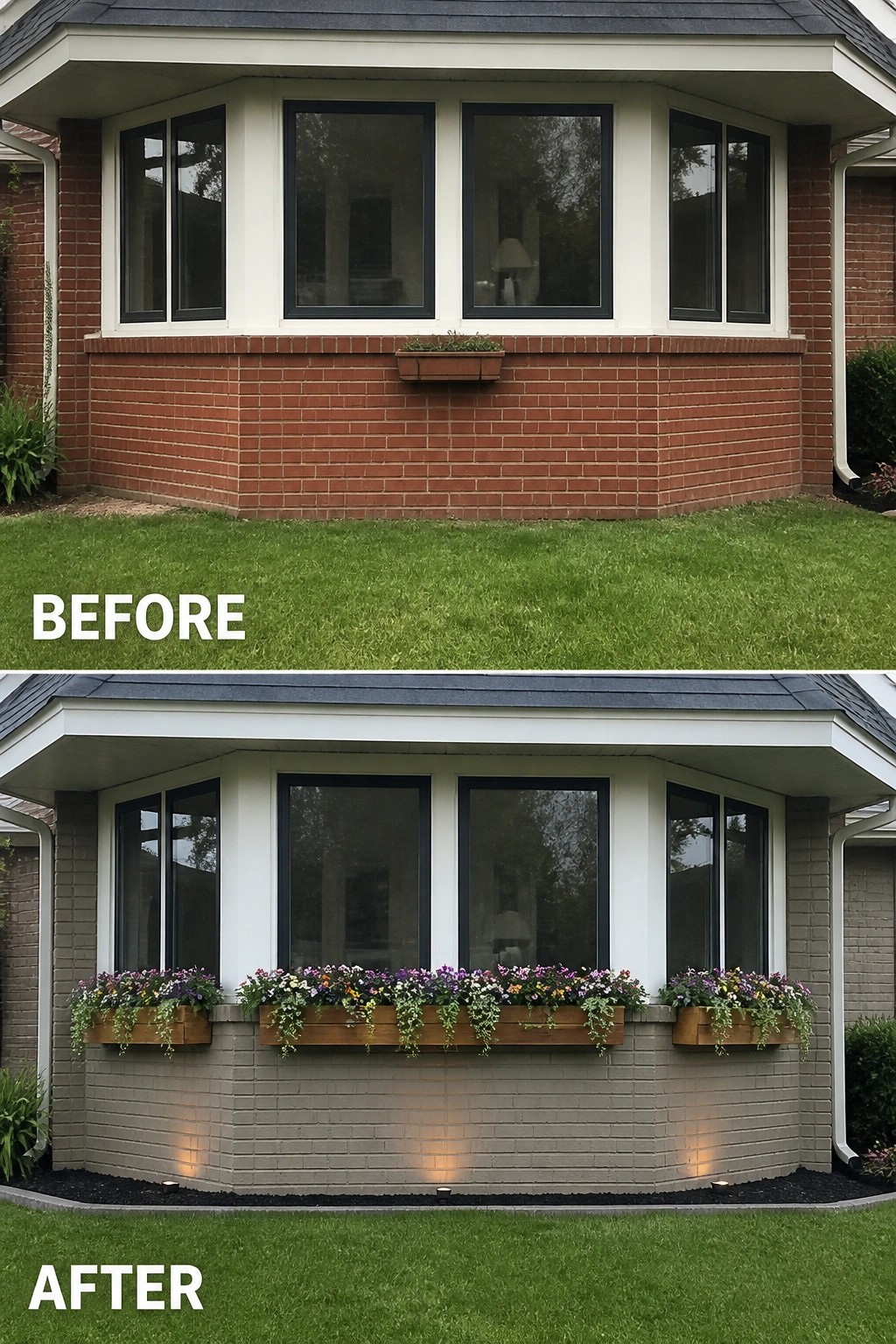
Staining old red brick a softer, neutral tone is an easy way to modernize a home without replacing masonry. In this example the brick shifts to a muted gray and a set of long wooden window boxes filled with trailing flowers and small uplights give the bay a welcoming, finished look—simple changes that let the architecture read as lighter and more contemporary.
To try this at home, start small and test a stain color on an inconspicuous spot (test first). Pick a shade that complements your trim and roof, clean and prep the brick, and consider a pro for large areas. Add window boxes sized to the opening and plant a mix of spillers and bloomers for instant impact, and finish with low-profile uplights or a neat mulch bed so the new tone and planting read as one cohesive update.
Use Brick Stain To Soften Bright Red Masonry
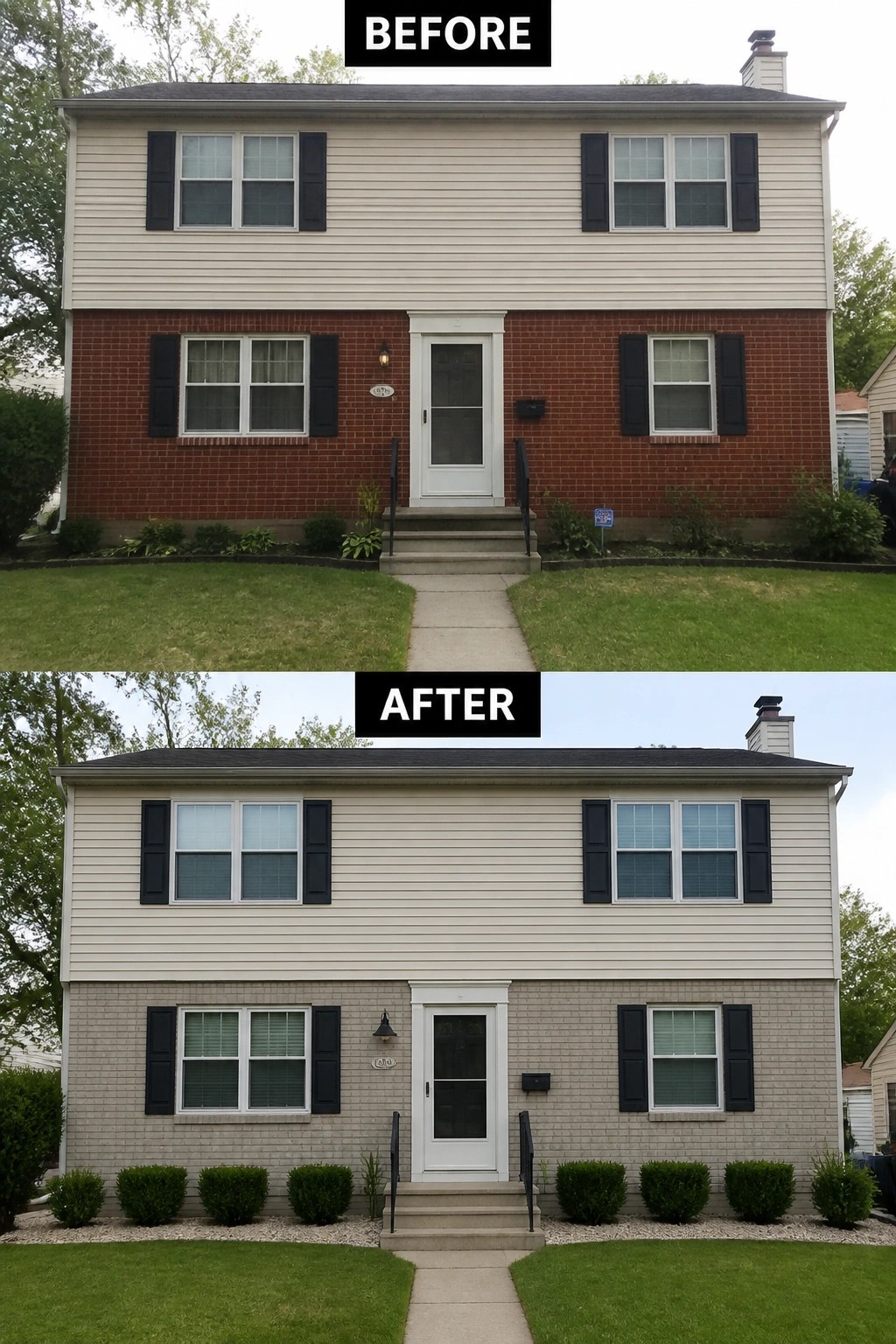
A coat of masonry stain is a simple way to update an old red-brick facade without replacing anything. In this example the lower brick was lightened to a neutral beige-gray to better match the upper siding, while a tidy row of low shrubs and a pale gravel bed finish the base and make the change feel intentional. The result looks fresher and more cohesive without a full re-clad.
To try this at home, start by power-washing and repairing any damaged mortar, then test a few stain samples on inconspicuous areas to see how they react with your existing trim and siding. Choose a breathable, exterior-grade brick stain and keep planting and hardscape simple so the new color reads clearly — small evergreen shrubs and light-colored gravel are low maintenance and help sell the updated look.
Use Brick Stain To Soften A Red Brick Facade
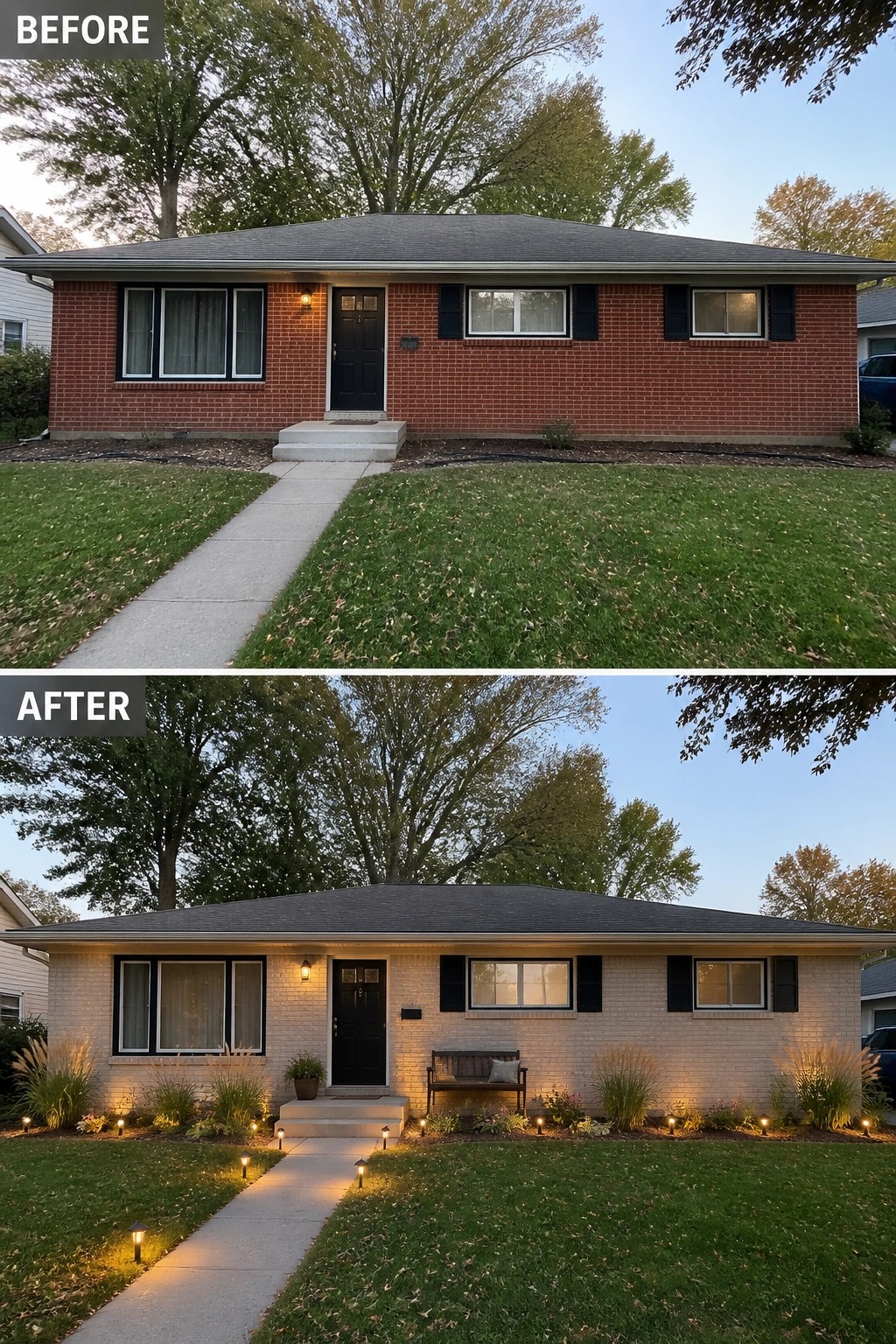
Staining bright red brick a lighter, more neutral tone is a simple way to update a dated exterior without rebuilding. In this example the heavy red was changed to a pale beige, and the softened shell was finished with a few low plantings and path lights to help the new color feel intentional. The result reads more contemporary and less stark while keeping the original brick structure.
To try this yourself, start with a small test patch to check color against your roof and trim, and make sure the brick is cleaned and repaired before staining. Choose a breathable masonry stain and, if the job is large, consider a pro for even coverage. Keep the rest of the entry minimal—a bench, potted plant, and a line of low-voltage lights will show off the new brick tone without competing for attention.
Frequently Asked Questions
Q: How long will a brick stain keep its softer, natural look on the exterior?
A: Most well-applied brick stains hold their color and finish for about 7 to 12 years, with lighter, more natural tones often showing less obvious fading. Regular washing and a re-seal every few years will keep the finish looking fresh and keep the color even.
Q: Can I stain over painted brick or do I have to remove the paint first?
A: You need to remove paint before staining because stains penetrate and bond with bare masonry, not paint. Stripping, sanding, or using a masonry-specific paint remover and then thoroughly cleaning the surface will give you the best and most even result.
Q: Should I seal stained brick, and what kind of sealer should I use?
A: Yes, adding a breathable masonry sealer protects the stain from weather and helps even out the sheen without trapping moisture (test a small patch first). Reapply the sealer every few years as it wears, especially on south- and west-facing walls that get the most sun.
Q: How can I choose a stain color that softens the house without looking washed out?
A: Bring home sample pots and apply them to several bricks so you see the color in morning and evening light before committing. Lean toward warm neutrals if you want a softer feel and match the undertones to your roof and trim so everything reads as intentional.