


Colonial homes often gain a lot from a simple paint update that brings out their balanced proportions and straight lines.
White siding creates a light backdrop that makes the whole front feel open while dark shutters frame the windows without overwhelming them.
I find that these two choices together can make an older house look more looked after even when nothing structural changes.
The result tends to lift curb appeal in a quiet way that fits the style rather than fighting it.
Small details like these are worth trying first.
Refresh A Colonial House With White Paint And Dark Shutters
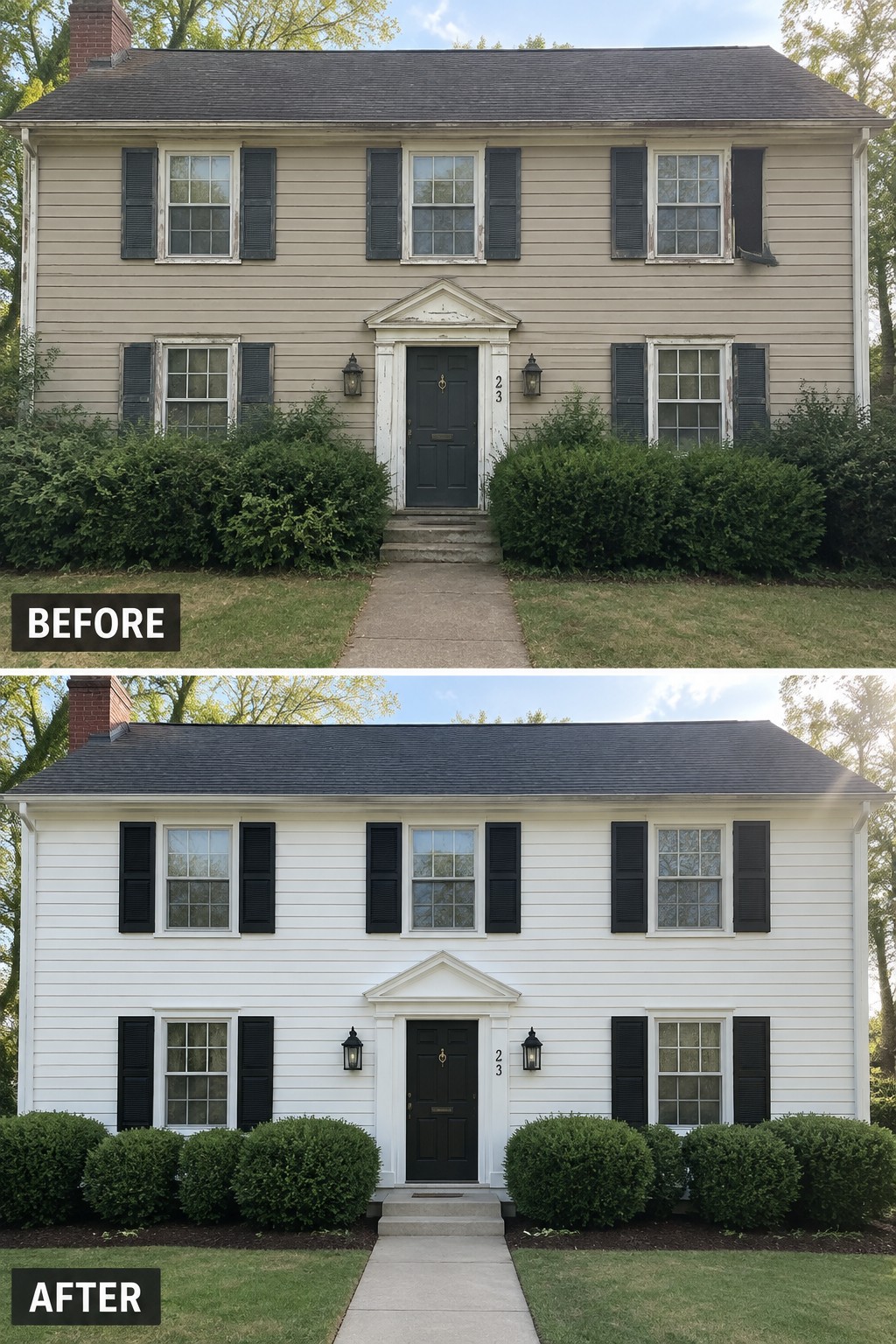
Painting the outside of an older colonial white and switching the shutters to a dark color can make a big difference in how the house looks from the street. The beige siding and uneven shutters in the before photo made the facade feel tired and a little flat. Once the house is painted white and the shutters are changed to a consistent dark shade, the windows stand out more clearly and the whole front gains a cleaner, brighter appearance.
This approach works especially well on colonial homes that still have good trim and window proportions. It is usually best to fix any damaged siding or shutters first so the new paint job lasts. Keep the landscaping simple and trimmed so it does not compete with the fresh exterior.
Update Brick Colonials With White Paint And Dark Shutters
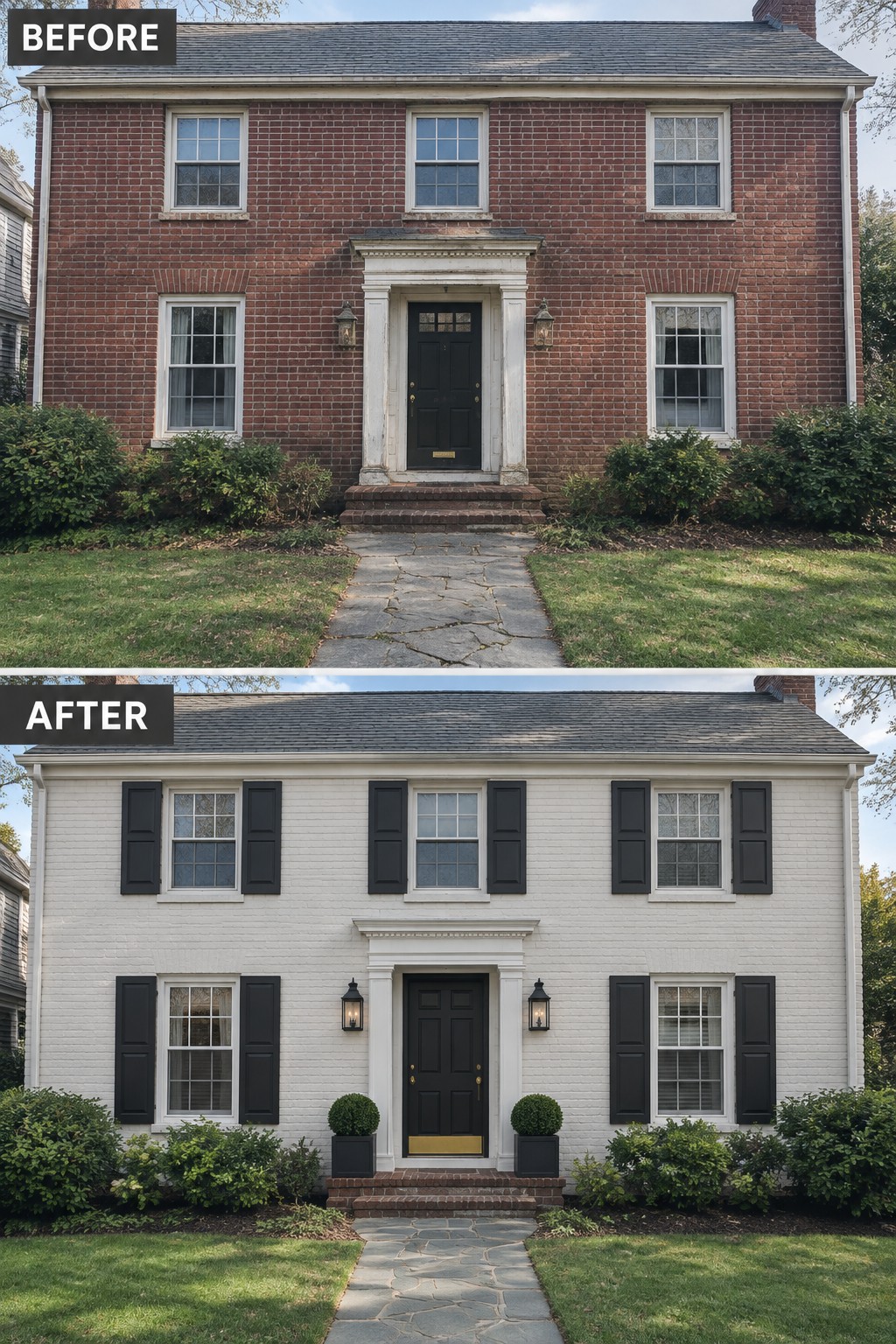
Many brick colonials look solid but flat until the brick gets painted white. The dark shutters then add the contrast and rhythm that makes the style feel finished. Here the red brick was covered and black shutters were added to every window, which immediately lightened the facade and gave the windows a stronger presence.
This works best on two-story homes with evenly spaced windows. Choose a white that holds up in sunlight, then match the shutters to a deep charcoal or black so the contrast stays crisp. Keep the trim and door details simple so the paint and shutters do the main work.
Refresh A Colonial Exterior With White Paint And Dark Shutters
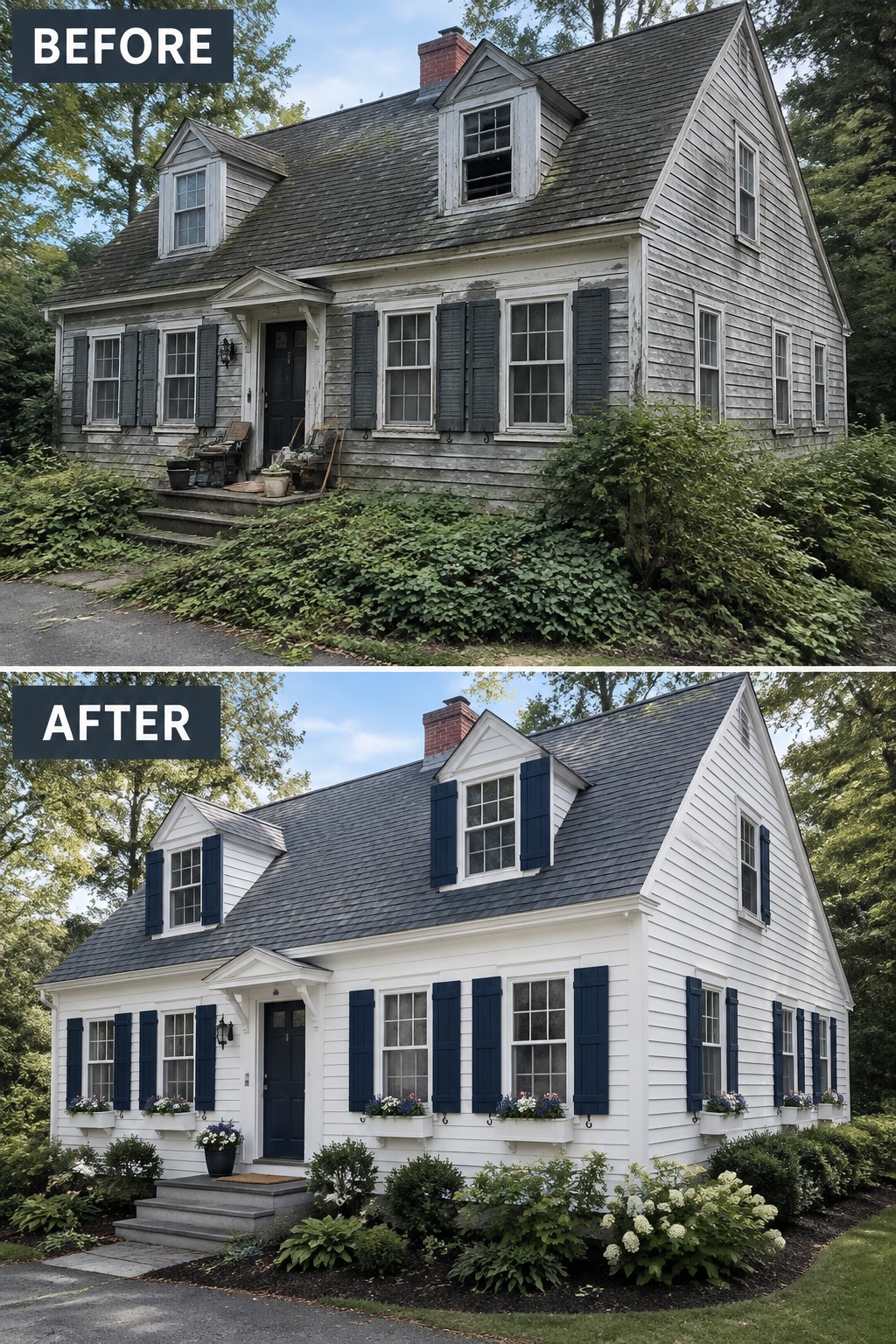
Many older colonials lose their shape over time when the siding fades and the trim blends into the background. A simple coat of white paint brings the lines back into focus, while dark shutters create clear contrast around the windows. The change turns a tired facade into something that reads as intentional rather than neglected.
This approach works especially well on homes that already have classic proportions. Start with a thorough cleaning and any needed repairs before painting, then choose shutters that sit flat against the siding rather than hanging loosely. Keep the landscaping simple so the new paint and shutters stay the main feature instead of competing with overgrown bushes.
Refresh The Exterior With White Paint And Dark Shutters
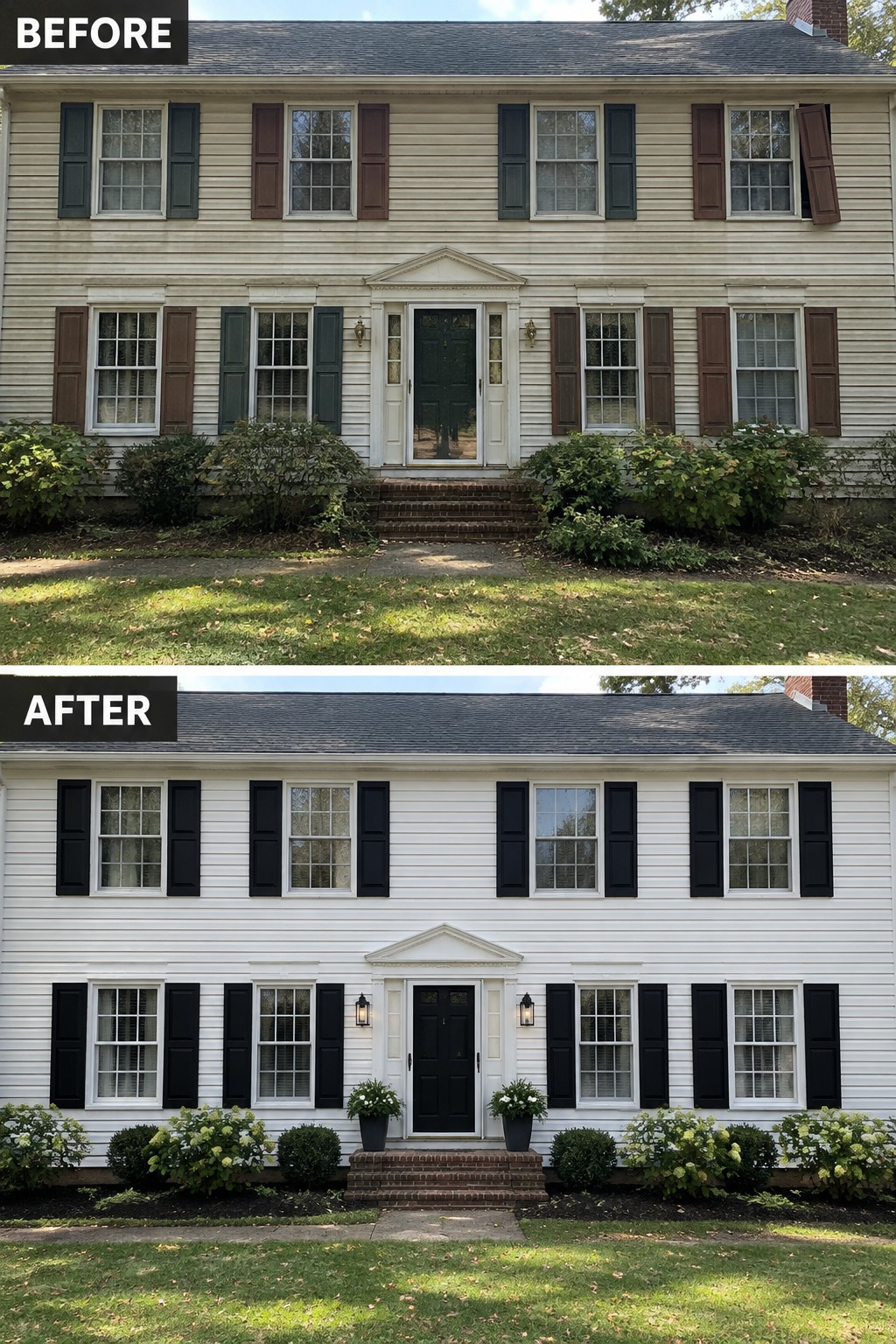
Painting the house white and switching every shutter to black gives the facade a much cleaner and more consistent look. The old mismatched brown and green shutters are gone, and the new dark ones line up neatly across both floors.
This works especially well on colonial homes because the strong contrast makes the windows stand out without adding extra trim or detail. Keep the changes simple by matching the door color to the shutters and adding a few planters near the steps so the entry feels intentional rather than busy.
Add Dark Shutters To Give A White Colonial More Definition
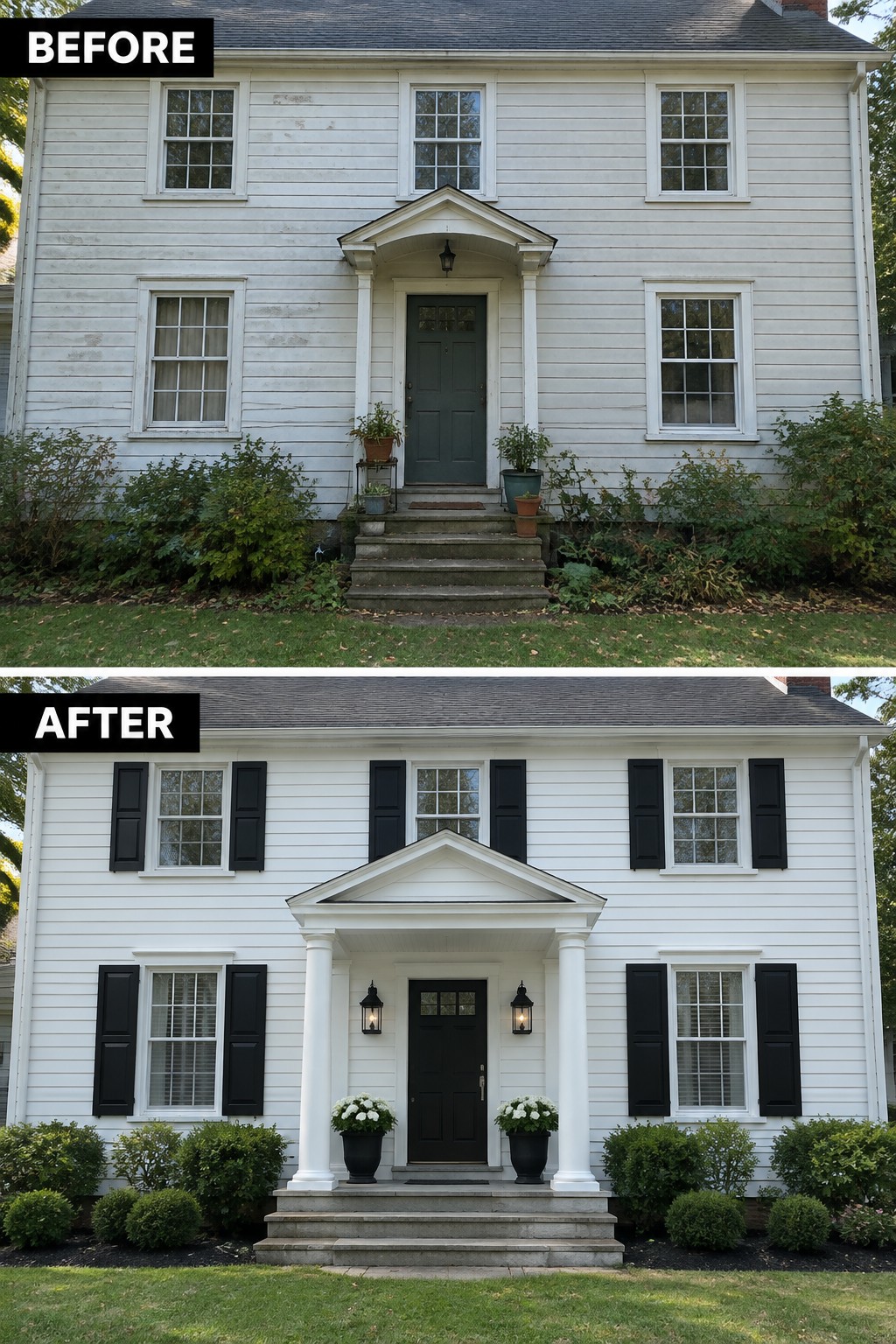
A white Colonial often looks flat when the windows have no trim or contrast. The before shows exactly that. The after adds black shutters across all the windows and deepens the front door color. Those two changes create clear lines and make the house feel more balanced without any major construction.
This works best on simple two-story Colonials that already have good bones. Match the shutter color to the door or roof for cohesion, then keep the rest of the trim white. The result reads as intentional rather than busy. Do the shutters first before adding more planters or lighting so the main structure stays clear.
Refresh A Colonial Exterior With White Paint And Dark Shutters
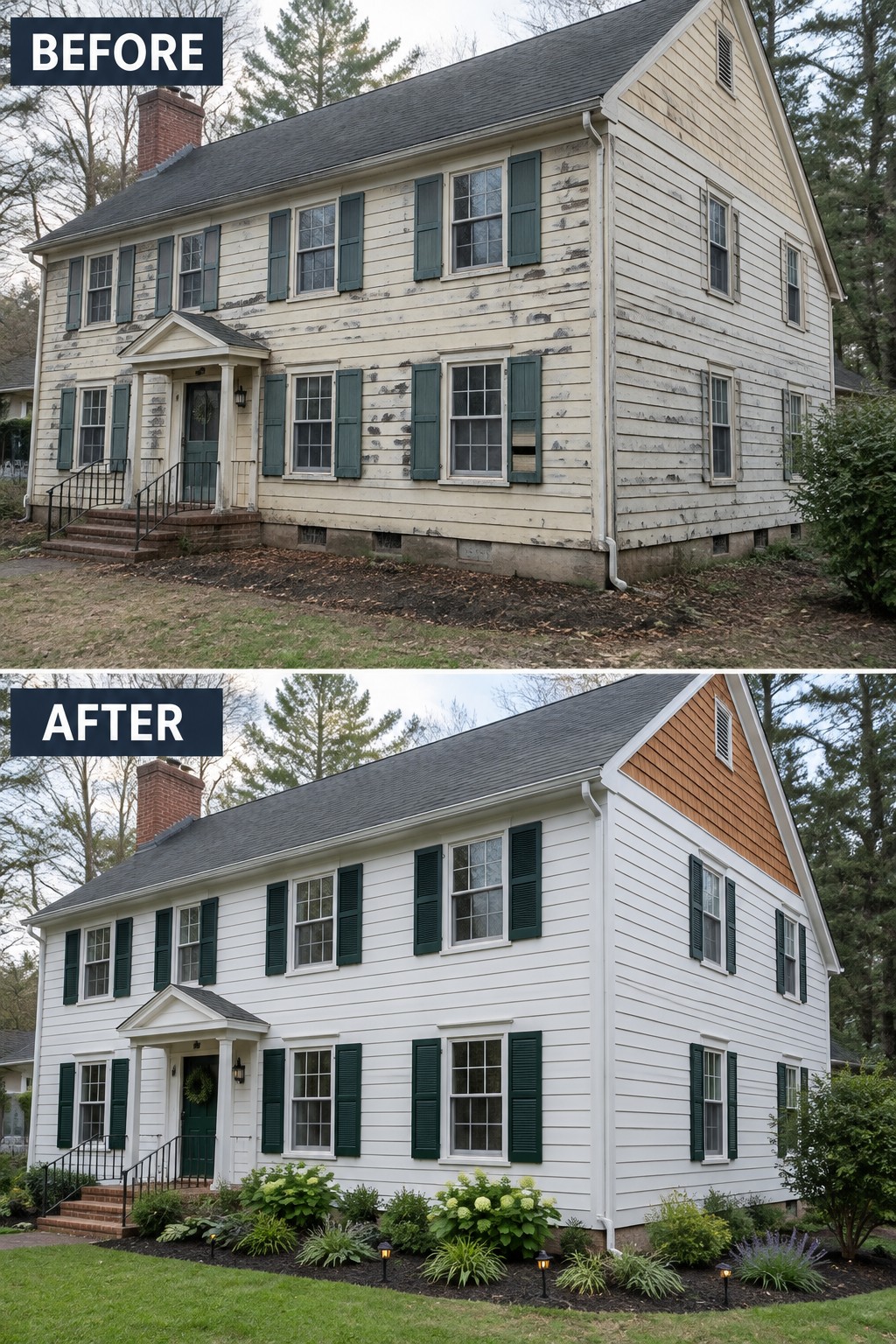
A fresh coat of white paint paired with dark shutters can pull an older colonial back together fast. The before photo shows faded, peeling siding that made the whole house look tired. Once the siding is painted white and the shutters are switched to a deep green, the windows stand out and the lines of the house read cleaner.
This approach works best on colonials that still have good window placement and simple trim. Focus first on prepping and painting the siding, then add the shutters in a color that contrasts without clashing. Keep any new planting low and simple so it frames the house instead of hiding the updated exterior.
Use White Paint And Dark Shutters On A Colonial Exterior
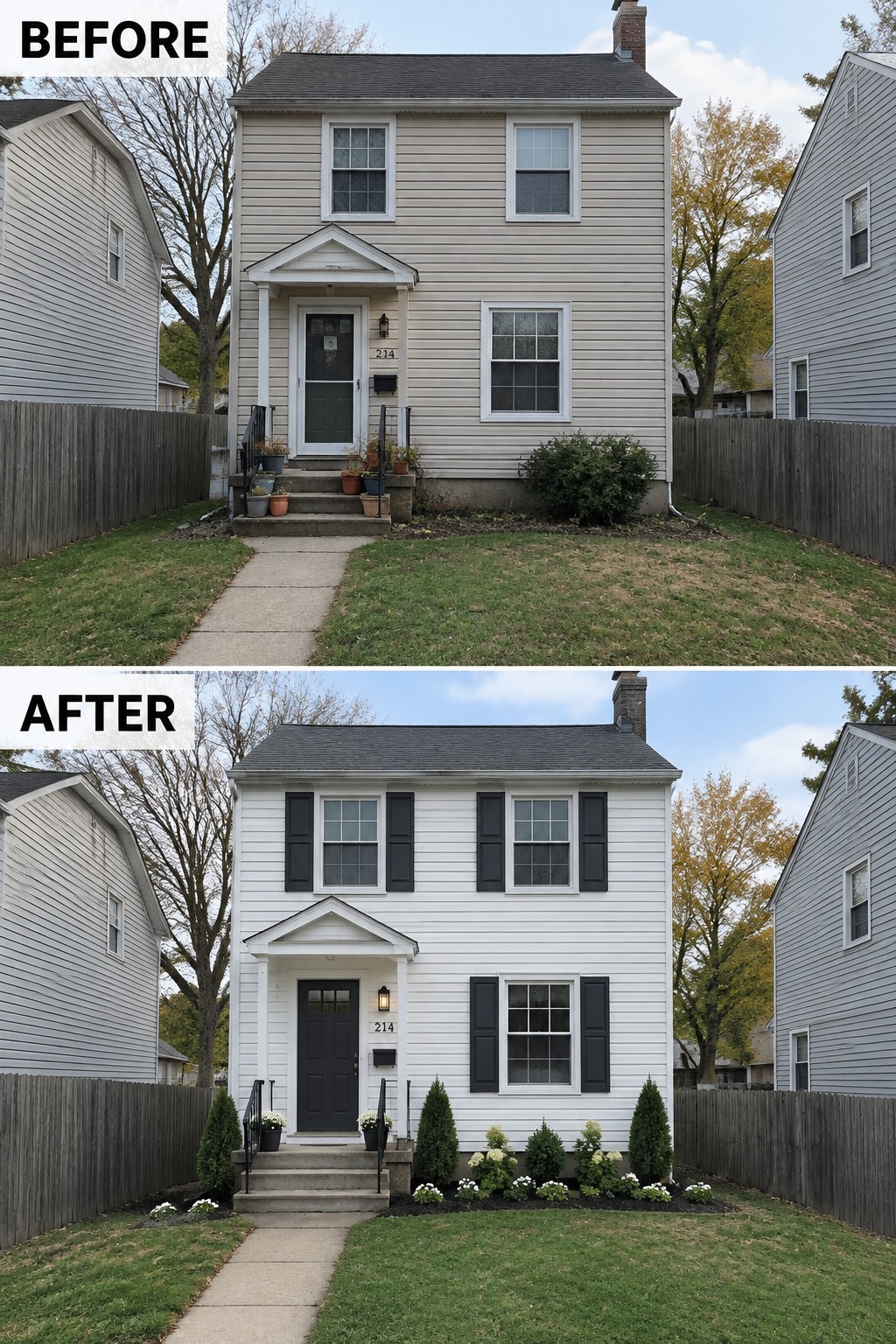
Painting the house white and adding black shutters gives the whole facade a cleaner, more defined look. The change from the old beige siding removes the flat appearance, while the dark shutters and door create contrast that makes the windows and entry stand out without any major construction.
This approach works well on simple colonial homes where the shape is already strong. Start with the paint and shutters first, then add a few shrubs along the front to keep the planting in scale with the house. It is an easy update that improves curb appeal on a modest budget.
Update A Colonial Exterior With White Paint And Dark Shutters
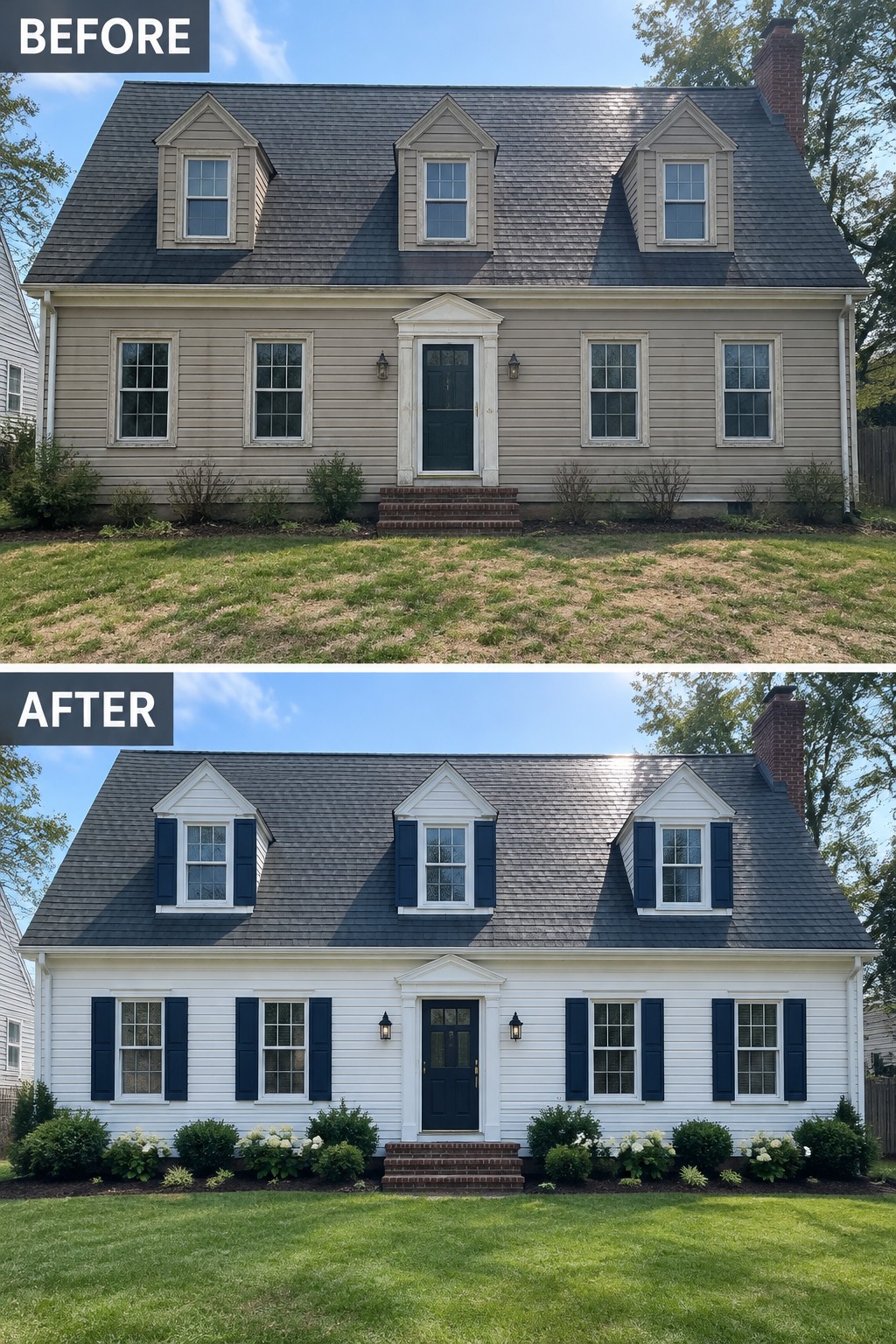
Switching the siding from a flat beige to bright white and adding dark shutters gives the house a cleaner, more defined look. The dark shutters and matching front door create contrast that highlights the windows and entry without needing many other changes.
This works especially well on colonial homes because the simple shape and balanced windows stand out once the color is lightened. If your house has similar proportions, start with the paint and shutters before adding more landscaping or trim details.
Update A Colonial House With White Paint And Dark Shutters
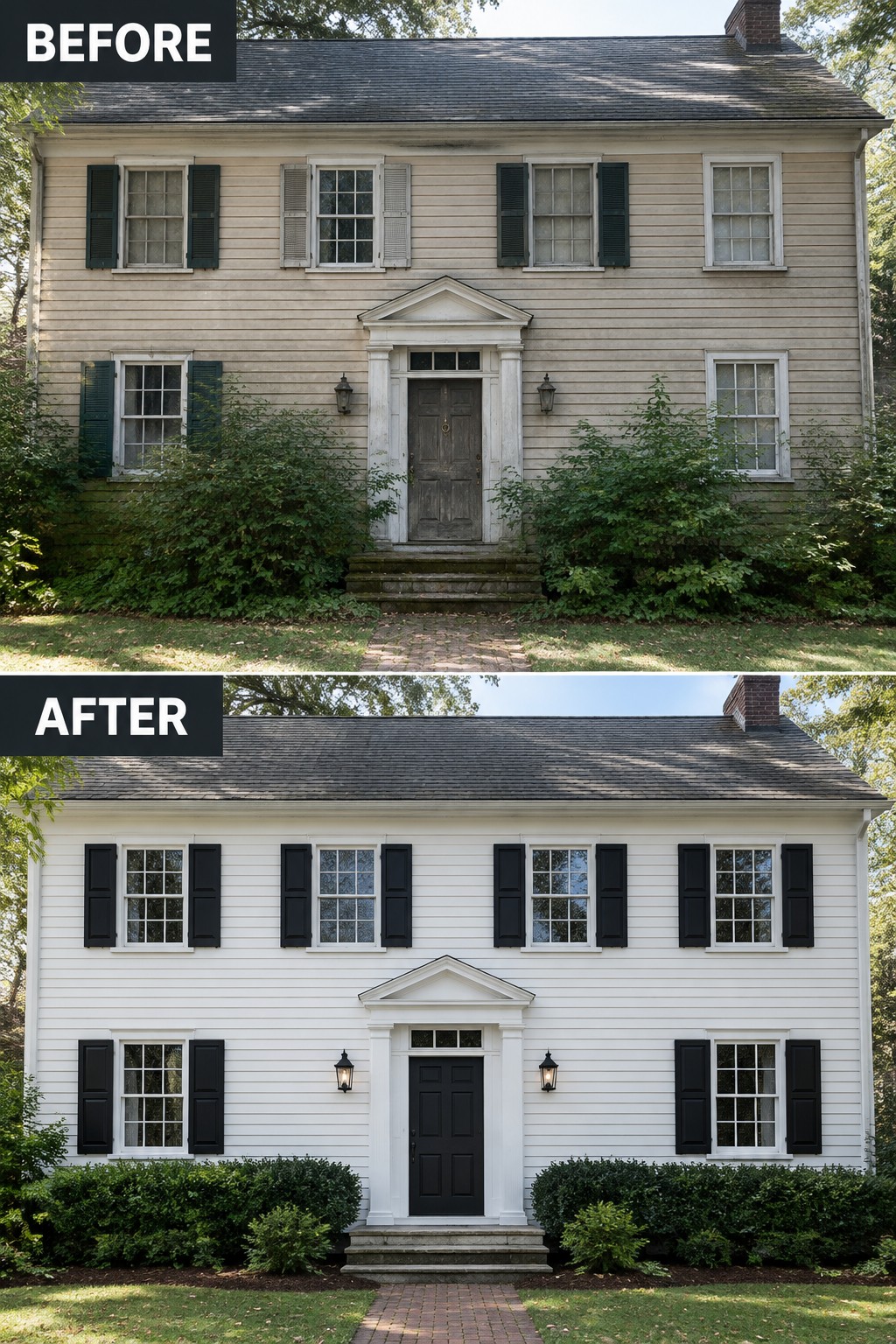
Painting the siding white and switching the shutters and front door to black gives this colonial a much cleaner, more defined look. The original beige tone made the house feel flat and a bit lost against the greenery, while the new white creates strong contrast that brings out the trim, windows, and classic proportions.
This works especially well on older colonials that have faded or mismatched exterior colors. Keep the landscaping low and structured so the paint and shutter change stays the main feature, and test your white and black shades on a small section first to make sure they hold up in your light.
Paint A Brick Colonial White And Add Dark Shutters
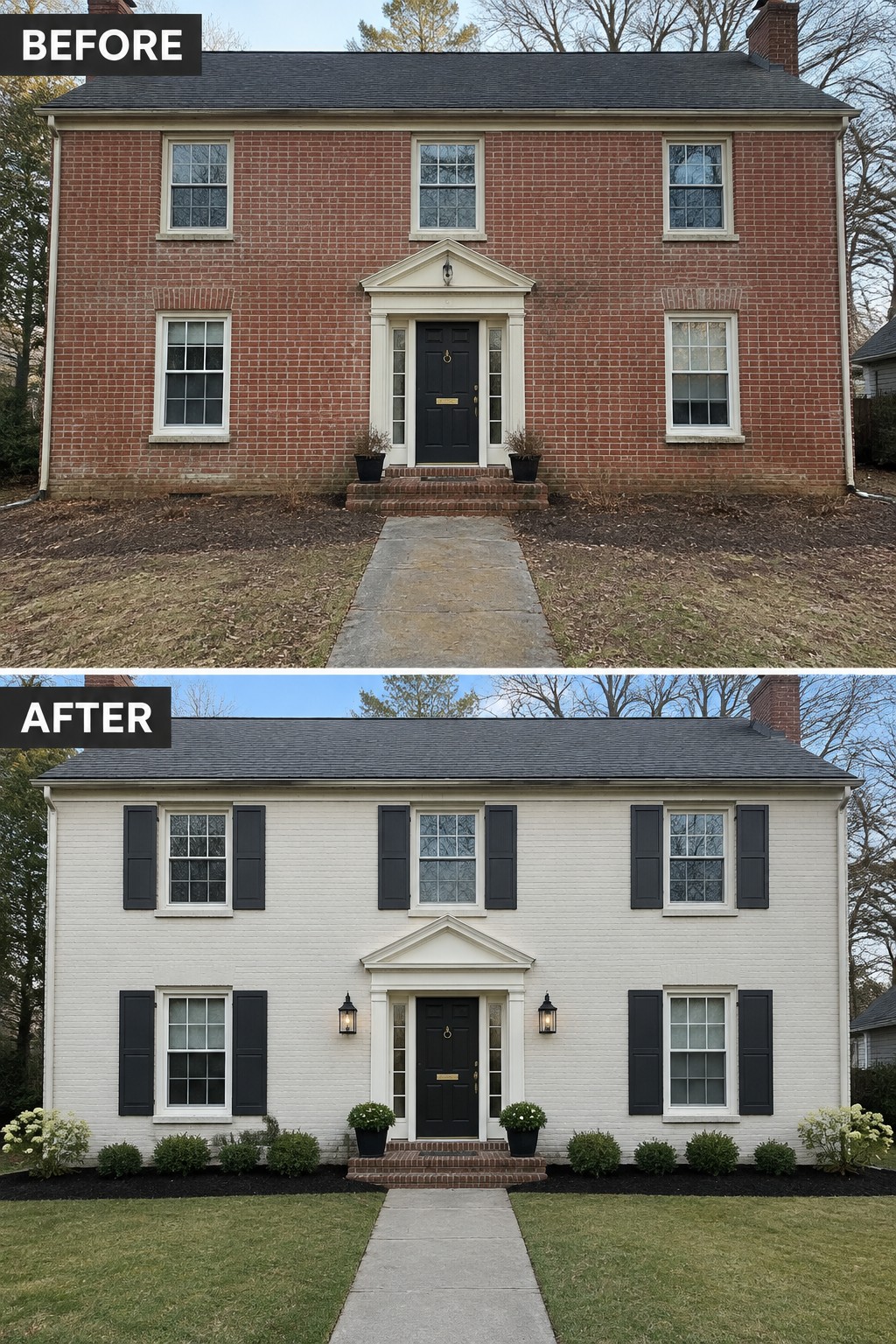
A red brick colonial often looks flat and heavy on its own. Painting the brick white immediately lightens the facade and gives the house a cleaner colonial shape. Dark shutters then add the contrast that defines the windows and brings the whole front together.
This update suits symmetrical two-story homes that already have good window placement. Start with the paint and shutters before adding more landscaping or lighting. Keep the trim bright and use the same shutter color on every window so the change feels intentional rather than piecemeal.
Paint A Colonial House White And Add Dark Shutters
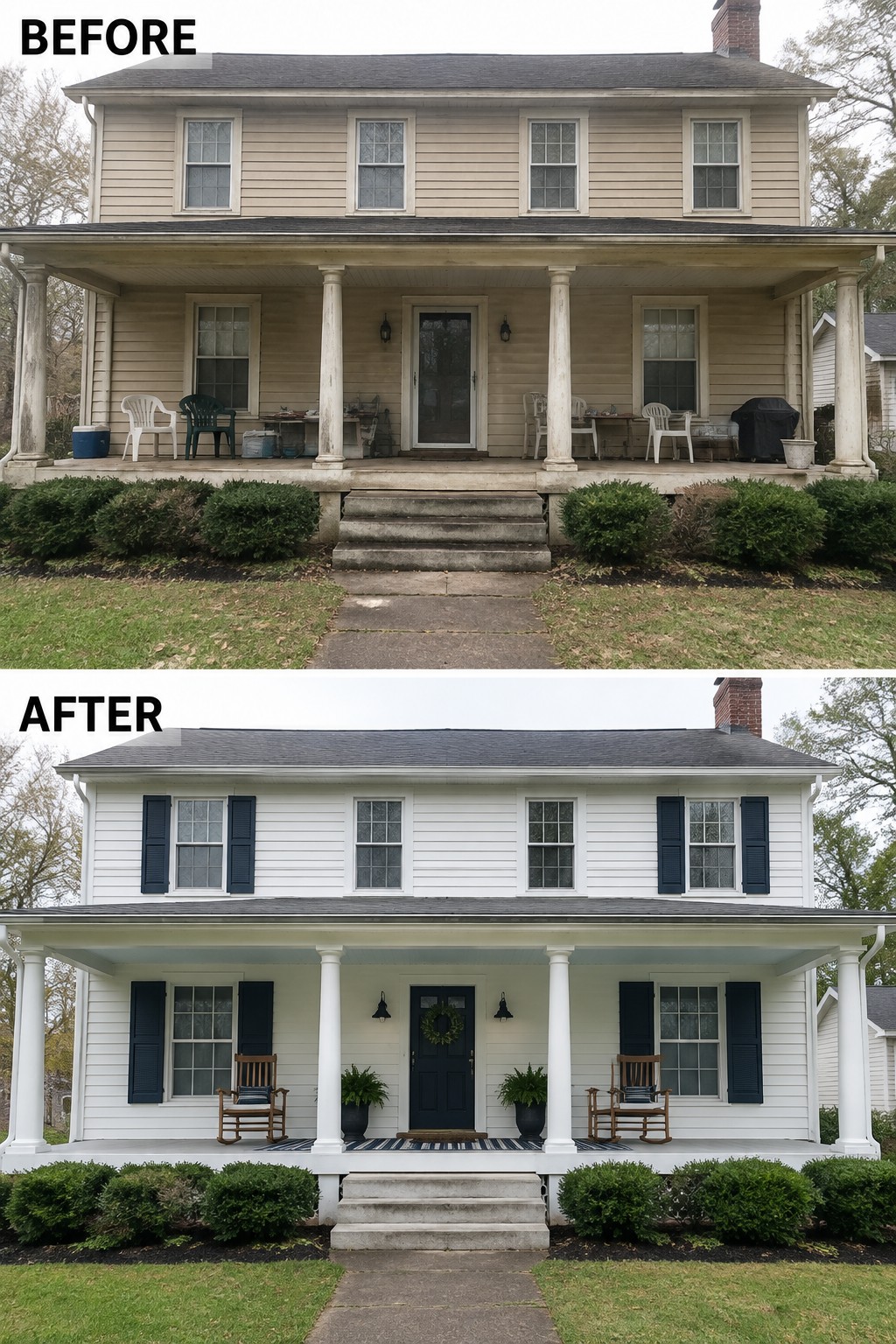
A tired beige exterior often looks flat because the siding and trim blend together. Painting the house white and adding dark shutters gives the windows clear shape and makes the whole facade feel more structured. The front door color change helps too, since it creates a simple focal point without needing extra trim work.
This approach works especially well on colonial homes where the windows are evenly spaced. Start with the paint and shutters first, then add only a few porch pieces that match the new color scheme. Keep the shutters the same size as the windows so the proportions stay balanced.
Paint A Colonial Home White With Dark Shutters
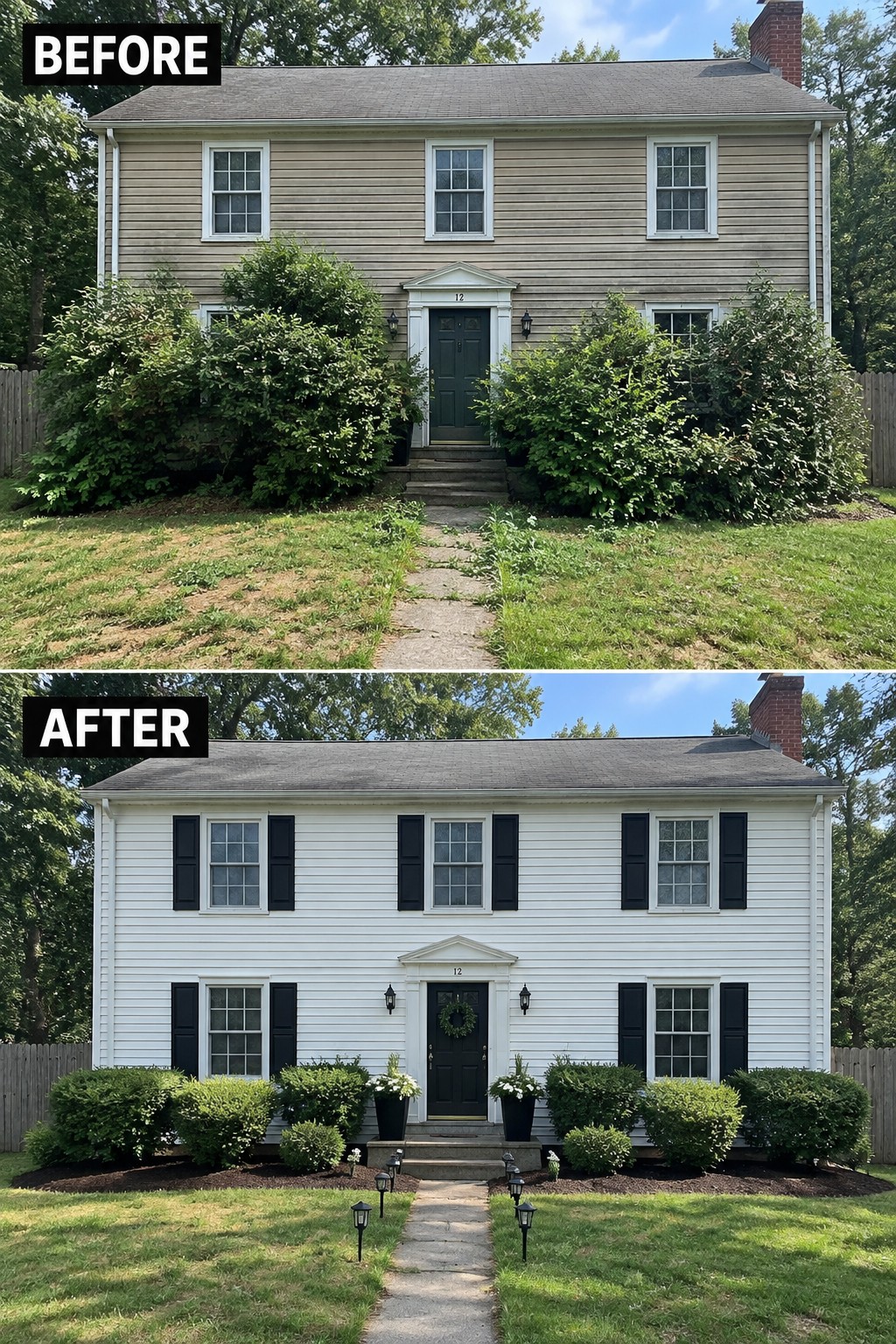
Painting the siding white and adding dark shutters is one of the most effective ways to give an older colonial a cleaner, more classic look. The house went from a flat beige to bright white, and the black shutters now frame every window and give the front real structure. The result feels brighter and more balanced without changing the roof, windows, or door.
This idea works best on symmetrical two-story homes where the windows line up evenly. Pick a durable exterior paint and shutters that match the window size so they look intentional rather than added on later. It is usually smart to finish the paint and shutters first, then decide if the landscaping needs any adjustments to match the new color.
Update A Colonial Exterior With White Paint And Dark Shutters
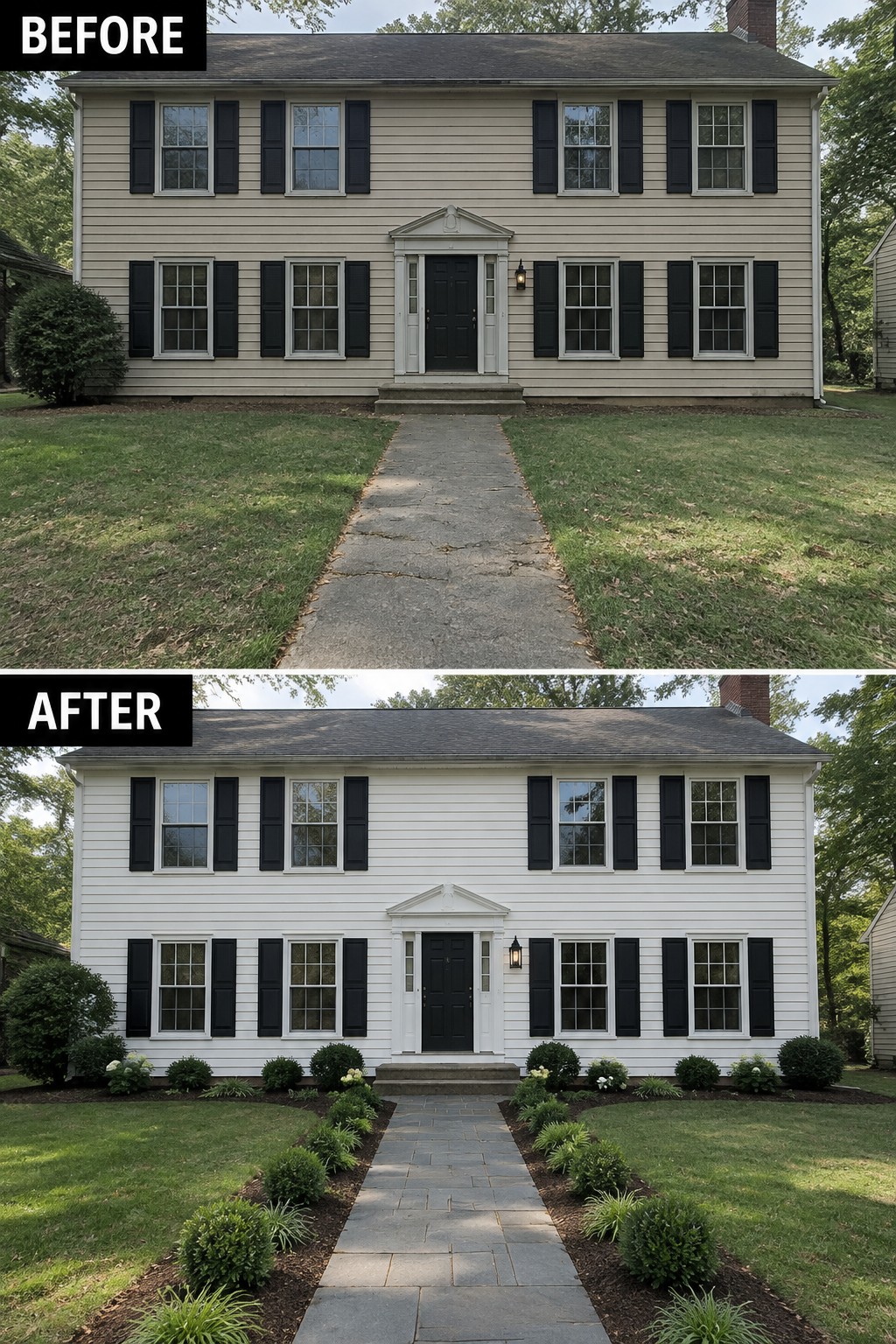
Painting the siding white while keeping the shutters dark gives this colonial a cleaner and more traditional appearance. The light color brightens the whole facade and makes the black shutters and door stand out without any other major structural changes.
This works well on two-story homes with balanced window placement. Start with the paint choice, then add simple foundation plantings and a defined walkway to finish the look. The result feels fresh but still respects the original style of the house.
Refresh Colonial Exteriors With White Paint And Dark Shutters
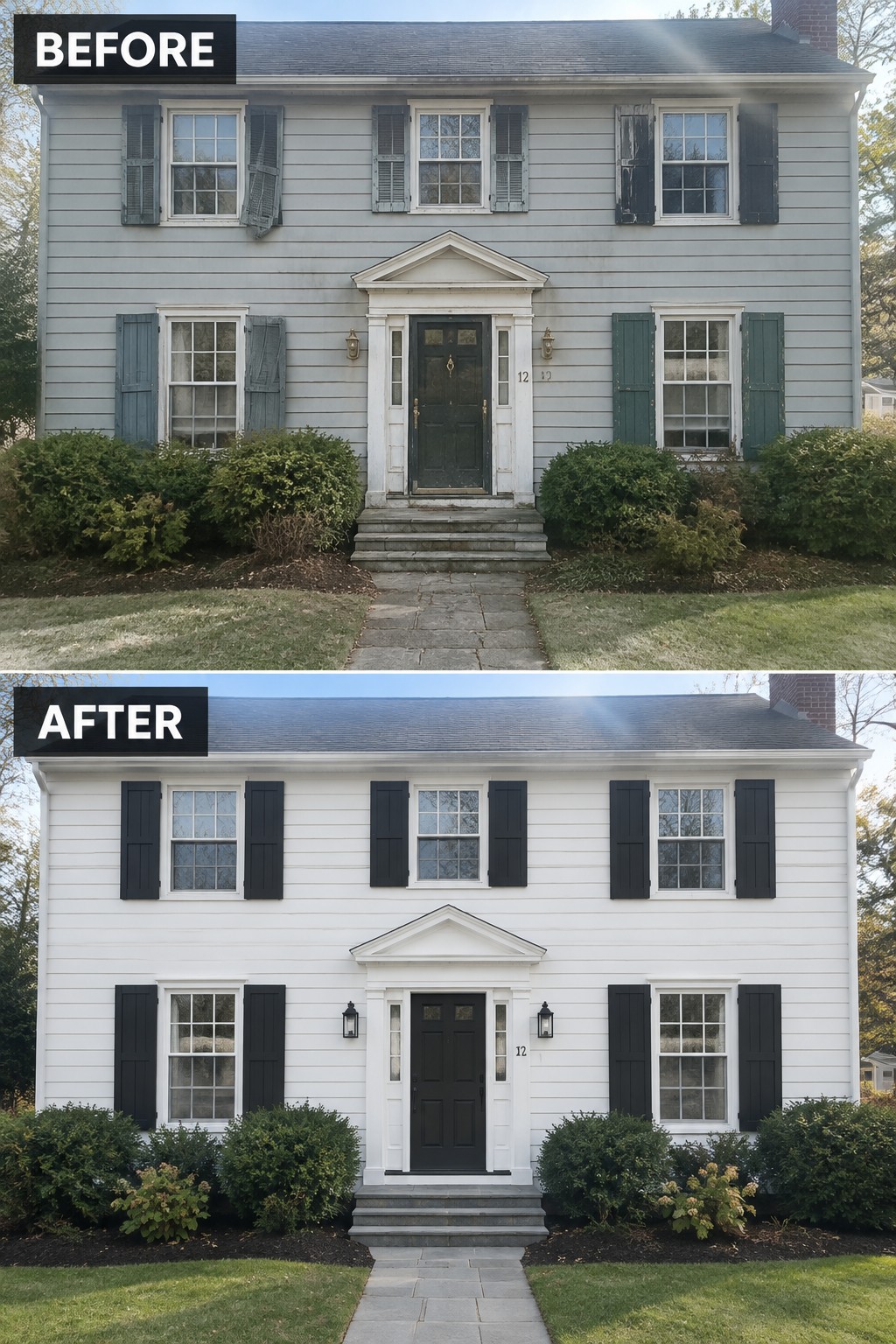
Painting the house white and switching every shutter to the same dark color makes the biggest difference in this update. The old mismatched shutters and faded siding left the front looking uneven. Once everything is unified, the lines of the house stand out more clearly and the entry feels more intentional.
This works well on colonial homes because the style already has a balanced shape. Focus first on the siding color and the shutters, then match the front door. It is a practical step that improves curb appeal without needing new windows or trim work right away.
Refresh A Colonial House With White Paint And Dark Shutters
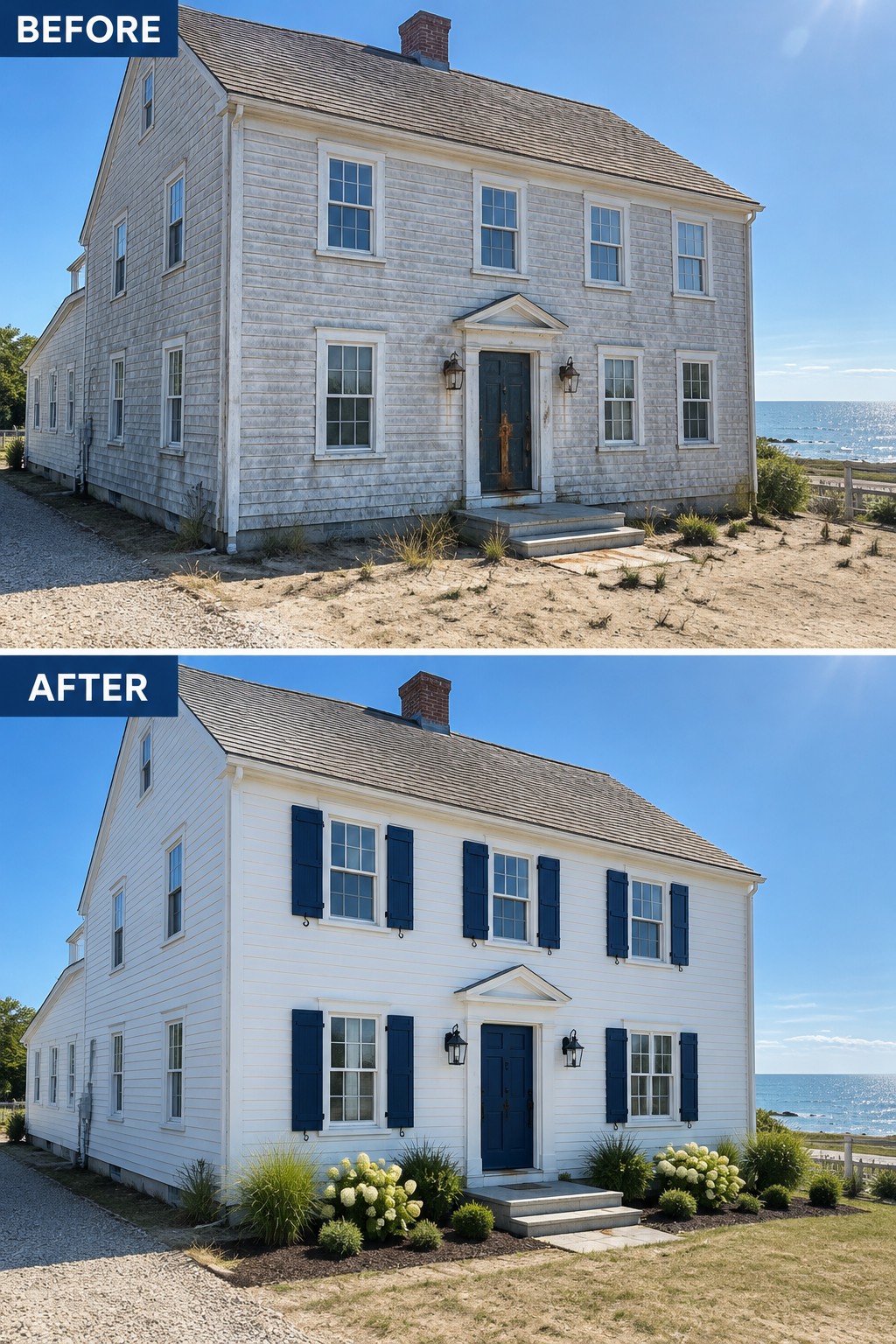
Many older colonials lose their shape once the siding fades and the trim starts to blend in. A coat of white paint paired with dark shutters brings back the clean lines and makes the windows stand out right away.
This works best on houses that already have a simple, balanced front. Keep the changes focused on the siding and shutters first, then add a few planted beds near the steps so the new colors do not sit against bare ground.
Add Dark Shutters And A Bold Door To A White Colonial
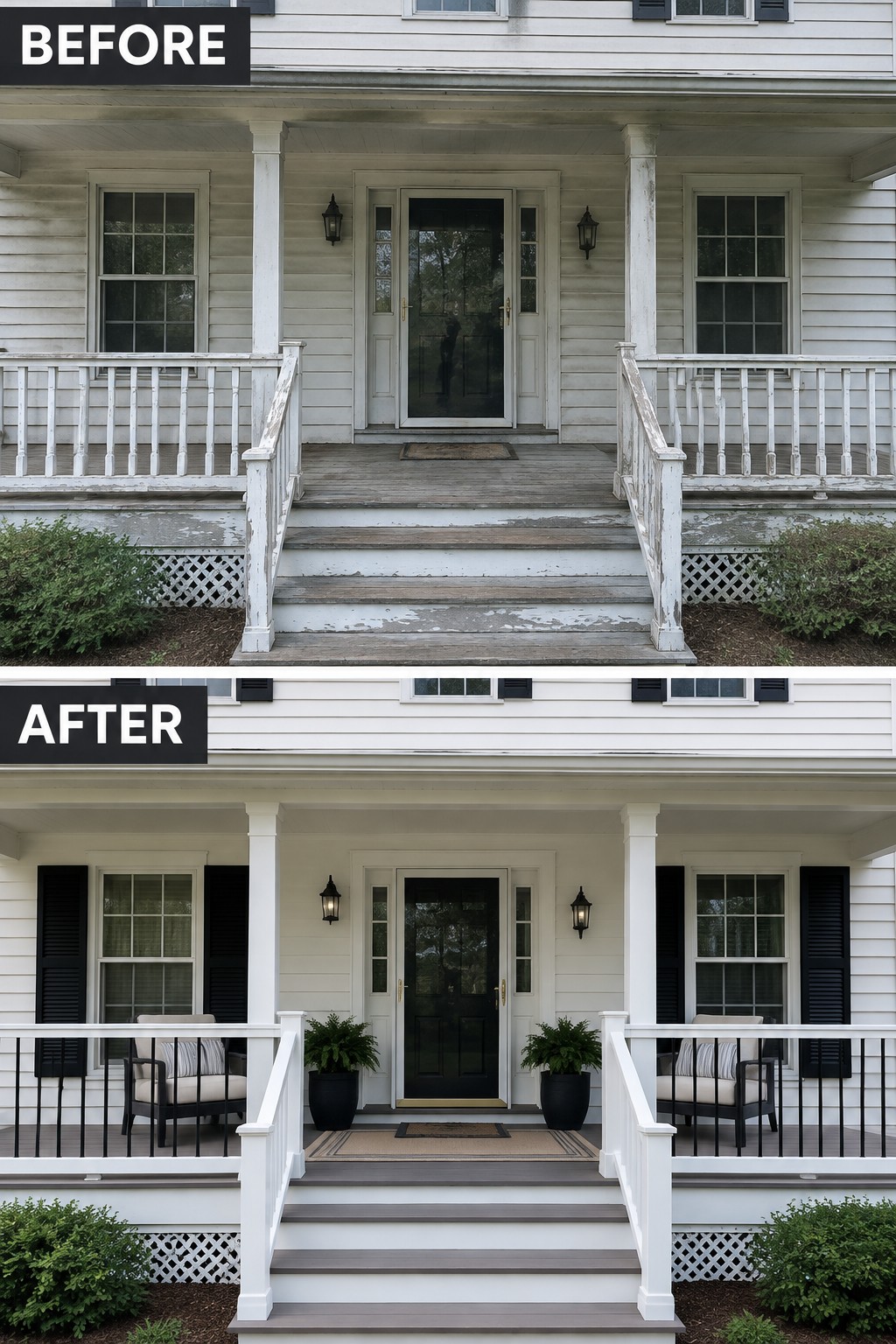
One of the easiest updates for a colonial exterior is adding dark shutters and painting the front door a deep color against white siding. The older version showed faded trim and a lighter door that blended into the background. Once the black shutters were installed and the door was painted black, the entry gained clear structure and contrast without any major construction.
This idea suits homes with evenly spaced windows and a centered door. Start with good paint on the siding and shutters sized to match the window height. The same approach works on many colonial houses because it strengthens the existing lines instead of fighting them.
Paint A Colonial House White With Dark Shutters
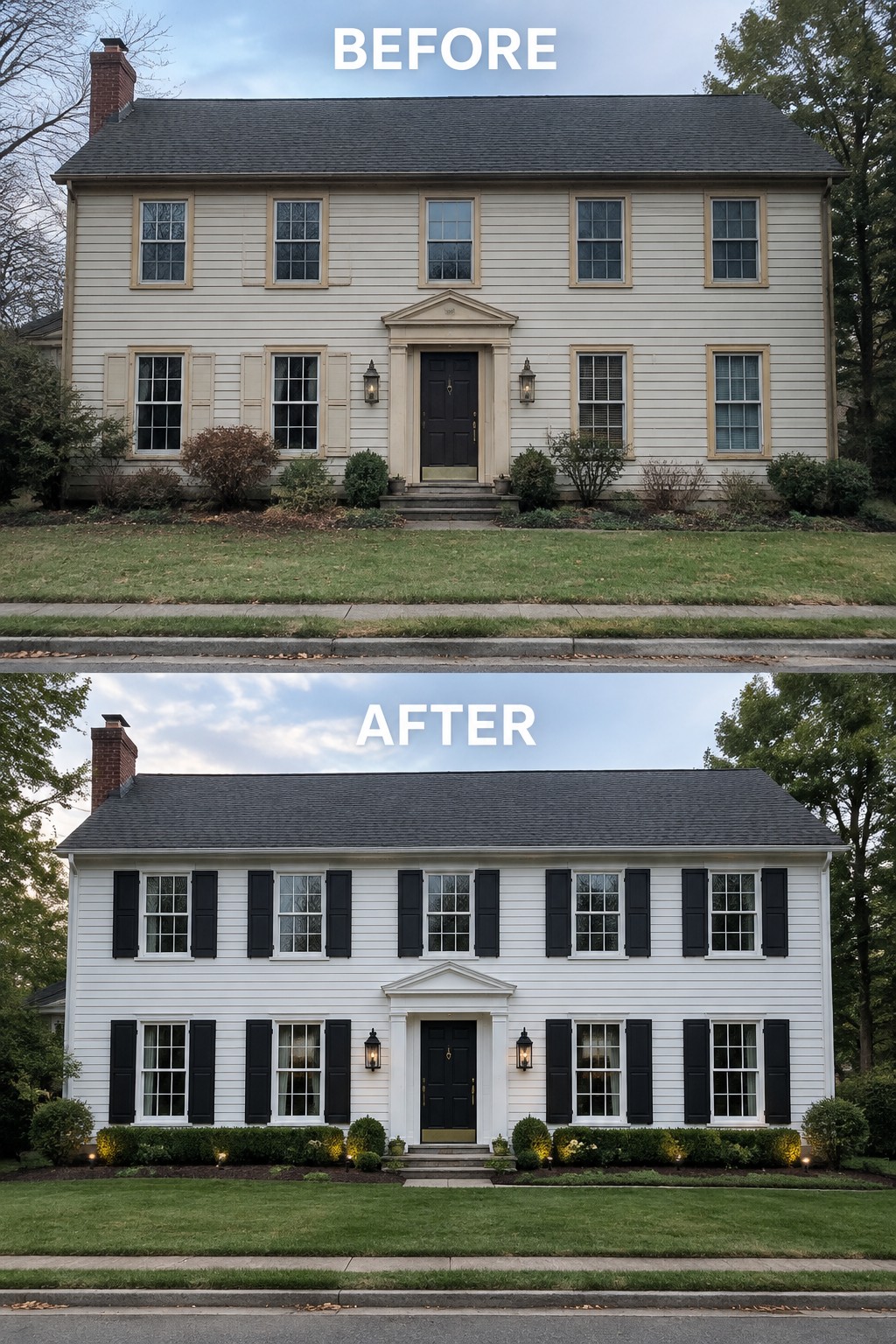
A soft beige house with matching shutters can look flat from the street. Switching the siding to white and adding black shutters gives the windows clear shape and makes the whole front feel more structured.
This approach suits most colonial homes because the style already has strong lines. Keep the changes simple by matching the shutters to a dark door, then add a few low lights along the planting beds to finish the entry without crowding the facade.
Paint A Plain Exterior White With Dark Shutters
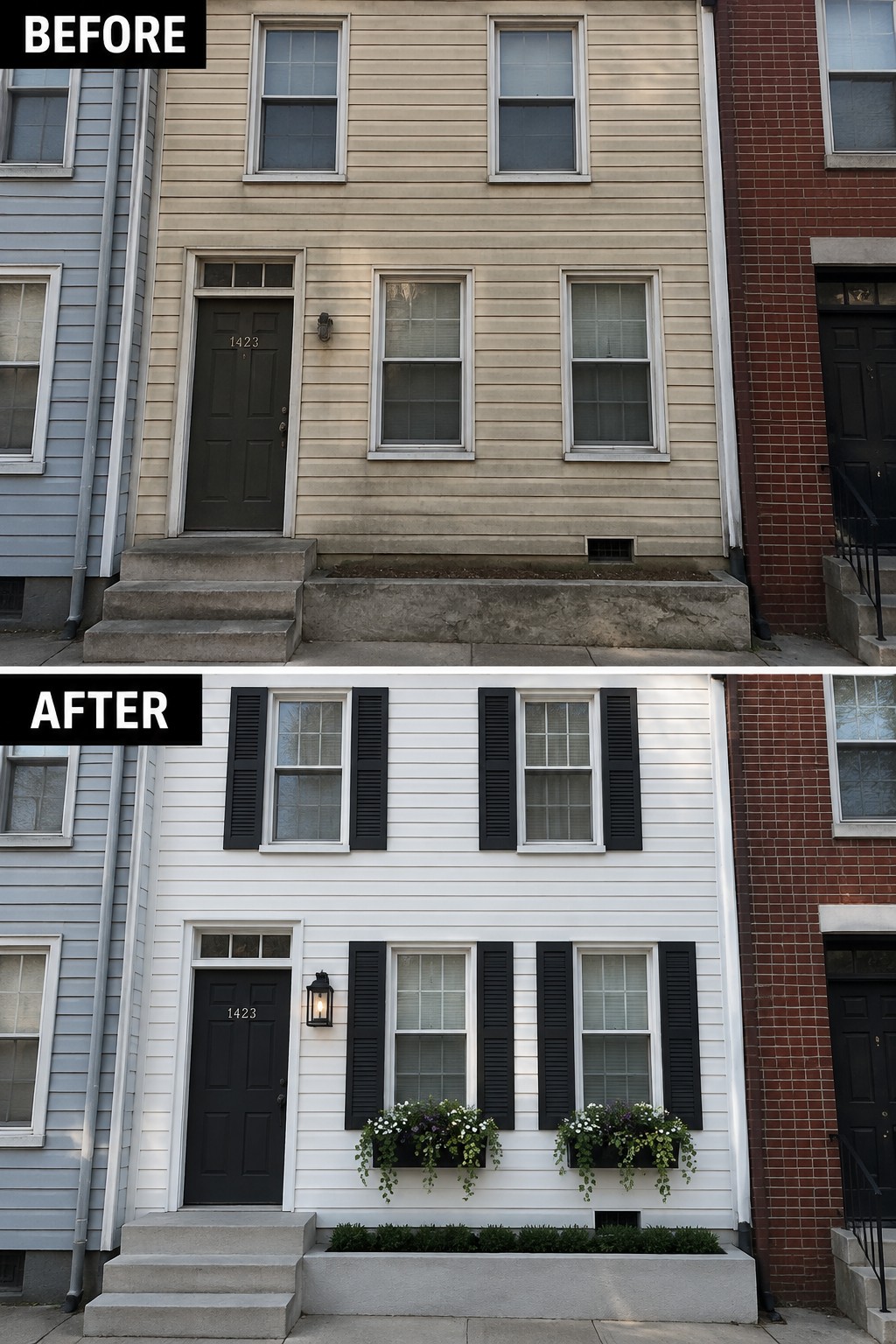
A color change and some added trim can refresh a row house exterior without major work. The old beige siding looked flat and dated, while the new white paint and black shutters give each window clear definition. Window boxes with flowers add a bit of life at eye level.
This idea suits colonial homes that already have simple, balanced lines. Start with the paint and shutters if you want the biggest impact for the least cost. Keep the rest of the updates simple so the clean look stays easy to maintain.
Refresh A Colonial House With Matching Dark Shutters
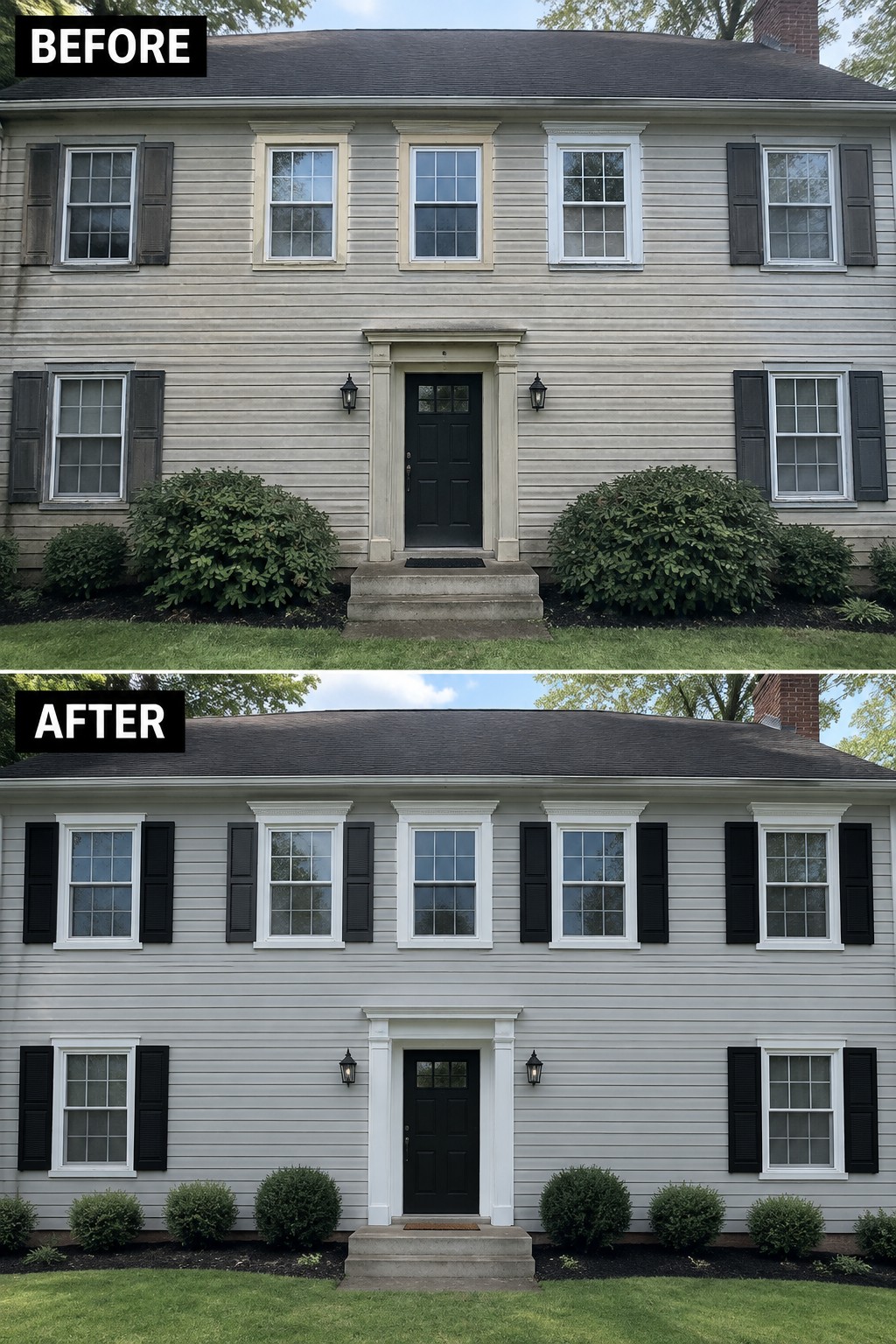
Many colonial homes look fine from a distance but feel slightly off up close when the shutters and trim do not match. Here the shutters were a mix of colors and the window trim blended into the siding. Painting all the shutters the same dark color and giving the trim a clean white finish made the windows read as a single group and gave the front a sharper outline.
This works especially well on two-story colonials that have lots of windows. Choose one dark shade for every shutter and keep the trim bright enough to stand out against the siding. Do the shutters and trim first before adding planters or lighting so the main lines of the house stay clear.
Paint A Colonial House White With Dark Shutters
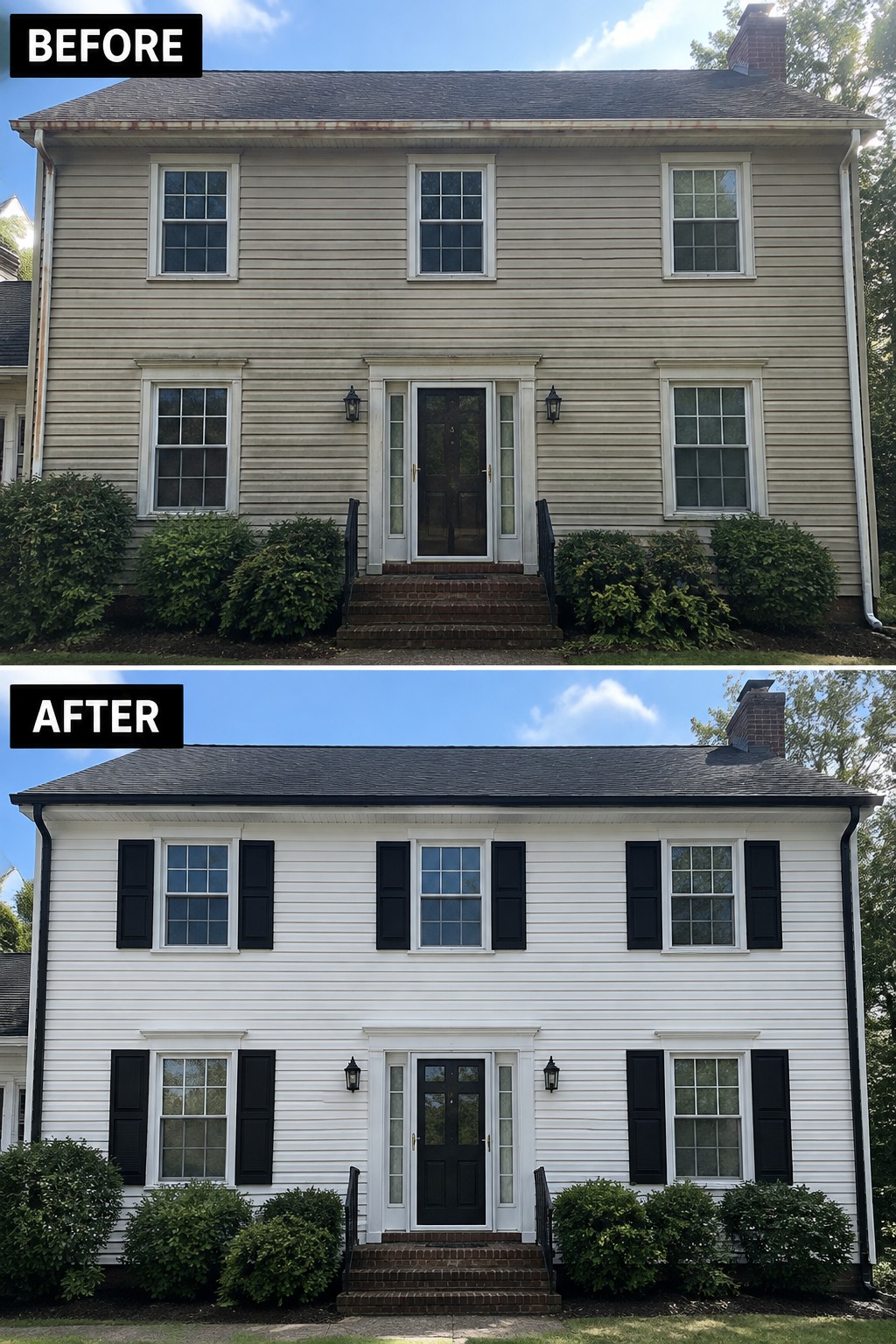
Switching the siding to white and adding black shutters gives this colonial a cleaner, more traditional look. The dark shutters break up the wide facade and help the windows feel more intentional.
This works best on homes that already have simple lines and good window placement. Start with the paint and shutters first. They deliver the biggest shift without major construction.
Refresh A Colonial Exterior With White Paint And Dark Shutters
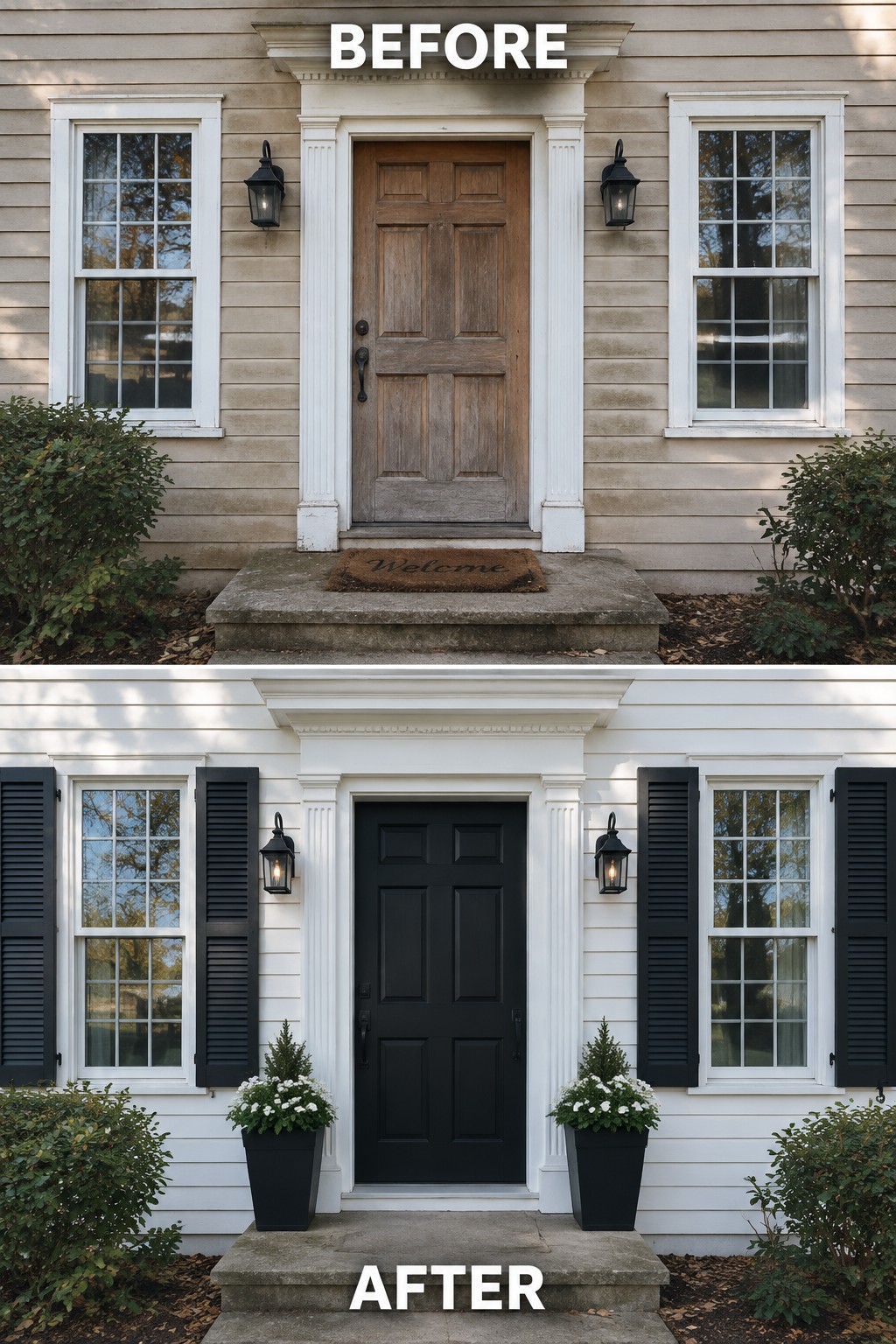
Many colonial homes end up with a flat look when the siding stays a dull beige and the trim has no contrast. Painting the house white and adding black shutters along with a black door gives the facade clear lines and makes the windows stand out without any major structural changes.
This works best on symmetrical colonials where the shutters can sit evenly beside each window. Choose a good exterior paint that holds up to weather, keep the shutter size in proportion to the glass, and add a couple of simple planters by the steps if you want a bit more color at the entry.
Add Dark Shutters To Update A Colonial Exterior
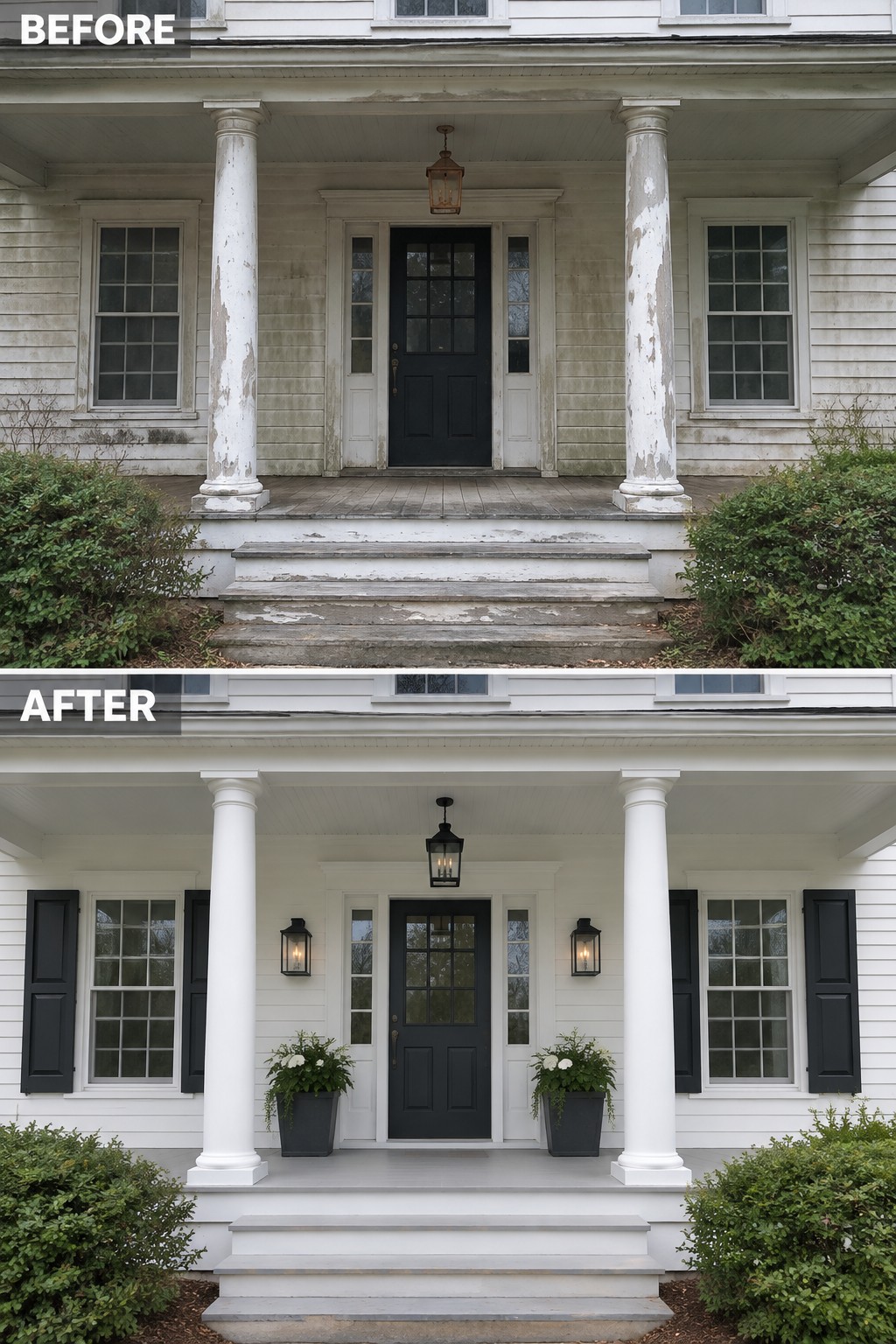
Painting the house white and adding black shutters gives the whole front a clearer shape. The columns stand out more, the windows feel balanced, and the entry stops looking plain. In the after photo the shutters sit right against the fresh siding, which is the change that pulls everything together.
This approach works well on colonial homes that still have their original window sizes. Start with the shutters and a good coat of white paint before adding planters or new lights. Keep the shutters matte so they read as trim rather than decoration, and make sure they sit flat against the house instead of floating.
Paint A Colonial House White And Add Dark Shutters
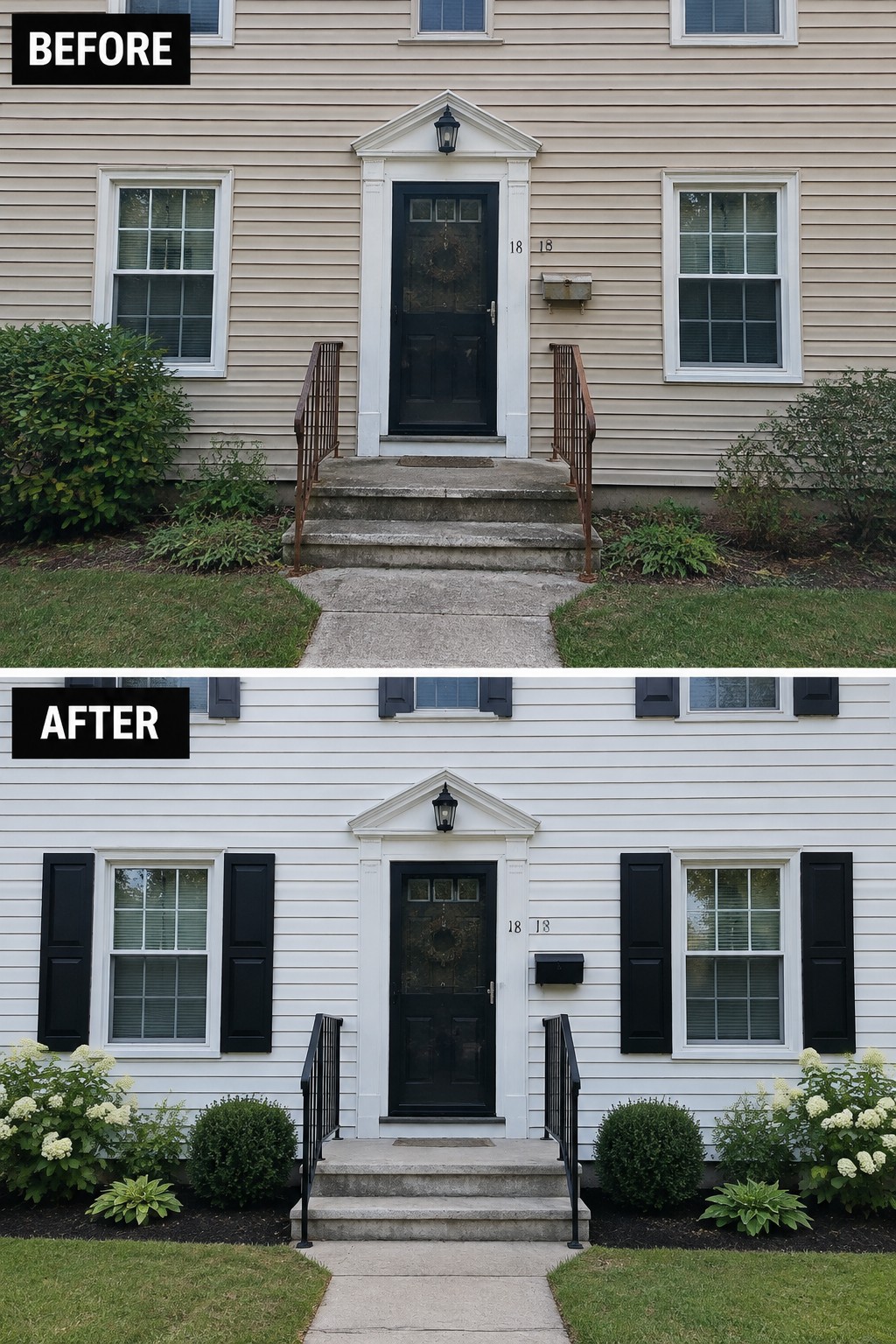
Switching the siding to white and adding black shutters gives the house a much cleaner and more traditional look. The dark shutters frame the windows and make the centered door stand out more than it did against the old beige siding.
This idea works best on colonial homes that already have simple trim and a balanced window layout. Choose shutters that match the window height and keep the rest of the changes modest so the paint and shutter combination stays the main focus.
Frequently Asked Questions
Q: How do I keep the white paint from looking dingy after a year or two?
A: Clean the walls every few months with a mild soap mix. Touch up any chips right away before they spread. A quick wash down in spring makes a big difference.
Q: Can dark shutters work if my roof is light colored?
A: They still look sharp together. The contrast draws the eye up nicely.
Q: Do I need special tools to install the shutters myself?
A: Basic drill and level will do the job. Measure twice so they sit even on each window. Hanging them straight takes the most time but pays off.