

Many houses have front porches that could use a fresh approach with their siding or trim, since the original materials often start to look tired after a few years.
I keep thinking that a change like adding wood accents or a brick section would make my own entry feel more intentional without requiring a huge project.
Those updates tend to improve how the whole facade reads from the street in a quiet way.
Some combinations of the materials stand out because they balance texture and color in ways that feel natural rather than forced.
I would probably start by testing a small wood detail on my porch to see how it shifts the look.
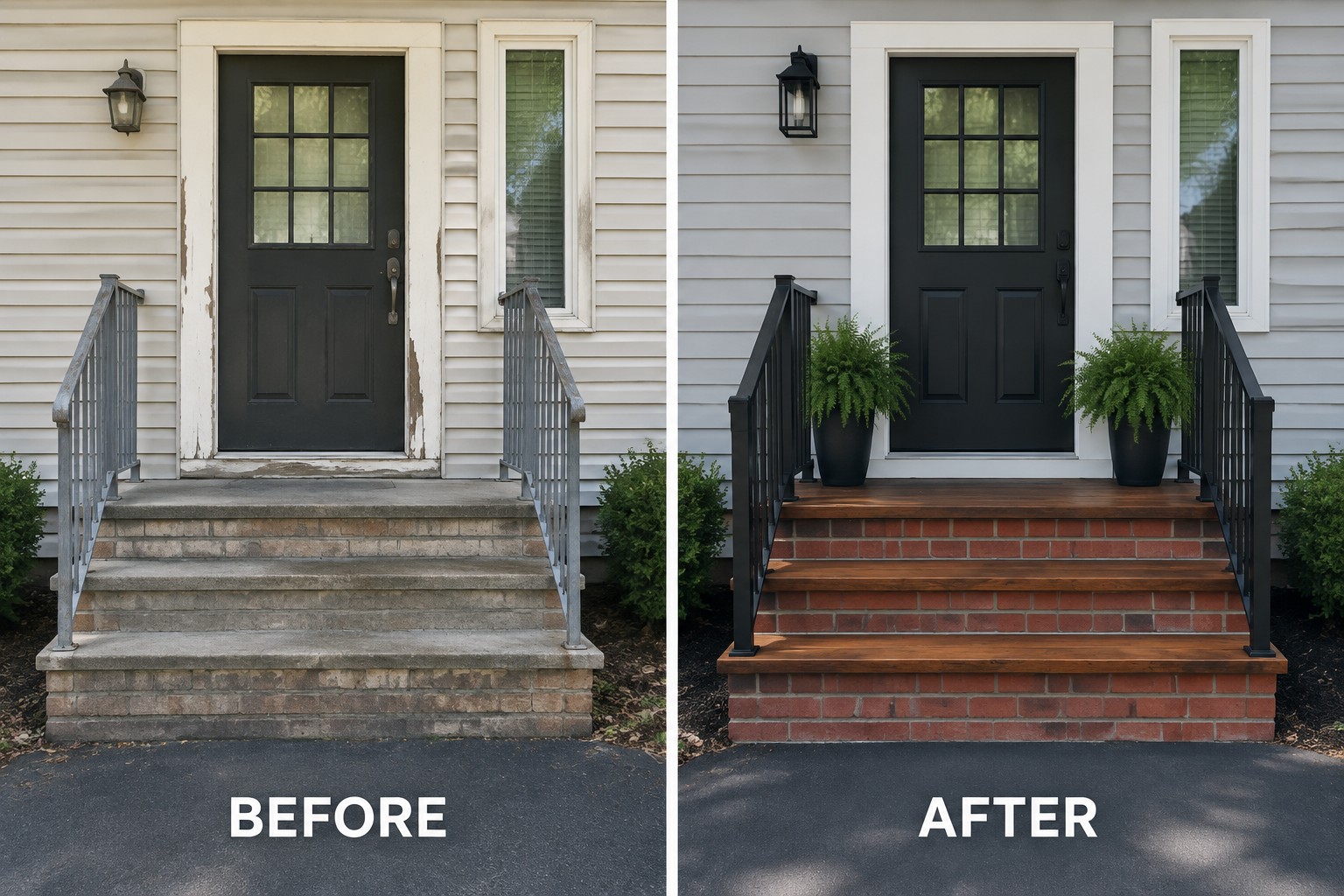
Update Dated Entry Steps With New Railings And Wood
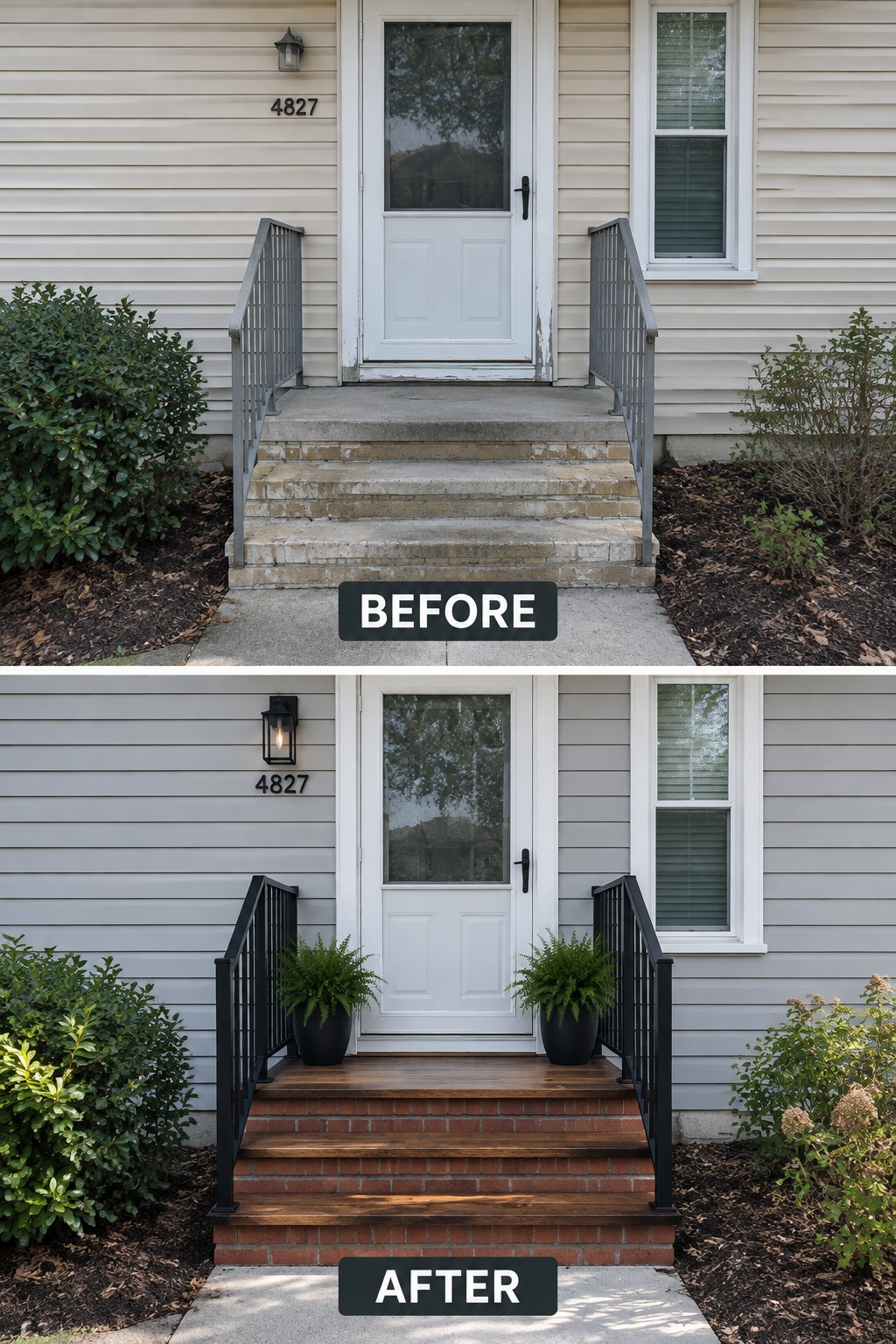
The old concrete steps and basic railings made the entrance feel flat and tired. Switching to dark railings, adding wood treads over the steps, and setting a pair of ferns in pots gave the front a clearer shape and a bit more warmth without changing the door or siding.
This approach suits houses that already have a decent layout but need a quick lift at the entry. Focus first on the railings since they stand out the most, then add one or two large planters on the landing. Keep the scale simple so the walkway stays easy to use.
Update The Front Entry With Wood And A New Door
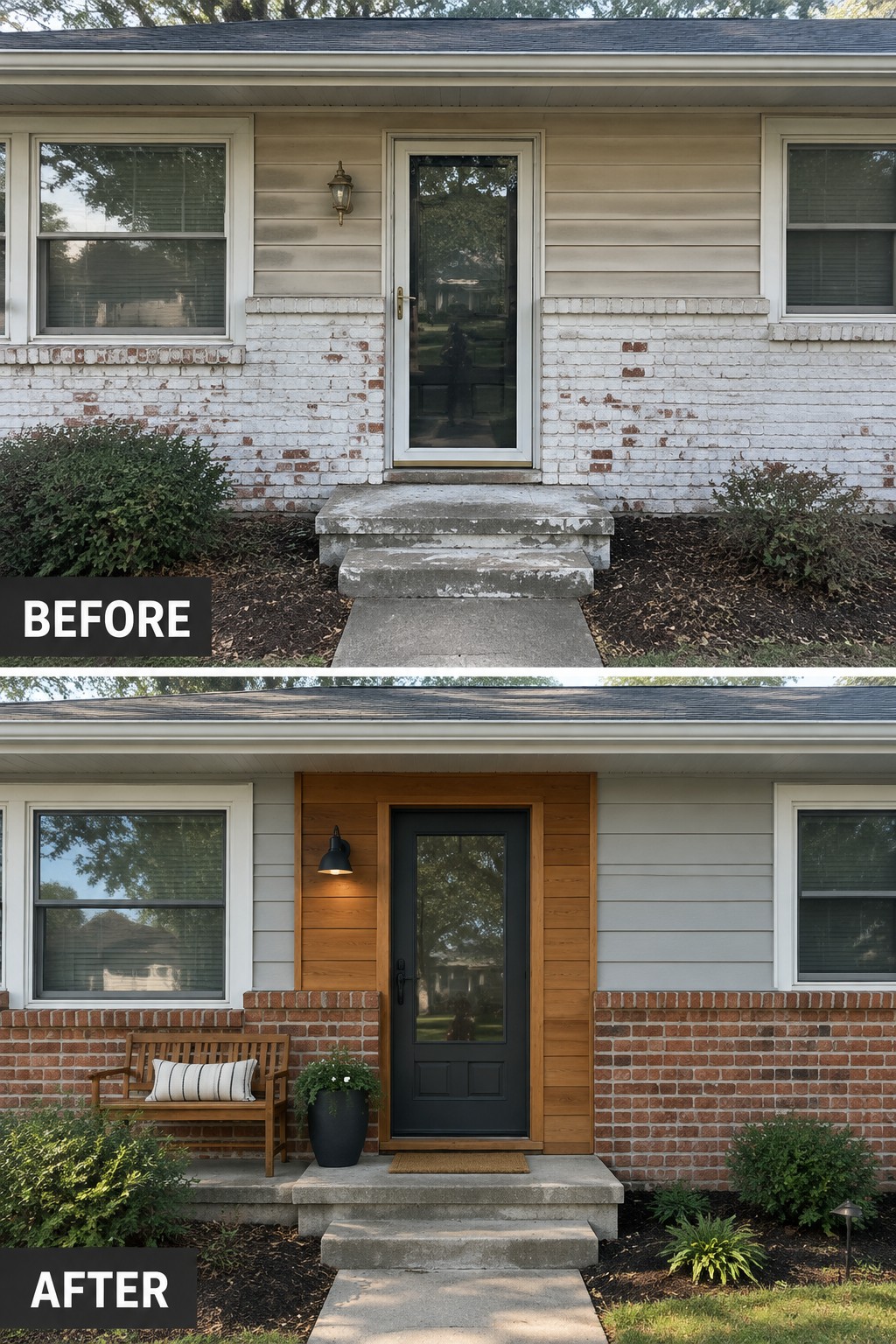
Many older homes have a perfectly good structure but a flat, forgettable entry that does nothing for curb appeal. In this case the before photo shows a plain white brick facade with a basic glass door and bare concrete steps. The after shows how swapping to a solid black door, adding a wood surround, and placing one bench with a planter instantly gives the entry a clear purpose and makes the whole front feel more finished.
This approach works especially well on homes that already have brick at the base. Keep the changes focused on the door area rather than repainting the entire house. Choose a door color that contrasts with the siding, add one warm material like wood, and keep the planting simple so the entry stays easy to maintain.
Turn An Empty Porch Into A Seating Area
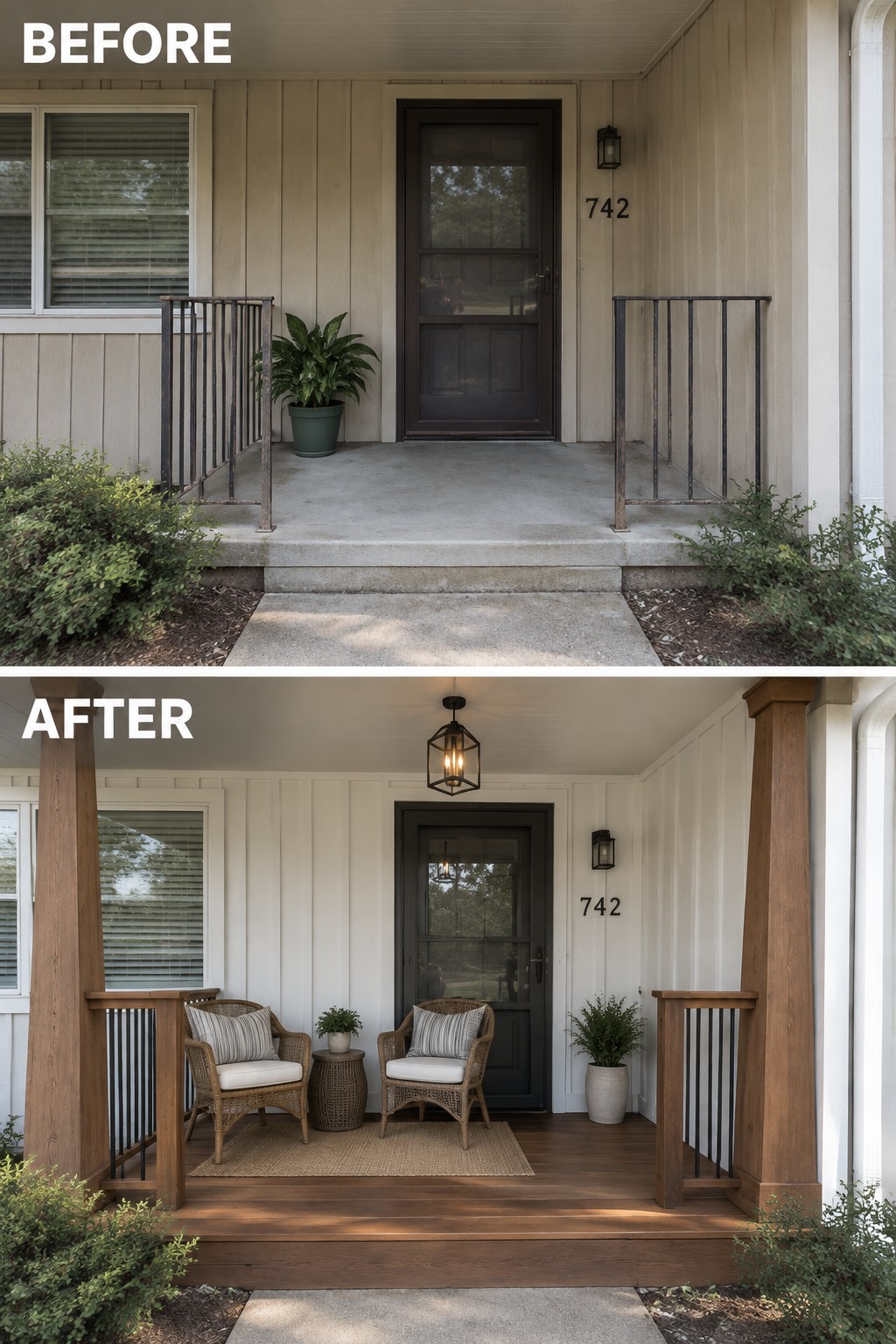
A plain concrete porch often feels like wasted space because there is nothing to suggest how it should be used. Adding two chairs, a small table, and a rug gives the area a clear reason to exist and makes the front of the house feel more approachable.
This approach works best on porches that already have a roof and decent size but lack any furniture or defined floor. Keep the pieces simple and weather-ready, and leave enough open floor so the space does not feel crowded when someone walks up to the door.
Give Plain Porch Columns A Sturdier Look With Brick And Wood
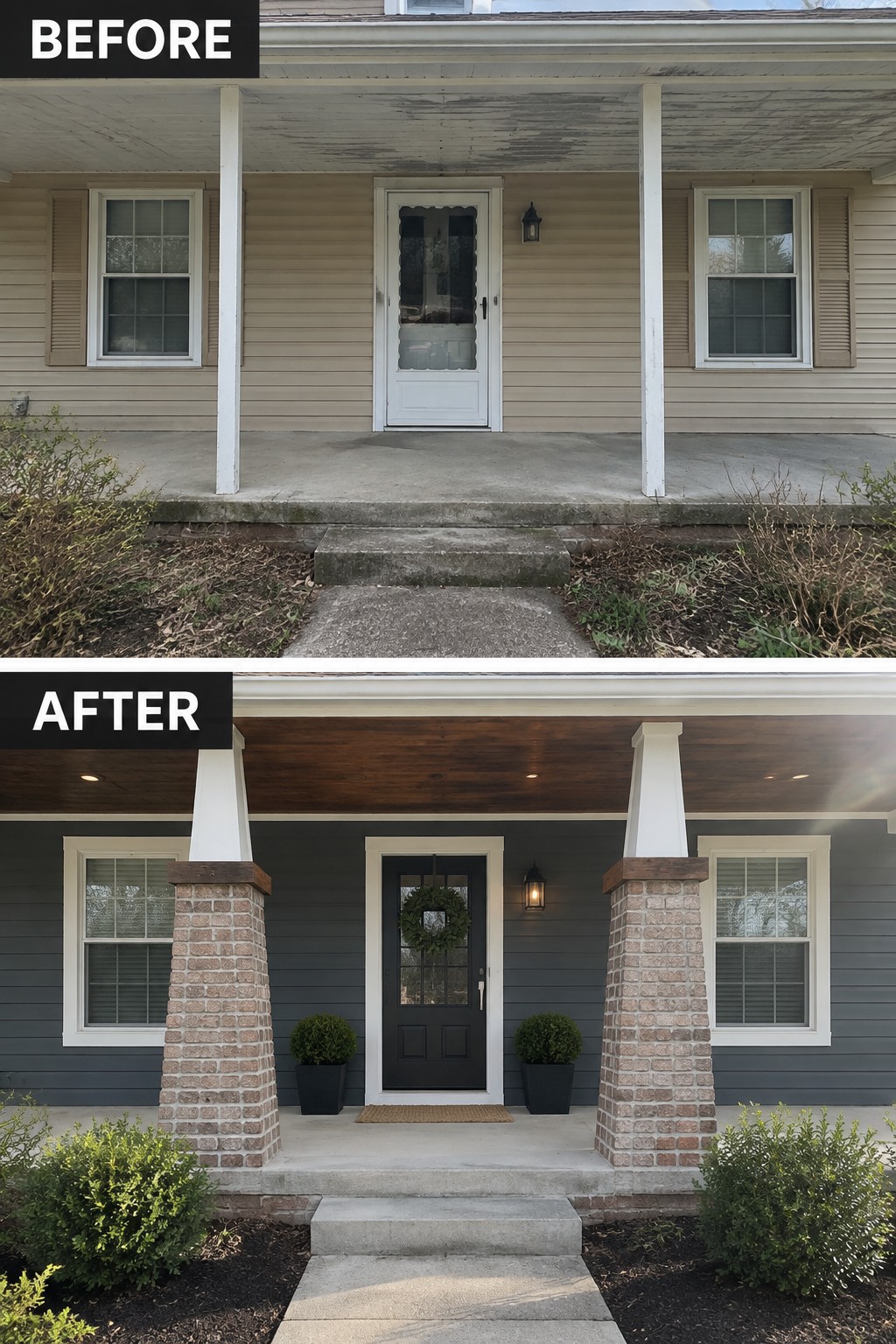
Many older porches have thin white posts that feel flimsy and dated. Replacing them with brick bases and wood caps adds real weight and structure to the entry without a full rebuild. In this case the change also pairs with new dark siding and a black door, which makes the whole front feel more grounded.
This approach works well on homes with basic concrete porches and simple trim. Focus first on the columns since they sit right in the middle of the view. Keep the new materials in scale with the house so the porch does not look like an add-on.
Refresh A Dated Porch With New Siding And Simple Seating
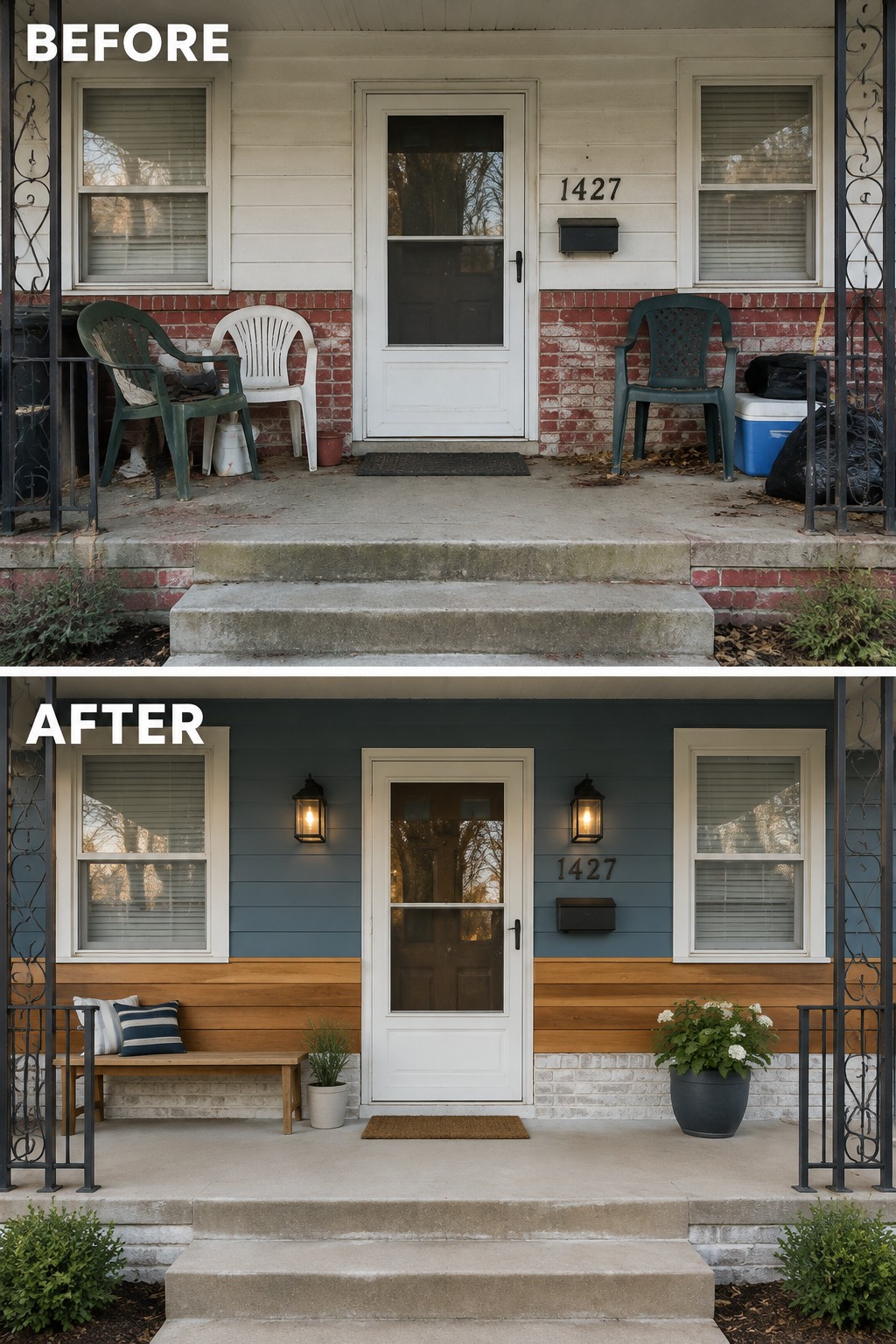
The old porch had white siding that blended into the background and a collection of plastic chairs that made the space feel temporary. Switching the siding to a muted blue and adding horizontal wood boards below created a clear break between the brick and the upper wall. A single bench with two pillows and a pair of lanterns by the door replaced the scattered seating and gave the entry a settled look.
This approach suits homes where the porch sits right at the front and needs to feel intentional rather than leftover. Start by removing everything that does not have a clear purpose, then pick one main piece of furniture that can stay out year round. The siding color should relate to the brick so the change feels like an update instead of a complete overhaul.
Add Wood Columns And Brick To Define The Porch
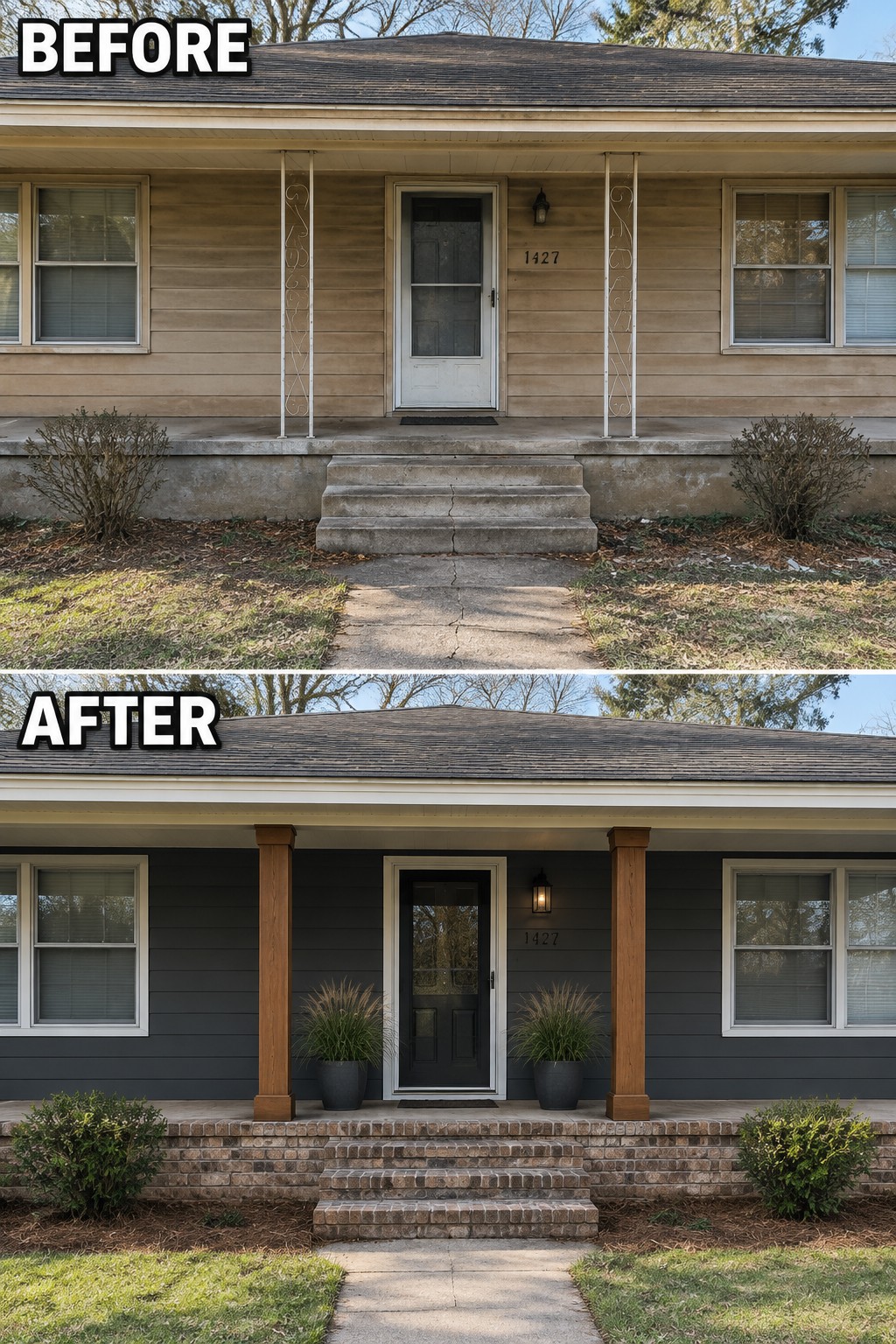
The biggest shift here comes from replacing the thin metal supports and plain concrete steps with solid wood columns and a brick base. That one change gives the porch real weight and makes the whole front of the house feel more finished. The darker siding helps too, but the columns and brick do most of the work to pull the entry together.
This idea works well on houses that already have a basic porch but look a little flat or dated. If your porch has thin supports or just a concrete slab, adding wood posts and a brick skirt or steps can give it structure without a full rebuild. Keep the scale simple so the columns match the size of the house, and let the materials do the talking before you add too many plants or decorations.
Update The Siding And Porch Base For A Cleaner Look
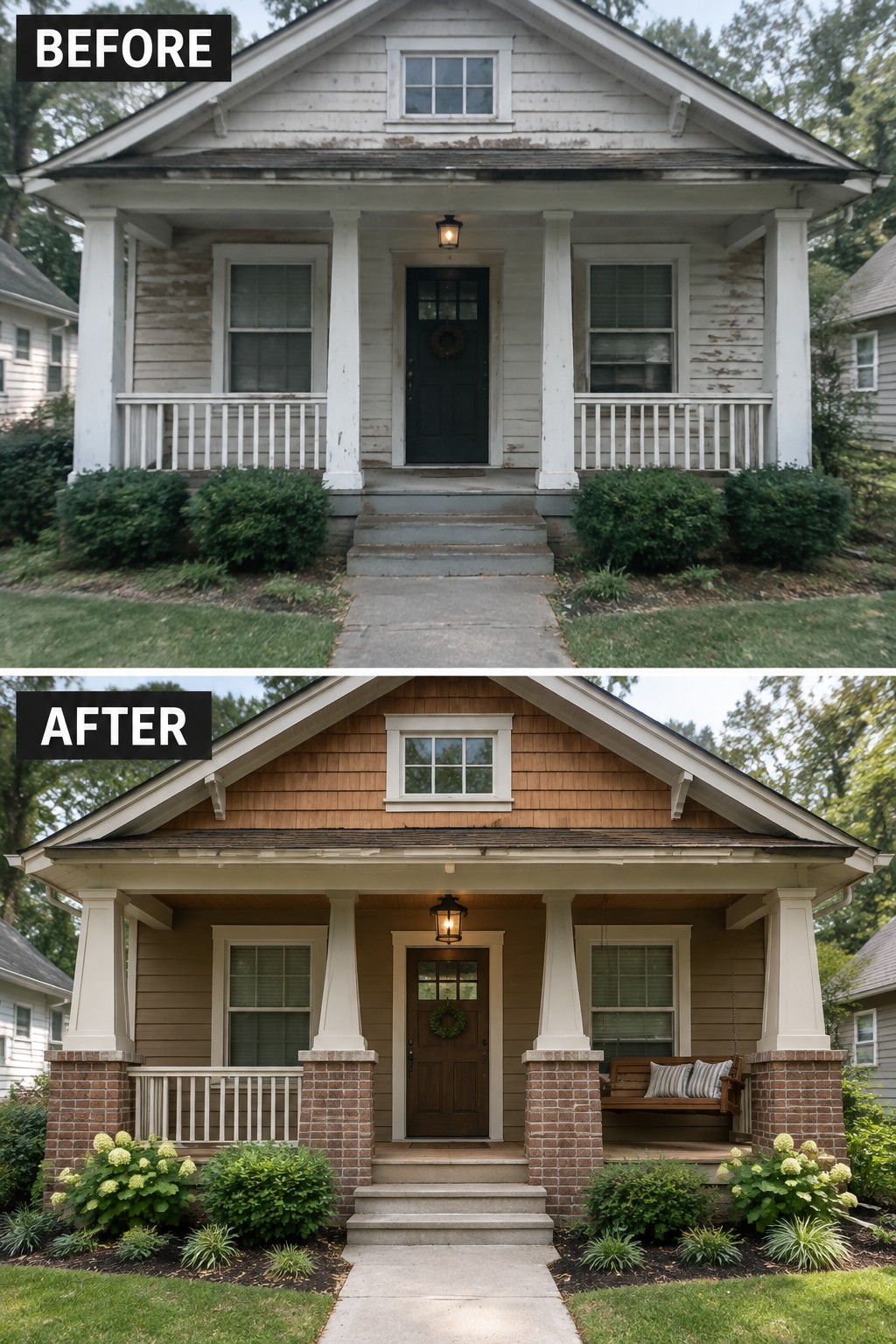
The biggest change here comes from replacing the old peeling siding with fresh wood shingles on the gable and new horizontal siding below. Adding brick piers at the base of the porch columns gives the whole front a more solid, finished appearance instead of the tired white posts that were there before.
This approach works well on older homes where the siding has seen better days but a full rebuild is not in the budget. Start with the siding and column bases first, then add smaller touches like lighting or seating once the main surfaces look fresh. It keeps the scale realistic and avoids crowding a small porch.
Update The Front Entry With Wood Trim And Brick
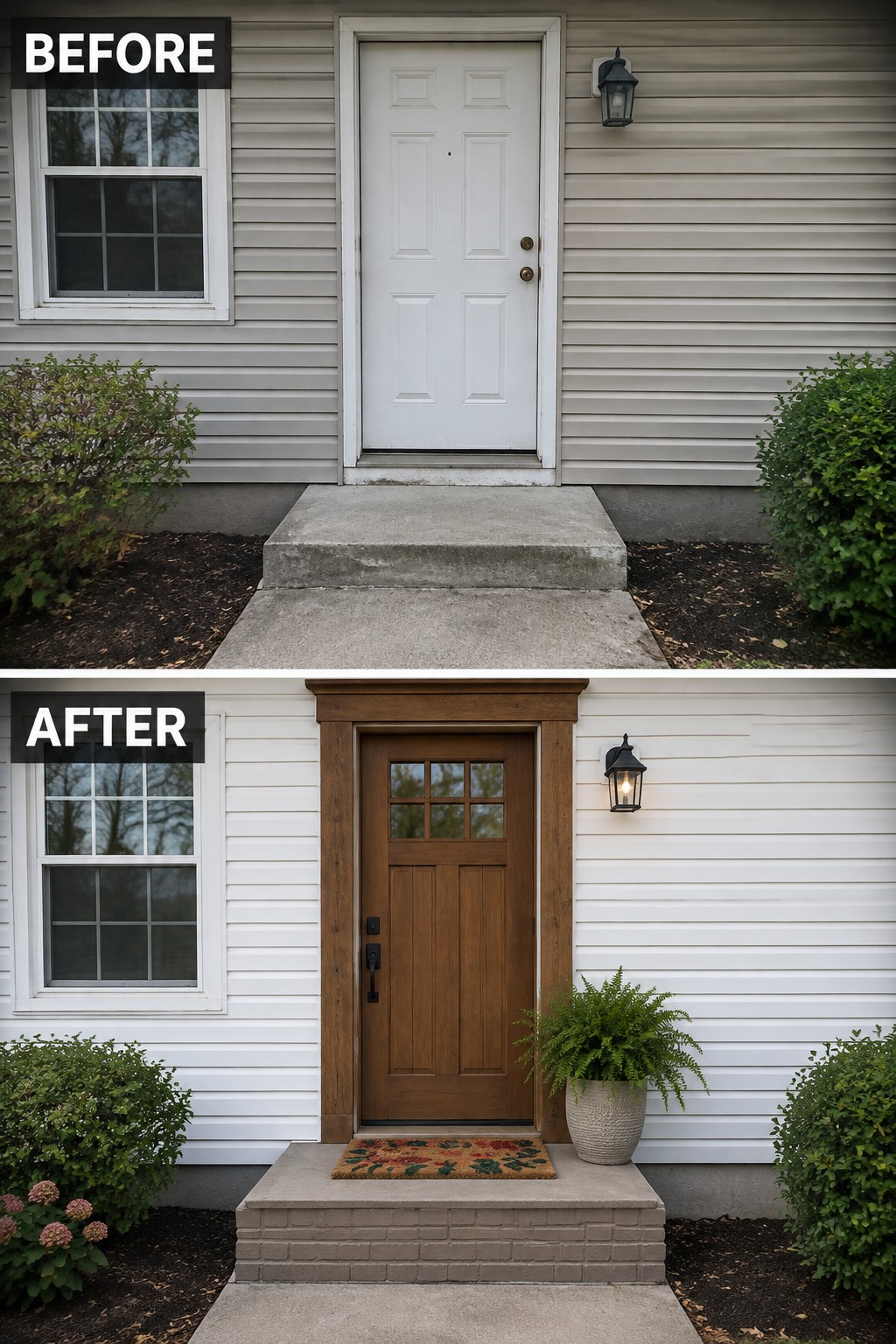
A plain door and bare concrete steps often make an entry feel unfinished. Switching to a wood door with a matching surround and adding brick to the steps gives the whole front a more solid, intentional look. The change also pairs well with fresh siding color.
This idea works best on houses with simple siding where the entry needs a focal point. Start with the door and trim if you want a smaller job, and choose brick that matches existing tones on the house. Keep the rest of the planting simple so the entry stays the main feature.
Give A Bare Porch A Clear Purpose
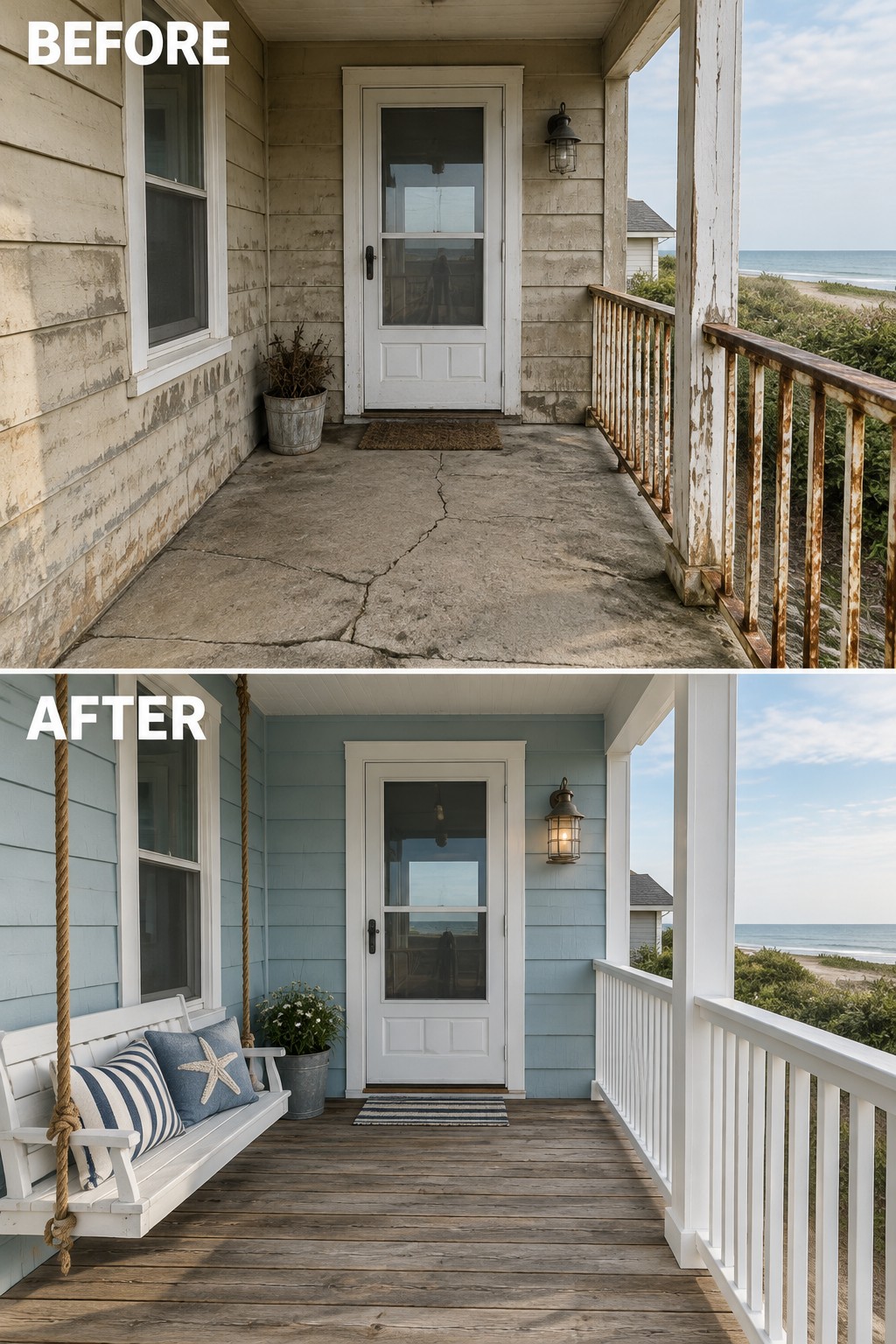
The cracked concrete and rusty railing made this porch feel like a space to walk through rather than stay in. Switching to wood decking and adding a swing turned it into a place where someone might actually sit and spend time.
This approach works well on older porches that already have decent bones but lack one main reason to linger. Fix the floor and railings first, then add one or two sturdy pieces sized for the space instead of trying to fill every corner.
Refresh A Brick Exterior With Wood Siding
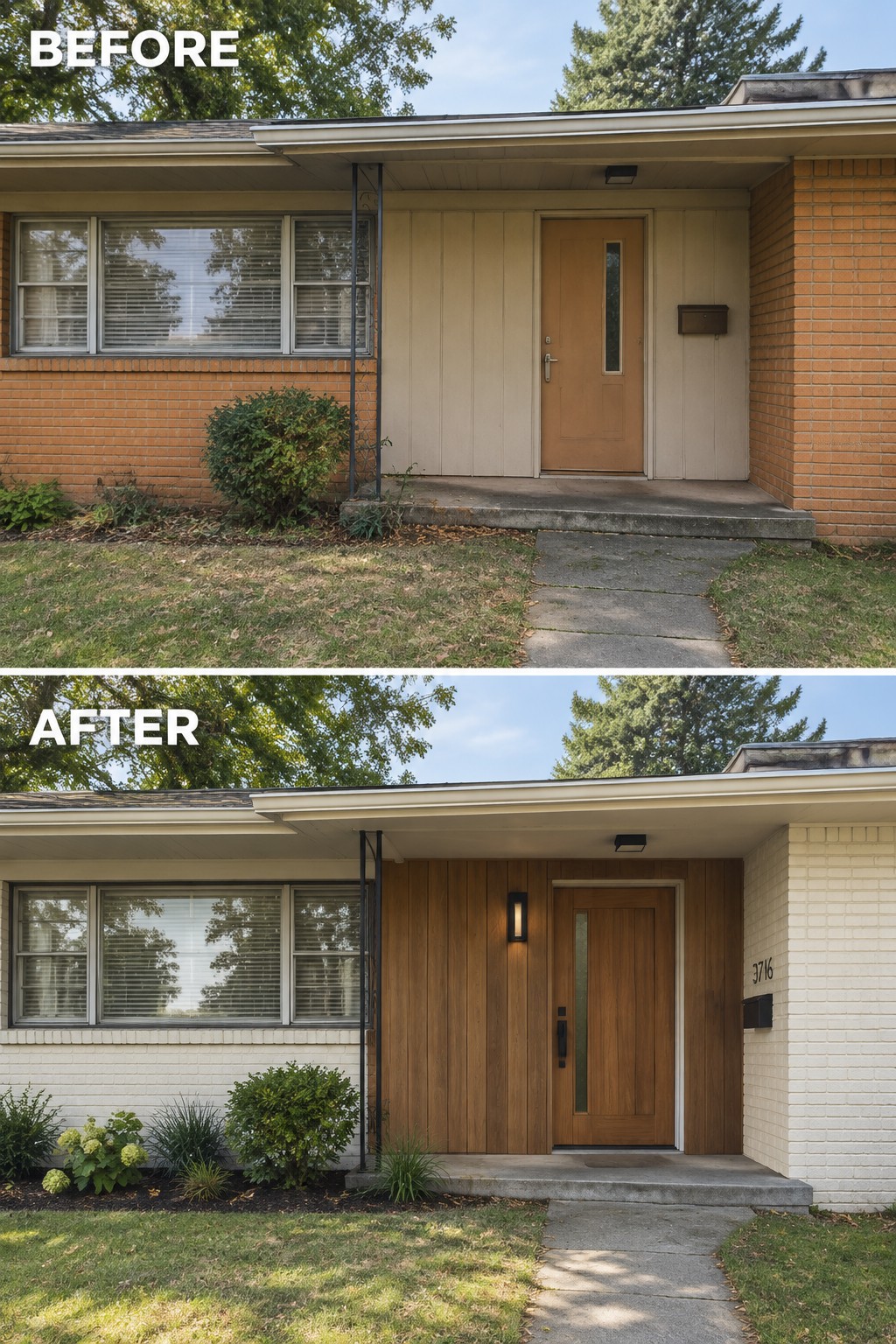
Many brick homes from past decades end up looking flat because the entry area has no real focal point. Adding vertical wood siding around the door and switching to a darker, more substantial front door gives the facade a clear center and makes the whole house feel more finished. The change turns a plain beige wall into something that actually draws the eye without touching the brick itself.
This works best on homes where the brick is still solid but the trim and entry feel tired. Keep the wood tone in the medium to warm range so it plays off the brick color instead of fighting it, and limit new plantings to a few low beds along the foundation. That keeps the update simple and realistic for most budgets.
Open Up A Screened Porch To Create A Welcoming Entry
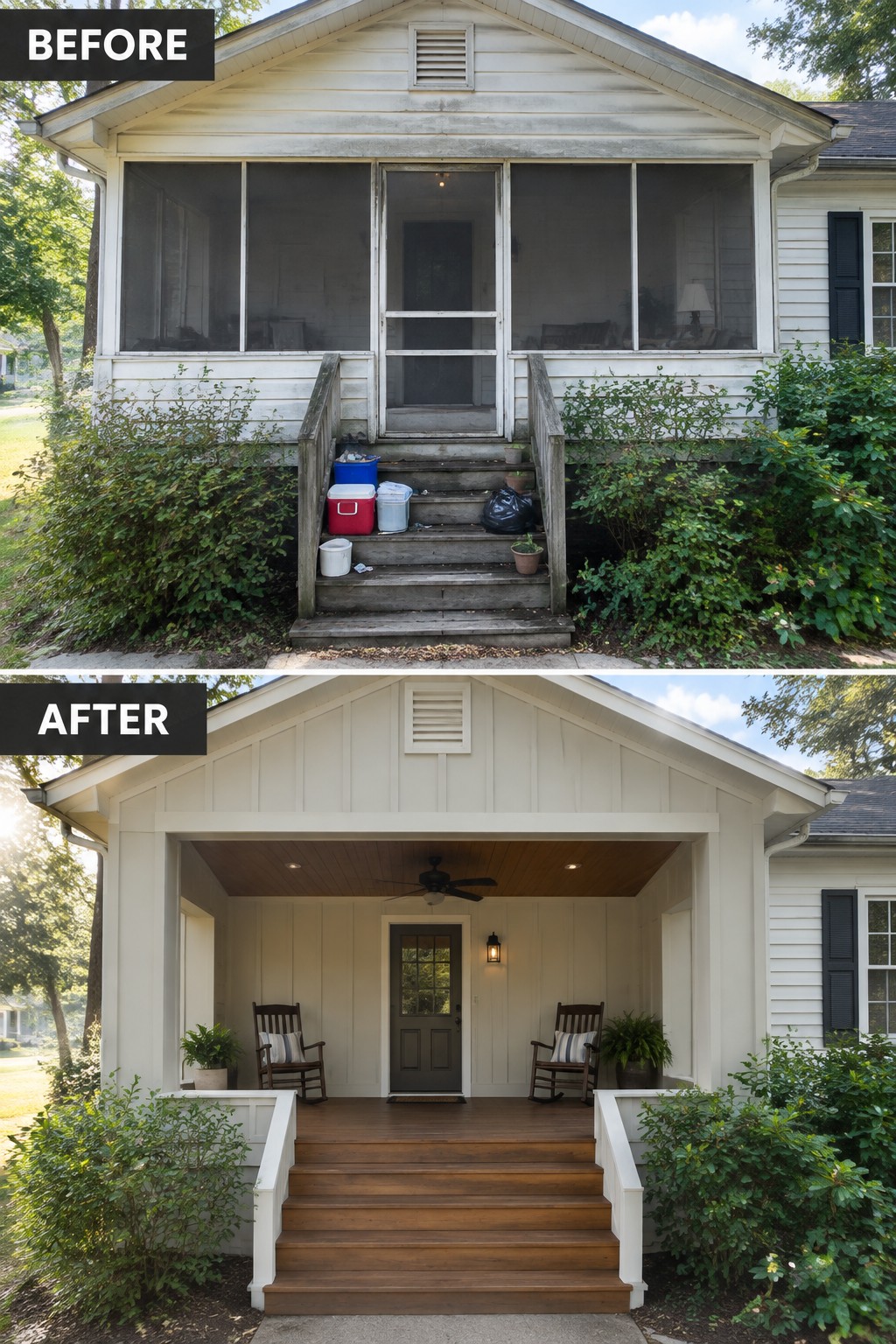
Many older homes have front porches that feel closed off because of heavy screening and years of clutter. Removing the screens and updating the trim and stairs lets light in and makes the space feel like part of the house rather than a separate room. The simple change from enclosed to open instantly improves how the whole front reads from the street.
This approach works best on homes that already have a basic porch structure worth keeping. Focus first on the framing, flooring, and railings before adding chairs or planters. Keep the furniture light so the space stays easy to move through, and choose pieces that can stay out year-round.
Cover Damaged Exterior Walls With Wood Siding
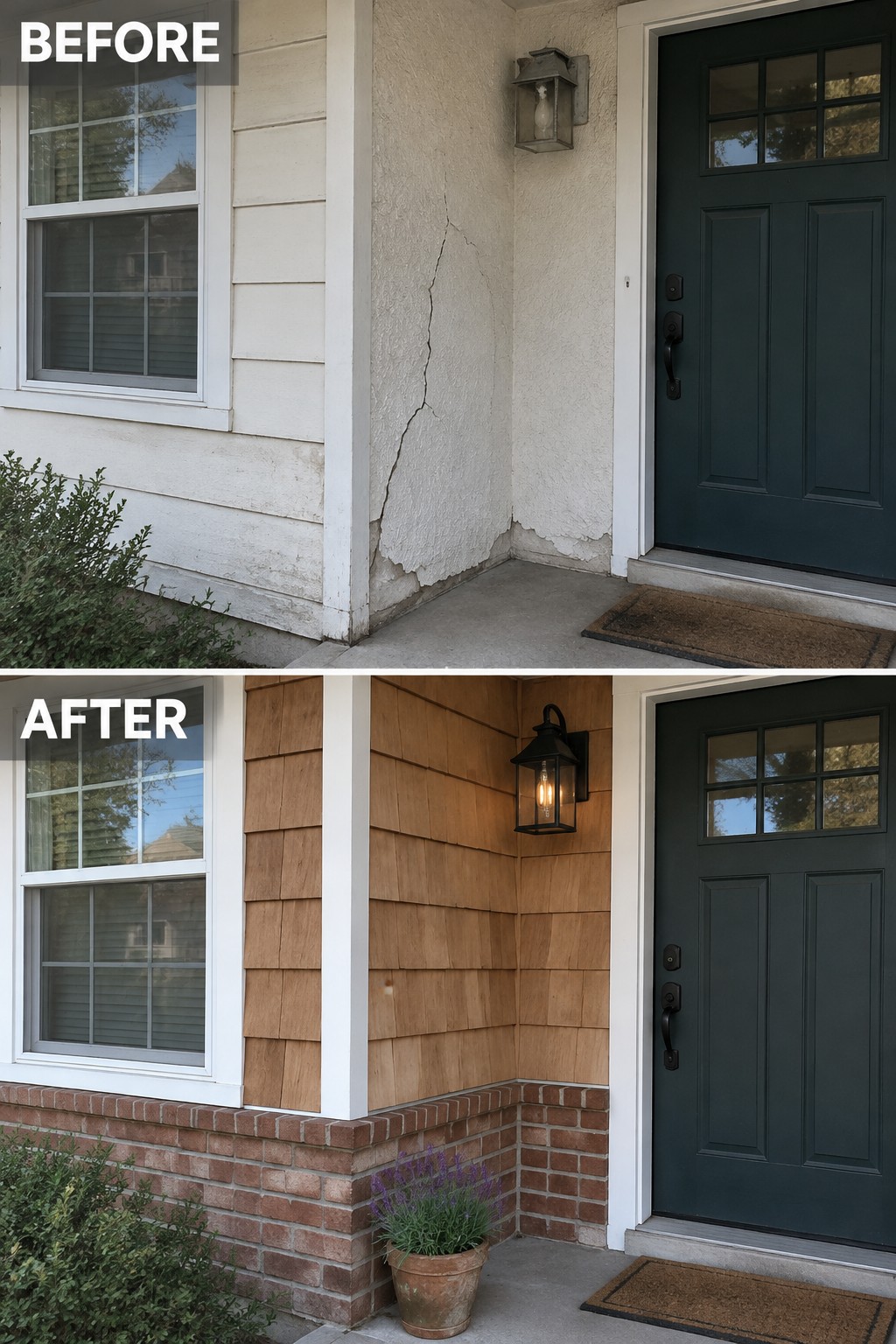
A cracked and peeling stucco corner can make the whole entry feel neglected. Covering it with wood shakes and a brick base gives the wall new texture and a much cleaner line where it meets the porch floor.
This approach works well on homes where the damage is limited to one area. Match the new siding color and scale to the rest of the house so the fix blends in rather than standing out. Start with the repair and let the materials do the rest.
Swap Metal Railings For Wood To Update The Porch
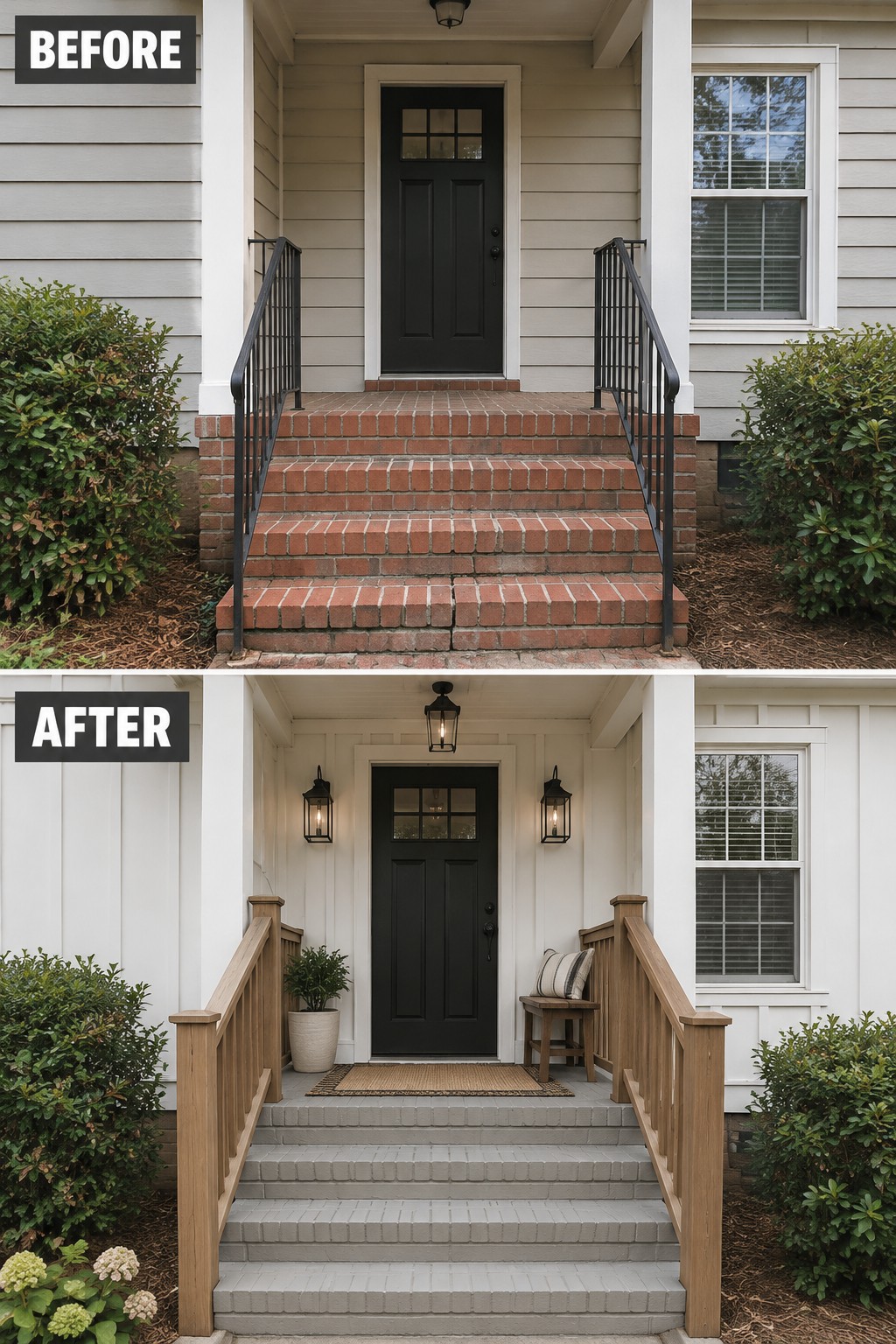
The before photo shows a standard brick porch with black metal railings that felt heavy and dated next to the light siding. In the after photo, the railings were swapped for simple wood ones and the house got a clean white paint job with gray steps. That single material change makes the whole entry feel lighter and more connected to the rest of the house.
This approach works well on homes that already have brick steps or a basic porch structure. Keep the wood tone natural so it reads as an upgrade rather than another layer of paint. Start with the railings if your budget is limited, since they change the look more than most people expect.
Update Porch Columns And Base For A Cleaner Entry
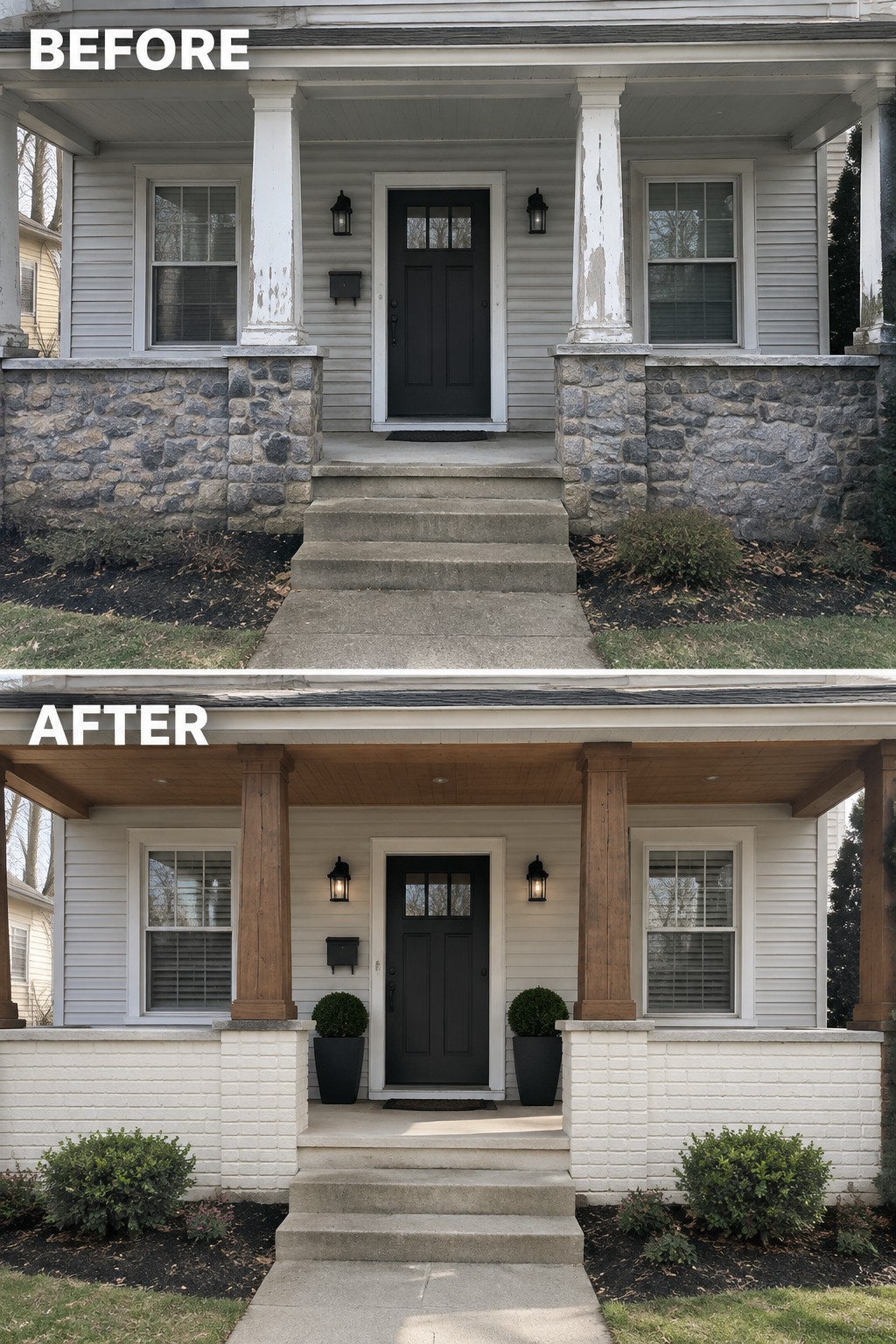
The before photo shows a porch that had seen better days. The white columns were peeling badly and the stone base looked heavy and dated. In the after photo the columns were refinished in stained wood and the base was rebuilt in simple white brick. Two planters were added on either side of the door. Those two material changes made the whole entry feel lighter and more put together.
This approach works well on older homes where the porch structure is still sound but the finishes have worn out. Focus on the columns and base first because they carry the most visual weight. Once those are refreshed you can add a pair of planters or a new light without the space feeling cluttered. It is a practical step that improves curb appeal without requiring a full porch rebuild.
Refresh The Porch With New Siding And A Lighter Door
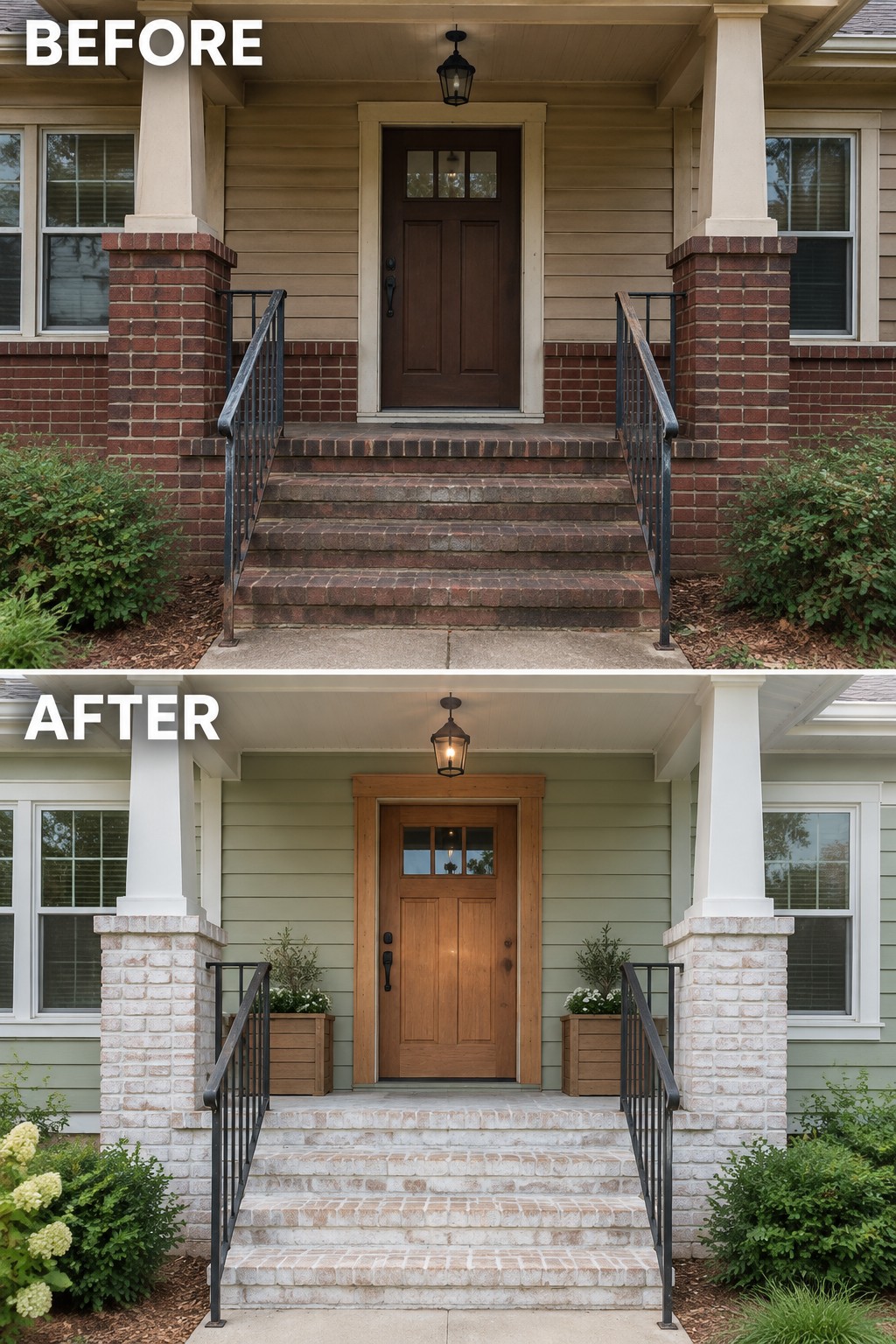
A dark door and heavy beige siding can make even a solid porch feel closed off. Switching to a soft green siding and a natural wood door opens the whole entry up and makes the house feel more current without changing the basic structure.
This approach works best on homes that still have good bones but need a lighter touch. Start with the siding color and door, then add a pair of planters by the steps to finish the look. It keeps the project realistic and gives the porch a clear purpose as the main greeting point for the house.
Frame Concrete Steps With Brick Planters
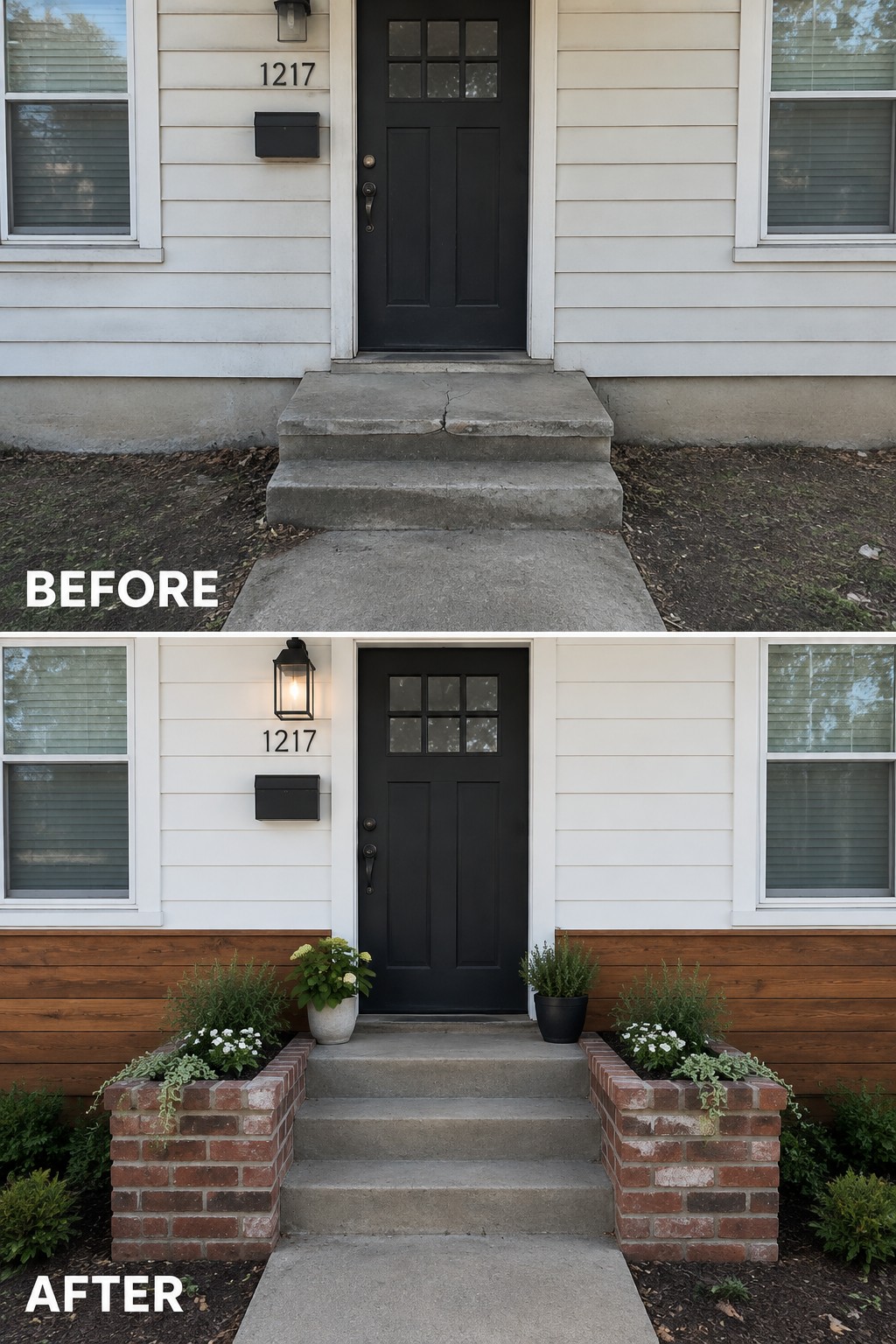
The concrete steps looked unfinished and a little stark sitting against plain siding. Adding brick planters on both sides and a band of wood siding below the door gave the entry clear shape and made the whole front feel more put together.
This idea works best on houses where the entry is mostly concrete and siding. Match the brick to any existing hardscape if you can, keep the planters low enough not to crowd the steps, and use a simple mix of evergreen shrubs and seasonal flowers so the look stays neat without constant upkeep.
Update Dated Siding To Warm Up The Entry
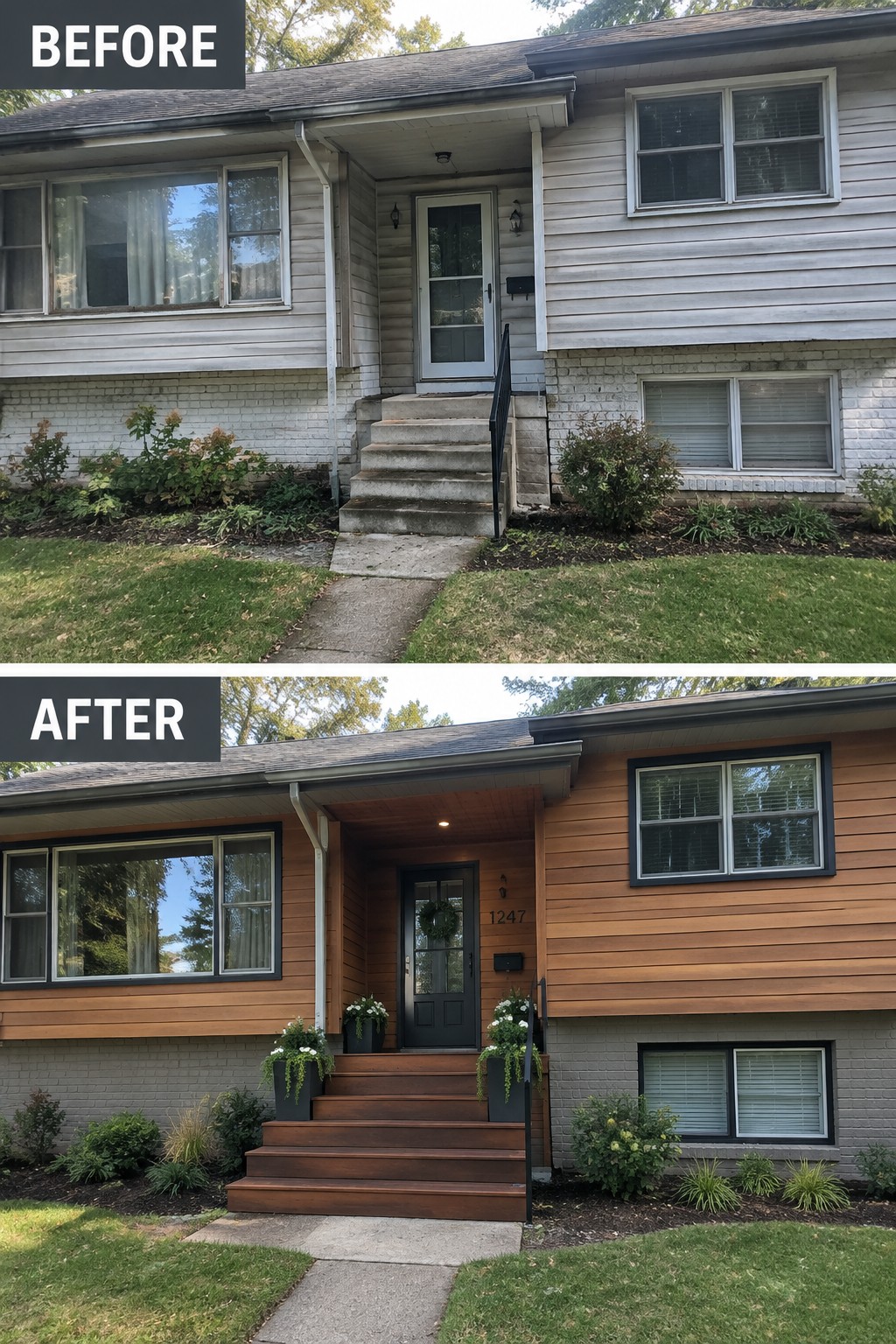
The biggest shift in this project came from replacing the old light siding with warm wood across the front of the house. That change, paired with new wooden steps, made the entry feel more substantial and current instead of flat and dated.
This kind of update suits homes that already have a solid brick base. Start with the siding around the door and main windows, and pick a wood tone that works with the existing brick. It takes more effort than paint, but it gives the facade a lasting refresh without a full rebuild.
Refresh An Old Porch With Brick And Wood
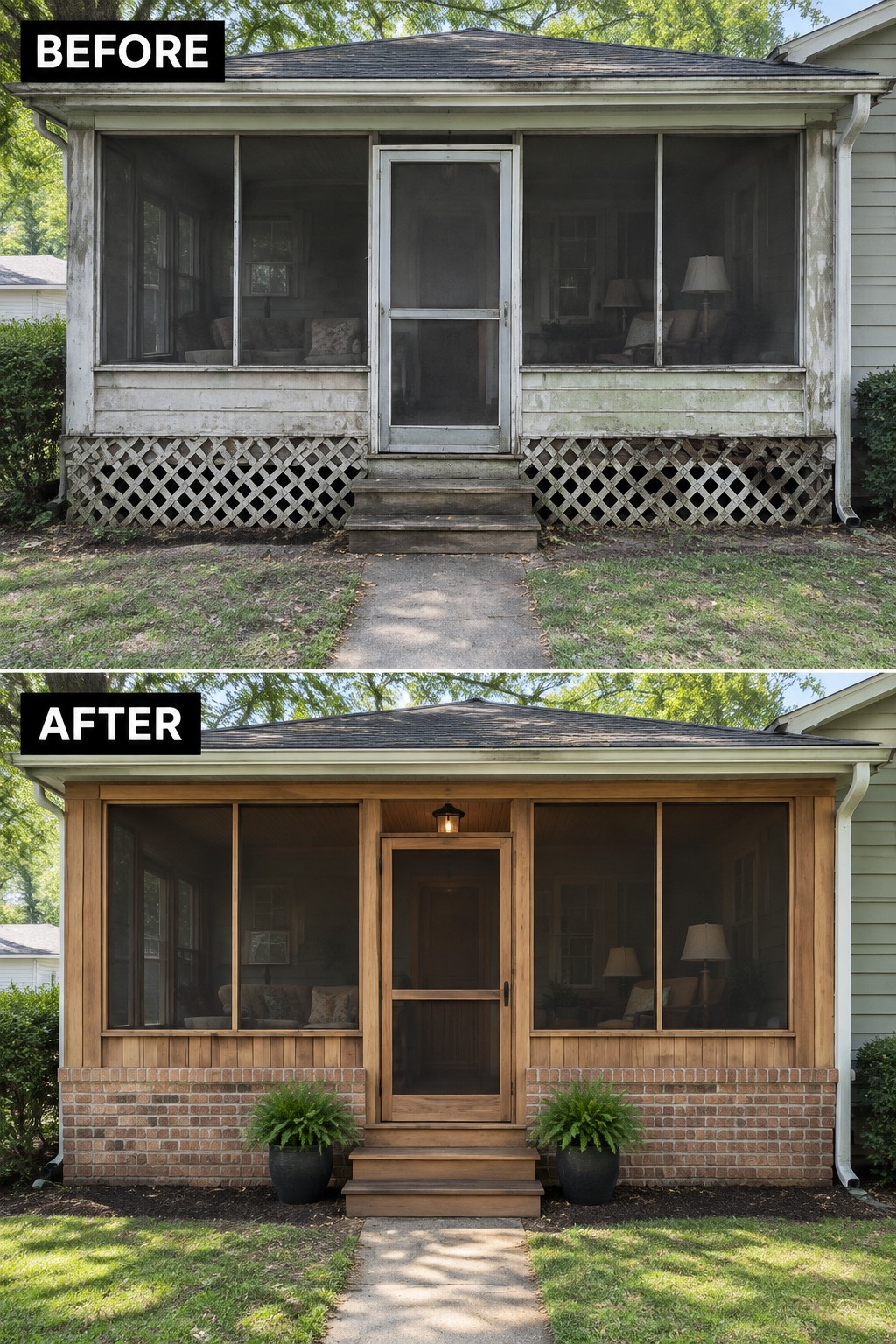
Many older porches end up looking worn once the lattice starts to sag and the paint peels. Replacing that lattice with a brick foundation and adding wood siding along the base gives the porch a much sturdier, more finished appearance.
This kind of update works well on homes where the porch frame is still sound but the lower details have aged. Focus on matching the new materials to the house siding and roof so the change feels like part of the original structure rather than an add-on.
Paint Porch Columns And Steps White To Brighten The Entry
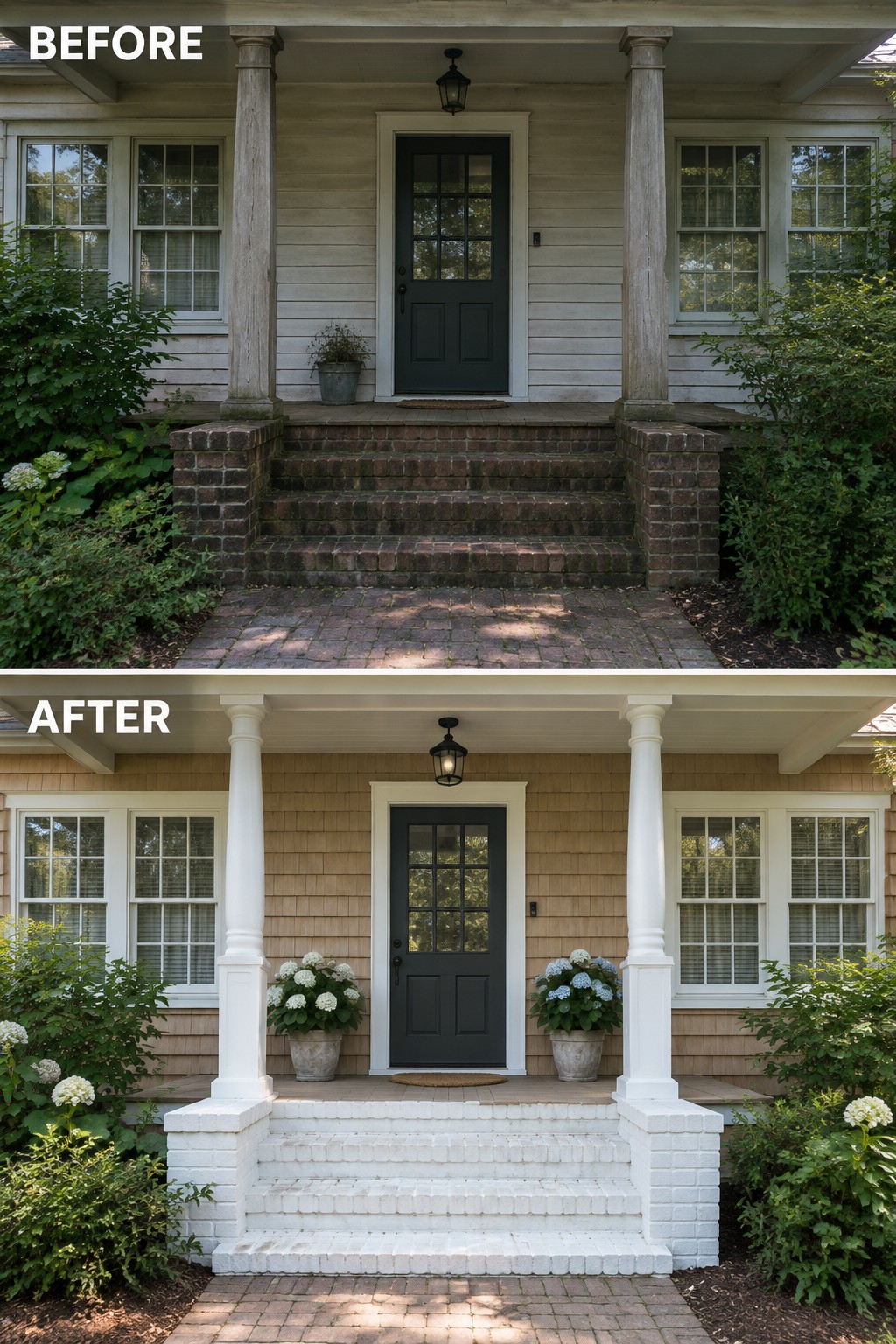
Painting the columns, brick bases, and steps white gave this porch a much cleaner look. The shift from the old weathered wood and dark brick to a bright, consistent white made the entry feel lighter and more organized. Changing the siding to a warmer tone helped everything connect without needing a full rebuild.
This works best on older homes where the structure is still solid but the finishes have faded. Start with thorough cleaning and priming, then use good exterior paint on the high-touch areas. Keep the planters simple and matched so the white surfaces stay the main focus.
Refresh Dated Brick And Siding For A Cleaner Entry
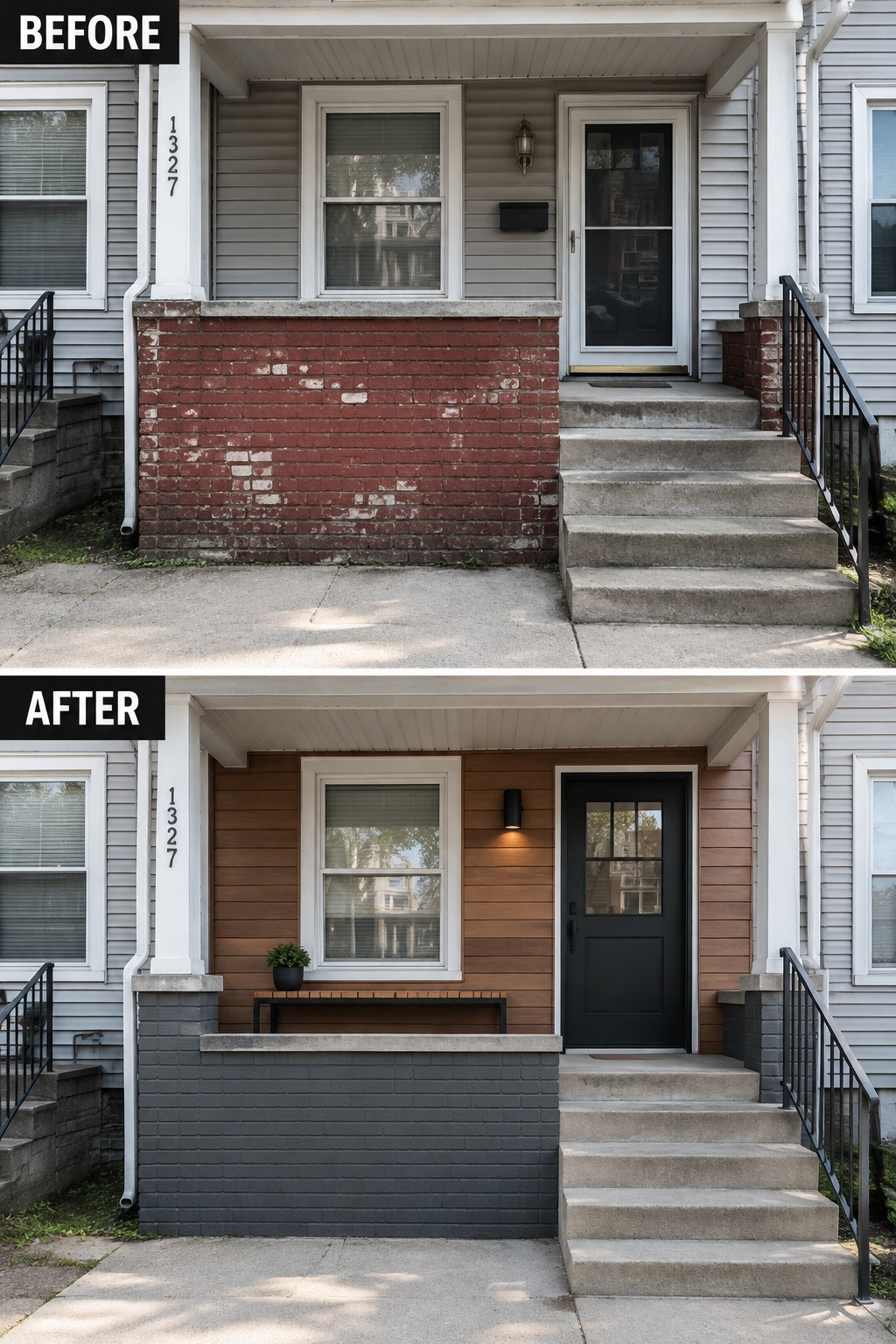
Many older homes end up with a brick base and siding that no longer work together. Painting the lower brick a dark gray and replacing the upper siding with warm wood tones pulled the whole front together without needing a full rebuild.
This kind of update suits homes where the structure is still solid but the materials look tired. Keep the changes focused on the main surfaces first, then add one or two simple pieces like a bench or new light to finish the entry without crowding the space.
Frame Your Porch Steps With Brick Planters
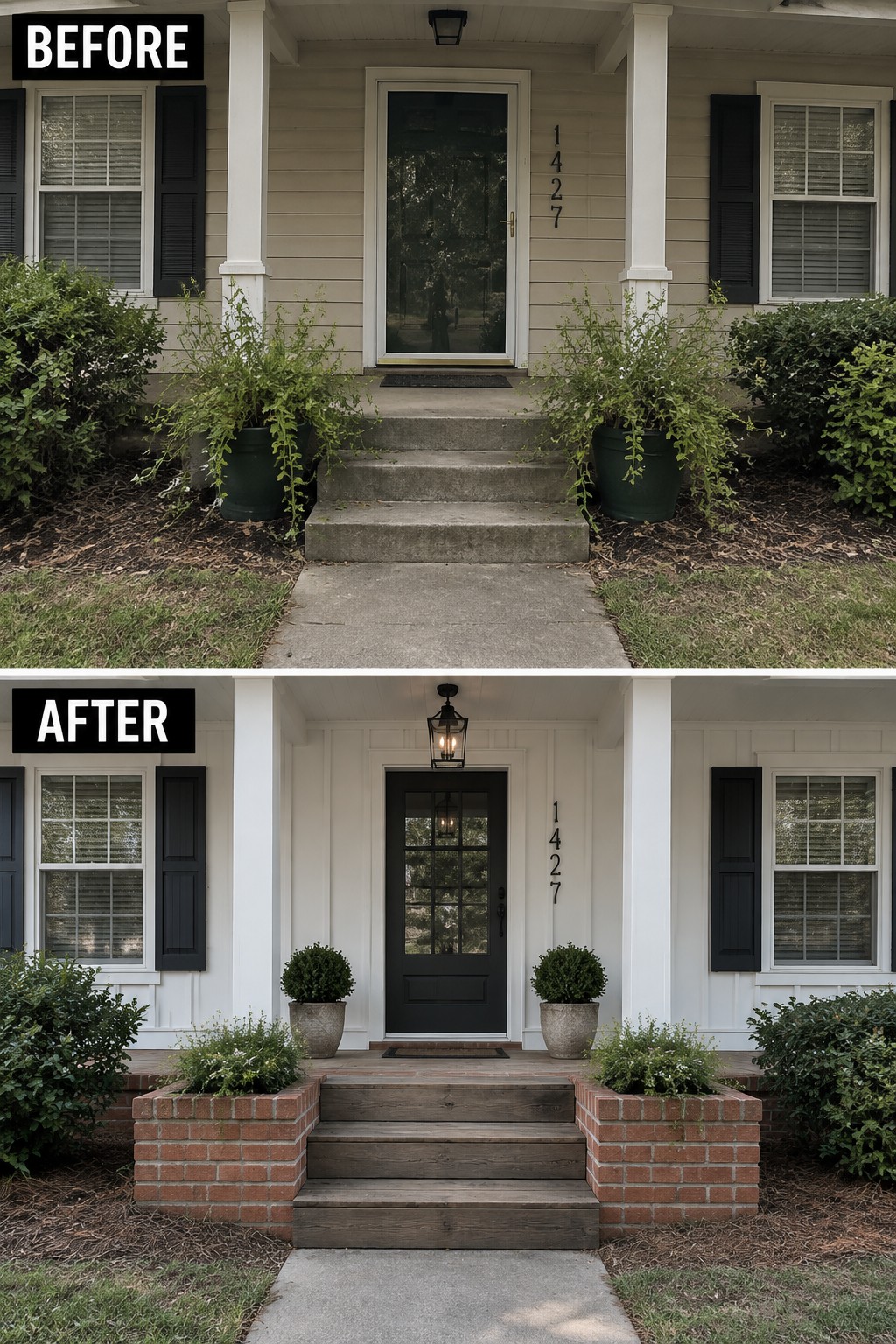
Replacing scattered pots with built-in brick planters gives the steps a much clearer shape and makes the whole entry feel more solid. The wood treads also help the porch feel warmer and more finished than plain concrete.
This approach works well on simple front porches where the main issue is a lack of edges. Keep the planters low so they do not block the view from the street, and choose plants that stay neat without constant trimming.
Refresh Worn Exterior Siding With New Materials And Paint
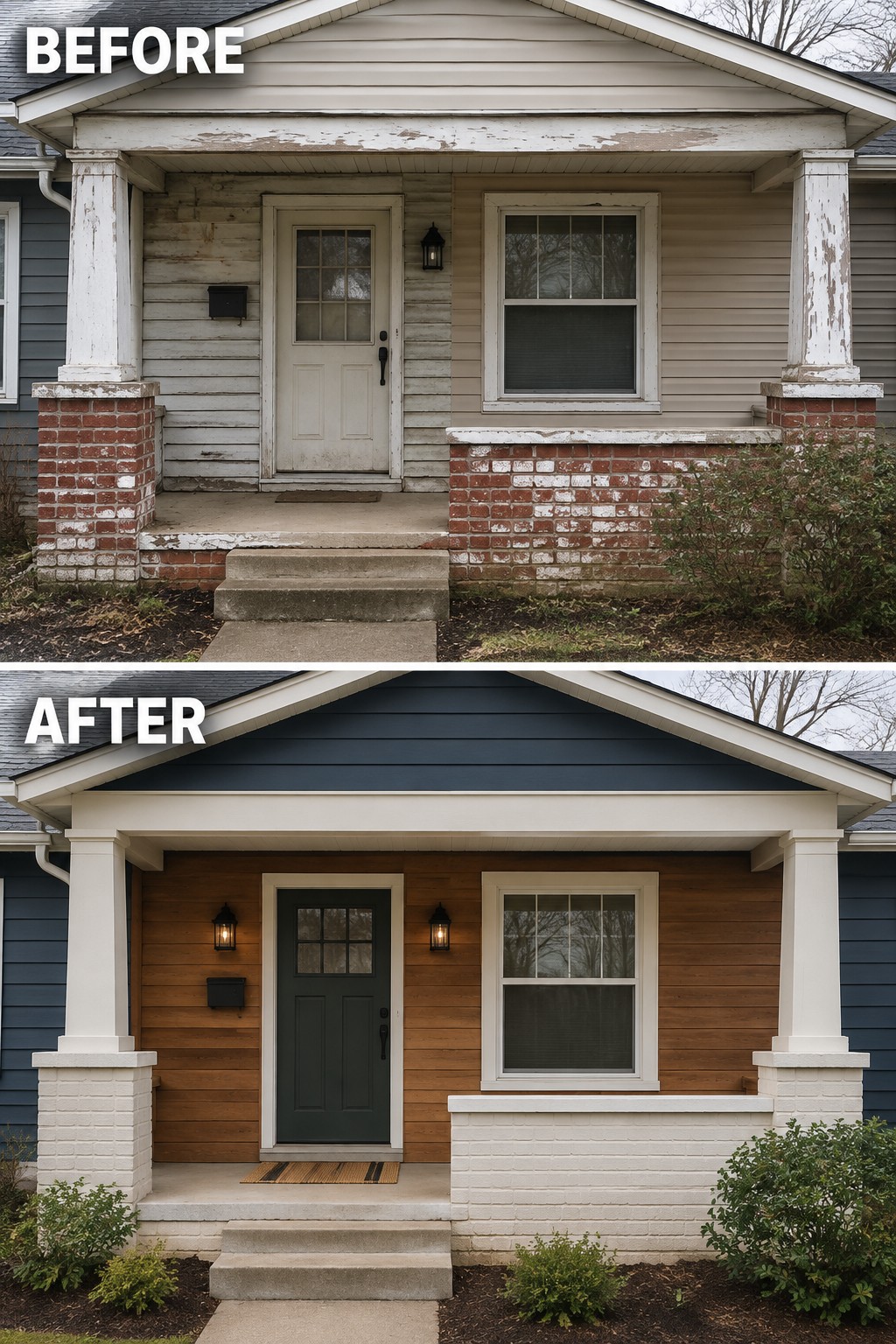
Many older homes have porches that still function well but look tired because the siding has seen better days. In this case the fix was straightforward. The peeling paint and mismatched finishes were replaced with horizontal wood siding on the main wall, a dark color on the gable, and clean white paint on the brick base. The door was changed to a deeper green and the columns were painted white. Those changes alone pulled the whole front together.
This approach works best on houses where the structure is still solid and you mainly need to improve the surface. It is especially useful if you want to keep the existing porch shape but make it feel more current. Start by deciding on one main wall material and one accent color for the trim or gable, then keep everything else simple so the update does not feel busy.
Replace Concrete Steps With Brick And Wood
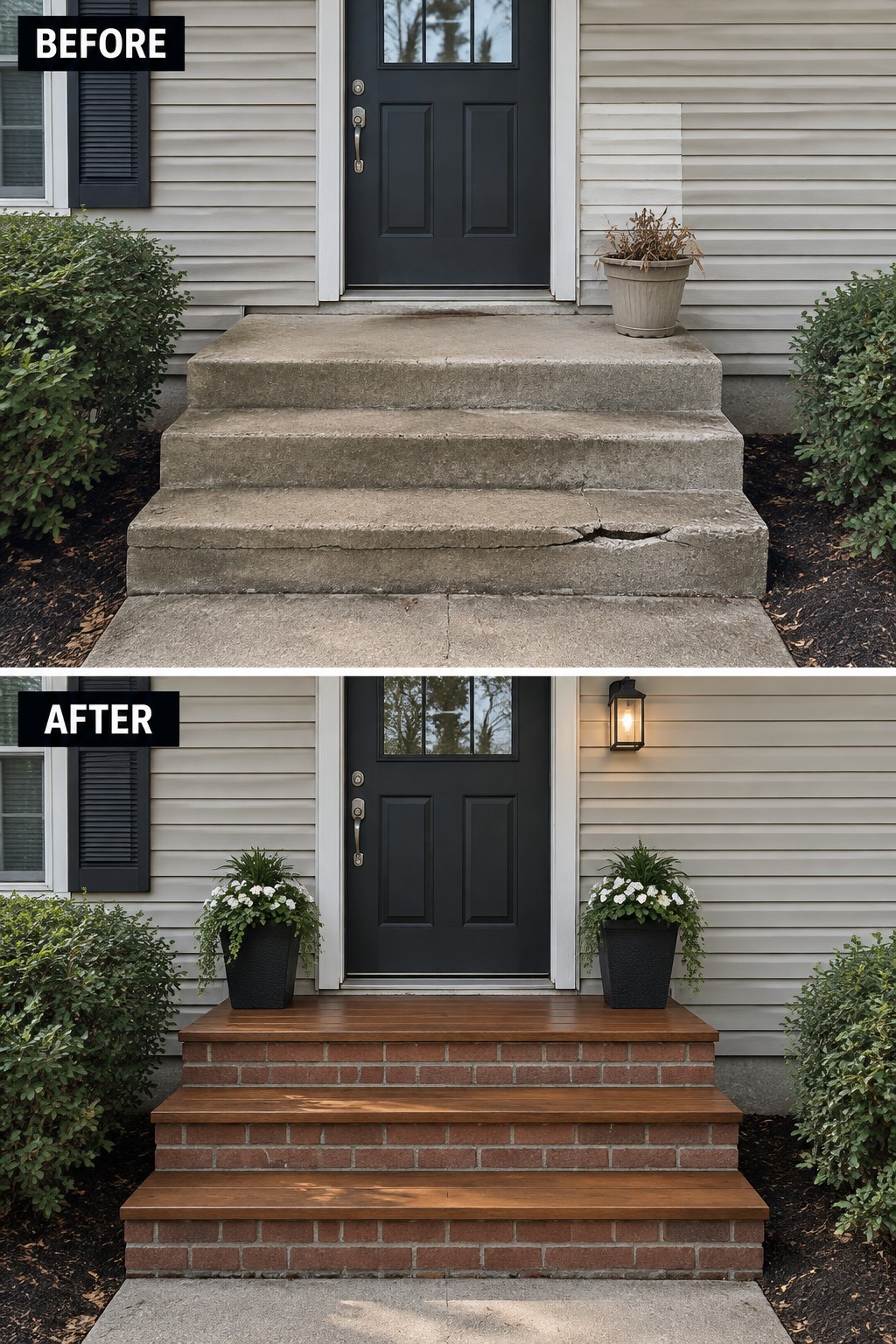
Many homes end up with cracked concrete steps that make the whole entry feel neglected. Switching to brick risers and wood treads gives the porch a sturdier base and a warmer appearance that works with most siding colors.
This change suits houses that already have a simple front door and basic landscaping. Keep the new steps clear of clutter and add one planter on each side so the entry feels balanced without crowding the walkway.
Frequently Asked Questions
Q: How do I choose brick over wood when my porch sits close to the soil? A: Brick handles ground moisture better and needs less upkeep over time. Lay it at the base first so water runs off easily. Then add wood accents higher up for warmth.
Q: Will new siding hold up if my porch gets full sun and heavy rain? A: Go with fiber cement panels since they resist warping and fading. Prime and paint them well before install. Check the overhangs too so water does not pool at the edges.
Q: Can I mix brick, wood, and siding without the porch looking thrown together? A: Keep the brick low for the foundation look. Run wood trim around the posts and finish the back wall with siding. Stick to two main tones so the materials blend instead of compete.