

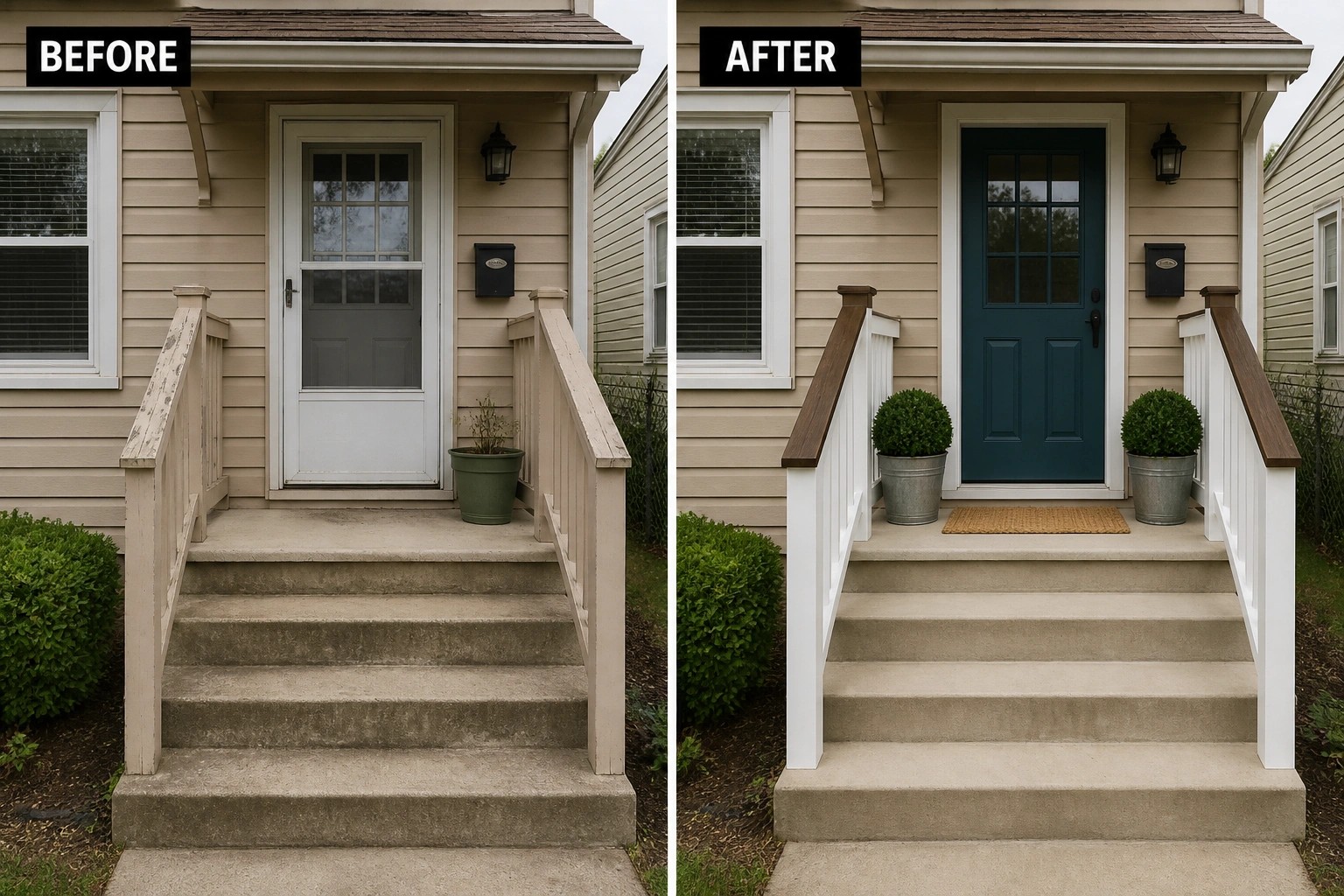
Porches often sit neglected, a narrow strip of roof and floor that could be used but instead feels unused or awkward at the front of a small house.
I like projects that start with one modest change — a new railing, a compact bench, or better lighting — and let the porch steer how the rest of the home feels.
Small tweaks make porches liveable.
The ideas that follow show how to make that strip of exterior feel practical and comfortable, whether by clarifying layout, adding weatherproof seating, or softening the edge with plants and rugs.
You can borrow a detail, try a low-risk swap, or combine a couple of moves, and in my experience those simple steps are what make a porch feel like an actual room rather than a forgotten corner.
Make A Small Porch Feel Like A Finished Entry
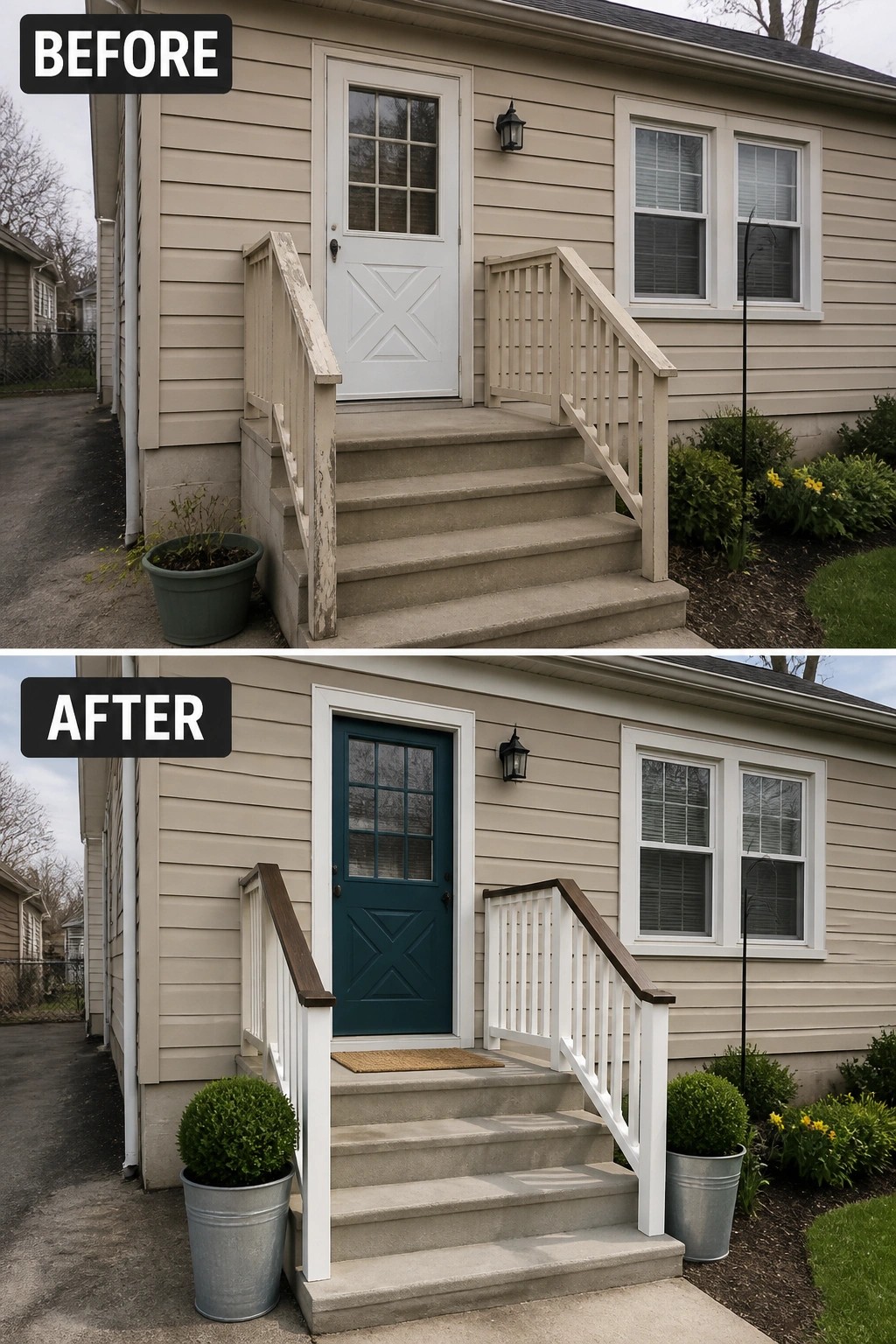
A small, simple update around the entry can make a porch feel intentional instead of neglected. Here the change centers on a freshly painted front door and cleaned-up railings that read as a proper entrance, so the house no longer looks like it just has a back alley step. That single focal fix makes the whole approach feel finished.
To copy this, start with the basics: tighten or replace any rickety railings, then pick one strong color for the door to act as your anchor. Add two weatherproof planters and a simple mat to frame the steps and make the space feel used, not cluttered. This works best on narrow stoops and small bungalows — keep the scale small and choose durable finishes so it lasts.
Create A Cozy Seating Spot On A Tiny Porch
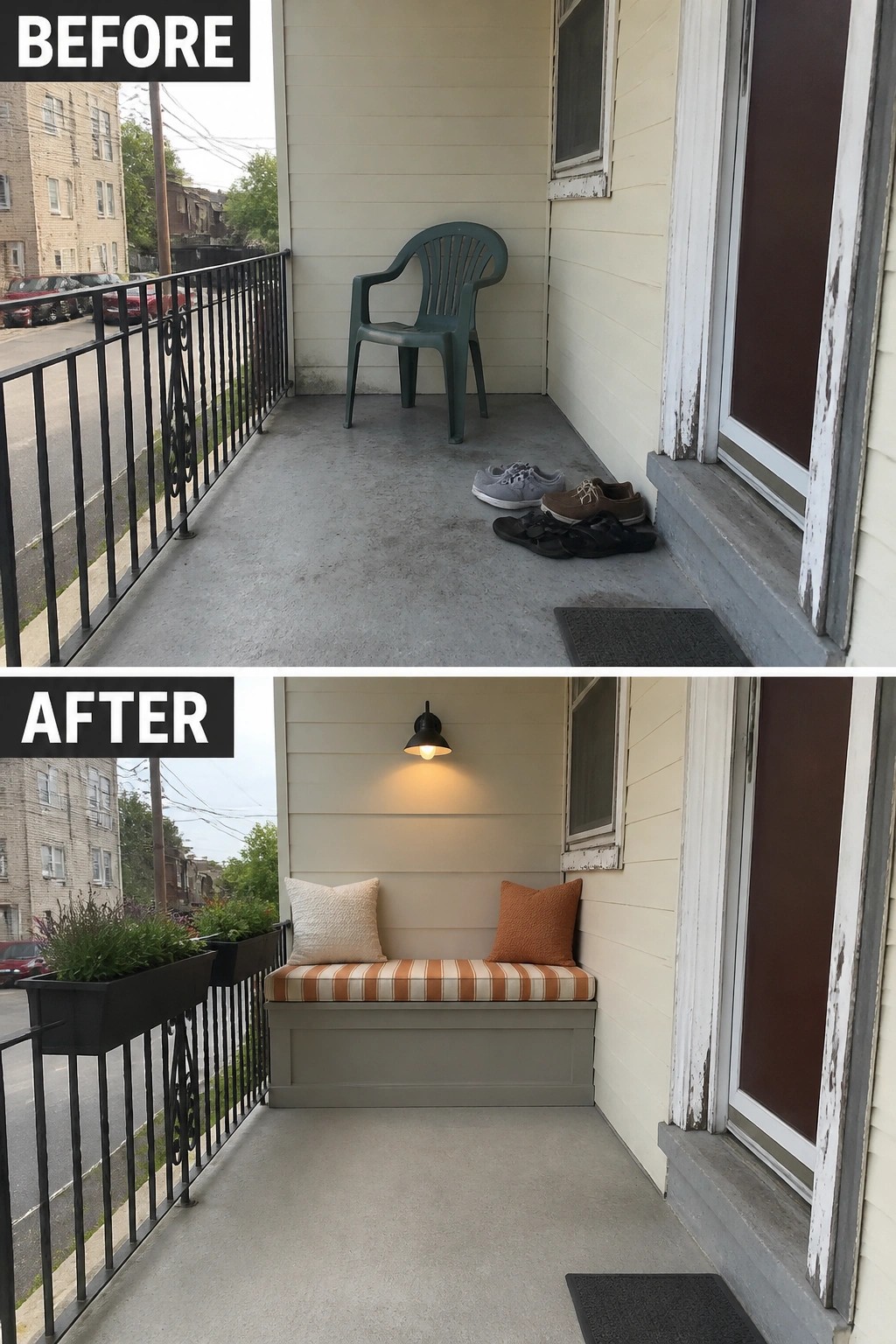
A tiny porch stops being wasted space when you give it one clear job: a place to sit. Replacing the lone plastic chair with a shallow bench, a striped cushion and a couple of pillows, then adding a simple wall sconce and railing planters turns an unused landing into a useful entry seat and a spot for morning coffee. That single, focused change makes the porch feel intentional without crowding it.
Measure the walk zone first so the bench leaves room to open the door and pass by. Choose a narrow or built-in bench (bonus if it doubles as storage), outdoor-grade fabrics, and a low-profile light above the seat so the space works after dark. Add planter boxes on the railing for color and privacy, and keep accessories minimal so the small porch stays easy to use.
Define A Small Porch With Simple Entry Details
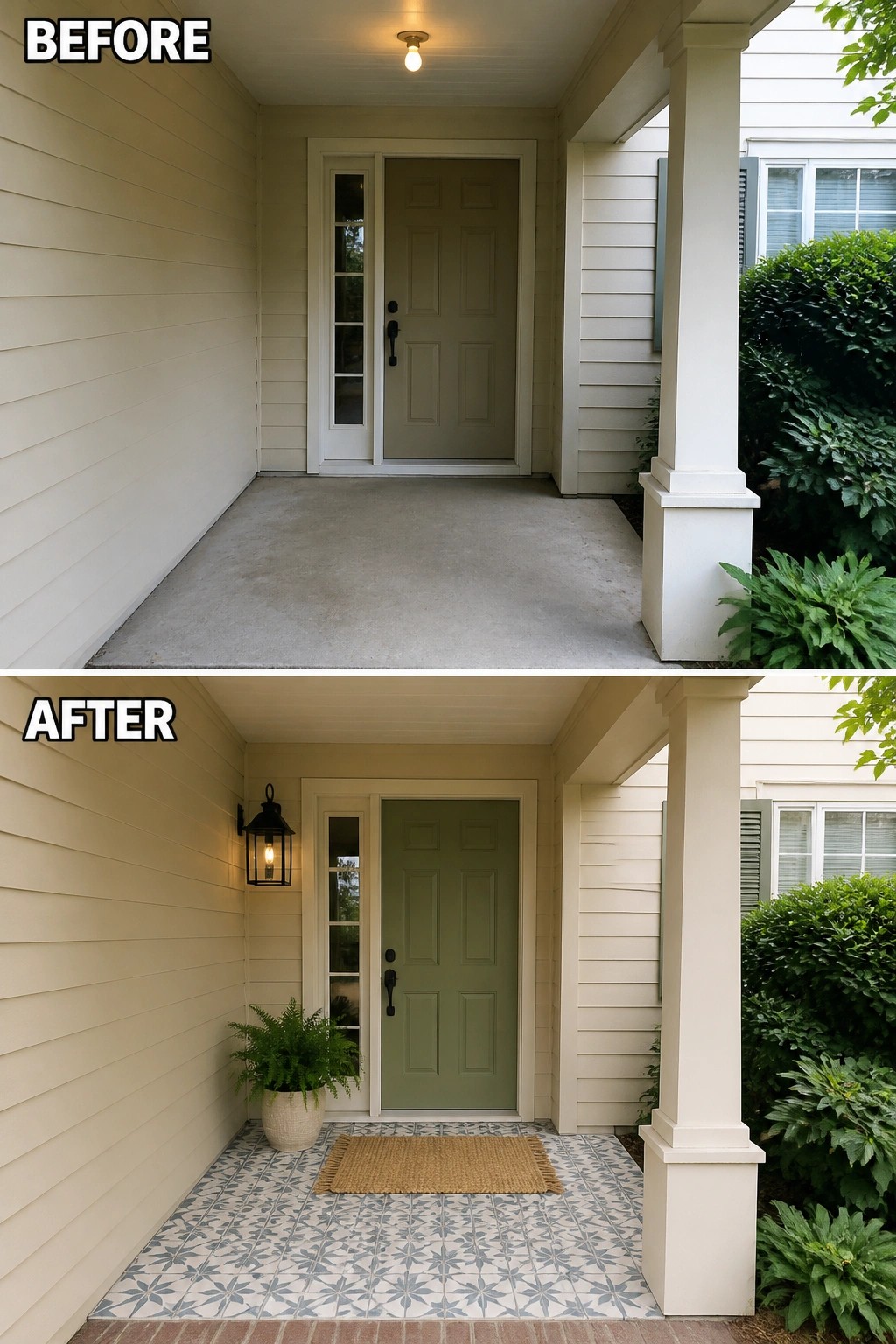
Take an empty landing and give it a job: welcome visitors. Defining the porch floor (think patterned tile or a durable outdoor rug) and adding one or two purposeful elements—a wall lantern and a single planter—turns a plain concrete slab into an entry that feels intentional and lived-in without crowding the space.
This works best on small covered porches where scale matters. Start with a weatherproof surface that’s slip resistant, hang a single light at eye level, and pick one plant in a compact pot rather than many small pieces. Keep a clear path to the door, coordinate the door color with your accessories, and avoid overfilling the area so the porch reads as an entry, not storage.
Turn An Empty Porch Into A Styled Entry
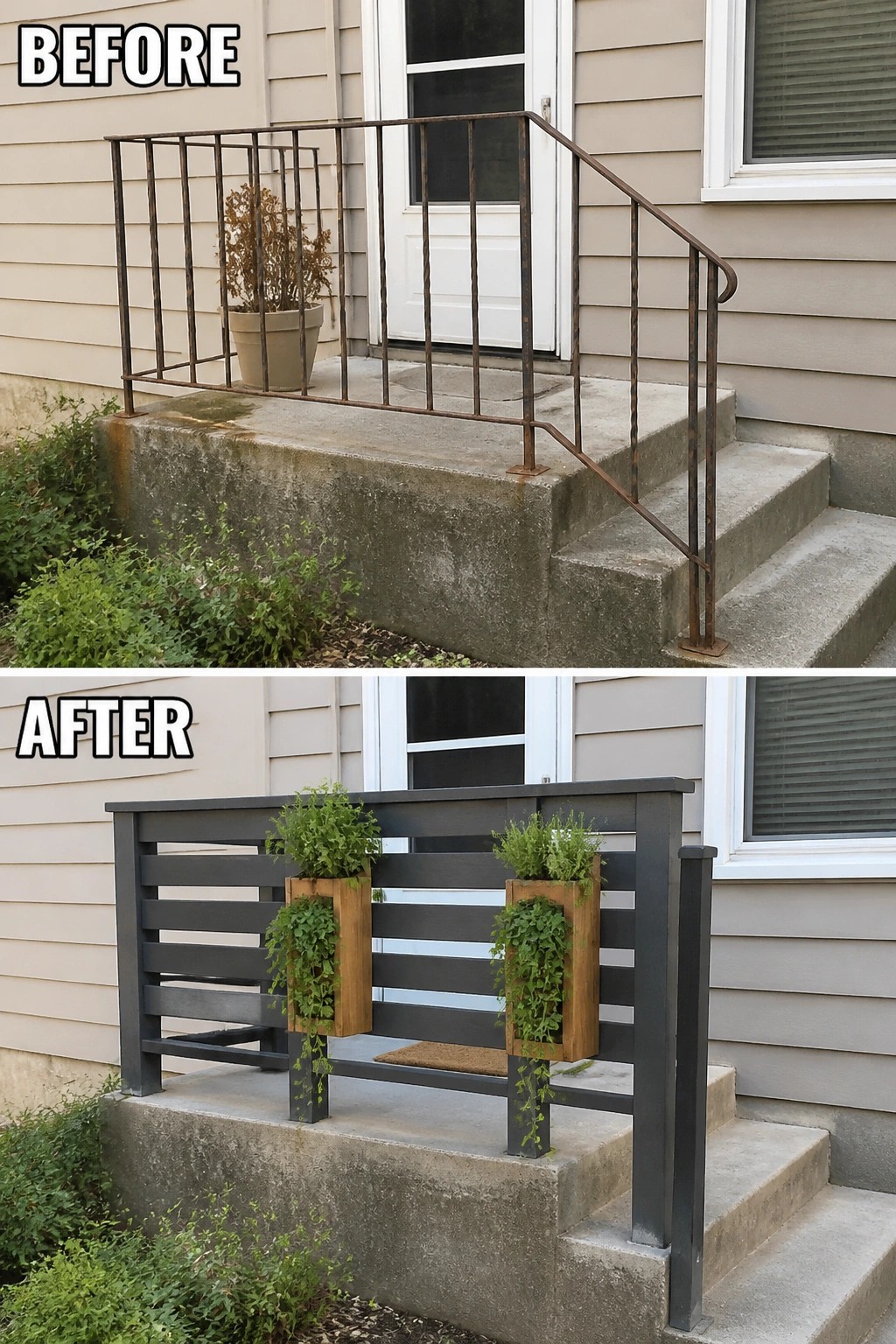
A simple rail upgrade can give a tiny concrete porch a real purpose. Replacing that old, thin metal balustrade with a low, horizontal screen creates a little room at the door — it reads like a small entry porch instead of just a step. Add a pair of planter boxes and a welcome mat and the space suddenly feels intentional and finished.
To copy this, pick a railing style that matches your house and keeps sightlines open while hiding the concrete edge. Use weatherproof materials or a fresh coat of exterior paint, and mount shallow planter boxes or brackets so they don’t block the walkway. Keep the scale modest so people can pass easily, repeat one trim color for cohesion, and start with one clean change rather than trying to redo everything at once.
Turn A Bare Porch Into A Cozy Screened Sitting Area
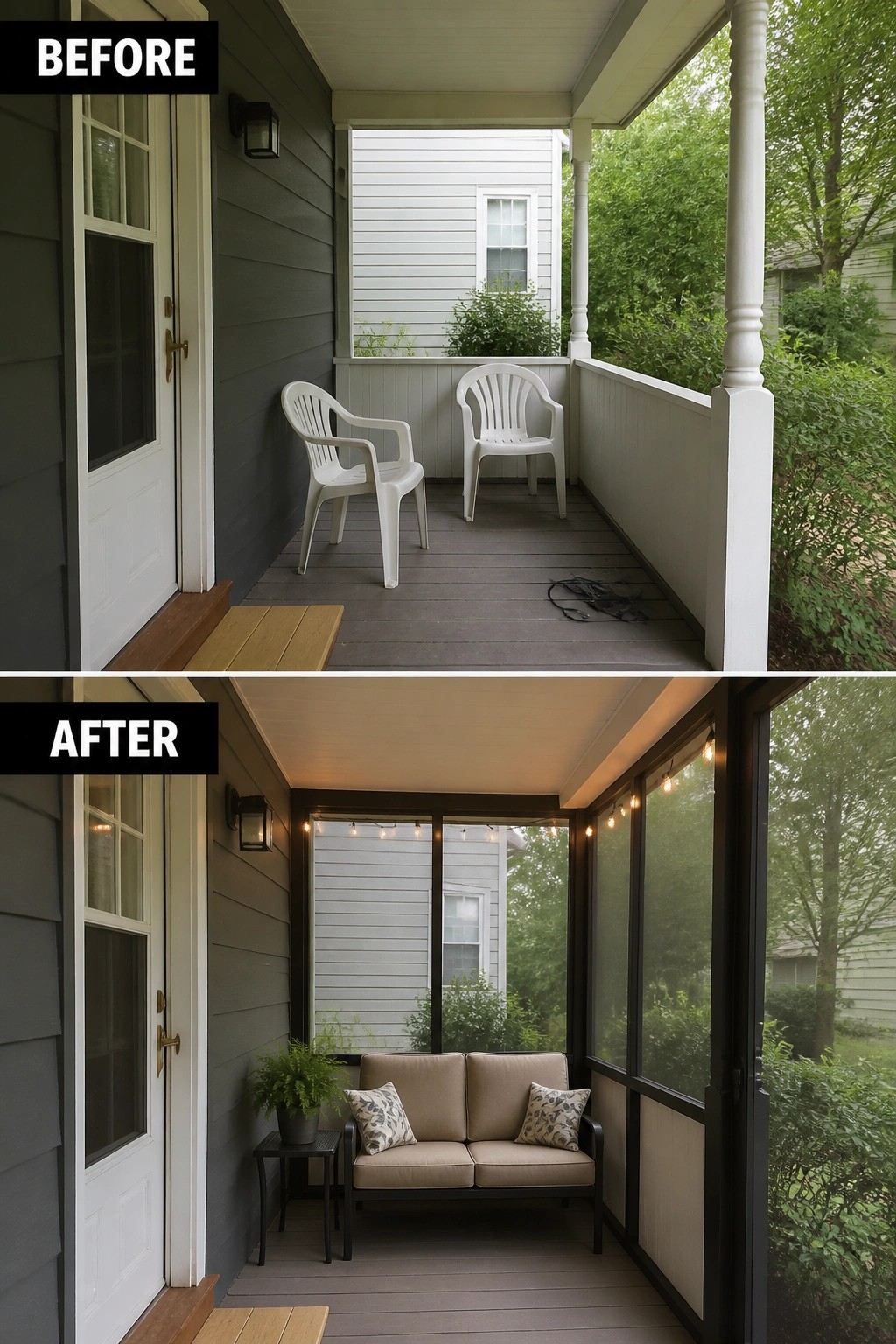
A narrow porch can feel useful if you give it a single purpose: a small screened seating nook. Here the owner swapped two plastic chairs for a compact loveseat, added screening for privacy and fewer bugs, and strung simple bulbs along the ceiling so the space works into the evening. Those few changes turn an empty landing into a place you actually want to sit.
Start with seating sized to the porch so you can still open the door and move around. Pick weather-resistant cushions and one slim side table for drinks and books, then add a plant or two to soften the edges. Hang lights where people sit rather than across the walkway, and consider removable screens or shades if you need more airflow or winter storage. Simple choices keep it practical and long-lasting.
Dress Up Plain Steps With Patterned Risers
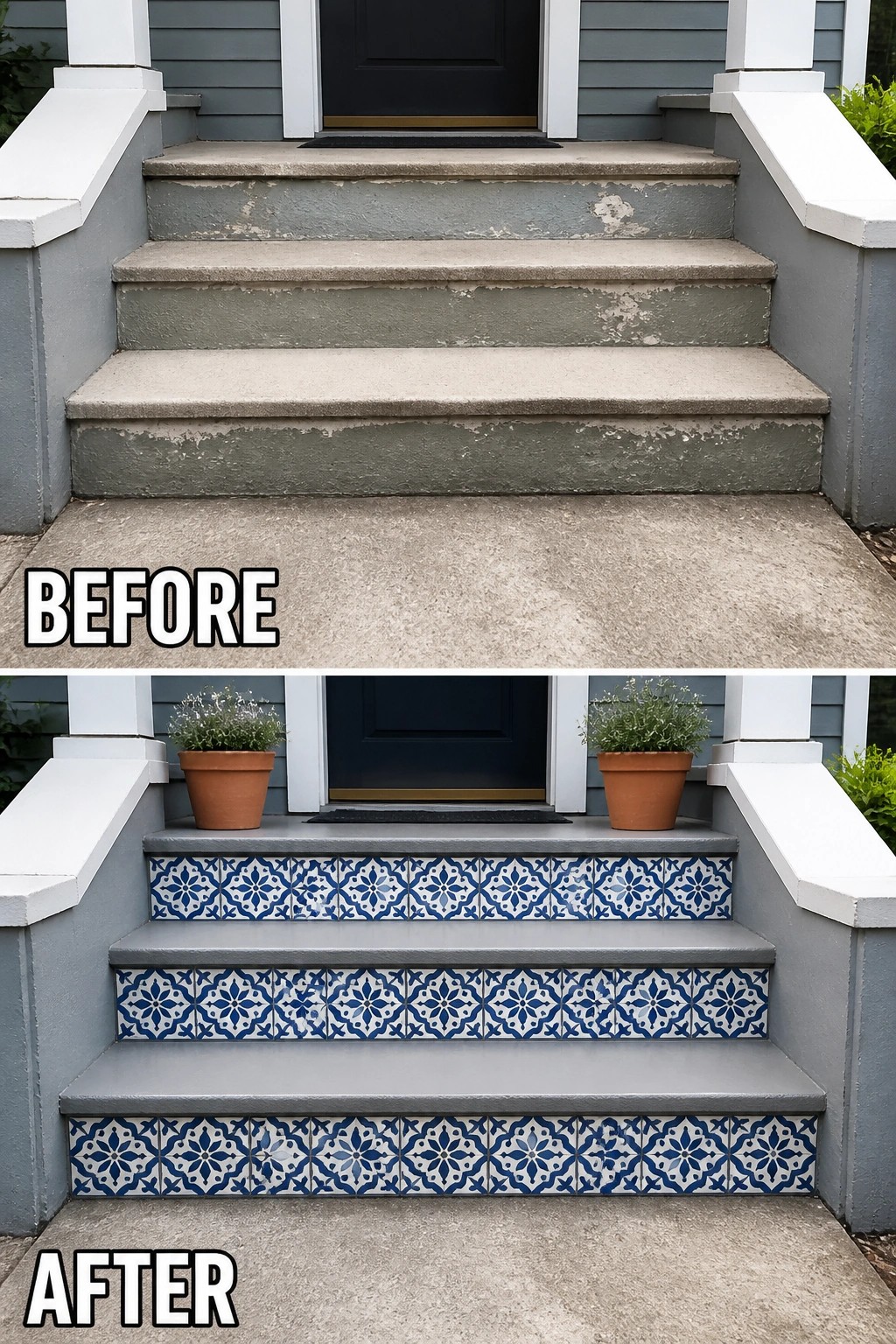
A simple way to pep up a bland entry is to treat the risers as a design surface. Replacing or covering the vertical faces of the steps with patterned tile (or weatherproof adhesive tile) instantly hides chips and gives the porch a focal point, while a fresh coat on the treads and a pair of planters finishes the look without a full rebuild.
Do the prep work first: clean and level the risers, pick outdoor-rated materials, and seal grout or edges for durability. Use a non-slip finish on the walking surfaces and keep the pattern color tied to the house trim so the look reads intentional. Works especially well on small porches and townhomes where a little pattern goes a long way.
Add A Hanging Swing To Create A Cozy Porch Retreat
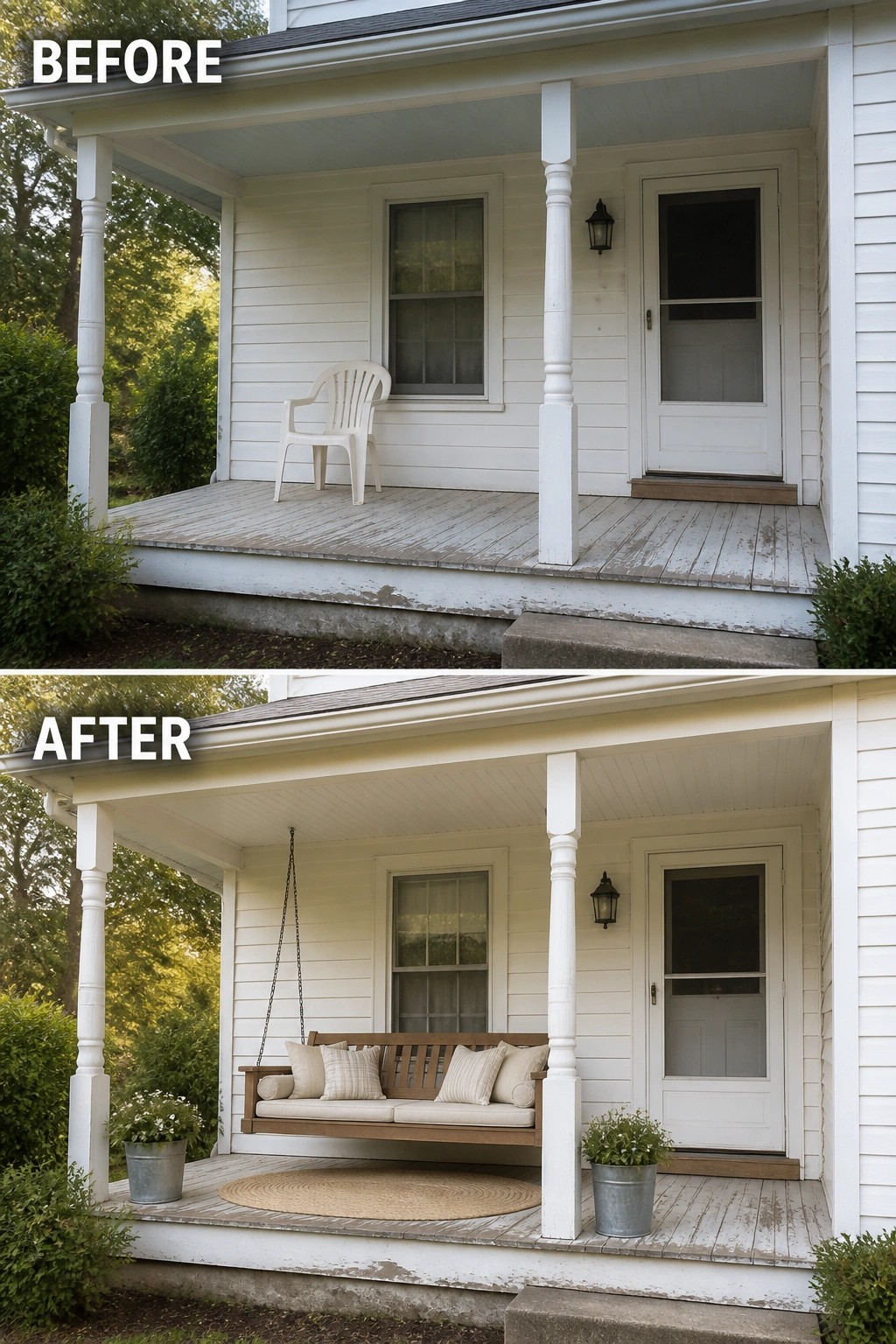
A small, empty porch becomes useful when you give it a clear purpose instead of treating it like storage. In this makeover a single focal seating piece—a hanging porch swing—plus a round rug and two metal planters replace a lone plastic chair and instantly define the space as a cozy place to sit.
To copy this, start by cleaning the porch and choosing one main piece of furniture that fits the width but still leaves a walking path. Anchor it with an outdoor rug, add a couple of weather-resistant cushions, and finish with one or two potted plants for softness. Keep scale and traffic flow in mind so the porch feels intentional, not crowded.
Refresh A Small Porch With A Modern Door And Decking
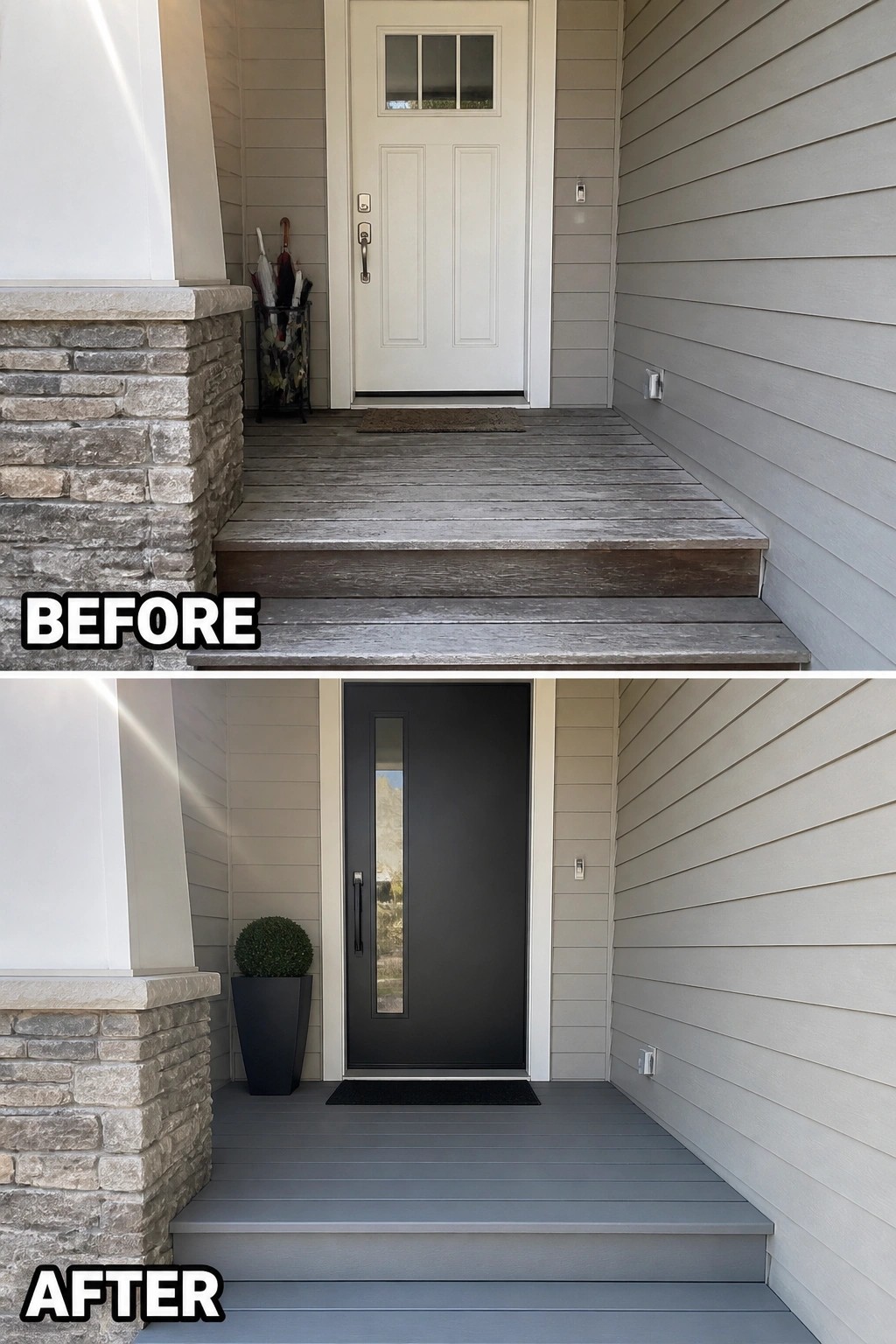
A small porch doesn’t need much to read like a real entry — just a clear focal point and clean surfaces. Swapping the old white door and weathered boards for a dark, modern door and refreshed decking instantly defines the space, while a single tall planter and a neat doormat show how the area should be used. The change feels intentional because the eye lands on one strong element instead of scattered clutter.
To copy this, start with basic repairs and a fresh finish on the floor so the porch looks cared for. Pick a contrasting door color that suits your home and keep accessories minimal — one vertical planter or a pair of low pots and a slim mat are enough on a small step. Use weatherproof materials and leave clear room for entering and exiting; the goal is a purposeful, low-effort entry that reads finished and easy to maintain.
Brighten A Small Brick Entry With Paint And Lighting
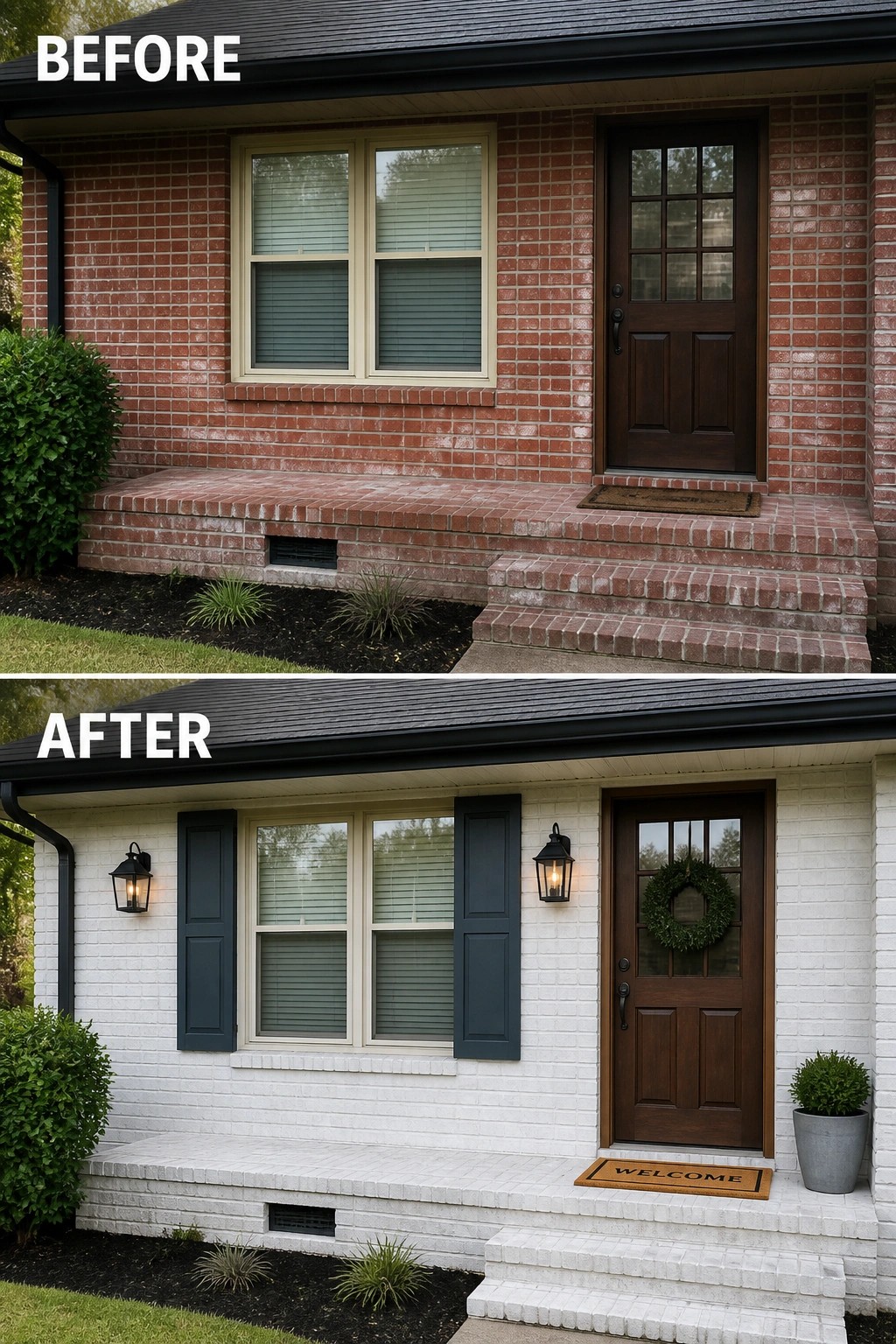
A small entry can go from forgotten to welcoming with a focused update. In this case, painting the brick a light color and adding simple exterior details like matching wall lanterns and a planter turns the stoop into an intentional front porch rather than just a step. Those two moves make the doorway read as the house’s main arrival point without a big remodel.
Do the basics first: power-wash, patch any mortar, and use a masonry primer and exterior paint made for brick. Pick one contrast color for trim or shutters and then add one or two practical accessories—a doormat and a weatherproof planter, plus lighting for evening. This approach fits narrow porches and modest facades best; keep scale small so the entry stays easy to use.
Turn An Empty Patio Into A Seating Area
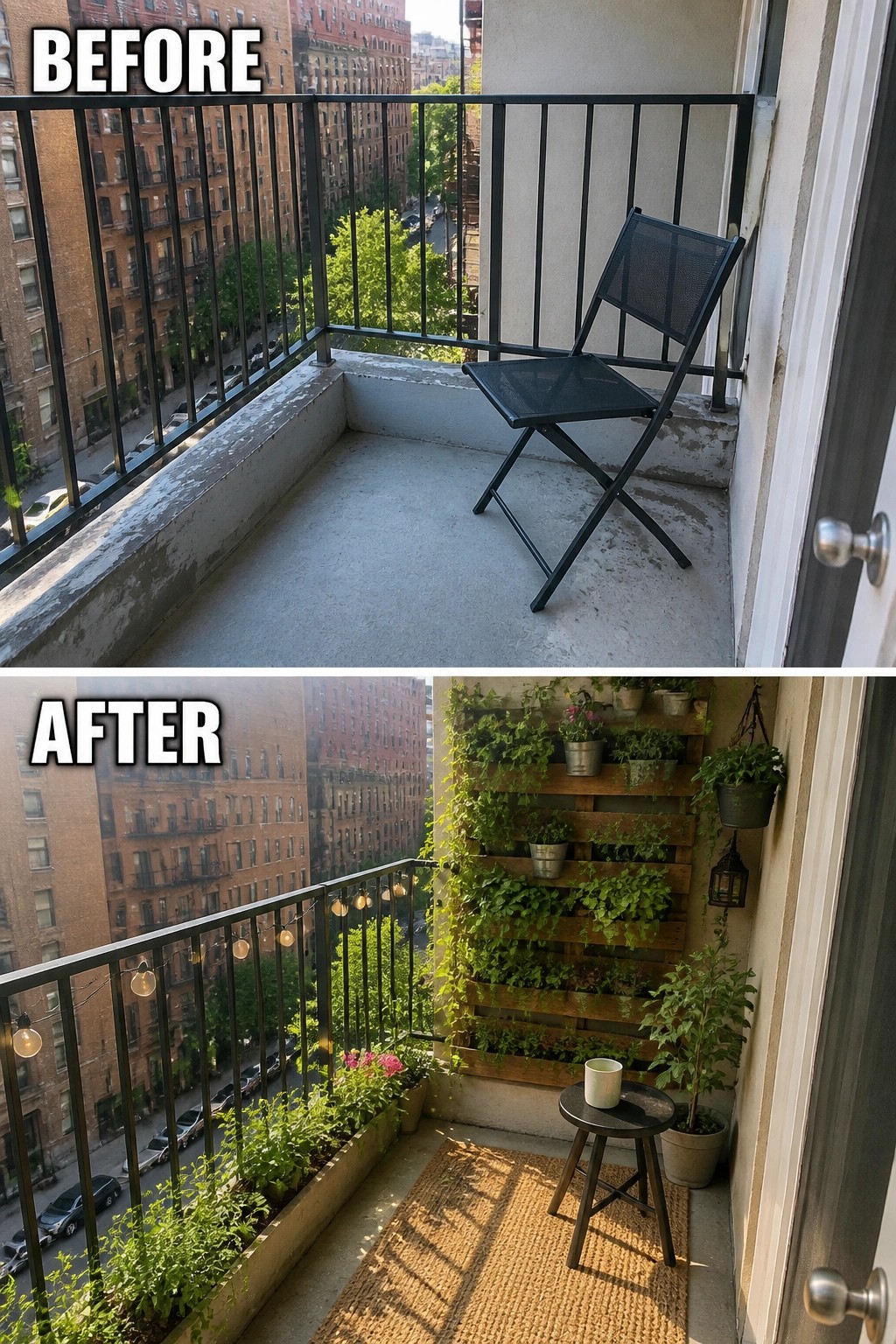
A tiny concrete balcony can feel useless until you give it a clear purpose. Adding a vertical planter on one side and a small outdoor rug with compact seating and a string of lights takes this space from empty to cozy without eating the floor. The vertical planting creates a green backdrop while the rug and a stool define a sitting zone, so the balcony feels intentional rather than spare.
To copy this, start by cleaning the concrete and picking one focal wall for a vertical planter or hanging pots—it saves space and adds privacy. Choose slim, weatherproof furniture and a low-maintenance rug sized to leave a clear path, then layer in lights at railing height so people actually sit where the light is. This approach works well for apartment balconies and narrow patios; keep the layout simple and pick plants suited to the amount of sun your spot gets.
Frame A Small Entry With A Bold Door And Planters
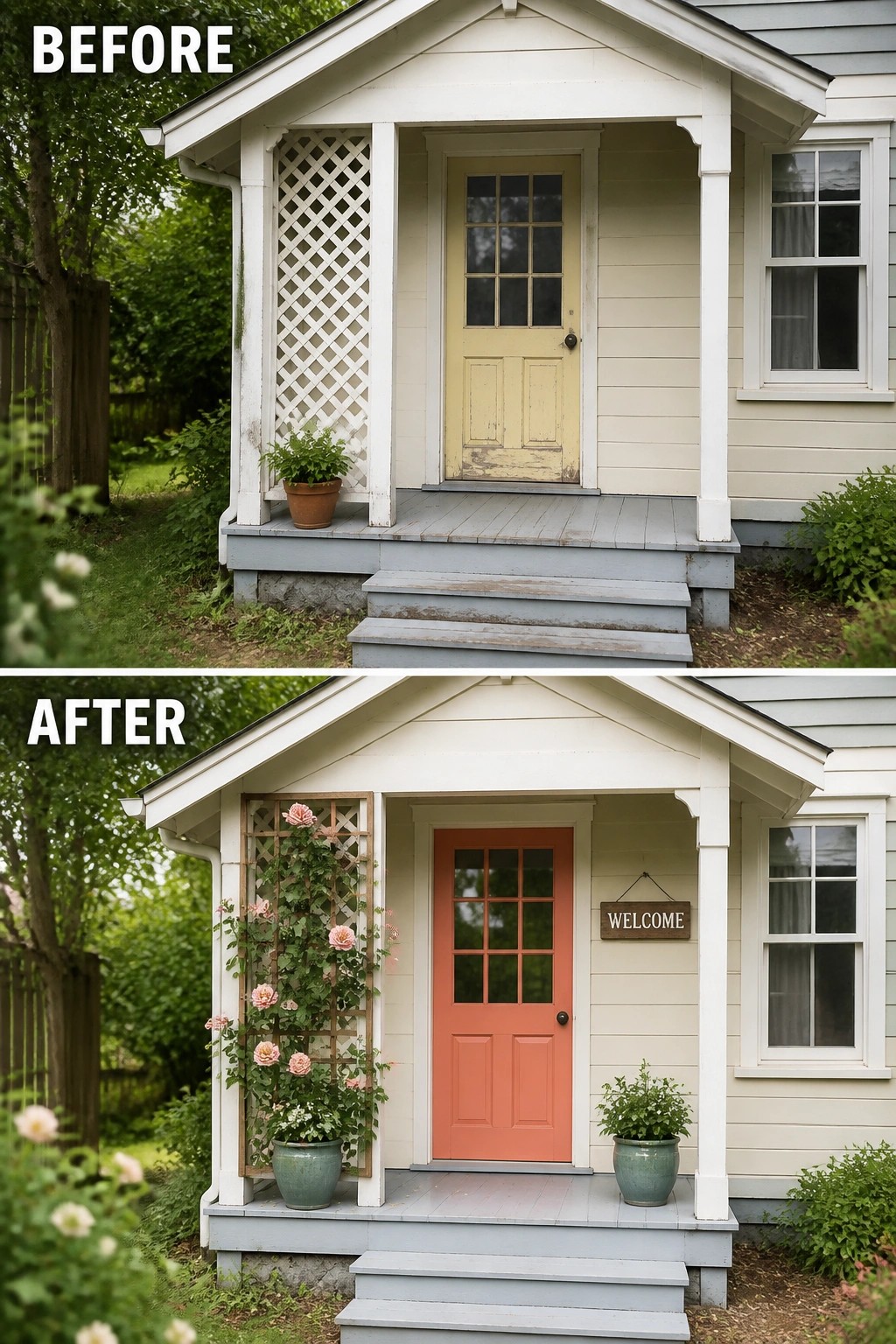
A tiny porch stops feeling like an afterthought when you give it a single, easy focal move. In this example a fresh, bold door color plus a pair of matching planters and a simple trellis turn the entry from plain to purposeful — the door becomes the anchor and the plants frame the approach.
To copy this, start with a quick cleanup and one main change, like painting the door in a color that complements your siding. Add two similar-scale pots for balance and a vertical element such as a trellis or hanging plant to create height without crowding the step. Keep pathways clear, choose weatherproof finishes, and pick low-maintenance plants so the new look stays tidy with minimal work.
Turn An Empty Porch Into A Seating Area
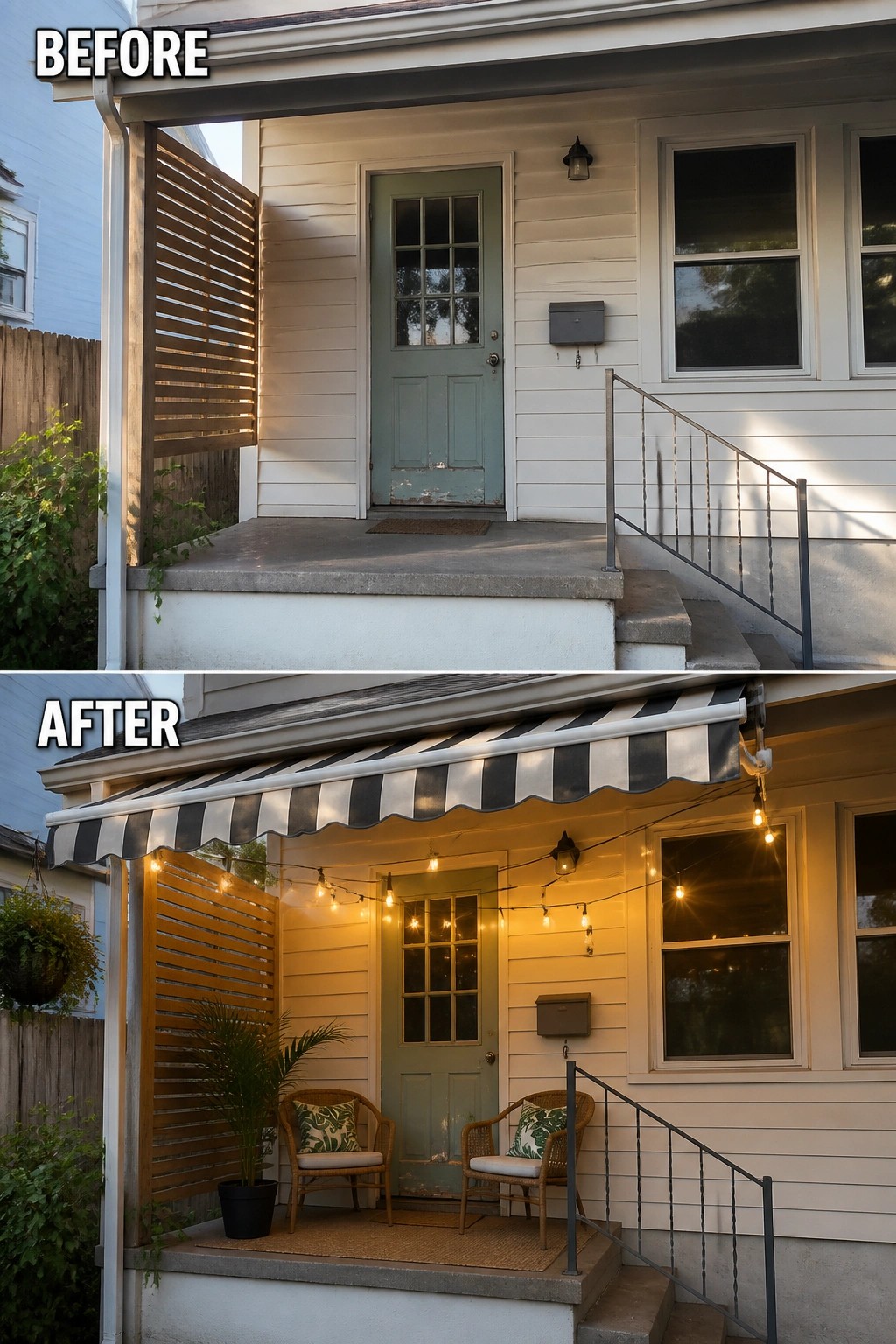
A tiny concrete porch can feel useful overnight when you give it a clear purpose: a place to sit. Swap the emptiness for a pair of compact chairs and a small rug, then add string lights overhead; those two moves alone (a seat area and soft lighting) make the porch feel like a room you can actually use.
Start small. Pick furniture scaled to leave a clear path, choose weatherproof cushions, and anchor a rug to define the zone. Hang lights where people will sit and add one or two potted plants for privacy and texture. This approach works well on narrow or shallow porches—just avoid overcrowding and measure first so everything fits comfortably. Simple but effective.
Upgrade A Small Entry With New Steps And A Finished Landing
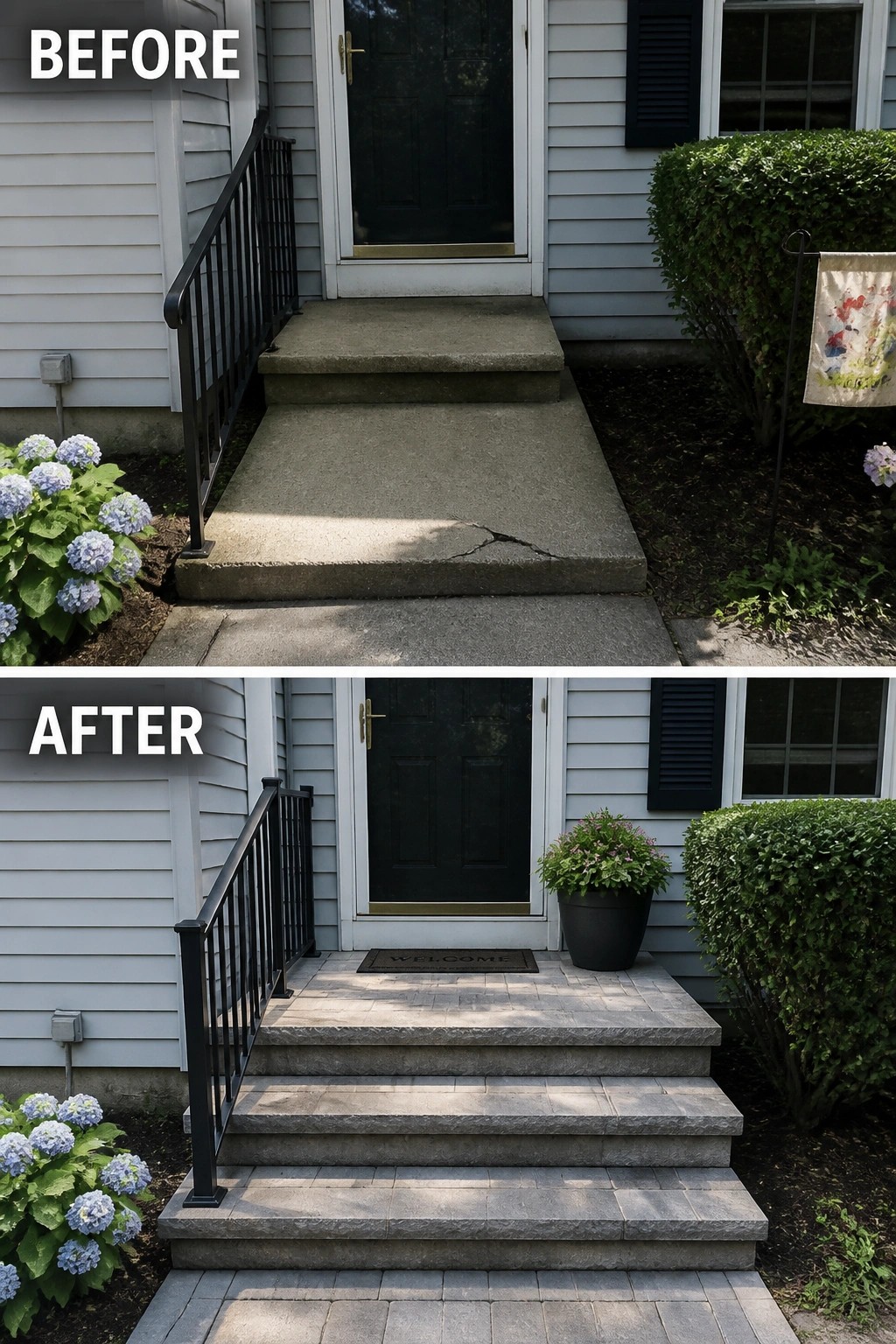
A simple way to upgrade a small entry is to replace an unsteady concrete slab with properly sized steps and a finished landing, then style it with one or two purposeful accents. In this example the cracked slab becomes layered paver steps and a compact porch top, and a single planter plus a welcome mat make the doorway read as an intentional entry rather than an afterthought.
Use this idea on narrow or small stoops where full porches are not possible. Pick pavers or stone that match the house color, confirm the step rise and tread are comfortable, and sort drainage and a proper base before you lay material. Keep accessories minimal so the entry stays functional: one planter, a weatherproof mat, and a sturdy handrail are often enough to make a big difference.
Give A Small Entry More Curb Appeal With A Bright Front Door
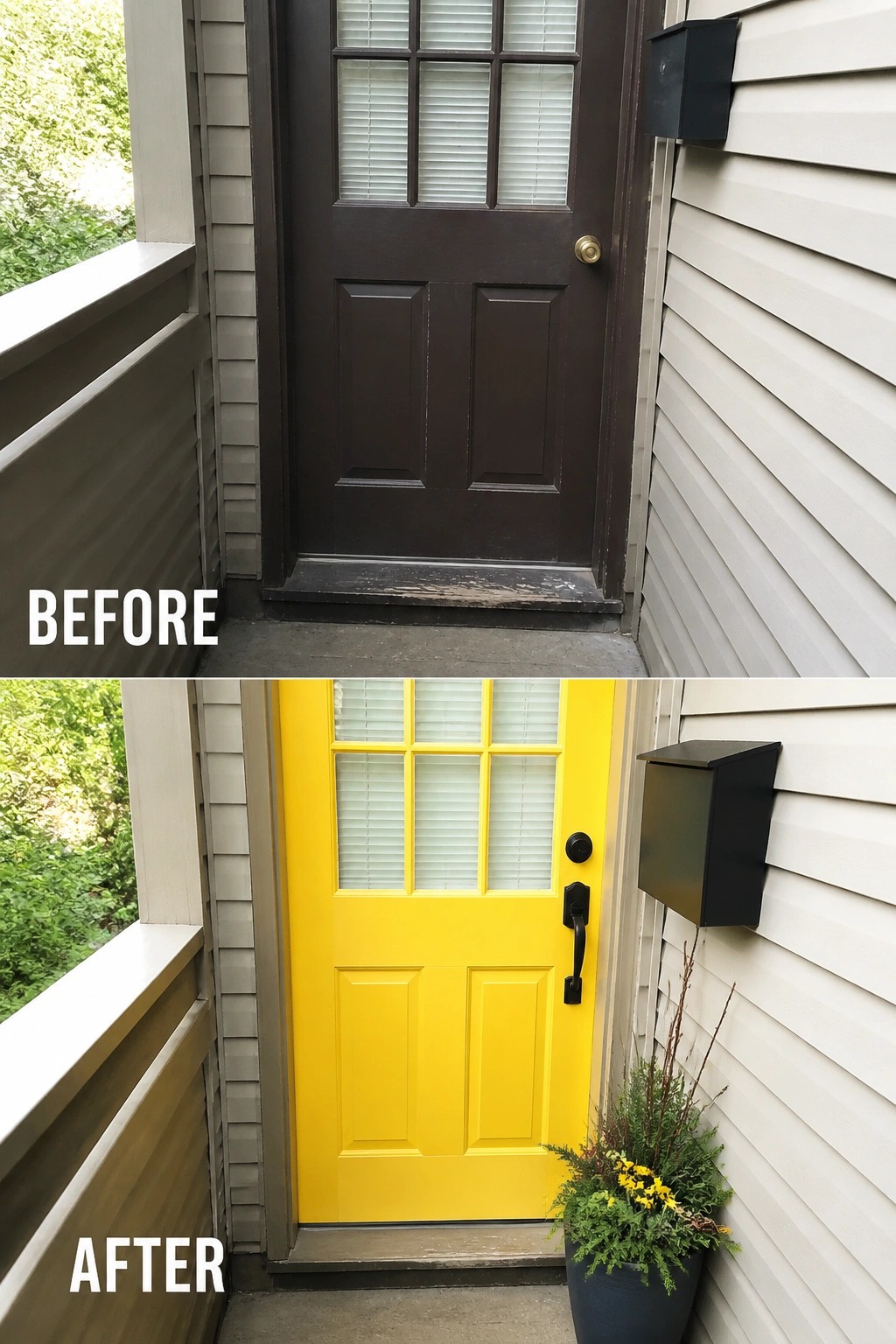
A fresh, bold door color is an easy way to update a small porch without major work. Swapping a tired dark door for a bright yellow one (and switching to clean, modern hardware) creates a clear focal point and makes the whole entry feel cared for. Add a single planter with complementary blooms and you get instant personality without crowding the narrow landing.
To try this yourself, test a few paint swatches on the door and pick an exterior paint rated for doors and trims. Match the hardware finish to the new color palette and choose one pot that fits the scale of your step so the path stays clear (ideal for narrow porches). Keep maintenance simple: touch up the threshold and keep one pot of seasonal plants for color that’s easy to refresh.
Use Symmetry And Repeated Color To Define A Small Porch
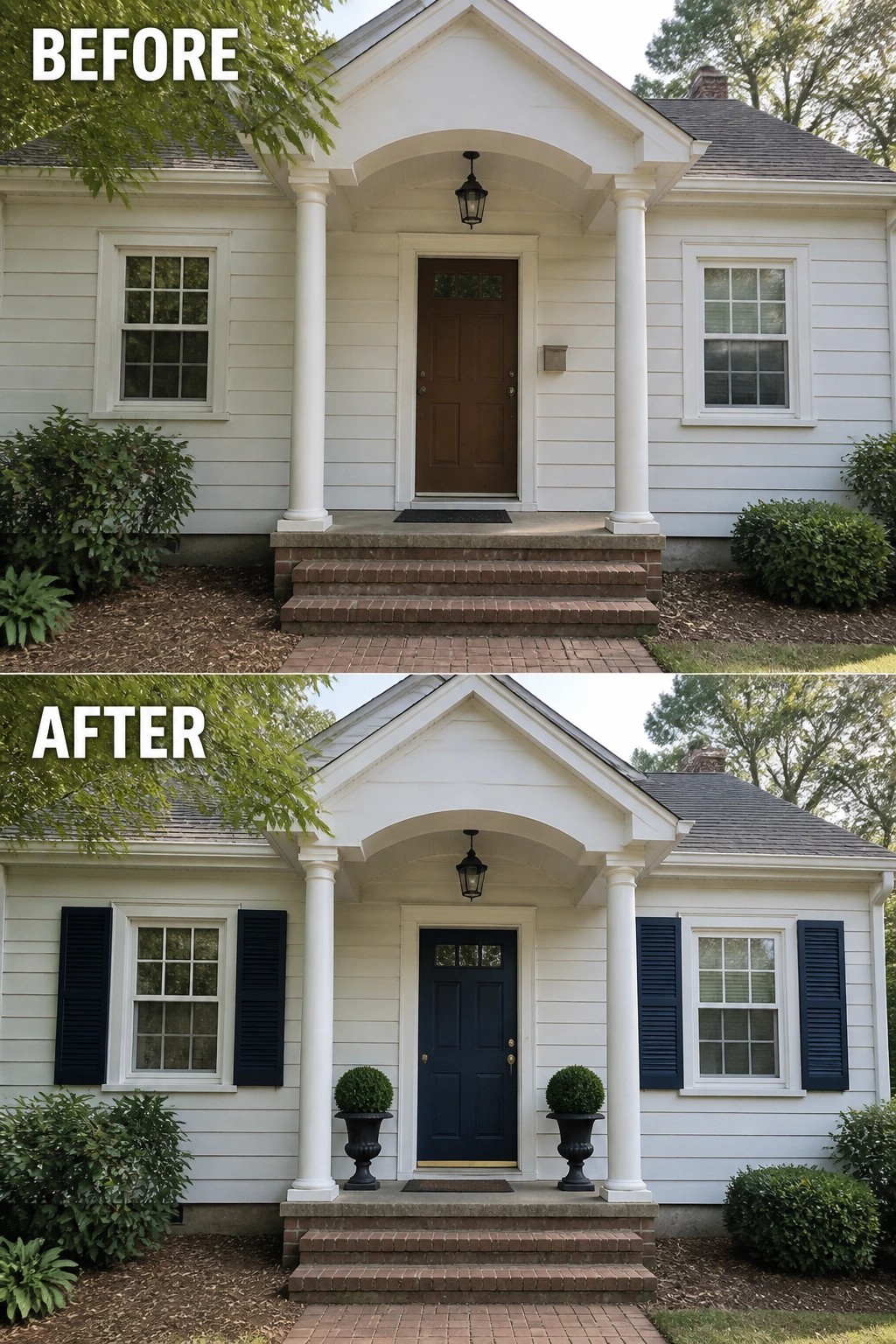
A tiny entry can stop feeling like an afterthought once you choose a clear focal move. In the after photo a single, dark-painted front door repeated in the shutters and echoed by two matching urn planters frames the entry and makes the porch read as a usable, intentional spot rather than empty steps. That simple trio—color, repeat, and symmetry—turns a bland facade into a purposeful welcome.
You can do this on almost any small porch. Start with one prominent change, usually a bold door color, then repeat that color in a pair of shutters or planters to tie things together. Keep planters narrow so they don’t block movement, pick weatherproof materials and paint, and avoid overloading the space with extras—one clear idea executed well will make the porch feel finished.
Use Lighting To Make A Small Porch Feel Welcoming
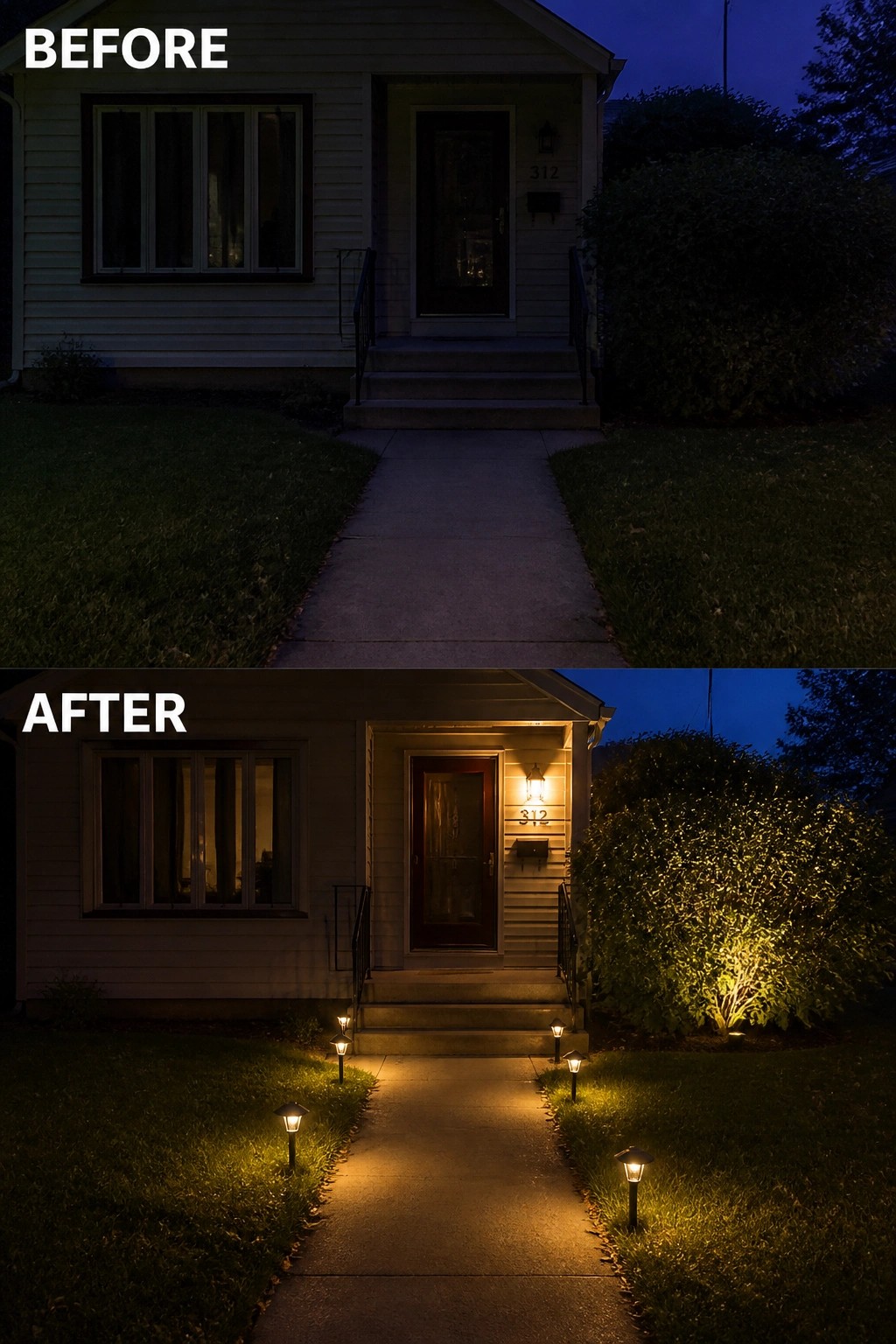
A few focused lights will turn a dark, anonymous entry into a clear, purposeful approach. In this example, a single porch sconce plus a line of low path lights and a small uplight on the shrub guide visitors to the door, improve safety, and give the modest porch a finished look without big cost or construction.
Choose warm white LEDs (2700–3000K) and space path lights about 6 to 8 feet apart so the walkway reads evenly but isn’t blinding. Solar stakes are fine for quick installs; low-voltage wiring is better for consistent output if you plan to keep them long term. Keep fixtures small to match the house scale, aim uplights at plants not windows, and test at night to dial brightness down if needed.
Turn An Empty Porch Into A Welcoming Entry
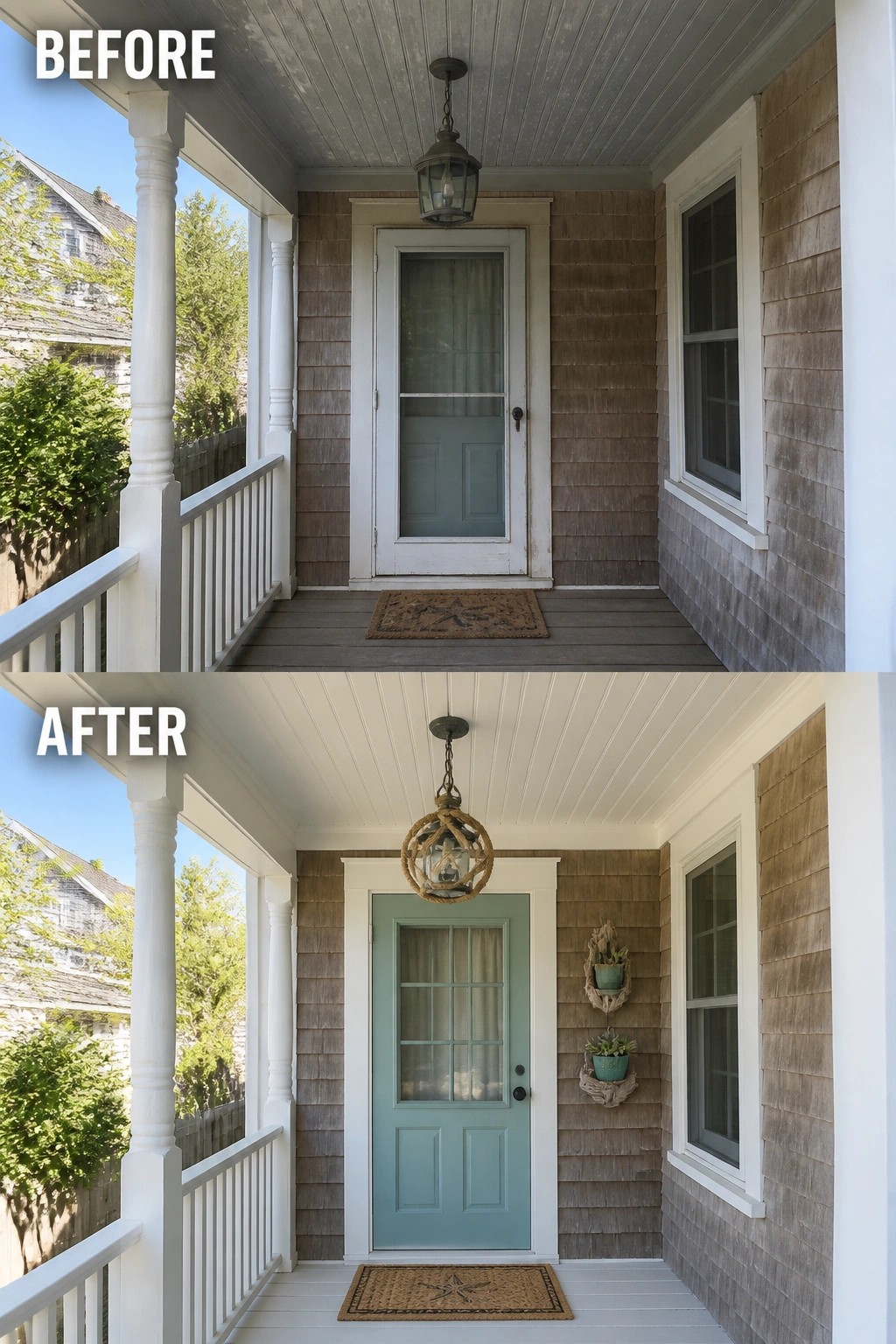
A narrow porch becomes useful when you pick one clear focal move and build around it. In this example a fresh painted door and a new hanging light (plus a simple doormat) give the small covered entry instant personality and a defined purpose instead of feeling like an unused hallway.
Do the same at your place by choosing one main update—paint the door a confident color or install a statement fixture—then add a couple of slim, weatherproof accents: a small rug, wall-mounted planters, or a hanging lantern to save floor space. Keep pieces scaled to the width of the porch so the path stays clear; this approach works especially well on older homes or any tight covered entry where you want big impact from a few affordable changes. Simple, practical, and affordable.
Build A Sheltered Seating Nook With A Slatted Screen
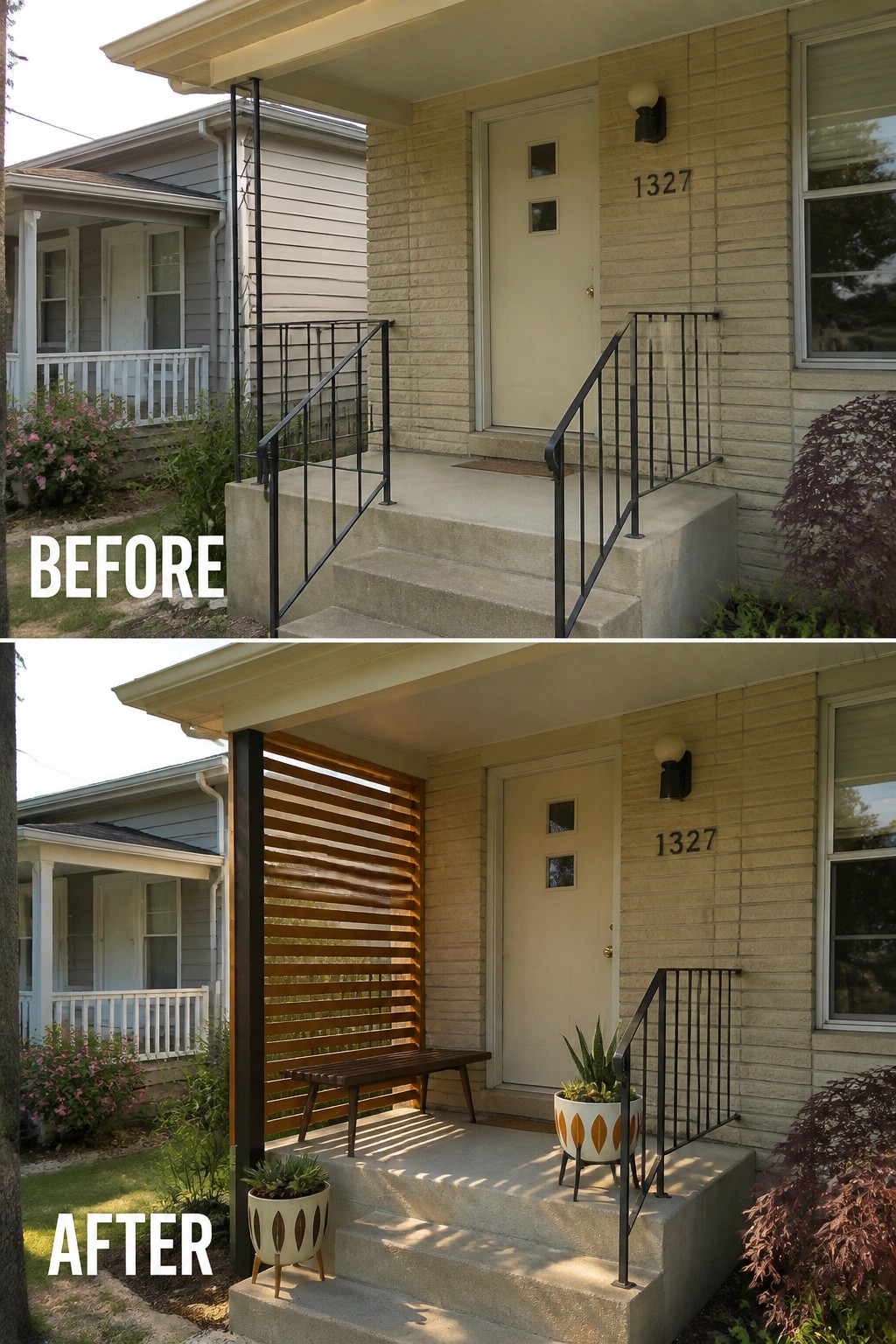
A narrow, undecorated stoop can feel wasted until you define it as a small seating nook. Adding a vertical slatted wood screen and a slim bench (plus a couple of planters) turns an unused entry into a sheltered spot for sitting or greeting visitors. The screen gives privacy and shade while still letting light filter through, so the porch feels purposeful rather than just leftover concrete.
This approach works best on covered porches and small stoops where you need to keep circulation open. Choose a narrow bench and durable outdoor materials, mount a lightweight slatted panel on one side, and leave clear room for the door to open—simple pieces and proper scale are all you need to make the space usable and inviting.
Turn An Empty Porch Into A Cozy Seating Nook
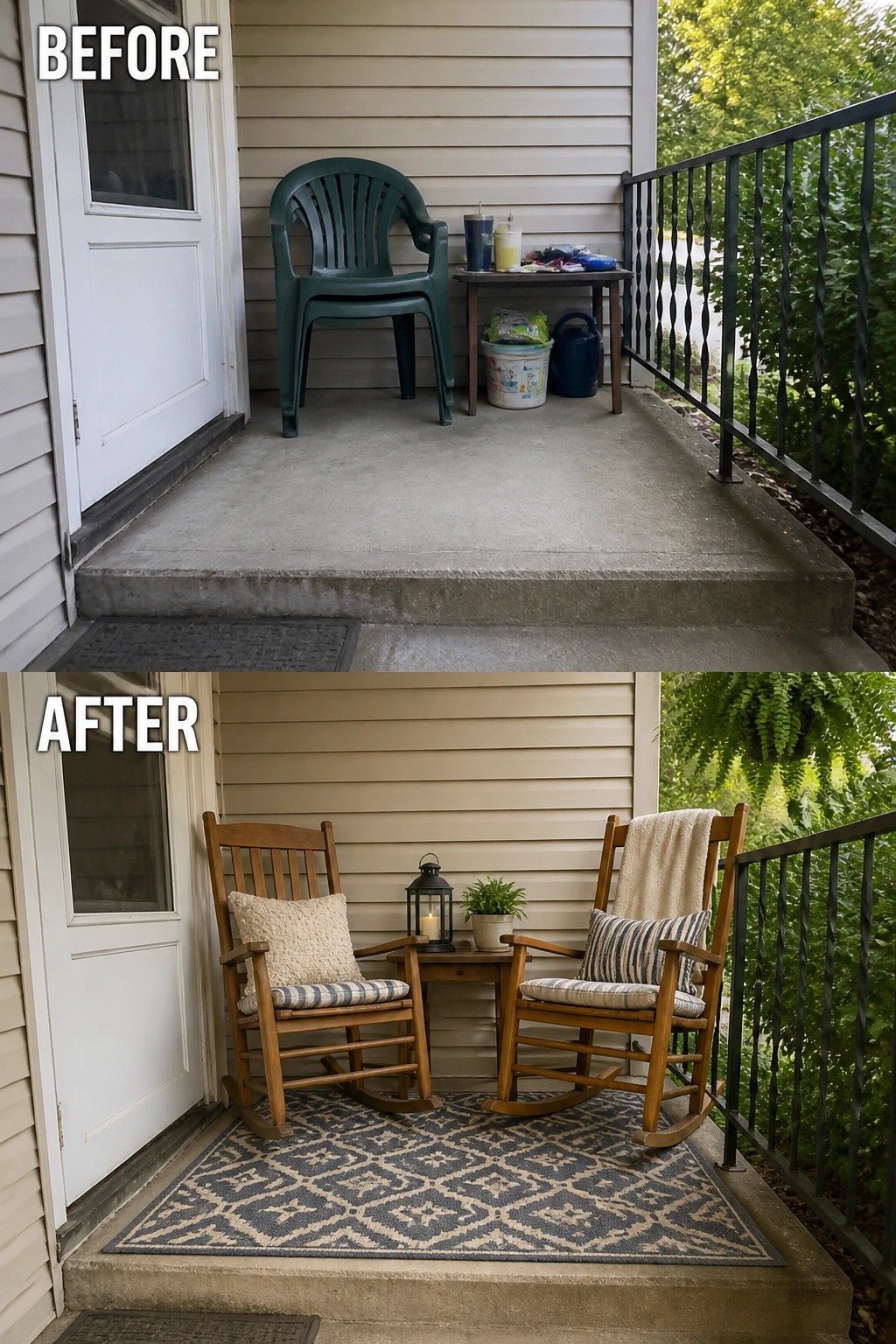
A small porch doesn’t need a big overhaul to become useful. In this example a bare concrete step is given purpose by a patterned outdoor rug, two appropriately sized rocking chairs and a tiny side table with a lantern. The rug visually defines the sitting zone and the compact chairs leave room to move, so the space feels intentional instead of cluttered.
To copy this look, start with a weatherproof rug to set the footprint, then pick seating that fits the width of your porch rather than overpowering it. Add one small table for drinks and a simple light source for evenings, and finish with a pillow or a plant for softness. Keep it simple.
Create A Simple Sitting Spot With A Pergola And Chair
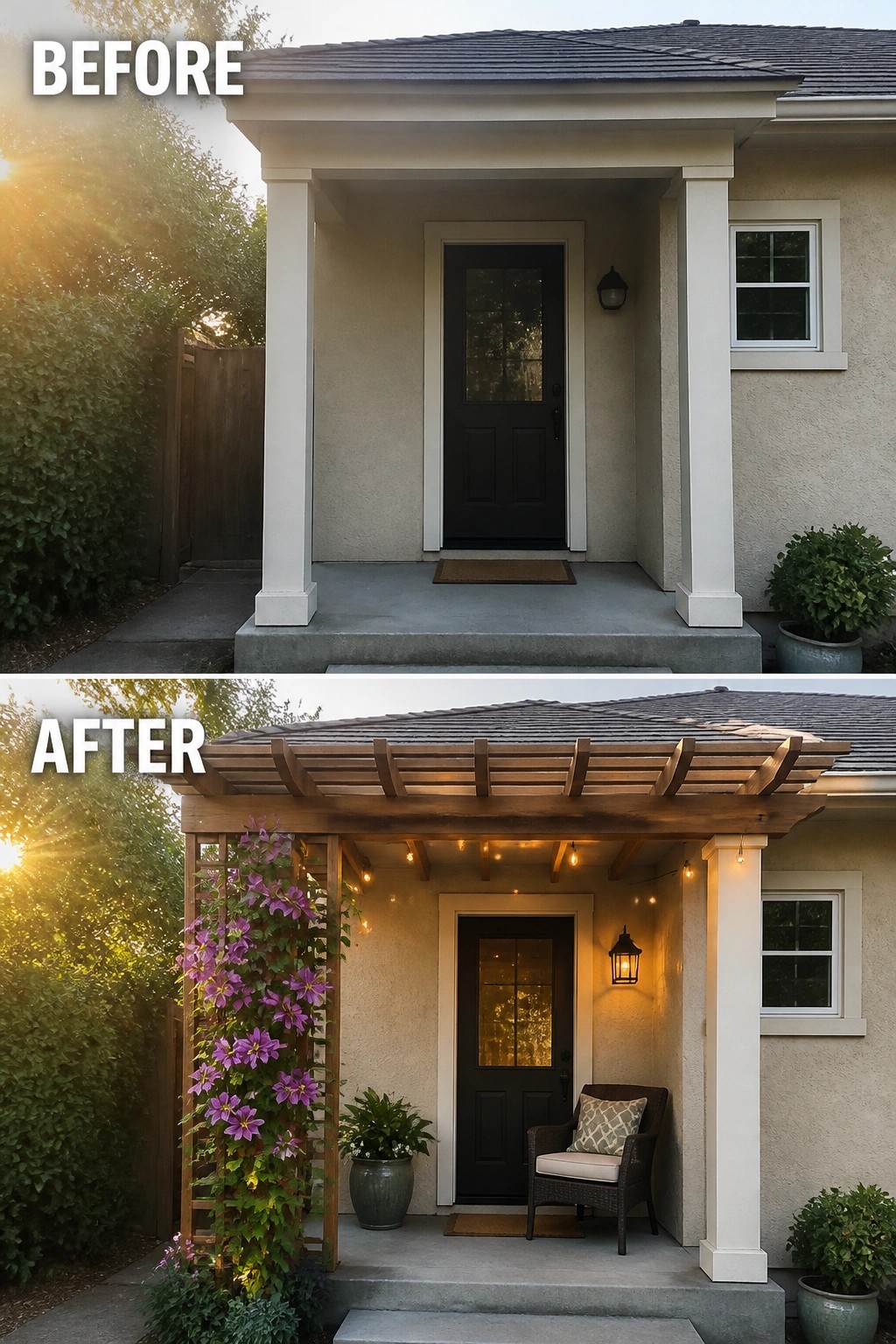
A tiny porch often reads as wasted space until you decide what you want it to do. Adding a simple wooden pergola and a single comfortable chair turns that plain stoop into a clear sitting spot and entry, so the porch feels intentional instead of empty.
Keep the approach small and practical: pick one focal addition like seating, a trellis, or a light, and size it for the porch so the door and steps stay easy to use. Add one or two weatherproof pieces, a potted plant or climbing vine, and a light where you actually sit to make the space usable day and night.
Turn An Empty Porch Into A Seating Area
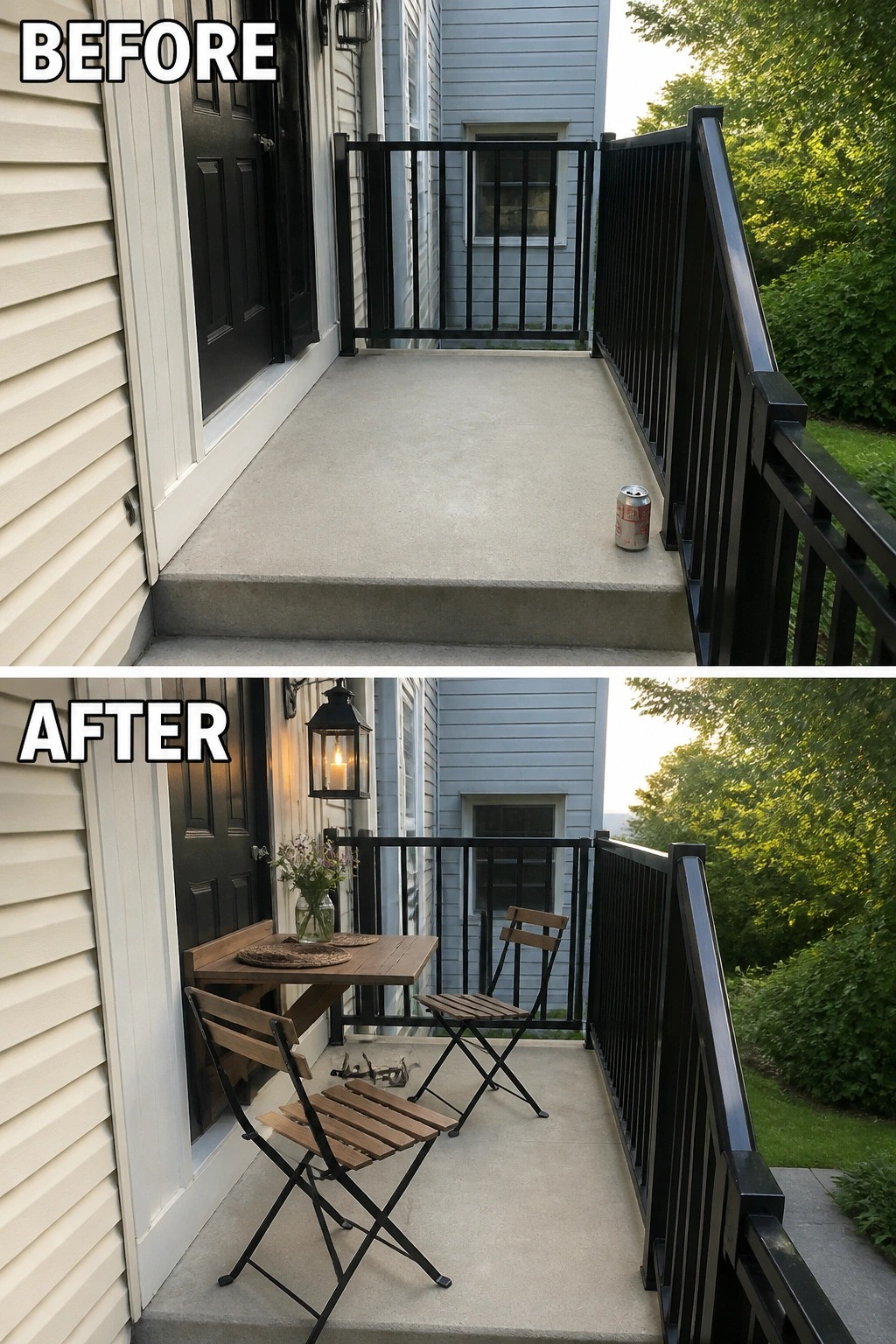
A tiny concrete entry or porch can stop being a halfway space and become a little bistro nook with very small, smart choices. In this example a fold-up table, two slim chairs, and a wall lantern give the porch a purpose without crowding it—suddenly it is a place to sip coffee or set down groceries instead of just a step.
Pick furniture that tucks flat or sits tight against the wall so you can still open the door and walk past. Use a simple wall or hanging light so you do not lose floor space, and choose weatherproof finishes or removable cushions you can store. This works well for apartments, townhouses, or any narrow porch where scale matters—one focal set and a few small accessories are usually all you need.
Define A Small Porch With A Simple Planter And Mailbox
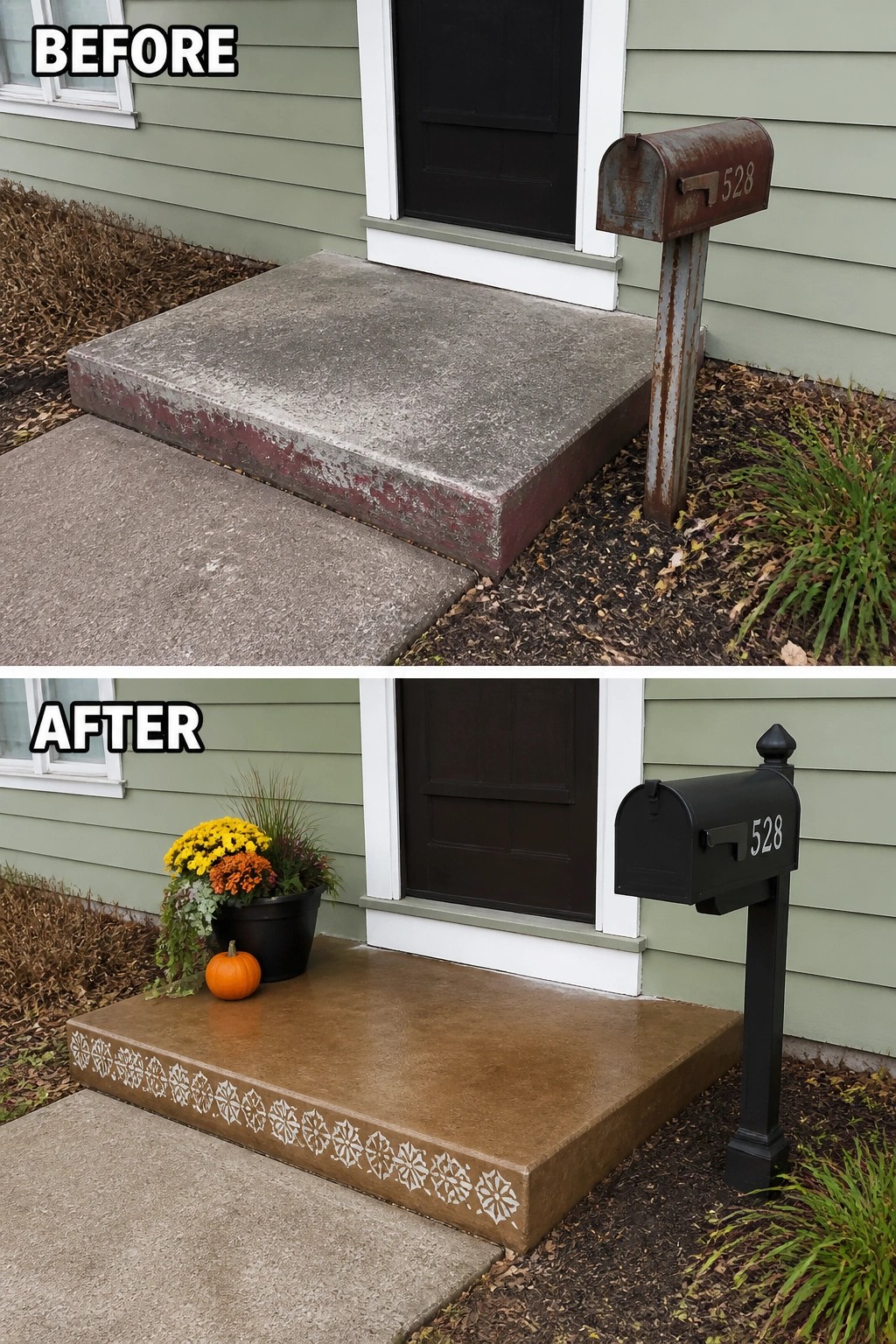
A tiny empty porch becomes useful when you stop treating it like leftover concrete and start treating it as an entry. In this makeover the step was cleaned and stained to look intentional, and a single large planter plus a new mailbox give the space scale and a purpose without crowding it.
Start with cleanup and a quick patch of chips or cracks, then pick a stain or exterior paint that ties into your siding or door color. Add one well-proportioned planter and a small seasonal accent so the porch reads as an entry, not a walkway; keep decorations minimal and leave room for people to step and close the door comfortably.
Frequently Asked Questions
Q: How can I make a tiny porch look larger without doing major construction?
A: Paint the floor and door in light, cohesive colors and choose slim, low-profile furniture so sightlines stay open. Add a mirror or a shiny planter to reflect light and use vertical planters to draw the eye upward. Keep the path clear and limit decor to a few purposeful pieces.
Q: What inexpensive porch updates give the biggest curb appeal boost?
A: A fresh coat of paint on the door, new hardware, and updated outdoor lighting quickly change the first impression. Swap out a tired welcome mat and add a pair of potted plants to frame the entry. Those touches look intentional without costing much time or money.
Q: How should I pick furniture for a narrow porch?
A: Focus on scale and function—choose benches or slim chairs that tuck against the wall and small tables that fold if needed. Don’t pick oversized pieces that block movement; you want space to walk and a spot to sit. A bench with storage lets you hide cushions and keep the porch neat.
Q: Will porch changes make the inside of my small home feel bigger?
A: Yes — keeping colors and materials consistent between porch and entry creates a smooth visual flow that makes rooms feel more connected. Use a glass storm door or add a mirror and layered lighting to bring more light inside (even if you rent). Small exterior tweaks can open up how the whole place feels.