

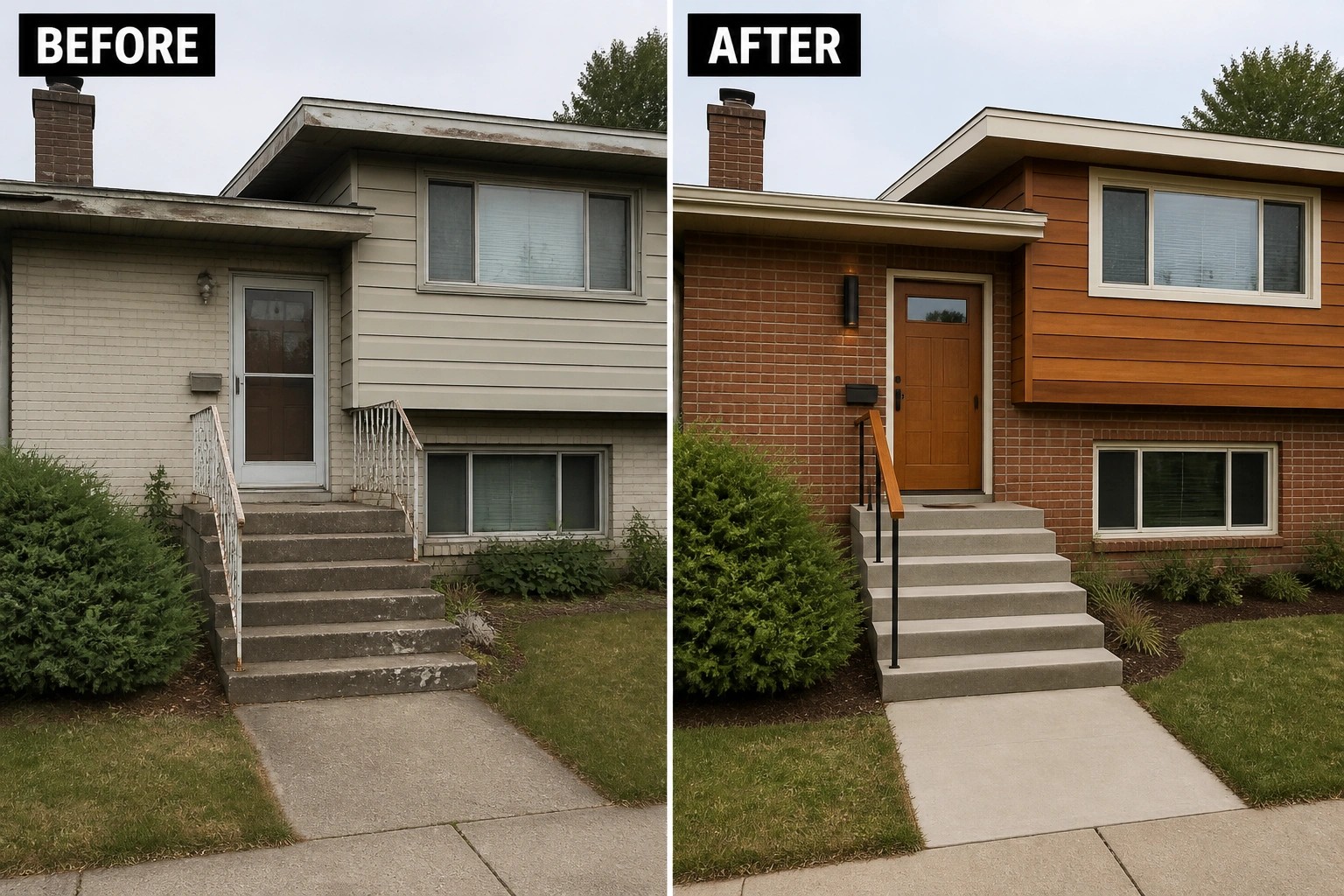
Split-level houses often feel stuck in the past because rooms can be oddly proportioned, low on light, or chopped into small zones that do not flow, so thoughtful updates that respect mid-century details make a practical difference.
I always try to sort layout and lighting before piling on decor, because a room needs to function first for any style to land.
Small moves matter.
My suggestions lean toward opening sightlines, bringing in daylight, and reusing original woodwork or hardware so the house reads intentional rather than dated.
Try one idea in a single zone, see how it fits your daily life, and keep the mid-century character that makes the split level feel like a home.
Make A Plain Facade Feel Welcoming
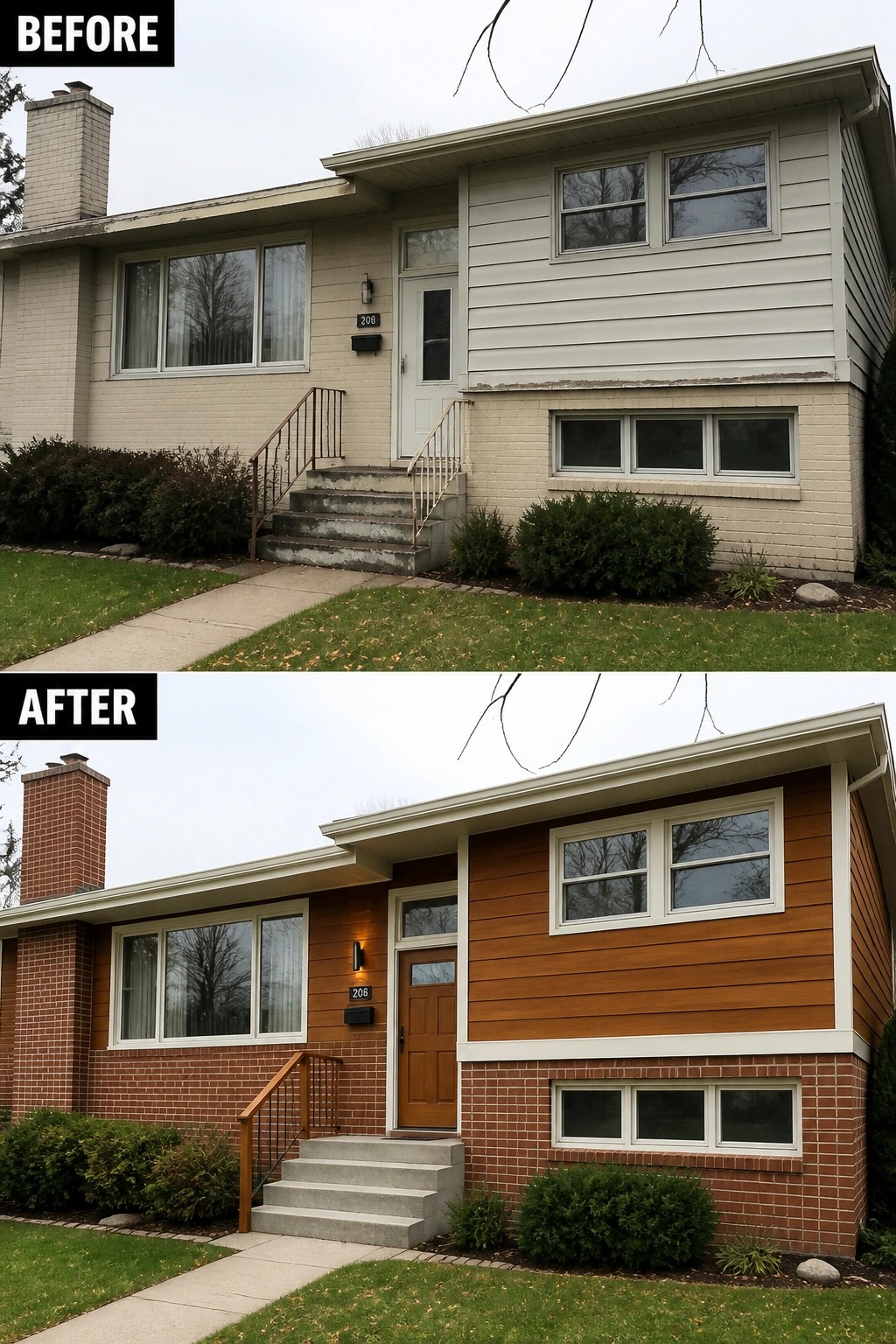
Layering two complementary materials and giving the entry a proper focal point can take a flat, tired front straight to classic mid-century style. Replace a single, monotone cladding with a durable brick base and warm horizontal siding above, then finish the door area with a solid wood-tone door and a simple wall sconce to create a clear, inviting entry.
To copy this, start small: repair or replace the steps and update the railing so the entrance reads as intentional. Choose one strong material for the lower plane (brick or stone) and a coordinated siding for the upper plane, keep trim color consistent, and pick a door stain or paint that repeats the siding tone. This approach suits split-level and ranch houses especially well and gives big curb appeal without overcomplicating the palette.
Replace Worn Carpet With Wood Flooring And A Rug
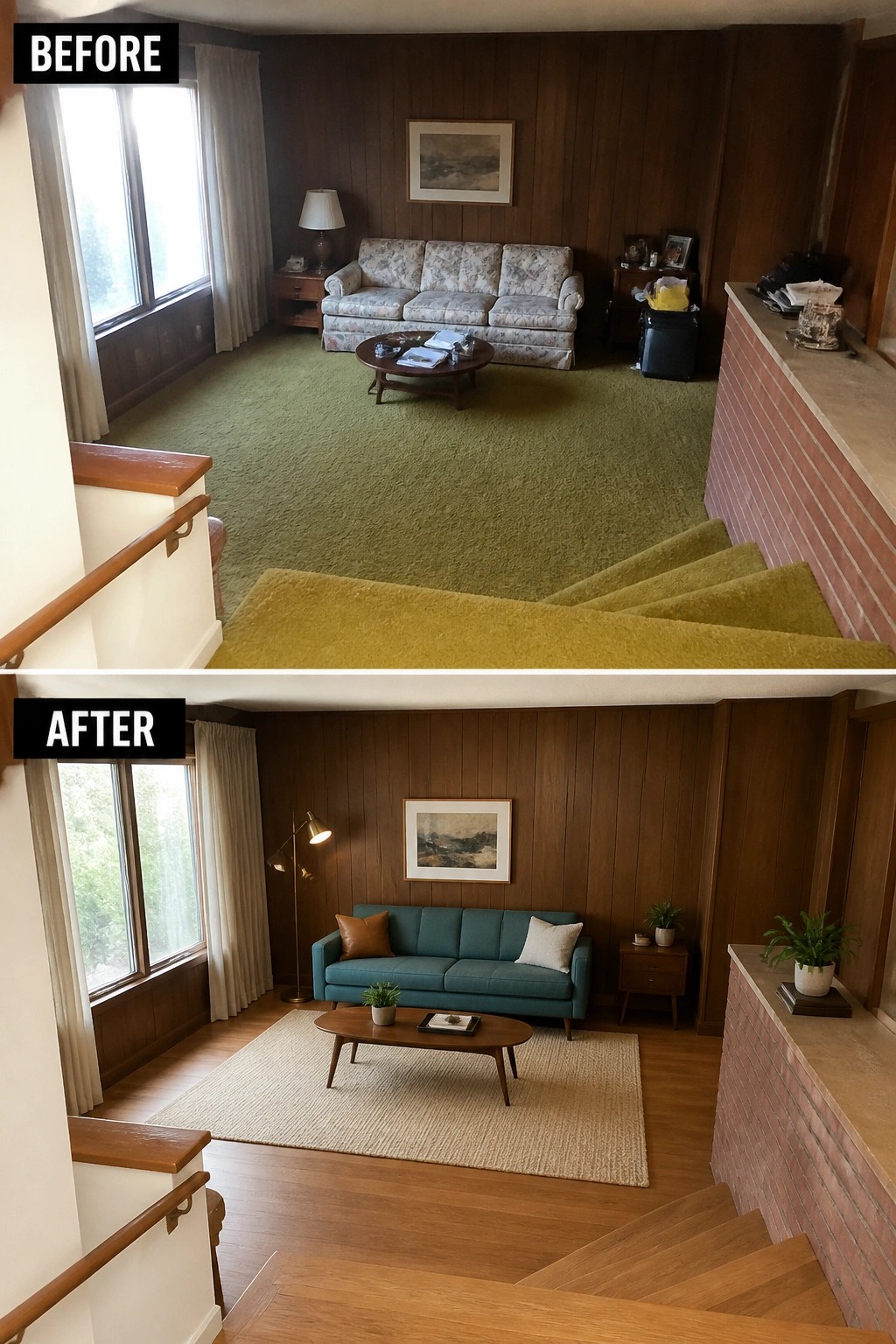
Swapping old wall-to-wall carpet for plank flooring and then anchoring the seating with a simple area rug is a quick way to modernize a split-level while keeping original paneling intact. The change clarifies the room’s layout, makes furniture look intentional, and lets you introduce a single new sofa and a floor lamp without crowding the space.
To try this at home, pull up dated carpet, install a durable wood or wood-look floor, and choose a low-pile rug large enough for the front legs of your seating to sit on. Leave a visible border of floor around the rug so the room reads as layered, not covered, and keep accessories minimal so the architectural details stay visible.
Make The Fireplace Wall The Main Feature
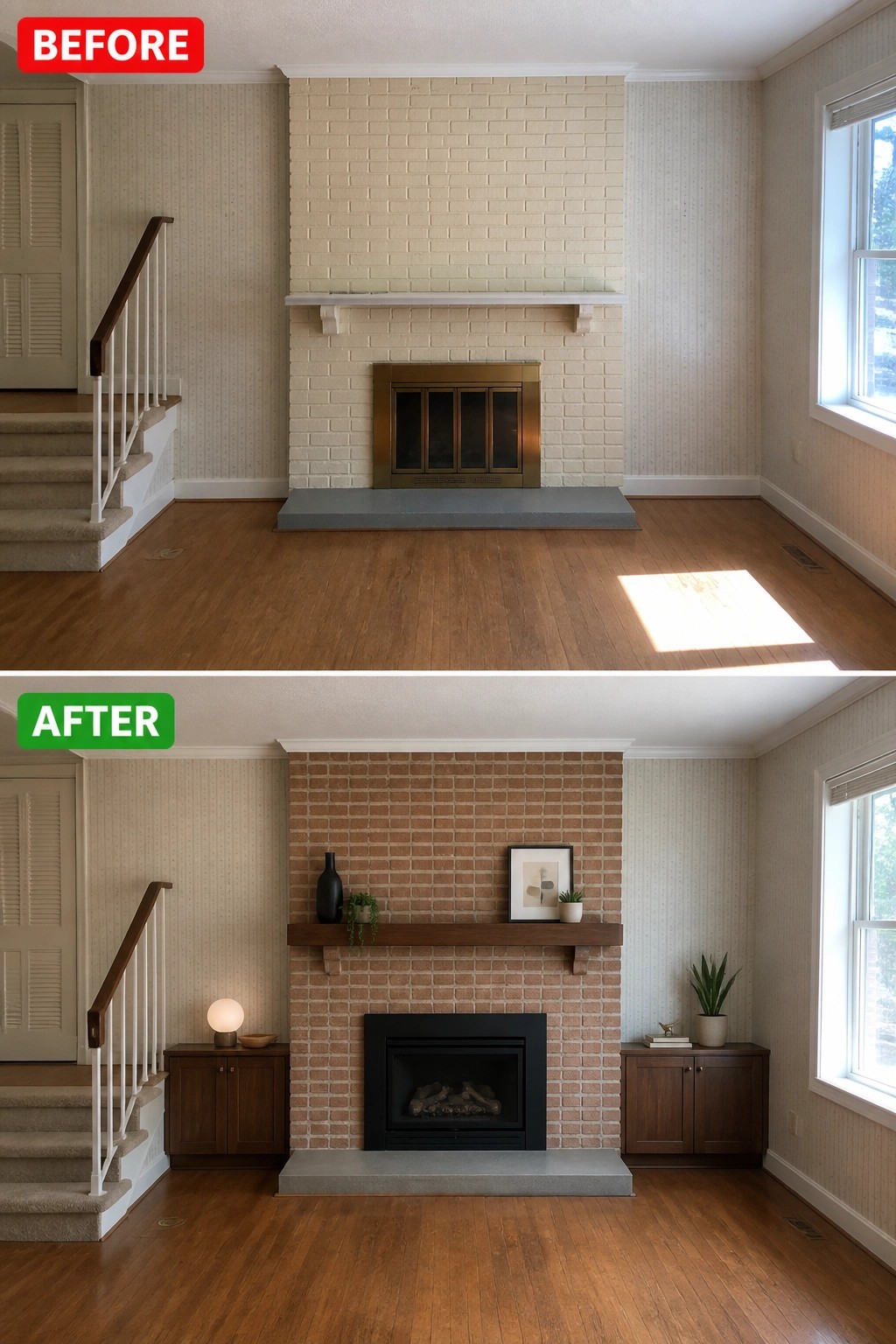
A simple way to upgrade a mid-century split-level is to treat the fireplace wall as the room’s anchor. In this example the pale painted brick and shiny brass surround were traded for a darker, textured brick face, a chunky wooden mantel, and a matte black firebox — a few focused changes that give the whole living room a clearer focal point and more cohesive material palette.
You can copy this idea without a full demo: start by replacing or refacing the insert for a cleaner, low-profile opening, then add a substantial mantel that matches nearby wood tones or cabinetry. Keep the scale proportional to the chimney and don’t overcrowd the shelf — one lamp or piece of art plus a plant is enough. This works best in rooms with original floors or simple layouts where a single strong feature will read naturally.
Make A Plain Living Room Feel Finished
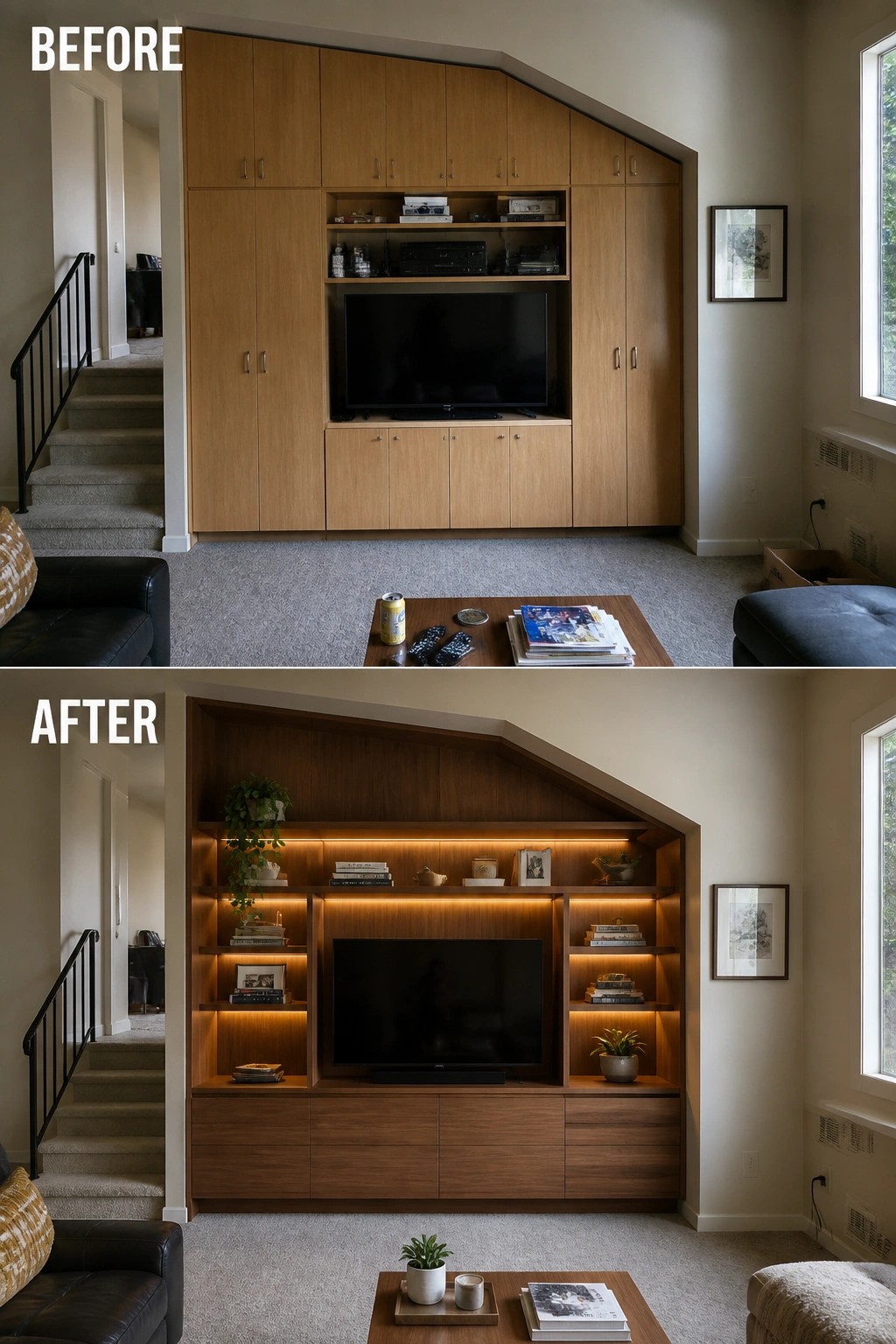
Swapping generic, closed cabinetry for a tailored built-in with open shelving and integrated lighting turns a blank wall into a usable focal point. The change from flat, light wood boxes to deeper walnut shelves with warm LED strips and clean lower drawers brings a more intentional look while keeping plenty of hidden storage for media and clutter.
Do this where you already have a recessed alcove or TV niche and keep proportions simple: low, continuous drawers for everyday storage and narrower shelves above for books, plants, and a few framed pieces. Use dimmable strip lighting so the shelves work day and night, repeat the wood tone in a small accessory or table to tie the room together, and avoid overfilling shelves so the detail stays calm and practical.
Refresh A Split-Level Stair With New Rails And Treads
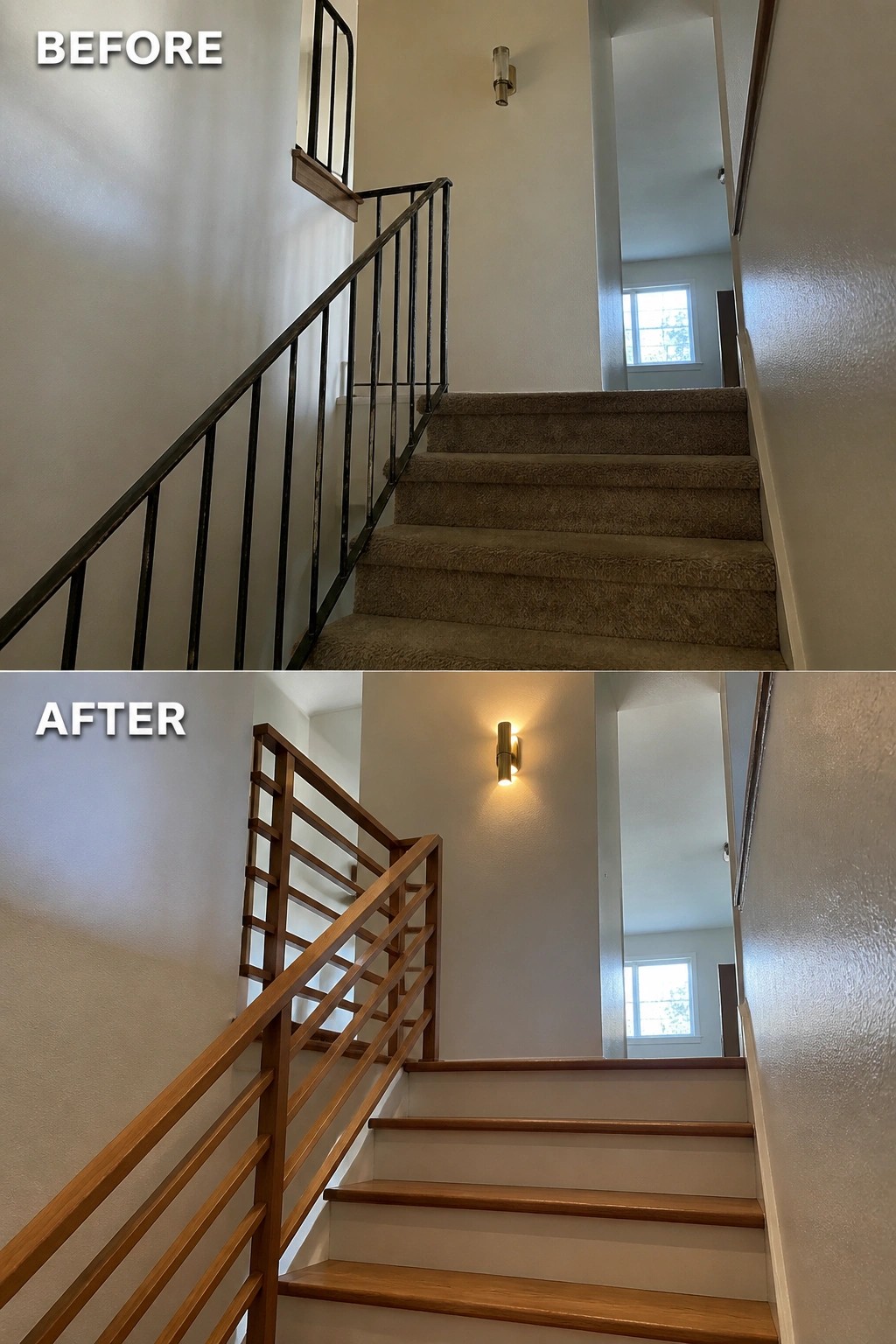
Swapping a thin metal balustrade and wall-to-wall carpet for a horizontal wood railing and finished wood treads modernizes the stair without reworking the layout. The cleaner rail lines and exposed wood steps open the landing visually and echo mid-century horizontal detailing in a way that feels intentional rather than fussy.
This works best on narrow landings and older split-level homes where you want to keep the original floorplan but update the finishes. Match the wood tone to nearby trim, keep risers light to preserve brightness, and consider swapping one light fixture to tie the look together. If you need to spread costs, replace the railing first and refinish or replace treads later.
Make A Plain Basement Feel Finished
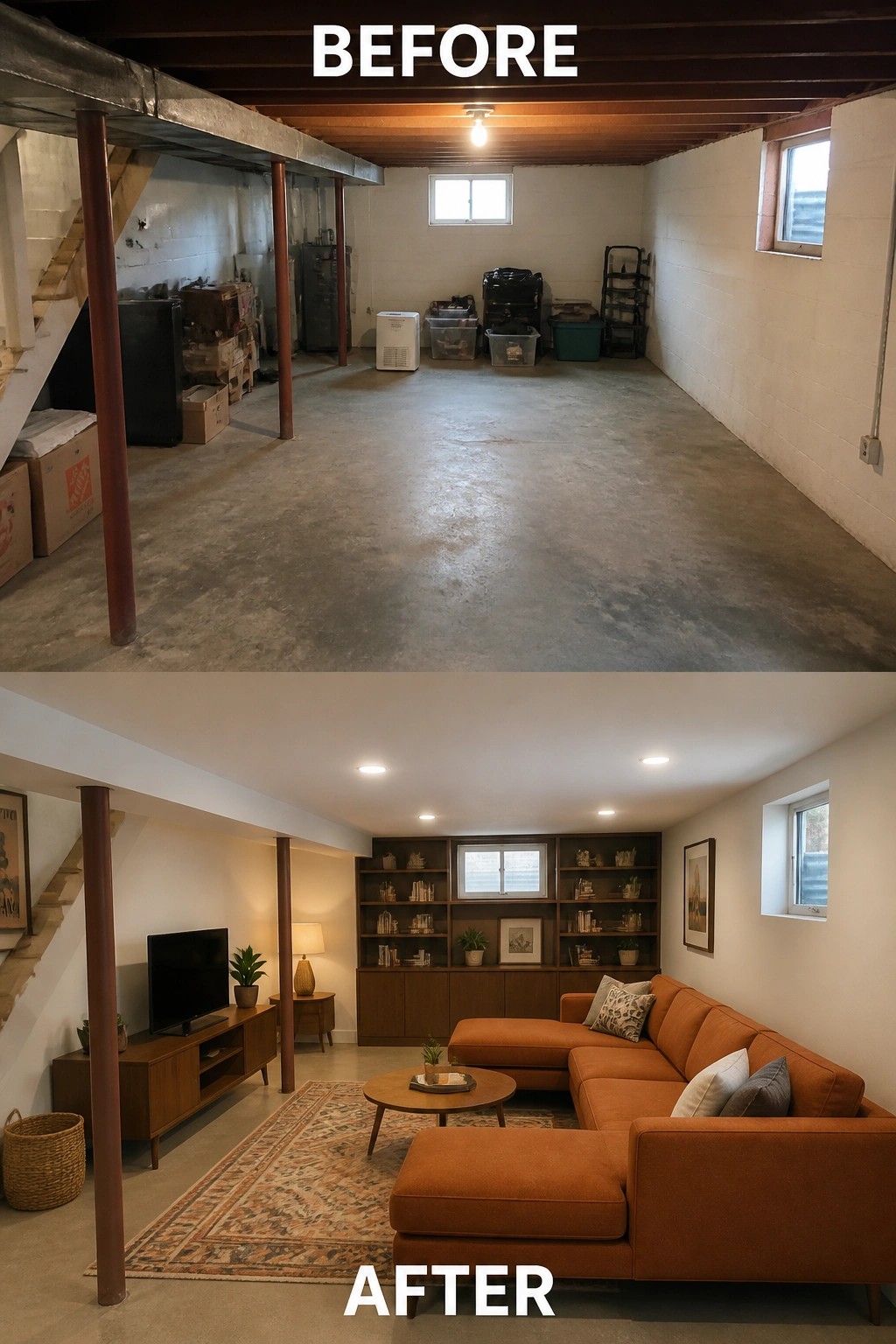
A bare basement becomes usable quickly when you pick one clear purpose and build around it. In this case low built-in cabinets and shelving under the window plus recessed ceiling lights give the space a focal wall and real function, while a large rug and sectional anchor a cozy seating zone instead of leaving raw concrete as the main feature.
Start with lighting. Flush recessed lights will make a low ceiling feel intentional and usable. Add low-profile built-ins or closed cabinets for storage and a display area, then define the seating with a rug and scale-appropriate sofa so walkways stay clear around posts and stairs. Small finishes matter here: keep the soffit and beams painted to match the ceiling and choose furniture that sits low to the floor for comfortable sightlines.
Make A Plain Bedroom Feel Finished
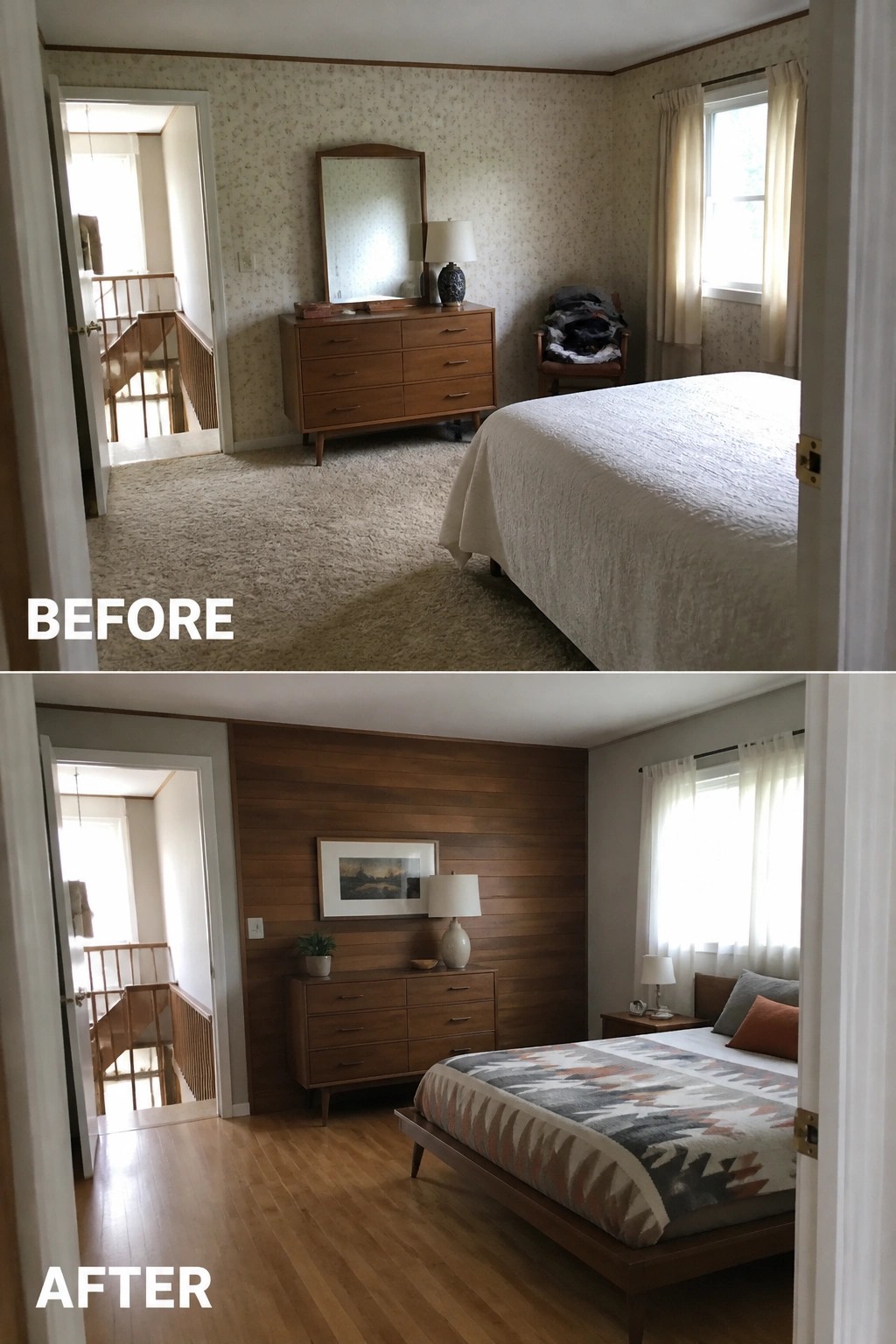
Swapping dated carpet and busy wallpaper for real wood tones gives a small bedroom instant character. In this example the owner kept the original mid-century dresser but replaced the floor and added a horizontal wood plank accent wall to create a single, calm focal point. The result looks deliberate without needing a total remodel.
You can copy the idea in stages: start by removing old carpet and installing engineered hardwood or long plank flooring, then add a single feature wall using tongue-and-groove boards or stained plywood. Keep furniture low and simple, repeat one wood tone or color in textiles, and use light curtains so the room still feels bright. It works best in modest-sized rooms where one clear change can make the whole space feel pulled together.
Brighten A Narrow Hallway With Lighter Floors And Paint
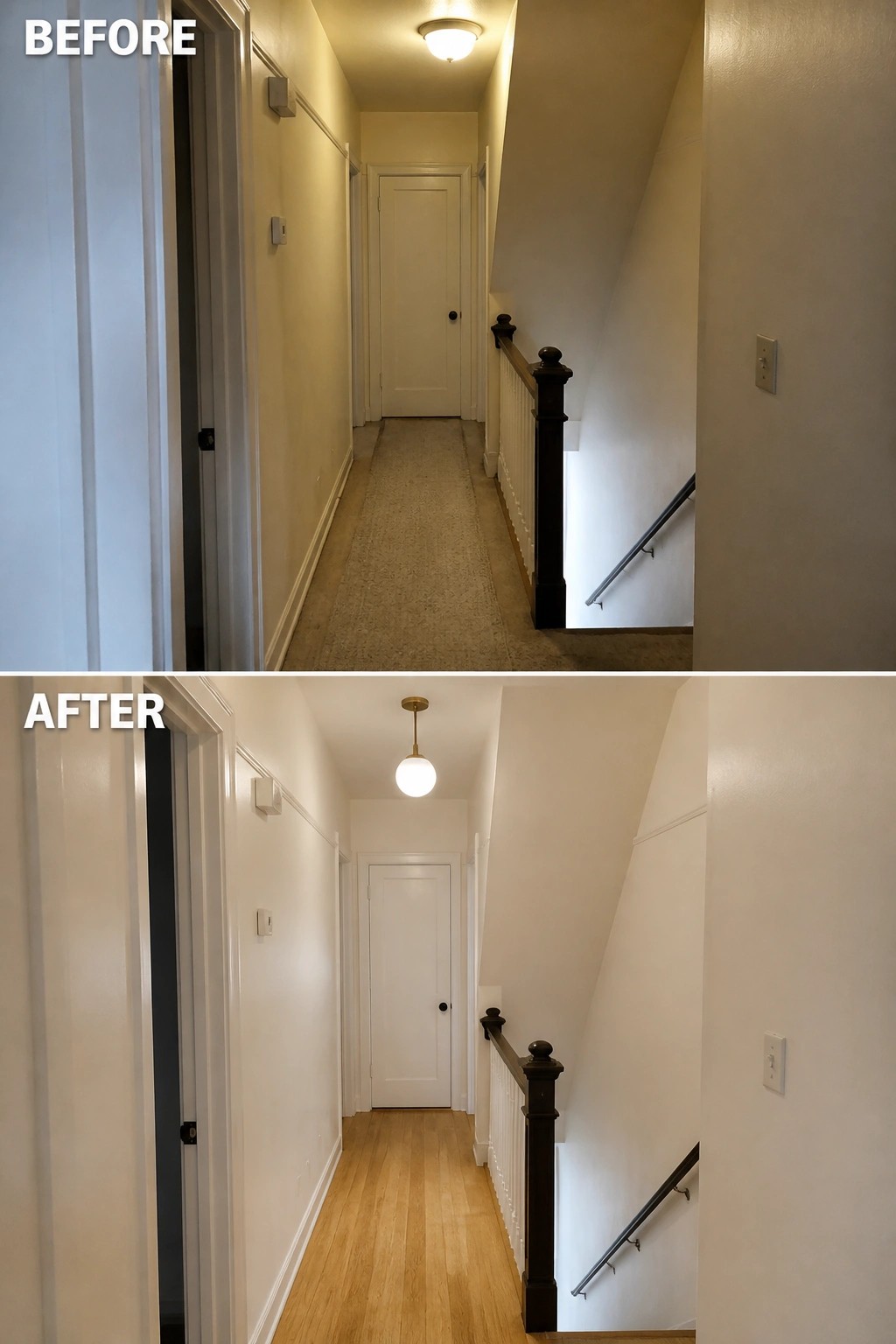
Swap heavy carpet and dingy paint for a light, continuous floor and crisp walls to make a tight upstairs corridor feel wider and fresher. A pale wood floor draws the eye along the length of the hall while white paint reflects existing light, so the space reads less cramped and more modern.
Choose a narrow-plank, light-toned engineered hardwood or bamboo for durability and easy installation, and carry a single white or off-white paint across walls and trim to keep the visual flow unbroken. Keep hardware and fixtures simple—a modest pendant or flush globe and the original railing for contrast—and avoid rugs or too much clutter that interrupt movement through the space.
Make A Plain Dining Nook Feel Finished
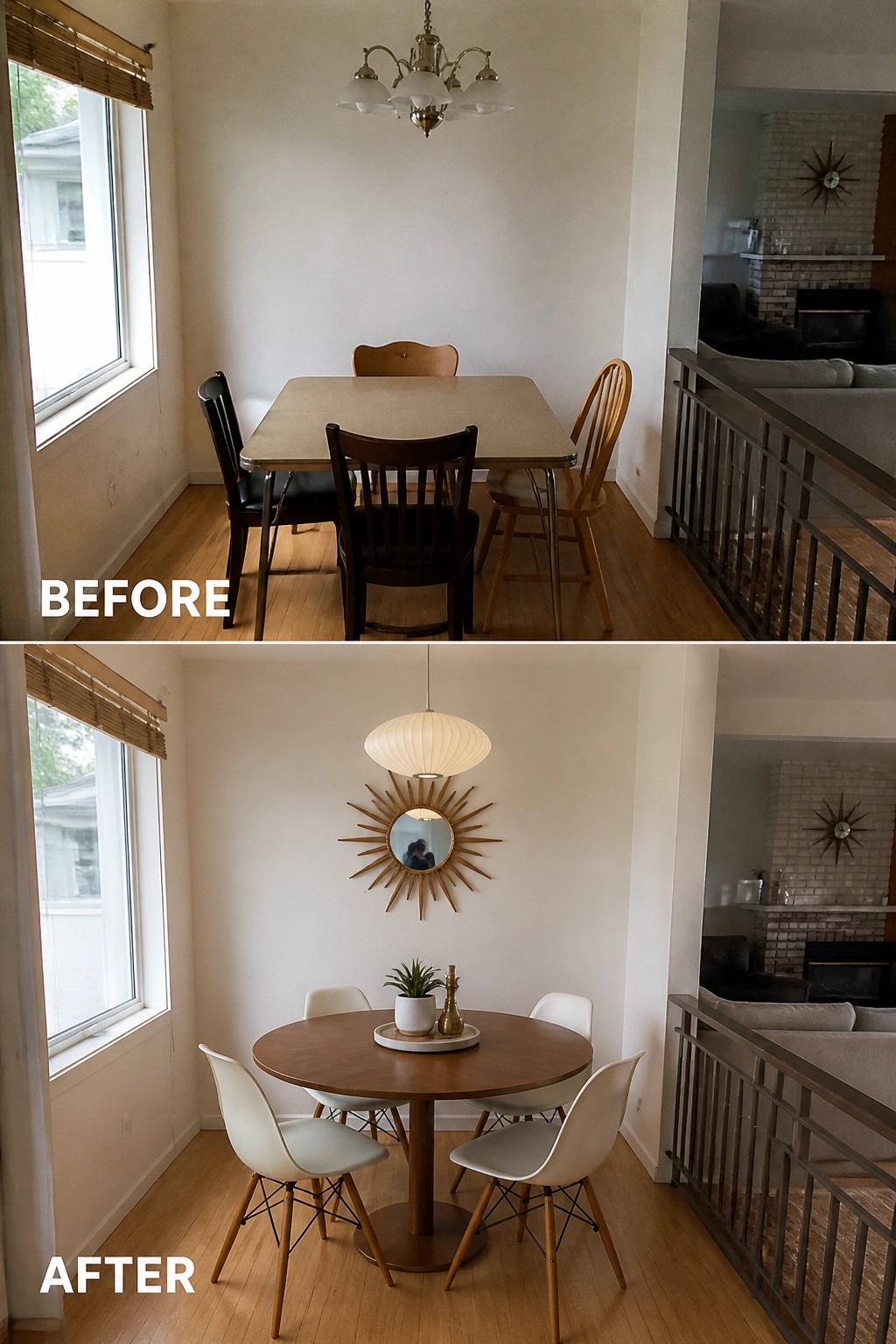
A small dining nook can go from temporary to considered by picking one clear focal setup instead of mismatched hand-me-downs. Here the rectangular table and mixed chairs were swapped for a round wood table with matching modern chairs, and a single pendant plus a sunburst mirror give the wall and ceiling a purpose, so the corner reads as a room, not a leftover spot.
To copy this, choose furniture proportional to the space—a round table often works better in tight corners because it improves circulation—and commit to one or two repeated materials or colors so the pieces look intentional. Add a pendant over the table and a simple wall piece to lift the eye, then keep accessories minimal so the nook stays usable and easy to move around.
Turn An Empty Patio Into A Seating Area
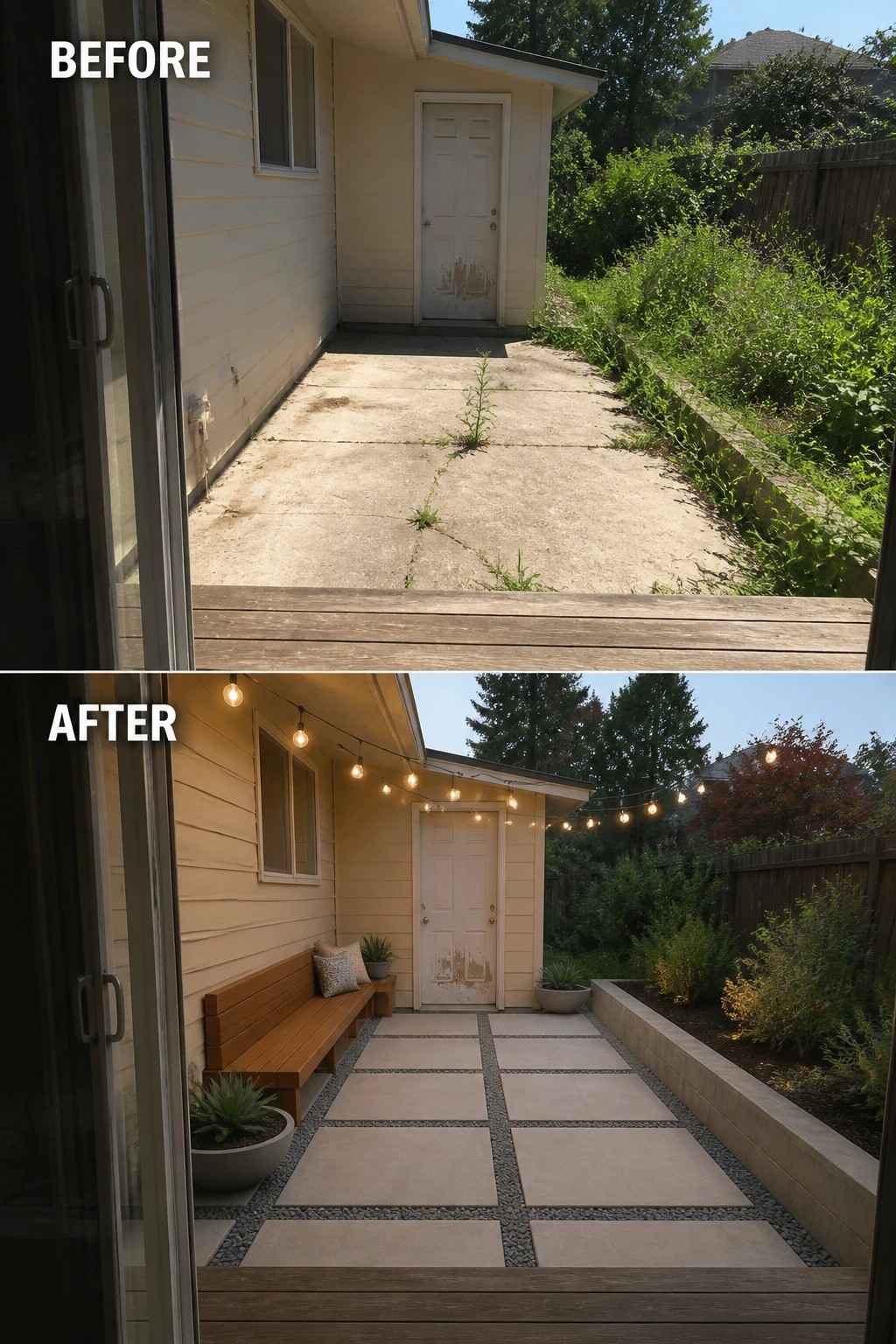
A plain concrete pad becomes useful fast when you give it a simple layout and a place to sit. Swap the formless slab for large square pavers set in gravel joints to read as a tiled patio, add a low wooden bench against the wall, and hang a strand of bulbs overhead. The paver grid breaks up the space and the bench instantly gives the yard a purpose without crowding it.
This approach works well in narrow side yards or small back patios where you want a neat, low-maintenance outdoor room. Start by clearing weeds and leveling the base, then use large-format pavers so you don’t need many seams; fill the gaps with pea gravel for drainage and a clean look. Keep furniture scaled to the width, add one or two planters for softness, and use string lights or a single lantern so the space feels usable in the evening.
Give A Bare Porch A Clear Purpose
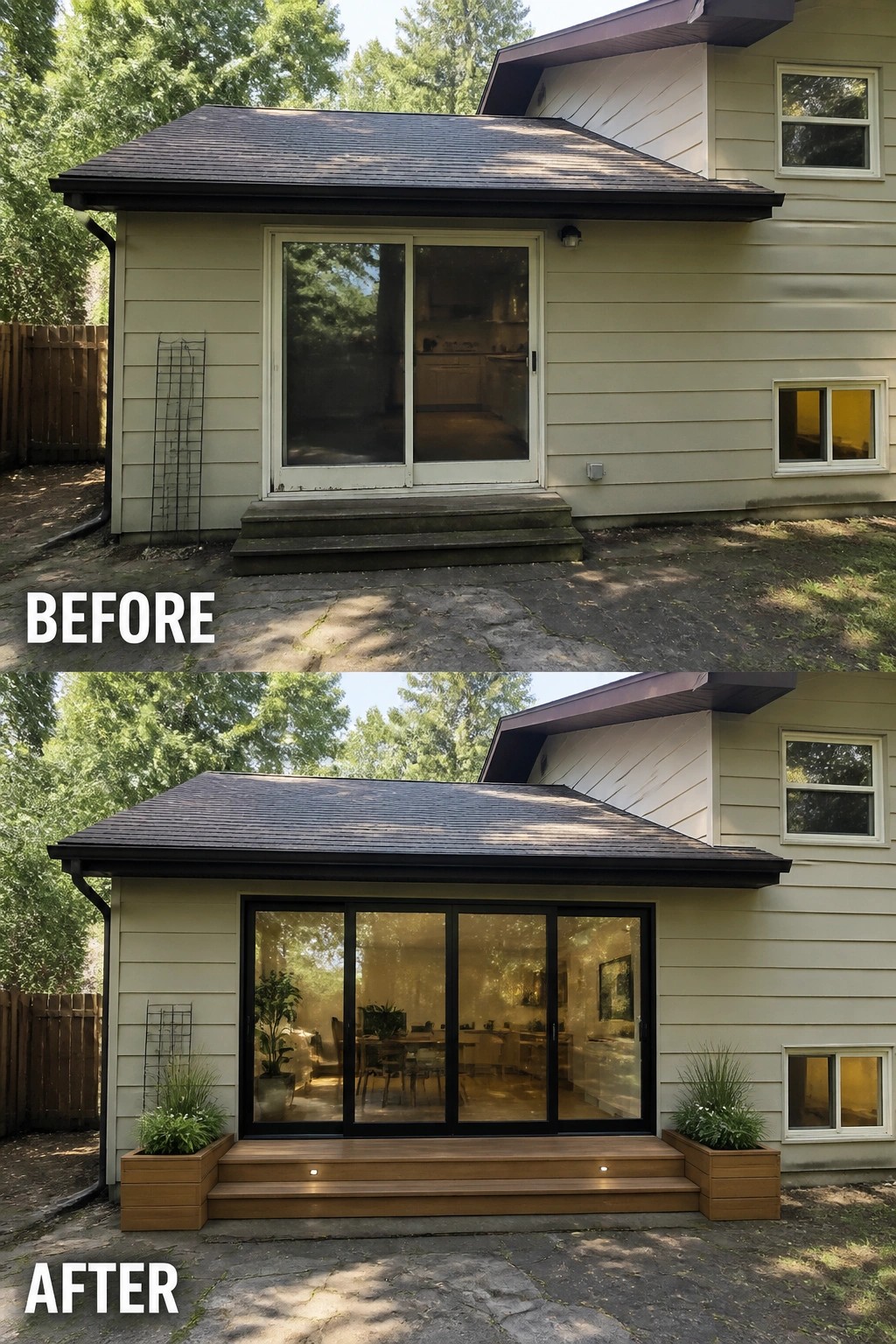
A small, purposeful stoop can turn an awkward back entry into a real outdoor landing. Here the plain concrete and dated sliding door are updated with a low wooden platform that steps up to black-framed glass doors, plus built-in planter boxes and recessed step lights to make the doorway read as intentional rather than leftover space.
To copy this idea, keep the scale modest so the new platform feels like an add-on, not a rebuild. Use rot-resistant decking or composite, frame the door in a darker color to create contrast, and tuck planters and low lights into the steps so the area works day and night. Works especially well on mid-century split levels where simple horizontal lines keep the change sympathetic to the original house. Simple, effective.
Make The Entry Functional With Built-In Storage
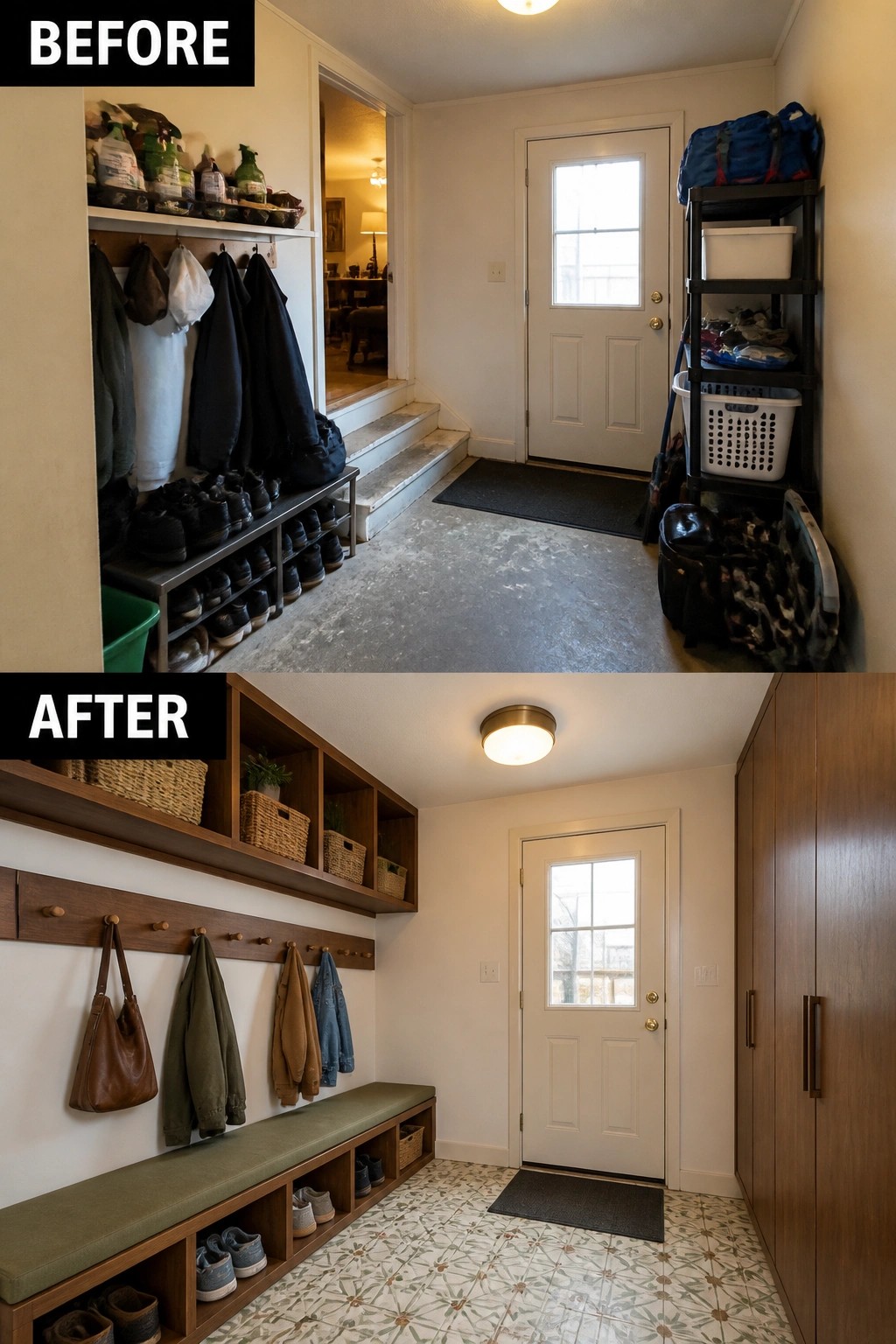
A narrow entry can stop feeling like a drop zone when you give it purpose with a simple run of built-ins. Replacing mismatched shelving and floor clutter with a low bench that hides shoe cubbies and a tall, closed cabinet keeps daily items out of sight and gives the space a single, useful function.
To copy it, start by clearing the wall you want to use and measure for a bench about 15 to 18 inches deep so it still leaves a clear path. Plan a mix of open cubbies for everyday shoes, hooked pegs at an easy height for coats, and at least one closed cabinet for seasonal gear; choose durable flooring at the door so the area stands up to traffic and looks finished.
Refresh Siding And Trim For Instant Curb Appeal
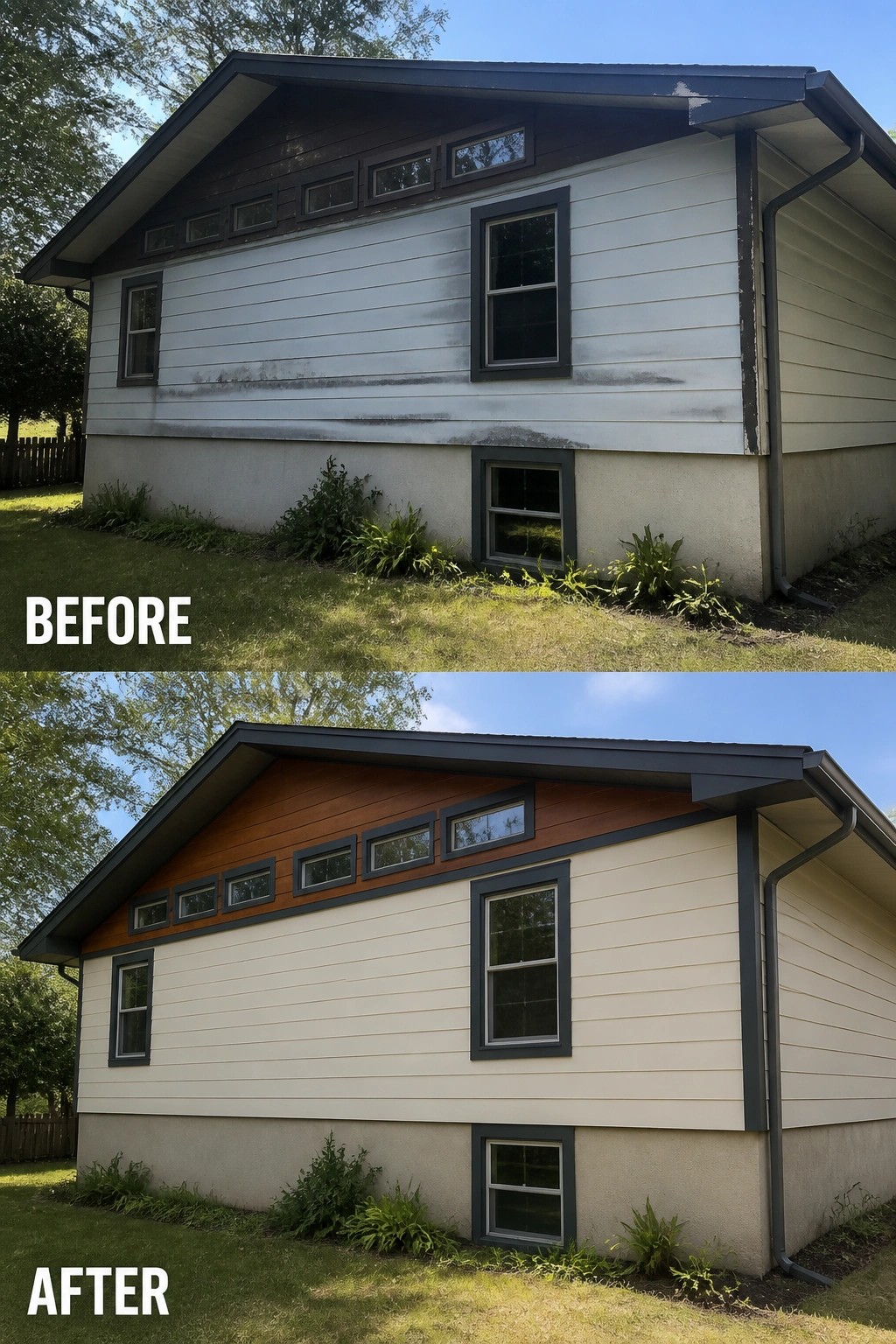
A simple paint-and-trim update can modernize a split-level without erasing its mid-century character. In this example the worn white siding and dark, peeling trim were cleaned up and repainted in a soft cream while the gable was finished in a warm stained wood and the window trim was sharpened in a contrasting dark gray. The house keeps its original lines but reads fresher and more intentional.
Start with a good cleaning and minor siding repair, then pick a two-color scheme: a neutral body and a stronger trim to frame windows and rooflines. Add one material accent (here a stained gable) to bring back mid-century texture without overdoing it. Works best on homes with horizontal siding and simple rooflines—keep the palette tight and the trim consistent so the update looks deliberate, not piecemeal. (Start small.)
Create A Welcoming Front Porch Entry
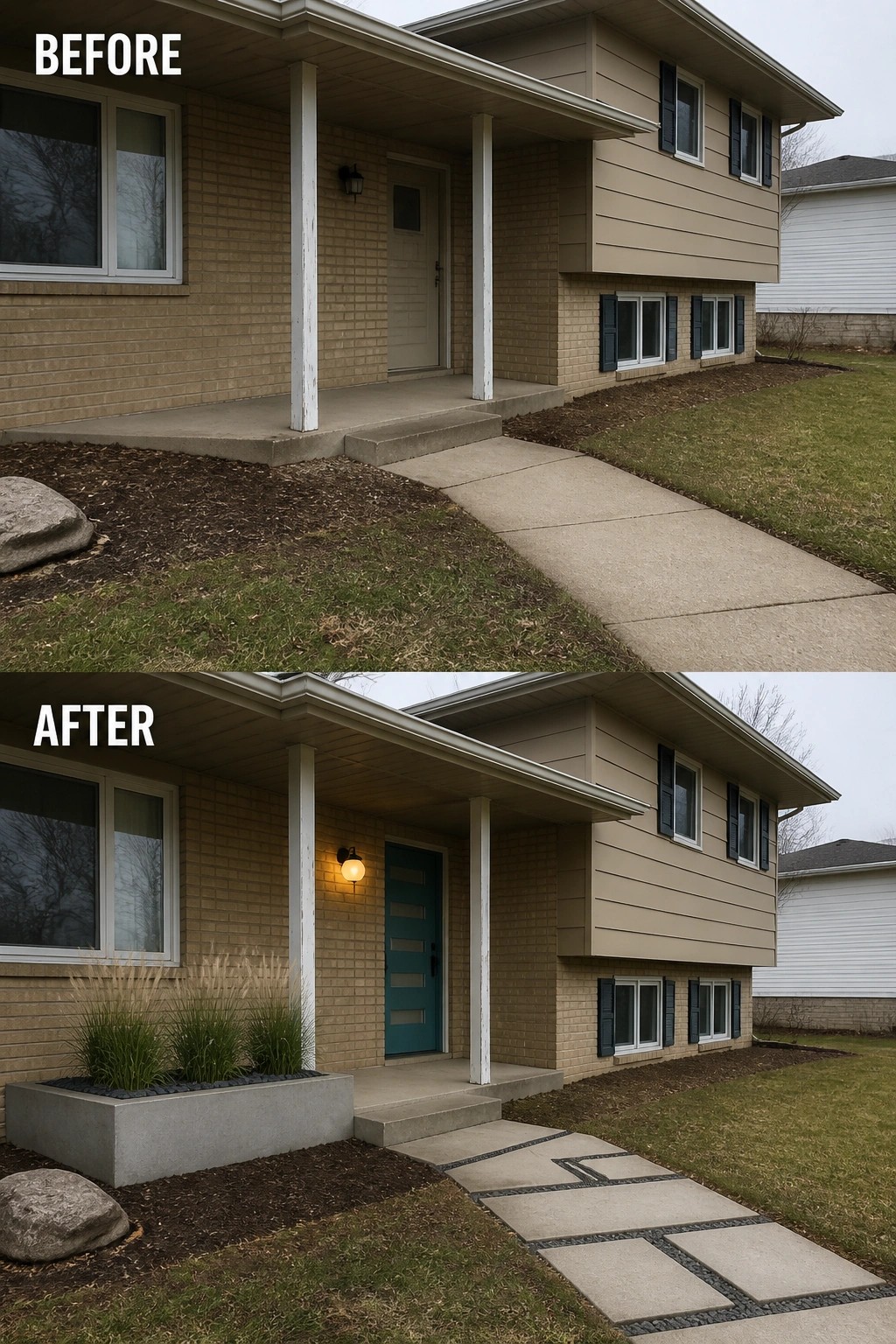
A simple entry refresh can take a forgettable porch and make it feel intentional. Pick one clear focal change—here, a modern painted front door paired with a large concrete planter—and use matching, minimal accents like a single wall light or a defined path to support it. That small focus turns the porch from an afterthought into a purposeful arrival.
To copy this, start with cleanup and one bold choice (a door color or a big planter) rather than lots of little bits. Add one weatherproof light near the door and a simple geometry to the walkway so the eye has a route to follow. This approach suits split-levels and other mid-century homes because it respects the original lines while giving the entry a readable, livable purpose.
Use Terraced Beds To Tame A Steep Front Slope
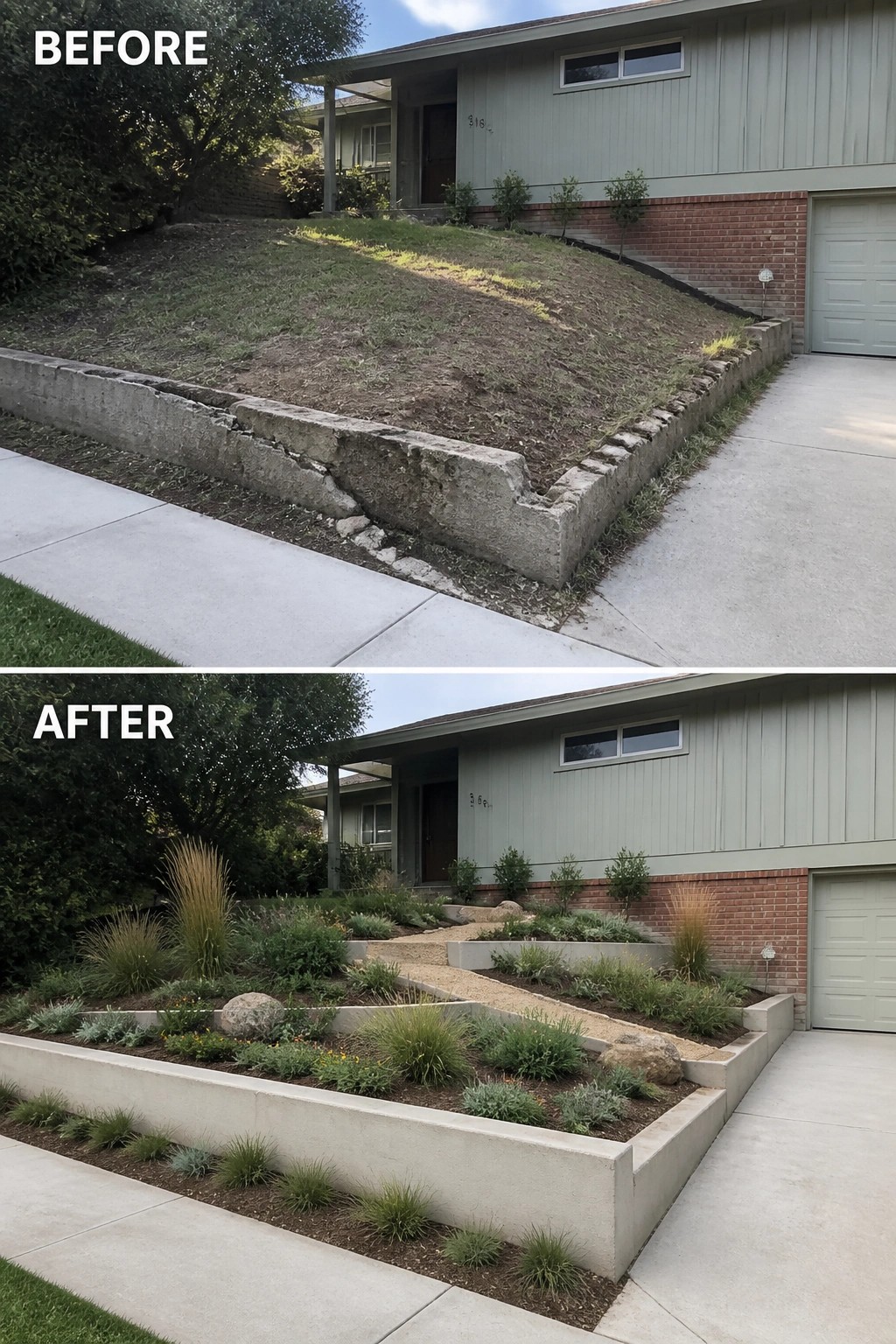
Turning an awkward, bare hillside into a series of low, terraced beds instantly makes a front yard feel intentional. Replacing a crumbling retaining wall with clean stucco planters and a simple gravel path organizes the slope into usable planting zones, reduces erosion, and gives the house a neater, mid-century-friendly edge.
This approach works well on split-level or sloped properties where mowing and maintenance are a pain. Keep the terraces shallow and repeat one or two plant types (think drought-tolerant grasses and small shrubs) so the slope reads as a unified composition. Add a narrow path for access, plan for basic drip irrigation, and match the wall finish to the house for a cohesive, low-upkeep result.
Create A Defined Hedge Bed And Add Low Lighting
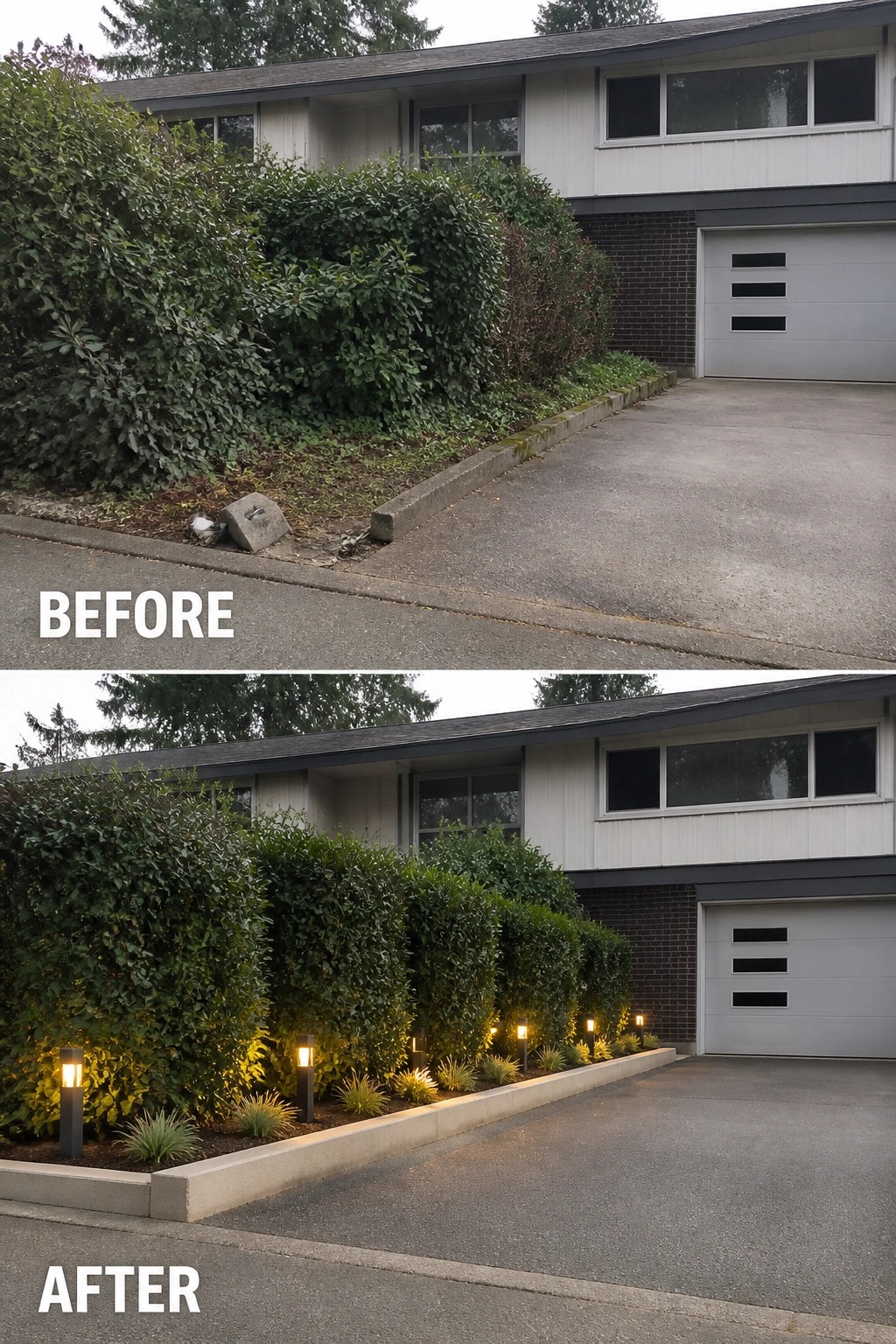
Cleaning up an overgrown planting strip by giving it a crisp edge and simple underplanting makes a big difference for a split-level facade. In this example the messy shrubs were replaced with neatly trimmed hedges set behind a low concrete curb, and a line of short bollard lights was added to highlight the bed and driveway edge. The result reads as intentional rather than neglected.
Do the work in this order: clear the overgrowth, install a low hard-edge (concrete, stone, or timber) to hold soil and mulch, then plant a repeated hedge with low ornamental grasses or groundcover in front. Add weather-rated, low bollard lights spaced evenly to lift the bed after dark. This approach suits long, narrow planting strips and mid-century facades where simple, repeated plantings and clean lines keep the look period-appropriate and easy to maintain.
Frequently Asked Questions
Q: Can I open up rooms in a split level without losing mid-century character?
A: Yes. Focus on preserving original sight lines and ceiling planes while removing non-structural partitions, and keep or replicate original trim and built-ins so the house still reads like mid-century.
Q: How do I update a dated kitchen but keep that mid-century vibe?
A: Replace overly ornate cabinets with flat-front or simple veneer ones and pick a restrained color palette that nods to the era, while putting in modern appliances that tuck into the layout rather than dominate it (try warm walnut tones).
Q: Are new windows going to ruin the look of a mid-century split level?
A: Not if you match the original proportions and muntin patterns and choose slim-profile frames that read like the originals; you’ll get better performance without losing character.
Q: What’s one quick thing I can do to make the house feel fresh without a big budget?
A: Refinish or stain existing wood trim and switch out light fixtures and hardware for cleaner, period-friendly styles to make the whole place feel updated and faithful to mid-century design.