

Some links on this page are affiliate links (for example Amazon). If you buy through them I may earn a small commission, at no extra cost to you. How this works.
Some houses look expensive from the street even when they are not, and others look tired even after an expensive renovation. Color is a big part of the difference. High-end exteriors tend to follow a handful of principles: a restrained palette, colors with depth rather than brightness, and careful coordination between siding, trim, roof and door.
This guide covers the color schemes that consistently look polished, why they work, and the small details that lift a house further.
What makes a color look “expensive”
- Depth. Slightly grayed, complex colors (a navy with a touch of black, a green with gray in it) look richer than bright, clean versions.
- Restraint. Two or three colors on the whole exterior, not five.
- Contrast with purpose. Clear contrast between siding and trim or windows, used to highlight good architecture.
- Coordination with fixed materials. The roof, stone, brick and windows all look like they were chosen together.
Color schemes that work
Soft white with black windows and trim
The modern farmhouse look has been everywhere for a reason: a warm or soft white with black window frames and minimal trim looks clean and architectural. Keep the white soft rather than stark, so it does not glare in sun. Natural wood on the porch or door adds warmth.
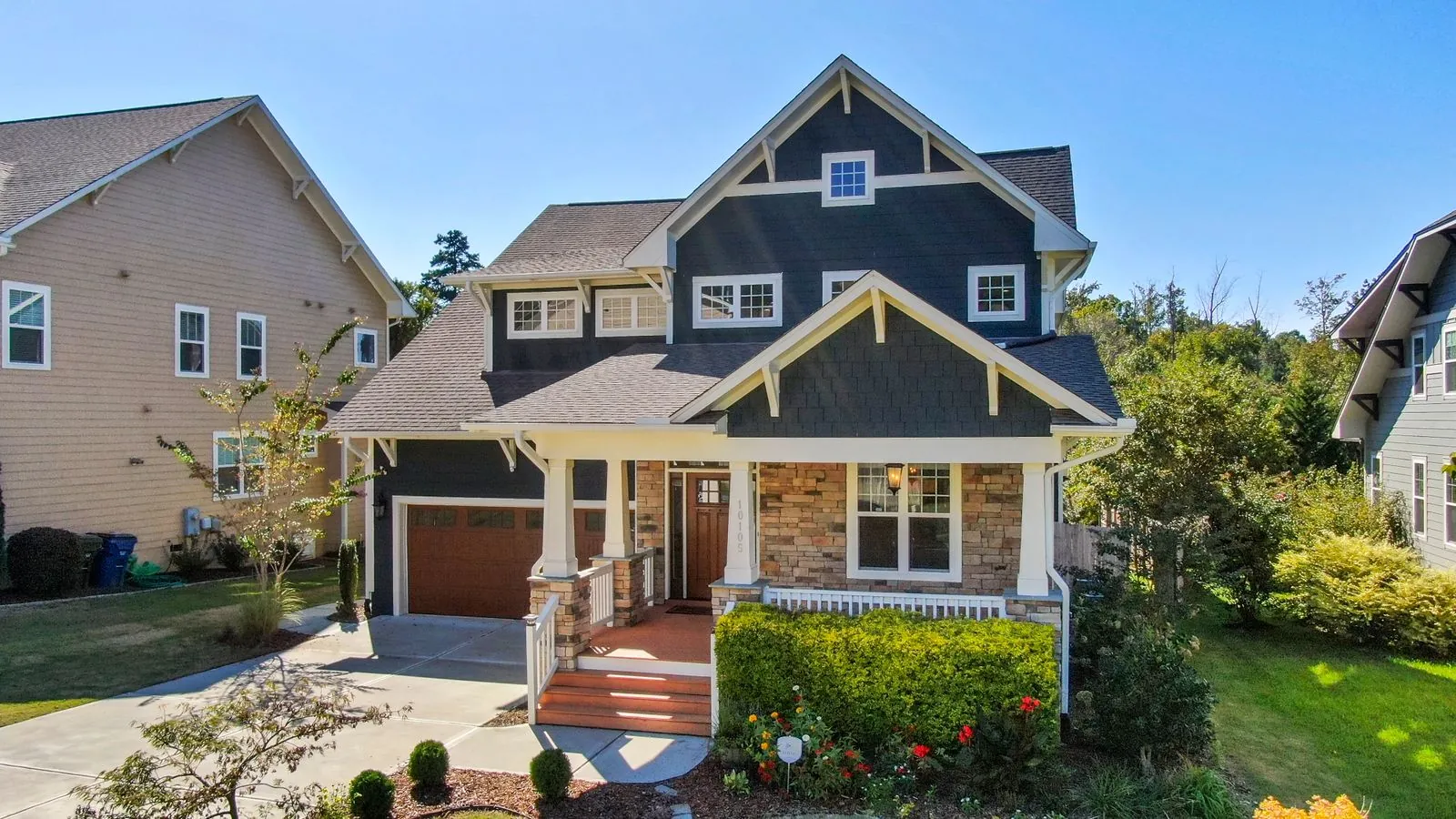
Deep navy with crisp white trim
Navy siding with white trim and a black or charcoal roof looks tailored and classic. It suits colonial, craftsman and coastal styles. Brass or black hardware and a natural wood or red door finish the look.
Charcoal or black with wood accents
Dark houses look modern and confident, especially on simple forms and wooded lots. Wood soffits, cedar accents or a warm wood door keep them from feeling severe. On vinyl siding, check that dark colors are rated for vinyl to avoid warping.
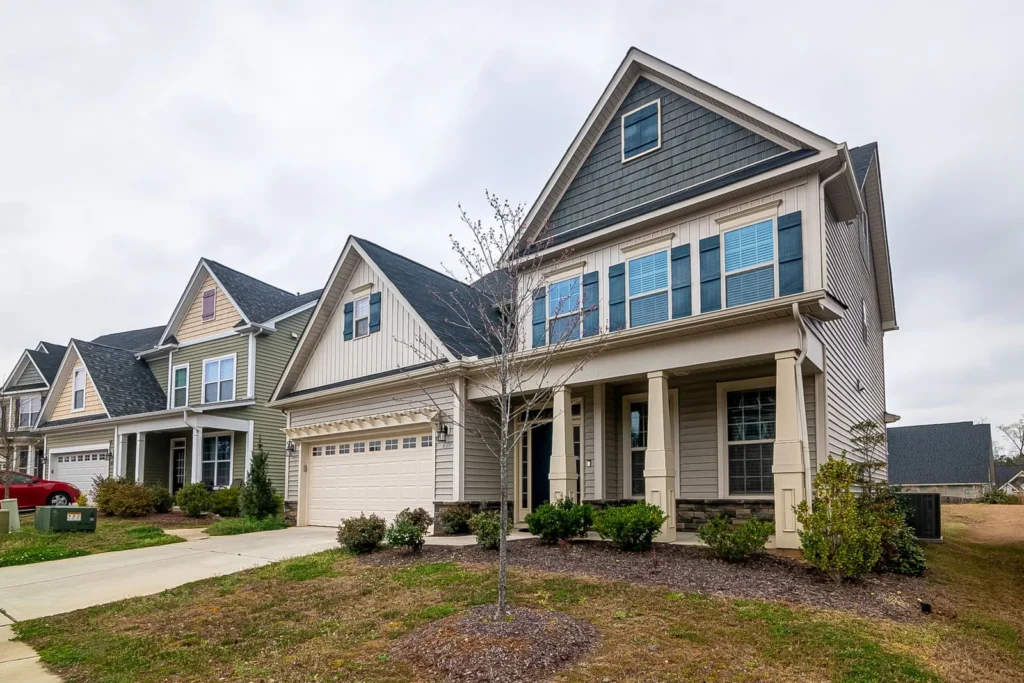
Greige and taupe with off-white trim
Warm grays and soft taupes are quiet, flexible colors that work with brown and black roofs and with stone. They look expensive when the trim and door are carefully chosen, and dull when everything blends together. Add contrast with a darker door and black fixtures.
Muted green
Sage, olive and deep green suit cottages, craftsman homes and houses surrounded by trees. They feel settled and natural. Pair with cream trim and wood or black accents.
Colors that can look cheaper
No color is off-limits, but these are harder to make look high-end:
- Very bright, saturated colors across the whole house. Save them for the front door.
- Too many colors. Different colors on siding, trim, shutters, door, gutters and foundation can make a house look busy.
- Mismatched undertones. A cool gray siding with a cream trim and a brown roof rarely looks intentional.
- Glossy finishes on siding. A low-sheen finish on walls looks more refined. Save gloss for doors and some trim.
Coordinate the fixed elements
Your roof, stone or brick and windows are expensive to change, so build the palette around them. Our guide to matching roof shingles to your house color walks through undertones, and our guide to what color trim goes with a white house covers trim choices in detail.
Small details that look high-end
Color gets you most of the way. These details finish the job:
- Matching gutters and downspouts to the trim or siding so they disappear.
- A painted or stained front door in a deep color, with good hardware.
- Exterior lighting sized correctly for the door, usually about a third of the door height for wall lanterns.
- House numbers that are large enough to read and match the hardware finish.
- Tidy landscaping with a clear path to the door.
You can see many of these ideas in practice in our exterior paint before-and-after ideas and our front door makeover ideas with statement hardware.
Test before you commit
- Paint large sample boards and look at them against the house at different times of day.
- Look from across the street; exterior colors look lighter and brighter at a distance than on a chip.
- Check your HOA rules if you have one.
- Drive around your area and photograph houses you like. Many paint stores can match a color from a photo as a starting point.
A quick way to build a palette that looks high-end
If you are starting from scratch, this four-step method keeps choices under control.
- Start with what you cannot change. Note the roof color, stone or brick, window frames and driveway. Decide whether they lean warm (browns, tans, red brick) or cool (charcoal, black, gray stone).
- Pick the main body color in the same temperature family. For a charcoal roof, think soft white, navy, deep green or charcoal. For a brown roof, think warm white, cream, greige or olive.
- Choose one trim color that contrasts clearly with the body, usually white, off-white or near-black. One trim color for fascia, window casings and corner boards keeps the house tidy.
- Add one accent, usually on the front door. This is where a deeper, bolder color belongs.
That gives you three colors plus the roof, which is the restraint that makes houses look considered.
Finish and sheen matter
The same color can look cheap or expensive depending on the finish:
- Siding: flat or low-sheen finishes hide surface imperfections and look softer.
- Trim: satin or semi-gloss gives definition and is easier to clean.
- Doors: semi-gloss or high-gloss on a well-prepared door looks rich, especially in deep colors.
Quality matters too. A better exterior paint usually covers more evenly, resists fading longer and needs repainting less often, which saves money over time. Prep, including scraping, caulking and priming bare wood, makes even more difference than the brand.
Think about the whole street
Look at the houses around yours. A house that coordinates with its neighbors while still standing out looks deliberate. A very different color can look out of place, especially in a street of similar houses.
Frequently asked questions
Is white the safest expensive-looking color?
White is a classic, but the exact white matters. Warm, slightly softened whites usually look better outdoors than bright, stark whites.
Do dark houses get hotter?
Dark colors can absorb more heat in strong sun. In very hot climates, consider a lighter body color with darker accents instead.
What is the most timeless exterior color?
White and soft off-white, with dark trim or a dark roof, have looked good on many styles of house for a very long time.
Do dark houses look more expensive?
They can, on simple, modern architecture with good materials. On a house with lots of detail, a lighter color usually shows off the details better.
Is it worth repainting before selling?
A clean, neutral, well-coordinated exterior usually helps a house make a good first impression. Talk to a local agent about what buyers in your area expect.