

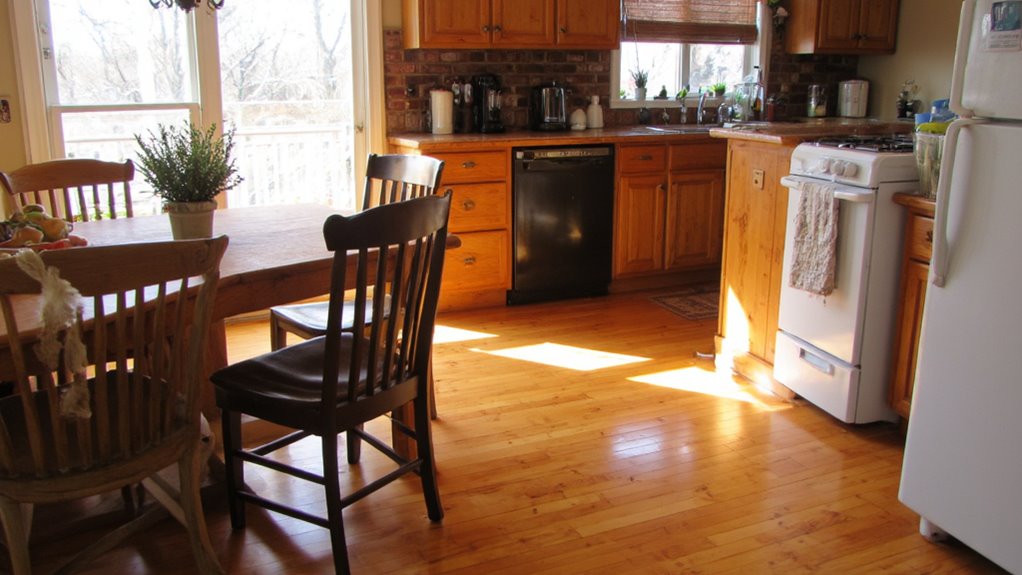
When it comes to designing a warm and inviting kitchen, the right flooring can make all the difference. Choosing the perfect wood type and finish not only elevates the look but also influences the cozy vibe of your kitchen. There are so many beautiful options to consider, each bringing its own unique charm to the space. Let’s explore some inspiring ideas that can help you achieve the balanced design you’re dreaming of.
Why Choose Oak Wood Flooring for Your Kitchen?
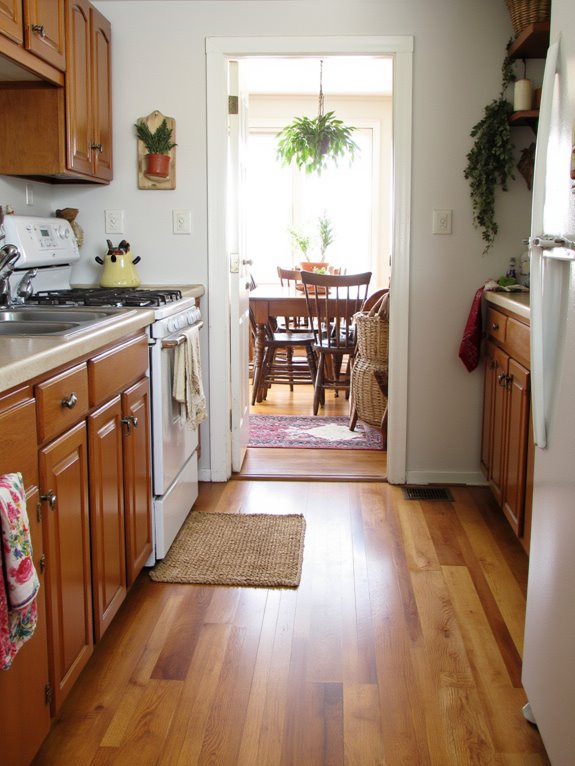
When it comes to kitchen flooring, oak wood stands out as a top choice for many homeowners, including myself.
Its durability is impressive, able to withstand the daily hustle and bustle. Plus, the natural grain patterns add warmth and character to my space.
Oak’s versatility means it complements various design styles, making it a smart investment for anyone looking to enhance their kitchen’s appeal.
The Luxurious Look of Walnut Flooring
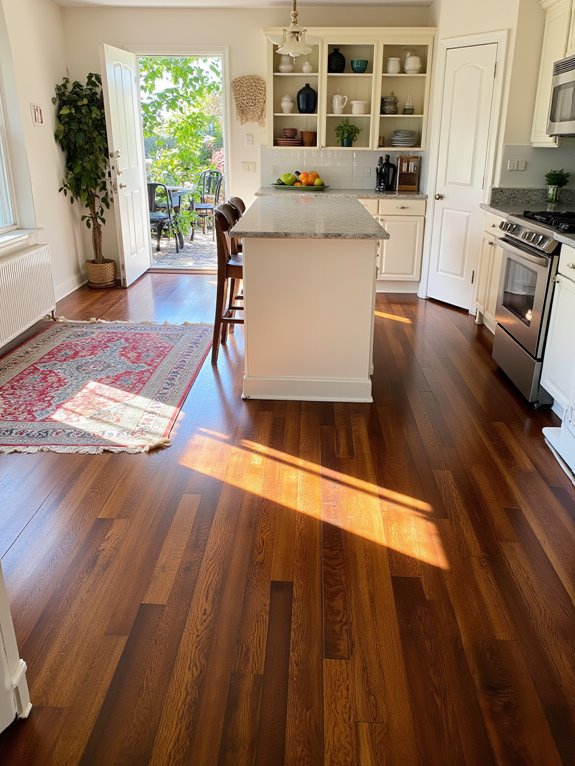
Walnut flooring brings a touch of elegance and sophistication to any kitchen.
I love the rich, warm tones that instantly elevate the space. Its unique grain patterns add character, making each plank stand out.
Plus, walnut’s durability guarantees it withstands daily wear while maintaining its beauty.
Walnut’s resilience ensures it endures everyday use while preserving its stunning aesthetic appeal.
If you’re looking to create a luxurious ambiance, walnut is definitely a stunning choice for your kitchen.
Embracing Rustic Charm With Pine Flooring
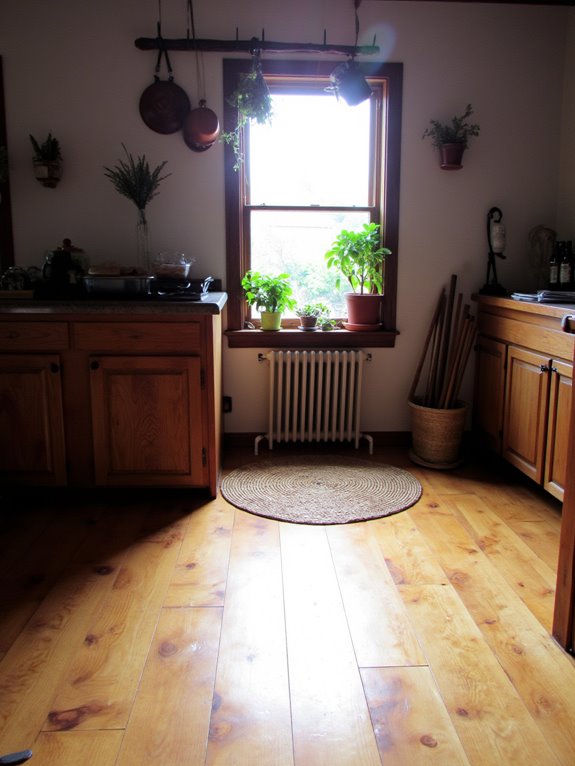
While walnut flooring exudes luxury, pine offers a delightful rustic charm that’s hard to resist.
I love how its warm tones and unique grain patterns create an inviting atmosphere in my kitchen.
Plus, pine’s natural knots and imperfections add character, making each plank a story of its own.
It’s perfect for achieving that cozy, farmhouse aesthetic I’ve always wanted.
Incorporating Bamboo for an Eco-Friendly Kitchen
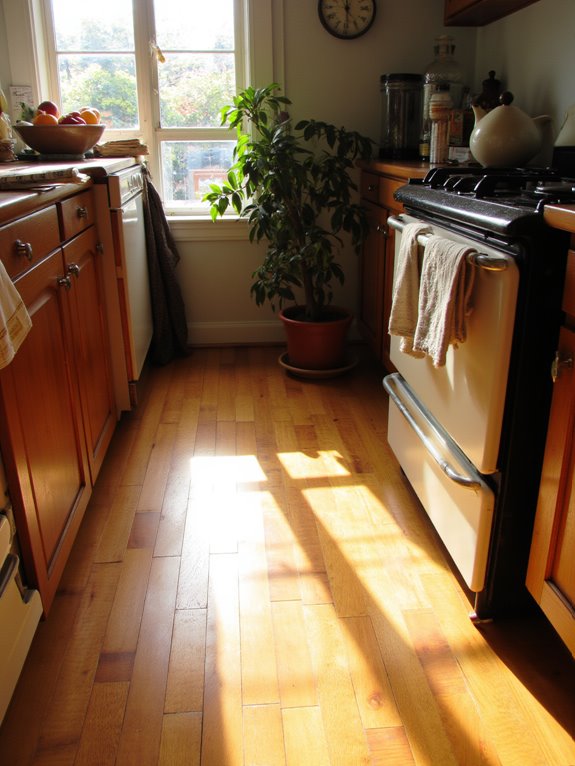
Bamboo flooring brings an eco-friendly twist to kitchen design, and I can’t help but admire its sustainability.
This renewable resource grows rapidly, making it a smart choice for the environmentally conscious.
Plus, its natural beauty and warmth create an inviting atmosphere.
When I walk on bamboo, I feel good knowing I’m supporting a greener planet while enjoying a stylish kitchen.
The Versatility of Maple in Contemporary Designs
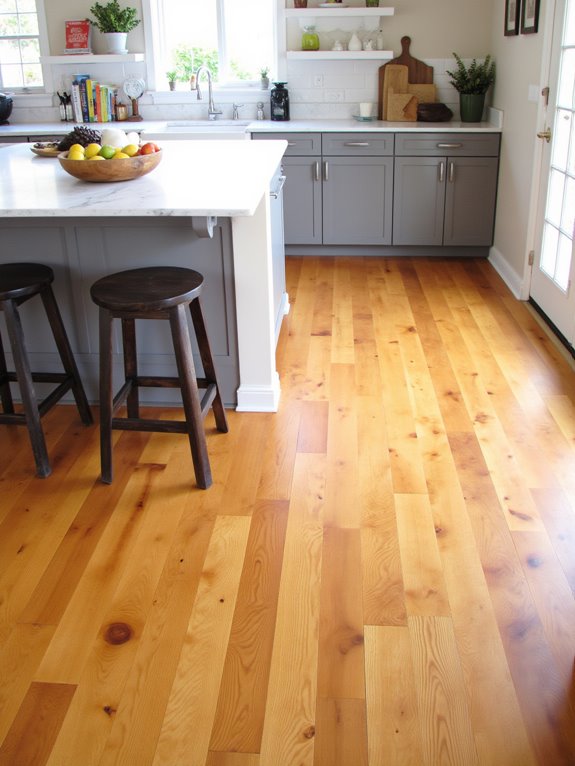
Maple wood stands out as one of the top choices for contemporary kitchen designs, and I can see why.
Its light, warm tones effortlessly complement modern aesthetics, offering a clean and inviting look.
Plus, maple’s durability makes it perfect for high-traffic areas.
Whether you prefer a sleek finish or a rustic vibe, maple adapts beautifully, enhancing any kitchen style.
Why Mahogany Adds Sophistication to Your Kitchen
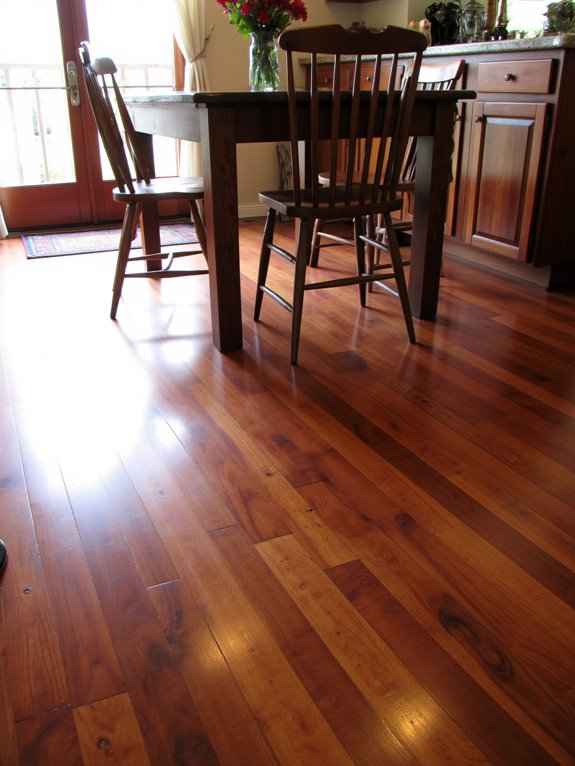
Mahogany wood exudes an unparalleled sophistication that can transform your kitchen into a luxurious space.
Its rich, deep color adds warmth and elegance, while the fine grain patterns bring a unique character.
I love how mahogany pairs beautifully with various styles, enhancing both modern and traditional designs.
If you’re seeking a timeless touch, mahogany’s charm will certainly elevate your kitchen experience.
Light Ash Wood for a Bright and Airy Kitchen
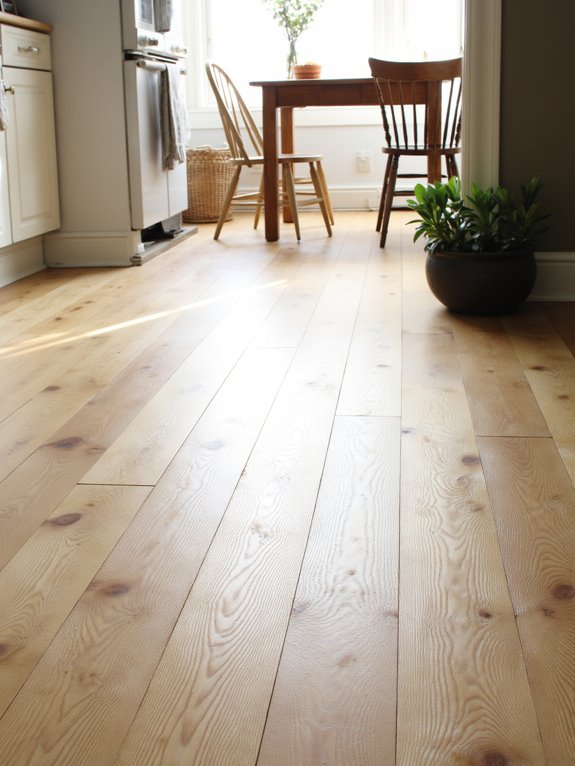
While mahogany brings a touch of sophistication, light ash wood creates a bright and airy atmosphere that can completely transform your kitchen space.
I love how the pale tones of ash reflect natural light, making the room feel larger and more inviting.
It pairs beautifully with white cabinetry and vibrant accents, giving a fresh, modern look that energizes the entire area.
Mixing Different Wood Types for Unique Flooring
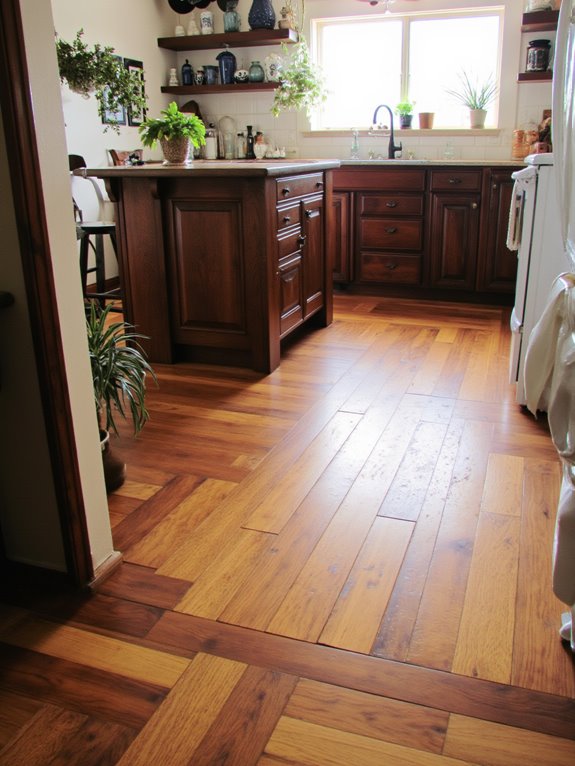
If you’re looking to add character to your kitchen, mixing different wood types for your flooring can create a stunning and unique effect.
I love combining lighter woods like maple with richer tones like walnut. This contrast not only enhances the visual interest but also reflects my personal style.
Experimenting with various grains and hues can truly make your kitchen feel one-of-a-kind.
Creating Contrast: Dark Wood Cabinets and Flooring
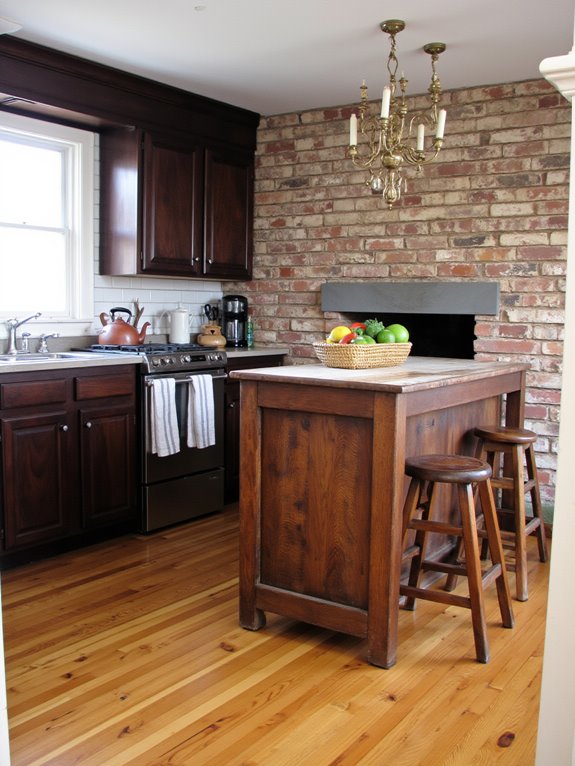
Mixing various wood types can set the stage for even bolder design choices, like pairing dark wood cabinets with lighter flooring.
I love how this contrast creates depth and visual interest in the kitchen.
The rich tones of dark wood add warmth, while lighter flooring brightens the space.
It’s a perfect balance that makes your kitchen feel both inviting and stylish.
Benefits of Using Reclaimed Wood in Your Kitchen
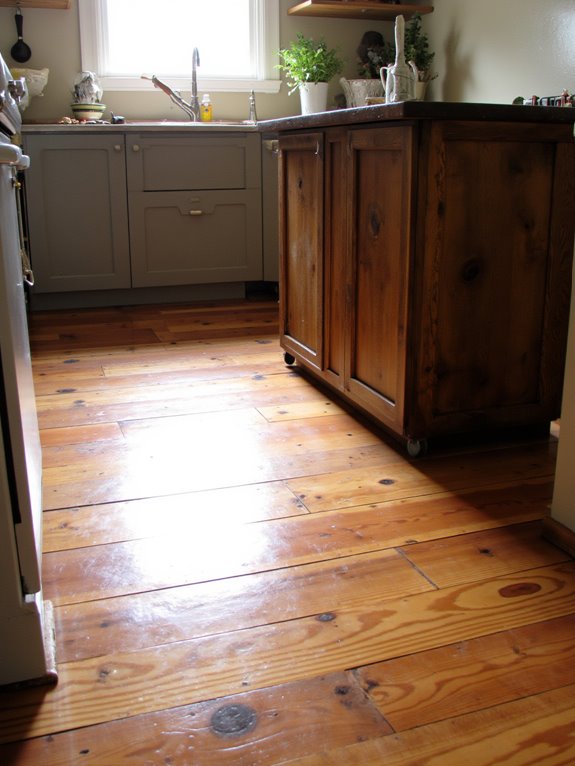
When I think about adding character to a kitchen, using reclaimed wood stands out as a top choice.
It brings warmth and history, making each board unique. Plus, it’s environmentally friendly, giving new life to old materials.
I love how it pairs beautifully with modern appliances, creating a perfect blend of rustic charm and contemporary design.
It truly transforms the heart of my home.
Enhancing Small Spaces With Wide Plank Flooring
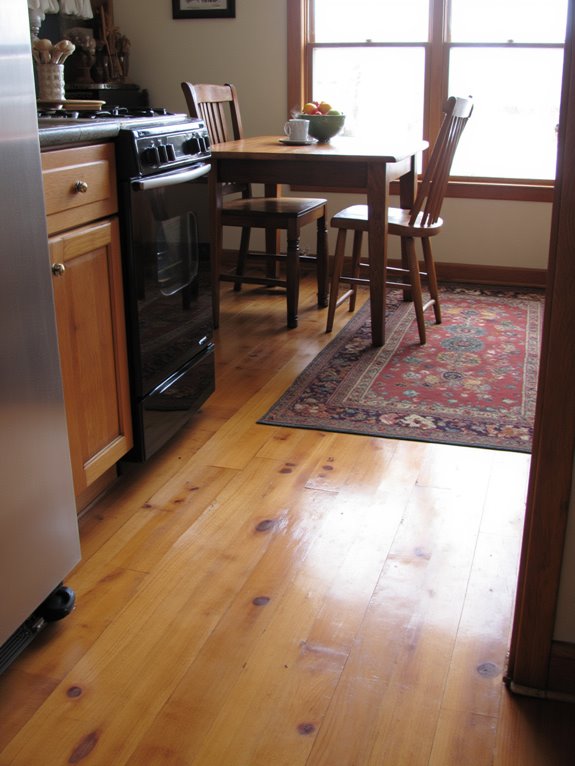
While small kitchens can feel cramped, using wide plank flooring can create an illusion of space and openness.
I’ve noticed that wider boards draw the eye across the room, making it feel larger.
Plus, the warm tones of wood add coziness without overwhelming the area.
Choosing lighter finishes can enhance this effect, ensuring your small kitchen remains inviting and stylish.
Choosing the Right Finish for Wood Floors
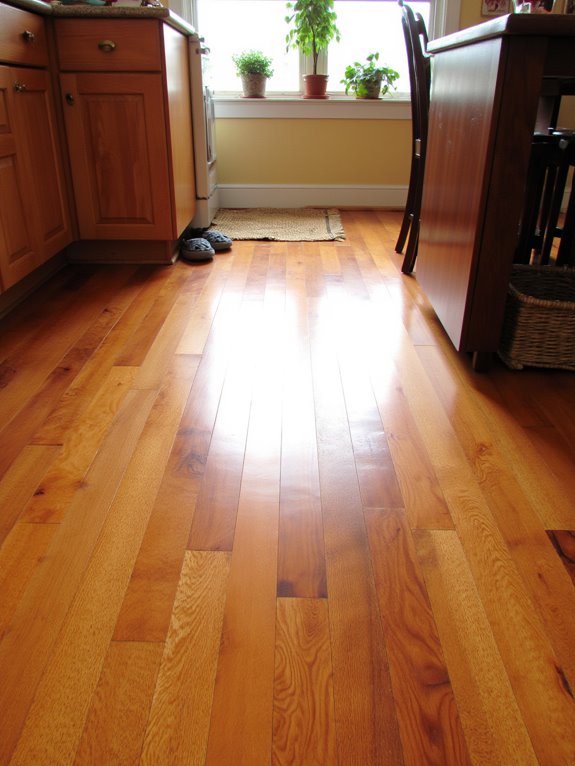
Choosing the right finish for wood floors can greatly impact the overall look and feel of your kitchen, especially after exploring how wide plank flooring can enhance small spaces.
I’ve found that matte finishes provide a natural, rustic vibe, while glossy finishes add elegance.
Consider durability too—oil-based finishes resist scratches, but water-based ones dry faster and offer easier cleaning.
Choose what suits your style best!
How Wood Grain Patterns Affect Kitchen Design
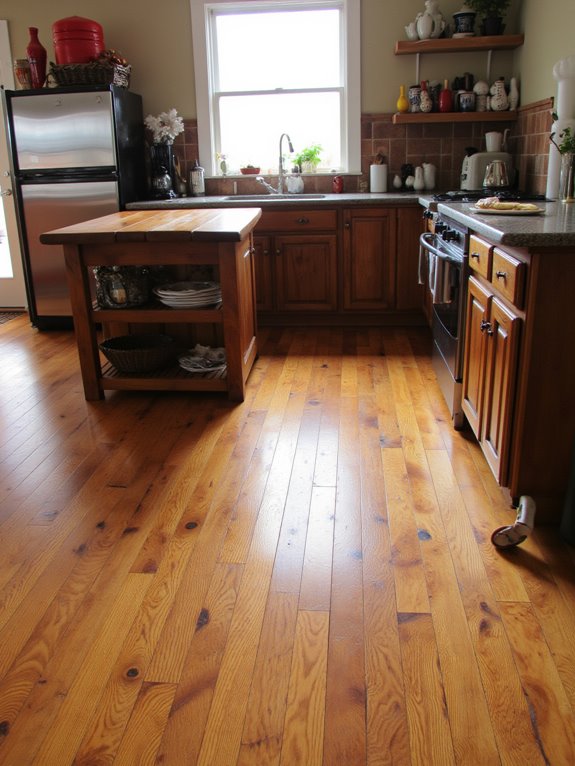
Understanding how wood grain patterns affect kitchen design can transform your space in unexpected ways.
I’ve noticed that the direction and texture of the grain can influence the overall feel of the kitchen. For instance, wider grains can create a rustic vibe, while finer patterns lend a modern touch.
Choosing the right wood grain helps unify your design and adds unique character to your kitchen.
Incorporating Herringbone and Chevron Patterns
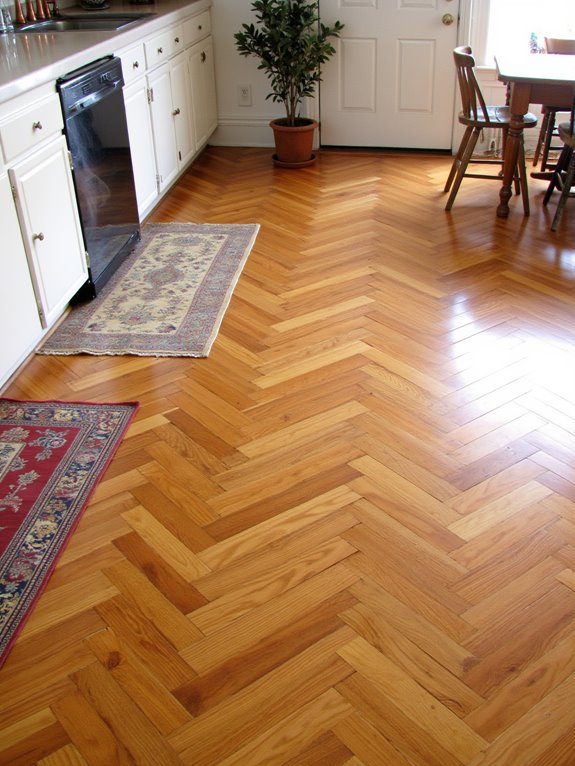
Incorporating herringbone and chevron patterns into your kitchen flooring can add a striking visual element that elevates the entire space.
I love how these patterns create a sense of movement and texture, drawing the eye and making the kitchen feel dynamic.
Whether you choose light or dark wood, these designs can harmoniously blend with your decor, enhancing the warmth of the room.
The Advantages of Cork Flooring in Kitchens
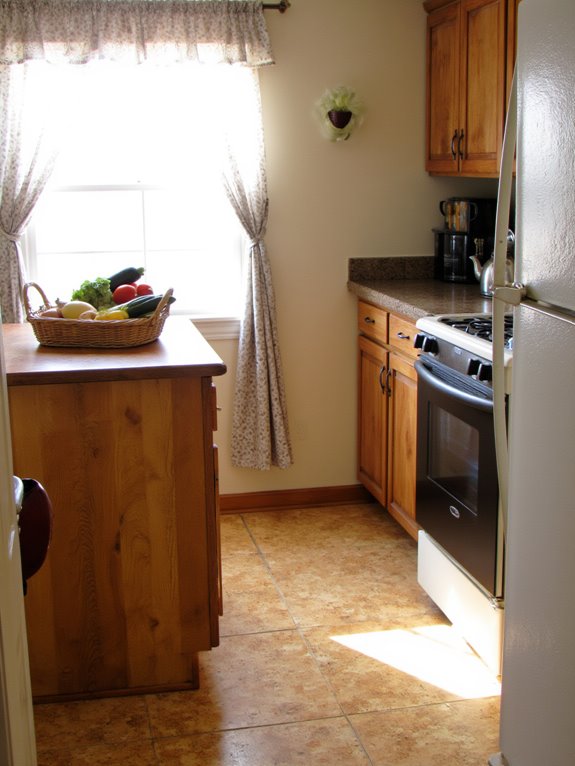
While many flooring options exist, I find cork flooring stands out in kitchens for several compelling reasons.
It’s incredibly comfortable underfoot, which is a blessing during long cooking sessions.
Plus, cork is naturally resistant to mold and mildew, making it a great choice for moisture-prone areas.
Its unique texture adds warmth and style, creating a welcoming atmosphere in any kitchen.
Using Area Rugs to Accent Wood Flooring
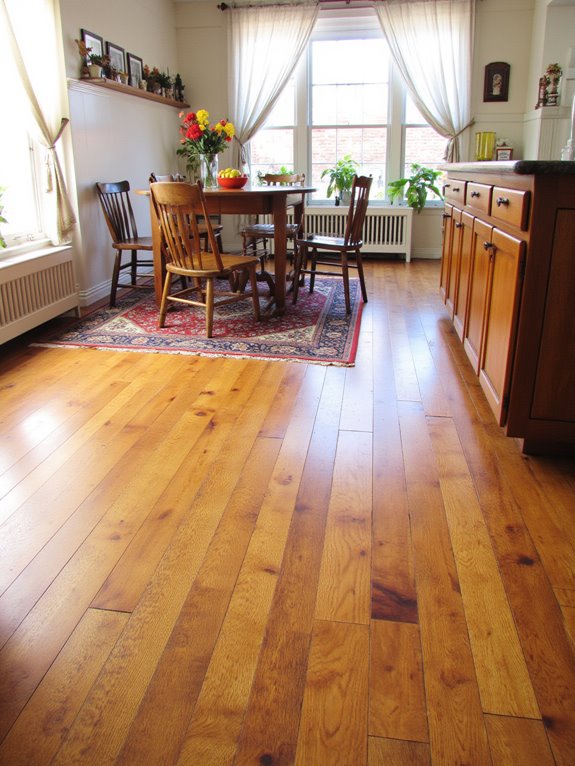
Cork flooring offers a cozy base, but if you’re looking to enhance the warmth of your wood flooring, area rugs can be a fantastic choice.
They add texture and color, creating a welcoming atmosphere. I love placing a soft, patterned rug under the dining table, which not only defines the space but also offers comfort underfoot.
Plus, they’re easy to change for seasonal updates!
Caring for Your Warm Wood Flooring
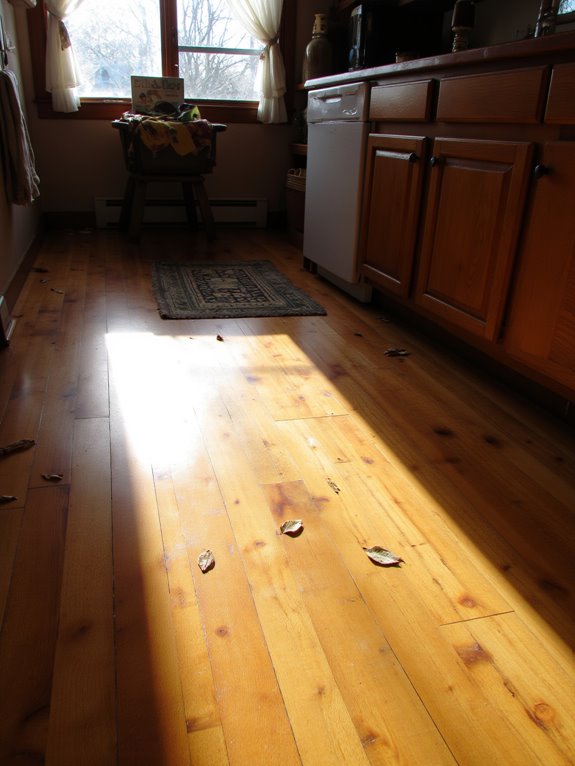
Caring for your warm wood flooring is essential if you want to maintain its beauty and longevity.
I always sweep or vacuum regularly to remove dirt and debris, and I use a damp mop with a wood-safe cleaner for deeper cleaning.
Avoid using excess water, and don’t forget to place felt pads under furniture to prevent scratches.
With proper care, your floors will shine for years!
Pairing Wood Flooring With Other Materials
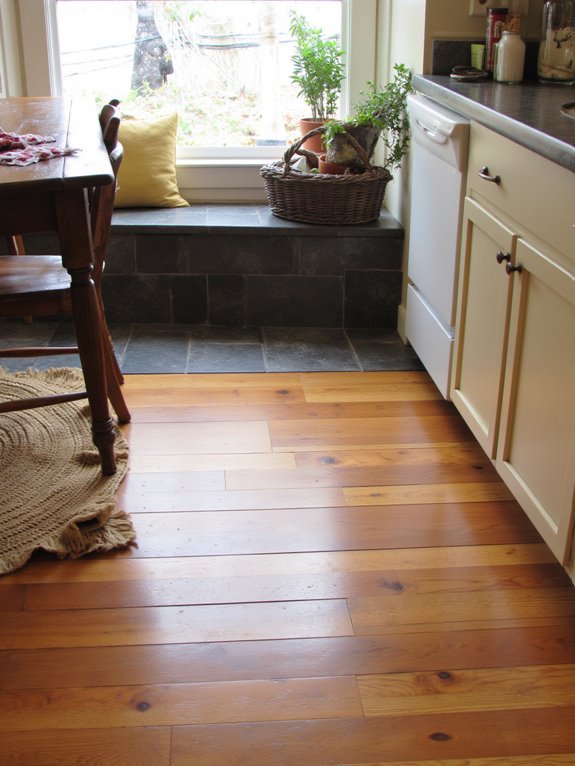
When I think about enhancing the beauty of wood flooring, pairing it with other materials can create a stunning visual contrast.
For instance, combining sleek stone countertops or metal accents with warm wood creates a balanced look. I love adding ceramic tiles in a complementary color for a unique touch.
Mixing textures not only elevates the design but also adds depth to the kitchen space.
Exploring Engineered Wood as a Durable Option
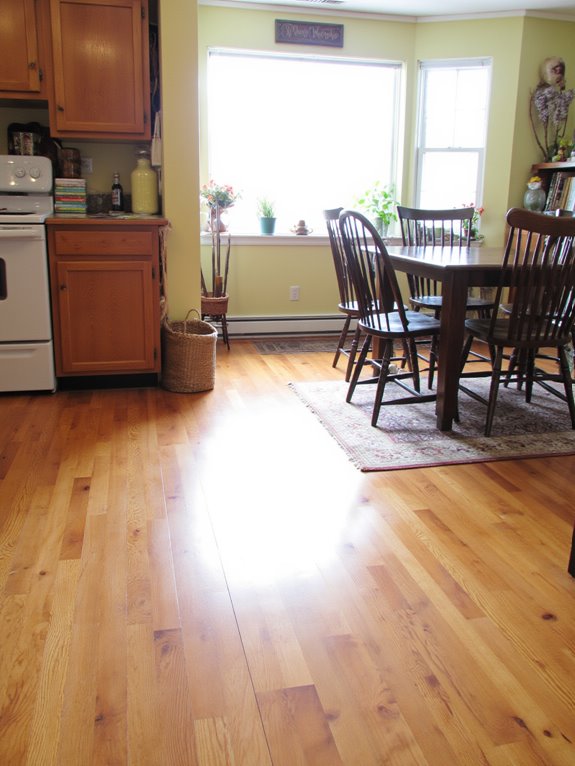
Have you considered the benefits of engineered wood for your kitchen flooring?
I love it for its durability and resistance to moisture, which is essential in a busy kitchen.
Engineered wood offers the beautiful look of traditional hardwood, but with added stability.
Plus, it’s easier to install and maintain.
Choosing engineered wood can create a warm, inviting atmosphere without sacrificing practicality.
How Natural Light Impacts Wood Flooring Choices
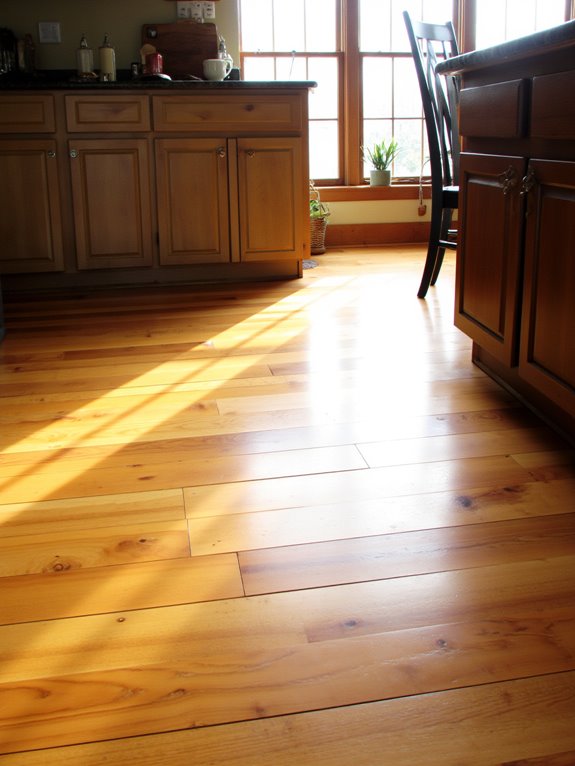
Natural light plays a pivotal role in shaping the ambiance of your kitchen, influencing not only the overall atmosphere but also your wood flooring choices.
I’ve found that lighter wood tones can brighten a space, while darker hues create a cozy feel.
Depending on how much light your kitchen receives, the right flooring can enhance warmth and complement your design seamlessly.
Personalizing Your Kitchen With Unique Wood Stains
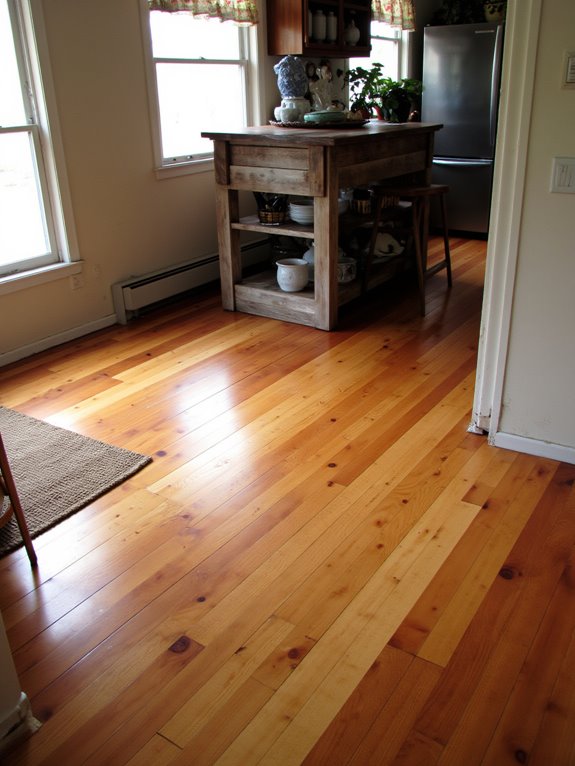
How can you make your kitchen truly yours? One great way is by choosing unique wood stains that reflect your personality.
I love experimenting with different shades, from rich mahogany to soft gray tones. These choices not only enhance the warmth of the space but also create a distinctive look.
Don’t be afraid to mix stains for a truly personalized design!