

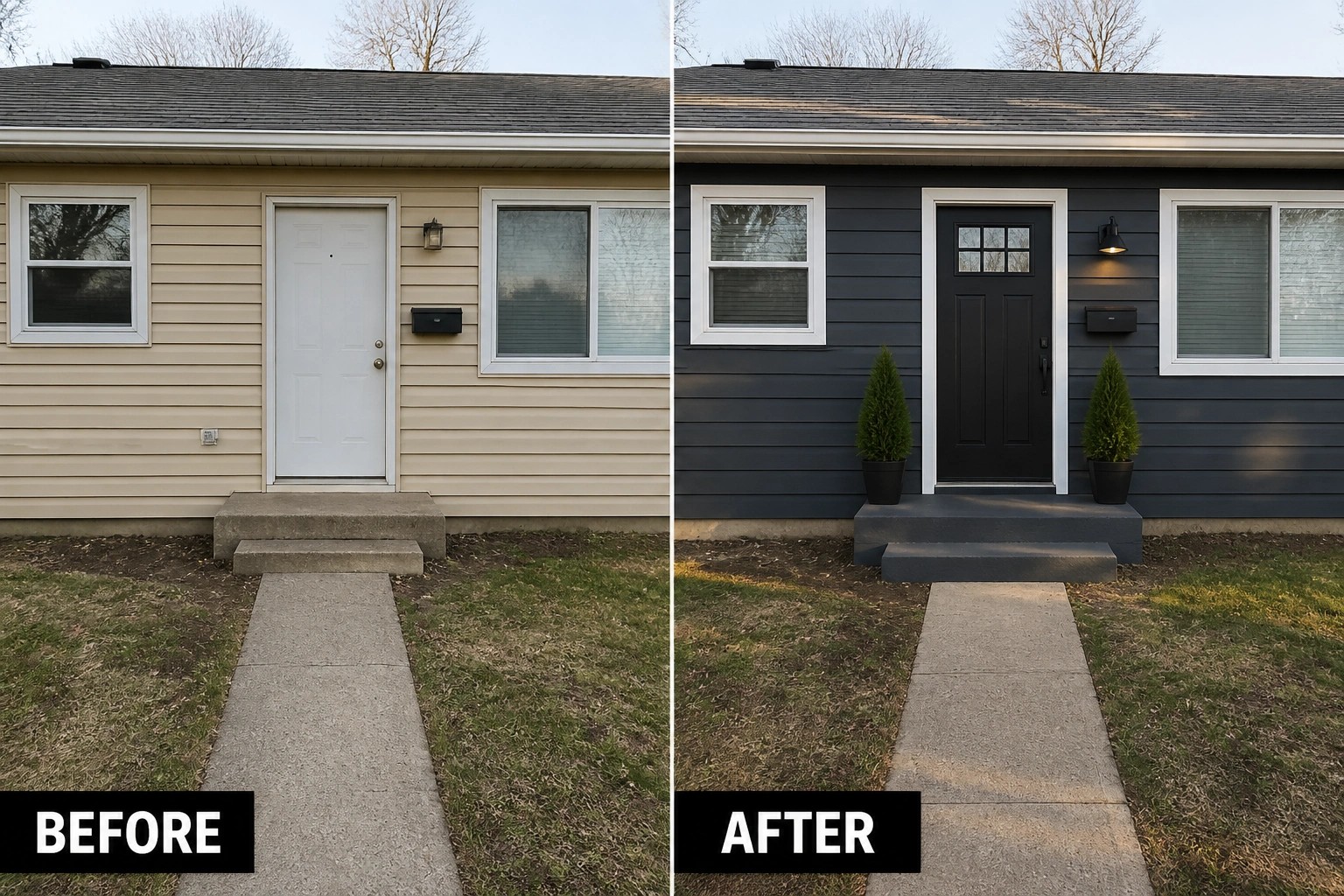
Many builder basic houses end up with exteriors that look unfinished because the original choices stopped at the basics.
Adding layers like better lighting around the door or reshaping the front beds gives the facade some depth without a huge project.
I often notice how these tweaks make the home feel more intentional from the curb.
Small fixes help.
Trying one or two on a weekend can show whether the approach fits the style of the house before going further.
Update A Plain Exterior With Paint And A New Door
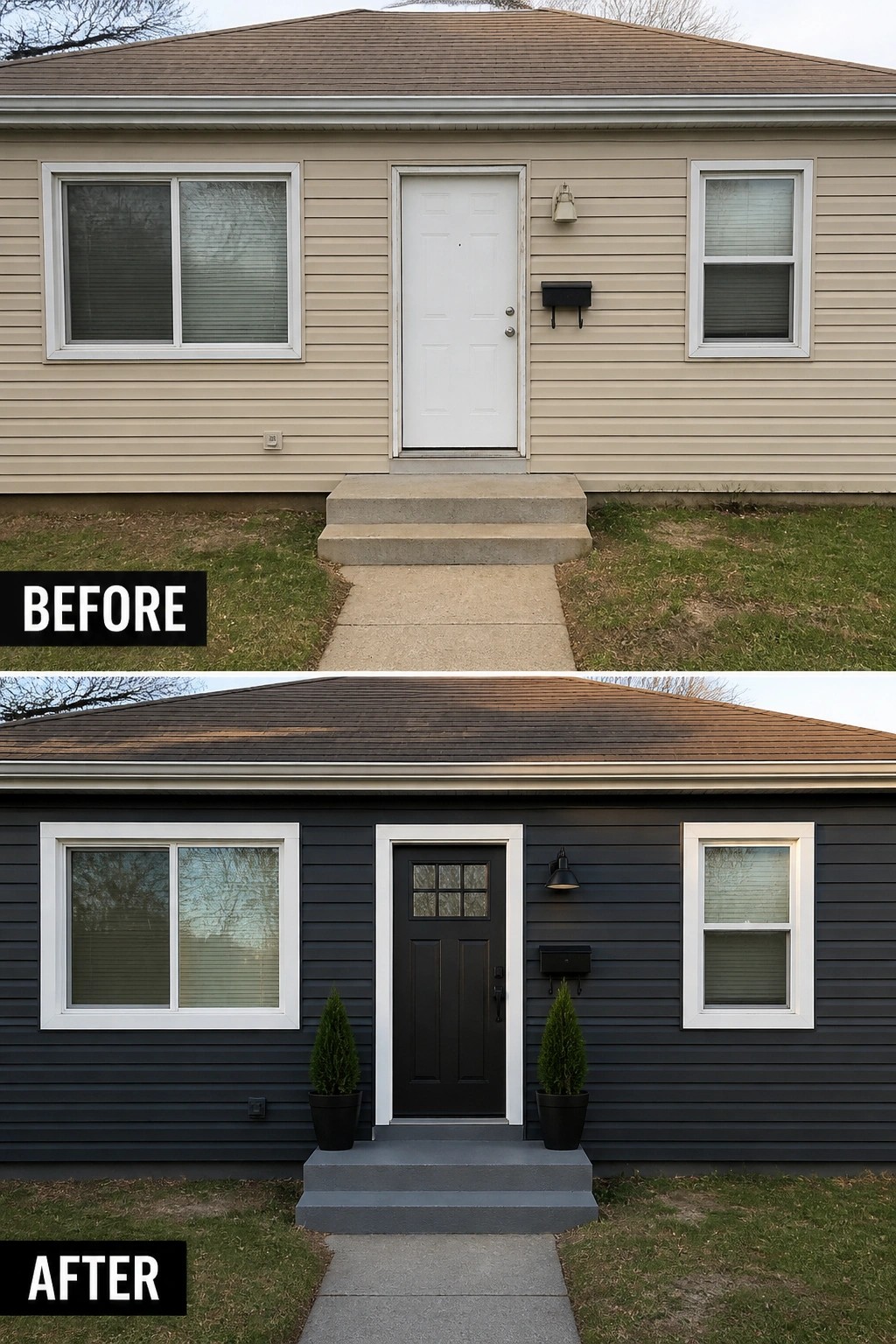
A change in siding color and front door can make a basic house look more finished from the street. The beige walls and plain white door gave way to a darker paint and a black door with white trim, which helps the windows and entry stand out.
This works best on simple builder homes that have little detail. Pick a color that fits the neighborhood, keep the trim clean, and add a couple of planters only after the main surfaces are done.
Add Stone Veneer To Give A Plain House More Weight
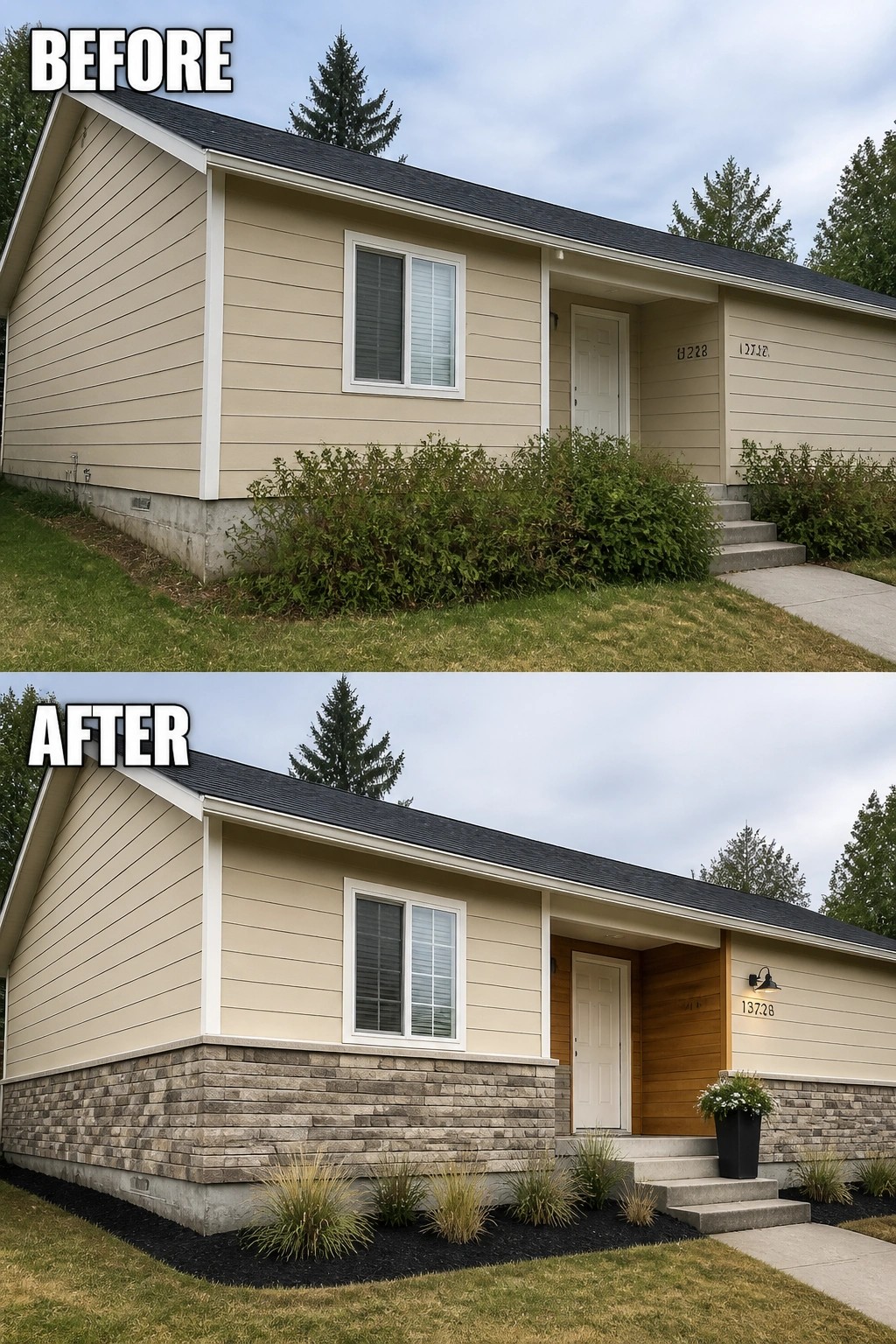
A common issue with basic builder homes is that they sit too light on the ground, with nothing but painted siding running all the way down to the concrete. Adding a stone base changes that balance right away. It gives the house a solid foundation line and makes the whole front feel more finished without needing a full siding replacement.
This approach works especially well on ranch styles or homes with exposed foundation walls. Keep the stone color fairly neutral so it pairs with the existing siding, and limit the new material to the lower portion of the house. The same idea can be used on just the front and one side if budget is tight. Focus on the foundation first, then add a simple light and updated address numbers near the door.
Give A Front Walkway More Structure With Pavers
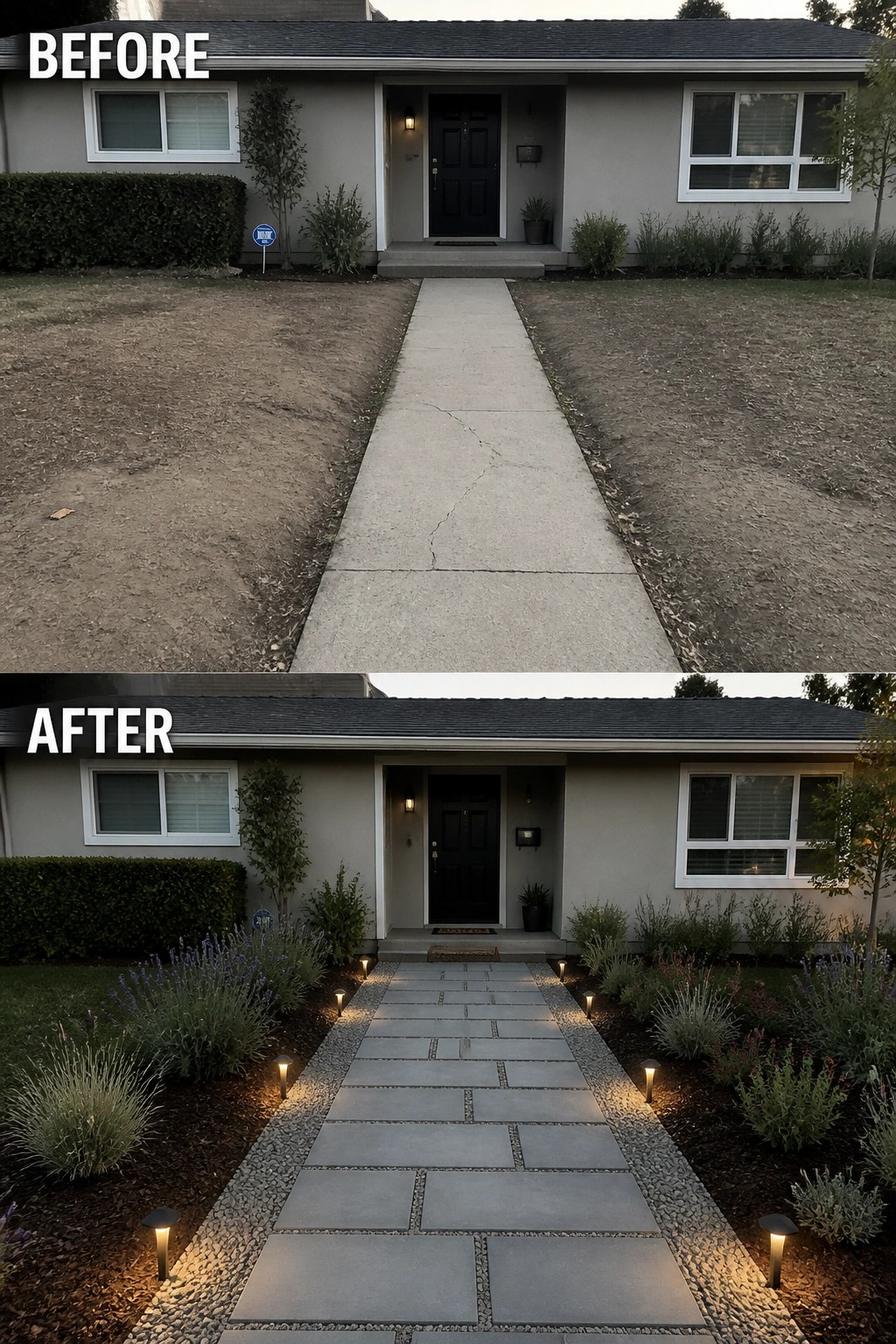
A plain concrete path often looks flat and unfinished next to the house. Replacing it with pavers set in a simple running pattern and adding a gravel border gives the walk clear edges and a finished look. Low path lights along both sides make the route easy to follow at night without needing a big lighting system.
This approach works well on long, narrow front yards where the path is the main feature. Keep the paver color close to the house tone so it blends in, and use the gravel strip to separate the walk from the planting beds. Start with the hardscape before adding too many plants, since the path itself does most of the visual work.
Add A Covered Porch To Improve A Basic Entry
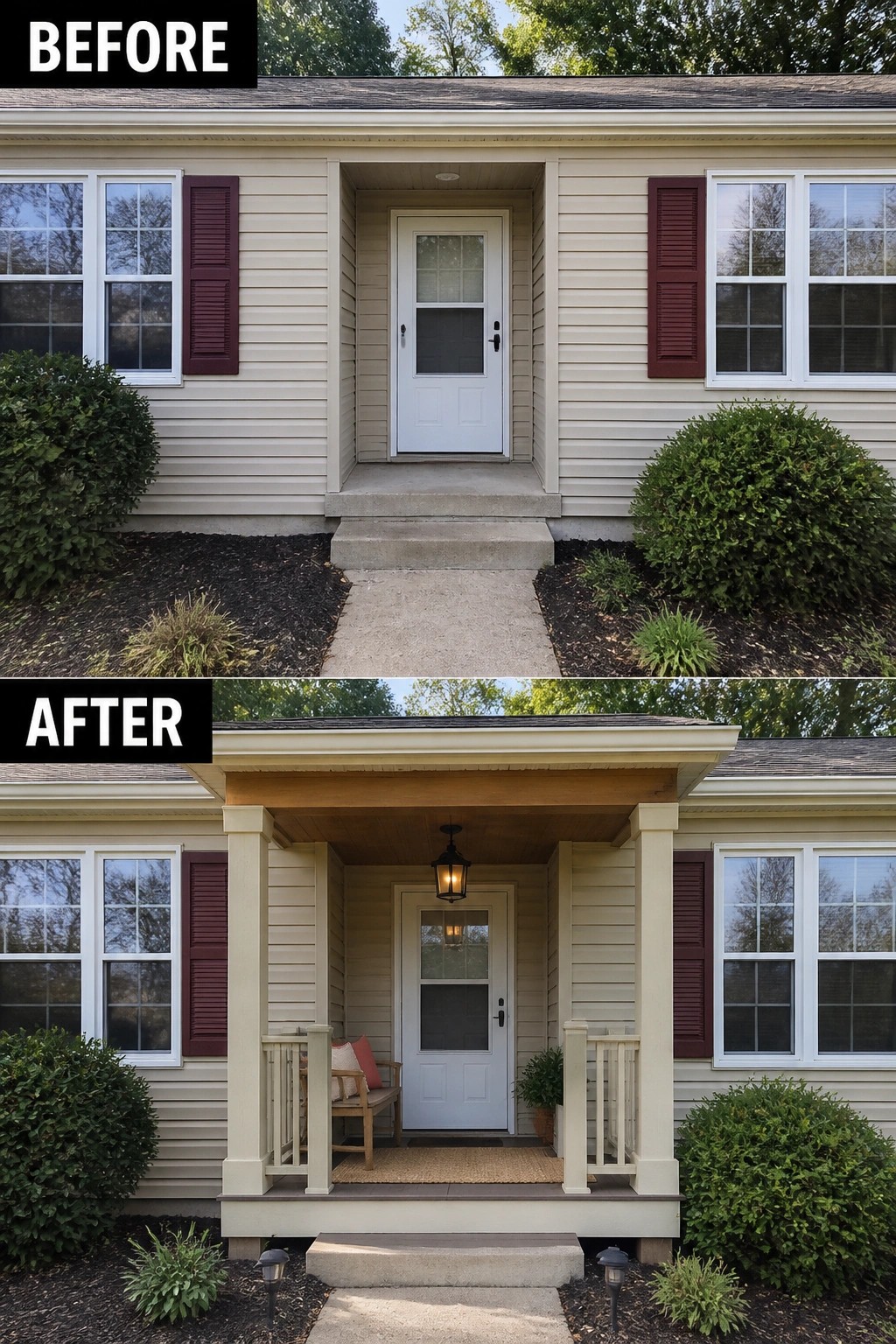
Many plain homes have a front door that sits flat against the house with nothing but a couple of steps leading up to it. Adding a covered porch gives the entry real purpose by creating shelter and a small space that feels intentional instead of just a way to get inside.
This idea works best on homes where the roof can be extended without major changes. Keep the porch simple with basic columns, a bench, and one light so it stays in scale with the rest of the house. It also helps tie the landscaping into the architecture so the whole front feels more put together.
Update A Plain Garage Door For Better Curb Appeal
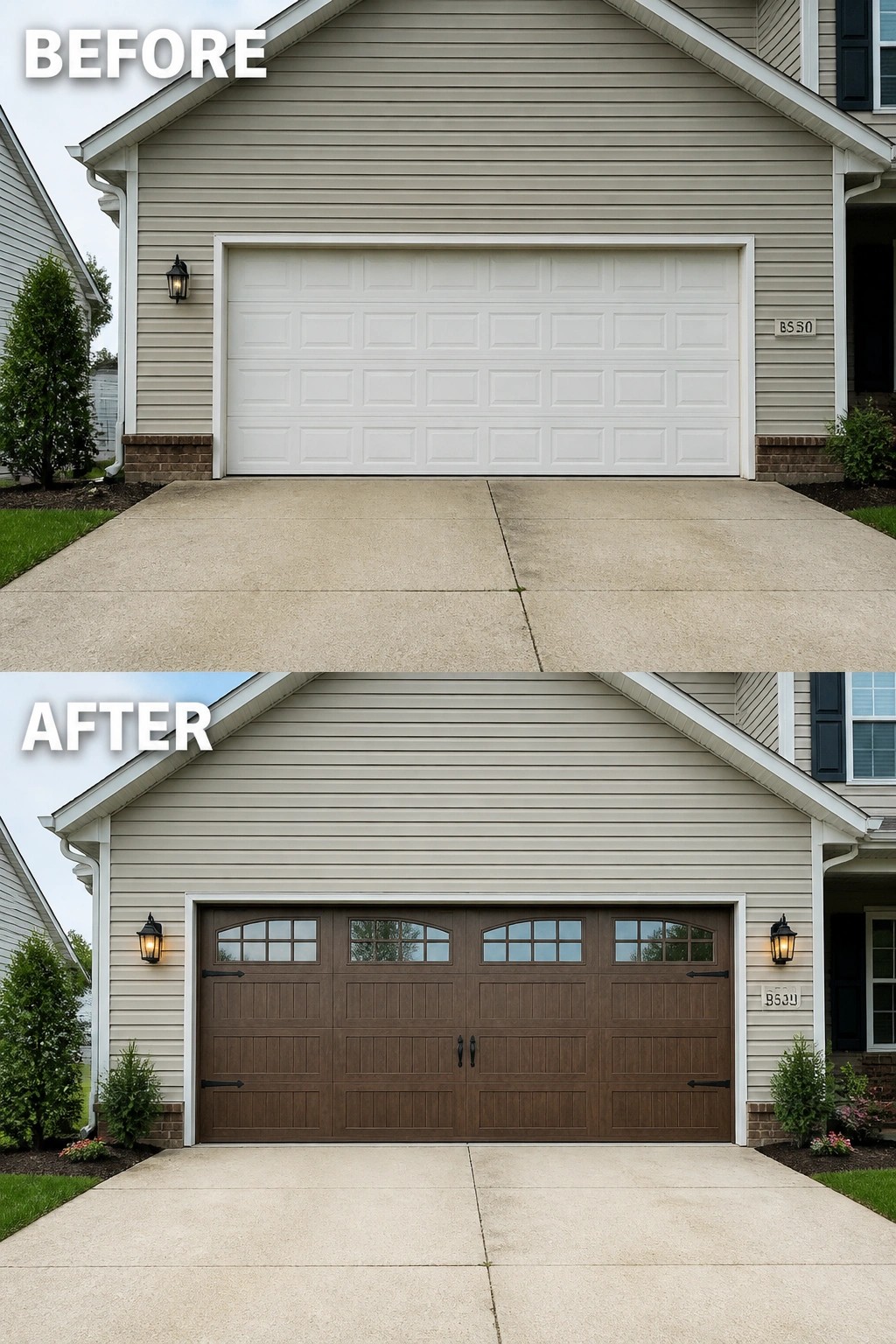
A plain white garage door often makes the front of a house look flat and unfinished. Swapping it for a wood-tone door with divided windows and simple hardware gives the whole facade more weight and character without any major construction.
This approach works especially well on houses where the garage takes up most of the front wall. Choose a door color that either matches the trim or creates a quiet contrast, and add matching exterior lights on either side so the entry and garage feel connected. Keep the rest of the updates small so the door stays the main improvement.
Add Shutters And Window Boxes To Plain Windows
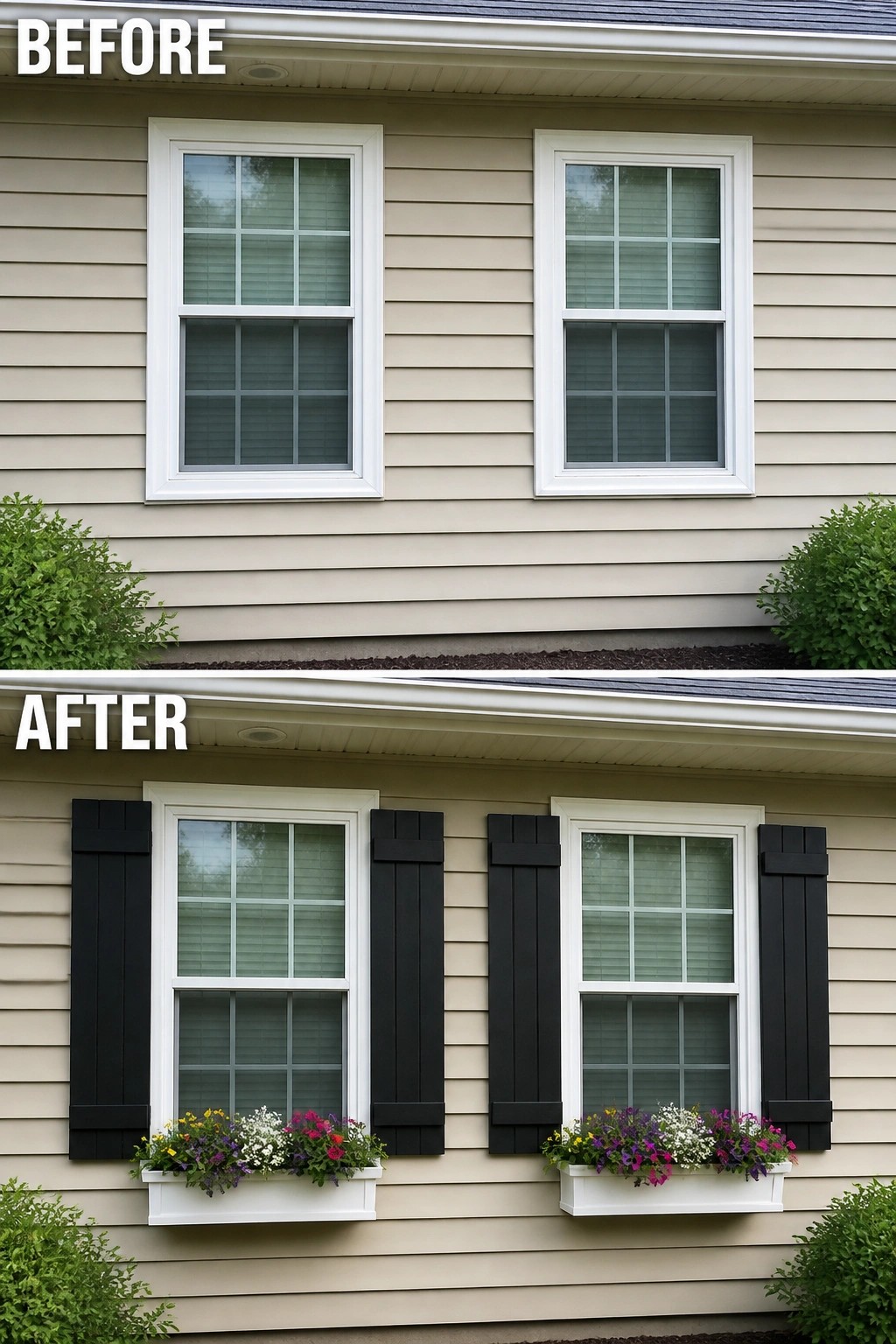
Many builder homes have rows of plain windows that sit flat against the siding. Adding shutters on both sides and a window box underneath gives each window a clear frame and breaks up the blank wall space.
This approach works on any simple exterior where you want quick improvement without painting the whole house. Match the shutter color to your trim or roof for a pulled-together look, and choose low-maintenance plants so the boxes stay neat through the season.
Update Plain Siding With A New Color And Trim
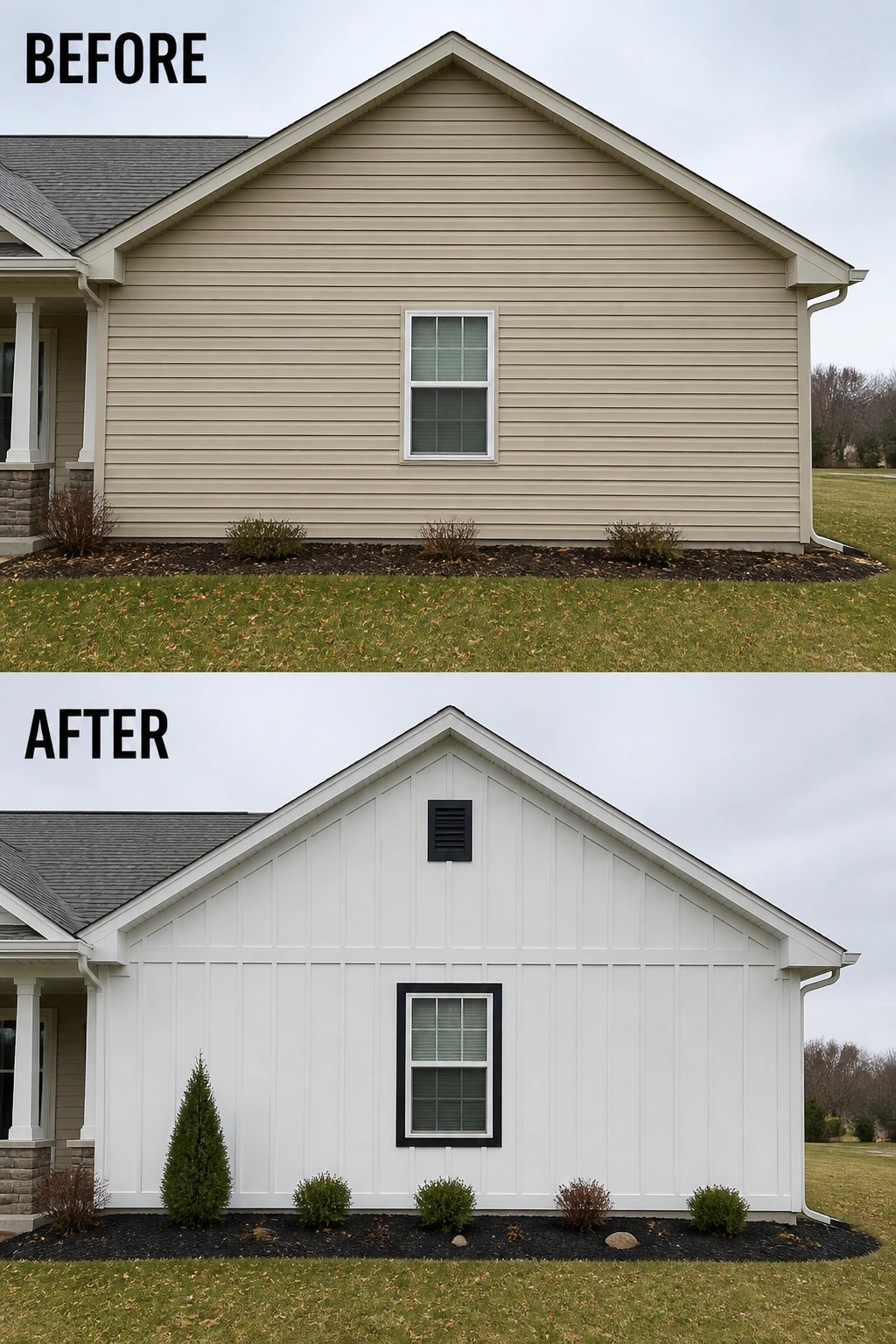
Switching the siding color and direction can make a basic gable end look much cleaner. The beige horizontal boards gave the house a flat, dated feel, while the new white vertical siding brightens the whole front and adds height. Adding black trim around the window and vent creates simple contrast that draws the eye without extra decoration.
This approach works best on houses with large plain wall areas and few architectural details. Paint or re-side first, then add dark frames to windows and small vents so they stand out. Keep the rest of the trim white so the contrast stays sharp and the house does not feel busy.
Add Solar Panels To A Plain Roof
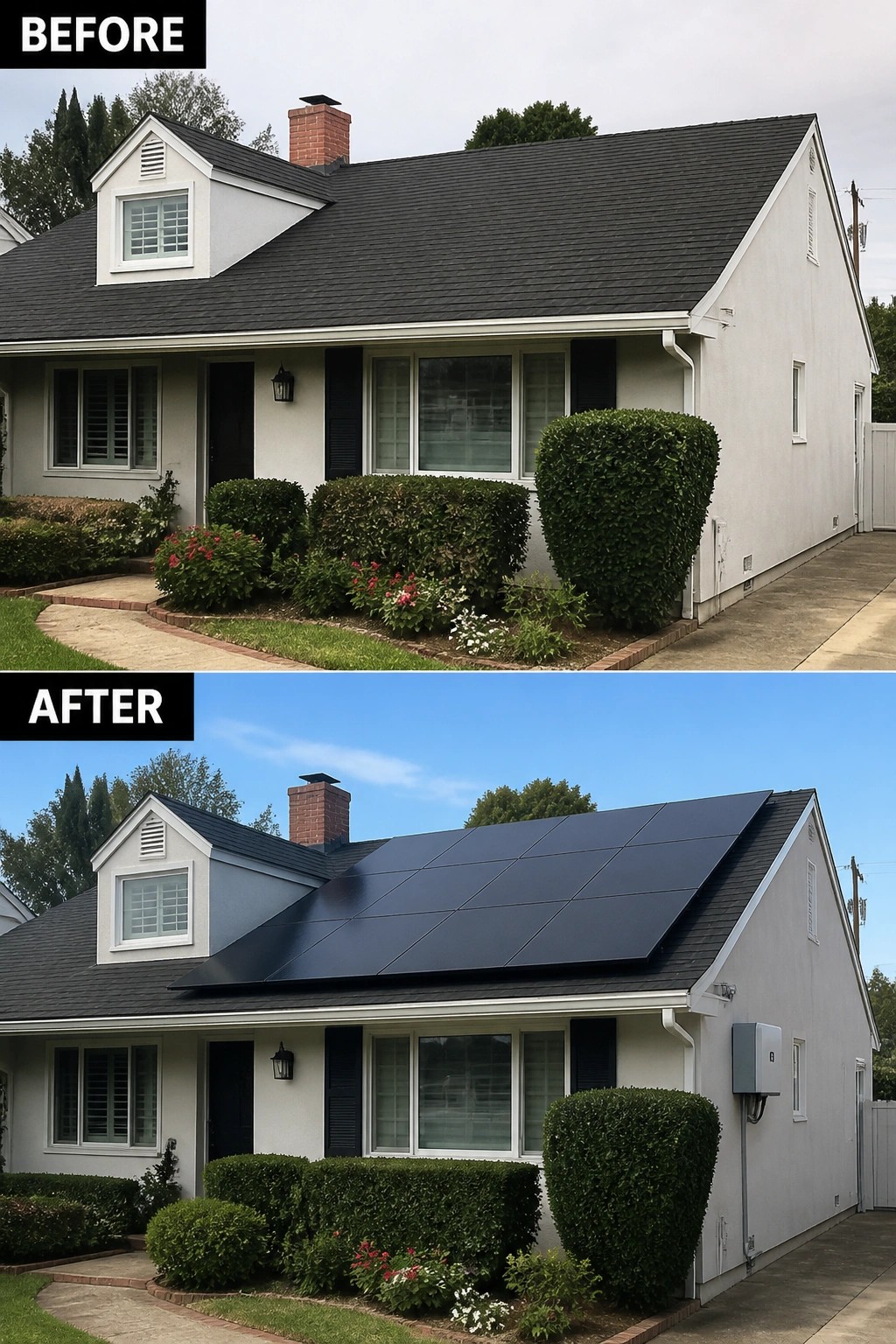
Many builder basic homes have large empty roof sections that do nothing for the look or the utility bill. Adding solar panels gives that surface a clear job while keeping the overall exterior clean. Here the dark panels sit flat against the existing shingles and blend in without fighting the house shape.
This idea works best on homes with decent sun exposure and a roof that does not need replacing soon. Check local rebates first and keep other exterior changes minimal so the panels read as the main update rather than one more layer of stuff.
Add Defined Garden Beds To A Plain Front Yard
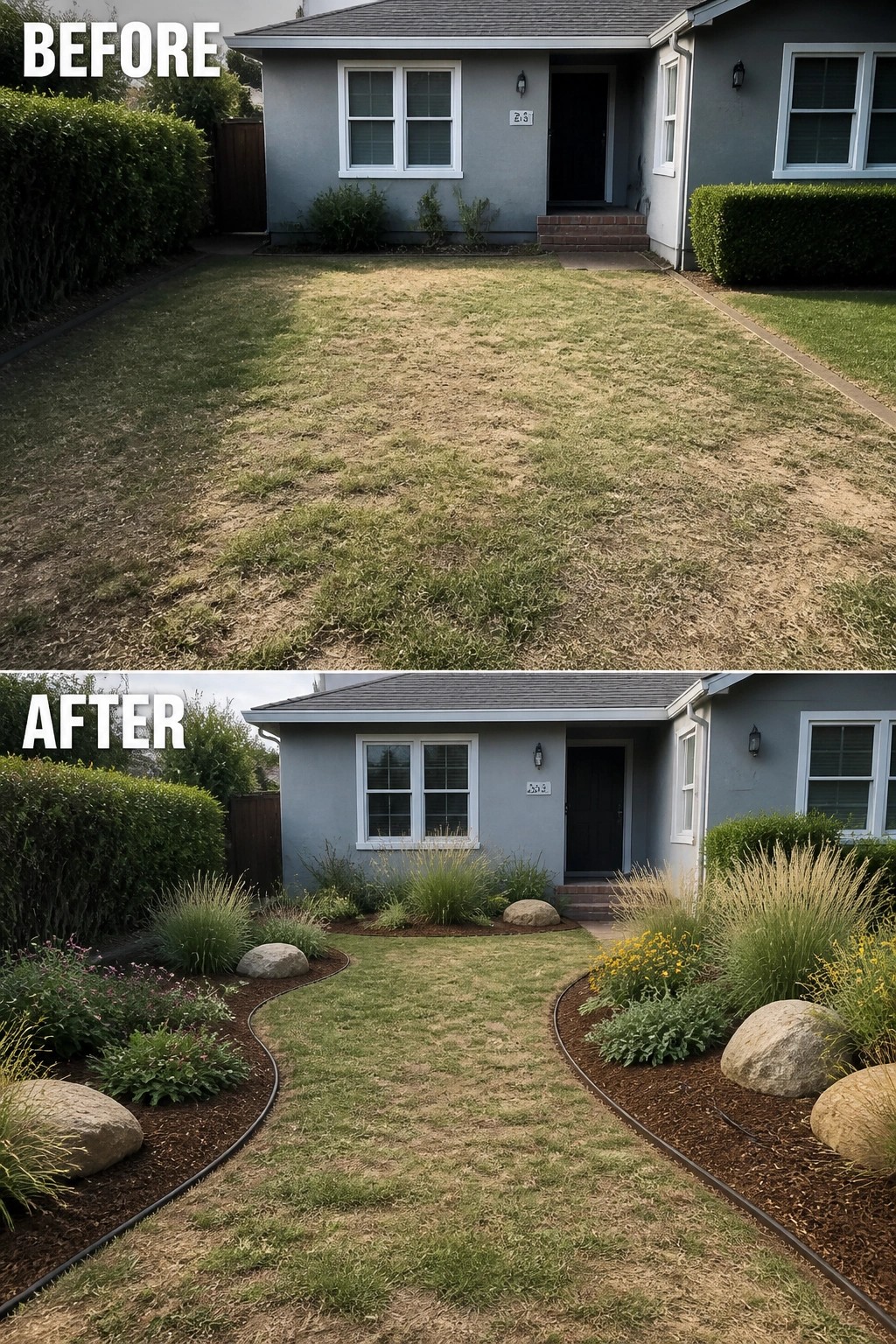
A flat, patchy lawn in front of a basic house often looks unfinished because there is no clear edge between the grass and the foundation. Adding curved garden beds with mulch and a few larger rocks gives the yard structure right away and makes the whole front feel more intentional.
This approach works well on builder basic homes where the lawn runs straight up to the siding. Focus first on the shape of the beds and a clean mulch line, then fill in with tough grasses and low shrubs that can handle the local climate. Keep the curves gentle so the beds do not crowd the walkway or the entry steps.
Add Exterior Lighting To Frame The Front Door
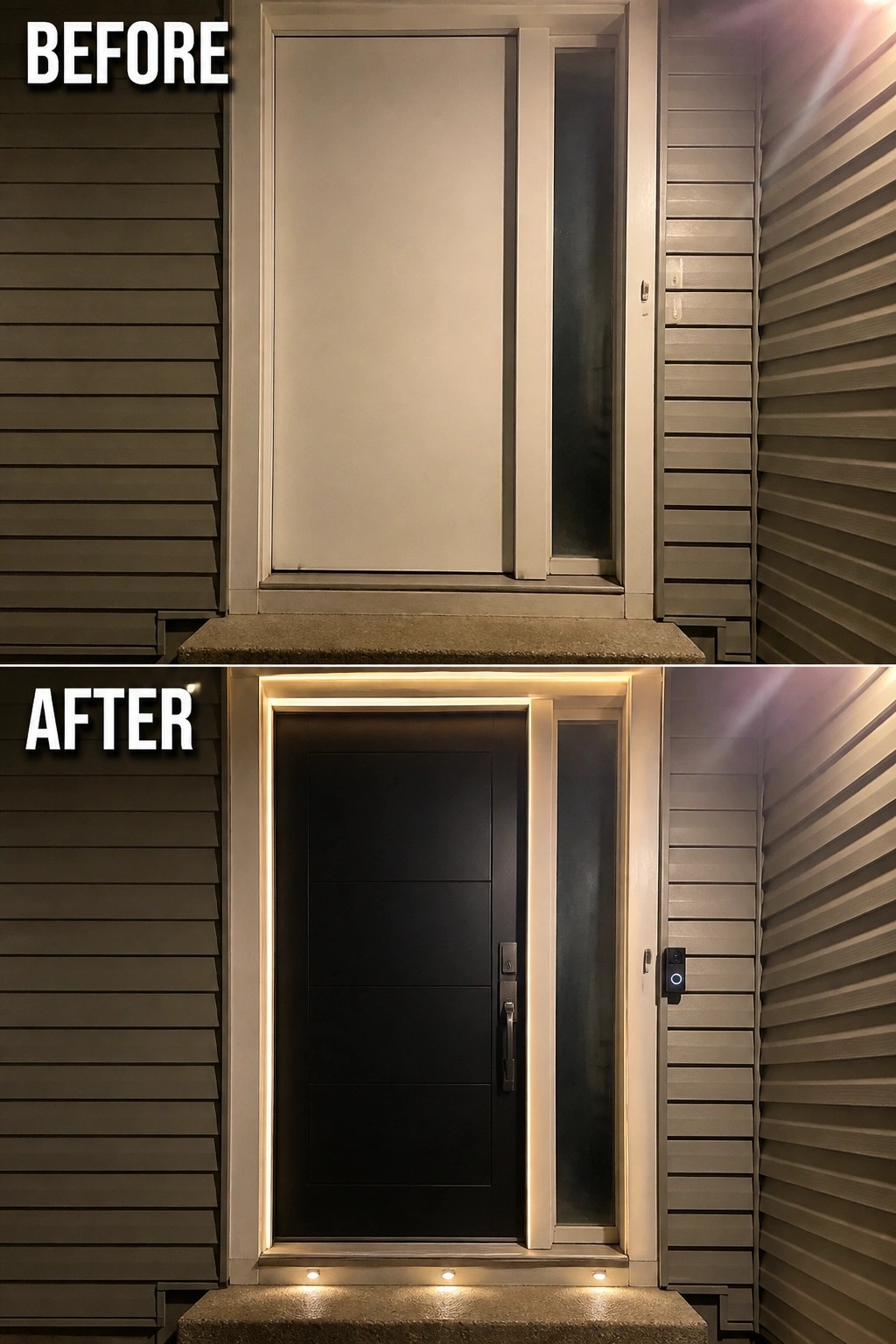
A plain front door often disappears against the siding, especially on builder-basic homes. Switching to a darker door color and adding a clean line of lighting around the frame gives the entry a defined shape and makes it stand out from the street.
This works best when the house itself stays simple. Run the lights along the existing trim, keep the glow warm and even, and add a couple of small step lights below. The result feels finished without needing new siding or big construction.
Add Railings To Plain Front Steps
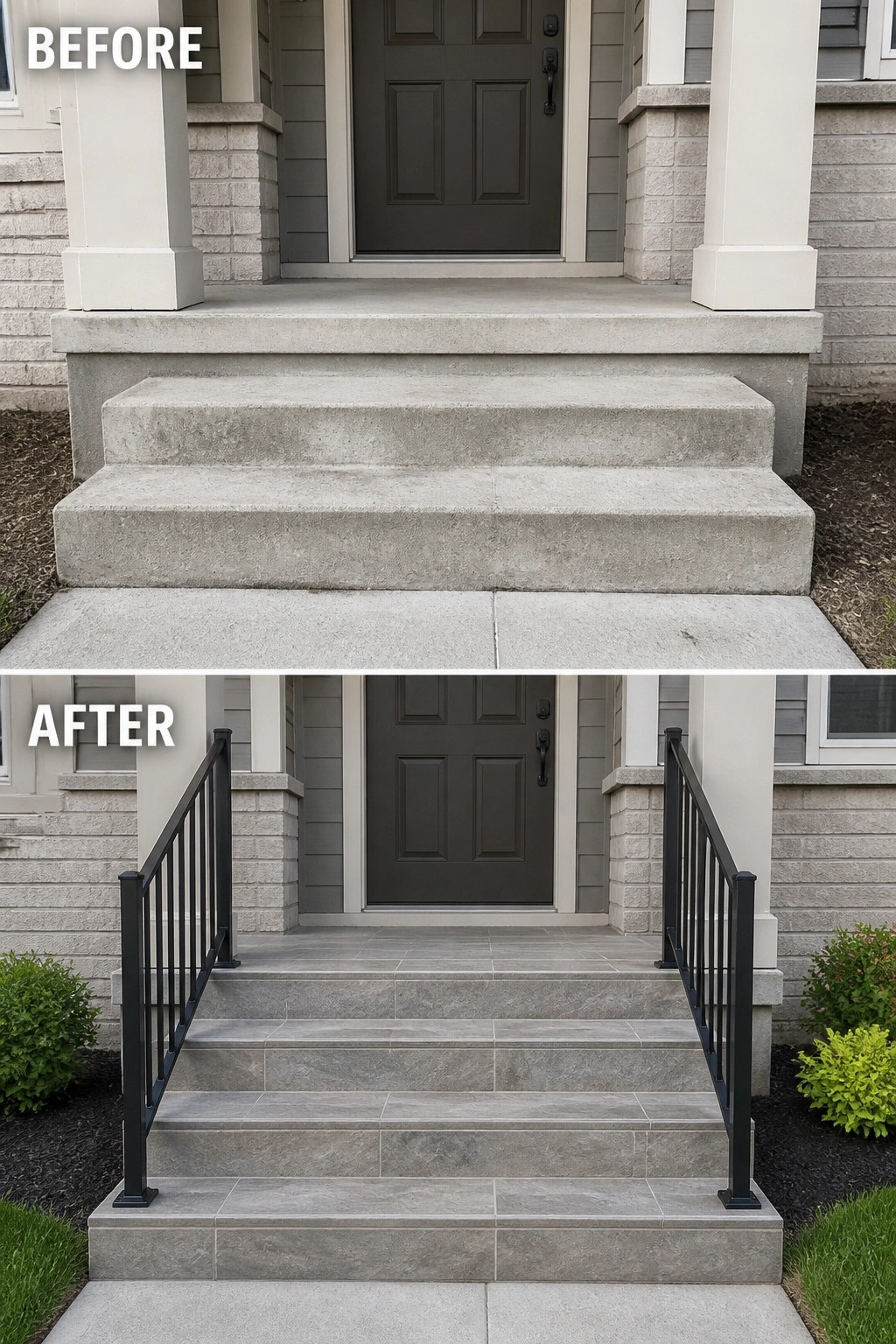
Plain concrete steps often look unfinished and can feel unsafe without any side support. Adding railings gives the entry a clearer structure and makes the approach feel more intentional. In this case, the steps were also resurfaced with gray tile, which works together with the black railings to create a cleaner, more finished look.
This idea works well on houses where the front steps are the main feature visitors see first. Choose railings that match the scale of your house and the color of your door or trim so they feel like part of the original design rather than an add-on. Keep the rest of the entry simple so the railings stay the main update.
Add Strategic Lighting To Improve Nighttime Curb Appeal
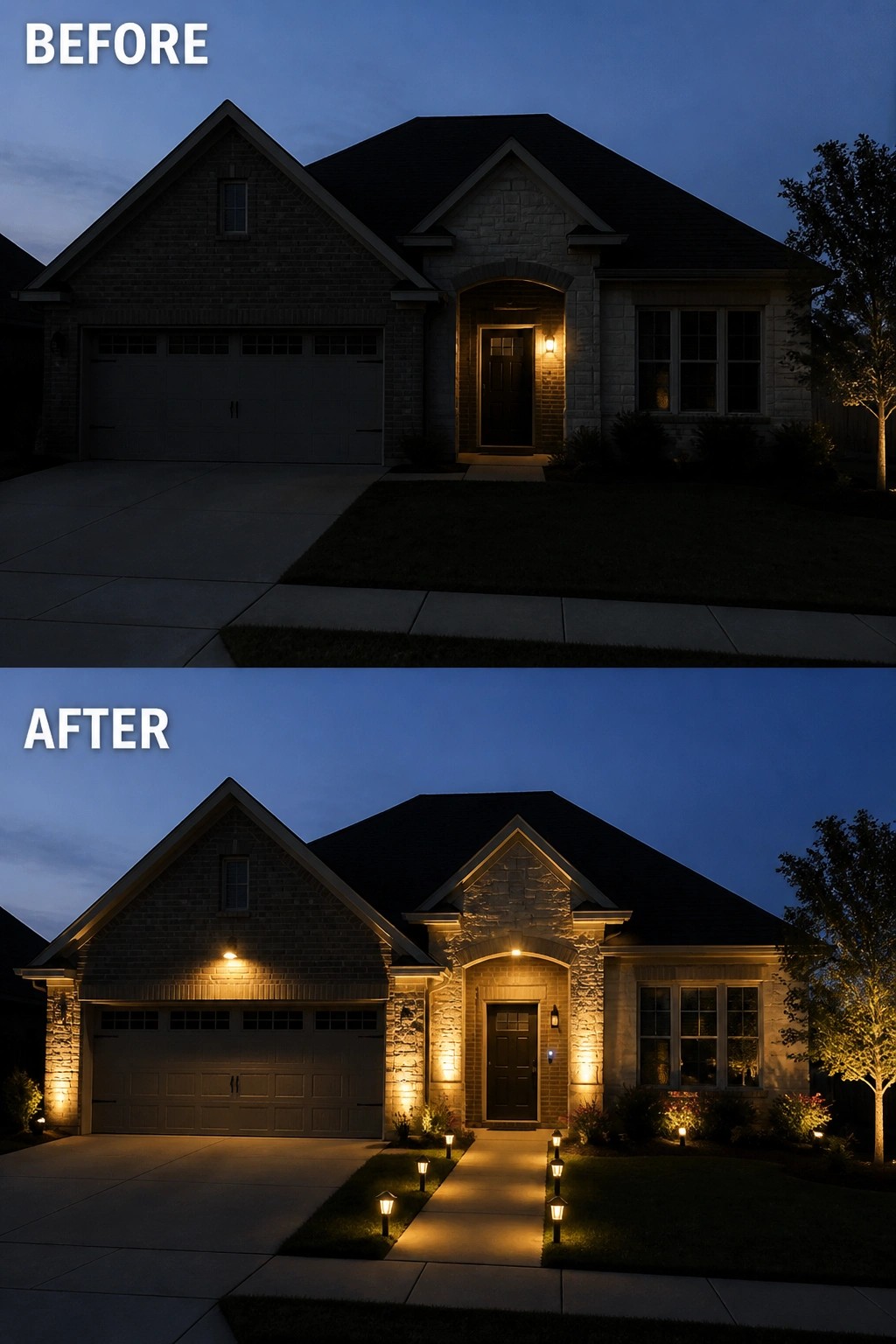
Many builder basic homes look flat and uninviting after dark because they rely on just one or two porch lights. Adding lights along the walkway, under the eaves, and against the stone details gave this house a much clearer shape and made the entry feel easier to approach.
This works best on homes with simple fronts where the goal is to highlight what is already there rather than add new features. Start with the main door and garage, then add low path lights so people can see where to walk. Keep the fixtures modest in size and aim them at the house rather than out toward the street.
Add Awnings To Update A Plain Front Entry
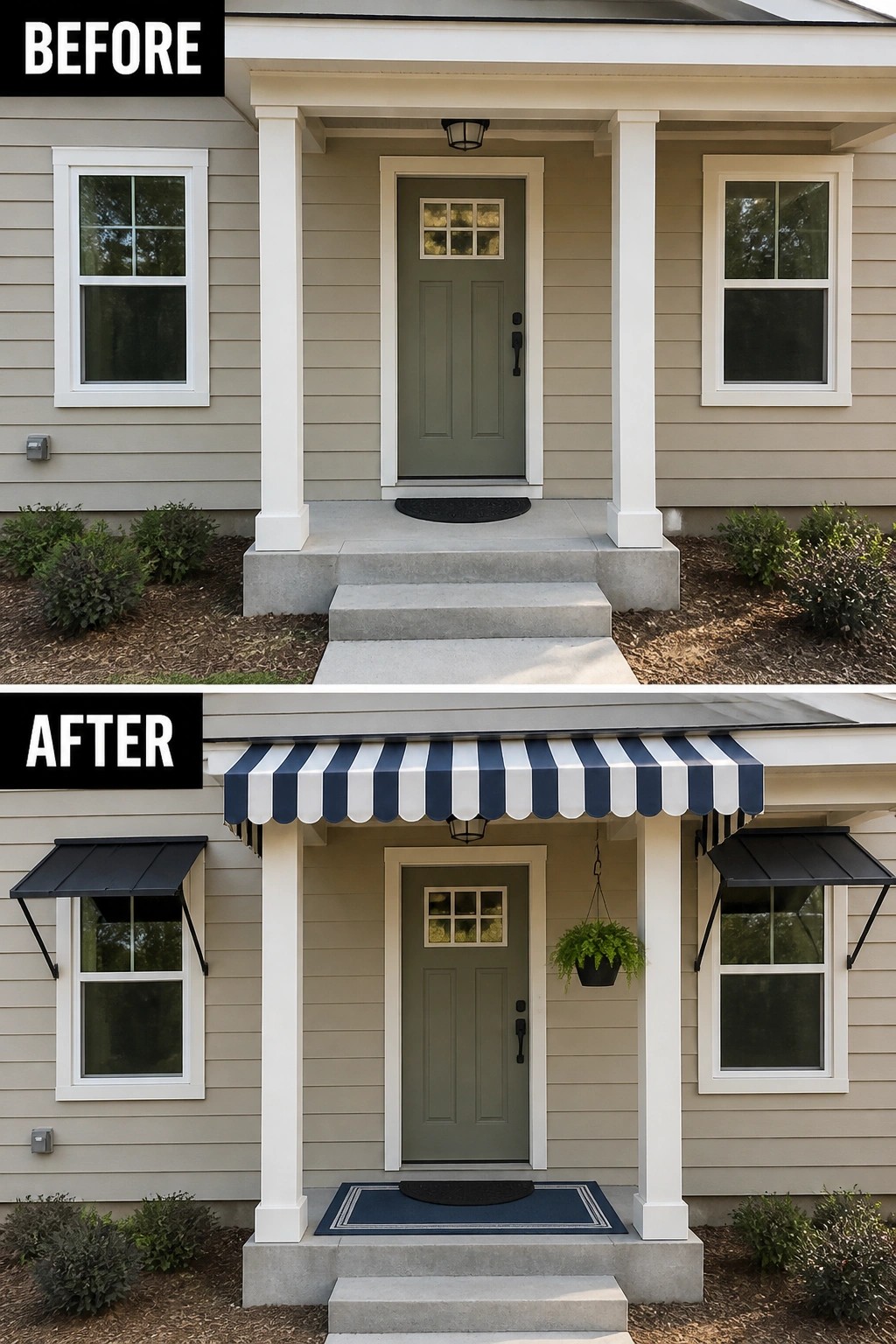
A striped awning over the door and simple shades on the windows can give a flat builder porch more shape and presence. The change turns an open entry into one that feels more defined and sheltered without any structural work.
This idea suits homes with basic siding and a small stoop where the facade needs a little extra character. Choose a pattern that works with your siding color, and make sure the awning fabric is made for outdoor use so it lasts through weather and sun.
Give A Bare Porch A Clear Purpose
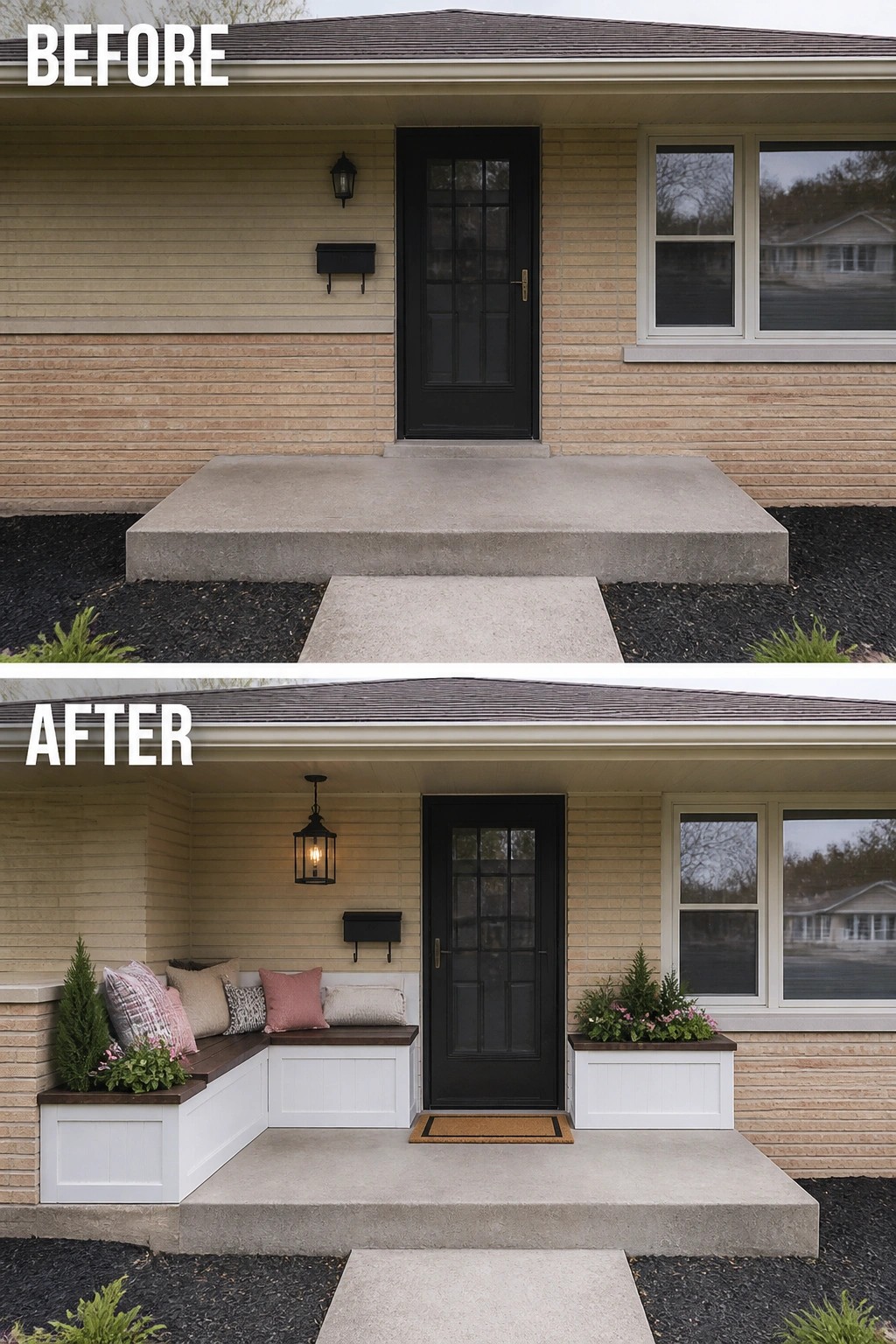
A plain concrete step in front of the door often leaves the entry feeling unfinished. Adding built-in benches along the sides turns that empty space into something functional without crowding the walkway. The change shows how simple seating and a couple of planters can make the front feel more connected to the house.
This works best on houses with a small covered stoop that has wall space on either side. Keep the bench height low so it does not block windows, and use the same color as the trim for a clean look. It adds a place to sit or set things down while still leaving room to move through the entry.
Add Defined Garden Beds To Structure A Plain Yard
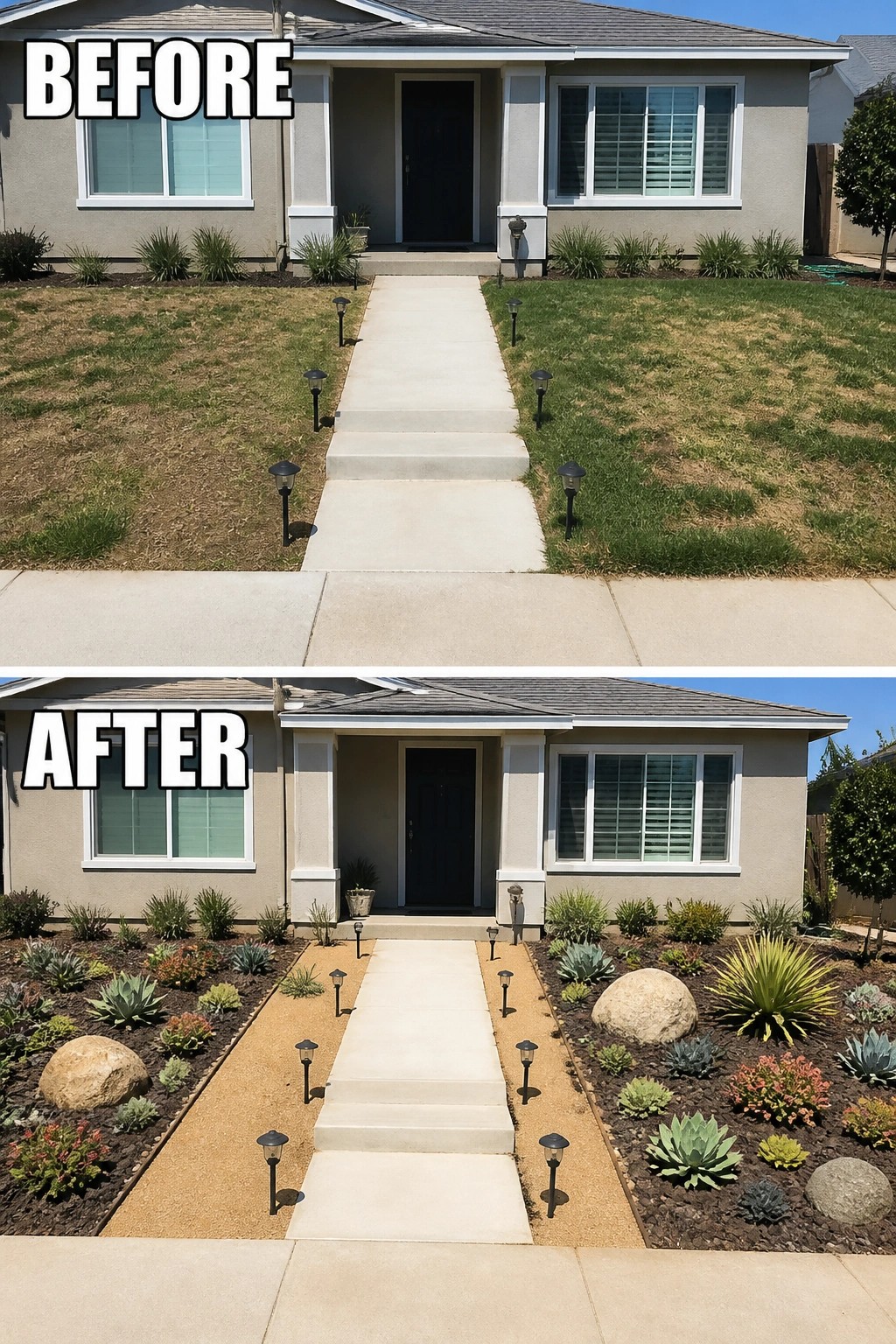
One of the easiest ways to fix a basic front yard is to give the planting areas clear borders instead of leaving grass running right up to the walkway. Here the patchy lawn was replaced with edged beds filled with gravel and low plants. The result feels much more planned and makes the path look like it belongs.
This idea works well on builder homes with narrow strips of lawn on either side of the front walk. Mark out simple bed lines first, then add gravel or mulch inside the borders before planting. Succulents and similar low-water plants keep the look tidy without constant upkeep, and the rocks add weight so the beds do not feel empty.
Add A Front Fence To Improve Curb Appeal
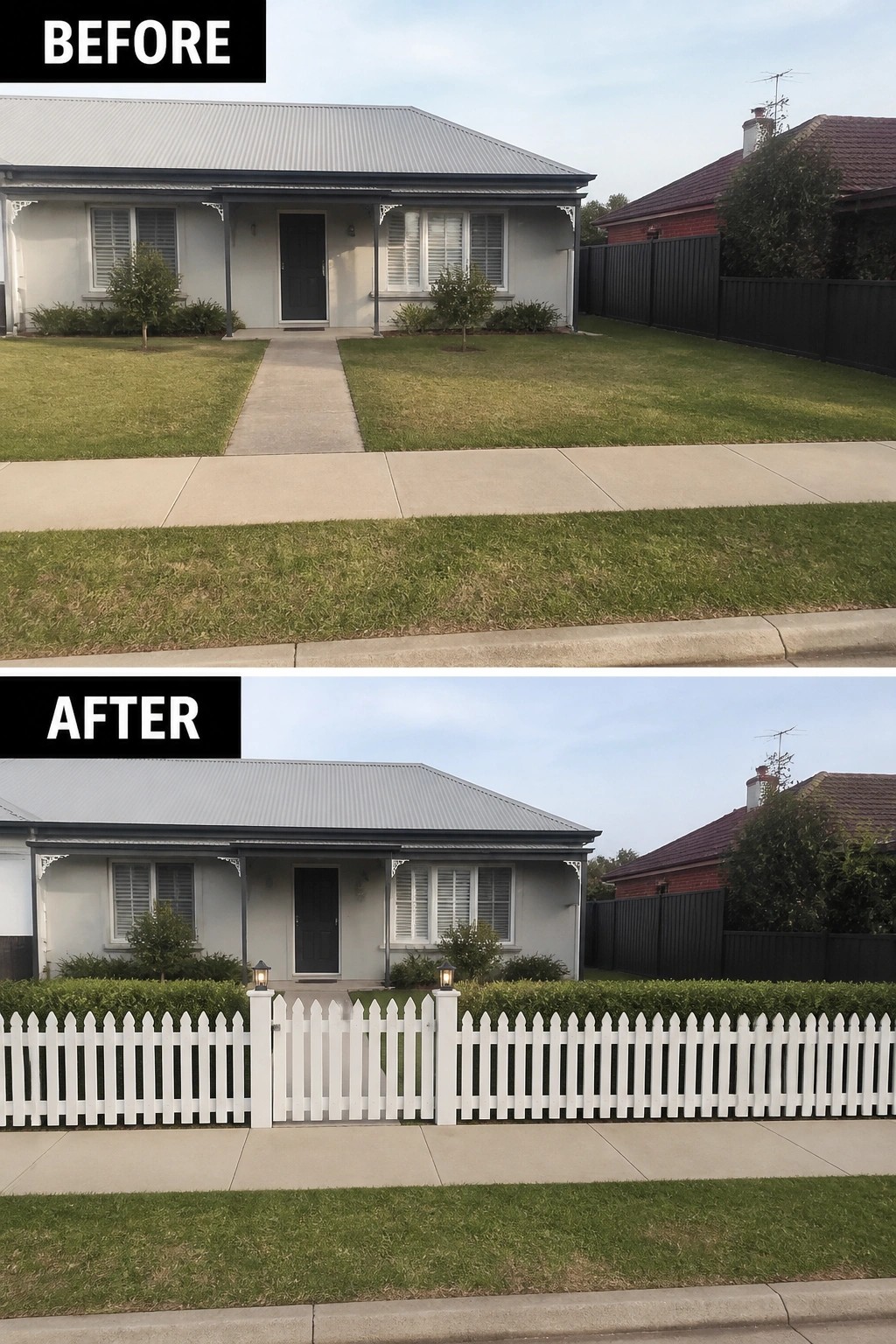
A plain front yard with no boundary often looks unfinished even when the lawn is neat. Adding a simple picket fence creates a clear edge and gives the house a more settled look without major construction.
This works especially well on basic builder homes where the grass runs straight to the sidewalk. Keep the fence height modest and add a low hedge behind it so the front still feels open while gaining structure and privacy.
Add Contrast To A Plain Gable For Better Curb Appeal
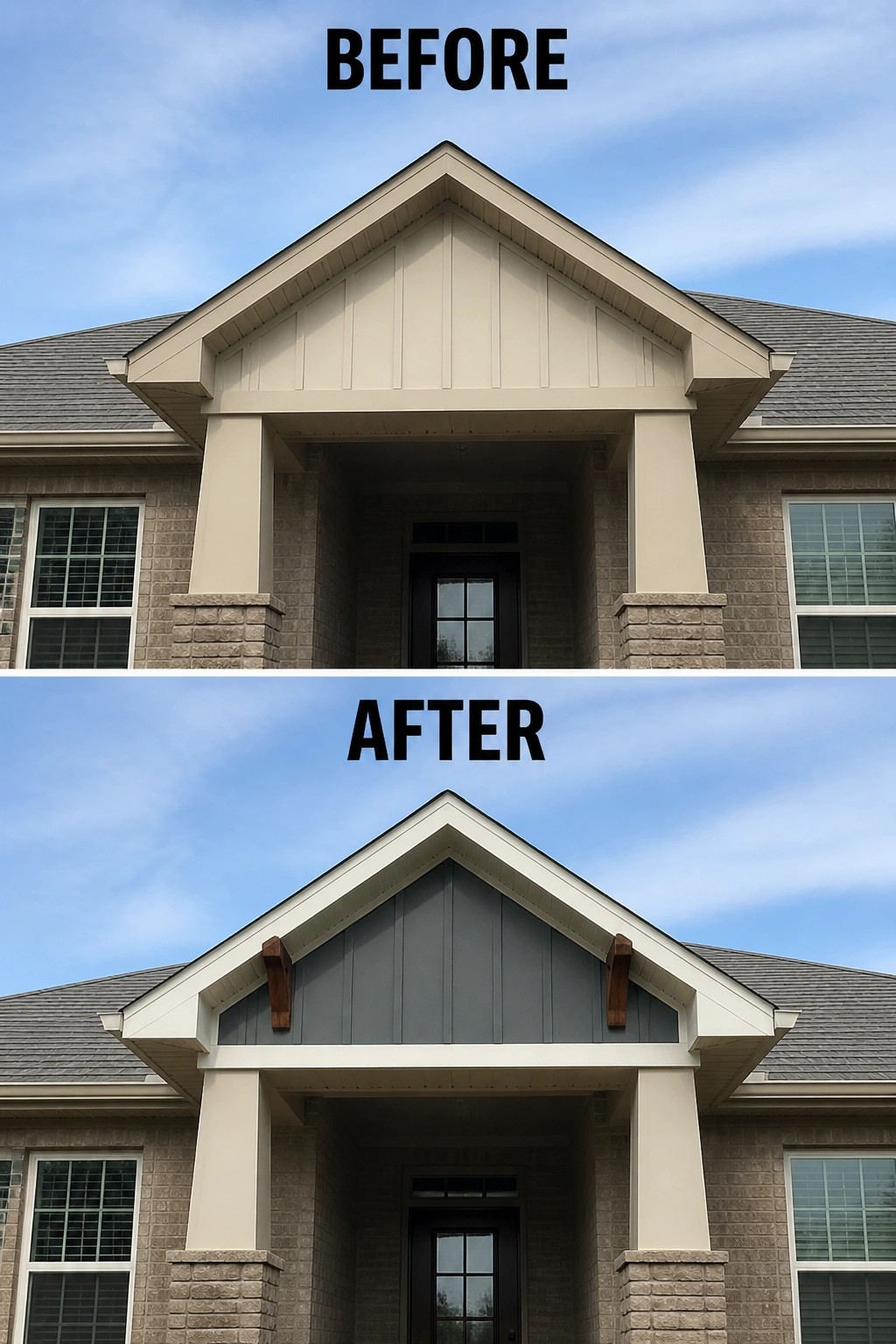
Many builder homes have large plain gables that make the front look flat. In this case the fix was simple. Painting the center section a darker color and adding a few wood brackets gave the gable shape and pulled the whole entry together without any major construction.
This approach works well on houses that already have decent proportions but lack detail. Focus on the one area that sits above the main door or porch. Keep the darker color in the same family as your existing trim so it reads as intentional rather than random. The change stays affordable and can often be done in a weekend.
Define The Entry With A Low Feature Wall
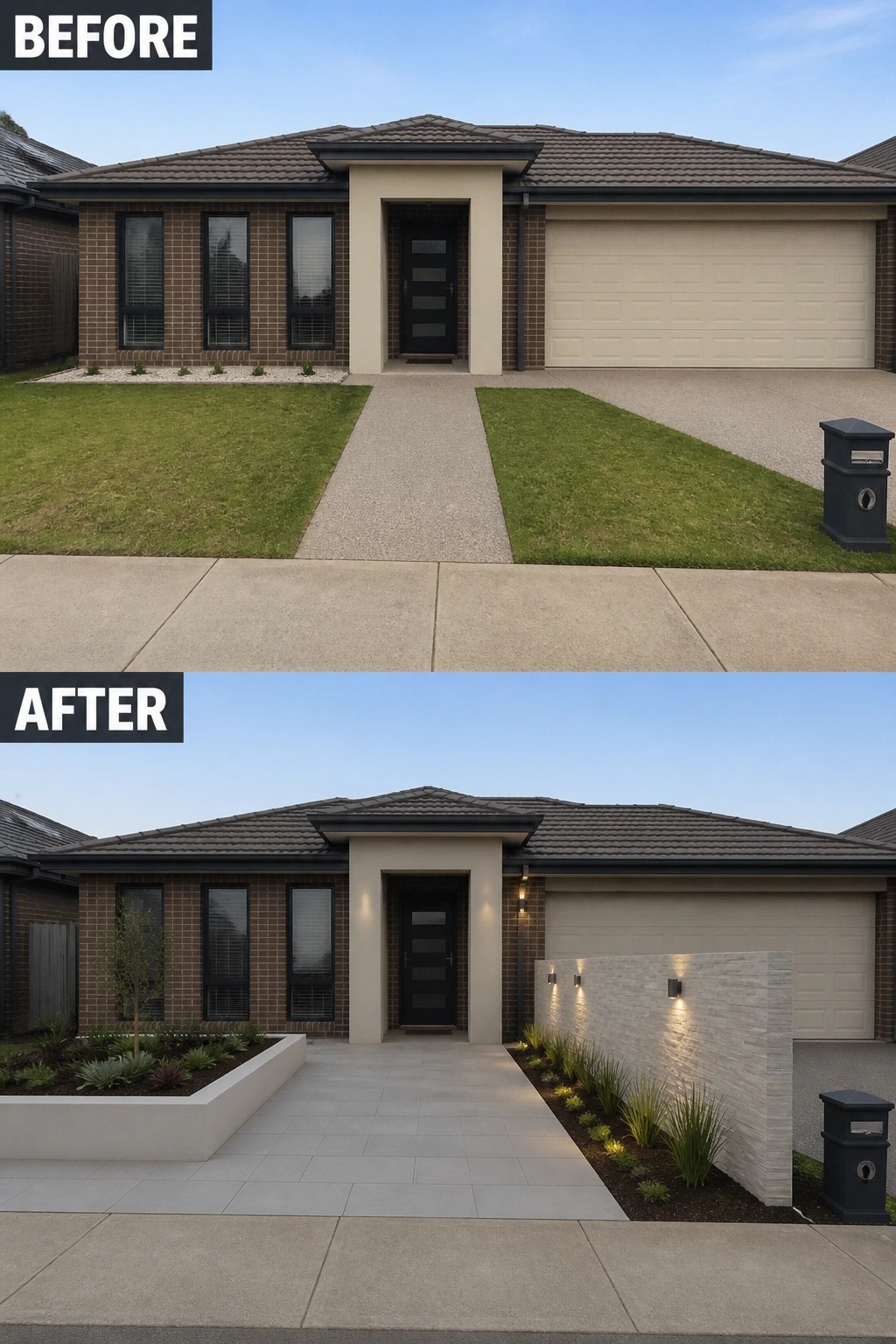
A plain house front often feels unfinished because the path to the door has no clear edges or focal point. Adding a low stone wall with wall lights creates that missing boundary and pulls attention toward the entry without any major construction.
This idea suits builder homes that have wide driveways and little architectural detail. Keep the wall height modest so it does not block windows or views, and match the material to any other hardscaping you already plan to add.
Update Window Frames For Stronger Curb Appeal
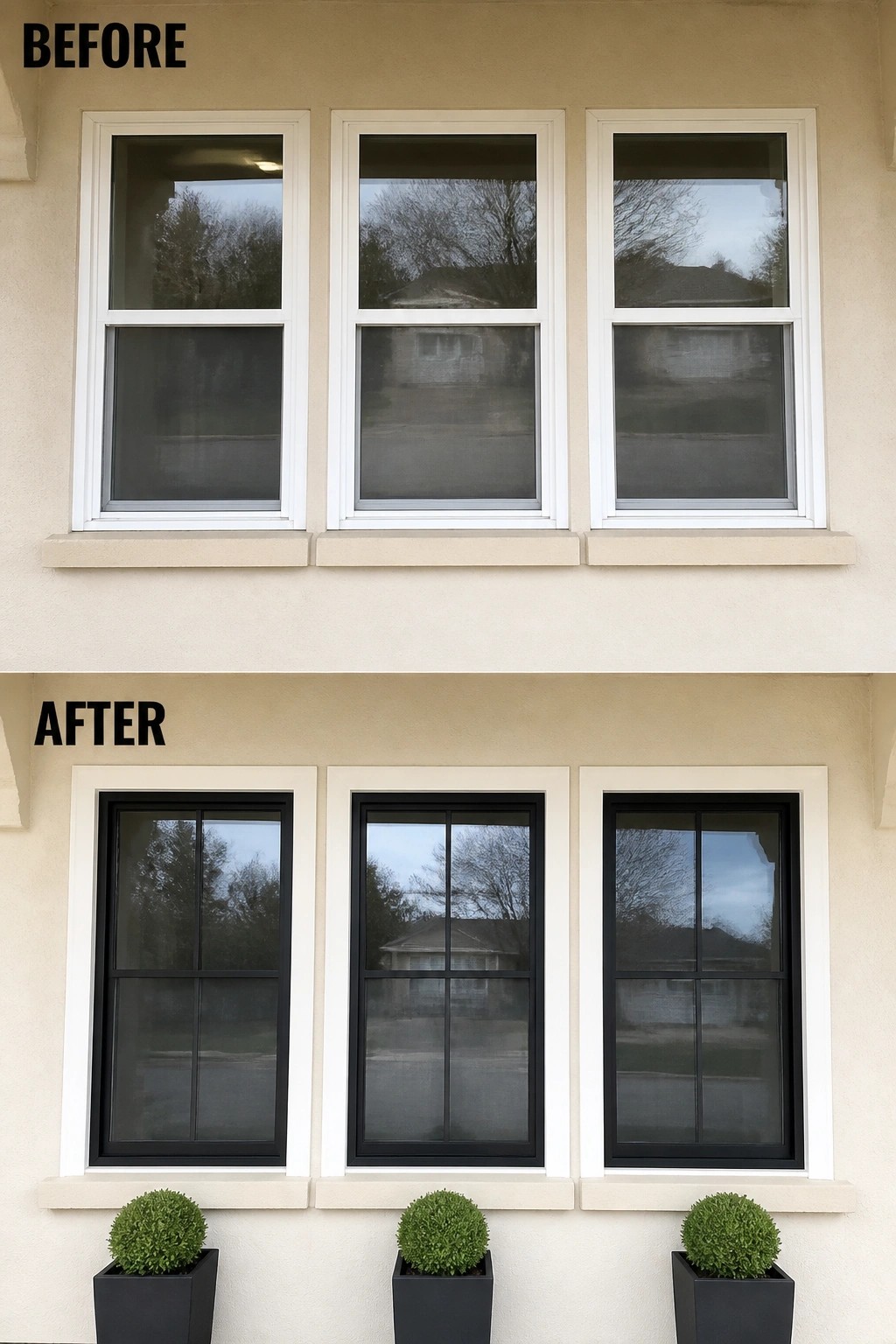
Plain white window frames often blend into the wall on a builder basic house and leave the exterior looking flat. Switching them to a dark color creates clear contrast that makes the windows stand out without any major construction. The simple addition of matching planters below the windows also helps tie the new look together.
This approach works well on homes with large grouped windows where the frames are the main visible detail. Keep the rest of the exterior neutral so the dark frames stay the focus. Match the planter color to the frames for a cleaner result and choose low shrubs that will not block the glass.
Add An Awning Over A Plain Front Door
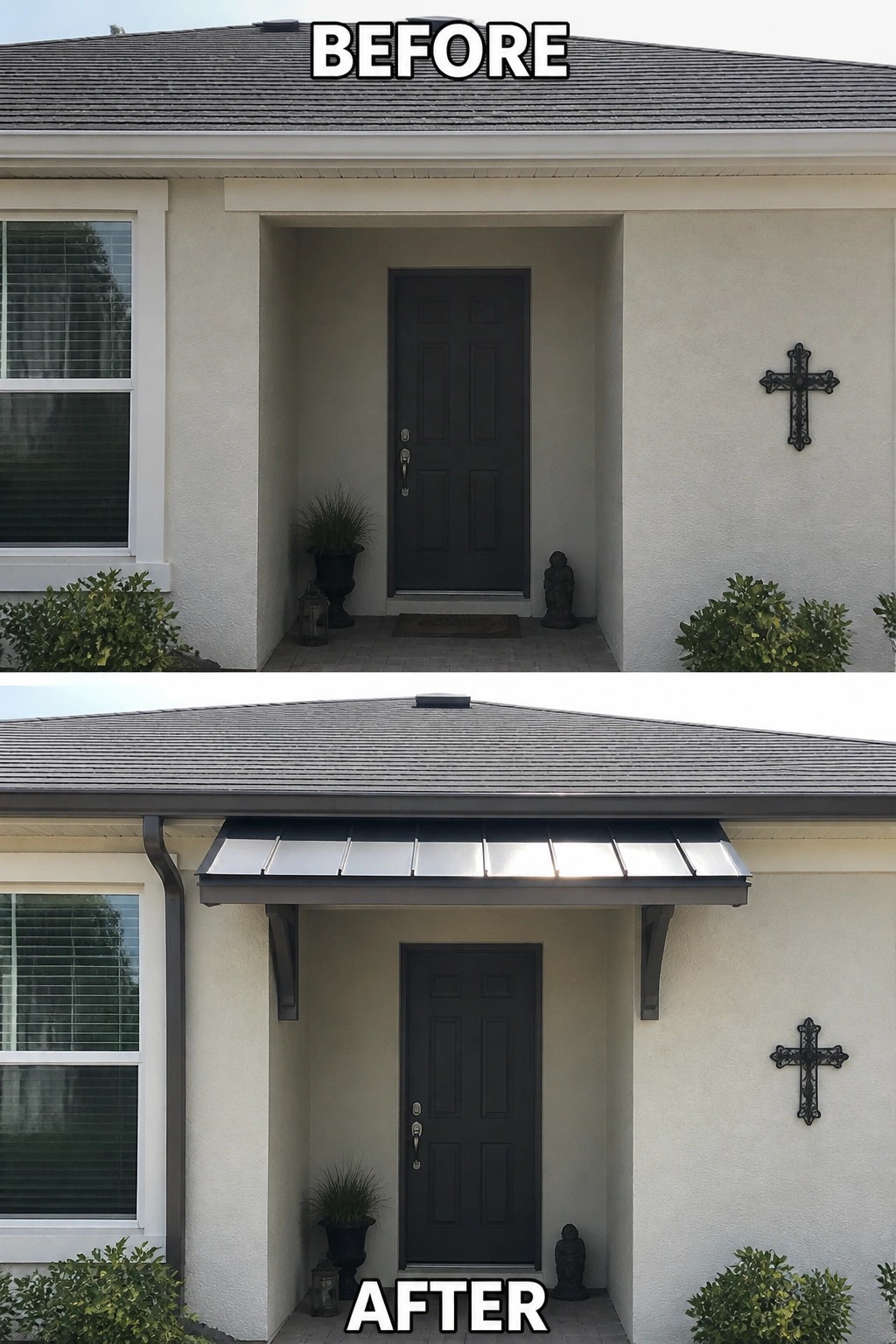
A simple metal awning gives the entry some real shelter and makes the whole front feel more complete. The before shows a door sitting in an open recess with nothing overhead. The after adds a modest overhang with brackets that protects the door and creates a clearer focal point.
This idea works best on houses where the entry feels flat or exposed. Keep the awning narrow and match the color to the trim so it blends in rather than taking over the facade.
Add Defined Garden Beds Along The Driveway
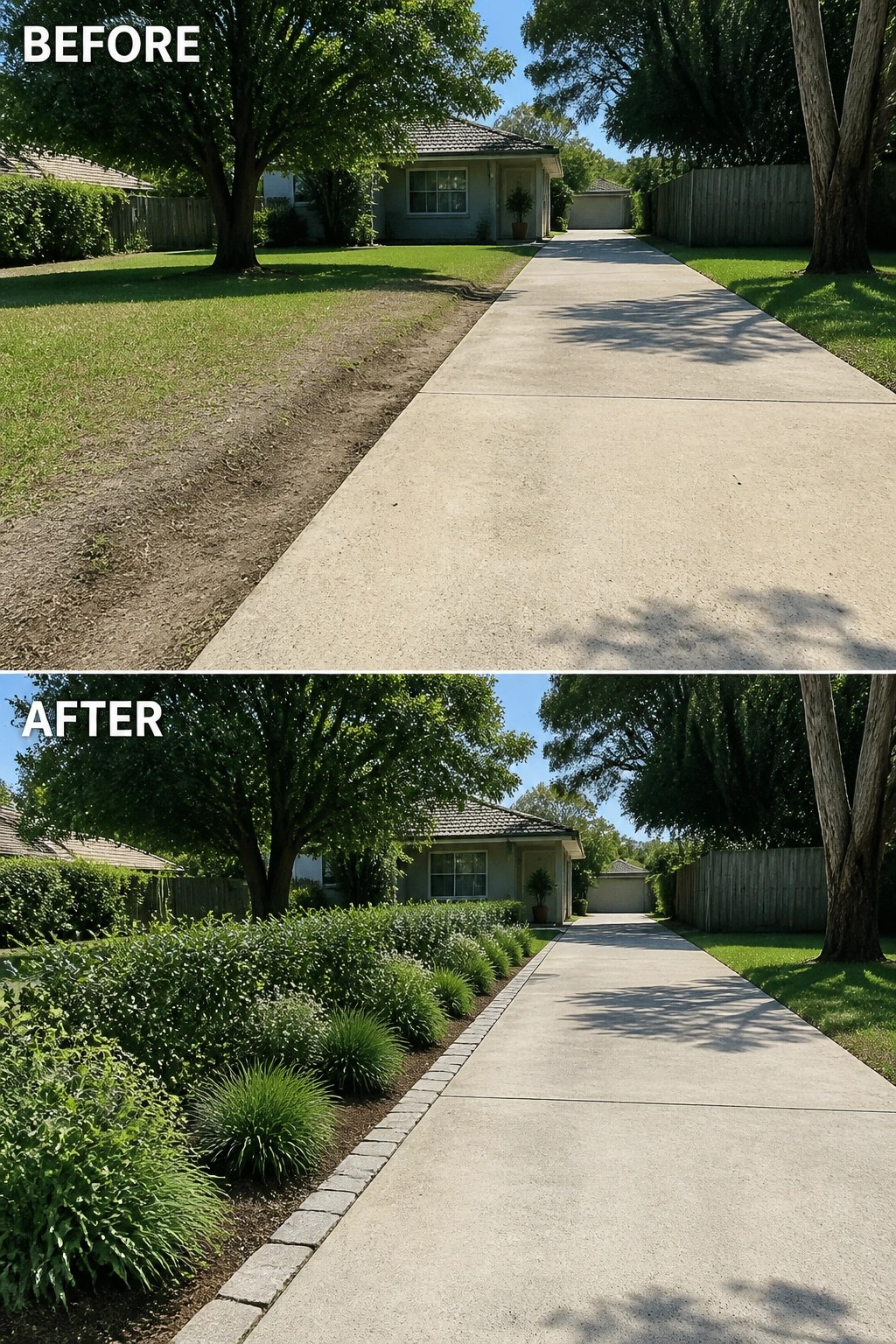
A bare strip of dirt next to a concrete driveway often makes the whole front yard feel unfinished. Adding a planted border with a simple brick edge turns that empty space into a clear garden bed. The change gives the approach to the house more structure without taking up much room.
This idea works best on homes where the original landscaping stopped at the lawn. Keep the bed narrow enough to leave space for walking and choose plants that stay low near the driveway. Start with the edging first so the shape stays neat even before the plants fill in.
Add Outdoor Lighting To Make A Plain Entry Feel Finished
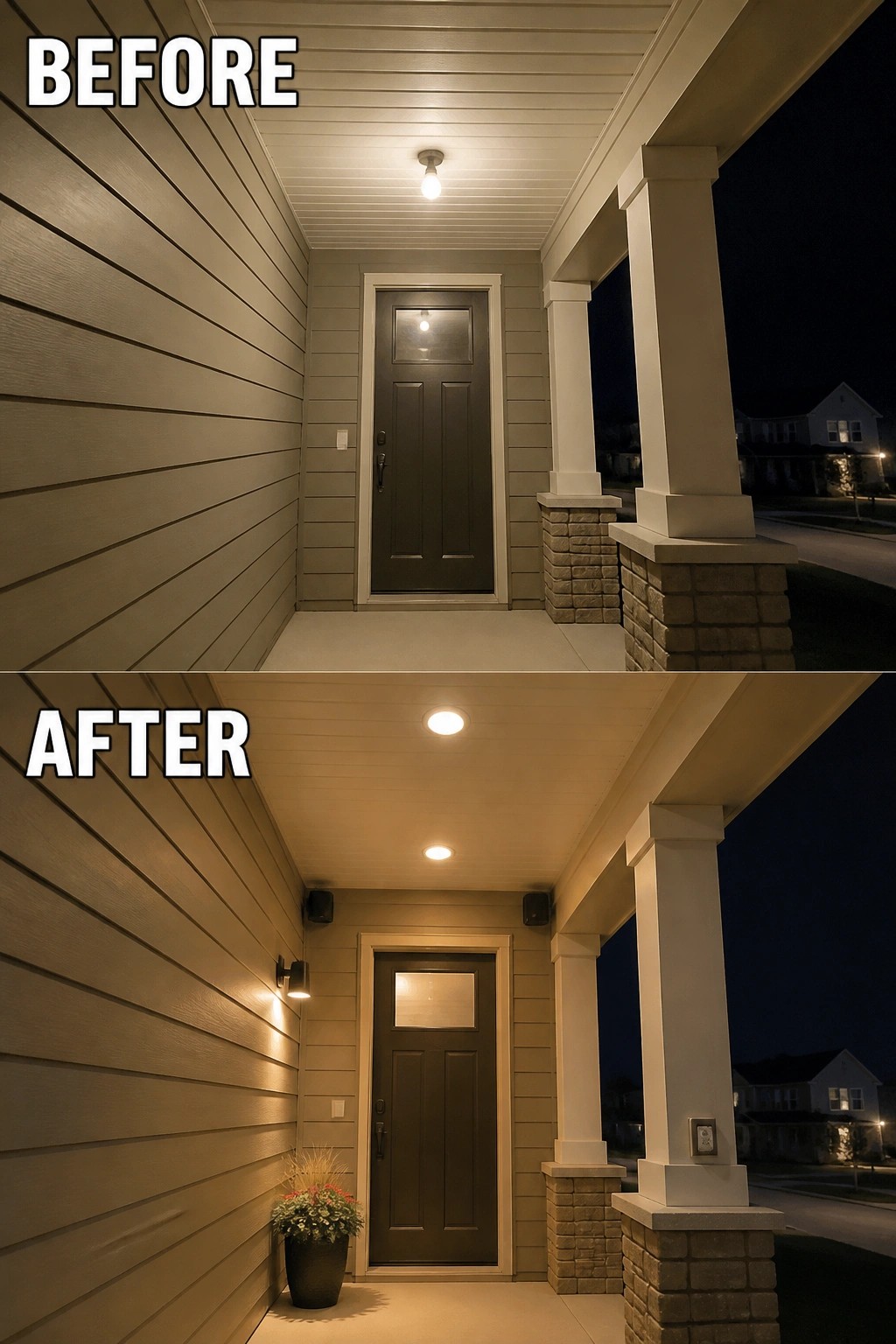
A single overhead bulb often leaves a front entry looking flat and unwelcoming at night. In this case, adding recessed ceiling lights and a pair of wall sconces created a much softer, more even glow while the simple addition of a potted plant helped the space feel lived in.
This approach works best on homes with a basic covered porch where the main issue is poor lighting rather than major structural problems. Focus on placing lights at different heights instead of relying on one fixture, and keep any added plants or decor modest so the walkway stays clear.
Frequently Asked Questions
Q: Can I tackle these changes myself without hiring help?
A: Many updates like adding window boxes or staining a fence work fine as weekend projects. Grab basic tools and follow simple tutorials online. You save money and learn as you go.
Q: What if my neighborhood has strict rules about exterior changes?
A: Review the guidelines first to avoid issues. Focus on reversible ideas such as seasonal decorations and movable planters. These keep things fresh while staying compliant.
Q: How often should I update the exterior after making changes?
A: Check for wear once a year and touch up paint or clean surfaces as needed. This keeps the new look sharp without big redo jobs.
Q: Does adding a porch really change a plain house that much?
A: It frames the entrance and adds usable space right away. Even a small covered area makes the front feel more inviting.