

The outside of a house tends to show every layer of wear and mismatched updates in a way that makes the whole place feel less put together than it really is.
Small fixes around the entry or along the front can shift that impression without requiring a complete overhaul of the structure.
I have found that addressing the trim and any faded surfaces first often makes the rest of the exterior feel more intentional right away.
Some of these ideas focus on materials and layouts that stay practical while still looking finished through different seasons.
A few simple swaps can change how the house reads from the street.
Update The Front Door Color
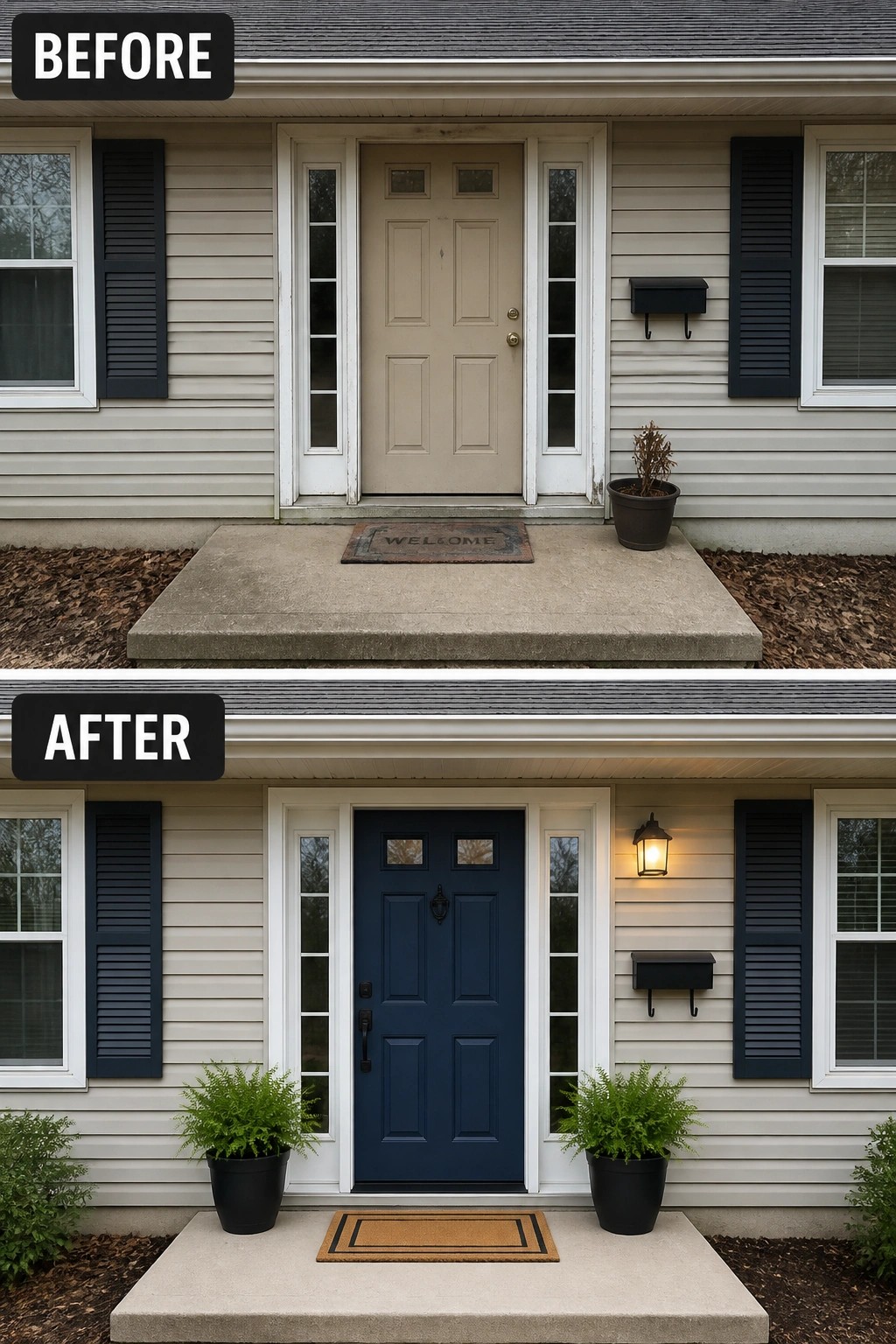
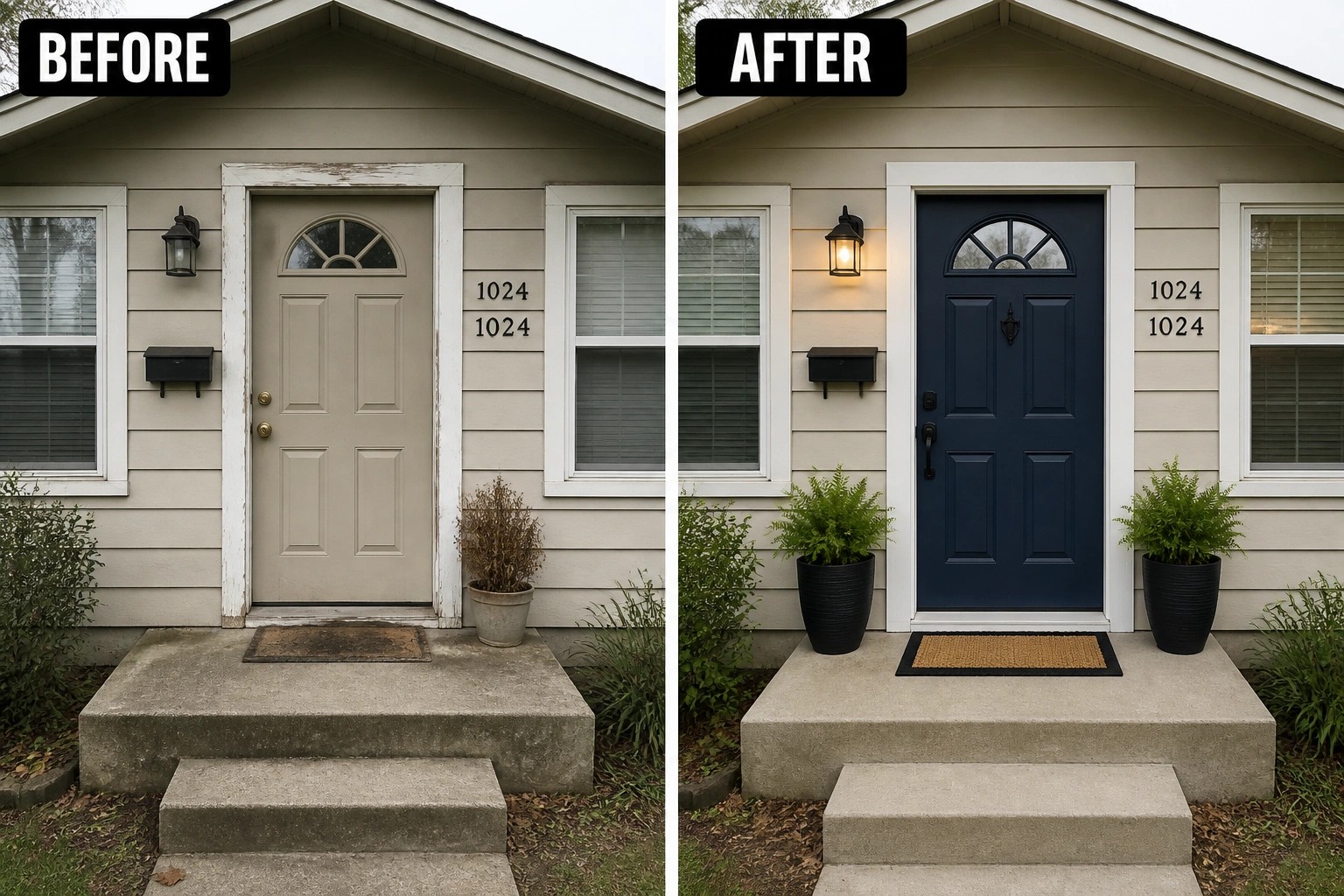
A plain front door often gets overlooked, yet it is one of the easiest spots to change the look of a house. Switching from a light beige to a deep navy blue gives the entry a clear focal point. Adding a pair of matching planters on either side of the step finishes the area without much extra work.
This idea works on many homes with simple siding where the door sits fairly flat against the wall. Choose an exterior-grade paint, keep the planters low, and add one light fixture if the entry feels dim at night. The goal is a quick update that still leaves room to walk up to the door.
Paint The Siding To Refresh The Whole House
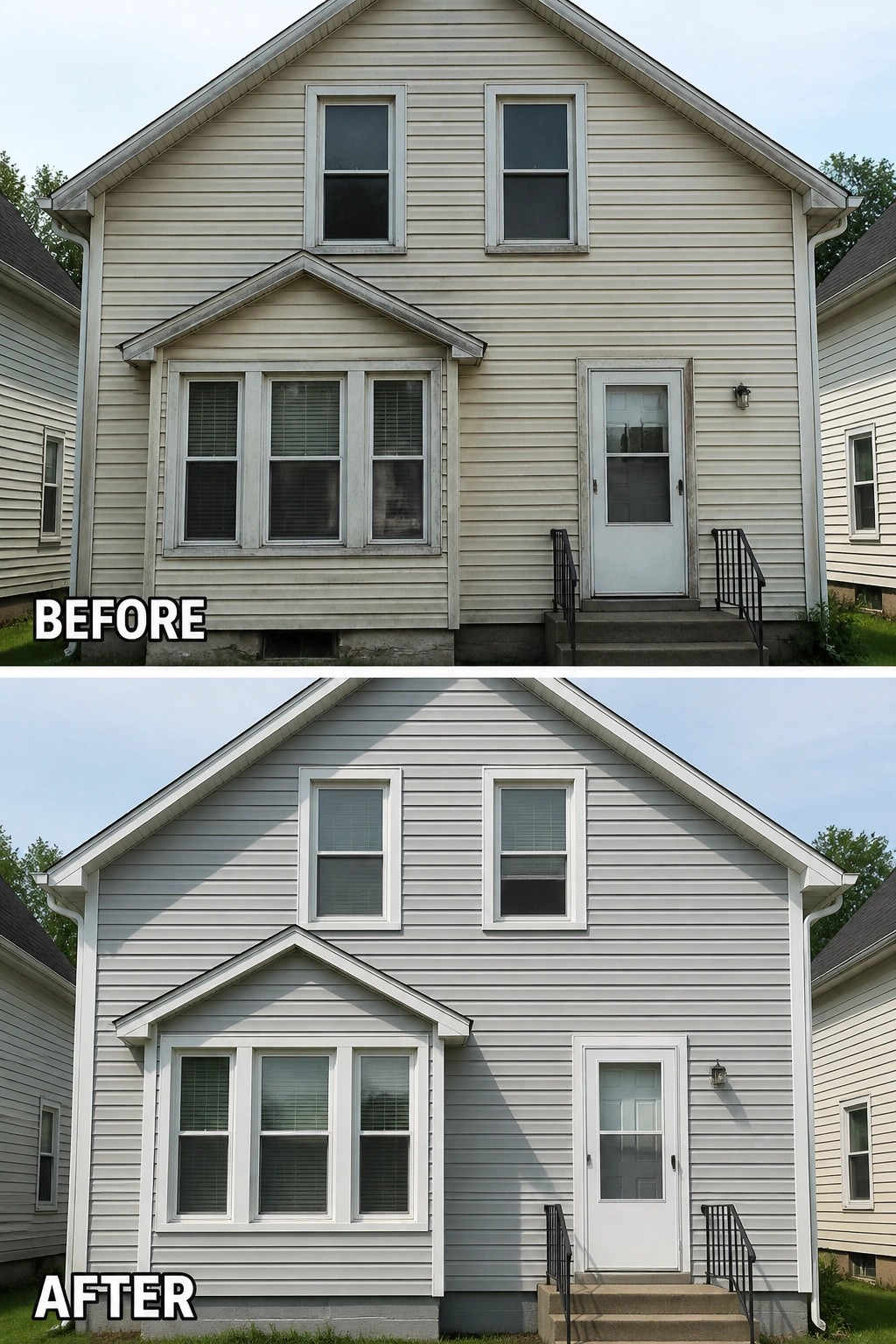
A fresh coat of paint on the siding can pull an older house together fast. In this case the beige exterior was updated to a soft gray, which made the trim and windows stand out and gave the front a much cleaner look without any major construction.
This approach works best on homes that already have decent structure but just look tired. Stick to one color for the main siding, keep the trim simple, and make sure the new shade works with your roof and door. It is an affordable way to improve curb appeal before spending money on bigger changes.
Define The Front Walk With Edged Garden Beds

A cracked concrete path and ragged grass edges make a front yard feel unfinished even when the house itself is in good shape. Adding a paver walkway with clean black borders and mulched beds on both sides instantly gives the entry a planned look. The beds keep the lawn from creeping onto the path and create a simple frame that leads the eye to the door.
This idea works well on any home with a straight front walk. Start by laying out the borders and filling the beds with mulch before choosing plants. Keep the beds fairly narrow so the path still feels open and easy to walk. The same approach can tidy up a side yard or a path to a garage.
Replace A Plain Garage Door For Better Curb Appeal
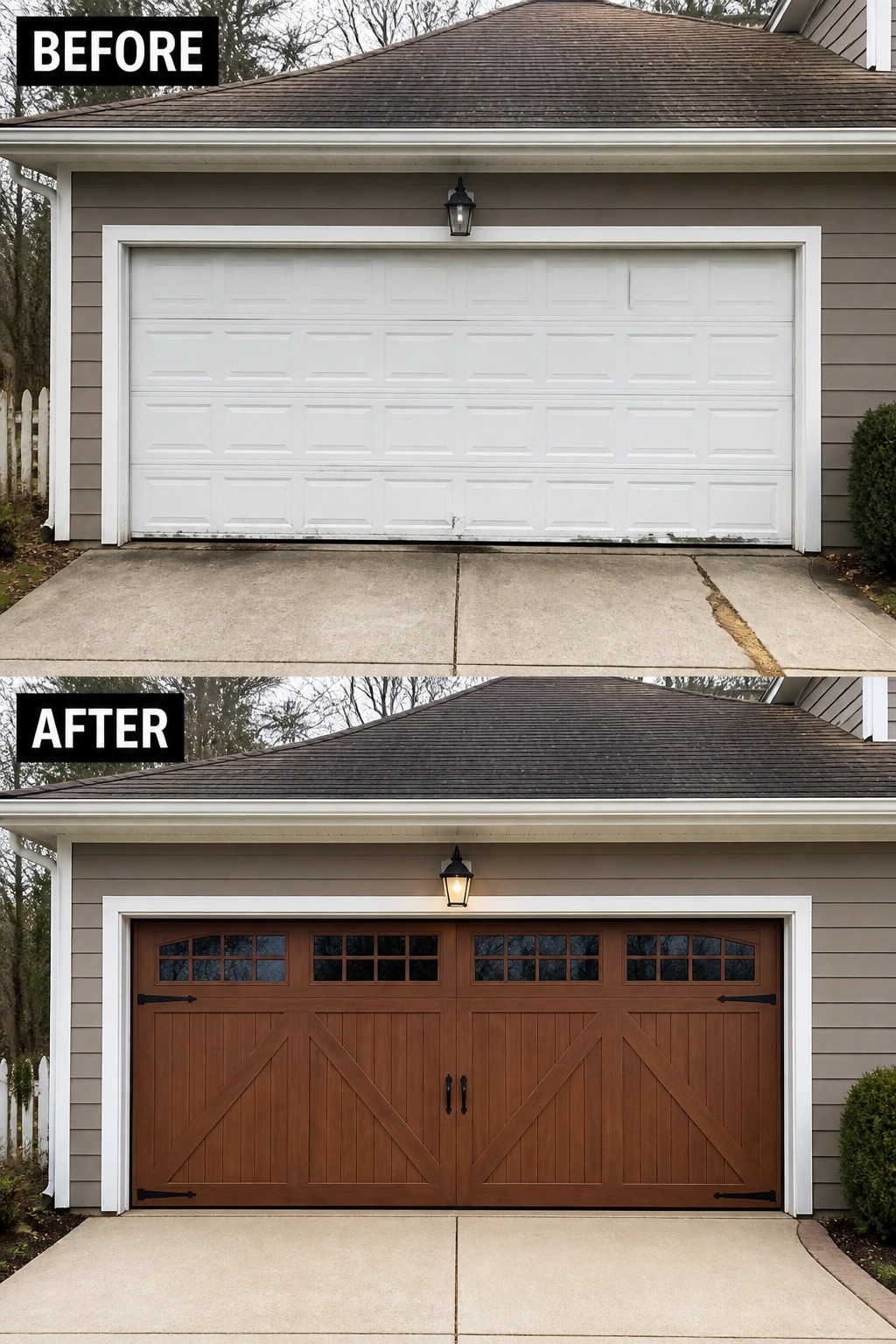
A basic garage door often makes the front of a house look unfinished, even when the rest of the exterior is in good shape. Switching to a carriage-style door with wood tones, divided windows, and simple hardware gives the facade more presence and helps it feel more complete.
This update works especially well on homes where the garage takes up a large part of the front view. It is a fairly straightforward change that does not require major construction, but it pays off most when the new door style matches the overall look of the house.
Clean Up An Overgrown Front Yard
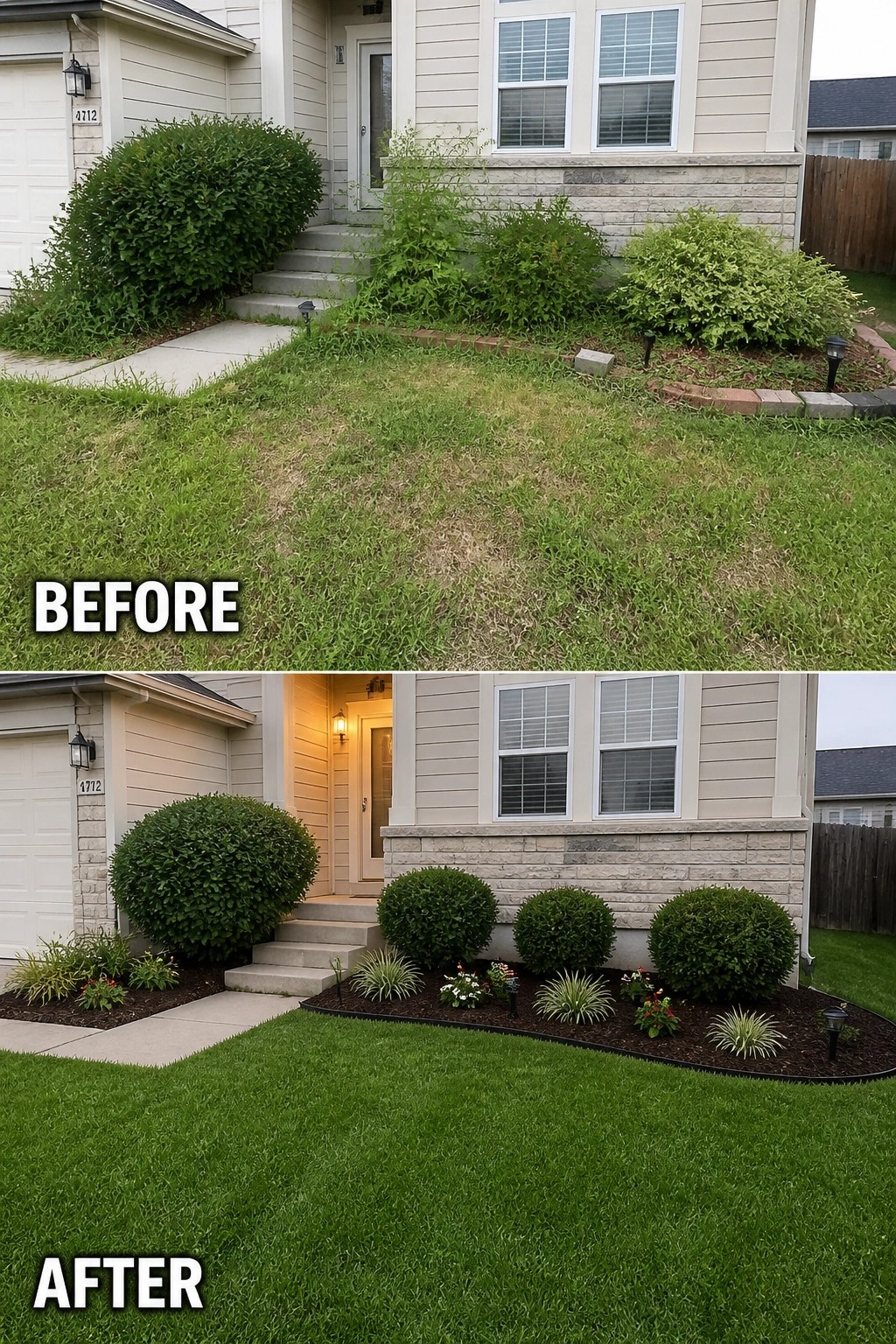
The biggest change here came from fixing the lawn and giving the planting area real edges. The patchy grass was replaced with a thick, even lawn, and the messy shrubs were swapped for rounded bushes set in mulched beds with a clear border. That simple cleanup made the whole front of the house look finished instead of neglected.
This approach works best on smaller yards where you want to keep things low maintenance. Start by mowing and edging the grass so it has a clean line, then add a few matching shrubs and a strip of mulch along the house. The key is to stop before you add too many different plants.
Add Shutters And Window Boxes To Plain Windows
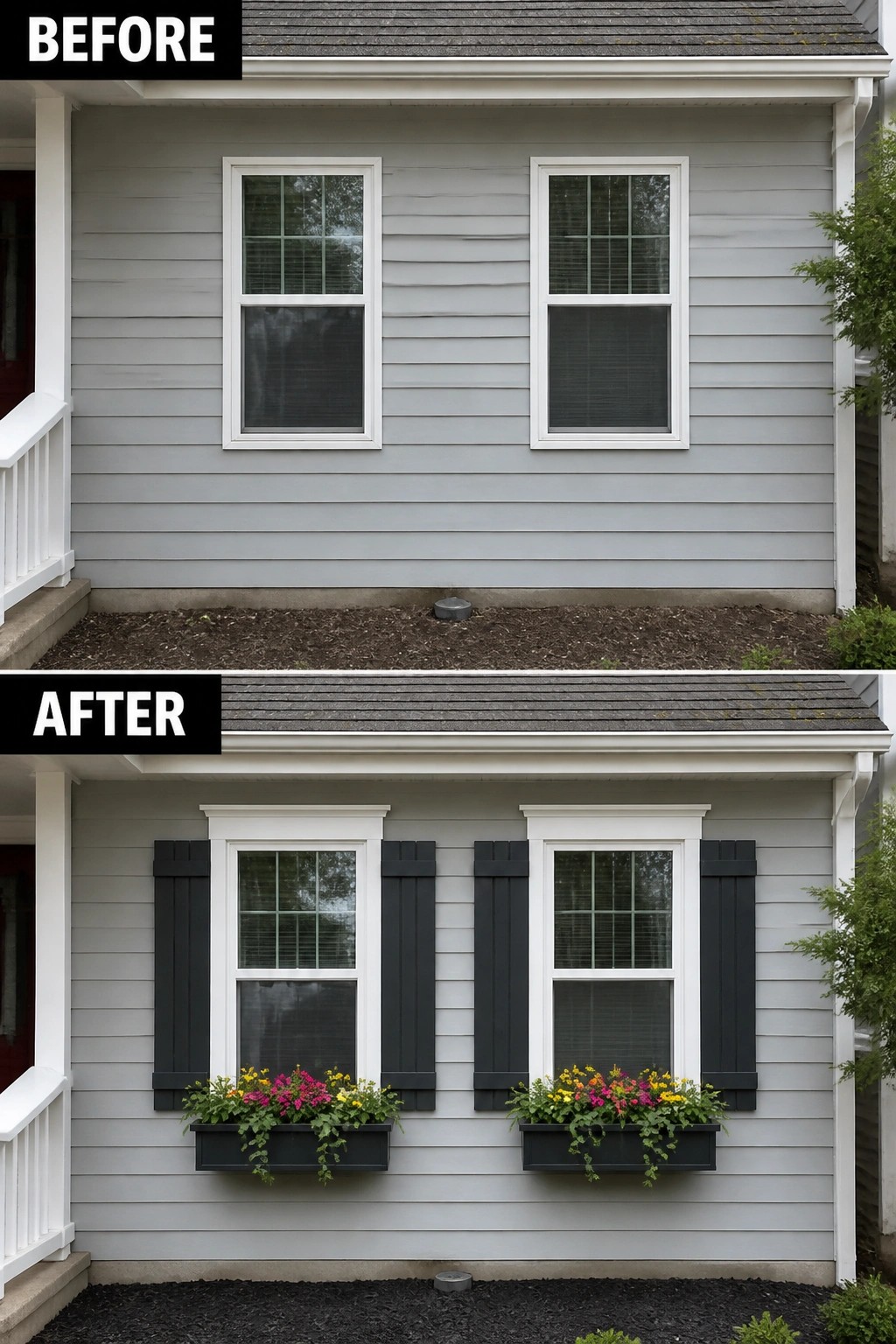
Many homes have rows of plain windows that sit flat against the siding and do little to break up the wall. Adding shutters on each side and a simple window box below gives the windows a finished frame and adds color right where people notice it first. The change is small in scale but makes the whole front look more intentional.
This idea works well on houses with simple siding and standard window sizes. Choose shutters in a color that contrasts with the house and keep the boxes narrow so they do not block the view from inside. Start with one or two windows if you want to test the look before doing the whole house.
Turn An Empty Porch Into A Seating Area
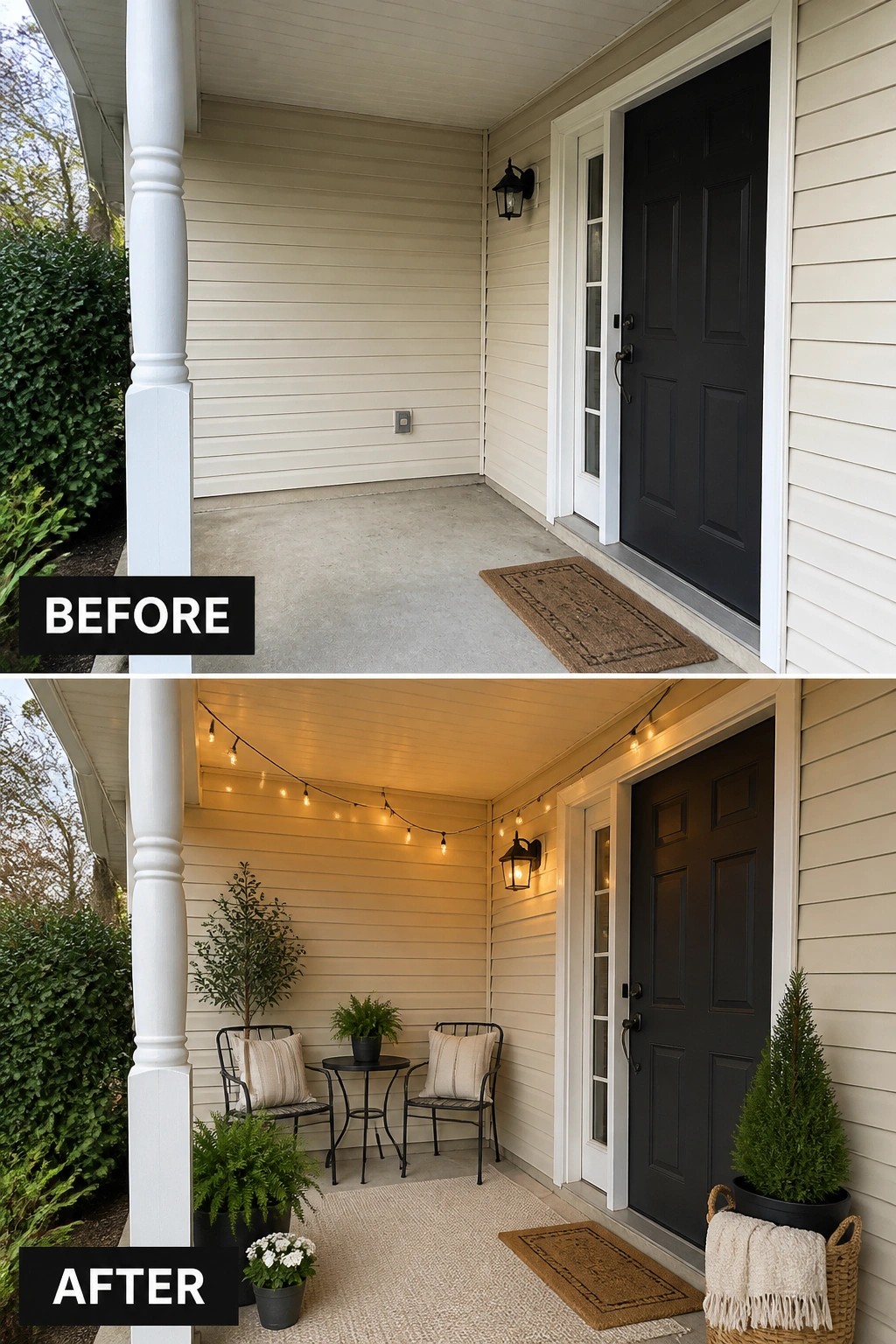
A plain concrete porch often feels like wasted space until you give it a purpose. Adding a small table and two chairs, along with a rug, instantly turns the area into a spot where someone might actually sit. String lights and a few potted plants help the space feel finished without crowding it.
This idea works well on narrow entries or covered stoops where big furniture would not fit. Start with a weatherproof rug to define the zone, then add seating that can stay outside. Keep the number of pieces low so the walkway stays clear.
Add White Trim To Refresh A Brick Exterior
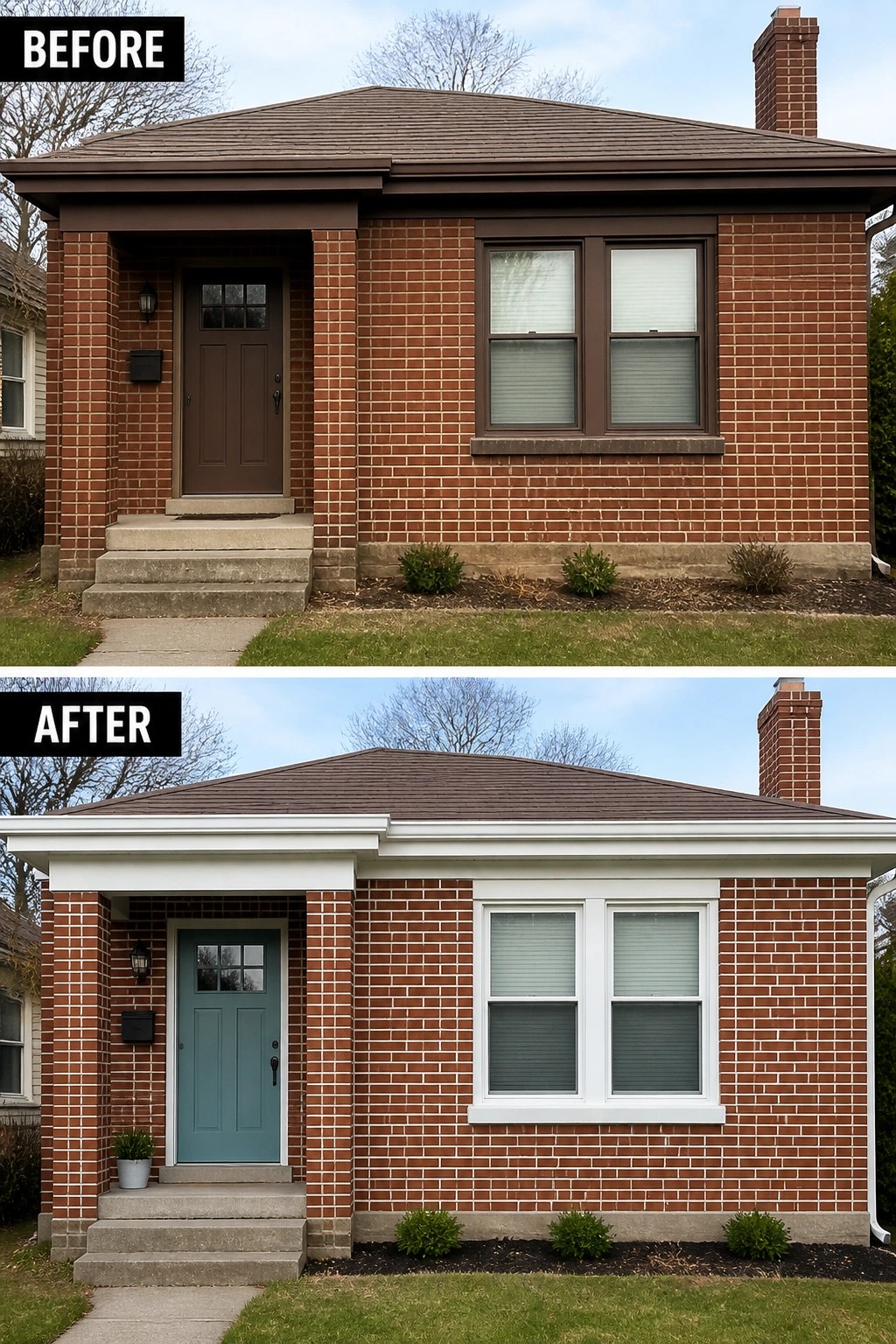
Adding white trim along the eaves and around the windows gives a brick house clearer lines and a more finished look. The before version had dark brown trim that blended in, while the after shows how switching to white and painting the door a soft teal color makes the entry feel more defined.
This idea suits simple brick homes that need a quick visual lift without big construction work. Focus on the trim first, then choose a door color that contrasts with the brick. Keep the changes limited so the update stays practical and easy to maintain.
Clean Up The Area Around Your Mailbox
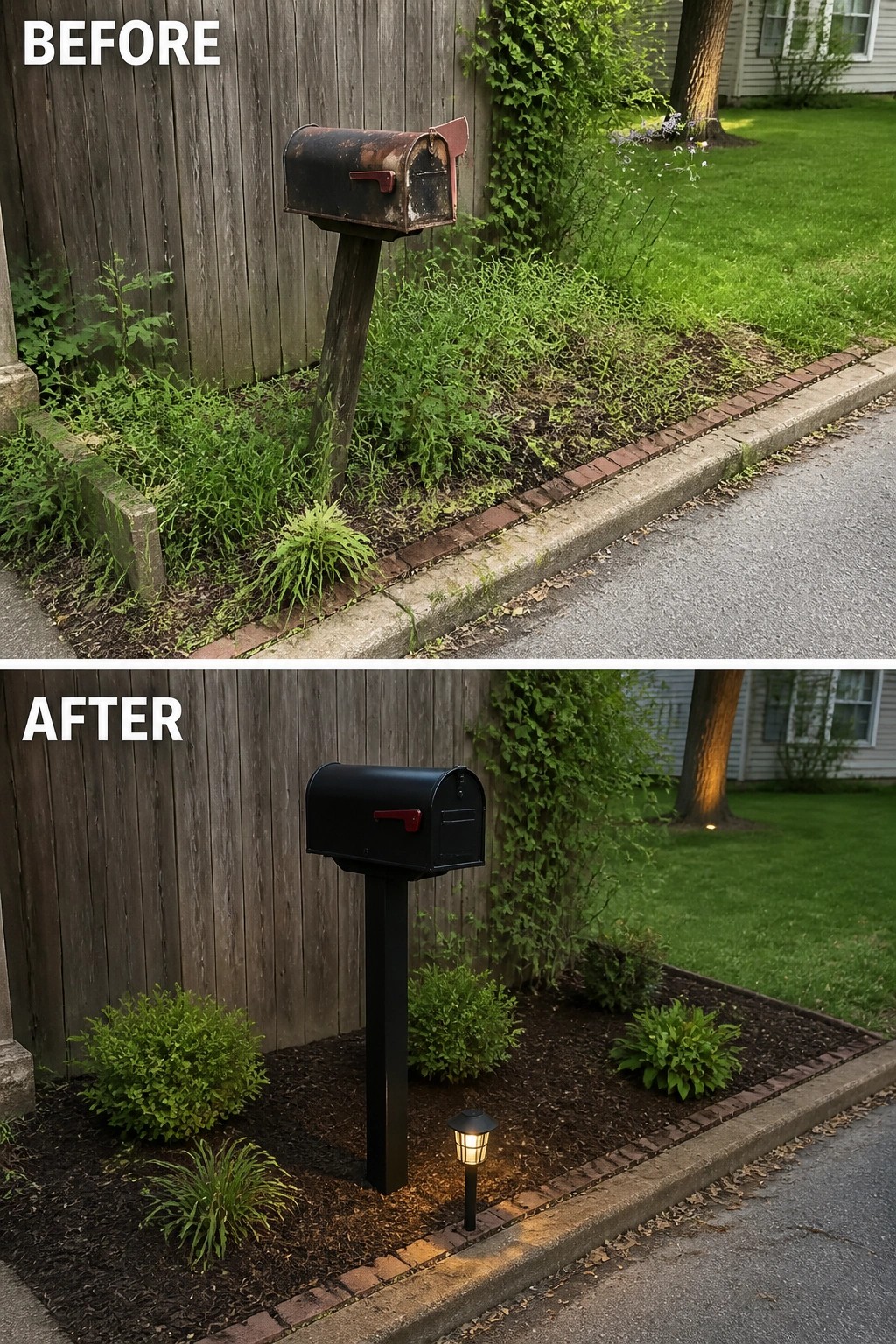
An old mailbox sitting in a weedy patch can make the whole front look neglected. Clearing the overgrowth, adding a layer of mulch, and planting a few simple shrubs gives the spot a much tidier feel without much effort. The new post and small light also help the area look more intentional at night.
This kind of update works well on any home where the mailbox sits in a garden bed. Start by removing the weeds and old wood, then lay down mulch to keep things neat. A couple of low shrubs and one light are usually enough to make the space look finished.
Update The Porch With Fresh Paint And Clean Trim
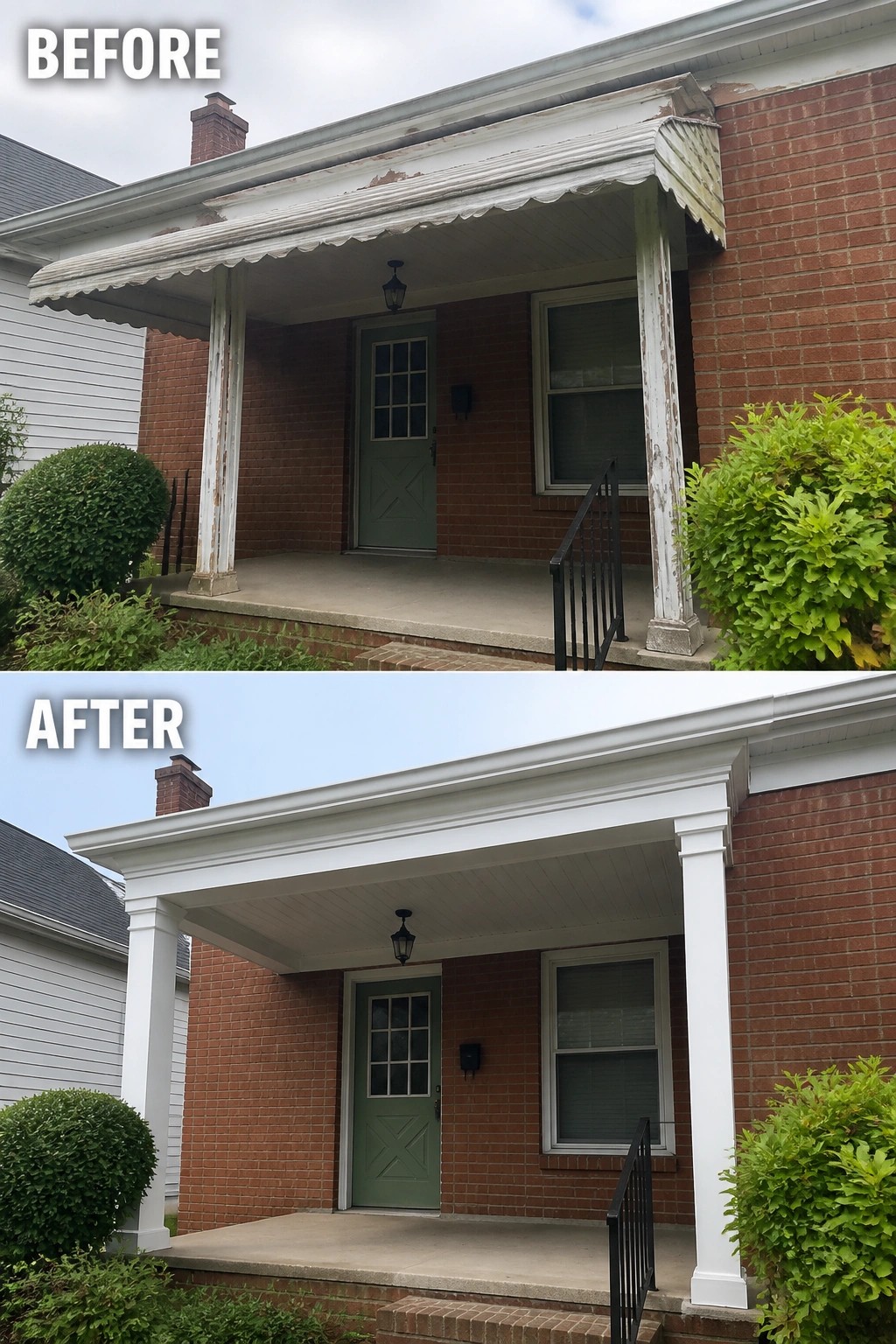
A tired porch can drag down the whole front of a house even when the rest of the exterior is in decent shape. Here the old peeling overhang and worn columns were replaced with a solid white structure that gives the entry a much cleaner outline and makes the green door stand out.
This kind of update works best on homes with simple brick or siding where the porch is the main architectural feature. Start by deciding whether to repair the existing frame or build a new one, then choose a durable exterior paint that will hold up to weather. Once the trim looks finished, the rest of the yard usually looks better without any extra work.
Add Path Lights To Guide Guests To The Door
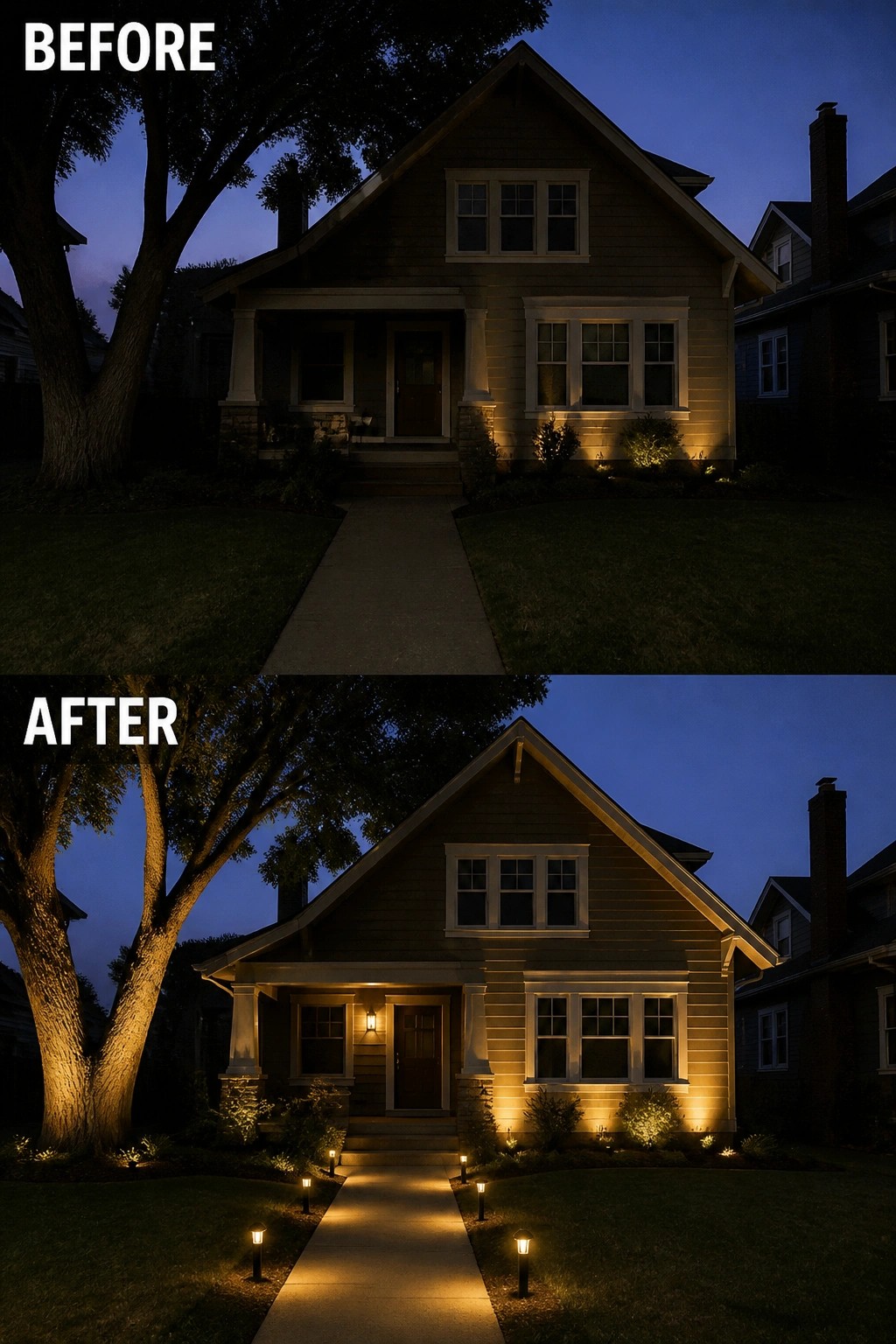
Adding a few low path lights along the walkway makes a big difference at night. The before photo shows a dark front yard with only a couple of lights on the house itself. In the after photo, simple stake lights line both sides of the path and highlight the tree and planting beds, so the whole front feels more open and easy to navigate.
This idea works well on any home where the walk from the street or driveway feels a little dim. Start with inexpensive solar or low-voltage lights, space them evenly, and aim a couple of them at a tree or the front door so the light has a clear purpose. Keep the number of lights modest so the yard does not end up looking cluttered.
Add Gravel To Define A Narrow Side Yard
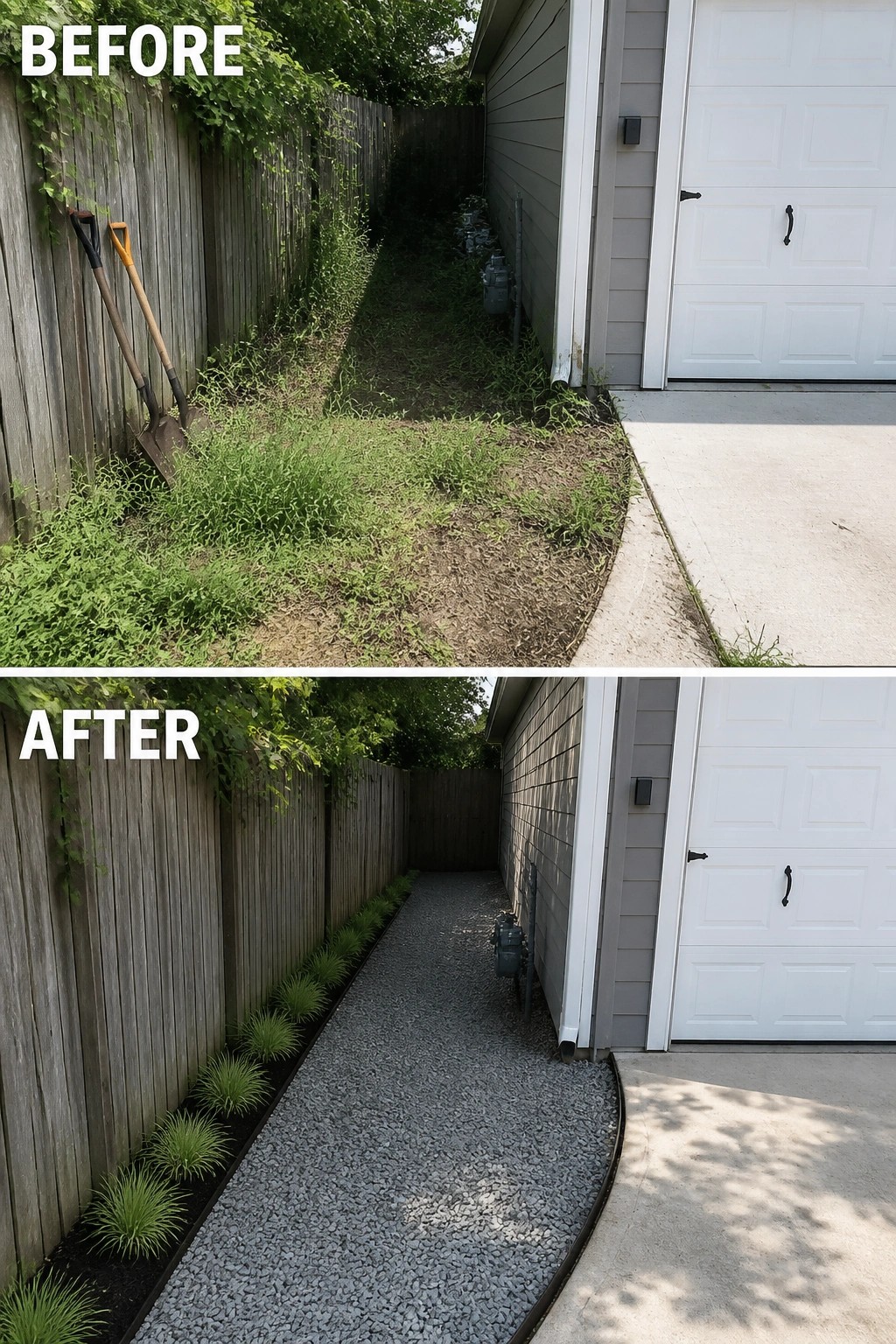
An overgrown strip next to the house often ends up as the messiest part of the yard. Clearing the weeds and laying down a gravel path with a simple border and a row of small plants turns the space into a clean walkway instead of a patch of dirt and grass.
This idea works especially well in tight areas between the house and a fence. Gravel handles foot traffic and drainage without much upkeep, and the edging keeps the look tidy even when the rest of the yard is left more natural.
Paint Exterior Trim To Define The Roofline
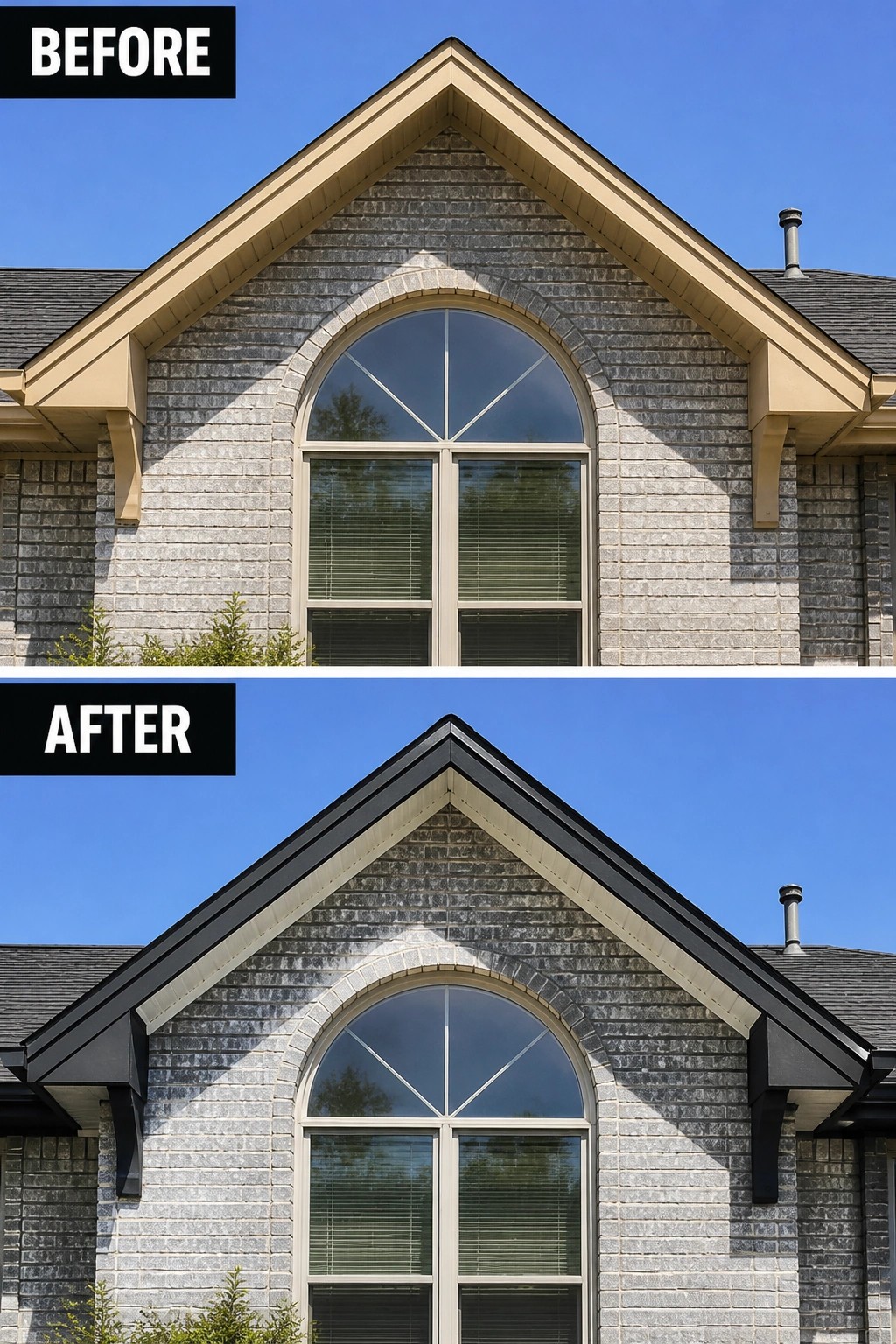
Many homes lose definition where the roof meets the siding because the trim blends in with the rest of the facade. Switching the gable trim and brackets from a light tan to black creates a clear outline that makes the peak stand out and gives the whole front a more finished appearance.
This approach works especially well on houses with stone or mixed siding where you want the architecture to feel intentional rather than flat. Start by choosing a dark color that contrasts with your roof and siding, then focus only on the most visible trim areas first. The change is simple but makes a noticeable difference in how sharp the house looks from the street.
Give Concrete Steps A Finished Look With Stone
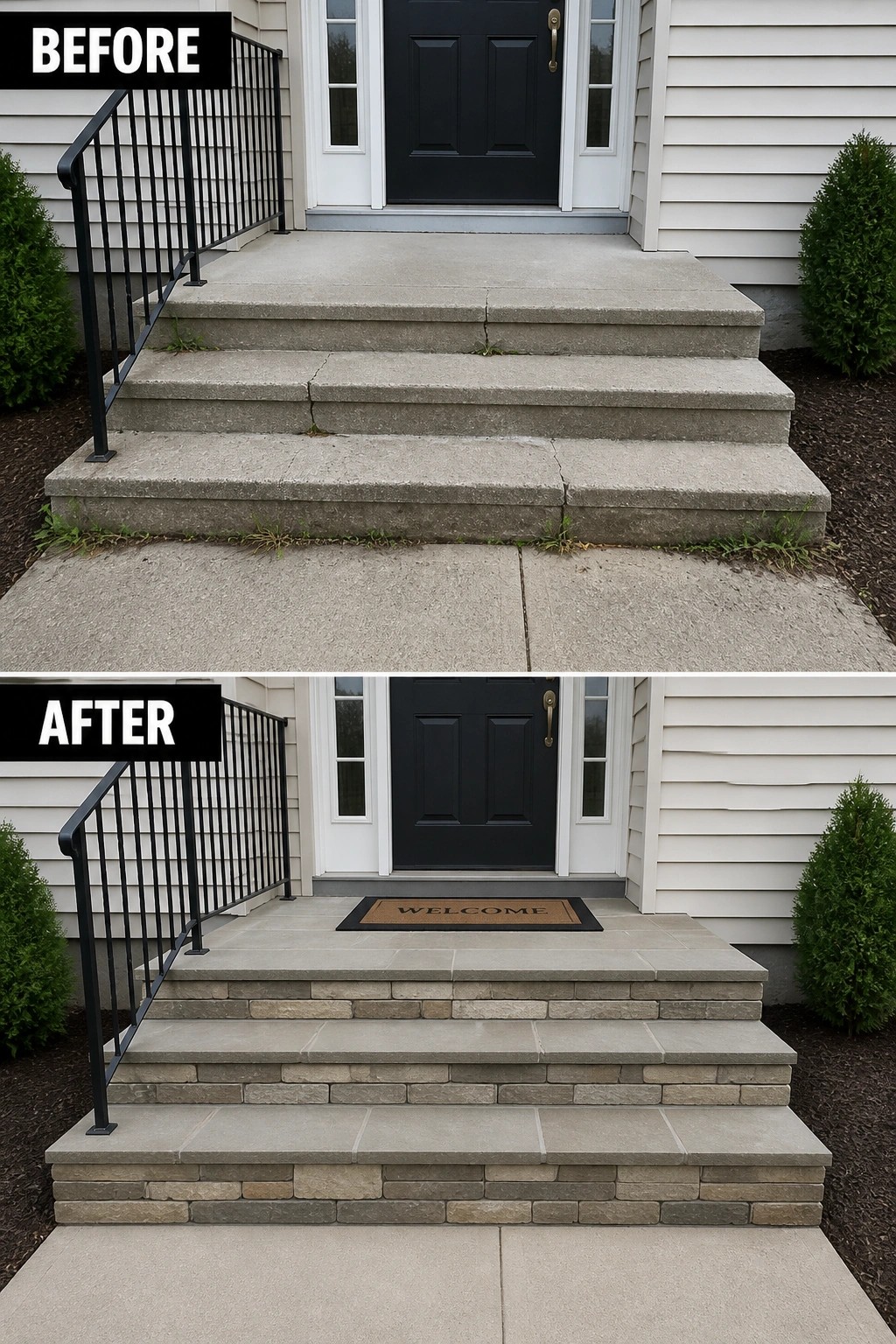
Many homes have basic concrete steps that crack and collect weeds over time. Adding a stone or paver facing to the risers turns the same stairs into something that looks more intentional and ties the entry to the rest of the house.
This approach works well on older homes or any property where the front steps feel too plain. Keep the treads simple, choose a stone color that matches nearby hardscaping, and add a doormat to finish the space without crowding it.
Frame The Front Door With Matching Planters
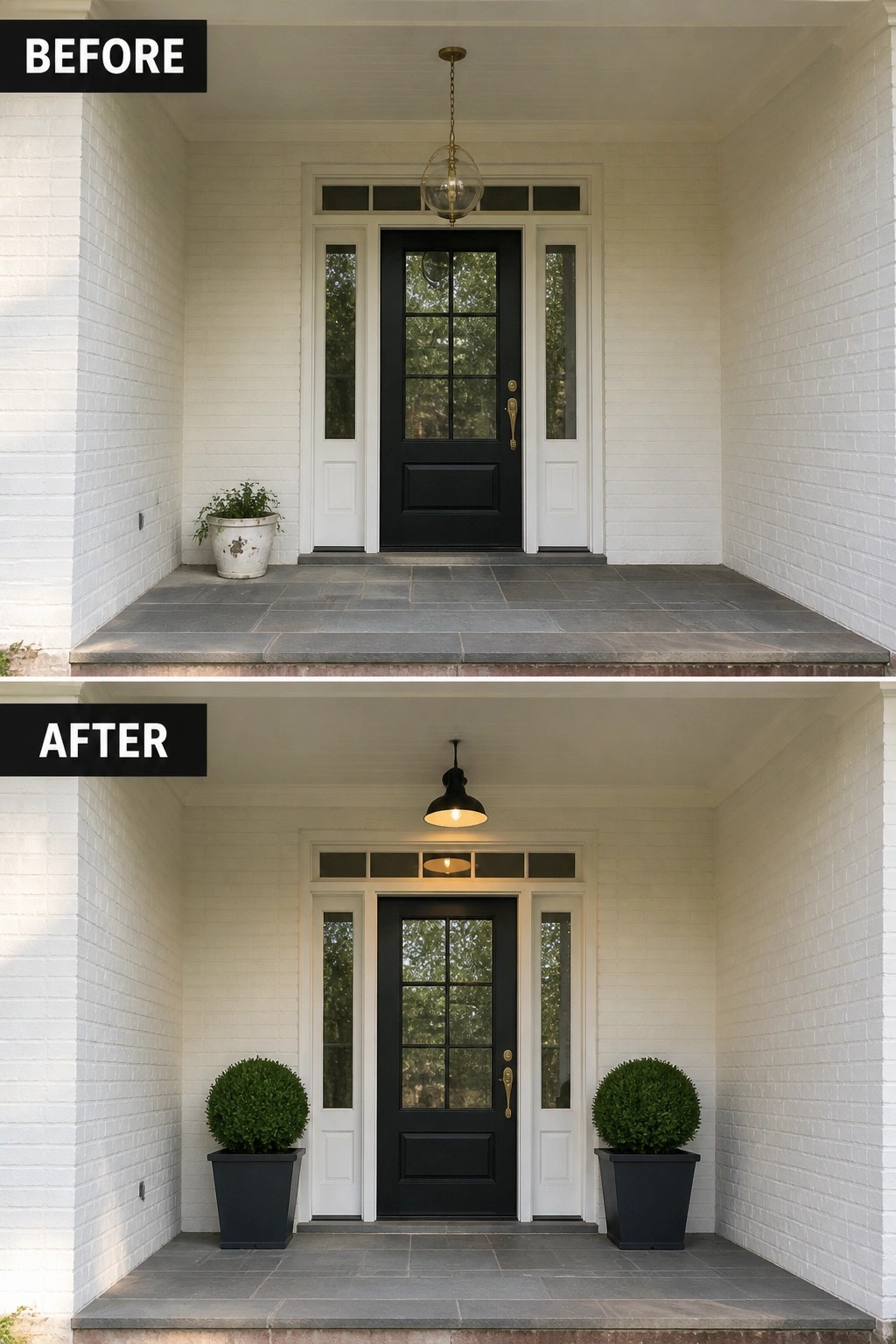
Many front entries feel incomplete when one side has a plant and the other side sits empty. Swapping the single worn pot for two matching planters created a balanced look that makes the entrance feel more finished without any major construction.
This approach works best on homes with a centered door and a bit of porch depth. Pick planters in a similar color to your door or trim, keep the planting simple, and make sure both sides stay roughly the same size so the symmetry stays clear.
Update Old Railings To Refresh Your Front Entry
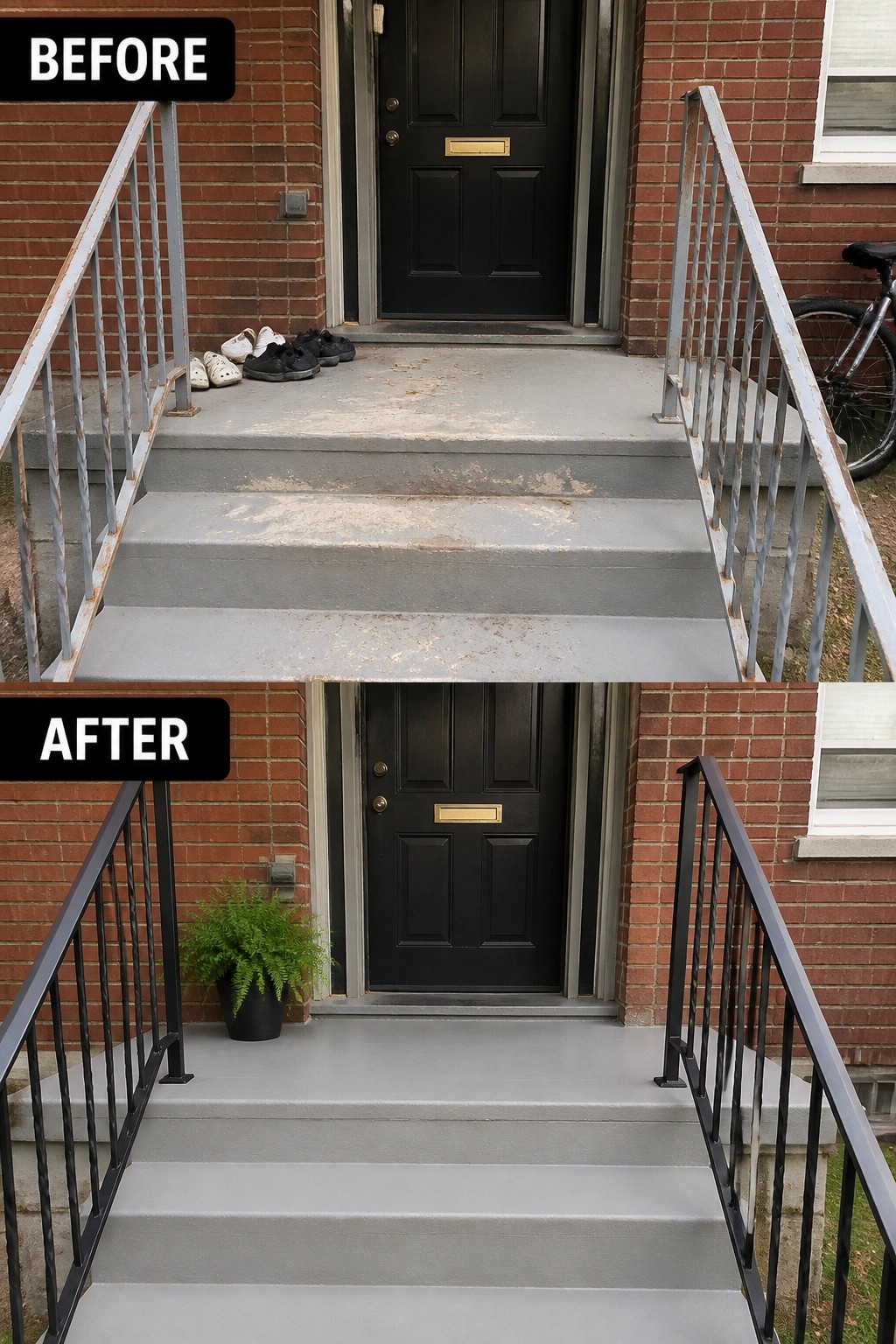
Old metal railings often end up looking tired and rusty after years of weather exposure. Replacing or repainting them in a solid dark color makes the whole entrance feel sharper and more intentional, especially when you also clear away clutter like shoes and debris from the steps.
This approach works well on simple brick homes where the railings are a main visible feature from the street. Choose a matte black finish that holds up outdoors, and keep the area around the door open so the new railings stay the focus.
Update Old Railings To Refresh A Porch
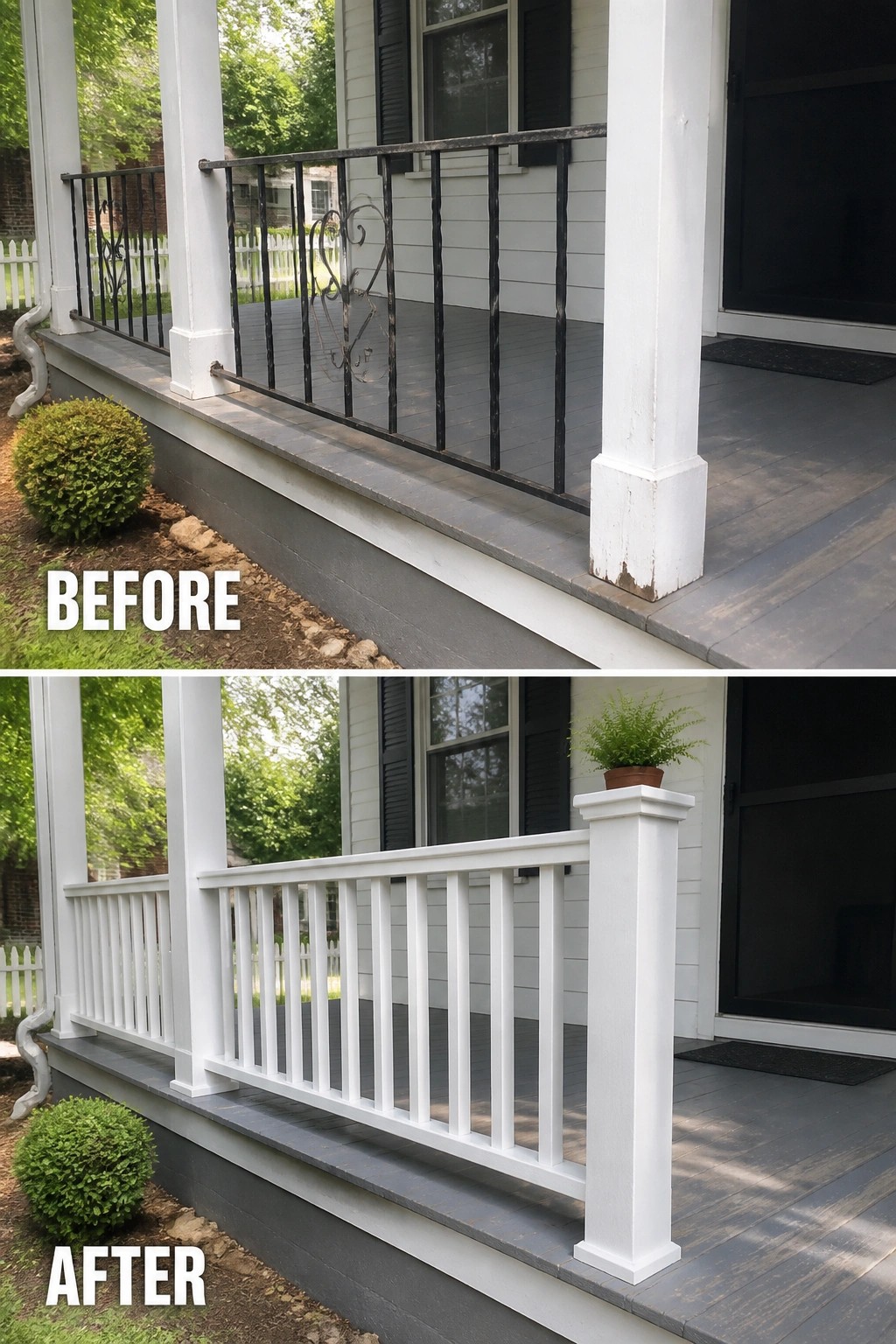
Many porches end up looking tired because the railing has aged or the style no longer fits the house. Replacing a dark, ornate metal railing with a simple white wood version makes the whole space feel brighter and more finished without any major construction.
This works best on homes where the structure is still sound but the details feel dated. Match the new railing to the existing trim color, keep the design straightforward, and add one or two potted plants if you want a bit more life without crowding the space.
Add Edging To Define Your Garden Beds
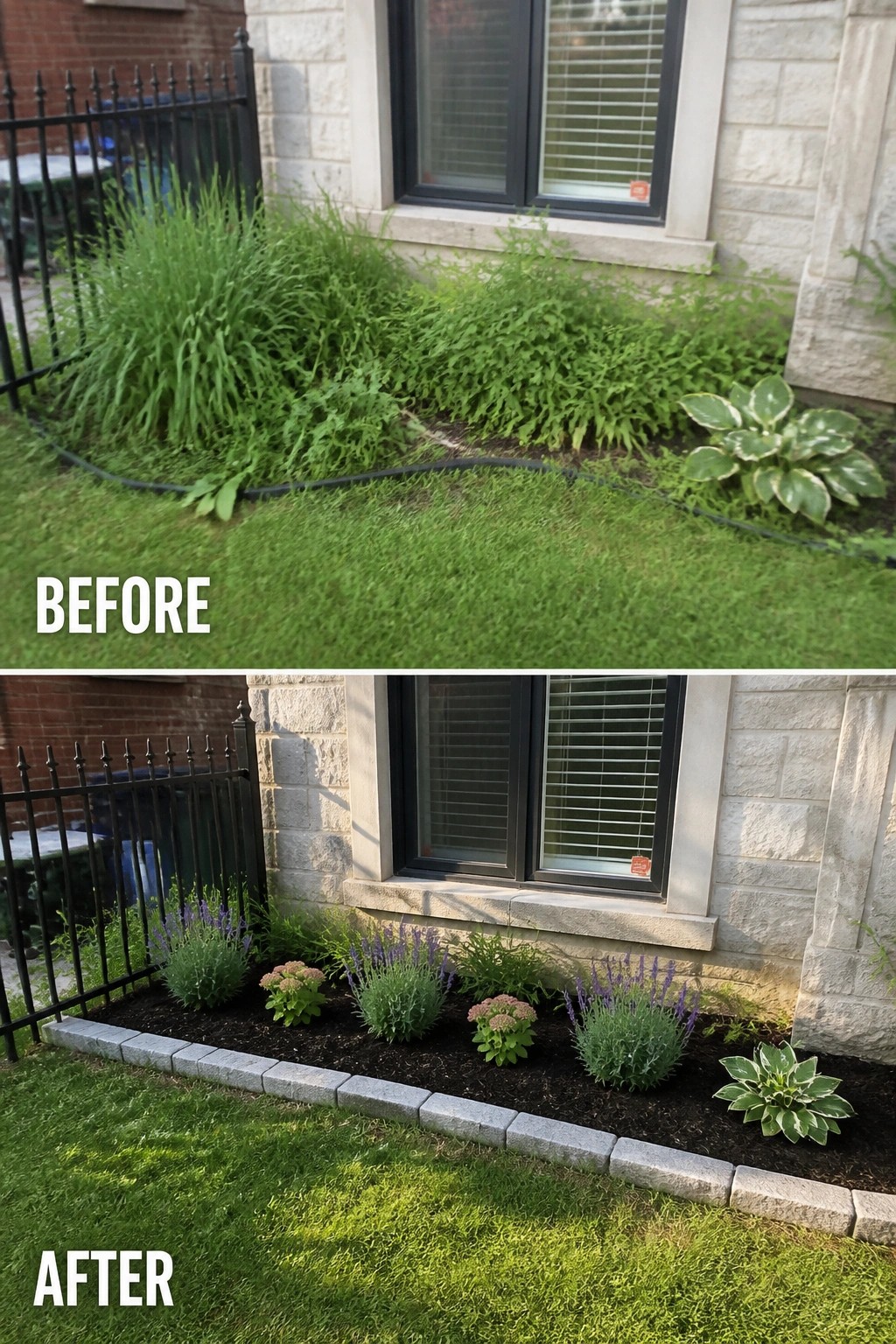
The before shot shows grass and weeds creeping right up to the house wall with no clear separation. Adding a simple stone border and mulch turns that same strip into neat, contained beds that stay looking intentional all season.
This approach works best along the front or side of a house where the planting sits between the lawn and the foundation. Lay the edging first so the beds follow the wall in a straight line, then fill them with a few repeating plants rather than a random mix. The result feels finished without requiring constant trimming along the edge.
Paint The Front Door A New Color
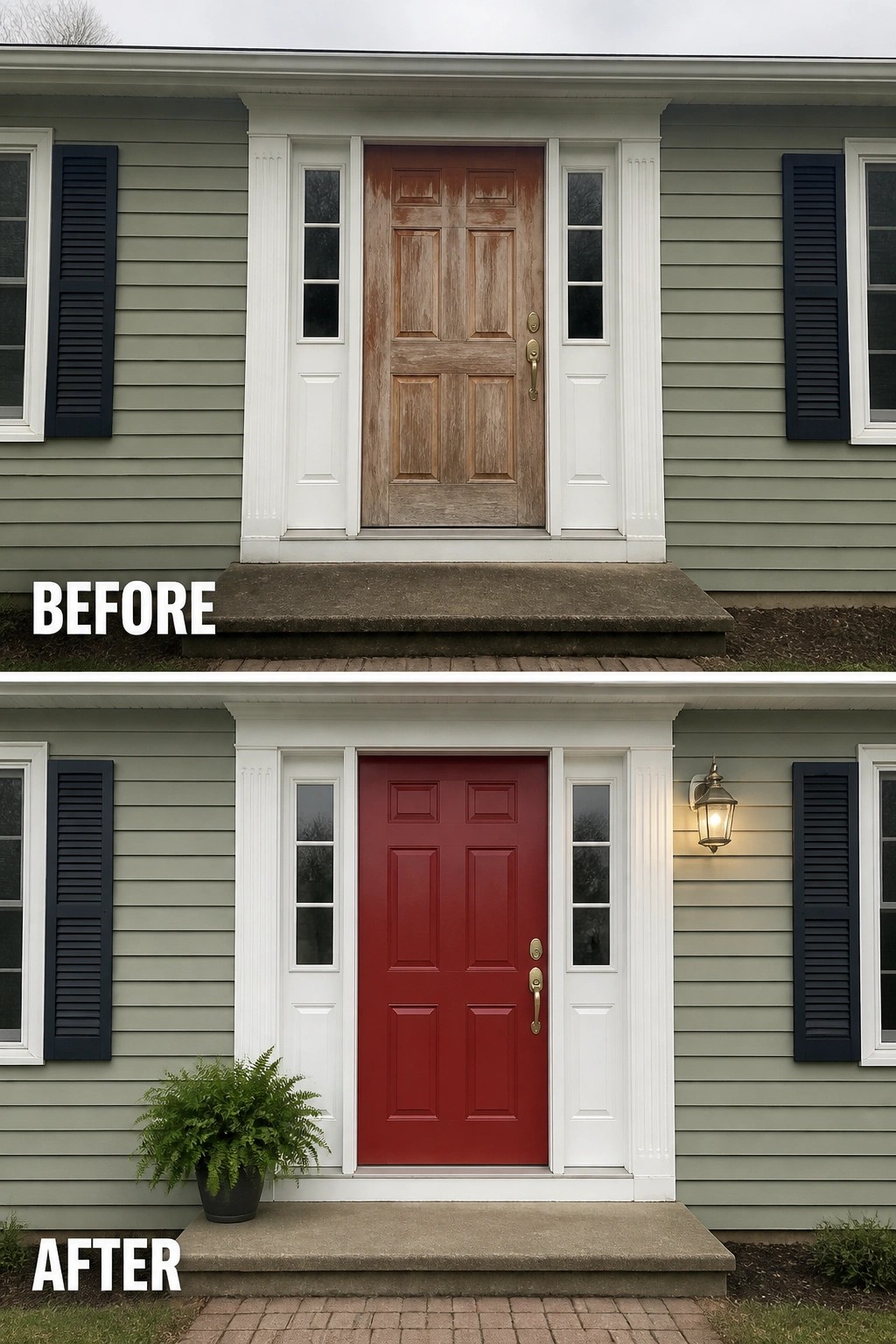
Changing the color of the front door can give a house a much more finished look without a big renovation. In this case the natural wood door was replaced with a solid red that stands out against the siding and trim. Adding one light fixture and a simple potted plant next to the step helped the entry feel more complete.
This idea works well on houses with fairly plain exteriors where you want quick impact. Pick a color that contrasts with the siding and make sure the new shade holds up to sun and weather. Keep any added pieces small so the door stays the main focus.
Paint The Trim Around Your Front Door
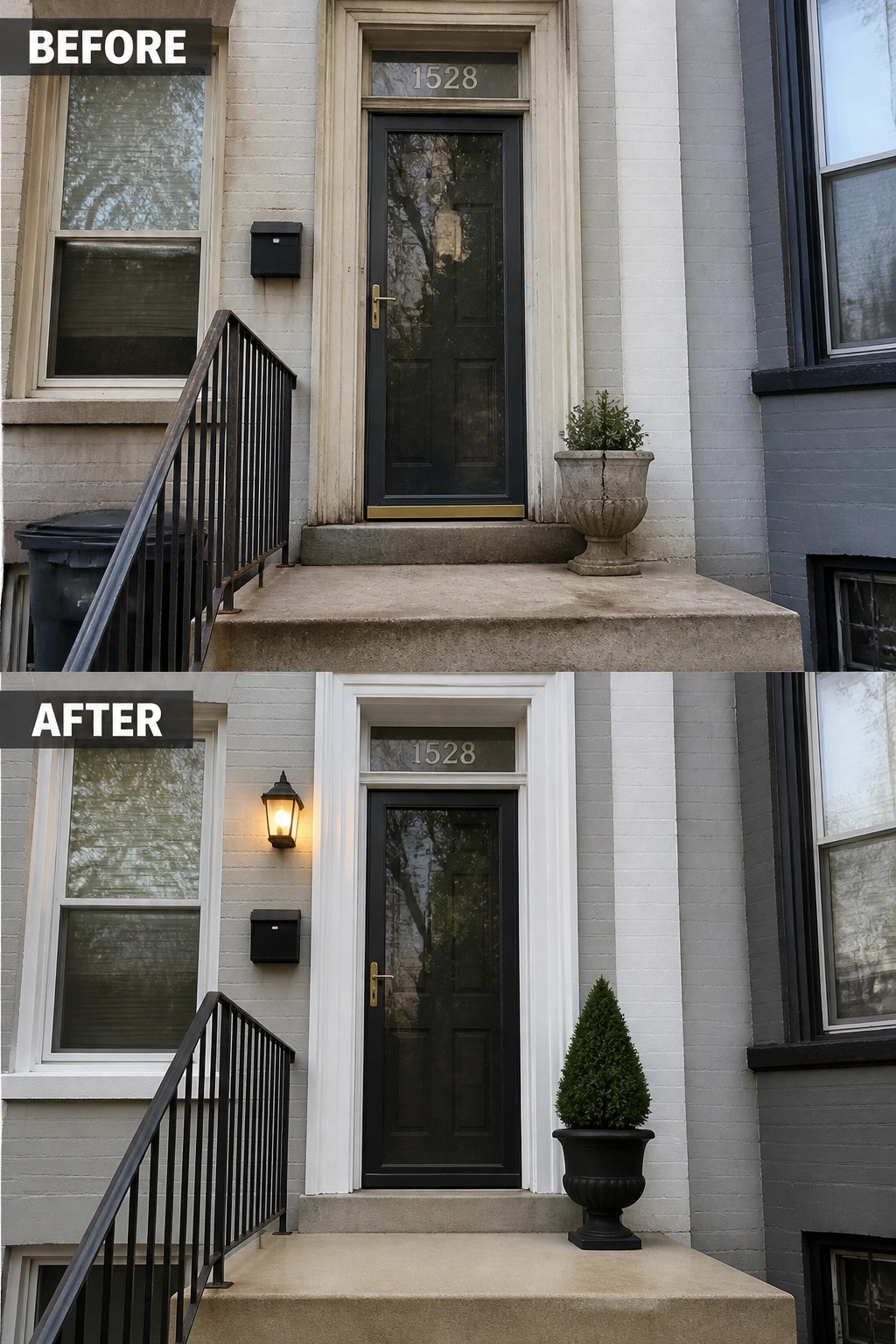
Painting the trim around a front door is one of the easiest ways to make an entry feel finished. The before photo shows the frame blending into the brick, while the after shows it painted white so the black door stands out clearly and the whole front looks sharper.
This works on many homes where the entry feels plain or dated. Focus on the door surround first, then add a simple light if the wall space allows. Keep the color contrast strong but match it to your house so the change feels natural rather than forced.
Frequently Asked Questions
Q: How do I pick paint colors for the trim that actually make the whole house look cleaner?
A: Match the trim shade to your roof or door so the lines stand out without fighting each other. Paint a small board first and lean it against the house at different times of day. That quick check keeps the finished look consistent.
Q: What is the simplest way to keep mulch from spilling onto the walkway after rain?
A: Lay the mulch a couple inches lower than the path edge and press it down firmly. A thin border of river rock along the bed holds everything in place without extra work.
Q: Can I freshen up the front steps without replacing them?
A: Sweep them clean then brush on a masonry paint made for concrete. One coat hides stains and gives the entrance a solid finished edge.