

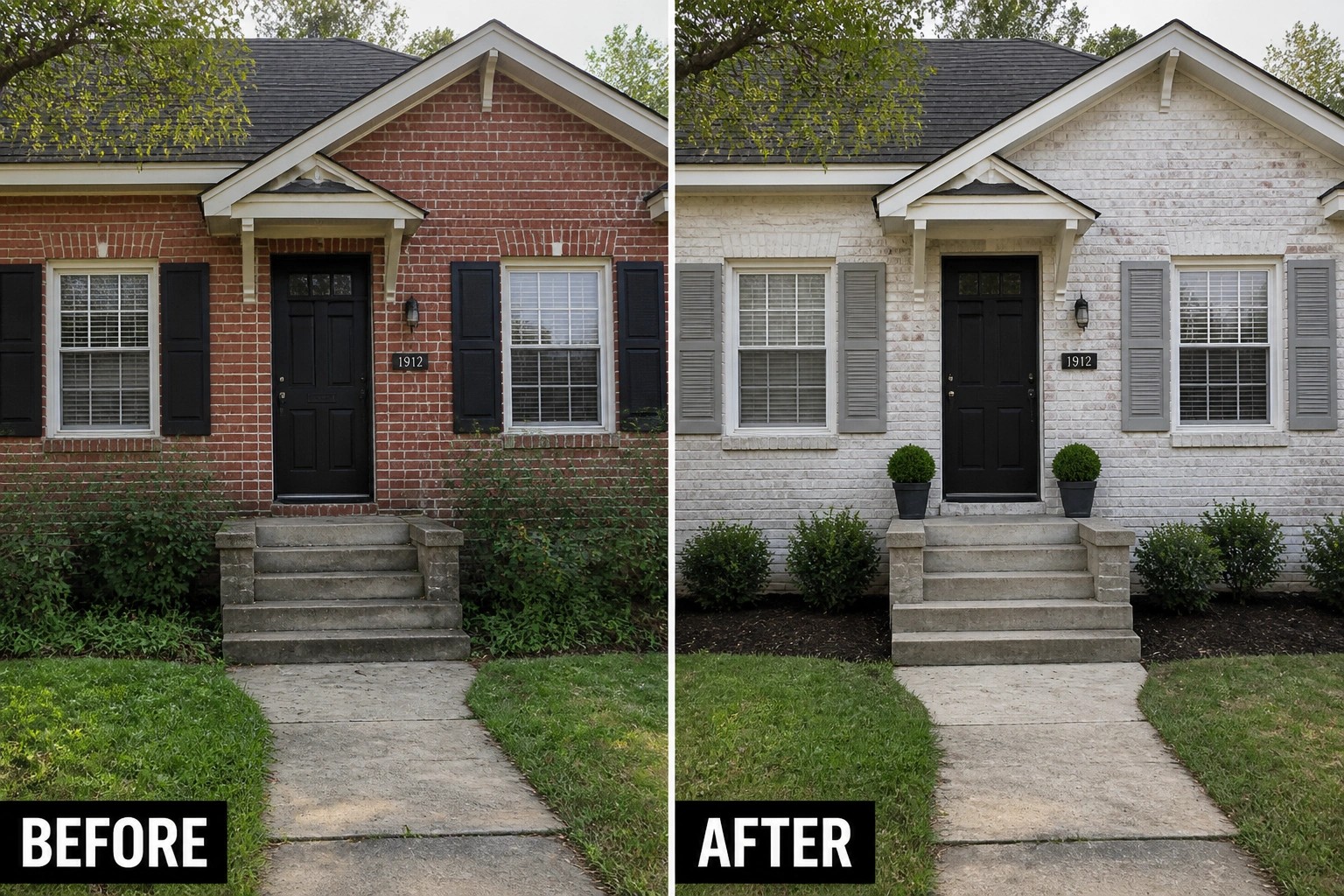
Some houses end up looking sharper than intended when the exterior paint colors emphasize every angle and material without any softness.
Gentler shades on the main surfaces can ease that effect while still letting the trim and entry details remain visible.
I like to test a few options against the siding first because the way light hits them throughout the day often changes everything.
That step saves disappointment later.
The suggestions in this piece focus on colors that feel livable rather than dramatic so they suit homes where only the paint needs attention.
Paint Brick Exteriors White To Soften The Look
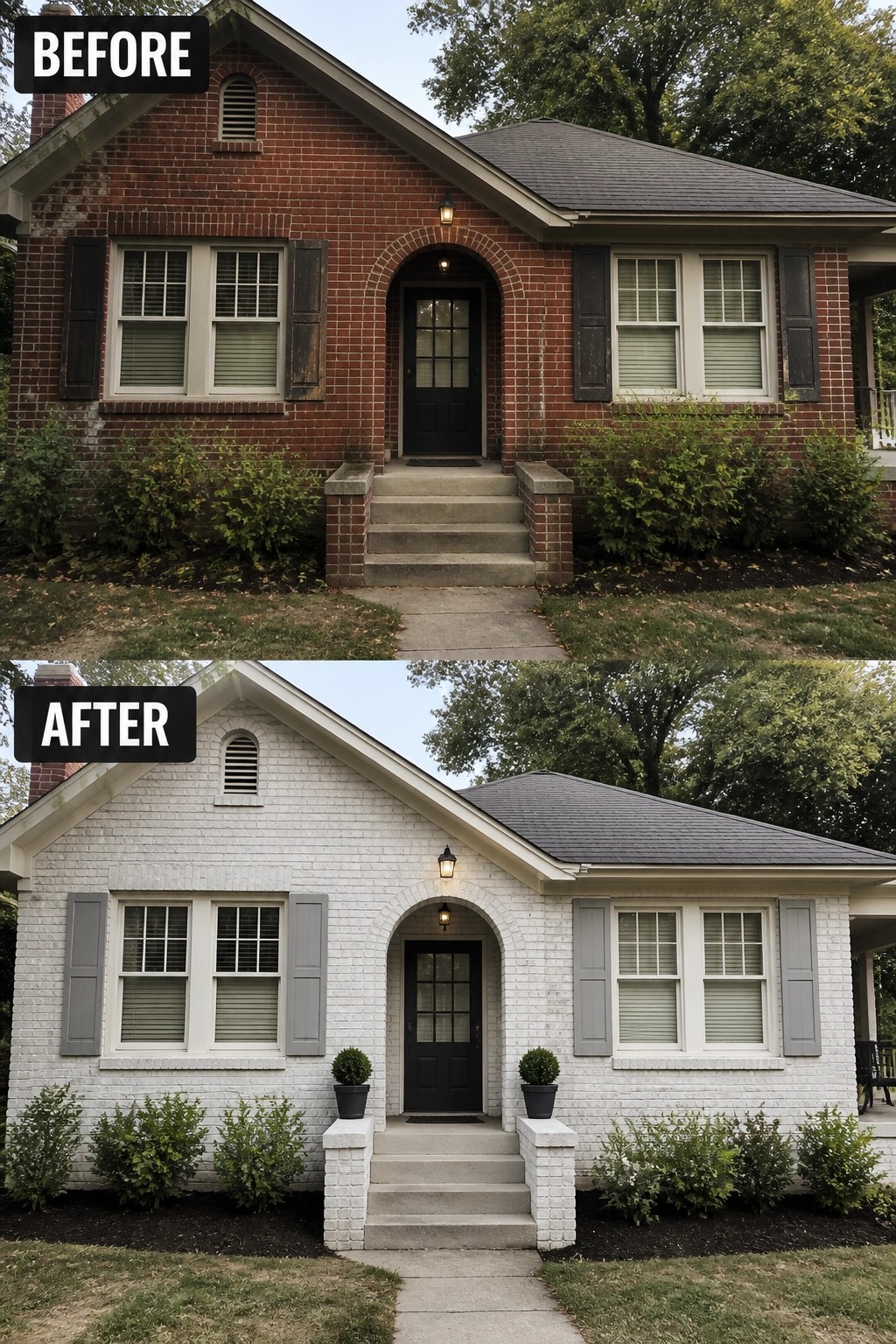
A dark brick house often feels heavy and closed in. Painting the brick white opens everything up and gives the home a lighter presence without changing the structure or roofline.
This idea suits older homes where the brick has started to look dated. Focus on good surface prep and masonry paint, then keep the rest of the updates simple so the color change stays the main feature.
Choose Softer Paint Colors To Lighten A Dark Exterior
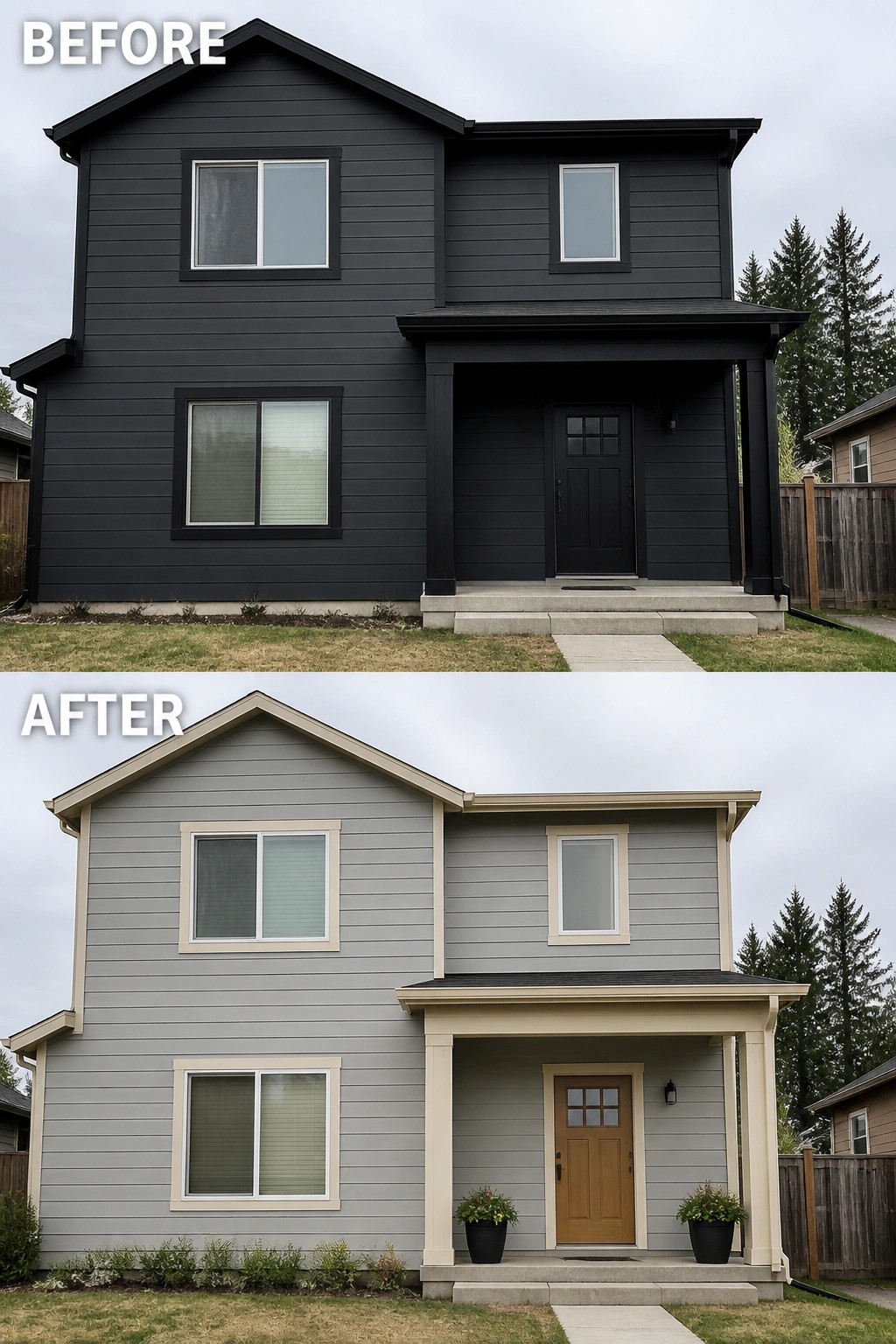
Many houses with deep black or charcoal siding end up looking heavy and closed in. A shift to a lighter gray with cream trim softens the whole facade and makes the house feel more open without any major construction.
This works especially well on simple two-story homes where the original color dominates. Test a couple of soft shades on a small area first, and keep the trim and door color in the same warm family so the change stays balanced.
Soften The Exterior With A Muted Paint Color
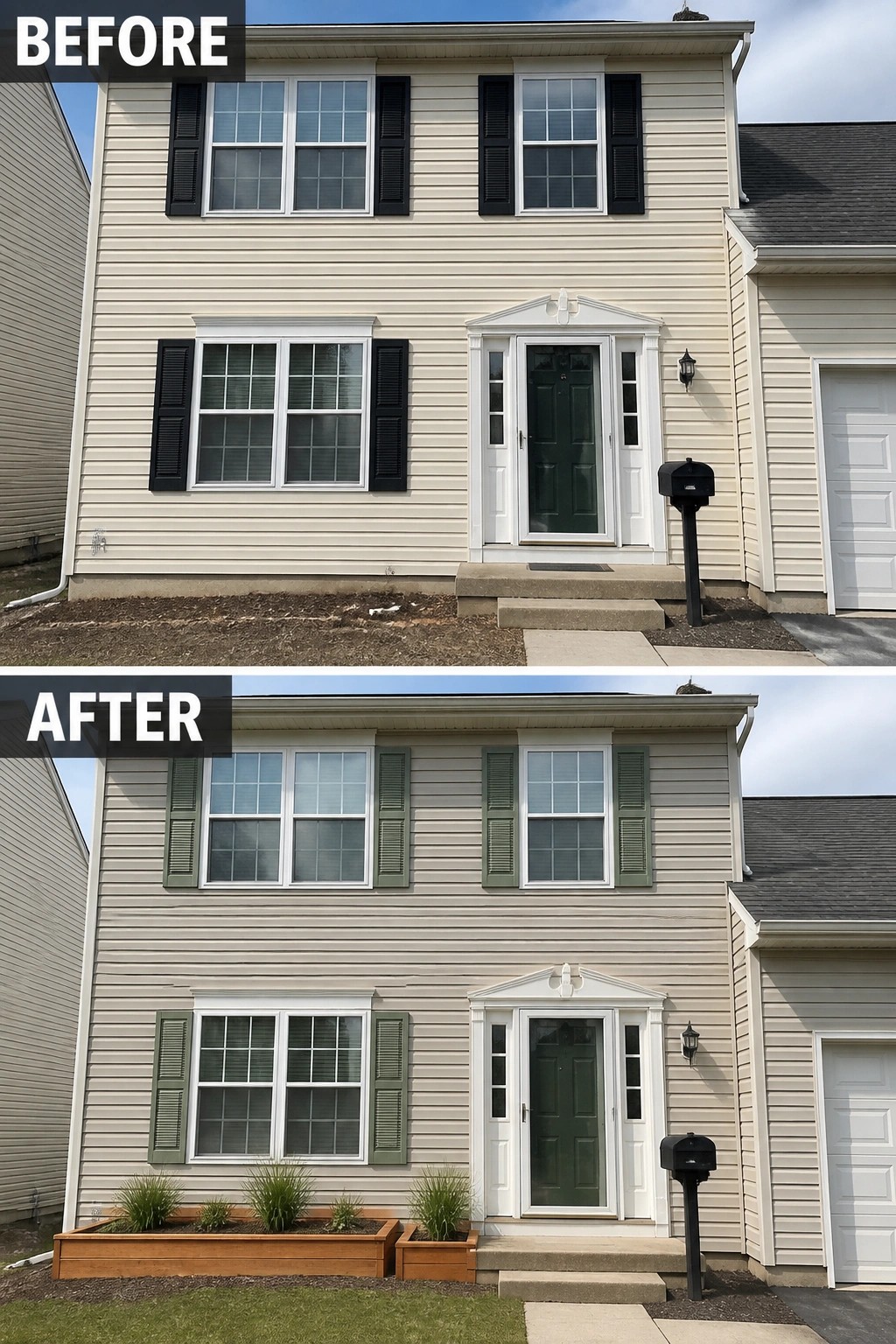
Many homes with strong black shutters and light siding can look a little stark from the street. Switching the siding to a softer gray tone and the shutters to green gives the whole front a calmer feel without any major construction.
This approach works best on houses that already have simple trim and a clean shape. Test the paint on a small section first, since outdoor light changes how the color reads at different times of day, and keep any new planting low so it does not hide the fresh color.
Choose A Softer Front Door Color
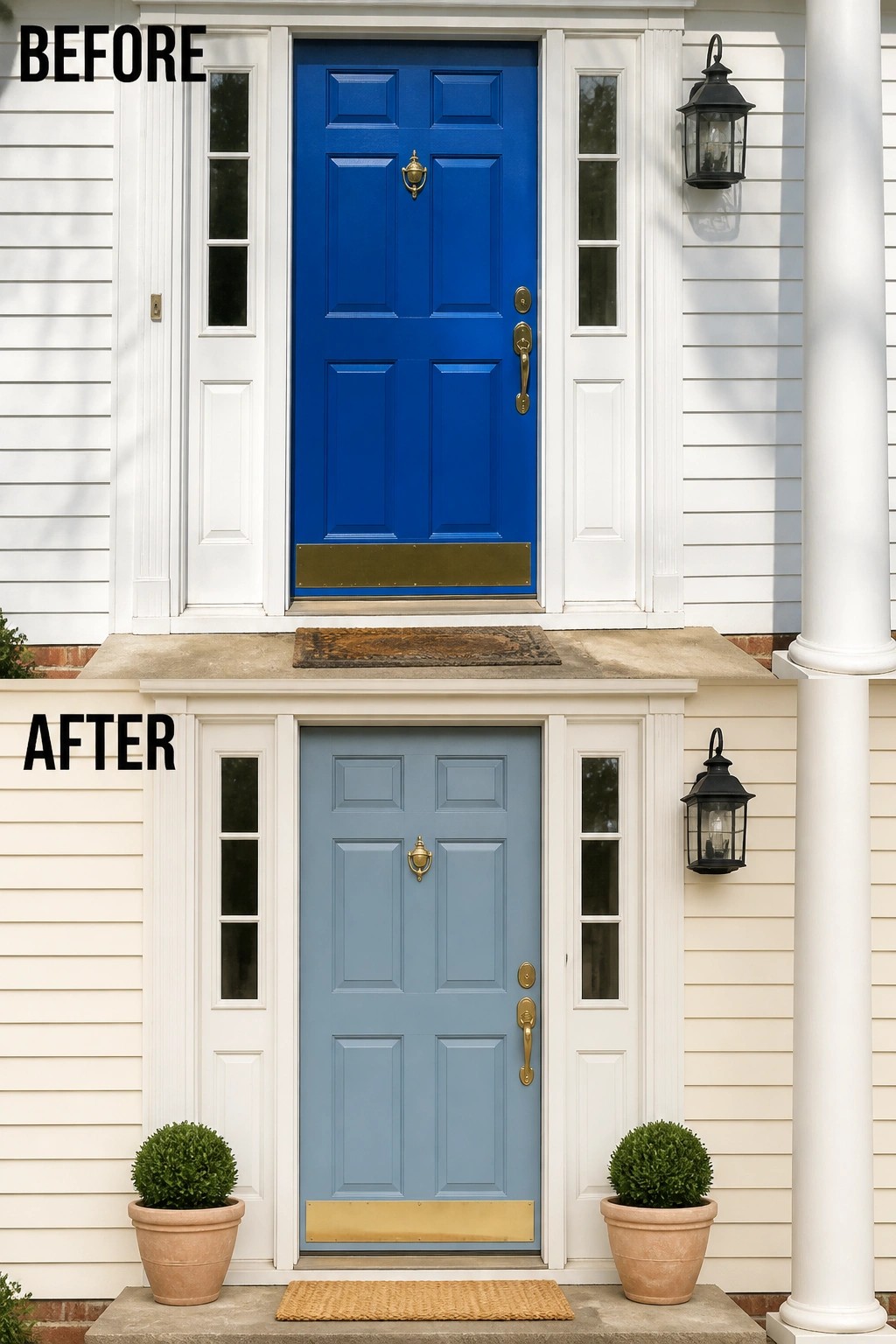
A bright blue door can feel too strong on a simple house facade. Switching it to a muted blue-gray tone immediately softens the whole entry and makes the house look calmer without any other big changes. The two planters placed on either side of the door also help by adding a bit of balance and greenery right at the threshold.
This approach works well on homes with fairly plain siding where you want a quick update rather than a full repaint. Start with the door color first, then add a pair of matching pots with simple shrubs if the space allows. Keep the rest of the trim and hardware the same so the softer door stays the main change.
Soften A High-Contrast Exterior With One Paint Color
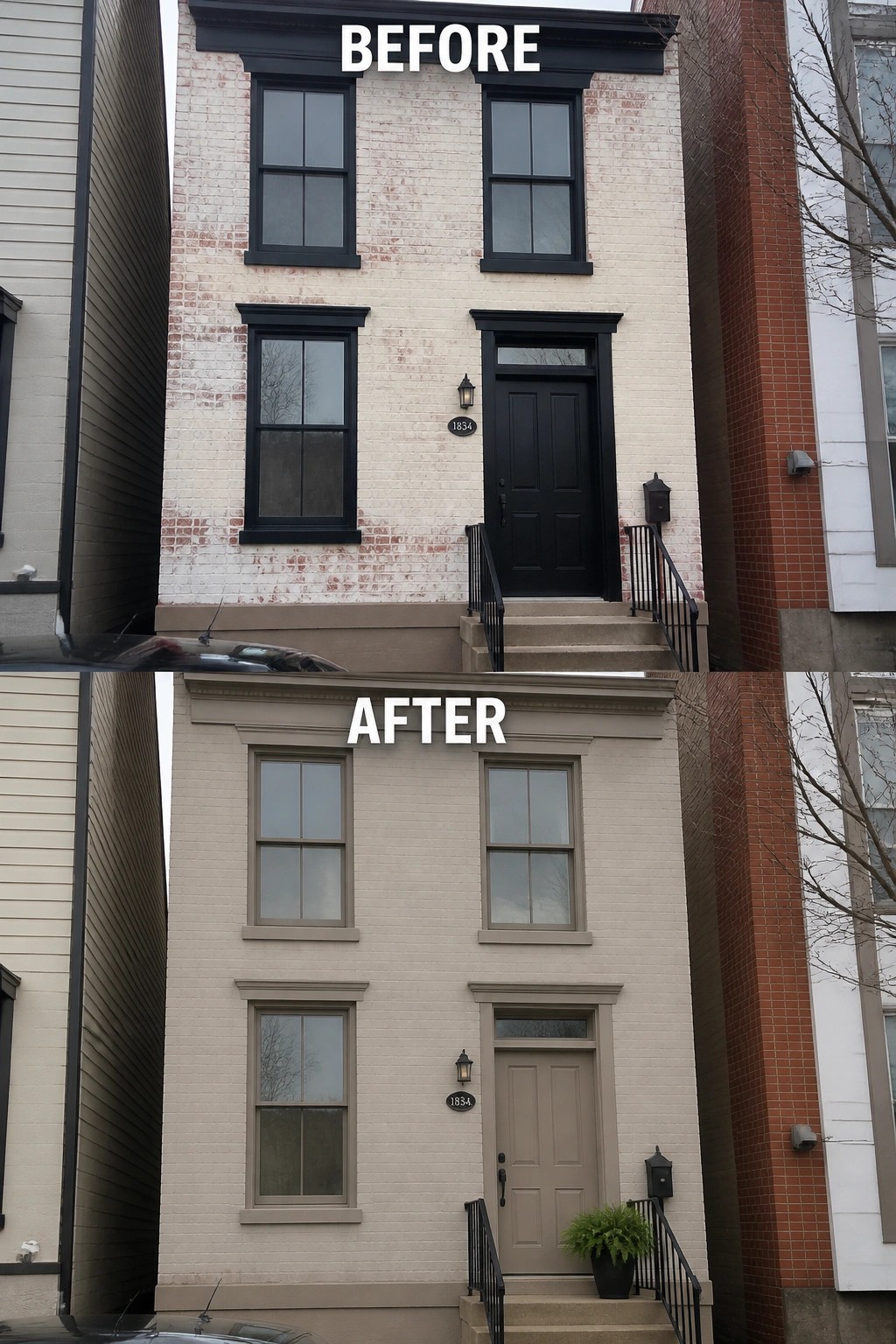
Many older brick homes end up looking sharp and a bit cold when the trim and door are painted a much darker color than the walls. In this case the black windows, door, and trim stood out strongly against the white brick, which made the front feel less welcoming. Switching everything to the same soft beige tone pulled the whole facade together and gave it a calmer appearance without any major construction.
This approach works well on narrow row houses or homes with lots of trim details. Pick one mid-tone color that sits between your lightest and darkest existing elements, then paint the brick, trim, and door to match. It is usually cheaper than replacing windows or adding new siding, but test the color on a small section first since brick can absorb paint differently than wood.
Refresh An Older Home With A Softer Exterior Paint Color
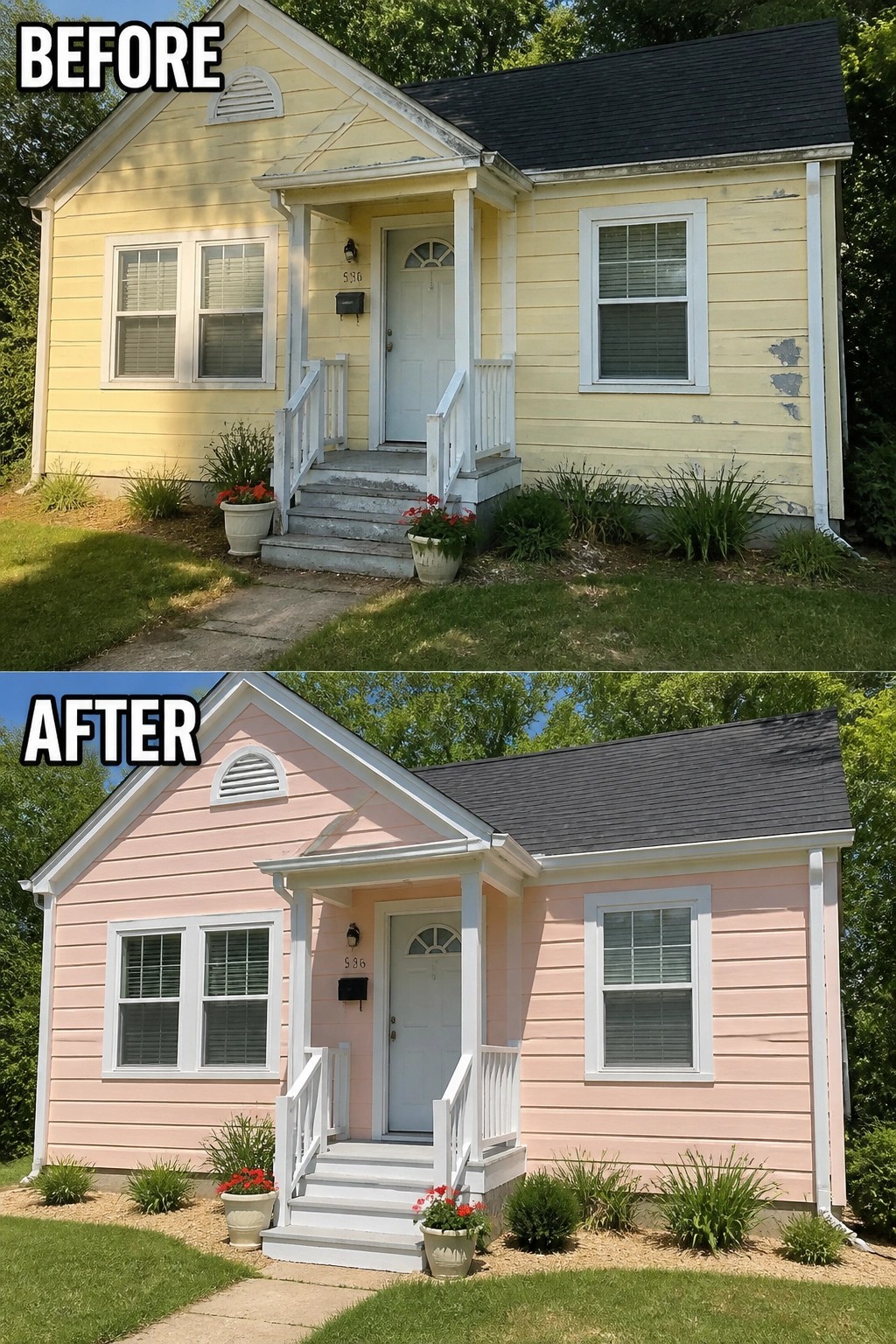
A faded or dated exterior color can make a house look tired even when the structure is sound. Switching to a softer shade, like the move from yellow to this gentle pink, instantly updates the look and helps the home feel more welcoming without major construction.
This approach works well on smaller homes or those with simple trim, since the new color can carry most of the change. Start by testing samples on a few boards in different light before committing, and keep the trim and door in crisp white or a related soft tone so the softer main color stays the focus.
Lighten A Dark Exterior With Softer Paint Colors
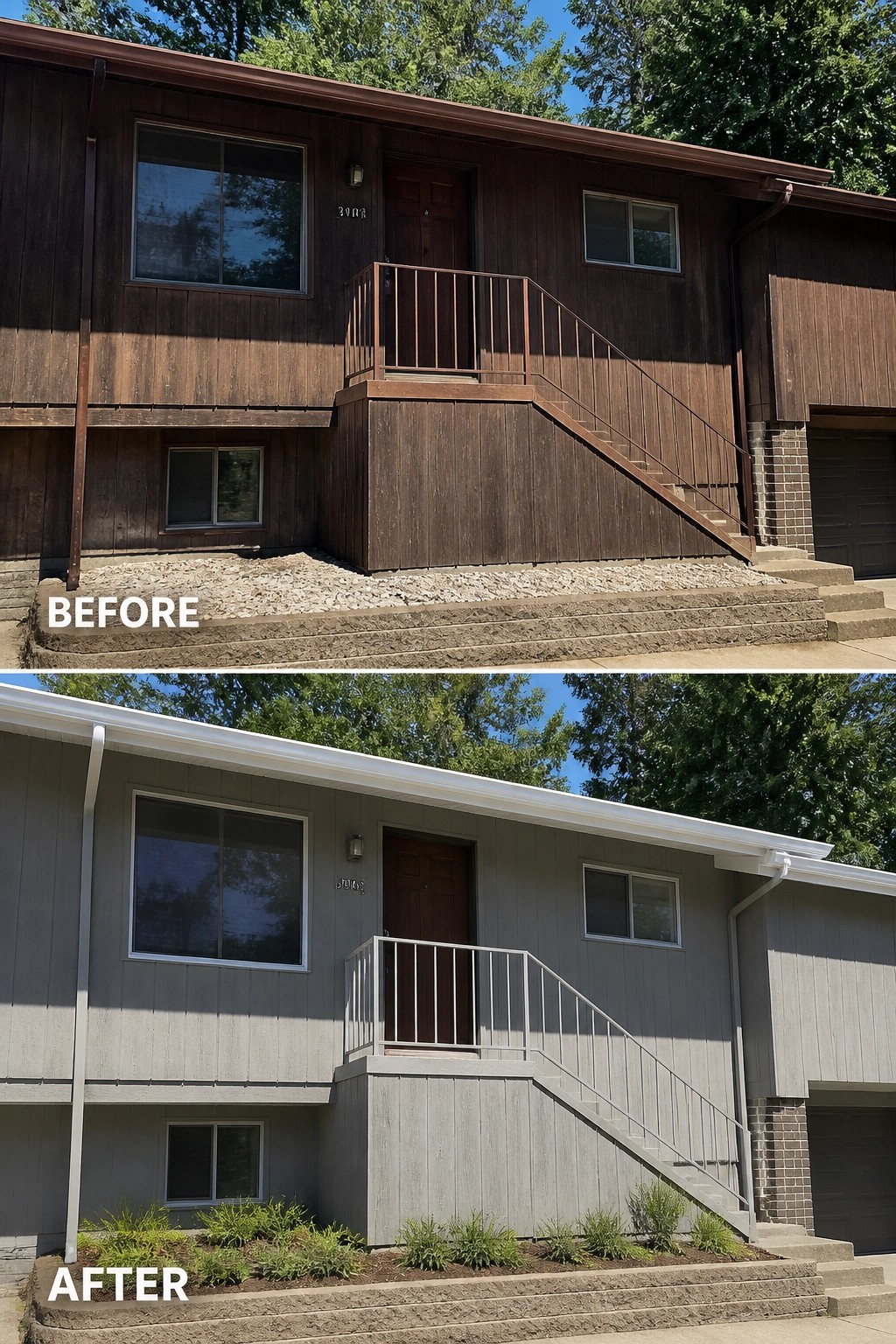
Many homes with dark wood siding start to feel heavy over time. A lighter paint color on the main surfaces makes the whole house look brighter and less imposing, which is exactly what happened here when the brown siding was changed to a soft gray.
This idea works well on older homes that have strong horizontal lines or multiple levels. Test the new color on a large section first so you can see how it shifts in different light, and keep the trim simple so the softer tone stays the main focus.
Soften A Plain Exterior With Paint And Door Color
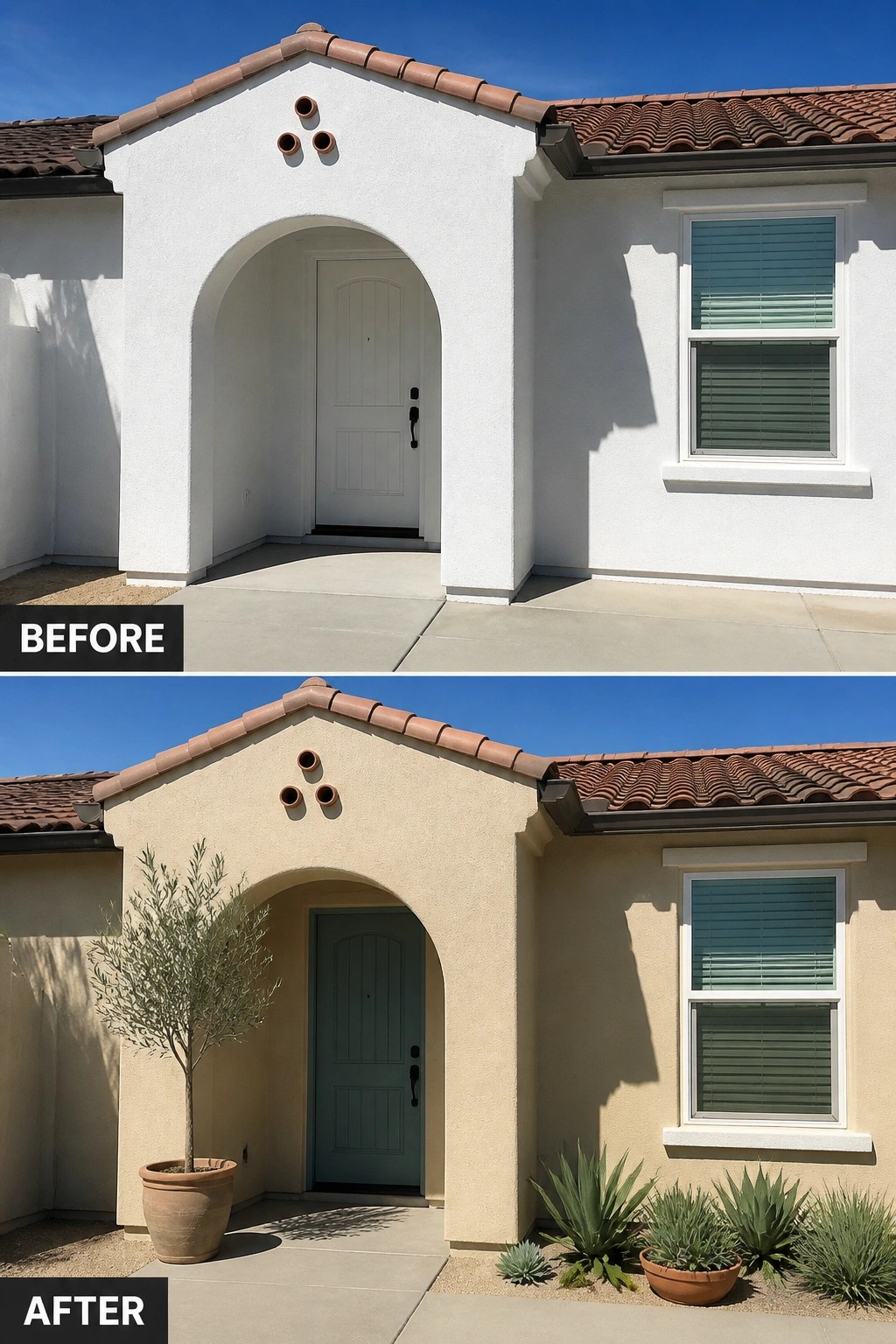
A simple exterior paint change can make a big difference on a plain stucco home. In this case the walls moved from bright white to a warmer beige while the front door shifted to a soft teal. The result feels calmer and more welcoming without any major construction.
This approach works well on homes that already have clean lines and just need a softer finish. Start with the main wall color, then pick a door shade that sits a step or two away from it. Keep the trim simple so the new colors stay the focus.
Paint The Foundation To Soften The Exterior
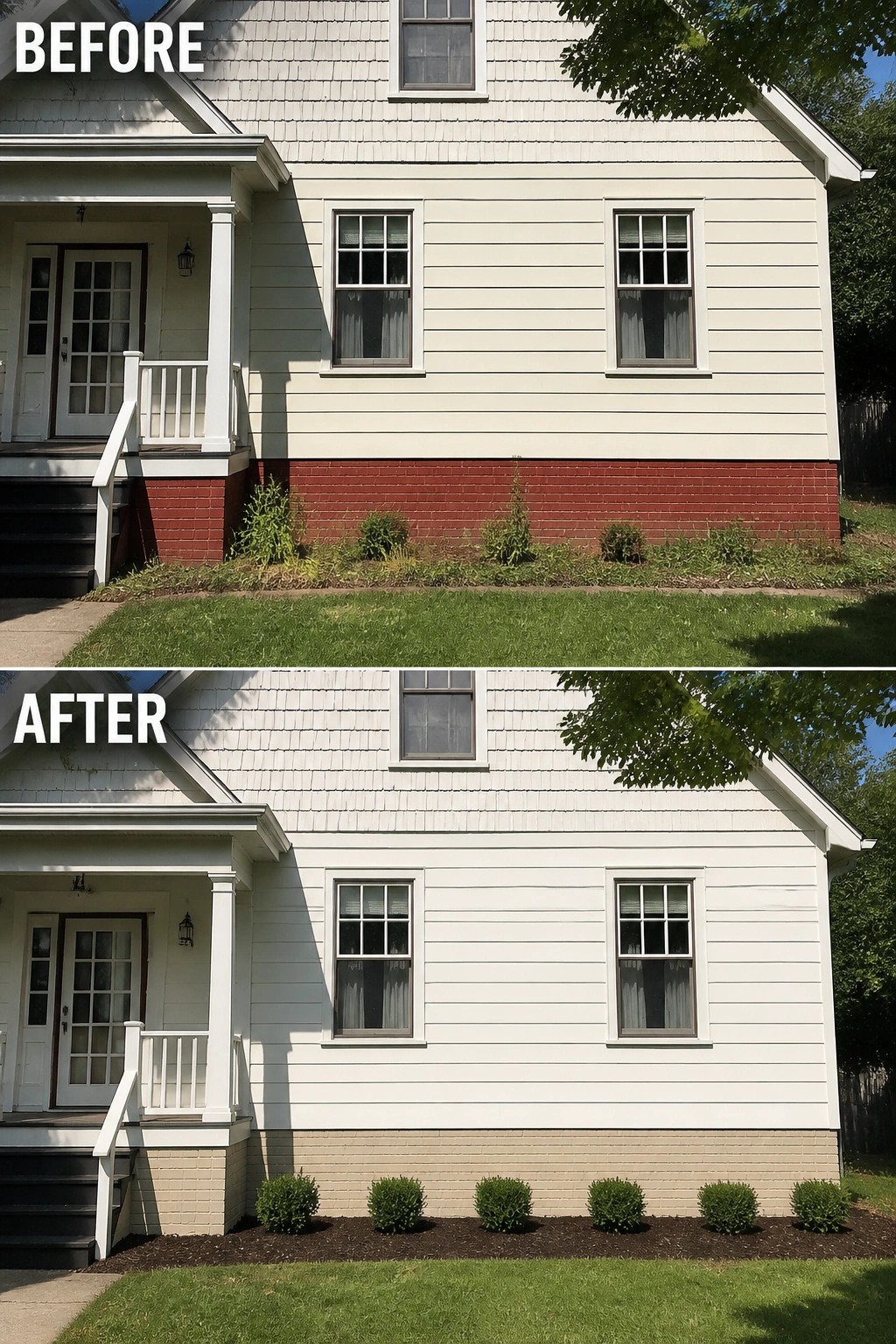
Many homes end up with a heavy look because the foundation sits in a darker color than the siding above it. Painting that lower section a lighter shade helps the whole facade feel lighter and more connected instead of split in two.
This works best on houses where the foundation material creates too much contrast. Pick a color that sits close to your siding but still reads as a separate base, and keep the planting simple so the change stays the main focus.
Paint The Garage Door To Match The Siding
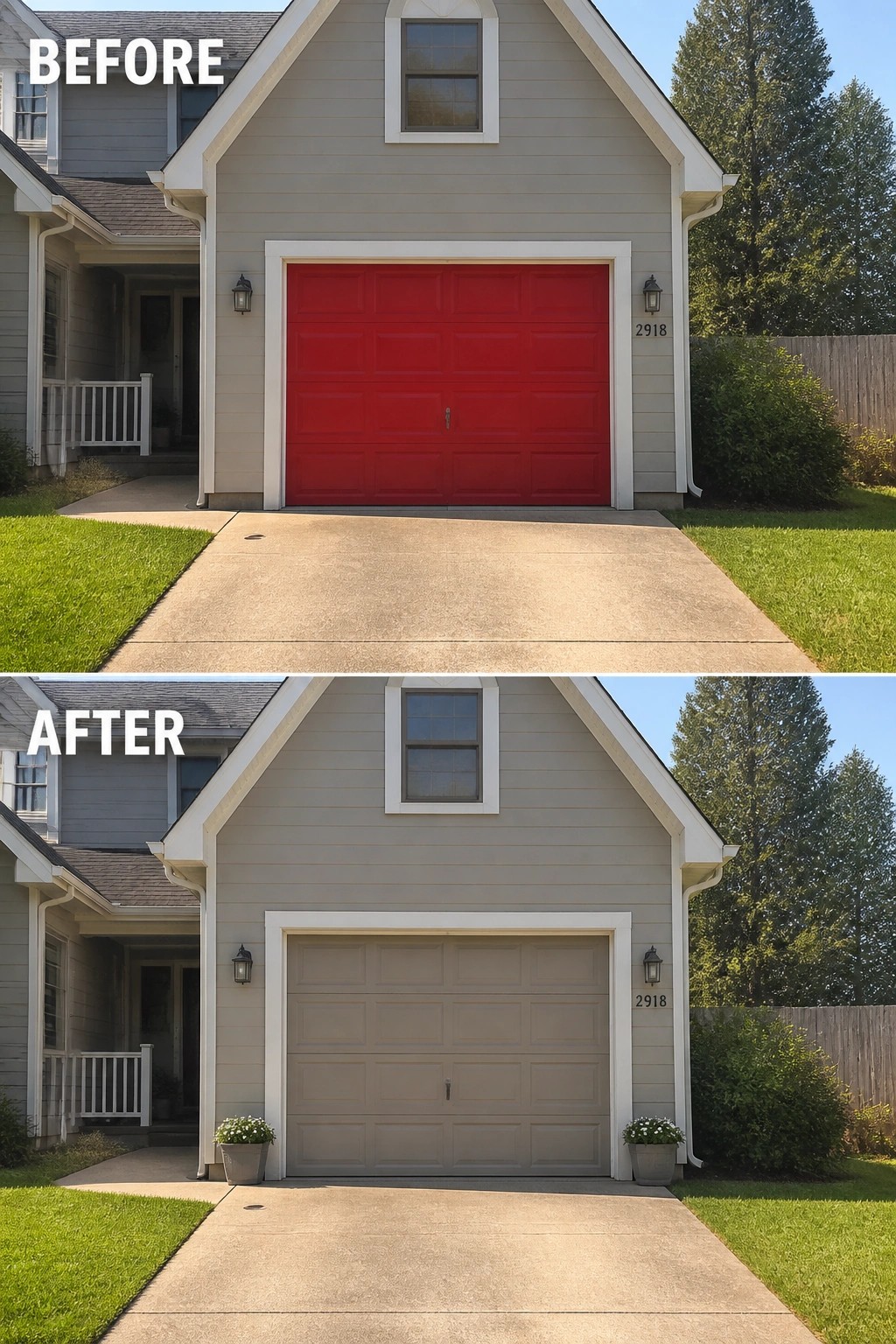
A bright garage door can make the whole front of a house feel too bold. Painting it the same color as the siding pulls everything together and gives the exterior a much softer look without any major construction.
This works best on homes where the garage takes up a big part of the facade. Choose a paint color that sits close to the siding or trim, and keep any added details like planters small so the focus stays on the calmer overall appearance.
Lighten A Dark Porch With Softer Paint Colors
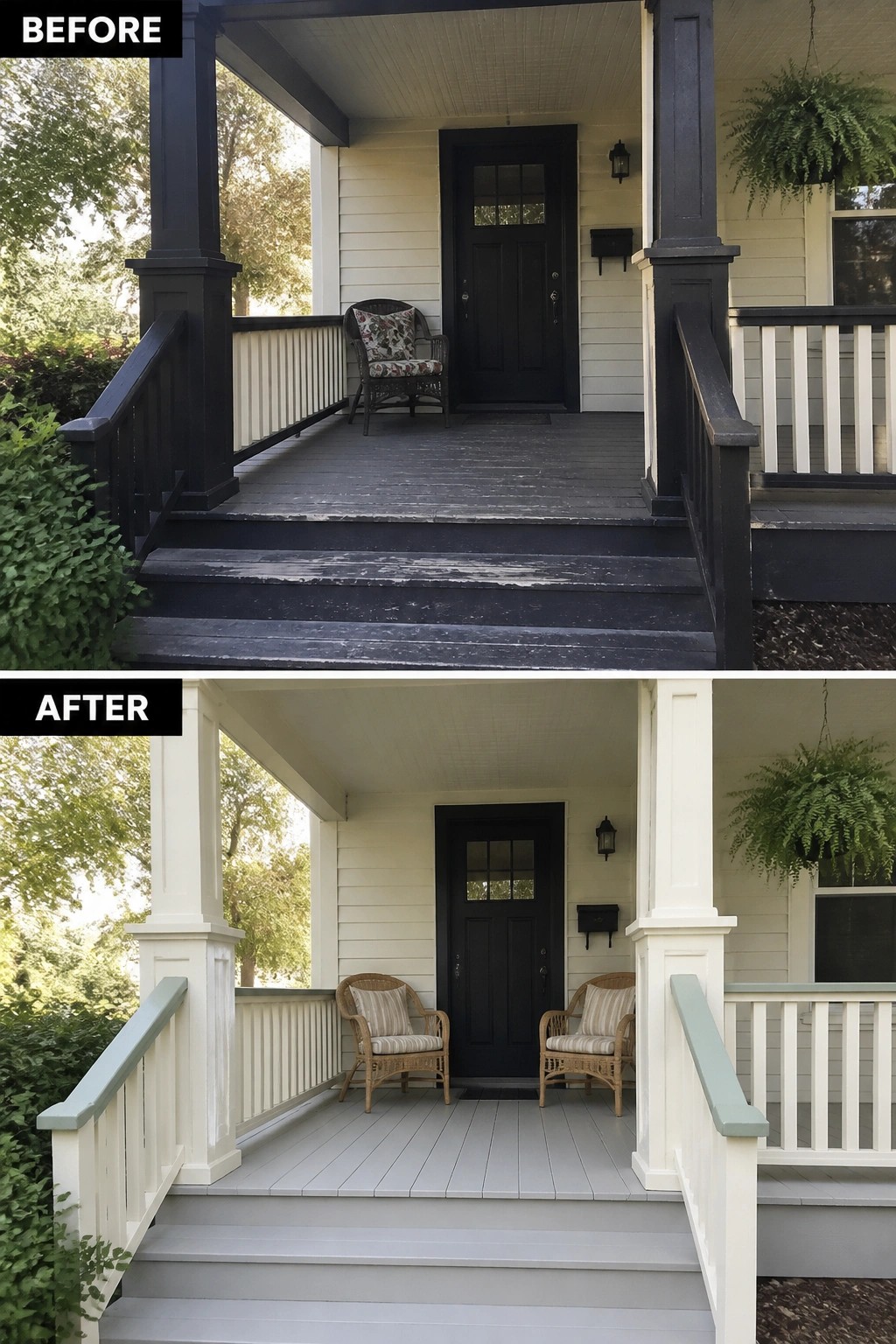
A dark porch often makes the front of a house feel heavy and closed in. Painting the posts, railings, and trim white while shifting the steps and floor to a light gray softens the whole entry and helps the space feel more open.
This change suits older homes where dark trim has started to look tired. Start with a good cleaning and prep, then pick exterior paints that hold up well. Keep the new colors simple so they work with the siding instead of fighting it.
Paint A Dark Fence White To Soften The Boundary
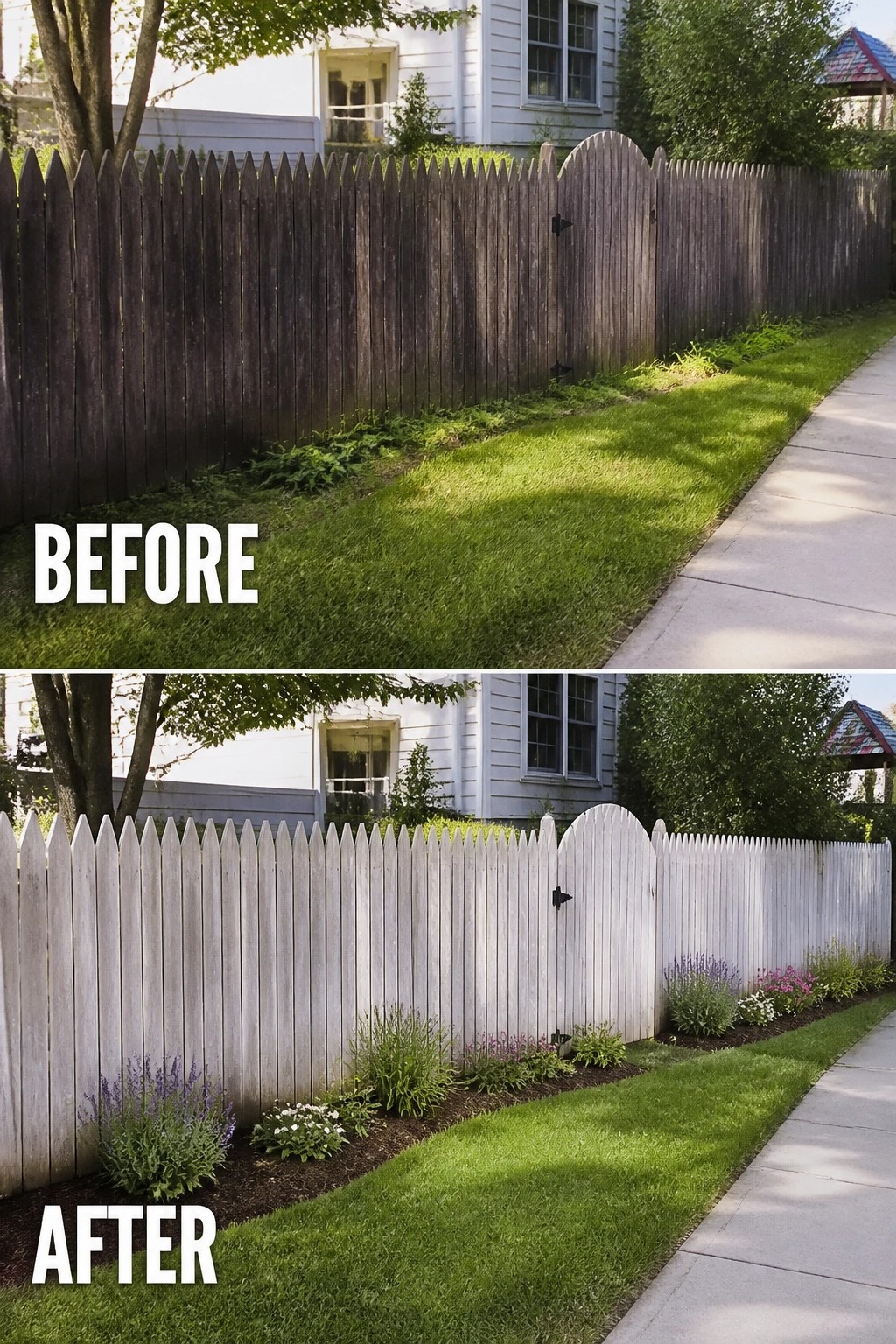
A dark wooden fence can make the edge of a yard feel heavy and closed in. Painting it white opens up the space and gives the whole area a lighter, cleaner look. Adding a narrow garden bed with mulch and a few plants along the base finishes the line and keeps the grass from creeping into the fence.
This idea works well on older homes where the fence is still solid but looks tired. Start with a good cleaning and two coats of exterior paint, then keep the planting simple so it does not compete with the fence itself. The result feels softer without changing the structure of the yard.
Switch To A Softer Exterior Paint Color
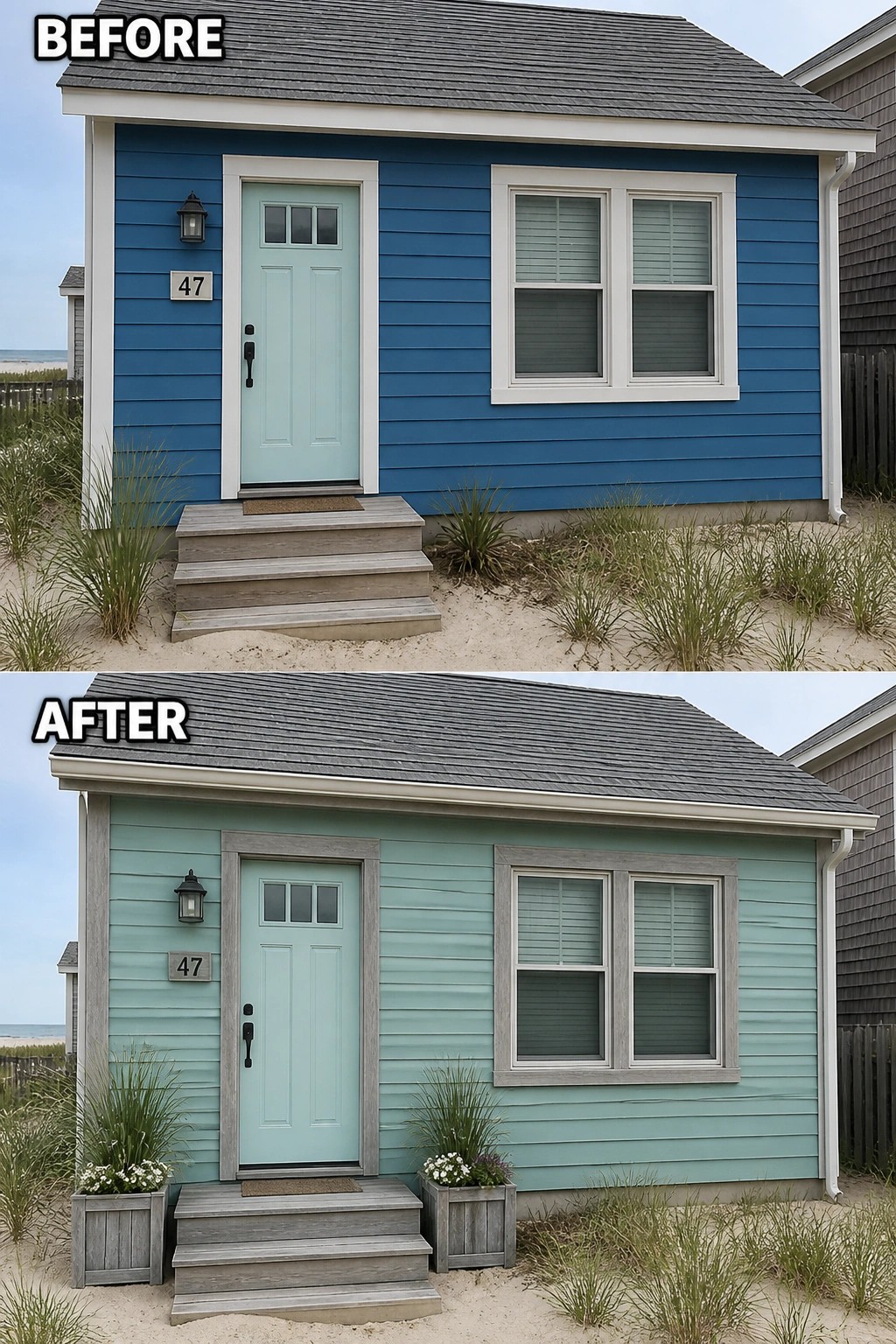
Many homes look harsher than intended because of bold siding colors that stand out too much against sand or sky. Changing the main color to a lighter, muted shade while updating the trim to a soft gray helps the house feel calmer and more settled in its setting.
This works especially well on small beach cottages or simple facades where you want the exterior to feel approachable rather than stark. Test paint samples directly on the wall first, and keep any added planters or lighting minimal so the softer color remains the main change.
Lighten Dark Siding To Soften The Look
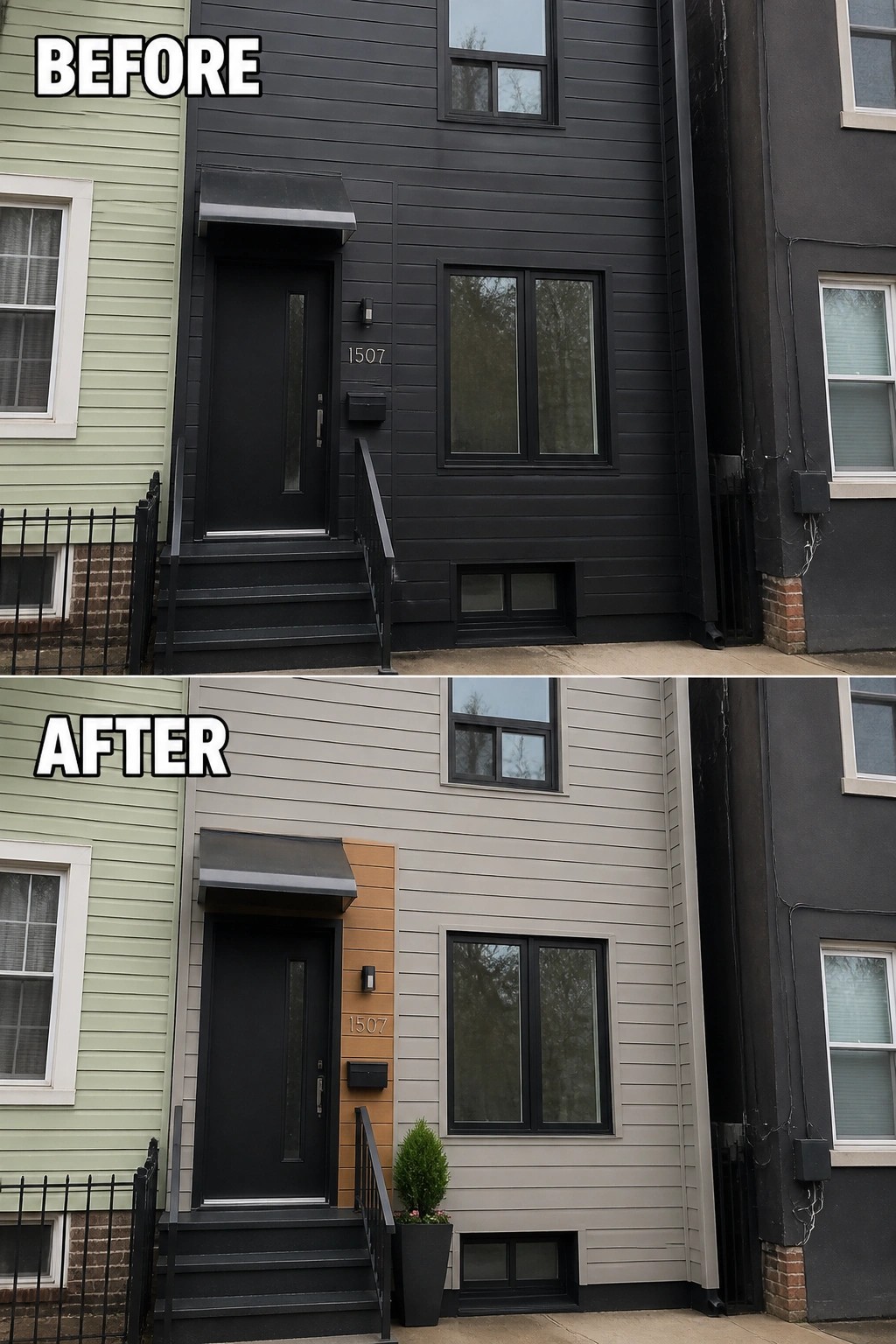
A dark exterior often makes a house feel heavier than it needs to. Painting the siding a lighter shade immediately changes that weight and gives the front a calmer appearance.
This idea works best on homes that already have clean lines and do not need major structural changes. Keep the new color in the warm gray or soft beige range so it still feels grounded, and consider adding one small wood accent near the door if you want a bit more warmth without adding clutter.
Soften High-Contrast Exteriors With Warmer Paint Shades
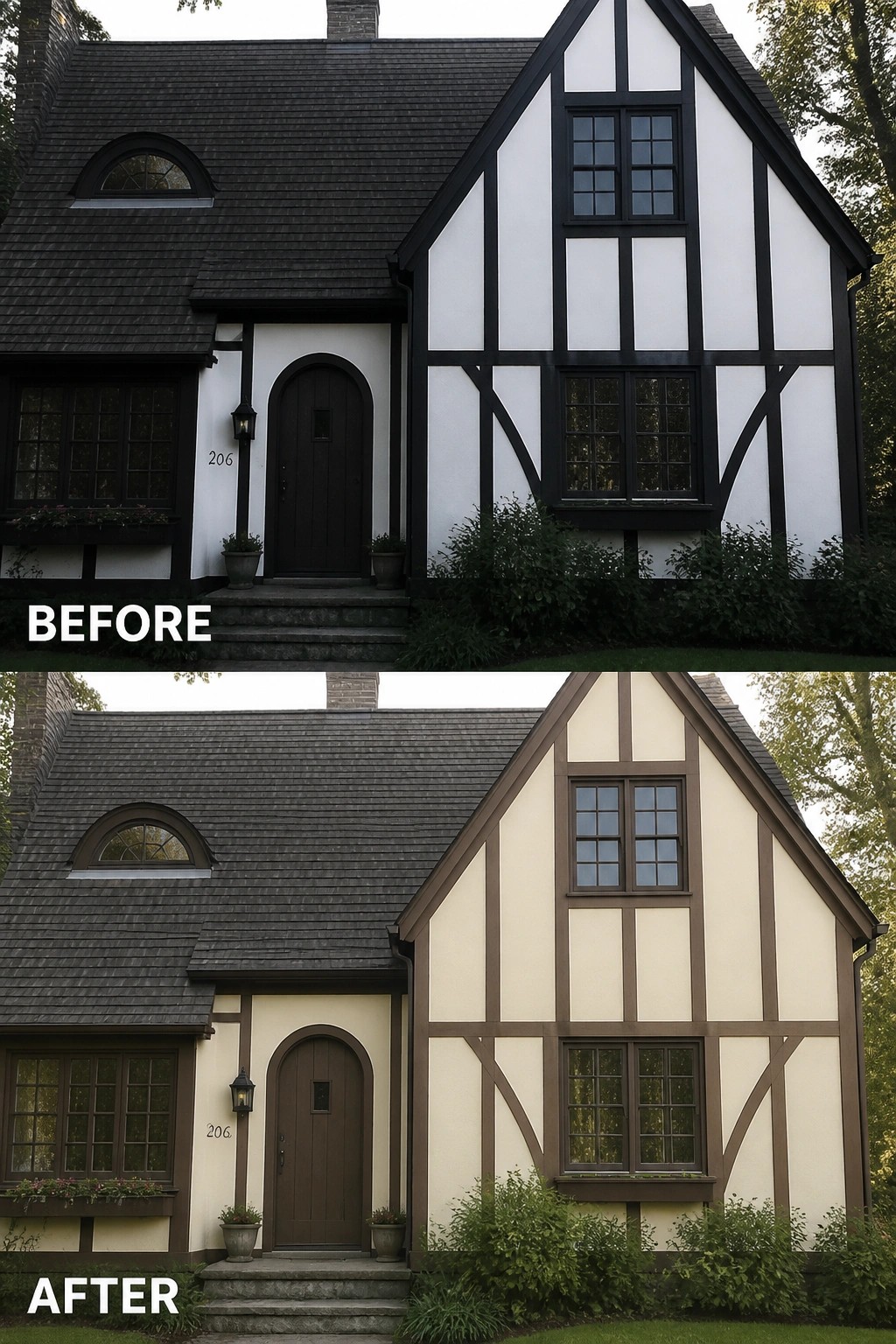
Many older homes with strong black and white trim can feel a bit stark from the street. Switching the main body color to a soft cream and the trim to a warm brown cuts that sharp contrast right away. The change keeps the architectural lines visible but makes the whole house read as calmer and more approachable.
This approach works well on Tudor or cottage-style homes where the original palette feels too heavy. Start by testing larger paint samples on the facade so you can see how the new tones shift through the day. Keep the door a similar depth to the trim if you want the look to stay cohesive.
Give A Dated Exterior A Softer Look With Paint
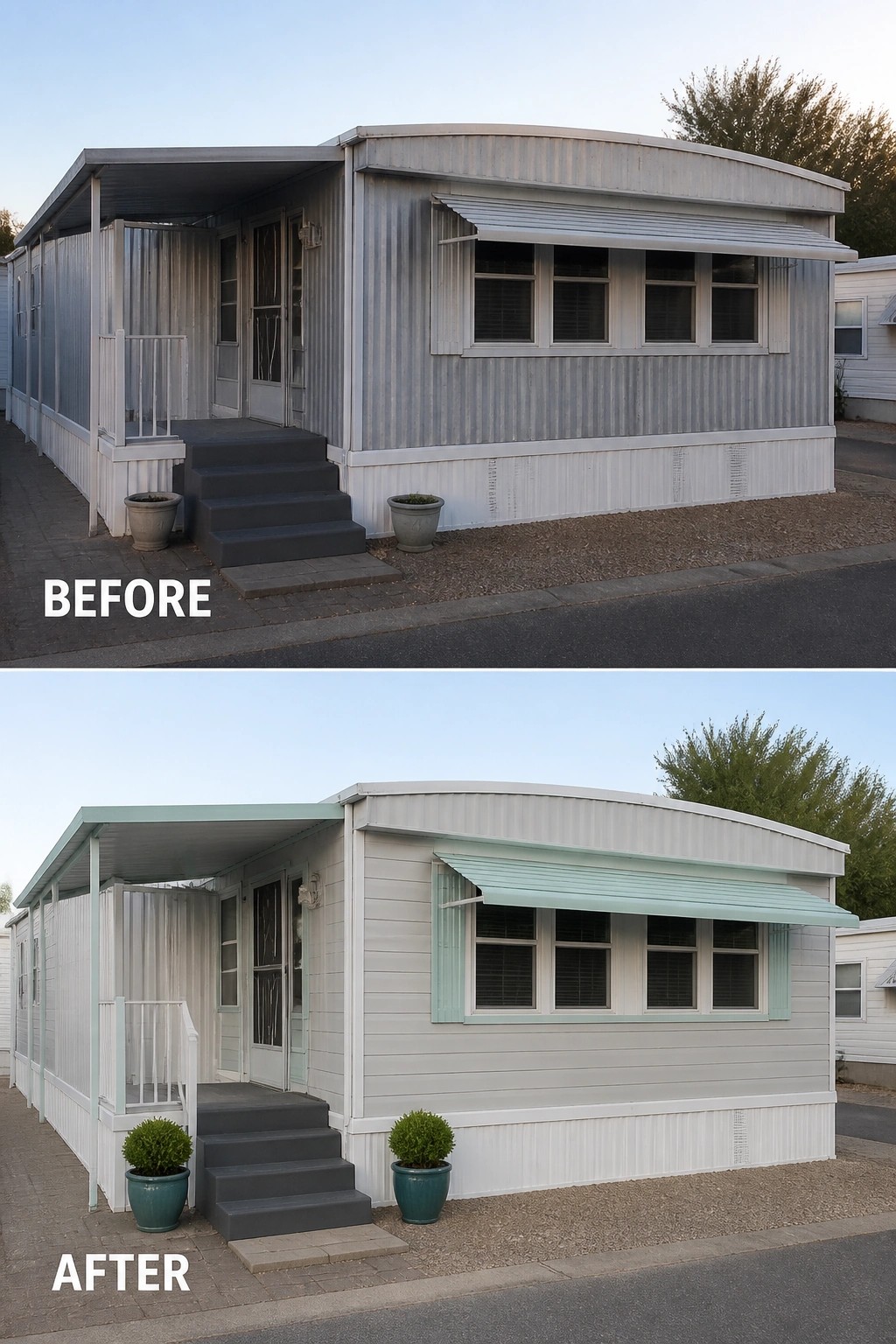
Many older homes with plain or corrugated siding end up looking a little stark. A lighter base color paired with a soft accent shade on the trim and awning can quickly change that feel without any structural work.
This works especially well on manufactured homes or simple facades where you want to improve curb appeal on a budget. Pick two muted tones that sit well together, test them on a small area, and keep the rest of the details minimal so the color change stays the main focus.
Paint The Exterior In A Softer Neutral Tone
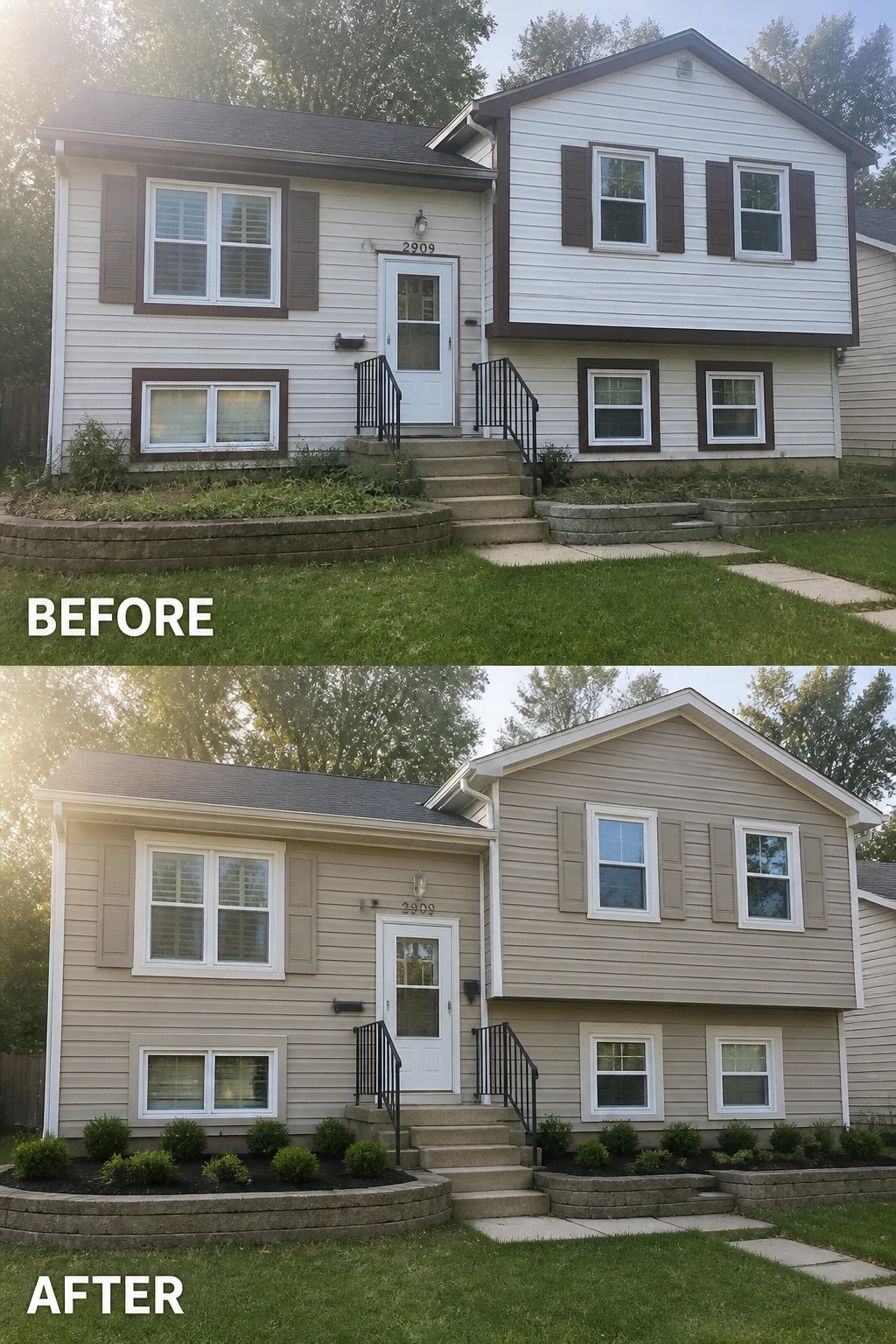
Many homes with bright white siding end up looking a little stark, especially when the trim creates strong contrast. Changing the main color to a muted beige softens the whole house and helps it sit more quietly in its setting.
This idea works best on homes that already have decent structure but just need a calmer finish. Pick a color that sits between warm and cool so it does not shift too much in different light, and always test a sample on the actual siding before committing to the full job.
Soften A Dark Exterior With Lighter Paint And Trim
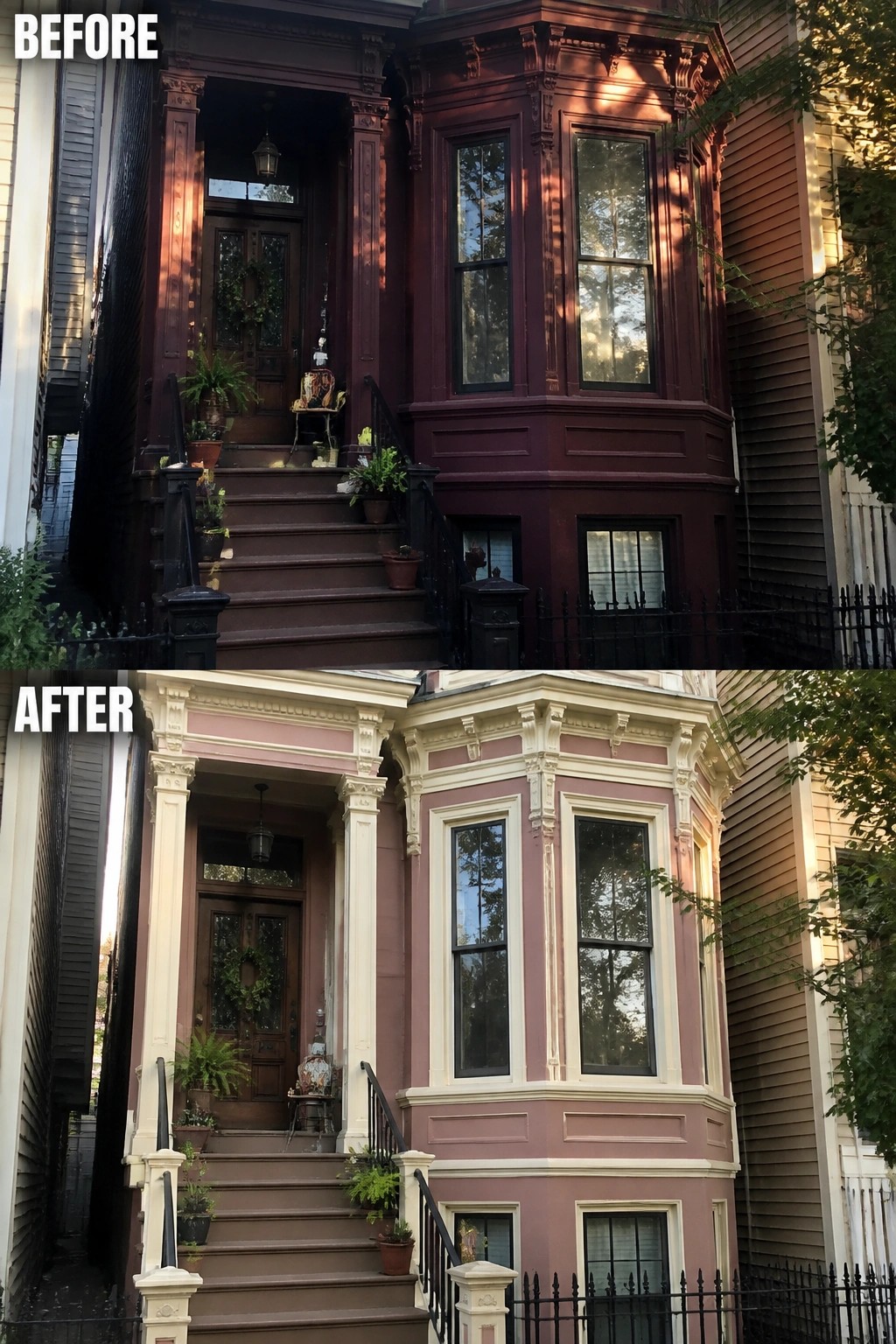
A dark exterior color often makes a house look heavier than it needs to. Switching to a softer shade across the siding and using light trim opens up the facade and lets the architectural details read more clearly without any other changes.
This idea works especially well on older homes that already have strong trim and bay windows. Choose a color only a few shades lighter than the original if you want to keep some warmth, and test the paint on a small section of siding before committing to the whole house.
Choose A Warmer Door Color To Soften The Entry
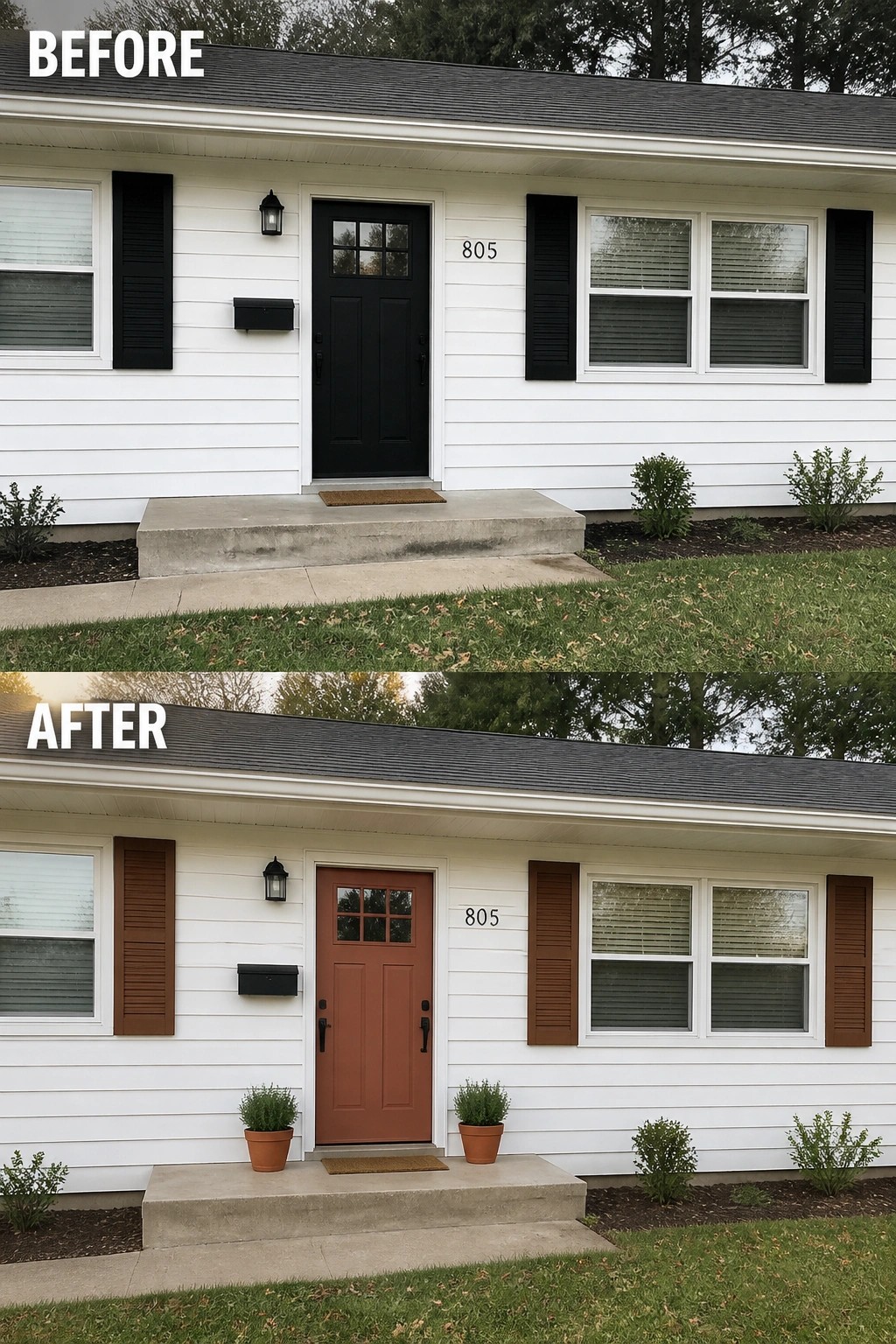
Many homes with white siding end up looking a bit stark when the door and shutters stay black. Switching both to a warm terracotta shade immediately softens the whole front and makes the house feel more approachable without changing anything else.
This works especially well on simple one-story homes where the entry is the main focal point. Start with the door only if a full shutter repaint feels like too much, and add two matching planters on the steps to finish the look. Keep the color in the same warm family as any nearby brick or trim so the change feels intentional rather than random.
Soften A Plain Exterior With New Paint Colors
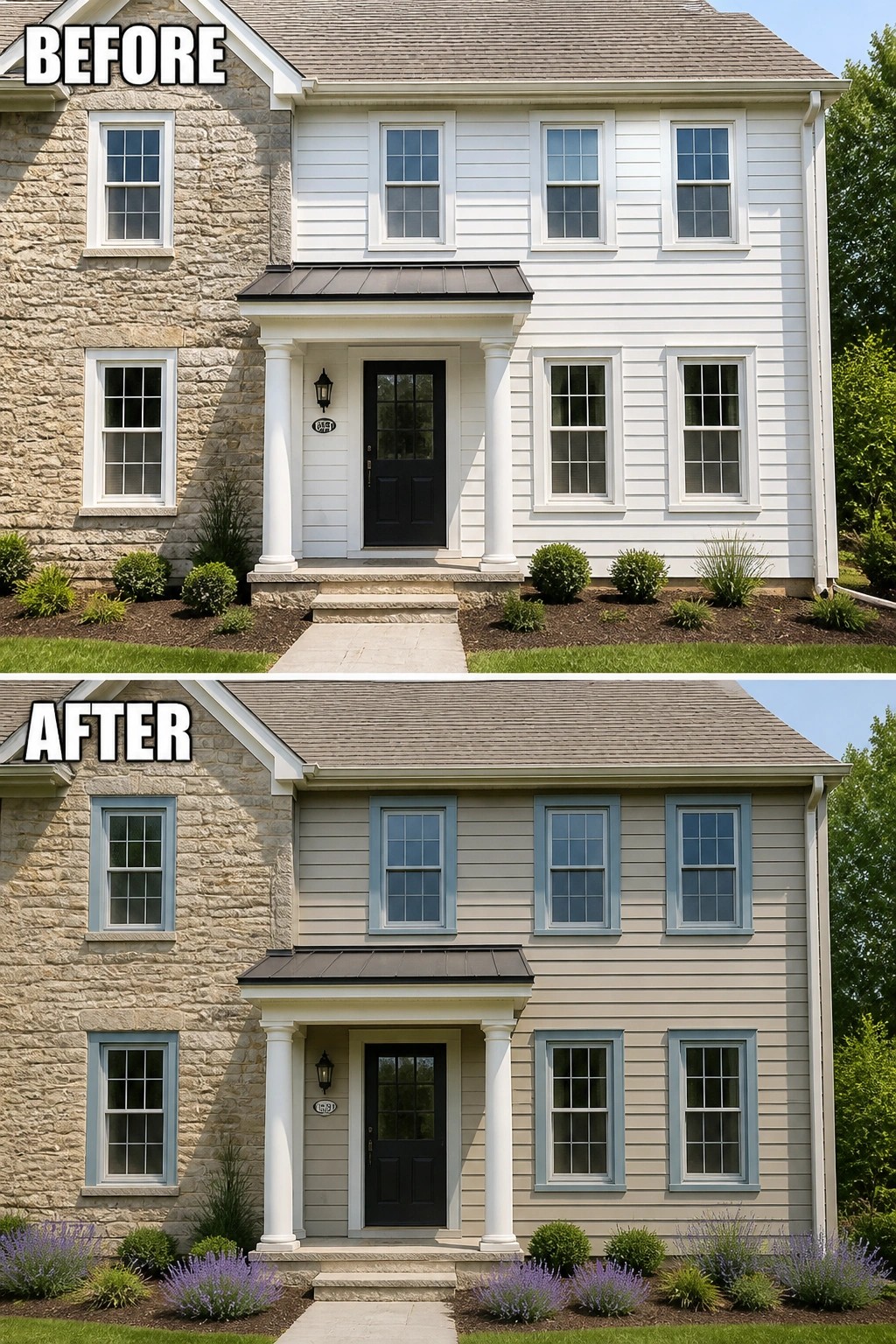
Many homes start with bright white siding that can feel harsh against stone and dark trim. Switching to a muted gray tone with soft blue window frames and trim instantly gives the house a calmer, more settled appearance without changing the structure or adding major features.
This approach works well on homes that already have good bones but need a gentler presence from the street. Stick to one main body color and use the trim to add subtle contrast rather than bold accents. Test samples on a large section first, since exterior colors shift with sunlight and can look very different once applied across the whole facade.
Frequently Asked Questions
Q: How do I choose a softer shade that suits my home’s architecture?
A: Look at the roof and any existing stonework first. Pick a color that pulls from those tones but lighter. This creates balance without extra work.
Q: What if the softer color I like seems too light on the whole house?
A: Break it up with deeper accents on doors or shutters. The contrast keeps things interesting while you still get that gentle overall feel.
Q: Do these paint ideas hold up in rainy climates?
A: Quality paint makes a big difference here. Go for formulas made for moisture. Repaint every six years or so to stay ahead of peeling.