

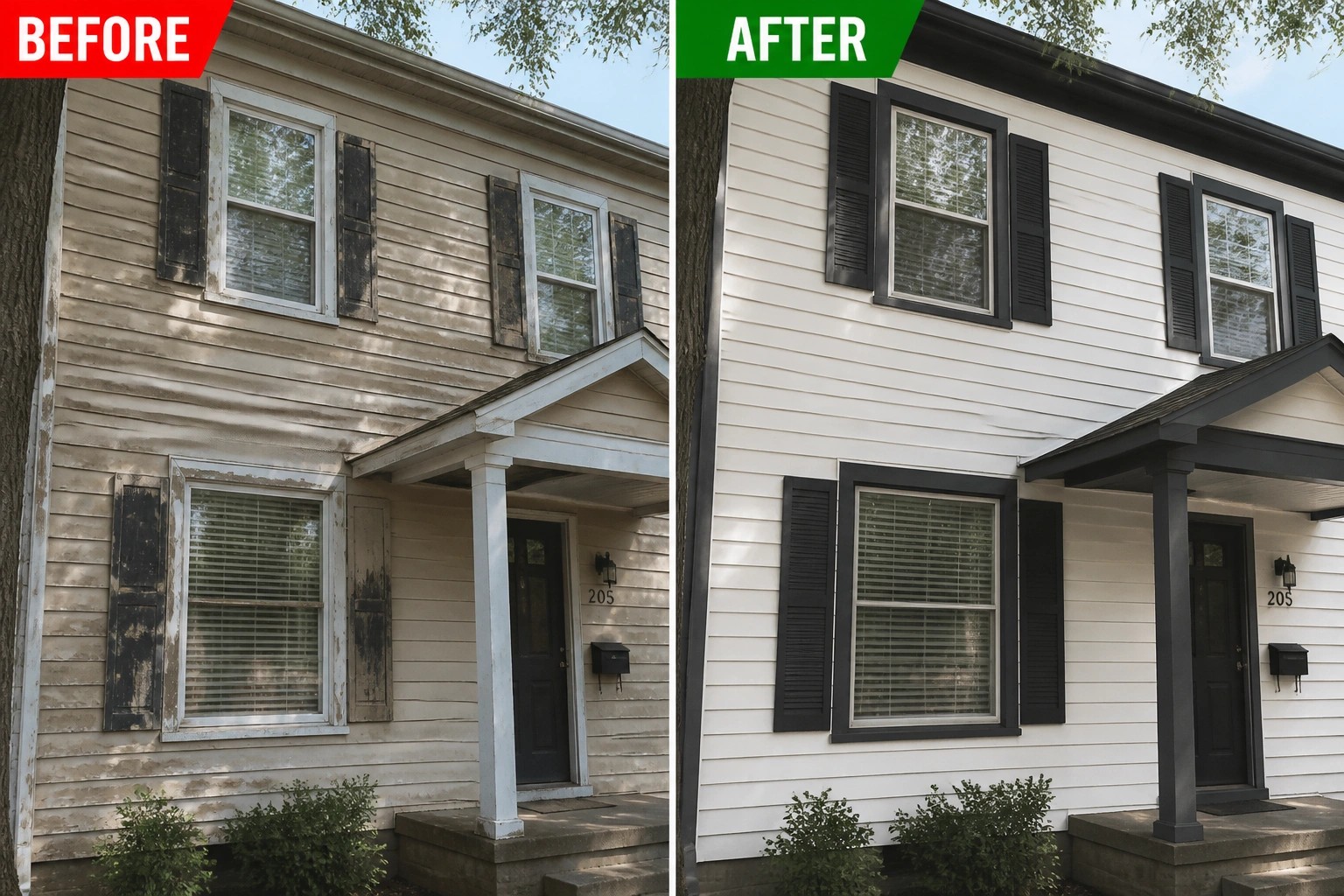
I have walked past plenty of houses where the siding has lost its color over the years and it always makes the whole place seem a bit neglected.
A fresh coat of paint can bring back some life to those surfaces without requiring any major construction work.
I usually start by testing a few samples on the actual wall because the light outside changes how the color reads throughout the day.
Choosing the right shade also helps tie together other elements like the trim and the front door.
Small exterior updates like this tend to stand out more than people expect.
Refresh Faded Siding With A Light Paint Color And Dark Shutters
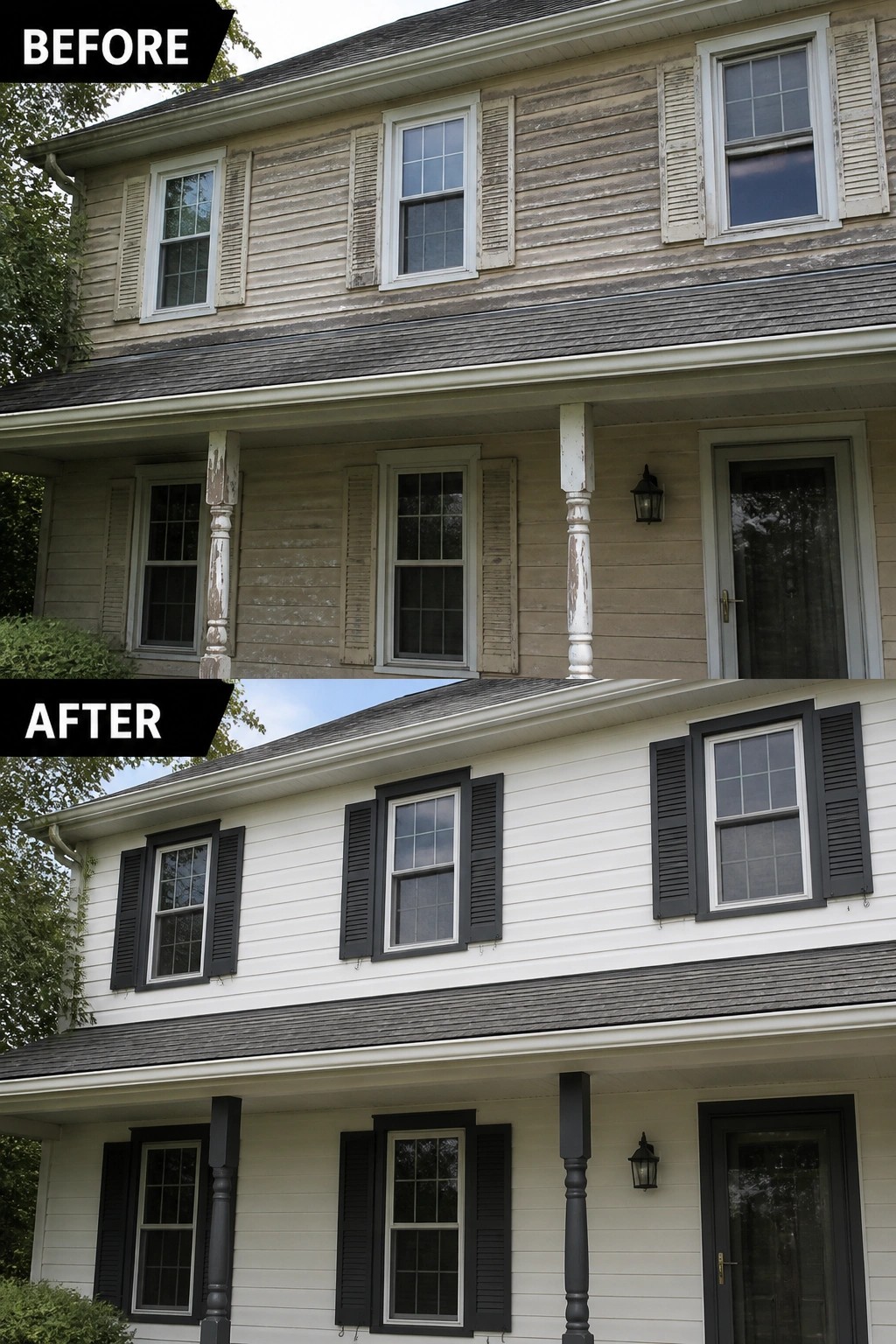
A faded exterior often looks tired because the old paint has lost its color and the trim no longer stands out. Switching the siding to a clean white and pairing it with dark shutters gives the whole front a sharper look without changing the structure. The contrast makes the windows feel more defined and the house appear brighter overall.
This approach works well on older homes where the siding is still sound but the finish has worn away. Start by prepping the surface properly so the new paint lasts, then test your shutter color against the house before committing. It keeps the project focused on paint and trim rather than major renovations.
Refresh Faded Siding With A Simple Two Tone Paint Job
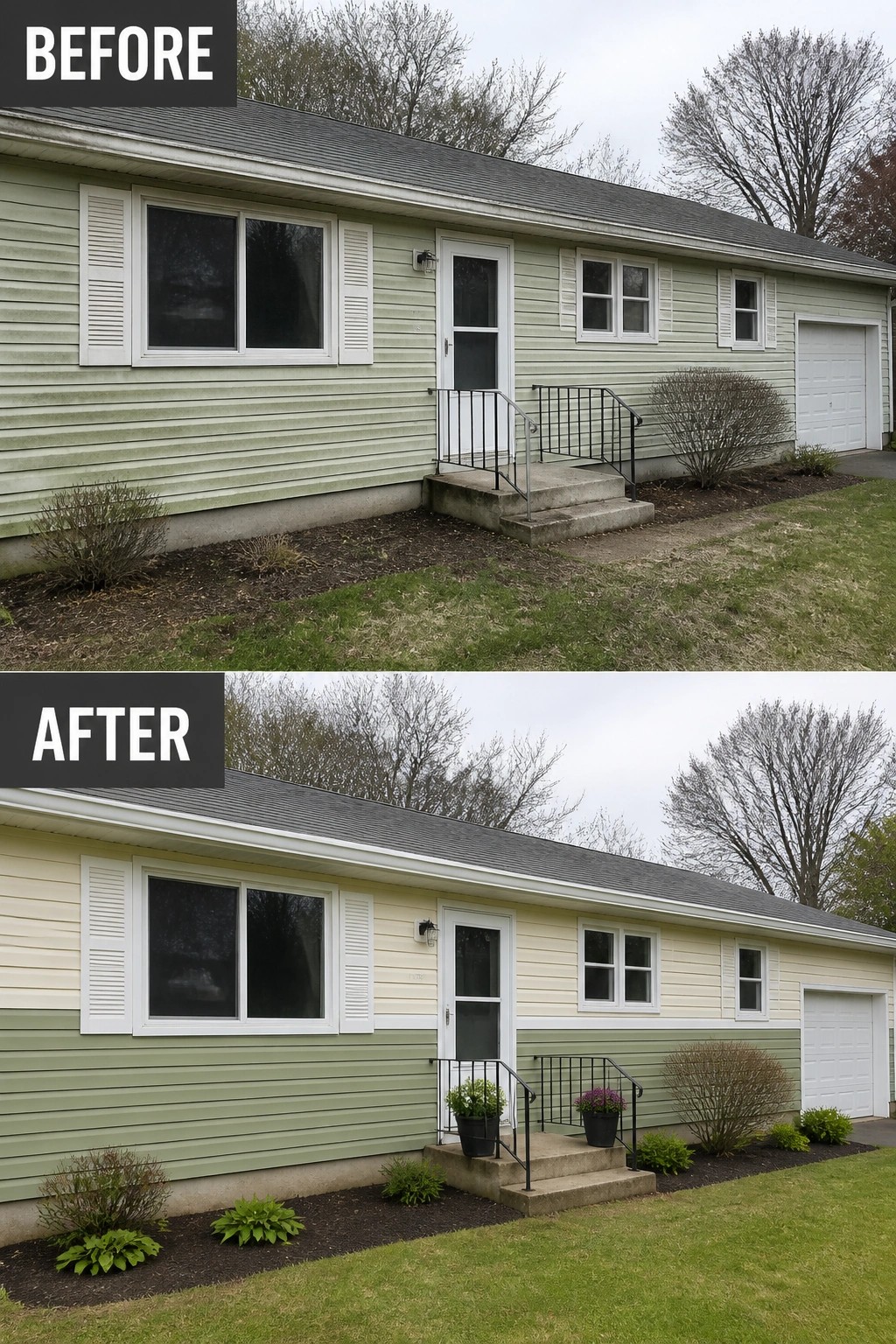
Many homes with older horizontal siding end up with a flat, washed out look once the original color fades. Splitting the wall into two tones gives the house more shape and makes the entry area feel more intentional. In this case the upper section was lightened while the lower band stayed in a muted green, which instantly made the whole facade feel cleaner.
This approach works well on ranches or single story homes where the siding runs long and unbroken. Keep the color change at a natural break like a window line or the height of the door, and use the same paint finish on both sections so it reads as one update rather than two separate colors. It is an easy way to improve curb appeal before taking on bigger exterior projects.
Paint Faded Brick Siding White
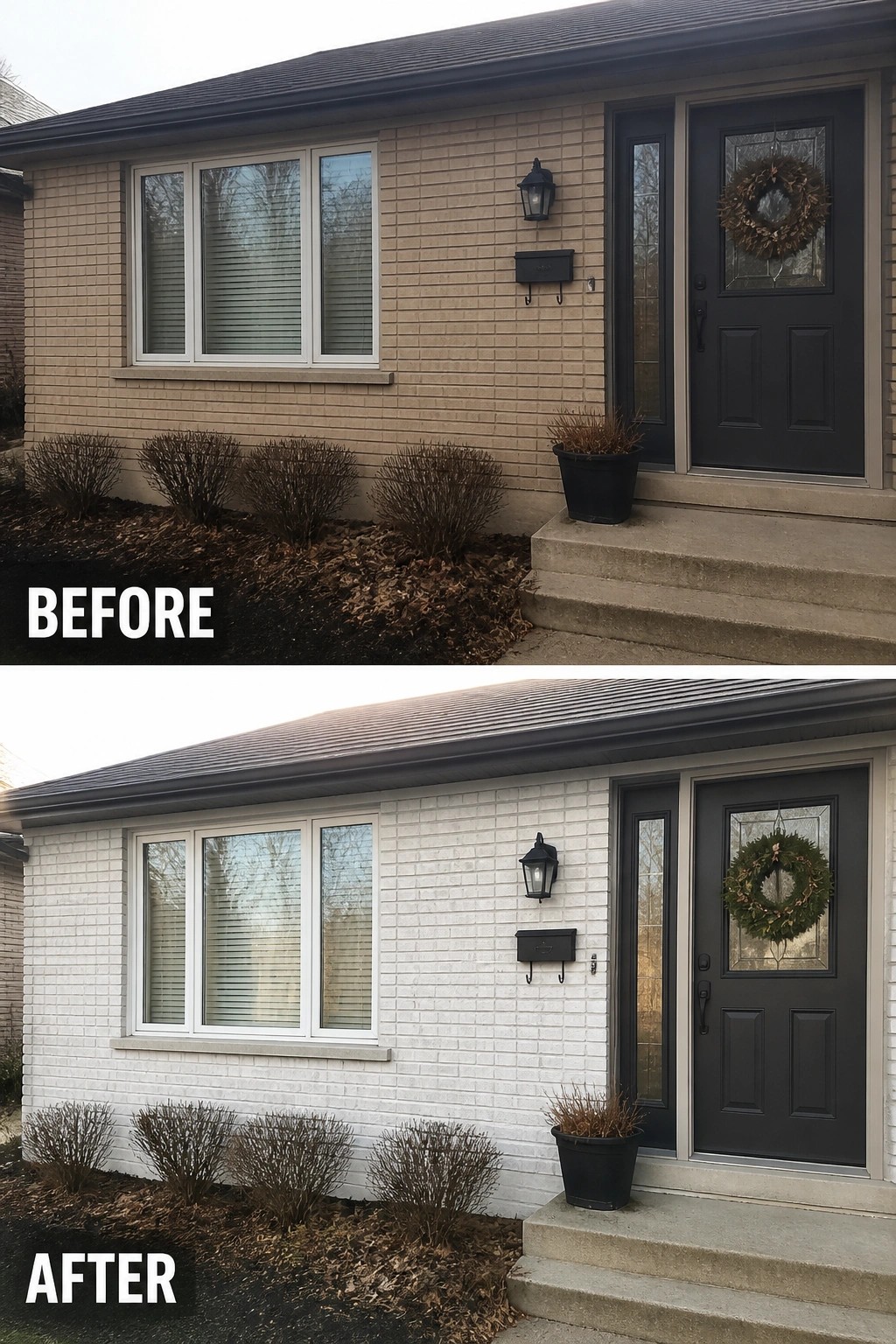
Painting faded brick siding white can make an older home feel much brighter without any structural changes. Here the beige brick gets covered in a clean white finish that lifts the whole front and pairs better with the dark door and trim.
This works best on homes where the siding is still in good shape but has lost its color over time. Test your white shade on a small area first, since different whites can look warmer or cooler next to existing windows and doors.
Pick Dark Trim To Refresh Faded Siding

Many houses with light siding start to look washed out once the original trim color fades. Switching the shutters, door, and gable trim to a deep navy creates strong contrast without repainting the whole exterior. The change makes the house look sharper and more put together from the street.
This idea works best when the siding itself is still sound but the accents have lost their edge. Choose one dark color and apply it to all the trim pieces at once. Keep the rest of the house simple so the new trim does the main job.
Refresh Faded Siding With Fresh Paint And Dark Trim

Houses with older siding often lose their color and start to look dull after years of weather exposure. A new paint color in a warmer tone, along with dark trim on the windows and a bolder front door, gives the exterior a cleaner and more current appearance.
This idea works best on homes where the siding is still in good shape but the finish has faded. Focus first on the main body color and window trim, then pick one accent color for the door so the entry feels intentional rather than forgotten.
Refresh Faded Siding With A Dark Paint Color
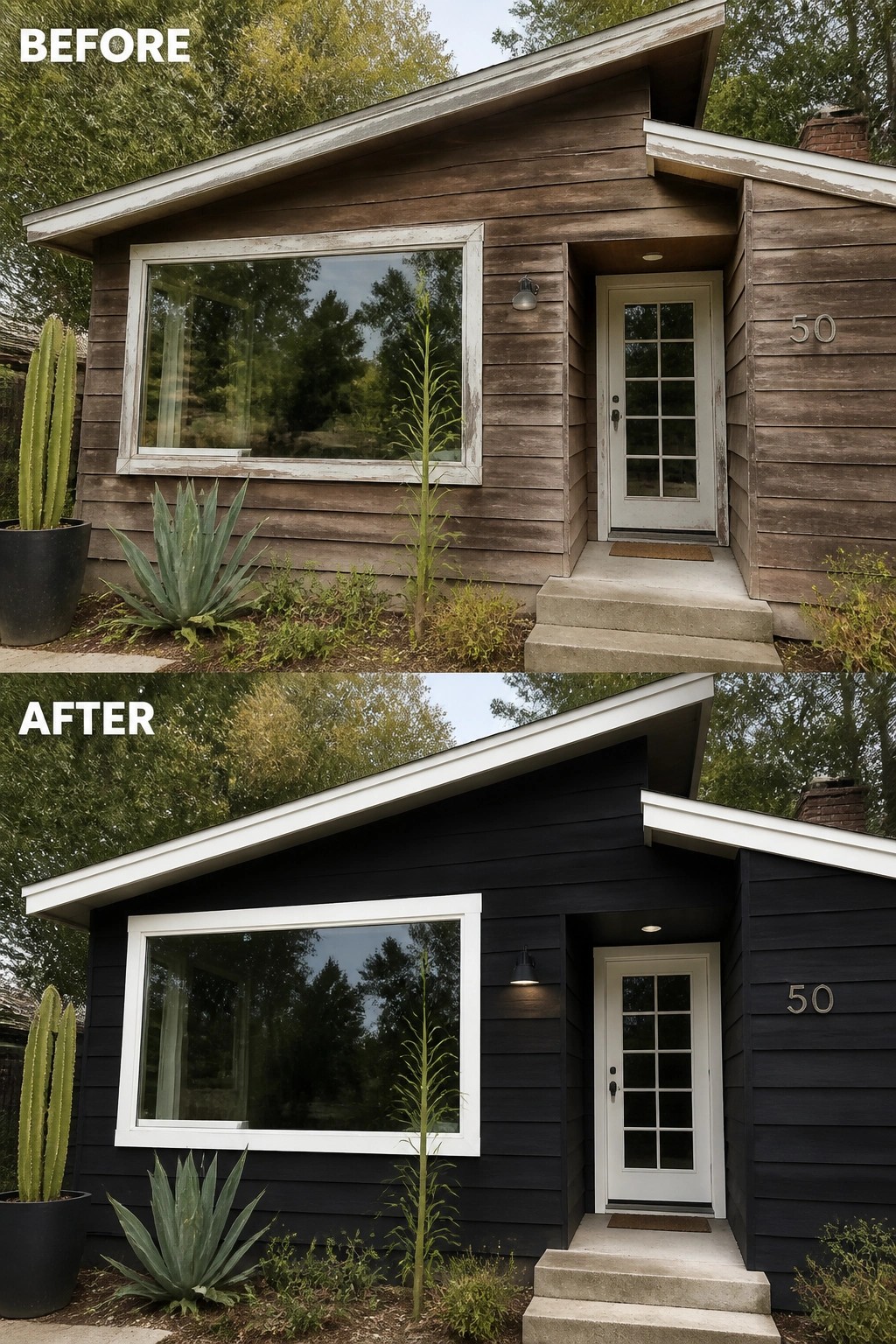
Many homes with older wood siding lose their look once the original finish fades and peels. Repainting the siding a deep black gives the whole front a cleaner, more solid appearance without changing the structure or trim details.
This idea works best on smaller houses where the siding is the main surface. Pick a color that contrasts with white trim and keep the front door light so the entry still feels open. Test the paint on a small area first, since darker shades can highlight any uneven spots in the wood.
Refresh Faded Siding With A Fresh Coat Of Paint
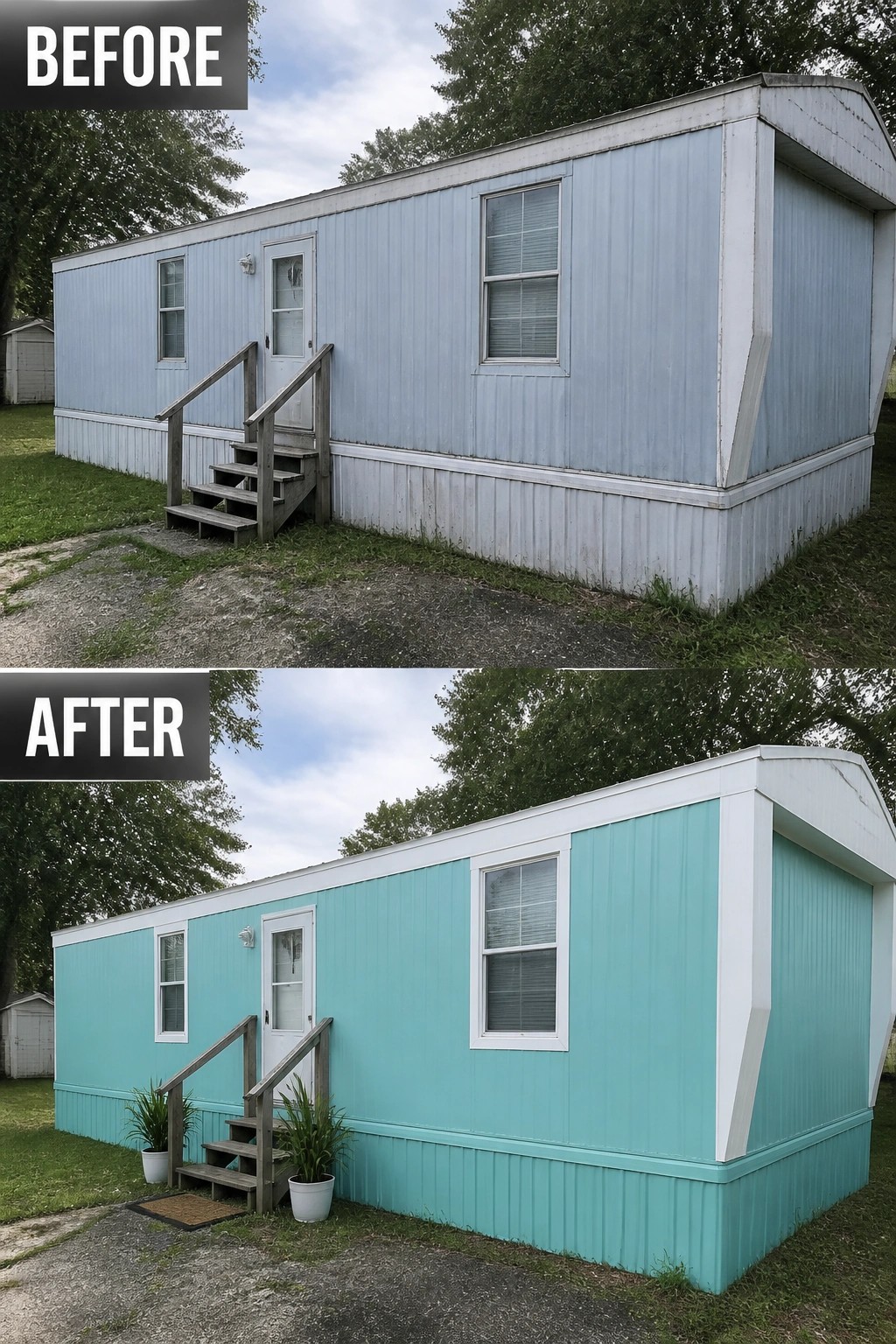
A new color on the siding can bring an older home back to life when the original paint has faded and lost its strength. Here the change from a dull, weathered tone to a brighter teal made the whole exterior look cleaner and more current without any major construction work.
This idea works best on homes where the siding is still in good shape but the color has simply aged. Pick an exterior-grade paint, focus on even coverage, and keep any trim in a contrasting white so the new shade stands out. Adding a couple of planters by the steps is an easy extra step that helps the fresh paint feel finished.
Refresh Faded Siding With A Two-Tone Paint Job
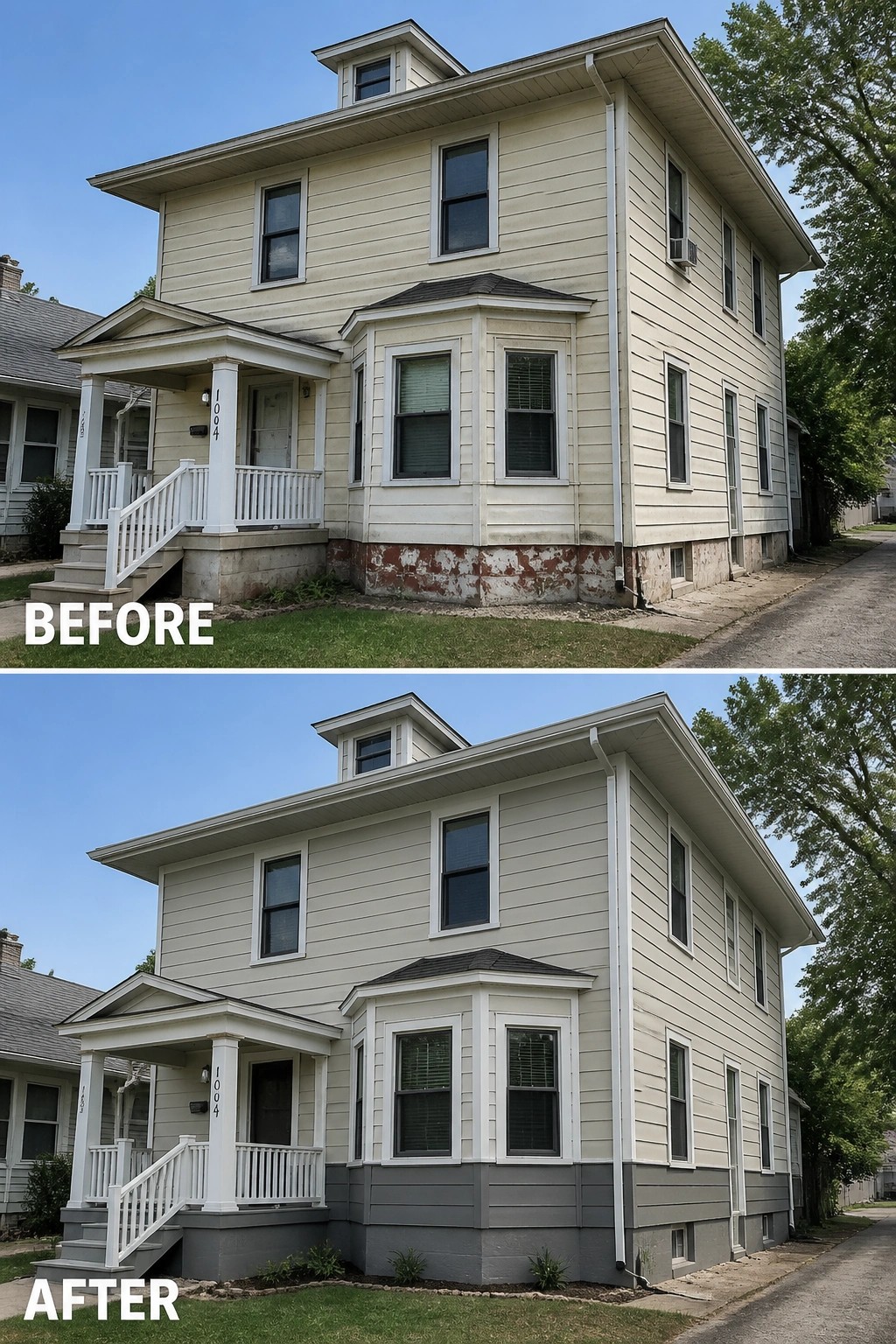
Many older homes end up with worn paint along the bottom of the siding where moisture and age take the biggest toll. In this case, painting just the lower section a darker gray gave the whole house a cleaner, more finished look without repainting every wall. The contrast also helped hide the old damage while keeping the upper siding light and bright.
This approach works well on homes with a clear foundation line or where only part of the siding needs attention. Stick to exterior-grade paint made for the climate, and focus first on scraping and priming any loose areas. It is a simple way to update curb appeal when a full repaint feels like too much.
Refresh Faded Siding With Contrasting Paint Colors

Many homes with older siding end up with a flat, washed-out look once the original color fades. Painting the siding a lighter shade while switching the garage door to a much darker tone gives the whole front a sharper, more current appearance without any structural changes.
This approach works especially well on simple garage-front homes where the door takes up a large portion of the facade. Keep the trim and gutters in a matching dark color to tie everything together, and test your paint samples on a cloudy day so the contrast reads clearly once the job is done.
Refresh Faded Siding With A Two-Tone Paint Scheme
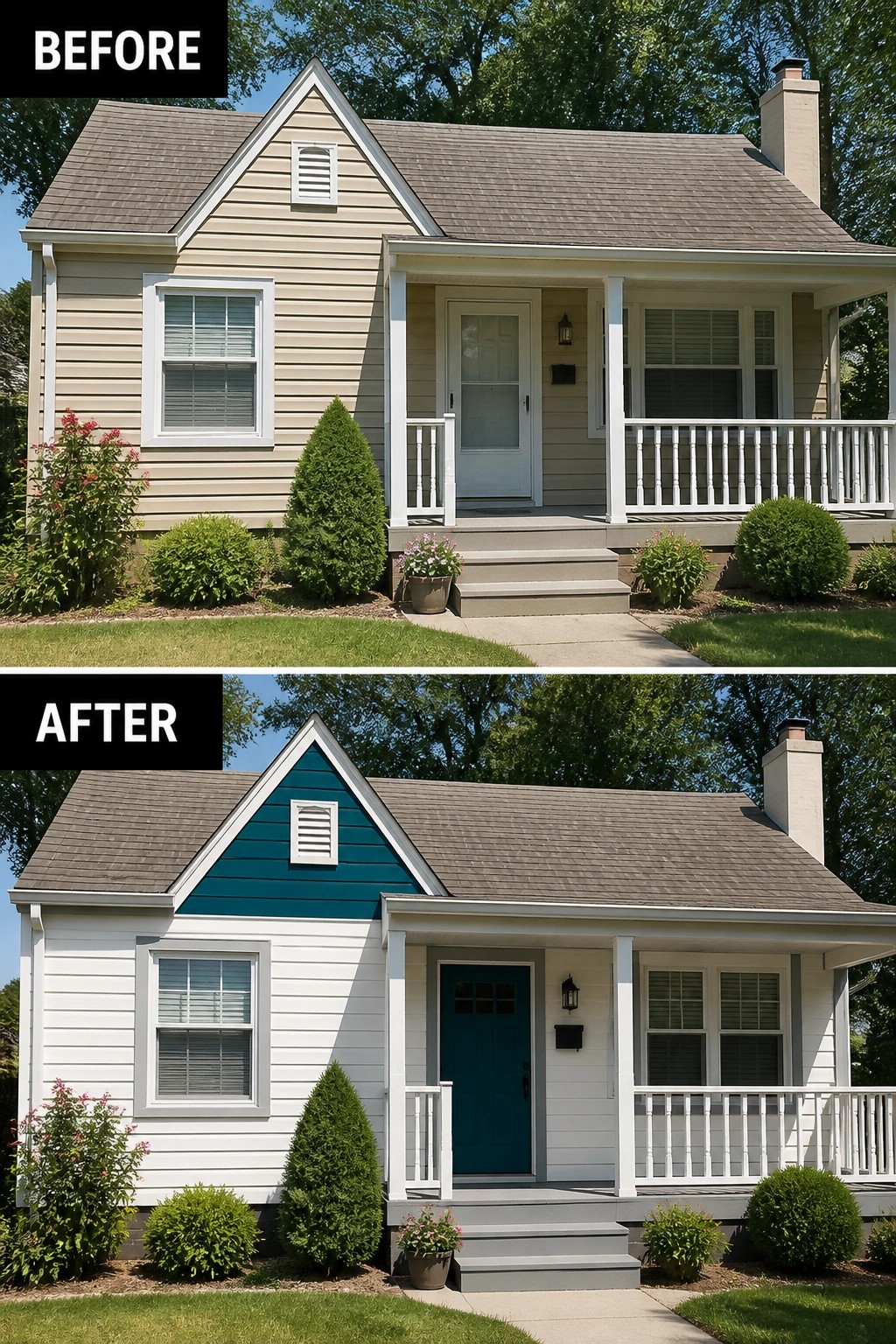
A simple way to update a tired exterior is to keep most of the siding light while painting the gable a deeper color. In this case the beige walls were changed to white and the upper triangle was painted teal. The front door was switched to the same teal, which gives the whole front a clearer shape without needing new siding or trim.
This approach works well on smaller homes where the roofline creates a natural break. Pick one accent color and use it on both the gable and the door so the change feels intentional. It is an easy project for houses with faded paint because you only need to cover the main field and one small section rather than repaint everything at once.
Refresh Faded Siding With Paint And Trim
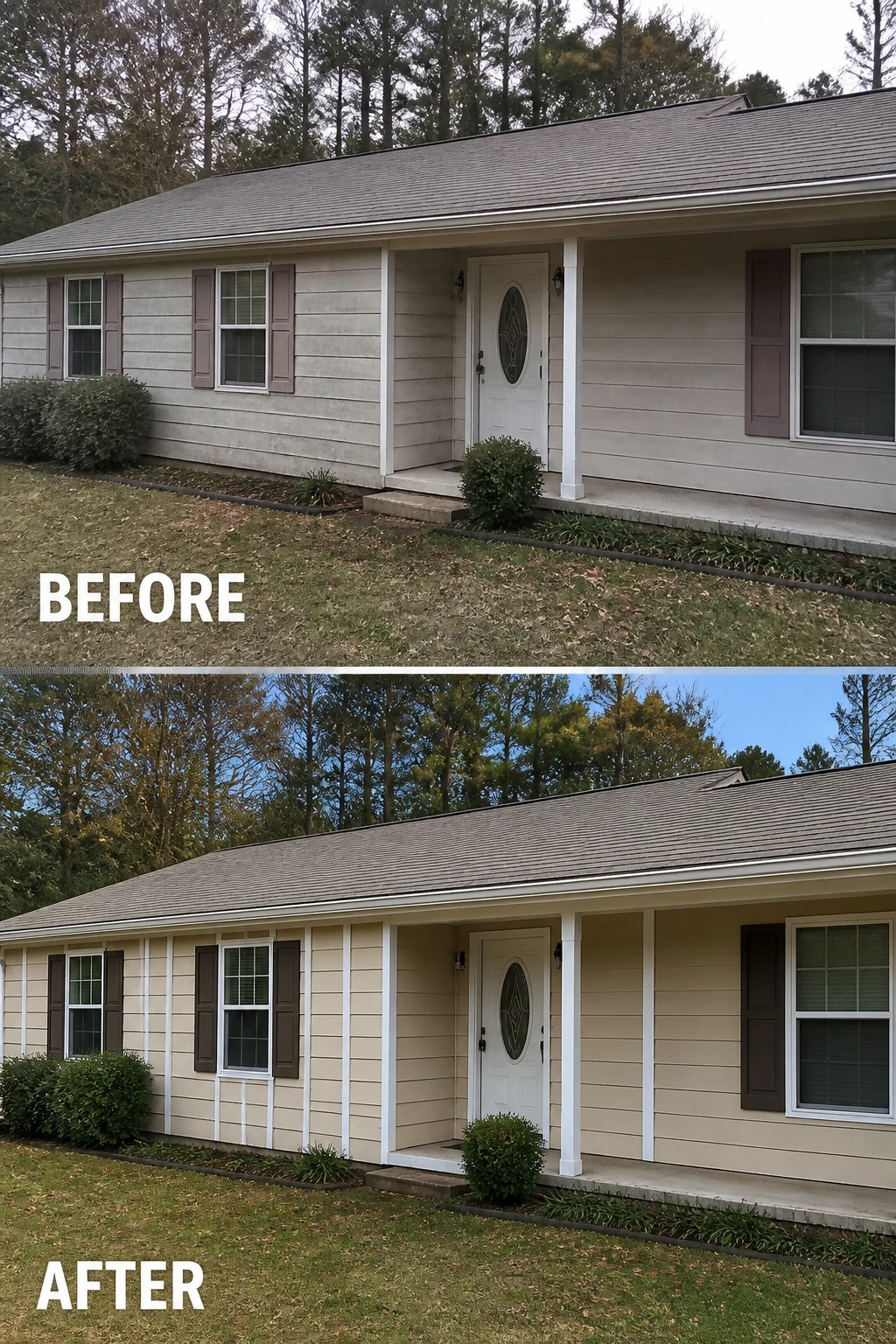
A simple paint refresh can make a big difference when siding has lost its color. In this case the house went from a dull gray tone to a warmer beige, and white trim was added along the vertical seams to break up the long wall. The change gives the whole front a cleaner, more defined look without any major construction.
This approach works well on ranch homes or other single-story houses with large flat siding areas. Start by power washing the surface, then pick a color that pairs with your roof and trim. Adding a few vertical lines of contrasting trim helps the paint job feel more intentional and keeps the update from looking like a flat coat of new color.
Refresh Faded Siding With A Lighter Paint Color
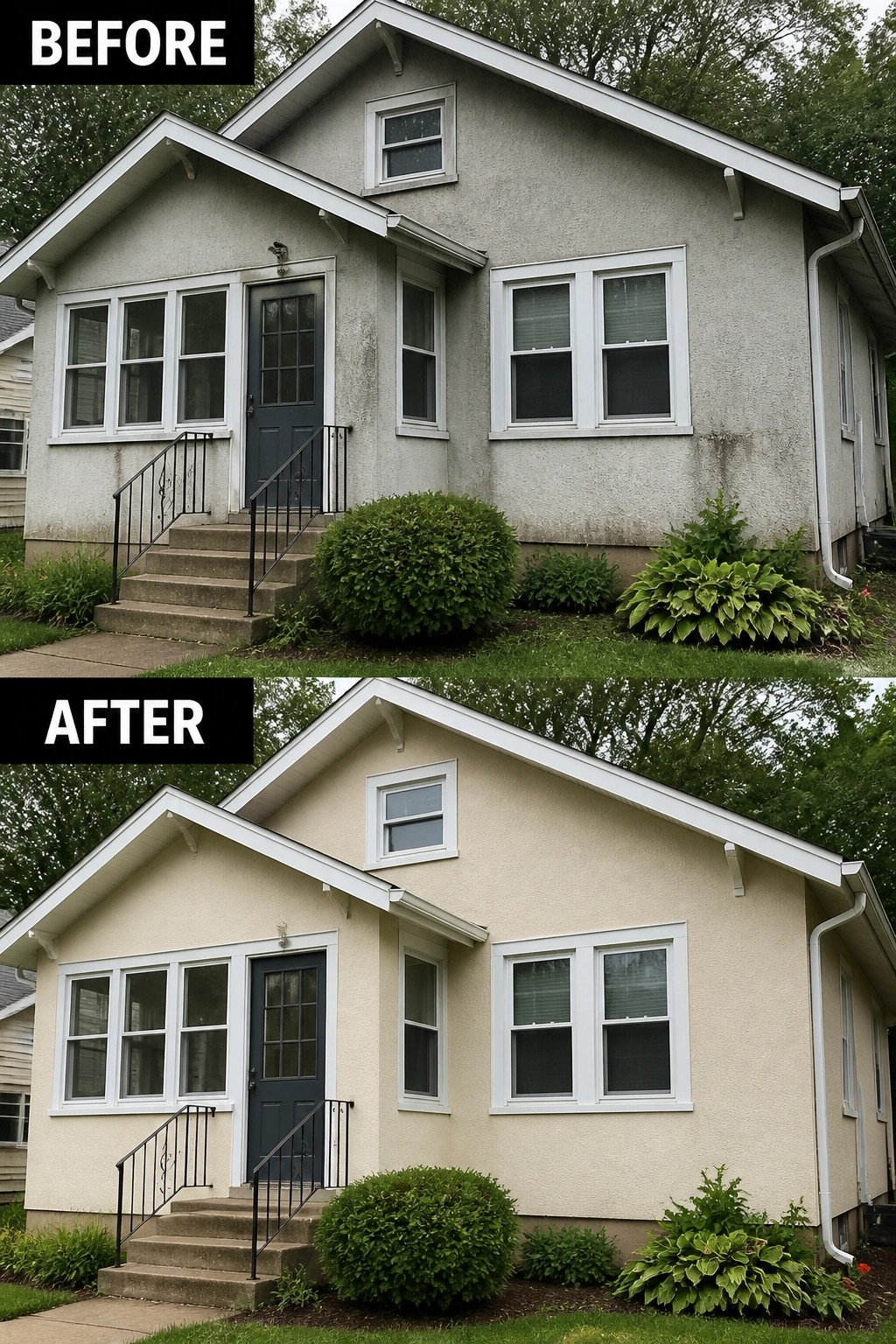
Faded siding can make even a solid house look tired. Switching the color from a flat gray to a warmer light beige lifted the whole exterior right away and made the dark door stand out more clearly.
This works best on homes with straightforward shapes and few details. Choose a paint that is noticeably lighter than the old color, test a patch on the wall first, and make sure the new shade still pairs well with your trim and roof.
Refresh The Porch Ceiling With A Light Paint Color
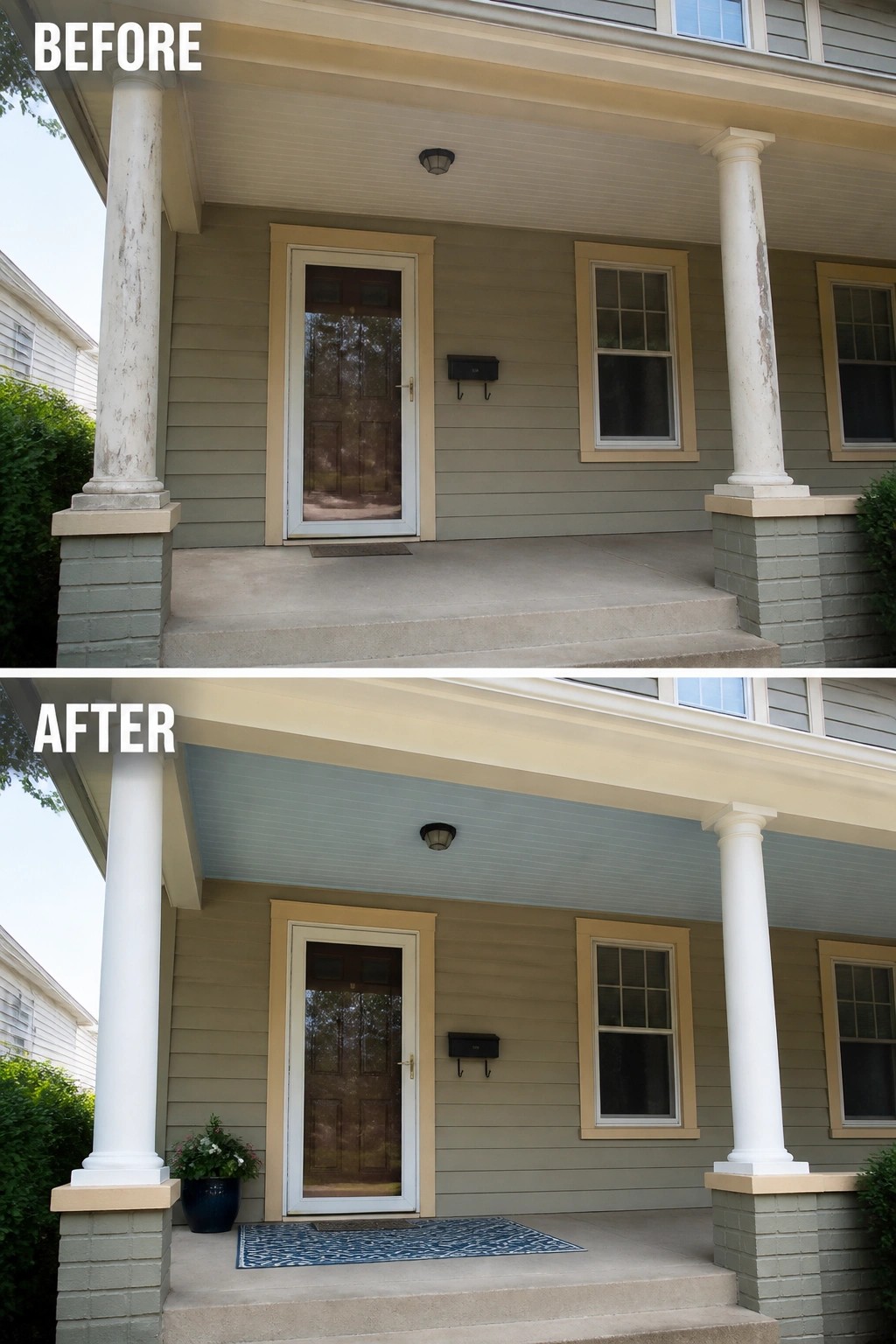
Painting the ceiling of a covered porch is one of the simplest ways to improve a faded exterior. In this case the old ceiling had a tired beige tone that made the whole entry feel dull. Switching it to a soft light blue brightened the space right away and made the white columns and trim stand out more.
This idea works well on any house with a front or side porch that gets some shade. Keep the color light so it reflects daylight instead of soaking it up. It is also a low-cost step that pairs nicely with basic cleanup like touching up trim or adding a simple rug and one or two planters near the door.
Refresh Faded Siding With Bold Shutters And Window Boxes
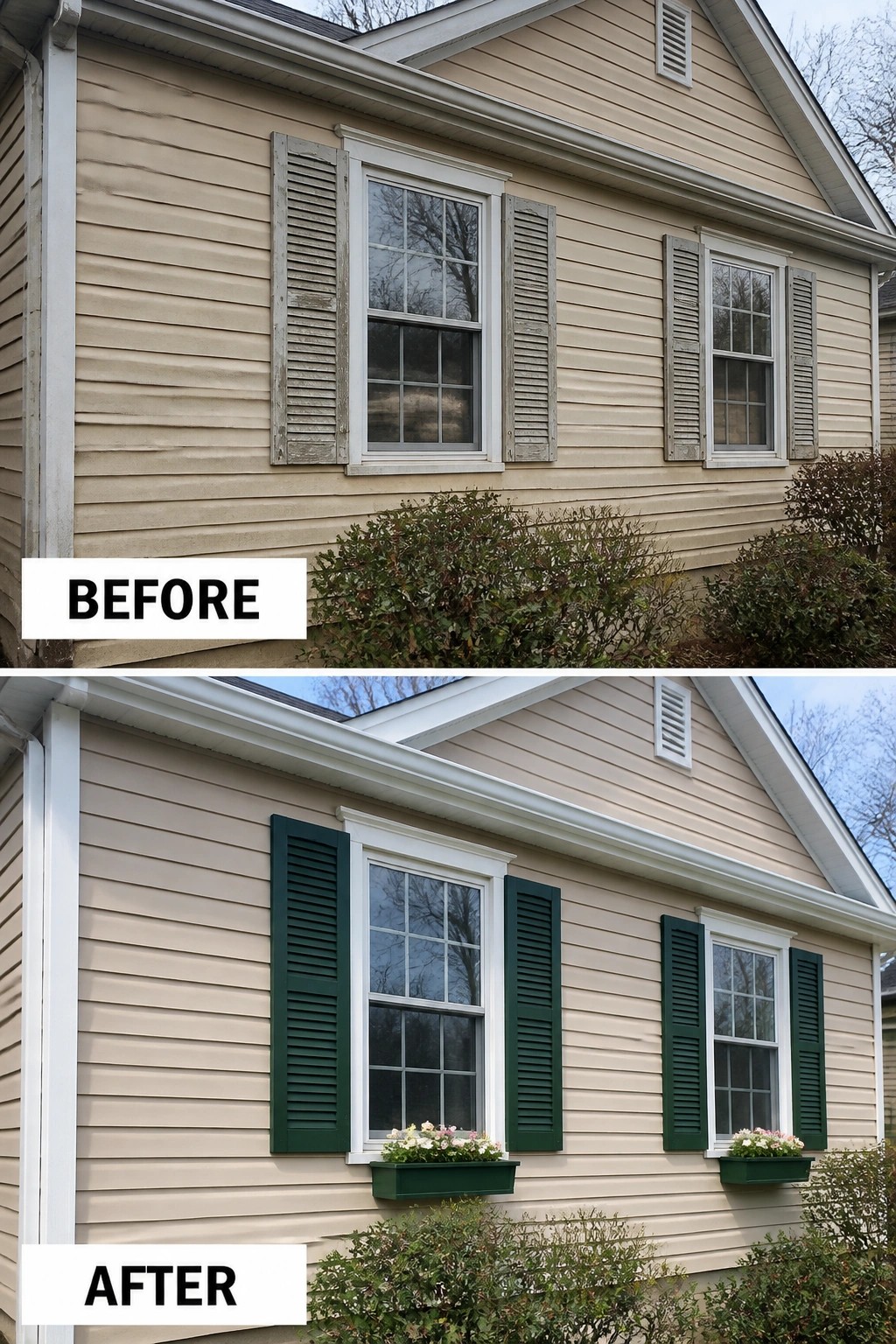
Many homes with beige or light siding lose impact when the shutters and trim fade over time. Switching the shutters to a deep contrasting color and adding window boxes underneath the windows gives the facade a stronger structure without touching the main siding.
This approach works best on homes where the windows already sit in a good position. Pick one color for the shutters and boxes so they read as a set, and keep the planting simple so it does not compete with the new color.
Refresh Faded Siding With A Darker Paint Color

Faded siding often makes a house look older than it really is. Switching to a deeper gray tone gives the whole front a cleaner, more current feel while letting the stone base stay as a strong accent.
This works especially well on simple single-story homes. Pick a color that still feels light enough for the size of the house, then keep any new planting low and simple so the paint change stays the main focus.
Refresh Faded Siding With A New Paint Color
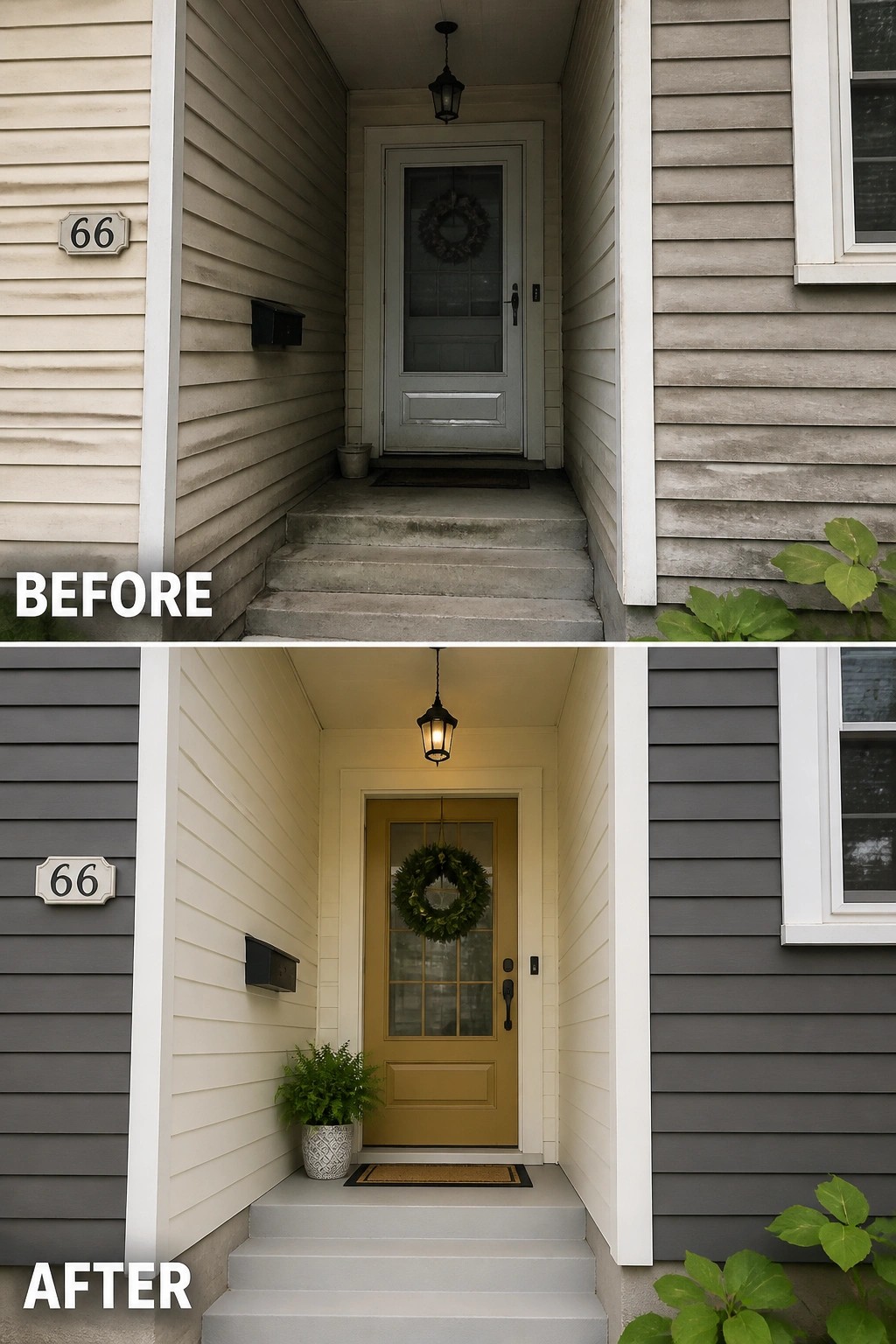
Many homes with older siding lose their look once the original color fades and turns dull. A fresh coat on the siding plus a new color on the front door can bring the entry back to life without touching the structure.
This works best on houses where the siding is still in decent shape but just needs color. Pick a deeper shade for the siding to hide wear and pair it with a brighter door so the entrance feels intentional. Always test paint samples on the wall first since outdoor light shifts how colors read during the day.
Refresh Faded Siding With Contrasting Trim Color
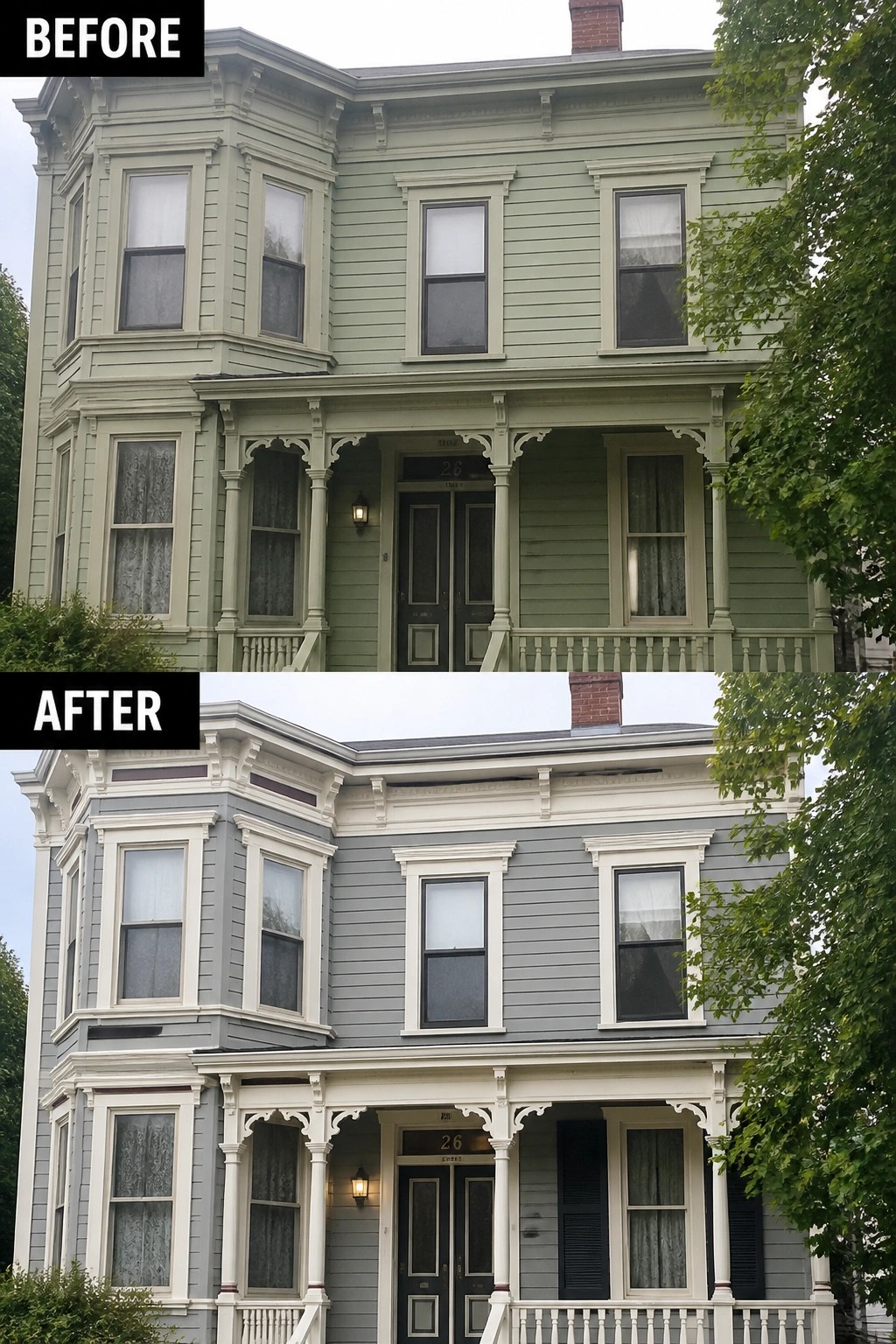
Many older homes lose impact when the siding and trim fade to the same dull tone. A simple repaint that puts the main siding in one color and the trim in a clean contrast color brings back the shape of the house and makes details like brackets and window frames stand out again.
This approach works well on homes that already have strong trim work. Keep the new siding color in the mid-tone range so it does not fight with the roof or any brick, then use white or off-white on the trim and consider adding shutters in a darker accent if the windows need more weight. The change stays practical because it only requires paint and does not involve new materials.
Refresh Faded Siding With Fresh Paint Colors
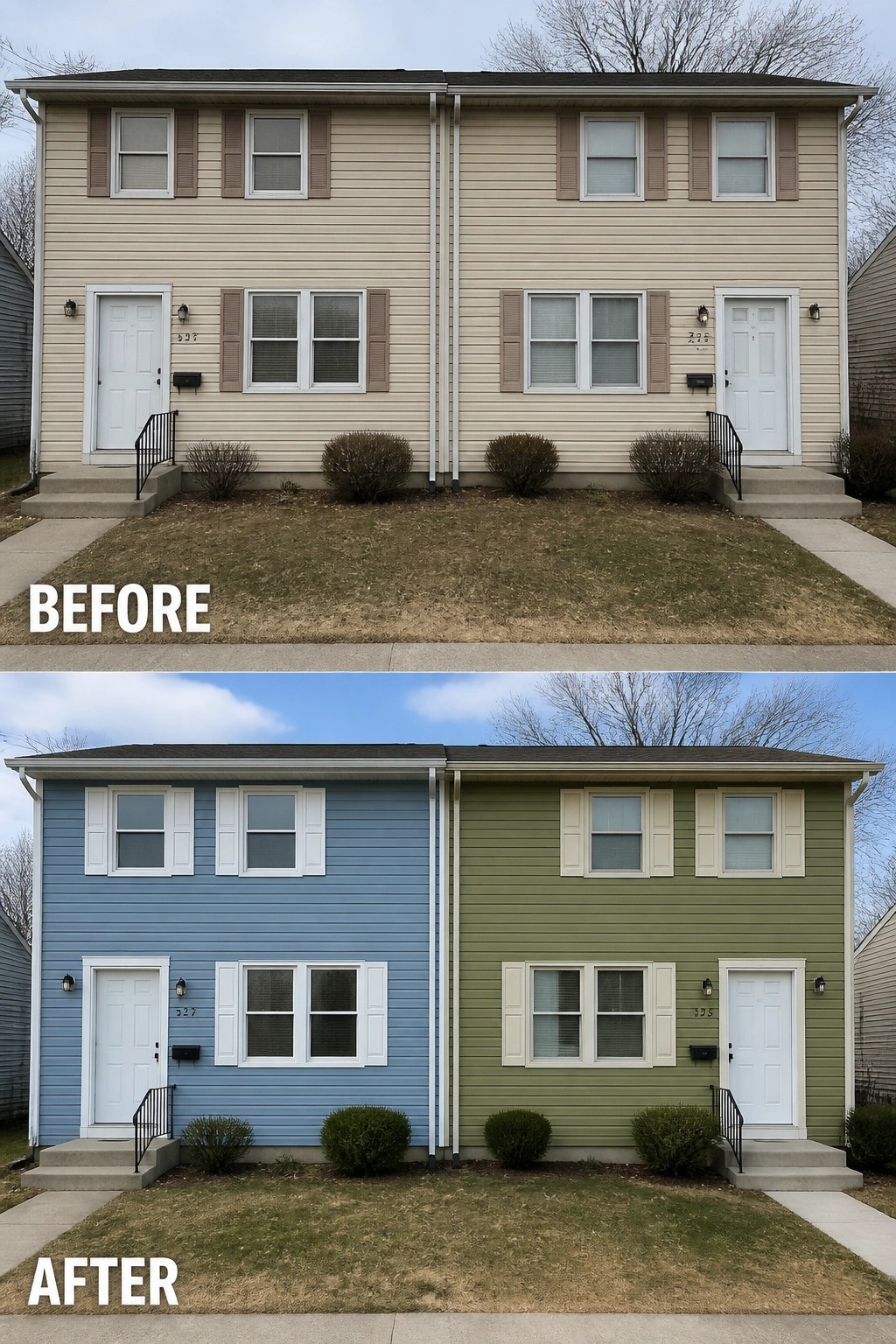
Many homes with older vinyl siding end up looking flat and dated once the original color fades. A straightforward paint update can change that quickly. Here the uniform beige was replaced with two separate colors that give each side of the duplex its own identity while keeping the overall look cohesive.
This approach works well on duplexes or any house where you want to break up a long, plain facade. Choose colors that complement each other, repaint the shutters and trim in a clean white, and keep the rest of the details simple. The result feels current without requiring new siding or major construction.
Refresh Faded Stairs With Fresh Paint
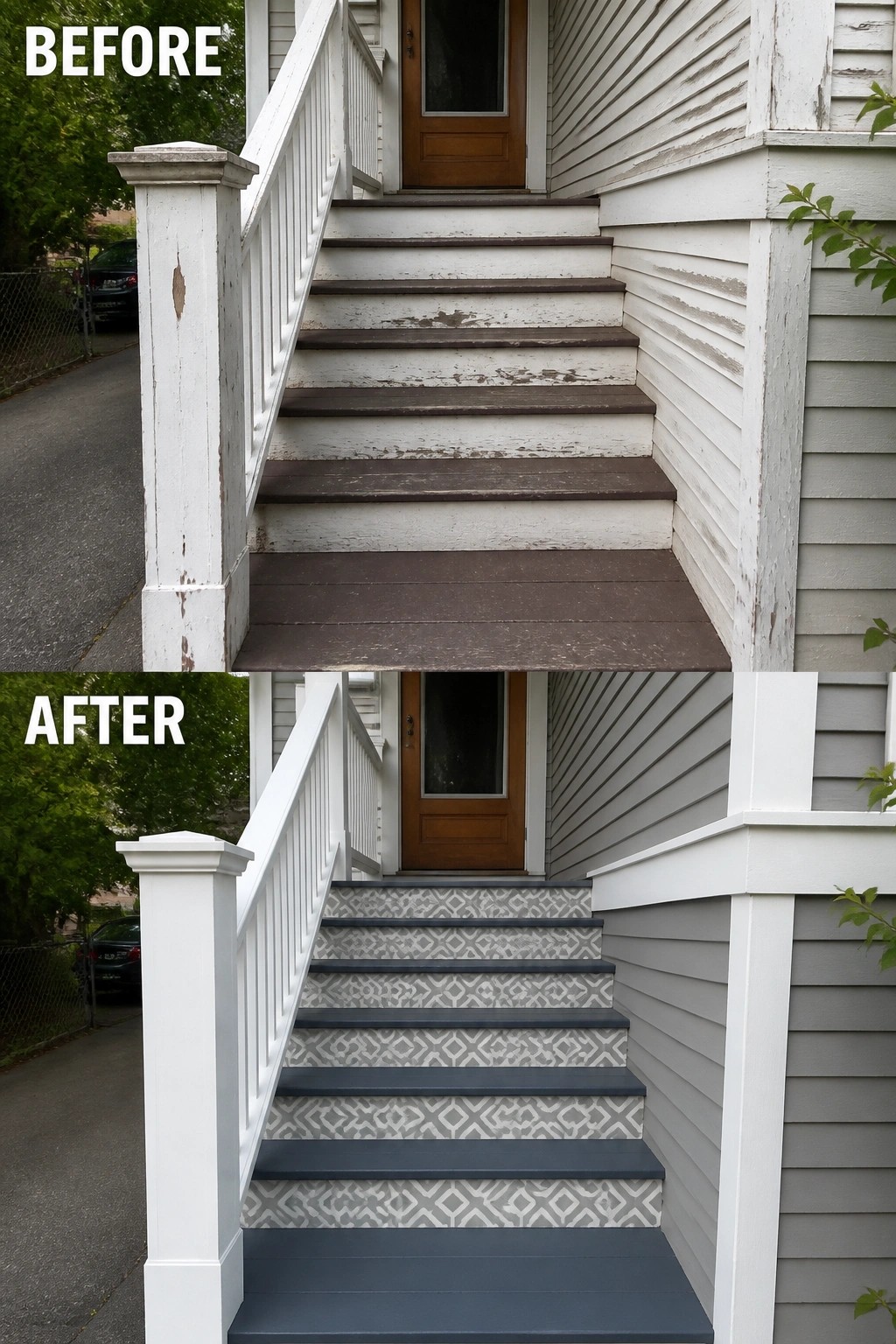
Faded paint on exterior stairs often makes the whole front of a house look tired. A simple repaint on the treads, risers, and railings can change that quickly. Here the old brown steps were redone in dark gray, the railings were brightened to white, and a light geometric pattern was added to the risers to give the entry more life.
This idea works best on homes where the siding is also due for color. Match the stair paint to the new siding color, keep the railing crisp and light, and use a stencil if you want pattern without much extra effort. It is a practical way to improve curb appeal before taking on larger projects.
Refresh Faded Siding With A New Paint Color
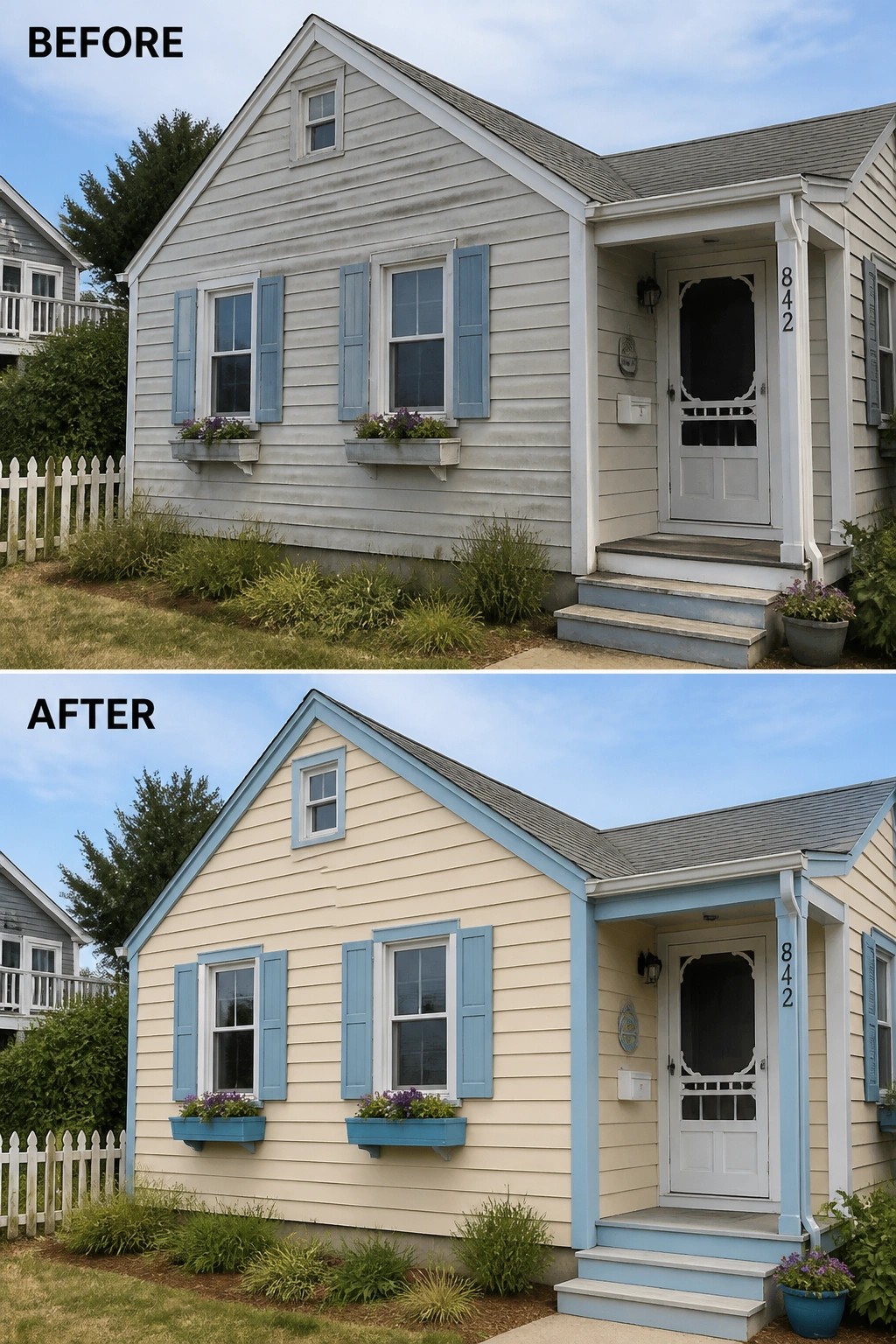
A fresh coat of paint can bring life back to siding that has lost its color over time. Here the change from a dull gray to a warmer cream shade, along with the new blue on the trim and shutters, makes the house feel brighter and more put together.
This idea works best on homes where the siding itself is still sound but simply needs color. Pick two or three shades that play well together, test them on a small section first, and keep the focus on the main body of the house before adding smaller accent details.
Refresh Faded Siding With A Darker Paint Color
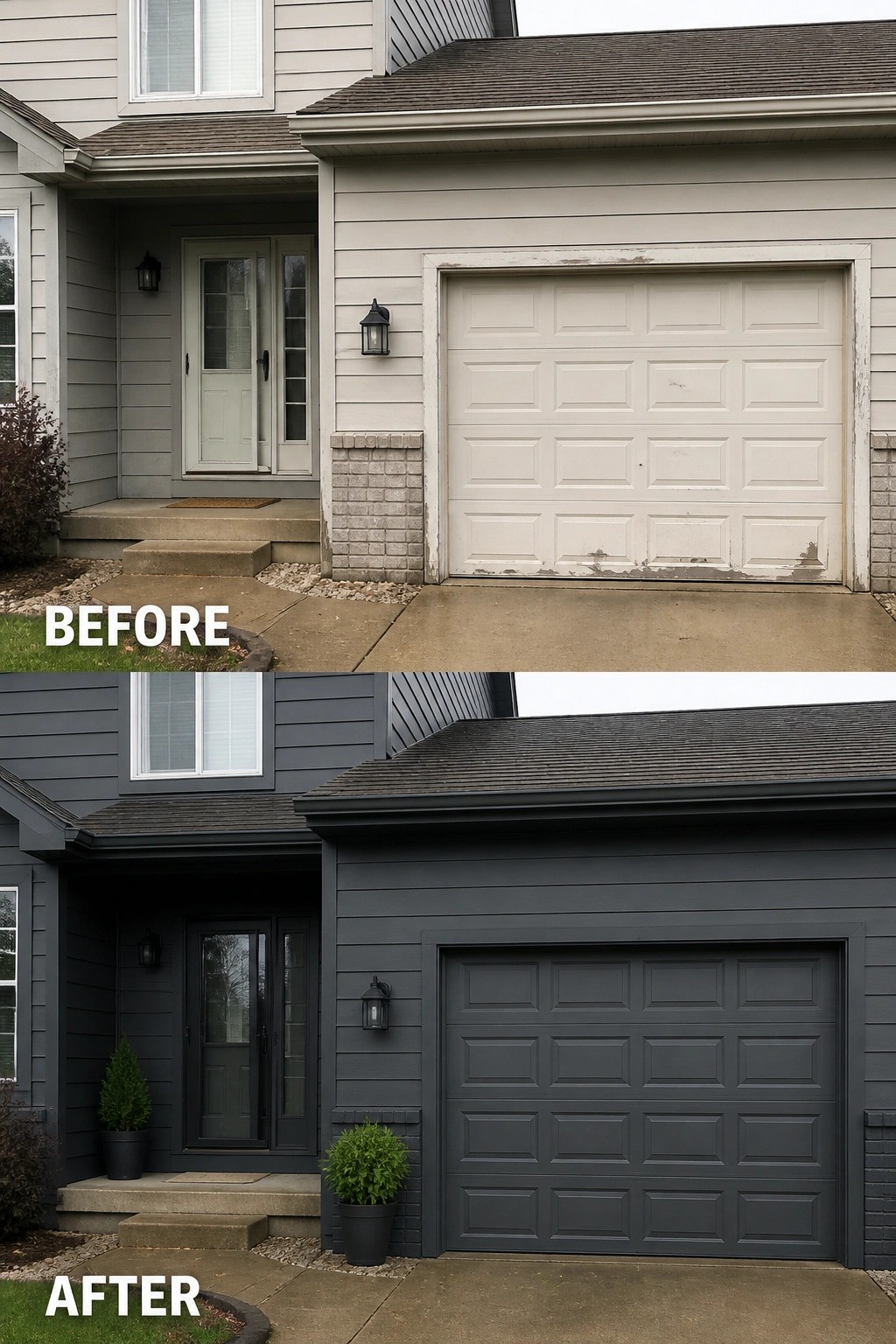
Many houses with light siding start to look washed out after years of sun exposure. Painting both the siding and the garage door a deep charcoal gray instantly gives the front a sharper, more current appearance without any structural changes.
This works best on simple house shapes where the siding is the main surface. Choose a color that still feels tied to the roof and brick accents so the change stays cohesive, and always test a sample board on the wall first.
Frequently Asked Questions
Q: Can I just paint over the faded spots without prepping the whole wall first?
A: Faded siding usually has built up dirt and chalky residue that stops new paint from sticking well. Wash the surface first with a hose and soft brush, then let it dry fully. Skipping this often means the refresh peels within a year.
Q: How do I keep the new paint from showing lines where it meets the old color? A: Roll or brush in full sections rather than dabbing only the worst areas. This blends the edges as you work so the change looks natural once it dries. Work from the top down to catch any drips right away.
Q: What happens if I pick a color that looks good now but fades fast?
A: Stick with exterior formulas made for siding and test a small patch on an inconspicuous spot first. Check it after a week in direct sun to see how it holds. That quick check saves you from repainting the whole house sooner than planned.