

Some links on this page are affiliate links (for example Amazon). If you buy through them I may earn a small commission, at no extra cost to you. How this works.
Many people worry that a blue bedroom and a terracotta dining room will clash, or that a warm white in the hall rules out a cool gray in the kitchen. In practice, most of the homes that feel the most lived-in and pleasant mix warm and cool colors. The trick is to give the mix some structure so it looks intentional rather than accidental.
This guide explains how warm and cool colors work, the simple rules that make them sit together, and how to test before you paint.
Warm vs cool, in plain terms
- Warm colors lean toward red, orange or yellow. Think terracotta, mustard, coral, cream and most wood tones.
- Cool colors lean toward blue, green or violet. Think navy, sage, slate, teal and crisp white.
- Neutrals have undertones too. A gray can be warm (greige) or cool (blue-gray). A white can lean creamy or icy.
The undertone, not the main color, is what causes most clashes. A cool gray wall next to a warm cream trim often looks dirty, even though both are “neutral”.
Choose one white or light neutral and use it on trim, ceilings and doors throughout the house. It acts as the thread that ties every room together, whatever the wall colors. A soft white with very little undertone in either direction is the easiest to work with.
Rule 2: Let one temperature lead
Most successful mixed palettes have a lead temperature and an accent temperature. For example:
- A mostly cool house (blue-grays, greens, white) with warm accents in wood floors, brass, leather and terracotta.
- A mostly warm house (creams, warm whites, ochres) with cool accents in navy cabinets, blue textiles or green plants.
A rough 70/30 split works well. A 50/50 split is harder to make feel calm.
Rule 3: Repeat your accents
If a warm rust appears on a pillow in the living room, repeat it in a rug in the hall or a print in the kitchen. Repetition is what makes a color look chosen rather than random.
Rule 4: Match the color to the light
Light changes how temperatures read:
- North-facing rooms get cooler, bluer light. Cool colors can feel cold here, so lean warmer or choose cool colors with a little warmth in them.
- South-facing rooms get warm, bright light. Cool colors look fresh and balanced here, and warm colors can look very intense.
- East and west rooms change through the day. Check samples in both morning and evening.
- Bulbs matter too. Warm white bulbs (around 2700K) make cool paint look grayer; cooler bulbs make warm paint look flatter.
Rule 5: Use transitions between rooms
Where you can see from one room to the next, make the change gentle. Some easy ways:
- Paint connecting halls in your shared neutral.
- Use a color in one room that appears as an accent in the next.
- Keep the floor consistent across open-plan areas, so walls can change without the space feeling broken up.
Room-by-room ideas
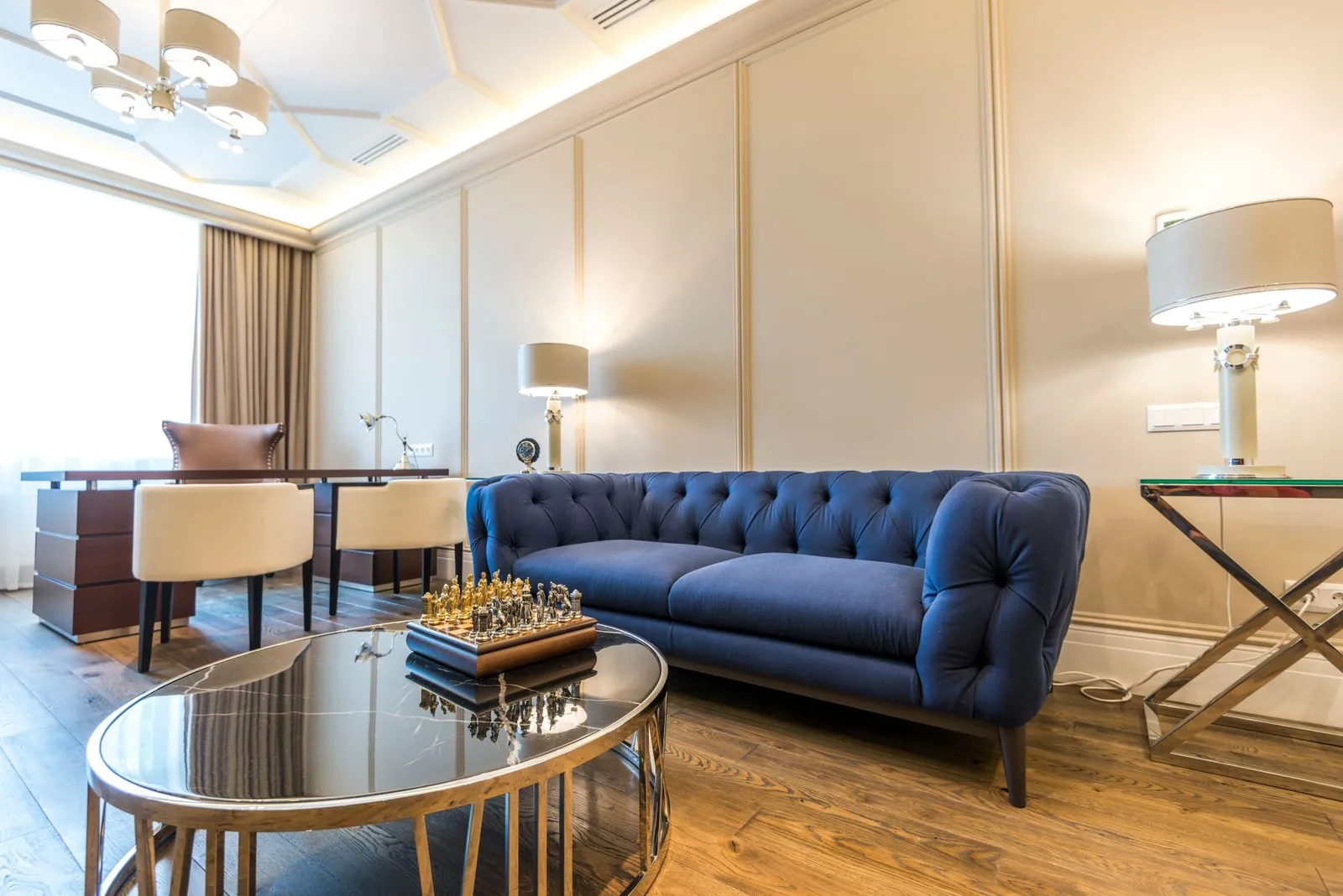
Living room: cool blue-gray walls with warm wood, cognac leather and brass. Or warm white walls with a navy sofa and green plants.
Kitchen: blue or green cabinets with warm wood open shelves or a butcher-block island. Our blue kitchen cabinet ideas and kitchen color schemes with wood cabinets show both directions.
Bedroom: sage or soft blue walls with warm linen bedding and wood furniture feel calm without being cold.
Dark rooms: if a room is short on daylight, see our kitchen wall colors for low-light rooms for colors that hold up without feeling gloomy.
How to test a mixed palette
- Make a mood board. Put paint chips, fabric scraps and wood samples together on one board. Our step-by-step guide to making an interior design mood board shows how.
- Use large samples. Paint sample boards at least the size of a sheet of paper and move them around the room.
- Check from doorways. Stand where you can see two rooms at once and check the transition.
- Live with it for a few days. Colors that look odd at noon can look perfect in the evening.
A worked example: one house, two temperatures
Here is how a mixed palette might play out in a typical three-bedroom house with an open kitchen and living area.
- Shared neutral: one soft white on all trim, doors and ceilings.
- Lead temperature (cool): a light blue-gray on the open kitchen and living walls, which face north and get even, cool light. Because the light is cool, the chosen blue-gray has a touch of green in it, so it does not look icy.
- Warm accents in that space: oak floors, a cognac leather chair, brass light fittings and a terracotta vase on the shelf.
- Hall and stairs: the shared white on walls, so moving between rooms feels calm.
- Main bedroom (south-facing): a muted sage, which looks fresh in warm afternoon light, with linen bedding in oatmeal and a rust throw.
- Kids’ room: a warm, sunny ochre on one wall only, with white on the others, and blue textiles that echo the living room.
- Bathroom: white tile and walls, with a navy vanity that repeats the blues from elsewhere.
Every room has its own character, but the white trim, the repeated blues and the repeated rust and wood tones make the house feel connected. Nothing about it needs a strict “all warm” or “all cool” rule.
Common mistakes to avoid
- Choosing paint from tiny chips. Undertones are almost invisible on a small chip and obvious on a whole wall.
- Ignoring fixed finishes. Floors, countertops, tiles and large furniture have undertones too. A cool gray wall over a pink-beige carpet can look muddy.
- Mixing two nearly identical neutrals. A warm white and a cool white side by side look like a mistake. Use the same white or two clearly different colors.
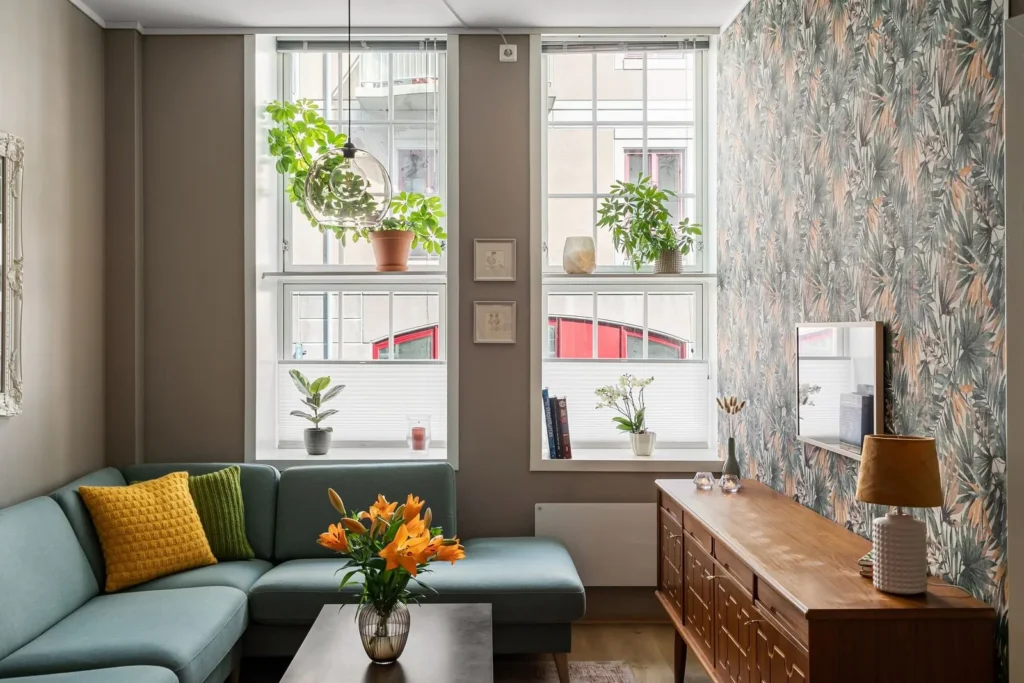
- Adding accents without repeating them. One orange cushion in a blue room looks random; three touches of orange across the room look deliberate.
Frequently asked questions
Can I mix warm and cool woods?
Yes. Mixed woods look best when one tone clearly leads and the others appear in smaller pieces, such as frames, side tables or a bowl.
What about metals?
Mixing brass with black or chrome is common. Repeat each metal at least twice in a room so it looks intentional.
Is it a mistake to have warm and cool rooms next to each other?
No. Use a shared neutral on trim and a gentle transition, and the change will feel deliberate.
Can I mix warm and cool neutrals?
Yes, but give them some separation, for example a warm white on trim and a cool gray on walls looks better than two near-identical shades side by side.
What is the safest white for a mixed house?
A soft white with a very gentle undertone. Test it next to your floors and largest furniture, since those set the tone.